

Pitau house
Nature’s earthy hues meet textures of the Mount’s coastal elements in an extraordinary tapestry of architectural brilliance and design aesthetics.
Nature’s earthy hues meet textures of the Mount’s coastal elements in an extraordinary tapestry of architectural brilliance and design aesthetics.
WORDS Jo Ferris

The owners gave a clear brief to local architectural designer Adam Taylor. They wanted the combined allure of a New York loft and beach bach. The New York inspiration is unmistakeable; bach is probably an understatement. This is a sculptural statement - on the surface: simple by design, yet utterly complex in its execution, thanks to the skill of award-winning Fairbairn Builders.

The level of detail sweeps over a lay person’s head. To specialists, it’s imposing. Nestled in central Mount Maunganui, a few blocks from the beach, this location presented the challenge of a narrow site; but the precious seclusion the owners wanted. This isn’t evident until the home reveals its secrets, highlighted by fringes of towering trees in the rear neighbour’s expansive garden.

This backdrop instils the sense of living beside a forest glade - an aspect which extends this home’s intimate connection with nature. The birdlife is breathtaking; resident tuis heralding music in the air.
Enormous banks of floor-to-ceiling stackers form two full walls of glazing that slide either way in disbelief how the cantilevered feature was even possible. It is a design and engineering masterpiece, with massive beams hidden within the structure, including innovative storage on the upper level. A single pole in the crucial corner also disguises the depth of its support.
But back to the beginning. First impressions introduce the simplicity of a home designed around two boxed wings; kerb-side gardens designed to mimic undulating dunes and native plants. The look of what seems like white-washed brick, contrasts with the dramatic darkness of vertical, cedar shiplap, crafted to accentuate intricate illusions and rich vibe of the entire home.

Imported Belgian brick was actually fired this way, and continues its artistic announcement inside. This is where the house unveils its full extent. A soaring atrium enhances the space, while proving one living area is all this home needs to embrace its beach-bach personality. A wall of stacker doors open to an outdoor café lounge; complete with a kitchen barbecue. Louvred, sliding doors offer further choice to either savour the garden ambience, or enclose this area for more intimacy.
While lines between outdoor settings are blurred when doors open wide; once closed and back inside, the stunning appeal of coffee-toned drapes enrich the décor’s artistic palette and subtle lighting. Everything is an accent in design intellect, creative tone and texture. The kitchen is unique — deliciously dark; clean lines, integrated appliances and a showcase island. Capped with travertine, its angled shape mimics roofing that tops this home.
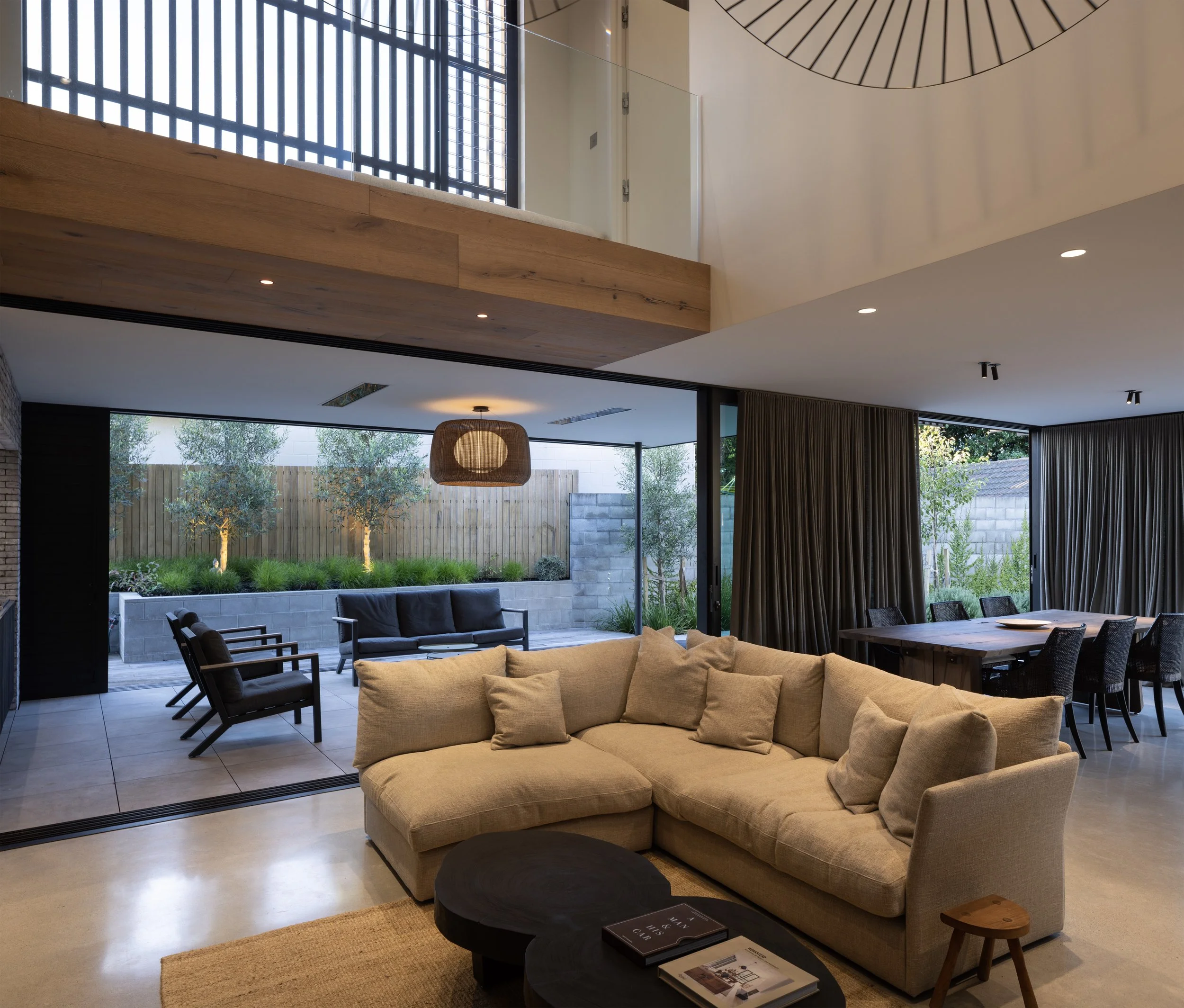
Three bedrooms upstairs include a five-star master retreat, placed to capture the best of the gardens below, while a mezzanine bridge leads to remaining ensuite bedrooms. Personalised in their finish, each opens to a cleverly-designed balcony that gifts individual privacy and views towards Mauao. Stairs also provide access to and from the road, plus an outdoor hot shower when returning from the beach.

Bathroom luxury continues the same tone of the kitchen’s travertine in showers and custom vanities. It pays homage to coastal colours; as does the hydronic-heated concrete floor in family living.
Extensive garaging caters for several vehicles, while a workshop corner, racks for bikes and boards meet the beach lifestyle; EV charging included and a smart laundry reflecting the impressive detail and bespoke finish that instils the elusive moods that dominate everywhere.
With a wine cellar, storage and hidden features, this home epitomises what architectural excellence and fastidious attention to specifics bring to a sanctuary that envelops you within soulful seclusion.
65 Pitau St, Mount Maunganui

A taste of Somethin’ Somethin’
Mount Maunganui’s cheekiest café is shaking up the scene with matcha magic, cult-status offcuts and a drinks menu that’s anything but ordinary.
Mount Maunganui’s cheekiest café is shaking up the scene with matcha magic, cult-status offcuts and a drinks menu that’s anything but ordinary.
WORDS Hayley Barnett | PHOTOS Rachel Hadfield, Timmo and Sarah Brooky

Tucked behind a couple of shops on Mount Maunganui’s Heath Street is a café where somethin’ cool is brewing. And I don’t mean the coffee, though that’s good, and super cool, too.
The old Heath Street Café is now being run by dynamic husband-and-wife duo Nathan and Ash, a foodie couple who admit Somethin’ Somethin’ wasn’t always the plan. In fact, Ash didn’t even know Nathan had bought the place until it was a done deal.

“I think if I’d known, I probably would’ve talked him out of it,” she laughs. Thankfully, she didn’t. What started as a spontaneous leap into hospitality has turned into one of the Mount’s most loved destinations for coffee, creative snacks and viral drinks.
Ever tried a white chocolate or strawberry matcha? Ash, now the mastermind behind the drinks menu, didn’t know what matcha was at first, but, since learning about the healthy beverage, she’s gone
deep down the rabbit hole.

“I just started Googling and experimenting,” she says, “and now people literally drive from out of town for our drinks.”
These drinks aren’t just photogenic, they’re genuinely delicious. And yes, they make great content for the ‘gram, but what really sets Somethin’ Somethin’ apart is how it doesn’t try to be just another café.
“We didn’t want to open a regular place,” Ash says. “We wanted to do something a little different. We wanted to make it a place people go out of their way for.” And they have. From their now-iconic “offcuts” (random bits of delicious baked goods that became so popular they now sell out daily) to their ever-evolving menu inspired by international coffee trends, Somethin’ Somethin’ is always doing, well, something.
Take their trip to the Melbourne Coffee Expo earlier this year, for example. That sparked an entire menu revamp.
“In Melbourne, people take their coffee so seriously,” Ash says. “Every café had its own coffee menu, cocktail-style. We came home and thought, why aren’t we doing that?”
Now, they serve up seasonal coffee specials that go beyond the flat white, like their signature Mount Blanc.

Food-wise, Nathan brings the ideas. A self-proclaimed foodie who never wanted to be “on the tools”, he’s the brain behind the food menu, while their tight-knit kitchen team brings them to life. After winning Battle of the Snack at the Flavours of Plenty festival, they also took out the People's Choice Award, beating local heavyweights. “We didn’t think we’d win again,” Ash says. “I didn’t even go into work that day!”
And while it still looks and feels like a café (for now), Somethin’ Somethin’ is constantly pushing the boundaries. With event catering and collabs with local brands, Ash and Nathan are dreaming bigger than just brunch. “We want it to be a community hub,” says Ash, “but also a destination café. The kind of place you tell your friends about.”
They’ve nailed both.

Future served
Young Kiwis are flipping expectations while quietly growing into tomorrow’s leaders.
Young Kiwis are flipping expectations while quietly growing into tomorrow’s leaders.

Jaun Odendaal
Walk into any McDonald’s across the country and you’ll find something remarkable happening behind the counter. Teenagers and young adults are managing teams, solving problems on the fly, training others, and picking up life skills they’ll carry long after they leave.
As one of Aotearoa’s largest youth employers, McDonald’s employs more than 10,000 people across the country, with around 70 percent of them being under 25. While it’s often seen as just a stepping stone, what’s becoming increasingly clear is that Macca’s can be the launchpad for something much bigger.
Seventeen-year-old Hamish Lawes, from McDonald’s Fenton Street Rotorua, is proof of just how far a young person can go when given the tools and encouragement to grow. Having joined the crew a year ago, the John Paul College student and avid musical performer, was drawn to the flexibility Macca’s offered.
“I liked the hours and the team,” he explains. “When I started, I thought I’d come and get the job done, but the more I learned, the more I realised how much opportunity there actually is.”
He’s now assistant shift manager, preparing to take on the shift manager role, and will soon be attending McDonald’s Advancing Your Leadership course.
“I love that no two days are the same,” he adds. “Teaching others different stations keeps things fresh, and the problem-solving skills I’ve gained are things I’ll use forever.”

Hamish Lawes.
Down in Taupō, Jaun Odendaal has had a similar experience. At 23, he’s been at McDonald’s for four years.
“I started while I was still in school, just to make some money,” he says. “I enjoyed the job so much I decided to stay and work up the ranks.”
Now a crew trainer with a hand in kitchen operations and maintenance, Jaun is aiming for a management role.
“It’s not just about flipping burgers,” he says. “For me, being a crew trainer is about understanding people. I like figuring out how they learn and adapting the way I train.” Looking ahead, Jaun adds, “I want to be the best manager I can be for my crew.”
There’s still a tendency to underestimate jobs like these. But, in many ways, what young people learn at Macca’s, including valuable skills like communication, time management and teamwork under pressure, are the same skills that carry them forward in life, no matter what they choose to do.
For Hamish, Jaun and many others, it’s not just a job. It’s where they learned to back themselves.
Raising spirits
How three Bay distilleries are redefining New Zealand gin.
How three Bay distilleries are redefining New Zealand gin.
PHOTOS Alan Gisbon + Erin Cave + Supplied
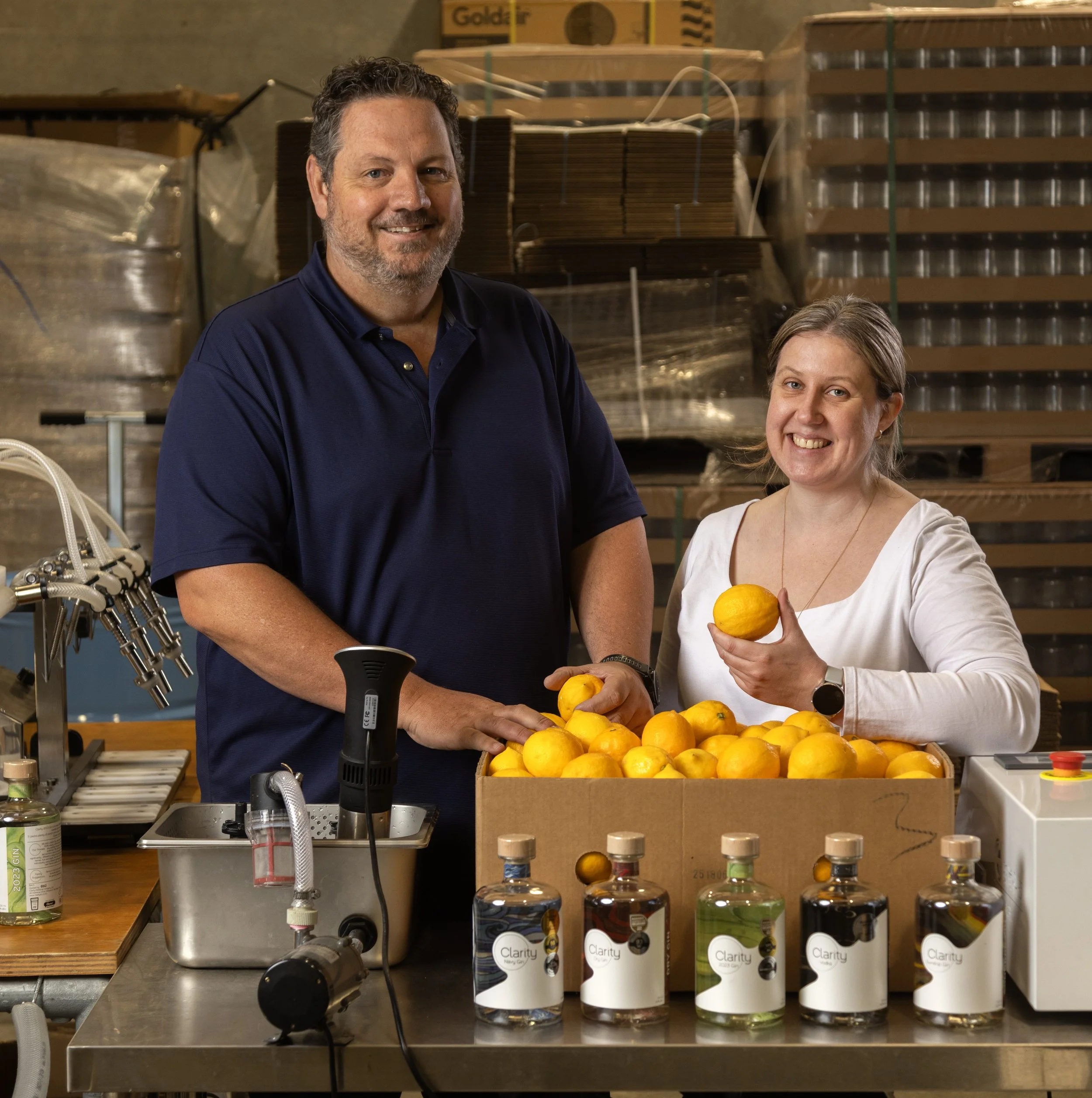
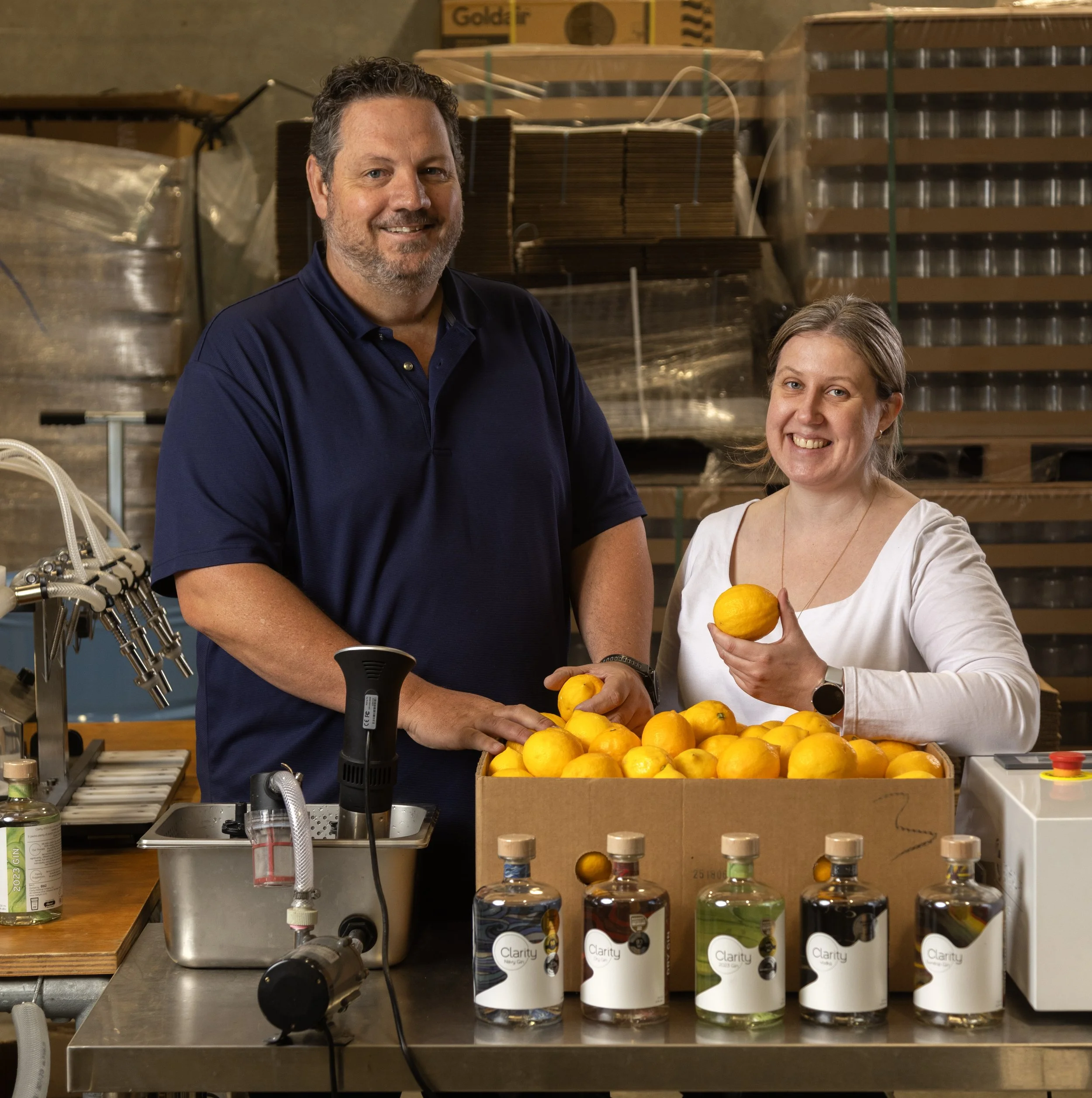
George White and Stephanie Downer's successful Clarity Distilling Company started as a hobby.
It might seem unlikely, but behind the roller doors of a nondescript unit in Tauriko’s commercial estate, two friends are crafting one of the world’s best gins. Just 25 minutes away in another small space in Ōmokoroa, a similar story is unfolding as two friends blend botanicals to bring their award-winning gin to life. And just over the hill, in Matahui, gin drinkers can bottle their own creation - and become award winners themselves.
Far from being on the rocks, gin is obviously continuing its recent resurgence. The clear spirit has gained popularity thanks to its clean herbal aromatics and botanical complexity. Because gin can be produced relatively quickly, small-batch makers have embraced it as a space for creativity, developing unique signature styles and exciting flavour profiles. Juniper remains the foundation, of course, but now it’s not unusual to find exotic ingredients like mānuka, licorice, or Szechuan pepper in the mix, adding bold new twists to traditional flavours. Small independent distilleries in the Bay of Plenty are at the forefront of the gin revolution here in Aotearoa.
Clarity Distilling Company, Bay Distillery and Matahui Distillery are three local producers who are lovingly crafting world-class gin, right here in the Bay. While their approaches to gin differ, the three small batch distilleries share plenty in common. Each is run by a pair of hands-on founders who manage every part of the process themselves, from developing recipes through to distilling, bottling and branding.
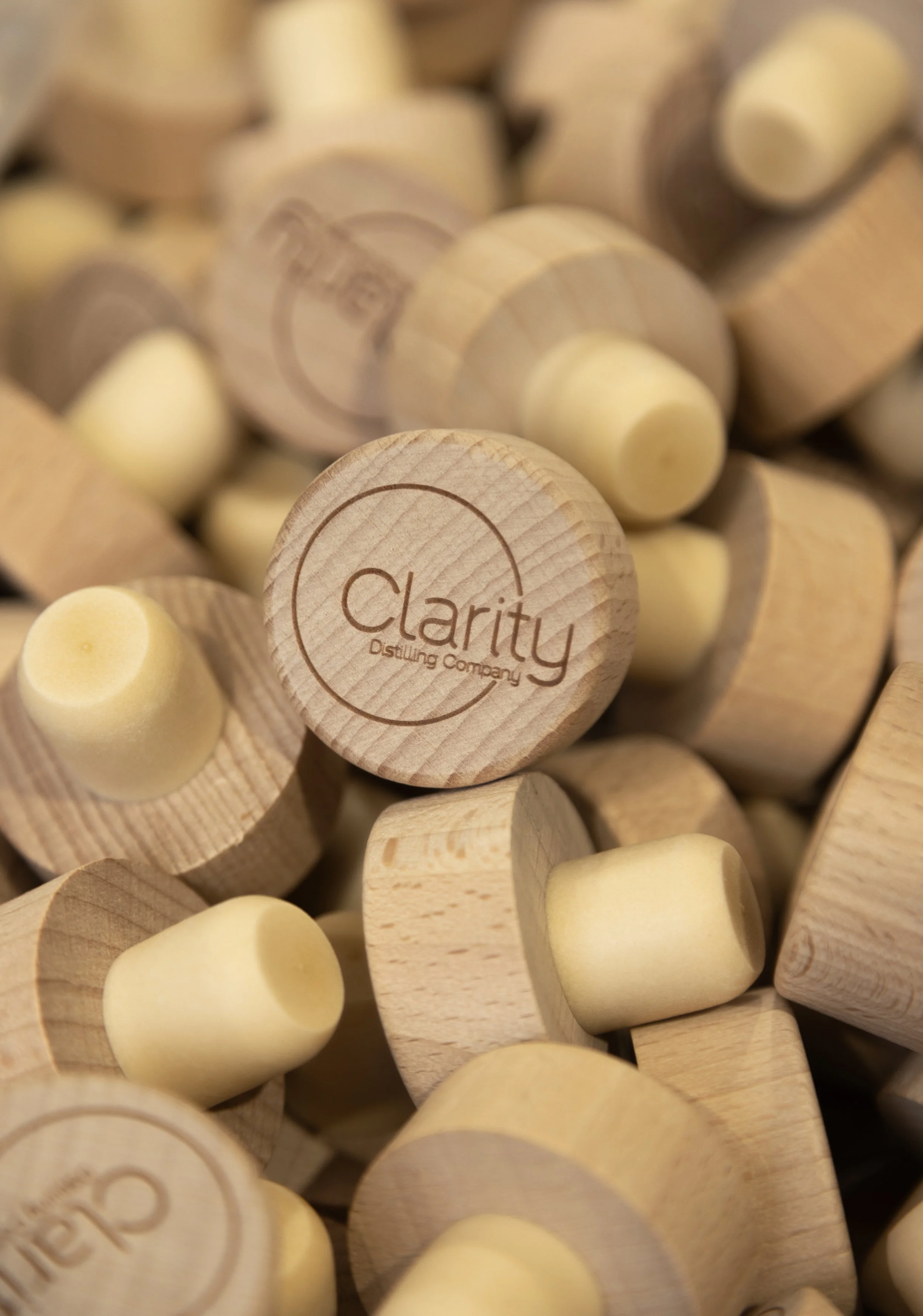
Their gin may be internationally recognised now, winning back-to-back golds earlier this year, but Clarity started as a hobby for George White only a couple of years ago. It was something he’d do in his downtime away from the childcare centre he and friend Stephanie Downer had started.
“I’ve always been a guy that likes to cook at home and try recipes and create flavours,” George says. “Gin is open. There are no restrictions. You can do whatever you want. You can put anything into that still and create any flavour you want.”
It was George’s love of cooking that would become Clarity’s secret ingredient. Rather than traditional methods, which see all the botanicals distilled together, the pair instead steep each ingredient individually.
“When you make a gin, it’s like cooking, except you’re dealing with botanicals,” George explains. “When you cook a stew, you don’t throw your meat, herbs and everything in and shut the lid. You layer it. So why would making gin be any different to that?”
This meticulous process of distilling each element separately allows them to exactly control how much flavour is extracted and then added to their blend.
“We get the best out of every single botanical,” George smiles. “Because all that’s in our gin is the botanicals. That's where all of the flavour comes from.”
It’s proven to be a winning formula. In May, their Clarity Navy Gin was awarded ‘Spirit of the Year New Zealand’ at the prestigious 2025 London Spirits Competition. They also have multiple Double Golds from San Francisco, and took home ‘Best London Dry’ and ‘Best Navy Strength’ at the NZ Spirits Awards and NZ Small Batch Gin Awards this year.
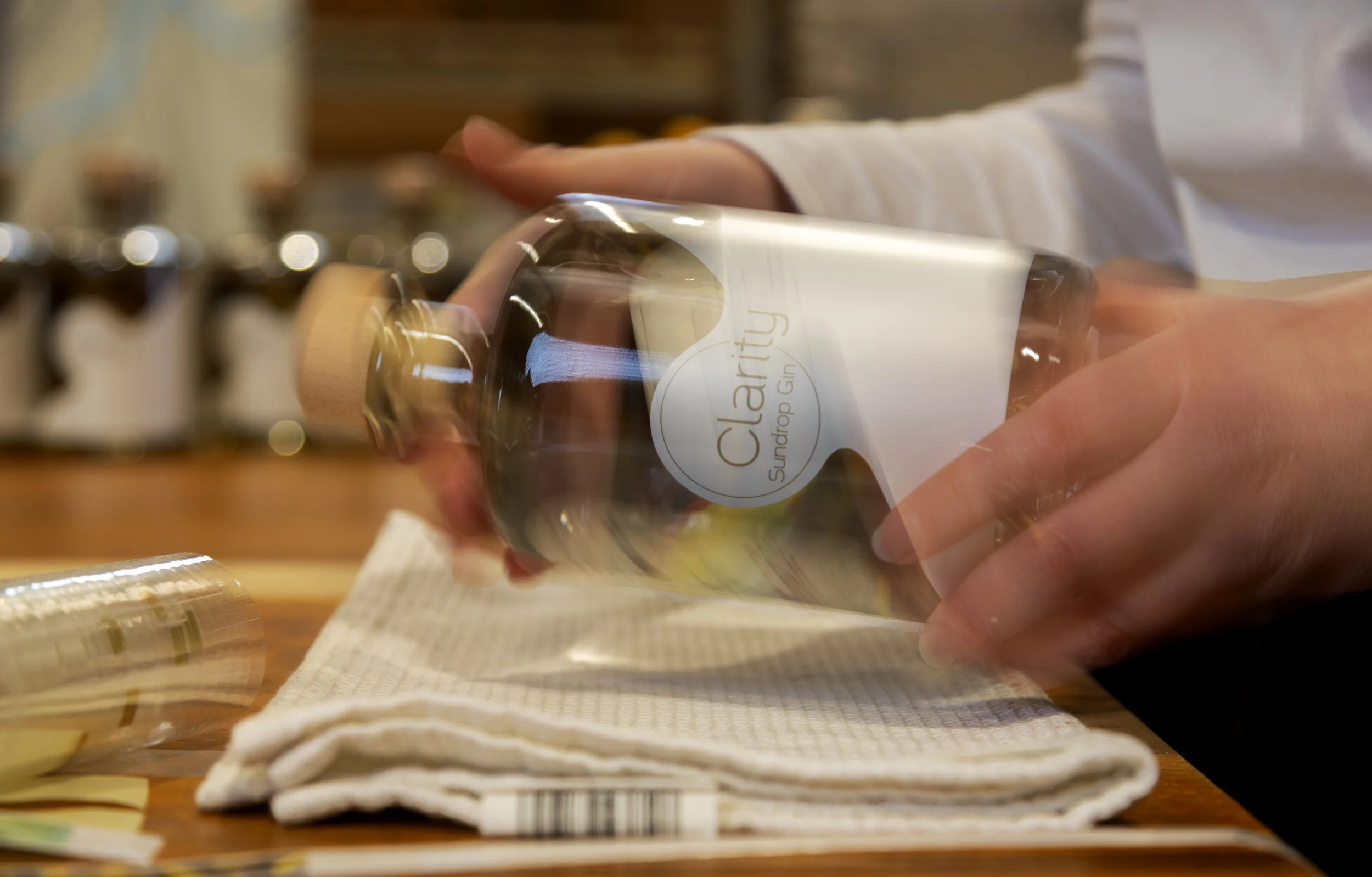
Just as much care has gone into Clarity’s look, with Stephanie handpainting the label’s distinctive artwork and even illustrating the ingredient list.
“That’s part of our ethos,” Stephanie says. “Essentially, if it's not on the bottle, it's not in the bottle.”
The operation has quickly scaled up, now with six distillers and upgraded bottling systems. But George says they don’t want to grow for growth’s sake.
“We want to be a household gin, not a special occasion gin,” he says. “We want to be affordable. If people are going to buy gin, we'd much rather let them buy a New Zealand gin.”
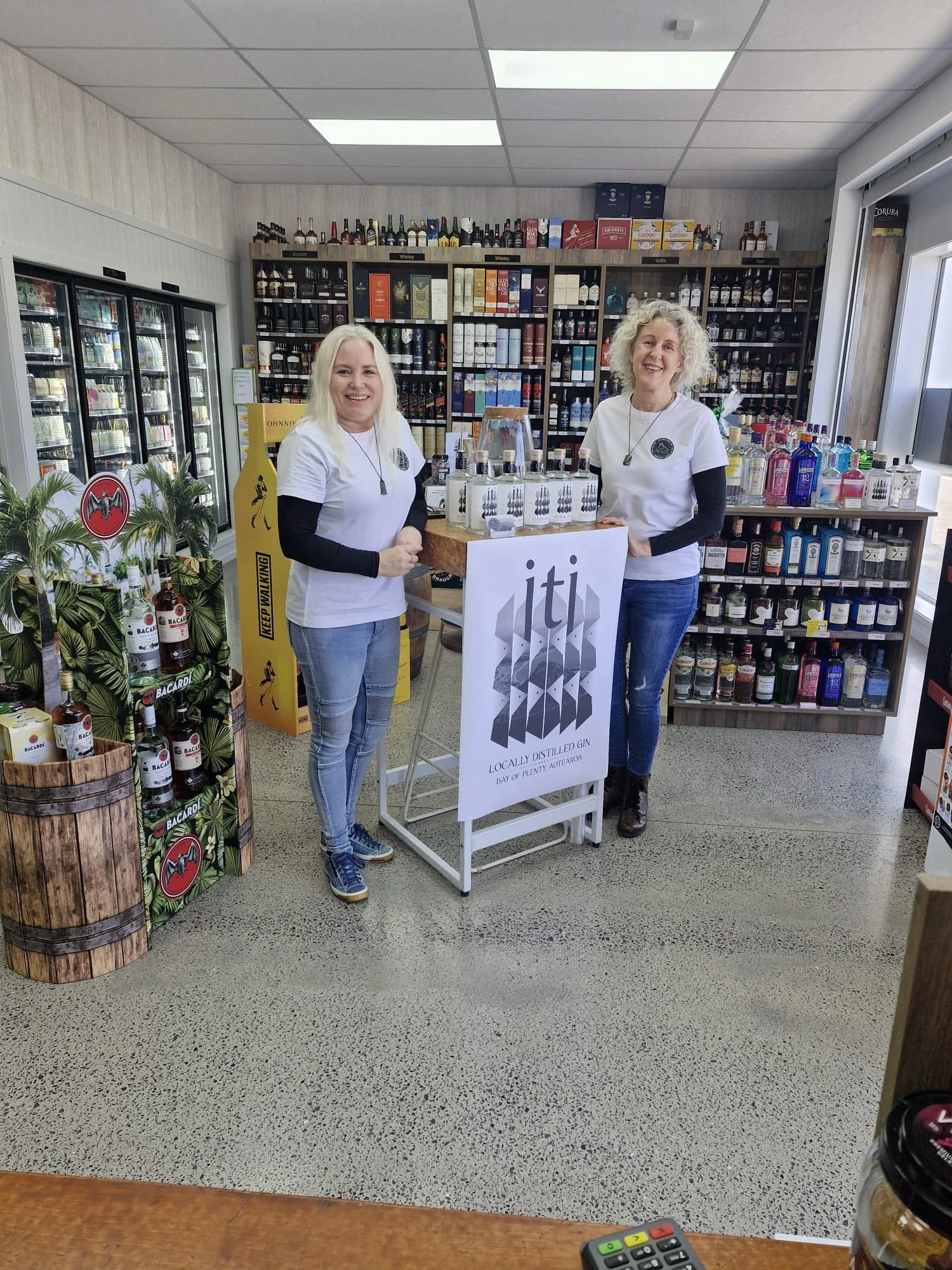
Gin makers Karen Hawkins and Denise Roscoe.
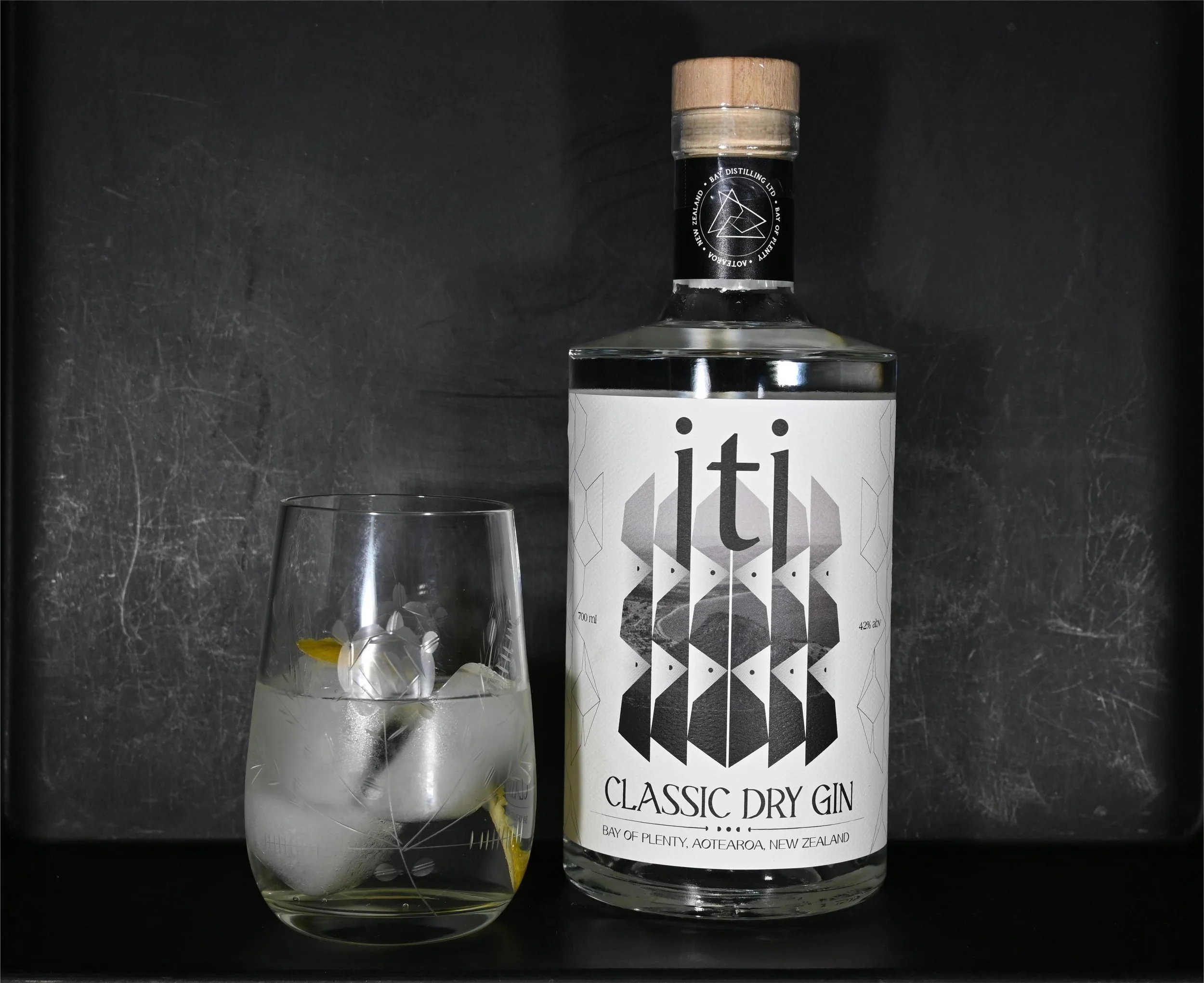
It’s a similar story over at Bay Distilling, where gin makers Karen Hawkins and Denise Roscoe launched their gin after running a coffee caravan in Ōmokoroa.
“We both like coffee, so we had a coffee business,” Karen says. “And then we sold that and thought, ‘what else do we like?’ Well, we quite like gin...”
They spent a year in the garage perfecting their dry gin recipe, encouraging friends to give honest feedback, though it was mostly glowing.
“We like a classic dry gin and really wanted to get that right,” Denise says.
Their gin iti recently took silver at the NZ Small Batch Gin Awards. Now in a commercial space, they handle everything from distilling to packing themselves, with a little taste-testing help from Karen’s husband. Their
branding is rooted in the local landscape, with a label designed by Karen’s daughter.
Meanwhile, just outside of Tauranga, Matahui Distillery offers something unique: a chance for people to create their own gin, and potentially win awards for it.
“Late last year, people who had come through our gin lab were asking for feedback on their creations,” says co-founder Paul Horak. “That’s where the Matahui Gin Lab Awards came from. It’s a bit of fun, but with proper base testing and scoring of their recipes.”
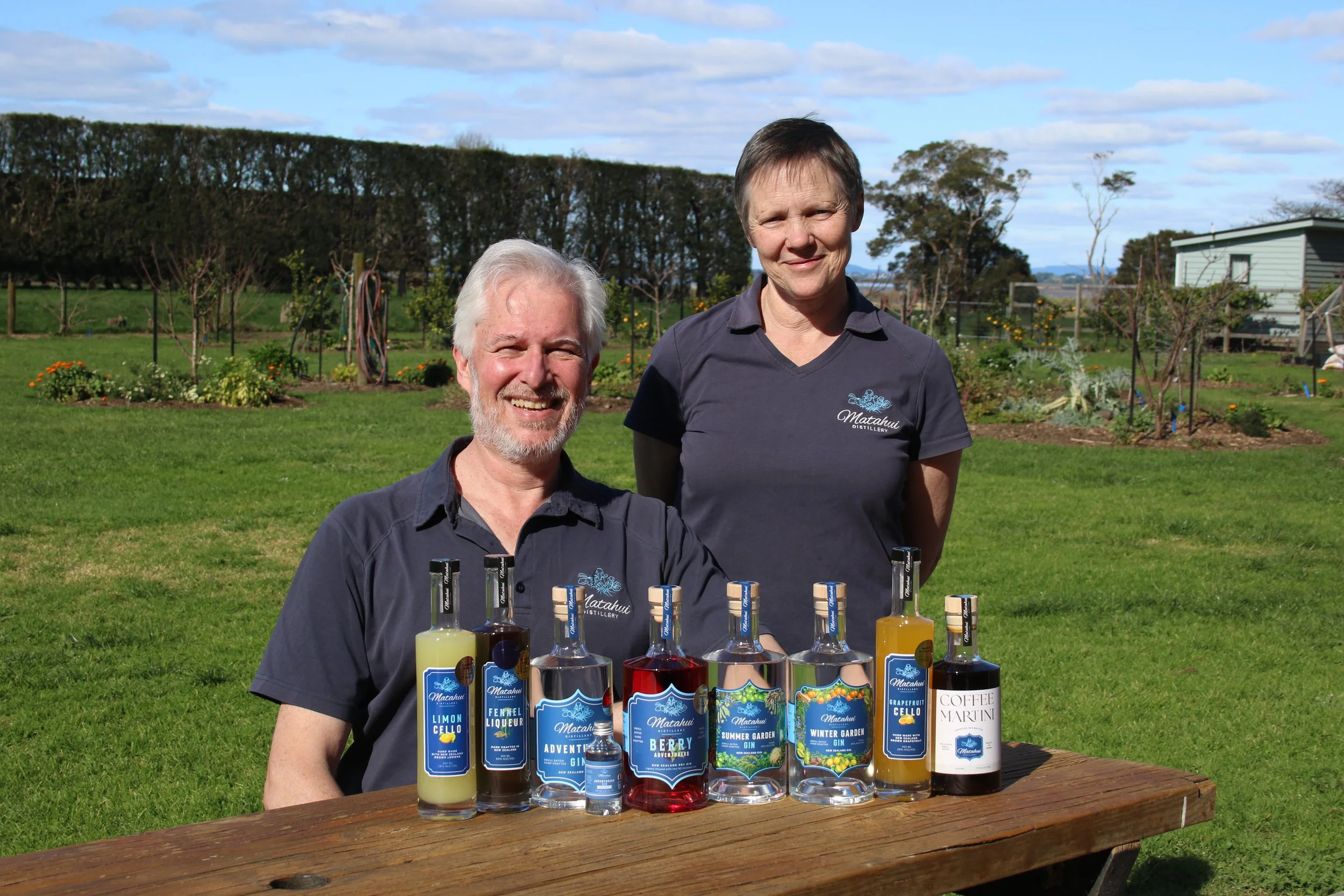
Matahui Distillery’s Paul Horak and Angela Howard with their handcrafted spirits.
The gins are created through blending pre-distilled botanical spirits, a process Paul says is used by commercial distillers like Hendrick’s. “It’s actually the best way to develop a recipe,” he explains. “You can quickly see what works, then adjust quantities until it’s perfect.”
Although their signature Adventurers Gin earned silver at the NZ Spirits Awards, the focus at Matahui is on the customer experience. “We’re not aiming to become a big factory,” Paul says. “Selling direct allows us to stay small, and our workshops help fund our own small-batch experimentation.”
The experience has evolved too. Originally participants distilled on-site, but council restrictions prompted a shift in method. “In hindsight, it pushed us to improve,” Paul says. “Now we focus on flavour — people still walk away with a gin they designed, but the quality is even better.”
They’re also working on home-blending kits, so people can recreate the experience themselves. “It’s something we want to launch in time for summer,” he adds.
While many come to Matahui for birthdays or hens’ dos, Paul says it’s just as often individuals with a curiosity for gin.
“New Zealanders are still discovering gin. Every gin is unique, and that surprises a lot of people. But once they learn more about it, they’re hooked.”
These three small-batch distilleries are proving that success in the competitive spirits market doesn’t require big investors or a corporate machine. Instead, it’s passion, ambition and a classic Kiwi ‘can-do’ attitude that are putting them, and the Bay, on the map.

Echoes of the giants
Moa bones, eagle claws and ancient wonders are sparking young minds in the Bay.
Moa bones, eagle claws and ancient wonders are sparking young minds in the Bay.
WORDS JO-MARIE BAKER
Photos courtesy of the Tauranga Museum collection.

Peter Jackson’s Jurassic Park-like plan to resurrect the moa is still a long way from reality but Tauranga students can literally get their hands on the giant bird’s bones, a replica moa egg and even a life- size Haast’s Eagle claw right now.
The objects are among the most popular items in Tauranga Museum’s Hands On Collection available for local teachers to borrow, free of charge.
“We have a set of real moa bones that were found in Te Puke and they’re some of our most popular objects,” explains museum educator Megan Hoskin. “We have 14 bones in all – three huge leg bones, ribs and vertebrae. It’s incredible that children can have these in their classroom and are allowed to handle them.”
The recent addition of a replica Haast's Eagle claw (which was big and powerful enough to kill an adult moa) is also grabbing attention. “The Haast’s Eagle is something children just have an innate curiosity about. We have roughly 250 objects in our education collection that teachers can borrow. It gives a zing to a classroom and sparks excitement, enthusiasm and curiosity. If a class is learning about space, for example, we have meteorites that are four and a half billion years old. Allowing children to hold objects and pass them around is a great way to hook them into a topic.”


The collection is available to schools within Tauranga City Council’s boundary. Teachers simply book objects online and Tauranga Museum will deliver and collect them. “It could not be an easier service for busy teachers.”
Megan, a former primary school teacher, is also available to run classroom lessons on topics such as The Elms, the Battle of Pukehinahina Gate Pa, the Rena disaster, kiwi, penguins and Tauranga-related aspects of World War One. She believes it’s more important than ever to put physical objects in our children’s hands to help balance learning off digital screens.
While two generations of children have grown up without a museum in Tauranga, the wait is almost over. The city’s new museum will open in 2028 and will feature two purpose-built education spaces along with a Discovery Centre that will focus on Tauranga’s marine environment. “It’s going to be all about the ocean, islands and marine life we have here in Tauranga, so very much a science and environmental Discovery Centre. It will be a very exciting, interactive play space.”

Valley of light
UNO editor Hayley Barnett sees Rotorua in a beautiful new light at Mārama, Te Puia’s unforgettable geothermal nighttime experience.
UNO editor Hayley Barnett sees Rotorua in a beautiful new light at Mārama, Te Puia’s unforgettable geothermal nighttime experience.
PHOTOS Graeme Murray + Supplied

As dusk slowly settles over the geothermal valley at Te Puia in Rotorua, the day’s steam softening in the low bask of the sun, the magic of this place becomes more and more apparent. Beams of light begin to burst through the haze while we sit in Pātaka Kai, Te Puia’s renowned restaurant, enjoying our dinner on the heated deck.
Laser lighting has been meticulously set up across the 70-hectare site, to showcase more than 500 geothermal features, many of which are usually only accessible during the day.

On the launch night of the Mārama Geyser Light Trail, the hush across the valley is about to blossom into an immersive interplay of light and music that will transform Te Puia from darkness into a world of light. But, I soon discover, this is more than a light show; it’s an experience which showcases whakapapa and years of culture.
“Everything we do here is to uplift te ahurea Māori,” says special events manager Reanne Poutama. “With Mārama, Te Puia wanted to create something magical that would reflect our whenua and our stories in a way we’ve never done before.”
It’s clear from the outset that Te Puia has achieved this lofty goal. From the moment you step through the entrance to the 1.5km trail, you’re guided by sound and story. Setting the tone is musician Maisey Rika’s ambient waiata. Her otherworldly voice follows us as we head down the path.

On this night, we’re lucky enough to witness Maisey herself singing atop a point that stands high above the valley, overlooking the geysers and geothermal activity, the lights flickering through the steam behind her. The effect is ethereal and spine tingling.
“Maisey’s songs are the soundscape for the whole experience,” explains Reanne. “We’ve tried to partner our lighting in a way that amplifies each waiata.”
The 10 scenes have been designed to reflect the natural environment, which is infused with Māori storytelling. The trail winds through glowing Māori artworks, bubbling mud and towering trees. At every bend, the valley becomes a theatre. Laser lights ripple like currents above Puarenga Stream, while geothermal steam is lit from within, mimicking ancestral breath. One of the most memorable scenes evokes Tangaroa, atua of the sea, his story told through undulating blue lasers and swelling sound. Standing there, it almost seems as if the sea has risen into the valley.

Midway, the geothermal terrace offers a natural pause. Beneath the steam, natural hot rock seats offer warmth and a moment to breathe, with Pōhutu Geyser in the distance.
Self-paced and child friendly, the walk is around 60 minutes, taking into account all the stops and meanderings. The trail features hosts at certain points along the way, which allows visitors to move at their own pace.
Family accessibility was always part of the vision.
“The inspiration first was to provide something for Rotorua at nighttime for families,” she explains. “But we also hope that it’s accessible to everyone, including locals, internationals and families. It’s priced differently to our usual offerings because we really wanted whānau to be able to come and enjoy it.”
Along the trail are a number of artworks created by Māori artists, including glowing light boxes designed by students from Te Takapū o Rotowhio (the National Stone and Bone Carving School) at the on-site New Zealand Māori Arts and Crafts Institute.
“They’ve designed light boxes that tell our traditional stories,” says Reanne. “We’re weaving in our people’s talents and creative flair.”
That includes Mikaere, a Te Puia guide who created a mural of the story of Mārama using glow-in-the-dark and metallic paints that come alive under UV light.
“He’s amazing,” Reanne says proudly. “He would never usually get to showcase this kind of work, and now it’s part of the trail.”

Another highlight comes near the end of the walk, towards Pikirangi Village, where a forest tunnel glimmers and soft lasers rain down like an aurora, creating a canopy of light. As we gaze upward, everyone around us slows their steps. This is the magic of Mārama. Resting in the final notes of Maisey Rika’s voice, we look out over the valley under real stars. In this moment, it’s hard not to feel connected to te ao Māori. It’s a reminder of how deeply this experience is rooted in wairua.
While Te Puia’s daytime experiences have long celebrated Māori culture through kapa haka and guided storytelling, Mārama is something altogether different.
“This is something very new here,” Reanne says. “We’re usually quite traditional... This is us mixing those traditional elements with modernity. And even if you come during the day, you won’t see any of this. It’s exclusive to Mārama.”
Having grown up in Rotorua, I know this area well, but the whole nighttime experience felt like seeing the valley for the first time. Mārama feels meaningful. It’s a walk through the unseen stories of the land, guided by light and music.
Reanne reflects: “It’s a way to feel connected to our place, to our people and our stories.”
Mārama runs until April 2026, with entry from 7:30pm (Sept–Nov) and 8:30pm (Dec–April). See the website for the Matariki 2026 relaunch. Tickets are $49 for adults and $25 for children.

Ahead of the curve
Salon G’s Shelley Pullar brings a fresh perspective this spring, with soft layers, natural texture and colour that enhances every angle.
Salon G’s Shelley Pullar brings a fresh perspective this spring, with soft layers, natural texture and colour that enhances every angle.
PHOTOS Deborah De Graaf | MAKE-UP ARTIST Sophie Garth | SUNGLASSES Secret Optics | STYLIST Robyne Dowdall

Spring 2025 is here, and this season is all about the cut. Bold pixie cuts, cowgirl layers and even bobs are getting a makeover with curved edges and feathered insides that feel fresh and not too fussy.
The best part is that haircuts are finally working with your natural texture, not against it. It’s all about enhancing what you already have and tailoring it to your face shape. Here at Salon G, we’ve been focusing on helping clients understand how their face shape plays into not just their cut, but their colour too. Think of it like contouring, where bright pieces (like baby lights around the hairline) highlight and add width, while deeper tones (like a soft root smudge or mid-lights near the cheekbones) create depth and really make your features pop.

Colour-wise, we’re steering away from bold, chunky blocks. Instead, we’re loving softer, more lived-in colour, with panelled ribbons, blurred roots and those sun-kissed, low-maintenance tones. Warm shades are big right now: think cherry cola, spiced ginger, rich caramels, espresso browns, and our forever-fave, teddy bear blonde.

Thinking of brightening things up for summer? Book a blow dry and mention this article to get a free Tailored Pre-Spring Hair Treatment, courtesy of Wella at Salon G. You’ll leave feeling totally refreshed and ready for the season.

Wild Eastern roadie
Somewhere past Ōpōtiki, where the coastline starts its slow exhale and State Highway 35 begins to wind and dip like it’s dancing, you’ll find a different rhythm. Welcome to Tairāwhiti Gisborne.
Somewhere past Ōpōtiki, where the coastline starts its slow exhale and State Highway 35 begins to wind and dip like it’s dancing, you’ll find a different rhythm. Welcome to Tairāwhiti Gisborne.

Need a change of pace? This East Coast loop from the Bay of Plenty to Gisborne and back through the Waioeka Gorge is the kind of trip that offers wide roads, coastline and a few surprises along the way. Give it three or four days, and you’ll get much more than you bargained for, along with some very decent stories.

DAY ONE: R IVERS , HORSES AND THE OPEN COAST
Hit the road early from the Bay and follow the coast east. By mid-morning, you're in Motu country, with its remote, green landscapes and winding rivers. Hop on a jet boat with Motu River Jet for a ride that’s part thrill, part history lesson.
Next, swap horsepower for actual horses at Standfast Horse Treks in Te Kaha. These aren’t your standard tourist trails. You’ll cross rivers, ride through native bush and get a salty breeze off the sea. Go for a short trek or stay overnight and wake up to birds and surf.
Stay: Stay in Te Kaha, Waihau Bay or Te Araroa, which has a range of accommodation options from hotels, motels, holiday parks and baches.

DAY TWO: A SLOW CRUISE TO GISBORNE
The drive to Gisborne along SH35 isn’t long, but you’ll want to stop often. The route passes through quiet bays and towns like Waihau Bay and Tokomaru Bay, where everything moves slower, but in a good way.
As you head down the coast, pull into St Mary’s Church in Tikitiki, then be sure to try a pāua pie in Tokomaru Bay before continuing south to walk along Tolaga Bay Wharf.
BONUS ADD-ON: If you’ve got time, book a guided tour up Maunga Hikurangi near Ruatoria. It’s one of the first places in the world to see the sun, and the mountain has deep cultural significance to Ngāti Porou. Stand among the sacred pou (carvings) and watch a once-in-a-lifetime sunrise unfold before you.

DAY THREE: INTO THE BLUE
Once in Gisborne, head to Dive Tatapouri for a close encounter with wild stingrays on the reef. No tanks or tricks, just wading into their world. Later, head inland to Eastwoodhill National Arboretum, home to over 135 hectares of diverse, world-class botanical collections.
Stay: From boutique motels and vineyard cabins to farm stays and holiday parks, Gisborne has a great range of places to stay. Or keep it coastal and fall asleep to the sound of the surf.

DAY FOUR: RAILBIKING
If you’re up early, start the day with a famous East Coast sunrise. There’s nothing quite like it. Afterwards, ease into a leisurely brunch at Flagship Eatery or Zephyr in Wainui, both beloved local favourites. Experience Gisborne Railbikes and pedal along a disused railway line, winding through orchards and soaking in stunning coastal views.

Enjoy an afternoon at one of the local wineries. Matawhero, Wrights and Bushmere Estate each offer unique tastings and mouth-watering food to enjoy.
Evening: Try one of the many amazing dining options, such as Crawford Road, Tahu or check out a unique evening experience at Dome Cinema.
HEADING HOME
Loop back to the Bay through Waioeka Gorge, where the road snakes between thick bush and river cliffs. It’s a scenic end to a trip that packs more into a few days than you'd expect.
TO P TI P S
• Bring layers, swim gear, decent shoes and a curious attitude.
• Choose your level of comfort. Accommodation ranges from campsites and retro motels to lodges.
• If you’re going during summer or school holidays, book ahead.

Unstoppable Women
The BWN Speaker Series 2025 lit up Tauranga with some big names, bold stories and infectious energy.
The BWN Speaker Series 2025 lit up Tauranga with some big names, bold stories and infectious energy.
WORDS CARRIE BROWN

Robyn Malcolm.
When actor Robyn Malcolm, global thought leader Cassie Roma, broadcaster Toni Street and fashion designer Kiri Nathan are all on one stage you know something special is about to happen.
This year’s Business Women’s Network (BWN) Speaker Series brought together an extraordinary lineup of inspiring women, each sharing stories of resilience, leadership, creativity and confidence. Held at Baycourt Theatre in Tauranga, the 2025 event was the largest and most dynamic BWN event to date, drawing 450 attendees for a day of insight, empowerment and connection.

Toni Street.
Toni Street opened the programme with a raw and heartfelt talk on navigating personal hardship, and how sharing your story can foster deep human connection. Kiri Nathan followed with her journey of cultural identity and purpose, offering a moving reflection on what it means to lead with authenticity.
Then came the laughs. Robyn Malcolm delivered a sharp, witty and candid talk that had the audience in stitches while also reflecting deeply on the power of living truthfully at every stage of life. Rounding out the speaker sessions, Cassie Roma brought electric energy to the stage with her call for women to lead with kindness and back themselves unapologetically.

Kiri Nathan.
The event theme ‘Unstoppable: Owning Your Story’ pulsed through every talk. Throughout the day, MCs Jase Reeves and Sam Wallace from Coast FM’s Morning Show kept the energy high and the atmosphere light, weaving fun and warmth through the entire experience.
Guests were welcomed with drinks and canapés before exploring the upstairs Connect and Nourish Hub, where a fresh, vibrant lunch was served alongside sponsor activations and tastings from local vendors.
Downstairs in the Style and Sip Lounge, the focus was on fashion, flair and indulgence.
Guests browsed Kiri Nathan’s garments and pounamu designs, enjoyed makeup touch-ups, sipped coffee and wine, and soaked up the relaxed, elegant atmosphere.
This year’s Speaker Series was more than just an event - it was a celebration of women showing up, owning their stories and lifting each other up.

Cassie Roma.
Tauranga Business Chamber offers a heartfelt thank you to the sponsors who made it all possible: principal partners Cooney Lees Morgan and Craigs Investment Partners, alongside partners Coast FM, KingSt Design, Hatch Consulting, Kale Print, Port of Tauranga, Rentlink Property Management, Toi Ohomai and Westpac. And to the hundreds of women who attended: thank you for being part of it.
The Business Women’s Network is a part of the Tauranga Business Chamber.

Style and space
Landmark Homes doubles the potential with a modern duplex design.
Landmark Homes doubles the potential with a modern duplex design.
WORDS Nicky Adams | PHOTOS Amanda Aitken

If you mention the horse paddock on Ngatai Road, in Otūmoetai Tauranga, most locals will know exactly where you’re talking about. Not many will have driven past at some stage without gazing across the lush field at the stunning view over to the Mount and harbour, and wondered how exactly you go about getting a little piece of this paradise. Just along from here, sharing this jaw-dropping view, is the brand-new Landmark Homes showhome.
With the water glistening as a backdrop, the clean, modern architectural style of the duplex property is eye-catching. At first glance it looks like a single dwelling, however on closer inspection it becomes clear it’s two homes. With an increase in demand for lower maintenance, easy-care living, New Zealand is quickly embracing the benefits a smaller section and a two-level design can offer. Carly Stewart, Landmark Homes Bay of Plenty franchise holder, explains the backstory behind the latest showhome.

“The location was prime real estate with an existing house on it, so essentially the project was a Remove and Rebuild. We loved the idea of a duplex, which, with a fully separate lower floor translates well to lots of different lifestyles. It can be used for anything from guest accommodation to housing extended family, to an Airbnb, which makes it well suited for someone looking for additional income. This obviously in turn increases the value of the property.”
In terms of the site itself, Carly points out: “With sourcing land getting trickier in key areas, we’re seeing more people looking at Remove and Rebuild as an option.”

From the outside the home is undoubtedly sleek; its look is one Carly describes as “contemporary but with the true Landmark Homes bones.” The cladding is pivotal to the appeal, combining an exciting mix of Hinuera stone, timber and brick. Adding a layer of individuality is the way the materials have been used – the feature timber is a Millboard from Forté, a brand known for its high-quality surfaces. In this case used as exterior cladding, it brings not just a unique, authentic timber grain, but – those magic words any homeowner loves to hear – the benefit of low maintenance. Equally aesthetically adventurous is the Premier brick; in this instance the blocks have been deliberately laid back-to-front to achieve a specific texture and colourway. This look has proved popular, and the suppliers now manufacture a Vintage range brick that replicates this exact texture. The overlaid vertical black screening slatting gives a sharp visual, as well as adding a layer of privacy to the interior.
Entering the home the immediate feel is light, bright and coastal. High ceilings and doors are a signature Landmark Homes feature, however there are elements that elevate this showhome to another level altogether. With a ground floor that could just as easily be used as part of the house or entirely separate from the main property, there is a fully equipped laundry, bathroom, lounge and two bedrooms. A kitchenette has been factored in, and access to this floor can be gained independently from the primary dwelling. A beautifully landscaped garden has been perfectly manicured by respected local designer Michelle McDonnell; the result is a juxtaposition of lush vibrant coloured foliage against the warm natural textures of this contemporary build.

All two-storey Landmark Homes either feature a lift or allow a shaft for retrofitting. This is no ordinary lift, step inside and the eyes are drawn to the beautiful walls, papered in a textured wallpaper that holds a subtle hint of metallic, adding that immediate element of luxe. The upper floor of the home combines a practical streamlined layout, with clever interior design features. From the floating wooden entertainment shelf to the unique concrete tiles used to create a distinctive kitchen island, the purposeful and decorative aspects unfold room by room. Attention to detail is obvious, from the tiles to the feature lighting; comfort is key, your feet sink into the softest Okiwi Bay cut pile twist carpet, while eyes are simultaneously drawn to the floor to ceiling windows, clad in beautiful quality white linen curtains. The neutral tones of the decor are the perfect foil to the dramatic view from the large deck, which, with its electric Louvretec roof will allow for maximum al fresco indoor/outdoor living and year-round use.
The design and layout without doubt work perfectly for clients of a spread of ages and stages. Two bedrooms downstairs along with large master and ensuite on the first floor allow for multiple living combinations from couples to families. Landmark Homes prides itself on attention to the little things as well as the construction. “Everything is well thought out for longevity. We factor in the client’s wants and needs when it comes to everything from sustainability to environmentally friendly aspects. There is extra time, care, money and details that all combine to make the end product feel more solid. You can see and feel the quality.”

Carly is clearly excited about the direction that the build has taken into the realm of premium duplex. She has seen, she mentions, more and more instances of people looking for innovative solutions to land or financial squeeze. This type of building, she believes, presents a very attractive option; with the solid build and premium acoustic properties ensuring optimum soundproofing, it really does become ‘two homes, one vision of luxury’.

A key service Landmark Homes provides is a no obligation meeting, either at the new showhome, the Tauriko office, the satellite office at Waihi Beach, or on site (even pre-land purchase), where it’s possible for Landmark to give an idea of feasibility. The tight team of trusted staff that her and husband Logan operate within is one that works together to ensure every aspect of the plan and build process is an exciting journey. In addition to the team itself there are the regular contractors who share the exacting standards that Carly and Logan set. The high finish is something that Landmark Homes Bay of Plenty absolutely stands by; in fact, Carly mentions, only half-jokingly, as she runs her fingers over the tile finish to check the grouting: “I’m borderline OCD!” A characteristic that might be considered a real asset when you’re trusted with the quality control of your client’s dream home.

Grounded and growing
Five years on, BCH Law continues to deliver trusted, down-to-earth legal support with a team clients know and rely on.
Five years on, BCH Law continues to deliver trusted, down-to-earth legal support with a team clients know and rely on.
WORDS JO-MARIE BAKER | PHOTOS QUINN O’CONNELL

From left to right: Jude Spicer, Holly Hawkins, Tom Castle, Nikki Burley and Brittany Ivil.
Walking into a lawyer’s office can often feel daunting. But for many who step out of Burley Castle Hawkins Law in Tauranga or Te Puke, there’s a noticeable sense of relief.
The team at BCH Law are known not just for their legal expertise, but for their calm, grounded approach to often complex and stressful situations. With decades of experience between them, they’ve built a reputation for solving tricky legal problems without losing sight of the human side.
“We are grounded, normal people who live grounded, normal lives,” explains director Nikki Burley. “We want our clients to know everything is under control and they’ve got someone on their side.”
Nikki is one of the most highly-respected and longest- serving lawyers in the Bay, and has been involved in several partnership arrangements during her 35-year career. But her dream was to own a firm that was bigger than just the name on the door.
“I wanted to run a law practice that wasn’t about any one person – a firm that had a good reputation and solid systems in place so every team member can provide excellent service to clients whenever they need help.”
Senior lawyers Tom Castle and Holly Hawkins shared that vision, and went into partnership with Nikki in 2020, followed by senior lawyer Jude Spicer in 2024. BCH is now celebrating its fifth anniversary, and while five years have zipped by, the firm has many decades of legal experience to draw on.
Several of BCH’s 34 staff members have worked together for over 25 years. The firm’s outstanding team of lawyers, legal executives, and support staff, handle business, family, property, trust and estate law along with litigation and mediation. “Our assurance to clients is ‘life is a journey – with you all the way.’ Whether you’re a first home buyer, a property developer, or someone who is in the midst of a complicated employment dispute or messy relationship breakdown, we’re here to support you.”
The four directors, whose ages span four different decades, each specialise in different areas of law and have a close working relationship. They are ably supported by senior associate Brittany Ivil and practice manager Deborah Palmer. “It’s wonderful having such diverse ages and opinions, and collective shared responsibility,” Nikki says. “I feel very lucky to work alongside such wonderful people and to see them grow wise and flourish in their own legal careers.”
While most staff are based in BCH’s Tauranga office in Monmouth Street, the firm also has a Te Puke office in Jellicoe Street. In 2018 Nikki's former partnership bought long-standing Te Puke law firm Manning Gibbs Brown, which now trades under BCH. “We are Te Puke’s only full service law firm and cater for everyone from elderly clients wanting to update a will, to clients needing to be represented in court matters, to multi-million dollar kiwifruit and farming operations,” she says.
“The thing I love most is that every single day is different. Every person and problem is different. You can learn so much from your clients and your staff. Law makes you think objectively and ethically, and many of my
clients have become good friends.”
BCH’s five-year milestone is also an opportunity for Nikki and her colleagues to reflect on where the firm is heading next.
Fellow director Holly Hawkins says stability and longevity are shared goals, and the firm is proud to offer such a wide and diverse range of legal services. “What I love is that we don’t pigeonhole ourselves. Every file is so different.”
It’s also significant that the majority of BCH’s leadership team is female. “There are lots of excellent female lawyers, but not many make partnership. We’ve got three female directors and we genuinely care about our staff and our clients. We provide a lot more flexibility than other law firms do.”
Community connections are also a priority at BCH, with all four directors actively involved in school boards, trusts, sports coaching and many other good causes. Nikki also holds a voluntary position with the NZ Law Society.
While she isn’t retiring anytime soon, BCH will be in good hands when the time is right for Nikki to step back from directorship. “She is well-respected and such a hard worker,” Holly reflects. “She set out to create a firm that serves clients well, where great staff can flourish.” She’s definitely succeeded in that, and we are all proud of the firm BCH has become.”

Good eggs
High in the Kaimai Ranges, a small farm puts chickens first, and lets the eggs speak for themselves.
High in the Kaimai Ranges, a small farm puts chickens first, and lets the eggs speak for themselves.
Photos Alan Gibson
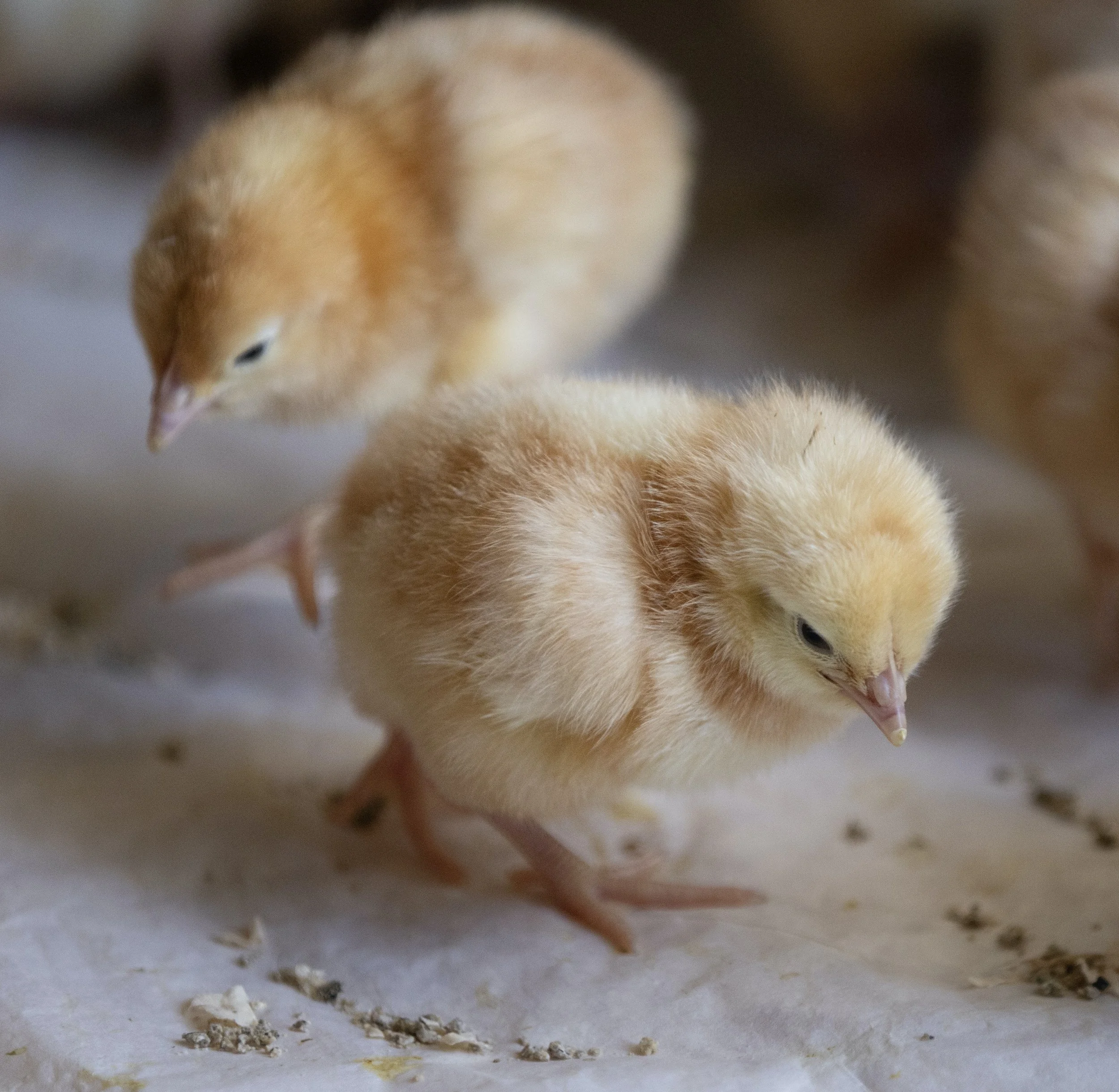
It’s a riddle as old as time and one that has left the greatest minds in history scratching their heads. But ask Karlene McGirr what came first, the chicken or the egg, and her answer is immediate.
“The chicken has to come first because that's our priority,” she smiles. “If you look after the chicken, you get a good egg.”
This philosophy drives Kaimai Eggs, the family-owned egg farm situated in the tranquil Kaimai Ranges that was started by Karlene's parents, Otto and Vicki McGirr, in 2011. Now Karlene and husband Jim are continuing to grow the family business, along with all Otto and Vicki's daughters, who are involved in aspects of the farm. The health and well-being of their chickens is something that has been paramount to the whole family since the beginning.
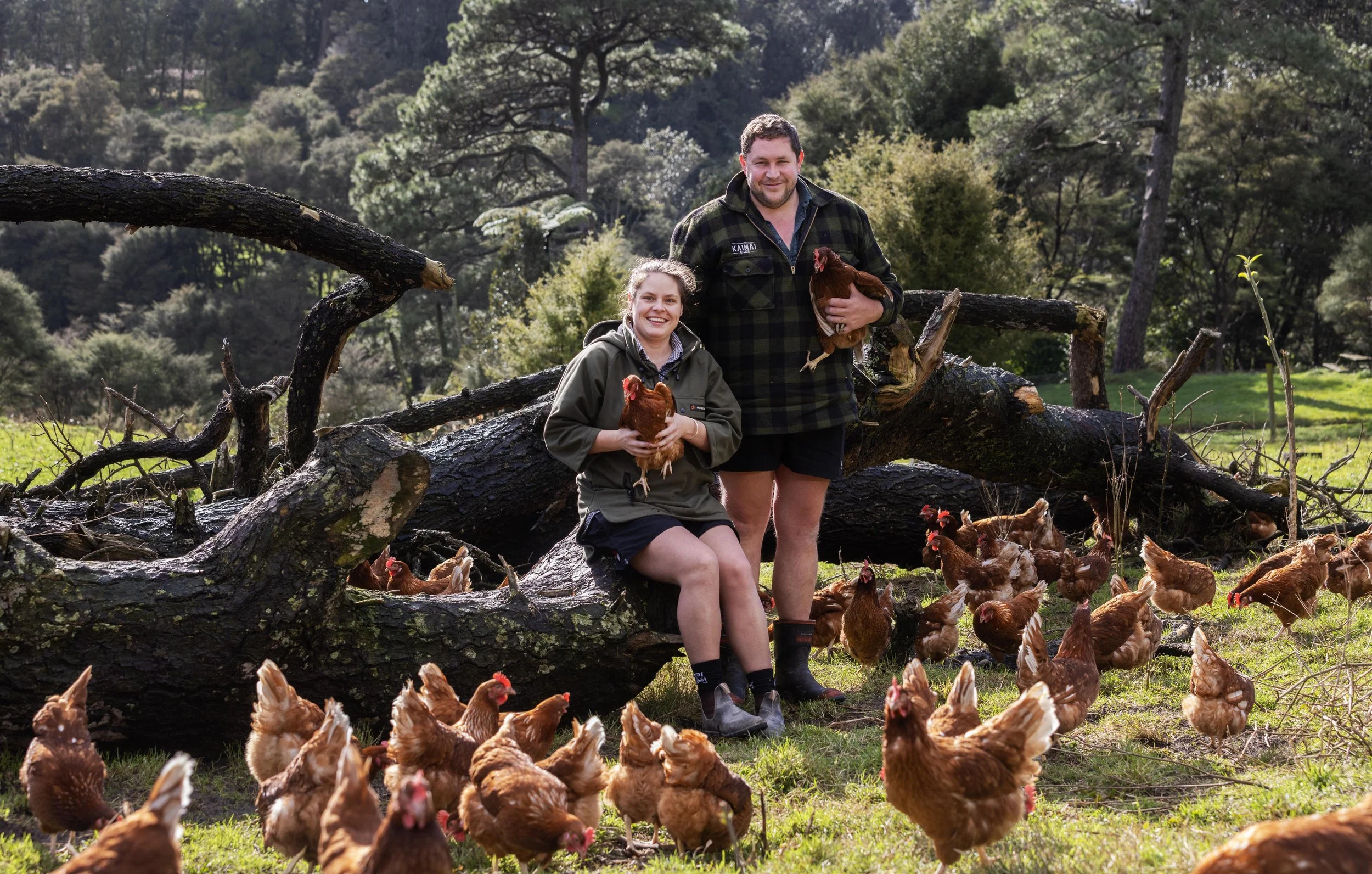
Karlene and Jim Brown.
“Dad's been asked ‘What makes a good egg?’ a few times over the years, and it’s simple: a good chicken makes a good egg,” Karlene explains. “There’s no other way around it.”
“You've got to have a healthy, well-fed, well-watered chicken in a good environment with good people looking after it and all the other stuff kind of just happens,” Jim adds. “Which makes sense. Of course, a happy bird is going to produce better eggs.”
Their farm, which produces free-range and barn eggs, is situated in the tranquil Kaimai Ranges, where the chooks enjoy a view of the hills that’s so stunning it’s printed on the egg carton. But spectacular views aren’t the only thing that sets Kamai Eggs apart.

Otto McGirr.
Unlike most egg producers, they look after their whole supply chain, getting baby chicks at just one day old and rearing them right up until they’re ready to begin laying eggs. From there, they’ll be moved into one of the farm’s laying sheds, where they’ll be able to run free, indoors and out, with the flock. The eggs that are produced are then packed by hand on the farm before going onto their “little truck” that leaves every morning, to deliver them fresh to supermarkets and cafés around the region. Their team even stacks the supermarket shelves themselves to ensure there’s no accidental breakage that goes unnoticed and could leave a bad taste in a consumer’s mouth.
“We’re only as good as the last carton that goes out. We believe, and it’s
true, that every carton is an individual customer,” Jim says, explaining why in this age of automation they remain hands-on. “If you have a bad experience with our eggs, you're not going to want to buy them again.”

The family don’t just talk the talk, they also walk the walk, out on the farm each morning checking on their chickens and jumping on the line to pack eggs.
“We have a great team who supports making this happen seven days a week,” Jim says, proudly.
Keeping the birds happy and healthy is a constant challenge, especially with free-range farming. The trick is finding the balance between quality of living for the bird versus the cost, so an affordable product is waiting on supermarket shelves.
“We’ve invested in some really high-tech monitoring systems for the animals and for people to spend time with the animals,” Karlene says. “And because we rear our own birds, we get to control those that are incoming. Birds never leave the farm. They come in at one day old, and they stay on the farm.”
“It's a low-stress environment,” Jim says. “Because we're not moving the chicken far. It just goes from that shed there when they’re chicks to that shed there when they’re ready to lay. You see in other animals, when they move long distances, they come under a lot of stress.”

The farm has philosophically and financially invested in ensuring their chickens' lives are as stress-free as possible. The chickens live in a big shed where they have 24/7 access to a grassy paddock.
“They can come and go as they please,” Jim says. “But typically they hang around the shed in the mornings.”
The birds are early risers, up at 4am for breakfast, before they start laying eggs at 5am. Around 8am is when the animal welfare team comes in to do their checks and make sure everything is hunky dory, and by 9am, the chooks' work is done for the day and they head outside to enjoy their day.
“The chickens are awake for 16 hours a day. And they get up to stuff,” Karlene says. “They break a lot, scratching and pecking and tapping away.”
“It can be chicken anarchy,” Jim laughs.
Rounding them up in the evening and herding them back into the shed before dark is a surprisingly easy task.

“They're scared of the dark, so they all come in willingly at night,” Jim laughs. “It's like a switch. All of a sudden, they all just start running for home. It's bloody amazing! They all come in, eat and roost, and hopefully give us an egg the next morning.”
Kaimai Eggs' slogan is ‘Your Local Farm’ and that’s something they take to heart. They support local schools in the area, as well as Bay of Plenty Rugby and local food banks and charities.
“We take our social responsibility very seriously,” Jim says. “It's our job to support quite a few organisations.”
“Words are cheap. We want to walk the walk,” Karlene says. “Dad is a big pusher of that, especially with supporting kids in sports and the local schools. It's not optional, it's just what we do. It's all good to go out there and tell everyone that we're local, but you’ve also got to put your money where your mouth is and support local organisations.”
“It's cool,” Jim smiles. “You get to meet quite a few local people doing good stuff in the community. It's rewarding to help organisations in the community. It makes you feel good.”
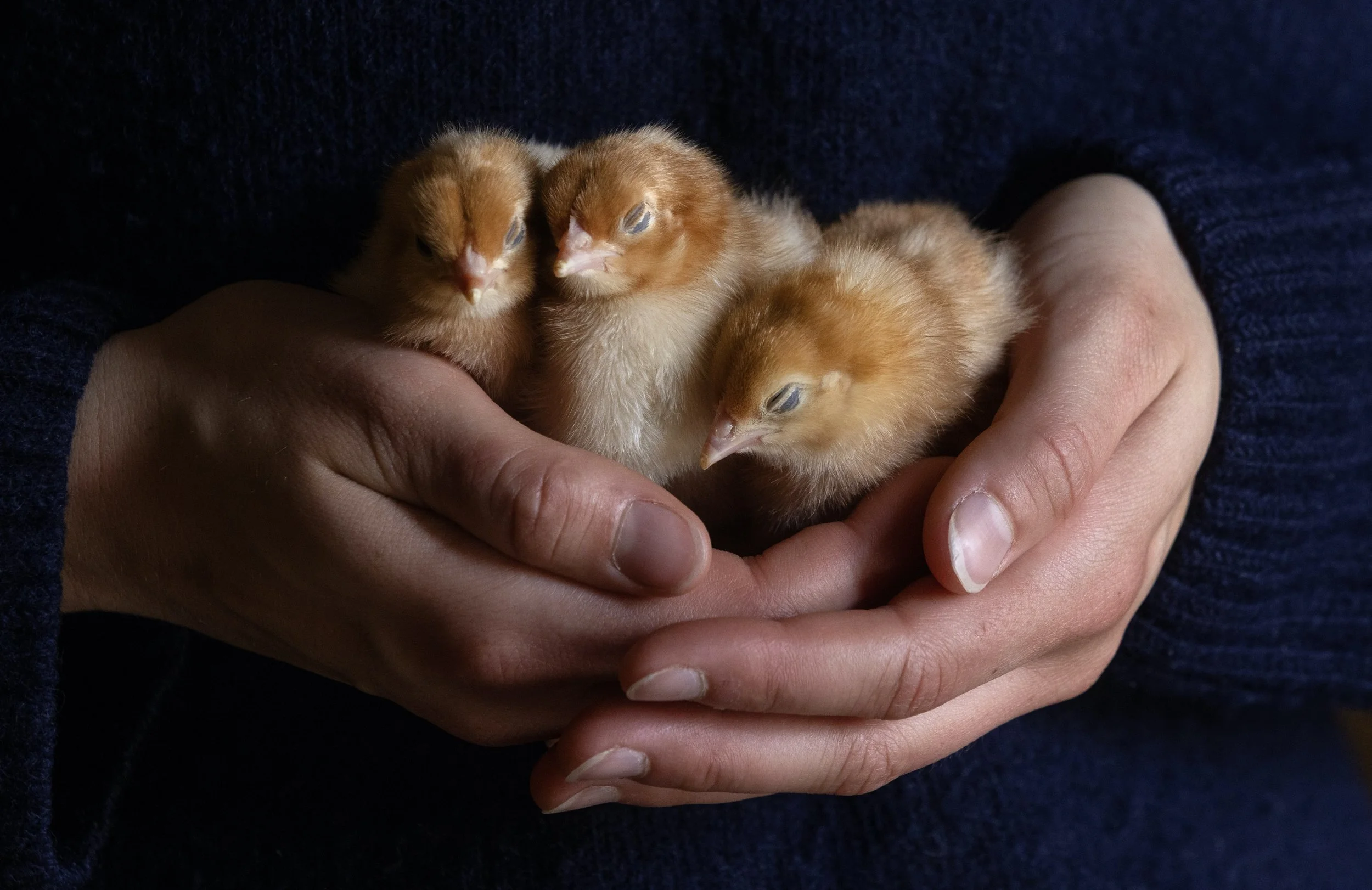
There’s only one last question for the egg farmers, and it could be the hardest of the lot; how do they like their eggs?
“That's the big question for the egg producers,” Jim laughs. “We've got loads in the shed and we always forget to take them home!”
“And we only get to take the ones that aren’t perfect,” Karlene adds.
“To be honest, it's quite nice to come to the cafés that use our eggs and get them to cook them for us,” Jim smiles, before Karlene jokes, “We're terrible at cooking them!”

The long game
Women and girls rugby in the Bay of Plenty is growing fast, but behind the progress are real challenges, and a community working hard to bridge the gaps.
Women and girls rugby in the Bay of Plenty is growing fast, but behind the progress are real challenges, and a community working hard to bridge the gaps. Karen Clarkson talks with powerhouse referee and women’s rugby advocate Tiana Ngawati-Anderson, uncovering the grassroots movement reigniting the spirit of the women’s game.
words KAREN CLARKSON photos GRAEME MURRAY hair + makeup NATALIE DAWSON

In rugby-mad Aotearoa, the Bay of Plenty is often seen as a quiet achiever. It’s a region steeped in generations of club tradition, burgeoning talent and the unmistakable buzz of communities gathering on the sidelines every weekend. But behind the booming registrations in women and girls’ rugby lies a story of fractured pathways, trailblazer community leaders, and a collective call to return to the grassroots.
At first glance, the numbers are promising. Women and girls rugby participation has grown steadily, with club-level growth for teenage girls at 39 percent and a 13 percent increase among 5-12-year-olds playing tackle. But the surface tells only part of the story. Dig deeper and the challenges quickly emerge: drop-off rates at age 14, disconnection between the secondary school and club rugby systems, and the gap between community and professional rugby widening by the season.
“Some of the most powerful change is happening at the grassroots level,” says Tiana Ngawati-Anderson, former Black Ferns Sevens player and international 22 | unomagazine.co.nz “But when I didn’t make the Auckland under-17 netball team, I thought: right, I’m going to play rugby.” Raised by a touch rugby-loving whānau, Tiana (Ngāti Hine, Ngāti Porou and Ngāti Whakaue) had known the oval ball her whole life, but like many young girls, netball seemed the obvious choice. “The moment I stepped onto the rugby field, it just clicked.”
That instinctive switch lit a fire that’s fuelled more than two decades at the heart of New Zealand women’s rugby. From captaining teams and representing her country, to coaching secondary schools and mentoring young referees, Tiana now has a hand in shaping the future of the game she loves.
And she’s not doing it alone. She points to local female rugby legends like Renee Wickliffe and Portia Woodman-Wickliffe, who started a girls’ team at Arataki Rugby Club when no competition existed for their age group.
“So they played the boys, and won. Now they’ve got two girls’ teams and even fundraised to travel to Christchurch for a national girls' festival. That’s what leadership looks like.”
Another changemaker is Victoria Grant, former Hurricanes Poua head coach. “She found out only two Tauranga teams went to a Waikato tournament, so she created her own under-11s competition at Rotoiti, and nine teams turned up,” says Tiana. “They’re creating opportunities so their daughters can come through with real game experience, not just talent.”
Reconnecting the pathway
Back in 2018, Tiana moved to the Bay of Plenty with her husband, who joined the Black Ferns Sevens as a strength and conditioning coach. She was close to retirement, juggling training and parenting their daughter, when a gym conversation changed her direction. “Someone asked me if I would consider being a referee and I said ‘hell no’. But it planted a seed.”
By 2019, she had made the New Zealand referees squad and officiated her first Sevens nationals in Tauranga. Since then, she’s gone on to referee the Farah Palmer Cup final, be nominated for Referee of the Year, and become the second woman ever to officiate a men’s NPC match. At the same time, she was also stepping into leadership, taking on the role of general manager for high performance at Bay of Plenty Rugby Union. There, she saw firsthand how disconnected the women's pathway had become from the community.
“The academy (Athlete Development Programme), had been established to guide amateur players into a professional environment and we were trying to build depth in the Volcanix team, but we realised we had to go back to where it all starts, which is the clubs.” She leaned on her own experience coming through a strong development system in Auckland. “The truth is, “I remember thinking, we’ve got to go back to boosting and investing in community rugby. We want more girls playing rugby and staying in the game.”

The cup that counts
While teaching at Te Whare Kura o Mauao, she took the reins of the school’s rugby programme and pushed her team to compete in the open grade. “In our first year, we made the final. The girls didn’t realise how good they were. But eligibility rules blocked us from going to Nationals. So I turned to coaching the Western Bay U18 girls. That year, we won the Youth Development Cup.” That cup, she says, is the only talent identification tournament for girls’ rugby in the region. “You see the talent on the fields every weekend, you know, that one, and that one… they’re Black Ferns in the making. But then what? There’s no New Zealand U18 or U20 women’s team. The pathway just stops.” BOPRU’s newly launched U16 and U18 girls’ league, beginning this season, is a direct response to that gap. It offers girls their first true 15s competition, which is crucial for developing real game experience before reaching rep level.
Playing for the mana of the jersey
Tiana credits much of her success to early mentors like Anna Richards and Hannah Porter, who shaped the game with vision and heart. Now, alongside people like Brendon McKeown (community rugby manager), Ryan Setefano (women and girls pathway manager), and Jess Walrond (women and girls participation manager), she’s part of a movement to restore pride and purpose to the club jersey.
“Back in the day,” she reflects, “all you wanted was to wear the Bay of Plenty jersey. That was it. The battles between Eastern, Western and Central Bay – that can be our Super Rugby.”
Brendon and the BOPRU team have continued her work since she stepped back to focus on refereeing and coaching. Together, they’ve launched a five-year strategy, a new province-wide competition, and created dedicated roles to drive participation and retention.
“There’s a vision and commitment at union level to create a sustainable framework to increase participation and keep girls playing through safe, supportive transitions,” says Brendon. “We want girls to thrive through every stage of rugby. Because they need to love the game, to stay in the game. From rippa rugby to secondary schools, into club rugby and beyond. To feel that same pride of pulling on their club jersey, knowing they’re part of something bigger.”
And that honour runs deep. “I referee down in Te Paroa, Whakatāne, and that’s where I enjoy the game most,” says Tiana. “Because of the people. That’s where rugby lives. It’s not about deals or contracts or being one of the few percent that make it to the black jersey. It’s about whakapapa.”

Beyond performance Tiana sees both sides of the game – elite and grassroots – but she’s clear-eyed about where the energy needs to return. “Rugby’s in trouble right now. Too much emphasis is on Super Rugby. The potential is massive in this region – there’s so much raw talent here – but we need to come back to the hāpori (community) because that’s where the passion is.”
Her dream? A purpose-built high-performance centre for women in the Bay of Plenty. “That would be the ultimate. A home for women’s rugby. Somewhere the girls and women can thrive, not just on the field, but as leaders and changemakers, as wāhine.”
She’s also watching the future unfold close to home. “My eldest is nine now and starting to play rugby,” she says, her voice softening. “And I’m hopeful she’ll be part of a generation of women players who are thriving at every stage of their rugby journey.”
What’s emerging in the Bay of Plenty is more than a rugby revival. It’s a movement led by wāhine toa, parents, coaches, and club legends, with the support of a rugby union who now have a clear strategy to shape pathways for the next generation of female rugby players. These people believe that rugby is still, at its heart, a game of belonging. A game that teaches values, builds character and connects generations. And if these community leaders have anything to say about it, the girls coming through today won’t just play rugby, they’ll inherit the full weight and honour of what it means to represent.
Savour the balance
Delicious gluten-free, dairy-free recipes to balance blood sugar, boost your glow, and energise your body, created by holistic skin health expert Janine Tait and chef Isaac Weston.
Delicious gluten-free, dairy-free recipes to balance blood sugar, boost your glow, and energise your body, created by holistic skin health expert Janine Tait and chef Isaac Weston.
photos TASH MITCHELL FROM TASTEFULLY STUDIOS

Beetroot and boysenberry cupcakes
This recipe can be used to make a dozen cupcakes, with a rich, chocolaty taste and a touch of sweetness from the boysenberries. Note: You can replace the boysenberries with any other berry but avoid strawberries if you have irritated skin.
makes 12 prep time 10 MINUTES cooking time 25 MINUTES
Gluten free, dairy free, refined sugar free
INGREDIENTS
1 cup allulose or monk fruit with erythritol (white granulated version)
2 cups almond flour (not almond meal)
1 ½ tsp baking soda
1 cup cacao or cocoa powder
1 cup beetroot, grated
½ cup boysenberries, fresh or frozen (defrosted)
½ cup coconut oil, melted
4 eggs, room temperature
METHOD
Preheat your oven to 160°C. Grease 12-cup muffin tin.
Add all the ingredients to a food processor and blend until smooth.
For cupcakes, bake for 25 minutes, or until a skewer inserted comes out clean. Allow the cupcakes to cool before removing them from the tins.
Serve with a dollop of coconut yoghurt and fresh or defrosted berries.

Everyday loaf
This loaf is the closest I have tasted to a wheat-based bread. It has the lightest texture and mildest taste of all the options in this book. Just keep in mind that it may take a little longer than most to toast, so adjust your toaster settings accordingly. You will need scales for this recipe.
makes 1 loaf | prep time 10 MINUTES | cooking time 40-50 MINUTES | GF, DF, RSF
INGREDIENTS
100g ground golden flaxseed/ linseed (grind 1 cup of whole seeds in a spice grinder if needed)*
1 cup almond flour
½ tsp fine texture salt
3 tbsp soya flour**
2 tsp of baking powder
2 tbsp olive oil
150ml water
4 medium-sized eggs
*Pre-ground brown flaxseeds are a convenient alternative to grinding the golden flaxseeds, though they will alter the colour of the loaf.
**Soya flour (also known as soy flour) is commonly available in Asian food stores.
METHOD
Preheat your oven to 180°C. If you aren’t using a silicone tin, grease or line a loaf tin.
In a bowl, blend the olive oil, water and eggs together using a whisk or stick blender until well combined.
Mix the wet and dry ingredients together until fully combined. Leave the mixture to stand for 5 minutes to thicken.
Pour the mixture into the loaf tin. Bake for 40-50 minutes, until risen. Please note that this bread doesn’t brown very much.
Check with a skewer to see if cooked. Leave to cool on the bench before removing from the tin. Once completely cooled, you can slice the bread and freeze it for an easy toast alternative.

Konjac noodle chicken broth
Noodles are a common blood glucose-spiking food, so finding a delicious alternative like konjac noodles is a real win. Konjac is a root vegetable that grows in many parts of Asia and is high in fibre, making it great for gut health. A 2013 study even suggests that konjac can reduce acne and improve skin health.
serves 4 | prep time 10 MINUTES | cooking time 1 HOUR 15 MINUTES | GF, DF, RSF
INGREDIENTS
1 large onion, peeled and chopped into chunks
4 cloves of garlic, peeled
2 whole star anise
5cm knob of fresh ginger, sliced into chunks (skin can be left on)
1 ½ tbsp salt
12 cups cold water
1.3kg whole chicken 1 pack (400g) of konjac noodles
Garnish: Spring onions, chopped coriander or other fresh herbs
METHOD
Place the water, chicken, onion, garlic, star anise, ginger and salt into a large pot (about 25cm wide x 15cm deep), ensuring the water covers the chicken.
Bring to a boil, then allow a rolling boil for 25 minutes with the lid on. After 25 minutes, reduce the heat to a simmer and cook for an additional 50 minutes, with the lid on, until the chicken is fully cooked and tender.
Remove the chicken from the broth and shred the meat, setting it aside. Strain the broth into a separate pot and discard the onions, garlic, ginger, and star anise.
Remove the konjac noodles from their packet and rinse under cold water for 1 minute (or follow the instructions on the packet).
Divide the noodles between bowls and pour the hot broth over the top. Add the shredded chicken and garnish with spring onions and fresh herbs. The leftover broth and chicken can be frozen together (without the noodles) for future use, or stored in the fridge for up to 3 days.
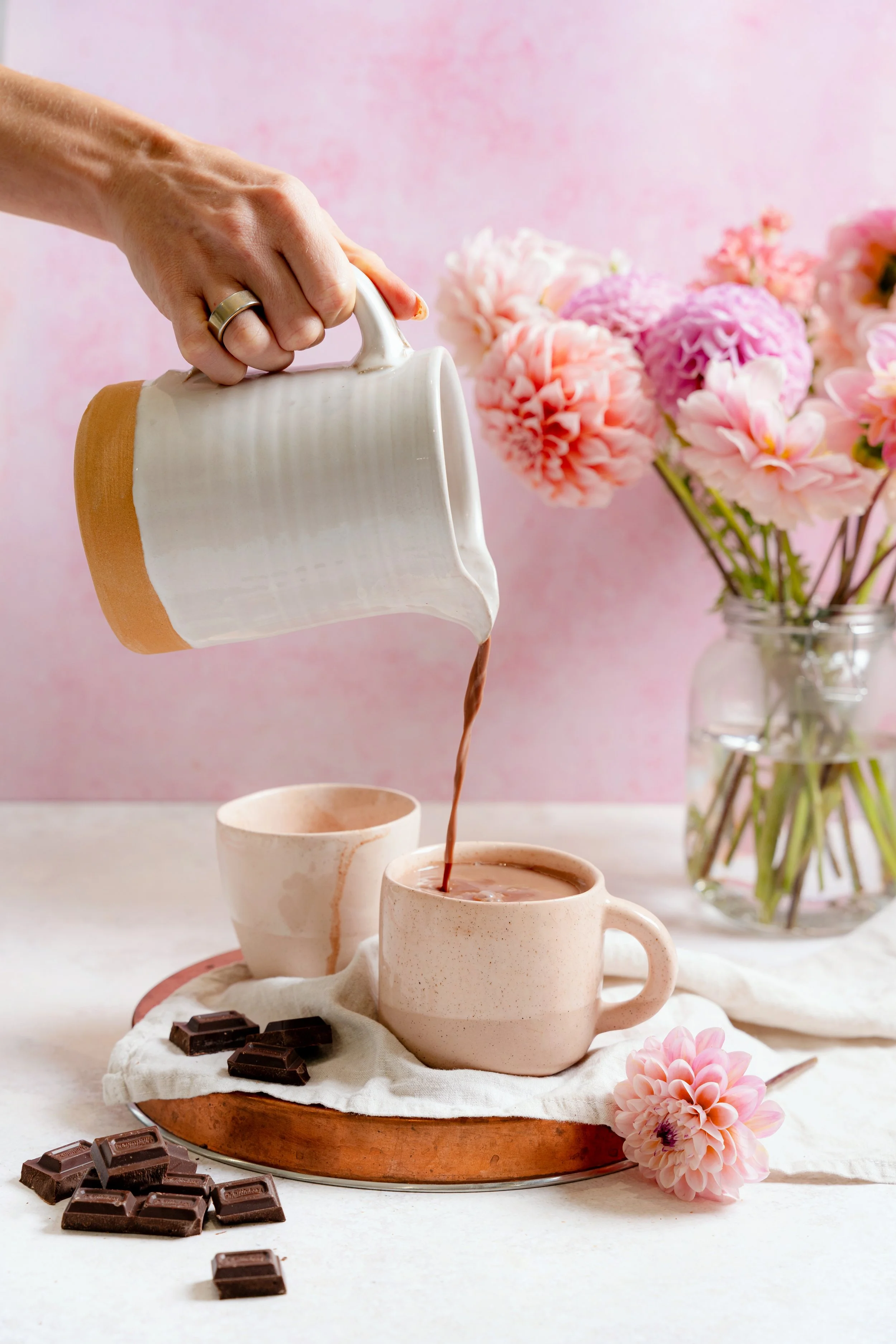
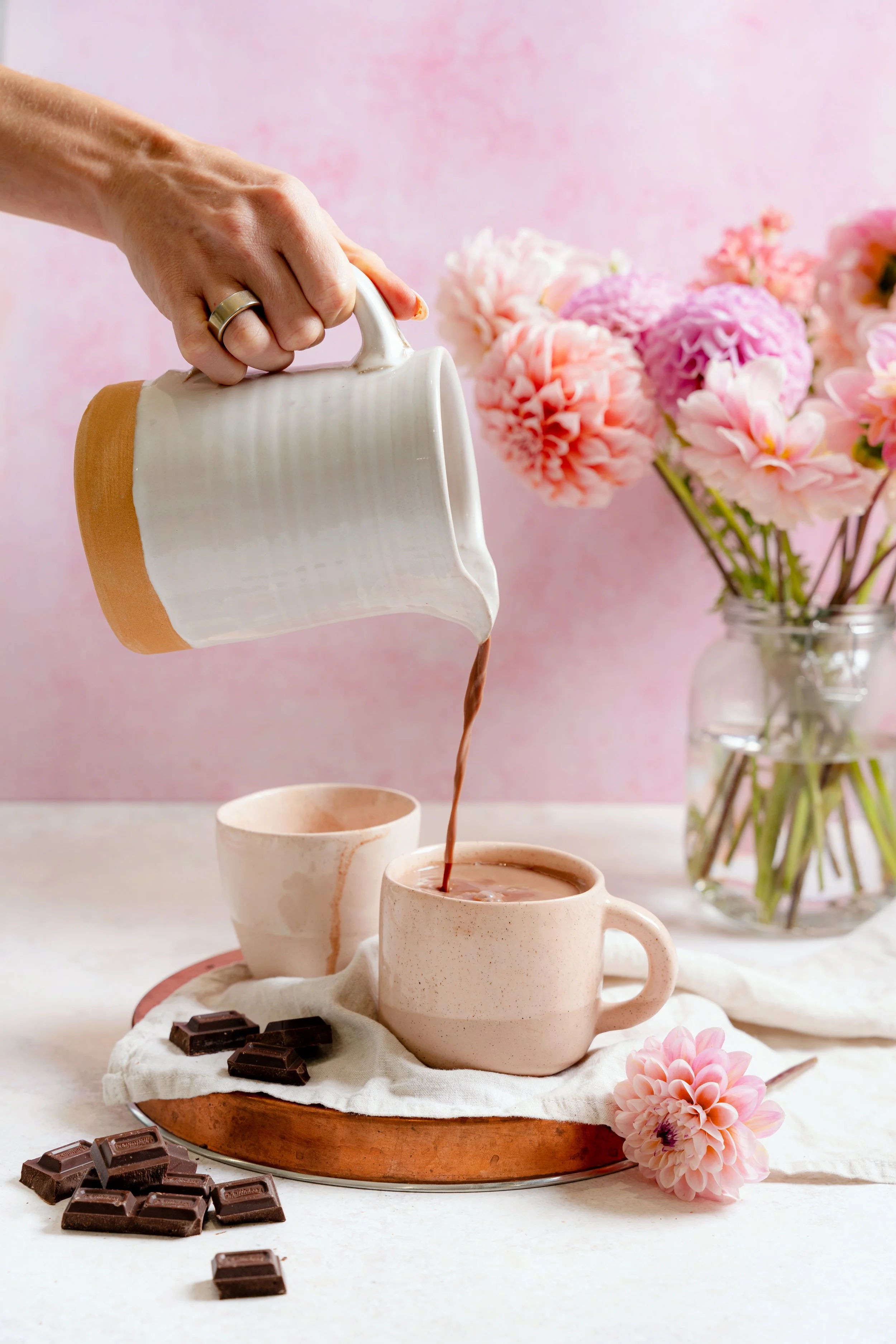
Spiced hot chocolate
A warming and aromatic drink, perfect for a cosy moment. This latte is rich with spices and a healthy cacao kick.
serves 2 prep time 5 MINUTES GF, DF, RSF, Vegan
INGREDIENTS
6 cardamom pods (seeds removed)
5 whole cloves
¼ tsp nutmeg
1 tsp cinnamon
2 tsp cacao or cocoa powder
2 tsp maca powder
1 tbsp monk fruit with erythritol (white sugar version) or allulose
1 cup almond or soy milk
1 cup water
METHOD
Remove the seeds from the cardamom pods. Use a mortar and pestle or spice grinder to grind the cardamom seeds and cloves into a powder.
Place all the ingredients, including the ground spices, into a pot. Warm the mixture over medium heat, stirring regularly. Take care not to let it boil.
Pour into mugs and serve warm.

A different kind of calling
A teacher, a doctor, a pilot, a movie star... Becoming a funeral director probably isn’t on many childhood wish lists. But for funeral director, Fergus Keith, it’s his most rewarding job yet.
A teacher, a doctor, a pilot, a movie star... Becoming a funeral director probably isn’t on many childhood wish lists. But for funeral director, Fergus Keith, it’s his most rewarding job yet.
photo MARK FRUISH @ MATCHING BLACK

With a calm presence and a passion for helping others navigate grief, Fergus Keith shares his insights into the surprising realities of his role, what makes the work so meaningful, and why it’s time we all started talking more openly about death – and life while we’re at it.
UNO: What did you want to be when you grew up?
Fergus: Honestly, a funeral director wasn’t on my radar. Like most people, I didn’t leave school thinking, ‘I’m going to work in the death care industry’. It’s a vocation that found me later in life.
Tell us a little about your work history prior to Legacy Funerals?
Before coming to Legacy Funerals, I spent time working as an ambulance officer and a church pastor, and I’m also a volunteer firefighter. Those roles have given me a deep understanding of how to relate to a wide range of people, especially during crisis and grief. My own personal experiences with loss as a teenager also helped me become more comfortable in that space.
What does a typical day look like for you?
We’re not just dealing with the deceased – we’re working closely with the living. There is a lot of variety within the role, from behind-the-scenes work planning funerals, organising logistics and working with celebrants, to supporting grieving families. It's a careful balance between organisation and event planning, and ceremony, ritual and empathy.
What surprises people most about your job?
It’s not all sad and sombre. There are lighter moments and laughter with families as we work alongside them to keep the stories of their loved ones alive. Funerals are about more than saying goodbye, they are a vital part of the healing process – not because someone has died, but because they have lived. And they’re not just for the front row of mourners. Friends, colleagues and community members also need that moment to reflect and grieve.
What do you find most rewarding about your work?
It’s deeply fulfilling to know that by taking the time to craft the funeral experience just right, it helps people grieve well. Helping families feel supported at their darkest moments is a privilege that feels more like a vocation of service rather than a job. Also, Legacy Funerals is owned by a charitable trust, so profits go back into our community.Being part of something bigger adds another layer of meaning to what we do.
Do you have any advice for those considering a career in this field?
In my role I am a guide, a storyteller and above all a listener. There is a certain level of maturity and life experience needed for the job. There is also on-call work – sometimes you're answering the phone at 2am when someone’s world has just fallen apart. But being that trusted person in those moments is incredibly humbling.
Any final thoughts?
As New Zealanders, we often rush grief and avoid talking about the inevitable. I encourage people to talk more openly about death, plan ahead and think about what their family will need when their time comes. At Legacy, we help people pre-plan funerals, not just to make things easier logistically, but to ensure the final farewell is a meaningful experience that enables their loved ones left behind to grieve and heal. After all, funerals aren’t just about death, they’re about taking the time to celebrate and honour life.

Kind, firm, calm
Could the secret to great parenting be KFC?
Could the secret to great parenting be KFC?

Ever find yourself second-guessing the decisions you make as a parent? Wondering if you're being too strict, too soft, too harsh, too lenient?
Good news – there is a simple balance that offers an easy-to-remember parenting posture. It combines warmth and affection, is held in place with gentle leadership, and is delivered calmly knowing that children thrive when the atmosphere is peaceful.
I like to call this KFC – kind, firm, calm. Keeping a balance of these three things is the key to parenting.
Be kind
When we’re communicating with our kids, our tone of voice really matters. We need to stay kind and pleasant. If we are mean, sarcastic or shouty, our children will feel like they need to defend themselves and the issue will get lost in a fight.
Listen to your children and offer them empathy and support. Convey warmth, interest and love so they feel seen and heard by you. A stern look or raised eyebrows can communicate our impatience and irritation. On the other hand, gazing lovingly at your children and showing you are pleased to see them offers a deep feeling of safety and being loved.
Be firm
Children need us to be firm, even though they will do their best to get us to fold. Work out what you’re prepared to stand by and stay the course. Children will be relentless if they find they can sway us, and our job will be much harder. A great motto is, “Say it, mean it, do it.” Remember that children feel safe, loved and protected when the big people set boundaries and stick to them.
Be calm
We need to be a constant source of calm in our families – as if we are set on a thermostat. The weather may change, but we don’t. When storms threaten, instead of losing our cool, yelling and reminding our kids about stuff they already know – we stay calm. Our confidence is conveyed by speaking quietly and bringing our voice down at the end of a sentence. Avoid fighting words that invite a challenge. For example, “There will be no biscuits until you have unpacked your school bag” works better with an invitation to cooperate instead.
“You may have a biscuit as soon as you have unpacked your school bag.” If you find yourself flooded with emotion, find a way to regain your composure. Press pause. Take some deep breaths and a few steps back. Make a cup of tea or go outside and reflect on what just happened.
When you keep your composure, your children look at you and see how it’s done. They see that the big person in their life is not thrown or overwhelmed by their behaviour and it helps them relax and begin their own process of self-regulating.
Extracted from Kind, Firm, Calm – Simple strategies to transform your parenting, by Jenny Hale.
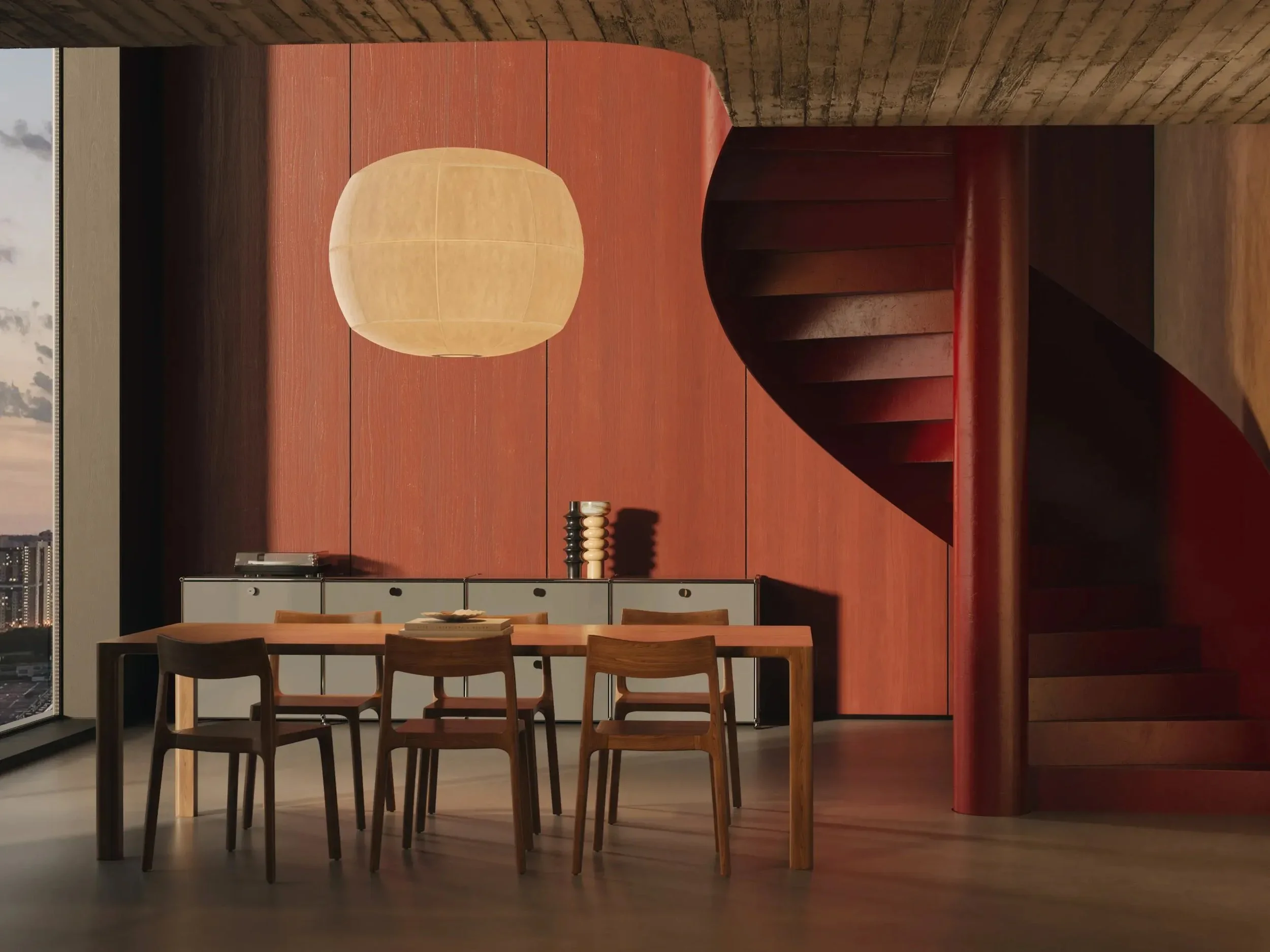
Organic flow
Expert tips with Kathrine McDonald – where function meets quiet beauty.
Where function meets quiet beauty.

Expert tips with Kathrine McDonald
Sculptural silhouettes and organic forms are redefining the language of interiors, infusing our spaces with softness, movement, and a sense of individuality. From curvaceous furniture and abstract lighting to hand-crafted ceramics, these pieces blur the line between function and art, introducing warmth and emotion to otherwise clean architectural spaces. In an increasingly fast-paced world, there’s a deepening urge to slow down and find beauty in imperfection. These fluid, tactile shapes invite touch, spark curiosity, and encourage a sense of calm and continuity.




![Ray Haydon Sanderson _DSF9596web[29].jpg](https://images.squarespace-cdn.com/content/v1/604fff785edf603082139070/1751246486022-BN9SR27782W3RQNEOGPV/Ray+Haydon+Sanderson+_DSF9596web%5B29%5D.jpg)


1. Rakumba Big Glow pendant, in-store July, $3005 - $5660, ecc.co.nz
2. The Boulder chair, POA, davidshaw.co.nz
3. Relevo rug in Burnt Orange by Muuto, 170 x 240cm $2346 - 200 x 300cm $3790, top3.com.au
4. Sand Dune Pillow-ish vase, $229, authorceramics.com
5. Block mirror, $2100, slowstore.co.nz
6. Gesture XVI carbon fibre, resin, oak veneer 700 x 1000 x 200 mm, $13,900, sanderson.co.nz
7. Teressa table lamp, $1345, backhouse.co.nz
8. Artisan mosaic accent table - Travertine, $759, crafterandco.nz
9. Organic shaped cup 275ml, $29.90, greenwithenvy.co.nz
10. Walter Brown side table Woodstone, POA, davidshaw.co.nz
11. Nick Herd Oil on Canvas 320 x 215mm, $3600, foenandergalleries.co.nz
12. Lulu Candle in Ivory, small $39.95, large: $69.95, kayustudio.co.nz
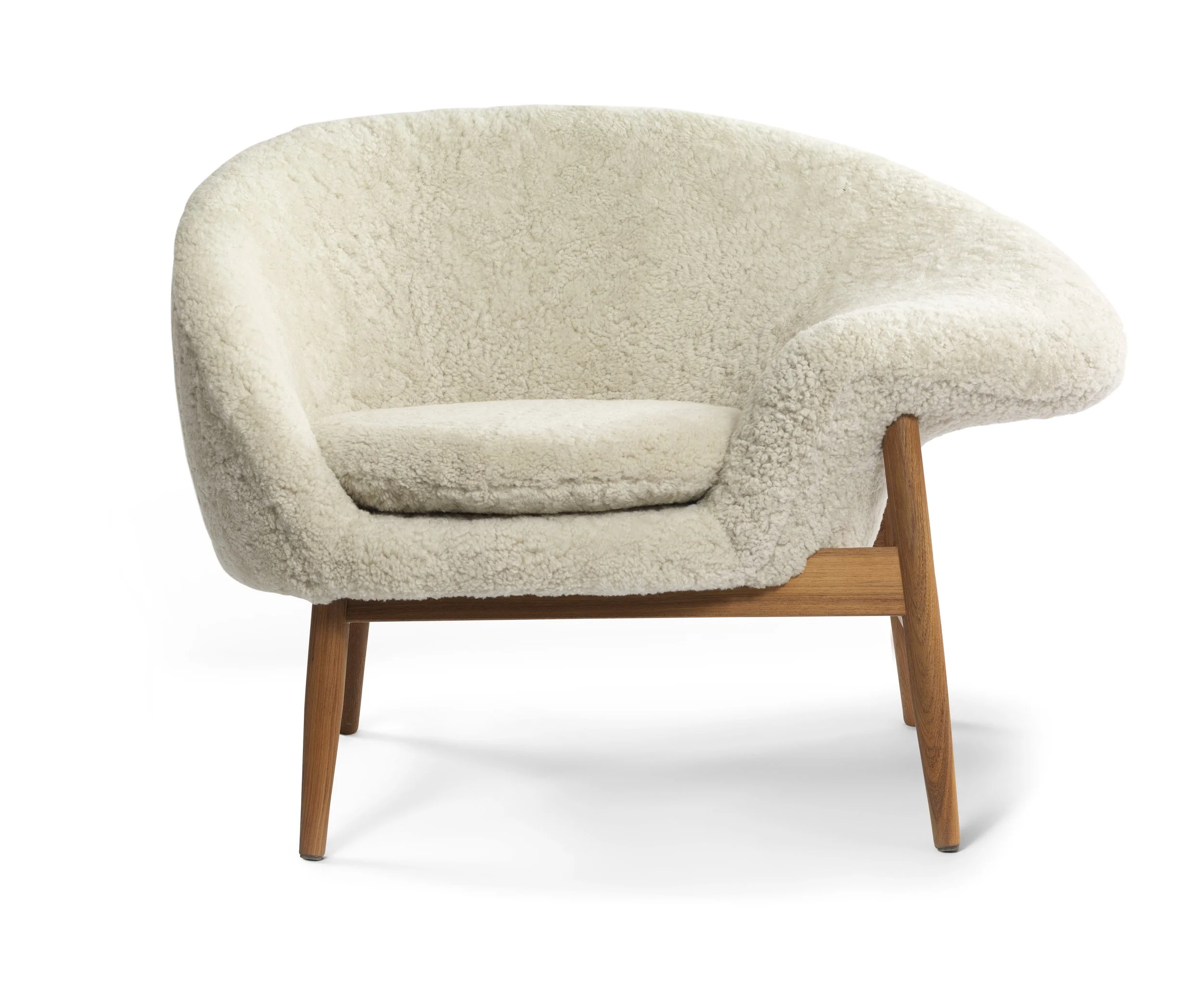
13. Fried Egg Sheep chair, $9995, goodform.co.nz

Mishaps and mayhem
Proud farm girl turned radio personality, Hayley Bath’s chaotic life is comedy gold.
Proud farm girl turned radio personality, Hayley Bath’s chaotic life is comedy gold.

Radio host Hayley Bath isn’t just the voice keeping you company from 9 to 3 on The Hits – she’s also the kind of woman who accidentally eats her pet sheep, marries a man after 12 weeks and loses her last baby tooth at 32. (Yes, really.) Here Hayley shares 10 delightfully unfiltered facts about couchsurfing with criminals, misbooking Mandarin bus tours, and raising a son who thinks Santa’s reindeer crashed into their lounge. Warning: you will snort-laugh reading this.
1. I accidentally ate my prize-winning pet sheep.
I’m a country girl who grew up just outside of Pukekohe on a lifestyle block, where we had cows, sheep, chickens, pigs, and even a horse at one point. I earned pocket money by rearing calves and quickly learned that naming a cute piglet ‘Bacon’ helped when the circle of life inevitably came around and it was time to stock the freezer. I always knew that my ribbon-winning sheep, Harry, would eventually be turned into lamb chops but when the time came, I absolutely refused to eat him. Lamb? Fine. Harry? Absolutely not. About a year later, I was reassured over dinner that Harry was long gone from the freezer, so I tucked into a lamb chop without a second thought. Fast forward three years to a heated argument with my sister, when she suddenly screamed: “YOU DID EAT HARRY’S LAST CHOP AND THE WHOLE FAMILY KNEW!”

2. I once had dinner with a drug smuggler and spent the night on the couch of a (ahem, cough) ‘woman of the night’.
My sister and I couchsurfed our way around the world, staying on strangers’ sofas and encountering all sorts of characters, some more colourful than others, as mentioned above. We went to 14 different countries in 90 days, travelling as cheaply as possible, which naturally led us to a few hairy situations. My poor mum was worried sick for us. For that reason we didn’t tell her when we got into a stranger’s van in Cambodia, got driven around the middle of nowhere and then had to give him cash to be let out of the van. Some things are best left unsaid.

3. I accidentally went on a four-daylong, full mandarin-speaking guided bus tour in the US.
In the aforementioned trip, my sister insisted I pull my weight and organise something on the trip for a change. I chose a Grand Canyon bus tour but I left it until the night before to book it. We only found out why it was so cheap the next morning when the bus took off and the tour guide started speaking mandarin – for the entire time – for four long days. By then we were stuck on it. To this day I have no idea of any of the history or even what state we were in.

4. My hubby and I decided to get married just 12 weeks after meeting.
When you know, you know, and I’m still unashamedly smitten with the gorgeous man. It was a whirlwind engagement that left a few people shocked, and more than a few assuming I must be pregnant (I wasn’t). So we decided to lean into the whole “shotgun wedding” narrative. Our ‘save the date’ invites featured me dressed as a pregnant hillbilly, with my wonderfully kooky dad posing behind Chris and me with a shotgun, implying an enforced marriage. We tied the knot just four months later. And now, 10 years on, I can happily say we’re still going strong – and still laughing.
5. I lost my last baby tooth at the age of 32.
I know. Odd, right? Turns out there was never an adult tooth underneath it, so it just stayed put. Eventually, it had to be removed by a periodontist. Having waited nearly 32 years for the tooth fairy to show up, I figured this tooth must have gained some interest on the original two-dollar coin I never received. Surely, by now, it was worth at least a five-dollar note. So, with great hope, I placed my final baby tooth on the windowsill. The stingy tooth fairy, however, left me just one miserable chocolate peanut. A far cry from reimbursing me for the rather expensive dental implant that followed.

6. One of my most prized possessions is a taxidermy stag head hunted by my greatgrandfather in the 1940’s.
I’ve named him Lenny, after my great-grandfather Leonard. He hangs on the wall in our lounge. When my son was three years old, he developed a habit of swearing, completely unaware of what “naughty words” actually were. One day, I overheard him in the lounge, delightfully chatting to the stag and calling it a “f**king reindeer”. I think he believed it was one of Santa's reindeer that had accidentally crashed through the wall and become stuck while trying to land on our roof at Christmas. Now, every December, Lenny gets a red nose.
7. I’m a giant.
Okay, technically I’m only 5 foot 10, but I feel like a giant. I shot up before all the boys at school, which is a crushing blow to any 12-year-old’s self-esteem. At my year eight formal, I finally plucked up the courage to dance with my crush, who, unfortunately, was eye level with my chest. In hindsight, he probably wasn’t too bothered, except that my body seemed to use all its energy growing upwards, leaving other, err, developments for much, much later.
8. I am a grateful recipient of the lifesaving service that is Life Flight.
While I wouldn’t necessarily call this a fun fact, I was flown on a Life Flight Air Ambulance while pregnant with my twins. At the time, there were very few NICU beds available across the country, which placed me in a dangerously overdue situation and threatened the life of one twin in the womb. I was transferred on an emergency flight from Wellington Hospital to Palmerston North Hospital – one of the few places with available NICU beds. I’m now fortunate to have two healthy twin boys, along with their older sister. I’m incredibly thankful for the amazing team at Life Flight and the outstanding medical staff here in New Zealand.
9. I spent a whole heap of money on a largely unused degree.
In high school, I wanted to study radio, but decided it might be too risky career-wise. So instead, I opted to study acting at New Zealand’s leading drama school, Toi Whakaari (I’m not quite sure why I thought that was the safer option). Fast forward three years, and I realised that my favourite part of the intense, and very expensive, degree was actually the small bit of radio voicing I did for a handful of radio plays. So, I then went on to study radio after all. An expensive reminder to always trust your gut!
10. I’m secretly an old soul – a 90-year-old trapped in a 34-year-old’s body.
If I weren’t married, my dating profile would probably read: “Loves reading,
gardening and staying in on a Friday night. Always up for discussing self-pollinating
trees.” Thankfully, I’m not single, because, as my husband once put it, “I’m not sure we would have matched if we’d met on Tinder.” Ouch.
Catch Hayley on The Hits 95FM weekdays from 9am to 3pm.

Give it a try July
Kate Fenwick shares simple ways to create small changes that make a difference.
Kate Fenwick shares simple ways to create small changes that make a difference.

You know how January gets all the hype for being the month of big resolutions and gym memberships you use twice? Well, I’d like to propose a new tradition: Give it a Try July – the one month a year where we make a small but mighty change to how we deal with waste.
Don’t worry, I’m not asking you to become a full-blown zero-waste wizard or start washing and reusing your dental floss (please don’t). This is about finding one habit that feels doable, maybe even fun, and giving it a red-hot go for 31 days. No guilt, no eco-perfectionism, just good intentions and a bit of fun along the way.
Behaviour change takes time, and trying to overhaul everything at once is a fast track to burnout (and possibly crying in the supermarket aisle). But choosing one behaviour to focus on? That’s achievable.
That’s the sweet spot. And over time, those small changes stack up into something pretty impressive. So what might you try in July? Here are five waste-minimising behaviours that are surprisingly easy to adopt – and the goal is to change that one behaviour permanently moving forward.
1. Change the way you wrap
This month, become a cling film quitter. Swap it for beeswax wraps, containers with lids, or just plonk a plate over your leftovers. Your sandwiches will still survive, I promise.
2. Make friends with your freezer
If your veggie drawer regularly turns into a compost starter kit, July is your time to shine. Chop and freeze your wilty greens, overripe bananas, and half-used herbs before they cross over to the dark side.
3. Ditch the wish-cycling
Let’s stop putting random stuff in the recycling bin and hoping for the best (aka wish-cycling). Take a few minutes to check what your local council actually accepts and find the places you can take things like metal products, soft plastics and e-waste. Knowledge is power – and also less landfill.
4. BYO everything (except drama)
Whether it’s your coffee cup, shopping bags, or lunch container, try bringing your own. Bonus points if you manage to awkwardly carry five groceries in your arms because you forgot your tote again. We’ve all been there.
5. Get nosy about your rubbish
Yes, I’m telling you to poke through your bin. Do a mini waste audit and see what keeps showing up. Is it snack wrappers? Receipts? Wine bottles (no judgement)? Once you spot a pattern, you can tackle it head-on.
The magic of Give it a Try July isn’t about nailing it perfectly. It’s about giving something different a whirl, proving to yourself that change doesn’t have to be hard or heroic.
So go on, pick your one thing and give it a try. Worst case scenario? You end up with a sense of accomplishment and a cleaner bin and you definitely made a difference when it comes to minimising your waste.
Have fun with it and even create a challenge with your friends or work colleagues.

Beat master
Meet Pāpāmoa’s Stan Bicknell – a world-class drummer, teacher, creator and total rhythm freak who has turned his skill into a way of life. He’s proud to admit his craft is his obsession, and if you’ve got sticks, he’s got something to teach you.
Meet Pāpāmoa’s Stan Bicknell – a world-class drummer, teacher, creator and total rhythm freak who has turned his skill into a way of life. He’s proud to admit his craft is his obsession, and if you’ve got sticks, he’s got something to teach you.
photos JESS BICKNELL + GR ACESCAPE PHOTOGRAPHY

Stan was one of just nine players selected from more than 6,200 worldwide to audition for Los Angeles rock legends PRIMUS – a band he’s idolised since he was 14. The call-up marks a serious career milestone for the 28-year drumming veteran known for his precision, discipline and obsession with pushing limits behind the kit.
How did you get into music?
I started drumming at 13. I’d been playing guitar for a couple of years, but my stepdad noticed I was always tapping and suggested I give drums a go. The next day, I sat down at the school kit at Taupō Intermediate and gave it a crack... and honestly, it did not click. It wasn’t until about six months later that I picked the sticks up again and actually connected with it, and from that moment, I was hooked.
What do you love about drumming?
Honestly, I can’t say it any better than this – I’m absolutely obsessed. Even after 28 years behind the kit, I love it more than ever. I work on my craft daily and I’m constantly exploring new ways to push my playing forward. I’ve got a clear vision of the drummer I want to become in this lifetime, and every day is about chipping away at that.
Who/what influences and/or inspires you?
When it comes to drum influences, the list’s as long as my arm. Some old school greats like Buddy Rich, Tony Williams, and Vinnie Colaiuta. Some new school legends too, like Tomas Haake, Jon Theodore, Chris Coleman... just to name a few. As for what inspires me? Everything. Books, exercise, writing, time with mates, music, teaching – it all feeds the fire. I do my best to keep my mind and body fresh so I can show up fully, both on and off the kit.
Who are some of the well-known musicians you’ve played with in the past?
Here in NZ, I’ve played with Kimbra, Georgia Lines, Tiki Taane, Black Comet (with Laughton Kora) and Shapeshifter.
In Australia, The Bennie’s, Miami Horror, Tonight Alive, and Ecca Vandal. In the US, Natasha Bedingfield and Watsky.
I was also recently invited to audition for LA-based alternative rock band PRIMUS. Out of 6,200 submissions, I was one of just nine drummers selected. An incredible experience, to say the least.

What has been your favourite gig so far?
If we’re talking gigs, I’d say my most recent one with Natasha Bedingfield stands out. It’s heavy in the pocket, which basically means tight, locked-in groove. I love that, but there’s also room to stretch out and have some fun. She’s an absolute pro and a total pleasure to play with.
As for drumming experiences, getting invited out to Drumeo in Vancouver was huge. Jared Falk (the CEO) flew me over to film some courses and share my approach. That was a real milestone.
How did you get into teaching and what ages do you teach?
I’ve been teaching for 25 years (playing for 28), and it was a natural evolution as my skills grew.
Over the years, I’ve taught all levels and ages, but these days I mostly work with intermediate to advanced players – teachers, long-time band drummers, and experienced players looking to level up.
My focus is on the areas that really interest me: mechanics, technique and facility around the kit. I also place a big emphasis on looking after yourself off the drums, because it’s all connected.
What are your plans for the future?
About 18 months ago, I launched MasterMindDrummer.com – a platform where I offer drum courses and coaching programs to drummers all around the world. The concept is simple: develop the person alongside the player.
Right now, there are seven courses available, covering everything from Tuning and Mechanics to Single Kick, Chops and more.
The goal moving forward is to keep growing the site and the brand, while continuing to work on my own craft daily, sharing my journey, creating content and hopefully playing with more incredible international artists along the way.