
CURTAIN CALL
A hit TV show has exposed one of the Bay’s best-kept secrets. We’re a powerhouse of performance and creativity, from an amateur theatre company that’s been staging productions for almost a century, to the artistic director of the Royal New Zealand Ballet and the praise of one of Aotearoa’s most beloved actresses. As they all tell UNO, the show is far from over.
A hit TV show has exposed one of the Bay’s best-kept secrets. We’re
a powerhouse of performance and creativity, from an amateur theatre
company that’s been staging productions for almost a century, to the artistic director of the Royal New Zealand Ballet and the praise of one of Aotearoa’s most beloved actresses. As they all tell UNO, the show is far from over.
WORDS KARL PUSCHMANN | PHOTOS ALAN GIBSON + SUPPLIED
The Bay’s performing arts scene may not get the same recognition as that of the main centres, but it’s been an integral part of our identity for close to 100 years. In fact, the talent here could be our best-kept secret. With our thriving theatre scene, love of music and festivals, and abundance of visual artists and designers, it feels as if creativity’s no longer happening on the sideline – it’s being celebrated.
No three people understand that more than the president of one of the country’s longest-running theatre companies; the artistic director of the Royal New Zealand Ballet, who studied to become a dancer right here in the Bay; and an international acting superstar. They each represent different corners of the creative world, but their stories all revolve around the sense of community, and the opportunities, encouragement and audiences that are found here.
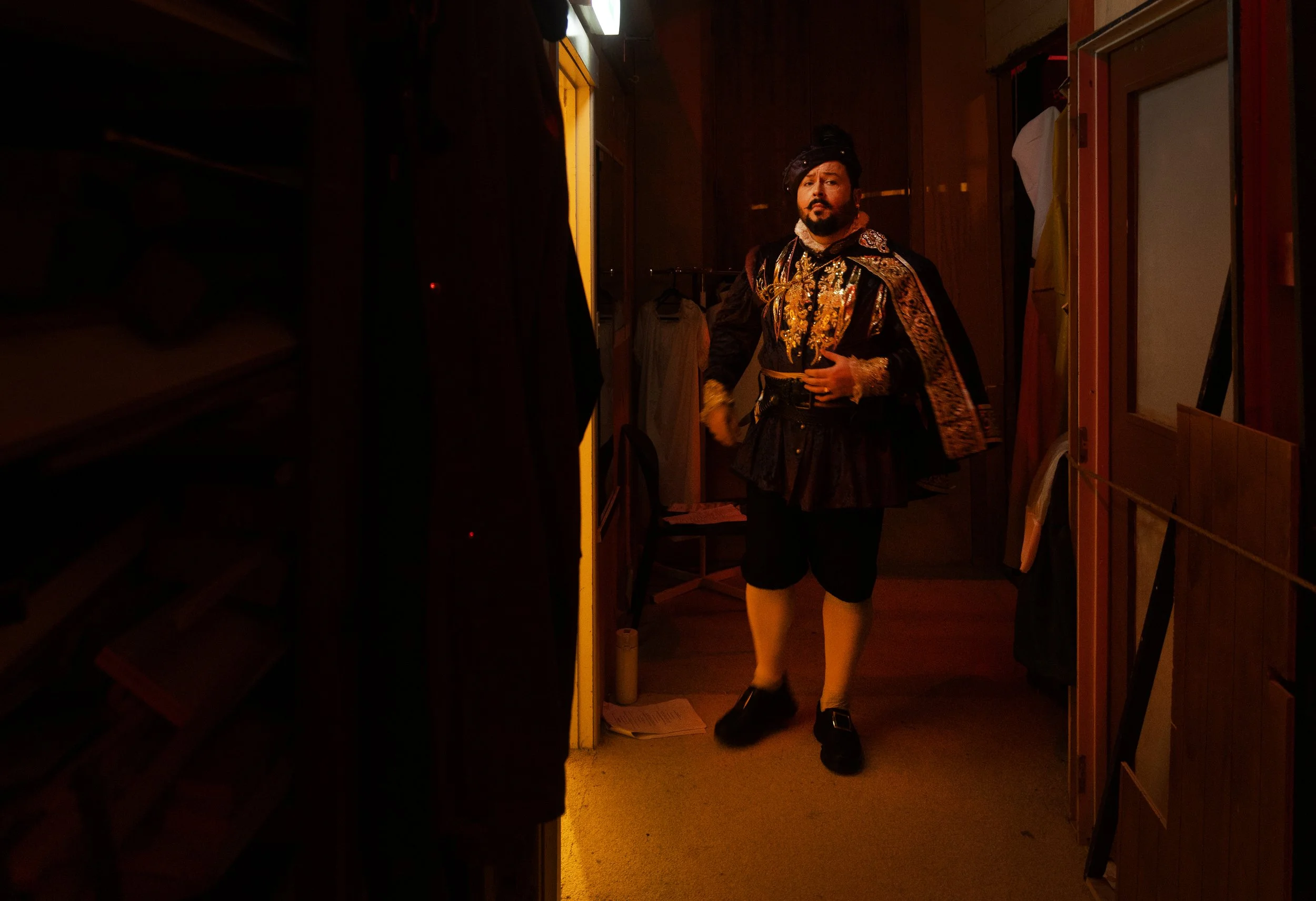
Actor Tom Kay backstage as Lord Wessex in 16th Ave Theatre’s Shakespeare In Love.
LOCAL LEGENDS
“We’re one of the oldest theatres in New Zealand,” says Heather Graham, with more than a hint of pride at this Tauranga stalwart’s achievement. “The only time we didn’t have any plays going was during COVID.”
Heather’s the president of 16th Ave Theatre, the much-loved amateur outfit that first raised its curtains back in 1936 and has been powered by what she describes as “passionate volunteers” ever since.
16th Ave Theatre is a true Aotearoa institution. It first opened way back in 1936 and has since become a place for enthusiasts of all ages to come together. During this impressive run, Heather says whole generations of the same families have graced its stage, worked behindthe scenes and joined the committee.
“There are probably about half a dozen families where the grandparents, their children and their grandchildren are all involved,” she says. “The theatre really does appeal to all generations.”
Heather says the longevity of this thriving creative community comes down to its welcoming nature.
“All you need to do is want to be involved.”
She says people join for all sorts of reasons. There’s a love of the theatre, of course, but there are also people looking to expand their social activities, others looking to try something new, and some who’ve decided to return to something they loved at school. Acting, building sets, making props or even just helping people find their seats before a show – there’s a place for anyone who’s keen to take part.
The core volunteer group currently consists of around 60 to 70 people, with about 50 front-of-house volunteers waiting in the wings. “We’re all volunteers, so nobody gets paid,” says Heather. “It’s there for the community. Just come and join in, because we love sharing what we’ve got.”
Each year, 16th Ave stages four major productions, alongside smaller ones and play readings. As part of their 90th birthday celebrations, they recently performed the first two one-act plays the company has ever staged, The Green Monkey and The Bishop’s Candlesticks. The next big show is the comedy Lend Me A Soprano, which opens in late November.
The company moved into its current location in 1954, and now boast a 150-seat main auditorium, plus a bar and café area that can double as a black-box theatre seating around 30 to 40 people.
“We open our theatre to outside performers to hire,” says Heather, noting that many people are involved with more than one theatre company, creating a sense of collaboration and shared talent across the city.
Heather’s own journey started humbly. She didn’t have a background in theatre, but a work friend was directing a play at 16th Ave and asked if she could help out backstage, managing the props, saying, “You look like you need something new to do.” Eighteen years later, she’s president. It’s safe to say the acting bug got her, even if she’s not always acting.
When asked why so many people volunteer their time and put so much effort into putting on productions, Heather doesn’t hesitate to answer. “It’s their love of theatre and the sense of belonging you get here,” she says.
Her reply is equally quick when asked why, in this age of YouTube and doomscrolling, audiences are still showing up. “Because the performances are real. You feel a part of it, and you can feel the emotion in the room.”
A WORLD OF TALENT
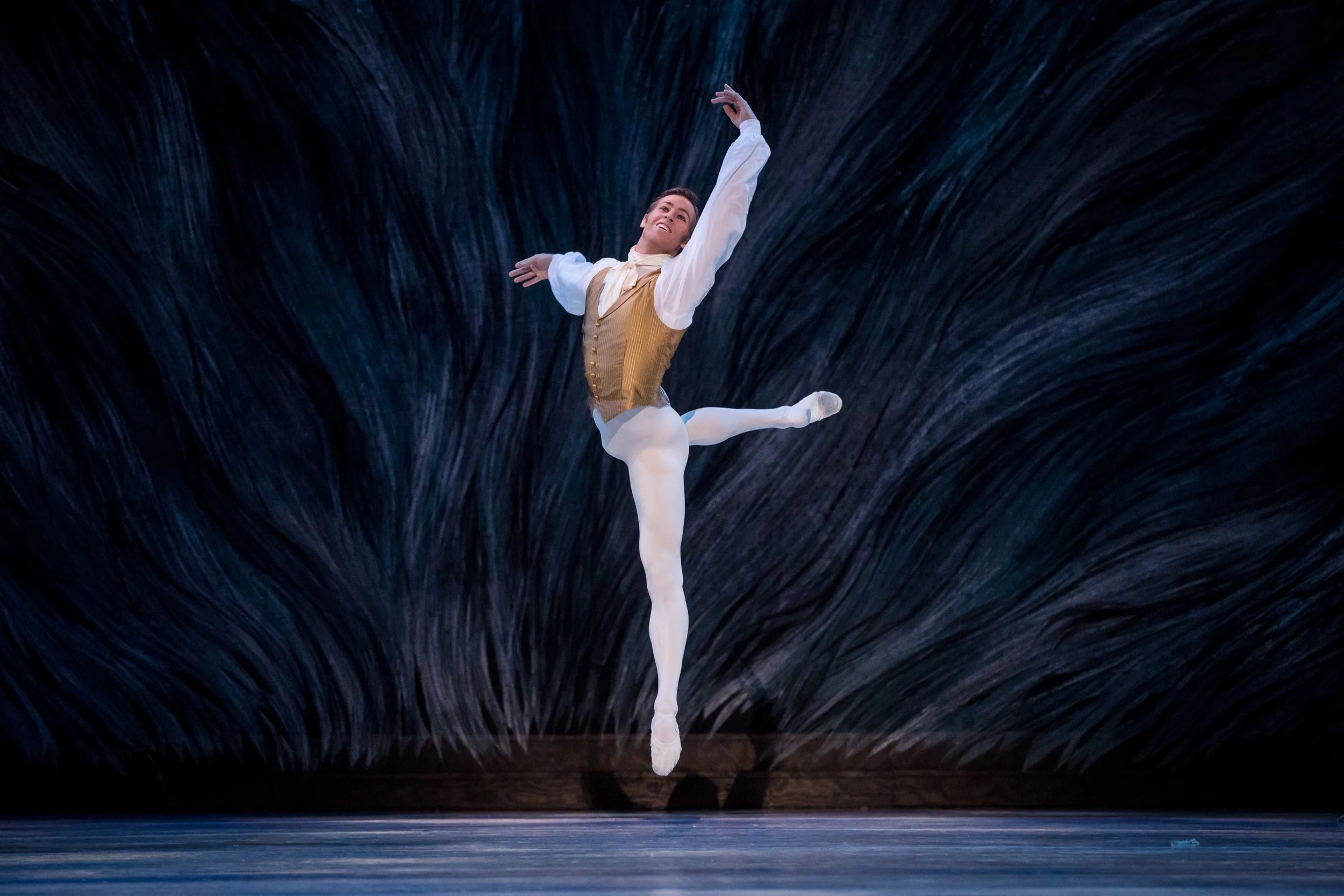
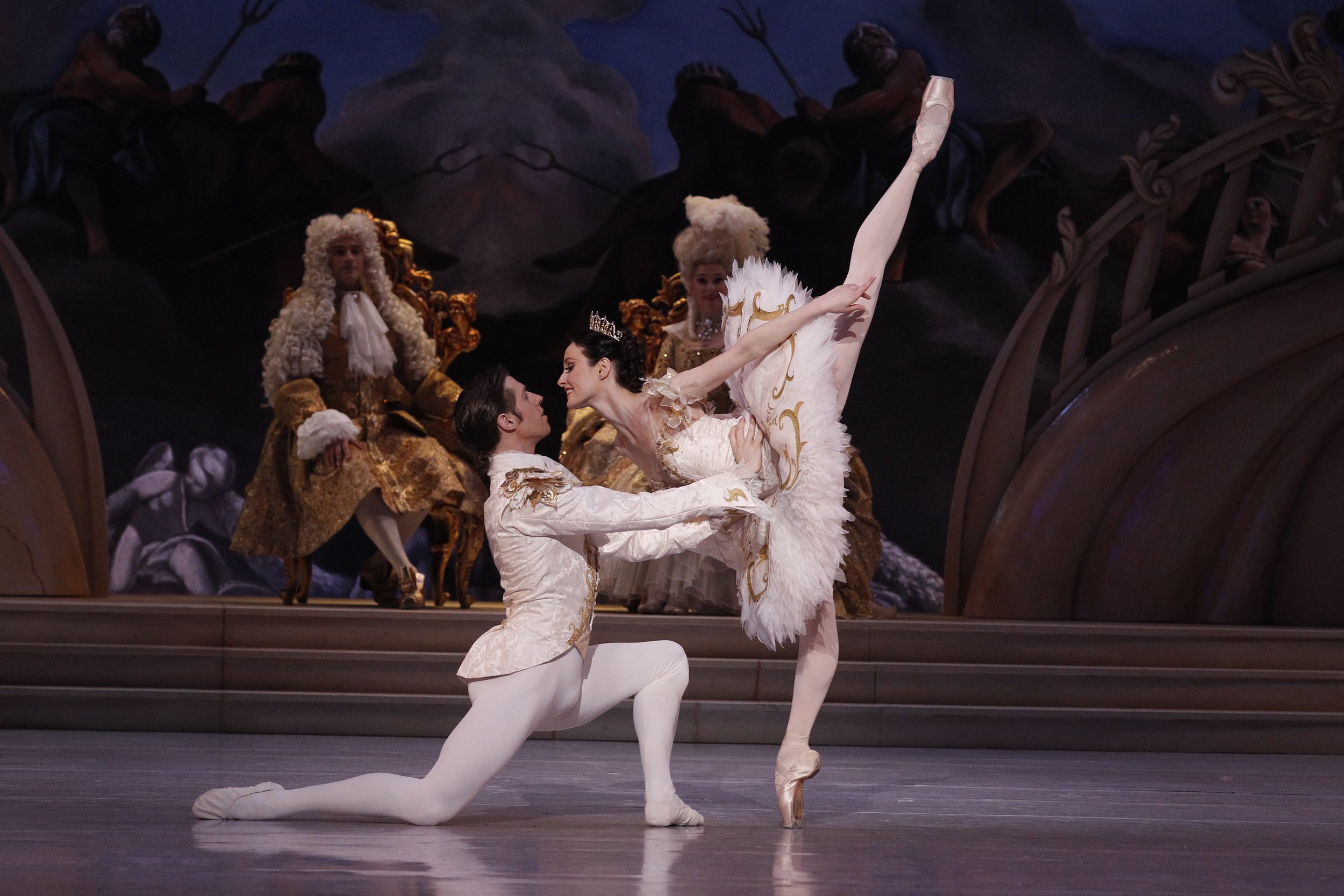
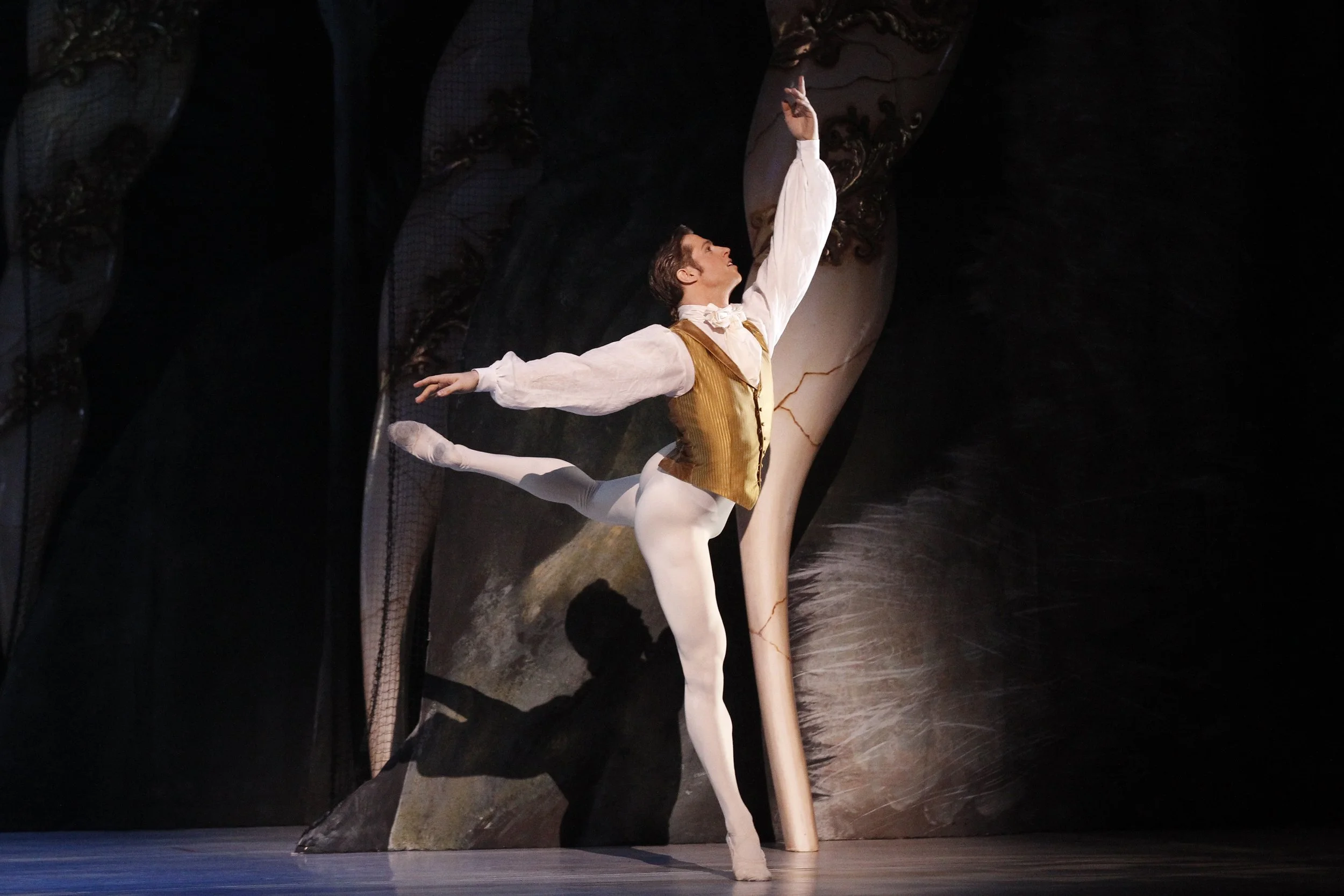
The connection between performer and audience is something ballet dancer Ty King-Wall understands intimately. “I started to get really serious about dancing when I was a teenager,” he says. “My training was in Tauranga, so we’d drive half an hour over to Tauranga from Katikati nearly every day to train at the Dance Education Centre.”
Today, Ty is the artistic director of the Royal New Zealand Ballet (RNZB), but his journey to the top of the country’s ballet world began right here. For him, the Bay of Plenty was the place where his dreams of a creative life became real.
Ty, who grew up in Waihi and later near Katikati, says his teacher Scott Millen played a critical role in his development at the now-closed Dance Education Centre.
“Often for boys, doing ballet is quite an isolating experience,” he says, “so to have a male teacher role model at that pivotal time was really important for me.”
Ty had become interested in dance after seeing a RNZB performance of the classic fairytale Cinderella, but it was sitting in the audience for a production of famous ballet Swan Lake that changed his world.
He was enraptured, and vividly remembers thinking, ‘That’s what I want to be doing’. He went all in on making that happen, becoming a devoted follower of the RNZB, driving to Auckland to watch three performances a year, and training and competing in Tauranga.
It was an exciting time, with “a constant influx of ideas, and different creatives”. Eventually, his hard work landed him the opportunity to train at the Australian Ballet School. He smiles fondly as he recalls the region supporting him with vital fundraising drives.
“I really felt Katikati and Tauranga getting behind me in a big way,” he says, adding that it was the essential support he needed to pursue an international career. This gave him a strong belief in the role communities can play in developing artists.
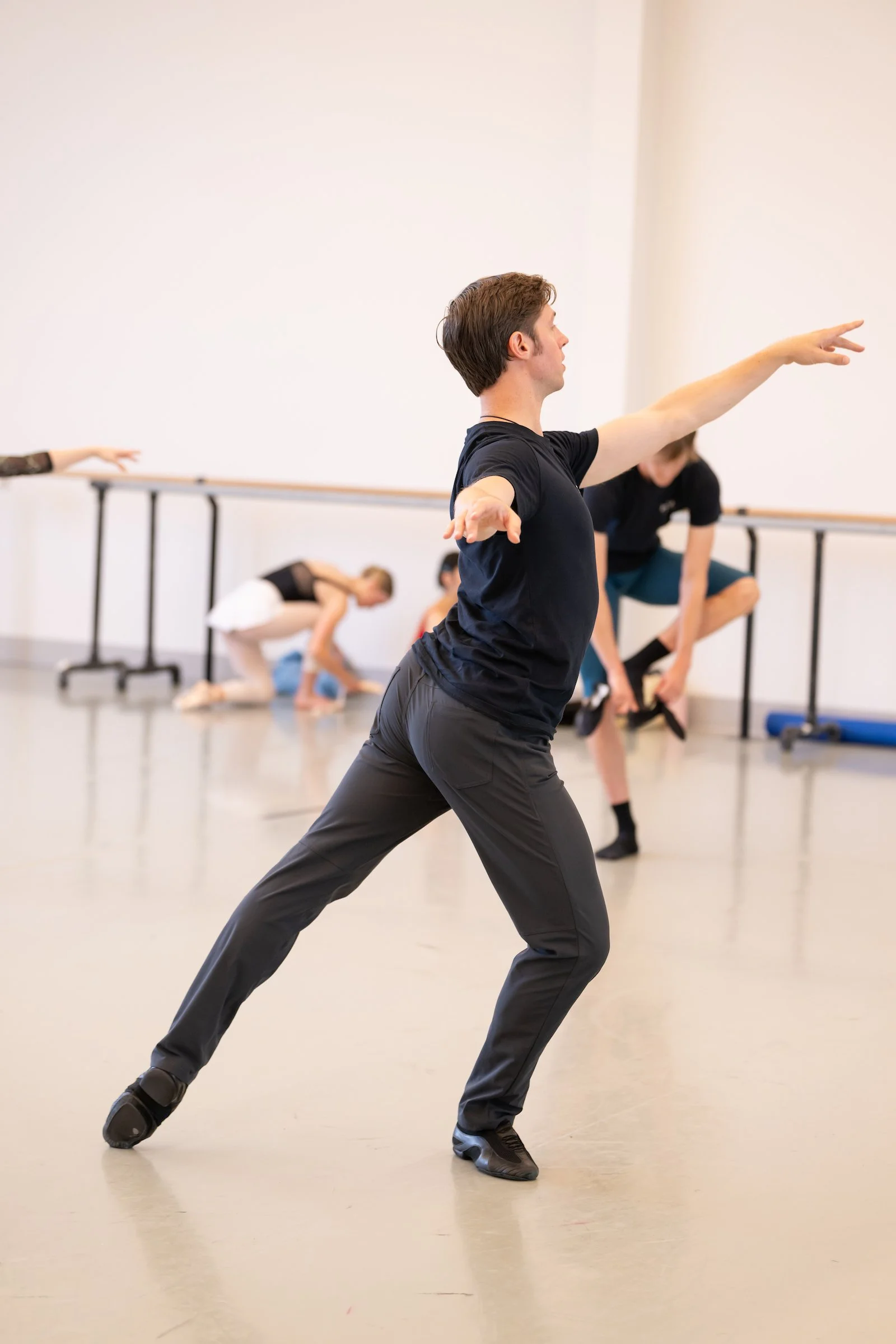
RNZB’s artistic director Ty King-Wall.
“Our young artists are the future. Any support you can give them to follow their dreams and their love is crucial, especially at that formative time.”
This support, he says, doesn’t need to be financial. Attending the shows and productions that are being staged around the region is invaluable. It’s also great entertainment and a lot of fun.
After a celebrated career on stage, Ty now heads one of Aotearoa’s most prominent performing arts companies, but even at the top, he’s quick to stress the importance of grassroots creative communities. As he explains, a show isn’t just about the people on stage. There are directors, producers, costume designers, set builders, lighting artists... the list of people conjuring the magic of live performance is comprehensive.
Local theatres and venues provide invaluable training and experience to all of the people involved in every aspect of a live performance and across the different creative disciplines. On stage or off, experience gained at the amateur level can directly lead to professional careers. Ty himself is proof of that.
“It’s all part of a greater ecosystem,” he says. “These people are our collaborators, and if those artists are lost, then the overall scene is poorer for it. It all starts at the local level, at the regional level.”
He pauses and says, “You can’t presume that it’s unimportant – because it’s all important. It’s all part of it.”

Actor Rebecca Gibney.
LIGHTS, CAMERA, BAY
“Tauranga,” says acting icon Rebecca Gibney matter-of-factly, “is actually the amateur theatre capital of New Zealand.” With a smile, she adds, “That’s why Happiness is set there.”
Although Rebecca has never lived here, she’s well aware of Tauranga’s creative scene and how vibrant our amateur theatre community is. She’s thrilled to be showcasing it to the rest of the country, and the rest of the world, via her delightful musical- dramedy, Happiness.
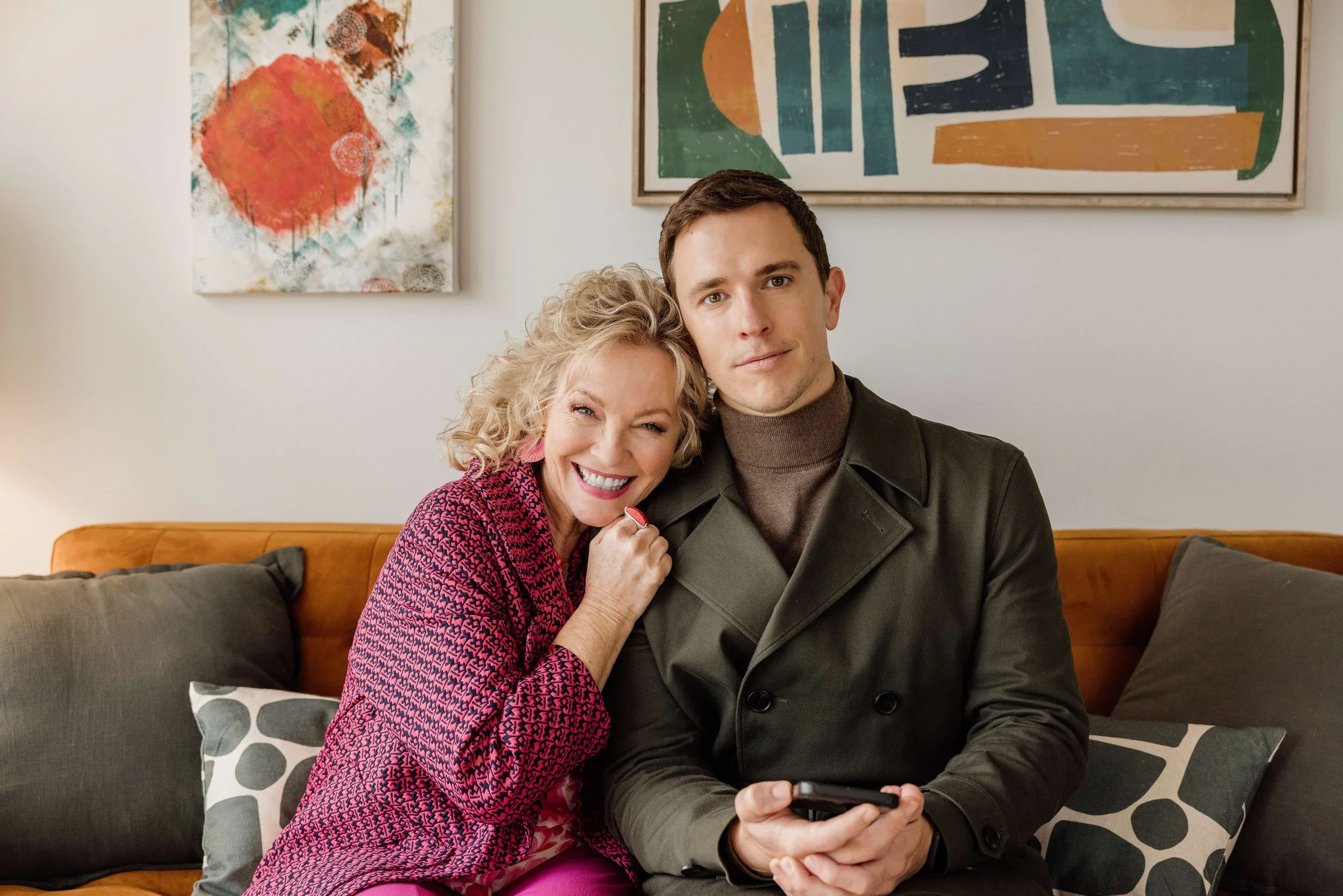
The TV series follows a Broadway director whose circumstances force him back to Tauranga, where he’s reluctantly roped into directing his mum’s amateur musical production. The show’s first season was a hit, winning over critics and audiences at home and overseas with its colourful exuberance, tight comedic scripting, and real sense of place. For Bay of Plenty locals, it’s a lot of fun seeing familiar landmarks pop up on screen. In November, the show will return to Three and ThreeNow for its second season.
“I had no intention of doing a musical,” Rebecca admits, saying she first heard about it on set while filming her popular dramedy Under the Vines in central Otago and Queenstown. Her fellow actors and the crew were all talking about wanting to get work on an exciting new series set in Tauranga.
“The show had such a buzz around it that I couldn’t help myself,” she says. “I had to find out what it was.”
Rebecca believes Happiness has struck such a chord because people need something that makes them feel good while the cost-of-living crisis bites and the news seems relentlessly grim.
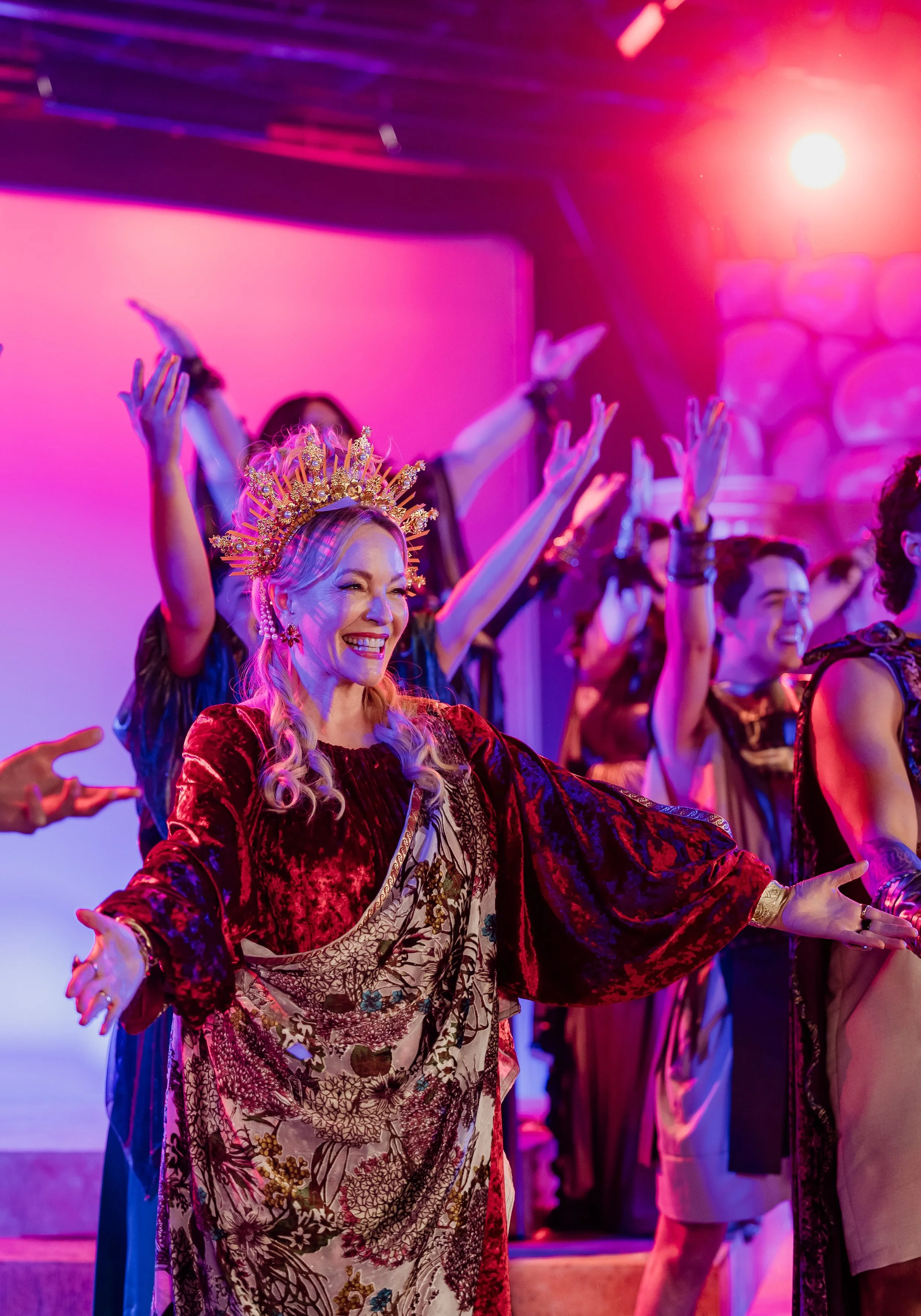
“We all need a bit of happiness. We all need a bit of joy,” she says. “I’m all for putting out things that are going to create a positive impact on people when they watch them. I love it because it’s so joyous and uplifting. Happiness is a show that feels like a warm hug. I love that.”
We’re fortunate to live in a region where an amateur theatre company can thrive for 90 years, where a young boy living in Katikati can follow his dreams and end up leading the Royal New Zealand Ballet, and where a series with international appeal can be based here because it’s a place in which the passion of its characters just makes sense. As Heather puts it, “There’s so much going on and so many talented people.”
The arts and our creative scene are a vital component of what makes the Bay of Plenty such a vibrant and exciting place to live. It provides essential experience and support for people who dream of becoming the best in their field, gives enthusiasts the chance to come together and work on their shared passion, and gives the rest of us a place to live where there’s always something to do, see and experience.
It gives us entertainment and escape, brings joy and happiness to all ages, gives memories that stay with you and, in its best moments when the magic truly hits, can change your life forever.
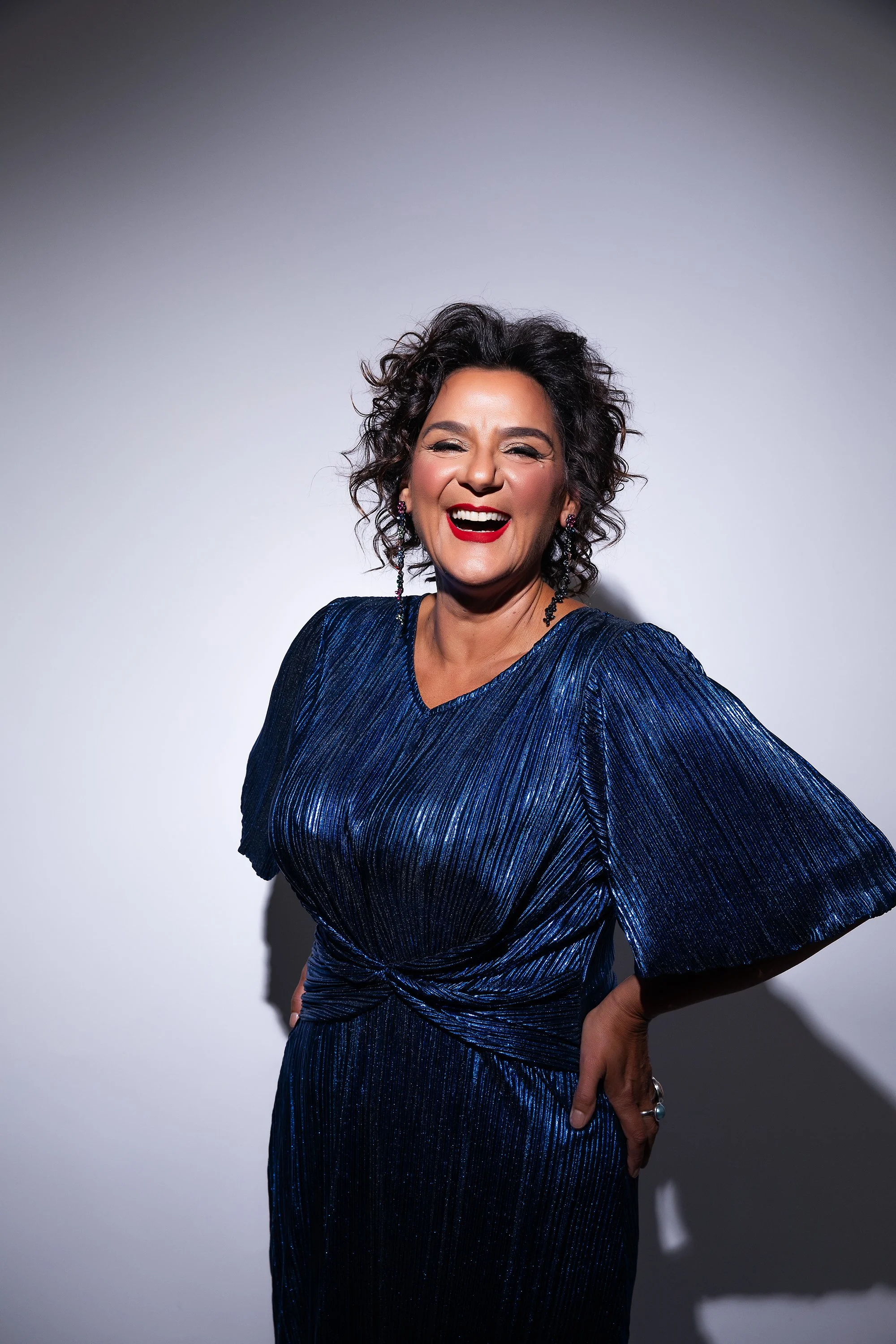
DIVA IN DEMAND
Jackie Clarke’s been keeping herself entertained for several successful decades – and music lovers right along with her.
Jackie Clarke’s been keeping herself entertained for several successful decades – and music lovers right along with her.
WORDS JO - MARIE BAKER
There were only six people in the pub when a teenage Jackie Clarke turned up in Mount Maunganui, ready to put on a show. It was a Tuesday night in the mid-1980s and Jackie – wearing a vintage outfit and winklepickers, her hair teased high – was touring with her first band, Marching Orders.
“You really learn your trade by bravely singing your show when no one’s interested,” she laughs.
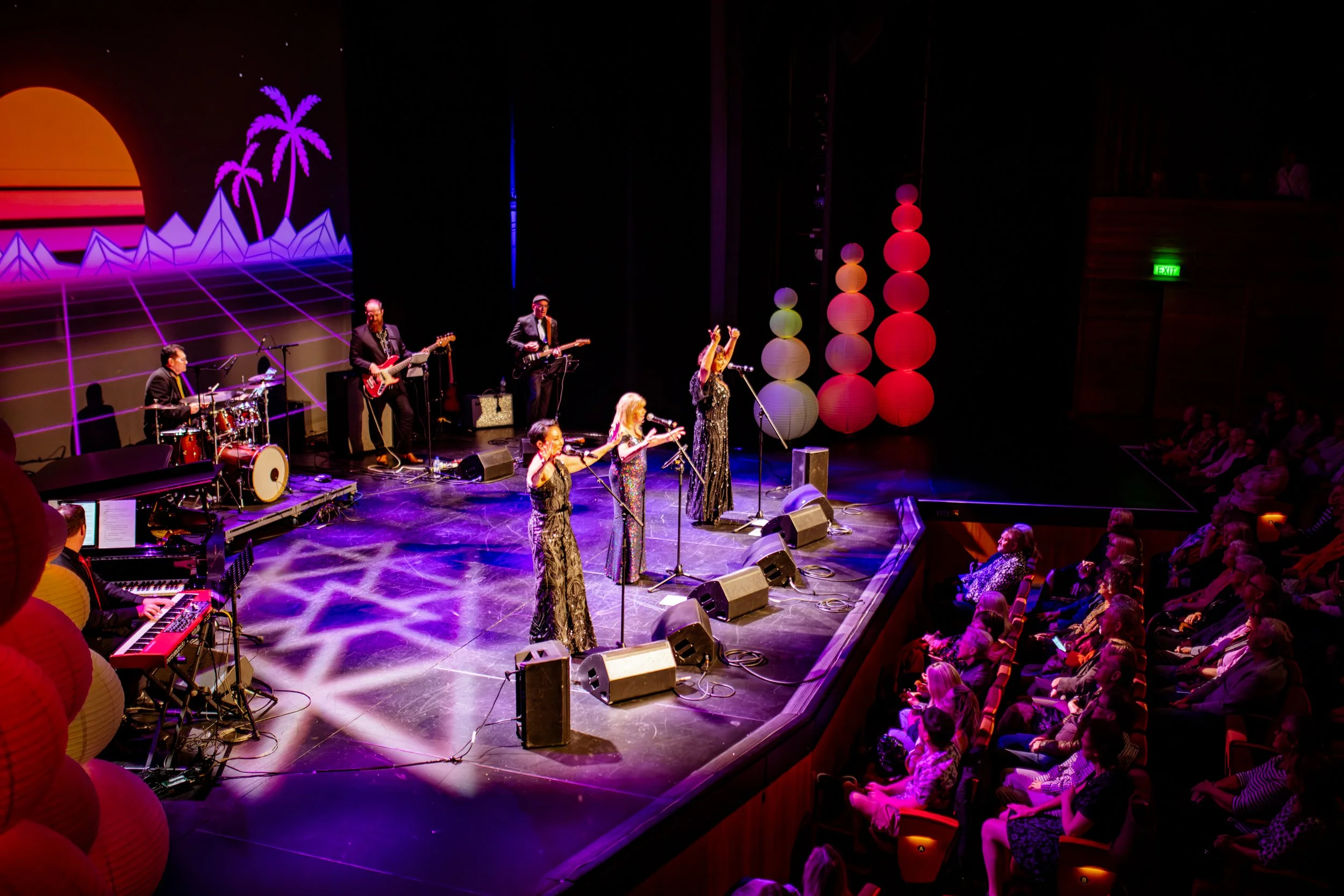
Four decades later, Jackie’s coming back to the Bay to perform on a considerably grander scale. The much-loved singer, actor and entertainer will return to Mercury Baypark Arena on November 28 for DIVAS! Christmas Special, alongside Tina Cross, Suzanne Lynch and Annie Crummer, and backed by a four-piece band.
The show is a festive reincarnation of the DIVAS! performance that premiered in Tauranga in 2024 before touring the country, celebrating some of the greatest female voices of the past six decades. Expect everyone from Aretha Franklin, Dolly Parton and Nina Simone, to Whitney Houston, ABBA, Taylor Swift and P!NK.
Jackie says an important omission from the previous show will also be rectified. “We didn’t have any Mariah Carey last time, and I think we’ll definitely fix that, especially with this show’s Christmas vibe. We put a lot of thought into the songs we choose and it just releases the joy monster in people. It’s a great party.”
There will, naturally, also be frocks.
“We love any excuse to put on an amazing frock and let rip. To sing songs by Celine Dion and Adele and all the greats, you have to have a great frock to get you in the zone.
“Come dressed to the nines. If the audience is better dressed than us, that’s the perfect scenario. Don’t hold back.”
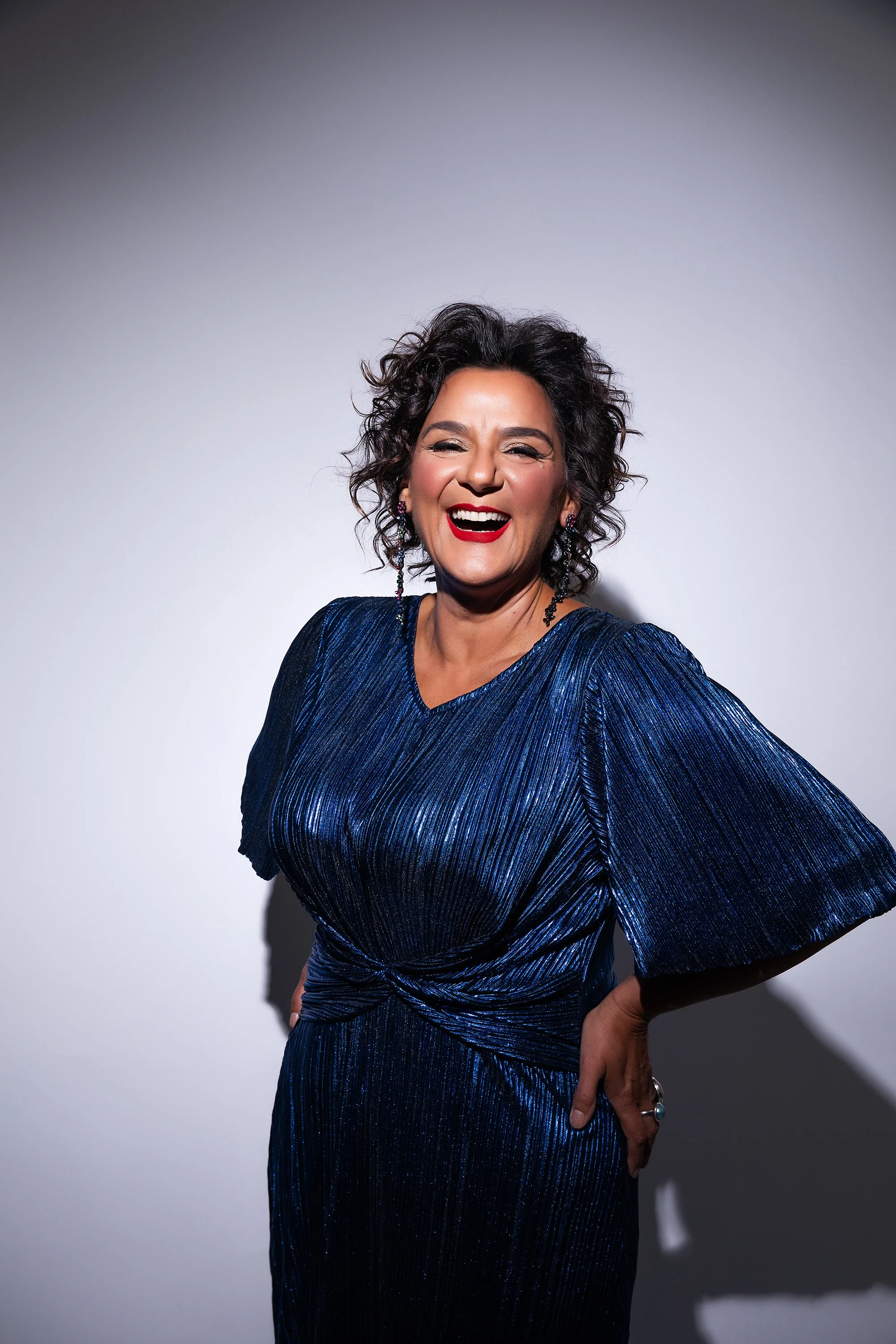
Behind all that glamour, preparations begin in more domestic surroundings. The women spend hours around their kitchen tables, drinking coffee, eating Tina’s home baking and painstakingly working on their vocal arrangements.
“We put a lot of detail into it,” says Jackie. “We don’t just turn up and sing. You work so hard so that it appears effortless, and that’s the magic – and when you get those moments of perfection, it’s just the best feeling in the world.”
That friendship and trust has been built over decades; Jackie has sung with Annie, Suzanne and Tina (in different incarnations) for almost 30 years. Together, she says, they tackle songs she wouldn’t dream of attempting alone, and if something still goes wrong on stage despite all that preparation, she can live with that too.
“People love mistakes. People love the humanity of watching things fall apart. That’s often where the real juice is.”
Tauranga has long been something of a second home. Jackie was involved with Tarnished Frocks and Divas from its humble beginnings in 2005 through to its spectacular arena productions, forging lifelong friendships along the way. The homegrown extravaganza gave hundreds of local women the chance to sing, dance, model and perform, often doing things they’d never imagined themselves capable of.
“The whole thing was such a beautiful kaupapa,” says Jackie. “All these people were given an opportunity to discover their best selves. Tauranga always has a special place in my heart. It lit a fire in a lot of people in the best possible way.”
Jackie’s career has been quite a journey from that near-empty Mount pub. Working across music, theatre and television, she found fame with musical comedy trio When The Cat’s Been Spayed, and became a familiar TV face through shows including Saturday Live and New Zealand Idol.
“It’s a wave that you ride, and it comes and it goes. I’m like a hardy perennial. I keep on keeping on through the highs and lows.”
At 60, she certainly isn’t seeking easier challenges. Just weeks before DIVAS!, she’ll take to Auckland’s Q Theatre in Songs for Nobodies, a one-woman play that requires her to portray 10 characters across five stories involving legendary singers Judy Garland, Patsy Cline, Edith Piaf, Billie Holiday and Maria Callas.
“These one-woman shows are so petrifying,” she says, “but it’s a beautiful space to be in when you’re actually scaring yourself shitless with a huge challenge.”
It makes returning to Tauranga to sing with close friends all the more wonderful. The contrast is part of what Jackie still loves about her work – wildly different projects drawing on her “la la la” and “blah blah blah” skills. “I’ve just turned 60, and I feel like I’m in my prime. I really feel like I’m getting the hang of this.
“You can always feel how music feeds people’s souls, and it doesn’t matter if it’s in a bar for six people or it’s a massive arena show. The chemistry is the same. I’ve spent my life entertaining myself, and if you do that, the audience will be entertained as well.”
NOW YOU SEE THEM
But many don’t, which is just the way the makers of the mounts propping up the displays at Tauranga Museum like it.
But many don’t, which is just the way the makers of the mounts propping up the displays at Tauranga Museum like it.
WORDS JO-MARIE BAKER / PHOTOS MICHAL PINKERTON + SUPPLIED
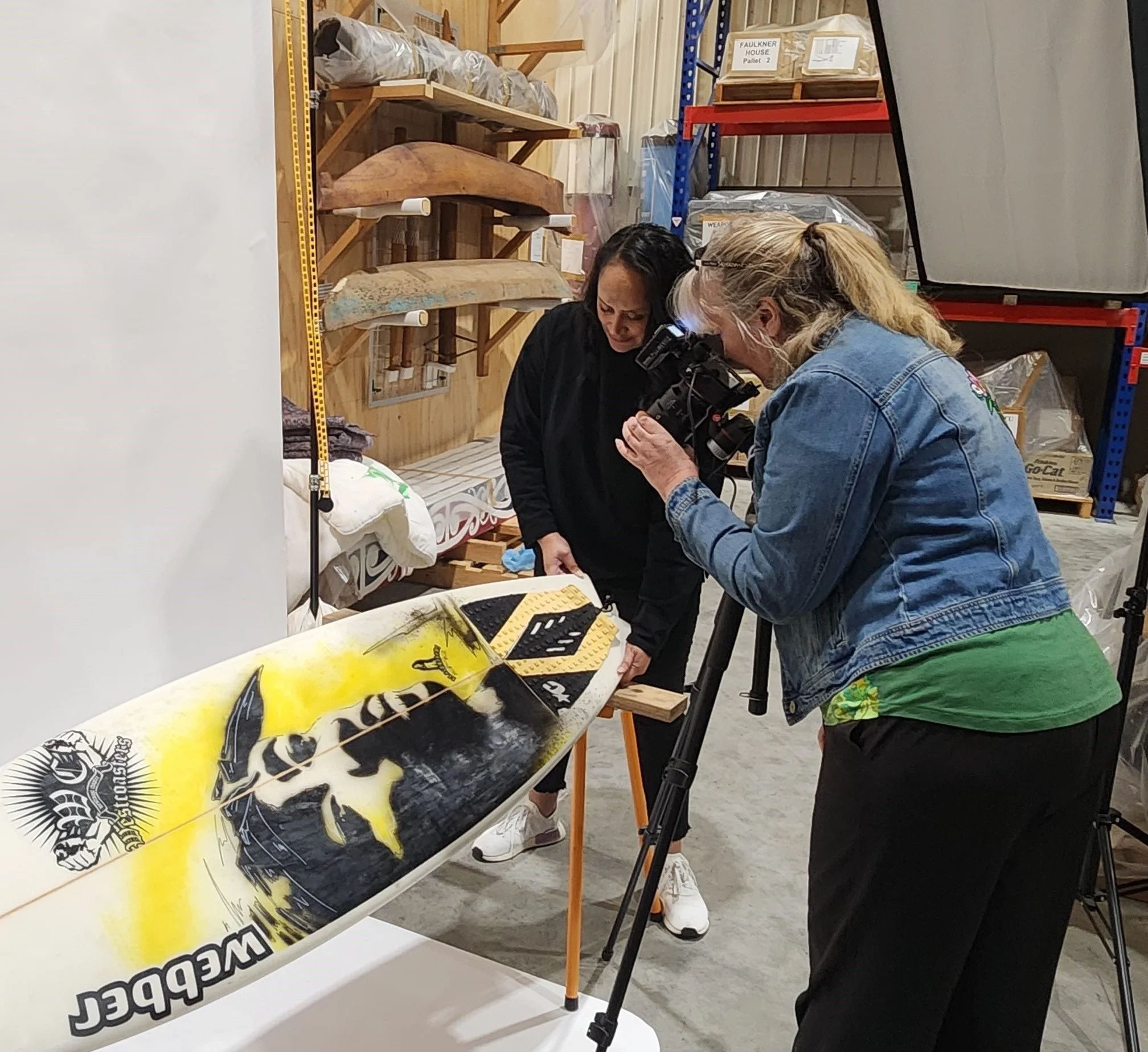
When Tauranga Museum opens in 2028, visitors will marvel at the taonga and objects on display. What they probably won’t notice are the hundreds of bespoke mounts that support them.
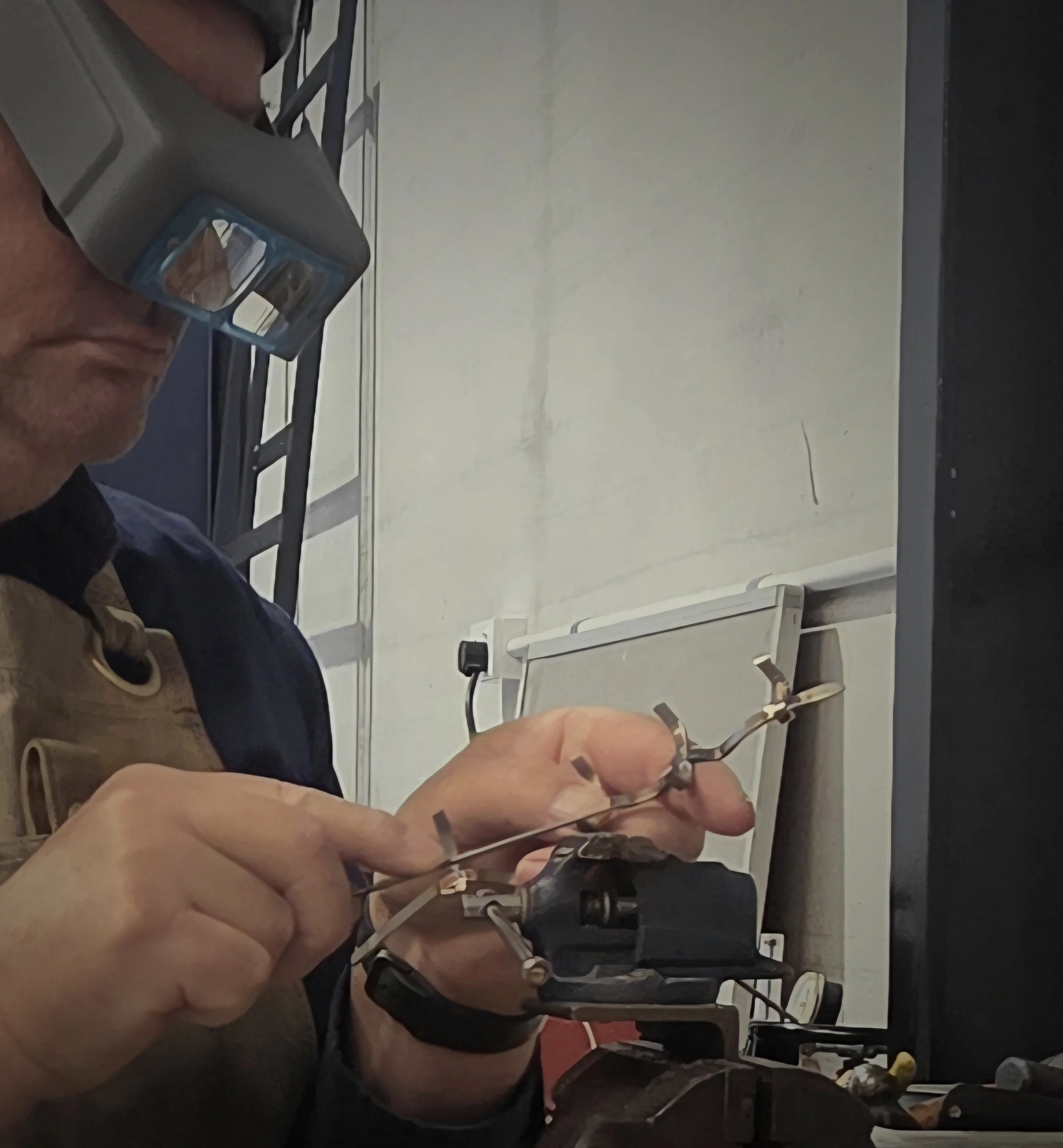
That’s exactly how specialist mount maker Den Feaver measures success. With more than 30 years’ experience creating mounts for New Zealand’s leading museums, Den, of Feaver Museum Service, is working with Tauranga Museum’s exhibition team to make custom supports for hundreds of objects destined for permanent display, while passing his specialist skills on to collection specialist Chelsea Tairi.
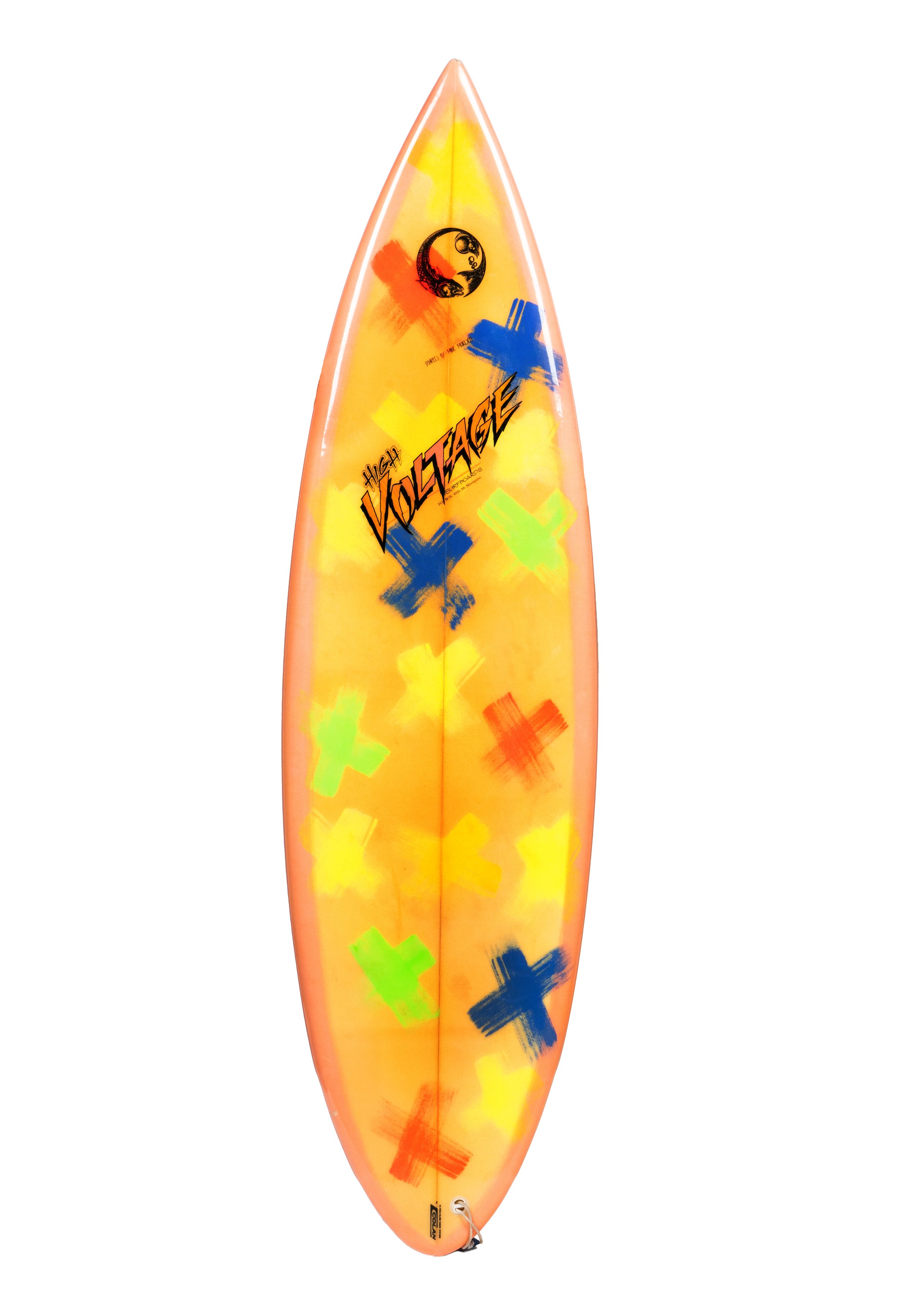
Objects range from tiny obsidian shards and shark-tooth fishhooks to historical surfboards and a 3.5m plaster cast of a broadbill swordfish. Mounts for displaying them are typically crafted from stainless steel into bespoke brackets or armatures designed to hold objects securely while disappearing into the background.
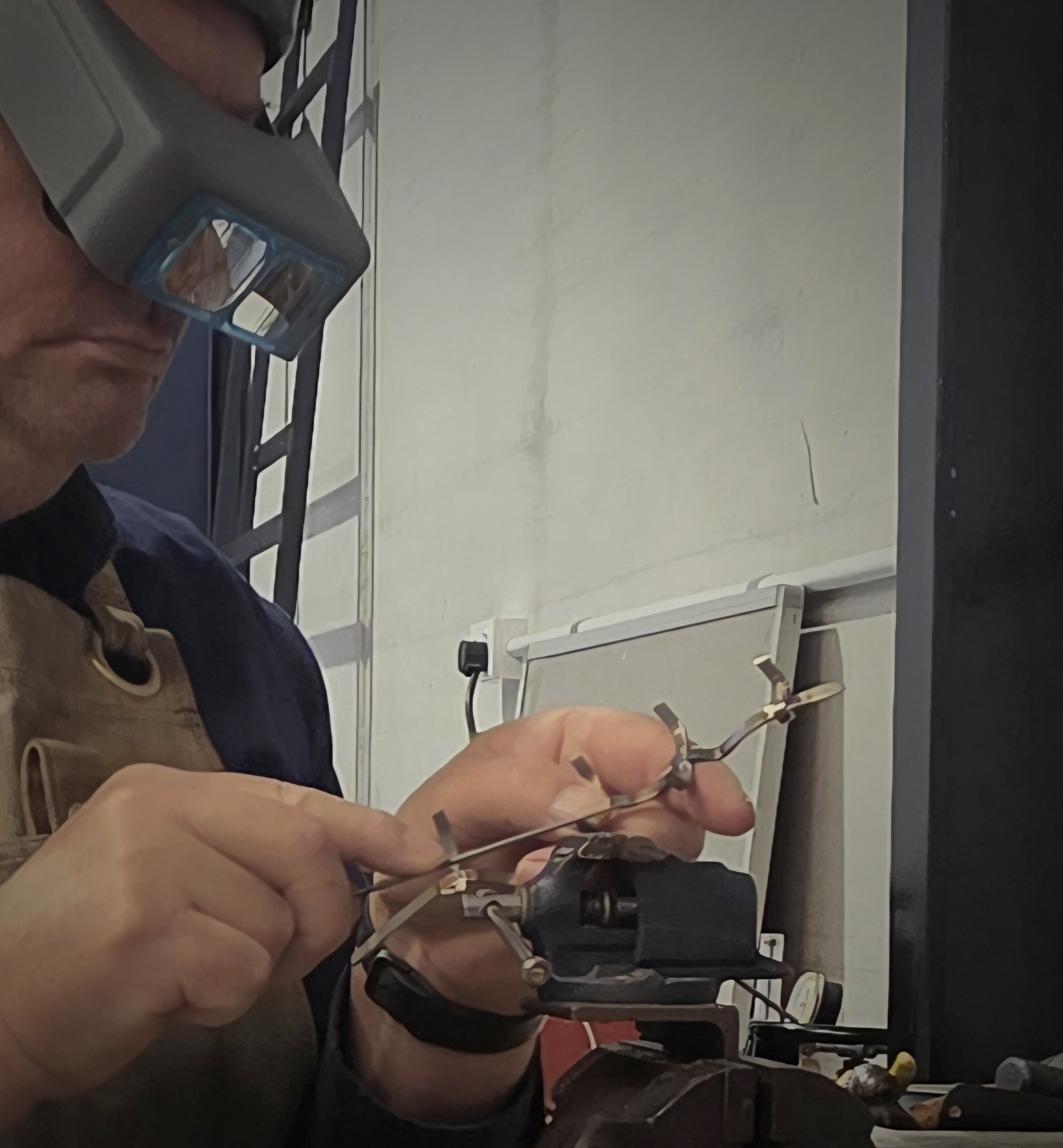
Den’s mount-making career began almost by chance. While photographing a ceramics collection in New Plymouth, he stopped to help an artist install another exhibition and was subsequently offered a technician’s role.
Den says good mount makers need fine motor skills, attention to detail and, above all, empathy for the objects they’re handling. “A good mount is the mount you don’t see, one that keeps the object safe and puts it in a positive light. And if you do see it, it needs to accentuate the environment, rather than detract from it.”
Whether he’s handling a plastic cup from the 1970s or an irreplaceable taonga, Den says every object deserves exactly the same care and respect.
Over the coming months, Den and Chelsea will work side by side to create hundreds of bespoke mounts. She’s looking forward to picking up skills as the project progresses.
“It’s a once in a lifetime opportunity,” she says. “Sharing the responsibility of mounting the taonga and objects that will be on display in our new museum is very exciting, and I’m lucky to be part of that. I’m really excited to soak up everything I possibly can from Dennis.”
After 15 years working in museums, Chelsea says she’s become fascinated by the craft of mount making. The unsung heroes of the permanent displays being developed for Tauranga Museum will prop up taonga Māori, social history and contemporary objects, all carefully curated to tell fascinating stories of our region’s past and present.
LETSTALK.TAURANGA.GOVT.NZ/PROJECTS/ TAURANGA-MUSEUM
COME TO YOUR SENSES
Books are only part of the story at Tauranga’s brand new library and community hub.
Books are only part of the story at Tauranga’s brand new library and community hub.
WORDS HAYLEY BARNETT
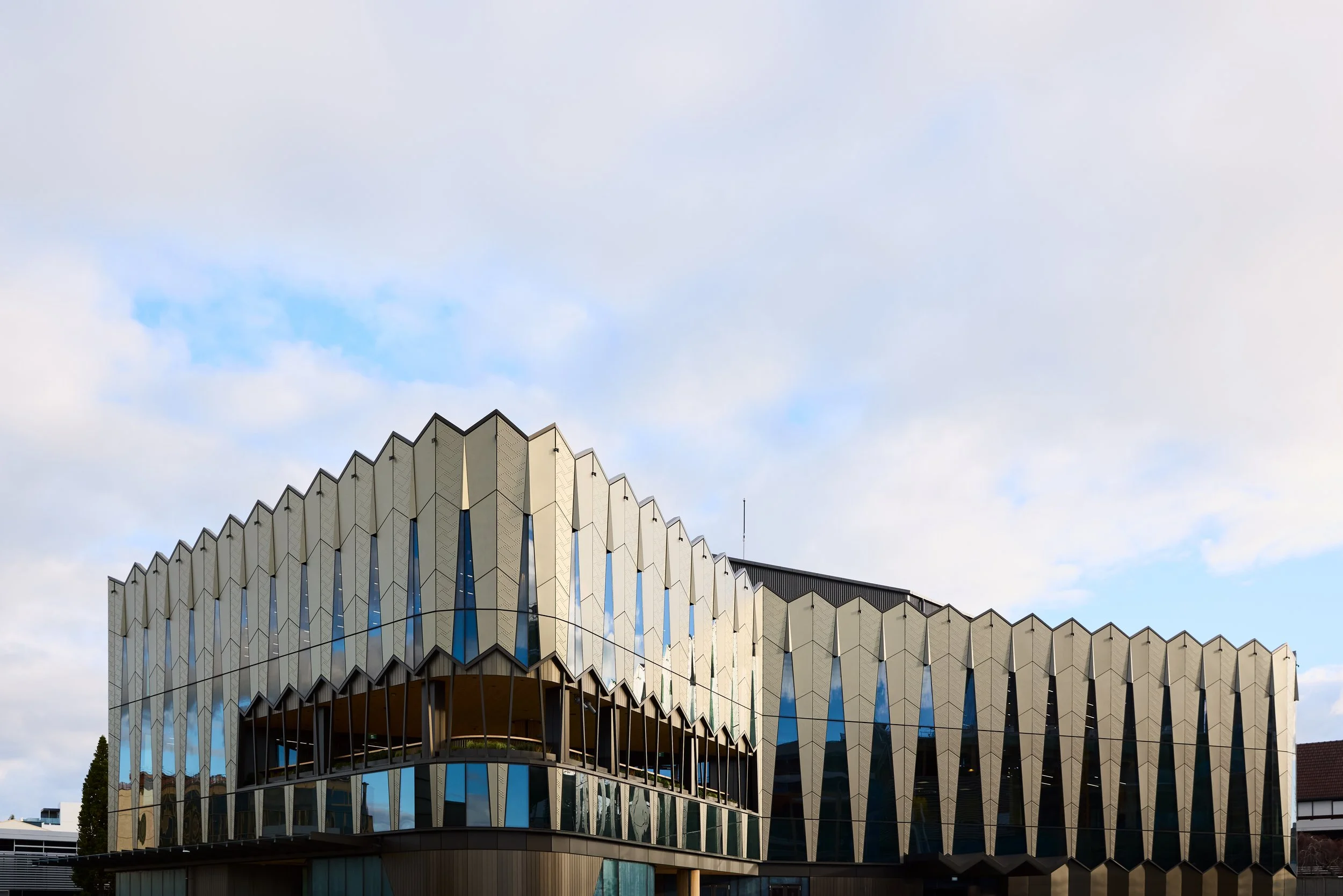
He Puna Manawa, Tauranga Library and Community Hub.
As the highly anticipated new Tauranga Library and Community Hub gets set to open its doors on October 16, it’s not just book lovers who have something to look forward to.
“For people who maybe reading books isn’t their thing, these other experiences mean everybody’s included,” says Joanna Thomas, Tauranga City Council’s manager of Libraries and Community Hubs. “It’s a place that every family can go and have an outing and create a memory.”
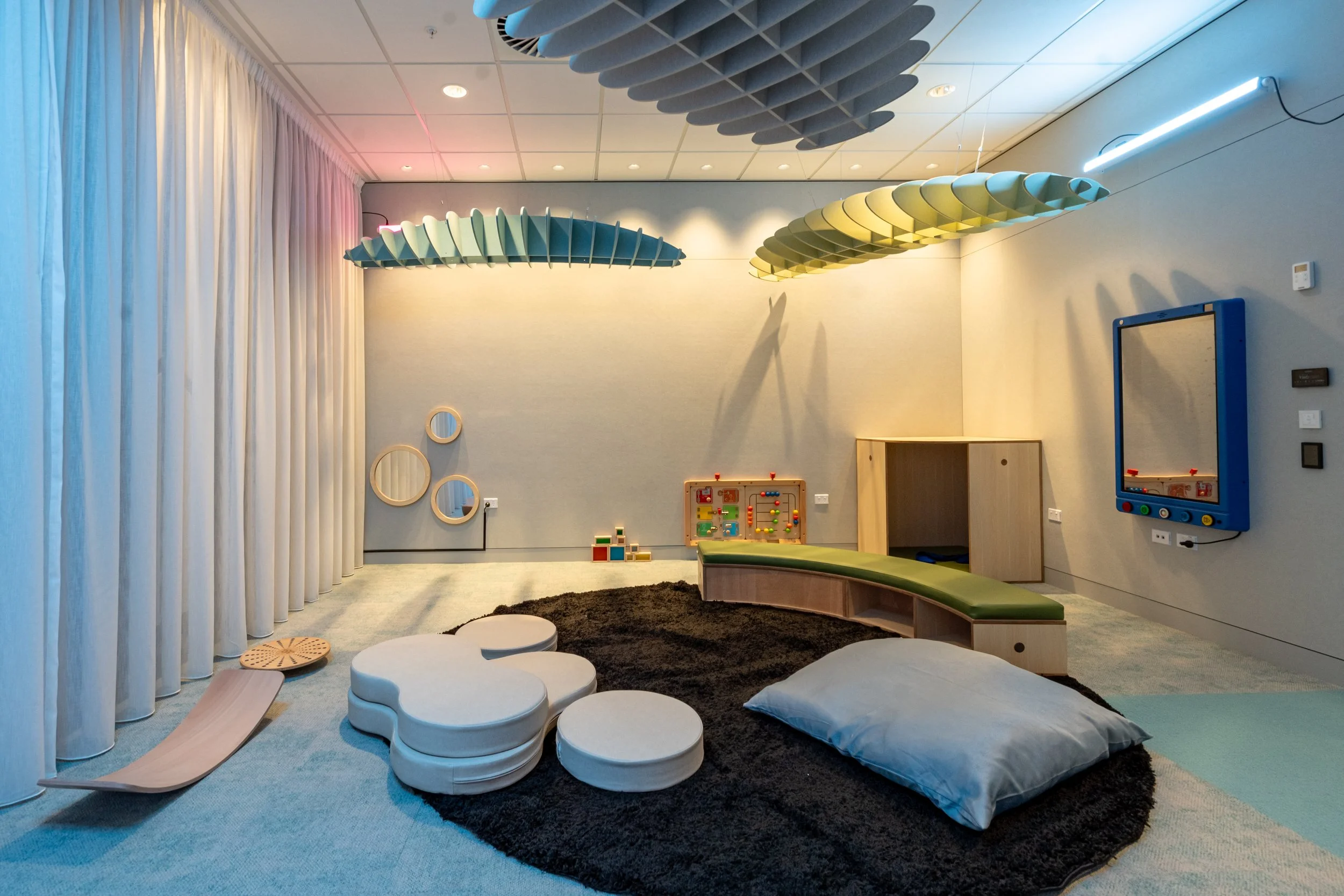
One of those other experiences sits on the first floor, the same floor as the children’s and youth spaces, where things get loud. It’s a soundproofed sensory room with blackout blinds and a wall built for projecting colour across it. When you turn everything up, it hums with lights, texture, vibration and sound. Turn it down and it goes almost silent.
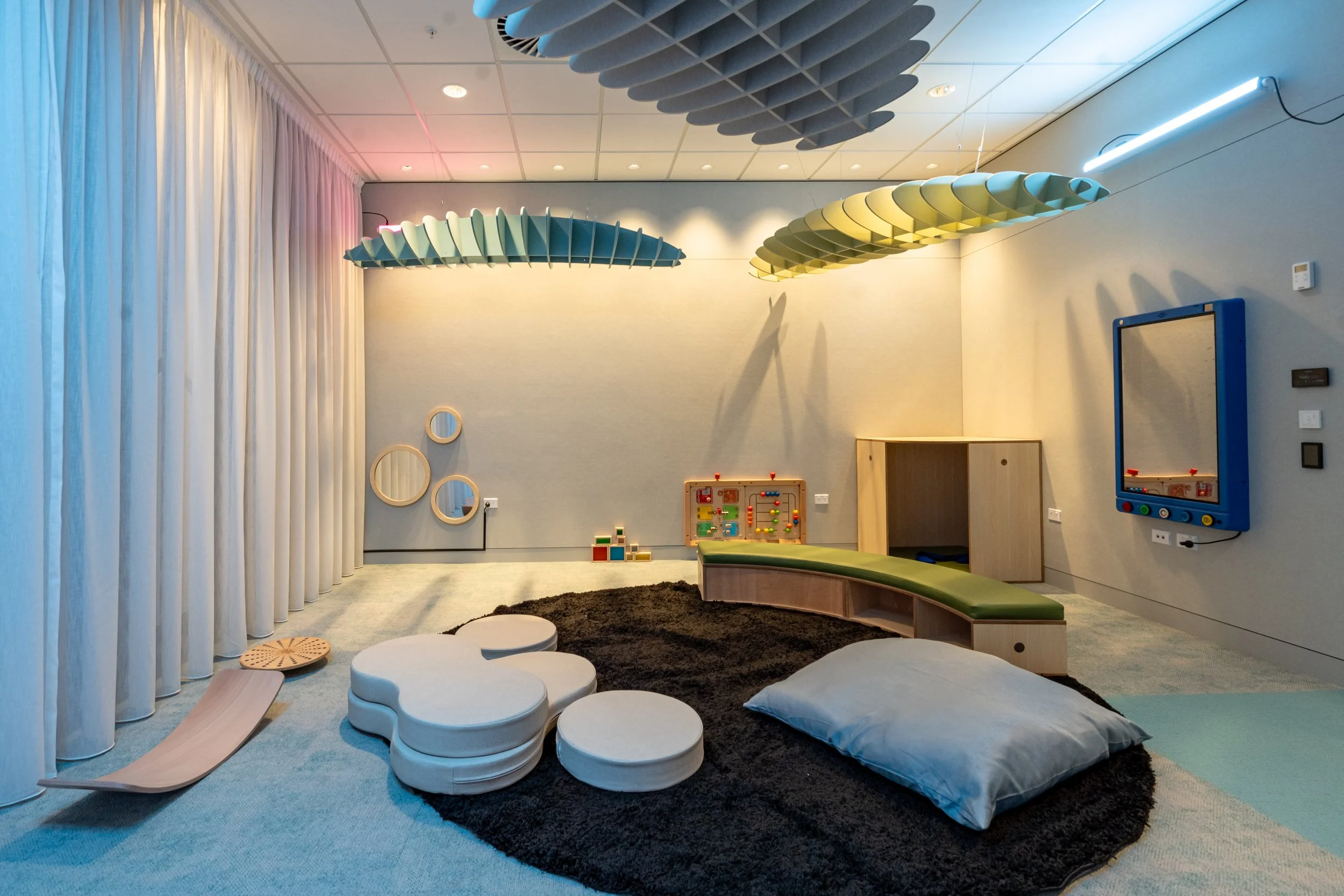
The sensory room.
Joanna says the idea goes back to 2017, when the Council first consulted the community on what a library and museum in the city centre should look like. Families were already asking for something like this. They wanted somewhere neurodivergent kids and adults could go that wasn’t a school or a hospital.
“There wasn’t anything like that that was open to the public,” says Joanna.
One of the people who pushed hardest for it was Joanna’s colleague Michelle Anderson. “She’s been a great inspiration for all of the development,” says Joanna.
The council ran workshops with stakeholders, including Tauranga Special School, CCS and Parent to Parent, to work out what the room needed to do.
“Parents and caregivers who book the room will have exclusive use of the space to meet their children’s needs,” says Joanna. “They’re not out in an open space where it can be quite distracting.”
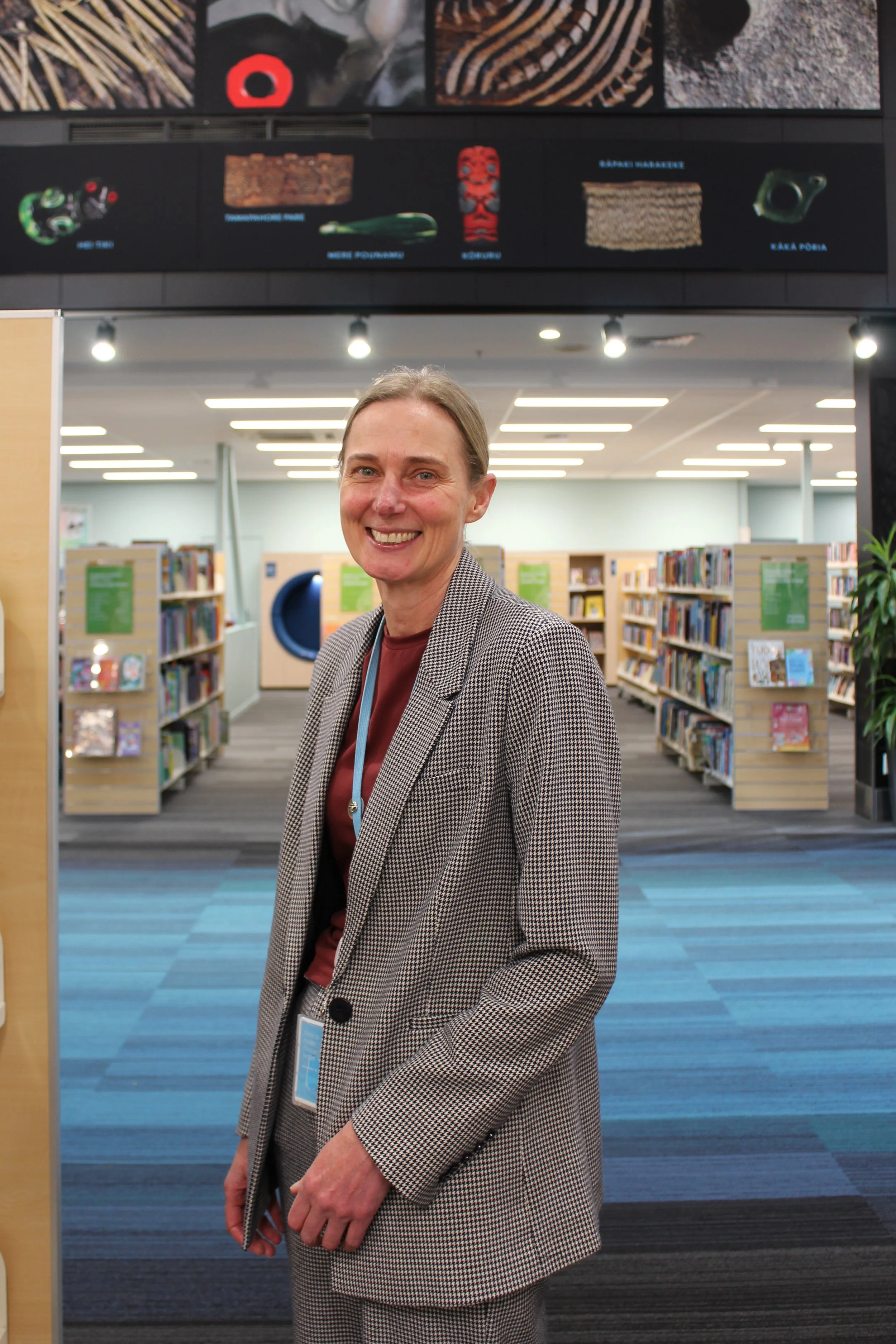
Joanna Thomas.
Adults with disabilities and their caregivers have the same option. The library runs sensory storytimes too, creating a safe welcoming environment where kids can explore stories at their own pace.
Funded fully by Lottery Grants, the room will be free and booked in advance, and a short induction will be included so everyone knows how to use the equipment safely.
He Puna Manawa, the new Tauranga Library and Community Hub, will open with a dawn blessing, followed by a community celebration day on October 17, with open sessions for the sensory room and tours through the rest of the building.
The sensory space is small, just 5.3 by 6.5m2, but it’s doing what Joanna set out for the whole building to do. “Not everyone who comes through the door is just here for the books,” she says. “Now there’s somewhere for them too.”
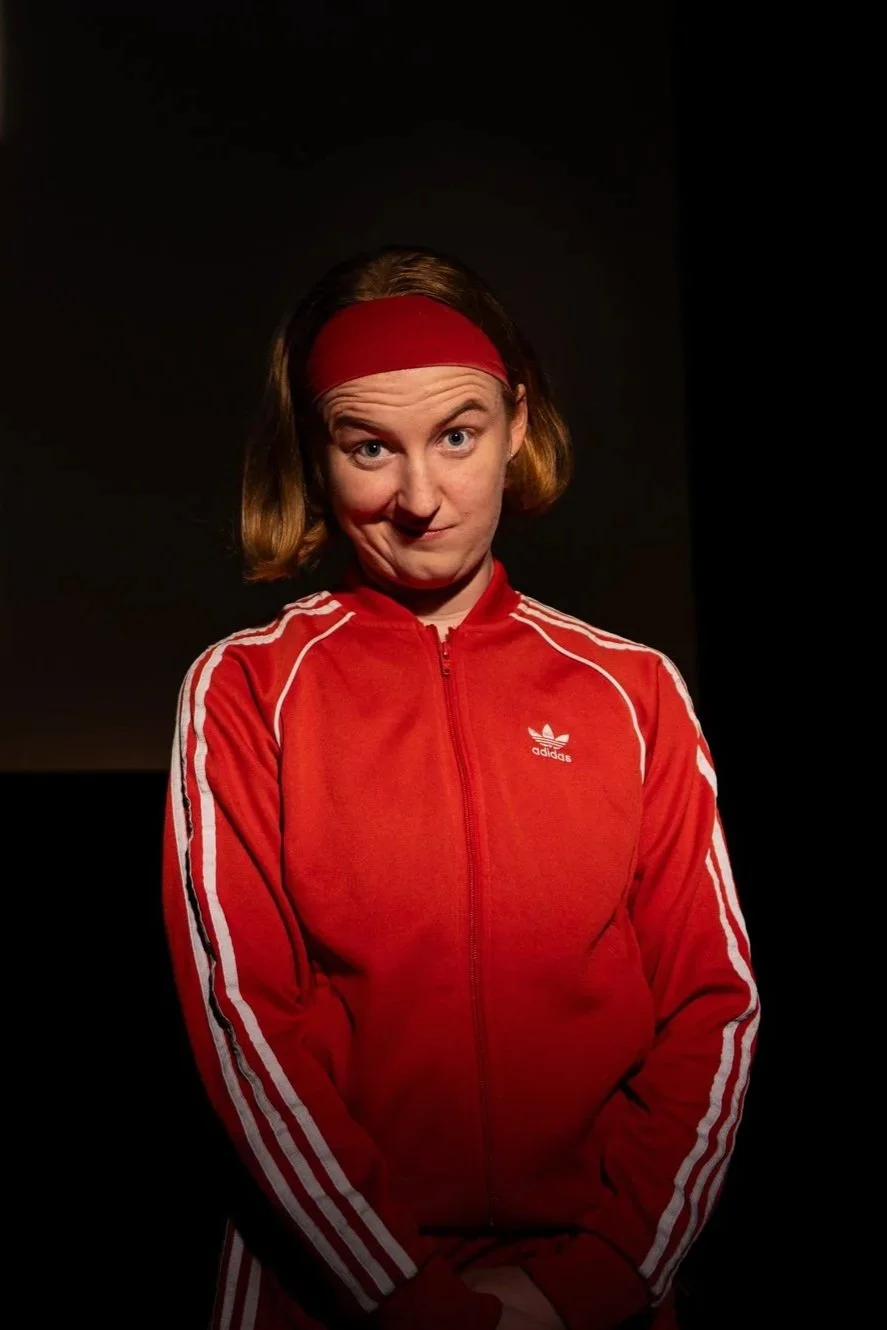
LAUGHING MATTERS
Vulnerable, powerful and a whole lot of fun, Riley Brebner’s brand of entertainment both tickles the funny bone and tugs at the heartstrings.
Vulnerable, powerful and a whole lot of fun, Riley Brebner’s brand of entertainment both tickles the funny bone and tugs at the heartstrings.
WORDS MONIQUE BALVERT O’CONNOR
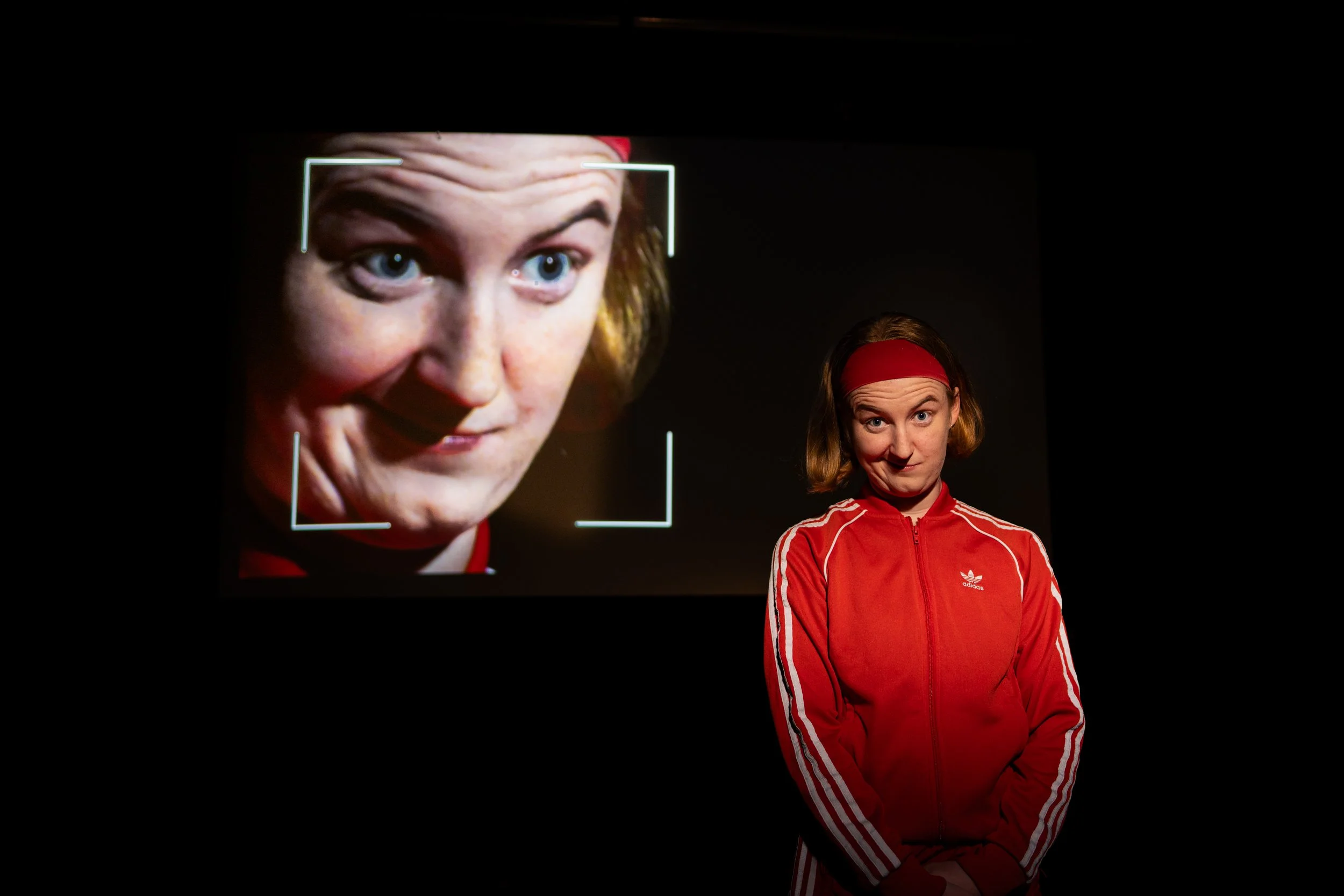
Former Aquinas College student Riley Brebner used to get in trouble now and then for laughing and talking too much at school. Imagine turning that into the foundation of a career.
Riley’s done just that, and the theatre-maker will soon be on stage to deliver a smash-hit, debut solo show as part of the upcoming Tauranga Arts Festival – at which laughing will be fully encouraged. UNO’s thrilled to sponsor this home-grown talent.
Riley learnt about the power of laughter at an early age. It turned out to be an invaluable tool when it came to dodging detention and fitting in.
“I could diffuse a situation by making my teachers laugh, and I got into the popular group because I was funny,” they say. “I think I laugh more than many people. Humour’s a big thing for me – it’s how I connect with people. I’d never survive in a serious job.”
Instead, 25-year-old Riley has a job that’s designed to make you chuckle. Their hour-long solo comedy show Eat, Sleep, Dance, Repeat, which Tauranga festivalgoers will soon get to enjoy, was a sell-out success in Auckland recently. It also won Riley the Most Promising Emerging Artist award and the Dunedin Fringe Tour Ready award at the NZ Fringe Awards in Wellington.
In a mockumentary format, the show follows four students (all played by Riley) rehearsing for a Stage Challenge performance. It’s written from the teenager’s perspective as they endeavour to win the nationals, and tracks the rehearsal process – in which lots of things go wrong and relationships form.
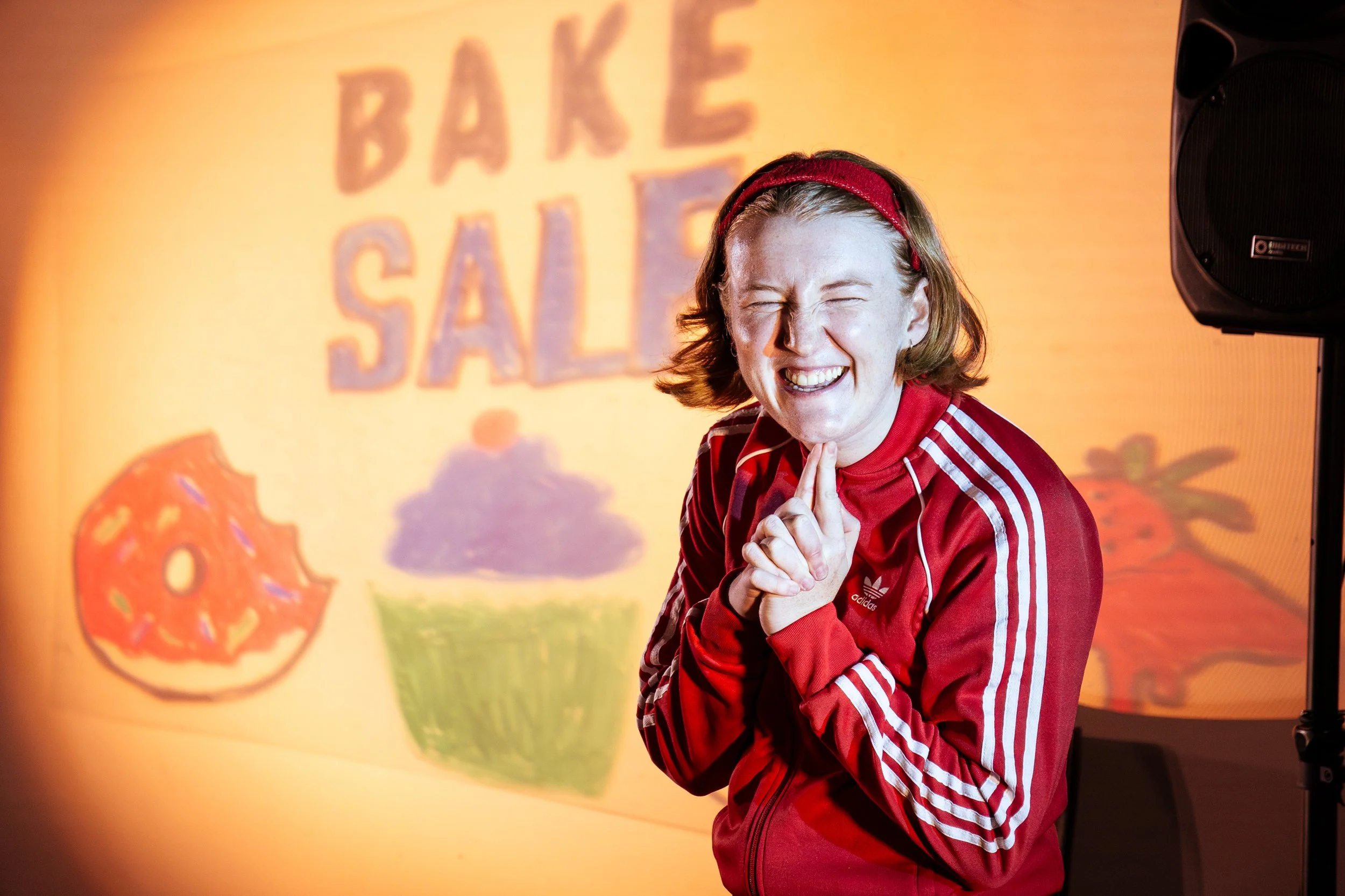
Speaking from their parents Megan and Mark’s Tauranga home, Riley says, “I describe it as a love letter to the arts. Think of the number of hours you put into preparing for a performance like Stage Challenge, and at a time when your understanding of the world is so funny. It’s when you learn about bigger things, form opinions and your own identity, feel vulnerable, have crushes, discover where your passion lies. As a teenager, I remember thinking, ‘This is my whole world’.
“It’s so fun to perform and play these teenagers, who are based on people I went to school or drama school with – and I reckon I’m a little bit of all of them. It’s nostalgic in terms of overall high school experiences.”
Speech and drama and a good dose of acting were all part of Riley’s school years. They enjoyed performing in Tauranga Musical Theatre’s The Wizard of Oz and The Little Mermaid, then directed Chitty Chitty Bang Bang during a gap year before heading off to study at the National Academy of Singing and Dramatic Art in Christchurch. They graduated in 2022 with a Bachelor of Performing Arts and the realisation that acting and creating work was a passion – as well as the way to be seen and get work in Aotearoa’s performing arts world.
Riley says their favourite thing about theatre is how impactful it can be. Educational work to benefit young people was an early post-graduate focus, via school tours of performances including Crash Bash, about safe driving, and Sex Wise, on sexuality, consent and online safety. Then came a successful audition for TV show, Camp Be Better, which spurred a move to Auckland.
Riley loves that their adopted city has a fabulous improv scene and a group called Bull Rush that puts its hilarious, fast and fearless acting on show every Friday at Basement Theatre. “That’s been my launch into the Auckland theatre scene... how I got seen and got to meet the right people and set up important connections,” says Riley, citing comedian Tom Sainsbury as a mentor.
Performing with Bull Rush, touring Eat, Sleep, Dance, Repeat, writing a TV show, creating a play, working to pay the bills, and studying towards a post-graduate qualification in teaching all keep Riley happy and busy. Becoming a drama teacher one day could be on the cards.
“I have a passion for working with teenagers. It’s the seed from which a lot of my work inspiration comes from. Teenagers need stories in which they can see themselves.
“My favourite theatre is vulnerable comedy – it comes from people living in their truth. ‘Tickle the ribs, then stab the heart’ is a quote I really love. You’re allowing your audience to feel safe, connect with you and let you in, and at the same time you’re talking about really important things. These are the shows that affect me and inspire my own work.
“Oh, and it’s great to have people laughing.”
A Canadian acrobatic troupe, singing sensation Macy Gray, local legends Hittmen Bucket Drummers, bilingual theatre, cult cabaret, music shows, classical piano, a pocket orchestra, a light installation, a poetry slam, a zinefest, a literary programme, an interactive gaming event, comedic performances and more – Tauranga Arts Festival 2026 is set to deliver big time.
Eleven days and nights will be jam-packed with fun from October 22 to November 1.
Visit TAURANGAFESTIVAL.CO.NZ for information and tickets. Tickets are also available from Baycourt and Eventfinda.
BETWEEN THE LINES
Make a well-deserved date with one of the latest page-turners to hit our shelves.
Make a well-deserved date with one of the latest page-turners to hit our shelves.
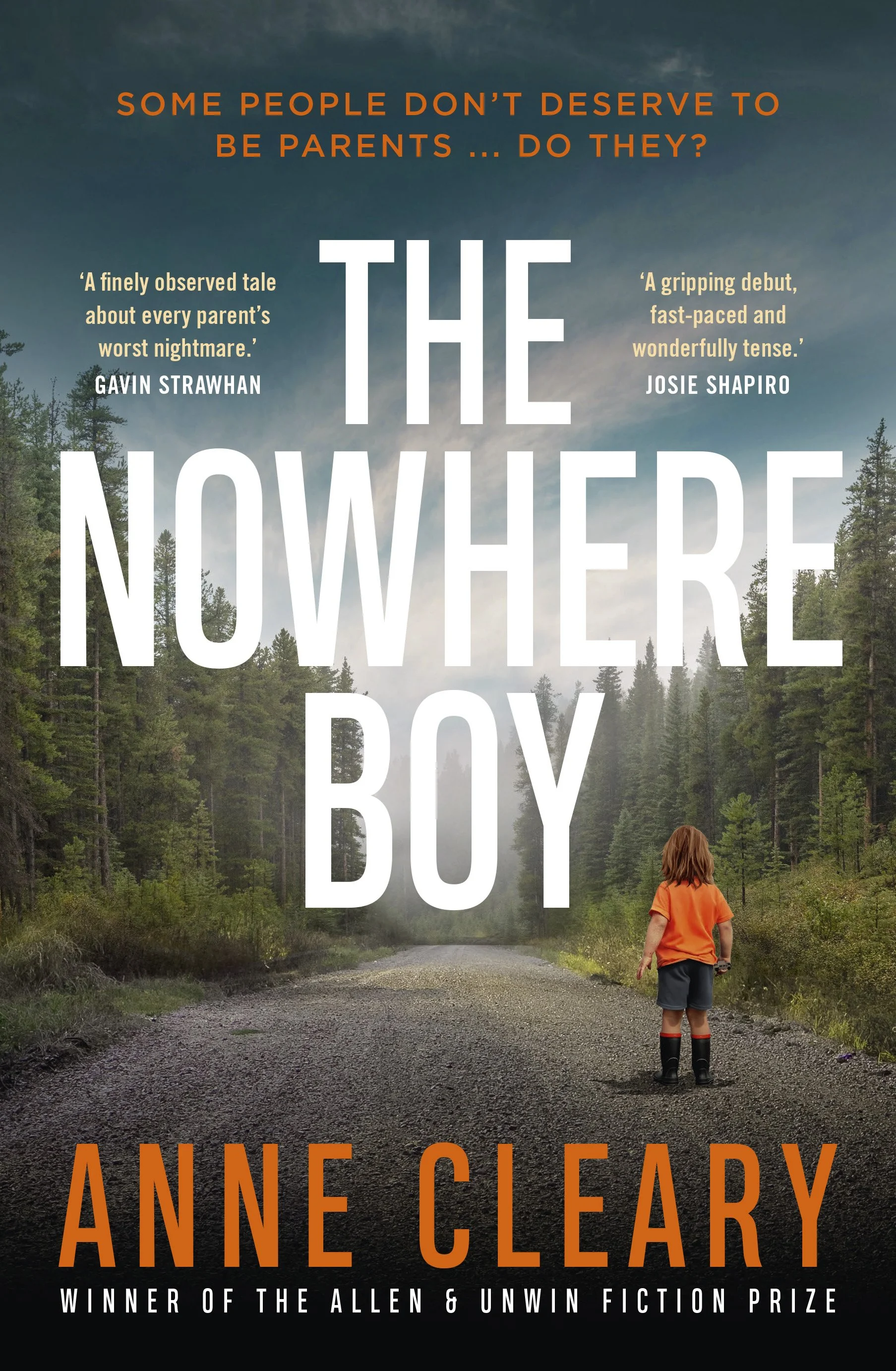
THE NOWHERE BOY
Anne Cleary, Allen & Unwin
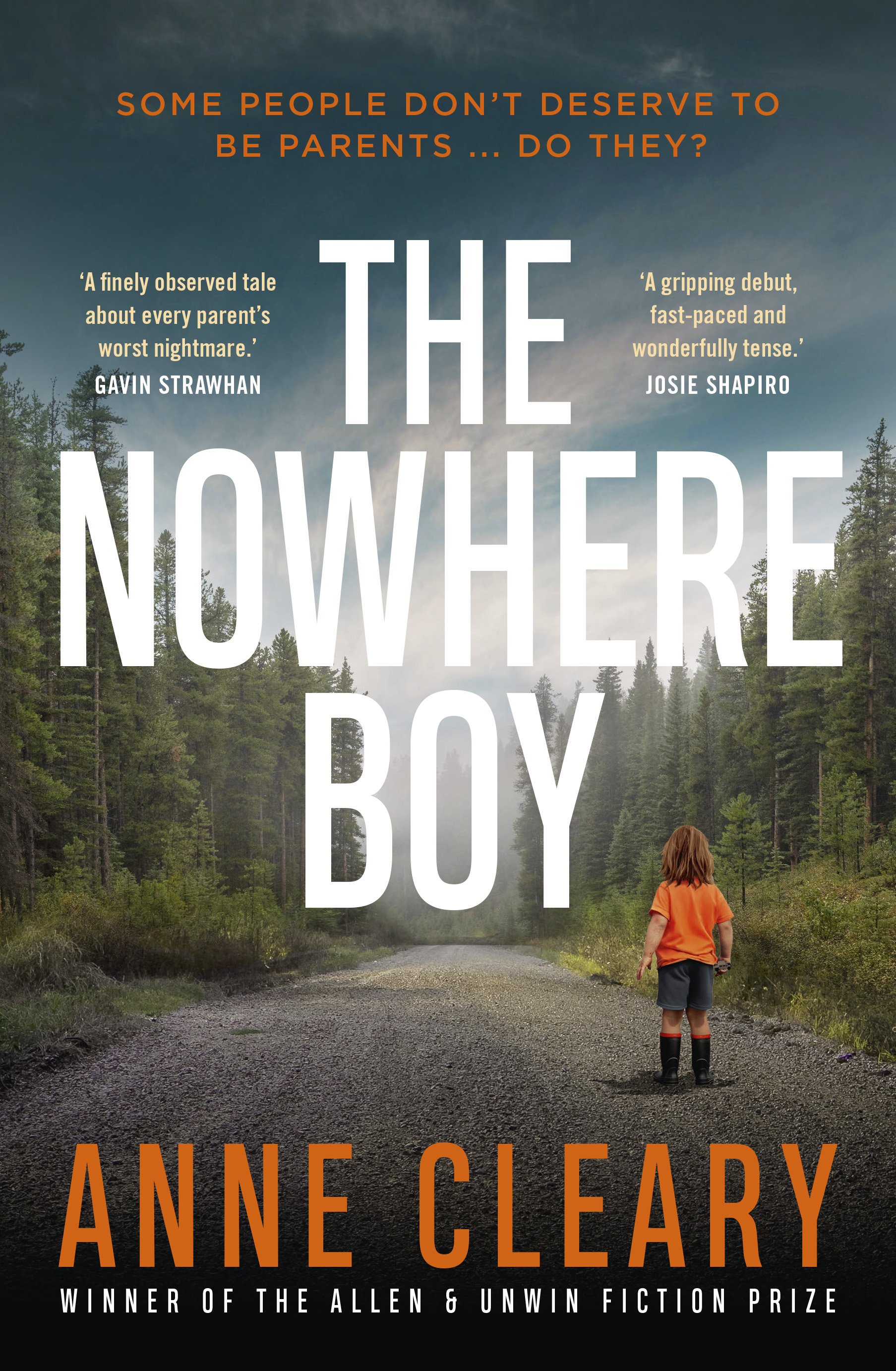
Winner of the 2025 Allen & Unwin Aotearoa NZ Fiction Prize, Anne Cleary’s debut novel explores the razor-thin line between love and obsession. When three-year-old Oliver vanishes from a remote beach carpark, suspicion and desperation ripple through everyone left behind. As the search for Oliver intensifies, another woman clings to the impossible belief she’s been handed a second chance at motherhood. Tense and impossible to put down, The Nowhere Boy is a haunting must-read for fans of psychological drama.
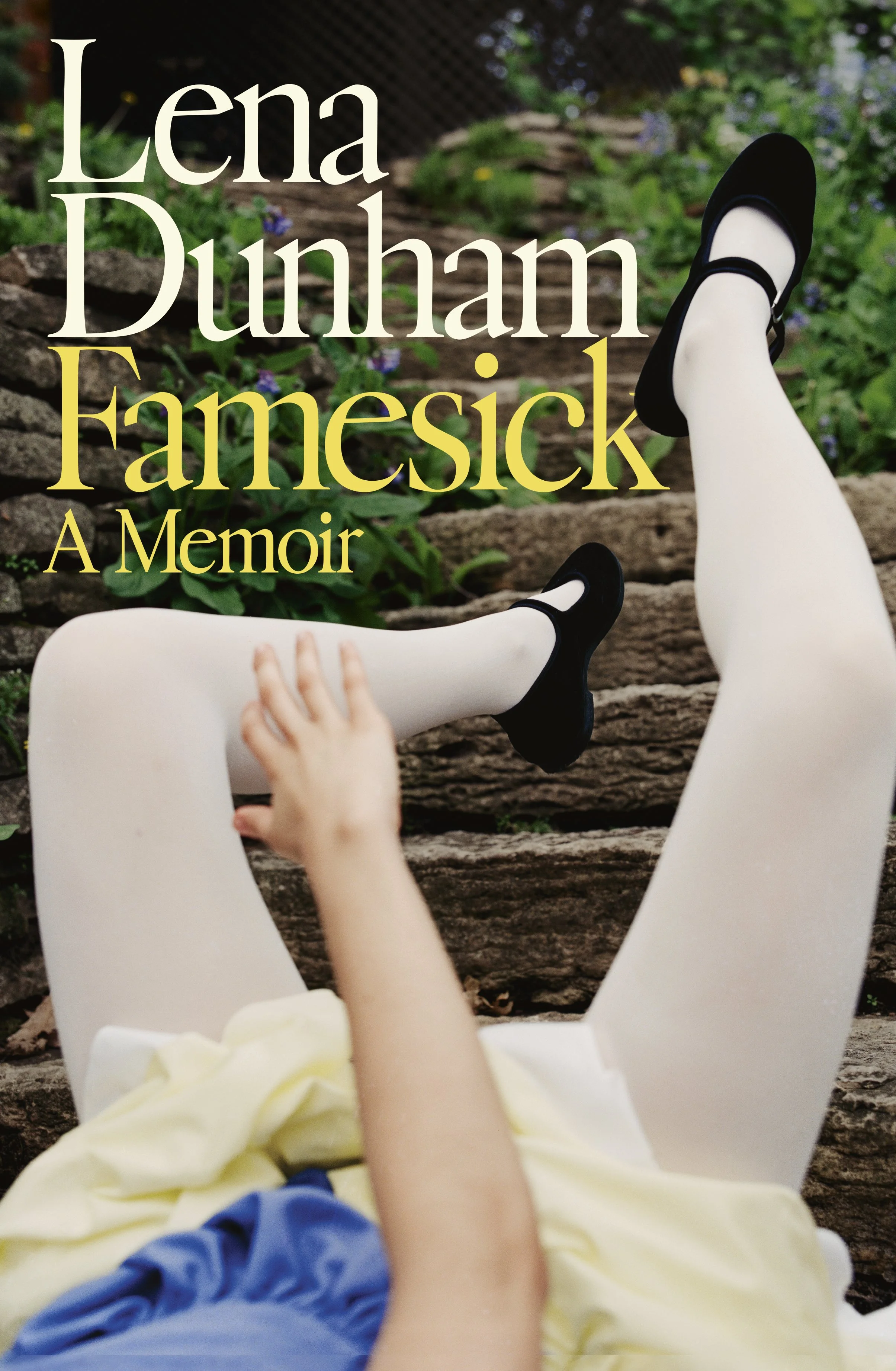
FAMESICK
Lena Dunham, HarperCollins
Part memoir, part reckoning, Famesick sees Lena Dunham reflecting on the dizzying highs and brutal fallout of fame. Charting the years after TV show Girls turned her into a cultural lightning rod, Lena writes candidly about chronic illness, addiction, ambition and the cost of living publicly while privately falling apart. The book peels back the glossy veneer of celebrity to reveal a woman trying to reclaim herself beyond fame.
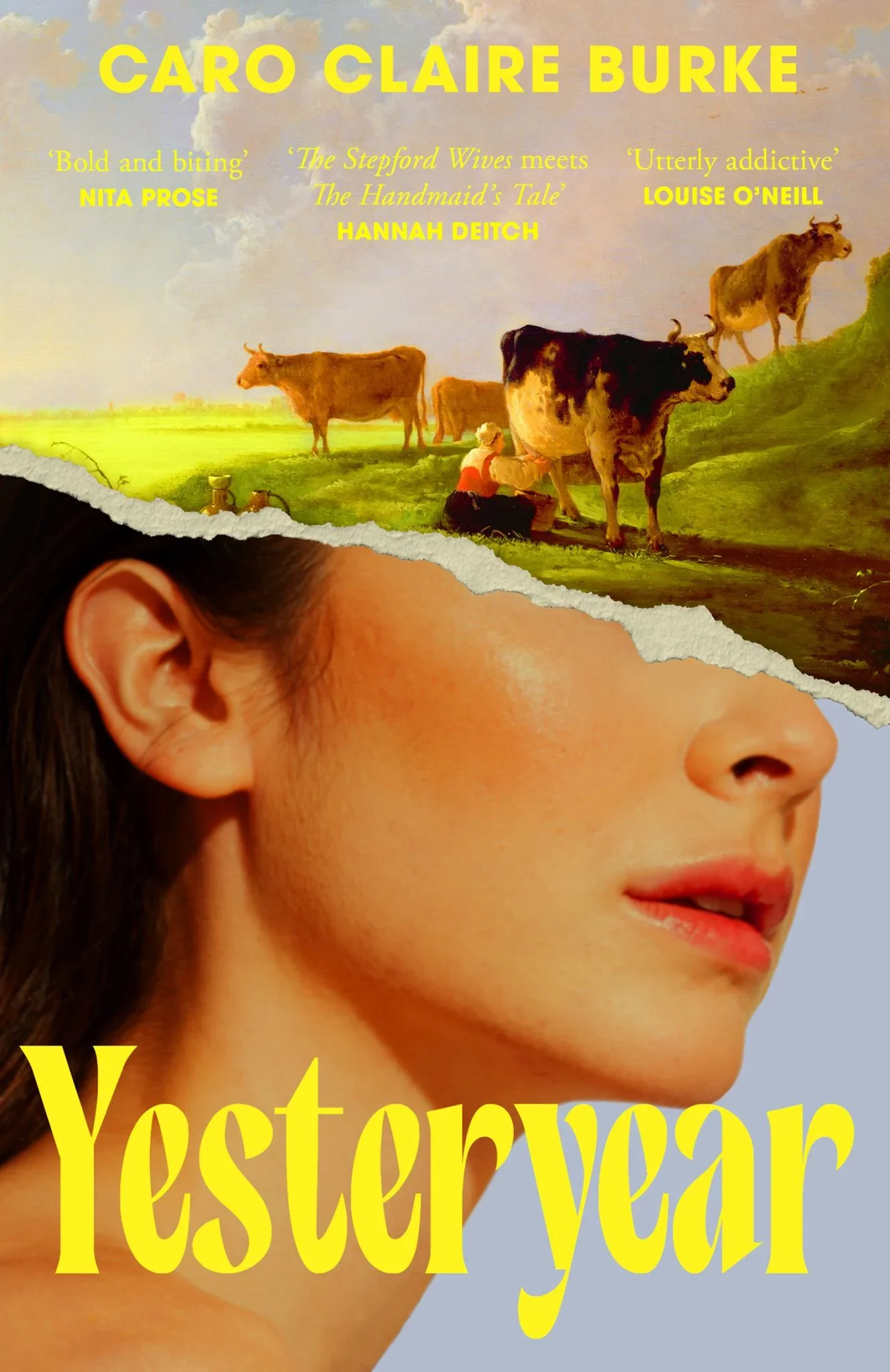
YESTERYEAR
Caro Claire Burke, 4th Estate
This unsettling and addictive debut novel takes a sharp swipe at influencer culture. Natalie Heller Mills has built an empire selling the fantasy of wholesome pioneer living to millions online, with polished sourdough loaves, a cowboy husband, perfect children and all. Then she wakes to find herself trapped in the brutal realities of the 1800s she’s been romanticising. Darkly funny, Caro Claire Burke peels back the performance of modern femininity and asks what’s left underneath.
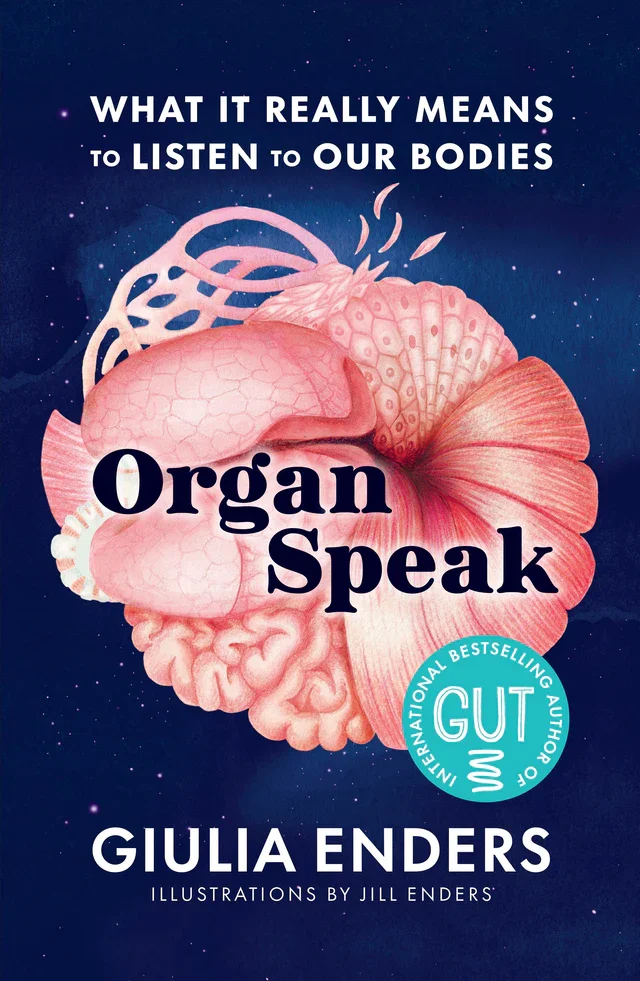
ORGAN SPEAK
Giulia Enders, Harper Collins
More than a decade after Gut, Giulia Enders is back with a wider look at the body’s inner workings. Organ Speak explores what our organs can teach us about stress, healing, safety and connection. Enders has a knack for making science feel surprisingly intimate, by swapping dry medical jargon for sharp storytelling and everyday insight. This is the kind of book that makes you pay closer attention to yourself.
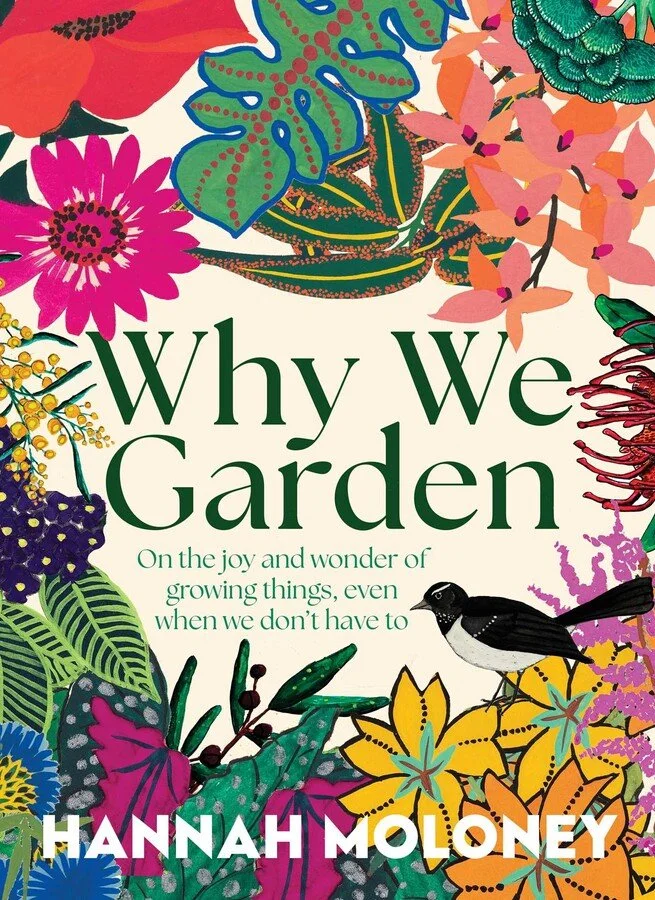
WHY WE GARDEN
Hannah Moloney, Simon & Schuster
In Why We Garden, Australian gardening guru and Gardening Australia presenter Hannah Moloney digs beneath the soil to uncover what really draws us to growing things. Page by page, she weaves together stories from gardeners, artists, activists and everyday people to reveal how gardening nourishes far more than our backyards. Hannah makes a compelling case for gardening as an act of hope and care in an increasingly disconnected world.

RULE OF LIES
Jamison R Firestone, HarperCollins
This political thriller plunges readers into the chaos of post- Soviet Russia through the eyes of an American lawyer caught in the middle of corruption and rising authoritarianism. From mafia threats to exposing state corruption alongside Sergei Magnitsky and Alexei Navalny, Firestone’s real-life story unfolds with the pace of a spy novel. Rule of Lies is an eye-opening account of power and survival under Putin’s Russia.

CULTURAL COUP
Claire Regnault is bringing big ambition and fresh energy to Tauranga Museum.
Claire Regnault is bringing big ambition and fresh energy to Tauranga Museum.
WORDS JO-MARIE BAKER | PHOTO YOAN JOLLY, TE PAPA

For a city that has waited decades for a museum, the appointment of Claire Regnault is a major coup.
A highly respected curator with more than 30 years’ experience, including 15 years as senior curator New Zealand Histories and Cultures at Te Papa, she will now shape one of the most visible parts of Tauranga’s new museum: its temporary exhibitions and public programmes.
She wasn’t actively looking for a new job, but one look at Tauranga Museum’s plans was all it took to lure her north.
“It was exciting to see something that was ambitious and obviously had momentum. The buildings aren’t just pragmatic, they’re beautiful buildings designed with care and thought.”
For Regnault, it was that sense of pride and forward thinking that stood out. Public infrastructure projects can often feel constrained in New Zealand, -but Tauranga’s willingness to invest in something culturally bold was compelling.
Beyond her curatorial work, Regnault is also one of New Zealand’s leading voices in fashion history. Her book Dressed: Fashionable Dress in Aotearoa New Zealand 1840 to 1910 won the illustrated non-fiction category at the 2022 Ockham New Zealand Book Awards. She plans to quietly work away on a new book while focusing on building an engaging museum programme that will appeal to visitors of all ages.
“The team have their dream list of projects that they would love to do – things from the collection, or ideas that they’ve been sitting on relating to Tauranga. So it’ll be a mix of exhibitions that we develop ourselves, plus exhibitions from the national touring circuit. There’s aspirations to also bring in international shows. We really want the museum to hum.”
That ambition extends beyond exhibitions themselves. Programming will be designed to activate the building and create a sense of energy and connection. “It could be anything from an in-gallery hands-on learning activity to a lecture series, floor talks or film nights.”
At its core, Regnault sees the new museum as a place for enjoyment, reflection, and social connection – a warm, welcoming space where there’s always something on offer, and where visitors can keep returning and engaging in different ways.
“You want some levity and fun, but it will be balanced with opportunities for serious reflection and exhibitions that might be a bit challenging to prompt people to think and create empathy.”
Outside of work, Claire’s already settling into Tauranga, describing the city as gentle and beautiful. Much of her time is spent exploring local parks and walkways with her greyhound, Devo, and connecting with the region’s greyhound community. She’s also looking forward to joining the Tauranga Film Society.
At the museum, work is already well underway on what will be a dynamic programme of exhibitions and experiences. While the doors won’t open until 2028, some exhibitions can take up to two years to develop.
“Our job is to make sure the exhibitions are as spectacular as the building itself, and people feel like they belong, take ownership, and are really stimulated and excited by what’s inside.” LETSTALK.TAURANGA.GOVT.NZ/PROJECTS/TAURANGA-MUSEUM
CROWD PLEASERS
The Bay of Plenty is rapidly becoming a hotspot for events. Karl Puschmann talks to the key people behind some of the Bay’s biggest events to get a behind-the-scenes look at what it takes to bring these events to life, their cultural and economic impact, and discover if this is just the beginning.
The Bay of Plenty is rapidly becoming a hotspot for events. Karl Puschmann talks to the key people behind some of the Bay’s biggest events to get a behind-the-scenes look at what it takes to bring these events to life, their cultural and economic impact, and discover if this is just the beginning. PHOTOS ROBBIE HUNTER | HAIR + MAKE-UP DESIREE OSTERMAN
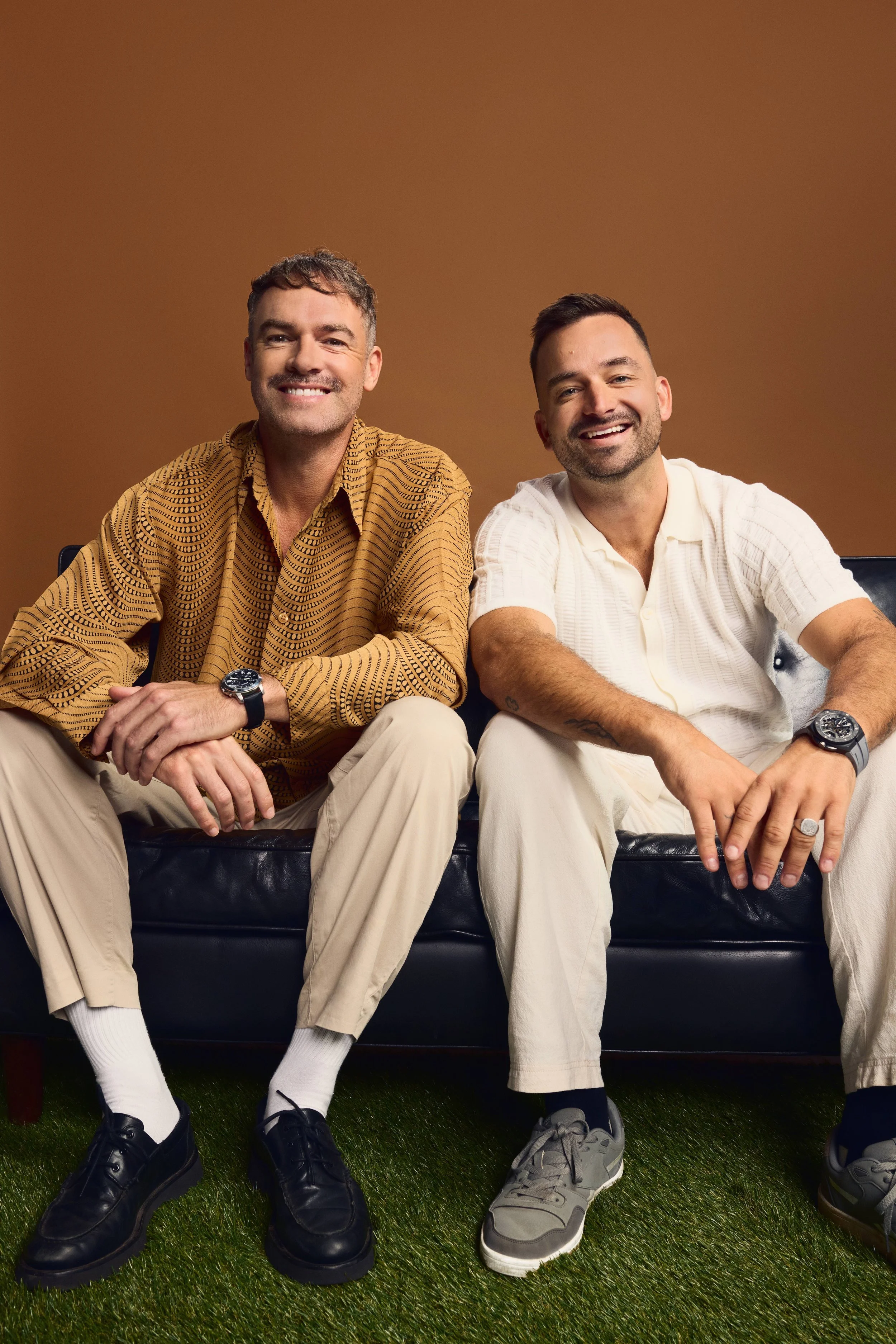
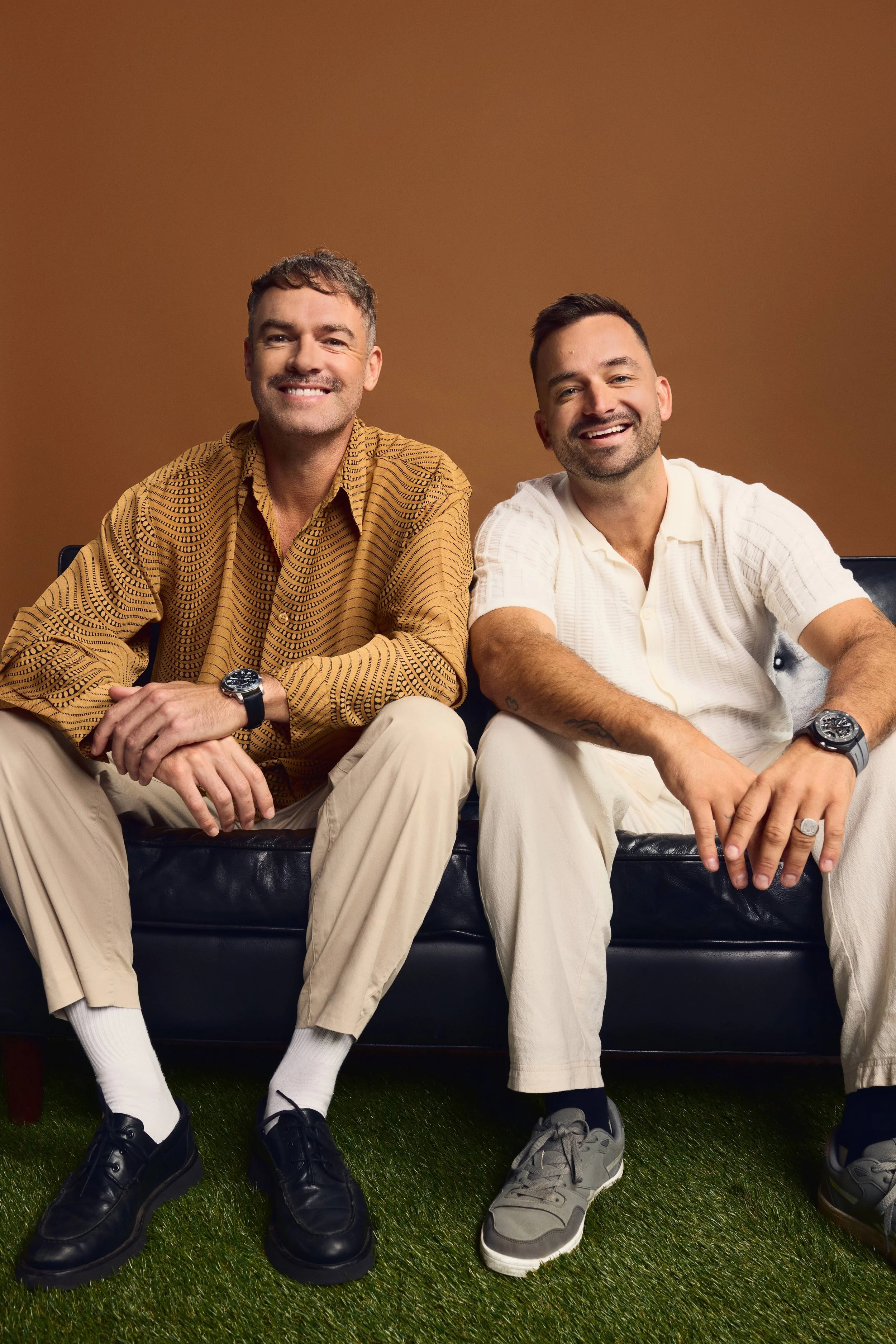
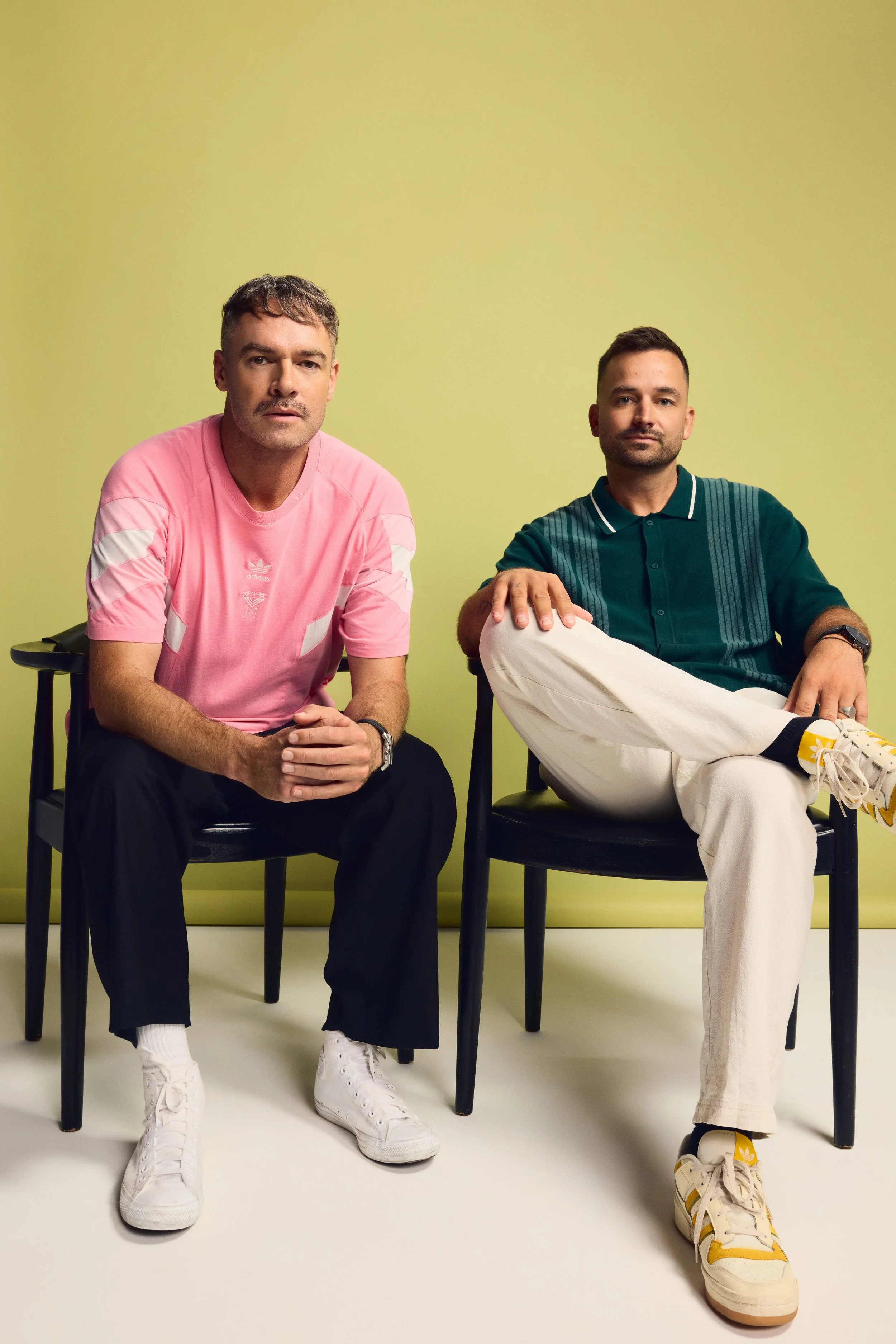
Toby Burrows and Mitch Lowe
I’m standing in the heart of Mount Maunganui’s industrial area, in front of a large warehouse, wondering if I’m in the right place. This unlikely, unglamorous spot is where some of the Bay of Plenty’s biggest events are dreamed up, organised and, if all goes to plan, brought to life. I’ve come to talk to Mitch Lowe and Toby Burrows, the two chaps behind the summer’s history-making Fisher concert at the Bay Oval, about the resurgence of events in the Bay of Plenty, what goes into staging them, and the impact, both economically and culturally, that they have on our region.
But first, I need to find the front door.
I walk down the long driveway, and past the side of the building, whose sliding doors have been pulled open on this bright, hot day, affording me a view of the welders inside who are hard at work behind a shower of bright sparks. It’s a far cry from the triumphant firework display that lit up the sky to bring the Fisher concert to a close.
Near the end of the building, there’s a door. I poke my head inside and see a wall covered in framed concert posters, and a top-of-the-range Pioneer DJ set-up in a booth to my left. This is more like what I was expecting. What I don’t see is people.
“Hello?” I offer, walking inside and knocking on the wood of the DJ booth. Toby bounds down the stairs to greet me.
“Hey mate,” he says, shaking my hand. “Can I get you a Red Bull?”
Energy drinks in hand, he leads me up the stairs and into a boardroom, which is also decorated with framed posters, and where Mitch is sitting in front of a laptop, which he closes as we walk in. It’s here, from this office, tacked onto the back of an industrial factory, that the pair plan out over 150 events a year around Aotearoa.
“The Bay’s always been a priority for us,” Mitch says. “Because we’re local, we’re going to push as much as we can into the Bay. It's a really exciting time.”
“The summer’s been pretty busy,” Toby adds.
That feels like something of an understatement. After a barren few years following the COVID pandemic, there’s been an unignorable resurgence of events happening here in the Bay recently. Coupled with the freshly rejuvenated city centre, the upswing in trendy cafés, bars and restaurants popping up and the ongoing suburban growth down the Pāpāmoa coastline, it’s beginning to feel like the region is shedding its old, and somewhat unfair, reputation as a haven for oldies and gaining a name for itself as a spot where there’s always something happening.
“When I moved to Tauranga a decade ago, people used to go, ‘Oh, it’s a retirement village,’” Mitch laughs. “That used to be the general feeling before we started doing big events here and trying to bring a bit of life to it. Now, I know tons of people who have moved here. They think of Tauranga as one of the event capitals of New Zealand. It’s cool to be a part of that.”
The pair have spent decades working in the events industry — Toby for 23 years and Mitch for 16. Before joining forces, Toby was heavily involved in Gisborne’s New Year’s Eve festival, Rhythm & Vines, while Mitch built his career touring DJs and electronic acts and running club nights. Around a decade ago, Mitch moved to the Bay to launch the single-day music festival Bay Dreams, which debuted in 2016 and ran each summer until it was officially placed on hiatus last year.
The pair knew each other from the industry, and decided to work together on the legacy rocker Bryan Adams’ 2019 Aotearoa tour, which took in Auckland, Wellington, Nelson and Christchurch. This was a significant success, leading the partnership to continue and become more formalised, with Toby moving from his home in “Gizzee” to come to the Mount a year or so later.
“I did a lot of humming and hah-ing about it, but committed to the decision. Now I look back and wonder what I was humming and hah-ing about,” Toby laughs. “It has the beaches and the lifestyle, and geographically it’s sort of in the middle of everywhere. It ticked all the boxes.”
“We love it,” Mitch says. “We’re both raising our families here, which is a good indication of our passion for the place.”
The success of Bryan Adams had shown them there was a gap in the market for legacy artists, so the pair naturally doubled down, bringing over legendary acts like Toto, The Jackson 5 and Snoop Dogg, while also creating one-day festivals targeted at different music genres and audiences, like Rock the Bowl, Le Currents and, of course, Bay Dreams. Most did well. But, the pair admit, not all.
“The funniest one was when I asked my dad’ s opinion on a legacy act,” Mitch recalls. He said, ‘Oh, that’s a guaranteed sell. Absolutely. No question’. We booked it, promoted it, went on sale… and it flopped.” Jokingly, he says, “Dad doesn’t get free tickets anymore.”
But that’s the nature of the events biz, he says. Every show is a gamble that could literally see you losing your house. Something, the pair say, has almost happened more than once over the years.
But that was when they were younger, more naive and excited. But there were some growing pains, and Mitch says they had to learn how to run their business properly.
“We’re not taking stupid risks anymore,” Mitch says. “We’ve learnt how to take calculated risks. Now, when we go into things, I’m confident that we’re either going to win or we’re going to lose an amount that we can handle.”
“We manage risk in a way that doesn’t feel too risky,” Toby says, noting that while their gut feeling still plays a role, they also have a stringent process of running the numbers and looking at specific artist metrics that have to add up before they decide to go ahead with an event. “We’re not risking everything if it doesn’t work anymore. Initially, I was brazen and not afraid to lose everything I had, because I had nothing. As I’ve gotten older, you know, I don’t want to lose everything. We say ‘No’ to a lot of things that come to our desk.
It’s got to fit within certain metrics to make sense.”
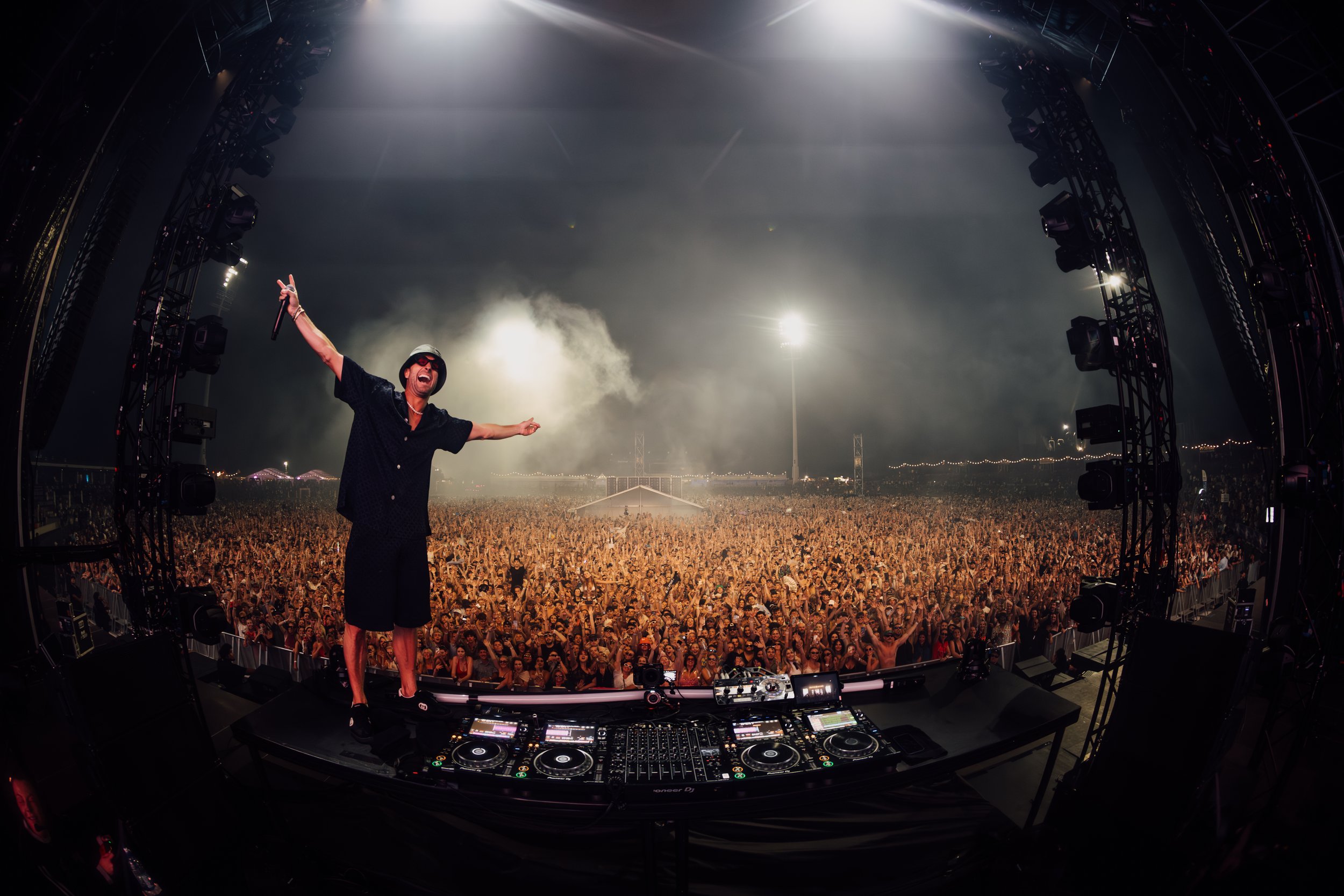
Which brings us to Fisher. If there was a single moment that announced the Bay’s arrival on the national stage, it was that summer concert at Bay Oval — the first-ever music event held at the iconic stadium. In hindsight, it seems like a guaranteed success. But at the time, it was a bold gamble. And while their homes weren’t literally on the line, a flop would have set their business back years.
They’d invested half a decade securing Bay Oval and were determined to headline the first show with a global name. Still, having toured Fisher the previous year, they worried it might be too soon to bring him back.
“We thought if we brought him to the Mount in the middle of summer, put him on at Bay Oval with the right line-up around him, and marketed it properly, it would work,” Toby says. “We’re entrepreneurs at heart. We’ve lived with risk for so long that we’ve learned to thrive under that pressure.”
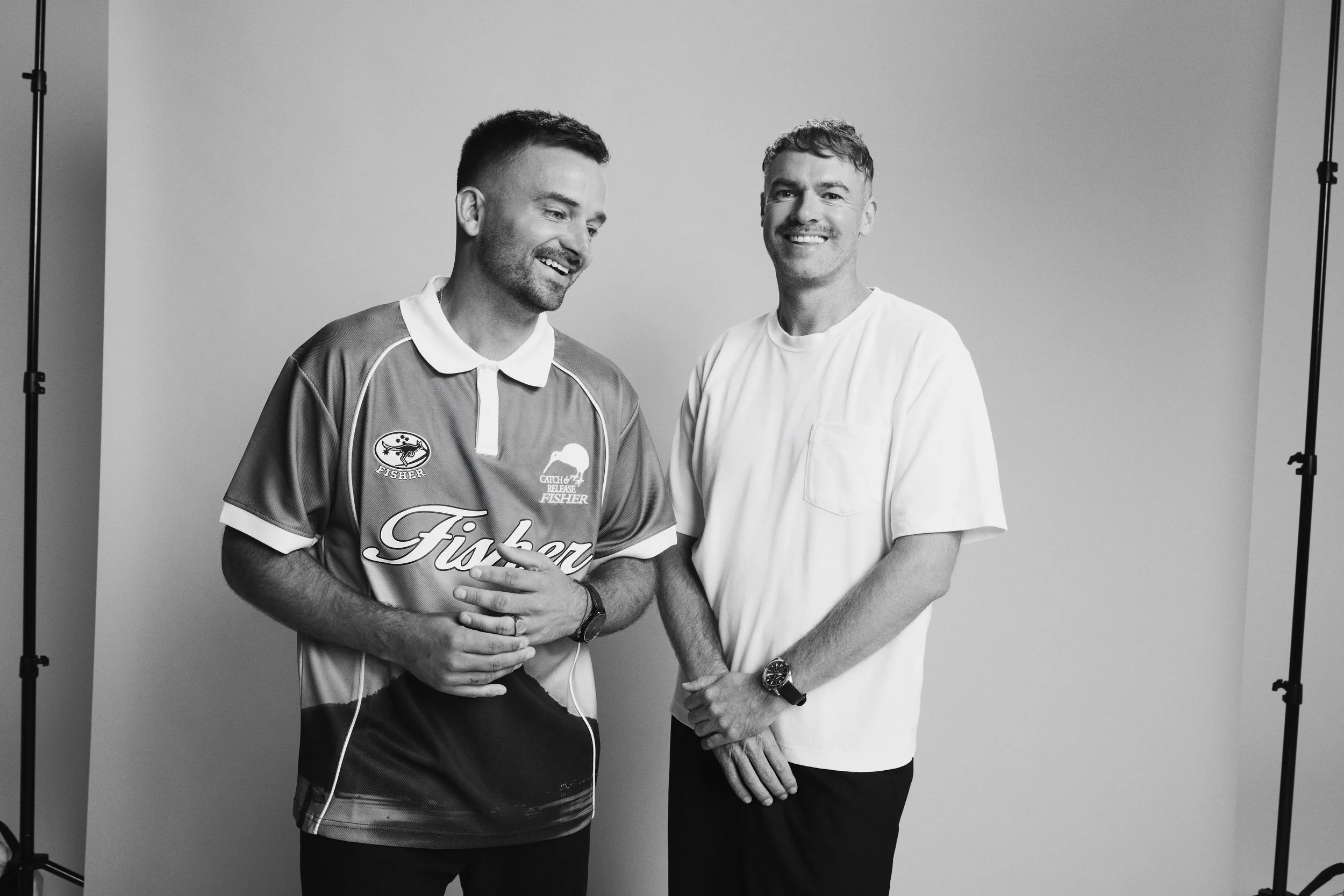
Adds Mitch: “We’ve done massive things here in the past, like Bay Dreams, but to promise one of the biggest acts in the world that they could come to this little region and still do the same numbers that they do in Auckland or Christchurch was pretty ballsy. It paid off.
“We were doubting ourselves right up until that moment we went on sale,” Mitch grins. “Within five minutes, we were like, ‘Okay, we’re good.”
“Fisher was a proof of concept. We wanted to show what was possible,” Toby says. “The goal was to prove that the Bay could deliver numbers and production values comparable to the big cities.”
It certainly did. Over 20,000 punters packed into the Oval for the show. But it wasn’t all locals. More than 82 percent of the punters who attended were from out of town, truly making the Mount the hottest place to be in the whole country that weekend.
Tauranga mayor Mahe Drysdale describes the Fisher concert as an “amazing success for our city”.
“It worked really well,” he tells me. “The feedback we’ve had is that it was an awesome venue, and there’s an opportunity there to grow. Bay Oval is a real jewel in our crown. We’ve had some really great cricket events over the summer, which is what it’s set up for, but we’ve said to Bay Oval, we really want to see more music acts and other events there.”
The one-two punch of Fisher, followed a week later by the UB40 with Ali Campbell concert, has proved the Oval works as a “legitimate venue”. Mahe says promoters can now have confidence that the Bay can successfully pull off these sorts of big events.
“Once one person’s done it, it opens up a whole lot more opportunities in the future,” he says. “We’ve identified events as being one of our priorities and one of our strategies to make this a better place. We want events here because of what they do for our region, for the accommodation providers, the local businesses, the hospo businesses, and for the sense of vibrancy that they attract. We can see the economic benefits of what events do for our city.”

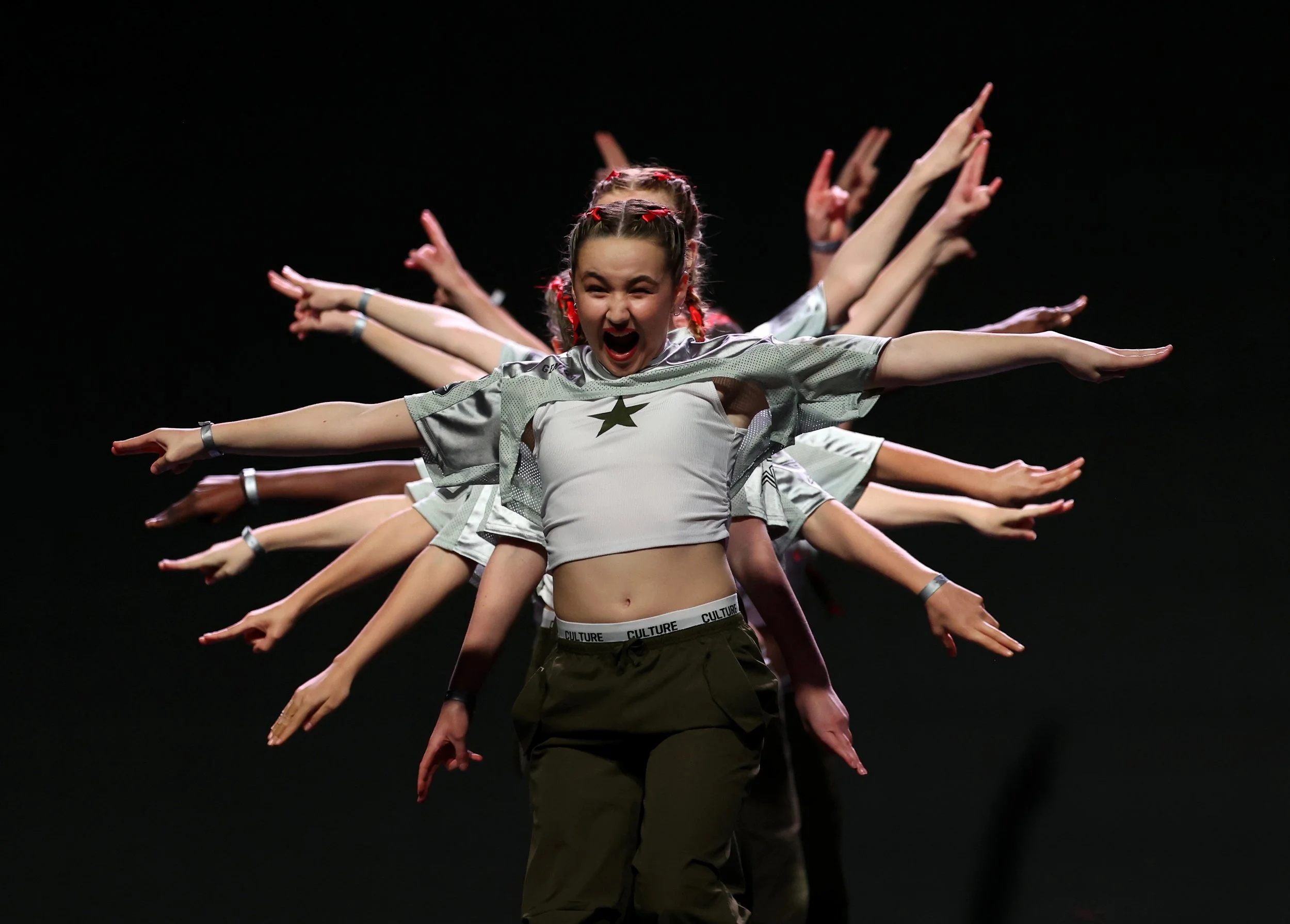

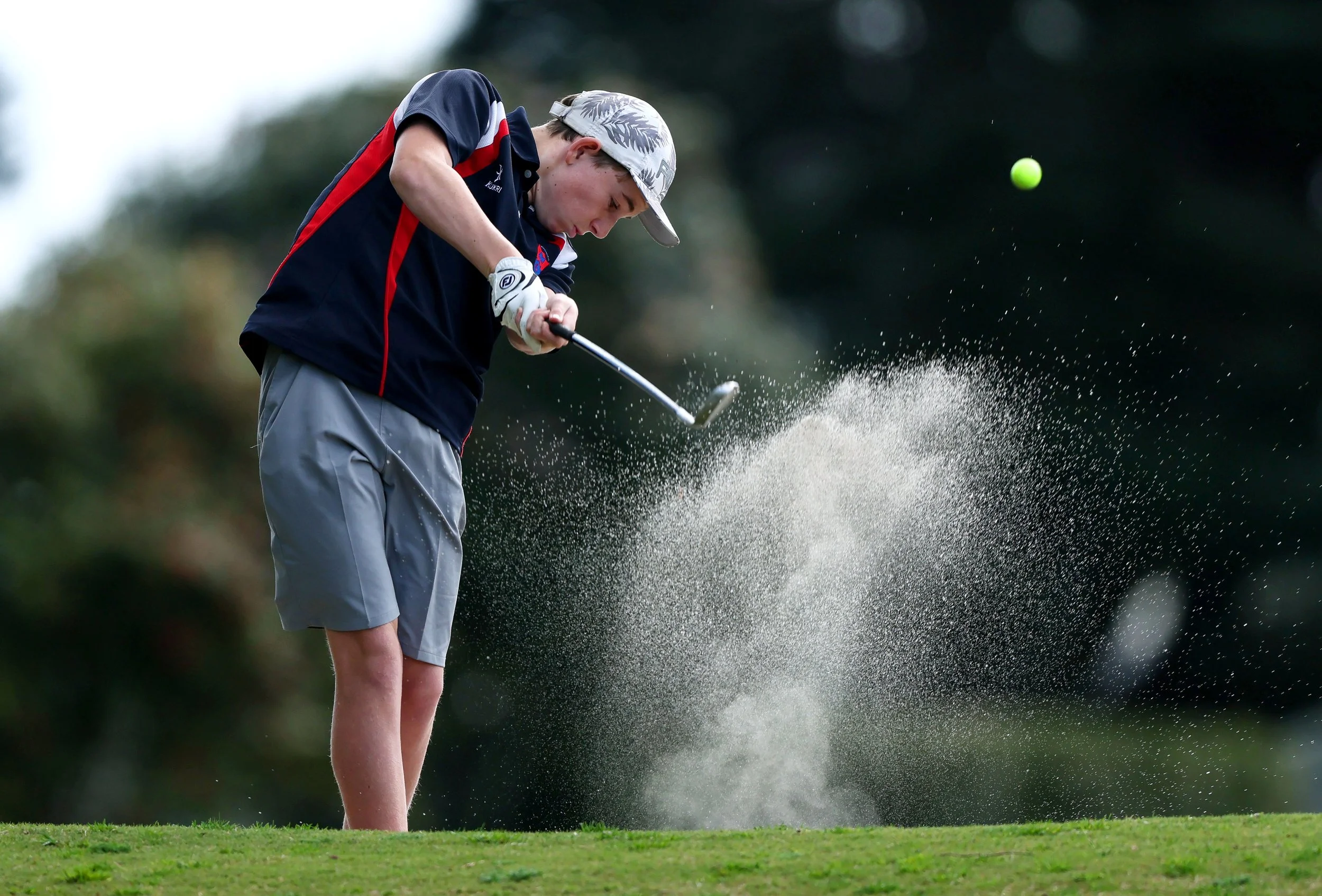
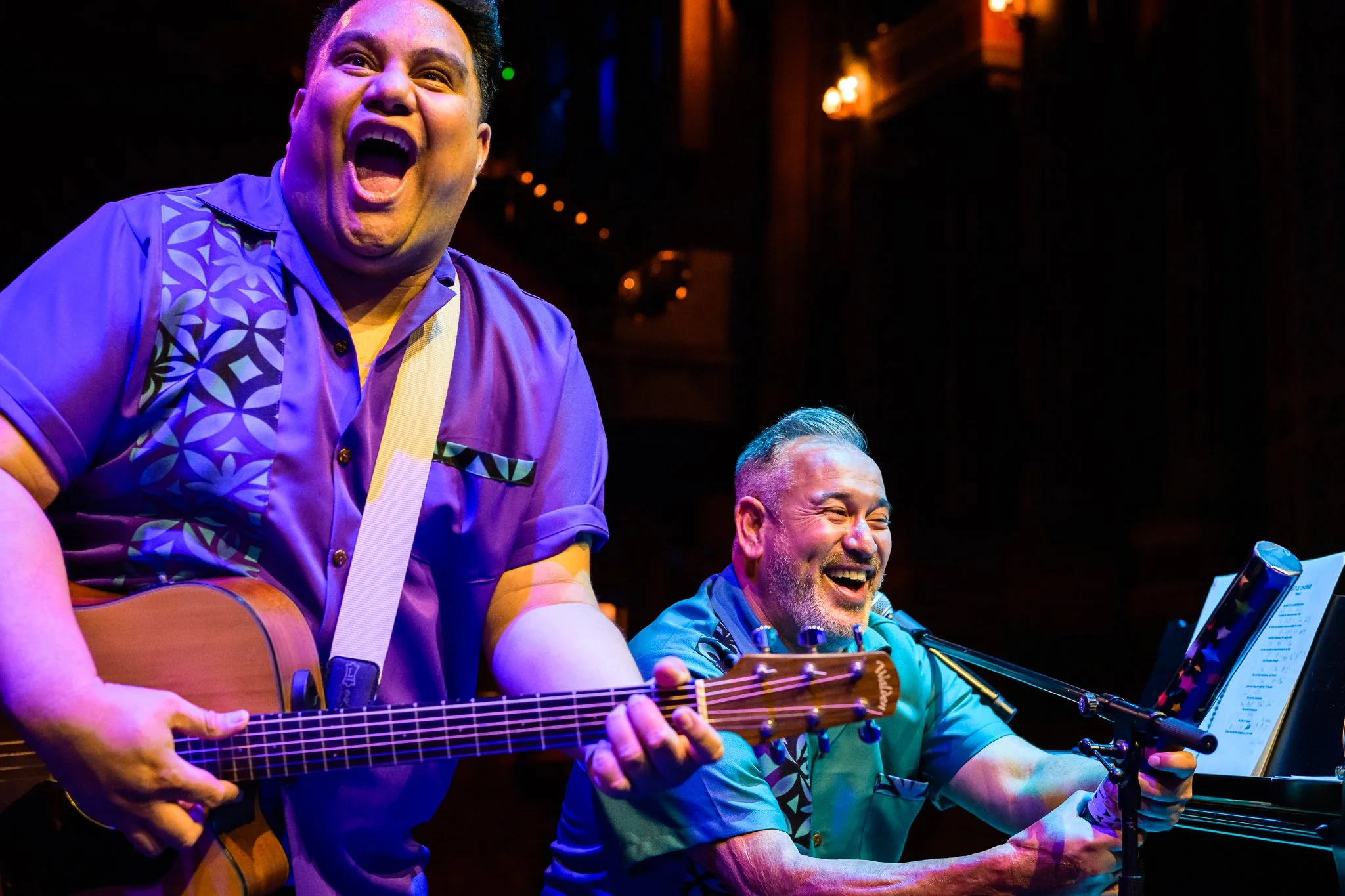

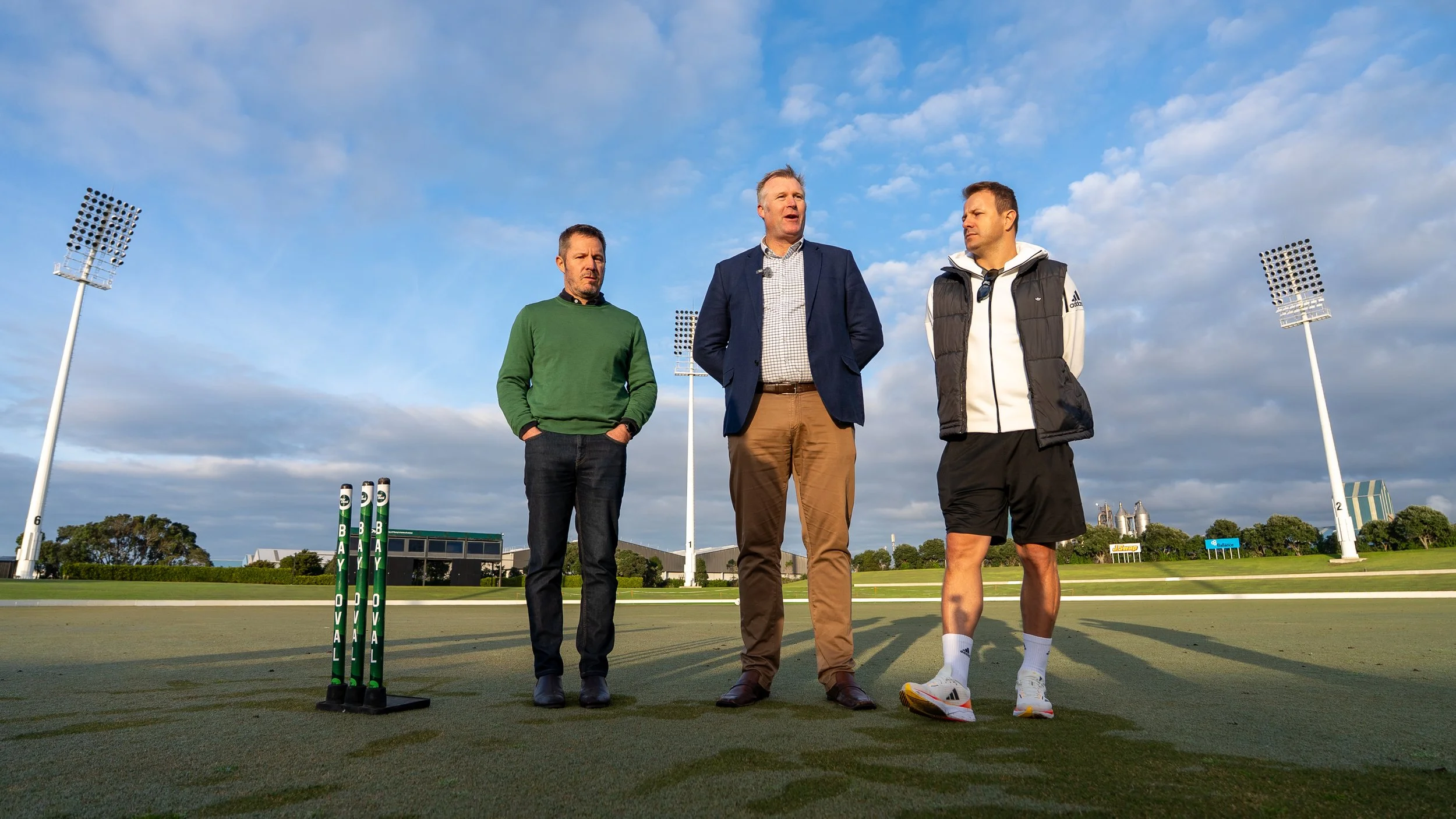

He says the council is actively going out and finding ways to accomplish this strategy, pointing to the upcoming World Triathlon Series as an example.
“We’ve got three years of world-class athletes coming to our city to compete,” he says. “There are so many events out there that we can attract. We’re really excited.”
But what is it that’s attracting these events to the region? Why are organisers increasingly choosing to put on events here?
“The Bay is blessed with natural beauty. That’s certainly a big part of why it’s attractive,” he says. “A lot of people want to come here, so when events are on, people jump at the opportunity to come and enjoy the region. It’s a win-win,” he smiles.
“We can share our beautiful city, but also they help drive our economy. They have a significant economic and social benefit.”
One of the best examples of this economic and cultural coming together is the annual AIMS Games. The week-long multi-sport tournament brings together thousands of Year 7 and 8 students from across New Zealand and the Pacific to compete in 27 different sporting codes, generating a tangible excitement as well as some serious cash for the region.
“Last year we had just over 14,000 athletes from 431 schools,” Kelly Schischka, the AIMS Games tournament director, tells UNO. “They compete in sport, make new memories and new friends in f it-for-purpose sports venues across the region. That, for us, is what makes it work so well.”
Add in coaches, managers, officials and supporters, and that number jumps to 29,558, with a whopping 23,425 of those coming in from out of town. This one event alone generated a huge $9,751,958 of tourism expenditure in Tauranga.
“Economically, the AIMS Games makes a big contribution, but more so, it really builds that pride of being hosts. That’s incredibly important,” Kelly says. “You can’t stage an event without the support of the community, and we absolutely have that with the AIMS Games. We’re incredibly lucky.”
The event started here in 2004 and has steadily grown in popularity ever since. The week-long event now takes over 29 different venues around Tauranga and the Western Bay of Plenty.
“The AIMS Games have really helped shape Tauranga’s identity as an event city. There’s nothing quite like being in town when they’re on,” Kelly smiles. “There are 14,000 kids here for a week-long sleepover with their friends. The energy levels are incredibly high. It’s hard not to get caught up in that. It’s a really special thing to be a part of.”
Along with the AIMS Games, Kelly says there are many events that are now synonymous with Tauranga, making it a vibrant place to live, and encouraging people to visit. There’s the Tauranga Marathon, the Jazz Festival, the Arts Festival, the Flavours of Plenty food festival and the Mount Festival of Multisport, one of the country’s longest-running and most iconic triathlons, to name just a few.
“These are part of the fabric of Tauranga,” Kelly says. “We’ve proven ourselves to be able to host international sporting events and fantastic music events incredibly well. It’s great for those of us who live here to be a part of that, and it’s fantastic to be able to showcase our city to different types of visitors who are here for different types of events.”
Things may feel big now, but it really is just the beginning, as national and international events are increasingly attracted by the region’s stunning backdrop, infrastructure and proven ability to be welcoming hosts for major events.
“It’s an exciting time,” Toby enthuses. “We have agents and artists from all over the world wanting to come down and work with us. There’s a lot of exciting projects in the pipeline right across the country, including here in the Bay.”
“I agree,” Mitch nods. “I have the feeling now that I had when we launched Bay Dreams back in the day. It feels like the start of something big. We literally have the biggest acts in the world asking us to do cool things.”
After the triumph of Fisher, the pair are already working on next summer's show. They know Fisher's a tough act to follow. I cheekily ask who's on their radar and they both grin and say there's some exciting options on the table. Just before I leave, I mention that it's a great time to be living in the Bay.
"It's exciting," Mitch agrees. "And this is just the start."
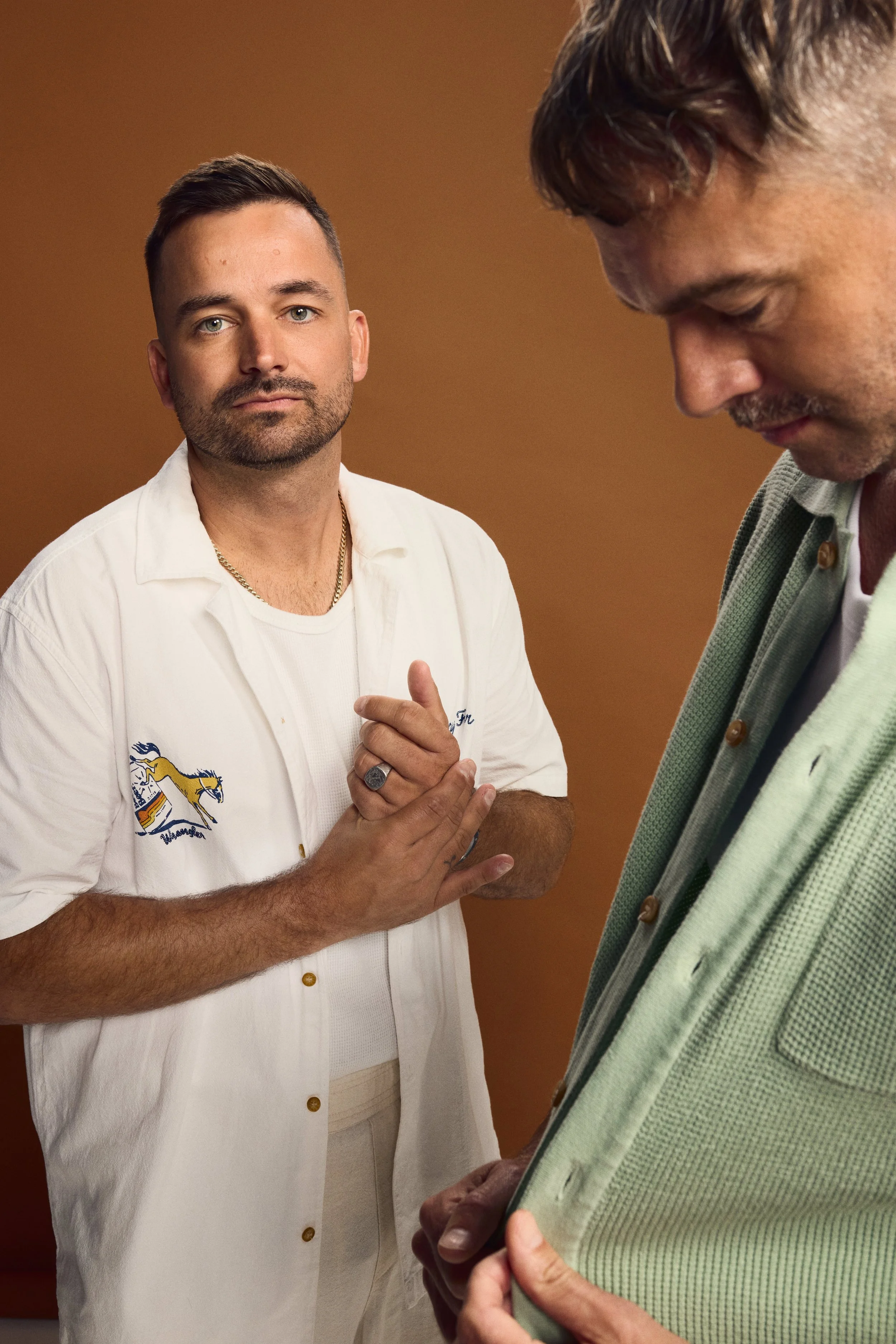
TUFT LOVE
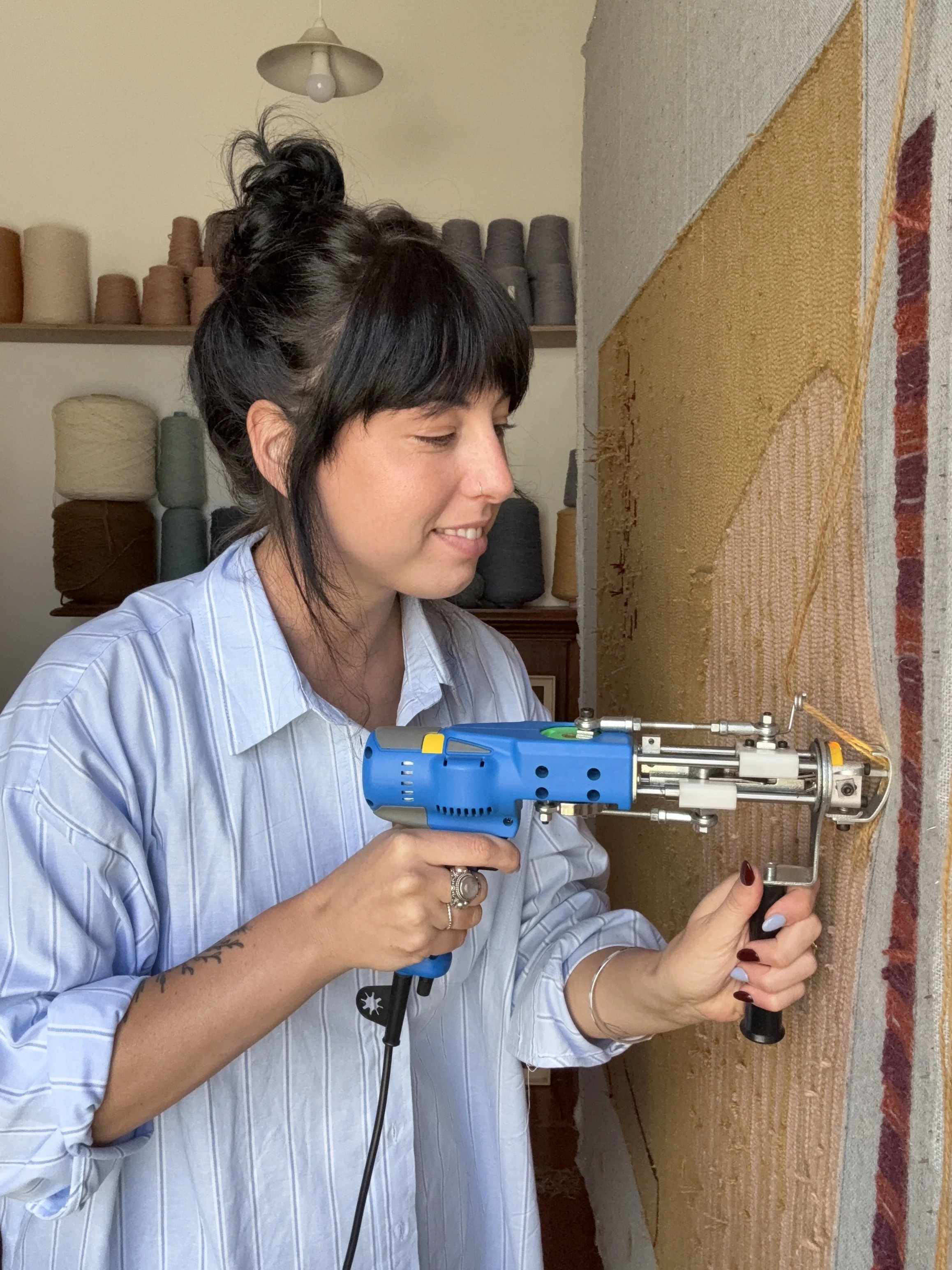
Irish-born textile artist Leah Creaven explores landscape through richly textured rug-tufted works made with New Zealand wool.
Irish-born textile artist Leah Creaven explores landscape through richly textured rug-tufted works made with New Zealand wool.
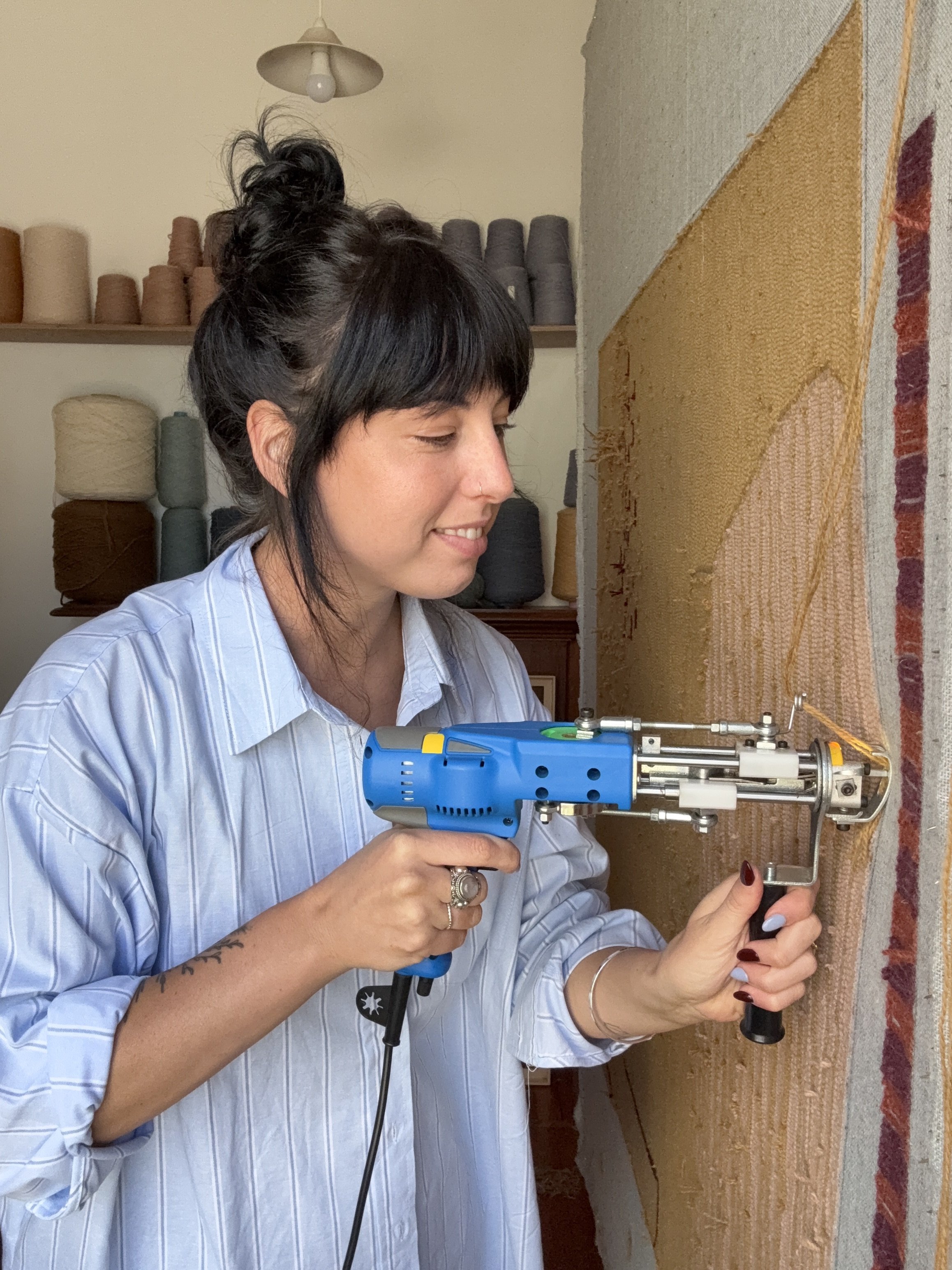
Rug tufting might be having a moment, but for textile artist Leah Creaven it’s a deeply personal way of translating landscape and feeling into form. Here, she talks process, inspiration and why working with wool feels like painting with fibre.
UNO: What first drew you to this medium, and what continues to captivate you about it? Leah: I was drawn to rug tufting a few years after finishing my degree in Textiles and Surface Design in Dublin. I started creating small art with a punch needle and wanted to work on a larger scale, so I guess I started rug tufting out of a desire to explore scale and impact. I’m continuously captivated by the freedom that rug tufting gives you. In my eyes it’s like painting with wool, but with the outcome being both beautiful and tactile. The repetitive rhythm of tufting is also meditative and helps me to shut out the noise (while music blares in my earpods!).
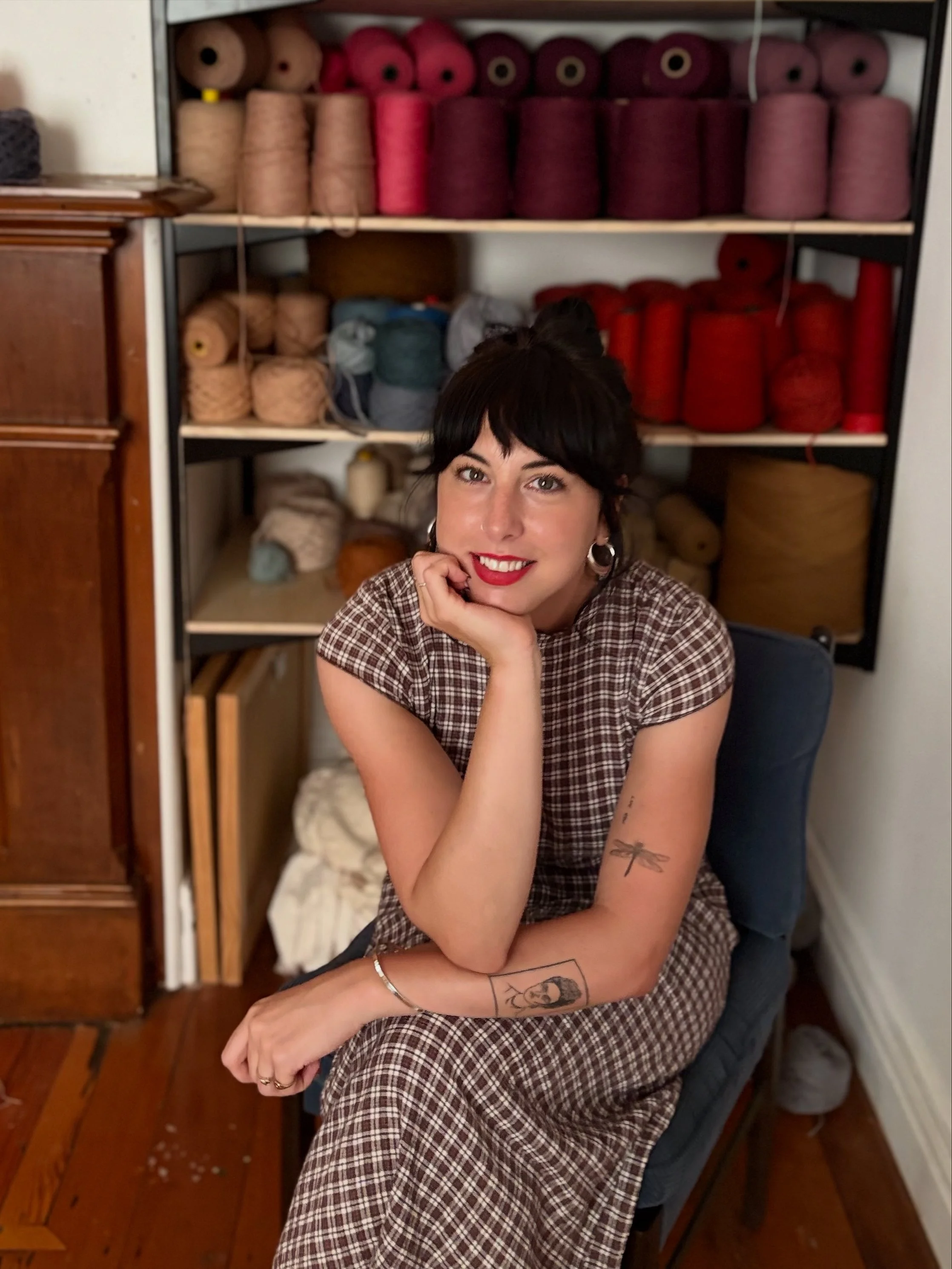
Your pieces often blend influences from both Irish landscapes and the land around you in Aotearoa New Zealand. How do these environments shape the stories you tell through your art? Ireland shapes the inner landscape of the pieces with memory and emotion. It’s less about depicting Ireland directly and more about carrying its emotional weight — a way of feeling land as archive and as something storied and tender. Visually, however, my response is grounded in New Zealand where I now live. The land here informs the physical language of the work. In that sense, my work kind of exists between inheritance and observation, emotionally anchored in Ireland and visually shaped by Aotearoa which allows them to hold both memory and presence at the same time.
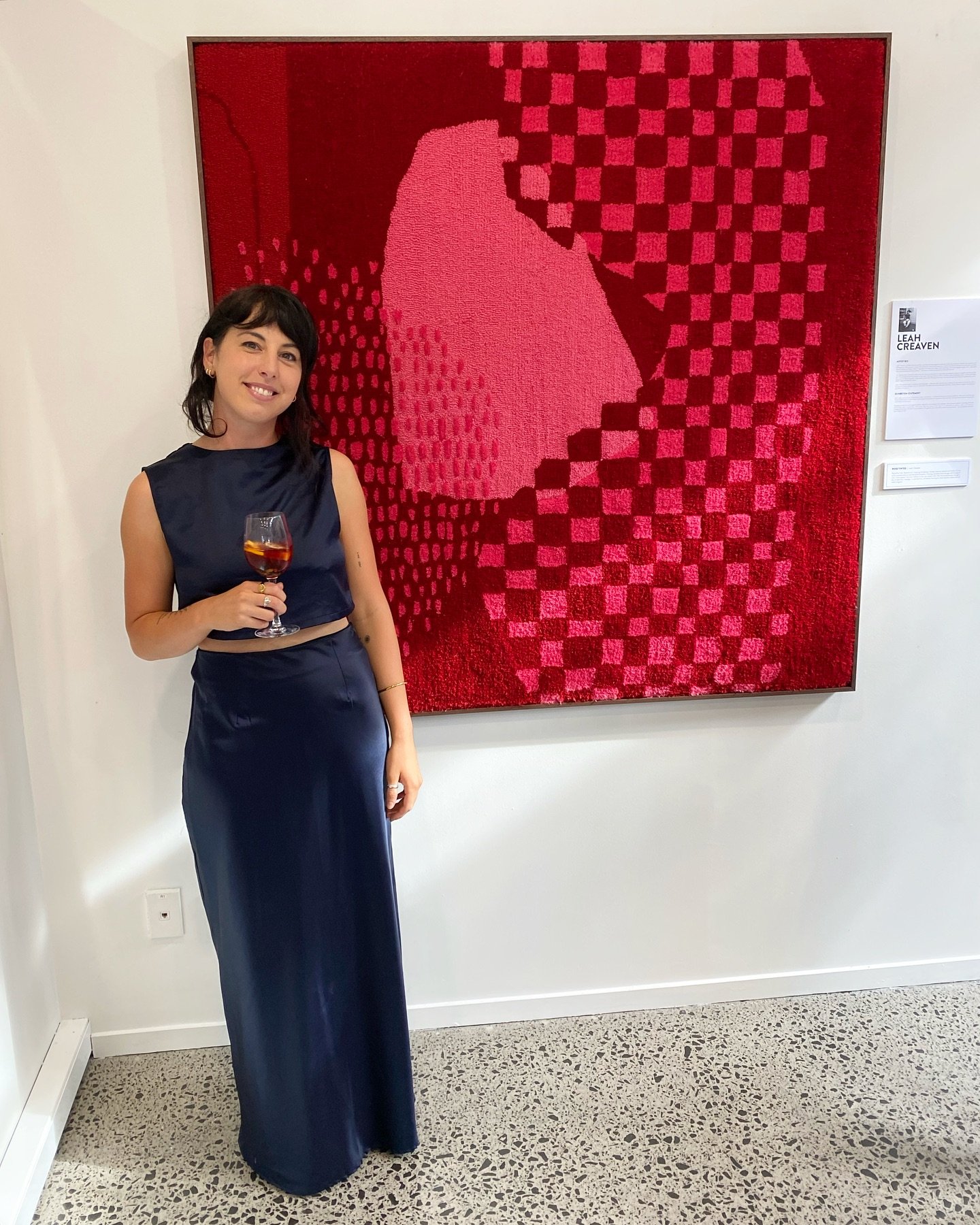
Can you talk about your creative process, from initial concept to finished piece, and how you decide on colour palettes and forms? My process usually begins with an idea or a feeling that I hash out with my husband or my dad. I’m a big communicator and voicing these ideas helps me make sense of them before they become visual. They’re normally responses to landscape or a memory or a shift in light. I’ll sketch loosely on my iPad, mostly abstract shapes that suggest contour or horizon, but I leave space for the work to evolve once I begin tufting. Colour is often the first concrete decision (and the most exciting one!). I build a palette guided by emotional tone or seasonal shifts. Then I’ll test combinations by tufting colour samples to see which complement or compete with each other. Then it is time to bring my drawing to woolen-life on my canvas.
You consciously choose New Zealand wool for your art. What significance does this material have for you beyond its physical qualities? Choosing New Zealand wool is a conscious way of grounding my work in the place where it is grown. Beyond its durability, wool carries a sense of locality. Using it allows the work to hold a direct relationship to its environment and embeds the landscape quite literally into the surface. Wool also holds warmth. It has clothed, sheltered and comforted people for generations. In my work, it reinforces the themes of grounding and belonging.
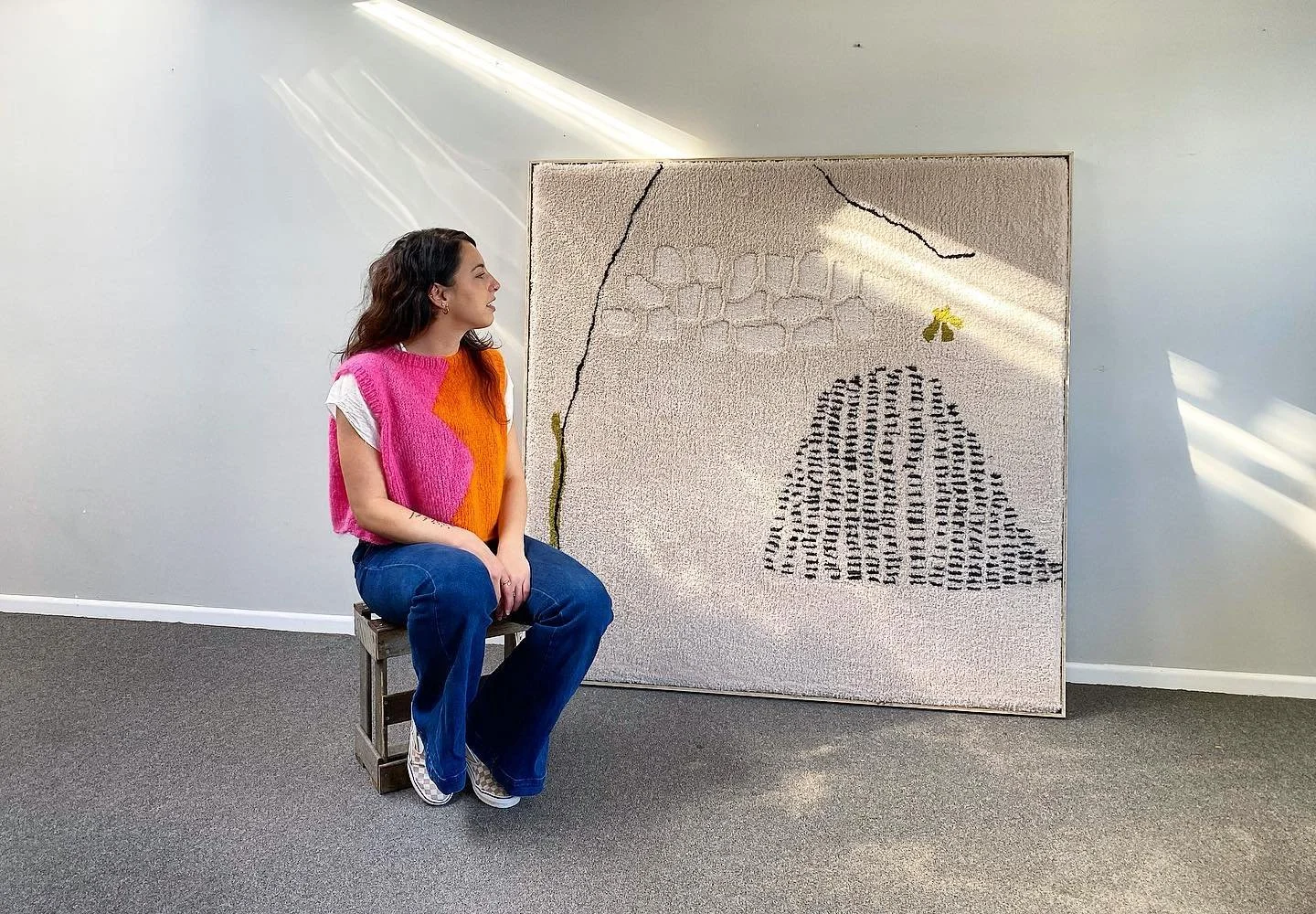
Your ‘Land Girl’ exhibition and pieces like ‘Rapa Rising’ have received critical acclaim. Has public response influenced the direction of your work or your confidence as an artist? While the public continues to be supportive and affirming, what I feel matters most is the sense that the work resonates. That the viewers recognise something of their own relationship to land, memory or belonging in it. That particular connection reinforces my belief that textile-based practices can hold conceptual and emotional weight. Public engagement hasn’t really shifted the conceptual foundation of my work but it has deepened my sense of authenticity and to honour the materials and stories I’m working with.
What role do workshops and teaching (like your rug tufting classes) play in your practice? Does interacting with other creatives change the way you think about your own art? Teaching rug tufting workshops is such an important extension of my practice. Rug tufting can at times feel solitary so the workshops help top up my social meter, but also provide a space for creative exchange. I learn so much from the participants! There’s something exciting about watching people encounter a medium for the first time. Participants bring different stories and aesthetics into the space and that diversity expands the conversation around what tufting can be and encourages me to remain open and curious within my own work.
Looking forward, are there new themes, techniques or collaborations you’re excited to explore in your upcoming work? I’m experimenting a lot with layering and texture, which is very exciting to witness and learn from. I just moved to the Bay of Plenty so I’m feeling inspired conceptually and am looking forward to including some local walks and feelings of rejuvenation in my work. I’m really loving my new studio and being amongst the artistic activity at the Historic Village. It has been a wonderful boost in energy, but also in my confidence. It feels like being back at university, where bouncing ideas and learning of art events is an everyday occurrence.
How long have you lived in the Bay and what do you love about it? I moved to Otumoetai in November so we’re pretty fresh but are absolutely loving it. I’m passionate about the outdoors. Being close to the ocean and surrounded by beautiful walks is everything we could have asked for. I also love an evening scene so it’s been great to experience the fantastic restaurants and live music that are available to us too.
MAKING FRIENDS
As the collection grows, Tauranga locals are already stepping inside the story of their new museum.
As the collection grows, Tauranga locals are already stepping inside the story of their new museum.
WORDS PIP CROMBIE
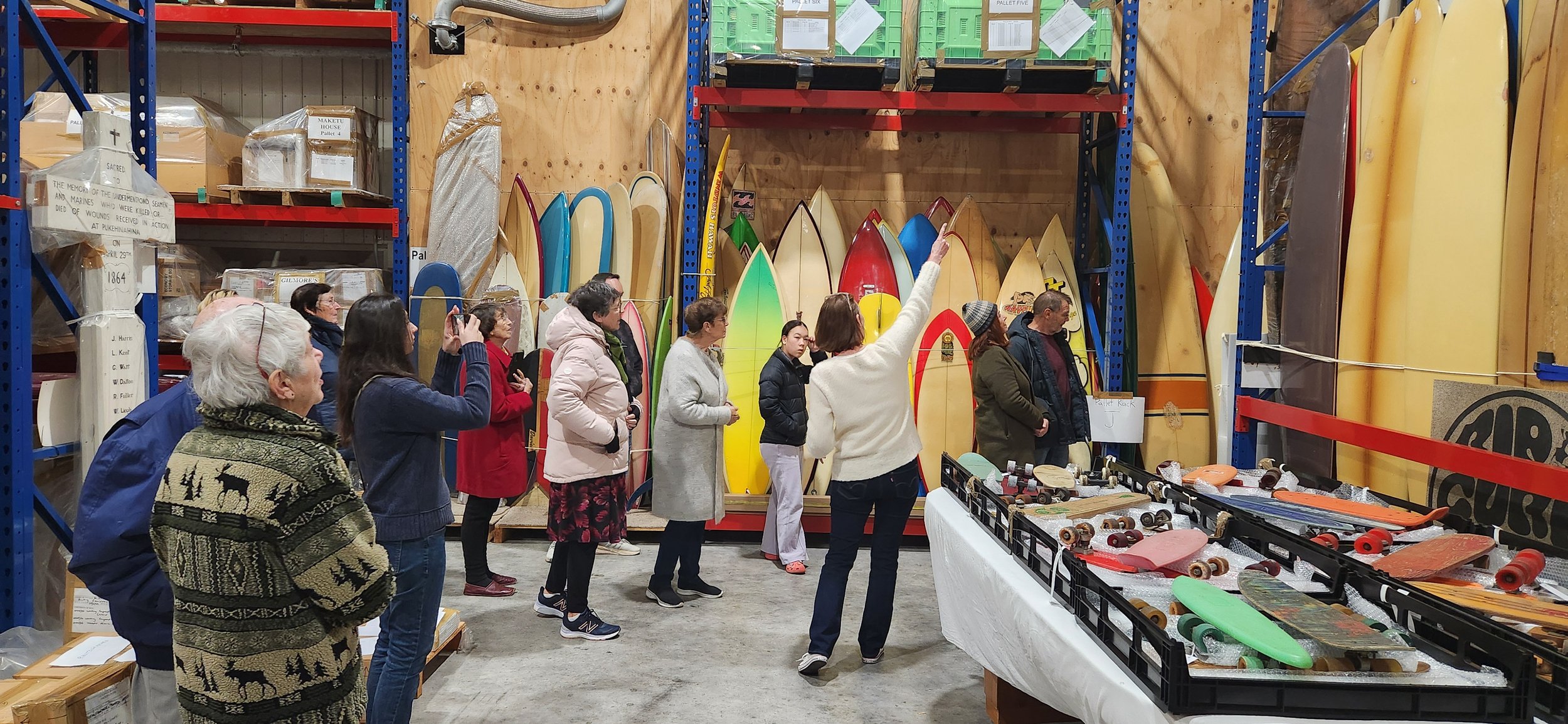
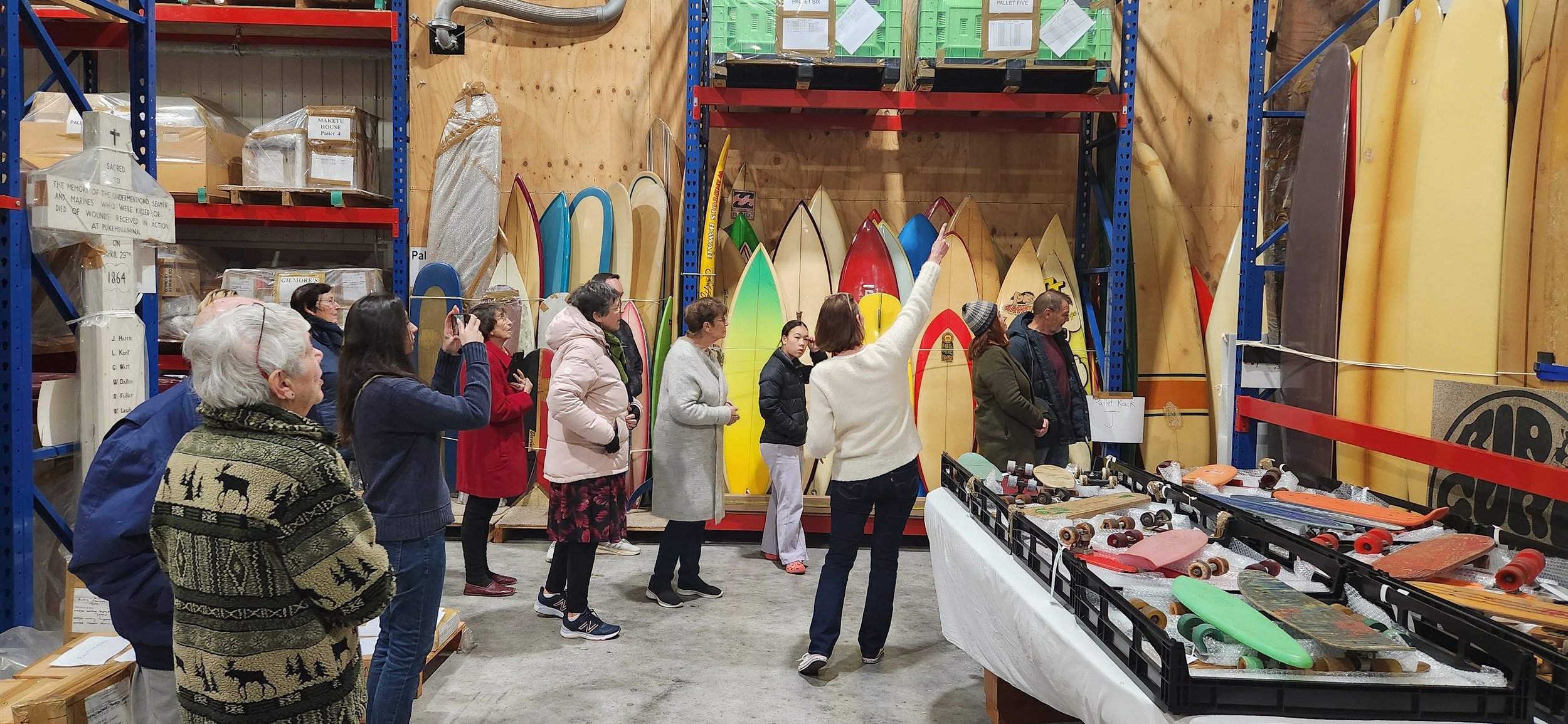
Museum Collection Tour
Steadily rising, the Tauranga Museum project, part of the Te Manawataki o Te Papa city centre redevelopment, is well underway and set to open in July 2028. Its steel frame is already complete, with mass timber components to follow, and the roof and external cladding will soon reveal the distinctive shape of Tauranga’s first central city museum. But while the building itself is taking form, the museum is already coming to life, and there are plenty of ways for the community to be part of it now.
Working from the Mount Maunganui Museum warehouses, museum director Greg McManus and his team are full steam ahead expanding staff, planning for the grand opening, securing loans of local taonga from around the world, and coordinating the two major exhibitions that will launch in the galleries. For McManus, the museum is already becoming an active part of Tauranga’s cultural landscape.
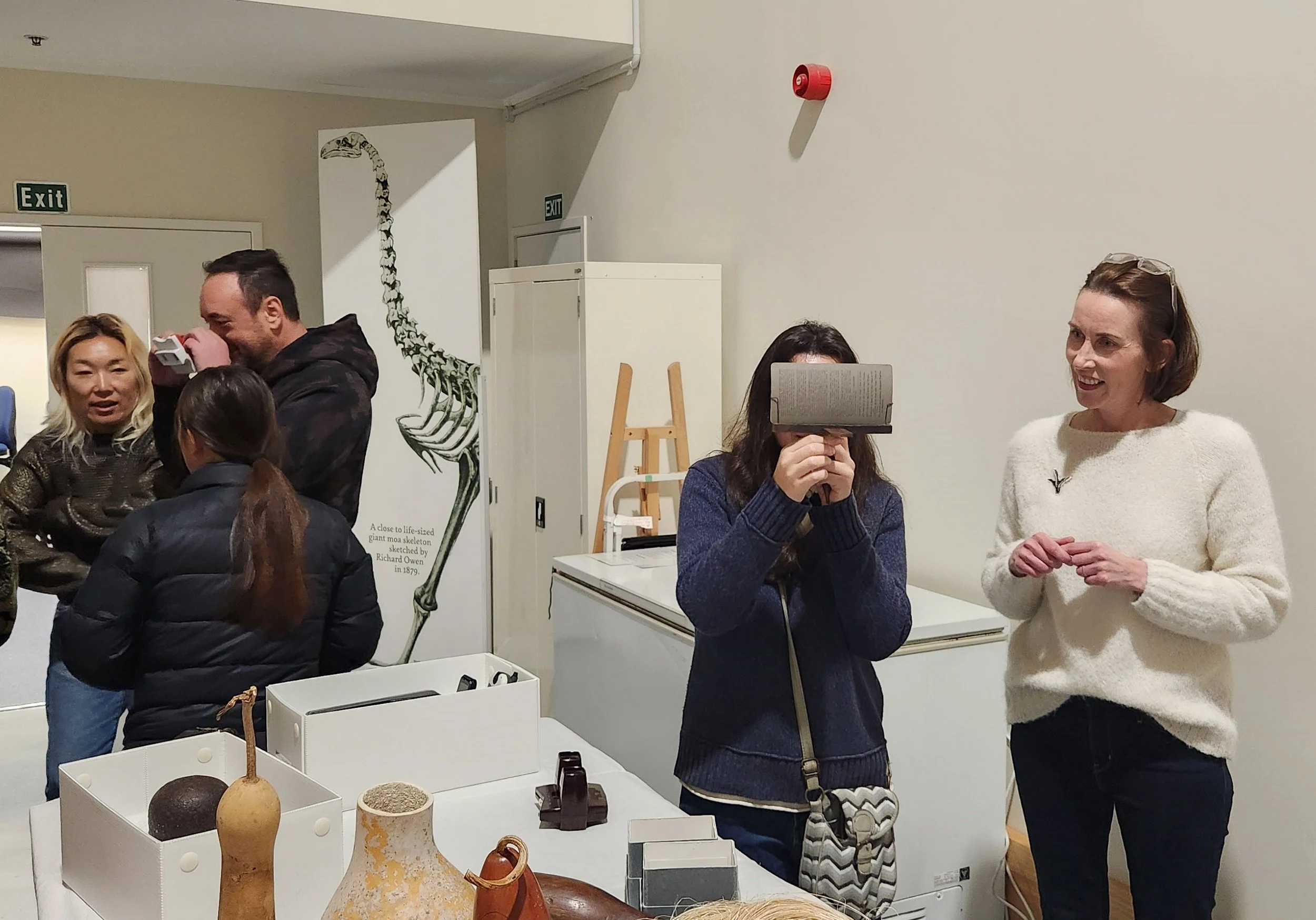
Museum Collection Tour
“We hold regular activities that engage the local community in what we already have on offer,” he says. “History walking tours, public art tours, educational programmes and collection tours that provide a snapshot of the more than 35,000 pieces of history in our care.”
Individuals and groups can sign up for these tours, with one proviso, that you must join the free Friends of Tauranga Museum membership to take part in the events. Once you subscribe, you’ll be joining a growing community of more than 1,420 members. And who couldn’t use a few more friends?
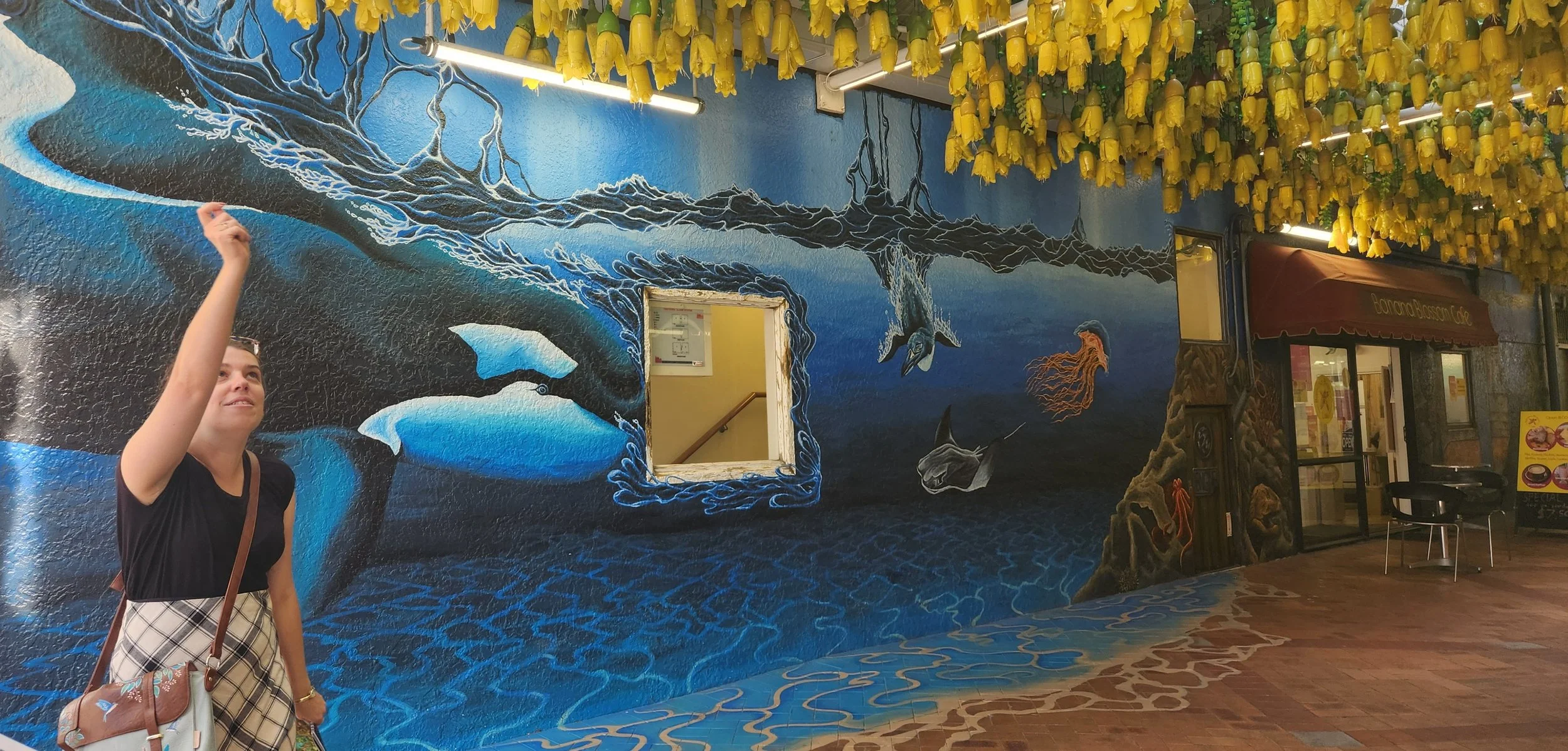
Art and History Tour
Membership also brings a quarterly newsletter to your inbox, featuring upcoming events, snippets of local and international museum news and trends, insights into artefacts that will eventually feature in the museum, and other information reserved for Friends. It’s not an exclusive club. In fact, it’s quite the opposite. The aim is to build a diverse community of museum supporters well before the doors officially open in 2028.
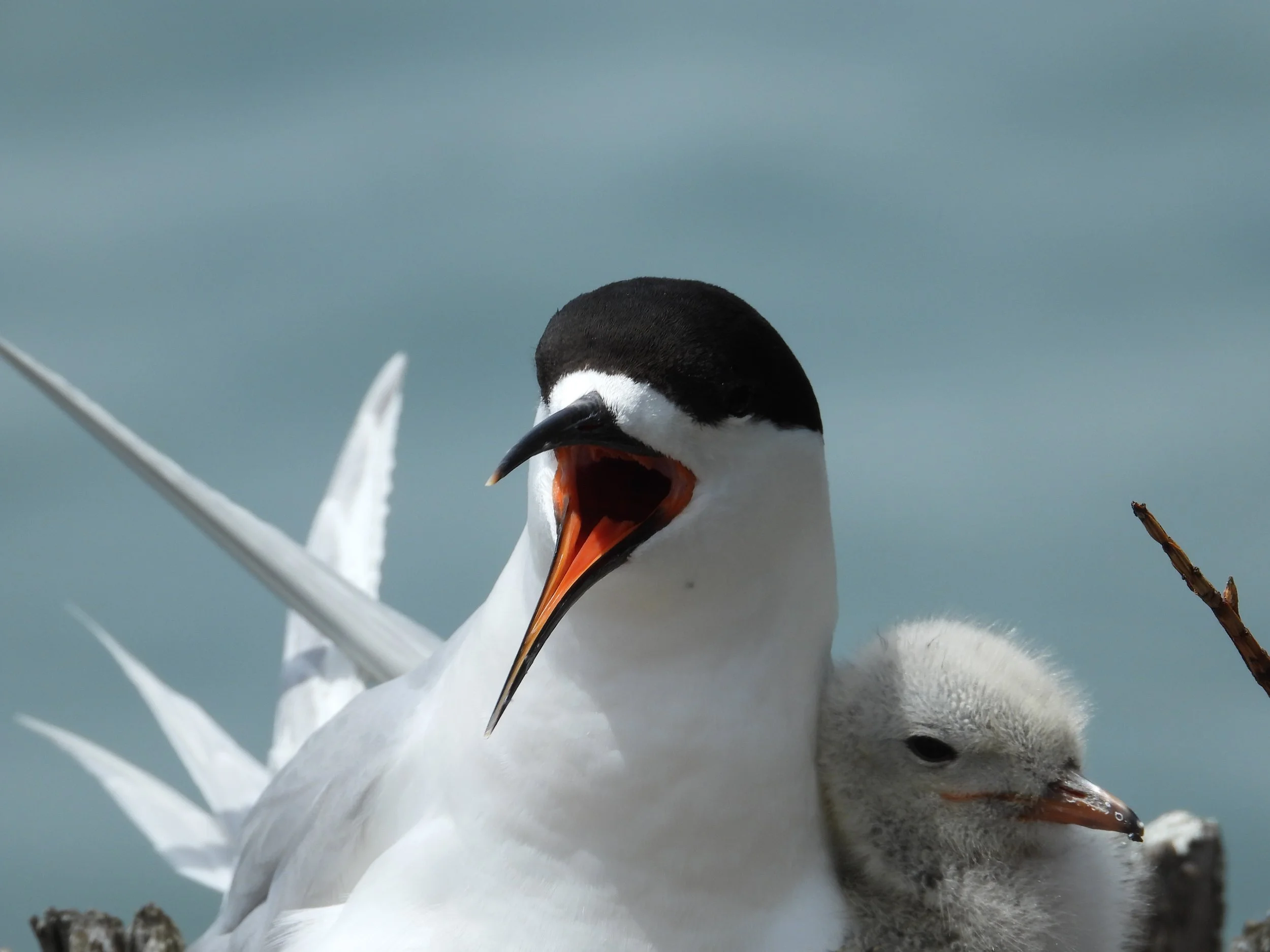
Paul Cuming’s photo competition entry
In September 2025, the museum launched the inaugural Tauranga in the Spring photography competition. Judged by award-winning local photographers Michal Pinkerton and Bob Tulloch, the competition attracted 48 entries in the under-18 category and 54 in the over-18 category.
“The quality of the entries was simply outstanding. We were so impressed,” says marketing and communications manager Nineke Metz. “We’ll be running the competition again this year with a new theme to be announced.”
Excellent prizes will be on offer, and the winning images will be shared publicly. If you’re over 16, sign up as a Friend of Tauranga Museum to be among the first to hear the competition details, and to gain a whole new perspective on what promises to be a rich cultural journey for Tauranga. LETSTALK.TAURANGA.GOVT.NZ/ PROJECTS/TAURANGA-MUSEUM

Centre stage
Tauranga Arts Festival will come to life with a dazzling circus, bold beats, sharp wit and homegrown brilliance.
Tauranga Arts Festival will come to life with a dazzling circus, bold beats, sharp wit and homegrown brilliance.
WORDS Monique Balvert-O’Connor

Hayley Sproull is The Baroness.
Internationally acclaimed circus performers, musicians, authors, actors and comedians will be amongst those set to thrill at the 2025 Tauranga Arts Festival. Taking to our stages will be the likes of Cirque Bon Bon, Tami Neilson, Hayley Sproull, Rhys Mathewson, Te Radar, Chelsea Winter and Catherine Chidgey to name but some. It’s an impressive line-up that also includes plenty of local talent keen to delight the crowds at their city’s flagship art festival event, kicking off over Labour Weekend.

Tauranga DJ queen Ayesha Kee.
Ayesha Kee doesn’t plan on raising the roof of the Carrus Crystal Palace, but she’s sure hoping she’ll have that glorious tent rocking.
The Tauranga DJ queen can’t wait to “slay the disco way” during the Tauranga Arts Festival where she’ll help fulfil many a dazzling disco dream. Ayesha will team up with powerhouse vocalist Lisa Tomlins to deliver a Queens of Disco event. Expect the most iconic disco anthems ever to hit the dancefloor. Think Diana Ross, some Pointer Sisters, Bee Gees… feel good music, Ayesha says, that’s likely to seduce many, of varying age groups, onto the dancefloor.
By day Ayesha is a community development manager at Kaiwhakahaere Whakawhanake Hapori. By night, well, that’s alter ego time.
“I have always loved music but never learnt an instrument, so I got into deejaying about 20 years ago. I love it so much as there’s the opportunity
to take people on a musical journey, and you just make people happy,” she beams.
Tauranga’s proud to claim her. While Ayesha’s only been Tauranga based for 10 years, Ngāti Ranginui is her iwi and Ngāi Tamarāwaho her hapu.
She will be one of an array of local talent in the spotlight over festival week.
UNO is proud to be sponsoring what’s expected to be a hugely popular festival event: comedian Hayley Sproull’s show The Baroness. It’s so named as Hayley is The Baroness sky-rocketing towards 40, with a “happily untenanted” womb and a life of love, leisure and lingus. Hayley feels less barren and more Baroness.
As a Baroness, her focus is on making “martinis, not milk. She changes her mind, not nappies. She wants durries, not diapers.” Tauranga Arts Festival attendees can rest assured she’ll be delivering not a child, but copious amounts of chuckle-worthy moments.
Tauranga Arts Festival general manager Sarah Cotter says this year’s event will be full of fun, magic and vibrancy, with world-class performances, thought-provoking conversations and experiences to stir the senses and soul.

Ozi Ozaa.
Local creatives playing a part in delivering all that wonder include the festival team’s very own content creator Fabio Camera, who, like Aeysha, cannot resist the call of music when his day job is over. Aptly, he’s a musician in a band carrying a name meaning work and happiness - Ozi Ozaa. This Afrofunk band will perform on the Tauranga Waterfront in the Carrus Crystal Palace Spiegeltent.
Still on the music front, local talent will also be showcased during two of the festival’s free events - Opus Pocket Orchestra Concert and Undergrand.
The former is focused on little listeners and will feature 30-minute concerts offering young ones a joyful, interactive introduction to orchestral music. Undergrand, meanwhile, has been dubbed “a piano
in the wild”. Imagine stumbling upon a baby grand piano in the most unexpected places, like Mount Main Beach at Sunrise, Tauranga’s waterfront after dusk, and in a city park by day. This roaming, open-air musical experience will include a line-up of up-and-coming Tauranga students and seasoned pianists playing everything from classical to jazz
to improvised soundscapes.

Battle Chorus.
Playing a key, guiding role in two events is award-winning Tauranga born and raised Jason Te Mete (Ngāti Ranginui, Ngai Te Rangi), a freelance actor, singer, dancer, director, pianist, and playwright/writer. His festival babies are Battle Chorus – where two choirs go to war — and also Waiata Mai, a free-to-all sing-along (watch out for some local legends, like a free-to-all sing-along that closes the festival on Sunday November 2.
The final days of the festival, in early November, involve Escape, with its focus on the literary. In amongst the major New Zealand fiction writers is Tauranga’s own Anne Tiernan, author of bestselling novel The Last Days of Joy (partially set in Tauranga), and (recently released) The Good Mistress.
Less joyful, but inarguably good, is the demise of the New Zealand media, and Tauranga’s investigative journalist Jared Savage will speak to this in Media Madness. Jared will join a line-up of journalists in unpacking and debating the media landscape of 2025.
Sarah Ell will also offer learning opportunities. Sarah’s recently published book The Spirit of a Place, is a new history of The Elms | Te Papa Tauranga, recognised as one of New Zealand’s most significant heritage sites. Sarah’s talk promises a rare glimpse into Tauranga’s layered past.
This part of the festival will honour the late, great Tauranga writer Sherryl Jordan who wrote beloved novels for children and young adults, including:
Rocco, The Wednesday Wizard, The Juniper Game, and Winter of Fire.
Escape invites people to “sit back, relax and immerse in a suite of scintillating conversations”, says former Tauranga resident Claire Mabey. She would know - she devised the programme. Claire, who is of strong literary pedigree, has strong ties to the festival, having been part of the organising team on previous occasions. Amongst her accomplishments,
Claire is The Spinoff’s book editor, the founder of Wellington’s Verb Festival, and author of The Raven’s Eye Runaways (and its just-completed sequel).
To end with a Z… back by popular demand is Tauranga Zinefest. This popular independent publishing event that celebrates creativity on
the fringe returns.
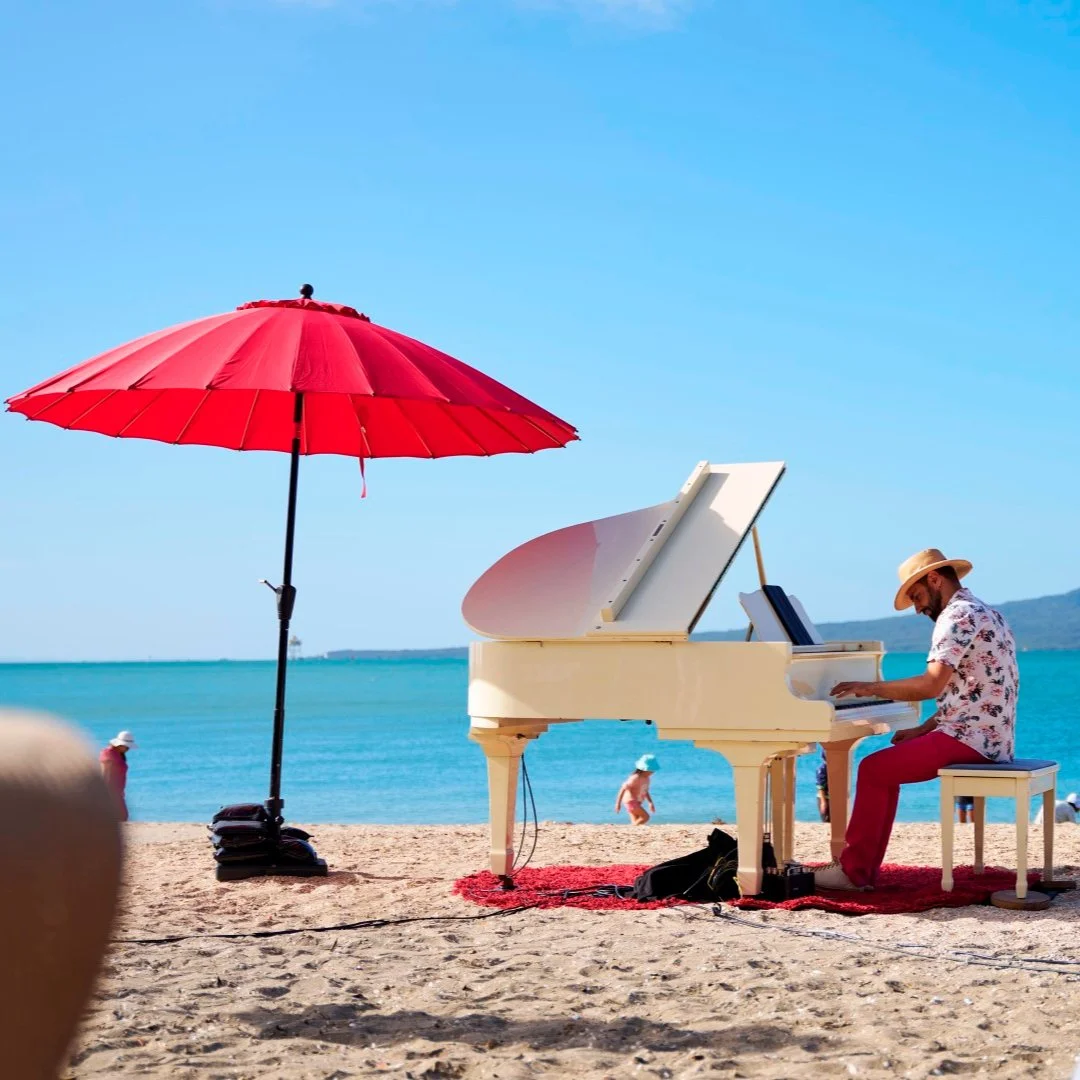
Undergrand's piano in the wild.
FREE EVENTS
The festival excitement includes a diverse range of family-friendly and free events offering the chance to be wowed, to sing your heart out, get creative and to have a giggle or two, says its proud and excited general manager.
“This is Tauranga’s festival, and we want to make it as accessible as possible to as many Tauranga people as we can,” Sarah says.
Some of the free events (Undergrand, Zinefest, Opus Pocket Orchestra Concert) are mentioned above. Add to that Waiata Mai, Obelisk Natura and CAR-A-OKE!
For show times and tickets, visit taurangafestival.co.nz

Reggae, revolution and red red wine
Karl Puschmann catches up with Ali Campbell, the legendary UB40 frontman, to talk band beginnings, protest and politics, their big hits, and why he can’t wait to bring the band’s reggae vibes back to the Bay.
Karl Puschmann catches up with Ali Campbell, the legendary UB40 frontman, to talk band beginnings, protest and politics, their big hits, and why he can’t wait to bring the band’s reggae vibes back to the Bay.

Ali Campbell is bleary-eyed but upbeat when UNO calls. It’s 8am in the UK, and the UB40 frontman only got home from a European festival tour yesterday.
“It’s all a bit mad here,” he jokes, before settling in for a breezy and candid chat about UB40, the influential reggae band he co-founded in 1978 and led to global success before inner band turbulence saw them splitting into two groups.
But before getting into the past, we need to talk about his future return to Aotearoa to headline music festival Kingston Calling this Waitangi Weekend. The brand new reggae tour, with seven stops across the North Island, also features Katchafire, The Black Seeds and Corrella.
“I’m very, very happy to be coming back. It’s one of my favourite places,” he enthuses. “I’ve got a lot of friends there, a lot of Māori friends, so we always have a great time. It's a beautiful country.”
Then he pauses and says, “There are some weird things happening politically that I'm not too sure of. I've heard about the new Prime Minister... I've got to look at all that.”
You may think it’s unusual that a British music icon would know about or even be interested in our politics, but Ali has a long history with our country. He lived here for months when he was a judge on reality show New Zealand’s Got Talent back in 2012, his current tour manager is Māori and he’s even taken the time to read something that a lot of us haven’t; the Treaty of Waitangi.
“I lived in the middle of Auckland in the Viaduct. I know my way around,” he laughs. “And, of course, we've travelled extensively around both the North and the South Islands.”

Aotearoa’s always had a huge love for UB40. This stretches right back to the band’s cracking debut single, the politically charged deep reggae groove of Food For Thought, which topped our charts in 1980, to give the band their first-ever Number One hit. But when I ask why he thinks the band has resonated with us Kiwis so much, he’s modest, saying, “It’s not UB40 that people love. It's the music. People love reggae music.”
“Reggae is unifying, and it's still cool today,” he continues. “That's the important thing. It's still cool. People like us because we're an accessible reggae band.”
Ali grew up in South Birmingham, “on the wrong side of the tracks,” as he says, surrounded by the colourful sounds of the Caribbean and Asian cultures that were his neighbours. Unlike most of England at that time, it was a true multicultural environment, and one that impacted his world view.
“I was very lucky. I had Jamaican, Indian, West Indian and Arabic friends. I grew up amongst this melting pot. I loved it. It gave me a broad outlook on life. I wasn't prejudiced against anybody. Just fascists, I didn't like them. I’d go to a lot of anti-fascist demos and all that stuff. But we'd do it all together.”
Then grinning he adds, “And generally, the police were our enemies. Everybody else was friends.”
Aged 15 he went and saw Bob Marley and the Wailers in concert. It would be a transformative experience.
“It was like seeing the Messiah. I was totally blown away,” he says, a note of awe still resonating in his voice. “The year before that, I'd seen the Jackson 5. And that also blew me away because I was a mad Jackson 5 fan as well. Those two years basically showed my musical future to me. It was life-changing.”
After the show, he decided to form a band. But his plan had two big problems.
“We didn't know how to play. And we didn't have any instruments, so we... acquired our instruments, let's say,” he laughs. “We were on the dole, so we couldn't go and buy them. We had to acquire them.”

With instruments “acquired”, all they had to do next was learn how to play them. To do this, they continually played the 12” version of Gregory Isaacs reggae hit, ‘Mr Know It All’, which features a dub breakdown in the middle, deconstructing each part and slowly working it out by playing along. Eventually, they got to the point where the record stopped and they could continue jamming.
“And that's how we learned to play. Six months later, we'd written our first album, which went on to sell eight million copies. It was ridiculous,” he grins.
That album was Signing Off, a groundbreaking and politically charged album of deep groove reggae whose music and message still resonate today.
“We followed Bob Marley's lead and other reggae artists like Lee Perry, who were political. We felt obliged if we got a platform to write something relevant. And we continue to do so.”
As an example, he cites ‘Burden of Shame’, which, when he sings it live now, has the lyrics “A baby in Gaza dies,” instead of “A boy in Soweto dies”.
“Depressingly, the songs are still as relevant as they were when we wrote them,” he sighs. “I've learned that you don't change anything by singing about it. It's as simple as that. All we're doing is voicing an opinion. It doesn't change anything. Things might have got worse even.”
As well as their political material, UB40 also explored the smoother, pop-leaning side of reggae, with their hugely popular Labour of Love albums, which saw them performing covers of the songs that had influenced them, like ‘Red Red Wine’, ‘The Way You Do the Things You Do’ and ‘Here I Am (Come and Take Me)’.
“We kept getting asked about why we played reggae, so we decided to do those albums,” he says, laughing that they’d been strongly advised against recording a covers album. Labour of Love would top global charts, including here, and go on to sell over 21 million copies.
“They’re the songs we used to hear on jukeboxes in cafés where we used to hang out as kids, playing pinball and running errands for prostitutes. We grew up listening to those songs. We loved them, and we knew that anybody else who got to hear them would love them as well. And we were right.”
After 24 years together, tensions within the band led to a split in 2008, with Ali moving on to front his own group, UB40 featuring Ali Campbell, while the remaining members continued under the original name.
“When I left it was sad, but I couldn't carry on with them. They wouldn't let me promote my second solo album, which was called Running Free, ironically enough,” he says. “All I wanted was a month off to promote it, and they were steadfastly telling me I couldn't do it, so I walked. It’s all very silly and a very petty argument. But I was quite happy to leave and I've had a great time since. I've got my new band, who are all seasoned reggae players, and I love them. That's who I'm bringing to New Zealand. I think they’re the best band around.”
Which makes them a fitting choice to headline Kingston Calling, especially as it’s the first-ever concert to be played at The Bay Oval, in the heart of Mount Maunganui.
“I'm a little bit nervous,” Ali admits when asked how it feels to be christening this new venue. “But it's fun being the first to do anything really.”
I confess to taking a sneak peek at some of his recent setlists, which gets a chuckle when I say he’s bringing some absolute bangers that will keep all fans of UB40’s multifaceted career extremely satisfied.
“It's more or less a Greatest Hits set,” he smiles. “We're not self-indulgent. We know what the people want to hear, so that's what we do.”
Purchase tickets to Kingston Calling at
A new rhythm
After calling the Waikato home all his life, Katchafire frontman Logan Bell recently moved to the Bay.

It was just two short years ago that Logan Bell, the Katchafire frontman, and his family made the move from the Waikato to Tauranga’s Welcome Bay. For his wife, who grew up in the Bay, it was a return to her roots, but for Logan it was a completely new experience. While he’d toured the world many times over with the band, the Waikato was the only place he’d ever called home.
“This is the first time I've moved away,” he admits. “We love it here. It's really awesome for our family. I love my house. I'm a total homebody. I don't go anywhere else”.
Then he laughs and says, “I’m nearly a real local now, bro. I almost don't need Google Maps to get around now.”
Already, he says, the relaxed lifestyle, beachtown vibes and the musical community here in the Bay has begun to influence his music.
“Your environment and your vibe always has a lot to do with what's coming out creatively. This morning I was in the studio with Tiki Taane. The other week, me, Laughton Kora, Fran Kora and Joel from LAB got together and had a bit of a jam. It's just a nice community here and a nice vibe for me.”
Over their almost 30-year-long career, Katachfire has become one of Aotearoa’s most beloved reggae bands, first coming to national attention with their 2003 debut album Revival, before building an international audience through hits like ‘Frisk Me Down’, ‘Giddy Up’ and ‘Get Away’ and going on to tour with legendary reggae acts like The Wailers, Shaggy, Lauryn Hill, and, of course, UB40 who they’re sharing the stage with at Kingston Calling.
“We’re blessed to get the call up,” he smiles. “UB40 has always been a huge inspiration of ours, we kind of modeled our career off them. We’ve followed their example and their path in a lot of ways.”
While music styles come in and out of fashion, reggae’s popularity has never waned, especially here in Aotearoa. This, Logan says, is because
reggae is the “people’s music”.
“It touches on matters of truth. And a lot of it's to do with the underdog truth, the sufferer's truth. We, as a nation, are born of that. We can identify with these stories, and we have our own to tell as well. That's why I think it's so easy for us to feel connected to reggae and feel a part of the music and the messages.”

Beyond the surface
Artist Jacki Barklie fuses emotion and bold experimentation to create striking, unconventional works.
Artist Jacki Barklie fuses emotion and bold experimentation to create striking, unconventional works.

For over three decades, Jacki Barklie has explored the delicate interplay between human connection and identity through both her creative professions, first as a hairdresser and now as a multi-disciplinary artist.
With roots in Africa and a passion for the psyche, her work delves into themes of fragility and desire, often expressed through mixed media, printmaking, textiles and photography.
After completing a Bachelor Degree in Creative Industries, Jacki embraced experimentation and introspection, creating art that pushes boundaries and celebrates the unconventional. Here she shares insights into her process, and the emotional resonance behind her evocative works.
UNO: How did your creative background in hairdressing shape your approach to art today? Jacki: Hairdressing trained my eye for form, texture and design. It was sculpture in motion. I treated hair like fabric, shaping and layering with intention. Competing creatively honed my skills, but it was always about the human connection. Listening to people and understanding their emotional relationship with aesthetics now flows into how I create and share my art.
You were brought up in Africa. Can you share a specific memory or cultural influence that continues to inspire your art? Africa lives in my bones. There, creativity comes from what’s at hand, such as clay, dyes, dust, fabric. That bold innovation still inspires me. I remember painting with earth and watching patterns emerge from chance. Sometimes, I feel you can almost smell African dust in my work. Its textures, warmth and raw energy continue to guide my hands.
What was the turning point that led you to pursue a Bachelor Degree in Creative Industries later in life? After 37 years in hairdressing and countless night art classes, I craved full immersion. I didn’t want a traditional fine art degree. I needed one that embraced creative risk. The Creative Industries degree was a perfect fit for me. I’m a multimedia artist whose work evolves from one material to the next.
How do you decide which medium, whether acrylics, textiles, printmaking or photography, best suits the idea or emotion you’re trying to express? It starts with a feeling or story. From there, I follow the materials that speak to that idea. I explore the tension between materiality, light and shadow, stillness and movement. Whether I choose textiles or ink, the medium must hold that emotional vibration. It’s instinctive, process driven and always rooted in intention.
What role does experimentation play in your creative practice? Experimentation is everything. I’m a curious artist drawn to risk and discovery. I often research ancient methods and remix them with contemporary techniques. I love when the unexpected happens, like when a material surprises me. That’s where the magic is. Every piece starts as a question, and sometimes the answer comes through failure.

How do you think our environments shape our emotional or psychological states? We’re deeply shaped by our surroundings. My art often reflects the fractured rhythms of the world and offers a kind of stillness in return. I explore contrasts in form, reflection, old and new, raw and refined. Within these tensions, I find beauty. My work invites presence, asking viewers not just to look, but to feel.
As someone who celebrates the unusual, what draws you to the unconventional or unexpected? The unexpected excites me – it’s alive and full of truth. While I admire tradition, I often find it too familiar. The unconventional feels raw and present. It’s not trying to be anything but itself. That honesty inspires me. It challenges the rules, breaks them if needed and that’s where true innovation begins.
How do you stay true to your raw, emotionally-driven approach? I know my “why.” I show up in the studio daily and follow what feeds my soul. I let the process guide me, not trends. I create art that moves me first, trusting that it will resonate with someone else. If I had to make formulaic work, I’d lose the heartbeat. Emotion keeps it alive.
What advice would you give to someone wanting to explore their creative side later in life? Start now. But take it seriously. Don’t shrink yourself to ‘just crafting.’ Be brave, be messy, try everything. Follow what excites you. Let failure be part of the fun. You’re never too old to become who you are creatively meant to be. The second half of life is the perfect time to rediscover yourself.
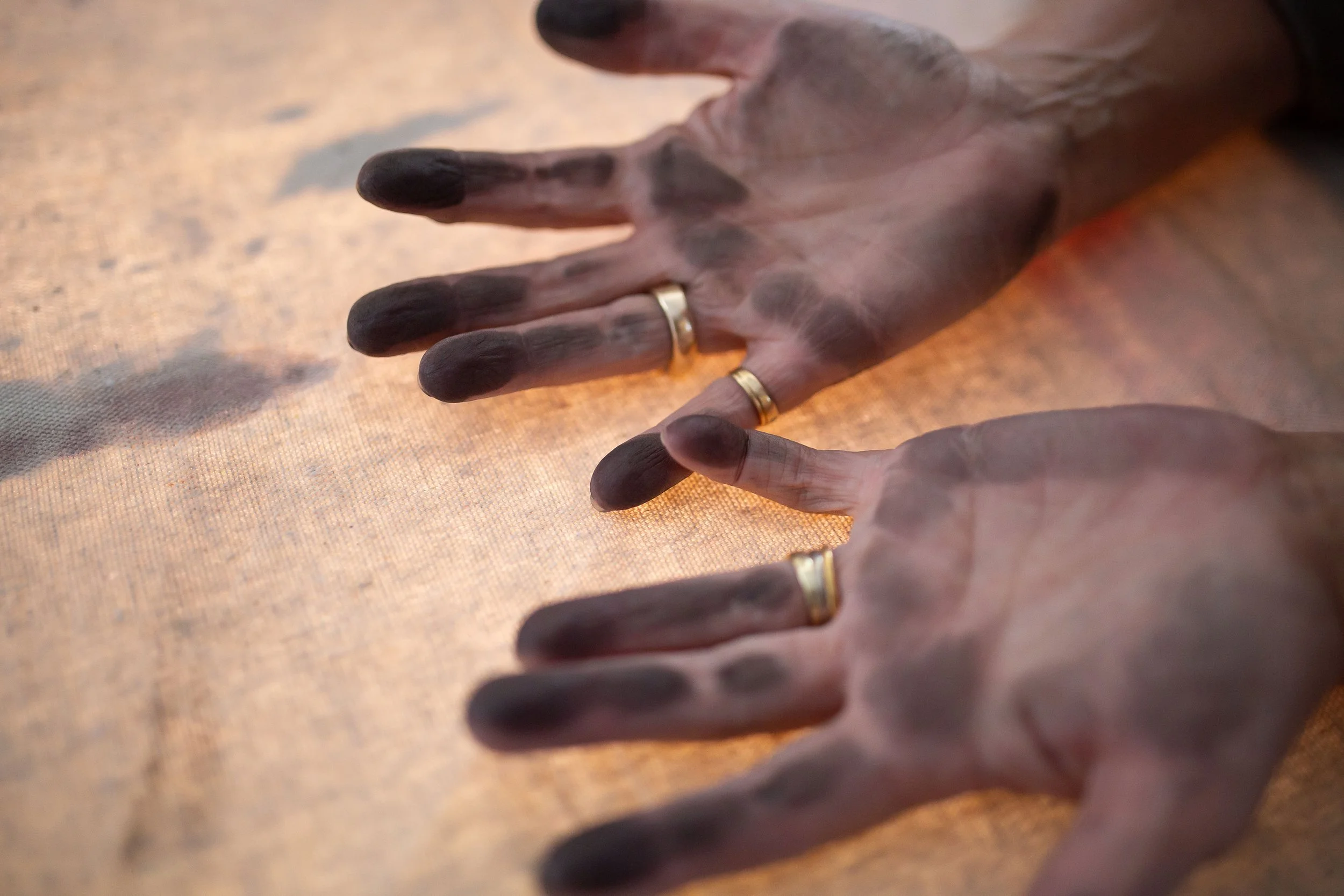
How long have you been in the Bay and what do you love about it? We’ve been in the Bay for 27 years. It has been our longest home since emigrating twice. The weather drew us in, but our friends and pace kept us. My husband is my rock, and our home is a sanctuary. Our grown kids are flying, and I’m living the dream with my studio, surrounded by light, love and space to create.
Jackie is holding a solo exhibition titled ’SURFACE TENSION' from October 24 to November 2, celebrating her new body of work.

Echoes of the giants
Moa bones, eagle claws and ancient wonders are sparking young minds in the Bay.
Moa bones, eagle claws and ancient wonders are sparking young minds in the Bay.
WORDS JO-MARIE BAKER
Photos courtesy of the Tauranga Museum collection.

Peter Jackson’s Jurassic Park-like plan to resurrect the moa is still a long way from reality but Tauranga students can literally get their hands on the giant bird’s bones, a replica moa egg and even a life- size Haast’s Eagle claw right now.
The objects are among the most popular items in Tauranga Museum’s Hands On Collection available for local teachers to borrow, free of charge.
“We have a set of real moa bones that were found in Te Puke and they’re some of our most popular objects,” explains museum educator Megan Hoskin. “We have 14 bones in all – three huge leg bones, ribs and vertebrae. It’s incredible that children can have these in their classroom and are allowed to handle them.”
The recent addition of a replica Haast's Eagle claw (which was big and powerful enough to kill an adult moa) is also grabbing attention. “The Haast’s Eagle is something children just have an innate curiosity about. We have roughly 250 objects in our education collection that teachers can borrow. It gives a zing to a classroom and sparks excitement, enthusiasm and curiosity. If a class is learning about space, for example, we have meteorites that are four and a half billion years old. Allowing children to hold objects and pass them around is a great way to hook them into a topic.”


The collection is available to schools within Tauranga City Council’s boundary. Teachers simply book objects online and Tauranga Museum will deliver and collect them. “It could not be an easier service for busy teachers.”
Megan, a former primary school teacher, is also available to run classroom lessons on topics such as The Elms, the Battle of Pukehinahina Gate Pa, the Rena disaster, kiwi, penguins and Tauranga-related aspects of World War One. She believes it’s more important than ever to put physical objects in our children’s hands to help balance learning off digital screens.
While two generations of children have grown up without a museum in Tauranga, the wait is almost over. The city’s new museum will open in 2028 and will feature two purpose-built education spaces along with a Discovery Centre that will focus on Tauranga’s marine environment. “It’s going to be all about the ocean, islands and marine life we have here in Tauranga, so very much a science and environmental Discovery Centre. It will be a very exciting, interactive play space.”

Te reo rising
Reena Snook is bringing world-class, all–te reo Māori theatre to Tauranga, creating a bold new direction for Baycourt.
Reena Snook is bringing world-class, all–te reo Māori theatre to Tauranga, creating a bold new direction for Baycourt.
words SUE HOFFART photos TE POU THEATRE & THE DUST PALACE + DAVID COOPER

Work has become undeniably personal for Baycourt Community and Arts Centre manager Reena Snook. Four years into her tenure, the drama school graduate and first-year te reo Māori student is championing a production that combines a theatre and circus spectacle with dialogue entirely in te reo.
“This is something I wish a young me could have seen,” Reena says of the Te Tangi a Te Tūī performance being staged in Tauranga in August. “One reviewer called it transformative, and I’m convinced that’s true. It’s an experience that really could be pivotal for a lot of the young people we’re bringing into our theatre.”

Baycourt will host the August 6 opening night of a tour that encompasses four other North Island centres. And Baycourt is also gifting tickets to all students attending a school-only performance on August 7.
“We want to remove as many financial barriers as possible because nothing should stand in the way of rangatahi experiencing world-class performers. This young audience will hear stories grounded in indigenous culture, they’ll hear te reo Māori on stage and that’s likely to feel powerful and personal to many. Perhaps they’ll see a pathway I couldn’t imagine at their age.”
When Te Tangi a Te Tūī had its Aotearoa premiere at Te Pou Theatre in Auckland last year, Reena was immediately determined to bring the production to Tauranga. A long-standing connection to two of the project’s key creators helped: Eve Gordon of The Dust Palace and Tainui Tukiwaho of Te Pou Theatre attended drama school with Reena in Auckland.
The work also marks a strategic shift for Baycourt as the centre moves towards broadening and complementing its current programme offerings. Reena acknowledges Baycourt’s “incredibly rich history” that’s achieved so much. But, she recognises some voices and stories haven’t been as visible as others.
“As a community arts centre, we need to take deliberate steps to bring people from all parts of the community onto the stage and into the audience,” she says.
Te Tangi a Te Tūī, which tells the story of the tui’s song and its evolution over the centuries, is a positive step in that direction. “It’s the first time we’ve been able to support a professional production performed fully in te reo Māori. I love the way this show honours our Pākehā audiences too, with the cirque theatre and universal story elements ensuring it’s accessible and understandable for everyone.
“There’s no tokenism here. We’re not just putting a Māori theatre production on stage to meet a diversity quota. One of the goals is to offer Pākehā a safe entry point into te ao Māori – something they can genuinely connect with and enjoy, without feeling like they’re being overwhelmed or excluded.”

Reena shares how she has spent much of her life distanced from her Ngāpuhi roots and how a deep sense of not belonging shapes some of her story. “As someone of mixed heritage I often felt I wasn’t ‘brown enough’ to be Māori or ‘white enough’ to be Pākehā.
“That’s a tension that has informed my approach to programming and community engagement. I want to create spaces and experiences where people of all backgrounds and identities can feel recognised and valued.”
It was only after relocating from Auckland to Tauranga with husband Greg, in 2018, that Reena began closely examining her own identity. (She left a job as senior producer at performing arts platform, Auckland Live, to take up a Tauranga City Council events management position).
She speaks of an unexpected sense of connection with Tauranga mana whenua and how the warm welcome spurred her to begin tracing the threads of her whānau and whakapapa.
“It’s funny the further away I got from my tūrangawaewae in the Far North, the more I wanted to learn about my Māori whakapapa.”
Alongside her personal cultural awakening, Reena realised she missed the performing arts world and its creative people. So, when the Baycourt role came up in 2021, she pounced. Presenting Te Tangi a Te Tūī will be a career high.
“For those who still doubt the calibre of Māori theatre, this production is set to challenge that perception entirely.”
“It’s special that Baycourt is the tour’s first stop and I’m proud our local rangatahi will see themselves reflected on stage. For some in our audience, this may also be their first visit to a traditional theatre.
“It’s critical Baycourt supports work like this, so that culturally powerful storytelling reaches the communities that need to see it most.”

Bay of style: Local fashion, flair and creativity
The Bay has been a mecca for successful fashion designers for decades, and now the new Tauranga Museum is planning to showcase its creative history in a collection that’s dressed to impress.
The Bay has been a mecca for successful fashion designers for decades, and now the new Tauranga Museum is planning to showcase its creative history in a collection that’s dressed to impress.
words DEBBIE GRIFFITHS

From homemade psychedelic ’60s frocks to prototype shoes to swimwear that made waves worldwide – the Bay is home to innovative fashion that will be celebrated in Tauranga Museum when it opens in 2028.
“Our fashion collection will show the talent and stretch people’s ideas of what Tauranga is,” says curator Fiona Kean. “Our fashion industry doesn’t get as much focus as it should.”
In fact, there are a number of New Zealand brands – both past and present – that many don’t realise are local. Expozay burst onto the scene in the 1970s, within a decade becoming the first Kiwi swimwear label in the North American market.
“We have the largest Expozay collection in New Zealand that starts from the beginning with hand airbrushed bikinis through to pieces from the early ’90s. Then we leap forward to emroce, which is also groundbreaking and global.”

Expozay swimsuit, photographed by Karen Ishiguro, nzfashionmuseum.org.nz
Pāpāmoa-based emroce, by designer Emma La Rocca, is the only zero-waste swimwear brand in the world. “Her desire is to see the way clothing is manufactured change to be more sustainable,“ says Fiona. “She uses fabric made from recycled fishing nets and cuts it in a way that means there’s no waste. She also makes inclusive gender-neutral swimwear.”
There’s also a nod to Staxs that had 21 stores around the country, boutique shoe designer Chaos & Harmony, surf labels – like RPM and Lower – Nyne, Repertoire and Greerton-based Beverley Productions that’s been creating knitwear since 1962.

“We’ve got over 5000 textile related objects in the museum collection and a lot have been handmade by local women who have the skills and passion to look great, and make their own clothes,” says Fiona.
Among them, former Ōtūmoetai Intermediate home science teacher Ruth Espin who donated seven pieces before she passed away in 2019.
“Each dress represents a pivotal moment in her life; the one she wore when she got engaged, her wedding dress and the outfit she was wearing when she took her baby home from hospital.”
Some of the outfits were purchased at Hartley’s on The Strand. Those who grew up in Tauranga will have fond memories of their Lamson Cash Carrier System before the store closed in 1987.
“Nostalgia will be an important part of the museum experience and reminding people that they’re part of something bigger,” says Fiona. “There’s so much to share, we’ll be swapping out items regularly so it will be constantly changing. We’re very excited to showcase our fashion success stories.”

For whom the bell trolls
Tauranga’s surprising past and present connections to the ever-popular Troll Doll.
Tauranga’s surprising past and present connections to the ever-popular Troll Doll.
words KARL PUSCHMANN | photos ALAN GIBSON

Damian Sutton.
Once upon a time, Tauranga was filled with Trolls. Hundreds of thousands of them, in all shapes and sizes, with their outrageously coloured, spikey hair and perpetually cheerful grin. Trolls were everywhere. And then one day, they were not.
This is not a child’s fairytale. This is a cold hard fact. Because despite more than 50 years of sustained popularity, not a lot of people know that Troll Dolls used to be manufactured here in the Bay.
“The New Zealand connection started down at Sulphur Point with the company K. Pasgaard Limited,” says Damian Sutton, Katikati local and one of Aotearoa’s biggest collectors of New Zealand manufactured Trolls. “Kristian Pasgaard, his wife and two children immigrated to New Zealand with their two sons in 1959. In 1960 they got the license from Trolls creator Thomas Dam in Denmark.”
The company was one of only four Troll Doll factories in the world. There was Dam’s original factory in Denmark, one each in America and the UK, and the factory in Tauranga. As well as fulfilling children’s Troll needs here, the company also sent them abroad. Sutton reckons around 80 per cent went to Australia, and there are news reports of shipments weighing two tonnes being shipped as far as Africa.
The ’60s and ’70s were a boom time for the company. But in the ’80s interest in the Trolls began to wane and the local factory pivoted their focus to things like tennis balls and sporting equipment and ending the Bay’s 30-year association with the beloved Trolls.
Sutton says that amongst collectors, the Tauranga-made Trolls are prized.
“There’s a whole lot of different things that New Zealand did that the other three factories didn’t,” he explains. “Due to vinyl shortages, we couldn’t always make the ‘normal’ ones, so that’s how the weird and wonderful colours came about. They made them in four colours. We’re the only factory in the world that did that. Also, because of our sheep’s wool we have these gingery colours that the rest of the factories around the world didn’t make.”

Another interesting tidbit is that we also didn’t discriminate. Both the male and the female Troll Dolls manufactured here used the exact same mould. The only way to tell them apart was due to the Troll’s clothing.
“We’re the only one in the world that has done that,” Damian says, explaining that the female moulds used elsewhere had more “feminine ears”.
These weren’t our only innovations. We also created strange and unusual Trolls, which were produced in limited runs and only made here. Things like Yeti Trolls (available in four different colours), Cow, Elephant and Giraffe Trolls and even Trolls that doubled as piggy banks. These have all become hot collector items.
To illustrate, he holds up a Cow Troll from his personal collection of around 1500 Trolls and says, “There’s about 10 different New Zealand cows. One of these is now $2,000 a pop.”
He puts it down, carefully, and continues. “The locally made Yeti Trolls are worth between $200-$600 depending on colour and condition. And if you ever find a little blue three-inch Troll, they’re worth $1400.”

These Trolls are so desirable because the factory didn’t make them all year round. Production was seasonal and mostly focused on the lead-up to Christmas.
“The New Zealand Troll has now become the most rare in the world,” Damian says. “Sadly there is not a full set in New Zealand.”
This is something that he wants to fix.
“My mission,” he states with purpose, “is to bring the New Zealand trolls home. To have a full set of New Zealand trolls so that we can see what we had in New Zealand. These are our native trolls! And people can’t see them.”
It’s an admirable pursuit and one that’s seen him connect with Trolls fans and collectors around the globe as he hunts to reunite our long-lost Trolls. His story starts aged eight, when his aunt brought him his first Troll at a craft market in Pokono.
“I still have that one,” he smiles. “Family just continued to buy them for me. They’d arrive for Christmas or birthdays. Now I’m probably one of the biggest collectors in New Zealand. But it’s only in the last few years that I found out about the Tauranga factory.”

Despite the Troll’s massive popularity, he says that Aotearoa’s collecting community is relatively small. It mainly centres around the Facebook group, Troll Collectors New Zealand, a welcoming community of fellow Trolls lovers where people come together to share stories, and photos and buy and sell Trolls. As well as being an admin of that group he also puts on the Te Puke Toy Fair with a fellow collector twice a year.
These days, it’s the thrill of the hunt and his mission to reunite the local Trolls that keeps him interested in collecting. But what was it that first attracted him to the Trolls? These little Scandinavian creatures that are often lovingly referred to as “ugly-cute”?
“It was the smiley face and the hair for me,” he says, thinking back. “And the constant happiness of the Troll. That’s what really drew me.”

Gold standard
Singer-songwriter Ayla Gold recently broke into the Bay’s indie music scene with her first EP Nuance. Her vintage rock style has been influenced by an eclectic mix of artists over the years. Here, she tells UNO about her artistic process and where she sees Tauranga’s music scene headed in the future.
Singer-songwriter Ayla Gold recently broke into the Bay’s indie music scene with her first EP Nuance. Her vintage rock style has been influenced by an eclectic mix of artists over the years. Here, she tells UNO about her artistic process and where she sees Tauranga’s music scene headed in the future.

Twenty-five-year-old acoustic engineer Ayla Gold was raised listening to everything from Hayley Westenra to Evermore. Kiwi music was always being played on Dad’s stereo or on the family car’s CD player – tapes in her pre-school years. And it’s still Kiwi artists who are her biggest inspiration.
UNO: How did you get into music?
Ayla: I started piano and guitar lessons in primary school and loved to sing along to anything that was playing, and still do. You will often catch
me singing along or harmonising to whatever’s playing in the supermarket. The teachers I had right through school played a huge part in encouraging me to get up and sing on stage. The support from my high school music teacher, Matt Bodman at Ōtūmoetai College, was huge. He would get me involved with school assembly performances, songwriting competitions, Smoke-free Rockquest, and just playing and writing well in general. We’re still in contact today and he’s always quick to give great feedback on my releases.
How would you describe your music?
My vocals are always quite strong as I feel it’s the way I can truly express myself. I believe that what you listen to is what your own music becomes, so I would say my music is indie singer/songwriter, if I were to put it in a box. Hamish Berkers from Mish Studio based in Kirikiriroa is always enthusiastic when we are in the studio recording, as is my video director and producer Finn Lloyd (Mount Maunganui). Both of these lads are legends in their fields and push me to make my music and visuals the best it can be while keeping all my own flair.

What and who inspires you musically?
I love artists who aren’t afraid to be themselves and be genuine and vulnerable in their lyrics. This inspires me to write the way that I do. In terms of sound, I mostly listen to alternate/indie rock and more solo artists than bands. I love lots of washy guitar and drums and finger-picking style electric. I feel most inspired when my emotions or environments feel intense, good or bad. I’m definitely someone who can see through the pain in things and enjoy the creativity of art that flows when things are tough for someone, or how the skill of the artist can portray this. In terms of specific artists, this is always changing as I’m always discovering new music. I’m also someone who loves to be outside – open spaces help me to develop the ideas that come to mind.
In the last few years, my biggest influences have been Molly Payton, Julia Jacklyn, The Beths, Angie McMahon and Sam Fender. Again, these artists are not afraid to put their lyrics and sound into a raw form that transports you straight into their shoes, or you find their lyrics apply to some struggle of your own. A common theme in music I like is the greater hope that an artist can talk about, or almost talk you through, a form of empathising and knowing that there is light at the end of the tunnel. They show you’re not the only one who has gone through whatever it is you are experiencing.
What instruments do you play and do you write your own lyrics?
I play rhythm electric and acoustic guitar as well as piano. I write all my own lyrics. All through school I wasn’t much of a reader so I found it hard to write songs. It wasn’t until late high school that my writing started and during my engineering degree, I got right into reading which took my writing to a whole new level. My notes app on my phone is often growing with lyrics or lines that pop into my head in everyday situations. I’ve actually found catching the bus is a great place to write for me.

How do you find the Bay music scene? How do you see it developing in the coming years?
The scene here is growing and there are a few people that have really invested in their music. The Jam Factory in the historic village and Palace Tavern at the Mount have been great to help support this. I would love to see more small-scale gig venues similar to what you find on Karangahape Road in Auckland, as it would really help to support up-and-coming artists and just bring more of a scene here. We need more of a culture that people can hook into, knowing there is always something on a particular night. I think Tauranga schools have a great arts scene, as well as churches, which are often the catalyst for producing great musicians.
What are your plans for the future?
I want to release more regularly and do a tour of New Zealand at some stage. I’ve had a job in acoustic engineering for three months now with Marshall Day Acoustics. Many of us are musicians, which encourages me to keep at my music and be inspired and supported. I love playing and recording with friends, and I’m excited to meet more people through my music, to see where it takes me. All the creative outlets involved have a chance to develop their skills through me bringing my projects to them and vice versa.

Between the lines
Dive into UNO’s top picks for great holiday reading.
Dive into UNO’s top picks for great holiday reading.

Beating Burnout
By Mike McKinney, Exisle Publishing
Clinical psychologist Mike McKinney takes an informed look at the features of burnout, why and how burnout happens, and the signs it might be about to strike. This insightful, practical book is filled with suggestions for positive changes that can be sustained, and offers ways to help you consider a wider (and possibly new) purpose in life, underpinned by ways to enhance resilience.

Charlie and the Christmas Factory
Inspired by Roald Dahl, Penguin
A magical and hilarious Christmas collection of stories from 13 bestselling storytellers inspired by the great Roald Dahl’s incredible characters. Why is Matilda worried about being on the naughty list? What happens when years after the creation of his original marvellous medicine George’s granddaughter Gigi decides to make her own potion? And how does Charlie plan to celebrate Christmas at the chocolate factory? Perfect for Christmas Eve or a fun, nostalgic Christmas present.

Eden Undone
By Abbott Kahler, HarperCollins
This true story of murder is a stranger-than-fiction account of the search for utopia in the Galápagos set against the backdrop of the Great Depression and the march to World War II. With a mystery as alluring and curious as the Galápagos itself, this novel explores the universal and timeless desire to seek utopia – and lays bare the human fallibility that, inevitably, renders such a quest doomed. Part narrative non-fiction, part Agatha Christie murder mystery, Eden Undone will grip you from start to finish.

Unreel
By Diana Wichtel, Penguin
New Zealand writer and reviewer Diana Wichtel shares her hilarious and profound memoir about growing up watching the Golden Age of television. In the 1960s, her family fell apart and they left Canada for Aotearoa, minus a father. Here, she witnessed the rise of television again, this time on the other side of the world. Twenty years later she began working for NZ Listener magazine, where she became a renowned television critic. Her story uncovers family secrets and a search for her father, all lived alongside the magic of television.

Lisa Carrington Chases A Champion
By Dame Lisa Carrington, illustrated by Scott Pearson, Huia Publishers
Eight-year-old Lisa is determined to take part in a big surf competition coming up, but she’s nervous. With encouragement from her coach, family and top paddler Māia, she trains hard. But disaster strikes when her canoe capsizes, shaking her confidence. Lisa goes to the river to compose herself and, with the help of her family and dog Colin, she draws on her strength to prepare for the race.

All the world’s a stage
The couple behind Summer Shakespeare promises an accessible take on the great bard’s famous play Romeo and Juliet.
The couple behind Summer Shakespeare promises an accessible
take on the great bard’s famous play Romeo and Juliet.
words KARL PUSCHMANN
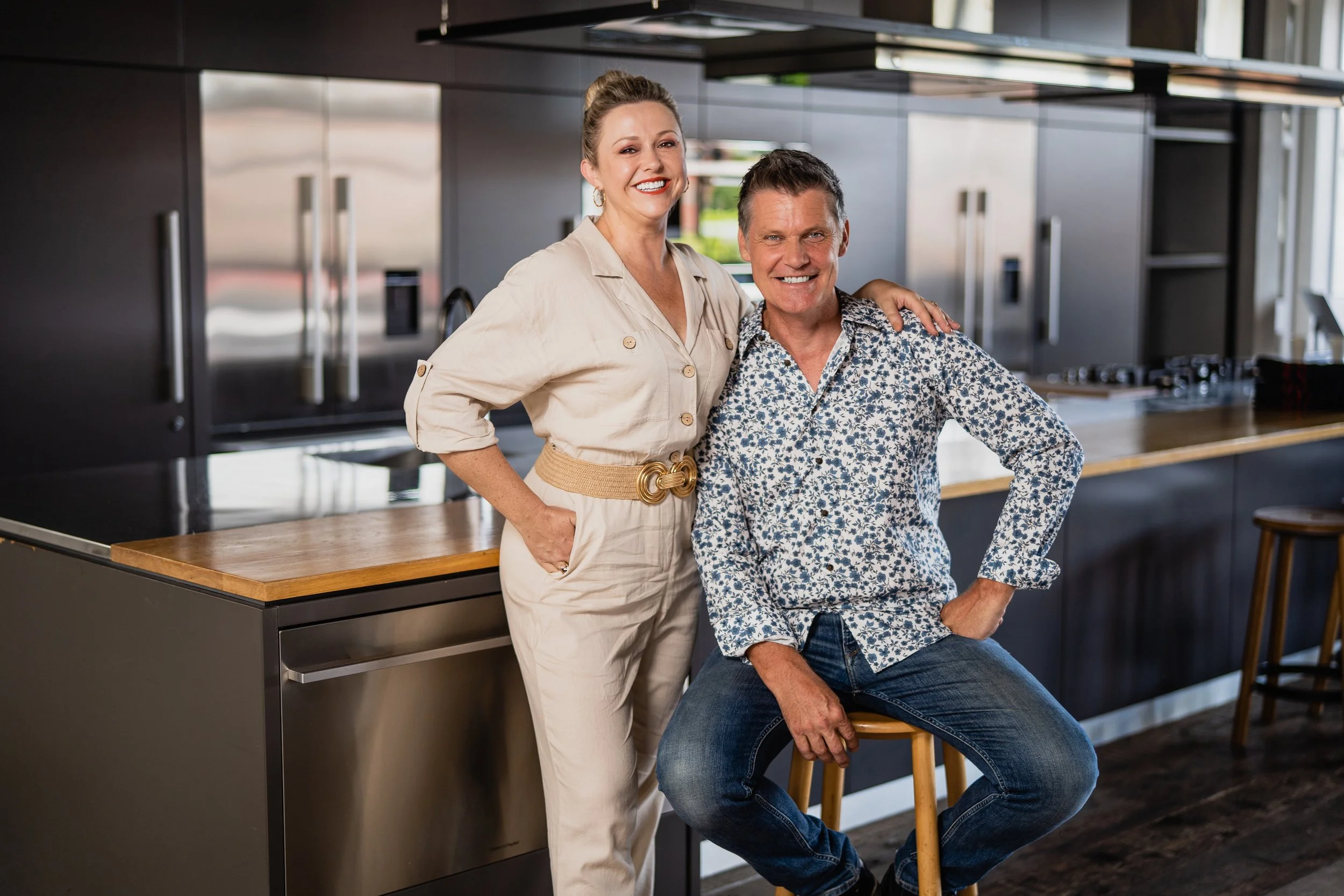
Vikki and Pascal.
There’s a surprising fact about William Shakespeare’s plays that not everybody knows.
“Shakespeare's full of really bawdy jokes,” Pascal Tibbits grins, before
wife Vikki Gorton-Tibbits adds, “It’s quite hilarious. There’s a lot of comedy interjected with the seriousness of it all. Romeo and Juliet isn’t just a tragic love story.”
The couple is behind Tauranga’s increasingly popular annual Summer Shakespeare production, which this year is putting on his most famous play, Romeo and Juliet. Pascal, who is the creative director, says that making the works of the great bard user-friendly for modern audiences is one of their primary goals.
“It’s about the theatre, community, and accessibility for everyone to come and have a good time,” Pascal says. “We make sure our actors are telling a story that anyone can watch and understand. All the themes that were relevant in Shakespeare’s day are relevant now. This is the magic of Shakespeare.”
Vikki, who is the producer, nods and says “You don’t have to be a Shakespeare buff to go to one of these shows.”
Romeo and Juliet is the seventh play that the Summer Shakespeare Tauranga Trust has put on, and sees them transport the great tragedy from the Elizabethan era into the roaring 1930s. Running from February 6 to the 16th at the Te Puna Quarry Park, the beautiful purpose-built amphitheatre is set amongst a stunning natural backdrop.
Food is another passion of the pair, who together won the reality TV cooking show My Kitchen Rules in 2023. Fittingly, they’ve put together a flavourful menu of locally sourced and produced food, wine and beer, including crowd-favourite Pork Belly Bao buns and spiced beef focaccia.
“Our vision is to create an experience where people can enjoy themselves and feel welcomed, without breaking the bank,“ says Pascal. “Tickets are reasonable, the food and wine are priced fairly. We don’t believe in taking advantage of a captive audience. It’s about making the event accessible and enjoyable for everyone.”
Of course, you’re also free to bring your picnic basket. The main thing for the pair is that people enjoy themselves.