
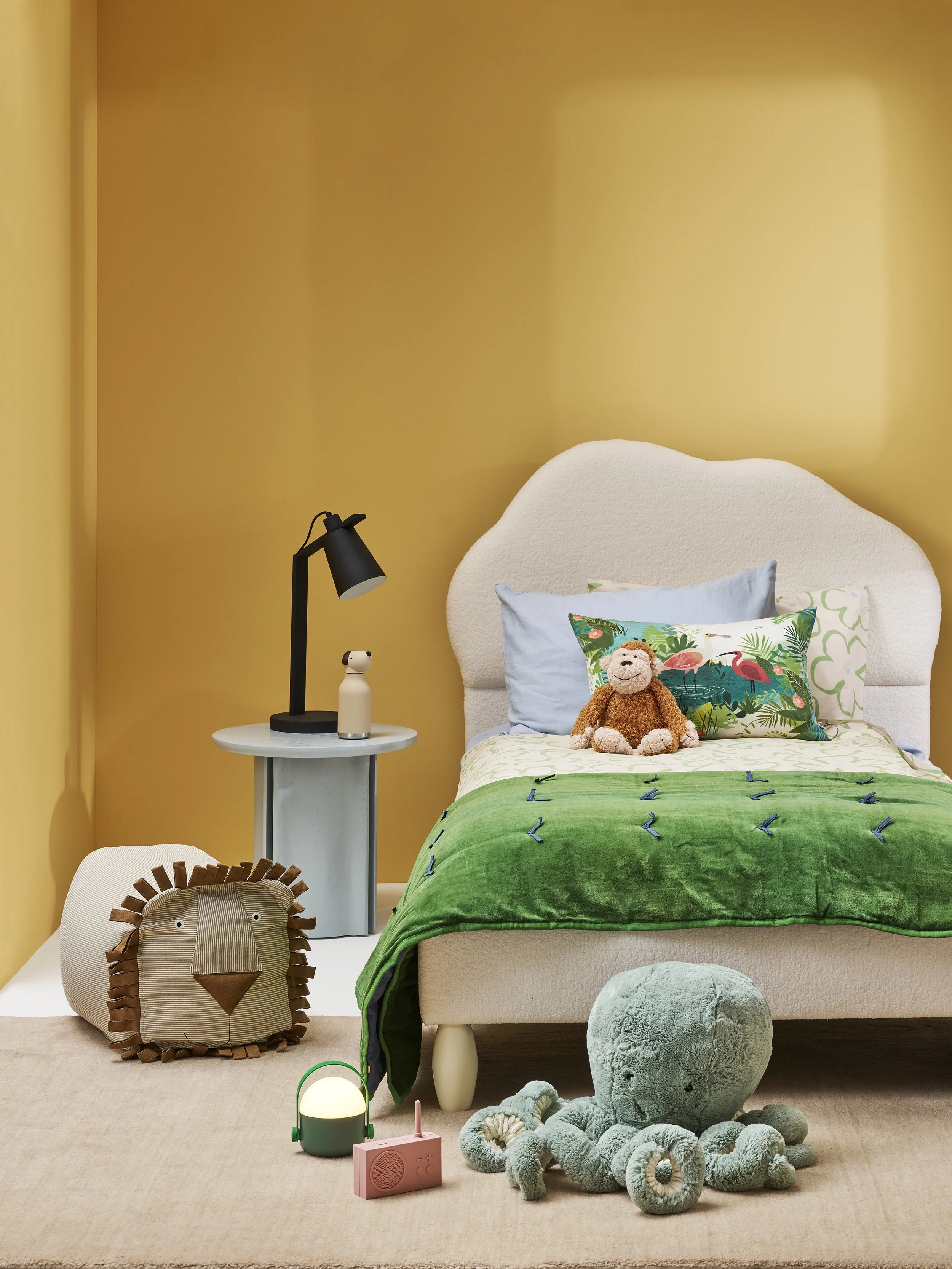
COLOUR ME COSY
Warm, sunlit tones have a way of making any space feel instantly more inviting and homely.
Warm, sunlit tones have a way of making any space feel instantly more inviting and homely.
STYLING AMBER ARMITAGE @ MARIGOLD PHOTOS MELANIE JENKINS @ FLASH STUDIOS WALL COLOURS RESENE PAINTS
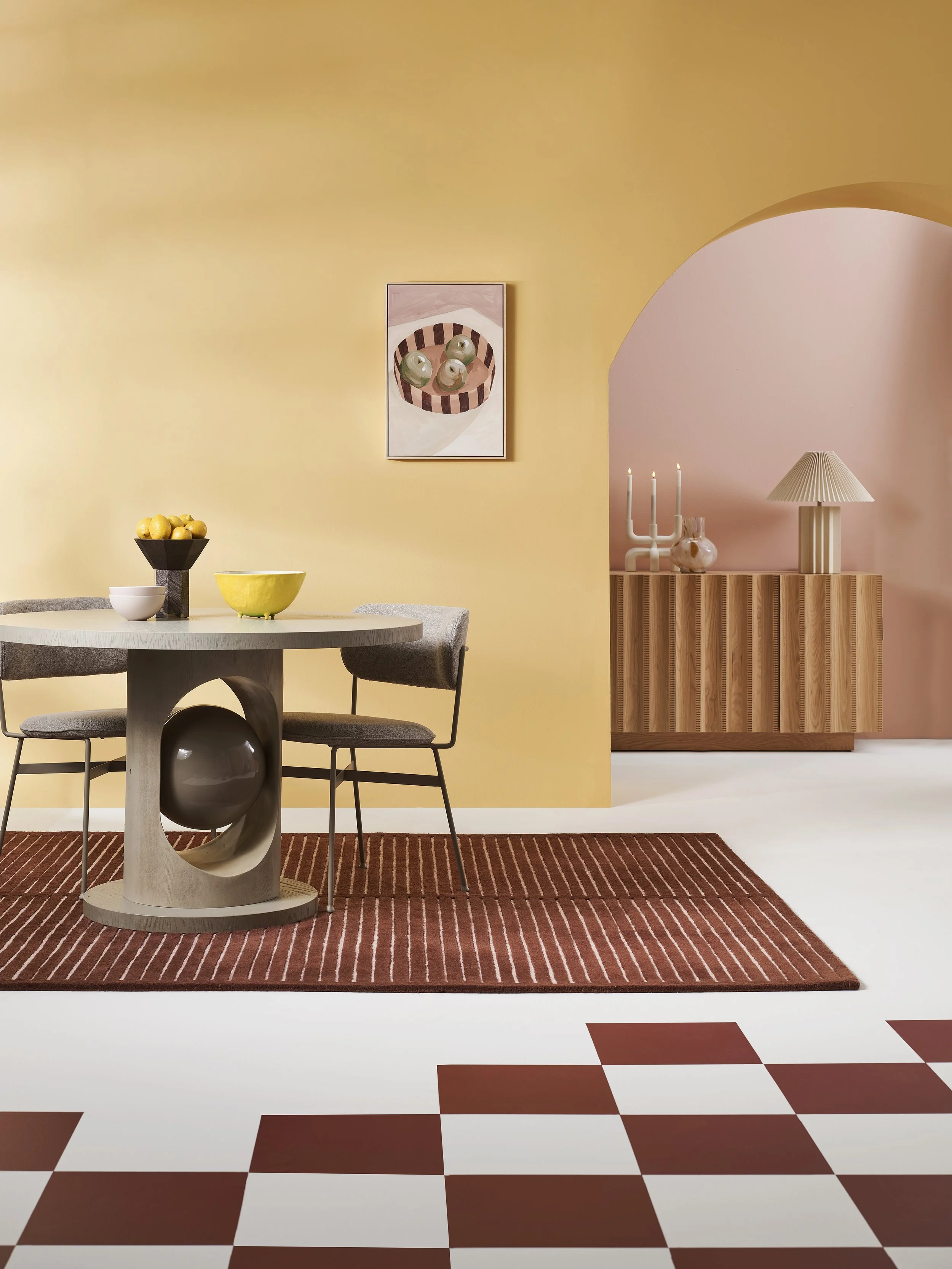
ABOVE : Wall and arch painted in Resene SpaceCote Flat in Resene Casablanca, through arch in Resene Sakura.
Floor painted in Resene Walk-On in Resene Alabaster with checks in Resene Avant Garde. Kelly Hoppen Pearl Dining Table, Big Foot Stool and Cobra Candle Holder from Design Cache. Ember Buffet, Piccolo Dining Chairs, Theron Zenith bowl tall, Boden vases (on buffet) and Fruit Bowl framed canvas, all from Soren Liv. Marlow rug in Wine from Baya. Fiora Stone Base Table Lamp With Pleated Shade From Lighting Direct. Bordallo Pinheiro Lemon Salad Bowl, Bison Ceramics Edo small bowl in Peony, Bison Ceramics Fagel Pitcher In Sunshine, from Allium.
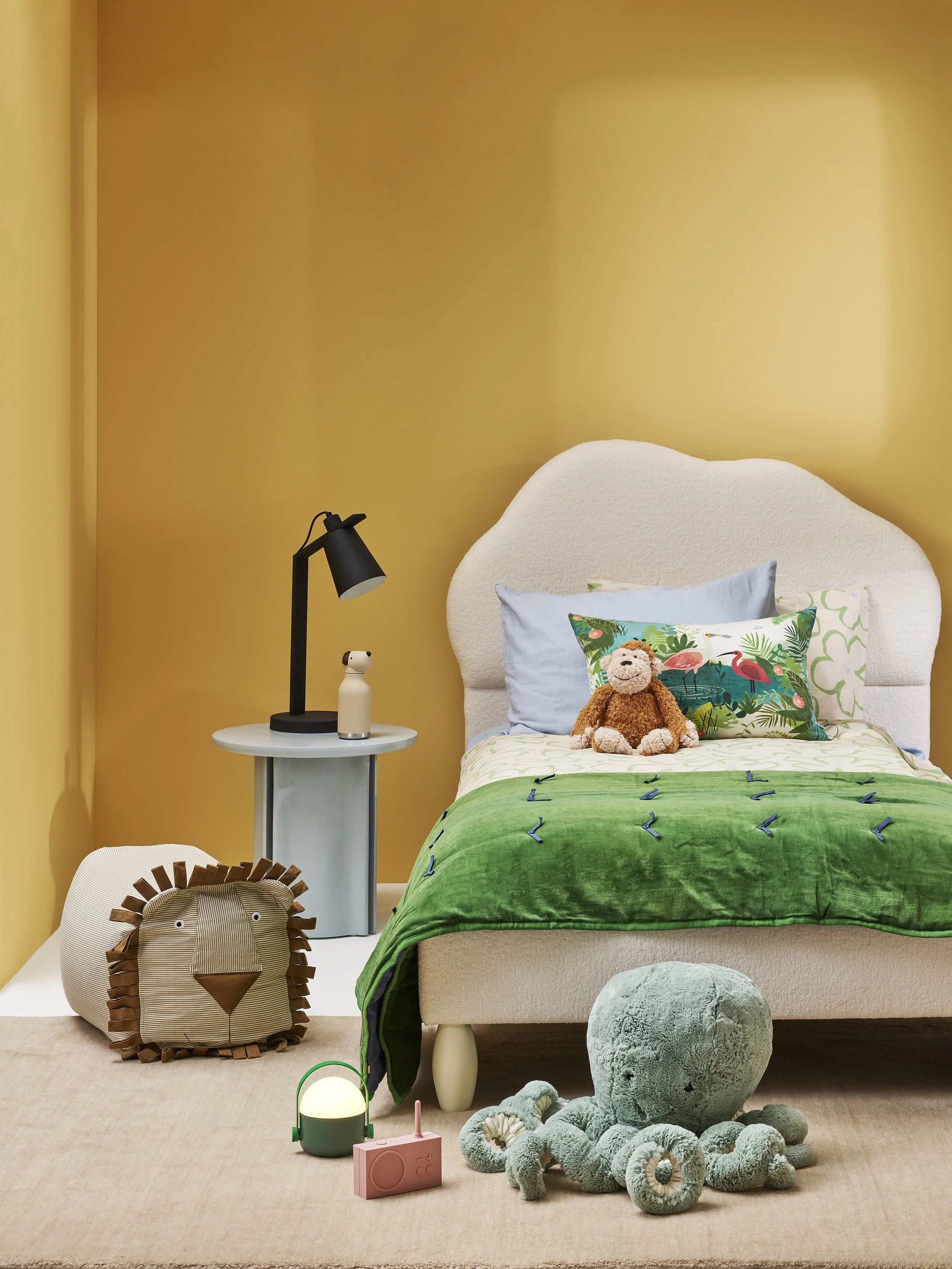
ABOVE: Wall painted in Resene SpaceCote Flat in Resene Casablanca and floor painted in Resene Walk-On in Resene Alabaster. Cosy Cloud King Single Bed in Ivory from Mocka. Sandringham rug in Cameo from Baya. Leon side table in Powder Blue and Easton Axel Desk lamp from Soren Liv.
ON BED:Powder Blue linen pillow cases from Foxtrot Home. Patterson Willow duvet set, Design Alchemy Collective Quilt Velvet in Natural Green Moss, Villa Nova Amazon River Cushion, Jellycat Junglie Monkey, Jellycat Odyssey Octopus, Asobu Bottle Bestie Brown Dog, Oyoy Bean Bag Lobo Lion, Lexon Tykho 3 Radio Pink, Remember Light Ole Green, all from Allium.
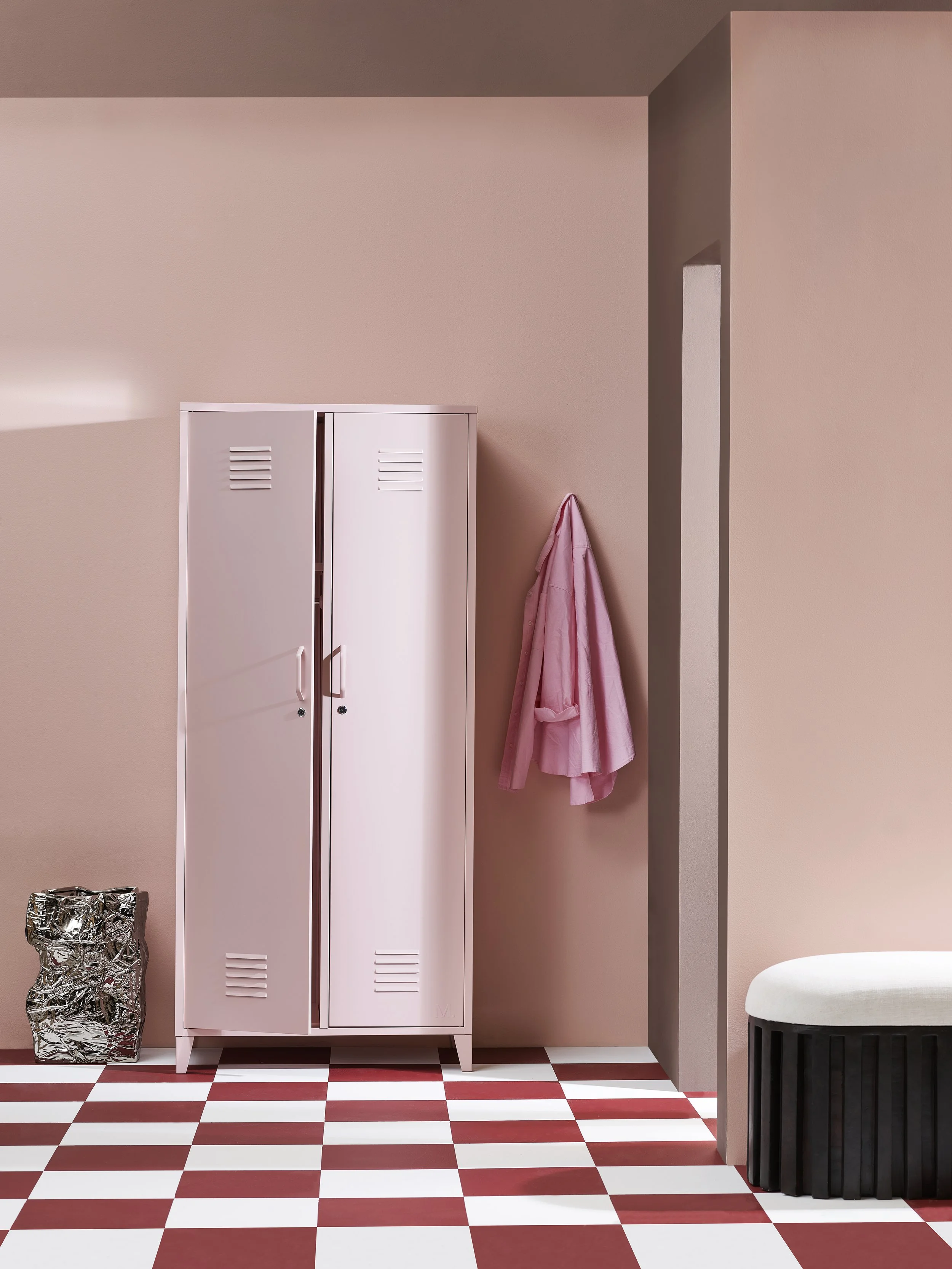
ABOVE & BELOW : Wall painted in Resene SpaceCote Flat in Resene Sakura and floor painted in Resene Walk-On in Resene Alabaster with checks in Resene Avant Garde. Ceiling painted in Resene Felix. Original locker wardrobe in Pink from Mocka. Kami Vase in chrome and Tribu Bench from Design Cache. Shirt stylists own.
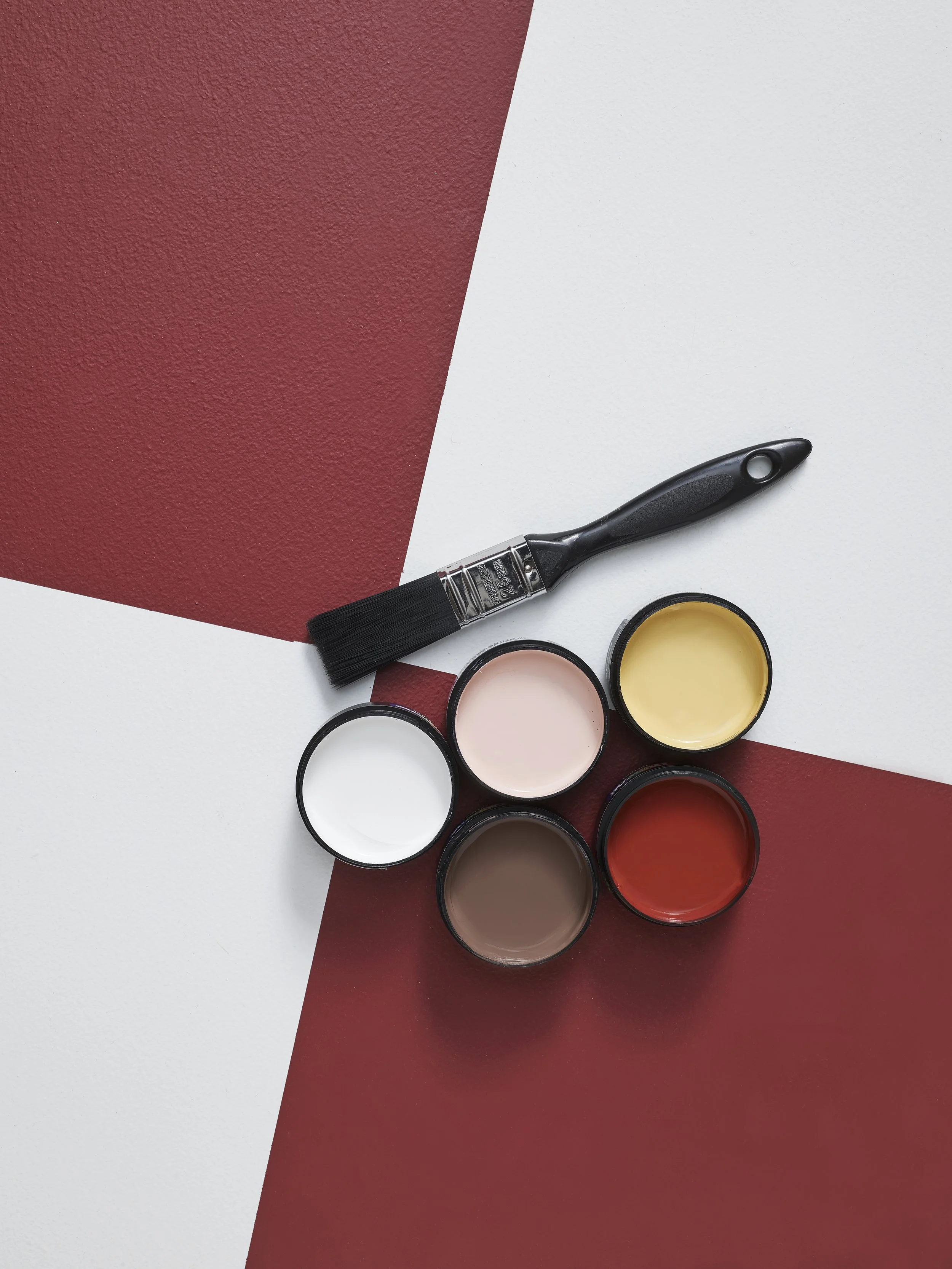
Floor painted in Resene Walk-On in Resene Alabaster with checks in Resene Avant Garde. Testpots clockwise from left in Resene Alabaster, Resene Sakura, Resene Casablanca, Resene Avant Garde and Resene Felix.

ON THE MOVE
Innovative Digital Solutions is in the midst of big changes with new acquisitions, new headquarters and a fresh chapter for the Bay.
Innovative Digital Solutions is in the midst of big changes with new acquisitions, new headquarters and a fresh chapter for the Bay.
PHOTOS KATIE COX

In Tauranga, if a business needs its printers to work, its digital workflows to run smoothly or its office tech to just behave, there’s a good chance Innovative Digital Solutions (IDS) is behind it. For more than 20 years, the company has become a backbone for businesses across the BOP, Coromandel and South Waikato, evolving alongside technology and local business needs.
Every story has a beginning, and IDS’s is modest. In 2005, co-founders Jim Tavendale and Dan Martin opened their first office with “just our name on the door and a phone number,” Jim recalls. With one technician, one office staffer and no clients, their mission was simply to listen and solve problems. That hands-on, practical approach became the company’s guiding principle.
The early days demanded improvisation and a willingness to tackle whatever came through the door.
As the company grew, its systems and team grew too. Continuous improvement became a steady foundation that would allow IDS to expand without losing its personal touch.
But IDS didn’t just stick with printers. As workplaces evolved, so did the company. Today, it offers everything from print management and advanced scanning, to digital signage, workflow automation and interactive smart screens for schools and businesses.
“We’re not selling machines, we’re helping businesses work smarter,” says Dan. “Whether it’s scanning documents efficiently or reducing unnecessary printing, it’s about making processes simpler and more sustainable.”
Despite expanding its services, IDS has remained staunchly local. Operating from Tauranga with a dedicated Rotorua office, the company ensures clients always talk to someone who knows their business and their challenges, not a call centre on the other side of the world.
Recent years have seen IDS grow through the onboarding of new clients and carefully considered acquisitions. In 2025, the company purchased Insite Technology, a BOP print supply business, adding a number of new clients. Then, in early 2026, IDS acquired Bay Copy, an exclusive Canon authorised partner with 16 years of local presence, further increasing the IDS customer base. Together, these acquisitions have strengthened two established local businesses, forming a powerful, community-based organisation. Alongside experienced staff and specialist expertise, they have enhanced the company’s local footprint and expanded its range of solutions.
To accommodate growth, IDS moved into a purpose-built headquarters a year ago. The space is modern and collaborative, a reflection of the company itself, which is practical and designed for people first.

But the company’s biggest strength is its team. Some employees have been with IDS since day one, and many long-term staff are approaching a decade of service.
Others take opportunities abroad and return with new perspectives, creating a blend of experience and fresh thinking. It’s a culture built on respect and a shared commitment to the local business community.
Two decades on, IDS is now a local story of growth and connection. And with a solid foundation, a new modern headquarters and a team that values people as much as technology, the next chapter looks just as promising.
THE PINNACLE
This home – and its garden – prove dreams can come true; and earn national kudos along the way.
This home – and its garden – prove dreams can come true; and earn national kudos along the way.
WORDS JO FERRIS

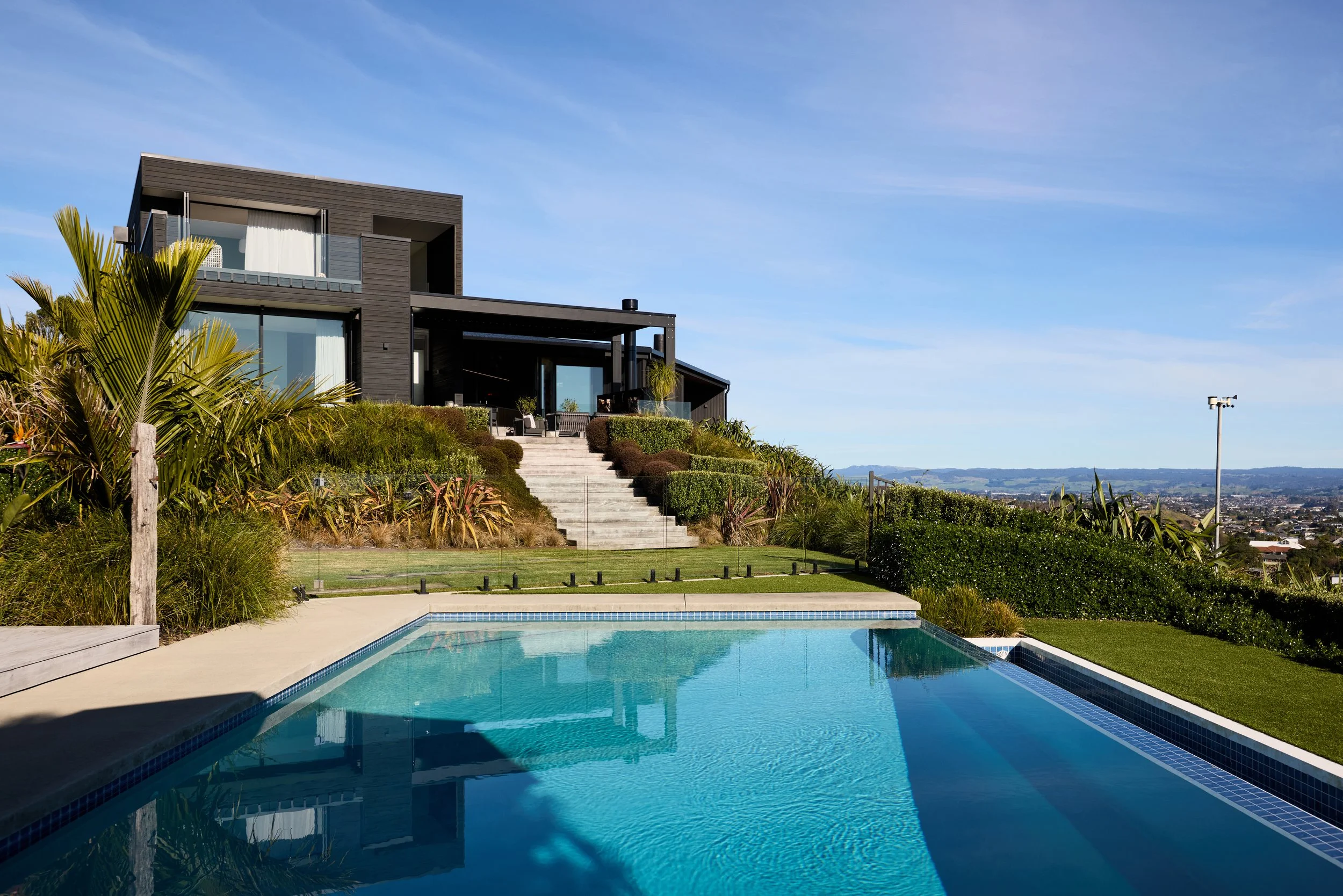
The journey began with a dream to move from living at the bottom of this hill to the top. As the peak site within an elite Welcome Bay estate, it was a constant lure – views from here the main drawcard; apart from the sheer expanse of the site itself.
That’s partly true. The home certainly exudes the magnificence of bygone history. Except for one key point. It was developed in 2009; designed, built and fashioned by an English couple with a vision to recreate American Victorian architecture.
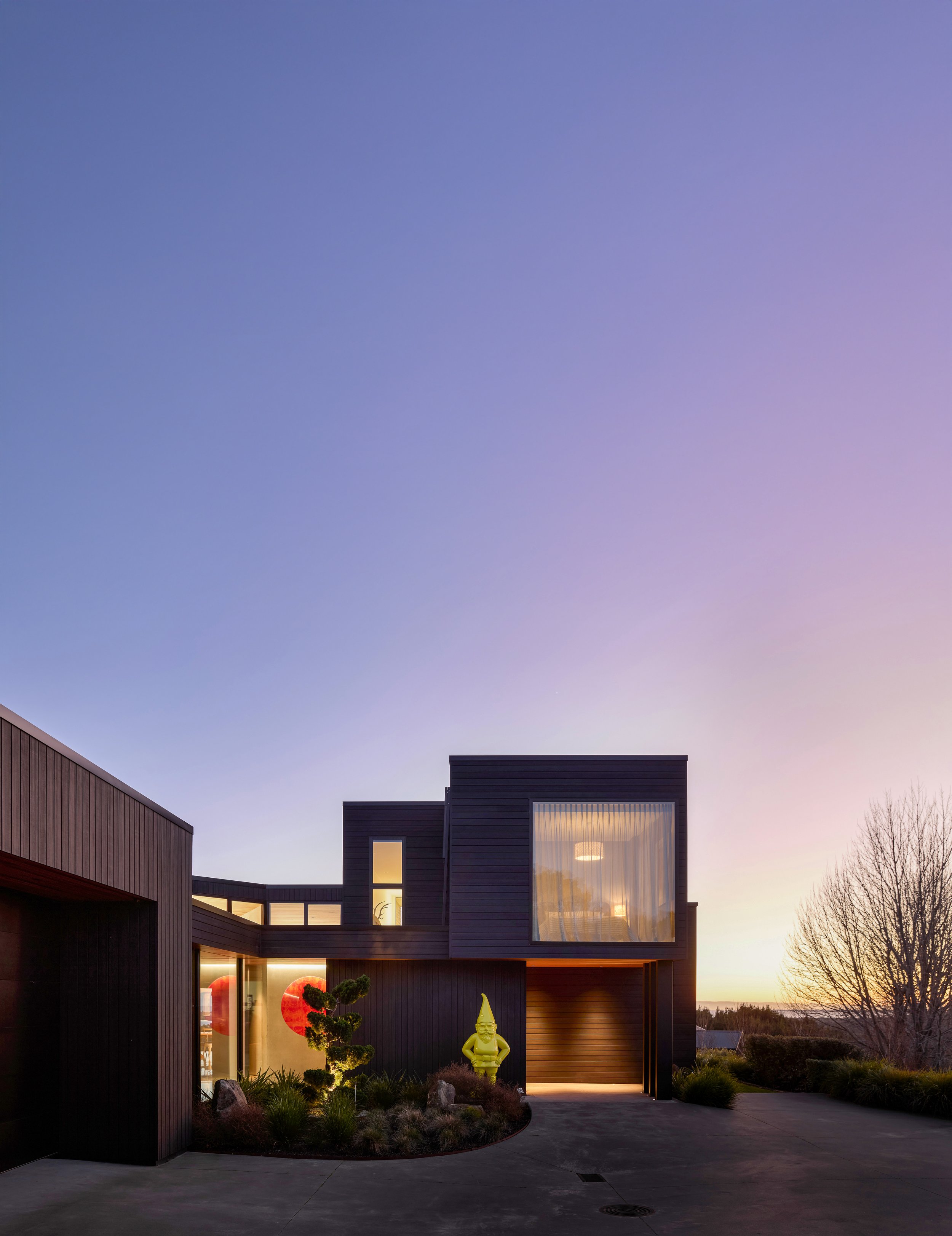
Sun and scenery are headline stars, but this home captivates in ways that honour the vision behind it. The owners had the idea. Auckland architect, Cate Creemers brought it to life - her architectural skill underpinning the design. Like the personal art collection that features throughout, this residence is its own interpretation of artistic brilliance. Built by Tauranga’s Calley Homes, it was the regional supreme winner in 2022’s Registered Master Builders House of the Year, subsequently winning at national level.
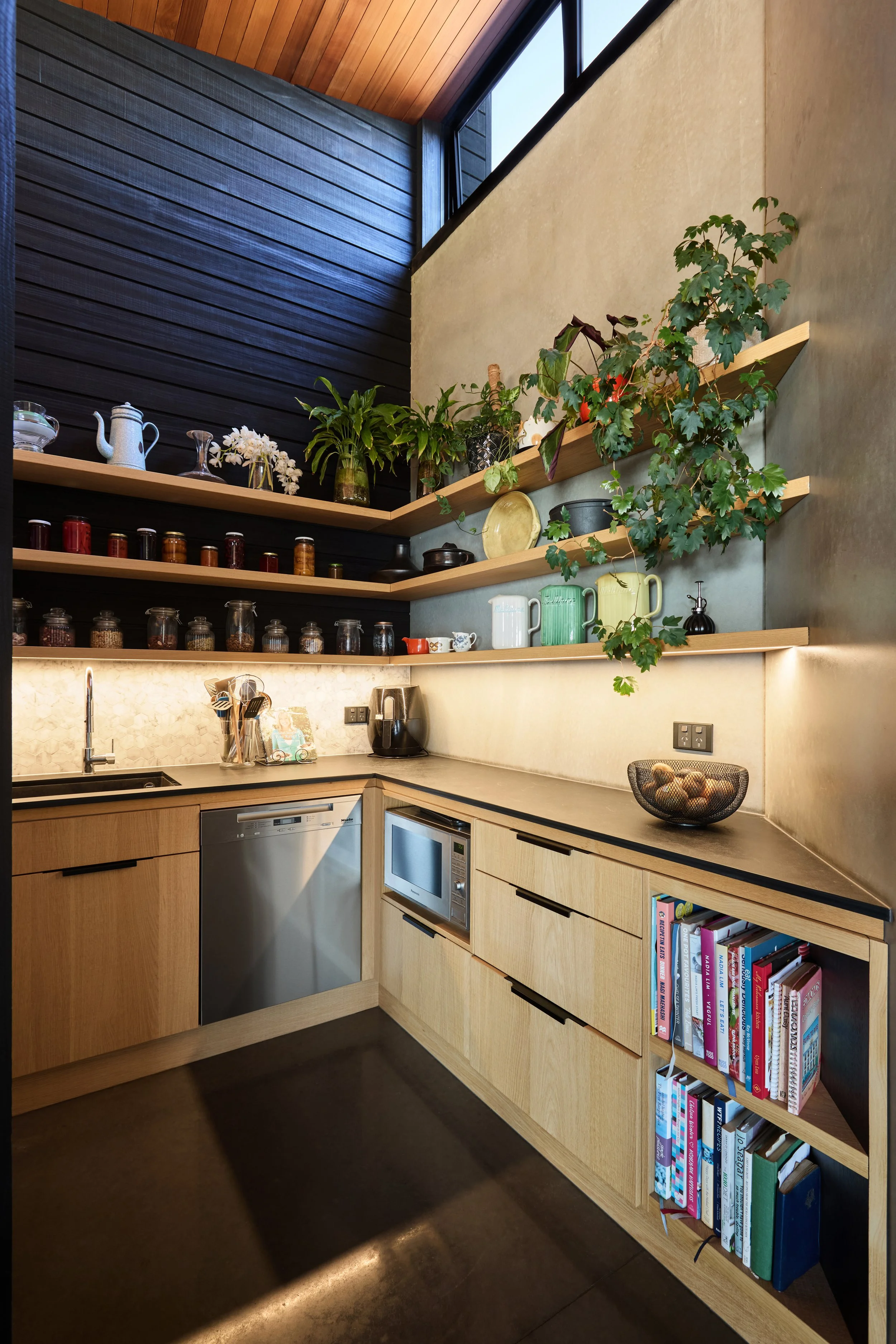
Incorporating passive solar design principles, other sustainable attributes include a solar hot water system, warm roof system, along with thermal and acoustic insulation. Externally, Abodo Vulcan cladding is a New Zealand thermally-modified product. Inside, precast concrete panels anchor the home’s core, while enhancing its aesthetics. Timber also features strongly throughout.
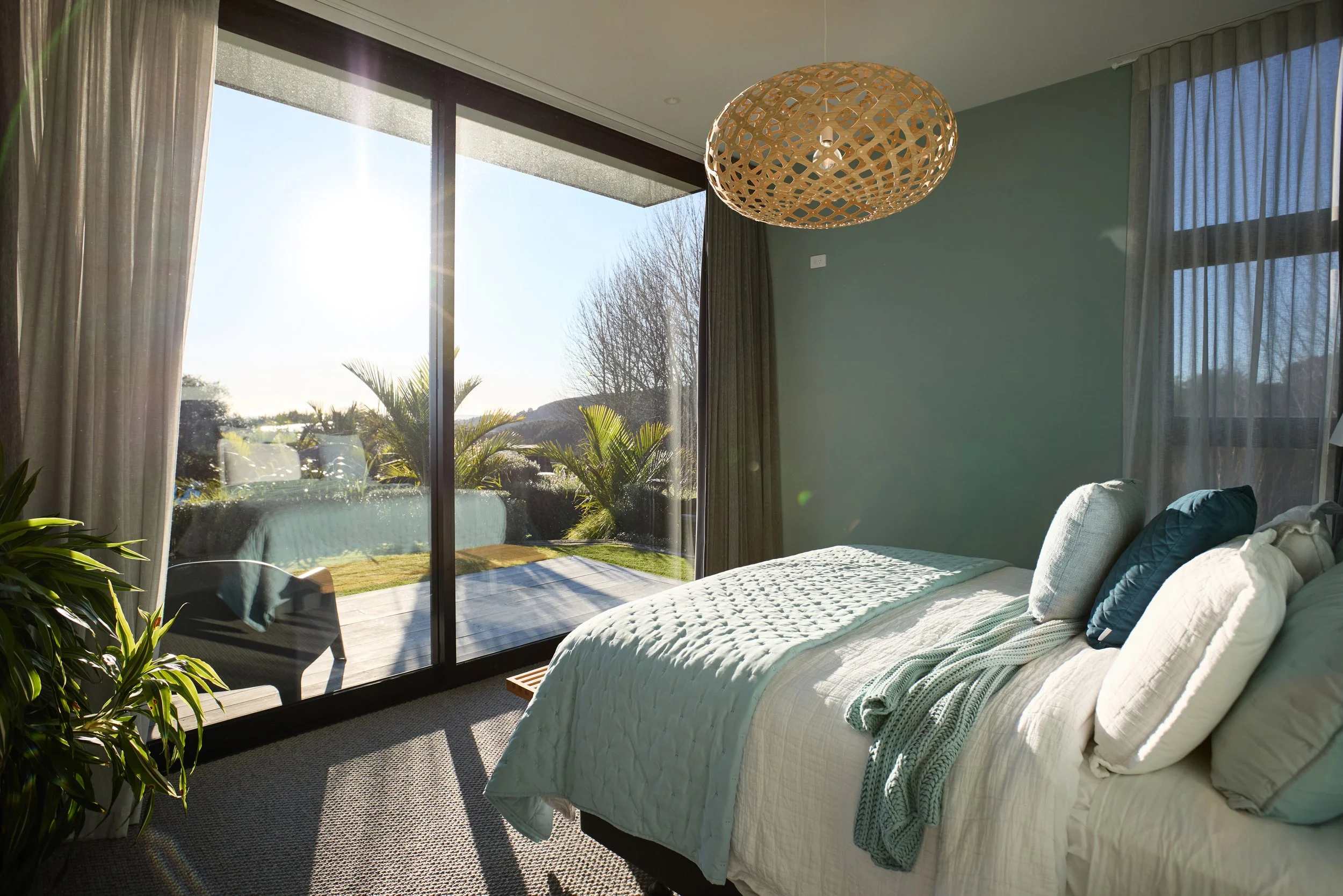
Gated entry and an uphill driveway disguise the house initially. The greeting is a contemporary expression, but it’s not until the home unveils its soul that it tugs at the emotions. At around 475 sqm, the layered design sections this home into defined quarters. Family and guests have choice on bedrooms - and views for that matter. The master suite cherishes special seclusion, thanks to its magnificent view, but the bedroom above has a personal outdoor zone that elevates that perspective.
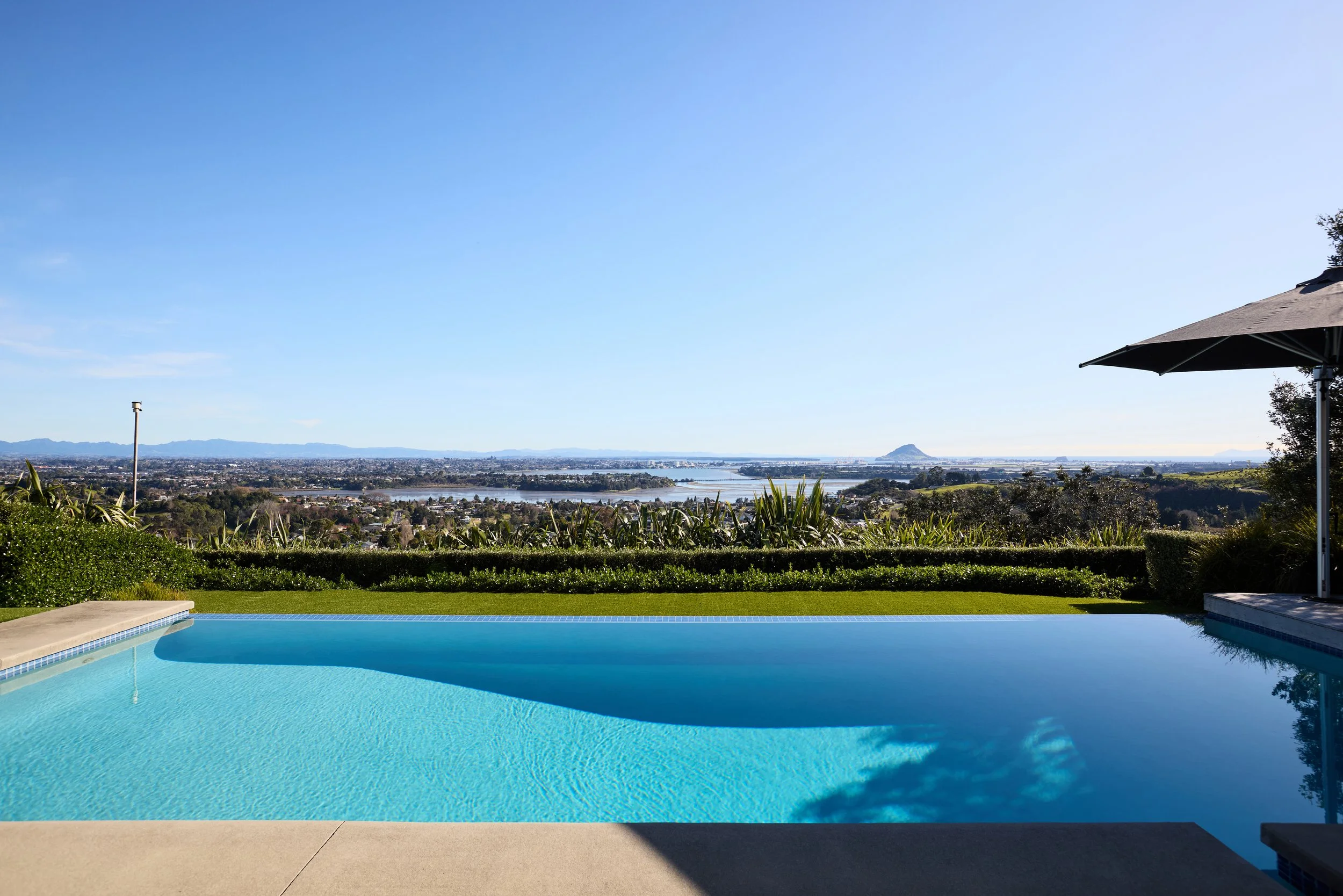
Gatherings gravitate towards the heart of the home - simple in its approach to intimacy and togetherness, yet characterised by the complexity of architectural nuance and building craftmanship. The astonishing panorama in front of this entire living area is heart-stopping. North-facing, it bathes in sun all day. Mauao stands majestically centre stage; views either side stretching from Papamoa to the Kaimais - right up to Coromandel. It is truly breathtaking.

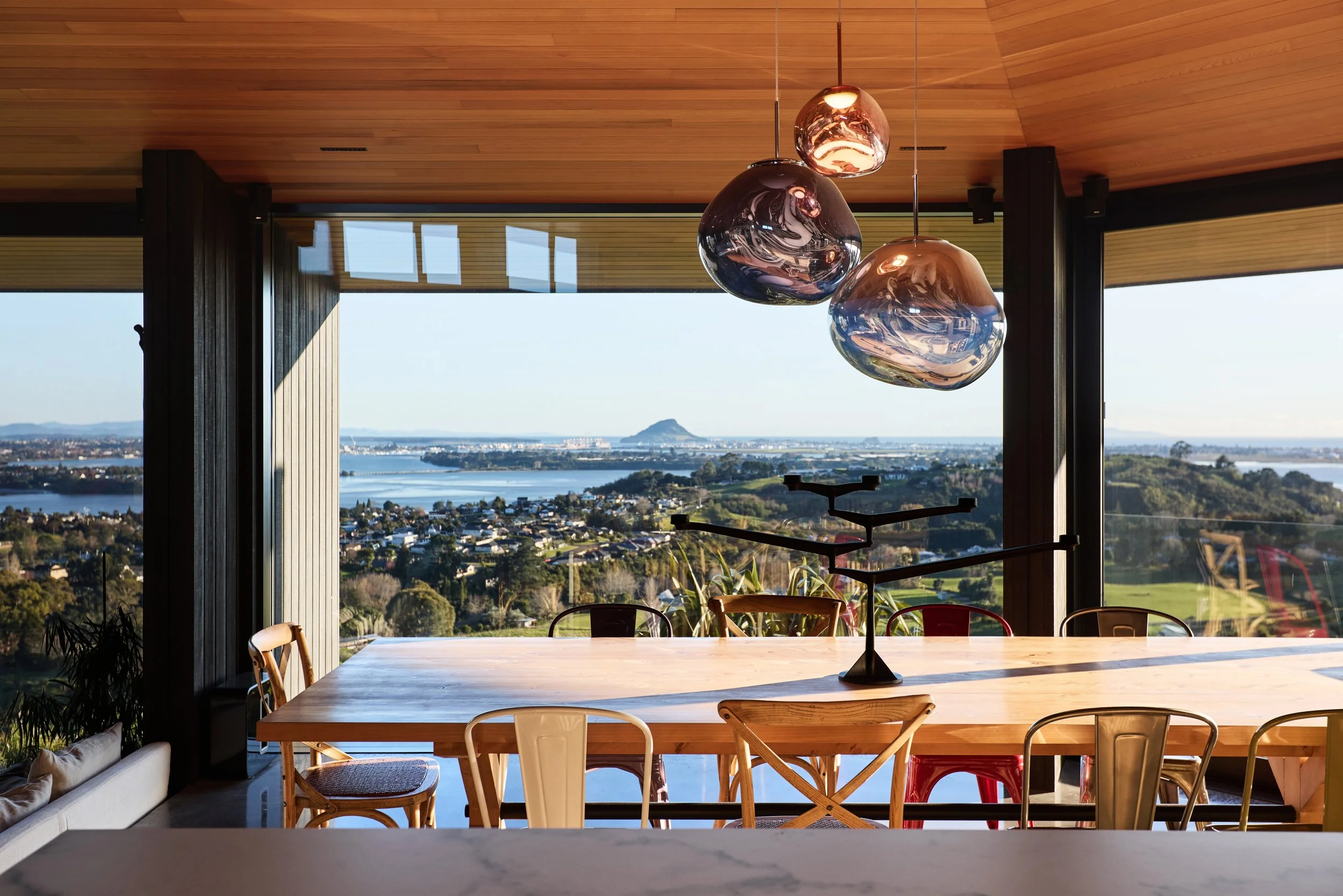
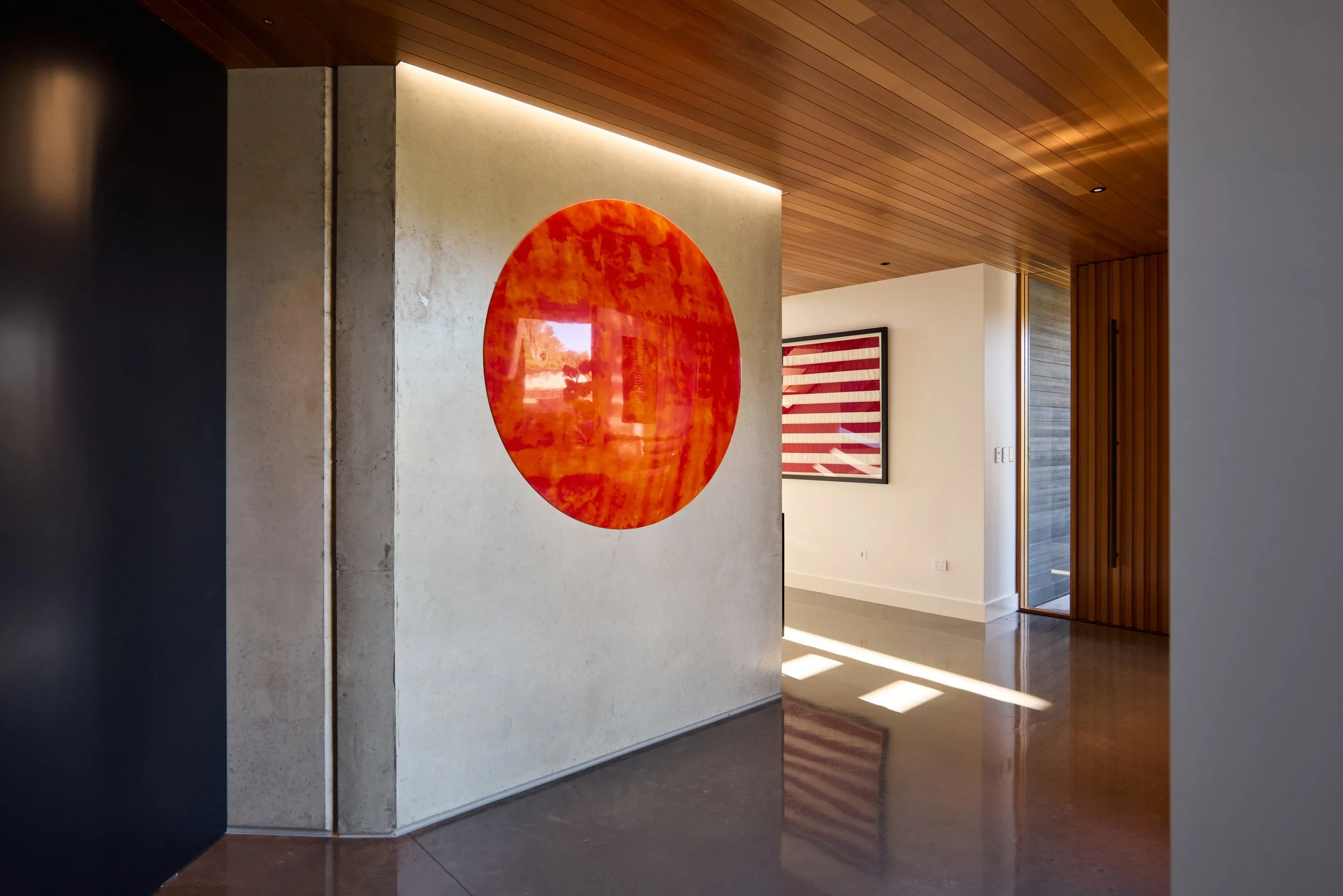
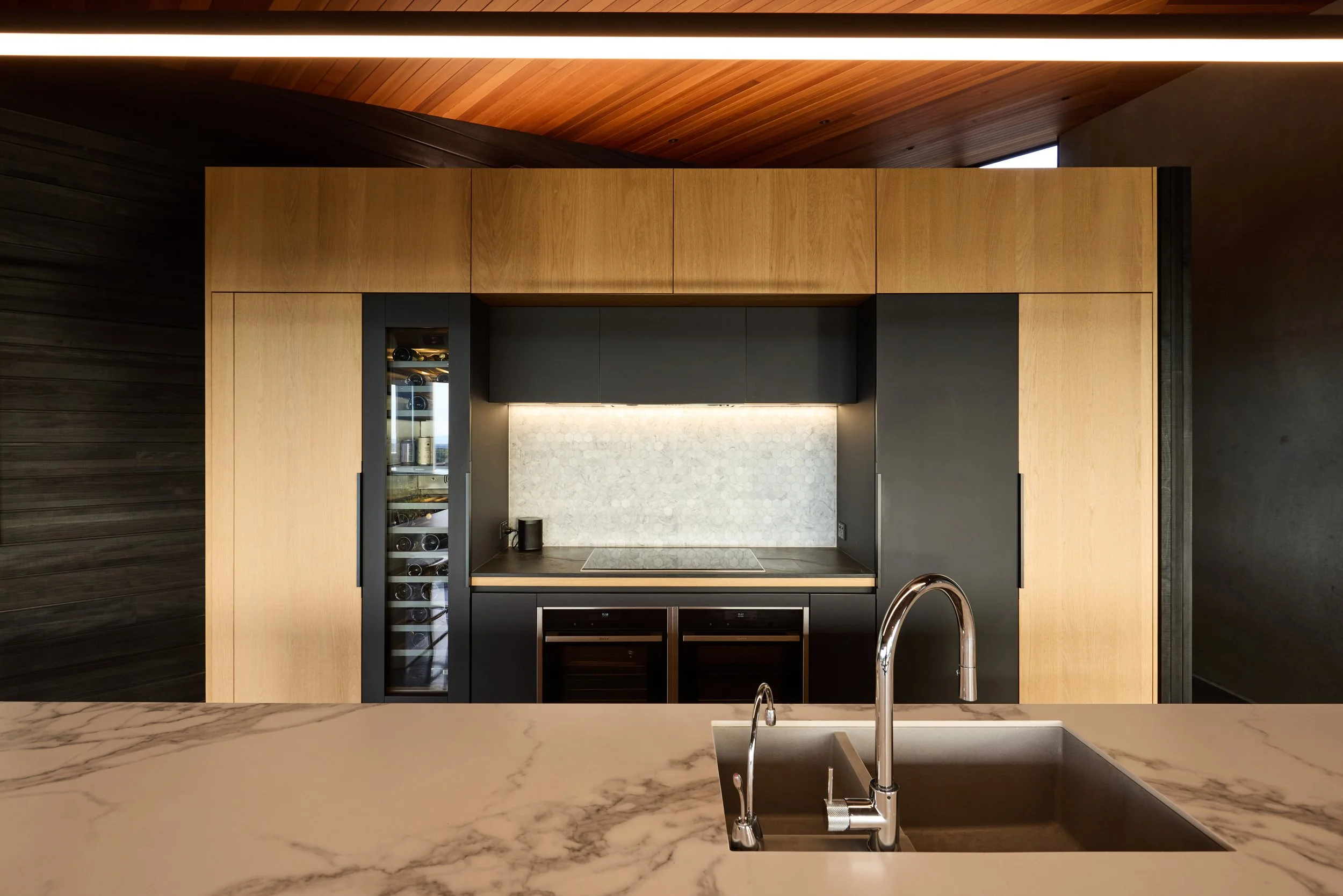
Massive banks of floor-length glazing were the only response to frame its full extent, while 100sqm metres of wrap-around decking provides a seamless connection. Underlying the glazing’s aesthetics however, the sun’s warmth is harnessed, while exposed concrete flooring absorbs it. The open f ire in the ‘library corner’ is merely for mood; snuggled up with a book or watching TV once views fade into twilight and city lights twinkle.
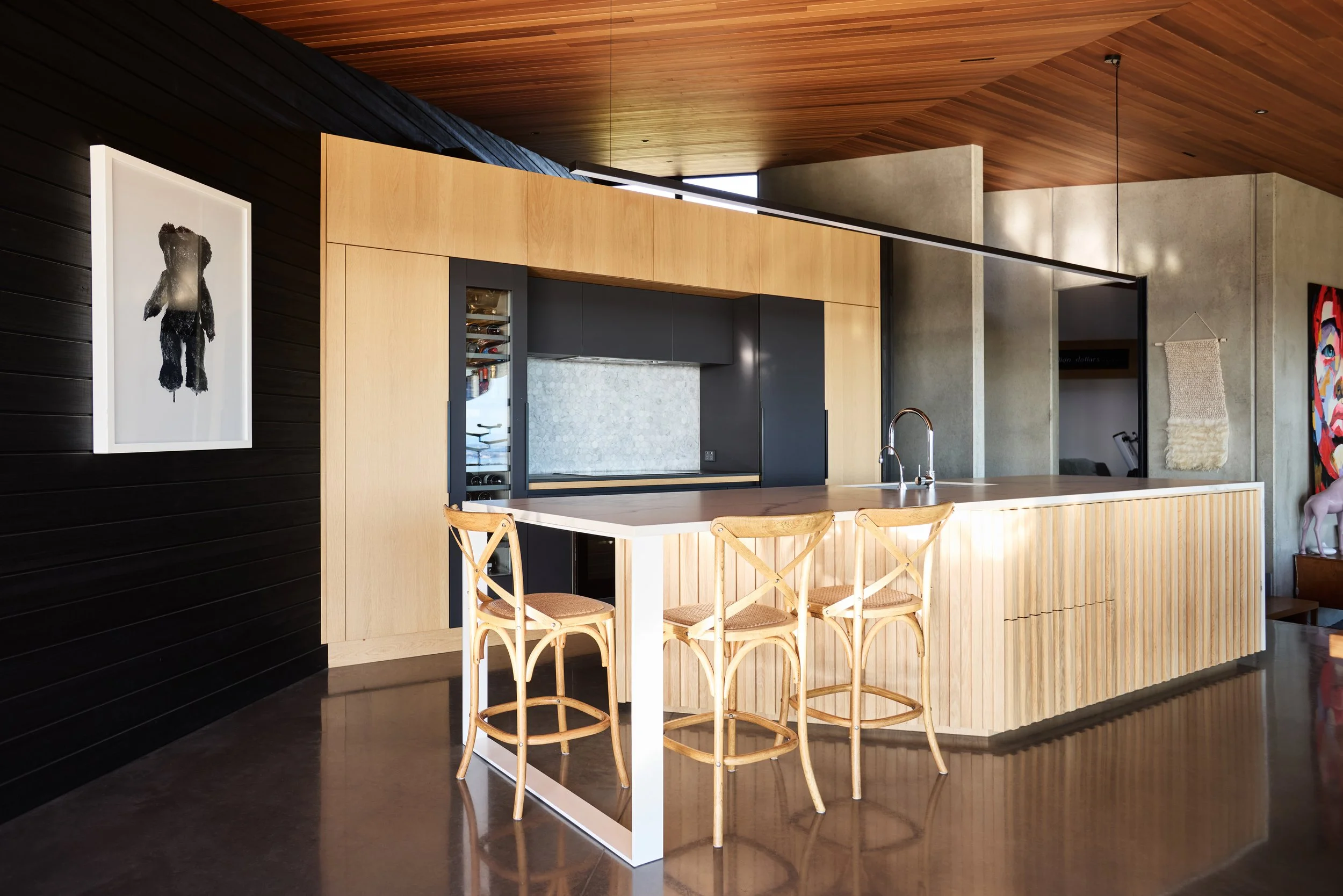
A sunken lounge enhances its height as the raked sarked ceiling brings nature inside. Different timbers also instil texture throughout - from the lustre of Pacific cedar to the honeyed grain of American Oak. The contrast with concrete in key areas highlights how nature can harmonise with a man-made material - if done properly. With surround sound adding mood in the private cinema, this home was born to entertain. Elegant as the kitchen is, with its innovative scullery and unique finish, the outdoor lounge is a revelation. Moody in its dark tone and texture, one can be forgiven for thinking this is simply an outdoor fireside haven. Hiding discreetly behind what appears to be a corrugated iron feature wall however, is a significant barbecue kitchen. Genius. From here, the garden offers its own invitation. Stepping down to lawn, the landscape slopes to the swimming pool and spa before meandering amid a wonderland of trees, grasses and specimens. Completely hand planted by the owners - more than 3000 plants interweave another artistic interpretation that binds this home with the land and nature. Truly a masterpiece - with national kudos to match.
21 Estates Terrace, Welcome Bay OLIVERROAD.COM
CRUISE CONTROL
YOU Travel & Cruise Bethlehem’s Catherine Membery boards Silver Moon to see what sets Silversea apart – and why small-ship cruising continues to win over seasoned travellers.
YOU Travel & Cruise Bethlehem’s Catherine Membery boards Silver Moon to see what sets Silversea apart - and why small-ship cruising continues to win over seasoned travellers.
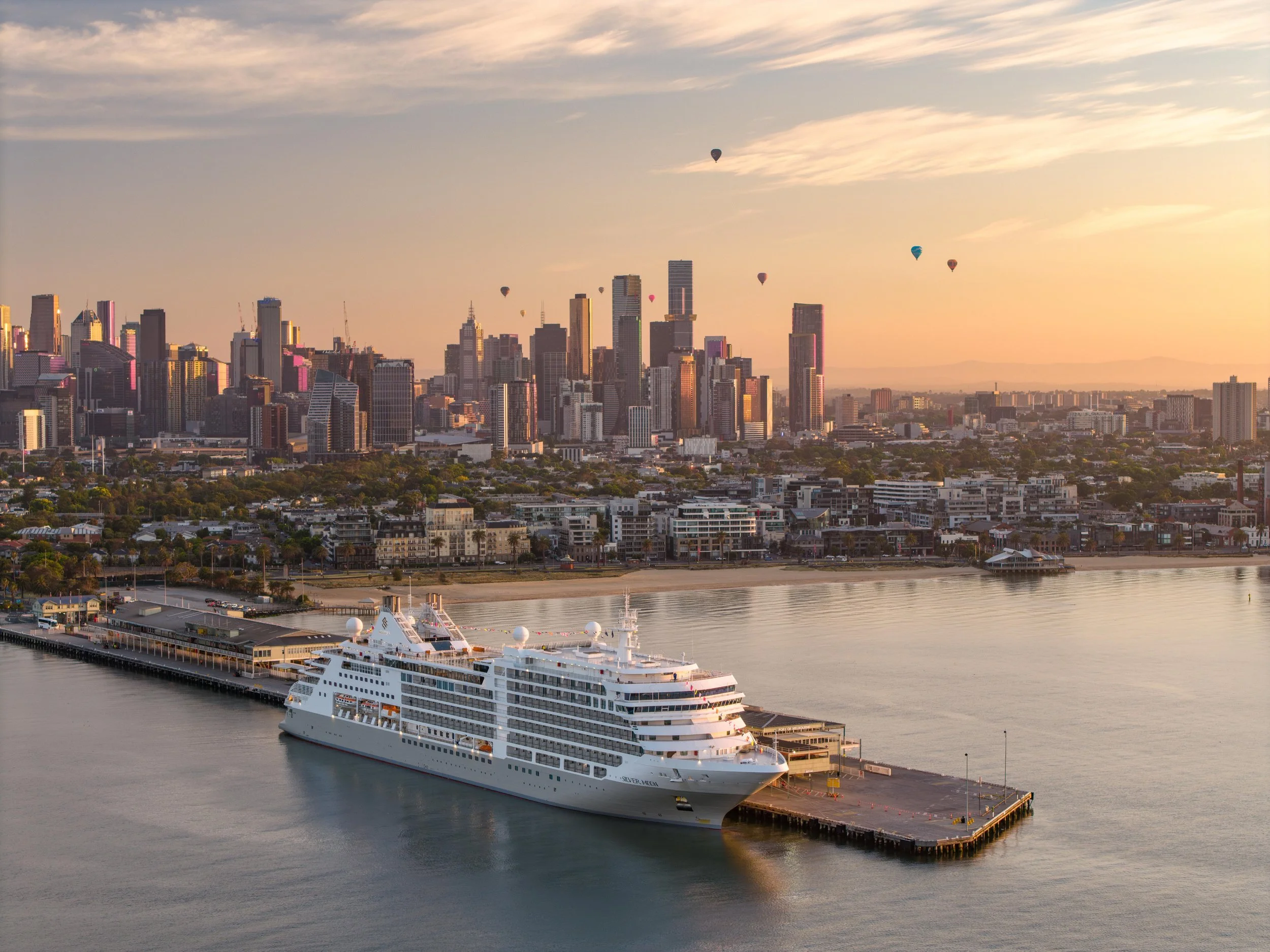
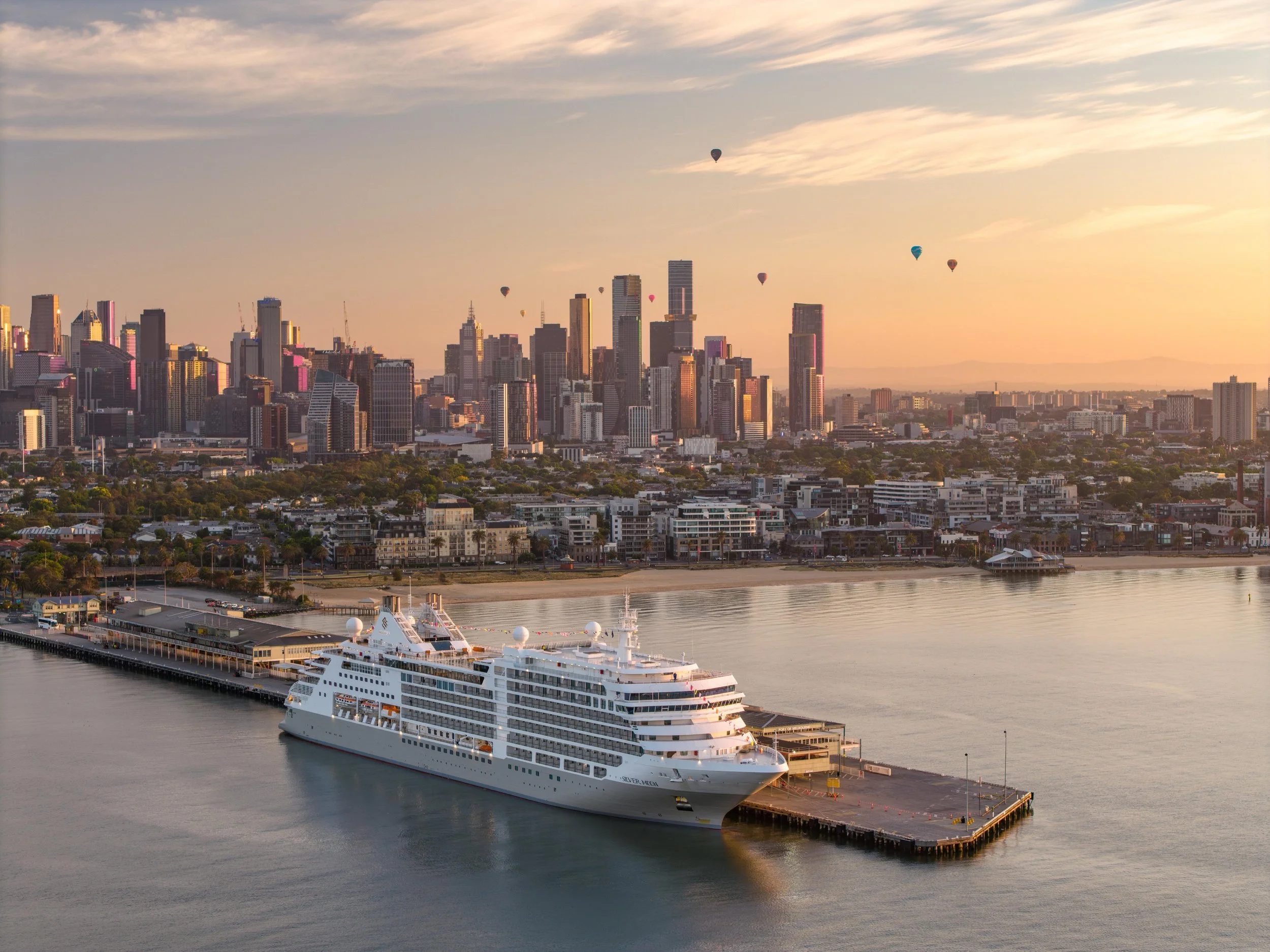
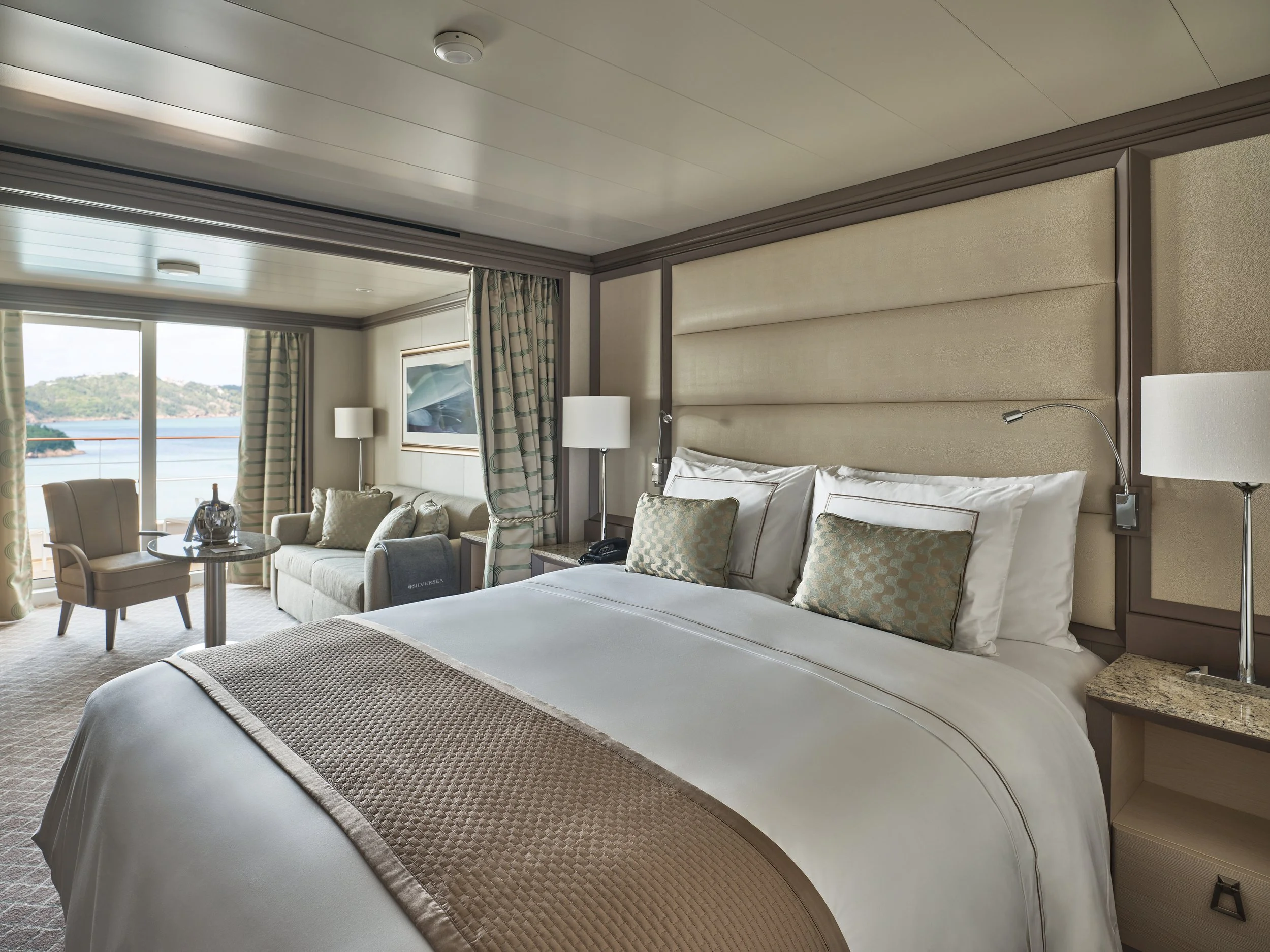
Catherine Membery and her husband joined Silver Moon in Hobart, midway through a voyage from Auckland to Melbourne. With just 596 guests on board, the scale felt calm and intimate from the outset.
The service was a standout for me,” she says. “The Silversea crew numbers nearly match that of its passengers, and they were unfailingly respectful, friendly and efficient. We loved meeting our butler and truly valued how he personalised our experience; and witnessed our fellow passengers also enjoying their interactions with the attentive crew.”
Many guests on board were seasoned travellers choosing to simplify the way they see the world. Catherine met a woman who, after a lifetime of travel, said cruise life suited her perfectly, allowing her to continue overseas journeys without the usual logistics.

Only unpack once
It’s one of cruising’s simplest luxuries. Settled into their ocean-view suite, Catherine appreciated the ease of unpacking just once and waking somewhere new each day. She explored Hobart independently but recommends organised shore excursions. “That way you always ensure you get back to the ship on time!” she laughs.
Broaden the mind
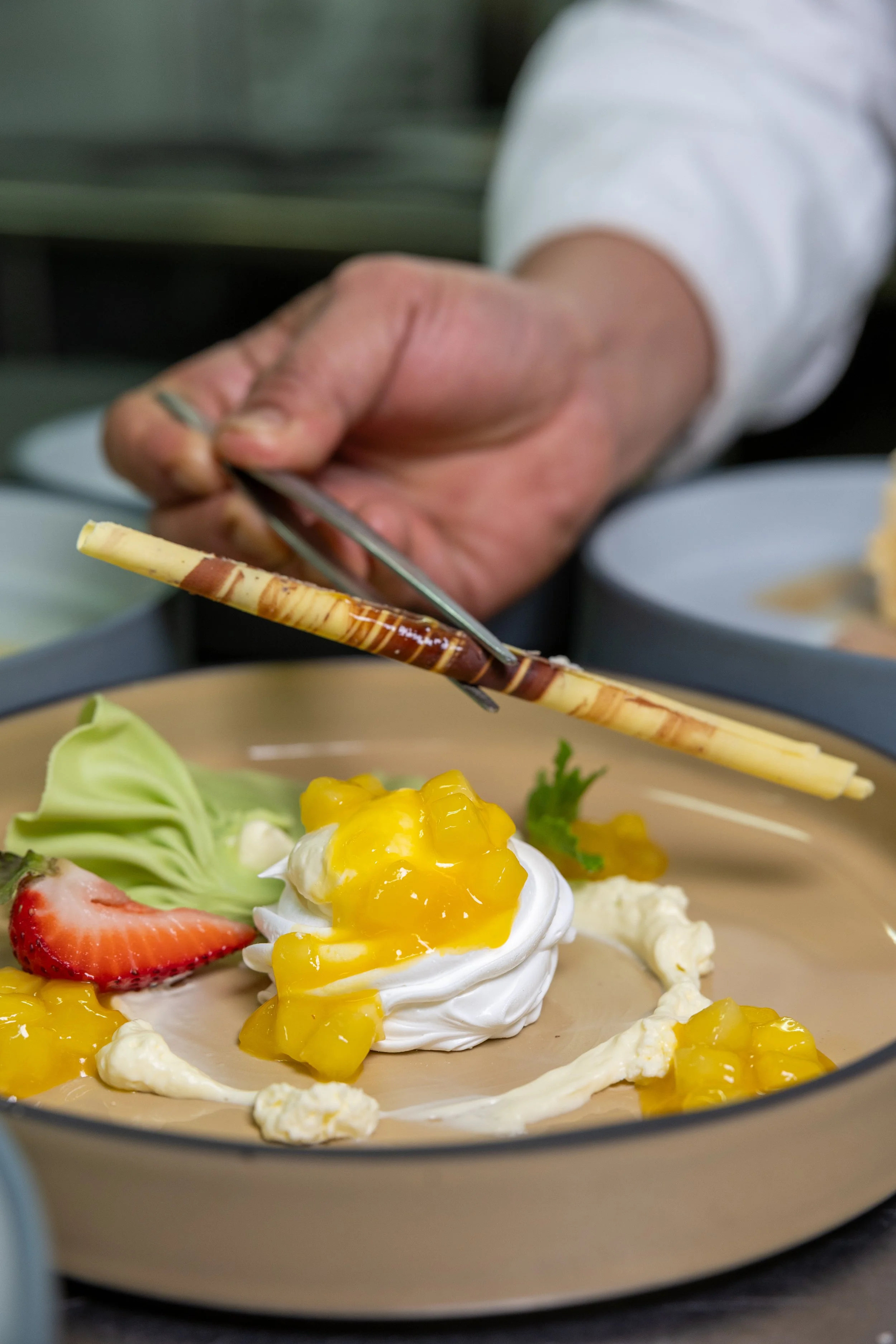
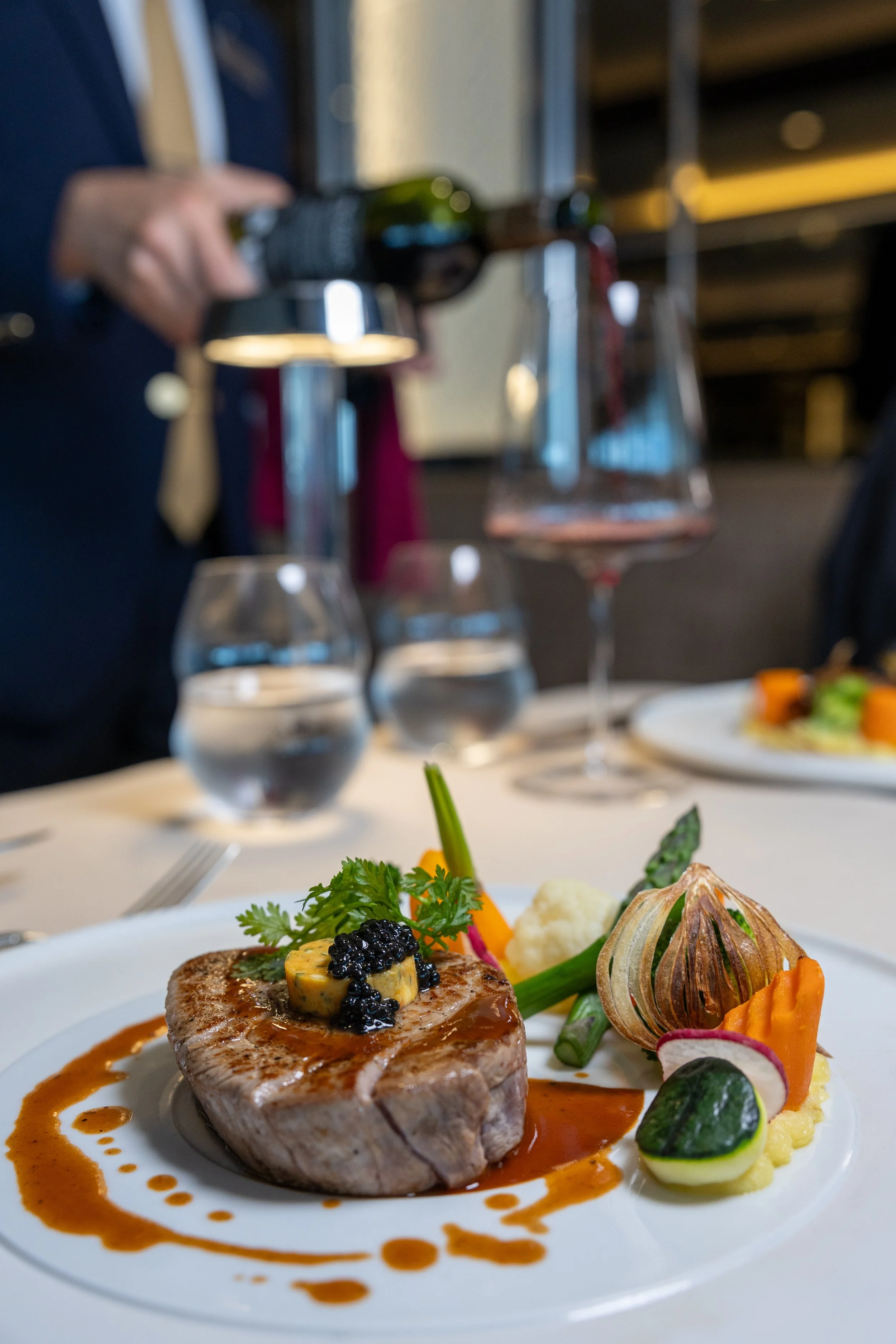
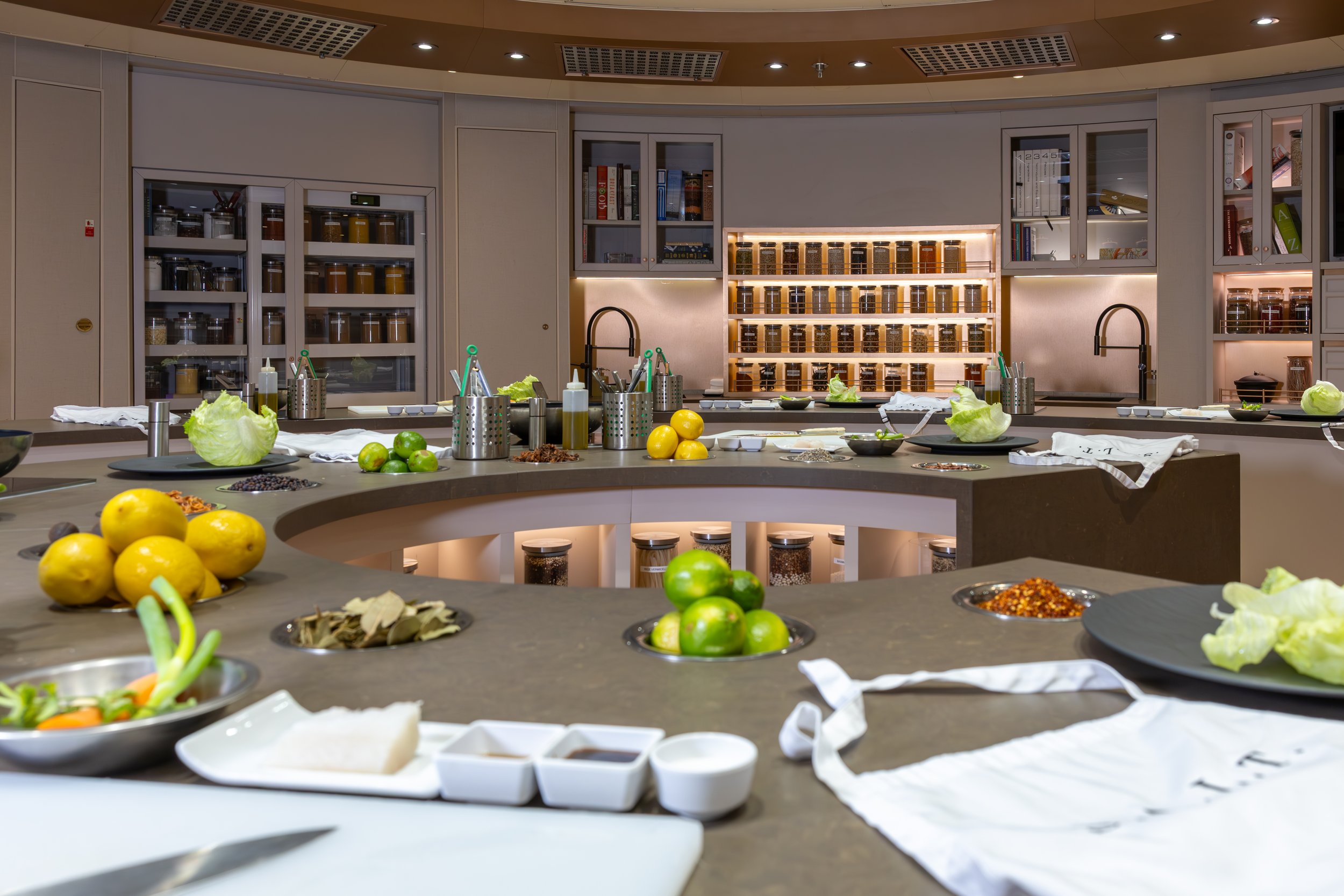
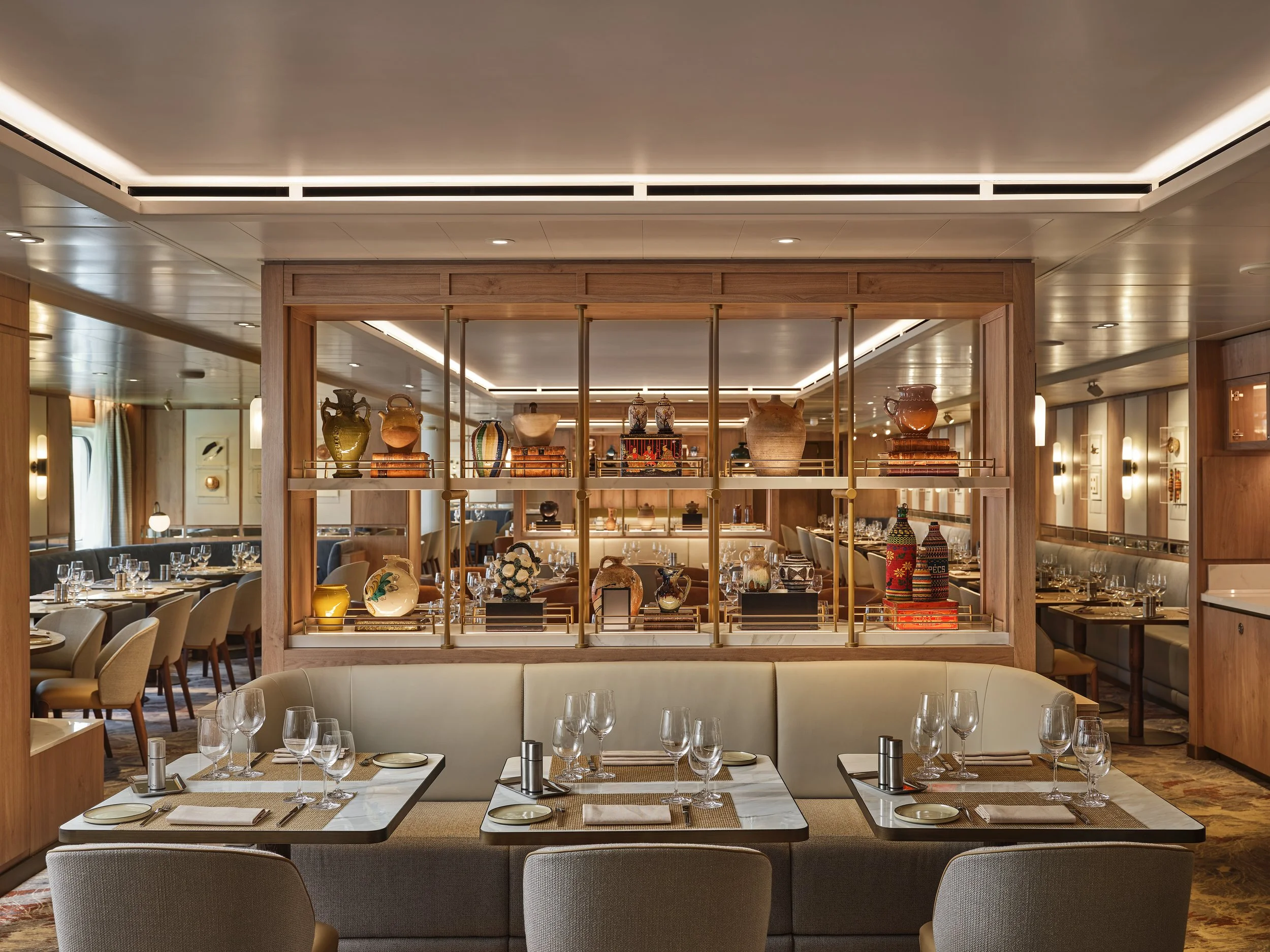
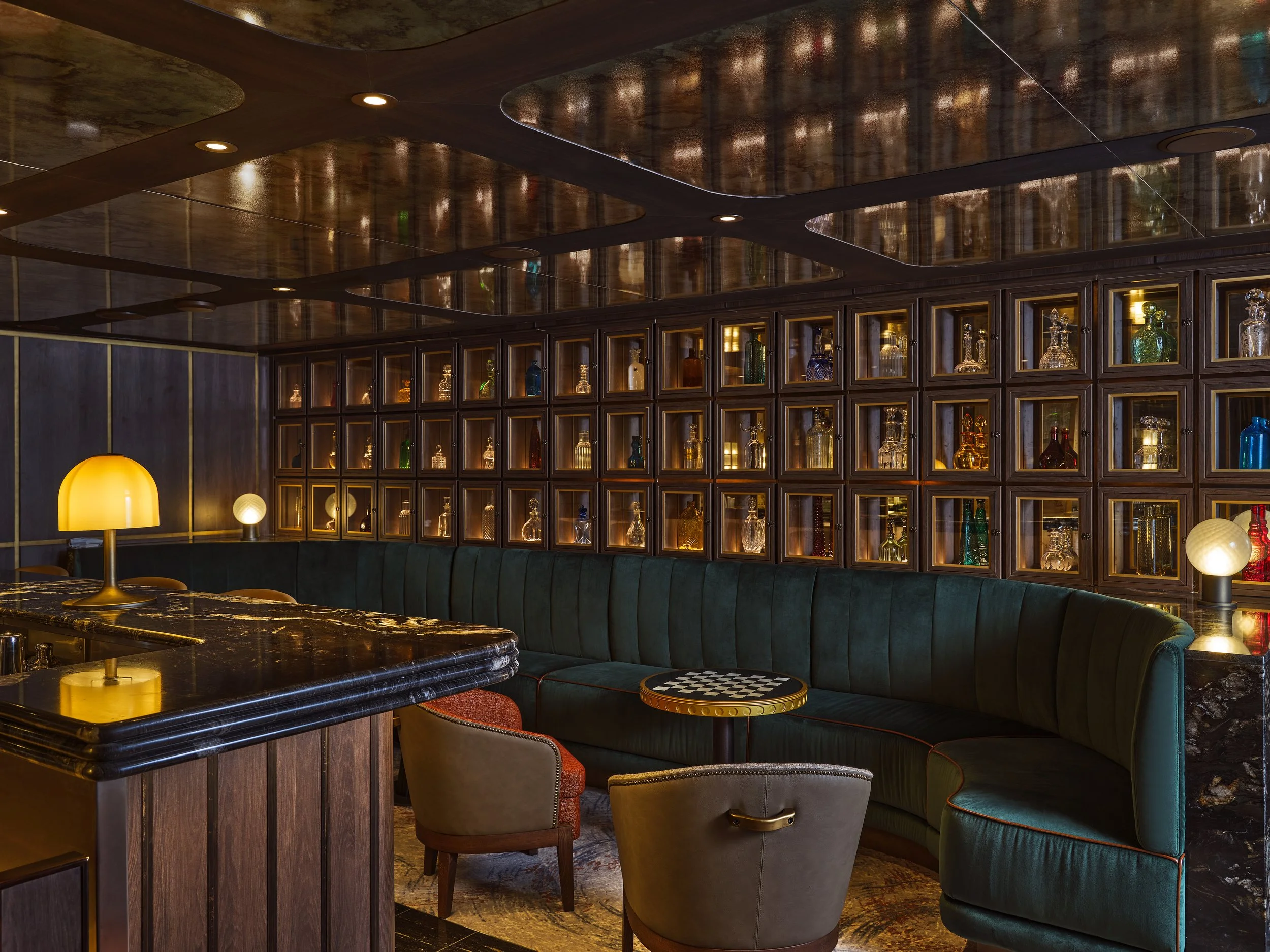
On-board experiences are varied enough that the ship becomes part of the destination. “So much to do and so many interesting people to meet,” says Catherine. “Meals are magic when dining options are so varied, with a range of included wines, notably regional varieties. Among the restaurants with exceptional cuisine and service, Silver Note was a special treat, an intimate but lively space with pianist and jazz singer. Salt Bar became a regular for cocktails and socialising with other guests. The immersive S.A.L.T. (Sea And Land Taste) destination based culinary programme is a feature I enjoyed on Silver Moon.”
Daily activities range from entertainment and lectures linked to ports of call to time in the pool, on deck, at the gym or in the spa.
The world is your oyster
Silversea’s 12 ships sail to more than 900 destinations worldwide, from Northern Europe’s Baltic and the Mediterranean to Asia, Alaska and closer-to-home itineraries around New Zealand and Australia. Expedition voyages to Antarctica and the Arctic add another layer for those seeking something more remote.
“There’s a reason so many overseas tourists cruise New Zealand and Australia,” Catherine points out. “Arriving in Melbourne by sea was spectacular.”
“Experiencing a Silversea cruise for myself exceeded my already high expectations. What a wonderful way to see the world.”
INTO UNCHARTED WATERS
While making Aotearoa’s coastline and seabeds safer for all, Discovery Marine has also taken a novel and highly commendable approach to encouraging young people into the industry. Company CEO Declan Stubbing explains all to UNO.
While making Aotearoa’s coastline and seabeds safer for all, Discovery Marine has also taken a novel and highly commendable approach to encouraging young people into the industry. Company CEO Declan Stubbing explains all to UNO.
PHOTOS KATIE COX + SUPPLIED
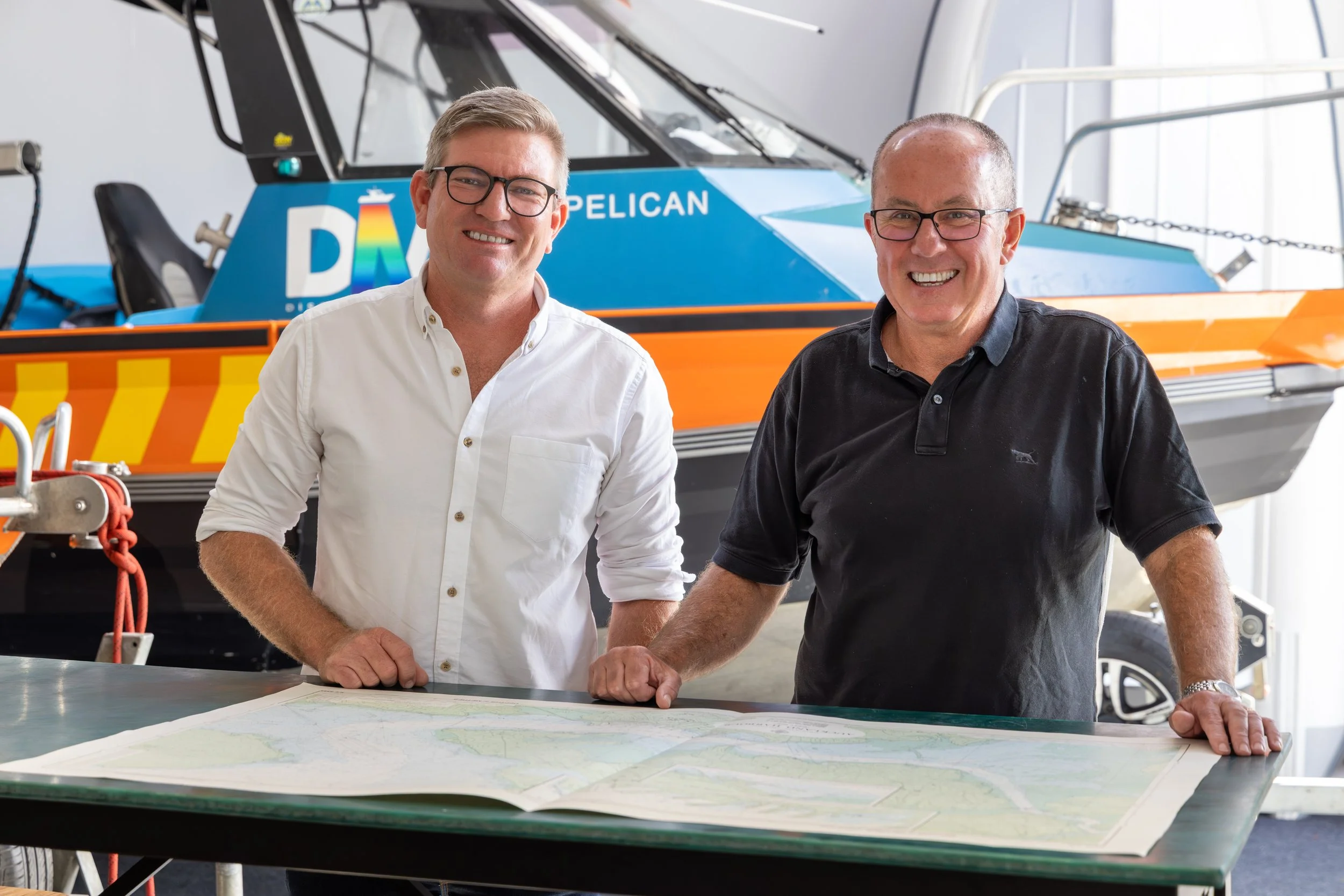
CEO Declan Stubbing and CCO Kevin Smith.
It’s hard to believe, but as a species, we’ve mapped the surfaces of the moon and Mars in higher resolution than much of our own seafloor. It’s estimated that around 75 percent of the world’s seabed remains a mystery.
But that is changing. Discovery Marine (DML), a company based in Mount Maunganui, is charting and surveying the seabed not just in Aotearoa, but also in Australia and the Pacific, in great detail, using high-definition 3D technology.
“There are a few uncharted areas remaining on the New Zealand coastline,” Declan Subbing says. “The Wairarapa coast is one area that is largely unsurveyed, and we currently have a team down in Moeraki, near Otago mapping an uncharted area.”
Declan is the CEO of DML, whose core business is hydrographic surveying and mapping the seafloor. To perform this technical and demanding work, their boats are equipped with state-of-the-art sonar systems that produce 3D data. This data accurately paints a picture of the seafloor, right down to the pebble.
“It essentially visualises the whole seabed,” Declan explains. “We’re able to make sure we’ve got every rock, every pebble, positioned and that everything is mapped accurately.”
This is important information for a range of industries. Part of their work is updating the nautical charts for the New Zealand Hydrographic Authority at Land Information New Zealand. These charts are relied upon by various seafaring businesses. There are some areas that were surveyed over 50 years ago using equipment that Declan describes as “similar to a fish finder”.
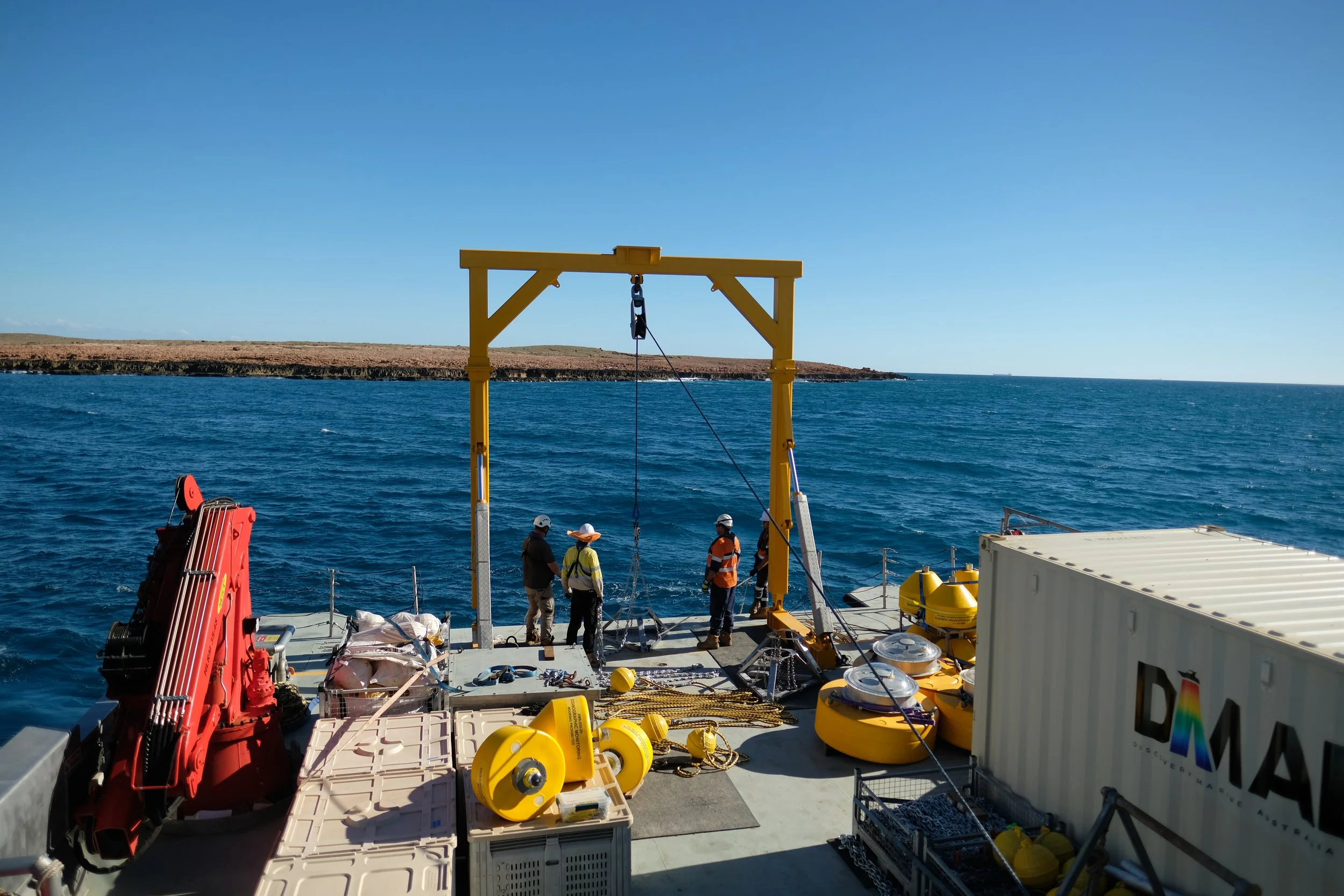
The team deploying hydrographic equipment in Western Australia.
“We’re tasked with surveying the high-risk areas where there's a lot of shipping traffic, using our modern 3D multi-beam echo sounders to update those charts,” Declan says. “There are changes to the coastline and rocks or other hazards that might have been missed. That does happen occasionally around New Zealand’s coastline.”
DML is also busy in and around our ports, monitoring the impact of dredging, tracking sandwaves which migrate up and down the harbour, and providing data that ensures critical clearance levels for the massive container ships that visit are maintained.
DML's work gives the ports more confidence on where and when it’s safe to navigate ships.

Sand waves mapped using 3D technology.
“We survey the harbour seabed in 3D, which gets turned into navigation products for pilots,” he adds.
Declan studied hydrography, the name given to the science of underwater surveying at University of Otago.
Shortly before graduating, Greg Cox, the founder of DML, got in touch with the School of Surveying to see if anyone there was interested in a job in hydrography. Declan was keen and became the company’s very first employee. The team now comprises 16.

Excavator lost at sea mapped using 3D technology.
DML faces a number of challenges when recruiting, because of the specialist skills required and graduates being lured overseas. Declan says they identified this as a “risk to the business growing” five years ago. To tackle the problem, they came up with an innovative solution.
“We thought ‘How are we going to be able to encourage people into hydrography?’” He says. “That’s how we came up with the concept of offering a scholarship at the School of Surveying at Otago University.”
With many of their current staff having attended the university, it was a solution that held great appeal.
“We’ve got a really strong connection there,” Declan smiles. “I really like the idea of being able to give back to the institution that gave me a lot.”
Their scholarship covers full course fees for a final year surveying student who is undertaking research connected to hydrography. It also offers them support with their research, an internship at DML, exposure to the industry and opportunities to attend conferences with the DML team. A true kick start into the industry.
Their commitment doesn’t stop there. Employees at DML are encouraged to continue developing and gain certification within the industry.

Early morning hydrographic survey operations.
“We really push the certification angle within our business. We like the idea that you’re always working towards something. It keeps people motivated and it’s great when someone’s awarded a new certification. It’s a real reason to celebrate because it's a recognition of the hard work they’ve put in.”
Just across the ditch, demand for certified hydrographic surveyors is exploding with the Government committing to a 10-year programme of nautical charting work, to which DML was appointed to a panel of suppliers.
He says it’s “enormously satisfying” work, and would encourage people to consider it as a career. “You see where your effort has gone. At the end of the day, you know you’ve contributed to improving coastal navigation and making our coastal communities safer.”
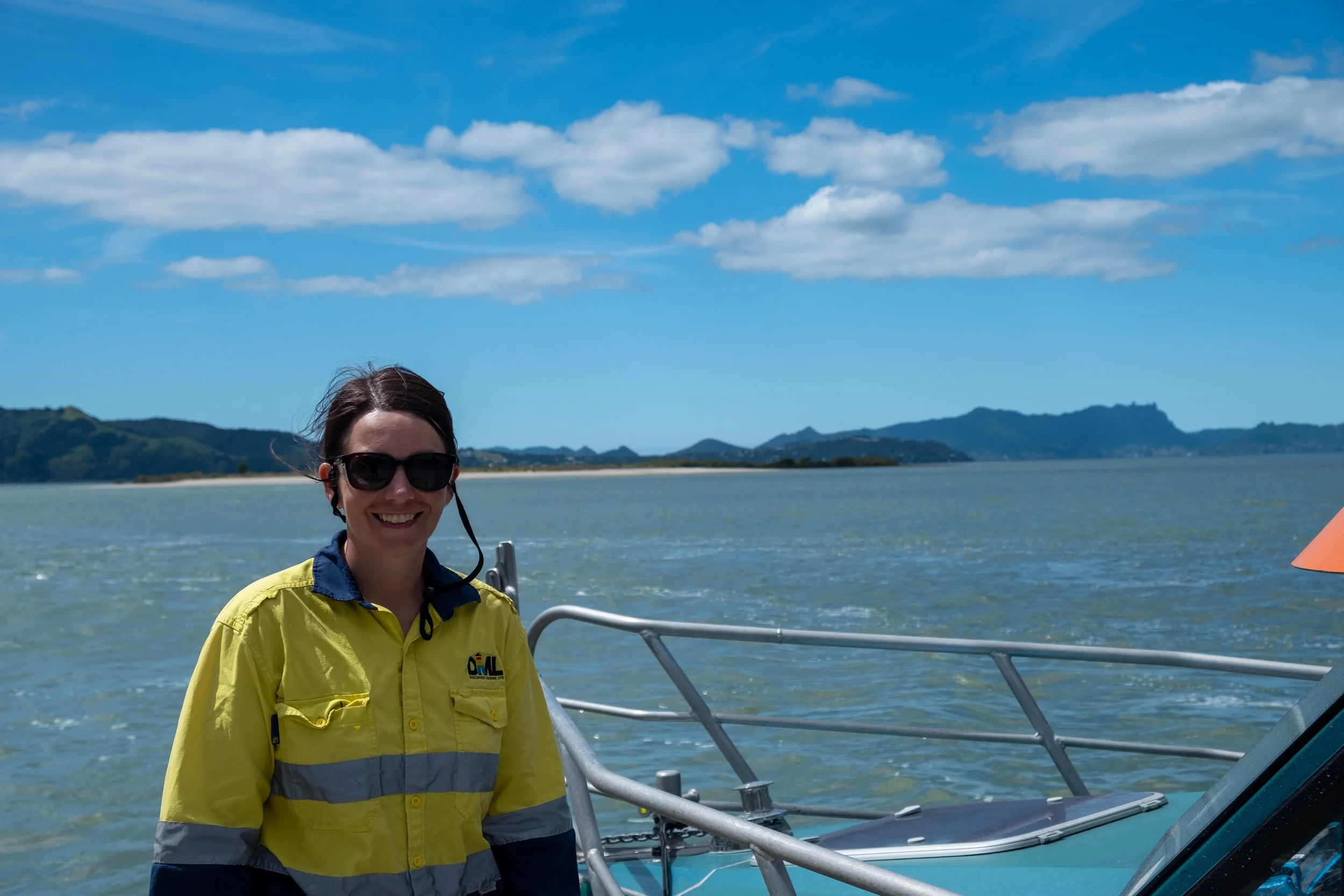
Hydrographic surveying is Kate’s ticket to the world
SEA OF POSSIBILITIES
Kate Downes, senior hydrographic surveyor at DML, swaps land for ocean depths and discovers a world of adventure.
With her interest in maths and geography, Kate Downes had been drawn to surveying as a career. But when she learned about hydrographic surveying, her plans quickly changed.
“I went along to an open day at Otago University, where they talked about surveying and explained it. I was like, ‘Yep, this is definitely what I want to do’. Then they talked about hydrographic surveying specifically, which hadn’t been well-advertised, and my ears pricked up. It sounded exciting. My family had a boat, so I was familiar with the water. It was right up my alley.”
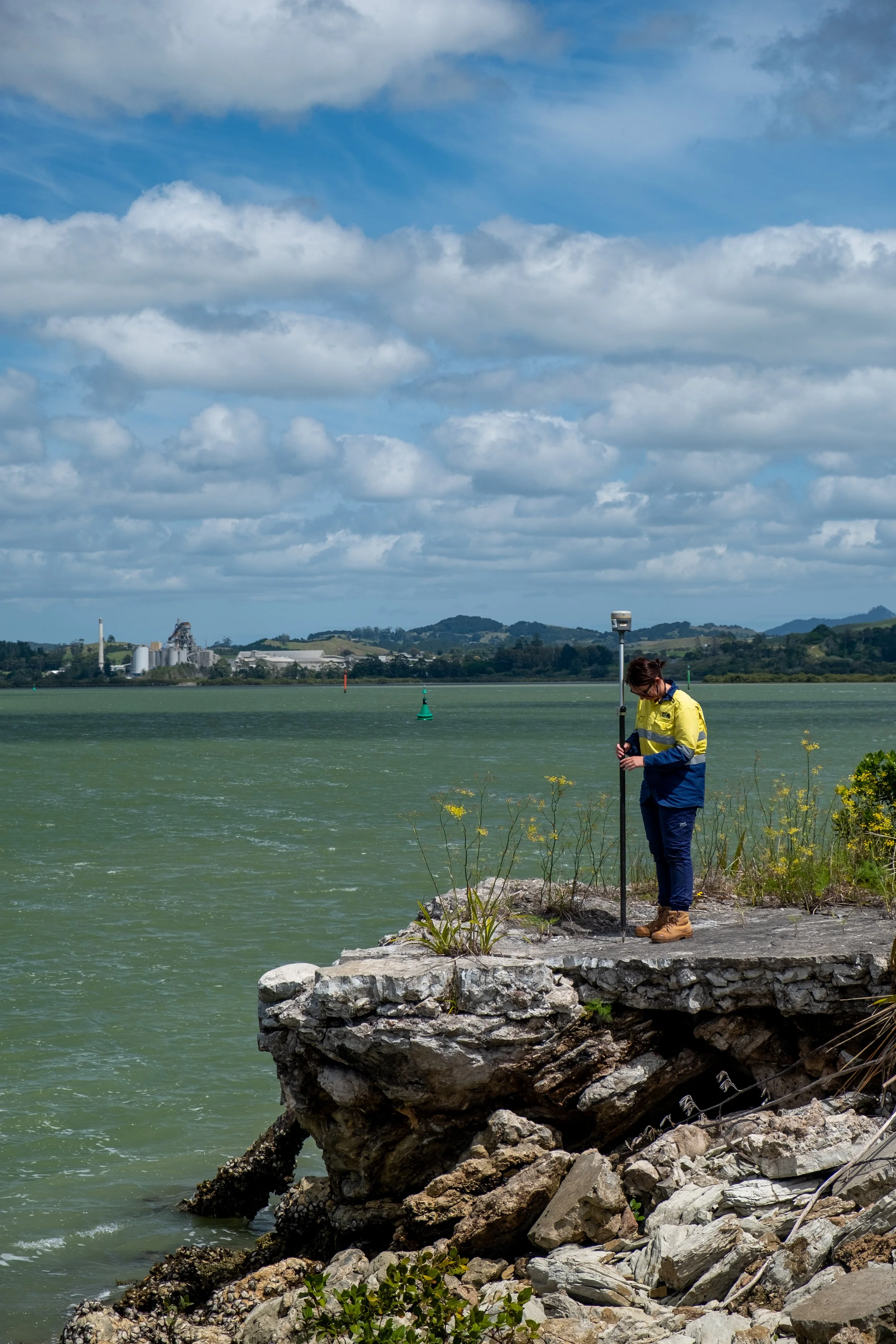
Realising hydrographic surveying could be a ticket to see the world, Kate dived in. Upon graduating, she moved to Perth to work for one of the biggest survey companies in the world. During her five-year stint, she learned as much as she could from those she worked with and “doubled down on travelling”. She’d be rostered offshore for six weeks at a time, and then have six weeks off to do whatever she wanted. Which was seeing the world.
Eventually, she decided she wanted to come back home and be closer to family.
Since joining DML, she has excelled and is one of only six women across Australasia to earn the highest level of certification in hydrography. Now, as a senior member of the DML team, she leads their major nautical charting projects for the New Zealand and Australian Governments.
“It’s always been about seeing new places. That’s one of the draw cards,” she smiles. “We’re in remote places, seeing cool things. We see whales offshore all the time. Stuff like that I’m really interested in.”
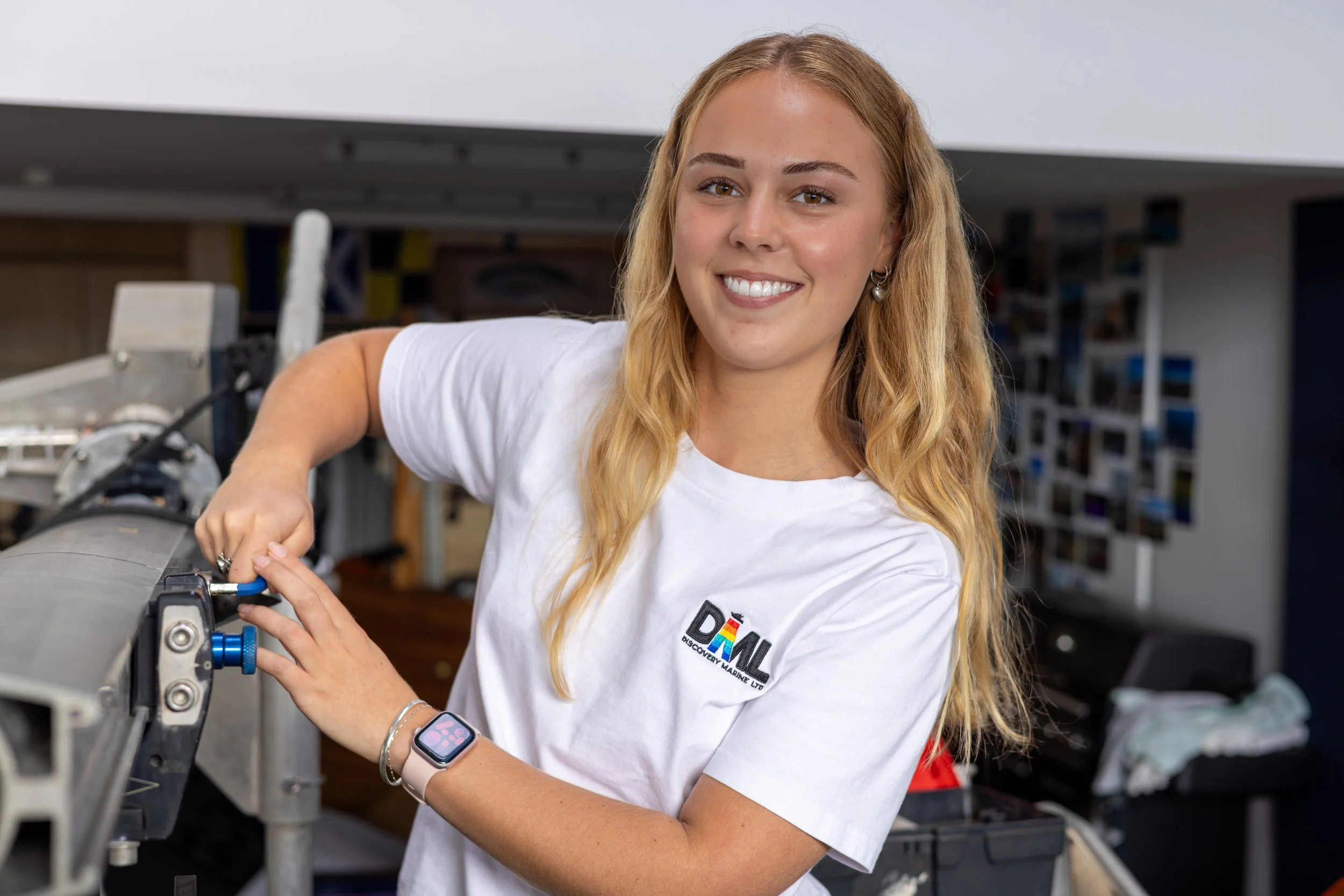
Georgia is chasing her dreams without compromising her lifestyle.
MAKING WAVES
Charting hidden coastlines, Georgia Pendred, graduate hydrographic surveyor at DML, discovers adventure and a strong sense of purpose.
It’s a rare day off the boat for Georgia Pendred when UNO calls.
“At the moment, I’m in Dunedin, Moeraki specifically, for a big three-month-ish, maybe longer job we're doing,” she says. “We towed one of our biggest boats down from the Mount, and each day we head out and do our survey.”
It’s not a bad way to spend a summer’s day. Even today, the weather is “a bit stinky”, meaning the team is staying on land. The team rotates out every two weeks, so she’ll be on the water for another week before returning to the office for two weeks, creating the perfect field to office balance.
“Travelling is a big perk, and it’s really fun,” she enthuses. “You get to see some cool locations and remote spots that not many other people would see. Parts of the Moeraki coastline, for example, hasn't been charted before.”
A Tauranga native, Georgia grew up around the water. Her family had a little boat, and they’d go out to Matakana Island for a BBQ or go biscuiting on the lakes. Even still, she didn’t realise her career would see her oceanbound. Instead, her focus was on land.
“I wanted to do environmental management. I love the sustainability side of things and protecting our earth. That's what led me to a Bachelor of Surveying at Otago University,” she explains. “Hydrographic surveying popped up as a paper that you could take as an elective. The lecturer, Emily Tidey, an industry role model, was so passionate about it and really sold it to me. I realised it was still the environment and still looking after our planet. Only on water, not land.”
She took the paper and “fell in love” with the subject. After that, she focused all her energy on hydrographic surveying.
She says it’s an ideal career for people who love the outdoors, because “you’re doing fieldwork all the time.” It would also suit people who enjoy problem-solving, as things pop up every day that need troubleshooting.
As for surveying being a math-heavy career? Georgia is happy to bust that myth.
“I suck at math,” she laughs. “I dropped out in year 11. I love literacy, history, classics and all that stuff. When deciding to do surveying, I knew math was going to be a challenge.”
She says that while the degree does get math-heavy, if you’re determined, you can get through it.
“I put my mind to it, and put my head down. I asked a lot of questions, and because we’re a tight-knit group at the School of Surveying, I had a lot of support from my lecturers and classmates. If you’re motivated, definitely give it a go,” she says. “Don’t be afraid of surveying or scared off because everyone says that it’s math-heavy.
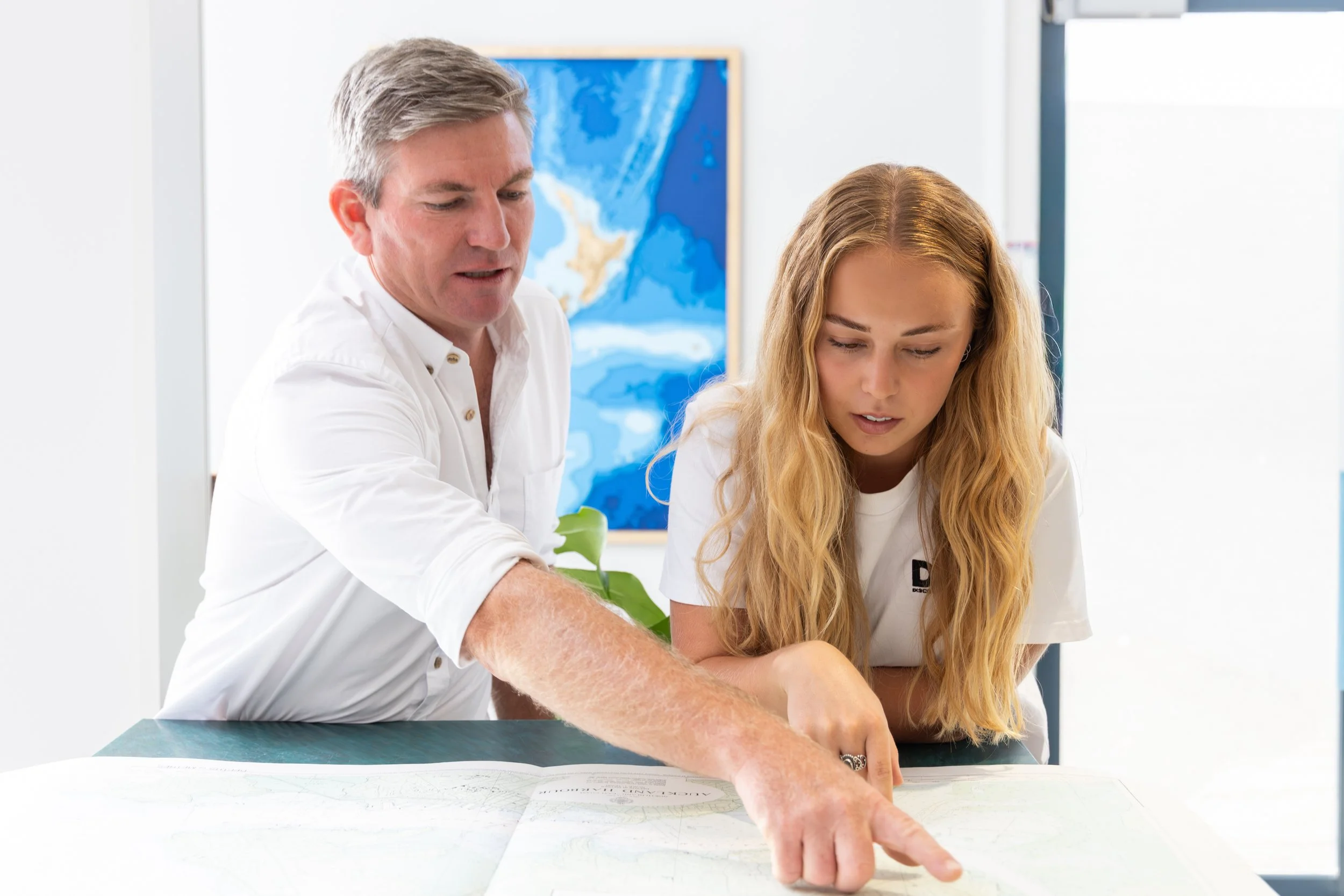
I managed to get through it, and actually came out the other end with the math papers being my highest subjects!”
While at university, Georgia was awarded the DML scholarship for her final year where she completed an Honors research project. This enabled her to gain insight into the industry and complete an internship before accepting a graduate role at DML.
She’s already taking advantage of the opportunities to progress towards certification. “I’m starting to chip away at that,” she says.
Talking with her, it’s clear how passionate she is about her work, and the impact it has on the environment. She’d love to see more women taking it up.
“There aren’t many women in surveying in general, and then it gets even more niche when you go into hydro,” she says. “But it’s definitely changing, and DML is representing that really well. It's really cool to know we’re part of a new generation that's changing things. I'd like to keep that going. DMLSURVEYS.CO.NZ
CUTTING EDGE
For 30 years, ADO Hair salon in Tauranga has put the luxe into locks.
For 30 years, ADO Hair Salon in Tauranga has put the luxe into locks.
WORDS NICKY ADAMS | PHOTOS SALINA GALVAN
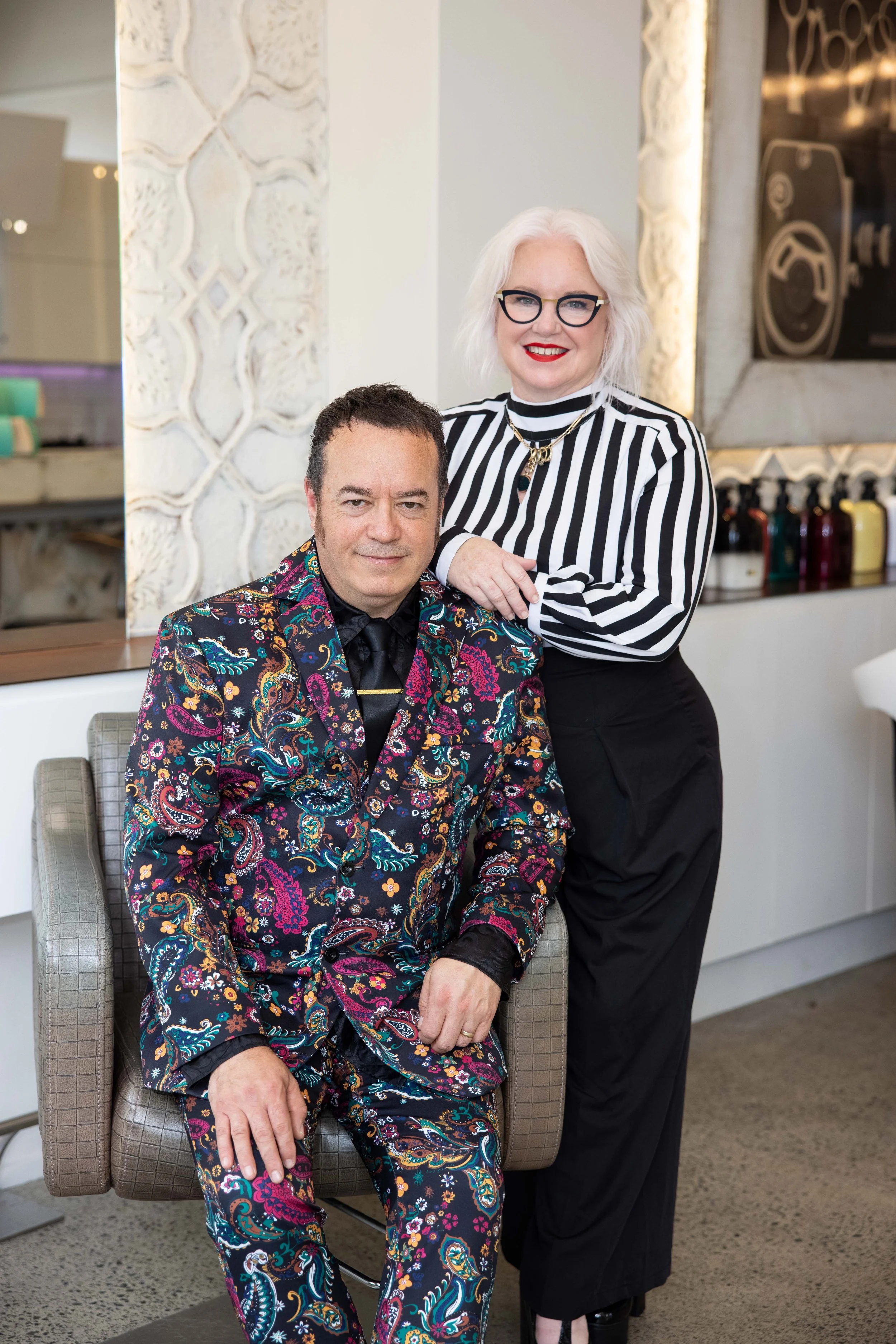
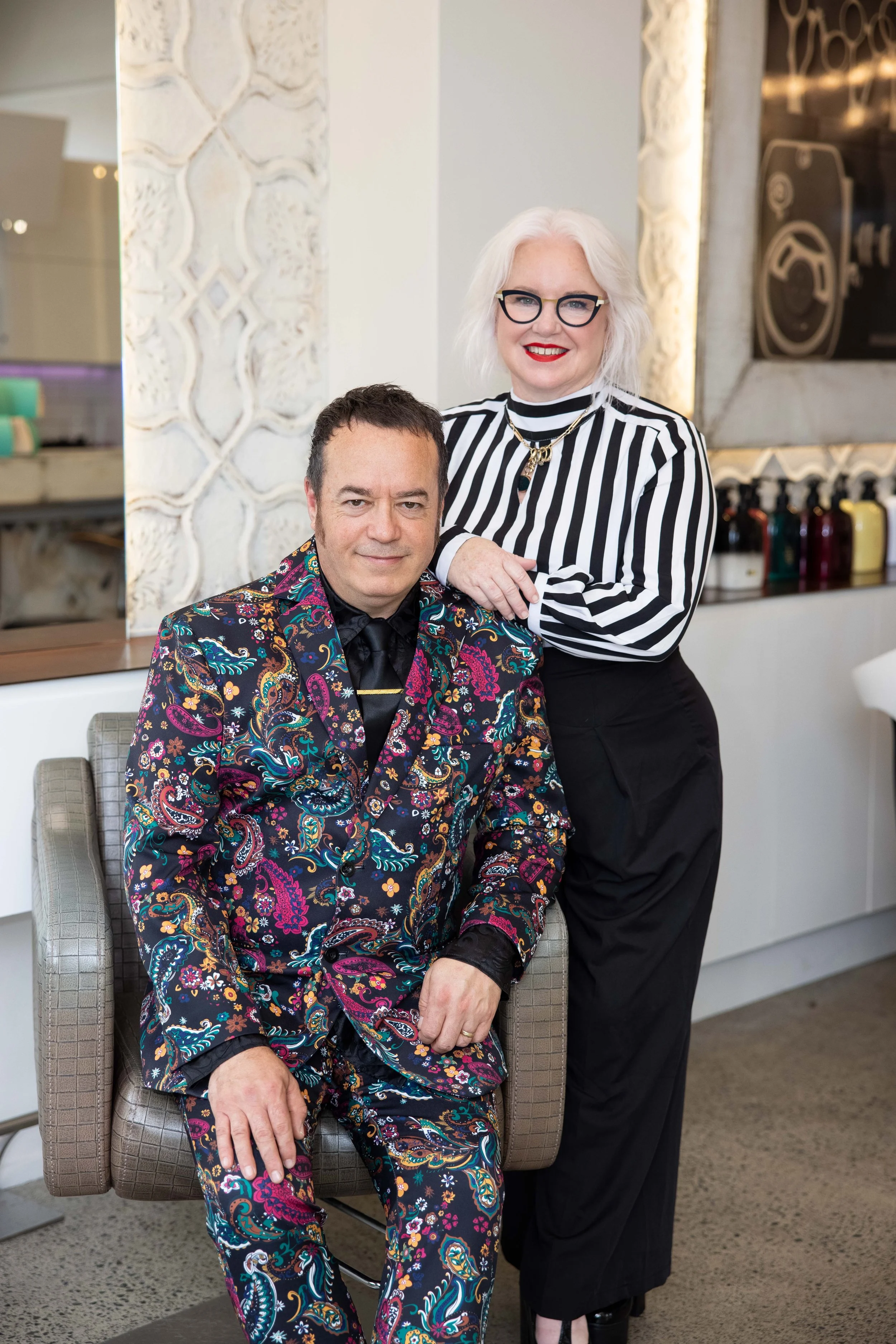
Everything about Jason and Penny Davies screams creative. The husband-and-wife team and owners of ADO Hair Salon are lively, animated and above all incredibly knowledgeable about the industry. This year they celebrate 30 years together as both salon owners and in marriage, with 2026 looking to be a year filled with new projects and professional goals.
Achieving this kind of longevity as business owners is no mean feat, yet both Penny and Jason fizz with excitement about the journey so far and the road ahead.
They met, Jason tells me, in 1993. By 1996 they were married and had purchased the business from Jason’s previous boss, when they rebranded to ADO.
Even as young professionals they thrived on the energy of Tauranga. “We’ve always loved Tauranga as a base,” says Penny. Adds Jason, “At the time, our main supplier was L’Oreal Professional and so they were able to offer a lot of opportunities - that connection in Paris was really important. Having the infusion of international trends coming through was vital to our business growth.”
By the early 2000s, L’Oreal Professional strengthened the relationship further by recognising the talent of the team, selecting Jason to go to Paris, which was, he says, “a very humbling experience, but one which really opened our eyes up to the possibilities.”
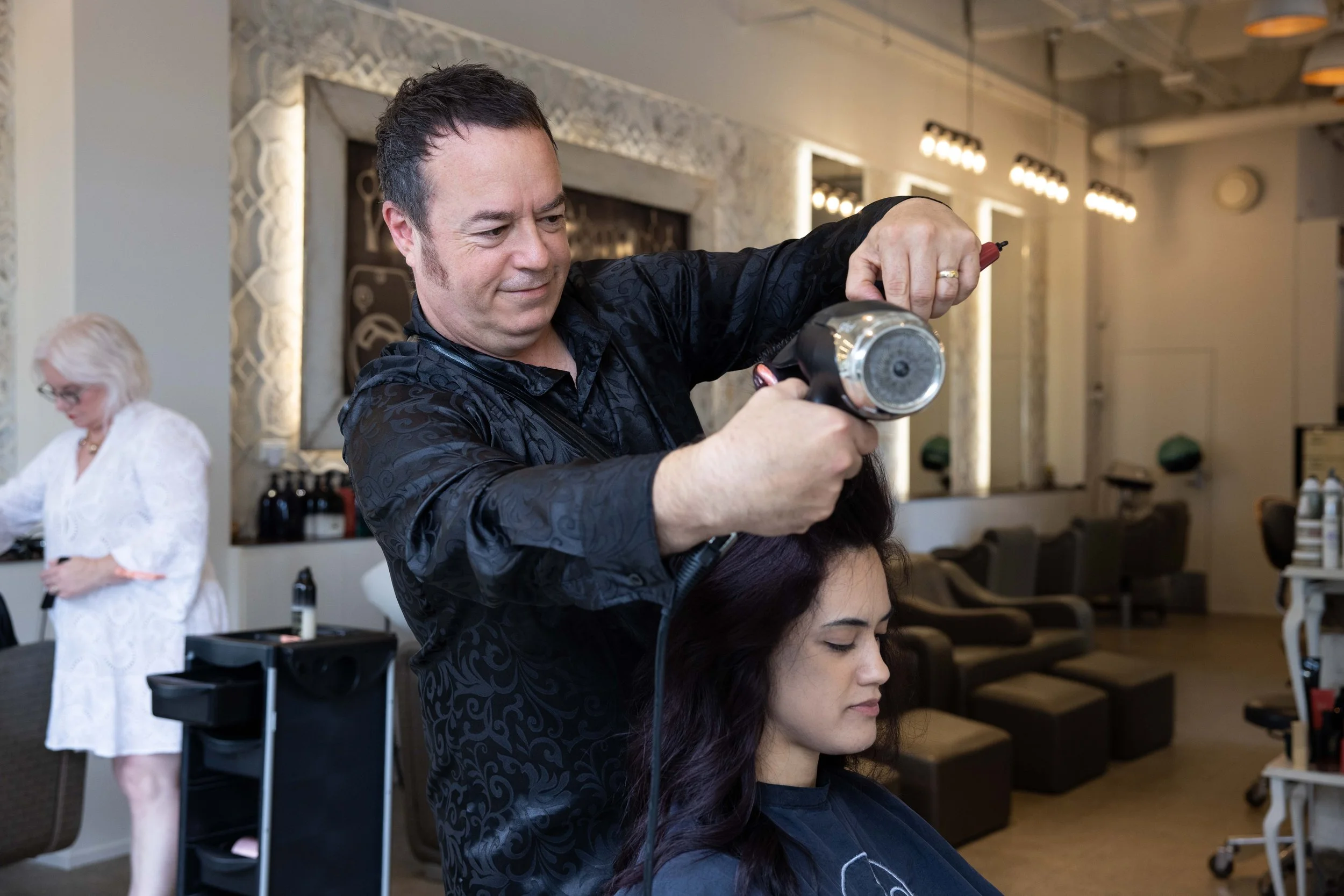
This dynamic was stepped up further when Jason was chosen as an educator (a position he retained for 11 years), meaning he has been instrumental in bringing innovative styles, techniques and technology from the heart of the industry in Europe back to New Zealand.
Despite both being ridiculously creative, Penny and Jason together drill into the different business aspects of the salon. They then come together, constantly inspiring each other with their love of the craft. They are generous with their talents, sharing them with the community. If you’ve ever been to a local event with mind-blowing hair or props, from dance shows to Tarnished Frocks and Divas, you can be sure this couple is behind the scenes.
But the ability to harness the crazy and streamline their trade has been a big part of their 30 years in the industry. As Jason explains, “There’s a symbiotic nature to it, with the artistry supporting the business, but the business simultaneously supporting the creativity.”
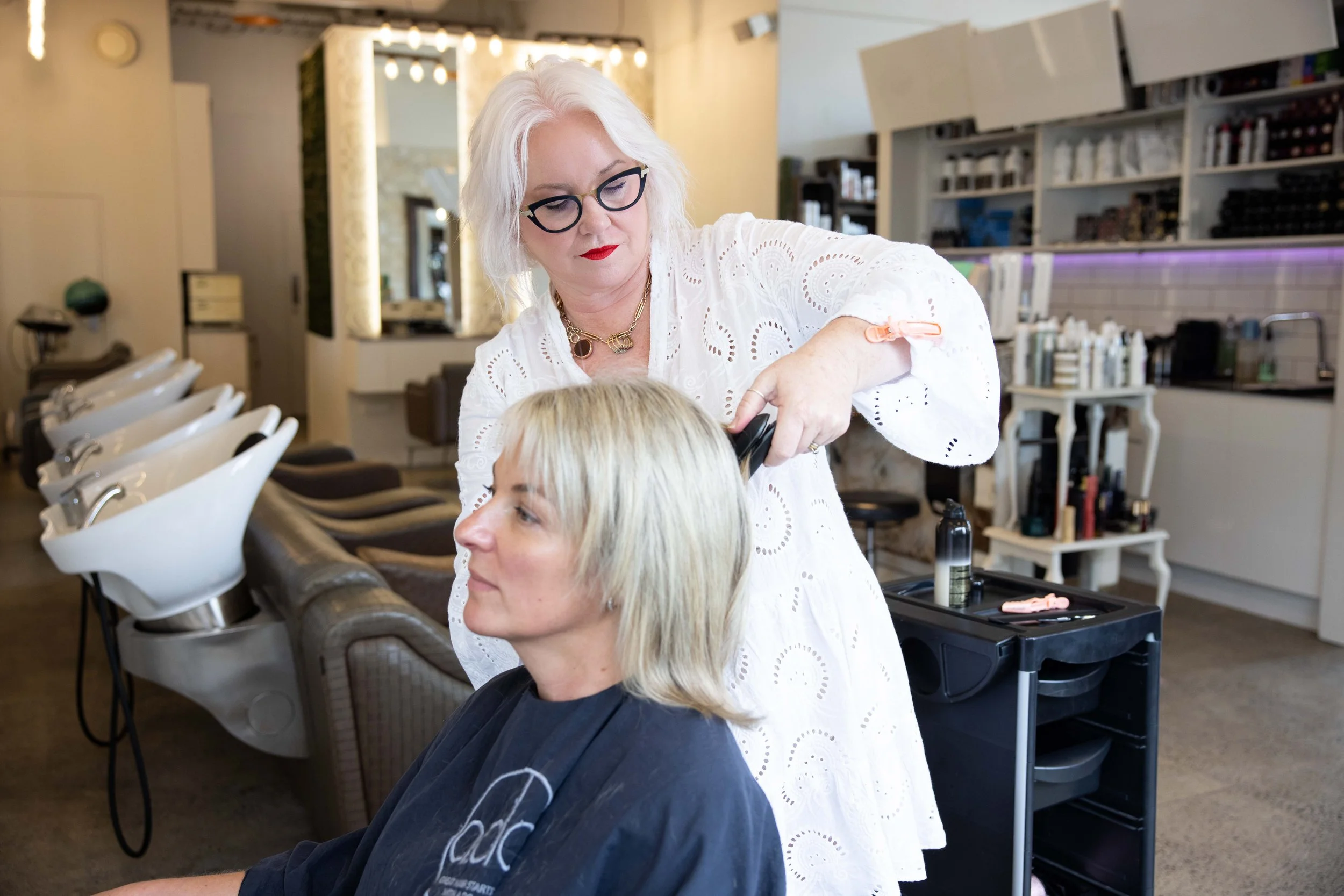
With hair one of the most trend-led aspects of an individual’s experience, it’s exciting to know that the salon is not just following but leading with flair. Along with the consumer accessible styles, Jason says, “we can also turn our hand to the zanier looks.”
Penny and Jason have always prided themselves on their fusion of different methodologies; they bring in the cleaner cuts of Vidal Sassoon, but equally will work to the softer textured styles championed by Toni & Guy. This flexibility is something they acknowledge has served them well.
When I ask what they feel their greatest achievement has been over the years, they are in accord. “Penny and I both feel it’s the way we’ve created a salon with a distinctive vision and a leading-edge team that’s endured within the industry. We’ve cultivated a longstanding clientele that’s supported us, and we’ve done it together.”
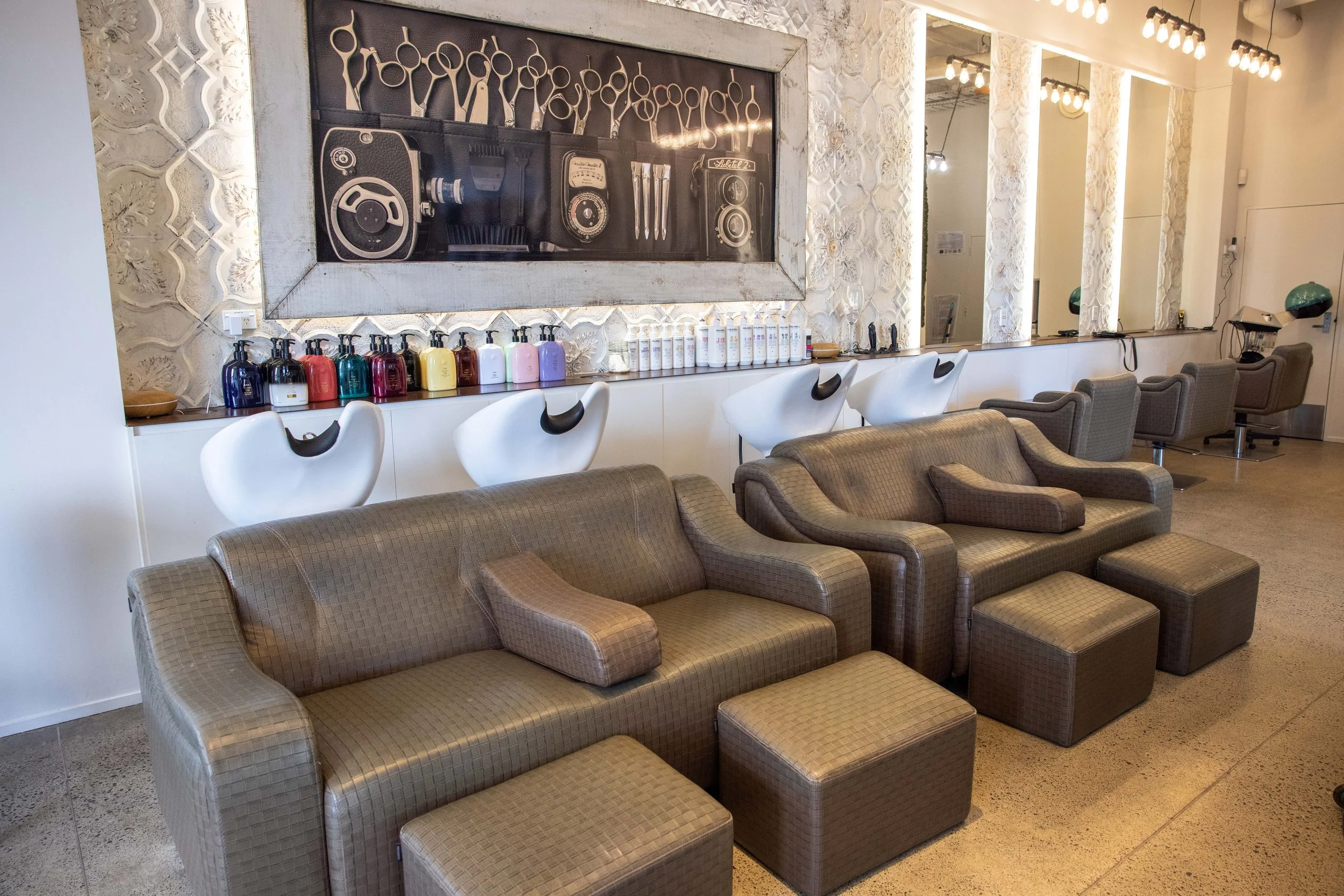
As for the ‘where to next’, the excitement is palpable. Penny is the first to let the cat out of the bag. “We’re planning a boutique training programme, where we train up new skilled stylists, taking in ten, keeping a couple and the rest will go to other salons”.
With Jason’s background in education and Penny’s passion to nurture talent, this feels like the perfect next chapter. ADO.NZ
TAKING THE REINS
At just 34, Kelly Van Dyk is taking on the male-dominated horse racing industry, and winning. She tells Karl Puschmann all about Prima Park, the world-class facility she heads and the challenges she’s faced to get to the front of the pack.
At just 34, Kelly Van Dyk is taking on the male-dominated horse racing industry, and winning. She tells Karl Puschmann all about Prima Park, the world-class facility she heads and the challenges she’s faced to get to the front of the pack. PHOTOS CHRISTINE CORNEGÉ + SUPPLIED
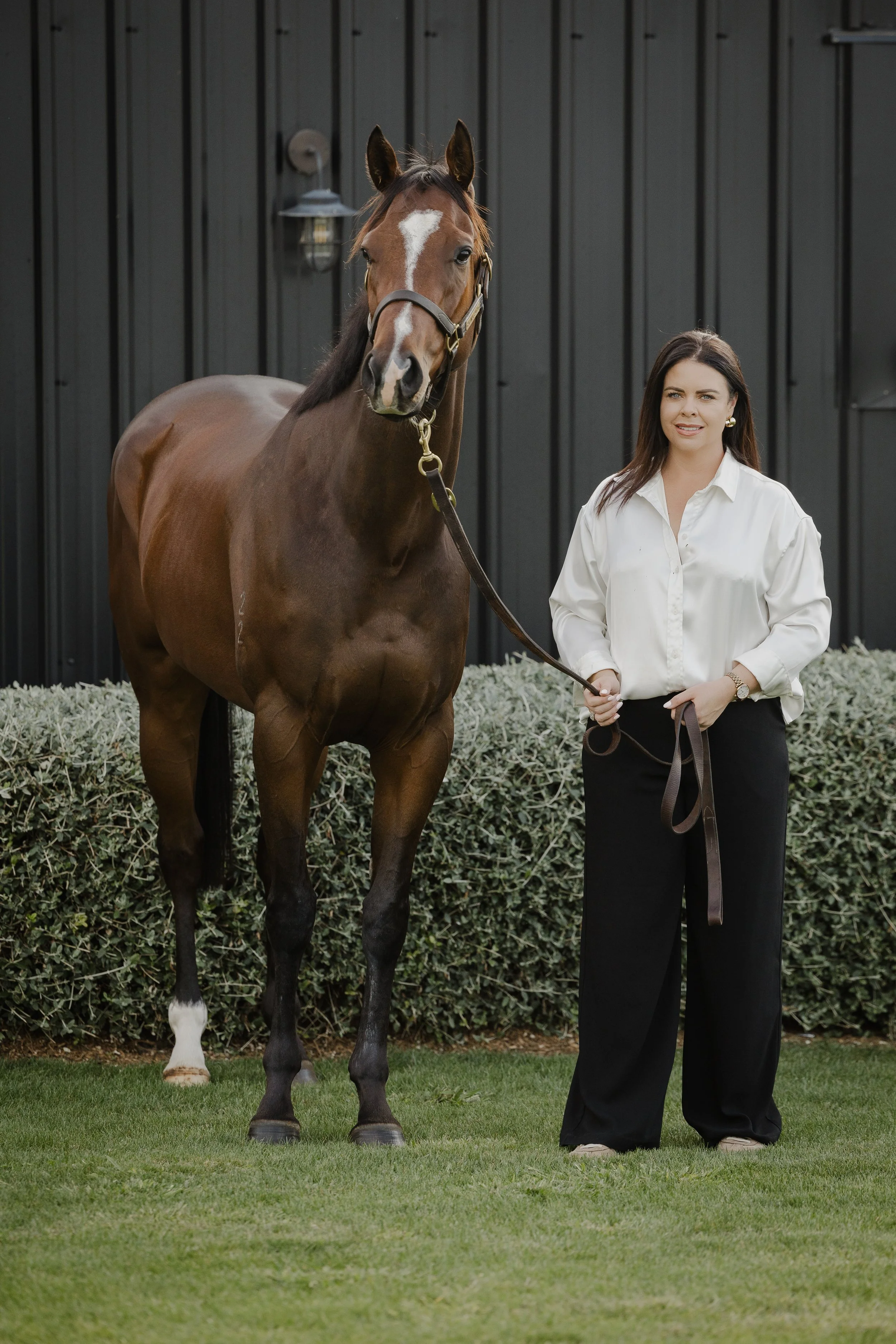
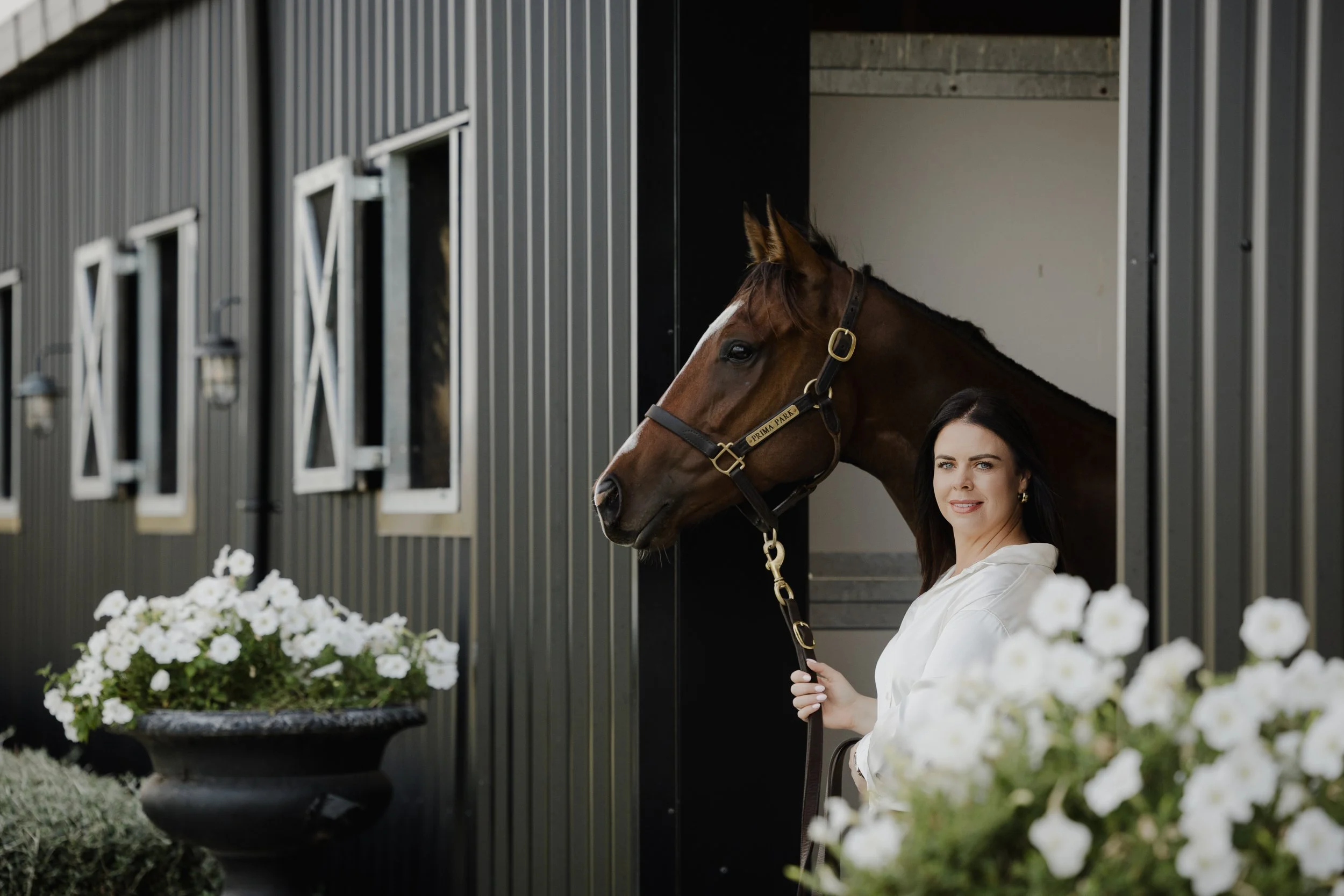
Kelly Van Dyk at Prima Park in Matamata, where she leads the next generation of thoroughbreds.
In the world of horse racing, everyone knows that bloodline is key. A horse’s pedigree reliably indicates what racing traits it will inherit and, most importantly, its champion potential. But, it turns out, you can extrapolate the bloodline theory out to the world of horse training as well.
Kelly Van Dyk is a third-generation horsewoman, a former champion equestrian and New Zealand representative, and now the head of Prima Park, the prominent, family-run thoroughbred farm and equine facility located in Matamata, the heart of New Zealand's racing country.
“My grandfather Brian trained racehorses as a hobby,” Kelly explains. “He’d take my mother, Louise, and her sister for riding lessons and decided he was going to try and train and breed racehorses himself. He was quite successful in doing that, and mum was a very successful rider herself, competing in events at a high level.”
When Kelly came along, Brian wasted no time in introducing his granddaughter to the sport.
“He bought me a pony when I was really young. I rode from when I could walk,” she says.
Brian’s plan worked. “I caught the bug,” she laughs. But, so had her whole family.
Her dad, Leighton, retired from the family business, the popular furniture chain Van Dyks Furniture, in 2010 to focus on the fillies. He bought two weanlings, foals that are six months old, intending to resell them. There was, however, a big problem.
“I was at the height of my dressage career riding in Germany, when dad rang me up and said, ‘I’ve bought these two horses. I don't really know what to do with them. You’d better come home.’”
So, she did. Kelly and her dad took those weanlings to the New Zealand Bloodstock Ready To Run Sale, sold them for a profit and then did it again. And again. And again. Eventually, she was able to leave the job she’d taken at Waikato Stud, where she’d been studiously learning the “tricks of the trade”, to work on Prima Park full time.
With Kelly’s sole focus on the business, things started to take off. They outgrew the family farm in Putararu, where they’d been since 1992, and moved to a bigger property in Mystery Creek in 2016. They wouldn’t be there long.
In 2022, Kelly took the reins, so to speak, to head the company. She expanded both Prima Park’s offerings and its premises, moving the company to its world-class 50ha facility in Matamata.

“Mum and dad were getting older and wanted to take a step back. It’s a demanding job, very physical, hands-on work,” Kelly explains. “I felt like I was just getting started. I had that hunger and drive to really sink my teeth into it. I could see the opportunity.”
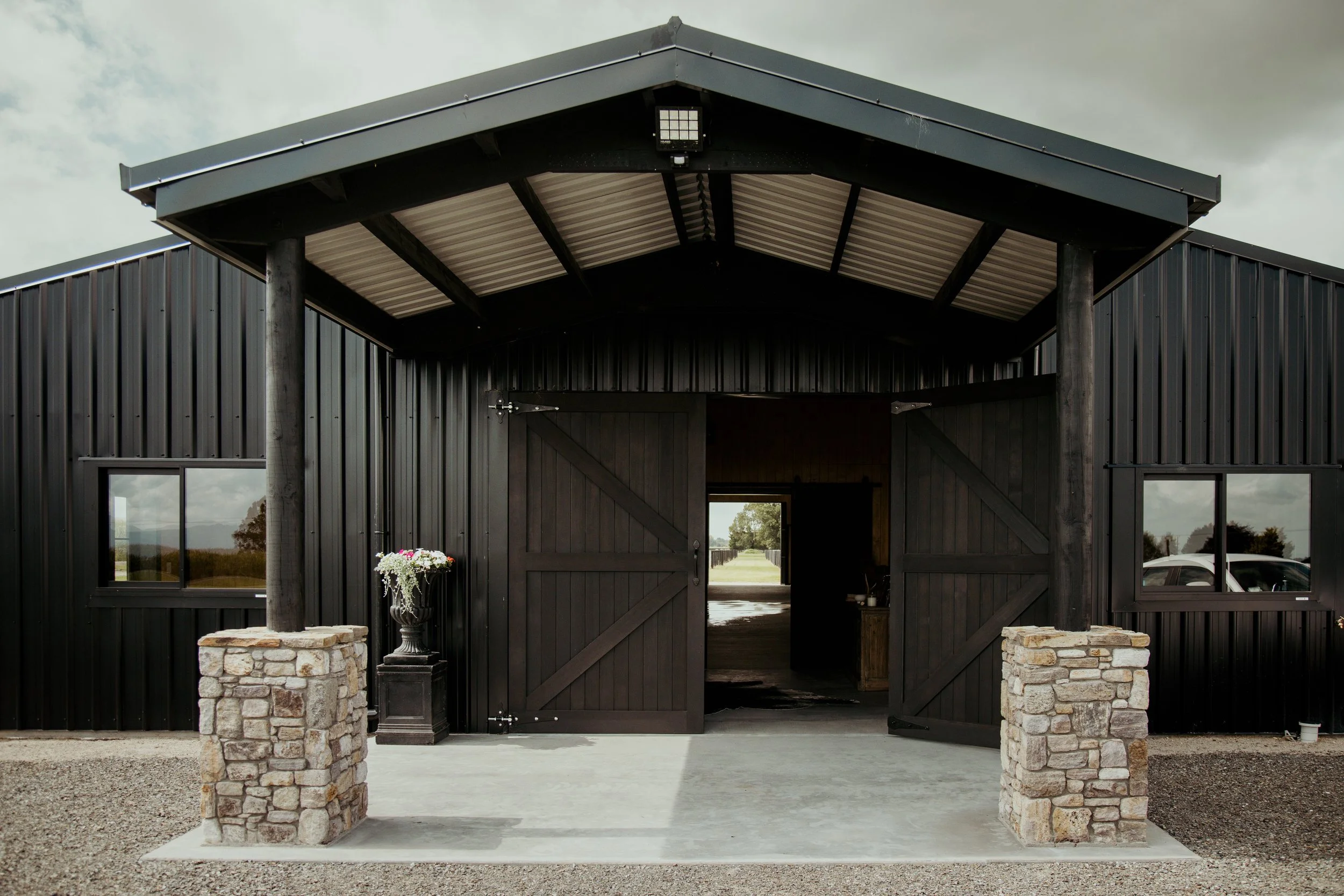
Prima Park’s business expanded to include the services it offers today, including breaking-in, pre-training, and agistment, all supported by its purpose-built equine facility, which even includes an 800-meter training track allowing specialised preparation for the yearling and Ready to Run bloodstock sales.
The success has been notable. Prima Park has graduated multiple top-tier racehorses, including Beat The Clock, a four-time Group 1 winner and Hong Kong Sprinter of the Year, and Warmonger, the 2024 Group 1 Queensland Derby winner. They’ve also won strong market recognition by consistently producing highvalue sales in the yearlings and Ready-to-Run sales. As well as the local market, Prima Park’s horses are also sold into Hong Kong, Singapore and Australia. At last year’s New Zealand Bloodstock sale, they sold 18 of their 19 horses, making them the second leading vendor by aggregate, a new milestone for the facility, and selling the second highest horse of the sale for a whopping $775,000.

What makes it all the more impressive is that Kelly is the only woman in Australasia running a facility of this scale. Something that she says hasn’t always been easy.
“It’s been hard because I’m dealing with males 24-7 in the industry,” she admits. “But I wanted to prove that women could do this and that we can do anything. I have my own goals of what I want to achieve, and just because I’m a woman, it doesn’t mean that I can’t do it.
It’s just choosing a path you want to go down and sticking to it, really.”
Another challenge is balancing her love of horses with the commercial realities of needing to sell them on. She spends months with these animals and gets to know them and their personalities intimately.
“You’ve got to separate your emotions because you form a bond with them, you love the horse, but we do need to sell them. I wouldn’t say it gets easier. It’s just part of it. But there’s satisfaction in knowing that you’ve installed a lot of groundwork that then becomes results on the track.”
“Ultimately, we want to prepare horses to go on and do great things,” she says. “That’s what we keep our focus on. It’s getting better and better every year. We’ve got some big goals, and we want to keep building and producing quality horses that win big races.”
Then, smiling, she adds, “This is just the beginning.”
WHAKATĀNE’S LAST TASTE OF SUMMER
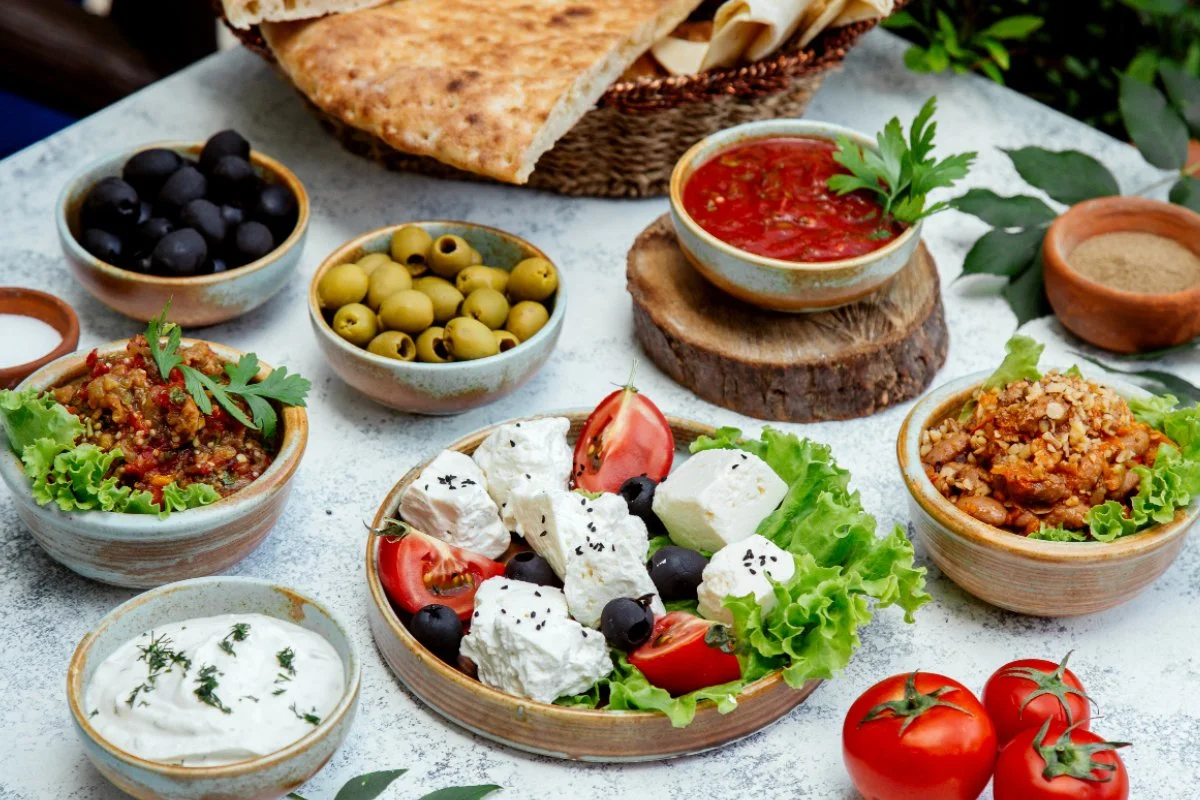
Take your pick of these tantalising ways to savour the best food in the Eastern Bay.
Take your pick of these tantalising ways to savour the best food in the Eastern Bay.
Long Lunch Italian Style
Autumn in the Eastern Bay of Plenty seems to hold onto summer that much longer. The days are warm and calm, the ocean still inviting, and the coastline feels wide open once the holiday crowds have gone. It’s a great time to plan a trip to Whakatāne and the surrounding coast, especially with plenty happening across the region.
This season, the Eastern Bay is hosting a mix of foodie events, some part of the Bay’s popular Flavours of Plenty festival, that all highlight the region’s produce, fresh seafood and generous hospitality.
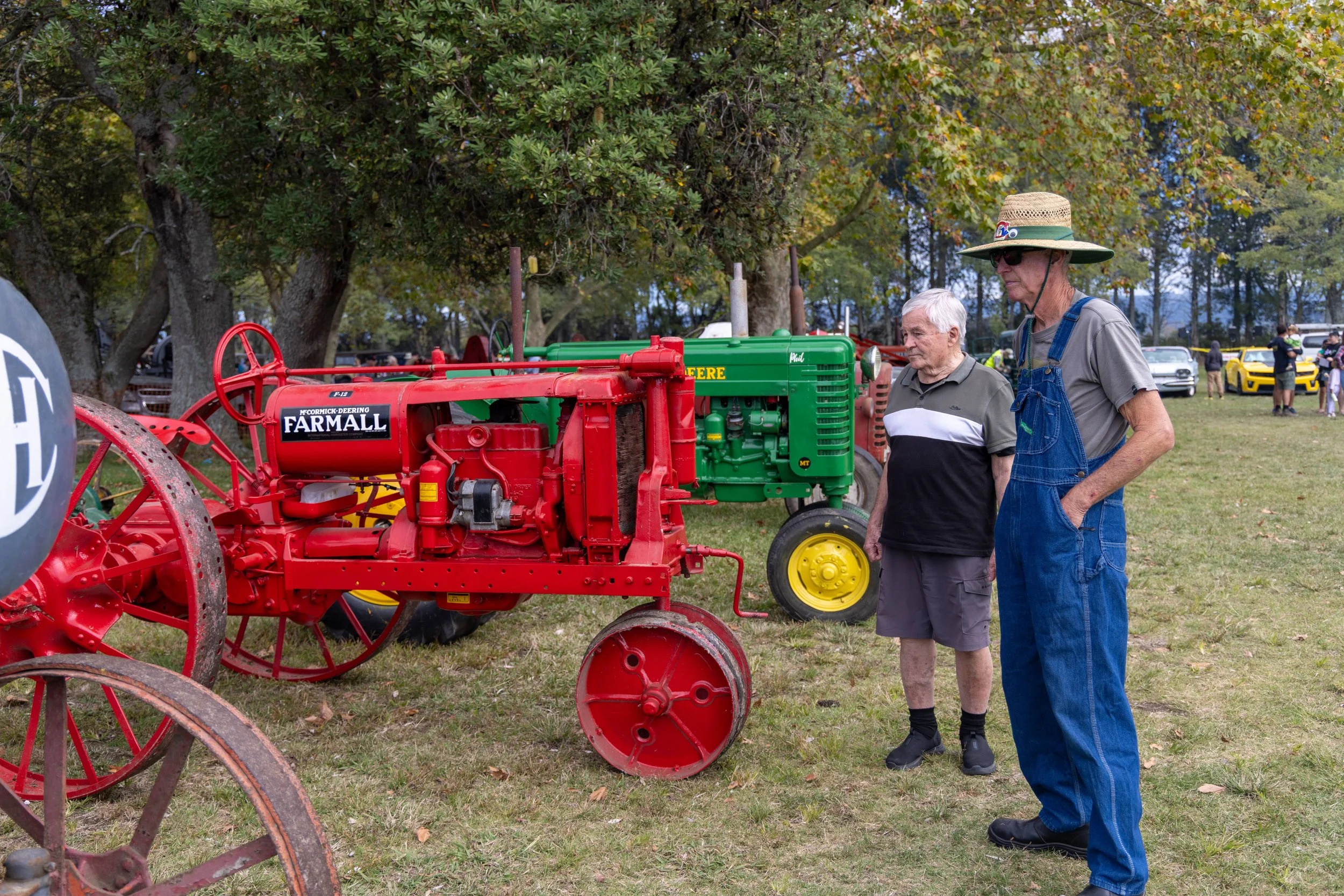
FARMING LIKE GRANDAD
April 18 — Te Teko Racecourse
While not all about food, this is one of the most-loved events on the autumn calendar. See the Clydesdale horses, sheep shearing, tractors, and farm machinery (old and new). There are wagon rides, vintage cars, exhibitions by the Axe Men, chainsaw races, farm animals, craft stalls, old-style kids’ games, food and live music - a classic country day out. Please note: due to farm animals, kindly leave dogs at home.
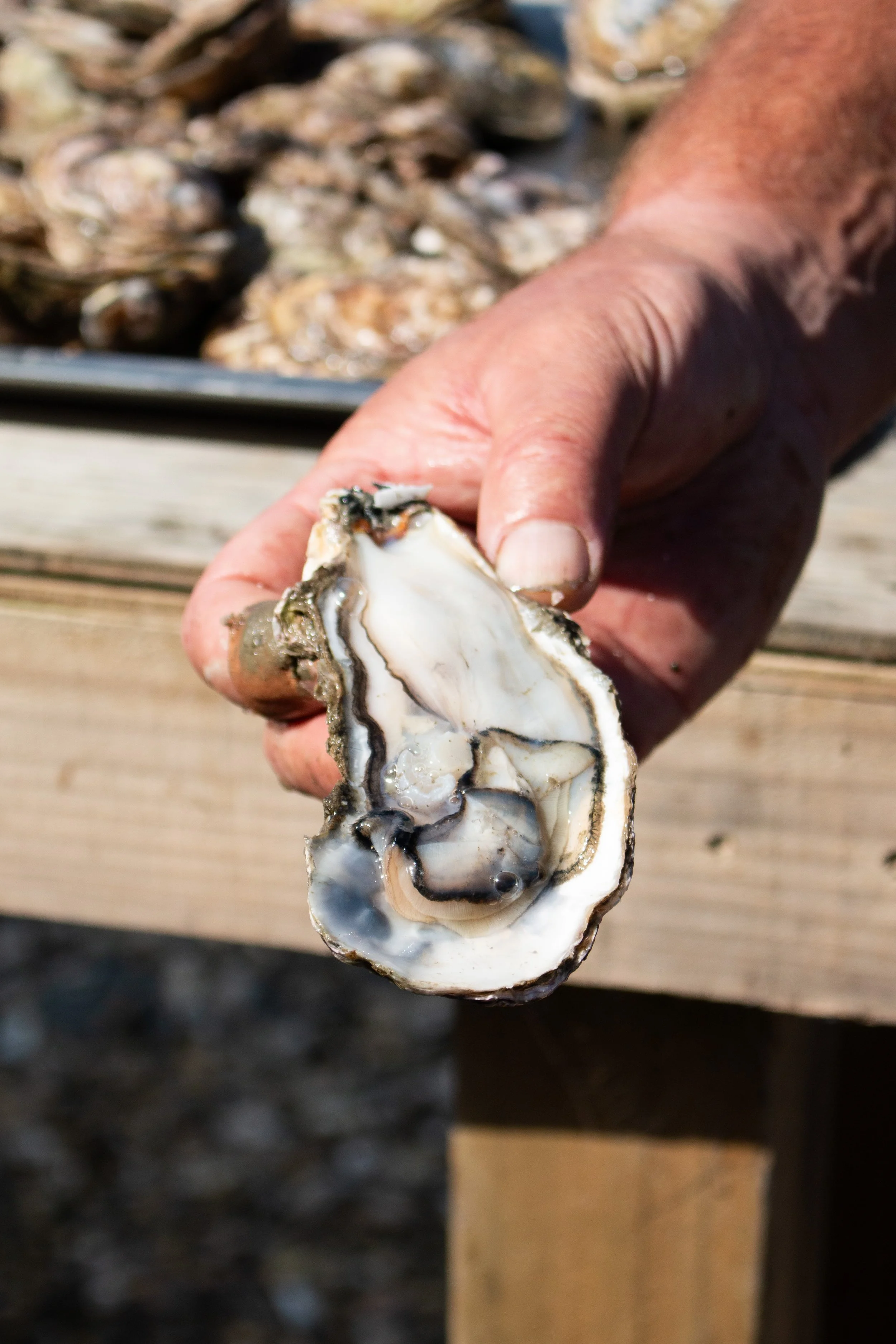
ŌHIWA OYSTER FESTIVAL
May 16 - Port Ōhope Wharf
Now in its third year, the Ōhiwa Oyster Festival returns with a day celebrating the start of the oyster season. Hosted by Tio Ōhiwa, the festival features freshly shucked oysters, seafood vendors from around Aotearoa, chef demonstrations, live music, markets and competitions, all set against the harbour backdrop at Port Ōhope Wharf. Tickets include entry and access to entertainment, activities and oyster stations throughout the day.

SHUCKED & POURED: ŌHIWA OYSTERS X MATA BEER
April 17 — Mata Brewery
A guided tasting that pairs freshly shucked Tio Ōhiwa oysters with a curated selection of Mata beers. Explore how different beer styles complement the briny character of the oysters, including a signature “oyster shooter”.
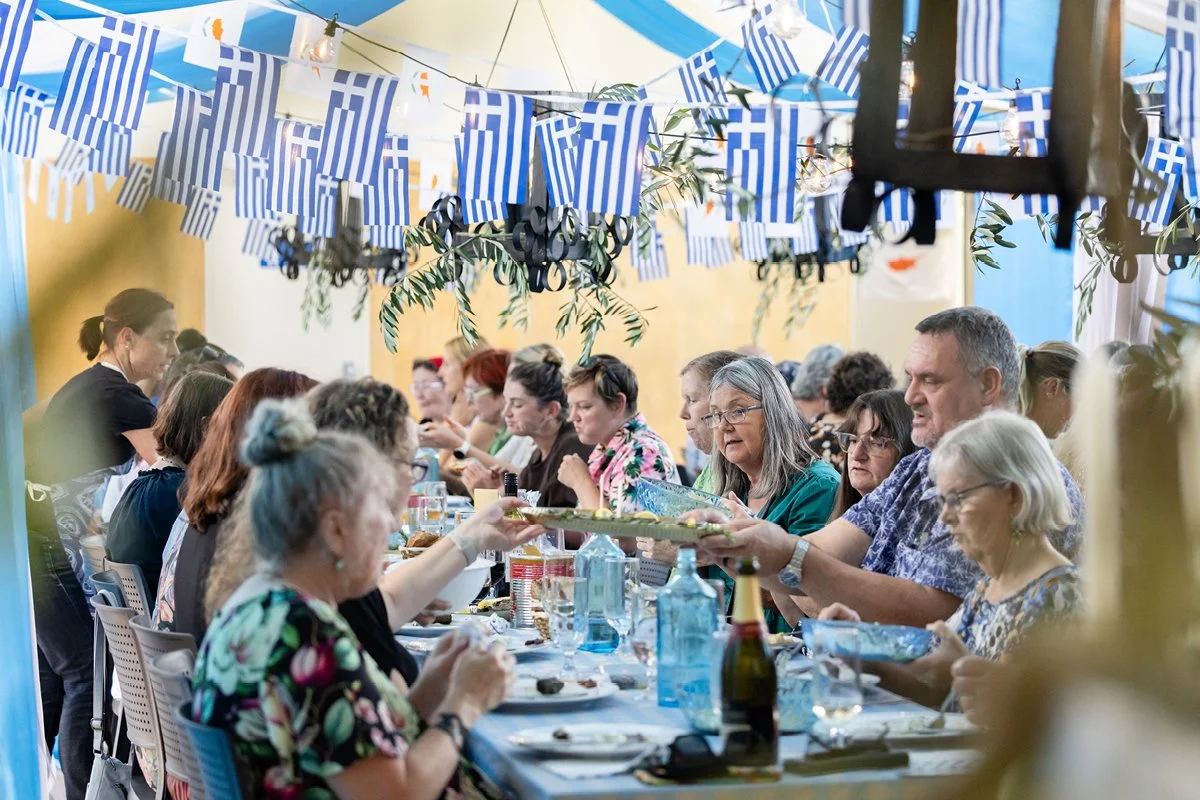
THE BIG FAT GREEK CYPRIOT LUNCH
April 18 - Awakaponga Community Hall
An instant sell-out in 2025, this lively event returns with a generous Greek Cypriot feast served meze-style, alongside music and plenty of convivial atmosphere.
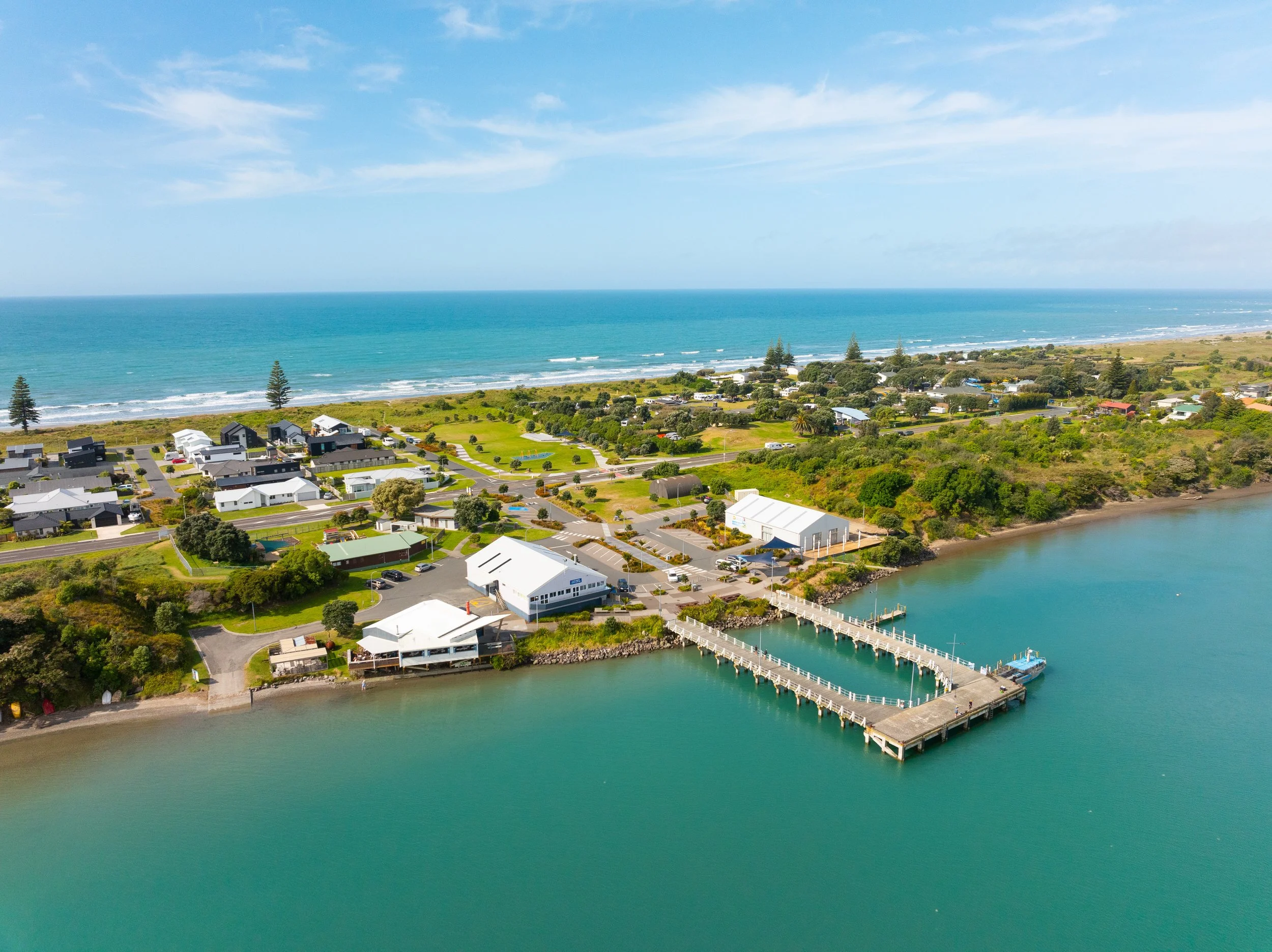
SMOKE ON THE WATER
April 19 - Fisherman’s Wharf
Join Fisherman’s Wharf for a spectacular evening celebrating the craft of open-fire cooking. Enjoy a smoky four-course dinner, paired with drinks, and cooked entirely over live flames by renowned chef Paul Patterson.
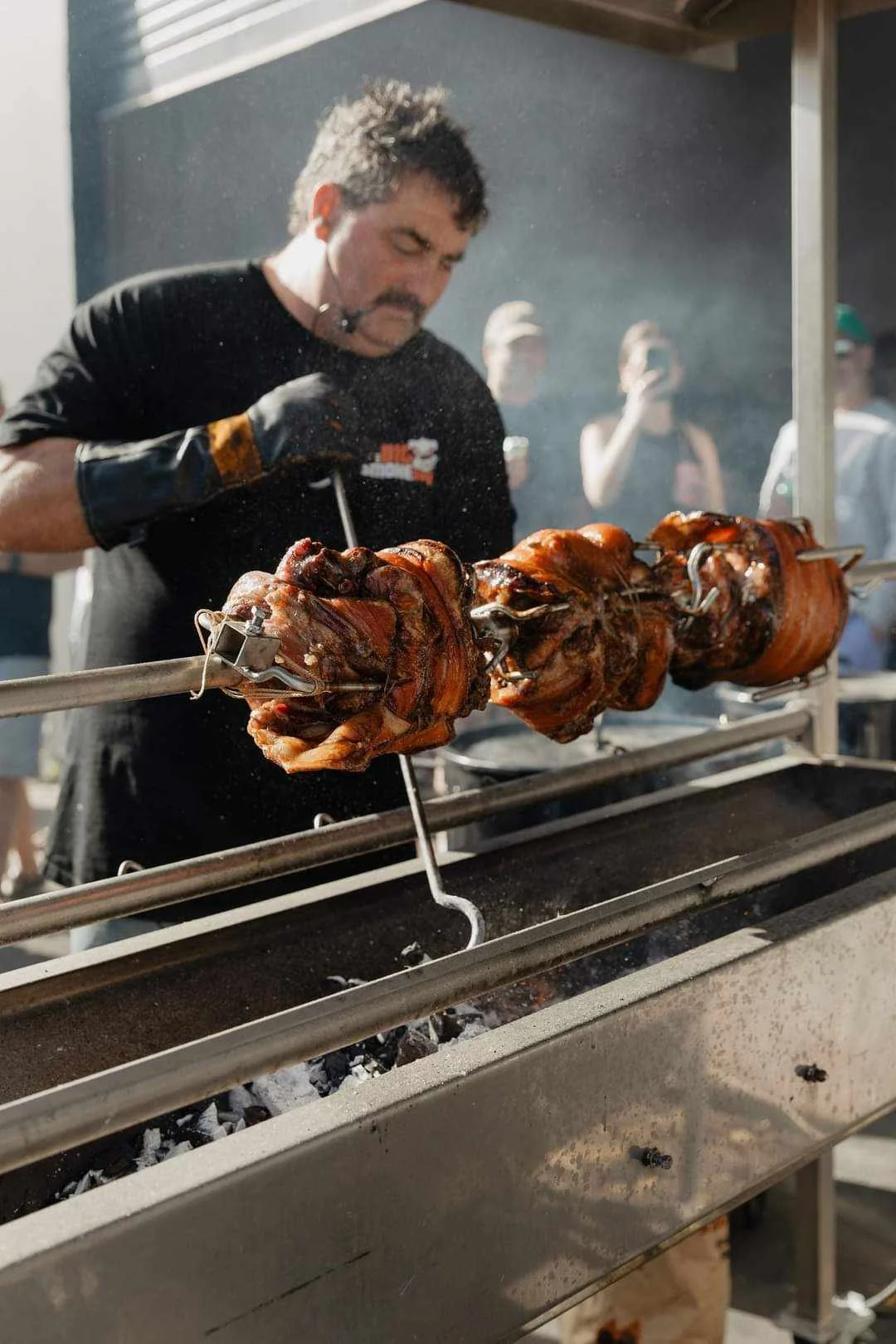
SMOKE, FIRE & BBQ
April 25 - The Run 15
Celebrate the fundamentals of flavour with a campfire feast under the stars. Go off-grid for a one-night-only farm dining experience featuring generous barbecue, tips and tricks from the pit, and optional hands-on moments - all enjoyed fireside beneath clear country skies.
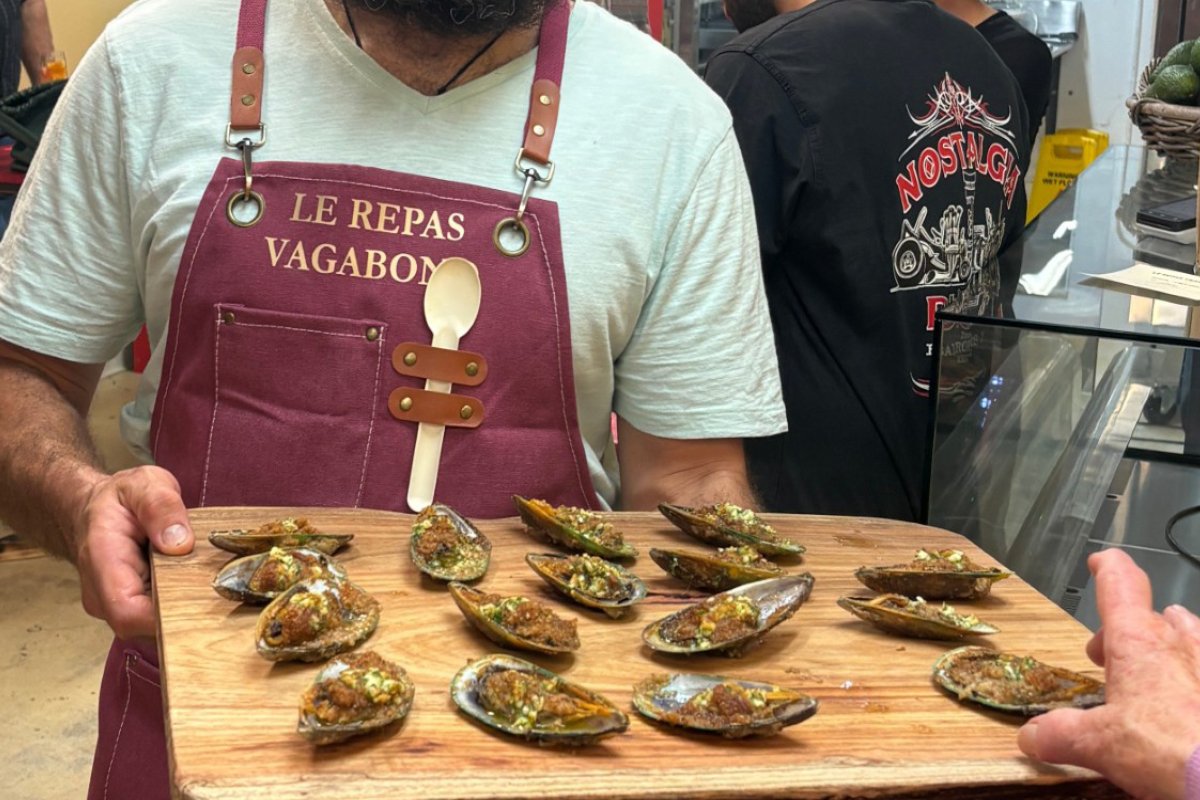
LE REPAS VAGABOND
April 25 — Waingarara Valley
A 12-course wandering meal of chef-led surprises inspired by Spanish, French, and Mediterranean flavours. This roaming feast promises creativity, generous flavour and plenty of surprises along the way. Bon Appétit. Sahten. Buen provecho.
MORE TO TICKLE THE TASTEBUDS MYSTERY FOOD TOUR
April 18 — Whakatāne
ALL YOU CAN EAT TACO NIGHT
April 22 & 29 - Cadera
NOSE TO TAIL BBQ FEAST
May 1 - The Smokin’ Goose
APPRENDRE PIZZA + CROISSANT
May 2 - L’Atelier
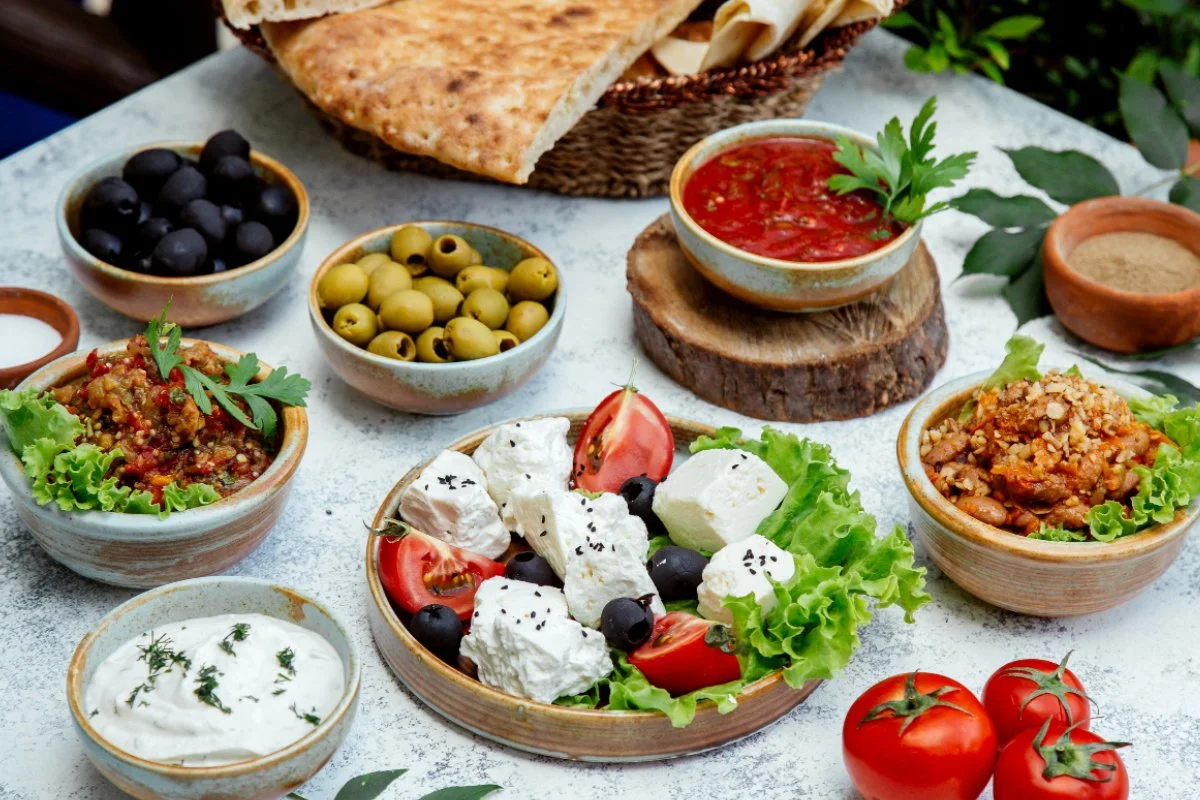
LONG LUNCH ITALIAN STYLE
May 2 - Top Shelf
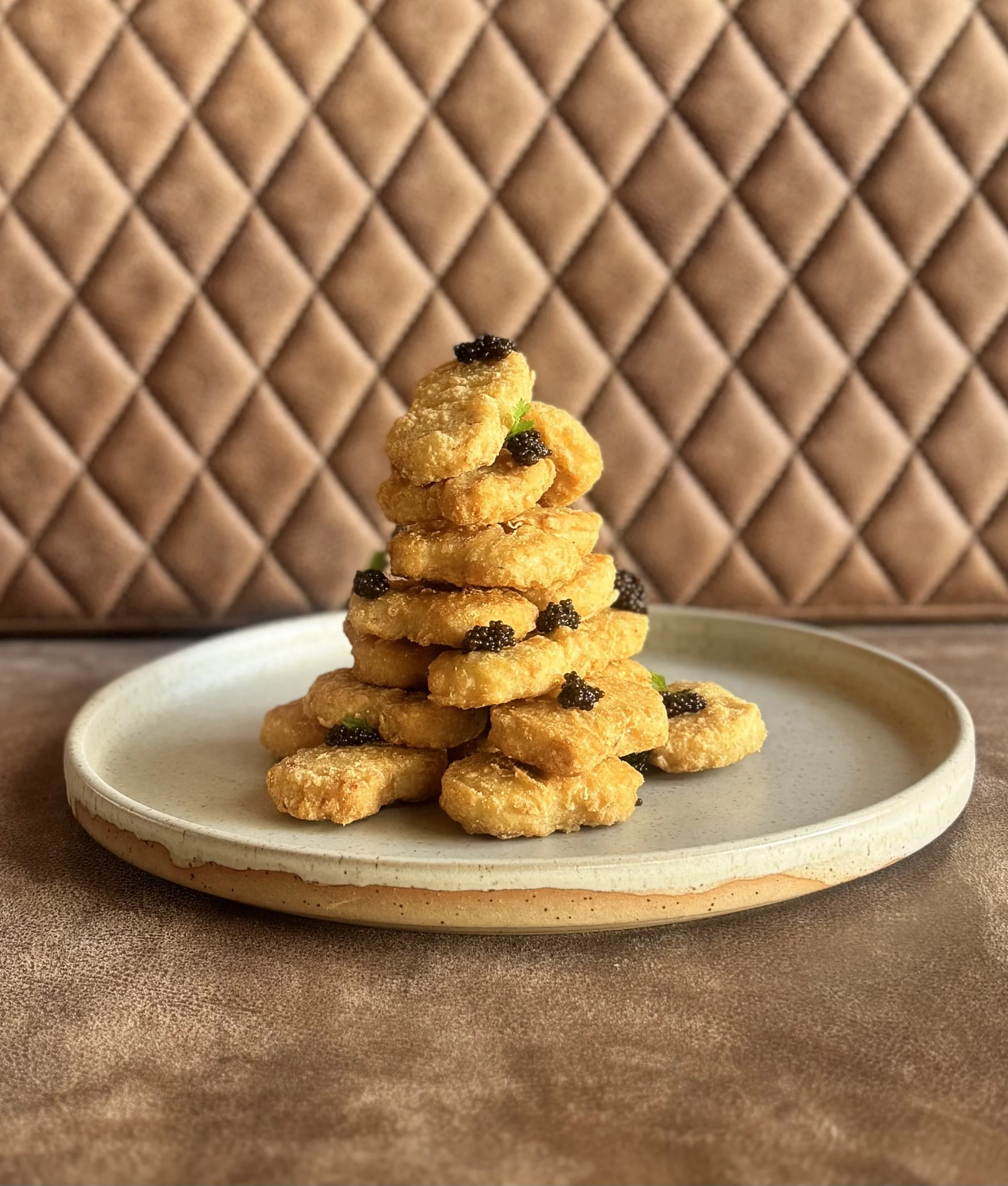
PLATES A PLENTY
In its most ambitious festival yet, Flavours of Plenty continues to champion the freshest and finest of the Bay. From daring flavour pairings to blind cocktail tastings, this year is shaping up to be a standout.
In its most ambitious festival yet, Flavours of Plenty continues to champion the freshest and finest of the Bay. From daring flavour pairings to blind cocktail tastings, this year is shaping up to be a standout. WORDS SUE HOFFART
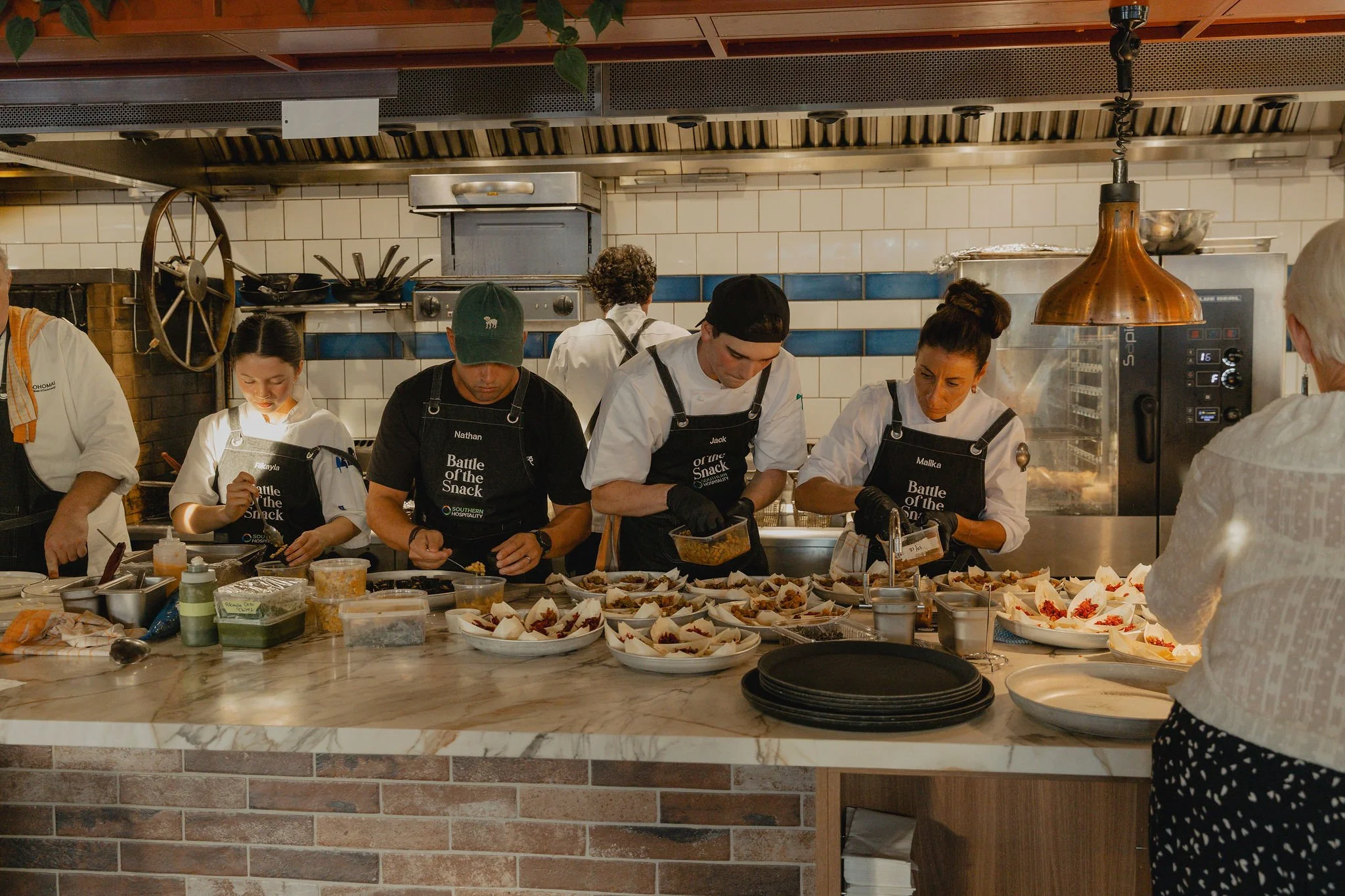
Coastal Bay of Plenty chefs are pushing culinary boundaries with such gusto, they have ensured the biggest Flavours of Plenty Festival yet. Festival director Rae Baker says this year’s eating extravaganza will bring almost 60 food events to the region, beginning in mid-April and running over 18 days. “It’s almost quadrupled in size since we started f ive years ago,” Rae says. “That’s partly because we have all these stunning food products and growers and producers here of course, but it’s our restaurants and cafes and chefs who have really driven the numbers up. So many of them have stepped aside from their everyday offerings and conjured all these exciting new ways to feed us.” Rae says festival events will include contests and workshops, food tours and market days. Some will happen in intriguing venues like a cinema or an art gallery, a community garden, a sculpture park or a marae. However, more than half will unfold inside established eateries and hospitality venues between Ōhope and Waihī Beach. “We just couldn’t do this without our heroic hospo people. Plenty of them have been through tough times in recent years and yet here they are with all this energy and enthusiasm, making edible magic for us.” She says restaurateurs have taken this year’s ‘pushing the palate’ theme to heart and devised experiences that challenge or thrill. Like the Sip Tease offering that invites diners on a blindfolded cocktail adventure in Tauriko. Or the Wings of Fire contest that teams spicy chicken wings with music and a tattoo artist who will create fiery designs.
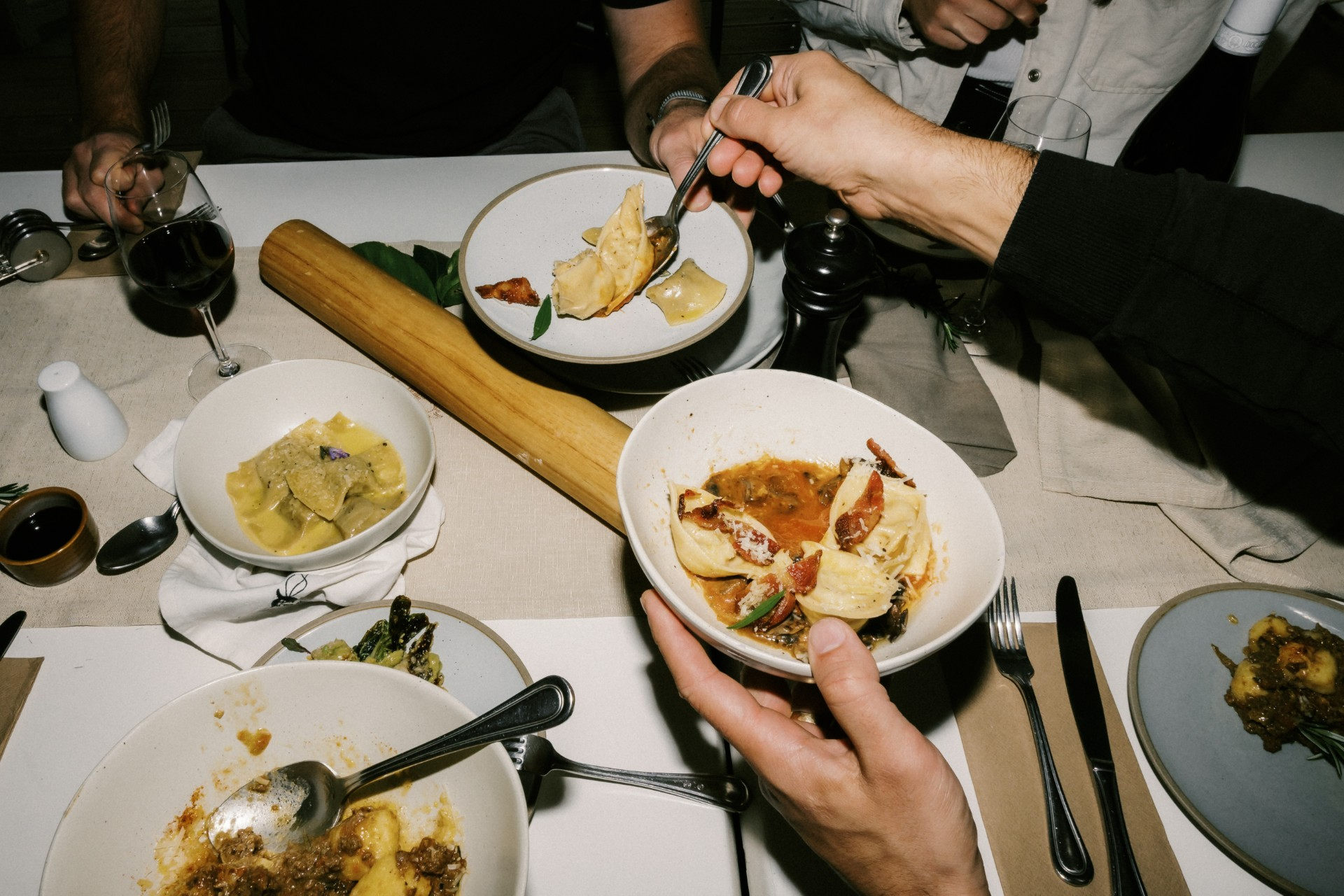
GNAM (YUM) CHA AT THE TRADING POST, PAENGAROA
An eight-dish yum cha-style lunch will carry diners from Taiwan to Tuscany.
Italian owner-chef Simone and his international kitchen crew have devised a menu that melds European flavours from his home country with Taiwanese and Singaporean flavours. If Eastern dumplings and Western ravioli had a love affair, it would taste like this, Simone says. He is also promising salads that flirt with spice and an experience that is “deliciously messy in the best way”.
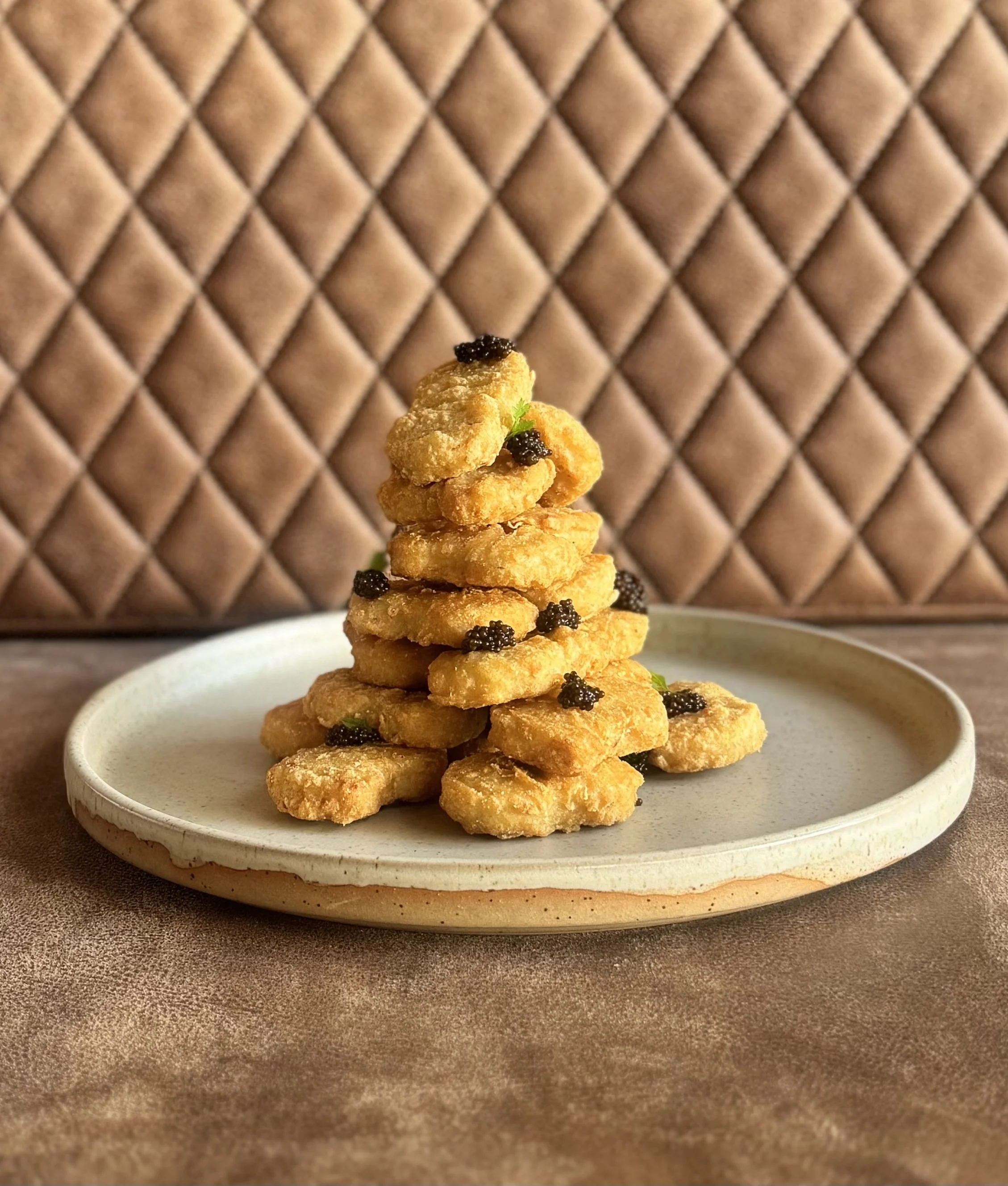
FINE DINING, DONE DIRTY AT SALTWATER, MOUNT MAUNGANUI
Oysters with attitude and cocktails with character are on the menu during this determinedly unpretentious seven-course lunch. High end food and top-shelf Eurovintage drops will be teamed with a “deliciously unfancy fine-dining vibe”. Palate-pushing? Yes. But also cheeky and playful; indulgence without the ego.
Saltwater restaurant will also host the festival’s madly popular Battle of the Snack competition, where hotshot chefs are paired with rising talent to create imaginative canapés. This one always sells out quickly.
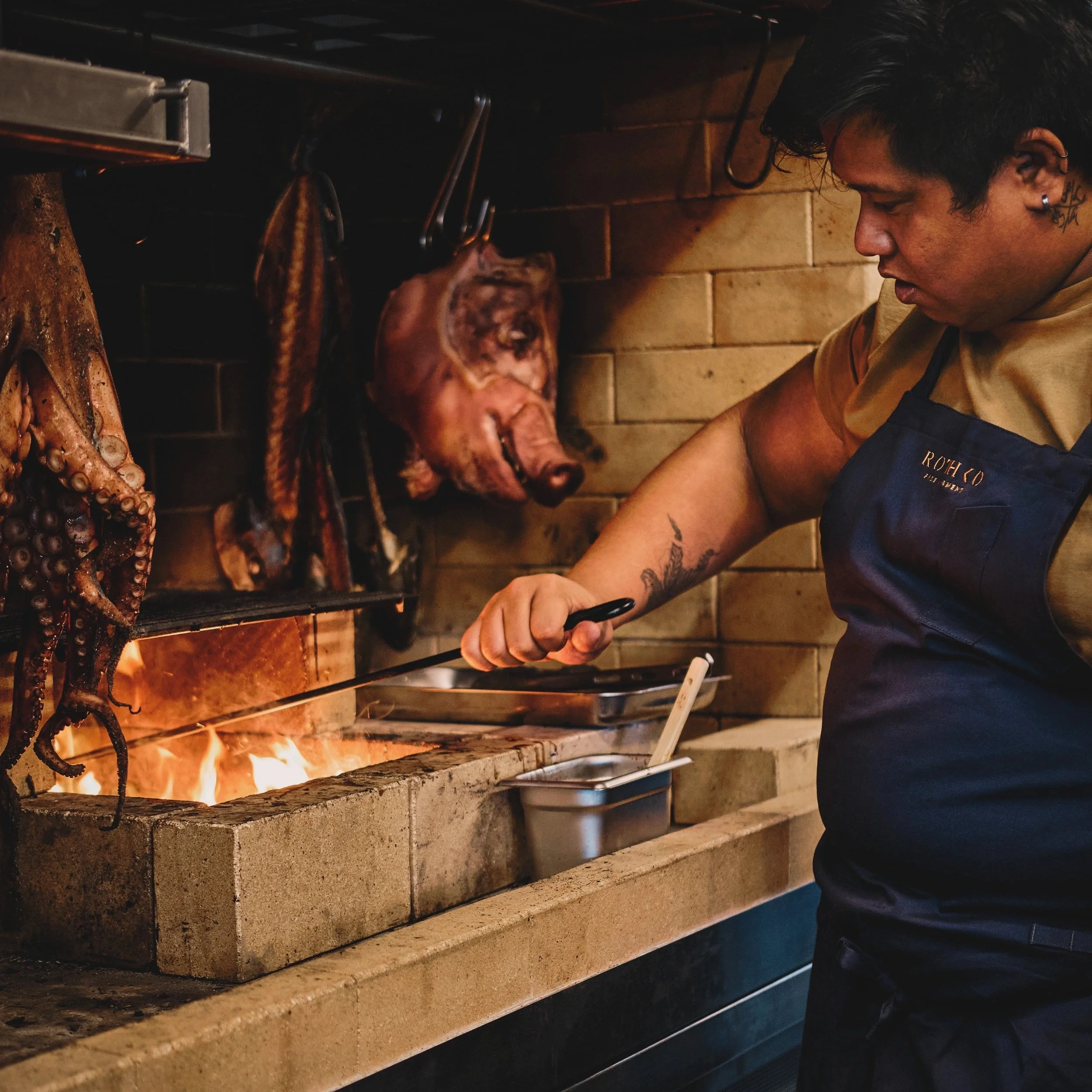
POLARISING PLATES WITH NEIL SAPITULA AT SOLERA, MOUNT MAUNGANUI
The restaurant’s award-winning former head chef Neil Sapitula is asking diners to be brave when he returns to Solera for one night only. Neil’s daring five-course dinner is built around his favourite polarising ingredients and techniques. No menu will be revealed until the end, and no dishes will be explained, encouraging diners to approach each plate without bias or expectation. Embrace the unexpected, he advises guests. Optional wine matches feature natural and minimal-intervention wines, equally bold in character. Solera is hosting two other events. A second five-course dinner, Melting Point, stars savoury ice cream in every dish. Shaken by the Sea, Stirred by the Land pairs cocktails with seafood.
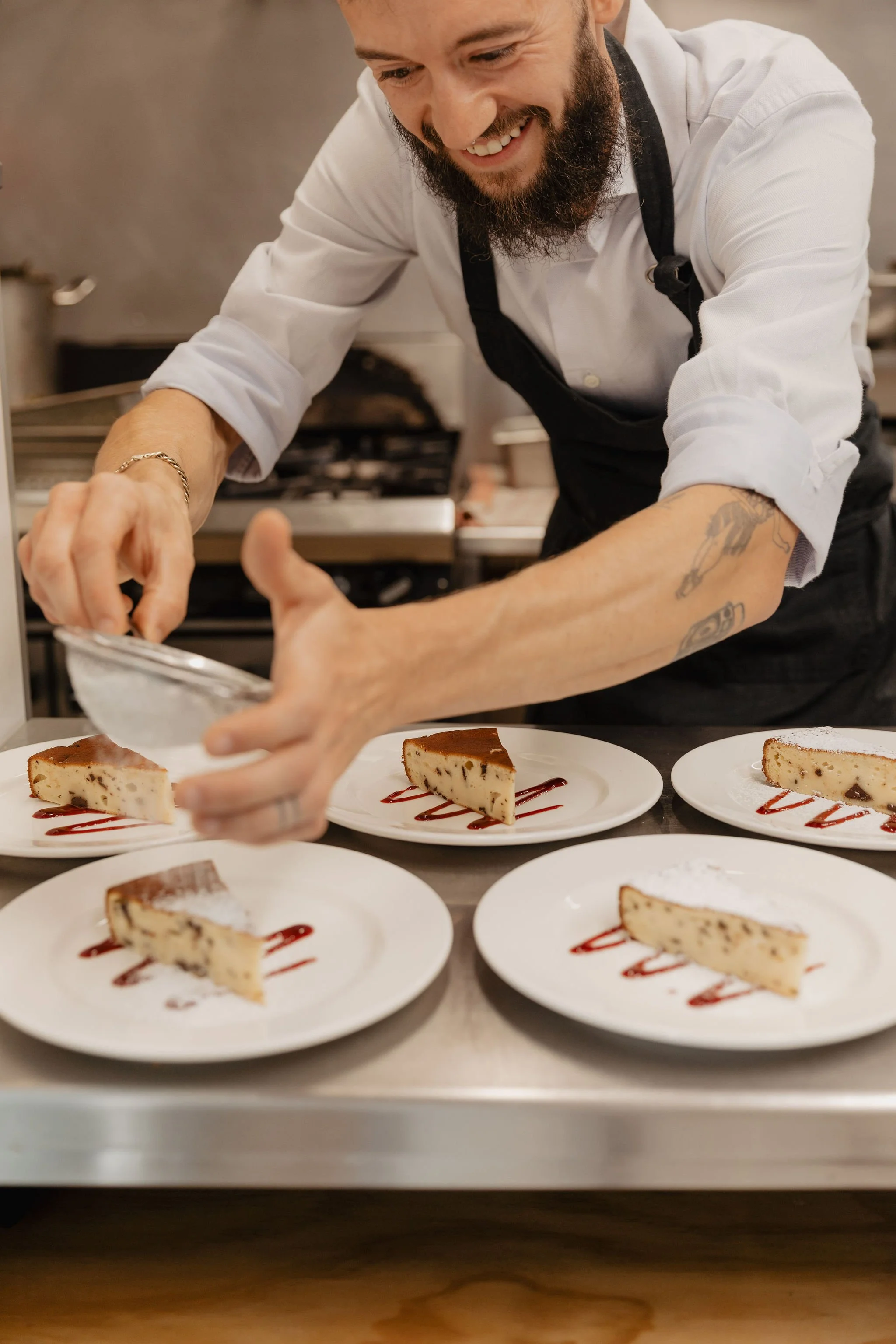
PLANTISSIMO AT GRATITUDE EATERY, MOUNT MAUNGANUI
Beloved for its delicious whole food menu and diverse dietary offerings, Gratitude is inviting guests to rethink the classic Italian feast. The usual kitchen team is handing over to Lombardy-born Stefano Raimondi, from Autentico, to offer a six-course vegan experience that will prove “flavour doesn’t need meat, cheese or wine to shine”. The plant-based, alcoholfree dinner will include handmade pasta though, and plenty of Italian-style warmth, generosity and soul. “It will make you rethink what’s truly essential for a happy table,” Stefano says.
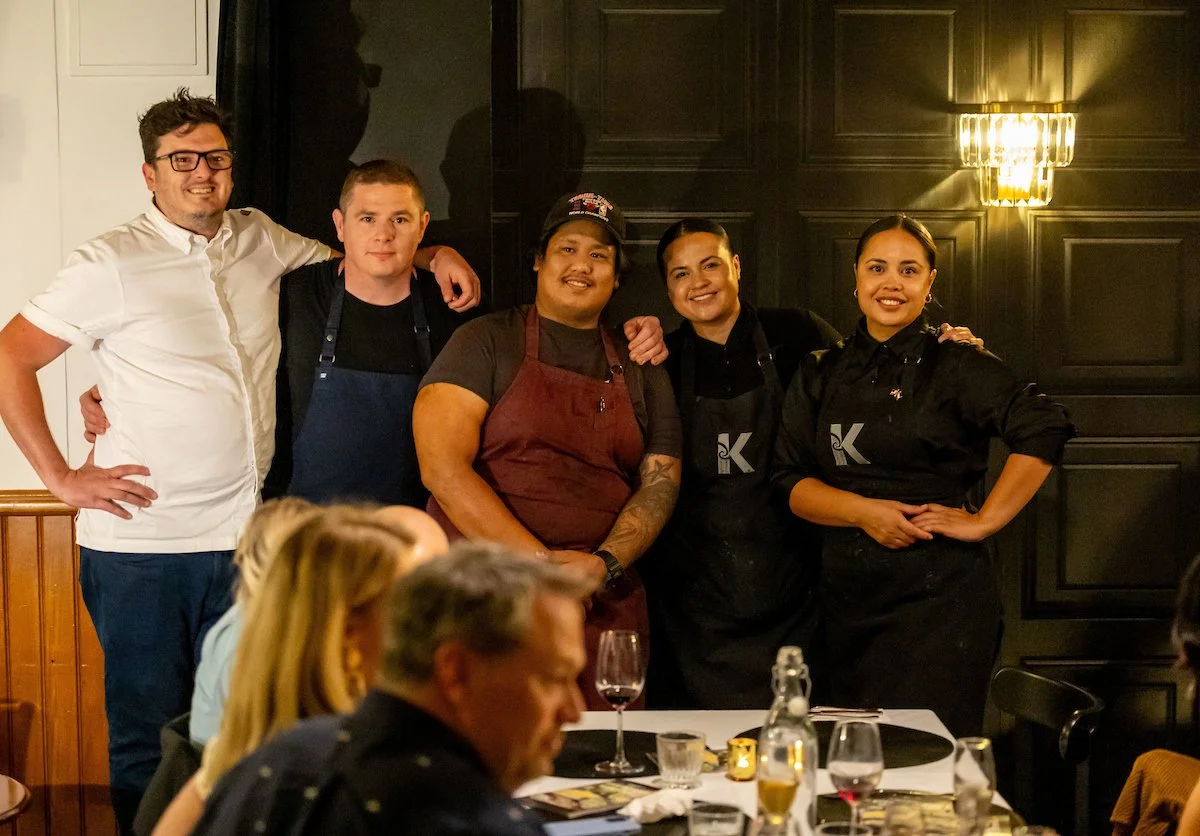
FIVE GO WILD WITH FOOD AT ST AMAND, DOWNTOWN TAURANGA
Five fabulous chefs will each take charge of a course to showcase both their signature style and the region’s best produce. The degustation dinner will also star items chosen from the festival’s Plates of Plenty Challenge box, which challenges eateries to utilise a selection of locally-made artisan products or produce. Naturally, each course will be matched with a small-batch New Zealand wine.
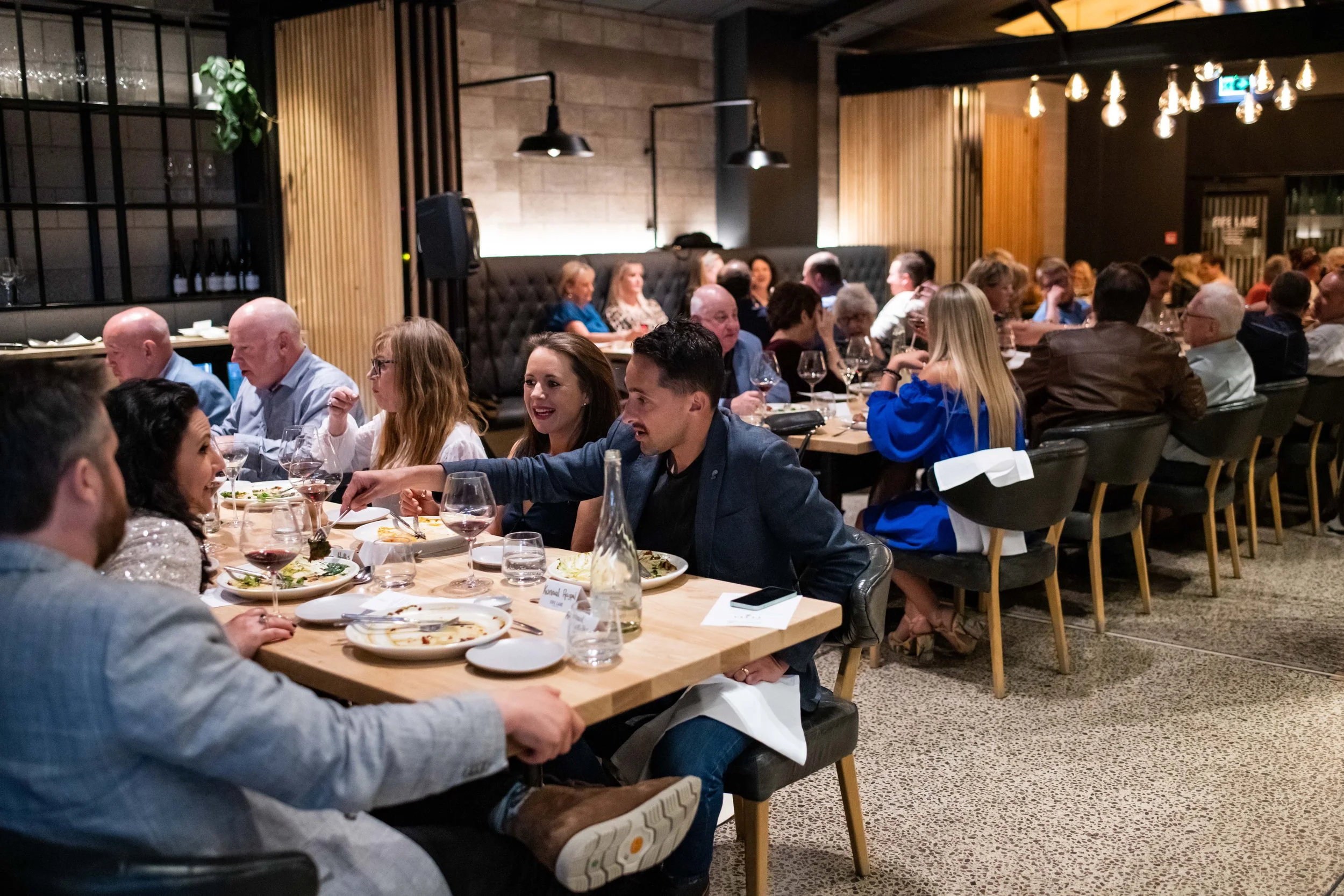
FIVE BY FIFE AT FIFE LANE KITCHEN AND BAR, MOUNT MAUNGANUI
Five courses, each focussed on a single hero ingredient. Fife Lane will of course utilise the f ire-driven style that fills its tables every week but this event is especially intent on delivering bold flavour combinations, elegant presentation, and a dining experience that celebrates craftsmanship at every level. Seating is communal, creativity is a given.
The restaurant will also host guest speakers at a Fuelling Our Future lunch to fundraise for the Kura Kai charity that feeds families in need.
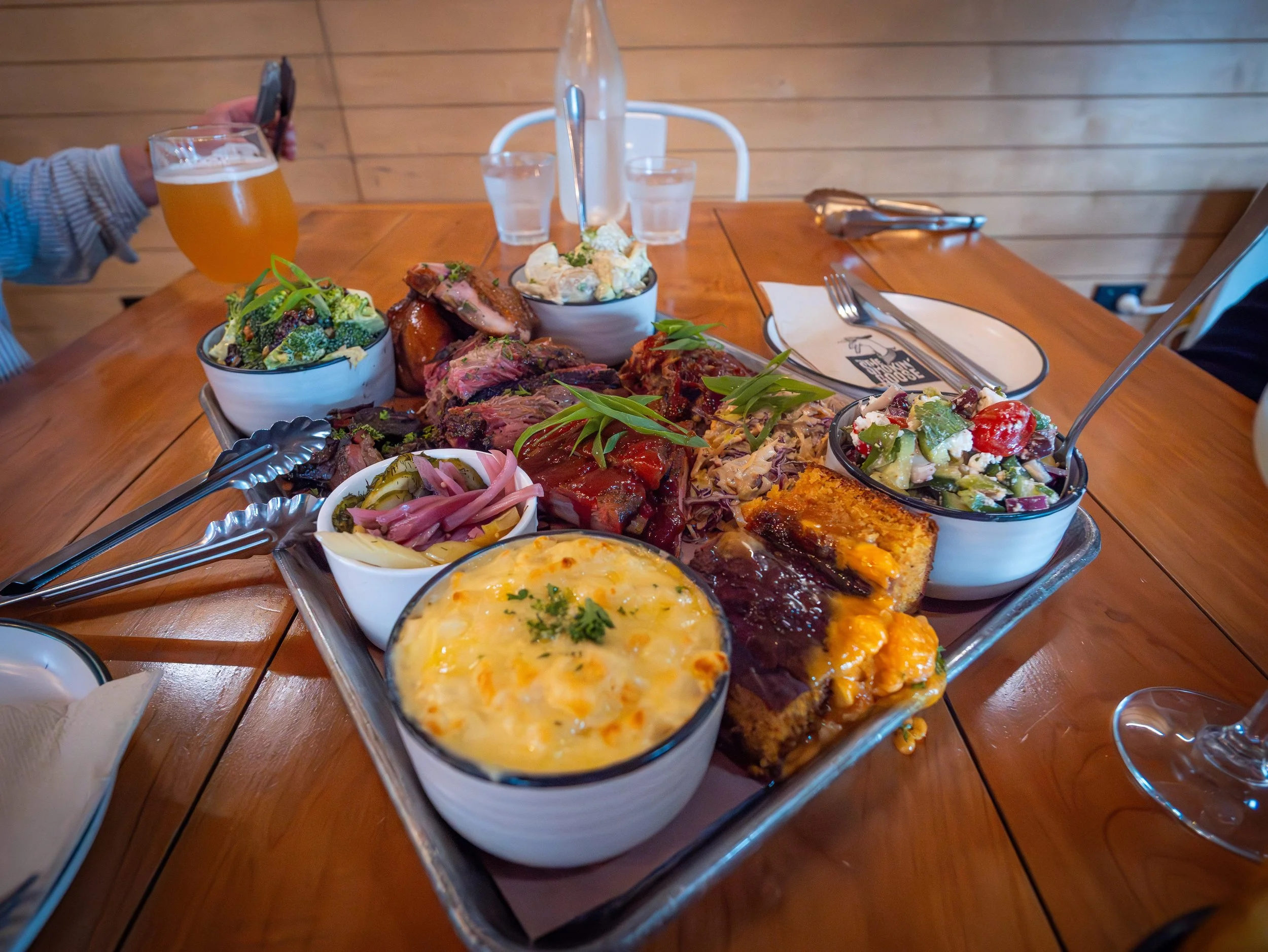
NOSE TO TAIL BBQ FEAST AT THE SMOKIN' GOOSE, AWAKERI
A sociable long-table banquet featuring both premium and adventurous cuts of beef, from ox tongue and beef cheeks to osso buco and bone marrow. Expect bold BBQ flavours, nibbles on arrival, a three-course feast and a surprise dessert to push your palate. The rustic Western vibe spills over into live music and guests are invited to dust off their boots and dress to impress.
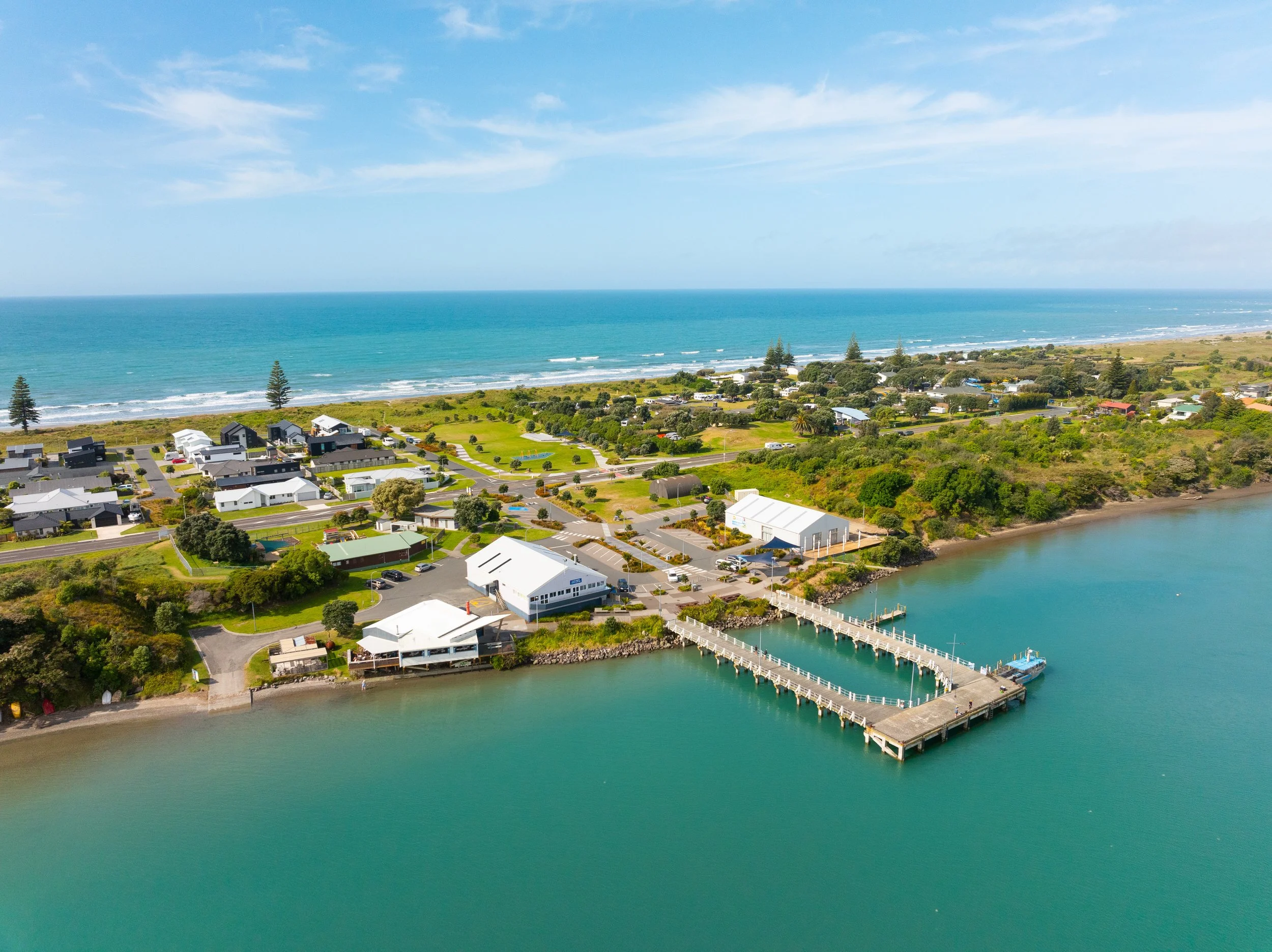
SMOKE ON THE WATER AT FISHERMAN’S WHARF, ŌHOPE Gregarious chef Paul Patterson will start his event early, cranking up custom-made wood-fired barbecues from 8am. He will utilise local fruit trees and native wood to cook and smoke a selection of beef, venison and pork in front of his harbourside restaurant. Ticketholders will be able to watch the process during the day, then return in the evening for a four-course meal featuring big flavours, bourbon and blues music. Each course will be paired with either small batch bourbon or red wine. FLAVOURSOFPLENTYFESTIVAL.COM
A VISION OF ZEN
Purchased online from England by a couple heading home to the Bay after 26 years abroad, a bush-clad Ōmokoroa site became a home shaped by close collaboration, thoughtful design and a shared vision.
Purchased online from England by a couple heading home to the Bay after 26 years abroad, a bush-clad Ōmokoroa site became a home shaped by close collaboration, thoughtful design and a shared vision. WORDS PIP CROMBIE | PHOTOS AMANDA AITKEN
Buying property sight unseen is something we are familiar with in the Bay of Plenty, usually by international buyers who have access to extensive real-estate-supplied images and information. But for a New Zealand couple returning home after 26 years in England, the almost one-hectare Ōmokoroa section they discovered online had few details to recommend it. There was no exact address, limited imagery and little context. Yet something about the site appealed.
Tracey and John’s return to New Zealand was nudged along by Brexit and COVID. The couple both work from home for large pharmaceutical companies, so the move was about transferring home locations and a desire to spend more time with family. The 2020 lockdown prevented an in-person search, so John’s parents visited the site on their behalf, walking the land, carrying out the due diligence and sending through images. On the strength of this, the couple secured the property from abroad. Working remotely from England, Tracey and John began collaborating with Hannah Armstrong-Gardner of Studio H on the design of their new home. With Hannah and her husband Chris, who would later build the house through their company Gardo Group, living just 500 metres up the road, the project naturally became a close collaboration between the four. Through a series of video calls, the design gradually took shape, evolving into a fully documented consent set before the couple had even returned to New Zealand.
It wasn’t until 2022 that Tracey, John and their woolly-coated black pooch Nonu set foot on the site of their new home. The property is gently nestled at the bottom of a winding drive below an urban development, bordered by trees that ensure privacy from the nearby Ōmokoroa coastal cycleway, and has a small stream meandering through the boundary.
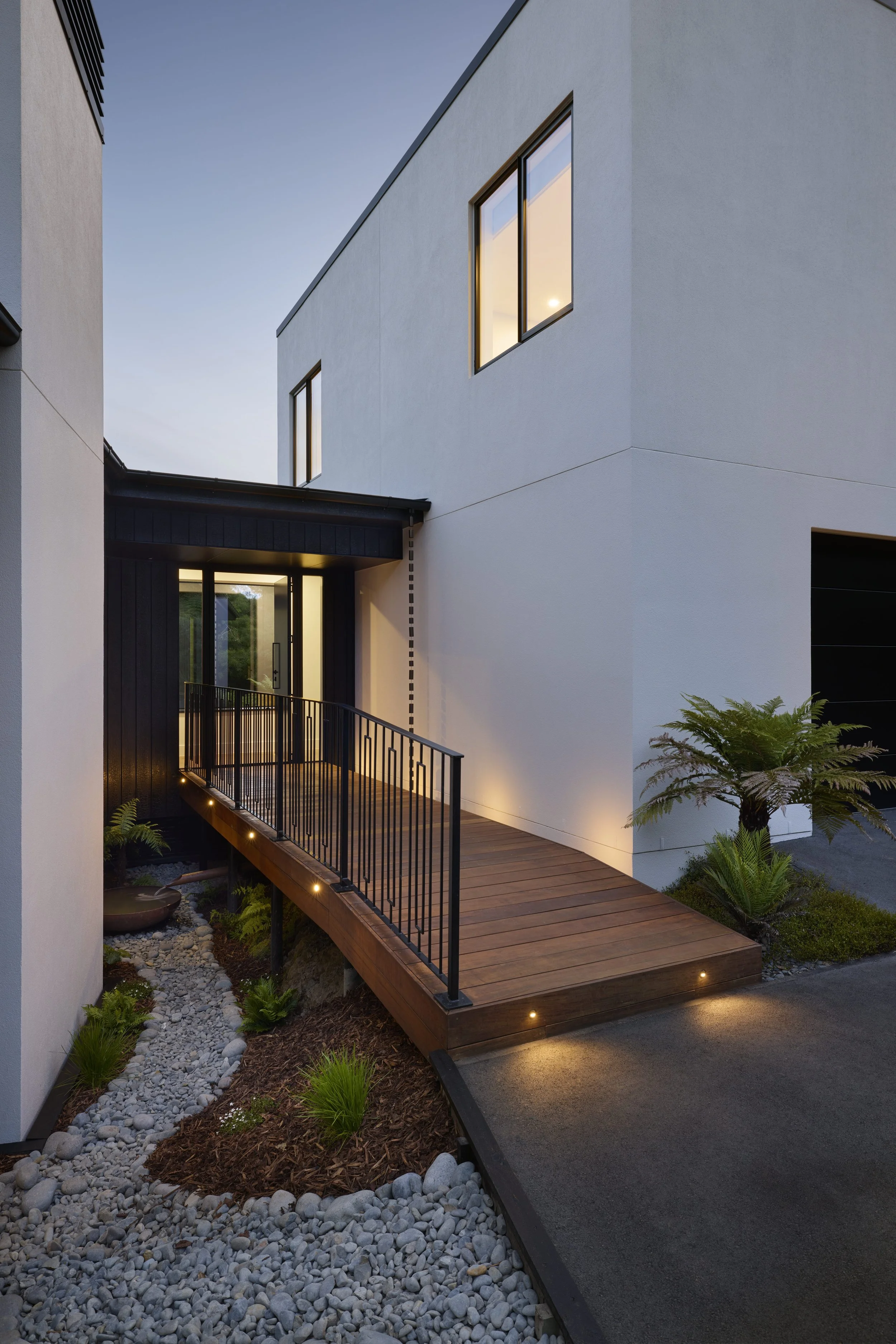
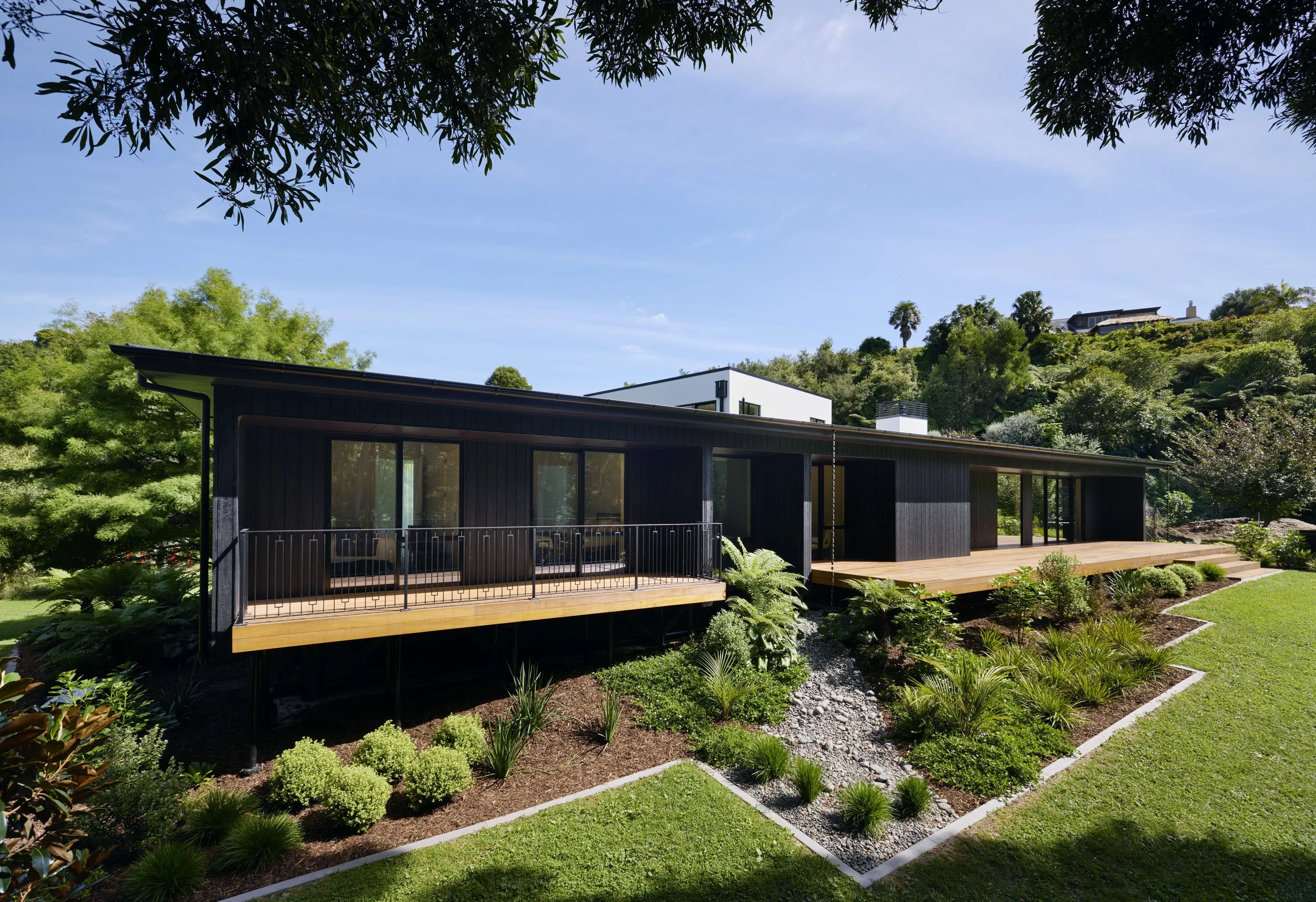
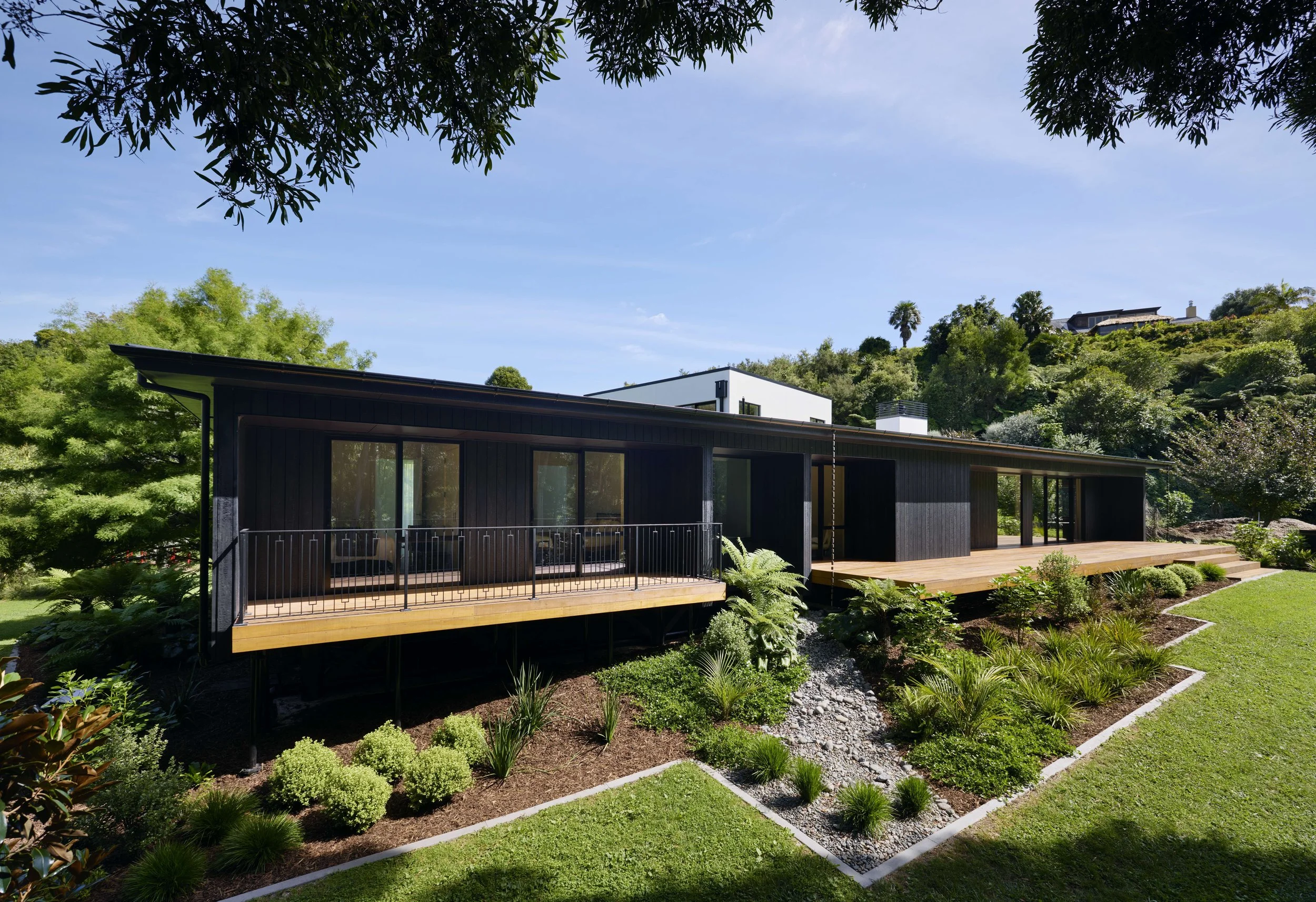
Fast forward to 2026 and the approach down that driveway halts me as I descend. The first impression is of a chic bush retreat. From above, the home is two distinct wings — one black, one white — juxtaposed against the lush clearing the dwelling sits within, surrounded by artfully curated native planting. There is a subtle Japanese influence to the design, and as I draw up to the front entrance, a long hardwood decked walkway draws me to the front door, bordered by its custom balustrade repeating a subtle architectural detail that appears throughout the home, protecting full-height openings on the upper level while reinforcing the project’s restrained material palette. To the left is the long, black Shou Sugi Ban charred timber clad wing, housing guest bedrooms, bathroom, office, kitchen and living, to the right is the white rendered plaster two-storey volume featuring two master bedrooms, large ensuite and dressing room, garage, storage and laundry space. Subtle circular water features set on river stone paths, suspended Japanese rain chains and a small red bridge spanning the stream and glimpsed through the feature window in the entrance, all set the scene for the interiors where tone and texture of materials come together in a magnificent blend of warmth, light and high-end luxury.
The 331m2 home was designed by Hannah ArmstrongGardner, of Studio H, a Tauranga-based design-led practice known for creating homes of quiet distinction. Hannah works closely with her clients from inception to completion, advising them early on that getting to know them well is a key part of her design process. “Where do you put your shoes and your bikes when you come home? What’s ‘your side’ of the basin? My design process is human-centric, not ‘Hannah-centric’," she explains.
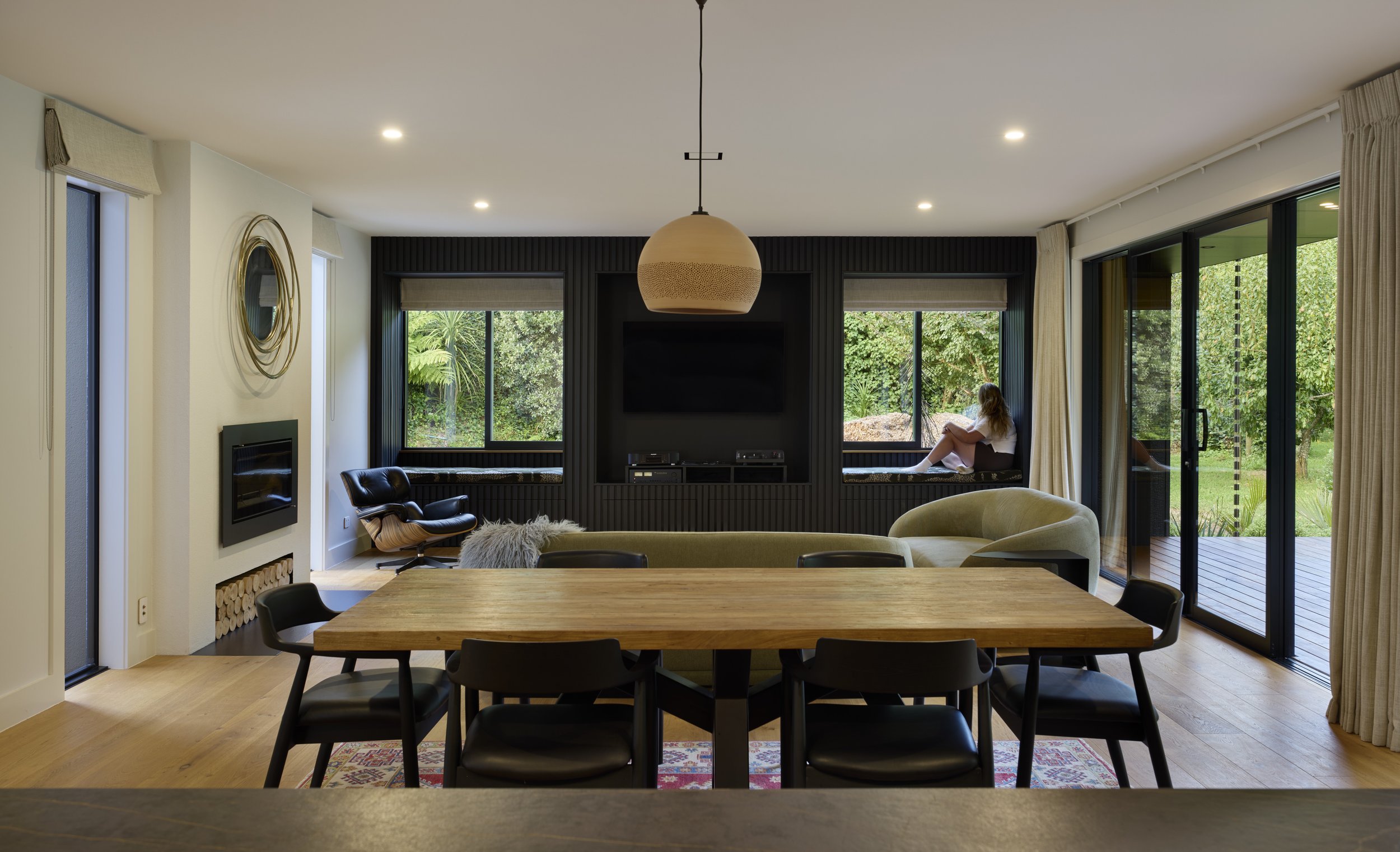
Tracey and John arrived with a clear priority: warmth and comfort. Memories of cold New Zealand houses from earlier years abroad meant the thermal performance of their new home was paramount. Instead, the couple and their designer carefully considered the site’s microclimate, including existing tree cover and the natural topography of the driveway ridge. The main living wing therefore faces east, allowing soft morning light to enter the space while avoiding excessive summer heat. To maintain consistent indoor comfort, a hydronic underfloor heating and cooling system runs beneath the home’s light oak flooring, creating an even ambient temperature year-round. The timber floors extend throughout the house, softening the floor-to-ceiling tiling used within the bathrooms and reinforcing the calm material palette. Overhead, 2.7-metre ceilings allow light to move easily through the spaces while housing discreet mechanical systems.
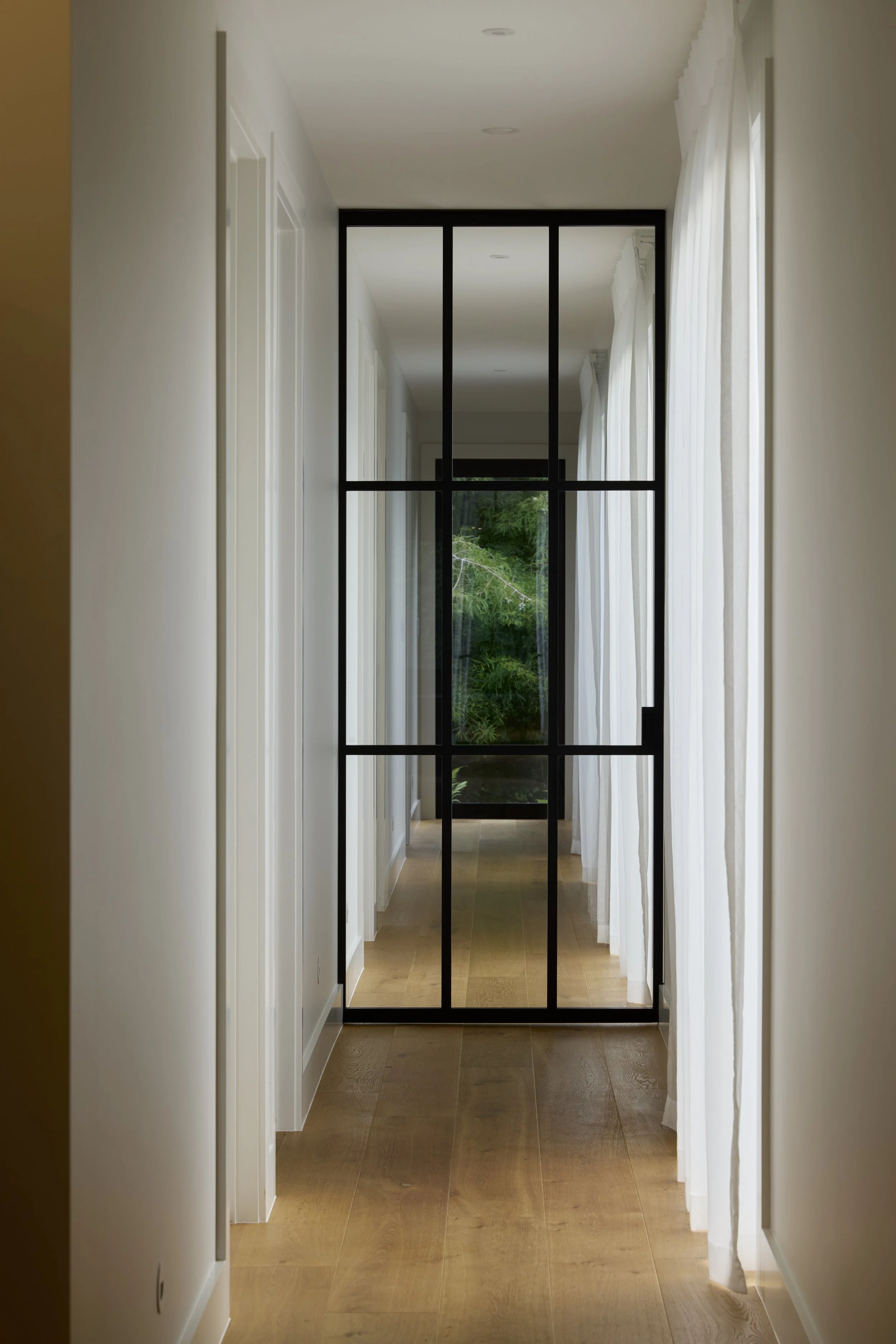
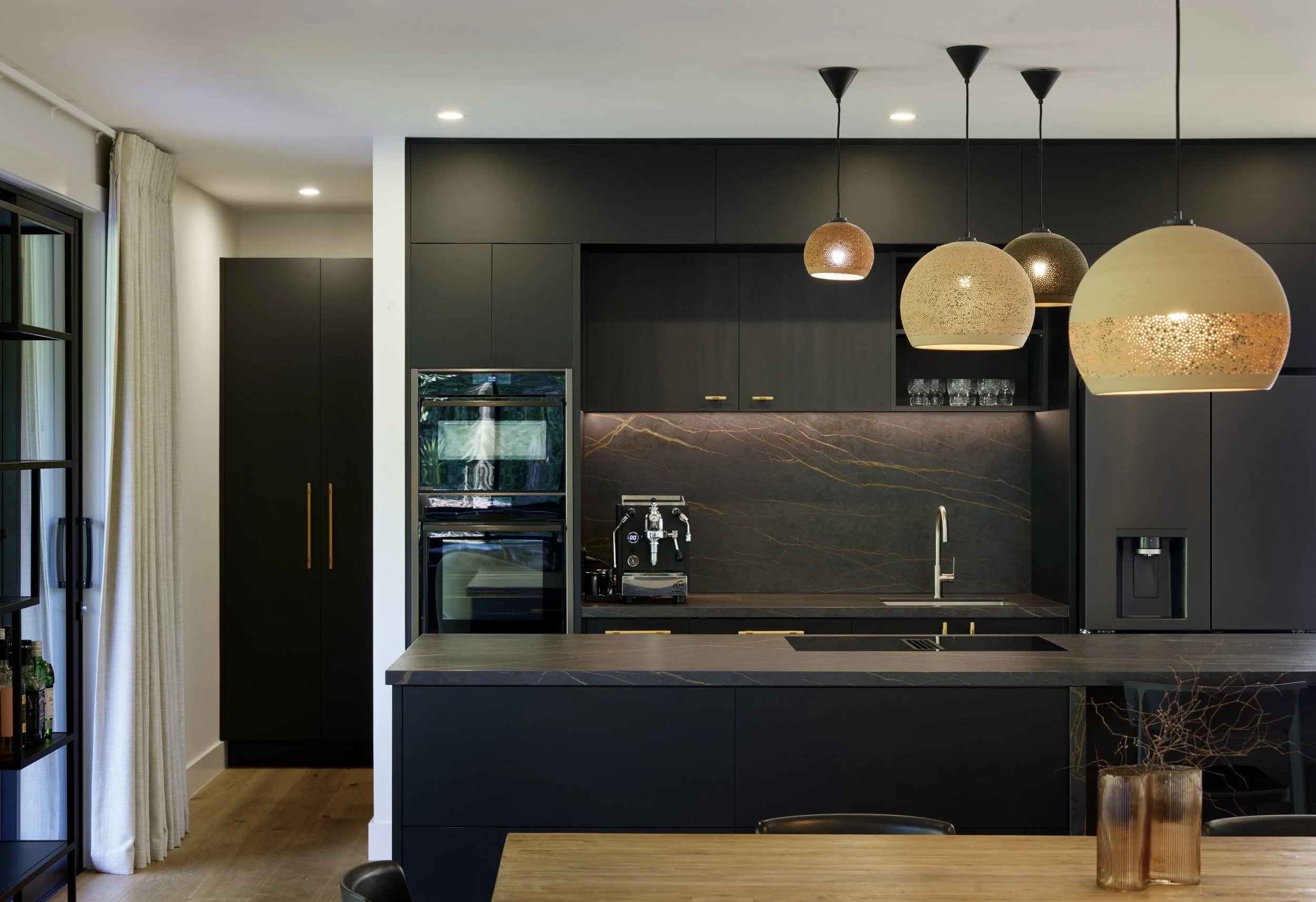
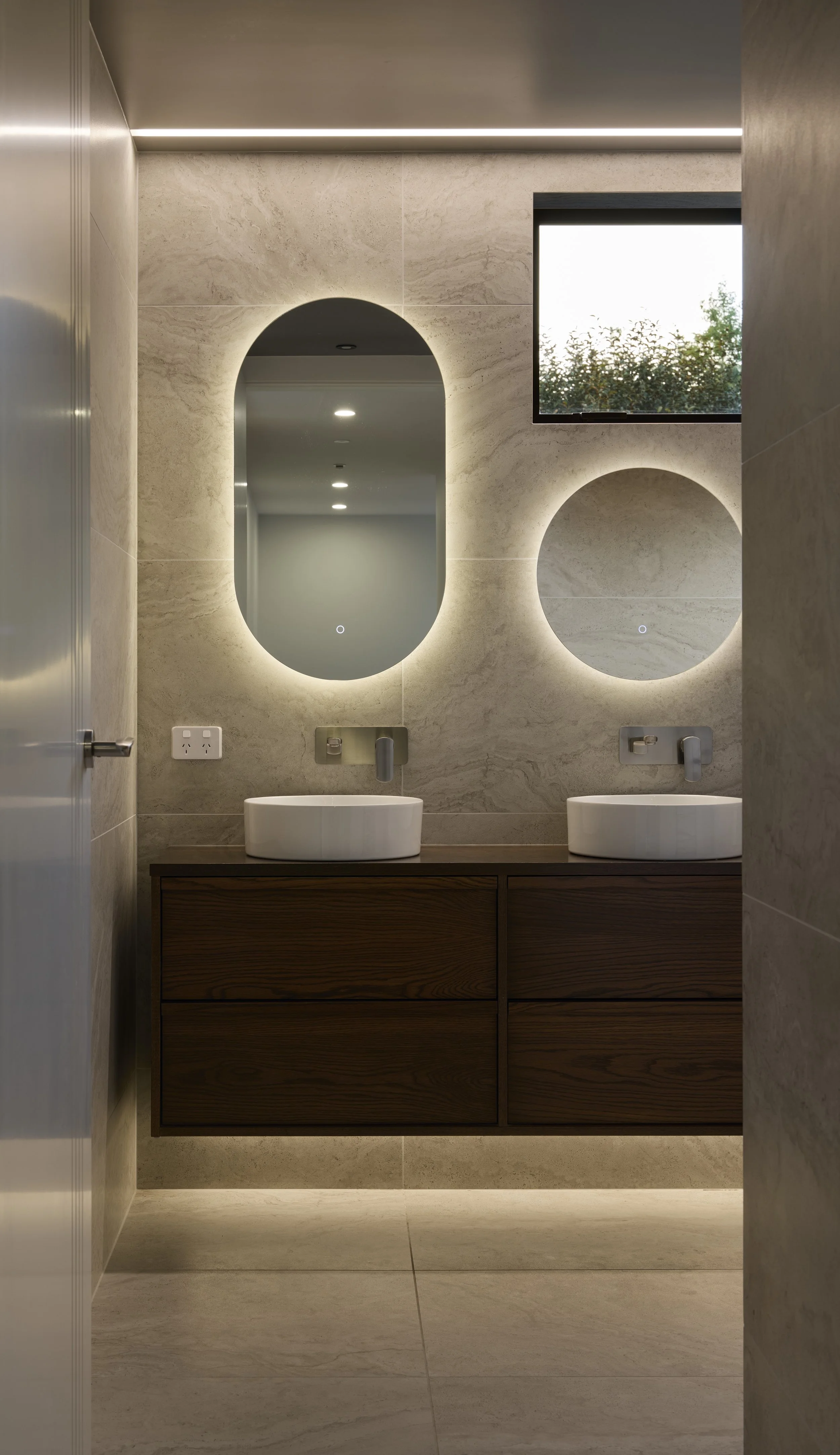
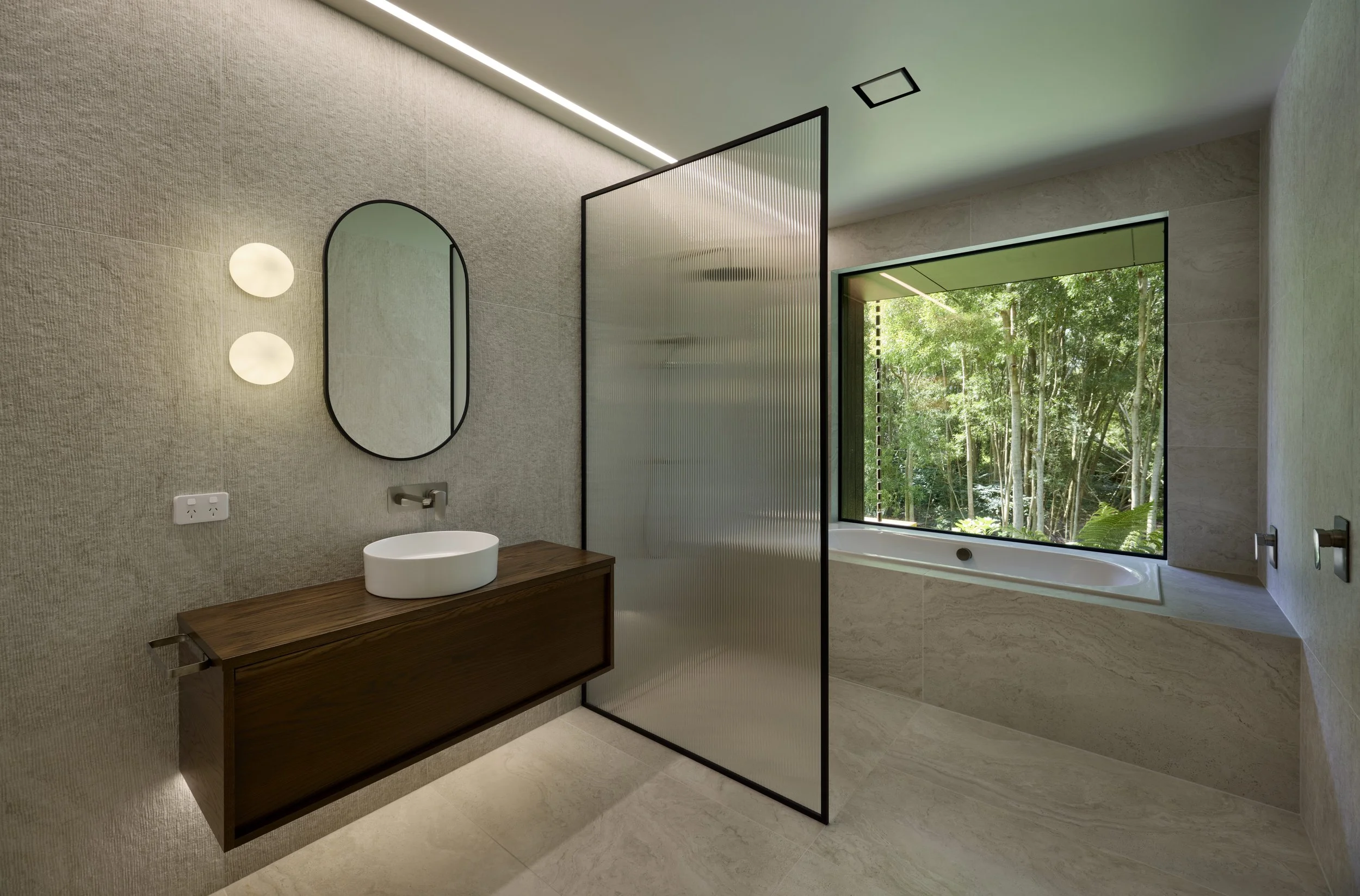
Sustainability was also a key consideration. The property operates with a significant degree of independence through rainwater harvesting, solar generation and efficient systems, while the materials used throughout the home were selected with attention to origin.
The kitchen is dark and seamless, softened by wooden handles in keeping with the subtle Japanese aesthetic, the intentional use of empty space, calming, natural colours and product. With this in mind, the deliberate selection of the Dekton Laurent benchtop - an earthy chocolate shot through with streaks of natural golden hue - bring the whole space, including the offset scullery, together.
From the time the build was completed in March 2024, it has felt like a forever home for Tracey and John - peaceful, sleek, soft and something of a sanctuary. A retreat indeed. STUDIOHDESIGN.CO.NZ

FOR THE LOVE OF FOOD
Three Bay of Plenty women have turned their passion for everyday cooking into something far bigger. These queens are building loyal followings and steady businesses, all while educating on the importance of a shared connection around the table.
Three Bay of Plenty women have turned their passion for everyday cooking into something far bigger. These queens are building loyal followings and steady businesses, all while educating on the importance of a shared connection around the table.
WORDS NICKY ADAMS | PHOTOS OLIVE PATRICK @ MILKSHAKE + SUPPLIED HAIR + MAKE-UP DESIREE OSTERMAN | DRAPING TBLE LINEN | FLORALS ASTER & BLOOM

Rose Kennedy
In the words of Virginia Woolf, “one cannot think well, love well, sleep well, if one has not dined well.”
Creating and eating wonderful food is a universal experience: it brings together families, friends and even total strangers, serving as the framework to make memories or simply enjoy the company.
Incredibly, in our local area we have three women who have all pioneered their own paths within the online food world. All are driven by hard work and motivated by an absolute passion for food.
Tauranga’s Rose Kennedy has established an avid online following of her creative food journey; from Taupo, Vanya Insull operates the incredibly successful VJ Cooks, while Cherie Metcalfe is well known in the Bay for the amazing trajectory of her business, which started from seemingly simple seasonings.
Talking to each of these businesswomen offers insight not only into how it all began, but also into the dedication and energy required to reach where they are today. At the heart of it all though, it’s clear that each of them would stand by the saying, that there is no better love than the love of food.
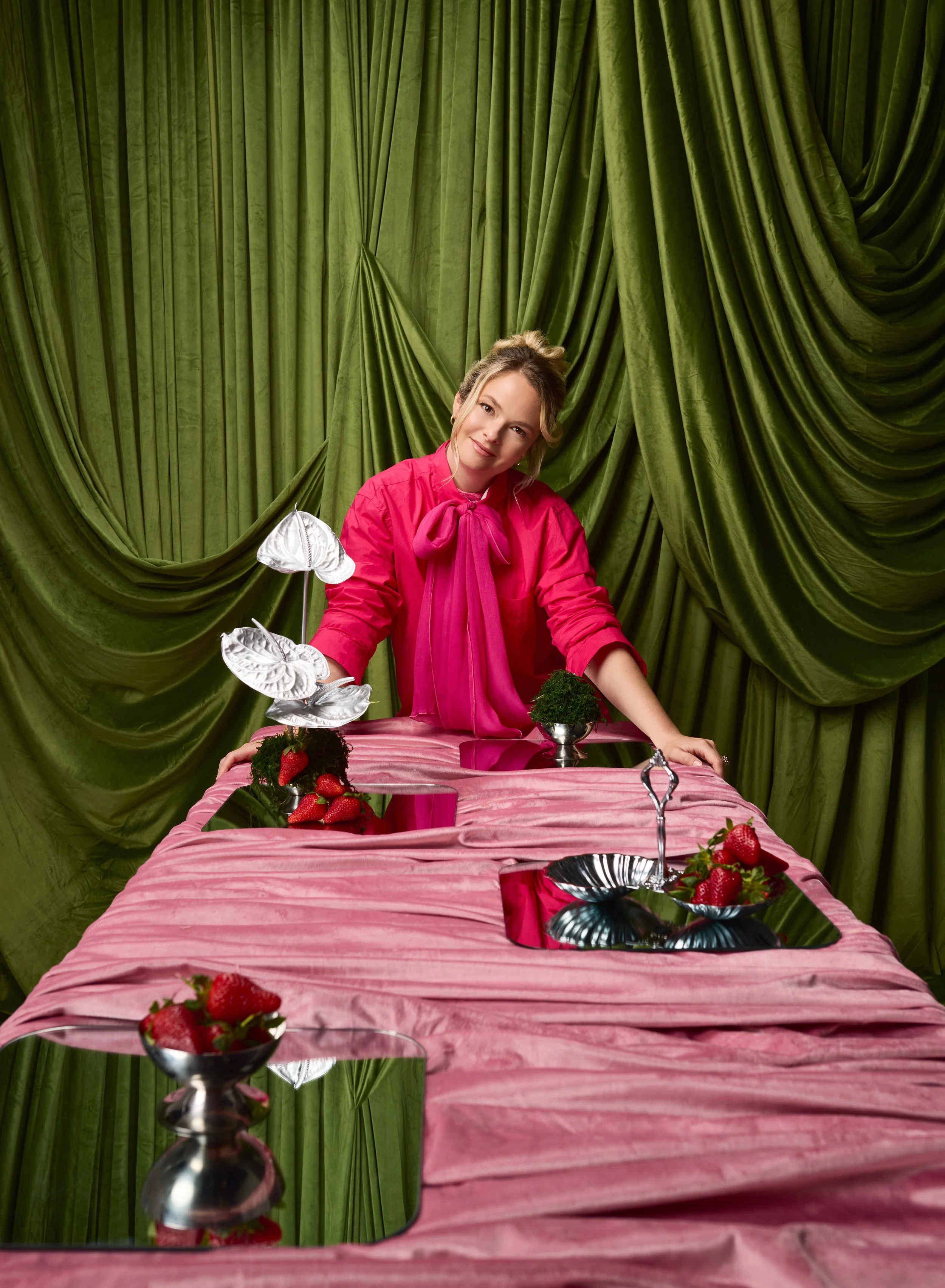
Rose Kennedy
ROSE’S DINING TABLE
“I was living a vanilla life, but I’m not a vanilla person.”
Followers of Rose’s Dining Table will have already discovered how to add a little bit of extra joy to their lives. If, for you, happiness can be found in cuisine, colour and connectivity, then Rose’s world feels like one big party you'll want to be at. A concept that began online, Rose’s Dining Table has grown from an Instagram page that went from sharing recipes to catering and hosting supper clubs, to now including hosting guides and public events. Rose Kennedy has found her groove and is inviting you to dance along.
Always ambitious, Rose found in her twenties that she was channelling her energies in the wrong direction. “I grew up a very creative kid and teenager, and at 26, I found myself in a highly corporate job, wearing not an ounce of colour, and I woke up one day and thought, ‘I don’t know who I am anymore.’ It was a pivotal moment when I realised I didn’t have any connection to my identity... That’s when I started my Instagram page, Rose’s Dining Table, which I began as a place to share recipes and to try to get back to the roots of who I was. Everything went from there quite naturally.”
From the first Instagram post Rose’s Dining Table struck a chord, with her style hitting that sweet spot of both aesthetic and authentic. Posting her own crazy dinner parties and themed menu dining quickly led to requests from her followers to provide this as a service. “It’s in my nature to be inquisitive about opportunity,” she says. So, after the roaring success of her first booking for an annual girls’ dinner party in Hamilton, she realised this was more than a passion, it was a viable business. With a young baby, the timing wasn’t ideal, and Rose doesn’t minimise the struggle of putting her energies into both new family and business simultaneously.
She quickly established a business that, while rooted in social media, is very much people orientated, but at its heart is food focused. “I’m absolutely obsessed with food,” she adds.
By inspiring her followers not just to cook, but also to host, entertain and, better still, to make the experience a visual as well as a culinary one, Rose emphasises the delight that gatherings can bring. She herself adores food. “I looooove to eat… In my early 20s I was out for dinner four times a week! Every meal is an opportunity to try something delicious.”
Rather than fine dining, Rose gravitates towards soulful, unpretentious food. “I don’t claim to be a chef, I’m a home cook through and through.”
Equally there is no judgement around client tastes: “I always say to my customers, it’s okay to have preferences and love what you love.”
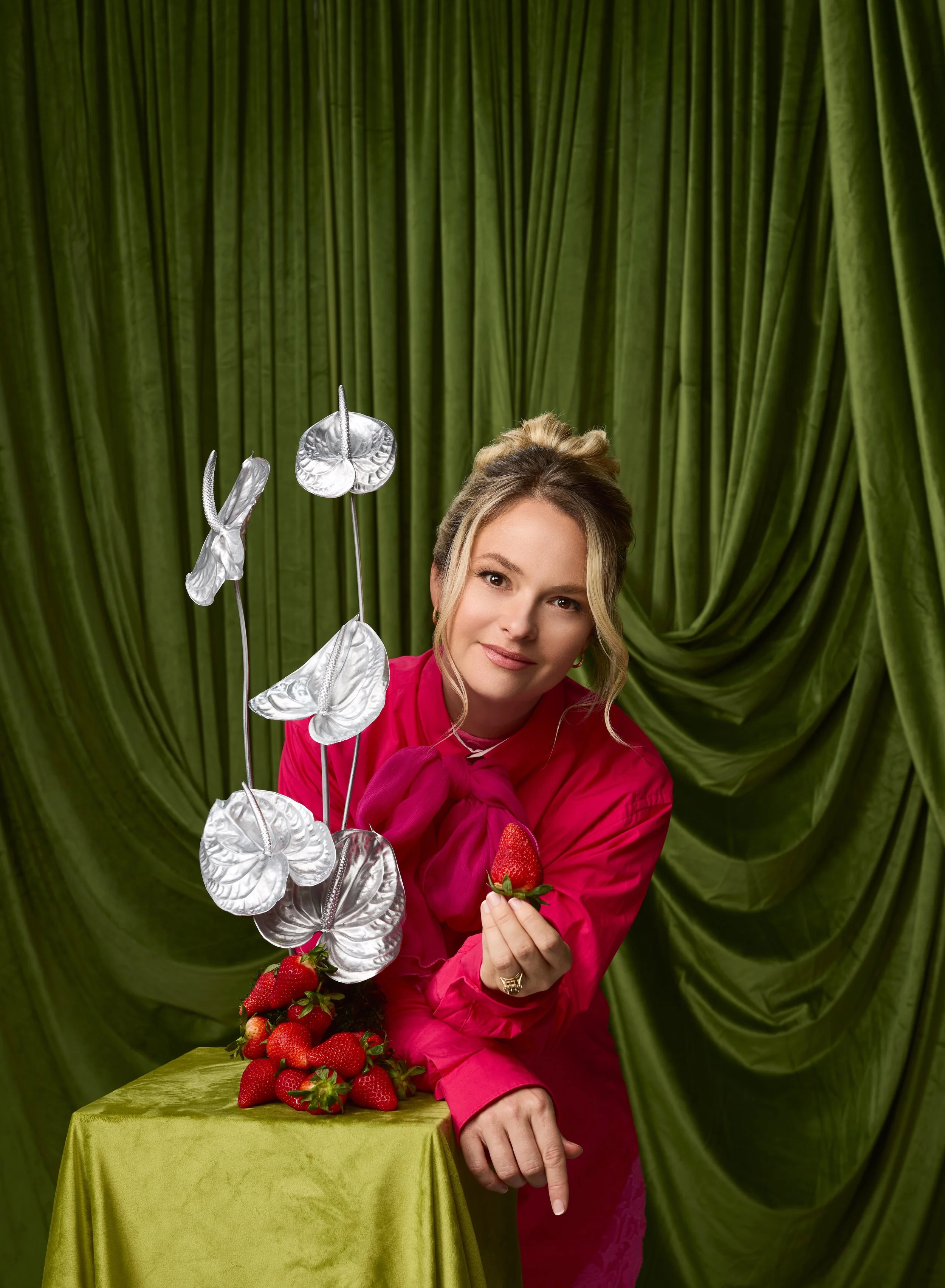
Aside from the amazing food that Rose whips up at her supper clubs, a big part is the decor which, in turn, creates the atmosphere. Like anything, tablescaping has increasingly tended towards trends. This, however, is the antithesis of what Rose believes in — for her, it’s about creating space for others to connect within, and most important is the person throwing the party, not ‘a look’. “When I host an event for someone, I find out their likes, what mood they want to set. I ask, do they like bright colours, neutrals — relaxed or sentimental? I curate everything specifically for them.”
She’s strong on the fact that her service and ideas, whilst being premium, should also be accessible. “I represent reality: my biggest thing is that people shouldn’t hold back from hosting themselves. I tell everyone, no-one cares how dirty your skirting boards are. Every achievement should be an opportunity to celebrate.”
Ultimately though, it’s all about the food. For Rose, this is where it started. She admires culinary personalities who look to their roots for inspiration and believes cooking is something everyone can master.
As for where the business is now, Rose explains there’s a dual focus. “The core is hosting private supper clubs in people’s homes, but I also host public conceptual dining events — that’s my heavily creative work. I’m trying to lead with a creative focus rather than a monetary focus.”
Last year she hosted Tangerine, an edible exhibition which was a fully immersive dining experience; more recently an event called Chapel, which had a Las Vegas wedding theme. But the secret to Rose’s success? “People really just crave that connection.”
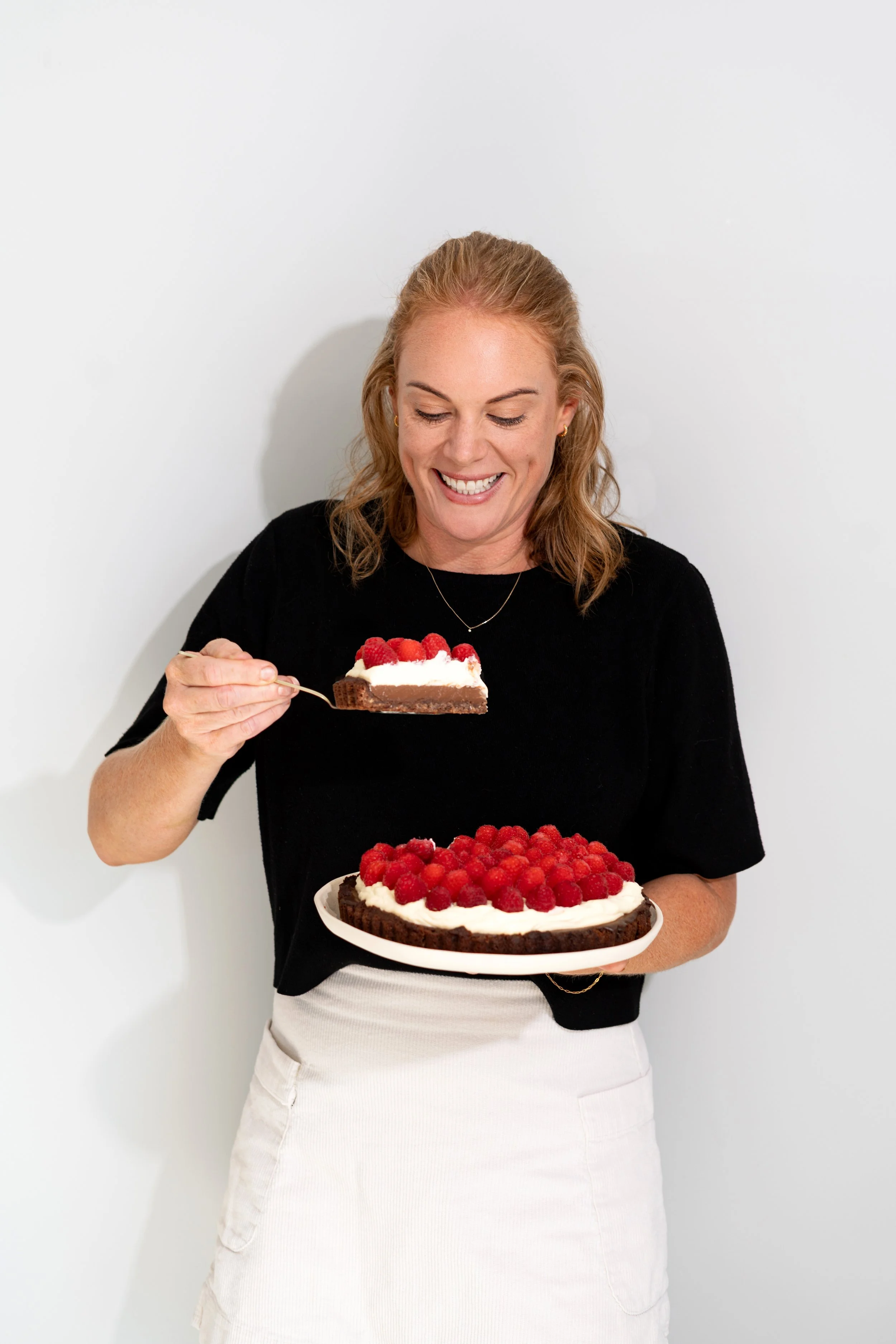
Cherie Metcalfe
PEPPER & ME
“I didn’t make money for a long time.”
With a range of condiments that are each named with a wink and a laugh — think ‘Man Rub’ or ‘Mexellent’ — the brand Pepper & Me seems to mirror the personality of its creator, Cherie Metcalfe. Pepper & Me has grown over nine years and now includes not just seasonings but sauces, oils, pastes and all manner of condiments. Within the brand is also a range of cookbooks, podcasts, a subscription website, events and more.
Cherie herself is a great combination of easy breezy to chat to, and insightful about the ‘how it happened’ and ‘where to from here’ of her business. “I grew up pretty obsessed with food,” she tells me. A former chef, after having a baby she realised the ‘new mother’ world was full of lactation-inducing foods. Using her expertise, she developed a range of lactationfocused seasoning blends to sell at markets, but quickly found the word ‘lactation’ boxed her products into a rather tight corner. She removed the keyword, kept the same spice mixes, added more to her repertoire, got a website and in the ensuing years worked really hard at developing a brand.
The growth of Pepper & Me has — apart from a huge surge during Covid — been fairly steady and organic, fuelled predominantly by Cherie’s genuine love of cooking and the sense of togetherness that food brings. “Everything I do or work towards is about connecting people with food; Pepper & Me, the cookware business, the knife business, the talks that I do, the videos that I make. It’s about trying to inspire people to feel passionate about food.”
For Cherie, her business start point was at a time when online media was taking off. “Social media was amazing. I could just jump on and talk about food and cooking — here’s the seasoning, everyone sees it — and over to the website.” There was no grand plan. “We just figured it out as it went along.”
The products are made locally, which means things can be done quickly, and, “if I have an idea, I can be down there doing it the next day.”
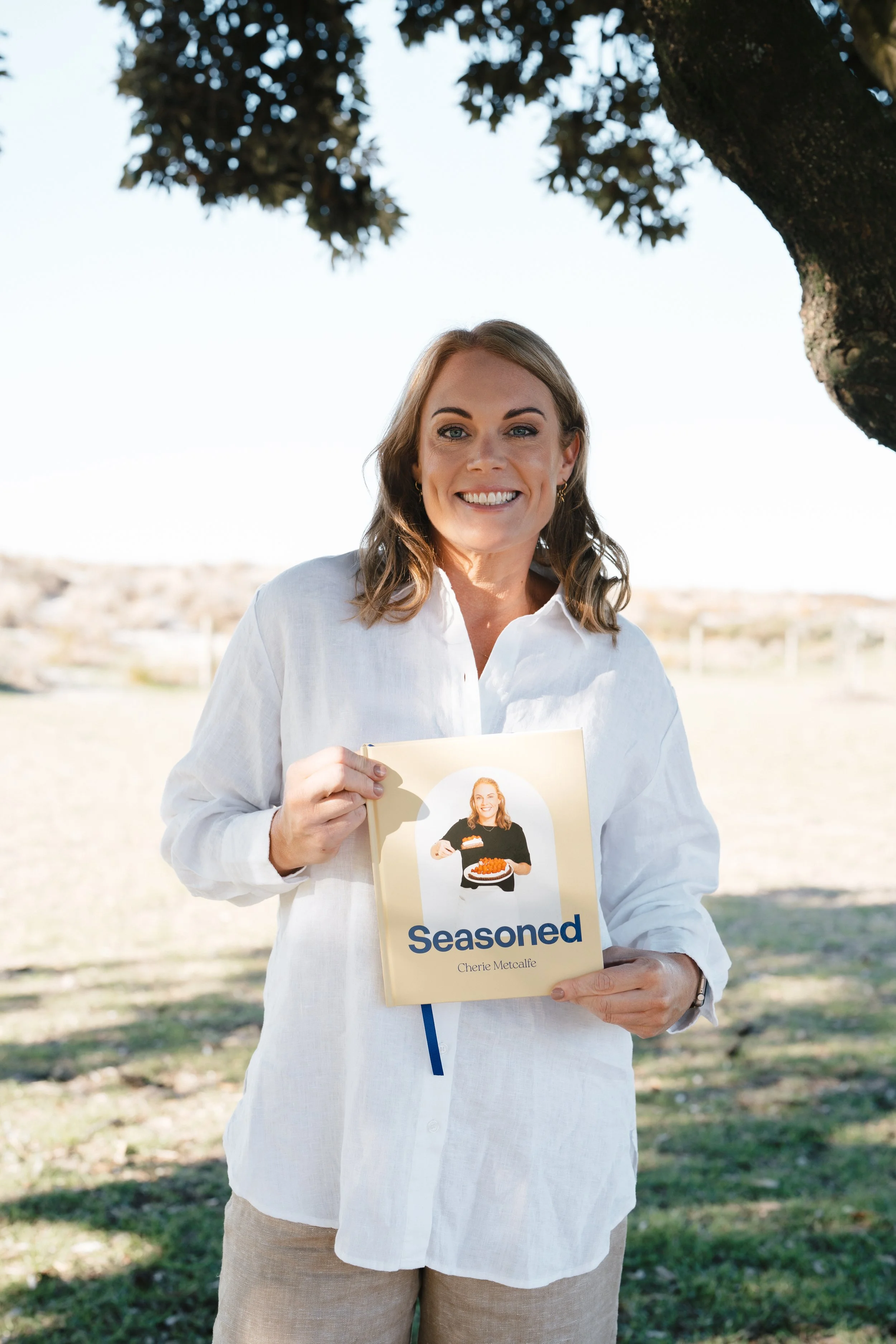
Cherie Metcalfe
Inspiration for new blends comes thick and fast, particularly after travelling. “I always come back bursting with new ideas, new flavour profiles and different ways that spices can be used.” But at the heart of it, she says, “I’m constantly striving to find ways that people can make and use my products easily in New Zealand.”
Keeping ahead of the game is a part of the process, and Cherie says the trends that hit overseas often take a while to reach us here, and when she does bring them to market it’s in a way that suits how we cook in New Zealand. Always looking to be innovative, as well as bringing value and versatility, Cherie explains, “We try to make products that can go on 100 different things, so if I make one rub, it’s not a ‘pork rib rub’… you can use it on roast chicken, potatoes, in the air fryer. I want more people to have seasonings in their cupboard that they love the flavour of, feel confident using and can put on all these different things.”
Ultimately for Cherie it’s about food that’s as uncomplicated as it is delicious.

Vanya Insull
VJ COOKS
“If the recipe takes all day, it’s because it’s in a slow cooker, not because it’s hard.”
I mentioned to a friend that I was due to interview Vanya Insull from VJ Cooks, a recipe and meal planning resource. It turned out she was a huge fan and follower. My friend has a large family and is not a hugely confident cook: it transpires that she is the heart and soul of Vanya’s audience. VJ Cooks’ recipes are designed so that you don’t have to rush to the supermarket for multiple ingredients you don’t already have in the pantry. They are tasty, and they are crowd pleasers. When I talk to Vanya, she confirms that this is the premise of the brand — and reiterates: “My cooking is easy — you don’t need special ingredients from delis or anything like that... I also love to cut corners, where possible, without compromising taste.” It’s the simplicity and trustworthiness of the recipes that her followers love.
It’s easy to see how Vanya has become so popular — “I’m like the girl next door” — but make no mistake, the rise to what it is now, after nine years and at least 400,000 Facebook followers, was not an accidental success. With a background as an art director, Vanya worked on food magazines prior to a family move to Taupō. With a young baby, she was faced with looking for a new career direction. The initial online posting may have begun as a passion project, however, once her Christmas mango pavlova went viral in 2016 (amassing 50,000 views in three days), it was game on. “From then, it was all intentional,” she confirms.
Out of the initial Facebook page and Instagram cooking demos came a website, cookbooks and an app — and with this volume of productivity a need to outsource. There is now a team of six part-timers, one of which is Vanya’s sister.
Vanya was quick to establish what the market actually wanted. In the early days she dabbled briefly with what could be considered picture-perfect posts (think stylised smoothie bowls), but soon decided her audience was not in the carefully curated, but in what she did at home. She landed on family meals that tasted amazing, were easy to make and budget friendly.
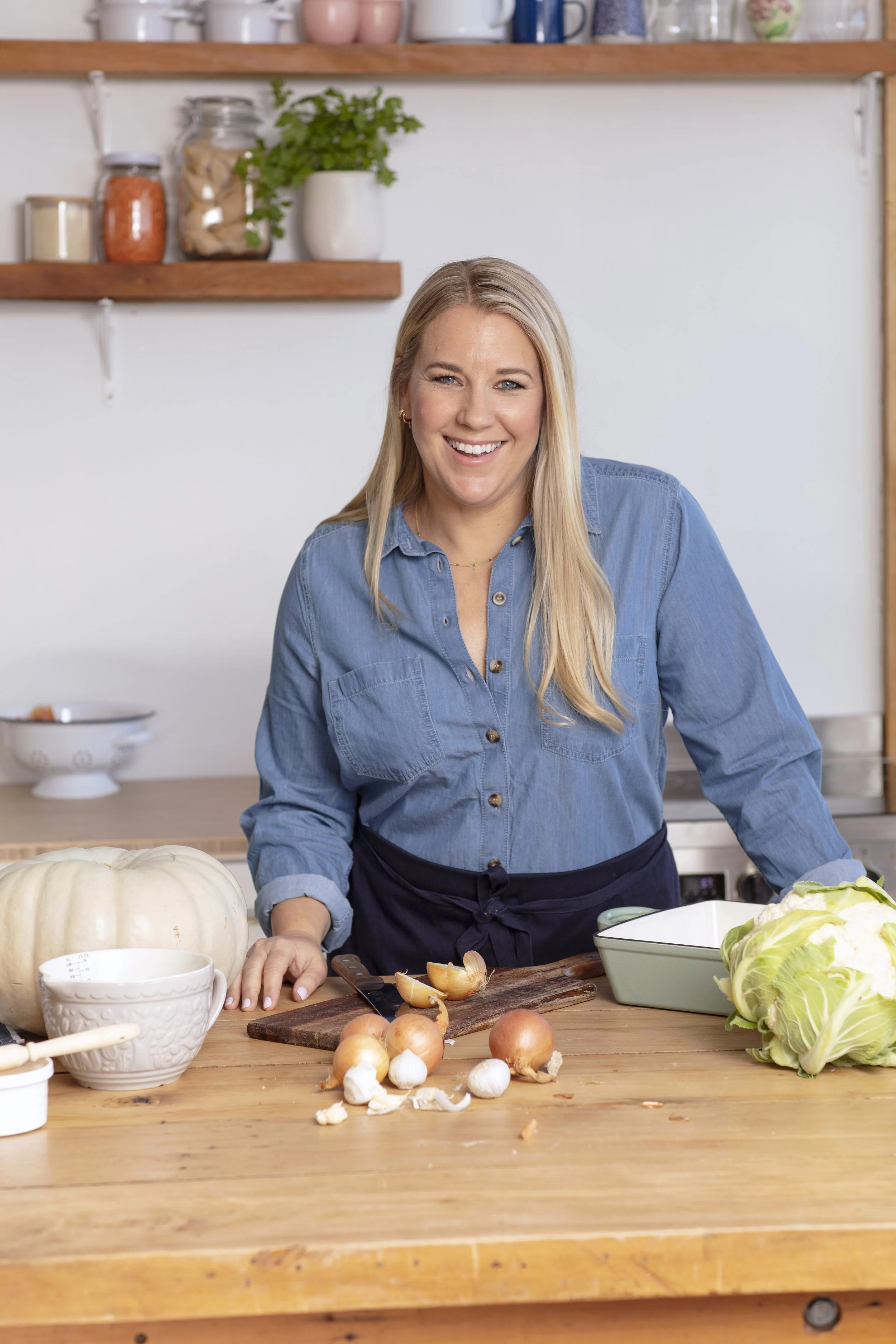
Vanya Insull
The journey was far from a breeze. “There’s no luck about it,” she explains. “I’ve done about 3,500 posts on Instagram, so we’ve posted every day for the last two years, but before that I was posting at least five times a week. A lot of content — content is king! It’s all very strategic. I plan out each month, we post seven times a day on Facebook, I post every day on Instagram and TikTok — it’s all scheduled out on calendars with the team as well. And then we’ve got the cookbooks too, and the app.”
When it comes to the types of meal, simplicity is important, however there are recipes that take a bit more effort. “But it’s worth it in the end,” she smiles.
As for dietary requirements: “I’m not scared of butter and sugar… I think people find it refreshing.”
I wonder if there’s any ingredient she actively avoids. “I’m personally not really into offal! I stick to the popular choices, like chicken, pasta, mince – we know what works.”
While people love a recipe book, the website has huge appeal with over 700 recipe choices; a paid membership gave rise to an app which brings people new recipes, generates shopping lists and gives nutritional breakdowns.
I ask Vanya if there’s anything that has surprised her about the journey. “I think if you’d told me in 2016 that I would have three cookbooks, an app with 2000 subscribers and a website that gets 50,000 hits a day I’d be quite surprised! But I’ve paid for lots of mentoring and coaching along the way. I’ve invested in my education in growing a business and in myself to learn how to do things I couldn’t. It’s surprising how much you work. I probably worked 70 hours a week for the first five years.”
The biggest irony of all it transpires that “people think food blogging is cooking but it’s probably five percent cooking, 95 percent computer work!”
FEASTS FOR THE SOUL
Celebrate summer with fresh flavours straight from Nadia Lim’s farm kitchen.
Celebrate summer with fresh flavours straight from Nadia Lim’s farm kitchen.
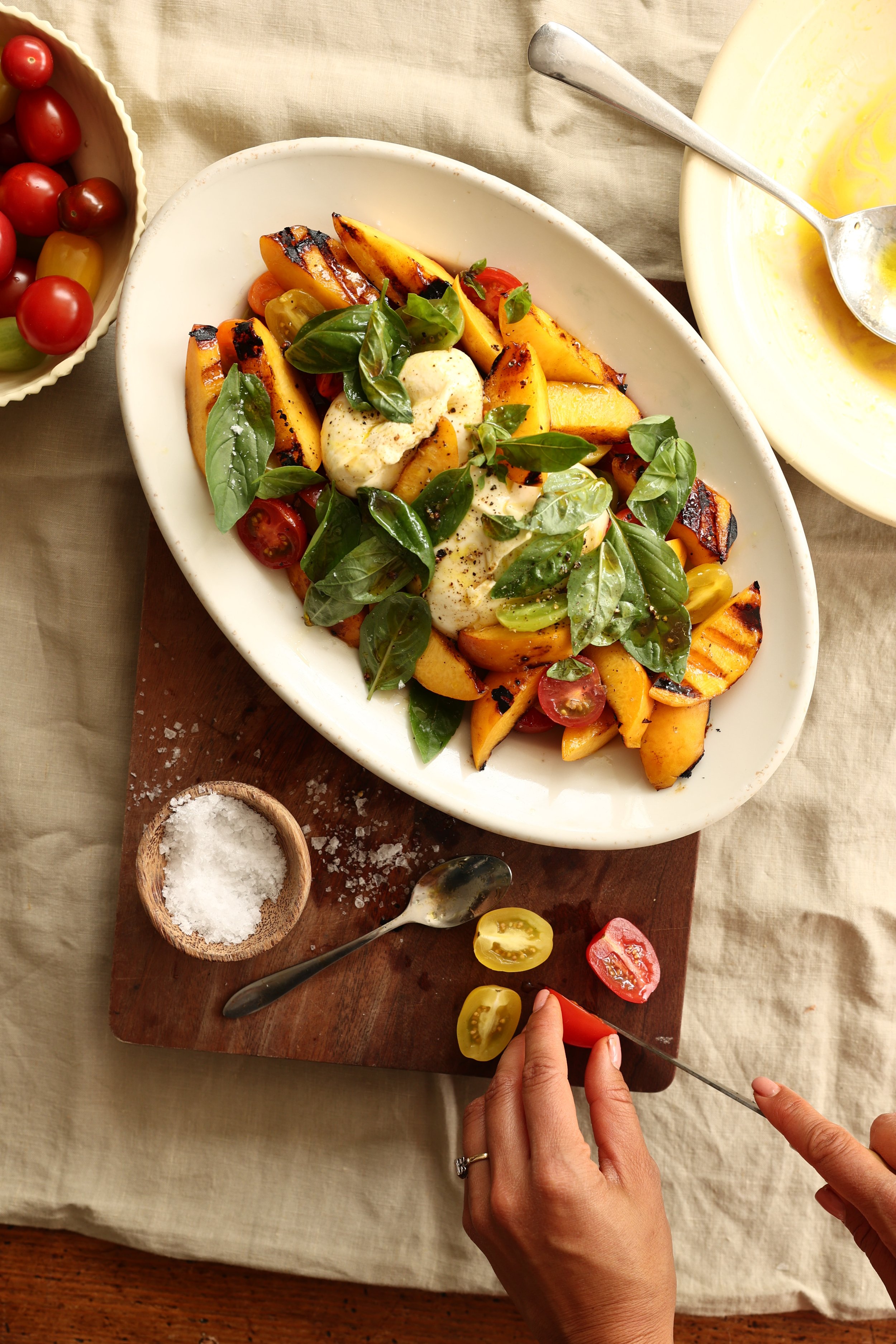
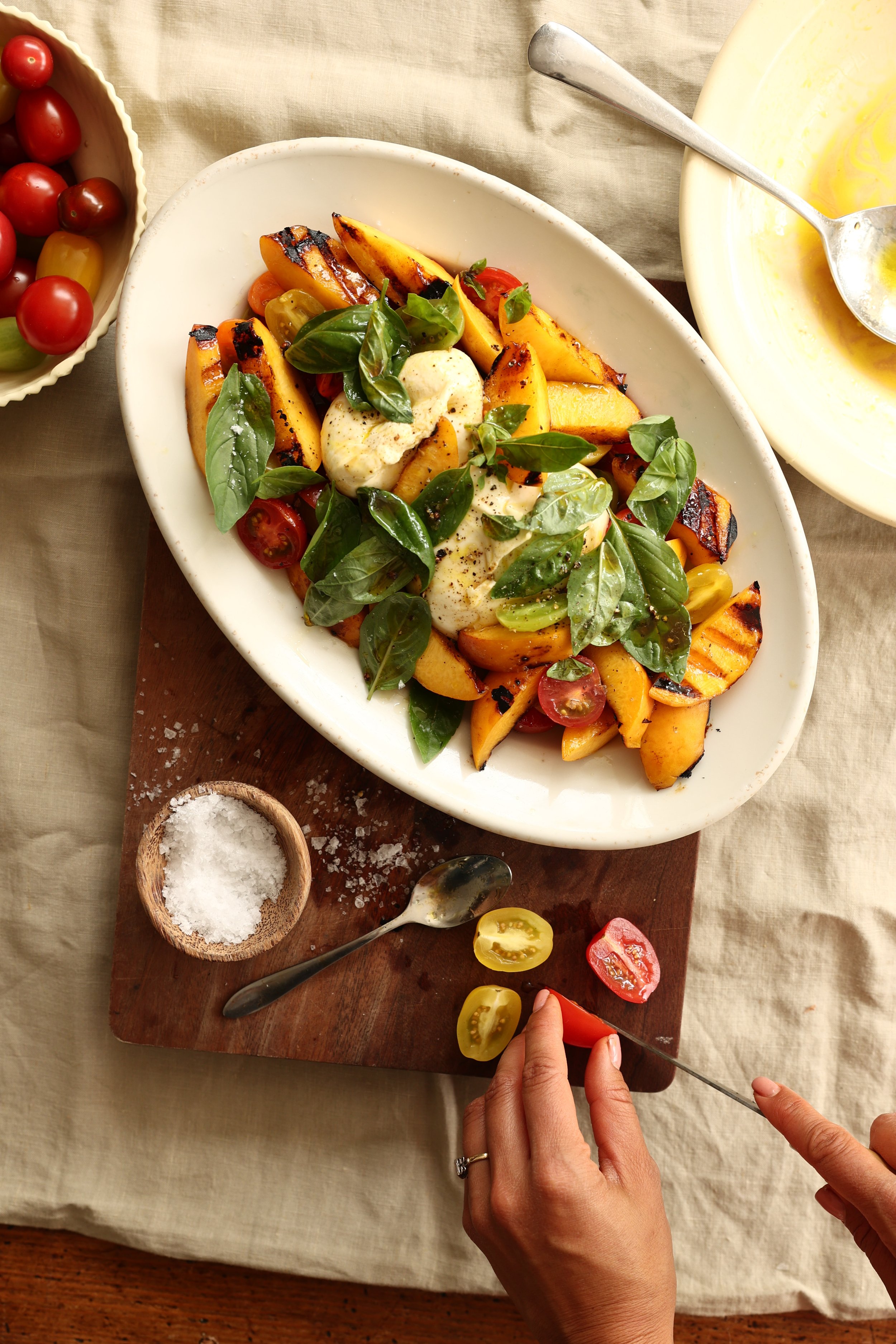
Grilled peaches with marjoram and honey-marinated tomatoes and burrata
This dish is all about contrast and fragrance — warm peaches off the grill, sweet-sharp cherry tomatoes and the delicate, herbal perfume of fresh marjoram. It’s a combination that might surprise you, but the flavours work so well and are full of sun-ripened character. Creamy burrata ties it all together, making this a quick, elegant summer plate that’s perfect as a starter, side or light lunch with crusty bread. If you don’t have marjoram, you could skip it and use a good handful of torn basil leaves at the end.
SERVES 4-6 (as a side or starter)
PREP + COOKING TIME 15 MINUTES
INGREDIENTS
400g ripe cherry tomatoes, halved
1 tbsp fresh marjoram, finely chopped (or basil)
2 tbsp extra-virgin olive oil, plus extra for brushing
1 tbsp sherry vinegar (or red wine vinegar)
½ red chilli, finely chopped (optional)
1 tsp honey, plus extra for brushing
3–4 ripe peaches, halved and stones removed
2 balls burrata cheese flaky sea salt and ground black pepper, to finish
handful of basil leaves (optional)
METHOD
Place cherry tomatoes in a bowl and add the marjoram (or basil), extra-virgin olive oil, vinegar, chilli (if using) and honey. Season with a little salt and toss gently to coat. Leave to marinate at room temperature while you grill the peaches.
Preheat BBQ grill or a frypan over medium-high heat. Brush peach halves with a little olive oil and a touch of honey. Grill, cut-side down, over high heat for 2–3 minutes, or until caramelised and lightly charred.
Spoon the marinated tomatoes onto a serving platter. Roughly tear the burrata and arrange it with the grilled peaches on top.
Finish with a sprinkle of flaky sea salt, freshly ground black pepper and fresh basil (if using). Serve immediately.
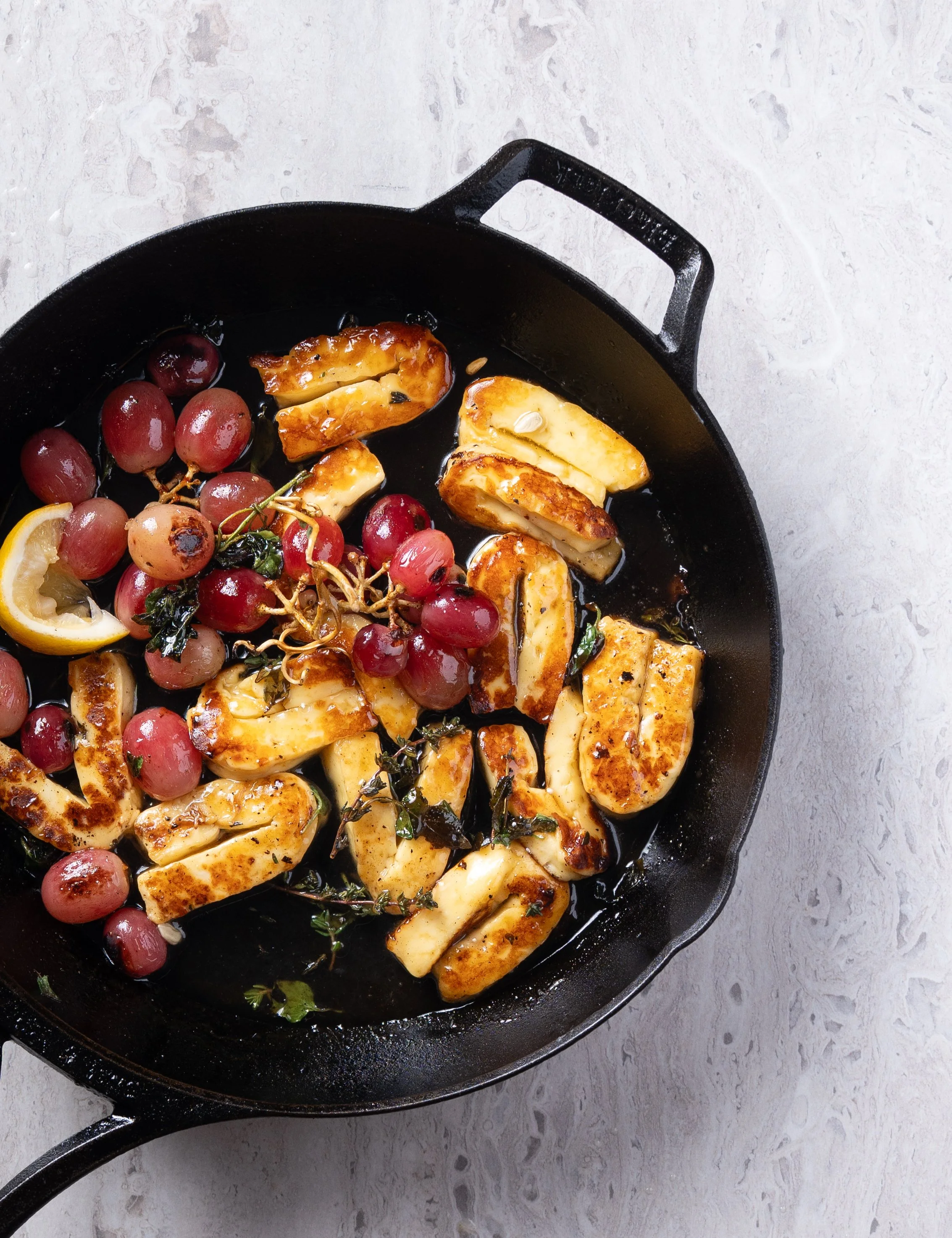
Halloumi with warm honey and grapes
This salty-sweet dish is quick to make and has a touch of flair. The golden halloumi, blistered grapes and sticky, herby, hot honey make a beautiful combination. Perfect served with crusty bread to mop up the juices, or with a simple green leaf salad.
SERVES 2-3 (as a starter)
PREP TIME 5 MINUTES | COOKING TIME 10 MINUTES
INGREDIENTS
250g halloumi
small bunch of whole grapes
few sprigs of fresh thyme or oregano
2 tbsp honey
juice of ½ lemon
METHOD
Pat the halloumi dry with paper towels and slice into 1cm-thick pieces.
Heat a drizzle of olive oil in a cast-iron or non-stick fry pan over medium heat. Once hot, add the halloumi and cook for 2–3 minutes on each side until golden. Don’t overcrowd the pan; you may need to cook it in batches. Once the halloumi is cooked, remove it from the pan and transfer to a plate.
In the same pan, add the grapes and herb sprigs. Cook for a few minutes, until the grapes have softened and blistered slightly.
Add the honey and cook for another minute, letting it bubble and thicken slightly.
Return the halloumi to the pan and spoon the hot honey, grapes and herbs over the top.
Squeeze over the lemon juice and serve immediately as is, or with crusty bread or leafy green salad on the side.
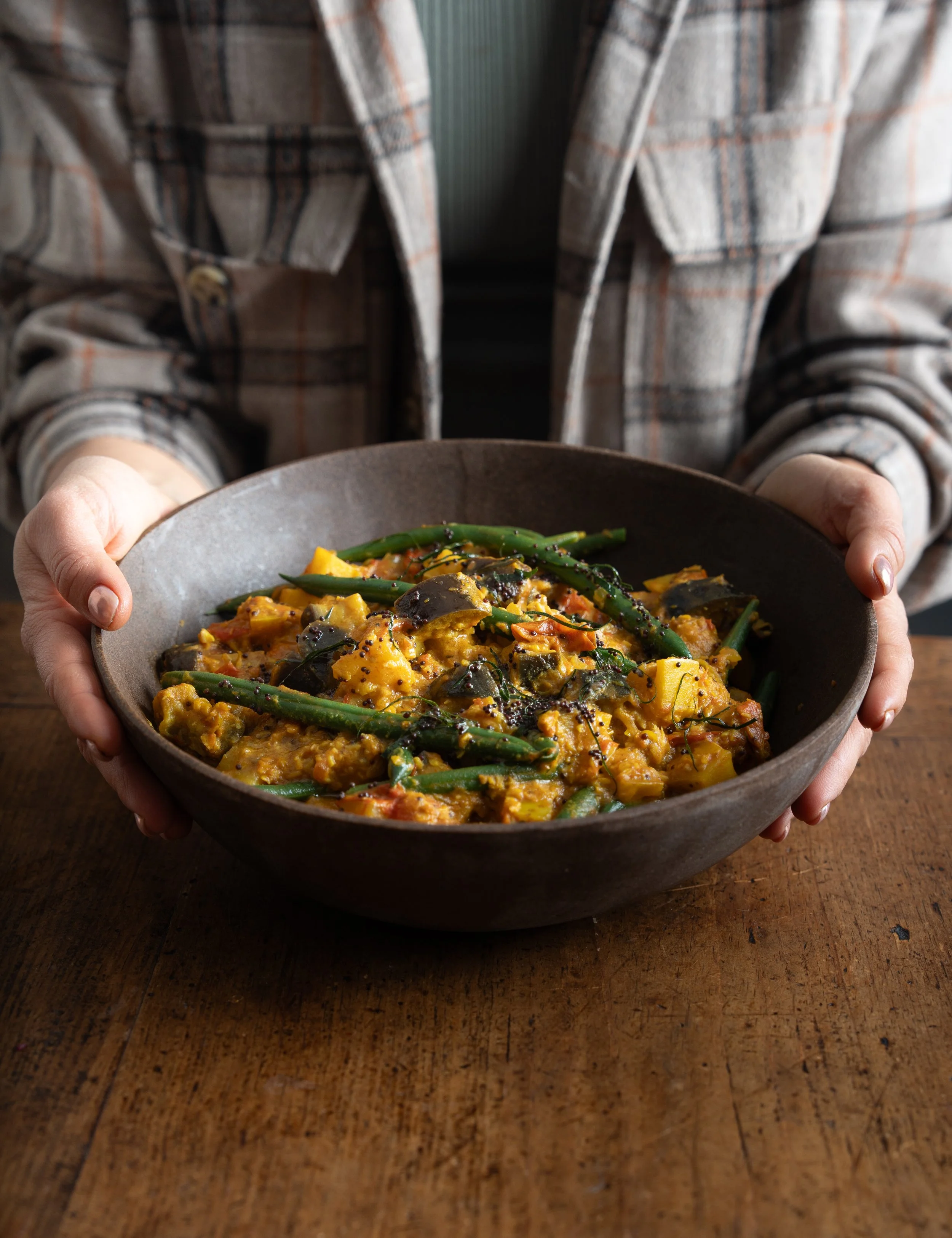
Last of the summer tomato, eggplant, bean and potato coconut curry
As summer slips into autumn, the garden is still giving plenty – the last of the sun-ripened tomatoes, straggler green beans and glossy eggplants hold on while cooler nights start to roll in. This gently spiced curry celebrates the overlap of sweet late summer produce with spicy, comforting flavours. Whilst you could use canned tomatoes, fresh tomatoes really do make this curry sing. It’s the sort of meal you crave as the air turns crisp.
SERVES 4
PREP TIME 15 MINUTES | COOKING TIME 30 MINUTES
INGREDIENTS
600g ripe, sweet summer tomatoes (enough to make 1 ½ cups puréed)
1 onion, chopped
1 tsp black mustard seeds
2–3 cloves garlic, chopped
2 stalks lemongrass, finely chopped
1–2 makrut lime leaves, finely sliced
1 tsp grated fresh ginger
2 tsp curry powder
½ tsp each ground coriander and ground cumin
1 tsp ground turmeric
2 medium potatoes, scrubbed and cubed (or 2 cups peeled, cubed pumpkin)
1 large eggplant, cut into 2cm cubes
200g cherry tomatoes
1 x 400g can coconut milk
1⁄ 3 cup desiccated coconut
1 tsp salt
2 cups green beans, trimmed and halved
To serve: roasted cashew nuts, chopped or peanuts (optional) coriander, chopped steamed rice
METHOD
Blend fresh tomatoes in a food processor or blender until smooth.
Heat a good drizzle of oil in a large pan over medium heat. Add onion and cook for a few minutes until softened. Stir in the mustard seeds, garlic, lemongrass, makrut lime leaves, ginger, and spices. Cook for 1 minute until fragrant.
Add puréed tomatoes, potatoes, eggplant, cherry tomatoes, coconut milk and salt. Stir and simmer for about 20 minutes, or until the potatoes are tender, stirring occasionally.
Add a splash of water if it looks too thick. Stir in the desiccated coconut and green beans. Cook for another 2–3 minutes, until the beans are just tender.
Serve hot, scattered with nuts and coriander if using, alongside steamed rice.
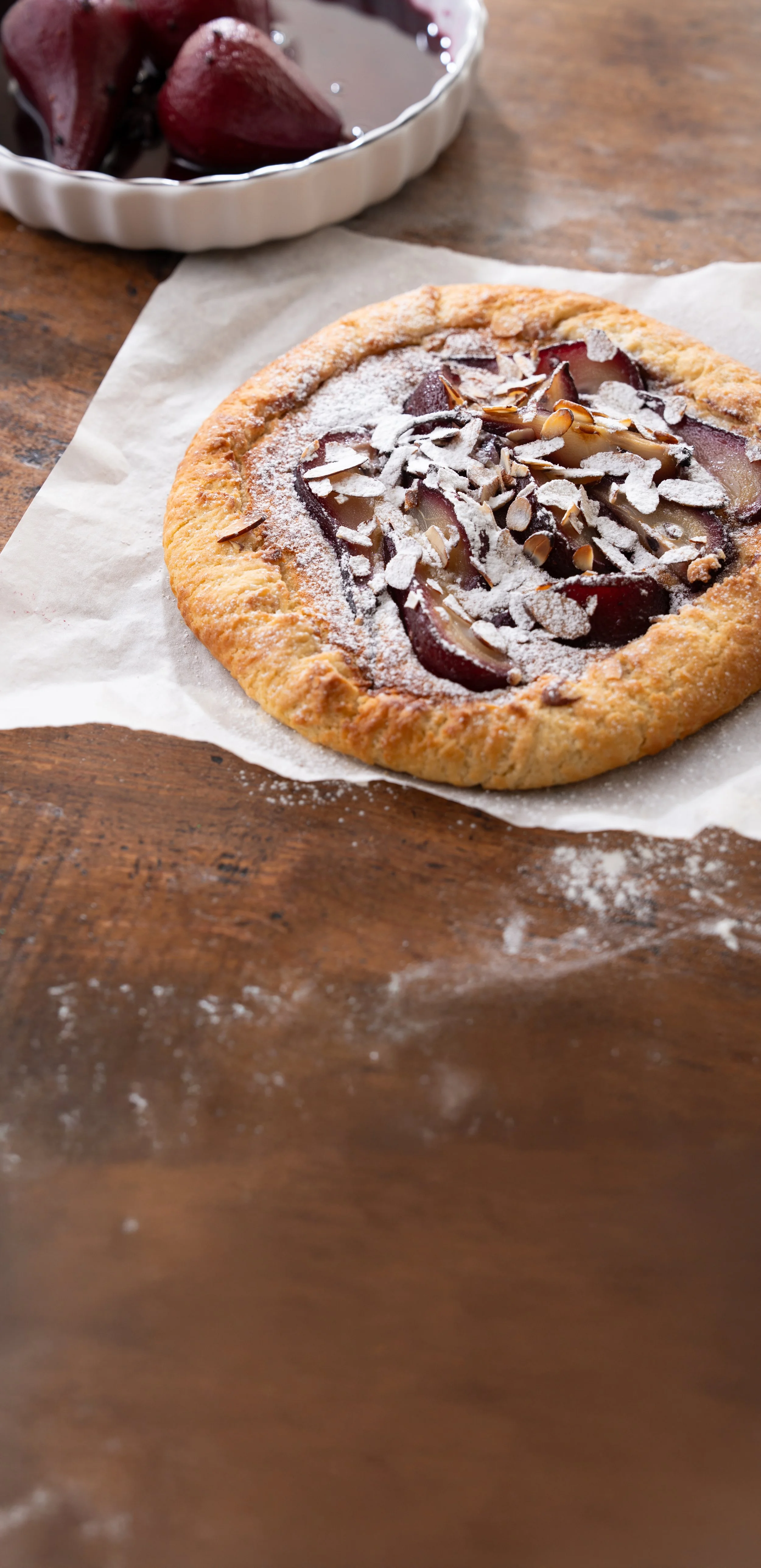
Seasonal frangipane fruit tart
If there’s one dessert worth having up your sleeve, it’s this one. A seasonal fruit tart with frangipane is simple to make but feels a bit fancy. Sure, you could take a shortcut with store- bought sweet shortcrust pastry, but honestly, making your own is way easier than you think (especially with a food processor), and it does make a difference. As for the fruit, just go with whatever’s in season. In summer, think apricots, peaches or berries; in autumn, pears, plums, feijoas and quince are all beautiful. My top picks are Elderberry Poached Pears and Roasted Quince in Rosé, Rosewater & Ginger (all of which feature in the book). The rich almond filling is called frangipane, and it’s what makes this tart so lush and special.
SERVES 6-8
PREP TIME 15 MINUTES | COOKING TIME 30-35 MINUTES
INGREDIENTS
Pastry crust:
150g plain flour
1⁄4 cup caster sugar
115g cold butter, cubed
3–4 tbsp iced water
2 tbsp milk, to brush
2–3 tbsp sliced almonds
Frangipane filling:
50g butter, softened
1⁄4 cup sugar
1 free-range egg
1 tsp vanilla extract
100g ground almonds
METHOD
In a food processor, combine the flour, sugar, a pinch of salt and the cold butter. Pulse until the mixture resembles breadcrumbs.
Add iced water, starting with 2 tablespoons, and pulse until the dough just comes together.
Alternatively, mix the dry ingredients in a bowl, rub in the butter by hand, and stir in the water gradually until a dough forms.
Turn the dough out onto a clean surface, knead briefly to bring it together, then form into a disk. Cover in cling wrap or a damp tea towel and refrigerate for 15 minutes.
Make the frangipane in the food processor (no need to clean it) by creaming the softened butter and sugar until pale and fluffy.
Add the egg, vanilla and ground almonds, and pulse until combined.
Alternatively, cream the butter and sugar in a bowl with a wooden spoon, then stir in the remaining ingredients.
Preheat oven to 190°C. Let the chilled pastry sit at room temperature for a few minutes to soften slightly. Roll it out on a lightly floured piece of baking paper into a rough circle about 0.5cm thick. Transfer the pastry (still on the paper) onto a baking tray.
Spread the frangipane in the centre of the dough, leaving a 3–4cm border. Slice your chosen fruit and arrange it over the frangipane. Fold the pastry edges gently over the filling to form a rustic crust.
Sprinkle the tart with sliced almonds and brush the pastry edges with milk.
Bake for 30–35 minutes, or until the crust is golden and the frangipane is puffed and set. Let the tart cool slightly.
If using poached fruit, drizzle over a little of the syrup. Dust with icing sugar, slice into wedges and serve with a generous dollop of crème fraîche.
INTO THE WILD
The Hollyford Wilderness Experience offers Liz French a rare chance to explore remote Fiordland in comfort.
The Hollyford Wilderness Experience offers Liz French a rare chance to explore remote Fiordland in comfort.
PHOTOS LIZ FRENCH + SUPPLIED
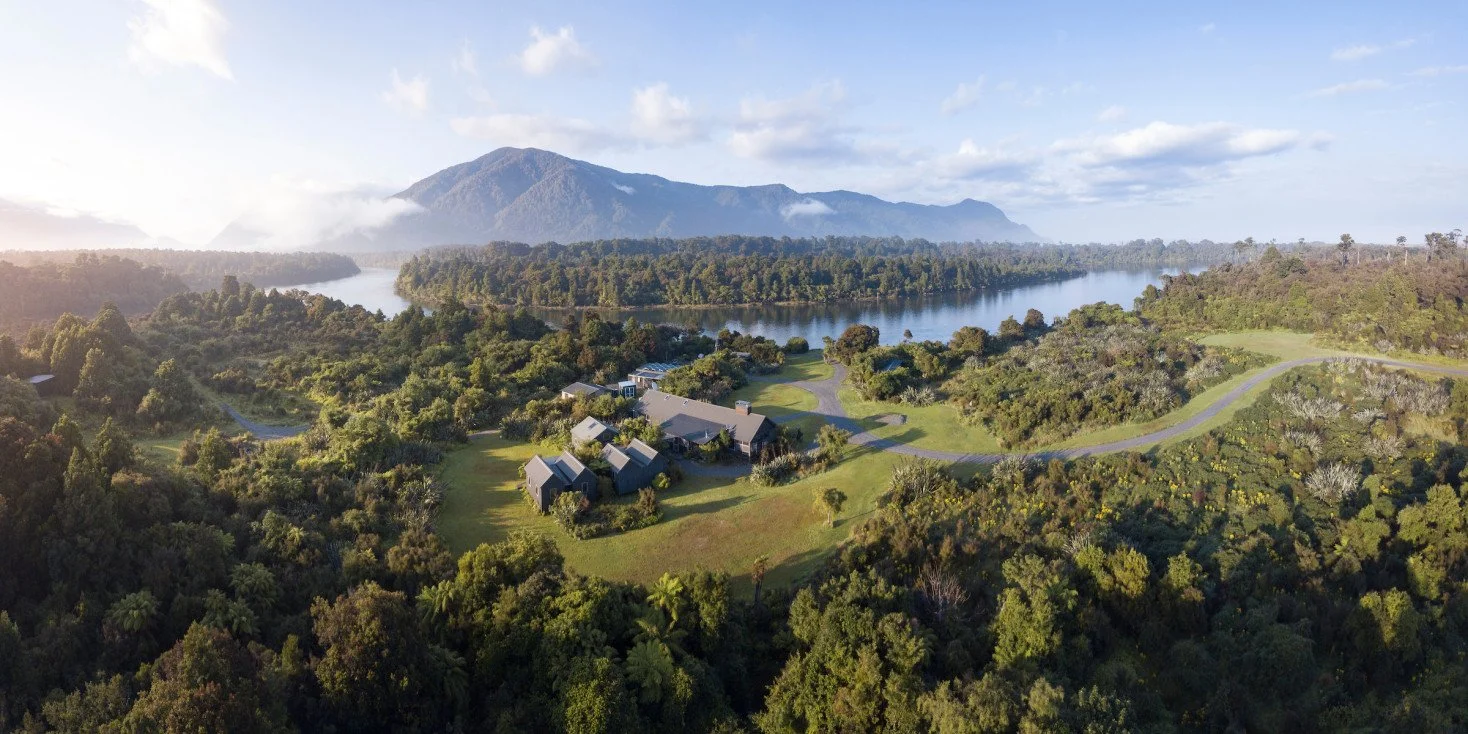
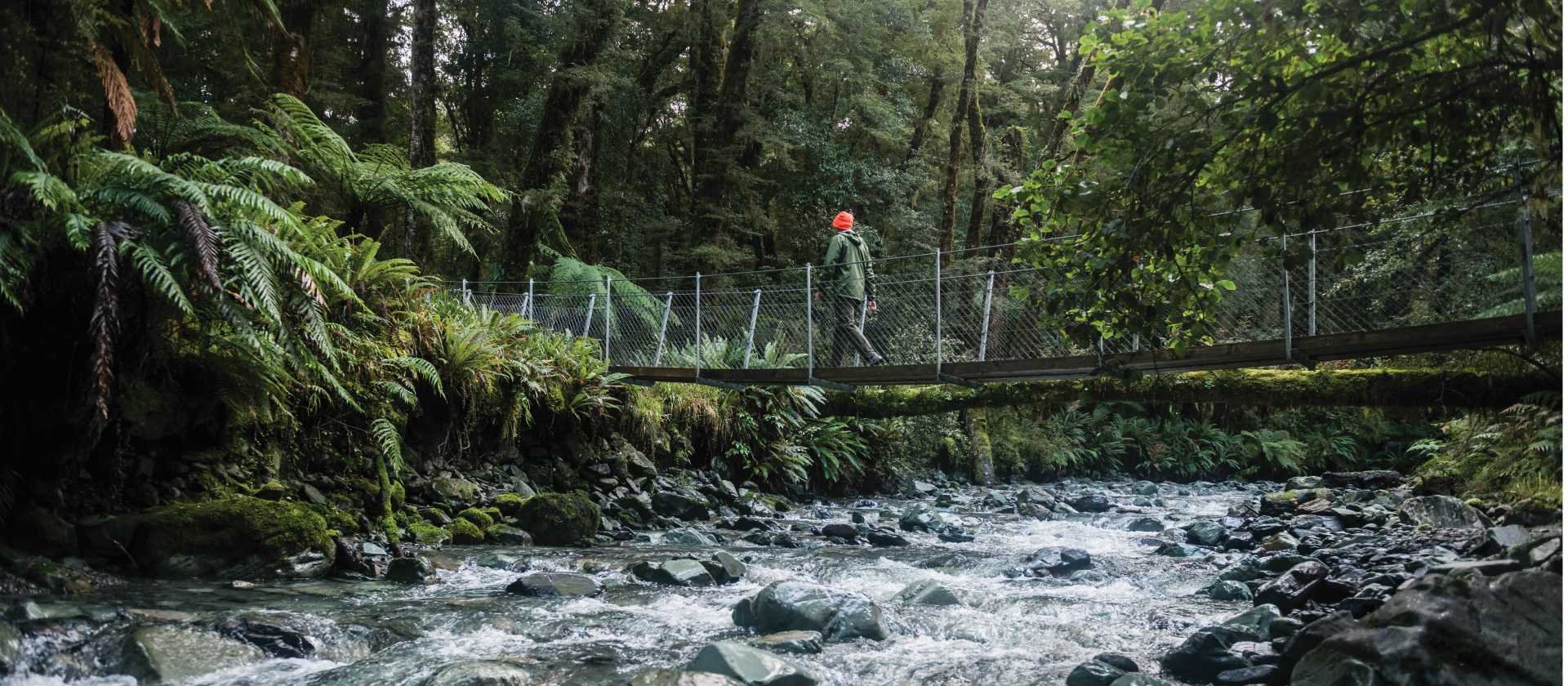
Sometimes it takes the eyes of foreigners to make you appreciate your own country. While I was walking (more like striding) along the native foliage canopied track, thinking, “This is a lovely bit of bush, but no more spectacular than I’ve seen on many tramps before,” two American women in our group were in tears of awe at the beauty of it, at greens so vivid they seemed artificially enhanced.
We were on the first day of the three-day Hollyford Wilderness Experience. There were 14 in our group: a fun-loving family of five from Chicago, two gobsmacked girls from Denver, another from Sydney, an acerbic retired medical professor and his quick-witted wife from Nelson, my partner Mark and me from Tauranga, plus our two guides, Jack and Rosie, both in their twenties, both people you would trust your life with.
Lunch above the river broke up the day. The track is mainly flat with one gentle incline over the 168-metre Little Homer Saddle. We had a hell of a time getting to Te Anau the day before, plagued by Air New Zealand cancellations and postponements, and finally arriving, minus bags, after midnight. Luckily, we had the prescience to wear our boots and have all we needed for this trip in our backpacks.
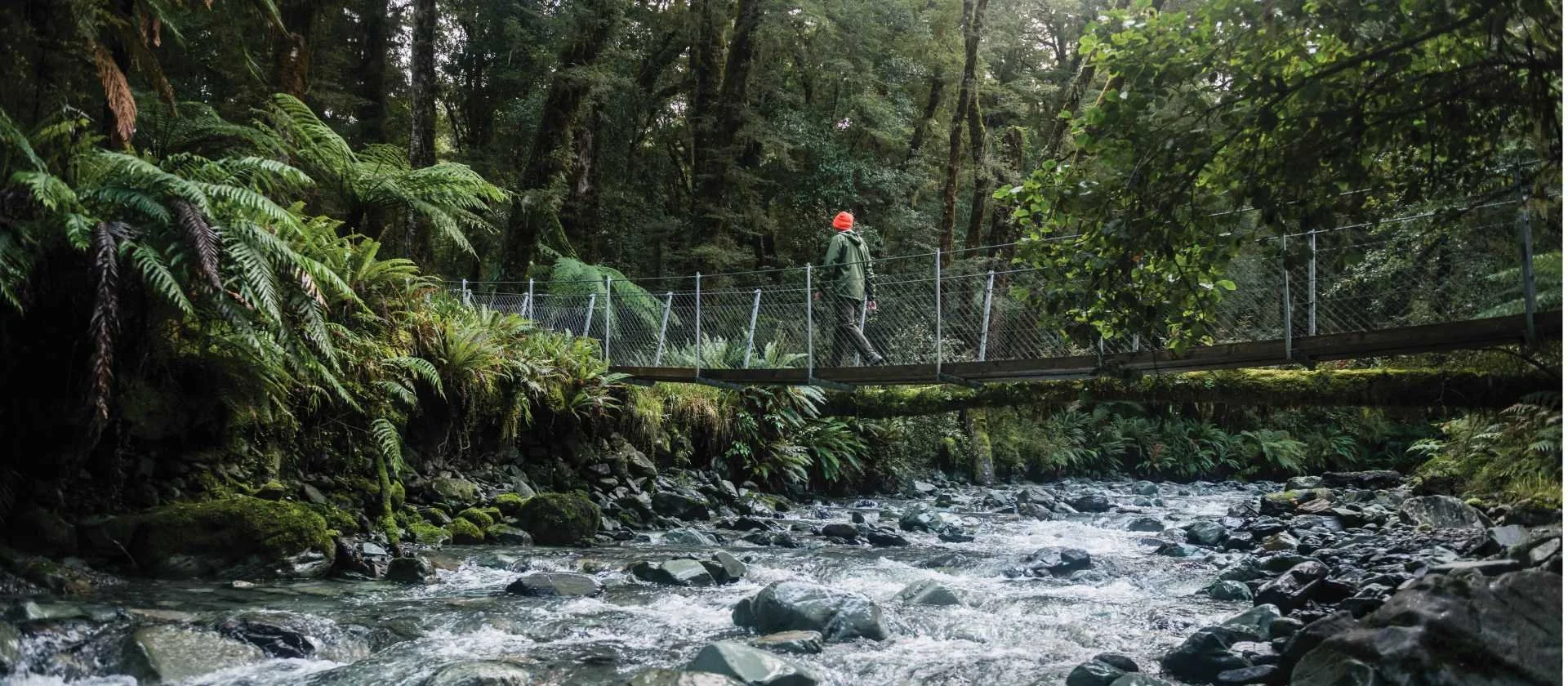
As I was a bit fatigued before I even started, it was a relief to finally arrive at Ka Tuku (Pyke Lodge) and be welcomed by our hosts, Stephane and Caro, who told us this was the first fine day in weeks. As Fiordland gets something like 300 days of rain a year, you do have to be prepared for it. The first day is the longest walk by far — 19.5 kilometres from the Hollyford Road end to the first lodge.
I love a river walk so I was delighted to find that, while we spent a lot of time shrouded in bush, we also had views across the Hollyford River to the Darren Mountains, giving us a good sky quotient.
A couple of dramatic waterfalls and Talk about sophisticated rustic luxury. A comfy room with ensuite, drying room (good when you are only carrying 4kg and one spare pair of knickers), and a big lounge where we enjoyed a pre-dinner platter with as much beer or wine as we wanted, followed by venison for dinner. We were in bed before the lemon tart.
The second day delivered the expected drizzle and an easier and more varied experience. Fortified by a good sleep and eggs benedict for breakfast I revelled in the return walk to Lake Alabaster in all its mystic glory, the greens of surrounding bush glowing even brighter in the rain.
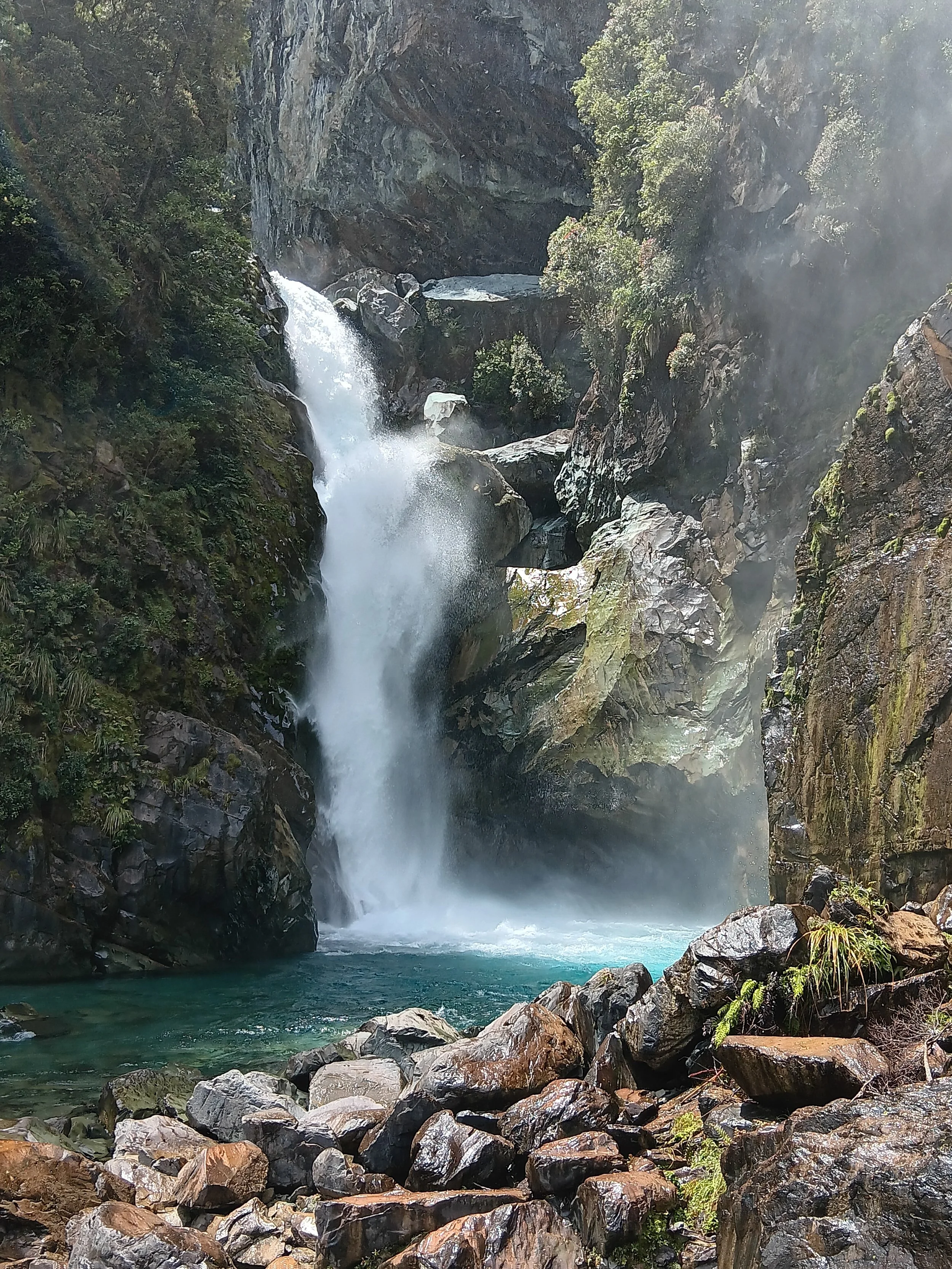
Hidden Falls.
We took a slight detour over the longest swing bridge in Fiordland, which is also the start of the Demon Trail, suitable for highly experienced trampers only, and which the Hollyford Wilderness Experience avoids by scooting us past in a jetboat.
The hour-long trip followed the river into Lake McKerrow via a stop at Jamestown, the site of a failed West Coast settlement. You feel pathetic in your high-tech gear when you hear the horrendous hardships of the pioneers, and the sheer tenacity of people like Davey Gunn, who farmed in the valley, routinely walking 50kms a day, until he drowned there in 1955.
The day wasn’t over yet. We were jet boated across the river from the lodge to traverse the wild, wet and deserted coastline of Martins Bay. We had walked about 15kms that day so I was well ready to relax in the hot tubs across the lawn from rooms even lovelier than the previous night’s.
Sandflies are an issue on the coast and, as I had refused a funereal black net to cover my head, I resorted to repellent and arm flapping.
Rare bright blue skies greeted us the next day as we jetted up the river and walked back through the soaring trees of ancient podocarp forest. One giant Rimu had such a girth it took seven people to hug it.
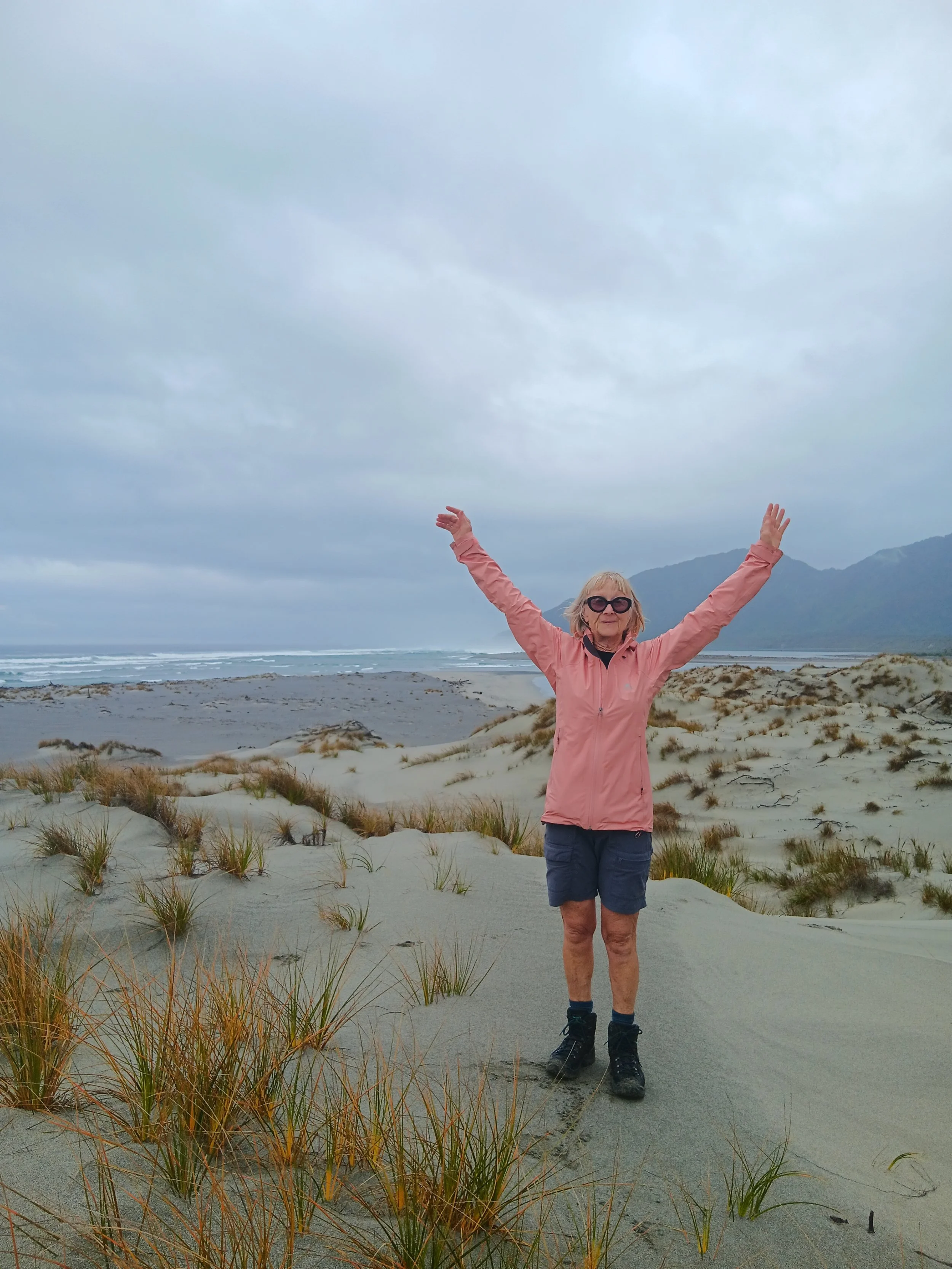
Liz French on the wild west coast.
You can’t get a much better finale to a trip than a thrilling helicopter flight along rugged coastline and into dramatic Milford Sound, with the bonus of perfect visibility. A slightly intrepid wander through bush led to a clearing with a safari tent where a long table was set up for a lunch of soup and delicious salads. I wondered how they did this until I discovered a four-wheel drive track to our second night’s accommodation, Waitai (Martins Bay) Lodge.
After the coach ride back to Te Anau on one of the country’s most scenic roads, we farewelled our new friends and I promised them a copy of my story in UNO.
Yes, it was expensive (around $4,000 per person), but priceless as an unforgettable experience.
SEA CHANGE
A Tauranga seaweed farm is turning local waters into a hub for climate and coastal innovation.
A Tauranga seaweed farm is turning local waters into a hub for climate and coastal innovation.
WORDS ALISON SMITH PHOTOS PAUL ROSS JONES + SUPPLIED
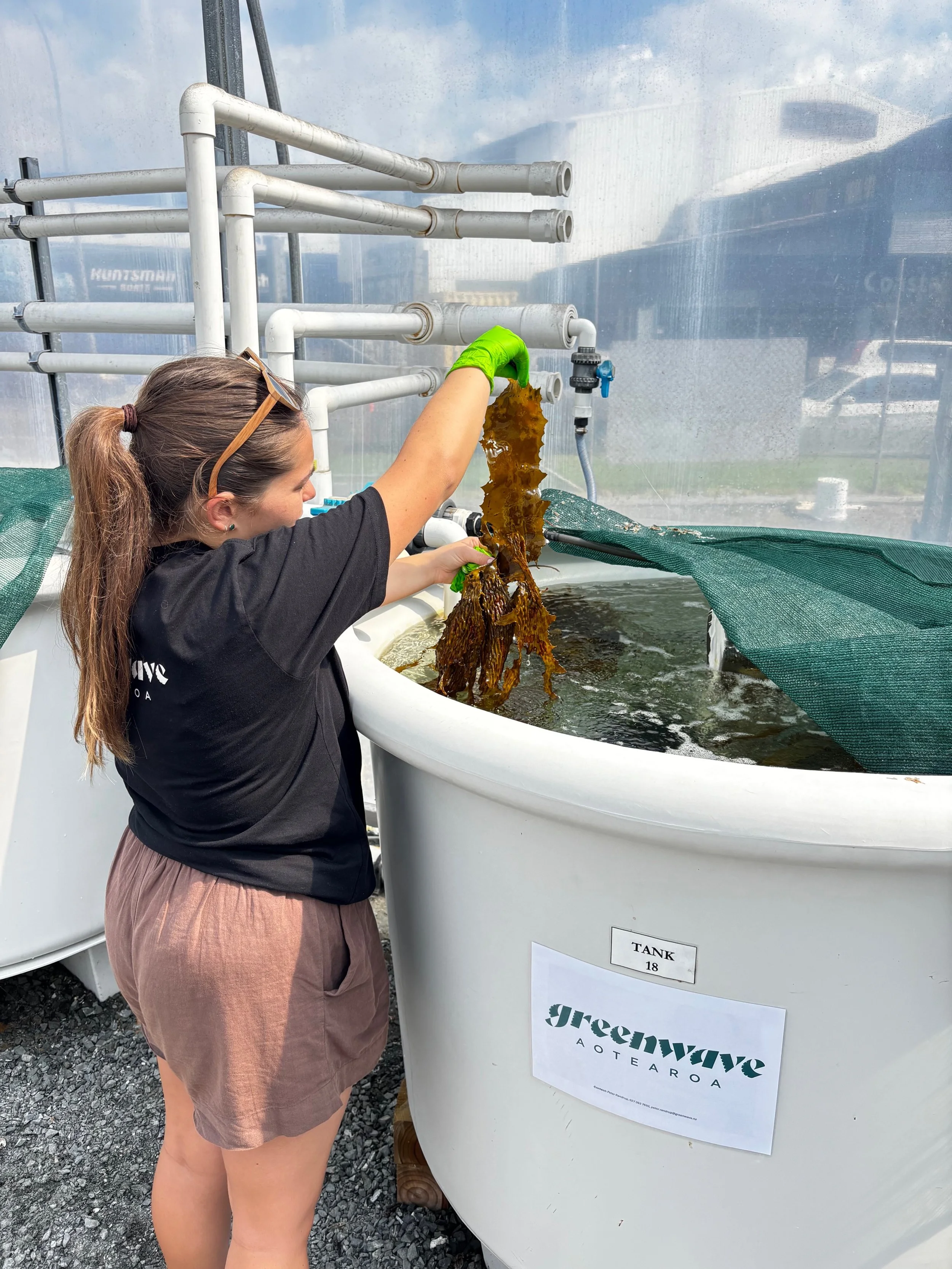
Huna Hough of Greenwave Aotearoa at the Tauranga hatchery.
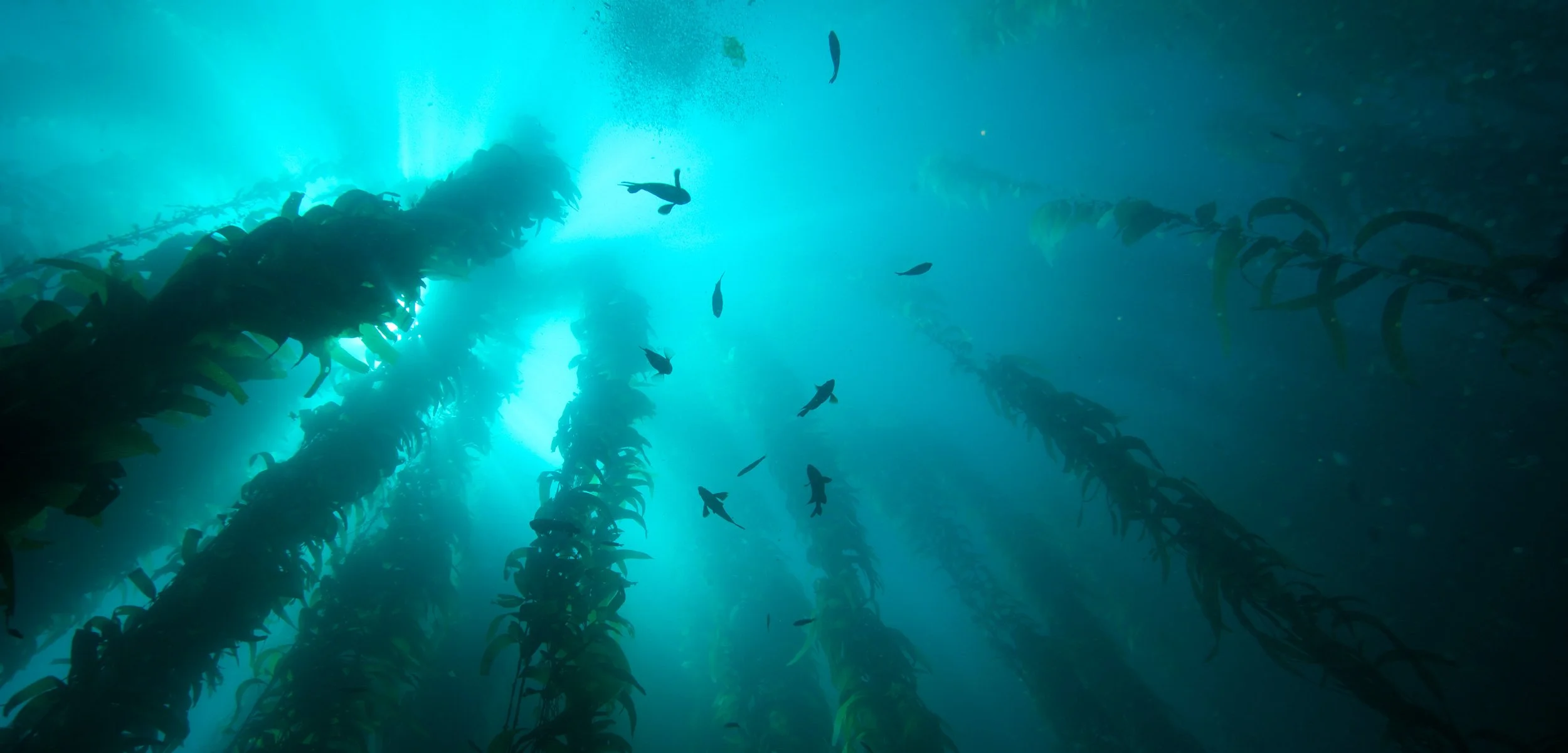
When healthy, New Zealand’s reef ecosystem is a rich and beautiful tapestry of fish species navigating golden hued kelp forests, pink paint and coralline seaweeds against a backdrop of teal green sea and bubbling tide.
This underwater world is underexplored and underappreciated by many, with spearfishers and snorkellers the most common admirers of its charms. Yet seaweed holds huge potential not only as an ecosystem in its own right, but as a climate hero for its ability to absorb carbon, filter water and provide a source of nutrients to humans and animals.
At the University of Waikato Marine Station in Sulphur Point Tauranga, a small and dedicated team lives and breathes seaweed. Greenwave Aotearoa began as a pilot project funded in part by the Sustainable Food and Fibre Futures Fund (SFFF) administered by the Ministry of Primary Industries.
Led by Auckland-based venture developer EnviroStrat, Greenwave Aotearoa is building capacity for a network of regenerative ocean farmers to farm seaweed nationwide.
Māori have used seaweed for centuries — as a food source and for storage. As Te Ara Encyclopedia of New Zealand explains: “with its long coastline and abundant seaweed resources, New Zealand has the potential for a thriving seaweed industry.
However, the labour-intensive nature of harvesting and aquaculture has prevented the country from competing against bigger producers in Asia.
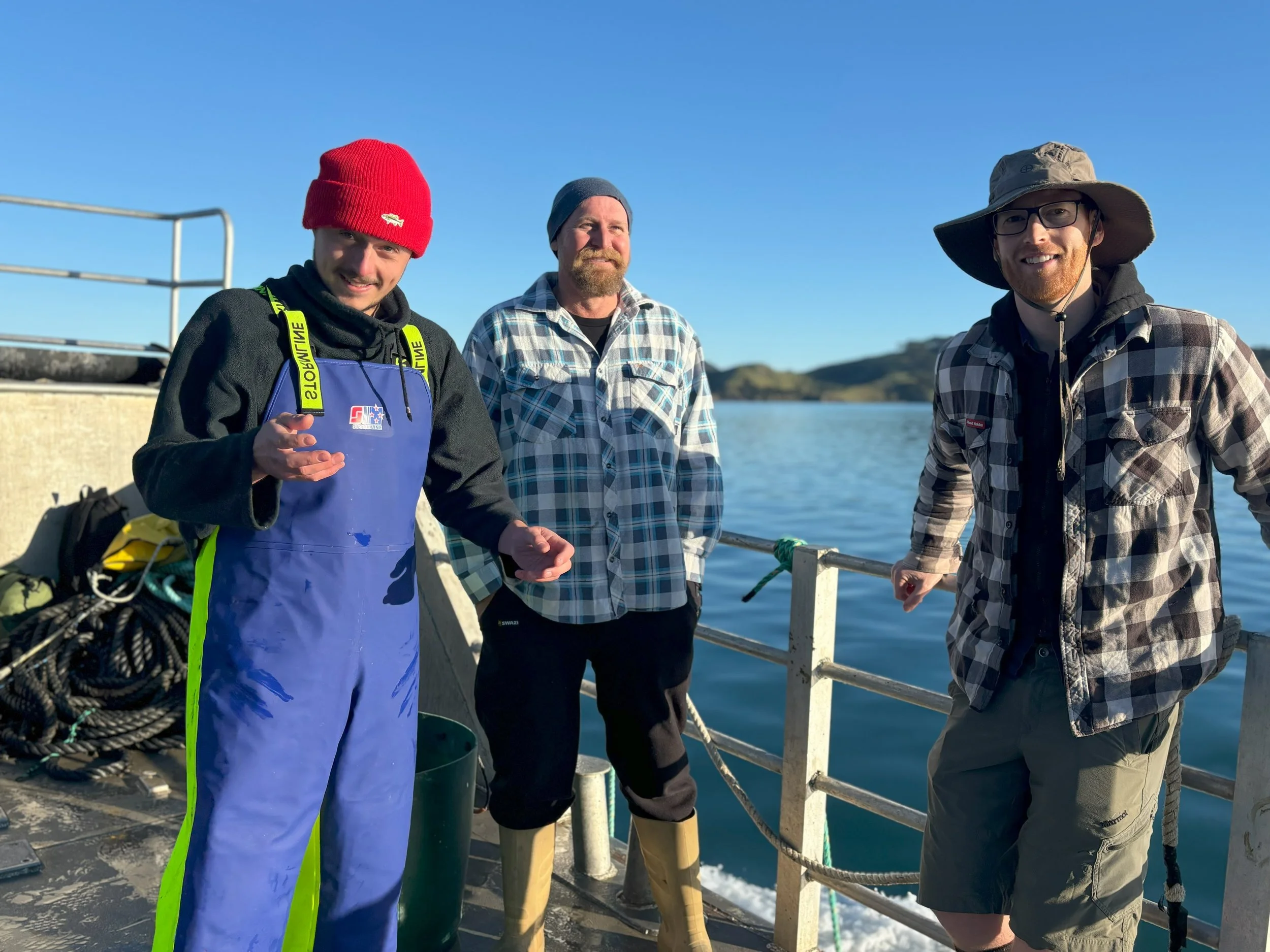
Lucas Evans, Premium Seas, with Peter Randrup and Ryan Marchington, both Greenwave Aotearoa.
Greenwave Aotearoa has been working to turn this around.
“Our oceans hold vast potential for sustainable innovation and seaweed is one of the most promising solutions,” believes founder Dr Nigel Bradly. “By farming seaweed and creating high value uses for the harvested biomass we can create a future that supports our needs while protecting the environment.”
Getting to this point has taken a great deal of learning. The project began in the Hauraki Gulf at a seaweed trial adapted from mussel farm infrastructure off the Coromandel coast. It faced challenges — including skeleton shrimp eating early-stage growth, a marine heatwave, and adapting gear to grow something never farmed here before.
Here, mussel farmer Dave Blyth — who says he keeps meaning to retire — has had his retirement sailing trips disrupted by helping grow a new seaweed industry in New Zealand alongside the Greenwave team.
The process begins with collecting seaweed under permit from the wild. The team works with the seaweed to induce spores in a Sulphur Point hatchery, where it’s nurtured under red lights using techniques refined over three years.
Microscopic baby seaweed (sporophytes) is grown on spools. The Tauranga-based team led by Peter Randrup had to determine exactly what was needed for it to thrive in an artificial environment so seedlings could be produced at scale for planting on farms. This is where farmer Dave Blyth comes in.
Dave is showing the ropes to scientists including Greenwave aquaculture lead Ryan Marchington, who brings his seaweed farming experience from Europe. Seaweed farming is new in New Zealand, and the team had been using systems designed for mussels, not seaweed.
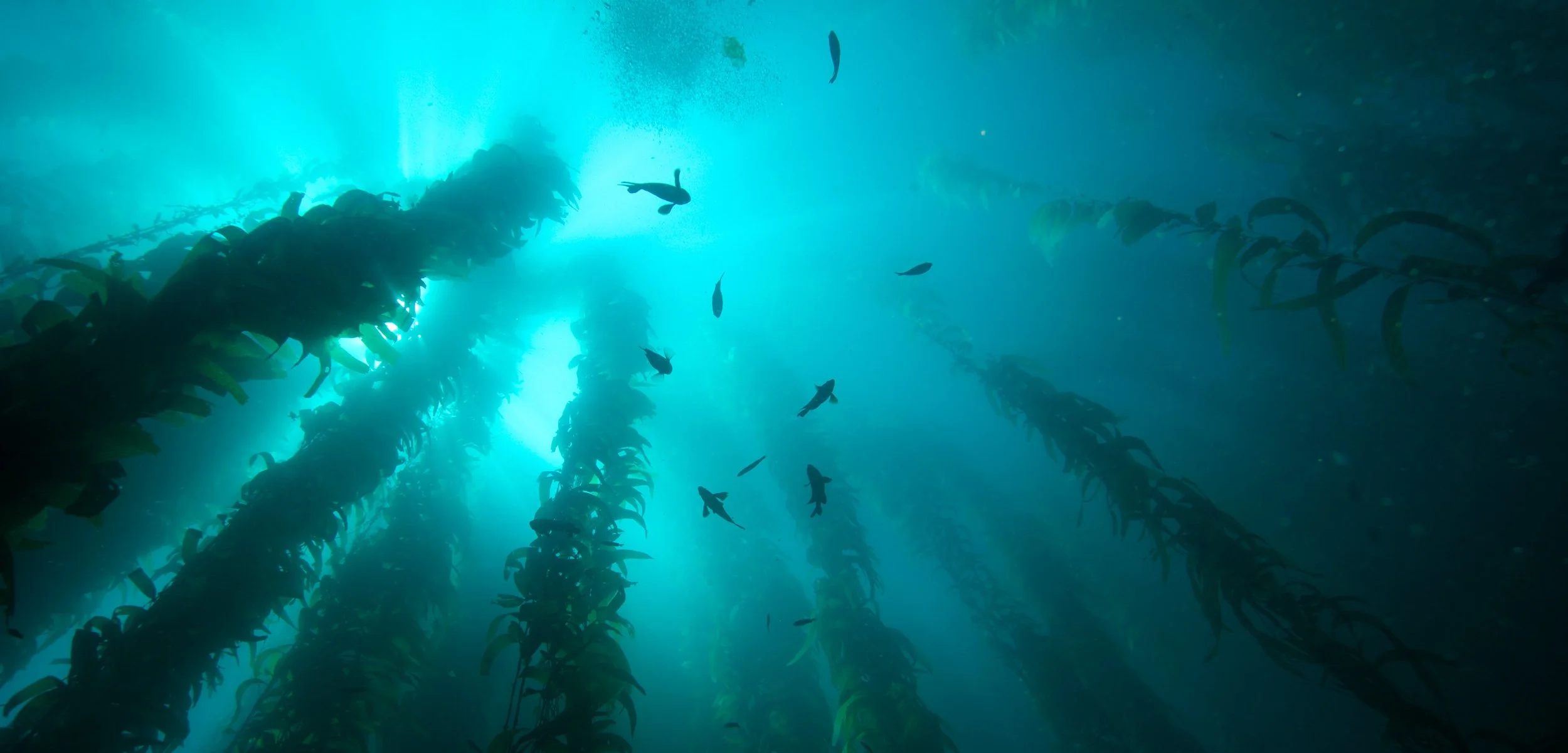
With Ryan sharing knowledge from overseas, the team has now optimised on-water operations using custom systems.
“It’s been a big learning process. You can grow seaweed in a hatchery but it doesn’t automatically follow that they’ll keep growing in the water,” says Dave. “I enjoy the innovating — designing the gear and coming up with new ways of doing things and working with the young people from Greenwave Aotearoa and the University of Waikato. Peter and Ryan and all the guys are good; no-one has got all the answers. You don’t curtail their enthusiasm but it’s good to inject how to do things out on the water in a way that will make it easier and more efficient.”
This collaboration between a seasoned mussel farmer and international techniques was a crucial turning point. Growing seaweed closer to the surface, as farmers do in Scotland, allowed the young sporophytes to photosynthesise more efficiently and outcompete fouling.
“Our hatcheries were producing good-quality spools. The issue was the farming system design,” explains Ryan. “Once we changed that, we saw the difference.”
Greenwave Aotearoa is now expanding to the South Island and is successfully growing Ryan’s favourite product innovation is key to the success of the industry, to enable full utilisation of New Zealand’s precious seaweed resources with benefits to seaweed farmers in coastal communities, product innovators and consumers. All without taking away the underwater forest upon which so many marine species rely.

HOME TRUTH BOMBS
Out of the mouths of babes (and clueless husbands!), Hayley Bath hilariously shares the mortifying truths only family can deliver.
Out of the mouths of babes (and clueless husbands!), Hayley Bath hilariously shares the mortifying truths only family can deliver.

Few things humble and embarrass you in life quite like a truthful child. I grew up knowing this well.
My older sister has never lived down the time she humiliated our mum when she was heavily pregnant with me. I can still picture it now — Mum waddling down the main street, my three-year-old sister holding her hand. They pass a rather rotund, rough-looking, patched-up gang member. My sister stops dead in her tracks, looks him up and down, and shouts ‘Look at that big fat man, Mum!’ Mum’s never waddled away faster in her life.
A little later, my sister spots another large-bellied man at the supermarket and asks, “Have you got a baby in your stomach, too?” The man went bright red with embarrassment. So, she doubles down: “Well, it sure looks like it!”
You’d think growing up with that story would have made me cautious. But no, I was lulled into a false sense of security by my sweet, articulate, well-behaved two-year-old. Then, when I was in the final throes of a twin pregnancy, and after sprinting to stop my toddler from running into the road, I damaged the cartilage between my pubic bones. The most painful thing I’ve ever had. And remember, I’ve given birth to twins.
Two weeks of bed rest followed, during which I had to wheat-pack my groin. When I finally made it back to daycare pick-up, the centre manager gently pulled me aside. With a polite but strained smile, she informed me that despite their best efforts to stop her, my daughter had spent an entire week standing at the front gate, loudly greeting arriving parents with: “Mummy’s vagina’s broken!” On repeat. Every. Single. Day.
I’d like to again clarify it was an injury to my pubic bone cartilage. Not what she said. Suddenly, the sympathetic smile from another mum made perfect sense.
But why is it that dads seem to get off so much lighter? My husband was pretty chuffed when one of our boys took to loudly exclaiming to anyone who would listen in public places that “Dad’s got a big penis!”.
I also learned the hard way that husbands can embarrass us just as well as children can. Last week I walked into the lounge just in time to overhear my husband telling his mother we have chlamydia. I nearly spat my tea across the room. “Yeah,” he was saying casually, “We’ve got hydrangeas over there, a weeping cherry tree too… Oh, and we also have chlamydia.” “Excuse me!?” I loudly exclaimed. It took me a beat to realise what he’d meant. “Camellias! We have camellias in the garden!” I screeched out to my blanched mother in law. No chlamydia. Just a hubby taking rookie punts at plant names.
So here I am, still recovering from my child loudly announcing my broken body parts and my husband enthusiastically spreading STD rumours to his mother.
One of these days the ground will kindly swallow me up. Until then I’ll quietly plan my revenge for their 21st and 50th birthday parties.
Catch Hayley on The Hits 95FM weekdays 9am to 3pm.

THE POWER WITHIN
From new motherhood to world stages, bodybuilding champion Dani Archer shows what happens when you refuse to give up.
From new motherhood to world stages, bodybuilding champion Dani Archer shows what happens when you refuse to give up.

All the signs suggested Dani Archer should give up on her bodybuilding dream. The first competition she entered was cancelled due to the first COVID-19 lockdown, so she got back into it a year later only to be thwarted again by the 2021 lockdown.
In 2022, pregnancy shifted her focus entirely. When her son Mason reached the toddler phase, the Pāpāmoa mum decided to return to training. But she’d barely begun when disaster struck. Poor wee Mason fractured his femur, pulling her away from her training and seeing her spend more time at the hospital than at the gym.
For many of us, this laundry list of setbacks would have seen us abandoning the dream. Instead, Dani focused on the one positive sign that came her way during this time, tenuous as it may have been.
“When the New Zealand Bodybuilding show was announced, I thought, ‘It’s a sign, I’ve got to do it!” she laughs. So, she did.

Competing in the Fitness division, it was Dani’s first time onstage, and nerves got the better of her.
“I was really nervous when I stepped on stage,” she admits. “I had no idea what I was doing because it was all really new.”
Again, rather than focusing on the nerves, she looked for the positive, viewing the New Zealand competition as a warm-up to the FMG World Championships, which were being held on Australia’s Gold Coast. There, it was a different story, where she performed with confidence, winning her Pro Card in Bikini Athletics and the Fitness division.
“I burst into tears,” she recalls of the moment they called her name onstage as the winner and awarded her the coveted Pro Card. “Getting that was on my vision board from the start of the year.”

This achievement marked her transition from amateur to professional bodybuilder and was the culmination of a five-year journey and triumph over all of those obstacles. But, for Dani, it’s another beginning.
“The Pro Card means you’ve met the standard for the division. Essentially, I hit the boxes for what they were looking for in a Bikini Athletic athlete,” she explains. “What it means now is I have a lot of work to do. I was at the top of the amateur, and now I'm coming in at the bottom of the pro level. Some of these women have been pros for years, and the muscle on them is insane. It's phenomenal. It’s inspiring.”
Dani got interested in the sport shortly after beginning Cross Fit training, and female bodybuilders began popping up on her social feeds. She began following various athletes and found herself drawn in and wanting to participate.
“Bikini Athletic is quite different compared to your stereotypical bodybuilding,” she says, of what drew her to it. “It’s nice tans, you’re not orange, and you’ve got your hair and make-up done. You’re not holding strange poses on the stage and you get to wear nice sparkly bikinis.”
Dani grew up dancing, so the competitive nature of the sport also appealed, she says, adding, “I really enjoyed stepping back into that competitive mode.”. She didn’t know anyone training for the same competition here, so she began reaching out to the athletes she was following as a way in and to get that connection to the sport she was growing to love.
“I developed this mentality in my prep of ‘All they can say is ‘no’. If they don't reply, I'm still where I was, but there’s a chance they might reply and then I can move forward’,” she says. “I know it can be hard putting yourself out there, but don’t be afraid to reach out.”
She found the local community welcoming and supportive in encouraging the then-newbie into the ranks.
“I connected with a whole lot of girls around New Zealand who are competing, and it was great getting to the comp and finally meeting them because we’re messaging all the time and cheering each other on,” she smiles. “If someone’s having a bad day, you lift them back up. There’s that real connection and support there.”

Dani credits the support of her family, husband Dwayne and son Mason, with much of her success.
The world champion bodybuilder and mother also runs her own education business, Study Nook, which provides structured literacy and maths lessons for students with learning needs. She credits her focus and discipline from competition prep with helping her manage the demands of both her business and family life effectively.
She’s excited to be starting her Pro career, but for Dani, the real victory has been much more personal.
“I feel like I’ve regained my confidence in myself,” she says. “You lose that a little bit when becoming a mum, and I definitely lost myself postpartum. Now, I feel like I’ve found myself again.”
Then she smiles and says, “You can be a parent, and you can still be you.”
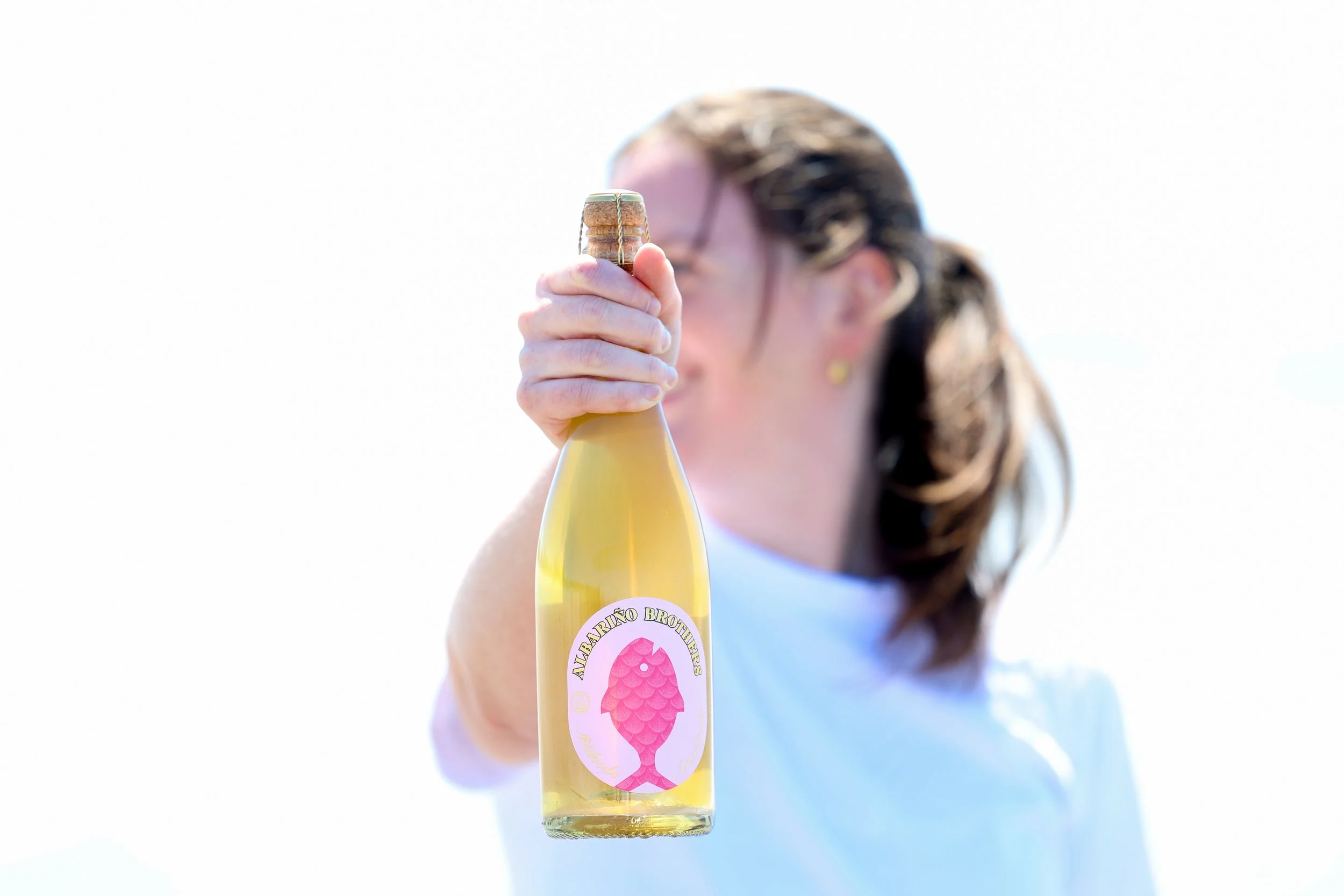
BRIGHT BY NATURE
Snapper splashing in the shallows, festivals and BBQs, the fragrant twist of citrus and delicious slices of stone fruit. There’s nothing like summer to explore tastes and sensations, and UNO wine columnist Jess Easton has found her version of sunshine in a bottle.
Snapper splashing in the shallows, festivals and BBQs, the fragrant twist of citrus and delicious slices of stone fruit. There’s nothing like summer to explore tastes and sensations, and UNO wine columnist Jess Easton has found her version of sunshine in a bottle.
PHOTO JAMIE TROUGHTON @ DSCRIBE MEDIA
Every so often, something so outrageous skips across your palate and the sheer joy of it is almost like a slap to the face.
I’ve written before about Albariño —the Spanish/Portuguese varietal that seems perfectly matched for growing on the North Island̓s sun-soaked East Coast.
It’s already like Kiwi summer in a glass, but now the crew at Albariño Brothers have added bubbles. And the resulting Méthode Ancestrale — nicknamed ‘Bubbly Fish’ — is fantastic.
Méthode Ancestrale is the oldest method of production, fermented in the bottle which does great things to the texture of the bubbles. Itʼs much more like a sparkly dance, with the hint of foam, rather than a heavy fizz, and allows all the brightness and zest of the Albariño grapes to shine through.
Winemaker Ollie Powrie explains he and his fellow Albariño Brothers collaborators Shaye Bird and Ant Saunders have used a champagne yeast.
“We wanted the wine to have great character but not too much fruitiness,” says Shaye.
And they spent considerable vintner hours disgorging the wine to cut down on any sediment. We’ve already served the distinctive gold-and-pink drop to several functions at Saint Wine Bar and the response has been phenomenal. People love it, and at just 11.5 percent alcohol, itʼs a chilled-out way to start a social occasion. The tasting notes hint of nectarine and peach, while the style is more refined than Pét-Nat.
The Albariño grape thrives in New Zealand’s maritime, coastal-growing regions and delivers a uniquely expressive style, which naturally pairs with the seafood bounty on offer here. The slightly warmer nights are perfect to tame the natural high acidity of Albariño and it's very resistant to humidity and rain coming in from the ocean.
Making a bubbly version seemed to Ollie like a match made in high-summer heaven.
“It’s in our DNA to have fun with our winemaking styles and we also want our wines to have a real sense of place, focusing on the incredible vineyard sites in Gisborne and Hawke’s Bay and the growers behind these wines,” he explains.
Jess Easton is a director and owner of Kitchen Takeover and Saint Wine Bar, complementing her career as a Tauranga-based lawyer.
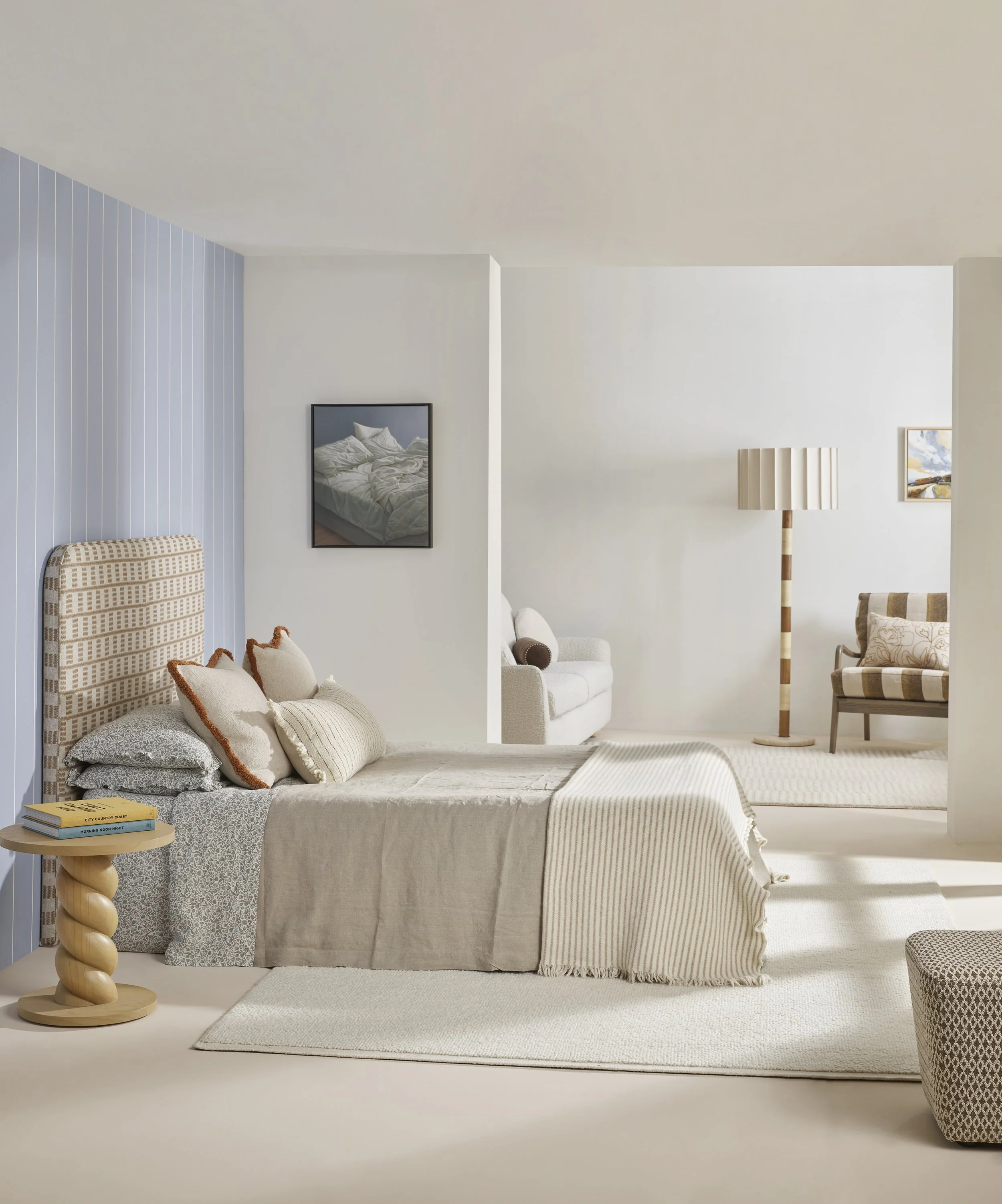
SUMMER BREEZE
Create an interior at home that has all the feels of a holiday with a beach-inspired palette and simple-but-elegant furniture pieces.
Create an interior at home that has all the feels of a holiday with a beach-inspired palette and simple-but-elegant furniture pieces.
STYLING AMBER ARMITAGE @ MARIGOLD PHOTOS MELANIE JENKINS @ FLASH STUDIOS WALL COLOURS RESENE PAINTS
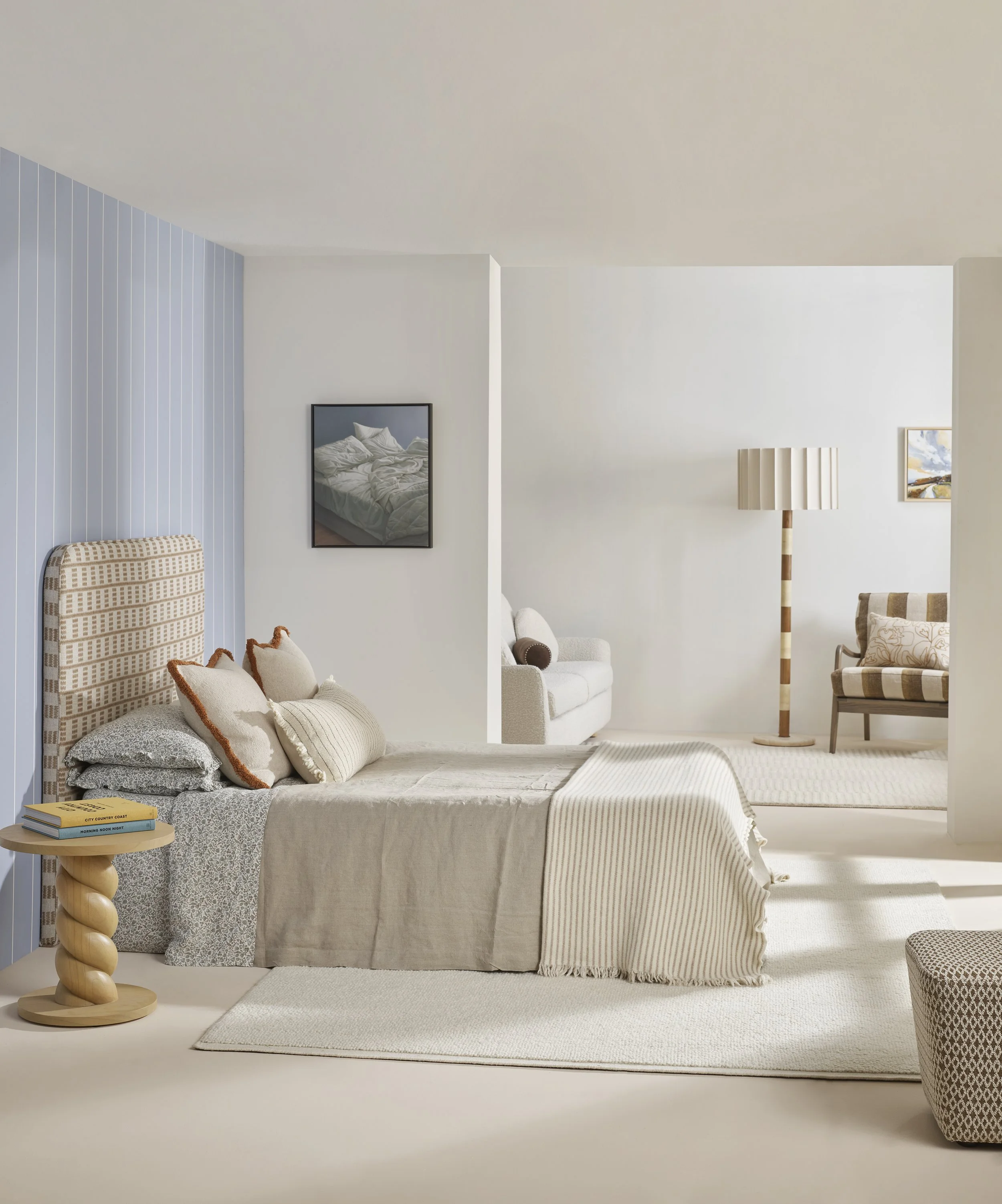
ABOVE: Main walls and ceiling painted in Resene SpaceCote Flat in Resene Quarter Bianca, wall behind bed in Resene Smokescreen with pinstripes in Resene Quarter Bianca. Floor in Resene Walk-On in Resene Half Sour Dough. Queen bedhead in Fermoie Cove fabric from The Ivy House.
ON BED: Evelyn sheet set and Evelyn linen pillowcases, bedspread in Heavyweight Linen in colour Natural and Sand Stripes wool throw blanket from Foxtrot Home. Darcy Sienna cushions (on bed), Niseko Milk Lodge cushion in Milk, and Clifton rug in Ivory, from Baya. Montreux Lucca chair in Mendocino by Designs of the Time, Housse de Coussin Lomasi cushion by Maison Casamance (on chair) and ottoman in Mattole by Designs of the Time, all from James Dunlop Textiles. Hugo Dawn sofa in Oat Boucle from Soren Liv. Verity floor lamp by Soho Home, from Obery. ‘Unmade Bed’ by Neil Driver and ‘Take No More Than You Need’ by Shona Mackenzie, available from Parnell Gallery.
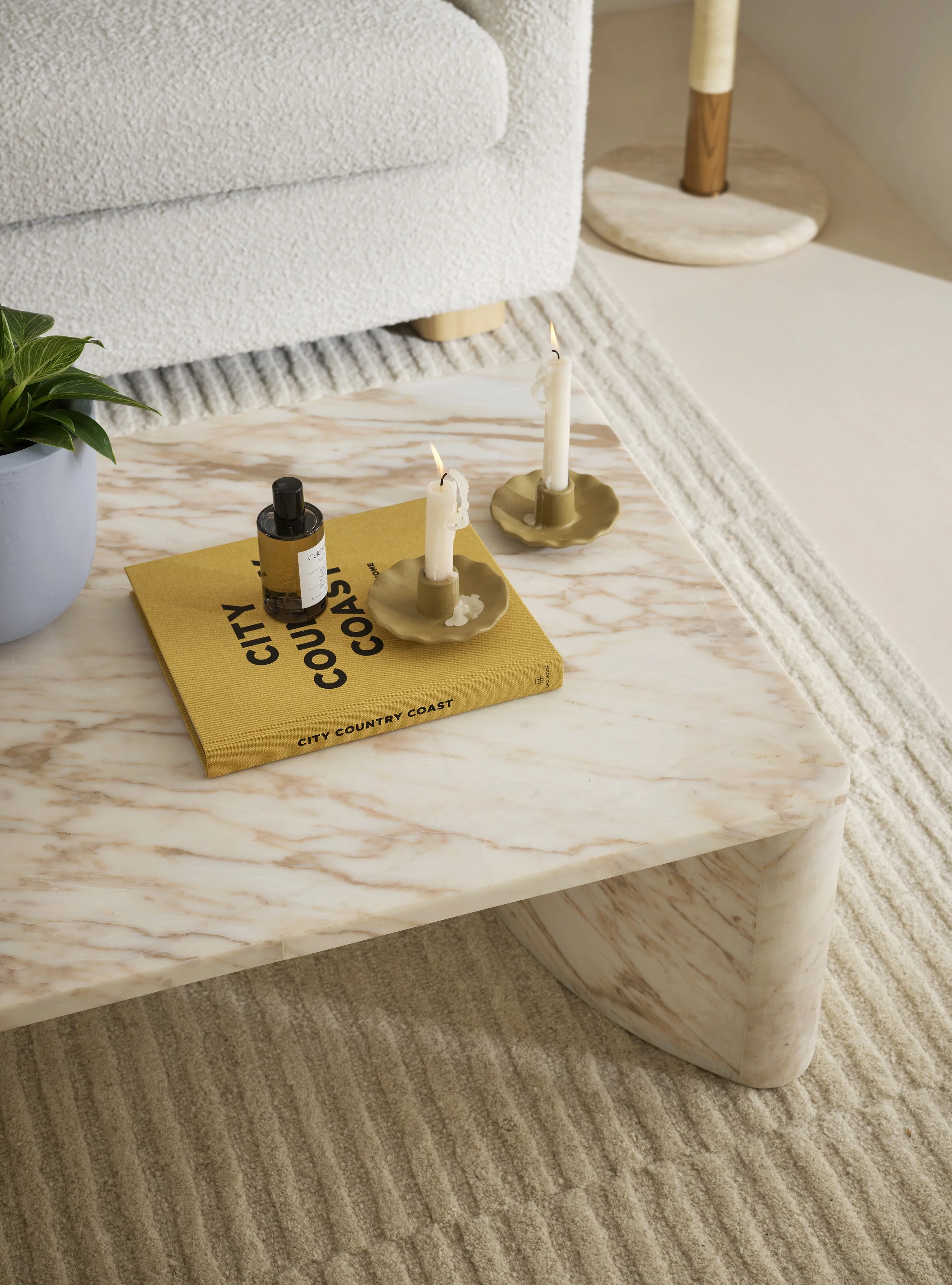
ABOVE: Floor in Resene Walk-On in Resene Half Sour Dough. Planter pot painted in Resene Smokescreen, candle holders painted in Resene Bullwhip. Hugo Dawn sofa in Oat Boucle, Verity coffee table in Golden White Marble from Soren Liv. Anni rug in Oat, from Baya. Verity floor lamp by Soho Home and City Country Coast book, from Obery.
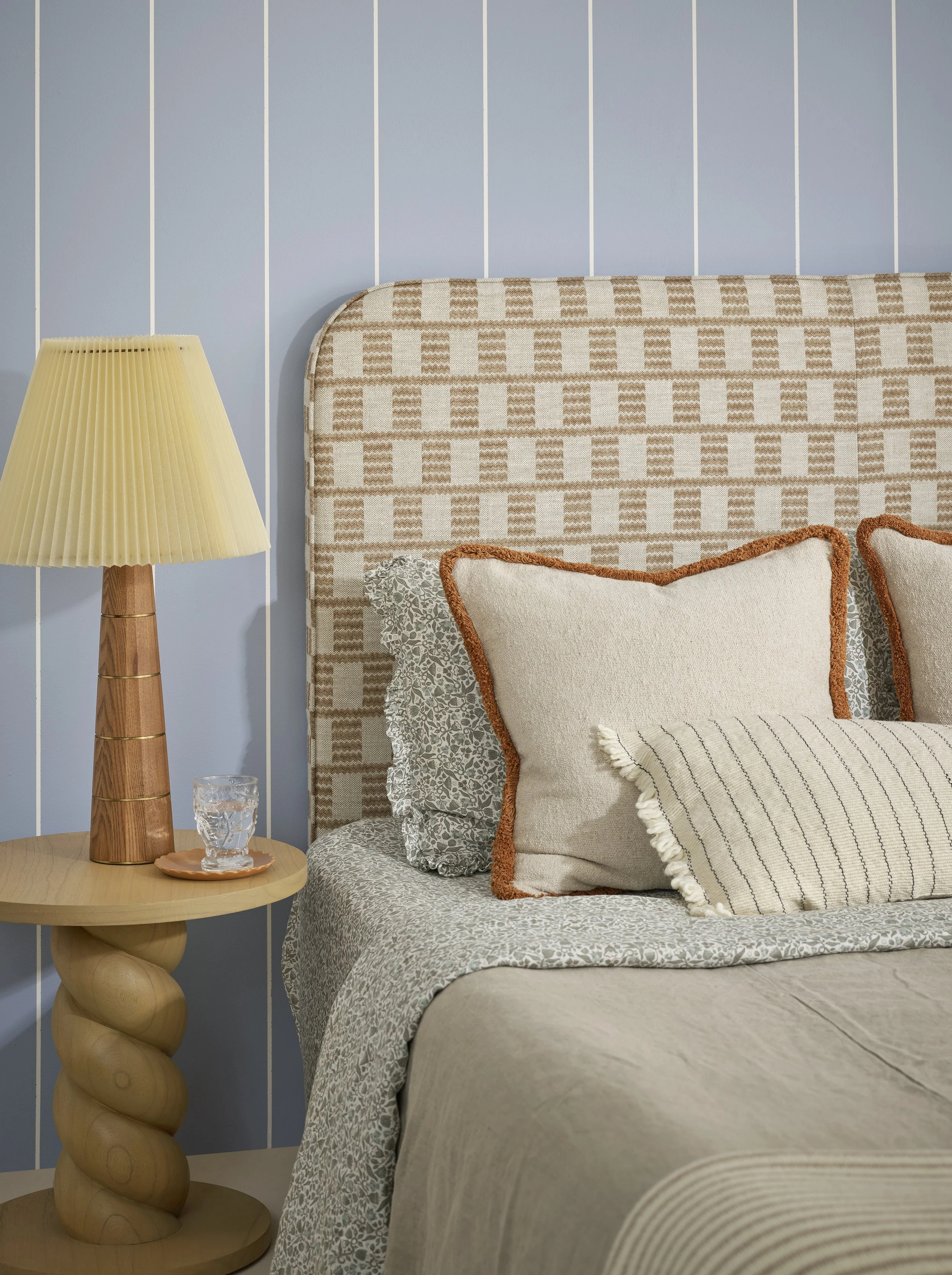
ABOVE: Wall in Resene SpaceCote Flat in Resene Smokescreen with pinstripes in Resene Quarter Bianca. Floor in Resene Walk-On in Resene Half Sour Dough. Queen bedhead in Fermoie Cove fabric from The Ivy House.
ON BED Evelyn sheet set and Evelyn linen pillowcases, bedspread in Heavyweight Linen in colour Natural and Sand Stripes wool throw blanket from Foxtrot Home. Darcy Sienna cushions (on bed), Niseko Milk Lodge cushion in Milk, and Clifton rug in Ivory, from Baya. Trove Twist side table in Natura and Hugo Layer benchseat in Sunkissed, from Soren Liv. Facet table lamp by Soho Home from Obery.
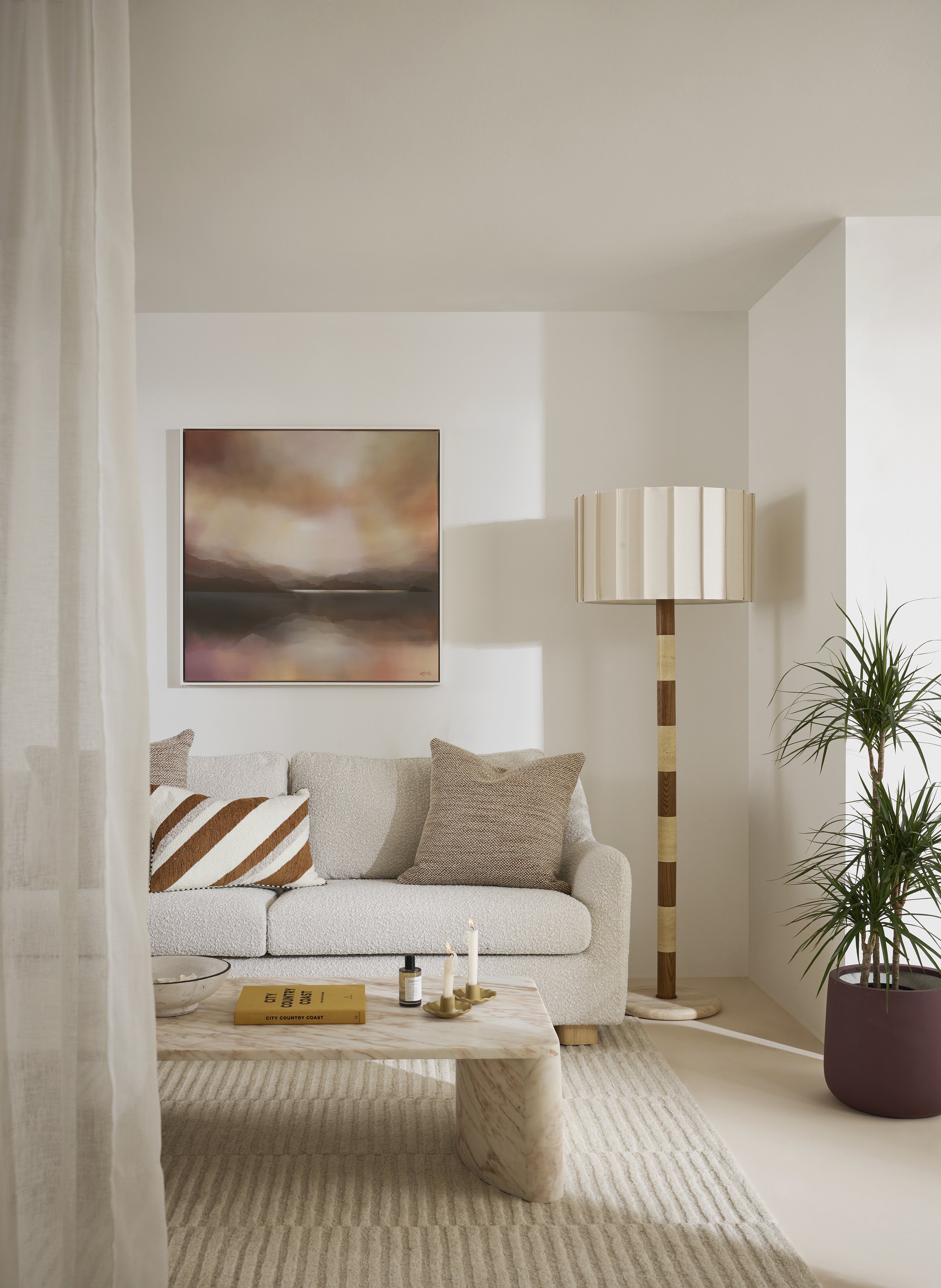
ABOVE: Wall and ceiling painted in Resene SpaceCote Flat in Resene Quarter Floor in Resene Walk-On in Resene Half Sour Dough. Candle holders painted in Resene Bullwhip. Hugo Dawn Sofa in Oat Boucle, Verity Coffee Table in Golden White Marble from Soren Liv. Anni rug in Oat, from Baya. Verity floor lamp by Soho Home and City Country Coast book, from Obery. Lisbon bowl from Father Rabbit. Day Glow by Greer Clayton from Parnell Gallery. Cushions on sofa from left: Vomo by Mokum, Slalom by Casamance, and Vomo by Mokum all from James Dunlop Textiles.
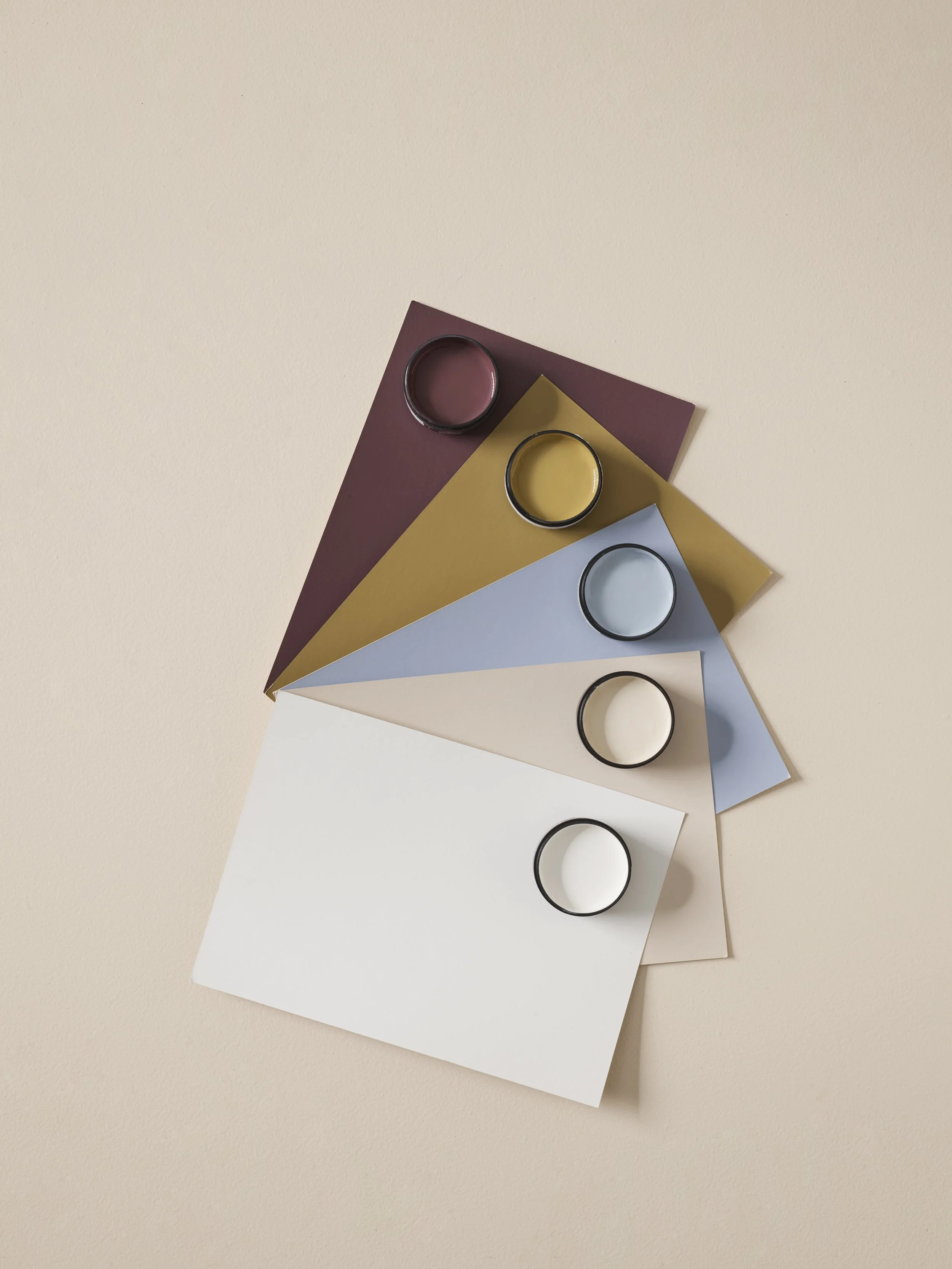
A4 drawdown paint swatches and testpots from top in Resene Transition, Resene Bullwhip, Resene Smokescreen, Resene Half Dough and Resene Quarter Bianca.
SOWING SEEDS OF CHANGE
A food revolution is taking root in Katikati.
A food revolution is taking root in Katikati.
WORDS JO-MARIE BAKER / PHOTOS ALAN GIBSON
With supermarket shelves stripped bare and vegetable seedlings impossible to find during 2020’s Covid lockdown, Katikati locals Tessa Mackenzie and Anne Billing realised just how vulnerable our community was when it comes to food.
Fresh produce was in short supply and even local onion growers couldn’t meet demand. So the pair sat down over a cup of tea and asked a simple but powerful question: what can we do? Their answer was Grow On Katikati (GOK), a grassroots project born from donated seeds and a determination to make sure locals never go without fresh food again.
“The lockdown is long gone but the need for food security still remains,” explains current GOK coordinator Jizzy Green. “Many people are struggling with rising food costs and living expenses. We try to bridge that gap because every vegetable you bring in from the garden means another dollar or two that stays in your back pocket to spend on other things.”
Five years on, GOK has grown into a local phenomenon. Over 100 active members, spanning all age groups and walks of life, are now harvesting seeds, growing their own seedlings, swapping fresh produce and learning how to compost, cook and preserve the food they have grown.
GOK’s Crop Swap (held on the first Saturday of every month on Beach Road beside the Katikati Community Centre) draws a huge crowd. People bring what they have and take what they need, including macadamia nuts, citrus, fresh herbs, Jerusalem artichokes, Māori potatoes and every type of produce you can imagine. Preserves, kombucha scobies, sourdough starters and even worm castings are offered free of charge. If you have nothing to personally swap, a koha (donation) is all that’s asked.
“We start at 9:30am so it gives people time to bring all their produce. We put it on a couple of big picnic tables, and then at 10 o'clock we declare the swap open and people help themselves,” Jizzy says. “We’ve got a new couple who have just recently become members. They sent us a message after their first Crop Swap and said they were blown away. They were just so excited to see other people take what they had personally grown. They also took home several fruit and vegetables that they’d never seen or eaten before.”
Jizzy knows firsthand what is possible to achieve in your own backyard, having grown over one tonne of food on her own quarter acre section in just 12 months. Her fellow GOK coordinator, Diana Donker, grew up watching her grandparents make their own butter and cheese, and picking up fallen orchard fruit to make apple sauce, jams and preserves.
“I can’t really think of another way of living,” Diana says. “It’s ingrained in me to grow my own food. Yet a lot of people are just so far away from the reality of where their food comes from, and believe that it’s more difficult than it really is. Bringing people back to natural living is good for the mind, body and planet.”
The two women have taken over GOK from the original founders and work alongside a team of volunteers to run lots of initiatives including a kids’ seedling club, a local seed library, workshops and social events. For just $60 a year ($5 per month), GOK members can collect unlimited seedlings each week, plus get four free King Seeds packets each month, along with discounts and other perks.
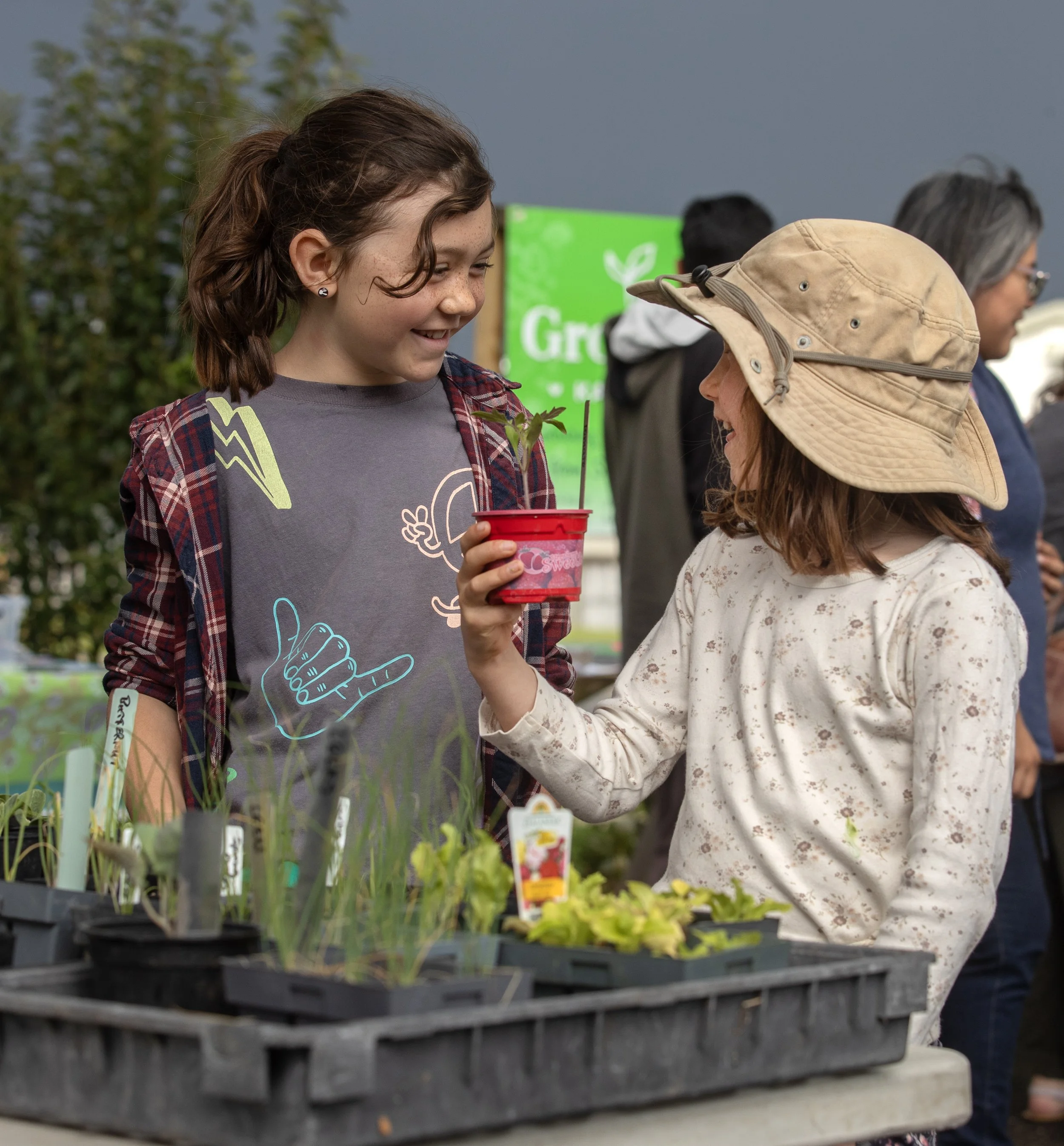
“We’ve got one lady from Waihi who has retired from the corporate world,” Jizzy says. “She’d never grown anything in her life before but the joy of being able to pick her own tomatoes for the first time superseded anything that she’d done in her business career.
“We like to say we’re not just growing food — we’re growing commUNITY. We also offer collaborative gardening where we match people with garden space to those who need it. For example, we’ve paired volunteers with elderly locals who struggle to maintain their gardens due to mobility issues. They share whatever is grown so it’s a win-win.”
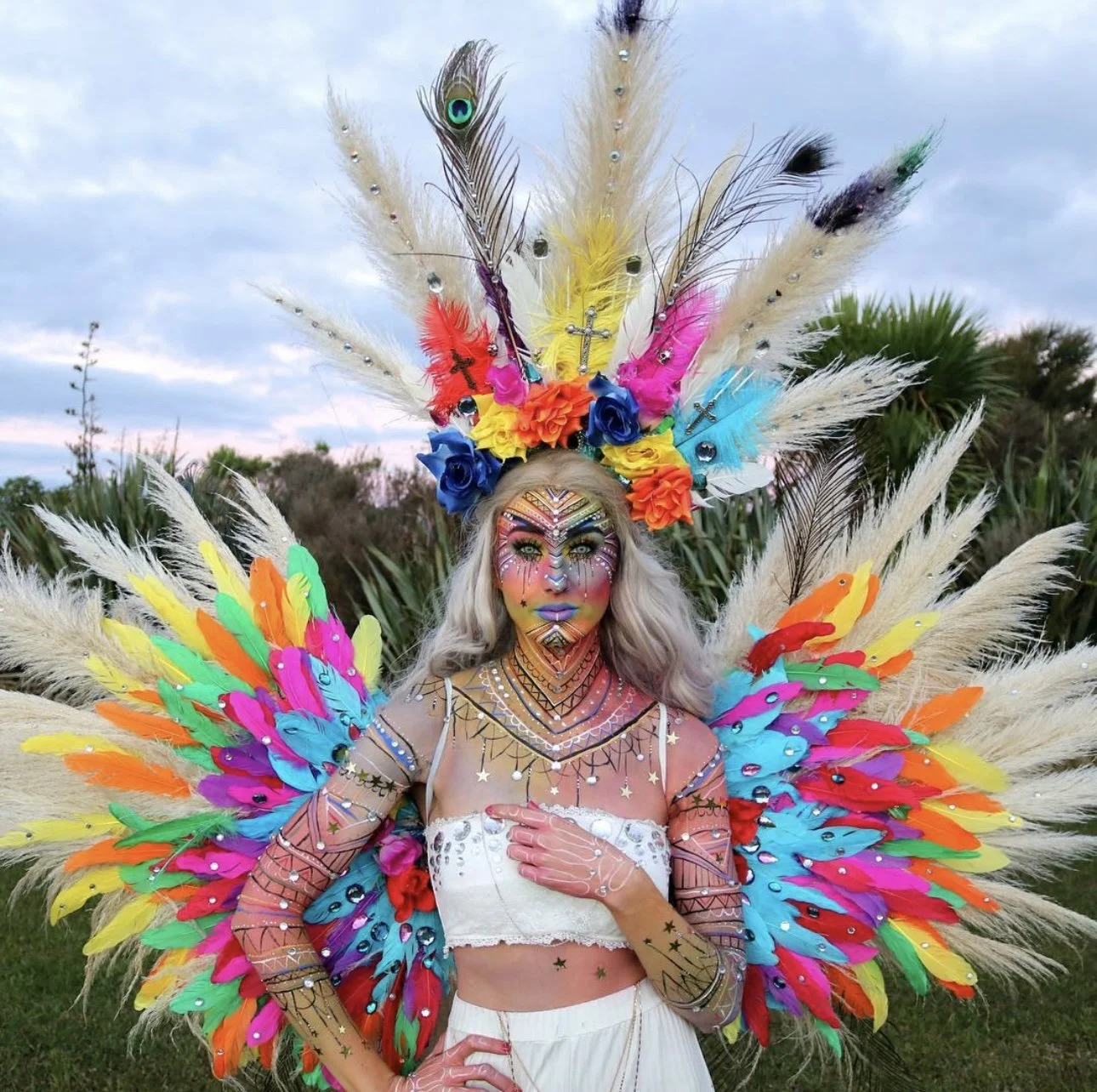
SHADOW PLAY
Model, actress, content creator and talented make-up artist Alyshia Jones-Mathie weaves magic on faces, telling vivid stories you won’t forget anytime soon.
Model, actress, content creator and talented make-up artist Alyshia Jones-Mathie weaves magic on faces, telling vivid stories you won’t forget anytime soon.

With a love for the surreal and all things spooky, Bay of Plenty-based artist Alyshia Jones-Mathie transforms her face into jaw dropping characters using make up, SFX and her wild imagination.
Since childhood Alyshia has always been drawn to visual storytelling, especially through horror-inspired looks. Now her detailed transformations are capturing global attention online. Whether she’s recreating a cult movie villain or crafting something entirely from her imagination, Alyshia’s art is creative and spine tingling, which is just the way she likes it.
UNO: Your Halloween looks are incredibly imaginative and detailed. What draws you to this form of art?
Alyshia: I’ve loved drawing, dressing up and going out for Halloween since I was a kid. Horror movies were a big thing in our family. Weʼre all movie buffs! Those memories really stuck with me. I think that’s what first drew me to SFX and Halloween make-up. I also noticed that kind of content gets a lot of engagement online, especially because not many artists are doing it in New Zealand. I’ve always paid attention to detail in everything I do, and that definitely shows in my work.
Where do you find inspiration for your more surreal or gruesome creations?
Most of my ideas come straight from my imagination. I like my work to be original. Sometimes I’ll be inspired by horror movies, Disney characters or other artists, especially if there’s a trending look. People also love it when I do recognisable characters. I’ve done Ghost Face, Chucky, Elsa, Harley Quinn, Beetlejuice, Terminator, Billy the Puppet and The Joker. It’s fun putting my own spin on them.

How do you plan a look before starting?
My face is my canvas, and I love how I can become the character. Sometimes I’ll plan by looking up certain features or styles, or I ask my audience what they want to see. But often I just dive in and let creativity take over. I like to challenge myself and see what I can come up with in the moment.
How would you define your art, and how has it evolved?
I’d say my art is eye-catching, edgy and emotional. I want people to feel something, whether it’s fear or excitement, even surprise. If your art can move someone, you’re doing something right. Over time my looks have definitely become more refined, but I also enjoy doing simpler tutorials now that others can try for themselves.

Do you see your make-up work as performance art, visual storytelling or something else?
It’s definitely both. Getting into character helps me bring the look to life and gives me so much confidence. Some of the looks have a story behind them, some are more emotional or dramatic, and others are just fun and entertaining. I hope people feel inspired to try things themselves and see that they can create anything with a bit of imagination.
What role does experimentation play in your process?
A huge one. I’m very visual and instinctual. I just know what might work, and that comes from years of practice. I used to watch tons of SFX tutorials and learned how to use things like liquid latex, prosthetics and scar wax. I often change things as I go: colours, patterns, placement. It’s all about trusting the process.
Has social media changed how or why you create?
Definitely. Sharing my work online has helped me grow, not just as an artist but as a person. It’s pushed me to create with purpose and to see how far I can take this. My audience motivates me as they’re my biggest supporters. I wouldn’t be where I am without them. Approved insurance repairer Loan vehicles State-of-the-art repair technology Accurate colour reproduction Art is still something I do for myself, but now it also feels like I’m creating to inspire and uplift others.

Do you explore other forms of art beyond make-up?
Yes! I used to paint, draw, make clay figures, scrapbooks, even homemade magazines. I still dabble in those sometimes. But make-up is where I feel most free. It combines so many things I love, like costuming, editing, character acting, storytelling. There’s a whole world behind every look.
How long have you lived in the Bay of Plenty, and what do you love about it?
I’ve been here for 20 years. We started in Auckland, then moved to Waihi Beach, Athenree and now Ōmokoroa. I love the nature, the beaches, the walks and the laid-back, community feel. Plus, lots of our family and friends are still here, which makes it extra special. Mount Maunganui is my happy place.