
SEA CHANGE
A Tauranga seaweed farm is turning local waters into a hub for climate and coastal innovation.
WORDS ALISON SMITH PHOTOS PAUL ROSS JONES + SUPPLIED
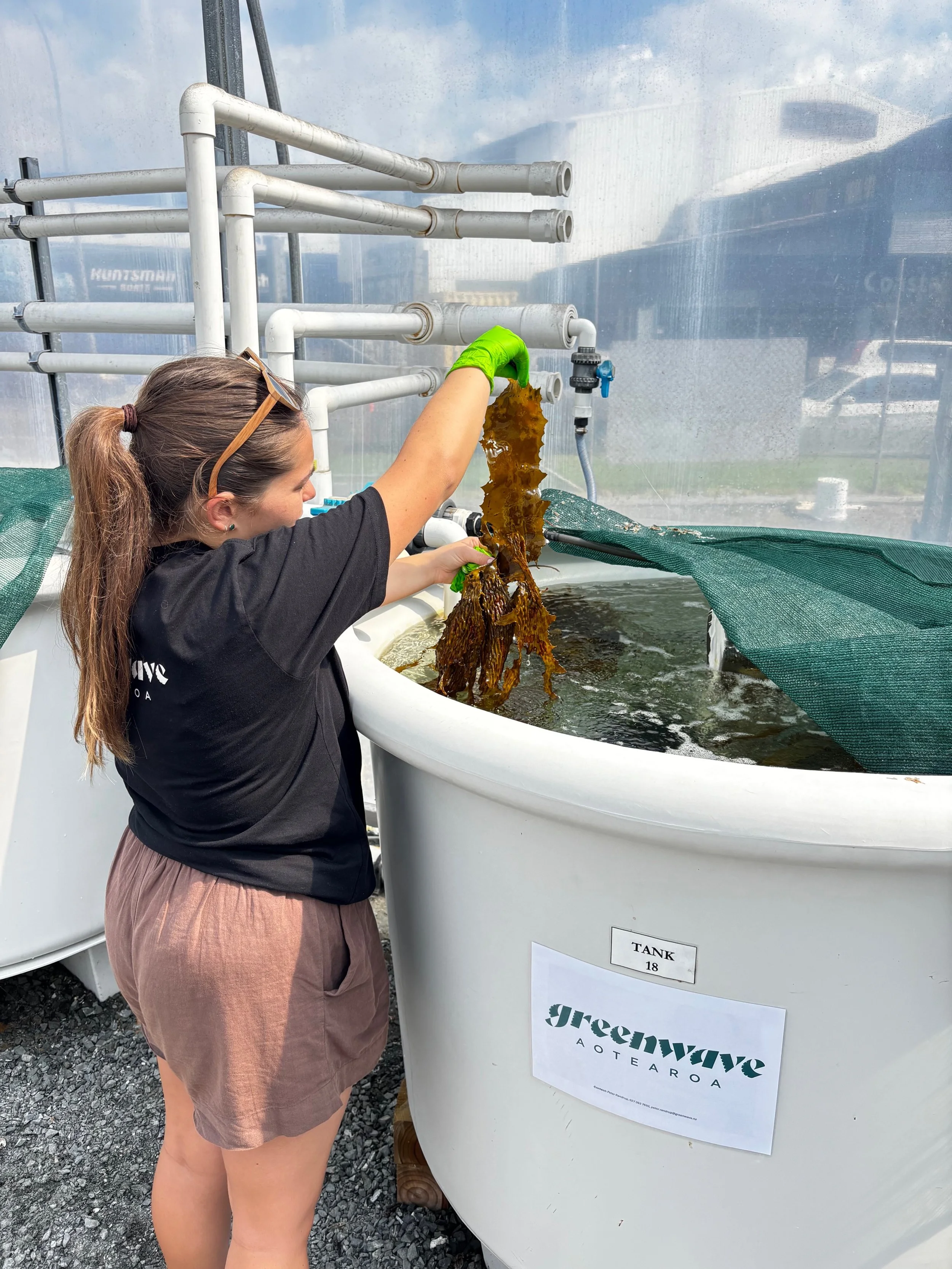
Huna Hough of Greenwave Aotearoa at the Tauranga hatchery.
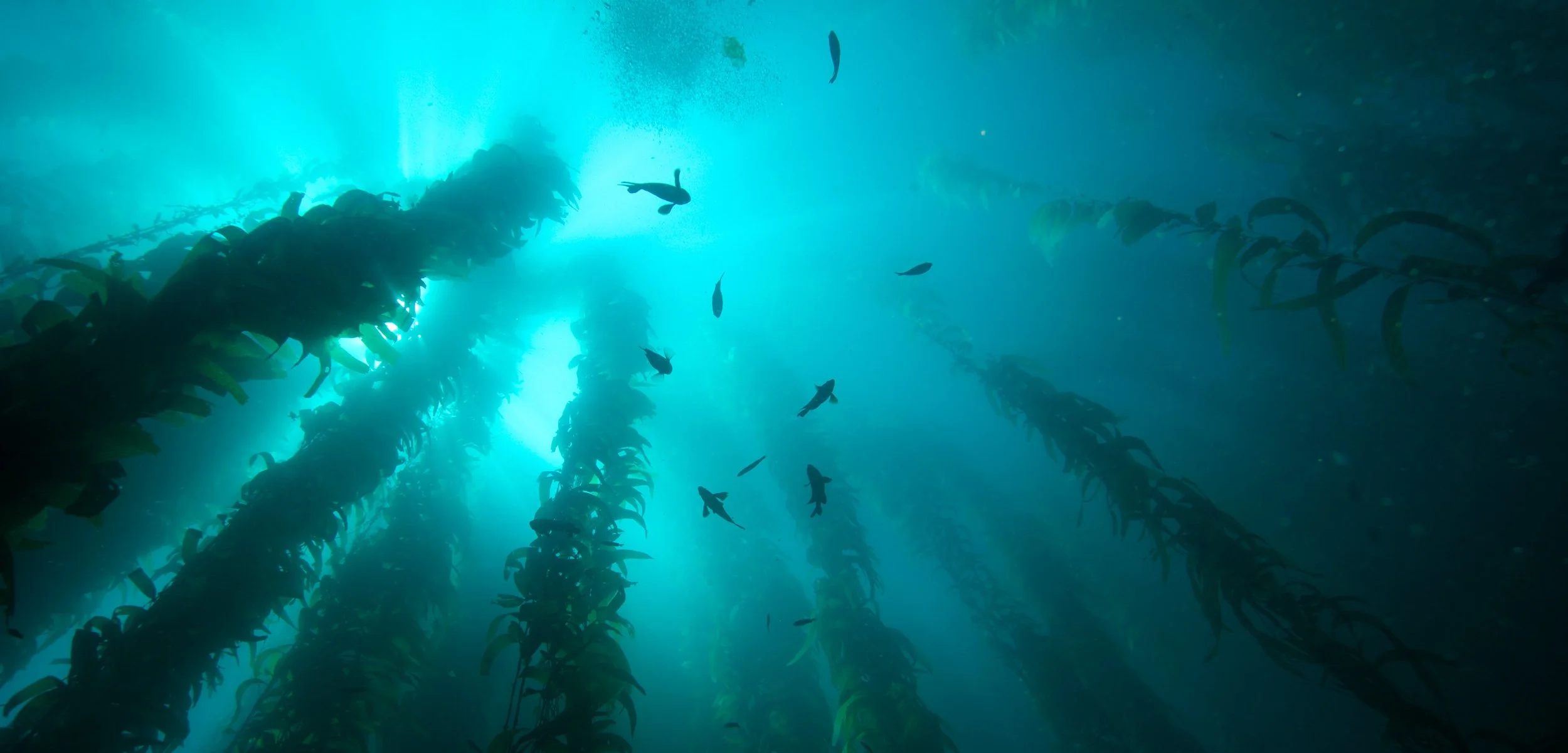
When healthy, New Zealand’s reef ecosystem is a rich and beautiful tapestry of fish species navigating golden hued kelp forests, pink paint and coralline seaweeds against a backdrop of teal green sea and bubbling tide.
This underwater world is underexplored and underappreciated by many, with spearfishers and snorkellers the most common admirers of its charms. Yet seaweed holds huge potential not only as an ecosystem in its own right, but as a climate hero for its ability to absorb carbon, filter water and provide a source of nutrients to humans and animals.
At the University of Waikato Marine Station in Sulphur Point Tauranga, a small and dedicated team lives and breathes seaweed. Greenwave Aotearoa began as a pilot project funded in part by the Sustainable Food and Fibre Futures Fund (SFFF) administered by the Ministry of Primary Industries.
Led by Auckland-based venture developer EnviroStrat, Greenwave Aotearoa is building capacity for a network of regenerative ocean farmers to farm seaweed nationwide.
Māori have used seaweed for centuries — as a food source and for storage. As Te Ara Encyclopedia of New Zealand explains: “with its long coastline and abundant seaweed resources, New Zealand has the potential for a thriving seaweed industry.
However, the labour-intensive nature of harvesting and aquaculture has prevented the country from competing against bigger producers in Asia.
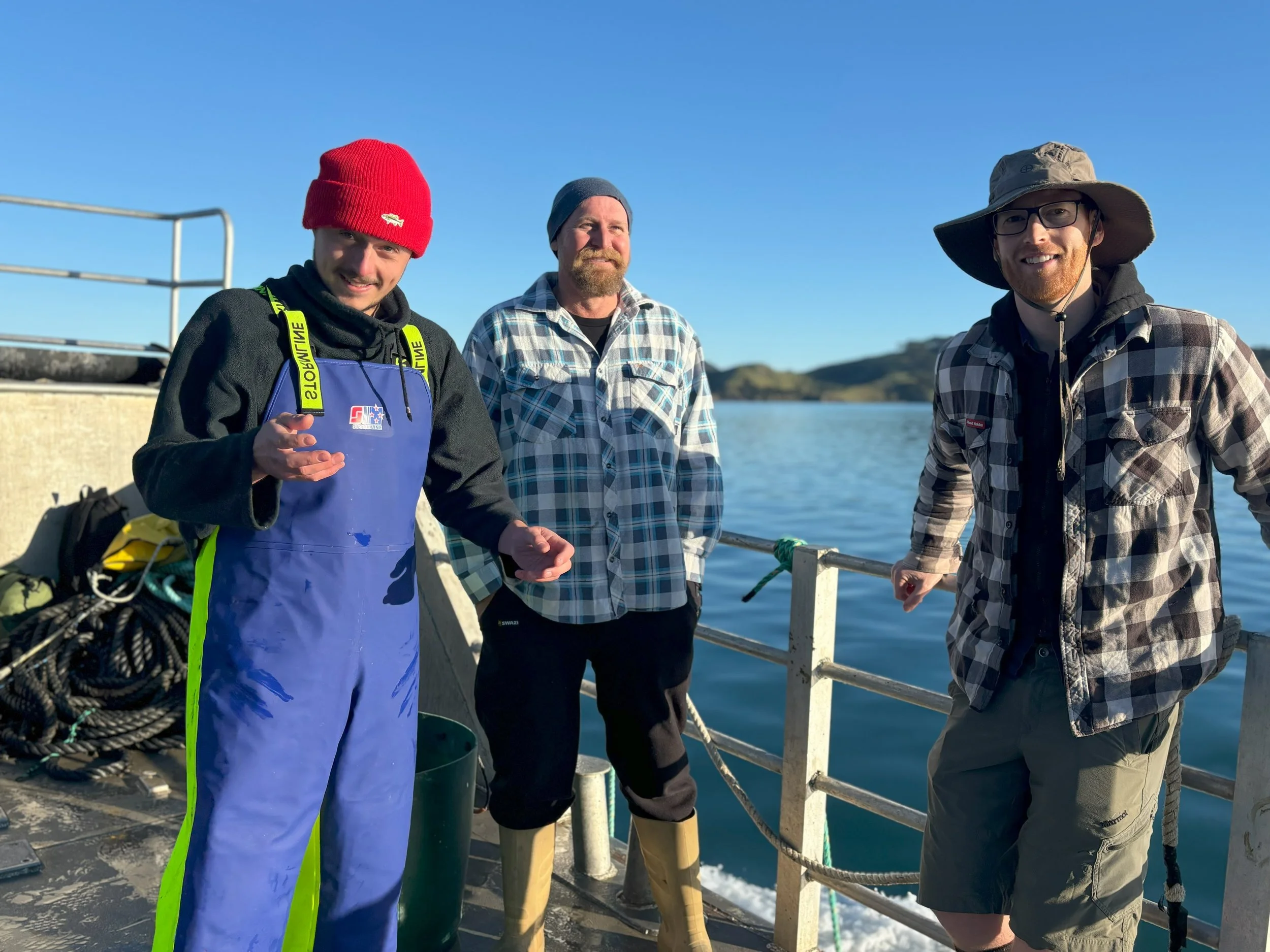
Lucas Evans, Premium Seas, with Peter Randrup and Ryan Marchington, both Greenwave Aotearoa.
Greenwave Aotearoa has been working to turn this around.
“Our oceans hold vast potential for sustainable innovation and seaweed is one of the most promising solutions,” believes founder Dr Nigel Bradly. “By farming seaweed and creating high value uses for the harvested biomass we can create a future that supports our needs while protecting the environment.”
Getting to this point has taken a great deal of learning. The project began in the Hauraki Gulf at a seaweed trial adapted from mussel farm infrastructure off the Coromandel coast. It faced challenges — including skeleton shrimp eating early-stage growth, a marine heatwave, and adapting gear to grow something never farmed here before.
Here, mussel farmer Dave Blyth — who says he keeps meaning to retire — has had his retirement sailing trips disrupted by helping grow a new seaweed industry in New Zealand alongside the Greenwave team.
The process begins with collecting seaweed under permit from the wild. The team works with the seaweed to induce spores in a Sulphur Point hatchery, where it’s nurtured under red lights using techniques refined over three years.
Microscopic baby seaweed (sporophytes) is grown on spools. The Tauranga-based team led by Peter Randrup had to determine exactly what was needed for it to thrive in an artificial environment so seedlings could be produced at scale for planting on farms. This is where farmer Dave Blyth comes in.
Dave is showing the ropes to scientists including Greenwave aquaculture lead Ryan Marchington, who brings his seaweed farming experience from Europe. Seaweed farming is new in New Zealand, and the team had been using systems designed for mussels, not seaweed.
With Ryan sharing knowledge from overseas, the team has now optimised on-water operations using custom systems.
“It’s been a big learning process. You can grow seaweed in a hatchery but it doesn’t automatically follow that they’ll keep growing in the water,” says Dave. “I enjoy the innovating — designing the gear and coming up with new ways of doing things and working with the young people from Greenwave Aotearoa and the University of Waikato. Peter and Ryan and all the guys are good; no-one has got all the answers. You don’t curtail their enthusiasm but it’s good to inject how to do things out on the water in a way that will make it easier and more efficient.”
This collaboration between a seasoned mussel farmer and international techniques was a crucial turning point. Growing seaweed closer to the surface, as farmers do in Scotland, allowed the young sporophytes to photosynthesise more efficiently and outcompete fouling.
“Our hatcheries were producing good-quality spools. The issue was the farming system design,” explains Ryan. “Once we changed that, we saw the difference.”
Greenwave Aotearoa is now expanding to the South Island and is successfully growing Ryan’s favourite product innovation is key to the success of the industry, to enable full utilisation of New Zealand’s precious seaweed resources with benefits to seaweed farmers in coastal communities, product innovators and consumers. All without taking away the underwater forest upon which so many marine species rely.