
A VISION OF ZEN
Purchased online from England by a couple heading home to the Bay after 26 years abroad, a bush-clad Ōmokoroa site became a home shaped by close collaboration, thoughtful design and a shared vision. WORDS PIP CROMBIE | PHOTOS AMANDA AITKEN
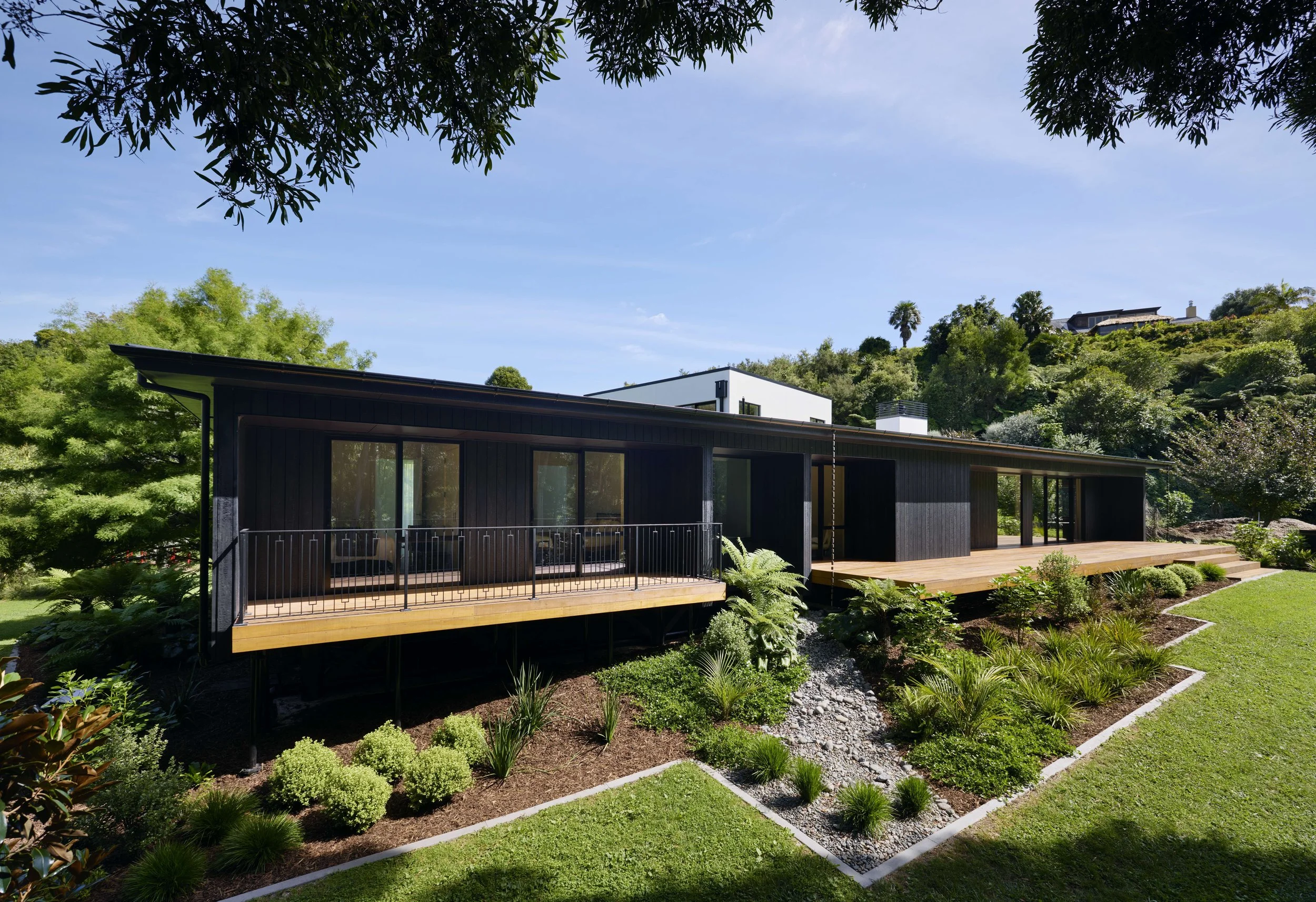
Buying property sight unseen is something we are familiar with in the Bay of Plenty, usually by international buyers who have access to extensive real-estate-supplied images and information. But for a New Zealand couple returning home after 26 years in England, the almost one-hectare Ōmokoroa section they discovered online had few details to recommend it. There was no exact address, limited imagery and little context. Yet something about the site appealed.
Tracey and John’s return to New Zealand was nudged along by Brexit and COVID. The couple both work from home for large pharmaceutical companies, so the move was about transferring home locations and a desire to spend more time with family. The 2020 lockdown prevented an in-person search, so John’s parents visited the site on their behalf, walking the land, carrying out the due diligence and sending through images. On the strength of this, the couple secured the property from abroad. Working remotely from England, Tracey and John began collaborating with Hannah Armstrong-Gardner of Studio H on the design of their new home. With Hannah and her husband Chris, who would later build the house through their company Gardo Group, living just 500 metres up the road, the project naturally became a close collaboration between the four. Through a series of video calls, the design gradually took shape, evolving into a fully documented consent set before the couple had even returned to New Zealand.
It wasn’t until 2022 that Tracey, John and their woolly-coated black pooch Nonu set foot on the site of their new home. The property is gently nestled at the bottom of a winding drive below an urban development, bordered by trees that ensure privacy from the nearby Ōmokoroa coastal cycleway, and has a small stream meandering through the boundary.
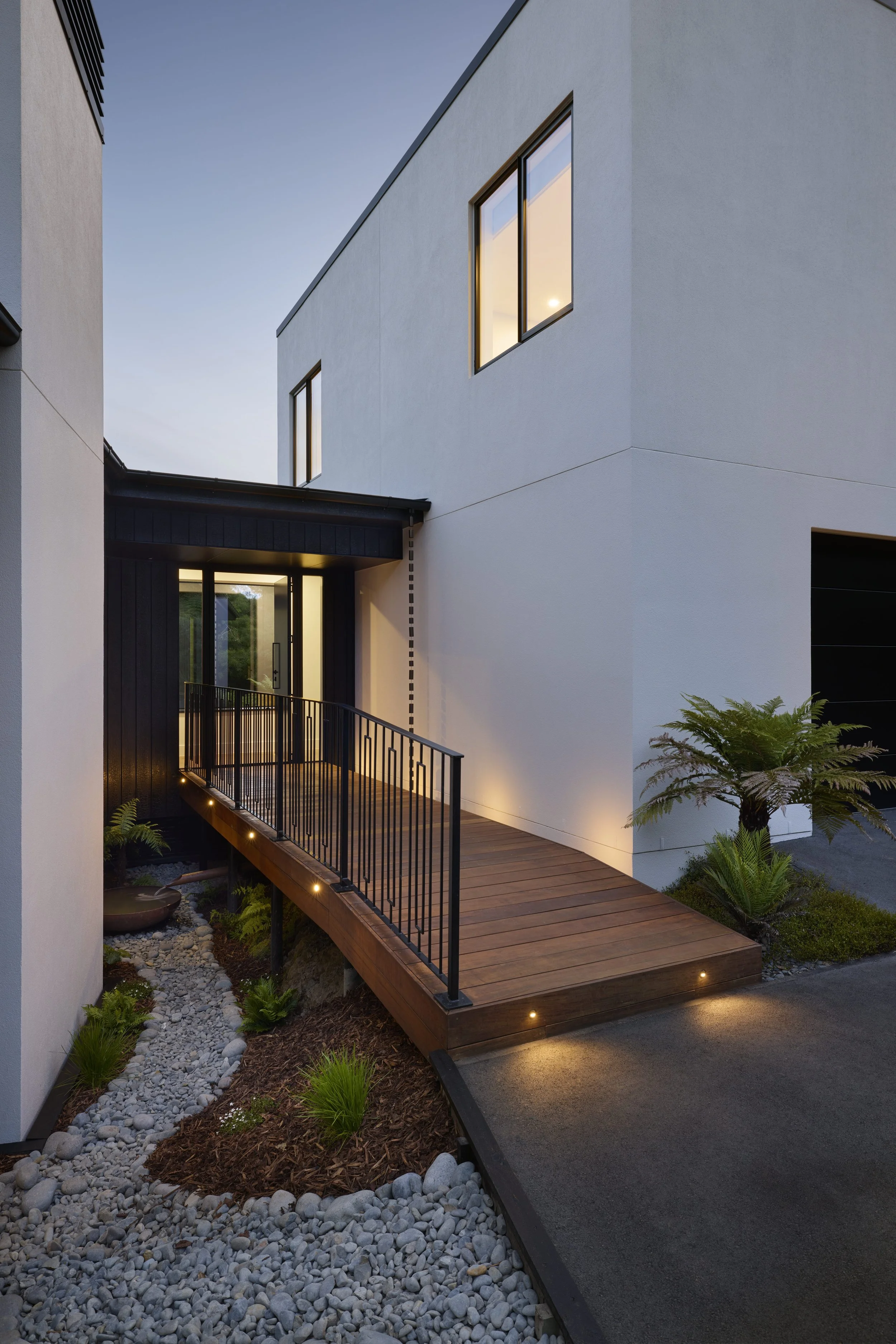
Fast forward to 2026 and the approach down that driveway halts me as I descend. The first impression is of a chic bush retreat. From above, the home is two distinct wings — one black, one white — juxtaposed against the lush clearing the dwelling sits within, surrounded by artfully curated native planting. There is a subtle Japanese influence to the design, and as I draw up to the front entrance, a long hardwood decked walkway draws me to the front door, bordered by its custom balustrade repeating a subtle architectural detail that appears throughout the home, protecting full-height openings on the upper level while reinforcing the project’s restrained material palette. To the left is the long, black Shou Sugi Ban charred timber clad wing, housing guest bedrooms, bathroom, office, kitchen and living, to the right is the white rendered plaster two-storey volume featuring two master bedrooms, large ensuite and dressing room, garage, storage and laundry space. Subtle circular water features set on river stone paths, suspended Japanese rain chains and a small red bridge spanning the stream and glimpsed through the feature window in the entrance, all set the scene for the interiors where tone and texture of materials come together in a magnificent blend of warmth, light and high-end luxury.
The 331m2 home was designed by Hannah ArmstrongGardner, of Studio H, a Tauranga-based design-led practice known for creating homes of quiet distinction. Hannah works closely with her clients from inception to completion, advising them early on that getting to know them well is a key part of her design process. “Where do you put your shoes and your bikes when you come home? What’s ‘your side’ of the basin? My design process is human-centric, not ‘Hannah-centric’," she explains.
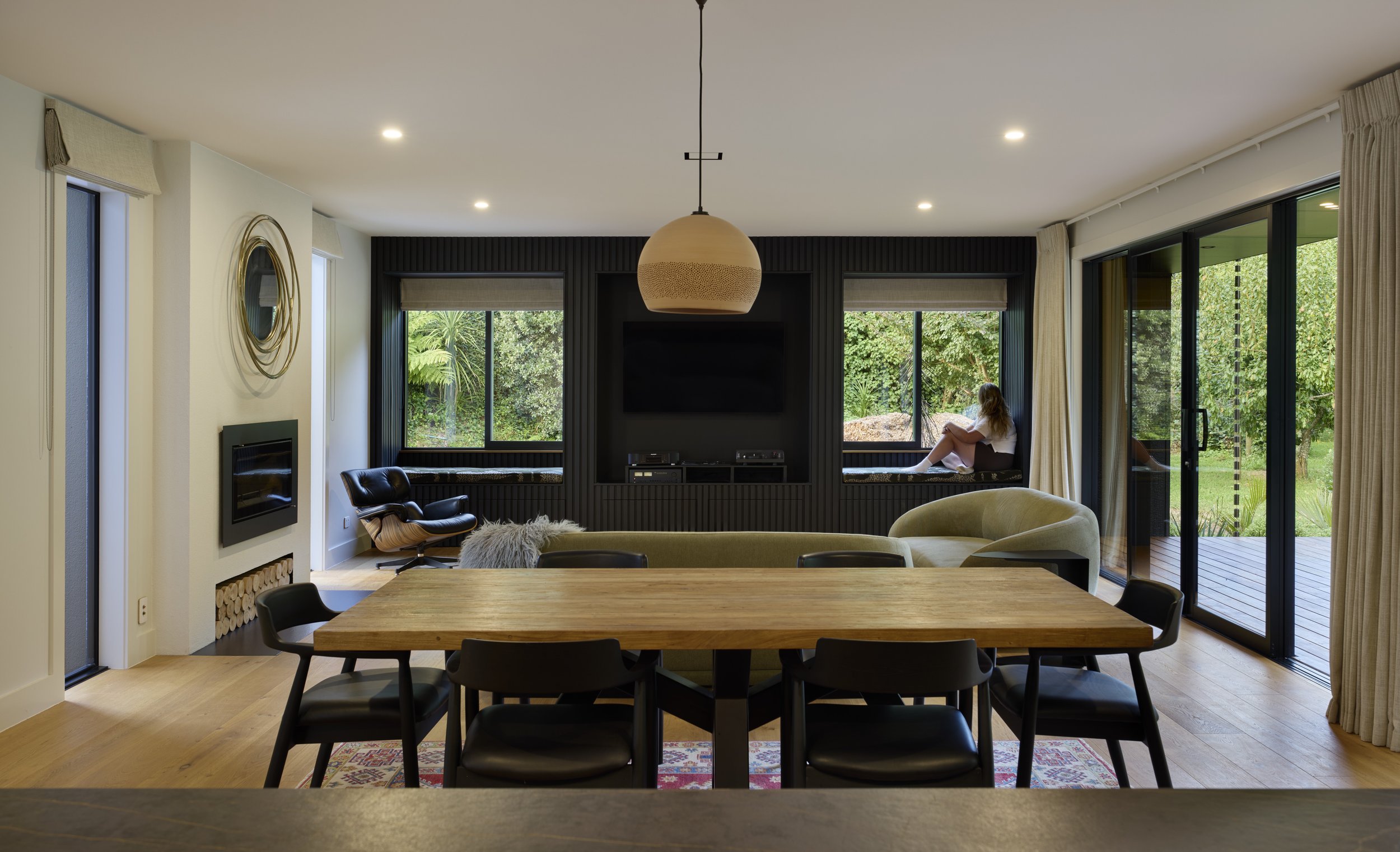
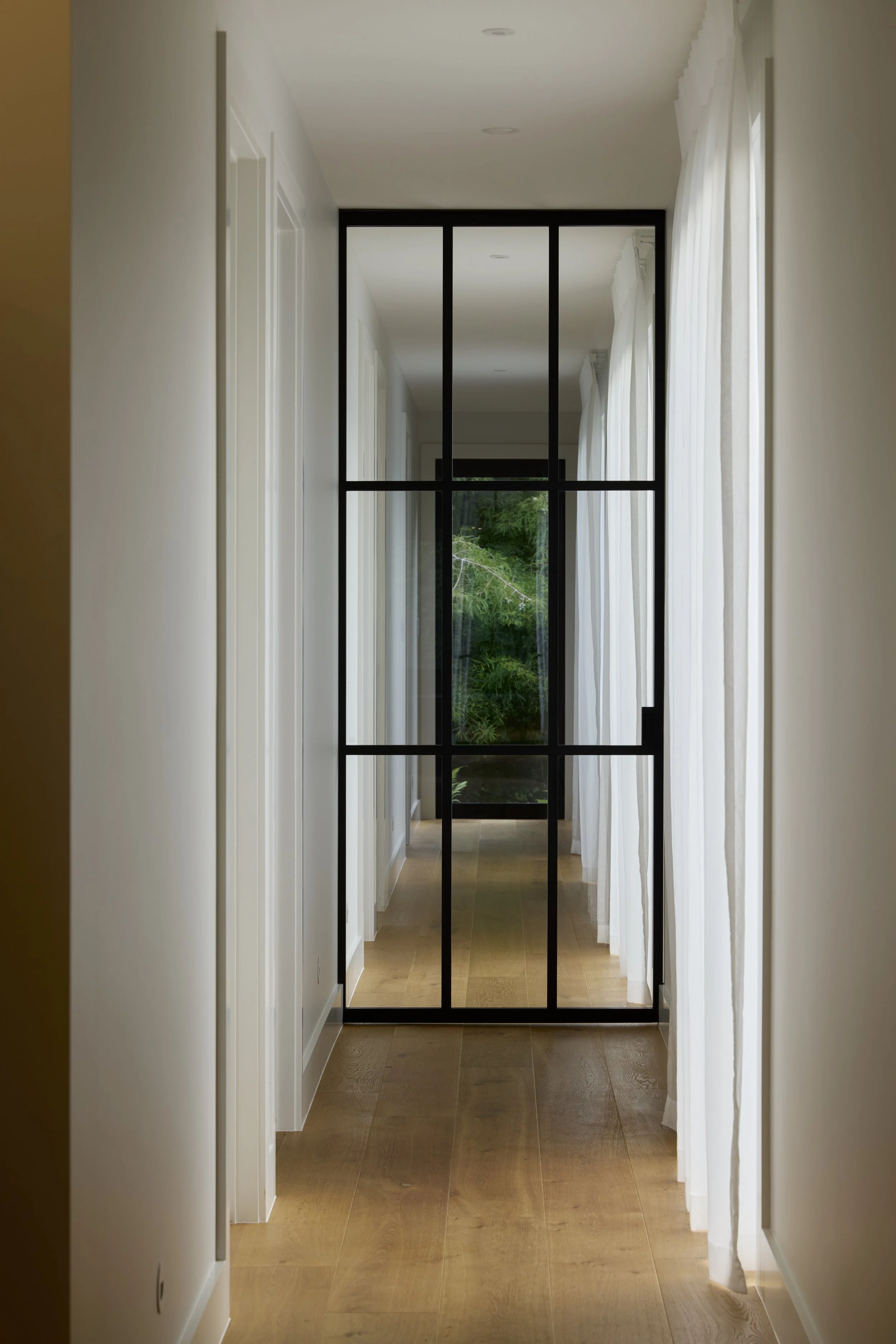
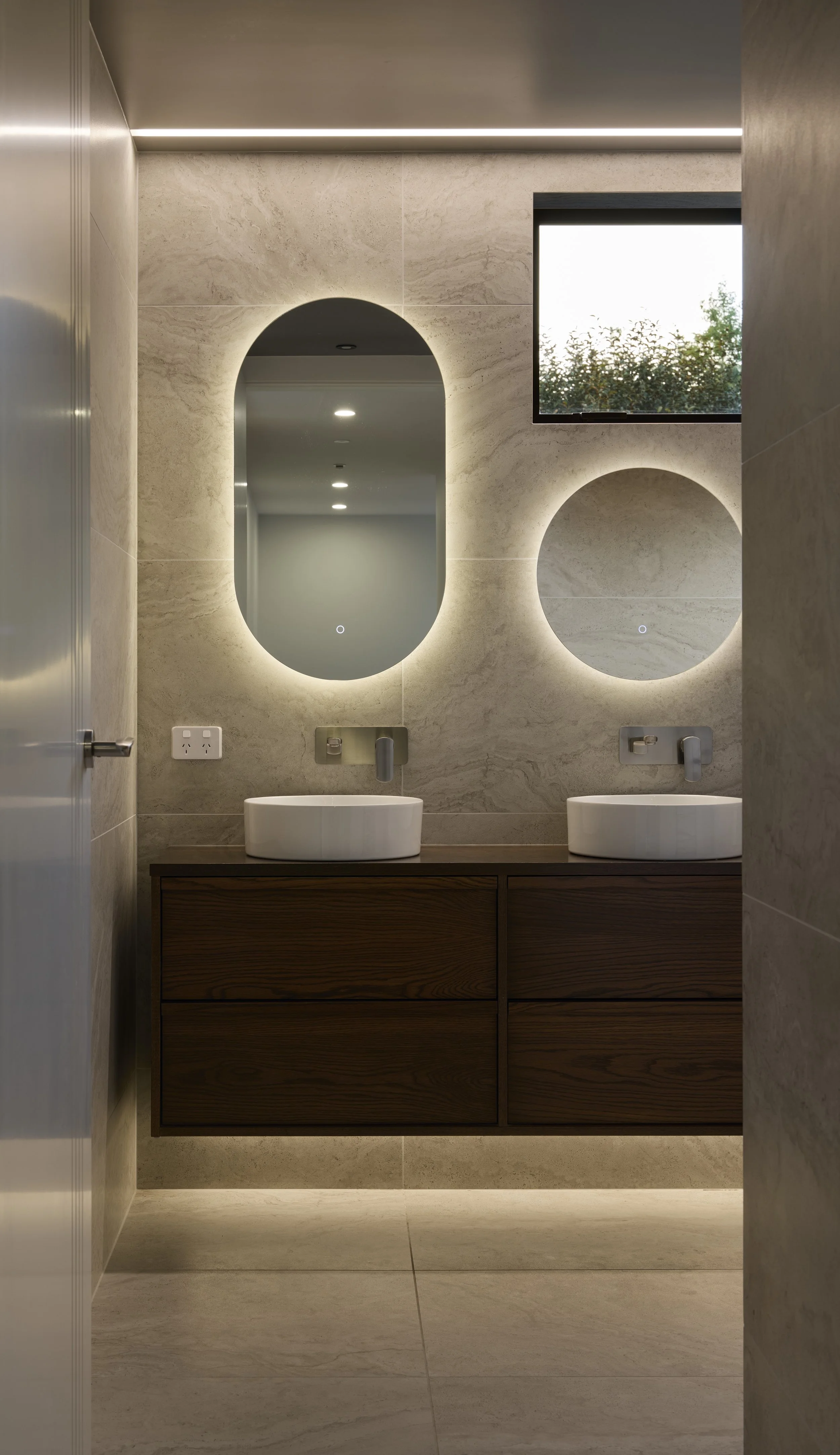
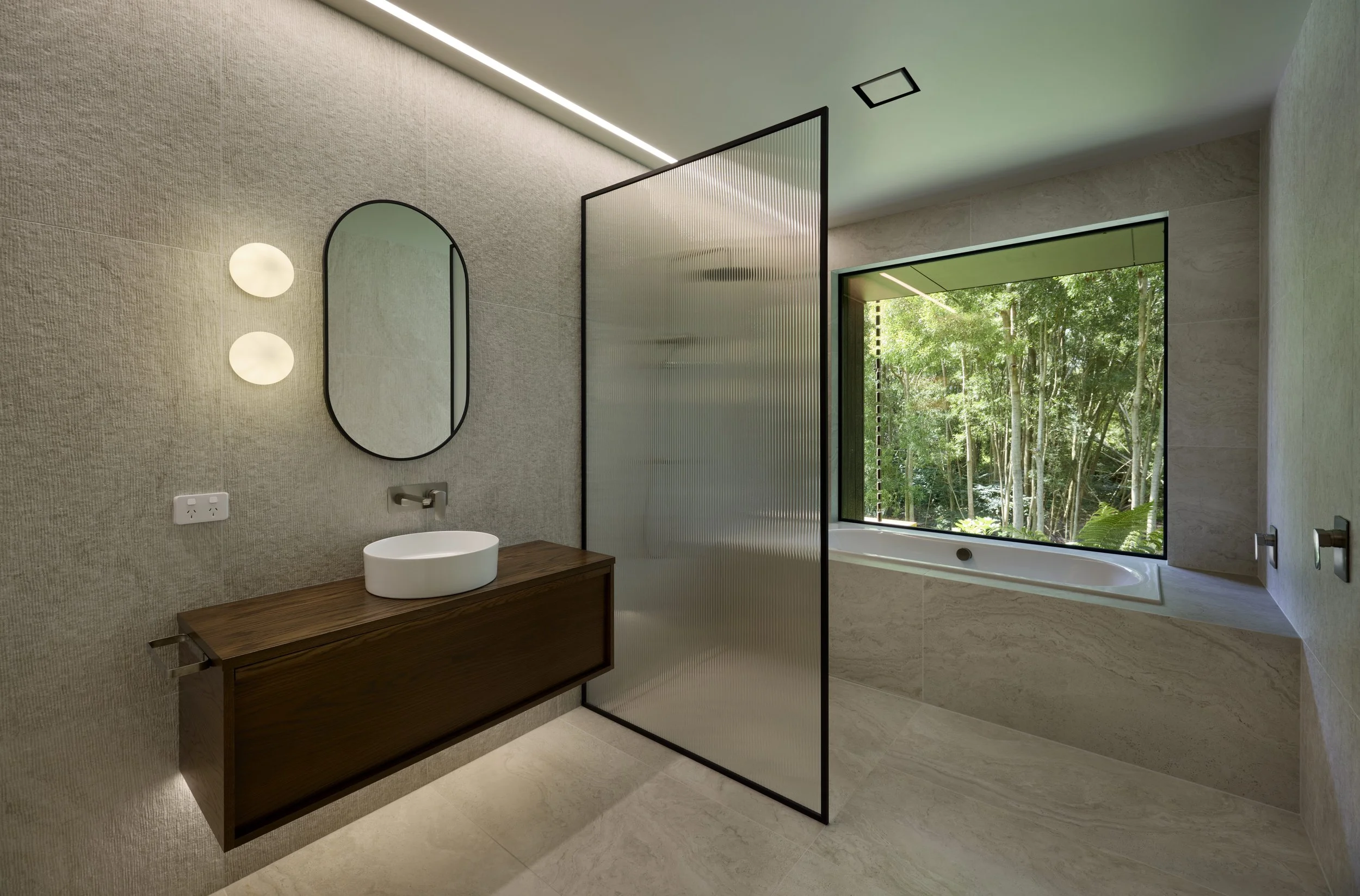
Tracey and John arrived with a clear priority: warmth and comfort. Memories of cold New Zealand houses from earlier years abroad meant the thermal performance of their new home was paramount. Instead, the couple and their designer carefully considered the site’s microclimate, including existing tree cover and the natural topography of the driveway ridge. The main living wing therefore faces east, allowing soft morning light to enter the space while avoiding excessive summer heat. To maintain consistent indoor comfort, a hydronic underfloor heating and cooling system runs beneath the home’s light oak flooring, creating an even ambient temperature year-round. The timber floors extend throughout the house, softening the floor-to-ceiling tiling used within the bathrooms and reinforcing the calm material palette. Overhead, 2.7-metre ceilings allow light to move easily through the spaces while housing discreet mechanical systems.
Sustainability was also a key consideration. The property operates with a significant degree of independence through rainwater harvesting, solar generation and efficient systems, while the materials used throughout the home were selected with attention to origin.
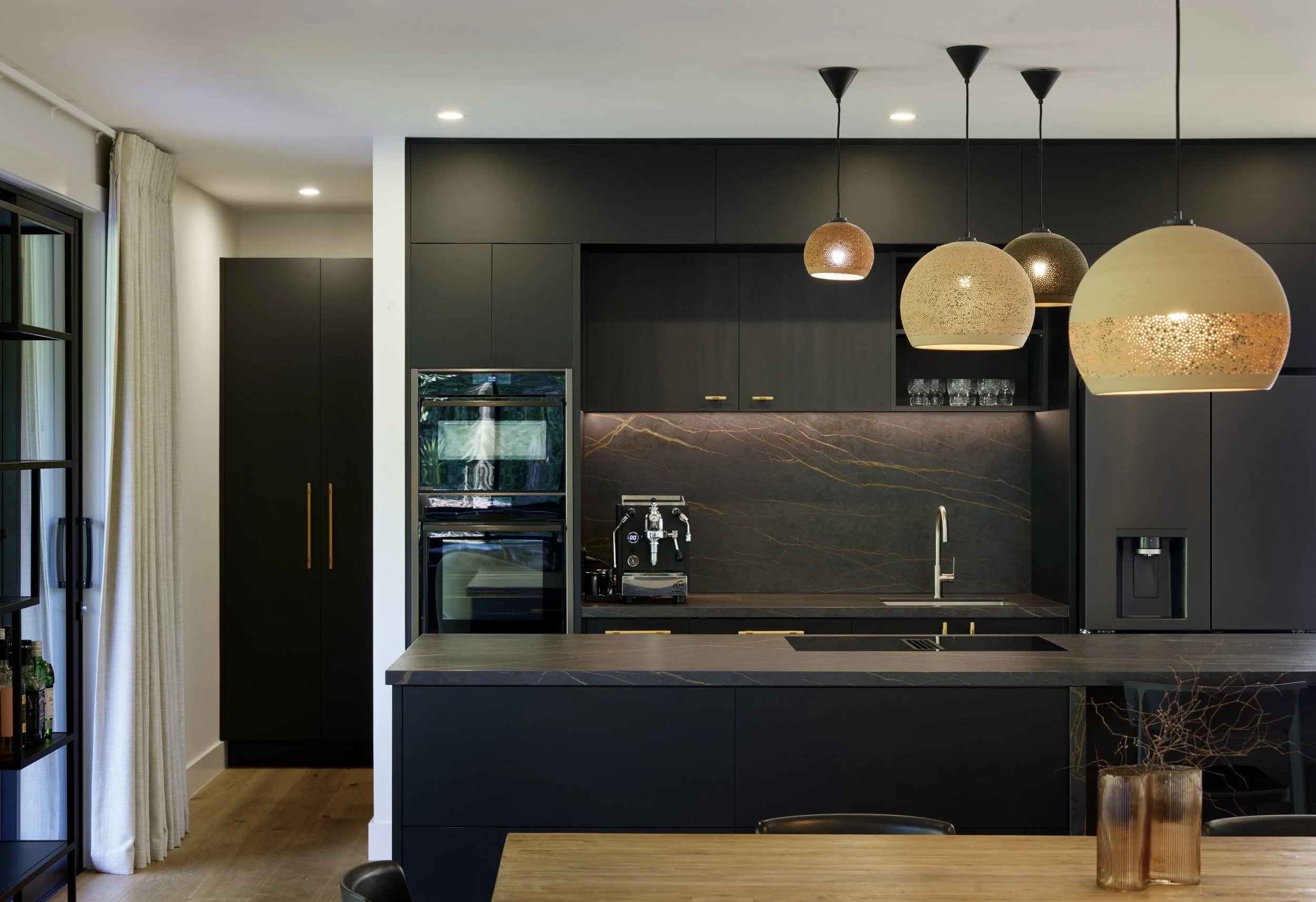
The kitchen is dark and seamless, softened by wooden handles in keeping with the subtle Japanese aesthetic, the intentional use of empty space, calming, natural colours and product. With this in mind, the deliberate selection of the Dekton Laurent benchtop - an earthy chocolate shot through with streaks of natural golden hue - bring the whole space, including the offset scullery, together.
From the time the build was completed in March 2024, it has felt like a forever home for Tracey and John - peaceful, sleek, soft and something of a sanctuary. A retreat indeed. STUDIOHDESIGN.CO.NZ