
TAKING THE REINS
At just 34, Kelly Van Dyk is taking on the male-dominated horse racing industry, and winning. She tells Karl Puschmann all about Prima Park, the world-class facility she heads and the challenges she’s faced to get to the front of the pack. PHOTOS CHRISTINE CORNEGÉ + SUPPLIED
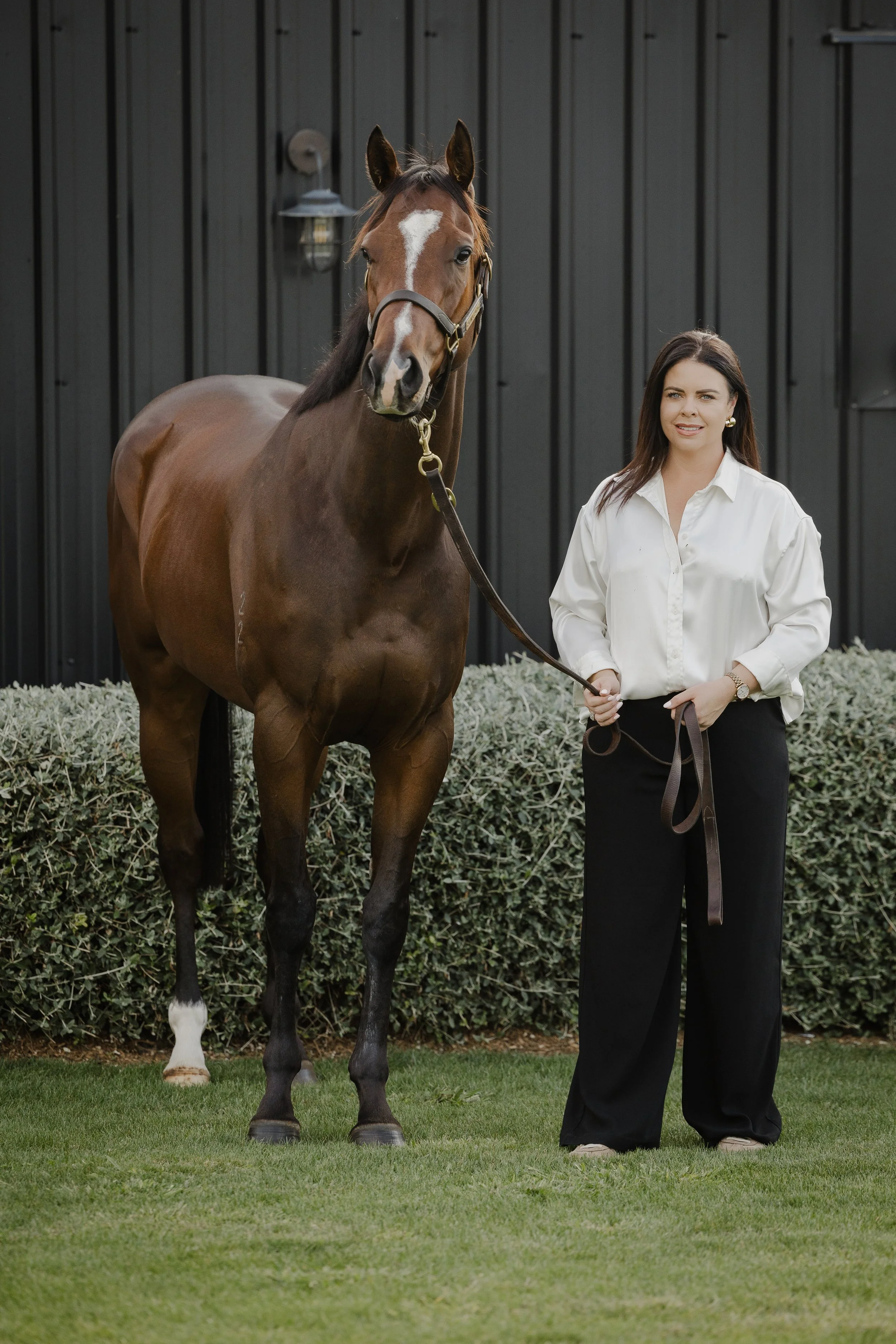
Kelly Van Dyk at Prima Park in Matamata, where she leads the next generation of thoroughbreds.
In the world of horse racing, everyone knows that bloodline is key. A horse’s pedigree reliably indicates what racing traits it will inherit and, most importantly, its champion potential. But, it turns out, you can extrapolate the bloodline theory out to the world of horse training as well.
Kelly Van Dyk is a third-generation horsewoman, a former champion equestrian and New Zealand representative, and now the head of Prima Park, the prominent, family-run thoroughbred farm and equine facility located in Matamata, the heart of New Zealand's racing country.
“My grandfather Brian trained racehorses as a hobby,” Kelly explains. “He’d take my mother, Louise, and her sister for riding lessons and decided he was going to try and train and breed racehorses himself. He was quite successful in doing that, and mum was a very successful rider herself, competing in events at a high level.”
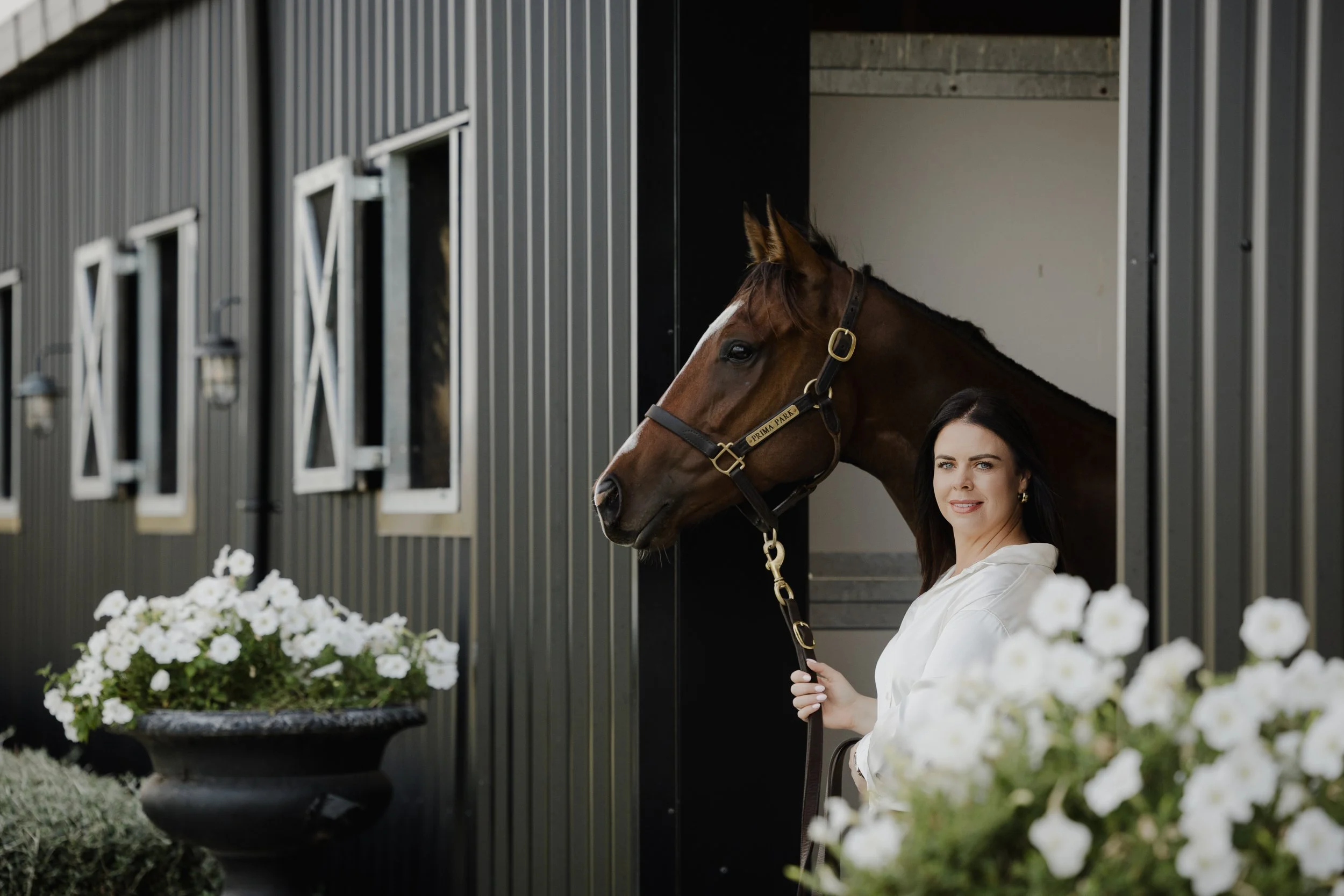
When Kelly came along, Brian wasted no time in introducing his granddaughter to the sport.
“He bought me a pony when I was really young. I rode from when I could walk,” she says.
Brian’s plan worked. “I caught the bug,” she laughs. But, so had her whole family.
Her dad, Leighton, retired from the family business, the popular furniture chain Van Dyks Furniture, in 2010 to focus on the fillies. He bought two weanlings, foals that are six months old, intending to resell them. There was, however, a big problem.
“I was at the height of my dressage career riding in Germany, when dad rang me up and said, ‘I’ve bought these two horses. I don't really know what to do with them. You’d better come home.’”
So, she did. Kelly and her dad took those weanlings to the New Zealand Bloodstock Ready To Run Sale, sold them for a profit and then did it again. And again. And again. Eventually, she was able to leave the job she’d taken at Waikato Stud, where she’d been studiously learning the “tricks of the trade”, to work on Prima Park full time.
With Kelly’s sole focus on the business, things started to take off. They outgrew the family farm in Putararu, where they’d been since 1992, and moved to a bigger property in Mystery Creek in 2016. They wouldn’t be there long.
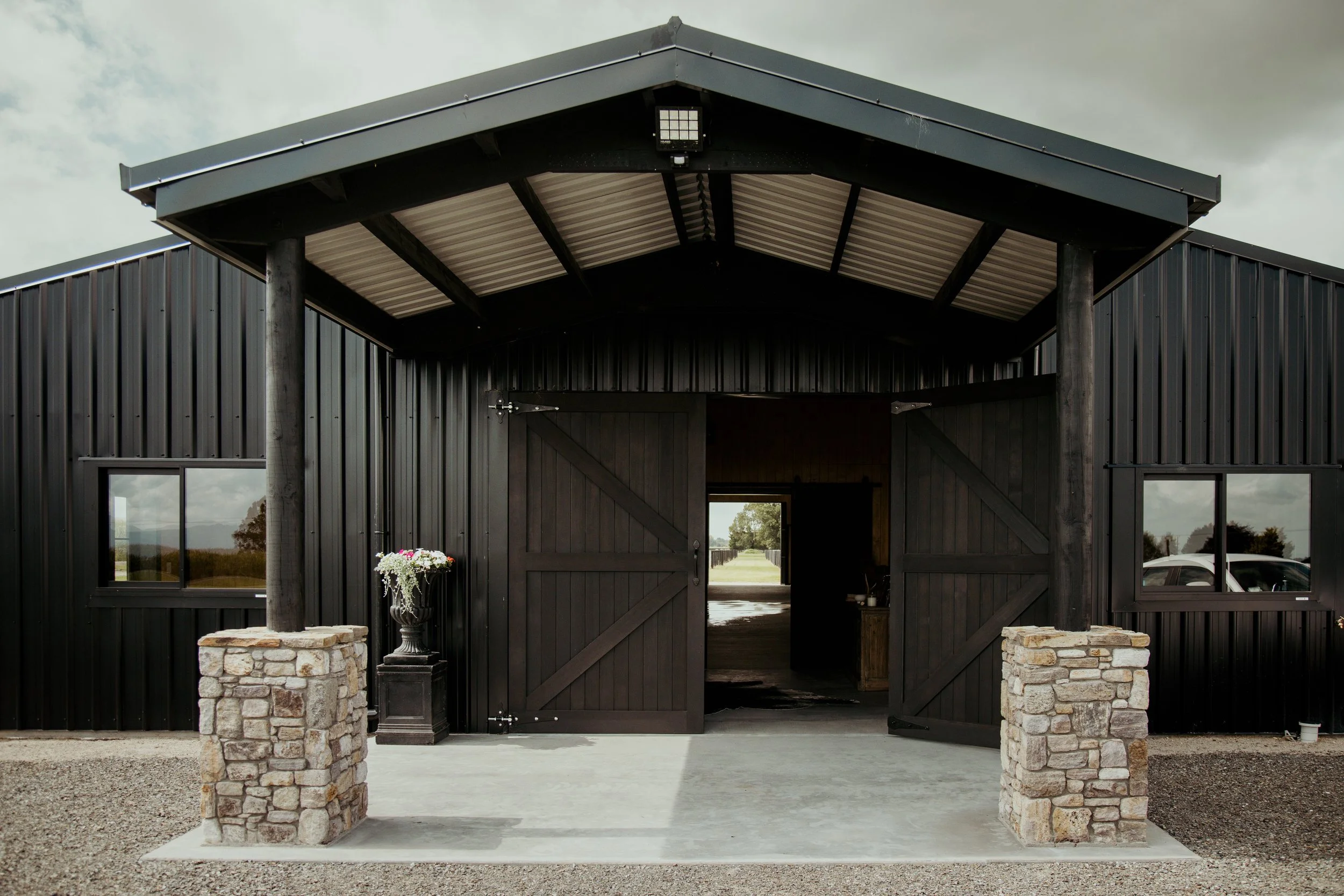
In 2022, Kelly took the reins, so to speak, to head the company. She expanded both Prima Park’s offerings and its premises, moving the company to its world-class 50ha facility in Matamata.
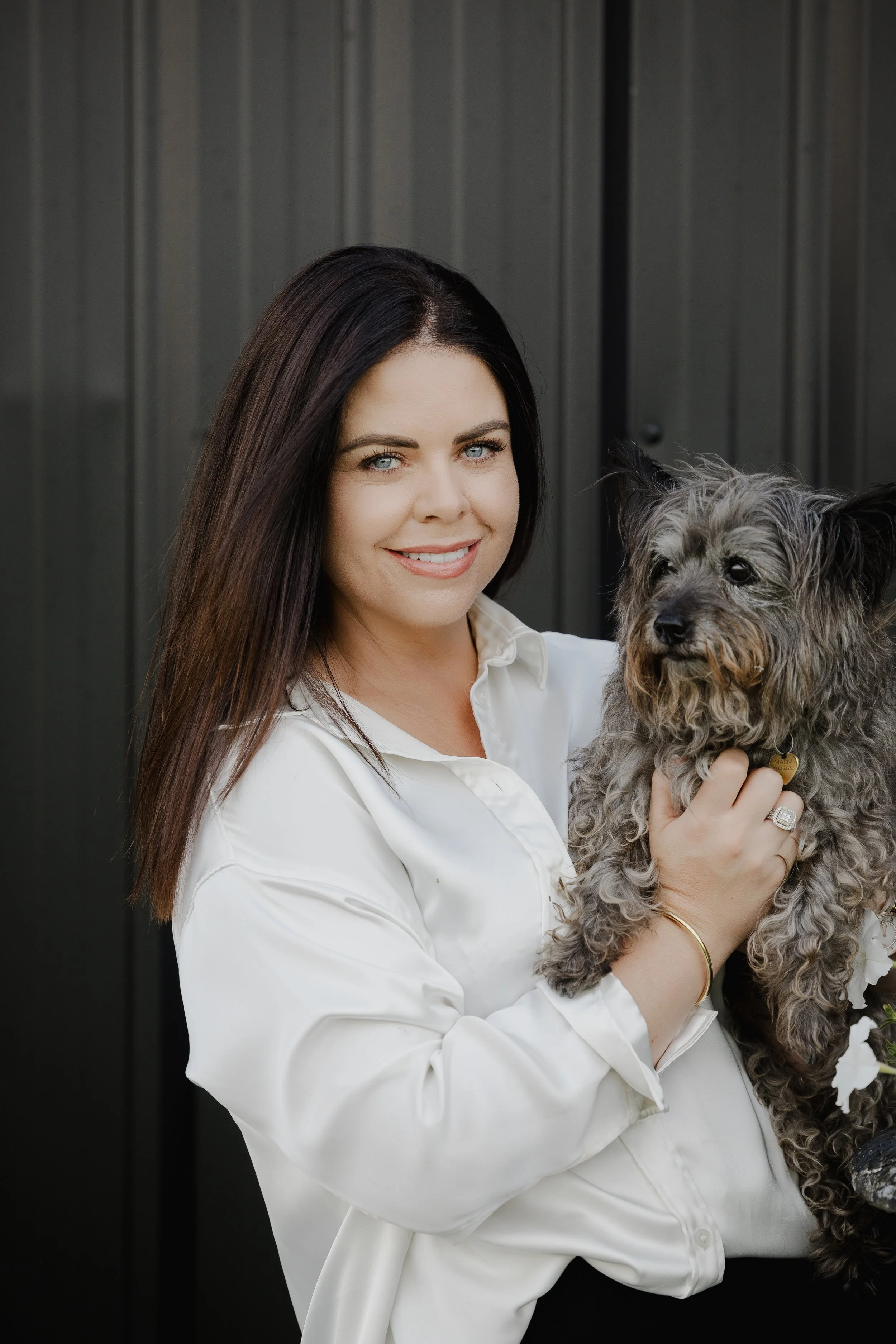
“Mum and dad were getting older and wanted to take a step back. It’s a demanding job, very physical, hands-on work,” Kelly explains. “I felt like I was just getting started. I had that hunger and drive to really sink my teeth into it. I could see the opportunity.”
Prima Park’s business expanded to include the services it offers today, including breaking-in, pre-training, and agistment, all supported by its purpose-built equine facility, which even includes an 800-meter training track allowing specialised preparation for the yearling and Ready to Run bloodstock sales.
The success has been notable. Prima Park has graduated multiple top-tier racehorses, including Beat The Clock, a four-time Group 1 winner and Hong Kong Sprinter of the Year, and Warmonger, the 2024 Group 1 Queensland Derby winner. They’ve also won strong market recognition by consistently producing highvalue sales in the yearlings and Ready-to-Run sales. As well as the local market, Prima Park’s horses are also sold into Hong Kong, Singapore and Australia. At last year’s New Zealand Bloodstock sale, they sold 18 of their 19 horses, making them the second leading vendor by aggregate, a new milestone for the facility, and selling the second highest horse of the sale for a whopping $775,000.
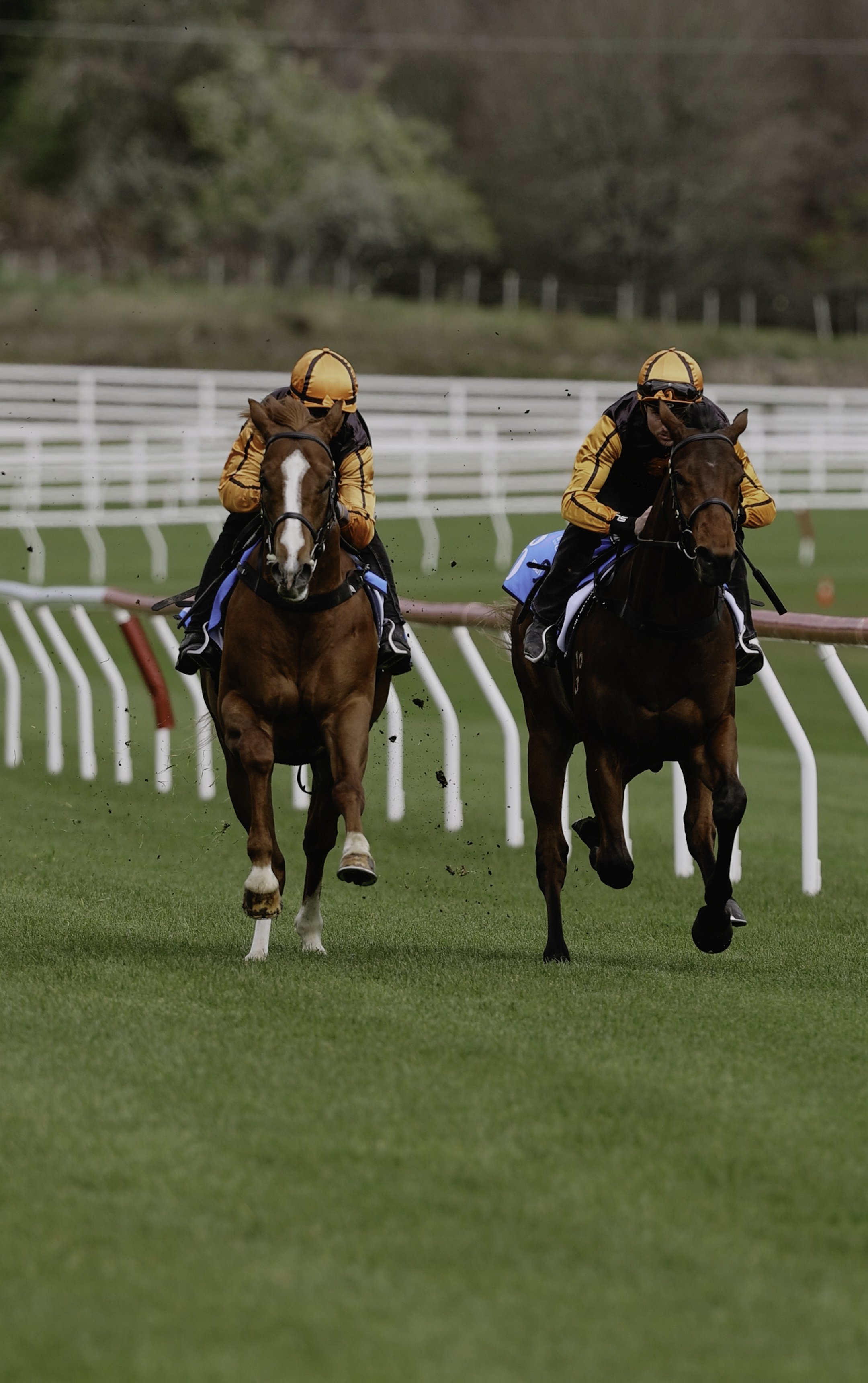
What makes it all the more impressive is that Kelly is the only woman in Australasia running a facility of this scale. Something that she says hasn’t always been easy.
“It’s been hard because I’m dealing with males 24-7 in the industry,” she admits. “But I wanted to prove that women could do this and that we can do anything. I have my own goals of what I want to achieve, and just because I’m a woman, it doesn’t mean that I can’t do it.
It’s just choosing a path you want to go down and sticking to it, really.”
Another challenge is balancing her love of horses with the commercial realities of needing to sell them on. She spends months with these animals and gets to know them and their personalities intimately.
“You’ve got to separate your emotions because you form a bond with them, you love the horse, but we do need to sell them. I wouldn’t say it gets easier. It’s just part of it. But there’s satisfaction in knowing that you’ve installed a lot of groundwork that then becomes results on the track.”
“Ultimately, we want to prepare horses to go on and do great things,” she says. “That’s what we keep our focus on. It’s getting better and better every year. We’ve got some big goals, and we want to keep building and producing quality horses that win big races.”
Then, smiling, she adds, “This is just the beginning.”