
GUIDING GENERATIONS
A global legal career meets a pull back home, as Rebecca Steens brings international expertise to Tauranga’s ever-changing wealth and succession landscape.
A global legal career meets a pull back home, as Rebecca Steens brings international expertise to Tauranga’s ever-changing wealth and succession landscape.
WORDS PIP CROMBIE | PHOTOS DEBORAH DE GRAAF
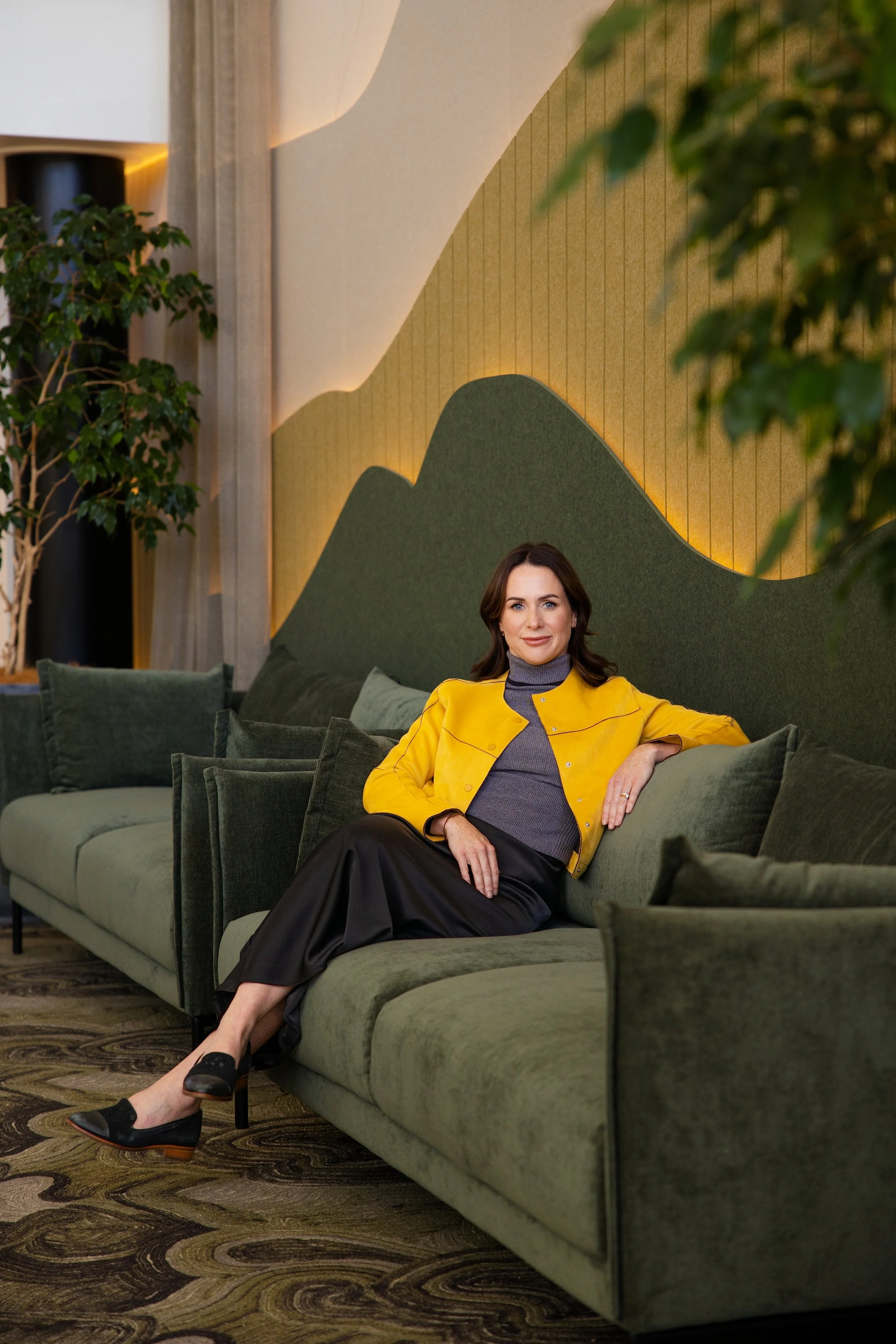
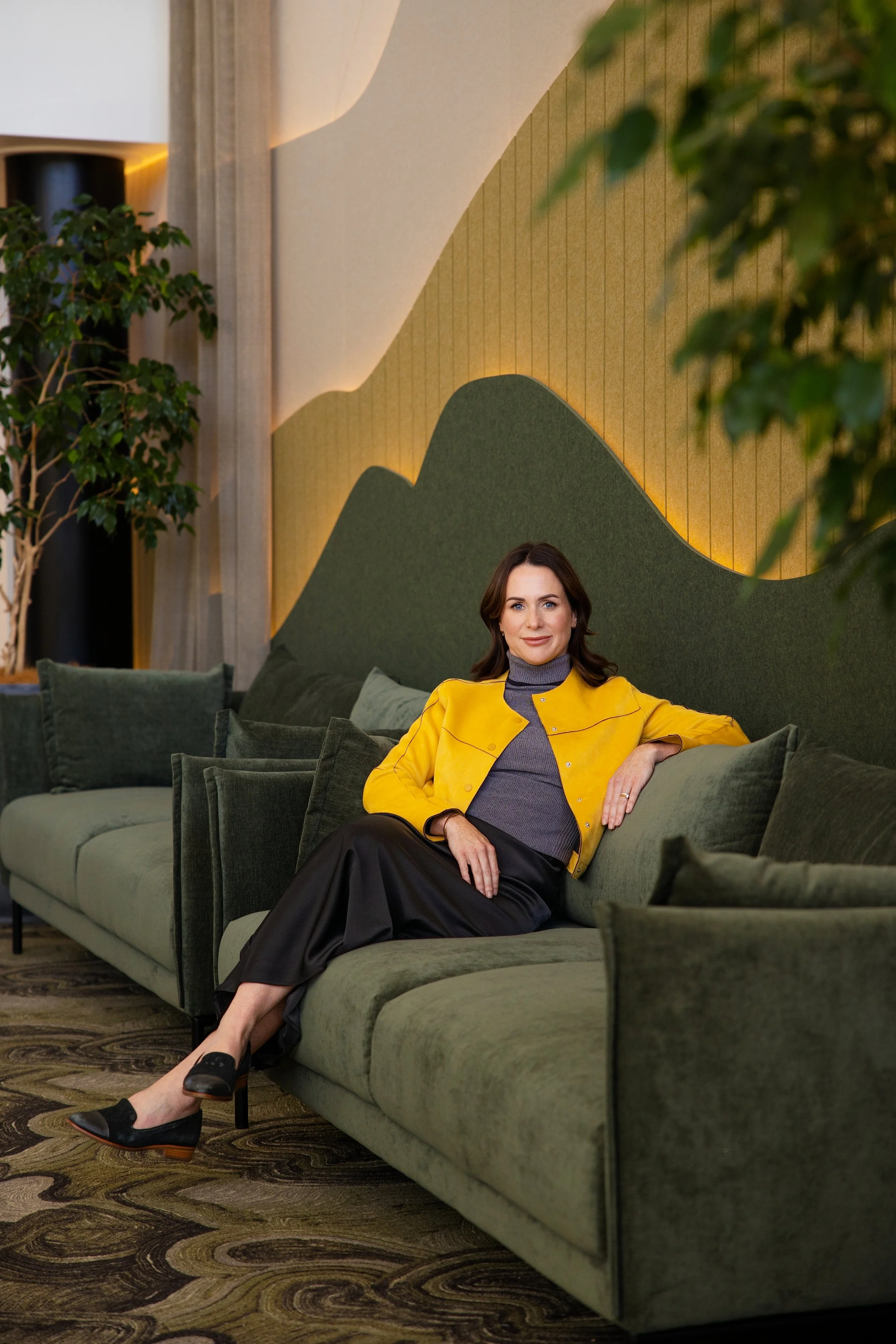
There’s no place like home, or so the adage goes. It certainly proved true for the most recent female partner to join Holland Beckett, Rebecca Steens. She and her husband, Michael, were feeling quite settled after four years in Jersey, the largest of the Channel Islands. The active, outdoorsy lifestyle they enjoyed on the self-governing British Crown Dependency, located around 20km off the French coast, was offset by the rich mix of French and British history and culture on offer. Rebecca loved her rewarding role specialising in trust litigation within an international context, but New Zealand and family tugged them home in late 2019, only a few months before COVID-19 unleashed lockdowns and other restrictions.
“While it was the close of a wonderful part of our lives, the draw of home and all that offers was the right decision in the end,” explains Rebecca.
Nearly seven years on, as a highly regarded succession and estate planning lawyer with more than 12 years’ experience advising clients on trusts, estates, succession planning and asset protection, Rebecca says her life and background have brought focus to her practice.
“My life so far – the diverse travel, living and working overseas, being a daughter, wife, mother, first home buyer, working parent… all have brought a different perspective to me as an estate planning lawyer, and a partner at Holland Beckett.”
Rebecca's husband Michael runs an engineering business specialising in marine welding, giving her an appreciation of the day-to-day workings and challenges faced by small, industry-specific businesses. That said, she feels at ease with a diverse range of locals and large business owners, having grown up during the burgeoning Bay of Plenty growth phase, in an economy driven by orcharding, ocean industries, port expansion and extensive property development. Like others at Holland Beckett, her significant international experience contributes to the comprehensive legal services on offer by the firm.
In late 2019, Rebecca joined Holland Beckett as a senior solicitor in the firm’s litigation team. She transitioned into the Succession, Trusts and Estates team in 2021, where her leadership has been instrumental in shaping its growth and reputation. “We’re living in a time of the biggest intergenerational shift of wealth from the Baby Boomer generation,” she says. “The recipients of the trusts set up by that ageing generation do not always live in New Zealand. There are tax implications, the division of wealth is not as straightforward as people may believe – many don’t even know where their money will go if they don’t have a will. There’s often an assumption it goes to their wife or husband, but this is being challenged in real life as the Administration Act 1969 [which deals with rules on intestacy] is not consistent with the way we live now.”

Rebecca feels driven to ensure her clients have a clear understanding about the value and division of their wealth, no matter what size it is. She says the increase in blended families, relationship disputes, dependents living with disabilities needing life-long care, those with terminal health diagnoses – all manner of life situations – deserve transparency and guidance in ensuring their wishes are met, and not open to dispute by those left behind.
Joining the now 17-strong partnership at one of Bay of Plenty’s largest legal firms felt right to Rebecca. She describes a law partnership as a relationship and in the way of any relationship, had a clear understanding of what she could bring to it.
Rebecca’s happy to report it has been a completely positive move. “It has enriched my life. The support I’ve had from the partnership and my team to get where I am has been so valued. I navigated the added responsibilities through parental leave and two very young children. Having such a strong female presence in the partnership [seven of the 17 partners are women] is something I appreciate, as is the depth and breadth of experience in our partnership.”
Holland Beckett prides itself on its community involvement, with one of its initiatives being free Wills Month in September. Sponsorship of various awards, a diverse range of charities, pro bono work… the firm is engaged in doing its bit. With 50 staff in 2012, the growth to over 160 by 2025 has seen the need to move to larger premises. Rebecca joins the partnership at the start of this exciting next chapter for the firm, now based in a purpose-built, modern space on The Strand in Tauranga – future looking, with room to expand. Now that Rebecca and Michael’s children are three and four, they’re looking forward to returning to adventurous outdoor activities – cycling, hiking and water pursuits – and hopefully as time allows, travelling intrepidly with their young family.

NO TIME LIKE THE PRESENT
Registered nurse and director of Cashmore Clinic, Leanne Cashmore, says taking a seasonal approach to caring for your skin can make a significant difference to how it looks and feels year-round.
Registered nurse and director of Cashmore Clinic, Leanne Cashmore, says taking a seasonal approach to caring for your skin can make a significant difference to how it looks and feels year-round.
PHOTO SALINA GALVAN

If you ask me, winter presents the perfect opportunity to reset and repair your skin. Whereas summer is often focused on protection and maintenance, this time of year is all about nourishment, restoration and correction.
During the cooler months, humidity reduces, and cold air outside combined with indoor heating can leave skin feeling tight, dehydrated, flaky and more sensitive than usual. Many people notice increased redness, irritation or dullness, because the skin barrier – the outer layer responsible for retaining moisture and protecting against environmental stress – has become compromised.
In the skin industry, winter is widely considered to be ‘treatment season’. Reduced sun exposure and heat mean you’re able to recover more comfortably and effectively from advanced treatments, plus many professional treatments increase sun sensitivity, making winter the safest time to achieve optimal results.
Resurfacing treatments are one of the most popular winter options. They work by exfoliating the skin, encouraging cell turnover, and targeting concerns such as pigmentation, congestion, uneven texture, acne and fine lines. Having such treatments in winter reduces the risk of post-inflammatory pigmentation.
For safety and best results, laser treatments targeting pigmentation, redness, acne scarring, rejuvenation and overall skin correction are also best performed when sun exposure is lower. Laser technology works by creating controlled stimulation within the skin to encourage collagen production and improve imperfections.
The less-sweaty season is an effective time for microneedling too. By creating tiny micro-injuries within the skin, it stimulates collagen and elastin production to improve scarring, texture, enlarged pores and signs of ageing.
You have much to gain from even just a quick reassessment of your skincare routine. Avoid over-exfoliating and, ideally, use active ingredients under the supervision or guidance of a professional. For home care, look for ingredients such as hyaluronic acid, ceramides, glycerin and essential fatty acids that will boost hydration and support a stronger, healthier skin barrier. And remember, SPF is still non-negotiable. UV exposure remains one of the leading causes of premature ageing and pigmentation, whatever the weather.
A thoughtful reset can create long- term improvements that are difficult to achieve during sunnier seasons. Rather than viewing winter as a challenging time for your skin, I say see it as an opportunity. CASHMORECLINIC.CO.NZ

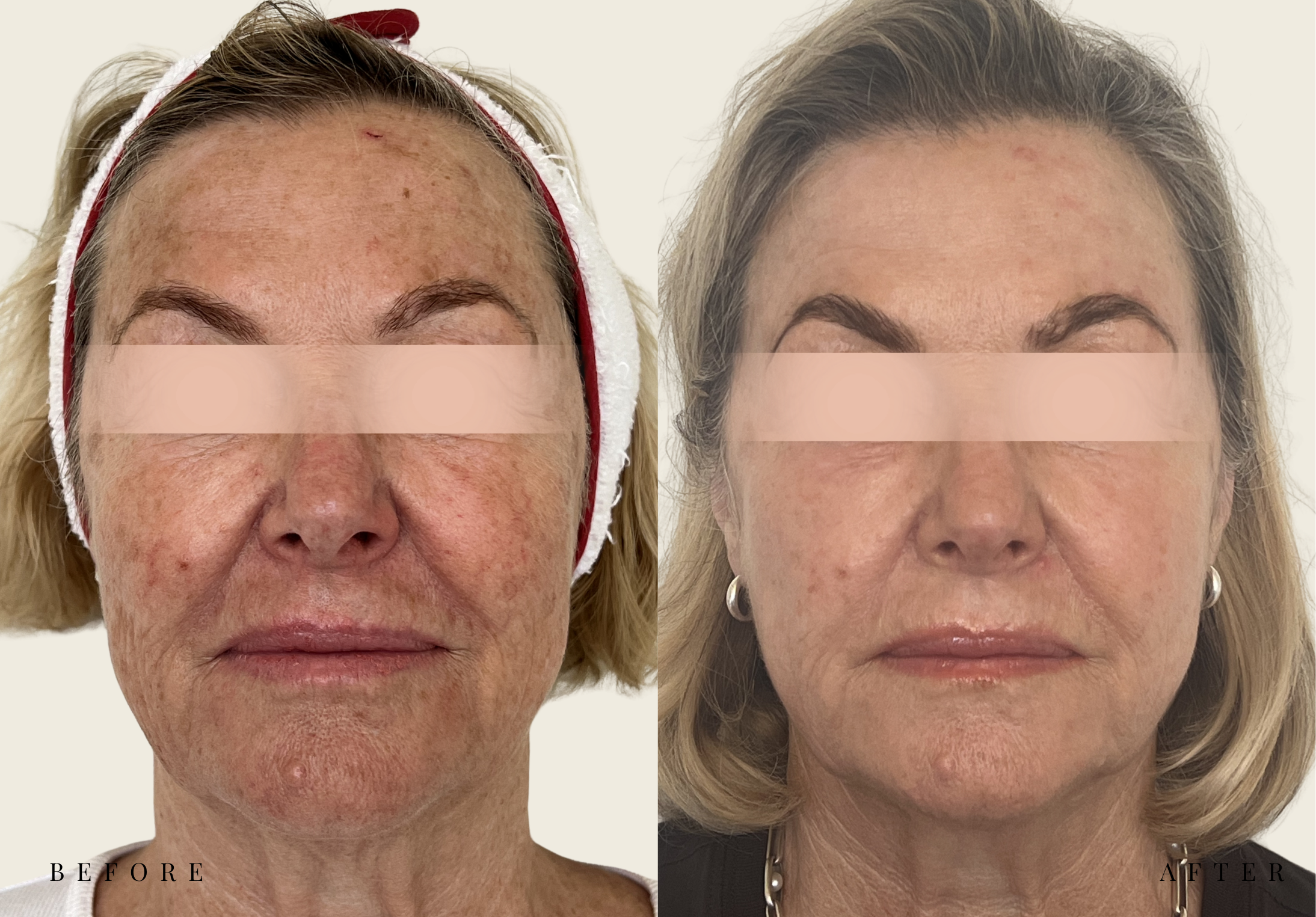
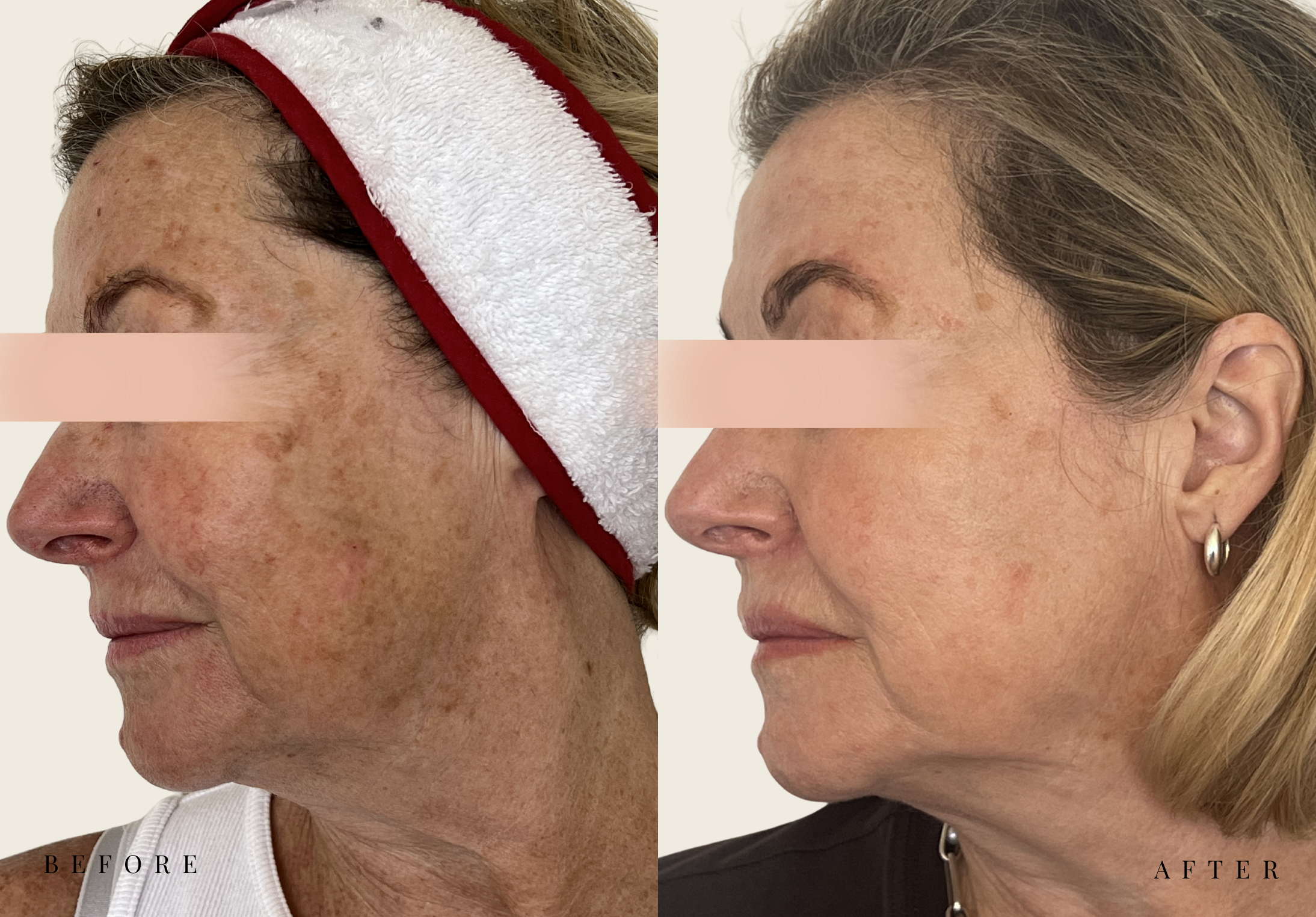
Results achieved from Ultra Veloce. One treatment only in conjunction with medical-grade skincare.
NEXT LEVELS
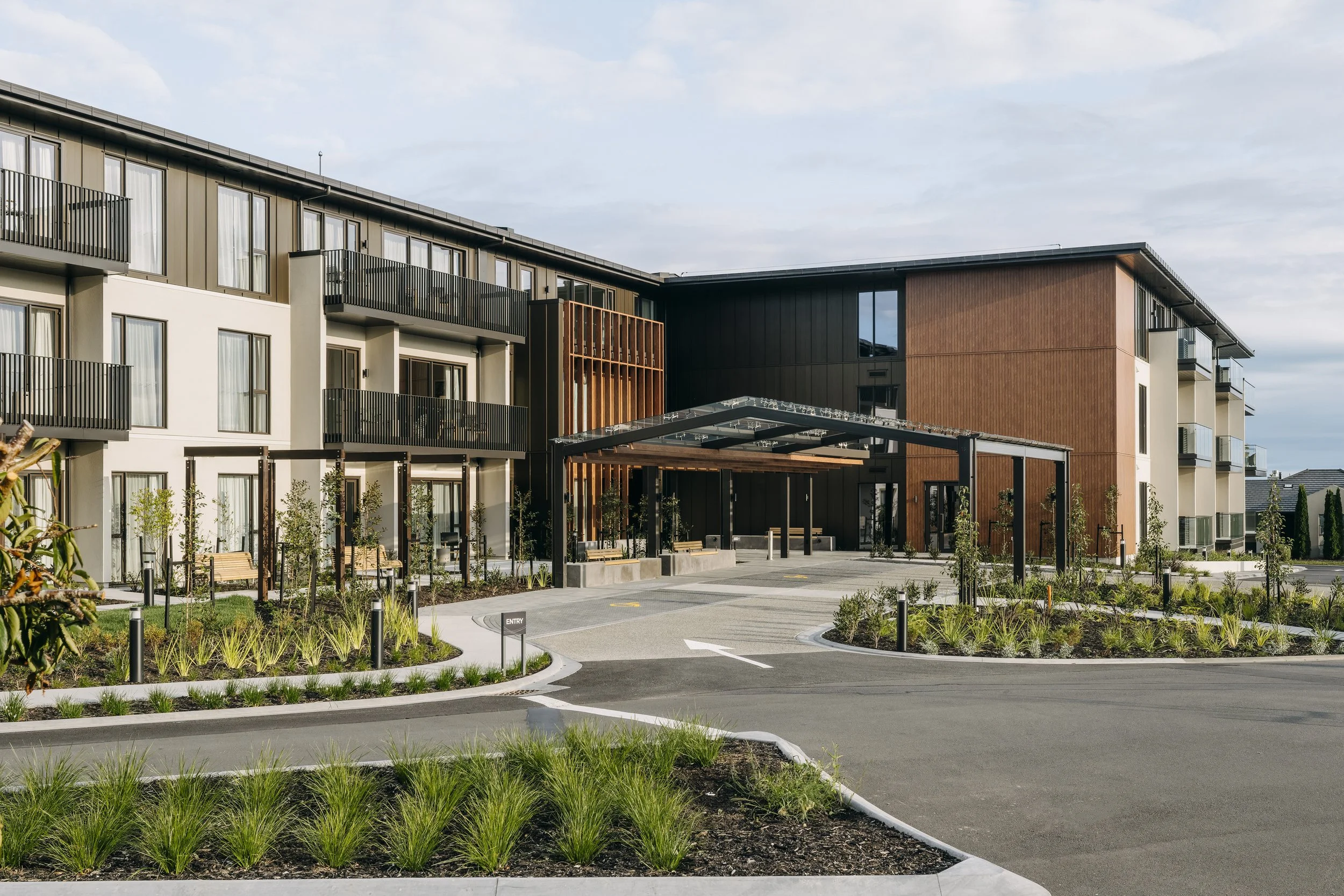
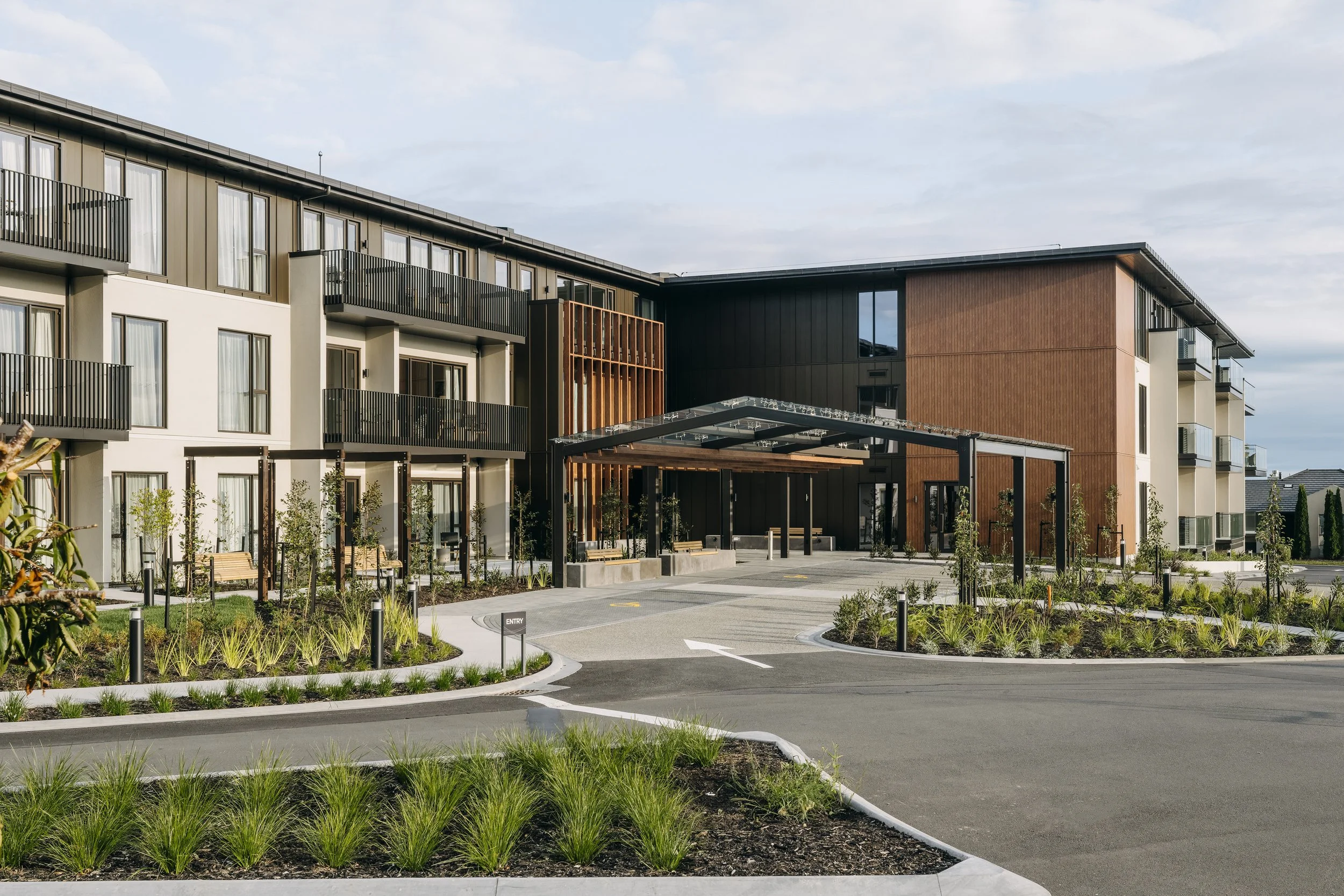
Luxury retirement village Bethlehem Shores has been gradually but purposefully evolving into a resident-led community designed to meet every contemporary need. A $100 million expansion has taken it there.
Luxury retirement village Bethlehem Shores has been gradually but purposefully evolving into a resident-led community designed to meet every contemporary need. A $100 million expansion has taken it there.
PHOTOS SUPPLIED
These days, age is more of a mindset than a number. We’re living longer and keeping active and social for many more years than previous generations. In response, retirement living is undergoing a huge evolution. The old-school institutional style facilities are disappearing, as villages adapt to match the more modern lifestyle focus desired by the modern 60-something.
This is becoming more and more evident at Bethlehem Shores. The release of 53 apartments marks the final stage in the expansion of the established retirement community in Bethlehem.
While Bethlehem Shores has long offered villa living, the apartments introduce a different lifestyle option within the community, reflecting a broader shift in how retirement living is evolving.
Apartments offer an alternative to standalone homes, with a focus on low-maintenance living. For some residents, this can mean fewer day-to-day responsibilities and more flexibility in how they spend their time, while still maintaining independence and privacy.
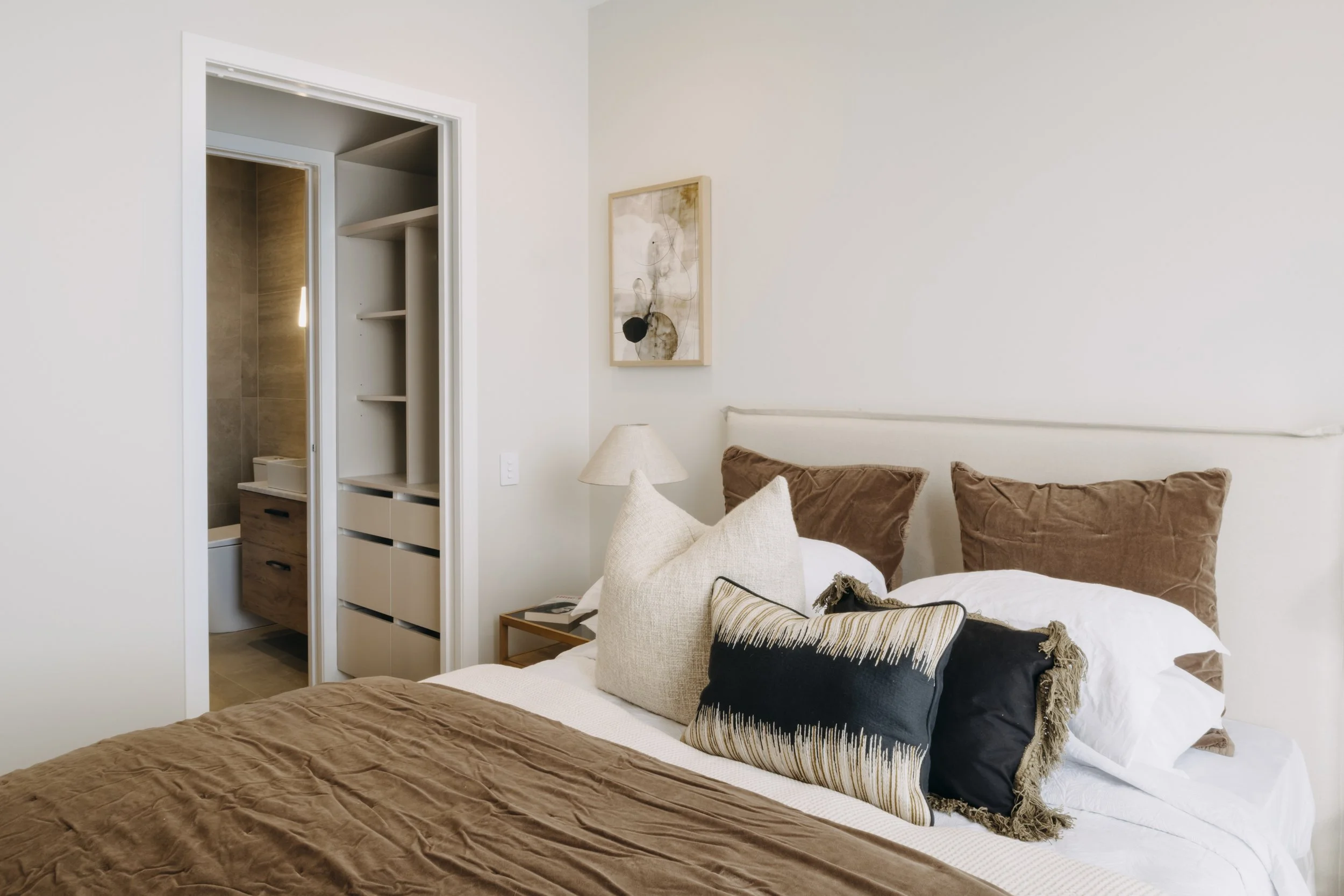
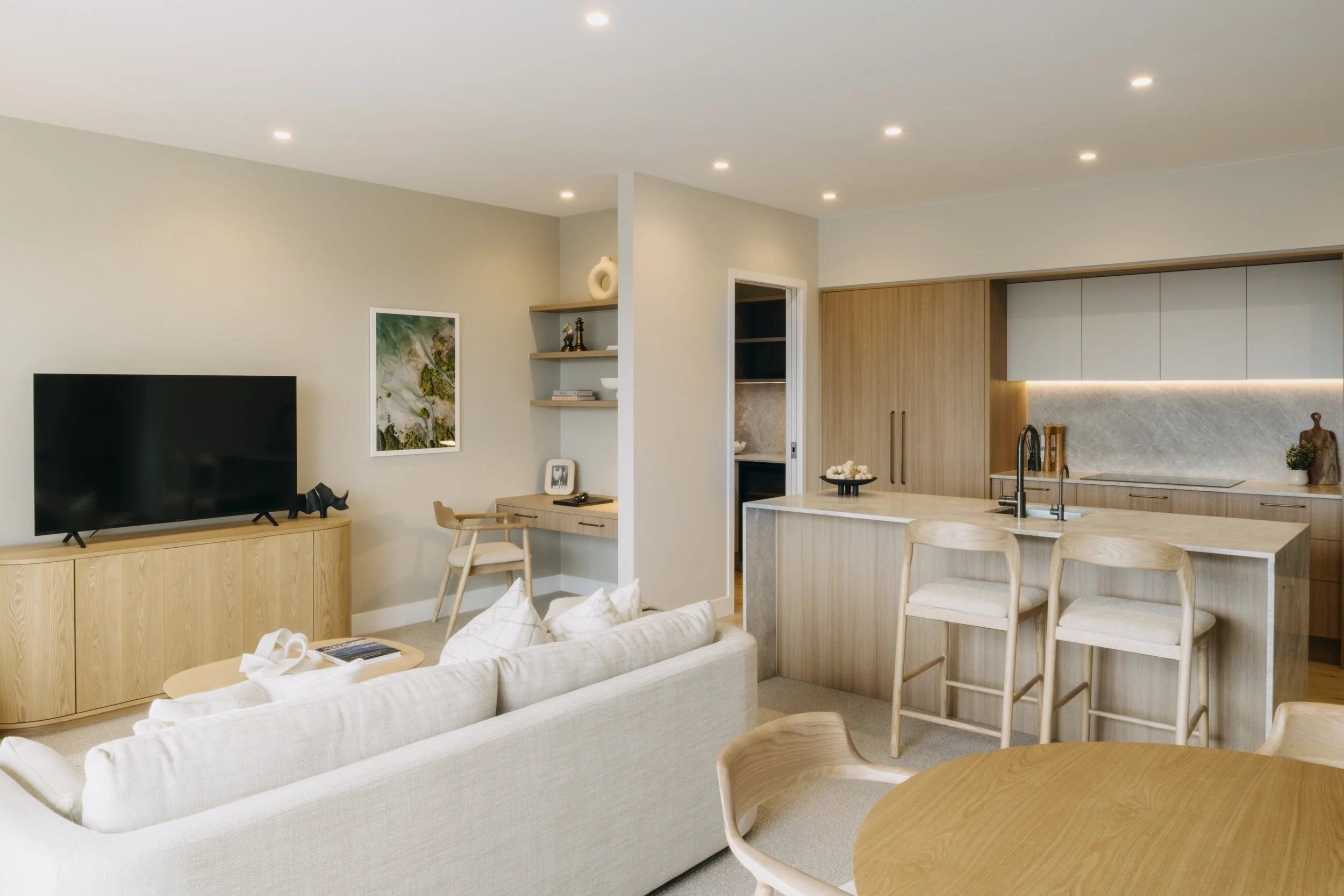
Apartments come in one-, two- and three bedroom layouts. Open-plan living areas and large windows have been used to bring in natural light and make the most of the surrounding views.
There’s also an emphasis on amenity, accessibility and ease of movement throughout the spaces. Increasingly, people are looking for housing that feels manageable, adaptable, and aligned with how they want to live day to day.
Village manager Brian Bark describes the apartments as an important step in the retirement community’s development.
“This is the last major stage of development at Bethlehem Shores and we’re very proud to be able to offer more choice to residents in the form of apartment living,” he says.
The apartments sit within the existing village environment, meaning residents remain connected to established amenities and services.
Shared spaces include spacious lounges, activity rooms, a café, a hair salon and a range of outdoor areas. These provide opportunities for both social interaction and quieter day-to-day use, depending on individual preferences.
The layout of the apartments also considers the balance between privacy and proximity. Although each home is self-contained, they’re located within easy reach of the communal areas, for social get togethers, events or visits from family and friends.
The apartments are also close to Bethlehem Shores’ established clubhouse, which continues to play a central role in village life. The impressive space includes a range of shared amenities and areas for socialising, activities and gatherings, and is already a well-used part of the existing community.
Apartment residents will have full access, adding another layer of connection to the wider Tauranga retirement community. Alongside the brand-new apartments, a new care centre has been built within the community. It includes care suites that offer rest home, hospital and dementia-levels of care to residents.
“For those living at Bethlehem Shores, it provides added reassurance that if their needs change over time, they can remain within the same community and receive the right level of support, without the disruption of moving elsewhere,” says Brian.
A key part of village life in Arvida’s retirement communities is the focus on resident-led activities. Rather than a set programme, many of the social groups, events and day-to-day activities are organised and driven by residents themselves.
This can include anything from yoga classes and walking groups to craft sessions, card groups and e-bike outings. The approach has residents shaping how they spend their time and contribute to the community in ways that suit their own interests and routines.
Rather than a one-size-fits-all approach, Arvida’s 33 Living Well Communities across New Zealand offer a range of lifestyle options to suit different preferences and stages.
Interest in apartment-style living has grown in recent years, particularly in well-located communities. Factors such as reduced maintenance, accessibility, and the ability to remain part of a larger community all contribute to that interest.
As retirement living continues to evolve, Arvida Bethlehem Shores retirement community illustrates how villages are adapting to changing expectations. The focus is increasingly on flexibility, choice and supporting different ways of living in later life.

BUILDING FREEDOM
UNO’s new columnist, Mount financial adviser Adam Stewart, shares his grounded, practical approach to investing, retirement and financial freedom.
UNO’s new columnist, Mount financial adviser Adam Stewart, shares his grounded, practical approach to investing, retirement and financial freedom.
PHOTOS DEBORAH DE GRAAF

At 32, Compound Wealth founder Adam Stewart has already spent more than a decade immersed in the world of investing, KiwiSaver and financial planning. But despite managing more than $170 million in funds under advice and working with clients across New Zealand, his approach to wealth remains surprisingly grounded.
Raised on a dairy farm in Ashburton, Adam says growing up in a hardworking farming family shaped much of how he thinks about money and long-term security. “There’s no such thing as days off on a farm,” he says. “The cows still need milking on Christmas Day.”
His parents’ work ethic left a lasting impression. So too did the realities of farm ownership, with debt, weather dependence and the relentless pressure that can come with running a business tied so closely to the land.
“I saw a lot of toil from my parents,” he says. “I think that got me thinking about how I could do things in a smarter way.”
That curiosity eventually led him to study finance and commercial law at Victoria University in Wellington, where he landed a part-time role at a financial planning firm while still in his teens. It was there, while working on matters related to the relatively new KiwiSaver, that something clicked. “I got really passionate about KiwiSaver because I understood the power of compound interest.”
Like many people who eventually end up in finance, Adam says he was also drawn to the idea of independence. Reading Rich Dad, Poor Dad at a young age sparked an interest in financial freedom and business ownership, concepts that would later become central to both his career and personal philosophy.
After university, Adam worked for a government-appointed default KiwiSaver provider, eventually moving into a role in which he travelled the country advising financial advisers on investment products and KiwiSaver strategies. The experience exposed him to a huge range of financial businesses – the good, the bad and everything in between.
But it was conversations outside the office that inspired him to launch Compound Wealth. “I’d be at the rugby club or out socially and people would ask me what KiwiSaver fund they should be in,” he says. “I just assumed most people knew what they were doing financially, but they didn’t.”
What shocked him most was not a lack of intelligence, but a lack of guidance. “I was meeting CEOs, lawyers, accountants and people with two or three hundred thousand dollars sitting in the wrong fund.”
At just 24, Adam started Compound Wealth with the simple goal of helping ordinary New Zealanders make better long-term financial decisions. Initially, much of that work centred around KiwiSaver and moving clients into funds that better matched their goals and risk tolerance. Over time, however, the business evolved into retirement planning, investment strategy and helping clients create lives that feel financially secure.
Today, Adam’s typical client is approaching retirement or already retired, often with more than $1 million in investments, property or KiwiSaver assets. “A lot of people have worked extremely hard for decades, but they don’t actually know how to spend their money confidently,” he says.
It is a surprisingly common problem. Adam says many retirees remain overly conservative with their investments, worried they’ll run out of money. Others hold onto wealth purely out of fear.
“Too many people think they need to die with exactly the right amount left over,” he says. “But often they could afford to enjoy life a lot more.”
Instead of simply focusing on investment returns, Adam says much of his work now revolves around helping clients align their money with the lives they actually want to live. That might mean helping someone structure their finances so they can travel more in their 60s and 70s, give money to their children earlier, or feel comfortable spending what they’ve spent decades building.
“If you want to take the family to Fiji and pay for everyone because you can afford to do it, great,” he says. “If you want to help your kids get ahead while you’re still around to see the benefit of it, great.”
Adam’s philosophy around investing itself is notably measured. Rather than chasing hot stock tips or market timing, he advocates for low-cost diversified investing and long-term thinking.
“We’re not trying to pick the needle in the haystack,” he says. “We own the haystack.”
It’s advice he applies to his own life. Adam started Compound Wealth in his mid-20s, while living rent-free back in Ashburton and playing Heartland rugby. The early years were difficult. He admits earning trust as a young adviser came with “a lot of hard knocks”.
“People would think, ‘Who’s this 24-year-old advising me on my finances?’” he laughs.
Still, he kept showing up. Over time, the business grew steadily, helped in part by the digital shift brought on by COVID-19, which accelerated online financial advice across New Zealand.
Now based in Mount Maunganui with his wife and young family, Adam has built both the lifestyle and the business he once imagined for himself. He sponsors local rugby and tennis clubs, and works from a modern Mount office. He says maintaining balance remains important.
“I don’t want to build some huge corporate monster. I enjoy my lifestyle. I try to live the way I teach my clients to live.”
That may be the core philosophy underpinning both Adam Stewart and Compound Wealth. Financial planning is not really about money at all.
“Financial freedom,” he says, “is having the ability to do what you want, when you want, with the people you care about.” COMPOUNDWEALTH.CO.NZ

A GRAND ADVENTURE
UNO editor Hayley Barnett and her right-hand man tootle over the hill to get a fresh perspective on a little town with a lot going for it. This is an accessible getaway if ever there was one.
UNO editor Hayley Barnett and her right-hand man tootle over the hill to get a fresh perspective on a little town with a lot going for it. This is an accessible getaway if ever there was one.

Though it might have a reputation as the “town of trees and champions”, over the past decade Cambridge has become a destination known more for its polished hospitality and thriving shopping scene. Over one fun-filled weekend, the quaint equestrian town proved itself to be a surprisingly perfect pick for a romantic getaway.
One Friday afternoon, my husband and I drove over from Tauranga, stopping at the Sculpture Park at Waitakaruru Arboretum on our way in. This is a place I’ve been dying to visit, but on our many drives to Auckland, it has never seemed like the right time.
Built in a former quarry and now spanning hectares of regenerated landscape, the park weaves more than 100 sculptures through a 2km walking trail of ponds, cliffs and thousands of trees. It’s basically an art gallery in nature, and makes for a great hike before the beginning of an indulgent weekend ahead.

The Sculpture Park at Waitakaruru Arboretum.
From there, we headed into a different vibe entirely. Cambridge’s centre is compact and refined, with independent boutiques, cafés and galleries lining the streets.
We checked into The Clements Hotel, a new concept in an old heritage building right in the middle of town. Having been given a contemporary polish of late, the rooms are modern yet also traditional, consistent with the building’s historic character. Its central location makes it an ideal base for a weekend away.
Cambridge is known for being walkable, and staying here meant most of our weekend unfolded on foot. Dinner was easy. We simply went downstairs to the hotel’s light-filled, gallery-style restaurant that leans into seasonal New Zealand produce.
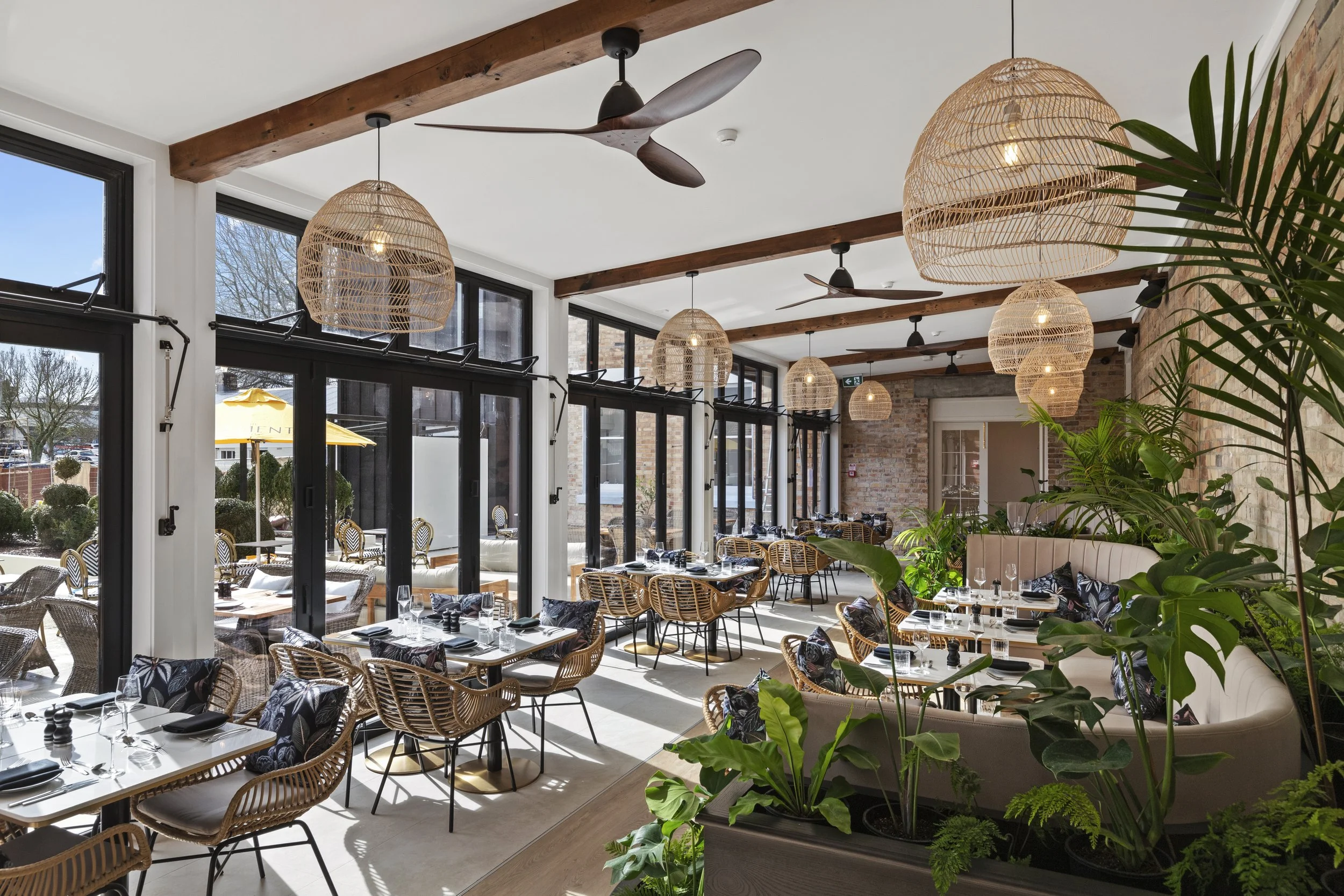
The Gallery at The Clements Hotel.
In keeping with its understated nod to tradition, the offering veers confidently towards the classics – beef tartare, slow-cooked pork belly, glazed duck breast, confit chicken. Nothing feels overly complicated or intimidating, yet the execution is exceptional.
Canning our vague plans to hit the town after dessert – black forest chocolate brûlée, no less – we admitted defeat and agreed a movie might be more appealing. The charming Tivoli Cinema is just around the corner, offering intimate viewing spaces and the option to enjoy a glass of wine.
The next morning started at the local markets, where the region’s produce and small-scale makers are on full display. Cambridge is known for its quality food and artisan goods, and the weekly market is a great way to experience everything it has to offer. Fresh baking, locally made products… It’s a relaxed, unhurried way to begin the day.

Cambridge Distillery Co.
Later, we made our way to the Cambridge Distillery Co, a small operation owned by two couples who joined forces during lockdown to create a business that reflects the wider craft movement in the region. Tastings offer a glimpse into the area’s growing food and drink scene without feeling overly commercial.
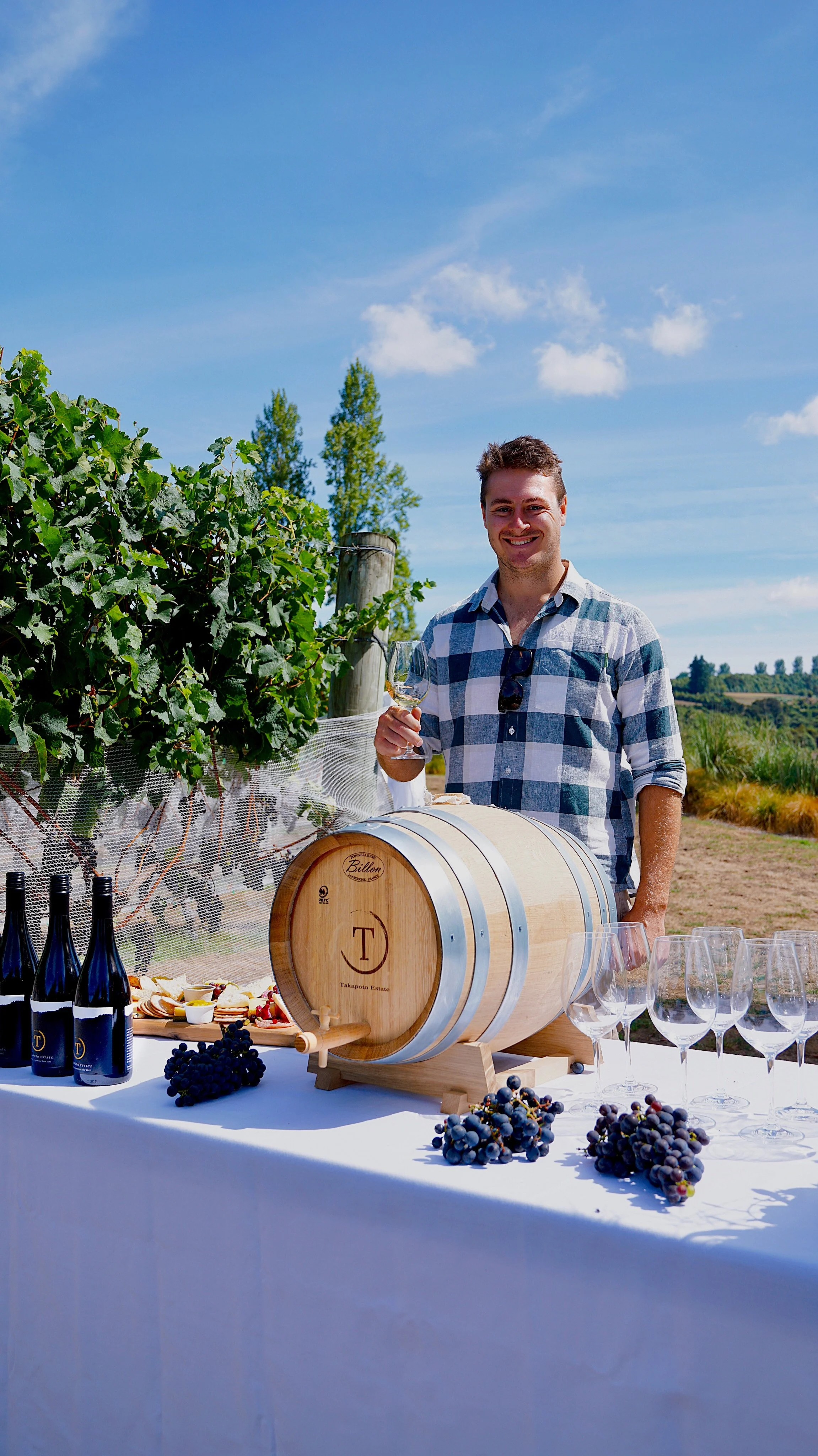
Takapoto Estate winery.
A short drive out of town took us to Takapoto Estate winery, near Lake Karāpiro, which combines a vineyard and show-jumping event grounds. Sitting outside with a glass, looking out over the landscape, it’s easy to see why the cellar door is packed with weekend tasters. We settled in with a cheese platter and watched the entertainment unfold between a couple of hen’s parties, proving it’s also a popular spot for celebrations too.

Te Awa River Ride at Lake Karāpiro.
On Sunday, we decided to get a little more active. With Riverside Adventures, we set out on an e-bike ride along the Waikato River, starting at Avantidrome, New Zealand’s national cycling hub. The route follows part of the Te Awa River Ride, a mostly flat, well-maintained trail that connects Cambridge with the wider region. Even for casual cyclists, the e-bikes make it an easy, enjoyable ride. The path winds along the river, through farmland and native bush, before opening out towards Lake Karāpiro, known for its calm waters and scenic setting.
The journey itself is a chance to move through the town and outskirts at a pace that still allows you to take it all in, and being picked up and returned to town makes the whole trip feel seamless.
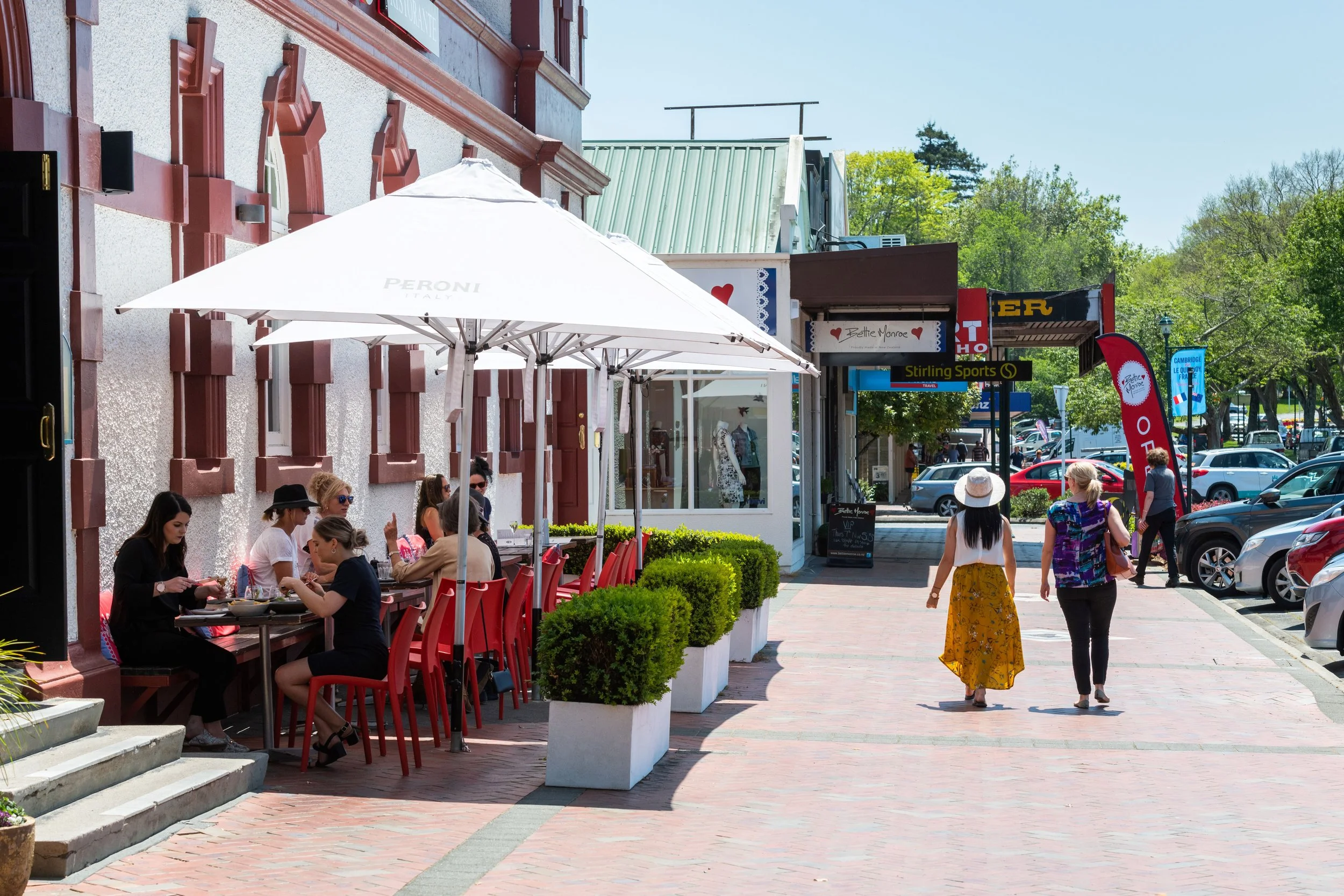
Alpino in the town centre.
Back in Cambridge, the afternoon slipped easily into more wandering, with a few last stops at boutiques, a coffee and yet another visit to the Cambridge Distillery.
The combination of experiences in art, food, cycling and shopping, all within close reach, makes Cambridge an easy trip for anyone who loves culture, adventure and food.
For couples in particular, that balance is hard to beat. There’s enough to fill a weekend, but also plenty of space to do very little at all. And it’s surprisingly hard to leave.
BETTER TOGETHER
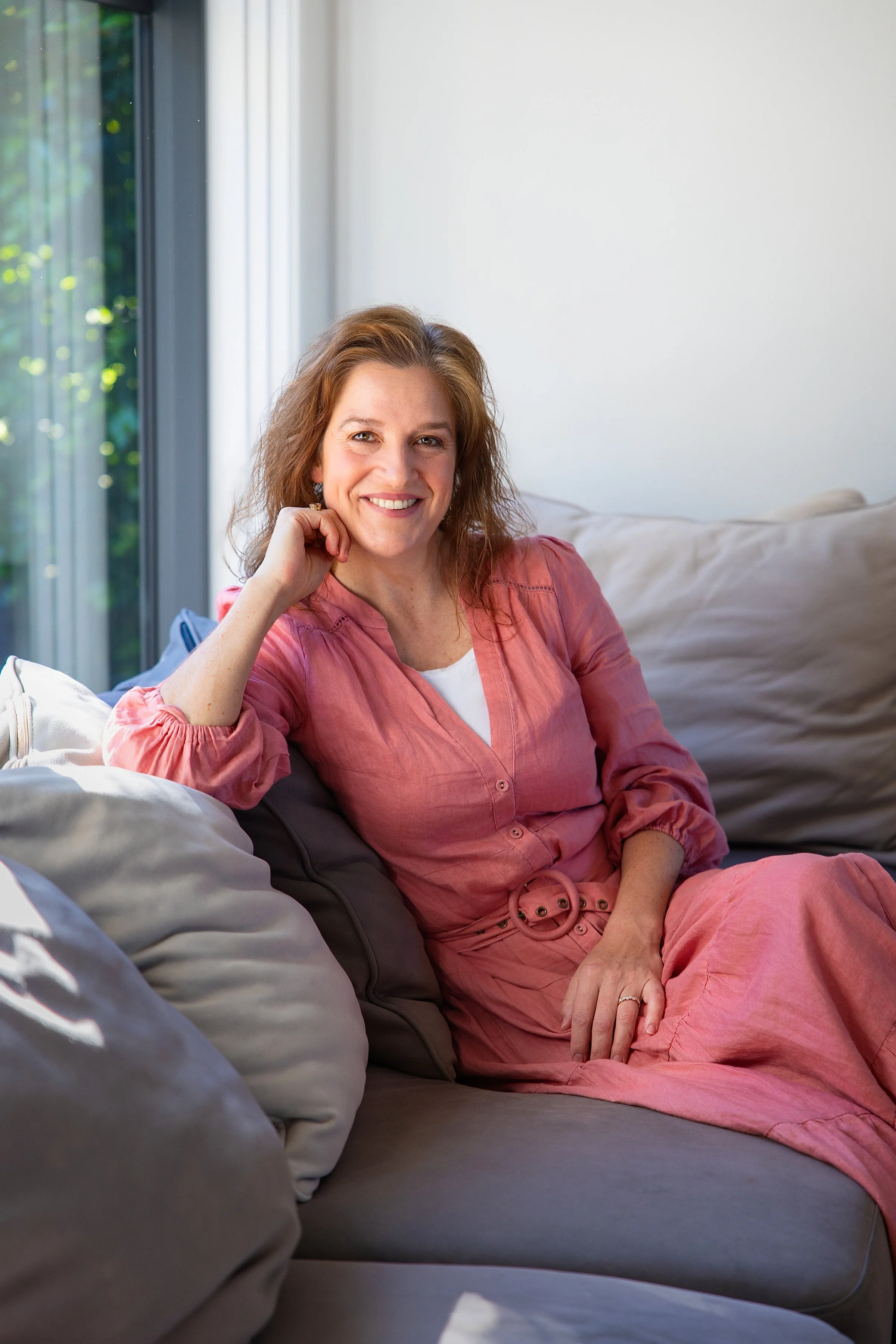
As AI is adopted worldwide, UNO’s new columnist Amanda Jeffs wants women to be leading the conversation.
As AI is adopted worldwide, UNO’s new columnist Amanda Jeffs wants women to be leading the conversation.
PHOTO DEBORAH DE GRAAF
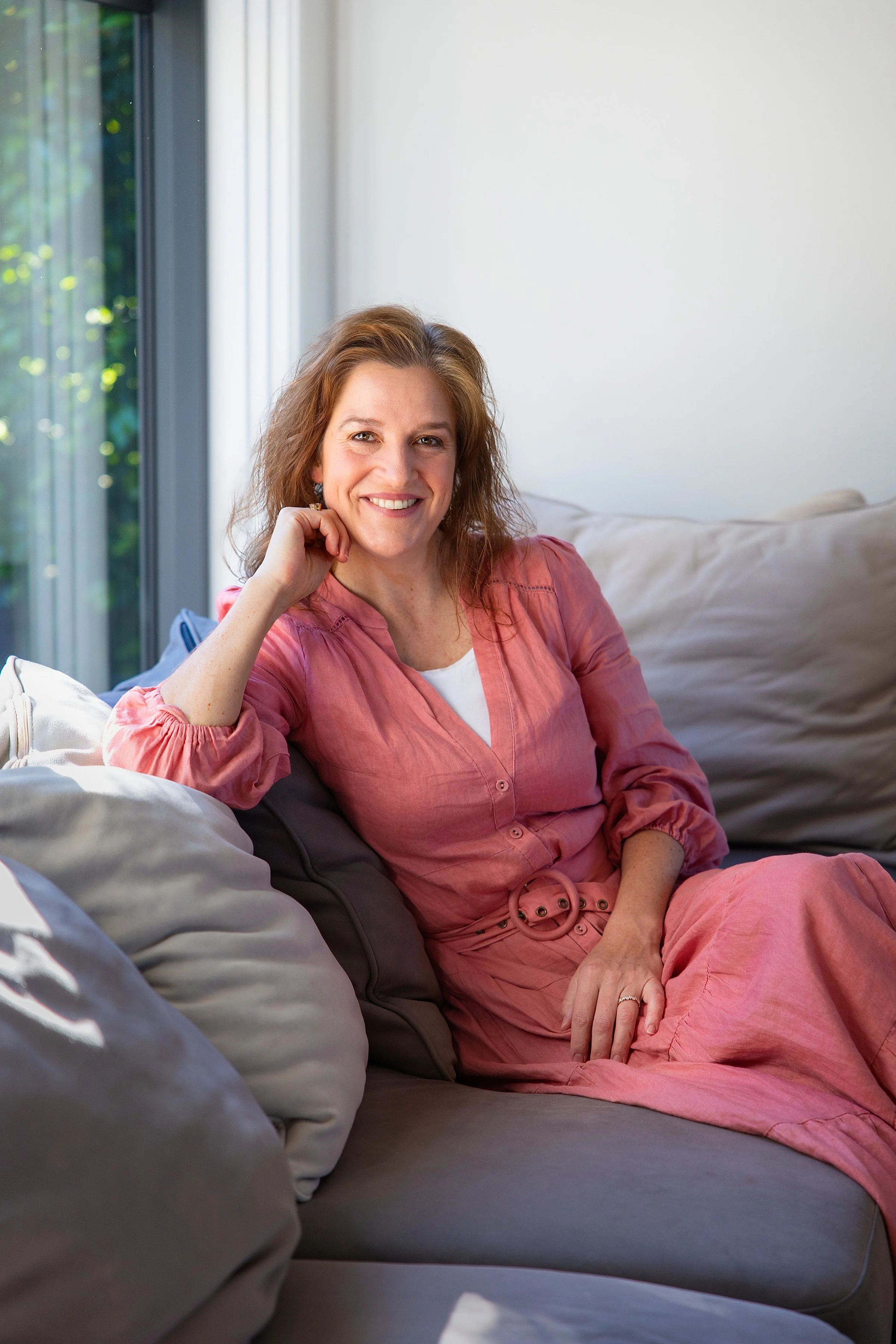
These days, when the words “artificial intelligence” pop up, they often come with a sense of panic. We’re constantly hearing warnings about jobs disappearing and workplaces changing faster than anyone can keep up with, but according to She Is AI founder Amanda Jeffs, that fear misses the bigger picture.
Amanda believes the future won’t belong to robots taking human jobs, but to people who learn how to use AI well.
“People think AI is coming for all of our jobs, but what we’re actually seeing is a change in the workforce. Businesses still need people. AI's not a replacement for humanity.”
It’s a conversation she’s particularly passionate about having with women, many of whom report feeling intimidated by the speed at which AI has entered our lives.
Amanda’s background covers communications, marketing, digital strategy and tech, through roles in government, startups, agencies and consulting in New Zealand, Asia and the UK.
Rather than seeing herself as purely “tech”, she describes her role as translating between people and technology.
“I understand how computers think, but I also understand people and psychology,” she says. “I’ve naturally always sat somewhere in the middle.”
Her mix of skills became unexpectedly useful in 2022, when AI tools suddenly exploded into the mainstream. At the time, Amanda was on maternity leave with her daughter after losing her job in a company restructure. While navigating newborn life on very little sleep, she started diving headfirst into AI. What stood out to her in those early days was the number of women trying to figure it out on their own.
“There were all these women learning AI in isolation,” she says. “They were saying, ‘This is huge, but where are my people?’”
Eventually, she came up with She Is AI, which first launched as a digital magazine that showcased women working in the AI space, before growing into a global education and consulting platform operating across more than 28 countries.
Today, the organisation runs workshops, training programmes and events focused on helping women and businesses adopt AI in practical ways.
Amanda says the more we can rethink AI as a support tool that can remove repetitive admin, the more we can free people up to focus on bigger-picture thinking.
At the moment, though, she believes many workplaces are getting AI wrong, by either resisting it completely or trying to replace people without understanding its limitations.
“We’re in this weird stage where companies think AI can run everything on its own, but it’s not there yet,” she says. “In the future, we’ll see businesses realise they still need those people and hire them back.”
As AI adoption grows, Amanda hopes fear will gradually become curiosity. “We’ve been through huge technology shifts before. This is just the next one.”
Amanda’s joining UNO as a new columnist, to share practical insights into AI, the future of work and how you can use emerging technology in ways that feel useful rather than overwhelming.
Watch this space!
CULTURAL COUP
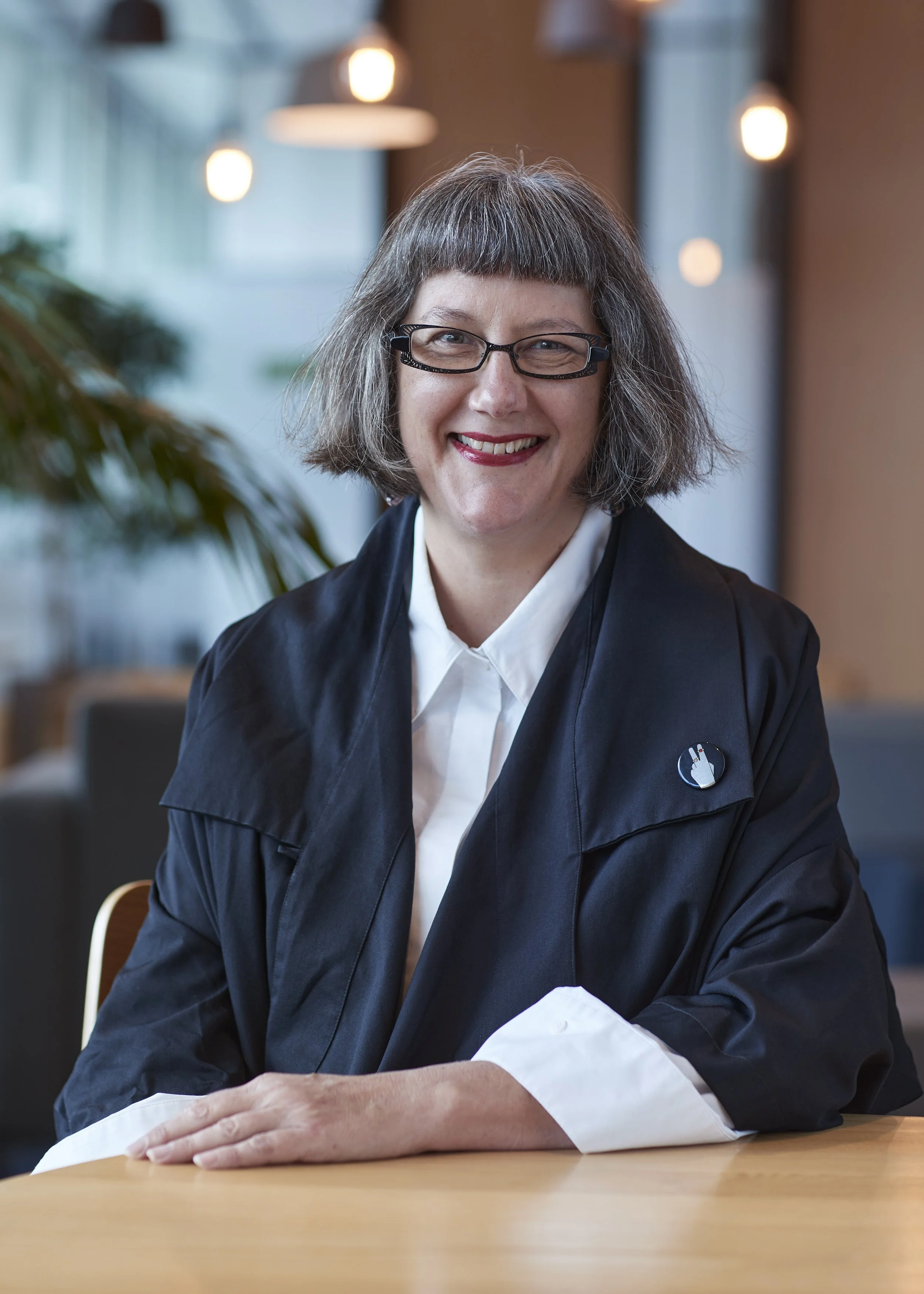
Claire Regnault is bringing big ambition and fresh energy to Tauranga Museum.
Claire Regnault is bringing big ambition and fresh energy to Tauranga Museum.
WORDS JO-MARIE BAKER | PHOTO YOAN JOLLY, TE PAPA
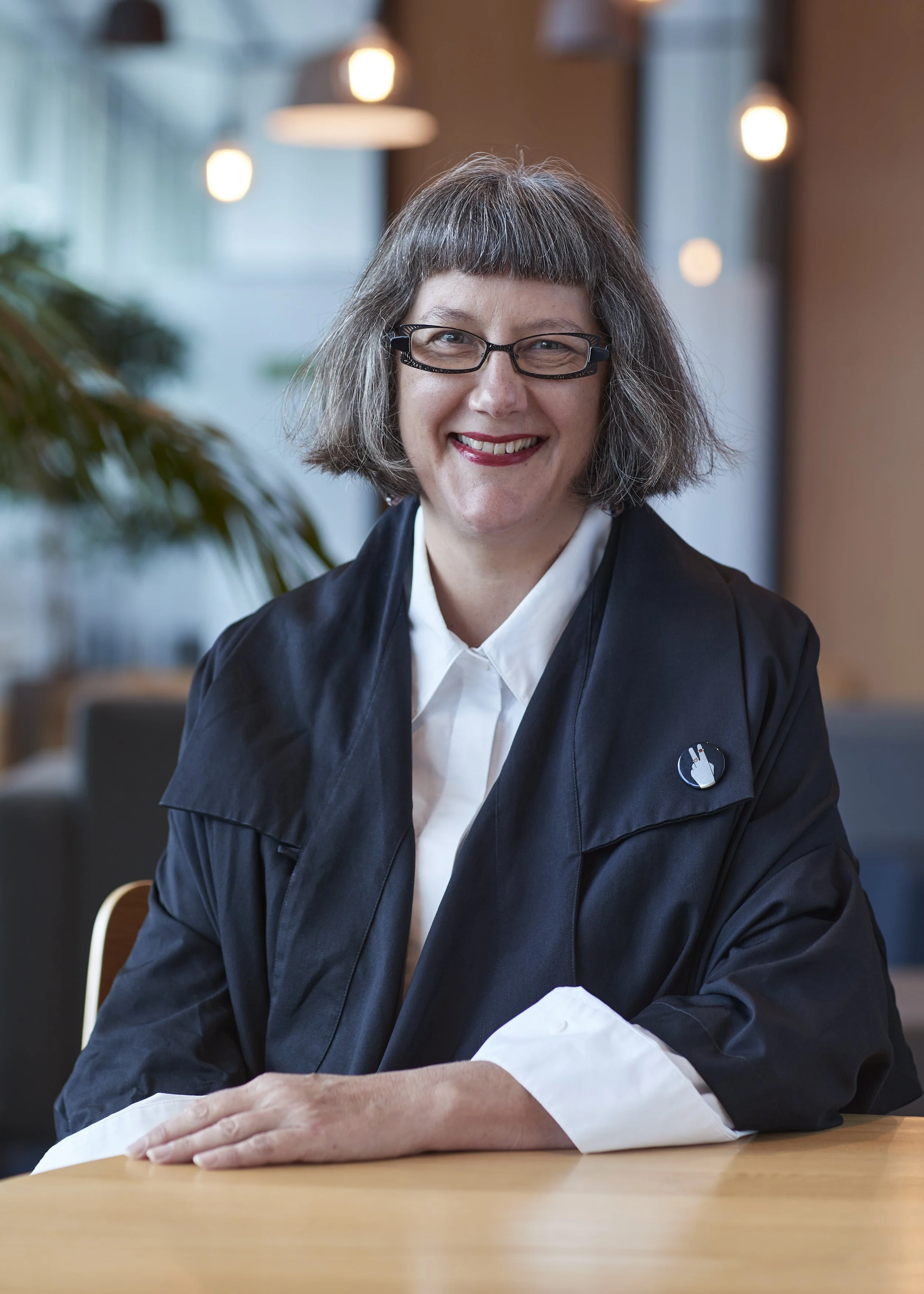
For a city that has waited decades for a museum, the appointment of Claire Regnault is a major coup.
A highly respected curator with more than 30 years’ experience, including 15 years as senior curator New Zealand Histories and Cultures at Te Papa, she will now shape one of the most visible parts of Tauranga’s new museum: its temporary exhibitions and public programmes.
She wasn’t actively looking for a new job, but one look at Tauranga Museum’s plans was all it took to lure her north.
“It was exciting to see something that was ambitious and obviously had momentum. The buildings aren’t just pragmatic, they’re beautiful buildings designed with care and thought.”
For Regnault, it was that sense of pride and forward thinking that stood out. Public infrastructure projects can often feel constrained in New Zealand, -but Tauranga’s willingness to invest in something culturally bold was compelling.
Beyond her curatorial work, Regnault is also one of New Zealand’s leading voices in fashion history. Her book Dressed: Fashionable Dress in Aotearoa New Zealand 1840 to 1910 won the illustrated non-fiction category at the 2022 Ockham New Zealand Book Awards. She plans to quietly work away on a new book while focusing on building an engaging museum programme that will appeal to visitors of all ages.
“The team have their dream list of projects that they would love to do – things from the collection, or ideas that they’ve been sitting on relating to Tauranga. So it’ll be a mix of exhibitions that we develop ourselves, plus exhibitions from the national touring circuit. There’s aspirations to also bring in international shows. We really want the museum to hum.”
That ambition extends beyond exhibitions themselves. Programming will be designed to activate the building and create a sense of energy and connection. “It could be anything from an in-gallery hands-on learning activity to a lecture series, floor talks or film nights.”
At its core, Regnault sees the new museum as a place for enjoyment, reflection, and social connection – a warm, welcoming space where there’s always something on offer, and where visitors can keep returning and engaging in different ways.
“You want some levity and fun, but it will be balanced with opportunities for serious reflection and exhibitions that might be a bit challenging to prompt people to think and create empathy.”
Outside of work, Claire’s already settling into Tauranga, describing the city as gentle and beautiful. Much of her time is spent exploring local parks and walkways with her greyhound, Devo, and connecting with the region’s greyhound community. She’s also looking forward to joining the Tauranga Film Society.
At the museum, work is already well underway on what will be a dynamic programme of exhibitions and experiences. While the doors won’t open until 2028, some exhibitions can take up to two years to develop.
“Our job is to make sure the exhibitions are as spectacular as the building itself, and people feel like they belong, take ownership, and are really stimulated and excited by what’s inside.” LETSTALK.TAURANGA.GOVT.NZ/PROJECTS/TAURANGA-MUSEUM

A WEEK IN MY CHAIR
Shelley Pullar of Salon G reveals this season’s top hair trends, as well as the challenges her clients are up against this winter.
Shelley Pullar of Salon G reveals this season’s top hair trends, as well as the challenges her clients are up against this winter.
PHOTOS KATIE COX + SUPPLIED
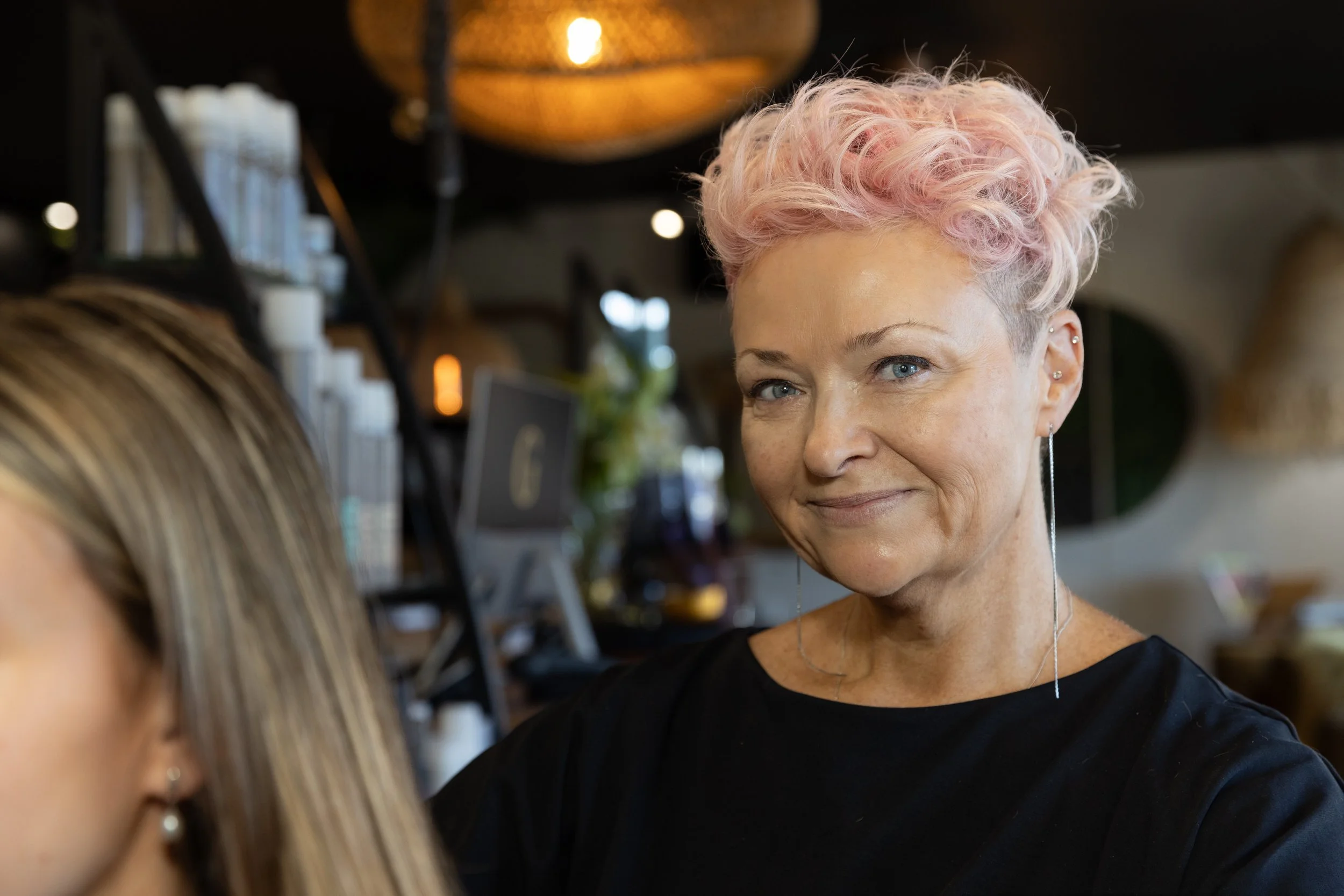
Shelley Pullar.
Winter always brings about a change, not just in the weather, but in how people want to feel. Lately, I’ve noticed a real move toward looks that feel intentional yet effortless.
Short hair is having a moment. I’ve had a run of pixie cuts that are soft, textured and full of personality. Think longer layers, feathered edges and movement that doesn’t feel too “done”. It’s a natural fit for winter, when collars come up and scarves go on. These cuts hold their shape but still feel touchable, which is key.
For those keeping their length, I’ve seen a change in styling. Clients with classic straight bobs are asking for a subtle directional flick – something that gives the hair a bit of attitude without committing to a full restyle. It’s the kind of look that works just as well the next day. It’s a little looser and a little more lived-in.
Colour-wise, warmer tones are leading the way. Rich coppers, ambers and deep cherry shades have been especially popular – bold colours that aren’t too overpowering. At the same time, blondes are leaning softer. The focus is on blended, “lived-in” colour, like buttercream, beige and soft gold tones that melt seamlessly from root to end. Nothing harsh or stripy, just beautifully diffused colour that grows out gracefully.




One of the most rewarding parts of my job, though, has been working with first-time curly clients. Many arrive a little hesitant, often after past experiences that didn’t go well. Curl trauma is real, and it usually comes down to misunderstanding how curls behave, especially with shrinkage.
For me, these appointments are about building trust. I take the time to really listen and understand their hair history, what’s worked, what hasn’t, and what they’ve disliked most. From there, it becomes a collaborative process. Nothing is rushed, and nothing happens without them feeling comfortable.
Education plays a huge part. I talk them through each step as we go, including how much moisture the hair needs, how to encourage a more even curl pattern, and the difference between air drying and diffusing. The goal is for them to leave not just with great hair, but with the confidence to recreate it at home.
When your hair feels right, everything else falls into place. SALONGRANGE.COM
YESTERDAY, TODAY, TOMORROW
The best of the past has been woven into the update of this stately abode, where all the mod cons combine with beautiful bones to usher in a very bright future.
The best of the past has been woven into the update of this stately abode, where all the mod cons combine with beautiful bones to usher in a very bright future.
WORDS JO FERRIS
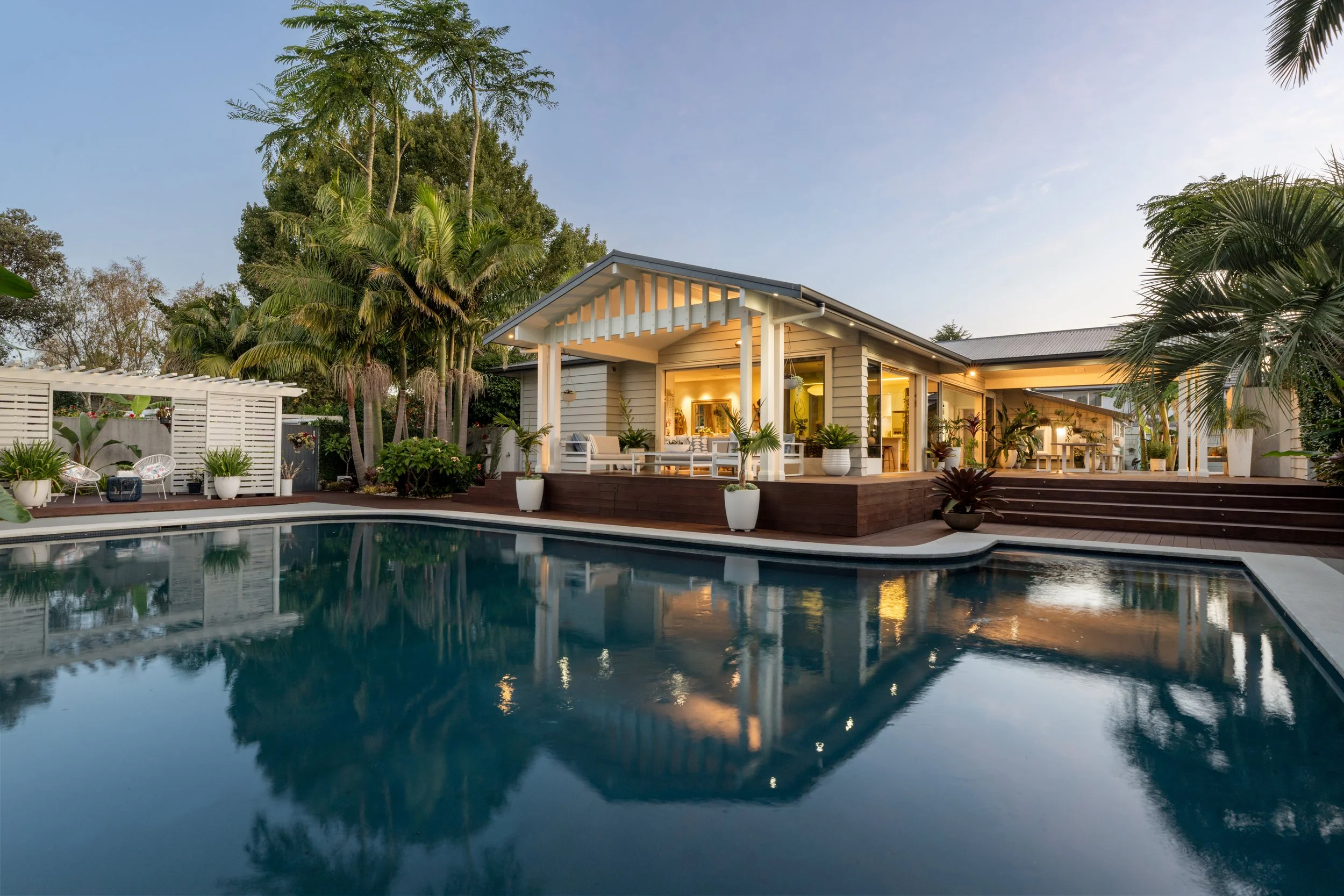
A certain level of grandeur and grace often requires the infusion only time can bestow. This property, in a prominent position on an elevated corner amid Tauranga’s mid-city avenues, is home to all the distinction that yesterday brings to today.
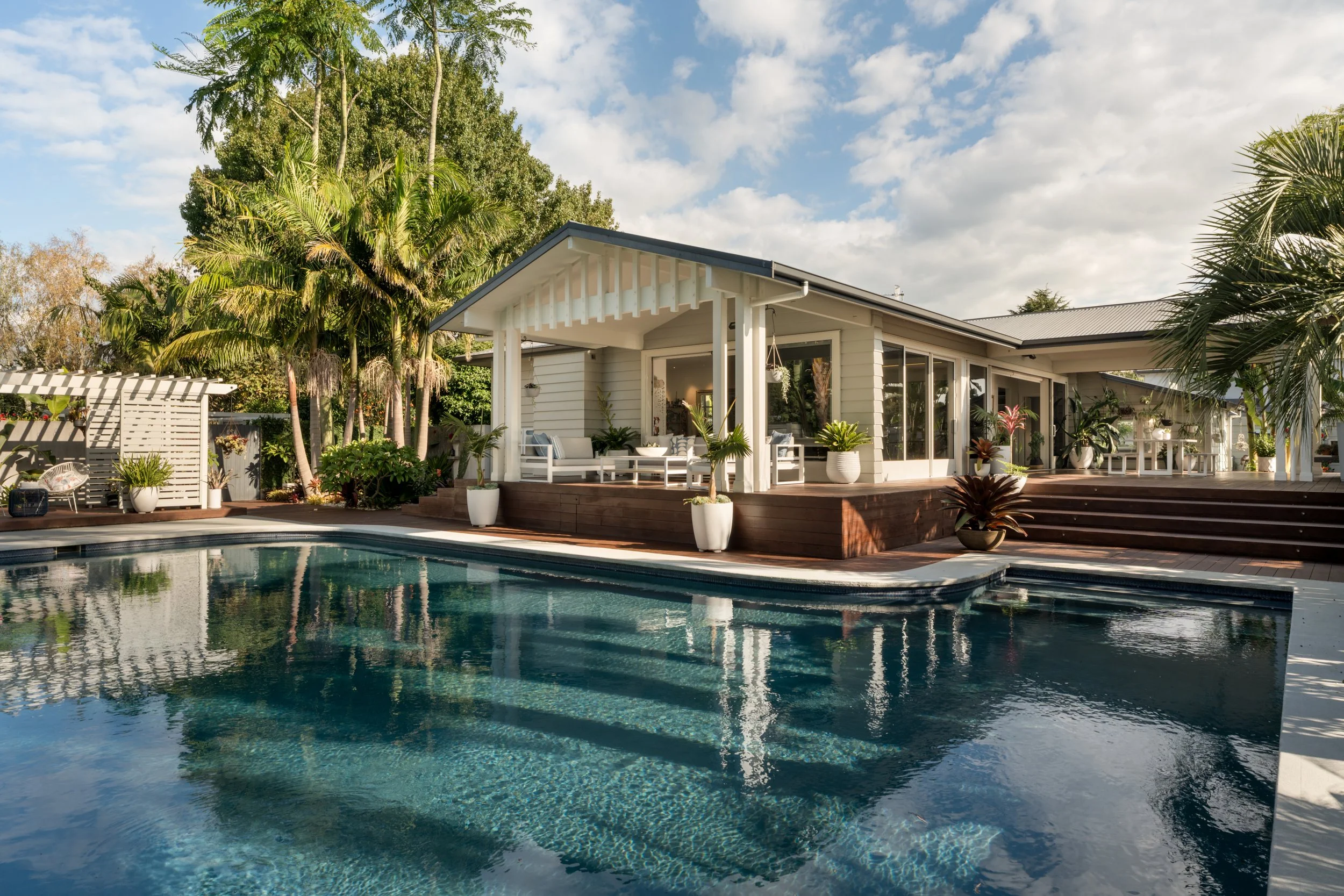
When commissioned to design a major renovation that capitalised on the existing dwelling’s link to the swimming pool and outdoor entertaining area, Tauranga architect Brendon Gordon brought with him his own distinctive style.
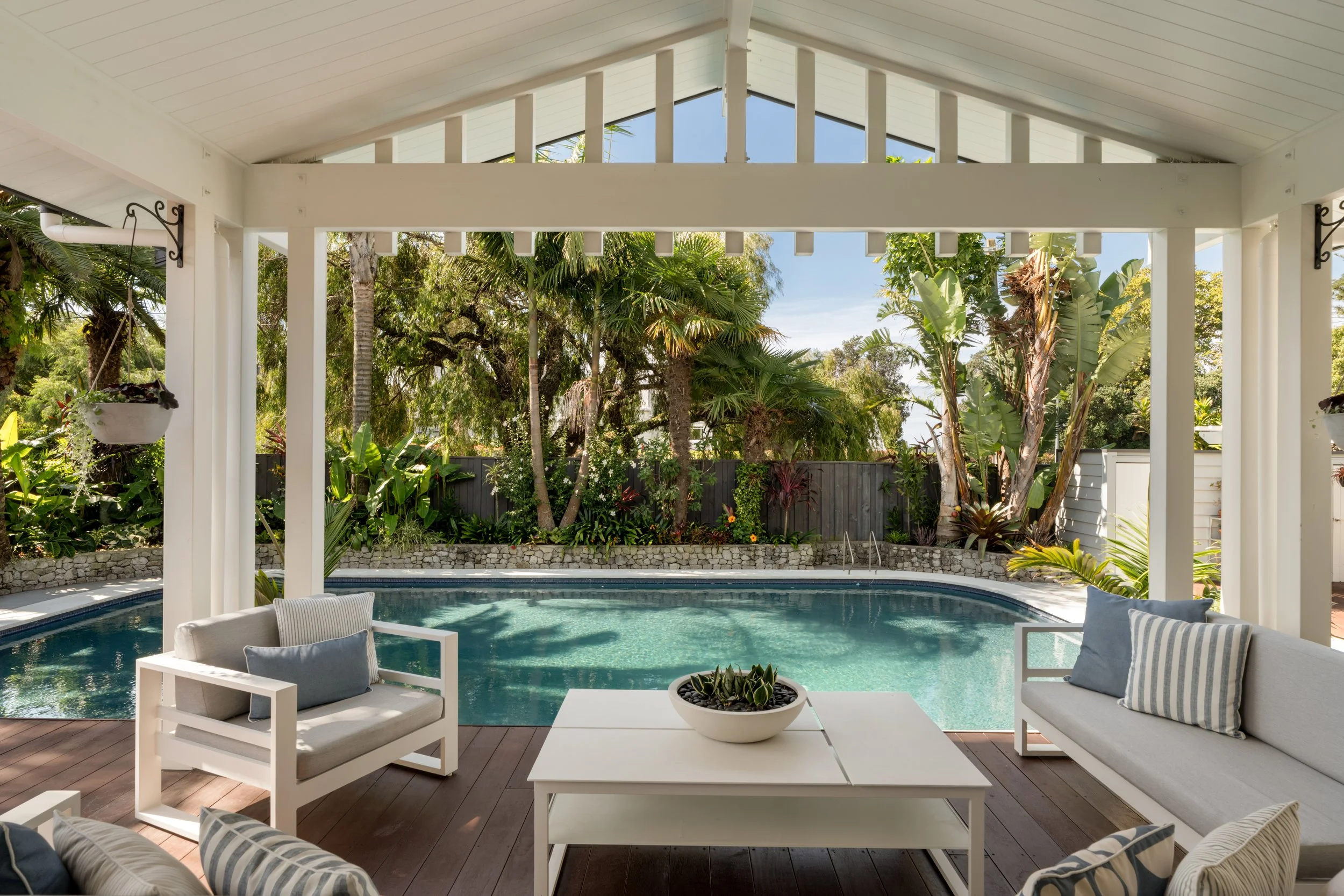
Outside, towering, tropical greenery forms the framework for the resort-like feel he’s leaned into at this address. Its soothing, relaxing energy, which can be enhanced when the mood strikes by an in-built sound system, can’t be emphasised enough when describing the home’s presence.
The pool’s tropical ambience is integral to this. A warm-water bore allows year-round use, and upgrades to the pool and pumphouse equipment ensure it will need only standard maintenance for years to come.
The resort vibes provided by the pool underscore the updated living area. Additional to this main living space, a separate snug provides a private retreat for family members of all ages to enjoy their own entertainment, and is linked to the outdoor, fire-warmed loggia.
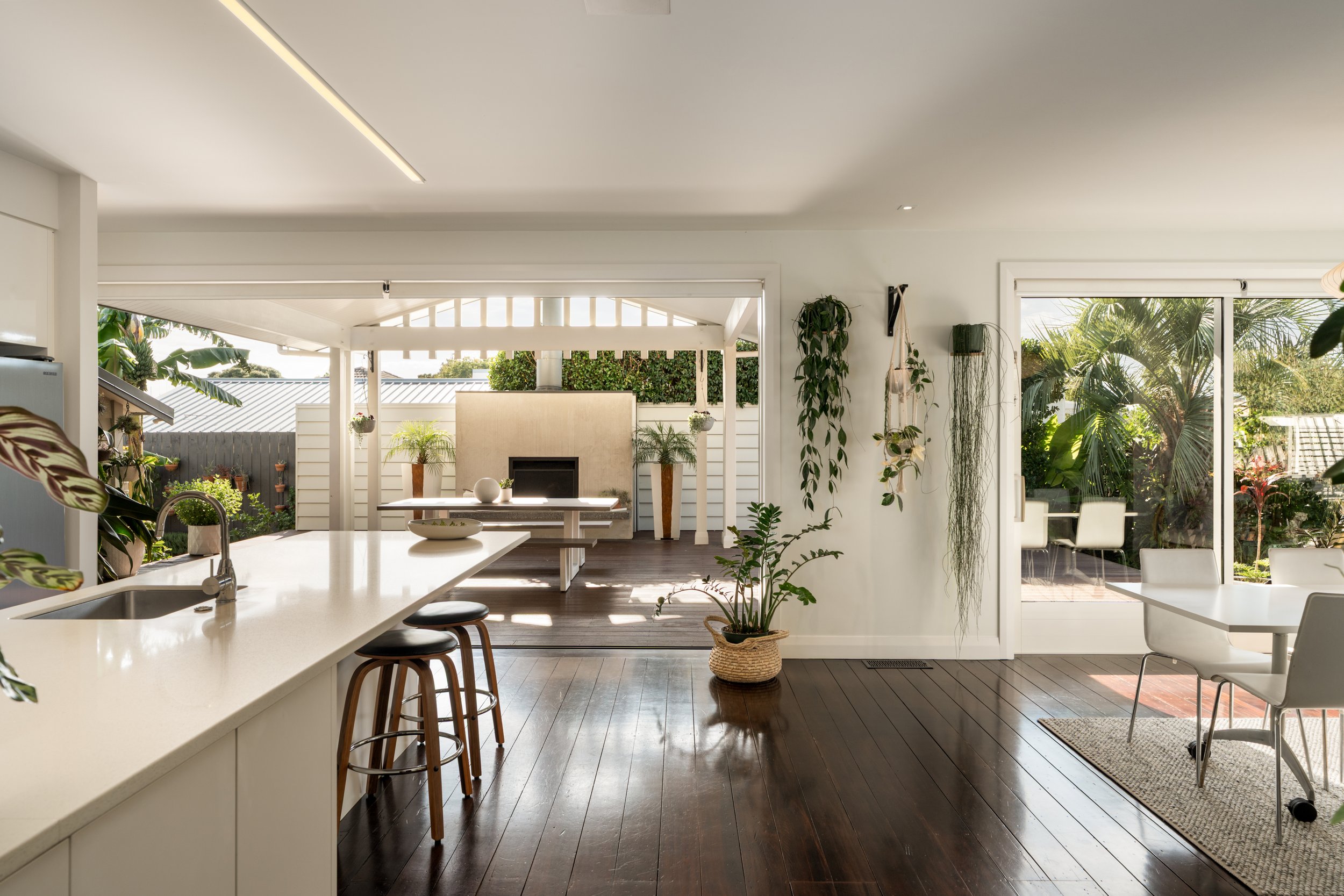
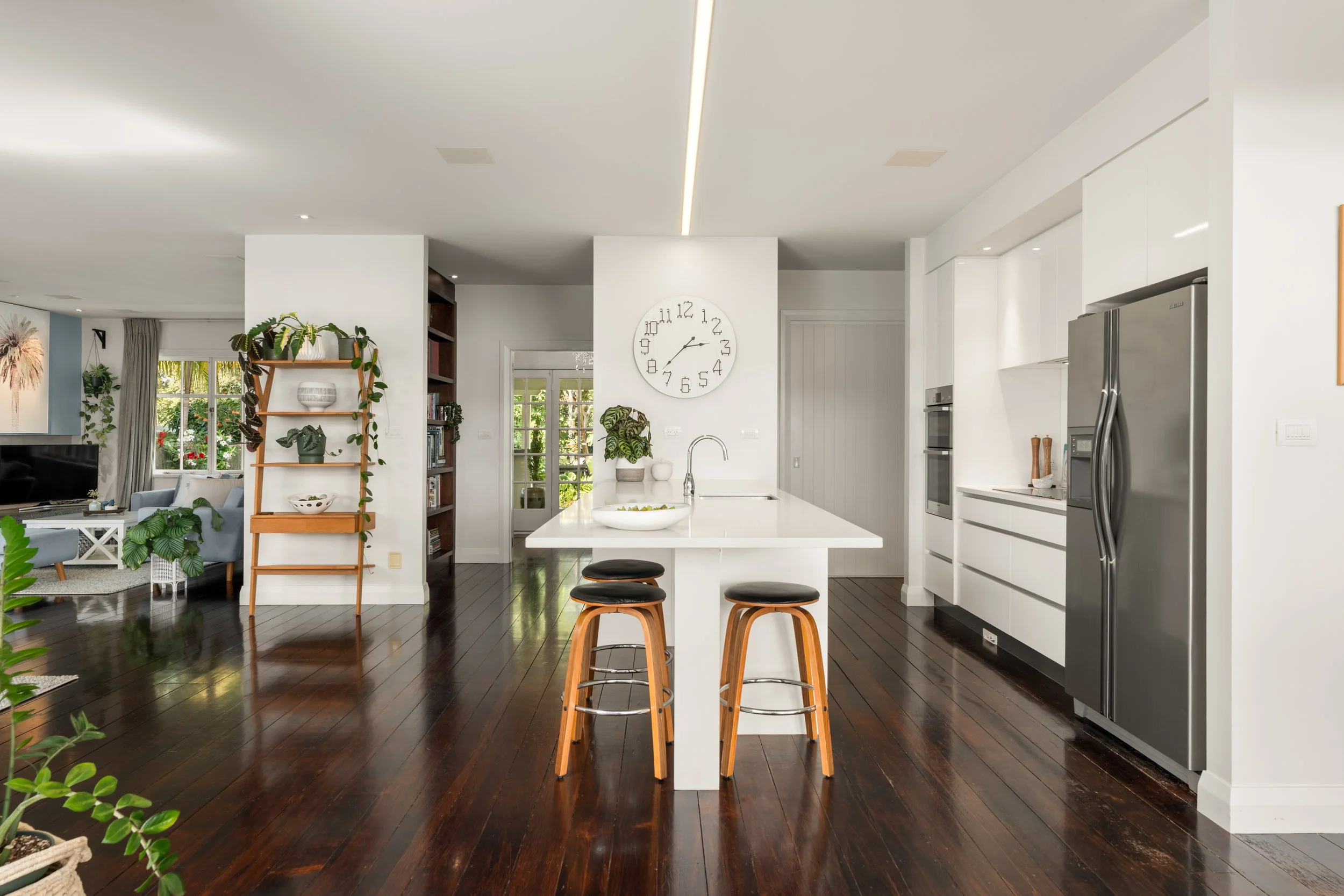
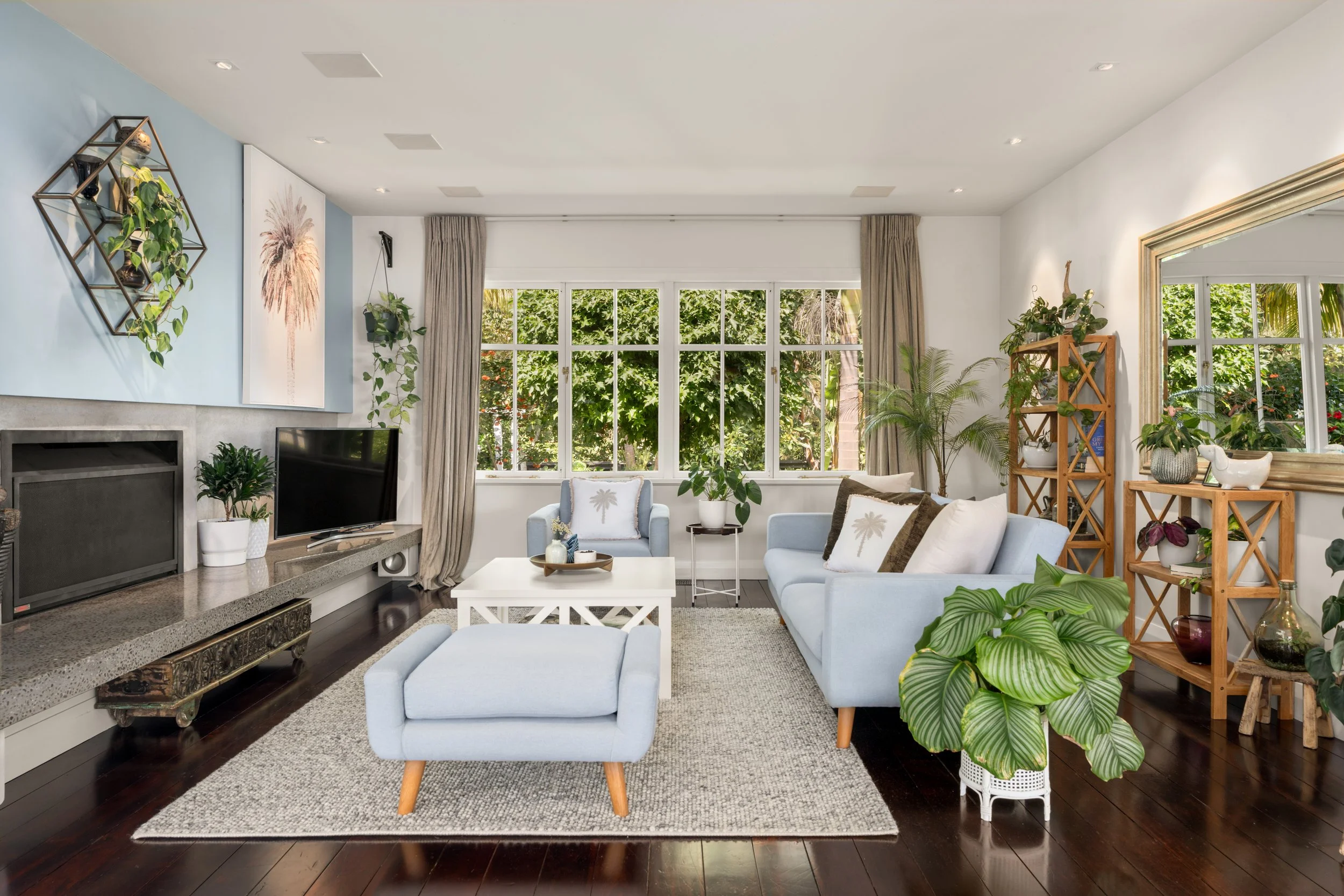
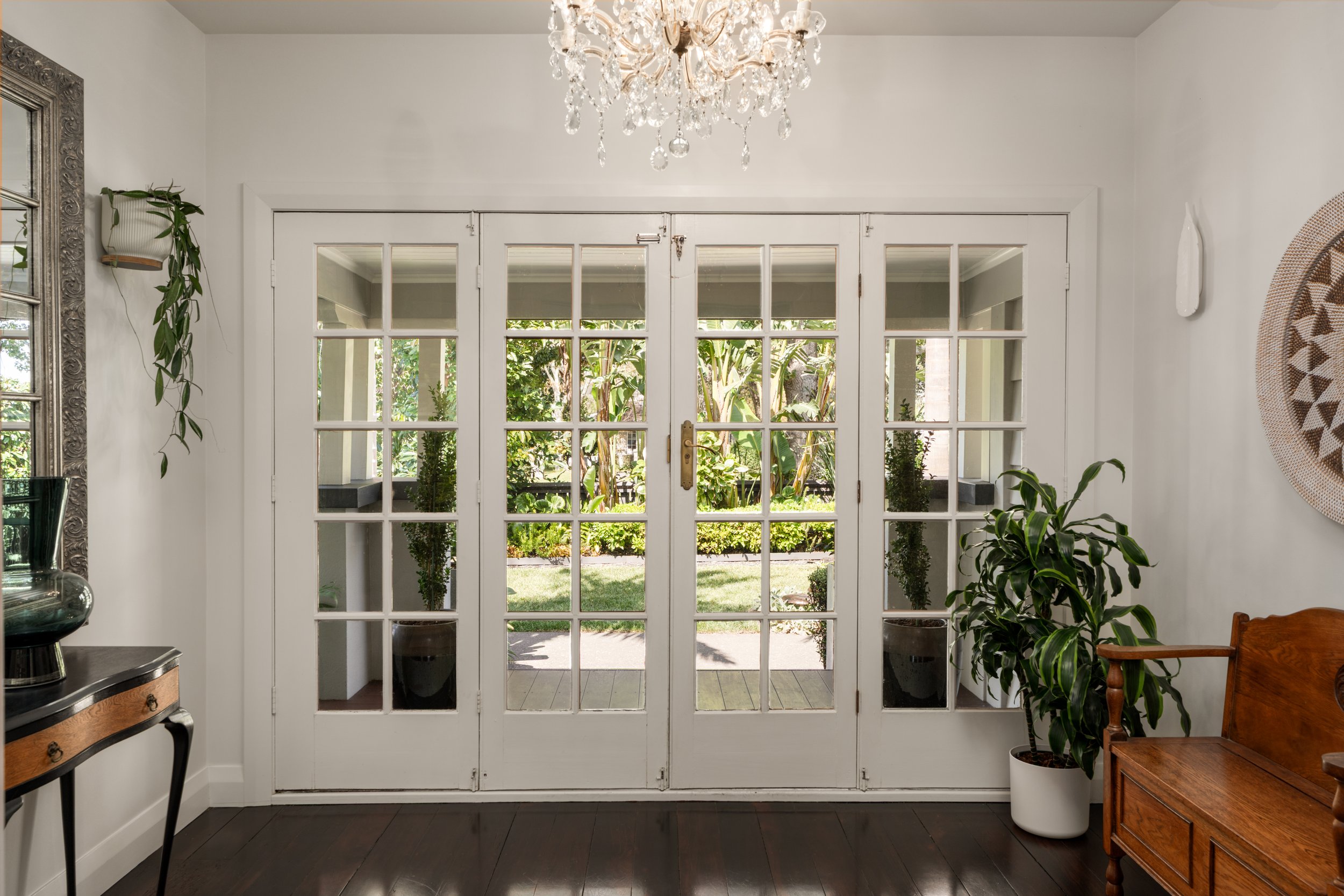
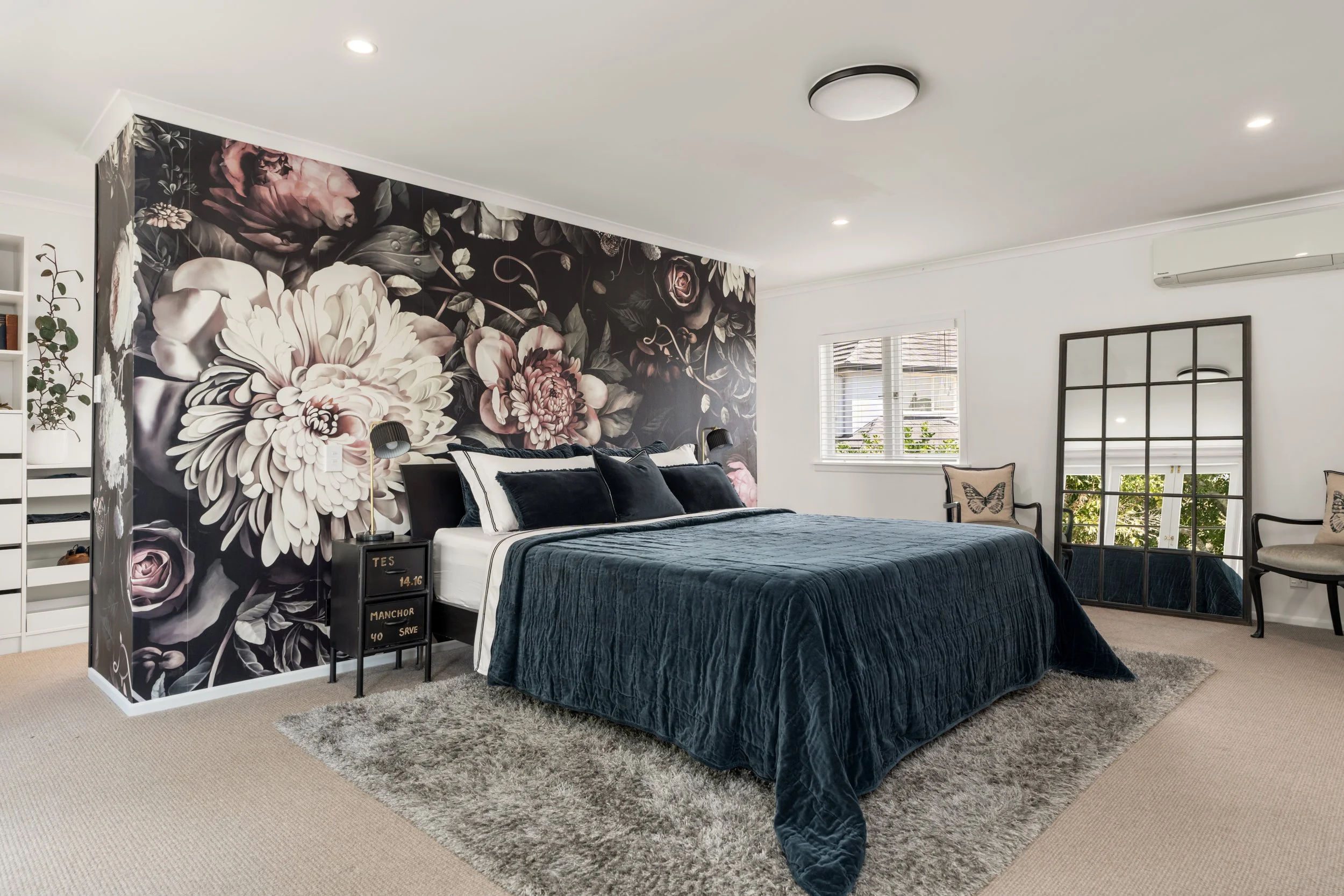
The kitchen and scullery’s timeless ambience is elevated by the richness of dark-stained rimu flooring, which contrasts impeccably with the rest of the décor’s neutral palette. The contemporary tone of these spaces means this family hub will be able to adapt to any future change of taste in furnishings, artwork and plants.
Upstairs, in a very spacious zone, with a dressing area, study and balcony attached, the main bedroom champions privacy. A second bedroom on this level could double as a private lounge or lend itself to the development of an ensuite.
Two bedrooms sit separately in another wing, offering the flexibility to accommodate extended family, friends, or paying guests, perhaps? The inclusion of a lounge, kitchenette, bathroom and private entry deliver options aplenty.
As with many of Tauranga’s most distinguished homes, each chapter of this house’s life has brought with it different ideas and changing ways, but here, time has been extraordinarily kind. The house has evolved into a residence of substance and elegance, its significant space throughout and substantial outdoor areas a rare find on a quarter-acre section.
Handy to all of Tauranga’s inner-city drawcards, there’s one particular attraction Oliver Road’s Jason Eves and Ben Hawan say they must mention. Just down the road, Fourteenth Avenue Fish ’n’ Chips is known by locals to offer some of the best takeaways in town. “Everyone on Grace Road knows Eddie.”
Like the prospect of this exceptional home, it’s a tempting thought.
73 Grace Road, Avenues

MIDWINTER MAGIC
It’s tempting to hunker down and hibernate, but let’s not allow the chilly season to pass us by without some memorable moments to show for it. A trip to Whakatāne has all the ingredients to make it a bright spot on your calendar.
It’s tempting to hunker down and hibernate, but let’s not allow the chilly season to pass us by without some memorable moments to show for it. A trip to Whakatāne has all the ingredients to make it a bright spot on your calendar.

The memories we make during our school holidays can last an entire lifetime – a worthy investment, if you think about it. Some are of simple pleasures and rituals experienced at home, while in other instances, travelling even a short distance can provide something new and novel that captures the imagination long after the trip is over.
As the winter term break approaches, so too is Trust Horizon Light Up Whakatāne, an eye-opening experience right here in our regional neighbourhood. Whether you have holidaying kids in tow or not, it presents a vibrant – and free – antidote to winter’s darker days. From 6pm to 9pm from July 11 to 18, Whakatāne’s town centre and riverfront will be aglow and abuzz with art installations (many interactive), sculptures and digital displays, music and dance.
While you’re planning your trip in this neck of the woods, check out some of the best places to eat, play and stay.

EAT
THE COMM - When you’ve been a local institution since 1894, you must be doing something right. Seven days a week, in a thoughtfully preserved heritage building, The Comm offers a stacked menu complete with kids’ meals, and drinks including beer and cider from Good George Brewing on tap.
THE WAGON - Like its twin eatery in Pāpāmoa, the claim to fame of The Wagon in Whakatāne is gourmet burgers. Those who wish to eat vegan or gluten-free will be pleased to hear the menu does not leave you out in the cold.
OLIVE BRANCH - For a more elevated experience, put on your going-out top to dine at Olive Branch. It’s run by two brothers, whose Mediterranean DNA is woven throughout, a delicious international influence that’s balanced by their focus on local ingredients and suppliers.

PLAY
KIWI WANDERING TRAIL - Due to its close proximity to the bush, kiwi can be heard from the CBD and have been spotted in backyards, earning Whakatāne a name as the Kiwi Capital of the World. Providing cute, free, low-key fun, 10 life-size kiwi statues are dotted on a one-hour (1.6km) trail around town for visitors to spot. Download the guide before you go or pick one up at the i-site or Te Kōputu a Te Whanga a Toi Library and Exhibition Centre.
BIKE TRAILS - There are bike trails and more bike trails around these parts. Challenge yourself to ticking off some or all of the Motu Trails Cycleway, one of the 22 great rides that make up Ngā Haerenga, the New Zealand Cycle Trail. You might make biking your reason to drive over the hill to roll along the nice, flat, 2.9km Ōhope Harbourside Trail on two wheels, or go further afield to kick into gear at the Onepū Mountain Bike Park, which caters to all ages and abilities.
EASY WALKS - What will you see if you lace up your sneaks for the hour-long Fairbrother Loop Walk? As well as sensational scenery, the downloadable map lists the birds and insects to keep an eye out for. For those in need of a dappled nervous-system reset, the Mokorua Bush Scenic Reserve walk (1-1.5 hours) is a similarly tranquil experience that sees you strolling beneath the canopy of native trees amid tinkling birdsong.

STAY
BEACHPOINT APARTMENTS - Occupying prime waterfront real estate, these upmarket apartments are fully self-contained (including kitchen and laundry) but serviced with linen and towels. Undercover parking, a heated outdoor swimming pool, a fitness room and a BBQ area might see all the boxes ticked for you.
ŌHOPE BEACH RESORT - Go even more high-end here, where you can opt for accommodation that has views of the ocean on one side or the harbour on the other. Choose from two- or four-bedroom apartments, or if you’re feeling a bit swanky, book into a penthouse. All guests gain access to swimming, spa and lap pools, plus a tennis court, gym, sauna, games room and conservatory.
ONE88 ON COMMERCE - A drawcard of this motel for anyone with waterbabies is that it’s within walking distance of the Aquatic & Fitness Centre and its kid’s beach pool, spas and hydroslide. It’s also 10 minutes’ walk from The Strand, home to those eateries we mentioned. If it sounds like a bit of you, you’ll be even happier to hear you’ll end your stay well-rested, courtesy of the one- or two-bedroom units’ super-king beds, flexible layouts and well-appointed bathrooms, some with big spa baths. WHAKATĀNE.COM
SCULPTED SERENITY
Welcome to a chic new Harwood Homes showhome that’s all but unrivalled for the adaptability and opportunity it’s been meticulously designed to provide.
Welcome to a chic new Harwood Homes showhome that’s all but unrivalled for the adaptability and opportunity it’s been meticulously designed to provide.
PHOTOS AMANDA AITKEN
The value of a showhome to a home buyer cannot be overstated. Eliminating the need to imagine how a house might look and feel based on plans or an online description, it’s all laid out in front of you, with an open invitation to come on in.
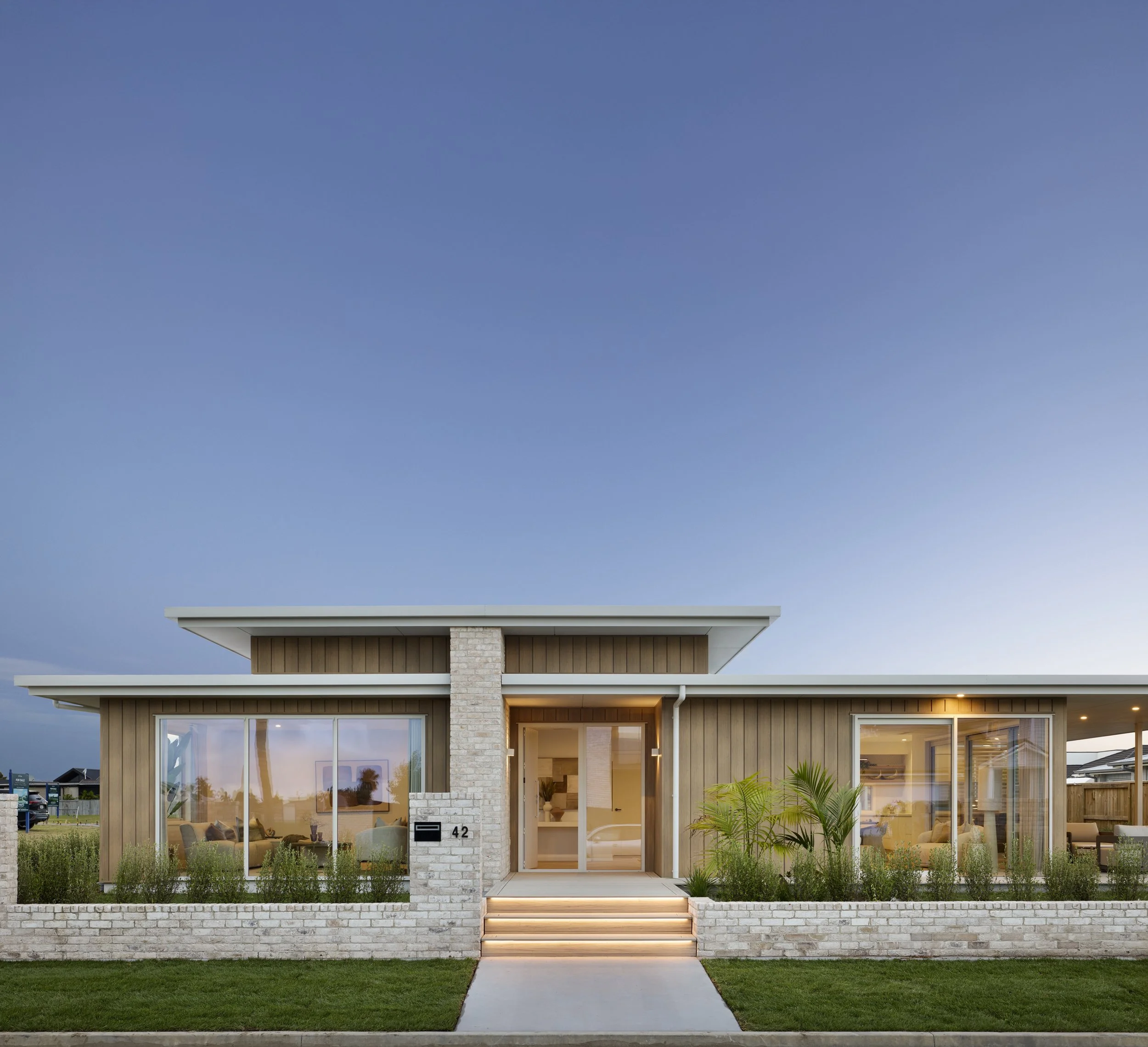
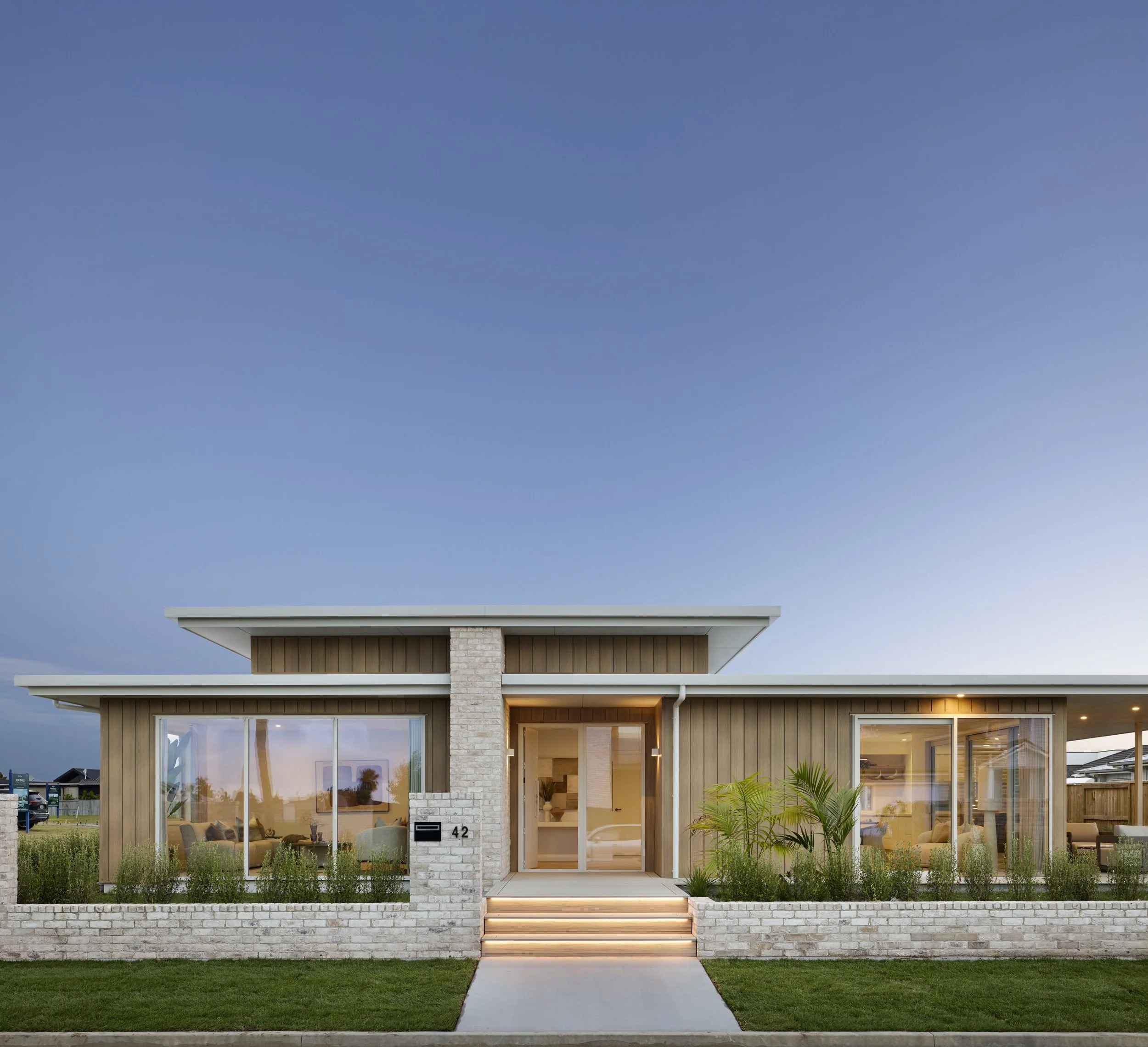
The pros at Harwood Homes know this well. Worth its weight in gold for all involved, one of the latest and greatest embodiments of enviable architecture is their new Palm Vista showhome. Impeccably designed for all kinds, but perhaps especially those who seek to invest once and invest well by catering for their every age and stage, it exemplifies the innovative thinking the company is known for, bringing together fresh ideas, evolving trends and modern ways of living.
In Pāpāmoa East’s upmarket Palm Springs subdivision, Palm Vista is positioned in a cul-de-sac near the Wairakei Reserve, and is one of 11 Harwood Homes planned for this neighbourhood. All reflect Harwood’s focus on thoughtful, distinctive design that achieves a subtle cohesion across the streetscape while imbuing each dwelling with its own character.
Palm Vista is the flagship property among Harwood Homes’ Flexible Living Collection, and is guided by the Flexible Living philosophy centred on flexibility, future-proofing and the creation of homes that move to the rhythm of modern life. It reflects the belief that a home should evolve as you do – supporting changing family structures, working patterns and life stages in spaces designed to respond to your individual needs.
A key source of inspiration for Palm Vista came from an unexpected source. While developing the concept, Harwood’s general manager Trish Hoit drew parallels after observing at New Zealand Fashion Week the way clothing is designed to move with the wearer, adjust to their lifestyle and remain relevant long term. Her insights naturally translated – after all, if fashion can evolve with people, why can’t homes do the same?
First impressions of the possibility-filled showhome reveal a spacious, elegant dwelling, with expansive windows harnessing every opportunity to draw in natural light. The arrival experience is welcoming, ushering you inside as the four-bedroom home reveals itself through a series of carefully considered spaces and layered design elements. As they unfold, the true wealth of possibility becomes apparent.
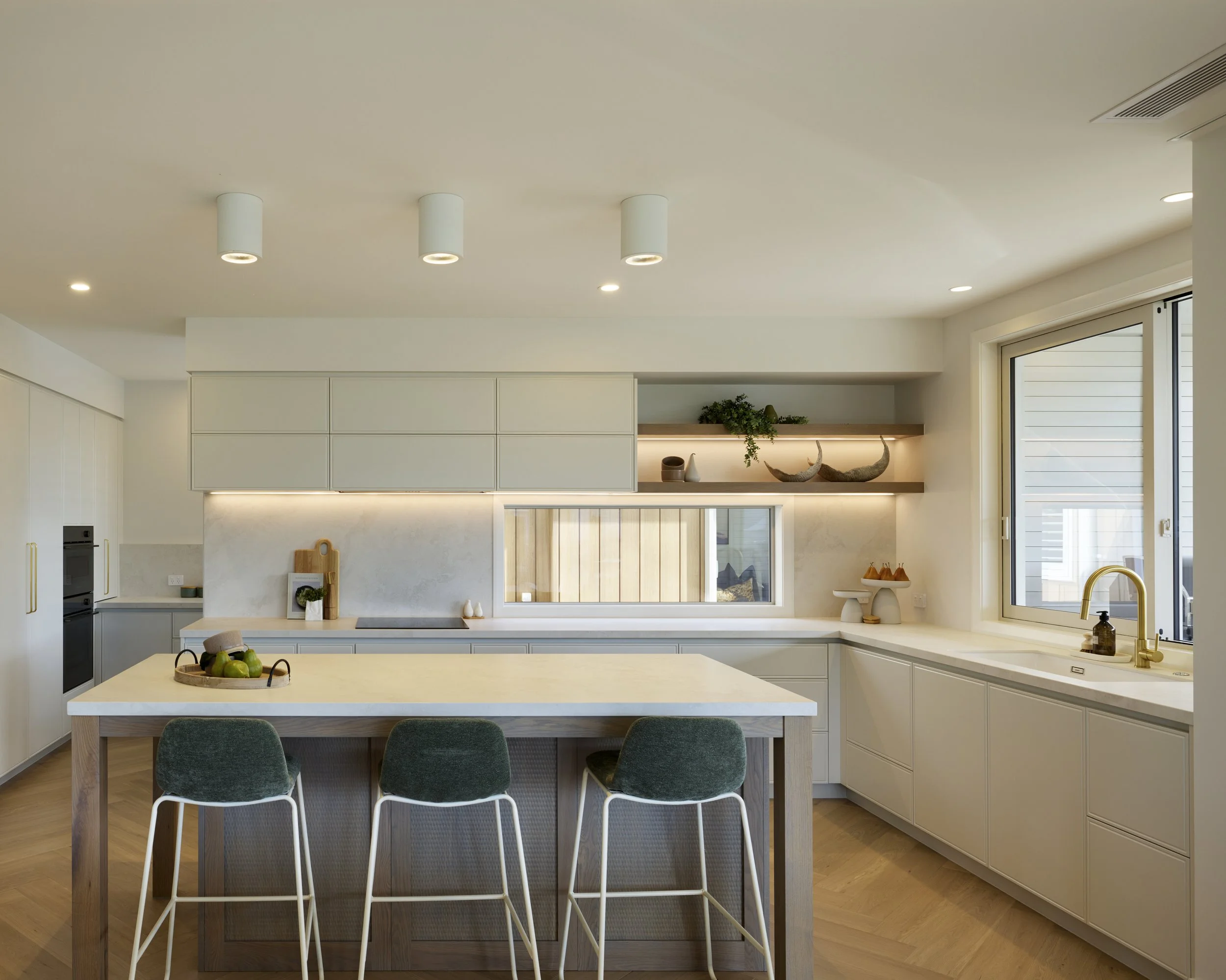
At the centre is a living hub that reflects the talents of Harwood’s team of suppliers and contractors, whose work helps to define the expert craftsmanship and quality execution Harwood Homes is known for. An entertainer’s dream, the open-plan kitchen brings everything and everyone together. Flanking the central gathering point – the clean, contemporary island with a subtle ‘chain’ pattern inset behind the bar seating – complementary cabinetry leads towards the scullery. Full-height units, floating shelves and integrated lighting add depth and refinement, all with a high-end finish.
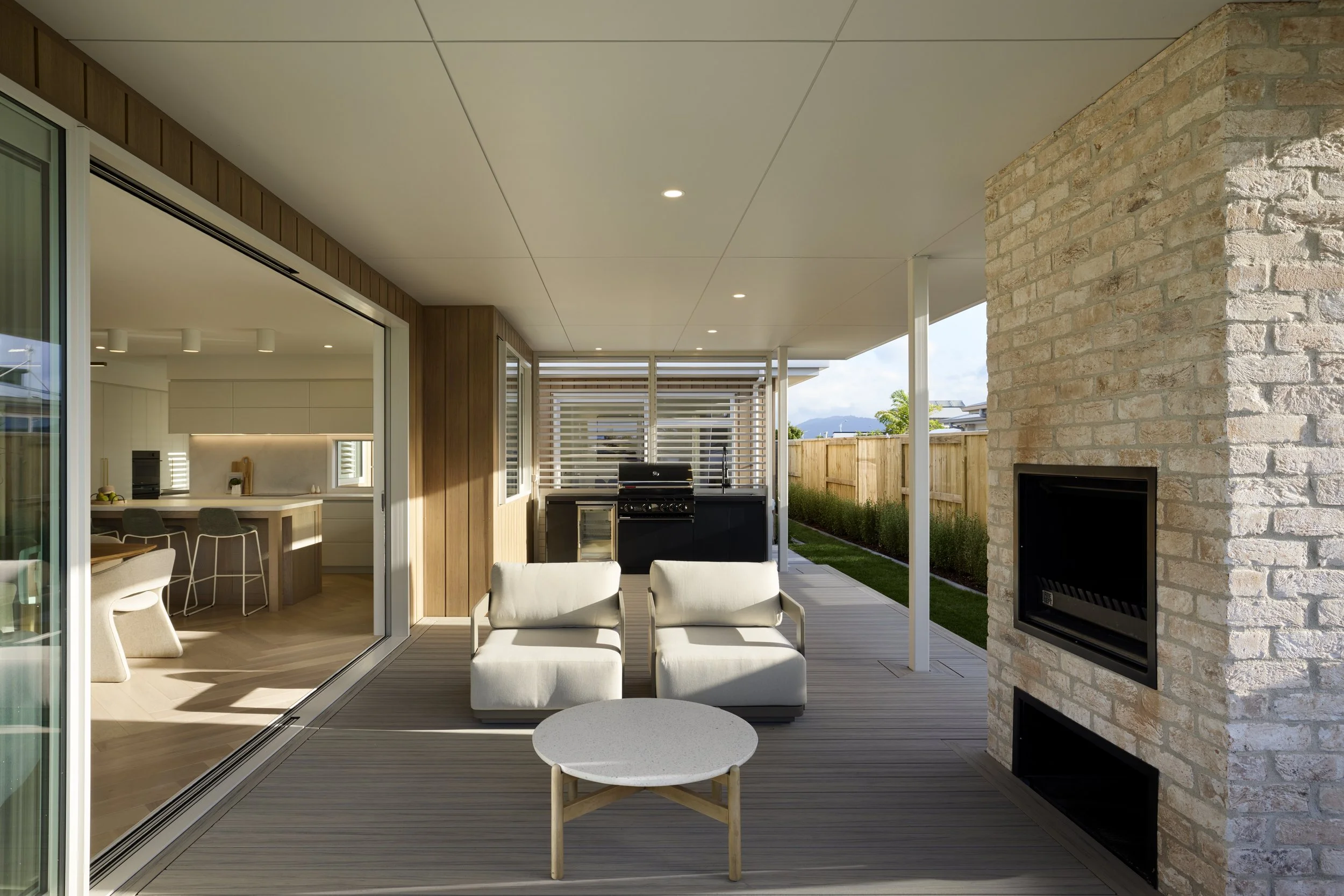
From here, you can spread out into the indoor living spaces or outside to the barbecue kitchen, where the showhome’s indoor–outdoor connection comes into its own. Covered for year-round versatility, this external living area expands the entertaining spaces with a barbecue, drinks fridge, sink station, and wood fire that catches the eye with its feature column that echoes the Italian-inspired brick detailing repeated cohesively throughout the house.
Inside, engineered European oak flooring and other oak elements in a soft grey stain and are integral to the material palette, with the flooring’s classic herringbone pattern adding gorgeous visual texture. At night, when the floor-to-ceiling linen drapes are drawn, the atmosphere softens to become intimate and restful. The window coverings’ tone-on-tone colour scheme is designed to blend into the neutral décor, while an inset ceiling track keeps the finish chic and uninterrupted.
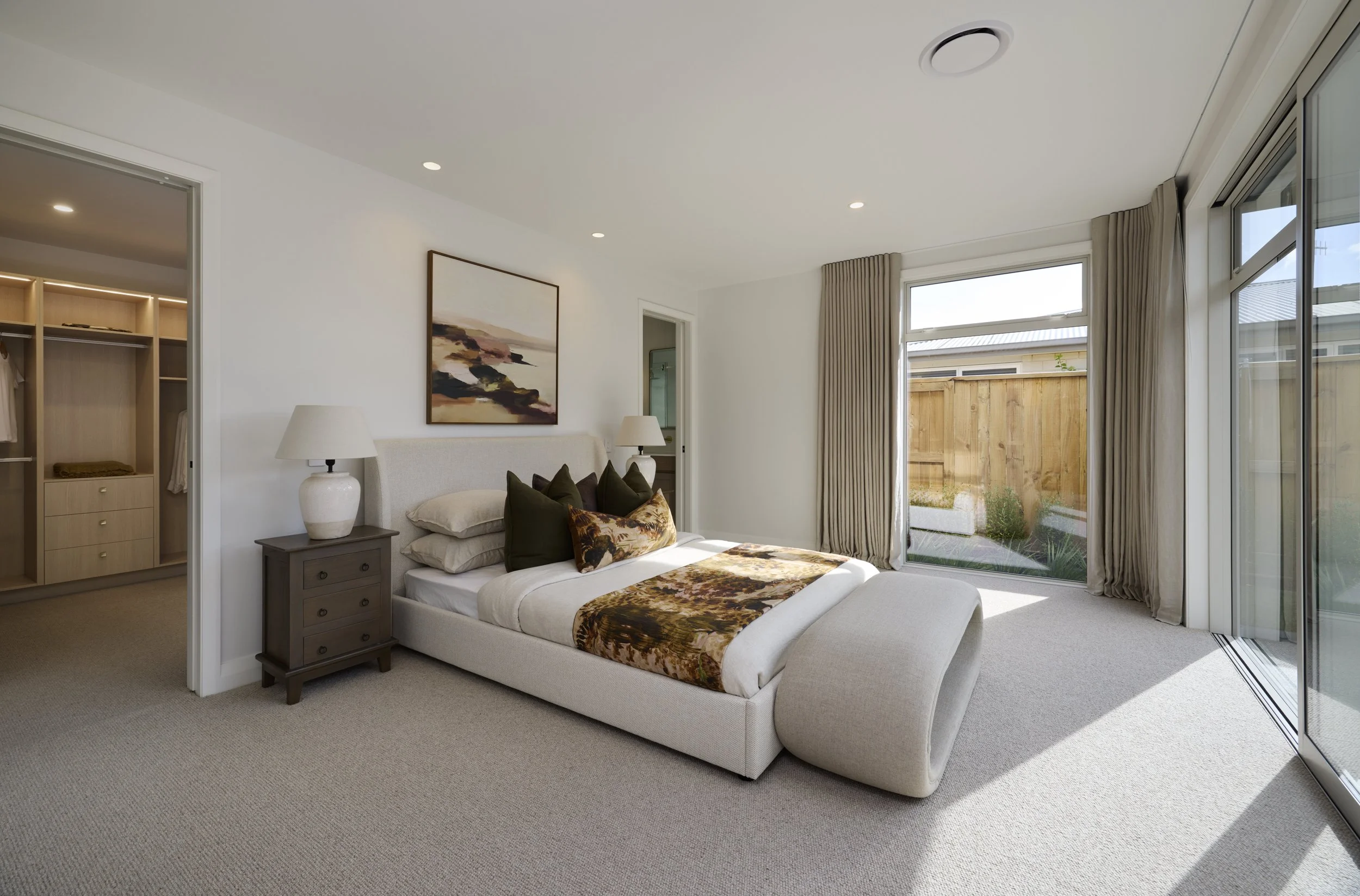
Making bedtime more of a luxury than ever, at one end of the home, the master suite anchors a quiet, private zone complete with an ensuite, and a walk-in wardrobe defined by oak cabinetry and bespoke lighting. At the opposite end of the house, two bedrooms live in a separate wing, teamed with a bathroom that can comfortably serve family members or guests.
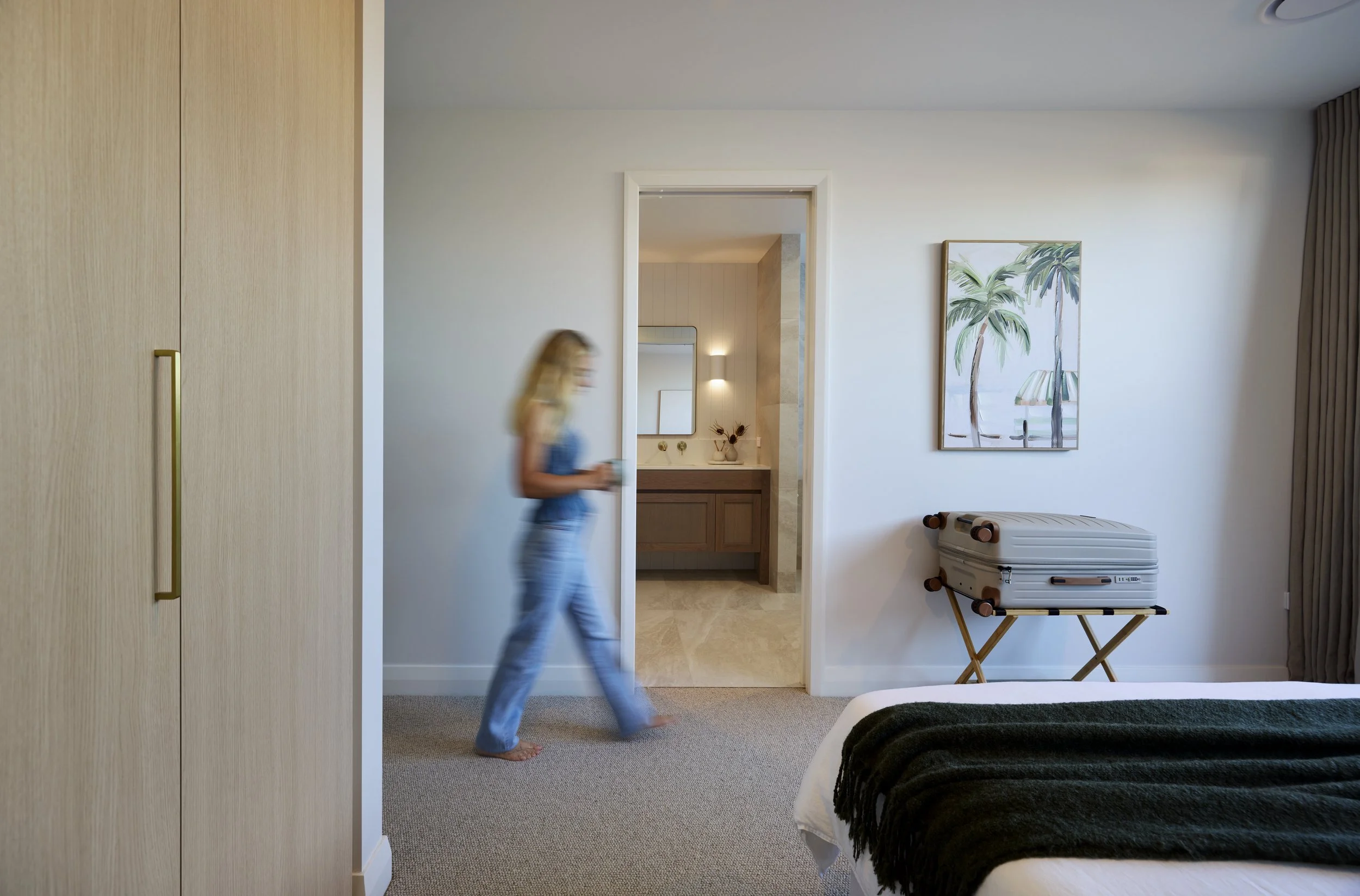
In another nod to this home’s versatility, an independent guest bedroom demonstrates its flexibility via its own lockable external entry, tea- and-coffee-making facilities, integrated wardrobe storage and bathroom. It’s designed to perform beyond the average bedroom by facilitating a range of scenarios – transforming into a private workspace, shared intergenerational living, a guest suite for family and friends, or a B&B arrangement.
Completing this wing’s layout, a dedicated office sits nearby. The showhome’s well-appointed laundry is inserted between the hallway and garage, optimising the practicality of this utility space by offering easy access for everyday use, without interrupting any of the goings-on in the main living areas.
It’s all part of family-owned Harwood Homes’ vision for the future of housing. In keeping with their longterm thinking, this entire abode is primed to adapt to your needs. Wider passages, generous doorways and level-access showers support ease of movement, and along with the income potential enables the home to remain relevant through every stage of life.
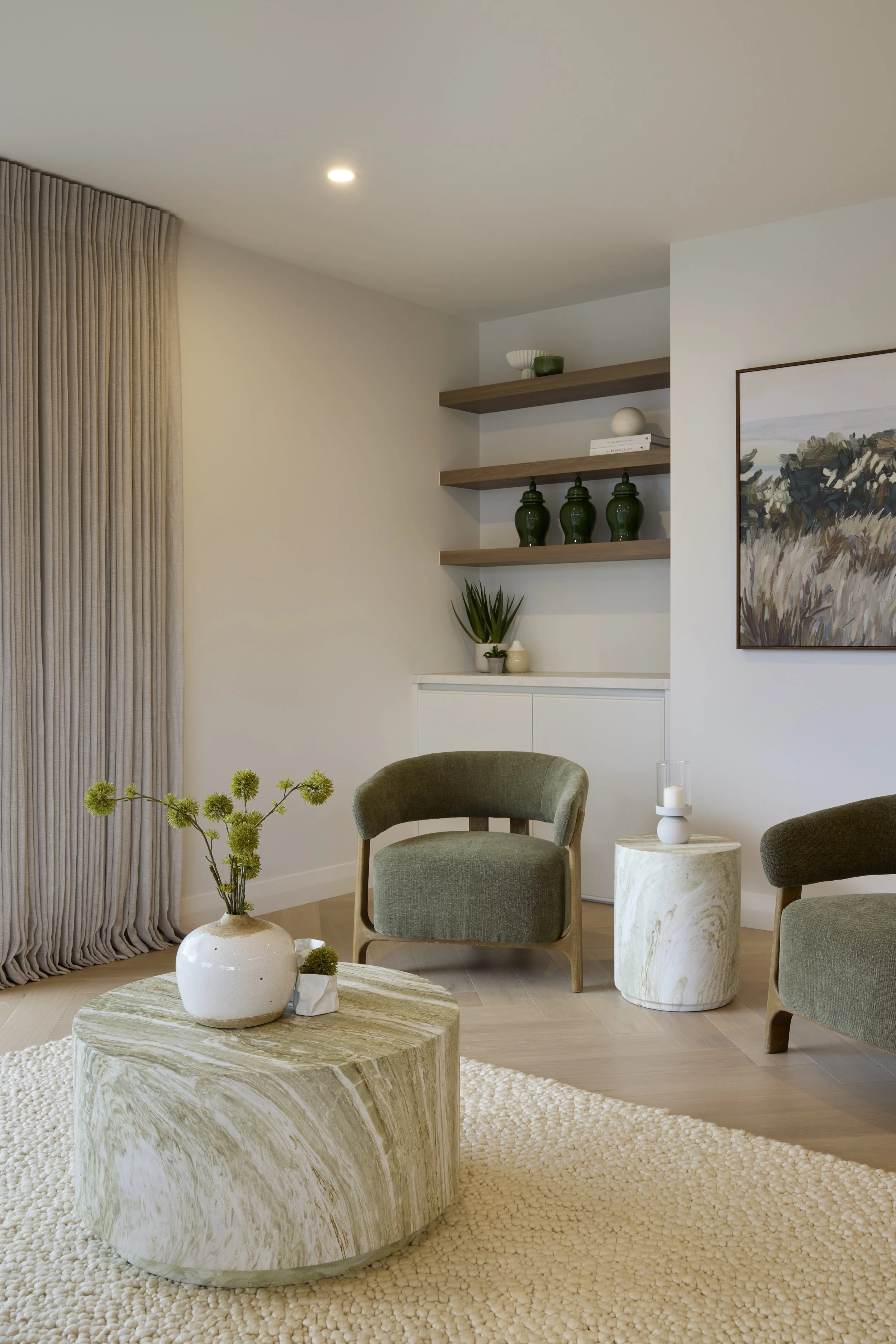
When every dollar counts, you want to be sure your hard-earned money is being spent on a home that’s the perfect fit. The lifestyle-led Palm Vista showhome opens the door to a 3D version of the plans you can try on for size – and the brand’s design and build service throughout the Bay of Plenty means these plans can be adapted to suit sites and requirements region-wide.
Recognised nearly every year in the Master Builders House of the Year awards, Harwood Homes has built a long-standing reputation for quality, innovation and consistency. What began as a small local builder has grown into a dedicated team of architectural and interior designers, builders, suppliers and contractors, yet the philosophy remains unchanged: to work alongside the best in their field. The Palm Vista showhome reflects this collaborative approach, while signalling the direction of future projects.
Visit the showhome at 42 Forstera Way, Palm Springs, Pāpāmoa, Thursday to Monday, 11am to 4pm.

WILD ABOUT FLAVOUR
A vibrant and varied hospitality scene is one of the keys to a great city, argues UNO wine columnist Jess Easton, and every one of us can play a part in lifting Tauranga Moana’s.
A vibrant and varied hospitality scene is one of the keys to a great city, argues UNO wine columnist Jess Easton, and every one of us can play a part in lifting Tauranga Moana’s.
PHOTOS ILK PHOTOGRAPHY
Hospitality, in case you haven’t heard, is doing it tough right now. Every now and then, though, something comes along that restores faith and lightens the gloom.
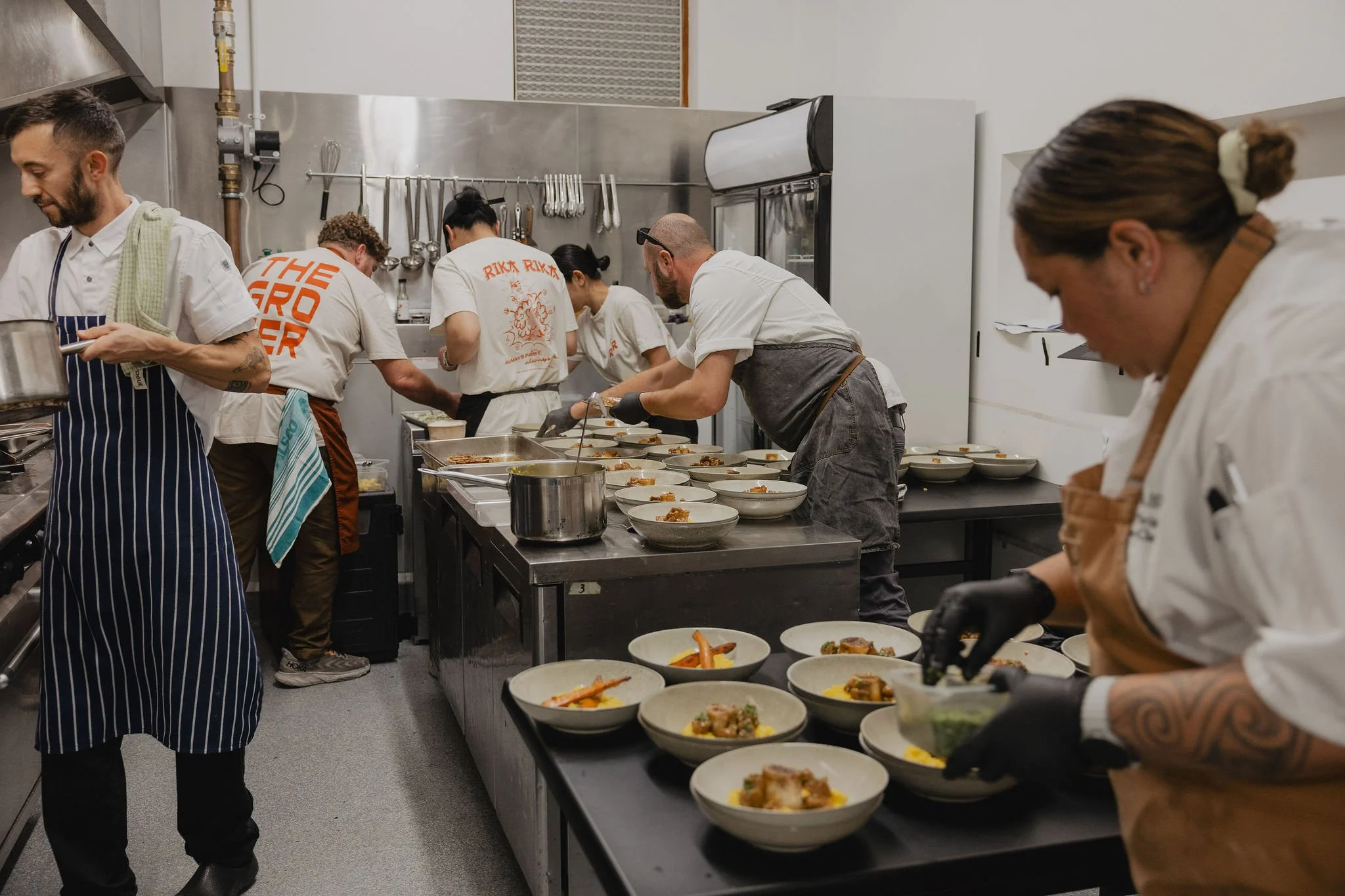
Five Go Wild With Food, my team at Kitchen Takeover’s offering at this year’s Flavours of Plenty festival held in April/May, hit that mark perfectly and left me reflecting on why I enjoy this festival, and the hospitality industry, so much.
Proudly sponsored by Pyramid Valley Vineyards, the Five Go Wild With Food event featured five courses created by an international array of talent – Samoan/Māori chef Nancye Pirini (Te Kaahu), Japanese/Korean couple Rika Inagaki and Brian Kim (RikaRika), British whiz Ian Harrison (The Grocer), Italian Stefano Raimondi (Autentico) and Kiwi Dan Lockhart (Kitchen Takeover).
Although Nancye, a remarkable wahine, hails from the East Coast and is now based in Tāmaki Makaurau, the rest of the chefs are right here in Tauranga Moana.
They’re far from alone. We have some amazingly creative chefs and restaurants in this city; I was also lucky enough to enjoy a couple of extraordinary, envelope-pushing meals at Mount Maunganui’s Solera during Flavours of Plenty, for example.
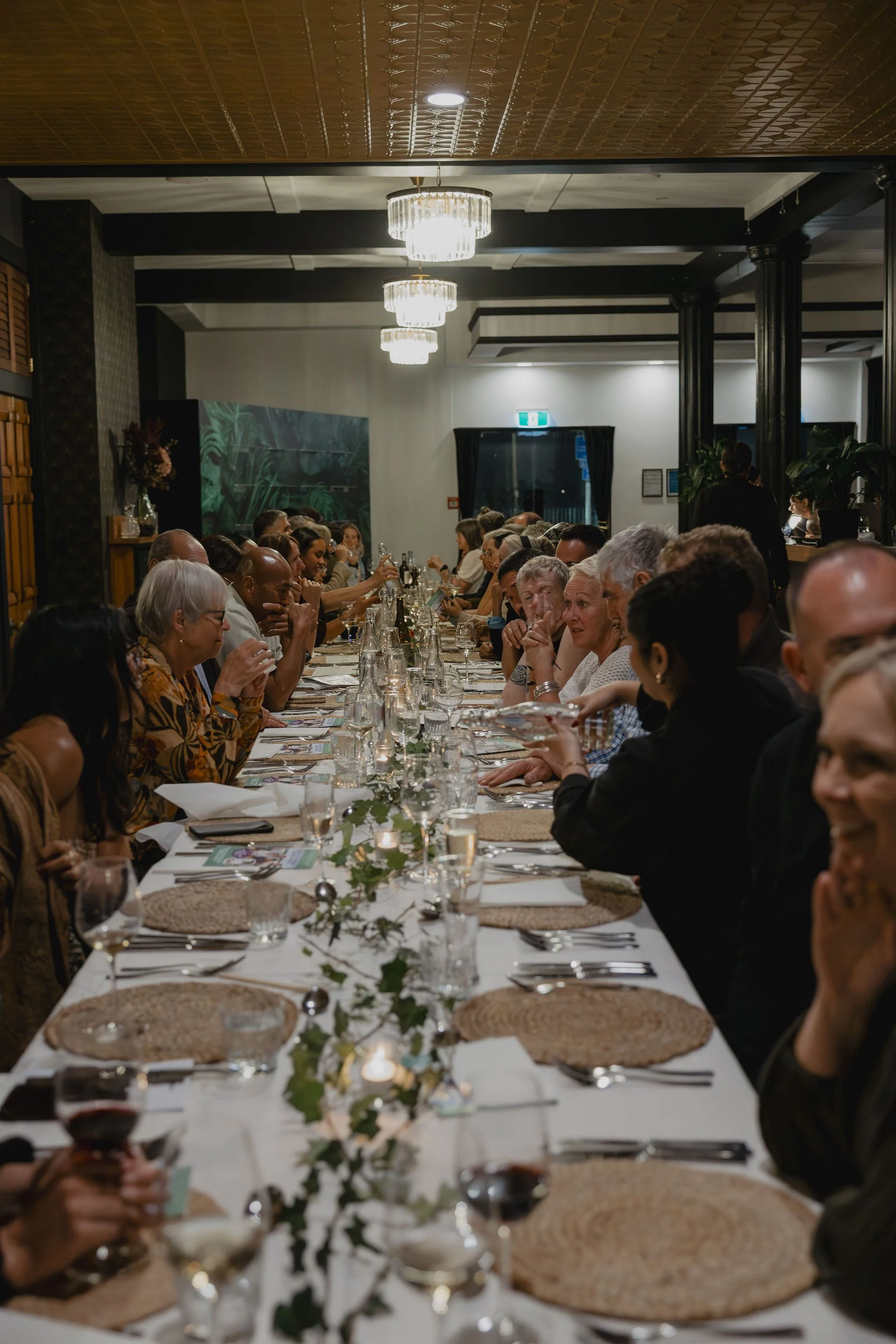
What I absolutely love is the collaboration and sense of community in this town. Most owners are incredibly generous and helpful towards each other, chefs support one another, and talent is nurtured and shared.
I’m really excited for one of our young chefs, Christian Schurink Gardner, who got to work with all the incredible talent at Five Go Wild and will hopefully pick up some gigs with them in future.
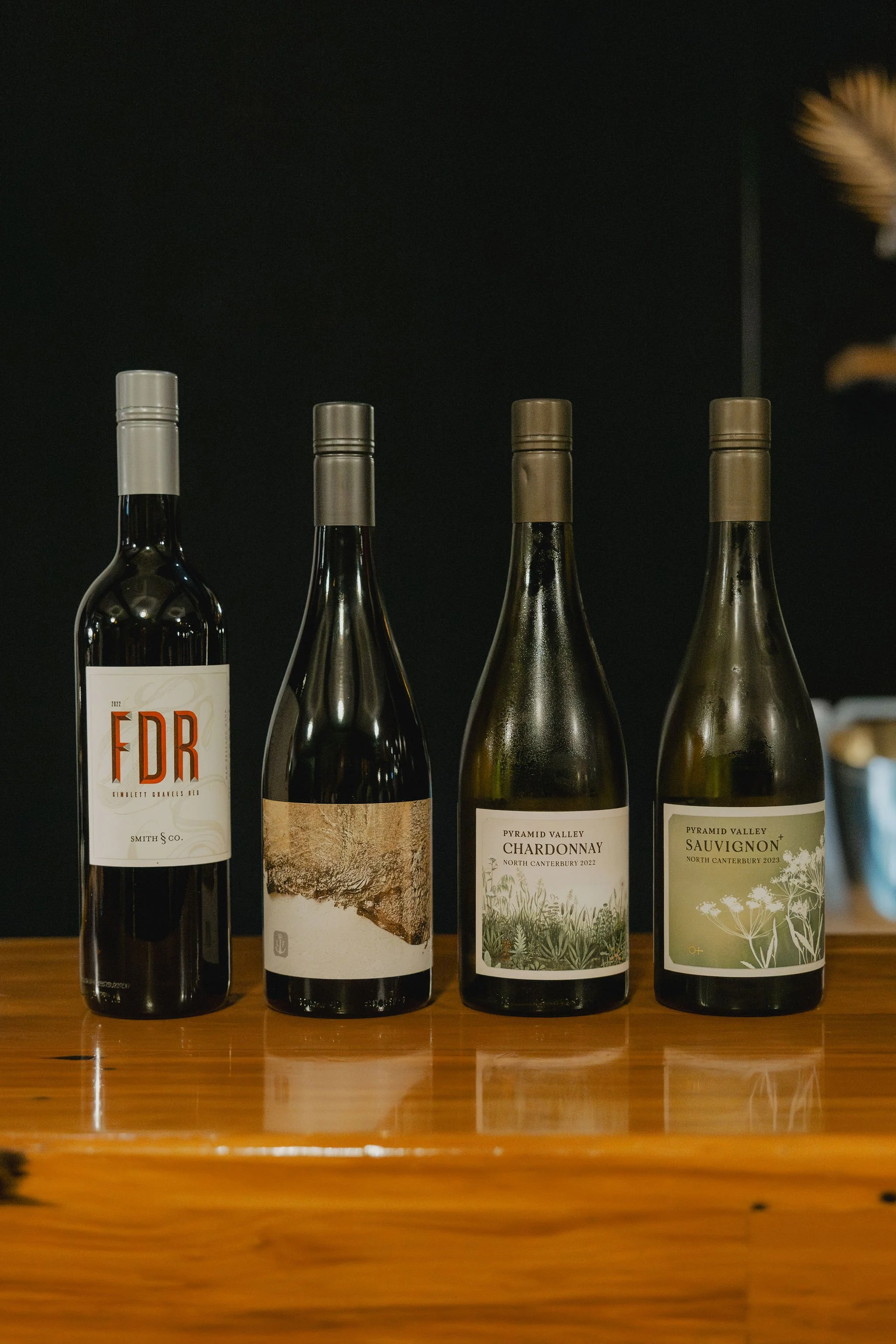
A quick word on Pyramid Valley, too. I spent an incredible afternoon with winemaker Huw Kinch at the North Canterbury vineyard a couple of years ago and came away dazzled by what they’re producing.
Huw is a craftsman extraordinaire and some of the single vintages – Lion’s Tooth Chardonnay and Snake’s Tongue Pinot Noir spring to mind – are mind-blowingly good.
We were thrilled to be able to showcase Pyramid Valley’s Sauvignon+ at Five Goes Wild, and really appreciated their support.
Hospitality, when all boiled down, is all about heart. It's about those all-too-rare connections between people and palate. Times are really tough at the moment, but we can take a leaf out of hospitality’s book and pull together by supporting our local eateries and venues as much as possible – because a city is only as vibrant as the people and places we each choose to support.
Jess Easton is a director and owner of Kitchen Takeover, a venture that complements her career as a Tauranga-based lawyer.
MIND OVER MATTER
One Mount Maunganui clinic is bringing cutting-edge mental healthcare closer to home, with a groundbreaking treatment offering new hope for depression.
One Mount Maunganui clinic is bringing cutting-edge mental healthcare closer to home, with a groundbreaking treatment offering new hope for depression.
WORDS NICKY ADAMS
PHOTOS DEBORAH DE GRAAF
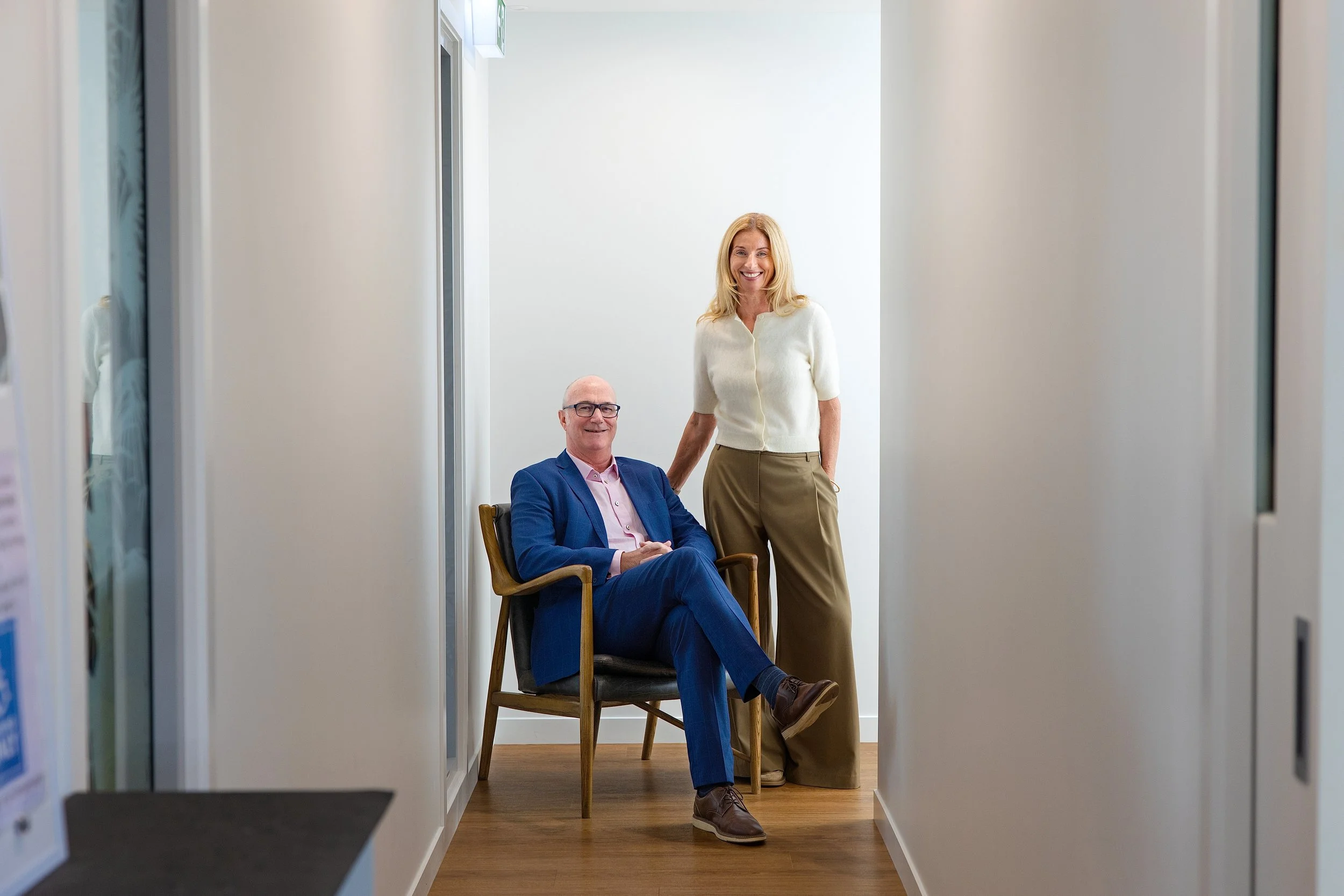
There are few who would argue with the saying “your health is your wealth”, but when UNO sits down to talk to psychiatrist Dr Darren Malone and his wife, psychiatric nurse Kate Malone, of Equilibrium Assessment and Treatment Clinic, Darren zeroes in on this even further, pointing out that in reality, “the cornerstone of your health is your mental health”.
With the World Health Organisation confirming in 2017 that depression had become the leading cause of ill health and disability (statistics showing an 18 percent increase between 2005 and 2015), it’s probably fair to say that it’s an illness that resonates with most of us. To call it ‘common’ feels reductive, because depression is so hugely impactful both to those suffering and to close whānau and friends. When you consider that up to 7 to 10 percent of adults experience depression annually, its prevalence begins to hit home.
Medication and cognitive behavioural therapy are often the first port of call; however, 30 percent of people with depression are treatment resistant. These people include those who have not achieved an adequate response to medical treatment and those who are unable to tolerate medication side effects.
Worldwide research efforts have focused on everyone in this group. One specific treatment option has gained huge ground globally: Transcranial Magnetic Stimulation. TMS has been internationally approved and FDA-cleared since 2008, and is approximately twice as effective Dr Darren Malone and Kate Malone. as antidepressant medication.
The outpatient procedure is already widely supported in the US, the UK and Australia, where it’s used as a proven plan for treating resistant depression. In Australia, TMS costs are covered by Medicare.
Darren and Kate have practiced in the public and private systems in New Zealand and the UK for more than three decades. Latterly, Darren was clinical director of Mental Health Services for Lakes DHB, before moving to Mount Maunganui and setting up Equilibrium. The clinic is light and bright, and the atmosphere is relaxed. Darren and Kate are warm and welcoming; it’s hard not to feel at ease.
They focus specifically on working within the field of depression and treatment via TMS, which works using magnetic pulses. They’re passionate about and heavily invested in providing a pathway for patients for whom medication simply doesn’t work, or for those who want to explore a treatment hitherto largely unavailable in New Zealand. The fact we have access to this private facility and level of expertise locally – and without heinous waiting lists – is remarkable.
The route to a treatment plan involving TMS is as stringent as you’d expect. Kate says most patients will be referred to Equilibrium by their GP or psychologist, who will likely have extensive notes to share. The next step will then be a comprehensive assessment with Darren. As he says, “the most important thing about TMS is that you have to confirm that the patient has depression. Then it’s about working together to try to help… We don’t want to give people medication or TMS if it’s not going to be the solution.”
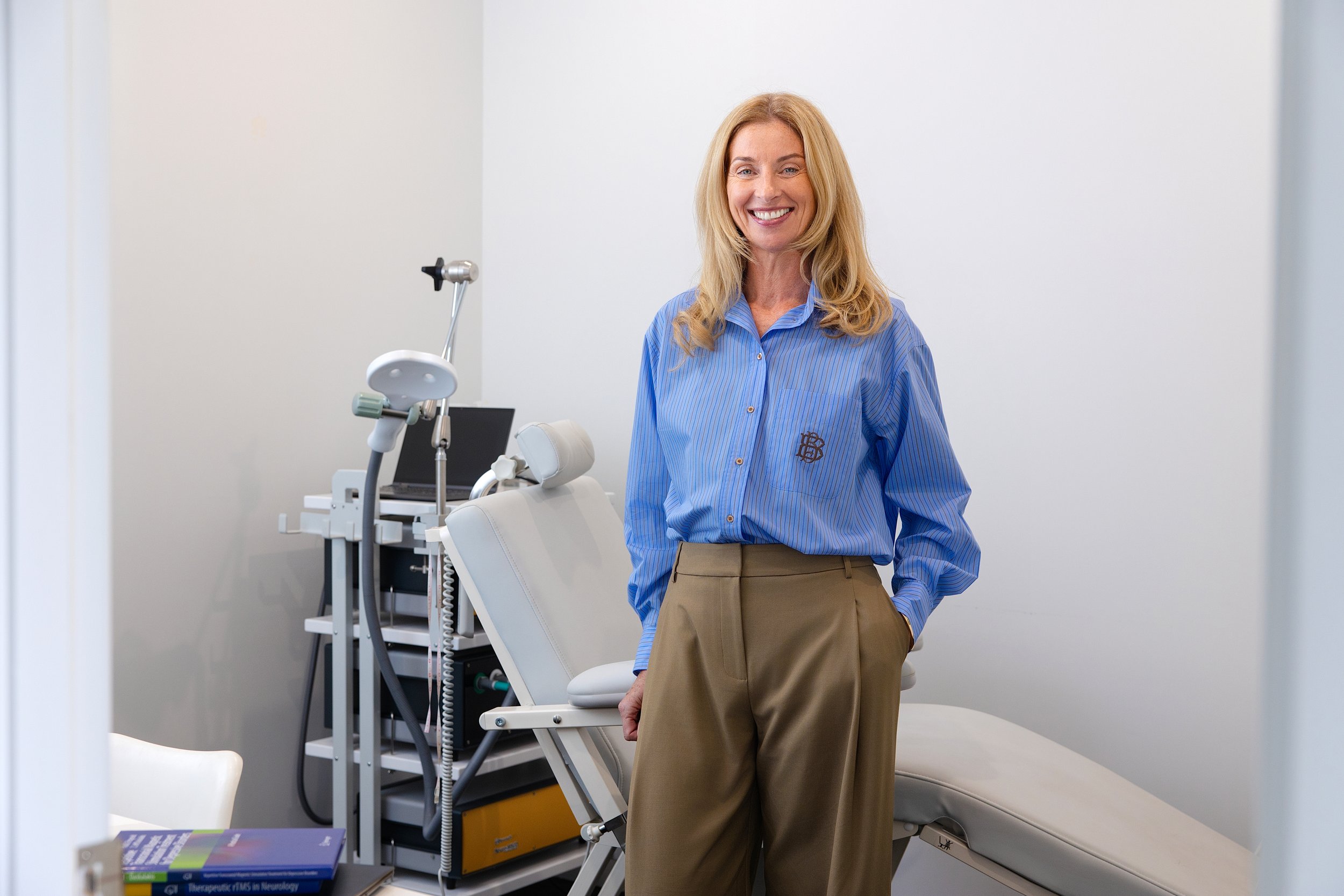
Crucially, Darren continues, “you want the patient to engage in a treatment that will help them get better. You’ve got to understand their preferences and goals. If you can establish the way they want to work, you’re going to get the best outcomes, so you’ve got to adapt.”
The patient groups that really benefit are not only people with treatment-resistant depression, but also those who can’t tolerate medication, pregnant or breastfeeding mothers, and older people who are already on multiple medications. If it’s conclusive that TMS could indeed be positive, a treatment plan is put in place.
Having read about the benefits of TMS, I’m curious as to what the process actually involves. Darren explains, “People will tell us when they’re depressed that their brain doesn’t work properly. It’s been discovered that the primary depression area in your brain is your left side dorsolateral prefrontal cortex, which has been shown to be under-functioning in people with depression. We’re able to stimulate this area with the magnetic coil, and the pulse passes through your skull and into the cortex. It’s a kind of non-invasive brain stimulation.”
And the feeling while you’re having the treatment? As the practitioner who gives the treatment, Kate immediately reassures, “It's a very safe, well-tolerated treatment, with minimal or mild side effects, such as mild fatigue and mild scalp discomfort. The delivery of rapid, brief magnetic pulses through the skull into the brain results in a tapping sensation on the skull.”
Although I realise there’s no ‘one-size-fits-all’ plan, I’m interested in how many sessions are required and how often. Typically, Darren says, “the original TMS protocols consisted of a 20 to 30-minute treatment, once a day, five times a week, for four to six weeks.”
That said, both Darren and Kate are hugely excited by global progress, particularly in the US, where extensive use and research shows that accelerated TMS protocols can be even more effective. What this means is that “we’re able to offer a full course of TMS over two weeks, which is far more feasible for people to fit into their lives”.
Clinical response to TMS is monitored regularly. Ultimately, the joy of the process for Darren and Kate is being able to offer a potential solution to a problem patients may have battled for years.
“Often the people we see will tell us that they’ve tried medication and cognitive behavioural therapy, as well as diet and exercise,” says Darren. “These people are invested in their mental health and have done really well, but over time, those things have become less effective in treating their depression. They get to the stage where they can become quite desperate because they’ve tried everything. We feel quite hopeful with TMS that it’s something people can try. TMS is tolerable, proven and highly effective.”
CHASING THE LIGHT
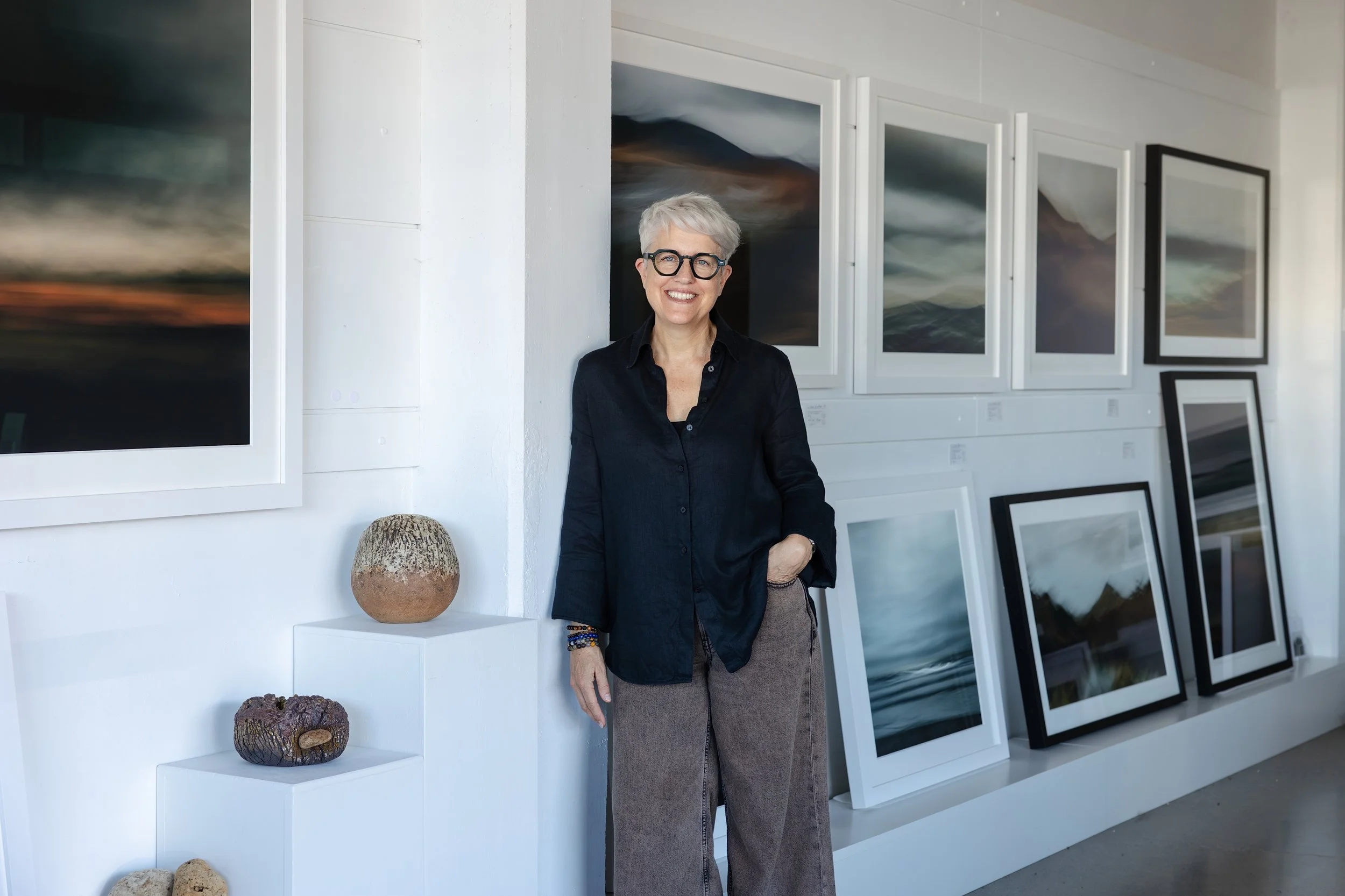
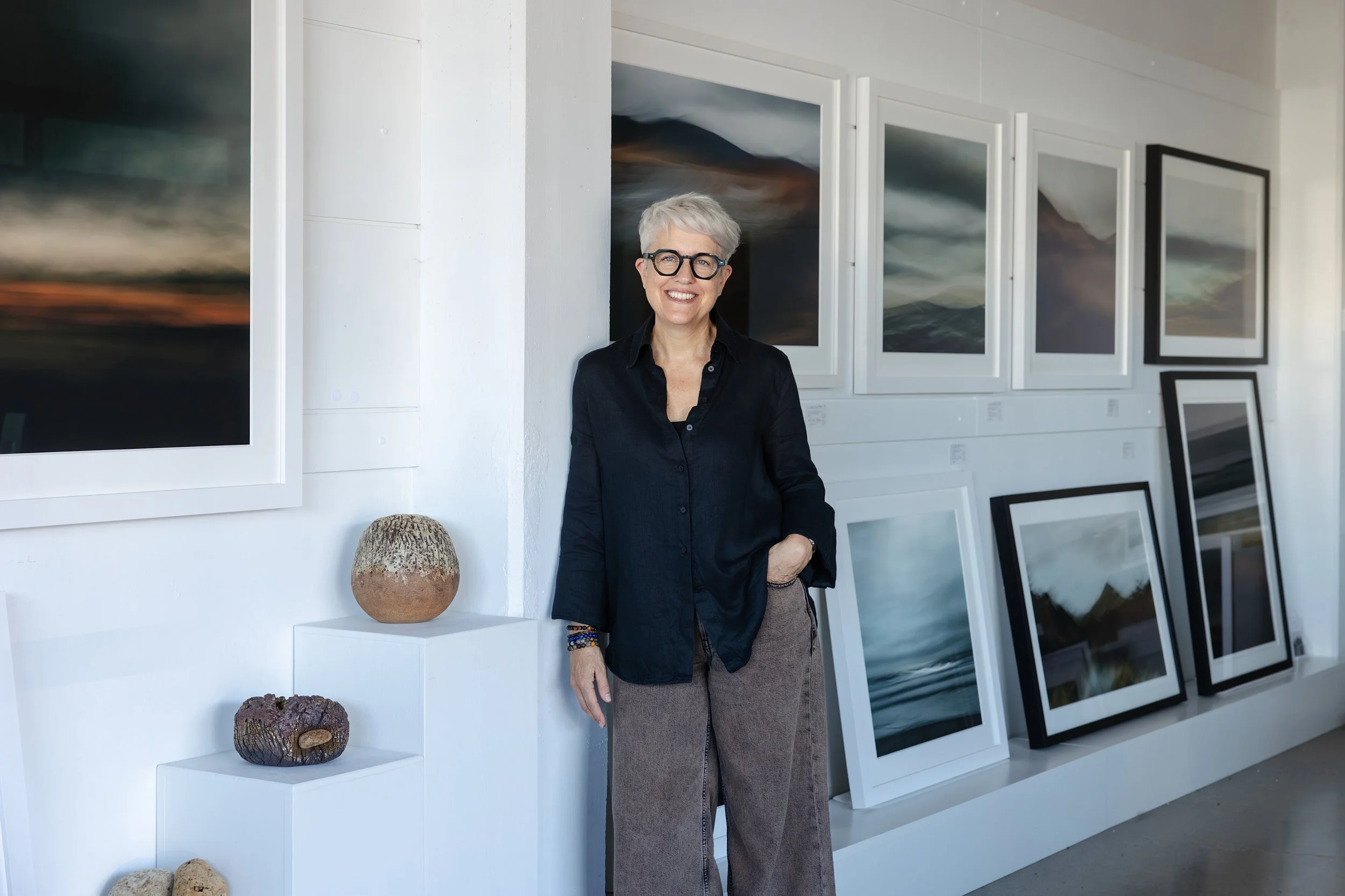
For Tauranga artist Tracy Stamatakos, the Bay of Plenty is a constant source of inspiration. Her photography transforms local land and seascapes into atmospheric works that invite viewers to pause and look again.
For Tauranga artist Tracy Stamatakos, the Bay of Plenty is a constant source of inspiration. Her photography transforms local land and seascapes into atmospheric works that invite viewers to pause and look again.
PHOTOS DEBORAH DE GRAAF
UNO: For people who might be seeing your work for the first time, how do you describe what you do?
Tracy: Sometimes there’s confusion at first glance. What is it – a drawing or a painting? It’s photography, but not in the literal sense. I use single-capture long-exposure techniques to record light, colour and shape, moving the camera while the shutter is open to achieve the desired result. I also create new lines and shapes by recording the movement of objects or specular highlights. I believe art can act as a transfer of energy from the unseen into the physical world. My images are imprinted with my energy, the energy of movement and the grounded energy of a place. My hope is that the viewer feels this too. You talk about “painting with light”.
What does that actually look like when you're out shooting?
I’m sure it looks really odd! Sometimes it’s fluid movements, other times it’s following shapes. It feels meditative to photograph this way. I love remote locations where I can be fully present and recharge at the same time. In contrast, trains can be fun to shoot from – scenes approaching and disappearing just as fast. I can spend six to eight hours in an outside carriage, and love the challenge of having to react quickly with no way to refine the scene. The funniest response I’ve had was on the Northern Explorer. A woman who had watched me for hours finally said to her husband, “I don’t know what she’s doing, but her photos aren’t going to be sharp.” I just smiled.
What is it about the Bay of Plenty that inspires you?
There’s beauty everywhere, but I tend to find it between the sun and the rain, where the pressure builds and the light breaks through. We’re blessed to have the ocean, rivers, hills and mountains on our doorstep, changing minute by minute. It’s a spectacular show.
Do you tend to head out with a clear idea of the image you want, or is it more about responding to the moment?
“Responding to the moment” is a perfect description. Most of the time, I leave it up to the universe to present me with options. Sometimes there are certain images that make my heart race, or I can see the opportunity to develop an idea. In that case, I’ll make a clear plan to capture a series. That might include returning to a certain location, choosing another one with more potential, planning to shoot at the optimum time of day, or waiting for the weather gods to sprinkle some magic. I’ve learnt that booking 10 days in the South Island in the middle of winter doesn’t guarantee moody weather. Full sun is not my friend, but I’ve accepted the challenge on many occasions. I guess that’s how you move forward.
You've been working in photography for decades now. What’s changed the most in how you see things?
This industry is all I’ve ever known. My first job was with Bob Tulloch at No 1 The Strand in the early ’90s. I hadn’t set out to be a wedding photographer. I fell into that quite by accident, but quickly realised it’s some of the best training you could ever have. Twenty years of constant pivoting, catching curveballs, working under time restraints, learning to breathe under extreme pressure… but somewhere in all the madness, you create magic and you keep going. Photography was a love, and then it became a job. It’s also highly technical, with lots of components to control and briefs to stick to, especially commercially, so it began to feel clinical and suffocating. I found the love again by shooting for myself, by throwing out all those rules in 2006 and creating emotionally charged imagery, which is dark, moody, soft and serene. With age, I think you become more aware of self. There’s also an element of knowing we’re all on borrowed time – although I’m putting it out there that I’ve only reached the halfway mark and am keen for another 50 years. You start wearing your heart on your sleeve and caring less about what other people think, not worrying so much about mistakes because you understand that’s how growth happens. Making art connections outside the photographic industry was also key for me. Being able to bounce ideas around with people working in different mediums was refreshing.
What’s it like being based in Tauranga and running your own gallery space?
I took over the 9th Ave space 11 years ago, when my business switched to focusing on commercial work. The signage on the window has always read “studio + gallery”, but it’s only been in the past 18 months that the gallery has had regular hours. I have to thank my talented ceramic artist friend Lynn Ross for backing me and sharing the gallery hours to make this possible. We’ve always had an appreciation for each other’s work and visitors enjoy the way it intersects. It’s delighted us recently to have people waiting for the doors to open. That sure makes up for the quiet days, but that’s the nature of retail.
When someone stands in front of one of your pieces, what do you hope they feel?
A moment of pause, and space for their own memories and interpretations to surface. It’s also a direct transfer of energy. For example, I have one image that has been purchased four times as a remembrance piece, and it was photographed in that spirit. That makes me smile, to know my visual communication is working. I think it’s very important to connect emotionally with a piece for longevity. Will it still mean something to me when my surroundings change? Art can create future memories too. An image you live with becomes a backdrop to everyday life.

GOOD VIBRATIONS
Armed with only buckets and drumsticks, a group of five local teens has become a global sensation. We caught up with the Beat Street Drummers to learn the secret of their success.
Armed with only buckets and drumsticks, a group of five local teens has become a global sensation. We caught up with the Beat Street Drummers to learn the secret of their success.
WORDS KARL PUSCHMANN / PHOTO ALAN GIBSON
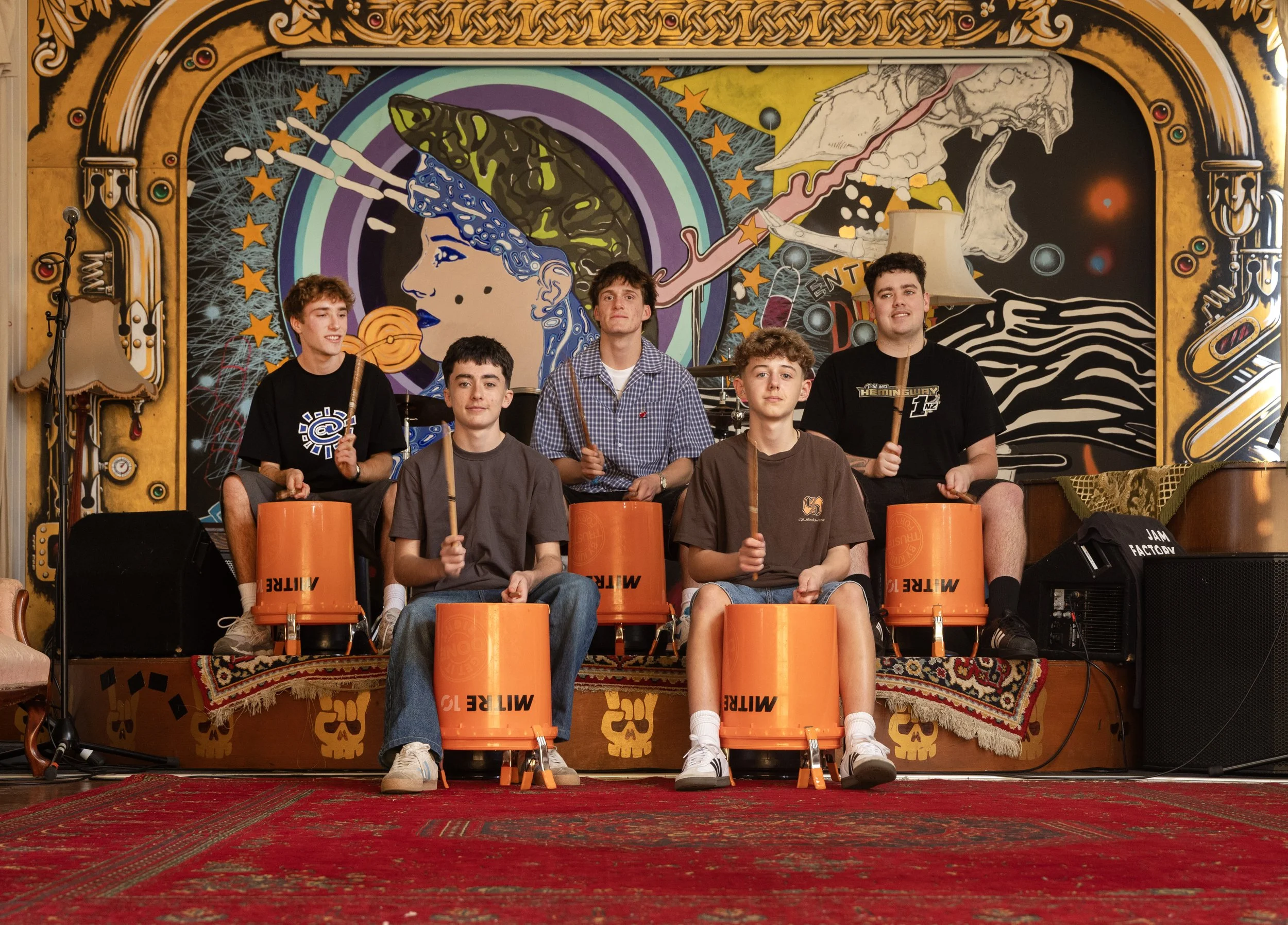
The beat thunders through the Historic Village, its rhythmic pulse grooving and full of joy. Then, as suddenly as it started, it stops – a one-minute blat of head-nodding bounce and skilled exuberance.
The drums were booming out from the village’s iconic live venue, The Jam Factory, but when I enter, there’s not a drum kit, conga, bongo or percussion instrument to be seen. Instead, carefully positioned in two rows, are five bright-orange Mitre 10 buckets.
These humble buckets are the instruments of choice for Elliot (14), Tristan (15), Daniel (17), Lucas (18) and Noah (18), better known as the Beat Street Drummers.
“The buckets are a way for us all to play together at the same time,” explains Elliot.
“And they’re unique,” adds Tristan.
“People like that,” says Lucas. “Once we set up our social media page, it grew real quick.”
It certainly did. The group, who all met through school and drum courses, have been jamming together for just over four years, but only got more serious with the Beat Street name and Instagram page last year.
“We originally started at one of our houses, just jamming and playing along,” recalls Daniel. “Then we created the Beat Street social media accounts on TikTok and Instagram, and people just loved it.”

The young group quickly became a viral sensation thanks to their fun and impressive choreography – lots of stick twirls and big arm raises – their infectious,cacophonous rhythms played at mind-boggling speed, and their decision to play covers of popular chart hits, like 2014’s Changing by Sigma and Paloma Faith.
That video alone clocked up more than 1.4 million views, but it’s far from their only viral hit. Collectively, they have 22 million-plus views and a loyal fan base of more than 700,000 followers.
“It was our improvs that went viral at first,” says Lucas. “People liked the buckets, but it was the small things that caught their attention – the angles, location.”
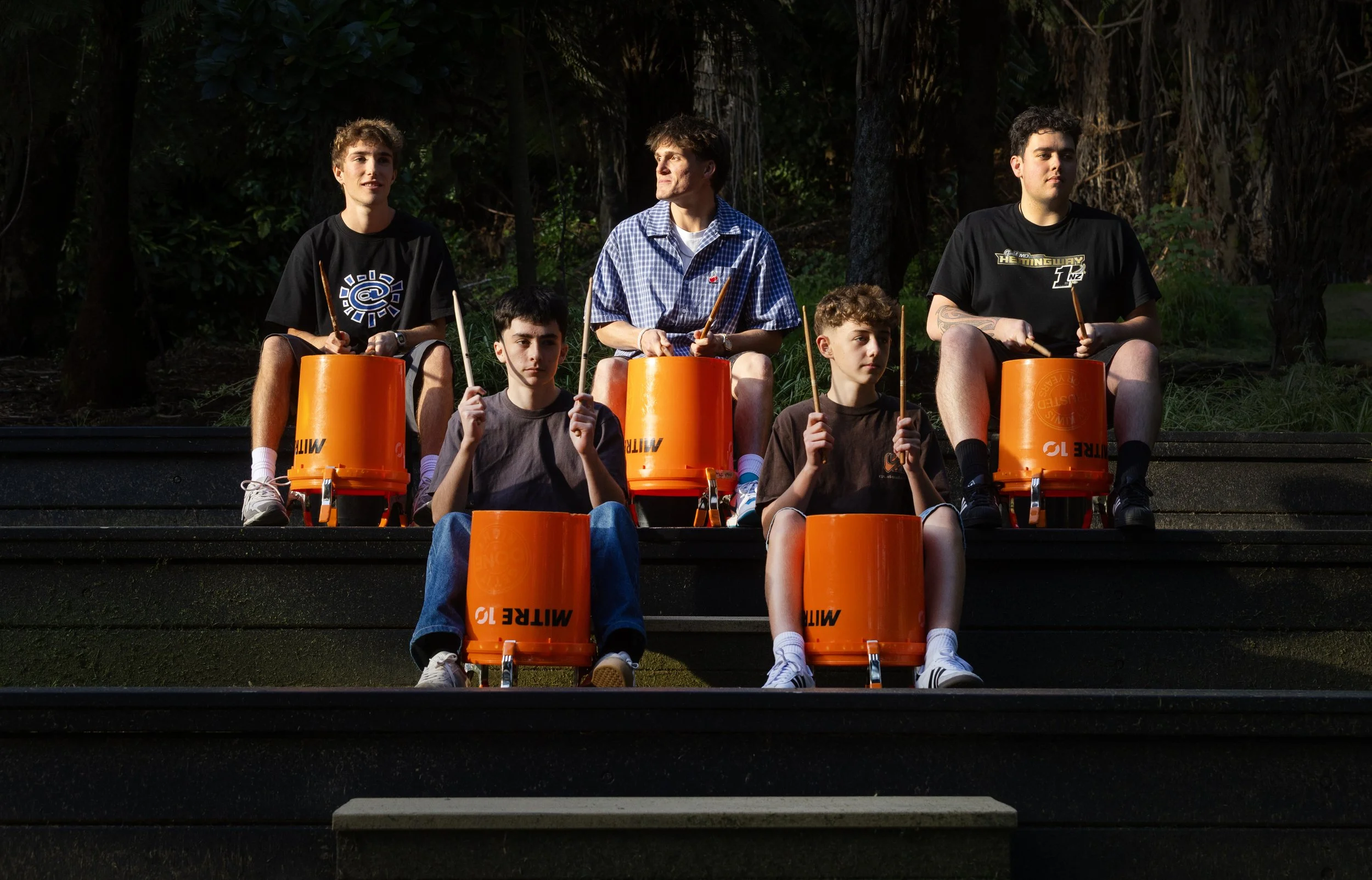
“We did a video in a shed on a barnyard and there was a tractor in the background,” says Daniel. “It was quite Kiwi New Zealand.”
“Yeah, people just kept commenting things like, ‘I love that backdrop!’,” laughs Noah. “It’s the little things that make it.”
The secret, they reckon, behind their viral success is that they’re just having fun. The videos aren’t big, over- thought affairs or calculated for maximum engagement.
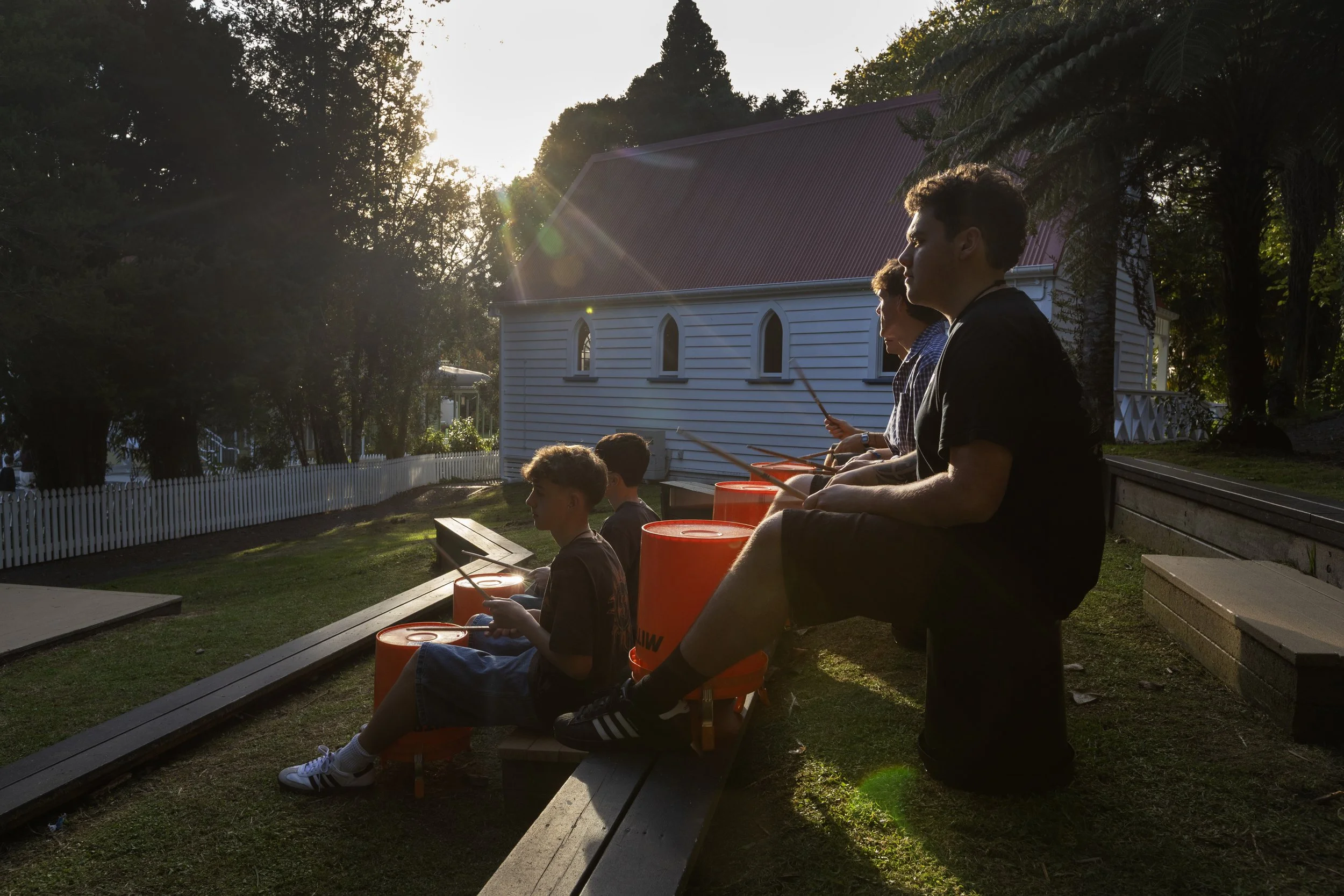
instead, “something that shocked a lot of people was that our biggest video took us about 20 minutes to choreograph and film,” says Daniel. “Filming our videos is quite quick. I think that comes with the chemistry and the length of time we’ve been together. We have similar thought processes and ideas.”
Beat Street Drummers’ online success has now transferred into the real world, with the group starting to travel the country to perform at music festivals in front of thousands of fans. They’d wanted to play live since the beginning, but weren’t quite sure how to go about it.
“It was hard to think how we were going to get to play at bars or club nights or anything because we’re just drums,” says Daniel. “It seemed like a tough sell.”

Now, however, festivals are coming to them, asking them to play. It’s a dream result. When the quintet gets going, it’s a thoroughly unique experience, with the lads knocking out complex polyrhythms and beats at speed in perfect unison. It does beg the question, how many plastic buckets do they go through?
“We haven't broken any yet!” says Elliot. “We've had these since we started.”
“Yeah,” nods Noah. “It’s the sticks, though. They break a lot.”
Having played together for so long, they’re now relaxed and comfortable when they perform.
“Initially, we had to focus on what we were doing, but then as time went on, it was less about that focus and more like having fun,” says Lucas. “Naturally, we got better and better as we played, so it’s just turned into a fun thing that we look forward to doing.”
Noah grins and says, “We don't really put in as much practice and effort as we did in the beginning, because that work’s already been done.”
The group is enjoying the overnight success that has come after five years of work together, and is excited about what the future holds.
“We all love music,” says Daniel. “We’ve grown up in houses with music, and we play music. It’s our passion. And we're really tight friends as well.”
Then, he inadvertently reveals the true secret of their success.
“Lots of bands are just bands,” he says. “We’re friends and family first – then we’re a bandafter that.”
STAYING POWER
Downtown Tauranga had a rough few years, but even in the lean times, these three businesses didn’t leave. Now, as the city’s renaissance gathers pace, their belief is paying off. Turns out, that was the right call.
Downtown Tauranga had a rough few years, but even in the lean times, these three businesses didn’t leave. Now, as the city’s renaissance gathers pace, their belief is paying off. Turns out, that was the right call.
PHOTOS SALINA GALVAN
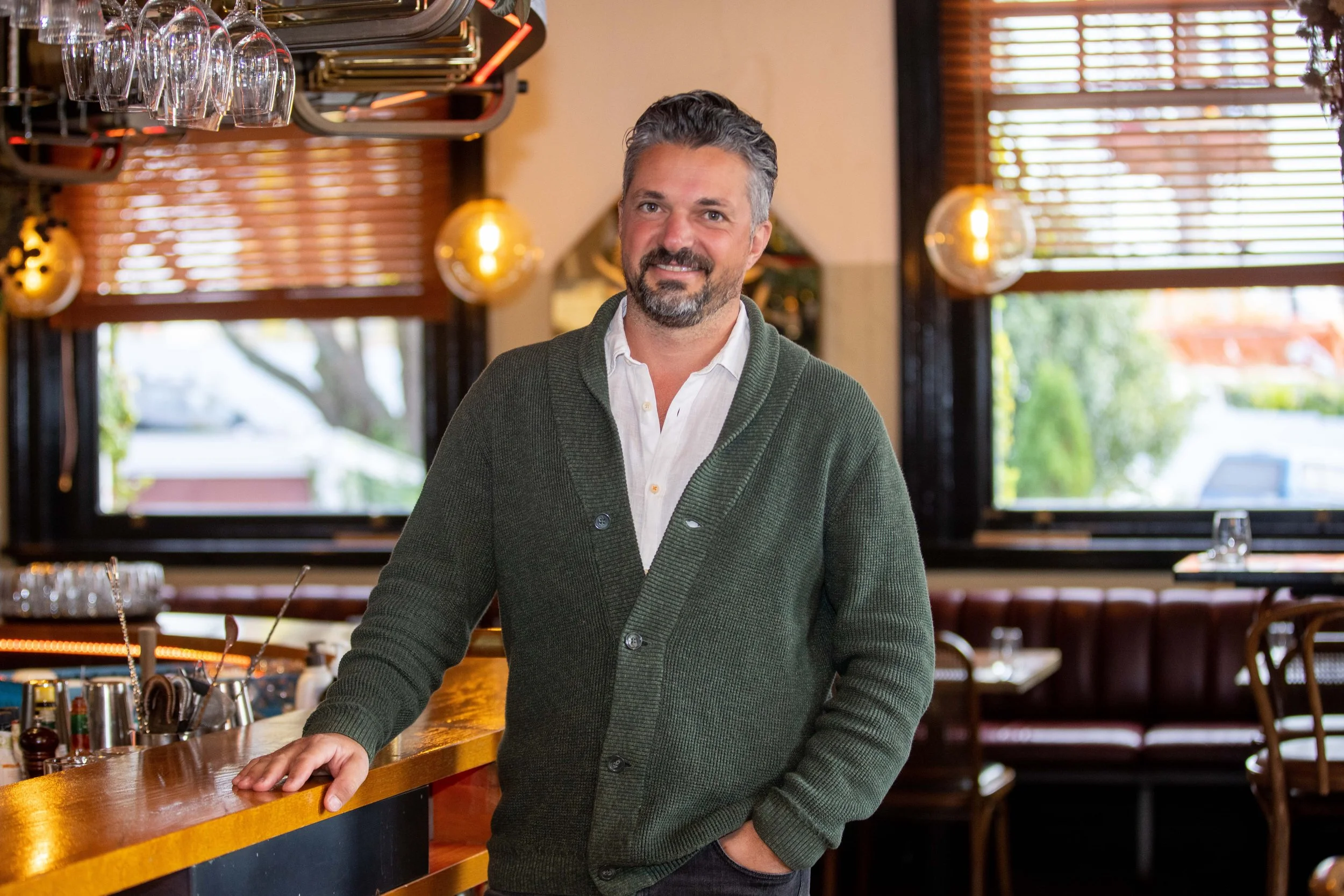
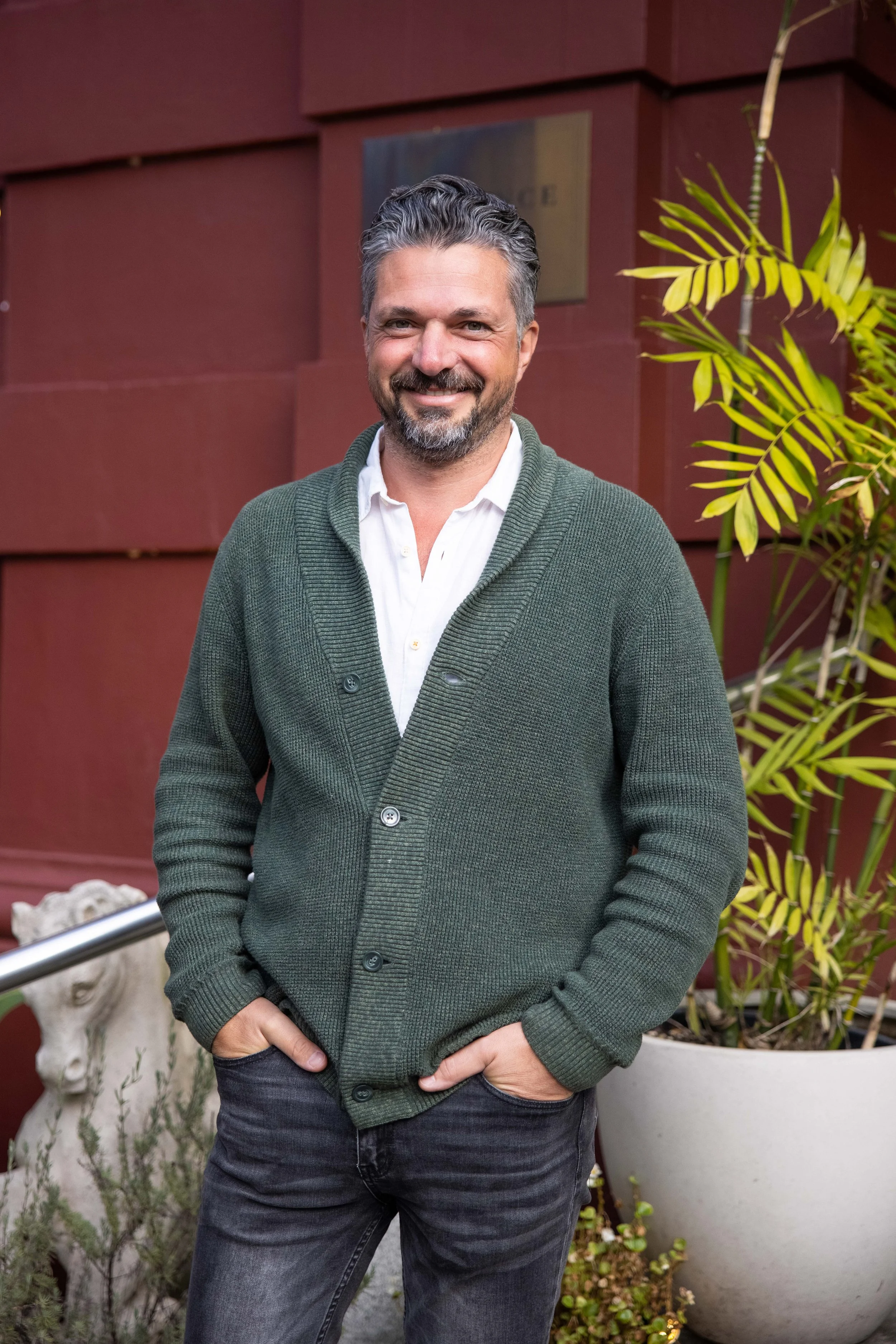
Noel Cimadom at Clarence Bistro.
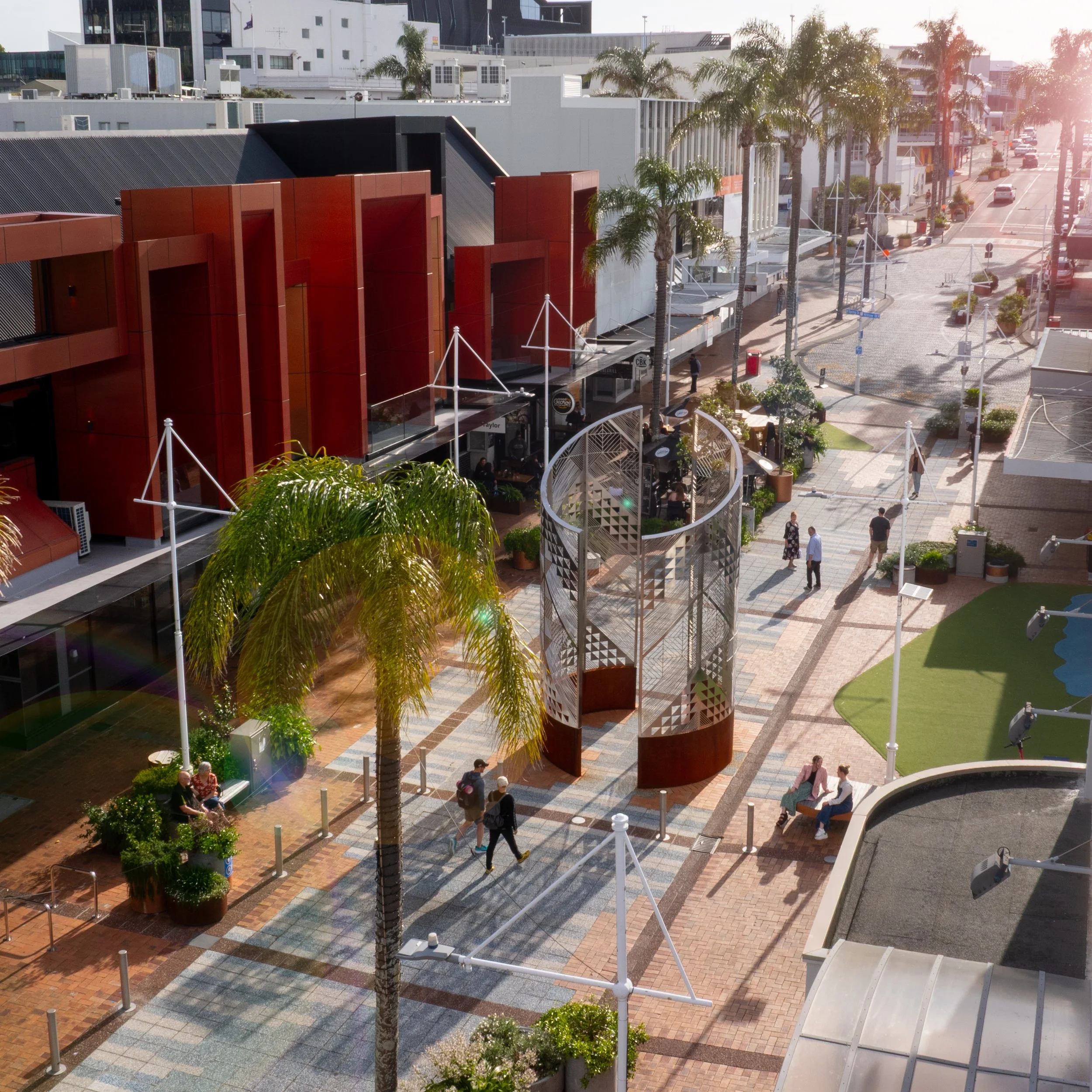
It’s no secret that Tauranga’s city centre has seen some challenging times. Shops closed and stayed empty, foot traffic dwindled, and many stores retreated to the malls. But despite it all, a group of true believers stayed put. They believed in the city centre and their businesses, knowing that what they offered was good enough to draw people into the city.
Walk downtown today, and people are returning to work, live and play. It’s getting closer to what Noel Cimadom saw when he looked at downtown Tauranga for the first time after arriving from Europe.
"I was always joking in the beginning, saying this can be Miami,” he laughs. “It just showed so much potential.”
With a background in hospitality in Munich, Noel and his wife, Kim Smythe, took the keys to The Old Tauranga Post Office heritage building on Willow Street in 2017, opened Clarence Bistro and Hotel in November 2018, then watched as the city centre grew very quiet indeed.
Instead of retreating, the pair doubled down, opening the acclaimed restaurants Picnika and Stassano in quick succession, built on their faith in the city's bones and Noel’s Miami dream.
“I am a believer," he admits. “There aren’t many cities on the oceanfront that can do what Tauranga could potentially become. I see it as the next future city. There’s no doubt about it. There’s a lot of opportunity here to become something very, very outstanding if we all pull together. I’ve got big hopes for it, for sure.”
They’ve seen and felt the recent change. The vibe is there, the tables are booked, and people are stopping in for after-work drinks, something that hasn’t happened for a long while. “It’s still early days,” he says, “but it’s coming.”

Julie Hammon of Hammon Diamond Jewellery.
Down the road, Julie Hammon is preparing to celebrate 40 years of business on the same city centre site. Hammon Diamond Jewellery arrived on Grey Street in 1986, and has remained ever since. The family jewellery business is also now approaching its 80th birthday.
“It’s amazing,” she smiles. “It's been such a fabulous journey.”
That journey has not been without turbulence. The stock market crash of 1987 hit just a year after she and her late husband opened. Later, the malls began luring customers away, and then the pandemic kept them away.
Through it all, Julie stayed put, even when shopping centre operators dangled attractive offers in front of her to relocate. She sent them on their way.
“I’ve always loved the city centre," she says, "and for us, being in the city is the right place to be."
“We’re a family business, people know where to find us, and they trust us,” she says. “These relationships have gone on for years and years and years. They’re intergenerational. We now have younger members of the same families coming in to use our services. It’s quite incredible.”
Her read on the city’s future is optimistic. “I’m very hopeful that we’re on that incline up,” she says. “For any city to be healthy and vibrant and have a fantastic future, you need a city centre that reflects that. The waterfront has been magnificently enhanced, there are events on downtown, and there are the new apartment blocks. The city centre is a very attractive and exciting place to be.”

Bond & Co’s Jason Dovey.
Up the street, on the main drag of Devonport Road, Jason Dovey has been dressing Tauranga’s stylishly inclined men for more than 30 years. Bond & Co, his boutique menswear store, is a destination in the truest sense. People drive in specifically because there’s nowhere else quite like it.
“I’ve definitely seen the city centre at its lowest, as low as you can go,” he sighs. “But with the rebuild of buildings and facilities and more people living and working back in the city I reckon we’re on the other side, and going up continually."
Even at the city’s quietest point, Jason didn’t think about leaving.
“I never want to go to a suburb and would definitely never go to a mall. We’re a boutique business. The city’s where we want to be. We don't want to be in suburbia.”
Jason says that even within the last year, the change has been notable.
“It’s sort of like the old days,” he says, saying that now, along with the destination shoppers, the increase in foot traffic has people popping in as they walk by.
He agrees that the city centre’s much-needed developments have made a huge difference to business. He’s seeing people bringing their kids or grandkids to the new playground, then stopping for lunch at a café, before dropping in to see him at the store.
“It’s not about going to a cupboard shopping mall. It’s about the other attractions and things to do in the city centre. When the museum, the new library and those other facilities are all open, along with the cafés, restaurants and hospitality, it will be inviting for people to come back to the city centre.”
“There’s an atmosphere,” he smiles, then adds, “and that’ll only get stronger.”

BORN INTO LEGAL LIMBO
New Zealand’s surrogacy laws belong to another era. Decades on from being written, the families caught up in them are paying an enormous price.
New Zealand’s surrogacy laws belong to another era. Decades on from being written, the families caught up in them are paying an enormous price. WORDS HAYLEY BARNETT

Imagine spending years trying to have a child, enduring miscarriages and failed fertility treatments. Maybe biology just isn't on your side and you spend forever searching for someone to carry your baby to full term. When you finally find a surrogate willing to do so, everyone in the room knows exactly who the parents are. Except the law.
Under New Zealand’s current framework, the intended parents – as in the people who created that embryo, who have longed for that child and will take them home and raise them – are legal strangers to their own baby at birth. The surrogate and her partner are the legal parents, and until a lengthy, costly adoption process plays out over months or years, that’s how it stays.
This is the reality for thousands of New Zealanders who build their families through surrogacy, but according to the experts working alongside them, it doesn't have to be this way.
“Nobody gets to surrogacy easily,” says Stewart Dalley, a family lawyer who has spent years working on such cases. He was part of the first same-sex de facto couple in New Zealand to jointly adopt their children.
“For a gay couple, you don’t really have any other option than surrogacy because ordinary adoptions are rare as hen’s teeth. But for a heterosexual couple, you’ve probably gone through multiple years of infertility, unexplained infertility, multiple miscarriages, all of those things, which place a massive emotional drain on you. When you get to the point where surrogacy is your only option, then begins the long, bureaucratic road to becoming the parents.”
Under New Zealand law, the woman who gives birth to a child is automatically recognised as its legal mother, regardless of whether she has any genetic connection to that child. Her partner, whether male or female, is recognised as the other legal parent. Legally, the people who may have created the embryo and will raise it from birth don’t have any such status.
“What the law treats mum and dad as is sperm donor and egg donor,” explains Stewart. “Nobody intended this to be the situation. I think it was just short-sighted. The law hasn't kept pace with technology and reality.”
The practical consequence is that intended parents must go through a formal adoption process to be legally recognised as the parents of their own child. It’s a process that Caren August, a counsellor at Fertility Associates, says typically runs for around two and-a-half years from first appointment to completed adoption. But the absurdities don’t stop there.

Christchurch influencer Rebecca Keil became a surrogate in 2019 for Wellington couple Tess Dunford and Dan Stemp after seeing Tess’s plea for a surrogate on Instagram. Tess had suffered a postpartum haemorrhage during the birth of their first child that required an emergency hysterectomy. Although it was devastating, her ovaries were intact, meaning IVF and surrogacy were possible. For Rebecca, the decision to help was straightforward, however, the legal reality that followed was anything but.
“We don’t have surrogacy laws,” she says. “We have ancient adoption laws, which make the process a whole lot harder.”
Because Rebecca was married, her husband Jared was automatically presumed to be the baby’s legal father, despite having no biological connection whatsoever to the child. His name, and his ethnicity, went on the birth certificate.
“He’s a whole-ass fruit salad,” jokes Rebecca. “On this child’s birth certificate, it says his father is Māori and Samoan, and he’s a Pākehā child. It’s so crazy and misogynistic.”
Caren recognises the reaction immediately. “I can’t tell you how many times I’ve had the partner of a surrogate say, ‘But why? I’m not contributing eggs, I’m not contributing sperm, I’m certainly not carrying the pregnancy.’”
Beyond the bureaucratic frustration is genuine fear. Until the legal process is complete, the surrogate and her partner are the child’s legal parents. The intended parents are not. For everyone involved, that ambiguity can be a source of dread.
“The worry of the surrogate is that the intended parents are going to ditch her and she’s going to be stuck with this baby,” says Stewart. “The worry of the intended parents is, what if the surrogate decides to keep the baby?”
Caren sees this play out throughout her counselling sessions. “Even when you know each other really well and have a deep sense of trust, there can still be that thought that comes up occasionally. What if they change their mind? What if I do something that upsets them and they decide to keep the baby?”
She describes it as “a common undercurrent alongside times of excitement and hope”.
Legally, that fear isn’t entirely unfounded. “Surrogacy is not legally enforceable in New Zealand,” explains Caren. “The surrogate or the intending parents could withdraw from it, even once there's a pregnancy.”
Rebecca says the fear never took hold for her personally, because she trusted Tess and Dan completely, and felt no grief at handing their son Ziggy over, but she understands why others might feel differently. “If I was in a scenario where it had maybe gone south, and I knew there were no legalities and nothing to protect me, that definitely would have felt a bit different.”
What she does remember vividly is the chaos of the immediate aftermath. Ziggy was born on a Sunday in the early hours of the morning. Rebecca, who had complications during the birth, found herself sending emails from her hospital bed at 5am to relinquish legal rights.
“Because it was a Sunday, there were issues around getting things sorted,” she says. “There was a point where they weren’t going to let Tess and Dan leave the hospital with the baby, and that came down to the timing of it. If it had been midweek, it probably would have been way easier.”
When the adoption order is finally granted, which is often months later, in a courtroom, Stewart says it’s often profoundly emotional. “I’ve seen judges crying happy tears. It’s a lovely ceremony, but the parents are crying not only because it’s a lovely moment. It’s also, ‘Thank God it’s finally over’. There’s the exhaustion of the whole process, the cost, the emotional drain. That order being granted at the end is just the final, final step.”
For Rebecca, the court appearance came around six months after Ziggy’s birth. “It was just a wildly insane scenario,” she says. “I give birth to someone’s biological child and they have to adopt it off me.”
New Zealand’s surrogacy laws have been overdue for reform for decades. A Member’s Bill incorporating Law Commission recommendations is now sitting before Parliament awaiting its second and third reading, but progress has been glacial.
“It’s Parliament time, basically,” says Stewart, who was one of the expert legal advisors to the review. “Whether it’s going to happen in this term, or roll over into a new political cycle, I honestly don’t know.”

It was former MP Tāmati Coffey, himself a father through surrogacy, who came closest to making it happen. He drafted the original Member’s Bill alongside Louisa Wall and gathered cross-party support, but it stalled on timetabling and, he believes, the cost of implementation. He left Parliament before seeing it over the line.
“I’m sad that we’re still kicking the can down the road. It shouldn’t have taken this long,” he says.
He also points to a glaring inequity where every professional in the process gets paid, except the surrogate.
“As it stands, women who do this need to do it for the love in their heart. But every other professional is clipping the ticket, and clipping big.”
Rebecca echoes this. Surrogates cannot be paid beyond tightly prescribed medical expenses, and costs like physiotherapy and dietary changes aren’t covered.
“Things like your diet changes, your body changes and legally they’re not allowed to reimburse you for any of it.”
It’s a barrier, she says, that deepens New Zealand’s already scarce surrogate pool.
“The law shouldn’t discriminate against children and impose hurdles and barriers because of the accident of their birth,” says Stewart. “Why push people through a court process just to be recognised as the parents of the child? It seems absurd.”
Tāmati wants the issue on party manifestos before the next election. His vision for what better looks like is simple.
“When you’ve got willing parties, the law just needs to fall into line.”
For Rebecca, her mission is to keep talking.
“I would never talk about surrogacy without telling one more person why it’s so messed up,” she says.
For the people who arrive at surrogacy after years of loss and heartbreak, she says it must be the worst of the worst. “And then you've got this. Just another thing.”

HEALTH WITH HEART
Where weight loss and appearance medicine are concerned, you want your goals to be deeply considered. This time, at these clinics, it’s personal.
Where weight loss and appearance medicine are concerned, you want your goals to be deeply considered. This time, at these clinics, it’s personal.
PHOTOS DEBORAH DE GRAAF
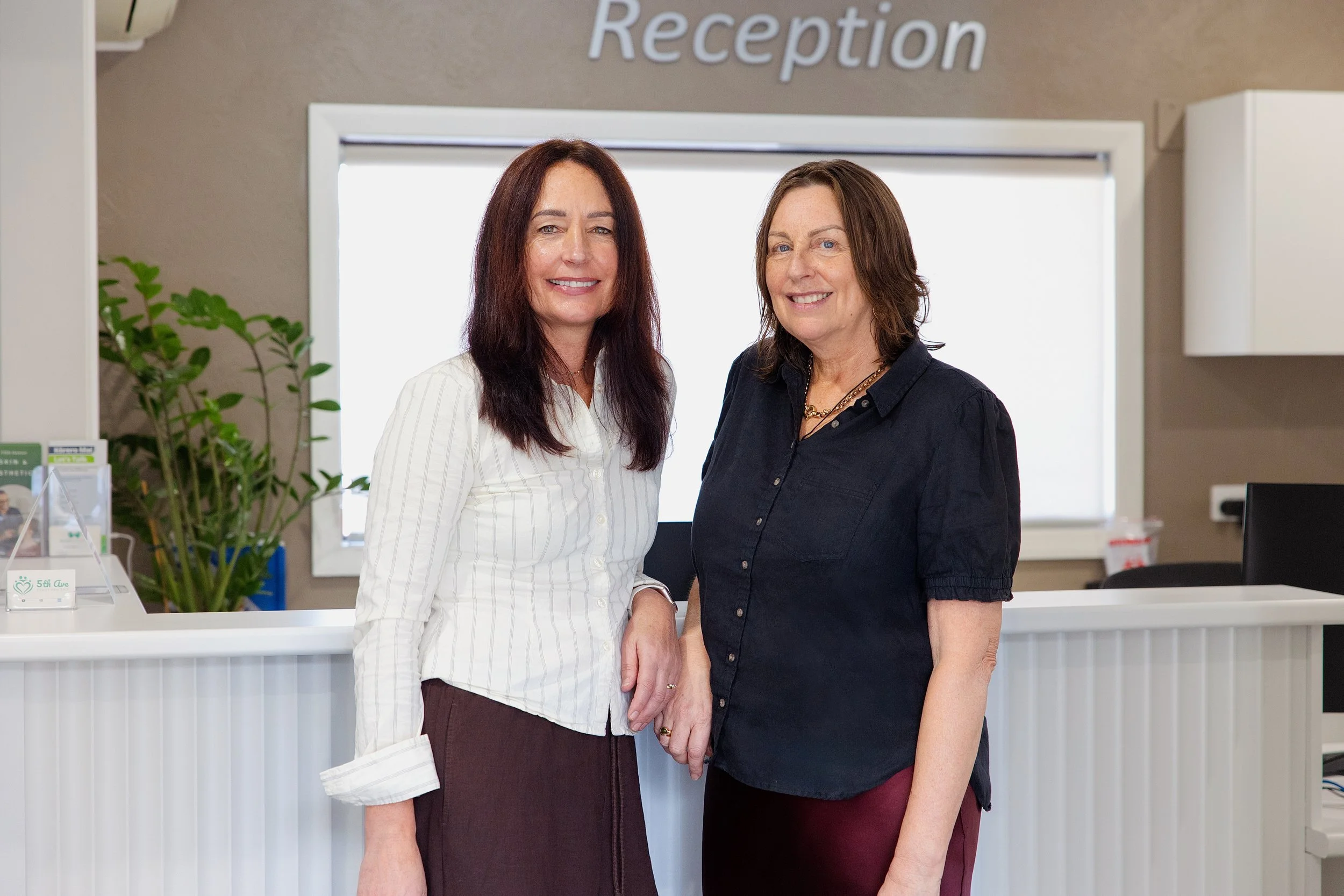
Brenda Newman (left) and Julia Perry
Towards the end of UNO’s interview with Brenda Newman and Julia Perry, who run the Weight Loss Clinic at Fifth Ave Family Practice, I ask Brenda if there’s anything she says to her clients that really resonates. “I tell them, ‘It’s not your fault – it’s not a lack of willpower.’” Does this strike a chord, I wonder? “It’s a very emotive topic,” she replies.
Weight – and losing it – is a topic very much in the public eye. Excitement around drugs such as Wegovy/ Mounjaro (the GLP-1 drugs available in New Zealand) creeps into conversations, and for those with health-impacting weight issues, their use is being heralded as a game-changer. The great thing is that although the GLP-1s are an option offered at this private clinic, it’s far from the only solution. Expertise and wrap-around support is an important component of the service.
The Weight Loss Clinic was established last year because of the impact obesity has on health. Brenda and Julia are both nurse practitioners with a background in the management of long-term conditions, SCOPE (Strategic Centre for Obesity Professional Education) certified by the World Obesity Federation, unflappable, non-judgemental and reassuring. Their service is built on the understanding that a desire to lose weight should be addressed without shame or stigma.

There are a multitude of factors at play when it comes to weight gain or obesity, whether genetic or circumstantial. Having expert guidance and support on what may be a lifelong journey is invaluable.
Brenda’s quick to point out that weight-loss drugs such as Wegovy and Mounjaro have exploded in popularity because they’re a hot topic in the media, but there are criteria and costs attached. There are also several other medications available; some act as appetite suppressants, others are targeted towards reducing cravings.
“A lot of people walk in with preconceived ideas, and that’s when we say, ‘Okay, that’s cool, let’s talk about all the medications that are out there, but let’s also talk about lifestyle.’ There are so many ways to assist,” says Brenda.
“We want to be able to talk about all the options – bariatric surgery, exercise, meal supplements, healthy eating,” adds Julia. “It’s important to be well informed.”
People can self-refer to the clinic whether patients of the practice or not. A thorough questionnaire followed by an appointment then helps to establish an action plan.
What’s essential to recognise, says Julia, is that “obesity is a long-term, complex, chronic condition that’s relapsing”. Ultimately, this sits at the very core of the clinic’s value: because the battle’s not won when the weight is lost, establishing a lifelong shift in mindset is critical. The ability Brenda and Julie have to provide ongoing support as they watch their clients recover their health, improve their self-image and gain confidence is exactly why this clinic was set up.

Dr Sam Mahesh (left) and Dr Kiran Singh.
Contributing to Fifth Ave Family Practice’s holistic approach to health and wellbeing is its Cosmetic Medicine Clinic, run by Dr Kiran Singh and Dr Sam Mahesh. Kiran established the clinic (which he runs alongside his GP work) eight years ago, and Sam joined him last year. Both are heavily invested in the ethical practice around appearance medicine, and we discuss how standards have become less stringent as aesthetic treatments have become more mainstream.
As Kiran points out, “You can potentially be in the hands of someone who has trained through a YouTube video and set up a clinic. Our core business is in medicine. We’re grounded in safe practice and good clinical judgement, as well as cosmetic outcomes.”
Treatments such as Botox are ever more easily accessible, but it’s still important that the practitioner you choose is highly skilled. Says Sam, “Because the substances worked with have become so normalised, people have forgotten how powerful they are.”
As well as their medical qualifications, Kiran holds a Diploma in Cosmetic Medicine from NZSCM, completed, as Kiran puts it “for service excellence, really, and ensuring you’re the best in what you do”. Sam is currently working towards the same diploma.
Sam’s mantra is “enhance, don’t alter”. Kiran asserts that for the very best results, restraint is key. “It’s our job not just to provide the treatment, but to ask, ‘Is this required and reasonable?’.”
Both Kiran and Sam love the symbiotic relationship between the science of medicine and the art of aesthetics. Says Sam, “When you look at the way mental wellbeing can be tied in with physical appearance, it explains why helping improve people’s confidence is a real privilege.” FIFTHAVENUE.CO.NZ

KEEP AN EYE ON IT
Hindsight may be 20/20, but you’d be better off having an accurate picture of your eye health sooner rather than later. Optometrist Mariam Baissy from Bay Eye Care explains why silent eye diseases often go unnoticed.
Hindsight may be 20/20, but you’d be better off having an accurate picture of your eye health sooner rather than later. Optometrist Mariam Baissy from Bay Eye Care explains why silent eye diseases often go unnoticed.
PHOTO SALINA GALVAN

As we age and our eyes change, serious conditions can develop long before we notice anything’s wrong. Helpfully, optometrist Mariam Baissy of Bay Eye Care is here to explain why some eye diseases can go unnoticed and how early detection and preventative measures can protect your vision.
UNO: Mariam, why do eye conditions such as these often go unnoticed until it’s too late? Mariam: Many eye conditions develop gradually and often without obvious symptoms. For example, glaucoma slowly damages the optic nerve, and macular degeneration affects central vision subtly at first. Because early changes are painless and vision loss can be gradual, people may not notice anything until the condition is advanced. If you have a family history, your risk is higher, making regular eye checks especially important, as they can detect these conditions early before noticeable vision loss occurs.
What exactly is glaucoma? Glaucoma is a group of eye conditions that damage the optic nerve, usually due to increased pressure inside the eye. It’s called the ‘silent thief of sight’ because it often develops slowly with no early symptoms. Peripheral vision is affected first, so many people don’t realise they have glaucoma until significant vision loss has occurred.

How does ageing increase our risk of conditions like this? As we age, the tissues and structures of the eye naturally change, which can increase susceptibility to disease. For glaucoma, the drainage system of the eye may become less efficient, raising eye pressure. In macular degeneration, cumulative damage to the light-sensitive cells in the macula – responsible for sharp, fine-detail vision – affects central vision. Genetics and lifestyle factors such as smoking and high blood pressure also contribute, but ageing remains a major driver.
What are the early warning signs of macular degeneration? Macular degeneration primarily affects central vision, so early signs can include blurry or distorted sight, difficulty reading or straight lines appearing wavy. Glaucoma can advance silently, whereas macular changes, especially central distortion, may stand out more to the person experiencing them.
How much do lifestyle choices really influence the risk of eye disease? Lifestyle habits do matter for eye health. Diets rich in leafy greens, colourful vegetables and omega-3 fatty acids support retinal health. Smoking is a major modifiable risk factor for macular degeneration, and high blood pressure and obesity also increase risk. Even though genetics and age still play a major role, protecting eyes from UV light, staying active, and managing overall health can help slow vision- threatening changes.
What can be done for someone who’s diagnosed with glaucoma or macular degeneration? Early diagnosis is key. Glaucoma can be managed with prescription eye drops, laser treatment or surgery to reduce eye pressure and protect vision. For macular degeneration, lifestyle changes, nutritional supplements and in some cases injections or laser therapy can slow progression. For those with a strong family history, genetic testing, such as that offered at Bay Eye Care, can help assess risk and guide monitoring. Although these conditions can’t always be fully reversed, treatment can preserve remaining vision and maintain quality of life.
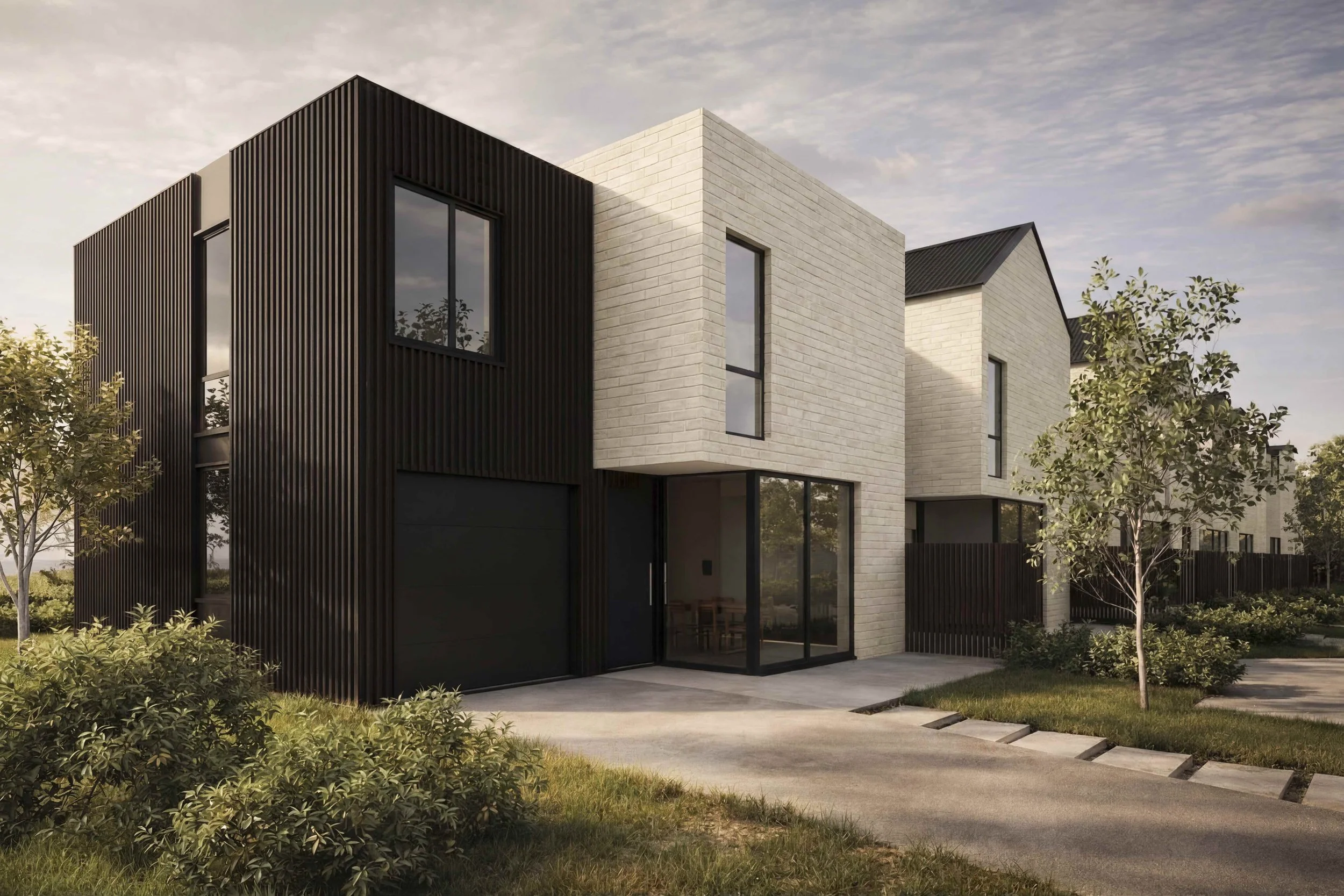
NEW HORIZONS
Pip Crombie explores Te Awa Rise, Cambridge’s newest residential subdivision offering elevated living with connected greenways, native landscapes and effortless access to Waikato’s Golden Triangle.
Pip Crombie explores Te Awa Rise, Cambridge’s newest residential subdivision offering elevated living with connected greenways, native landscapes and effortless access to Waikato’s Golden Triangle.
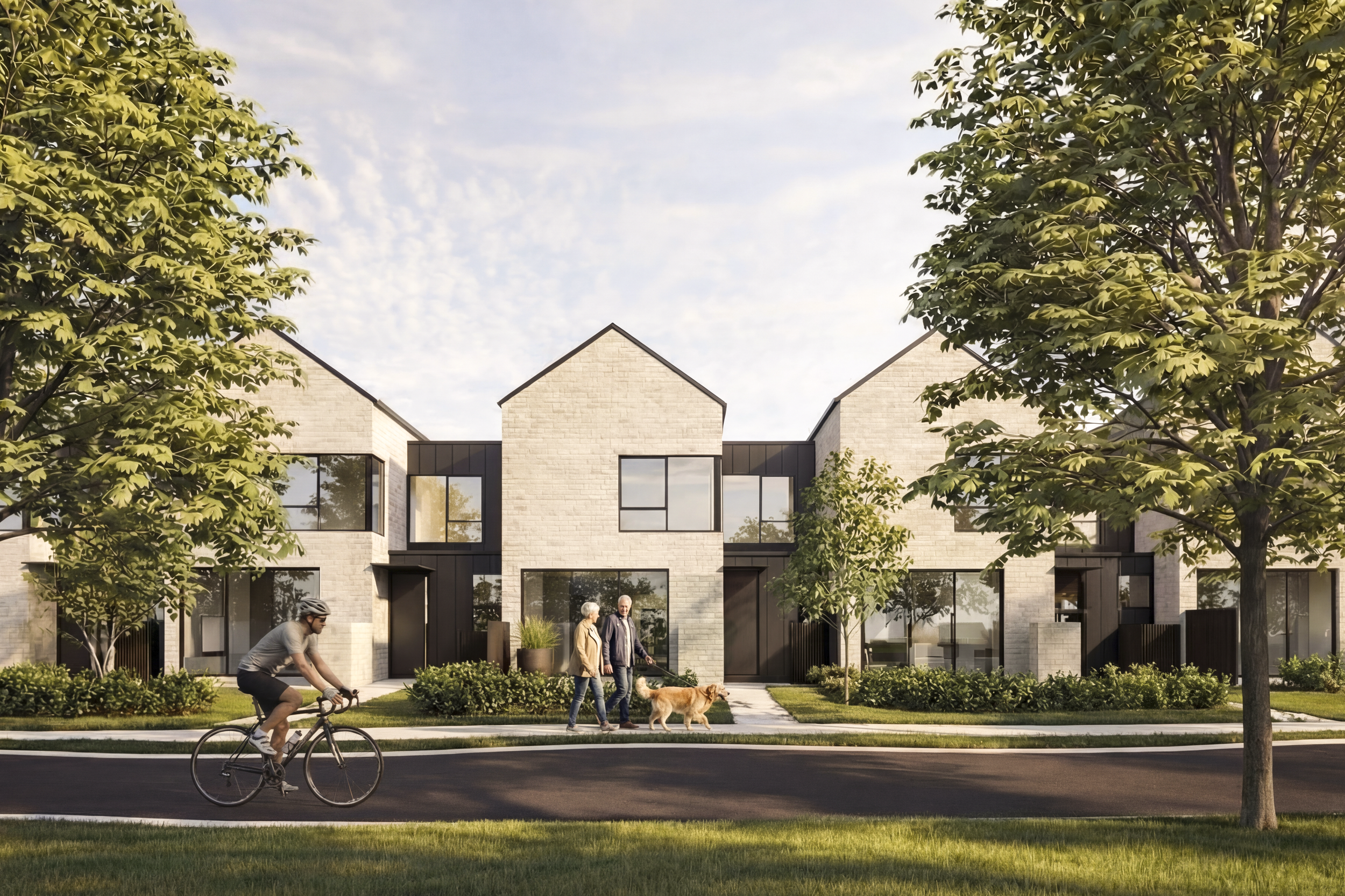
Considering a move? I could be. I recently spent a morning strolling around one of Cambridge’s newest prime residential subdivisions, Te Awa Rise. Situated just minutes from the distinctive charm of the iconic Waikato town, it’s a carefully developed neighbourhood bringing elevated living to those ready to engage.
The unique early morning light the Waikato/Waipā District is known for hangs about the green open spaces, landscaped reserves, natural waterways and distant view to Mount Pirongia, providing exceptional appeal. Spending the morning with CEO of the Sanderson Group, Jared Boronian, and sales manager for the project, Anthony Merrington, afforded me a rare view into their passion for this slice of Godzone, the careful planning that has gone into the 54 lot development, and what it has to offer new residents of all walks of life, ages and stages.
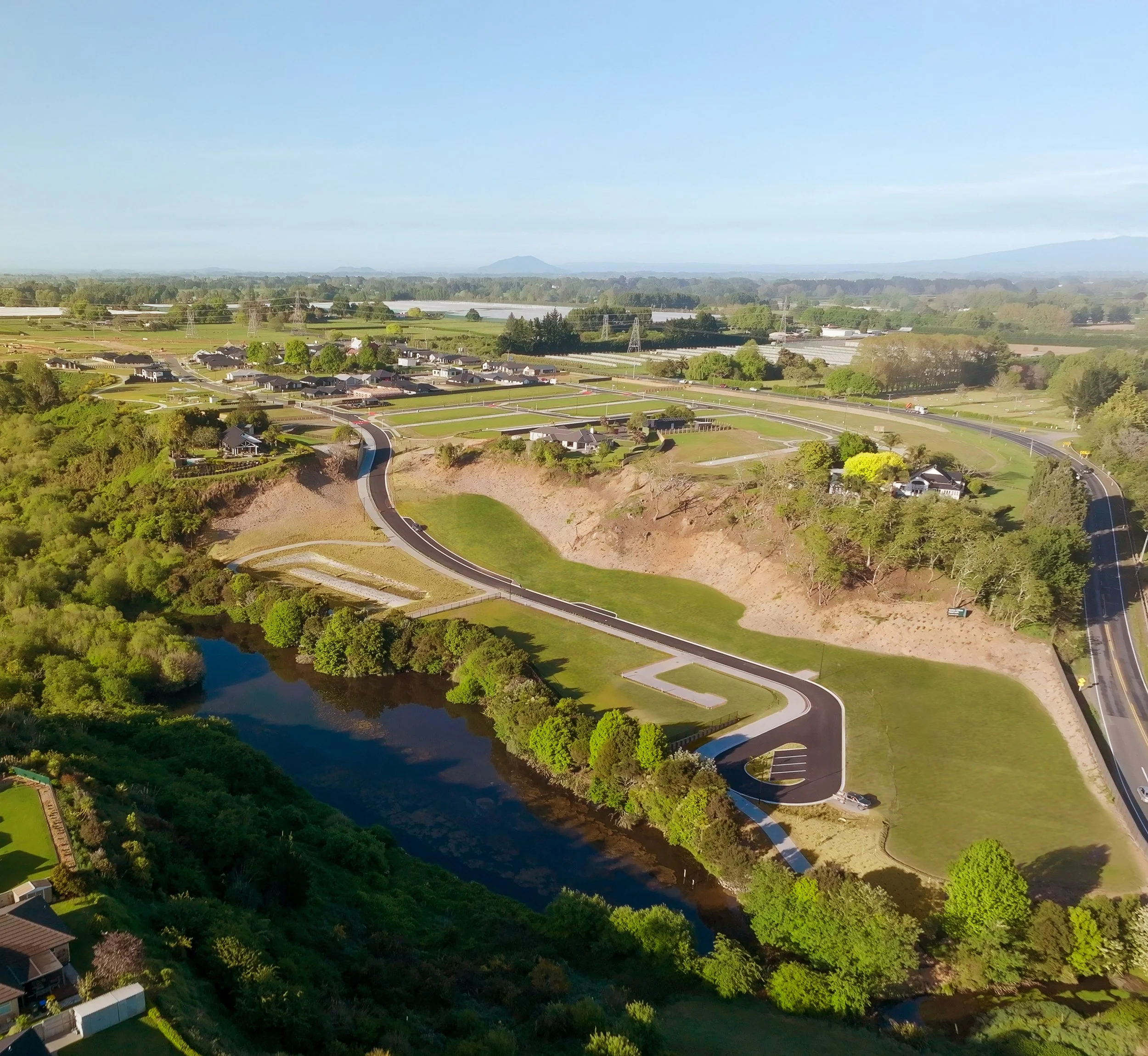
Te Awa Rise sits at the intersection of Cambridge's rapid growth and the Waipā District Council’s ambitions for a more connected, less car-dependent town. The council has been explicit about sustainability in their development plans. New neighbourhoods must provide open spaces and connect new developments through a network of ‘green’ pedestrian and cycleways, while also preserving existing natural areas like river terraces and waterways. Te Awa Rise’s built-in cycle paths and walkways align well with the Waipā 2050 strategy’s vision.
The Sanderson Group worked closely with the council’s principal engineer, Tony Coutts, who was impressed with the developer’s communication, shared vision and commitment to achieving the 2050 regional goals. “Kudos to them for working so closely with us to progress and work to make this cost effective and timely. From the land-acquisition stage through to planning and providing road networks, and the bridge that spans the natural waterway – it’s been a fun and interesting project.”
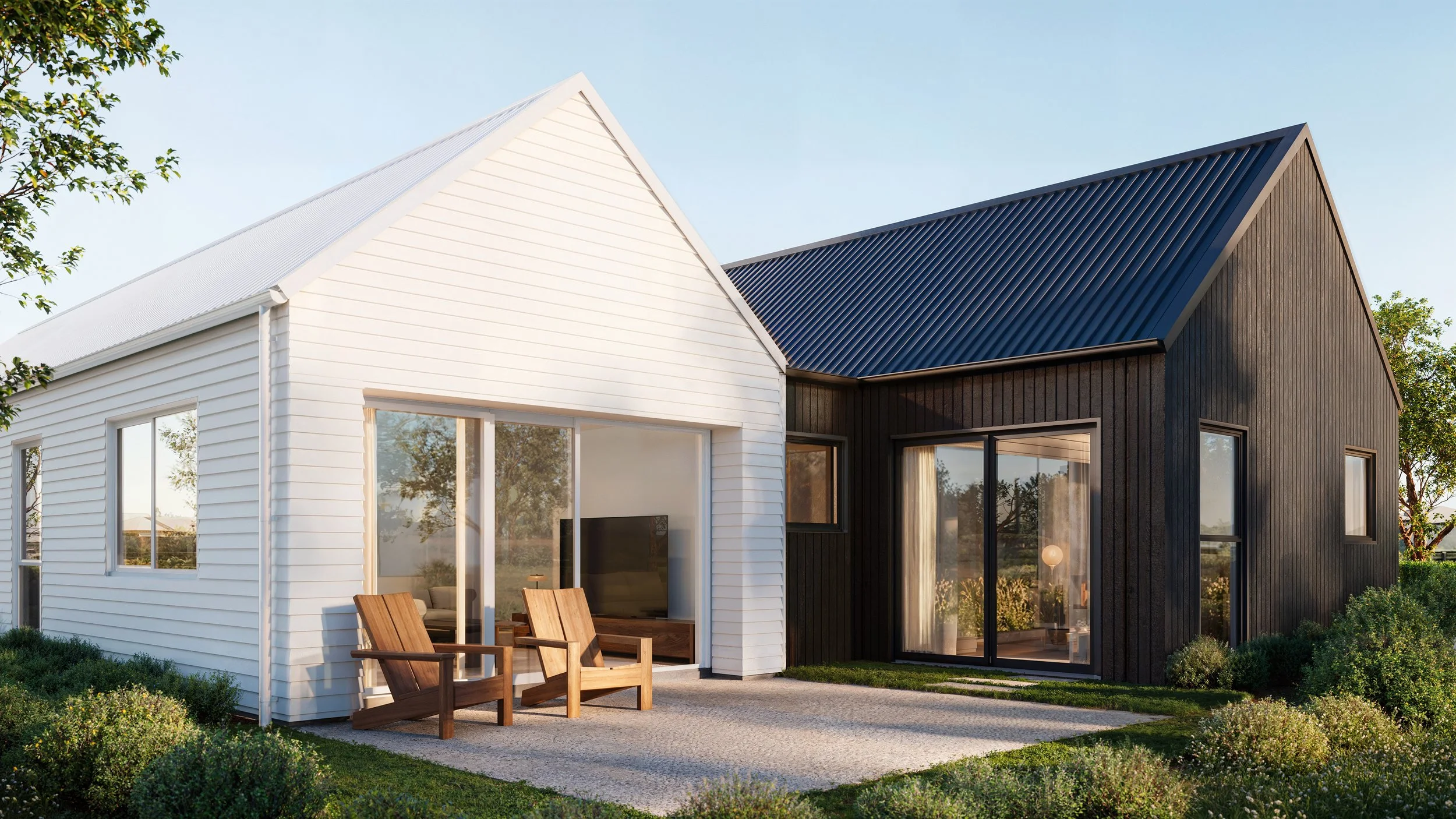
Perhaps you’re already one of the many people in on the secret of what the Waipā District has on offer. The designated area the district encompasses is in the heart of the Waikato region, south and south-east of Hamilton city. It includes the key towns of Cambridge, Te Awamutu, Pirongia, Ōhaupō and Kihikihi. The fertile land, nurtured by the mighty Waikato River that flows through the region, supports a wide variety of agriculture and outdoor activity, and in recent times has attracted a veritable boom in residents.
The strong rural-urban mix of the Waipā District and a council working closely on developing the region with critical infrastructure is evident. Arterial roads, bridges, amenities, and a key focus on strengthening the Hamilton-Waipā corridor for better transport and economic outcomes, including a 9.8 million-dollar extension at Hamilton Airport, means this area is not only a beautiful location to live in, but also provides streamlined transport systems within the ‘Golden Triangle’ (Auckland-Hamilton-Tauranga).
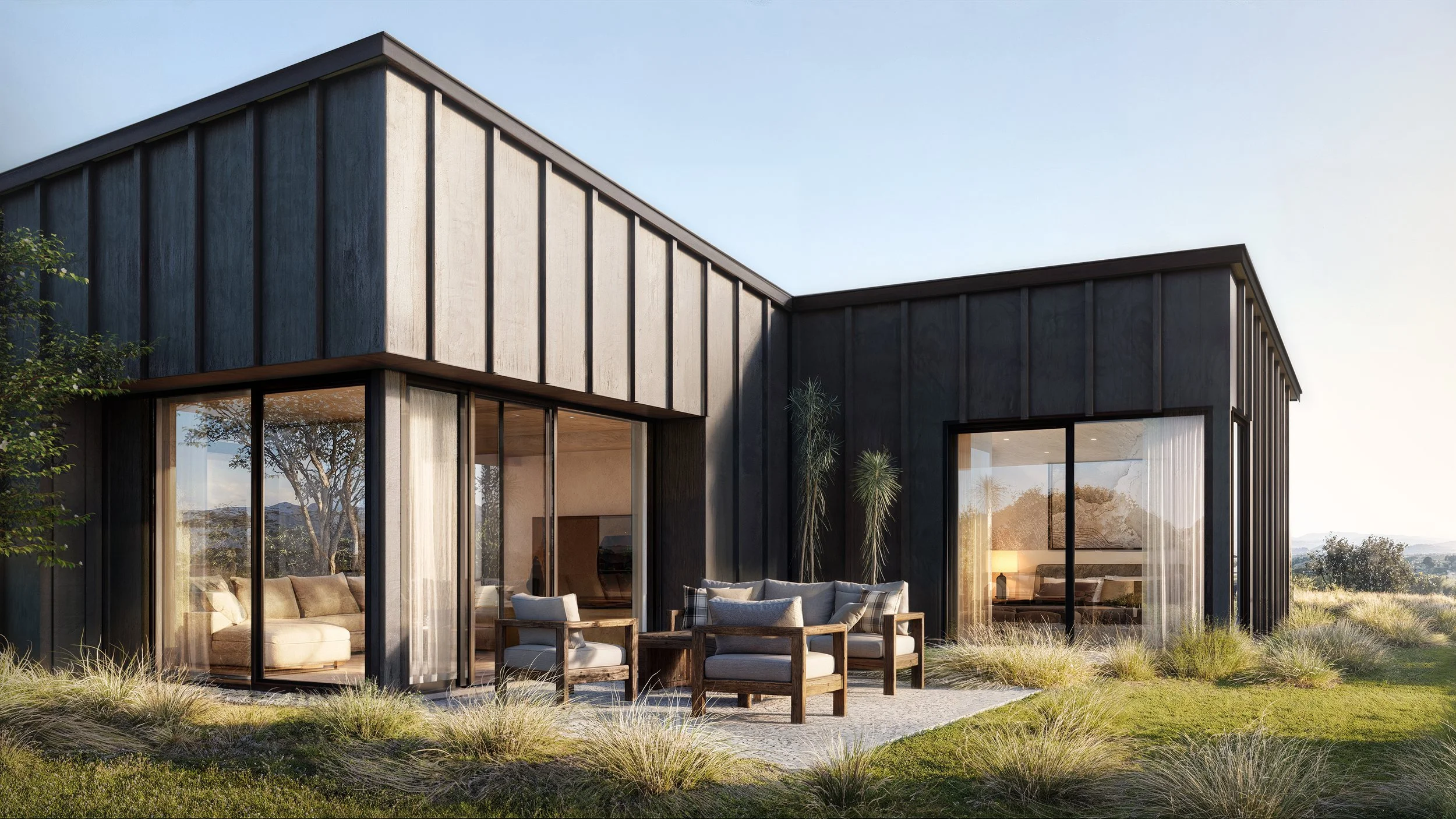
Just minutes from the delightful town of Cambridge and seamlessly connected to the wider Waikato, Te Awa Rise is a north-facing community offering elevated views across treetops and native bush. The clever design of the Sanderson Group’s latest development address affords new residents an enviable lifestyle, as described by Jared. “The nearly 10-hectare development has been layered across two terraces. This adds incredible character to the ‘aspect’ of most of the properties on offer, the two elevations and the way the individual sections have been sized and arranged. It means they’re north-facing with east-west perspective, open and private. The four original homes add character, as does the historic pā site that will remain, various green spaces and top-notch landscaping.”
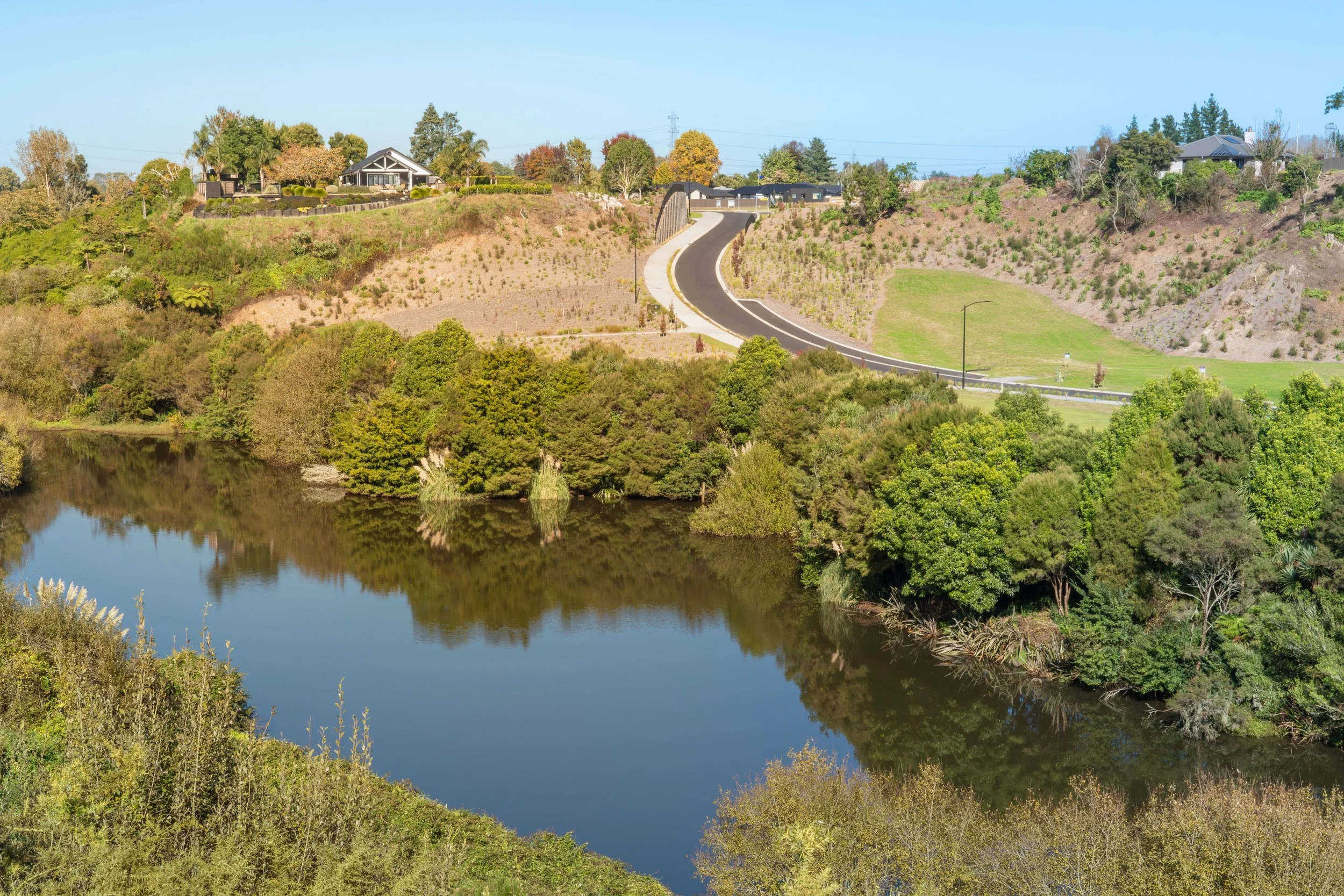
The lower level includes a reserve and natural waterway that’s home to a variety of native birds and will be accessible to residents. Significant attention has been paid to landscaping – whole areas planted in native plants already attracting native birds, feature specimen trees that when fully grown will create privacy. Paths are extra wide; envisage yourself (as I did), walking or biking them, doing your daily laps, or connecting to the adjacent neighbourhoods and Cambridge township itself.
“The bridge at the bottom of Te Awa Rise is the perfect example of the outcome of engaging with one of the most progressive councils we’ve worked with,” explains Jared. This pre-built bridge – that was ‘dropped in’ by crane to span the waterway – is now a critical link through the subdivision for both residents and others to connect on to the Te Awa River Ride Cycle Network, touted as 65km of one of the most accessible and scenic cycling and walking trails in New Zealand.
Sarah Ulmer, trail manager at Te Awa River Ride Charitable Trust says: “It’s so awesome to see Te Awa Rise and Waipā District Council teaming up to make it easier and safer for people to get around town without needing a car. A key walking and cycling link is now complete at Te Awa Rise, meaning you can get safely from Kaipaki all the way up to Cambridge Park.”
So, back to you and your new home – what can you look forward to? With a number of builds underway from the 11 design-and-build options on offer, you can see the calibre of the neighbourhood unfolding. Should you wish to engage your own architect and builder, you can, but with respect to the design guidelines in place. “Our own house and land packages offer architectural perspective – roomy contemporary houses (around 180m2 plus), four-bedroom or three plus an office or workspace, and double garaging,” says Anthony. “In order to protect the value of the buyer’s investment, independent designs need to be in keeping with the overall standard of the quality materials we’ve used.”
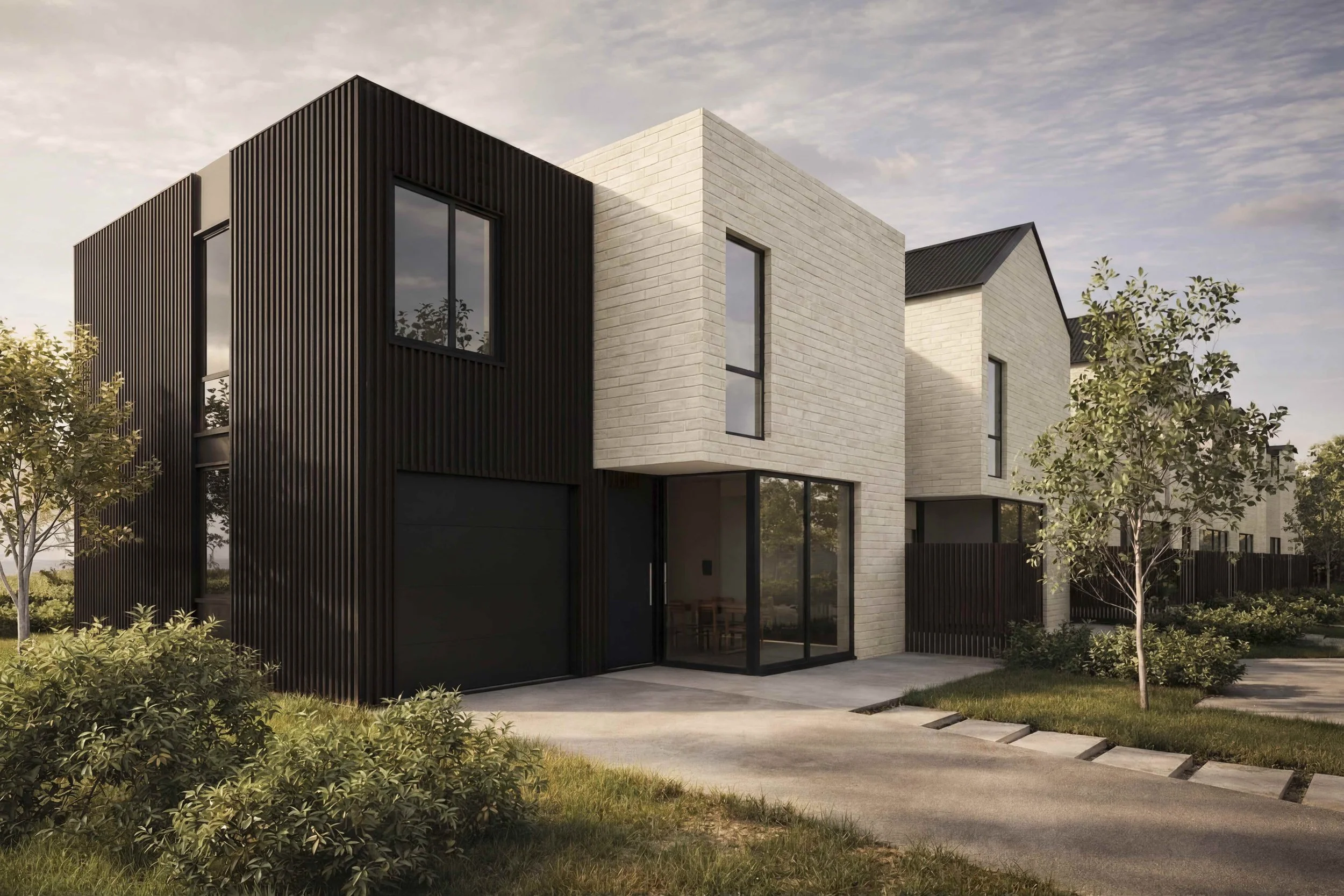
So, back to you and your new home – what can you look forward to? With a number of builds underway from the 11 design-and-build options on offer, you can see the calibre of the neighbourhood unfolding. Should you wish to engage your own architect and builder, you can, but with respect to the design guidelines in place. “Our own house and land packages offer architectural perspective – roomy contemporary houses (around 180m2 plus), four-bedroom or three plus an office or workspace, and double garaging,” says Anthony. “In order to protect the value of the buyer’s investment, independent designs need to be in keeping with the overall standard of the quality materials we’ve used.” for, take a moment to explore 6 Awarua Crescent, the three-bedroom option (220m2) with a detached, private flat, plus two-car garaging and a generous section size of 523m2. With a range of other sites available, up to 1,000m2, there really is an option for all. The lots themselves are well considered from an urban design perspective, with a focus on ‘liveable design’.
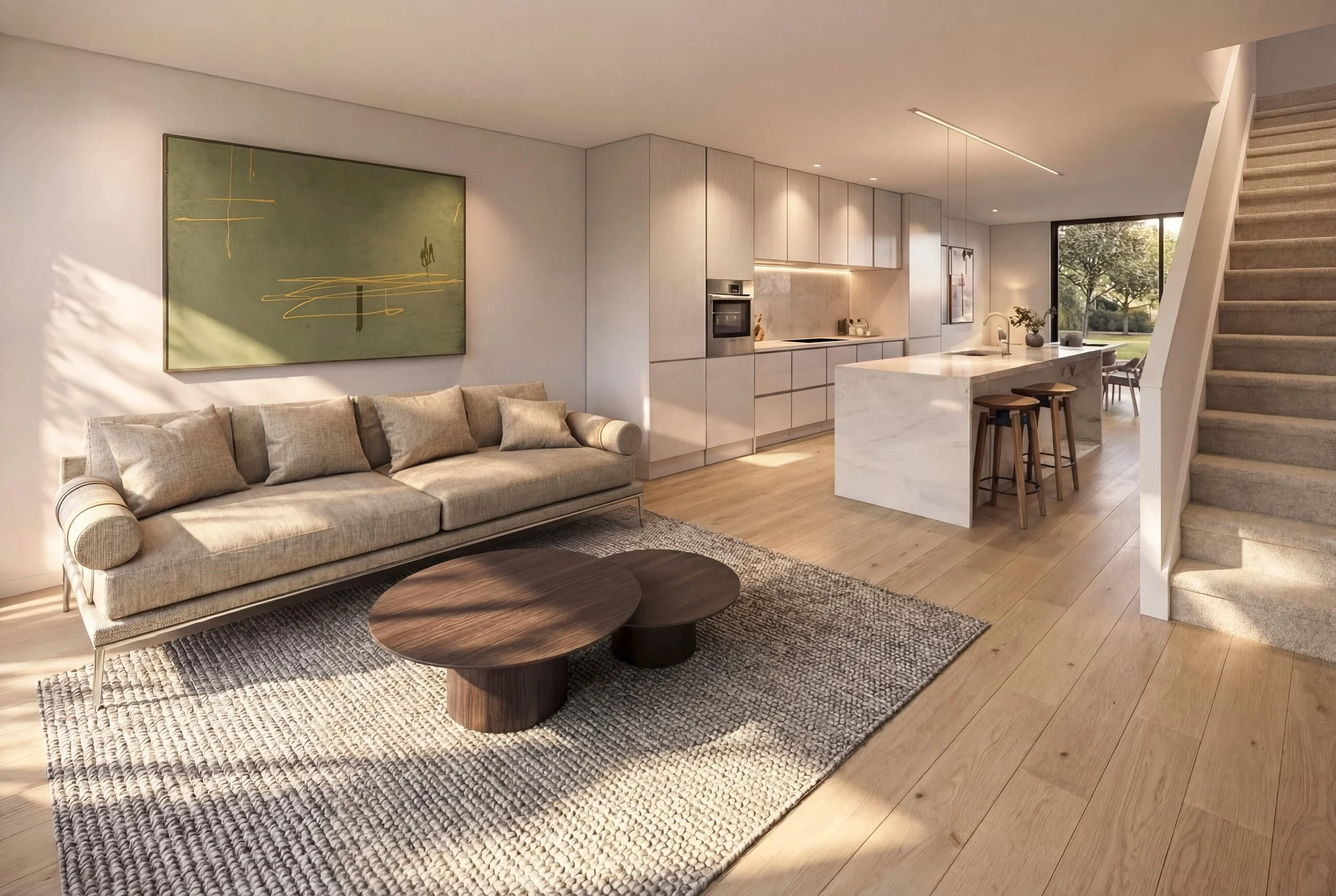
“We engaged a top-tier urban designer, who has produced a neighbourhood that’s so well connected by the interior roads and pathways to the adjoining arterial roads, landscaping and reserves,” Jared tells me. “Each of the lots is a regular shape, to make sure buyers don’t have wasted space, and do have privacy, light and aspect.”
There are also a number of four-bedroom townhouses being built. Each is designed to be as low maintenance as possible, so you'll spend more time enjoying your home and life. Dual entry provides privacy for shared living, as do the two outdoor living areas.
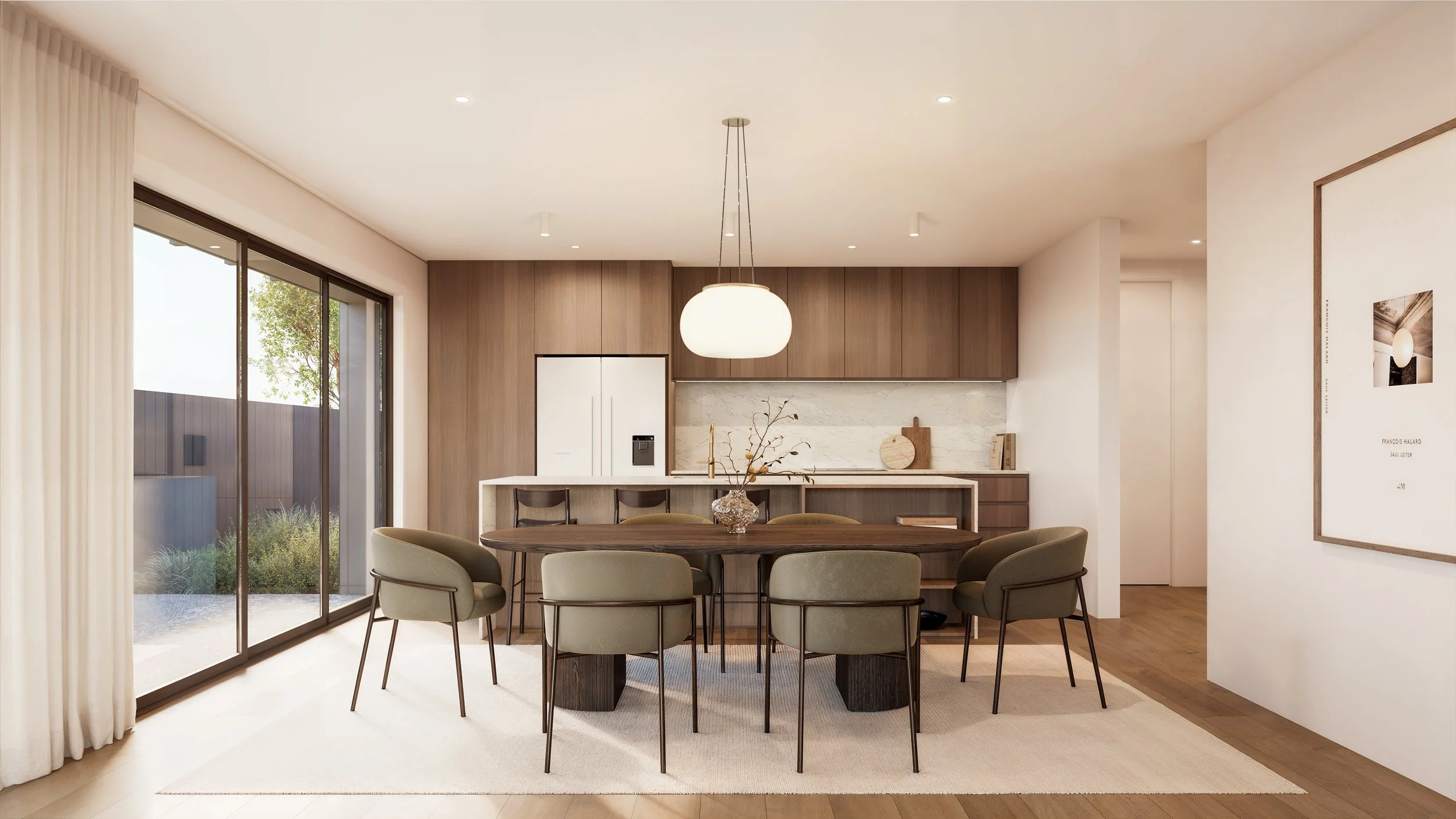
“Although six properties have already sold or are under contract, there’s still a good range of properties available,” adds Jared. “You just need to get in quick to secure one of the best remaining sites.”
If you’re wondering who you might be living next to, current sales suggest a cross-section of residents, from empty-nesters to young families looking for proximity to schools, as well as professionals enjoying the quick commute to Hamilton, the airport (15 minutes), Waikato Expressway (8 minutes) and Karāpiro (10 minutes). You might even see me.