
MIND OVER MATTER
One Mount Maunganui clinic is bringing cutting-edge mental healthcare closer to home, with a groundbreaking treatment offering new hope for depression.
WORDS NICKY ADAMS
PHOTOS DEBORAH DE GRAAF
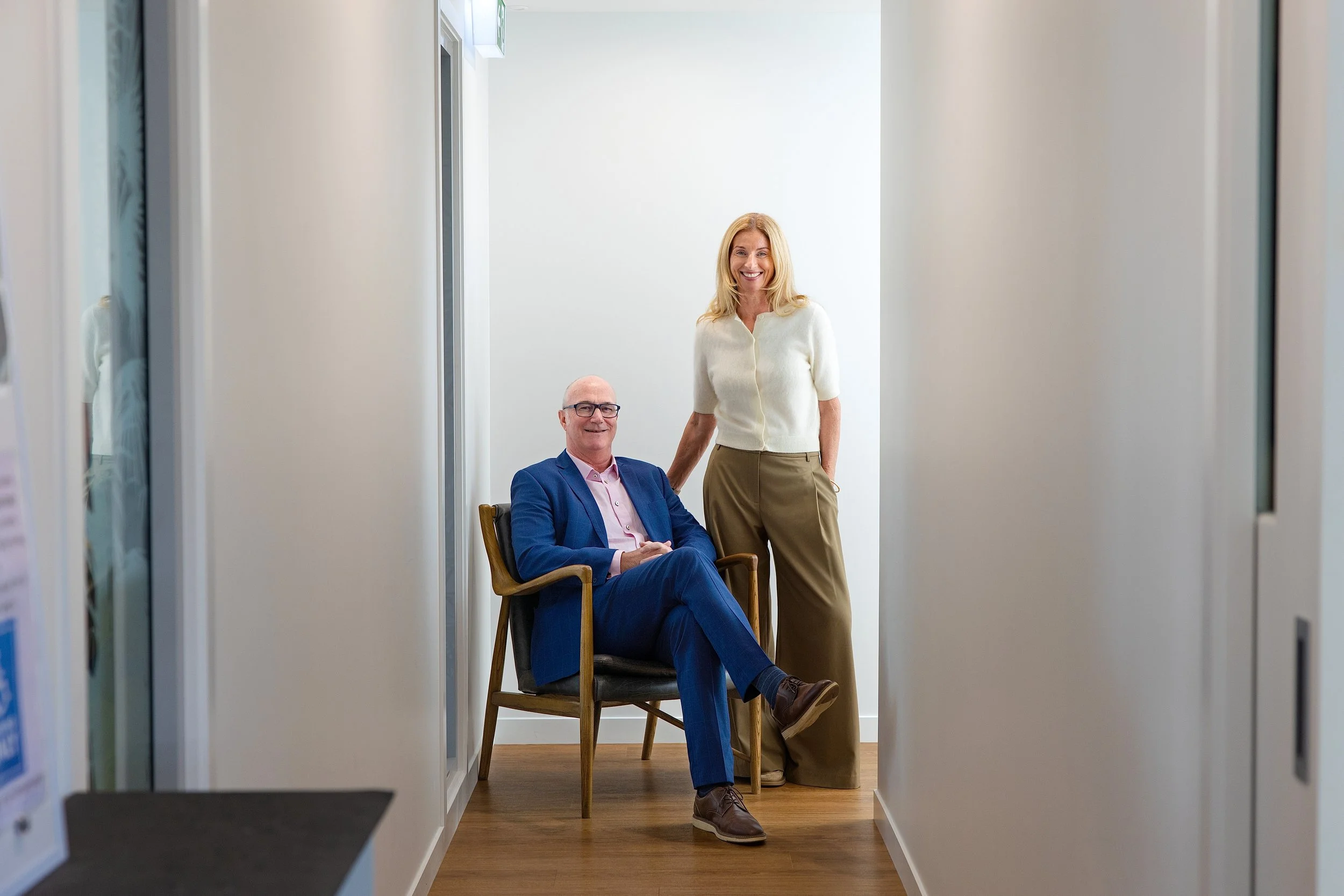
There are few who would argue with the saying “your health is your wealth”, but when UNO sits down to talk to psychiatrist Dr Darren Malone and his wife, psychiatric nurse Kate Malone, of Equilibrium Assessment and Treatment Clinic, Darren zeroes in on this even further, pointing out that in reality, “the cornerstone of your health is your mental health”.
With the World Health Organisation confirming in 2017 that depression had become the leading cause of ill health and disability (statistics showing an 18 percent increase between 2005 and 2015), it’s probably fair to say that it’s an illness that resonates with most of us. To call it ‘common’ feels reductive, because depression is so hugely impactful both to those suffering and to close whānau and friends. When you consider that up to 7 to 10 percent of adults experience depression annually, its prevalence begins to hit home.
Medication and cognitive behavioural therapy are often the first port of call; however, 30 percent of people with depression are treatment resistant. These people include those who have not achieved an adequate response to medical treatment and those who are unable to tolerate medication side effects.
Worldwide research efforts have focused on everyone in this group. One specific treatment option has gained huge ground globally: Transcranial Magnetic Stimulation. TMS has been internationally approved and FDA-cleared since 2008, and is approximately twice as effective Dr Darren Malone and Kate Malone. as antidepressant medication.
The outpatient procedure is already widely supported in the US, the UK and Australia, where it’s used as a proven plan for treating resistant depression. In Australia, TMS costs are covered by Medicare.
Darren and Kate have practiced in the public and private systems in New Zealand and the UK for more than three decades. Latterly, Darren was clinical director of Mental Health Services for Lakes DHB, before moving to Mount Maunganui and setting up Equilibrium. The clinic is light and bright, and the atmosphere is relaxed. Darren and Kate are warm and welcoming; it’s hard not to feel at ease.
They focus specifically on working within the field of depression and treatment via TMS, which works using magnetic pulses. They’re passionate about and heavily invested in providing a pathway for patients for whom medication simply doesn’t work, or for those who want to explore a treatment hitherto largely unavailable in New Zealand. The fact we have access to this private facility and level of expertise locally – and without heinous waiting lists – is remarkable.
The route to a treatment plan involving TMS is as stringent as you’d expect. Kate says most patients will be referred to Equilibrium by their GP or psychologist, who will likely have extensive notes to share. The next step will then be a comprehensive assessment with Darren. As he says, “the most important thing about TMS is that you have to confirm that the patient has depression. Then it’s about working together to try to help… We don’t want to give people medication or TMS if it’s not going to be the solution.”
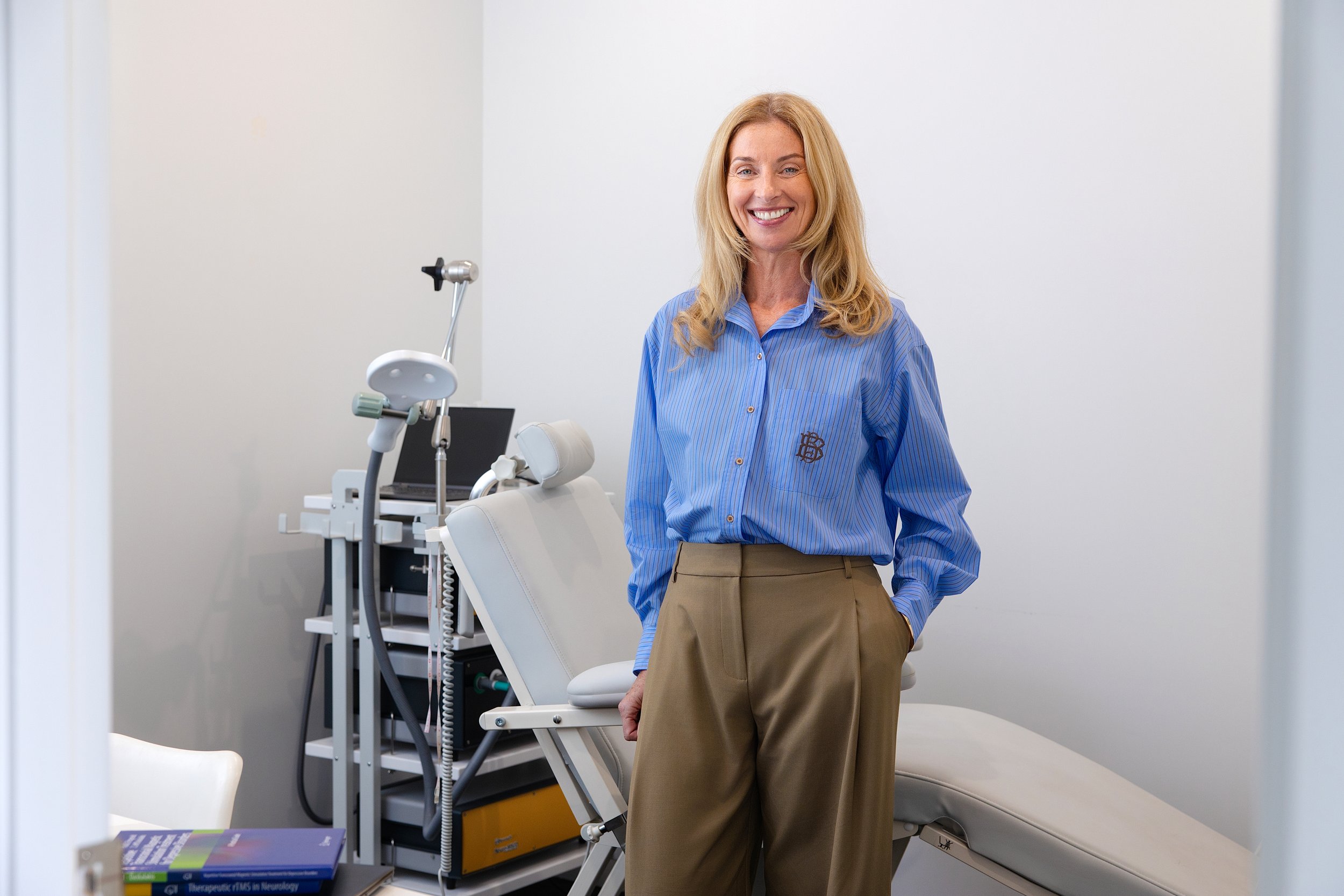
Crucially, Darren continues, “you want the patient to engage in a treatment that will help them get better. You’ve got to understand their preferences and goals. If you can establish the way they want to work, you’re going to get the best outcomes, so you’ve got to adapt.”
The patient groups that really benefit are not only people with treatment-resistant depression, but also those who can’t tolerate medication, pregnant or breastfeeding mothers, and older people who are already on multiple medications. If it’s conclusive that TMS could indeed be positive, a treatment plan is put in place.
Having read about the benefits of TMS, I’m curious as to what the process actually involves. Darren explains, “People will tell us when they’re depressed that their brain doesn’t work properly. It’s been discovered that the primary depression area in your brain is your left side dorsolateral prefrontal cortex, which has been shown to be under-functioning in people with depression. We’re able to stimulate this area with the magnetic coil, and the pulse passes through your skull and into the cortex. It’s a kind of non-invasive brain stimulation.”
And the feeling while you’re having the treatment? As the practitioner who gives the treatment, Kate immediately reassures, “It's a very safe, well-tolerated treatment, with minimal or mild side effects, such as mild fatigue and mild scalp discomfort. The delivery of rapid, brief magnetic pulses through the skull into the brain results in a tapping sensation on the skull.”
Although I realise there’s no ‘one-size-fits-all’ plan, I’m interested in how many sessions are required and how often. Typically, Darren says, “the original TMS protocols consisted of a 20 to 30-minute treatment, once a day, five times a week, for four to six weeks.”
That said, both Darren and Kate are hugely excited by global progress, particularly in the US, where extensive use and research shows that accelerated TMS protocols can be even more effective. What this means is that “we’re able to offer a full course of TMS over two weeks, which is far more feasible for people to fit into their lives”.
Clinical response to TMS is monitored regularly. Ultimately, the joy of the process for Darren and Kate is being able to offer a potential solution to a problem patients may have battled for years.
“Often the people we see will tell us that they’ve tried medication and cognitive behavioural therapy, as well as diet and exercise,” says Darren. “These people are invested in their mental health and have done really well, but over time, those things have become less effective in treating their depression. They get to the stage where they can become quite desperate because they’ve tried everything. We feel quite hopeful with TMS that it’s something people can try. TMS is tolerable, proven and highly effective.”