

A LA MODE
A tropical escape beneath Mauao’s gaze, this Mount home is a bold masterpiece of imagination and indulgence.
A tropical escape beneath Mauao’s gaze, this Mount home is a bold masterpiece of imagination and indulgence.
WORDS JO FERRIS
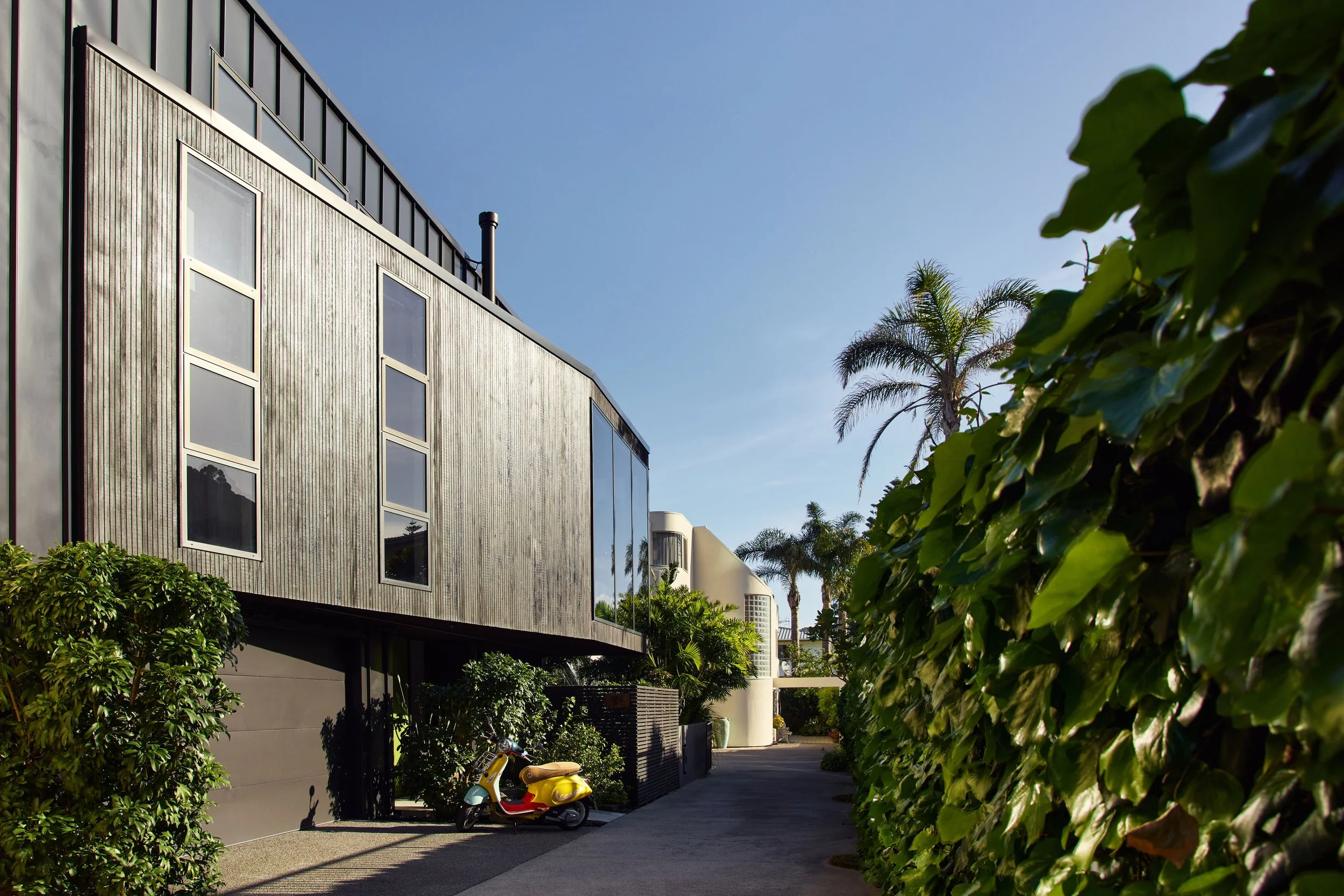
It’s hard to conceive a property like this even exists in Mount Maunganui’s blue-chip neck at the foot of Mauao; let alone one that transports you to a place of tropical indulgence. Knowing it’s the vision of a local business couple, it becomes apparent. This home is a work of art — a complex story, layered with mystique.
Hidden from the road and seemingly lost against a backdrop of high-rise towers; once inside, everything disappears. Apart from Mauao, of course. That’s one feature that should always be revered in this part of town. And revered it is, thanks to a wall of glazing in the lounge framing this iconic landmark, around to Pilot Bay.
Given a 230sqm, narrow site, wedged between a low-rise apartment complex and the house in front, a multi-level home was the only logical concept.
Tauranga architect Mark Carnachan worked to a brief that maximised sun, space and outlooks, while minimising views of neighbouring high-rises. The result is extraordinary — a multi-level home that defies any limitations of a tight spot.
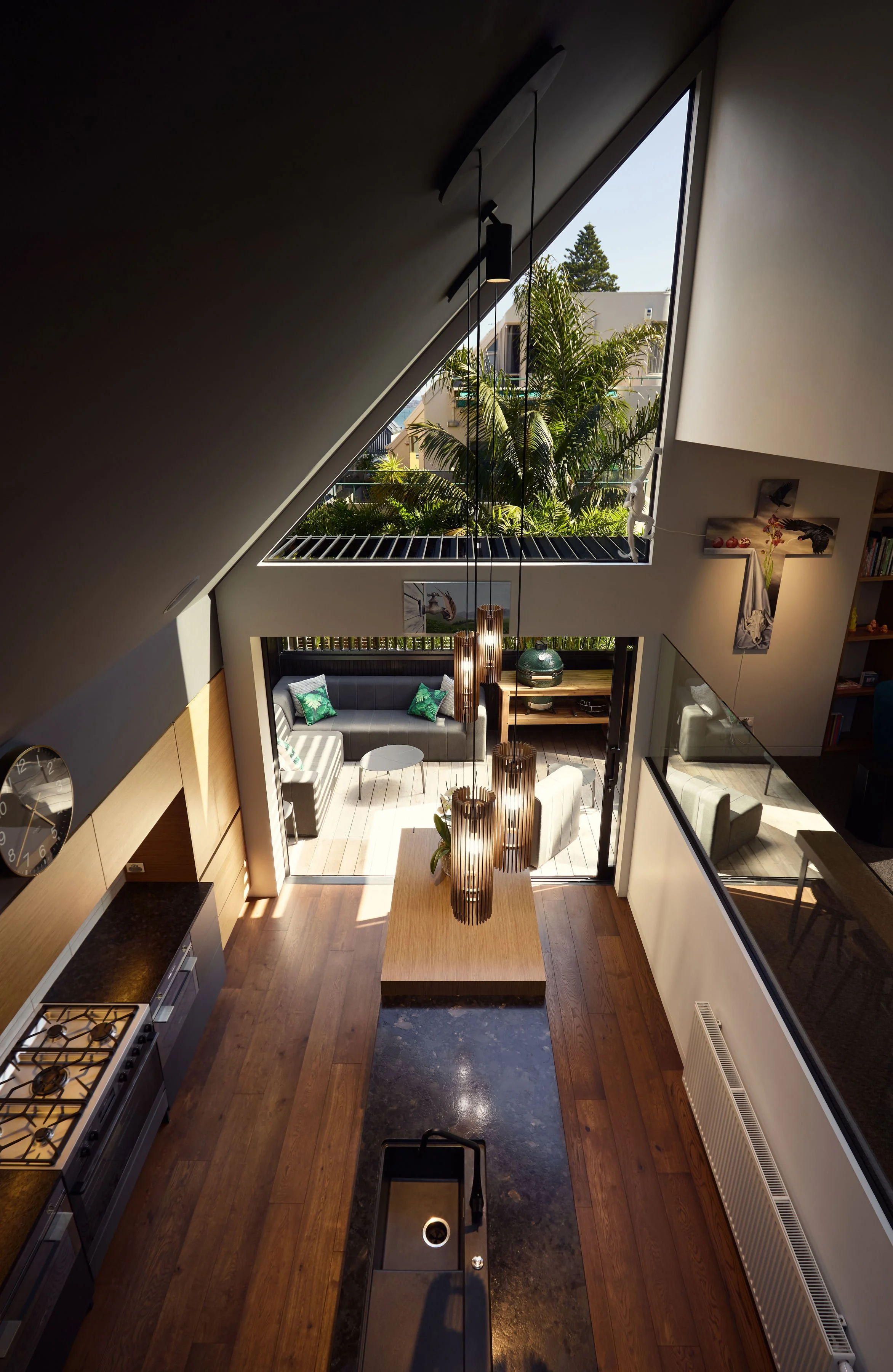
The depth, tone, texture and ways each zone interacts is absorbing; the sense of seclusion, immersive. At its lowest point, a self-contained studio allows bespoke accommodation for family or guests. With both a lift and stairwell access, the home rises through five, split-levels in what is essentially four stories.
With the studio tucked below ground level, it shares access with a private, tropical garden — a complete surprise; with its spa-pool, designer seating and surreal vibe.
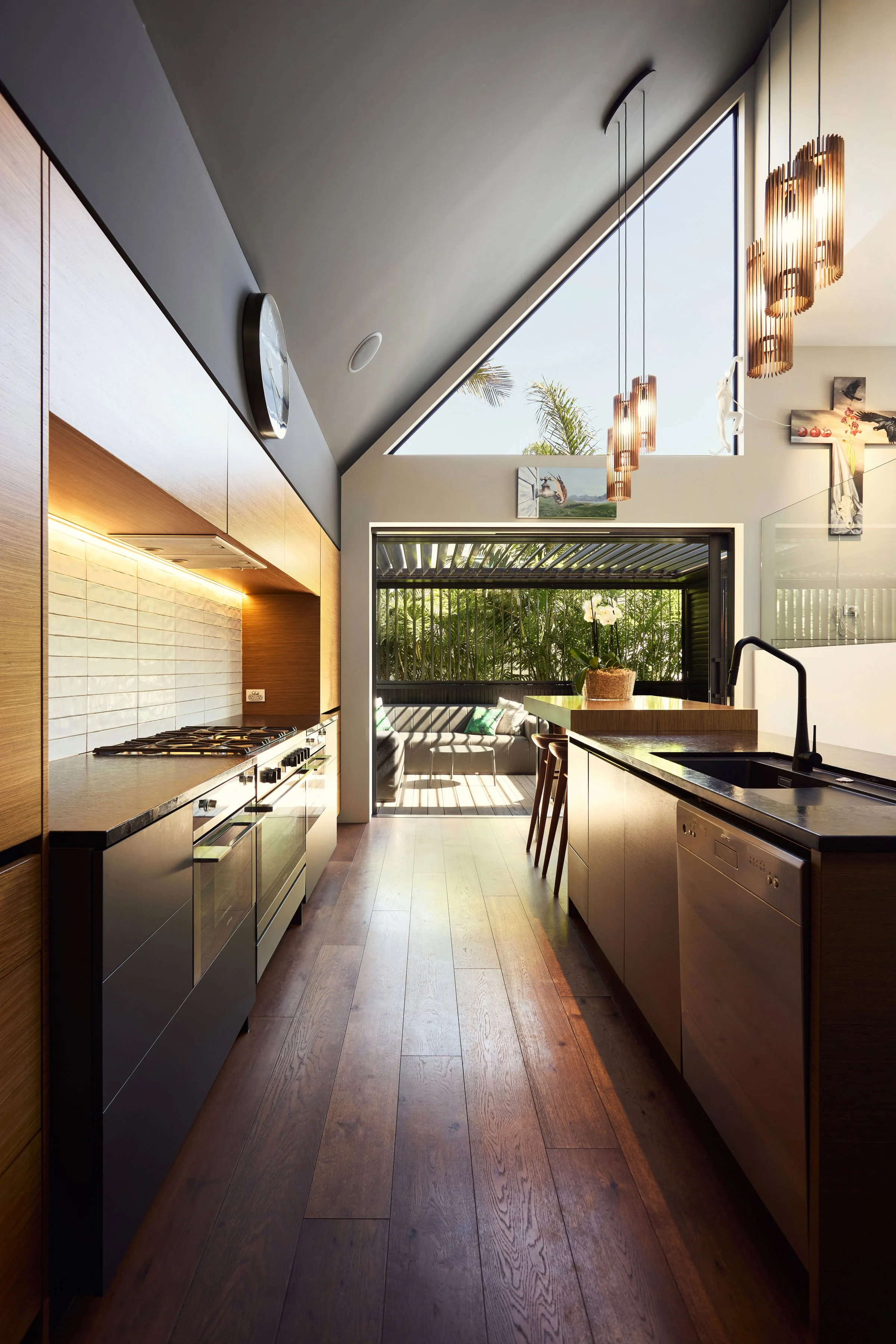
Every aspect of this home is a revelation, each level their own entity, yet linked in intimate ways. The gourmet kitchen, with its soaring, 7m black ceiling is pure magic. Flowing out to an alfresco lounge, screened above and to the side with motorised louvres and sliding doors, the tropics again come to mind.
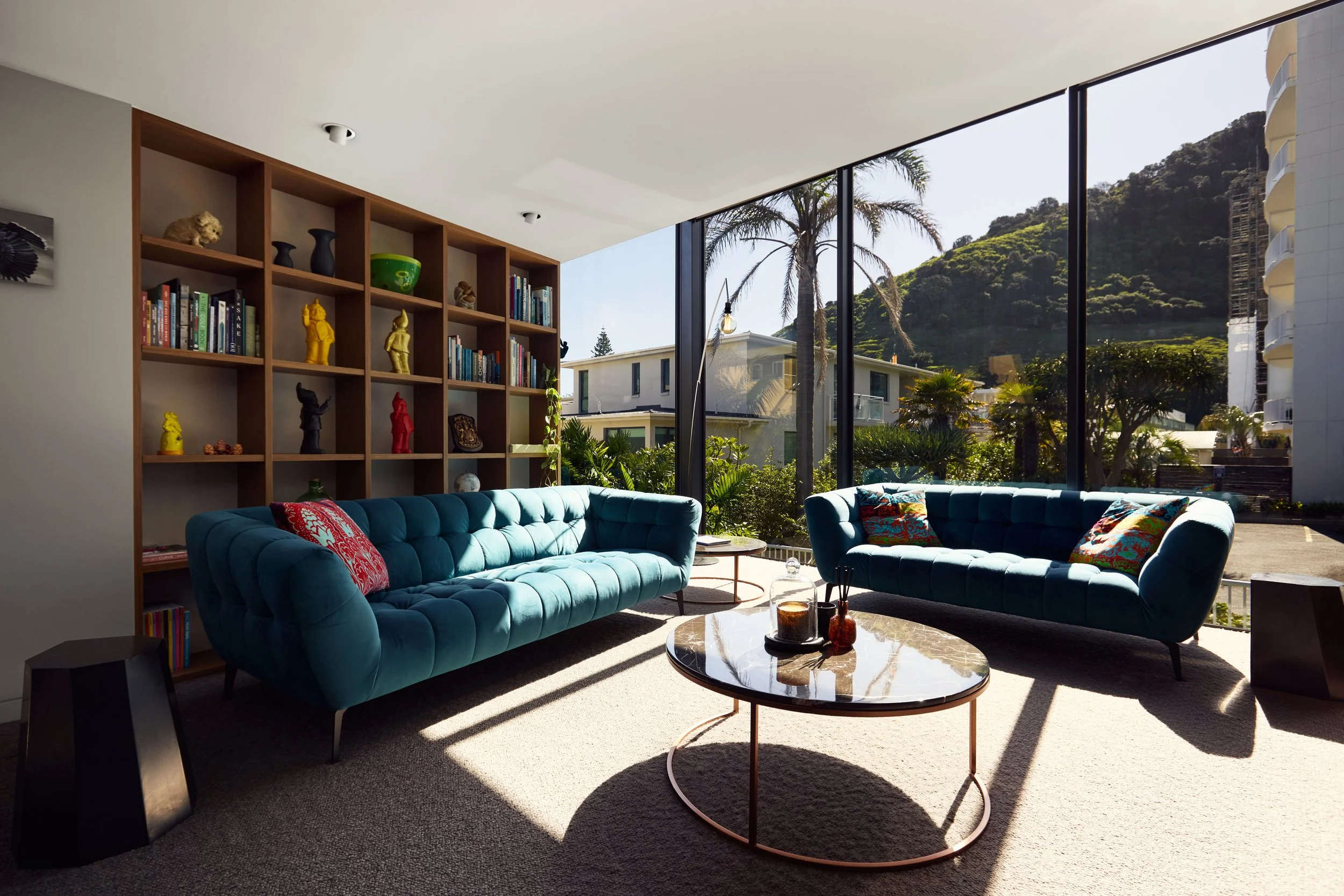
Connection with the lounge and dining room a few steps above is genius, the sloping ceiling and glass balustrade create a marriage of perfection. And that’s part of this home’s intrigue. Spaces are partitioned to create sensory connections, while flowing one to the other.
The ultimate luxury sits in the master retreat on the upper level, a bedroom and snug of velvety romance and bathroom of sheer indulgence, thanks to its twin showers and steam sauna. A home of pure imagination and focus on fun; it touches the senses in every conceivable way.
18b Maunganui Rd, Mount Maunganui

EPICUREAN ESCAPE
Downtown Tauranga’s finest dining gems are raising the bar when it comes to exquisite cuisine. Discover a taste of sophistication at every turn.
Downtown Tauranga’s finest dining gems are raising the bar when it comes to exquisite cuisine. Discover a taste of sophistication at every turn.
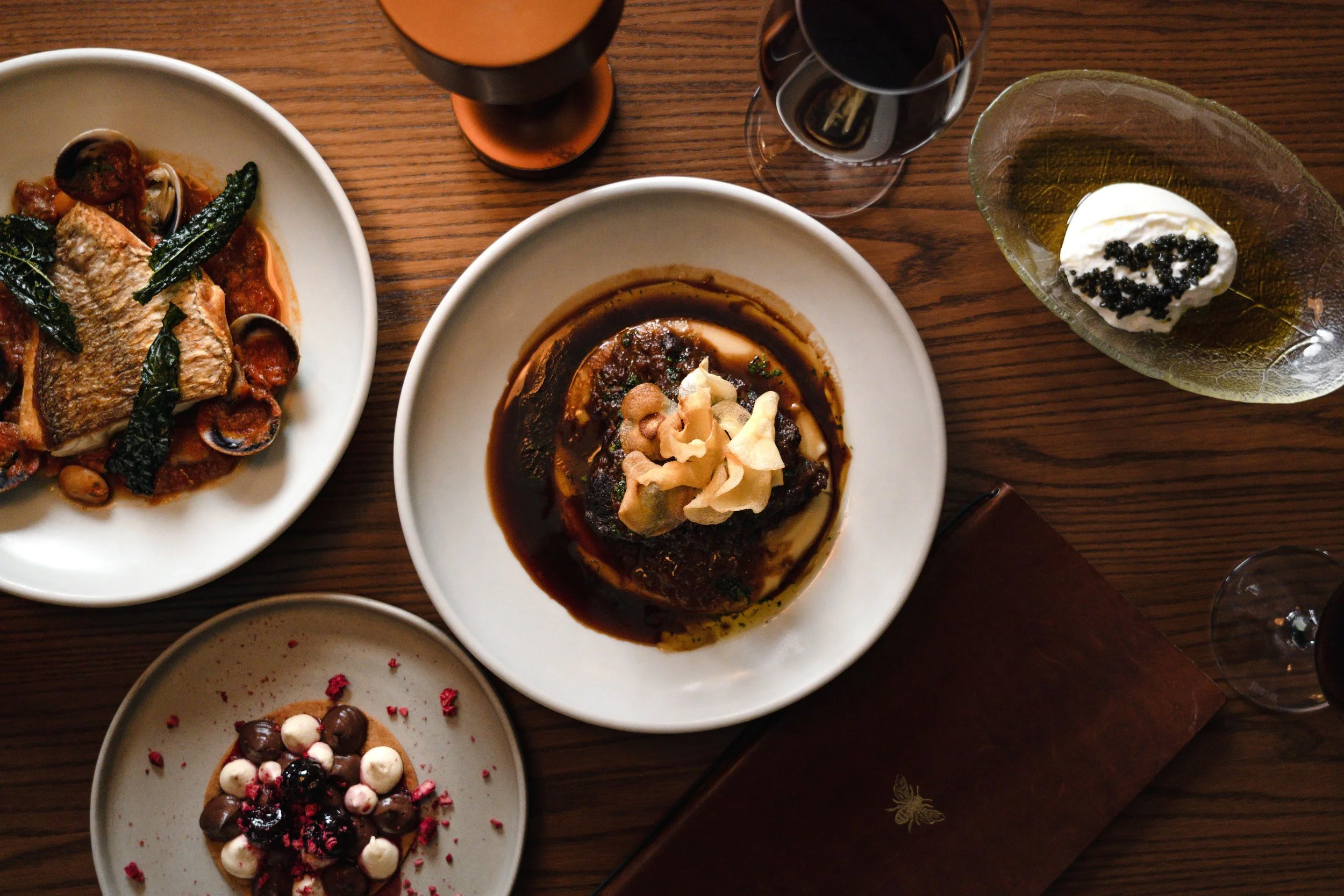
CLARENCE
Tauranga’s diners know Clarence well. Set within one of the city’s landmark heritage buildings, the old post office, it offers a Mediterranean-inspired menu shaped by the seasons and driven by local produce. The relaxed yet refined atmosphere is ideal for an unhurried lunch, formal dinner or simply a glass of wine that turns into another. 51 Willow Street
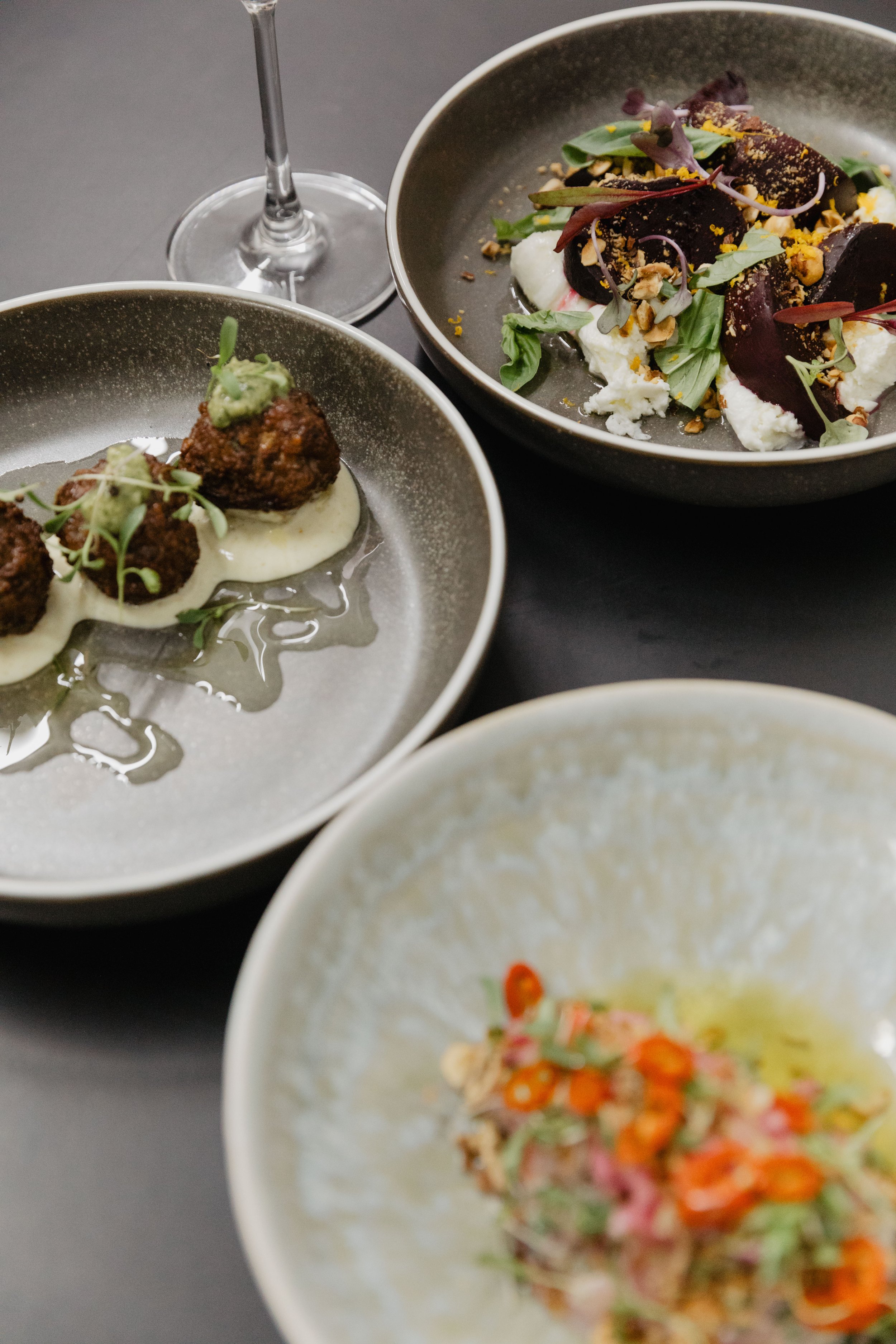
SAINT WINE BAR
One of the best curated wine selections in town also comes with a selection of delicious seasonal shared plates. What screams summer better than a white anchovy doughnut, wagyu tataki or tuna crudo, washed down with a glass of Sparkling Albariño, or a Deep Down Blanc? Check the Saint Wine Bar socials for opening hours as they are subject to change each week.
105 The Strand
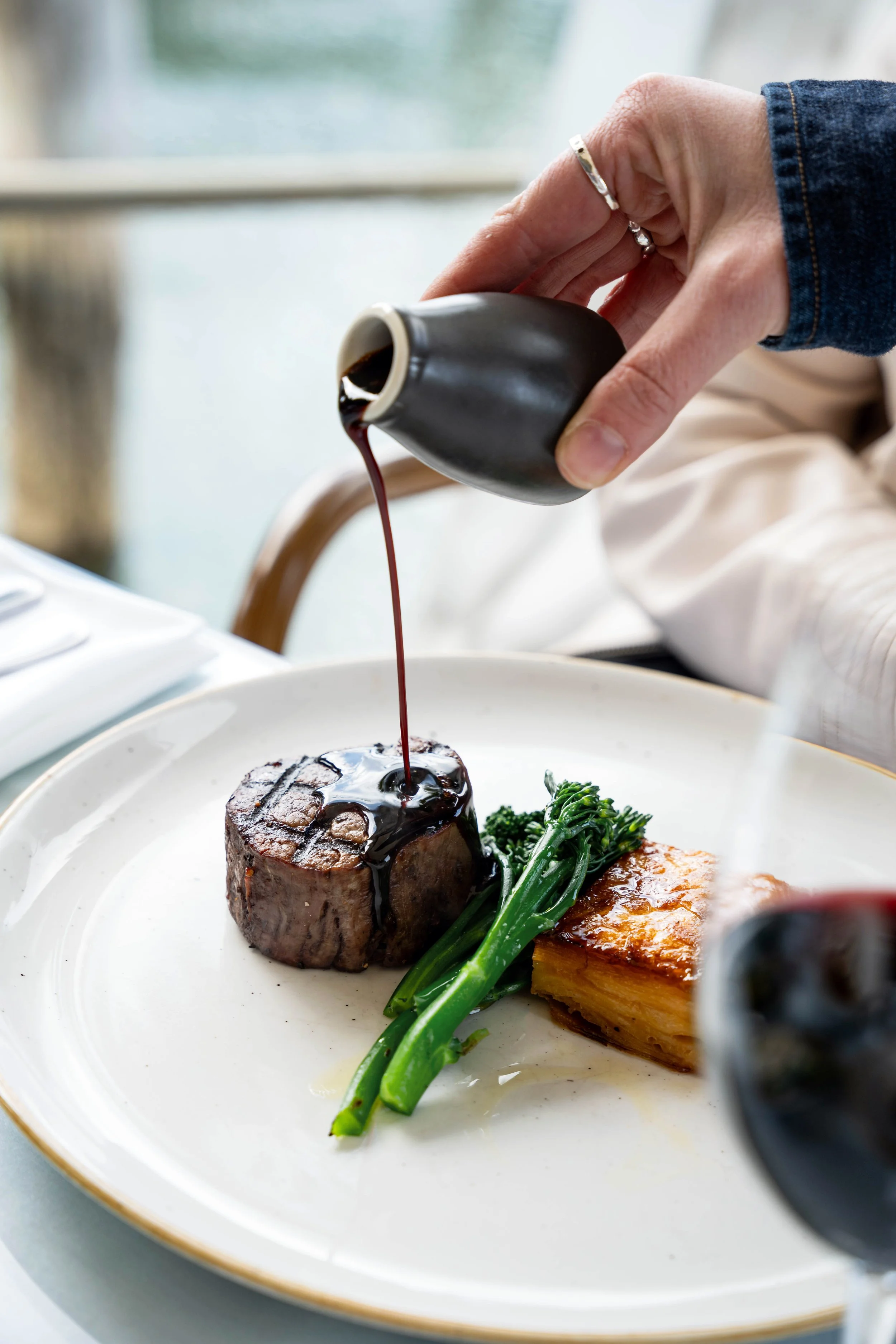
HARBOURSIDE RESTAURANT
Overlooking Tauranga Harbour, Harbourside Restaurant blends modern fine dining with relaxed coastal charm. Housed in a lovingly restored 1930s yacht club, it’s a family run gem where Peter and Anita Ward, their son Cameron (head chef) and daughter-in-law Nicole (maître d’) create a beautiful all-round dining experience. The menu celebrates fresh, seasonal produce from local growers, crafted into flavour-driven dishes that reflect the Bay’s bounty. With sweeping waterfront views, Harbourside offers an elegant yet unpretentious taste of Tauranga at its best.
150 The Strand
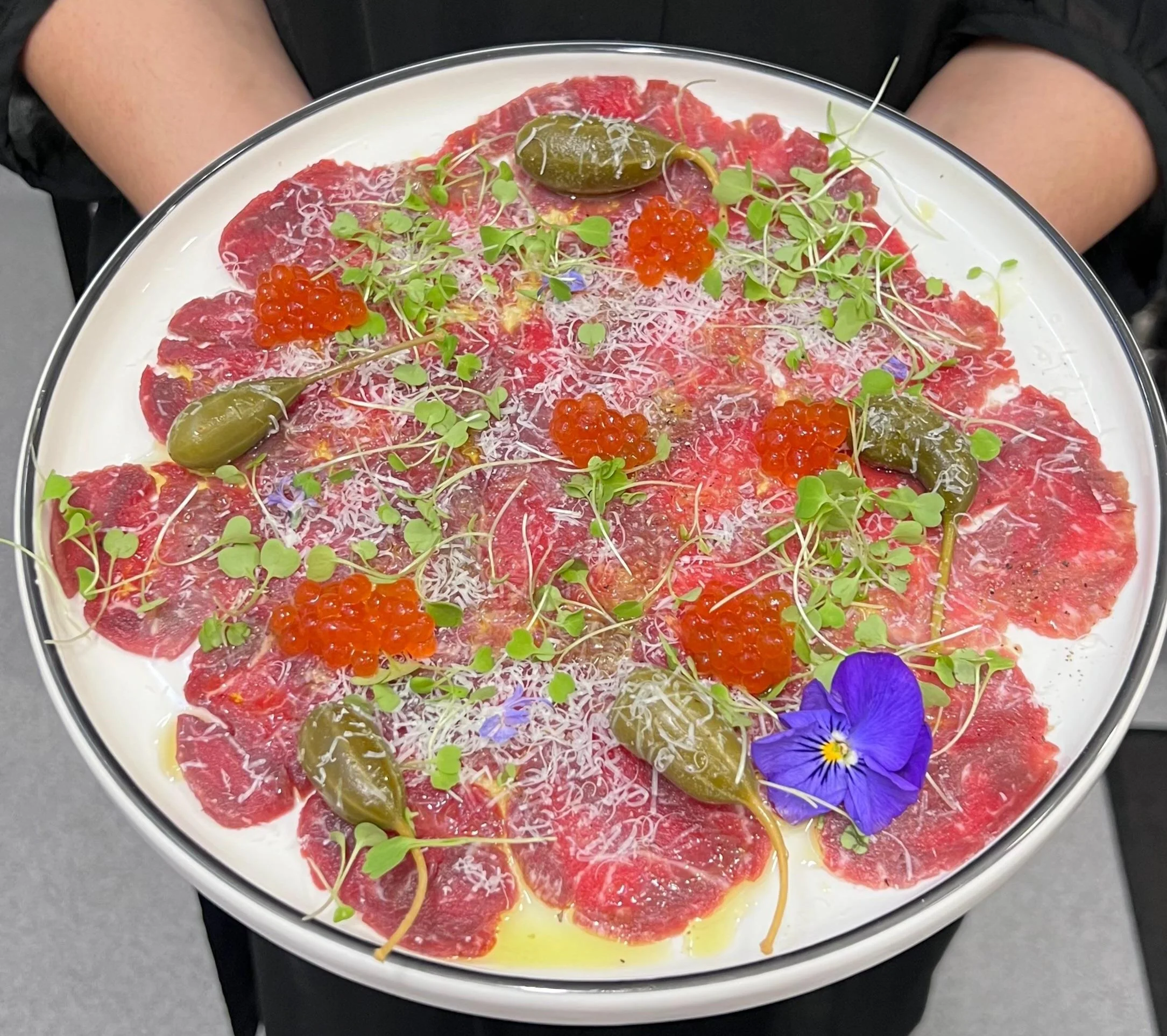
1920 CUCINA & GRILL
New to The Strand, Cucina and Grill offers a distinctive waterfront dining experience, housed in an historic 1920s building. The menu brings together Italian culinary traditions and the smoky flavours of Brazil’s Pampas grills. Share starters like Shiitake Arancini or Lamb Croquettes, then move to mains such as Pressed Pork, Lamb Rump or 12-hour slow-cooked Beef Ribs for two. Seasonal pasta and risotto, including Kumara Gnocchi and Mare e Monti, complement a relaxed atmosphere all year round.
85 The Strand
1920.CO.NZ
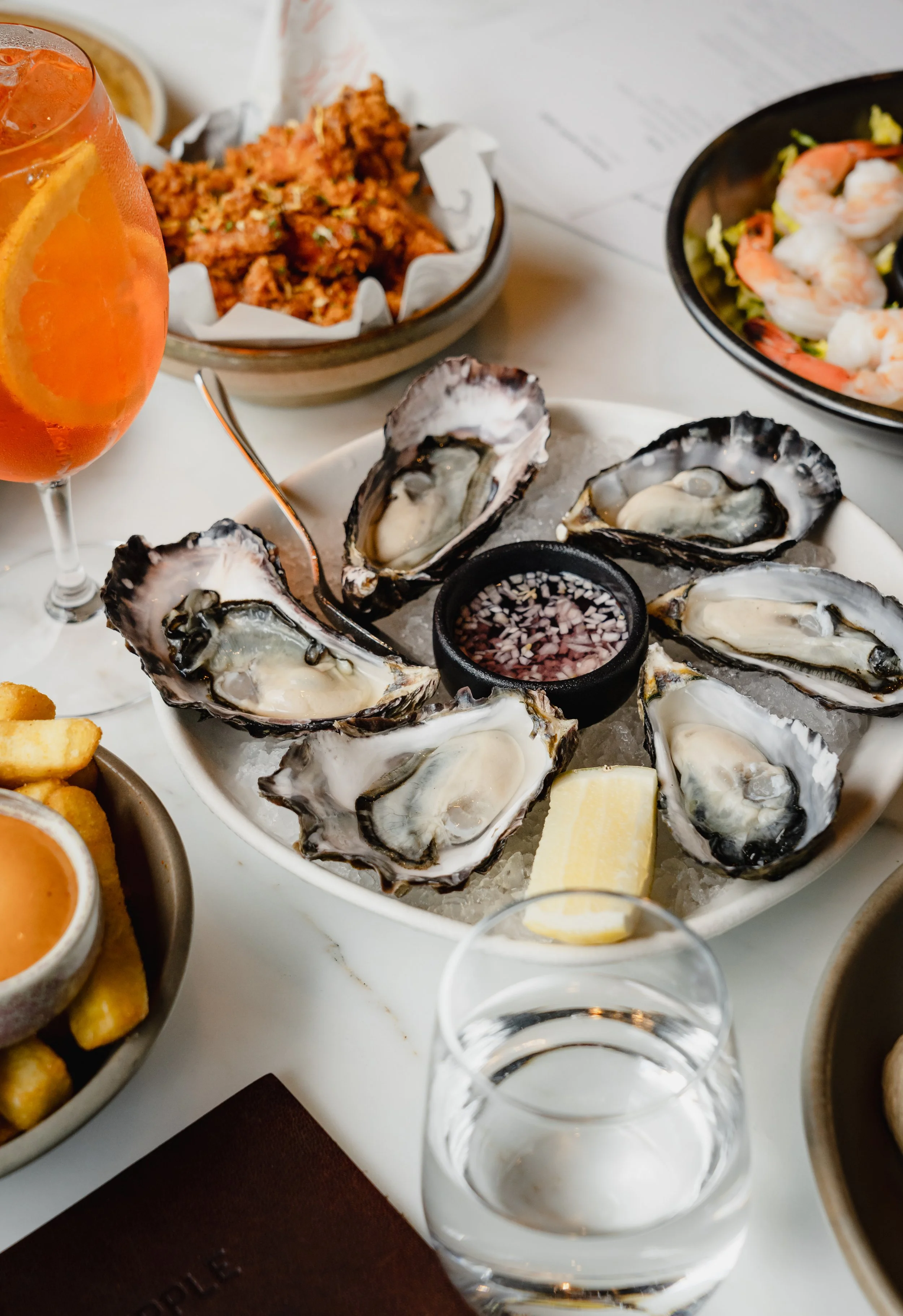
PICNICKA
For those looking to dine in style, look no further than Picnicka. A vibrant open-air restaurant in the heart of Downtown Tauranga, Picnicka celebrates local produce, offering dry-aged meat cuts and a curated wine list. Designed for long lunches, after-work drinks and weekend gatherings, it’s a place where great food and people come together.
2/38 Elizabeth Street
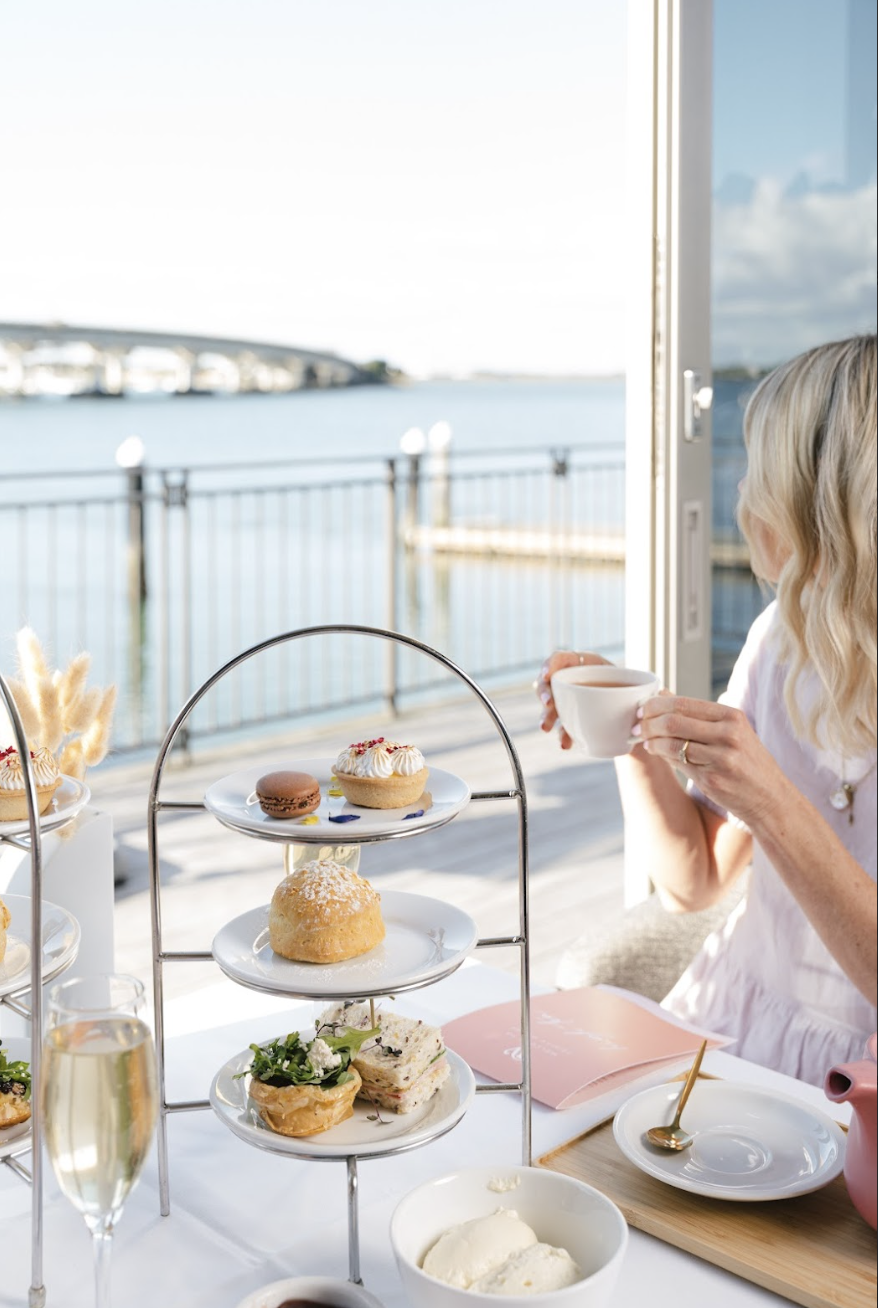
TRINITY WHARF
Perched on the waterfront, Trinity Wharf’s restaurant offers stunning harbour views from both its sun drenched interiors and inviting deck. Guests can pair elegant, seasonal dishes with an expertly curated selection of wines, craft beers and cocktails. For a more indulgent experience, traditional High Tea adds a touch of sophistication. Open daily for breakfast, lunch, drinks and dinner, it’s the ideal spot to enjoy one of the best harbour-side dining views.
51 Dive Crescent
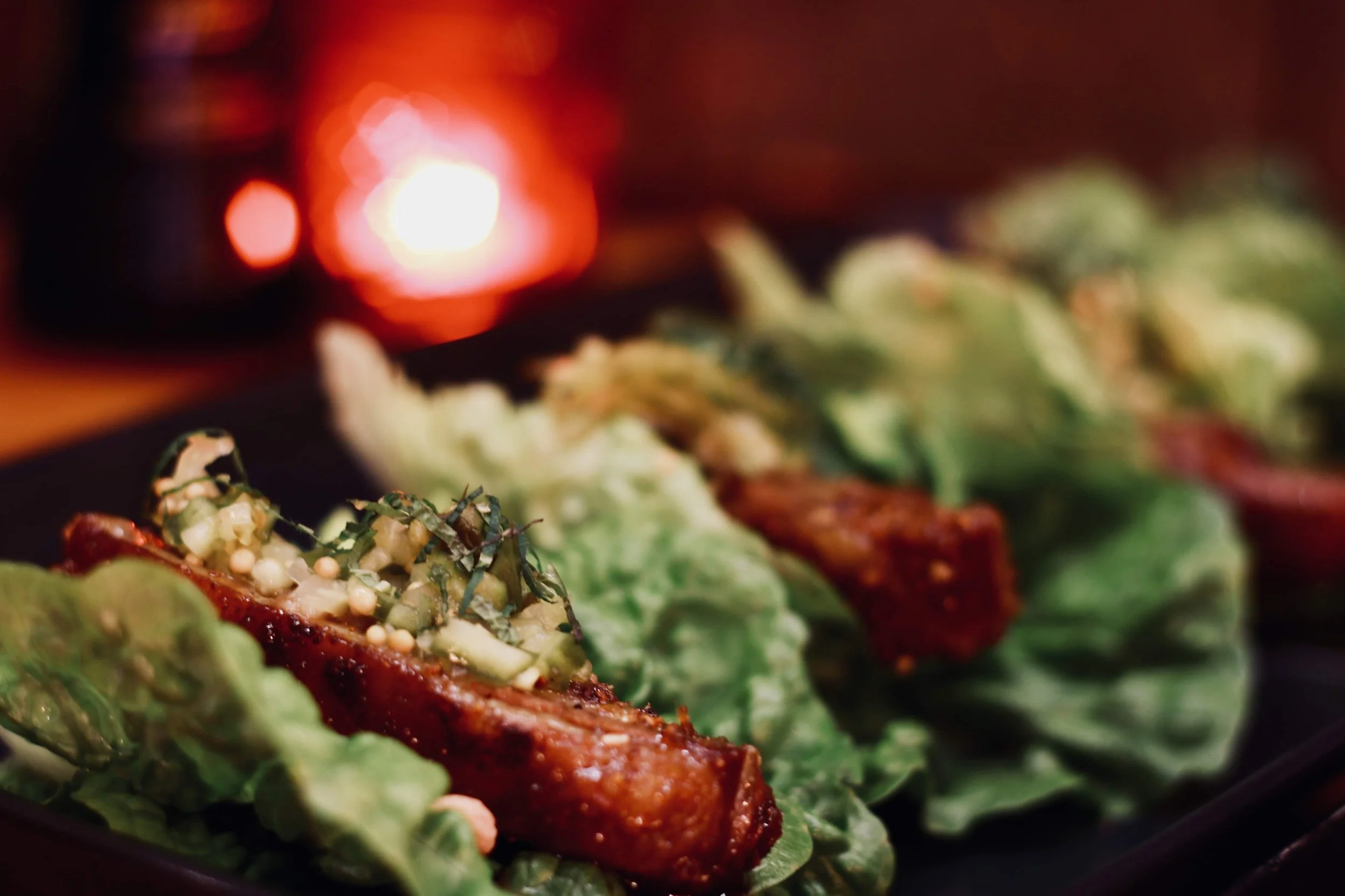
MACAU
Step into Macau Restaurant on Tauranga’s waterfront for contemporary Asian flavours and share-style dining. This award-winning spot delivers communal plates inspired by pan-Asian fusion. Think fresh local produce, Pacific twists and big bold flavours. Their upstairs lounge offers creative cocktails and sweeping harbour views, and it’s available for private events or larger groups.
59 The Strand
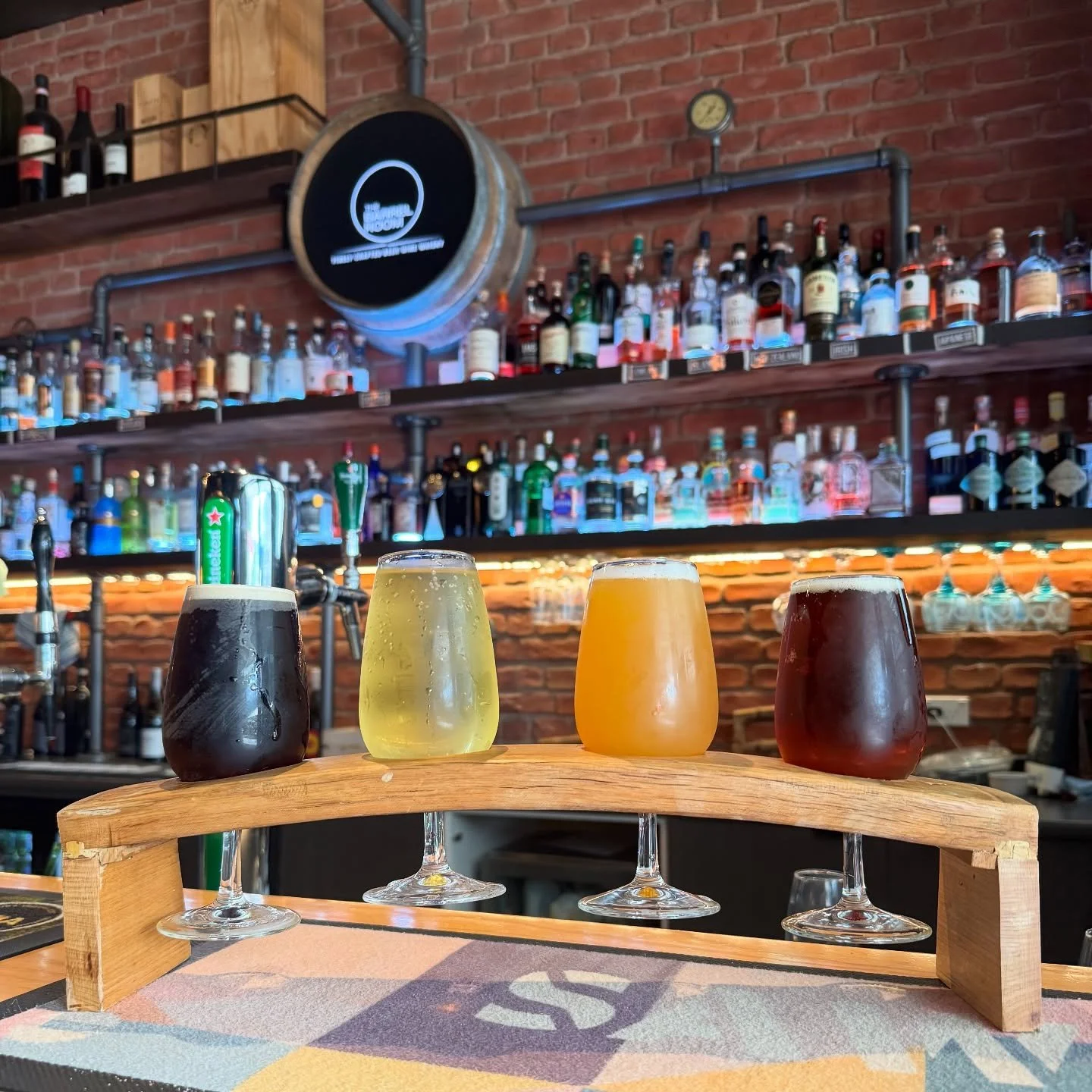
THE BARREL ROOM
A cosy microbar and eatery serving finely crafted drinks and flavour-packed bites, The Barrel Room is where you will always find the perfect pour. With their epic weekday lunch deals, regular live music and events, a rotating selection of beverages sourced from top breweries, wineries and distilleries across New Zealand and beyond, it’s a great haunt for after-work drinks or settling in on a weekend.
26 Wharf Street
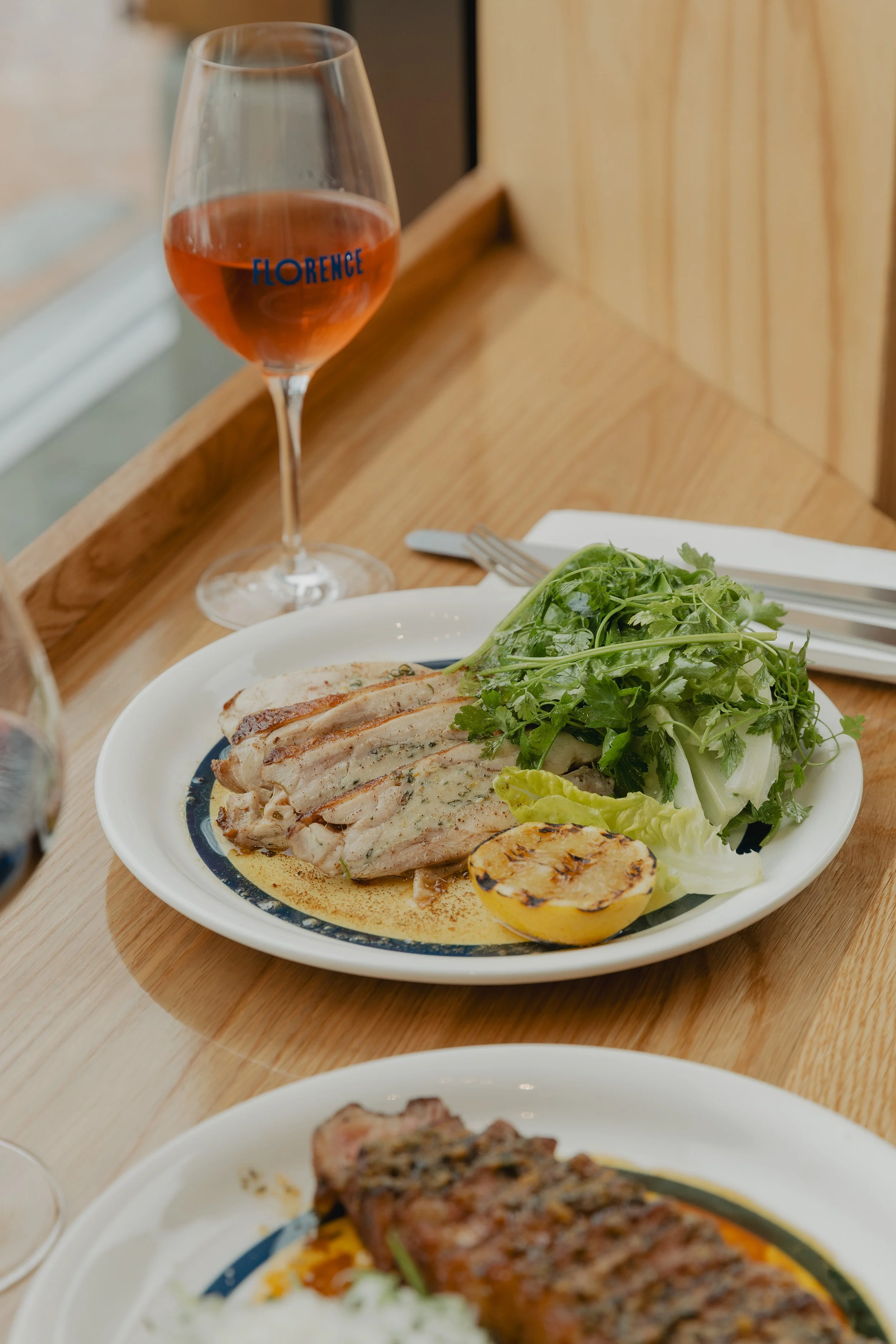
FLORENCE BISTRO
One of Tauranga's newest restaurants, Florence Bistro is full of Mediterranean charm, with fresh pasta, grilled seafood, crisp seasonal salads and rich comforting meats at the heart of every plate. It’s unfussy, with flavour packed cooking made with love, good oil and fresh ingredients that speak for themselves. Their menu is testament to the belief that great food doesn't need to be complicated to be exquisite.
90 Devonport Road
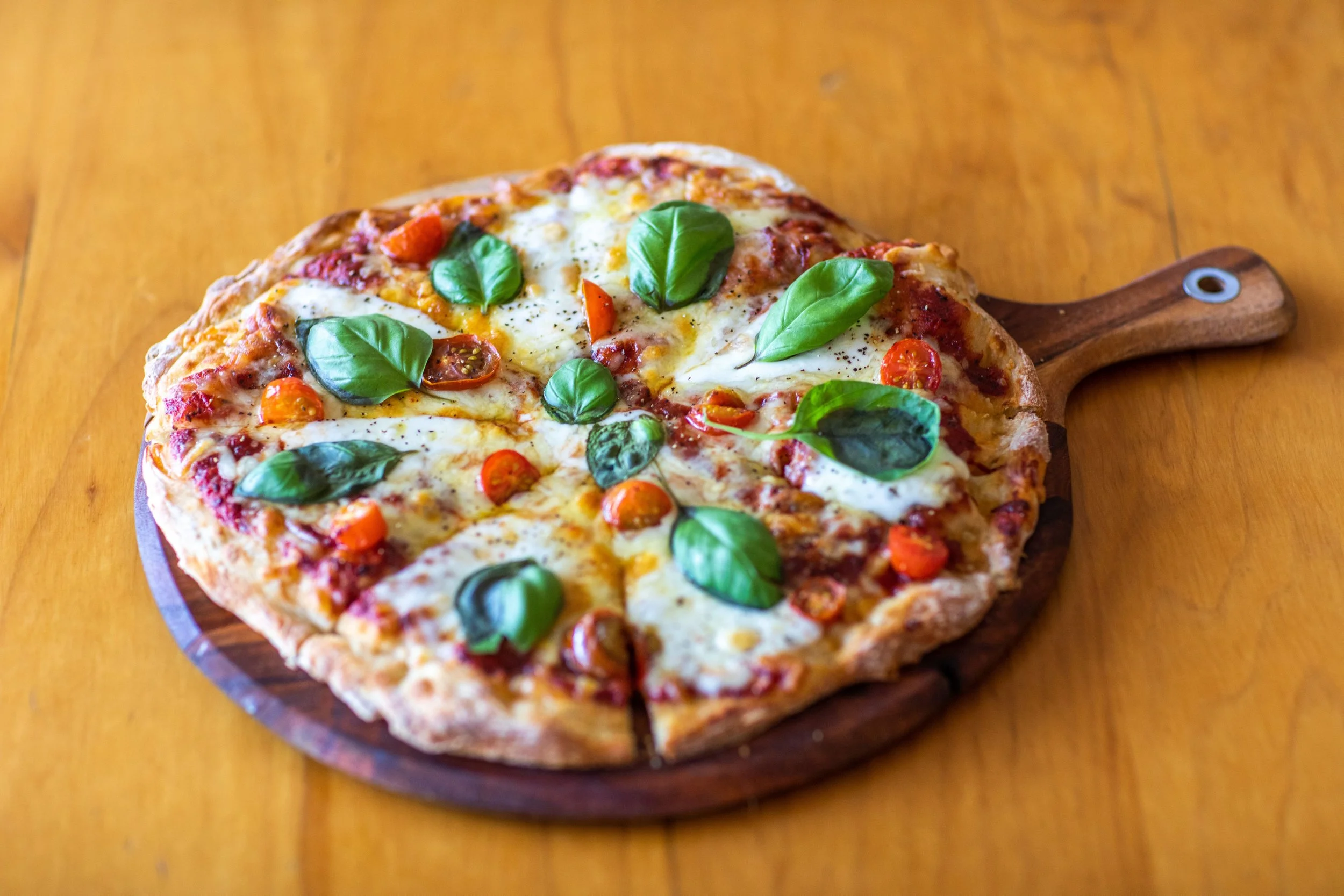
THE HOP HOUSE
The Hop House offers some of the best hand-crafted burgers and pizzas in town. Quality ingredients and house-made sauces combine to deliver a flavourful experience at an affordable price. Add in a tasty brunch menu on the weekends or their famous Sunday Roast Lunch and you can't go wrong. Good beer and coffee, as well as great vibes and friendly service, is a top priority for this family-owned bar and eatery.
12 Wharf Street

TURNING LIFE INTO ART
Amid the busy chaos of her Pāpāmoa home, talented mum of three Ashley De Grey is creating wearable art made with DNA.
Amid the busy chaos of her Pāpāmoa home, talented mum of three Ashley De Grey is creating wearable art made with DNA.
WORDS HAYLEY BARNETT / PHOTOS DEBORAH DE GRAAF

Pāpāmoa local Ashley De Grey is turning everything from breast milk and embryos to ashes and teeth into personal keepsakes and now, her once small home business is being recognised on the international stage. And it’s not nearly as strange as it sounds.
In fact, it’s really rather lovely. Since launching her unique business back in 2018, Ashley has just been awarded the 2025 Memories & Keepsake Product of the Year by the Pet Innovation Awards.
It all began, somewhat unexpectedly, with a spam email. While breastfeeding her daughter one night, Ashley noticed a message about breastmilk jewellery.
“It was an American site but it got me thinking about whether or not there might be a market for it here,” she explains.
It turns out, there was. Coincidentally, Ashley had spent years working in a jewellery store in her hometown of Taranaki and, with a design degree under her belt, she was perfectly placed to start something of her own. Her journey began with just one product.
“I started with beads,” Ashley recalls. “I found a manufacturer to do the welding and taught myself to build a website that was easy to use. I wanted mums to be able to order something quickly and easily, even in the middle of the night while breastfeeding.”

Back then, she would take orders through Instagram, jot them down by hand, print the details and craft each piece herself. Starting with breast milk, she soon realised there was also a deep need to commemorate loved ones who had passed. She began offering jewellery containing ashes, and even dehydrated embryos, for families completing their IVF journeys.
“Many people don’t know what to do with leftover embryos,” Ashley explains. “Some donate them, some destroy them, but others want to keep them close.”
The process involves carefully dehydrating the embryo material from vials of liquid, then embedding it into the jewellery. But embryos are just one of many unusual materials Ashley works with. She’s preserved snow collected from mountaintops, turning it into powder, and has incorporated sand, soil, baby blankets and fabric. One special project involved a grocery list written by a client’s late father.
“We scanned the note and used the letters to spell ‘Dad’ in his handwriting, both in English and Portuguese,” says Ashley. “It meant so much to the family.”
As she branched into pet keepsakes, incorporating fur and ashes, Ashley’s business really took off. “I’ve made jewellery out of baby puppy teeth for the puppy’s godparents before,” laughs Ashley. “People really get creative.”
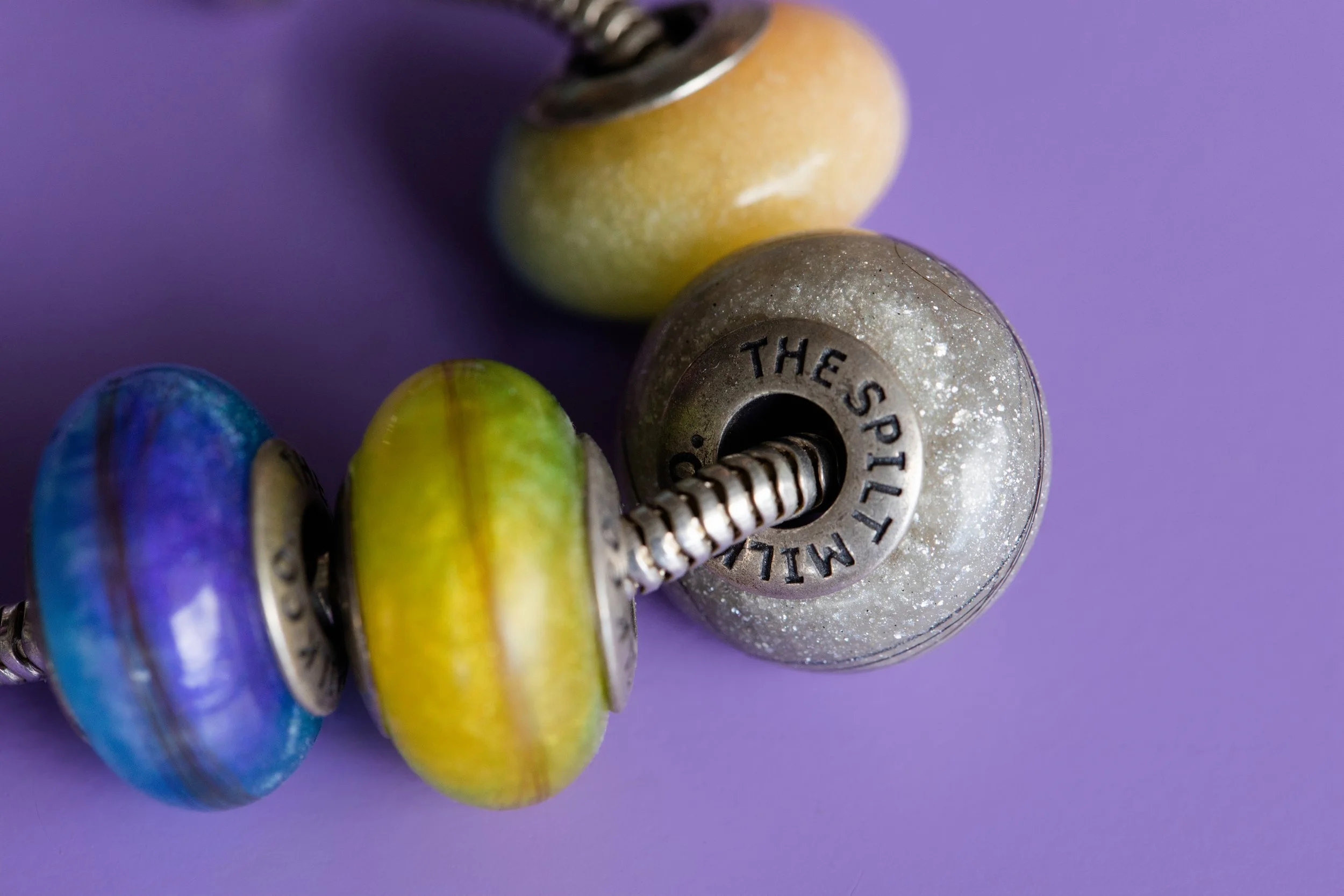
Winning a prestigious award has been both validation and motivation. “It feels amazing to be recognised,” she says. “It shows that what I’m doing matters beyond just my little corner of the world.”
Since starting, Ashley has created over 3000 pieces for more than 2000 clients, each one telling a story of love or loss. Her advice for anyone dreaming of starting their own business is to just begin.
“Even if it’s cringe and even if it’s not perfect, just do one thing a day. Post something, reply to an email, look up a supplier. And if it feels like you’re not getting anywhere, just keep showing up.”
She credits much of her success to knowing her audience. “At one point, I started adding bracelets and necklaces just to have more products, but they didn’t sell, because that’s not what people came to me for. So I pulled it back to what I do best.”
And what she does best is turn emotion into something tangible. Perhaps most inspiring of all, Ashley has shown her daughters what it looks like to build something from scratch and to believe in your vision, even when it feels impossible.
“They know that Mum works hard,” she says. “And they know that whatever they dream up, they can do it too.”

POLES APART
Penguins or polar bears? Are Antarctica and the Arctic similar or poles apart? Sarah Porter from Wild Earth Travel, supplier to YOU Travel & Cruise Bethlehem, sailed as a guest on the French ship, Ponant Le Commandant Charcot.
Penguins or polar bears? Are Antarctica and the Arctic similar or poles apart? Sarah Porter from Wild Earth Travel, supplier to YOU Travel & Cruise Bethlehem, sailed as a guest on the French ship, Ponant Le Commandant Charcot.
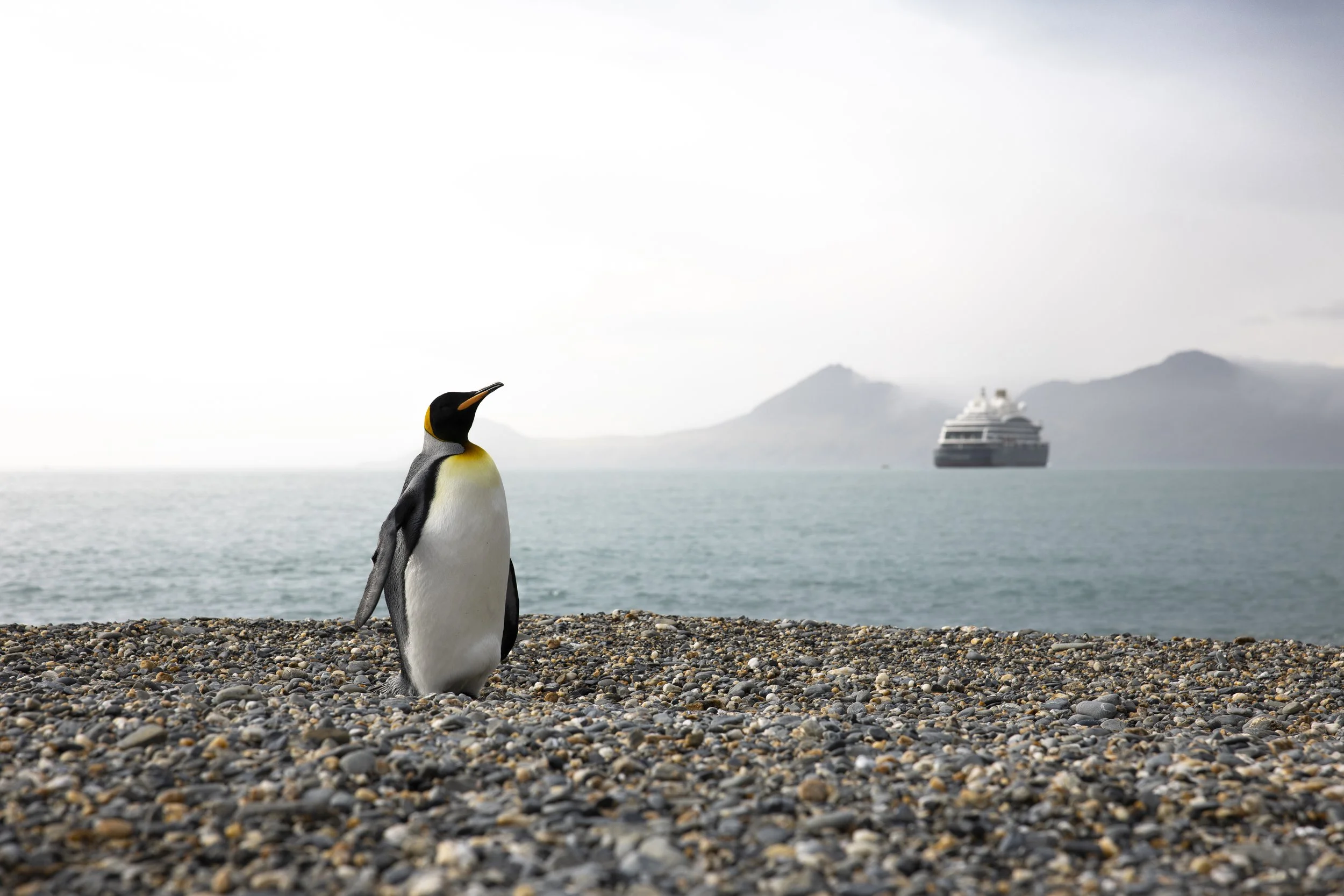
Understanding the difference between these two regions at the opposite ends of the globe starts with simple geography. Antarctica is a frozen continent surrounded by ocean; the Arctic is frozen sea surrounded by land.
The Arctic region extends over Canada, Alaska, Greenland, Russia, Norway and Iceland, which are all homes to native communities. Antarctica does not belong to any country and has many scientific bases, but no permanent inhabitants.

WILDLIFE
Wildlife is one of the biggest differences between the polar regions. My first view of Antarctic wildlife on South Shetland Island was a shoreline covered in penguins and seals, whales not far off land. Human contact is limited in the Antarctic which makes the animals fearless and inquisitive and penguins will likely come and inspect your boots.
The word Arctic is derived from the Greek ‘arktos’ meaning’ bear’, and one of the main reasons to visit the Arctic is to see the polar bear. Arctic foxes, reindeer, walrus, musk ox, seals and whales are also found in the north, as well as birdlife.
I visited the Arctic on a journey to East Greenland on the world’s only luxury ice breaker, Ponant’s Le Commandant Charcot, at the beginning of the season. We came across a whale carcass wedged between two ice sheets, a natural buffet attracting an astounding 68 polar bears, a first even for our captain and our Inuit ‘polar bear spotters’.
PEOPLE
The six countries of the Arctic region create diversity in culture, language and customs, though sharing traditional livelihoods like f ishing and hunting. As our Greenlandic guides kept watch for polar bears, I learnt what it is like to live in in complete darkness for much of the year and how their community of Ittoqqortoormiit (the most remote in the world) is only accessible by helicopter for nine months due to frozen sea ice.
On the Le Soleal in Antarctica I enjoyed chats with people posted at the bases and stations over the summer season, but there are no ‘locals’ in Antarctica. On both voyages historians within the ship’s expedition teams shared stories and insights into the early explorers, from Erik the Red in Greenland to Scott, Shackleton and other Antarctic explorers.
ICE
Ice became a topic of surprise and delight as I learnt how different it is in each region and how many forms it takes — fast ice, first-year ice, brash ice, pack ice and, of course, ice bergs (to name a few!). Sea ice in the Arctic freezes in winter and melts during summer. Antarctica is not constrained by landmasses so sea ice spreads over a much larger area. Antarctic glaciers are much bigger than those of the Arctic, the Arctic icebergs more jagged in shape.
SEASONS
You can only travel to Antarctica in summer (November – March), with the ice more pristine and the penguins courting early in the season. In February and March you see penguin chicks and March is best for whale watching. The Arctic summer is peak tourist season with longer days (the midnight sun) and milder temperatures for outdoor activities.
Many visit in winter to see the northern lights. Which wins? I loved both for the sense of vastness and unexpected wildlife encounters, the deafening silence and magical atmosphere. Seeing 68 bears made the Arctic my favourite voyage, however Antarctica would be my favourite destination. I’d return to both in a heartbeat for I have only experienced the very tip of the iceberg.

WAKE WITH CLARITY
Bay Eye Care’s Alex Petty reveals life-changing technology that literally transforms how you see the world.
Bay Eye Care’s Alex Petty reveals life-changing technology that literally transforms how you see the world.
PHOTOS GARY MARSHALL AT BLUE CHILLI
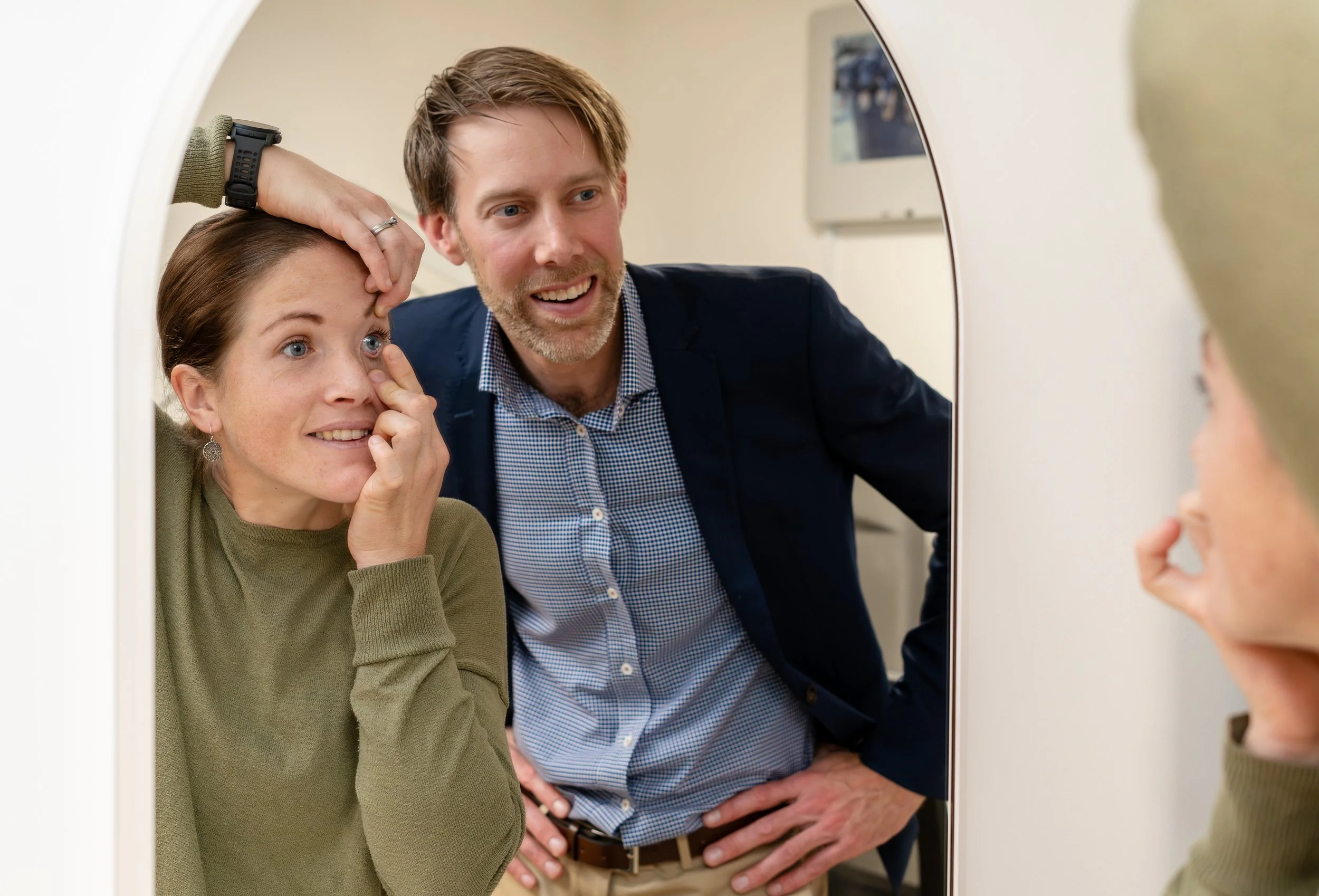
Explaining Ortho-K to patients sounds a bit like something out of a sci-fi movie. You wear a custom lens while you sleep, and by morning your vision is clear. No glasses or contacts during the day, and no surgery needed.
Ortho-K can be a game-changer. Those who have vision problems suddenly have the freedom to swim in the sea, play sports and go to school or work, without worrying about their glasses or contact lenses.
Short for orthokeratology, it involves wearing a specially designed rigid lens overnight. While you sleep, the lens reshapes the front surface of your eye. When you take the lens out in the morning, the temporary reshaping allows you to see clearly all day. For many, that means they can ditch their glasses or contact lenses altogether.
I’ve been fitting these lenses for over 15 years. In fact, as I write this, I am just returning from a weekend conference in Australia lecturing and teaching other optometrists about Ortho-K. These days, I mostly fit these lenses to treat myopia (short-sightedness), but also for long sightedness, astigmatism and even presbyopia, which is that frustrating shift in vision that hits in your 40s or 50s when reading becomes difficult.
Around the world, we’re seeing a sharp increase in short sightedness developing in children. Right now, roughly 30 percent of the global population is myopic, and research suggests that could reach 50 percent by 2050. Much of it comes down to lifestyle, such as increased screen use, more time indoors and not enough exposure to natural light. But over the past decade, Ortho-K has been proven to slow myopia progression in children.
As myopia worsens, the risk of serious eye conditions like retinal detachment, glaucoma and macular degeneration increases significantly. That’s why we now monitor not just prescription, but actual eye growth. Ortho-K can help slow that down, so we’re protecting long-term eye health.

People are often curious about comfort. Since Ortho-K lenses are rigid, there’s an adjustment period, but because they're worn while sleeping, most people get used to them surprisingly quickly. Once it becomes part of your nightly routine, it feels normal. Long-time users often tell me they wouldn’t dream of going back to glasses.
Of course, it’s a commitment. This isn’t a one-time fix. It only works as long as you wear the lenses each night, but that’s also part of its strength. It’s completely reversible and flexible. If your eyes change, we adjust the lenses, which makes it great for growing children or adults who aren't ready to commit to permanent solutions like surgery. All you need to get started is an initial visit to discuss Ortho-K and check your eye health to see if Ortho-K is right for you.
I’ve had patients come in because a friend or co-worker raved about how much Ortho-K changed their life. It spreads by word of mouth, and for good reason. It’s about being able to live your life without constantly thinking about your eyes. For me, I believe that’s a gift worth sharing.

MODERN ELEGANCE
UNO takes a peek behind the doors of The Pavilion, the highly-anticipated community centre now open at Pacific Lakes Village in Pāpāmoa.
UNO takes a peek behind the doors of The Pavilion, the highly-anticipated community centre now open at Pacific Lakes Village in Pāpāmoa.
PHOTOS JAHL MARSHALL
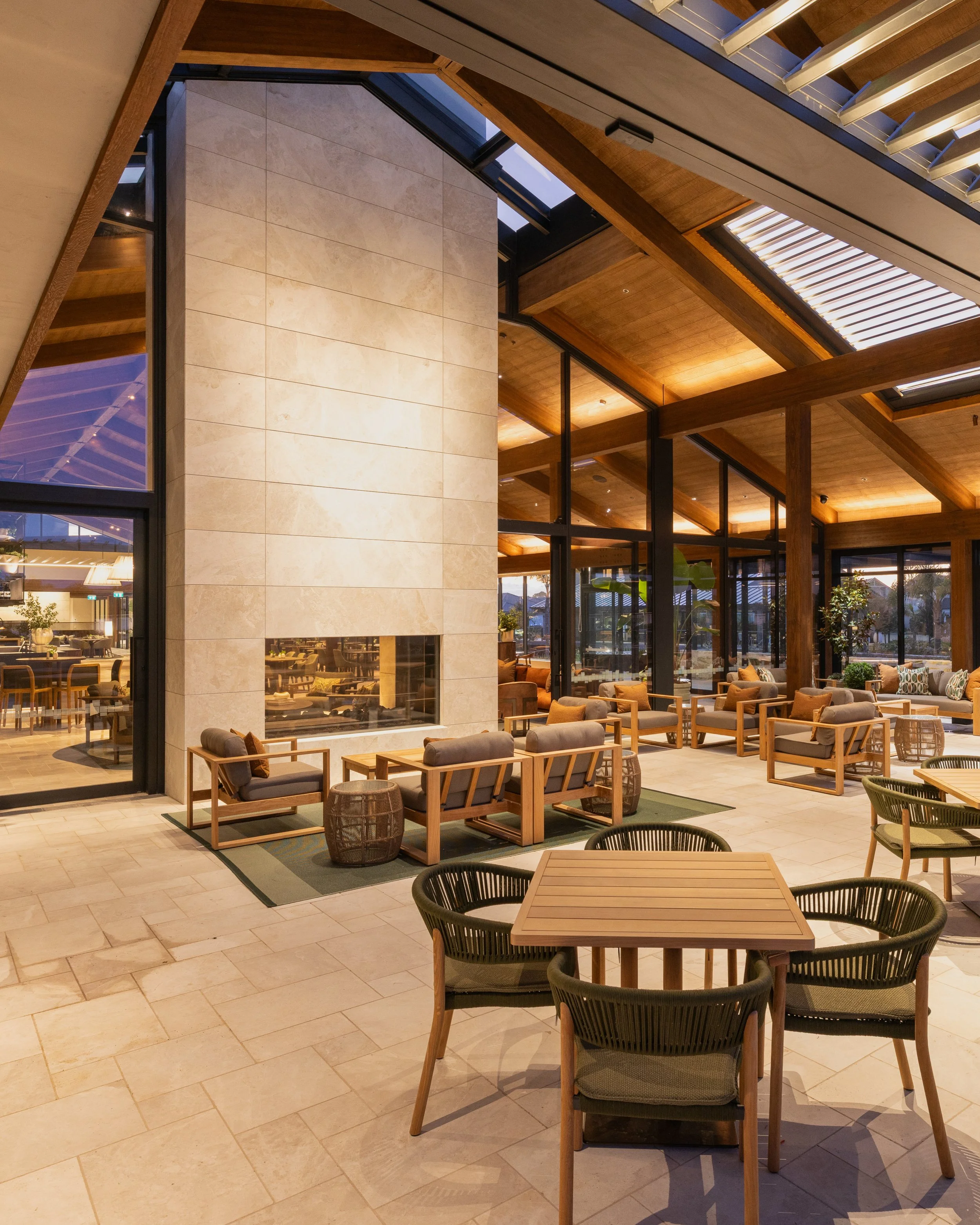
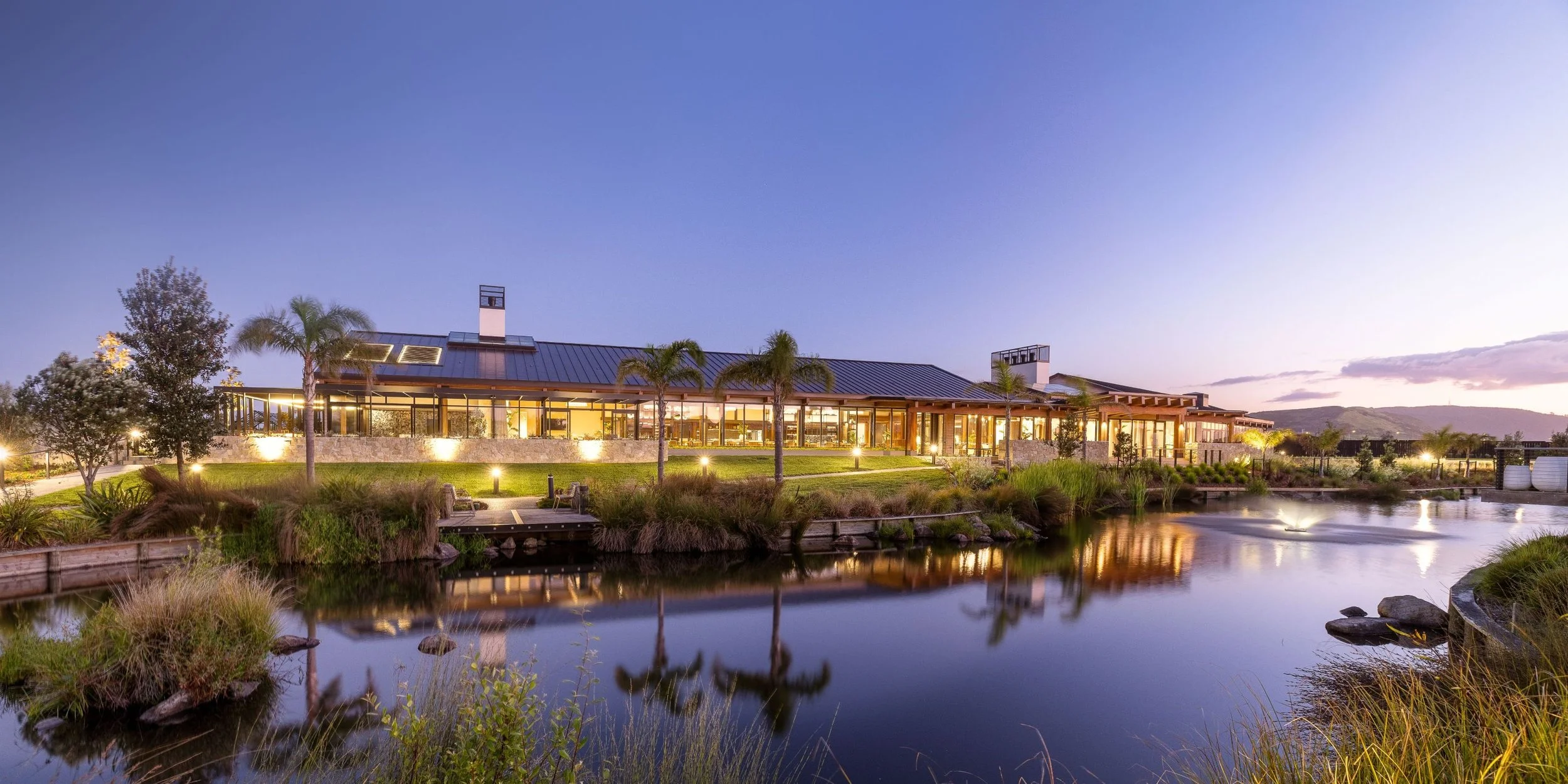
For the past few years, something big has been underway at Pacific Lakes Village. And now, it’s finally ready to be unveiled. The Pavilion is a striking new multi-function building that’s been thoughtfully designed to serve as the social heartbeat of the 350-plus resident community.
Designed by Peddlethorp, this distinctive architecture delivers residents a comprehensive hospitality and leisure offering overlooking the lakes, including versatile function spaces for events and performances, an Art Studio, a Library and Billiards Room. It also places a strong emphasis on wellness, featuring a salon, nail spa and treatment room. This offering will be further enhanced with the addition of a Hydrotherapy Pool and a Fitness Studio, in a further stage with construction commencing Spring 2026.
“Our vision was to create an environment that not only complemented existing venues but also met the social and recreational needs of our residents. Across our two Bay of Plenty villages, the facilities available to residents are extensive and of exceptionally high quality,” says Graham Wilkinson, director of Generus Living.
The Pavilion is an impressive architectural centrepiece spanning over 2500 square metres. Its muse was the Lake House, the Village’s smaller club across the Lake, that drew its design cues from its lodge-like warmth and character.
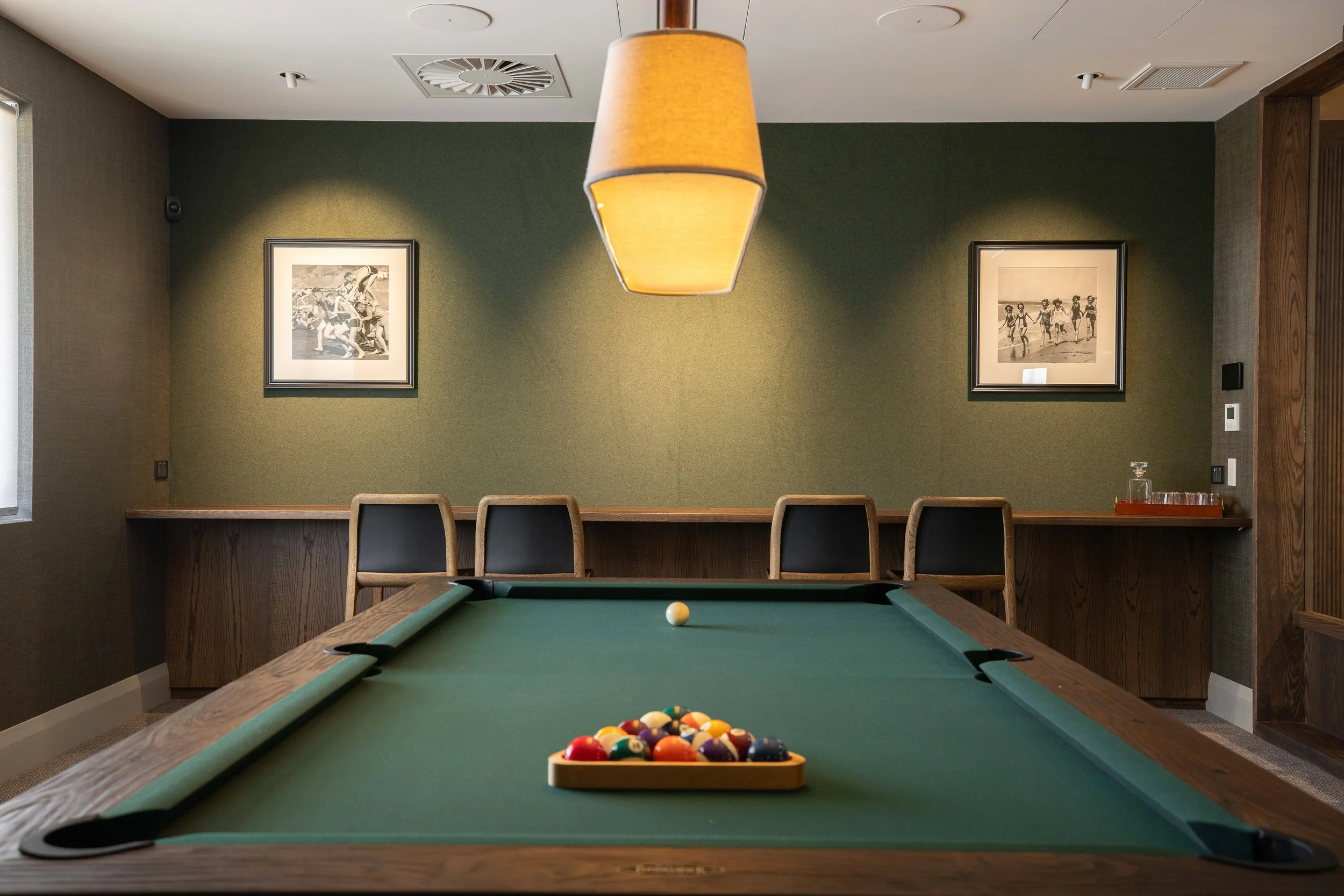
The Bay’s relaxed lifestyle has also shaped the building’s tropical-modernist lines with the extensive use of crafted timber and expansive glazing. The level of detail throughout is impressive, from the intricate timber craftsmanship to the carefully curated furnishings and dramatic hardwood beams. Every element has been considered to make residents feel luxuriously comfortable, and to encourage them to enjoy the space.
From the outset, the Pavilion was envisaged as the living, breathing hub of village life. A place where residents could meet friends for a meal, join a social activity or simply read a book in peace.
“A key driver was to create multi-purpose spaces,” Richard Mora, Generus Living general manager development explains. “There are three large rooms that can be used individually or open up to form one expansive venue. This will support a dynamic resident activity programme, accommodating everything from large gatherings to smaller recreation specific needs.
“The large screen, integrated technology, and flexible staging arrangements ensure the space is highly functional and can support a wide range of resident activities,” Richard explains. “The floor-to-ceiling fenestration creates a light-filled atmosphere and allows the planning to flow seamlessly to the expansive deck areas for larger social events.”
This atmosphere of openness and warmth is amplified by the interior design team, led by David Sweatman at design firm Space Studio, who were brought on by Generus Living to realise their vision for The Pavilion and to translate emotion into architecture.
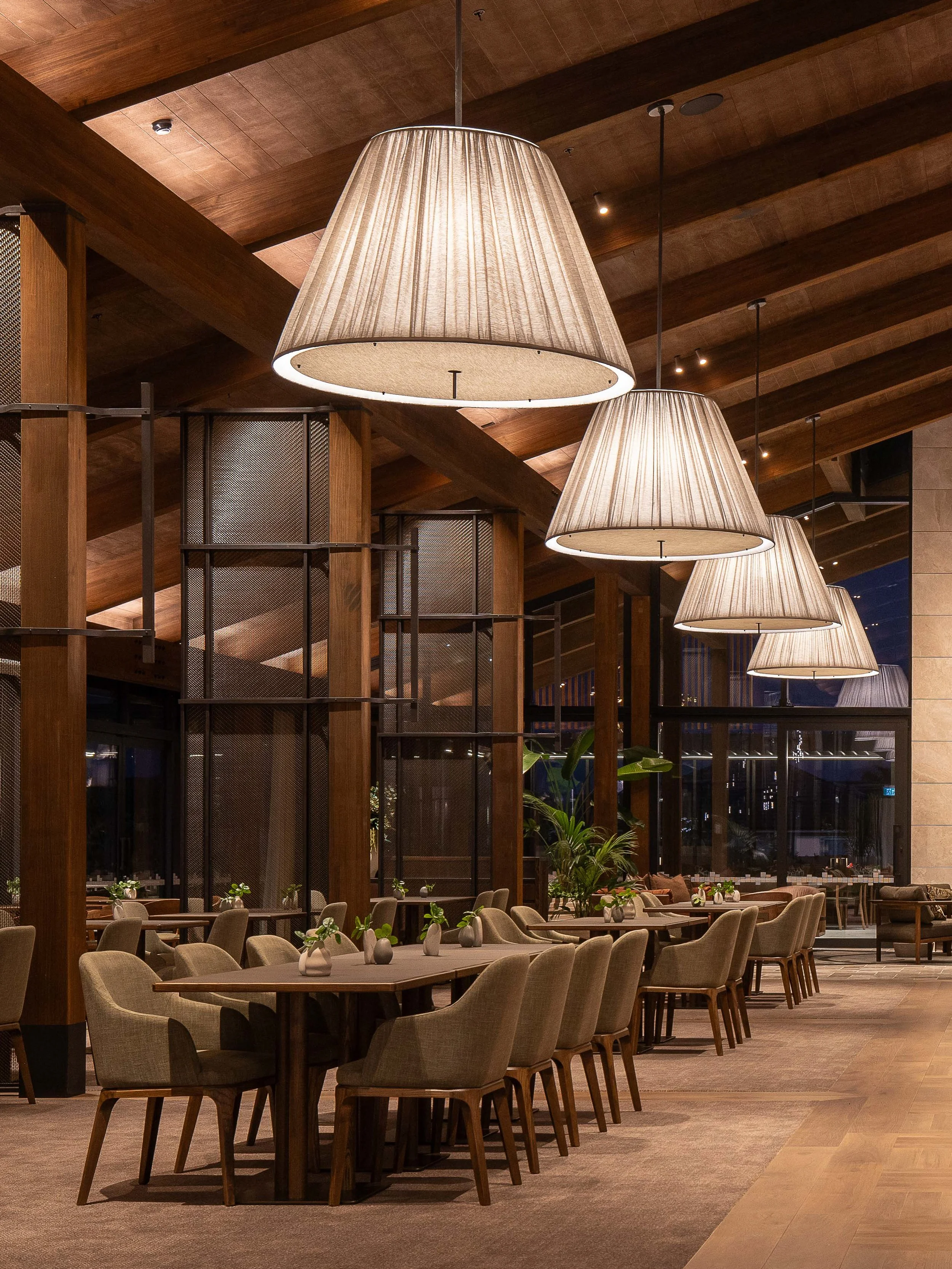
“We designed it to feel familiar but modern,” David explains. “A place where you could sit alone and have a coffee and still feel part of the community.”
To achieve that, the team leaned into texture and craft. “There’s a rich layering to it,” David says. “It creates space for conversation, with a relaxed and communal feel.”
The materials tell their own story. Stone floors are leathered rather than polished. Timber beams are left knotted and grained, their natural character proudly visible. David describes the look as, “rustic material finished with modern finesse.”
“It’s luxurious but humble,” he smiles. “It all works to create comfort.”
Natural light floods through skylights and across textured surfaces. Fluted timber paneling and delicate metalwork lend refinement without pretension.
“When the light rolls in and ties all those spaces together, that’s when it really comes alive,” says David. “You can stand in one spot and see through a series of zones — each distinct but connected.”
Guided by the same sustainability ethos that shaped the Lake House and the wider Pacific Lakes Village, The Pavilion has been designed to minimise environmental impact while maximising both design and functionality. The Pavilion is constructed primarily by mass timber elements which significantly reduced the requirement for any structural steel.
“It’s got this incredible sense of permanence,” David notes. “You can feel the structure and the hand of the craftsman in every element.”
That craftsmanship extends to the furniture and artefacts, nearly all of which were designed or made in New Zealand. “It’s a real celebration of what our local manufacturers can do,” Space Studio’s Monique Enoka-Davidson explains.
The artefacts nod to the mid-century “Crown Lynn” era providing a sense of familiarity, but each piece has been reimagined in a contemporary way.
“It’s almost sentimental, a nod to the past, but expressed with scale and modern craftsmanship.”
Furniture choices were guided by a clear philosophy of comfort with every detail carefully considered.
“The restaurant tables, for instance, feature a soft leather-look inlay with a timber edge — a tactile transition that matters the moment you touch it. They create a more peaceful, intimate atmosphere. It’s all about that sense of crafted care.”
For the Generus team, it represents the culmination of years of thought and collaboration. “As a company, we believe in a bespoke architectural response to every site,” Richard says. “You never quite know where the design process will lead, but that’s part of the delight.”
The project’s success, he believes, comes down to philosophy. “Think slow and act fast,” he says. “If you put your focus on well executed planning and design, then thoroughly test it at the front end, you’ve got every opportunity of delivering a great building at the end of it.”
For David and Monique, the reward is seeing how people inhabit the space. “When you walk through, you feel it,” says David. “You slow down and you feel at home. That’s the goal, where people feel immediately welcome.”

ITALIAN TOUCH
Hayley Barnett checks out Tauranga’s hot new spot for serious meat lovers, 1920 Cucina and Grill.
Hayley Barnett checks out Tauranga’s hot new spot for serious meat lovers, 1920 Cucina and Grill. PHOTOS ILK PHOTOGRAPHY
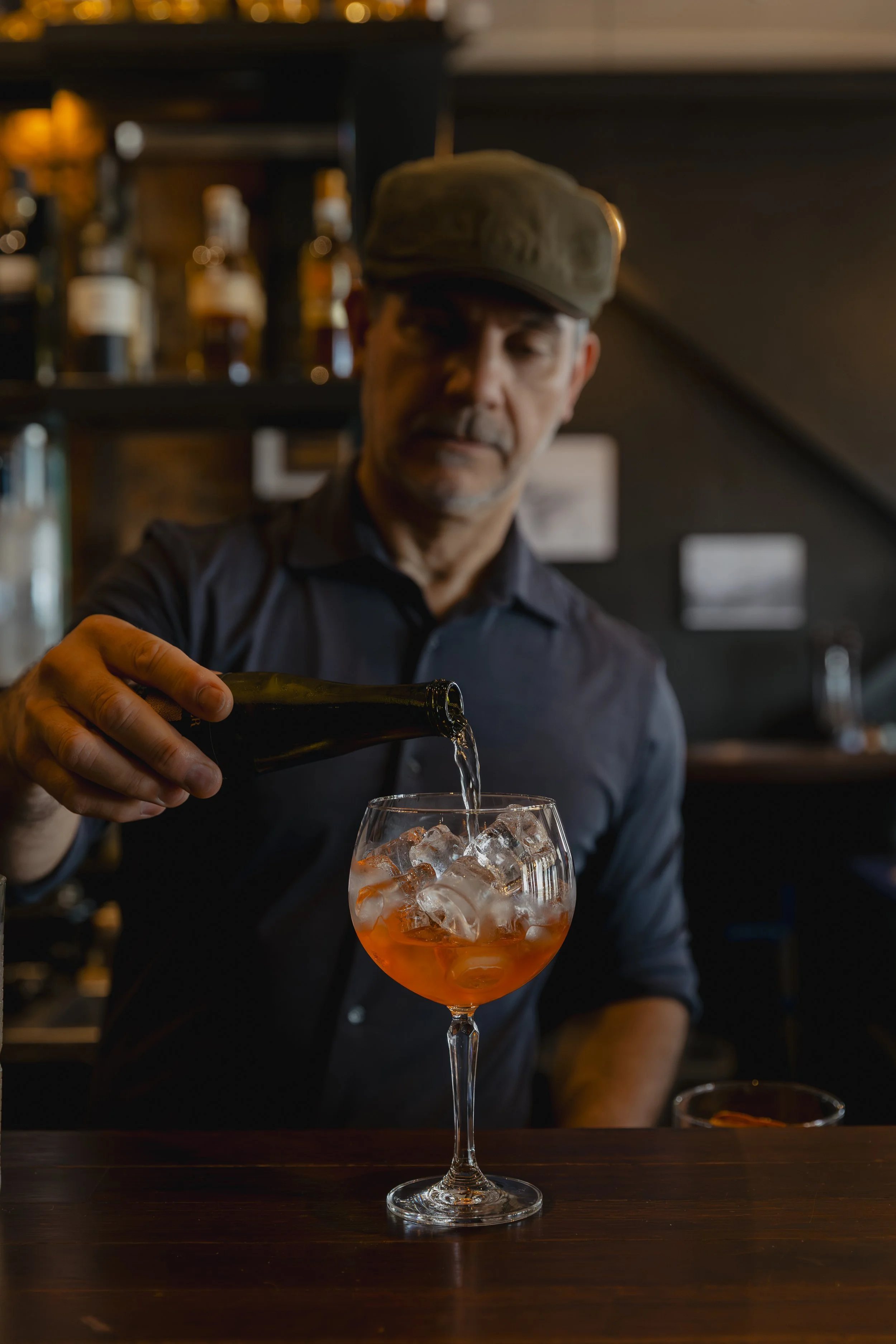
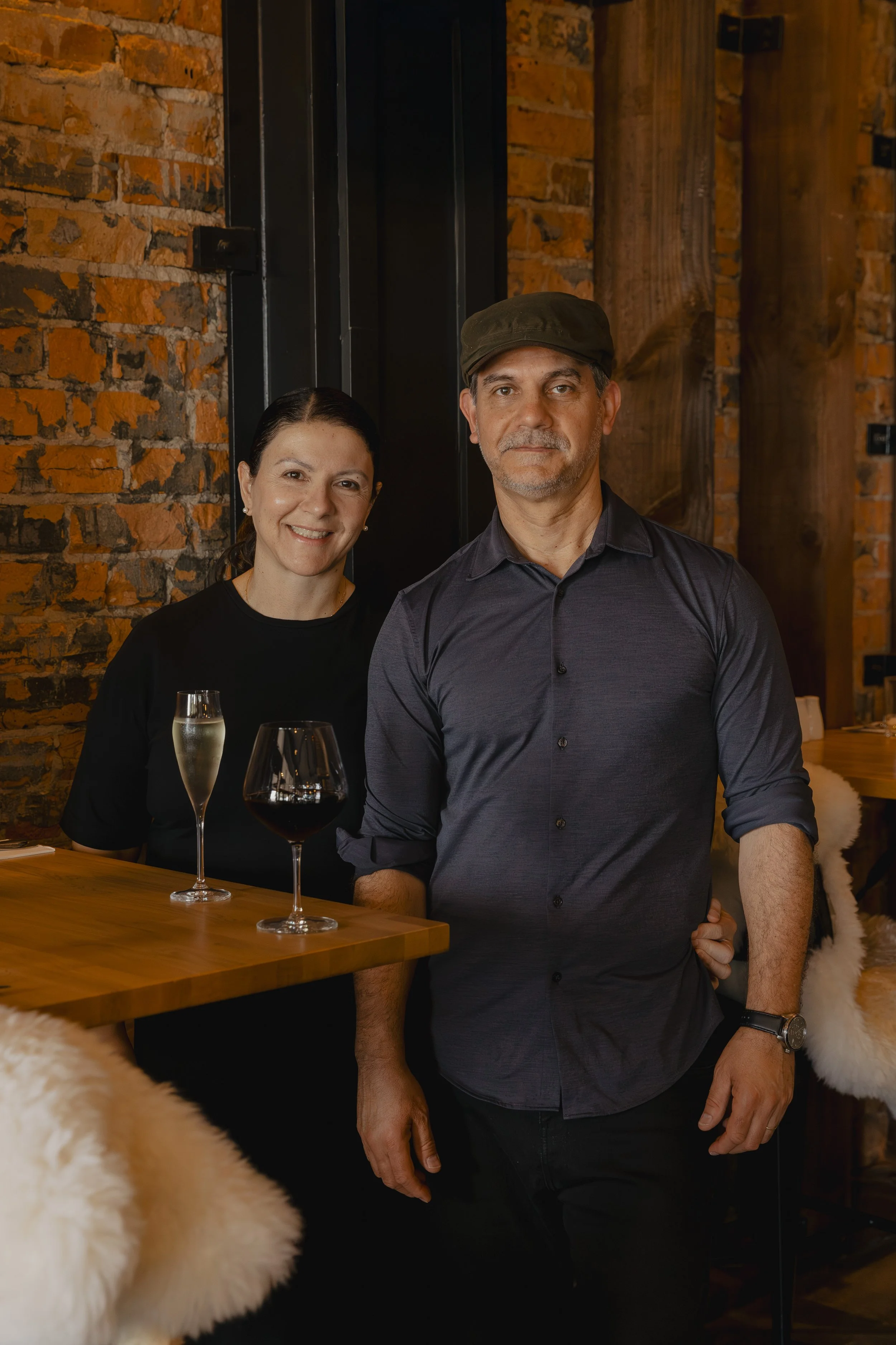
The husband and wife team behind the Mount’s Mamma Mia Trattoria have crossed a bridge — both metaphorically and literally — to fine dining. Though they’d never admit it and are quick to assure me that this new establishment is much more relaxed than it looks. As we sit in a beautiful heritage building, with its elegant high ceilings and the meat cooked to perfection, it certainly feels close.
Having recently opened 1920 Cucina and Grill at 85 The Strand, Luciano Souza and his wife, chef Cimone Juliani, decided to pour their heritage, history and hearts into this new venture, and it shows.
The couple, both born and raised in southern Brazil to Italian families, carry two culinary cultures in their bones, and for 13 years, the pair’s Mount customers would rave, again and again, about the pasta, but also, oddly enough, the steaks. “Some days I cooked more steak than pasta,” Cimone laughs.
While they’ve always stayed close to their Italian roots, they also dreamed of showcasing the rustic barbecue traditions they grew up with.
“In our region, every house has a barbecue,” Luciano explains. “If you’re not hosting one, you go to someone else’s.”
Barbecuing is as natural as breathing, and when paired with the technique-driven Italian dishes they were raised on, the couple found that a new kind of offering emerged. “We thought, why not focus on meat but keep our Italian touch?” says Cimone.
At 1920 Cucina & Grill, that balance is highlighted in the menu. They use premium New Zealand meat, which is something the pair say they appreciate more after years spent cooking abroad.
“The flavour here is amazing,” Luciano says. “It’s tender, fresh, really good to work with.”
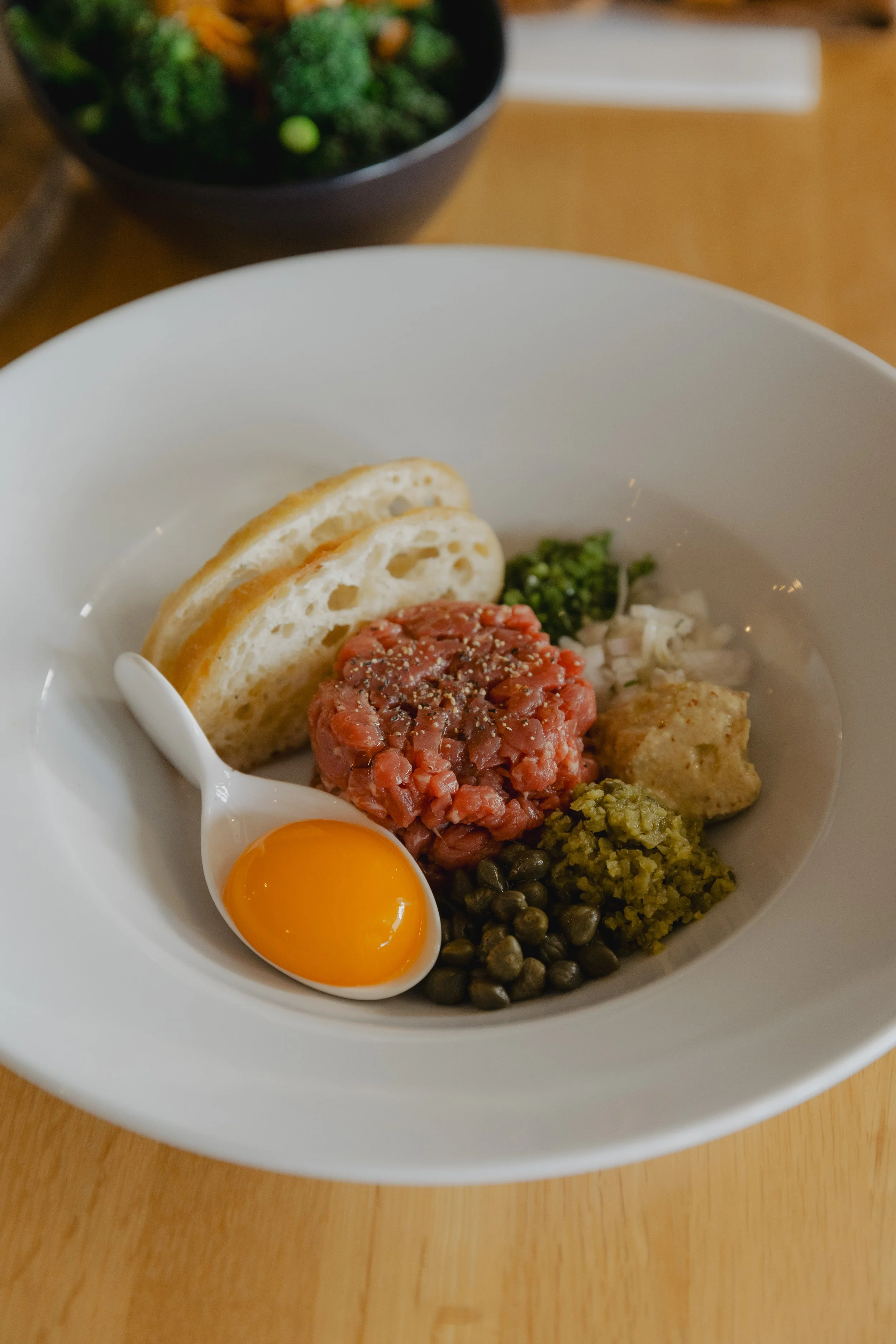
Beef Tartare
Among the dishes earning early attention is the Beef Tartare, a first hint that this might be pretty close to fine dining. The Surf and Turf Carpaccio feels equally indulgent. And Luciano’s beloved Beef Ribs embrace that charcoal-barbecue soul he grew up with, cooked low and slow for bone-hugging flavour.
“We don’t like to think of the menu as being a fusion of flavours, but more a harmony of heritage,” says Cimone.
“Much like the structure that houses us, our Cucina & Grill is grounded in history,” adds Luciano. “Our aim is always to bring to the table traditions passed down by generations of our Italian and Southern Brazilian family.”
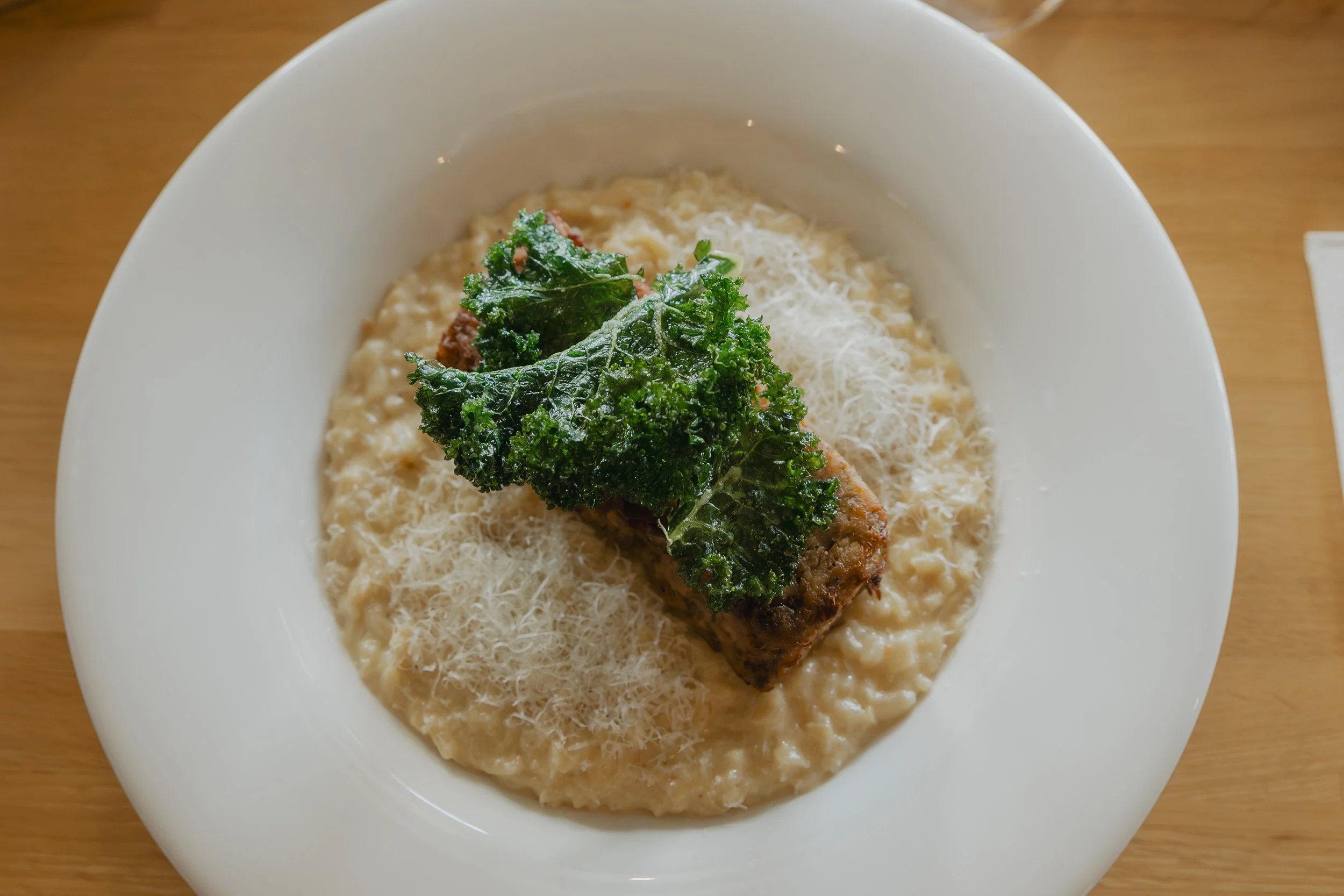
Pressed Pork with Parmigiano Risotto
The name 1920 is inspired by the era in which 85 The Strand was built and pays tribute to one of Tauranga’s oldest and most iconic buildings. Behind the scenes, the duo are steadily working toward an even bigger dream: a full charcoal kitchen, the kind used across Brazil, Argentina and Uruguay.
“That’s our second phase,” Cimone says. “We want people to know us first, then we’ll bring in the real barbecue.”
For now, it’s not fine dining, they continue to assure. The couple want the new restaurant to be a place where diners can gather and taste the story of two cultures, but mostly where people feel comfortable while eating good food. They’ve certainly achieved that, and if a little fine-dining magic slips through, well I’d say that only adds to the charm.
85 The Strand, Tauranga

WALK THIS WAY
Between shady forest walks, hidden waterfalls and rugged coastal headlands, the Bay of Plenty has no shortage of trails to discover.
Between shady forest walks, hidden waterfalls and rugged coastal headlands, the Bay of Plenty has no shortage of trails to discover.
PHOTOS TOURISM BAY OF PLENTY
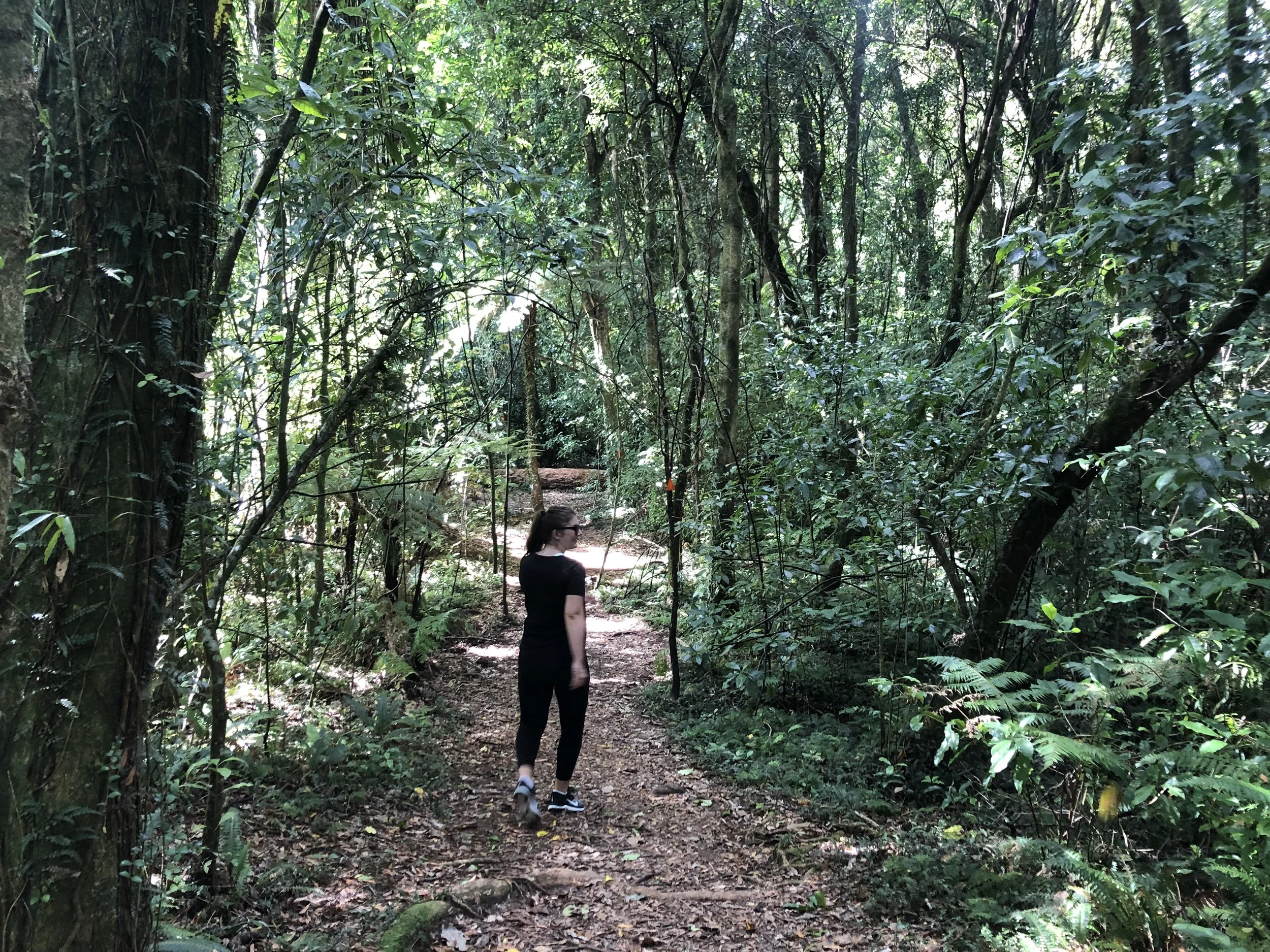
When it comes to walks that showcase the stunning landscapes of our region, the Bay of Plenty is one of New Zealand’s most generous playgrounds. Here’s a hand-picked list of family-friendly walks around Tauranga and the wider Bay of Plenty to feature in your summer adventure itinerary.
Waikareao Estuary Walkway
This flat, easy loop in Tauranga is ideal for families, cyclists or anyone who’d rather amble than ascend. The total loop is about 10km, but there are many entry/ exit points so you can tailor it to 30 minutes, one hour or more. The surfaces include boardwalks, gravel and sealed paths, meandering through mangroves, marsh and birdlife-rich wetlands. Expect to spot local wading birds, and maybe even a fish or two.
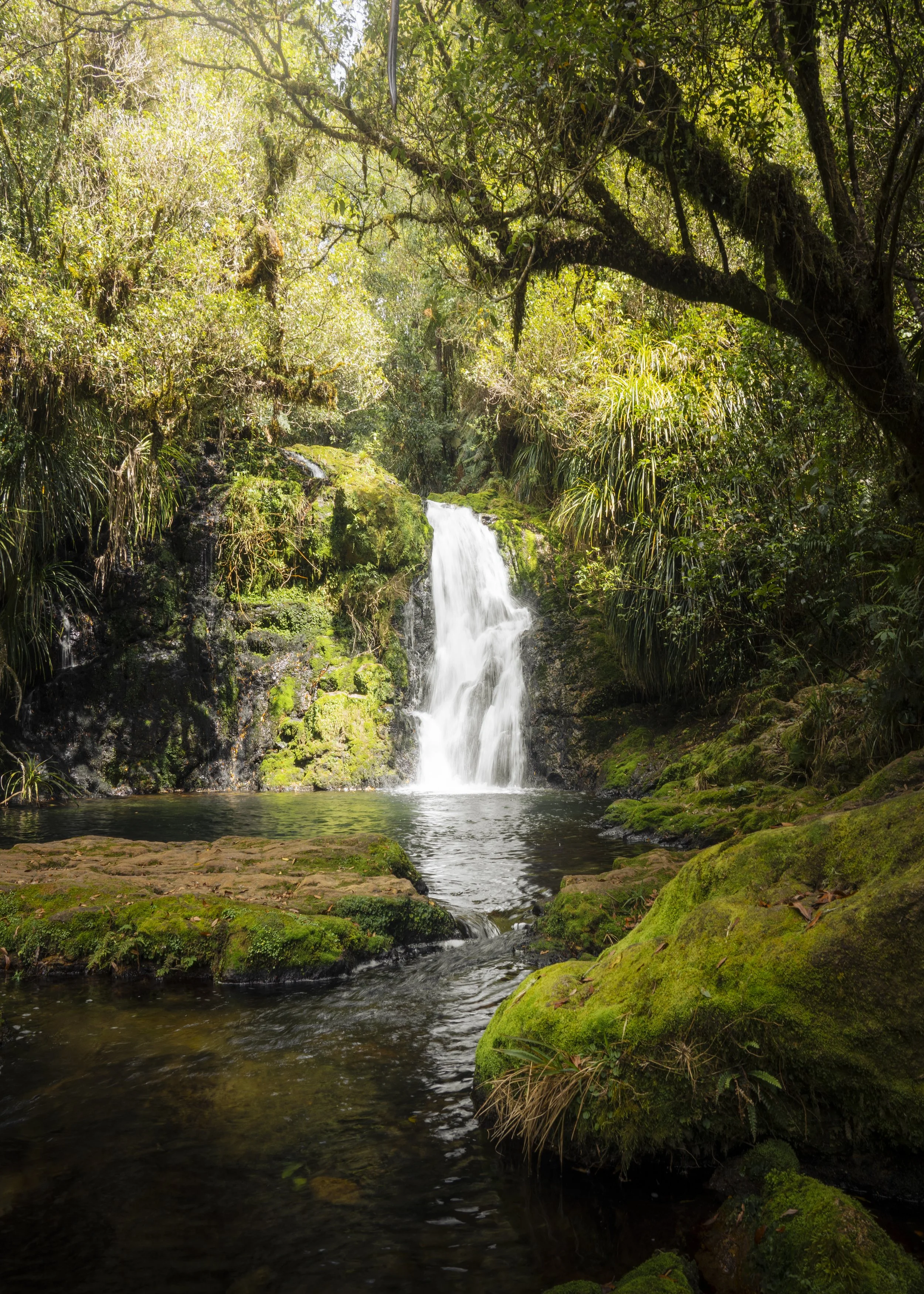
Ōtanewainuku Forest and Waterfall Walks
About 25 to 30 minutes south of Tauranga (near Ōropi / Te Puke), Ōtanewainuku Forest offers multiple tracks suited to families. One popular route leads to Whataroa Falls, which includes a pool at the base. Because paths vary in length and difficulty, pick a climb that suits your group.
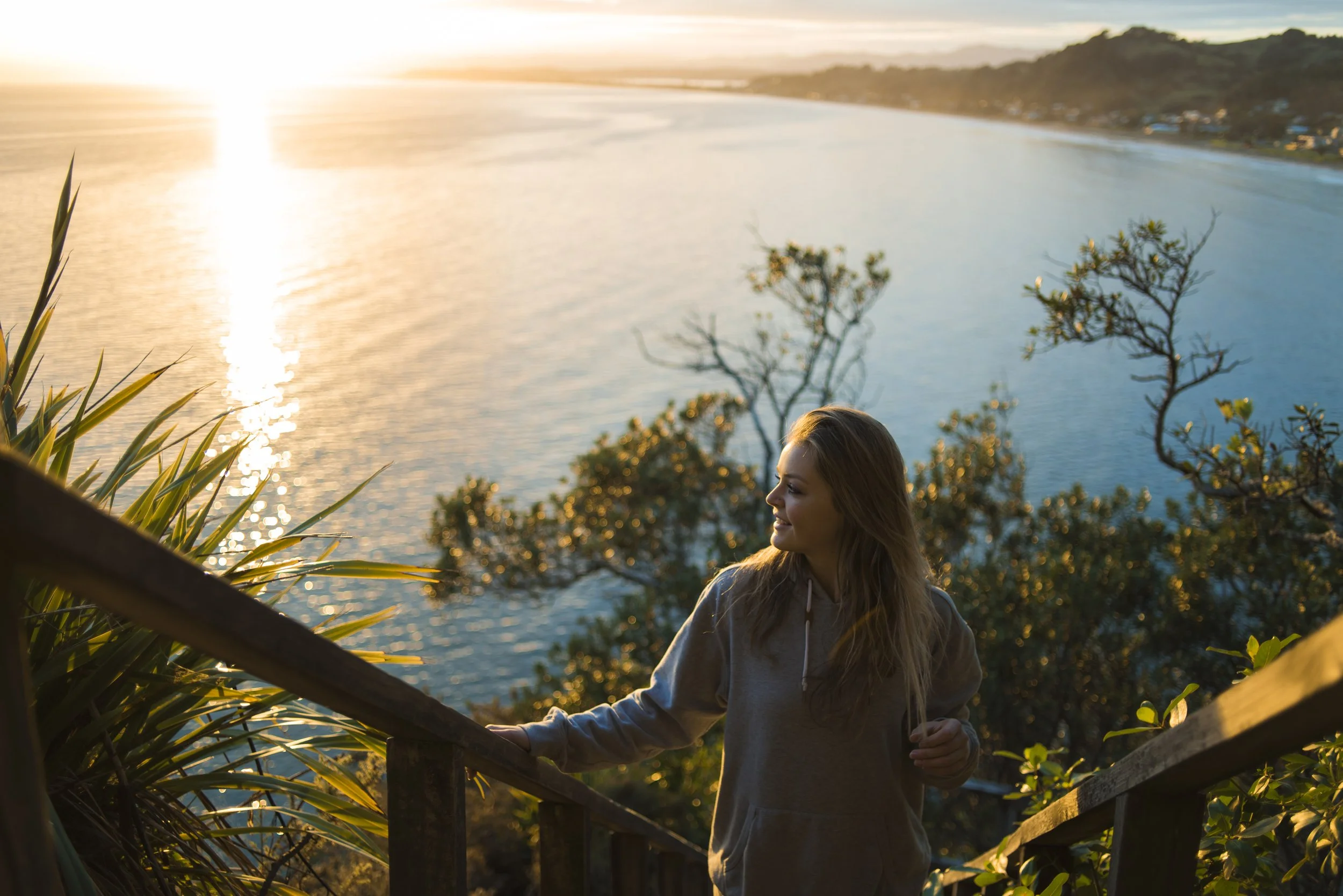
Ngā Tapuwae o Toi (Footprints of Toi Track)
If your family is up for a longer day out, the Ngā Tapuwae o Toi coastal-forest walk spans 16km and links Whakatāne to Ōhope. The full loop takes five to seven hours, but you can do it in sections (one to three hours) if you don’t want to commit to the full length. It passes through scenic reserves, pōhutukawa stands, seabird colonies and native forest. Dogs are not permitted as it is a kiwi zone. Try walking section by section, or just pick your favourite segment.
Orokawa Bay from Waihī Beach
For a bit more coastal adventure, the Orokawa Bay walk begins at the northern end of Waihī Beach and follows a tide-dependent coastal headland path. It’s roughly 45 minutes one way. The views are spectacular, and you can picnic in the shade of pōhutukawa trees in the bay. Just watch the tides and plan accordingly.
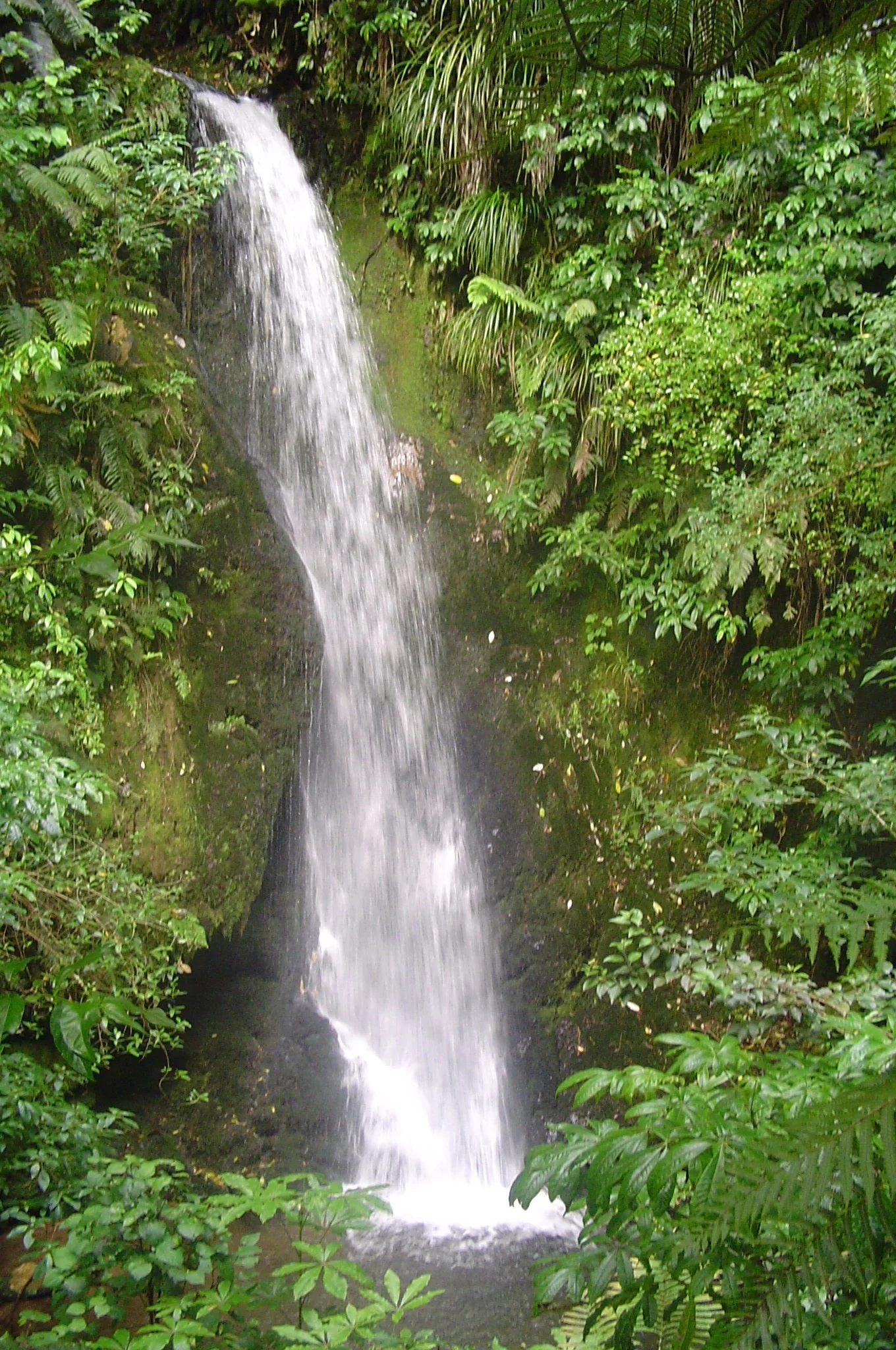
McLaren Falls and Waterfall Track
Just a 10- to 15-minute drive from Tauranga, McLaren Falls Park is a gem. One easy walk leads you through bush to a viewing platform over the falls, short enough for young legs but scenic enough to feel like an adventure. On summer evenings, the glow worms are said to appear along certain tracks. You can also wander around the lakeside paths (the McLaren Lakeside Walkway) for a longer but gentle stroll.
Kaiate Falls
A short drive (30 minutes) from Tauranga brings you to this forest walk through native bush, ending at a tiered waterfall. The track is about 45 minutes return and includes steps, so it’s more suited to families with confident walkers or older children. Swimming is not recommended, but the views and forest experience are worth it.
TOP TIPS
• Mix short and longer walks by combining a base-level stroll with one more adventurous hike on the same day, so everyone has something to enjoy.
• Time it with tides and weather. Coastal walks like Orokawa are best when tides permit and on calm days.
• Bring essentials such as sunblock, hats, snacks, water, insect repellent and wet-weather gear. Some tracks can be muddy after rain.
• Check track status. Some local reserves have track closures for infrastructure upgrades.
• Leave gates as found and carry out your rubbish. These tracks are well loved and cared for by local groups.
• Pace the kids. Use natural “pause points” (streams, lookouts, ponds) as moments to rest or explore.

WHAT’S ON
Tauranga’s event season is in full swing. A mix of sport, music and big-name performers are bringing plenty of life to the city. Whether you’re staying local or hosting visitors, there’s so much to see and do.
Tauranga’s event season is in full swing. A mix of sport, music and big-name performers are bringing plenty of life to the city. Whether you’re staying local or hosting visitors, there’s so much to see and do. “This summer is going to be huge,” says Tauranga mayor Mahé Drysdale. “Our city will be buzzing with events for everyone. Locals can enjoy an incredible line-up right here at home, and visitors will get to experience Tauranga at its absolute best – welcoming and full of energy.”
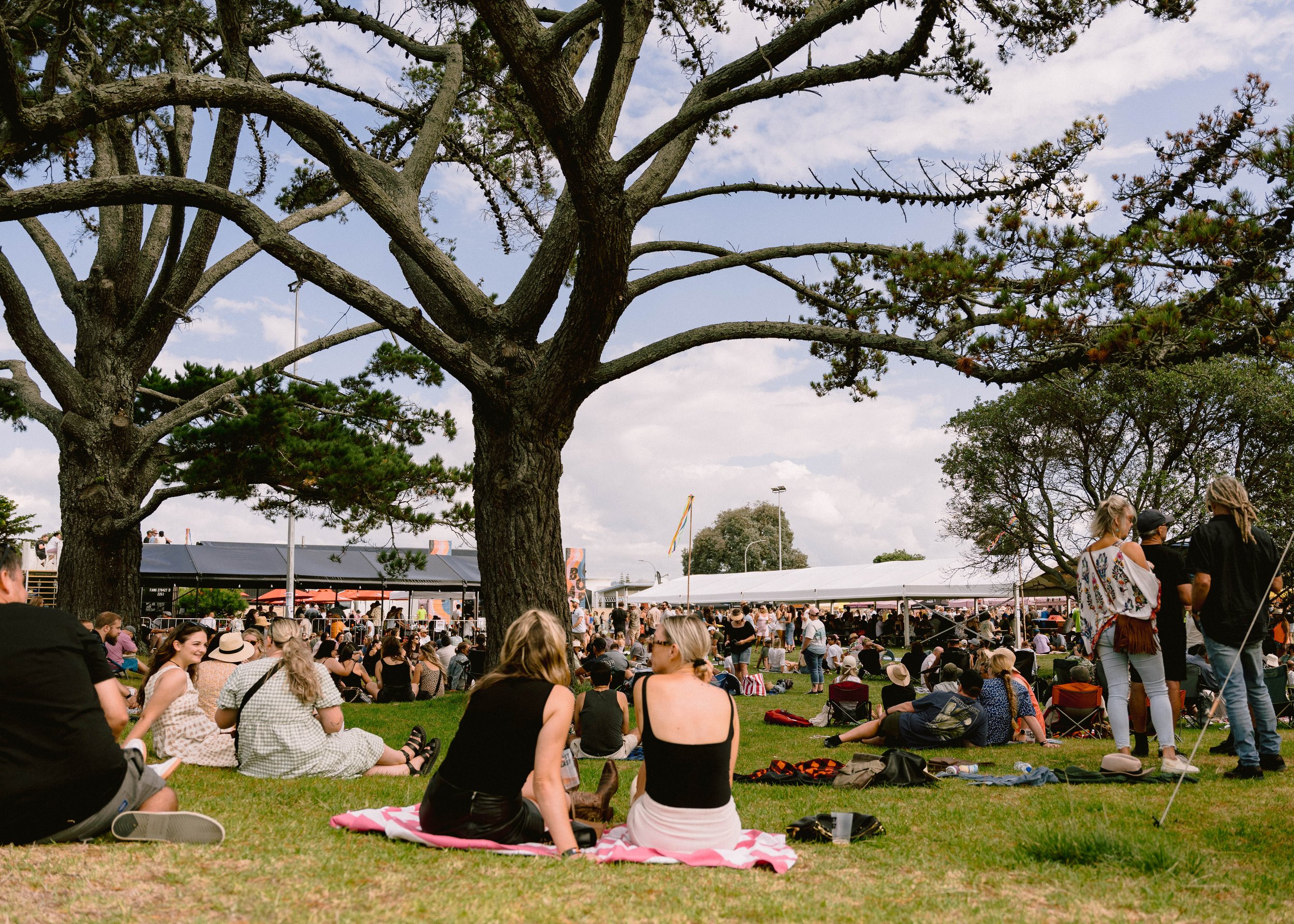
BLACKCAPS VS WEST INDIES — TEST MATCH December 18–22 — Bay Oval
Five days of classic summer cricket as the BLACKCAPS face the West Indies. Experience a lively crowd, great match-up and that unmistakable Bay Oval atmosphere.
L.A.B. & STAN WALKER
December 27 — Wharepai Domain
Two of Aotearoa’s most loved acts return for an afternoon and evening of music in the heart of the city. A strong line-up and a cruisy festival feel is exactly the kind of day Tauranga does well.
NEW YEAR’S EVE CELEBRATIONS
December 31 — Tauranga city centre, Mount Maunganui, Greerton, Matua, Pāpāmoa
Music, entertainment, food trucks, and a 9.30pm fireworks display at all sites (except Greerton which has a light show). A relaxed, fun New Year’s Eve for families and anyone keen to stay close to home.
HOT SPRING SPAS T20 BLACK CLASH
January 17 — Bay Oval Team
Rugby squares up to Team Cricket, led by Kieran Read and Dan Vettori. Fast, noisy and full of personality, this event is always a crowd-pleaser.
JIMMY CARR — LAUGHS FUNNY TOUR
January 25 — Mercury Baypark
A night of sharp, unapologetic comedy from Jimmy Carr as he brings his latest tour to Tauranga.
BAYPARK SPEEDWAY — SUMMER SERIES
Various dates — Mercury Baypark
Stadium High-powered racing, packed stands and full-throttle excitement, the summer series is back with a full run of events.
THE CHIEFS VS FIJIAN DRUA
January 30 — Blake Park
Get ready for a summer showdown as the Chiefs take on the Fijian Drua at Blake Park. Expect high-energy footy, electric fan spirit, and a warm-weather evening out for friends, families and rugby lovers alike.
FISHER
January 31 — Bay Oval
Global dance heavyweight FISHER becomes the first artist to stage a major concert at Bay Oval – set to be the biggest party the Bay has ever seen.
UB40 FEATURING ALI CAMPBELL
February 7 — Bay Oval
A summer favourite, with Ali Campbell bringing the Red Red Wine and a stack of hits to Bay Oval, all wrapped in an easygoing festival feel.
BEAST OF A FEAST
February 28 — Soper Reserve
Tauranga’s not-so-typical beer, food and music festival returns, featuring Ladi6, Avalanche City and P-Money.
TOI TAURANGA ART GALLERY
Current exhibitions — Tauranga
The gallery has reopened with a fresh line-up of exhibitions from artists across Aotearoa, Australia and the Pacific. It’s definitely worth stopping in to see what’s new.

HEART OF HASTINGS
Eat, drink, stay and play your way through a city that’s become one of Hawke's Bay’s best-kept secrets.
Eat, drink, stay and play your way through a city that’s become one of Hawke's Bay’s best-kept secrets. Here, it’s all about quality. Whether you’re here for a weekend or just a wander, you’ll get a taste of the city’s new confidence everywhere you go.
PLAY
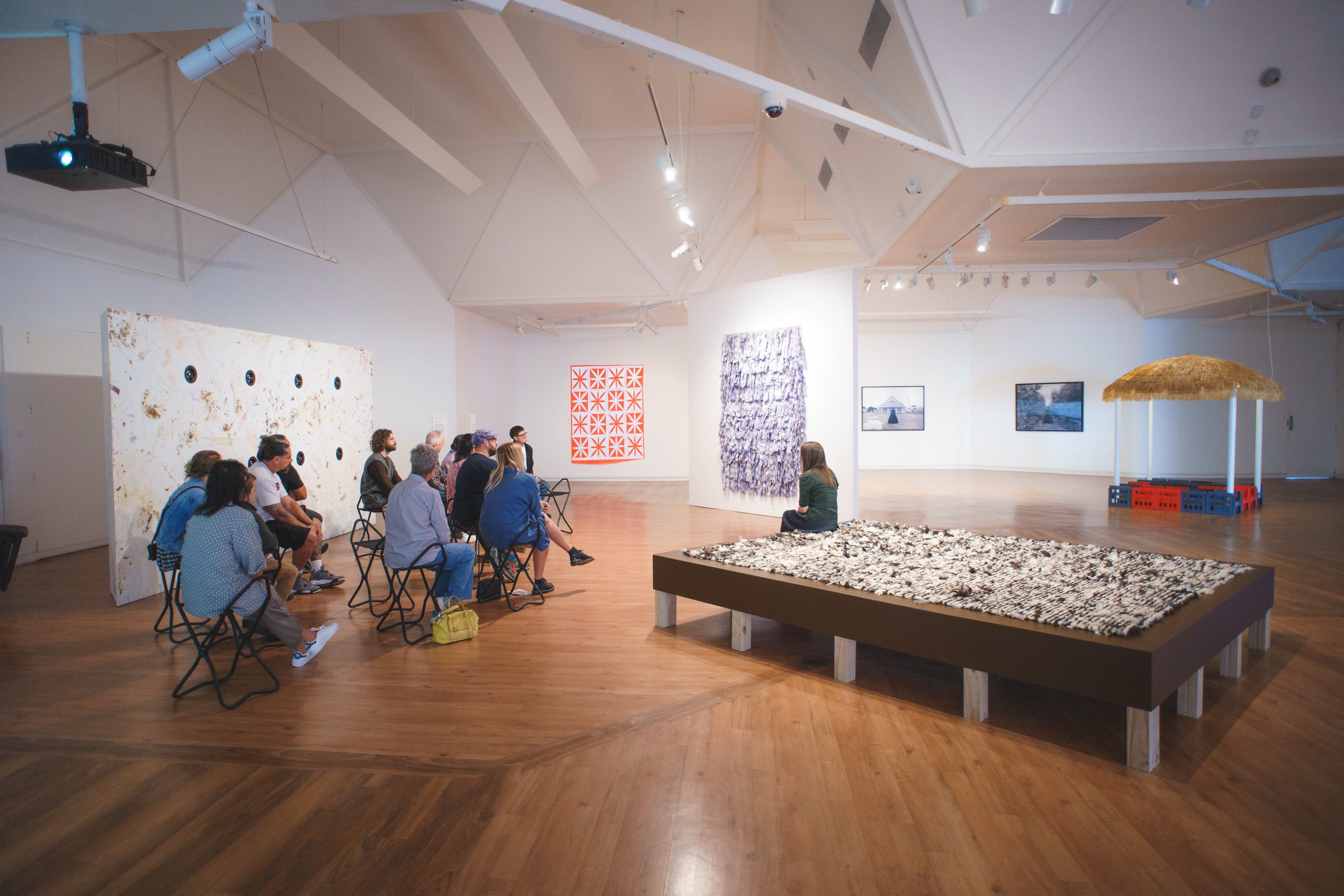
HASTINGS ART GALLERY
Te Whare Toi o Heretaunga — the Hastings Art Gallery — is one of Aotearoa New Zealand’s must-visit creative hubs. This non-collecting gallery showcases a constantly changing line-up of contemporary works from local talents and international visionaries. Visitors can dive into a rich programme of exhibitions, hands-on public events, and inspiring school activities designed to spark curiosity and foster a lifelong love of art. Housed in an eye-catching 1970s building in Hastings’ Civic Square, the gallery sits beside the historic Hastings War Memorial Library, with the striking sculptures of Ngā Pou o Heretaunga welcoming travellers at the entrance.
201 Eastbourne Street East
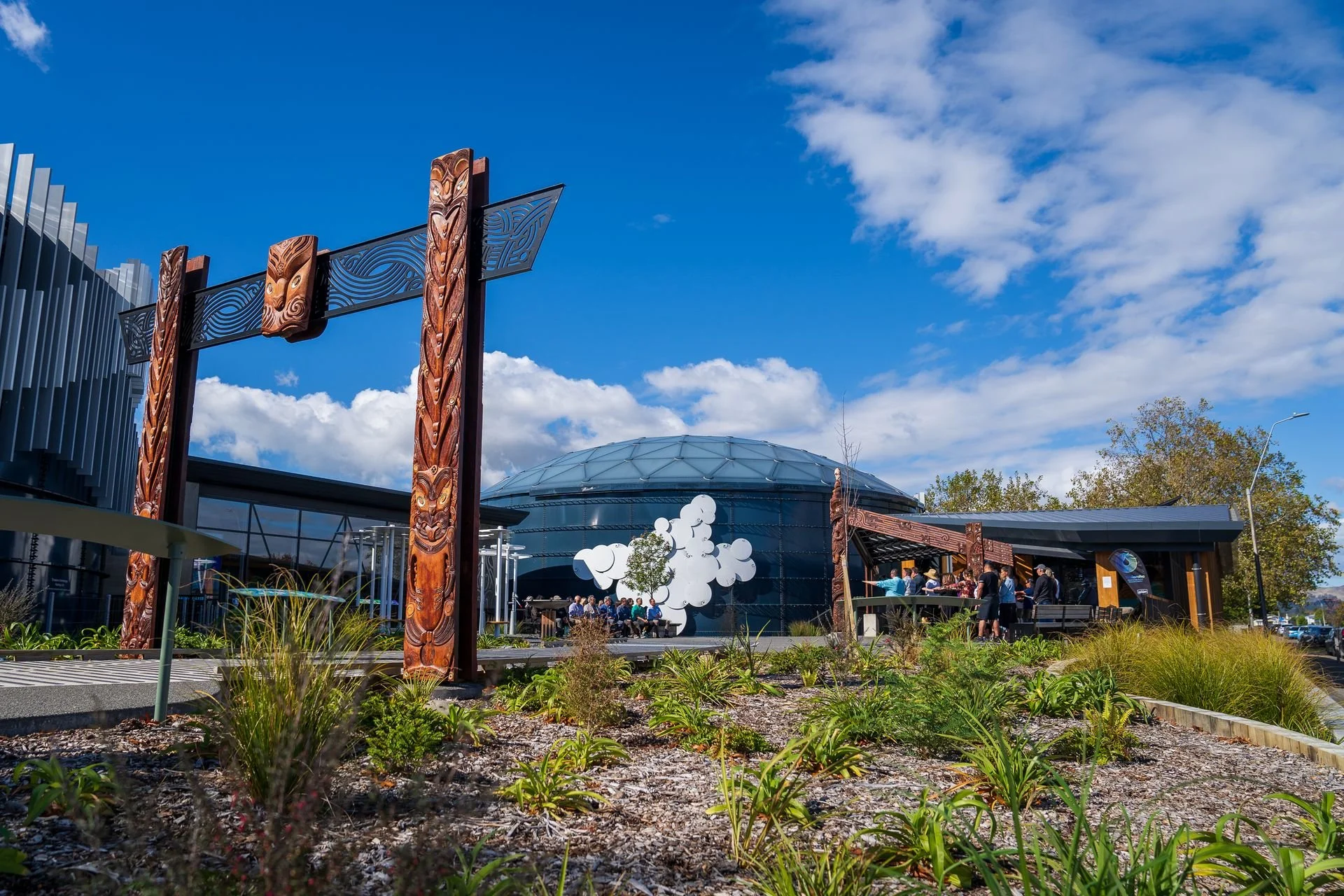
WAIAROHA — HERETAUNGA WATER DISCOVERY CENTRE
A surprisingly engaging stop, Waiaroha brings the story of water to life through hands-on exhibits, interactive games and clever design. Watch the treatment process through glass panels, pump and spray at outdoor stations, and follow the journey of water from mountains to sea. Designed for families, curious visitors and locals alike, this City Nation Place Global Award winner connects us all.
Corner of Southampton Street East & Hastings Street South

TOITOI ARTS AND EVENTS CENTRE
Offering more than just a stage, Toitoi is a place where creativity thrives and where stories are shared and cultures celebrated. From world-class performances, conferences and grassroots initiatives, Toitoi champions the power of the arts to inspire. Savour a relaxed meal, indulge in wine tasting, grab a morning coffee, or toast the night with a pre-show cocktail. Whether you're attending a show, hosting an event, or simply soaking in the atmosphere, the Toitoi complex invites you to be part of something extraordinary.
TOITOIVENUES.CO.NZ
EAT
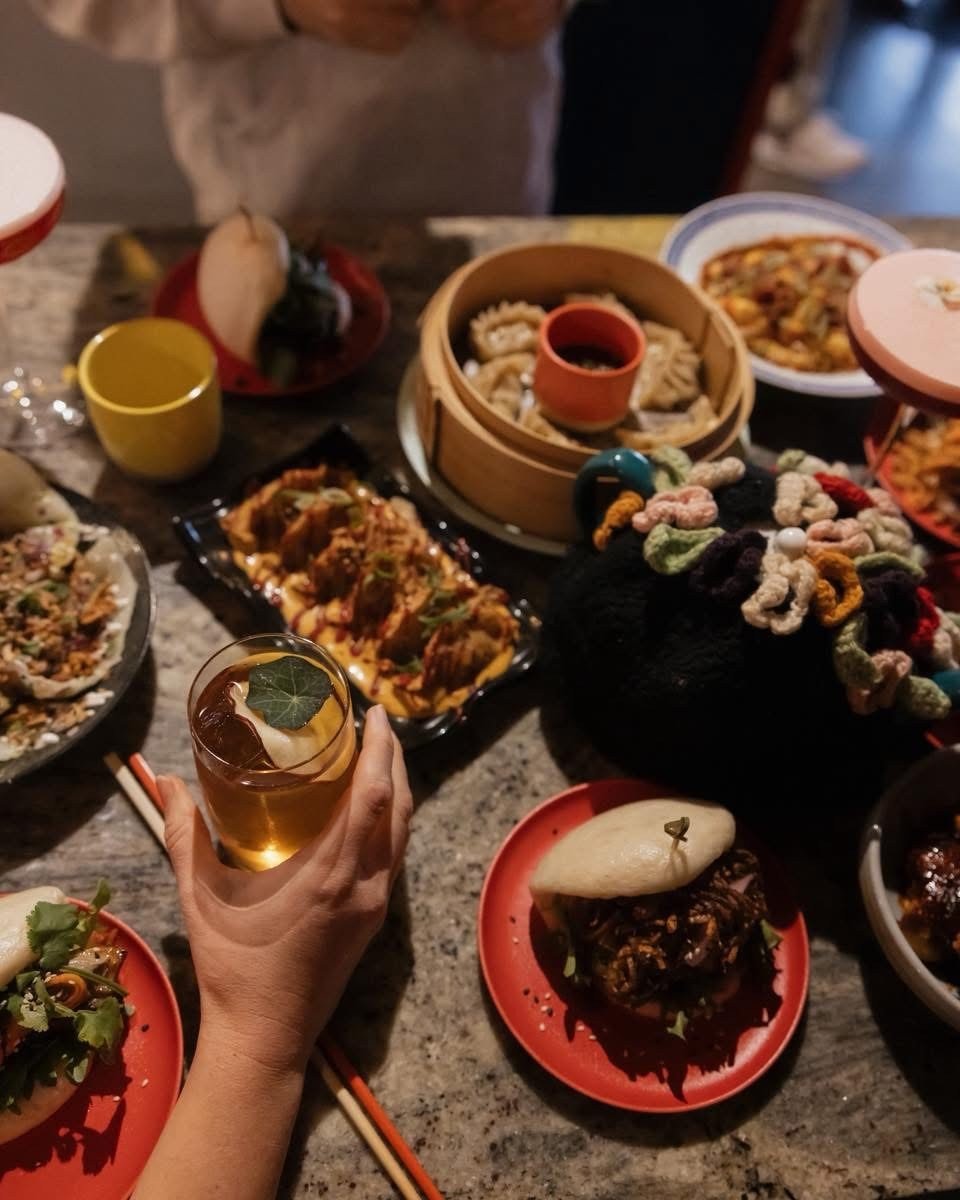
FUN BUNS
A small-but-mighty gem in Hastings’ heart, Fun Buns is all about vibrancy and flavour. Think handmade gua baos bursting with fresh fillings, dumplings, satisfying loaded fries and street-food vibes done right. It’s the kind of place you pop into for lunch, stick around post-shopping for a cheeky bite or make a light dinner out of share plates and cocktails. It’s so good you’ll want it on speed dial for those “don’t-feel-like-cooking” nights.
300 Heretaunga Street East
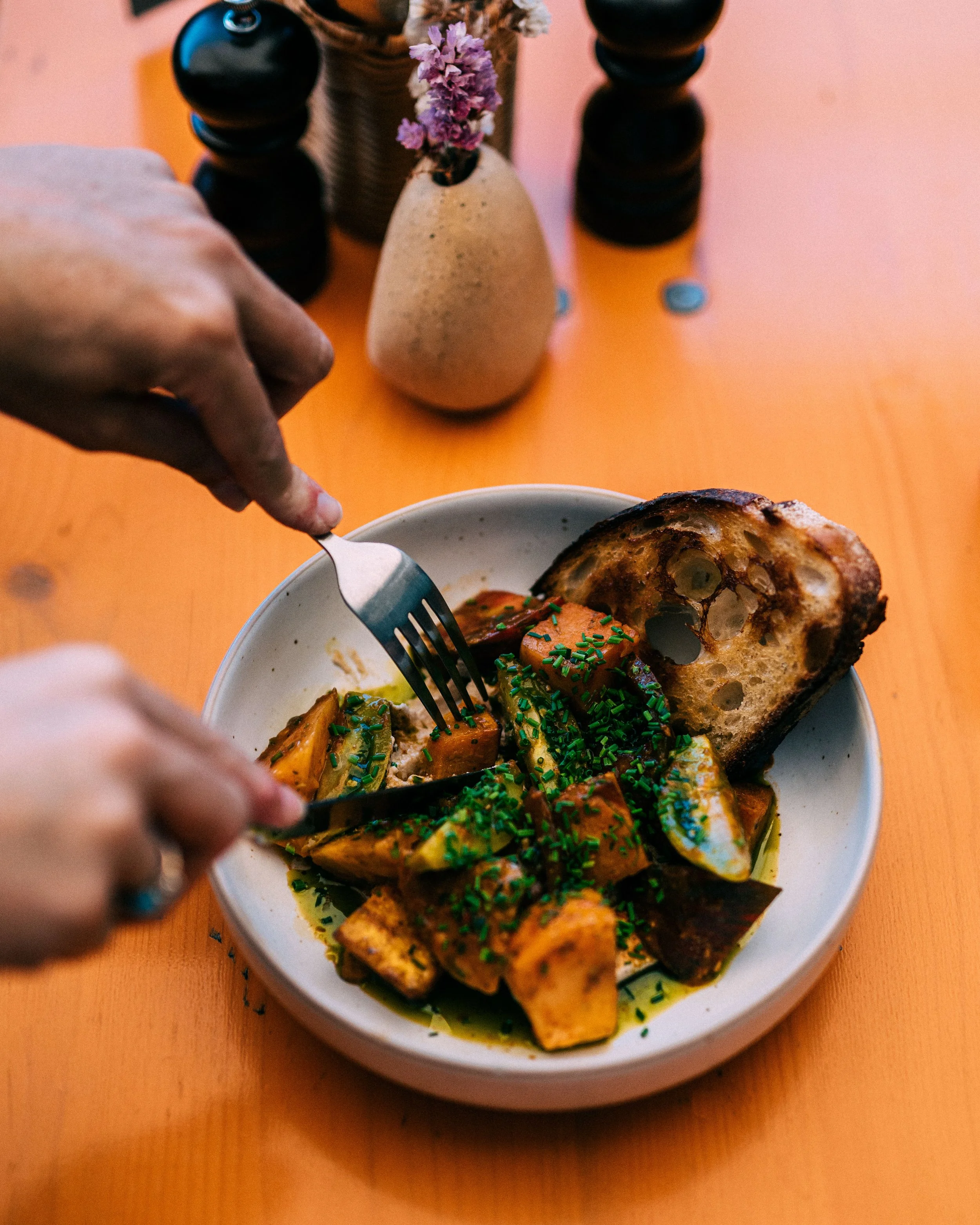
COLAB CAFÉ
Colab Café has quickly become a local favourite for its warm service and creative weekly menu. The cabinet is always tempting. Think pistachio scrolls, coffee-and-cheddar buns, fresh salads, and inventive matchas locals rave about. Cosy and welcoming with sunny outdoor seating, it’s an easy choice for brunch or a midweek pick-me-up.
Farming House Building, 211 Market Street South
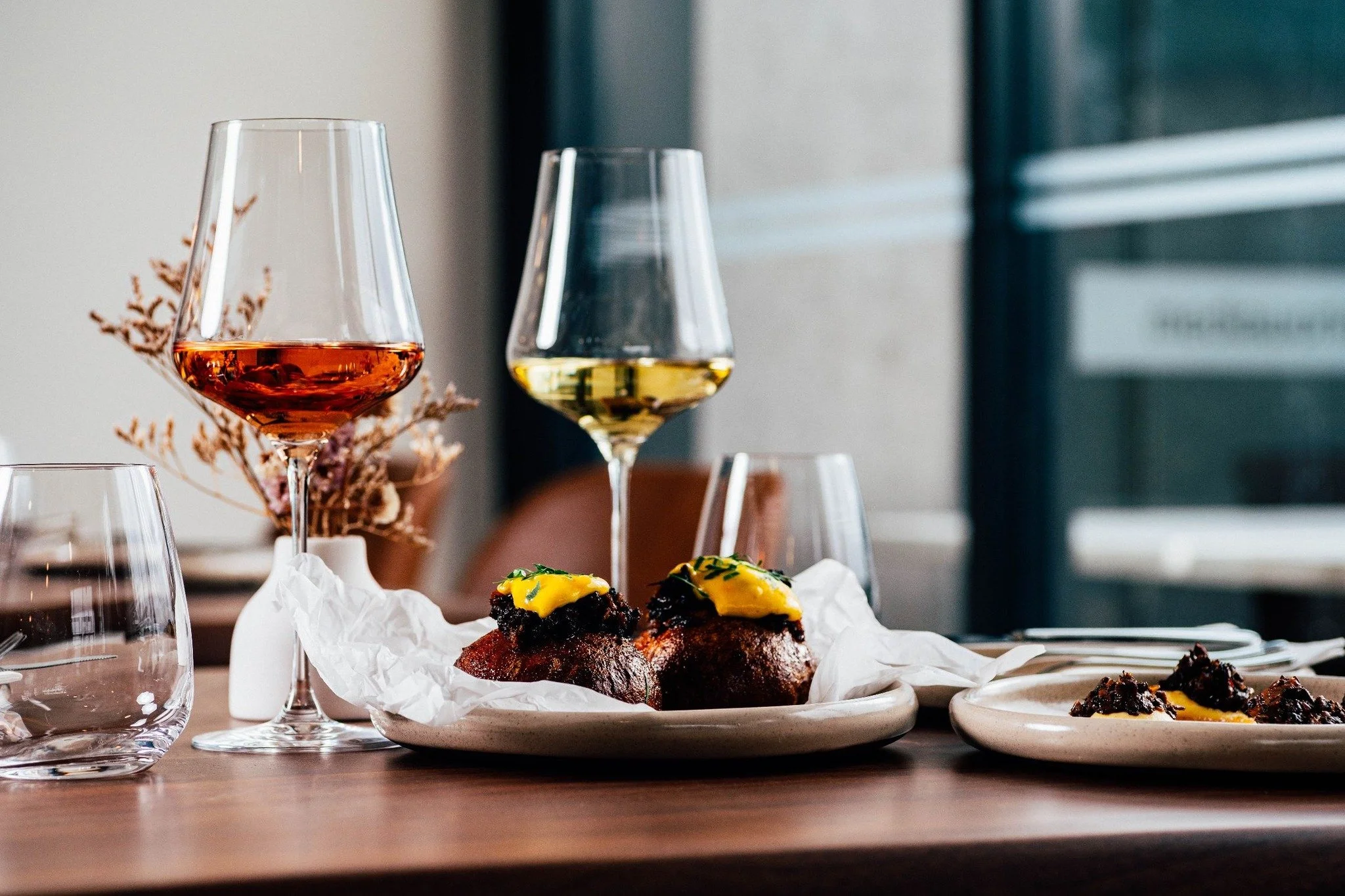
RESTAURANT ARI
Hastings’ newest go-to for contemporary dining, Restaurant Ari serves up Mediterranean-inspired fare with a clear focus on local produce. Expect free-range meats, fresh seafood and seasonal ingredients, all delivered with warmth and flair. Ideal for a special night out or gathering with friends.
103 Karamu Road South
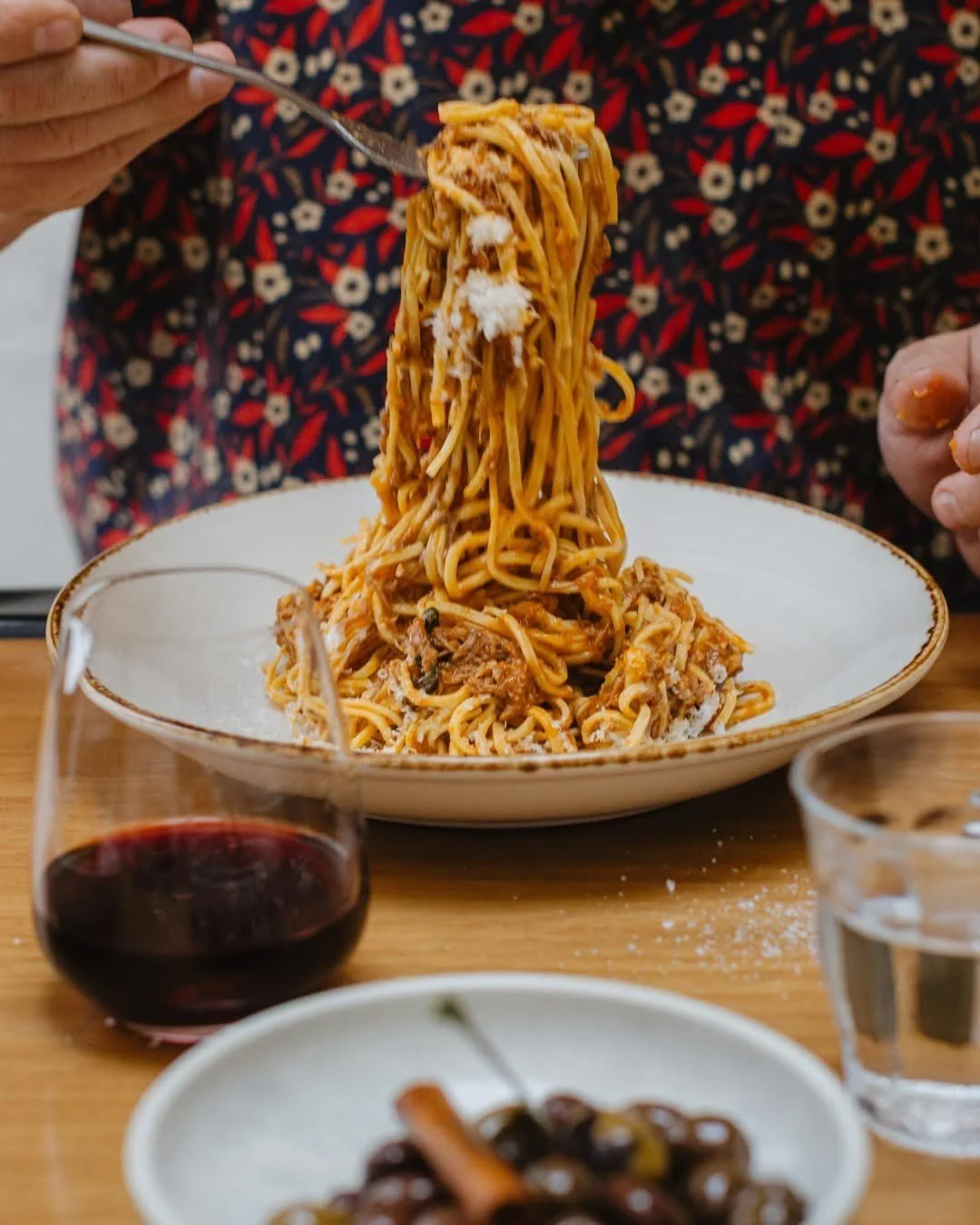
SAZIO
If you’re after something a little more grown-up but still relaxed, Sazio is the go-to for handmade pasta and warm hospitality. The menu draws on Italian and Argentinian heritage, with fresh free-range meats and seafood crafted on-site daily. Whether it’s a special occasion or just a stylish night out, this one nails the balance. Date night sorted.
215 Heretaunga Street East
STAY
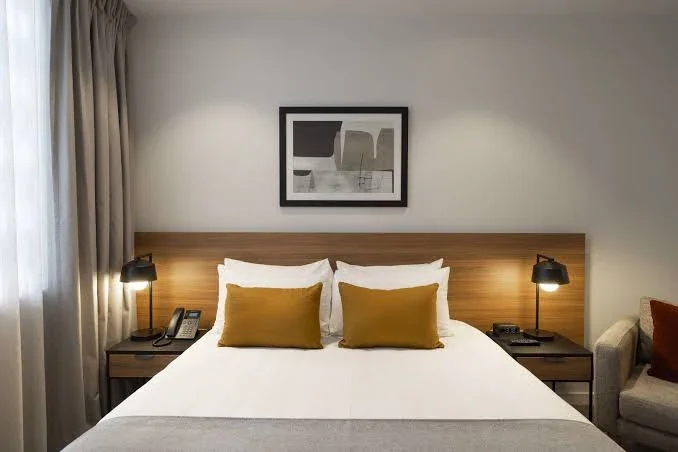
QUEST HASTINGS
Need a base in Hastings for exploring the region? Quest Hastings offers modern, thoughtfully designed rooms and suites in the heart of the city. The central location puts you within walking distance of cafés, shops, restaurants and all the spots above. Comfortable, convenient and well-set for a longer Hawke’s Bay stay.
304 Eastbourne Street East

BRAVE BREWING CO.
Hawke’s Bay craft-beer fans, look here. Brave Brewing Co. has carved out a stellar reputation in Hastings. This family-run operation pours a solid lineup of beers on tap in a chilled-out taproom, with crowd pleasing food to match. Whether you’re after something hoppy or a little experimental, this place has the energy for an easy-going catch-up.
205 Queen Street East
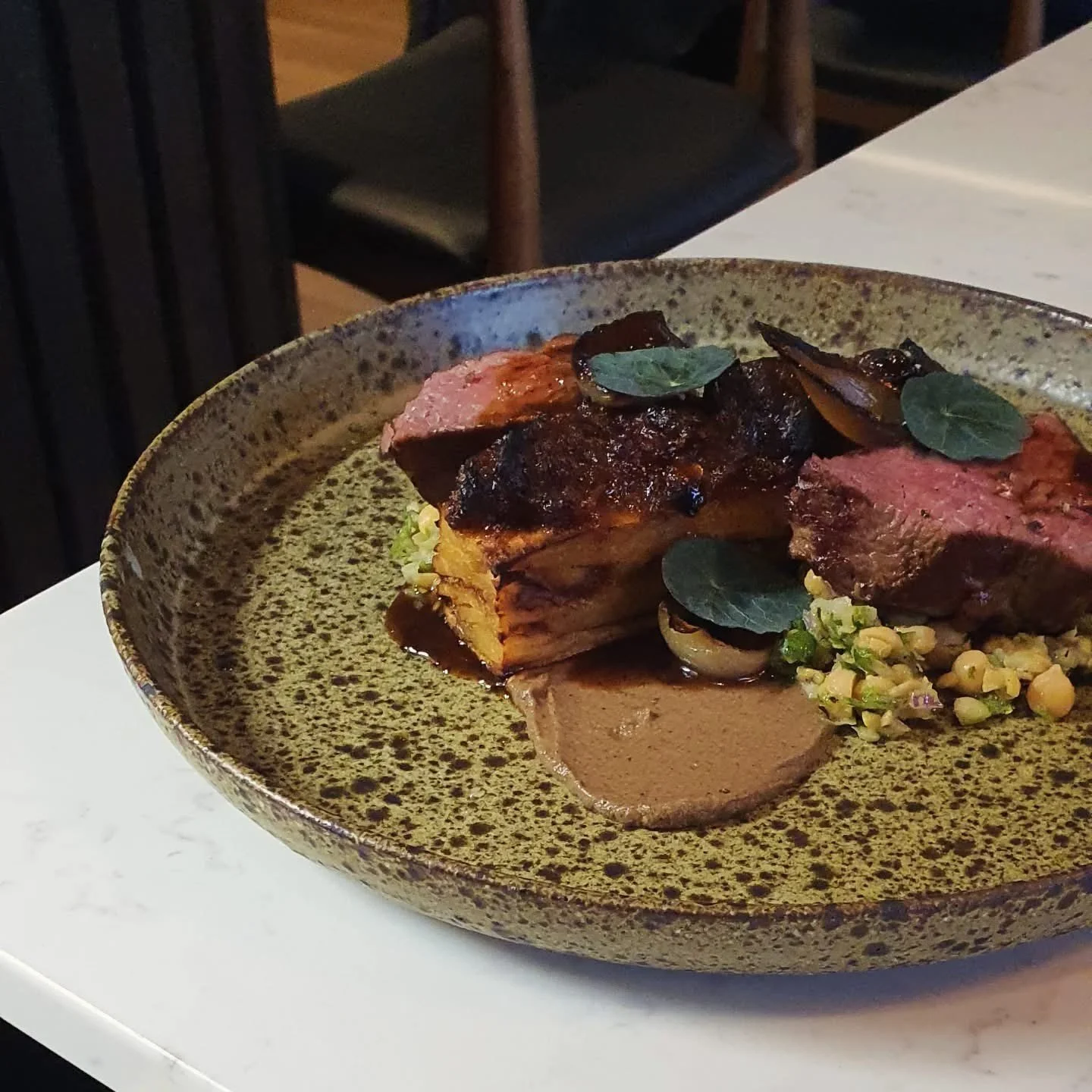
CELLAR 495
This boutique wine bar and eatery brings serious wine know-how to Hastings in a comfortable space. Led by Michael Henley, the 495th Master of Wine, the bistro-wine bar showcases Hawke’s Bay and international labels alongside sharing plates inspired by local produce.
319 Heretaunga Street East
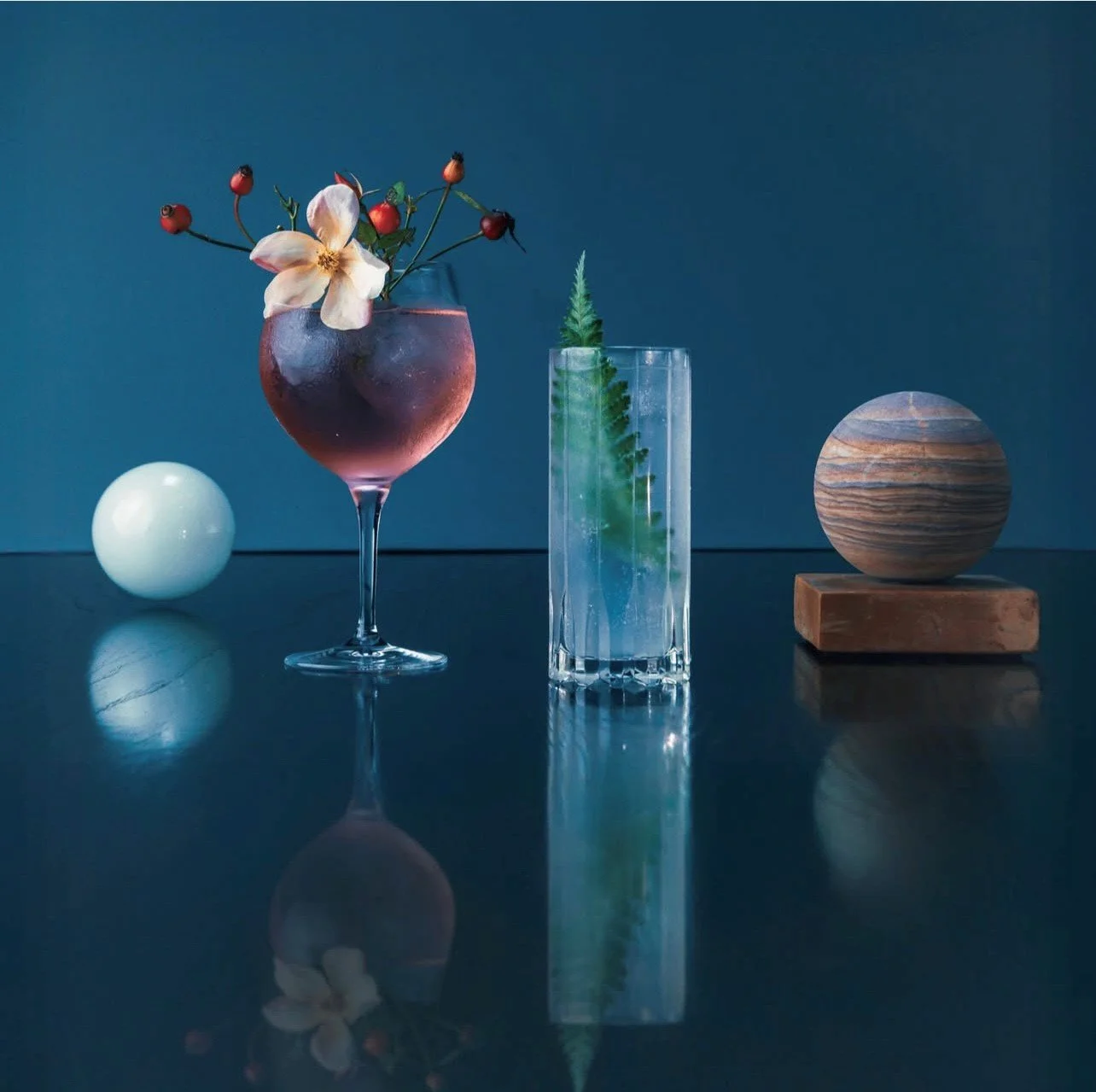
HASTINGS DISTILLERS
Hastings Distillers are doing clever things in a beautifully-restored Art Deco space. As New Zealand’s f irst certified-organic artisan spirits house, they craft distinctive gins and elegant liqueurs using wild-foraged botanicals, exotic French spices and pure spring water. Their award-winning “East Block 200” gin, made with ten organic botanicals (eight from Hawke’s Bay), picked up Double Gold at the New Zealand Spirit Awards. The tasting room doubles as a casual cocktail stop and bottle-shop, all in one.
231 Heretaunga Street East
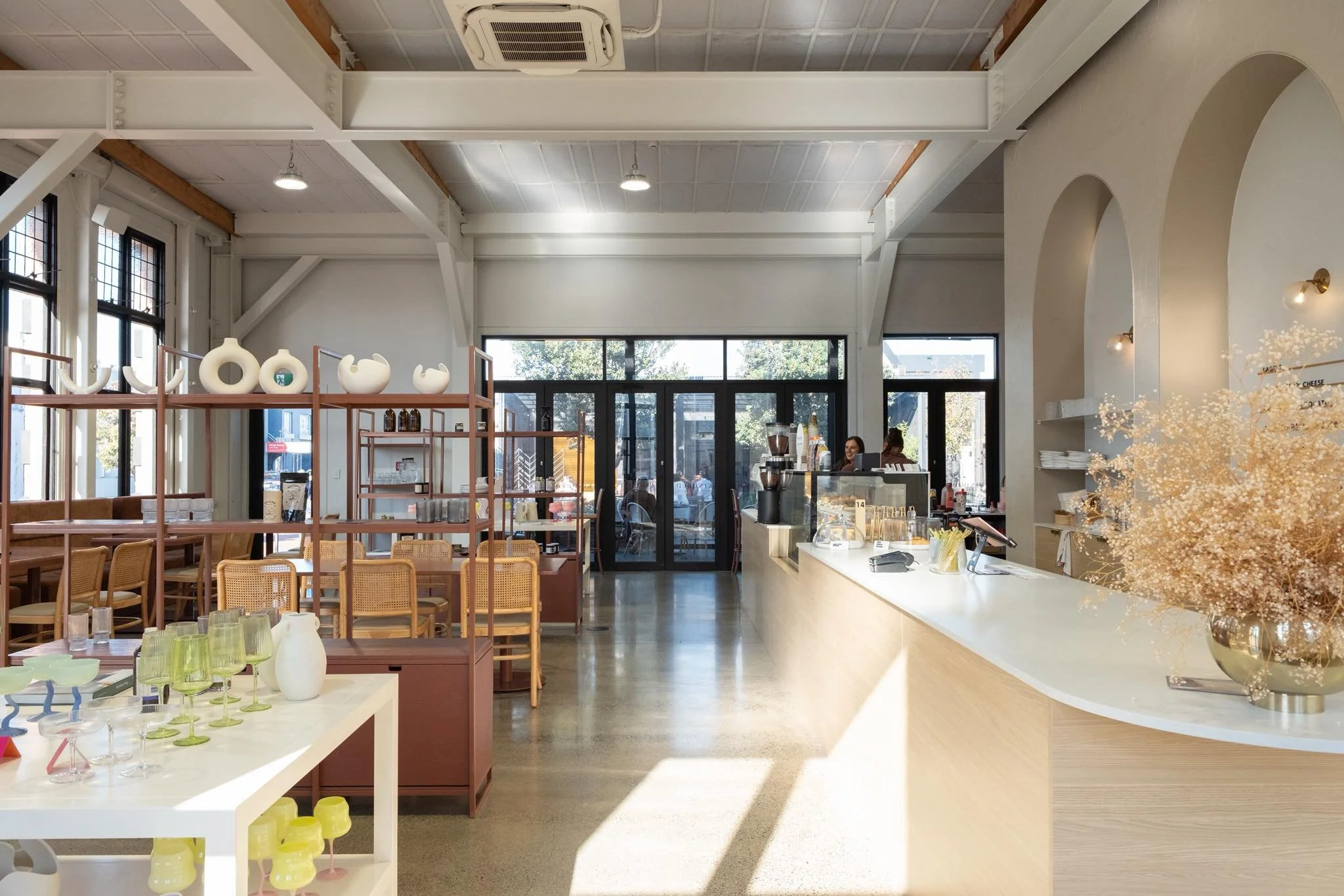
KINDRED ROAD
Kindred Road is a homewares and lifestyle boutique that brings together local craft, sustainable design and good coffee under one roof. The stylish interiors and in-house café make it an easy place to linger while browsing seriously cool finds. A beautiful stop for gifts or a little treat — the bagels are a must.
201 Queen Street East
DECIBEL WINES
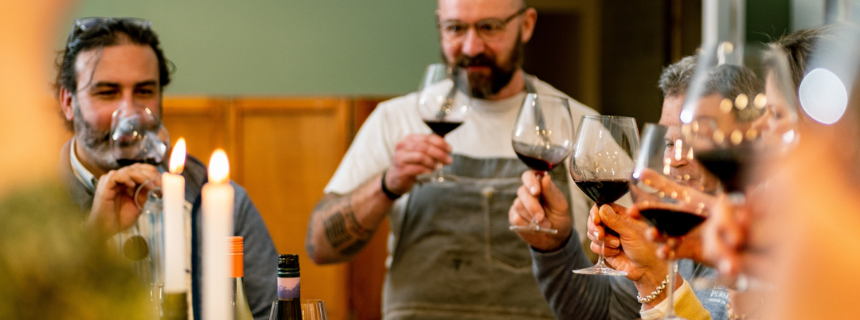
Located in downtown Hastings, Decibel Wines is run by a winemaker with a rock-band-manager past — yes, really. Born from a love of music and a touch of rebellion, Decibel has carved out a name as Hawke’s Bay’s cool, counter-culture winery. The tasting room is light and unpretentious, pouring small-batch wines that are fine but fun and best shared with good food and great company.
101 Warren Street South

NAPIER UNCOVERED
Beachside strolls, great eats, creative corners and cool local finds. Napier’s got character in spades and plenty to explore. Here’s where to shop, eat, drink and wander while you’re in town.
Beachside strolls, great eats, creative corners and cool local finds. Napier’s got character in spades and plenty to explore. Here’s where to shop, eat, drink and wander while you’re in town.
SHOP
TENNYSON GALLERY
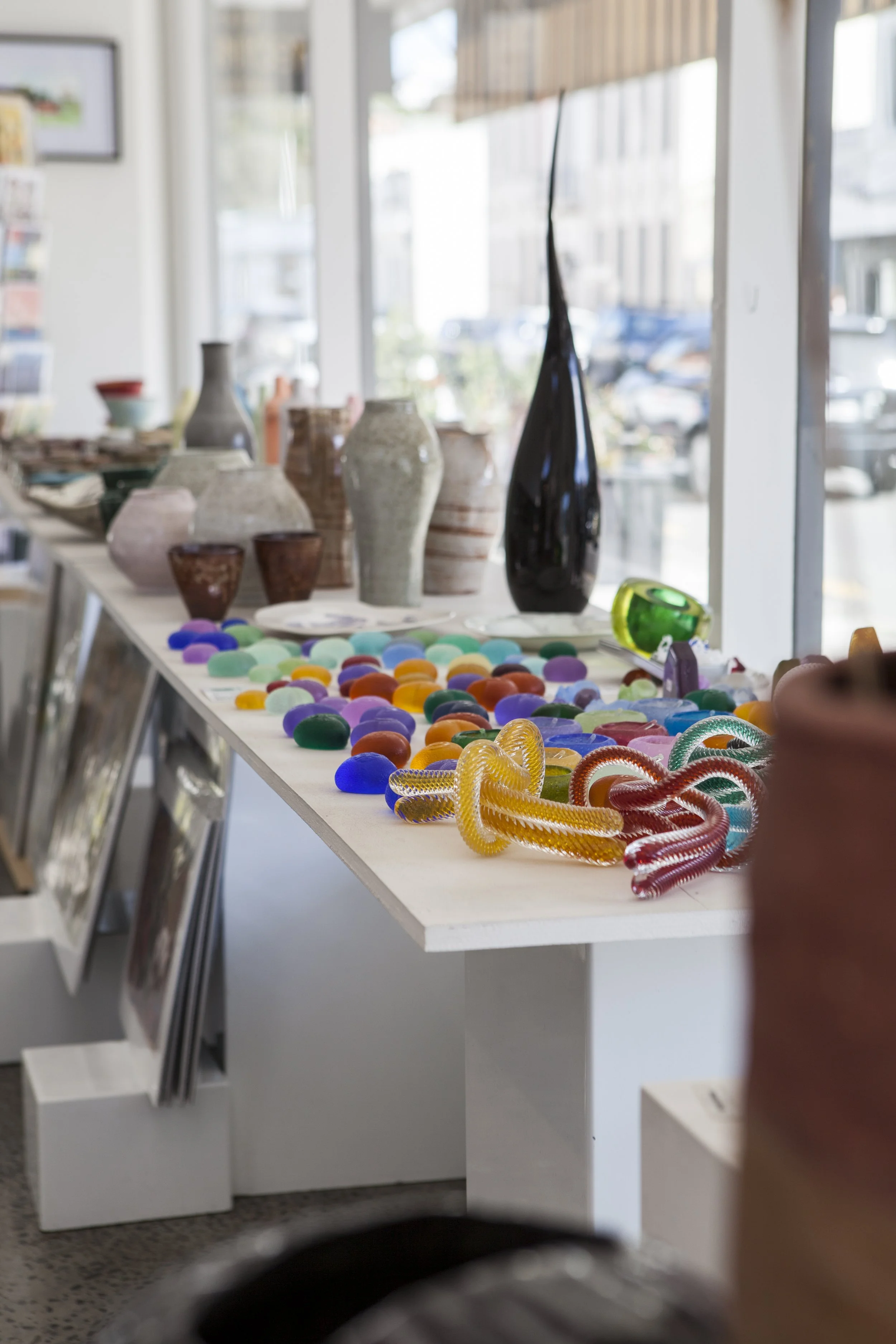
Tennyson Gallery is owner Lizzie’s celebration of New Zealand creativity. This bright, welcoming space is filled with art that’s as diverse as it is beautiful. Expect everything from bold paintings and fine-art prints to glasswork, sculpture and contemporary jewellery. It’s the perfect spot for anyone who loves original, homegrown talent.
Cnr Tennyson & Hastings Streets
BROCANTE
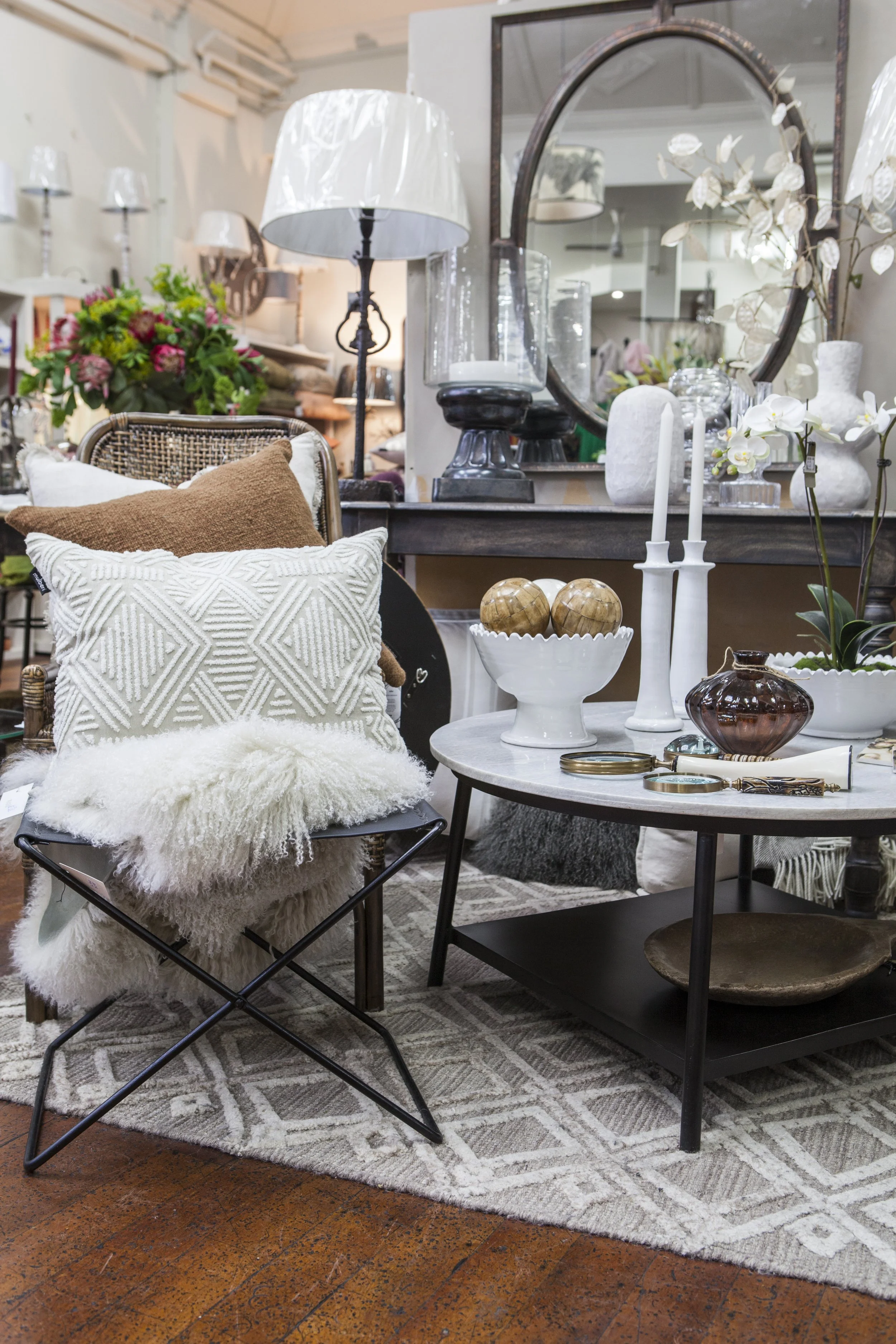
Andrea’s gorgeous store is filled with unexpected and utterly seductive treasures. It’s an eclectic blend of exclusive homewares, vintage design, jewellery, scarves, clothing and body products. If you love a little French flair, then Brocante is the place for you. And don’t miss the impressive 1930s stained-glass ceiling dome.
31 Tennyson Street
BOYD-DUNLOP GALLERY
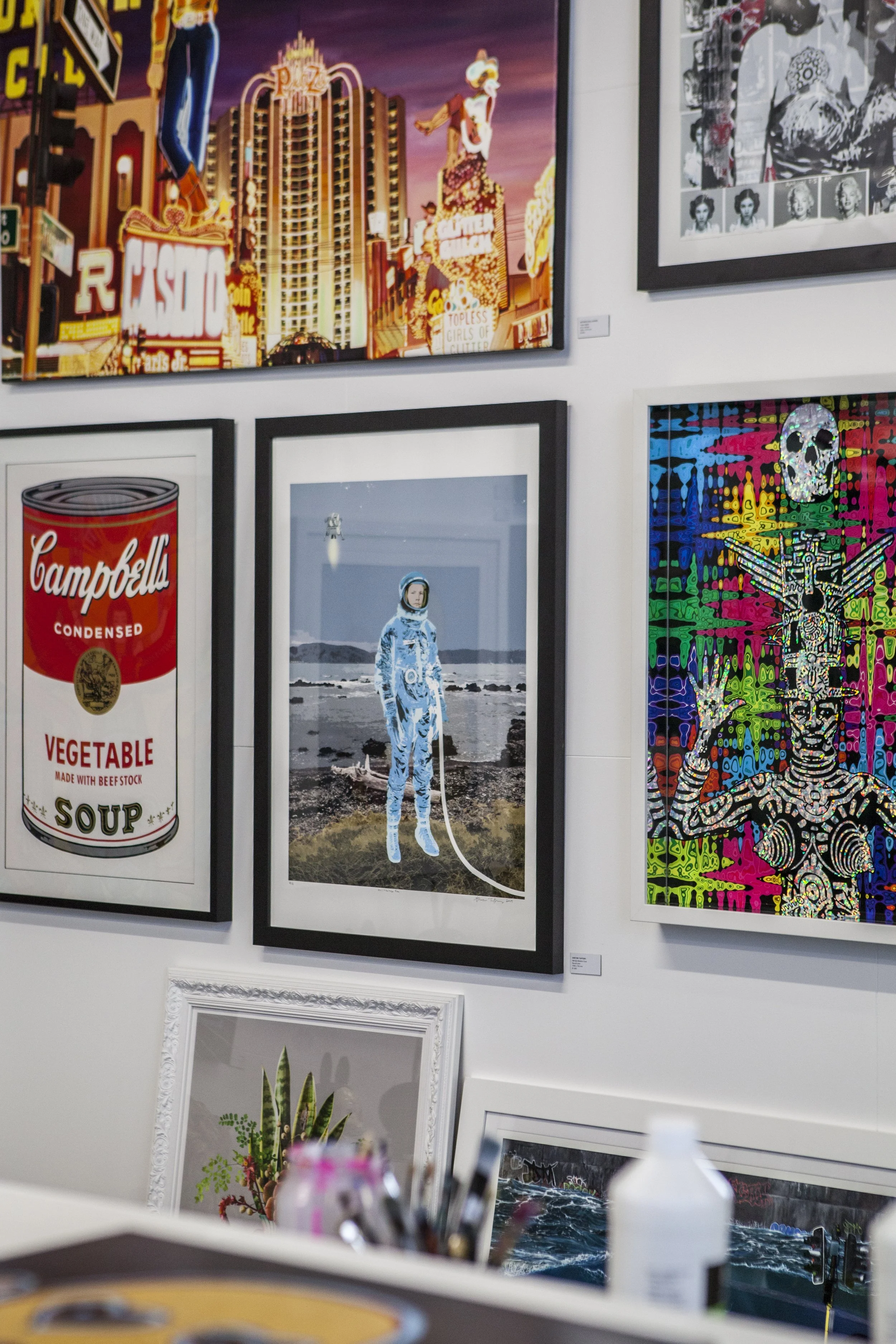
Richard and Elise’s gallery is a cornerstone of the city’s art scene, showcasing a wide selection of contemporary and fine art prints across two stunning levels. Open daily and featuring regular exhibitions from leading New Zealand artists, it’s always worth the visit.
4 Hastings Street
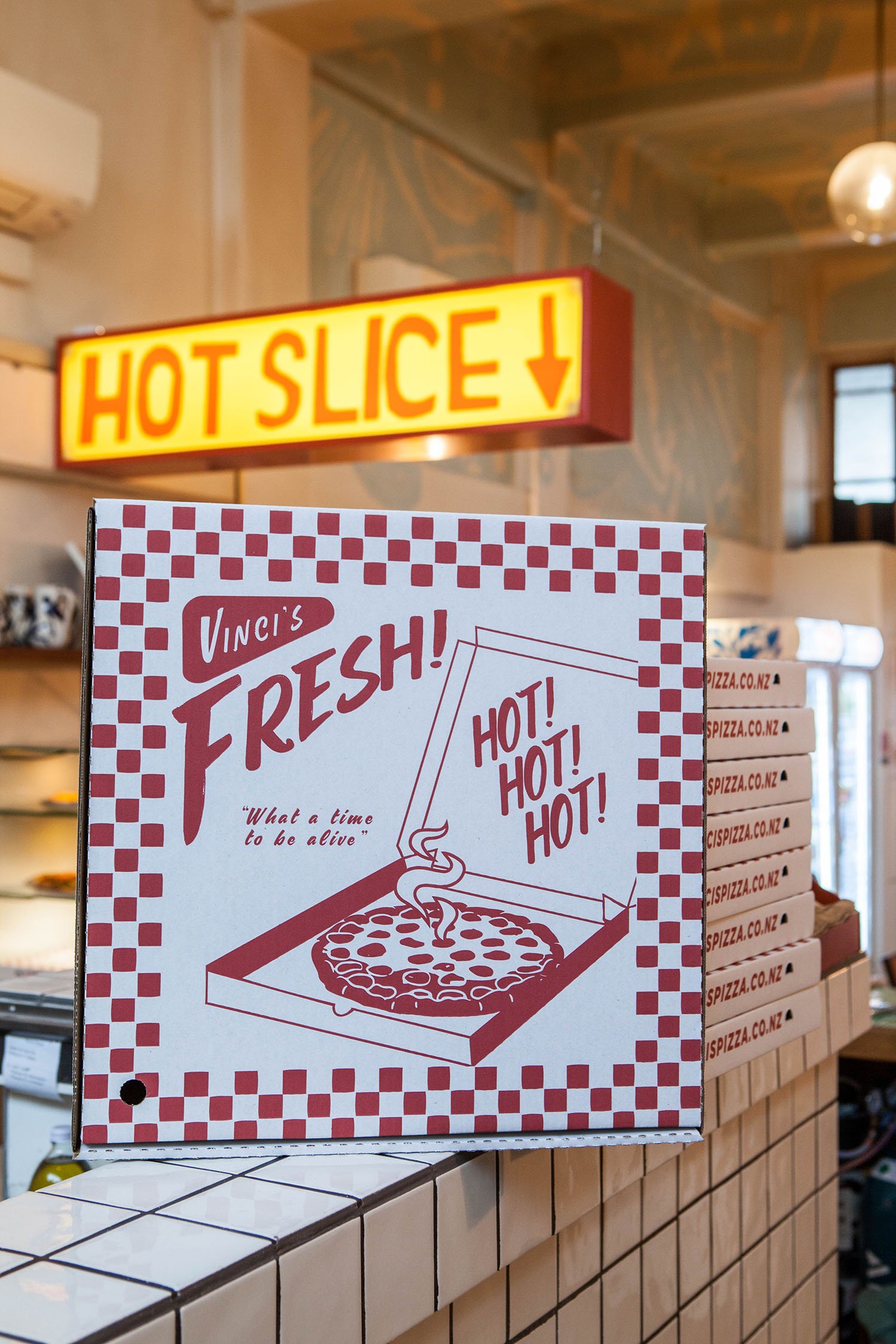
VINCI'S PIZZA
Vincent has brought a vibrant street side vibe to life while renovating indoors. Enjoy hand-stretched sourdough pizza by the slice or as an 18-inch whole pie. Grab a quick bite or settle in with friends and family. With a great range of independent craft beers, wine on tap and house-batch cocktails, every day is a pizza day. Open seven days from 11 am. Dine in or take out.
29A Hastings Street
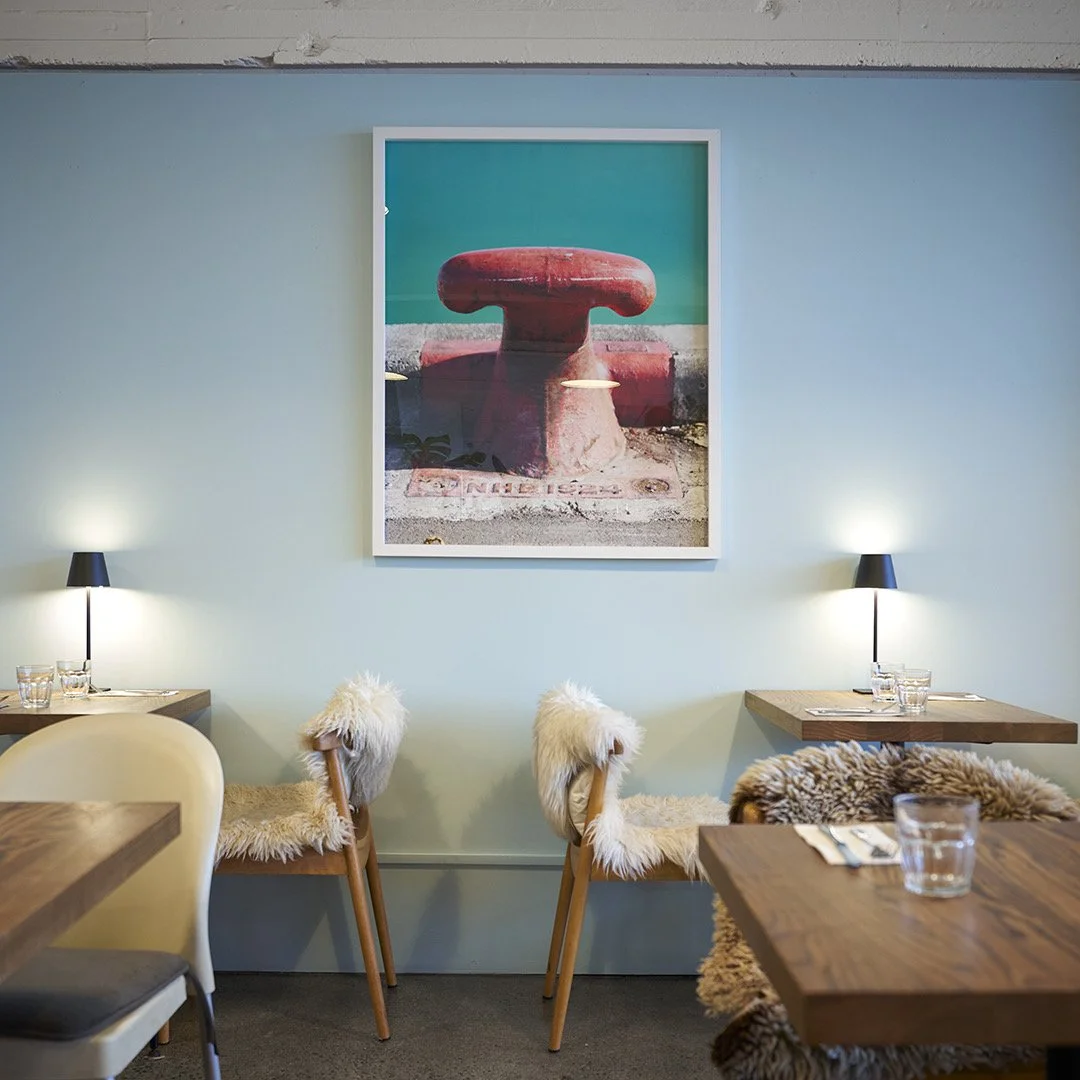
HUNGER MONGER
Fraser and Agnieszka’s menu is a true celebration of the sea. Packed with as much variety as they can find, a few favourites remain, while most dishes ebb and flow with the seasons. Sample a range of Snacks and Smalls, or choose from a select few mains. It’s a strictly seafood affair in a modern, retro restaurant by the sea, with no meat in sight.
29 Marine Parade
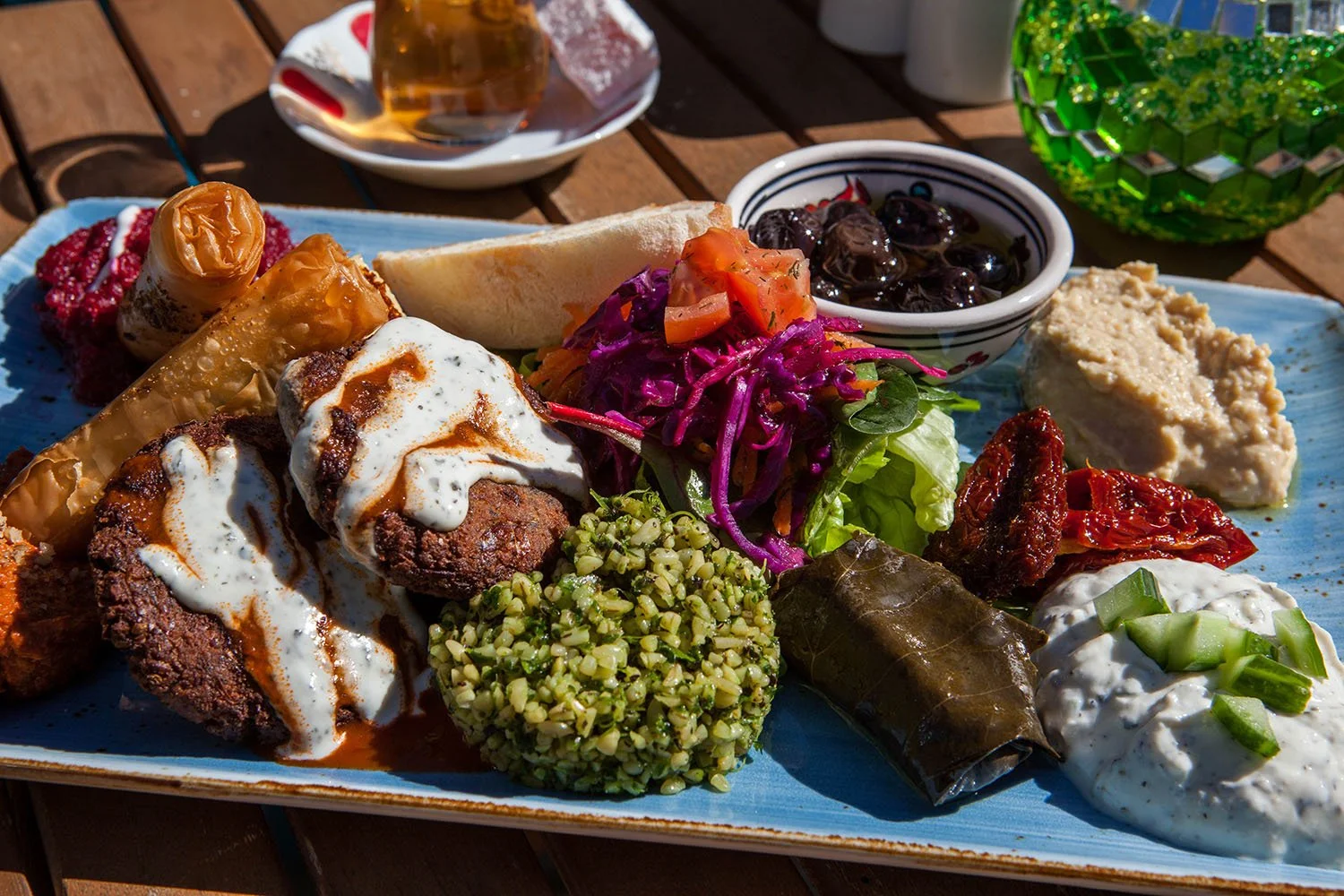
DAJKO’S KILIM CAFÉ
Once known as Kilim Café, this long-time favourite has grown into something new. The Balkan-style grill celebrates the flavours of Eastern Europe while holding onto its Turkish roots. Chef-owner Yusuf Dogru, who grew up in Istanbul and has called Hawke’s Bay home for years, brings his culture to life through dishes like smoky cevapi, juicy kebabs and richly layered iskenders. As one of the few BYO spots in town, it’s a great place to catch up with friends over a relaxed meal in the sunny courtyard.
193 Hastings Street
DRINK
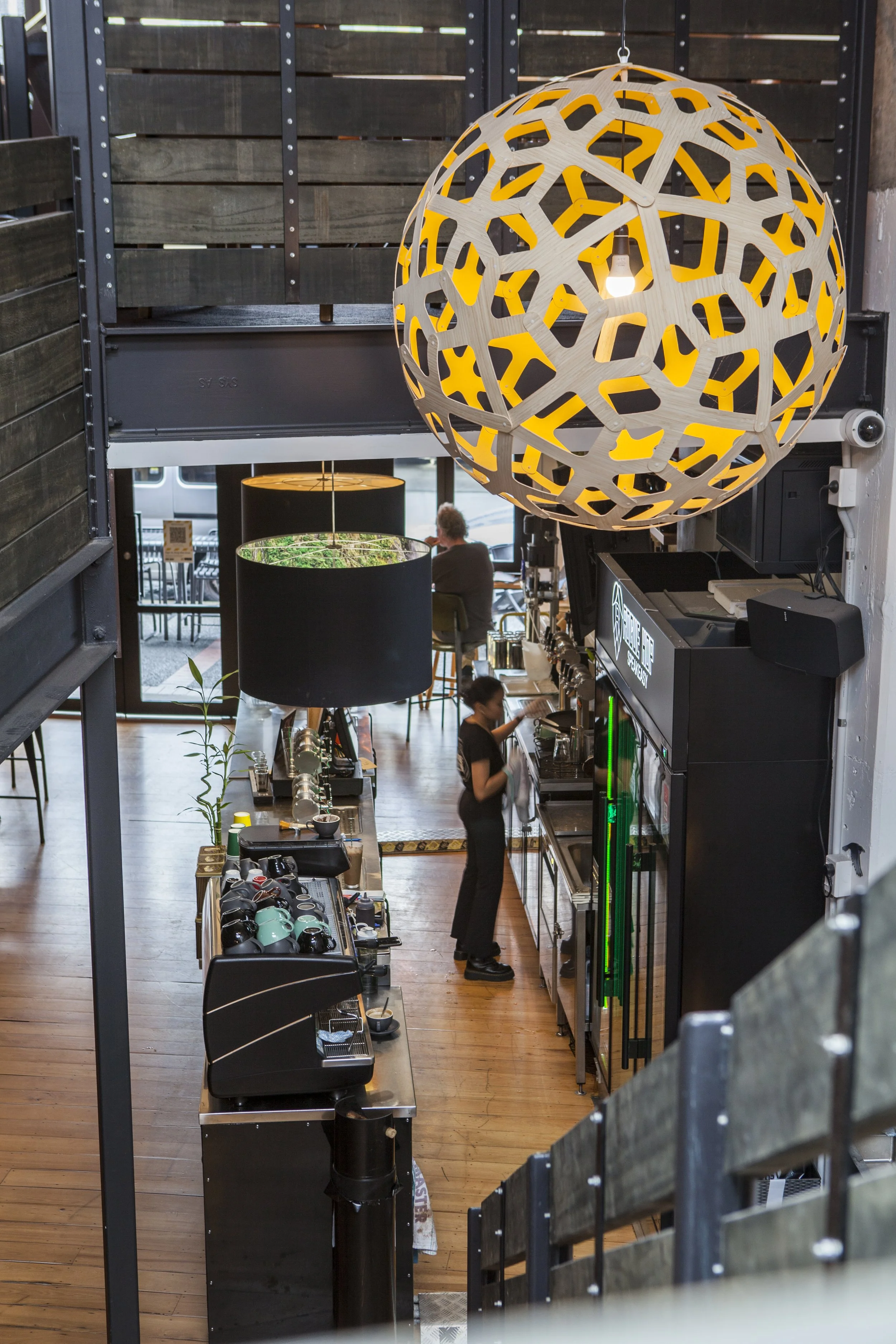
ROGUE HOP SPEAKEASY
This is hospo legend Jeremy Bayliss’s latest addition, and it’s become an institution for locals and visitors alike. A stylish neighbourhood hangout with an upstairs lounge, this is the perfect spot for a laugh over a tipple. Exclusive New Zealand craft beer, wine and spirits, plus handmade dumplings and burgers. Available for private functions and events.
113 Hastings Street
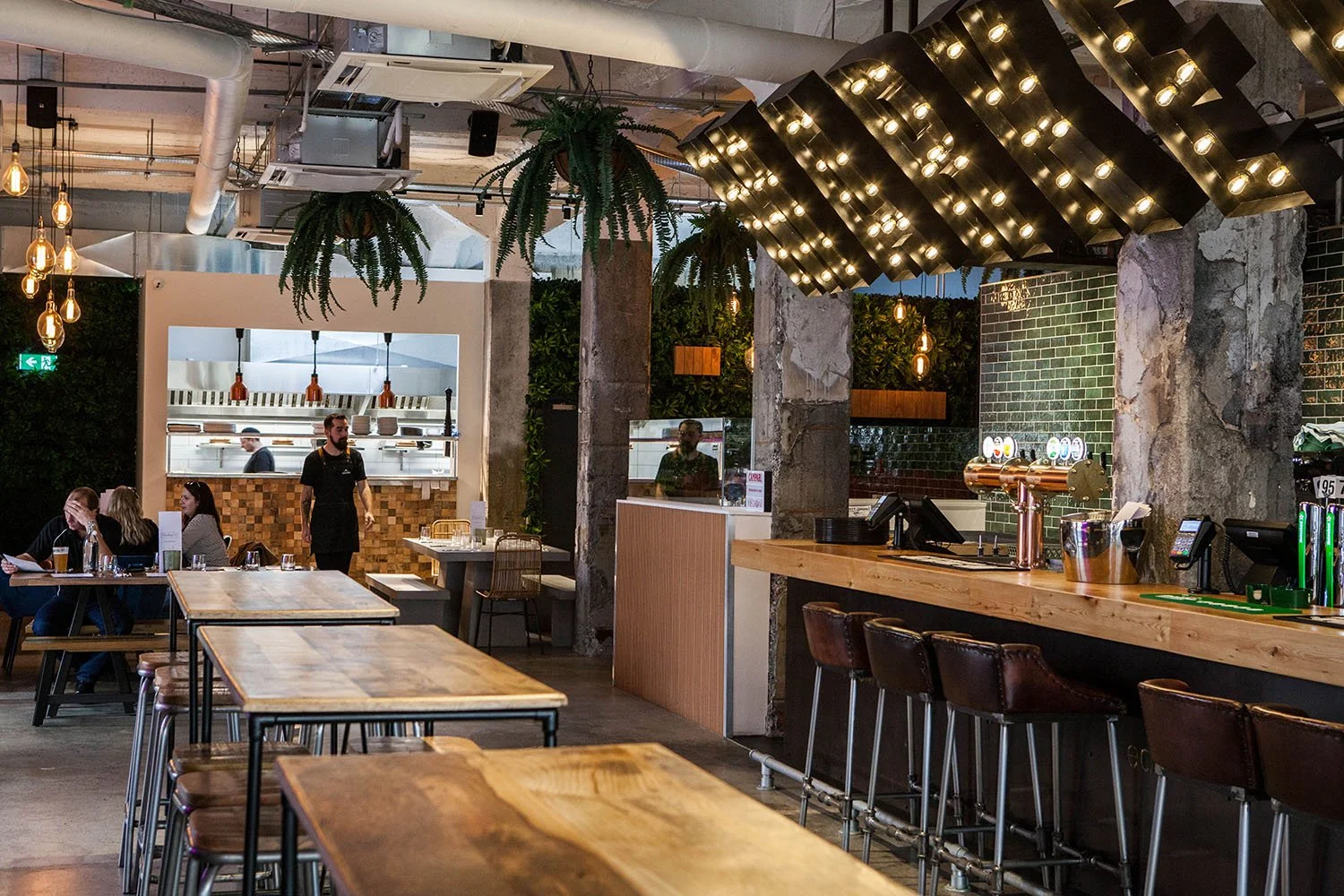
MARKET ST
In the heart of the CBD, Market St is a modern city bar with a fun, local vibe. Owners Steve and Sarah have turned the old Cri into a buzzing little hangout where the food’s fresh, the drinks flow and nothing feels fussy. The menu changes with the seasons, and weekly specials like Burger & Brew Tuesdays and Dollar Dumpling Thursdays keep things playful. With daily Happy Hour and $12 cocktails on Saturdays, it’s the kind of place that makes any excuse a good one to drop in.
8 Market Street
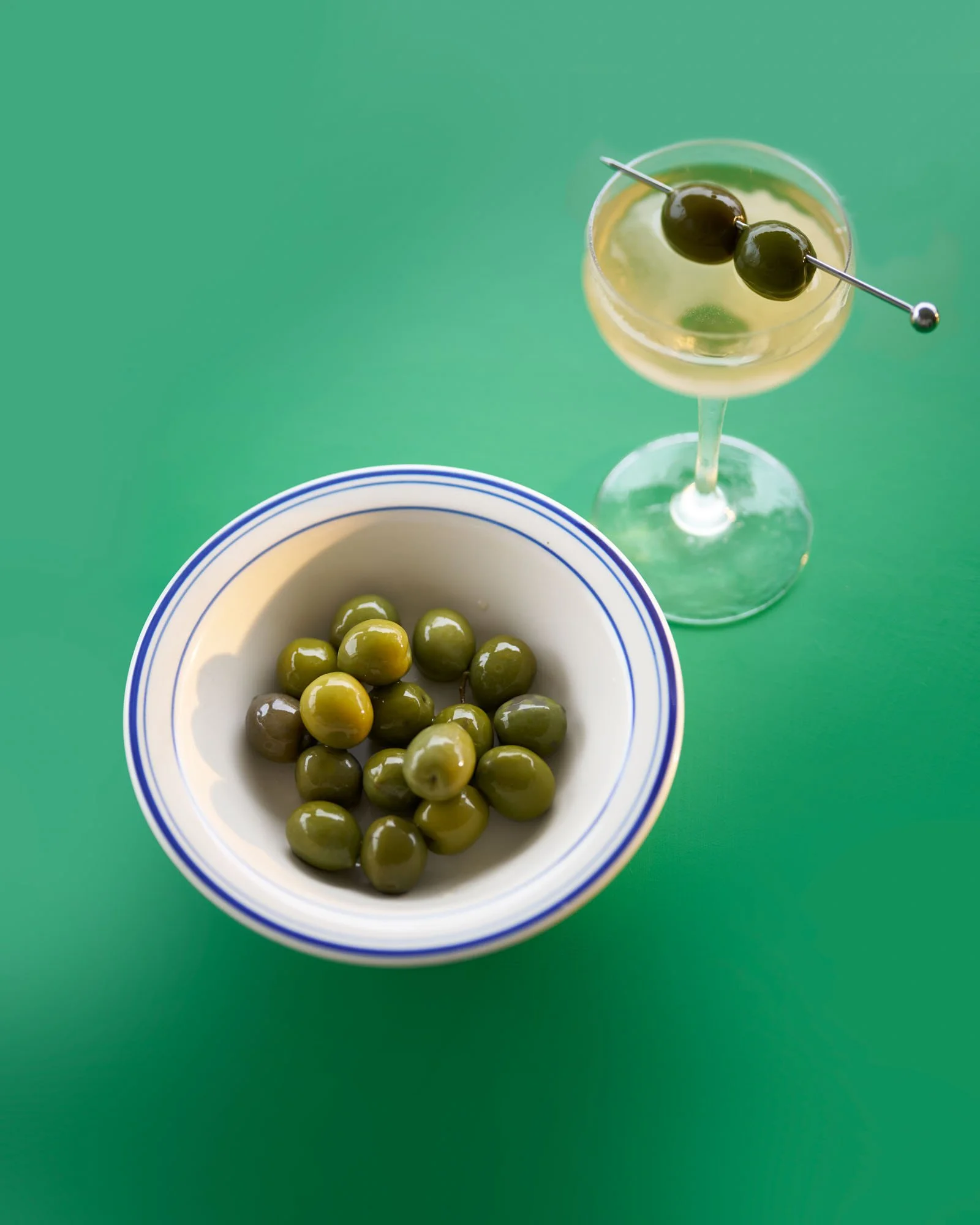
GOLDIE’S
Goldie’s is the city’s newest go-to for easy, honest, seriously delicious food in a casual but vibrant setting. Owners Grant and Alice have created a little gem where you can bring the kids, meet friends or just drop in for something good to eat. The menu leans toward classic favourites infused with fresh f lavours. Add in craft beers, great coffee and plenty of buzz, and it’s easy to see why Goldie’s is quickly finding its crowd.
82 Dalton Street
PLAY/DO
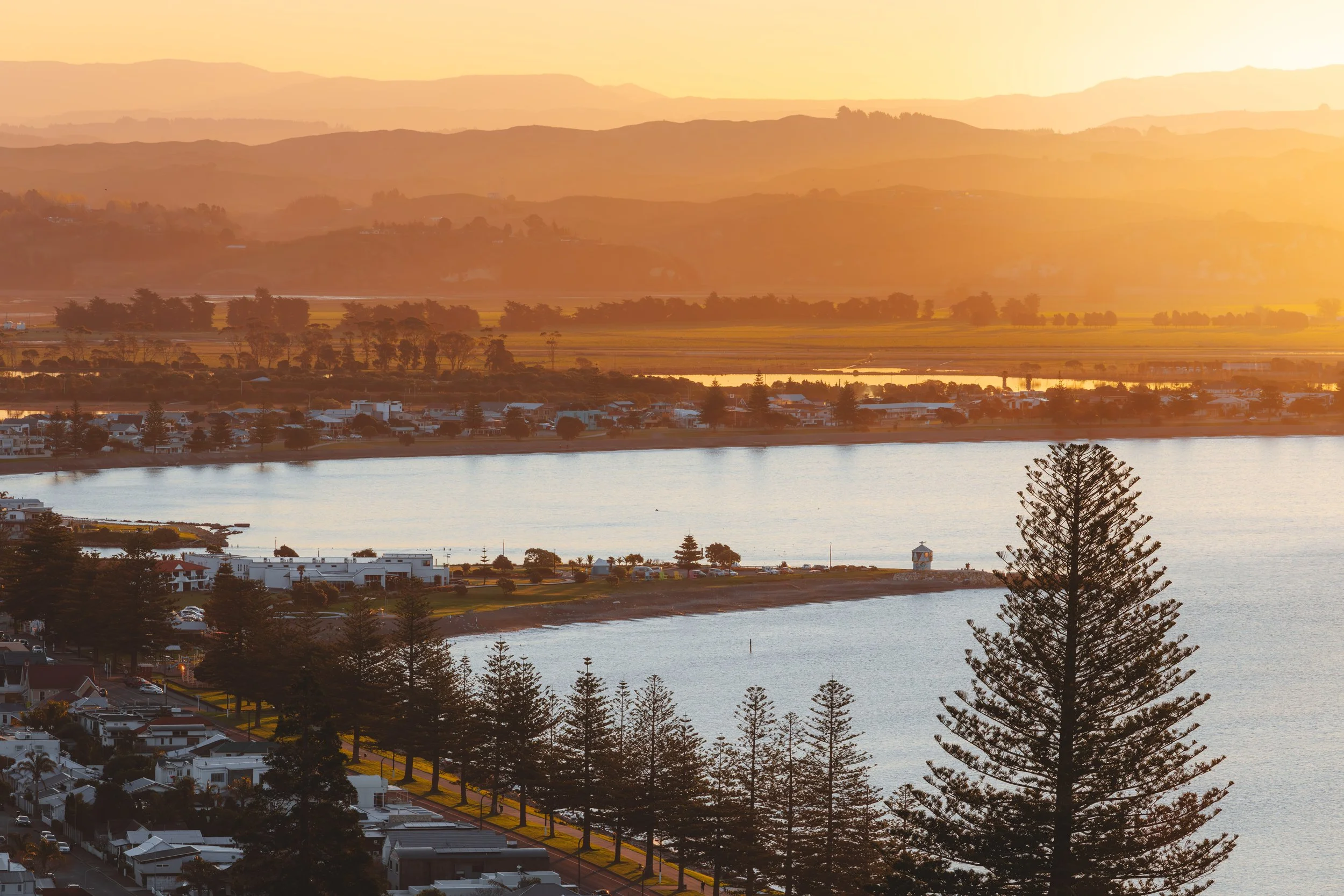
BLUFF HILL WALKS
Get your step count up with the city’s scenic hill walks right from the CBD. Climb Bluff Hill Lookout for sweeping harbour views, wander the historic streets of Napier Hill past Art Deco homes or tackle the zigzag tracks linking the city to leafy reserves. Every route rewards you with breathtaking views across the coast and city.
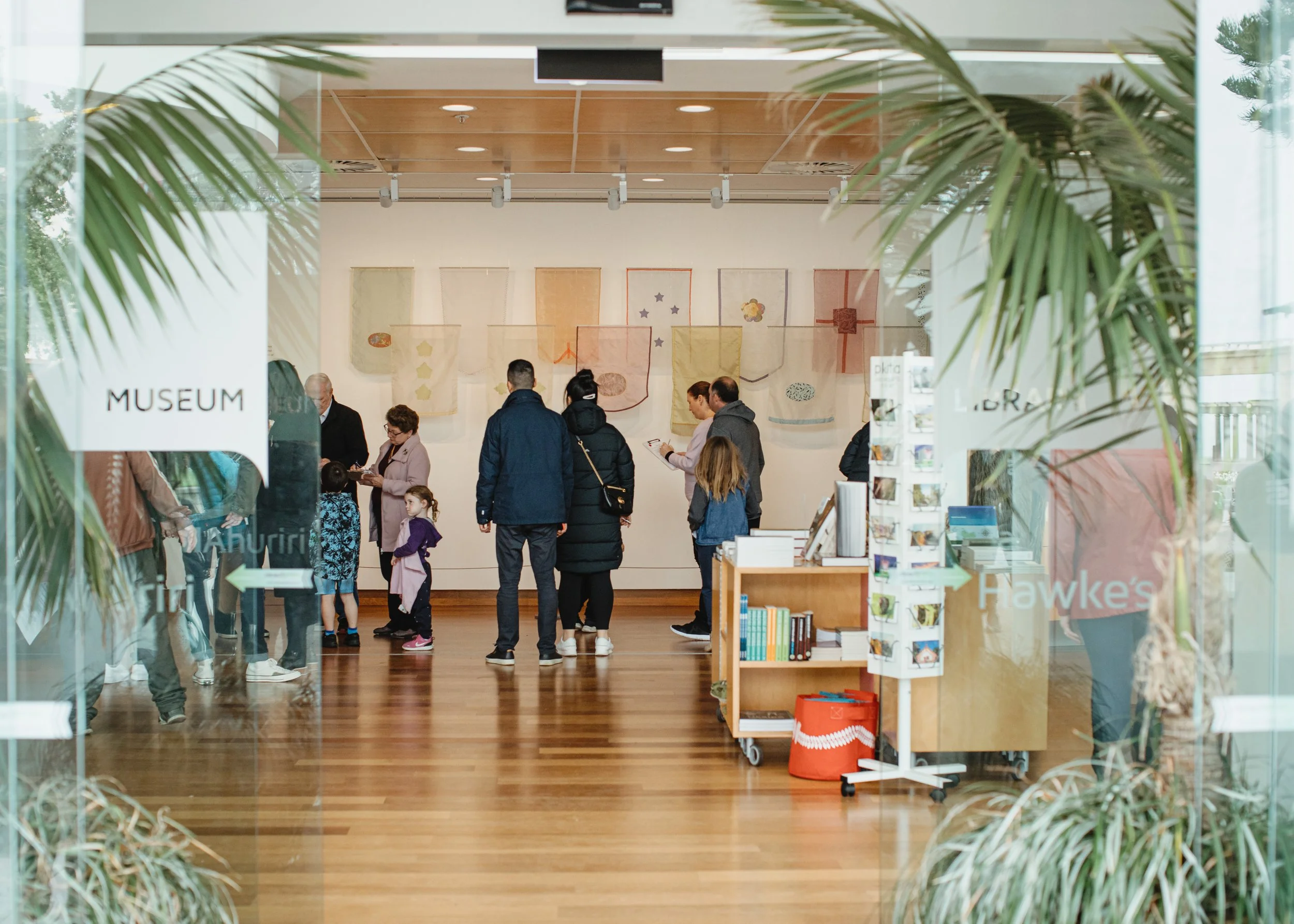
MTG HAWKE’S BAY
In the centre of the city, MTG Hawke’s Bay combines museum, theatre and gallery spaces in a beautifully restored heritage building. Exhibitions change often, blending art, history and local stories — from the 1931 earthquake to contemporary culture. With kids’ activities, theatre events and a museum shop, there’s something here for everyone. Open daily 9.30 am–5 pm. Free entry.
1 Tennyson Street
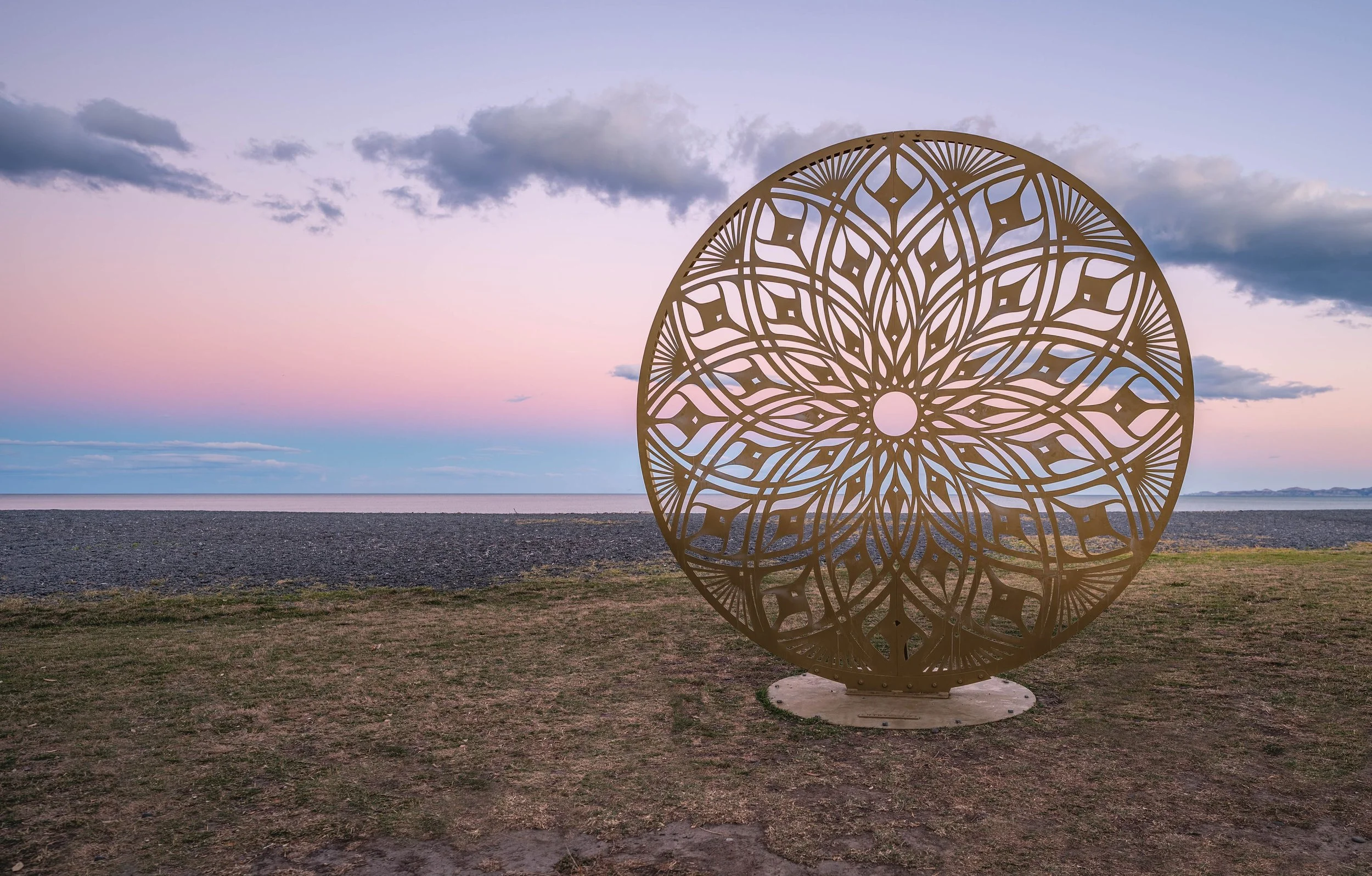
MARINE PARADE ACTIVITIES
Along the coast, Marine Parade offers one of the loveliest ways to feel the sea breeze — wide paths for walking, gardens to pause in and palm trees that line the Parade. Home to the Pania of the Reef statue, the Sunken Gardens and Ocean Spa, it’s popular with families, cyclists and anyone keen to sit and take in the view.

BAY TO BAY
Hayley Barnett discovers the perfect itinerary for a weekend getaway in another glorious Bay, the delightfully decadent Hawke’s Bay region.
Hayley Barnett discovers the perfect itinerary for a weekend getaway in another glorious Bay, the delightfully decadent Hawke’s Bay region.
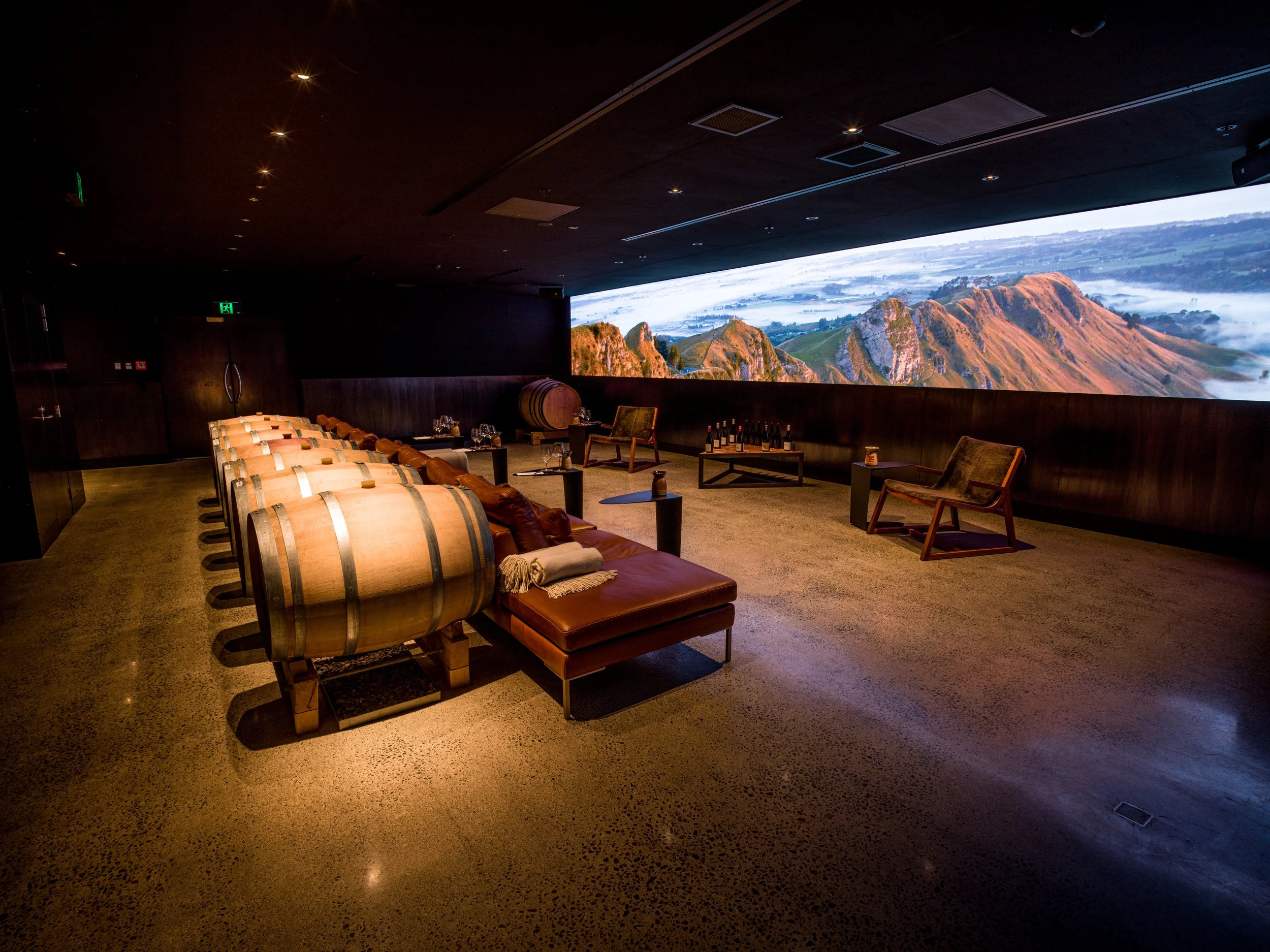
Smith & Sheth
As the end of the year began hurtling towards us at breakneck speed, my husband and I decided an indulgent weekend escape from the chaos was just what we needed. For a couple of foodies and fairly inexperienced winos, Hawke’s Bay proved the place to unwind and reconnect.
About four hours drive from the Bay of Plenty, Hawke’s Bay is made up of three main centres – Havelock North, Napier and Hastings. Though there are excellent taxi and Uber services, we opted to drive, enjoying the freedom to move at our own pace, while still using taxis and bikes between wineries.
Havelock North was our first stop, and our base for the night. This charming town has an unexpectedly abundant array of beautiful clothing boutiques, cafes and gift stores that could easily consume hours of wandering. But we weren’t here to shop. We were here for the wine, and focus was key.
Arriving at Smith & Sheth, a wine lounge (or wine library) and cellar door, we immediately realised the bar was set high. We were welcomed by Sean, head sommelier, who has worked alongside Steve Smith for the past decade. Steve has a formidable reputation, establishing Craggy Range in Hawke’s Bay and Martinborough, and achieving the highly-coveted Master of Wine in under two years, a process that usually takes much longer. When he met Brian Sheth, an investor, wildlife conservationist and wine lover from Austin, Texas, they created Cru, an exceptional range of wines that we were lucky to sample inside what could only be described as a wine cinema. Here, we learned the differences between blends and the production process. The experience is thoughtfully curated and offers an intimate and fresh way to explore wine, without leaving town.
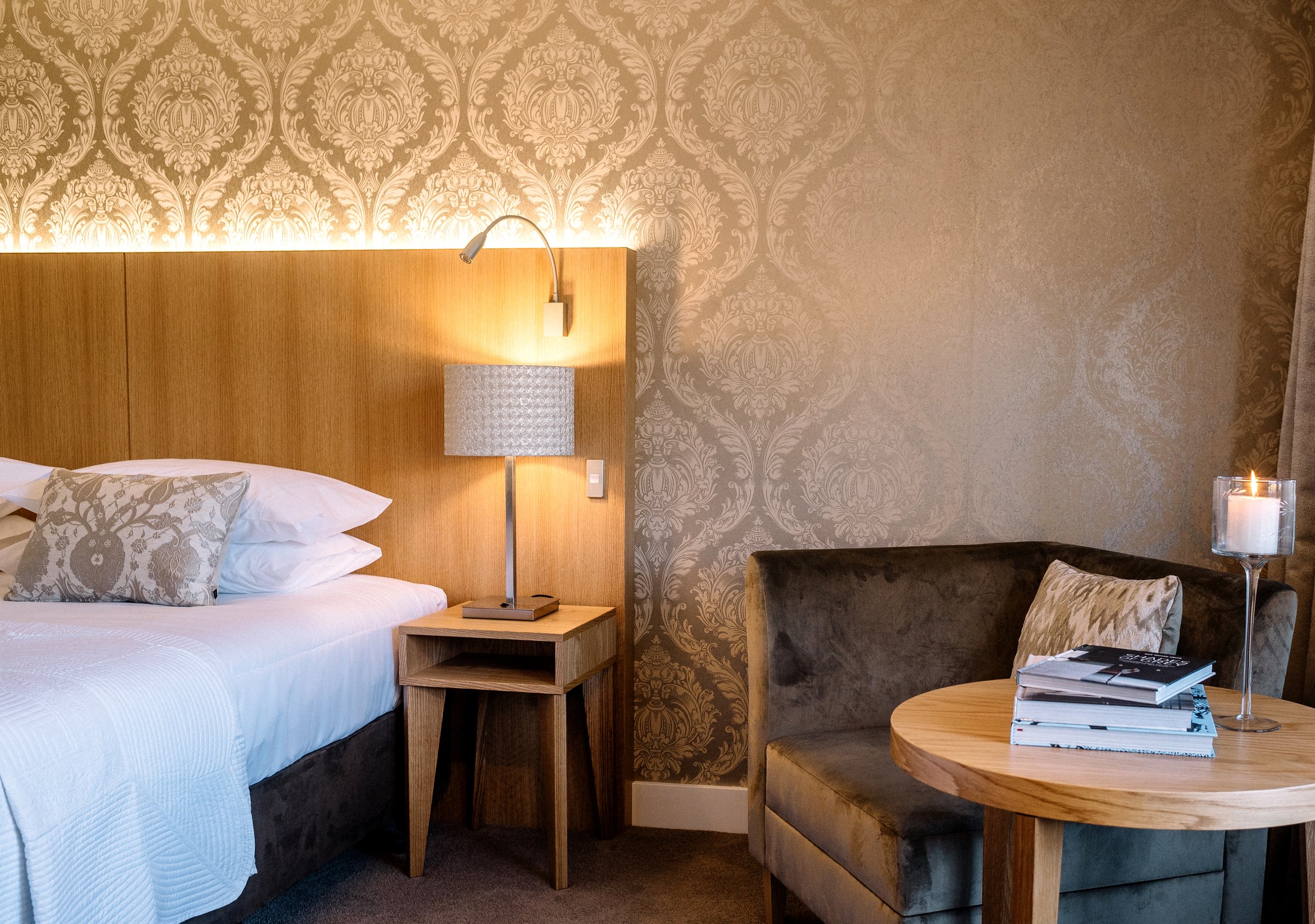
Porters Boutique Hotel & Conference Centre
Located within the same building as Smith & Sheth’s wine lounge, Porters Boutique Hotel & Conference Centre is elegant, understated and perfectly situated for those wanting to immerse themselves in Havelock North. Every detail, from soft lighting to attentive service, made us feel cocooned from the world, even though we were just steps away from boutique cafes, artisan stores and wine bars. We could have spent hours in our spacious suite, but a date with one of the region’s premiere wine festivals awaited in neighbouring Hastings.
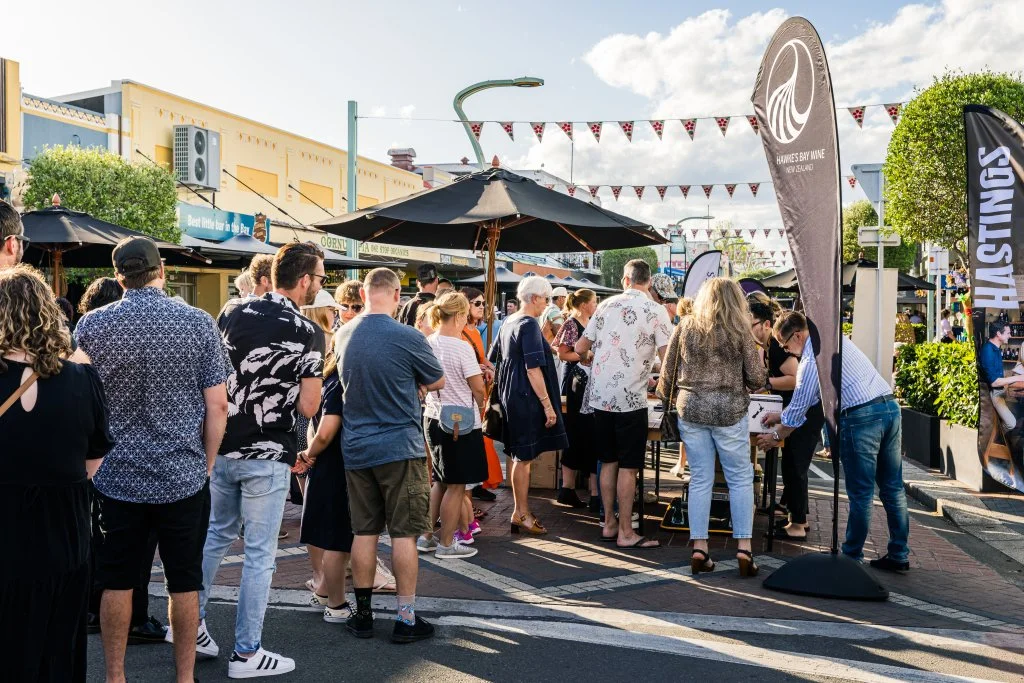
Taste Hastings
Just a 10-minute drive from Havelock North, Hastings recently earned a reputation for sophistication. Modern bars, cafes, restaurants and shops have transformed it into a lively hub. That evening, we made our way through stalls from winemakers across Hawke’s Bay at Taste Hastings and learned all about the region’s wine culture, chatting with stall holders and dancing to live bands and DJs on every corner. It was a great way to get a feel for the craftsmanship and amazing community vibe. From there, a taxi whisked us to one of the region’s most iconic wineries for a very different experience.
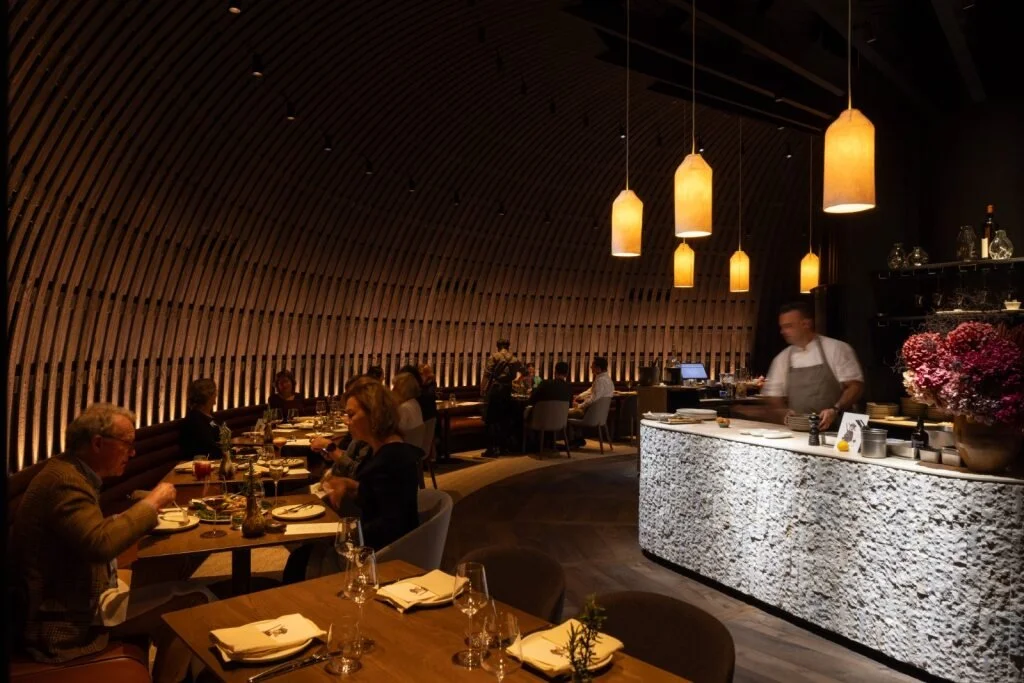
The Loft at Craggy Range
Our visit to Craggy Range did not disappoint. As the sun set, Te Mata Valley glowed with a magical, hazy light across the vines. We were there to try The Loft, a new dining experience above the main restaurant. Having made our way up the winding staircase, we were greeted by low lighting and an intimate setting. Tables were arranged in a semi-circle in front of the chefs and wood-fired oven. From the first bite to the last, the experience was flawless. Chef Casey McDonald takes diners on a culinary journey reflecting the dishes he loves to cook at home. The ‘Sprung’ spring menu celebrated seasonal ingredients with highlights including crayfish croissants and baked camembert.
The next morning, we discovered a delightful gem just minutes from the hotel. This family run cafe was filled to the brim with diners, but we managed to secure a table under a portrait of Maina, matriarch and inspiration behind the kitchen. The coffee was expertly crafted, complemented by poached eggs atop sourdough with avocado pea smash, feta, beetroot pur.e and hazelnut dukkha. Though satisfying, I wondered if it was the best prelude to a strenuous pilates reformer class.
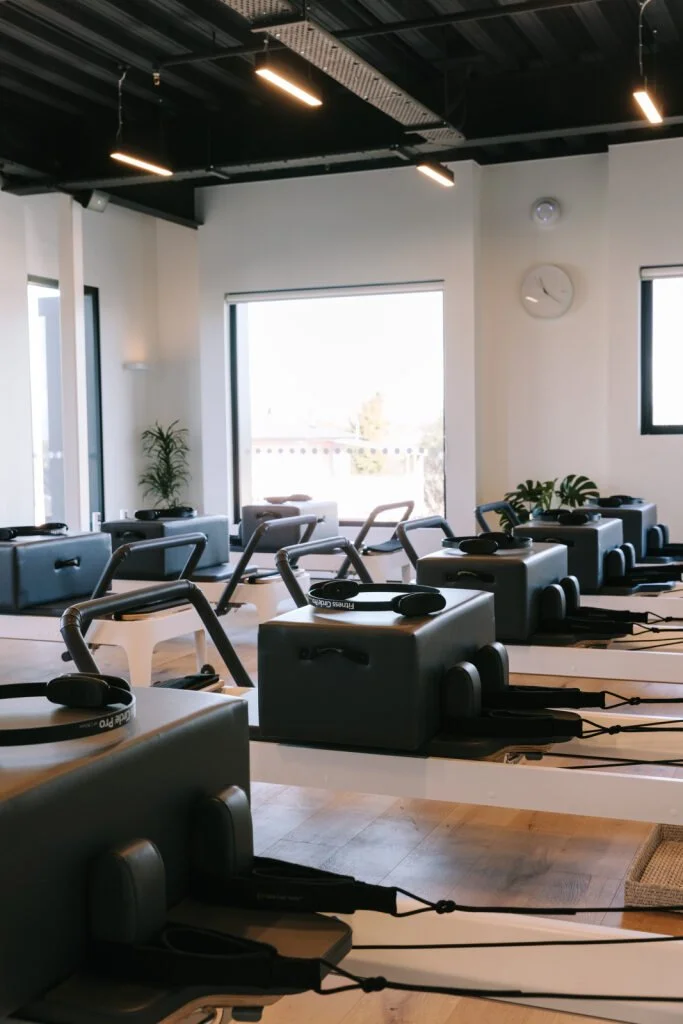
Alma Studio
I needn’t have worried. Alma Studio offered a surprisingly transformative start to the day. While my husband opted for an extended infrared sauna session, I tackled my first pilates reformer class. Instructor and owner Danielle ensured the exercises were accessible, and each movement left me feeling lengthened and invigorated, a perfect counterbalance to our indulgent culinary adventures. Alma’s approach blends mindfulness, breath, strength and awareness, and put us in a great headspace to explore more of Hawke’s Bay.
Energised, we headed to Napier to hire e-bikes at Takaro Trails in Ahuriri. The route towards Taradale via Bayview promised stunning scenery. The path traces the harbour and wetlands, which made it feel strangely relaxing and adventurous at the same time. Informative signs along the way highlighted local wildlife, and the views were nothing short of breathtaking. When we realised we were late for lunch we simply turned it up a notch and “cycled” along the track with gusto.
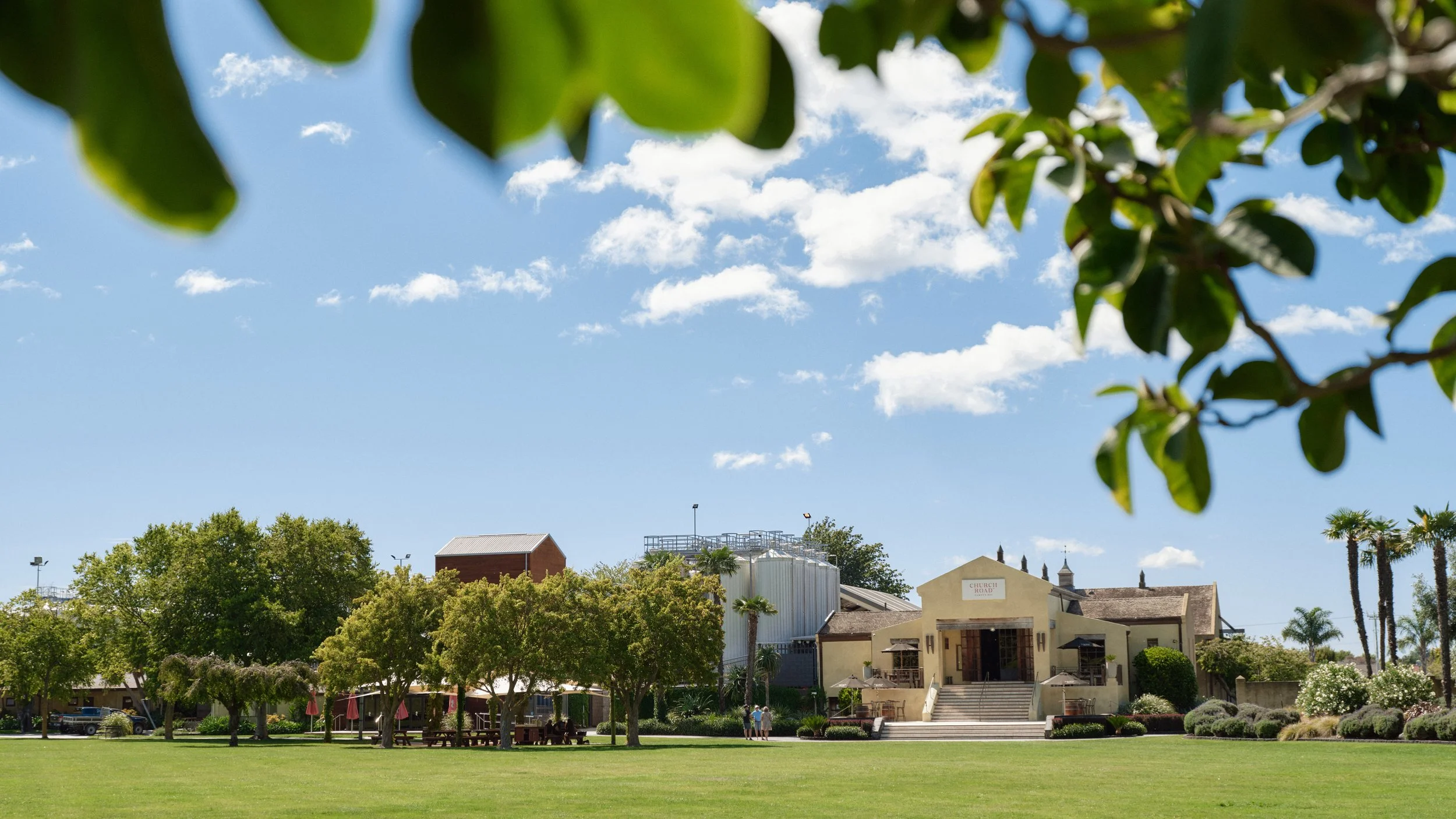
Church Road Winery
Arriving at one of Hawke's Bay's most awarded wineries, Church Road, it was clear we were in for a treat. Despite setting up for a wedding, staff accommodated us with a wine tasting. Sampling four wines from the prestigious TOM range, named after Hawke’s Bay wine pioneer Tom McDonald, we were guided through the complex flavour profiles by a knowledgeable sommelier. The experience was as much a history lesson as it was a tasting.
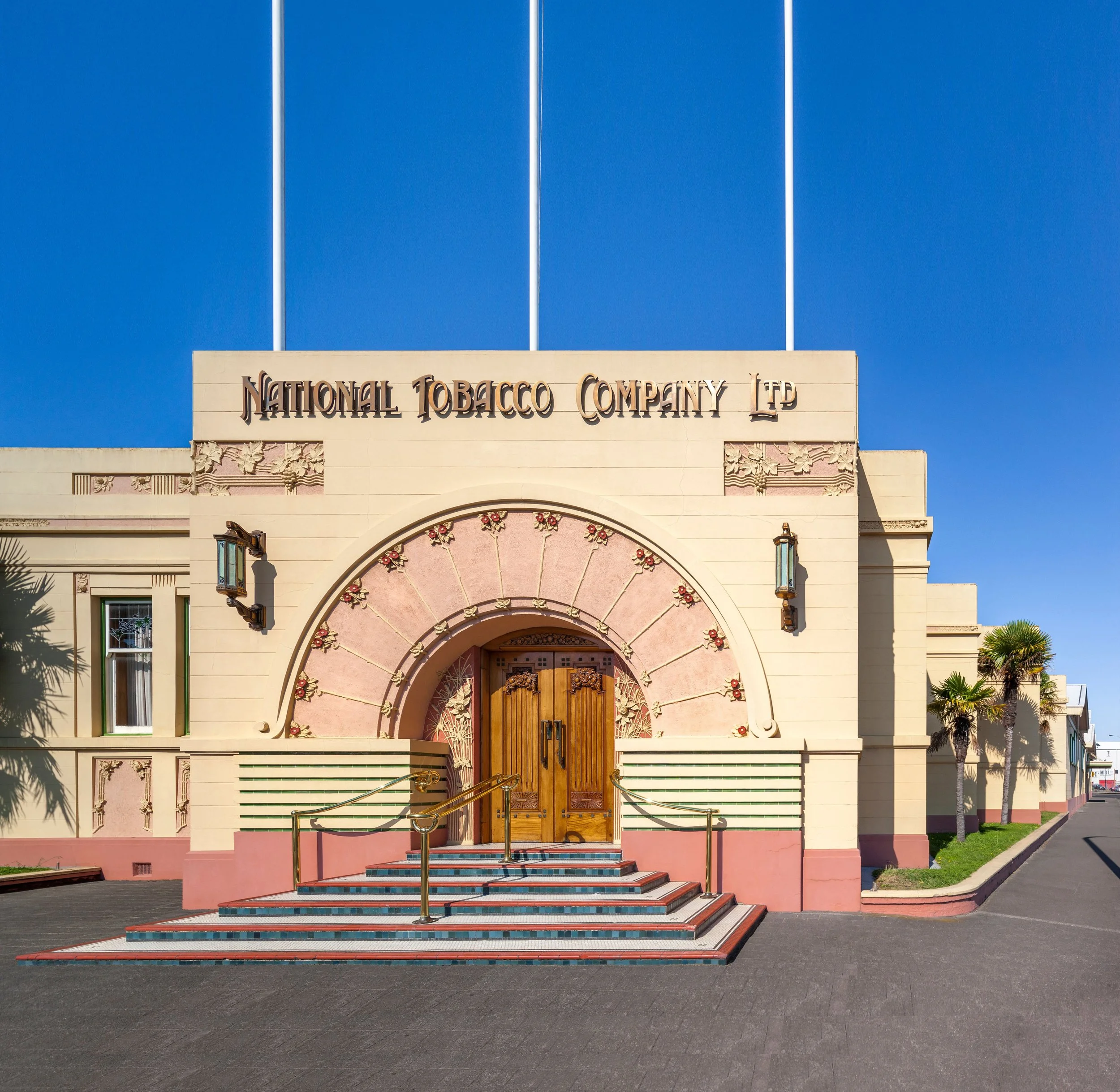
The National Gin Distillery
Before long, it was time to jump on a Takaro Trails shuttle back to Napier, where our indulgence continued at The National Gin Distillery. Housed in a restored art deco building, the distillery is still filled with memorabilia from its days as the National Tobacco Company, providing a very fun and eclectic tour for visitors. At the bar, gin guru Ginny (yes, that’s her real name) and co-owner/distiller Blair guided us through botanicals, distillation techniques and flavour profiles. Together, the pair balance creativity with local charm.
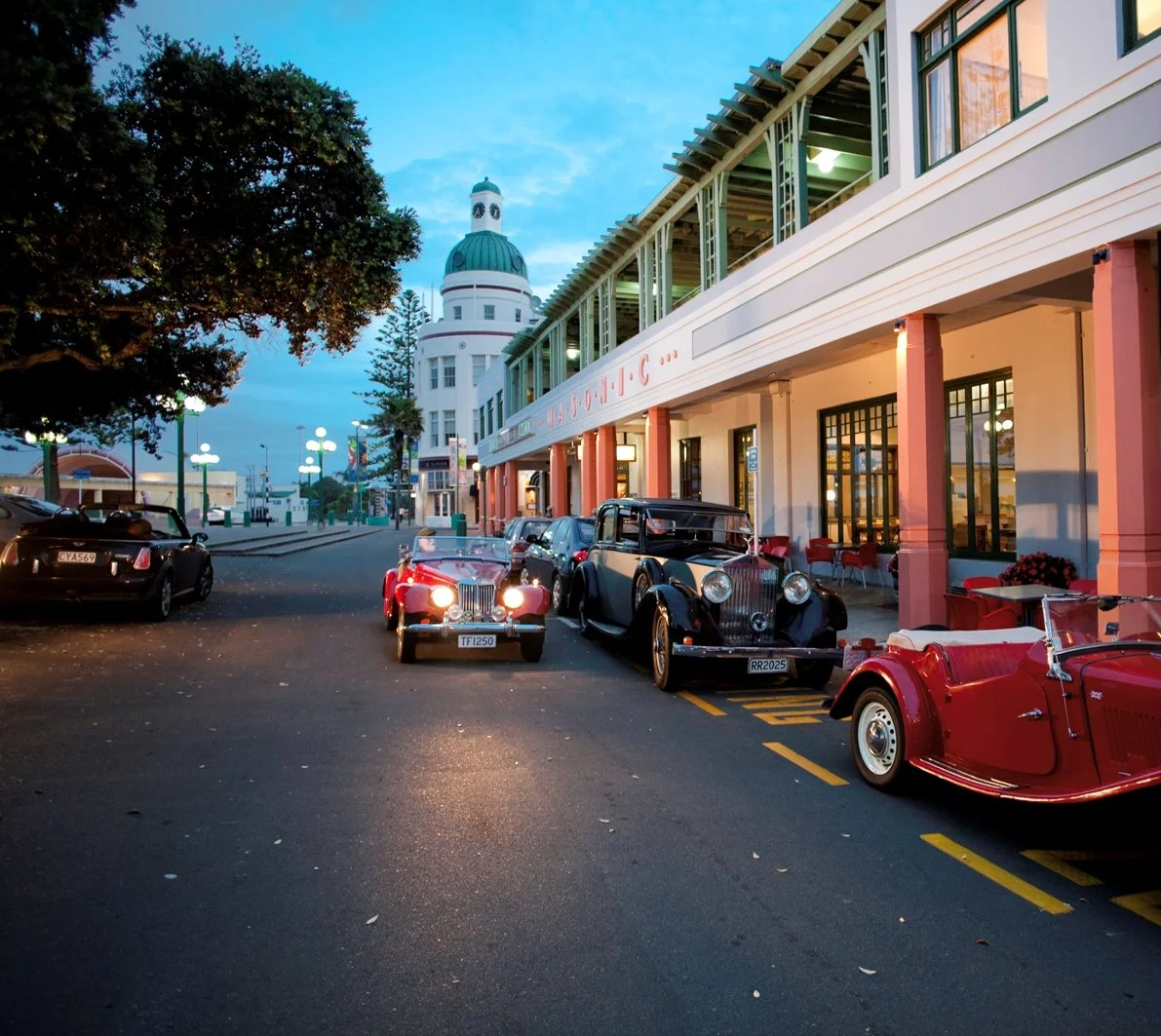
Art Deco Masonic Hotel
After hours of trying the many flavours Blair had concocted over the years, we headed off to our next accommodation. Tonight we were staying at the Art Deco Masonic Hotel in Napier. Entering the building was like stepping into a time machine. The iconic architecture, geometric lines and period detailing immediately set a tone of sophistication. Our Anna Pavlova suite, named after the celebrated dancer who stayed here in 1926, offered a shared balcony perfect for people-watching.

Mister D
The stay was an experience in itself, but our hunger forced us back out the door. Just a short walk away, Mister D bistro turned out to the perfect choice for dinner. Combining music, wine and food, the bistro describes itself as “a little bit country and a little bit rock ‘n’ roll”, but it’s also a lot about flavour. Each plate showcased seasonal ingredients and inventive pairings, and highlights included duck risotto, baked cheesecake and the signature injectable donuts.
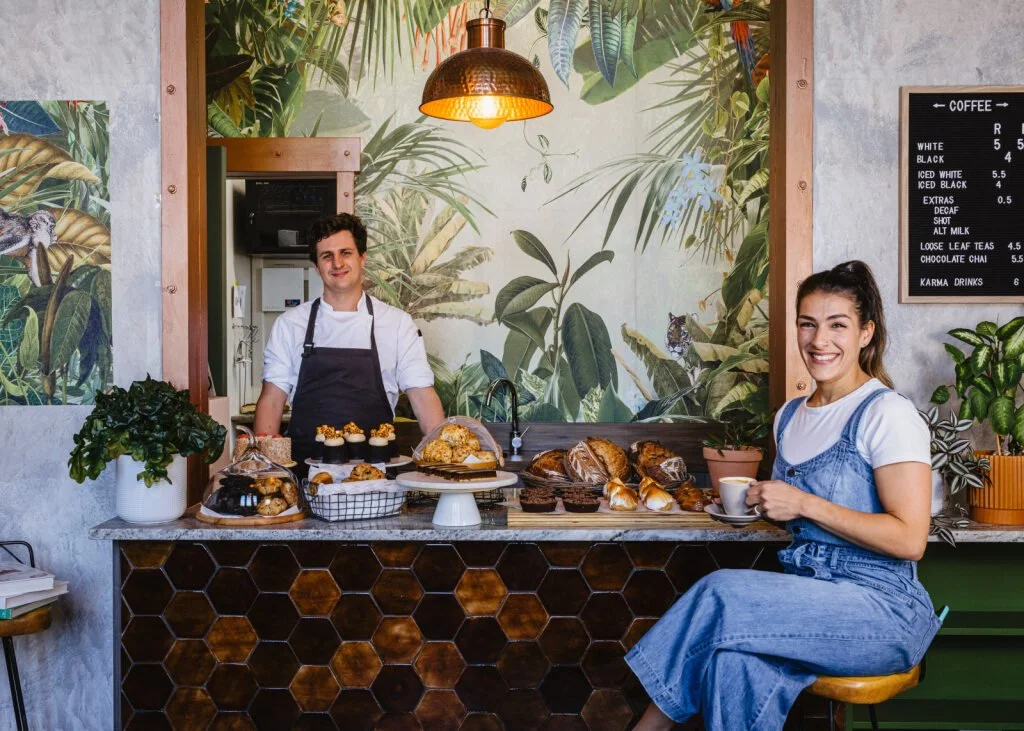
Baked Cafe
The next day we emerged bleary-eyed and on the hunt for something sweet to take the edge off. Baked Cafe, housed in the old Central Fire Station, offered just what we were looking for. The aroma of freshly baked bread and pastries promised simple pleasures executed perfectly. We shared a ham and mortadella pastry and a hazelnut-chocolate croissant, accompanied by impeccably balanced flat whites. We tucked in and fueled up before we took off for our next activity.

The best way to explore Napier is by vintage car, so we headed across the road to the Art Deco Centre. Our driver, in period attire, transported us through the 1930s, narrating the story of the devastating earthquake and the town’s rapid reconstruction.
As we cruised past pastel facades, waving to curious passers-by, Napier's glamour was well and truly on show and we were wholly swept up in its charm.
We were then dropped at Roam Cafe, which is tucked inside one of the Six Sisters buildings and offers a relaxed lunch with views of the water. The Nashville Hot Chicken burger was a hangover-curing triumph and was balanced with a healthy vegan bowl — equally delicious.
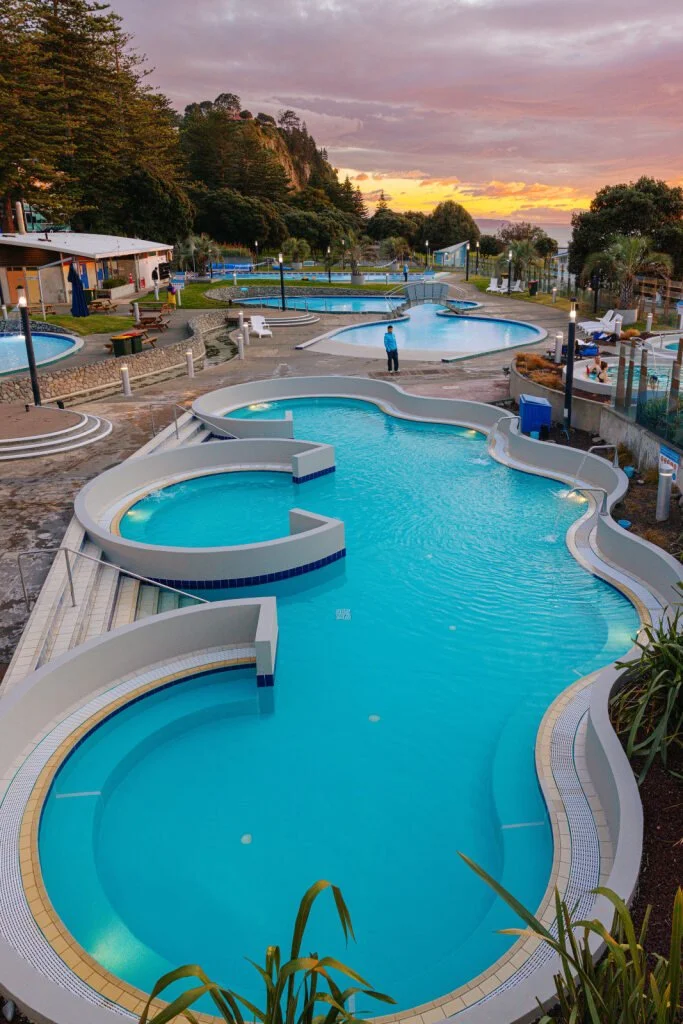
Ocean Spa
Our journey concluded at Ocean Spa, perched on the waterfront. With three large pools and two spas overlooking the ocean, we spent the afternoon alternating cool dips with hot soaks, leaving us refreshed and renewed — a perfect bookend to our Hawke’s Bay adventure.

Classic hits
Just a Mum’s Anna Cameron has been cooking up a storm for her new book, featuring an indulgent collection of family-friendly favourites. Here we serve up a few of the hits.
Just a Mum’s Anna Cameron has been cooking up a storm for her new book, featuring an indulgent collection of family-friendly favourites. Here we serve up a few of the hits.

French Apple Cake
A timeless classic, traditionally made with very thin slices of apple in a rum or almond infused batter. My version is quick and easy, perfect for afternoon tea or as a dessert served with yoghurt.
MAKES 12 | PREP TIME 30 MINUTES + COOLING | COOKING TIME 35+ MINUTES
INGREDIENTS
4 large apples, peeled and cored
1 cup plain white flour
1 tsp baking powder
1⁄4 tsp salt
115g butter, at room temperature
2/3 cup white sugar, plus extra
to sprinkle
2 eggs
2 tbsp milk
1 tsp vanilla essence
1 tsp almond essence
Icing sugar to dust (optional)
METHOD
Preheat the oven to 175°C, positioning an oven rack in the centre. Grease the base and sides of a 22 cm-round springform or loose-bottomed cake tin and line it with baking paper.
Cut the apples into 1 cm pieces (you should have about 3 cups) and set aside.
In a small bowl, whisk together the flour, baking powder and salt. Set aside.
In a stand mixer fitted with a paddle attachment, cream the butter and sugar for 4 minutes until light and fluffy.
Add the eggs one at a time, mixing well between additions, then beat in the milk, vanilla and almond essence (see notes). The mixture may look a little curdled at this stage.
Gently fold in the flour mixture until no flour is visible then fold the apples into the batter until evenly distributed.
Spoon the thick batter into the prepared tin and smooth the top. Sprinkle an extra 2 tablespoons of sugar evenly over the top.
Bake for 35 minutes, or until the top springs back to the touch and a skewer inserted into the centre comes out clean. If needed, continue to bake, checking every 3–5 minutes, until the cake is fully baked and golden. If the top of the cake is becoming too golden brown, loosely cover in foil until baked through.
Allow to cool in the tin for 20 minutes, then carefully transfer to a wire rack.
Serve warm or cold, dusted with icing sugar if desired — it’s lovely with whipped cream or yoghurt.
This cake can be stored at room temperature, loosely covered with a cake cover or tented foil, for 1–2 days, or in an airtight container with a paper towel to absorb moisture for 3–4 days.

Chicken and Bacon Fettuccine
This oh-so indulgent pasta dish is a quick midweek meal to make when you feel like something a little bit fancy.
SERVES 4 | PREP TIME 15 MINUTES | COOKING TIME 20 MINUTES
INGREDIENTS
300g fettuccine
45g butter
7 rashers streaky bacon, diced
300g skinless, boneless
chicken breast, thinly sliced
1⁄2 onion, finely diced
2 cloves garlic, minced
6–8 button mushrooms,
cleaned and sliced
11⁄4 cups cream
1⁄2 cup parmesan, finely grated
1 red capsicum, finely sliced
METHOD
Bring 3 litres of salted water to a boil in a large saucepan. Add the fettuccine and cook for 2 minutes less than the packet instructions. Drain, reserving 3⁄4 cup of the cooking water. Set aside.
While the pasta cooks, heat 15g of the butter in a large frying pan. Fry the bacon until crispy, then drain on a paper towel.
In the same pan, sear the chicken slices in the bacon fat for a few minutes on each side until just cooked. Set aside on a plate with the bacon and cover with foil.
Wipe the frying pan with a paper towel, then melt the remaining 30g butter over a medium heat. Add the onion and garlic and cook for 2 minutes until translucent. Add the mushrooms and cook for about 4 minutes until softened and well browned.
Stir in the reserved pasta water and the cream, parmesan and capsicum. Bring to a gentle boil and simmer for 2 minutes.
Add the drained fettuccine to the sauce, using tongs to toss and coat thoroughly. Fold in the bacon and chicken and heat through for a further 2 minutes until the chicken is cooked.
Serve immediately in bowls, garnished with parmesan and parsley if desired.

Roasted Cauliflower and Chickpea Salad
This salad looks stunning on the table. I love the combination of flavours and textures — the crunch of the chickpeas works beautifully with the softly spiced cauliflower. It’s definitely one to try.
SERVES 6+ | PREP TIME 30 MINUTES | COOKING TIME 50 MINUTES
INGREDIENTS
1 head cauliflower
420g can chickpeas
1 tsp turmeric
1 tsp ground coriander
1⁄2 tsp paprika
1⁄2 tsp onion powder
1⁄2 tsp garlic powder
1⁄2 tsp salt
1⁄4 tsp pepper
1⁄4 cup olive oil
Dressing:
1⁄4 cup olive oil
2 tbsp lemon juice
2 tbsp honey
1 tbsp lemon zest, finely grated
1⁄2 tsp ground cumin
Pinch salt and pepper
To Serve:
Handful of rocket, torn
1/3 cup dried cranberries
1⁄4 cup slivered almonds
70g feta, crumbled
10–12 fresh mint or coriander
METHOD
Preheat the oven to 200°C. Lightly spray a large roasting dish with oil.
Cut the cauliflower into small florets — you should have about 5 cups. Place in a large bowl.
Rinse and drain the chickpeas, then pat them dry on a clean tea towel, then add them to the bowl.
Sprinkle in the turmeric, coriander, paprika, onion powder, garlic powder, salt and pepper and stir through. Drizzle with the oil and toss to coat evenly.
Spread out on the prepared tray and roast for 20 minutes. Stir, then continue roasting, gently stirring every 10 minutes, for a further 30 minutes, or until the chickpeas are crisp and the cauliflower is tender and golden but holding its shape. Set aside to cool slightly.
To make the dressing, whisk together all the ingredients in a small bowl.
To serve, transfer the cooled cauliflower and chickpeas to a large bowl or serving platter. Add the rocket and dressing and toss gently. Fold in the cranberries, almonds, feta and torn mint or coriander leaves.
Enjoy warm or cold. Store covered in the fridge for up to 2 days.

The Best Chocolate Chip Cookies
Crisp on the outside, soft and chewy in the centre, these cookies are easy to make, and you can freeze the dough for fresh cookies any time you desire. There’s nothing quite like the smell of freshly made cookies.
MAKES 26 | PREP TIME 30 MINUTES + CHILLING
+ COOLING | COOK TIME 15–18 MINUTES
INGREDIENTS
170g butter
2 cups plain white flour
3⁄4 tsp baking soda
1⁄2 tsp salt
1 packed cup brown sugar
1⁄2 cup white sugar
1 egg
1 egg yolk
1 tbsp vanilla essence
11⁄2 cups milk or dark chocolate
drops, chips or chunks
METHOD
Place the butter in a small bowl, cover and microwave in 30-second bursts until melted. Set aside to cool slightly.
In a bowl, stir together the flour, baking soda and salt. Set aside.
In a stand mixer with a paddle attachment, beat the melted butter with the brown sugar and white sugar on a medium speed for 2 minutes until well combined. Add the egg, egg yolk and vanilla and beat for 3 minutes until light and creamy.
Add the flour mixture and mix lightly until just combined. Then use a wooden spatula to gently fold in the chocolate.
Refrigerate the dough for at least 1 hour, or preferably overnight.
When ready to bake, let the dough stand at room temperature for 20 minutes. Preheat the oven to 165°C fan-forced, positioning one rack in the upper third of the oven and another in the lower third. Line two large baking trays with baking paper.
Roll 2 tbsp-sized scoops of dough into balls and arrange 5cm apart on the prepared trays. You may need to cook 3–4 batches.
Bake for 15–18 minutes, or until the edges are turning golden brown and the tops are mostly set (the larger the cookies, the longer they will take to cook).
Allow to cool completely on the trays — they will firm up as they cool.
Store in an airtight container for up to 5 days.

Images and text from Just a Mum’s Kitchen by Anna Cameron, photography by Melanie Jenkins (Flash Studios), published by Allen & Unwin Aotearoa New Zealand. RRP$45.

Seoul searching: A world within
South Korea may not be on every traveller’s radar in Asia but as Jamie Troughton found, beneath the skyscrapers and beyond the gates lies a capital that keeps revealing more, one encounter at a time.
South Korea may not be on every traveller’s radar in Asia but as Jamie Troughton found, beneath the skyscrapers and beyond the gates lies a capital that keeps revealing more, one encounter at a time.
WORDS JAMIE TROUGHTON

It was only on the fourth day in Seoul, when we climbed 270m to the peak of Namsan Park, that we fully understood how insignificant our explorations had been.
Gazing through the haze on another warm autumn morning was a chance to retrace our steps. And there had been plenty of them; 28,000 Garmin-tracked perambulations through the intoxicating South Korean capital on the second day alone.

But our exertions, from what we could see from the summit, appeared pitiful. The ethereal Gyeongbokgung Palace, a 7,700-room 14th-century estate, appeared tiny amidst the office buildings and parks. The 18km Seoul City Wall, encompassing the old city centre and featuring four colossal main gates, seemed to weave a small and delicate thread over the hilly metropolitan terrain.
From our vantage point, everywhere we looked was teeming with city; 360 degrees of skyscrapered, multilayered population. The bit we̓d ‘conquered̓ occupied a couple of degrees of view. We’d daintily dipped a toe into the teeming city waters of Seoul. But what a dip it was.
Tastes, sights, smells, feels, textures and sensations - much about Seoul is like an ADHD delight; it's a symphony of over-stimulation.
We based ourselves in the Jung District, the smallest (less than 10km2) and least populous of Seoul’s 25 districts, but still with the population of Tauranga. Our first meal set the tone — we crossed the road from our hotel, straight into the sprawling Namdaemun Market, which has been operating continuously since 1414, and promptly got lost.

Twisting and turning from street into laneway, from laneway into alleyway, then from alleyway into impossibly crowded, narrow corridors of colour and aroma; restaurant, kitchen and path all blended into one.
We ate a medley of fried fish with gusto, crunching small bones and experiencing for the first time the culinary magnificence of banchan — small side dishes served with most Korean cuisine. From ever-present kimchi (fermented and spiced cabbage), namul (vegetables seasoned with sesame oil, garlic and chilli), danmuji (pickled radish) and gyeran-mari (rolled omelette served in slices), every mouthful was both wildly exotic and perfectly matched.
We dined on delicious Korean BBQ, and on Chimaek, probably one of Korea’s most famous culinary exports of recent years, combining fried chicken (chikin) and beer (maekju). It may have been all the walking but both went down unerringly easily.
The layers of food matched the city too. October was still hot and humid but within six weeks of our visit, temperatures had plummeted from 50°C to –19°C.

Such a wide array of temperatures needs a clever cityscape, and so much of our meanderings were done in three dimensions — vast underground shopping plazas spreading beneath, then spiralling up into the low clouds.
And amidst the concrete and steel are remarkable areas of tranquillity. A large untamed field of wildflowers, sandwiched between two busy avenues, provided an unexpected highlight when apparent masses of bumblebees turned out instead to be hummingbird hawk-moths.
Walking sections of the Seoul City Wall also dipped in and out of serene, stylish neighbourhoods, through parks and erupted into glorious city vistas.
The layered approach is evident in the culture too. Korea, both North and South, is a peninsula seemingly forever being conquered and collected by two neighbouring imperialists, China and Japan.
And while those two nations infuse much of Korean culture, the endemic traditions are rich and vibrant in their own right. Having fought hard, firstly for independence, then for democracy, South Koreans gather, celebrate and protest frequently and spontaneously.

Old news-gathering instincts kicked in hard on a Saturday morning in Seoul, when we rounded a corner to find masses of marchers shouting, trumpeting and waving banners.
Thousands upon thousands of police disembarked from buses, bedecked in riot gear, while spotters lined windows in high buildings as things seemingly built to a crescendo.
A helpful guide at a neighbourhood information kiosk chuckled at our concerns. “It happens every Saturday,” she explained. “Most weekends, the police outnumber the protestors.”
Ironically, mere weeks after our visit, President Yoon Suk Yeol was suspended after trying to impose martial law. Those same protestors were out again in force, this time in earnest, demanding they retain their right to protest and have a voice in their nation.
Meanwhile, we turned another corner during our trip, walked a block and stumbled into the midst of a Joseon dynasty celebration, where a dazzling wedge of performers twirled in traditional costumes, surreptitiously checking coiffures on latest Samsungs.

People who dress in period costume are afforded free entry into the numerous palaces and cultural sites throughout Seoul — it’s a clever way to both promote and immerse tourists and locals alike in tradition.
Those layers continue in architecture and ambience. Sejong-daero, the street that runs through part of downtown Seoul, has Gyeongbokgung Palace at one end and walls of new shimmering office steel at the other. A statue of Admiral Yi Sun-sin, who saved the country from the brink of collapse during the Japanese invasion of 1592, stands proudly on a plinth, astride both the ancient and the modern worlds.
In the famous Seoul street markets, meanwhile, this translates into a fusion of flavours.
Hangover soup, roast lobster with cheese, an array of spectacular custard-based pastries and deboned chicken claws fit seamlessly next to Zespri kiwifruit and dragon fruit smoothies.
We wandered, for hours, every side street an adventure, every staircase a portal.
Step counts bloomed, as the layers upon layers of a remarkable city unfurled before our dazed eyes.

Spring fling
Watch as fashion flourishes this season.
Watch as fashion flourishes this season.
WORDS NICKY ADAMS

CABELLO MIDI DRESS $289, FLOANDFRANKIE.COM
SWEETEN YOUR WARDROBE
Not many people can resist refreshing their wardrobes for spring. This doesn’t have to mean a fashion overhaul; it can be as simple as adding a few basics from a seasonal colour chart. In this case for 2025, you might be looking at welcoming in the warmer weather with some pastels. There’s buttery yellow, which has been dominating not just the catwalks but mood boards everywhere, powder pink, sky blue, seafoam and mint green. Keep your shades clean and clear rather than sickly sweet. Sometimes this can be by picking separates and styling your pastel with a plain white top or bottom; other times it can be by picking a simple style where the colour is the feature rather than an elaborate design.
PASTELS TO PRINTS
Plaid will be the pattern of the moment. Usually associated with cooler months, its throwback 90s feel has been reimagined with elegant results. With versatility being a bonus, used in lighter fabrics to fit with the season, it’s so multi-functional it’s hard to pass over. If office wear is an area you’re looking to jazz up, then pale shades make perfect tailored trans-seasonal pieces. Style wise, watch out for a boxy short jacket or a blazer, either of which can be paired with Bermuda shorts for a super on-trend aesthetic. Add a low kitten heel and ta-da! We can’t really talk about spring without touching on the craze for technical fabrics. Wet weather gear has hit high fashion, with light waterproof jackets appearing as the unlikely hero of the outfit.


1 & 2. H&H ESSENTIAL CARDIGAN $30; BIAS CUT SKIRT $30, THEWAREHOUSE.CO.NZ
3. SAMSUNG GALAXY RING $699, SAMSUNG.COM
4. NEW BALANCE 204L SHOES $220, NEWBALANCE.CO.NZ
5. KAREN WALKER RUNAWAY PARKA $275, WENDYSBOUTIQUE.CO.NZ
6. ISOBEL DRESS $299, RUBYNZ.COM
7. REPETTE JACKET $797, UNITY SHORTS $497, TAYLORBOUTIQUE.CO.NZ
8 & 9. TRIXIE HEEL $349, ELLIE BAG $329, KATHRYNWILSON.COM
Trending now
Most wanted this season.
WORDS NICKY ADAMS

SHOPAFROLIC DRESS $799, WENDYSBOUTIQUE.CO.NZ
SOFT AND STYLISH LOOKS
If you’re not feeling sorbets just yet, then a great follow-on from the burgundy of winter would be an earth tone. Add a lovely warm tan or copper to your outfit – you’ll find this will break down a sombre black monotone or mix up a pure cream aesthetic. Always understated, these tones fit in with the boho vibe and feel authentic and grounded. Lovers of animal print may want to change up the theme and swerve away from the usual suspects. If this is the case, then zebra is the perfect pattern. It feels like the most subtle offering from the animal kingdom, with its ability to be dressed up or down.
MAKE A STATEMENT
‘Simply stylish’ seems to be the direction designers are gravitating towards for spring and summer, with silhouettes that are all about keeping it easy but effective. The elements we have seen for previous seasons, such as cut outs, lace, asymmetrical cuts and puffball skirts are still all very much in play. But for this spring the ‘feature’ is often presented strategically. Frills, ruffles and lace are always welcome wardrobe additions, and if head to toe feels too 18th century, then look at pieces with small insets. A lace collar, or a blouse with trim; something that says timeless as much as trendy. Long, short and everything in-between, the pleat is the style of the season that comes in a variant to flatter everyone. Micro knife, big fat box or even gentle folds, soft drapes and swathes of fabric say spring like nothing else.


1. SOLSTICE EARRINGS $125, LINDIKINGI.COM
2. CAESAR SANDAL $239.90, MERCHANT1948.CO.NZ
3. EVELYN PLEAT SKIRT $699, JULIETTEHOGAN.COM
4. INDI & COLD BEA VEST $215, RUBYROSETEAWAMUTU.NZ
5. SOLSTICE NECKLACE $115, LINDIKINGI.COM
7 . YU MEI ANTONIA BAG $935, YUMEIBRAND.COM
7 & 8. SOLACE SCARF CAMI $149, RELAXED PANTS $209, AJEWORLD.CO.NZ
Material girl
Find your way around the fancy fabrics and texture trends of spring and summer.
WORDS NICKY ADAMS

Smocking
With clothes that are designed for warmer weather inevitably involving less fabric, there is more onus on clever design features, fabric or textures being put to play to make a statement. Nostalgia looms loud and proud in the trends we are seeing so it’s little surprise that traditional trimmings and techniques have been incorporated to bring drama to the daytime. So, what are the wondrous ways that are being repurposed by designers to elevate our spring and summertime essentials?
SMOCKING
A practice that has been around since the 13th century, smocking is a way of adding shape to a full garment, as well as providing elasticity. Essentially an embroidery technique that is used across an area of fabric, the material is gathered (often with thin elastic) and held in place. The effect is textured and appears almost like rouching. Smocked tops are often easy-wear bandeau style, while a smocked dress can be both incredibly comfortable and flattering, depending on where the gathers have been created. If the smocking is all the way from the top to the waist or just below, chances are it will suit most figure types. If it sits on the top across the bust (like a boob tube), there’s a danger the well-endowed could look like a Bavarian barmaid, so be mindful.

BRODERIE ANGLAISE
This is another traditional technique with a vintage/boho vibe which you’ll see used across everything from bikinis to blouses. Bringing with it understated elegance, it feels increasingly sophisticated. Essentially a close worked embroidery used around the edges of intricate cutwork, the look is fine and feminine, with the cutout often inspired by florals, petal shapes, or even circles. A Broderie Anglaise can either be overlaid across another fabric or will feature with the cutout unlined. So, depending on how it’s being used, the final feel can be super demure or rather risqué. A classic fabric, this can be picked and styled to suit any personality.

CROCHET
Most of us will be familiar with this; a process where threads or yarns are crafted to create textiles. It’s one that has been popular over the years, not just across multiple eras, but because it appears in many ways, shapes and forms. Memories of crocheted woollen squares being sewn together to make everything from Aunty Agatha’s blanket to ponchos to teapot covers can detract from the elegant ways it can be utilised to bring us high fashion pieces. It’s possible to crochet a variety of yarn from silk to cotton, and intricate and innovative patterns will ultimately produce the most beautiful and unique designs. Whilst the overarching mood of a crochet piece tends to be beachy and festival, if we look to high-end designers, it’s often used in the most elaborate and sophisticated ways: think Missoni, who has incorporated the crochet-knit style as its signature aesthetic.

To botox or not to botox?
Hayley Bath takes a wrinkle-filled stand against the pressure to freeze by embracing her unapologetic laugh lines.
Hayley Bath takes a wrinkle-filled stand against the pressure to freeze by embracing her unapologetic laugh lines.

If Hamlet were written in 2025 instead of 1599, the iconic line wouldn’t be “To be or not to be?” It’d be “To Botox or not to Botox?”.
Last month, I found myself at an event surrounded by a sea of unwrinkled, unmoving brows. Scanning the room, I realised only myself and one other woman were left in the natural-forehead resistance. Even some of the guys had it. I felt like the last raisin in a bunch of juicy grapes.
Now I’m a fairly expressive person. My forehead alone could star in its own play, and these wrinkles are starting to take center stage. Even in my 30s, I see them while doing my makeup, in videos, and sometimes I catch myself smoothing my forehead mid-mascara, just to sneak a peek at the alternate Botox universe me. She looks oddly surprised.
As a voice and face on radio and in the media, I’ve been offered free injectables. Twice actually. From real, professional places promising no wax-figure vibes. Yet, I haven’t done it. Can’t do it. Every time I think, “Maybe it’s time,” but some inner part of me screams, “Over my wrinkled forehead!” Blame personal hang ups, a weird sense of loyalty to my wrinkles or just stubbornness.
So why haven’t I joined the Botox parade? Especially when many people look great with it.
First, the niggle at the back of my head whispers ‘what about my daughter?’. She’s a quiet observer, learning from my life. I don’t want her to feel like she’s got to change or alter herself, because she’ll already be swimming in a sea of filtered, curated and perfectly polished faces online.
Secondly, people die young. Yikes. Apologies, that got heavy fast. My late-cousin sadly never got to have wrinkles. These lines are proof I’m still here. Laughing and squinting at emails I don’t fully read. Wrinkles are my life’s receipts. I’m trying to see them that way.

And, of course, there’s always a little fear stopping me. What if the results aren’t great? I don’t want to end up looking like you could crack a walnut on my forehead for six months. Or what if I get the dreaded eyebrow droop? And we’ve all met someone who looks like their upper face missed the memo that their lower face is trying to have a conversation. I like having full facial expressions.
To be clear, this isn’t Botox-bashing. Botox can boost self-confidence, make people feel good about their appearance and even be used for relief from migraines. But for me? This might be the hill I grow old, and wrinkly, on.
I haven’t shouted, “This is my wrinkle revolution!” I want to. But what if, in years from now, I wake up feeling worse for wear and the voice whispers, “Just one little jab...?”. Easy to be bold in your 30s, harder later. Do I have the guts to do nothing? I think so. I hope so.
In a perfect world, everyone would stop cosmetic injectables. Then we’d all be back on an even-aging playing field. But what if we revolted? What if laughter lines became badges of honour and we felt the freedom of not giving a toss? What if looking ‘old’ wasn’t something we avoided?
Until then, I’ll keep stretching my forehead in the mirror, wondering what could be, but probably sticking with what is. Because just like Hamlet, the internal conflict is the biggest battle. Having the courage to leave the sword (or in this case, the needle) could mean surviving all five acts with a face that tells the whole story.
There’s also something bad-ass about letting gravity have a go.
Catch Hayley on The Hits 95FM weekdays 9am to 3pm.

The truth about sleep
Why sleep is your body’s superpower and how we’re getting it all wrong.
Why sleep is your body’s superpower and how we’re getting it all wrong.
WORDS HAYLEY BARNETT

When I speak to Dr Patryk Szulakowski he’s recovering from a virus, one of many going around Tauranga Hospital where he works in internal and respiratory medicine.
“If you’d called me yesterday, I’d be coughing through the whole interview,” he laughs.
Despite feeling under the weather, his passion for sleep medicine is crystal clear. Patryk recently opened SleepMedik, a private clinic in Tauranga, after years of watching patients struggle through long public waitlists.
“The system is mostly focused on sleep apnea,” he says. “But thousands suffer from insomnia, parasomnias, circadian rhythm disorders, all sorts of challenges, and they’re not getting help.”
Originally from Poland, Patryk earned his PhD in Chronic Obstructive Pulmonary Disease, but pivoted toward sleep after realising the impact treatment could have.
“When you treat sleep problems, you often see people transform. Their low mood, memory problems, exhaustion all improve. That kind of change is rare in medicine.”

Dr Patryk Szulakowski.
More than snoring
Psychologist Dr Amber McAllister sees the link between sleep and mental health daily in her clinic.
“Sleep issues are a common symptom of stress and mood disorders,” she explains. “And being exhausted makes everything feel harder, which worsens anxiety. It becomes a vicious cycle.”
Mental strain compounds physical tiredness. When that happens we often turn to stress relievers to compensate, like food.
Nutritionist Jess Thorns agrees. “What we eat and when we eat can have a big impact on sleep quality,” she says. “A common pattern I see is people under-eating early in the day, then getting ‘afternoon hanger’ and overeating late. This, especially with low protein intake, can interfere
with both falling asleep and staying asleep.”

Psychologist Dr Amber McAllister.
The myth of the bad sleeper
Many of Amber’s patients come in believing they’re just naturally terrible sleepers, but often, it’s a learned pattern, not a lifelong sentence.
“It’s not a case of being biologically broken,” says Amber. “Chronic poor sleep leads to frustration, and that creates beliefs and behaviours that reinforce the problem. But it’s usually very treatable.”
The first-line treatment, both Patryk and Amber agree, is Cognitive Behavioural Therapy for Insomnia (CBT-I). “CBT-I is one of the most evidence-based interventions we have,” says Patryk. “But most people don’t get access to it. They’re offered medications instead.”
Amber says CBT-I involves more than sleep hygiene tips. “It helps people understand their sleep patterns, track them, challenge their beliefs around sleep and improve routines. It’s not always easy. Sleep can even get worse before it gets better, but it works.”
Sleeping pills aren’t the answer
Patryk is deeply concerned by the long-term use of sleeping pills. In New Zealand, nearly 680,000 sleeping‐pill prescriptions were issued over one financial year, with over 36,000 dispensed in the Bay of Plenty alone.
“They should be short-term, for things like grief or acute stress, but we see people on them for years.”
Amber acknowledges that medication can provide temporary relief. “Sometimes people just need rest. But if you don’t address the root causes, the problem doesn’t go away. It just gets masked.”
Nutritionist Jess adds that certain foods and drinks are often overlooked culprits. “Caffeine, chocolate and alcohol can all interfere with sleep. Even morning coffee can disrupt deep sleep hours later, depending on your sensitivity.”
Screens, teens and sleep disruptors
One of the most common enemies of modern sleep is screens. Blue light from phones, TVs and tablets suppresses melatonin, the hormone that tells your brain it’s time for bed.
“We’re designed to respond to darkness,” says Patryk. “When the sun sets, melatonin rises. Now we’ve flooded our homes with light, especially blue light, and it’s confusing our biology. Many families see this up close with teenagers, who naturally prefer later bedtimes and often want to stay on their phones late into the night. Even with apps and parental controls to limit screen time, it can become a constant struggle against biology and technology combined.”
A consistent bedtime routine is one of the most powerful tools for better sleep. “Going to bed and waking at the same time, even after a bad night, helps regulate your body clock,” says Amber. “Sleeping in or napping throws it off.”
Jess agrees: “Dinner should be balanced with protein and complex carbs to help you feel satisfied and regulate blood sugar through the night. Magnesium-rich foods, like leafy greens or avocado, help relax the body, and teas like chamomile can signal it’s time to wind down.”
What happens while you sleep
Behind closed eyes, your brain and body are busy. During deep sleep, the brain’s glymphatic system leaps into action, clearing away metabolic waste like beta‐amyloid, which is linked to Alzheimer’s risk. REM sleep, by contrast, helps cement memories and regulate emotion through intense neural activity and selective neural pruning. This nightly “brain reboot” underpins everything from mood stability to learning.
“Sleep is when the brain cleans itself,” says Patryk. “It’s like overnight housekeeping.”

Nutritionist Jess Thorns.
Health and hidden risks
Sleep isn’t just about energy levels. It’s basically a pillar of physical health. Chronic sleep deprivation has been linked to obesity, cardiovascular disease, weakened immunity, diabetes and even cancer.
“In the Netherlands, women with breast cancer who worked long-term night shifts can apply for compensation,” Patryk says. “That’s how strong the link is. Disrupted circadian rhythms and melatonin suppression are major risk factors.”
Sleep also plays a powerful role in metabolism, and that’s where nutrition matters again. “Eating sugary or high-carb foods at night is like giving your body a burst of energy at the wrong time,” Jess explains. “It disrupts your ability to wind down.”
Unstable blood sugar can even lead to night waking. “Especially when combined with hormonal fluctuations, like in perimenopause, where you can get stuck in a cycle of poor sleep and next-day cravings.”
And poor sleep impacts food choices, too. “You’re hungrier, less satisfied and more likely to snack,” Jess says. “It also reduces insulin sensitivity, leading to energy crashes and more sugar cravings.”
Gut health also plays a role. Good gut health supports sleep by boosting serotonin and melatonin production, reducing inflammation and keeping the body’s circadian rhythm in balance. “If your gut is out of balance, it can affect your ability to relax and fall asleep,” explains Jess.
How much sleep do we really need?
“There’s no one-size-fits-all number,” says Patryk. “Most adults need seven to nine hours. Teenagers need more. Sleep becomes lighter and more fragmented with age, though the restorative need for sleep remains.”
If you’re consistently waking at 3am, Amber says the cause may be psychological. “Often it starts with stress, but over time, people begin to feel anxious about sleep itself. The bed becomes associated with frustration.”
If sleep is a struggle, Jess’ advice is simple. “Start by stabilising blood sugar. Eat enough protein, especially in the morning. Limit caffeine to before midday, reduce alcohol and include sleep-supporting foods like eggs, leafy greens and kiwi fruit throughout the day. A small protein-carb snack before bed can help, too.”
The bottom line
For a long time, sleep was treated as a passive process. It was less important than diet or exercise. But that’s changing. Experts now agree that sleep is the foundation.
“Good sleep lifts the weight of exhaustion,” says Amber. “When people finally sleep well, everything becomes easier.”
Or, as Patryk puts it: “It’s not wasted time. It’s essential for memory, mood, immunity and even longevity.”
So tonight, dim the lights. Put the phone away. Give your body what it’s really been asking for, which is deep, restorative sleep.

Navigating your loan
Thinking about a home loan? Brooke Rapson of Rapson Loans and Finance reveals why a mortgage adviser can save you time, stress and money, while finding the right loan for you.
Thinking about a home loan? Brooke Rapson of Rapson Loans and Finance reveals why a mortgage adviser can save you time, stress and money, while finding the right loan for you.
PHOTOS JAHL MARSHALL

When you're looking at getting a home loan, working with a financial adviser can make a huge difference. Instead of going straight to a bank and being limited to their products, advisers have access to a wide range of lenders, including the big banks, non-bank lenders and even some specialist providers. That means they can compare a bunch of different mortgage options and help you find one that actually suits your situation.
They also know the ins and outs of lending policies, so if you've been declined or hit a wall with a bank, they might be able to challenge that decision or clarify things to get you across the line. It’s not just about finding a loan. It’s about finding the right one and getting it approved.
Advisers take the time to understand your financial goals, your current situation and how comfortable you are with risk. Whether you're buying your first home, refinancing or investing, they’ll tailor their advice to fit your long-term plans. And because they’re not tied to any one bank, they’re working for you and not trying to sell a specific product. They’ve got access to all providers and all products, so you’re getting a full view of what’s out there.
Another great thing is that they stick with you beyond the initial loan. When your fixed rate is up for review, they can help you reassess your options, refinance if needed or even plan your next move if you’re thinking about investing. They’re a solid resource to have in your corner throughout your financial journey.
The best part is that most mortgage advisers are paid by the lender, not by you. So you get all that support and expertise without having to fork out extra fees. That said, it’s always good to ask how they’re compensated, just to keep things transparent.
In short, having a financial adviser on your team can save you time, stress and money. They know the market, they know the process and they’re there to help you make smart decisions. If you're thinking about a home loan, chatting with an adviser is definitely worth it.

As nature intended
Escape the city buzz and immerse yourself in wild beauty at Wellington’s lush, predator-free haven.
Escape the city buzz and immerse yourself in wild beauty at Wellington’s lush, predator-free haven.
WORDS LIZ FRENCH | PHOTOS LUCY BROAD, SCOTT LANGDALE + SUPPLIED

Wellington is a thriving metropolis, seat of government and a vibrant capital of corporations, culture and coffee. In complete contrast it also boasts the world’s first fully fenced urban ecosanctuary.
You would not expect to find 225 hectares (more than 500 acres) of regenerating forest and rare birdlife within a few minutes’ drive of Wellington’s CBD. This is Zealandia Te Māra a Tāne (The Garden of Tāne Māhuta, the Māori god of the forest).

The idea of protecting Wellington’s biodiversity began in the 1990s with a plan to manage the preservation of the national assets of the city. Its theme, “Bring the Birds Back to Wellington”, was the inspiration for Zealandia, a sanctuary that is doing exactly that.
The decommissioning of the Karori reservoir allowed this ambitious project to begin in the valley it occupied. The reservoir, with its historic dam crossing, is now an attractive feature of Zealandia. Bringing back the birds and other New Zealand native and endemic species required eradicating and preventing entry by the human introduced mammalian predators that have decimated our native flora and fauna over hundreds of years. To restore a valley to its pre-human state does not happen overnight, hence Zealandia’s far sighted vision. The defining feature was the construction, in 1999, of an 8.6 kilometre-long predator exclusion fence completely surrounding the sanctuary.

Thanks to the fence, and to community conservation efforts like Predator Free Wellington, the 500-year project has progressed dramatically in just 25 years.
Wellington is one of the only cities in the world where bird biodiversity is increasing. Tūī and kererū, once rare, are now an everyday sight around the region. Kākā and kārearea (NZ falcon) are now commonly seen in the city and nearby suburbs.
Zealandia’s vision would not be possible without support, funding and sponsorship. Visiting also contributes to the ongoing conservation work.

So, if you are in Wellington, take a break for a walk in the bush where you will hear only birdsong and where you can witness rare native birds like the hihi (stitchbird), tīeke (saddleback), kākāriki (NZ parakeet) and takahē and see prehistoric tuatara sunbathing. If you take a guided night tour, you may spot the kiwi pukupuku (little spotted kiwi), some 200 of which now call Zealandia home.
Free shuttles to Zealandia leave from Wellington’s isite and the top of the cable car.

Fire and earth
He’s been a Fett, a Mus and a Ropata, but now Temuera Morrison
is stepping out from behind the characters to play his most honest role yet: himself. Earth Oven is a world journey steeped in culture and kai. The Bay’s most globally famous resident explains all to Karl Puschmann.
He’s been a Fett, a Mus and a Ropata, but now Temuera Morrison is stepping out from behind the characters to play his most honest role yet: himself. Earth Oven is a world journey steeped in culture and kai. The Bay’s most globally famous resident explains all to Karl Puschmann.
Photos Julie Zhu + supplied

The origins of Temuera Morrison’s new TV series sound like a shaggy dog story. To hear him tell it, Earth Oven is the result of an unlikely chain of events that begins on an ordinary morning and then twists and turns to end with an impromptu hāngī at his house with an A-List Hollywood star and a cadre of bikers.
As you might expect from a globally famous actor, Tem’s a terrific storyteller. We’re enjoying the sun in the garden bar of a gastropub in Pāpāmoa, and he’s acting out all of the various roles within his story with the same dedication to his craft that has seen him land lead roles in everything from the Star Wars franchise to Shortland Street over his storied career. However, the real Oscar-worthy moments in this morning’s performance are when he shakes his head in disbelief at the cascading chain of events.
Earth Oven is a hybrid travel/cooking show that sees Tem travelling the globe to learn and experience how other indigenous cultures cook food underground, in the same manner as our hāngī. In the show, he travels from the deserts of Jordan to the oceans of Chiloé and even across the ditch to Australia, amongst many other countries that, surprisingly, utilise this traditional cooking method.
With the show’s focus on food, it’s only fitting that Tem’s story begins after breakfast. He’d finished eating and had gone for a walk along Maketū Beach, where he resides, on a rare day off when he ran into a friend. His mate was about to head off to Newdicks Beach to cater for a Whakaata Māori [Māori Television] film crew who were shooting the documentary series Kairākau there. With nothing on his schedule for the day, Tem offered to give his buddy a hand.
“So we get there. I’m carrying in all the food, and people are turning around going, “Hey! Who’s that fella?”. I say, “Got a bit of a hāngī for your lunch today, boys, all right?’. Then I start ordering everybody around. ‘Hey, hey, hey! I need some more tables here. Where’s the rubbish bins? Get all those bloody extras out of here!’.”

Temuera in Maketu
He grins and says, “I’m placing everything down the way I see it on the movie sets I’ve been on. My mate’s quite impressed. He goes, ‘This fella knows what he’s doing’. So I’m there, doing the catering and then I find out Jason’s coming down to Rotorua and going to see Cliff.”
From anyone else, this would sound like an epic namedrop moment. But for Tem, Hollywood star Jason Momoa and Rotorua actor Cliff Curtis are pals. The trio have recently worked together on Apple TV’s big-budget Hawaiian historical drama, Chief of War.
“‘Going to see Cliff?’” he repeats, shaking his head in mock indignation. “‘What the hell? How come I don’t know about this?’. I’m straight on the phone to Jason; ‘Where’s my invite? You better come and see the Chief before you go and see the other fella, okay?’”
He laughs at the memory. “I said to him, ‘Stop in Maketū, and then you can carry on to Rotorua. I’ll put lunch on for you fellas.”
For Tem, eating together is about more than just the meal. It’s about connection and respect, linking his Māori traditions and showing hospitality as a universal value. Indeed, after I arrived for UNO’s interview, the first thing he did was offer to get us whitebait fritters for lunch. So, inviting Jason for lunch was almost an instant reaction. What he didn’t realise, however, was that Jason wasn’t travelling alone.
“I said to him, ‘How many for lunch?’” He pauses a beat before delivering the punchline.
“Twenty-two.”
It turns out Jason was leading a convoy of his motorcycle club, Redrum MC, an indigenous biker group from Los Angeles.
“I turned to the same mate I’m doing the catering with and said, ‘Bro, Jason’s coming to town. We’ve got to do a hāngī. We can’t just put on a barbecue. We got to give him the real deal.’.”
They finished up on the set and rushed over to Tem’s. It was while the pair were putting their day’s second hāngī down that Tem had a flash of inspiration. He and a director friend had been talking about doing a show together based on the ideas of food and cultural connection. This spontaneous lunch turned out to be the perfect chance to not only capture proof-of-concept footage that the idea could work and be entertaining, but also to give the footage some Hollywood star power to help attract funding.
“We filmed the whole day. Jason and all his bikies turned up, we fed them all and we filmed it. It was beautiful.
Then, with satisfaction at a job well done, he beams, “The hāngī came out great, too.”
While Temuera Morrison has played many iconic characters over the years, like Doctor Hone Ropata in Shortland Street, bounty hunters Jango Fett and Boba Fett in the Star Wars franchise, and the terrifying Jake the Muss in Once Were Warriors, he says his role as the host of Earth Oven has been his biggest, scariest challenge. This is because, as the show’s host, he’s playing himself.

Dr Ropata on Shortland Street.

Jake Heke on Once Were Warriors

Jango Fett in the Star Wars film Attack of the Clones.
“There’s no hiding behind a character. It’s my own character, which I normally keep hidden,” he admits. “I’m still coming to terms with it. I’ve had a look at a couple of episodes, but I didn’t know what to think by the end. I’m baring my own personality. It’s a feeling of vulnerability.”
This feeling was fed by his lack of expertise or knowledge when it comes to food and food prep.
“I’m no cook, I’m no chef,” he says. “I didn’t even know what I was doing. I was a bit naive.”
What troubled him most was his inexperience in discussing food.
“When you’re doing a cooking show, you need adjectives. You need descriptive words. You need to be able to discuss flavours and textures. I had none of that,” he sighs. “I didn’t have that vocabulary.”
The funny thing is, as a viewer, it’s precisely his lack of expertise that turns out to be the show’s special sauce. You know his reactions are genuine and his comments on the various cooking techniques and new tastes are sincere. It also allows him to act as a stand-in for the audience watching at home.
“I was outside my comfort zone, so I just played on it a bit. That’s just the clown in all of us. I’ve got a bit of the clown in me, too,” he grins. “It’s in my family. On our Morrison side, we’ve got a few clowns. We’re performers. We’d be on the stage with Uncle Howard. We’d set up the microphones and sing the ‘oohs’ and ‘ahhs’ on some of his big numbers. Then we’d come out and do the haka, and he’d bring us on to do bits and pieces.”
Uncle Howard, of course, being the renowned Kiwi entertainer, Sir Howard Morrison.
“I saw Uncle Howard work a lot. We were brought up singing. So on the show I was opening myself up a little bit,” he says, before, perhaps, realising he’s opening himself up a little bit again. Instead of continuing along that train of thought, he smiles warmly at his memories and shifts gears, saying, “But it was a warm, warm experience, and very cultural.”

Yaldad, Chile.
He starts talking about his travels on the show. He speaks of gathering shellfish with an old lady in Chile, South America, who reminded him of gathering mussels with his auntie along the beach, of horse riding with the Mapuche Indian, which saw him, “reliving my childhood on the horse. Trying to stay up and hold on tight,” and of cooking a whole pig in an imu, Hawai’i’s version of a hāngī.
“The whole pig went in! We put it in at 6pm and cooked it overnight,” then, chuckling, he says, “We couldn’t be bothered having it for breakfast, so we left it in all day.”
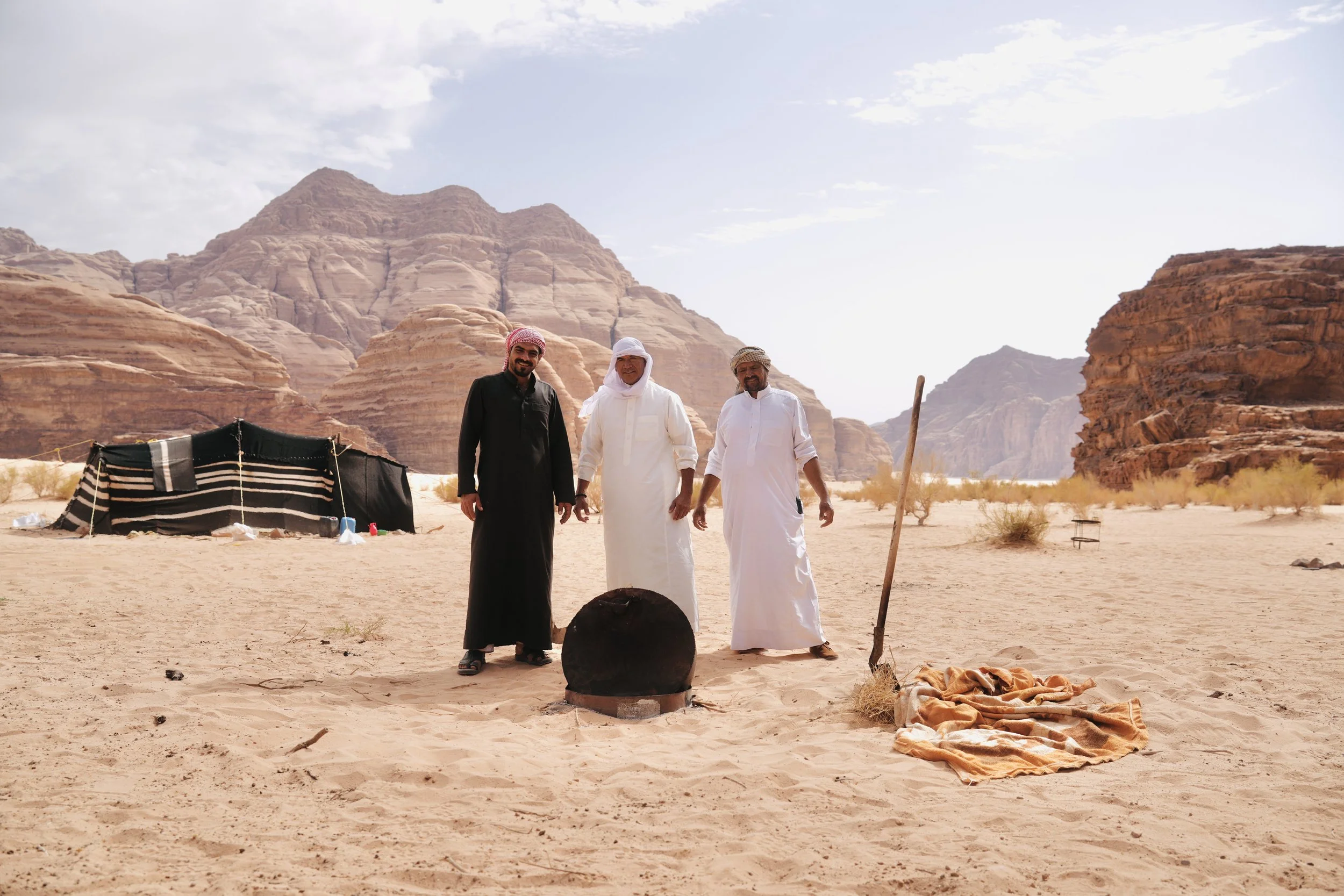
In Jordan, Tem lends a hand preparing the zarb - the Bedouin hāngī equivalent.
He shows me photos on his phone of his time with the Bedouin in Jordan, travelling on a camel into the desert, whose offer of a simple cup of coffee instigated a ritual with strict protocols that are laden with meaning. “We’re out in the middle of nowhere. It was beautiful. We got there by camel. And then we’re about to have coffee with the Bedouin warrior who’s roasting the beans and everything. There’s quite a cultural significance when you have coffee. It’s a man-on-man business.”
Partaking in and respecting the foreign cultural traditions was something he took extremely seriously. During the coffee ritual, you can see his concentration, to ensure he’s using the correct hand to do things that we don’t give a second thought to, like, for example, holding his cup or how it’s placed when it’s empty. “It’s quite sacred and respected. They only share certain moments with their close ones,” he explains. “Opening your mind to that cultural depth is something I really enjoy.”
It was also something made more challenging by the fact that throughout the series, most of his verbal communication was through an interpreter. However, he quickly found that no matter where in the world he was, words became increasingly less important in communicating. As he was so hands-on in the preparations and because it’s such physical work, he quickly forged bonds with his hosts. “I read once that the ocular dialect needs no translation. So for me, working all day with a guy who doesn’t speak my language, you just know what he wants. You know what he’s talking about. Even though they’re speaking Spanish, Indian or Hawaiian, you don’t actually have to ask what they’re saying. You just have to be present. There’s a natural camaraderie that you build up.
Food prepped for the zarb - the Bedouin earth oven.
“I respected them, and we became very good friends. Because we’re going, our mission is to cook this. You’re going to teach me, and I’ve got to do as much as I can. I’d get stuck in. By the end of the day, I’d be covered in dirt. By the time we’d put it all down, I’d be ready for a beer.”
“After being around food all day long, you’re very thirsty. But, you’re not that hungry,” then he laughs and says, “Sometimes you don’t even worry about the food. The drinking gets in the way. It’s thirsty work!”
While we’re all familiar with hāngī, it’s fascinating to learn how other cultures, separated by vast oceans, developed similar cooking methods with their own unique spin due to their environments. And while he says he “picked up a few tricks” when it comes to putting on his own hāngīs going forward, for him, Earth Oven is more about that human connection
that sharing a meal with someone creates.
“I think we’ve really got some magical moments. When I’m being hosted, I always feel humble and always get emotional when people take time out of their day to host me and my crew,” he says. “That’s where I’d always get emotional, at those moments when we’ve actually sat down, and finished the food. I always felt a bond and wanted to thank them.”
“There’s a saying, ‘What is the most important thing?
It is people.’ I love that saying. And that’s what I learned on my travels. Travel opens your mind up. I’m getting over to these places, sharing food with these families, right across the world. And yet, there are all these common things: sitting down, conversing. It reminded me of what we used to do growing up, when we all got together in summertime as a family in Hangatiki for Christmas to share in the haymaking.”
Then he smiles warmly and says, “So, it was quite a spiritual journey for me,” before tucking into the whitebait fritters that have just arrived for lunch.
Earth Oven screens on Sky Open, Neon and Sky Go from November 5, 2025