

GOOD IN THE HOOD
Today’s Neighbourhood Support modernises the old model to help our increasingly disconnected communities keep an eye out for each other.
Today’s Neighbourhood Support modernises the old model to help our increasingly disconnected communities keep an eye out for each other.
WORDS HAYLEY BARNETT | PHOTOS ALAN GIBSON

FROM LEFT: WBOP board chair Kathy Webb, Hato Hone St John critical care paramedic Kurt Golding, community constable Chris Connolly, WBOP board member Bev Tagg and Neighbourhood Support Tauranga manager Marea Goodwin-McKay.
The sound of a driveway full of people who’ve lived two doors apart for years and are meeting properly for the first time is a sound Kathy Webb knows well.
“These intro meetings are often very loud,” she says. “People meeting for the first time make a lot of noise, but it’s happy noise – finding out about one another, who’s in the family, are they working, kids… just generally getting to know the neighbours.”
As chair of Neighbourhood Support Western Bay of Plenty, Kathy has stood on enough driveways to know what that noise means. It means a street that used to be a row of strangers behind fences is starting to become something else.
“Most people assume Neighbourhood Support is mostly about crime prevention,” she says, “but we’ve moved away from the old Neighbourhood Watch days to more of a support and enabling role. It’s a much broader and preventative take on things that upset the regular rhythm of life.”
The local community constable and Fire and Emergency New Zealand often turn up alongside her at street meetings, which is how the model works.
“Although our key partnerships are with Police and FENZ, we like to work in the wider space of community safety,” Kathy explains. She’ll often invite Arron King, who works in community readiness and recovery for FENZ locally, to those gatherings. “He has a fancy title and job description, but he’s also a real bloke and a volunteer fireman in Pāpāmoa, and extremely knowledgeable about fire danger in the home and everywhere.”

Hato Hone St John are regulars too, running short 3 Steps for Life sessions in different suburbs. It’s an hour of teaching people to dial 111, do CPR and find the nearest defibrillator.
But all that’s by the by. The big question here is why did we stop knowing our neighbours in the first place? Kathy puts a lot of it down to time. “To survive, everyone needs to work, so Mum and Dad are juggling all the responsibilities, like work hours, school hours, sport and often ageing parents as well. There just isn’t enough time in the calendar.”
We also have a population that moves house on average every five-and-a-half years, chasing a job, a school zone or family. The long, slow process of getting to know a street barely gets started before the moving van turns up again.
Kathy sees loneliness creeping in, though she’s careful not to blame any one thing for it. Retirement villages, she points out, are both a symptom and a partial fix. They’re good for company, but they strip out the everyday variety of a normal street. It’s not just the big, one-off events that rebuild connection, she says. It’s the little things, like a wave in the driveway and someone who’ll take the bins out when you’re away.
This is the model behind Neighbourhood Support. If one person on a street is willing to put up their hand, the organisation helps them find a place to meet, puts an invitation together, does the mail drop and brings along whoever’s relevant, such as the community constable, a councillor or someone from Age Concern. Out of that first loud, happy meeting comes something practical to pursue, like bringing to the neighbourhood’s attention who’s vulnerable and might need checking on, who’s got a spare set of house keys, who has a trailer worth borrowing. Many groups end up swapping numbers and creating a WhatsApp group, so the connection outlasts the meeting.
“We often underestimate our influence,” says Kathy. “A smile and simply being present may seem insignificant in the moment, but for someone facing isolation or hardship, those small acts can provide hope and a sense of belonging that lasts for years.”
Her advice for anyone who doesn’t know their neighbours well is to “just take every opportunity to smile and say hi in the street. If a new neighbour moves in, pop over and introduce yourself. Offer help, especially when they need it.” There’s no committee or working bee required to start.
Multiply that across every street in Tauranga, and Kathy reckons the difference would be fewer disputes, better-supported elderly and disabled residents, and streets where, if something goes wrong, the first response comes from someone who already knows your name. And maybe still has your trailer. WBOPNS.ORG.NZ

THE BAY LESS TRAVELLED
Wild soaks, secret glowworms, hidden canyons and treetop trails – the Bay of Plenty’s best-kept adventures are hiding in plain sight, just waiting to be explored.
Wild soaks, secret glowworms, hidden canyons and treetop trails – the Bay of Plenty’s best-kept adventures are hiding in plain sight, just waiting to be explored.
We all know there are plenty of beaches and cafés to enjoy around here, but beyond the obvious lies a host of other ways to play, like:
Bay of Plenty Horse Adventures.
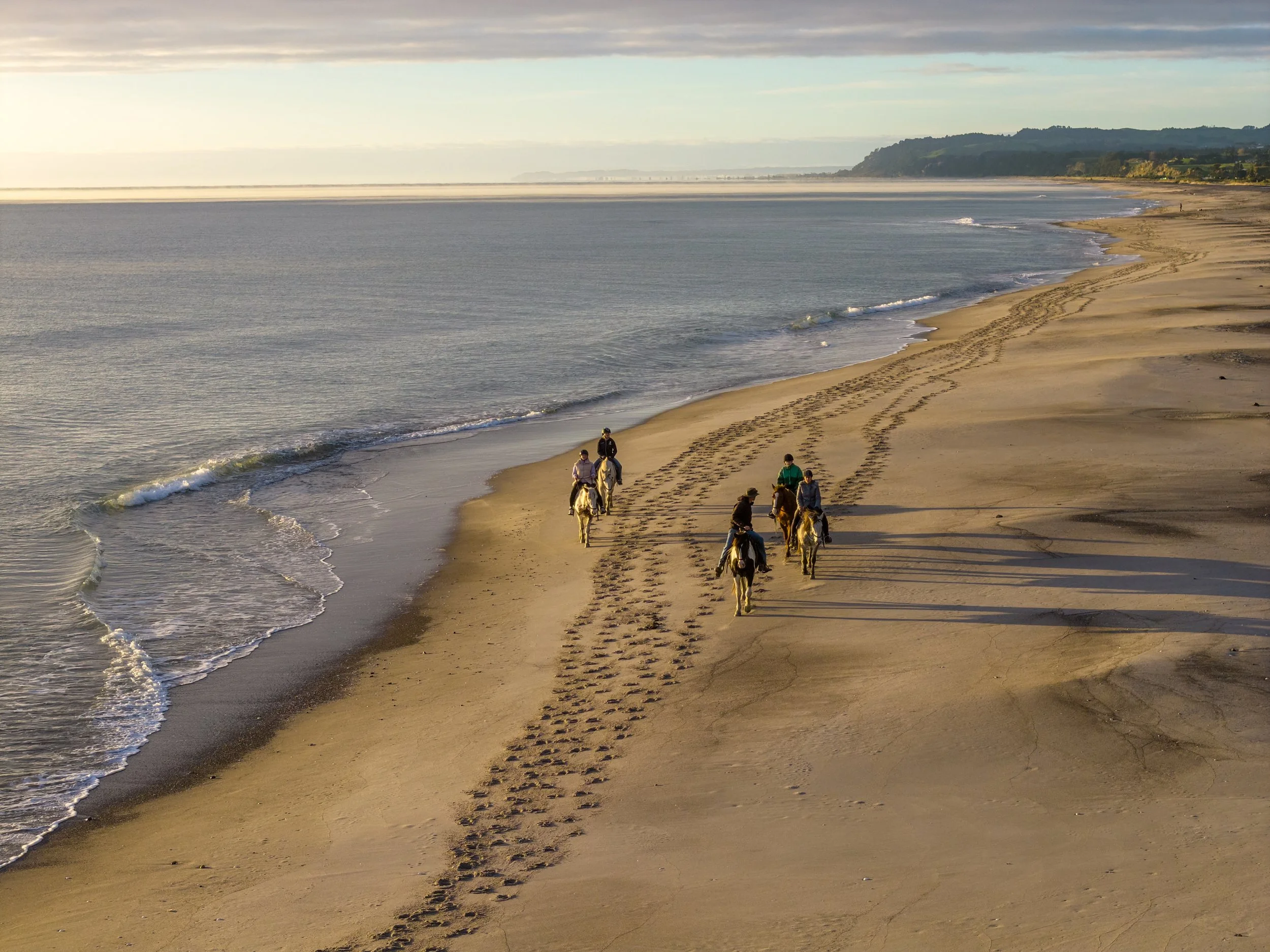
Swap hiking boots for the saddle to discover the coastline at a slower pace. Bay of Plenty Horse Adventures guides beach rides along the wide sands of Pukehina, where horses splash through the surf and wander beneath towering pōhutukawa. Suitable for beginners through to experienced riders, it’s a memorable way to experience one of our quieter beaches and really connect with nature. BAYOFPLENTYHORSEADVENTURES.CO.NZ
Mauao Adventures
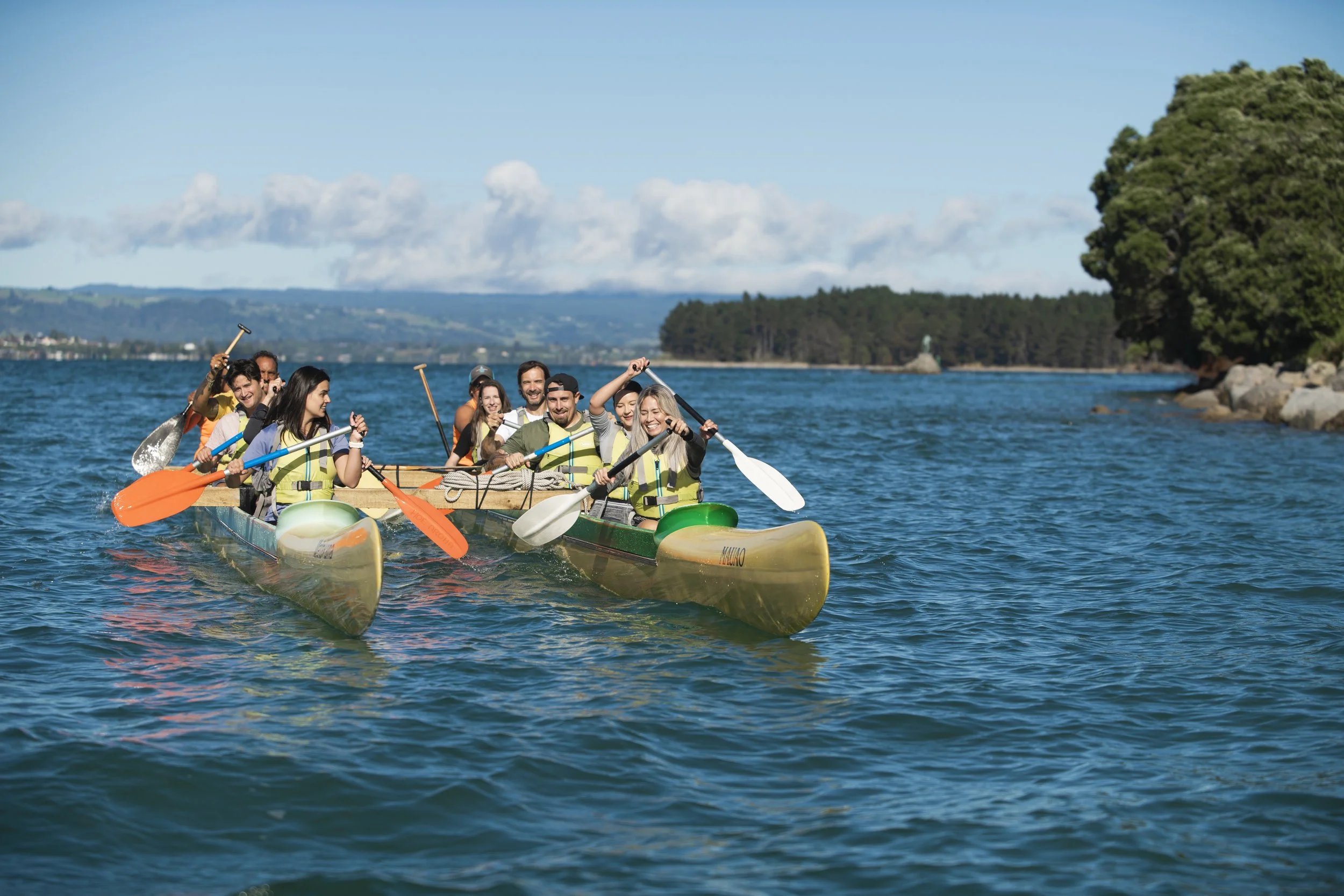
You get an entirely different perspective of Mount Maunganui when you see it from the water. Mauao Adventures leads waka ama (outrigger canoe) and stand-up paddleboard tours that let you fully appreciate the volcanic coastline, while keeping an eye out for seabirds and marine life. MAUAOADVENTURES.CO.NZ
McLaren Falls Park
You don’t need to venture into a cave to experience one of nature’s most enchanting light shows. As darkness falls over McLaren Falls Park, hundreds of glowworms illuminate the banks beside the Waterfall Track, creating a magical display just a short stroll from the carpark. Best of all, it’s completely free. Arrive before sunset to enjoy the waterfalls and lakeside scenery, then hang around until dusk, when the tiny blue lights begin to appear, transforming the bush into an after-hours adventure. TAURANGA.GOVT.NZ
Poripori waterhole
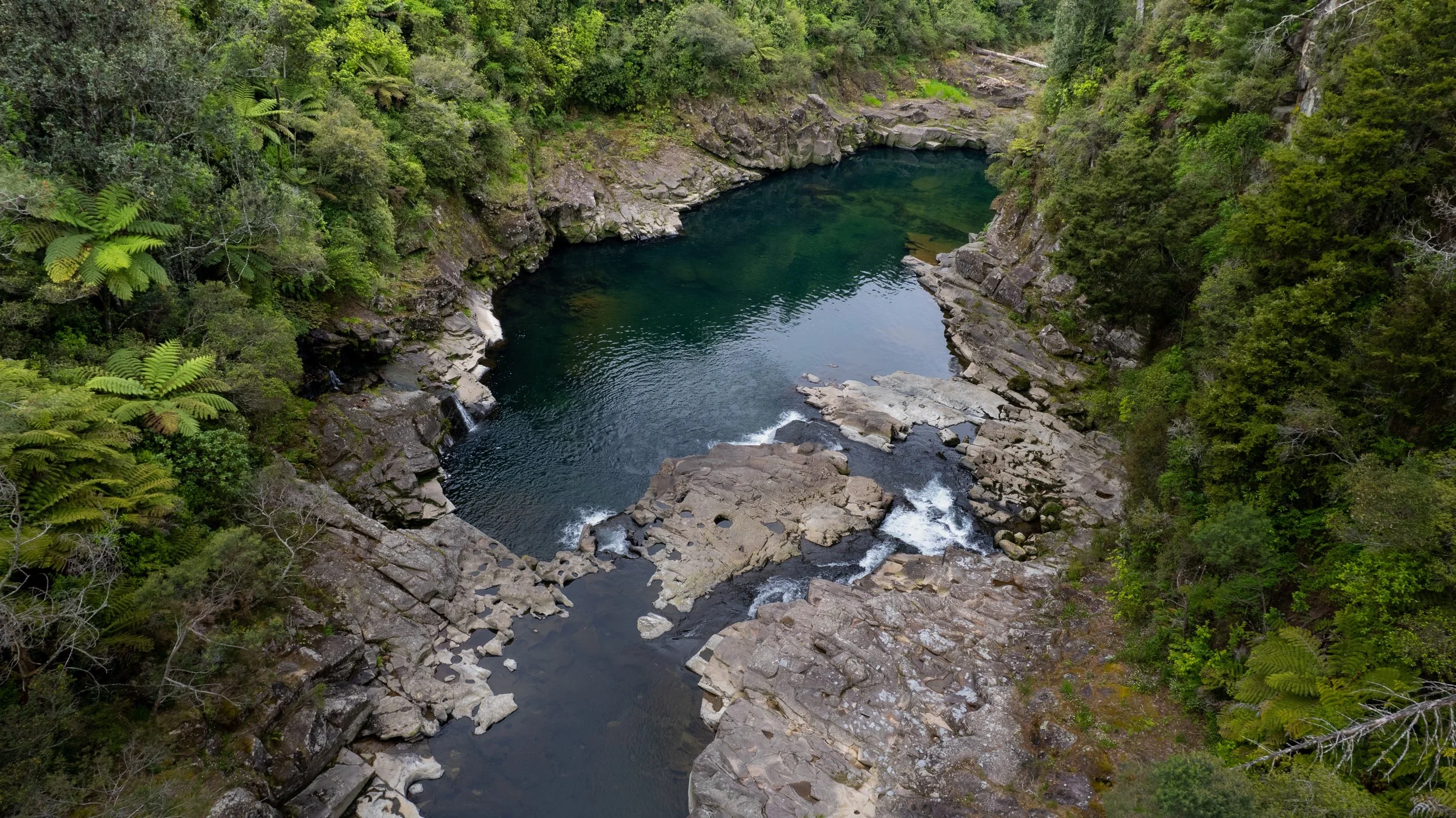
When the beaches are packed, head inland to Poripori for freshwater relief instead. In the bush beside the Wairoa River, this much-loved swimming hole offers clear pools and sun-warmed rocks. Confident swimmers can leap from the ledges, while quieter pools provide space to simply float and relax. Just be sure to check scheduled dam release times before visiting, as the river level can rise quickly.
Tropical display house
In Robbins Park in Tauranga’s city centre is an overlooked little gem – a warm, leafy escape that feels a world away from the busy roads outside. The tropical display house is filled with lush palms, vibrant flowering plants and exotic species that thrive beneath its glass roof, creating a peaceful oasis in every season. TAURANGA.GOVT.NZ

Riverbug
Forget rafting – Riverbug is a fresh way to explore our waterways. Sitting in small inflatable river craft, you’ll float through secluded gorges and lush native bush while guides share stories of local history and ecology. Tours range from scenic drifts to whitewater runs.
The Stix Ultimate Tree Climb
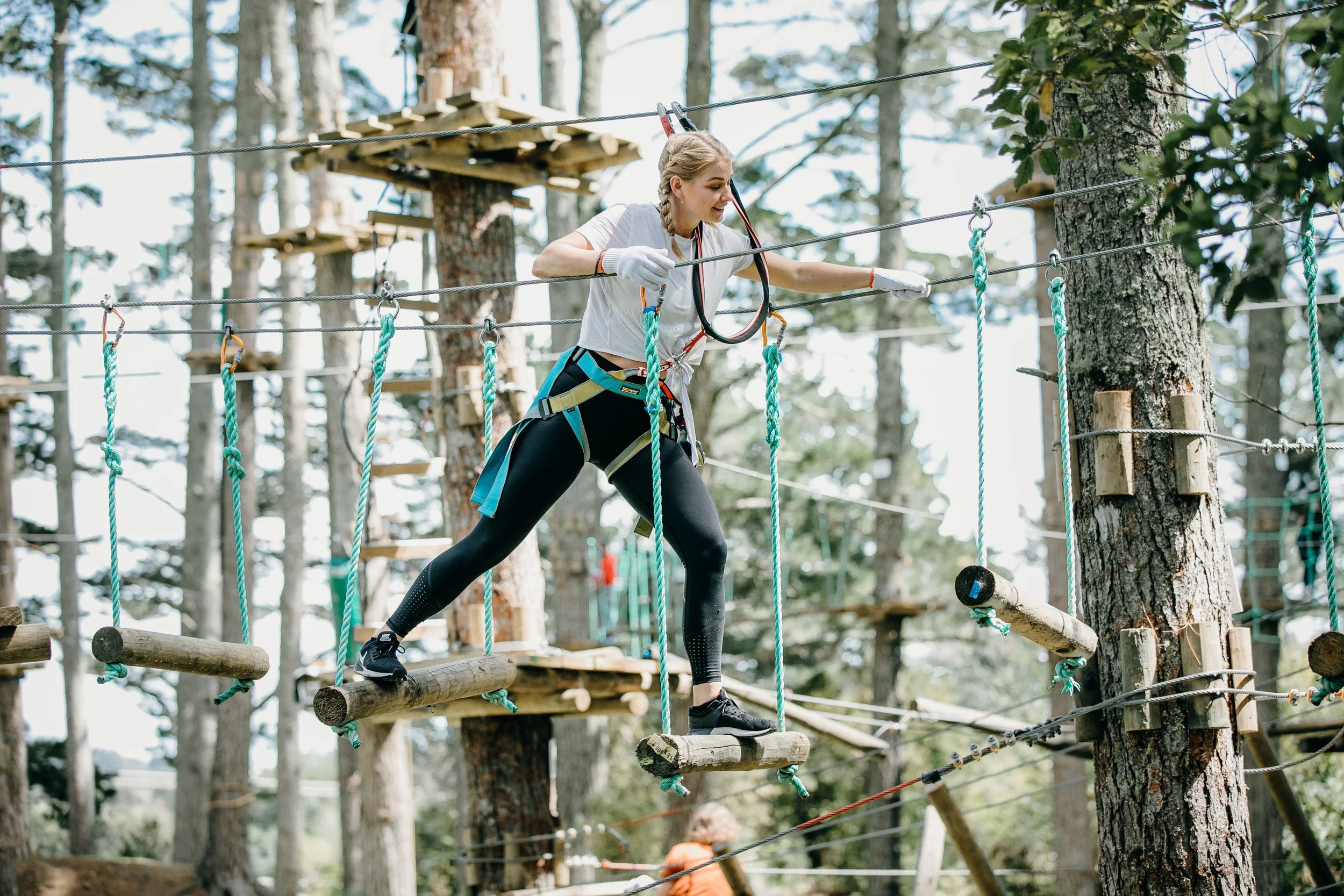
High above the forest floor, The Stix offers a completely different way to experience the Bay’s bush. Suspended bridges, rope crossings and tree platforms wind through the canopy on an active escape that combines adrenaline and spectacular treetop views. With courses suited to everyone, it’s just as rewarding for families as it is for thrill-seekers looking to try something new.
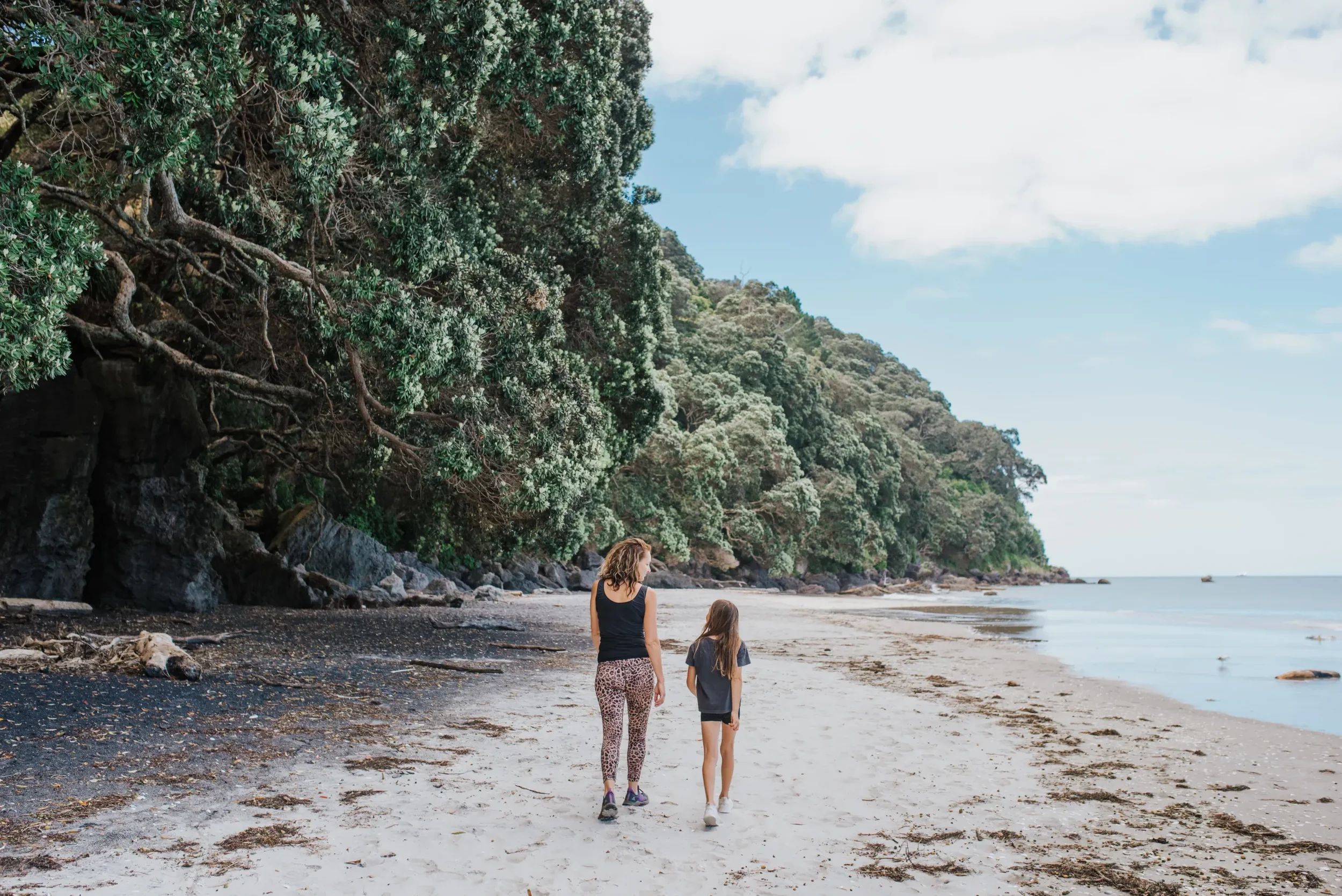
Cave Bay
Tucked beneath the rugged cliffs of Bowentown Heads, Cave Bay is one of the Bay’s most rewarding hidden coastal spots. A short but steep walk from the headland carpark leads to a sheltered cove, where you can explore rhyolite rock formations, sea caves and crystal-clear water. Pair your visit with the summit walk to the historic Māori pā site for panoramic views over Tauranga Harbour and the Pacific Ocean, then descend to the bay for a swim or picnic away from the crowds.
Tuahu Kauri Track
Some of the Bay of Plenty’s oldest residents stand silently in the heart of the Kaimai Mamaku Forest Park. The Tuahu Kauri Track leads walkers to an impressive ancient kauri that has survived for centuries, where you’ll get a chance to stand beneath one of the region’s largest remaining giants. The return walk is relatively easy, following a historic route through beautiful bush.

ART YOU CAN EAT
Where some see a grazing table, VECETO sees a blank canvas. Tauranga’s edible artist is turning food into immersive landscapes designed to be explored and remembered.
Where some see a grazing table, VECETO sees a blank canvas. Tauranga’s edible artist is turning food into immersive landscapes designed to be explored and remembered.
PHOTOS ALICE VEYSEY
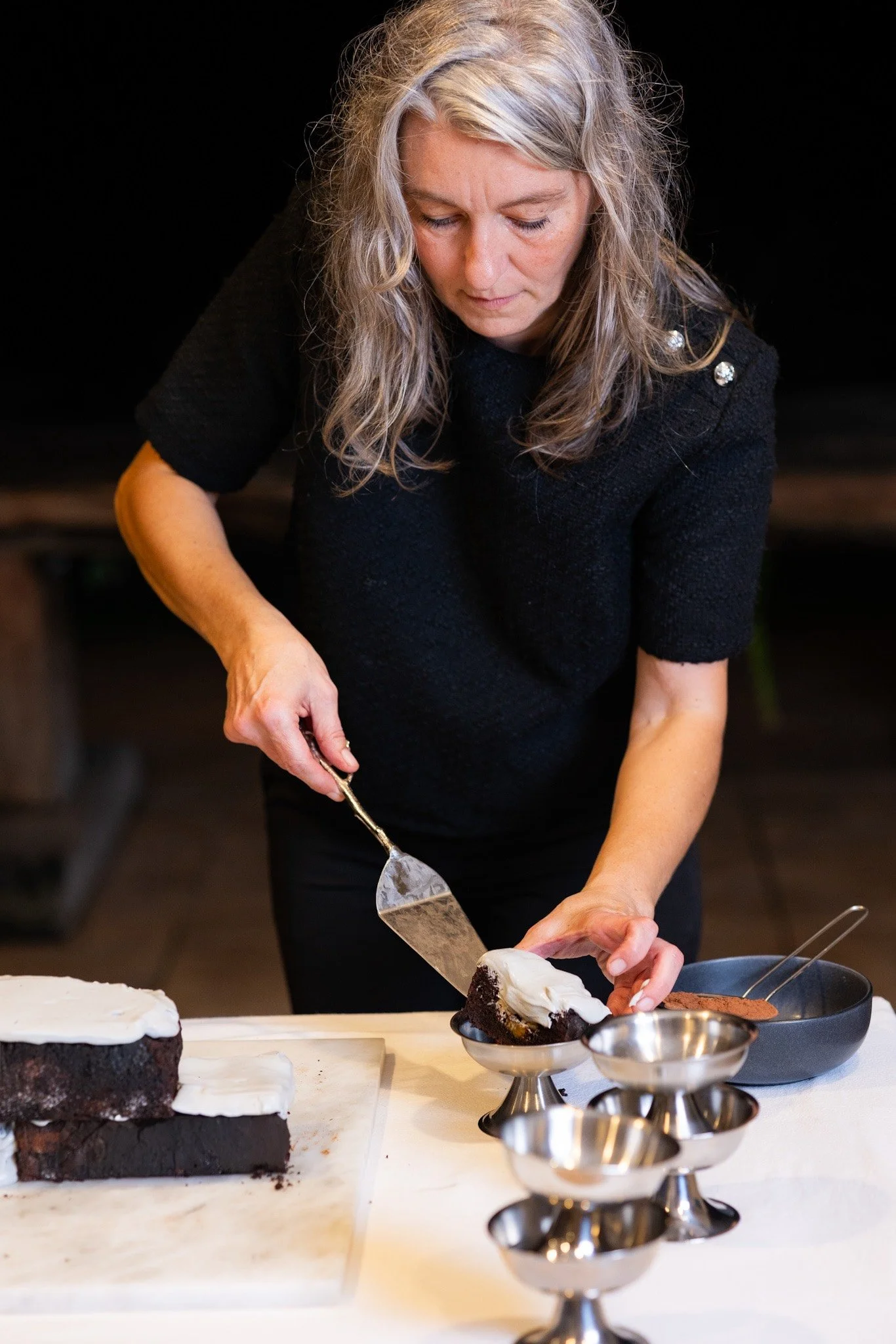
Food is usually something we gather around to share and enjoy. For Tauranga creative and the founder of VECETO, it’s also a way to tell stories and bring people together through art. Artist Kerstin Pricken creates immersive edible installations inspired by memory and the landscapes of both New Zealand and Europe. Her work invites people to experience food as something to explore as well as eat. UNO spoke to her about creativity, storytelling, sustainability and the future of edible art.
UNO: When did you first realise that food could be a creative medium and not just something to eat?
Kerstin: I’ve always been interested in how people experience spaces and moments. Through my work in hospitality, design and sensory studies, I became fascinated by the way food can connect people emotionally. It carries memories and engages all of the senses at once. Over time, I realised food could be much more than something served on a plate. It became a creative medium that allowed me to combine storytelling and design. VECETO grew from that idea, using food as a three- dimensional canvas to create experiences people remember.
You often describe your installations as “edible landscapes” or “sensory journeys”. What does that mean in practice?
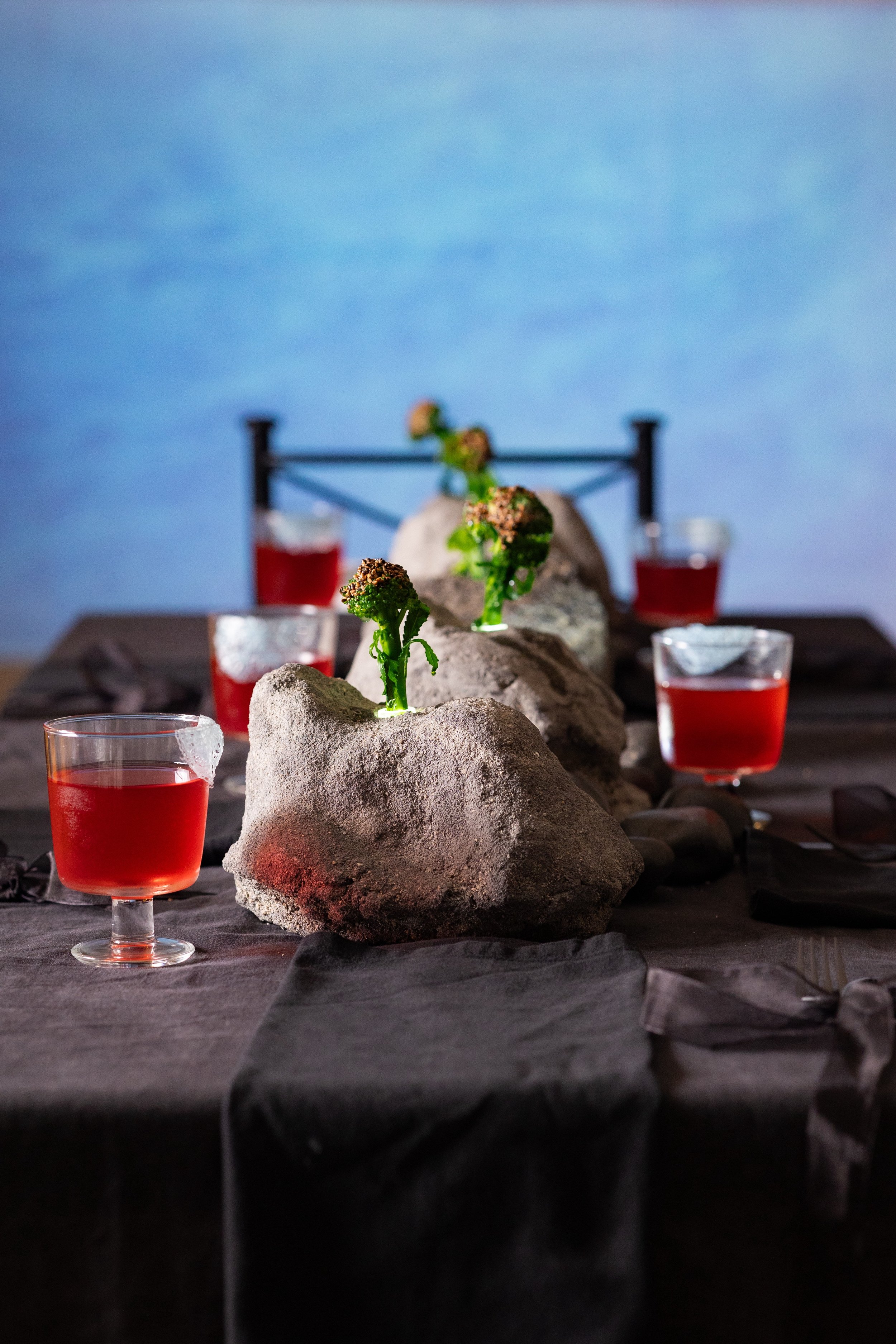
An edible landscape is essentially a large-scale installation built from food and natural materials. Rather than presenting food in a traditional way, I create environments that people move through and interact with. The sensory journey is what happens when guests engage with that space. Textures, colours, shapes and flavours all play a role. I enjoy creating moments where people aren’t immediately sure what they’re looking at, and where their perception shifts as they explore. As the installation is gradually eaten, it changes and evolves. The artwork becomes part of the experience itself.
Nature seems to play a strong role in your work. How does the natural environment shape your creative process today?
Nature is at the heart of everything I create. Growing up in Europe gave me an appreciation for rich textures, forests and seasonal changes, whereas New Zealand offers a completely different energy, like raw coastlines, volcanic landscapes and incredible light. I’m constantly observing patterns and natural forms. Those details often become the starting point for a project. I work with ingredients in their most natural state wherever possible, and allow the materials to guide the design. Instead of imposing an idea onto them, I like to respond to what already exists.
Your installations are intentionally temporary. What draws you to creating art that exists only for a moment?
I think there’s something incredibly powerful about creating an experience that can’t be repeated. The fact that the work disappears is part of what makes it special. Once guests begin interacting with it, the installation starts to transform. Eventually, it exists only as a memory. That sense of impermanence encourages people to be fully present in the moment. While photographs and film help document the work, they’re never quite the same as being there. Forme, that’s part of the beauty of it.
There’s a strong theatrical element to your events. How important is storytelling?
Storytelling is the foundation of every project. Whether I’m working with a brand or a private client, there’s always a narrative at the centre. My role is to translate that story into a physical experience people can step into. Everything contributes to the overall feeling, including the layout, the lighting, the ingredients, the colours and even the way guests move through the space. I want people not to simply observe, but to feel immersed. When that happens, the story becomes something they experience, rather than something they’re told.
Sustainability and plant-based ingredients are central to your practice. How do those values influence your work?
For me, it begins with the materials themselves. Plants, minerals and natural ingredients offer an incredible range of textures, colours and forms. They’re endlessly inspiring to work with creatively. The fact that they’re also accessible and widely understood helps make the work inclusive. People don’t need specialist knowledge to connect with what they’re seeing or tasting – the ingredients speak for themselves. Sustainability is naturally part of that process. Working closely with seasonal and locally available ingredients encourages a more thoughtful approach and helps reduce unnecessary waste.
How has being based in Tauranga influenced your work, and what opportunities do you see locally for edible art?
Tauranga is an interesting place to be creative right now. There’s a growing appreciation for both food and the arts, and people are increasingly open to new experiences. The surrounding environment is a huge source of inspiration. The coastline, native landscapes and seasonal produce all influence my work in different ways. At the same time, being based here allows me to bring ideas from international design and hospitality into a local context. I think there’s enormous potential for immersive food experiences, particularly in events, cultural projects and brand activations. People are looking for experiences that feel memorable and meaningful, and edible art offers a unique way to create that.

CURTAIN CALL
A hit TV show has exposed one of the Bay’s best-kept secrets. We’re a powerhouse of performance and creativity, from an amateur theatre company that’s been staging productions for almost a century, to the artistic director of the Royal New Zealand Ballet and the praise of one of Aotearoa’s most beloved actresses. As they all tell UNO, the show is far from over.
A hit TV show has exposed one of the Bay’s best-kept secrets. We’re
a powerhouse of performance and creativity, from an amateur theatre
company that’s been staging productions for almost a century, to the artistic director of the Royal New Zealand Ballet and the praise of one of Aotearoa’s most beloved actresses. As they all tell UNO, the show is far from over.
WORDS KARL PUSCHMANN | PHOTOS ALAN GIBSON + SUPPLIED
The Bay’s performing arts scene may not get the same recognition as that of the main centres, but it’s been an integral part of our identity for close to 100 years. In fact, the talent here could be our best-kept secret. With our thriving theatre scene, love of music and festivals, and abundance of visual artists and designers, it feels as if creativity’s no longer happening on the sideline – it’s being celebrated.
No three people understand that more than the president of one of the country’s longest-running theatre companies; the artistic director of the Royal New Zealand Ballet, who studied to become a dancer right here in the Bay; and an international acting superstar. They each represent different corners of the creative world, but their stories all revolve around the sense of community, and the opportunities, encouragement and audiences that are found here.
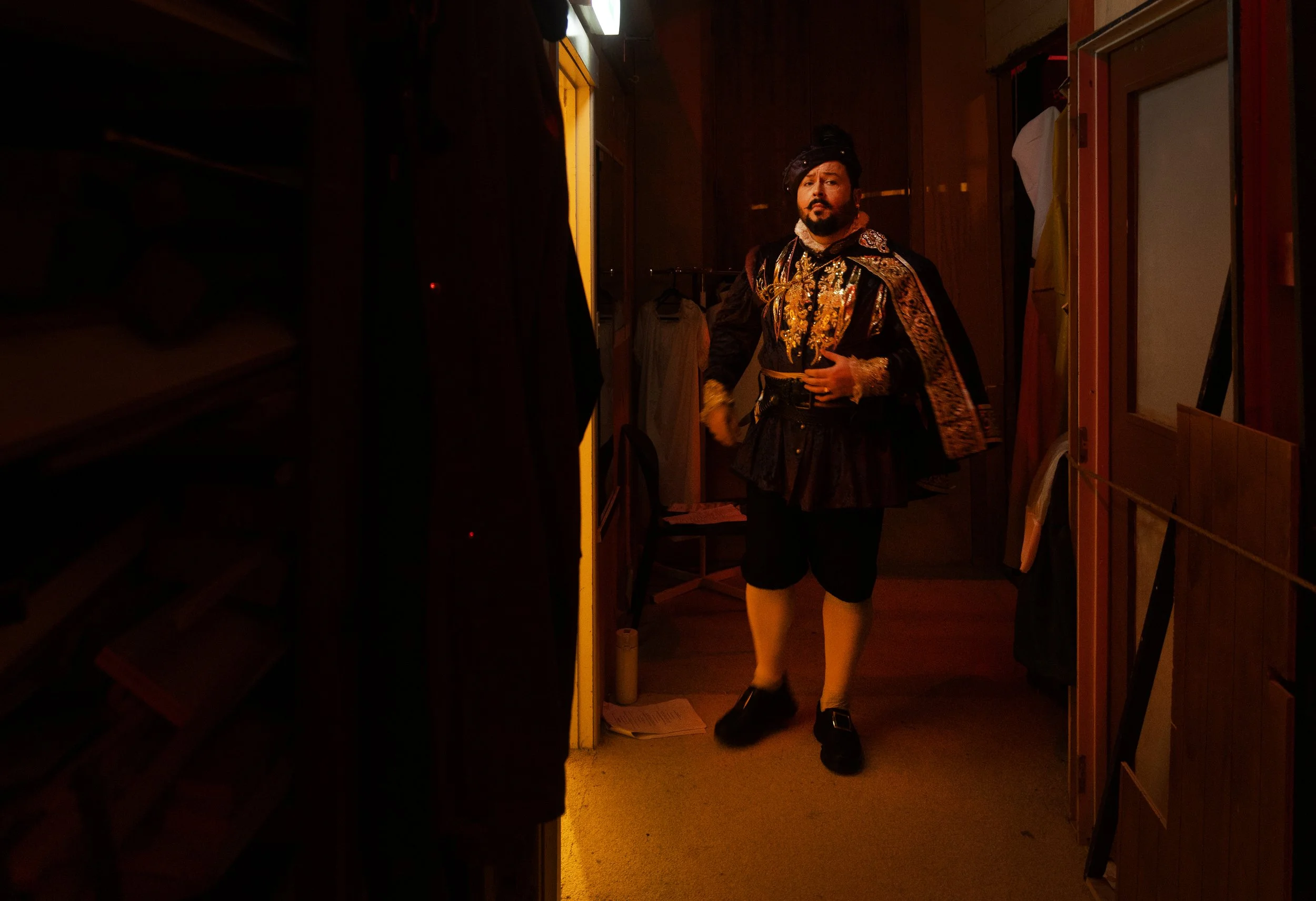
Actor Tom Kay backstage as Lord Wessex in 16th Ave Theatre’s Shakespeare In Love.
LOCAL LEGENDS
“We’re one of the oldest theatres in New Zealand,” says Heather Graham, with more than a hint of pride at this Tauranga stalwart’s achievement. “The only time we didn’t have any plays going was during COVID.”
Heather’s the president of 16th Ave Theatre, the much-loved amateur outfit that first raised its curtains back in 1936 and has been powered by what she describes as “passionate volunteers” ever since.
16th Ave Theatre is a true Aotearoa institution. It first opened way back in 1936 and has since become a place for enthusiasts of all ages to come together. During this impressive run, Heather says whole generations of the same families have graced its stage, worked behindthe scenes and joined the committee.
“There are probably about half a dozen families where the grandparents, their children and their grandchildren are all involved,” she says. “The theatre really does appeal to all generations.”
Heather says the longevity of this thriving creative community comes down to its welcoming nature.
“All you need to do is want to be involved.”
She says people join for all sorts of reasons. There’s a love of the theatre, of course, but there are also people looking to expand their social activities, others looking to try something new, and some who’ve decided to return to something they loved at school. Acting, building sets, making props or even just helping people find their seats before a show – there’s a place for anyone who’s keen to take part.
The core volunteer group currently consists of around 60 to 70 people, with about 50 front-of-house volunteers waiting in the wings. “We’re all volunteers, so nobody gets paid,” says Heather. “It’s there for the community. Just come and join in, because we love sharing what we’ve got.”
Each year, 16th Ave stages four major productions, alongside smaller ones and play readings. As part of their 90th birthday celebrations, they recently performed the first two one-act plays the company has ever staged, The Green Monkey and The Bishop’s Candlesticks. The next big show is the comedy Lend Me A Soprano, which opens in late November.
The company moved into its current location in 1954, and now boast a 150-seat main auditorium, plus a bar and café area that can double as a black-box theatre seating around 30 to 40 people.
“We open our theatre to outside performers to hire,” says Heather, noting that many people are involved with more than one theatre company, creating a sense of collaboration and shared talent across the city.
Heather’s own journey started humbly. She didn’t have a background in theatre, but a work friend was directing a play at 16th Ave and asked if she could help out backstage, managing the props, saying, “You look like you need something new to do.” Eighteen years later, she’s president. It’s safe to say the acting bug got her, even if she’s not always acting.
When asked why so many people volunteer their time and put so much effort into putting on productions, Heather doesn’t hesitate to answer. “It’s their love of theatre and the sense of belonging you get here,” she says.
Her reply is equally quick when asked why, in this age of YouTube and doomscrolling, audiences are still showing up. “Because the performances are real. You feel a part of it, and you can feel the emotion in the room.”

A WORLD OF TALENT
The connection between performer and audience is something ballet dancer Ty King-Wall understands intimately. “I started to get really serious about dancing when I was a teenager,” he says. “My training was in Tauranga, so we’d drive half an hour over to Tauranga from Katikati nearly every day to train at the Dance Education Centre.”
Today, Ty is the artistic director of the Royal New Zealand Ballet (RNZB), but his journey to the top of the country’s ballet world began right here. For him, the Bay of Plenty was the place where his dreams of a creative life became real.
Ty, who grew up in Waihi and later near Katikati, says his teacher Scott Millen played a critical role in his development at the now-closed Dance Education Centre.
“Often for boys, doing ballet is quite an isolating experience,” he says, “so to have a male teacher role model at that pivotal time was really important for me.”
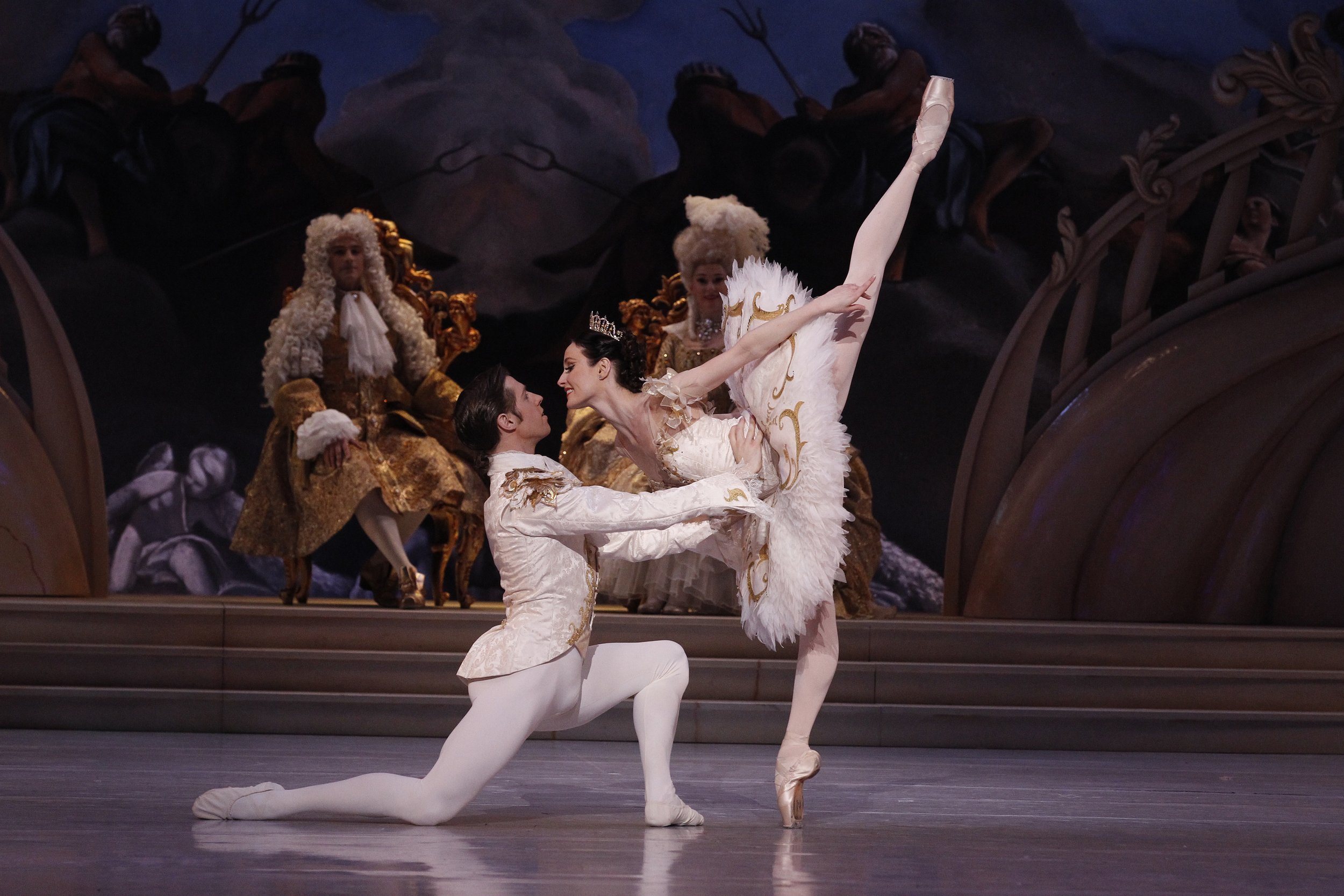
Ty had become interested in dance after seeing a RNZB performance of the classic fairytale Cinderella, but it was sitting in the audience for a production of famous ballet Swan Lake that changed his world.
He was enraptured, and vividly remembers thinking, ‘That’s what I want to be doing’. He went all in on making that happen, becoming a devoted follower of the RNZB, driving to Auckland to watch three performances a year, and training and competing in Tauranga.
It was an exciting time, with “a constant influx of ideas, and different creatives”. Eventually, his hard work landed him the opportunity to train at the Australian Ballet School. He smiles fondly as he recalls the region supporting him with vital fundraising drives.
“I really felt Katikati and Tauranga getting behind me in a big way,” he says, adding that it was the essential support he needed to pursue an international career. This gave him a strong belief in the role communities can play in developing artists.
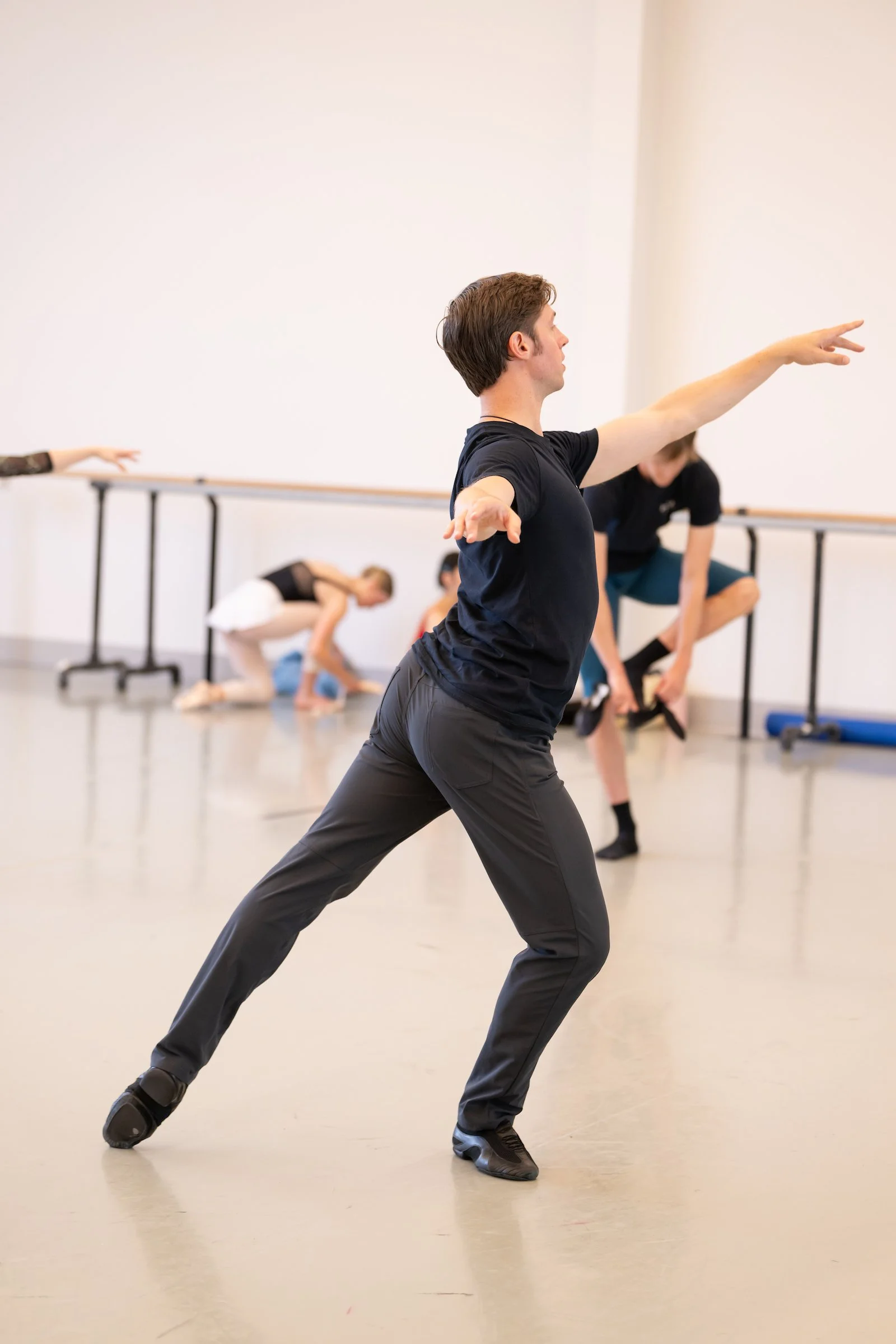
RNZB’s artistic director Ty King-Wall.
“Our young artists are the future. Any support you can give them to follow their dreams and their love is crucial, especially at that formative time.”
This support, he says, doesn’t need to be financial. Attending the shows and productions that are being staged around the region is invaluable. It’s also great entertainment and a lot of fun.
After a celebrated career on stage, Ty now heads one of Aotearoa’s most prominent performing arts companies, but even at the top, he’s quick to stress the importance of grassroots creative communities. As he explains, a show isn’t just about the people on stage. There are directors, producers, costume designers, set builders, lighting artists... the list of people conjuring the magic of live performance is comprehensive.
Local theatres and venues provide invaluable training and experience to all of the people involved in every aspect of a live performance and across the different creative disciplines. On stage or off, experience gained at the amateur level can directly lead to professional careers. Ty himself is proof of that.
“It’s all part of a greater ecosystem,” he says. “These people are our collaborators, and if those artists are lost, then the overall scene is poorer for it. It all starts at the local level, at the regional level.”
He pauses and says, “You can’t presume that it’s unimportant – because it’s all important. It’s all part of it.”

Actor Rebecca Gibney.
LIGHTS, CAMERA, BAY
“Tauranga,” says acting icon Rebecca Gibney matter-of-factly, “is actually the amateur theatre capital of New Zealand.” With a smile, she adds, “That’s why Happiness is set there.”
Although Rebecca has never lived here, she’s well aware of Tauranga’s creative scene and how vibrant our amateur theatre community is. She’s thrilled to be showcasing it to the rest of the country, and the rest of the world, via her delightful musical- dramedy, Happiness.
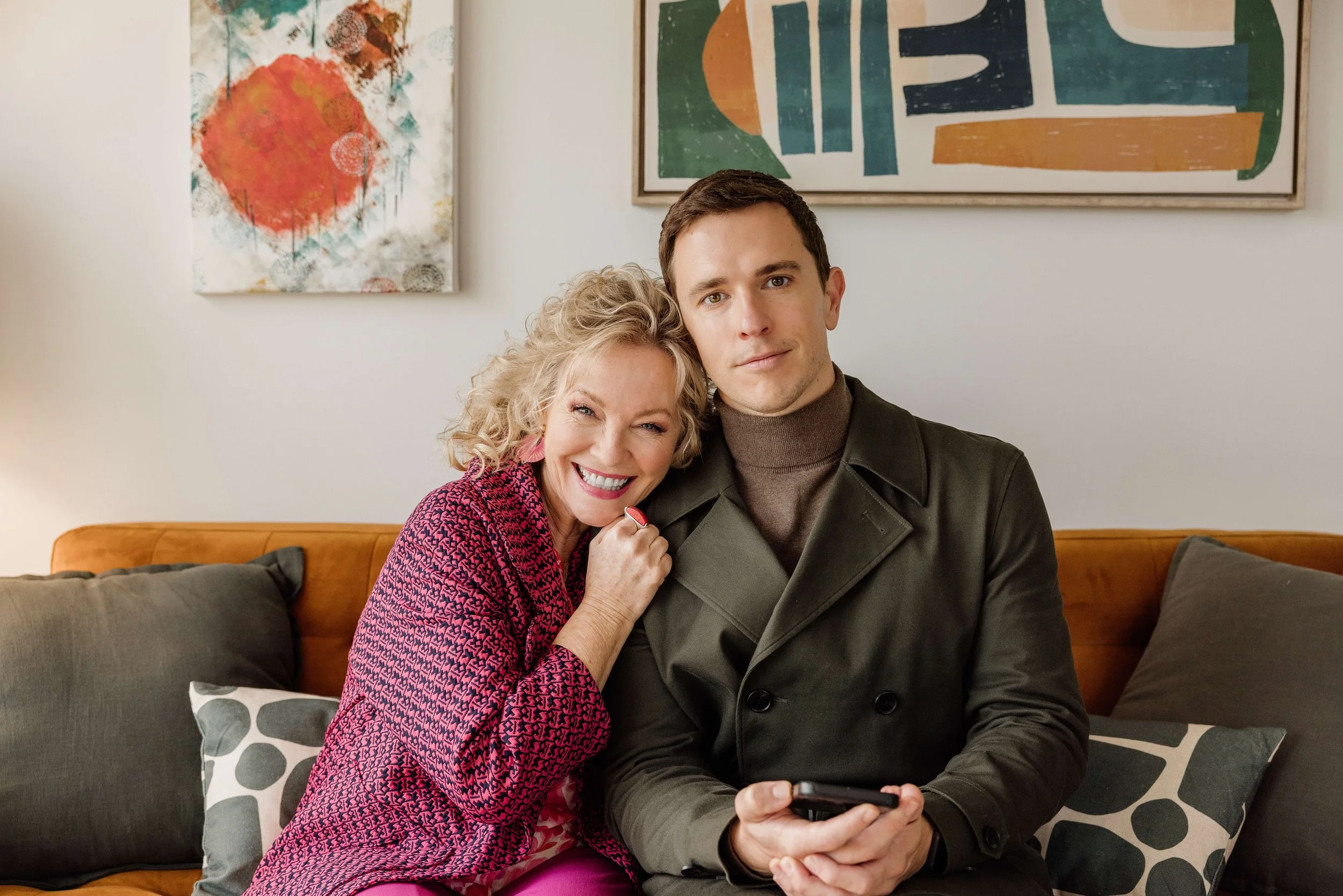
The TV series follows a Broadway director whose circumstances force him back to Tauranga, where he’s reluctantly roped into directing his mum’s amateur musical production. The show’s first season was a hit, winning over critics and audiences at home and overseas with its colourful exuberance, tight comedic scripting, and real sense of place. For Bay of Plenty locals, it’s a lot of fun seeing familiar landmarks pop up on screen. In November, the show will return to Three and ThreeNow for its second season.
“I had no intention of doing a musical,” Rebecca admits, saying she first heard about it on set while filming her popular dramedy Under the Vines in central Otago and Queenstown. Her fellow actors and the crew were all talking about wanting to get work on an exciting new series set in Tauranga.
“The show had such a buzz around it that I couldn’t help myself,” she says. “I had to find out what it was.”
Rebecca believes Happiness has struck such a chord because people need something that makes them feel good while the cost-of-living crisis bites and the news seems relentlessly grim.

“We all need a bit of happiness. We all need a bit of joy,” she says. “I’m all for putting out things that are going to create a positive impact on people when they watch them. I love it because it’s so joyous and uplifting. Happiness is a show that feels like a warm hug. I love that.”
We’re fortunate to live in a region where an amateur theatre company can thrive for 90 years, where a young boy living in Katikati can follow his dreams and end up leading the Royal New Zealand Ballet, and where a series with international appeal can be based here because it’s a place in which the passion of its characters just makes sense. As Heather puts it, “There’s so much going on and so many talented people.”
The arts and our creative scene are a vital component of what makes the Bay of Plenty such a vibrant and exciting place to live. It provides essential experience and support for people who dream of becoming the best in their field, gives enthusiasts the chance to come together and work on their shared passion, and gives the rest of us a place to live where there’s always something to do, see and experience.
It gives us entertainment and escape, brings joy and happiness to all ages, gives memories that stay with you and, in its best moments when the magic truly hits, can change your life forever.

GLOBAL AMBITION
It’s not the size of the city you’re based in, but what you do with the potential in it. So say these innovative local thinkers, who are showing the world just how far their revolutionary tech can take things.
It’s not the size of the city you’re based in, but what you do with the potential in it. So say these innovative local thinkers, who are showing the world just how far their revolutionary tech can take things. WORDS KARL PUSCHMANN
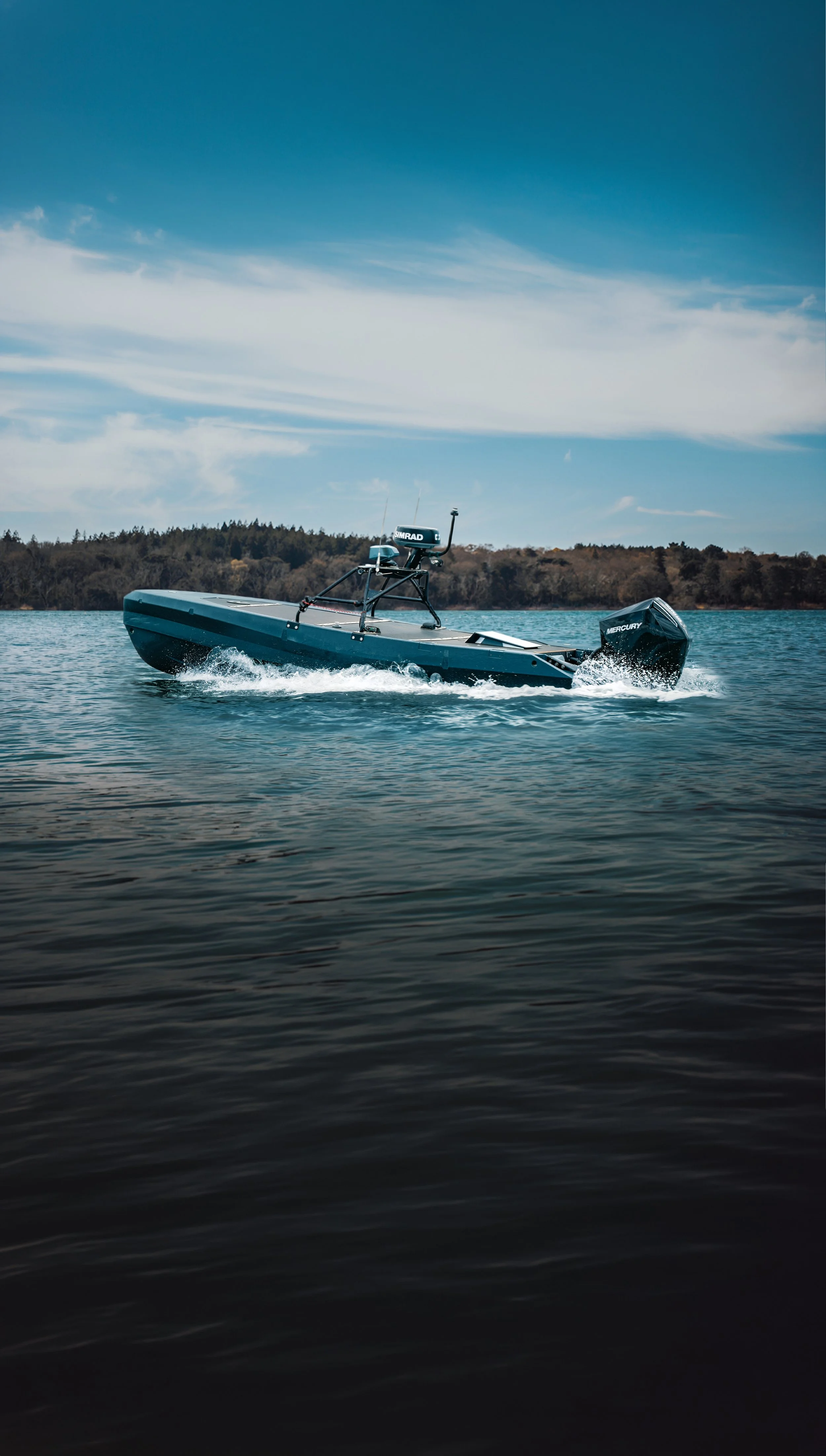
SYOS’ unmanned sea vehicle, the SM300, out on patrol.
Here in the Bay, we’re well known for our relaxed lifestyle, golden sand and lush nature. Few people realise we’re also on the bleeding edge of tech, with two Bay-based companies leading the field in robotics and autonomous technology. On the following pages, we go inside the businesses turning big ideas into world-changing innovations.
MASTER OF THEIR DOMAINS
What started as a simple idea has seen SYOS Aerospace conquering land, air and sea.
Right now, somewhere in the world, a helicopter buzzes overhead without a pilot, a boat skims across the water without a crew, an unmanned cargo transporter crashes through the bush and an autonomous submersible glides silently beneath the ocean’s surface.
They’re all part of the rapidly expanding world of uncrewed technology, and a company at the forefront of it is based right here.
Mount Maunganui’s SYOS Aerospace began just five years ago in 2021, after co-founder Sam Vye saw a need for a machine that could bridge the gap between traditional helicopters and electric drones. “Electric drones just didn’t have the payload or the endurance,” he explains, “and manned helicopters were expensive or potentially dangerous in some tasks and environments.”
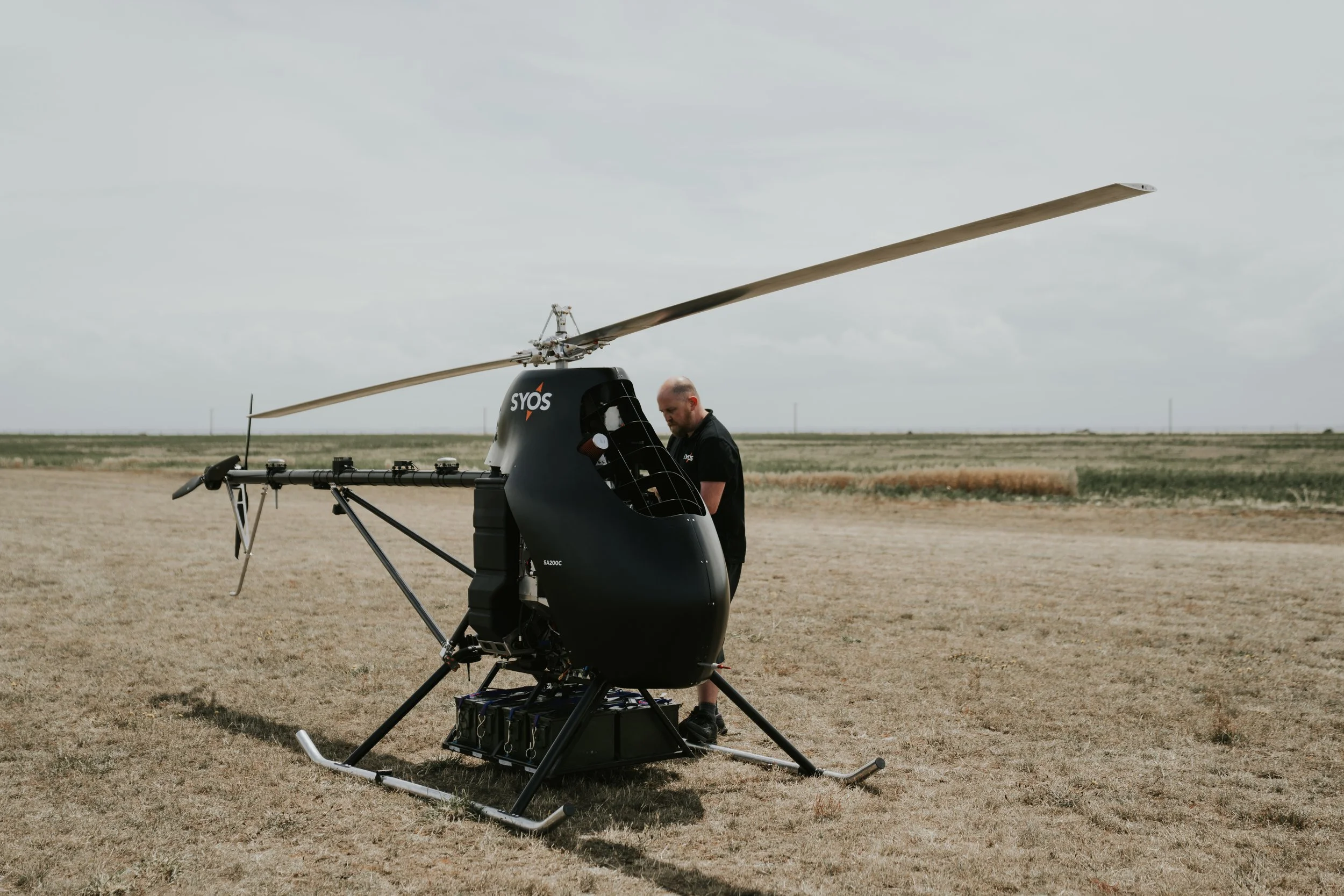
It all started with SYOS’ uncrewed autonomous helicopter, the SA200.
His idea was to create an unmanned helicopter powered by petrol, capable of applications including forestry, agriculture, cargo logistics, surveying, and search and rescue. Sam knew it needed to match what a manned chopper could do and be simple to keep powered. He also knew realising his idea was not going to be easy.
“Uncrewed helicopters are one of the bloody most complex, difficult vehicles to do,” he laughs. “They’re big things – flying bricks, if you like, with lots of vibration.”
Now that rechargeable batteries are capable of long distances, as evidenced by all the EVs on the road, you may think power wouldn’t be a problem, but batteries weren’t going to cut it. Firstly, recharging would ground the helicopter for hours, and secondly, batteries still can’t match the energy density needed to keep a helicopter lifting 200kg in the air for hours. Rather than trying to reinvent another wheel, they went with a proven solution.
“It runs on fuel that you can get from the BP fuel station,” explains Sam, allowing it to carry more and stay in the air longer than electric drones and be easily refuelled on site.
With their first helicopter, the SA200, in the air, Sam began to see the huge potential and opportunities in what they’d created. “We started realising that the skills we’d put together, the autonomy and the software capability, could be applied to other domains across land and sea.

The robust SG400, a 6×6-wheel drive unmanned vehicle capable of operating in rugged terrain.
“We really targeted the three Ds: dull, dirty or dangerous,” he says. “Our first real venture was uncrewed boats, or uncrewed surface vessels, and we’re also now in the subsurface domain, with the acquisition of local company Bay Dynamics.”
The growth has been rapid, but Sam says they’re not going anywhere. A significant part of SYOS’ development and manufacturing operation remains here in the Bay, and the company now employs around 100 people and is actively recruiting for more. They’ve also opened a production facility in the UK, and Sam says he expects their global workforce to approach 200. “We’re proud of the fact that we’ve grown the business organically.”
This remarkable growth has been driven by a willingness to move quickly. Rather than spending years developing the perfect machine, SYOS instead creates a minimum viable product, then improves it through what they call spiral development.
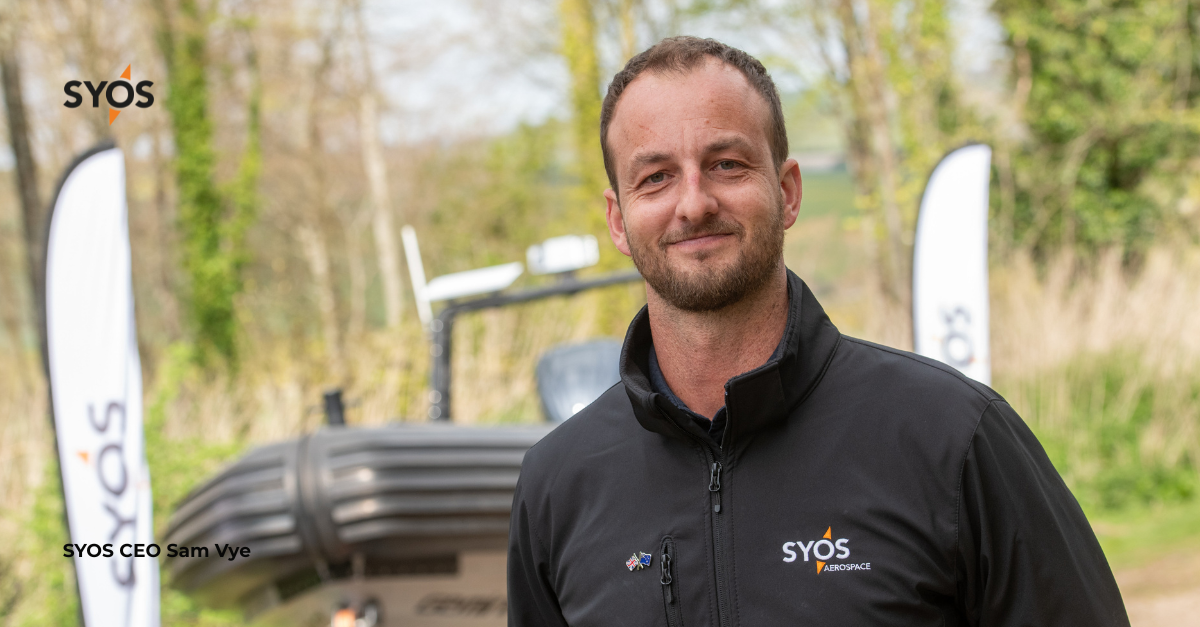
SYOS CEO Sam Vye.
“We’ve got a very, very good reputation with our customers for developing faster than anyone else can develop,” says Sam. “If new systems are needed, we don’t need years to develop it. We can do it in weeks or months, and then do the upgrades within days or even hours based on end-user feedback.”
For all its international ambitions, the Mount remains an important part of SYOS’ future. Sam says the region has a real advantage when it comes to attracting specialist talent from around Aotearoa and overseas, particularly because of the lifestyle on offer. He believes there’s a great opportunity to turn the Bay of Plenty into the next Silicon Valley.
“If we can grow the Bay of Plenty to be a tech hub, that would be incredible,” he enthuses. “We’ve got all the things in place to be able to do it, but having support from the government to drive the expansion of a tech hub would really springboard it.”
No matter what happens, SYOS is here to stay. Sam says he has no desire to “sell out” to a massive corporation like Boeing or Airbus. “We really want to recognise our New Zealand roots and utilise New Zealand as an amazing base. I’d love us to be the next Rocket Lab. In a nutshell, we’re here to play long term and be a global player.”
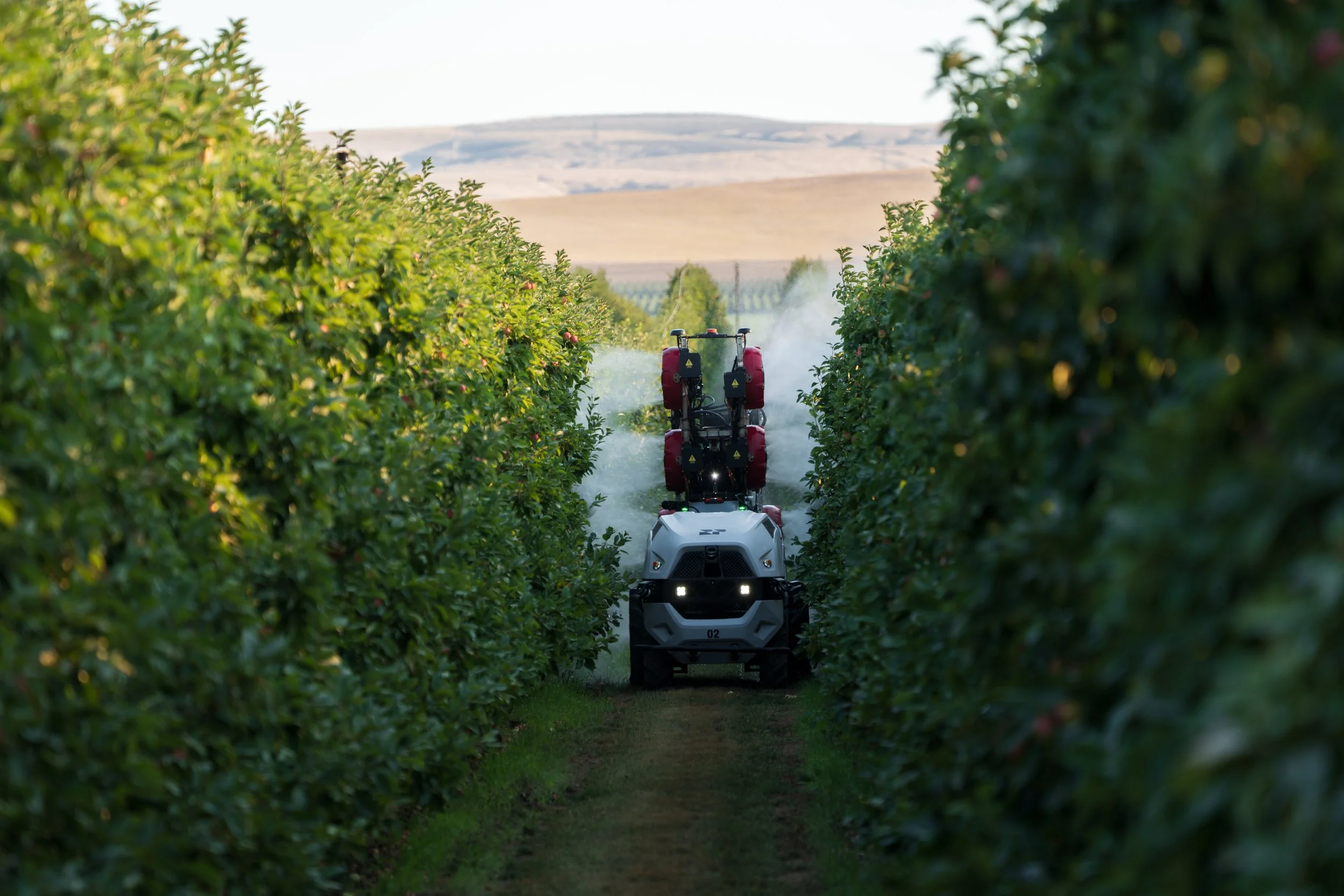
Robotics Plus is revolutionising farm work around the world with its autonomous vehicle, Prospr.
FARMHANDS OF THE FUTURE
Robotics Plus transformed the way food is grown and went global, without leaving the Bay behind.
Even in the age of dancing robots and self-driving cars, the idea of robots working the land and tending crops on farms sounds like something straight out of a sci-fi film. Still, in vineyards in Marlborough and Blenheim, on apple orchards in Washington and on hazelnut farms in Oregon, autonomous vehicle Prospr is out in the fields, working these high-value crops.
Prospr is the future of farming that Steve Saunders envisioned over a decade ago. He grew up around agriculture and spent more than 30 years building horticultural businesses in the Bay of Plenty. It had given him a front-row view to the pressures facing growers. Labour shortages, productivity and sustainability were increasingly difficult challenges. He believed the rapidly advancing technolgy sector would hold the solution.
Around 2014, he teamed up with robotics expert Dr Alistair Scarfe, and Robotics Plus was born.
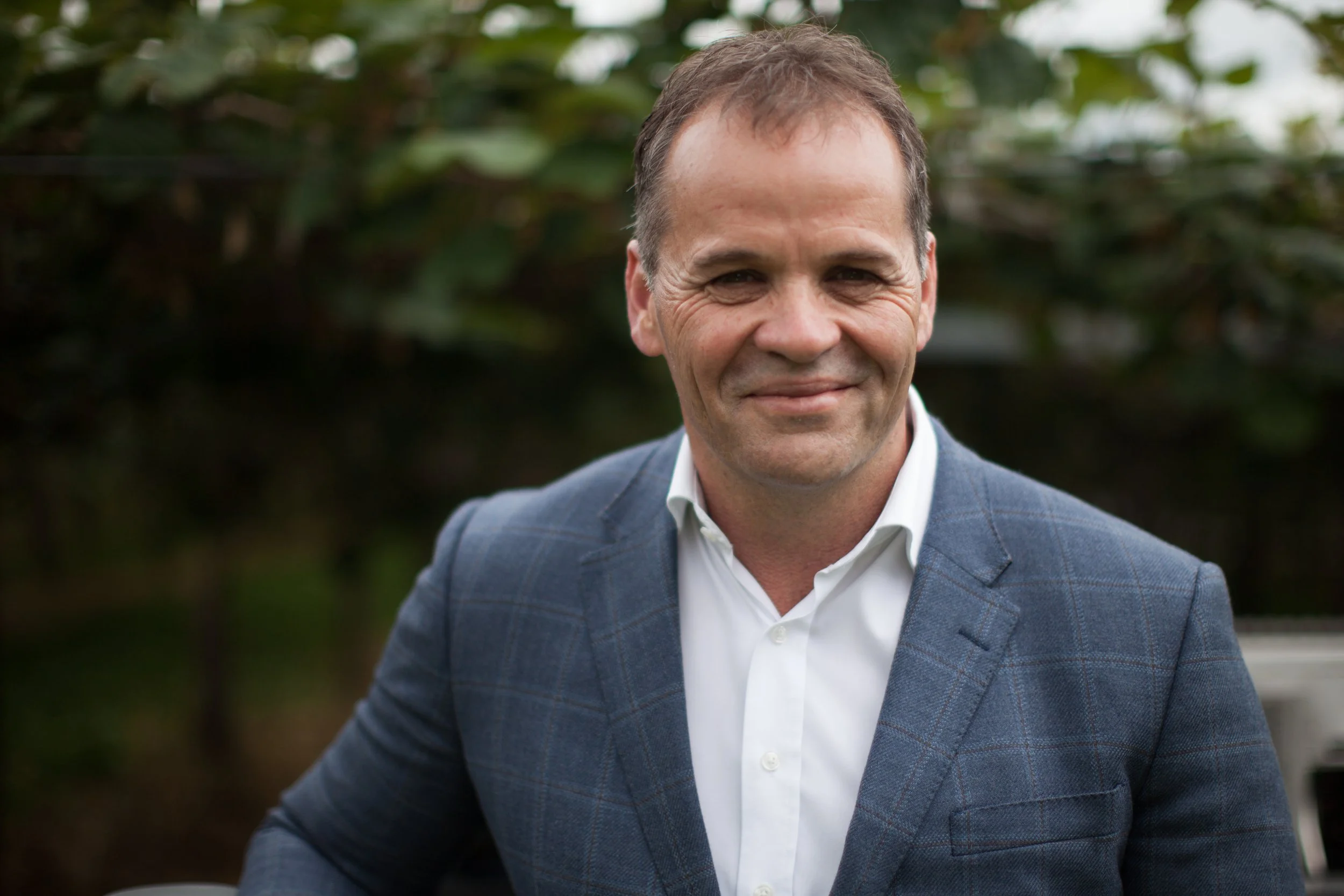
Yamaha Agriculture’s senior vice president of business development and strategy, Steve Saunders.
“We began working on automation ideas,” says Steve. “The vision was to develop practical robotic and automation technologies to help growers address those interconnected challenges.”
One of the company’s defining innovations was Prospr, an autonomous vehicle created to carry out essential orchard and vineyard tasks. “It’s designed to improve productivity, precision, safety and sustainability while helping growers make better use of increasingly scarce labour,” explains Steve. “Prospr is a hybrid technology that significantly reduces fuel costs and carbon footprint.”
It launched with autonomous spraying capabilities, and earlier this year added an attachment for autonomous weed control.
After developing a strategic partnership with the global powerhouse Yamaha Motor in around 2017, thanks to their shared vision that robotics, automation and intelligent data would play a central role in the future of specialty agriculture, Robotics Plus was acquired by them last year to form the foundation of their new global agriculture business, Yamaha Agriculture. Steve stayed on as the new company’s senior vice president of business development and strategy.
“By combining our agile, on-the-ground understanding of agricultural realities with Yamaha’s expertise and global reach, we can accelerate the delivery of autonomous solutions to growers worldwide,” he says, adding that when it comes to technology, Yamaha Agriculture has a grower-first philosophy. “Rather than replacing growers’ expertise, we’re developing autonomous systems that complement it. We’re integrating robotics, software and data- driven insights into connected platforms that become smarter over time.”
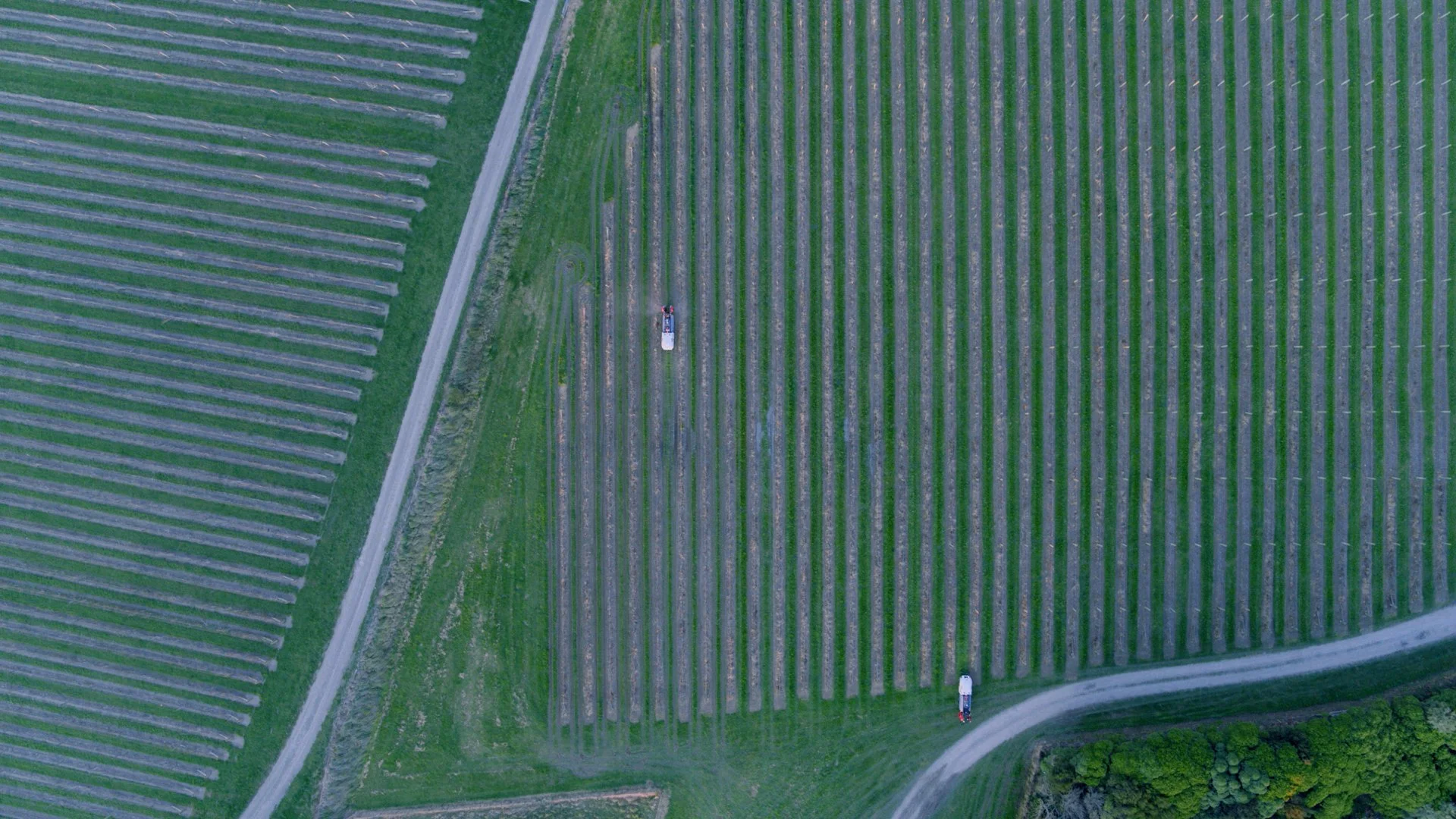
The goal of all this is to help orchard, vineyard and agriculture businesses worldwide become more productive, sustainable and resilient.
It’s impressive stuff. Steve says this international ambition was there from the start. “We believed from day one that Robotics Plus would be a global company. We knew that solving large, scalable agricultural problems would require a global focus.”
Even as Prospr rolls out around the world, its roots remain here in the Bay, something Steve is fiercely proud of. “Our Tauranga team has spent more than a decade proving that globally significant agricultural technology can be conceived, developed, manufactured and commercialised from New Zealand.”
For their field, the location boasts a couple of huge practical advantages. Orchards and vineyards are on the team’s doorstep, meaning they’re able to test their technology in real agricultural conditions. The region also has strong relationships with local suppliers, growers and research institutions.
Seeing how intricately tied Robotics Plus was to the Bay of Plenty, Yamaha Agriculture decided to move in themselves. They opened a purpose-built facility in Tauriko last year for the engineering, design, manufacture and development of their autonomous technologies, including Prospr.
The other advantage is that when competing internationally for specialist talent in robotics, software, engineering and automation, Robotics Plus can make a compelling argument. “We can offer people meaningful work, a collaborative culture and the opportunity to live in an outstanding region,” says Steve. “The Bay of Plenty offers a rare combination of sector knowledge, practical access to growers, strong local relationships and an exceptional lifestyle.”
He says Prospr proves that world-class technology doesn’t have to come out of a traditional technology hub. By drawing on close connections with local industries and the communities that support them, ambitious companies can build world-class technology, and serve customers in markets around the world. It can even see a worldwide giant come to you.

THAT’S CHOICE
Far from telling kids what to do, the organisation behind everyone’s favourite giraffe is taking a different tack to give teens the tools to make good decisions for themselves.
Far from telling kids what to do, the organisation behind everyone’s favourite giraffe is taking a different tack to give teens the tools to make good decisions for themselves.

Most Kiwi parents will be familiar with happy, smiley Healthy Harold. The mascot giraffe has been the friendly face of Life Education since 1988, visiting primary schools around New Zealand to help make lessons about health and wellbeing fun and memorable.
Now, Life Education’s graduating to intermediate and secondary schools via its Theatre-in-Education programme, which the trust’s chief executive Jo Malcolm-Black says is an exciting extension of their mission to help young people make positive choices. “It uses live performance and interactive workshops to meet young people where they are, developmentally speaking,” she explains.
The idea is to use theatre to tackle some of the trickier territory faced by the teens of today. Three performances are currently visiting schools. Smashed deals with underage drinking, peer pressure and the consequences of alcohol; Smart$ teaches teens financial literacy and helps with everyday money decisions; and Behind the Scenes is about vaping and the traps of influencer culture and social media.
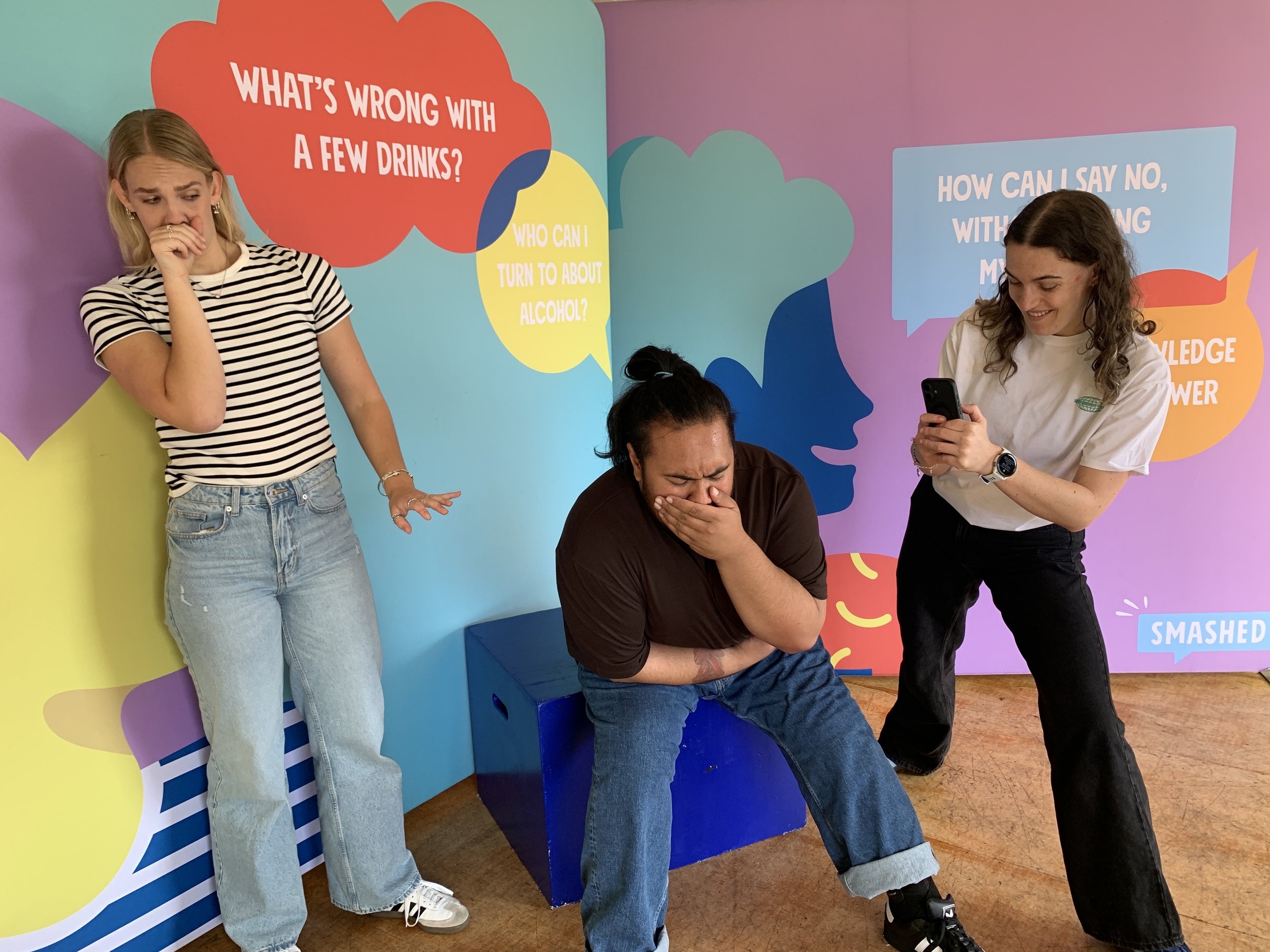
Jo says the three plays have been written to get teens thinking about the decisions they might have to make before they have to make them. To ensure they’re relatable, they’re performed by actors not much older than the kids in the audience. The scenarios have all been drawn from the real world and are followed by interactive workshops in which students can unpack what they’ve seen, question the characters’ choices and explore what they might do differently.
“It’s kind of a practice run for life,” says Jo. “Adolescence is so critical, because that’s the window where people develop the part of the brain that helps with judgment, impulse control and the ability to self-regulate, and learn how to weigh consequences. If you think about the kind of mistakes you made as a young person, the reflection comes after the mistake, not from the mistake itself. That reflection is what builds a person’s capacity to reason well next time.”
Instead of telling teenagers what they should or shouldn’t do, the programme lets them try out different responses – to, for example, being offered alcohol – in a safe environment.
“They’re invited to watch, they’re invited to question, they’re invited to discuss and form their own opinions,” says Jo. “We aim not to lecture them. They don’t need that. We just want to give them the confidence to make their own informed choices.”

Lauren plays an influencer in Behind the Scenes.
The topics may be serious, but the approach isn’t heavy-handed. Jo explains that theatre creates enough distance to allow young audiences to really consider these difficult situations without feeling like they’re being put on the spot.
“Storytelling is quite magical, even at the ripe old age of 13 or 14,” she says. “If you combine storytelling and conversation, you can make quite challenging subjects relatable and more accessible.”
The programme has been developing since 2020 and is now touring schools around Aotearoa. Although the issues facing young people can vary between schools, Jo says the broad challenges are universal. Social media has made the world a much smaller place, meaning teenagers in regional New Zealand are navigating many of the same pressures as those in the country’s biggest cities.
“There’s a lot of anxiety there,” says Jo. “Some of the things young people worry about are much bigger and scarier than what you or I might have worried about when we were young.
“They’ve seen COVID. They see what’s happening internationally. They worry about the environment. They worry about lots of things because they’re dealing with much bigger topics than we might have had at school.”
This is what makes Life Education’s work so important. It’s giving teens practical tools and the practice space in which to use them.
Jo says she doesn’t expect a 60-minute theatre show to solve these problems. Instead, the goal is to normalise having healthy conversations that allow a young person to ask questions or reflect on what’s troubling them.
“Healthy conversations have to happen not just at school – they have to be at home and in their friend group,” says Jo. “These pro-social behaviours are all great things for helping them become incredible young adults.” LIFEEDUCATION.ORG.NZ

REEL TALK
Whakatāne is one of the best fishing spots in the country, with game fish, snapper on tap and backcountry trout – and nobody’s making a big deal of it.
Whakatāne is one of the best fishing spots in the country, with game fish, snapper on tap and backcountry trout – and nobody’s making a big deal of it.
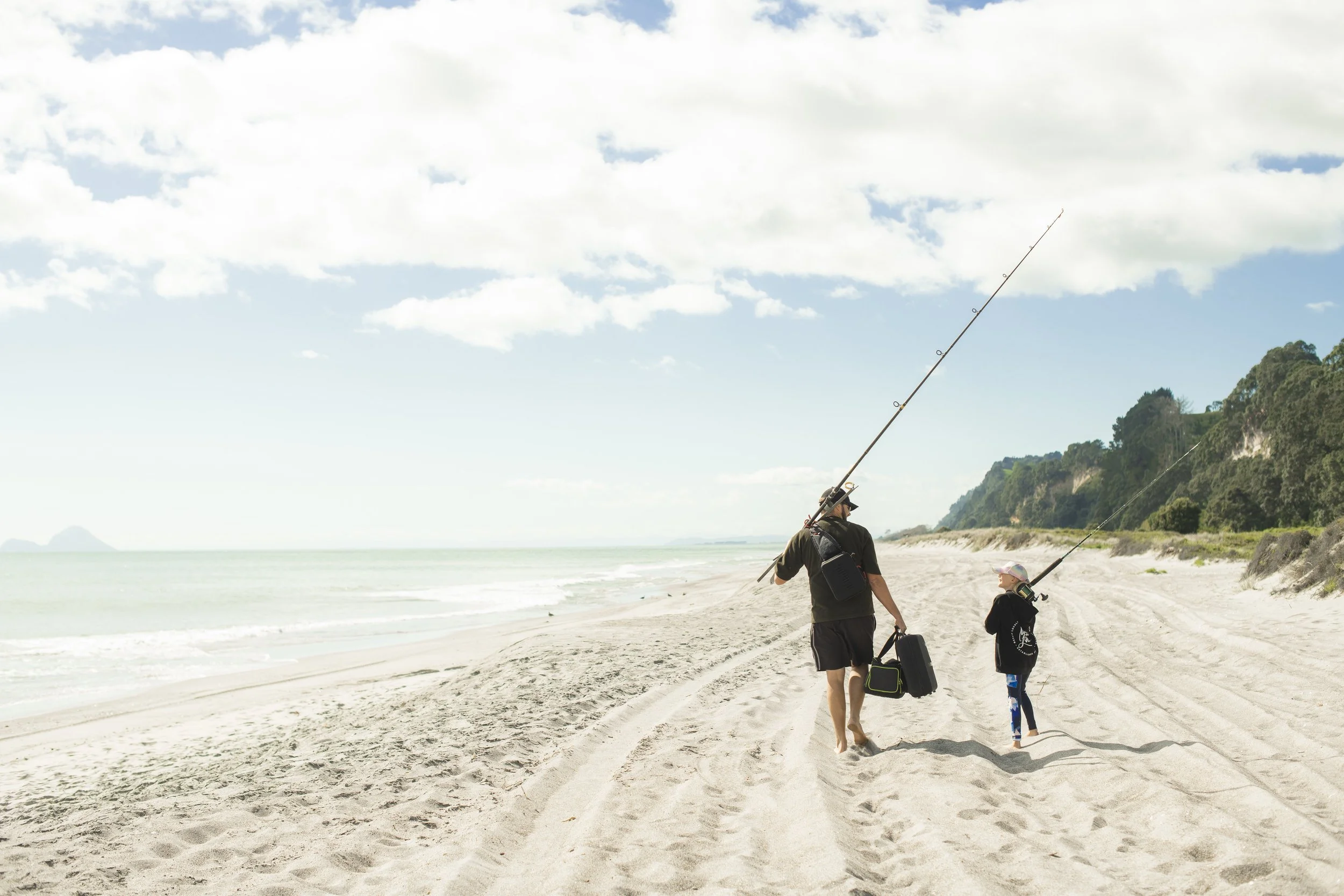
You may or may not know that Whakatāne is stupidly good for fishing. Everyone who lives there already knows it, so nobody bothers hyping it up. The reason it works so well comes down to one boring but very useful fact, which is the bar. In the area where the Whakatāne River meets the sea it’s usually a safe crossing, and with the Coastguard tower right there overlooking the bar to monitor conditions, you’re in safe hands. You’re just out there, 20 minutes later, already fishing.
And there’s a lot on offer. Summer through to autumn, it’s yellowfin, skipjack and albacore tuna, plus marlin if you’re lucky. Winter switches things over to southern bluefin for the committed types who don’t mind the cold. Meanwhile, snapper, tarakihi and kingfish don’t care what month it is. They’re there year-round for anyone who can’t be bothered planning around a season.
You also don’t need a boat, a charter or any real plan. Port Ōhope wharf on a weekend is full of eight-year-olds with handlines standing next to blokes with rods worth more than their car, both catching roughly the same fish.
If you do have your own boat, ramps at Thornton Beach, the Whakatāne CBD and Port Ōhope mean you can just launch it with no charter.
The social hub of all this is the Whakatāne Sports Fishing Club, with its restaurant, bar, and tournaments running most of the year. Guppies on the Wharf, their kids’ fishing programme, has picked up national awards for turning small children into future obsessives.
Nobody really talks about the trophy-wall stuff, either. Ask around and you’ll get more stories about the one that got away than the ones that didn’t. Whakatāne is a town of fishermen who’d rather tell you about a bad day than brag about a good one, which somehow makes the good days sound better.
Then there’s the completely different fishing scene happening 20 minutes inland, which almost nobody outside the region seems to know about. The Rangitāiki River, Lakes Matahina and Āniwaniwa, and the wilder stretches through Whirinaki Te Pua-a-Tāne and Te Urewera are stacked with brown and rainbow trout. There are camping, walking and biking tracks all through the same forest, so it’s easy to turn a fishing trip into a weekend away without really trying.
Whether you’re a kid on a wharf with a handline, or planning a week-long mission out to Ranfurly Bank or a full-on tournament weekend at the club, Whakatāne is the ideal spot for fishing. Show up with a rod and figure out which version you’re in the mood for.
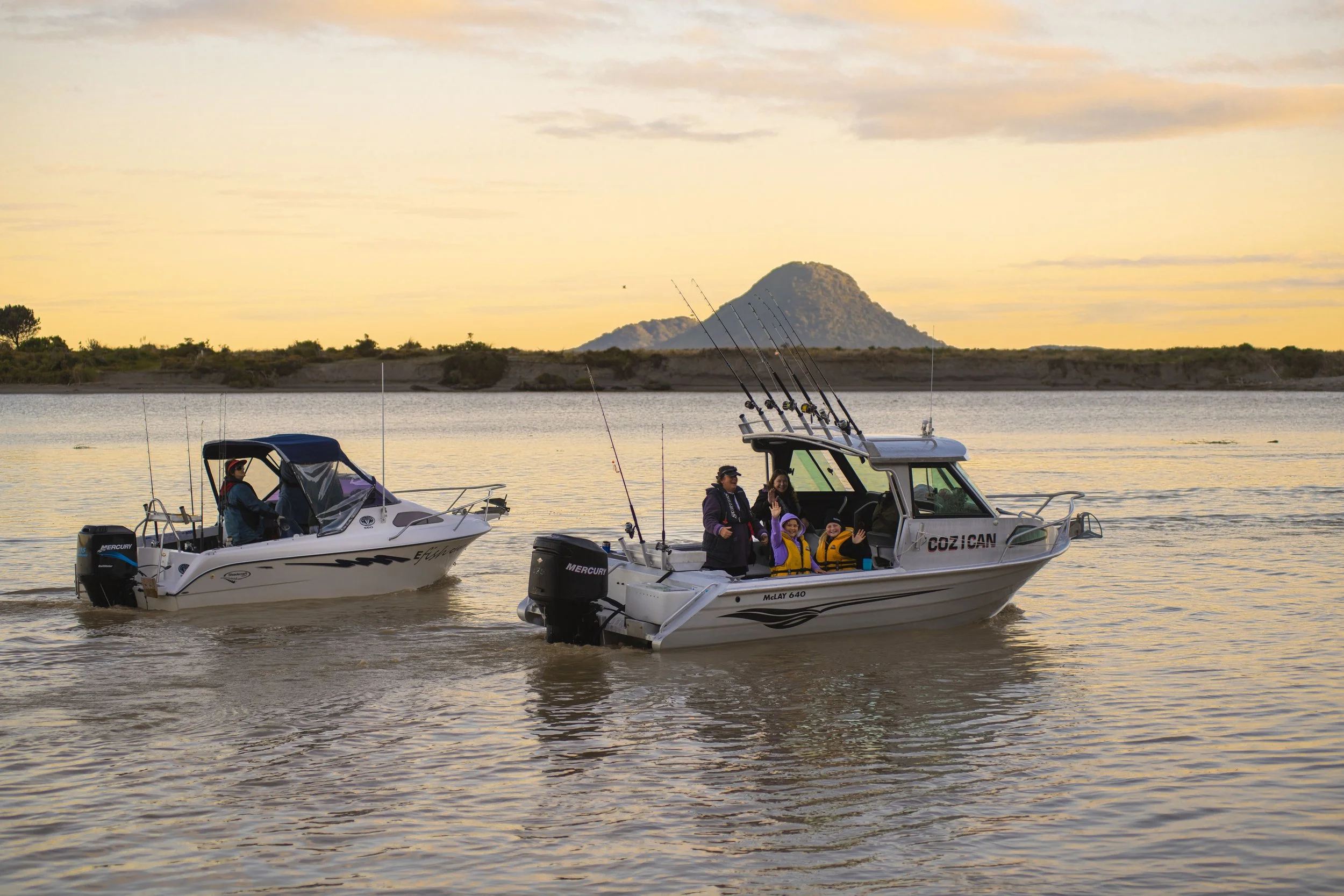
THE CHARTERS
EZYFISHING CHARTERS
One skipper, small groups and no pressure. Ezyfishing does saltwater snapper and kingfish runs, and switches to freshwater lakes and rivers when the sea's not playing ball. The gear’s included and beginners are welcome.
WHAKATANE.COM/SEE-AND-DO/EZYFISHING-CHARTERS
ŌHIWA FISHING CHARTERS
Ōhiwa runs the Cougar out of Ōhope Wharf daily, heading toward the Ōpōtiki mussel farms. Book a solo spot on a group trip or book the whole boat. Zero gear is required.
WHAKATANE.COM/SEE-AND-DO/OHIWA-FISHING-CHARTERS
CASCADE CHARTERS
This is the go-big option, offering multi-day trips out to Ranfurly Bank chasing kingfish, hāpuka, bass, bluenose and trumpeter. They do cooked breakfasts and proper dinners on board.
PACIFIC COAST ADVENTURES
Book half- and full-day inshore trips on Te Kaha Katt 2, plus land-based options like rock fishing and shellfish gathering. Good for elderly guests and anyone with mobility needs.
WHAKATANE.COM/SEE-AND-DO/PACIFIC-COAST-ADVENTURES-FISHING-CHARTERS
CLUB TALK CHARTERS
This is a fast 8.5m boat that caters for up to four anglers, running out to White Island, Waihau Bay and Ranfurly Bank. It does pretty much every technique going, including jigging, stickbaiting, fly, salt and fresh, with electric reels for anyone whose arms give up first.
WHAKATANE.COM/SEE-AND-DO/CLUB-TALK-CHARTERS
THE GAMBLER FISHING CHARTERS
Run by Mike Boswell, who has 20-plus years experience, you’re in good company. Proper game-fishing setup chasing White Island kingfish, bluenose, hāpuka and bass. Small groups, book ahead.
WHAKATANE.COM/SEE-AND-DO/GAMBLER-FISHING-CHARTERS
AQUARIUS CHARTERS NZ
If you’re after a big boat, this one is 12m and fits up to 12 people, providing lounge and dining space, plus a top deck. Aquarius does private and public charters, competitions, junior days, even spearfishing. It’s a good pick if you’re bringing a crowd.

FINDING THE LIGHT
Hawaiian singer Maoli is all about the positive vibes. Ahead of performing in summer’s Kingston Calling festival, he tells UNO how good tunes might just save your life.
Hawaiian singer Maoli is all about the positive vibes. Ahead of performing in summer’s Kingston Calling festival, he tells UNO how good tunes might just save your life.
WORDS KARL PUSCHMANN

Sitting on the deck at his home in Hawaii, chart-topping singer Maoli is relaxed, chatty and excited to be returning to Aotearoa in a few months.
“It’s one of the greatest places in the world to perform,” he says. “I love the people. I feel that aloha spirit that we share. We share similar values and understanding about life. We mesh really well. I’m treated like family when I’m there.”
Then he laughs and says, “And you guys’ love for reggae music is pretty up there.”
He’s not wrong – and nowhere will that love be more evident than at Kingston Calling, the new, two-day music festival being held at Mount Maunganui’s Bay Oval in February. Maoli’s headlining the first night.
Maoli’s music is an unlikely blend of reggae and country. It’s a genre mash-up that sounds like it shouldn’t work, but clicks effortlessly when you hear him play. The unique combination has struck a chord around the globe, but is one he’s quick not to take credit for, explaining it’s been in Hawaii for generations.
“It’s nothing new here. This style and mixture describes the place that I come from in Maui. It’s very authentic.”
He explains it was born out of “backyard jams”, where local musicians would gather to play hits they’d heard on the radio. Inevitably, they’d put their own spin on them and because many people’s grandparents were big country fans, including his own, that naturally seeped in as well.
“I really can’t take credit for it, because it’s been done a long time before me,” he says. “It’s cool that it’s starting to grow. If more of us do this, I think it can become a genre.”
Aside from the ear-catching originality, there’s a real warmth and positivity in Maoli’s music. It may sound breezy, but it’s something he works hard to achieve.
“The world has enough negative stuff going on – we need more positivity, we need more love,” he says. “That’s what I really try to bring in the music.”
Life, he says, gave him this outlook and state of mind, but it wasn’t easy to achieve. “We all go through adversity and obstacles, but I always try to lean towards the positive and bring it into the music. I don’t want anger or fear or all that in the music, but I like to use that energy. I’ll use the emotion and turn it into something positive.”
Then he sighs and says, “I’ve been through so much in my life that I don’t want to share those negative emotions. I don’t wish anyone to experience the stuff I’ve been through. Instead, I want to grab those experiences and tribulations, turn them into something positive and send that out to the world.”
It’s an admirable outlook. Taking negative experiences and channelling the positive out of them is a genuinely hard thing to do. “It can be,” he agrees. “I really had to train myself to do it.”
Having gone through dark times and come out the other side, his advice for anyone struggling is to take things one day at a time. “Understand that this too shall pass,” he says. “There are mountains and valleys, and we have to go through them, but just know that if you let it pass you will find that hilltop sooner or later. You just have to keep going.”
He knows for a fact that the messages in his music are actively helping people. “Many, many, many people have come up to me saying it’s saved their life,” he smiles. “I’ve had people say they were on the brink of ending their lives, and they heard my song come on and something about it just changed their mind.”
Maoli has lost loved ones, been through break-ups and divorce, and turned all of those experiences into positive songs. “It lets people know they’re not alone,” he says.
He says it’s still hard to believe that his music could be powerful enough to change, or even save, someone’s life.
“It’s a great feeling, but it’s a lot of responsibility. It’s a lot of energy to take in. I have to sit down sometimes and be like, ‘Wow. I can’t believe I changed that person’s life’. But it helps me too. These are stories that I’ve written about myself, and when someone comes to me and says that it touched them because they know what that experience feels like, it makes me feel like I’m human and that there’s other people out there who share the same emotions that I have.”
Then he smiles warmly and says, “It lets me know I’m not alone.”
After everything Maoli’s experienced personally and processed through his songs while his career has skyrocketed, for him, music carries a lot of meaning. “Music to me is a sense of healing, love and unity,” he says. “One of my greatest joys is watching music bring so many people together where they lose themselves in the moment and forget about all their worries.”
He could be describing Kingston Calling when he says, “You can have thousands of people from different walks of life coming together and singing the songs. It’s one of the most powerful things I’ve ever seen that music can do. That’s what music means to me. It’s a place where we can bring people together, instead of dividing.”

MIGHTY FINE LINE-UP
A look at the performers coming to Kingston Calling. For two days in February, the Mount will sway to the grooves of Aotearoa’s best loved reggae-roots acts, along with some international favourites. With 14 acts on the cards, it promises to be a joyous celebration of live music.
Maoli headlines Friday with his unique reggae-country blend, supported by local powerhouse R&B star Stan Walker and pioneering rap group Arrested Development, whose hits Tennessee, People Everyday and Mr Wendal defined the sound of summer in the early ’90s. They’re joined by American reggae outfit SOJA and Aotearoa’s reggae legends Katchafire, with Hori Shaw and A.R.T rounding off the first day’s line-up.
Headlining Saturday is SIX60, who return to the Mount to lead what will no doubt be the weekend’s biggest singalongs. They’re joined by the wandering eyes of Fat Freddy’s Drop, whose genre-defying blend of reggae, dub, soul and electronica never fails to deliver.
Bringing the more traditional Pacific flavour to day two of the festival is R&B and soul princess Aaradhna, along with Hawaiian reggae group Rebel Souljahz, covers supergroup Marley NZ All Stars, Te Wehi and Myshaan.

GIVING THE PEOPLE WHAT THEY WANT
A new dessert bar’s delivering to a peachy-keen Mount audience.
A new dessert bar’s delivering to a peachy-keen Mount audience.
WORDS HAYLEY BARNETT | PHOTOS ASH MUIR PHOTOGRAPHY
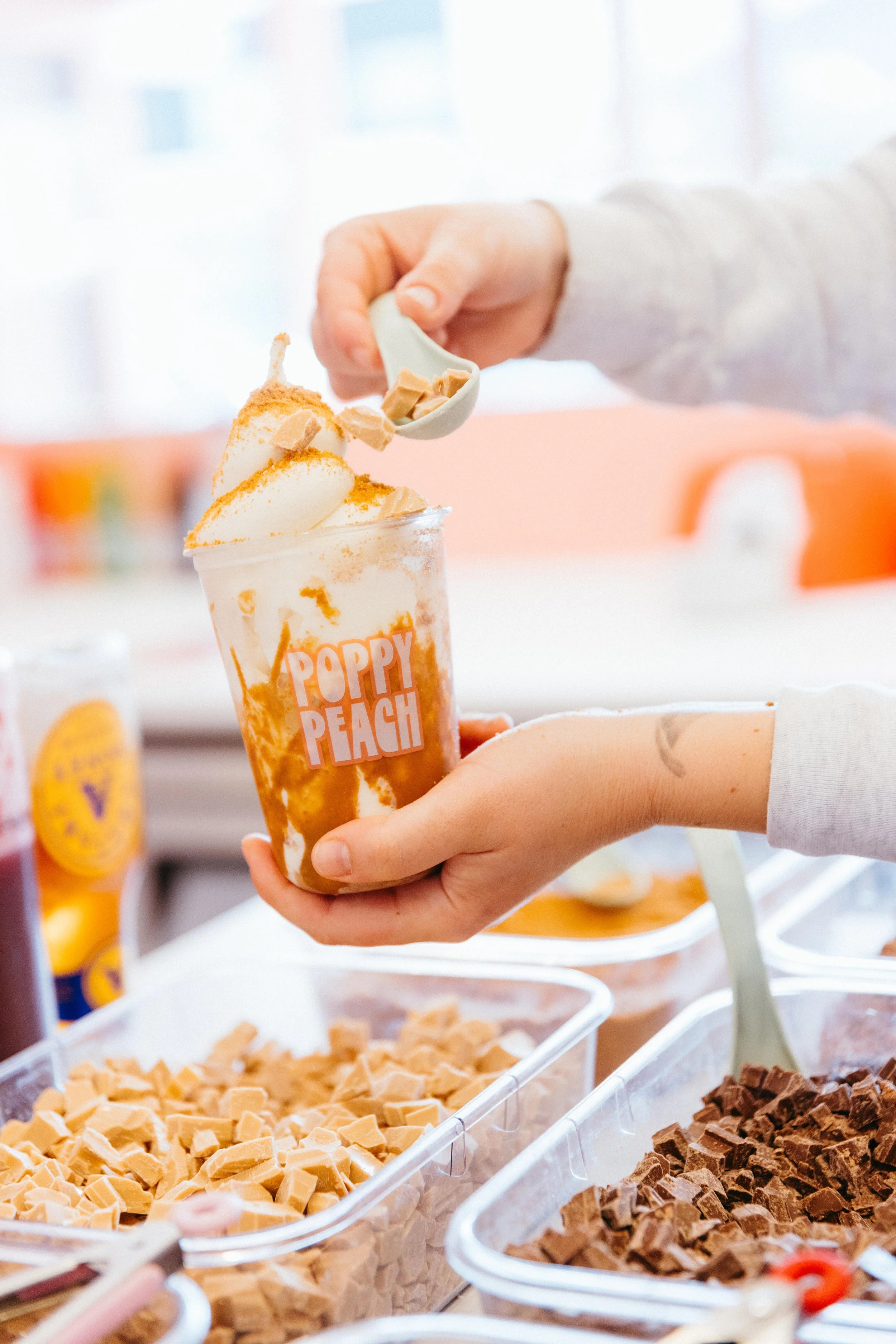
On our way home from Hamilton recently, after a night of dance comps, my daughter begged me to detour to POPPYPEACH. I figured we’d just wait. A Mount store was rumoured to be opening any day now.
“No,” she said. “This is the original. We have to go to this one.” That’s the kind of pull POPPYPEACH has built in Tamahere, and now it’s landed right here on Maunganui Road.
POPPYPEACH opened in 2021 as a salad and smoothie bar, just around the corner from owner Angie Millar’s home in Tamahere. It was a lovely idea, but a couple of years in, it was clear the concept wasn’t financially viable, and Angie had to find a new way to make the space work.
The answer came from a family holiday in Australia, where dessert bars had everyone lining up together, and from the baking Angie had been perfecting on the side. Cinnamon rolls first, then whoopie pies, both gone within the hour, every time. It didn’t take much convincing after that. If people wanted dessert, POPPYPEACH would give them dessert, and give it to them well.

The Tamahere store has been a destination from day one, but it sees almost no foot traffic, so a second store somewhere with people walking past was always part of the plan. When two of Angie’s best friends, who live at the Mount, sent her a video of an empty shop on Maunganui Road, she went to check it out. The layout was almost identical to Tamahere’s. Eight weeks later, POPPYPEACH Mount was open.
There was no big launch, just Angie posting to Instagram the night before. A few well-followed locals posted about it that first weekend, and by Sunday the store was “slammed”. The pace hasn’t really let up since.

The Biscoff Blondie Sundae remains a firm favourite, alongside POPPYPEACH’s famous cookie pies and a home-baked sticky date pudding, though Kinder Bueno has become the new top seller. Everything’s baked from scratch in-house, and the Kāpiti soft serve and frozen yoghurt flavours change monthly, so regulars never get bored.
Angie isn’t planning another store this year, but further afield is on the cards eventually. For now, she’s focused on her teams at both stores, and on keeping the people fed with whatever sweet thing they’re after next.

STRENGTH OF BODY AND MIND
Sport and study are all in a day’s work for ultra-driven athlete and undergraduate Katelyn Vaha’akolo.
Sport and study are all in a day’s work for ultra-driven athlete and undergraduate Katelyn Vaha’akolo.
WORDS NICKY ADAMS | PHOTOS SUPPLIED

Katelyn Vaha’akolo pushes high achieving to the next level. At only 26 years of age, she has already taken women’s rugby by storm as a professional dual international athlete, but these days, she’s discovering a whole new side of herself through her studies at the University of Waikato’s Tauranga campus.
That new side of herself is already earning recognition. As a first-year student at the University of Waikato, in September she was presented with the prestigious Sportswoman of the Year gong at the university’s annual Blues Awards, an event that recognises excellence in sport, the arts and service. Supported by the High Performance Sport New Zealand Prime Minister’s Athlete Scholarship, she’s studying a Bachelor of Laws degree at the Tauranga campus. It’s proof that there’s far more to Katelyn than what happens on the field. With all this on her plate, UNO was keen to find out how on earth she fits it all in.
On the field, her credentials are just as impressive. A cross-code player, Katelyn’s moved between league and union. From the Kiwi Ferns via the Newcastle Knights, she joined the Blues before playing for the Black Ferns in 2023.
Acknowledgement of her talent has come thick and fast, including being recognised as the World Rugby Women’s 15s Breakthrough Player in 2023, and the Blues Women’s Player and Back of the Year in 2024.
Perhaps the first thing to clarify is that Katelyn’s study isn’t an indicator of a huge life pivot – it’s more a case of adding even more strings to her bow. Despite studying law (with politics), she says becoming a lawyer has never been her end game. “I’m Polynesian and I’m very proud of where I come from. My desire to study law [comes from wanting] to learn so I can advocate for myself, for my Polynesian people.”

Katelyn with her parents, Cherith andEdward Vaha’akolo.
More than that, though, “when you’re a full-time professional athlete, sport can really consume your whole life. Studying was a way of getting my mind away from the rugby stuff. Uni has been a new avenue for me to spend some time away from the field.”
University of Waikato’s Tauranga campus has provided the perfect opportunity for Katelyn, but we can’t help but wonder how she finds enough hours in the day for both sport and study. “I soon learned to stop wasting time doomscrolling, which is good for me. I try to study every day, but I take one day to do absolutely no study whatsoever, and I think that allows me to rejuvenate myself so that I’m in a space to learn again.”
The flexibility of the course and the attitude of the staff also play a big part. Katelyn points out that the university goes above and beyond to make her situation work. “The lecturers and tutors have been great in catering to my needs as an athlete. They’ve given me all the resources and help that I could possibly ask for, so that I’m able to manage both.”
Even without the sport thing, Katelyn’s path to uni hasn’t been the standard one, and it’s inspirational for others who don’t feel as though they fit the standard educational mould. Katelyn dropped out of high school “not because I wasn’t smart, I’ve always been bright, but I really struggled in the learning and classroom environments. Because of my ADHD, it was hard for me to manage in those spaces as a teenager, but I think now with uni I can learn on my own terms, and learn things that I’m genuinely interested in and that I’m passionate about. I’m definitely grateful that I started now, when I have more of an understanding of myself, rather than going straight out of school.”
As for the acknowledgement of her outstanding performance by way of the recent Blues Award, she says it blew her away. “I wasn’t expecting it at all and felt very, very humbled. It’s a blessing to be recognised for an achievement like this.”
So what’s next? “The 2028 Olympics!”

THE LONG GAME
Salon Grange’s Shelley Pullar has advice for keeping curls on course for three days straight.
Salon Grange’s Shelley Pullar has advice for keeping curls on course for three days straight.
PHOTOS DEBORAH DE GRAAF

There’s a particular kind of confidence that comes with a really good curls day. When the shape is right, the movement is effortless and every curl seems to know exactly where it belongs, everything else just falls into place. The trick is making that feeling last.
Achieving beautiful curls doesn’t necessarily mean washing your hair every day. With the right preparation and a little care between shampoos, curls can look fresh, defined and full of life for three days, or sometimes even longer. Let’s look at how.

Day one: Moisture, definition and hold. The foundation of good, long-lasting curls is moisture. Apply leave-in conditioner to soaking-wet hair, then follow with a curl cream or gel while the hair is still very wet. This encourages the curls to naturally come together, creating definition and helping to lock in moisture.
When it comes to curly hair, one product does not suit all. The individual thickness of your hair strands plays an important role in choosing the right formula for you.
If you have fine hair, your individual strands are thinner and can be easily weighed down, so lightweight products such as mousse or foam are often ideal.
Medium hair gives you more freedom, with combinations such as mousse and gel working well, depending on the level of definition and hold you’re after. For thick or coarse hair, richer conditioning and stronger hold are often beneficial. Just remember that too much product can create build-up and leave your hair feeling heavy.
Once your products are applied, use a curl brush, beginning from underneath the hair and working upwards towards the roots. I also use mini clips around the crown and hairline to create height and prevent curls from drying flat against the scalp.
Now, leave them alone. Allow your hair to air dry completely, or use a diffuser on a low heat and low speed.
Once completely dry, gently scrunch your curls with clean, dry hands to soften any crunchiness. The finished result should be soft and touchable, but with enough hold to carry you through the days ahead.
The secret happens while you sleep. If there’s one step I wouldn’t skip, it’s protecting your curls overnight. Using a silk or satin scrunchie, gather your hair into a very loose ponytail high on top of your head. Keep it loose, as the aim is to preserve your curl pattern, not create a new one with a hair tie.
For even less friction, sleep on a silk or satin pillowcase, or in a silk or satin bonnet. They’re the simplest ways to help minimise frizz and preserve definition.

Days two and three: Refresh, don’t restart. The days between washes should be about refreshing, not starting again. Lightly mist your hair with water from a spray bottle. I like to add a small amount of Clever Curl Leave-In Curl Cream and shake it well before using it as a refresher. You’re looking to lightly hydrate and re-energise your curls, rather than saturate them.
Gently scrunch the hair upwards with your hands and, if needed, add a few mini clips around the crown for extra lift. Leave your curls to dry naturally while you get ready for the day. If any curls that lose their shape, wrap them around your finger and allow them to dry.
The secret to lasting curls is preparation, hydration and knowing when to leave them alone. Give yours the right foundation on wash day, protect them overnight, and refresh rather than rewash, and you’ll enjoy beautifully defined hair for longer.
Clever Curl has a gorgeous giveaway for the first 24 UNO readers who book a curl cut at Salon G. You’ll receive their new Long Hold Curl Gel, designed to provide longer-lasting hold without stickiness, plus Curl Oil for shine and definition, all valued at $90.

SIGNS OF THE TIMES
Some old and some new forms an elegant whole at this beloved property, nurtured through the decades to become all class.
Some old and some new forms an elegant whole at this beloved property, nurtured through the decades to become all class.
WORDS JO FERRIS
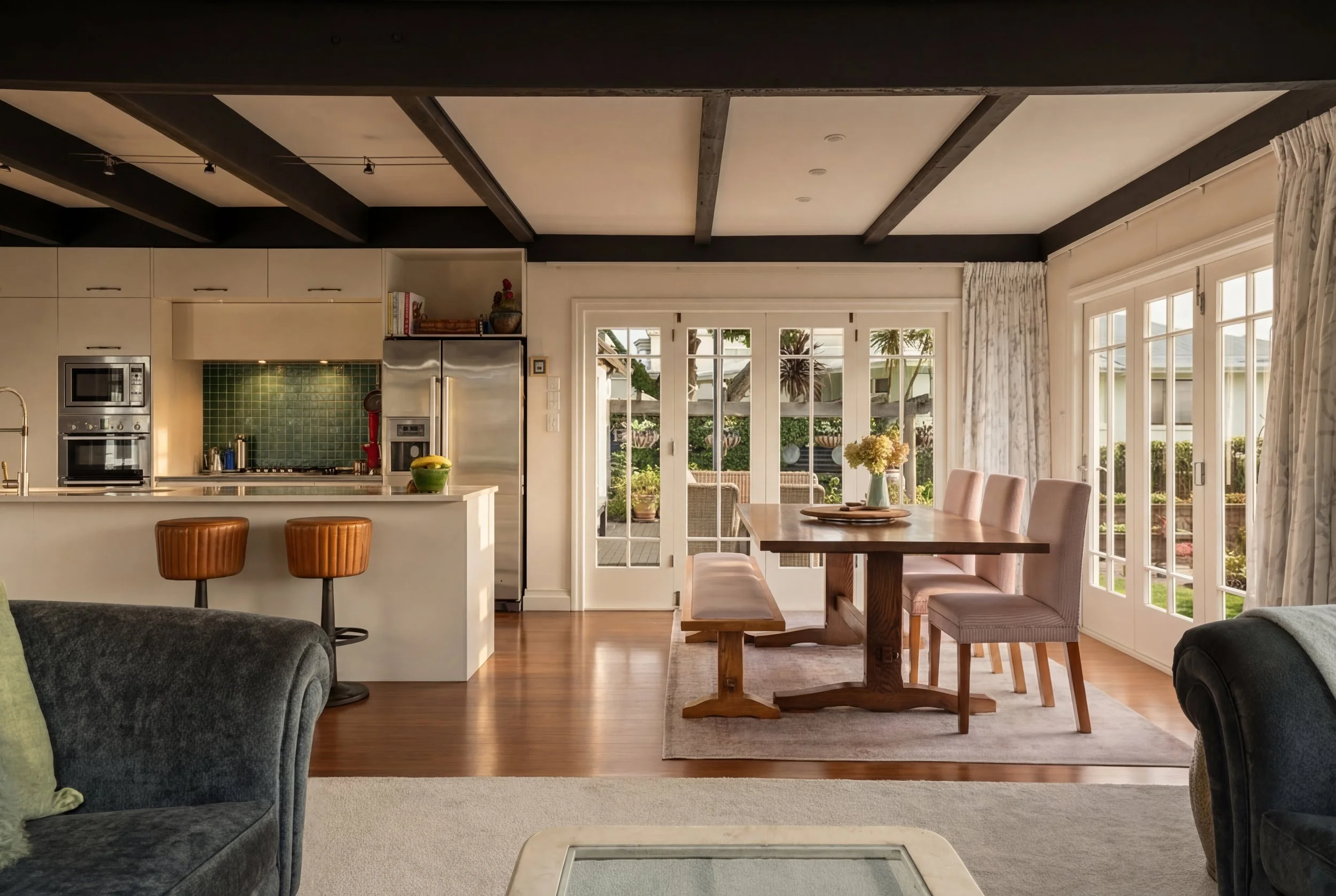
Residences from yesteryear have an advantage only time can bestow. Elmdene’s story begins with its position on one of Tauranga’s sought-after ridges overlooking the harbour.
Originally part of a large orchard, this property is now a smaller, yet still generous, haven. Behind the gated entry and sweeping driveway, the eyes immediately focus on a giant magenta rhododendron. Rightly protected, it’s the first indication that this tree has overseen many years and chapters as Ōtūmoetai has evolved. A towering camellia also highlights the beauty of nature and time.
Behind these trees, Elmdene’s distinctive character – all gabled roof and shingle insets – revolves around the connection of the house with its garden. Artistry appears in every corner but what seems complex is surprisingly easy-care, courtesy of the way brick walls, wroughtiron gates, pavers and stepping stones weave the green around the house.
Although magnificent in its welcome, the best of this property emerges in the sundrenched backyard. Mindful of retaining the home’s character, the owners created intimate links between living rooms and outdoor settings. Savour the morning sun amid white camellias within a tiled courtyard. At lunchtime, relax on decking that basks in sun all day.
A central flowering cherry is preparing to blossom in the coming months. A goldfish pond sits to its left, where espaliered pears adorn the fence. To the right, the recent addition of a quaint cabin offers additional ways to enjoy some peace and quiet.
This house unveils surprises. Its formal greeting introduces old-world charm and contemporary grace. The décor accentuates the past’s preference for native timber and exposed beams, and carefully combines formality with casual comfort.
It’s how these vendors introduced modern style that sets this home apart. The beauty is in the detail and versatility is also integral to its appeal.
Four bedrooms, three bathrooms and separate living areas are spread over two levels and include separate quarters for guests above the garage. A library downstairs, an office by the master suite upstairs, and space between bedrooms all indicate the extent to which family and friends will cherish life here.
It’s been an extraordinary journey – more than 30 years nurtured by these owners alone. Ready for its next chapter, Elmdene is an absolute jewel.
16 Hinewa Road, Ōtūmoetai OLIVERROADBAYOFPLENTY.COM

BANK ON LIVING
Adam Stewart of Compound Wealth reveals the four retirement regrets he sees time and time again.
Adam Stewart of Compound Wealth reveals the four retirement regrets he sees time and time again.
PHOTO DEBORAH DE GRAAF

I’ve spent years sitting across the table from Kiwis planning their retirement, and one thing I’ve noticed is that the regrets tend to sound the same.
The first is waiting too long to stop. People work hard and do everything ‘right’, then retire late, only to find their health or energy has already slipped away. I think of my own father here. He passed in his early sixties, and was a hard worker by choice, but there were trips he talked about and never took. I’ve learned through others that retirement’s a window that’s worth protecting.
The second regret is not spending enough early enough. I read Die With Zero by Bill Perkins this year and it put words to something I already believed, which is that most of us are too cautious during the years we’re healthiest and most capable of enjoying what we’ve built. I’ve watched people leave money behind and a bucket list unfinished. To be clear, spending well doesn’t mean ending up with nothing. It means bringing some of that spending forward into the years in which you can enjoy it most.
Third is not tracking progress early enough. This one usually surfaces as anxiety. People ask, “Have I done enough?” and “Can I actually stop?” Without visibility over where you stand, you either over-save and miss out on living now, or under-save and carry that stress for years. The clients who feel calmest are the ones who defined early what a meaningful life actually looks like to them, then built a plan toward it for the years leading into retirement.
The fourth regret is leaning on KiwiSaver alone. Kiwisaver’s a solid tool, but it’s not a full strategy, because you can’t touch it before age 65 unless you’re buying a first home. Investing outside KiwiSaver gives you flexibility. You can access income earlier if you want it, and decisions are made on your terms, rather than your Kiwisaver scheme’s.
Here in the Mount, I meet plenty of people who’ve done the sensible thing their whole lives. The biggest regret I see among them is a missed life. If you’re able to retire part-time, take the trip and spend a little more while you’re well. Security matters, but a life well lived alongside it matters more. COMPOUNDWEALTH.CO.NZ

STRIKE GOLD
When you think ‘Gold Coast’, you probably think ‘sun, sand, surf and theme parks’ – and there’s absolutely nothing wrong with that.
When you think ‘Gold Coast’, you probably think ‘sun, sand, surf and theme parks’ – and there’s absolutely nothing wrong with that.
WORDS NICKY ADAMS
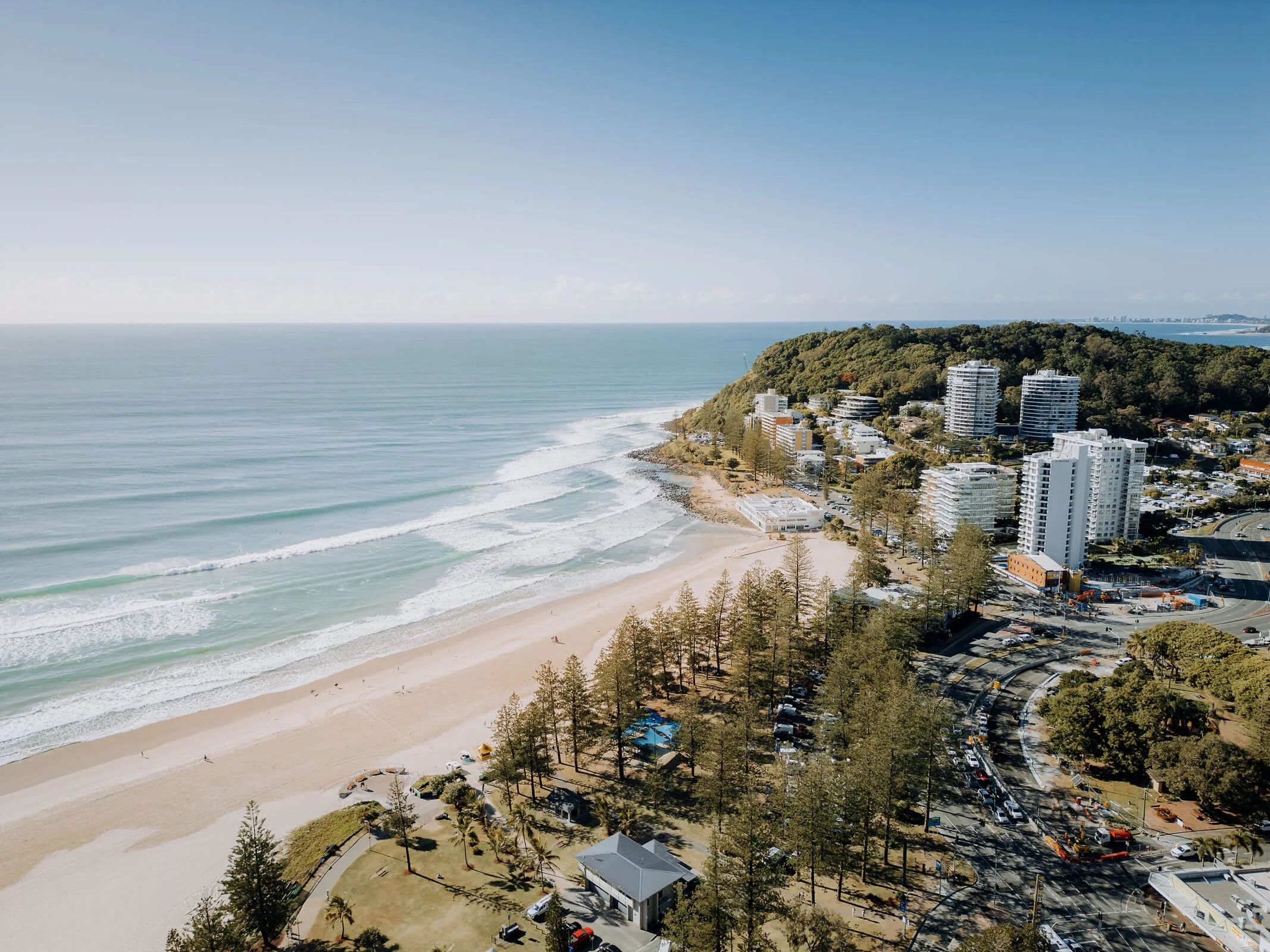
Like any popular destination, the Gold Coast has an entire spectrum of appeal that extends well beyond the obvious attractions that spring to mind. Does this mean that the things that we’re so familiar with – miles of sandy beaches, theme parks and bush walks – have become ho-hum? Absolutely, resoundingly not! This is a location that is easy, accessible and fun for any age and stage.
The weather gods were undoubtedly on our side on our recent family holiday. Ten glorious days of sunshine beat down, complete with cool mornings and cloudless skies. Flying into Gold Coast Airport, we made a beeline for our accommodation at Burleigh on the Beach Apartments.
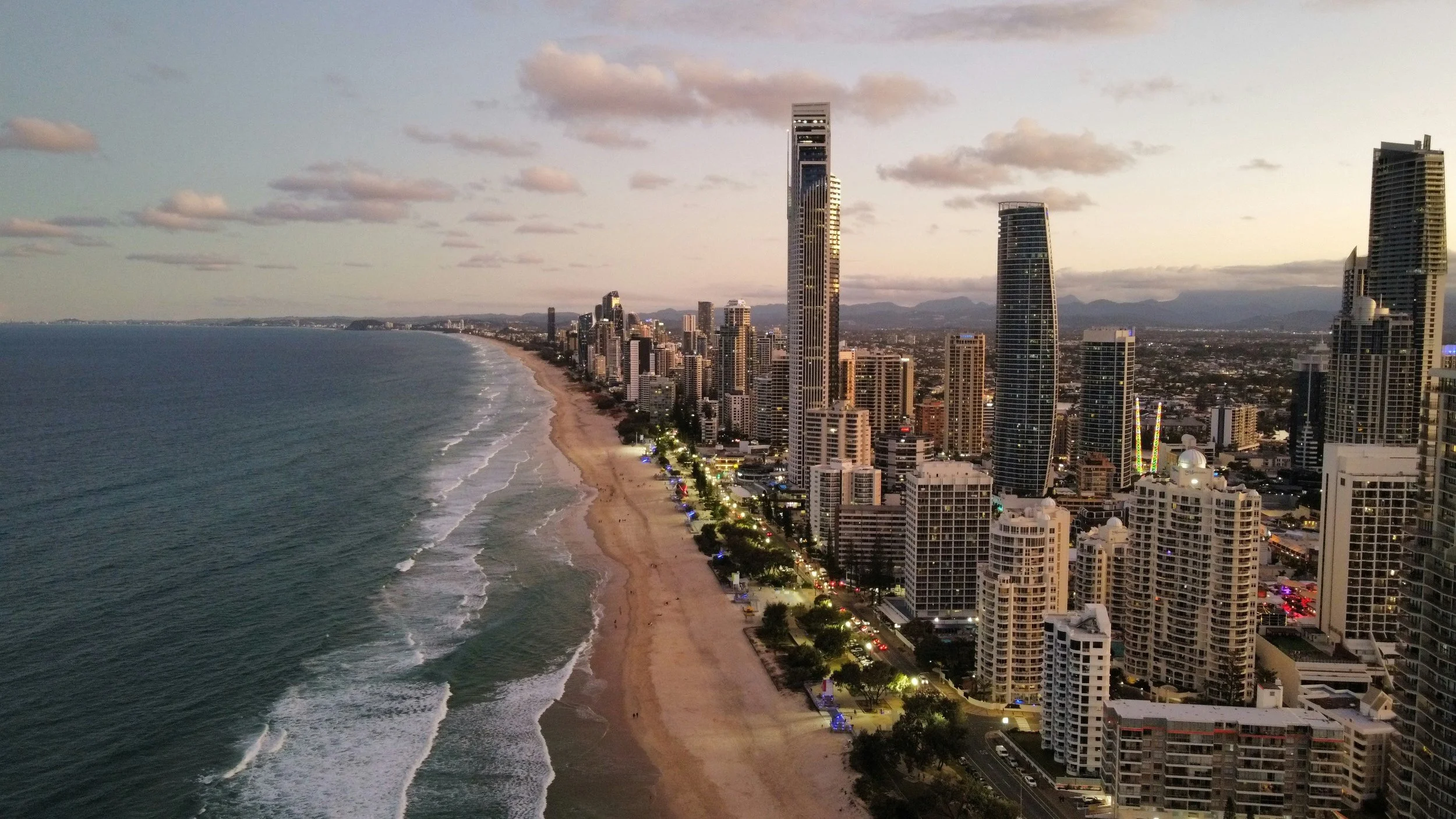
Along with the adults, we had a range of young people to please (12, 16, 19), and Burleigh Heads ticks a lot of boxes. The beachfront location was worth the investment; the beach is stunning and patrolled by lifeguards, and overlooking the action is the surf club, which buzzes all day long and serves great ‘pub grub’-style meals. The Burleigh Pavilion screams ‘too cool for school’ and is apparently a hunting ground for candidates for the Aussie version of Married at First Sight. By day, it’s a great place to grab a beer and people-watch; at night, entrance prices rise, as DJs hit the decks and the young and beautiful come out to play. The town is filled with boutique everything – fashion, bakeries, butcheries. Our self-catering apartment was a dream, and we found everything else within walking distance.
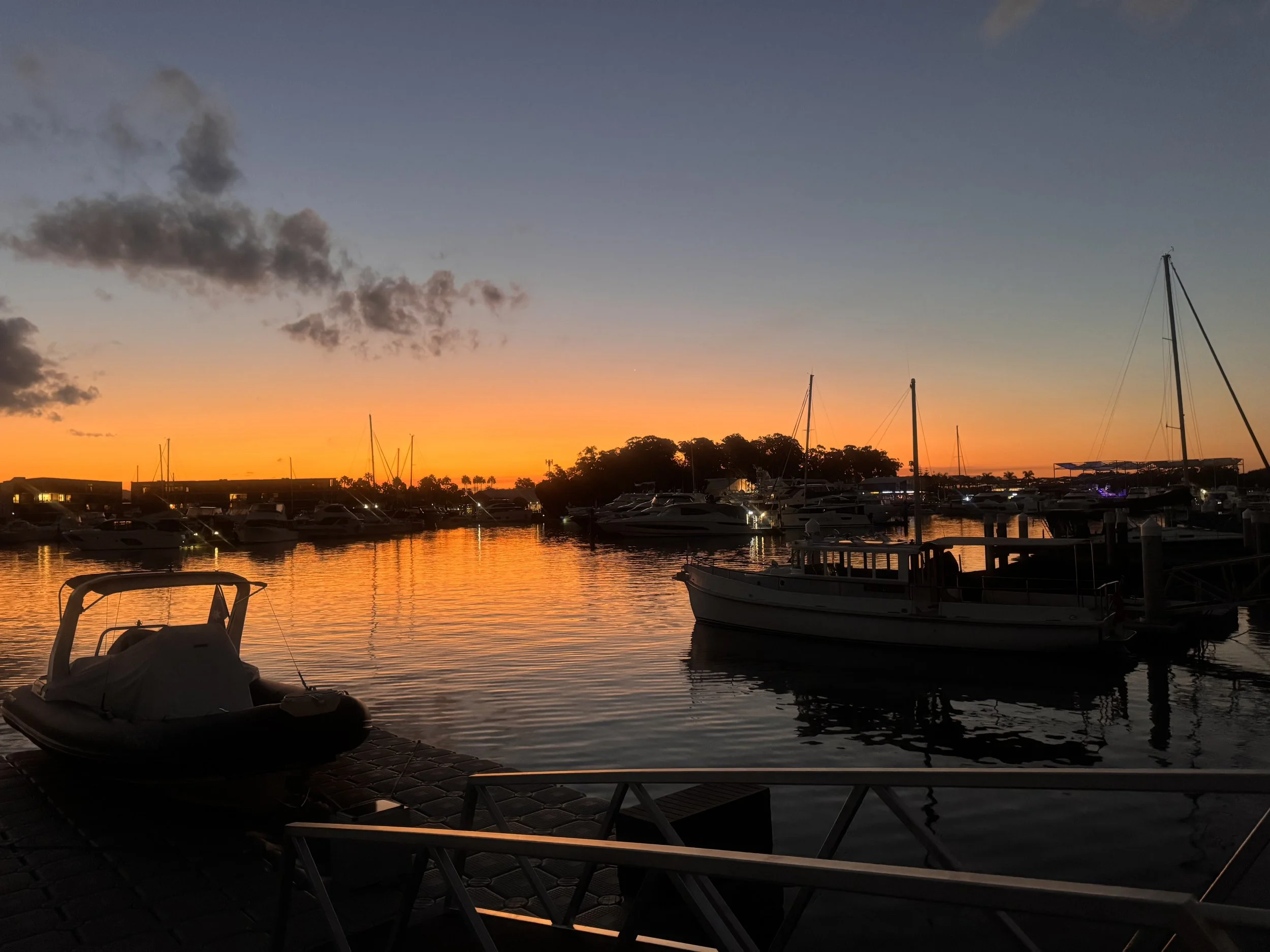
Sunset on the waterways at Sanctuary Cove.
Resisting the urge to just sit around and wile away the days, activity-wise, we attempted to cover off something for everyone. The grunty electric bikes that peppered every corner made for a fun pedal up to the headland for my husband and children, to enjoy scenery that serves as a reminder of just how beautiful this stretch of Queensland coastline is. I’m not known for my biking prowess – electric or not – so I made it a daily treat to walk along the beach in one direction or another, over to the lookout spots and through the bush.
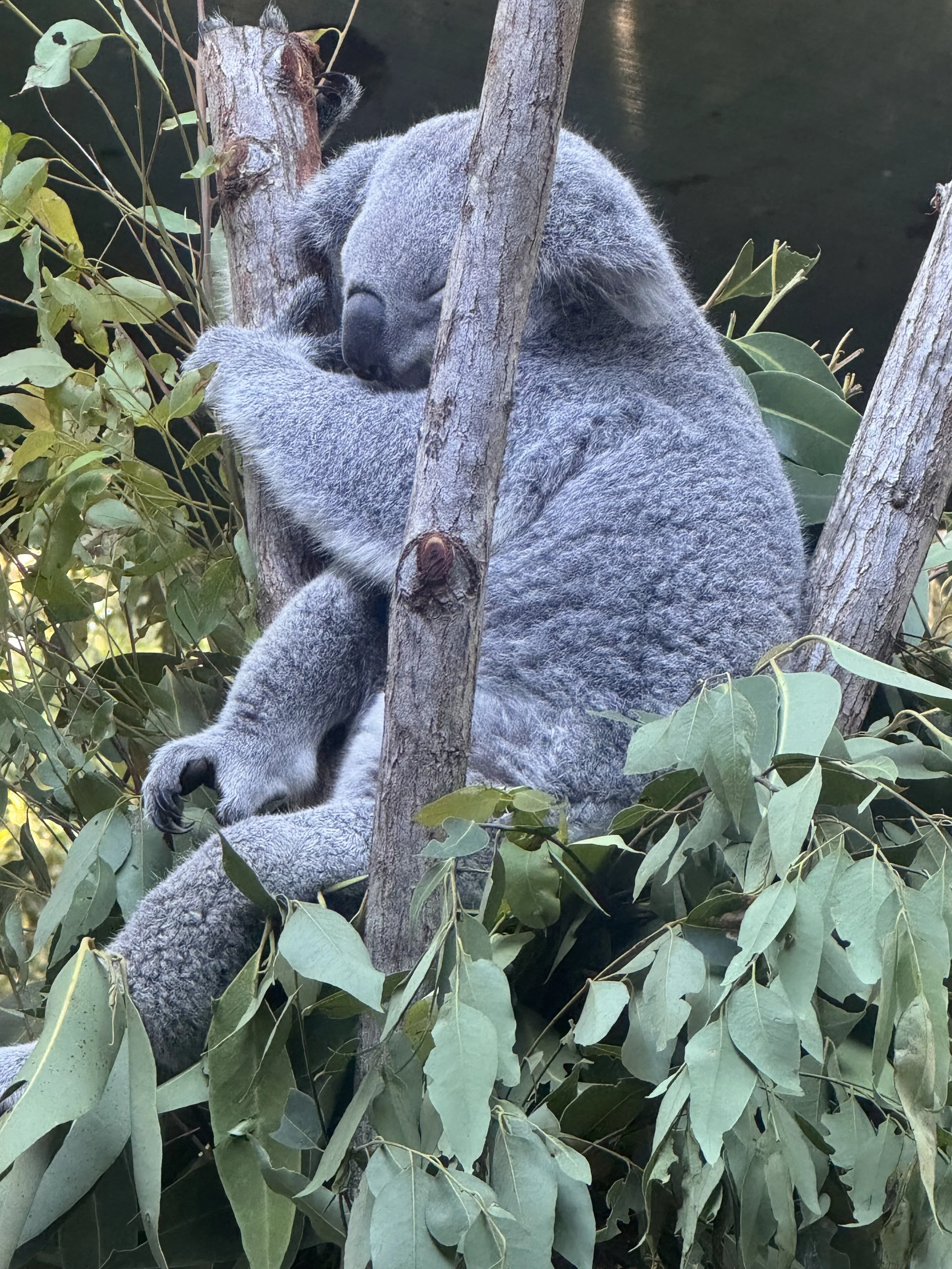
Currumbin Wildlife Sanctuary.
A family of animal lovers, we’d planned to swim with turtles at nearby Tweed Heads. Unfortunately, on the day of our trip, a huge swell meant it was cancelled at the last minute. Our Uber driver was already downstairs revving up, so we pivoted and headed to the Currumbin Wildlife Sanctuary instead.
What can I say, except that a great wildlife park is the ultimate family trip whether you’re 10 or 100. Currumbin Wildlife Sanctuary is one of those places at which you could never get bored – think cute koalas so still in their trees that you’re convinced they’re stuffed; huge lizards sitting on rocks, watching with beady eyes as you pass by. Although rules around manhandling animals have been massively tightened up, you can still get up close and personal with some species. Our gang was thrilled by the snake experience, and there aren’t many places where you can stroke a dozy baby ’roo as tame as a cat.
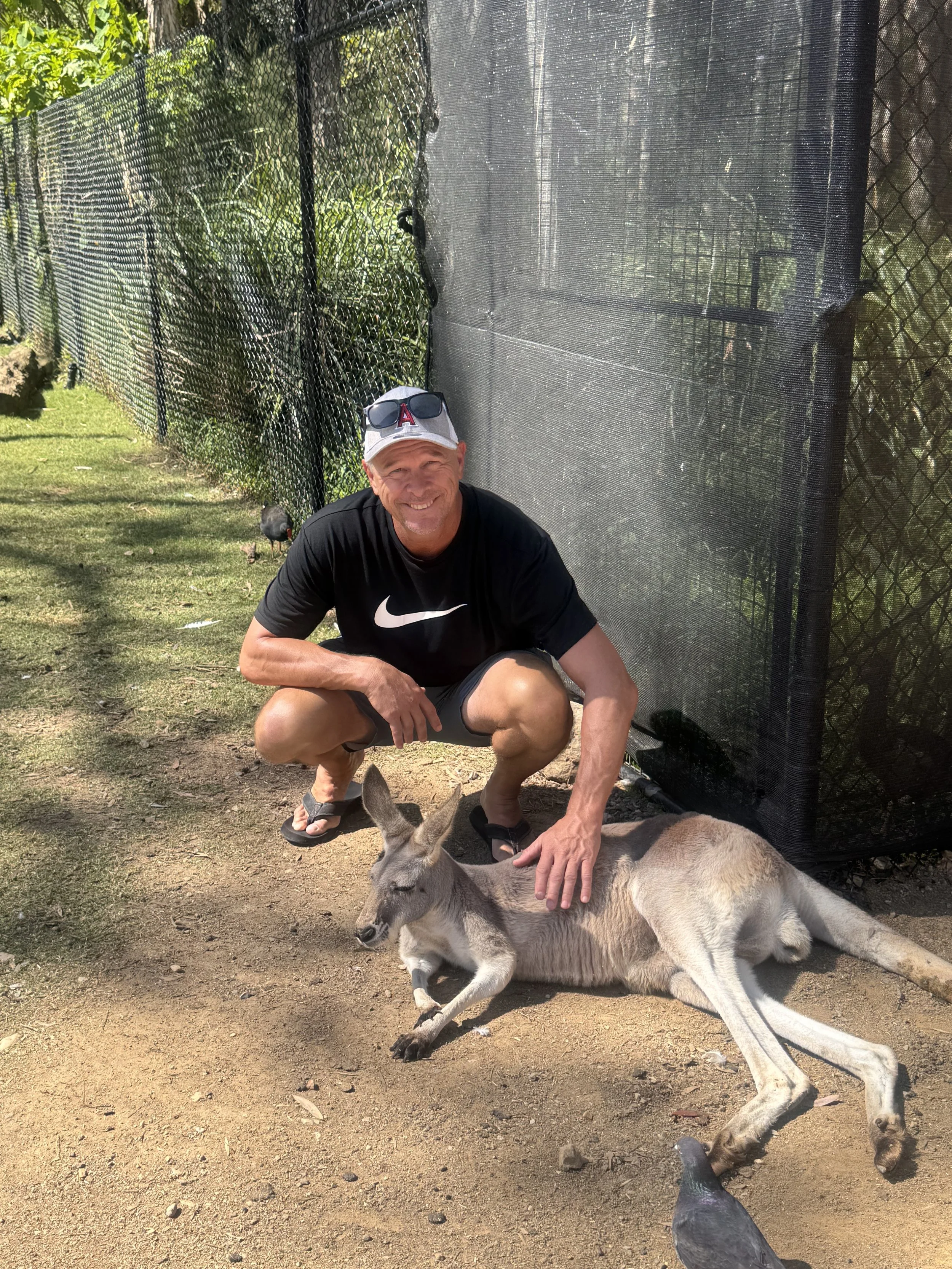
Currumbin Wildlife Sanctuary.
Naturally, we weren’t going to visit Burleigh without scratching the shopping itch; the Pacific Fair mall is a 10-minute drive away. On the Gold Coast, public transport has been capped at 50c for any distance, so bussing was the obvious choice for the kids, who happily navigated the journey. The only thing I would say is that although the buses are great, the ongoing roadworks required to install a rail system are causing a bit of congestion.
Our trip was two-phase, with the second part covering off the theme parks. Excitement was at fever pitch by the time we headed up to Sanctuary Cove, a gated area built around a marina, located around 15 minutes from the parks. Surrounded by waterways, it gives you a totally different perspective on the area, and the whole vibe is low-key and relaxing.

Nicky and husband Scott on Main Street, Movie World.
A sweeping entranceway announces your arrival, and there’s a feeling of zen as you cross the threshold. A world-class golf course stretches as far as the eye can see in one direction; to the other is the luxury of an InterContinental resort. A stone’s throw from the hotel is a boutique shopping complex with everything you need – a supermarket, a pharmacy, an ice-creamery (very important), retail, restaurants and bars. The private residential area is made up of both permanent and holiday homes; here, locals zip around on golf carts. Both the hotel and houses or apartments are available to rent.

Superman Escape ride, Movie World.
I haven’t been to the Gold Coast theme parks for years, and confess it’s something I approach with some trepidation; it’s an understatement to say that being thrown upside down at speed is not my thing. There are multiple options, so it’s worth doing your research beforehand. We plumped to kick off with Warner Bros Movie World, where adrenaline-pumping rides abound. Highlights for us were the Superman Escape roller-coaster, which sends you from zero to 100km/hr in seconds, and the Joker ride, which lifts you what feels like miles high, before plunging in a vertical drop, then into a corkscrew loop. I’m assured both were mind-blowingly fun.

Wizard of Oz Land, Movie World.
Warner Bros characters dot the streets, music cranks and there’s action at every turn. If you visit in the school holidays, progress is slow; fast passes can be purchased once you’re there, but are an expensive addition. If you wait until after 1pm, you can buy single passes to specific rides, and another strategy we employed was to take advantage of our multi-day pass and go back an hour before closing, when many people were leaving. This ‘golden hour’ saw the kids able to run from ride to ride, cramming in multiple turns with hardly any wait time.
Scheduling in a day to recover in between, next on our hit list was Dreamworld. This time, I summoned my inner strength and went on an airplane ride that was basically an airborne carousel. Together with a scenic train ride around the park and the Sky Voyager flying theatre simulator ride, that was me done.
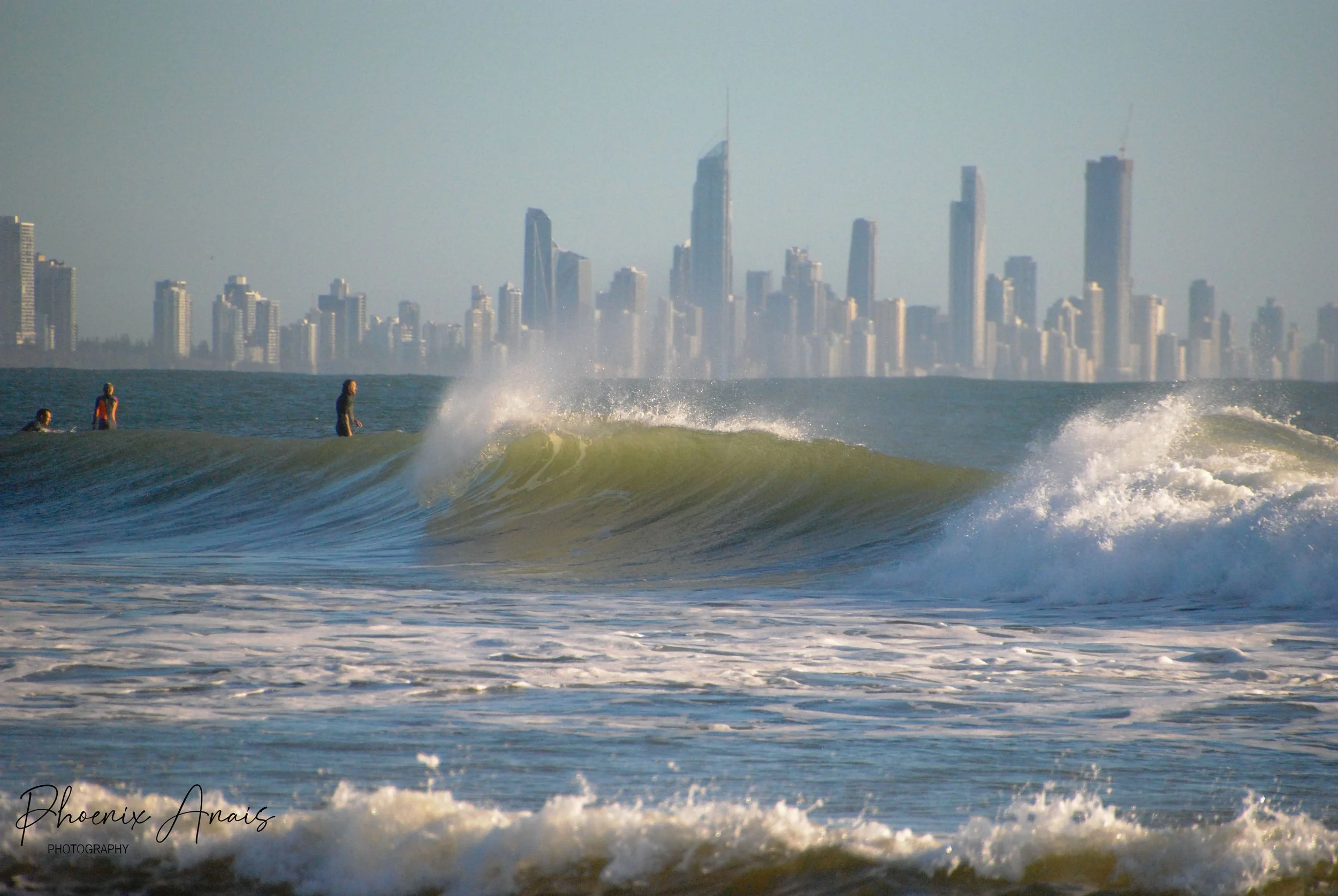
Surf’s up!
The adrenaline junkies on the other hand, were exhilarated by the Steel Taipan, a crazy, high-speed, trick-filled roller-coaster, and the Jungle Rush; this was apparently low level, but upside down and backwards were warning signs to me. There’s more than enough at Dreamworld to keep everyone going – we loved the wildlife area and wished we’d found it earlier in the day, as time runs out quickly.
After that, we had one day left to choose between Sea World (which is further up the coast) and Wet’n’wild. Since the weather was still glorious, we opted for the water park – which, if I’m honest, may not have been the best choice. It was fun and definitely a day well spent, but the wait times for the rides took the shine off a bit.
I’m not ready to join the exodus of Kiwis moving to the GC, but its appeal as a holiday destination is huge. When you leave a place, get home and straight away start googling the flight deals to return, you know you’ve hit a winner.

THE ART OF LIVING
This is a development worth going out of your way for – and once you’re through the door, you might just find your dream home.
This is a development worth going out of your way for – and once you’re through the door, you might just find your dream home.
WORDS PIP CROMBIE | PHOTOS BEN PARRY / UNTITLED STUDIO
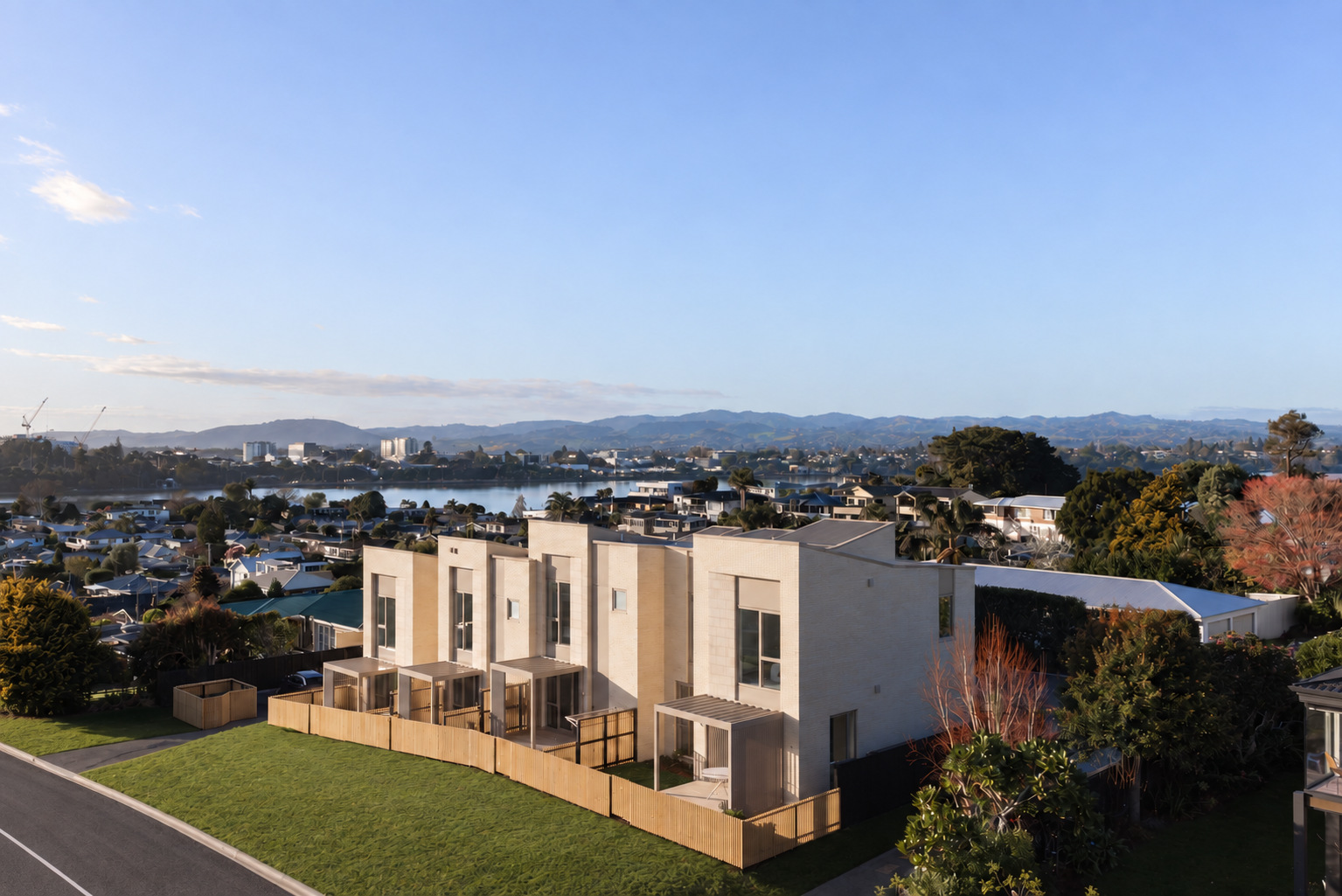
Now completed and selling – eight beautifully appointed, architecturally designed homes on Milton Road’s prime residential ridge in Pillans Point. Interested? If you’re in the market for a centrally located, thoughtfully arranged, contemporary dwelling close to Tauranga’s CBD, Mount Maunganui, the Waikareao Estuary walk/cycleway, excellent schools, transport links and leisure activities, you need to visit. These homes will be snapped up.
When I visit the site with developer Troy Hoogeveen of Leven Property, the sun is shining on the panoramic view sweeping across the Tauranga Harbour to Mauao, the Port, the estuary and cityscape. The aspect is magnificent.
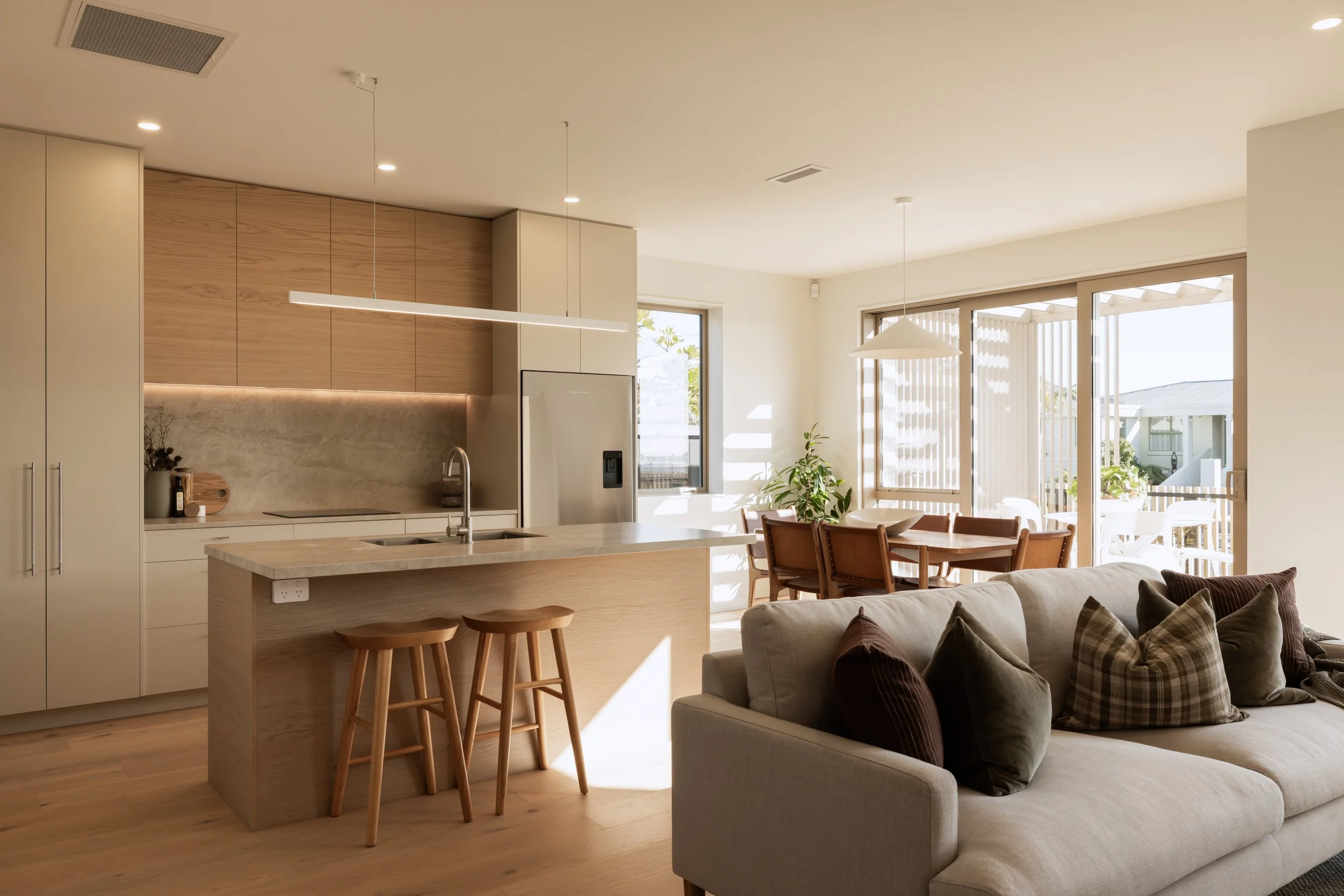
We wander through the two-storey dwellings, of which there are eight in total, housed in two blocks, with a well- balanced mix of layouts. In each block, two two-bedroom abodes are positioned centrally, while three-bedroom counterparts anchor each end. In some of the residences, the living spaces are located upstairs, whereas in others, they’re downstairs, in order to maximise the outlooks and enjoyment of each space.
A central laneway connects the two blocks. The path to each home is individually lit and landscaped with a nod to the coast walking distance away. This is not your usual townhouse development, and there’s a reason why. Troy’s vision is unique, and he has a thoughtful approach to property development. He has a background as a structural engineer, and a commerce degree, but admits he’s taking things further than that suggests by stepping into how people experience their chosen environment.
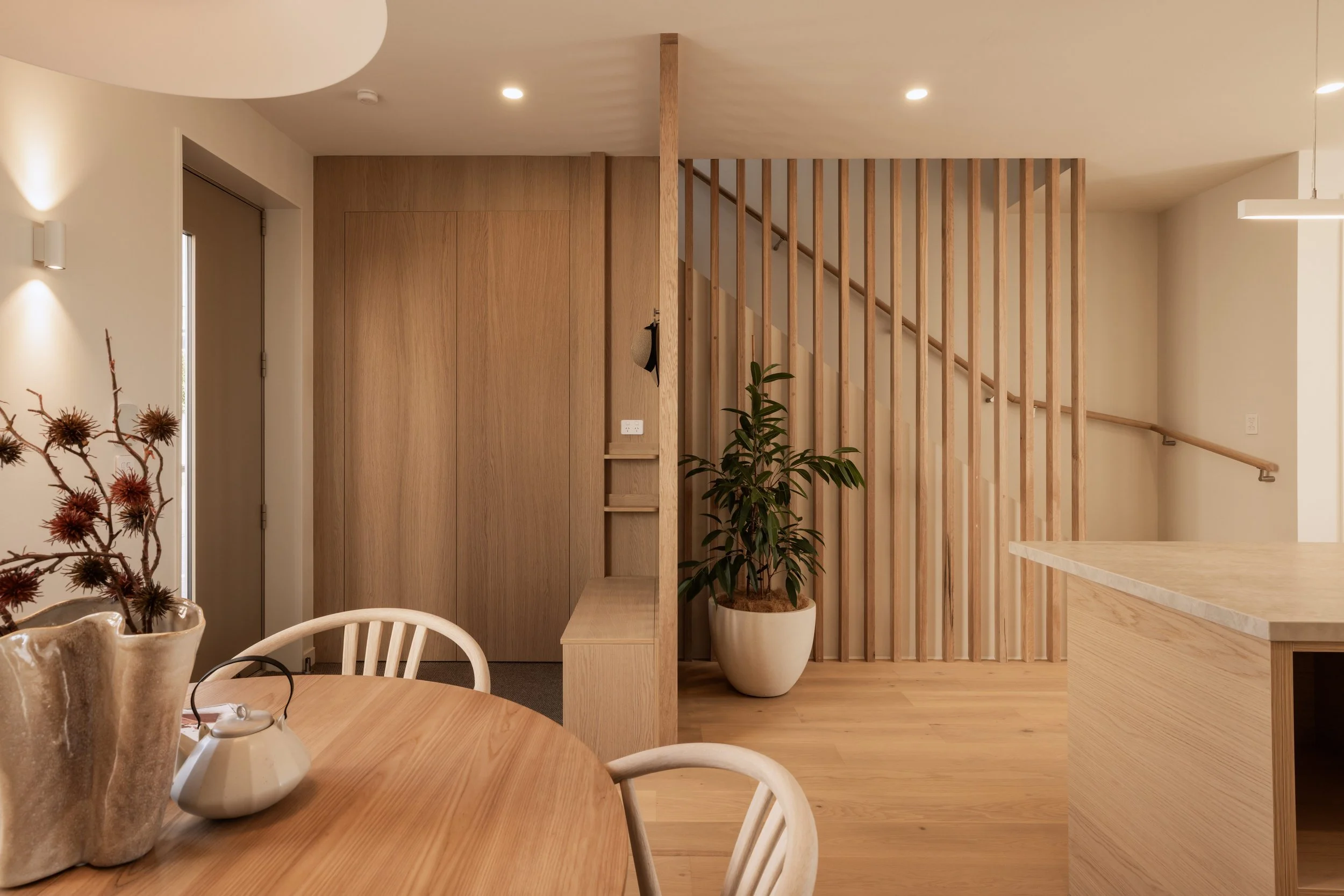
“My family and I spent five years living in Utrecht, in the Netherlands, and really admired the way townhousing and higher density housing was achieved. Both there and in Scandinavia, it’s not about packing people in, but about designing thoughtful communities – homes that are independent but allow people to be part of a cohesive environment, homes that are healthy, deliver happiness, and offer every amenity and modern convenience that enhances our living experience. This development is all that and more.”
In Dutch, the word ‘leven’ means ‘to live’ or the general manner of living. Troy chose this as a representation of the focus of his development company – how people live well.
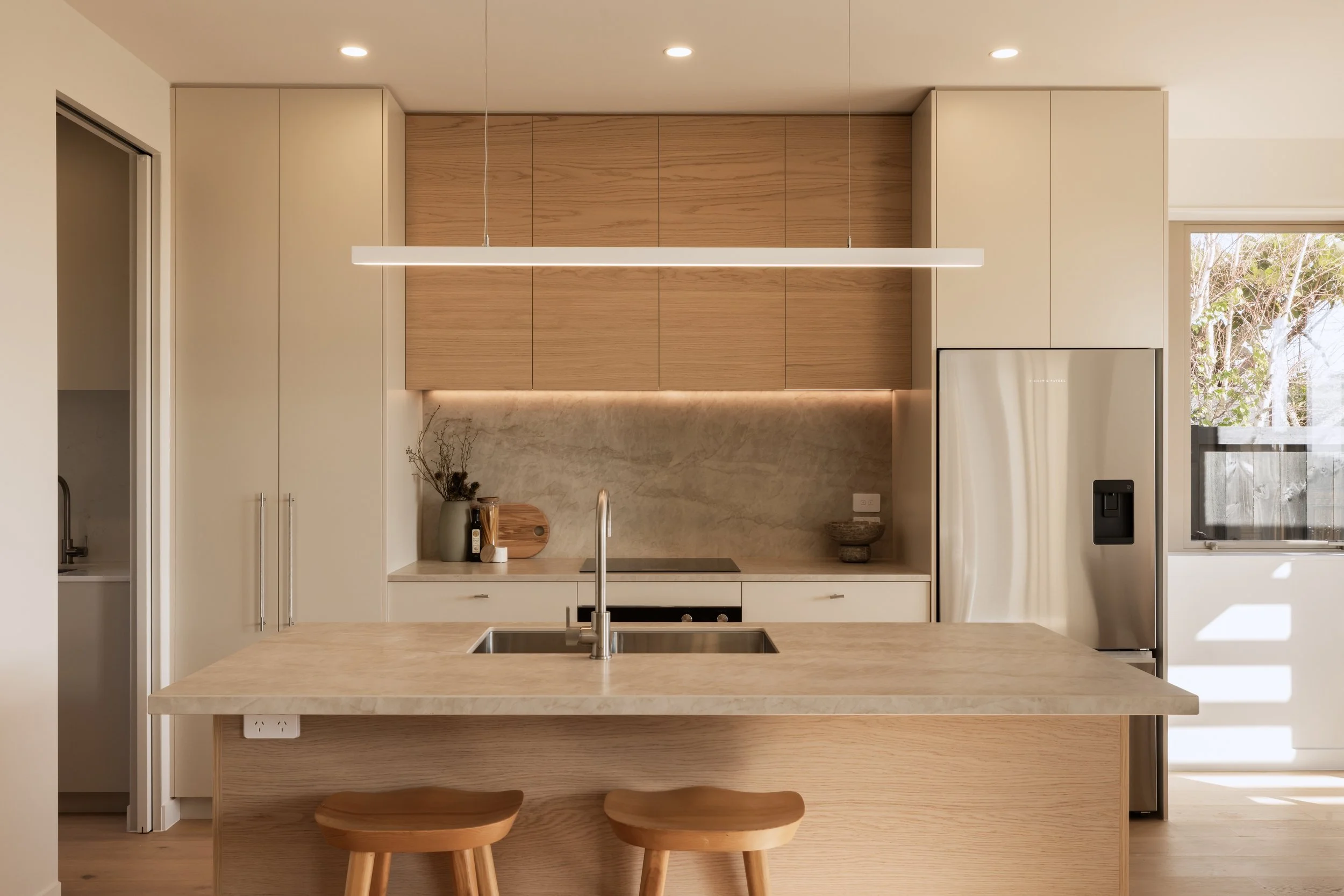
A 1960s house was formerly situated on this large site, plonked centrally with little consideration paid at that time to utilising the grounds. “I’m passionate about redeveloping and intensifying suburban areas that are already located in proximity to urban centres and amenities,” says Troy. “Sustainability is a key driver, particularly after years living in the Netherlands, where it’s part of everyday life there. Our cities can’t keep growing outwards, and we want to contribute positively to the existing urban fabric of Tauranga.”
Leven Property worked closely with architects at Tauranga’s Designgroup Stapleton Elliot, who as well as an appreciation of this locale, have experience in similar community-focused dwellings of this calibre in Queenstown and Wānaka. Lead contractor, Austen Projects, brought the craftmanship, durability and quality finishes you’ll appreciate when you visit – or move in.
So what can you expect? The Canterbury Clay brick cladding is a clue to the warm, timeless, sandy aesthetic that draws on the coastal vibe. Almond, ivory and honey tones prevail as you move through to the Japandi-style interiors that blend Japanese functionality and rustic minimalism with Scandinavian simplicity. Cosy meets calm in these clutter-free spaces.
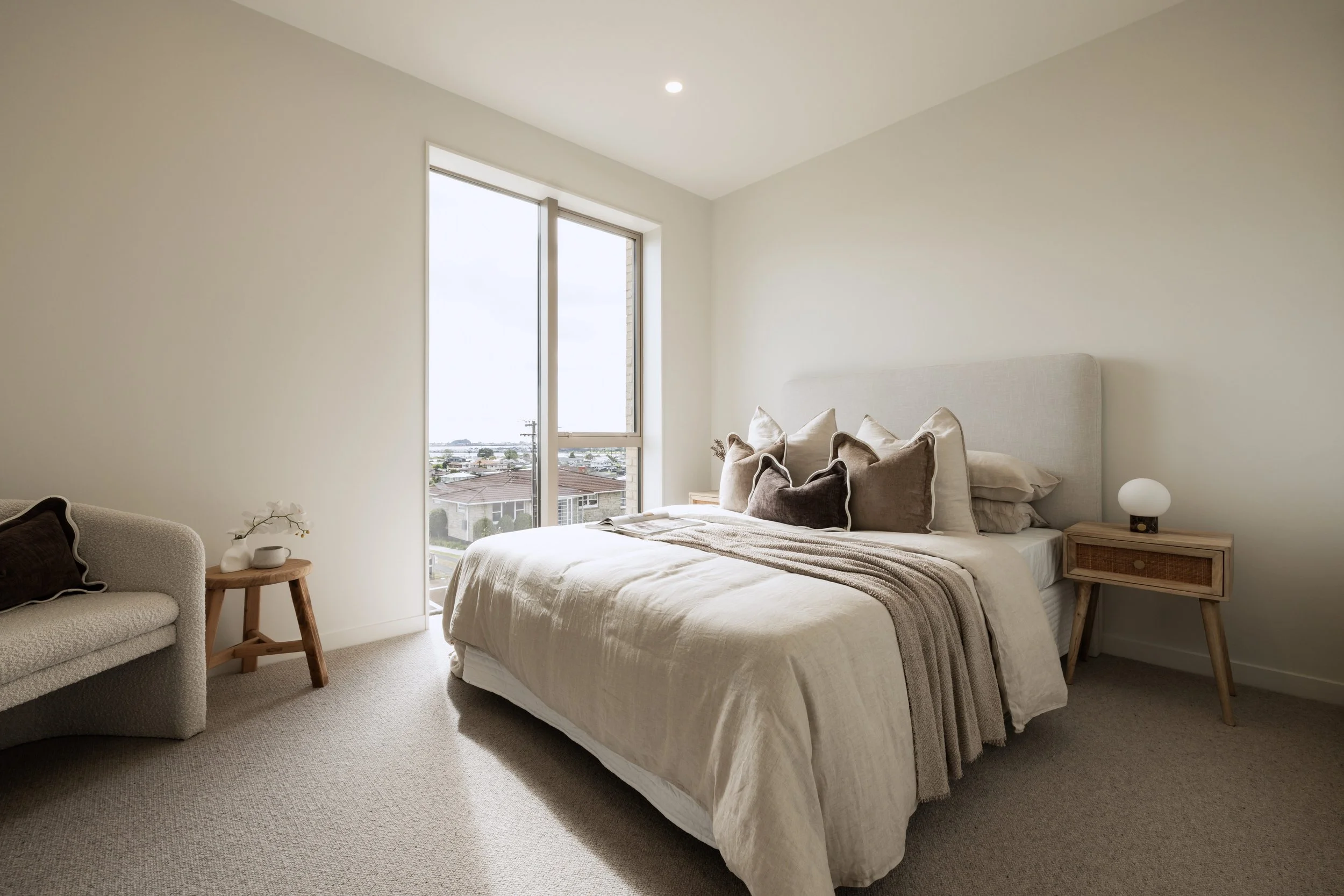
In each home, the entryway provides coathooks and a seat that lets you remove your shoes, then lifts up to store them. The spacious, open-plan kitchen/dining/ living areas feature lofty 2.7m high ceilings that enhance the light and openness. The kitchens boast porcelain benchtops, and high-end cabinetry and fittings – and, in the three-bedroom homes, separate sculleries.
Concealed reverse-cycle air conditioning ensures year- round comfort throughout. Underfloor bathroom heating and heated towel rails mean the wet spaces – including the ensuite to the main bedroom in every home – also remain dry and warm. Ceramic tiles and glass shower doors provide luxury and style.
Engineered oak floors and woollen Bremworth carpets have been specified in soft, neutral tones to suit the natural material and colour palettes of these homes. You can make your own unique statement with your window treatments and furnishings.
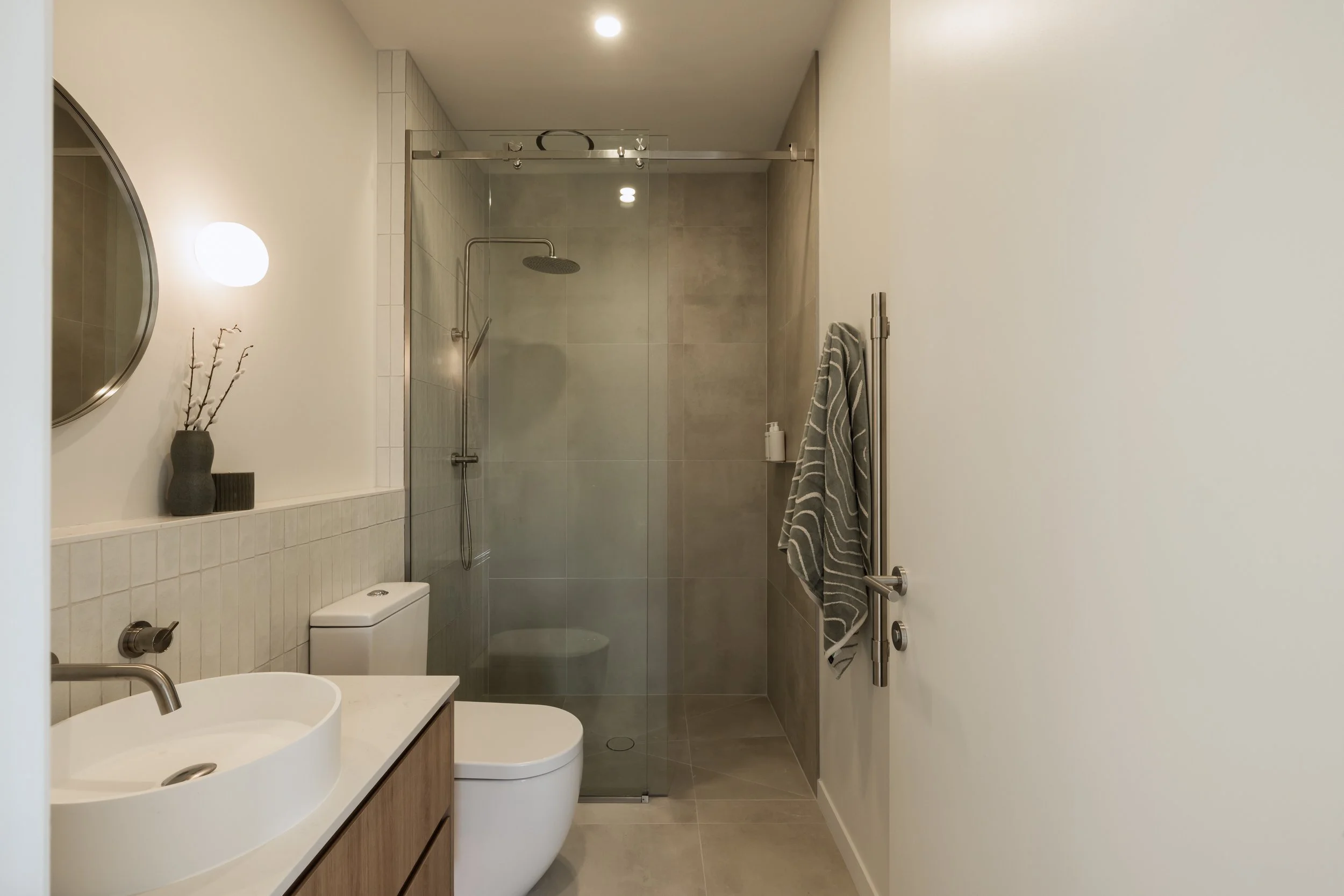
Residents will make good use of the thoughtfully designed workspaces and cabinetry, ample under-stair storage and other well thought out design features, like the Wi-Fi access points fitted upstairs and down. These homes are beautiful, airy and eminently liveable.
Each home sits on its own freehold title, with no ongoing body corporate or residents’ association fees, and comes with a dedicated carpark, cable fittings for the future connection of e-vehicle chargers, sophisticated Ajax security systems and digital deadbolt front entry locks.
Communal bike parking is available, there’s a central rubbish bay, and each home has its own discreetly located outdoor clothesline. The details have really been delivered here – you should go and see them for yourself.
30 Milton Road
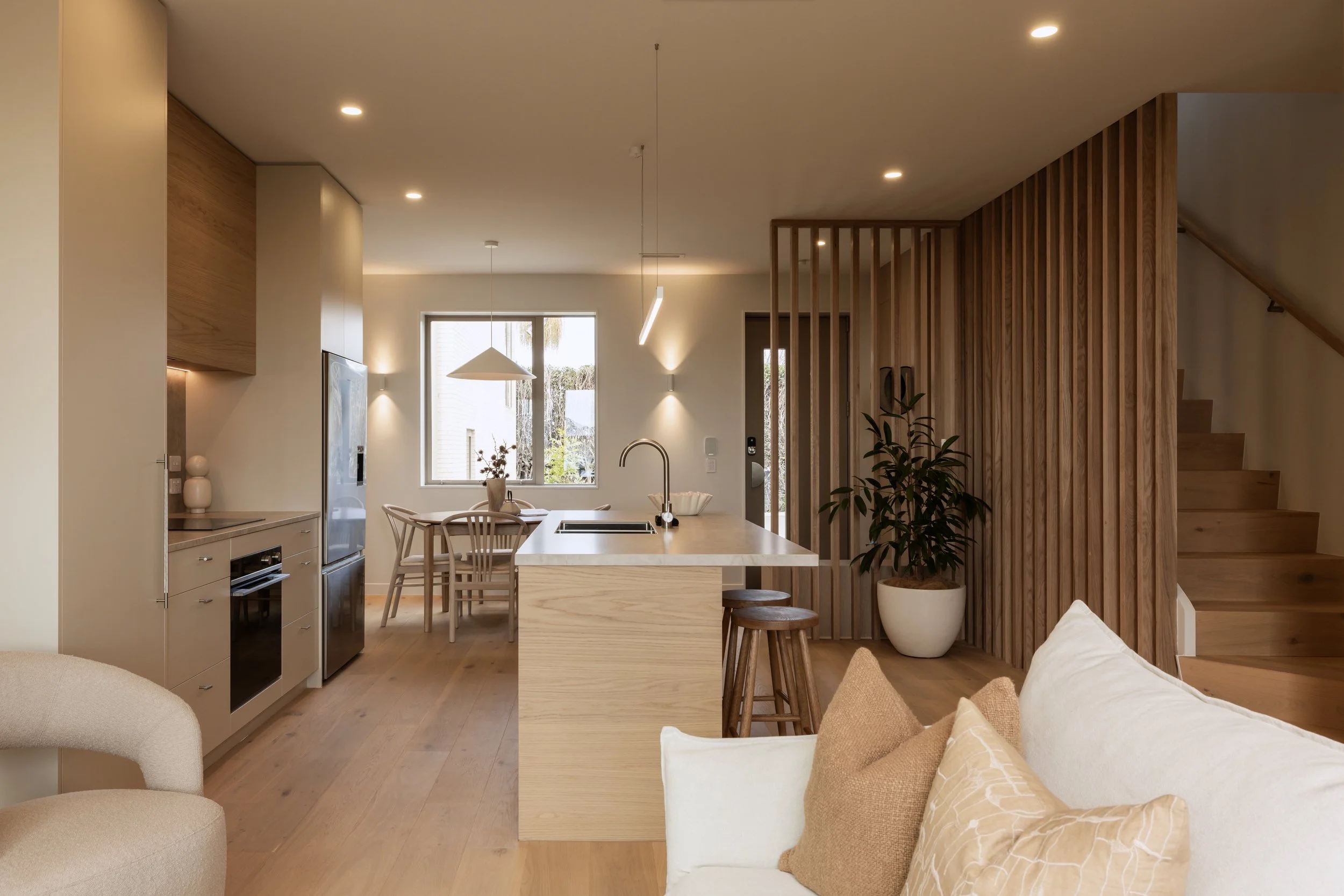
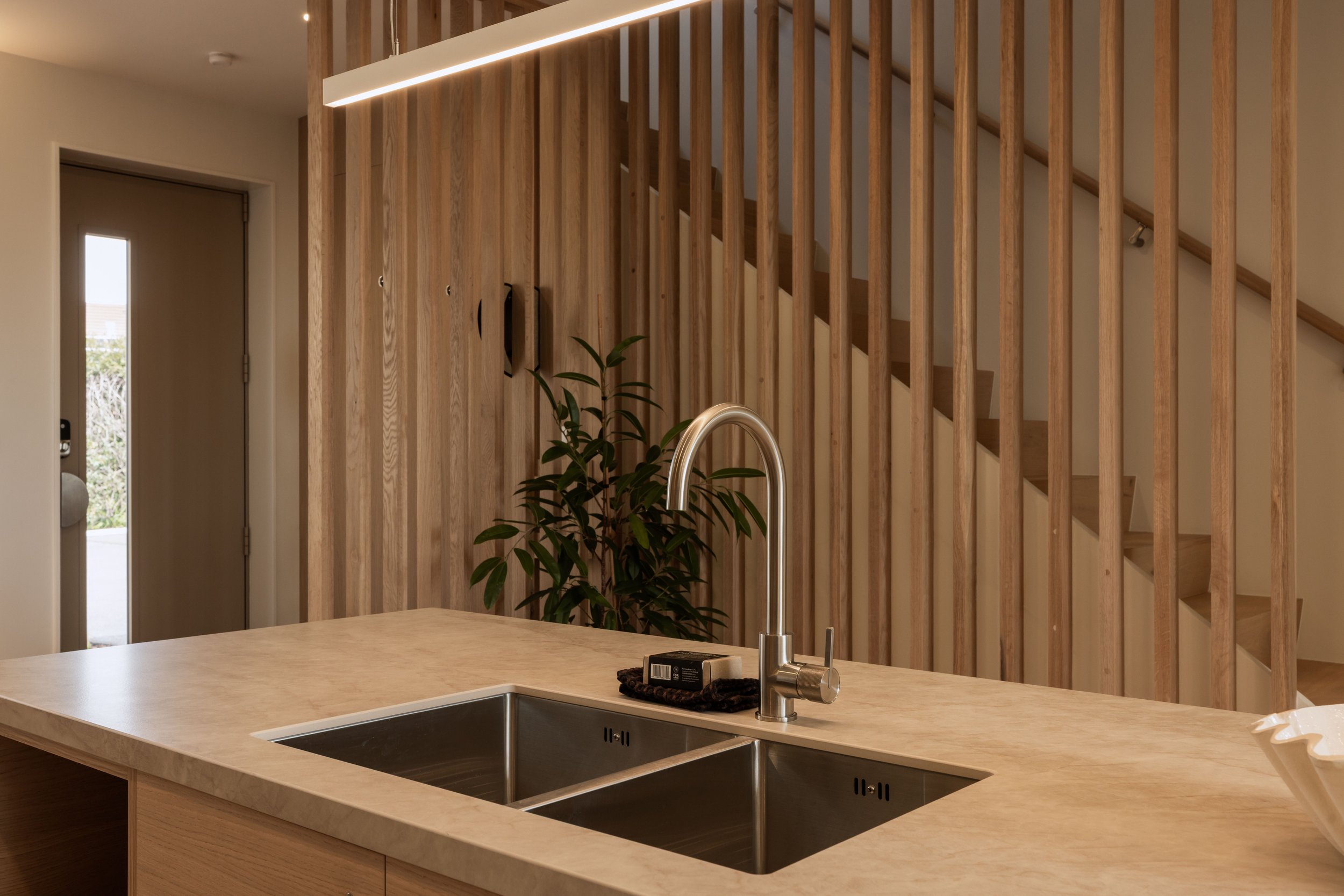
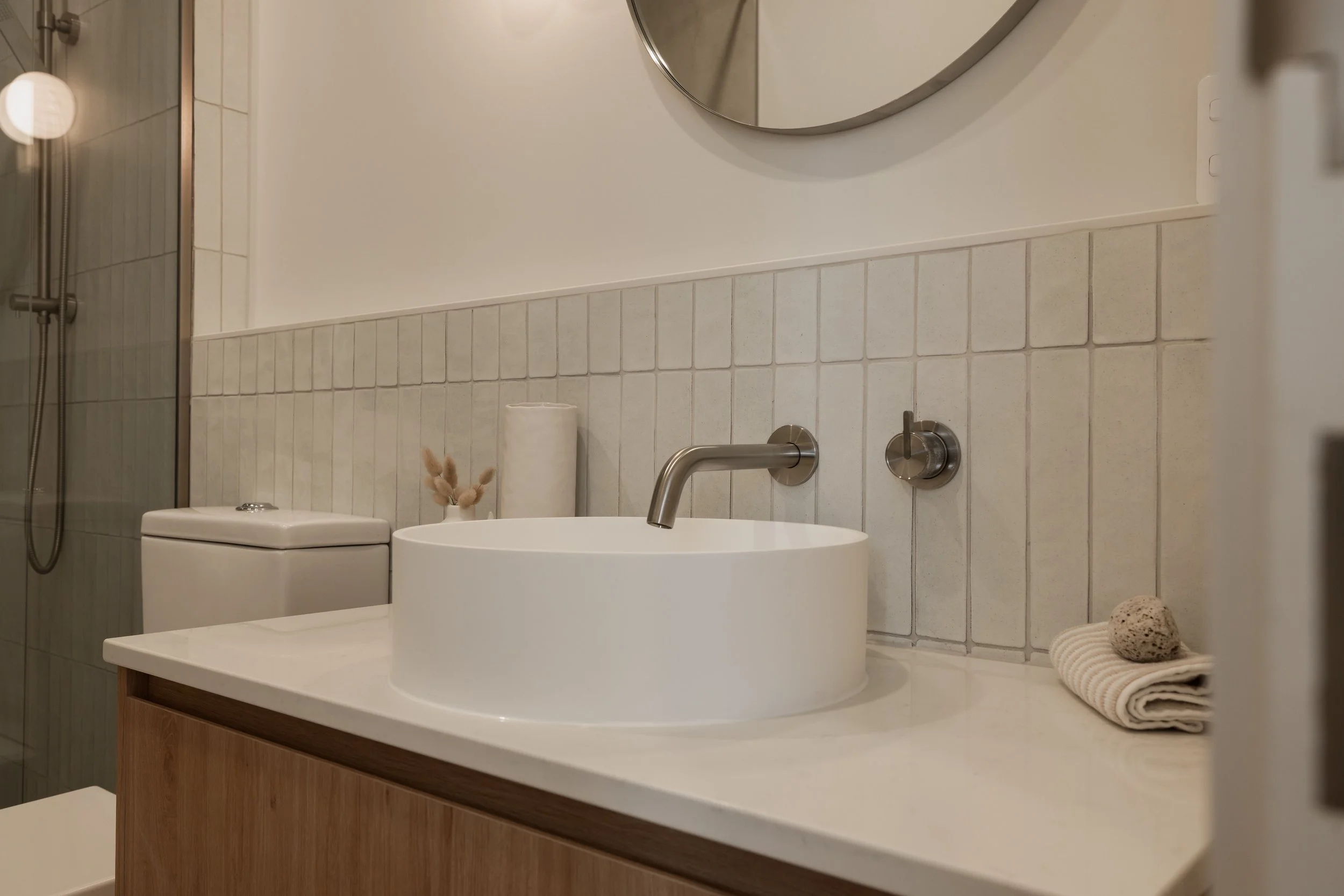
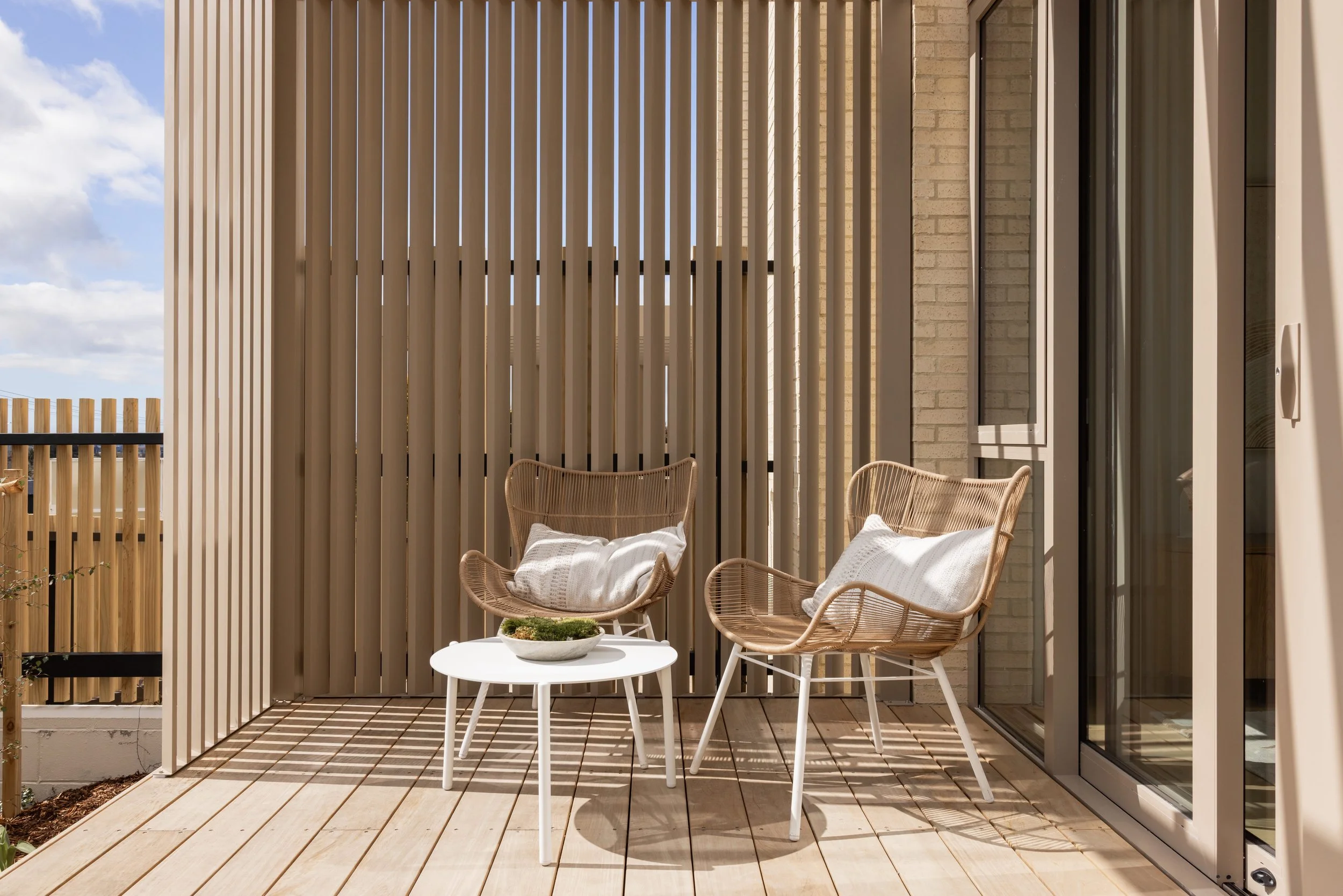

LESS IS MORE
Leanne Cashmore of Cashmore Clinic on the art of looking refreshed and never ‘done’.
Leanne Cashmore of Cashmore Clinic on the art of looking refreshed and never ‘done’
PHOTO SALINA GALVAN

There’s a common misconception about lip filler that I’d love to put to rest. It’s that when you do it, everyone will know.
One of the questions I hear most often is, “Will I look done?” I always say, “Not if we’re doing it well.”
For me, lip enhancement has never been about creating a dramatically different mouth. I look at what’s already there and ask how we can restore softness and definition in a way that feels completely at home on your face.
As we age, we naturally lose volume in the lips and definition around the border. Fine lines can become more noticeable, too, and the overall effect can make the lower face look a little more tired or harsh than it once did. A small, considered amount of hyaluronic acid filler can help replenish some of what’s been lost, subtly refreshing the area without changing the fundamental shape.
Hyaluronic acid is a substance naturally found in the body that plays an important role in hydration and volume. When used thoughtfully, it can enhance, rather than transform.
That’s where I think the conversation around lip filler needs to change. We’re quite comfortable talking about Botox, teeth whitening, laser treatments and skincare as part of a broader approach to looking after ourselves. Lip filler can be the same. Rather than becoming the first thing people see, it’s a small aesthetic treatment that supports your overall appearance.
The technique matters enormously, and so does restraint. My approach is always to use the minimum amount needed to achieve the desired result, taking into account your natural anatomy and proportions, and what you want to achieve. The goal is never to make everyone look the same.
It’s also important to remember that lip filler is a medical treatment. Choosing an experienced, appropriately qualified injector who understands facial anatomy is essential.
At the end of the day, the best result is one that looks like you, just a little fresher.
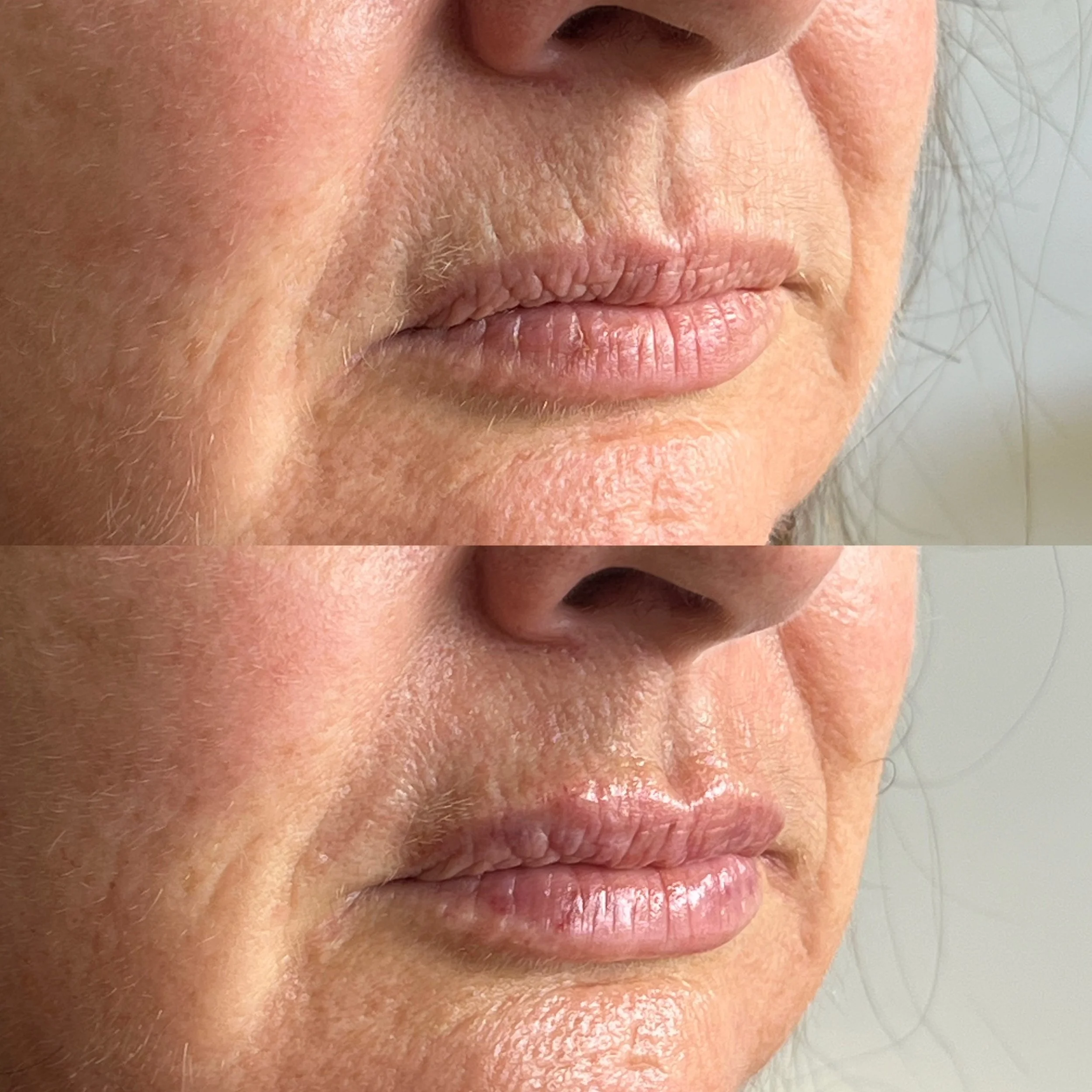

ABOVE AND BEYOND
A new radiology clinic in the Mount is mixing cutting-edge technology with old-school values of compassion and kindness. Dr Phil Clark talks us through Beyond Radiology’s approach to healthcare.
A new radiology clinic in the Mount is mixing cutting-edge technology with old-school values of compassion and kindness. Dr Phil Clark talks us through Beyond Radiology’s approach to healthcare.
PHOTOS DEBORAH DE GRAAF
There was a time when medical imaging was something that happened largely behind the scenes. You saw your doctor, got a referral, had the scan and waited for the results. Today, expectations are very different.
As diagnostic technology has become more sophisticated, imaging has become an increasingly important part of how injuries and illnesses are investigated, diagnosed and treated. In a region growing as quickly as the Bay of Plenty, demand for those services is growing too.
It’s a changing landscape that sits at the heart of Beyond Radiology, a New Zealand-owned, clinician-led Radiology practice that has recently opened its first clinic in Mount Maunganui.
Leading the clinical team is chief medical officer Phil Clark, a radiologist with experience across both the public and private sectors in New Zealand and Australia. For Phil, the focus is firmly on bringing clinical expertise, advanced technology and a more personal approach to the patient experience.
That philosophy is evident at Beyond Radiology’s new clinic at Owens Place, where the latest advanced equipment has been installed, offering a wide array of X-ray, ultrasound and MRI scans, as well as ultrasound-guided injections.
“We live and breathe the mantra of going above and beyond every single day, with a quality, patient-focused, clinician-led service,” says Phil. “We treat all patients with the same dignity and respect all the way through. Irrespective of their background, every patient is treated equally.”
With times tough for many people, Beyond Radiology has made the decision not to charge a surcharge on ACC X-rays, ultrasound scans or ultrasound-guided procedures, helping keep essential imaging accessible to the wider community.
The technology matters too. As imaging becomes increasingly sophisticated, the ability to see fine detail and provide clinicians with clearer answers is transforming the way injuries and illnesses are investigated and treated. At Mount Maunganui, that technology is backed by a team of highly trained and experienced professionals.
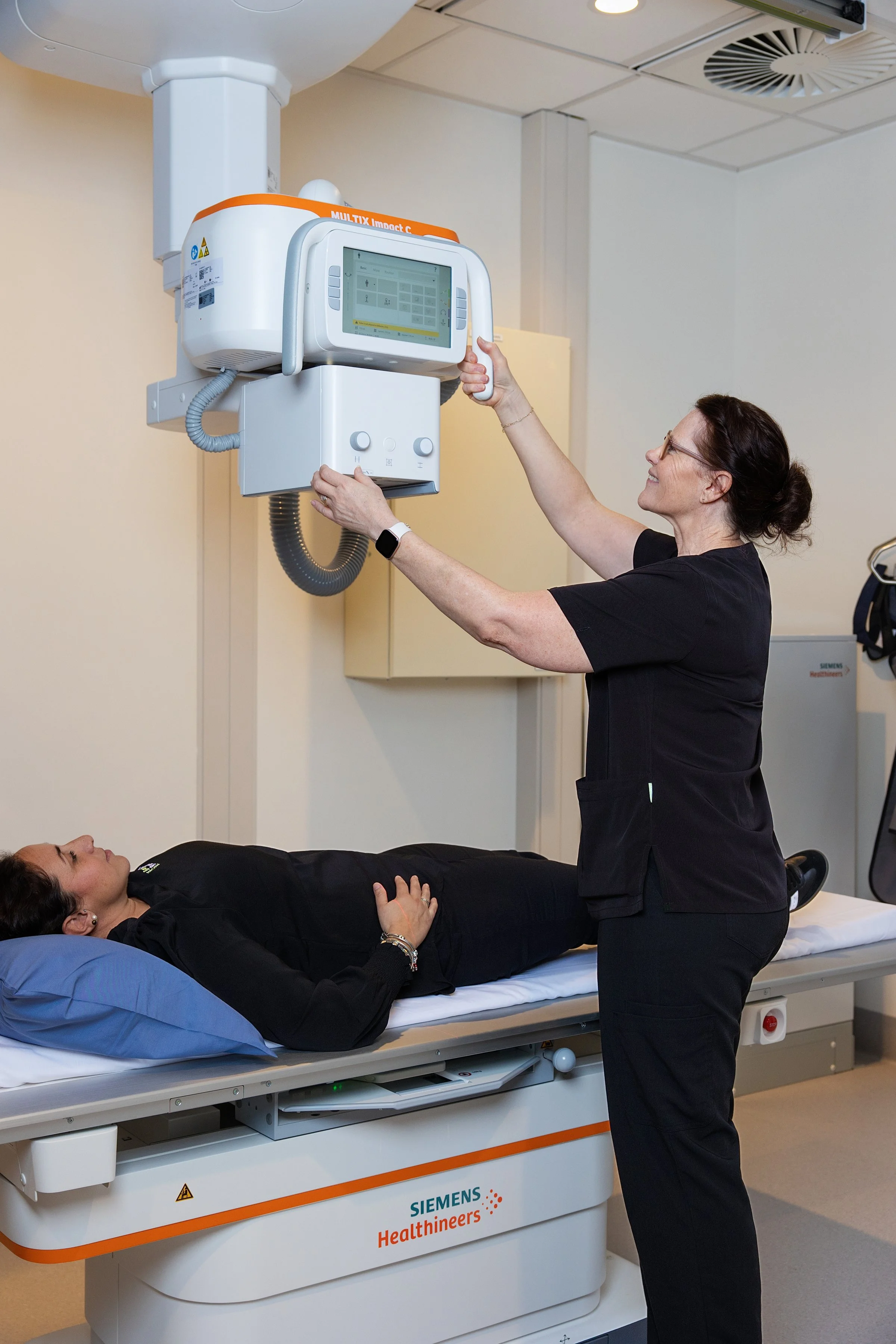
Although the machines may be state-of-the-art, the philosophy behind Beyond Radiology is refreshingly straightforward. Patients should be treated with kindness, care, dignity and respect, whatever their background.
It’s a particularly relevant approach in the Bay of Plenty, where rapid population growth is driving increased demand for radiology services and greater access to diagnostic imaging.
“We’re really excited about being here,” says Phil, “and about the difference we can make for patients.” With its first Bay of Plenty clinic now open, Beyond Radiology has the opportunity to bring a combination of advanced imaging, clinical expertise and patient-focused care to a growing community – and to make the journey through medical imaging just a little easier along the way.

DESIGNING FOR LIFE
Mod Architecture’s Andrew Ward has just received another design award. He speaks to UNO about his surprisingly simple secret to designing a great house: above all else, it needs to feel like a home.
Mod Architecture’s Andrew Ward has just received another design award. He speaks to UNO about his surprisingly simple secret to designing a great house: above all else, it needs to feel like a home.
PHOTO ROSE MINNÉE PHOTOGRAPHY
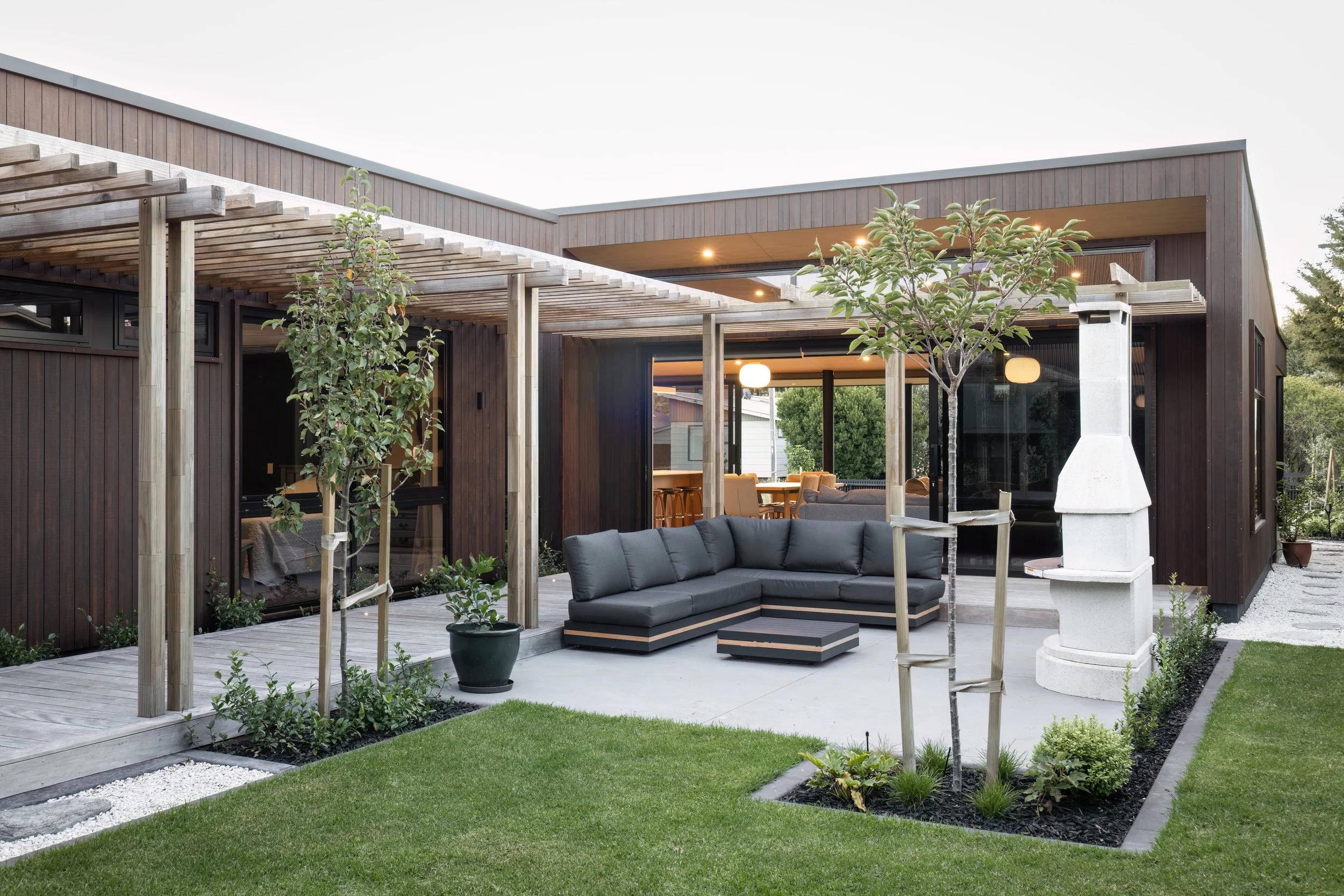
Before architect Andrew Ward can begin designing a house, he first needs to understand the people who will live in it.
“To me, the house is not just its exterior,” he says. “A lot of planning and design thought goes into that, but it also needs to work with how the interior functions and how you feel within the space.”
In practice, this means thinking about details. like where the surfboards will be stored, whether the bathroom should be light for early birds or darker for night owls, and where the afternoon sun will fall, so outdoor living spaces can make the most of the Bay’s long sunny afternoons and flow naturally into the rooms inside.
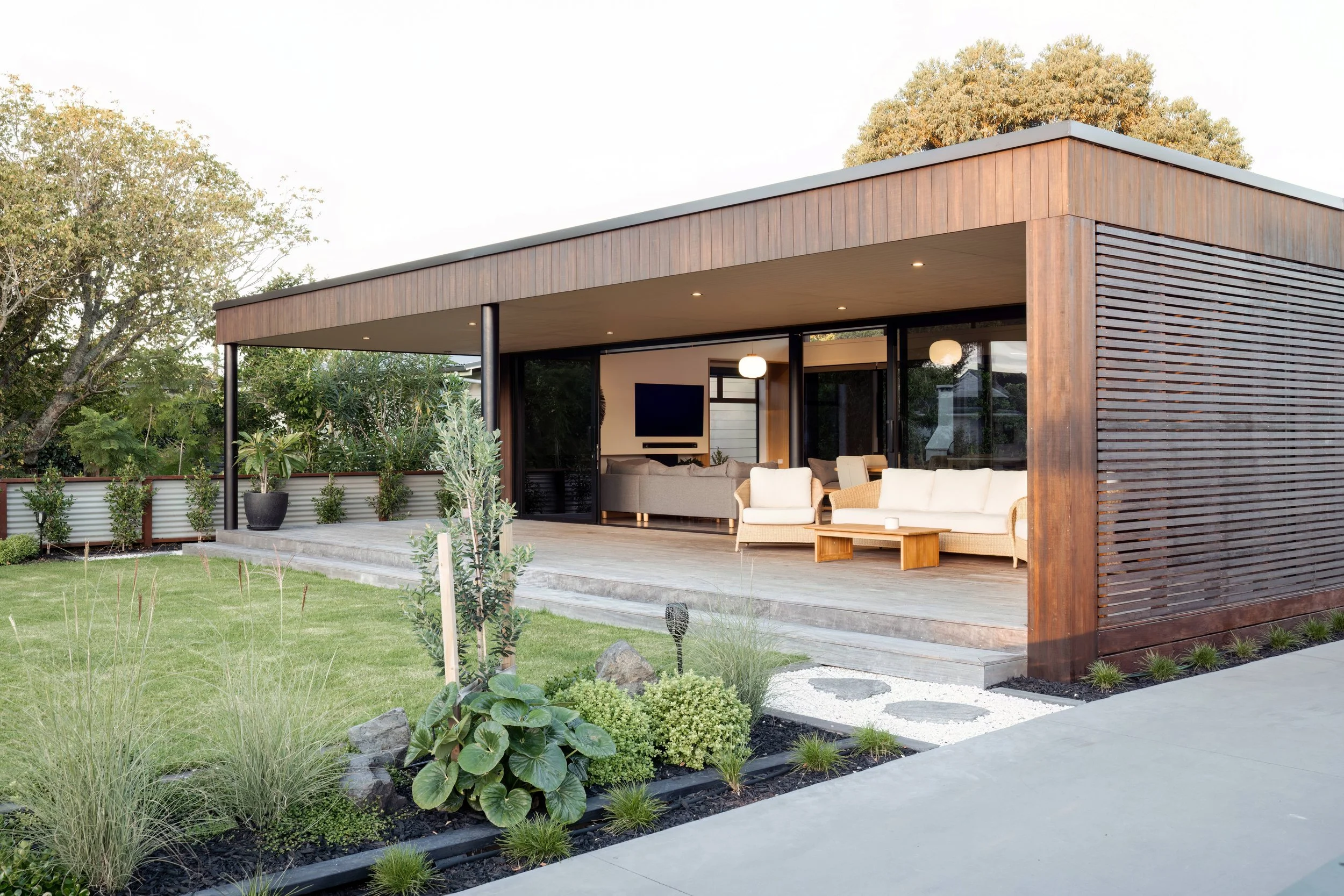
Before the design process begins, he imagines himself living in each space, diving into the granular details like where his favourite chair would be, what he’d see when he passed a window and even if the wind would rush in if he opened a door.
He then goes through a highly detailed questionnaire with his clients that’s designed to reveal how they’ll live in the space. This is reasonably extensive to ensure he doesn’t miss important details that they may not have even considered, like how many people will live there, whether they’ll have family staying, whether they work from home and what time they get up in the morning. How do they actually use their house?
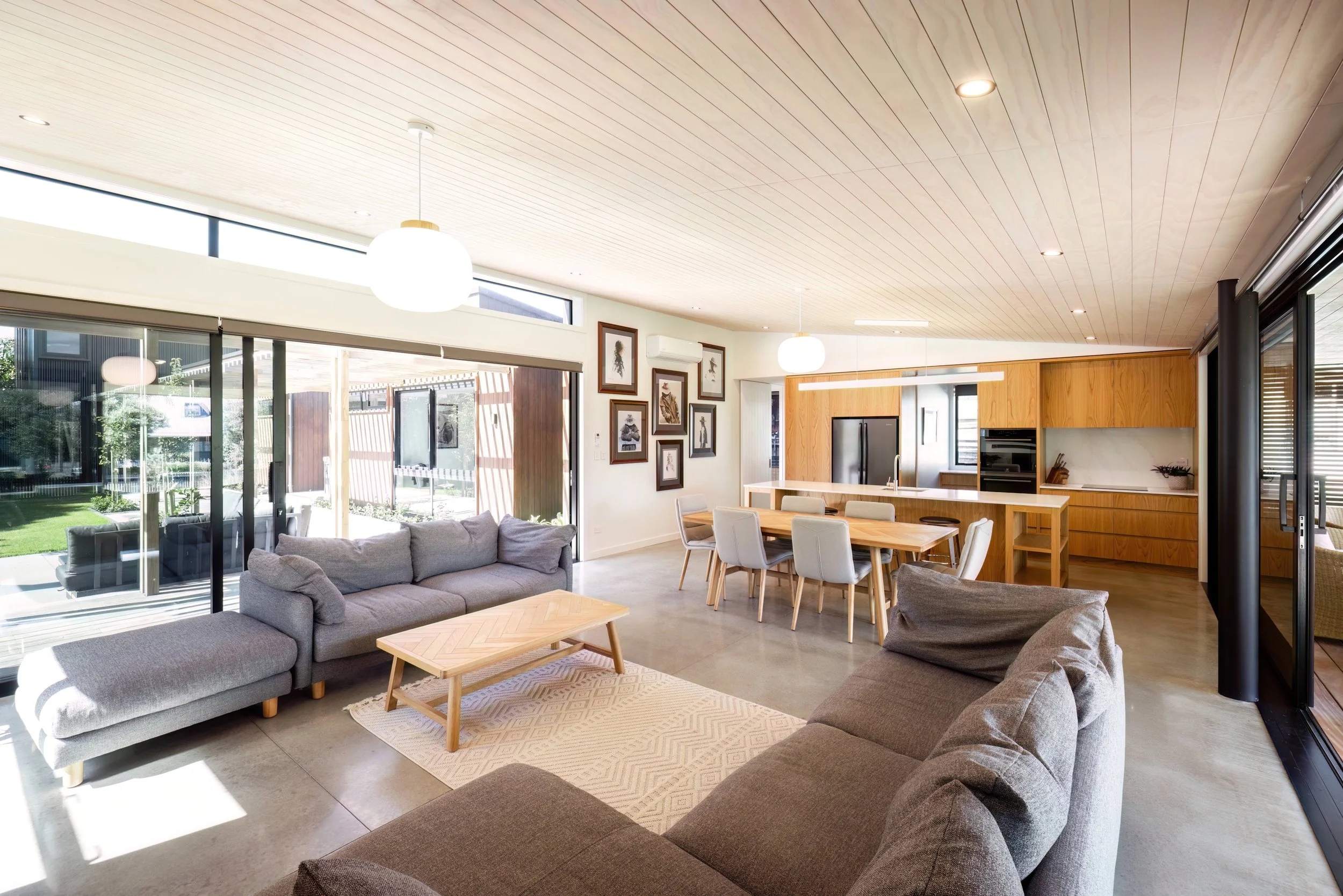
He gives the example of a family living near the beach. Their lifestyle might mean they need an outdoor shower for washing off the sand. Take that a step further, and it could mean positioning a door leading directly into the bathroom to make living in the home that much easier. These are the details that turn a great looking house into an equally great place to live.
It’s this lifestyle-driven process and design philosophy that saw Mod Architecture’s Whangamata House receive a Highly Commended in the 2026 ADNZ Resene Architectural Design Awards. The clients came to Andrew with their functional requirements and some loose ideas, including a desire for an internal courtyard, before going on the design journey with him.
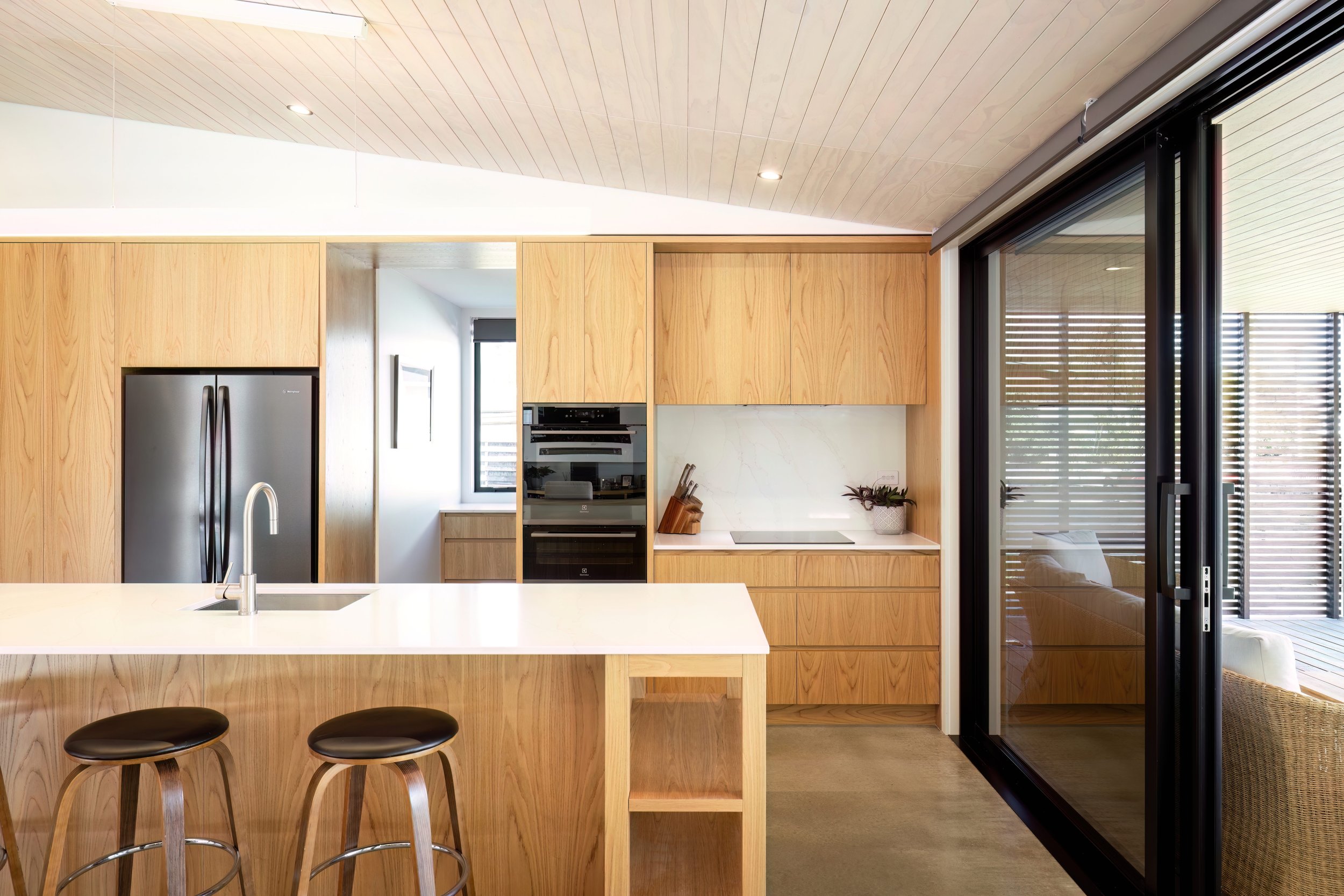
Andrew says he designed the house to retain the relaxed feel of a classic beach bach. To that end, there’s no formal main entrance. Instead, the house opens towards the street, reflecting the informality of a beach town in which everyone’s out and about, and a trip to the beach is always on the cards.
The clients also wanted to encourage their adult children to visit regularly, so Andrew designed the garage and additional accommodation to be separate from the main living areas, allowing the owners to live comfortably on their own while still having plenty of space available for when the family comes to stay.
Andrew says the site itself helped shape the design. Running east to west, it offered the opportunity to create an internal courtyard that could become a sheltered outdoor living space, protected from the neighbours, wind and changing sun. Rather than treating the courtyard as an afterthought, Andrew made it central to the way the house works, coupling it with an outdoor zone at the front of the house, with a large veranda providing shade and shelter at different times of year.
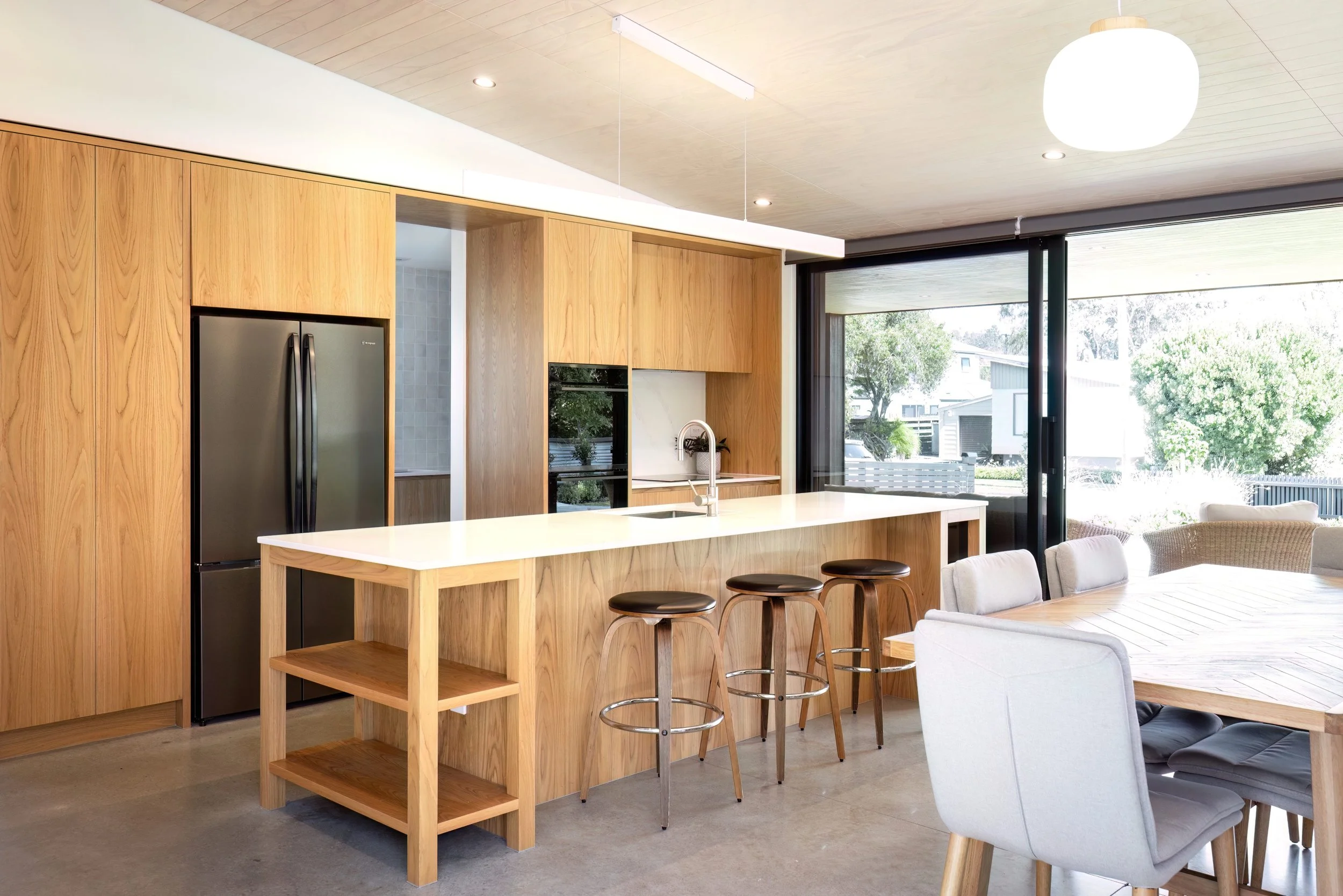
The result is a home with several distinct places to gather, depending on the weather, time of day and how the family wants to use them. The judges praised the way the different building volumes work together, creating patterns and shadows, and a strong relationship between the spaces and the home’s central courtyard.
Andrew says that one of his advantages as an architect is that he lives here in the Bay. He understands the character, the weather, how the conditions change throughout the year and, most important of all, the way we all enjoy life and use our homes.
“The most important thing with one of my designs, and the thing that makes it feel like a home, is that it’s designed for you and how you want to live.”
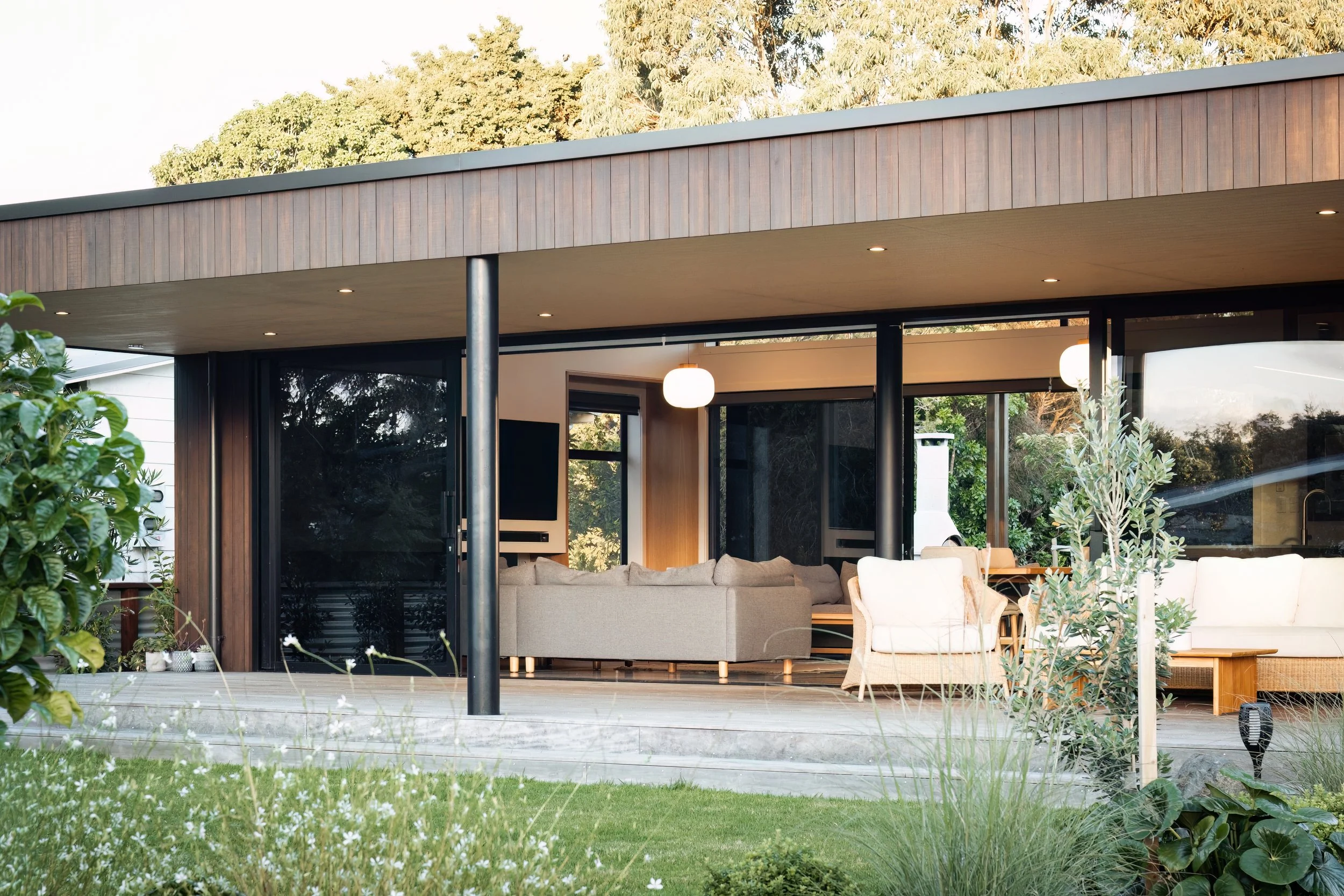
For Andrew, the payoff goes beyond simply creating a beautiful house.
“Good architecture can definitely enhance your life, enhance your wellbeing.”
After all the conversations, decisions, revisions and inevitable moments of anxiety that come with any project, the best part is seeing the finished home come to life.
“If you’ve done a good job, you’ve improved their life,” he smiles. “That’s definitely pretty special.”

BEYOND BIG CITIES AND BEYOND THE PLATE
Michelin has created an appetite our food columnist Rae Baker sees as an opportunity. How about we band together to show what our food culture’s made of?
Michelin has created an appetite our food columnist Rae Baker sees as an opportunity. How about we band together to show what our food culture’s made of?
PHOTO TOURISM BAY OF PLENTY
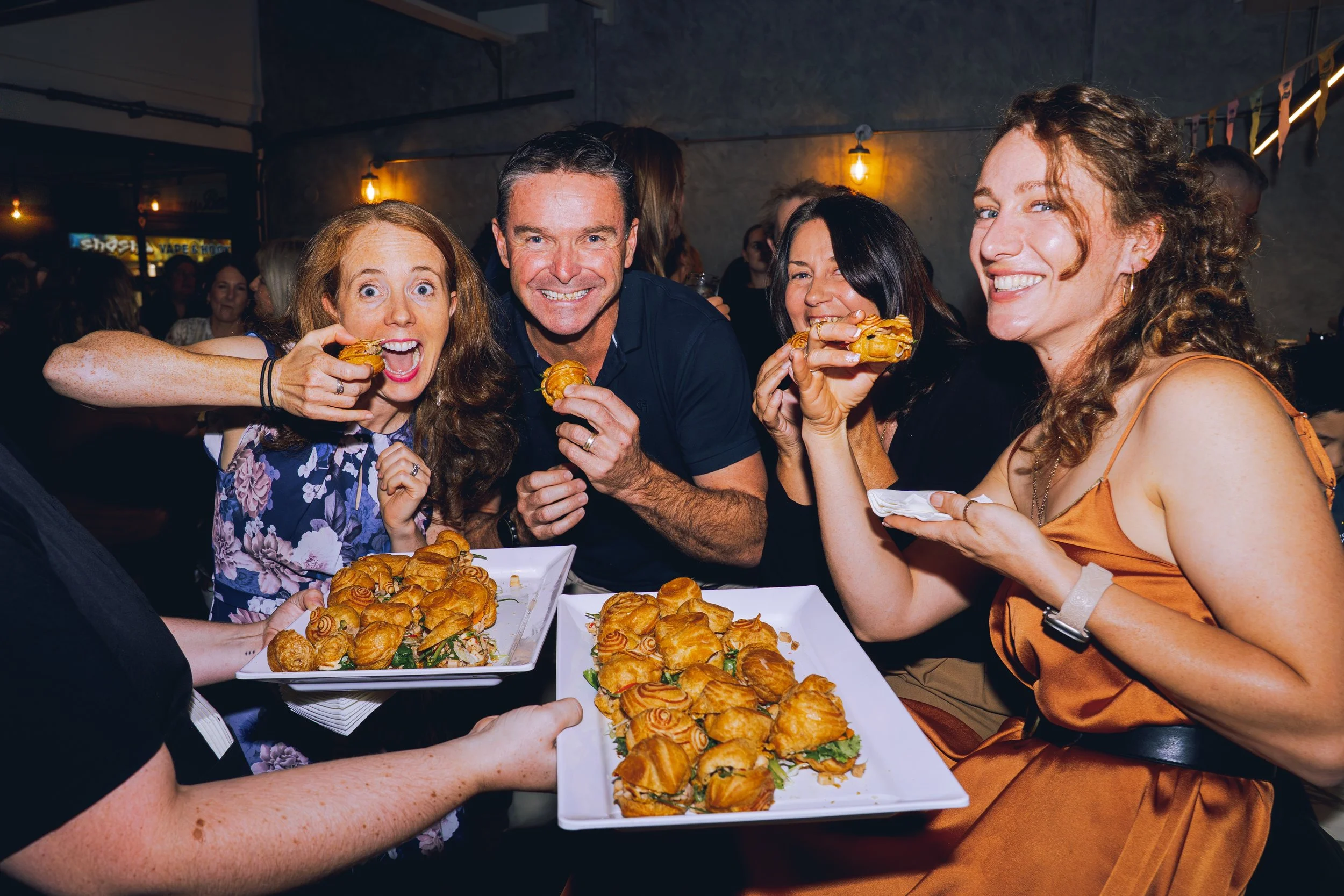
The arrival of the Michelin Guide in New Zealand has generated plenty of excitement, and rightly so. Internationally, a Michelin recommendation or star can transform a restaurant’s reputation, attract global visitors and elevate an entire country’s culinary profile.
For New Zealand, it’s another chance to showcase our food story on the world stage, but although much of the conversation has centred on which restaurants might earn recognition, I think the bigger opportunity lies elsewhere. It’s with the regions.
Tourism New Zealand has identified food and beverages as a key driver of international visitation, recognising that today’s travellers increasingly choose destinations based on the experiences they’ll have, not just the sights they’ll see. Food has become one of those experiences. Visitors want to discover local produce, meet the people behind it and experience the flavours that define a place.

Michelin has the potential to put New Zealand on more international itineraries. The question is: once visitors decide to come, how do we encourage them to travel beyond our major cities?
That’s where our beautiful Bay of Plenty has a genuine opportunity to shine. We’re fortunate to have many of the ingredients already in place: a thriving horticulture sector, innovative producers, talented chefs, award- winning restaurants, boutique breweries and distilleries, bustling farmers’ markets and a climate that allows incredible produce to flourish almost year-round. More importantly, we have something visitors are increasingly seeking: authenticity and manaakitanga (hospitality, generosity...) in abundance.
The Bay of Plenty has never tried to be a fine-dining capital – and that might be one of its greatest strengths. Our food culture is relaxed, welcoming and deeply connected to the people and the landscape that produces it. Whether it’s sharing a long lunch overlooking the ocean or meeting the grower behind the ingredients on your plate, our hospitality reflects the lifestyle that makes this region special.
The challenge isn’t creating great food experiences, it’s making them easy to discover. This is where regionalcollaboration becomes so important. Food trails, seasonal campaigns, destination marketing, accommodation packages, festivals and events all help visitors to see the bigger picture. Rather than promoting individual venues in isolation, they create a compelling reason to spend another night, explore another town or venture a little further off the beaten track.
Events such as Flavours of Plenty have already demonstrated what’s possible when an entire region comes together to celebrate its food identity. By connecting producers, chefs, hospitality businesses and communities, they offer visitors something they can’t replicate elsewhere – a genuine taste of place.
As Michelin shines a brighter spotlight on New Zealand’s culinary credentials, the Bay of Plenty has an opportunity to ensure our region is part of that story – not by trying to imitate the world’s dining capitals, but by confidently showcasing what makes our own food culture distinctive. After all, people don’t travel to the Bay for a single restaurant. They come for the beaches, the orchards, the sunshine, the hospitality and the lifestyle. Great food simply brings those experiences together.
Perhaps that’s the opportunity Michelin presents – not to chase stars, but to give more people a reason to discover everything else that’s waiting beyond the city limits.

MUD,SWEAT AND TEARS
The backyard of The Hits radio host Hayley Bath’s dreams hasn’t begun quite as she intended.
The backyard of The Hits radio host Hayley Bath’s dreams hasn’t begun quite as she intended.

When I first started planning our backyard renovation, I pictured a green oasis – a nice, flat lawn in the middle, surrounded by beautiful trees and lush, tropical garden beds.
Instead, I’ve got a 700m2 mud pit with digger tread marks all through it, a shredded tyre on the trailer, piles of green waste that are somehow taller than the original trees and some serious trauma. Oh, and did I mention that the car is currently stuck in the mud on the lawn? At this stage, I’ve given up any hope of getting it out. I’ll put a sprinkler on top of it and call it a permanent water feature.
My spirit has almost been broken, and we’re only halfway through the work, so in case you get lured into the idea of landscaping your own backyard, I’ve decided to walk you through what I’ve learned so far.
When you’re a fly-by-the-seat-of-your-pants kind of person, you need to marry someone patient.
Bless my hubby, he’s the most patient man on Earth. He knows by now that when I get the idea to do a little bit of weeding on a Sunday, it’ll turn into a big project that dominates our next 10 weekends. Like the calm hero he is, he sighed, pulled on his gloves, followed me outside and somehow didn’t roll his eyes when I started looking around, feeling inspired.
When you plan to work outside, a thunderstorm will roll in. It’s Murphy’s Law.
I pictured sunshine, I got a storm, complete with lightning strikes, but when you’re working towards a deadline because trees need to be planted and grass needs to be sown at the right time of year, you’ve just got to carry on. Trees had to be chainsawed, green waste hauled off into a mulch pile and trailer-loads of dirt brought in to keep our project on track. The digger battled on through the rain, leaving behind a sodden mess, alongside the car stuck on the lawn after I’d held my own bogan car rally, doing skids in the mud trying to get it out.
You shouldn’t burn ponga logs.
I learned this the hard way. I thought we’d have a lovely little brazier campfire and maybe also a singalong while getting rid of the ponga trunk. Nature said, “Nope.” The ponga combusted spectacularly, sending kids running away screaming and embers sailing high into the air towards land filled with toetoe plants nearby. I suddenly realised those fluffy plants are essentially highly flammable tinder on sticks. A quick Google confirmed you shouldn’t burn ponga for exactly this reason. Oops.
The tramping boots you bought 10 years ago will finally be used.
Tramping is a form of torture, something I hadn’t realised when I shelled out for a new pair of boots 10 years ago, convinced I’d become an elite hiker who relished the blisters, mosquito bites and heartburning sensation of being out of breath. I went on one tramp, then shamefully shoved the boots into the back of a cupboard, swearing never again, but when the thunderstorm washed out my gumboots, the hiking boots came out. They now sit proudly outside my back door, sporting a satisfyingly a worn-in look and no longer screaming, “Tramping queen failure!” at me when I see them.
Measure the distance between the trees before you buy the hammock.
tend to get overexcited and am much more interested in the finished result than the actual process. Before our backyard is even complete, I’m already decorating it. A two-person hammock was purchased without checking the measurements. When this behemoth hammock arrived, I realised it was actually bigger than the gap between the two trees I planned to hang it between. Never mind. I’ll simply plant another pōhutukawa tree and wait 10 years for it to mature so it can hold the other end of the hammock.
I don’t have time to relax anyway.
Is there hope in this chaos? Will this mud pit eventually turn into the green oasis I envisaged? If it doesn’t, I’ve considered buying a few pigs, releasing them into the backyard and calling it done.
Meanwhile, the costs keep piling up, but the $1,000 I’m about to spend on this $500 backyard reno may well be the best $4,000 I’ve ever spent. At this point, the maths is beyond me. I’m just hoping the garden looks good – or the pigs are cute, at least.
Catch Hayley on The Hits 95FM, weekdays from 9am till 3pm.