

Italian soul, Kiwi style
Discover a modern taste of Italy with a family legacy at Coco’s Trattoria.
Discover a modern taste of Italy with a family legacy at Coco’s Trattoria.
words HAYLEY BARNETT

A love for Italian cuisine runs in the family for owners of the new and beautifully modern Coco’s Trattoria. Chloe Meredith and Nik Zoraja met while working at one of his family's restaurants in Matamata, one of three Italian restaurants owned by Nik’s parents. He was in the kitchen, she worked front of house. Fittingly, Nik’s parents met the same way: chef and waitress, side by side.
Hospitality has long been the family business. While the family's Mount Maunganui eatery recently changed hands, the family still owns the Matamata and Ohakune spots. Now, Chloe and Nik have stepped out on their own with Coco’s.
“We’re really lucky everything has run so smoothly since opening in November last year,” says Chloe. “Our team came with us from previous roles, so they know how we work. It made things seamless, especially with a baby on the way!”
That baby, little Enzo, was just nine weeks old when UNO sat down to chat. “We decided to do it all at once — open a restaurant and have a baby,” Chloe laughs. Coco’s marks new territory for the pair. “We weren’t sure about opening inside a mall. We’ve always been in niche areas and hadn’t worked with a large corporation like Bayfair before. But the support they gave us made it all possible.”
The move has paid off. Steady foot traffic has kept them busy, and they’re looking forward to winter, when cravings for comforting pasta and slow-cooked meats kick in.

When the UNO team visited on a sunny autumn afternoon, two things stood out immediately: the authenticity of the food, and the speed it arrived. Within minutes, the table was brimming with fresh pasta, Napoli-style pizza, Italian snacks, and rich, slow-cooked dishes.
“It’s been a learning curve,” says Chloe. “We’ve never done a sharing-style menu like this. In past restaurants it was entrée, then main. But sharing works well in a faster-paced setting like this.”
Despite its mall location, Coco’s doesn’t feel like it’s in one. With a refined fit-out and a thoughtful menu, it delivers a full restaurant experience.
“While we’re quite traditional, we always say we’re Italian-style, inspired by Italian cuisine, but with a Kiwi twist. For example, traditional Italian pasta isn’t very meaty, but Kiwis love meat, so we adapt.”
Adding to the authenticity, two of their chefs and two front-of-house staff are from Italy. “They often say it reminds them of home. That’s the best feedback we could get.”

Though Coco’s is their first solo venture, Chloe and Nik have brought years of experience, and genuine passion, to the table. Balancing business and new parenthood, they’ve created a space that blends tradition, warmth and a modern take on what great Italian dining should feel like.

From prison to purpose
Known for his fierce presence on the rugby field, and for a headline-making fall from grace, former rugby league player Russell Packer is now stepping into a very different kind of spotlight. At this year’s He. Event in Tauranga, Russell will share his transformational journey.
Known for his fierce presence on the rugby field, and for a headline making fall from grace, former rugby league player Russell Packer is now stepping into a very different kind of spotlight. At this year’s He. Event in Tauranga, Russell will share his transformational journey.
words HAYLEY BARNETT

When former New Zealand Warriors prop Russell Packer walked out of prison in 2015, he carried more than just the weight of a criminal conviction. He carried a commitment to change.
After spending a year behind bars for assault following a drunken altercation in Sydney, during which he fractured a man’s eye socket, Russell emerged from incarceration determined to rebuild his life.
Originally sentenced to two years without parole, his term was reduced to one on appeal. That year away from his young family proved to be a turning point.
Upon his release, he returned to professional rugby league, gradually reintegrating into the sport. He was signed by several clubs and played until his retirement in 2021. Since then, Russell has earned an MBA with distinction and is currently pursuing a Master’s in Legal Studies.
But even with his mammoth list of achievements, Russell felt a deeper calling, to become a voice for men who, like him, had once masked their pain with aggression and silence. Now based in Tauranga, he’s preparing to speak at the second He. Event, a community-led initiative focused on men’s mental health andemotional wellbeing.
“I know what it’s like to carry anger like armour, to mask trauma with toughness,” Russell says. “If I can show even one man that seeking help isn’t weakness, it’s survival, then all the pain I went through means something.”
When He. Event organiser Cassandra Hogan approached him to speak, Russell saw it as a chance to give back, not by preaching, but by relating.
“Pretending you’re fine when you’re drowning nearly killed me,” he shares. “Speaking at He. is about cutting through the bullshit and showing men that trust and professional help aren’t luxuries, they’re necessities. If one man hears me and decides to get help, that’s a win.”
Russell plans to speak candidly about the lessons prison taught him, the struggle to rebuild from rock bottom, and the emotional tools he now uses to navigate life’s challenges. His story, he says, is one of accountability, humility, and ultimately, healing.
“Prison stripped everything back. You either face yourself or you don’t survive it. I faced my worst, and found my real self on the other side.”
Today, Russell describes himself as being in the best place of his life, not because it’s perfect, but because he finally has the right tools to deal with imperfection.
“Therapy, honesty and letting go of shame are my foundations now,” he says.
Alongside his advocacy, Russell is now building purpose- driven businesses in tech, housing and community development, which, he says, are ventures that align with his new mission: to make an impact that lasts.
“My future plans are to make more impact and less noise,” he says. “I want to use my platform to show that redemption isn’t just possible, it’s powerful.”
For tickets to the He. Event, visit

A story of past and present
Dean Flavell is restoring Tauranga’s heritage by bringing taonga Māori home, one treasure at a time.
Dean Flavell is restoring Tauranga’s heritage by bringing taonga Māori home, one treasure at a time.
words DEBBIE GRIFFITHS

For Dean Flavell, a decision in 2003 to accept the role of Poutiaki Māori for the Tauranga Heritage Collection was easy. He’d already recognised one of the taonga that would sit in the future Tauranga Museum as linked to his own ancestor, and wanted to ensure it was kept safe.
“We have the remnants of an ancestral meeting house called Tamapahore, which once stood at Karikari Point,” he says. “It belongs to Ngā Pōtiki and it hosted many renowned members of Māori society including King Mahuta, the third Māori King. It was heartbreaking to find the relic not properly cared for. There’s a better way to honour our ancestor and the skill that went into this carving.”

Dean has pieced together the story surrounding it, finding connections to our most turbulent time: the New Zealand land battles at Gate Pā, Te Ranga and the bush campaign in the late 1800s. Tamapahore wharenui was an example of Māori meeting houses that emerged after the beginning of the Kīngitanga movement.
“Māori had a lot of their lands confiscated, but on what was retained they built larger houses to accommodate community gatherings,” he explains. “I imagine there were a lot of things that local Māori needed to discuss, so it was a place of coming together to contemplate the past and the future.”

It was in the tiny eastern Bay of Plenty community of Nukuhou that Dean was raised by his grandfather who spoke f luent Te Reo. “Our road was gravel and there was one shop that sold saddles, clothing, milk, lollies, everything,” he recalls.
“Our elders would speak Māori amongst themselves and when we went to town they’d revert to English. I love that today the knowledge is broader. Even if it’s simply place names or greetings, it’s becoming normal to hear Te Reo and I have great talks with my Pakeha friends speaking Māori and English together.
After a stint in the military, Dean learned traditional carving techniques, taking charge of the work on a wharenui in Whanganui when he was just 20. He launched his own carving school there and later worked as an educator at the local museum.
“I moved into curating and exhibition design overseas, including a time at Osaka in Japan, and then came back to New Zealand to a letter on my desk asking if I’d come to Tauranga to work on a new museum for the region.”

That was 24 years ago and for Dean it was an opportunity to locate artefacts around the world to help tell the story of Tauranga Moana.
“There are key taonga in other institutions,” says Dean. “In 1987 we started the work to find them and we’ve been creating relationships with the museums that have them. Some are in Wellington and Auckland and there’s a kite from the voyage of Captain Cook in the British Museum. It’s huge and quite unique. We know it’s safe and one of the thoughts is to replicate it in some way.”
For Dean, the Taonga Māori Collection is to keep safe the taonga tuku iho (treasures from the ancestors) that embody cultural stories, traditions and histories and an acknowledgement of the people who are no longer with us.
“Their stories live on and we get to share them with future generations through the new Tauranga Museum,” he smiles. “Good things take time. It’s been a long journey, but I’m really excited about where we’ve landed.”

Staying power
A chance conversation has grown into a hugely successful business thanks to a focus on core values and positive word of mouth. MyStays owner Elle Knight shares her journey as the short-stay accommodation service moves into the Bay.
A chance conversation has grown into a hugely successful business thanks to a focus on core values and positive word of mouth. MyStays owner Elle Knight shares her journey as the short-stay accommodation service moves into the Bay.
photo JESSICA LEE PHOTOGRAPHY

Elle Knight didn’t set out to become a business owner. She was simply looking for a little light relief. With a newborn son, who was born deaf and requiring bilateral cochlear implants, and a husband recovering from a broken leg, things were tight. Then came a message from her cousin: “Want to borrow some DVDs?”
While dropping them off, her cousin mentioned her partner was looking to sell a small property management business in Taupō. He managed eight apartments, but they were ready to move to Vanuatu.
“I said to my husband, ‘I reckon that would be a good gig for me,’” Elle recalls. She saw potential – flexible hours that worked around the kids and enough income to cover essentials.
With no experience but a strong head for business, Elle joined forces with her mother-in-law, Denise, to purchase what was then called Luxury Lakeside Accommodation.
Elle’s years in banking had armed her with valuable systems knowledge and operational know-how – skills that would quietly lay the foundation for the scalable business they would later build.
“I’m very much a jump in and learn how to swim person,” she smiles. “Back then, we didn’t know what success would look like. It was exciting to think we had something that could make a real difference.”
In the early days, they did it all themselves, including the cleaning in the mornings, laundry at home, and manually managing bookings in the afternoons.
“It worked for about six months. But Taupō’s a small town. Word gets around.”
Before long, property owners began knocking. The business grew quickly, driven purely by word of mouth. For the next six years, growth was steady and organic, all based on one simple idea: genuine, high-quality service for both guests and homeowners.
“It got to a stage where we looked at each other one night and thought, ‘How has this happened?’” Elle laughs.
What had happened was remarkable. They’d built a reputation that larger, offshore-run platforms couldn’t match, rooted in care, consistency and personal connection. Property owners felt genuinely supported, and guests returned for the reliably high standard across every property.
When Denise stepped away, Elle and her husband took over completely. But they were fielding a new kind of request. Guests and owners alike asked if their services were available outside Taupō. The answer, eventually, became MyStays.
Launched in January 2024 as a sister brand to Lakeside Accommodation, MyStays was created to grow the business while maintaining the personal touch and high standards that made Lakeside a success.
While Lakeside continues to manage 60 plus properties in Taupō, the brands now work together in both Taupō and Kinloch, with a combined portfolio of over 110 homes.
“Taupō is still our base, but we realised there was a real demand for our kind of service in other regions,” says Elle. “MyStays lets us do that – scale up, while still keeping it personal.”
The two brands have since grown to manage 145 plus properties across New Zealand, including more than 25 homes in the Coromandel’s most sought-after beach destinations.
In every region, the heart of the operation is the same: a local, trusted team providing hands-on care. That’s where the GEM model (short for Guest Experience Manager) comes in. Each GEM is a local, supporting homeowners and guests with boots-on-the-ground knowledge and attention. Taupō and Kinloch have three GEMs working alongside the Lakeside team. The Coromandel is supported by another trio, with more roles in the pipeline as expansion continues.
“It’s really important to us that our service feels local,” Elle explains. “Our GEMs make that possible. They’re not just staff – they’re trusted partners who help us maintain that consistent experience we’re known for.”
That consistency is key. Whether guests book a MyStays property in Auckland, Whangamatā, or Napier, they know exactly what to expect: clean, stylish accommodation and responsive service. The Bay of Plenty is the latest region to join the MyStays map. It wasn’t initially part of Elle’s plan. She believed it was already well-served by boutique operators. But after hearing from multiple property owners dissatisfied with impersonal management companies, she saw room for MyStays to add value.
“It’s a stunning place. I’ve enjoyed family time and attending events here,” Elle says. “It’s vibrant and exciting, with great food and shopping, and it really is a year-round destination.”
Despite its scale, Elle still sees MyStays as a family business at heart. Her team is tight-knit, and many of them have grown within their roles as the company has scaled.
“There’s a real sense of belonging here,” she says. “That gives us an authentic connection to our owners and our guests. We believe in what we do, and when you see that connection happen, it’s pretty special.”
From a borrowed DVD collection to a nationwide property portfolio, Elle Knight’s journey proves that small beginnings can lead to big things.

Waikato showcase
Discover the Waikato’s premium businesses.

Crafting elegance
N.E.S is celebrating 25 years of timeless, New Zealand-made fashion. Creative director Kate Harris teams up with Robyn Stinson of ObyRyn, merging their distinct design visions to create something extraordinary. Known for versatile pieces with a refined edge, N.E.S prioritises local craftsmanship, offering women style, comfort and individuality. Here's to 25 years of evolving, yet enduring, fashion.

Light the sky
Balloons Over Waikato's ZURU Nightglow is Hamilton’s biggest night out, attracting over 30,000 attendees for a spectacular evening. Enjoy hours of live entertainment, carnival rides, food trucks, and the breathtaking hot air balloon glow show lighting up the sky. The night culminates in a dazzling SkyCity Hamilton fireworks display. A family favourite? Walking inside a real hot air balloon. This ticketed free event takes place every March.

Global success
Four mates, a few gins, and some bad jokes led to the creation of Clark Lane Distillery. Their Piko Gin blends native Pikopiko fern with pure Pirongia spring water. With a Silver at the Asia Spirits Challenge™ and Gold at the Gin of the Year™ awards in London, Piko Gin promises global success and sophisticated taste. Grab your bottle now.

Game on
SkyCity Hamilton is the home of entertainment in the heart of Hamilton. With 20 tenpin bowling lanes, an exciting mix of restaurants and bars, a casino, live entertainment, conference and event spaces for hire plus plenty of on-site parking, there is something for everyone. R20 for entry to the casino.
Relax and recharge
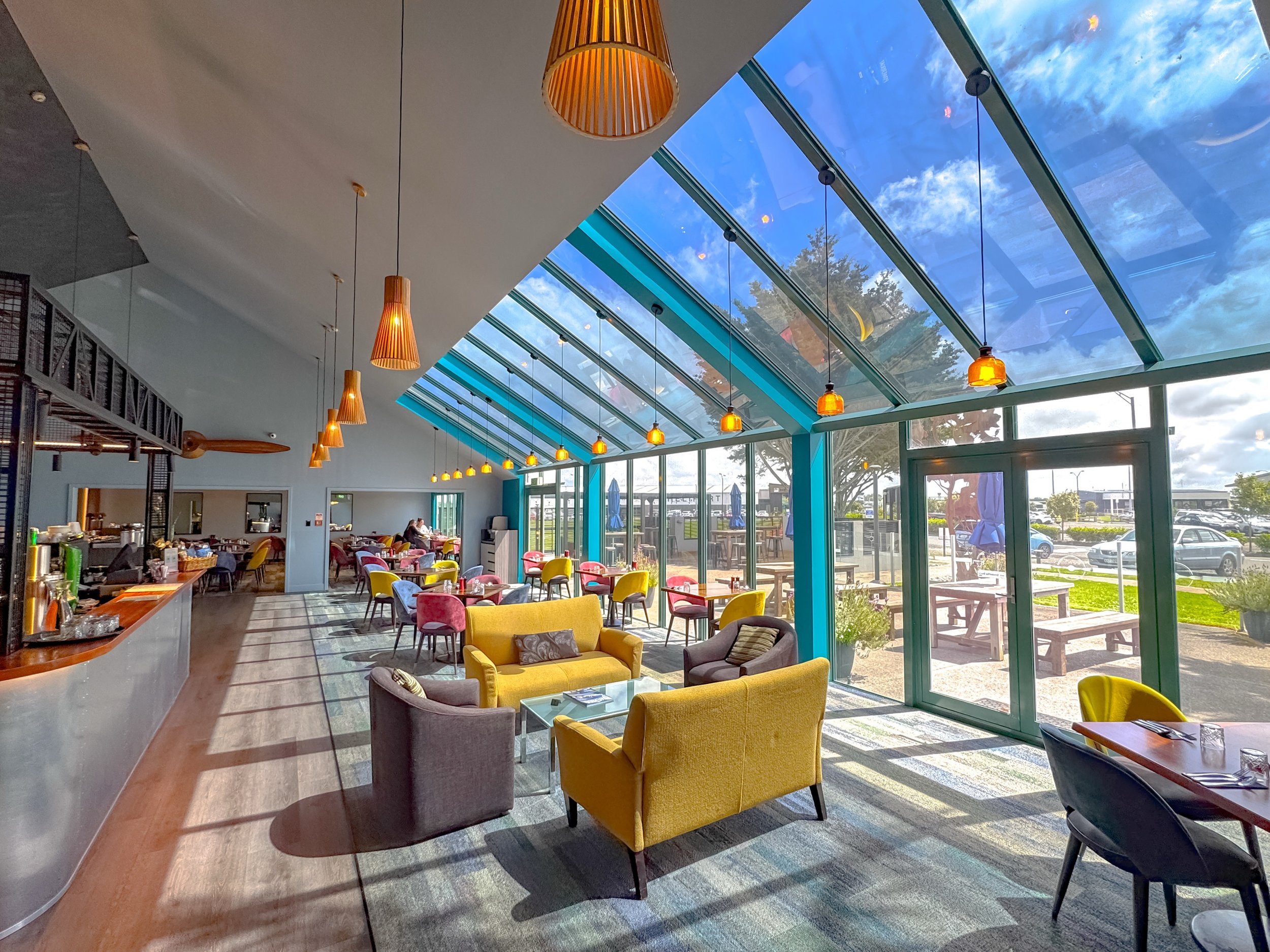
Just a short walk from the airport, JetPark Hamilton Airport Hotel and Conference Centre is a welcoming stop along your journey. Family-owned and Kiwi-operated, it offers a comfortable and relaxed atmosphere. Enjoy art-filled spaces, fresh seasonal dishes made with local ingredients, and the convenience of complimentary parking and Wi-Fi. Whether you're in town for a meeting, a break between flights, or a peaceful overnight stay, the hotel’s modern facilities and friendly atmosphere ensure a comfortable stay. Let JetPark be a simple, memorable part of your travels. JETPARKHAMILTON.CO.NZ

A region for the ages
A family getaway to the Waikato uncovered a treasure trove of activities for all three generations.
A family getaway to the Waikato uncovered a treasure trove of activities for all three generations.
words HAYLEY BARNETT

The Waikato seems to be undergoing something of a travel renaissance. With a growing number of new experiences and attractions popping up in and around Hamilton and Cambridge, it's quickly becoming one of the North Island’s must-visit regions. From the world’s largest organic tea plantation to New Zealand’s most visited attraction, Hobbiton™, and the foodie hub that is MADE, there’s now so much to see and do that fitting it all into a single weekend feels like a challenge.
Fortunately, Hamilton is just a two-hour drive from Tauranga, making it perfect for a quick getaway. Our family managed to pack in a wide range of family-friendly activities, and I even snuck away with Mum for a day of more grown-up indulgence. As it turns out, the Waikato is also an ideal destination for the over 50s, with highlights like the spellbinding Hamilton Gardens, scenic riverside walks, bustling weekend markets, and charming countryside homesteads offering something for every kind of traveller.

Zealong Tea Estate
I wouldn’t call Mum obsessive, but if there’s one thing she’s truly passionate about, it’s tea. So it was only f itting that we made a stop at Zealong, just outside of Hamilton, home to the world’s largest internationally certified organic tea plantation. At Zealong, tea isn’t just a beverage, it’s a way of life. The passion among the staff is palpable, and from the moment we arrived, the experience felt more like a refined wine tasting than a simple visit to a tea farm.
We were lucky to run into Zealong’s CEO, Gigi Crawford, who welcomed us and shared her extensive knowledge of tea. She walked us through the company’s inspiring journey, from a modest patch of tea plants nearly 30 years ago to an award winning, globally respected organic tea label. Among its many accolades, Zealong recently received the UK Tea Academy’s prestigious ‘Lifetime Achievement Leafie’, a testament to the team’s dedication.
Mum, naturally in her element, impressed everyone by correctly identifying different teas and blends, while I fumbled through with minimal knowledge. We were then taken on a tour of the building and the plantation, learning about the Chinese history of tea. Sculptures of important historical figures dotted along the path leading up to the Tea Room showcased a lengthy history dating back almost 5000 years.
At the Tea Room, we participated in a traditional tea ceremony, then were served what can only be described as the best high tea of my life. Zealong’s French pastry chef treated us to an incredible array of delicious pastries, sandwiches and sweets, all designed to accompany various types of tea blends. It was fair to say this was one of Mum’s top holiday highlights.

Woodlands Estate
Just four minutes down the road from Zealong lies Woodlands Estate, a sprawling 98,000-acre property established in 1872. At its heart stands the beautifully restored Homestead, originally built around 1875 as a manager’s residence and crafted largely from native Kauri timber. The surrounding gardens are home to some huge botanical treasures, including New Zealand’s largest Eucalyptus tree. We wandered along peaceful tracks that weave through the estate’s lush gardens and trees, then stepped inside the Homestead, where rooms remain just as they were when the last family moved out in the early 1900s. Next door, a charming café offered the perfect spot to recharge after our meanderings.
Hamilton Gardens
Another epic outing can be found at the Hamilton Gardens. If you haven’t been yet, you’re definitely missing out. Recently upgraded, the Gardens are now even more welcoming. One of the biggest changes is the addition of the Gallagher Visitor Centre, which opened last year. It now serves as the main entrance to the Enclosed Gardens and includes a café, extra seating, and event spaces.
Whether you're young or just young at heart, it’s easy to spend an entire day exploring. Each garden offers a memorable, educational experience. I knew the kids would love the gardens, so we picked them up on our way there from Woodlands Estate. As predicted, they were especially enchanted by the Surrealist Garden, a whimsical dreamscape where everything is larger-than-life, making you feel like you've stepped into a storybook.
They also loved the Ancient Egyptian Garden, which transports you 4,000 years back in time to a sacred temple garden. And no visit would be complete without a stop at the Destination Playground, packed with a treehouse, slides, and a stage perfect for imaginative play.
I would highly recommend taking a tour with a guide who explains everything you need to know about each garden. It beats fumbling through the brochure and displaying your lack of historical knowledge in front of the kids.

MADE
Discovering one of the country’s best culinary hubs is nestled inside a block of shops in Hamilton East was not on my bingo card this year. But lo and behold there we were sampling some amazing food from some amazing artisans and shopping up a storm. The vibrant atmosphere proves the Waikato’s creative food scene has well and truly taken its place as a top destination for foodies. We dined at Reggie’s, a cute Italian restaurant serving up authentic dishes in a cool diner with views of the city. Then stopped in for gelato downstairs at Little ‘Lato. We were back the next day to do our grocery shop at the stalls – a great old-timey market experience in itself.

Te Whare Taonga o Waikato Museum & Gallery
It was recommended the kids visit Waikato Museum’s interactive science centre, Exscite, which has recently been revitalised into two zones: Exscite: Home, exploring everyday science in a fun, hands-on way, and Exscite: Taiao, focused on Aotearoa’s natural environment. Among the standout features is a 30-million-year-old giant penguin fossil discovered locally, as well as digital activities like a touch-screen forest where kids can animate their own bird designs. All made for a great rainy day adventure.

Cambridge’s new boutique gem
Set to open later this year, The Clements Hotel brings new life to one of Cambridge’s grand old buildings. Carefully restored with a nod to its 19th-century roots, the 29-room boutique hotel mixes old-world charm with modern luxury. Think plush rooms, a speakeasy-style bar, garden suites, and standout dining at the Gallery Restaurant. With five-star service, locally crafted gin, and stylish spaces to relax or celebrate, The Clements is set to become the go-to place for discerning travellers. The Clements is offering a grand opening special with 15 percent off room only rates for stays until September 30, 2025, subject to availability.
Lake Te Koo Utu Walk
A day trip to Cambridge was clearly on everyone’s holiday agenda during a stunning autumn weekend. We joined the crowds, ducking in and out of charming boutiques before grabbing some sushi for lunch. Craving a bit of peace and nature, we decided to explore beyond the town centre. Leaving the car parked, we strolled down to Lake Te Koo Utu, tucked right in the heart of Cambridge. I’m a little embarrassed to admit I hadn’t known it was there until a lovely woman at the isite Information Centre pointed us in the right direction. The loop around the lake is a beautiful, mostly shaded walk that takes about half an hour. Halfway around (if you're entering from the town side), there’s a playground and a garden perched on the hill. The kids had a blast weaving through the rose bushes and swinging their way through the park.

Camjet Extreme Tour
Just beneath Victoria Bridge, tucked along the banks of the Waikato River, you'll find Camjet – an adrenaline-packed adventure perfect for thrill-seekers and laid-back explorers alike. This high-speed jet boat ride pushes you out of your comfort zone while offering fascinating insights into the river’s history and ecosystem. Our driver, Aaron, kept us guessing with sharp twists, sudden spins, and unexpected stops to share curious facts, some of which may or may not have been entirely true. Along the way, we spotted a hawk snatch an eel mid-flight, only to lose it as it soared over the dense bush, and even caught glimpses of giant goldfish gliding near the shore. The entire ride lasted about 45 minutes, and by the end, we were soaked, and grinning from ear to ear.
Sanctuary Mountain Maungatautari
On our last day, we took a bit of a detour before heading home. Sanctuary Mountain Maungatautari is a must-visit eco-sanctuary just outside of Te Awamutu. Enclosed by one of the world's longest pest-proof fences, this ancient forest is a haven for native wildlife, including kiwi, takahē, and tuatara. You can book a guided walk, but we decided to head in on our own. We climbed treetop viewing platforms and walked the serene forest trails while learning about conservation efforts to restore the natural ecosystem on signs along the path. Without predators, the wildlife are surprisingly friendly. A North Island robin followed us for part of the walk and happily posed for photos just an arms-length away. The whole experience was a great chance to experience New Zealand’s biodiversity as it once was.

Finding your stride
Turns out there’s more to running than just putting on sneakers and hitting the pavement. Whether you’re 25 or 65, staying injury-free, fueling right and building strength are key to making it stick.
Turns out there’s more to running than just putting on sneakers and hitting the pavement. Whether you’re 25 or 65, staying injury-free, fueling right and building strength are key to making it stick. We talk to the experts and the everyday runners who prove it’s never too late to get out there.
words HAYLEY BARNETT

No matter how you feel about running, one thing is clear: it's everywhere. These days, it seems like everyone you know is diving into a training plan, whether they're chasing their first 5K finish line or grinding through the ks in preparation for a marathon. Running, it appears, is enjoying a major moment.
So what’s behind running’s sudden glow-up? Is it finally time to rescue your sneakers from the back of the closet and join the stampede of Lycra-clad converts?
Or is this just another fleeting wellness craze, destined to vanish like kale chips and the Atkins diet? And let’s be honest, can anyone actually start running after 40 without something falling off?
Running the numbers
The numbers suggest running as a hobby is more than a passing trend. In 2024, the Mitre 10 MEGA Tauranga City to Surf Fun Run/Walk drew over 2,000 participants across its various distances. Helping fuel this momentum are local running communities like the Mount Maunganui Runners & Walkers Club. Founded in 1987, the club has long offered a supportive space for runners of all levels, with regular training sessions and social runs that make it easy, and fun, to get moving.
“I think the idea that a running club is only for elite or ‘good’ runners is being challenged and more people are realising that anyone can get out and run,” says president of the club Clare Watkins. “People are also looking to make connections with others and a running club is an easy way to meet new people and make new friends. There are not many sports where you can participate and still chat to your friends!”
Clare says around 70 percent of the group would be over the age of 40, with the oldest members being in their seventies.

The art of impact
So what do we need to think about when starting a running routine later in life, when we’re not quite as flexible and agile as we used to be? Emma Sievwright, a podiatrist at Body Mechanix in Tauranga, says, when done with care, running is very beneficial at any age – there’s just a few things to think about first.
“Running improves cardiovascular health, bone density, mental wellbeing and metabolic function,” explains Emma. “From a podiatrist’s view, running can strengthen foot and ankle structures if approached gradually and with the right support.”
That “right support” often starts at your feet. Alison from Smiths Sports Shoes agrees: “Wearing the correct footwear is very important if you want to enjoy your runs and stay injury-free.”
She advises seeking a professional assessment. “Getting a barefoot gait analysis, preferably a video while running and at a sports shoe shop that specialises in fitting sports shoes, can help you find the right shoes for your foot type.”
Emma adds that most running injuries stem from overuse, poor biomechanics, or inappropriate footwear. That’s a message echoed by Alison, who says many runners make simple but costly mistakes when buying shoes: “People often assume their normal shoe size is the same in running shoes, or they buy what's trendy rather than what fits. You should be able to splay your toes and have at least a finger-width from your longest toe to the front of the shoe.”
Different surfaces also demand different shoes. “Road shoes are generally for smooth hard surfaces,” Alison explains, “whereas trail shoes with more grip are better for muddy or slippery terrain.”
So yes – the type of shoe matters more than you might think. Aside from choosing the right shoes, Emma says it’s easy to avoid injury by following a few preventative steps.
“Build gradually by increasing your distance and intensity slowly. Aim for no more than a 10 percent increase per week. Warm up and cool down properly to support muscle and tendon health, and work on strength and mobility, especially around the ankles, hips and core.
“Most importantly, listen to your body. Don't ignore early warning signs like persistent soreness or changes in your running pattern.”

Run smart, eat smarter
While throwing yourself into an intense running routine is not the best idea, neither is ignoring your nutrition.
“Poor nutrition can impair tissue repair, energy levels and bone health, increasing the risk of overuse injuries,” says Emma. “Runners who under-fuel are at greater risk of stress fractures, muscle fatigue and slow recovery. Adequate intake of protein, calcium, Vitamin D and overall calories is crucial, especially for female runners or those with restrictive diets.”
Phoebe de Jong, a nutritionist from Fend in Mount Maunganui, stresses that nutrition is fundamental when it comes to running, not only to avoid injury, but also to retain muscle.
“If you’re over 50 and you like to run, you absolutely do not need to stop running,” explains Phoebe. “Running is good for your bones, it's good for your mental health and for those who are part of a run club, that is often their social contact for the week. It's their social circle and how they make their friends. It can be a lifeline for some people. But any runner over the age of 35 should look at doing strength training alongside it, such as functional movements with or without weights, to support their running and protect their muscle mass.”
Because runners expend a lot of energy, when we’re not taking in enough nutrition our bodies can naturally start to use muscle for fuel, especially as we age.
“I see a lot of clients in their 50s who are just burning their muscle for energy,” says Phoebe. “A balanced diet rich in carbohydrates, proteins and healthy fats fuels the body for optimal performance. Hydration is equally important as dehydration can impair endurance and recovery. Consuming easily digestible carbohydrates, like a banana or an energy gel, during the run can help maintain blood sugar levels. Post-run, it's vital to replenish glycogen stores with a combination of carbs and protein.”
Phoebe says it’s important to be wary of fad diets or trends such as ketogenic diets or anything too low carb. “As you start to run a bit more then it’s worth considering using a carbohydrate rich snack before your run (carbohydrate is the main fuel we use to run) and then a combination of a carbohydrate and protein snack. For example, go for greek yoghurt with oat cereal and fruit or eggs on toast after your run so that you’re replacing those carbohydrate stores ready for your next session, and providing protein to repair and build muscles.”
As runs or events become longer, the specifics of nutrition become more important to maintain performance and health. Even sugar – long demonised in wellness circles – has its time and place. But no matter who you are, you might be surprised to know that sugar is not off limits. In fact, it can be very beneficial.
“A lot of runners are surprised to hear sugar being recommended in their diet,” says Phoebe. “But during training or competition, it’s often the most effective source of fuel. This is because sugar is an easily digestible source of carbohydrate to keep stores topped up, so pace can be maintained. Sports drinks, gels, fruit leathers, are all suitable options and they all contain sugar. We are then able to get all our other important nutrients in a balanced and healthy diet around our training.”
When you combine this kind of nutritional support with proper training, good technique and the right footwear, you're setting yourself up for long-term success.
Whether you're jogging around the block or prepping for your first half-marathon, one thing is clear: running is here to stay. And with the right support – on your feet, in your diet, and in your community – it can be something that truly goes the distance.

All for one, run for all
Sam Ruthe hit the headlines after a phenomenal summer of running, becoming the youngest in history to break the four-minute mile. Much of the talented Tauranga teen’s success, however, can be shared between his amazing support crew and a burgeoning squad of local runners pushing each other to great heights.
Sam Ruthe hit the headlines after a phenomenal summer of running, becoming the youngest in history to break the four-minute mile. Much of the talented Tauranga teen’s success, however, can be shared between his amazing support crew and a burgeoning squad of local runners pushing each other to great heights.
words + photos JAMIE TROUGHTON

They set off across the Tauranga Domain turf like a collective freight train; legs like pistons, a metronomic pounding, lungs puffing in time. A 900m track winds around the outskirts of the reserve, if you stick to the grass and hug the treeline. It’s scenic and varied, with enough undulation to spread the load across tired muscles.
Out front is a rangy, fair-haired kid. Eyes locked, expression calm, a distinctive stride with minimal front lift — seasoned observers reckon he’s got his dad’s gait and his mum’s flowing style.
“You don't have to worry about pacing or going easy or going hard — you just have to worry about sticking with the group,” 14-year-old Daniel Addidle explains. “It’s like you can turn your brain off a bit. I really like that.”
But Sam Ruthe isn’t having things all his own way in this training set. He’s not so much a lone wolf as the leader of a pack, and this pack is surging, snapping and fighting around him. Eventually, after six repeats of the 900m set, the pack stretches, lengthens and thins out.
As Ruthe’s rhythm increases, his times decrease. The 16-year-old’s running form isn’t so much relentless as irrepressible. He finishes alone, unflustered and focused. But this story isn’t just about the breakout schoolboy star. Behind him, that pack is far from defeated. Young and old, they’re all getting faster and, in doing so, creating a very special training environment.
“You don't have to worry about pacing or going easy or going hard — you just have to worry about sticking with the group,” 14-year-old Daniel Addidle explains. “It’s like you can turn your brain off a bit. I really like that.”
The diminutive Aquinas College athlete joined coach Craig Kirkwood’s squad of runners late last year. He’d been training at the Domain by himself, then sitting in the stands watching the likes of Ruthe, Olympian Sam Tanner and seasoned schoolboy runners George Wyllie and Ronan Dickson blaze past.
Eventually, he plucked up the courage and asked to join in. “I liked that they were a little bit older than me and if I managed to get on their level, I'd be a step ahead of my own competition. I just want to be the best that I can be.”
In Tauranga, thanks to squads like Kirkwood’s, running is becoming cool. Just ask another 14-year-old, Mackenzie Hetherington, who joined the squad soon after her good mate — Ruthe’s younger sister Daisy — was deemed old enough by her parents to start training.
“I just like being with the crew — it gets a bit boring running by yourself and it’s nice to have friends to run with,” Hetherington said. “It gives us a healthy mindset — you do your reps when you need to and then we can switch off, talking while we warm down.”

It doesn’t matter if you’re an Olympian, a national champion or a young flyer at the start of their running career, the same work ethic pervades the group. Kirkwood’s crew is a fully-fledged, functional team, here for the running, the laughs and the camaraderie, in equal measures.
“It wouldn’t be enjoyable if we all took it too seriously,” Ruthe explains. “Everyone can have a bad day but the fact we all have so much fun means that it doesn’t matter if we’re not feeling great or working through an injury. We are all pretty focused when we are doing reps but there is always a bit of banter going on.”
Philosophy or fluke? Planned or stumbled on? It’s clear Kirkwood’s canny coaching instincts are not only producing world-class athletes but also instilling a genuine love for what they do.
His runners aren’t afraid to fail, which means that before they even line up, it’s guaranteed they’ll succeed. “I’m not the kind of person to tell them off for anything,” Kirkwood, a former Commonwealth Games marathon runner, muses. “If they don’t show up to training one day, I’m not going to berate them for not being here. My job as a coach is to help them be better, rather than telling them off for doing things wrong, and that flows into the rest of the squad and they pick up on that.”
When Sam Ruthe captured the attention of the running world in March, becoming the first 15-year-old on the planet to run a sub-four minute mile, one of his heroes was alongside and one of his good mates had the best seat in the house. The hero was Tanner, another Tauranga product, who has been to two Olympic Games and has emerged as New Zealand’s best middle-distance runner.
Three years ago, as a 13-year-old from Ōtūmoetai Intermediate, Ruthe was standing next to Tanner at Tauranga’s Waipuna Park, having just won the Year Eight boys’ cross country title at the Zespri AIMS Games. All the talk at the time was of how Tanner had won the same title nine years before, and whether Ruthe could one day emulate his achievements. That day has come quicker than anyone – parent, coach or athlete – could ever have anticipated.
Earlier this year, Ruthe and Tanner created history in Dunedin by sharing the New Zealand senior men’s 1500m title in a 3min 44.31sec dead heat. Ruthe is the youngest ever winner of the title. Less than a fortnight later, Tanner was again right beside Ruthe, pacing him at Auckland’s Go Media Stadium as the teenager clocked an incredible 3:58.35 for the mile.
“I didn’t realise at the time but breaking that record means that I can now get into races I never thought I could before and getting into fast races is what helps you keep getting faster,” Ruthe says.
But the life-changing nature of that race didn’t stop with him. In fourth place, tucked in behind Tanner, Ruthe and Manawatū’s Ben Wall, was another now the kids are coming through.”
It just happened that two of those gun runners in the neighbourhood were Wellington-raised middle distance star Ben Ruthe, and his new wife Jess, daughter of running royalty Rosemary (Commonwealth Games gold medallist for Scotland) and Trevor (marathon champion) Wright.
When their kids Sam and Daisy eventually – and not unexpectedly – started showing promise, Ben and Jess wisely resisted letting them begin formal training until they were at least 13, to prevent burnout and promote a more mature approach to their running. It’s meant that Sam, for one, is certainly taking success in his stride, safe in the knowledge he and his mates are in the best space possible for their development.
“All of us really look forward to Craig’s sessions and there’s always a good vibe. We’re really lucky that some of our friends from around the country come and stay here and join in our sessions too – we all know it’s something special he has created.”

Re-Belles with a cause
The newly formed Re-Belles is a collective of wāhine lifeguards over 50 years of age, who are challenging traditions, uniting women and inspiring the next generation of surf life savers.
The newly formed Re-Belles is a collective of wāhine lifeguards over 50 years of age, who are challenging traditions, uniting women and inspiring the next generation of surf life savers.
words KAREN CLARKSON photos JAMIE TROUGHTON

Pictured above: Ali McMaster, Joanne Miller, Naomi Davoren, Karyn Leach, Sandra Boubee, Karen Giles, Michelle Kalma, Catriona Manning and Kate Morley.In the rolling surf of Mount Maunganui, a group of lifeguards are redefining what it means to compete in surf sports, proving that age is no barrier to strength, endurance, and camaraderie.
Founded by Omanu Surf Club member Sandra Boubee, an ironwoman, surf lifesaving competitor, and teacher at Ōtūmoetai College, the Re-Belles were formed out of a desire to inspire women to keep moving, keep connected, and compete well beyond the age when most athletes retire from competitive surf sports.
Historically, surf lifesaving has been steeped in masculine culture. While women have played crucial roles –stepping up for rescues during wartime and patrolling beaches since the 1950s – their competitive opportunities have been limited. Surf lifesaving competitions often require competitors to form a team from their club only, meaning that women in the veterans category (49+), often the sole competitors in their age group from their club, have little chance to participate.
Boubee, who has moved between Pāpāmoa and Omanu clubs just to continue competing, sees the regulations for team events as a major barrier for female lifeguards.
“We are seeing one or two veteran women competing at regionals and nationals in the individual pursuits, but you need a minimum of three to enter water events and four for beach relays,” she says.

Above: Naomi Davoren.Alongside fellow lifeguards Trish Mau and Claire Edmonds, Boubee saw the appetite for female lifeguards to stay active on the water, train with women from other clubs and have the opportunity to enter more competitions.
Determined to change the status quo, last year she approached the organisers of the Mount Monster; one of New Zealand’s most prestigious endurance events that allows composite teams (amalgam of two or more clubs), and successfully lobbied for the creation of a veteran women’s team category. With this, the Re-Belles was officially born; as was their training schedule to prepare for the gruelling endurance event consisting of a 12-kilometre surf ski, a five-kilometre soft sand run, a 1.5-kilometre ocean swim, and a six-kilometre board paddle.

Above: Sandra Boubee.Stronger together
In the lead-up to the competition, the Re-Belles held fortnightly training camps bringing together 16 women aged 51 and over, with the oldest competitor aged 66. Some were seasoned athletes; others had never entered a surf sports event before. What united them was a shared passion for the ocean, lifeguarding and a commitment to pushing their limits together.
“For many of us, it was a big transition,” says Karyn Leach of Pāpāmoa Surf Club. “I’m a confident swimmer in the pool, but out in the ocean navigating the conditions is a whole different challenge. Jumping off the end of Moturiki Island (Leisure Island) for the swim leg was something I never thought I’d do. But the support and encouragement of the group made it possible.”
Trish Mau, a long-time Omanu lifeguard and swim instructor, echoes this sentiment. “A mature post-menopause body is very different from a 35-year-old one. We learned to work smarter, not harder. Our training wasn’t just about endurance – it was about using the wisdom of our years and adapting.”
On race day last December, the four Re-Belle’s teams all placed on the podium in their category, with their first two teams finishing ahead of the under 19’s teams – proving that female lifeguards 49+ have the grit and ability to take on the tough event.
“People from within our clubs and the wider surf lifesaving community were so inspired,” says Boubee. “We had veteran men asking, ‘How were you allowed to enter?’ And some of the under 19s commented that they had to paddle harder on the water because the ‘old ladies’ were catching them,” she laughs.

Building a lasting legacy
What started as a small group training for a single event has grown into something bigger with goals to enter more events in 2025. The Re-Belles are now 18 members strong with lifeguards from Whakatāne to Waihī joining their ranks.
“At the end of the day, we all patrol the same stretch of coastline,” says Boubee. “Building these relationships only makes us stronger and the goal is to keep growing and inspire other regions to follow suit.”
To keep the momentum going, the group hosts regular Sunday training sessions, paddling around Motuotau (Rabbit) Island or running beach drills.
“You have to keep moving at this age,” says Mau. “And every time we’re out there, we’re not just training – we’re learning. Conditions, tides, waves, they’re always changing. That knowledge makes us better lifeguards.”
The Surf Life Saving New Zealand motto is ‘In it for Life’ and the Re-Belles are evidence of that.
“Women over 50 often feel that competition doesn't cater for them,” says Boubee. “But we’re proving otherwise. There’s strength in our numbers, in experience, in resilience. We are reminding lifeguards across New Zealand that they can compete at any age. And when young women see us out there, they see a future for themselves, too.”
The group is calling on more event organisers to remove barriers to entry by allowing composite teams, to allow more veteran competitors to take part.
“If you make space for us, we will show up,” Boubee says. And they’re calling on more women, whether they’re lifeguards, athletes, ocean-swimmers or simply looking for a new challenge, to join them.
“This is about physical health, mental health, community, and connection,” says Boubee. “Whatever your background, whatever your story, there’s a place for you in this movement.”
As they continue to train together and advocate for change, the Re-Belles are proof that the ocean belongs to everyone, at any age.

Teens and screens: Finding the balance
Ellie Gwilliam from Parenting Place explains how parents can guide teens back to real-world connections when screen time dominates social interactions.
Ellie Gwilliam from Parenting Place explains how parents can guide teens back to real-world connections when screen time dominates social interactions.

Technology offers us great ways to stay connected and maintain relationships. Our teens, amongst the first ‘born and bred’ digital natives, are experts at online connection − handy if we ‘older folk’ need tech support. But, how are their social skills playing out in real life?
Are our young people able to connect with others and build relationships in the offline world? Can they be social without the media? Will they ever actually talk to us again, instead of just sending a DM asking what’s for dinner?
If this concerns you, here are three things to consider as you encourage your teenager to put down their device and engage in some face-to-face interactions.
Try to remember what being a teenager is like.
The teenage years are defined by social awkwardness, feeling misunderstood and a desire to assert independence, all while still having to follow rules. So, it isn’t surprising that our teens can find interacting in-person difficult – especially when we insist on them doing so on our terms.
While you might think getting them to show off their ukelele skills at the staff Christmas party is a helpful way to face their social insecurities, it may just reinforce their beliefs that the online world is a much safer and more pleasant place to socialise. Instead, provide low-pressure opportunities for social interaction – perhaps with people familiar to them where they can choose to interact or just observe.
Ask for their suggestions and follow their lead.
The teenage brain thrives on connection with peers, but that doesn’t mean it doesn’t like connecting with parents. While a teenager’s friends are very important to them, research tells us that the parental relationship remains a strong influence. Our teens want us to show them that we find them interesting, likeable and worthy of our time. One of the best ways to do this is by connecting through their interests and pursuits. This may mean trying to understand online gaming or wading through obscure reels, but it could also mean giving them a lift to the gaming store or skate park, shopping for snacks or trying testers at the makeup shop – all opportunities to develop real-life social skills without them realising!
Model good social skills.
Teenagers are experts at tuning out lectures. While our words may not matter much, teenagers always watch and learn from our actions. So, if we want our teens to get off their devices and use their real-life social skills, we must do the same.
Managing our own device use and getting out and about ourselves can give our teenagers the confidence to do so as well. Be a role model of good conversation and asking good questions. Show them how to treat others with respect and empathy. And even if you’re not that assertive in social situations, make the effort to go outside of your comfort zone and flex all the social muscles you have – after all, that’s what we’re asking our teenagers to do!

Plenty under twenty
In part two of Plenty Under Twenty, Stacey Jones hunts out the best cheap eats under $20 that the Tauranga region has to offer.
In part two of Plenty Under Twenty, Stacey Jones hunts out the best cheap eats under $20 that the Tauranga region has to offer.
words STACEY JONES

Rikarika
I put the call out to the local community recently, asking for their favourite meals under $20, and the response was meatier than a pie from Patrick’s Pies — hundreds of recommendations flooded in.
So, after a fair bit of eating (it’s a tough job, but someone’s got to do it), here’s my pick of the best cheap eats in the Bay of Plenty this month. From dumplings to falafel, sushi to curry, these are the top spots serving up serious flavour without breaking the bank.

The Rising Tide
Weekday wins
If you’re happy to dine out earlier in the week, you’re onto a winner-winner dumpling dinner. Let’s start with a ridiculously good deal over at The Rising Tide on a Monday in Mount Maunganui – and now at their new spot in Ōmokoroa.
For just $15, you can treat yourself to five mouthwatering dumplings paired with a pint of craft beer. I’d recommend the mushroom dumplings, but they’ve also been branching out with limited-edition flavours like lemongrass and lamb. Yum.
East of the middle
Next up is one of my all-time favourites: Falafel Metro. They serve up the crispest falafel known to humankind, wrapped in a house-made pita softer than a fluffy white cloud for just $17. Total steal. Even the most die-hard carnivores won’t miss the meat here.
Japanese feasts
If Japanese is your vibe, Chidori Ramen might just take the crown for the best meal under $20 in the BOP. I’ve been going there since the day they opened, and my go-to is the patina ramen with extra chashu and a ramen egg — it never lets me down. Pro tip: their set meals are a great deal too, and the chicken karaage is a personal favourite.
Happy Fryday
Right next door is Chicken Fryday, a fried chicken lover’s dream. Half a Korean-style fried chicken sneaks in at $19.50. Slather it in wasabi mayo for a flavour punch, or, if you’re feeling brave, go for the hot and spicy sauce — it’s hotter than Satan’s breath and will leave you sweating like you’ve just run a marathon.

Rikarika
Sushi secret
Still in the Japanese lane, pop into Rikarika — the new spot where Falafel Metro once stood. Their sushi is arguably the best in the Bay, thanks to husband-and-wife team Brian and Rika, who take a near-religious approach to perfecting their rice. Grab a sushi set for just $15, or if you’re after something lighter, a mini rice bowl for $12. I’d recommend the tofu teriyaki. Plus, the owners are some of the nicest people you’ll ever meet.
Bananarama
Just a hop, skip and jump from Rikarika is the wildly underrated Banana Blossom Café, serving up Malaysian Cheesy Chilli Fried Eggs for $18.50 — a fusion combo of absolute yum. And if your wallet can stretch just a smidge over a crisp $20, their laksa at $29.50 is all manners of “fork yeah”.
Best of the rest as voted by locals
• For the locals in Matua, Head Loco got plenty of shout-outs for its Japanese grubs.
• Kebab lovers, Kebab Istanblue in Mount Maunganui is a go-to.
• Early risers, Pronto Burger does a $9 breakfast combo, including coffee – absolute steal.
• Curry cravings? House of Spice in Fraser Cove serves up generous portions, and all their curries are under $20.
• Vietnamese food enthusiasts, Pho Vina (just off Wharf Street) dishes up authentic, soul-warming goodness for under $20.
The secret’s out — I’ve taken over @bop.eats, and I’m officially dedicating my life (and my stomach) to uncovering the best eats in the Bay. That means I’ll be diving even deeper into the best eats across the region, starting with another round of budget-friendly bites that prove you don’t need to spend big to eat well.

New York state of mind
UNO catches up with local film director James Ashcroft in New York to discuss his new thriller, the demons driving his films, working with Robert De Niro and Stephen King, and how he achieved all of this from the shores of Mount Maunganui.
UNO catches up with local film director James Ashcroft in New York to discuss his new thriller, the demons driving his films, working with Robert De Niro and Stephen King, and how he achieved all of this from the shores of Mount Maunganui.
words KARL PUSCHMANN
photos MIKE ROOKE | hair + make-up TALITHA DAENG SITUJU

This sounds made up but it is entirely true. A local film director who lives in Mount Maunganui has just released his second film, The Rule of Jenny Pen. The terrifying psychological thriller stars internationally renowned actors, Geoffrey Rush and John Lithgow.
When UNO calls, the director is in Manhattan, New York, in pre-production for his next movie, The Whisper Man, which he is making for Netflix. The star of this dark thriller? Acting legend Robert De Niro.
Once wrapped on that, he’ll begin work on his next project, Danny Coughlin’s Bad Dream. This is based on a story by famed horror author Stephen King, who kept the fan favourite story aside specifically for him.
As I said, it sounds made up. Rush, Lithgow, De Niro, King... they’re all bonafide legends and the guy linking them all together lives just down the road? Really?
It sounds not just improbable, but impossible, and when I ask director James Ashcroft if he ever has to pinch himself when thinking about all this. He looks a little perturbed and answers, “No. I don't.”
He pauses and looks around the Manhattan apartment he’s calling home for the next little while and then adds, “My wife would be the first one to say I should try just... you know... celebrating a bit and acknowledging who I’m around and everything.”
At the moment he doesn’t have time to stop and smell the roses. Given the level of achievement we’re talking about here, it should come as no surprise that James funnels extraordinary amounts of his time, energy and focus into his work. But, as I’ll discover through our chat, this is by design. Keeping busy keeps his own demons at bay. We’ll get to them in a minute. But for now, I only want to know one thing.
How did all of this happen? The Rule of Jenny Pen is based on a short story by Aotearoa author Owen Marshall. It’s set in a retirement village that outwardly seems lovely but hides a dark and disturbing secret after dark. Its premise is frightening and its realisation by leads Rush and Lithgow is both believable and brilliantly horrifying.
The movie is James’ follow-up to 2021’s Coming Home in the Dark, the acclaimed thriller that caught Hollywood’s attention after gaining buzz at Sundance, the prestigious tastemaker film festival.
When success came knocking, James was prepared to answer. The script for Jenny Pen had been sitting in his desk drawer for 11 years. He seized the moment and approached his dream leads for the movie. He knew he had a great story and a great script. He knew they’d both be amazing in the roles. He knew he was asking them to temporarily relocate to New Zealand for filming and to take a substantial pay cut.

He asked them anyway.
“My father was somebody who was very much about, ‘You can't know, unless you find out,” he says. “It was really important for me to have them [in the film]. I grew up watching them. I had to disguise my fanboy-ness for a long time. I‘m not sure if I‘ve even revealed it to them.”
To his delight — and surprise — the pair were quick to sign on. Rush agreed in four days. Lithgow made James sweat by taking seven.
“The material really frightened him,” James admits. “It‘s quite confronting. John is one of the nicest human beings on the planet and the part required him to do a number of things that are less than savoury.”
But once Lithgow was in, he was all in. His performance in the film is menacingly unsettling. Made even more so by his delivery of one of the finest, mostly accurate, Kiwi accents ever captured on film.
“I‘m seeing John next week so I‘ll pass that on to him. He’ll be very gratified to hear that,” James grins. “It’s very hard to get right and we were all aware of its difficulty.
Many fine actors have stood at the base of the Everest-type challenge of that accent... But John was very committed. I would notice him talking to different people, like an extra or a caterer, and if he liked their accent or their range and tone, he’d ask them to say certain words that he would listen to and practice and try and master it that way.”
That James was so interested in the process isn’t surprising when you learn he began his career as an actor, appearing in TV shows and films. His acting love, however, was the theater. But, as he tells me, “It‘s incredibly hard to sustain a viable living as an actor in New Zealand. It's near impossible”.
It was at cast drinks after performing in a middling play to a disinterested audience that he had a revelation.
“We’d gone down to the bar to bitch and moan about how the director doesn‘t know what they‘re doing, and how the theatre should do this and that. And I thought, ‘If I don't change something I‘m going to be leaning on this bar with a bunch of moaning actors in 20 years singing the same old song’. It was a case of going, ‘You need to do something about that, James’.”
It was then he decided to move behind the scenes. Directing, he realised, would use all his talents. It’s a job that requires concentration, collaboration, managing relationships and steering a ship towards a singular vision.
“I would find it very frustrating that all those decisions were made by somebody else,” he says. “Part of me was unfulfilled. I wanted to be the boss. I‘m interested in the big picture.
I love working with people who are great at what they do and leading them together in a cohesive way that brings about the whole.”
“I thought I was going to find stepping away from acting very, very hard,” he says. “But since getting behind the camera, I‘ve been more curious and more passionate about the craft of acting. And I enjoy actors a lot more.”
He sheepishly admits to being a “very competitive actor,” back in the day. Someone once likened him to the “John McEnroe of actors,” telling him, “You can give a really good game, but it‘s not always pleasant to be around.”
“I think they meant it as a compliment,” he chuckles. “I‘m not sure...”

James and Geoffrey Rush on the set of The Rule of Jenny Penn.
When UNO Zooms in for our interview James had only been in New York for a few days.
“I‘m missing my family terribly,” he says. “I burst into tears when I arrived in Manhattan last Saturday, because it really hit me; ‘Oh my God, I'm going to be gone for nine months’.”
The plus side that he’s identified is that he’ll be “cocooned in the work,” his removal from his normal everyday life forcing him, “to live it and breathe it in another way.”
The New York air is very different to the sea-salted breeze of the Mount. He and his family moved here from Wellington 10 years ago and have now “put down very deep roots,” in the area.
“It was a very big change of scenery and took a long time to get used to,” he says. “I moved from running the National Theatre Company to wanting to pursue that goal of film. My wife and I, we had two kids at the time, we've got three now, we were going, ‘What else are we wanting from life?’.”
Along with giving film his best shot, James realised he also wanted to be a stay-at-home parent.
“I didn’t want to miss out on that time with my girls,” he smiles, thinking of his three daughters, who are aged seven, 11 and 13. “It’s a great place to raise a family.”
Then, he laughs and says, “But I’m still the most uptight person on the beach.”
James sees the world in grey. It’s where his fascination as a filmmaker lies. In his view, the world isn’t black or white. The material he’s drawn to reflects this.
“I don’t believe in good and bad people. I believe in good and bad actions or intentions. As human beings, we all have those within ourselves. It’s something that we grapple with throughout our lives,” he says.
Working in the creative industries, first an actor, now as a director, that darkness is never far away. Whether auditioning for a part or pitching a film project, James says the industry has a “99 percent rejection” rate.
While things are going swimmingly now, he’s definitely not relaxing or coasting, saying “you’re only as good as your last job. And the next job won’t necessarily come”.
He tries not to dwell on these things. Instead, choosing to pour his energy into making things happen for himself.

“I don’t want to wait. It’s important to me to develop and create things in the way in which myself and my peers want to. How do you get Geoffrey Rush and John Lithgow in your movie? You give them a script you think they will respond to. You go, ‘I think you might be interested in this strange little story I want to tell that I want to tell in this way’.”
He pauses a beat, then says, “They’re definitely not going to be in it, if you don't ask them.”
The work keeps him too busy for his hang-ups. The failed pitches. The rejections. The worry. The anxiety. These haven’t been conquered. But they have been successfully minimised. He refers to them as “distractions,” attempting to thwart his goals.
“I don’t think I’ve overcome them at all. They’re always there. I’m not worried about Robert De Niro being the lead in the new film that I’m directing. I don’t have time to worry or be anxious about working with Bob. What I have to be clear about is; What are the objectives and actions that I’m going to give to him? What are the questions he might have? That makes it all about the work. It’s when I'm not working that those doubts start to creep in and become distractions.”
“Late in life I found weightlifting. It helps keep it steady and keep that boiling of anxiety that can come up at times under control. Having that level of fitness and health in my daily routine helps and has really been good at keeping that volume down and manageable. Because it’s always going to be there. Everyone has it. It’s not something to fix or dispel. You've got this much space inside. If I’m going to fill it up with work, then there’s very little space for all that unhealthy noise to exist. That’s why I have seven or eight projects on the boil at different stages at the moment. I find that incredibly energising to move around and helpful to quell those professional anxieties and things like that.”
James’ love of genre was instilled at an early age. His dad would occasionally let him stay up late to watch the Sunday Night Horrors on TV. But he became truly fascinated with the possibilities of darker storytelling at age 10 when his cousin, who was babysitting, put on David Lynch’s surreally unsettling masterpiece Blue Velvet.
“Blue Velvet is not a film that a 10 year old should watch,” James admits. “But it definitely made a very big impact on me. I wouldn’t say it was traumatising or anything like that. A lot of it went over my head. But the images and the feeling of it was something that I hadn’t been exposed to. It had a huge impact on me.”
From there he began reading horror literature, like Dracula, before finding, and devouring, the work of horror maestro Stephen King. His journey to the dark side was complete. After the success of Coming Home in the Dark, James wasn’t going to sit around and wait for people to come to him. He’d been picked up at a big Hollywood agency and so he decided to work his contacts. “Whatʼs the worst thing that Stephen King can do if you send him a letter? Not reply.”
The next day he went book shopping. Naturally, he had made his way to the horror section when his phone buzzed with a notification. He looked at the screen and saw it was from ‘S. King’. “I didn't connect the dots. I thought it must be, you know, Samuel King or Sarah King,” he says, thinking back. He opened the message and started reading.
“I was like, ‘Holy shit! This is from Stephen King!” he laughs. “He’d written this incredibly wonderful, complimentary email. It was like, ‘Wow’. It was a surreal moment. I was literally standing right in front of his books.”
Then, with a mixture somewhere between joy and astonishment, James Ashcroft says, “I was slightly floaty for the whole night after that,” and then we say our goodbyes and he resumes working on his Robert De Niro film in his apartment in Manhattan.

Cool, calm and cosy
In the first of Guthrie Bowron Tauranga’s Design Elements series, Margaret Gill and Anoushka Haskell demonstrate how to create a relaxed indoor space with paint and wallpaper, to conjure up all your favourite feels.
In the first of Guthrie Bowron Tauranga’s Design Elements series, Margaret Gill and Anoushka Haskell demonstrate how to create a relaxed indoor space with paint and wallpaper, to conjure up all your favourite feels.

There are plenty of ways to use wallpaper and paint to create spaces that evoke certain emotions.
Firstly, consider how you want your space to make you feel. What kind of atmosphere do you wish to create, whether it be relaxation, inspiration, festivity or playfulness? This is a chance to do design differently from your everyday safer palette.
This space can be created wherever you like – in a hallway entrance, a guest bedroom, sunroom or reading nook. Anywhere you want to let the sunshine in.
For instance, in the image below, the colour and pattern of the feature wallpaper, Cuba ‘Pina’ from Casadeco, creates the exotic feel of Cuba and establishes the sense that you’re experiencing island life in the summertime, in a conservatory setting.

The anchor colour is crucial to the look and feel of the décor – in this case a mellow pineapple yellow holds centre court.
Be bold with emphasising the key colour. In this case it is repeated within the retro sofa fabric, golden cane pendant, coloured glass panes and mid-century side table.
With paint and fabric accent colours it’s best to go for muddier hues such as Dulux Ruakaka and Crow Valley, which don’t compete with the hero wallpaper.
Two thirds of the room is dominated by the grey denim blue and yellow, whilst the other third is in crisp white. The neutral summery cane and palm frond accents, found in plantation summer rooms and verandas, serve to balance out the wallpaper choice.
This two-thirds rule, also known as the golden ratio, is an interior design technique that involves dividing a space into two sections, with one section taking up two-thirds of the space. This technique can help create balance, scale, and proportion in a room. For instance we see that the sofa is approximately two thirds the size of the wallpapered feature wall, which maintains visual harmony.
In the next image – top – the petite beachside sleeping space makes you almost feel the salt spray in your hair and the hazy blue skies above you. With the emphasis on the horizon, it evokes all those possibilities that an endless summer can bring. This wallpaper collection, from BorasTapeter Marstrand 11 Coastal Living ‘Horizon’, celebrates the maritime spirit of the Swedish coastline.
The natural Nordic linens, blonded wooden ladder and simplistic choice of pared-back accessories complement and don’t overwhelm this dreamy tranquil bedroom.
Consider using white wood washes that can add interest on wooden ceilings as they’re not a heavy paint colour as such, rather much softer and organic. The height of the bedroom attic roofline allows the wallpaper panels to show off their full potential and almost take flight, in a very natural way.

Our last example is from the Harlequin Idyllic Retreat wallpaper collection in Atlantic coastal tones – above. This mood board shows various combinations of that cooling colour palette of blue and green. Within each combination, there is an anchor wallpaper featuring flora or fauna, complemented with textured woven and embroidered fabrics.
Putting together a mood board is an effective way to work with colour and balance when considering the addition of paint colours and flooring or cabinet veneers. And it can provide the basis for expert wallpaper, paint and window treatment advice.

Home grown
If you’ve always wanted a thriving veggie garden, Bay local Heidi Hughes’ ingenious Veg Babies is a great way to start.
If you’ve always wanted a thriving veggie garden, Bay local Heidi Hughes’ ingenious Veg Babies is a great way to start.

Big ideas often start with a small question. For Heidi Hughes, it was simply, “How can we get more people into gardening?”. This small question was the seed that sprouted Veg Babies.
Veg Babies is like a food box with a twist. Instead of a week’s worth of meals, once a month a box of seedlings is delivered. You plant them and soon you’ll have an overflowing bounty of fresh, homegrown veggies and herbs.
“The idea and design is that you’ve got a constant harvest to go on your dinner table,” Tauranga resident Heidi explains.
The boxes offer a curated gardening experience that will quickly grow leafy greens that turn over each month, like rocket, lettuce and bok choy, as well as seasonal vegetables like cucumbers, tomatoes, chillies and capsicums that take a few months.
“There’s a real variety and it’s all designed so there’s always something you’re harvesting, as well as something that’s looking into the long term of harvesting down the track,” Heidi explains. “People also get a different herb each month. Within 12 months, you’ll have a beautiful herb garden.”
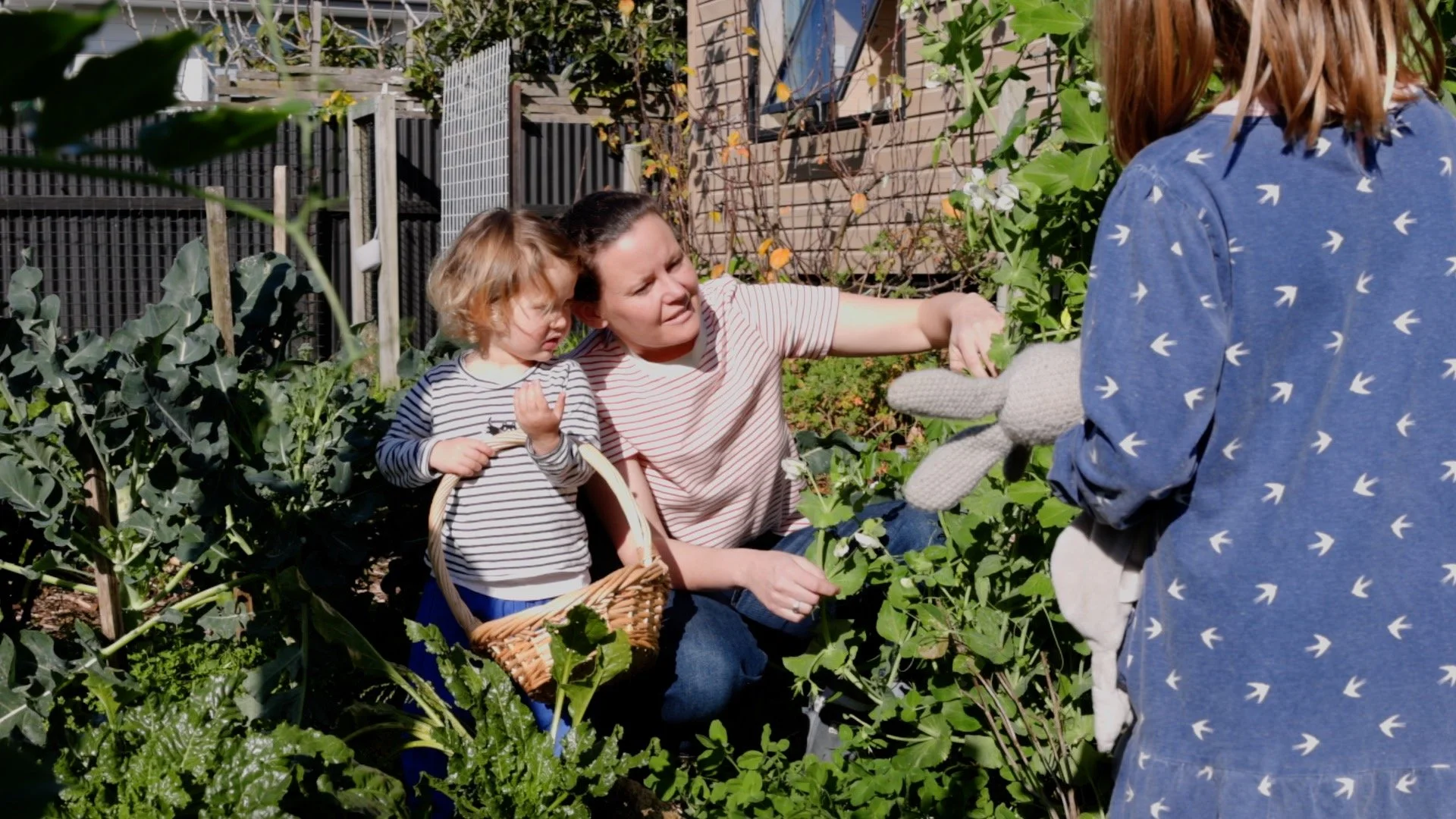
One of the benefits of the service, aside from all the fresh veggies, is that the curated experience takes away the stress of knowing when to plant what. Heidi says it’s perfect for beginner to mid-level gardeners who don’t have much experience or space, as well as time-poor gardeners.
“Many people don't know where to start with gardening,” she says, likening it to how food boxes simplified cooking and made it more accessible. “This gives you a whole process that is achievable and keeps things going.”
To make Veg Babies as accessible as possible, the whole garden has been designed to fit in a planter box that’s only 2.5 m2. This will fit in most backyards and/or apartment decks. The seedlings are delivered straight from Veg Babies’ commercial growers in Pukekohe where they spend a couple of weeks outdoors before being shipped out. This makes them hardier than those found in places like garden centres. There’s also no plastic used in the delivery or shipping – something Heidi says was crucially important to them.

The subscription is $26 a month for the box of seedlings. How does that compare to buying from the supermarket? In terms of cold hard cash, what’s the monetary value?
“It’s about $40 a month if you’re getting a constant harvest off your garden,” Heidi says. “I’m currently harvesting lettuces, which I’d be paying $5 each for. I haven’t run out of cucumbers or courgettes all summer. You can get a bunch of parsley out of your garden whenever you want, or basil or oregano to put on your pizza. Same with tomatoes, you just pick one off. Once you get on a roll with things, it’s on tap. People often waste a lot of food, especially herbs. You buy a bag for $5, use half of it and throw the rest out. When you take into consideration that waste, we’ve worked out the value is about $40 a month.”
But it’s not just about the vegetables. Heidi also wants to share her love of gardening. To help people’s gardening journey she sends out weekly instructional emails, along with a YouTube video she records in her garden. She explains where your garden is at, what you should be harvesting and even suggests cooking ideas.
“I’m growing in the exact same amount of space with the same veggies, and the same box,” she says. “Every week you’ll know what to do to make your garden thrive. It’s real colour-by-numbers gardening.” Veg Babies is part of the PiPS Charitable Trust, which sets up school gardens around the Bay. All Veg Babies profits go directly back into the trust to help them grow.

“We currently have eight gardens in eight schools,” she smiles. “We have orchards and veggie beds, and teach kids how to grow food. We’d love to include more but we’re at capacity until we can raise more funds.“
It’s not often something comes along that can not only improve your life but also the lives of others. Veg Babies does both. It teaches new skills and provides constant fresh healthy vegetables as well as raising money for charity. That’s got to be better than a sausage sizzle outside a big box hardware store.“Yeah, totally,” Heidi laughs. “It’s win-win.”

Simple savoury solutions
In a world of complicated recipes and confusing ingredients, Linda Duncan has come to the rescue. In The World’s Easiest Recipes she combines just five ingredients per meal using low-cost, easy-to-source items.
In a world of complicated recipes and confusing ingredients, Linda Duncan has come to the rescue. In The World’s Easiest Recipes she combines just five ingredients per meal using low-cost, easy-to-source items.

Lemon, basil and feta chicken
The combination of these simple Mediterranean flavours will have your taste buds singing. It’s such an easy way to jazz up chicken breasts and have you looking like a culinary genius at the same time. You can use chicken breasts or thighs in this recipe.
SERVES 4 | PREP TIME 10 MINUTES
COOKING TIME 20–25 MINUTES
INGREDIENTS
2 tbsp olive oil
2 tbsp lemon juice
4 skinless, boneless chicken breasts or thighs
2 tbsp lemon rind, finely shredded
1/3 cup basil leaves, roughly chopped
120g feta, crumbled
salad, to serve
METHOD
Preheat the oven to 200°C. Combine the oil and lemon juice in an ovenproof dish that will fit the chicken snugly but with a little gap between each piece. Add the chicken and turn to coat in the marinade.
2. Sprinkle the top of the chicken with the lemon rind, basil and feta. Season with freshly ground black pepper.
3. Bake for 20–25 minutes or until topping is golden brown and chicken is cooked through. Cover with foil during cooking if the topping starts to burn.
4. Rest for 5 minutes before serving with salad.

Quick potato bake
A potato bake is a must in your recipe repertoire. This one is quicker to make than a normal potato bake, with the help of your microwave. It’s also a lot easier than a potato gratin as you don’t need to slice the potatoes thinly and then layer them. Just chop into cubes and throw into your baking dish. Couldn’t be easier!
SERVES 4 | PREP TIME 15 MINUTES
COOKING TIME 45 MINUTES
INGREDIENTS
800g roasting potatoes, peeled
and chopped into 1cm cubes
30g butter, melted
30g dried French onion soup mix
1 cup cream or milk, or a mixture of both
1 cup grated tasty cheese
METHOD
Preheat the oven to 180°C. Grease a 20cm square microwave-safe baking dish.
2. Place the potatoes into the prepared dish. Pour over the butter and season with salt and pepper to taste.
3. Mix to combine, then microwave uncovered on high for 15 minutes.
4. In the meantime, add the soup mix to the milk or cream and mix until well combined. Pour over the potatoes then sprinkle the cheese over the top.
5. Bake for 30 minutes or until the cheese is golden and the mixture is bubbling. Stand for 5 minutes before serving.

Couscous, pea and feta salad
I just love the freshness of this couscous salad. It's delicious served alongside roast lamb. It can be prepared well in advance so is perfect for entertaining. I really like the texture of Israeli couscous in this recipe; however, any couscous will work.
SERVES 4 | PREP TIME 10 MINUTES
COOKING TIME 10 MINUTES
INGREDIENTS
1 cup Israeli (pearl) couscous
2 cups frozen peas
1⁄2 cup mint leaves, roughly chopped
2 tsp lemon rind, finely grated
2 tbsp lemon juice
80g feta, crumbled
1 tbsp olive oil
METHOD
Cook the couscous in a large saucepan of boiling water according to the packet instructions, until tender. Drain and rinse under cold water to cool.
2. Cover peas in boiling water for 5 minutes to thaw, then drain and rinse under cold water to cool.
3. Place couscous and peas into a large bowl. Add the remaining ingredients, season with salt and pepper to taste and toss well.
4. Refrigerate until ready to serve.

Three-ingredient peach cobbler
Old-fashioned peach cobbler is made even easier with the use of packet cake mix. The great thing about this recipe is you can get quite creative with it. I have made this recipe multiple times using different tinned fruit like plums, apricots, pears or cherries. A handful of berries thrown in is also delicious. I have also used chocolate cake mix instead of vanilla. Dust with a little icing sugar before serving.
SERVES 6-8
PREP TIME 15 MINUTES
COOKING TIME 40–50 MINUTES
INGREDIENTS
820g tinned peach slices, in juice
540g pkt vanilla cake mix
120g butter, melted
vanilla ice cream, to serve
METHOD
Preheat the oven to 180°C. Grease a 23cm square baking dish.
2. Tip the peaches (including the juice) into the dish and spread out evenly. Place the cake mix and butter into a bowl and mix until combined. Scatter the mixture over the peaches. It doesn’t matter if the mixture doesn’t completely cover the peaches.
3. Bake for 40–50 minutes until golden and bubbling.
4. Stand for 5 minutes, then serve with vanilla ice cream.

Extracted from The World’s Easiest Recipes by Linda Duncan. RRP$45.
Published by HarperCollins NZ.

Making waves
Meet the boat builder turned artist who crafts sculptures so fluid and luminous, they feel alive.
Meet the boat builder turned artist who crafts sculptures so fluid and luminous, they feel alive.
photos OLIVIA RENOUF + BEN YOUNG

For an artist without formal glasswork training, Ben Young has mastered the medium like few others.
Raised by the sea in Waihi Beach, he developed a fascination with the ocean’s ever-changing nature – something that now defines his work.
The former boat builder’s hands-on craftsmanship and innovative layering techniques turn rigid glass into fluid, almost living forms that capture water’s movement and depth. His work balances precision and artistry, playing with light, waves and reflections – while incorporating concrete and metal to add texture and dimension.
Here, he shares the journey from experimenting with glass to shaping it into something truly breathtaking.

How did you become an artist?
I grew up in Waihi Beach in the Bay of Plenty, surrounded by the ocean, which has been a huge influence on me from a young age. Before becoming a full-time artist, I spent 10 years training and working as a boat builder, playing with glass on the side. That hands-on experience with materials, problem-solving and craftsmanship naturally carried over into my artwork. I’ve always loved making things and sometimes I feel like I should be labelled a maker as opposed to an artist – I love being able to see the craft in something. I never had formal training in glass art. I’m completely self-taught.
How did your work evolve into glass sculpture?
It happened quite organically. My journey into this medium started when I was young and travelling through Europe with my family. My dad saw an amazing laminated glass window display in Greece. That artist was actually the first one to make a glass wave. When I was old enough to play with glass, I began making them, too, trying to create the perfect wave. I started experimenting and developing my own techniques, which eventually evolved into the work I create today. When I first started working with glass, I was drawn to how I could use layers to create depth, much like the ocean itself. Over time, I refined my techniques, combining glass with concrete and metal to bring in that contrast between fluidity and solidity.
My work has always been about trying to capture the essence of water – its movement, depth and vastness – through a material that is typically rigid and structured.
Who and/or what influences and inspires your work?
The ocean and nature is my biggest influence – it always has been. I’ve spent my life in and around the water, surfing, boating and just being immersed in that environment. There’s something about the way water moves, the way it interacts with light, and the way it can feel both calming and powerful at the same time. That duality really inspires me. I also draw inspiration from landscapes, architecture, and even simple, everyday moments where light and form interact in interesting ways. I think my connection to the ocean is why I’m so drawn to working with glass – it allows me to recreate that sense of depth and movement in a tangible form.

What do you hope to achieve with your work?
I want my work to evoke emotion and connection. When people look at my sculptures, I want them to feel something, whether it’s a sense of nostalgia, calm, curiosity or even a deep appreciation for the natural world. My goal is to create pieces that make people pause, reflect and maybe even see the ocean or landscapes in a different way.
How has technology helped/changed your style of work?
I still do a lot of my work by hand, but technology has definitely played a role in refining my process. I use digital tools to sketch and plan my pieces before I start physically working on them. This allows me to visualise depth, perspective, and how the layers will interact before I commit to cutting and assembling the glass. While I embrace technology for the planning stages, I always return to the hands-on process – it’s the physical making that really brings the pieces to life.
What do you love about the Bay?
I’ve been in the Bay of Plenty for most of my life apart from a stint in NSW, Australia. I’ve been lucky enough to do a lot of travel and the feeling I always get when I return to the Bay is that it’s home. I love how central we are to everything, nothing feels too far to get to. We have the ocean, the forest, bush walks, lakes, mountains – the best of it all really close by. It all feeds into my creativity. There’s something special about being so close to the water every day; it’s a way of life for me, and a bonus when there is surf.

Raise your game
Sarah Parry from Testament Interiors offers tips to elevate your short-term holiday rental.
Sarah Parry from Testament Interiors offers tips to elevate your short-term holiday rental.
photo GISELLE BROSNAHAN

In the beautiful Bay of Plenty we’re blessed with some of New Zealand’s finest beaches. Mount Maunganui has been included in the top 25 beaches in the world. So it’s no surprise that over the summer months, thousands of holiday makers converge on Tauranga to enjoy the Kiwi summer break and the golden sandy beaches.
You may have a home that lends itself to Airbnb or short-term rental, or have a current rental home. But with a huge amount of competition, what can you do to attract holiday makers to your place?
Firstly, there are certain rules around how much time you can let out an area of your residence without it impacting your personal house and contents cover. I recommend you check with your insurer to find out their policy wording. You will also need to check with your local council regarding their bylaws on how much of your home you can use before requiring a resource consent.
If starting from scratch, it’s important to decide what type of accommodation you wish to offer, how often you would like to do this and of course what other accommodation is in the vicinity, with the demographic you will be marketing to. This will help you decide what budget you will require to set up and style if it’s viable.
To begin the process, sort a design style. You need to know this before you start and, if you are working around existing fittings and furniture, then what do you have as a base to work off? You can mix luxury and cost-effective items – it all comes down to what looks good together and which items you can get longevity out of. For example, comfortable beds and sofas are important to spend more on, but you can save using cost-effective items in kitchenware like plates, etc. Invest in good soft furnishings, pillows and local artisans for art and décor items.
It’s very important to design a space around what guests will require while staying at your property. Do they have a private entrance?
If you have a pool or spa area, they will need beach towels and pool accessories. Think about offering treats or gift baskets. By personalising the space this will help you gain top reviews and make the stay comfortable and enjoyable for your guests. It also creates repeat customers.
And lastly, make sure you put together a compendium. Most people who stay at Airbnb’s do not know the local area and will want to know what the local amenities are.
Whatever you decide to do with your accommodation, keep in mind that people want to feel like they’re in a home away from home. The more you can offer, the more satisfied your guests will be.

Room to grow
Create room to grow with a playful design that nurtures, inspires and adapts over time.
A playful design that nurtures, inspires and adapts over time.

Expert tips with Kathrine McDonald
There's real joy in designing a space for a child. The key is creating a cosseted, almost nest-like area that feels secure. Pick pieces – whether furniture or accessories – that are as natural, sustainable and safe as possible, but don’t forget to have fun! While age and stage will dictate the overall theme, it’s important to futureproof where you can. Consider wall lights and lamps that can easily be swapped out, and rugs that can be updated. Storage is the ultimate advantage in a child’s space, as is floor sprawl. Remember the scale of furniture and consider how much ground space this occupies.
Above image: Rainbow wall lamp, $217, Follow the Rainbow wall rug, $226, Cherry rug, $159, all by OYOY from littlewhimsy.co.nz


Clockwise from top left: Apple basket, $85 from amierhome.com. Vitra wooden doll No. 4, $229 from cittadesign.com. Lexon bubble lamp pink, $250 from alliuminteriors.co.nz. Pillar round side table by Gibson Karlo, $327 from designbythem.com. Archie bookcase, $380 from mocka.co.nz. Juni Moon Broccoli, $23, from littlegatherer.com. Tender Leaf Happy Folk Hotel, $115 from littlegatherer.com. Remember paper lamp Anna Stripes, $115 from alliuminteriors.co.nz. AUDO CPH Epoch wall shelf, $596 from designstuff.com.au. Mushroom basket by OYOY, $309 from littlegatherer.com.

Leading from the front
A Tauranga law firm’s huge national win proves that even the smallest of changes can make the biggest difference.
A Tauranga law firm’s huge national win proves that even the smallest of changes can make the biggest difference.
words KARL PUSCHMANN

When Cecilia Burgess heard her name announced as the winner of the prestigious, ‘Law Firm Leader of the Year’ award at the NZ Law Awards last November, there was only one thought rushing through her mind; “Don‘t trip up the stairs.”
“I really didn’t expect to win,” the CEO of Tauranga law firm Cooney Lees Morgan says. “I was blown away. It’s very humbling to get an her, UNO is prepared to take a guess at what made her leadership stand out; her belief in the company’s core values.
It’s quickly apparent that her focus is on creating a supportive environment for her team, and the positive flow-on impact that has for Cooney Lees Morgan’s clients. One small example was a recent offer of free parking to the firm’s staff.
“We have a lot of people who are working mums or dads,” she says, noting that the school run is often a daily pain point for working parents.
“Taking away that stress was a really good thing. A tiny thing to do, but huge ramifications for our people.”
It’s a small showcase of her commitment to the firm’s values, particularly towards “whānau”, or family. Cecilia is also proud of the firm’s Rainbow Tick accreditation, which was a difficult, “soul-searching” process to complete, but important in showcasing their commitment to inclusivity.
“We spent a lot of time challenging ourselves and looking at our documents, asking ourselves, ‘Is this showing an unconscious bias?’,“ she reflects.
As well as values-based improvements, Cecilia has also been steering Cooney Lees Morgan through a significant internal transformation, streamlining and improving their systems and processes behind the scenes.
Although these changes may be unnoticed outside the company, together they contribute to an award-winning performance that has greatly benefited both the firm and its long-time clients, many of which have been loyal for decades.
“I don't think you get to achieve that in this day and age unless you are delivering something beyond the letter of the law,” she smiles. “It's about the whole experience.”

Dancing with destiny
From early performances in family “cuzzie shows” at the Mount, to cruise ships and Disney film sets, Georgia Brokenshire’s career is taking off in leaps and bounds.
From early performances in family “cuzzie shows” at the Mount, to cruise ships and Disney film sets, Georgia Brokenshire’s career is taking off in leaps and bounds.
words PIP CROMBIE | photos GARTH BADGER,
BELINDA STRODDER, TRANSIT DANCE

Growing up with her petite feet firmly planted, readied professional dancer Georgia Brokenshire for the plot twists that arise in what at face value appears to be a glamorous and glittering world of dance – costumes, lights and music, travel and notoriety. Behind the scenes is vastly different to what most would perceive. But for this determined 24-year-old, the various speed bumps have not dulled her desire to dance – something she has done since age two and continues to do now on the high seas, as she follows her dream to Los Angeles.
“Honestly, I never expected all of this to happen so quickly. But every step of the journey – from Melbourne to the cruise ships to working with Disney – has been like a stepping stone to something bigger,” Georgia says.

Georgia grew up in Auckland with three sporty brothers. Her grandparents, Brian and Melva Lynch, had bought a Mount Maunganui beachside bach in the 1960s with the intention their own six children (one of whom is Georgiaʼs mother) would gather at the beach location, a place to connect and come together as family.
Through the years, Georgia, her brothers and nine cousins spent every spare weekend and summer holiday they could at this beach home, with Georgia even scooping ice-cream for a summer at iconic local institution, Copenhagen Cones. She recalls the road trips down to the Mount, the six of them singing raucously, daily climbs of Mauao, fitness sessions with her brothers, surfing and skating, the “cuzzie shows” where all 13 of them would dance and act for their audience of parents, aunts and uncles, older siblings on ticket sales, ‘spotlightsʼ courtesy of torches from the overhead balcony.
With a background of early ballet classes, jazz, hip-hop, musical theatre and contemporary dance, Georgia also took up gymnastics with a passion, eventually having to choose between it and dance. She describes the disciplines as being complementary to each other, including the physical strength required.
At around 14 years old, she began to realise that there was nothing else that lit a fire in her soul like performing did.
“The whole process of training, grinding, committing to something bigger than myself and then getting onstage and performing for an audience was a feeling that I just couldnʼt match anywhere else in life. It is still unmatched.”
Deciding to make a career out of dancing, in 2019 Georgia headed to Transit Dance School (Melbourne), where she gained teaching and performance qualifications and a whole lot of grit.

“Moving overseas aged 17 to pursue your passion should really be terrifying, but I never looked back. I was just too excited to finally get to dance every day for the rest of my life!”
Five days a week, seven hours a day in a wide range of disciplines including acrobatics and singing, end of term performances...and Covid. The pandemic disrupted and prohibited a lot of the planned studio training, so they pivoted to dance videos and commercial projects.
“The year 2020 consisted of 27 weeks of hard lockdown for me in an unlucky stint between Melbourne and Auckland. I completed the 14-day hotel quarantine twice in a desperate attempt to continue my dance training. Much of my second year was done on Zoom in a small shared Melbourne apartment – a challenge to say the least! However, I graduated and am grateful for the tools gained and lessons learned.”
The cruise industry had its own challenges in the wake of the pandemic, but for Georgia, it was a chance to perform on stage every night, work with seasoned dancers, and see the world. As a dancer, finding “longer-term” stable income is very difficult, so she saw cruises as a great source of income, a fun way to save money and travel the world, albeit while sharing a tiny cabin with fellow performers and working long hours. She has sailed the North Pacific Ocean, the Caribbean Sea, the East China Sea, the Mediterranean Sea, the North Atlantic Ocean and visited over 40 countries over the past three years dancing on cruise ships and is currently with Oceania Cruise Lines on a luxury ship in the Caribbean.
Between cruises in mid-2024 Georgia was hired as the dance and acting double for British teen singer/songwriter and actor, Freya Skye, in the Disney movie musical Zombies 4, shot on location in New Zealand (release date mid-2025). For the multi-talented dancer, this was a “pinch-me moment” and something that makes her ultimate dreams of performing at the Super Bowl, being a backup dancer for major artists and more film work become a step more real.
“I learned Freya’s entire script and dance choreography for the film, was on set daily, stepping into her place whenever she needed to clock school hours or change her wardrobe.”

The Disney vibe is aspirational for Georgia. “I love the way Disney has always seamlessly combined both dancing and acting with such joy in their films, so more work with them is a goal. I have loved all the stage productions I have performed in my career so far, but I am ready to move on to bigger projects with bigger audiences and more impact”.
As we exit stage left for now, I ask Georgia to share words of wisdom for aspiring career dancers. “The truth is, being a professional dancer always felt more than a pipe dream to me. Long stints spent at the Mount, and in my dance school in Auckland, I felt like I had bigger dreams than anyone I’d ever met. People would sometimes even laugh when I told them that I wanted to be a dancer. My dreams keep getting bigger and more terrifying, but if I had to tell young dancers something now, I would say keep those big dreams alive. Don’t shy away from what makes you different, lean into that, that’s going to be your superpower. Dance is a superpower. I’ve seen dance breakdown language barriers and unite people; it brings such joy! So, keep dreaming, nothing is too big or too out of reach, even from our small corner of the world.”
Georgia closes our chat with home and what it means.
“I think the real question is ‘what doesn’t it mean?’” she responds, candidly. Whenever I go home after all my travels, the Mount is the first place I go. To ground my feet in the sand, for family time and for the reset I always need after travelling the world. In a life of such inconsistency, living out of a suitcase and constantly being on the move, I only really have two constants. My family and Mount Maunganui.”