

YESTERDAY, TODAY, TOMORROW
The best of the past has been woven into the update of this stately abode, where all the mod cons combine with beautiful bones to usher in a very bright future.
The best of the past has been woven into the update of this stately abode, where all the mod cons combine with beautiful bones to usher in a very bright future.
WORDS JO FERRIS
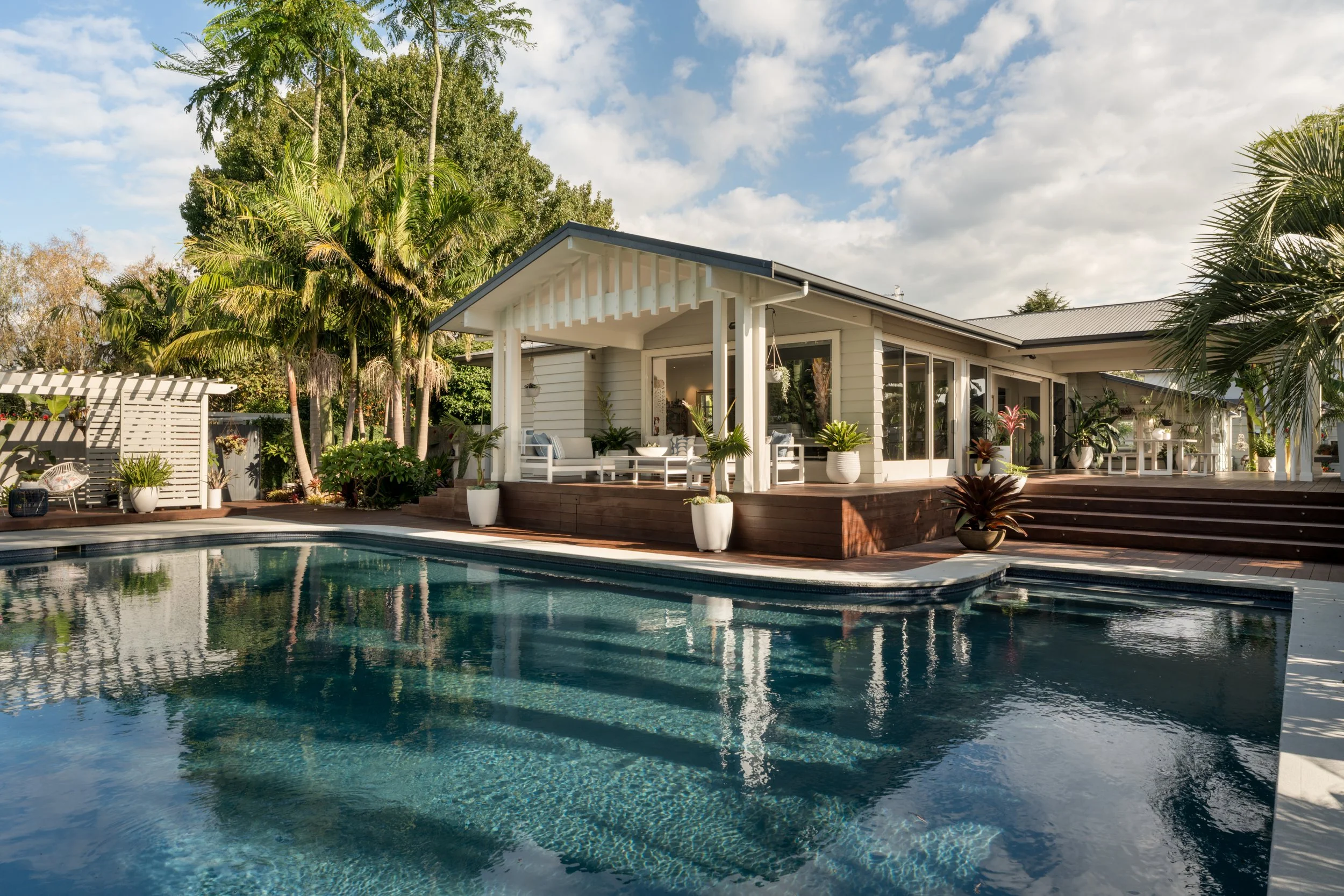
A certain level of grandeur and grace often requires the infusion only time can bestow. This property, in a prominent position on an elevated corner amid Tauranga’s mid-city avenues, is home to all the distinction that yesterday brings to today.
When commissioned to design a major renovation that capitalised on the existing dwelling’s link to the swimming pool and outdoor entertaining area, Tauranga architect Brendon Gordon brought with him his own distinctive style.
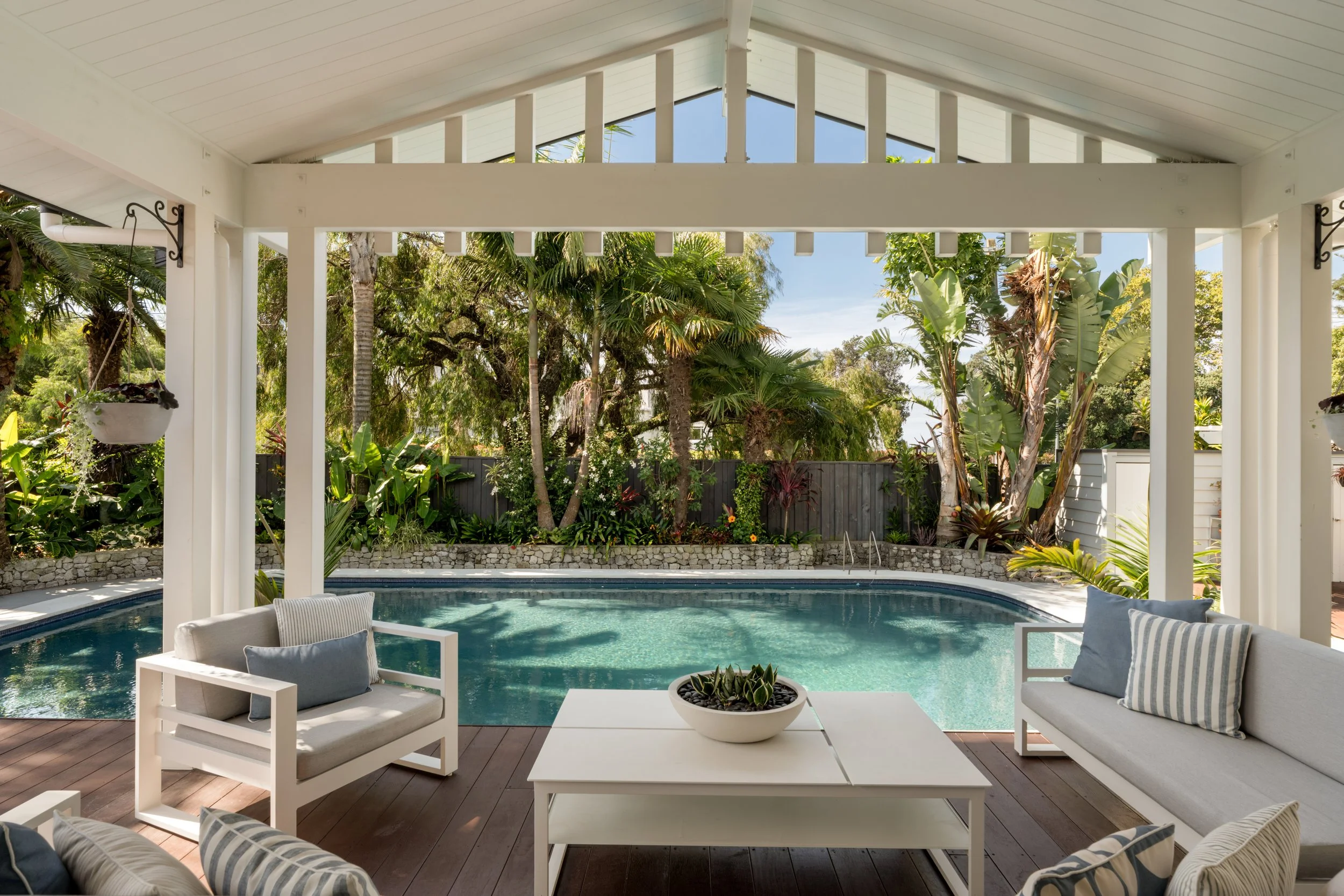
Outside, towering, tropical greenery forms the framework for the resort-like feel he’s leaned into at this address. Its soothing, relaxing energy, which can be enhanced when the mood strikes by an in-built sound system, can’t be emphasised enough when describing the home’s presence.
The pool’s tropical ambience is integral to this. A warm-water bore allows year-round use, and upgrades to the pool and pumphouse equipment ensure it will need only standard maintenance for years to come.
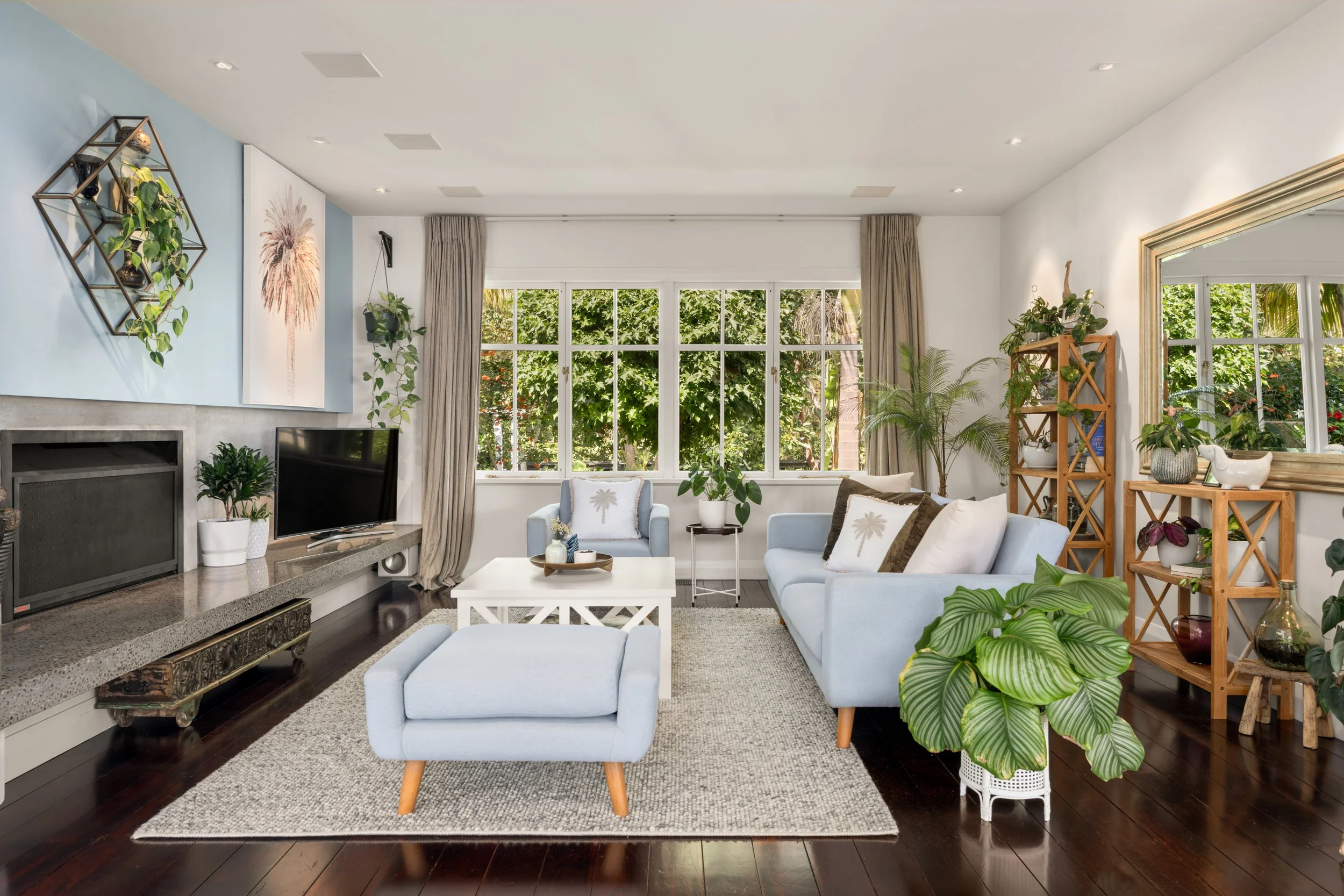
The resort vibes provided by the pool underscore the updated living area. Additional to this main living space, a separate snug provides a private retreat for family members of all ages to enjoy their own entertainment, and is linked to the outdoor, fire-warmed loggia.
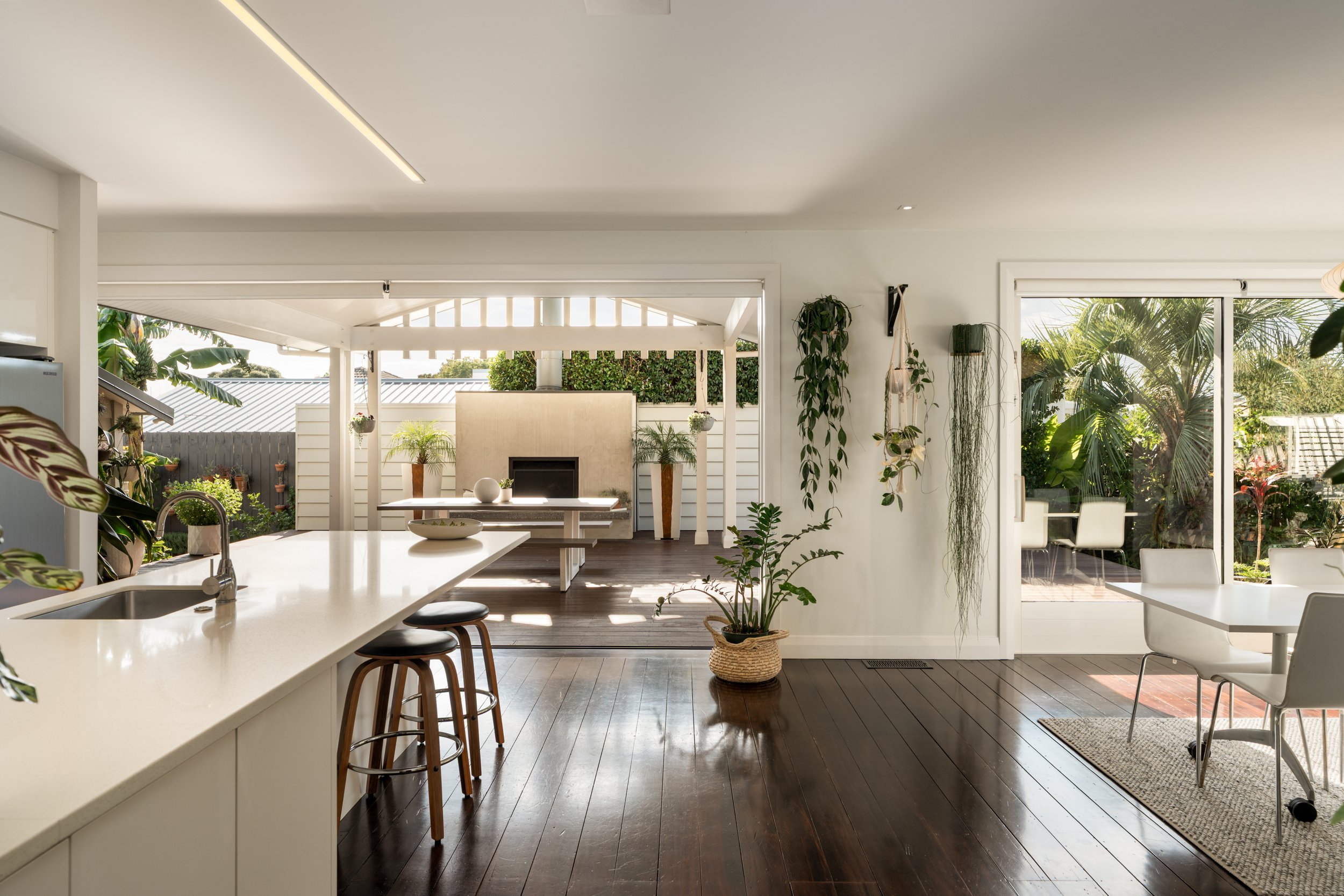
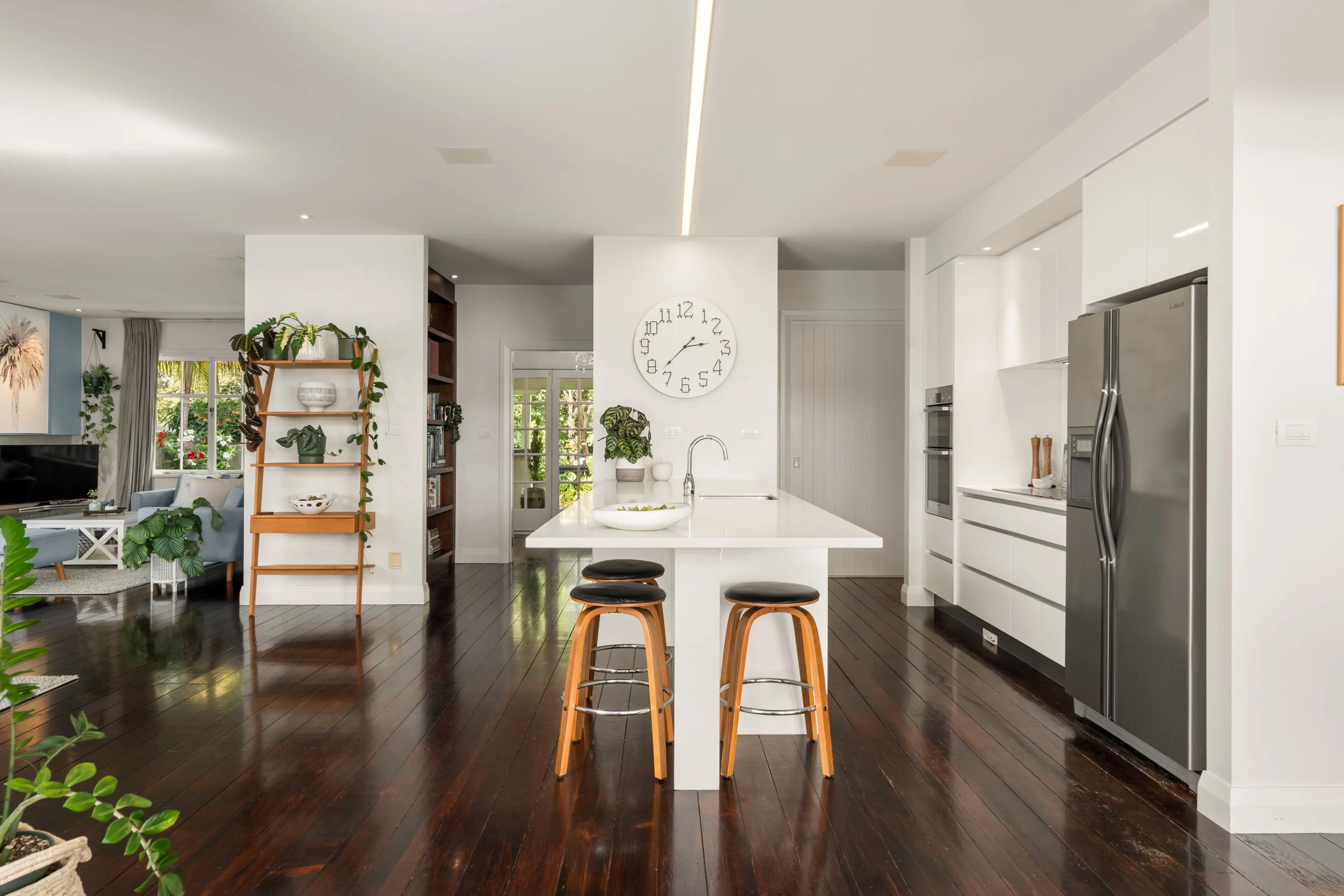
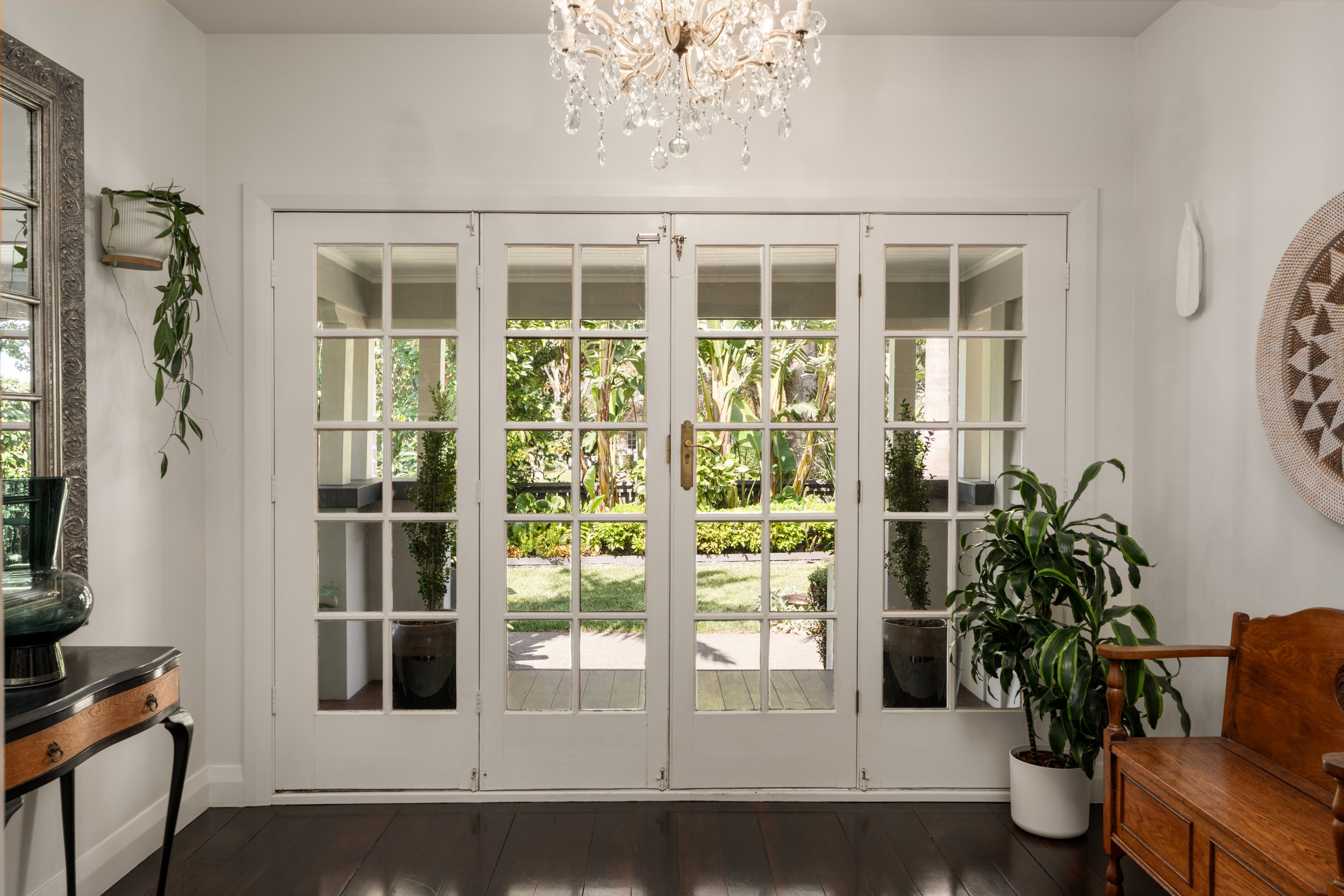
The kitchen and scullery’s timeless ambience is elevated by the richness of dark-stained rimu flooring, which contrasts impeccably with the rest of the décor’s neutral palette. The contemporary tone of these spaces means this family hub will be able to adapt to any future change of taste in furnishings, artwork and plants.
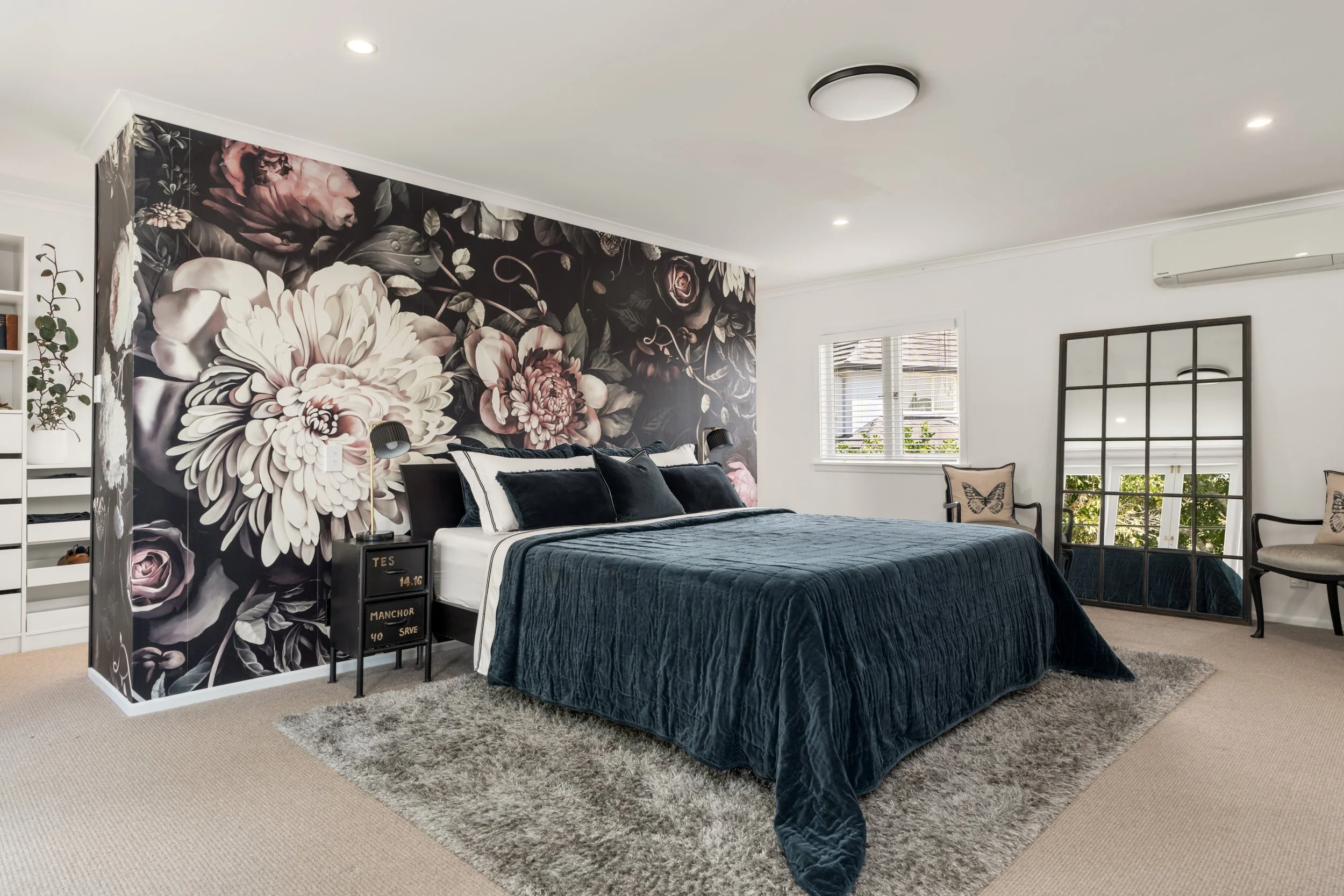
Upstairs, in a very spacious zone, with a dressing area, study and balcony attached, the main bedroom champions privacy. A second bedroom on this level could double as a private lounge or lend itself to the development of an ensuite.
Two bedrooms sit separately in another wing, offering the flexibility to accommodate extended family, friends, or paying guests, perhaps? The inclusion of a lounge, kitchenette, bathroom and private entry deliver options aplenty.
As with many of Tauranga’s most distinguished homes, each chapter of this house’s life has brought with it different ideas and changing ways, but here, time has been extraordinarily kind. The house has evolved into a residence of substance and elegance, its significant space throughout and substantial outdoor areas a rare find on a quarter-acre section.
Handy to all of Tauranga’s inner-city drawcards, there’s one particular attraction Oliver Road’s Jason Eves and Ben Hawan say they must mention. Just down the road, Fourteenth Avenue Fish ’n’ Chips is known by locals to offer some of the best takeaways in town. “Everyone on Grace Road knows Eddie.”
Like the prospect of this exceptional home, it’s a tempting thought.
73 Grace Road, Avenues

MIDWINTER MAGIC
It’s tempting to hunker down and hibernate, but let’s not allow the chilly season to pass us by without some memorable moments to show for it. A trip to Whakatāne has all the ingredients to make it a bright spot on your calendar.
It’s tempting to hunker down and hibernate, but let’s not allow the chilly season to pass us by without some memorable moments to show for it. A trip to Whakatāne has all the ingredients to make it a bright spot on your calendar.

The memories we make during our school holidays can last an entire lifetime – a worthy investment, if you think about it. Some are of simple pleasures and rituals experienced at home, while in other instances, travelling even a short distance can provide something new and novel that captures the imagination long after the trip is over.
As the winter term break approaches, so too is Trust Horizon Light Up Whakatāne, an eye-opening experience right here in our regional neighbourhood. Whether you have holidaying kids in tow or not, it presents a vibrant – and free – antidote to winter’s darker days. From 6pm to 9pm from July 11 to 18, Whakatāne’s town centre and riverfront will be aglow and abuzz with art installations (many interactive), sculptures and digital displays, music and dance.
While you’re planning your trip in this neck of the woods, check out some of the best places to eat, play and stay.

EAT
THE COMM - When you’ve been a local institution since 1894, you must be doing something right. Seven days a week, in a thoughtfully preserved heritage building, The Comm offers a stacked menu complete with kids’ meals, and drinks including beer and cider from Good George Brewing on tap.
THE WAGON - Like its twin eatery in Pāpāmoa, the claim to fame of The Wagon in Whakatāne is gourmet burgers. Those who wish to eat vegan or gluten-free will be pleased to hear the menu does not leave you out in the cold.
OLIVE BRANCH - For a more elevated experience, put on your going-out top to dine at Olive Branch. It’s run by two brothers, whose Mediterranean DNA is woven throughout, a delicious international influence that’s balanced by their focus on local ingredients and suppliers.

PLAY
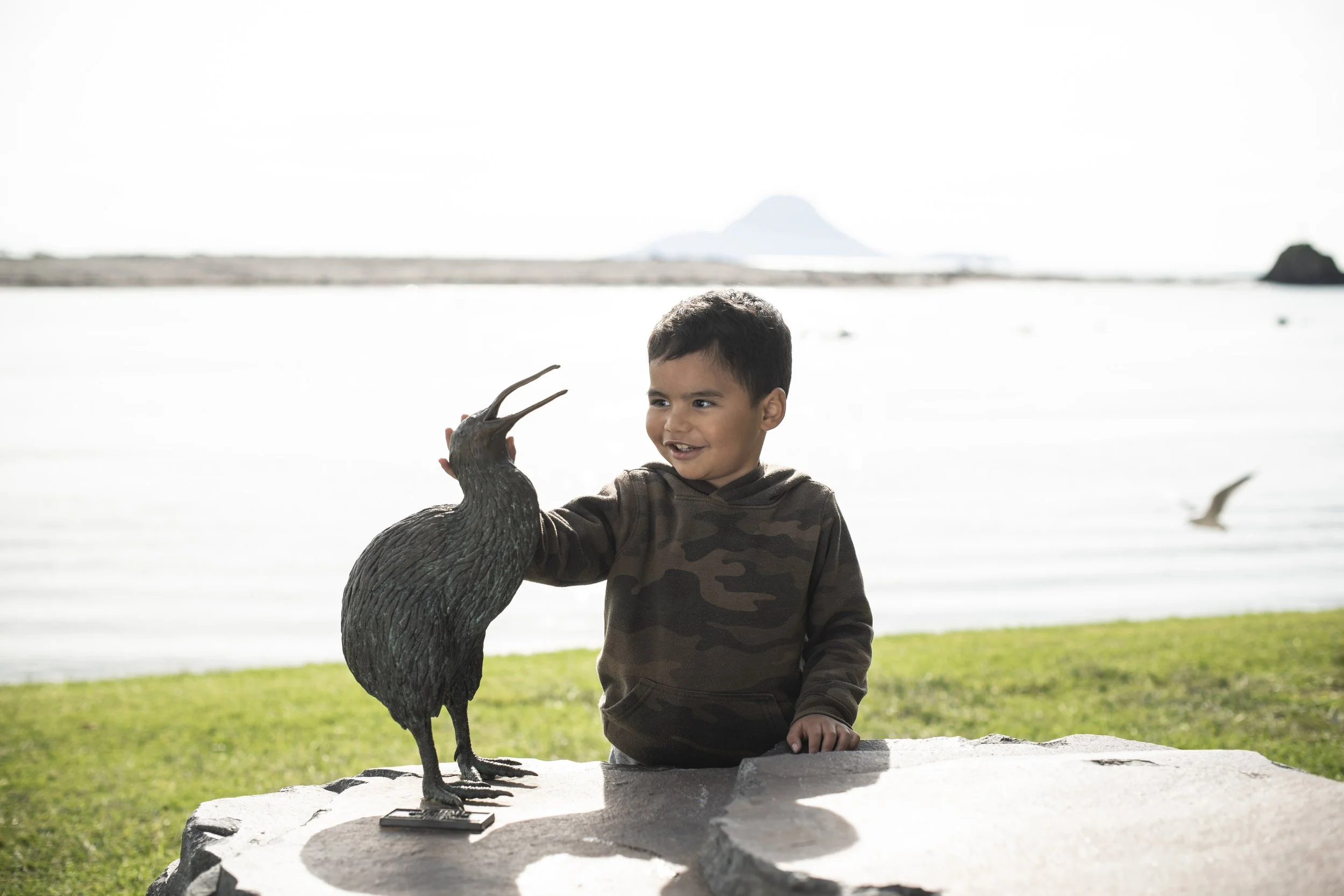
KIWI WANDERING TRAIL - Due to its close proximity to the bush, kiwi can be heard from the CBD and have been spotted in backyards, earning Whakatāne a name as the Kiwi Capital of the World. Providing cute, free, low-key fun, 10 life-size kiwi statues are dotted on a one-hour (1.6km) trail around town for visitors to spot. Download the guide before you go or pick one up at the i-site or Te Kōputu a Te Whanga a Toi Library and Exhibition Centre.
BIKE TRAILS - There are bike trails and more bike trails around these parts. Challenge yourself to ticking off some or all of the Motu Trails Cycleway, one of the 22 great rides that make up Ngā Haerenga, the New Zealand Cycle Trail. You might make biking your reason to drive over the hill to roll along the nice, flat, 2.9km Ōhope Harbourside Trail on two wheels, or go further afield to kick into gear at the Onepū Mountain Bike Park, which caters to all ages and abilities.
EASY WALKS - What will you see if you lace up your sneaks for the hour-long Fairbrother Loop Walk? As well as sensational scenery, the downloadable map lists the birds and insects to keep an eye out for. For those in need of a dappled nervous-system reset, the Mokorua Bush Scenic Reserve walk (1-1.5 hours) is a similarly tranquil experience that sees you strolling beneath the canopy of native trees amid tinkling birdsong.
STAY
BEACHPOINT APARTMENTS - Occupying prime waterfront real estate, these upmarket apartments are fully self-contained (including kitchen and laundry) but serviced with linen and towels. Undercover parking, a heated outdoor swimming pool, a fitness room and a BBQ area might see all the boxes ticked for you.
ŌHOPE BEACH RESORT - Go even more high-end here, where you can opt for accommodation that has views of the ocean on one side or the harbour on the other. Choose from two- or four-bedroom apartments, or if you’re feeling a bit swanky, book into a penthouse. All guests gain access to swimming, spa and lap pools, plus a tennis court, gym, sauna, games room and conservatory.
ONE88 ON COMMERCE - A drawcard of this motel for anyone with waterbabies is that it’s within walking distance of the Aquatic & Fitness Centre and its kid’s beach pool, spas and hydroslide. It’s also 10 minutes’ walk from The Strand, home to those eateries we mentioned. If it sounds like a bit of you, you’ll be even happier to hear you’ll end your stay well-rested, courtesy of the one- or two-bedroom units’ super-king beds, flexible layouts and well-appointed bathrooms, some with big spa baths. WHAKATĀNE.COM

SCULPTED SERENITY
Welcome to a chic new Harwood Homes showhome that’s all but unrivalled for the adaptability and opportunity it’s been meticulously designed to provide.
Welcome to a chic new Harwood Homes showhome that’s all but unrivalled for the adaptability and opportunity it’s been meticulously designed to provide.
PHOTOS AMANDA AITKEN
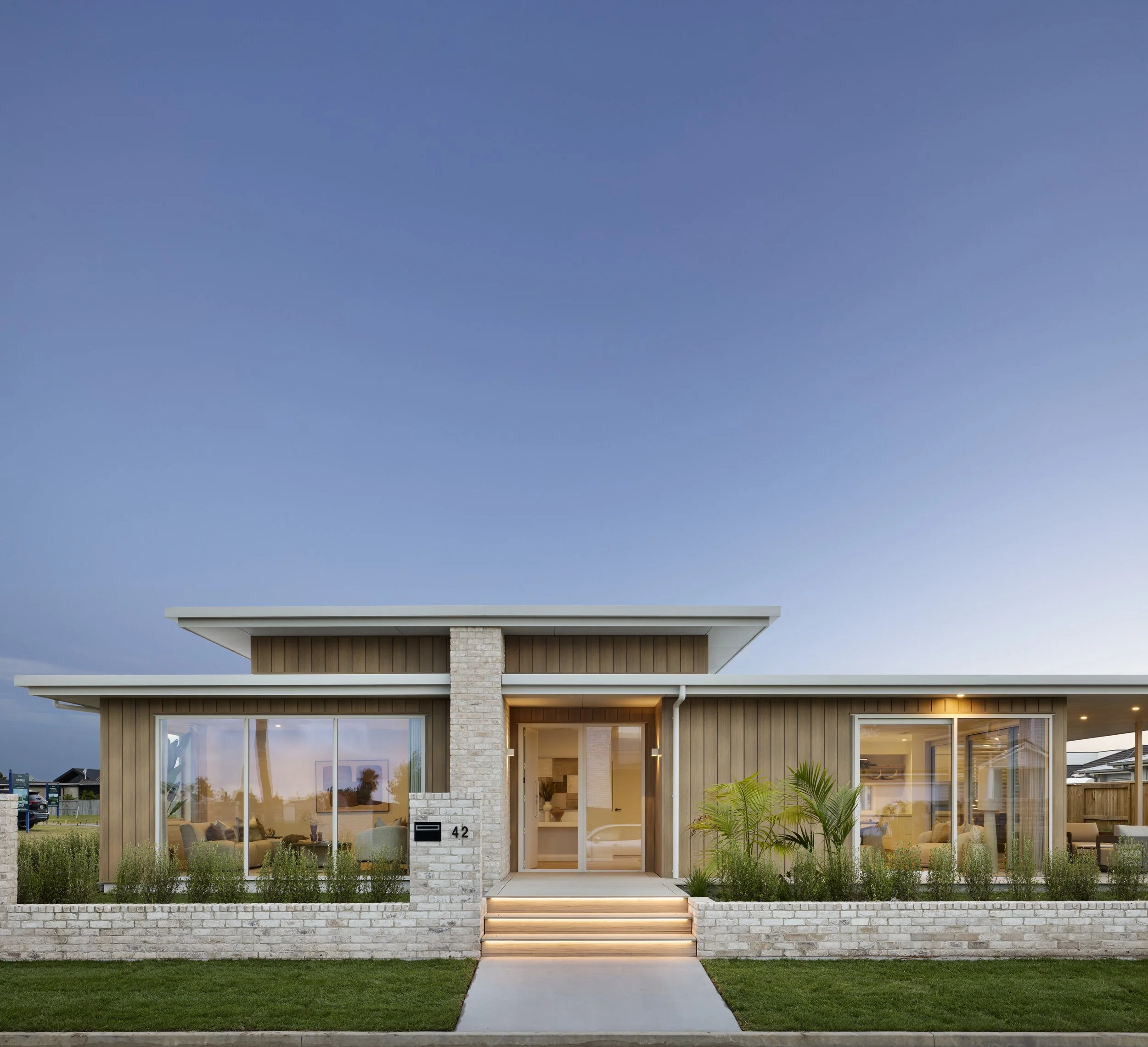
The value of a showhome to a home buyer cannot be overstated. Eliminating the need to imagine how a house might look and feel based on plans or an online description, it’s all laid out in front of you, with an open invitation to come on in.
The pros at Harwood Homes know this well. Worth its weight in gold for all involved, one of the latest and greatest embodiments of enviable architecture is their new Palm Vista showhome. Impeccably designed for all kinds, but perhaps especially those who seek to invest once and invest well by catering for their every age and stage, it exemplifies the innovative thinking the company is known for, bringing together fresh ideas, evolving trends and modern ways of living.
In Pāpāmoa East’s upmarket Palm Springs subdivision, Palm Vista is positioned in a cul-de-sac near the Wairakei Reserve, and is one of 11 Harwood Homes planned for this neighbourhood. All reflect Harwood’s focus on thoughtful, distinctive design that achieves a subtle cohesion across the streetscape while imbuing each dwelling with its own character.
Palm Vista is the flagship property among Harwood Homes’ Flexible Living Collection, and is guided by the Flexible Living philosophy centred on flexibility, future-proofing and the creation of homes that move to the rhythm of modern life. It reflects the belief that a home should evolve as you do – supporting changing family structures, working patterns and life stages in spaces designed to respond to your individual needs.
A key source of inspiration for Palm Vista came from an unexpected source. While developing the concept, Harwood’s general manager Trish Hoit drew parallels after observing at New Zealand Fashion Week the way clothing is designed to move with the wearer, adjust to their lifestyle and remain relevant long term. Her insights naturally translated – after all, if fashion can evolve with people, why can’t homes do the same?
First impressions of the possibility-filled showhome reveal a spacious, elegant dwelling, with expansive windows harnessing every opportunity to draw in natural light. The arrival experience is welcoming, ushering you inside as the four-bedroom home reveals itself through a series of carefully considered spaces and layered design elements. As they unfold, the true wealth of possibility becomes apparent.
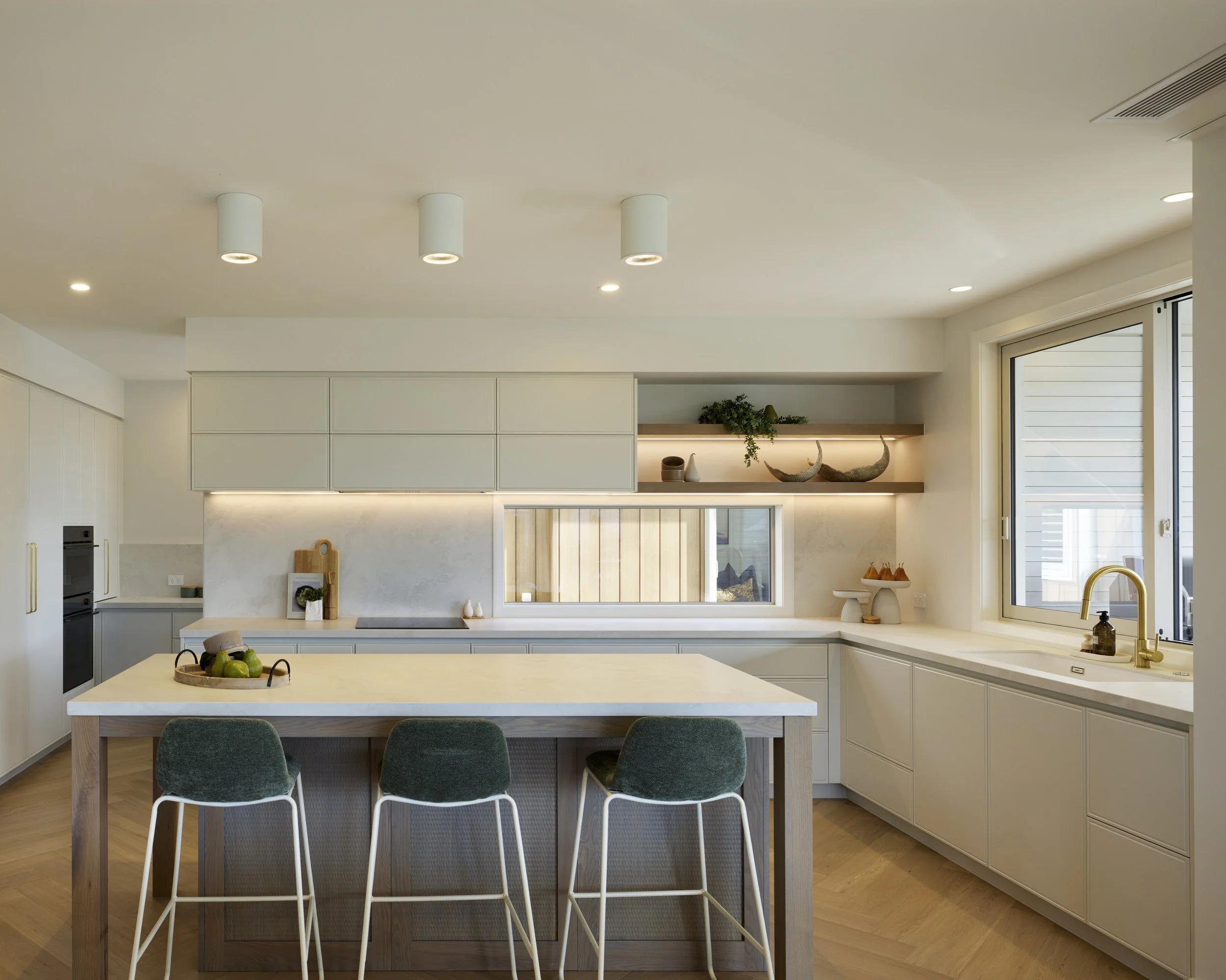
At the centre is a living hub that reflects the talents of Harwood’s team of suppliers and contractors, whose work helps to define the expert craftsmanship and quality execution Harwood Homes is known for. An entertainer’s dream, the open-plan kitchen brings everything and everyone together. Flanking the central gathering point – the clean, contemporary island with a subtle ‘chain’ pattern inset behind the bar seating – complementary cabinetry leads towards the scullery. Full-height units, floating shelves and integrated lighting add depth and refinement, all with a high-end finish.
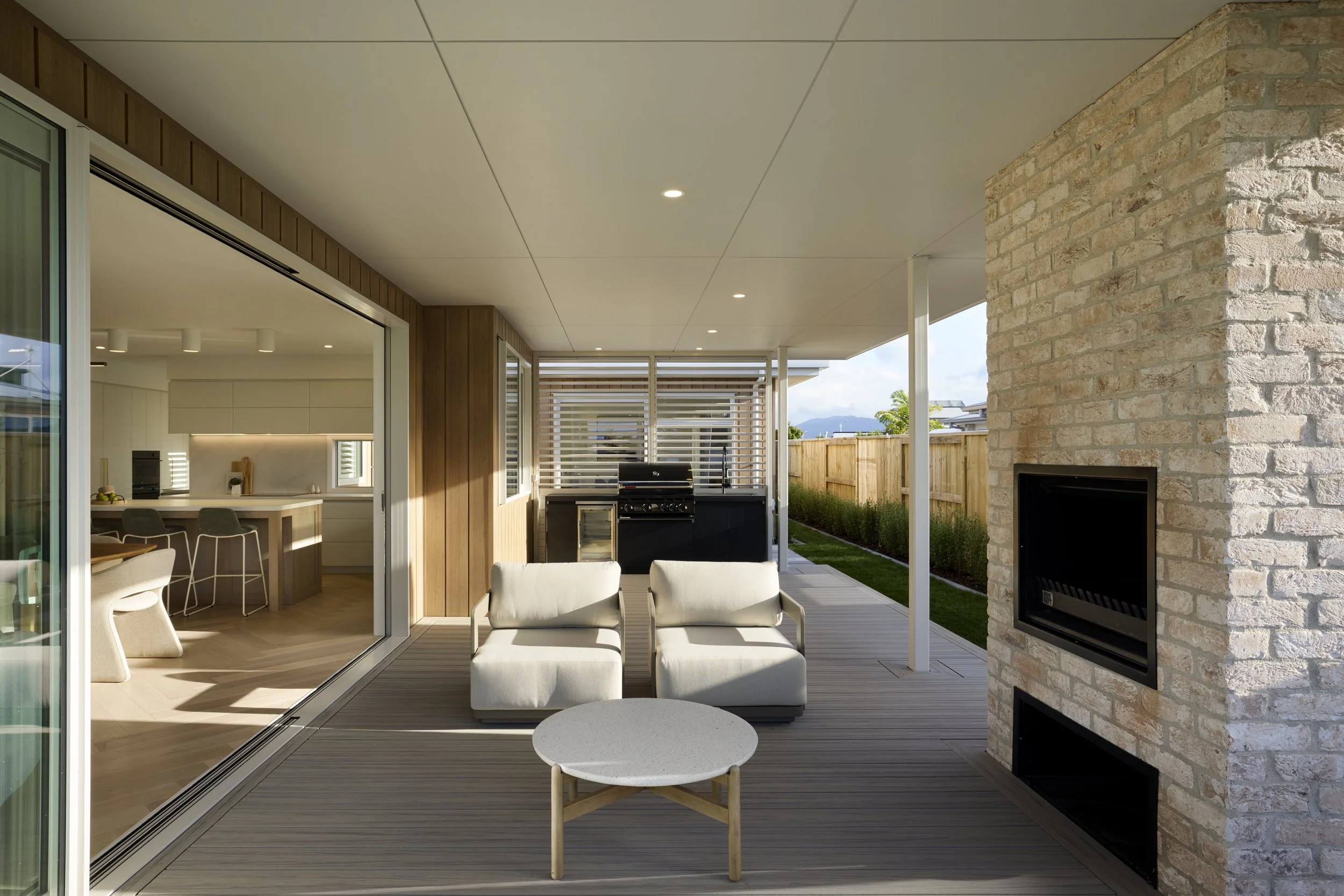
From here, you can spread out into the indoor living spaces or outside to the barbecue kitchen, where the showhome’s indoor–outdoor connection comes into its own. Covered for year-round versatility, this external living area expands the entertaining spaces with a barbecue, drinks fridge, sink station, and wood fire that catches the eye with its feature column that echoes the Italian-inspired brick detailing repeated cohesively throughout the house.
Inside, engineered European oak flooring and other oak elements in a soft grey stain and are integral to the material palette, with the flooring’s classic herringbone pattern adding gorgeous visual texture. At night, when the floor-to-ceiling linen drapes are drawn, the atmosphere softens to become intimate and restful. The window coverings’ tone-on-tone colour scheme is designed to blend into the neutral décor, while an inset ceiling track keeps the finish chic and uninterrupted.
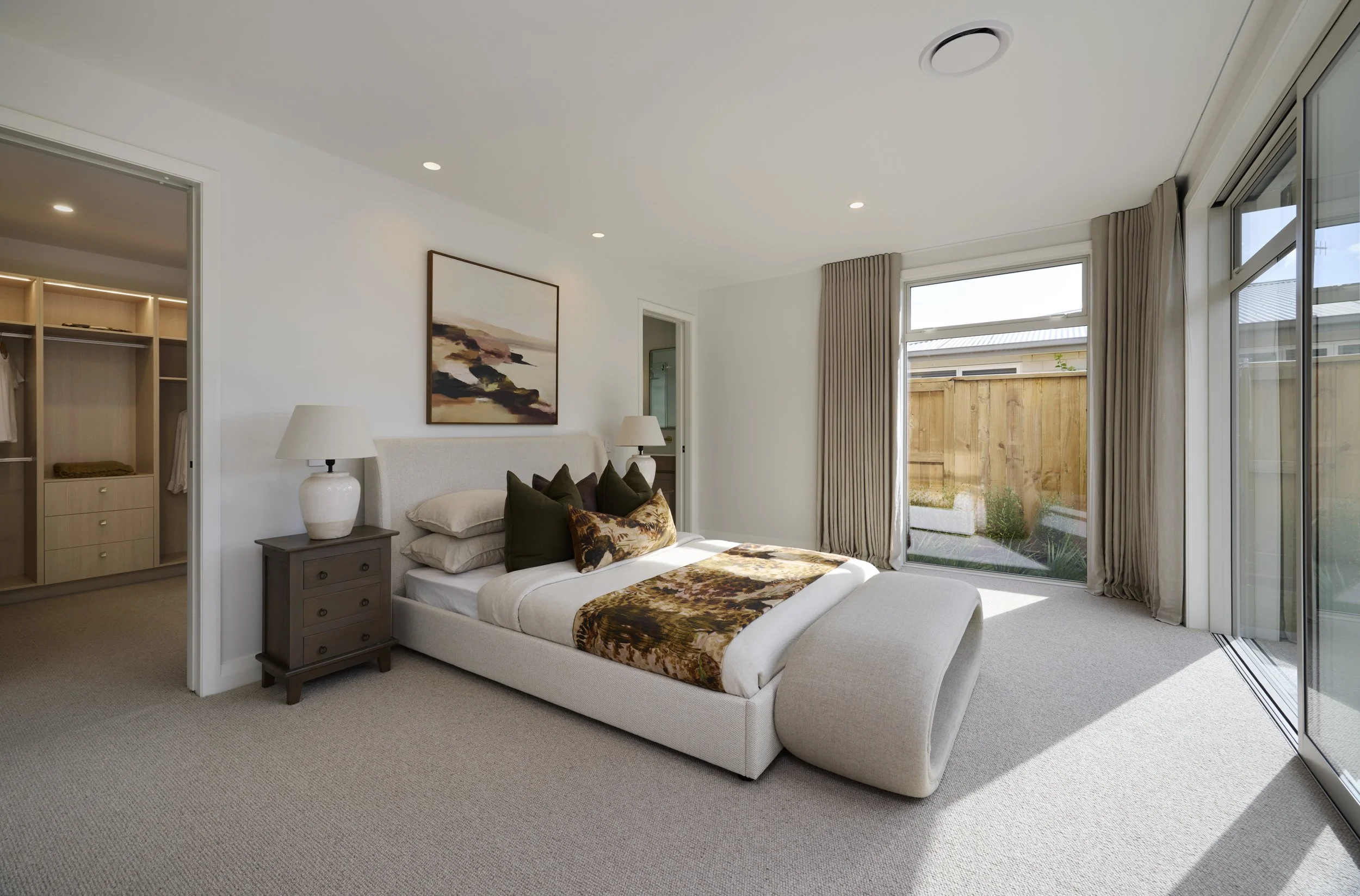
Making bedtime more of a luxury than ever, at one end of the home, the master suite anchors a quiet, private zone complete with an ensuite, and a walk-in wardrobe defined by oak cabinetry and bespoke lighting. At the opposite end of the house, two bedrooms live in a separate wing, teamed with a bathroom that can comfortably serve family members or guests.
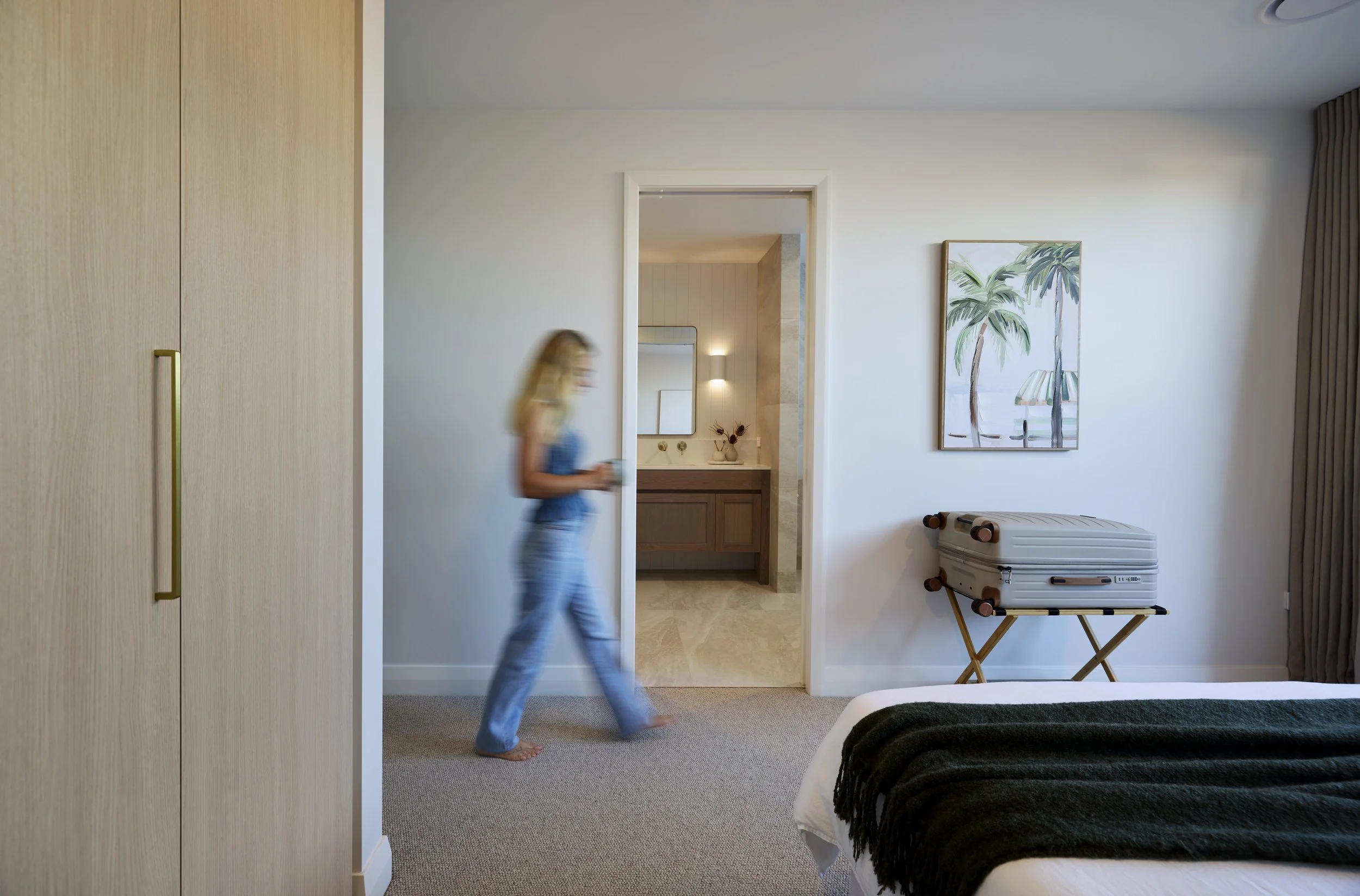
In another nod to this home’s versatility, an independent guest bedroom demonstrates its flexibility via its own lockable external entry, tea- and-coffee-making facilities, integrated wardrobe storage and bathroom. It’s designed to perform beyond the average bedroom by facilitating a range of scenarios – transforming into a private workspace, shared intergenerational living, a guest suite for family and friends, or a B&B arrangement.
Completing this wing’s layout, a dedicated office sits nearby. The showhome’s well-appointed laundry is inserted between the hallway and garage, optimising the practicality of this utility space by offering easy access for everyday use, without interrupting any of the goings-on in the main living areas.
It’s all part of family-owned Harwood Homes’ vision for the future of housing. In keeping with their longterm thinking, this entire abode is primed to adapt to your needs. Wider passages, generous doorways and level-access showers support ease of movement, and along with the income potential enables the home to remain relevant through every stage of life.
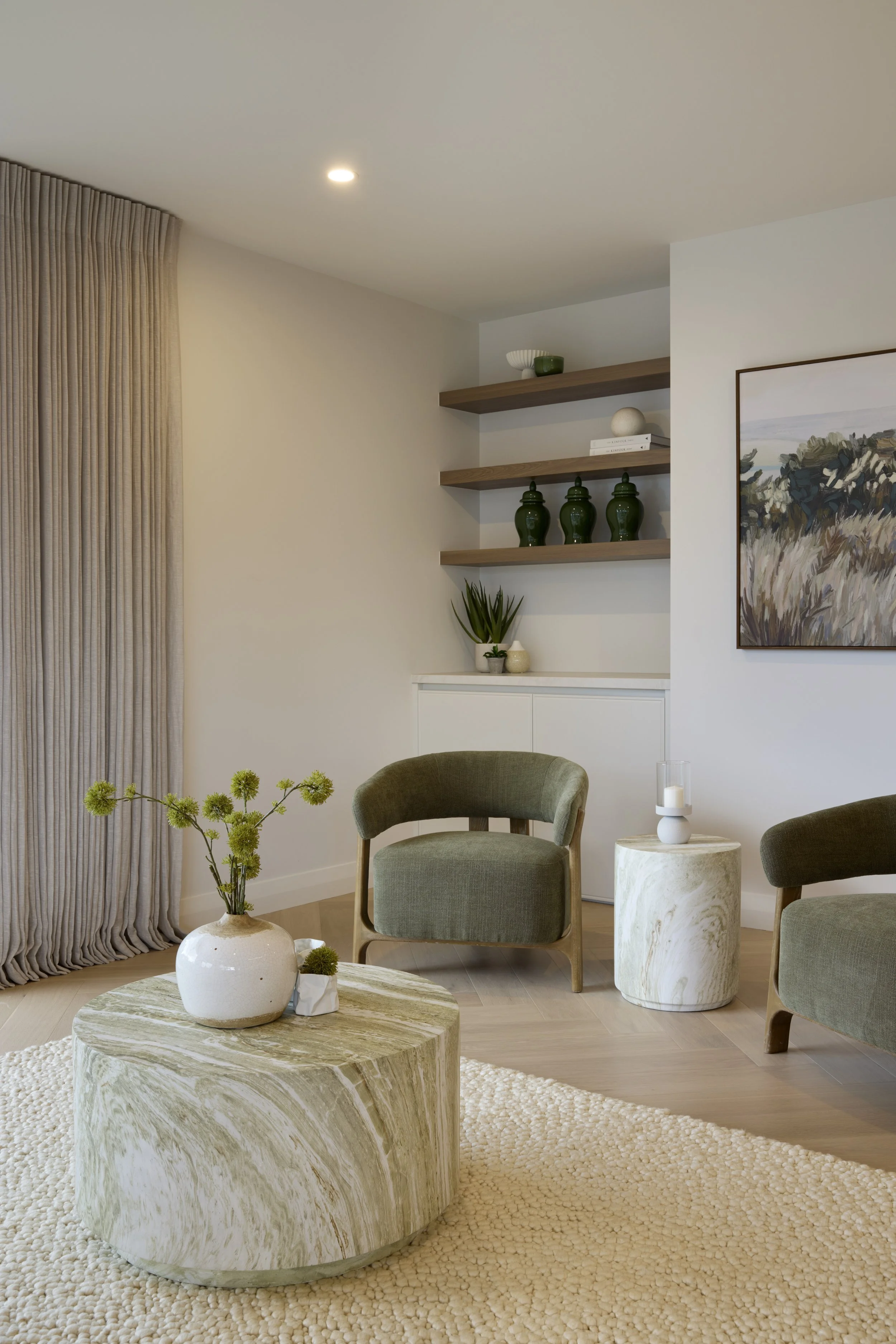
When every dollar counts, you want to be sure your hard-earned money is being spent on a home that’s the perfect fit. The lifestyle-led Palm Vista showhome opens the door to a 3D version of the plans you can try on for size – and the brand’s design and build service throughout the Bay of Plenty means these plans can be adapted to suit sites and requirements region-wide.
Recognised nearly every year in the Master Builders House of the Year awards, Harwood Homes has built a long-standing reputation for quality, innovation and consistency. What began as a small local builder has grown into a dedicated team of architectural and interior designers, builders, suppliers and contractors, yet the philosophy remains unchanged: to work alongside the best in their field. The Palm Vista showhome reflects this collaborative approach, while signalling the direction of future projects.
Visit the showhome at 42 Forstera Way, Palm Springs, Pāpāmoa, Thursday to Monday, 11am to 4pm.

GOOD VIBRATIONS
Armed with only buckets and drumsticks, a group of five local teens has become a global sensation. We caught up with the Beat Street Drummers to learn the secret of their success.
Armed with only buckets and drumsticks, a group of five local teens has become a global sensation. We caught up with the Beat Street Drummers to learn the secret of their success.
WORDS KARL PUSCHMANN / PHOTO ALAN GIBSON
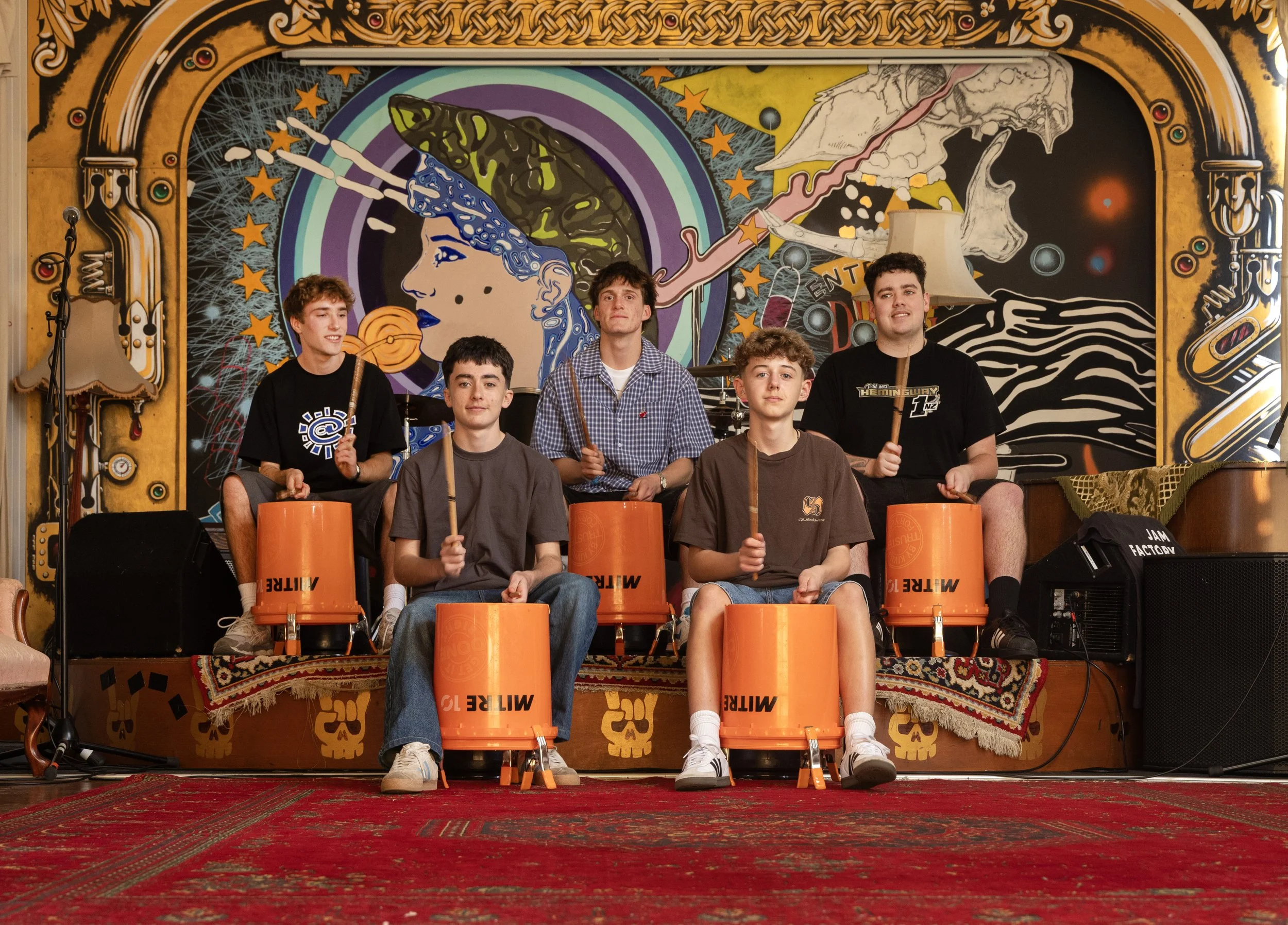
The beat thunders through the Historic Village, its rhythmic pulse grooving and full of joy. Then, as suddenly as it started, it stops – a one-minute blat of head-nodding bounce and skilled exuberance.
The drums were booming out from the village’s iconic live venue, The Jam Factory, but when I enter, there’s not a drum kit, conga, bongo or percussion instrument to be seen. Instead, carefully positioned in two rows, are five bright-orange Mitre 10 buckets.
These humble buckets are the instruments of choice for Elliot (14), Tristan (15), Daniel (17), Lucas (18) and Noah (18), better known as the Beat Street Drummers.
“The buckets are a way for us all to play together at the same time,” explains Elliot.
“And they’re unique,” adds Tristan.
“People like that,” says Lucas. “Once we set up our social media page, it grew real quick.”
It certainly did. The group, who all met through school and drum courses, have been jamming together for just over four years, but only got more serious with the Beat Street name and Instagram page last year.
“We originally started at one of our houses, just jamming and playing along,” recalls Daniel. “Then we created the Beat Street social media accounts on TikTok and Instagram, and people just loved it.”
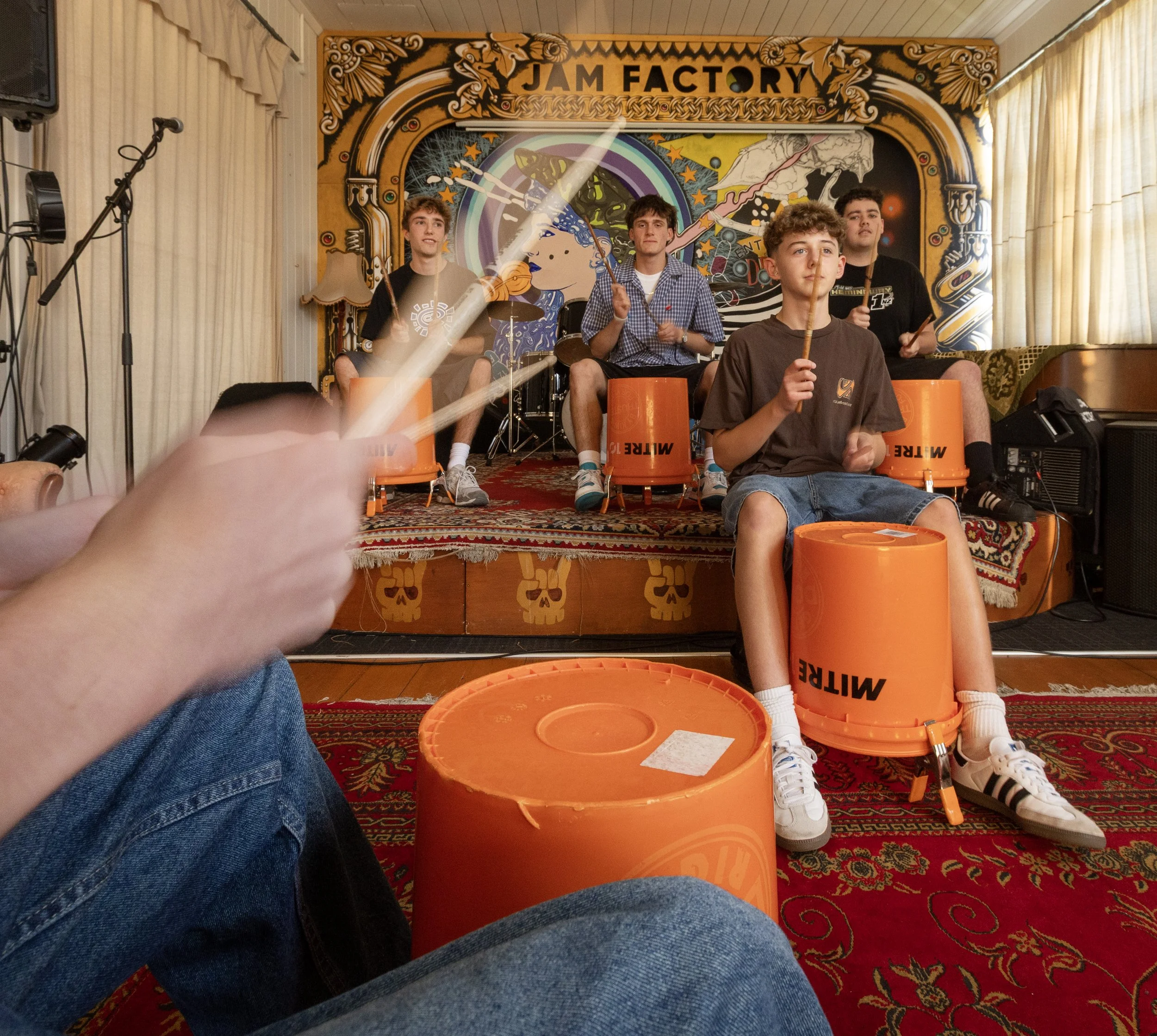
The young group quickly became a viral sensation thanks to their fun and impressive choreography – lots of stick twirls and big arm raises – their infectious,cacophonous rhythms played at mind-boggling speed, and their decision to play covers of popular chart hits, like 2014’s Changing by Sigma and Paloma Faith.
That video alone clocked up more than 1.4 million views, but it’s far from their only viral hit. Collectively, they have 22 million-plus views and a loyal fan base of more than 700,000 followers.
“It was our improvs that went viral at first,” says Lucas. “People liked the buckets, but it was the small things that caught their attention – the angles, location.”
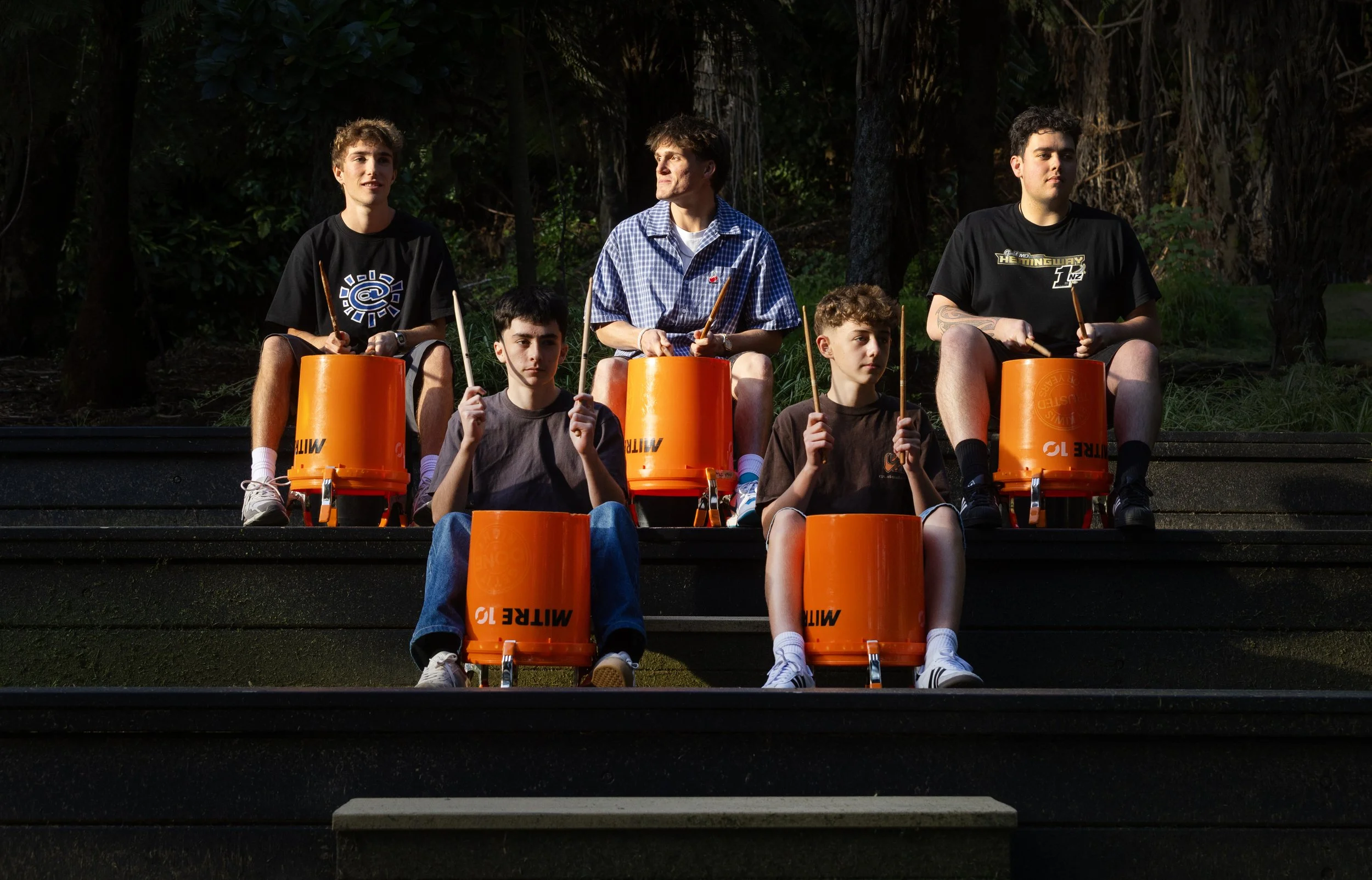
“We did a video in a shed on a barnyard and there was a tractor in the background,” says Daniel. “It was quite Kiwi New Zealand.”
“Yeah, people just kept commenting things like, ‘I love that backdrop!’,” laughs Noah. “It’s the little things that make it.”
The secret, they reckon, behind their viral success is that they’re just having fun. The videos aren’t big, over- thought affairs or calculated for maximum engagement.
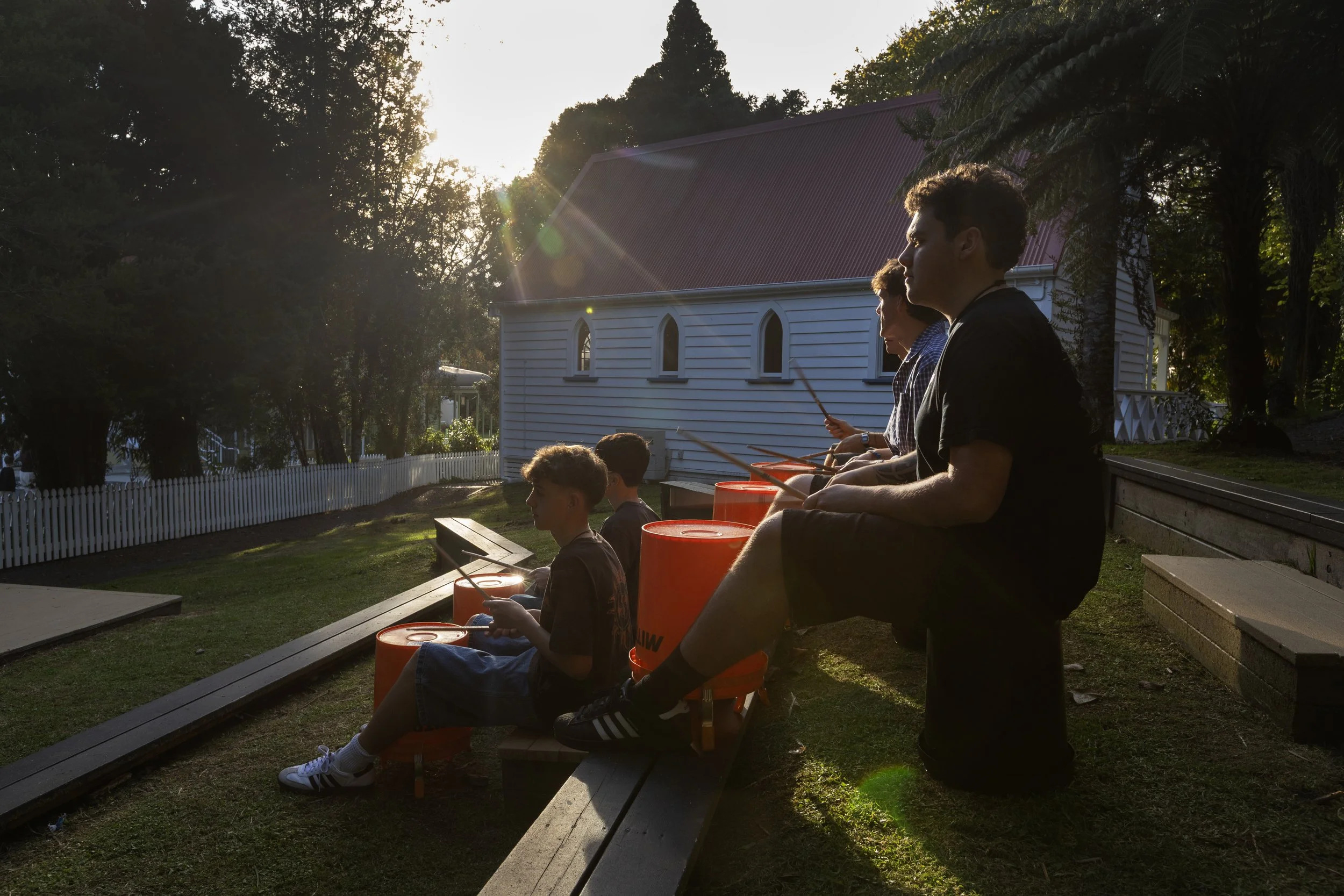
instead, “something that shocked a lot of people was that our biggest video took us about 20 minutes to choreograph and film,” says Daniel. “Filming our videos is quite quick. I think that comes with the chemistry and the length of time we’ve been together. We have similar thought processes and ideas.”
Beat Street Drummers’ online success has now transferred into the real world, with the group starting to travel the country to perform at music festivals in front of thousands of fans. They’d wanted to play live since the beginning, but weren’t quite sure how to go about it.
“It was hard to think how we were going to get to play at bars or club nights or anything because we’re just drums,” says Daniel. “It seemed like a tough sell.”
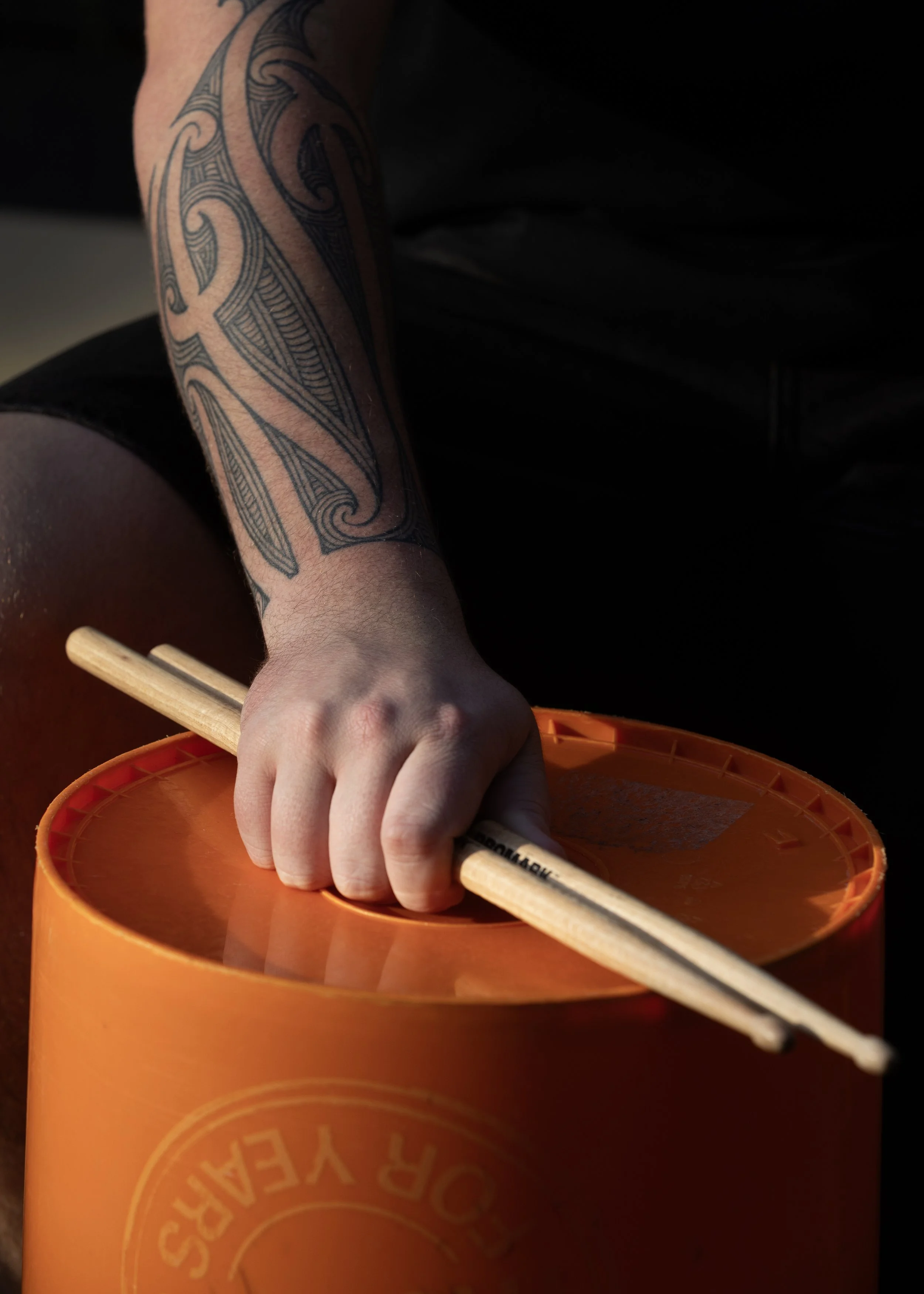
Now, however, festivals are coming to them, asking them to play. It’s a dream result. When the quintet gets going, it’s a thoroughly unique experience, with the lads knocking out complex polyrhythms and beats at speed in perfect unison. It does beg the question, how many plastic buckets do they go through?
“We haven't broken any yet!” says Elliot. “We've had these since we started.”
“Yeah,” nods Noah. “It’s the sticks, though. They break a lot.”
Having played together for so long, they’re now relaxed and comfortable when they perform.
“Initially, we had to focus on what we were doing, but then as time went on, it was less about that focus and more like having fun,” says Lucas. “Naturally, we got better and better as we played, so it’s just turned into a fun thing that we look forward to doing.”
Noah grins and says, “We don't really put in as much practice and effort as we did in the beginning, because that work’s already been done.”
The group is enjoying the overnight success that has come after five years of work together, and is excited about what the future holds.
“We all love music,” says Daniel. “We’ve grown up in houses with music, and we play music. It’s our passion. And we're really tight friends as well.”
Then, he inadvertently reveals the true secret of their success.
“Lots of bands are just bands,” he says. “We’re friends and family first – then we’re a bandafter that.”

STAYING POWER
Downtown Tauranga had a rough few years, but even in the lean times, these three businesses didn’t leave. Now, as the city’s renaissance gathers pace, their belief is paying off. Turns out, that was the right call.
Downtown Tauranga had a rough few years, but even in the lean times, these three businesses didn’t leave. Now, as the city’s renaissance gathers pace, their belief is paying off. Turns out, that was the right call.
PHOTOS SALINA GALVAN
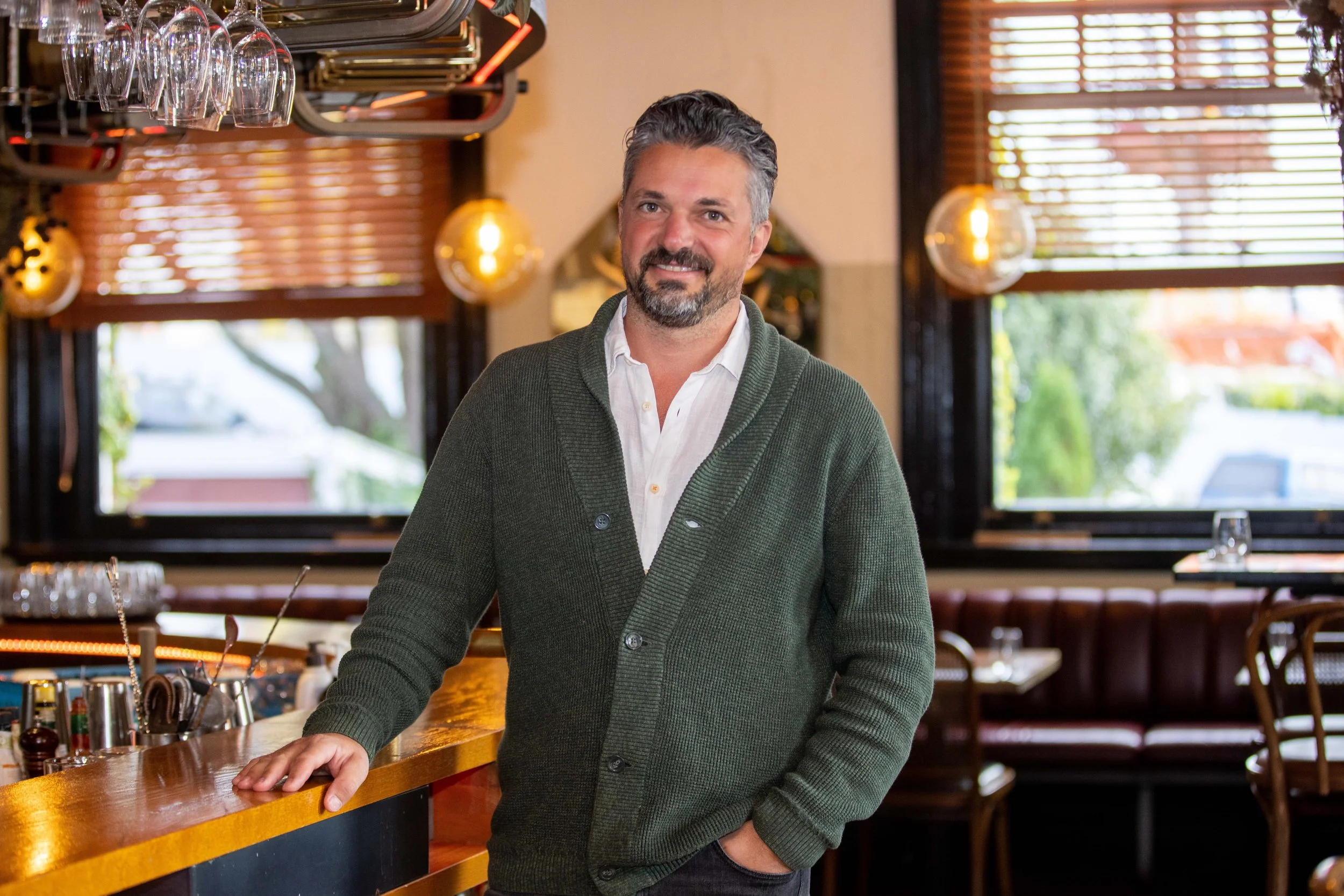
Noel Cimadom at Clarence Bistro.
It’s no secret that Tauranga’s city centre has seen some challenging times. Shops closed and stayed empty, foot traffic dwindled, and many stores retreated to the malls. But despite it all, a group of true believers stayed put. They believed in the city centre and their businesses, knowing that what they offered was good enough to draw people into the city.
Walk downtown today, and people are returning to work, live and play. It’s getting closer to what Noel Cimadom saw when he looked at downtown Tauranga for the first time after arriving from Europe.
"I was always joking in the beginning, saying this can be Miami,” he laughs. “It just showed so much potential.”
With a background in hospitality in Munich, Noel and his wife, Kim Smythe, took the keys to The Old Tauranga Post Office heritage building on Willow Street in 2017, opened Clarence Bistro and Hotel in November 2018, then watched as the city centre grew very quiet indeed.
Instead of retreating, the pair doubled down, opening the acclaimed restaurants Picnika and Stassano in quick succession, built on their faith in the city's bones and Noel’s Miami dream.
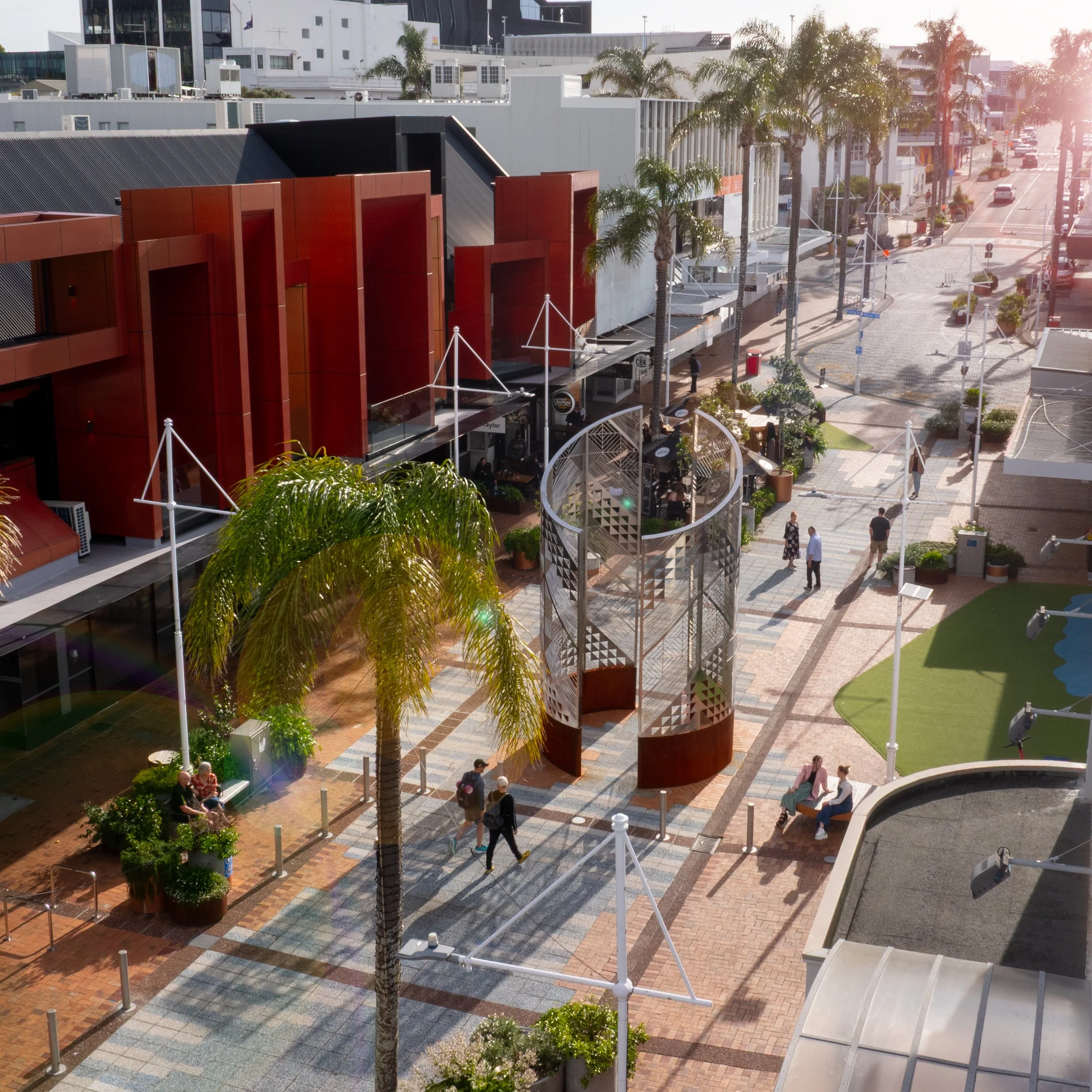
“I am a believer," he admits. “There aren’t many cities on the oceanfront that can do what Tauranga could potentially become. I see it as the next future city. There’s no doubt about it. There’s a lot of opportunity here to become something very, very outstanding if we all pull together. I’ve got big hopes for it, for sure.”
They’ve seen and felt the recent change. The vibe is there, the tables are booked, and people are stopping in for after-work drinks, something that hasn’t happened for a long while. “It’s still early days,” he says, “but it’s coming.”

Julie Hammon of Hammon Diamond Jewellery.
Down the road, Julie Hammon is preparing to celebrate 40 years of business on the same city centre site. Hammon Diamond Jewellery arrived on Grey Street in 1986, and has remained ever since. The family jewellery business is also now approaching its 80th birthday.
“It’s amazing,” she smiles. “It's been such a fabulous journey.”
That journey has not been without turbulence. The stock market crash of 1987 hit just a year after she and her late husband opened. Later, the malls began luring customers away, and then the pandemic kept them away.
Through it all, Julie stayed put, even when shopping centre operators dangled attractive offers in front of her to relocate. She sent them on their way.
“I’ve always loved the city centre," she says, "and for us, being in the city is the right place to be."
“We’re a family business, people know where to find us, and they trust us,” she says. “These relationships have gone on for years and years and years. They’re intergenerational. We now have younger members of the same families coming in to use our services. It’s quite incredible.”
Her read on the city’s future is optimistic. “I’m very hopeful that we’re on that incline up,” she says. “For any city to be healthy and vibrant and have a fantastic future, you need a city centre that reflects that. The waterfront has been magnificently enhanced, there are events on downtown, and there are the new apartment blocks. The city centre is a very attractive and exciting place to be.”
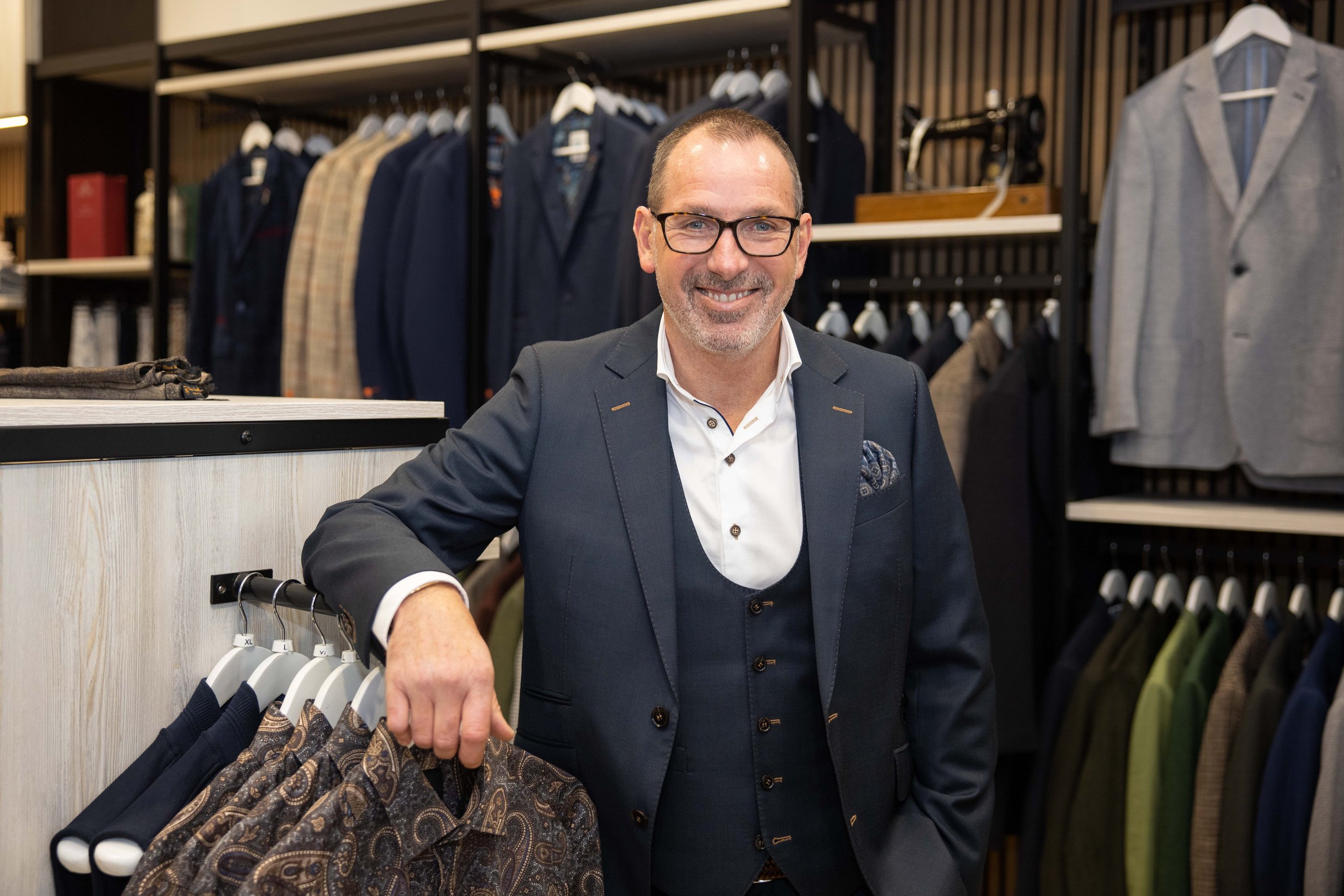
Bond & Co’s Jason Dovey.
Up the street, on the main drag of Devonport Road, Jason Dovey has been dressing Tauranga’s stylishly inclined men for more than 30 years. Bond & Co, his boutique menswear store, is a destination in the truest sense. People drive in specifically because there’s nowhere else quite like it.
“I’ve definitely seen the city centre at its lowest, as low as you can go,” he sighs. “But with the rebuild of buildings and facilities and more people living and working back in the city I reckon we’re on the other side, and going up continually."
Even at the city’s quietest point, Jason didn’t think about leaving.
“I never want to go to a suburb and would definitely never go to a mall. We’re a boutique business. The city’s where we want to be. We don't want to be in suburbia.”
Jason says that even within the last year, the change has been notable.
“It’s sort of like the old days,” he says, saying that now, along with the destination shoppers, the increase in foot traffic has people popping in as they walk by.
He agrees that the city centre’s much-needed developments have made a huge difference to business. He’s seeing people bringing their kids or grandkids to the new playground, then stopping for lunch at a café, before dropping in to see him at the store.
“It’s not about going to a cupboard shopping mall. It’s about the other attractions and things to do in the city centre. When the museum, the new library and those other facilities are all open, along with the cafés, restaurants and hospitality, it will be inviting for people to come back to the city centre.”
“There’s an atmosphere,” he smiles, then adds, “and that’ll only get stronger.”

BORN INTO LEGAL LIMBO
New Zealand’s surrogacy laws belong to another era. Decades on from being written, the families caught up in them are paying an enormous price.
New Zealand’s surrogacy laws belong to another era. Decades on from being written, the families caught up in them are paying an enormous price. WORDS HAYLEY BARNETT

Imagine spending years trying to have a child, enduring miscarriages and failed fertility treatments. Maybe biology just isn't on your side and you spend forever searching for someone to carry your baby to full term. When you finally find a surrogate willing to do so, everyone in the room knows exactly who the parents are. Except the law.
Under New Zealand’s current framework, the intended parents – as in the people who created that embryo, who have longed for that child and will take them home and raise them – are legal strangers to their own baby at birth. The surrogate and her partner are the legal parents, and until a lengthy, costly adoption process plays out over months or years, that’s how it stays.
This is the reality for thousands of New Zealanders who build their families through surrogacy, but according to the experts working alongside them, it doesn't have to be this way.
“Nobody gets to surrogacy easily,” says Stewart Dalley, a family lawyer who has spent years working on such cases. He was part of the first same-sex de facto couple in New Zealand to jointly adopt their children.
“For a gay couple, you don’t really have any other option than surrogacy because ordinary adoptions are rare as hen’s teeth. But for a heterosexual couple, you’ve probably gone through multiple years of infertility, unexplained infertility, multiple miscarriages, all of those things, which place a massive emotional drain on you. When you get to the point where surrogacy is your only option, then begins the long, bureaucratic road to becoming the parents.”
Under New Zealand law, the woman who gives birth to a child is automatically recognised as its legal mother, regardless of whether she has any genetic connection to that child. Her partner, whether male or female, is recognised as the other legal parent. Legally, the people who may have created the embryo and will raise it from birth don’t have any such status.
“What the law treats mum and dad as is sperm donor and egg donor,” explains Stewart. “Nobody intended this to be the situation. I think it was just short-sighted. The law hasn't kept pace with technology and reality.”
The practical consequence is that intended parents must go through a formal adoption process to be legally recognised as the parents of their own child. It’s a process that Caren August, a counsellor at Fertility Associates, says typically runs for around two and-a-half years from first appointment to completed adoption. But the absurdities don’t stop there.

Christchurch influencer Rebecca Keil became a surrogate in 2019 for Wellington couple Tess Dunford and Dan Stemp after seeing Tess’s plea for a surrogate on Instagram. Tess had suffered a postpartum haemorrhage during the birth of their first child that required an emergency hysterectomy. Although it was devastating, her ovaries were intact, meaning IVF and surrogacy were possible. For Rebecca, the decision to help was straightforward, however, the legal reality that followed was anything but.
“We don’t have surrogacy laws,” she says. “We have ancient adoption laws, which make the process a whole lot harder.”
Because Rebecca was married, her husband Jared was automatically presumed to be the baby’s legal father, despite having no biological connection whatsoever to the child. His name, and his ethnicity, went on the birth certificate.
“He’s a whole-ass fruit salad,” jokes Rebecca. “On this child’s birth certificate, it says his father is Māori and Samoan, and he’s a Pākehā child. It’s so crazy and misogynistic.”
Caren recognises the reaction immediately. “I can’t tell you how many times I’ve had the partner of a surrogate say, ‘But why? I’m not contributing eggs, I’m not contributing sperm, I’m certainly not carrying the pregnancy.’”
Beyond the bureaucratic frustration is genuine fear. Until the legal process is complete, the surrogate and her partner are the child’s legal parents. The intended parents are not. For everyone involved, that ambiguity can be a source of dread.
“The worry of the surrogate is that the intended parents are going to ditch her and she’s going to be stuck with this baby,” says Stewart. “The worry of the intended parents is, what if the surrogate decides to keep the baby?”
Caren sees this play out throughout her counselling sessions. “Even when you know each other really well and have a deep sense of trust, there can still be that thought that comes up occasionally. What if they change their mind? What if I do something that upsets them and they decide to keep the baby?”
She describes it as “a common undercurrent alongside times of excitement and hope”.
Legally, that fear isn’t entirely unfounded. “Surrogacy is not legally enforceable in New Zealand,” explains Caren. “The surrogate or the intending parents could withdraw from it, even once there's a pregnancy.”
Rebecca says the fear never took hold for her personally, because she trusted Tess and Dan completely, and felt no grief at handing their son Ziggy over, but she understands why others might feel differently. “If I was in a scenario where it had maybe gone south, and I knew there were no legalities and nothing to protect me, that definitely would have felt a bit different.”
What she does remember vividly is the chaos of the immediate aftermath. Ziggy was born on a Sunday in the early hours of the morning. Rebecca, who had complications during the birth, found herself sending emails from her hospital bed at 5am to relinquish legal rights.
“Because it was a Sunday, there were issues around getting things sorted,” she says. “There was a point where they weren’t going to let Tess and Dan leave the hospital with the baby, and that came down to the timing of it. If it had been midweek, it probably would have been way easier.”
When the adoption order is finally granted, which is often months later, in a courtroom, Stewart says it’s often profoundly emotional. “I’ve seen judges crying happy tears. It’s a lovely ceremony, but the parents are crying not only because it’s a lovely moment. It’s also, ‘Thank God it’s finally over’. There’s the exhaustion of the whole process, the cost, the emotional drain. That order being granted at the end is just the final, final step.”
For Rebecca, the court appearance came around six months after Ziggy’s birth. “It was just a wildly insane scenario,” she says. “I give birth to someone’s biological child and they have to adopt it off me.”
New Zealand’s surrogacy laws have been overdue for reform for decades. A Member’s Bill incorporating Law Commission recommendations is now sitting before Parliament awaiting its second and third reading, but progress has been glacial.
“It’s Parliament time, basically,” says Stewart, who was one of the expert legal advisors to the review. “Whether it’s going to happen in this term, or roll over into a new political cycle, I honestly don’t know.”

It was former MP Tāmati Coffey, himself a father through surrogacy, who came closest to making it happen. He drafted the original Member’s Bill alongside Louisa Wall and gathered cross-party support, but it stalled on timetabling and, he believes, the cost of implementation. He left Parliament before seeing it over the line.
“I’m sad that we’re still kicking the can down the road. It shouldn’t have taken this long,” he says.
He also points to a glaring inequity where every professional in the process gets paid, except the surrogate.
“As it stands, women who do this need to do it for the love in their heart. But every other professional is clipping the ticket, and clipping big.”
Rebecca echoes this. Surrogates cannot be paid beyond tightly prescribed medical expenses, and costs like physiotherapy and dietary changes aren’t covered.
“Things like your diet changes, your body changes and legally they’re not allowed to reimburse you for any of it.”
It’s a barrier, she says, that deepens New Zealand’s already scarce surrogate pool.
“The law shouldn’t discriminate against children and impose hurdles and barriers because of the accident of their birth,” says Stewart. “Why push people through a court process just to be recognised as the parents of the child? It seems absurd.”
Tāmati wants the issue on party manifestos before the next election. His vision for what better looks like is simple.
“When you’ve got willing parties, the law just needs to fall into line.”
For Rebecca, her mission is to keep talking.
“I would never talk about surrogacy without telling one more person why it’s so messed up,” she says.
For the people who arrive at surrogacy after years of loss and heartbreak, she says it must be the worst of the worst. “And then you've got this. Just another thing.”

HEALTH WITH HEART
Where weight loss and appearance medicine are concerned, you want your goals to be deeply considered. This time, at these clinics, it’s personal.
Where weight loss and appearance medicine are concerned, you want your goals to be deeply considered. This time, at these clinics, it’s personal.
PHOTOS DEBORAH DE GRAAF
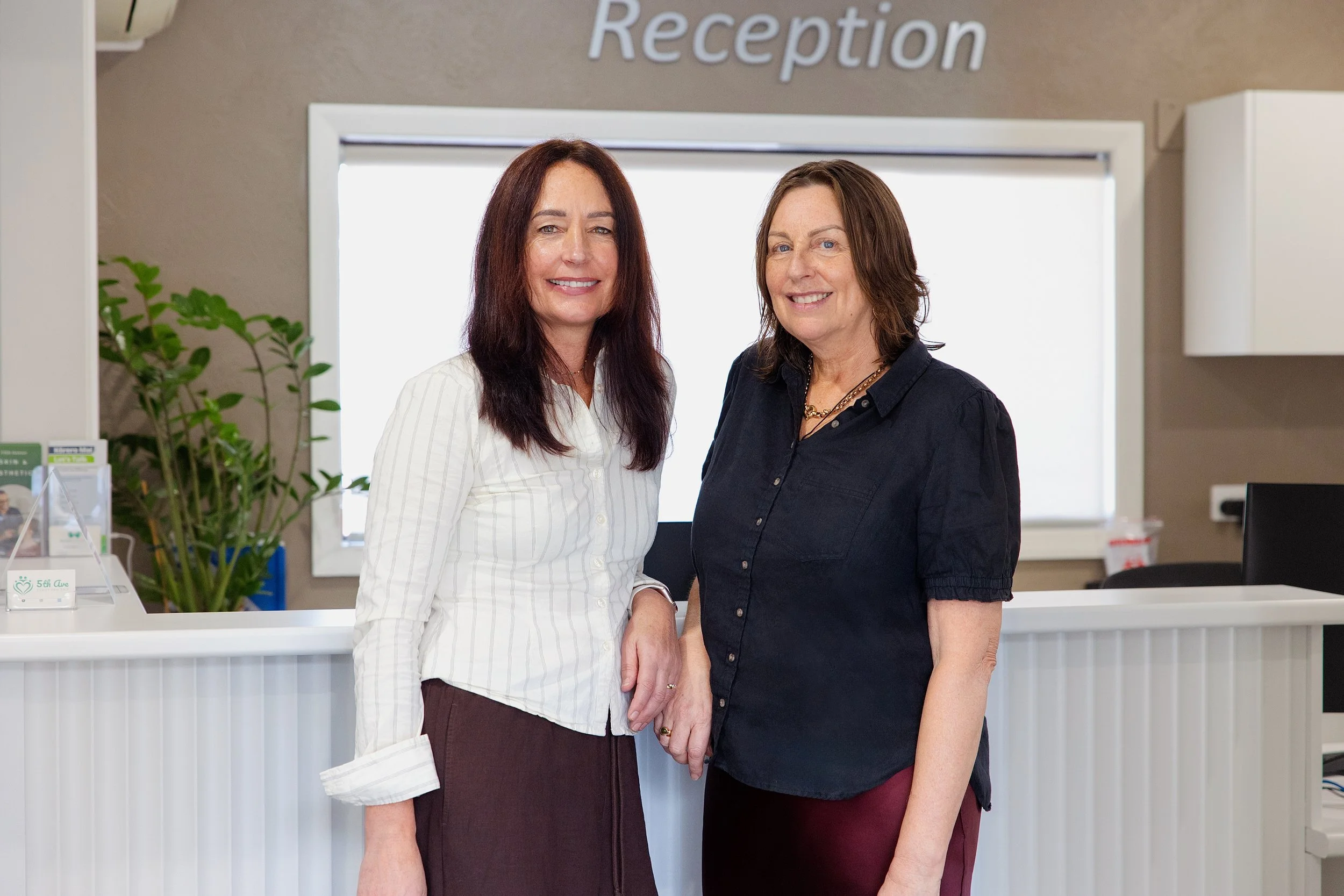
Brenda Newman (left) and Julia Perry
Towards the end of UNO’s interview with Brenda Newman and Julia Perry, who run the Weight Loss Clinic at Fifth Ave Family Practice, I ask Brenda if there’s anything she says to her clients that really resonates. “I tell them, ‘It’s not your fault – it’s not a lack of willpower.’” Does this strike a chord, I wonder? “It’s a very emotive topic,” she replies.
Weight – and losing it – is a topic very much in the public eye. Excitement around drugs such as Wegovy/ Mounjaro (the GLP-1 drugs available in New Zealand) creeps into conversations, and for those with health-impacting weight issues, their use is being heralded as a game-changer. The great thing is that although the GLP-1s are an option offered at this private clinic, it’s far from the only solution. Expertise and wrap-around support is an important component of the service.
The Weight Loss Clinic was established last year because of the impact obesity has on health. Brenda and Julia are both nurse practitioners with a background in the management of long-term conditions, SCOPE (Strategic Centre for Obesity Professional Education) certified by the World Obesity Federation, unflappable, non-judgemental and reassuring. Their service is built on the understanding that a desire to lose weight should be addressed without shame or stigma.

There are a multitude of factors at play when it comes to weight gain or obesity, whether genetic or circumstantial. Having expert guidance and support on what may be a lifelong journey is invaluable.
Brenda’s quick to point out that weight-loss drugs such as Wegovy and Mounjaro have exploded in popularity because they’re a hot topic in the media, but there are criteria and costs attached. There are also several other medications available; some act as appetite suppressants, others are targeted towards reducing cravings.
“A lot of people walk in with preconceived ideas, and that’s when we say, ‘Okay, that’s cool, let’s talk about all the medications that are out there, but let’s also talk about lifestyle.’ There are so many ways to assist,” says Brenda.
“We want to be able to talk about all the options – bariatric surgery, exercise, meal supplements, healthy eating,” adds Julia. “It’s important to be well informed.”
People can self-refer to the clinic whether patients of the practice or not. A thorough questionnaire followed by an appointment then helps to establish an action plan.
What’s essential to recognise, says Julia, is that “obesity is a long-term, complex, chronic condition that’s relapsing”. Ultimately, this sits at the very core of the clinic’s value: because the battle’s not won when the weight is lost, establishing a lifelong shift in mindset is critical. The ability Brenda and Julie have to provide ongoing support as they watch their clients recover their health, improve their self-image and gain confidence is exactly why this clinic was set up.

Dr Sam Mahesh (left) and Dr Kiran Singh.
Contributing to Fifth Ave Family Practice’s holistic approach to health and wellbeing is its Cosmetic Medicine Clinic, run by Dr Kiran Singh and Dr Sam Mahesh. Kiran established the clinic (which he runs alongside his GP work) eight years ago, and Sam joined him last year. Both are heavily invested in the ethical practice around appearance medicine, and we discuss how standards have become less stringent as aesthetic treatments have become more mainstream.
As Kiran points out, “You can potentially be in the hands of someone who has trained through a YouTube video and set up a clinic. Our core business is in medicine. We’re grounded in safe practice and good clinical judgement, as well as cosmetic outcomes.”
Treatments such as Botox are ever more easily accessible, but it’s still important that the practitioner you choose is highly skilled. Says Sam, “Because the substances worked with have become so normalised, people have forgotten how powerful they are.”
As well as their medical qualifications, Kiran holds a Diploma in Cosmetic Medicine from NZSCM, completed, as Kiran puts it “for service excellence, really, and ensuring you’re the best in what you do”. Sam is currently working towards the same diploma.
Sam’s mantra is “enhance, don’t alter”. Kiran asserts that for the very best results, restraint is key. “It’s our job not just to provide the treatment, but to ask, ‘Is this required and reasonable?’.”
Both Kiran and Sam love the symbiotic relationship between the science of medicine and the art of aesthetics. Says Sam, “When you look at the way mental wellbeing can be tied in with physical appearance, it explains why helping improve people’s confidence is a real privilege.” FIFTHAVENUE.CO.NZ

KEEP AN EYE ON IT
Hindsight may be 20/20, but you’d be better off having an accurate picture of your eye health sooner rather than later. Optometrist Mariam Baissy from Bay Eye Care explains why silent eye diseases often go unnoticed.
Hindsight may be 20/20, but you’d be better off having an accurate picture of your eye health sooner rather than later. Optometrist Mariam Baissy from Bay Eye Care explains why silent eye diseases often go unnoticed.
PHOTO SALINA GALVAN

As we age and our eyes change, serious conditions can develop long before we notice anything’s wrong. Helpfully, optometrist Mariam Baissy of Bay Eye Care is here to explain why some eye diseases can go unnoticed and how early detection and preventative measures can protect your vision.
UNO: Mariam, why do eye conditions such as these often go unnoticed until it’s too late? Mariam: Many eye conditions develop gradually and often without obvious symptoms. For example, glaucoma slowly damages the optic nerve, and macular degeneration affects central vision subtly at first. Because early changes are painless and vision loss can be gradual, people may not notice anything until the condition is advanced. If you have a family history, your risk is higher, making regular eye checks especially important, as they can detect these conditions early before noticeable vision loss occurs.
What exactly is glaucoma? Glaucoma is a group of eye conditions that damage the optic nerve, usually due to increased pressure inside the eye. It’s called the ‘silent thief of sight’ because it often develops slowly with no early symptoms. Peripheral vision is affected first, so many people don’t realise they have glaucoma until significant vision loss has occurred.

How does ageing increase our risk of conditions like this? As we age, the tissues and structures of the eye naturally change, which can increase susceptibility to disease. For glaucoma, the drainage system of the eye may become less efficient, raising eye pressure. In macular degeneration, cumulative damage to the light-sensitive cells in the macula – responsible for sharp, fine-detail vision – affects central vision. Genetics and lifestyle factors such as smoking and high blood pressure also contribute, but ageing remains a major driver.
What are the early warning signs of macular degeneration? Macular degeneration primarily affects central vision, so early signs can include blurry or distorted sight, difficulty reading or straight lines appearing wavy. Glaucoma can advance silently, whereas macular changes, especially central distortion, may stand out more to the person experiencing them.
How much do lifestyle choices really influence the risk of eye disease? Lifestyle habits do matter for eye health. Diets rich in leafy greens, colourful vegetables and omega-3 fatty acids support retinal health. Smoking is a major modifiable risk factor for macular degeneration, and high blood pressure and obesity also increase risk. Even though genetics and age still play a major role, protecting eyes from UV light, staying active, and managing overall health can help slow vision- threatening changes.
What can be done for someone who’s diagnosed with glaucoma or macular degeneration? Early diagnosis is key. Glaucoma can be managed with prescription eye drops, laser treatment or surgery to reduce eye pressure and protect vision. For macular degeneration, lifestyle changes, nutritional supplements and in some cases injections or laser therapy can slow progression. For those with a strong family history, genetic testing, such as that offered at Bay Eye Care, can help assess risk and guide monitoring. Although these conditions can’t always be fully reversed, treatment can preserve remaining vision and maintain quality of life.

NEW HORIZONS
Pip Crombie explores Te Awa Rise, Cambridge’s newest residential subdivision offering elevated living with connected greenways, native landscapes and effortless access to Waikato’s Golden Triangle.
Pip Crombie explores Te Awa Rise, Cambridge’s newest residential subdivision offering elevated living with connected greenways, native landscapes and effortless access to Waikato’s Golden Triangle.
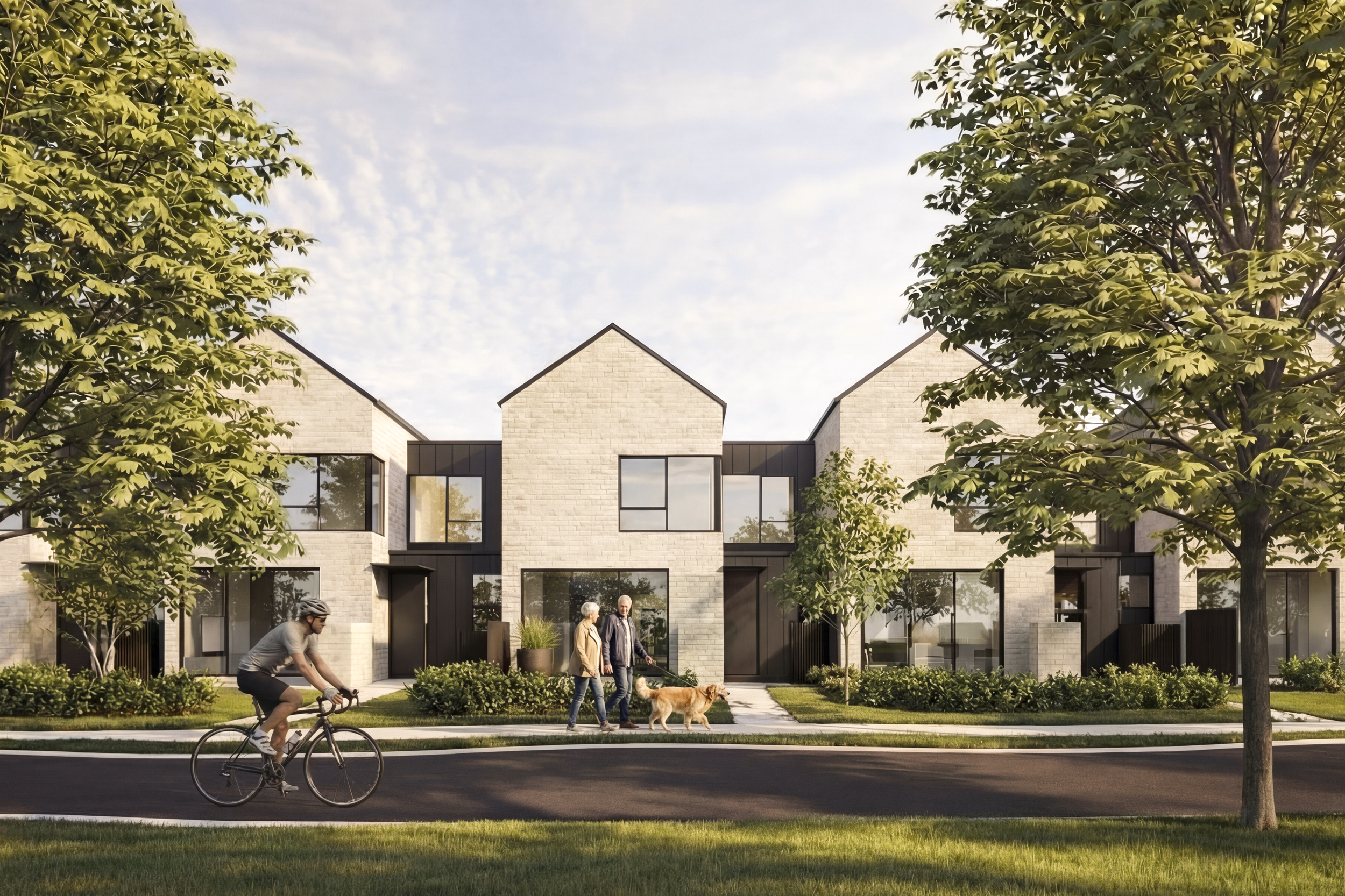
Considering a move? I could be. I recently spent a morning strolling around one of Cambridge’s newest prime residential subdivisions, Te Awa Rise. Situated just minutes from the distinctive charm of the iconic Waikato town, it’s a carefully developed neighbourhood bringing elevated living to those ready to engage.
The unique early morning light the Waikato/Waipā District is known for hangs about the green open spaces, landscaped reserves, natural waterways and distant view to Mount Pirongia, providing exceptional appeal. Spending the morning with CEO of the Sanderson Group, Jared Boronian, and sales manager for the project, Anthony Merrington, afforded me a rare view into their passion for this slice of Godzone, the careful planning that has gone into the 54 lot development, and what it has to offer new residents of all walks of life, ages and stages.
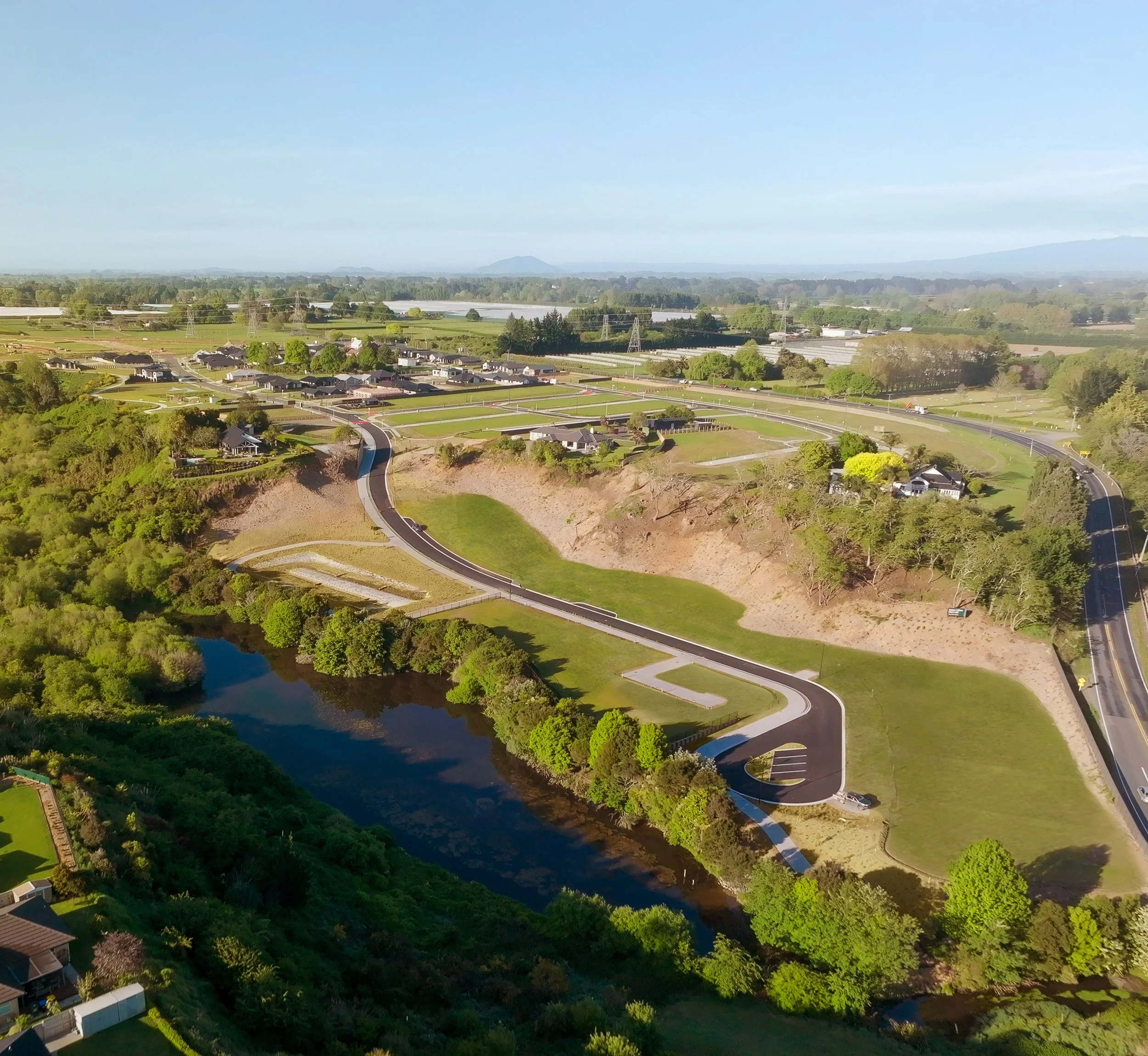
Te Awa Rise sits at the intersection of Cambridge's rapid growth and the Waipā District Council’s ambitions for a more connected, less car-dependent town. The council has been explicit about sustainability in their development plans. New neighbourhoods must provide open spaces and connect new developments through a network of ‘green’ pedestrian and cycleways, while also preserving existing natural areas like river terraces and waterways. Te Awa Rise’s built-in cycle paths and walkways align well with the Waipā 2050 strategy’s vision.
The Sanderson Group worked closely with the council’s principal engineer, Tony Coutts, who was impressed with the developer’s communication, shared vision and commitment to achieving the 2050 regional goals. “Kudos to them for working so closely with us to progress and work to make this cost effective and timely. From the land-acquisition stage through to planning and providing road networks, and the bridge that spans the natural waterway – it’s been a fun and interesting project.”
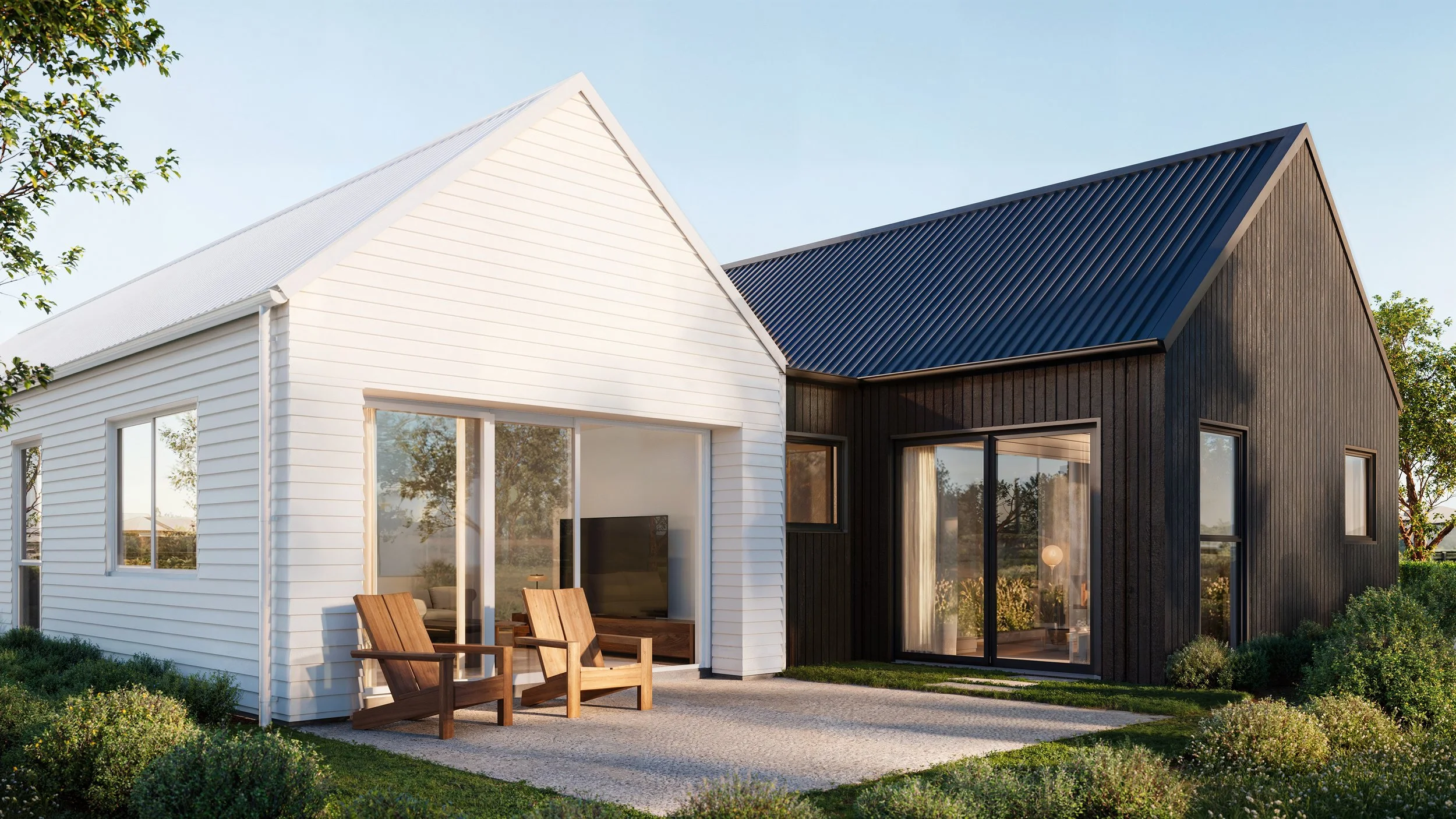
Perhaps you’re already one of the many people in on the secret of what the Waipā District has on offer. The designated area the district encompasses is in the heart of the Waikato region, south and south-east of Hamilton city. It includes the key towns of Cambridge, Te Awamutu, Pirongia, Ōhaupō and Kihikihi. The fertile land, nurtured by the mighty Waikato River that flows through the region, supports a wide variety of agriculture and outdoor activity, and in recent times has attracted a veritable boom in residents.
The strong rural-urban mix of the Waipā District and a council working closely on developing the region with critical infrastructure is evident. Arterial roads, bridges, amenities, and a key focus on strengthening the Hamilton-Waipā corridor for better transport and economic outcomes, including a 9.8 million-dollar extension at Hamilton Airport, means this area is not only a beautiful location to live in, but also provides streamlined transport systems within the ‘Golden Triangle’ (Auckland-Hamilton-Tauranga).
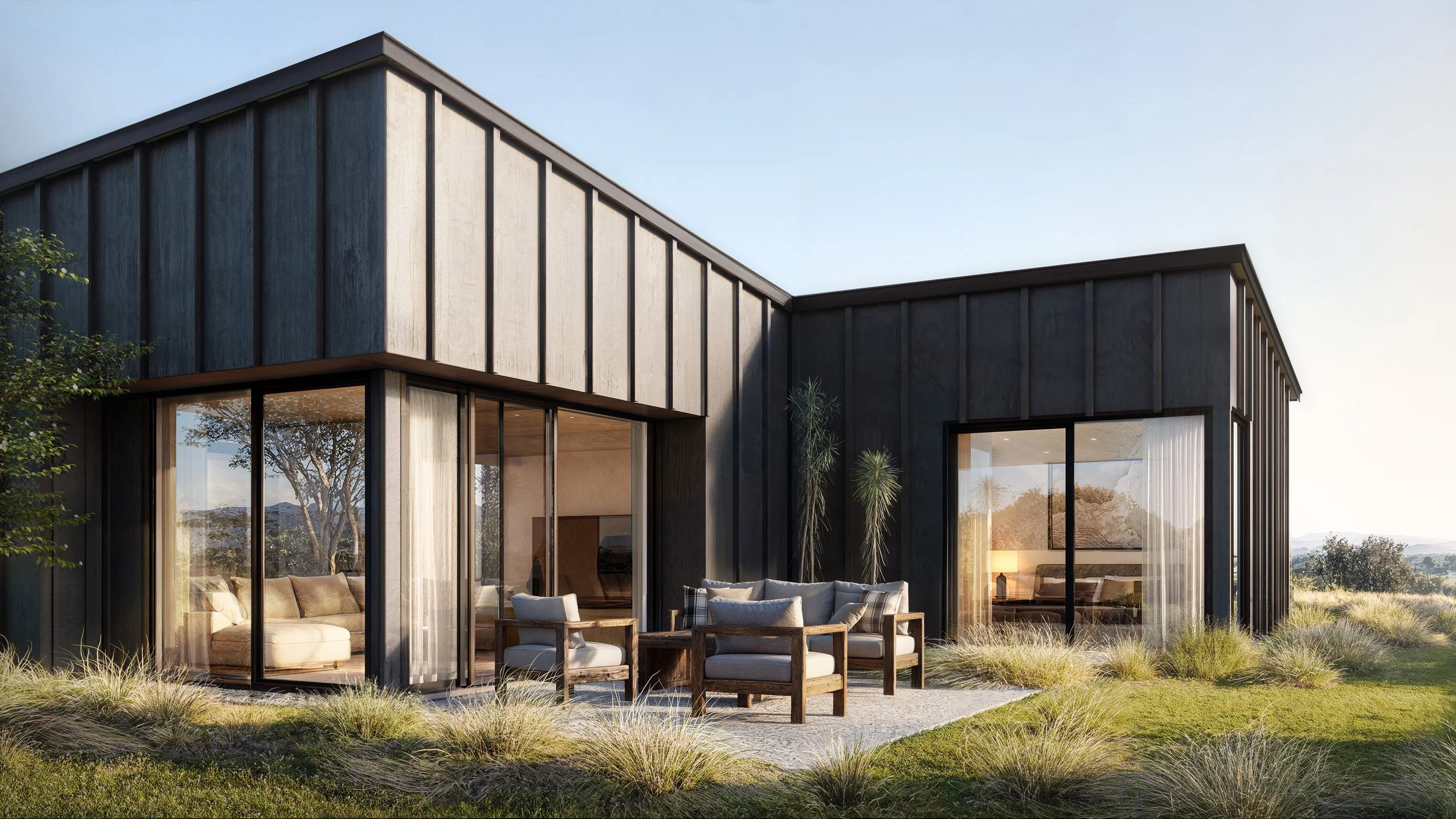
Just minutes from the delightful town of Cambridge and seamlessly connected to the wider Waikato, Te Awa Rise is a north-facing community offering elevated views across treetops and native bush. The clever design of the Sanderson Group’s latest development address affords new residents an enviable lifestyle, as described by Jared. “The nearly 10-hectare development has been layered across two terraces. This adds incredible character to the ‘aspect’ of most of the properties on offer, the two elevations and the way the individual sections have been sized and arranged. It means they’re north-facing with east-west perspective, open and private. The four original homes add character, as does the historic pā site that will remain, various green spaces and top-notch landscaping.”
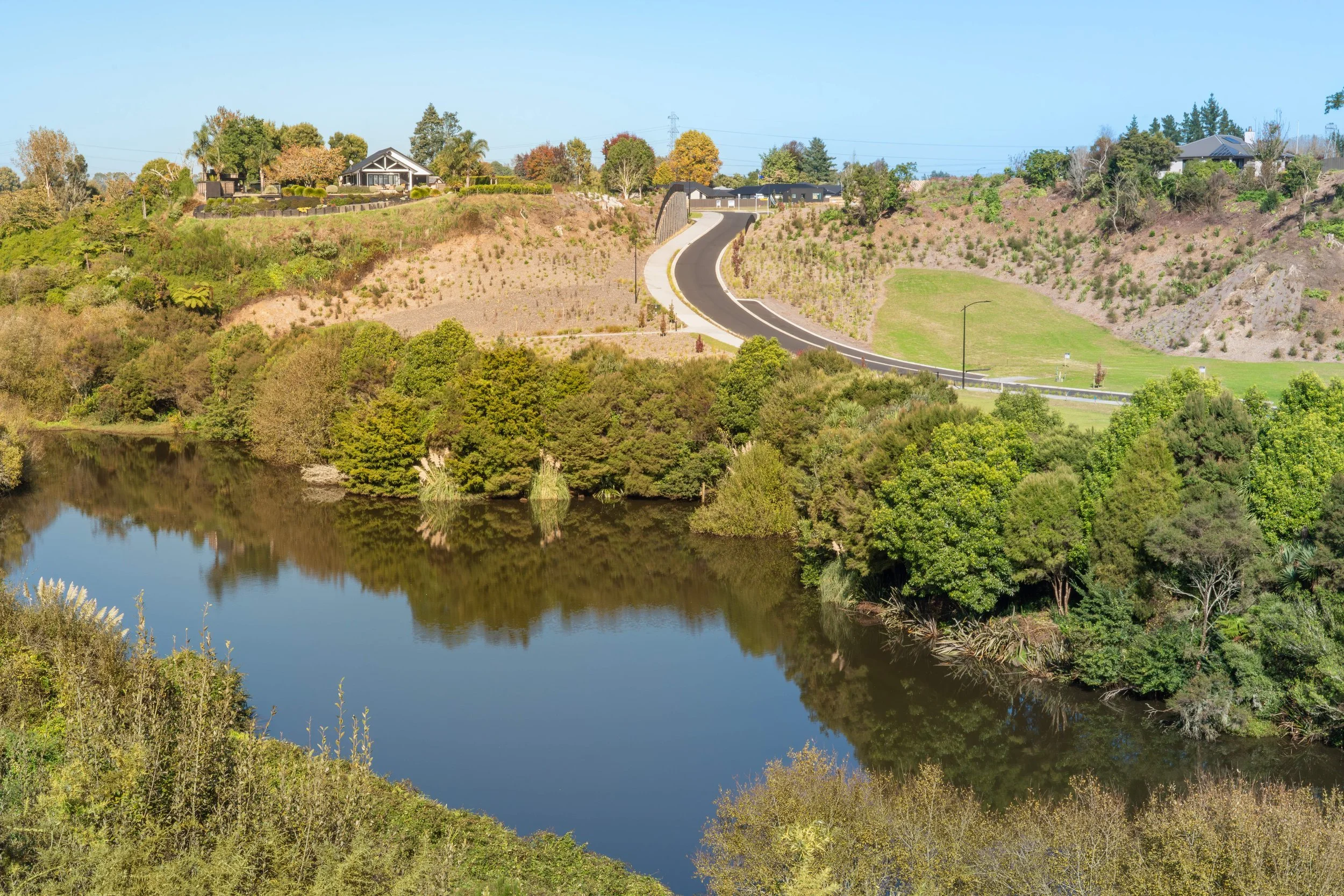
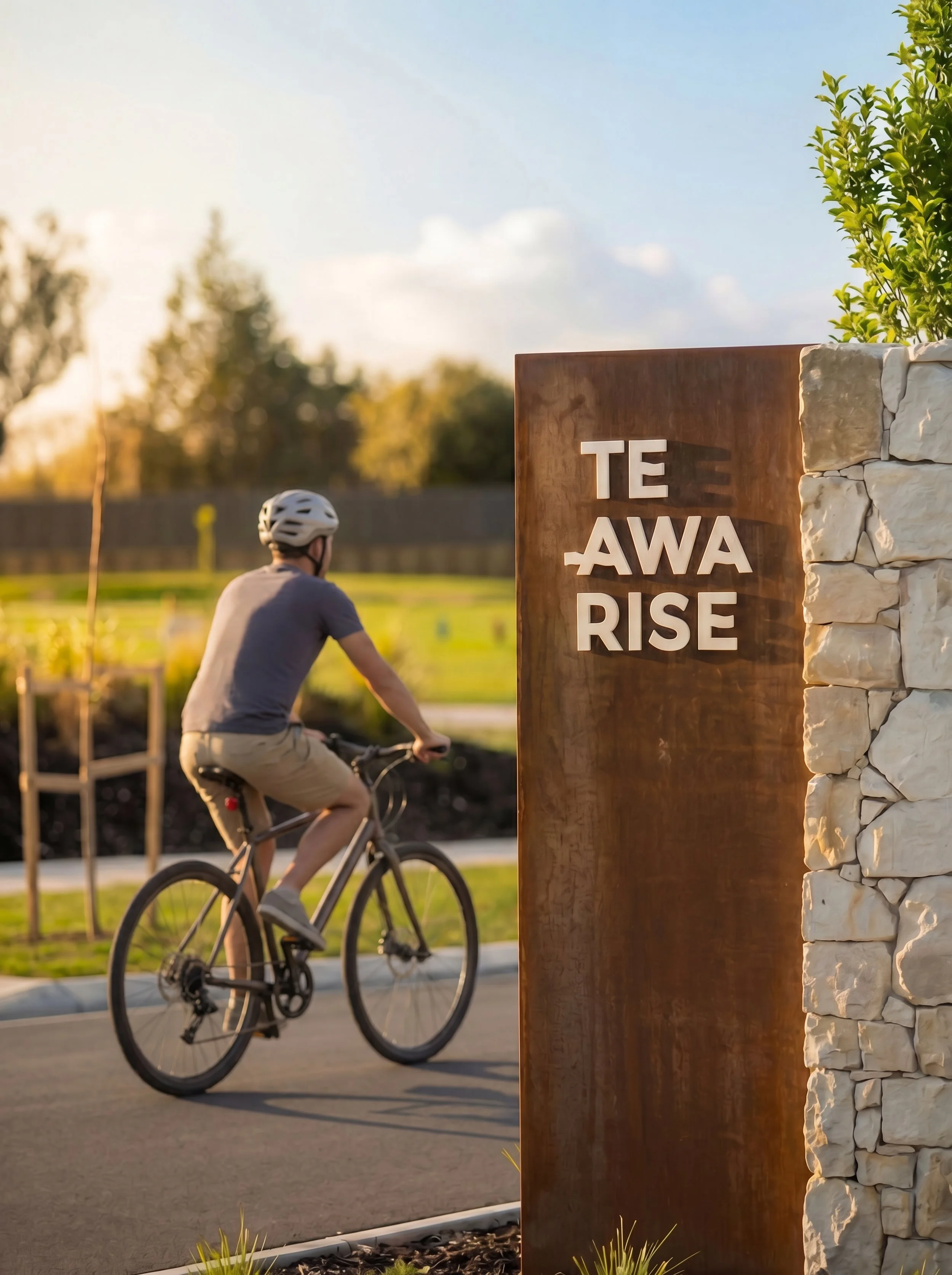
The lower level includes a reserve and natural waterway that’s home to a variety of native birds and will be accessible to residents. Significant attention has been paid to landscaping – whole areas planted in native plants already attracting native birds, feature specimen trees that when fully grown will create privacy. Paths are extra wide; envisage yourself (as I did), walking or biking them, doing your daily laps, or connecting to the adjacent neighbourhoods and Cambridge township itself.
“The bridge at the bottom of Te Awa Rise is the perfect example of the outcome of engaging with one of the most progressive councils we’ve worked with,” explains Jared. This pre-built bridge – that was ‘dropped in’ by crane to span the waterway – is now a critical link through the subdivision for both residents and others to connect on to the Te Awa River Ride Cycle Network, touted as 65km of one of the most accessible and scenic cycling and walking trails in New Zealand.
Sarah Ulmer, trail manager at Te Awa River Ride Charitable Trust says: “It’s so awesome to see Te Awa Rise and Waipā District Council teaming up to make it easier and safer for people to get around town without needing a car. A key walking and cycling link is now complete at Te Awa Rise, meaning you can get safely from Kaipaki all the way up to Cambridge Park.”
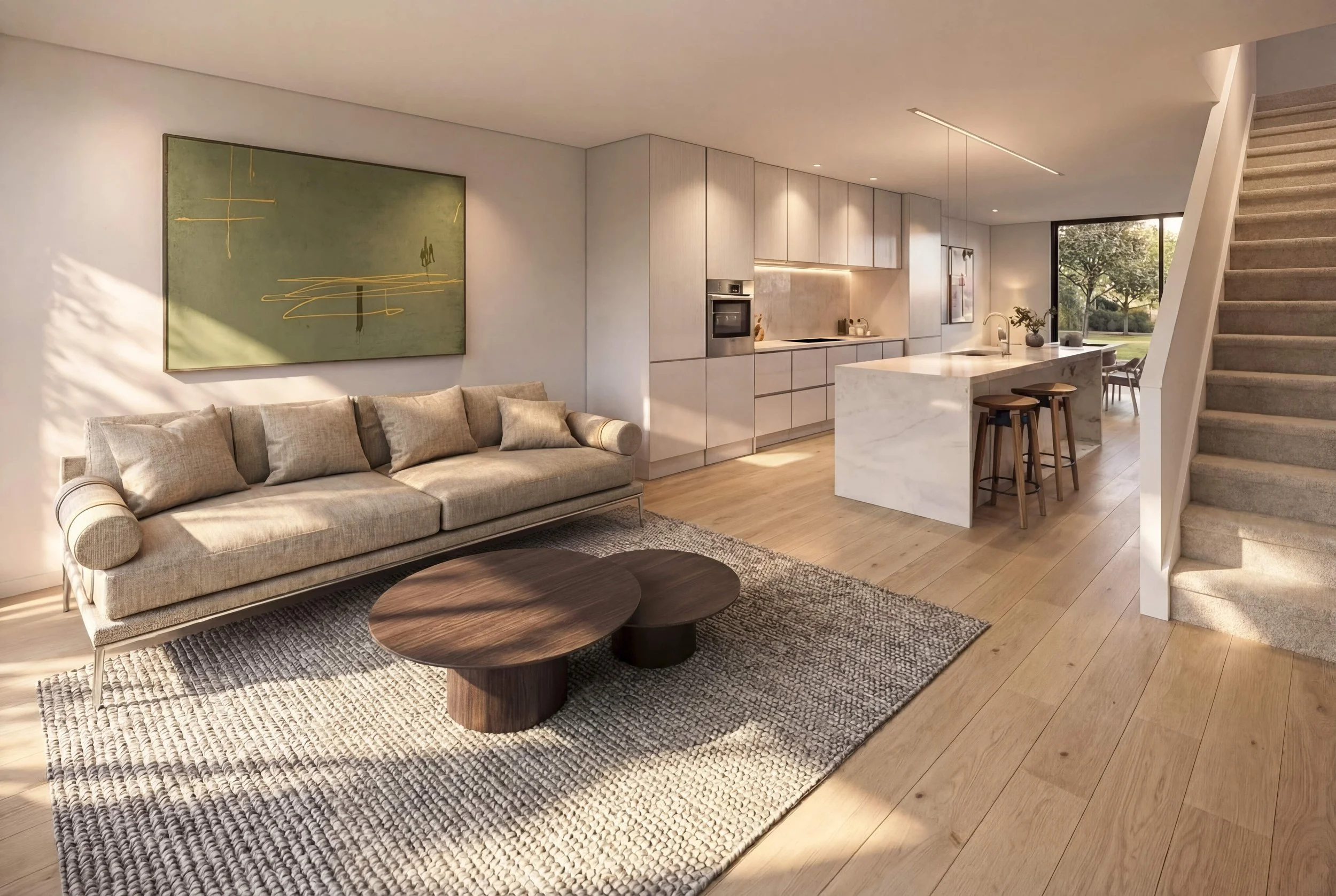
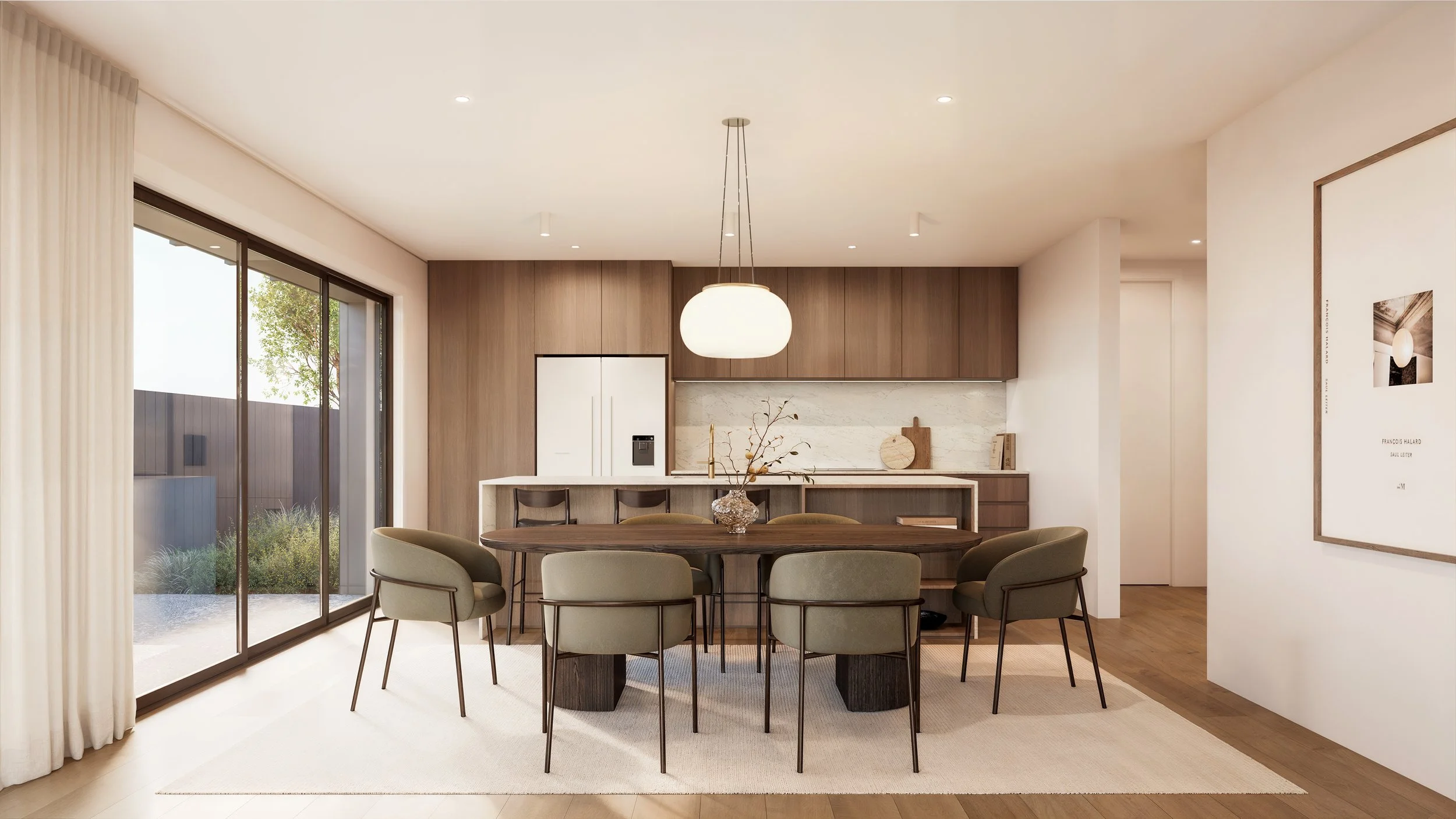
So, back to you and your new home – what can you look forward to? With a number of builds underway from the 11 design-and-build options on offer, you can see the calibre of the neighbourhood unfolding. Should you wish to engage your own architect and builder, you can, but with respect to the design guidelines in place. “Our own house and land packages offer architectural perspective – roomy contemporary houses (around 180m2 plus), four-bedroom or three plus an office or workspace, and double garaging,” says Anthony. “In order to protect the value of the buyer’s investment, independent designs need to be in keeping with the overall standard of the quality materials we’ve used.”
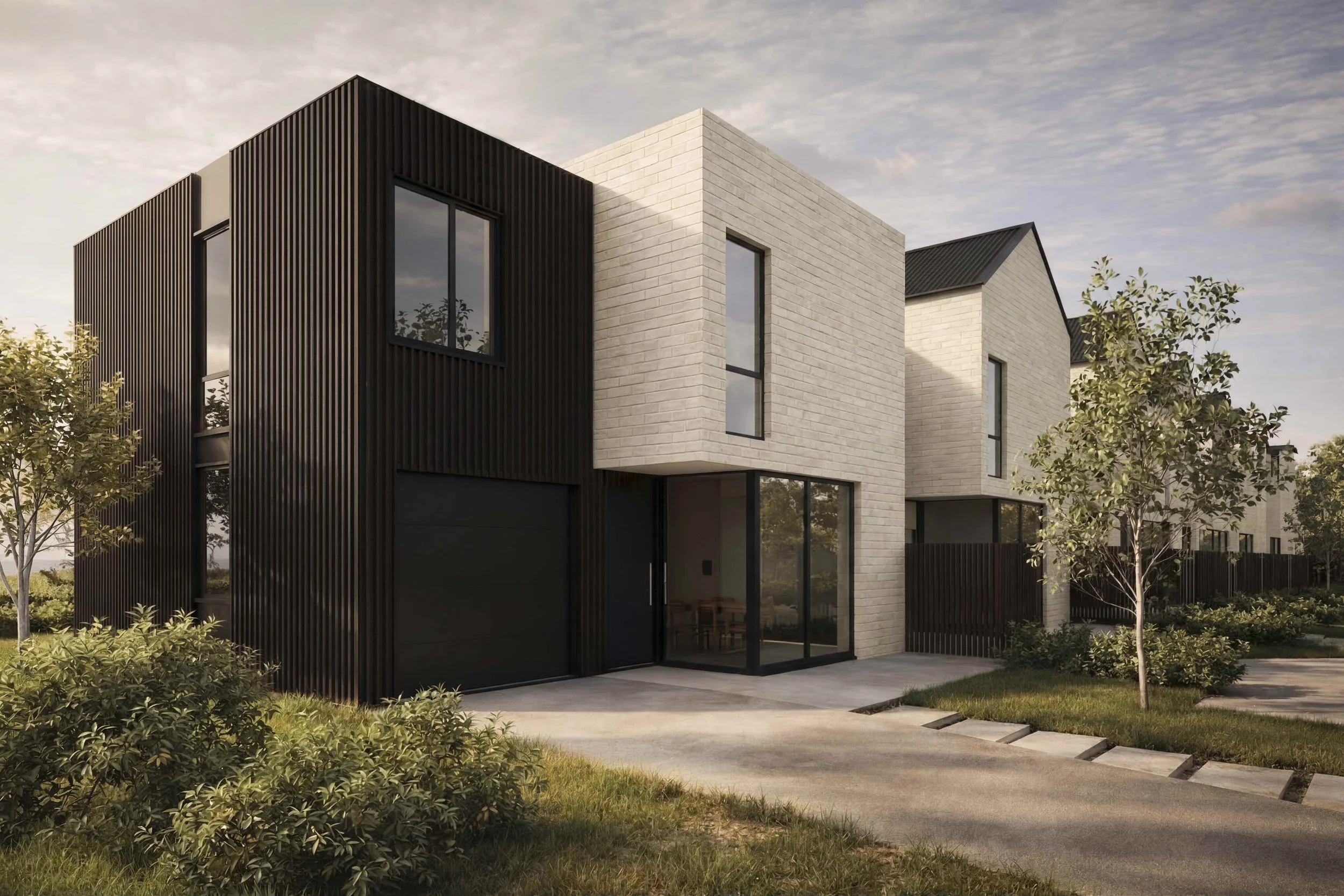
So, back to you and your new home – what can you look forward to? With a number of builds underway from the 11 design-and-build options on offer, you can see the calibre of the neighbourhood unfolding. Should you wish to engage your own architect and builder, you can, but with respect to the design guidelines in place. “Our own house and land packages offer architectural perspective – roomy contemporary houses (around 180m2 plus), four-bedroom or three plus an office or workspace, and double garaging,” says Anthony. “In order to protect the value of the buyer’s investment, independent designs need to be in keeping with the overall standard of the quality materials we’ve used.” for, take a moment to explore 6 Awarua Crescent, the three-bedroom option (220m2) with a detached, private flat, plus two-car garaging and a generous section size of 523m2. With a range of other sites available, up to 1,000m2, there really is an option for all. The lots themselves are well considered from an urban design perspective, with a focus on ‘liveable design’.
“We engaged a top-tier urban designer, who has produced a neighbourhood that’s so well connected by the interior roads and pathways to the adjoining arterial roads, landscaping and reserves,” Jared tells me. “Each of the lots is a regular shape, to make sure buyers don’t have wasted space, and do have privacy, light and aspect.”
There are also a number of four-bedroom townhouses being built. Each is designed to be as low maintenance as possible, so you'll spend more time enjoying your home and life. Dual entry provides privacy for shared living, as do the two outdoor living areas.
“Although six properties have already sold or are under contract, there’s still a good range of properties available,” adds Jared. “You just need to get in quick to secure one of the best remaining sites.”
If you’re wondering who you might be living next to, current sales suggest a cross-section of residents, from empty-nesters to young families looking for proximity to schools, as well as professionals enjoying the quick commute to Hamilton, the airport (15 minutes), Waikato Expressway (8 minutes) and Karāpiro (10 minutes). You might even see me.

TRUE TO YOU
Early detection of bowel cancer is a passion project for Dr Clive Price.
Early detection of bowel cancer is a passion project for Dr Clive Price.
WORDS NICKY ADAMS | PHOTOS SALINA GALVAN

Whereas even mentioning bodily functions would have made my grandparents blush, today’s society is far more open and at ease with discussing matters of a personal nature. Which is why, along with general chatter about coffee prices or office politics, talk of the vagaries of bowel movements wouldn’t be unheard of among many friend groups. Rather than just casual chit-chat, these conversations are usually rooted in cause; we are undoubtedly far more aware of our personal well-being (find me someone who hasn’t upped their protein intake), and way more proactive when it comes to safeguarding our health (collagen smoothie anyone?). Despite all these attempts at better diet, fitness and education, the thought of cancer still lurks in the back of many minds.
When Dr Clive Price, a GP at the Pāpāmoa Tara Road Medical Centre, relocated from the UK to New Zealand, he was surprised to find that the age to qualify for the New Zealand government early detection programme is significantly higher here than both the UK and Australia, despite him being under 40, and self-testing annually with a FIT (Faecal Immunochemical Test), along with his dermatologist wife. The lack of privately purchased tests available shocked him.

“I’ve been a doctor for 12 years, a GP for the last eight years. Part of my training was in a hospice, and one of the things I noticed was the number of young people coming in with cancer. In a six-month placement, we had five or six under 40s come in for the last days of their life, and about three of those were bowel cancer.”
“It led me to think we’re doing things the wrong way round; we’re spending billions on treating things too late. That got my interest in proactive healthcare and screening.”
With the New Zealand public system favouring the 58-74 age bracket, Clive believes, “There’s a huge proportion of the population who could do with being screened, but it’s not available. Most medical guidelines recommend screening from the age of 45 or younger, if you’ve got risk factors”. With the screening age set at 58 in New Zealand, that’s 13 years where earlier detection could potentially make a meaningful difference.”
Seeing a huge gap in the market, Clive felt he needed to introduce this test privately in New Zealand. His research showed there are bowel cancer tests available here in pharmacies (FOB tests), but they use unreliable, outdated technology.
“They work by detecting microscopic bits of hemoglobin in poo, but they cannot distinguish between human hemoglobin and animal, so basically anyone who eats meat tests positive - a huge number of false positives, so they are really inaccurate.”
Conversely, a FIT does distinguish between animal and human hemoglobin. It’s designed to look for tiny traces of blood in your faeces that are too small to see with the naked eye, and which could be a sign of cancer. Made for ease of use, according to Clive; “They also use a much better analysing method, so rather than doing three separate samples, you need only one little poke (in the faeces). It can also distinguish where the blood is coming from, so the number of false positives is much less, and the sensitivity is much better. The studies I’ve looked at suggest that FIT testing, depending on the threshold, picks up to about 90 percent of tumours.”
In a health system that is not currently geared -or resourced - for the concerns of under 50s, GPs will struggle to offer testing to ‘the low risk but not no risk’. The population that would find the FIT test particularly helpful includes two groups: symptomatic patients,
whom a GP would be keen to rule out from bowel cancer, and asymptomatic individuals, whom a GP might want to screen proactively. While candidates would need to be over 18, growing evidence suggests that many people over the age of 45 would benefit from bowel cancer screening. In those with risk factors, or in certain ethnic groups such as Māori, emerging data indicates screening may need to begin earlier, potentially from around 35.
The decision to create the company TrueScreen was one that Clive and his business partner Richard Porter, both took extremely seriously. Richard was attracted to the venture for not only its core value, but also the “fundamental ease and accessibility” it offers to consumers.
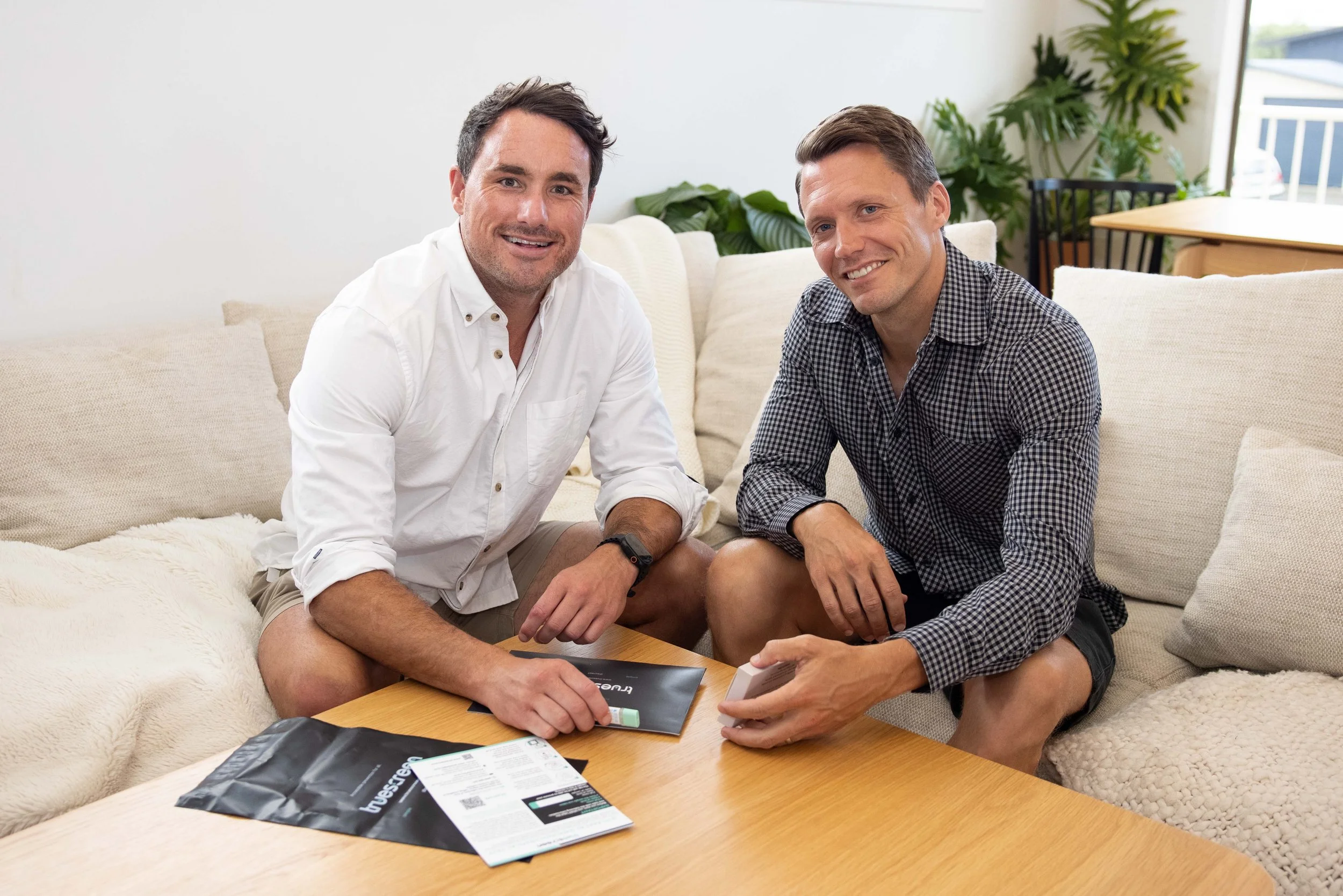
As a doctor, Clive reiterates, “I’m duty bound ethically, morally and professionally to make sure this is an evidence-based test - it’s safe and the gold standard.”
Working in partnership with New Zealand’s biggest laboratory (which also runs the government screening) means absolute reliability, accuracy and professionalism. As for the process, it couldn’t be simpler. Once the test has been ordered, it’s sent to the customer, who will then take their own sample. A return mailer is provided and keeps it safe, before being returned to the lab within a 14-day window. The results are confidentially accessed by Clive, who reviews them and then contacts the person being screened.
Clear evidence shows that bowel cancer is “the fastest growing cancer for under 50’s - it’s disproportionately shooting up”. However, Clive points out, “if bowel cancer is detected early, it is highly treatable and often curable.”
The idea of getting on board with a privately funded, annual screening programme is not one that will be unfamiliar to Kiwis; Mole Map, for example, is rolled out on this premise. And when it comes to something that could be life or death, wiggling a stick in a poo sample, in the comfort of your own home, feels like an incredibly low-level commitment. I, for one, will be signing up.
Truescreen FIT Tests are now available via the website.

UNCORKING NEW RULES
Alice Rule has been defying expectations since she was a schoolgirl growing up in Northland. That determination shines through in her wines, but also makes her an inspiration to be around, as UNO wine columnist Jess Easton writes.
Alice Rule has been defying expectations since she was a schoolgirl growing up in Northland. That determination shines through in her wines, but also makes her an inspiration to be around, as UNO wine columnist Jess Easton writes.
PHOTOS RYAN MCCAULEY PHOTOGRAPHY

Told she didn’t have the smarts to study wine, there’s no small irony that Alice Rule now owns her own international wine business.
‘Encouraged’ to leave school early by sceptical teachers, she now boasts a degree and a Masters’, the latter completed after a dyslexia diagnosis as an adult, just to show she could.
Now, having barely breached her 30s, the founder of boutique Marlborough-based wine label 3Sixty2 holds down a separate fulltime job, is the mother of ridiculously cute toddling twins, takes a mean photo and spends her spare time dreaming of biodiversity and nature-based solutions.
I first met Alice through mutual buddies in 2022 and we’ve since become firm friends — as our wine adventures on page 124 of this edition can attest.
She’s funny and grounded, smart and driven. She also makes delicious wine, using sustainably-sourced grapes and taking a deep, respectful bow to nature in everything she produces.
Her wines exude confidence — they know what they want to be. I really rate her Sauvignon Blanc, which stays true to the Marlborough region but brings in a balanced acidity and structure. Her Chardonnay has soul and her Pinot Noir is made with the passion and precision that only a small-scale producer can attain.
But like any great wine, it’s always the backstory which makes the vintage that much more spectacular.

That undiagnosed dyslexia, in hindsight, was like a giant brake on Alice’s schooling, and it took some time to find the tools to help her shine.
Leaving school at 17, she worked in a café before heading to Hawke’s Bay to study winemaking at CIT. Even then, those first few years were near impossible, but a supportive dean encouraged her to keep trying and she was eventually awarded Esk Valley top viticulture student.
Her first years in local vineyards were also a struggle, as a young female battling to be taken seriously. So, she figured she would go to work for the one person who truly believed in what she was doing — herself — and launched 3Sixty2 in 2016.
In the meantime, she completed the Kellogg Rural Leadership Programme, investigating glass recycling in New Zealand, and introduced a range of sustainable measures into her business, like becoming the first New Zealand producer to have a complete climatepositive wine portfolio, certified with CarbonClick.
I asked Alice, ‘where to next?’ and she laughed heartily. Doors which used to slam shut keep springing open, and her next phase is picking which one to venture through.
You get the feeling, as the song goes, she’s only just begun.
Jess Easton is a director and owner of Kitchen Takeover and Saint wine bar, complementing her career as a Tauranga-based lawyer.

MAISON DU SOLEIL
A sanctuary of luxury and tranquillity, this beautifully reinvented estate offers breathtaking river views, refined interiors and effortless indoor–outdoor living.
A sanctuary of luxury and tranquillity, this beautifully reinvented estate offers breathtaking river views, refined interiors and effortless indoor–outdoor living.
WORDS JO FERRIS
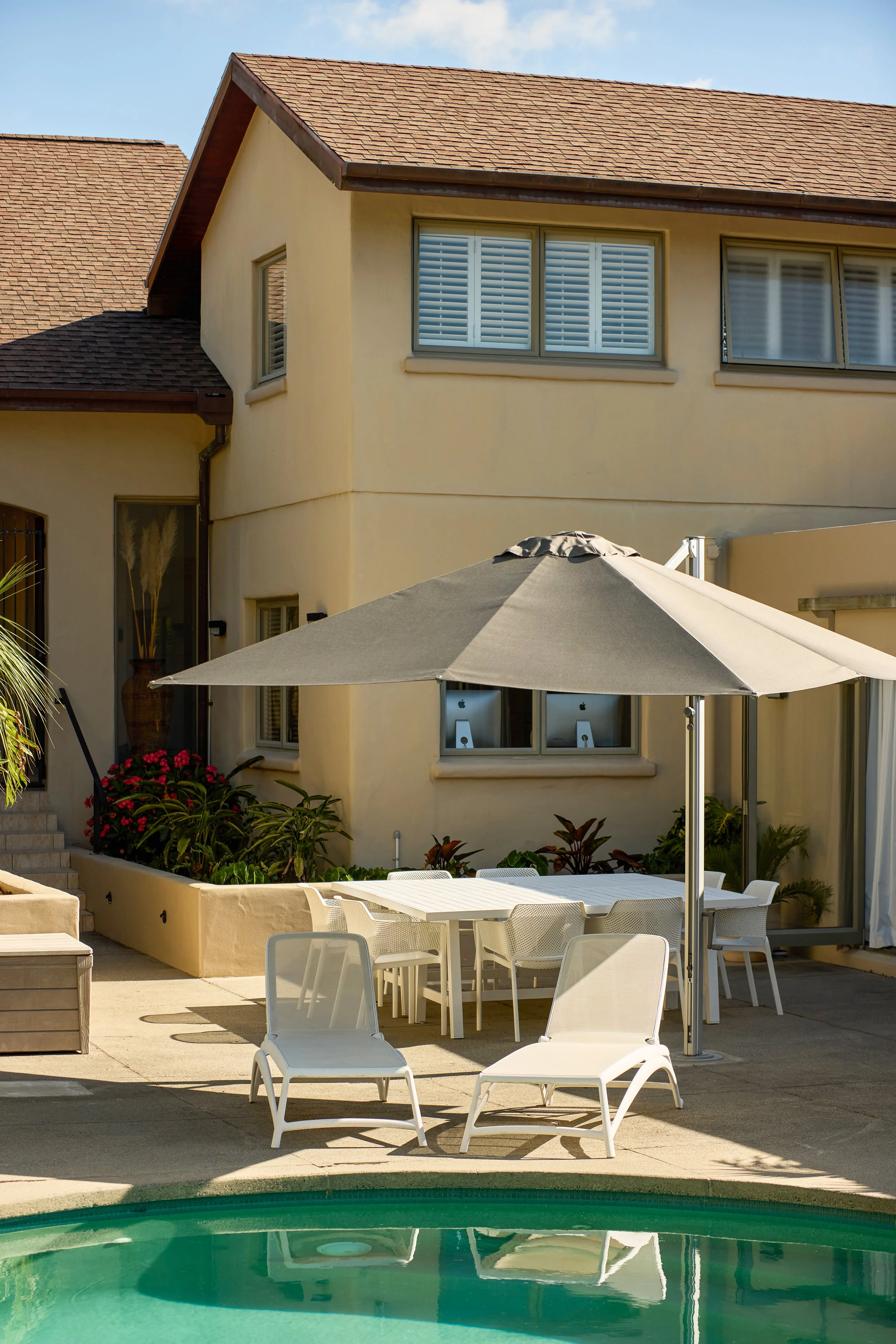
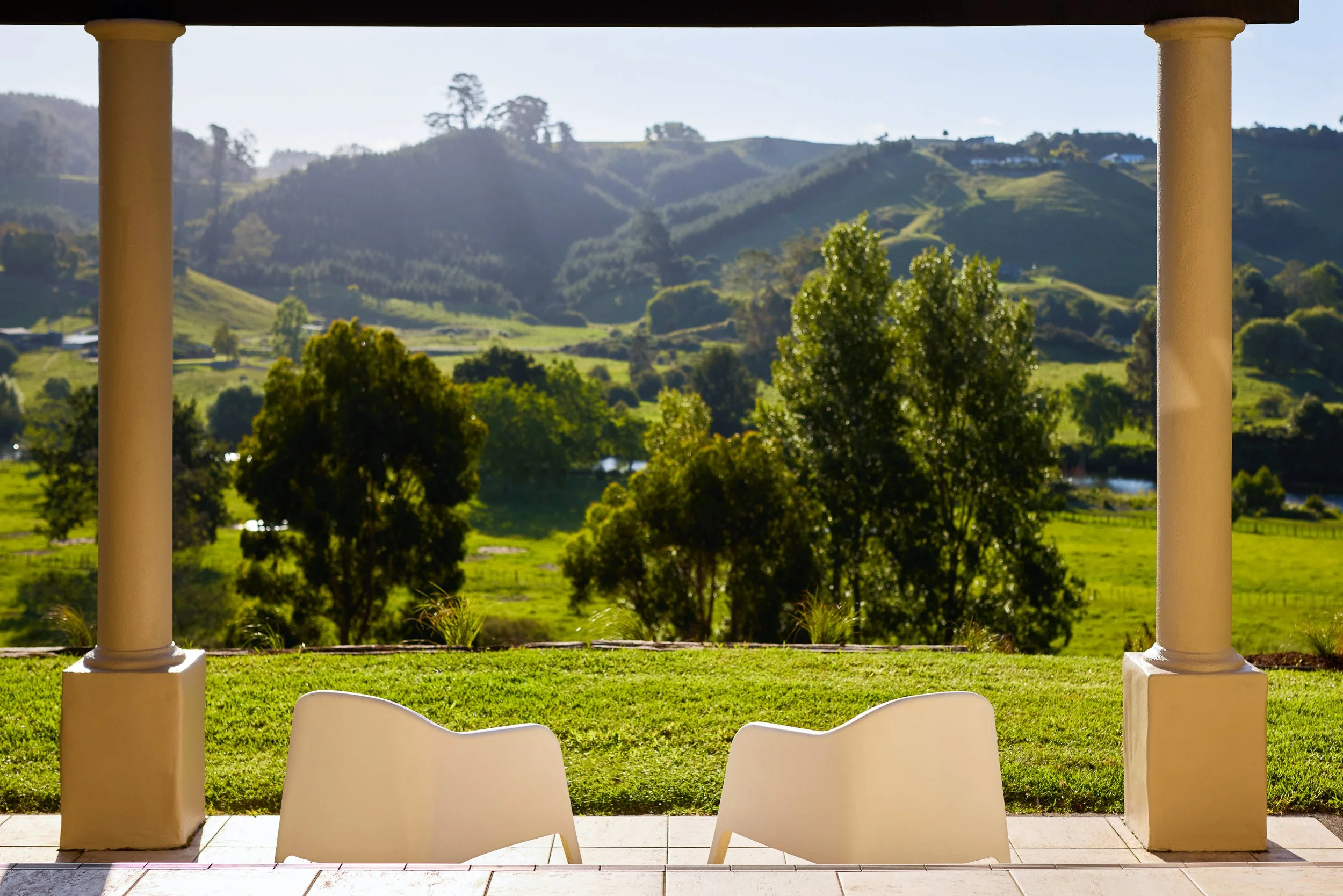
Nestled down a sweeping driveway, overlooking the Wairoa River and hills beyond, this commanding position basks in one of Tauranga’s prized areas. The tranquillity is bliss — sounds of nature for company and grazing for horses or livestock; where friends can enjoy privacy in luxury surroundings; river views always in sight and a reserve to walk the dog with the children near the river below.
Mindful of respecting the home’s original calibre, these owners wove an extraordinary tapestry and warm embrace into its renovation. Exquisite marble tiling and mosaic flooring in bathrooms set the foundation for what now exists. Everything else is new; detail with soft sophistication — underpinned by undeniable expense.
A grand foyer introduces a sweeping stairwell and step-down entries to both the lounge and heart of the home. The soft backdrop is personalised with accents that define each room — plush drapes, Sante Fe shutters and bespoke lighting all statement features. The gourmet kitchen is a star — the emotional and functional heartbeat of family life. Showcasing bespoke American Oak cabinetry and Abu Dhabi porcelain benchtops, oak flooring throughout this living area maintains continuity with the home’s greeting. This is where entertainment begins; before relaxing around the fireplace or stepping into the lounge for a more intimate ambience.
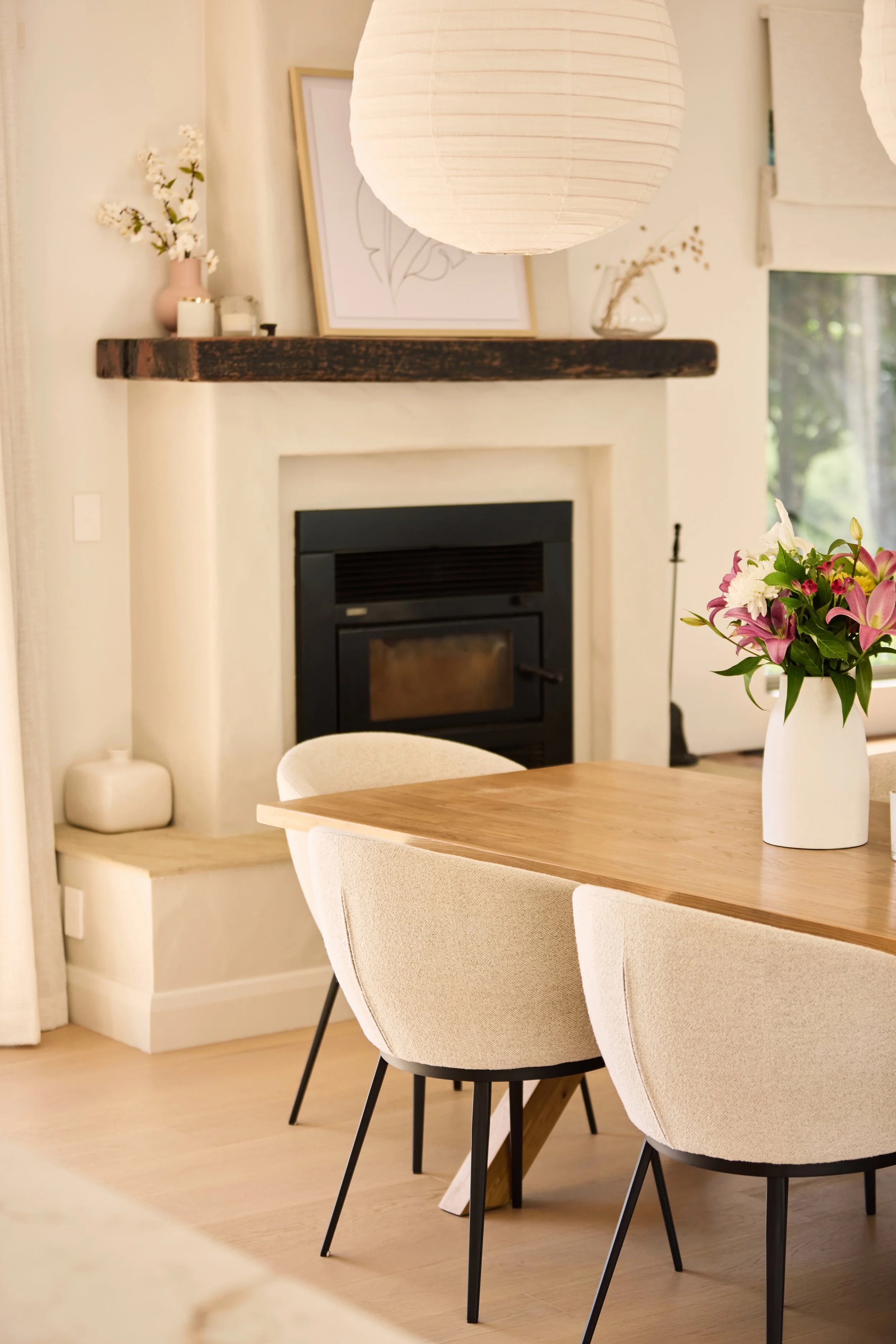
Unquestionable quality throughout highlights the diligence in reinventing this home.
A romantic master suite enjoys privacy downstairs, leaving three bedrooms and luxury bathroom upstairs for family and friends. Skilful interior design instils tender moods; refined in an understated manner, yet revolving around family, relaxation and entertaining. Crowds have cherished gatherings here; ample room to congregate — inside and out. Gazing over the valley, watching rowers on the Wairoa River; or lounging around the solar-heated pool, wafts of the Mediterranean float in the air.
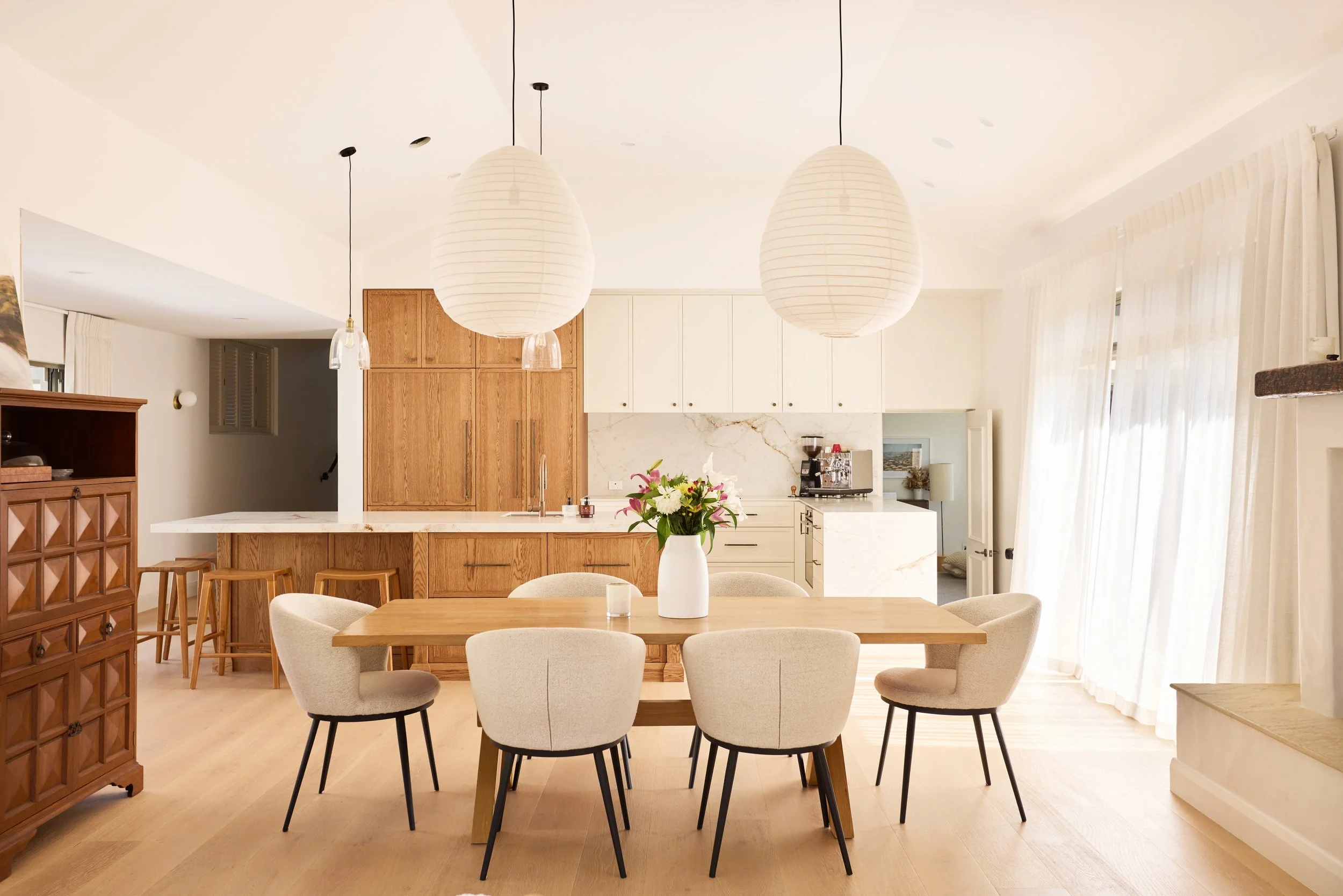
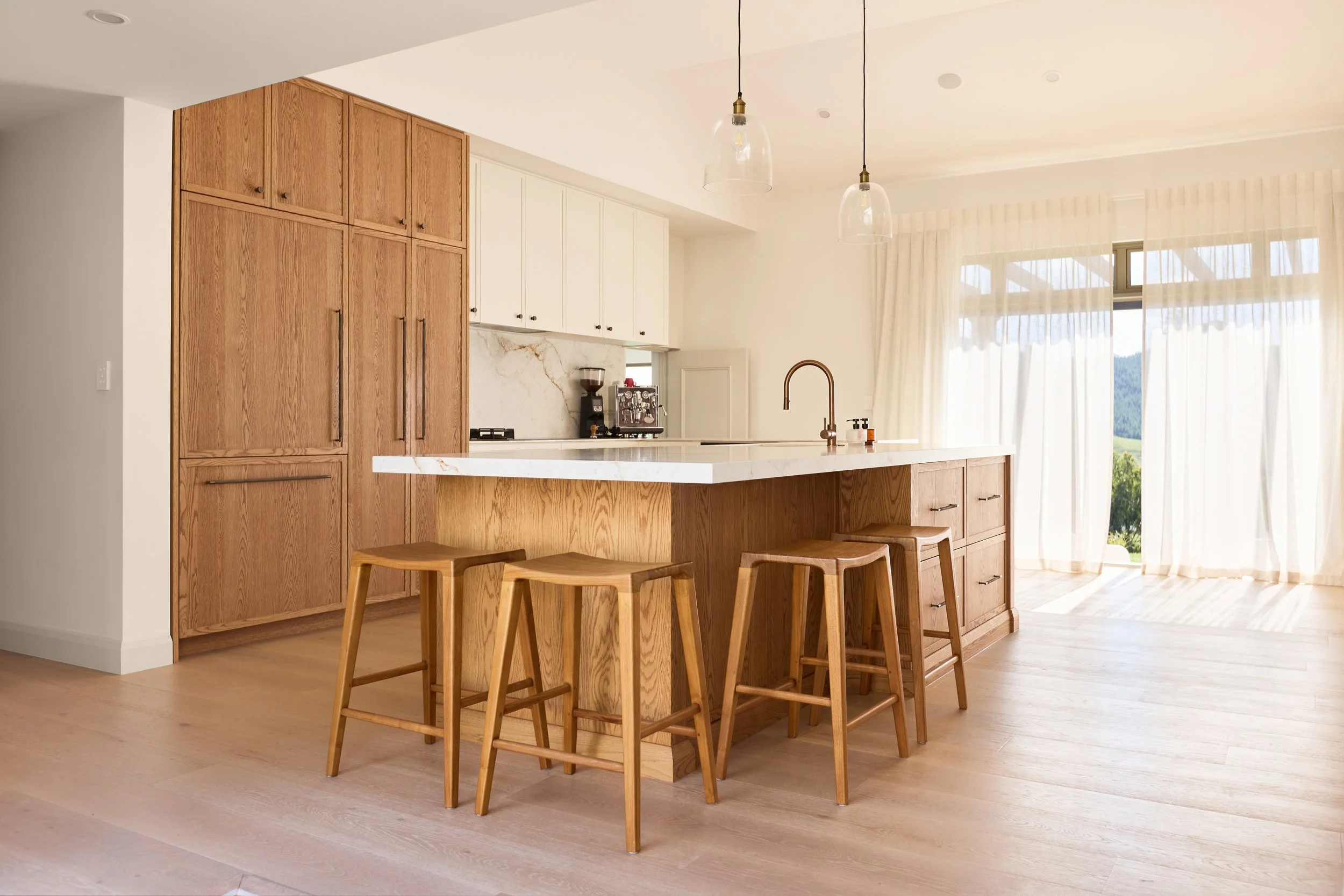
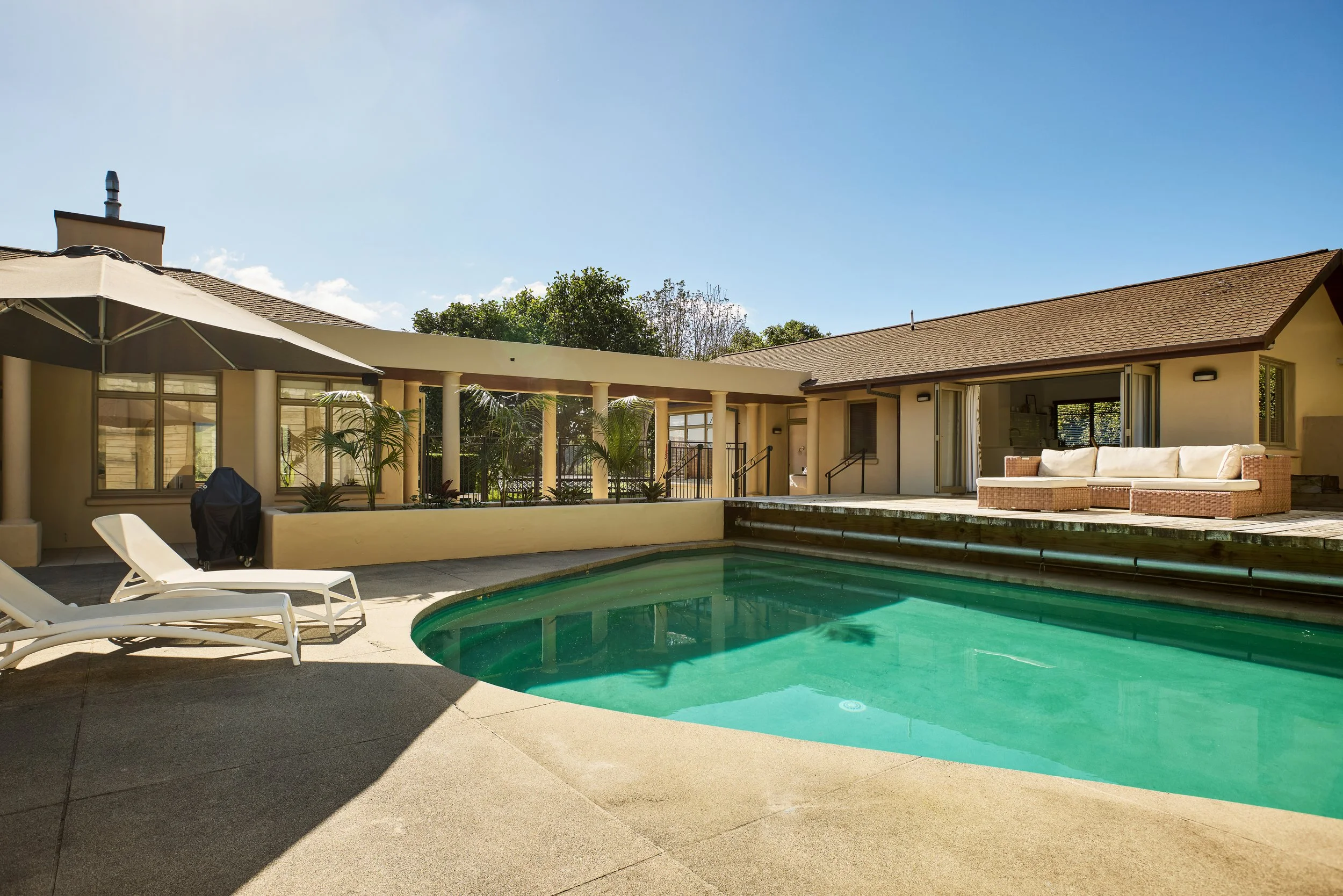
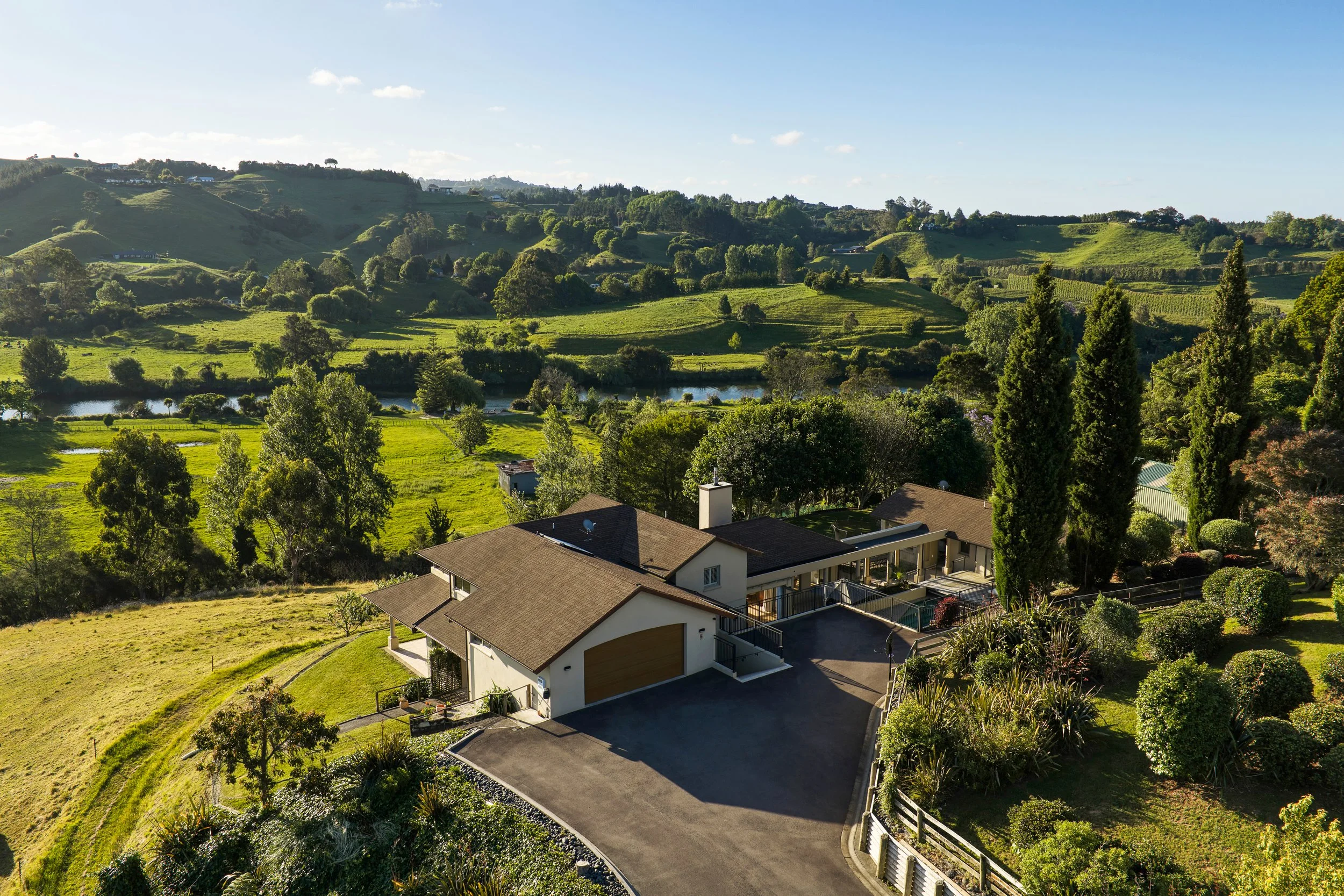
Surprises abound everywhere, from the impressive laundry, incredible storage to a well-positioned office. Nothing beats the sheer awe of the cinema, however. Soundproofed, dark and moody — with a full-wall screen — this is the secret jewel of a residence that continually astounds. Stroll the promenade to the guest house and more surprises await. Fully selfcontained, with its own driveway entrance; this is highly successful guest accommodation — and could continue to be. Choice is the key.
Perfect now, the expanse of land and shedding invites another chapter in this home’s story. Instilling artistry in the five years these owners have lived here, a new project calls out of town. They leave behind a legacy of love and reverence — and an invitation to a wonderful lifestyle.
58 Miles Lane, Tauriko OLIVERROAD.COM

CROWD PLEASERS
The Bay of Plenty is rapidly becoming a hotspot for events. Karl Puschmann talks to the key people behind some of the Bay’s biggest events to get a behind-the-scenes look at what it takes to bring these events to life, their cultural and economic impact, and discover if this is just the beginning.
The Bay of Plenty is rapidly becoming a hotspot for events. Karl Puschmann talks to the key people behind some of the Bay’s biggest events to get a behind-the-scenes look at what it takes to bring these events to life, their cultural and economic impact, and discover if this is just the beginning. PHOTOS ROBBIE HUNTER | HAIR + MAKE-UP DESIREE OSTERMAN

Toby Burrows and Mitch Lowe
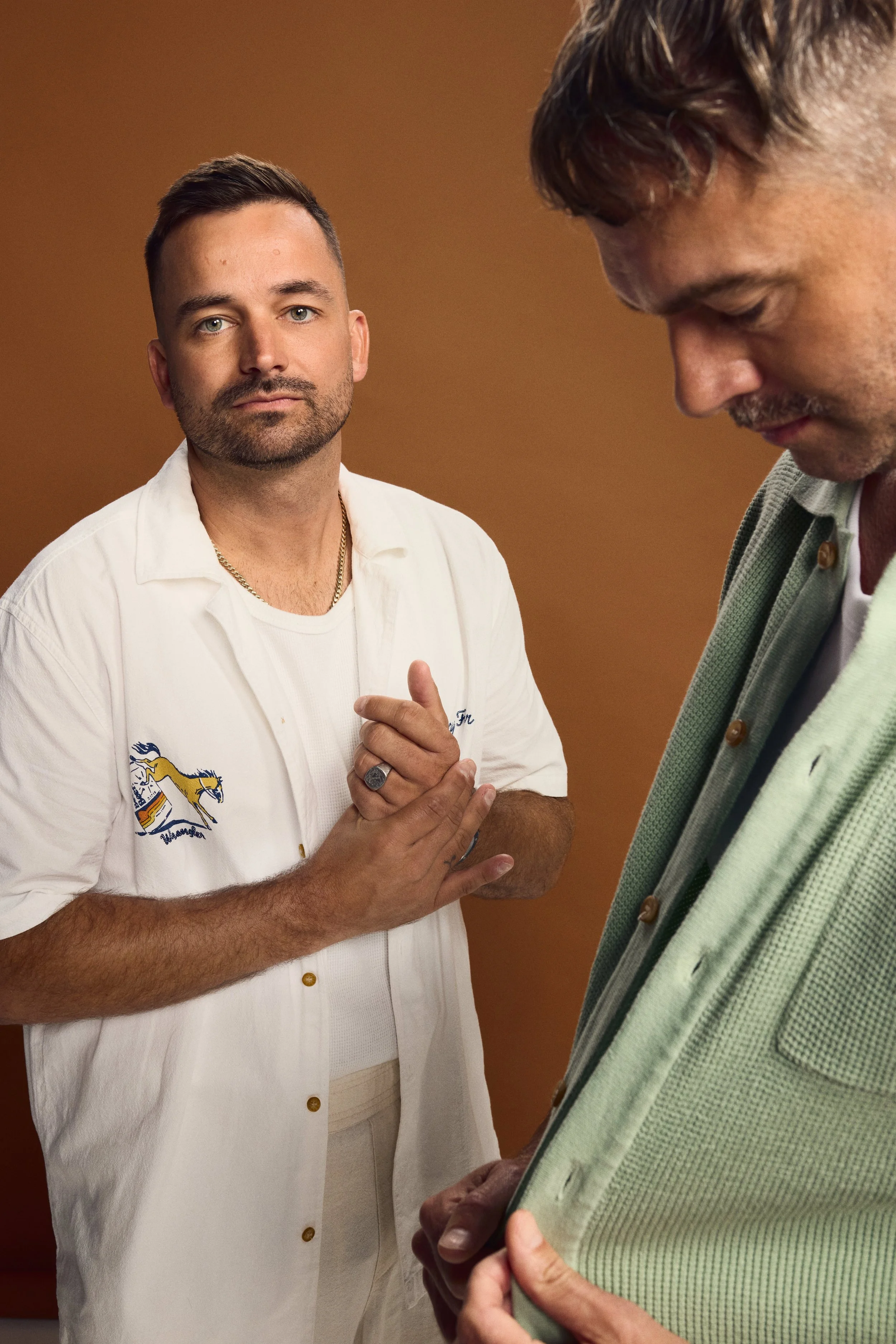
I’m standing in the heart of Mount Maunganui’s industrial area, in front of a large warehouse, wondering if I’m in the right place. This unlikely, unglamorous spot is where some of the Bay of Plenty’s biggest events are dreamed up, organised and, if all goes to plan, brought to life. I’ve come to talk to Mitch Lowe and Toby Burrows, the two chaps behind the summer’s history-making Fisher concert at the Bay Oval, about the resurgence of events in the Bay of Plenty, what goes into staging them, and the impact, both economically and culturally, that they have on our region.
But first, I need to find the front door.
I walk down the long driveway, and past the side of the building, whose sliding doors have been pulled open on this bright, hot day, affording me a view of the welders inside who are hard at work behind a shower of bright sparks. It’s a far cry from the triumphant firework display that lit up the sky to bring the Fisher concert to a close.
Near the end of the building, there’s a door. I poke my head inside and see a wall covered in framed concert posters, and a top-of-the-range Pioneer DJ set-up in a booth to my left. This is more like what I was expecting. What I don’t see is people.
“Hello?” I offer, walking inside and knocking on the wood of the DJ booth. Toby bounds down the stairs to greet me.
“Hey mate,” he says, shaking my hand. “Can I get you a Red Bull?”
Energy drinks in hand, he leads me up the stairs and into a boardroom, which is also decorated with framed posters, and where Mitch is sitting in front of a laptop, which he closes as we walk in. It’s here, from this office, tacked onto the back of an industrial factory, that the pair plan out over 150 events a year around Aotearoa.
“The Bay’s always been a priority for us,” Mitch says. “Because we’re local, we’re going to push as much as we can into the Bay. It's a really exciting time.”
“The summer’s been pretty busy,” Toby adds.
That feels like something of an understatement. After a barren few years following the COVID pandemic, there’s been an unignorable resurgence of events happening here in the Bay recently. Coupled with the freshly rejuvenated city centre, the upswing in trendy cafés, bars and restaurants popping up and the ongoing suburban growth down the Pāpāmoa coastline, it’s beginning to feel like the region is shedding its old, and somewhat unfair, reputation as a haven for oldies and gaining a name for itself as a spot where there’s always something happening.

“When I moved to Tauranga a decade ago, people used to go, ‘Oh, it’s a retirement village,’” Mitch laughs. “That used to be the general feeling before we started doing big events here and trying to bring a bit of life to it. Now, I know tons of people who have moved here. They think of Tauranga as one of the event capitals of New Zealand. It’s cool to be a part of that.”
The pair have spent decades working in the events industry — Toby for 23 years and Mitch for 16. Before joining forces, Toby was heavily involved in Gisborne’s New Year’s Eve festival, Rhythm & Vines, while Mitch built his career touring DJs and electronic acts and running club nights. Around a decade ago, Mitch moved to the Bay to launch the single-day music festival Bay Dreams, which debuted in 2016 and ran each summer until it was officially placed on hiatus last year.
The pair knew each other from the industry, and decided to work together on the legacy rocker Bryan Adams’ 2019 Aotearoa tour, which took in Auckland, Wellington, Nelson and Christchurch. This was a significant success, leading the partnership to continue and become more formalised, with Toby moving from his home in “Gizzee” to come to the Mount a year or so later.
“I did a lot of humming and hah-ing about it, but committed to the decision. Now I look back and wonder what I was humming and hah-ing about,” Toby laughs. “It has the beaches and the lifestyle, and geographically it’s sort of in the middle of everywhere. It ticked all the boxes.”
“We love it,” Mitch says. “We’re both raising our families here, which is a good indication of our passion for the place.”
The success of Bryan Adams had shown them there was a gap in the market for legacy artists, so the pair naturally doubled down, bringing over legendary acts like Toto, The Jackson 5 and Snoop Dogg, while also creating one-day festivals targeted at different music genres and audiences, like Rock the Bowl, Le Currents and, of course, Bay Dreams. Most did well. But, the pair admit, not all.
“The funniest one was when I asked my dad’ s opinion on a legacy act,” Mitch recalls. He said, ‘Oh, that’s a guaranteed sell. Absolutely. No question’. We booked it, promoted it, went on sale… and it flopped.” Jokingly, he says, “Dad doesn’t get free tickets anymore.”
But that’s the nature of the events biz, he says. Every show is a gamble that could literally see you losing your house. Something, the pair say, has almost happened more than once over the years.
But that was when they were younger, more naive and excited. But there were some growing pains, and Mitch says they had to learn how to run their business properly.
“We’re not taking stupid risks anymore,” Mitch says. “We’ve learnt how to take calculated risks. Now, when we go into things, I’m confident that we’re either going to win or we’re going to lose an amount that we can handle.”
“We manage risk in a way that doesn’t feel too risky,” Toby says, noting that while their gut feeling still plays a role, they also have a stringent process of running the numbers and looking at specific artist metrics that have to add up before they decide to go ahead with an event. “We’re not risking everything if it doesn’t work anymore. Initially, I was brazen and not afraid to lose everything I had, because I had nothing. As I’ve gotten older, you know, I don’t want to lose everything. We say ‘No’ to a lot of things that come to our desk.
It’s got to fit within certain metrics to make sense.”

Which brings us to Fisher. If there was a single moment that announced the Bay’s arrival on the national stage, it was that summer concert at Bay Oval — the first-ever music event held at the iconic stadium. In hindsight, it seems like a guaranteed success. But at the time, it was a bold gamble. And while their homes weren’t literally on the line, a flop would have set their business back years.
They’d invested half a decade securing Bay Oval and were determined to headline the first show with a global name. Still, having toured Fisher the previous year, they worried it might be too soon to bring him back.
“We thought if we brought him to the Mount in the middle of summer, put him on at Bay Oval with the right line-up around him, and marketed it properly, it would work,” Toby says. “We’re entrepreneurs at heart. We’ve lived with risk for so long that we’ve learned to thrive under that pressure.”
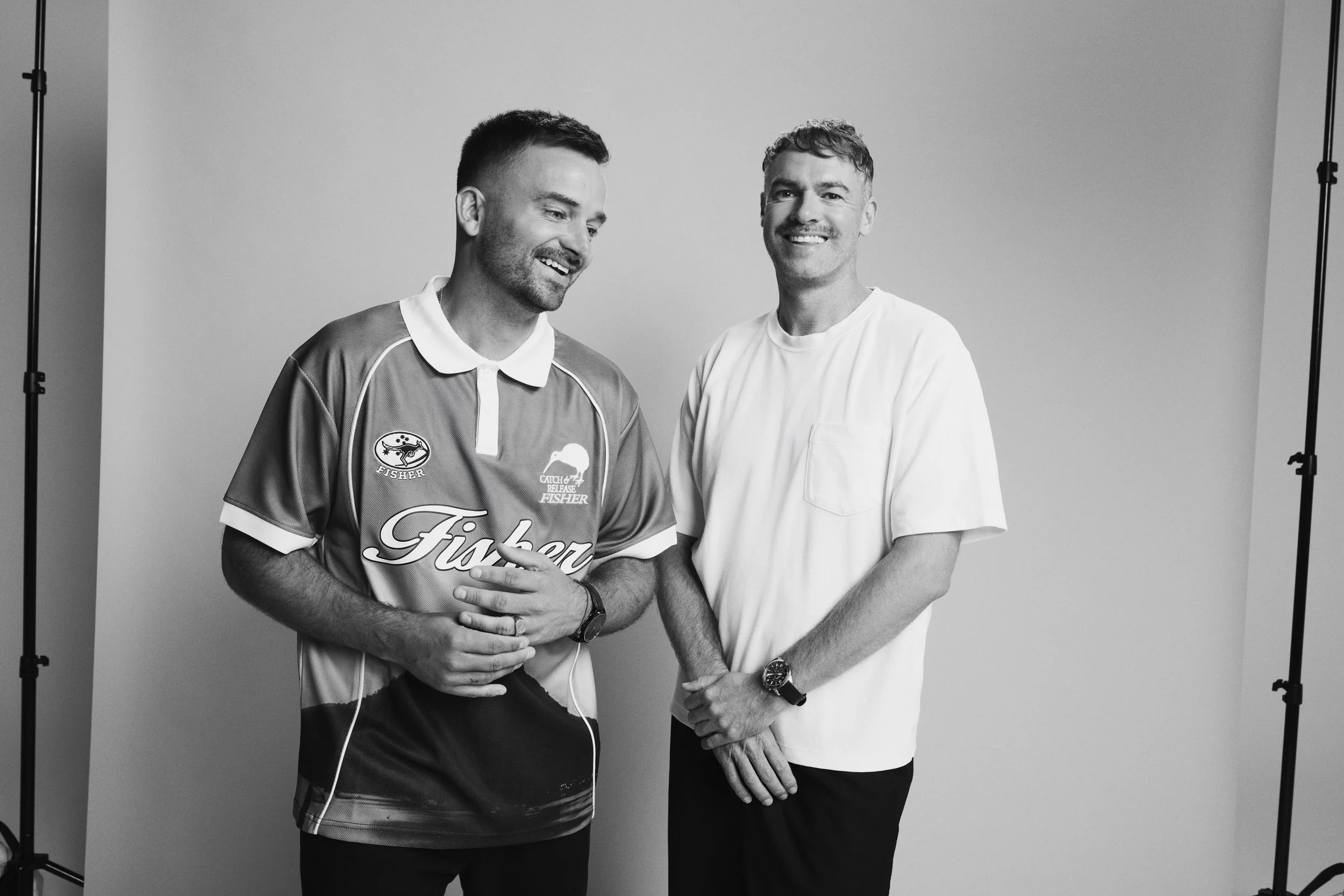
Adds Mitch: “We’ve done massive things here in the past, like Bay Dreams, but to promise one of the biggest acts in the world that they could come to this little region and still do the same numbers that they do in Auckland or Christchurch was pretty ballsy. It paid off.
“We were doubting ourselves right up until that moment we went on sale,” Mitch grins. “Within five minutes, we were like, ‘Okay, we’re good.”
“Fisher was a proof of concept. We wanted to show what was possible,” Toby says. “The goal was to prove that the Bay could deliver numbers and production values comparable to the big cities.”
It certainly did. Over 20,000 punters packed into the Oval for the show. But it wasn’t all locals. More than 82 percent of the punters who attended were from out of town, truly making the Mount the hottest place to be in the whole country that weekend.
Tauranga mayor Mahe Drysdale describes the Fisher concert as an “amazing success for our city”.
“It worked really well,” he tells me. “The feedback we’ve had is that it was an awesome venue, and there’s an opportunity there to grow. Bay Oval is a real jewel in our crown. We’ve had some really great cricket events over the summer, which is what it’s set up for, but we’ve said to Bay Oval, we really want to see more music acts and other events there.”
The one-two punch of Fisher, followed a week later by the UB40 with Ali Campbell concert, has proved the Oval works as a “legitimate venue”. Mahe says promoters can now have confidence that the Bay can successfully pull off these sorts of big events.
“Once one person’s done it, it opens up a whole lot more opportunities in the future,” he says. “We’ve identified events as being one of our priorities and one of our strategies to make this a better place. We want events here because of what they do for our region, for the accommodation providers, the local businesses, the hospo businesses, and for the sense of vibrancy that they attract. We can see the economic benefits of what events do for our city.”


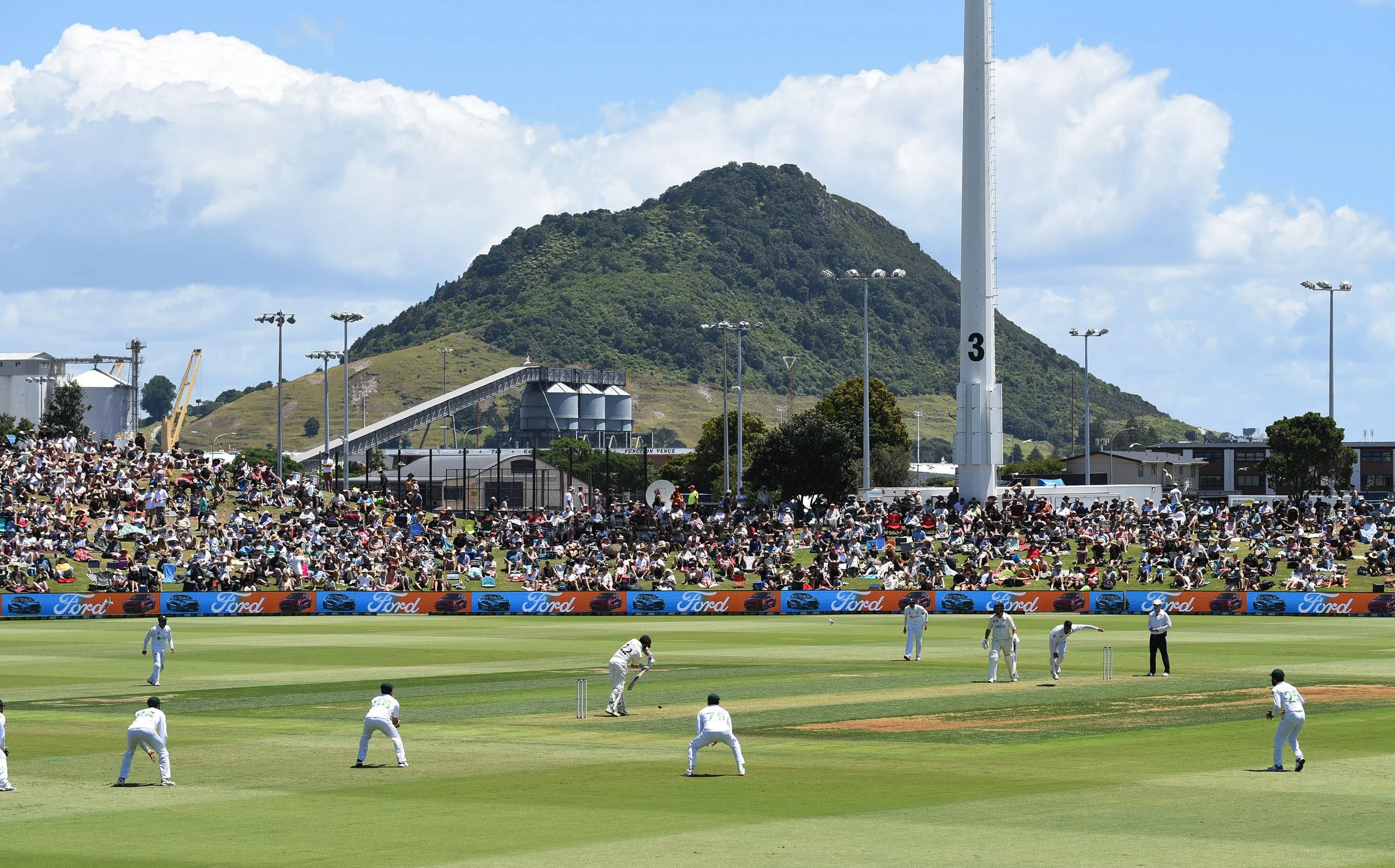



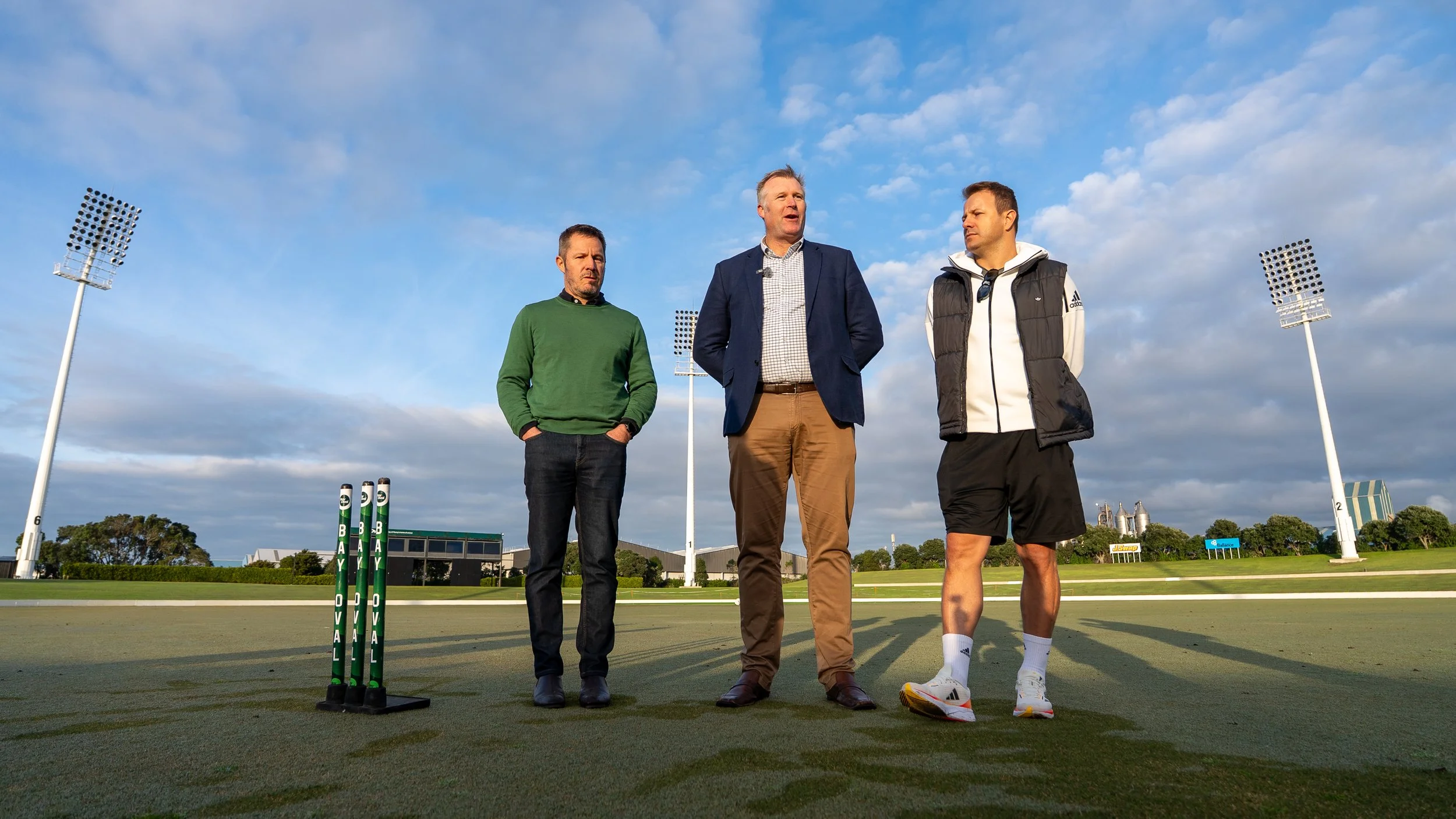

He says the council is actively going out and finding ways to accomplish this strategy, pointing to the upcoming World Triathlon Series as an example.
“We’ve got three years of world-class athletes coming to our city to compete,” he says. “There are so many events out there that we can attract. We’re really excited.”
But what is it that’s attracting these events to the region? Why are organisers increasingly choosing to put on events here?
“The Bay is blessed with natural beauty. That’s certainly a big part of why it’s attractive,” he says. “A lot of people want to come here, so when events are on, people jump at the opportunity to come and enjoy the region. It’s a win-win,” he smiles.
“We can share our beautiful city, but also they help drive our economy. They have a significant economic and social benefit.”
One of the best examples of this economic and cultural coming together is the annual AIMS Games. The week-long multi-sport tournament brings together thousands of Year 7 and 8 students from across New Zealand and the Pacific to compete in 27 different sporting codes, generating a tangible excitement as well as some serious cash for the region.
“Last year we had just over 14,000 athletes from 431 schools,” Kelly Schischka, the AIMS Games tournament director, tells UNO. “They compete in sport, make new memories and new friends in f it-for-purpose sports venues across the region. That, for us, is what makes it work so well.”
Add in coaches, managers, officials and supporters, and that number jumps to 29,558, with a whopping 23,425 of those coming in from out of town. This one event alone generated a huge $9,751,958 of tourism expenditure in Tauranga.
“Economically, the AIMS Games makes a big contribution, but more so, it really builds that pride of being hosts. That’s incredibly important,” Kelly says. “You can’t stage an event without the support of the community, and we absolutely have that with the AIMS Games. We’re incredibly lucky.”
The event started here in 2004 and has steadily grown in popularity ever since. The week-long event now takes over 29 different venues around Tauranga and the Western Bay of Plenty.
“The AIMS Games have really helped shape Tauranga’s identity as an event city. There’s nothing quite like being in town when they’re on,” Kelly smiles. “There are 14,000 kids here for a week-long sleepover with their friends. The energy levels are incredibly high. It’s hard not to get caught up in that. It’s a really special thing to be a part of.”
Along with the AIMS Games, Kelly says there are many events that are now synonymous with Tauranga, making it a vibrant place to live, and encouraging people to visit. There’s the Tauranga Marathon, the Jazz Festival, the Arts Festival, the Flavours of Plenty food festival and the Mount Festival of Multisport, one of the country’s longest-running and most iconic triathlons, to name just a few.
“These are part of the fabric of Tauranga,” Kelly says. “We’ve proven ourselves to be able to host international sporting events and fantastic music events incredibly well. It’s great for those of us who live here to be a part of that, and it’s fantastic to be able to showcase our city to different types of visitors who are here for different types of events.”
Things may feel big now, but it really is just the beginning, as national and international events are increasingly attracted by the region’s stunning backdrop, infrastructure and proven ability to be welcoming hosts for major events.
“It’s an exciting time,” Toby enthuses. “We have agents and artists from all over the world wanting to come down and work with us. There’s a lot of exciting projects in the pipeline right across the country, including here in the Bay.”
“I agree,” Mitch nods. “I have the feeling now that I had when we launched Bay Dreams back in the day. It feels like the start of something big. We literally have the biggest acts in the world asking us to do cool things.”
After the triumph of Fisher, the pair are already working on next summer's show. They know Fisher's a tough act to follow. I cheekily ask who's on their radar and they both grin and say there's some exciting options on the table. Just before I leave, I mention that it's a great time to be living in the Bay.
"It's exciting," Mitch agrees. "And this is just the start."

HACK YOUR HOME LOAN
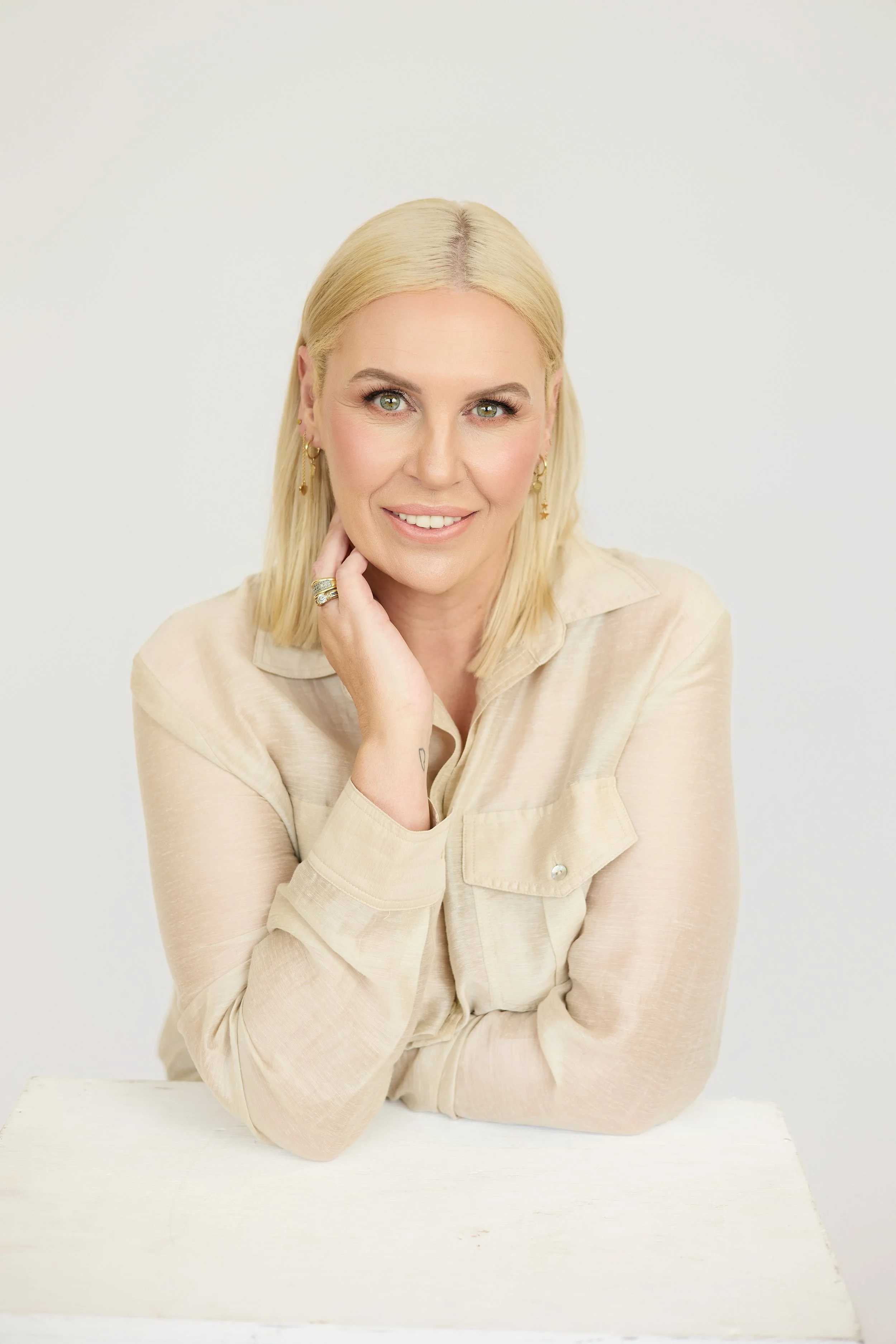
Brooke Reynolds of Rapson Loans and Finance explains why many of us pay more on our home loan than we need to, and how a simple mortgage check-up could save thousands.
Brooke Reynolds of Rapson Loans and Finance explains why many of us pay more on our home loan than we need to, and how a simple mortgage check-up could save thousands.
When people first take out a mortgage, the interest rate usually gets most of their attention. If the number looks decent and the payments seem manageable, they just shrug and carry on. But that’s how so many Kiwis end up overpaying their mortgage without even knowing it.
And when I say overpaying, I’m not talking about a few dollars here and there. I’m talking thousands – sometimes tens of thousands – over the life of the loan. All because the structure isn’t working as hard as it should.
Your mortgage isn’t really a “set and forget” arrangement. Life changes, interest rates shift, and banks regularly adjust their offers, but many loans stay exactly the same for years. Without a review, it’s easy to keep paying more than necessary.
One of the biggest culprits is having everything on the wrong fixed term. People lock something in years ago and assume it still makes sense. But what suited you in 2021 might not suit you now. Maybe you’ve had a pay rise, or your kids have left home, or rates have dropped, but your loan hasn’t kept up.
Another way people overpay is by not splitting their lending. Having all your lending on one fixed rate might feel simple, but it also means you're at the mercy of whatever the market is doing the day that rate expires. Splitting your loan across different terms can smooth out the bumps and stop you from getting whacked by big swings.
Then there’s the classic one: not reviewing your mortgage regularly. I review my clients’ loans every 6 to 12 months, because even tiny tweaks can shave years (yes, years) off the mortgage. Most banks don’t ring you up and say, “Hey, we’ve got a better deal for you!”, but that doesn’t mean a better deal isn’t out there. And let’s not forget the cashbacks, discounted rates and competitive offers floating around. Many homeowners just don’t realise they’re there.
If you haven’t reviewed your mortgage in the last year, there’s a good chance you’re paying more than you should. Not because you’ve done anything wrong, just because mortgages need attention, the same way your car or your health does. A quick check‑in could save you thousands.

LIFTING THE VEIL ON THE VALE
Adelaide’s abundance of grape-growing greatness is well known, as is the South Australian city’s jewel in the crown, Barossa Valley. If you’re chasing something a little more fresh and a lot more enticing, however, make tracks for McLaren Vale. You won’t regret it.
Adelaide’s abundance of grape-growing greatness is well known, as is the South Australian city’s jewel in the crown, Barossa Valley. If you’re chasing something a little more fresh and a lot more enticing, however, make tracks for McLaren Vale. You won’t regret it.
WORDS + PHOTOS JAMIE TROUGHTON
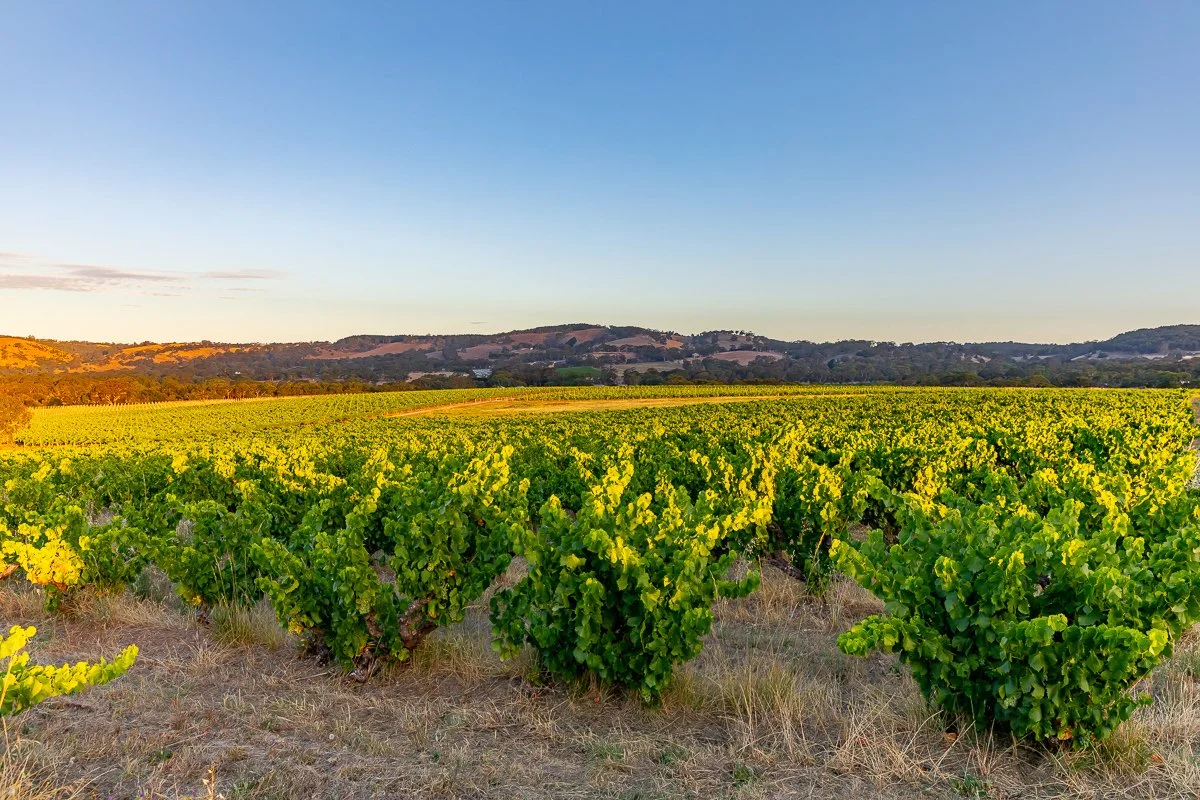
Hot tip: if you’re going in cold to a new wine region, it really does pay to take a professional with you.
Luckily, the crew we’d assembled for UNO wine columnist Jess Easton’s significant birthday included talented Kiwi winemaker Alice Rule, who arrived in Adelaide armed with the local lowdown and plenty of insider insight.
Forget Barossa, she confirmed. Bypass Adelaide Hills and skip Clare Valley. She’d been hearing great things about a few places in McLaren Vale. We need to go there.
And so, mellowed and content after a long weekend of birthday celebrations, music festivals and a decent crack at Adelaide’s multi-ethnic, over-delivering restaurant scene, we boarded a minibus and hit the highway.
The power of proximity
For such a vast and untamed state, South Australia’s viticultural heritage is packed into a remarkably small area Adelaide Hills, for example, is just 20 minutes out of the city centre. On the way, nestled in the foothills, is the grand old lady of Australian wineries, Penfolds Magill Estate. We’d earlier stopped in for an hour-long tour and ended up enjoying a half-day pilgrimage. The depth of history resonating through the high stone walls and deep cellars is unforgettable.
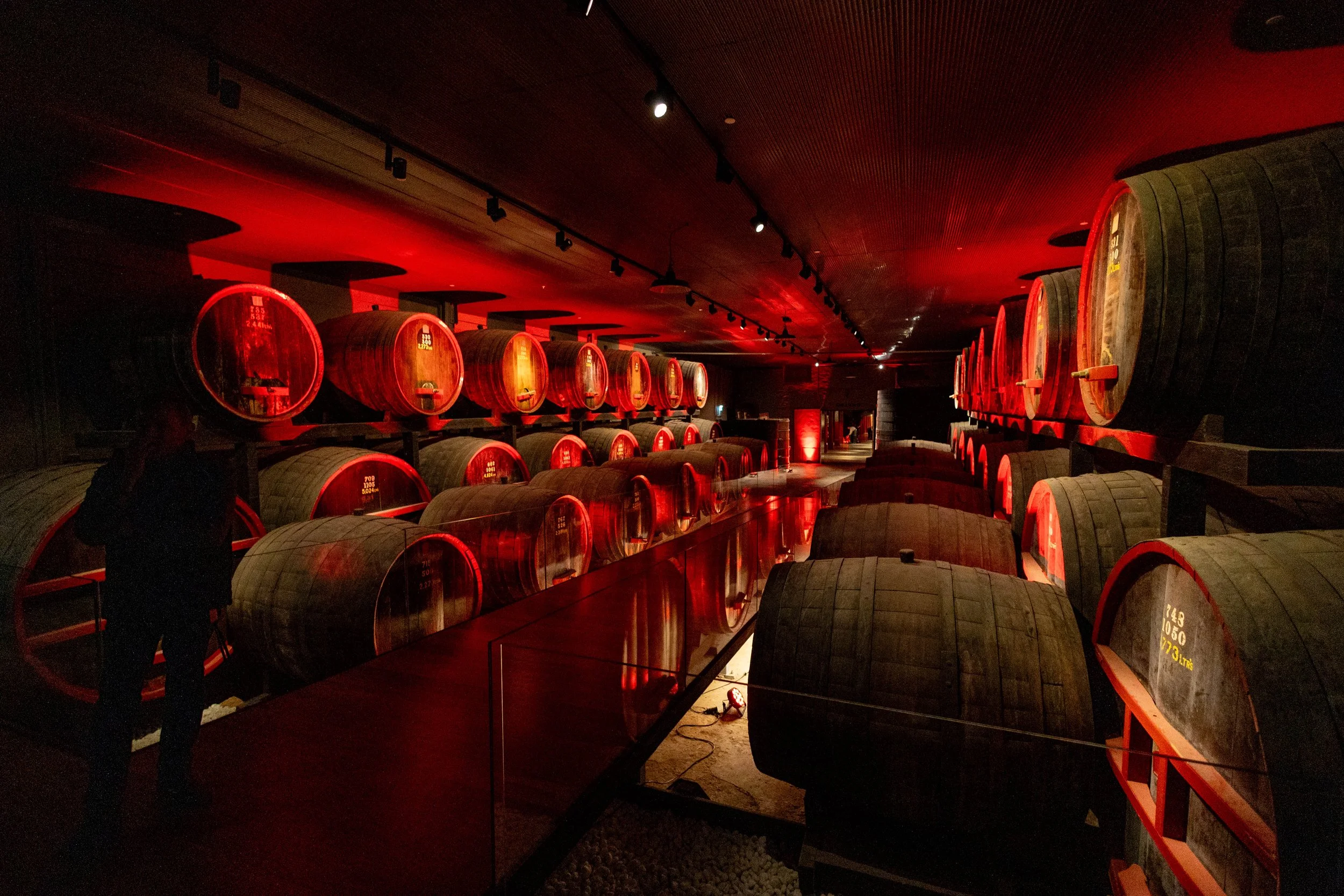
The history and elegance of Penfolds.
Up into the Hills, you start getting cool-climate wines, like Sauvignon Blanc, Chardonnay and Pinot Noir.
The Barossa Valley, meanwhile, is one of Australia’s oldest and most famous regions, boasting more than 150 wineries, renowned for its German heritage as much as for its Shiraz and Cabernet Sauvignon. Even the name ‘Barossaʼ has heft — a weighty, punchy moniker matching perfectly to some of the big, bold wines it produces.
Two hours north of the city is Clare Valley, celebrated for premium Riesling and more than 50 cellar doors, featuring charming villages and the Riesling Trail. Kangaroo Island, Eden Valley and Langhorne Creek are other well-known areas for wine lovers to explore.
Our attention, however, turned towards the coast, a short 40-minute trip south to McLaren Vale, possibly the oldest continuously producing wine-growing region in Australia, first planted in 1838.
Long before European colonisation, the area was the traditional home of the Kaurna people, who enjoyed the regionʼs Mediterranean climate for thousands of years. The cooling sea breezes take the sting out of the hottest of South Australian scorchers, with an array of diverse ancient soils helping grow varieties like Fiano, Sangiovese, Vermentino, Barbera, Montepulciano, Nero d’Avola and Tempranillo.
McLaren Vale is also the most environmentally sustainable wine grape growing region in Australia, which immediately attracted the attention of our illustrious tour guide Alice.
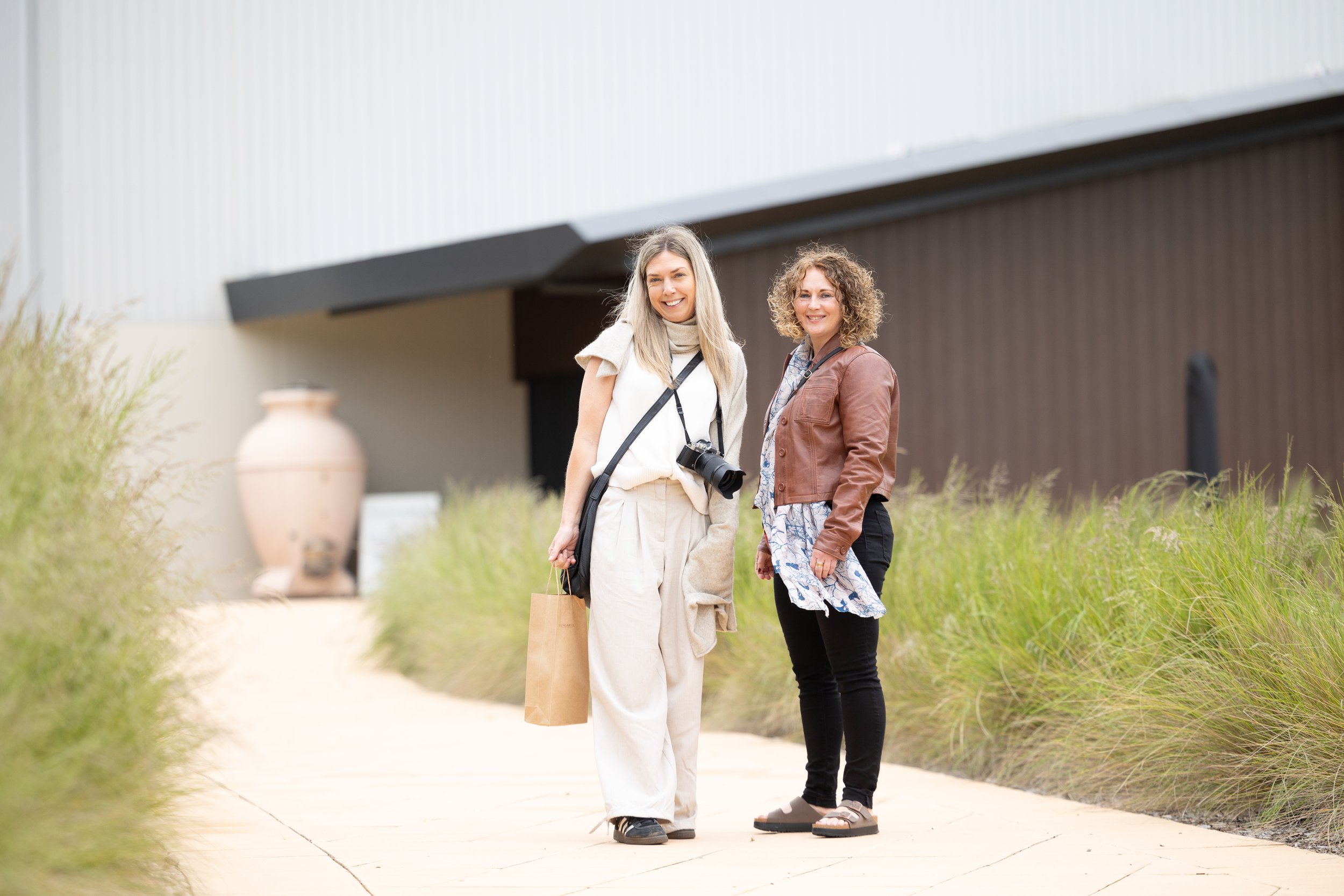
Kiwi wine guru Alice Rule (left) in her natural habitat.
Hostess with the most-ess
As one of the youngest wine producers in New Zealand, Alice established her boutique wine venture, 3sixty2, in 2018 at just 25. She was the first New Zealand wine producer to introduce carbon offsetting at checkout and her focus on environmental stewardship and sustainability is helping set the gold standard in the industry.
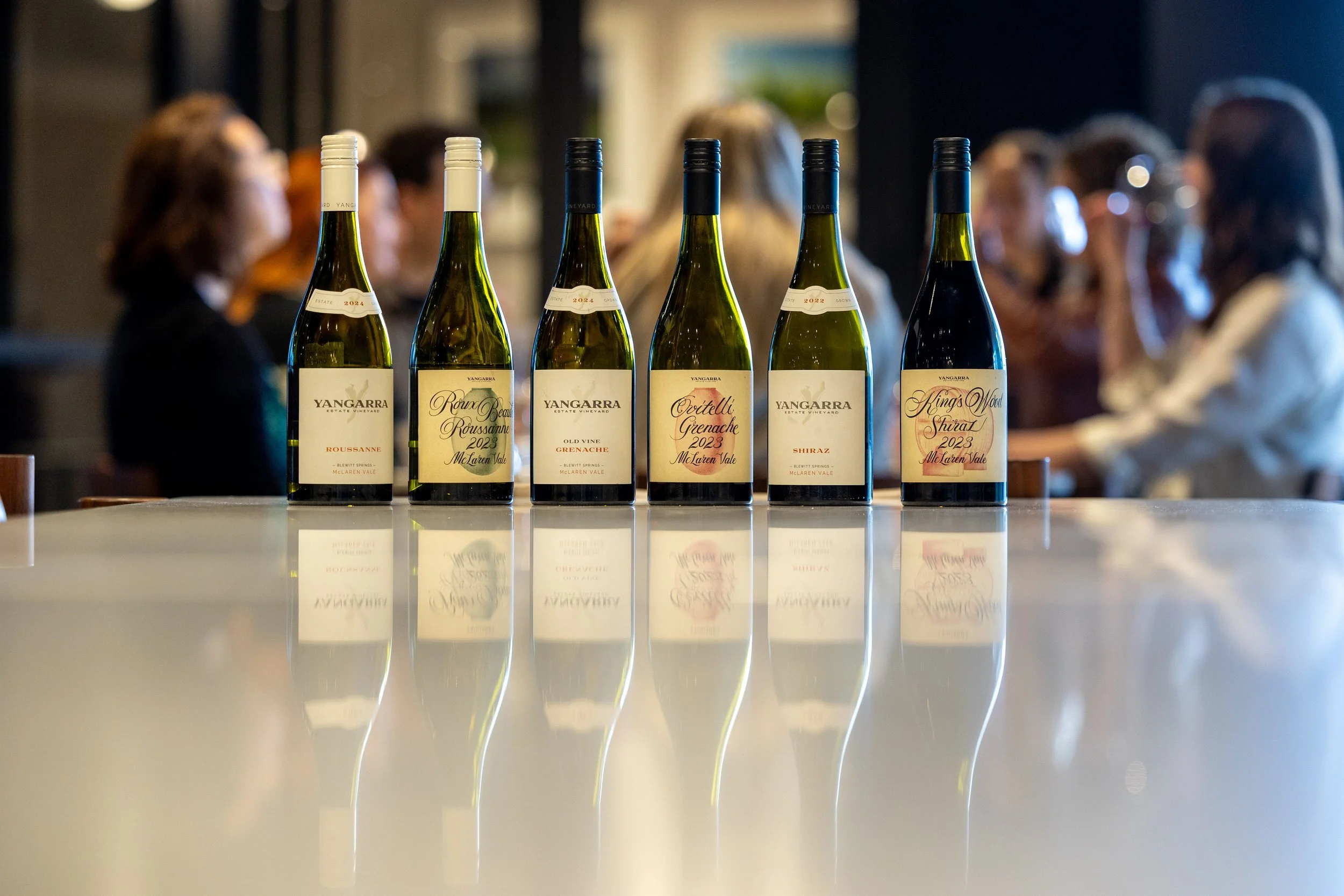
Some of the superb Yangarra Estate line up.
And our first stop, Yangarra Estate, featured biodynamic vineyards surrounding a stunning cellar door, vibrant with Grenache, Shiraz and a treasure trove of alternative varietals.
“I loved their philosophy around biodiversity and loved how interesting their new young wines were, like the unconventional Piquepoul,” Alice said, fresh from a perfectly curated wine tasting experience; textural pottery, Plumm wine glasses, expensive cheese and hand-shaved prosciutto.
“Piquepoul is an ancient French varietal and the name literally means ̔stings the lipsʼ — a reference to the wineʼs characteristically high acidity — but Yangarra wouldn’t do that to you. It was the Jo Malone of white wine, fragrant, delicate and crisp — a unique treasure probably not found very easily.”
Next stop was Dandelion Vineyards, another biodynamic exemplar, where the tasty, innovative wines were elevated to another level by the winemakerʼs mum and her culinary prowess.
Dandelion's Field of Wonders Chardonnay and Lemon Myrtle Spritzer.
Dandelionʼs Elena Brooks grew up in Bulgaria, set amidst the demise of the Soviet Union, as an influx of western winemakers began visiting the region. Her mum Dani Golakova worked for the Soviets as an MiG mechanic, before venturing into marketing at the large and historic winery Vinprom Lyaskovets in their small hometown. As the only one able to speak English, Elena started helping translate for visiting viticulturalists after school. By the age of 12, she was interpreting barrel tastings with the winemakers. By the age of 15, she had the wine knowledge and vocabulary of a veteran, and by 16 she was making her first batches of Chardonnay.
Fast forward a couple of decades and sheʼs now married and settled in McLaren Vale, like Alice, a rising winemaking star, and with mum whipping up sensational plates of Kashkaval Pane, Kyopolou and Baked White Cheese with Honey and Walnuts for her dazzled guests.
Bekker beckons
If the day had a tactical error, it was right there. Did we expect to feast like Bulgarian royalty just before lunch? Nope. Did that stop us hitting the Salopian Inn and ordering up large? Again, nope. To be fair, after our Dandelion feast, we had every intention of a light snack, but the Salopian Innʼs fare was too good to skimp on.
Some of us lighterweights perhaps had visions of a quick snooze, as we wound down the tour at Bekkers Wine, our last winemaker stop. But there’s something about being greeted by the winemaker himself and being welcomed into a makeshift tasting room — amid renovations — that captures attention, not to mention the curious sight of Grenache grapes growing upright as bush vines — not on wire or trellis.
Winemaker Toby Bekkers.
Toby Bekkers is quietly understated, friendly, and someone you instinctively lean in to as you listen. He and his French wife Emmanuelle spend large parts of the year in each otherʼs countries, and their unique styles converge in the glass.
Aliceʼs old Lincoln University mate, Charlie, worked with Emmanuelle during a stint in the state and said Bekkers was a must-visit. After a few sips of a signature Grenache, and a magnificent Syrah, it was easy to see why.
“I’m always really excited when the viticulturist is hosting the tasting because thatʼs where my heart has always been,” Alice said. “And when Toby told us he was going to skip past the sensory descriptions and instead talk about the importance of texture, it really struck a chord. The wines, like Yangarra, are textural, interesting, and though he never mentioned ̔Old Worldʼ, itʼs clear they were made that way, while at the same time respecting the land they grow on, which is inherently New World. Itʼs a careful balance theyʼve gotten right — and I loved how they called their wine Syrah instead of Shiraz. Having a French winemaker wife probably had something to do with this decision, which is a big tick from me!”
And so, we depart, loaded to the gunnels with McLaren Vale vintages. Itʼs been a big tick from all of us.

TUFT LOVE
Irish-born textile artist Leah Creaven explores landscape through richly textured rug-tufted works made with New Zealand wool.
Irish-born textile artist Leah Creaven explores landscape through richly textured rug-tufted works made with New Zealand wool.
Rug tufting might be having a moment, but for textile artist Leah Creaven it’s a deeply personal way of translating landscape and feeling into form. Here, she talks process, inspiration and why working with wool feels like painting with fibre.
UNO: What first drew you to this medium, and what continues to captivate you about it? Leah: I was drawn to rug tufting a few years after finishing my degree in Textiles and Surface Design in Dublin. I started creating small art with a punch needle and wanted to work on a larger scale, so I guess I started rug tufting out of a desire to explore scale and impact. I’m continuously captivated by the freedom that rug tufting gives you. In my eyes it’s like painting with wool, but with the outcome being both beautiful and tactile. The repetitive rhythm of tufting is also meditative and helps me to shut out the noise (while music blares in my earpods!).

Your pieces often blend influences from both Irish landscapes and the land around you in Aotearoa New Zealand. How do these environments shape the stories you tell through your art? Ireland shapes the inner landscape of the pieces with memory and emotion. It’s less about depicting Ireland directly and more about carrying its emotional weight — a way of feeling land as archive and as something storied and tender. Visually, however, my response is grounded in New Zealand where I now live. The land here informs the physical language of the work. In that sense, my work kind of exists between inheritance and observation, emotionally anchored in Ireland and visually shaped by Aotearoa which allows them to hold both memory and presence at the same time.
Can you talk about your creative process, from initial concept to finished piece, and how you decide on colour palettes and forms? My process usually begins with an idea or a feeling that I hash out with my husband or my dad. I’m a big communicator and voicing these ideas helps me make sense of them before they become visual. They’re normally responses to landscape or a memory or a shift in light. I’ll sketch loosely on my iPad, mostly abstract shapes that suggest contour or horizon, but I leave space for the work to evolve once I begin tufting. Colour is often the first concrete decision (and the most exciting one!). I build a palette guided by emotional tone or seasonal shifts. Then I’ll test combinations by tufting colour samples to see which complement or compete with each other. Then it is time to bring my drawing to woolen-life on my canvas.
You consciously choose New Zealand wool for your art. What significance does this material have for you beyond its physical qualities? Choosing New Zealand wool is a conscious way of grounding my work in the place where it is grown. Beyond its durability, wool carries a sense of locality. Using it allows the work to hold a direct relationship to its environment and embeds the landscape quite literally into the surface. Wool also holds warmth. It has clothed, sheltered and comforted people for generations. In my work, it reinforces the themes of grounding and belonging.
Your ‘Land Girl’ exhibition and pieces like ‘Rapa Rising’ have received critical acclaim. Has public response influenced the direction of your work or your confidence as an artist? While the public continues to be supportive and affirming, what I feel matters most is the sense that the work resonates. That the viewers recognise something of their own relationship to land, memory or belonging in it. That particular connection reinforces my belief that textile-based practices can hold conceptual and emotional weight. Public engagement hasn’t really shifted the conceptual foundation of my work but it has deepened my sense of authenticity and to honour the materials and stories I’m working with.
What role do workshops and teaching (like your rug tufting classes) play in your practice? Does interacting with other creatives change the way you think about your own art? Teaching rug tufting workshops is such an important extension of my practice. Rug tufting can at times feel solitary so the workshops help top up my social meter, but also provide a space for creative exchange. I learn so much from the participants! There’s something exciting about watching people encounter a medium for the first time. Participants bring different stories and aesthetics into the space and that diversity expands the conversation around what tufting can be and encourages me to remain open and curious within my own work.
Looking forward, are there new themes, techniques or collaborations you’re excited to explore in your upcoming work? I’m experimenting a lot with layering and texture, which is very exciting to witness and learn from. I just moved to the Bay of Plenty so I’m feeling inspired conceptually and am looking forward to including some local walks and feelings of rejuvenation in my work. I’m really loving my new studio and being amongst the artistic activity at the Historic Village. It has been a wonderful boost in energy, but also in my confidence. It feels like being back at university, where bouncing ideas and learning of art events is an everyday occurrence.
How long have you lived in the Bay and what do you love about it? I moved to Otumoetai in November so we’re pretty fresh but are absolutely loving it. I’m passionate about the outdoors. Being close to the ocean and surrounded by beautiful walks is everything we could have asked for. I also love an evening scene so it’s been great to experience the fantastic restaurants and live music that are available to us too.

BUILDING A LEGACY
CBC Construction has spent two decades shaping Tauranga’s skyline, earning respect not through fanfare, but through steady delivery and an unwavering commitment to doing things well.
CBC Construction has spent two decades shaping Tauranga’s skyline, earning respect not through fanfare, but through steady delivery and an unwavering commitment to doing things well.
WORDS PIP CROMBIE | PHOTOS SALINA GALVAN + SUPPLIED
From l-r: Drew Beekie, Peter Cooney and Matt Lagerberg.
How does a company achieve a gold standard reputation and stand out above others in a competitive, cost-driven, time-constricted market, one which demands quality, sustainability, longevity and capability with care? The commercial construction business demands all of the above and locally owned and operated Classic Builders Commercial Construction (known as CBC) have proven time and again they have the answers.
With over 220 completed commercial projects in the last 20 years that have contributed a $400 million turnover in the wider community, there is no doubt that CBC has made its’ mark on the landscapes and skylines of New Zealand. As they acknowledge two decades in the commercial construction business, it is without major fanfare and celebration.
Sitting with managing director, Drew Beekie, in the CBC Mount Maunganui office tucked away in the back of the industrial area, there is an overall atmosphere of ‘business as usual’ - projects coming to completion, others in development. That in itself is part of the essence of their success, getting the job done, keeping the customers happy - it has earned an immense amount of respect.
CBC’s knowledge and expertise in the construction industry are the overarching factor in their reputation for delivery of excellence in the commercial building sector. Their work spans compact retail spaces to multi-floor office complexes, industrial warehousing, dedicated health and education buildings, accommodation complexes, hospitality and more. From demolition of existing properties through to f itout, the 20 years CBC has spent in the commercial construction space has cemented their claim that integrity matters deeply to them, that conducting their business honestly and well, at every level, has maintained their impeccable reputation.
The story of how it all began is worth telling. Drew, a Scottish qualified quantity surveyor with 10 years of experience in London, and then Auckland, crossed paths with Peter Cooney when Drew relocated to the Bay of Plenty. It was 2005 and at that time Peter was managing director of residential construction company Classic Builders Ltd (now one of several entities under the Classic Group).
“I approached Peter to build a house for me when I moved to Tauranga,” Drew explains. “The timing was serendipitous. Classic was just beginning to dip its toe into the water with commercial builds, my area of expertise. During the house build, Matt (Lagerberg) and I got chatting about a commercial construction company and by the end of the house build, CBC came to fruition. We turned a three bedroom house on 15th Ave into an office.”
He muses over the changes technology has brought to how the business is operated today. “We used fax machines, typewritten letters, power cuts blew us out, I had my laptop stolen from the office and with no iCloud backup there wasn’t a lot you could do, but start again”.
The first project Drew was involved with was the iconic apartment and boat-stack complex at Sulphur Point, the Nautilus. The build was an Australasian first of its kind, allowing residents to steer their boats right into the garage below. The project was brought together by Peter and sealed by a handshake with the developer. From this first project, Drew, who was and still is “the do-er, the person who puts all the pieces together, to literally get the projects out of the ground”, initiated Classic Builders Commercial (CBC).
Trustpower.
Today, Drew heads CBC as managing director, accompanied by group directors, Matthew Lagerberg and Peter Cooney. Their combined building industry experience and sharp business acumen make them a formidable team, one that with the well-considered selection of project-management teams have seen multiple properties transformed from blank canvases into prime real estate.
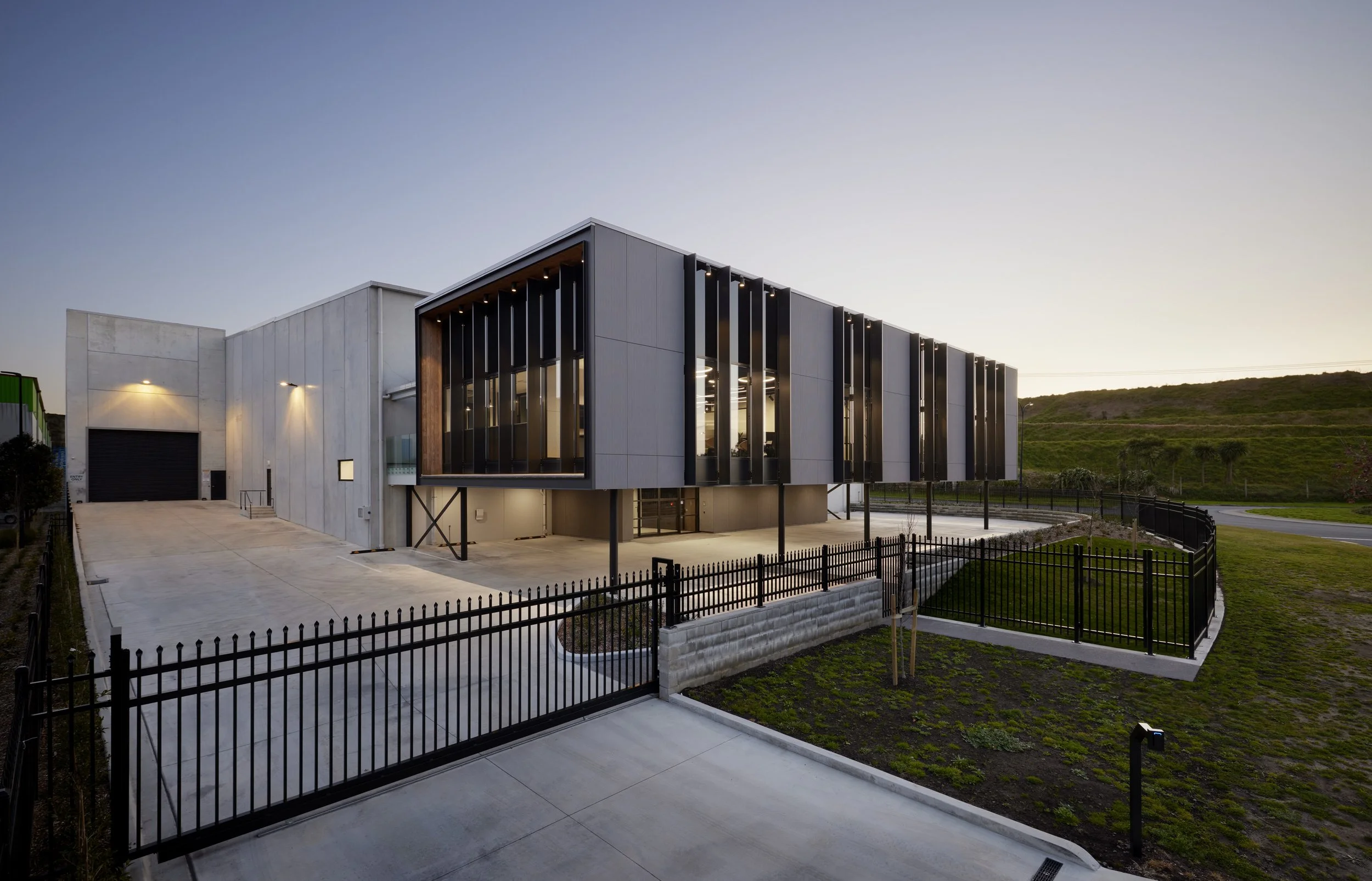
Ibex
Further developments followed. The award-winning glass-panelled, louvred office development, 247 Cameron Road (the ANZ Business Centre), opened in 2012 and was deemed a trophy building for Tauranga, the largest commercial office development undertaken in the city for 35 years. CBC’s ability to secure blue chip tenants for the 10,000 m2, four-level build saw the project fly and has been a premise of other successful commercial projects. “We promised it would be ready on September 6, 2012, and that’s the day we handed over the keys,” Drew recalls.
Trustpower’s three-storied central city office, a slick design inside and out, was a two-year project and boasts a positive architectural feature of a redeveloping inner city. Exterior materials were chosen to balance performance, longevity and affordability with a large interior atrium connecting the three floors with a light-filled collaborative space. The building accommodates over 600 staff, and was a two-year, $25 million build. Like other big developments CBC have had, they’ve often had to overcome complexities of factors out of their hands.
“We’ve always had a big project on the go like the Trustpower head office during a recession, the GFC, some kind of world crisis, COVID...” Drew says. “These events have all in some way affected the state of construction today, the limitations. Comparing when we first began in 2006 to 2026, there’s been huge overall cost inflation in construction. Projects require more of everything to get them over the line, the processes and consenting hurdles are more complex and take more time. They’re not insurmountable, but post-COVID we’ve seen around 40 percent inflation in costs.”
Mount Golf Club Driving Range
There is an extensive suite of developments CBC are proud to have brought to fruition. On Tauranga’s city limits in the Tauriko business park are Cubro, SIMS Distribution, Penske, NZ Windows and the awardwinning IBEX lighting building, which brings a modern design aesthetic to what is essentially a warehouse space, with Grade A office facilities. Add to that New Shoots Childcare, Te Wananga O Aotearoa Campus, Fresh Choice Papamoa, Pearl Kitchen, Mount Golf Club Driving Range - the variety of projects is significant.
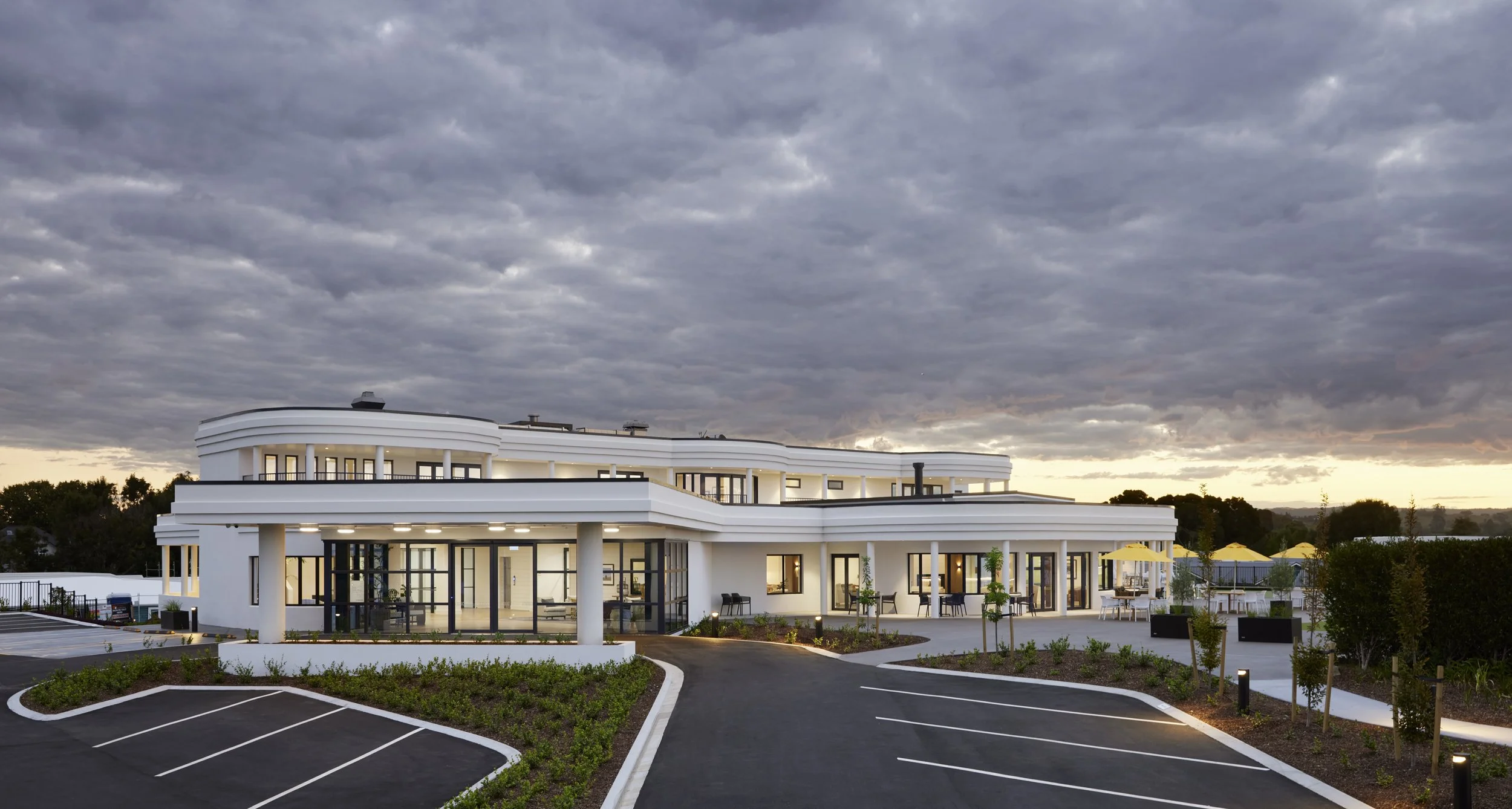
Mills Reef
Transforming the iconic art-deco-styled Mills Reef winery building into The Vines at Bethlehem Clubhouse, complete with interior fitout including an indoor pool and spa, auditorium, theatre, library, gym and resident spaces contributing to the lifestyle of residents of the associated residential village was a 14-month project. CBC also work within the medical space, with completed developments for the District Health Board, St John’s Operations Facility and others. A recent significant development is the Bay Radiology Building on 17th Avenue, a complex build that required the use of lead windows and three-foot thick concrete walls to contain radiation.
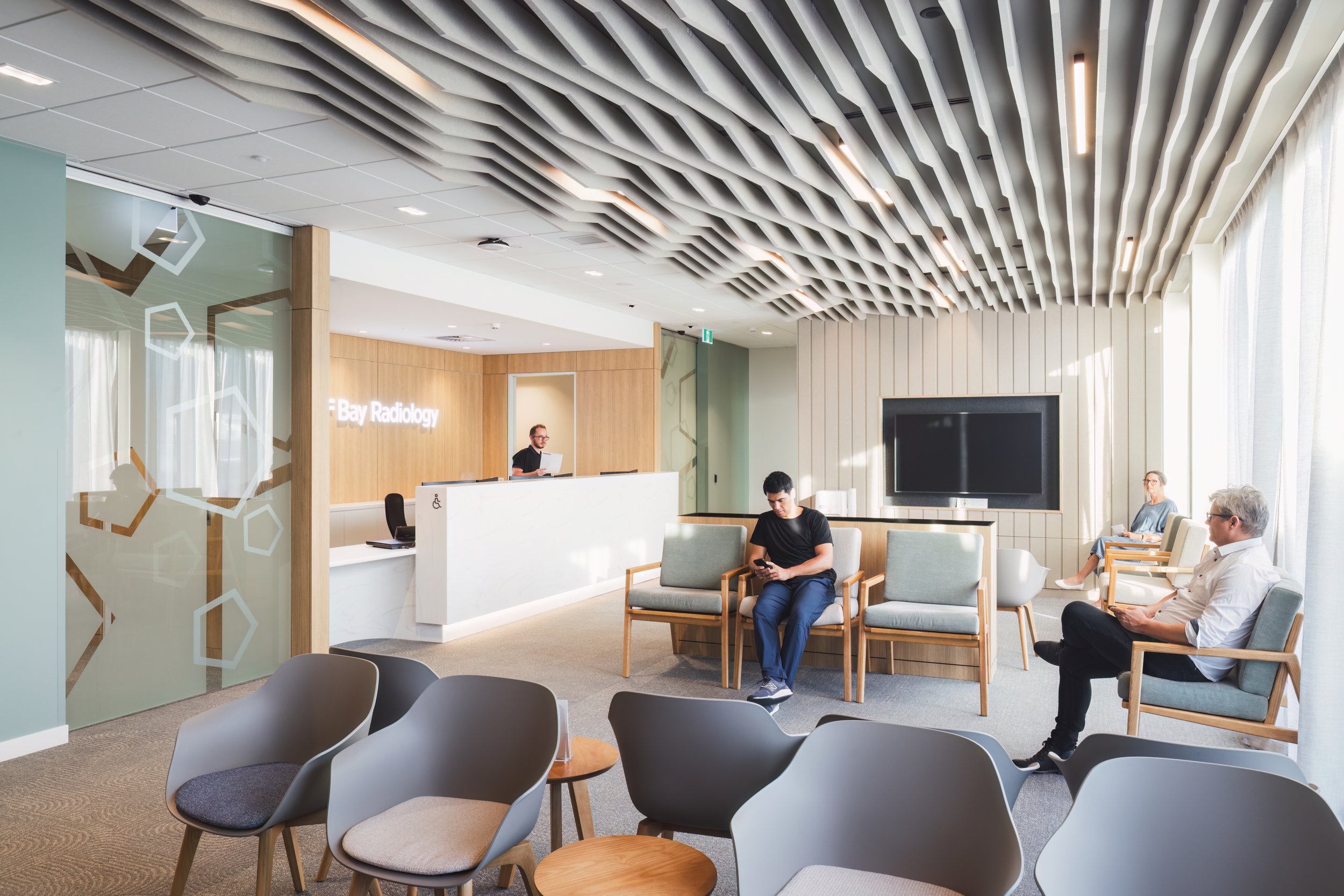
Bay Radiology
While CBC has left its footprint around New Zealand with ventures completed in Auckland and Queenstown, their developments are generally concentrated in the Bay of Plenty region. The current project, 2 Devonport Road, began with the demolition of the existing original downtown Tauranga high-rise. With a finish date of December 2026, it will open as the new location of Craig’s Investment Partners, with other tenants taking up two of the seven storeys.
Over the past 20 years, CBC has enjoyed working with clients more than once. “Our customers have good reason to return, we complete on time and on budget and meet every required quality standard. The way I see it, my name is on the line for every job. If there’s ever an issue, I’ll personally sort it out,” Drew explains.
From management of planning, architecture, construction delivery and after-build care, CBC works on the premise that no job is finished until the customer is content. What more can you ask for?
CBC'S AWARDS
New Shoots Kennedy Ridge – Waikato and Bay of Plenty Architecture Award 2020.
IBEX – Waikato and Bay of Plenty Architecture Award 2024.
Mills Reef/Vines Clubhouse – Award of Excellence in the Naylor Love Heritage and Adaptive Reuses Property Award category at the Property Industry Awards 2023.
TECT/The Kollective – Merit Award and Judge's Choice Award Property Council NZ Awards 2019.
Trustpower – Waikato/Bay of Plenty Architecture Awards 2016.
ANZ/247 Cameron Rd – NZIA Waikato Bay of Plenty Architecture Award 2013 and Award of Excellence in Property Council New Zealand (PCNZ) Property Industry Awards 2013.
CUBRO - 2016 Tauriko Business Estate Design Award and 2017 Waikato/Bay of Plenty Architecture Awards (Commercial Category)

DARE TO DRIFT
Tauranga local Mel Conrad and her family press pause on everyday life to throw caution to the wind and set off on a dream family adventure around the world.
Tauranga local Mel Conrad and her family press pause on everyday life to throw caution to the wind and set off on a dream family adventure around the world.

Leaving NZ for a family gap year
When we told friends and family we were packing up our lives to explore the world with our two young daughters, the reactions were mixed. From “wow, that’s incredible!”, to “what about schooling?”, and “have you won Lotto?” - and occasionally, just a simple, “why?” Often there was a look - half admiration, half concern. As if we had casually announced we were slightly crazy.
To be fair, there were days we wondered the same. But the truth wasn’t dramatic. We hadn’t won Lotto or lost our minds. We simply knew our girls were growing quickly, and this was the season to prioritise time and take a family gap year.
So we did. We took the girls out of school, rented our home and bought a one-way ticket to Vietnam. We didn’t really have a real plan, just a sense that time was moving fast and if we didn’t do this now, we might never do it at all.

Bamboo pole fishing in Ninh Binh, Vietnam
Before we left, life was good. It was full and predictable. Time together compressed between bath and bedtimes.
Vietnam was our first destination, and on day one we faced our first challenge of crossing the road. Holding hands, wideeyed, terrified and thrilled, we stepped into a hectic stream of scooters and cars. The trick, we learned, was to walk confidently and let the traffic flow around us.
When we made it across, the adrenaline was unforgettable. The girls raced back to the hotel to call family and report how scared Mum had been and how brave they were. We knew then this experience would stretch all of us.
Vietnam brought lost luggage, lantern-lit evenings, perspective, and as we got braver, a food tour by scooter.

Swimming with locals at Blue Grotto, Malta
From there we drifted through Europe. Malta gave us village festas and daily swims. In southern Spain we stayed long enough to be recognised by locals. Ireland charmed us. France fed us croissants. Portugal gave us near-empty beaches in November.

Ice fishing on Kemijoki River in Rovaniemi, Finland.
Finland was magical. Riding a sleigh through a snow-covered forest to find Santa’s cabin is something we’ll never forget. We walked along a snowy path calling “Santa?” until a jolly Nordic man with the longest beard appeared and welcomed us inside.
He knew everything about the girls, our dog Tilly back home and even had the letters they’d sent from Portugal before Christmas. Watching their faces, and feeling unexpectedly emotional ourselves, was unforgettable.

Northern lights in Levi, Finland
Somewhere between Morocco’s colour, the Tube in London with backpacks and tired children, and the heat in Doha, it clicked. It doesn’t matter where we are, what matters is that we are doing it together.
But being together constantly does take adjustment. There were tears and travel fatigue. We’ve grown thicker skins and a few more grey hairs.
Schooling has been part of the learning curve too. My husband is a teacher, which sounds ideal. It turns out teaching your own children, who see you as Dad first, is humbling and hilarious.

Moroccan cooking class — making tagine.
We shifted to worldschooling, blending curriculum with real life, like reading signs, journalling in cafés, counting money in markets. We’ve joined WorldSchool hubs along the way, where travelling families gather for shared learning and experiences.
Not every day is easy. I remember trying to get our eldest to read a resource aligned with her year level in New Zealand. She refused. Tears all round.
That afternoon in Oxford, she found a second-hand Harry Potter book in an Oxfam store. She counted her coins, worked out if she had enough and proudly bought it. From that moment, she became a reader. Watching her confidence grow has been everything.

Wandering in Lagos, Portugal.
Our youngest is doing well too but some days she finds harder than others. She misses her friends and structure. But the gift of time means we can adapt to her needs.
People assume long-term travel must be wildly expensive - but it doesn’t have to be. We budgeted around NZ$1,400 a week for accommodation, food and local transport, with separate savings for flights and experiences. Renting out our home covers the mortgage. We stay in budget accommodation, visit places often in the off-season, and housesit and cook where possible.
There have been trade-offs. We sold our only investment property to make this season possible. One of us secured a sabbatical. The other stepped away from work.
We love exploring each place and living like locals, and sometimes there are days when no one feels like sightseeing.
One of those days was in Seville. Tired after a long drive, the girls resisted: “Another old building?” So instead of going out, we put on a movie, opened a bottle of Spanish wine, made a supermarket tapas platter and sat watching videos about Seville.
We never left the room that day. And it’s one of the memories we laugh about most.
Some still ask if we’re crazy. Maybe we are, but many now ask how they might do this too. You don’t need a perfect plan, you just need intention. If the idea keeps nudging you, maybe that’s a sign.
For us, this season has given us more than we imagined. We had time to connect, to watch one another grow and to be together without the constant hum of rushing.

Arctic Circle, Finland
CONSIDERING A FAMILY GAP YEAR?
• Get clear on your why
Know what you want from this season before you start planning.
• Run the numbers
Build a weekly budget and separate savings for flights and big experiences.
• Consider renting or housesitting Renting your home or housesitting/houseswaps abroad can significantly reduce costs.
• Think differently about schooling
Consider different options and resources - formal homeschool structure, online resources, worldschooling hubs, talk to your child’s school.
• Travel slower than you think
Fewer destinations and longer stays mean less fatigue and less money spent.
• Choose seasons and destinations wisely
Shoulder and off-season travel stretches your budget further.
• You don’t need forever
A term, six months or a year can be enough. It doesn’t have to be all or nothing.
IG: FAMILYGAPYEARS

BALANCED BEAUTY
Target what matters and skip what doesn’t. Leanne Cashmore from Cashmore Clinic shows us what to do and where to do it, using subtle, considered treatments for a fresher look.
Target what matters and skip what doesn’t. Leanne Cashmore from Cashmore Clinic shows us what to do and where to do it, using subtle, considered treatments for a fresher look.
PHOTO SALINA GALVAN

When it comes to ageing well, the most effective results come from targeting specific concerns rather than overhauling your entire face. Different areas age in different ways. Repetitive movement creates lines, volume loss causes hollowing, muscles pull downward, and skin quality declines.
A tailored plan focuses on what truly needs attention: softening expression lines, restoring structure where support has diminished, relaxing tension in the lower face, and improving overall texture and firmness. The goal isn’t to look different, but to look less tired, less tense, and more refreshed.
Here are the treatments that target all those areas of concern.
JAW / JAW CLENCHING
Concern: Teeth grinding, tension headaches and bulky jaw muscles. Treatment: Masseter Botox to relax overactive muscles, which reduces discomfort and can slim the lower face over time.
JOWLS
Concern: Sagging or heaviness along the lower face.
Treatment: Strategic dermal filler placement to support and lift. A fullface assessment is essential, as this often requires balancing with Botox.
FOREHEAD
Concern: Horizontal lines, creasing and heaviness.
Treatment: Anti-wrinkle injections (Botox) to soften dynamic lines and prevent deeper creases. Strategic placement can also create a subtle brow lift.
FROWN LINES (GLABELLAR LINES)
Concern: “11” lines between the brows, resulting in a tired or angry appearance.
Treatment: Anti-wrinkle injections (Botox) to relax strong frown muscles, softening the expression while maintaining natural movement and preventing static lines.
CROW’S FEET
Concern: Fine lines around the eyes when smiling.
Treatment: Anti-wrinkle injections (Botox) to smooth dynamic lines, brightening the eye area and improving make-up application.
EYE HOLLOWS (TEAR TROUGHS) Concern: Hollowing, shadowing and a tired appearance.
Treatment: Dermal fillers to restore lost volume and brighten the under-eye area. This requires advanced anatomical knowledge and careful assessment.
NECK
Concern: Neck bands, laxity, and fine lines.
Treatment: Neck Botox (Nefertiti-style lift) to relax downward-pulling muscles, or injectable skin boosters to improve texture. Often combined with collagen-stimulating treatments.
OVERALL SKIN TEXTURE
Concern: Dullness, enlarged pores and uneven texture.
Treatment: Skin needling (microneedling) or radiofrequency needling to stimulate collagen. Medical-grade skincare and injectable skin boosters (such as Profhilo or Sunekos) are also highly effective for hydration and refinement.

A RARE PRIVILEGE
Every corner of this home tells a story, from entertaining spaces to private upstairs sanctuaries overlooking the valley.
Every corner of this home tells a story, from entertaining spaces to private upstairs sanctuaries overlooking the valley.
WORDS JO FERRIS
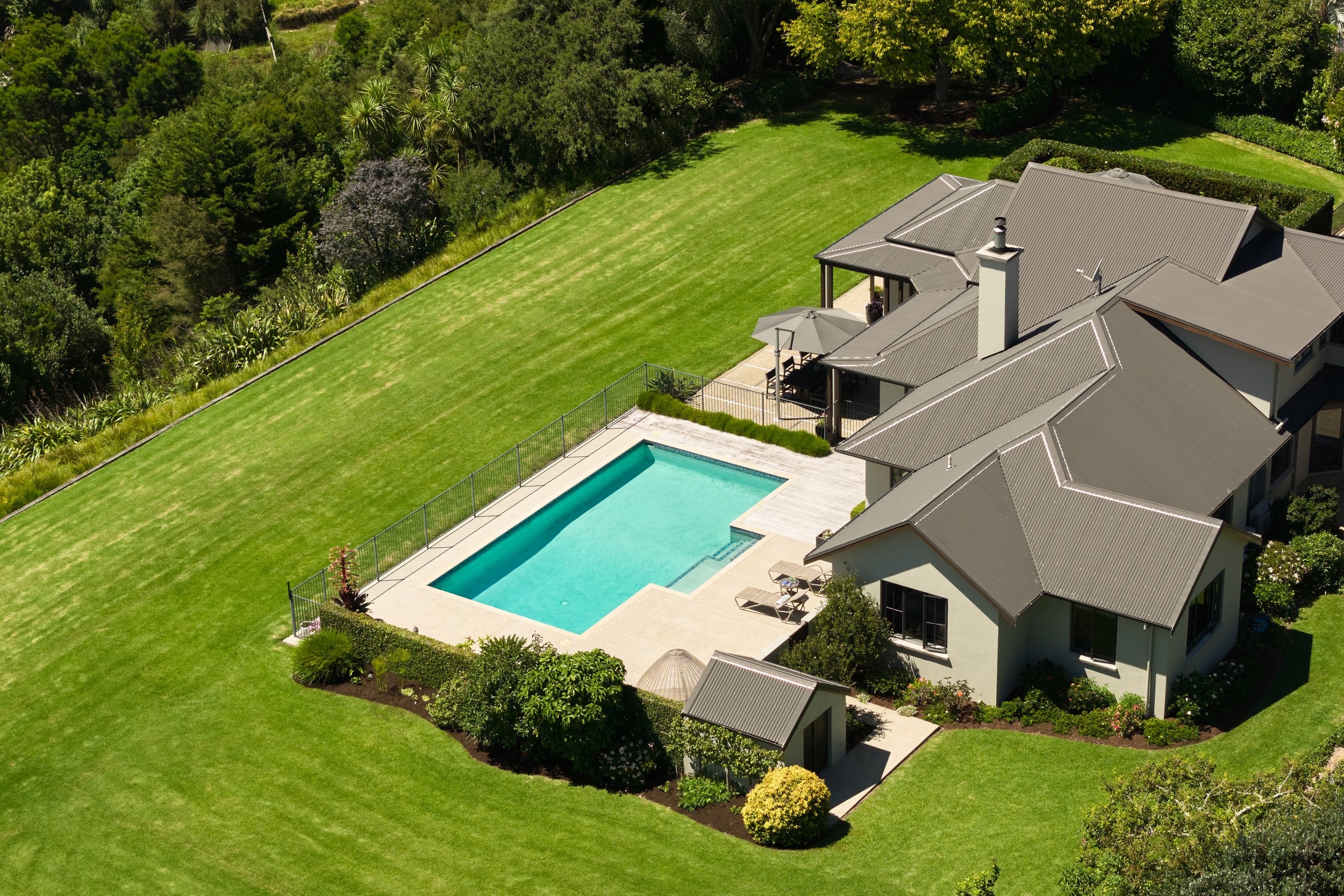
Built 25 years ago as a single storey home where family could grow amid spacious grounds, these owners always knew they would add another level at some point to create a refuge for themselves.
Nestled amid seclusion overlooking the Wairoa Valley, it’s hard to believe this home’s age. It is timeless; a reflection of people who understand longevity and how time enhances a property’s elegance and esteem.
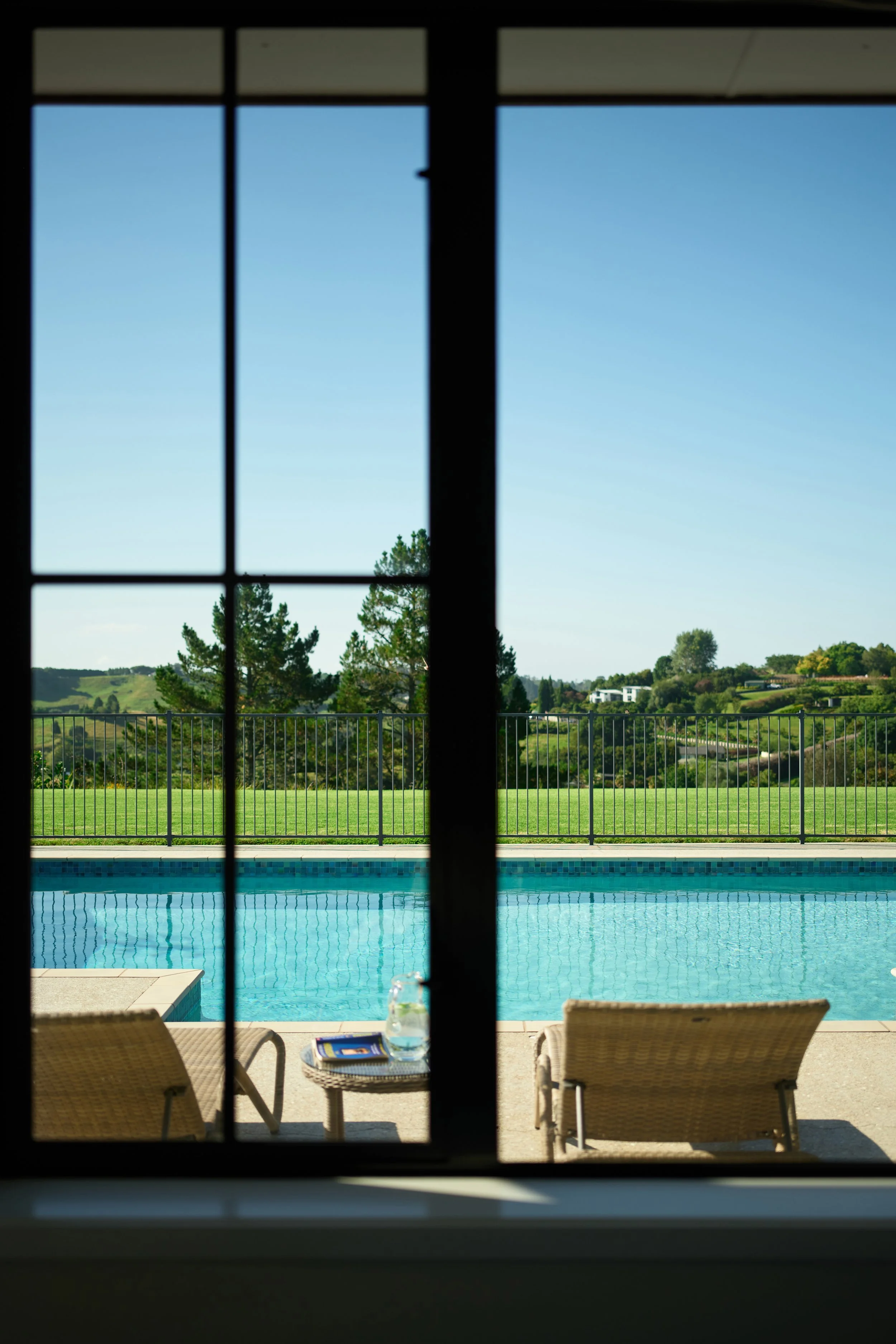
During the extension in 2011, the owners upgraded the kitchen/scullery and made one other change. Flooring in the family hub is recycled rimu, now cleverly stained dark to infuse a greater depth of character; more in tune with the styling of this home.
It is beautiful - elegant in its demeanour, yet firmly focused on family. From the heart of home and formal dining, living steps into a cosy vibe of the second lounge. Earthy tone and texture embrace like a favourite rug and the wood burner invites lingering evenings watching movies.
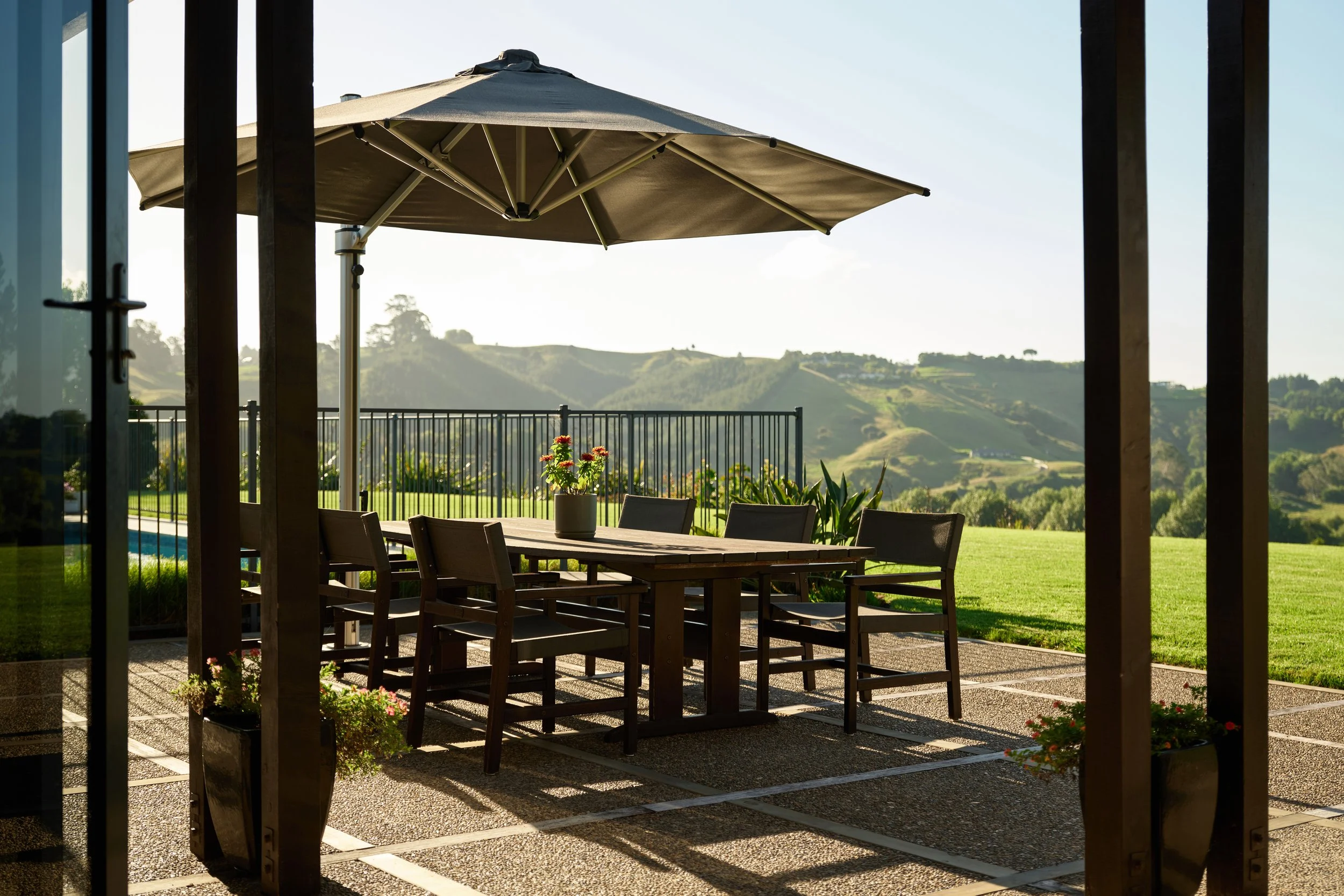
A swimming pool and sun-drenched patio outside entertain family and friends. Gatherings over the years have hosted upwards of 25 around tables at once, while a morning courtyard off the family hub has a more intimate ambience for few.
The original master bedroom is now an ensuite guest room. Two other bedrooms take their cue from the views outdoors - the garden from one; the pool for the other. With a luxury bathroom and powder room for all to share; another bedroom downstairs offers flexibility for a library office, though there is already a dedicated study here.
Upstairs is a glorious retreat. A five-star master suite overlooks the Wairoa Valley and river. Flowing through to a loft-style rumpus, a kitchenette with integrated fridge enhances this upstairs haven.
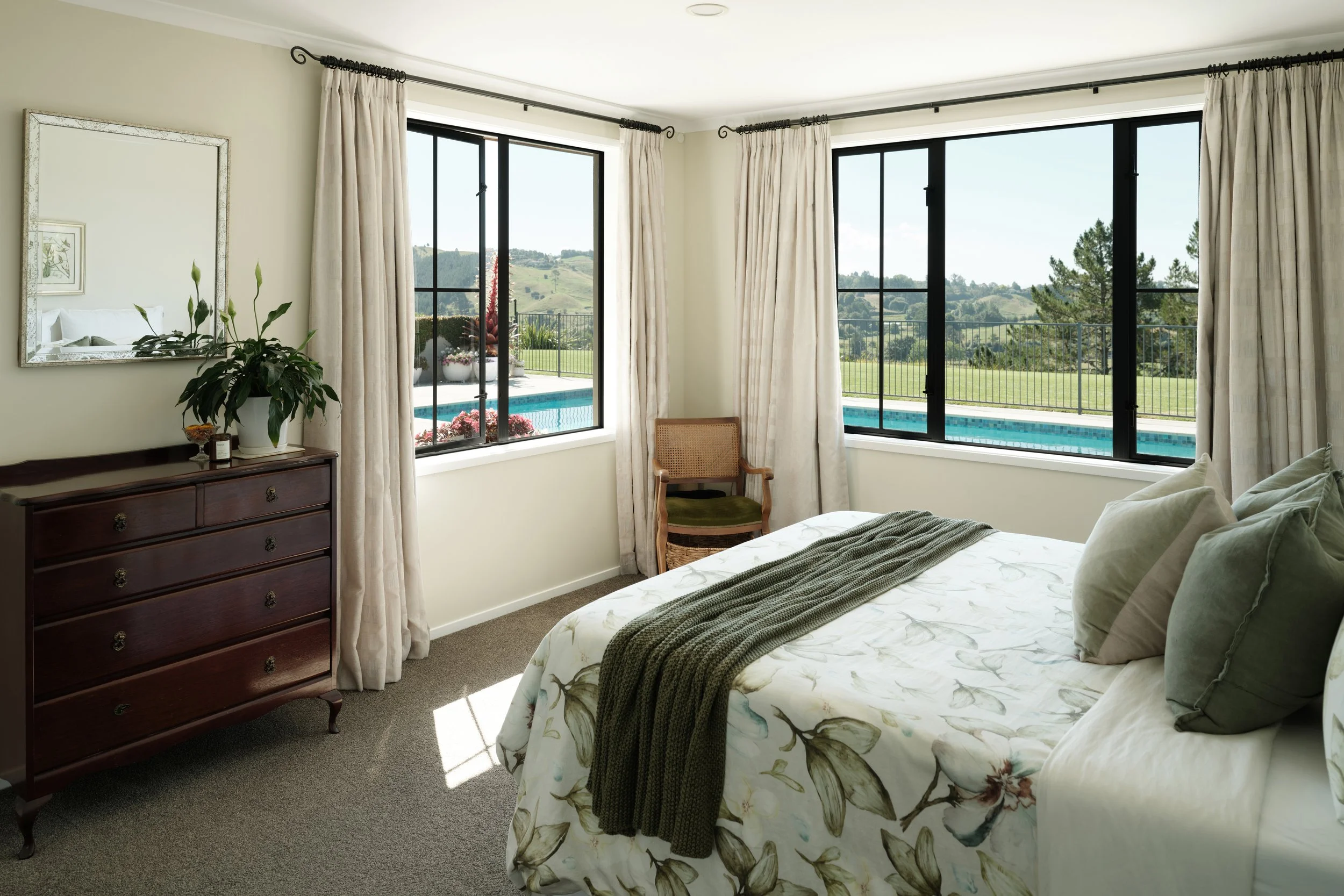
Add a bespoke, separate laundry and three-car garaging, including a high-stud section for the boat, this home is complete. Storage throughout is unbelievable - closets and alcoves everywhere - and that’s just inside. Outside there’s a garden shed for the mower and tools, covered storage for firewood, parking for the trailer - all this before you even begin to take in the garden. Colourful flower ribbons, raised beds for herbs and veggies, fruit trees to feast on, playground lawns and a corner for the hammock where tuis flock to feed on the kowhai.
A home that has kept on giving for one family, downsizing is the only reason these owners are leaving this cherished spot. As one of Tauranga’s best, River Oaks Drive is a rare privilege.
14 River Oaks Drive, Tauriko