

Hot and steamy
Testing the Showerdome with UNO’s Steph Taylor
Testing the Showerdome with UNO’s Steph Taylor

There’s always one thing guaranteed on returning home from a visit to our family in Martinborough. You might be thinking more wine in the house, or a bit of laundry to catch up on perhaps? No, no. It’s that for a good couple of weeks my partner Jeff will bang on about how absolutely sensational his parents Showerdome is, and that we need one in our lives ASAP. Every time.
But we come home, and continue showering Showerdome-less under average water pressure, which for me means dancing a fine line between hot and ridiculously burning hot. I dread turning the shower off and getting out! Jeff will often shower with our toddlers and freeze if it’s not his turn under the water. It’s a first world problem for sure, but having experienced how the other half live it clearly toyed with poor Jeffrey’s emotions.
So this winter, our Showerdome dreams finally became a reality! The team were super easy to deal with and the installation was a breeze. Simon came to the house with everything required for a measure up, the dome was cut to size onsite, and installed within a couple of hours under the strict supervision of our three year old. I was really impressed with how straightforward the whole process was, and you can only imagine how fizzed Jeff has been ever since!

In all seriousness though, I've come to realise there are a bunch of benefits in having a Showerdome. Showering is much more pleasant, especially in winter, as all the warmth and steam stays in the shower. I have less hot, shorter showers, and no longer require use of the extractor fan or heat lamps - love this for our power bill. Showerdome makes showering really quiet too, which is great with sleeping babes right next to the bathroom. And when it’s their turn for a shower, they think getting into ‘the dome’ is great fun!
I really rate this Kiwi-owned-and-made brand, and am highly impressed that their product comes with a lifetime guarantee! Check out www.showerdome.co.nz for more information.
Steph - UNO Magazine

An age of empowerment
When it comes to recent research around menopause, it’s become apparent that we don’t really have to go with the flow. UNO talks to two local experts, Dr Stacy Sims and Dr Linda Dear, about how women can take charge.
When it comes to recent research around menopause, it’s become apparent that we don’t really have to go with the flow. UNO talks to two local experts, Dr Stacy Sims and Dr Linda Dear, about how women can take charge.
Words + Styling Nicky Adams
Photos Graeme Murray
Hair + Make-up Desiree Osterman

Whoever said there were two certainties in life – death and taxes - missed out the third, menopause. Historically perceived with a similar gloomy acceptance as the other two, finally an increased conversation around menopause is encouraging the idea that women can have more control over the experience, along with a realisation that there has been a failure to support women in mid-life. Targeted research and, most importantly, a move to de-stigmatise what is not an illness, but a life stage, has brought a shift of this topic into the public arena. Now open discussions are taking place everywhere, from the boardroom to breakfast TV.
Part of the problem is the general confusion out there; add to this the masses of misinformation and myths and the subject becomes a hotbed that makes most of us just want to bury our heads in the sand. The traditional definition of the menopause would be that it is the last menstrual period a woman experiences as the result of the ovaries no longer producing eggs. A woman is considered to have gone through menopause if she hasn’t had a menstrual bleed for 12 months. The average age that women experience this is 51, but the last-ever period can occur between 45 and 55 and it’s still considered normal. However, the additional curveball is perimenopause: Typically, a woman will enter the menopause transition – or perimenopause – two to four years prior, although this can be for a far longer period.
As a starting point, for many facing the end of their fertile years, it can be an emotional mountain to climb. While there is the upside of the cessation of periods (and I doubt any female has ever lamented their loss), the essence of this event is that it signals a move to a different life stage. And one that comes with the additional slap in the face of feeling as though we are passing into the unpromising land of being an ageing female.

Perhaps this might explain why it’s so common to approach such an important time of our lives with trepidation or lack of preparation. Because, in fact, preparation is something that can transform the experience and, as our experts Dr Stacy Sims and Dr Linda Dear agree, ensuring that the menopause is managed will help navigate many of the unpleasant aspects.
We all know what those wee peskies are. From the hot flushes to night sweats, sleeplessness, anxiety, cognitive fog, aching joints, tiredness and lower sex drive. Oh, and thinning hair and abdominal weight gain (and if you’re lucky, across the bust as well). Of course, these are a lucky dip of blanket symptoms, experienced to varying degrees and lengths of time. The other tricky thing is that even though when put together, in conjunction with a change in your cycle, each of these symptoms can be easy to mistake for the side effects of being stressed, busy and suffering from “rushing woman syndrome”.

Body Matters
Mount Maunganui local Dr Stacy Sims has a PhD in Environmental Exercise, Physiology and Nutrition Science. She works globally with female athletes, runs an online educational program sourced by everyone from health care professionals to individuals, has written books, and presents and makes podcasts. Her qualifications and research have been built on over the last 20 years.
"I started looking at sex differences in extreme environments and the more I got into that, the more I realised how much wasn’t known," says Stacy. "So I ended up doing my post-doctoral work with the Women’s Health Initiative, the big US study that was looking at menopause hormone therapy.” That was in 2007, and her quest to change the perception that when it comes to exercise, nutrition and medicine “women are not small men” has led to her becoming one of the leading voices in this arena.
Stacy and I talk about the necessity to get ahead of the game when it comes to menopause, but with this comes the difficulty of recognising the signs and symptoms of perimenopause. There is a blood test that can be done, but this is deemed unreliable. “When you look at what’s happening in perimenopause, you have all these changes in the ratios of oestrogen and progestogen, so if you go and have a blood test and they’ll say your progesterone is low and your oestrogen is at this point, and your follicular stimulating hormone (FSH) is really high, so you must be perimenopausal,” Stacy says. “Then you’ll go back a couple of weeks later and you get your bloods tested again and you’re at a different phase of your cycle and your hormones are at a different level, and your FSH has dropped, and it’s like – oh, maybe you’re not. Because you have
to look at the trends, you can’t do a one-off blood test.
“What we can look at is how you’re sleeping, how you’re responding to exercise. Do you have any overt symptoms of vasomotor night sweats, what about your concentration? Do you have brain fog, are you to-the-core fatigued? There’s many different things, especially when women are in their late 30s, early 40s,” she continues. More key as an indicator are patterns within your cycle. “We also look at the menstrual cycle itself (which doesn’t help if you’re on the oral contraception pill), but if you look at the menstrual cycle you start to see changes in the bleed pattern, not necessarily cycle length, but you’ll start noticing nuances in your own unique bleed pattern.”
Critically, I wonder, how can you understand the signs if you’re not looking for them? “I always tell women they should be tracking their cycle,” Stacy explains. “Because then they start to understand how they feel throughout the cycle. The more you track, the more you can see: When you feel flat and when you feel good. When those individual patterns start to change, and we start to see a change in the cycle itself, that’s when you know something’s going on.”
Feeling helpless
“I always have women say, ‘All the training I’m doing isn’t working. I’m not adapting, I’m getting slow, I’m getting fat, I’m getting tired. I’m trying this diet and it’s not working.’ And it’s like, okay, we definitely know you’re in perimenopause,” Stacy says. “You have women who say, ‘I don’t understand. Three months ago I was really lean and thin and now all of a sudden – boom – I have an extra five or six kilos on my boobs and my stomach. So I say, your body’s really responding to this sympathetic stress from hormone shifts. There’s this wicked circle going on.”
Where it can feel confusing is that it’s easy to assume most of the changes will happen in the 12-month window that your body is winding down. Seemingly this is not the case; in fact, it’s happening prior. Stacy tells me, “All the body composition changes happen in about the five years before that one point of time of menopause. It can be 15 years that you’re having a whole bunch of irregularities, but we really see the major amount of changes and effects the five years before that one point in time. We call it late perimenopause.”

Train your body and brain
As both an academic and an athlete, Stacy is uniquely positioned to address the journey with women who want to regain control over their bodies, and indeed mitigate the symptoms, which in some cases can quite literally stop women in their tracks. And importantly, how do we get results? I ask what steps Stacy would recommend to someone.
“I want them to track how they slept, what kind of training they’ve done, how they feel, what their heart rate variability is. You look at that, and on the overlay of training we look at the training stress score and how they are adapting,” says Stacy. “And a lot of time they’re putting in the work and nothing’s happening – they’re like a zombie through it all. They might be training for a race; they might be training for life. They get up and go to boot camp and are going through the motions but are not seeing any difference; they’re just getting more and more tired. Even if they’re doing progressive overload and they’re following this program or they have a PT, but they’re just not getting anywhere.
“When we look at that we know we need to get you out of modern intensity work – the boot camp – and into true high-intensity work. If you’re doing true high-intensity work, it’s a different story. True high intensity is short, sharp intervals – think 85-110 percent of maximum effort – with an entire session including warm-up and cooldown not exceeding 35 minutes,” Stacy explains. “What gym HIIT classes do is put women in moderate intensity, an intensity that is too easy to have any kind of adaptive changes, and too hard to give you a boost to your parasympathetic drive and recovery. It just keeps you in this state that drives cortisol up, that keeps you tired but wired and signals you to put
on belly fat.”
The key, Stacy tells me, lies in true high intensity interval training. “This is one to four minutes at 85 percent or more of your max and you have a variable recovery in between. The longer the interval, the lower the intensity, and you might have one minute on, two minutes off, repeat – and you’re really taking those two minutes to really recover. So, if you’re running and your one-minute pace is a 4.5-minute kilometre, then your two minutes would be probably an eight-minute kilometre. You’re totally polarising them, so that when you go to do that next minute, you can hit that 4.5-minute kilometre again. You might do that four or five times and that’s it.
“Sprint interval training (SIT) is a subset of high intensity that women should really incorporate. SIT induces better body composition changes, metabolic and cardiovascular health. SIT intervals are no more than 30 seconds as hard as you can go, with enough recovery (two to four minutes) to allow you to hit it at full gas again – and you might do those five times. This is 110 percent – like running up three flights of stairs and you’re going redline, and then you’re dropping your heart rate. And if you want to keep on going up, you start climbing really, really slowly. Then once you hit that four-minute mark, you go as hard as you can again. The goal is that recovery is a central nervous system response. But if you’re holding that stress for 20, 30 or 45 minutes when you’re not really going that hard, your central nervous system never really learns that this stress is something that it can overcome.”
Sprint training can be multifaceted in its benefits. The options of testosterone for mid-life women in the form of gels or creams is a route some explore; however, as Stacy points out, through exercise you can form your own pathway. “The other thing that sprint interval training does is when you’re done with that parasympathetic response that comes later, you also get an increase in growth hormone and testosterone. And women’s testosterone often starts to plummet more with natural age decline, which is a conversation a lot of GPs are having – that is, do we do testosterone replacement or not? Do the sprint interval training, because post-exercise there is a natural boost of testosterone, IGF-1, and growth hormone.”
Where to begin
While the big rock for exercise at this age is resistance training, this is relatively terrifying for the non-sporty among us. I wonder just how this type of regime works for the women in this camp. “We always phase people in – this isn’t just a training programme. We’re looking at what we can do to maintain quality of life for the rest of your life. We want to introduce you into lifting loads – I want to make sure you move well; I want to see what your mobility is before you start moving loads. Resistance training is not just for lean mass, it’s also for brain health. Cardiovascular work is really good for increasing total brain volume and maintaining the grey matter, but resistance training is critical for that neural adaptation because it increases the nerve growth factor. So, it’s vital for attenuating dementia and Alzheimer’s risks because you’re developing new nerve pathways.”
Then there’s those who recognise they need a plan of action, but simply can’t find the time in their schedule. According to Stacy, all is not lost. “This doesn’t have to take a lot of time – it can take 10 minutes here or there. Get moving, get outside, do a couple of surges upstairs, or squat jumps or lunges or pushups – something for 10 minutes three times a week is the start. If we really want to make it work, we do jump training: Skipping, trampoline, running or hopping up your stairs. It’s all really good for your bones, and your bones really suffer in peri- and post-menopause.”
Food for thought
Of course, how we eat is a key aspect of this life change. “Nutrition is part of the whole evolution. Women become very anabolic resistant, so it’s hard to build and maintain lean mass. We need more regular protein doses throughout the day – palm-sized doses of protein (20-30g) with every meal, and then 10-15g in every snack, a handful of almonds or half a single-serve of Greek yoghurt. And as many colourful fruit and veg as we can. We want to take care of the gut microbiome through all the fibrous fruit and veges and help our body with neurotransmitters, lean mass and body composition through protein. Even if you don’t exercise, but you have a higher protein intake diet, you can completely recomposition your body over the course of 12 weeks. Protein is so powerful. It’s not just meat, it’s eggs, yoghurts, cheese, nuts and so on.”
Not just a hot mess
Dr Linda Dear runs MenoDoctor – a medical practice dedicated to giving extended holistic consultations to women experiencing perimenopause and menopause. The concept is “Medicine meets lifestyle – the best of science, the best of nature, for women to choose from – to help them know their options and come up with a recipe that’s going to help them.”
Linda, like Stacy, is rooted in educating women with the purpose of empowering them – and in a wholly positive way, because while menopause signals an ending, it’s also a beginning. “We should know about it before it comes. Everyone feels too young for perimenopause
– anything with menopause in it makes us feel old, makes us feel used up and uncomfortable; it has a negative vibe about it. Even though it shouldn’t do because for many women it’s a liberating new chapter in their life that’s actually better than any of the others, as long as its handled right… Not every woman suffers bad symptoms; some breeze through it and come out the other side feeling surer of themselves, and more confident. So, this newfound irritability can sometimes be a positive thing as you get comfortable saying no. You start putting yourself first a bit more, which I don’t think is a bad thing.”
Grasping the difference between perimenopause and menopause is a crucial first step in wrapping your head around the journey. Linda breaks it down to a simple analogy: “Perimenopause is when your ovaries hand their notice in, and menopause is when they officially resign and leave. The notice period varies between women and when you hand your notice in you’re not doing your job like you used to. And that reflects what perimenopause is – not fully gone yet, but not quite as good as they were.” The reason the effect is felt throughout your body is because the ovaries have many jobs to do, with the hormones they make going everywhere in our body and brain. Understanding this helps us appreciate all the things that change once they stop doing their job.
Perimenopause is what Linda terms “the great disguiser”. As we talked about with Stacy, it’s all too easy to miss the signs or misdiagnose. “Menopause has been a blind spot in medicine, but in women as well, who feel too busy and too young for menopause.” For this multitude of reasons, it often becomes hard to recognise and then proactively address the physical fallout. Add to this the confusion around Hormone Replacement Therapy (HRT) that still prevails, and you have, quite literally, a hot mess. The burning question is, of course, is HRT safe?
There’s so much information and misinformation that it really is hard to know.
Linda is very reassuring. “When anyone hears HRT, the first thing they think of is breast cancer. Those things got stuck together 20 years ago from a big study in America that announced to the world there was an increased risk of breast cancer, heart attacks, clots, and strokes. Those four nasty things got attached to HRT, so everyone stopped using it. Doctors stopped prescribing it, med students stopped learning about it. HRT was dead, and the rates of use plummeted overnight. Was that fair, was that right? No. The increased risk of breast cancer was so small that it wasn’t statistically significant – out of every 10,000 women, HRT caused an extra eight of them to develop breast cancer. And this risk of eight extra cases was only after taking HRT for at least five years.”
Ironically, Linda continues, this is “lower than the risk of breast cancer from being overweight. Lower than the risk from drinking two or more alcoholic units a night. It was really overstated, and it frightened everyone away. There was an article last year in the Cancer Journal that talks about how amazing HRT is for women’s hearts and their mortality – their lifespan. They say very clearly that the breast cancer risk from HRT is not big at all.”
So, if there is a takeaway from this, it is that the benefits massively outweigh any risks. “You have to acknowledge the small increased breast cancer risk from combined HRT; the women on oestrogen only shouldn’t be worrying at all because the WHI study actually found lower rates of breast cancer in women taking oestrogen-only HRT compared with women taking no HRT. The women on combined, we have to say yes, there were eight per 10,000 extra cases, but it’s in comparison a small risk to take.”
Knowing that we can take back an element of control amid what can feel like a vortex of uncontrollable elements is incredibly empowering. It’s certainly a lot to try and get your head around, and aspects are daunting. However, for the woman who was told by her doctor to “harden up” to her symptoms, and for the woman who was asked by her boss to cut out the “mid-week drinking” as her memory loss was impacting her performance, the key message is hugely heartening. Changes are coming, and changemakers are among us.
For more information: drstacysims.com menodoctor.com
Time’s on your side
Personal trainer Kelly Rennie from Busy Mums Fitness demonstrates that high-intensity exercise doesn’t have to be complicated. It can be as simple as this 20-minute workout three times a week.
Whether you’re in perimenopause or menopause, the importance of high-intensity interval training (HIIT), or resistance training, is so important. These exercise modalities offer numerous benefits to women going through this transitional phase.
HIIT, characterised by short bursts of intense activity, helps boost metabolism, burn fat, and improves cardiovascular health. It also enhances insulin sensitivity and promotes hormonal balance.
Resistance training, on the other hand, strengthens muscles and bones, mitigating the risk of osteoporosis. It can also combat age-related muscle loss and promote a healthy body composition.
Combined, HIIT and resistance training help alleviate perimenopausal and menopausal symptoms, enhance overall wellbeing, and empower women to navigate this stage with greater resilience.
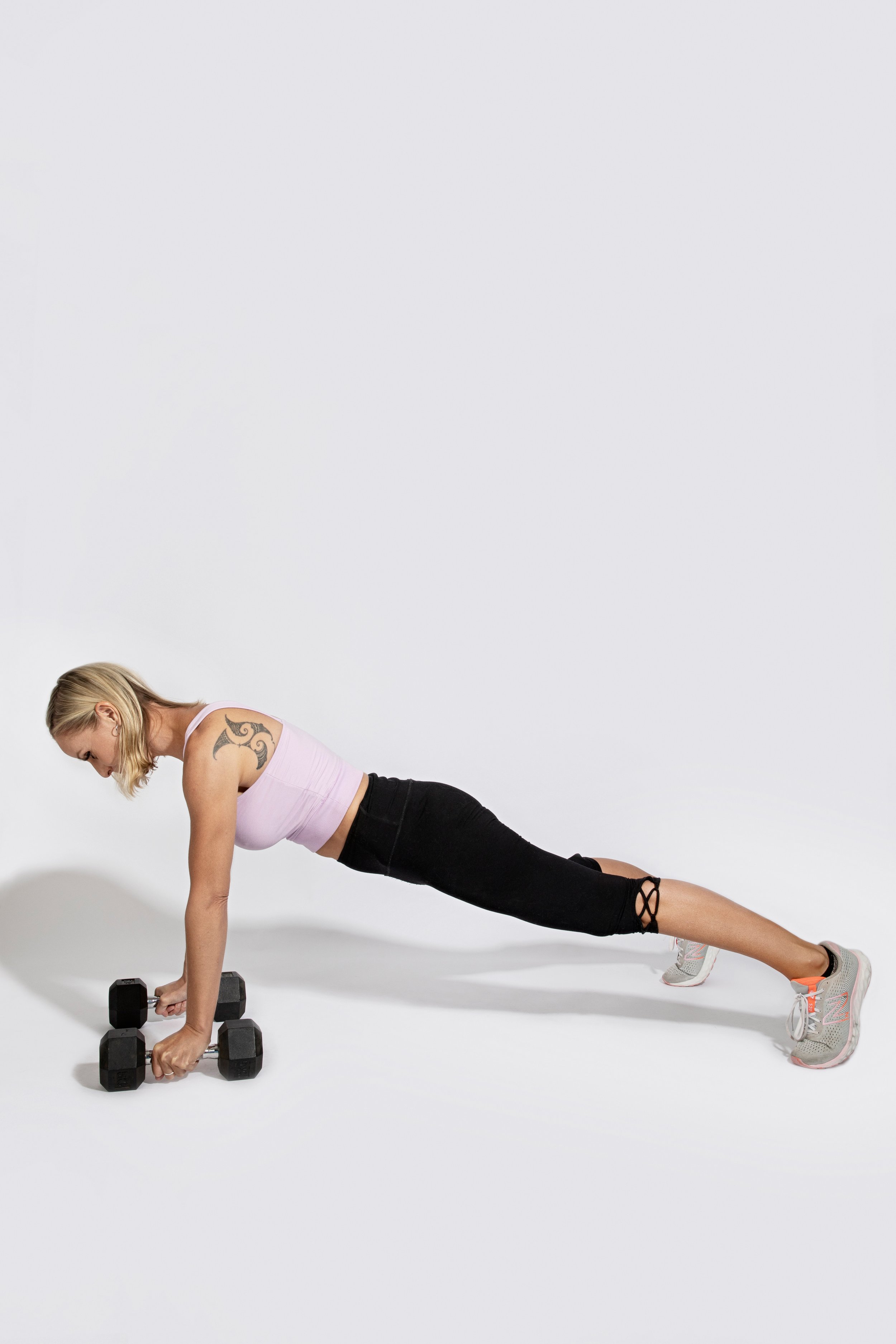
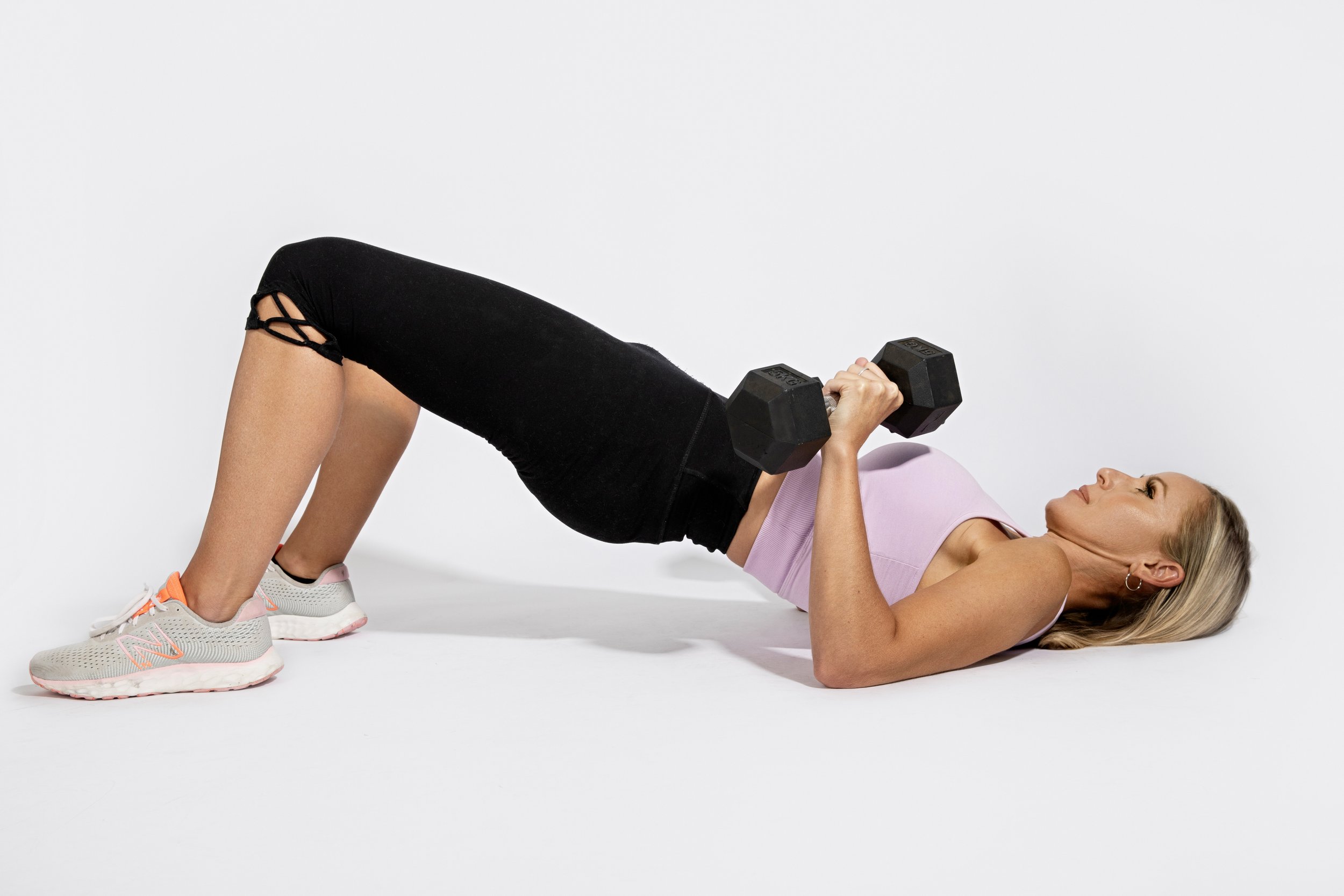
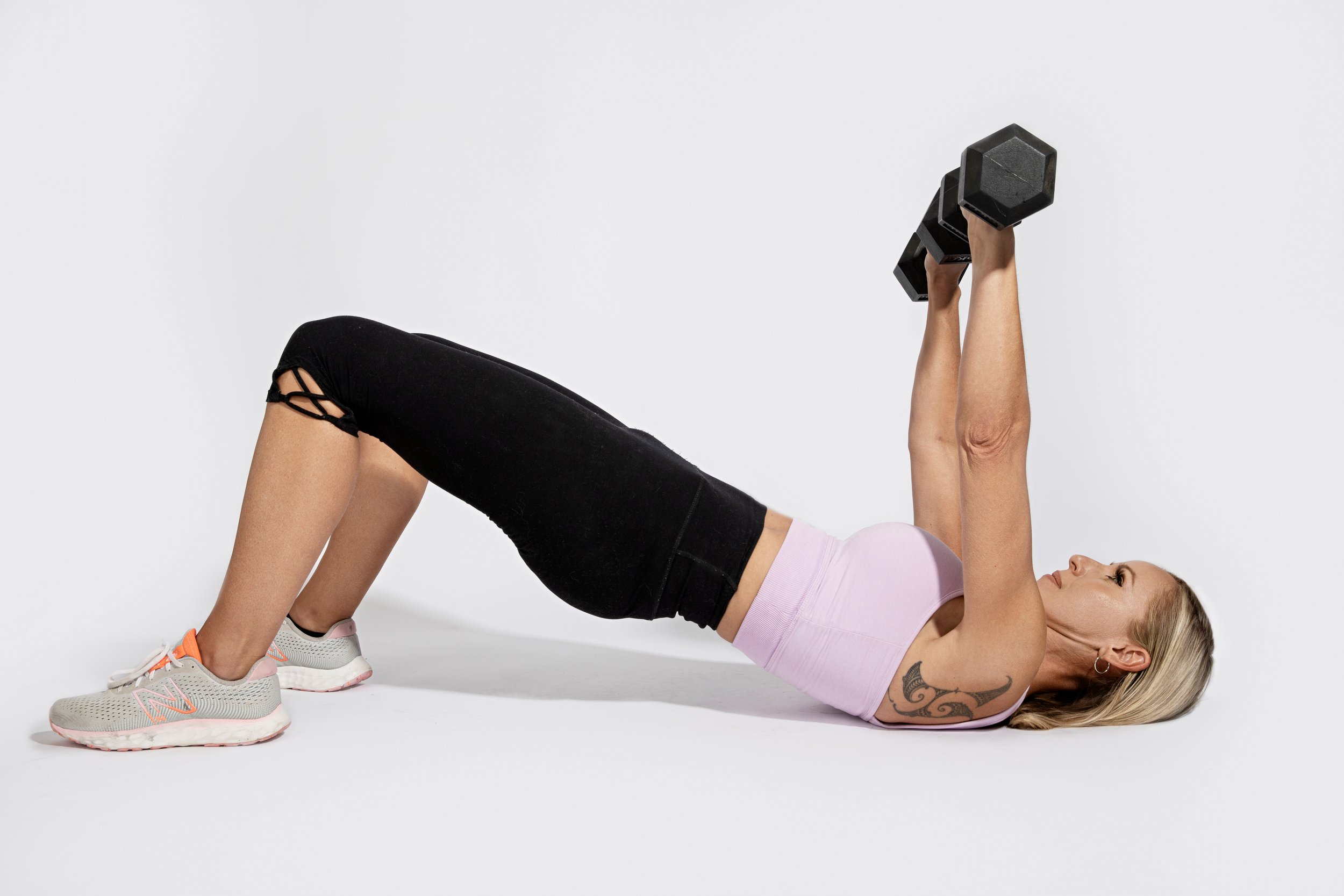
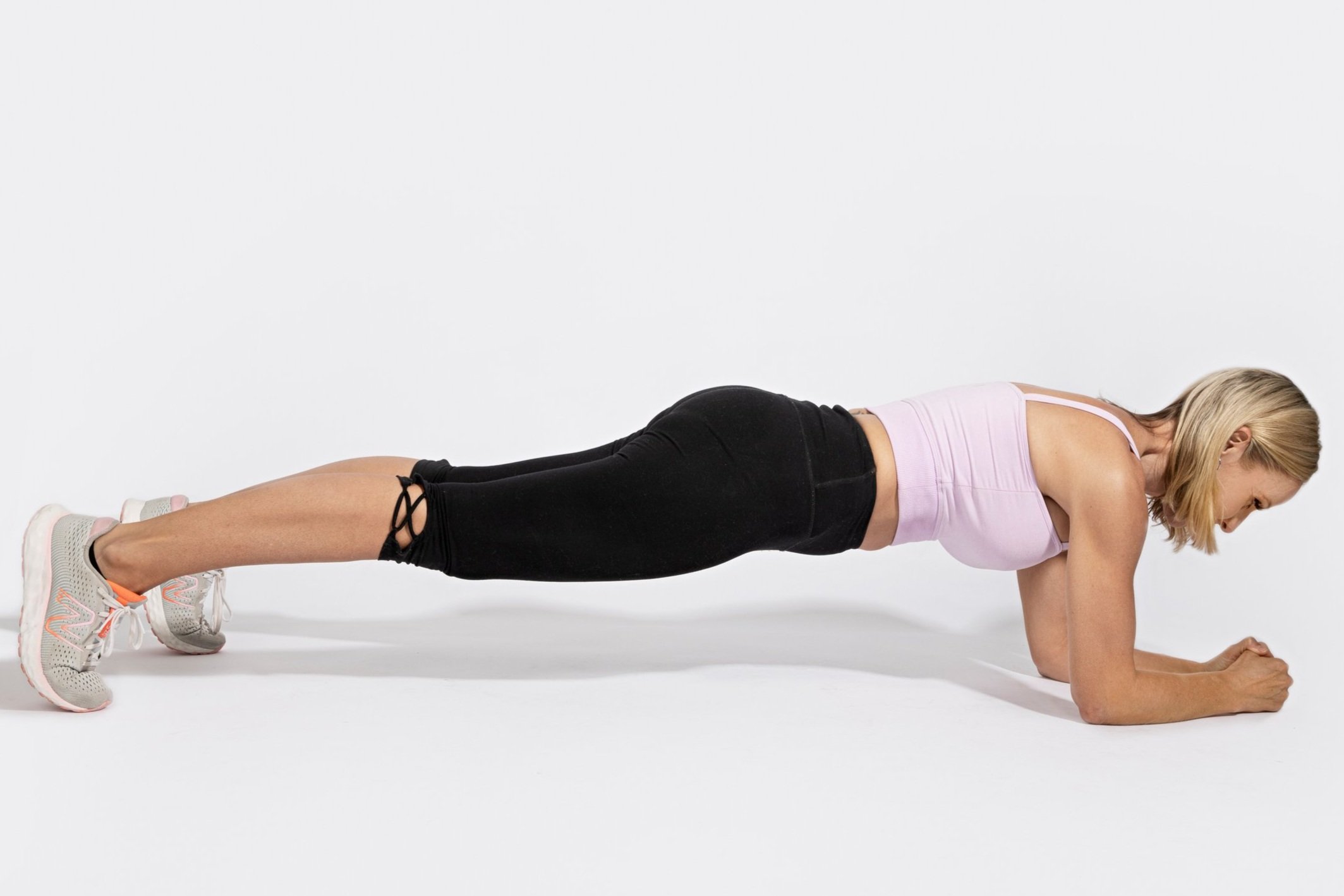
Each move should be repeated for 40 seconds, with a 20-second break in between. Repeat for four rounds. Start with 3-5kg weights and work up from there every few weeks.
RENEGADE ROW

CHEST PRESS
PLANK
SQUAT
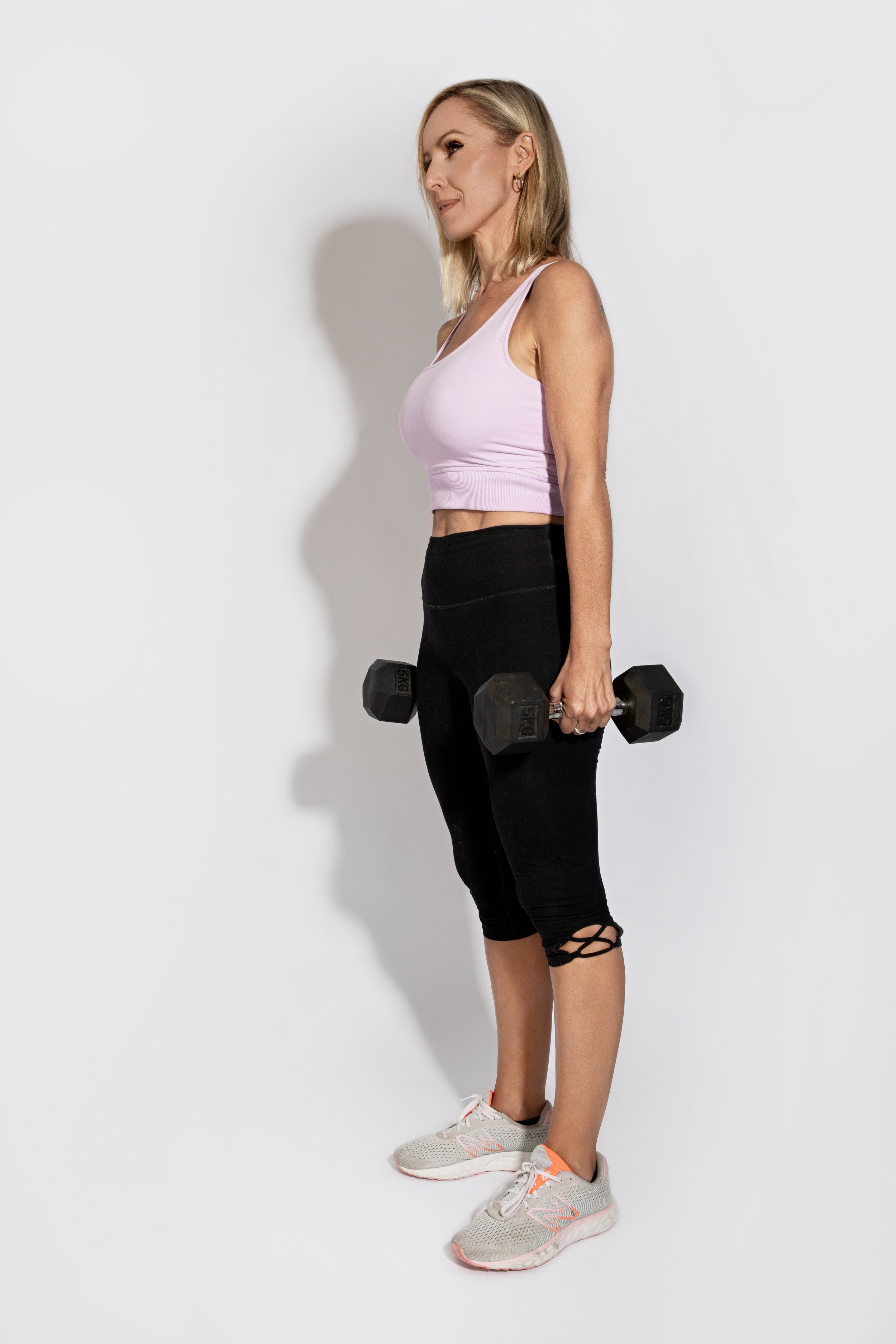
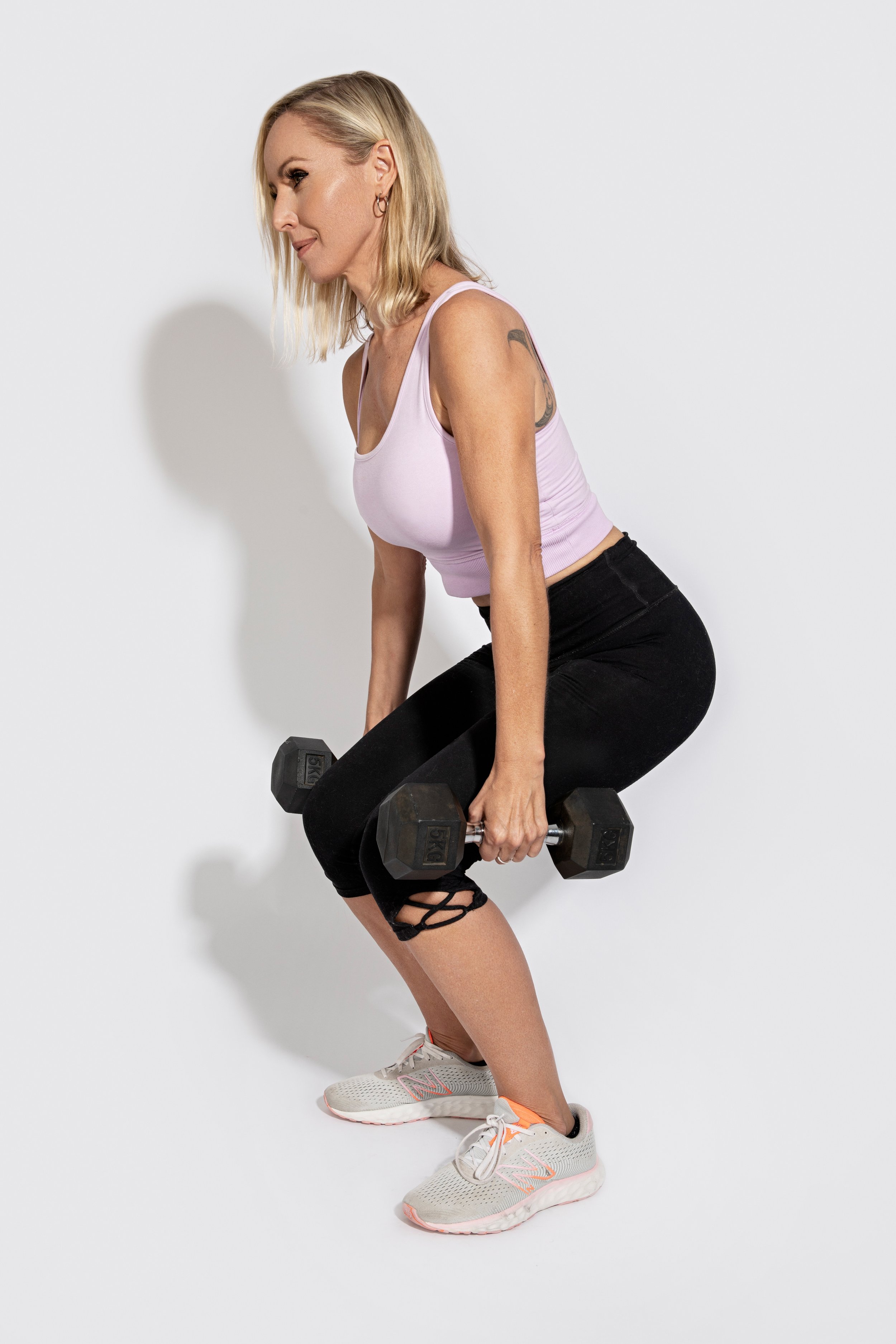
BENT OVER ROW
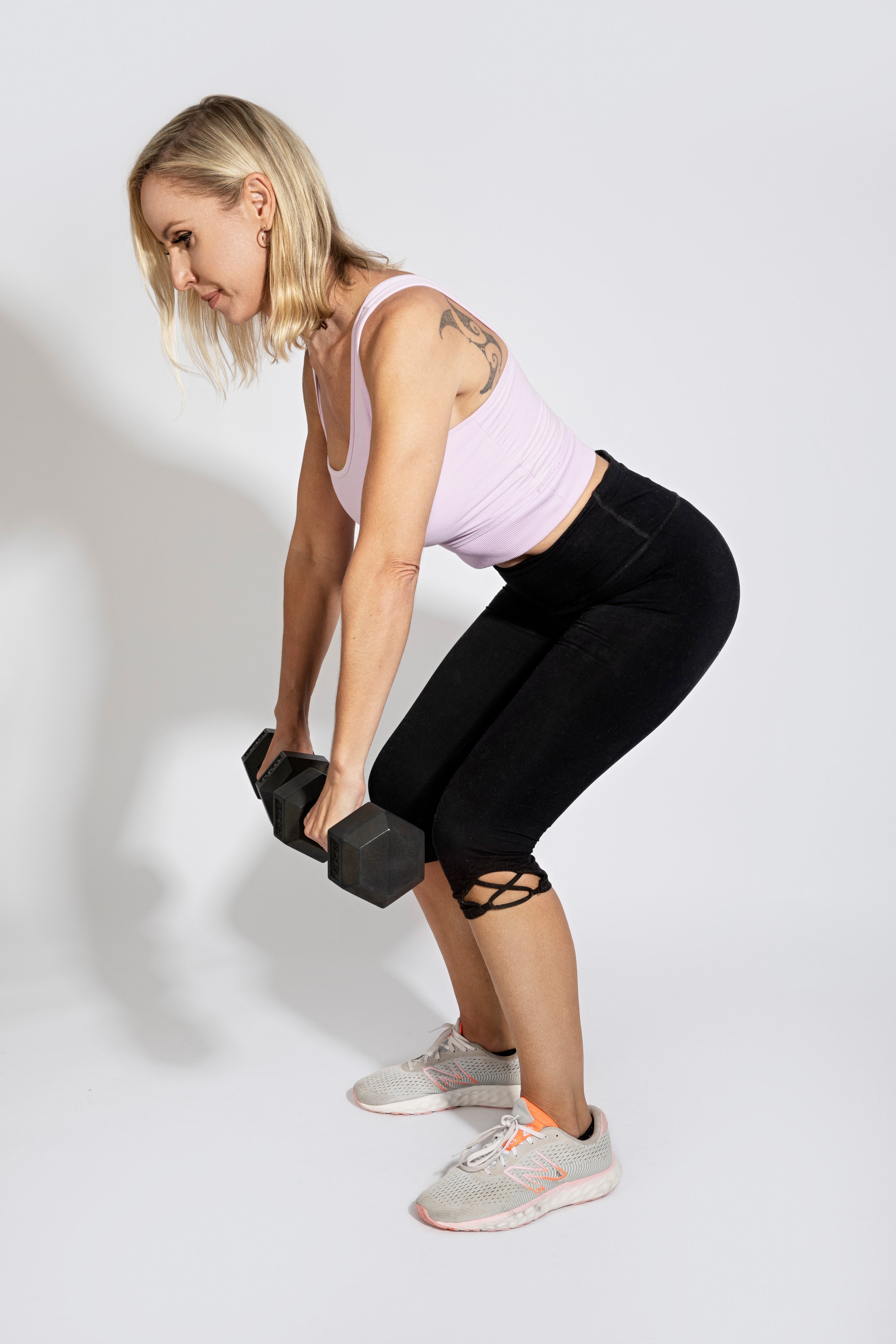

LUNGE
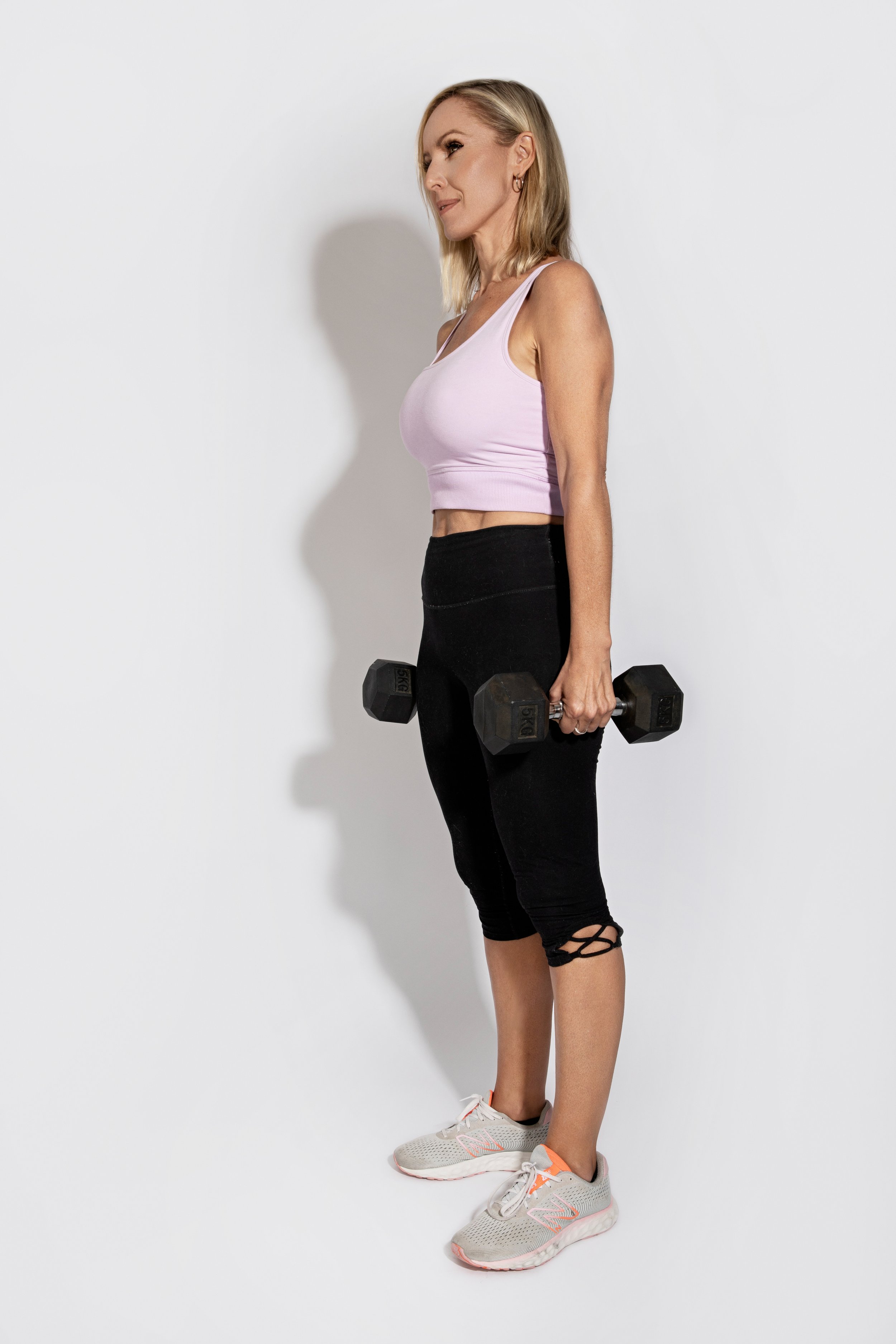

For more info, head to busymumfitness.com

Mythbusting with Dr Linda Dear
Should you be guided by your mother’s menopause?
We always ask the age of your mum (especially if your mum has gone
through menopause early), but you can have a completely different version of menopause than your mum. Looking to relatives can be vaguely helpful but not definite.
Can you have menopausal symptoms but still have a period?
You can still be having horrendous perimenopausal symptoms and your periods have not changed one bit.
Is there an accurate test for menopause?
You can have normal hormone blood tests and be perimenopausal as hell. Blood tests can slip everyone up – there is no test for perimenopause. There is a test for menopause but the woman’s body tells you by not bleeding for a whole year. If you have a bleed within that time, you start the clock again. FSH (the hormone measured) fluctuates in peri, and sometimes it looks like it looks in menopause, so we can’t rely on that being measured.
Can you check for menopause if you’ve had a hysterectomy when there’s no womb or period?
You can check FSH but we want to know on two separate days – so if you get two high FSH readings in a woman, we’re more willing to say she’s been through it. The higher they are, the more confident we feel. From a medical point of view it doesn’t change options when a woman has had a hysterectomy. We can offer a woman all the same treatments whether she’s post-menopausal or perimenopausal – her symptoms matter more than her blood test results.
What if you don't have a period because of a Mirena?
If the woman has a Mirena, then it’s sometimes useful to do the FSH to confirm that she has actually gone through the menopause and her periods have now stopped naturally. That way we know that if we remove the Mirena, she isn’t going to get pregnant or get the heavy horrible periods back.
Is it true the symptoms of menopause can continue after you’ve been through it?
There are a fair number of women who continue to have hot flushes for the rest of their life, and they never sleep a whole night through until the day they die, and some of these women are really struggling. For most of us, it does not last forever; for the vast majority, whether you take HRT or not, your body adapts.
Will HRT prolong my menopause, or will I get addicted?
Nature happens in the background even if you’re on HRT. Most get off HRT and the symptoms have gone, they go through the choppy bit
relatively unscathed. Then it’s fairly smooth post-menopausal sailing.

Refresh and revive
Discover Resolution Retreats’ guided fasting programme.
Whether you’re new to fasting, wanting to target a specific health concern or just in need of a complete health reset, Resolution Retreats’ guided fasting course is the perfect way to get your health on track.

One of the healthy dishes on offer at Resolution Retreats.
Awarded New Zealand's Best Wellness Retreat, Resolution Retreats are experts in delivering award-winning health and wellness programs. With over 10 years in the game, and having taken care of hundreds of guests, they understand the fundamentals to achieving long-lasting health and wellness, from both a pragmatic and holistic viewpoint. On top of their core offering, which includes 3, 4, 7, 10, 14 and 21-day programs, has been the introduction of new retreats such as their seven-day guided fasting retreat. The guided fasting retreat is facilitated by their passionate team and functional nutritionist Vinka Wong from their purpose-built health resort at Lake Karapiro. This retreat is the ultimate refresh and for the very first time is for men and women.
UNO sat down with founder Joelene Ranby and functional nutritionist Vinka Wong to find out more.
UNO: What inspired this new program offering and who would your seven-day mimicking fasting retreat be great for and why?
Joelene: The inspiration behind our 7-day fasting retreat program stems from our dedication to providing comprehensive health and wellness experiences for our guests. We observed a growing interest in fasting as a means to improve overall well-being, both physically and mentally. Recognizing the ancient practice's potential benefits, we wanted to create a structured and supportive environment where individuals could embark on a transformative journey of self-discovery and healing.
The seven-day mimicking fasting retreat is ideal for those who are looking to kickstart their health journey, achieve greater energy, weight loss goals, or experience the benefits of fasting in a supported and controlled environment. The program combines the principles of fasting with carefully curated nutrition, mindful practices, and expert guidance.We decided to extend this offering to both men and women as it's going to be so beneficial to men as well. We wanted the health benefits of this program to be accessible for individuals, couples, friends, as well as to provide another level of wellness for our returning guests.

Functional nutritionist Vinka leading one of the talks at the retreat.
UNO: This is a mimicking fasting style retreat, can you explain what this means and what guests can expect from a nutritional point of view while on retreat in terms of meals and how the benefits?
Vinka: Unlike traditional fasting, the Fasting Mimicking Diet (FMD) allows you to reap the numerous benefits of fasting while still enjoying carefully designed meals. At the core of the Fasting Mimicking Diet lies the art of crafting meals that optimise specific macronutrients. By carefully selecting nutrient-dense ingredients, our bodies enter a state of "fasting with food." During the fasting mimicking phases, these meals are designed to maintain a low caloric intake while supplying a precise balance of carbohydrates, proteins, and healthy fats. The intentional macronutrient ratios not only support sustainable weight management but also encourage cellular repair, autophagy, and metabolic rejuvenation.

UNO: What does a day in the life of a guest look like on this retreat?
Joelene: We take things a little slower on this retreat program, as the body is going through a process of overall detoxification. Mornings we meet at the Yoga Chalet for a gentle movement class to welcome the new day, before guests attend one of our award-winning wellness workshops. The afternoon is when we have ‘bliss time’, where guests are encouraged to rest, make use of the extensive on-site facilities, unwind in our spa, or enjoy breathwork, Yoga and meditation on offer. If you and your body need additional support, you have the ability to customise your retreat experience to your individual needs with a wide range of additional health and wellness services available via our Wellness Menu, such as hot/cold therapy, vitamin infusions, mindset coaching, naturopathic consultations, equine therapy and many others to promote relaxation, balance, and a sense of well-being.

UNO: Guests will undertake blood work prior to the retreat, why is this aspect of this programme so important? and what are some of the benefits guests can gain from having blood work interpreted?
Vinka: As part of the fasting retreat, all guests will do a comprehensive blood test that will be analysed by a Functional Nutritionist, Vinka Wong. Unlike conventional blood tests which typically focus on identifying disease after they already manifested, these functional blood tests aim to identify subtle imbalances even before symptoms arise. By analysing a broader range of markers including those related to nutritional deficiencies, hormone levels, gut health, and inflammation, functional blood testing provides a comprehensive picture of your health status. And with this knowledge Vinka can offer you personalised and targeted interventions to enable you to make informed lifestyle changes and implement preventative measures to mitigate potential health risks. Understanding what your individual body needs is a powerful tool for living your best life!
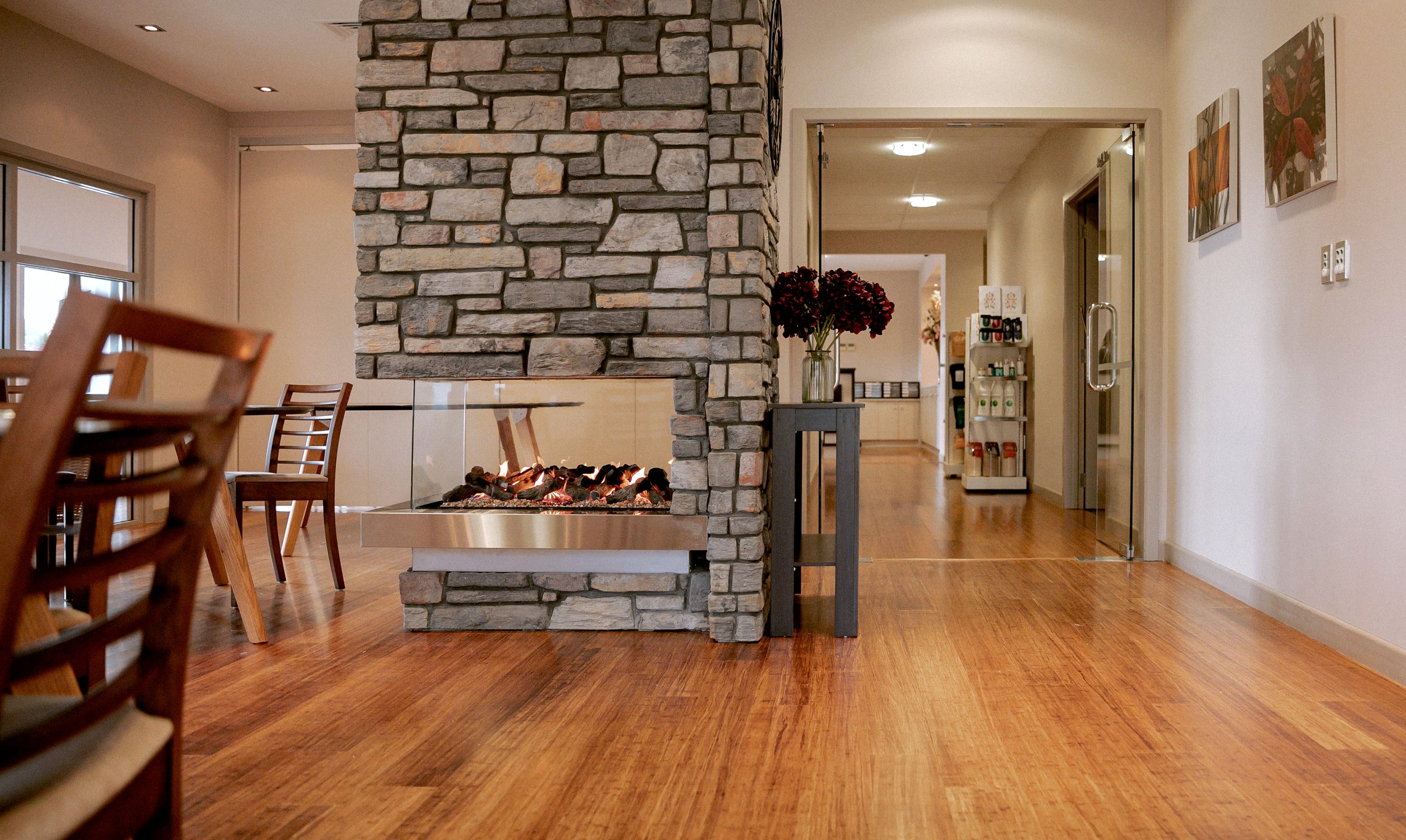
The dining room at their Lake Karapiro site, near Cambridge.
UNO: Is there anything that those completely new to fasting and wanting to experience this retreat and its many benefits can do to help prepare themselves prior to the retreat?
Joelene: This is a great opportunity for those who are new to fasting to be introduced under the care of an expert team. As with all our retreat and health programs, we suggest reducing your intake of alcohol, sugar and caffeine the week before you come. This allows you to enjoy the benefits such as enhanced mental clarity, boosted energy levels, and overall detoxification, earlier in the program. Participants often report feeling rejuvenated, experiencing improved focus, and gaining a sense of renewal throughout the entire body.
To find out more, or to book head to: https://resolutionretreats.co.nz/bookings/808/health-overhaul-men-women-mixed-seven-day-guided-fasting-retreat-with-vinka/

Whittaker's and Naomi Toilalo celebrate Matariki
Naomi Toilalo is the author of Whānaukai, New Zealand’s first entirely bilingual cookbook with recipes available in English with a full Te Reo translation.
Naomi is the author of Whānaukai, New Zealand’s first entirely bilingual cookbook with the recipes available in English with a full Te Reo translation.

Kūmara celebration cake
KŪMARA CELEBRATION CAKE
300g Orange kūmara, peeled
1 tsp Salt
Zest of 1 ½ oranges
⅓ C Orange juice
1 Tbsp Vanilla
2 Eggs
⅔ C Brown sugar
⅔ C Caster sugar
⅔ C Oil, neutral
½ C Yogurt, unsweetened
2 ½ C Self-raising flour
½ tsp Baking soda
1 Tbsp Mixed spice
1 Tbsp Ground cinnamon
2 tsp Ground ginger
100g Whittaker’s Fijian Ginger and Mandarin chocolate
Pre-heat the oven to 140 fan bake or 150 bake.
Grease two 19cm or 20cm cake tins with butter and line with baking paper.
Grate the kūmara into a large bowl. Add the salt, orange zest, orange juice and vanilla. Stir to combine and leave aside.
Add the eggs, brown sugar and caster sugar in to a large bowl. Whip together until smooth.
Continue to whip as you slowly add the oil and yoghurt.
Sift the flour, baking soda, mixed spice, cinnamon and ginger on to the egg mixture. Add the kūmara mixture on top and fold all the ingredients together.
Chop the chocolate into small pieces and fold it in the batter.
Divide the mixture between the two cake tins.
Bake for 25 minutes and then place a large tray on top of the cake tins (this helps keep the moisture locked in). Bake for a further 15 minutes or until the cakes spring back when pressed in the centre.
Remove from the oven. Tip the cakes upside down on to a cooling tray straight away to help flatten them out. Cool the cakes as you prepare your delicious frosting.
THE CHOCOLATE FROSTING
180g Whittaker’s 62% Dark Cacao chocolate
3 Tbsp Cream
190g Butter, softened
½ C Icing Sugar
2 tsp Vanilla
Add the chocolate and cream to a small bowl. Gently melt it in the microwave in 20 second bursts, stirring well between each time. Once smooth, leave to cool for 5 minutes.
Add the softened butter, icing sugar and vanilla to a large bowl. Whip it until light and fluffy.
Add the warm chocolate mixture a tablespoon at a time to the butter mixture as you whip continuously. Once it is all incorporated, refrigerate for 5 to 10 minutes to thicken slightly.
ASSEMBLY
Spread half of the chocolate frosting on to one of the cooled cakes. Add the second cake and spread on the remaining frosting. Note: This buttercream can also be spread to cover the sides of the cake too if you prefer.
To top it I used dried orange slices, fresh strawberries and rosemary. You could also top it with maple candied pecan nuts and add some caramel for a touch of glam.
Enjoy with your whānau and friends this Matariki!
KEKE ĀRANI ME TE KŪMARA (KŪMARA CELEBRATION CAKE)
KEKE ĀRANI ME TE KŪMARA
Kia 300 karamu kūmara ārani
Kia kotahi kokoiti tote
Kiri ārani o tētahi me te haurua ārani
Kia hautoru kapu wai ārani
Kia kotahi kokonui wanira
Kia rua hēki
Kia rua hautoru kapu huka hāura
Kia rua hautoru kapu huka one
Kia rua hautoru kapu noni
Kia haurua kapu miraka tepe (kāore he huka)
Kia rua me te haurua kapu puehu parāoa whakatipu
Kia haurua kokoiti pēkana houra
Kia kotahi kokonui rau kikini whakauruuru
Kia kotahi kokonui hinamona kuoro
Kia rua kokoiti tinitia kuoro
Kia kotahi rau karamu tiakarete manarini me te tinitia
Whakamahanatia te umu kia 140 te pāmahana.
Hinuhinutia kia rua ipu keke (19, 20 rānei henimita te rahi), ā, whakaritea ki te pepa tunu.
Waruwarutia te kūmara ārani ki te oko rahi. Tukua te tote, kiri ārani, wai ārani me te wanira. Whakaranuhia. Waiho ki te taha.
Raua atu te hēki, huka hāura me te huka one ki te oko rahi anō. Wepua kia māene.
I a koe e wepu tonu ana, āta riringihia atu te noni me te miraka tepe.
Tātaritia te puehu parāoa whakatipu, pēkana houra, rau kikini whakauruuru, hinamona me te tinitia ki runga i te ranunga hēki. Tukua hoki te ranunga kūmara ki runga. Whakaranuhia te katoa.
Tapahia te tiakarete kia iti te rahi. Kaurorihia ki te ranunga.
Whakainatitia te ranunga ki ngā ipu keke e rua. Divide the mixture between the two cake tins.
Tunua ngā keke mō te 25 mīniti, kātahi whakatakotoria tētahi heri nui ki runga i ngā ipu keke (kia mau tonu ai te mōwai) . Tunua anō, mō te 15 mīniti.
Tangohia ngā keke kua tunua i te umu. Huripokia ki ngā heri hauhau kia papatahi pai ai ngā keke. I ngā keke e makariri haere ana, mahia te pani reka tiakarete.
TE PANI REKA TIAKARETE
Kia 180 karamu tiakarete parauri (62 te ōrau)
Kia toru kokonui kirīmi
Kia 190 karamu pata kūteretere
Kia haurua kapu puehu huka
Kia rua kokoiti wanira
Raua atu te tiakarete parauri me te kirīmi ki te oko iti. Āta whakarewaina ki rō ngaruiti. Ia 20 hēkona, kaurorihia te tiakarete. Gently melt it in the microwave in 20 second bursts, stirring well between each time. Waiho mō te 5 mīniti kia makariri hāere. Leave to cool for 5 minutes.
Tukua te pata kūteretere, puehu huka me te wanira ki tētahi oko rahi. Whakapāhukahukatia kia tāhungahunga.
Tāpirhia tētahi kokonui o te tiakarete mahana ki te ranunga pata i a koe e tāwhiuwhiu tonu ana. Whakamātaohia mō te 10 mīniti kia kukū ai te pani reka. Once it is all incorporated, refrigerate for 5 to 10 minutes to thicken slightly.
TE MAHI HANGA KEKE
Pania tētahi haurua o te pani reka ki tētahi o ngā keke. Tāpirihia atu te keke tuarua ki runga. Pania te toenga o te pani reka ki runga i taua keke,( ki ngā taha hoki o ngā keke mēnā e hiahia ana).
Hei whakarākei, tāpirihia ngā ārani raki, ngā rōpere māota me te rohimere. Hei whakaaro anō, mahia ngā nati rare me te karamea. Mānawatia a Matariki e te whānau!

THE NO KNEAD DOUGH
¾ C warm milk
¾ C lukewarm water
3 Tbsp brown sugar
1 sachet instant yeast, 8g
2 C high grade flour
3 Tbsp neutral oil
1 ⅓ C high grade flour
1 ½ tsp salt
1 block of Whittaker’s Hazella chocolate (broken in to pieces)
1.25L rice bran oil
CINNAMON SUGAR
¾ C caster sugar
2 ½ tsp cinnamon
Add the milk, water and brown sugar in to a bowl. Stir to dissolve the sugar.
Sprinkle over the instant yeast and stir with a whisk. Allow the yeast to activate for a few minutes (it should rise to the top).
Add the 2 cups of flour and the oil in to the activated yeast mixture. Stir with a whisk until smooth.
Cover and leave to rise for 20 minutes.
Add the remaining 1 ⅓ C flour and the salt in to the bowl. Mix until all the flour is incorporated in to the dough.
Once combined, stretch and fold the dough 30 times in the bowl. Take a piece of dough from the side of the bowl and lift it high and press it in the middle, turn the bowl a 1/4 turn and repeat the pattern. Each time you do a 1/4 turn, it is 1 count.
Cover and leave the dough to rise for 1 hour to 1 hour 15 minutes.
Once risen, gently tip the dough on to a table. Cut into 12 equal squares.
Take a piece of dough, place three pieces of Hazella chocolate in the middle. Fold in the dough and pinch the seams. Place it on an oiled tray to rise as you repeat the pattern, making 12 in total.
Rise the fry bread for 35 - 45 minutes in a warm place.
As they rise, prepare the cinnamon sugar by combining the caster sugar and cinnamon together in a bowl.
Heat the oil in a cast iron pan to around 165-175 degrees.
Fry three fry bread at a time for 2 minutes on each side and roll in straight in to the cinnamon sugar. Serve immediately!
PARĀOA PARAI POKE KORE ME TE TIAKARETE HĀNATI (NO KNEAD FRY BREAD WITH HAZELLA CHOCOLATE)
TE POKENGA POKE KORE
Kia toru hauwhā kapu miraka mahana
Kia toru hauwhā kapu wai aromahana
Kia toru kokonui huka hāura
Kia kotahi pēke īhi tere (kia 8 karamu)
Kia rua kapu puehu parāoa kounga
Kia toru kokonui noni
Kia kotahi me te hautoru kapu puehu parāoa kounga
Kia kotahi me te haurua kokoiti tote
Kia kotahi paraka tiakarete hānati
Kia 1.25 rita noni
HUKA HINAMONA
Kia toru hauwhā kapu huka one
Kia rua me te haurua kokoiti hinamona
Riringihia atu te miraka, wai, me te huka hāura ki te oko nui. Kaurorihia kia rewa ai te huka.
Ruia te īhi tere ki runga. Koheritia. Waiho mō te rima miniti.
Raua atu kia 2 kapu puehu parāoa me te noni ki rō ranunga īhi. Whakaranuhia ki te koheri.
Tūpokina ki te tī taora mō te 20 miniti kia rewa ake ai te pokenga.
Tukua te toenga o te puehu parāoa me te tote ki te oko. Whakaranuhia.
Kia 30 nga wā koe e kume, e pōkai ana. Kūmea te pokenga mai i te taha o te oko, waiho ki waenganui. Hurihia te oko ki te hurihanga hauwhā. Hāere tonu kia 30 nga hurihanga.
Tūpokina ki te tī tāora mō tētahi hāora me te 15 miniti kia rewa ake anō te pokenga.
Ka tino rite ana te pokenga, tapahia kia 12 ngā wāhanga pokenga.
Tīkina tētahi o ngā pokenga, ā, tāpirihia atu ngā tiakarete e toru ki runga. Pōkaitia ngā taha ki waenganui. Kinitia te pokenga. Waiho ki tētahi heri, pania ki te noni. Me pērā te mahi ki ngā pokenga katoa.
Waiho te katoa o aua pokenga kia rewa ake mō te 35 ki te 45 miniti.
I a rātou e tipu ana, whakaritea te huka hinamona. Whakaranuhia te huka one me te hinamona ki tētahi pereti āhua rahi.
Whakamahanatia te noni kia 165 ki te 175 te pāmahana, ki rō hōpane rino kia rewa ai.
Paraitia ngā pokenga ki roto i te noni wera, e rua miniti mō ia taha. Kātahi, pōkaitia ki roto i te huka hinamona. E kai!

Tech testing corner
Karl Puschmann tries out the latest and greatest gadgets.
Karl Puschmann tries out the latest
and greatest gadgets.

PSVR 2
As the name suggests, this is PlayStation’s second go at VR, and it's vastly improved. While the design looks similar, it's been totally redesigned. I found the new headset lighter, more comfortable to wear and easier to take on and off. The screens inside are also dramatically better which, when combined with the sheer grunt of the PS5, make for a smoother and more enjoyable experience.
The PSVR 2 is cutting-edge tech and does come with a cutting-edge price, costing more than the required PS5 console itself. It’s certainly not going to be an impulse buy.
But no other gaming experiences come anywhere close to offering the undeniable thrills, realism and sense of complete immersion offered by virtual reality, and the PSVR 2 is one of the easiest user-friendly and powerful ways of joining the VR gaming revolution.
RRP$999.

Samsung Galaxy S23 Ultra
The new flagship phone from Samsung has constantly impressed. It's said the best camera is the one you have with you, and if you have the S23 Ultra, you’ll have the best phone camera currently available with you at all times. Its elegant design features an ultra-wide, two telephoto lenses and a 200-megapixel main camera.
We also liked the customisable always-on display and the stylus tucked away for note-taking or doodling on its absolutely gorgeous screen.
The phone’s also incredibly fast and responsive and easily handled everything I’ve thrown at it. Battery life was also impressive getting me through the day.
Everything about the S23 Ultra feels premium and it certainly earns its Ultra branding.
RRP$2299.

Microsoft Surface 5 Laptop
Windows laptops aren’t renowned for their good looks. With its Surface range, Microsoft has sought to change that reputation by showing what Windows-powered computers and devices can look like. Their new Surface 5 is an exceptionally good-looking laptop. For the past month, UNO’s been testing the flagship 16-inch model. The 14-inch comes in a range of stylish colours, but our review unit was a stealthy black augmented with a mirrored Windows logo on the front. Very classy. Thanks to Windows Hello, its Face ID feature, whenever you open the laptop up it’s ready to go. It sounds trivial but is one of my favourite features. The laptop’s vivid and bright screen also doubles as a touch screen, which sounds gimmicky, but was increasingly useful to quickly close a window or sign documents. Battery life’s also very good. Using it as my daily work computer I could get through a full eight hours without plugging in. The only real struggle I encountered was with more demanding gaming. But for casual or productivity users the Surface Laptop 5 is a solid, stylish choice. It’s quiet, houses one of the nicest keyboards going and has been a joy to use.
Starting from $2449 for the 15 inch.

Moochies Connect Smartwatch 4G
No one wants to be a helicopter parent but the cold hard facts are that the world is a more dangerous place than it was in the good old days when we grew up. The Moochies Connect Smartwatch is designed so kids can play and explore their world with freedom but you can still keep tabs on where they are at all times. If the worst does happen, like falling off their bike and needing your help, there's an SOS button they can press. The monthly plans come with 1GB of data and unlimited call minutes so they can call you directly from the watch if they need to. It's water resistant and tough enough to stand even the most rigorous play sessions making their watch one thing you won't need to worry about.
RRP$189.99, monthly plans from $15.95 a month.

eufy RoboVac 35C
Having two kids and a fluffy kitten running around the house meant vacuuming was a daily chore. No longer. Unlike more expensive models, the 35C can’t map your house or do anything fancier than schedule a daily start time. Instead, it randomly bumps its way around the house sucking up everything in his path. I was initially sceptical of how good a job this cost-effective model would do. But it’s been revolutionary. I’m overjoyed to report I haven’t used my handheld vacuum cleaner in weeks.
RRP$399.

Ōura Smart Ring
If you're wanting to get in on the health tracking benefits of smartwatches but already have a snazzy traditional watch you don't want to part with then this nifty device could be just the ticket. The Ōura Smart Ring provides all the same health data and habit analysis that a smartwatch would, all shrunk down into a discrete and stylish ring. This Finnish company says for health tracking your pulse is actually stronger on your finger than your wrist making their data as accurate as possible. With sleep tracker, body temp gauge, readiness scores, movement, steps and heart rate tracking, amongst many others, this little ring does it all.
RRP$499.

Norton AntiTrack
They may not be glamorous, but online privacy and data protection are important. Norton’s new AntiTrack subscription allows you to simply go back to not thinking about these things. It blocks all online trackers, personal data collectors and fingerprinting spyware from gathering any personal info as you surf the web.

Escape to Mother Nature
With headlines echoing rising concerns around climate change, 44 percent of Kiwi travellers say that recent news about climate change has influenced them to make more sustainable travel choices. With Mother’s Day fast approaching, what better way to show your appreciation for the mother figure in your life by planning an escape to Mother Nature this Mother’s Day?

Woodside Bay Chalets
Booking.com’s Sustainable Travel report for 2023 shows that 66% of Kiwi travellers want travel companies to offer more sustainable travel, having launched its Travel Sustainable Badge recognising accommodations for their sustainability efforts . Thankfully, you don’t have to travel far to spend a night or two at a sustainable stay. Here are five Travel Sustainable certified properties that tick all the boxes for you and Mum this Mother’s Day.

The Fairways Luxury Accommodation, Kaikoura
The Fairways Luxury Accommodation, Kaikōura
The picturesque coastal town of Kaikōura is the perfect place for marine life encounters, coastal walks, and tucking into a plate of sustainably sourced seafood. Kaikōura is an ecological playground for marine mammal encounters – whales, fur seals and dolphins live permanently in the coastal waters. Whale watching trips leave the town several times a day and the local seal colony is always entertaining.
Situated next to a golf course for our travellers who love to putt, Fairways Luxury Accommodation can be found along Kaikoura’s spectacular coastline. With luscious landscapes overlooking the countryside and enough rooms for the whole family. Fairways Luxury Accommodation also has numerous walking and bike trails to further immerse yourself in the great outdoors.
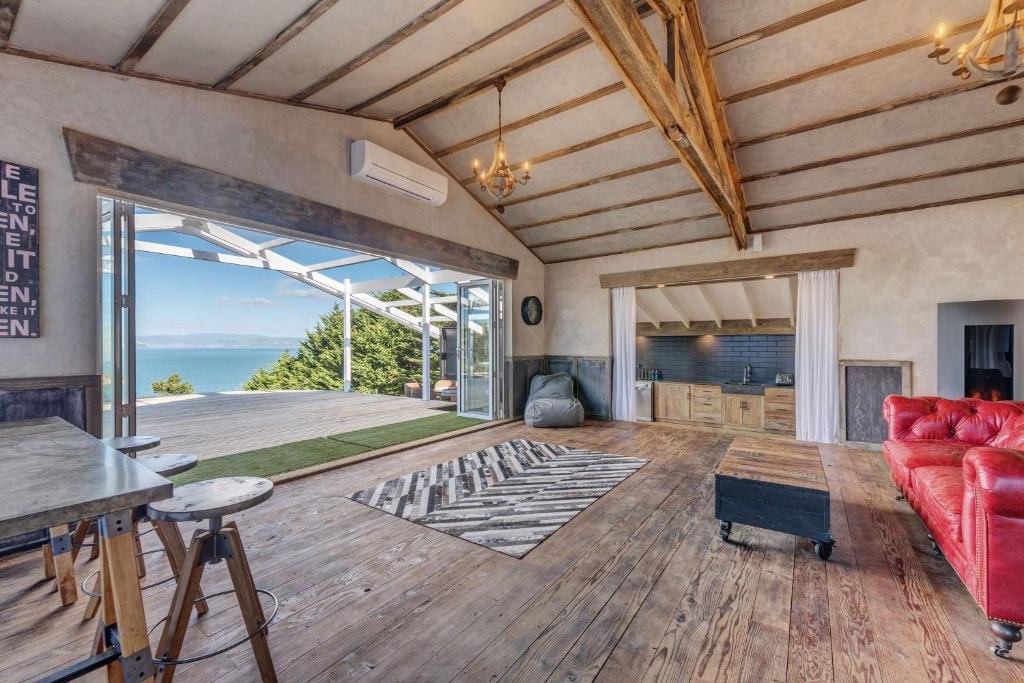
Woodside Bay Chalets
Woodside Bay Chalets, Waiheke Island
Waiheke is a haven of beautiful vineyards, olive groves and beaches, beloved by all who step foot on the island. The island is the go-to destination for those wanting to escape the big city without having to travel too far as it is just a 40-minute ferry ride from downtown Auckland.
If you’re planning a weekend away in Waiheke, the Woodside Bay Chalet has a variety of wellness activities for all to participate in. Get your yoga mats out for some sun salutations or unwind with a well deserved hot stone massage. There are several packages on offer that are catered perfectly for indulgence and self-care in the intimate atmospheres where you can focus on your wellbeing in this divine Travel Sustainable find.

Heaven’s Rest B&B
Heaven’s Rest B&B, Pukekohe
Equestrian and farm to plate garden fresh vegetables are just some of Pukekohe’s highlights. This large country town is always buzzing with activity and is just under an hour’s drive from Auckland’s bustling city centre.
Escape the city noise and surround yourself with farm land and animals at Heaven’s Rest B&B. Catch the sunset, or the sunrise while you take in the picturesque landscapes and fresh outdoor air. With available hot tubs for use, step in and unwind while you wait for your BBQ to grill on their outdoor deck.

Fable Terrace Downs Resort by MGallery
Fable Terrace Downs Resort by MGallery
Set against the majestic backdrops of both alps and ocean, Canterbury has lush vineyards and wild coastlines along with sky-piercing mountains and pristine glacial lakes that is out of a movie scene.
Overlooking some of the most stunning golf courses and mountain peaks you can find in Canterbury, Fable Terrace Downs Resort has delicious first class dining experiences available inhouse for you to savour. Fable Terrace has both golf courses and tennis courts for you to spend a day in the sun. There are other nearby unique ventures for you to participate in including jet boating, clay bird shooting, quad biking and fishing.

Cascade Creek Retreat, Milton
Tucked away in the heart of the South Island, the historic town of Milton has a number of stunning heritage buildings that will take you back in time.
Cascade Creek Retreat is located 45 minutes away from Dunedin and is near a variety of calming bushwalks. This eco-friendly stay gets you feeling more down to Earth than you ever have before. Its romantic and private atmosphere helps couples enjoy their quality time on Mother’s Day. Take a dip in their outdoor tubs and open a bottle of your favourite wine. If you’re looking to explore a bit more, Cascade Creek Retreat is only a day trip away from the Catlins, get your feet sandy while you spot native seals and penguins or simply stay in and enjoy being away from the bustles of life.
booking.com

Whittaker's Honey Nougat & Almond 'Panna cotta'
With Spiced Red Plum Compote, Cocoa Almond Shards and Vanilla Chantilly Cream.
with Spiced Red Plum Compote, Cocoa Almond Shards and Vanilla Chantilly Cream
By Chef Will Mordido

Whittaker's Honey Nougat & Almond 'Panna cotta'
800mL Almond Milk (unsweetened)
200g Whittaker's Honey Nougat & Almond Chocolate
13g Gelatine leaves
Soak gelatine leaves in ice water, adding each leaf to the water one by one to evenly hydrate.
In a pot, add almond milk and Whittaker's Honey Nougat & Almond chocolate. Bring to a gentle simmer, stirring until the chocolate is melted, then bring to the boil and remove from the heat.
Strain the gelatine, and squeeze out any excess water. Then add to the hot pot of your almond milk and chocolate mixture. Stir until gelatine has melted then strain the mixture into a jug with a spout.
Pour 100ml of the mixture into each glass and allow to chill in the refrigerator until set.
Spiced Red Plum Compote
x2 Star anise
x1 Cinnamon quill
1 tsp Heilala Vanilla paste
300ml water
80g Honey
x5 Red Plums
10g cornflour
30g water
To make the poaching liquid, add star anise, cinnamon quill, honey, Heilala Vanilla and water to a pot then bring to the boil. Lower the heat to a gentle simmer for 10mins.
Cut the plums in half, remove the seeds and place on a baking tray.
Return your poaching liquid to the boil then pour over the plums. Tightly cover with foil, place in a preheated oven at 150°C and cook for 10mins. Check the plums and if needed, cook for a further 5-10mins or longer depending on their size.
Once cooked, remove from the oven and using a slotted spoon gently remove plums from the poaching liquid and carefully peel off the skin while still warm. For best results, allow the plums to cool in the poaching liquid (overnight is ideal) .
Weigh out 250mL poaching liquid and bring to the boil. In a jug, mix together cornflour and 3OmL water and pour into the boiling liquid whisking until thickened. Allow to cool.
Cut plum halves into 4 wedges (smaller if they are bigger) then fold into the thickened poaching liquid.
Cocoa Almond Tuile Shards
50g Standard flour
50g Icing sugar
50g Egg whites
25g Cocoa powder
50g Unsalted Butter
20g Slivered almonds
In a bowl, mix together sifted flour, icing sugar, cocoa powder. Add egg whites and mix to a smooth paste.
Melt butter in a microwave or pot on gentle heat then slowly pour into the bowl and stir until combined.
Using an offset palette knife, spread the tuile mixture very thinly on baking paper or silicone mat then sprinkle the slivered almonds on top.
Place in the bottom rack of a preheated oven at 150°C for 15mins, checking every 5mins until the tuile is dry and crispy. Allow to cool then break into shards.
Vanilla Chantilly Cream
200mL Cream
40g Icing sugar
1 tsp Heilala Vanilla paste
Whisk together all ingredients to a soft peak and transfer to a piping bag.
To assemble
Remove your set panna cotta from the fridge, spoon on plum compote, pipe on the vanilla Chantilly cream and finish with Cocoa and Almond Tuile Shards.
Finish by dusting over Freeze dried plum powder (optional)

Beauty and the bump
This pregnancy-focussed natural product range transforms skincare into an act of self-care.
This pregnancy-focussed natural product range transforms skincare into an act of self-care.
Words Karl Puschmann

The idea for Pure Mama came to Lara Christie when she was newly pregnant herself. As her body changed, she felt overwhelmed and confused by the skincare options for pregnant women.
She’d find herself inspecting the backs of bottles trying to navigate the safety and efficacy of ingredients. What she found either wasn’t suitable
or smelled terrible.
“I thought to myself, what a horrible way to connect with my body,” she recalls. “As a result, I didn’t take care of my skin as well as I could have during my first pregnancy.”
She realised this was a common problem and that women often put themselves second when pregnant. With all their focus on their growing baby’s wellbeing, they often overlook their own self-care.
“The mother is doing so much hard work and going through a lot, both physically and mentally. For so many women it comes with a myriad of challenges,” she explains. “Everything from sickness, aches, pains, insomnia, diabetes, not to mention the hormonal and emotional rollercoaster.”
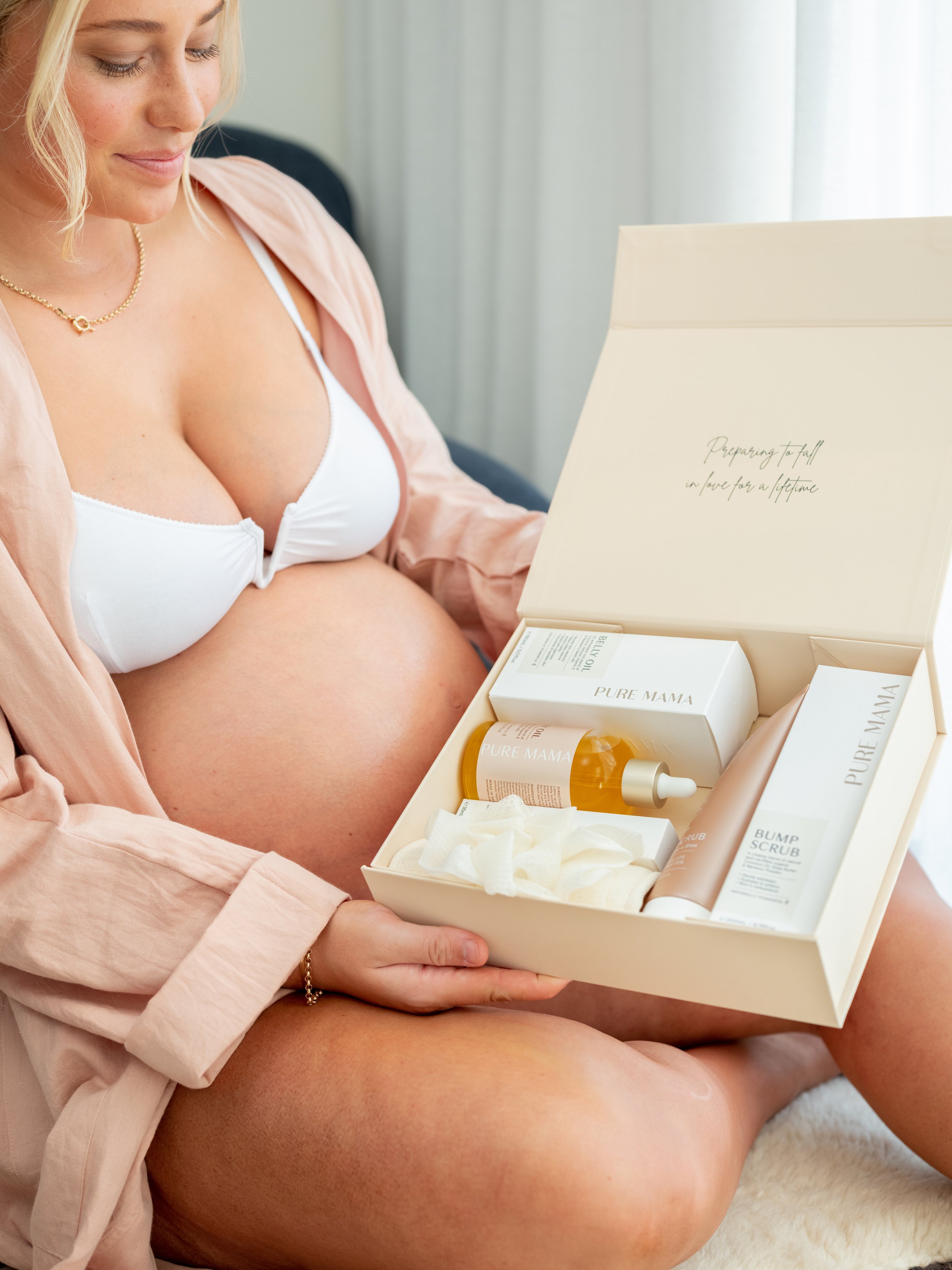
This is what Lara wanted to help remedy with Pure Mama’s range of skin care products for pregnant mamas that use organic and natural ingredients. They were a little luxury they could give themselves each day.
“I am a big believer in acknowledging what your body is going through and taking the time to connect with it to truly appreciate how incredible it is. We get so busy, and I often hear women say that there are days where they forget they are pregnant. I was very much one of them,” she says. “At the very end of a busy day, I would feel a kick and that would be
a gentle reminder to take a moment to be present with my pregnancy.”
Pure Mama’s products help alleviate some of the common skin concerns around pregnancy including dryness, tightness and reducing the appearance of stretch marks. It’s all to make women feel as supported and comfortable as they can throughout their pregnancy journey.
“Pregnancy and motherhood really does have its highs and lows. Women often think they are going through something alone or are too scared to talk about it out loud. I have learned to be more confident in sharing the very real, and raw aspect of the journey because I think women need this,” she says.
To that end, a supportive and welcoming community has sprung up around Pure Mama.
“I absolutely love connecting with our community. We talk about everything from leaking boobs, messy houses, sleepless nights, right through to miscarriage and IVF,” she smiles. “Building our community has been one of the most enjoyable things about my business.”

From the heart
With “giving” as their ethos, these three organisations bring joy to everyone they work with, from customers to colleagues.
With “giving” as their ethos, these three organisations bring joy
to everyone they work with, from customers to colleagues.
Words Karl Puschmann

We all know the old saying that it’s better to give than receive. But it’s not just a theory, it’s actually been scientifically proven. Giving activates the pleasure part of your brain and releases chemicals that make you feel better. It’s also been proven that being given something makes a person more likely to become a giver themselves. It’s a powerful circle of good vibes.
It’s also an idea these three local companies have taken to heart. They were all started – and operate – with that idea front and centre. Whether that’s by inspiring you to gift a future memory, donate to charity, directly support a community, or even just treat yourself to something nice, they all make a difference in people’s lives through the philosophy of giving.

Life-changing chocolate
Glenn Yeatman is the managing director of Solomon’s Gold, a local chocolate brand that supports a whole community.
As far as helping others go, eating chocolate has to be one of the easiest – and most delicious – ways of doing so. But that’s what choosing a block of Solomon’s Gold over other chocolate does.
Since 2006 the local chocolatiers have had a factory in Honiara, the capital of the Solomon Islands. Today, they support over 60 cacao bean growers and their families.
“We do have a presence there. We've been there a long time,” Glenn Yeatman says. “We don't just put the factory at the wharf, load the cacao and ship it out. We get involved with the people in the plantations, we’ve built roads, heaps of stuff.”
Their focus on community is a point of pride for the artisan chocolate makers and makes a real difference in the quality of their bars, which they make with only organic ingredients.
“We could actually take you to the Solomon Islands and show you where the bean was grown,” he says. “That’s the difference between us and others. We know what the trees look like, we know the topography, everything. And that's the difference. It's not just a commodity, it's a story.”
This, he says, allows them to know the exact origin of their beans which allows them to get specific types from specific areas for their various types. As well as bean quality, Glenn says there’s also another upside.
“If you know what the origin has been, you know that you've treated the people well, and paid a good price.”

Giving memories
James Fitzgerald is one of the founders of Chuffed, a business that allows people to gift experiences.
James Fitzgerald describes the founding of Chuffed as “an act of desperation” born out of the COVID-19 lockdowns.
“When you have your back against the wall, you think differently to how you normally would when you're sitting in a comfortable, ‘everything's cruising along nicely’ position,” he says. “It seemed like a good idea, so we gave it a crack to see if it worked.”
The idea was great. Chuffed allows people to gift experiences rather than material objects. The company caters for personal occasions like birthdays, Christmas and weddings as well as businesses wanting to gift their staff or clients something more meaningful than the standard bottle of wine.
“Handing something over and receiving a box is actually a really important part of gift-giving as part of the showing of love or appreciation. The handing over is the gift-giving moment. There's so much value tied up,” he explains. “We have created physical gifts. People receive a box, open it up and it reveals that they've been given an experience. We tried to stick with what traditionally is the awesome thing about giving gifts, but make it so the gift is actually a real-life experience.”

Receivers have a range of experience options to choose from. Everything from adventurous escapes, relaxing getaways, thrill-seeking activities or wining and dining. Each package offers over 80 local experiences to select from.
This is a big part of Chuffed that James is, well, chuffed about. Connecting their local partners with people they otherwise may not have reached.
“A lot of them are small family businesses. What we've been able to do through gift giving, is connect people that might have otherwise received a bread board or a bottle of champagne with the small Kiwi businesses around the country,” he explains. “Suddenly, these small family businesses and in Raglan, Tauranga, Taupō or wherever have Aucklanders turning up on the doors to do their experience. Chuffed’s had a real meaningful effect on their businesses and their families.”
“We get a real thrill when the invoices come in from the partners and the whole cycle of the gift has happened,” he smiles.
It sounds like Chuffed may be the only company out there that actually enjoys paying out money.
“Yeah,” he laughs. “It is a good feeling because you know it’s been working. It’s great!”

Paying it forward
Rohan McClosky is a founder of GoGenerosity, a service that helps people help businesses help the less fortunate.
The concept of “pay it forward” took off in the year 2000 with the release of Helen Hunt’s box-office smash romantic drama of the same name. The idea is that instead of returning a favour, you do something nice first: Ergo, paying it forward.
This is also the basic concept behind GoGenerosity. It allows people to “pay forward” a small amount on top of their bill. This then pays for the business to do good in its community. Everything from supplying meals right through to haircuts and charity donations. It’s an easy way for people to make a difference and support both their favourite businesses and those less fortunate than themselves.
During the Level 3 lockdown, Rohan’s restaurants were struggling and he saw that his community here in Tauranga was as well. He wanted to do something.
“I partnered with my customers to initiate a pay-it-forward model, which meant that they simply made a donation and we guaranteed that we turned 100 percent of that donation into food from our local restaurants,” he explains. “Then we partnered with a charity who would come and collect the food and feed people in the community who were in need.”
His customers loved the idea and he saw there was an opportunity to expand from his own restaurants and into the wider business community.

"Kiwis are a generous bunch of people and I think GoGenerosity has proven that's true."
“It was such a great way in terms of the consumer, having the transparency of where their money was going. It was a really big, important thing for us that the money was going into the business, and
the business was then creating its product from that money. It wasn't being sent off somewhere where we didn't know what the outcome was.”
This is the biggest point of difference for GoGenerosity. Just this year they’ve already raised over $250,000 and positively impacted the lives of over 25,000 here in the Bay. And with over 65 businesses on board, everything from cafés, restaurants to utilities and petrol stations, it’s easy to pay it forward whenever you see the little green GG sticker.
“Kiwis are a generous bunch of people and I think GoGenerosity has proven that's true,” he smiles. “People want to be involved, especially when they can see where their impacts are being had.”

Taming the Tora
Fifteen mums escape for a few days of vigorous exercise, a lot of wine, spectacular views and the best home-cooked meals a tired mum could ask for.
Fifteen mums escape for a few days of vigorous exercise, a lot of wine, spectacular views and the best home-cooked meals a tired mum could ask for.
Words Hayley Barnett

I’ve always considered myself a hiker, or a tramper as we’re more commonly known in New Zealand. Growing up, my family holidays consisted of walks through dense native bush, sleeping in tents and run-down cabins. The damp scent of Swanndris and merino socks, as well as the taste of Barley Sugars and trail mix, take me back there in an instant. It wasn’t until I became an adult that I learned not everyone has these same experiences, even Kiwis.
My partner was born and bred in central Auckland and spent his youth tramping the streets, trailing behind his dad who regularly frequented jazz bars. Not a terrible life, but I can’t imagine sitting here now without those fond outdoor memories.
These days, I rarely get out for a hike, given we have young kids and my partner refuses to go anywhere near mud, so I’m limited to a few walks here and there with friends.
When I was invited to hit the Tora Coastal Walk with some mates and their mates and their mates of mates it didn’t take much to convince me.
The Tora trail was the first private walk to be established in the North Island 25 years ago. It’s located in the Southern Wairarapa, a half-hour drive from what is known as the ‘wine town’ of Martinborough. It takes three days to walk across hilly farmland and bush, with stays at three different types of accommodation, located on the farm and along the stunning Tora coast.

The waitlist for groups to walk the Tora is a long one. We booked two years in advance, and just hoped we would all make it. Although a couple of people had to drop out in that time, replacements were easy to find. Our group was made up of 15 mums, all excited about the prospect of heading away, equipped with as much alcohol as we could fit in the hire van. A few of us had tagged on a shopping spree in Wellington the day before and were well acquainted before the one-hour drive to Poppies, our lunch stopover in Martinborough. Poppies makes beautifully hand-crafted wines, which you can sample in their impressive European-style tasting room and restaurant. It makes for a great taste of Martinborough when you’re passing through.
Another half hour’s drive away, we arrived at our accommodation, Whakapata Cottage. The quaint little farm house sleeps 15 people and sits at the entranceway to the Tora Coastal Walk.
We were greeted by owner Kiri Elworthy, a second generation Tora farmer, who has been inviting hikers on to her property for the past 28 years, and created many of the succulent dishes the walk has become well known for. These days she has a team of cooks, but is still actively involved in menu development. The apple doesn’t fall far from the tree either. Kiri’s four children have been known to knock out a lemon tart for 14 people, too. That night we were treated to a mean pesto fish dish, and a delicious fruit crumble, all made with fresh, organic ingredients.

Kiri gave us a full rundown on the walk – what to expect each day, recommended leaving times and additional walks and activities to add to our itineraries. The following day is the hardest, she warned, with the steepest inclines and the longest distance. We all agreed to take it easy on the drinks that night.
The next day, we were up and raring to go. You couldn’t have asked for a better day weatherwise. We slapped on our sunscreen, laced up our embarrassingly clean boots and hit the track.
Nothing could have prepared us for the views.
As soon as we hit the top of our first hill, the mountainous landscape was immediately vast and somewhat foreboding. On our first day, grey clouds filled the skyline and threatened to rain at various points. But the sun eventually shone through and we tramped on. We were lucky as the previous week had seen a large rainfall and left behind sticky mud for the hikers to slog through. By the time we arrived it had dried up completely. I still recommend taking hiking sticks, however. I’d say it made the track a good 10 percent easier to tackle, and I can highly recommend them after giving up my stick for a fellow hiker who was five months pregnant. It’s hard to justify a walking stick when a pregnant woman is huffing and puffing and letting out the odd worrisome moan behind you all the way.

Six hours later we arrived at our destination, Stony Bay Lodge. Its luxurious ranch-like vibe is exactly what you need after a six-hour hilly tramp through farmland. A homemade peach shortcake awaited us and it wasn’t long before we were tucking into it on the deck, overlooking the rocky shoreline, our steaming socks lined up to dry in the sun. Thankfully, our boxes of Pals and Poppies vino had arrived before us (the transportation of baggage and alcohol is another luxury included in the package) and we made short work of those too.
We had been left with a leg of lamb to roast and a sizeable pottle each of white chocolate mousse with berry coulis.
An early night meant most of the group was up at the crack of dawn to hike up the hill behind us, then beyond to the end of the road to view the Opua Shipwreck. A handful of ladies stayed behind to natter and “keep the pregnant lady company”, and to make full use of the cosy living area with views of Manurewa Point and the Pacific Ocean.
By 11am we were all at the nearby rocks for some seal spotting, before heading over the hill and along the road to our next accommodation – Greentops Farmhouse. The historic home used to house Return Servicemen in the 1950s and features a cathedral ceiling and a stunning stained glass window.

After we had settled in and recovered from a small bout of rain on our walk over (my jacket proved to be less waterproof than I’d hoped), a bunch of us followed a trail out the back up to the highest point in our journey. This was my favourite part of the trip – the views were even better than the previous day. It’s an optional add-on and is the last thing you want to do if you’ve completed all the optional extras, but if you only add one, let this be it.
That last night was deemed to be “the big night”, where we let loose in all our fluoro glory and partied as long as our middle-aged livers would let us, which was quite far for some, too far for others, and meant the last walk was a lot harder than it should have been.
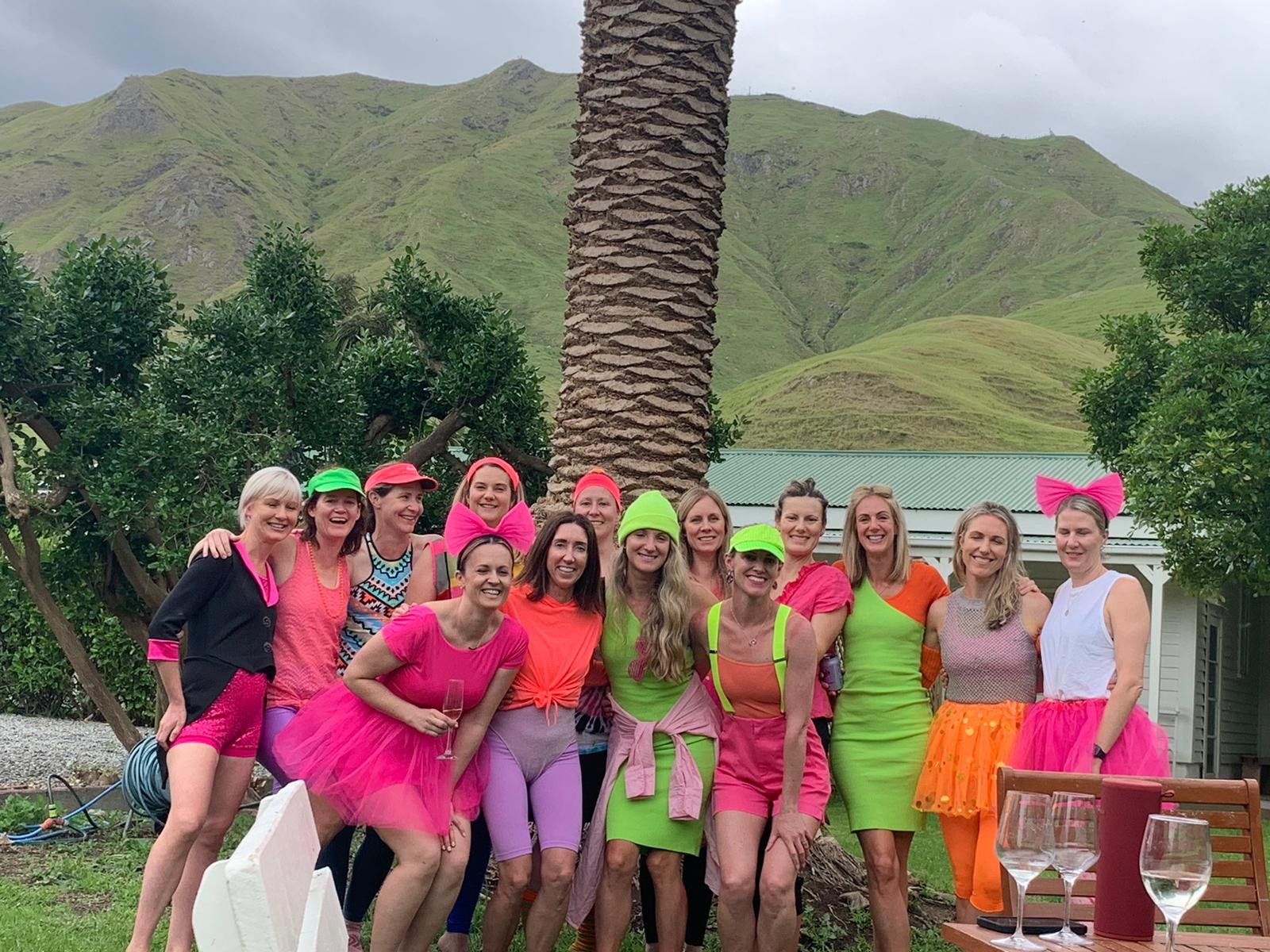
It was a three-and-a-half-hour journey up and down some gnarly hills, but we all survived back in one piece.
Looking back on our three days, it’s easy to see why there’s a two-year wait for this incredible experience. Despite the sore heads, the group was keen to book another walk somewhere in the next year. Our boots will be well worn by then, and no doubt we’ll all have some hiking sticks at the ready.

Hidden gems
Jewellery making is a special and specialised art form that these local businesses have mastered with skill and creativity.
Jewellery making is a special and specialised art form that these local businesses have mastered with skill and creativity.
Words Nicky Adams

The craft of jewellery making, or manufacturing, is ancient and highly skilled, and like any art it is one that combines talent, skill and often years of experience. While there are many jewellery shops to choose from, not all of these are manufacturing jewellers (that is, where the jeweller makes the pieces themselves). The jewellers with an atelier are the places you can go to have bespoke pieces designed or find pieces that are truly handmade. UNO spoke with some local jewellery manufacturers about their craft.
Jewellers Boutique Bethlehem
Three years ago, after 12 years of owning Bethlehem Jewellers, a full-service village jewellery store, Adrian and Helen Redding identified that, in Helen’s words, “The industry was at a tipping point. There’s a huge amount of change and we were keen to move ahead of it.” Adrian clarifies, “With chain stores becoming more generic, we wanted to take the service back to working on those relationships with people; that’s how we can understand the vision of what they would like created.”

In order to do this, they needed to provide the environment where they could have those conversations, hence a move of premises, a change of focus, and realignment of their business. The dream was to become a bespoke manufacturing jeweller providing “consultation and development of design, from procuring the right gems to creating the piece.” With an existing thriving business, and loyal clientele, Adrian and Helen felt confident to take the next step, and opened a new, exclusive premises in Bethlehem that operates on a combination of restricted opening hours and an appointment basis. A stylish, intimate boutique destination with a workshop on site, here they sell a curated selection of fine jewellery and take on a limited amount of specialist repairs – the real emphasis is on bespoke manufacturing.

A love of the traditions of jewellery making is at the core for Adrian, who, after 29 years in the business, has a deep passion for his craft. He was literally plucked from Otumoetai College, where his skill at engineering, woodwork and metal work had identified him as an emerging talent. He was then offered an apprenticeship as a manufacturer of fine jewellery by respected Tauranga jeweller David Peet. Jewellery making, Helen notes, “is like engineering in miniature form – looking at how to build something so it is strong, durable and will last, and then making it beautiful, so it’s really a combination of engineering and design.” Adrian chimes in: “A fusion of aesthetics to structure.” For the Reddings, the art of designing that treasured custom piece is a skill that has come with experience. The result, is why Adrian is an award-winning jeweller – because what he creates “is not just unique, it is the perfect balance of proportion, and beauty, custom-designed for the individual to wear every day.”
Alexandra Mostyn Jewellery Papamoa
Working from her small workshop in Pāpāmoa, Alexandra is a silversmith. This love of silver is rooted in a combination of practicality, cost, and personal preference. ”Silver is visually cool… Set with beautiful pastel stones, the two just marry together so beautifully.” Alexandra moved to New Zealand in 2010 from the UK, where she had studied silversmithing and jewellery design at Kensington & Chelsea College. She then refined her skills at Guildhall University at Whitechapel, completing a pre-apprenticeship while working on the retail side for prestigious jewellers Tiffany &Co and Theo Fennell. Jewellery making as a business only happened years later, when suddenly the timing felt right. Turning her shed into a studio, she started creating – and, she says with a bit of surprise, “people said, ‘I like that, can I buy it?’ It’s all just through word of mouth and Instagram.”

Alexandra enjoys every element of the making process. “I love sitting down with clients, where I get the essence of them – we talk about design and stones, then I get into the studio. I get lost in the creativity of it all – there’s the problem-solving (if the cut of a stone isn’t right and I have to vary the design), lots of swearing along the way, then the moment when they pick up the ring and hug you.” The relationship side of it all is hugely inspirational to Alexandra, as is the concept of being able to upskill and learn. As a result, she started holding workshops, which she now runs on a regular basis from the Incubator Hub in Historic Village. She fizzes as she talks about the workshops, “I make them really fun and inclusive. I love the energy I get from my crowd; I love that these people are here to learn to create and are really proud of what they’ve made.”
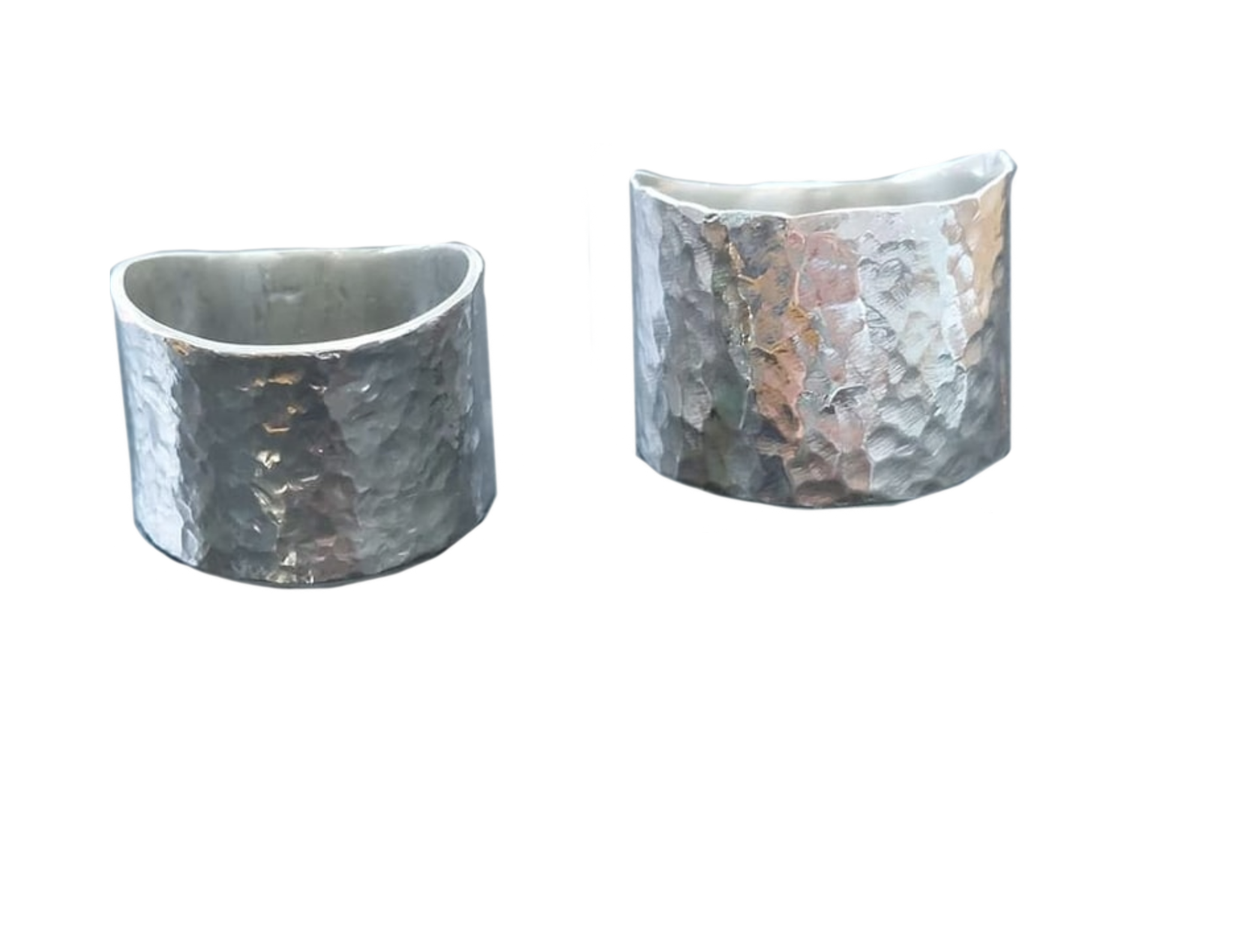
Alexandra is a huge believer in the connection between herself, the piece, and the client: “All the jewellery I make, I would personally wear.” The semi-precious stones she uses (aquamarine, opal and peridot are among her favourites) reflect this – “I know I’m going to sound like a tree-hugger, but every stone has different properties with different energies. It’s really important to get it right.”
f. alexandramostynjewellery
Did you know?
New Zealand jewellery is held to higher standards than jewellery manufactured overseas.
When purchasing a piece, take into account whether the ring/bangle/chain you are looking at is solid or hollow – it’s easy to forget that you’re not always comparing like for like.
Think about the quality of the stone; whether it’s synthetic or natural, a real diamond or a lab diamond, consider size versus higher grade, which is less likely to fracture.
Artisan Manufacturing Jewellers
Trained in Auckland under the guidance of two ex-Hatton Garden Jewellers, Andrew Linn is an award-winning jewellery manufacturer who has been in the trade for 35 years. It’s an industry in which the combination of experience and skill can be seen in the workmanship, one glance in the display cabinet gives a clear reflection of his talents. Andrew and wife Kay run a manufacturing and retail store, where they hold to high standards. “We see a lot of low-grade stuff from overseas but we tend to go down the higher end because if something’s low-grade and full of inclusions, if it gets knocked it can fracture.”

Andrew sees a lot of people who come in to remodel a piece of jewellery. “Lots of remakes, all the old broken jewellery. We’ll do 3D images for them, we’ll sit down and spend time going through books. Most people will want to use Grandma’s gold or Grandma’s diamond.” Bespoke pieces are also created from scratch, and the jewellery in the cabinet provides inspiration – “We don’t have a huge range, just basic to give people ideas. If you don’t have stock people struggle to see what you can do. That goes for your handmade chains, anything.”
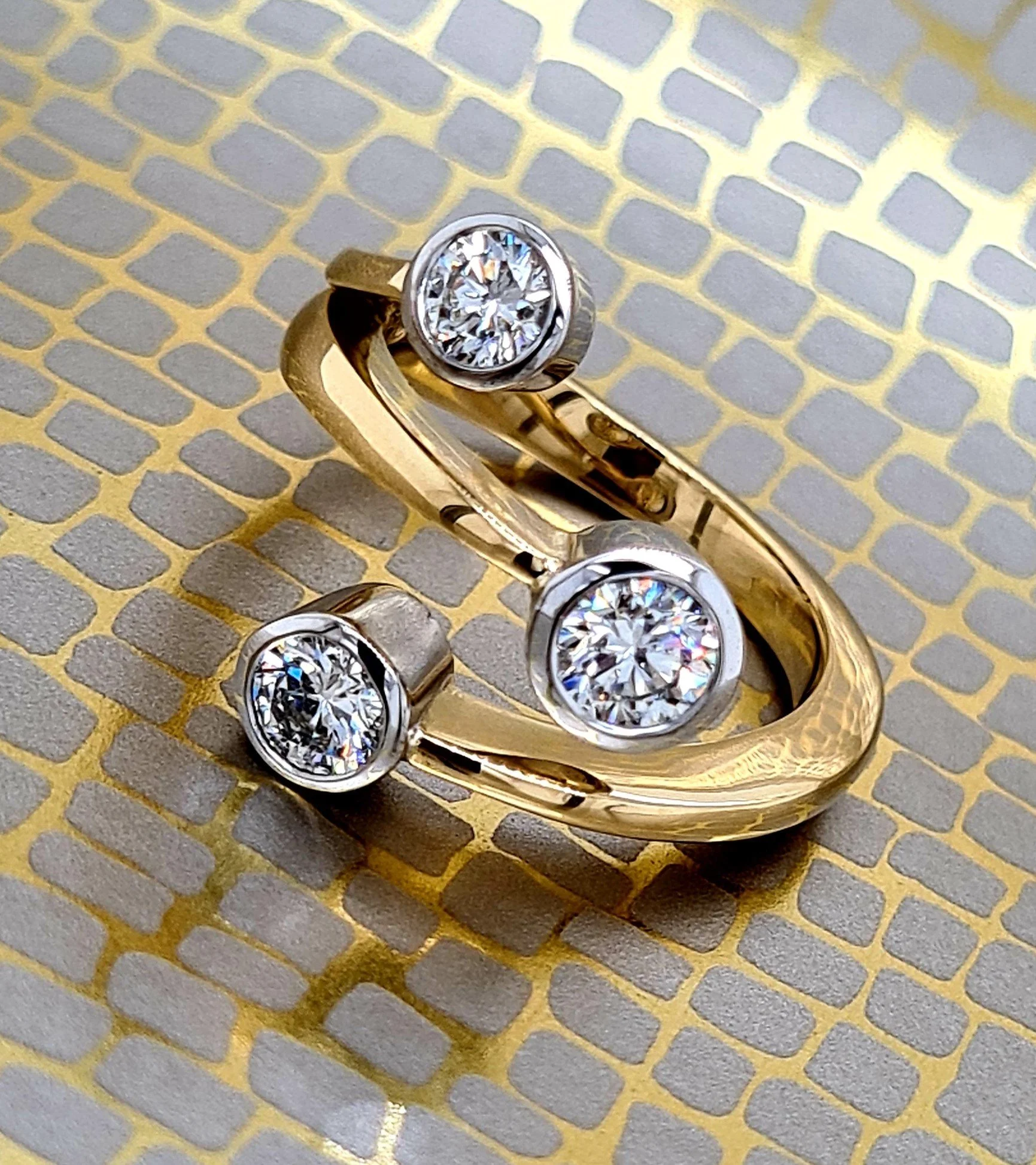
“Everything is one-off and unique; there will be other cluster rings, for example, but none the same,” says Andrew. Alongside all of this, Andrew works on a steady stream of repairs. Much of the work is done by hand, using the same traditional methods he learned as an apprentice. There are innovations in the jewellery industry: “Technology is starting to take over, 3D for drawings and printings (to use as a mould) – but the cost in our trade to do it is really expensive at the moment. But it will come down. 90% of our stuff is done by hand. I have several hundred patterns and I’ll cast a replica; as much as we handmake, we do cast some stuff.” Trends don’t really affect their market; however, at the moment, Andrew says, “We’re doing a lot more platinum work, which is more affordable than it used to be.” Andrew and Kay believe in traditional skills and traditional values: “Anything I make I look after for life. So if you want it cleaned, or checked – well, unless it has been run over by a bus, of course!”
Caring for your jewellery
Jewellery needs regular upkeep. It is, says Helen from Bethlehem Jewellers, “like changing the tyres of a car.” Try to avoid wearing rings when gardening or to the gym, and remove jewellery in bed, as cotton is actually very abrasive. Andrew from Artisan also uses the car analogy, saying, “You wash a car to clean it, you polish it for shine.” If you clean your jewellery at home, use a soft brush, warm soapy water, and a tissue to drain the water away. All the jewellers recommend avoiding hacks you’ve seen on the internet (don’t put in the microwave or boil in gin). When it comes to jewellery, the chances are what you have is priceless to you – it’s the ultimate emotional investment.

Take a dive
UNO editor Hayley Barnett experiences the quintessential American dive bar experience that is Palace Tavern.
UNO editor Hayley Barnett experiences the quintessential American dive bar experience that is Palace Tavern.

Walking past all the bright, shiny bars and eateries on the Mount's main drag, Brad Dellar and Sam King had a revelation. There was nowhere they wanted to go. They were tired of frequenting bars that only catered to certain people of a certain age bracket and felt there was nowhere men in their thirties truly belonged. They wanted dark and dingy – where everyone knew their name, but no one cared to use it.
"We wanted it to have an American dive bar sort of feel," says Sam. "A place where the locals can come hang out, have a beer, a burger, a game of pool – we spent a lot of money on that pool table!"

Having originally opened around the corner as Palace Burger on the Mount main street, Sam and Brad decided to start over with the décor and a rebrand when they moved to Banks Ave in November, 2022.
The glass 80s-style ashtrays outside give you a taste of what you're in for. Indeed, the bar is dark and dingy but, strangely, the UNO team don't want to leave.
The menu is mouth-wateringly good. From the Buffalo Burger to the Hoedown, there's a definite American vibe going on, with a bit of a Kiwi twist. The Crispy Boy is packed with potato crisps, along with a smashed patty, bacon, cheese and onion. I went for the Classic Chicken, one of their most popular burgers, and washed it down with Maple Butter Wings, Jalapeño Poppers and Cheese n Gravy Fries. If you're going to eat like a man, you might as well do it right.
Everything was perfectly more-ish, tasty and extremely satisfying – exactly how Brad and Sam like their food.

"...We're not really the place to come if you're trying to lose weight."
Palace Tavern might have been set up as a place for 30-something men, but they've set it up so well that it's naturally become inclusive. "We've made our fair share of lettuce burgers, but we're not really the place to come if you're trying to lose weight," laughs Sam.
And, despite refusing to play Top 20 hits, they can't hold the crowds back once the wee hours of the morning swing round. "We have long lines right up the road every weekend," says Brad.
It's a dark place with a cool vibe, cold craft beer, amazing cocktails and great food. It's the place Brad and Sam always wanted to go. And, now that we've been, it's a place we can't wait to head back to.
Palaceburger.nz

To the edge of the earth
Olympic kayaker Mike Dawson's spirit of adventure continues to drive him toward epic expeditions, traversing remote landscapes and pushing himself to the limit
Olympic kayaker Mike Dawson's spirit of adventure continues to drive him toward epic expeditions, traversing remote landscapes and pushing himself to the limit.
Words Karl Puschmann / Photos Graeme Murray + Supplied
Hair + Make up Desiree Osterman

Mike Dawson has never been one to shirk from a challenge. Instead, he actively seeks challenge out. You could say it’s a defining characteristic.
The former Olympic kayaker and Antarctic adventurer has also chalked up another win in beating UNO to our interview. When we park up at the Okere Falls Store, he’s already there sitting on the deck, coffee in hand and having quick chats with the people coming and going on this fine Friday morning.
Mike’s lived in the small town of Okere Falls, population under 400, for around 15 years, so greets most of the other regulars arriving for their coffee fix by name.
“I’m based here,” he explains. “When I was racing, we’d train a lot on the river. So it was a natural progression for training to be here full time. It's pretty cool. There's an amazing community, heaps of good running, and the cafe here is great. And we're not even 20 minutes from town,” he says, referencing nearby Rotorua.
In fact, that’s where he’s been this morning. Out on his mountain bike tearing around the bike trails in the mighty Redwoods. He reckons he’s “close” to having ridden all 200 kilometres of their various tracks.
Between kayaking, mountain biking and his recent 50-day trek over the snowy grounds of Antarctica, you’d be right in thinking he’s an adventurer.
“Slalom kayaking is not super adventurous. That's a typical Olympic sport,” he says of the sport that he’s most known for. “Whitewater, or what you could call extreme kayaking or running rivers around the world, that's a more adventurous sport.”
Then he chuckles and says, “But my bike is far from adventurous.”
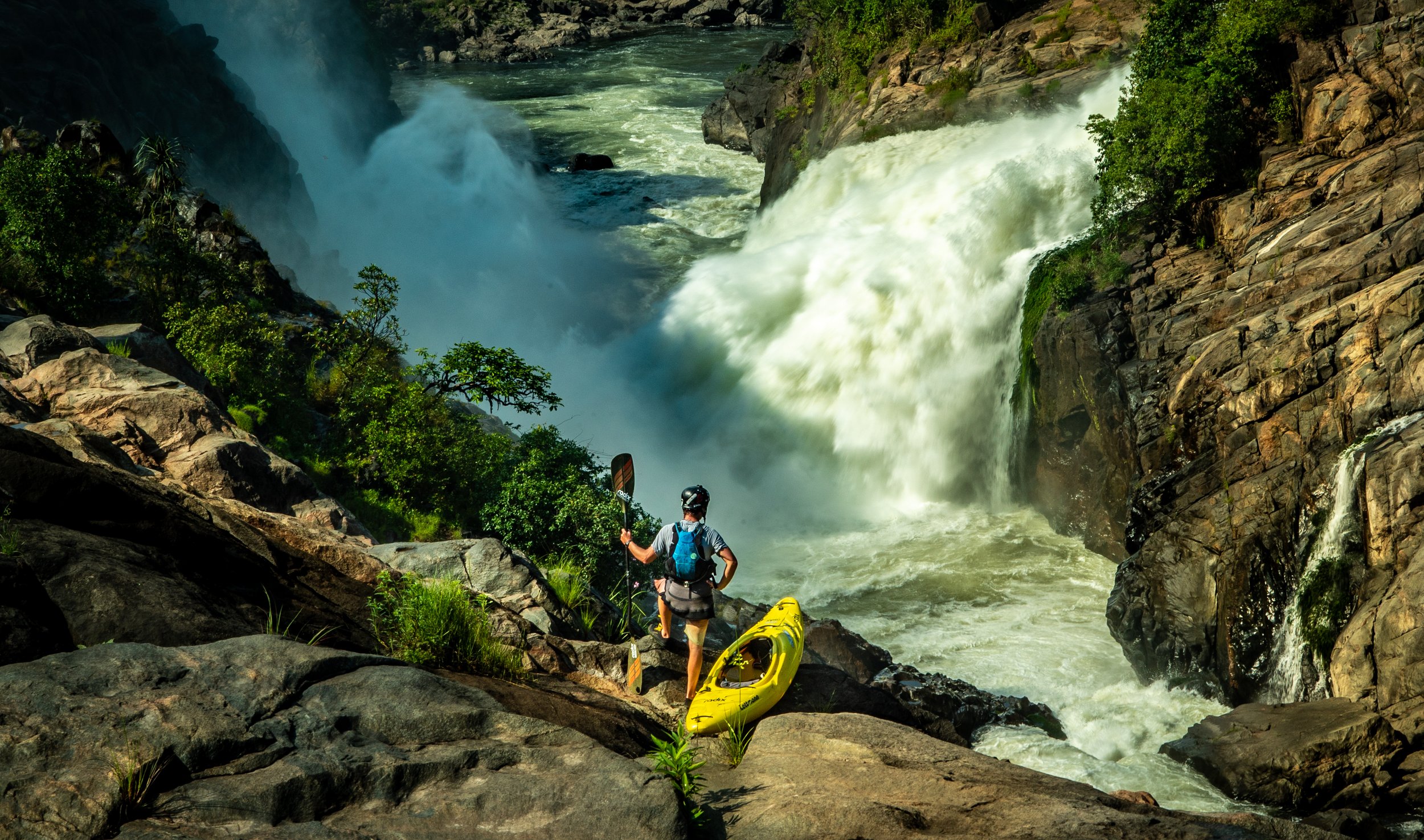
What’s a lot closer to adventure was his recent trip to the edge of the earth and back. After a rigorous application process, Mike was selected to join the Antarctic Heritage Trust’s Inspiring Explorers Expedition which would see him skiing 1000 kilometres over 50 days through the beautifully scenic, but incredibly hostile, environment of Antarctica, trudging all the way to the South Pole. It was an epic adventure in the truest sense of the word.
“It was a pretty interesting mission, like, it's definitely hardcore,” he says with typical understatement and no hint of irony. “It's a massive undertaking. The physical strain you put on your body is unbelievable and the environment there is hostile but stunningly beautiful and peaceful. It's a freezing cold environment, one that doesn’t suit long-term living. There's no food, no water and no trees. There's nothing. It's a real adventure. The frontier.
“If you think about it, you're pretty much doing a half marathon a day, towing a bunch of weight behind you,” he says.
It sounds hellish. Mike says that, for some of the time, it was.
“For me, it was around the 30th day, when I realised I still had 20 days to go. It's crazy. A three-week trip there on its own would be next level, and we'd already been out there for a month. It's tough. There were some days that we were exhausted. I remember two days clearly that I was done. I was like, ‘Man, I don't know if I can keep doing this.’ It's such a long time. But then the coolest thing you learn quickly is if you can just take your next breath, that'll mean you take your next step, and suddenly an hour will be gone. Once that hour’s gone, the day will be gone. So if you can just keep moving, the day goes.”

By taking one step after the other, the small team covered around 20 to 25 kilometres a day, depending on conditions and how everyone was holding up. Some days the conditions would be too bad for them to move far. The next it would be beautiful blue skies and glistening snow and they’d be on their way.
Dark days, soul searching, sore legs and always just one more step to go. It of course begs the question, why was he doing this monumental task in the first place?
“We were doing it to celebrate 150 years since Roald Amundsen was born,” he says.
Amundsen was a Norwegian explorer of the polar regions and a prominent figure in what we now appropriately call the Heroic Age of Antarctic Exploration. The Antarctic Heritage Trust team was following in his adventurous ski steps and consisted of people from Norway and Aotearoa.
“The Antarctic Heritage Trust is responsible for preserving all the historic huts in Antarctica. They’re trying to inspire exploration.
And that's me, it’s what I’ve loved for my whole life. I've been lucky and so fortunate to be able to chase this dream of kayaking and racing, but also exploring the world and the rivers of the world… going to these places, and skipping over that line outside of my comfort zone,” he explains. “I think it's really important to share the stories of the early polar explorers. What I did is easy compared to what they did. When I read their stories I wish I was from that time, so I could have sailed to Antarctica and spent three years exploring.”

It may have been easy in comparison to Amundsen’s legendary explorations but that doesn’t mean there was anything easy about it. It’s still Antarctica. He says he tried to keep his mind focussed on each day, rather than the overwhelming 1000 kilometres of their trek. When asked what he learned about himself during this epic adventure he stops and thinks for a second before answering.
“It was such a cool reminder of how important it is to slow down and be content with where you are. When you're out there you don't have any communication with anyone. No internet, no constant distraction like you have in the modern world,” he says.
“That was one of the hardest parts of coming back. The overstimulation of all this noise that comes at you every day, all the time. I’m trying to remember what it felt like to be out there and keep a bit of that calmness in my day-to-day life somehow.”
Then, with an air of resignation, he says, “It's impossible. But I’m trying.
“When you go on a trip like this one to the South Pole, you have heaps of time to think and take stock of what's going on in life. In general life, things are busy. You're always moving and on the go. You never really get time to think about where you want to be in a few years,” he continues. “When you’re an athlete, it's so clear, it’s so easy, right? Because you’re progressing towards the Olympics or the Worlds. That’s a big goal and a big priority. Every day when you wake up. That’s all you do. The coolest thing about Antarctica is that it gave me time to declutter all that, to think about where I could see myself in a few years and what I want to do. That was a massive takeaway for me, figuring that out.”
So the hard times, the adventure, is what made it all worthwhile?
“Yeah, the moment was hard, but when you get to the end of any challenge, it's always worth it. It's really rewarding. When you finish it's sometimes hard to understand the magnitude of the undertaking, because when you're in it, it's just what you're doing. It’s only afterwards when you start telling the story that you realise it was something to be really proud of.”
To find out what shaped Mike’s adventurous spirit, you have to go back to when he was lad. He reckons his sense of adventure was born from exploring our local rivers on his kayak. A pass time which got him hooked on the sport when he was a student at Tauranga Boys College. In this regard, he was following in the wake of his brother, who was already paddling. Mike joined the school’s kayak club, which led him to competing.
He took to the sport like a duck to water and was soon spending all his free time on the river with his mates.
“I enjoyed it a lot,” he smiles. “It's pretty cool. Kayaking definitely took up a lot of time as a kid for sure.”
I suggest that it sounds like a good way to keepout of trouble.
“Yeah, probably,” he says, before grinning and adding, “Or getting into trouble.”
Mike recalls a few misadventures trying to crack the rivers and the Kaimais with low water – and too much water.
“I remember my first day going kayaking up the Wairoa River and tipping over and being scared,” he laughs. “I couldn't roll back up. I ran out of breath and had to swim. I got a lot of grief for swimming in the river.”
From tumbling in the Wairoa River to competing at two Olympic Games, first at London in 2012 and then at Rio de Janeiro four years later, is a heck of a ride. He’s modest about how he got there.
“Just paddling heaps,” he says, before talking about slalom kayaking’s own journey as a sport.
“If I look at the progression of the sport, the kids are so much better now than we were when we were young. We had to learn everything. It was slow and took us ages, especially the slalom. Kiwis love adventure and getting out on the river. Slalom is different to that, it’s really precise. For us to progress from this raw vision of kayaking to a refined version was pretty hard. It was a massive journey.”

He says it’s a very Euro-dominated sport and remembers going to the Junior Worlds for the first time and “getting hammered” by the Europeans. Rather than getting discouraged, it had the opposite effect and the team returned home to begin training harder and smarter. Mike set a goal for the following year – he’d make the finals. It was a goal he accomplished.
“I wasn’t very good in the final, I ended up 10th.” Then he grins and says, “But goal achieved all the same.”
Mike’s retired from competing but is still involved as a trainer. Nowadays the sport is different, with strong clubs, education, resources and an Olympic-level course in Auckland for training.
“We have athletes and teams that are capable of winning any of the events,” he says. “It's just a matter of them doing it when it counts. Whereas back in the day, when we were first becoming senior athletes, just getting in the Top 40 would be huge.”
After 15 years of kayaking at the highest level, his paddle is now permanently hung up to dry, although he remains heavily involved in the sport in a training and coaching capacity. He has a big year ahead with the World Championships in London in September. Doing well there means travelling to Paris for the Olympics.
With so much going on Mike says he’s trying to keep his Antarctic cool.
“It's hard. You say all these things, like, ‘I'm not going to drive my car as much, I'm not going to use my phone as much’, then you come back, and the reality is you fall back into some of the old habits,” he says. “But it's making sure you change a couple of little things. Those little things will evolve into bigger things. And then that makes monumental change.
“It’s the same in sport,” he continues. “When you try to change one tiny thing it can be the difference between big performance or small. I feel it’s similar in life. I’ve been trying to be a little bit more intentional with what I do each day.”
Then, with a smile, the adventuring Olympian shares the biggest takeaway from his epic adventure. “Make sure you leave time for the things you enjoy. Go for a ride or a kayak and hang out with friends. When you’re away from everything for so long, you realise how much you miss them.”


Cost vs conscience
Booking.com delves into the dilemma dividing sustainable travel in 2023.

Booking.com has revealed new sustainability research, with insights gathered from more than 33,000 travellers across 35 countries and territories, to highlight an unfolding dilemma - travellers worldwide are feeling pressured to choose between cutting costs and being more mindful about making more sustainable travel choices.
Efforts to be more sustainable are top of mind for nearly two thirds (68%) of Kiwi travellers who believe we need to act now to make more sustainable choices for future generations. Kiwis are more likely (60%) than global travellers (49%) to believe the environment will get worse in the next six months, demonstrating the high priority travellers from Aotearoa are putting on how their decisions impact the world around them as they explore it.
However, the current economic climate is hampering action being taken and a majority of New Zealanders (79%) believe the cost of living crisis is also set to worsen. Over half of New Zealanders (58%) think sustainable travel options are too expensive and a quarter (29%) are willing to pay more for travel options with a sustainable certification.
Sustainability vs spending
This leaves Kiwis with a challenge to choose between sustainability and spending, with over half (58%) believing more sustainable travel options are too expensive (up 12% from Booking.com’s 2022 data). For these respondents, sustainability and travel combined can seem non-urgent when they are worried about bill-shock.
An increasing number of travellers feeling the pinch are seeking more sustainable travel options rich in rewards, highlighting the perceived trade-off between making conscious choices, saving money and the need for incentivisation. Over half (56%) seek out discounts and economic incentives when choosing eco-friendly options while 39% would be encouraged to travel more sustainably with reward points for making more sustainable choices, such as free extra perks or discounts through online travel booking sites.
Breaking through barriers to drive change
It’s not just cost that is a hurdle to travelling more sustainably. Half of Kiwi travellers (49%) believe there are not enough sustainable travel options, while two thirds (66%) are expecting travel companies to offer more sustainable travel choices.
Despite good intentions, 41% don’t know where to find more sustainable options, highlighting that the barriers to more sustainable travel choices are based on a perceived lack of options.
For example, 70% seek authentic experiences that are representative of the local culture, yet in stark contrast 33% don’t know how or where to find these tours and activities that will ensure they give back to the local community.
A regenerative mindset for the entire trip
Travellers are becoming more responsible consumers amid the rising climate anxiety by increasingly adopting a regenerative mindset to travel while seeking credible assurance when booking across the entire travel experience. For example, nearly half (43%) want to filter their options for those with a sustainable certification or label next time they book.
In response, the travel industry is adapting to meet the changing expectations of more conscious consumers such as those who support brands that promote sustainability (24%), as well as the 63% who are interested to learn more about why specific options are recognised as more sustainable. Kiwi travellers can now easily filter their rental car search results to quickly find fully electric and hybrid cars across 110 countries for their next trip. Or choose one of over 500,000 more sustainable options for their next stay, no matter the accommodation type.
Making more sustainable travel solutions easier for everyone
“Booking.com’s 2023 Sustainable Travel research confirms an intersection between the current cost of living concerns and the extreme climate events witnessed in our region, which has led to a greater demand for both more budget and planet-friendly travel options,” said Todd Lacey, regional manager Oceania at Booking.com.
“We are listening and together with our partners across the industry, we are examining every part of the trip to not only support our travellers but to also benefit our local Kiwi communities and environments.
“We are committed to making it easier for everyone to experience travel in a more mindful and responsible way, no matter where they are on their sustainability journey. More than 500,000 properties globally are now being recognised for their sustainability efforts with a Travel Sustainable badge including over 3,000 in New Zealand.”

One smile at a time
Providing necessary dental care to remote and underserved communities is what drives these seagoing volunteers.
Providing necessary dental care to remote and underserved communities is what drives these seagoing volunteers.
Words Catherine Sylvester

The year 2020 was meant to be the year for YWAM Ships Aotearoa (YSA). Having been gifted a container ship in 2019 by Stoney Creek Shipping, the local team had spent the previous months fitting it out with everything needed to take dental and basic health care across the Pacific Ocean to the peoples of the Solomon Islands. Then March 2020 came along, and we know how this story plays out.
But the spirit of determination runs deep within the greater YWAM organisation. Founded 63 years ago in the US, with the goal of equipping young people to volunteer worldwide, Youth With a Mission (pronounced why-wham) has had a base in Tauranga since 2005. Medical “Mercy Ships” were introduced internationally in the late 1970s to enable healthcare to be sent to some of the harder-to-reach nations of the world.
Tauranga-based managing director of YSA Marty Emmett was determined not to let the pandemic entirely derail the work his team had already planned. “The gift of lockdown was that it gave us time to reanalyse who we are and what our purpose is,” he explains. “It started this amazing journey of looking at how we could still utilise this ship and its facilities if we weren’t able to travel internationally.”
The decision was made at the beginning of 2021 to take the container that housed the dental clinic off the ship, and reach into the Bay of Plenty, offering free work for the most serious of oral health cases in the community.
Retired local dentist Sue Cole came on board to lead the team. “What drives me is seeing transformations in people – physical and emotional,” Sue says. “We offer a hand up, rather than a handout.”
Within the first 18 months of operating the Trinity Koha Dental Clinic, Sue and the volunteer dentists cared for 1,900 patients, and performed over $1 million worth of free dental services.

Equally important as the practical services offeredis the holistic care for clients. Marty explains that for many of those attending clinics, a history of dental trauma is carried with them. A dedicated “Call and Care” team ensures time is spent connecting with clients over the phone, discussing concerns and assuaging fears. “Sometimes, to get a patient to the stage of getting into the chair, the team will spend literally hours speaking with them on the phone first,” Sue says. “On the day, a group of our people will lovingly walk them in, supporting them every step of the way.”
The level of need within New Zealand surprised Marty, much of it surpassing what he has since seen in subsequent outreaches to isolated islands in the Pacific. “Within three days of starting a clinic here, we had hundreds of people on a waiting list,” he says. “Once we became aware of the scale of need, we knew we had to continue this work.”
"What drives me is seeing transformations in people – physical and emotional.
We offer a hand up, rather than a handout."
Sue Cole
July 2022 saw the ship finally able to travel internationally, with four months spent stationed in Fiji. There, hundreds of locals received free health screenings and dental treatment. Marty tells the story of one woman with high blood pressure who was advised to change her diet, get some exercise and to cut back on a few indulgences. Two weeks later she returned, requesting her blood pressure be retested as she had implemented these changes. Incredibly, it had gone from dangerously high to normal.
Partnering with local agencies if of great importance to YSA. “The key for us is to facilitate training and empower local workers – not just come in and do the services,” explains Marty. “Our main focus is around monitoring health and diet – small things that make a big difference.” The whakatoukī that best sums up their approach is “Nā tō rourou, nā taku rourou ka ora ai te iwi – With your food basket and my food basket, together the people will flourish and thrive.”

Everyone involved with YSA is a volunteer. The greater operational costs are covered by financial assistance from companies such as Trinity Lands, Bay Trust, TECT, Good Neighbour and Bid Foods, while private sponsorship is employed by individuals for their personal living costs. For Sue, Marty and team, it is more than worth it.
Sue recalls one of many cases that make what they do so worthwhile. “Recently a young woman was frustrated she couldn’t find a job, despite being skilled. She was missing her front tooth and lacked confidence from that,” she explains. “Our dentists restored the tooth, and the woman was over the moon. The shame she’d felt had gone.”
Moving forward, Marty says that by operating more dental clinics in the Bay, the Waikato, and in the Pacific, they want to eradicate high dental needs in these areas and help as many people as they can. “We’re not afraid to dream big!”

Rail rider
From the mountains to the tussock grasslands, through picturesque towns and over soaring bridges, taking the train will start your vacation on the right track.
From the mountains to the tussock grasslands, through picturesque towns and over soaring bridges, taking the train will start your vacation on the right track.
Words Rebecca Meyer

Whenever I told people we were embarking on a “grown-up family” long weekend to Wellington and were taking the train, I would often get an enthusiastic response: “Oh, that’s cool! I've always wanted to do that!”
This would be the third journey on the Northern Explorer for my folks, whom it’s safe to say were hooked on the whole rail experience. After coming home from their first trip a few years ago, they made us all promise that one day we’d all make the journey together. Bless Daughter Number One, whom we fondly call “Spreadsheet Sophie”. She coordinated, arranged, planned and booked everything, ensuring all our busy schedules aligned for the impending adventure ahead.
The Northern Explorer is an epic 648km journey which connects multicultural Auckland to our bustling capital Wellington. However, we began our adventure in Hamilton, boarding at 10.15am from the busy platform at Frankton Street Station.
Travelling by train is a sociable affair, and our “Spreadsheet Sophie” managed to book the perfect seating arrangement, ensuring all eight of us sat together. We had adjoining seats with a table in the centre, straight across the aisle from one another. This was well planned on our part considering all five carriages were full, including families with young children, lots of couples and larger groups of all ages. Travel by rail is obviously a popular mode of transport when visiting Wellington.
Straightaway it was obvious everything’s been done to ensure you feel comfortable and relaxed as you sink back in your seat and get ready to soak up the North Island scenery. With spacious seating, and generous amounts of legroom, our Scenic Class carriage delivered air-conditioned comfort for the clickity-clack journey ahead. With a fully-licensed bar on board, we were able to sit back and enjoy several world-famous New Zealand wines and local beers while someone else took care of the driving.
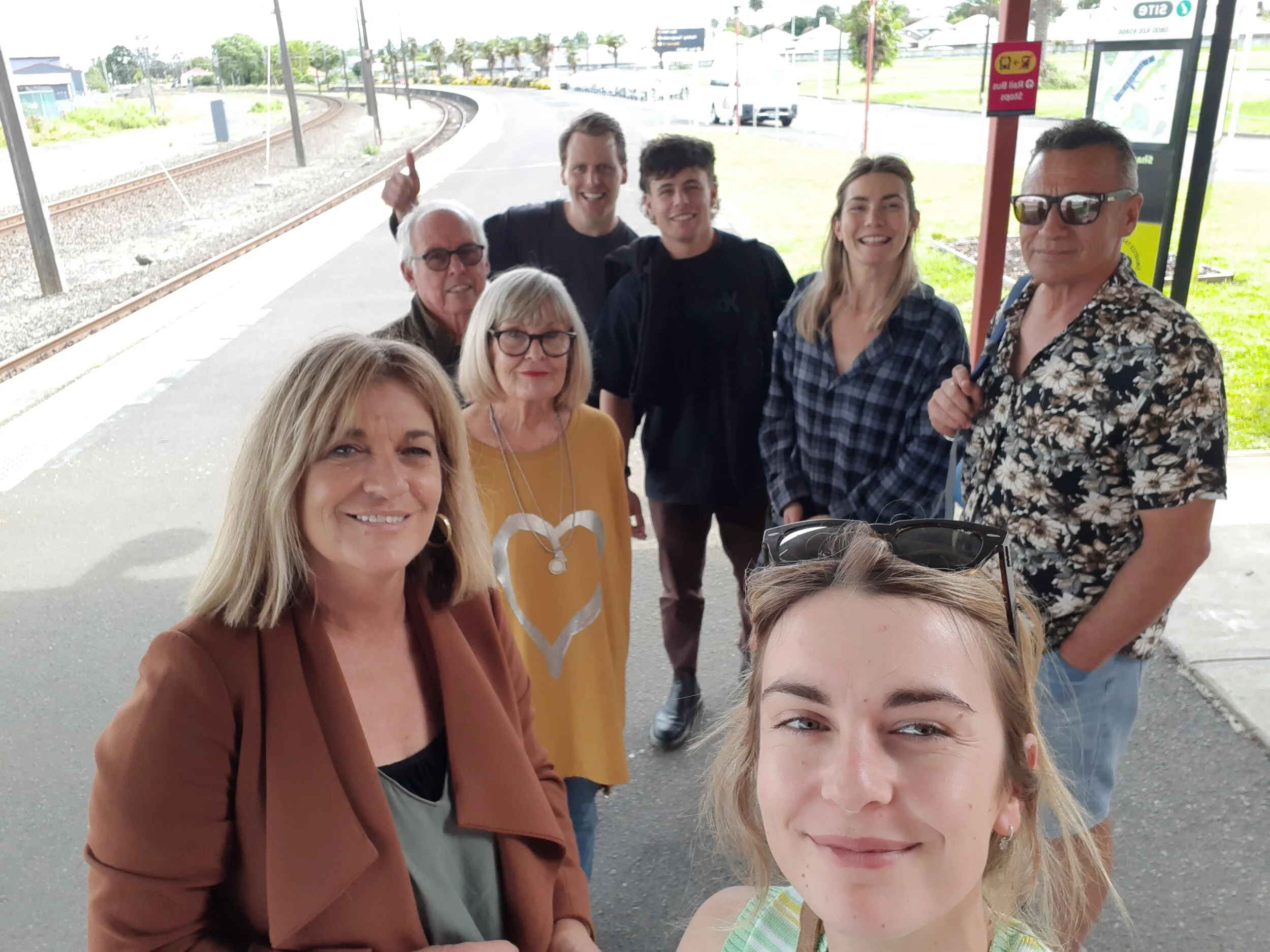
If it’s a large meal you’re after, the dining cart offers plenty of options, from braised beef cheeks and Moroccan spiced vegetable salad, or classics like roasted free range chicken and lamb shank, and for the smaller appetite, there's plenty of savoury snacks and sweet treats to satisfy everyone. Having cash with you is advisable, as the train often travels out of network range, but they do provide all credit and debit card payment facilities. The friendly staff even allowed us to run a tab.
The scenery was quite honestly breathtaking, weaving through the rolling hills of the King Country. The historic Raurimu Spiral at the southern tip of the Central Plateau was a real highlight and was designed in 1898 to make the 139-metre ascent into the plateau possible. Navigating our way around the foothills of Mount Ruapehu, a series of three steeping viaducts bridge the deep ravines carved by the rivers across Tongariro National Park.
What makes this all the more breathtaking is being able to stroll to the open air viewing carriage to breathe in and taste the atmosphere − you truly get to appreciate our beautiful country.

Reaching the Kapiti Coast, we cling to the cliffs high above the ocean, with spectacular views of the Tasman Sea and Kapiti Island.
As we near the end of our journey, reaching Porirua Harbour, it's close to 7pm on a warm, balmy summer evening. The short stretch between Porirua and Paremata is a scenic gem, and a stunning way to end our epic rail adventure. This truly is an unforgettable day-long adventure, and a unique experience well worth sharing with family or a group of friends. Because Wellington's city train service is so good, we don't need a car for the long weekend away. So to everyone who’s ever wondered if it’s worth the $214 one-way train ticket on the Northern Explorer to Wellington, I’d say yes, do it if it’s on your bucket list!
Northern Explorer Auckland to Wellington trains run Mondays, Thursdays and Saturdays.
DESTINATIONS: Auckland • Hamilton
Otorohanga (Waitomo Caves) • Taumarunui
Tongariro National Park • Ohakune
Palmerston North • Wellington.

Style status
Wardrobe staples to see you through autumn and beyond
Wardrobe staples to see you through autumn and beyond.
Words Nicky Adams
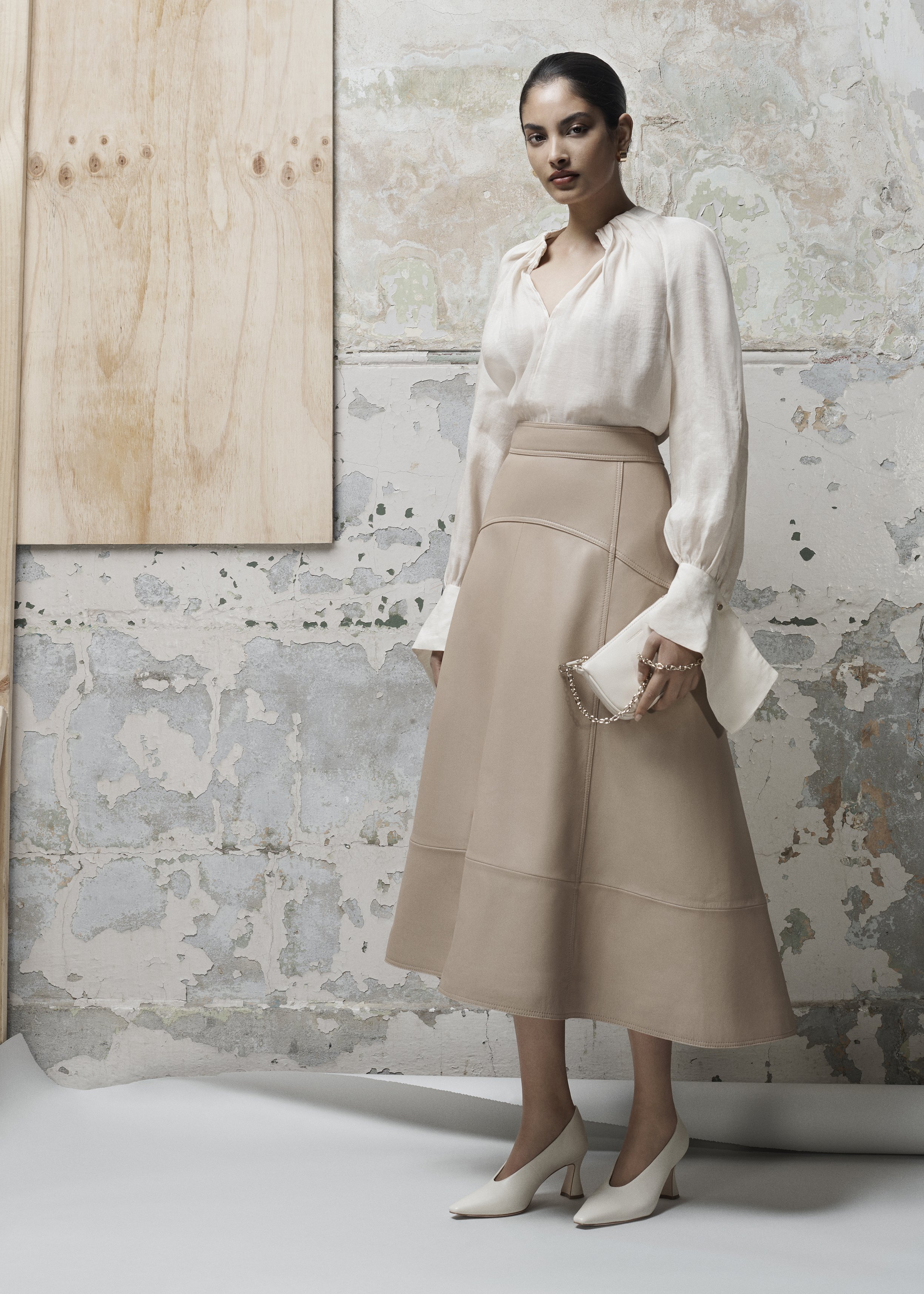
Leather A-Line Skirt $799, Gathered detail blouse (sandstone or petal) $229, countryroad.co.nz
LOOKS TO LAST
The beauty of fashion in the southern hemisphere is the ability to be one step ahead of the game. Technically, what is being rolled out in the February fashion shows for European winters won’t yet be in our stores; however, fashion has increasingly embraced the view of longevity over trends. This means much of what is being predicted for next year can actually be sourced from the autumn trends hitting the stores now. Gone are the days of crazy catwalks; post-COVID what we’re seeing are multiple everyday looks for everyday women, with just enough pizzazz here and there to keep us fully engaged.
One look that is sure to catch the imagination is the return of layering a dress over pants. For many, this never really went away, but revived for this year the styling is tunic-style dresses with sheer fabrics and lots of detailing in hemlines. Another firm favourite is the shirt dress which, accessorised with an oversized tote, is almost painfully practical but still ultra-glamorous when the shirt dress has been well cut. Key things to look for in this universally flattering style is a cinched waist, full fit-and-flare skirt, roomy top that will accommodate – not squash – the bust, long sleeves for this time of year and, perhaps most importantly, a good weight of fabric that will fall beautifully around your legs. Pair with chunky Chelsea boots or loafers. Another absolute wardrobe staple is a leather skirt; team this with a high-fashion trend of a blouse with exaggerated cuffs falling below the fingertips, and totally elevate a piece of classic styling.
Fitted denim shirt $75.90, ZW fitted cargo jean $109, zara.com/nz
BACK TO THE FUTURE
Warning: This is not a drill. Double denim is back. When you’ve seen it on Michelle Obama, you know that it’s coming our way; more polished and structured than some of the attempts we’ve seen before, this designer interpretation of the Canadian Tuxedo is seriously wearable. Throw on a pair of denim boots, trainers or shoes and you have the trifecta.
For party pieces, the cut-out continues to dominate – from the midriff to side, to back, depending on which area the wearer is most confident revealing. The latest look is one-sided oblique cutouts.
If this feels too adventurous for a pub quiz night, then the slash neck is a hot look that is subtle but super stylish.
Grunge is having a revival, but this time it’s being used in a more sophisticated way as a detail rather than an entire look. Think faux leather or shearling vest over a dress. The sleeveless silhouette is huge, particularly pairing a tailored waistcoat with matching pants, and the fitted look avoids the androgynous feel often associated with suiting.

Asymmetric sequinned dress $109, zara.com/nz
MIXING IT UP
Metallics are still omnipresent, to the extent that not only are silver and gold mainstays as partywear, but they have also been translated into daywear. Animal print, particularly leopard, has managed to work its way right up to cult classic status, while faux snake is fabulous for footwear. Velvet has been re-imagined and is the perfect fabric for autumn leading into winter with options for age, budget and taste. From dresses to coats to blouses, look to the celebrity set and you’ll see that the velvet pantsuit is having a moment. With careful styling, tartan, usually seen as a traditional trend, can be modernised to look more chic and less conventional. Spring/Summer 2023 runways were awash with plaid, which means it will be a transitional pattern, so for longevity pick something in a lighter fabric to carry through and pick a style that puts a twist on a classic piece.
LOW-KEY LUXURY
Recreate an outfit to add some classic elevation.
Stealth wealth, quiet luxury – all buzzwords for a style of dressing that is understated, empowering and universally flattering. Essentially polished minimalism, it is a look that has been reflected in several blockbuster shows over the last few years – from Shiv Roy in Succession to Sophie Whitehouse (played by Sienna Miller) in Anatomy of a Scandal. Even if you don’t recognise the characters, you’ll know the style. This elegant, classic dress code is one that has been bubbling below the surface in the form of luxe minimalism for some time. So, when it comes to its current popularity, it’s hard to know if life has imitated art, or if these shows have picked up on a micro trend and made it mainstream. What we do know is that this vibe is one that can be successfully translated to every wardrobe and every figure.
While I’ve always admired the sleek streamlined look, it’s never one I’ve considered until I saw Sienna Miller looking utterly serene whilst she
diced vegetables in a white (possibly cashmere) cardigan. Such was her poise and beauty that I decided I, too, should look like this as I loom over my chopping board. As the series progressed, and she showcased look after look of sartorial mastery, my obsession continued, along with a determination to recreate as many of the outfits as possible. Essentially the silhouette is centred around clean classic lines, and beautiful tailoring, and while Sienna Miller’s comes with a hefty price tag
with pieces from The Row, Celine and Max Mara, this doesn’t need to be the case to achieve a similar look.
A start point is a few key pieces, which lend themselves perfectly to autumnal dressing. Head-to-toe neutral tones are a baseline, with shades of white, cream, beige and biscuit as building blocks. White is a strong colour, and there is an immediate elevation of a look when the shade is perceived to be hard to wear – in fact within this colour wheel there will be a hue for every skin tone. In terms of the practicality of wafting around your kitchen in winter white with no apron, this is where choice of fabric is key. Rather than pure silks or cashmere, if your lifestyle is robust, consider polyester and viscose. Something that is machine-washable and man-made is far more durable and stain-resistant, even in pale shades.
Pivotal to achieving this dress code is the concept of a capsule wardrobe, so a number of pieces that can be interchanged, and that will all look fabulous together. A beautiful camel coat would be considered a statement piece, as would a timeless trench. Mixing textures will give added interest to balance the subtlety of the colour shades, so wool skirts or pants worn with silky shirts become striking, or a thick knit jumper over a satin slip dress. Skinny fitting turtle/roll necks styled with straight or wide leg pants is elegant in the extreme – proportions are an important element of the look. Tweed is a fabric as timeless as is it sophisticated, and is currently having its own moment, so a Chanel-esque jacket would be perfect. A tailored feel is more important than figure hugging, and there’s absolutely room for a few vintage pieces within this wardrobe.
It is the notable absence of labels in this look that has led to the coining of the term ‘stealth wealth’, and the reason why it is so easy to recreate this high end look on a lesser budget. There are multiple New Zealand and Australian designers who produce stunning pieces that fit into this aesthetic – Bassike, Jac + Jack, Silk Laundry and Caroline Sills, to name a few.
To sum it up, “quiet luxury” is elegance without a hint of flashiness. With the key components of neutral colours, high-quality fabrics and a perfect fit – the result is understated at its best; soft power dressing has never been so achievable.
FASHION FORECAST
Winter is coming – and so are these cool, fun fashion trends.

BRIGHT NIGHTS
Winter will be anything but dull. The continuing fixation with bright colourways scream energy and excitement. Pantone’s colour for 2023 is Viva Magenta – alongside this will be fuchsia, vibrant orange, cherry red, even chartreuse: Statement dressers will love the saturation. While head-to-toe block colour is a key look, a vibrant hue can be significantly toned down; try khaki, which is not only on trend, but will also match with multiple bright sheens.

COMING UP ROSES
Emerging trends have seen the traditional floral print superseded by a three-dimensional iteration. The appliqué effect is being used as an embellishment on everything from skirts to dresses to bags; one step further is the garment itself translated as an entire floral fabric structure. Early adopters will find it’s an easy trend to incorporate as an accessory – a fake flower choker around the neck will put you straight in the fashion set.
GOTHIC GLAM
As the darker days draw in there’s a bit of a push for a city-girl aesthetic; this preppy vibe with a bit of goth/grunge thrown in draws a little from the Netflix hit show Wednesday, which has popularised the appeal of A-line silhouettes, Mary Janes and Peter Pan/crisp white collars. The leading colourway for this look is black and white – moody but chic. If you’re having a déjà vu moment with gothic mini dresses and feature collars, you’d be right. It’s all very 2010.
STRAIGHT LACED
The lace-up knee boot is a sophisticated take on the still-super-popular combat boot. A dressier version than the comfort-oriented lug-soled combat sees a chunky or skinny heel with laces running up the back or even the side. Those wedded to walking distances be assured the knee-high combat will be a winter staple.

Something old, something new
Finding the perfect mix of new and vintage just comes down to filling your interior with things that make you happy, they might spark a memory or tell a story or just feel like “you”.
Finding the perfect mix of new and vintage just comes down to filling your interior with things that make
you happy, they might spark a memory or tell a story or just feel like “you”.
Styling Amber Armitage / Photos Wendy Fenwick @ Flash Studios
Wall colours Resene Paints

Main walls painted in Resene SpaceCote Flat in Resene Cinnamon, through doorway painted in Resene SpaceCote Flat in Resene Twilight, and floor finished in Resene Colorwood in Resene Breathe Easy. Large white pot painted in Resene SpaceCote Flat in Resene Egg Sour. Model 1048 Sunburst table by Stow Davis $8950, Juliane dining chairs for Udlum Mobelfabrik $6750, Norwegian floor lamp by Mejlstrøm Belysning $1450, from Mr Bigglesworthy. Portrait 001 painting by Hey Maker Studio, $949 from Endemic World. French jug $76.50, stoneware crock $75, large stoneware jug $135, from Flotsam & Jetsam. Kinto cast water glass in Amber $24.99, Bordallo Pinheiro Amazonia bowl $79, Diva fork $12.70 each, Diva knife $12.70 each, Live Beautiful book $65, all from Father Rabbit. Together napkin, set of four, $80 from Claire Stapleton. Iittala Teema white plate $39.95, Torino Triangles bowl $589, from Smith and Caughey’s. Karaka merino rug, $1,210 from Baya. Flowers from Urban Flowers.
Stylist tip
Create dynamic interiors by playing with unexpected colour combinations where two spaces meet. Paying attention to these transition spaces can create moments of magic.

Back wall painted in Resene Twilight, right-hand walls painted in Resene Zibibbo, and floor finished in Resene Colorwood Breathe Easy. Wall hook painted in Resene Zibibbo. Monza Bed by Ercol, $2,795 from Good Form. Tobacco Stripes Linen flat sheet $123, Tobacco Stripe Linen pillowcases $64 set of two, Lilac linen pillowcases $64 set of two, Lilac linen duvet, $239, all from Foxtrot Linen. Ida Bolster cushion cover in Mulberry, $69.90 from Citta. Stripe Black cushion, $139 from Father Rabbit. Victorian Rise painting, $75 from Flotsam & Jetsam. Terracotta & Rose painting by Brenda Clews, $950 from Endemic World. Raawii Strøm vase $150, Rosenthal Flux Glass Berry vase $399, Colonna black stool $865, from Smith and Caughey’s. Karaka Merino rug $1210, from Baya. Flowers from Urban Flowers.
Stylist tip
The perfect shade of lilac, Resene Twilight is a pale lilac pink, rosy and suffused with the last sunset. Pair with the depth of Resene Zibibbo, a deep velvety red, for a bedroom palette with a bit of romance.

Left wall painted in Resene SpaceCote Flat in Resene Egg Sour, right wall painted in Resene SpaceCote Flat in Resene Cinnamon, and floor finished in Resene Colorwood in Resene Breathe Easy. Franco Albini Belladonna rattan sofa by Sika Design $3650, Fordite rug by CC-Tapis $16,800, from Good Form. Toledo French market basket $119, from Father Rabbit. Serenade throw $90, Flaxmill Doeskin cushion $140, Cassia Almond cushion $115, Flaxmill Fenugreek cushion $140, all from Baya. Zig Zag stool in lilac and leather $970, Venus mug in lilac $49.95, from Smith and Caughey’s. Two Roads North painting by Lucy Rice, $2,200 from Endemic World. Haven Sheer curtains in Cloud, from $99.99 each, from Curtain Studio.

Main wall painted in Resene SpaceCote Flat in Resene Twilight, and floor finished in Resene Colorwood in Resene Breathe Easy. Artwork on wall created with Resene SpaceCote Flat in Resene Twilight and Resene SpaceCote Flat in Resene Cinnamon. Claremont two door cabinet in black $369.95, Hannah diamond wool blend floor rug $399.95, from Mocka. Tash Swivel chair, $899 from Danske Mobler. Black side table, $299 from Bedpost. Victorian mirror $75, from Flotsam & Jetsam. Senso Zen shoes in ebony, $289 from Father Rabbit. Jonathan Adler Balloon vase $275, Jonathan Adler Porcelain Geisha $435, from Smith and Caughey’s. Flowers from Urban Flowers.

Kai for the soul
Full of flavour and good for you too, contemporary Māori foods combine traditional knowledge with modern methods.
Full of flavour and good for you too, contemporary Māori foods combine traditional knowledge with modern methods.
Words Stacey Jones
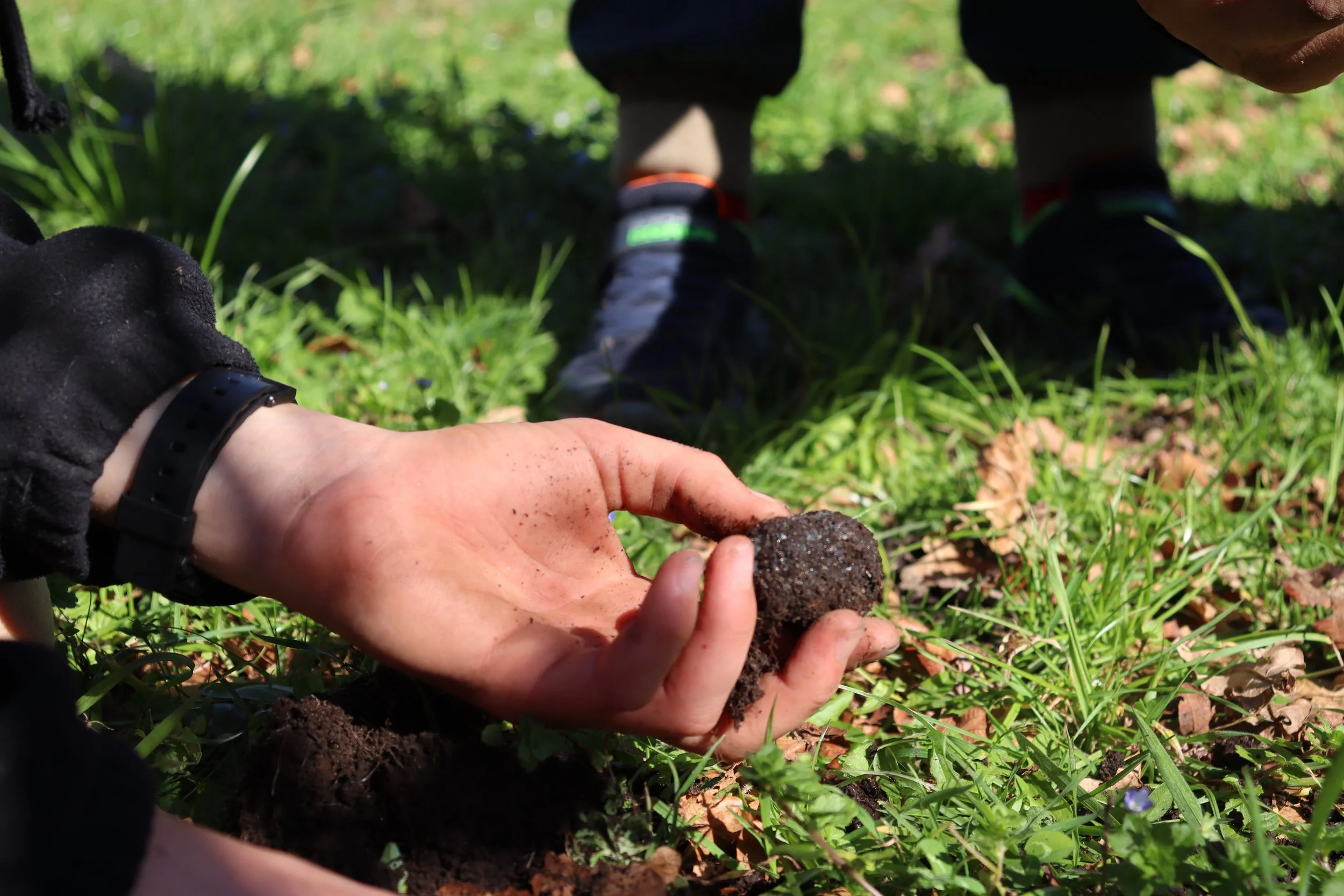
Coming off the back of Kitchen Takeover's most recent pop-up restaurant alongside passionate advocates of Māori culinary cuisine, Kasey and Karena Bird, it struck me how the indigenous food and beverage space has grown since the last time we were in the kitchen together. This is a trend happening throughout New Zealand, with a rising number of Māori food producers inspired not only by traditional foods, but also by the methods in which to produce them.
When I asked Karena about this growing trend, she explained that what makes this space so interesting is that Māori ingredients blend together not only delicious flavours but also strong health properties. “It’s a holistic way of eating that reflects the Māori way of life in general. It’s not only food – it’s how that makes your wairua (living soul) feel. The energy it brings to your life. It’s such an exciting and changing space, and it's great to see more people wanting to use and learn about Māori ingredients.”
I'd like to share some of our leading Māori food producers making waves on the world stage – not only do they taste great, they make you feel great too.
Wai Mānuka is set to become the next big thing in non-alcoholic beverages, with a new drink that is inspired by Māori culture and ingredients. Wai Mānuka combines water (wai) with mānuka honey to create a premium
non-alcoholic beverage.
The brand was founded back in 2020 by “three Maori boys” from Whakatāne during the height of lockdown. Founder Joe Harawira explained, “It was New Year’s Eve and I was drinking pineapple kombucha, and it tasted gross. So after a bit of ribbing from my friends, we started to think about other non-alcoholic drinks that could elevate the occasion and taste great.”
Within just months of launching, the brand was selected as the chosen non-alcoholic supplier for the America’s Cup, alongside Coca Cola. “Since then we have been on a meteoric rise – within just 18 months we are in 33 supermarkets, 25 hospitality venues, supported major New Zealand events and have just started a trail in Tokyo. We intend to become a global brand representing Aotearoa.”
Manufactured in and distributed from Tauranga, they are focused on sustainability. Honey is sourced from Whakatāne and the lemon juice from a family in Hawke’s Bay. “My mum puts it best when she sums up the drink,” says Joe: “He taonga utu nui na Aotearoa – a precious gift from New Zealand.”

While truffles probably don’t spring to mind as a traditional Māori ingredient, we know from looking back at the history books that truffles have a long history of use as a food in many cultures, and in the mid-1800s, pioneer missionary Reverend Richard Taylor wrote that Māori “esteem [them] as an article of food.”
Ohiwa Black Diamonds is a truffle producer based in Whakatane, making truffle oil, salt, honey and more. Run by husband and wife team Matiu Hudson and Annette Munday, their truffière produces more Black Perigord truffles per hectare than any other truffière in the country. Matiu works with Māori land trusts and farmers around New Zealand to grow truffles on unproductive land.
A truffle’s health properties are playing a key part of the brand’s focus on export in the coming months as they hit the world stage. "It's claimed that truffles have anti-ageing and anti-oxidant properties, so we're looking to tap into that," says Annette.
Manawa Honey was founded by the Tūhoe Tuawhenua Trust. It focuses on wild honey gathering, or te nanao miere, in Rutahuna, located in the heart of remote untouched indigenous forests known as Te Urewera.
Using traditional methods, with a focus on sustainability, they are producing some of the world’s best honey right here in the Bay of Plenty. So much so that they won the Grand First Prize for the Best Tasting Honey in the World at the Black Jar International Honey Tasting Contest in 2021 with their Rewarewa Honey. Not only does it taste delicious, but their honey has strong antibacterial, anti-inflammatory and antioxidant properties too.
“In the past, we have been a bit reluctant to promote our honey because our old people say, “Kāre te kūmara
e kōrero mō tana reka – A sweet potato doesn’t boast about how sweet it is!” But we know that to be successful, we must let the world know.”
If you’re interested in finding more Māori food suppliers locally, be sure to check out Kāuta (kauta.co.nz). Established by chef Grant Kitchen, it aims to connect consumers to authentic Māori food supplies at the source.
waimanuka.co.nz
Manawahoney.co.nz
truffles-ohiwa.myshopify.com

Driving talent
Tauranga-born kart-racing prodigy Jay Urwin has his sights set on a long motorsport career, helped along by a couple of parents who know all about the thrills and spills of professional sport.
Tauranga-born kart-racing prodigy Jay Urwin has his sights set on a long motorsport career, helped along by a couple of parents who know all about the thrills and spills of professional sport.
Words + Photos Jamie Troughton

There was only ever going to be one way with Jay Urwin, and that was fast. Pure, unadulterated pace, maximum thrust, acceleration torqued to the point of abandon.
It may be a stretch to say his first breath on this earth was tinged with 91-octane and adrenaline but it’s also unlikely he’ll ever contemplate a career in competitive cross-stitch.
Instead, the 14-year-old propels a 125cc racing kart around a track at speeds of up to 160km/h. Millimetres off the ground, locked in a steel embrace, on some corners he pulls more G-forces than a space shuttle taking off. Such are the physics at work, he needs a purpose-built chest protector to stop his ribs fracturing against his seat.
Lap after lap after lap, he burns around his home track in Tokoroa, often watched only by the cows in the neighbouring paddock and his dad and coach, Niki. He’s been doing this since he was five and has developed an intuitive feel for brake adjustments, body position and engine performance.
His motivation is simple: “It's fun,” he says. “I just like driving.” But he isn’t just any boy-racing petrol-head. Jay Urwin is a young man with a plan.

THE WHEEL DEAL
Since winning a heat at the SuperNationals in 2018 as a 10-year-old and taking out the 2019 Rotax Micro Max Grand Finals in Sarno, Italy, Jay has been on an incredible learning curve, in a sport where most don’t peak until they’re in their late 20s.
“From a driving standpoint, and in things like knowledge and data and video analysis, I'm quite a way behind but because I'm still at school, my brain can learn faster than someone who hasn't been to school for 10 to 20 years,” he says.
This year, Jay aims to race five rounds of the Australian Kart Championship, the SKUSA professional tour in the United States, and the SuperNationals in Las Vegas in November. The Matamata College teenager will be racing and chasing grown men – experienced world champions like Dutch star Marijn Kremers and 48-year-old Italian karting legend Davide Foré.
Kremers will be driving all the same American races, while also helping Jay’s team in Australia. The pair have met before and the experienced Dutchman looms as a large influence for the young Kiwi. “It's been really good working with him because he has so much knowledge and knows things about things that I didn't even know were things!” says Jay.

GREAT RACING GENES
By far the biggest influences on his competitive life have been Jay’s parents. Dad Niki was a six-time New Zealand motocross champion who broke his back racing in Australia in 2002, leaving him a paraplegic.
Within a year, however, he had his karting competition licence and before the decade was up, became the only paraplegic to have competed at the world championships, in Italy.
Jay’s mum Vanessa Quin became the first New Zealander to win a world elite championship in downhill mountain biking in 2004, and also raced BMX internationally.
There’s considerable irony in Jay’s choice of sport, given that both parents suffered horrific injuries during their motocross and mountain biking careers. “Karting isn't so prescribed and it's lucky that injuries are not such a big thing in this sport, so that's a massive headache out of the way for us,” Niki admits. “Jay races more than anyone in New Zealand and he'll do anything, from a club day with 30 kids to the biggest international race where there's 600 go-karters there. You can learn something every time you race.”
Along with 10-year-old Indi, the family has travelled the world chasing karting races, firstly with Niki, and later with Jay. “It's way easier because we've seen the blueprint across multiple sports and we've seen how it works.”
For his part, Jay knows exactly how fortunate he is, and not just for the sporting prowess and drive his parents have gifted him. “We're a lot closer than 99 percent of kids my age and their parents. I spend a huge amount of time with them and they also know what kind of work you have to put in,” he says.

WHERE TO FROM HERE?
The glitz and glamour of Formula One is seen by many as the pinnacle of motorsport and most of the big-name drivers – like Ayrton Senna, Michael Schumacher and Lewis Hamilton – have started off racing karts.
That’s not a career track Jay is prioritising, however. “It's extraordinary the places that karting has taken me. We've eaten pizza in the home of pizza, seen things like the Colosseum, and the Louvre in Paris, and driven through Louisiana trying to find a McDonald’s without a broken sign from Hurricane Katrina.
“The end goal is to hopefully be a fully paid kart driver in Italy and live in Lonato del Garda, where all the big teams have testing. I've been learning Italian on Duolingo and it's really fun. I still hope to be racing 14-year-old kids when I'm 50.”
