

Saintly passion
The divine inspiration of UNO columnist Jess Easton, Saint Wine Bar pairs an impressive wine selection with delicious share plates for a match made in heaven.
The divine inspiration of UNO columnist Jess Easton, Saint Wine Bar pairs an impressive wine selection with delicious share plates for a match made in heaven.
words HAYLEY BARNETT | photos ILK PHOTOGRAPHY

As we step into the moody, candlelit lounge, a warm fireplace crackling, it’s clear something special is going on here at Saint Wine Bar. And when we meet sommelier Charles, who smiles and immediately fills our glasses with some Vilaura Bdb Methode Traditionelle, we can see we’re in safe hands. It’s even emblazoned across the back of the staff uniform: ‘In Charles We Trust’.
Owner Jess Easton, known to UNO readers as our wine columnist, has fulfilled a lifelong dream with Saint, located along The Strand in Tauranga. By lifelong she means it. Jess became a wine aficionado at a very young age. “My dad used to let me try his wine as a kid,” she admits. “We had one of those wine cellars where you’d lift up the door and walk down these dark stairs. One of my first memories of wine is a Penfolds Grange.”
When she was old enough, she would hire a bus every birthday and take her friends out to the wineries surrounding Melbourne, her home town. “But I still didn’t fully appreciate it until I was in my thirties,” she adds. “I’m right now staring at 200 bottles sitting in my house. It’s got out of hand.”

These days, Jess moonlights as a lawyer and somehow manages to run Kitchen Takeover − the Bay’s popular pop-up foodie experience − at the same time. She says she’s very lucky to have met Charles Leong, and chef Dan Lockhart, who together have become the glue that holds every piece of Saint together.
“I wanted to create an entire engaging experience and Charles just nails that,” says Jess. “When we met I could tell he understood what I wanted to achieve in that space. It was the same with Dan.”

What she’s created with Charles and Dan is a bar that specialises in fine wines from around New Zealand and offers tantalising share plates to match.
“I travel to Napier and Gisborne a lot for work and often go out for a glass of wine. There are these little bars where you can have a good wine without feeling like you need to order a three-course meal. That’s where the idea came from. I just wanted to make wine accessible.”
After we learn about a few new wine varietals from Charles, and overdo it on the share plates, we come to the conclusion that a wine bar is exactly what Tauranga needs. With dishes like saku tuna, blue swimmer crab crisps, pulled beef croquettes and rib eye steak, you can make a night of it, but as diners come and go, we realise this is a place that has somehow pulled off the casual dining/bar experience in an elegant setting. Here at Saint, you can make it whatever you want.
As the space is also an event venue, Jess encourages diners to check their socials to find out which days they are open to the public.
“Now it’s just about getting people into the habit of checking our pages. So far it’s working. People are loving it!”

Nurturing spaces
Sarah Parry from Testament Interiors talks about the importance of biophilic design in your home.
Sarah Parry from Testament Interiors talks about the importance of biophilic design in your home.
photo GISELLE BROSNAHAN

Biophilia is a new term that has recently gained popularity in the world of interior design. But what does it mean?
Biophilia forms a connection with nature and living organisms to positively affect your health and wellbeing. We spend an average of 90 percent of our lifetime indoors, approximately 22 hours a day.
It's no wonder we face so many mental health and wellbeing issues in society today. With changes in urbanisation over the last few decades and the rising cost of land, more people are living on smaller sites or in high-rise apartments, and outdoor green spaces have either shrunk or disappeared completely.
Interior design that incorporates biophilic principles can lead to improvements in personal health, cognitive function, mood, and relationships.
With whenua-inspired design, you create an environment that nurtures both body and mind, fostering a sense of wellbeing and harmony in your daily life.
It’s important to determine the biophilic brief from the outset – these could include open-plan living, easy access to a garden or outdoor living space or a play area for children and grandchildren.
There are three main principles of biophilic design – nature of the space, natural analogues and nature within a space.
Sarah’s biophilic top tips
1. Nature of the space – One of the greatest ways to benefit your health and wellbeing is choosing a site or home that has all day sun and harness the sun’s natural heating properties. Other ways include water features and access to whenua through sliding doors onto patios or gardens to enable air movement, wind chimes and bird feeders.
2. Natural analogues – These are man-made items that are designed to mimic nature. Examples include furniture with organic curves and using natural fabrics in earthy tones. Artwork that recreates nature scenes and using lighting solutions can help our circadian clocks to unwind and reset with the use of dimmer switches, timers and daylight bulbs.
3. Nature in the space – This involves the use of natural elements within the interior spaces. Including living walls, house plants, aquariums and the use of natural or recycled materials like wood, stone and organic fibres like wool, cotton and jute in rugs, floor coverings and décor. This also includes having pets, so don’t forget to plan spaces for your fur babies.

Growing places
Four years of work is beginning to bloom at Hamilton Gardens. We find out about what’s sprouted up and the seeds already planted for the future.
Four years of work is beginning to bloom at Hamilton Gardens. We find out about what’s sprouted up and the seeds already planted for the future.
words KARL PUSCHMANN

Italian Renaissance Garden.
If you’ve never visited the Hamilton Gardens before, you’re probably wondering what all the fuss is about.
That was certainly true for me when last summer my wife suggested we spend a family afternoon there. An afternoon! It seemed a dubious suggestion. How could a garden possibly hope to hold our children’s interest – and if I’m being completely honest, mine as well – for longer than 10 minutes? I voiced my concerns and she just smiled and said, “they’re really good,” and that was that. After lunch we packed the kids in the car and went.
It turns out she had dramatically undersold the place. Walking through the enclosed gardens was a complete delight that enchanted even this naysayer. It felt like walking into a fantastical picture book, where wonder and surprise was planted around every corner and charming detail bloomed all around.
Each of the 18 different themed gardens is thoroughly unique, and represent key moments in world history when there was a shift in civilisation. Some take cues from history, like the Italian Renaissance Garden which shows how man had learnt to tame nature through intricate trellis, grand courtyards and careful manicuring, others highlight different cultures approach to gardens, such as the The Japanese Garden of Contemplation, which offers peace and tranquility amongst its carefully placed stones, while others are full of whimsy and imagination like the Surrealist Garden, where reality twists in oversized and unexpected ways. Weaving throughout, an unmistakable Aotearoa flavour.

Japanese Garden of Contemplation.
It was a fantastic and fantastical afternoon. One that I thought could not be improved upon. But, again, the Hamilton Gardens has proven me wrong.
Just a couple of months ago Hamilton Gardens unveiled the brand new Entry Precinct to the exquisite Enclosed Gardens. This modernisation of the entrance area can be considered the fertile soil for the future growth of the gardens, the plans of which are already mapped out and designed through to 2050.
“This is the realisation of four years of work and gives us the foundation for moving forward,” Lucy Ryan, the Hamilton Garden’s director says. “We have the new visitor centre, we’ve refreshed the whole pavilion and improved visitor wayfinding. We took the opportunity to better embed the Mana Whenua narrative as well. It was an amazing project to be involved in.”
Lucy explains that the Garden’s popularity was the impetus for the project. As Hamilton’s most popular attraction up to 5000 visitors per day were coming through the doors in peak season. The old facility simply couldn’t cope with the numbers.
The new centre also allowed the Gardens to implement their long-signposted change to instigate an entry fee for those over 16. Hamilton residents can still visit for free after registering for a MyGardens Pass. Lucy says 40,000 Hamiltonians have already signed up for the pass.
Introducing this system may have been the pragmatic reason for the upgrade, but it wasn’t the only one. “We wanted to ensure the Mana Whenua story and perspective was woven throughout the entry precinct area design,” Lucy explains, saying that was something that was incredibly important to the team and the Gardens itself. “And the other big overarching one, as corny as it sounds, was that we needed a world-class entry to match our world-class gardens. It was all about the visitor experience.”
Now that the Entry Precinct has blossomed, Lucy and her team are now cultivating the seeds that have already been planted for the Garden's next three big expansions. Fortunately, there won’t be another four-year wait for the first of these to bloom.

Hamilton Gardens Visitor Centre.
“The designs and the civil infrastructure have been done. The groundwork and concrete work, all that sort of stuff for all three gardens is in place already,” she says. “Our big focus now is the Medieval Garden. That should be open by this time next year.
“And then it’s right onto the Pasifika and Baroque Gardens. The designs are completed, so it's just the build factor.”
Each of these will bring a new chapter to the gardens. The Medieval Garden explores the spread of Christianity and charity, the Pasifika Garden focuses on the navigators who explored the seas and the age of navigation, while the Baroque Garden will be a showy affair that highlights how technological advances led to the spectacle of wealth during that period.

Medieval Garden.
This leads nicely into the wealth of events and activities happening at the Gardens over the summer. Every Sunday from 4pm to 8pm Gourmet in the Gardens on the Rhododendron Lawn sees the Garden’s floral scents complemented with the sizzling aroma of food trucks and the rich bird song is accompanied by live entertainment. The popular audio guides and Highlights tour add richness to the experience, and the night-time Pekapeka tours – bat-spotting – is held on select Tuesday and Thursday evenings throughout November to March. While the bats can sometimes be shy, Lucy says they’re big chatterboxes that you’ll hear as you walk through the gardens under the stars.
“You have little bat radars to help try and spot them in the zone,” she says, before adding, “And as you walk along the path looking for them, you'll see glow worms all along the river path, which is really cool.”
And, of course, the Hamilton Arts Festival will be running from the end of February through to March, taking over the whole precinct area and putting on shows within the enclosed gardens as well.
It all contributes to making Hamilton Gardens much, much more than you might expect. “It’s beautiful and it’s gorgeous and it’s delightful with a huge amount of narrative and stories sitting under each garden,” Lucy smiles. “It’s like a magic carpet ride or a journey through space and time.

Transform tomorrow
Facing a health scare without any insurance cover in place motivated Diana McIntyre to become an insurance specialist with Rapson Loans & Finance, to help others avoid the same shock.
Facing a health scare without any insurance cover in place motivated Diana McIntyre to become an insurance specialist with Rapson Loans & Finance, to help others avoid the same shock.

Life can throw you curveballs. When my brother died suddenly, his foresight in taking out life insurance saved our family from financial heartache on top of grief. But when I faced my own health crisis, I did so as a solo mum and breadwinner, with nothing to protect my financial security.
Many Kiwis insure their homes and vehicles but we are much more reluctant to insure our most valuable asset – ourselves. I now know that health, trauma and income protection insurance can literally save the day.
A good health insurance policy will give you access to non-Pharmac drugs without having to sell your home or beg others for help via Givealittle. And it will ensure you are seen quickly without languishing on public waiting lists while your condition worsens.
According to Health New Zealand / Te Whatu Ora, 180,000 people were waiting for a first specialist appointment last December – and 68,000 of those had waited longer than the 40-day target. New Zealand’s health system is overloaded and focused on critical need. But you don’t have to be critically unwell to be debilitated.
I am privileged to work with clients every day to cover their risks while balancing their budget. A solo mum in her late 30s was recently diagnosed with breast cancer. As her household’s only financial provider, her $100,000 trauma cover financially saved her.
Another local couple in their 40s, with children from previous relationships, took out a joint life insurance policy. Less than 12 months later, he died. But the insurance payout meant his new partner could continue living in their home, and his children received an inheritance.
While no-one likes to think this could happen to them, the reality is it could. In today’s economy, I can help you sustainably manage your premiums. If you’re under 45, it’s worth taking out some ‘level’ of trauma or life cover which won’t increase each year in line with your age. It will give you more certainty on cost and help you plan for the future.
Once you’re over 50, right when you’re likely to need cover, your premiums will be sustainable. If you’re older, you could consider increasing your health insurance excess if you need to reduce your monthly premium.
My best advice is to sit down with a knowledgeable insurance specialist such as myself. I can take a holistic and pragmatic look at your circumstances and help you strike the right balance between cover and cost.
It’s important to set up insurance that meets your needs now, as well as strategically looking ahead to the future.

Private seclusion
Nestled within the sheltered privacy of a gorgeous garden setting, French Provence whispers its presence. From the design of the home itself – limestone chip paths, landscaped banks and garden corners, to the exotic allure of the swimming pool – this property transports you to another world.
Nestled within the sheltered privacy of a gorgeous garden setting, French Provence whispers its presence. From the design of the home itself – limestone chip paths, landscaped banks and garden corners, to the exotic allure of the swimming pool – this property transports you to another world.
words JO FERRIS

The privacy of this exquisite country home goes far beyond the gated security offered by Te Puna’s elite Tides Reach enclave. One of 29 high-value properties, this home hides from the road – blossoms on the cherry trees lining the long driveway having given way to summer’s leafy welcome.
Pavilion styling divides the home into two distinct wings – connected by a foyer that immediately introduces the garden expanse beyond, thanks to a full-wall picture window.

Living sits to the left; gabled ceilings showcasing sarked lining and exposed beams to enhance the space. The tone is genteel; classically refined like French champagne. Glazing stretches the length of the wing – from dining and family lounge, through to the lounge. It ensures both the view and outdoor links are captured in every area of this wing.
Sun-drenched decking includes a sheltered outdoor lounge – somewhere to gaze out to the pool and reflect on the beauty all around. Dedicated alfresco dining invites grand occasions outside, while the pool has its own invitation. A shallow ‘chaise longue’ segment for sun lovers; louvred roofing over the ‘pool house’, with its outdoor fire and lounge setting, plus a spa alcove for added luxury. The symmetry between the house, outdoor settings, pool and large garden expanse is captivating.

The accommodation wing, while seemingly a stand-alone pavilion is also linked intricately to the garden. The master suite sits at the far end – its romantic bathroom showcasing a clawfoot bath and French-door link with a screened garden – privacy assured in all aspects and brilliant walk-in shower.

Three more bedrooms share a family bathroom – a bath here as well and a separate powder room for added convenience. Other features include a study, a ‘play room’ for children, hobbies or gym; a dedicated laundry, triple garage with attic storage and an adjoining workshop. Every area in this corner is connected – walk-through access to and fro’, plus double-sided entry to the workshop for the ride-on mower and implements.

With tennis at the shared court at Tides Reach, nature trails to the harbour’s edge, this French-inspired ‘maison élégante’ makes an indelible impression here in Western Bay’s Tides Reach.
41 Te Karaka drive, Te Puna

Over the rainbow bridge
Pet Farewells brings comfort and closure to pet owners, offering a dignified alternative to traditional backyard burials.
Pet Farewells brings comfort and closure to pet owners, offering a dignified alternative to traditional backyard burials.
words KARL PUSCHMANN | photos CRAIG BROWN

Lyn and Gavin Shepherd.
When it comes to our pets, we don’t usually think about the end until it comes. And it wasn’t too long ago that we’d simply grab a shovel, dig a hole in the backyard and then let the kids say a few teary words. However, with shrinking properties, increased urban density, renting being much more common and people moving homes more, a pet’s eternal resting spot can often be disturbed within a few years.
“It used to be accepted as normal, but now people don’t want to bury their cat in the garden,” Gavin Shepherd says. “They want it looked after properly.”
This is something Lyn and husband Gavin pride themselves on. As owners of crematorium Pet Farewells, they’ve been providing a compassionate service to pet owners for 17 years.
When they bought their first pet crematorium in Hamilton in 2007, the existing owner considered it a “lifestyle business”. Lyn, a college teacher, and Gavin, a veterinarian, initially thought it would be a good retirement business, but both quickly saw the dormant potential.
After upgrading the machinery, which is specialist equipment that has to be imported from the States, they began picking up more business. As well as the public they were also servicing all of Hamilton’s vet clinics, the SPCA and Hamilton’s Zoo. Seeing a gap in the market they then expanded to Wellington in 2011 and followed the same playbook. It was another success. This led them to purchase an existing pet crematorium in Mount Maunganui three years ago that they could see had not reached its full potential.
They went through the 18-month process of upgrading the cremator to “the latest and greatest,” and completing the paper trail of necessary consents, and say that business is now beginning to increase.
“We do the work for 60 percent of Tauranga’s vets, the Tauranga City Council and the SPCA Tauranga,” Gavin says.
Most of their work comes via the vets who, after euthanising a pet, will talk to the owner about their options. “It’s either take it home and bury or cremation,” Gavin says. “We have a number of ways that the ashes can be returned. The cheapest option is a cardboard box but there’s another six or seven vessels that we provide to return pets.”
Usually, someone from the team will then pick up the pet, cremate it and return it to the vet a couple of days later. But people are welcome to bring their pets in themselves.
“That happens more and more. But we can't allow them into the cremation zone. It runs at 900 degrees, so it’s hot and pretty dangerous, so they can’t watch that process. It’s just not possible,” he explains. “The cremation process takes probably six hours from start to finish. It’s not like getting a pizza, ordering it and then going to the other window and picking it up.”
As well as the basic cardboard box, which Lyn says is what most people who scatter the ashes opt for, there’s a range of options, including a variety of beautiful wooden boxes that are all crafted here in New Zealand, for people who want to keep them.
“All of the products that we return the pets in are New Zealand sourced or made,” Gavin says, explaining that supporting other local businesses was something he and Lyn both considered important. “We didn't want to say the vessels that we use come from China.”
As well as the expected cats and dogs, Pet Farewells has also cremated animals as small as goldfish and mice through to chimpanzees for the Zoo and, in one instance, an ostrich.
“That’s my favourite story,” Lyn says. “An ostrich is very big when its wings are outstretched and its head’s right up high so we didn’t know whether it would fit into the cremator. When we got it, it was like a coil of rope, because it had just collapsed into a ball and the neck was sort of swivelled around and compacted down on it, so we could cremate it quite easily.
“The poor ostrich had died of an obstruction. It had been scavenging around a construction site, and eaten everything shiny, like screws, nails, bolts and nuts. At the end of the cremation, they were all there. We not only had the bones and the stones, but we could also give the owner back everything else!”
The couple say that the death of a pet is an emotional time. For them, Pet Farewells isn’t just about offering a practical solution, it’s about giving people the opportunity to say farewell to their pets in a dignified and compassionate way. “People regard a pet as part of their family,” Gavin says. “And we’re pleased to be part of it.”

Grey expectations
Ready to go au naturel? Samantha Henry of Shine Hair and Studio May shares her top tips for going gorgeously grey.
Ready to go au naturel? Samantha Henry of Shine Hair and Studio May shares her top tips for going gorgeously grey.
photos SALINA GALVAN + SUPPLIED

Samantha Henry.
The mirror doesn't lie – those silvery strands are multiplying faster than you can say "salon appointment". But before you reach for the bottle (of hair colour, that is), let's chat about embracing the grey with style and confidence.
First things first: emotional preparedness. Are you ready to rock the silver vixen look? Many women find inspiration in others who've made the leap, so start scrolling those #silverandfree hashtags for a confidence boost. After all, why should men have all the fun as "silver foxes"?
Transitioning to your natural grey can take anywhere from one to three years, depending on your hair length. The first few months can be the trickiest, as you'll notice the demarcation line where your coloured hair meets the new growth. But don’t worry – there are clever ways to blend the old with the new.
One option is to switch from all-over colour to highlights or lowlights. This allows your natural hair to peek through while maintaining some bounce and texture.
Another route is to swap permanent colour for semi-permanent, which covers up to 50 percent of grey and blends up to 70 percent (using Wella Colour), giving your overall look a softer appearance.

For the adventurous, consider a balayage or ombré service to create a gradual transition from roots to ends.
Regular trims are your best friend during this journey. They'll help remove any lingering coloured ends and keep your hair looking fresh as it grows out.
Treat yourself to nourishing conditioning masks to keep your tresses hydrated and prevent breakage.
Lastly, if you do choose to let your grey shine, know you're in good company. From A-list celebs to your next-door neighbour, more women are ditching the colour and rocking their natural grey.
It's not about giving up; it's about owning your look and redefining beauty standards. With a bit of patience and the right attitude, you'll be turning heads for all the right reasons.
Who knows – you might even inspire others to embrace their own silver lining.

Lady Aorangi
An infusion of 1930s charm and modern high-end luxury, this exquisite home balances historic grandeur and inviting warmth.
An infusion of 1930s charm and modern high-end luxury, this exquisite home balances historic grandeur and inviting warmth.
words JO FERRIS

History blends the sentiment of heritage that no modern interpretation could ever replicate in this unique property. Unique, because it was once home to former Tauranga mayor and prominent businessman; the late Sir Bob Owens.
Relocated from its original Avenues’ address to just outside Bethlehem, ‘Aorangi’ derived its name – cloud in the sky – from the mysticism that Wairoa Valley instils when clouds shroud the river below this home. The heritage of this 1930s’ native timber residence has remained intact, thanks to a sensitive renovation.
Committed to its memory, the owners undertook a significant project that involved sourcing the best money can buy – importing much of the fittings and materials. It is a tribute to their dedication, that this home retains an extraordinary blend of yesterday, while ensuring today’s comfort and modern heating systems.

Name dropping is no attempt at ostentation in this case. Brands like Perrin and Rowe, Burlington, Hinkley and Ralph Lauren simply highlight the superior quality that enhances the décor here.
Italian marble counters in the kitchen, with its Lacanche oven and Gaggenau appliances sit effortlessly beside New Zealand rimu flooring.
No detail has been overlooked – from obvious features that showcase 18th Century William Morris wallpaper recreations, plush drapes or moody tone of wainscoting in the master study to the subtle finish of architraves, lighting and display elements – this home is an inspiration of design appreciation.
It attracts casual family living and the habitual desire to congregate around the island bar in the kitchen. It invites formal dining and those grand occasions with crowds; family room comfort and an office area for paperwork.
A second lounge and generous reception room expand space for different entertainment and alternative moments.

This is a significant home – two bedrooms and bathroom downstairs; three more upstairs and the private study with its ambience of a gentlemen’s club. It separates two bedrooms and family bathrooms from the master suite.
Naturally the largest bedroom, it features four separate closets, a cosy cushioned window seat and private bathroom. Every room is personalised – tone, texture and clever contrast instilled through colour.
Outdoor connections provide different perspectives on the garden and view across Wairoa Valley. The swimming pool is the one token of contemporary context within the property; sitting in a corner of its own, sheltered behind the garage.
Homes of this calibre and history in Tauranga are rare. It’s nice knowing this has survived where others have disappeared. Sir Bob Owens would be proud.
93 Wairoa Road, Wairoa OLIVERROADBAYOFPLENTY.COM

Beyond the traditional
One year on, Law Collective is still shaking up Taurangaʼs legal scene with client-centred, team-driven personalised solutions.
One year on, Law Collective is still shaking up Taurangaʼs legal scene with client-centred, team-driven personalised solutions.
words NICKY ADAMS | photos RACHEL HADFIELD

Katrina Hulsebosch.
Unusually for a law firm, the Law Collective is not named after founding partner Katrina Hulsebosch. Whilst this may seem a subtle point of difference, it is in fact a significant one. In one simple gesture, Kat has surmised the kind of culture she wanted to create in her newly established commercial and property law company – a team of high-level experts all working together and complementing each other, the desire to go above and beyond, and with a vested interest in the client rather than the prestige of the name on the door.
Having just celebrated the Law Collectiveʼs first birthday, Kat is both quietly thrilled about how the year has played out, and excited for the next stage ahead. Offering everything from company and commercial law to property, wills, trust and estate law, the office sits in a convenient location in Tauranga.
When you walk through the door, the lack of formality of the open plan space combines with a warm welcoming vibe, together setting a tone of relaxed efficiency. A lack of pretension belies the wealth of expertise that is gathered under the Law Collective roof. Kat and the team have decades of industry experience; her personal resume includes formative years across all disciplines in boutique law firms in Hamilton before moving to Tauranga and joining Sharp Tudhope where she specialised, before progressing to Harris Tate. Alongside Kat are legal assistant Pip Mills, legal execs Andrea Lilley and Tash Gowthorpe, admin co-ordinator Melissa Boswell, and office administrator Loretta Sonego. Many of the team have worked together previously, so share an easy rhythm and work ethic.
Reflecting on the start point, Kat is clear as to her motivation. “I wanted to create something I was proud of here, that was truly client centred. All the decisions we made in setting this business up, right down to the legal practice software, were all based around client experience.” Kat believes that law as an entity is embracing a new era when it comes to how firms operate: crucially in relation to the client/lawyer dynamic.
As a forward-thinking company, Law Collective places significant emphasis on the personal connection with the client. As Kat points out: “I think you get more out of the relationship with the client, and you can then serve that person better, if theyʼre comfortable with you. So even the fit out of this office has been designed to put people at ease. It lends itself to having a more friendly, relatable relationship with our clients. And you then end up getting a lot more information as you talk. When the client trusts you, theyʼll tell you stuff that they donʼt even realise is important, and it can often change your advice to them.”
The client/lawyer ‘fitʼ is a concept that Kat returns to repeatedly, emphasising how important it is for the client. Despite having multiple overseas or out-of-town clients, when it comes to a new client Kat makes a point of always trying to meet in person: from there on, the file can be dealt with accordingly, although Kat will always stay involved.
“Clients are often surprised that when they call, when I can, I answer my own phone.” I wonder if the initial high-level interface might feel prohibitive to potential clients, however, Kat assures me that this is in fact a more cost-effective way of operating. “Often, I can get a lot out of a first meeting and from there direct it better, so itʼs more efficient for me to meet with the client in the first instance. I can then make sure theyʼre on the right path. After that, the girls will take over and Iʼll be included as much as they need me to be.”
Getting value for money is very important for Kat, “Weʼre very mindful of costs to clients.”
Being across each other’s workload harks back to the basic concept of being a collective team. As Kat explains: “The staff all operate together – we generally know what’s going on with each other’s files. We also see ourselves as a collective with the client and their other professional advisors, like accountants, bankers, financial advisors and real estate agents. The idea is that we’re all working for the client’s best interests – we’re all on the same page and collaborate together to deliver a better outcome for the client. From the start, I could see the advantage of truly being a wraparound service.” This all-encompassing attitude means that as a boutique firm operating in the commercial and property law space, should a law service outside of this arise, they can seek help from barristers who are the very best for the job from a large pool of external options.
As a team Law Collective is a well-oiled machine, each bringing something unique to the table. Pip, Kat’s legal assistant, ensures smooth communication between the team and clients; legal executives Andrea and Tash bring complementary skills – Andrea is known for being a whizz at complex legal matters, while Tash has a down-to-earth approach, her exceptional guidance making her beloved to clients. Melissa, as administrative co-ordinator, is the backbone of the company, taking charge of day-to-day operations; office administrator Loretta’s eye for detail and 20 years’ experience in law firms ensures smooth sailing is guaranteed for the whole team. Kat has no plans to expand into other disciplines, and while the next growth phase will see the addition of more solicitors, she is adamant about staying boutique. “Sticking with what we know we’re good at and where we can add value.”
Equally advantageous to a smaller environment is the ability to streamline processes to make them as efficient as possible. Kat’s motivation was also to create a law firm with a more modern outlook, which, when you look at the processes that have been initiated, from personal to administrative, it feels very like the company has hit its mark. But the most important target is one that has resoundingly been reached – a client-centric ethos – without a doubt, says Kat, “Clients know when you care.”
Quick fire with Kat
UNO: How would you recommend people choose the right lawyer for their business?
Kat: Choosing the right lawyer for your business starts with understanding your specific needs. Look for a lawyer who specialises in your industry or the particular area of law you need help with. Another key factor is responsiveness. Business moves quickly, so you need someone who can keep up, provide timely advice, and help you seize opportunities. Finally, don’t underestimate the importance of a good personality fit. Your lawyer should be someone you feel comfortable working with, who understands your business’s goals and culture, and can explain legal concepts in a way that’s clear and approachable.
When in a business transaction is a good time to engage a lawyer?
The earlier, the better. Engaging a lawyer at the start of a transaction can save you time, money, and stress down the line. A lawyer can help identify potential risks, clarify obligations, ensure the terms align with your goals, and your interests are protected.
What do you think is the right size firm – and is it important to be in the same city?
The ideal size of a law firm really depends on the needs of you or your business. Smaller boutique firms can offer personalised, tailored services, often with a high level of expertise and flexibility. As for location, it’s no longer as critical as it used to be. With modern communication tools, you can still get to know the client personally over regular video conferences. What added value do you offer? I believe our point of difference lies in the exceptional client service, efficiency, and genuine care we provide.

Plenty to devour
The Bay is finally being recognised as a foodie destination for the discerning diner. Stacey Jones discovers how we got here by talking to the best in Tauranga's hospitality industry, and lists six of the most respected eateries in the region.
The Bay is finally being recognised as a foodie destination for the discerning diner. Stacey Jones discovers how we got here by talking to the best in Tauranga's hospitality industry, and lists six of the most respected eateries in the region.

Solera steak.
“I drive to Auckland for a nice meal.”
That was one of the first comments I heard when I arrived in the Bay of Plenty 15 years ago. Back then, finding a great restaurant here was like searching for a white truffle in a field of mushrooms.
Fast forward to 2024, and the Bay of Plenty has blossomed into a vibrant culinary destination. Cuisine Magazine’s Good Food Awards recognised 12 local eateries this year, with two receiving coveted hats. Further proof is the Flavours of Plenty food festival, which won double honours at last year’s New Zealand Event Awards for its collaborative approach and unique food experiences.
From Whakatāne to Waihi Beach, Te Moananui-a-Toi has transformed into a coastline brimming with gastronomic gems in the most unexpected places. Take Cigol, for example – a Korean fusion spot with unforgettable flavours on a backstreet in Whakatāne. Or discover the culinary genius of Israeli cuisine at Malka, hidden away in the Historic Village in Tauranga.
So, what has changed? Over the past 15 years, the population has swelled by a third, further fueled by the great COVID exodus. This wave brought people from all over the globe in search of the metropolitan dining experiences they were accustomed to in the 'big smoke', in turn leading to a surge of new restaurant experiences.
The heroes in this story are the fearless restaurateurs who’ve poured their hearts and souls into redefining the Bay’s dining scene. Noel Cimadom of the Clarence Group, winner of this year’s Outstanding Achievement Award at the Bay of Plenty Hospitality Awards, notes, “We have experienced a great shift in the Bay in the last six years. This shift has seen operators take bold steps away from the usual fare of burgers and fish 'n' chips to offer innovative and exciting dining experiences.”
Alongside traditional restaurants, a vibrant pop-up culture has emerged. Spots like Mexa, Amador, Rika Rika, Kitchen Takeover, and Rose’s Dining Table have added flair to Tauranga's food scene. Private chefs like Madeleine Hughes, trained at Le Cordon Bleu and experienced on superyachts, offer in-home dining experiences, bringing even more sophistication to local tables.
Yet, it’s not all smooth sailing. Nick Potts of Solera, one of the region’s most innovative restaurants, acknowledges the challenges. “The last 18 months have been really tough, and while some restaurants serving lower-quality food at the same price or more are busy, we have struggled,” he says. Noel Cimadom believes the future lies with the diners: “The more people start going out and supporting our local venues, the better the quality and consistency we will achieve.”

Burrata at Alpino.
ALPINO
Alpino, founded by Italian-born restaurateur Noel Cimadom and his wife Kim, offers authentic Italian soul food reminiscent of a warm embrace from Nonna. Their goal was to recreate the simple Italian cuisine with great local products they missed from Europe, and this authenticity shines through in every plate. Noel explains, “Alpino is all about the people, the vibe, the sun, and a good plate of pasta.“ Head chef Scott Rowan brings experience from Melbourne’s Italian restaurants, focusing on simple dishes that highlight the best locally sourced ingredients without unnecessary embellishments. Noel explains, “Scott has a real talent to pull back recipes to only leave on the plate what is really needed. No fancy stuff, garnish, or flowers. Just a slug of the best olive oil giving rise to a menu that is humble, fresh, and seasonal.“
Insider foodie tip: Book ahead as it’s always rammed and ask for a table outside to enjoy the afternoon sun while sipping prosecco.

Picnicka.
PICNICKA
Picnicka, is a bar and grill concept that embodies the essence of a New York steakhouse, offering a menu centred around local produce and seasonal inspirations. The fit out is arguably the Bay’s most glamourous, offering a big-city vibe within Tauranga’s CBD. Executive chef Ryan Allen crafts dishes that highlight the flavours imparted by wood-fire cooking, with most items either grilled over charcoal or served raw to retain the integrity of the food. “The menu is designed for sharing, encouraging a communal dining experience reminiscent of a family gathering,” explains owner Noel Cimadon (can you spot the pattern?). Signature dishes include fish with tamarind, chilli, cucumber, and coriander, and barbecued chicken with lime, guindillas, and yoghurt.
Insider foodie tip: On a budget? Try the $29 worker’s lunch, a two-course steal available Monday-Friday.

Potato Terrine at Solera.
SOLERA
Established nearly four years ago, Solera offers a unique dining experience inspired by open-fire cooking, delivered by head chef David Bryson. Owner Nick Potts explains, “Coming from Melbourne to the Mount four years ago, my wife and I felt the area was missing a restaurant offering world-class food in a relaxed, casual setting.“ He adds, “The open fireplace, focusing on hearth-style cooking, is the main driving force behind what we do. But we are also keeping in touch with what is happening around the globe and playing around with new flavour combinations.“ The menu is complemented by an outstanding wine list curated by Nick himself, celebrating Aotearoa’s wine makers, many available by the glass so you can meander through.
Insider foodie tip: Book a spot at the bar to watch the chefs in action; it won't disappoint.

Clarence Bistro.
CLARENCE BISTRO
Clarence is a testament to tenacity and perseverance. Situated in the heart of Tauranga, this stunning heritage building – originally an old post office – has undergone numerous foodie transformations over the past seven years and now appears to have found its stride. Clarence’s latest iteration offers an approachable menu that includes shared plates, pizzas, and handmade pasta, all paired with exceptional wines and hospitality. Executive chef Ryan Allen, with experience in Dubai and Auckland, draws inspiration from the Mediterranean, crafting dishes influenced by the cuisines of Portugal, Spain, France, Italy, and the Middle East. Signature offerings include cauliflower with ajo blanco and brown butter vinaigrette, raw beef with capsicum, freekeh, and almonds, and cappelletti pasta with leek, macadamia, and pecorino. Arguably the most beautiful restaurant in the Bay, both inside and out, Clarence features a delightful summer terrace perfect for soaking up the sunshine.
Insider foodie tip: Opt for “Our Choice”, a more casual approach to a tasting menu offering. excellent value at just $85pp.

Poco tapas.
POCO TAPAS & WINE
Considering Rotorua is New Zealand’s second-largest tourism destination, restaurants that rise above the ordinary are hard to find. However, Poco Tapas & Wine breaks the mould, offering an intimate, seasonal experience that stands out from the crowd. Drawing inspiration from Spain’s tapas culture – where “poco“ means “a little“ – chef/owner Jeff Slessor opened Poco in February 2023. With over 30 years global culinary experience, Jeff aimed to create a venue that he and his partner and fellow owner, Catherine Rose, would enjoy themselves. Jeff describes the cuisine as “simple, fresh, and unfussy with big flavours.“ The menu is crafted for sharing and evolves with the seasons, featuring contemporary tapas and larger plates made from quality, locally sourced ingredients. Guests are encouraged to embrace communal dining, sampling a variety of dishes alongside a curated selection of wines, New Zealand craft beers, and signature cocktails.
Insider foodie tip: If you’re hungry, opt for the four-course chef’s menu for $75 – it’s an absolute steal and full of the best bits.

Fife Lane.
FIFE LANE
Fife Lane is dedicated to providing the ultimate steak experience and boy does it deliver. Proudly featured in the World’s 101 Best Steak Restaurants, it ranks 69th globally, making it the only New Zealand restaurant on the list and placing The Bay on the international dining map. Owner Kat Dippie explains, “The menu showcases a blend of locally sourced ingredients, premium meats, and fresh seafood, combined with flavours and techniques inspired by Mediterranean, Asian, and classic European culinary traditions.“ Robbie Webber designs the menus alongside head chef Dylan Burrows, focusing on seasonal produce and delivering simple yet balanced flavours. After five years of playing an A-game with steak, they have recently introduced a Butcher Book, a curated collection of the finest cuts from the Asia-Pacific region, available in limited quantities. “Once it’s gone, it’s gone,“ explains Kat, turning every dining experience into a unique adventure.
Insider foodie tip: Indulge in the Coconut Chilli Margarita, arguably the best cocktail in the Bay.

Face the future
Plastic surgeons, Dr Adam Bialostocki and Dr Brandon Adams from Da Vinci Clinic, talk to UNO about the latest technology in facial skin tightening. The best part? You don’t need to go near an operating room.
Plastic surgeons, Dr Adam Bialostocki and Dr Brandon Adams from Da Vinci Clinic, talk to UNO about the latest technology in facial skin tightening. The best part? You don’t need to go near an operating room.
photos ALEX CAIRNS

Inspired by the ideals of Leonardo da Vinci's visionary spirit, which revolutionised aesthetics and science centuries ago, the Da Vinci Clinic is continuing this legacy of innovation, with cutting-edge beauty solutions that are transforming the landscape of appearance medicine.
In the world of aesthetic treatments, new technology is making waves – or rather, Sofwaves. This non-invasive procedure offers the latest high-tech method of facial rejuvenation, and a painless alternative to traditional facelifts.
While ultrasound technology isn't entirely new to New Zealand's aesthetic treatments, Sofwave uses high-frequency ultrasound to target the skin's deeper layers with precision. What sets Sofwave apart is its ability to restore youthful elastin content in the skin, a feat unmatched by existing technologies in the country.
And, unlike light-based treatments that rely on specific pigments in the skin to absorb energy, Sofwave's ultrasound technology doesn't depend on skin colour. This means it can safely and consistently treat a wide range of skin tones. From very fair to very dark, it results in noticeable improvements in skin firmness, reducing wrinkles and fine lines while providing a subtle lifting effect.
The treatment is quick, comfortable, and requires no downtime, making it an attractive alternative to surgery.
Two of Da Vinci Clinic’s plastic surgeons, Adam Bialostocki and Brandon Adams, share their insights on why Sofwave is reshaping the field of aesthetic medicine in New Zealand.
UNO: What is Sofwave?
Adam: Sofwave is a new clinic-based technology utilising ultrasound, which will provide lifting and tightening of facial skin. It is not invasive and does not require any anaesthetic. It is FDA approved for treatment of the neck, face, around the eyelids and the forehead.
UNO: What does it achieve?
Brandon: The standout feature for Sofwave is to increase the elastin component in your skin. No other technology can do that. Restoring youthful elastin content in skin greatly improves skin laxity, so you will expect to see less wrinkles and lines, with a lifting effect of your facial and neck tissues. In addition, the treatment will induce Hyaluronic acid formation, which is an essential dermal component responsible for a youthful skin appearance. i.e. a 'filling' effect is gained.
UNO: Who would benefit from using it?
Brandon: If you have signs of early facial ageing in your neck, cheek, eyelids or forehead, then Sofwave may be good option for you. Because the mechanism of action is on the dermal layer of the skin, the thinner skin of advanced age would have less of a result. Sofwave can also be used in addition to facial rejuvenation surgery to improve skin quality before or after structural surgery. There are no limitations on age, sex, weight or skin type.
UNO: What are the risks?
Adam: Not many! The results will vary from one person to the next, so it's best to set expectations realistically. There may be a few sites of treatment that are less comfortable than others: A small 'pinching' sensation may be felt, and we use a cold air jet to help with reduction of any discomfort. Sofwave is unique in that it is safe for use on all skin tones without risk of scarring or pigment changes.
UNO: Why would you choose this over other similar treatments?
Brandon: Because it is the only FDA-approved technology that increases Elastin, it doesn’t have any competitors. Sofwave is also a very comfortable procedure with rapid recovery compared to laser, thermage or HIFU. This may be an ideal treatment for someone not yet a candidate to undertake a surgical facelift to address facial ageing.
UNO: What does the procedure involve?
Adam: This is a clinic-based procedure, and it takes about an hour to do a full-face. A cooling gel is applied to the treatment area and then pulses of energy are delivered to the skin using a handpiece that is applied onto the skin. There is an immediate visible change, but the full effect of Sofwave is noticed between 3-6 months later as the skin tightens, lifts and becomes more elastic.
UNO: Do you need to do anything to prep the skin beforehand?
Brandon: No. You just need to be sure not to have any active skin infections, such as acne pimples. It’s best to avoid taking any anti-inflammatory medications, before or after the treatment. After the treatment you can exercise, go back to work or out
to socialise without any downtime.
UNO: What is the cost and how often should you be having it?
Adam: The treatment is a one off. Once the skin has been tightened nothing further needs to be done, although we all keep ageing and gravity continues to take its effect, so an annual top-up may be considered. You can choose to treat specific areas, such as the forehead and the area around your eyes, or to undertake a full-face treatment. Prices start at $1,500 for specific areas, with a full face and neck treatment costing $4,500.

All the world’s a stage
The couple behind Summer Shakespeare promises an accessible take on the great bard’s famous play Romeo and Juliet.
The couple behind Summer Shakespeare promises an accessible
take on the great bard’s famous play Romeo and Juliet.
words KARL PUSCHMANN
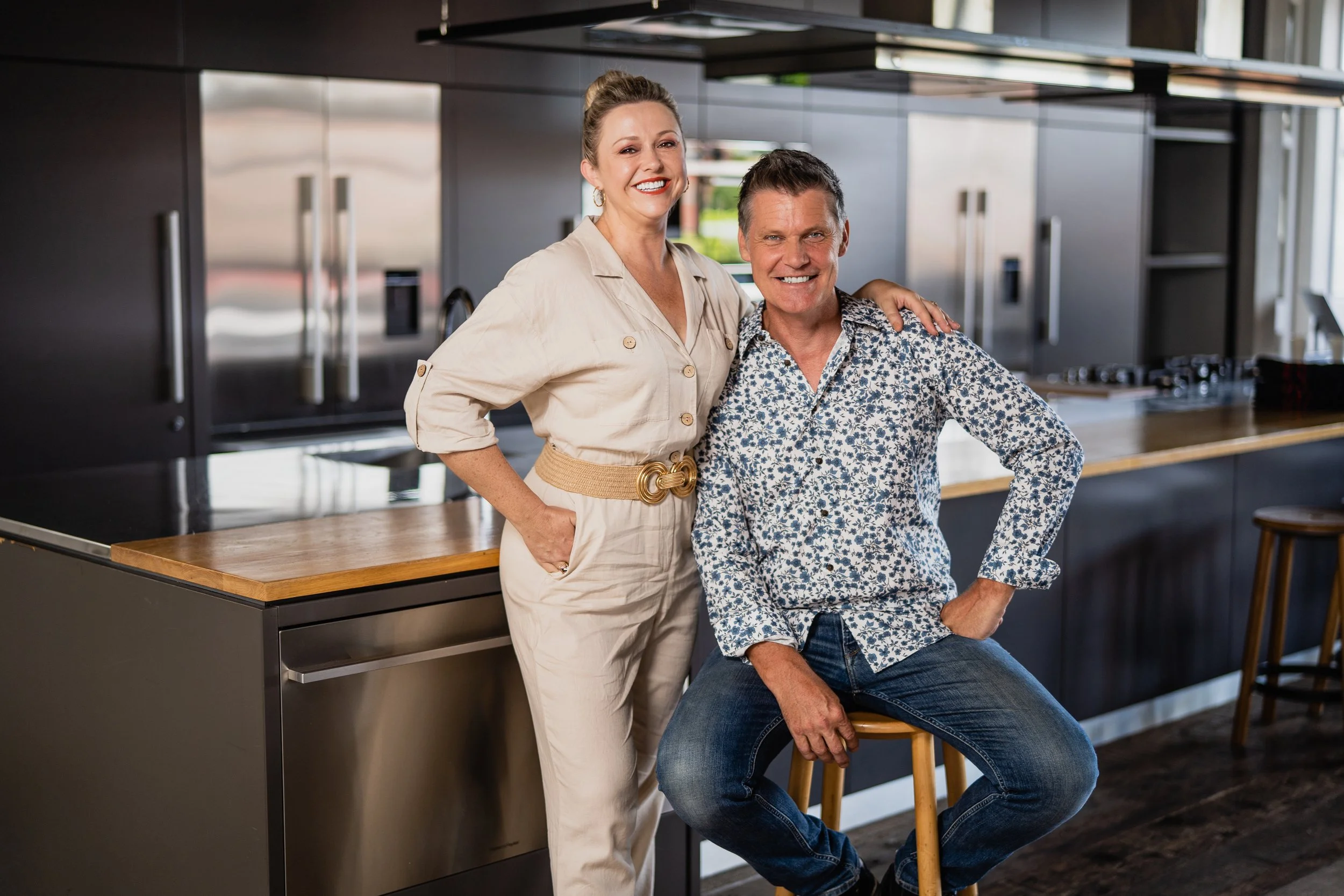
Vikki and Pascal.
There’s a surprising fact about William Shakespeare’s plays that not everybody knows.
“Shakespeare's full of really bawdy jokes,” Pascal Tibbits grins, before
wife Vikki Gorton-Tibbits adds, “It’s quite hilarious. There’s a lot of comedy interjected with the seriousness of it all. Romeo and Juliet isn’t just a tragic love story.”
The couple is behind Tauranga’s increasingly popular annual Summer Shakespeare production, which this year is putting on his most famous play, Romeo and Juliet. Pascal, who is the creative director, says that making the works of the great bard user-friendly for modern audiences is one of their primary goals.
“It’s about the theatre, community, and accessibility for everyone to come and have a good time,” Pascal says. “We make sure our actors are telling a story that anyone can watch and understand. All the themes that were relevant in Shakespeare’s day are relevant now. This is the magic of Shakespeare.”
Vikki, who is the producer, nods and says “You don’t have to be a Shakespeare buff to go to one of these shows.”
Romeo and Juliet is the seventh play that the Summer Shakespeare Tauranga Trust has put on, and sees them transport the great tragedy from the Elizabethan era into the roaring 1930s. Running from February 6 to the 16th at the Te Puna Quarry Park, the beautiful purpose-built amphitheatre is set amongst a stunning natural backdrop.
Food is another passion of the pair, who together won the reality TV cooking show My Kitchen Rules in 2023. Fittingly, they’ve put together a flavourful menu of locally sourced and produced food, wine and beer, including crowd-favourite Pork Belly Bao buns and spiced beef focaccia.
“Our vision is to create an experience where people can enjoy themselves and feel welcomed, without breaking the bank,“ says Pascal. “Tickets are reasonable, the food and wine are priced fairly. We don’t believe in taking advantage of a captive audience. It’s about making the event accessible and enjoyable for everyone.”
Of course, you’re also free to bring your picnic basket. The main thing for the pair is that people enjoy themselves.

Empowering ink
For the thousands of Kiwis facing the overwhelming effects of cancer, Stacey Peake’s cosmetic tattoo studio, nestled in the heart of Mount Maunganui, offers women the chance to reclaim their confidence in the wake of New Zealand’s leading cause of death.
For the thousands of Kiwis facing the overwhelming effects
of cancer, Stacey Peake’s cosmetic tattoo studio, nestled in the heart of Mount Maunganui, offers women the chance to reclaim their confidence in the wake of New Zealand’s leading cause of death.
words Karen Clarkson | photos Salina Galvan

Stacey Peake
As Stacey prepares for her day in her studio, Beautifully Enhanced, a welcoming, light-filled sanctuary, she reflects on her journey from running a nail bar in Te Puke straight out of high school, to her newfound passion for tattooing lips, brows and areolas. “From the start, I have always loved to help give women a sense of confidence, to feel good in their bodies,” Stacey shares.
At the age of 19, Stacey left the salon in Te Puke and headed for England, polishing her skills as a nail technician at Selfridges London and later working front-of-house at Michael Van Clarke’s award-winning hair salon.
After 16 years in the financial industry – from branch manager through to a successful career as a wealth coach for one of Australia’s leading banks – she welcomed twin boys, and chose to return to the world of beauty, training as a cosmetic tattooist and running a successful studio in the Gold Coast.
When Stacey returned to the Bay of Plenty in 2020, she was increasingly surrounded by family and friends navigating the challenges of cancer. Knowing she could make a difference to people suffering hair loss due to sickness, cancer treatments or alopecia, she started tattooing brows at a reduced price, before discovering her clients could receive a subsidy to get the service at no cost.
For many of Stacey’s clients, coming to her studio is a sensitive step in
their recovery journey. Her work is transformative, but the results go far beyond the physical, offering a renewed sense of emotional benefits to her clients. “When you lose your brows or your breasts, you lose part of your identity. It can impact your confidence, your sense of self,” she says.
Hearing more and more stories and the impacts of her brow work on her clients, inspired Stacey to gain certification to tattoo areolas for those women who have had reconstruction surgery or mastectomies due to treatment. “Working on intimate areas like the areolas is a highly delicate practice that requires a deep level of skill, combined with empathy.”

Stacey’s approach combines artistry with precision, spending up to four hours carefully recreating personalised, natural areolas. Using multiple pigments and needle techniques, she customises each tattoo to match skin tones and textures, bringing depth and realism to achieve a natural result. “Areola tattooing isn’t just about applying colour. It’s about mimicking the natural contours and textures – like Montgomery glands and constriction wrinkles – that give realism to the areola.”
One of Stacey’s most memorable experiences is with a close friend diagnosed with cancer. “We tattooed her brows right before she began treatment,” Stacey recalls. “When she started to lose her hair, she was incredibly grateful to still have her eyebrows. It was a small thing, but it meant the world to her.” Kate, another client shared, “Stacey is not just an artist; she’s a friend and a confidante. She listened to my story with such empathy, and the results were life-changing. I left with a new sense
of self, and I am forever grateful.”
With a deep understanding of the emotional and physical journey her clients are on, Stacey is acutely aware of the sensitive nature of the procedures. Before any treatment, she ensures that her clients have clearance from their oncologists and that sufficient time has passed for scars to heal. “I hope to create a safe space where my clients feel seen, valued, and supported. I spend a lot of time listening to their stories, understanding what they’re hoping to achieve. It’s a collaborative and deeply personal experience,” she explains.
Through her work, she has become an advocate for open conversations around hair loss and body image, breaking down the stigma that can come with these experiences as well as supporting cancer charities within the community, regularly donating her services for fundraising events. “For many families the work that I do is not always financially possible, so as well as the subsidies available for eyebrow tattooing, my areola tattooing services are heavily discounted. I also offer a free non-laser service for removal of radiation dot tattoos – gently lifting pigment to the surface versus pushing pigment into the skin where it can get into lymph nodes.”
For Stacey, the impacts of her work are written in the smiles, the hugs, and the renewed confidence of her clients. “Women enter the studio with feelings of vulnerability, yet leave with a renewed sense of empowerment and a reminder of their own beauty. Being able to offer a solution that helps someone feel complete again; it’s incredibly meaningful.”

Rolling with it
The first woman to represent Aotearoa on the international skateboarding scene is throwing her support behind a skateboard collection that will be part of the permanent exhibition at Tauranga Museum opening in 2028.
The first woman to represent Aotearoa on the international skateboarding scene is throwing her support behind a skateboard collection that will be part of the permanent exhibition at Tauranga Museum opening in 2028.
words DEBBIE GRIFFITHS | photos CRAIG BROWN

Georgina Matthews started skateboarding around her home in Ōtūmoetai at the age of 13. A year later, she won a national competition and then placed second at an international in Melbourne where she caught the attention of sponsors.
“I was skateboarding and travelling the world from when I was 16 until my 20s,” she says. “I got to skate against the world’s best like Elissa Steamer and I met Tony Hawk a few times. In 2006, I was ranked ninth in the world. They were fun times.”
Skateboarding fits hand in hand with the Bay’s surf culture. In fact, it was the acquisition of an iconic collection of classic Kiwi surfboards and memorabilia from Tauranga businessman Dusty Waddell, along with around 40 of his vintage skateboards, that enabled museum curator Fiona Kean to create the exhibit.
“The Waddell collection came with a skateboard made by ‘Cahoot’ which was a Mount Maunganui brand made in the 1970s. They pioneered the use of urethane wheels,” she says. “In researching the skateboard collection and also with the opening of the Destination Skatepark, one of the things that struck me is that there’s a story to tell here in Tauranga. Georgina fits so beautifully into that. She reached the top level and she grew up right here in the Bay.”
“Tauranga’s skateparks are amazing,” says Georgina, reminiscing about cheese grater ramps, splinters and rails so hot they burned. “We’ve come a long way from the old skatepark at 17th Avenue by Historic Village. It’s 100 percent easier for kids to get into. I love seeing them at parks that have entry level ramps and easy progressions.”
It’s the next generation of skateboarders who were targeted in a recent competition to ‘design a deck’. Out of more than 260 entries, Georgina picked two winners – aged 9 and 13 – who had their images put onto boards.
“The first design reminded me of how important cultural representation was for me on a global stage. My iwi is Ngāpuhi and I’m very proud to be from New Zealand. When I was competing, sometimes I’d wear a Māori band or a Tino t-shirt. I felt that this design was a beautiful reflection of our country and culture, and I loved the composition of the Tino Rangatiratanga flag, koru, and ferns contrasting. I could picture this being a cool board for a kiwi athlete in the Olympics someday. It’s what I would choose.”
Georgina loved the vibrant colours, fun characters and creative use of the whole board of the second winning design.
“I imagine that would be a really popular pick in skate stores,” she says. “We hope we’ve inspired the kids in some way – to try skateboarding or maybe graphic design,” says Fiona. “You never know what’s going to spark someone’s future passion. Museums are here to enrich our communities and to make people feel that they belong and are part of something bigger. A sense of collective place.”
“I’m very honoured and grateful to be involved in Tauranga Museum and that kids will be able to see more than what’s on YouTube,” says Georgina. “They’ll have an understanding of the history and the evolution of the sport.”
Fiona has been working with the museum collection for nearly 20 years and remains passionate and excited by it.
“We’ve got a history of Tauranga to tell from the 1400s to beyond today. Our plan is that we’re not picking a point in the past and saying ‘we’re doing up to here’; we’re creating contemporary stories so we can show local innovators, diversity and fresh stories and events.”
“It starts with talking with the community and our conversation about the new museum has been a long one,” Fiona continues. “It’s not a one-way conversation. There have been consultations and discussions over the last thirty years but over time you can see the trends coming through and the objects that support the stories we’re being told. Sometimes it’s just magic, like getting the opportunity to purchase the Waddell collection of surfboards and that it came with the wonderful bonus of the skateboards which will now allow us to tell that story as well.”
Today, 37-year-old Georgina still gets on her board and is looking forward to skating and sunbathing through the summer.
“For me skateboarding is amazing for mental health,” she says. “You’re your own boss, you don’t have to skateboard at a certain time or in a certain place. It’s an indescribably beautiful feeling of freedom. I still love it like I did when I was 13. I’ll be skating until I can’t.”

Eastern eats
Whether you’re planning a holiday in the Eastern Bay or thinking of a day trip, you’ll find a range of eateries for all tastes and some notable spots for a drink or two.
Whether you’re planning a holiday in the Eastern Bay or thinking of a day trip, you’ll find a range of eateries for all tastes and some notable spots for a drink or two.

Cigol.
Whakatāne’s CBD has come of age in recent years. The attractive and bustling town centre makes it easy to roam with a range of boutique shops and tempting eateries. With many outdoor dining options, it’s easy to soak up Whakatāne’s plentiful sunshine and admire the impressive town gardens. Veer off the main drag and you’ll also find a few hidden gems.
Mata Brewery and Tasting Room
An award-winning family-run business, Mata Brewery offers craft beers and good food. It’s also based at new Ōhope hotspot, Wharfside, over the summer. Check their website for regular live music evenings.

Volk & Co
Volk & Co coffee brew bar is the latest coffee locale in Whakatāne. It specialises in espresso, filter and cold brew coffee, with a changing selection of specialty drinks and hard-to-resist cabinet treats.
Cigol
A mouth-watering menu, including slow-cooked pork belly, stone sizzling bibimbap, Korean fried chicken, Japanese yakitori and much more. Wash it down with a good range of Korean beverages and Asahi on tap.
The Comm
The iconic and historic Commercial Hotel has returned to its former glory, with a modern twist. The Comm brings renowned Good George Co. beverages to Whakatāne, along with awesome food and top-notch service.
The Wagon
These guys know good food. The focus here is on damn good burgers washed down with an equally good brew. Great for takeaways too if you feel like an alfresco dinner overlooking the Whakatāne River as the sun sets.
Café Awa
Seriously good coffee and the best cheese scones in town. Often filled with locals who know a good thing. Sit in the sun on the balcony overlooking boats moored along the riverfront.
Gibbo’s on the Wharf
With fish straight off their boats, Gibbo’s serves the best fish and chips in town. Situated right on the wharf, this is the perfect spot for a casual dinner as the sun sets.

Café 4U
Great vibe, great service, great people, and of course, great food. The counter display here is something to behold – sweet treats and epic scones are impossible to resist. Check out the outdoor courtyard out back.

Cadera.
Ōhope
Although it can be hard to drag yourself away from the waves of New Zealand’s most-loved beach, it’s worth taking a pit-stop at Ōhope Village to enjoy the laid-back dining and shopping scene, perfectly aligned with
beach life. At Wharfside, Port Ōhope you’ll meet a similarly cruisy vibe with the best sunsets in town.
Fisherman's Wharf
It’s no exaggeration to say this is one of the best spots in the Bay. Situated right on the edge of Ōhiwa Harbour, the evening sunsets are superb. Fresh oysters regularly feature on the menu. Stop for a drink on the deck, or enjoy an entire evening with exceptional food.
Moxi Café
Super funky container fit-out and really good coffee. Always buzzing, Moxi has been loved by locals and visitors since inception.
Cadera
A social dining experience at Ōhope Beach. Serving up delicious food and seriously unmissable margaritas, it’s great for groups of any size with a super relaxed vibe, aligning seamlessly with the Ōhope way of life.
Tio Ōhiwa Oyster Farm
Enjoy harbour-to-plate oysters with a side of chips overlooking the water.

Julian’s Berry Farm.
Other notable mentions
The Smokin' Goose
This American Barbecue-style restaurant and beer garden, is just a short drive from Whakatāne CBD. This one is a local favourite!
Drift
Whoever said you can only get a good cheese roll in the South Island? You’ll find them here along with superb coffee and a warm welcome to natter away the morning’s news. Loved by Matatā locals and visitors passing through.
Berry Farms
There’s a reason there are so many berry farms in the Eastern Bay – they grow amazing berries of course! Take your pick from Julian’s Berry Farm and Café, Blueberry Corner and R n Bees.

No reservations
Reliving the spirit of their 20s, with fewer compromises and more surprises, mid-life travellers Sue Hoffart and her husband discover the beauty of making it up as they go along.
Reliving the spirit of their 20s, with fewer compromises and more surprises, mid-life travellers Sue Hoffart and her husband discover the beauty of making it up as they go along.

Reflecting on the Con River, Phong Nha.
There is no good reason to leave Tan Son Nhat International Airport the
way we do, that Wednesday morning in May. My spousal travel buddy cannot explain his urge to wave away perfectly good buses and taxis in favour of lugging our backpacks 8.5km to downtown Ho Chi Minh. After 22 hours of travel. In 38°C heat. C’mon, my normally sensible husband insists. It’ll be fun. I’m so shocked – the ill-advised ideas are usually mine – that I agree to mark the untethering of our middle-aged, middle-class lives with that long, hot walk.
When we reach our $50 a night hotel, red-faced and grimy, the sole visible employee is dumbfounded. The man has never heard of anyone walking from the airport. Ever.

Uniformed guard outside a government building in Hanoi.
Our four-hour schlep is a bewildering, exhausting, outlandishly sweaty and strangely satisfying way to acclimatise to the frenetic rhythm of Vietnam’s largest city. Crowds and wonder slow our steps. A verdant park gives way to a tangle of black power lines and concrete jungle. Our first purchase feels like a medical necessity; hydrating fresh coconut
water is urgently guzzled through a straw in an alleyway, flesh scooped from the shell with a plastic spoon.
Every road crossing is an act of faith, only slightly less terrifying each time we step into the beeping, unregulated swirl of traffic and trust drivers to veer around us. Motorbike riders wear masks against the pollution while we suck it all in, teetering on the edge of footpaths crowded with yet more motorbikes.

Breakfast fruit at Mekong Pottery Homestay in Vinh Long.
The city is also home to an ornate French Colonial opera house and a deeply sobering war museum. One street is lined with book vendors, while the vast, vibrant flower market is busiest after midnight. At another market, a woman sells dozens of kinds of edible orbs; humble brown hen’s eggs and tiny speckled eggs, preserved eggs, eggs coated in some kind of black crust and eggs wrapped in red and gold.
Saigon – the city’s official Ho Chi Minh moniker hasn’t really caught on with locals – is where we fall back in love with backpacking. Almost three decades have flown since that fat yellow Lonely Planet guide book was hauled through other corners of South East Asia on our backs. In those days, blue Aerogram letters were dispatched with stories from a prison visit in Bangkok, hitchhiking in Malaysia, island hopping to see dragons on Komodo.

Thung chai, or ‘basket boats’, beside the sea in Mui Né.
The in-between years have brought all the trappings of adulthood, from marriage, mortgages and children to appointment diaries and well-planned holidays with wheeled suitcases.
Now that our grown-up lives are on hold, needs have been pared back to overhead locker size, maximum 7kg. No itinerary, no responsibilities, no proper plans for 36 days.
It turns out independent travel has become a whole lot easier since we last attempted it, thanks largely to phones and ubiquitous Wifi. Google Maps gets us to the Hue train station without fuss, and locates the ferry to Cu Lao Cham island.

Lâm Đong Province.
In the mountain town of Da Lat, a translation app helps us discover more about our Russian-speaking hostess. The new travel card leaves old school traveller’s cheques in the dust, with its instant exchange rate calculator and access to automatic teller machines. It also links seamlessly with the same local transport app that Vietnamese city dwellers use. Meanwhile, online booking sites ensure we can always find a bed before arriving in a new town. Sometimes, we change tack and move on quickly. More often, we linger for an extra day or three, choosing a new route for exploratory morning cycle rides through surrounding streets or rice paddies, past incense-scented temples and coffee stalls. Mostly, we stay in inexpensive small hotels with pool, ensuite, bikes, buffet breakfast and beautiful service.

French Colonial architecture, Saigon.
Because this is very definitely not the “please let there be one clean sheet and no fleas” version of backpacking we knew. It feels a little like cheating, with all the joys of making-it-up-as-you-go travel, and none of the hardships. Our budget has improved but so have the roads; plenty are better than highways back home. On local buses, we meet a Filipino mother teaching English in Vietnam, and a delightful medical student from the provinces. The reclining seats and individually curtained cubicles are a far cry from terrifying rides of old, shared with chain smokers and live animals.
In other ways, nothing has changed. Thankfully, my fellow backpacker and I still journey well together and continue to find this type of travel liberating. We both strive for snippets of the language and quiz new friends about politics and religion, history and their family stories.

Bich Dong Pagoda.
At mealtimes, we turn to the street to perch on child-sized plastic stools in bustling little shacks. When language fails us, we point to whatever a neighbour is eating. Then the neighbour will show us how to fold herbs and salad leaves into a particular dish, or extract a spicy stuffed snail from its shell.
Travel tips are still traded with fellow travellers. The motorbike street food tour in Saigon is a must-do, we tell our bright young backpacker friends. Vinh Long, in the Mekong Delta, is wonderfully devoid of tourists. It’s worth rising early there, to bike 10km down a dusty road and watch the sun rise over brick kilns that look like giant terracotta beehives. Quy Nhon is far more popular with Vietnamese tourists than Westerners but it has some fascinating Kiwi links courtesy of medics who have been helping in hospitals since the Vietnamese-American war. Nha Trang, on the other hand, feels far too much like Las Vegas by the sea.
In the north, Hanoi is a heady mix of lakes and leafy boulevards, Old Quarter tradition, glitzy contemporary shopping malls and communist glory. We splash out on a restaurant meal. This one specialises in duck and the balcony is so tiny it can hold only our table for two. On our last night, an impressive downpour clears the crowded streets; monsoon season has begun and it’s time to fly home. For now, though, this place has washed away the years and made us young again.

Masterful simplicity
Perched above nature, this peaceful home showcases refined minimalism and breathtaking rural vistas.
Perched above nature, this peaceful home showcases refined minimalism and breathtaking rural vistas.
words JO FERRIS

The serenity of rural seclusion is absolute in this hidden pocket within Western Bay. Nestled at the end of a private lane, the home’s elevated position above a vast lawn makes an immediate impression. It presents the advantage of views, while the backdrop of towering trees instantly suggests prolific birdlife.
As a young home, there is ample potential to develop the grounds into playground pastimes. The owners have already planted numerous fruit trees and sown banks with wildflowers, herbs and lavender. Tiered gardens in front of the house complement its clean lines, while hinting at the style behind its vision.
Mindful of melting into nature, not dominating it, the home's designers have mastered the art of restraint. The simplicity of minimalism actually hides the intricacy behind it. It’s not easy maintaining that concept, but this home achieves it with respectful appreciation.

It begins at the formal welcome, with a massive pivot front door. The connection between outdoor elements and rooms inside – while unobtrusive – are evident throughout. The horizontal thread of larch on exterior cladding continues on feature walls inside. Full-height glazing ensures nature and views are always in sight, while recessed motorised blinds maintain the clean look of minimalism.
The heart of the home revels in sun and a country outlook. Devoid of any clutter, it adheres to the restrained philosophy with extraordinary skill. The kitchen showcases a bold dark tone of textured cabinetry, negative detail and integrated appliances, while the hidden scullery enjoys the appeal of open shelving.

Banks of stacker doors instil a seamless link with outdoor relaxation. Polished concrete flooring is finished with a salt-and-pepper tone, putting a new slant on concrete’s functional appeal and capacity to harness solar warmth. Zoned underfloor heating is there if required, however – including in all three bathrooms. The media room has the mood of a flame, with its gas-fire cosy ambience.
The owner's privacy is assured in one wing, which includes an office for work; while an ensuite guest room and remaining bedrooms offer options in the far wing. Every bathroom is fully tiled – similarly designed with dark allure and a no-fuss approach. Except the main bathroom – where the white oval bath is the star; fronting a full-height window for a garden outlook.
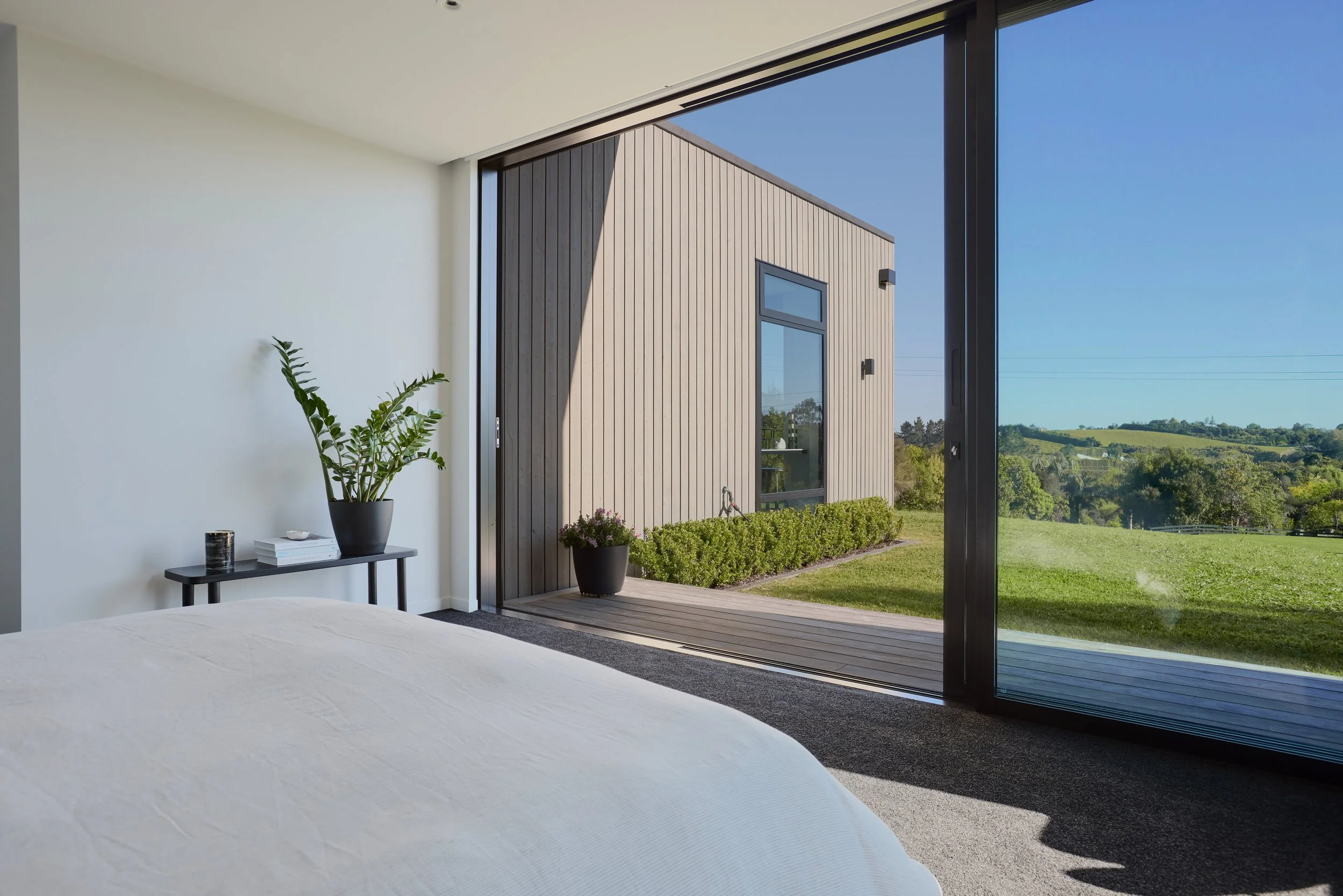
Complex simplicity underpins an extraordinary home. Its promise of privacy – at one with nature – cannot be emphasised enough.
6H Ainsworth Road, Minden

She means business
Meet some of the businesses that are part of She Is Unleashed, a local networking group where women support and mentor other women in business.
Meet some of the businesses that are part of She Is Unleashed, a local networking group where women support and mentor other women in business.

Moxi Café
Moxi Café is nestled in the heart of New Zealand's best beach – Ōhope. Serving up epic food, epic Allpress coffee and an epic vibe. A beach café that stands out from the rest, it’s the perfect all-day brunch spot in summer.

Her Tribe Travels
Curating bespoke journeys for women seeking more than just a holiday, Her Tribe Travels crafts tours that prioritise safety and foster a sense of community. These experiences allow travellers to explore the world while forging meaningful connections with like-minded women. HERTRIBETRAVELS.COM

Michelle Makeup Coach
Offering a unique makeup experience in the Bay of Plenty, this service specialises in personalised, natural makeup lessons for women over 35. Using pure-mineral, skin-nourishing products, the approach focuses on enhancing individual beauty and boosting confidence through tailored guidance.

Chelsea Waru – Mortgages
With a tailored, client focussed and stress-free approach, Chelsea Waru is your local Bay of Plenty mortgage advisor ready to simplify home ownership. She focuses on the path to home ownership – whether you’re a first-time buyer, expanding your property portfolio, or considering refinancing, tailored solutions are offered to suit your needs.

MarketHer
This innovative platform offers a comprehensive solution for women in business seeking to enhance their brand marketing skills. Combining an app and community, MarketHer provides tools and resources for growth on your own schedule, empowering entrepreneurs to elevate their brands effectively.

Something to talk about
At Sala Art Gallery, the art is an invitation to conversation and connection.
At Sala Art Gallery, the art is an invitation to conversation and connection.
words KARL PUSCHMANN
photos JAHL MARSHALL

The thinking behind Tauranga’s newest art gallery can be described as gently radical. There are no price tags or pretension on exhibits at Sala Gallery. Instead, it takes a more holistic approach where the art on display can be considered an invitation to deep thought, reflection and, most importantly, genuine connection.
“I put the gallery together as an excuse to have conversations with people,” Nigel Banks says. “Rather than a focus on showing art or a focus on selling pictures, the focus of the gallery is about having conversations with visitors about the origins of meaning in their lives. The primary purpose of the pictures is as props to support those conversations.”
Nigel is both Sala’s founder and the artist behind its inaugural exhibition We Are The Earth. This series of works meditates on the journey of life and explores larger themes of sense and self. Nigel sees the work as a conduit to conversation, either with oneself or with the artist himself, as he is often to be found nearby.
“It’s been a lifelong obsession, thinking about issues of meaning and where meaning comes from,” Nigel says. “When you touch into those moments, it’s something that feels really worthwhile. Much more so than just the standard social exchange.”
The vibe inside Sala is peaceful and meditative, which is appropriate as it’s nestled beside the popular Thai Touch massage therapy studio in Tauranga’s CBD, which Nigel opened with his wife Orasa in 2023. In fact, there’s an internal entrance to the gallery straight from Thai Touch which allows those holistic vibes, and visitors to the gallery, to flow in. It’s a welcoming space and one that takes off any pressure or intimidation that people can sometimes feel about entering a gallery.
That’s one of the most important aspects of value that I see in the philosophy that’s driving this,” Nigel explains. “Instead of going into a gallery and feeling an obligation to look into the pictures and figure out what they’re about, in this case the whole conversation is about meaning, and the pictures are there to support that conversation. You’re not looking for the meaning in the picture, the pictures are there to support the conversation about the meaning. It takes the pressure off.”

This core belief shapes every aspect of Nigel’s work and Sala, right down to the gallery’s carefully selected name.
“It’s a Thai word, chosen because it’s soft, because it’s short, it’s got a slight repetition in it, but also that it means ‘outdoor meeting room’. A sala in Thai is like a pavilion or a little shrine or temple in somebody’s garden. People go to a sala, they meet in the sala, and they'll have conversations that are important to them. This is creating a space that is dedicated to that same sort of purpose.”
While Sala only recently opened its doors, the idea for a gallery of this nature has been percolating in Nigel’s mind for 20 years, after a “transformative” experience at an exhibition by the prominent New Zealand artist Melvin ‘Pat’ Day in Wellington.
“I was totally entranced by his artworks, just amazing stuff. I spent two hours there, intimately and repeatedly engaging with every piece. It was like a mental vacuum cleaner, a little bit like meditation. Extraneous thoughts were washed away from me. When you’ve got art, you’ve got an obvious thing to focus on. By the time you’ve done that for a couple of hours you are left in this blissful state of being totally at peace and at one with the pictures. I was interested in whether this might happen for other people.”
It was his piece ‘Billboard’ that inspired him to make this longheld dream an “audacious” reality. Fittingly, ‘Billboard’ is Sala’s centerpiece. It abstractly depicts the journey of life, the search for meaning and what you leave behind. While working on it he vowed that when finished he’d have a place to hang it. Over the 18 months it took to create ‘Billboard’, he worked on having Sala ready to open.
“When I put this up it felt like a monumental shift inside me,” he says. “It’s like a perfect life opened out in front of me because I get to have these conversations on a semi-professional basis. Having conversations with people about the stuff that is actually really important to everybody, but most of the time we don't talk about, is a really amazing thing to me. Just casually with people who have stopped by, I’ve had amazing conversations about people’s lives and it’s just really, really neat.”
Then the artist smiles and says, “In Sala’s case I’m thinking beyond anybody’s requirement. I don’t think anybody needs this. But I’m hoping that some people will really enjoy it.”

Head-long, head strong
Rotorua downhill mountain biking star Lachie Stevens-McNab is representing both his town and his nation on the world stage, carrying with him a whole lot of local knowledge, skill and support.
Rotorua downhill mountain biking star Lachie Stevens-McNab is representing both his town and his nation on the world stage, carrying with him a whole lot of local knowledge, skill and support.
WORDS + PHOTOS Jamie Troughton

Earlier this year, Lachie Stevens-McNab finished 32nd in the elite downhill semifinals of the UCI Mountain Bike World Series in Italy. He was just 0.614secs from making the final. That’s not the impressive part. Set in the Italian Alps, the Val di Sole track is known as the ‘Black Snake’; they say there’s venom waiting on every fang-like rock that racers have to bounce over. It’s one of the hardest courses on the circuit, with riders reaching 65km/h as they drop 550m in altitude over the 2.1km distance.
Let’s set the scene a little more. Not only were the rocks lethal-sharp, they were also slippery thanks to a misty rain, ready to send the slightest mistaken line straight into the trunk of one of the most densely-packed pines lining the trail. At this level and at these speeds, the margin between triumph and abject disaster is infinitesimal. This round would eventually see 14 of the world’s best 160 riders fail to even finish.
Hang on – there’s more. Going into this season, the Union-sponsored rider had spent the best part of 18 months either injured or recovering. His 20-year-old frame was aching; he broke his back in 2022, while a lingering ankle injury suffered last year means he still struggles to run. Although he’d qualified 10th after the first run, in a small, dark corner of his brain is always the thought: ‘what if it all goes wrong?’.
And the punchline? Lachie Stevens-McNab completed all but the first 30-odd seconds of his 3mins 57.713secs semifinal run with no back brakes. He smashed his rear disc rotor just after the start, heading through the Trentino Rocks section, sending the pistons awry.

Anyone with even the slightest concept of physics should stop and think that through for a second. Most of us have been over the handle bars at least once in our lives but avoiding that fate, racing down a hazard-strewn mountain, making hundreds of split-second survival decisions, almost defies comprehension.
“To not have a back brake was so gnarly,” Lachie laconically muses. “I didn’t crash and got to the bottom but that was probably the hardest run I’ve ever done and there were definitely bits I should’ve stopped. It was so scary but I just kept going and tried to finish it.”
The Rotorua star has had much better results – a week earlier, he broke through for his first World Cup podium at the Austrian round in Salzburgerland, finishing third. A week before that, he was fastest on course in Poland, only to crash in his final run. And, as this edition went to press, the young tyro had just picked up his best elite world championship result in Andorra, the leading Kiwi in 16th spot.
But if we’re judged by our hardest battles rather than our finest, then his astonishing, headlong descent down a hill in the Dolomites is particularly revealing; the competitiveness, the desire, the unreasonable skill and the tenacity to keep going.
Those that have known the two-wheeled tyro for any length of time will just nod, sagely.

The eldest of three intrepid boys and the son of two dedicated parents, Lachie is, possibly above all, the product of an extraordinary environment. Halfway through his third year, there was the blonde tearaway caked in mud and diving into a soggy puddle at the bottom of the Skyline gondola in Rotorua, while the 2006 UCI World Mountain Biking Championships raged around him.
If ever there was an infusion of environment into character, this was it, as the sleepy geothermal town transformed into a genuine global mountain biking mecca.
So many things have shaped Rotorua into such an influential place for a young rider, starting with the volcanic, pumice-ridden terrain – they call it ‘aero-dirt’ – which drains rain so quickly and makes riding year-round so feasible. There are the sweeping hills funnelling into the town basin and, crucially, continued access granted by the iwi-owned forestry operation.
And then there’s the community. “We’ve been a real mountain bike town for a number of years, where most cars have a bike rack on the back or they’re utes with a pad over the tailgate,” long-time MTB enthusiast Dave Donaldson explains. “It's not down to any one individual – more a community that’s been inspired by the mountain biking lifestyle we’re lucky to enjoy – and it just gives me a warm feeling.”
The 73-year-old is a former president of the Rotorua Mountain Bike Club, a former policeman and former deputy mayor of Rotorua. With prodigious support from an enthusiastic committee and especially his wife Shreeve, he was a key figure in getting the world championships to Rotorua all those years ago.
“I’ve no doubt that event inspired a bunch of young locals, and Lachie
joins a long list of home-grown ambassadors for the sport here.” He points to current Rotorua-grown stars Tuhoto-Ariki Pene and Jenna Hastings, the likes of Louis Hamilton who, as an 11-year-old, was the ‘sweeper’ at the 2006 Worlds, and Tauranga-based former stars Jon Hume and Vanessa Quin.

BMX beginnings
Pretty soon after his 2006 mud exploits, Stevens-McNab was off on two wheels. Dad Steve – a veteran of the rafting and adventure sports industry – also loved a bit of motocross and as soon as his eldest ditched training wheels, he was fitted out on a 50cc Peewee motorbike.
Coming back from a ride one day, the inseparable pair passed the Rotorua BMX club track and young Lachie was entranced. Soon, he was spending every available hour there.
Even sooner, his desire to win came shining through. By six, he was a BMX world champion. By 11, he’d won three world titles and three runner-ups. Younger brothers Wyatt and Stirling followed him into the sport and Lachie became great mates with Rico Bearman, who has just competed in BMX at the Paris Olympics.
“Every day after school, he’d be asking to go to the track or the forest and I used to have to say no, just to give him a rest from his bike. It was just mad,” mum Kylee Stevens recalls. “He and Rico really pushed each other growing up, and it was awesome. BMX was amazing family time – every weekend, we’d be going somewhere different to ride and Lachie just loved it.”

Sporting DNA
Kylee has a decent sporting pedigree of her own. She spent 12 years in the White Sox, New Zealand women’s softball team, and her father was a tough-as-teak policeman – at one stage serving with Dave Donaldson – and 42-game provincial rugby flanker for Wellington.
From an early age, Kylee and Steve could see that their eldest son was built a little different. “We kept him busy because he was always so active. And he’s always been quite calculating, from a young age. He wasn’t fearless but he would quickly work out if he could do something or not.”
BMX fulfilled the racing urge for Lachie but eventually – inevitably – the Whakarewarewa Forest would come calling. “We went to my last world champs for BMX and the year after that was going to be in Columbia. I was beginning to understand how much money my parents were spending and I wasn’t sure I wanted them to keep spending if I wasn’t really into it. I got my first mountain bike when I was 13 and did my first race soon after and I just started riding more and more in the forest.”
He first conquered Taniwha – Rotorua’s iconic national downhill trail – as an 11-year-old and by his mid-teens, he’d morphed from a wide-eyed enthusiast to a fully-fledged competitor. He rode in the Oceania champs in 2019, won his first national title in 2020 (under-17) and added his first open national crown this year, as well as his first Crankworx Rotorua downhill title.
“I remember thinking, when I was racing juniors and was 10 seconds off the elite times, 'how on earth could I go 10 seconds faster?’ and all of a sudden, this year, I’m hitting those times.”

Riding the talent wave
One of his early heroes is now a friendly rival on the world stage. Brook Macdonald has been one of New Zealand’s finest downhillers in the past two decades, winning the 2009 junior world title in Canberra and accumulating World Cup podium finishes ever since.
“It’s been a long time since we have had such a wave of good riders come out of New Zealand but it seems like we’ve got more depth than ever, with riders like Lachie, who has had a breakout season and found form with consistent results and a podium along the way,” 32-year-old Brook says. “Kids are starting from such a young age and developing skills so quickly, and we have so much in the way of bike parks and facilities, which puts them in a spot of endless opportunity.”
The key to success, the veteran explains, is consistency – getting everything dialled coming into a season, with comprehensive testing and plenty of miles under the belt.
And that means staying injury-free, which in downhill racing is nigh impossible. Lachie estimates he’s broken more than 40 bones in his body over his racing career, mostly in his arms and wrists, though twin vertebra fractures in 2022 at the world championships in France highlighted how serious the sport can be.
“I hate watching,” his mum confesses. “I just feel sick until they’re down safe. There are huge consequences, going so fast down such a steep gradient, with so many trees, roots and rocks. Injuries are going to happen and you just hope they’re not going to be life-changing.”
That’s certainly influenced how Lachie rides these days. “I don’t try and throw the biggest whips on jumps these days – it’s not worth it – and the biggest thing is that when I’m playing these days, I’m not playing too hard. I’m not going to stop having fun on my bike but I don’t want to be having dumb crashes.”
It’s a level-headed approach from a 20-year-old but somewhat appropriate from one who can sense a big future. “I realised the opportunity I had a couple of years ago and I don’t want to throw that away. I try to make sure I’ve done the work and make sure there’s nothing I haven’t done. There is so much shit you can’t control but as long as I’ve done everything I can, what happens, happens.”