
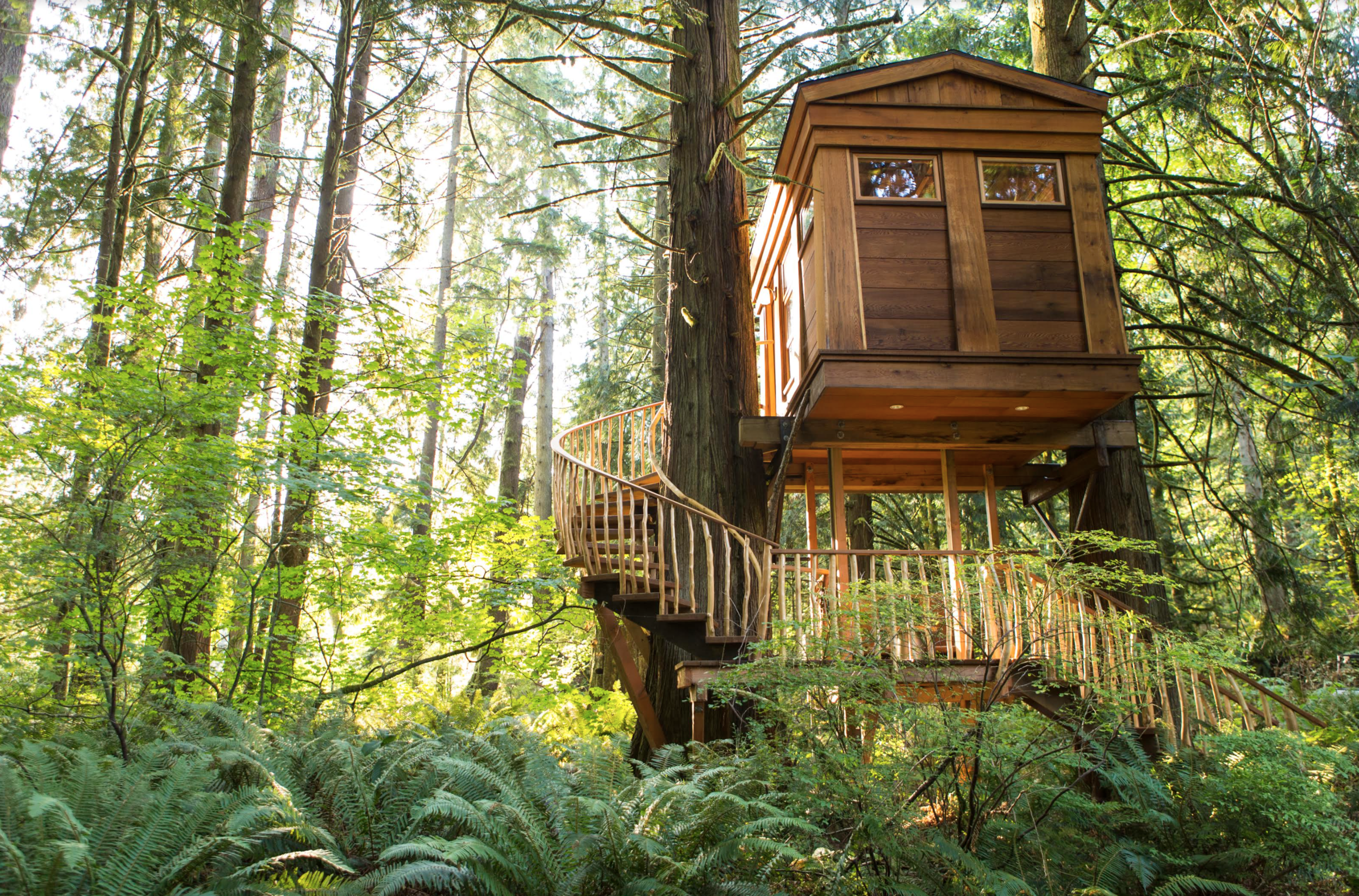
Booking.com reveals how the ‘pandemic effect’ could finally tip sustainable travel intent for Kiwis into impactful action
New research from Booking.com suggests that the pandemic has been the tipping point for travellers to finally commit to their own sustainable journey, with 68% of Kiwi travellers believing we have to act now to save the planet for future generations.

Booking.com reveals how the ‘pandemic effect’ could finally tip sustainable travel intent for Kiwis into impactful action.
New research from Booking.com suggests that the pandemic has been the tipping point for travellers to finally commit to their own sustainable journey, with 68% of Kiwi travellers believing we have to act now to save the planet for future generations.
Booking.com’s 2021 Sustainable Travel Report reveals that more than three quarters (77%) of Kiwi travellers think sustainable travel is a vital part of achieving this, with two thirds (61%) stating that the pandemic has influenced them to want to travel more sustainably. The timing of the report makes the findings even more poignant, as the travel industry looks to rebuild amidst the ongoing pandemic, says Todd Lacey, Area Manager of Booking.com New Zealand.
“Our research uncovers how the travel hiatus has opened New Zealanders’ eyes to the impact, both positive and negative, that their trips can have on local ecosystems and communities around the world,” says Lacey. “At Booking.com we believe travel is a force for good, but it has to be done in the right way to ensure we are protecting the planet for future generations.”
Lowering our footprint
Kiwi travellers shared a variety of steps they plan to take to leave less of a footprint on the world as they explore it including’ 80% wanting to reduce general waste, 79% wanting to reduce their energy consumption and 75% wanting to use more environmentally friendly modes of transport such as walking, cycling or public transport over taxis or rental cars.
Fortunately, it’s not just good intentions. Many of these sustainable pledges are coming to fruition, with travellers revealing that while on holiday in the past 12 months, 40% made a conscious decision to turn off their air conditioning/heater in their accommodation when they weren’t there, 53% took their own reusable water bottle, rather than buying bottled water, and 38% did activities to support the local community.
Yet Kiwi travellers feel their own efforts may be hindered when on holiday with over half (58%) admitting they get annoyed if their accommodation stops them from being sustainable. Further, despite 81% of travellers pledging to seek out accommodation that has reputable third-party sustainability accreditation, barriers still remain with 49% of travellers believing there simply still aren’t enough sustainable travel options available in 2021.
But it may be more a lack of communication than a lack of action: 3 out of 4** Booking.com accommodation partners say they have implemented sustainable steps at their property, but only one-third (31%**) actively communicate their efforts to potential guests, with this mostly happening at the time of check-in (59%**). With half of Kiwi travellers still believing ample sustainable travel options are not available, this suggests that significant change is needed to make sustainability information accessible at earlier stages of the booking process.
Closing the gap, step by step
Booking.com believes they have an important responsibility to make sustainable choices easier, both for accommodation providers and travellers. That’s why the company is currently rolling out a program for properties that will support them in taking the next steps to become more sustainable. This includes sharing guidance, insights and best practices with properties via various educational opportunities, including handbooks and dedicated content, all available via the Booking.com Partner Hub.
In connection, Booking.com is currently displaying over 30 certifications officially approved by the Global Sustainable Tourism Council (GSTC), Green Tourism and the EU Ecolabel, as well as multiple hotel chain sustainability programs.
Booking.com is also encouraging its accommodation partners to update their sustainability information, which includes 32 practices across five key categories: waste, energy and greenhouse gases, water, supporting local communities and protecting nature.
“As a leader in travel, at Booking.com we believe we have an important responsibility to make sustainable choices easier, both for accommodation providers and travellers. While there is much, much more to be done, we are optimistic about the passion and commitment we are seeing from all sides,” says Lacey.
To download Booking.com’s full 2021 Sustainable Travel Report, click here.

Just keep swimming: a love affair with year-round outdoor dips
The Bay of Plenty could have been called “Bay of Plentiful Waters” – with hundreds of streams cascading down off its ranges, deep rivers delivering the streams to numerous wetlands and estuaries, and then all of that fresh water flowing into the sea.

WORDS Annette Lees PHOTOS Supplied
The Bay of Plenty could have been called “Bay of Plentiful Waters” – with hundreds of streams cascading down off its ranges, deep rivers delivering the streams to numerous wetlands and estuaries, and then all of that fresh water flowing into the sea.
It’s a watery place, and so it’s a swimmy place. Every little neighbourhood here has its outdoor swim – a fizzing plunge pool in the local creek, a rope swing out across the river hole, a place to float in the warm estuary water and, of course, the coast with its surf and rock pools.
From the very first, outdoor swimming has defined the Bay. The first swimmer in Tauranga may have been Taurikura, a puhi of Ngāti Ranginui. Taurikura was from a village called Kahakaharoa in the Omanawa Falls area. She was shamed for refusing to fetch water for her grandfather, so she slipped away from her village one night, changed into a ngārara (a reptile-like being), and dived into the river. On that swim, she carved a new course for the river, in the process naming some of our favourite swimming places, until she reached the sea.
I grew up in Whakatāne. My childhood, like that of almost every other kid I knew, revolved around our swimming places. I swam everywhere I could, building layers of water memories and a strong sense of place and home – a “water-biography”. It wasn’t until my own kids became teenagers that my habit to jump into any water at my feet started to fade. And then came a fateful summer when I dipped into wild freshwater only once or twice.
I shocked myself. I had never wanted to be that dry adult who stood on the bank or the beach, lazily watching the kids have all the fun. So I made a resolution to swim every day the coming summer to break the spell and return me to the delight of immersing myself in the wild.
That year, I did swim every day of summer. I loved it so much that I carried on, swimming every day all through autumn and into the winter and then through spring. 365 days that had a mini-holiday inserted into them every time I jumped in.
I swam wherever I found myself that day, so I frequently entered unknown waterscapes. I approached strangers to ask where they swam and, through this, a nationwide network of very local swims opened up to me. I met people everywhere taking a dip in all kinds of weather, all through the year, and collected swimming stories from all over the country.
As I collated those stories into a book, I had the sense of a great swell of serious passion for water and swimming by New Zealanders that goes back hundreds of years.
I found 100-year-old stories from childhoods spent in the creeks of the western Bay of Plenty. In one, a memory from the 1920s, local kids filled coal sacks with stones to dam the Waitete Stream near Waihi. Each swimming hole had its own name and if you helped dam it, you were a member of that place for the summer and could swim there whenever you wanted. Winter storms washed the whole thing away, but no one minded the fun and watery job to rebuild it the following summer.
Mount Maunganui, of course, has a long history of happiness in the water. One memory from the 1920s featured the use of the ironing board to catch the waves.
Water-biographies are still being built all over the Bay of Plenty. Any beach, any river hole you were at this summer, you would’ve seen kids in the water. And with Tauranga’s recent investment in the Tidal Steps, you’re invited to step into the water any old time you’re in town.
The Tidal Steps is an officially sanctioned bombing place where kids can practice the old leaps - the Pin, the Gorilla, the Coffin Bomb, the Knee Bomb, the Angel, and the more traditional Cannonball. In recent years, we have the Manu, a bomb simulating a bird taking flight. A good Manu bomber enters the water in a perfect V, with legs and arms straight up and the tailbone entering the water first. Advanced is to hold a rugby or volley ball between your legs as you pop the Manu, sending the ball tens of metres into the air when you hit the water.
Bombing is a competitive sport now, with its own town and national tournaments. In 2017, Tauranga had its first official bomb competition at the newly opened Tidal Steps. More than 30 bombers fought it out that year for the Best Bomber title, and the numbers of people entering these competitions grows annually. There’s even an “old people’s” category for those over 45.
Don’t let the arrival of winter put you off a dip. This season can provide us with some of our best swimming. Winter swimming has a seriousness about it. In my year of swimming, I found it did take a little more dedication to out in the cold, rain and gales. The sun is slow to rise and early to descend in winter, so I would sometimes have to swim in the dark to keep my pledge, but there is an added deliciousness about night time swimming.
Founder of that New Zealand icon the Plunket Society, Dr Truby King placed cold-water swimming among his top six essentials for health. The others were fruit, raw vegetables, coarse bread, water-drinking and vigorous towelling-down.
It is true that swimming in very cold water is one of life’s great experiences. A glorious shock awakens the entire body. You are made instantaneously present and aware. You have a vivid sensation of inner cleansing, revitalising and freshening. All of your senses are sharpened by peril, so that light appears crisper, your sense of touch precise, your tastebuds bright and the scent of coldness concentrated.
When you emerge, the blood returns to your skin in a visible fizz of pink health. You are burning from head to foot, and you are likely to be laughing. The coolness, freshness and sparkle will stay with you for many hours, leaving you with a bountiful sense of wellbeing and joy. You will be kinder to your family and more generous to your workmates. You feel calm. You feel assured that the day will be exactly the right length to achieve what needs to be done. Well, that’s how it feels, anyway. I bet you swam in cold water as a kid. Try it again. Nothing’s changed.
There are actually proven health benefits to cold-water swimming. People suffering from pain or allergies (rheumatism, fibromyalgia and asthma) describe how their symptoms are eased by winter swimming, perhaps because of the sudden burst of neuroendocrines which act as natural painkillers and anti-inflammatories. Swimming regularly in winter significantly reduces tension, fatigue, and negative memory and mood states.
You could, of course, just have a cold bath, but then you miss out on all the loveliness of wild water. Open wild water adds to each swim special qualities of sunlight slanting through the lake or sea, watery views of the natural world, full immersion in the temperature of the season, and a taste of the water’s origin. Water has 600 times the resistance of air, so it is an effort to swim through it. At the same time, it holds us up, allowing us to discover its multiple dimensions – sideways, down and back up again. We get to explore as if we’re flying. We feel weightless and freed: A 70-kilogram adult weighs only 3.5kg in water.

Only outdoor swimming has bright light shafting through the water. The pools of watery darkness as clouds pass overhead. The wind and waves. The sense of risk and wildness and freedom. Unknown things rising up out of murky water. A feeling of falling when the water below is so deep and clear you can see fathoms. Disorientation without painted lines on the bottom. Not being able to stand, just in case you need to. The cold. The underside of paddling ducks, the flicking swish of a fish, the silence, the wobbling horizon, the distant mountain, the reflection of clouds, the fresh silkiness of wild water on your skin, the ripples and coins of light on the water surface, the rocking of the waves and currents, the watery blue. Fear and joy all mixed up. The wild blue yonder right here in the Bay of Plenty.
Swim: A Year of Swimming Outdoors in New Zealand, by Annette Lees (Potton & Burton $39.99). Available from pottonandburton.co.nz and booksaplenty.co.nz

VPT Health Club: Omokoroa’s gym for everyone
Omokoroa’s gym for everyday people, VPT welcomes folks from all walks of life.

UNO: So, what’s your gym great at?
VANCE ELLIOTT (owner): We’re great at being accepting and encouraging of our members, and we work hard to make all of our clients feel comfortable to be in our space. We make sure we know as much as possible about why they came to us, so we can best help them to reach their goals. We really try to cater to everyone and believe listening to client feedback is key to being a quality gym. Why do people come to you? Because we’re not just an equipment-based gym. At VPT, we’re about creating lifestyles and encouraging positive habits. What kind of classes do you run? Our gym boasts a massive number of classes for our size – currently 25-plus, all included in our membership fees. They range from beginner to advanced circuit training, box-fit, Pilates, Body Balance, yoga, and Pound with Aotearoa’s only New Zealand-certified instructor. We’re also lucky to have an incredible karate teacher, who’s a New Zealand champ – he works with us to run after-school sessions for local kids, so kids can do karate while their parents work out.
UNO: What other services do you offer?
V: We run seminars and supermarket tours that allow us to educate our clients about healthy living, mental health, injury prevention, rehabilitation, exercise techniques, how to read food labels and more. How do we book? When they sign up or start a trial, each member gets access to our app that lets them book classes, personal training sessions, seminars and events. It also allows them to add and track their health and fitness goals, add and edit measurements with photos, view any workouts we’ve uploaded for them, message us, view their membership details and update personal information. What are you most proud of at your gym? We’re really proud of what we offer our clients in our great little community. For the dream we have, we might be starting small, but we’ve been all about quality from the get-go. What are your top tips for getting healthy and fit for summer? Surround yourself with people who will support your goals, be consistent – and join VPT Health Club!

MEET THE OWNER
Meet the owner Vance Elliott Vance started VPT as a small personal-training business in Hamilton, with a dream to one day run his own gym – a dream that has now come true with VPT Health Club. Committed to creating healthier lifestyles in the community, and specialising in rehabilitation, weight loss and habit-changing, he has a bachelor’s degree in Sports and Exercise Science, along with training in injury prevention, rehabilitation, sports training, and pre- and post-natal exercise.
VPTHEALTHCLUB.CO.NZ
168 OMOKOROA ROAD
OMOKOROA, TAURANGA
027 333 1465

Autumn beauty special: our local experts share their top treatments for the season
Is your skin showing signs of a summer – indeed a life – well-lived? Or perhaps you’re considering more advanced physical improvements? Undo any damage and up your game with advice from the foremost local experts.
Is your skin showing signs of a summer – indeed a life – well-lived? Or perhaps you’re considering more advanced physical improvements? Undo any damage and up your game with advice from the foremost local experts.
Our panel includes appearance medicine specialist Kate Schuler of Tauranga’s Fraser Clinic; Cindy Hooker and Tasmin Crocker, owner and manager respectively of Papamoa’s Reveal Skin & Body; Katie Mead, owner of Bayfair’s Cosmetic Clinic; and cosmetic and reconstructive plastic surgeons Brandon Adams and Adam Bialostocki of Tauranga’s Da Vinci Clinic.
KATE SCHULER - FRASER CLINIC

Appearance medicine specialist Kate is also an intensive care nurse.
UNO: What can we do to look and feel our best in the cooler months?
Kate: As the seasons change, so can your skin and the care it needs, so autumn is a great time to introduce treatments to revitalise it. Whatever your summer experience, your skin will probably need some help to recover from the harsh effects of lazy days in the sun, whether that’s repairing dehydrated skin or combating summer pigmentation – a big issue for New Zealanders.
U: What do you advise to combat pigmentation?
K: One of the best ways to reset your skin is with IPL light therapy or laser resurfacing. They’re excellent for pigmentation as they give an overall improvement in tone and texture, and set you up for ongoing improvement with the use of good medical-grade cosmeceutical skincare at home. No treatment is a standalone panacea. You need to support anything we do in the clinic with the effort you put in at home.
U: And how about hydration?
K: We can apply topicals to the surface of the skin, but nothing’s better than delivering it right where we’re targeting, altering the dose and depth to personalise the treatment and give your skin the wake-up call it needs. Our V2 Beauty Booster is a micro-injectable cocktail of antioxidants, amino acids, vitamins and hyaluronic acid that helps to recover a healthy glow by increasing skin elasticity, thickness and hydration. It combines the benefits of skin needling – stimulating collagen, elastin and fibroblasts – while delivering a Dermo-Restructuring complex for repair, rejuvenation and retexturising. Best results are achieved with a series of three treatments, with the results continuing to improve up to 12 weeks afterwards.
U: And what about trouble spots other than the face?
K: Two notoriously difficult areas to rejuvenate are the neck and hands, which tend to show telltale signs of ageing. The skin on the neck thins and takes on a more crepey appearance, often accompanied by horizontal lines, while changes in skin texture – including thinning, a decrease in elasticity and surface pigmentation, coupled with pronounced veins, tendons and a bony appearance – affect the appearance of our hands. Our bio-stimulating injectables coupled with light therapy are great not only for the face, but also for these areas, plumping up the skin to make it stronger, healthier and clearer, and delivering longer-lasting results.

CINDY HOOKER & TASMIN CROCKER - REVEAL SKIN & BODY
This clinic’s philosophy is to provide clients with affordable, accessible and effective treatments. At this Papamoa sanctuary, clients are encouraged to celebrate themselves.
UNO: Are we ever too young to consider advanced skincare?
Tasmin: Our natural production of collagen starts to slow at around 26 – fine lines start to appear around your eyes, and you might notice a slight change in skin tone and firmness. Coming off birth control and having babies can also result in pesky blemishes and hormonal pigmentation. All this means maintaining a good skincare regime at home is vital. Everyone needs a good cleanser, moisturiser and SPF; think of these products as your baseline. Serums and advanced treatments are your ‘vitamins’ or ‘protein powders’ that’ll give your skin an extra boost.
Cindy: Great skin is all about starting early. Regular facials can help you maintain youthful, glowing skin, while SPF reduces pigmentation down the track. Your twenties and thirties are also the time to start ‘collagen banking’; if you use vitamin A when you’re younger, your skin will retain collagen for longer.
What do we start to see in our forties and fifties?
Tasmin: The effects of sun damage becomes more apparent. Our skin becomes drier and more fragile, and we wave goodbye to more collagen. But the good news? Advanced treatments such as Dermaneedling, also known as collagen induction therapy, can help wind back the clock. Dermaneedling is great for everything – it breaks up pigment, strengthens the skin and produces new collagen. Reveal’s A-Zyme Skin Workout is one of our most popular treatments, and for good reason – it really is the powerhouse of all anti-ageing treatments. It’s essentially a powerful burst of vitamin A that plumps out fine lines and wrinkles, and leaves you with hydrated, younger-looking skin.
How do we continue to age well in our sixties and beyond?
Cindy: As we enter our sixties, our skin loses moisture and elasticity. Advanced treatments like IPL photorejuvenation, which uses light to stimulate cell renewal, help to keep skin firm and vibrant, while at-home serums are great for plumping and hydrating.
SERIOUS SERUMS at Reveal Skin & Body
Ultraceuticals Ultra A, Skin Perfecting Serum This vitamin-A-containing power serum plumps the skin to improve the appearance of wrinkles while stimulating collagen. It’s ideal for every skin type.
Ultraceuticals Ultra B Hydrating Serum B vitamins help with cell-to-cell communication, so daily use of this serum will strengthen your skin, and it’s packed with hydrating hyaluronic acid, which holds a thousand times its weight in water.
Ultraceuticals Ultra C10+ Firming Serum This serum dulls pigment and tones the skin to give your complexion a natural glow and all-round boost. For better protection, use it in the morning under your SPF.
KATIE MEAD - THE COSMETIC CLINIC
This clinic’s philosophy is to provide clients with affordable, accessible and effective treatments.
UNO: What do you recommend for dry post-summer skin?
Katie: Say hello to HydraFiller, the treatment that’s taking hydration to the next level. Designed to improve the quality of your skin from the inside out, it’s a minimally invasive cosmetic injectable treatment now available at The Cosmetic Clinic six days a week. We believe everyone deserves to be the best version of themselves every day, so that’s why we’re super excited about this new treatment. Combine it with a great daily skin routine and a personalised skincare plan from one of our expert clinicians and your skin will thank you.
UNO: So what does HydraFiller entail?
K: As we age, our skin loses vital molecules involved in hydration, which can lead to dry, crepey and dull skin, fine lines and wrinkles. HydraFiller is a next-generation dermal filler that addresses these concerns by providing your skin with around-the- clock moisture from the inside out. Unlike regular dermal filler, HydraFiller isn’t used to add volume, but to help increase and retain moisture in the skin through a unique cross-linking of the key ingredient, hyaluronic acid, a substance that occurs naturally in our bodies. Administered through a series of micro-injections by our expert cosmetic injectors, it helps to restore and increase dermal hydration and tissue elasticity, and decrease wrinkle formation, fine lines, acne scarring and unevenness for fresher, glowing skin.
What areas can be treated, and how long does it last?
K: HydraFiller can be used to treat the face, neck, décolletage and hands. It can help improve overall skin quality for up to nine months with just one treatment per area.
Does it hurt?
K: Similar to any dermal filler, there can be a slight stinging or discomfort at the site of the injection, but HydraFiller contains an anaesthetic that can help alleviate that during the treatment. Clients can also receive numbing cream to take home with them.
UNO: What other after-care do you advise?
K: Our hydrating Balense Quench Pack is a four-step process – cleanse, activate, hydrate and protect – that’s great for those with dry, tired or ageing skin. We recommend using it as ongoing support after your HydraFiller treatment, to help your skin stay hydrated and radiant. We also offer micro-needling treatments that support what HydraFiller does and can help with pigmentation, overall skin tone, fine lines and scarring.

BRANDON ADAMS - DA VINCI CLINIC
Brandon also works as a consultant plastic and reconstructive surgeon at Waikato DHB and a visiting plastic surgeon at Tauranga Hospital.
UNO: Where should someone start if they want to take their new-season refresh to the next level with cosmetic surgery?
Brandon: When it comes to ‘updating’ the face, we’re not searching for a whole new look – we’re wanting to achieve natural-looking results. Achieving this means utilising techniques that incorporate the fat and sheaths of tissue underneath the skin too. Rather than just ‘pulling back’ and ‘cutting away’ skin, we aim to lift and reposition the underlying muscles. This involves using stitches to tighten the connective tissue enveloping the muscles of the midface and neck, or alternatively, the underside of the muscles – a deep-plane facelift. This is where the expertise and experience of your surgeon come into play. Evaluation of a patient’s anatomy – where their skin is pre-surgery – is important for long-term success. We assess how much volume loss your face has, the damage your skin has sustained and the type of asymmetries your face shows, and we’ll also discuss additional volume-loss solutions as part of your surgery, which might include dermal fillers or fat transfer.
UNO: What do you advise for the neck and jowls?
B: For lower facial jowling or a sagging neck, non-surgical injectables such as fillers or Botox may not be the answer. A facelift – or rhytidectomy – corrects sagging facial skin to restore harmony, bringing back the jawline and re-establishing fullness in the cheeks. The chin is also a difficult area to treat, so a lift combined with Belkyra injections, which permanently dissolve fat, can effectively target this area, harmonising and restoring definition.
UNO: Is there an ideal age at which to consider surgical intervention?
B: Many women and men undergo their first facelift in their fifties and beyond, however the skin’s elasticity begins to steadily break down from the early forties onwards, so for some, undergoing a facelift earlier means there’s greater elasticity for better long- term results. Ultimately, there is no ‘best’ age to have a surgical lift, so seeking the expertise of an experienced surgeon who’s able to spot and manage asymmetries, and accurately assesses volume and loss, is essential for the best outcome.
ADAM BIALOSTOCKI - DA VINCI CLINIC
Adam works as a surgeon at Tauranga’s Grace Hospital too.
UNO: What should people keep in mind when considering making improvements to their body through cosmetic and reconstructive surgery?
Adam: Beyond social media inspiration, taking an individual approach to any procedure – breast implants, reconstruction, abdominoplasty – is essential for best practice and greater peace of mind. Placing yourself in the hands of a qualified surgeon with the right experience and advice means you’ll stay truly connected to your body’s journey from beginning to end – and those results will hit all the right notes.
UNO: Let’s talk about breasts...
A: Whether you’re seeking greater breast volume, or a lift or reconstruction, various factors influence breast decisions. If it’s a volume issue – after weight loss or pregnancy, for example – an implant can restore fullness and shape, and when combined with a lift, it can correct lax tissue. If the nipples have rotated downward or become larger, opting for a mastopexy to raise breast tissue and reposition the nipple is a good option. For women with asymmetrical or small breasts, an implant, a lift or both can restore. Breast reconstruction is driven by personal preference, wellness, and short- and long-term expectations. It’s also a procedure that can be delayed, with surgery carried out months, even years, following breast cancer recovery. The two main procedures available to Kiwi women are breast implant reconstruction and breast flap reconstruction. Breast implant reconstruction involves inserting an implant under the skin and muscle to restore the shape and volume of the breast, while breast flap reconstruction uses flaps of a woman’s own skin, fat and muscle tissue from the back, bottom, inner thighs or lower abdomen – sometimes with the addition of an implant too – to reconstruct the breasts. Visualising what you’ll look like post- surgery is hugely important, which is why we use 3D Vectra imaging technology when discussing the procedure and to provide our clients with a real-life depiction of their breasts post-surgery.
UNO: And tell us about tummy tucks...
A: Abdominoplasty isn’t a weight-loss procedure – its aim is to reshape, sculpt and contour. Skin is released from the lower part of your abdomen to allow for tightening of the muscles and flatter contour. It’s then re-draped and trimmed and the belly button is redefined. Scars and surgery go hand in hand, but incisions are strategically positioned so the scars remain discreet – and they fade over time, too.


WIN! UNO presents Flourish with Arbonne

THIS COMPETITION IS NOW CLOSED.
UNO is proud to present Flourish with Arbonne, an exclusive wellness event overlooking the sparkling Tauranga Harbour at Trinity Wharf.
This special breakfast event will have a guided meditation, yoga session and smoothie bowls as well as the latest Arbonne products.
Head to Instagram and tag a friend in the comments below to go in the draw to win one of two prizes:
1 x double ticket to the event
1 x double ticket to the event and a night's stay at Trinity Wharf
Terms and conditions:
1. These terms and conditions relate to the Arbonne giveaway competition run by the Promoter to encourage people to comment, share and like the Promoter’s Facebook post about the Flourish Breakfast Event (“Promotion”). Information on how to enter and prizes forms part of, and entry into the Promotion is deemed to be acceptance of, these terms and conditions.
2. The promoter is Spectre Publishing Ltd (UNO Magazine), (“Promoter”).
3. The Promotion commences at 4.30pm Friday 11th June 2021 and closes at 9am Wednesday 23rd June 2021 (“Promotional Period”). Entries received outside of the Promotional Period will not be accepted.
Conditions of Entry
4. Employees (and their immediate families) of the Promoter, its related companies and any other companies associated with the Promotion are ineligible to enter.
5. The competition is open to residents of New Zealand aged 18 years and over.
6. You may only enter once. Prizes
7. 14 x level ONE prizes, 1x level TWO prize winners will be drawn.
8. Winners will receive: Level one prize: 2x tickets to the Flourish Breakfast event at 10am on Wednesday 30th June at Trinity Wharf Hotel, Tauranga – travel to event and accommodation not included Level two prize: 2x tickets to the Flourish Breakfast event at 10am on Wednesday 30th June at Trinity Wharf Hotel, Tauranga and a one night stay for two at Trinity Wharf - including room and breakfast. Expires 30th November 2021- travel to the event not included How to enter
9. To enter, you must, in response to a post (indicated as being the post relating to the Promotion (“Relevant Post”) on the Promoter’s Facebook or Instagram page (“Social Media Page”), comment on, like, and share the relevant post.
10. In addition to complying with these terms, you must comply with any additional instructions stated in the Relevant Post. You must also comply with any terms of use relating to the relevant Social Media Page. The Promotion is in no way sponsored, endorsed, administered by, or the responsibility of, Facebook or Instagram.
11. All entries are deemed to be received at the time of the receipt into the Promotion database and not at the time of transmission by you.
Draw and Winner Notification
12. The prizes will be drawn at random on 10am Wednesday 23rd June at the UNO office 3/17 Banks Ave, Mount Maunganui and the winners will be notified by personal message on the social media platform through which the winner entered the Promotion. If a winner has not responded within 24 hours another draw will take place. Winners will be notified in the manner set out above. In the event that the winners of the second draw (if any) fail to respond to such notification, further draws will be undertaken in the manner set out above until all prizes have been awarded. 13. The Promoter's decision is final and no correspondence will be entered into.
14. Prizes will be awarded to the person named in the entry to the Promotion.
General Terms
15. The Promoter reserves the right to change these terms and conditions without prior notice. 16. Prizes cannot be varied and are not transferable or redeemable for cash. In the event that a winner does not take an element of the prize at the time stipulated by the Promoter, then that element of the prize will be forfeited by the winner.
17. If the winner is not able to be contacted within a reasonable time period following the draw, that winner shall forfeit the prize and the Promoter may choose to draw another winner, and so on until a winner is contacted to accept the prize.
18. Unless expressly stated in these terms and conditions, all other expenses become the responsibility of the winner including meals, taxes, transport, insurance and any other ancillary costs of any nature.
19. The Promoter reserves the right to request the winner to provide proof of identity, proof of residency at the nominated prize delivery address and/or proof of entry validity. In the event that such proof is not provided by the winner or is not suitable to UNO, then that winner shall forfeit their rights to any prizes.
20. The Promoter reserves the right to verify the validity of entries and to disqualify any entry (including the winning entry) which, in the Promoter’s opinion includes objectionable content, profanity or potentially insulting, inflammatory or defamatory statements.
21. The Promoter may disqualify any entry or individual (including any prize winner) who tampers with the entry process, submits an entry not in accordance with the terms and conditions, breaches these terms and conditions, or who has, in the opinion of the Promoter, engaged in conduct which is unlawful, improper, fraudulent, misleading, deceptive or generally damaging to the goodwill or reputation of the Promoter or Promotion.
22. The Promoter is not responsible for any problems or technical malfunction of any website, telephone network or lines, computer systems, servers, providers, computer equipment, software, technical problems or traffic congestion on the Internet or at any website, or any combination thereof.
23. The Promoter assumes no responsibility for any error, omission, interruption, deletion, defect, delay in operation or transmission, communications line failure, theft or destruction or unauthorised access to, or alteration of entries.
24. If for any reason the Promotion is not capable of running as planned for reasons including infection by computer virus, bugs, tampering, unauthorised intervention, fraud, technical failures or any other cause beyond the control of the Promoter, which corrupt or affect the administration, security, fairness, integrity or proper conduct of the Promotion, the Promoter reserves the right in its sole discretion to cancel, suspend or modify the Promotion.
25. The Promoter takes no responsibility for lost, damaged, misdirected, late or illegible entries or any entries that for whatever reason, are not received by the Promoter or are incomplete.
26. The winner of any prize agrees to co-operate with all reasonable media editorial requests relating to the prize, including being interviewed, photographed or filmed. The winner permits having their name, image and/or voice appear in connection with the Promotion, the Promoter or the advertising or marketing thereof, in any media whatsoever throughout the world.
27. To the maximum extent permitted by law, the Promoter and its related companies shall not be liable for any loss, damage, or personal injury whatsoever by or to any person in connection with the Promotion or with winning or benefiting from a prize.
28. All entries become the property of the Promoter. The Promoter needs to collect personal information from entrants in order to conduct the Promotion – without this personal information the Promoter may not be able to provide you with entry into the Promotion. Unless otherwise authorized by you, your personal information will be held by the Promoter for the purposes of the Promotion in accordance with the Privacy Act 2020 and may be shared with partners of the Promoter solely for the purposes of the Promotion.

Ben Hurley finds the funny in cricket
“I made the Hawera High School First XI, but partly because one of my closest friends was the captain and put in a word. I’ve had my moments on the field but I was a bit of a late bloomer, physically, and by the time I was able to compete properly, other career paths had presented themselves. Mostly comedy and beer.”

Comedian Ben Hurley is bowled over by the “ridiculously quirky” game of cricket.
WORDS Ben Hurley
“As far back as I can remember, I always wanted to be a gangster,” is Ray Liotta’s infamous and chilling line in the opening scene of the Martin Scorsese movie Goodfellas. A story of a man born into the mafia; essentially a crime cult held together by family, centuries-old tradition, rival factions and unwritten rules and terminology that the uninitiated don’t really understand. I never wanted to be a gangster, but as far back as I can remember, I always wanted to be a cricketer.
I know half of you stopped reading when you read that word. Cricket is an acquired taste, polarising like blue cheese or Jim Carrey. I don’t expect you to like it and understand if you don’t. I know it’s “slow” and “boring” and “complicated” and “sometimes it’s a draw after playing for five days.” I’ve heard it all a thousand times and it doesn’t offend me.
Cricket isn’t really what this is about. This column is really for anyone who thought their natural inability to do something (well) would preclude them from doing it for a living. Because I am one of that number and testament to the fact that it isn’t always the case.
I came to the game later than my friends. I grew up in an arty household more than a sporty one, so I never really saw much sport on TV. I remember New Zealand winning the 1987 Rugby World Cup, and a handful of moments from the 1988 Seoul Olympic Games, but that’s about it. Until I was about 11 and a combination of cricket-mad next-door neighbours and seeing New Zealand play Australia in something called “The Benson and Hedges World Series” set off a strange reaction inside me. Something I’ve never truly been able to explain. Within a few months, I was part of a real cricket team that played on Saturday, and my bedroom walls were covered in posters of cricketers. I knew stats and names and nicknames and stats about nicknames. I’d caught the bug, with two hands, reverse cup, in front of my face.
Was I any good? Not really. But, if I’m honest, I wasn’t awful. I made the Hawera High School First XI, but partly because one of my closest friends was the captain and put in a word. I’ve had my moments on the field but I was a bit of a late bloomer, physically, and by the time I was able to compete properly, other career paths had presented themselves. Mostly Comedy and Beer.
I still played as a semi-social weekend warrior but the realisation eventually dawned on me that I was unlikely to make the premier club side, let alone the national one. I would always be someone who loved the game and could ruin any party by finding the one other cricket person in the room and settling in for the night. Commandeering a corner of the kitchen to loudly debate what went wrong in the 1992 World Cup semi-final loss to Pakistan. That would be my lot in cricket life. Or was it?
Around 10 years ago, when comedy and TV work became more abundant for me, New Zealand Cricket got wind of the fact that I was one of these cricket “tragics”, as we are often referred to (I prefer the term “nuffy”), and got in touch. They wanted something called a “Match Day Host” to travel around with the team over the summer and interview drunk people in the crowd for the big screen. Not only did I jump at this opportunity, but I did it for seven summers. Only giving it up and passing on the role to someone younger because I realised no one wants to see a 40-year-old man doing boat races on the embankment while a dozen Otago students chant, “Down in one!”
Once again, I thought that would be it for me but, last year, in a deal even more complicated than the LBW rule, Spark Sport got the rights to televise the cricket and they gave me my own show! Who said nothing good happened in 2020? And this is what I did all summer. Half-an-hour a week where I’m paid to talk about this game. This ridiculously quirky game that has featured in many of the happiest moments of my life. (My wedding, my kids’ births and Grant Elliot hitting that six at Eden park to put us into the World Cup final). It’s not a dream job because I rarely have dreams this good.
Ok, so I’m not a gangster, and yes, I still think about it. I didn’t have the genes or the constitution for it. But, in this analogy, maybe I’m Martin Scorsese, telling those who are interested all about the ones that do. And I’m mostly okay with that.

Lexus rolls into Tauranga
If you’ve ever driven a Lexus, you’ll know the experience is all about luxury. The high-end sister brand of Toyota is famous for its quality, attention to detail, and craftsmanship. And for the very first time, those features are about to be seen up close in the Bay of Plenty.

WORDS Daniel Dunkley PHOTOS supplied
If you’ve ever driven a Lexus, you’ll know the experience is all about luxury. The high-end sister brand of Toyota is famous for its quality, attention to detail, and craftsmanship. And for the very first time, those features are about to be seen up close in the Bay of Plenty.
For Tony Coutinho and Mark Ranstead of Ebbett Toyota, a Lexus is more than just something to get you from A to B. It represents a higher level of service, stunning showrooms, and a bespoke approach to finding people the right vehicle. Think of the difference between flying business class and economy, and you’re about there.
The duo is close to launching Tauranga’s first Lexus showroom as Ebbett capitalises on Hamilton's growing market. While Bay of Plenty motor enthusiasts were previously forced to travel across the Kaimais to get a sneak peek at the latest models, they will soon have one of the region’s most luxurious showrooms on their doorstep.
The perfect match
After 30 years in New Zealand, why is Lexus heading to Tauranga? Coutinho, the chief executive of Ebbett Toyota, says the city and brand are a perfect match.
“This is an up-and-coming city that attracts people who like quality things,” Coutinho says. “It’s thriving, and it’s vibrant. It matches the product well and suits the kind of person who wants an experience and a certain level of service.”
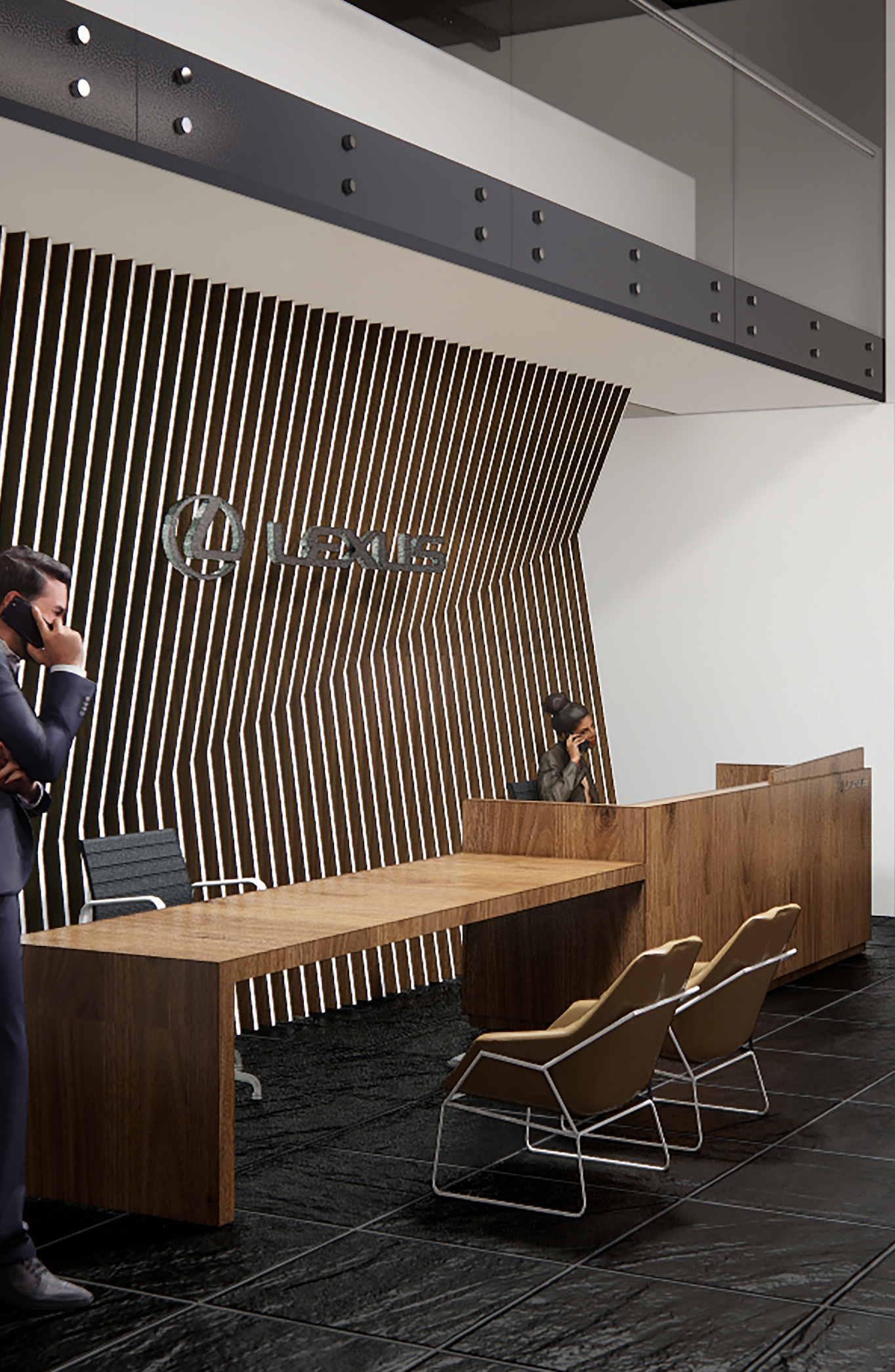
The centrepiece of Coutinho’s plan is the new showroom at 158 Elizabeth Street in the heart of Tauranga.
The new Lexus store will open in the next few weeks, informed by Japanese culture and the concept of “Omotenashi”, the unwavering commitment to exceptional hospitality. Lexus spaces in Tokyo, New York, and Dubai will inspire the ambience of the Tauranga site.
“It’s about a sense of engineered luxury,” says Ranstead, who will helm the Tauranga operation. “You walk in, and you feel that spacious, clean environment that also has warmth.”
Ranstead wants customers to be “at home” during the experience and enjoy “the art of hospitality”. “We’re there to listen more than we speak,” he says.


Dedicated to motoring perfection
All Lexus models are designed by Takumi Masters, highly-skilled Japanese master craftsmen who dedicate their lives to the pursuit of motoring perfection. The company confidently offers a four-year warranty on new cars sold in New Zealand.
Ranstead expects the latest Lexus SUVs, including the hybrid UX and NX, will be as popular in Tauranga as they are in Hamilton as people transition away from internal combustion engine vehicles towards eco-friendly alternatives.
“We know that a lot of people in Tauranga are ecologically driven, and about 70 percent of our cars are hybrids,” Ranstead says. “So we expect that to resonate with people.”
Following Lexus's global blueprint, car buyers in Tauranga will be treated to something out of the ordinary when the new site launches next month.
Customers will be closely guided through which cars suit them, steered away from those models that don’t, and offered a tailored service to help them choose the right vehicle.
“We help them select something that suits their lifestyle,” Coutinho says.“We want people engaged but relaxed. For people to walk out and say, ‘that was fun’.”
“It’s all about fine-tuning and getting to know the customer,” says Ranstead. “We know we’re not just presenting a motor vehicle. We’re presenting an experience.”
With a fleet of green luxury cars, Japanese hospitality and some local know-how, Tauranga motorists are about to get something a little different this autumn.

Stylist Amber Armitage shows us how to create a space to call home
It’s the little touches that make a house a sanctuary. We put the pieces together to create a space for ultimate calm.
PAINT + WALLPAPER Resene STYLING Amber Armitage PHOTOS Wendy Fenwick at Flash Studios


Resene Wallpaper Collection MG11102, walls and floor in Resene Nero. Art print original by Claire Stapleton X LA TRIBE. Frame from Country Road, Inside Pendant Lamps by Oblure, Tokyo Stool OMK 1965, ‘Von’ armchair by Ercol, all from Good Form. Cushion from Mood Store. Arch Lean mirror by Made of Tomorrow. Brass drum coffee table from Contempa. Books and magazines from Sunday Home Store. Pot, plants and candle stylist’s own.
Expert tip: By pairing the wallpaper with a bold colour paint, you add even more impact. We’ve teamed Resene Wallpaper Collection MG11102, a gold patina look wallpaper, with Resene Nero to add even more drama.


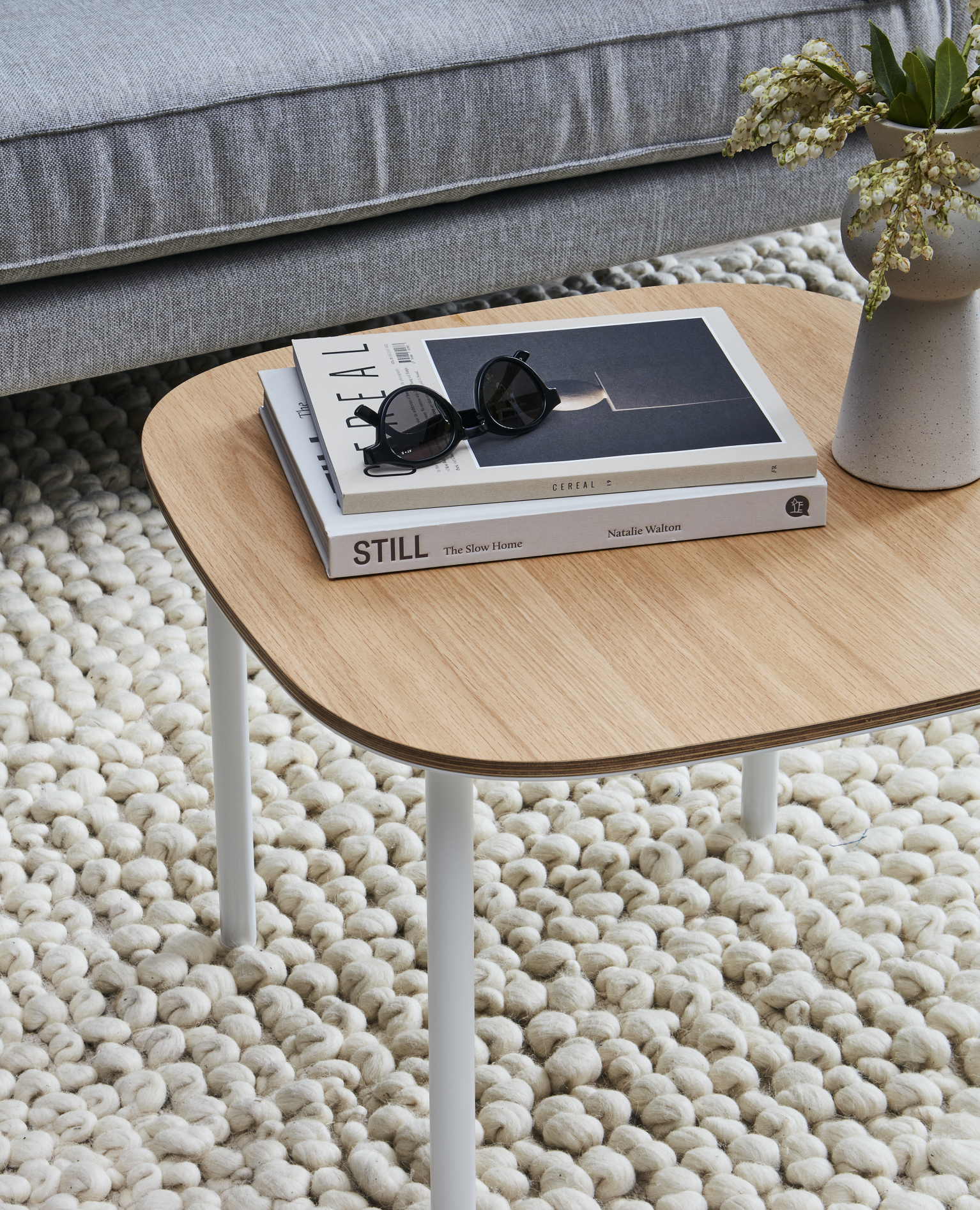
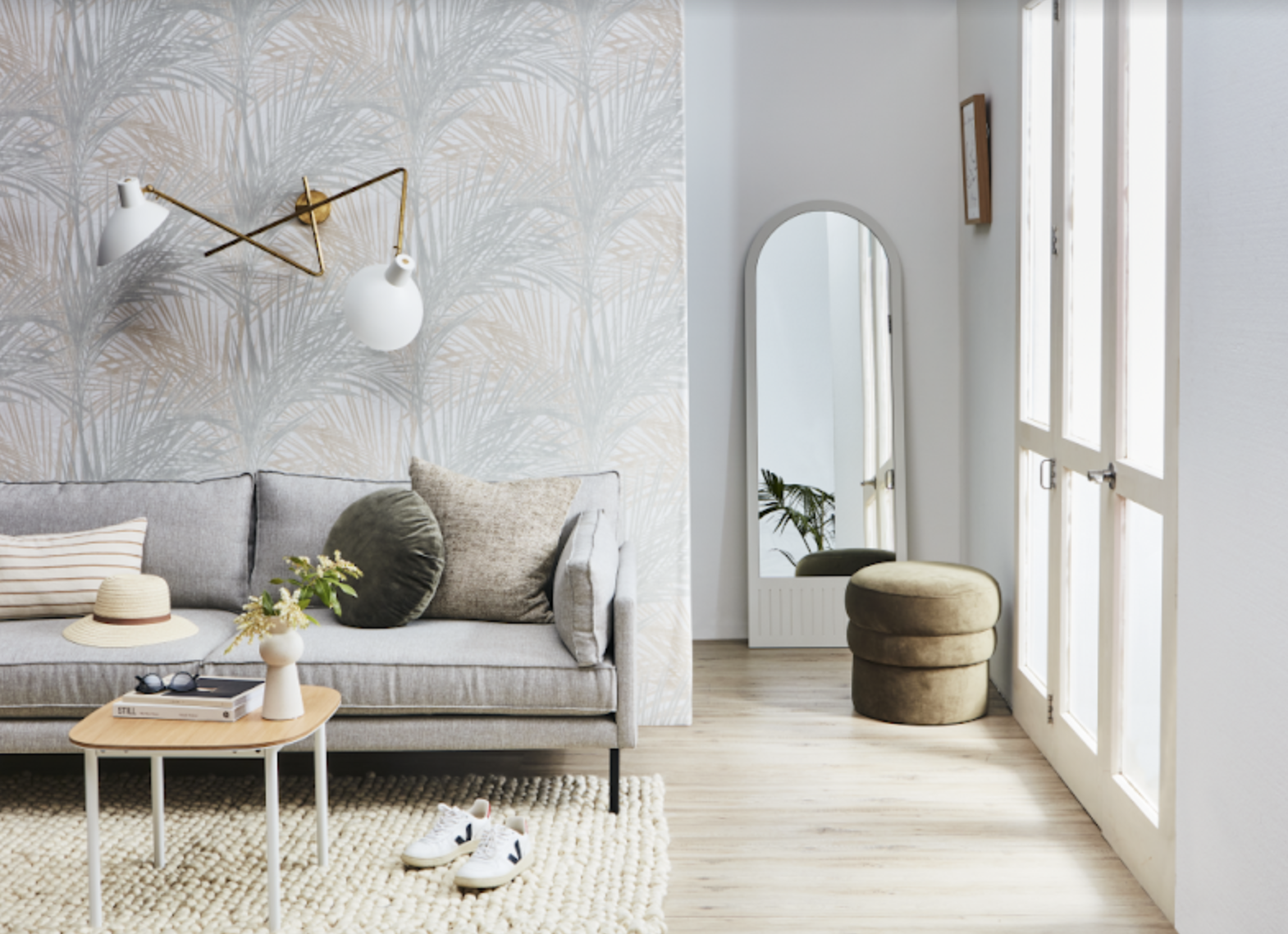
Resene Wallpaper Collection 218741. Walls in Resene Alabaster. Floor in Resene Colorwood Rocksalt. VV Cinquanta Twin wall lamp by Astep from Good Form. Soho 3 seater sofa and Juno Ottoman in Olive from Contempa. Cushion covers and Elevation side table, all from Città. Sophie So Shady hat by Sophie Store. Ay Soho sunglasses, Veja sneakers and framed print, all from Father Rabbit. Books and magazines from Sunday Home Store. Vase stylist’s own. Rug from Mood Store. Arch Lean mirror by Made of Tomorrow.
Ready to getaway? We’ve got the best of the Cook Islands for every traveller
For those itching to get back to island travel, Booking.com shares their picks for travellers planning to head to the Cook Islands.

It’s an exciting time for Kiwi travellers with more options becoming available overseas, like the stunning Cook Islands.
After over a year of travel restrictions, Booking.com has new research revealing our appetite to explore the world remains undiminished. Nearly two-thirds of Kiwi travellers (59%) feel more hopeful about travelling in 2021 since the global roll-out of COVID-19 vaccines, with the bubble announcements welcome news for many keen travellers. Further proof that Kiwis are as eager as ever to dust off their passports comes as Booking.com reveals searches for accommodation in Rarotonga shot up 15 places in the most searched destinations year-on-year.
For those itching to get back to island travel, Booking.com shares their picks for travellers planning to head to the Cook Islands.
Best for families
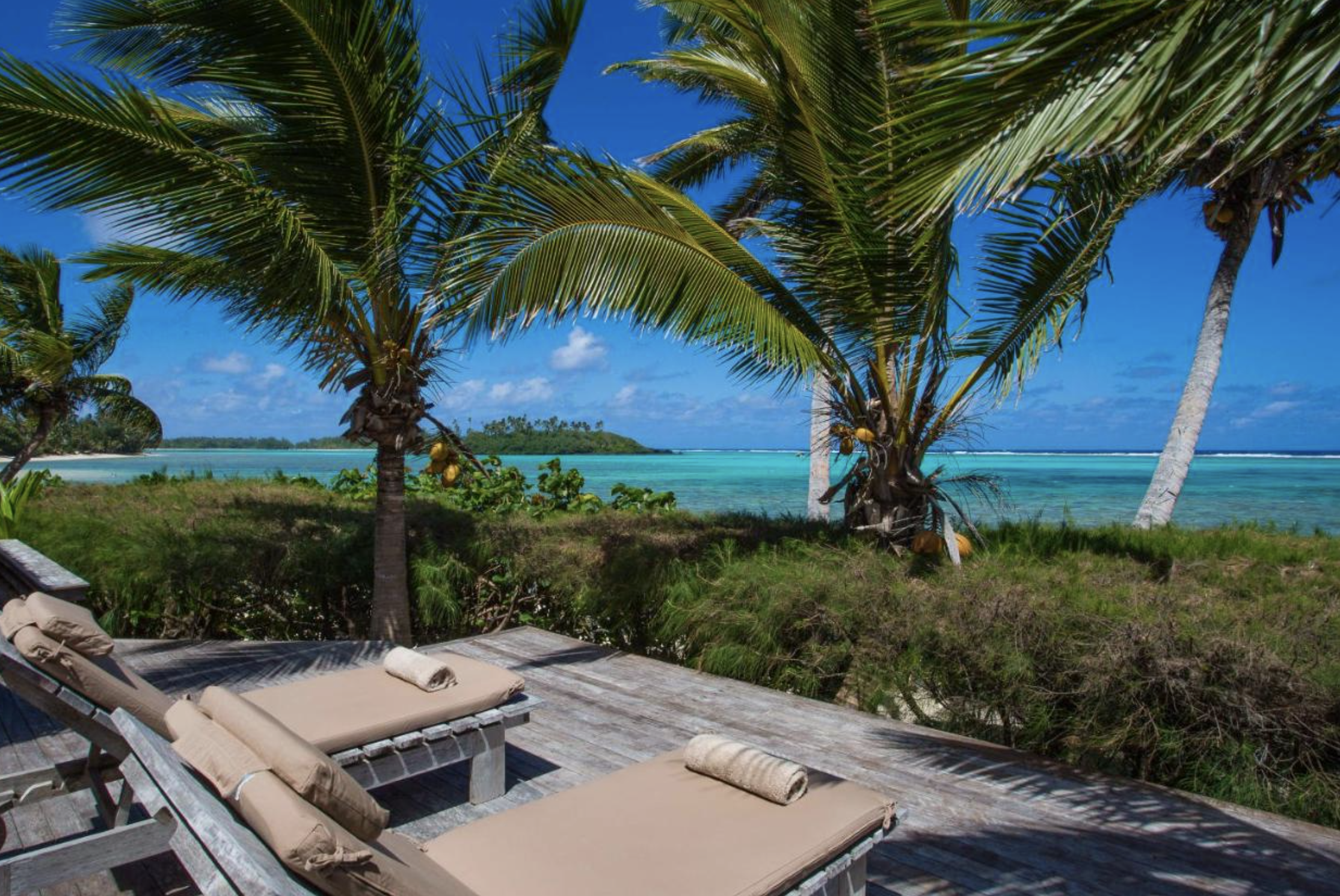
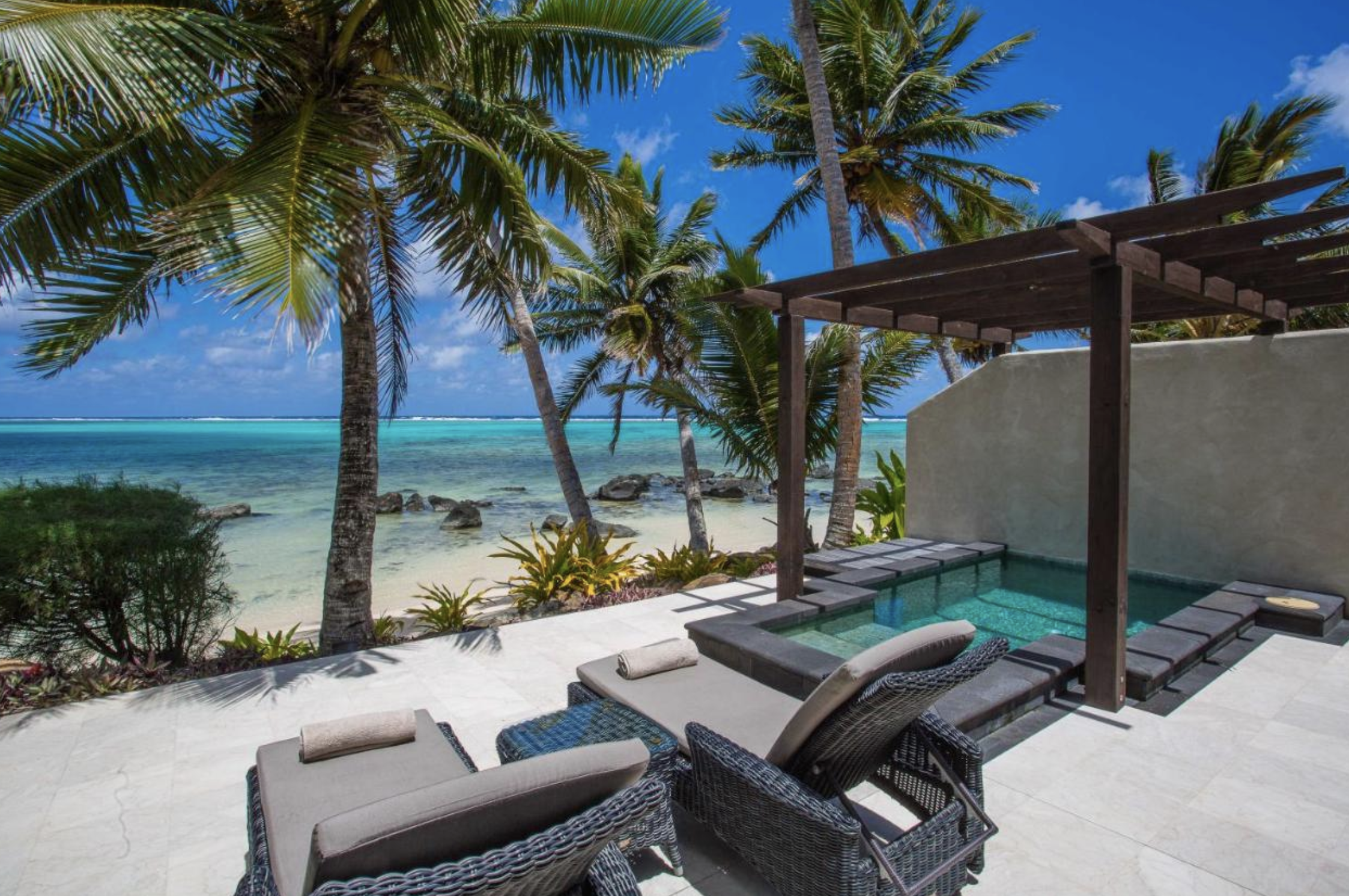
For many with kids in tow, escaping the New Zealand winter for an island getaway has become something of a July school holiday ritual. A week-long stay at a Rarotonga beachfront villa offers a relaxed yet fun-filled environment, with the added benefit of self-catering making mealtimes with the family a breeze. Overlooking the beautiful Muri Lagoon, Te Manava Luxury Villas & Spa offers 5-star accommodation with a private pool and patio – and a completely self-contained space means you have all the luxuries of home at your fingertips.
Best for a romantic getaway
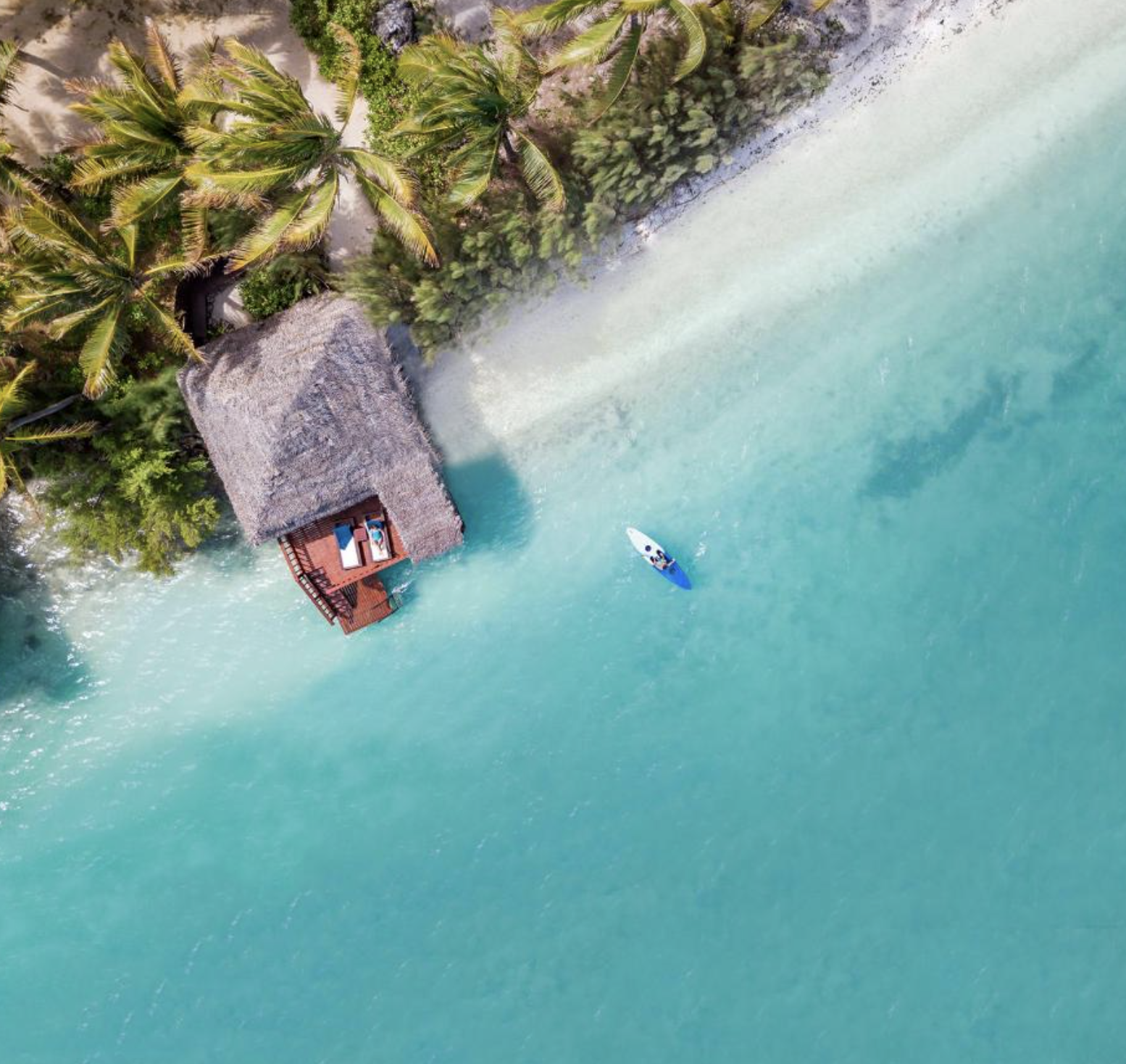
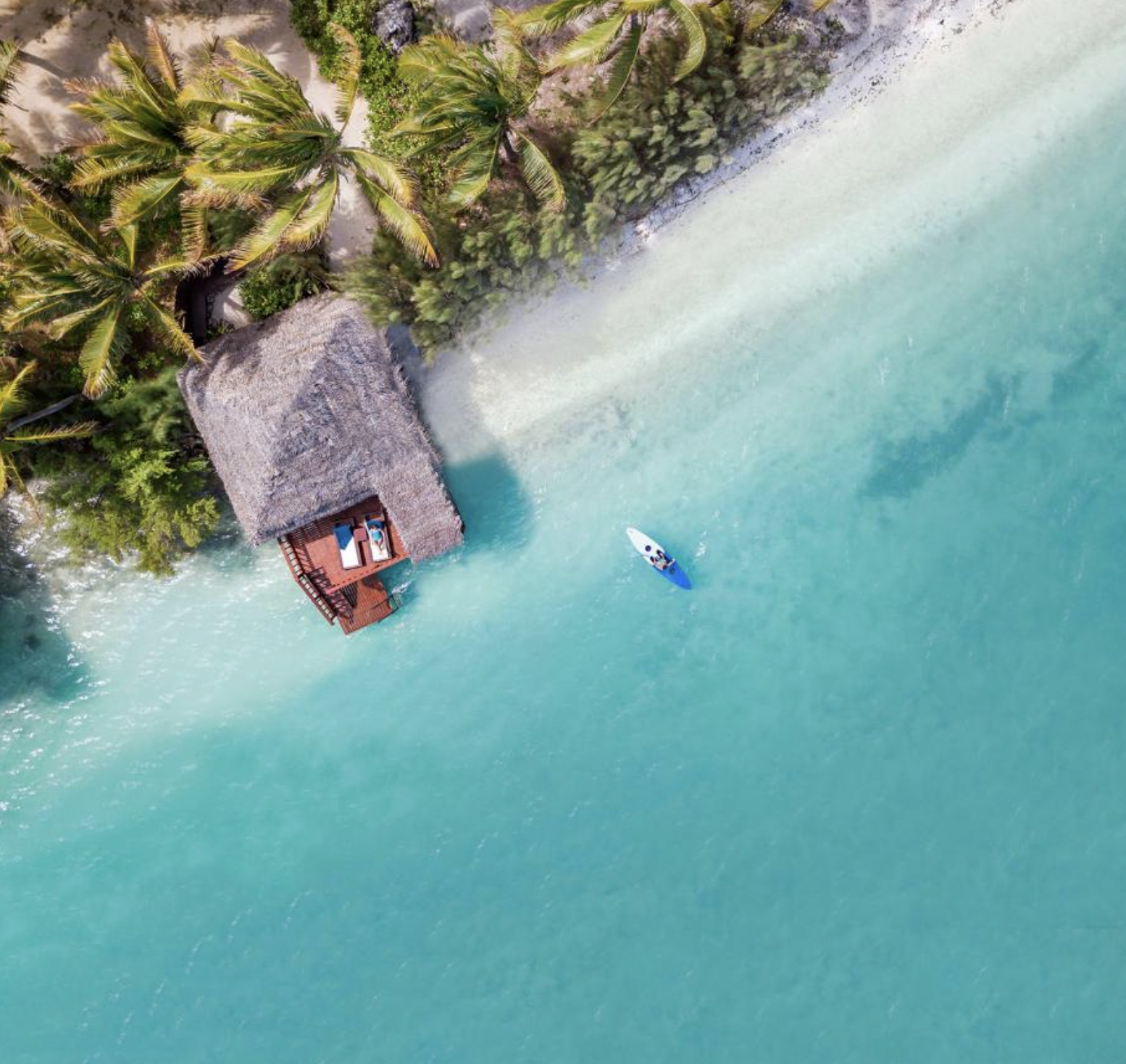
If it’s a romantic trip for two you’re after, look no further than Aitutaki. Just a short plane ride away from the Rarotonga Airport you’ll find, situated on its own private island, the Aitutaki Lagoon Private Island Resort. A luxury, adults only resort that offers beach-front and over-water bungalows with panoramic views of Aitutaki Lagoon, you can enjoy stand-up paddle boarding, kayaking, canoeing, snorkeling and cultural activities – or if you’re after some pampering, head to the spa that offers massages, a sauna and a hot tub.
Best for getting back to basics
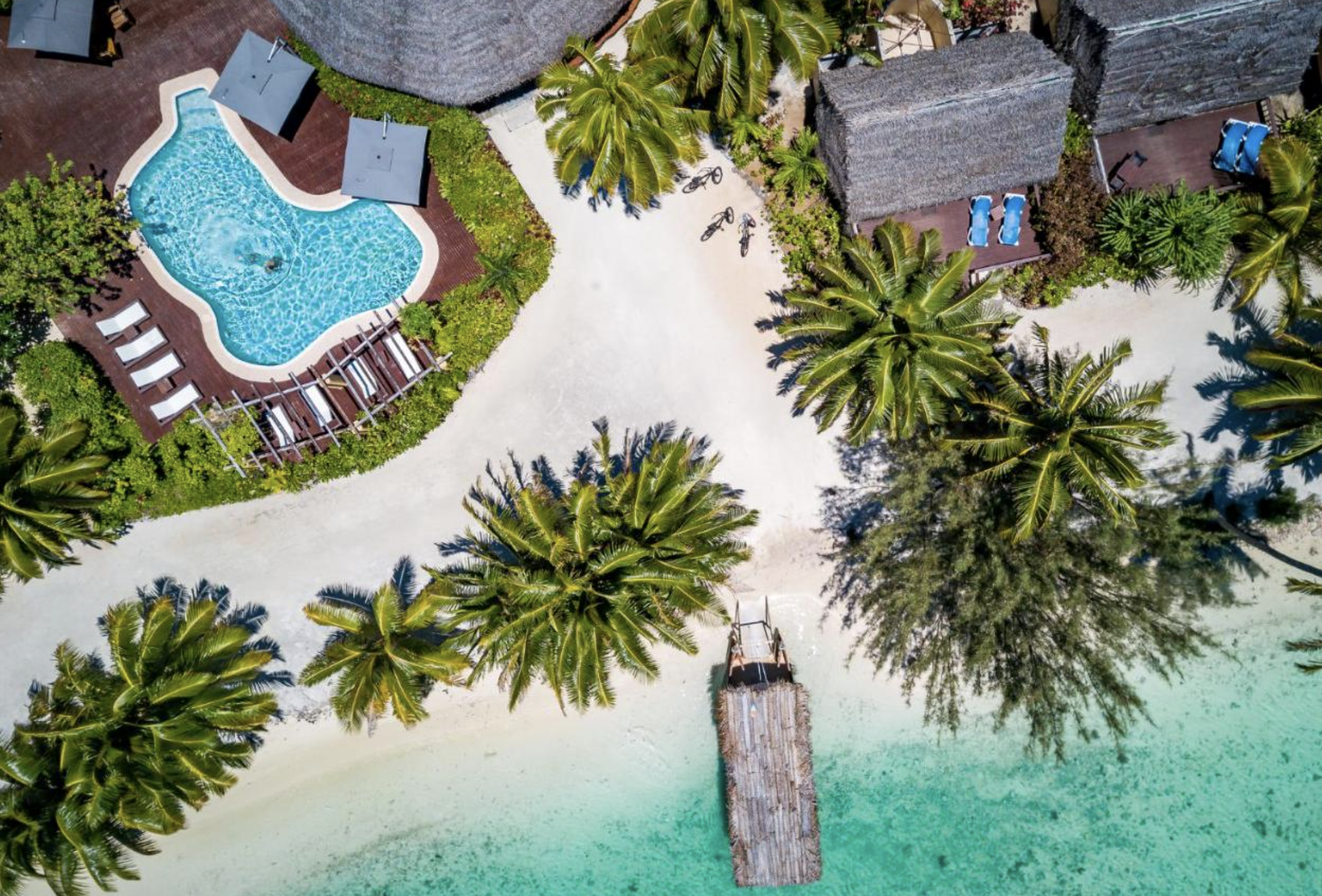
For a true island experience a stay at the Ikurangi Eco Retreat in Matavera Rarotonga will leave you feeling rested and at one with nature. You can choose from snorkeling at the nearby beach or hiking and cycling – the property offers free bicycles onsite. Just 5 minutes' drive from shopping and dining options, this eco retreat offers an onsite swimming pool and if a day outdoors has worn you out, enjoy a private meal cooked by a private chef served on your balcony. You can also unwind with an in-room massage.
Best on a budget
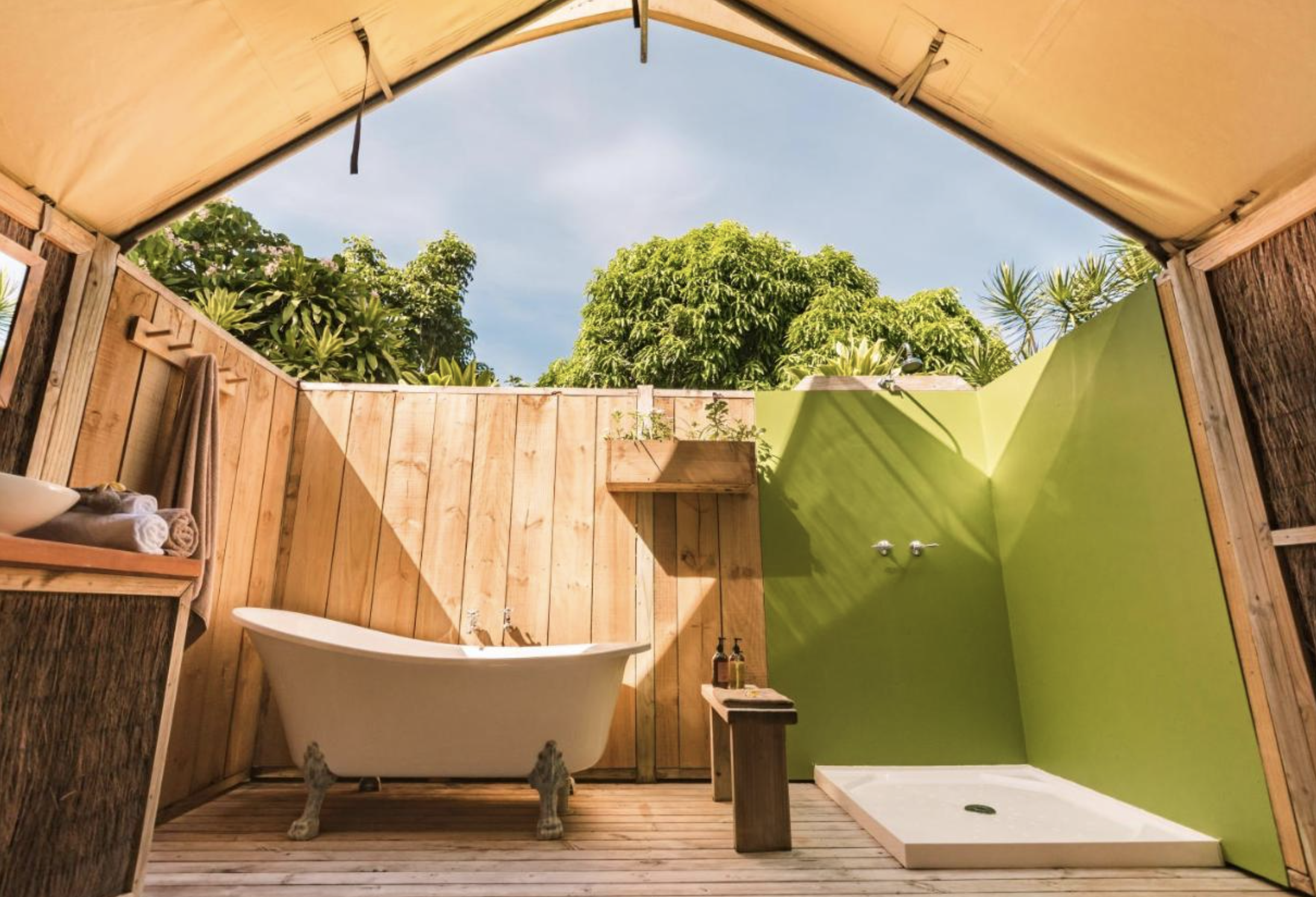
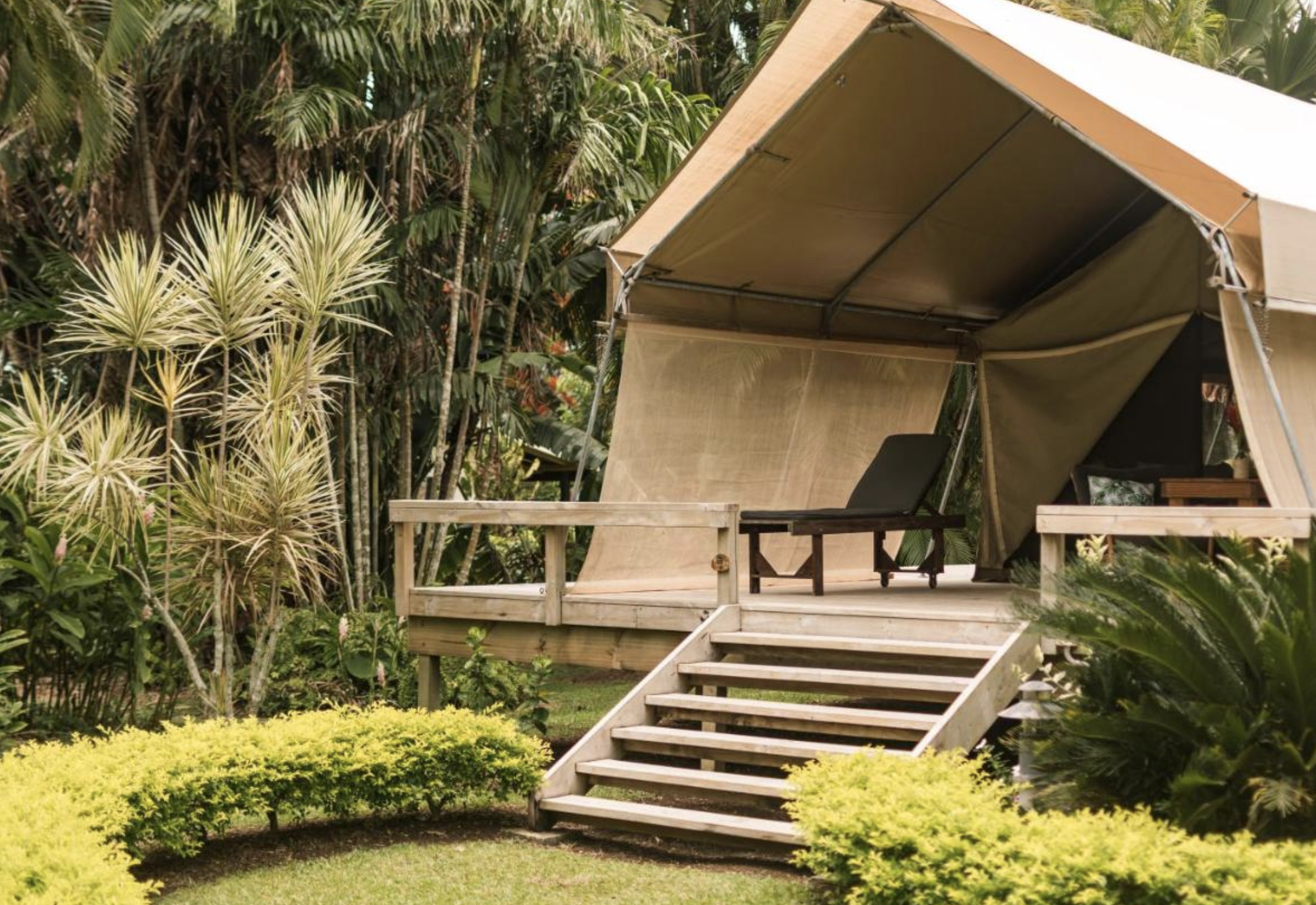
If you’re keen on an island getaway but the luxury resort life just isn’t for you, then a self catering beach hut could be just the ticket to relaxation. The Matriki Beach Huts provide absolute beachfront accommodation on the sunset side of the island. You can enjoy snorkelling from the beautiful white sand beach right at the front of the property. Or make the most of the outdoors and go on a hike or head out for a fishing trip. Each of the unique, rustic, self-contained beach huts, has its own terrace, simple cooking facilities and an open air shower.
Matriki Beach Huts, Arutanga, Cook Islands


Best for group travel
It’s time to reinstate the annual island getaway with the gang and where better than a private villa in sunny Raro. The Te Etu Villas are in close proximity to one another and offer all the amenities you could need for group travel, from a private pool to a poolside bar and barbeque. These gorgeous self contained villas also boast a sun terrace and both snorkelling and cycling can be enjoyed nearby this holiday home.

UNO celebrates 50 issues with cover star Joel Shadbolt!
“On stage ready to welcome everyone to UNO’s 50th birthday party, I could see exactly why the Bay of Plenty’s thriving. The room was full of people who support each other. Locals in the arts, business, governance, community groups and medical teams, our columnists, advertisers, readers – we wanted to invite everyone we'd ever met to share the joy together.”
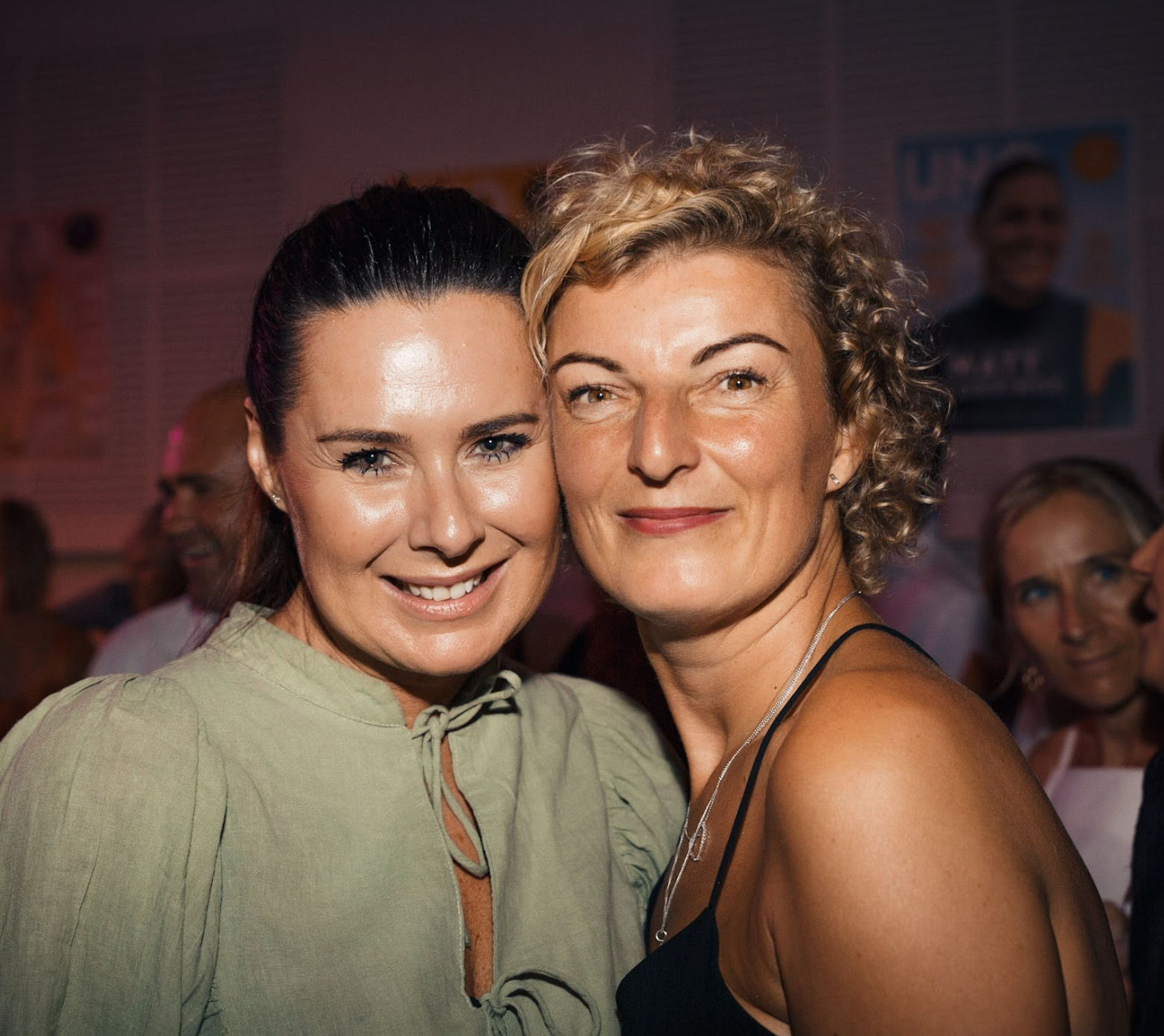

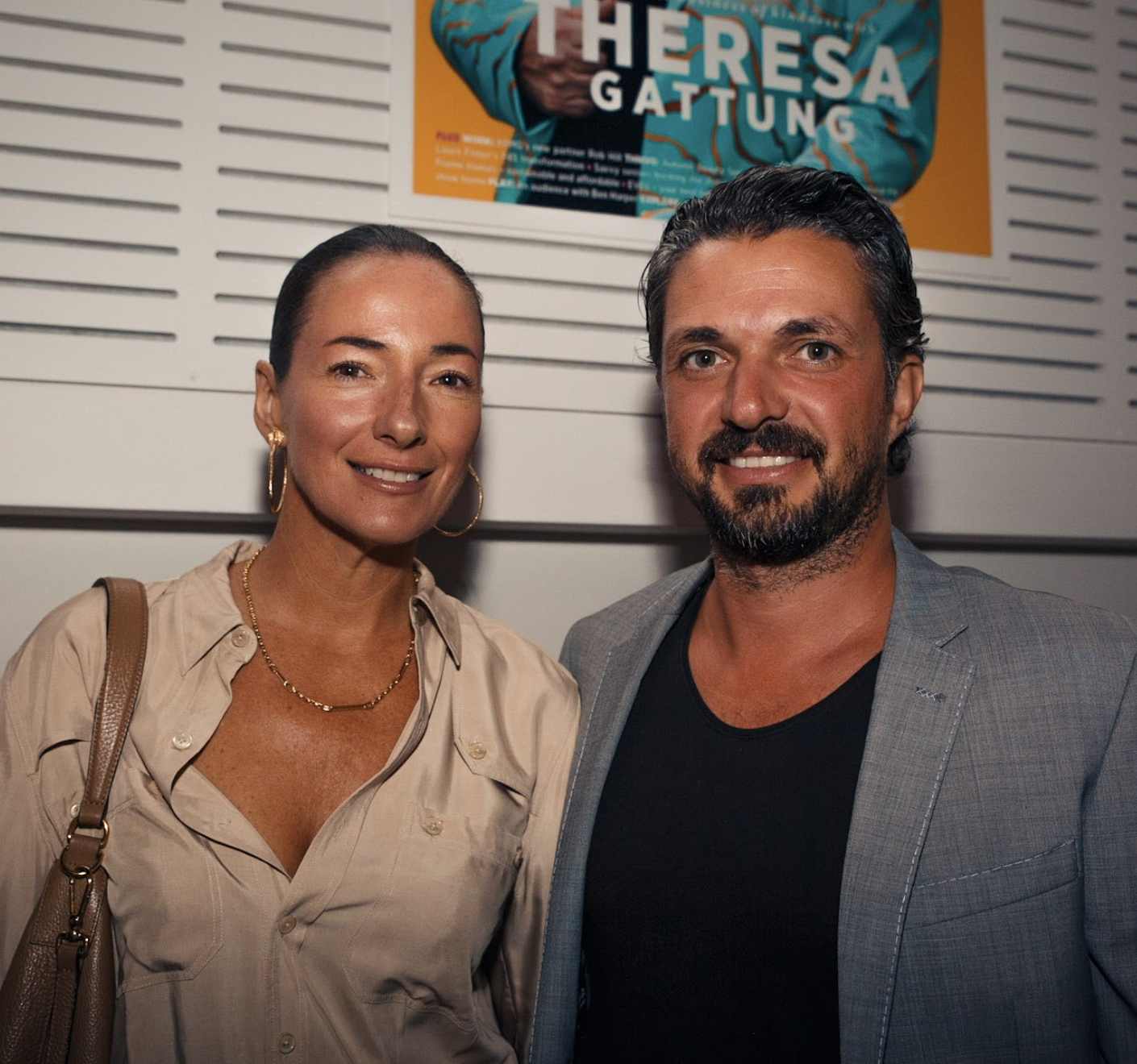
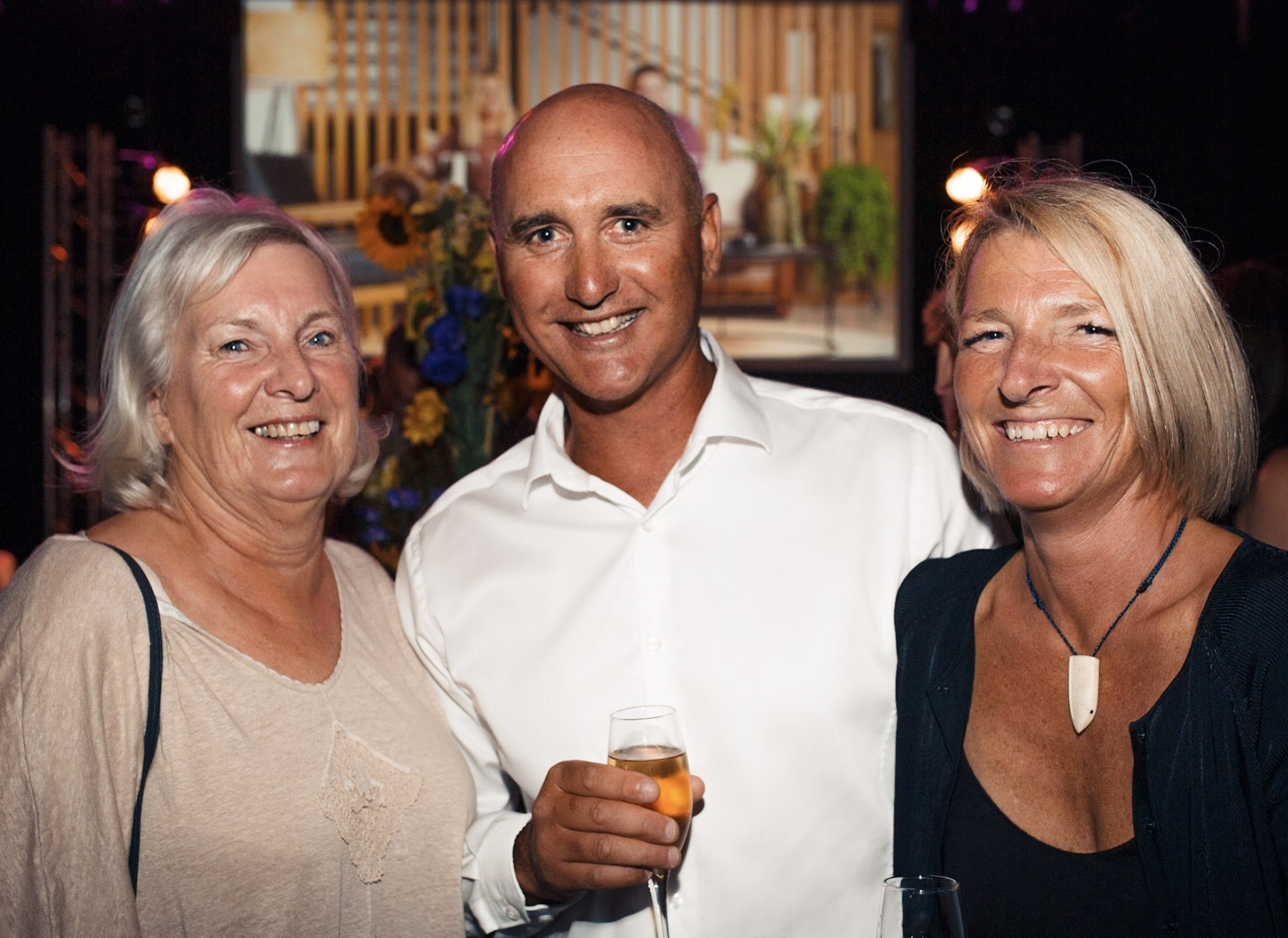



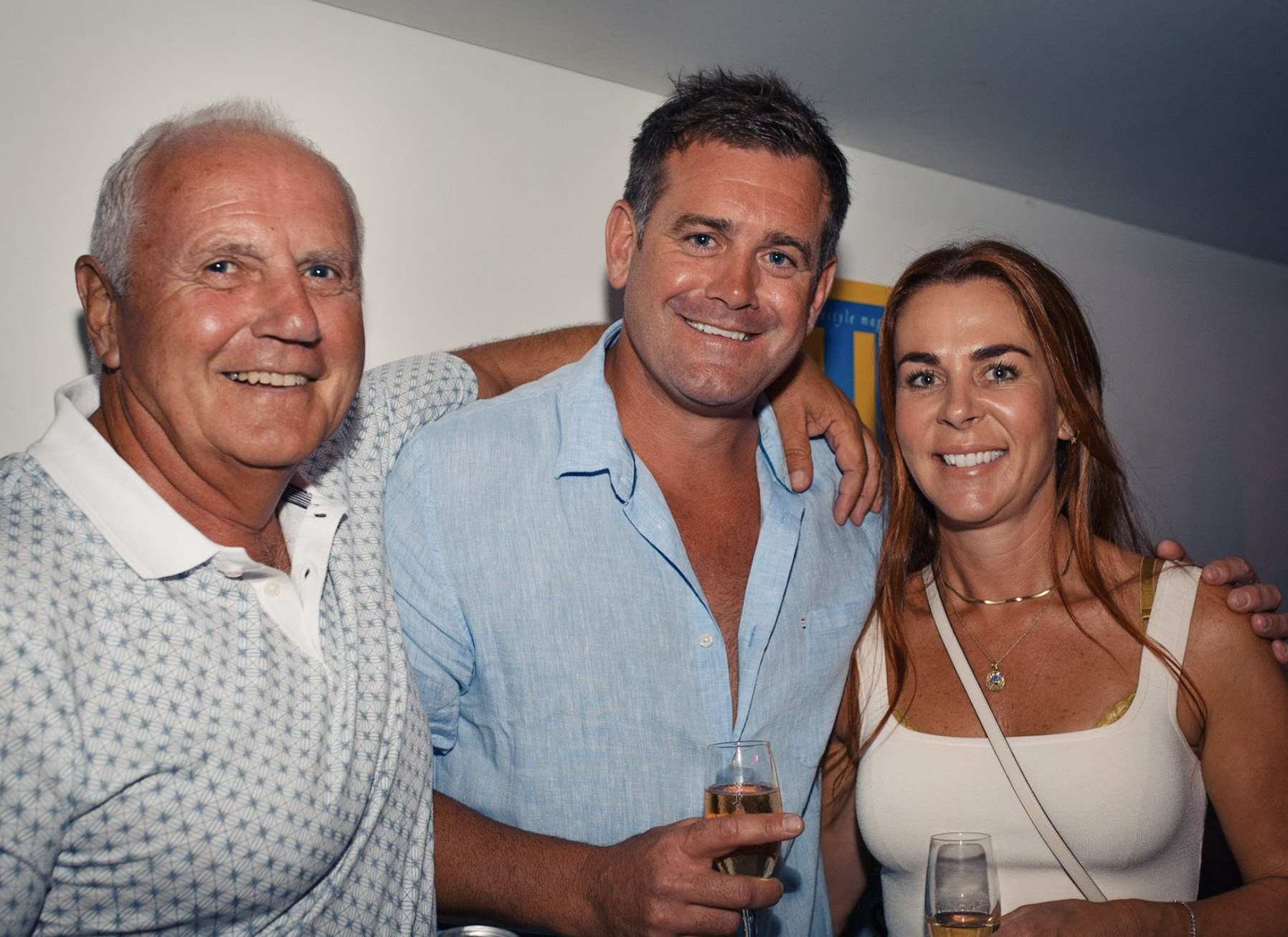
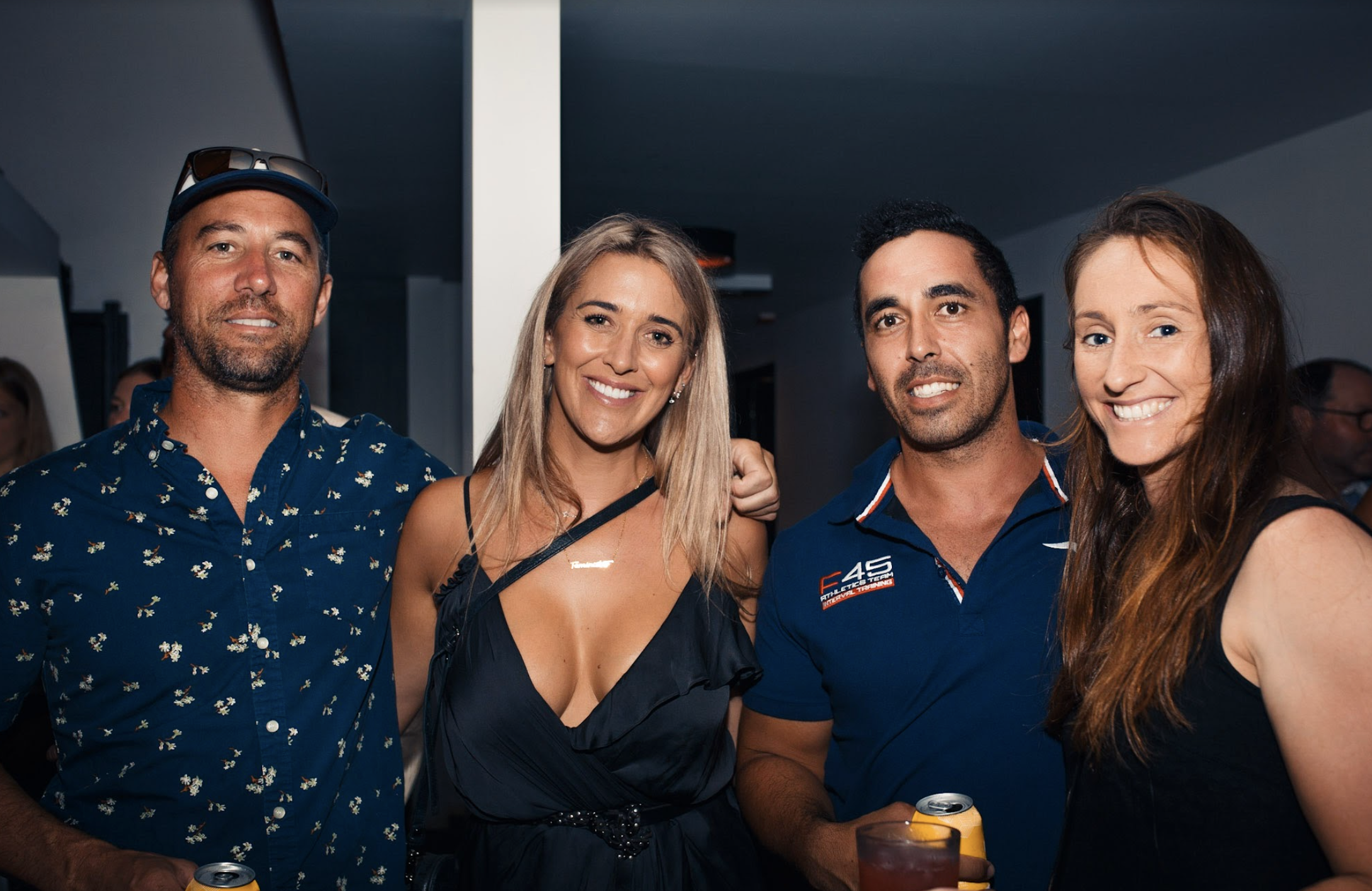


We recently celebrated our 50th issue – hurrah! Editor Jenny Rudd has the round-up.
PHOTOS Jordan Vickers
On stage ready to welcome everyone to UNO’s 50th birthday party, I could see exactly why the Bay of Plenty’s thriving. The room was full of people who support each other. Locals in the arts, business, governance, community groups and medical teams, our columnists, advertisers, readers – we wanted to invite everyone we'd ever met to share the joy together.
And what better way to celebrate than with the lead singer of one of the country's biggest bands (and the cover star of our 50th issue) playing all their bangers and some epic covers?! We hit the dancefloor while L.A.B's Joel Shadbolt performed, before singing our hearts out to his closing rendition of Lean On Me. He showed us exactly why L.A.B’s In The Air was 2020’s biggest-selling single – the energy in the room was electric.
The entire night was truly a local effort; everything we ate, drank and did came from the hard work and enterprise of those connected with the Bay of Plenty. Pals came from Jay and Anna Reeve and Katikati’s Leveret Estate kept us bubbly. Non-boozy bubbles came from San Pellegrino, which is distributed nationwide by Federal Merchants, based here in Tauranga. The iconic yellow Easy Lager cans were from at The Island in Papamoa, and the absolutely delicious grazing table came from Tauranga caterers Blank Canvas. And, of course, the fabulous location was Totara St, arguably the best venue in the country, right here at the Mount.
Thank you to everyone who came to UNO’s birthday party and celebrated and smiled along with us. Here's to the next 50 issues!



Making homeowners happy - one house at a time
With his father in the trade and having pretty much grown up on building sites, it was inevitable that Matt Gudsell would be a builder.

Prepare to upgrade your dream home standards with these incredible Bay of Plenty builds by Gudsell Builders.
WORDS Andy Taylor PHOTOS Amanda Aitken
With his father in the trade and having pretty much grown up on building sites, it was inevitable that Matt Gudsell would be a builder. He farmed for five years, but the tools soon called him back, and that’s a good thing, because Matt has built a solid reputation for creating beautiful homes throughout the Bay of Plenty and Waikato – and for making their owners happy indeed.
“What attracted me to building was seeing the result of all the effort and time that goes into building one of our houses,” says Matt. “I like to see the reward of a job really well done, and that comes down to attention to detail and quality of finish, making sure everything’s just right and to the very highest standard.”
To achieve those standards, at Gudsell Builders, Matt has built a team that shares his keen eye and a passion built on 30 years in the trade. “People are much more discerning now – they know what they want,” says Matt of their customers. “The industry is constantly evolving too. In addition to our team of 24, we have eight apprentices, and the old hands and new guys work hard to keep up to date with the latest technology and products to make sure we offer the very best available. I like to think that what people see in us is dependability and quality, and seeing the job well done is still what I love about what I do – I wouldn’t be doing it if I didn’t.”
The semi-rural resort
Wood, concrete + space
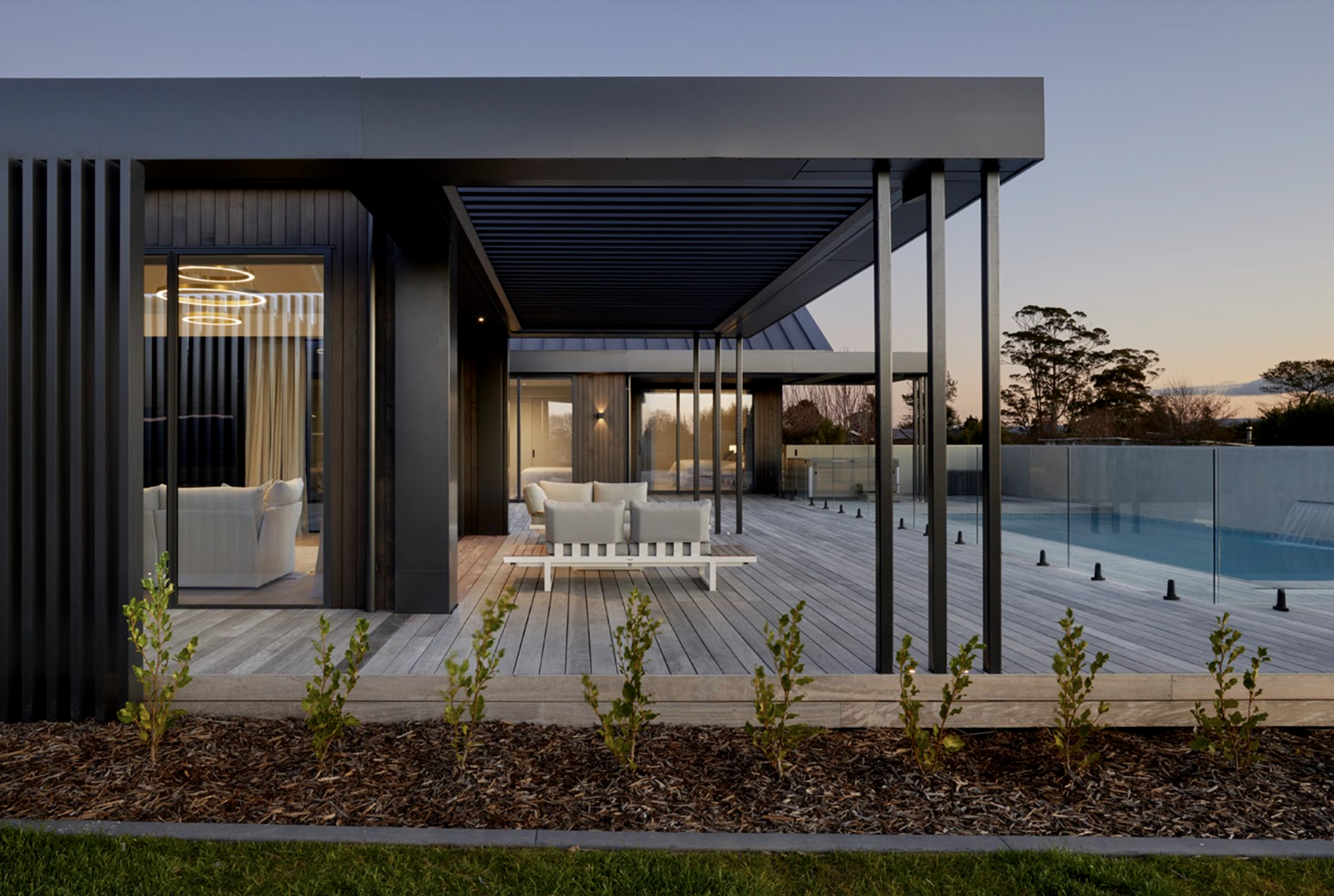
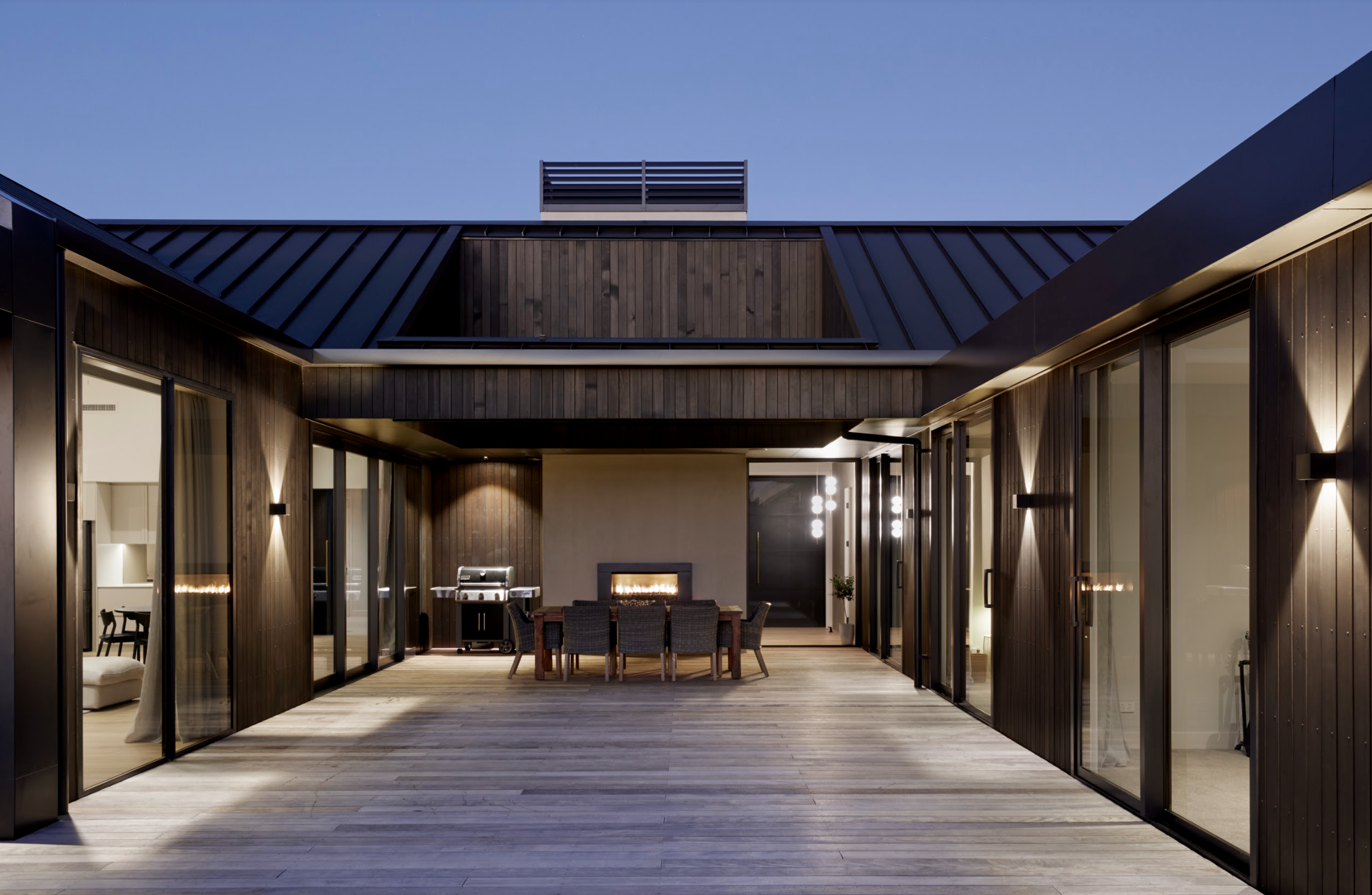
Dependability and quality is certainly what attracted the owners of one of Gudsell Builders’ latest projects in Tauranga’s Bethlehem, for a family of four who were relocating from the Mount and wanted more living space and room to entertain. “Our first experience of building had been great,” says one of the homeowners, “but we were taking our new build to the next level, so we wanted a trusted builder, someone who’d done a lot of quality homes – and Matt had a good reputation for that and for being financially secure.
“Throughout the whole process, we knew that if there was any problem, we could take it to him and he’d take it seriously and fix it. Quality’s very important to him, so if he sees something that isn’t right, he’ll get it fixed, and that’s really important. From a client’s perspective, you don’t always know what to look for, so having his attention to detail was fantastic.”
That shows through in the finished home, which Matt says was a big project with many decorative concrete finishes that took careful setting up to get just right, as well as large decks built for family and friends.
“Gudsell Builders have a great team, which means the whole process flows really well, with plenty of communication,” adds the homeowner. “You hear people saying that they’ll never build again, but we loved the whole process. When you have a partner like Matt, it makes it easy.”
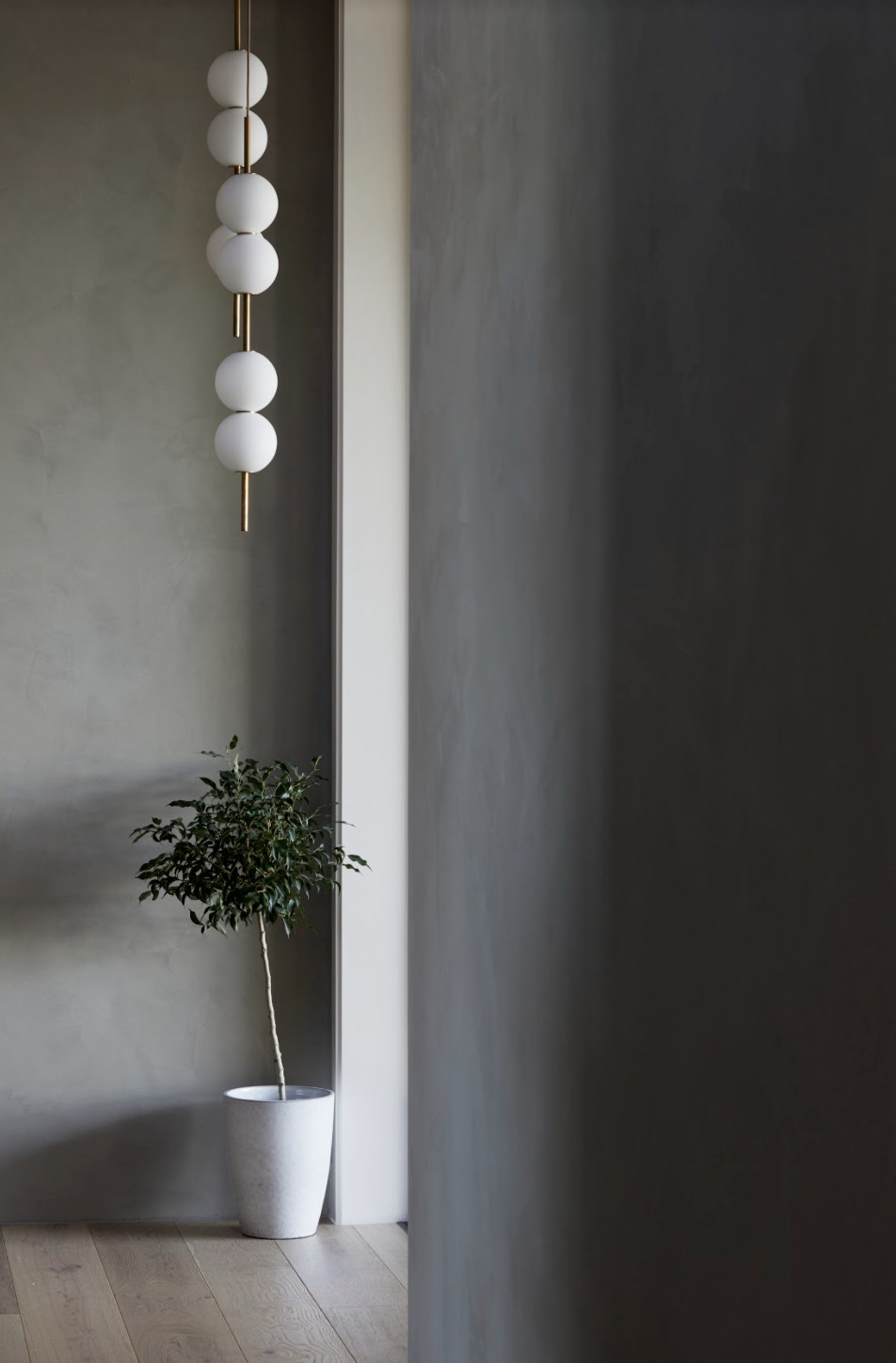
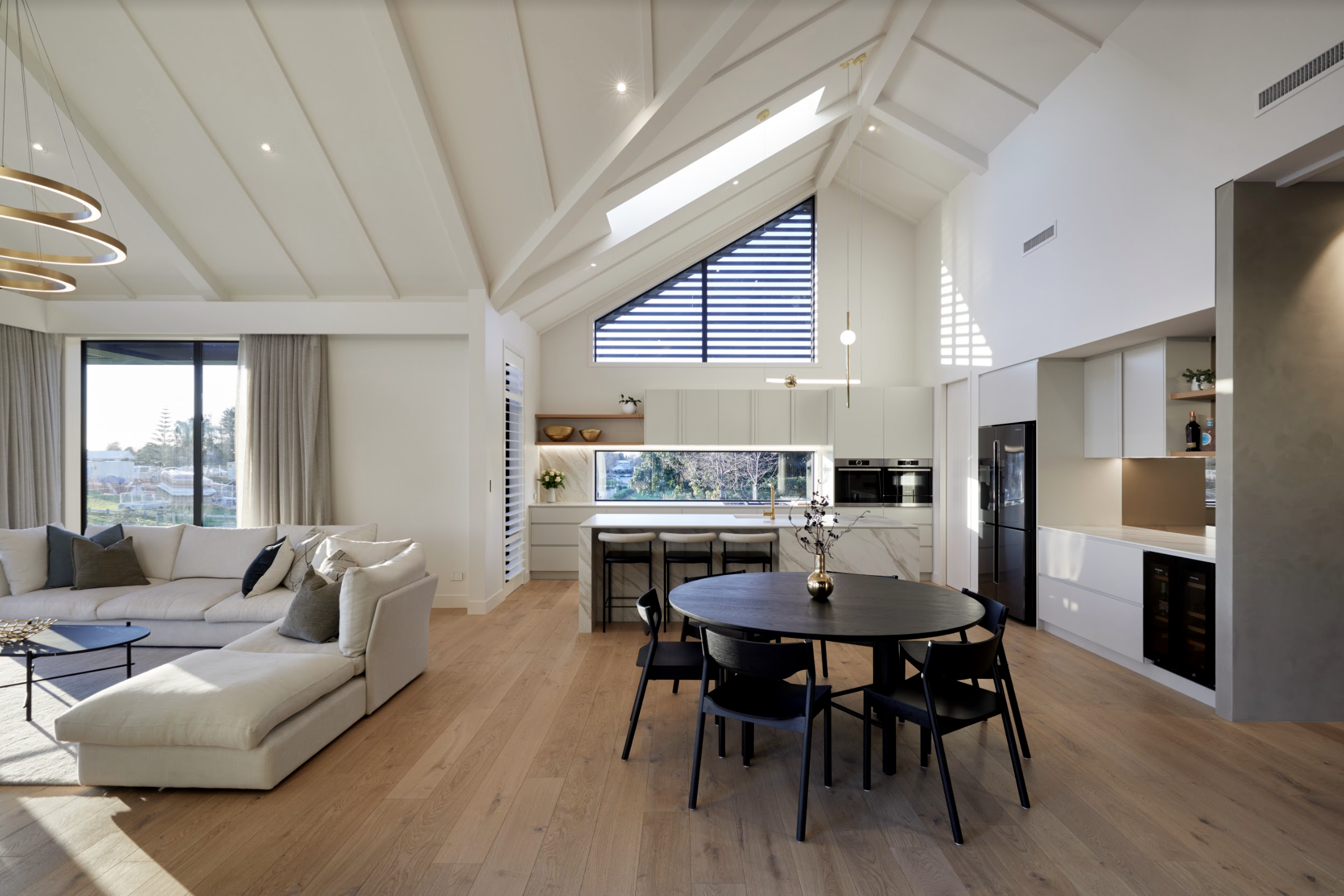
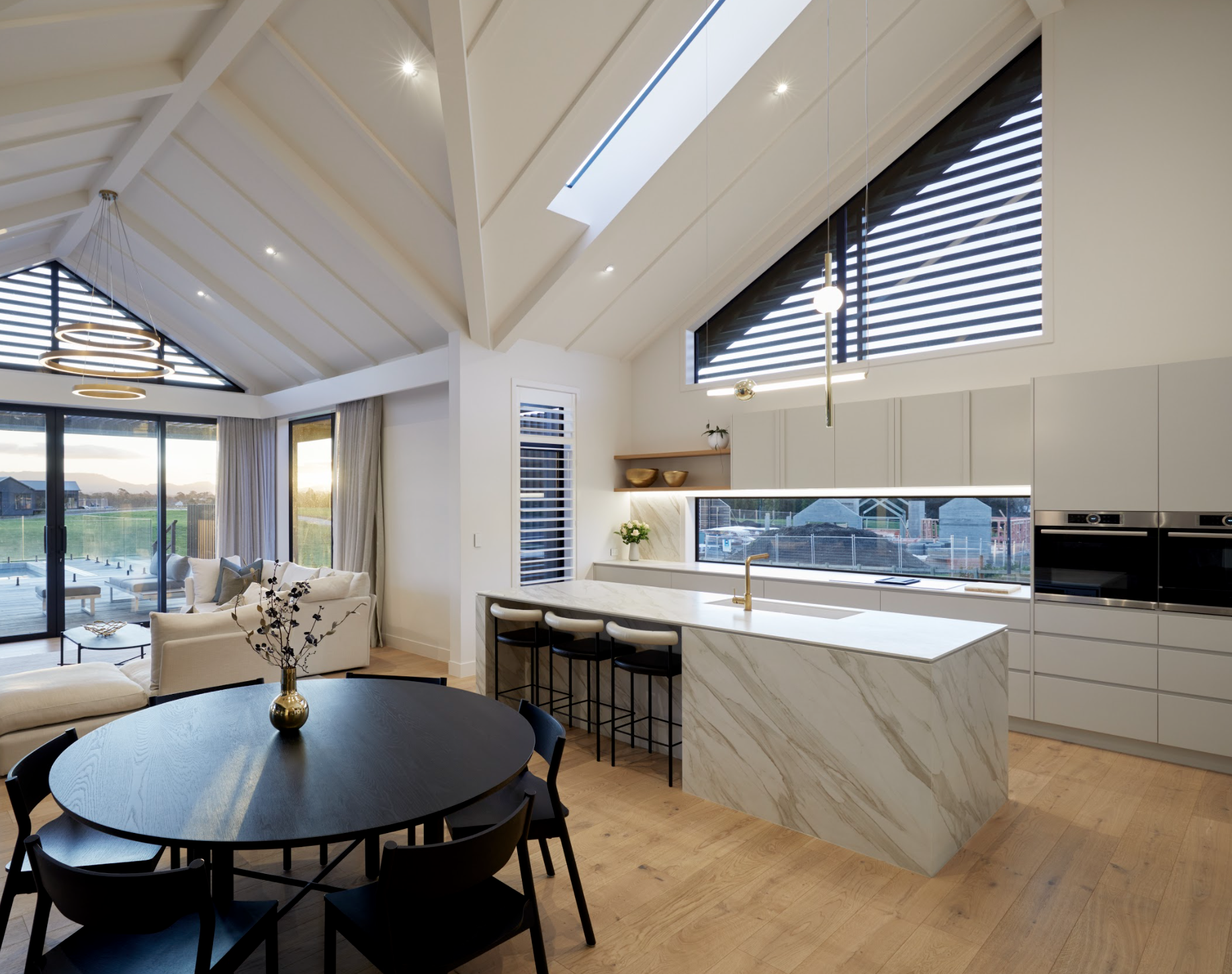
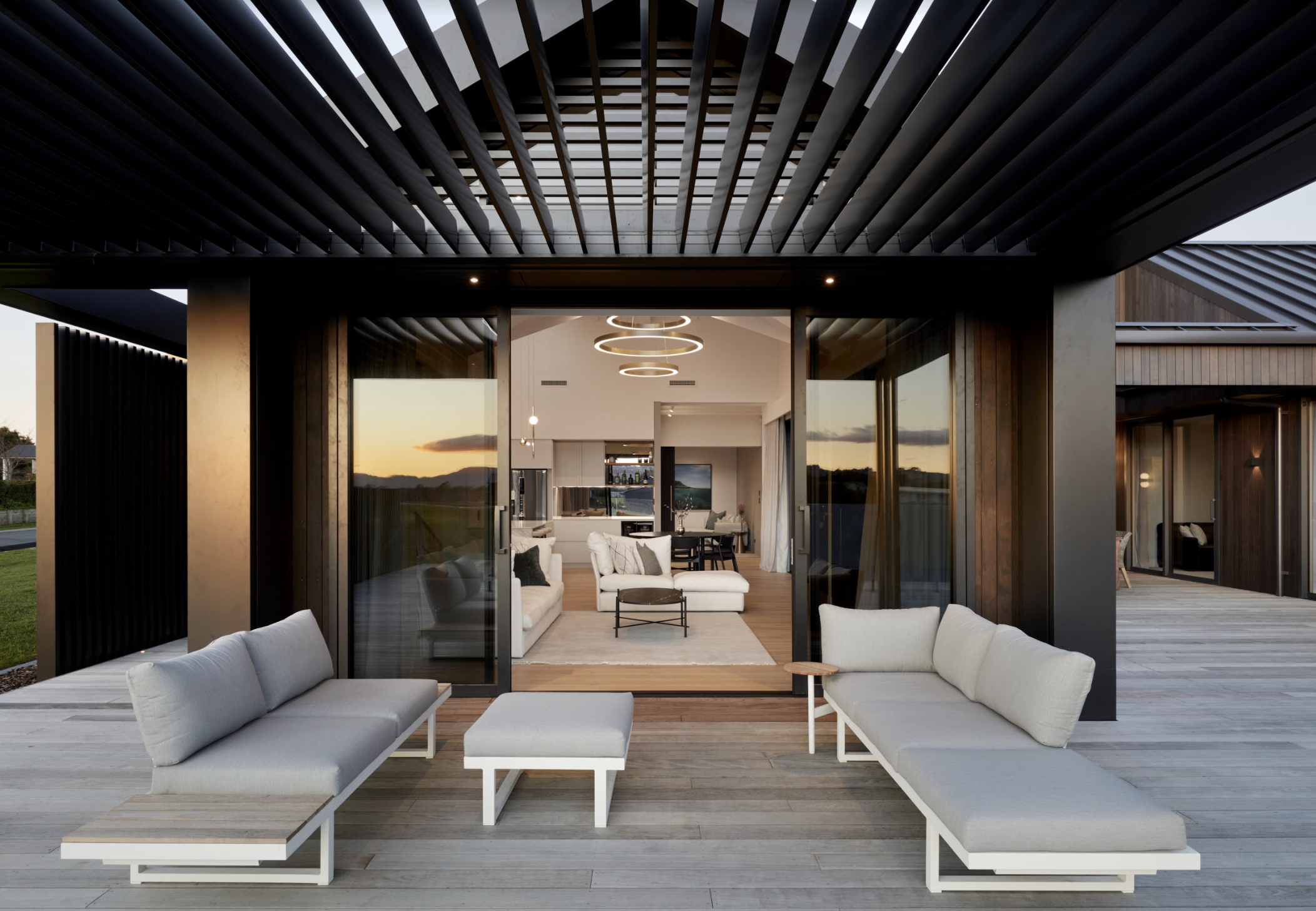
The country retreat
Contemporary cedar luxe
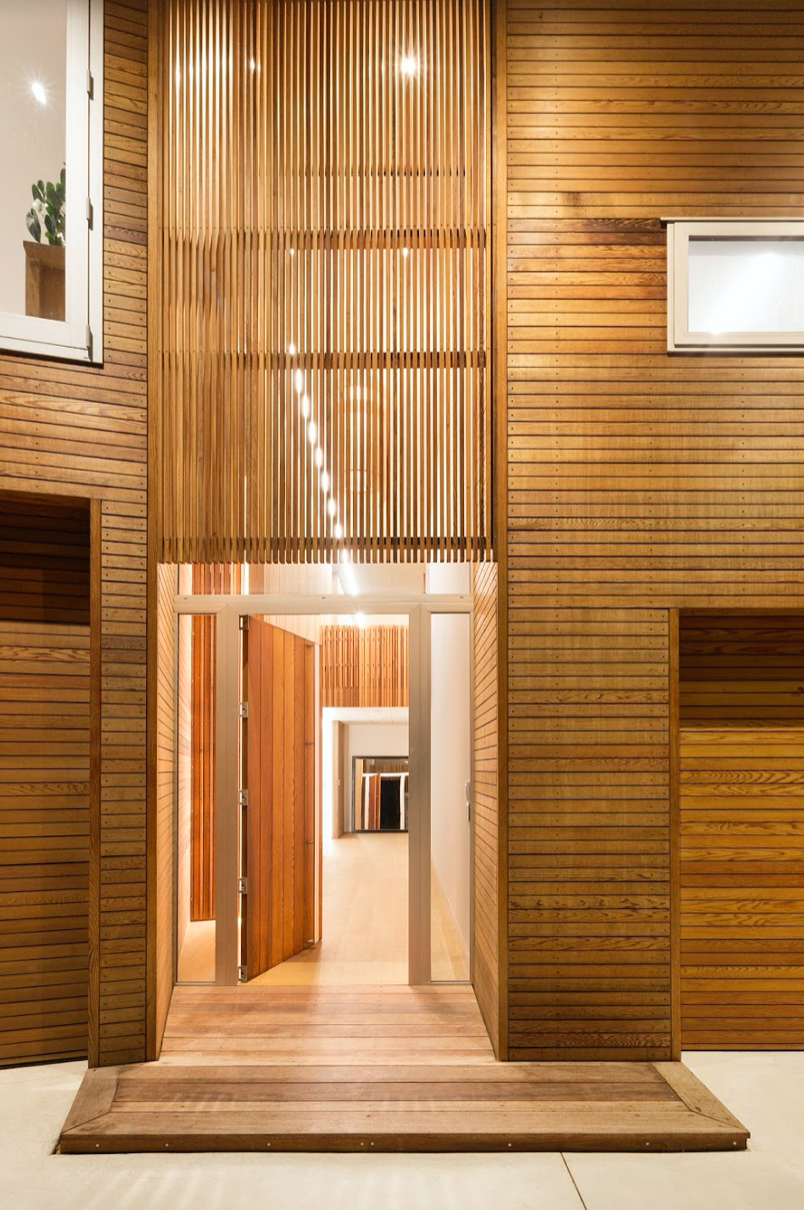
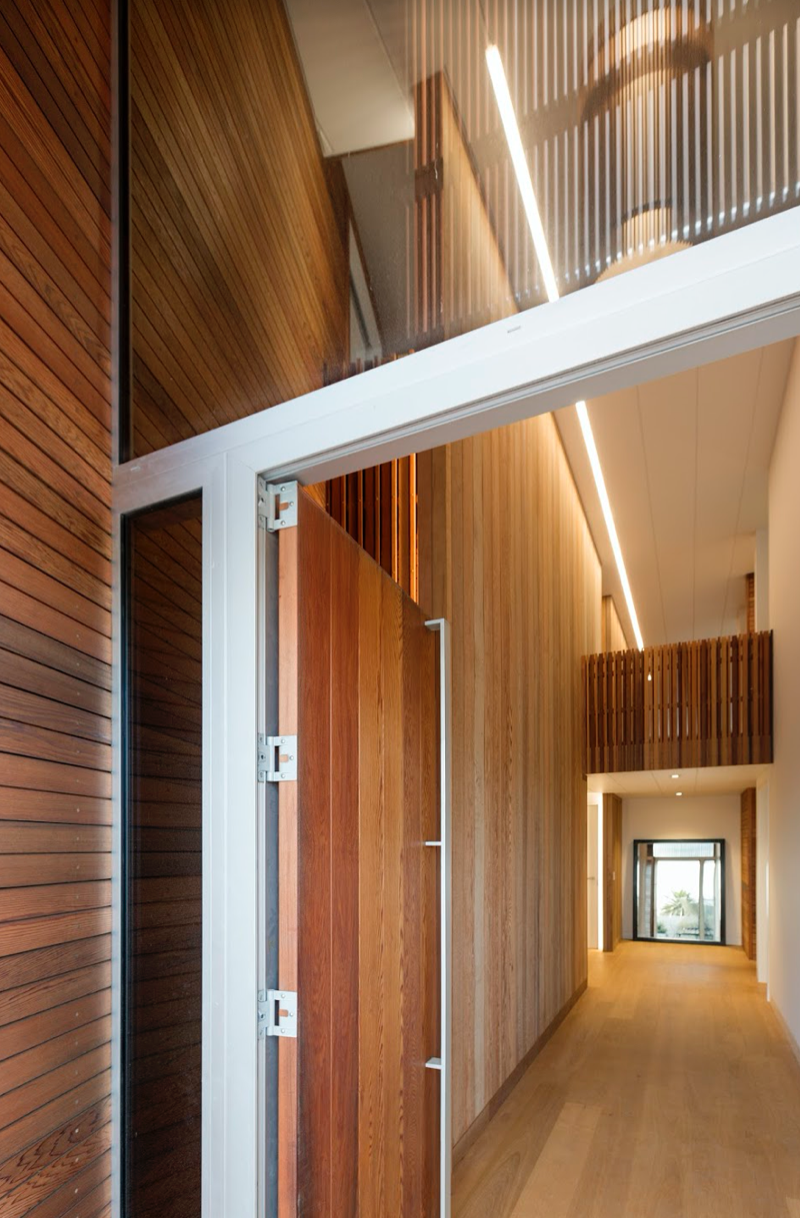
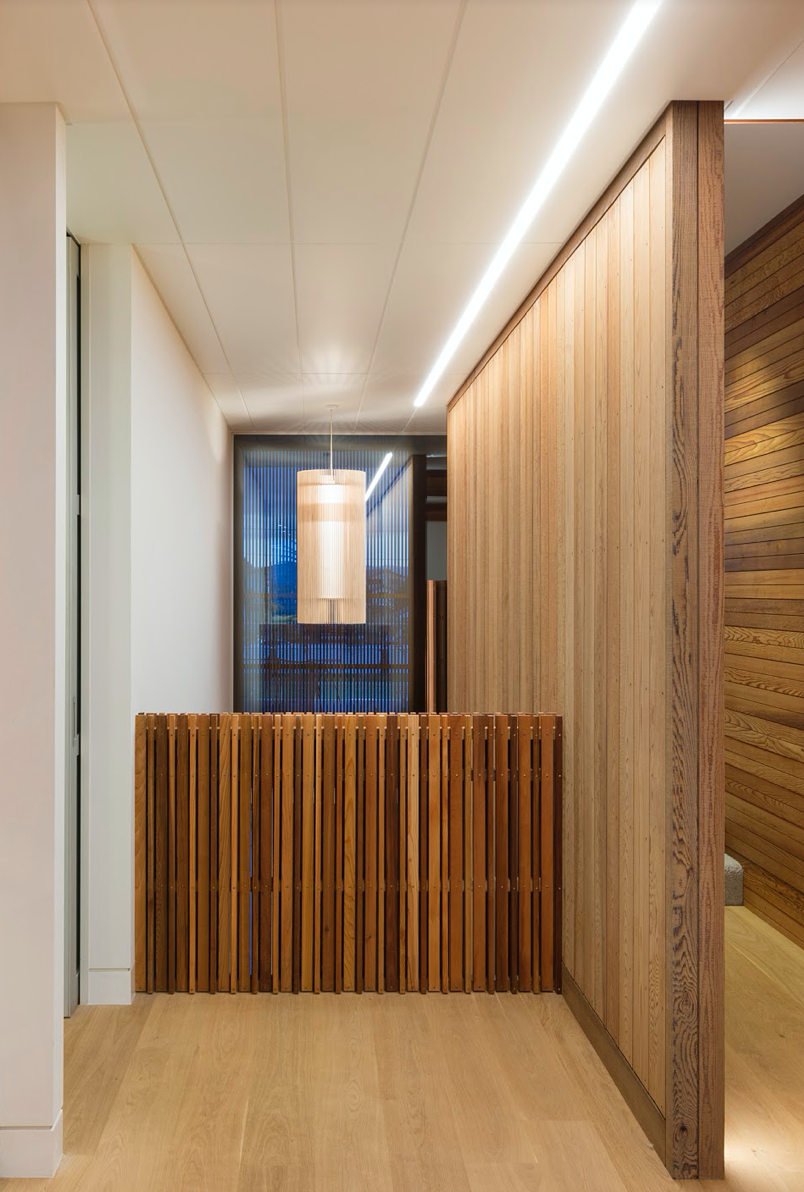
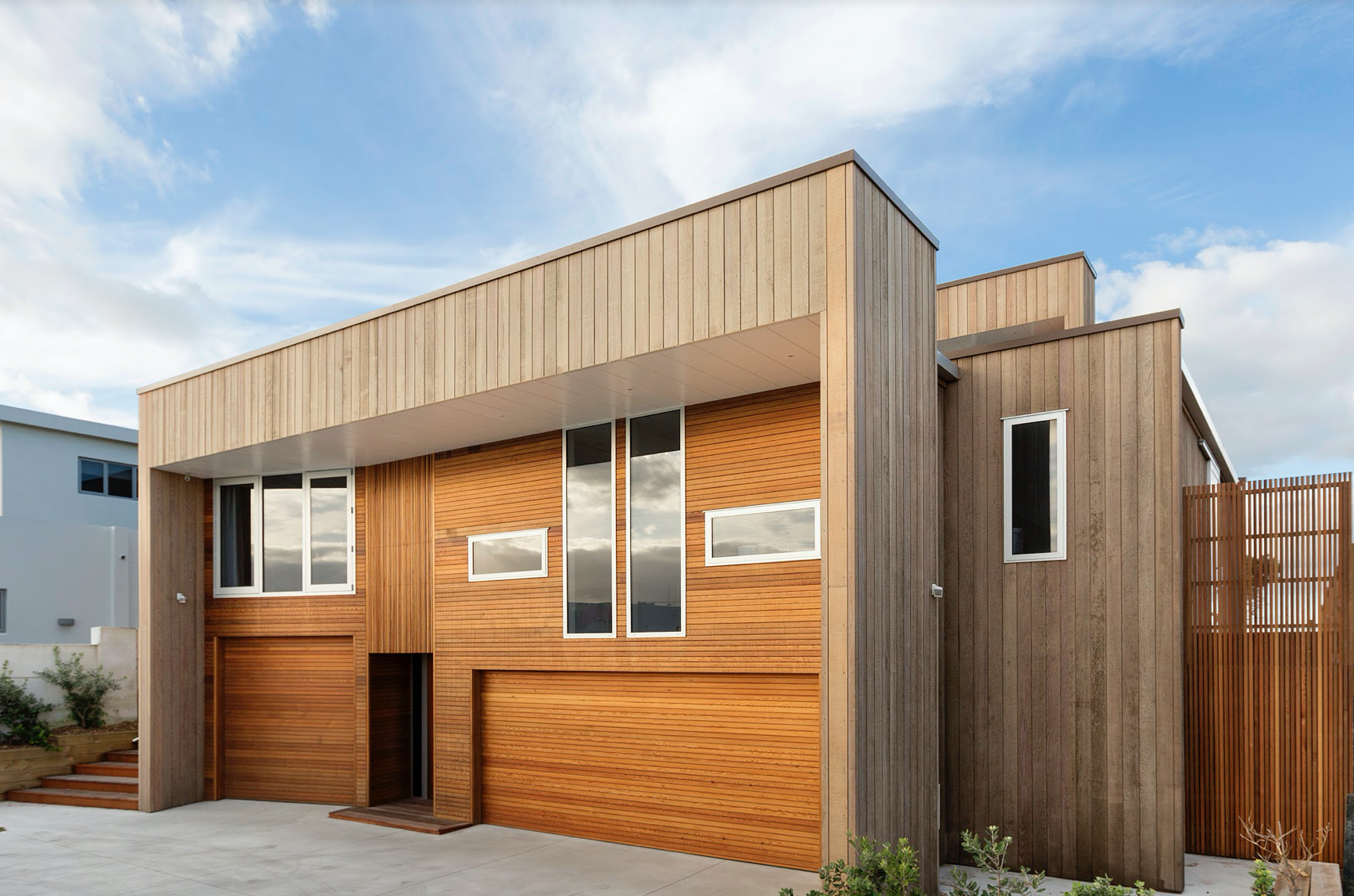
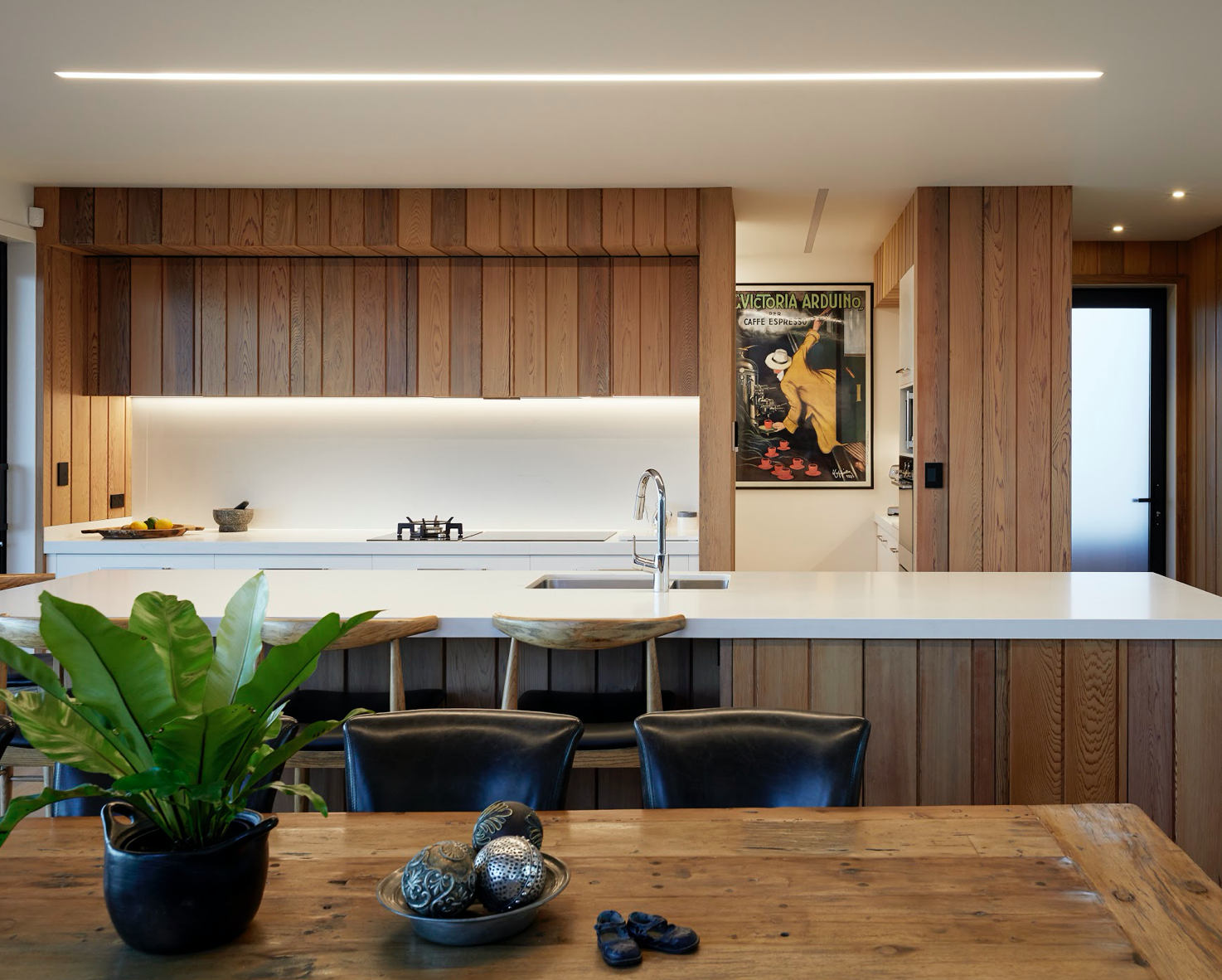
The two-storey home the team built for George Lin and his wife in Te Puna, Tauranga was the couple’s first new build, but they’re already thinking about doing it all again – with Gudsell Builders. The contemporary dwelling with cedar timber throughout is testament to their commitment to quality and communication.
“It was our architect, Brendon Gordon, who recommended Gudsell Builders to us,” says George. “We found Matt and his team really easy to talk to. I really enjoyed the process, so much so that I started thinking that I should build another house! I’ll definitely use Matt and his team again – I wouldn’t change a thing about working with him.”

The beach breeze
A good time all round
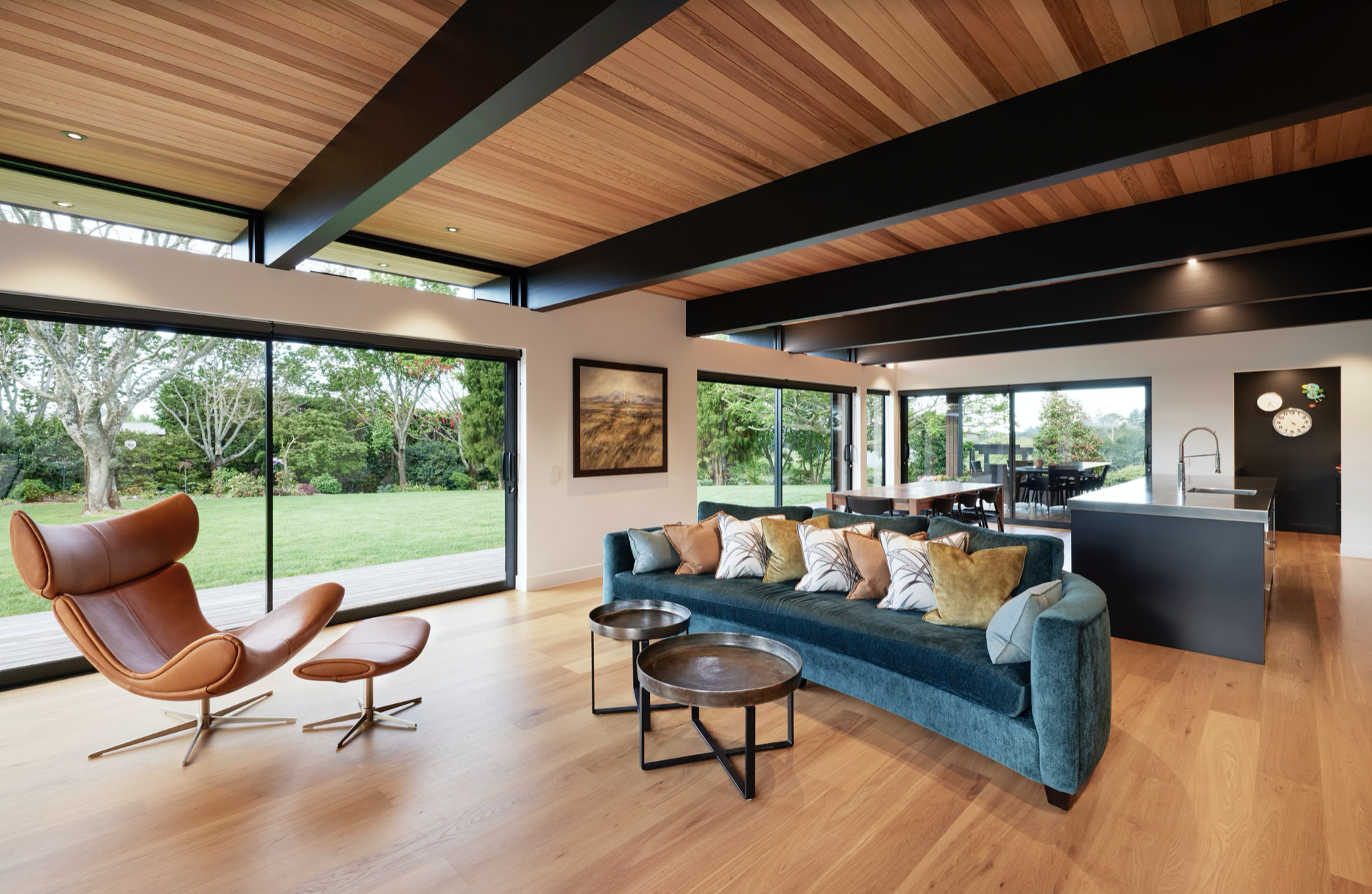
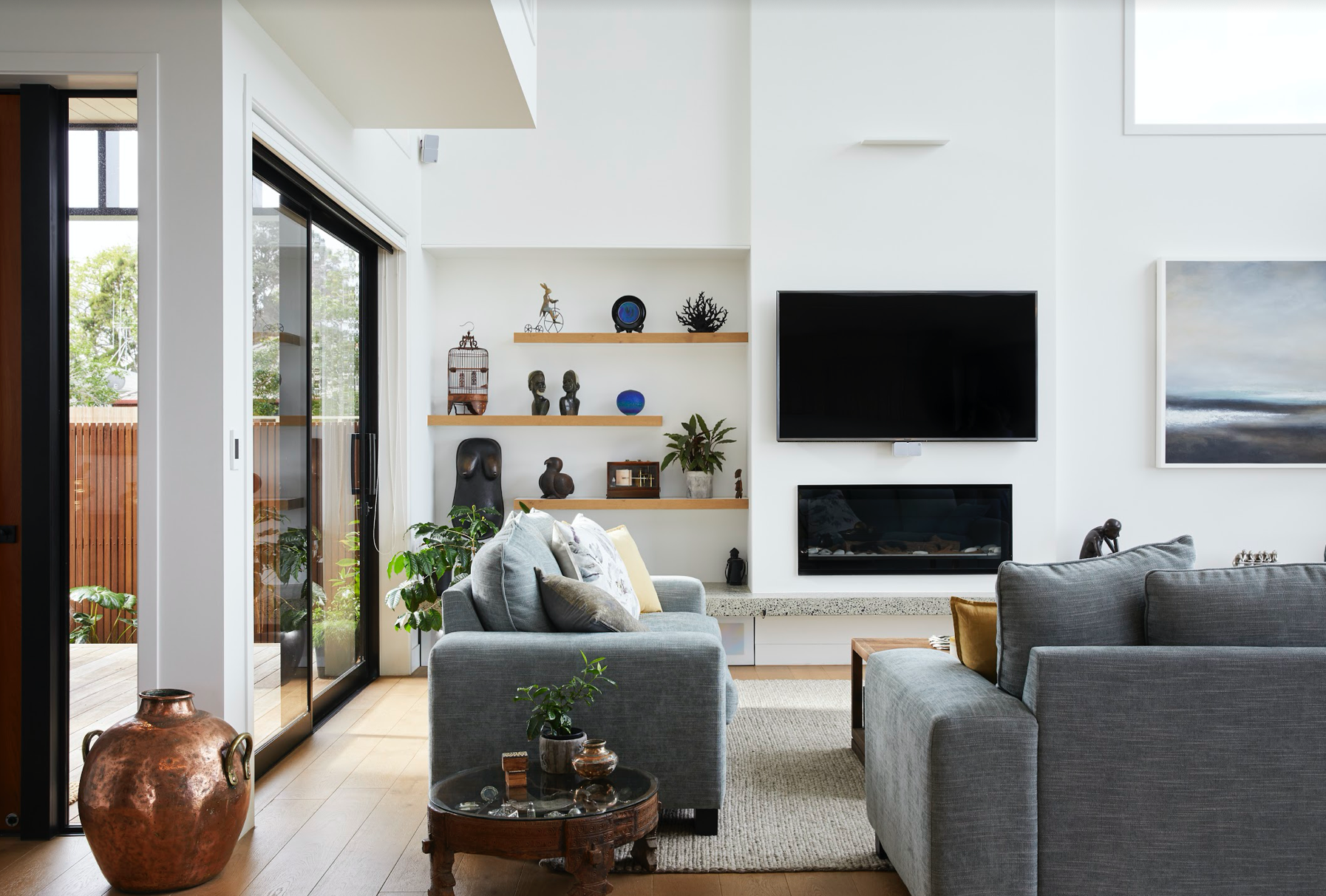
Meanwhile, Pete McSweeney’s beachfront Mt Maunganui home merges the Kiwi coastline with thoroughly modern living spaces that champion the tone and texture of stone and timber. Thanks to its carefully crafted open plan, floor-to-ceiling glass and showcasing of materials, it was a design that demanded top-notch craftsmanship and expertise to bring it alive.
“We wanted a modern-day beach house and a builder who could deliver the dream we had and that the architect encapsulated,” says Pete. Gudsell Builders seemed the obvious choice. “I looked at some of the homes they’d built and was really impressed. Gudsell Builders have a great team of people who weren’t just top builders but top blokes as well. Having good banter on site made the process so much easier.”
The evolution build
Glass + light
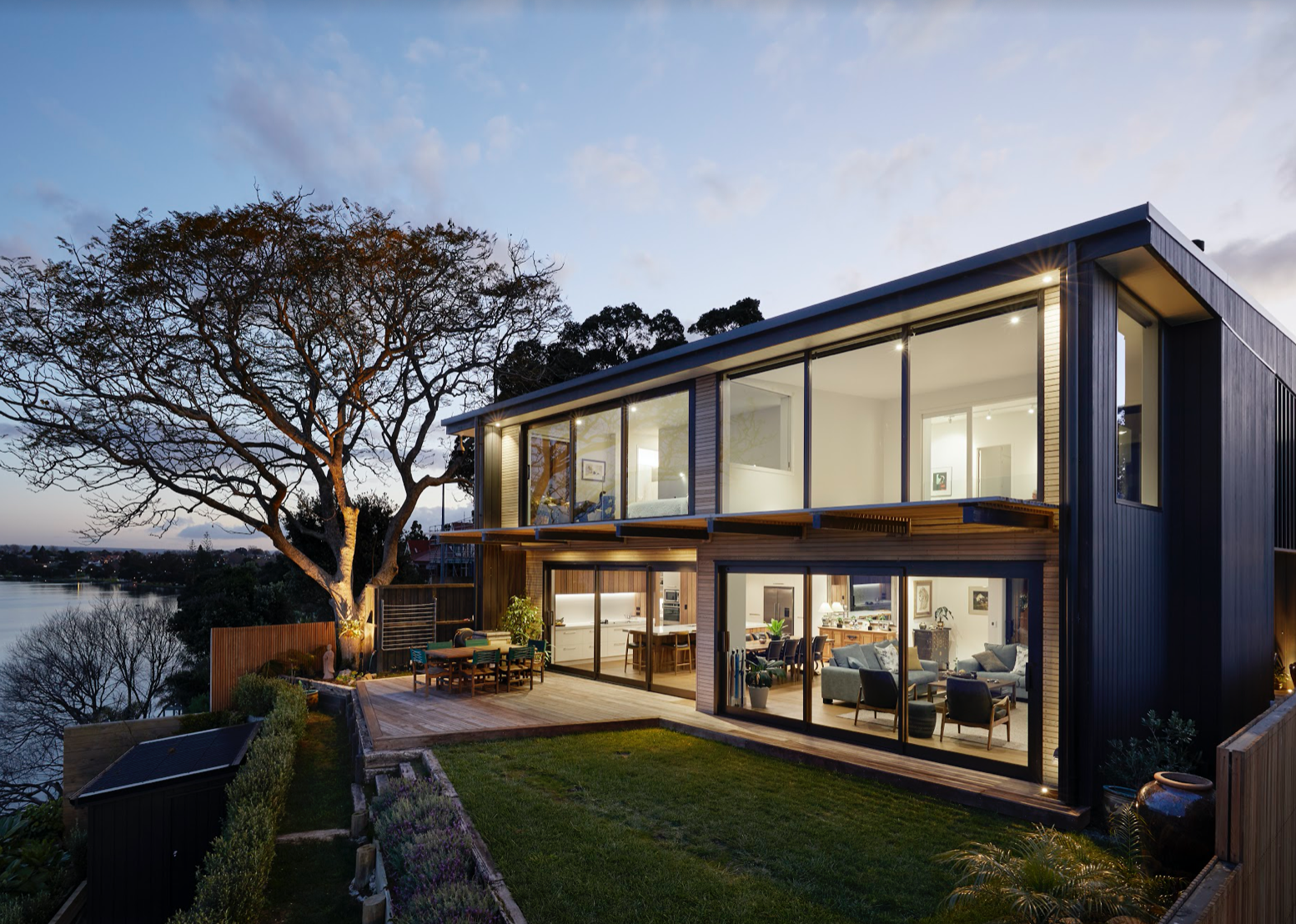
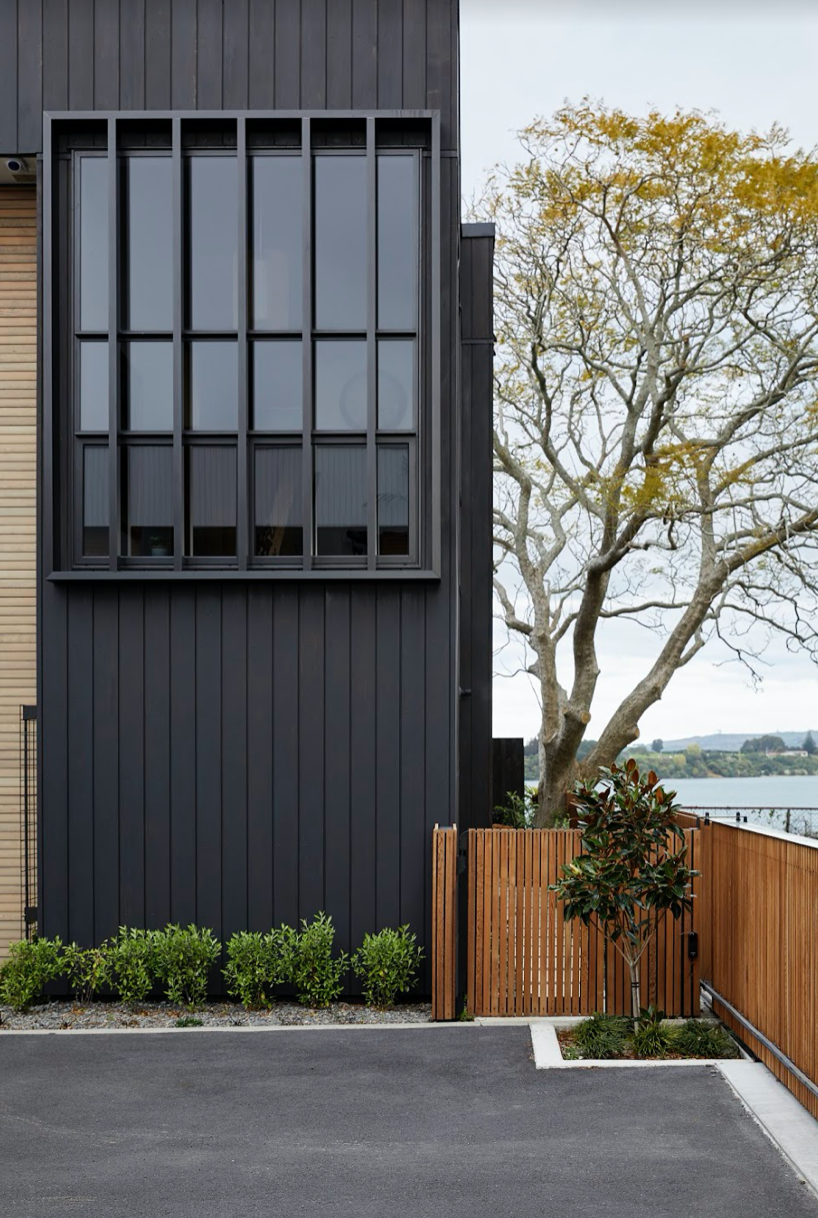
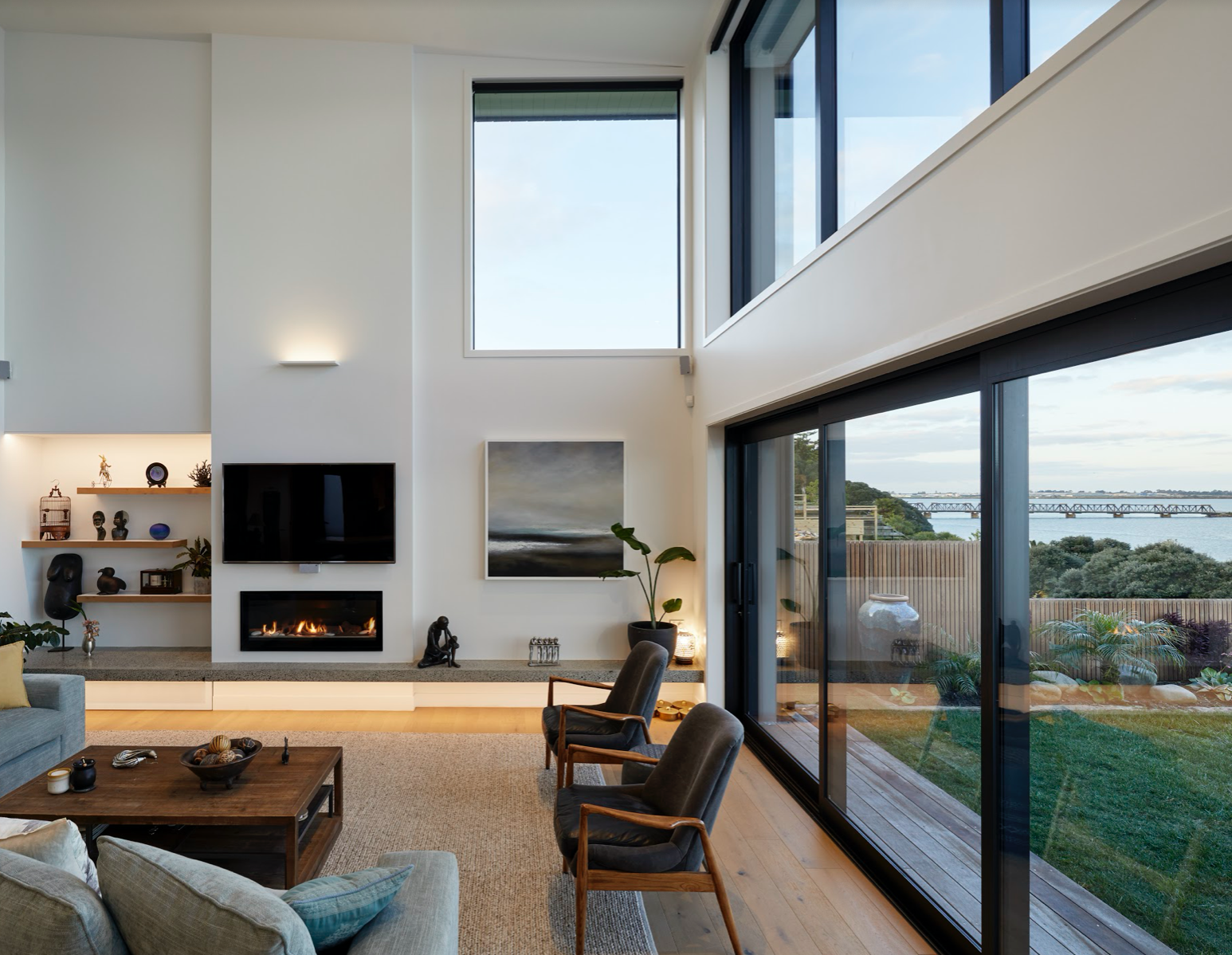
David and Ainsley Ewings’ impressive property in one of Tauranga’s avenues began as a concept drawing, but in collaboration with their architect and Gudsell Builders, it evolved into something unique. The pavilion-style house features a double-storey living area, vertical shiplap cedar and unobstructed views – and the couple are quick to credit Matt with helping to make it a reality.
“He’s very collaborative, and any issue he saw was flagged well ahead of time so it could be discussed,” says David. “The build went smoothly, even though it was quite a difficult time, with problems with materials being withdrawn meaning we had to consider other options. But we worked on that with Matt and just worked our way through it. I’d recommend Gudsell Builders to anybody.”
“They were such a nice team to work with,” says Ainsley. “Matt is just delightful – and man, did he get the job done. This house is so different, it’s fantastic, so we’re really, really happy.”

Jay Reeve talks to Ben Harper
“Everytime I’m here I’m thinking, ‘I just need to send for all my sh*t and stay right here.”

A long-time Ben Harper listener, our columnist Jay Reeve (along with his radio co-host Duncan Heyde) relives his youth and talks to his teen idol during the musician’s recent New Zealand tour that included a gig at the Mount.
I’m a Ben Harper fan – have been since his first album, Welcome to the Cruel World. In my early teens, I used to recreate his cover art in the misguided hope it’d impress the masses of girls enamoured by this guitar-playing, bohemian, skateboarding world traveller.
In 1994, Welcome to the Cruel World struck a chord with me, and Ben still has that swagger he rolled with back then – although he’s arguably better looking – and still has the effect on the fairer sex; the 17-year-old girls I was trying to impress back in the day were reliving their own dreams during his recent appearances in Aotearoa. His male fans were too, causing a veritable babysitter shortage on the night of his Mount gig.
The crowd was older, but music drops a veil over your tired adult eyes and transports you to wherever you first heard it or it affected you. I love that, I love the way Ben’s music transcends age and I love seeing people enjoying themselves. The one thing I don’t love, though, is ‘Steal My Kisses’. I understand it’s one of Ben’s most commercially successful singles, peaking in the top 20 on the Billboard charts on its release in early 2000. It garnered him more fans and the record label wanted more, so the division was set: you were a ‘Steal my Kisses’ kind of Ben Harper fan or not.
I’m not. To me, unlike his gig-closing tune ‘Glory & Consequence’, it’s not a great song and not one worthy of rolling out 20 years later. But the crowds of predominantly 40-something women at his recent show – those ’90s teens – loved it.
While he was in New Zealand, my The Rock radio show co-host Duncan Heyde and I had a chat to the man himself about what he loves...

Duncan: Welcome mate!
Ben: Well-equipped with a cheering section and everything. How’s it going, Jay and Duncan?
Jay: Oh good, mate. Kia ora, kia ora, kia ora and welcome back to our fine shores – we’re looking forward to having you. So, your biggest musical inspiration came around the age of nine… We heard a cheeky rumour you played your first gig at 12?
B: Well, you wouldn’t call it much of a gig when you’re just hammering out some chords. At 12 I was actually on the drums, because I started on the drums.
D: Isn’t there a funny story about one of your first open mic nights that you got paid for? At a church?
B: The first gig I ever got paid for was in the church basement, and at the end of the night the guy who ran it handed me $50 in the parking lot. I said, “What’s this?” and he said it was for the door. And you know churches have those fancy doors on them with stained glass and stuff, so I said, “No, no, no you can’t sell the door to pay me, that’s crazy! Go find it, go get it back.” And he said, “No, no, no, that’s the money from people who walk through the door”!
D: And you’re like, “Oh wow, I can get paid for doing something I love!”
J: You’ve had 28 years of commercial success and worked with so many different musicians – who’s still on the hit list for you of musicians you’d love to work with?
B: Alicia Keys.
D: Oh, that’d be good!
B: Yeah man.
D: Isn’t it just as simple these days as sliding into their DMs, sending them an Instagram message like, “Righto mate, I’ve got a couple of months spare coming up, let’s do this”?
B: You’d think so, right?! I stopped drinking, though. If I was still drinking I’d probably have the nerve to do that.
D: She’s hardly going to say no to you, though? That’s a fun message for her to read in her inbox, isn’t it?
B: But what if she did?!
J: You hold a special place in a lot of New Zealanders’ hearts and I can only assume that New Zealand holds a fairly special place in yours. When was the last time pre this tour that you set down in Aotearoa?
B: It’s been about four since we’ve been here, and as far as I’m concerned that’s four years too long. Every time I’m here I’m thinking, ‘I just need to send for all my sh*t and stay right here’. It’s on me, man, it’s on me everywhere – my back, my arms, my entire upper torso is here.
D: You’ve actually spent quite a bit of time here. We heard you owned a house here, we heard [musician] Jack Johnson owned a house here, we knew that [musician] Serj Tankian owned a house here... And weirdly, as Kiwis, we kind of just let celebrities do their thing when they’re in New Zealand, but we also like to think that you all go round to each other’s holiday houses for barbecues and play tunes together.
J: And go surfing!

D: Has that ever happened?
B: Oh yeah, that happens plenty with Jack and I. Jack and I are always getting together and looking for reasons to record together. In fact, we’re talking about doing a duet record.
D: That’d be sick!
J: I know that you’ve made your political ambitions heard and that you’re thinking about throwing your name in the hat for the United States of America presidency. I heard that you’re running on surfboards and steel guitars for everybody and then putting a [skate] bowl in at the White House. How’s that progressing? Would Jack be a running mate of yours?
B: Yeah, Jack or [retired professional skateboarder] Tony Hawk, I suppose!
J: You’ve got a couple of days spare while you’re here. It’s a very tight tour schedule, but you’ve got a little bit of a gap in the middle between your gigs in Queenstown and Auckland. Have you got any plans to check out some waves or skate parks while you’re here? What do you do in your downtime in New Zealand?
B: Yeah, skate parks. That’s it – concrete, finding as much concrete as possible. When I get off the phone with you, there’s a local coffee shop here in New Plymouth that supposedly has a bowl in the coffee shop, so that’s getting hit up right now.

Katchafire: burning hotter than ever
If you like reggae then you’ll love Katchafire, if you weren’t sure if you like reggae, you’ll still love Katchafire.
WORDS Nicky Adams PHOTOS Joel McDowell

If you like reggae then you’ll love Katchafire, if you weren’t sure if you like reggae, you’ll still love Katchafire. These guys are the musical Moro bar, the experience is universally uplifting and leaves you feeling better than you thought you could feel. With their chilled-out vibes and harmonies that ease the soul, one minute you can feel so relaxed that you can’t even form the word stress, the next an upbeat tempo will hit, and you just want to dance till you drop. And when you look around you know that it’s not just you, but the world is dancing with you.
Katchafire has been around for over 20 years and is one of New Zealand’s hardest working and most well-known reggae bands, with a cool factor that spans audiences and age groups. A multi-award winning, platinum record-selling formation, they have made it big internationally, rubbing shoulders and performing with musical icons, yet when I sat down to speak to founding member Jordan Bell, there wasn’t a bit of trumpet blowing or whiff of name dropping. Reggae is a musical genre that has exploded worldwide, and Katchafire has been at the center of the big bang. Each strain is taking on its own identity and these guys are 100% South Pacific roots reggae. Their unique formula blends different instruments and sounds until classical reggae morphs into mixed genre music that can be considered ‘an artform’, and amid it all the positive vibes just keep on coming.

Brothers in arms
The band is made up of founding brothers Jordan and Logan, plus ‘lifers’ Tere Ngarua, brother-in-law Leon Davey and Roy Kaiki. Jordan explained that at the end of last year they finished off their latest single, Circle Back. “Definitely a love song, it’s about circling back on anything you love – it was a real summer banger.” The timing of its release was perfect “It came out just before the summer tours so it was great to get it out there live; the support for it has been amazing, as we speak it’s on a million streams and climbing.” Circle Back was worked on during lockdown, it’s a silver lining to a period where, in normal circumstances, the band would have been touring overseas. The other upside of lockdown was the extra time at home. The importance and influence of family is at the core of this band, and pulses through the lyrics of their tunes, from the purity of Addicted to the adoration of family and Aotearoa in Fyah in the Trenches. It’s easy to see how these tunes have been written on the road, when home has felt far away.
Katchafire creates what Jordan calls “good message music. It’s about stripping back, about not worrying – about family and having a bit of consciousness.” You can’t help but wonder about the dynamic of such a tight-knit group, but Jordan laughingly verifies that harmony on the tour bus is kept by rules and a fining system. The bond is clearly strong, and creatively the energy flows. Songwriting is helped by their synergy - they’re even on the same page with musical influences, “between us we listen to everything from Tupac to Lenny Kravitz to anything in between; R&B, Metallica, it’s all on the same playlist.”
From league to the bright lights
Jordan and Logan didn’t start life as muso’s – in fact up until teenage years life was all about Rugby League. Even when music came into their lives, it wasn’t an immediate switch. As pre-teens he and Logan stumbled across a stash of their dads prized musical instruments hidden in his closet. Their father, a talented musician, had hung up his guitar, and embraced a life filled with church and family. He encouraged the boys to start with the basics, and a passion ensued. Around 1997/9 when the boys were in their late teens a choice had to be made – Rugby was subbed out and they ran with music. In what Jordan considers a defining moment for their future, their father, Grenville, rented a loft in central Hamilton where the boys could jam to all hours with friends. They began to score gigs and before long they were playing from Raglan to South Auckland. Initially a cover band, from the outset their love was of old school Reggae - in fact Bob Marley is still to this day one of Jordan’s key musical influences (Katchafire is derived from a Marley song). Growing up, Jordan says, reggae was “a forbidden genre – linked with dope smoking, it was a different religion from what we were doing. But at the same time, it was all around us.”

After winning a competition run by NZ record label Dawn Raid the group had the confidence to write their own songs. Hits Giddy Up and Bounce were the result, and led in 2003 to the release of Revival, the first of (to date) five albums. Transitioning to original music was nerve wracking, but the audience loved it, and the fan base followed them and grew. The success of the band has spread well beyond New Zealand, with the band garnering a huge international following – playing Glastonbury in the UK was “next level”. Of course, home is home, and the One Love festival here in the Bay is one of the favourites “it allows us to catch up with the reggae community and see how well the tree has flourished and grown. Not just here but through the Pacific. It’s good to get together and see how strong the support is and how the next generation has come through, for the musicians and audience.”
Overseas success has not blunted Katchafire’s love for this home audience: “New Zealand has a diverse palette when it comes to music, so we get a mixing of styles... it’s really interesting and works really well. It rings in our music, which as Pacific Reggae has more harmonies and messaging.” Talent, positivity, uplifting music and cool beats – this is why muso’s of all ages go mad for Katchafire.

The Inaugural Bluff Oyster Bash at Clarence Hotel
An absolute must-do event to get in your calendars for next year; the Bluff Oyster Bash was a roaring success filled with fun and glamour, and all the freshly-shucked oysters you could eat!

What: Bluff Oyster Bash
Where: Clarence Bistro, Tauranga
PHOTOS Pablo Creative
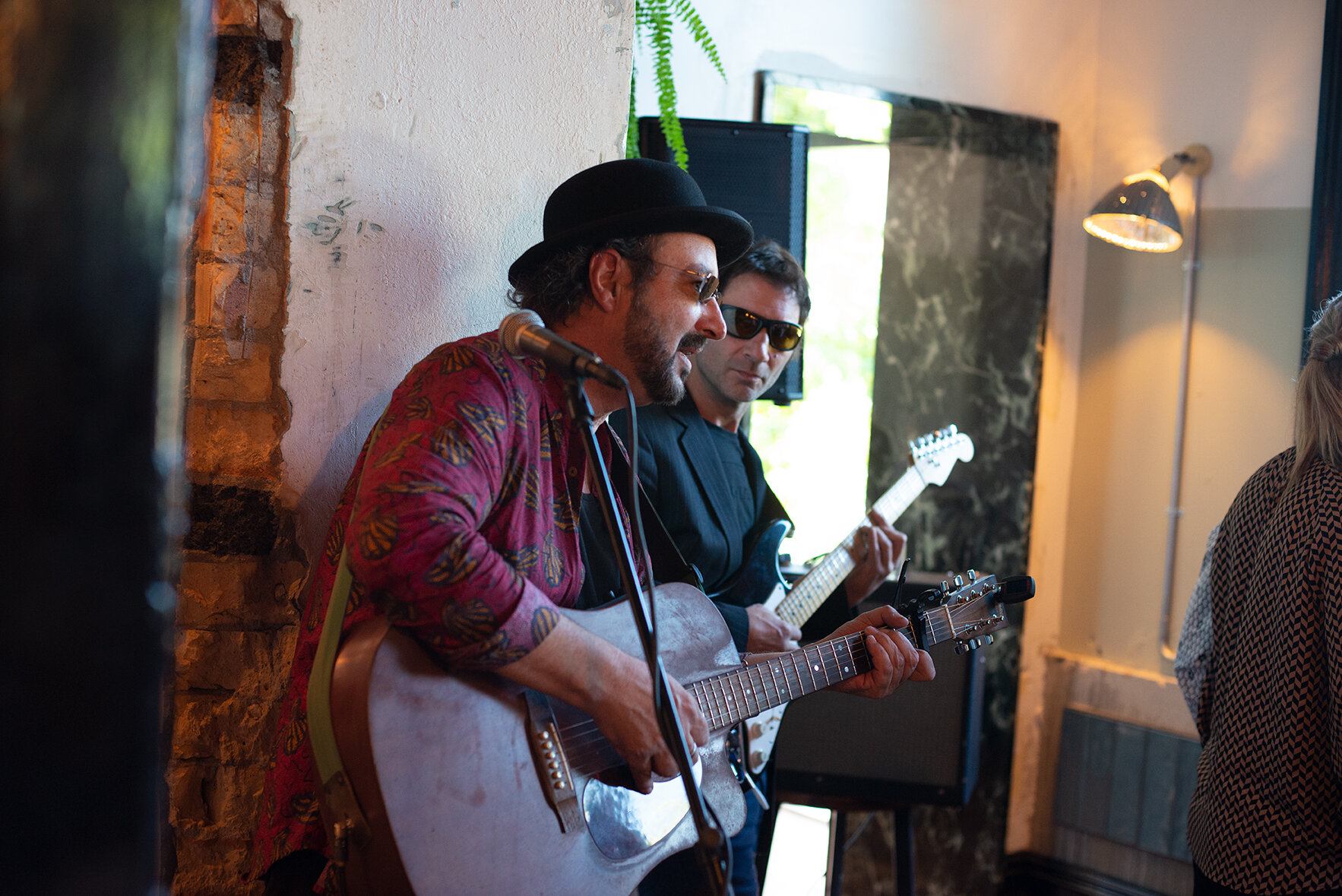
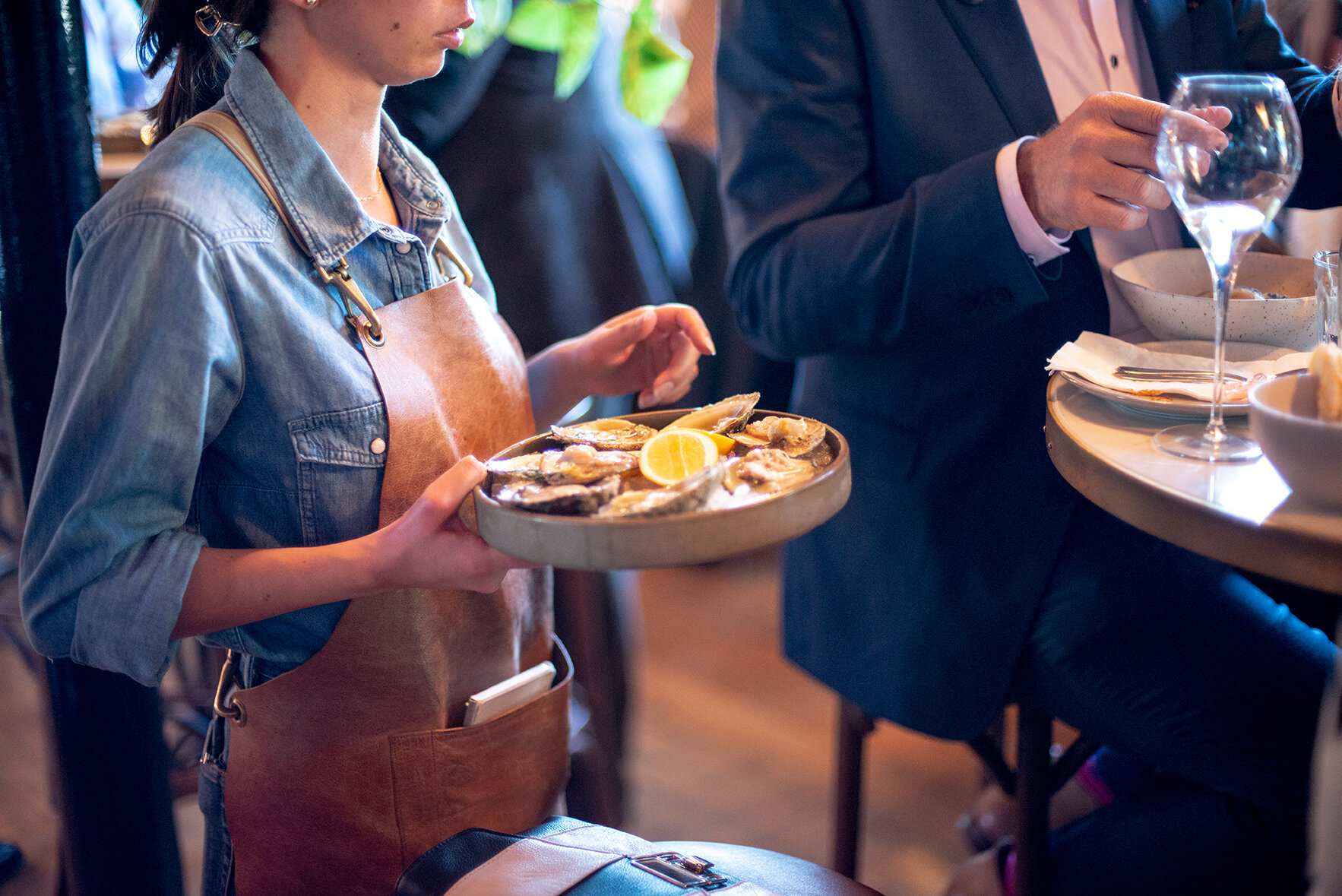
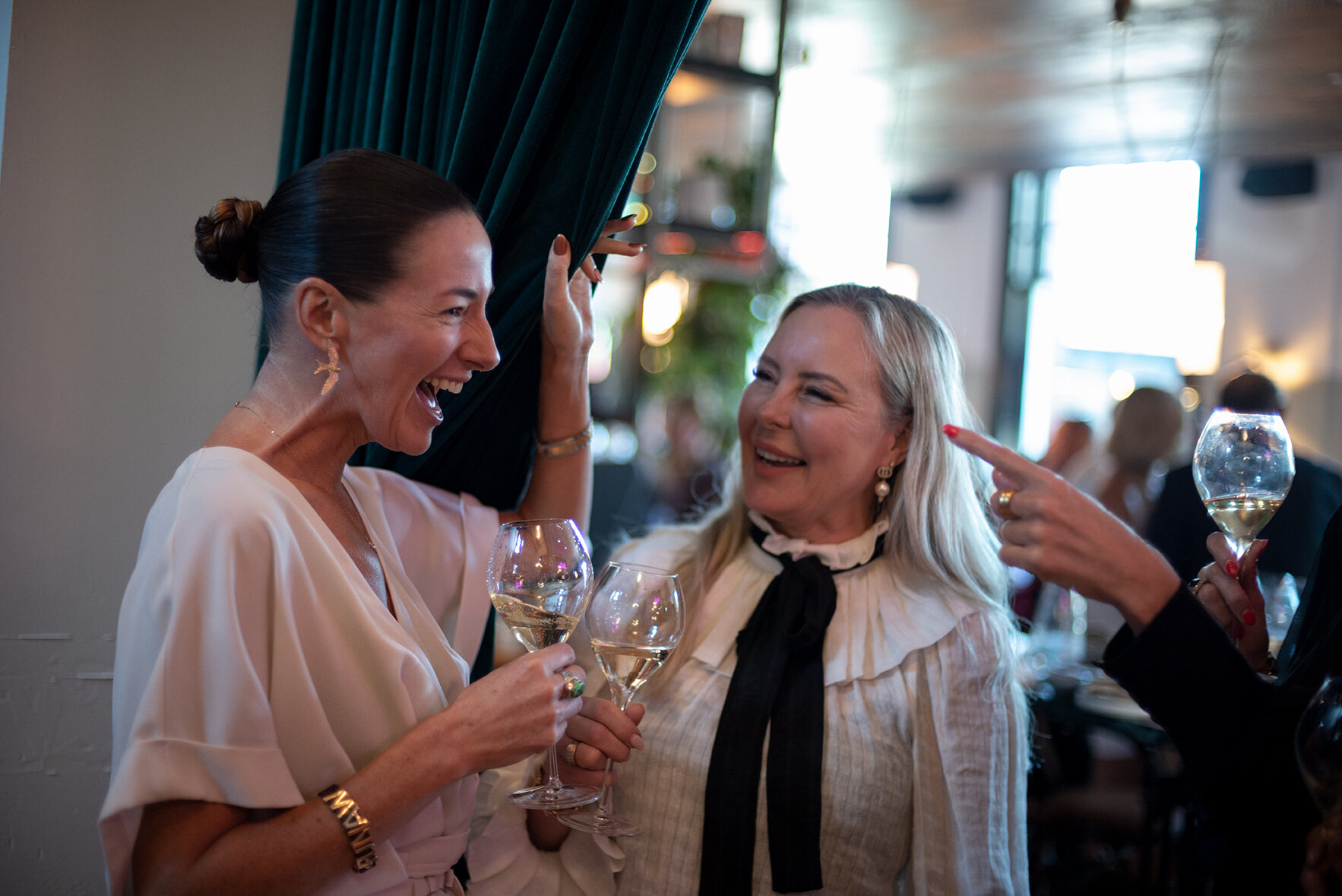
At this inaugural event, guests enjoyed free flow live shucked Bluff Oysters and a selection of seafood finger food along with champagne and entertainment throughout the night. UNO Publisher Mat Tomlinson attended; calling the event an absolute must-do next year.
“It ran through the afternoon well into the evening; everyone was dressed up and there was a real sense of fun and glamour - there must have been over 100 dozen oysters the team were shucking like maniacs, it was amazing!”




Looking for a bit of variety in your exercise regime? Clubfit could be it!
Its availability at not one but two sites – one in Tauranga and one at the Mount – isn’t the only thing that makes this gym ultra-accessible.
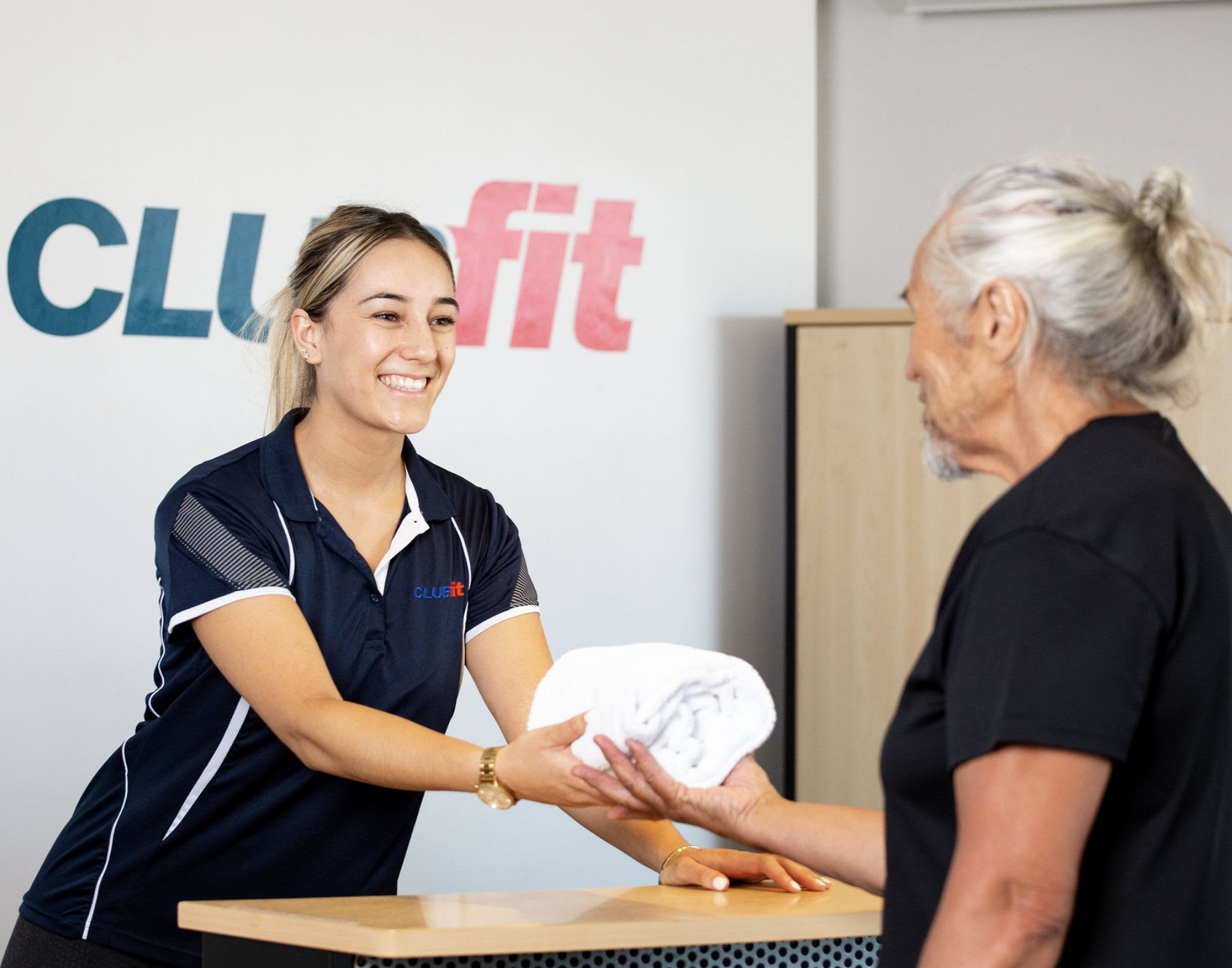
Its availability at not one but two sites – one in Tauranga and one at the Mount – isn’t the only thing that makes this gym ultra-accessible.
UNO: What’s Clubfit good at?
Personal trainer Mark Berry: We build great relationships and support our customers through their exercise journey while making it fun. For us, it’s about the long game. Beyond just getting a new member started, we’re here to keep them motivated so they make steady progress towards their goals and enjoy the journey.
What do you specialise in? Functional training, strength and conditioning, rehab, CrossFit and Olympic lifting.
Who are you best suited to? Anyone looking for a modern gym that provides value for money, great service and support will find it at Clubfit. We also offer great variety, with more than 60 group fitness classes per week. Our gym is also unique in that it offers gym and swim memberships; you can choose a membership that also provides access to five pool facilities, including spa, sauna and aqua-aerobics classes – and even the iconic Mount Hot Pools. Clubfit caters for all levels and the variety of workout options means there’s truly something for everyone. Join the club for a fun, supportive exercise programme that gets results!

What kinds of classes do you offer? Les Mills Classes are some of the world’s most popular – we’ve got Body Combat, RPM and Body Step to get the blood pumping, CX Worx and Body Pump for strength, Grit and Sprint for high-intensity training, and BodyBalance and Tone for muscle tone and flexibility.
Our Clubfit Home Grown Programmes (HGP) are our own range of classes designed to complement the Les Mills offering. HGP Hiit ’n’ Run and HGP Blitz are intense circuit-style classes that are suitable for intermediate to advanced fitness levels, while HGP Mobilise and HGP Full Function are perfect for members who are returning to exercise and need to take it slow. There’s also Yoga, Pilates and Zumba classes available, and with our gym and swim memberships, you can also attend AquaFit classes at Baywave.
What are you proud of at your gym? Without a doubt, it’s our team, from our group fitness instructors through to our amazing reception staff. The level of support and commitment they provide to our customers is outstanding and keeps people coming back for more. Around 30 percent of our new customers each month come to us through a referral from a current member.
We’re in the business of helping people live better lives and seeing people transform in terms of confidence, mental wellbeing and overall health is what we’re here for. Although we hear lots of success stories about physical transformations and fitness gains, now more than ever we’re hearing about the mental benefits that exercising at Clubfit is providing. People often comment about the fear and anxiety they’ve had to overcome just to get started on their fitness journey, and these same people also often tell us just how significant being involved in a good exercise community and developing healthy habits have been in transforming many other areas of their lives. That’s the stuff that makes us feel good.
What are your top tips for getting beach-ready? Consistency is king or queen, so show up often, do the work and enjoy the process. Also, remember that your body isn’t your enemy, so be good to it, build up slowly and watch the results start to appear.
Meet the trainers:
Mark Berry

Mark’s a Clubfit personal trainer and group fitness instructor who has worked in the industry for a decade – a job he loves. He brings an all-round training philosophy to the gym floor and his down-to-earth approach is based around the following points: aim to move your body the way it was designed to move; consistency is key – and not just in the fitness world; enjoy what you do – it’ll be a boring life if you don’t; success comes in many forms – the number on the scales is just that and nothing else; and strive for balance in all areas of training and life.
Monique VanDijk

Monique works at Clubfit as a fitness instructor – a role that’s all about coaching and support. She started her journey as a group fitness instructor through her interest in sports performance and holds a degree in Sport Science. Today, her key passions include strength training, CrossFit, Olympic lifting and gymnastics. She says she really enjoys her role and connecting with a wide variety of people through exercise, and believes quality movement in exercise is paramount to quality movement in everyday life. Her goal is to help people find a method of training that’s effective and enjoyable for them, so they can move for as long as they’re able.
1 KITEROA STREET, GREERTON, TAURANGA, & CORNER GIRVEN AND GLOUCESTER ROADS, MT MAUNGANUI
07 577 8555

Don’t get mad, get even: say goodbye to patchy skin
Skin looking a bit patchy post-summer? Never mind – Tauranga’s Skin Centre has an exclusive product formulated in-house to fix that, and practice nurse Georgie Herbison is here to tell us about it.

PHOTO Alexander Krivitskiy
Skin looking a bit patchy post-summer? Never mind – Tauranga’s Skin Centre has an exclusive product formulated in-house to fix that, and practice nurse Georgie Herbison is here to tell us about it.
UNO: Georgie, what causes pigmentation and how can we prevent it?
GEORGIE HERBISON: Melanin in the skin acts as a defence mechanism, which is why people commonly get a tan where their skin is exposed to the sun. Hyperpigmentation occurs when the skin over-produces melanin, resulting in dark patches and an uneven look. Hormonal changes can cause hyperpigmentation, but the main cause is the sun, so it’s important to always wear sunscreen or, better still, cover up or stay indoors during the hottest time of day.
UNO: Why has Skin Centre created this specialised pigmentation product, Complex K?
GEORGIE: So many patients come into the clinic distressed about their pigmentation, having tried different treatments and creams with no visible results. It’s great to be able to offer them our prescription-only product to use at home, knowing it’ll really work for them.
UNO: What makes this cream so effective?
GEORGIE: Complex K is a sun damage and skin-lightening treatment. It contains components proven in multiple independent clinical trials to reverse the effects of excessive sun, including hydroquinone 4%, a pigment inhibitor that works by reducing the production of pigmentation and increasing the production of melanosomes in melanocytes by inhibiting the activity of the enzyme tyrosinase, which is needed to make melanin. It also includes a mild topical hydrocortisone to prevent irritation, mixed with a vitamin A derivative (retinoid) that can reduce the ageing effects of the sun on our skin and stimulate collagen synthesis, while reversing photo damage and increasing the absorption and efficacy of the hydroquinone.
UNO: How should we use Complex K?
GEORGIE: This is a prescription treatment that your skin needs to adjust to slowly, so our clients use it alongside their own skincare products a few nights a week to start with, and gently increase from there.
UNO: What kinds of pigmentation is it effective on and what kinds of results do you see?
GEORGIE: We’ve had some very good results treating clients with general pigmentation and freckling, the hormonal pigmentation melasma and post-inflammatory hyperpigmentation. They notice a definite lightening of the affected skin after using the cream for 12 weeks, and the overall skin texture is smoother.
UNO: Is Complex K complemented by treatments you use in the clinic?
GEORGIE: It works well in conjunction with our Fraxel laser. The non-invasive Fraxel can reverse visible signs of ageing and damage, reducing pigmentation and evening out skin tone, and Complex K helps to maintain these results.
UNO: Who would you recommend this product to?
GEORGIE: We’d recommend it to clients with darker skin, who have a higher chance of hyperpigmentation, or anyone who’s tried other treatments with poor results. It’s especially effective for people with melasma and is a great option for anyone who doesn’t want to use laser treatments and would prefer to use a cream at home.

The powerhouse partnership revolutionising real estate in Rotorua
For nearly five years, two Rotorua real estate salespeople have been hitting top-selling prices in street after street. In fact, Jodi Ratahi and Kerif Smerdon of EVES Realty have been so successful, they achieved recognition in the top five percent of EVES estate salespeople for 2019/20.

WORDS Katy Glenie PHOTOS Salina Galvan
For nearly five years, two Rotorua real estate salespeople have been hitting top-selling prices in street after street. In fact, Jodi Ratahi and Kerif Smerdon of EVES Realty have been so successful, they achieved recognition in the top five percent of EVES estate salespeople for 2019/20.
The pair became a partnership after working together on a joint listing and enjoying each other’s style and ethos. “We both come from very supportive families that have enabled us to be focused and driven,” says Jodi. “The addition to the team was bringing on board our lovely PA Heather MaGuire in the first year of our partnership. We so appreciate her loyalty, encouragement and dedication – we love her dearly.”
Both Jodi and Kerif started working at a young age, with people from all walks of life. They learnt the importance of customer service and attention to detail, which they’ve found ultimately generates repeat business. Keeping true to these fundamental values is what drives them today.
The powerful duo have been selling homes together for almost five years, which is unusual for real-estate partnerships. “We each bring different strengths to the team,” says Kerif. “Working in this way makes a huge difference. We’re also one of the only Māori business partnerships in the industry in our city, and we’re very proud of that. Nāu te rourou, nāku te rourou, ka ora ai te iwi – everybody has something to offer, and by working together we can all flourish.”
Rotorua historically undervalued
Jodi and Kerif believe the Rotorua market has been historically undervalued, and this has fuelled their focus on achieving high sale prices for their clients. “Our pricing evaluations are incredibly accurate,” says Jodi. “Based on previous transactions, we can demonstrate to our vendors that around 95 percent of our properties sell within or well above our appraisal range.”
Believing that their success comes from their trust in each other and their genuine concern for their clients, Jodi says, “Our best possible outcome is when a buyer walks in paying what they want, and a vendor walks out getting what they want. We treat our clients how we’d want to be treated.”
Smooth process
Their experience with property transactions gives these women the expertise to guide clients through transactions, helping smooth out the sale process despite changing bank and legislative requirements. They’re also members of the Federation of Māori Authorities, and support a number of local schools and kura kaupapa in the area because as Kerif says, “Ehara taku toai te toa takitahi. Engari, he toa takitini. Success is not the work of an individual, but the work of many.”
After a careful selection process to find the best salespeople to sell their property, Maxine and Roger Houkamau are two vendors who decided that Jodi and Kerif stood out from the rest. “Jodi, Kerif and their support team are experienced, professional and personable – we loved their friendly, honest and consultative approach,” says Maxine. “They took the time to truly understand our needs, carefully advised us on property presentation ideas to maximise the sale and provided excellent insights about the market, including upcoming developments. They then sold our property above asking price in just a few weeks after listing.”
Rapid growth in market
Real estate sales in Rotorua have been strong throughout 2020. The market has experienced rapid growth, with median prices rising 9 percent in June 2020 compared with a year earlier* and by over 40 percent in the last three years**. “Things have really stepped up a notch since the national lockdown,” says Kerif. “We were already seeing more activity in the market at the start of the year – now with the current financial climate, activity has increased, wand buyers on all spectrums are contacting us for their real estate needs.”
Jodi and Kerif are strong advocates for Rotorua. “Our city is beautiful, with lots of activities to attract people, such as world-class trout fishing, superb mountain biking and walking tracks, our incredible redwood forest and thermal wonderland, and there are lots of free events for families,” says Jodi. “It’s a place that really looks after people, and we love it!”
*Infometrics Rotorua District Quarterly Economic Monitor June 2020
**One Roof Property Report Dec 2019

A change in the air: how Passive Homes could be the (cosy) future of the way we live
We spoke to architect Brooke Cholmondeley-Smith about his experience with Passive Homes; having built the second ever certified PassivHaus in New Zealand, and living in one himself with his young family.

Whether you live in a new build or an old house, if you live in New Zealand, you’ll probably be familiar with the feeling of chilly toes, the obsolescence of a coat rack (because you never take your coat off), and maybe even whistling door frames or puddles on your windowsills.
As beautiful as our homes often are, the reality of New Zealand’s historical building standards means a nation of houses that are often lacking in performance; a deficit we often feel most keenly in the winter months.
While newer homes and the technologies that come along with them are lifting the bar for warmer, drier abodes, Passive Homes; a concept borrowed from Europe, offer a higher standard of comfort, sustainability and performance that most of us, with our electric blankets and indoor coats, could only dream about.
We spoke to architect Brooke Cholmondeley-Smith of TAWA Architecture about his experience with Passive Homes; having built the second ever certified PassivHaus in New Zealand, and living in one himself with his young family.
How did you become familiar with the concept of Passive Homes?
When I was working in London for an architecture firm I was sent off to Berlin to work for a few months - I got to know some architects there, who were all designing and building to a passive house code. I got an understanding of it, but when I moved back to New Zealand I lost touch with it, it just wasn’t a thing here.
What is a Passive Home?
High-performance homes, such as Passivhaus projects, have specific requirements to meet in order to be called a PassivHaus or Passive Home. These requirements are non-negotiable, and require meticulous planning from the start of the project to make sure all elements work together in the end result. As a structure, it’s a well-insulated and orientated building which makes considerations to regulate the internal environment without little to no need for additional heating sources. It reduces on-going living costs, makes the home comfortable, healthy, quiet, and most amazingly, the perfect temperature all year-round.

How did you come to start building Passive Homes here in New Zealand?
In 2015 I found a course on it in Auckland. It was a really rigorous course, with an international exam at the end. I’d learnt about passive solar when studying to become an architect but we didn’t really look into how the heat leaves the home, so it was that next level of understanding the performance of a home.
Our first Passivhaus project was built in New Zealand in 2011/12. This project was a pioneer for the Waikato region, and the clients were, and still are, passionate ambassadors for this type of housing. The project was well-planned, managed and built but we needed verification, and the best way to do this was to install temperature sensors throughout the home and monitor the performance over several seasons and years.
We were very lucky that the owners of the home played an active part in providing us with extensive data to use and give us a clearer understanding of how Passivhaus worked within the New Zealand climate.
Does building a passive home restrict the design?
Not at all. We design it to a high-performance standard; the walls are built differently, the doors are different from what you’d normally have. But you can design all other aspects as you’d want them. The passive house knowledge is locked into the home at the start and then we can carry on and build a beautiful architectural home from there. We can build them out of any material - we have lots of flexibility around it.
Do you design passive homes as standard?
We build passive home standards into every one of our homes, but there are two outcomes; you can go through the process of becoming certified, get a plaque on your wall and get a mention on the Passive Home website, or you can just enjoy all the benefits without actually having a certified passive home.
How do you test if the house is passive?
One of the ways is to carry out a blower door test. This is an internationally recognised testing system that provides tangible results for the project team to use during the build.
It provides a test result that is universal throughout the world and allows the owners to benchmark their project.

What does it feel like to live in a passive home?
A passive home needs little or no heating or cooling - we aim for the ambient temperature to sit at 20 degrees celsius all year round. We sometimes add a small heater if that particular family wants it to be a little warmer still. We have a passive home ourselves, and it’s unbelievable - we all stay well, we have summer sheets on the bed all year, we’re always in t-shirts and shorts. We couldn’t go back to a normal house now.
It’s much quieter, and you don’t actually know what the day feels like outside. We do have to open the door to see what the day’s like - the kids are in t-shirts and shorts leaving the house for school and have to go back in to get more clothes on! We don’t even wear socks inside - those days are gone. Some people say it’s extreme for New Zealand, but we don’t think so. Living this way is so normal for us now, we forget that it’s not what everyone else is experiencing.
How close are passive homes to becoming the mainstream?
It’s getting there slowly - a lot of our clients are in two groups; people that have immigrated to New Zealand and have built a new home, only to find it incredibly cold to live in! The other biggest group would be older people building their forever home and they want something high-performance that they’re going to be really comfortable in.
About two-thirds of people want to go to the extra expense of their home being certified but most just want us to build all the benefits into the design.

Five top interior trends for your autumnal refresh
From eco chic to indoor plants, the world of interiors is currently one that reflects the moods of the world outside. Home is evermore a sanctuary and a safe haven, and comfort is key.

WORDS Nicky Adams PHOTOS Jahl Marshall
From eco-chic to indoor plants, the world of interiors is currently one that reflects the moods of the world outside.
Home is evermore a sanctuary and a safe haven, and comfort is key. For obvious reasons the last 12 months has seen a surge in home renovations, interior decorating and general home and garden improvements. Whilst it’s important to reflect your own personality in the choices that you make, we’re inevitably led – all be it sometimes without even realising – by what’s trending in home interiors, so with that in mind it’s worth looking at the direction 2021 is taking.
Pleasure zone
There is no real fashion barometer for what homely looks like, however for this year the move is towards indulging in cosy comfort. Think sink-into-sofas, and rich, tactile fabrics. Luxurious candles, unusual pieces from craftspeople rather than mass-produced items – there’s a real shift to furnishing your home with items that will stand the test of time as opposed to something that will only last until the next fashion cycle. Imagine soft wool rugs underfoot, chairs that you want to sit in and sofas that you can’t get out of. More than ever there’s an increased love of carefully selected pieces, and an appreciation of artists and artisans.
Staying Revived
‘Granny chic’ is a trend that is working its way into our homes in all kinds of ways. Humming away in the background has been a growing nostalgia that has led to a love of retro-trends, so much so that the term ‘cottage core’ has been termed. In terms of our homes, there has been a steady revival of accessories that bring to mind the comfort of bygone eras. Stunning antique pieces, home crafts such as crochet blankets, fine china, floral cushions or coverings, and to be honest vintage touches and whimsy in general is hot to trot.

Nice and Natural
Natural and recycled fabrics look as though they are edging ahead in the popularity stakes. Sustainable and natural textiles don’t just fit with the heightened awareness of environmental impact, they are also beautiful both to the touch and to the eye. Organic cotton recycled polyester and low impact linen are all favourites that are huge for the year ahead in both home furnishings and fashion.
Club Tropicana
Global inspiration is a reoccurring theme to the looks for 2021 – and one way in which this is playing out in home décor is through a relaxed tropical vibe. It’s not hard to see why this has struck a chord, because it means that while we can’t get to the tropics, we still have the power to bring representational elements into our home. Bold and beautiful, spaces that reflect travel can be seen incorporating florals, lush greenery and seascapes, all bringing a contemporary edge to a more classical feel. The ‘distant shores’ trends incorporate tropical brights, subtle monotones and soft yellow into one huge aspirational wave of joie de vivre.
Potluck
Not since the 1970s have indoor house plants have been more on point. Plants provide a wonderful double dip when it comes to an interior feature – aside from the plant itself, there is also the all-important pot that it sits in. Perhaps the popularity is in part due to the quality of faux plants. No longer the lack lustre imitations, it’s now pretty impossible to tell the difference between a plant that needs watering and one that doesn’t. Add to this the extensive selection with everything from hanging creepers to elegant palms, and you have a statement piece that is almost unprecedented in its versatility within the home.

Award-winning Israel Randell talks art, new challenges and the bigger picture
“If people ask me [to explain my work], I want to have a conversation. That’s really all art is, a conversation. Sometimes it’s real honest, like, ‘What the hell is that?’ or ‘Why do I hate this work so much?’” That’s the kind of things that artwork brings.”

Through multi-media, moving image and sound, award-winning Tauranga artist Israel Randell articulates the spiritual and unseen. Now, in her new role as curator at Whakatāne Museum & Arts, she wants to help amplify the voices of local talent.
WORDS Maria Hoyle PHOTOS Quinn O’Connell
The question ‘what is art?’ is a tricky one to answer. One person’s masterpiece may be another’s monstrosity, making it hard to reach a consensus. Yet for multi-disciplinary artist Israel Randell, it’s not complicated at all. Art, she says, is a conversation, and as a newly appointed exhibitions curator at Whakatāne Museum & Arts, it’s one she is very much looking forward to having with the local community.
Originally from Hamilton (Tainui, Ngāti Kahungunu) and of Cook Islands descent, the mum-of-one has her work cut out for her when she arrives at her post (the week after talking to UNO). She and the team will be busy preparing for the February exhibition of the winners of the Molly Morpeth Canaday Award: Painting & Drawing, presented by Arts Whakatāne and held at Te Kōputu a te Whanga a Toi – Whakatāne Library & Exhibition Centre. Although that will be Israel’s immediate focus, she talks excitedly about the bigger picture.
“I’m really interested in being embedded in the community, getting to know the artists, and finding out how I can help them to realise their ambitions and be that person who bridges the community and the gallery,” says the Toi Ohomai Bachelor of Creative Industries graduate. “I’m also excited to be learning from my colleagues. Going into any new role, it’s good to be listening.”
Listening will be crucial for her dialogue with local artists too. Some may not see the gallery space as relevant to them – for example, those who may be more focused on selling their work, or those from other disciplines such as dance, theatre or acting.
Is it fair to say that galleries are often seen as no-go zones for certain sections of the community? “Yes,” she says decisively. “A gallery space is definitely always viewed as a white space by people outside looking in.”
So breaking down the boundaries between practices is one way not only to showcase a wider variety of work, but also to change the perception of what and who a gallery is for, of reaching those who aren’t, for whatever reason, engaging with it. “It’s constructive to help different types of creatives,” says Israel. “I think it does start with having a structure that caters to every kind of practice, not just the 2D practice or sculptural practice.”
Israel’s no stranger to having a dialogue across disciplines and amplifying the voices of indigenous artists. She arrives in her new role fresh from a Mana Moana research residency with arts agency Circuit, where she looked at the experimental practices of Māori and Pasifika visual artists, writers, choreographers and musicians to produce a collection of interviews and online content.
Israel’s own work experiments with moving image, multi-media and sound – quite a departure from the large-scale paintings she did as an art student in Auckland. “I took a break, moved to Tauranga and started off again at Toi Ohomai. But I didn’t want my work to be flat on the wall anymore – I wanted to occupy the space between the walls. I wanted to paint with light in space, so I was looking for materials that would let me do that. Lots of painters say all painting is about light and dark. I was interested in using light in a sculptural way to activate space.”
She originally considered working in neon, but it was costly. A classmate suggested wire would be cheaper, so she sourced some on Trade Me and started experimenting with it in the school studio.
Playing with wire and light sounds like a lot of fun, but it was no walk in the park. Israel’s daughter Lola, now two and a half, was just eight months old when Israel started the course. “I was still breastfeeding so I was worried. But I needed something else, a direction or passion, that was separate from my identity as a mother. I needed that for my own mental health and that in turn made me a better mother.”
It also, she believes, made her a better artist. “You go in there with no bullshit, no excuses – you get things done. You don’t have time to fluff around, then go home and work till 2am, because at home it’s all about your child. So I was way more focused. I think that drive elevated my art practice to something it maybe couldn’t have been when I was a single person.”
“I didn’t want my work to be flat on the wall anymore – I wanted to occupy the space between the walls.”
That ‘elevated something’ is a compelling body of work that speaks clearly to ‘maatauranga’ – what she describes as “the whole way of being Māori, the many layers that there are.
“I look a lot to cosmological narratives to explore things that aren’t material,” she says. “I’m interested in actualising the intangible. It’s hard… I don’t know if I’m successful half the time. This year’s body of work has focused on water and the elemental phases it goes through, and the spiritual things they hold for Māori and Pasifika people. I’m interested in exploring things that I can’t see that have been told by generations of elders, and trying to connect with it and make sense of it in my own way.”

Israel might not know if she’s successful half the time, but her work certainly impressed the judges of the 2020 Miles Art Award, presented In March by the Tauranga Art Gallery Toi Tauranga. To her surprise, she landed the Supreme Award for Wahi Ngaro, a compelling installation in which triangles of electroluminescent wire reference whakapapa and an in-between space with infinite potential. It’s a beautiful piece, one you can appreciate without knowing what it represents. Does it bother her when she’s asked to explain her work?
“If people do ask me, I want to have a conversation,” she says. “That’s really all art is, a conversation. The artwork is there to trigger that. Sometimes it’s real honest conversations, like, ‘What the hell is that?’ or ‘Why do I hate this work so much?’” That’s the kind of things that artwork brings.”
And then sometimes the work exists, well, just because. “Sometimes we totally make it because we want to make it. It’s important to let people know that and uncomplicate the way we speak.”

Featured in UNO Issue #51 - subscribe to get yours


