

Know the craft
The Barrel Room is a knowledge hub of craft beer, fine wine and spirits matched with fantastic food.
WORDS MONIQUE BALVERT-O’CONNOR / PHOTOS KENRICK RHYS

Locals and holidaymakers looking for a notable dining experience need go no further than Tauranga’s The Barrel Room.
Home to craft beer, whisky, fine wine, tasty food and live music, The Barrel Room on Tauranga’s Wharf Street has been wowing people since it opened its doors two years ago. Driven by a passion for finely crafted things, owners Carolyn and Stewart Gebbie came to Tauranga to offer the city something new.
The locals are immensely grateful and appreciate that Carolyn and Stewart have excellent drink, food, service and atmosphere on tap. For this couple, the business is a marriage made in heaven. Carolyn loves wine, while Stewart loves beer – and he certainly knows about it; he co-owns Wellington craft brewery Te Aro Brewing Co, and loves how The Barrel Room is a celebration of great beer.
The selection is great, with 16 independent taps, which means the Gebbies can serve what they believe are New Zealand’s best beers. They have four taps dedicated to local brewers, and use the Untappd app to let customers know which beers and ciders they have on tap at any time. It’s little wonder The Barrel Room is a hit among lovers of craft beer.
The same high level of attention is given to wine. Carolyn explains the Coravin Wine System is in use at The Barrel Room. This allows wine to be poured by the glass without the rest of the bottle spoiling. This wine preservation system is like a favourite appliance, she says.
“We currently offer 63 wines by the glass and more by the bottle. We regularly make changes to our list to provide interest and the opportunity to try new wines,” Carolyn proudly explains.
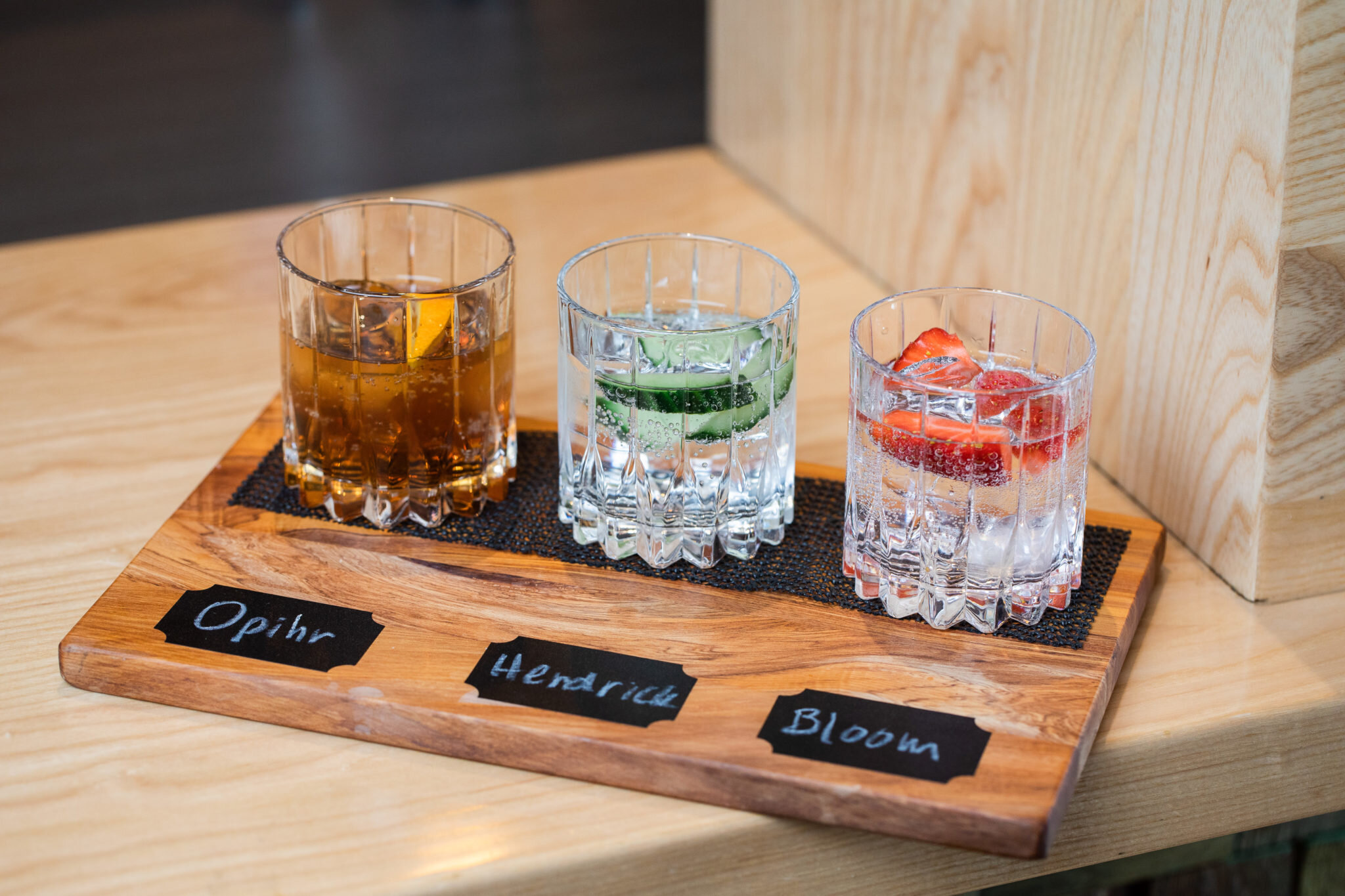
Unsure which wine, beer, whisky or gin (served in crystal, no less) to sample? The Barrel Room provides the perfect solution with its ‘tasting flights’.
“It’s a great discovery experience. For example, the wine tasting flight menu offers a responsible three half-pours. Come in, bring your friends, and ask for a tasting flight,” Carolyn says. Advice will be on-hand, she adds, without the need to listen to a winemaker talk for an hour!
The tasting flights – for wine, beer, or spirits – are proving an excellent idea for work functions (think Christmas), stag dos, hens’ nights, and just fun gatherings in general.
The Barrel Room is open until late, so it’s a great place to head to after late-night entertainment in town. Or come to The Barrel Room for entertainment – there’s live music on Saturdays and sometimes Fridays too.
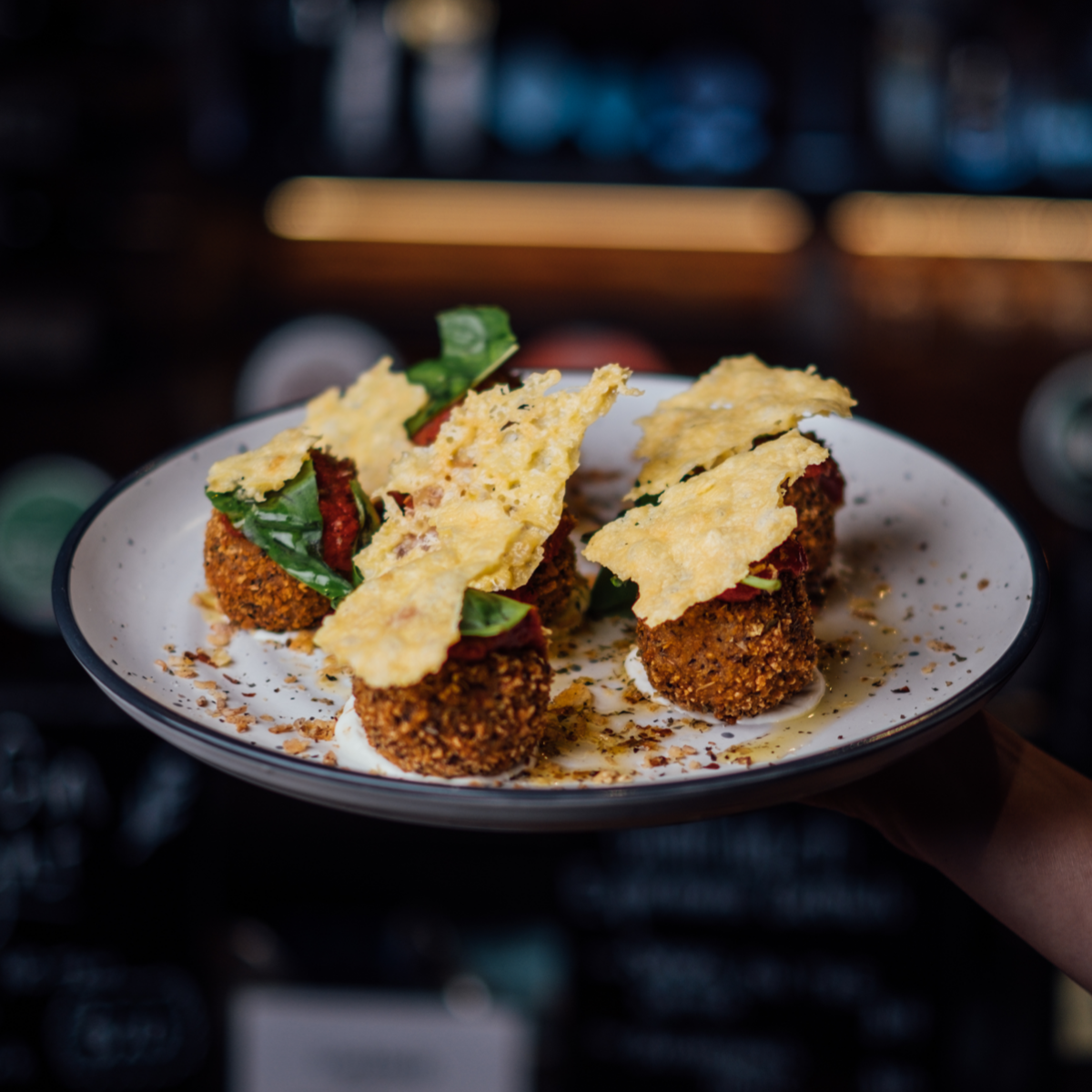
Stewart and Carolyn say their aim is to do food and drinks well and to pair them well. The food options include: tacos, beef and blue burgers; Thai beef salad; various pizzas (with handmade bases); steak, fish and chips, and lighter offerings like calamari, and build-your-own platters.
“As requested by our regulars, we have introduced a dessert menu,” Carolyn says, adding that matcha panna cotta with yuzu and rosemary crumble is among the favourites.
The menu isn’t complete without excellent service and a great environment, Carolyn and Stewart say. All staff are trained to ensure the service they offer is first-rate. As for offering an atmospheric venue, The Barrel Room’s eye-catching décor includes barrels on the back wall, and the front of the bar features a patchwork of wine barrel staves – a feature created by Stewart.
It’s a cosy and inviting environment in winter, while, in summer, if the sun’s out, then The Barrel Room has a courtyard for drinks in the sunshine. In fact, that was a great attractor when the Gebbies were deciding where to set up their venture. Just perfect, they decided, and thousands agree.

Path of progress: Motu Trails, Opotiki
How a decade-old cycle trail is delighting both tourists and the local community contributing to its success.

How a decade-old cycle trail is delighting both tourists and the local community contributing to its success.
WORDS Sue Hoffart PHOTOS Jim Robinson, Neil Robert Hutton + Cam Mackenzie
A scenic dunes trail that has resolved a watery paradox for the coastal town of Opōtiki is proving a massive drawcard for both locals and tourists.
Ancient waka travellers and modern-day boat owners have always been able to access the ocean by way of twin rivers that wrap around the Eastern Bay of Plenty township. But it took a cycle trail and handsome suspension bridge spanning Otara River to connect walkers, joggers and bikers with the gloriously long stretch of coastline on their doorstep.
Most of the spectacular Motu Trails cycleway network lies inland, where rugged grade three and four tracks attract hardy mountain bikers keen to test themselves on backcountry roads and steep forest trails. Collectively, they range over 30km of track and more than 150km of gravel and backcountry roads. The most mellow section, though, begins with a pedestrian bridge on the northern edge of town and a delightfully scenic, undulating gravel track running parallel to the shoreline.
Increasing popularity
It is this 9km grade two “dunes trail” that has given the town its beach, according to tourism operator and local resident Volker Grindel. The decade-old trail has become increasingly popular with Opotiki people and visitors.
“Before, everyone needed a car to get to the beach,” Volker says.
These days local children and carless residents can reach the coast safely on foot, by crossing the Pakowhai ki Otutaopuku bridge, rather than having to walk more than 3km along the highway and side road. So too can tourists who arrive by bus or bike. After crossing the river, the trail meanders past grazing Friesian cows and opens onto views of the East Cape and nearby Moutohorā (Whale Island).
“The dunes section is the most used part of the Motu Trails,” Volker says.
“The town kids and people who live here use it a lot for fitness; running, jogging. And the kids who live out of town use it to come to school on their bikes because it’s safer than the highway. I’ve even seen a little fella with training wheels.”

Happy accident
Volker and his wife Andrea operate a small backpackers’ hostel and Andrea runs their busy Kafe Friends coffee cart just off the main street. The German-born couple, who met in Opotiki after her car broke down there, are seeing increasing numbers of day trippers in bike gear from nearby Rotorua, Whakatane and Tauranga.
He says Tirohanga Beach Motor Camp, part way along the dunes, is packed with people using bikes during summer holidays and weekends. Plenty of those campers and cycle tourists make their way along the trail to the town centre.
“Before, they were not taking their kids on that busy road. Now, they come here to town do some shopping, drop in for coffee here or somewhere else. So the Four Square, the New World, the gas stations all get something out of this trail, too.”
Andrea runs along the dunes when she is training for half-marathons, and it is used by dog walkers and local schools that have been inspired to run duathlons and small cycle events for students.
Long-time volunteer trail builder, keen biker and Motu Trails executive officer Jim Robinson does track assessments, as well as overseeing signage, the trails website and Facebook page and multiple other roles. He laughs at his fancy title and stresses the trust-run operation is small and heavily reliant on unpaid community involvement, as well as council and conservation department input. But he says there is no doubting the Motu social and economic benefits, or its standing as a ‘great ride’ of Ngā Haerenga, the New Zealand Cycle Trail.
He is especially enthused by the ongoing planting and beautification programme that has transformed the “really important but environmentally degraded” sand dunes area with the help of about 20,000 flax bushes, cabbage trees, pōhutukawa and other native plants. All have been poked into the ground by volunteers, with another three planting days planned this winter.
Jim says one section of coastline now occupied by the dunes trail had been used for dumping rubbish, other parts had been grazed by stock, or were covered in gorse, kikuyu, boxthorn, pampas and other undesirable invaders.
Points of interest
Interpretive signs denote culturally significant areas, including historic landing sites and burial grounds, and the track route was chosen to avoid especially sacred or sensitive sites.
Local potters and environmentalists Margaret and Stuart Slade provided handmade ceramic tiles depicting birds, mounted on concrete culverts to create sturdy sculpture. Earlier artworks were provided by schoolchildren who painted wooden cut-outs of birds and animals as a conservation week project.

Small tourism operators have sprung up to offer farmstay accommodation, food or shuttle transport to mountain bikers using the trails that connect Opotiki to Gisborne.
Late last year, long-time kayak tour operator Kenny McCracken began offering guided bike tours along the dunes, incorporating local history and food, with an optional swim along the way.
“There’s a massive amount of community ownership of the trail,” Jim says.

A long weekend in Los Angeles: our editor shows you how
A sunny stroll through the canals which are a great surprise to find in such a sprawling city, and we picked up our bags from the hotel and headed back out to the airport for our 9pm flight. An entirely different continent and three days of discovery, then back feeling refreshed. The best way to holiday.
WORDS + PHOTOS Jenny Rudd
So you probably think it's not possible, what with that 12 hour flight. But it all dovetails neatly. The flights are overnight both directions, and there's only a 3 hour time difference, which you barely notice. Leave Auckland Friday night and land mid-morning on the same day. Then leave LA on Sunday night and land back home first thing on Tuesday. Because you've slept all night on the plane you'll be fresh enough to go to work that day. So you can go on holiday to America and only take Monday off work. What a great shimmy!
Friday
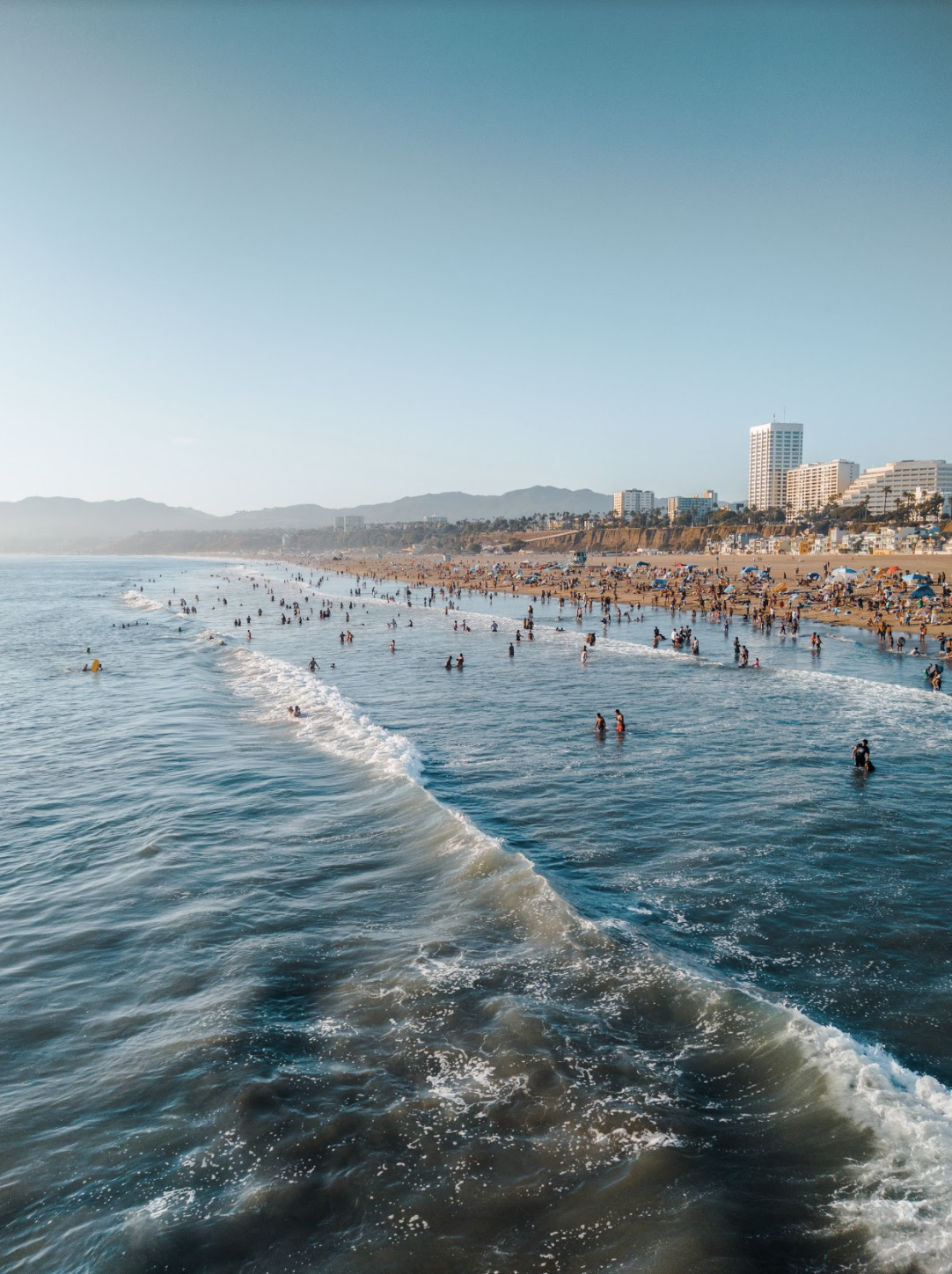
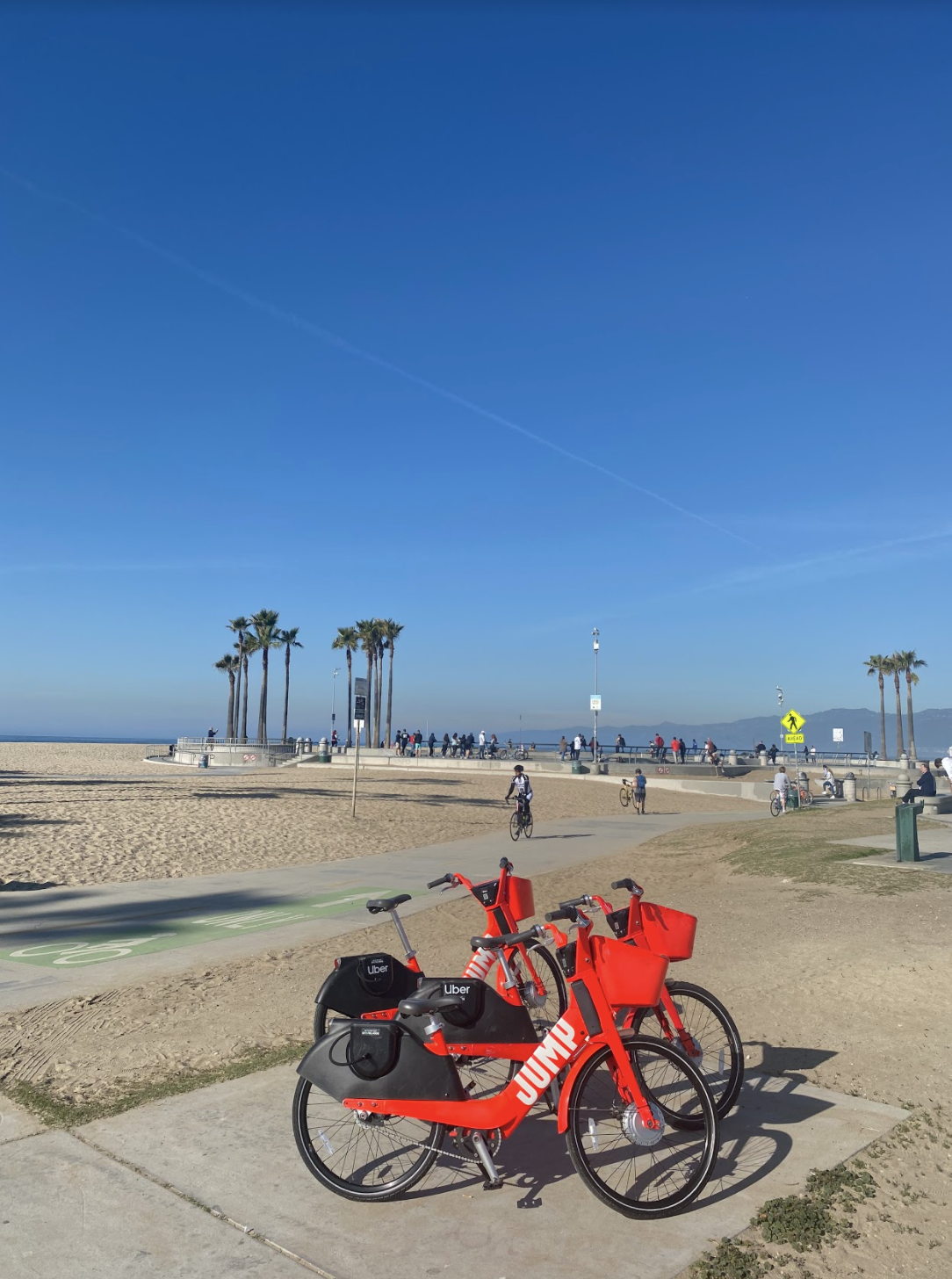
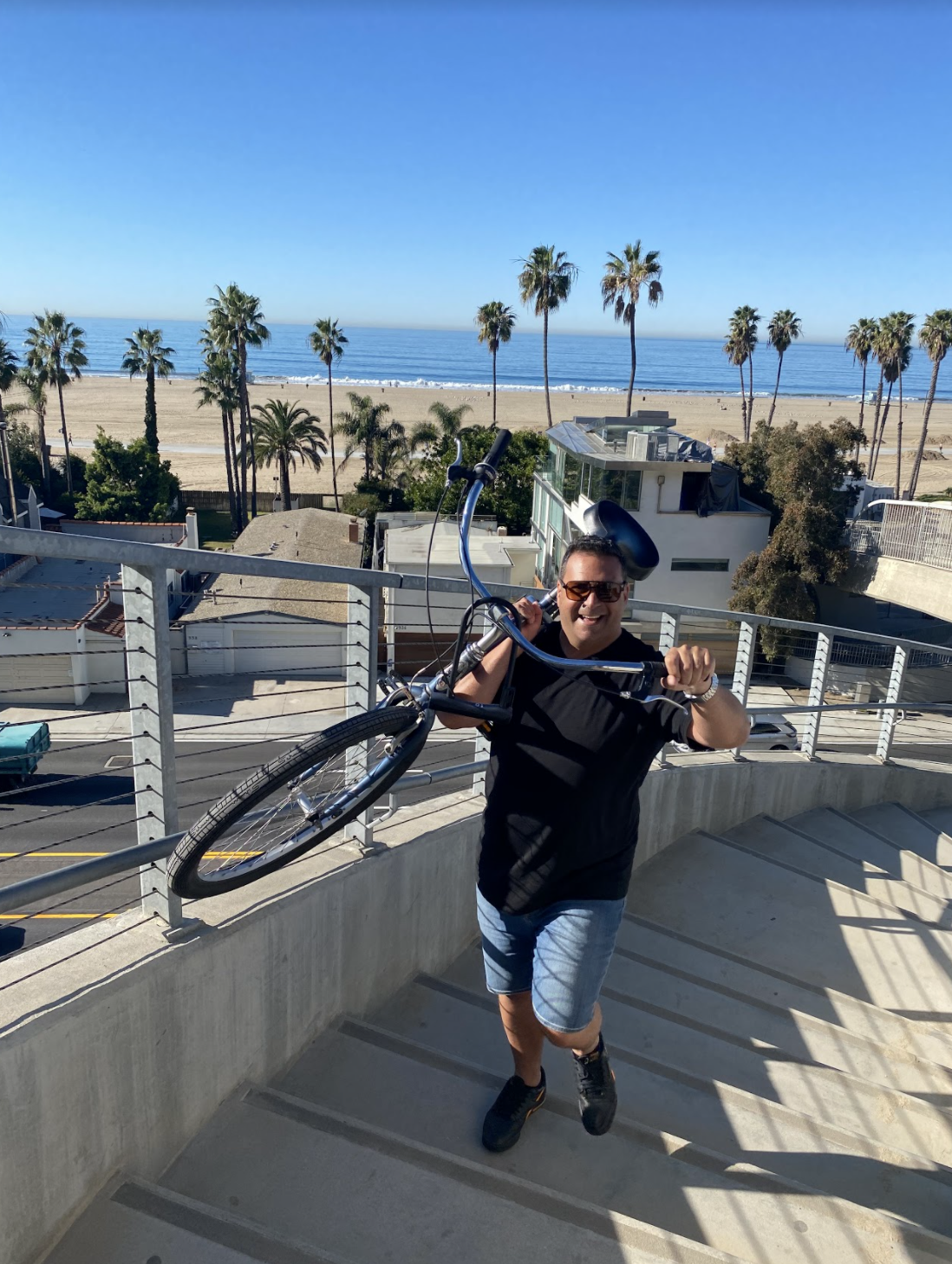
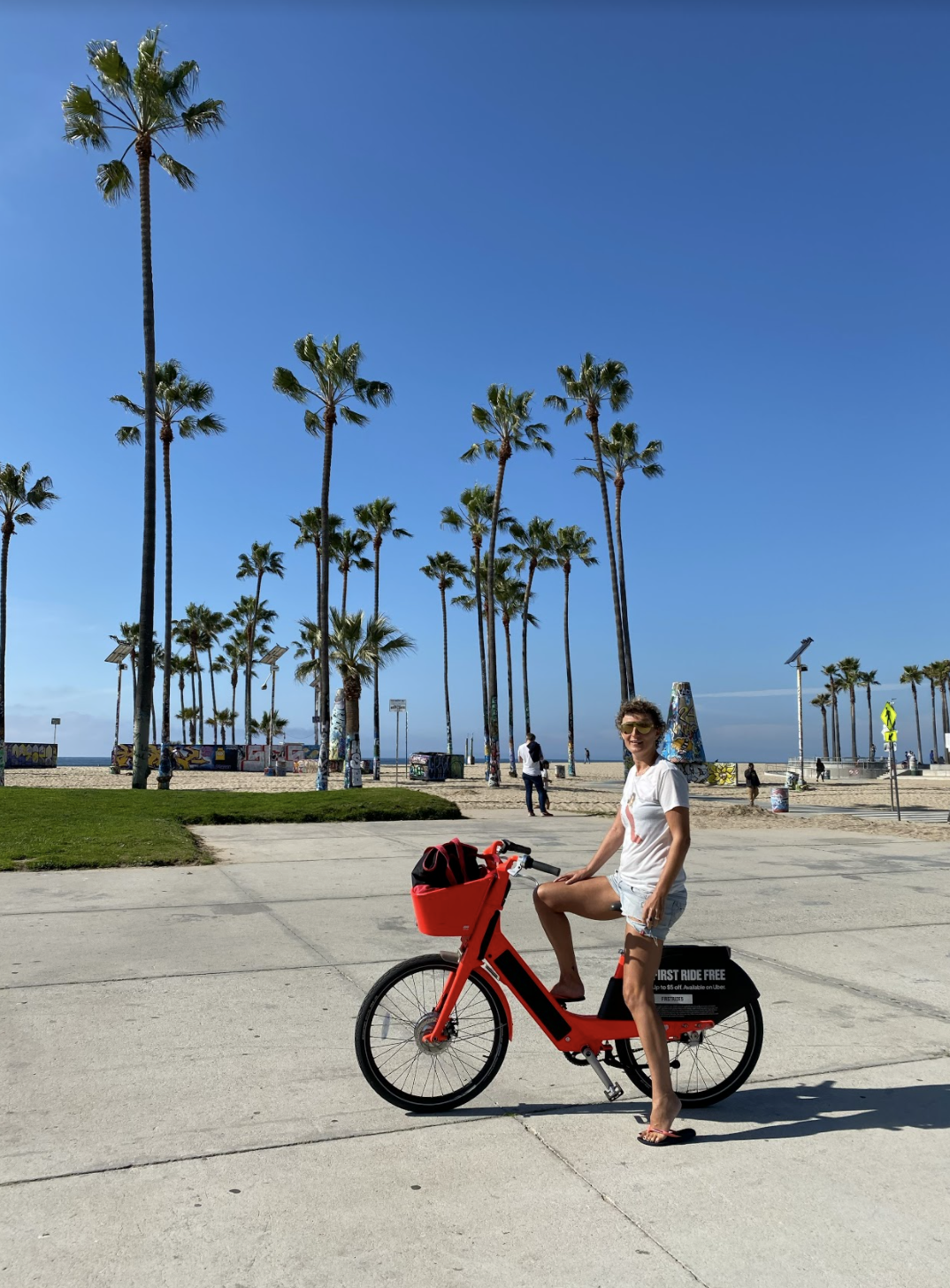
If we're only going for the weekend, we're staying in Venice Beach with the action. We dumped our stuff and got straight outside. Using your Uber app, you can pick up ebikes to cruise along the boulevard. It's a slow ride because there's so much take in and see. Although Venice is famous for Muscle Beach and oiled bronze bodies, there's also a hippy, anything-goes vibe which you notice straight away, cycling through fragrant puffs of weed smoke; marijuana's legal in California.
The bike path ran for miles. Eventually the bright colours and pleasant oddball residents faded to the sleeker Santa Monica. The farmer's market was in full swing so we gulped down bright and sweet blood orange juice and turned round to head back.
We were amazed by the number of people using all the public facilities; there were lots of basketball matches going on with spectators joining in and dropping out, the skatepark was a blur of tie dye and wheels on concrete. A huge, empty car park had been repurposed as an ice hockey pitch.
After a full day of biking and sightseeing, we were pretty happy to grab takeaway caprese salads from the deli next door to the hotel and eat them in bed, flicking through the millions of TV channels.
Saturday
If a tour guide is as enthusiastic and knowledgeable as Daniel, you know you're going to have a good time. An online search had showed us that ALL Day LA Tours would teach us about the history of the city and give us ideas of things to do. We started in Hollywood at the Walk of Fame, then up to the Hollywood sign which used to be a real estate sign for the land underneath in Franklin Village, a peaceful graveyard housing some of the greats: Marylin Monroe, Hugh Hefner, and my favourite - Peter Faulk of Columbo fame.
Daniel took us through the grounds of Greystone Mansion, a huge estate in Beverly Hills with landscaped grounds built in the twenties by oil tycoon Edward L. Doheny for his son, Ned. It's since been gifted to the city. What a story; Ned killed himself and his secretary in one of the spare rooms. The two men had been involved in an oil scandal with Ned's father.
The whole tour was story after story like this and we whizzed around in a comfy people mover with no windows for maximum photo opportunities. We finished off driving down Rodeo Drive and all of us goggling at the outrageous displays of wealth.
Saturday night in Venice Beach was lively, we decided to go for sushi just off the main drag which was a great choice after all the chips and cookies we'd packed away during the day. The interior was sparse and urban and the sashimi was excellent.

Sunday
We had a late start over the continental breakfast included at the hotel, then walked to the achingly cool Abbot Kinney Boulevard. There are murals of the sides of buildings everywhere, and the artiness of the locals really shows. We heard stories that it's been gentrified and that had changed quite a bit over the years. But we loved it. The thought and design that had gone into every space whether it's a clothes shop or restaurant gives you so much to stop and look at.
Lunch was a huge pile of salad from Greenleaf which described themselves as a gourmet chop shop.
A sunny stroll through the canals which are a great surprise to find in such a sprawling city, and we picked up our bags from the hotel and headed back out to the airport for our 9pm flight.
An entirely different continent and three days of discovery, then back feeling refreshed. The best way to holiday.

Stay:
Inn at Venice Beach
Retro rooms with huge images everywhere of Venice Beach over the years. It felt retro and fun with pops of orange on white bedspreads. The location was fantastic: 20 minutes from the airport, right near the action, clean and quiet.
Eat:
Sushi Enya
Chef Kimiyasu Enya trained for 10 years before setting up his three restaurants in Los Angeles. The interior was industrial and all focus is on the clean bites of sashimi.
Move:
Don't even think about renting a car. We used Uber and the scooters and bikes which were everywhere, and easily unlocked with our Uber app.

A family business
We talk to Yolande King about what it’s like working with her husband Paddy, and sister-in-law Tara as a super team at EVES Real Estate. These guys really love where they live, and it shows!
We talk to Yolande King about what it’s like working with her husband Paddy, and sister-in-law Tara as a super team at EVES Real Estate. These guys really love where they live, and it shows!

WORDS JENNY RUDD PHOTOS BRYDIE THOMPSON
HOW DID YOU ALL COME TO BE WORKING TOGETHER?
Paddy and I were passing through on a holiday, trying to work out where to settle. We sat on the beach and Paddy said, “Look at this place, Yols. We have to give it a go.” Our immediate connection to The Mount was amazing. So we started separate careers, Paddy in chemistry and me in real estate. The first years were incredibly busy so Paddy joined me. Boom! It worked beautifully! Then Tara moved from Christchurch and we hammered her to join us. She gave in to stop us nagging, I think.
WHAT SKILLS DO EACH OF YOU BRING TO THE BUSINESS?
Working with Paddy and Tara is the easiest thing in the world! We wrote very specific job descriptions for each person. I think that’s a big part of our success. I’m a highly organised ‘lists’ person and keep the big picture perspective, working on our business development and keeping our team connected. Tara never misses a detail. She should wear a superhero cape. The workload on the admin side is just massive. If Paddy is heading out to an appointment, he doesn’t have to double check any paperwork that Tara has put together. Anyone who knows Paddy is familiar with his relaxed manner, and in this industry I think that goes a long way. You can trust that he’s going to look after you as a buyer or vendor. He hates getting stuck in the office, so Tara and I keep him out there doing what he loves – hanging out and connecting with people. There’s 100% trust between all of us. We’re now on the hunt for the next team member to help us look after our buyers.
Early morning coffee at Tay Street.
HOW HAS THE REAL ESTATE BUSINESS CHANGED OVER THE YEARS?
Since I started in 2006, so much has changed. Continuous training is a must if you want to keep your licence and stay up to date with all the Real Estate Agents Authority legislation. It’s good to see so many more people in the business treating the job with the necessary importance and urgency. It’s not a hobby, it’s a career, and we are helping people through a huge transaction that needs all of our attention. The digital side of advertising is huge now and a job in itself. I look after that for us and it’s a constant learning curve. Keep up or get left behind!
We strongly believe that when it comes to choosing your agent these days, a team isn’t a plus, it’s a must. Nothing falls through the cracks, you’re kept 100% informed and involved. And with us, you get energy, creativity and commitment.
HOW DO YOU FIT IN FAMILY TIME WITH SUCH A BUSY JOB?
It’s something we guard preciously. During the week, we have breakfast and dinner together as a family and don’t book anything that will interfere with that. So we start and end the day with the kids. Of course, Sundays are super busy with open home, so we try to build that family time in elsewhere, like taking the children out surfing or going to the night markets in Papamoa or The Mount. Just reading stories in the hammock with the kids slows things down pretty quickly, too!
WHAT’S IT LIKE BEING SO CONNECTED TO THE COMMUNITY WITH YOUR JOB?
We make connections everywhere we go, from kindy drop-offs to Paddy being out on the water waiting for the next wave. It’s part of everyday life, the nature of the business and it’s great; we feel we’re able to help and bring value. This job is about people and their homes, which involves their families. We feel really privileged to take people through this process and de-stress it as much as possible, all the way through.
WHAT’S BEEN YOUR BIGGEST LEARNING CURVE?
When working in a team you have got to stay connected. The left hand needs to know what the right hand is doing. Rules, the law, the digital space: everything’s constantly changing. We like it. Keeps us on our toes!
WHAT DO YOU DO IN YOUR DOWNTIME?
We just love living here! We’re surrounded by lots of friends, so impromptu catch-ups are easy. We’re lucky to have so many outdoor options for families right on our doorstep, and go out on the bikes, head to a beach or park. Our mums are great gardeners. I’m far from a expert, but we’re trying to grow more and the kids just love it. Exercise is at 6 am so I can be sure it actually happens, and if it’s with a friend then that’s great! I’ve always got a book on the go, too. Then, of course, there’s finishing our renovation. When we bought our home it was a little two bedroom 1955 original, and today it’s a much-loved four bedroom family home. We’ve learnt so much and enjoyed the process immensely, but the very important finishing touches are keeping us busy. There’s always the next detail to plan and execute.
We feel a great responsibility to help keep our coast beautiful, as well. There are so many alarming environmental issues, and we want to start here at home and make a difference. We want our children to enjoy this beauty.

Rotorua Mayor Steve Chadwick on making things happen
For Rotorua Mayor Steve Chadwick, local government is just the latest chapter in a life built around making things happen.

For Rotorua Mayor Steve Chadwick, local government is just the latest chapter in a life built around making things happen.
WORDS Andy Taylor PHOTOS Brydie Thompson
First off, what’s in a name? Given her public profile and her extensive career in politics, it's hard to imagine that anyone meets the Mayor of Rotorua without being previously aware of her; but someone new to these shores might find Steve Chadwick to be not quite what they were expecting. Let’s face it, Steve is a pretty blokey kind of name, and though she is down to earth, humble and devoid of all pretention, blokey is something Steve Chadwick most certainly ain’t.
“It’s actually Stephanie, but Steve stuck from a very early age, and after that I was only ever Stephanie when I was in trouble,” she says with the tone of someone who has had to explain this a million times but is quite happily resigned to her fate. “And yes, there are a few people who come expecting a male and look a bit shocked, and I’m sorry if that disappoints - but there’s not much I can do about it,” she adds with a grin of genuine mischief, and it is clear that confounding expectations and then outperforming them are part and parcel of the ball of energy that is The Honourable Stephanie (Steve) Chadwick.
Originally from Hastings, she is probably best known for her time in Parliament, where she served as Minister of Conservation, Women's Affairs, and Associate Health between 1999 and 2011, and then as the Mayor of Rotorua, a role she has held since 2013. But her story is far more multi-layered than that.

“I grew up the youngest of six children,” she says, “and so constantly had to speak louder to have my opinion heard.” Those siblings included artist Dick Frizzell among other very talented individuals, so this was a family heaving with strong characters and stronger views.
Her first calling in life was as a midwife. “I was always bit of a health activist, and I was drawn to birthing as it was a natural process and I was involved with a group of quite radical midwives. I ended up helping bring about 5,000 babies into this world, and I loved that role, I loved being a part of birthing as it is a profound and intimate profession, and I still meet some of the babies I delivered now. Though many are on to the next generation!”
Whether it is newborns, government policy or social welfare organisations, it could be said that bringing things to life is very much Steve Chadwick’s reason for being on the planet. She has been instrumental in setting up the Rotorua Women’s Refuge, Rotorua’s first Family Planning Clinic and School for Young Parents, as well as its first Kohanga Reo, all entities that seem completely normal and entirely essential now but were reactionary in the 1970s. “My father was an engineer and my mother was an artist,” she says, “so there was both a very creative side to my growing up and a very functional side, a side about making things happen. But both my parents were always about thinking outside of the square – differently, but logically, because that was the artist and the engineer at work. Our family were a square peg in a round hole, and we realised we weren’t conservative, but that was just fine. It was a very creative and happy upbringing that meant I was allowed to reach my own conclusions and was never constrained.” Good luck to anyone who might try!
She met her husband, John Te Manihera Chadwick, in the late sixties, and together they embarked on a future that is virtually cinematic. First there was the big OE, with the first stop being Papua New Guinea – where she set up a birthing clinic, naturally – and then they went on to London where their home – replete with newborns of their own by that stage – became something of a drop-in centre for Kiwi expats on their London sojourns. It was a happy home for many years, until while watching the Commonwealth Games their son asked who the people performing a haka on TV were. “When I had to explain that they were Māori and that he was Māori and that his dad was Māori, we realised it was time to come home! Our children needed to grow up bicultural – and that was what brought us to Rotorua. Our journey ever since then has one of biculturalism.”
After serving as a local councillor, national government beckoned with all the highs and lows that a career in the public gaze entails. “The low was definitely the death threats I got when I brought in the Smoke Free Environment Act. Having to be escorted by a police protection squad and realising that there were people out there that hated you and were unwell – and were following you – was very scary. And being accused of being one of Helen Clark’s ‘Femi-Nazis’ was also very personal, and frankly ridiculous. But the highs put all that in the shadow: passing the Smoke Free Act was great, and working on health issues throughout the Pacific was fantastic – that was right up my ally as an ex-midwife.”
The passing of husband John, who had become a much-loved and prominent lawyer, late in 2017 brought the year to a solemn close, but Steve has no intention of letting her personal loss get in the way of her public commitment. Far from it; instead, 2018 will be a very big year for the Mayor and for Rotorua – because it is obvious from spending even a short time with her that Steve Chadwick and the Rotorua district are very much intertwined.

“One of our main objectives was to revitalise our inner city,” she says, clearly warming to the future and tired of discussing her past. “And we did that by having a councillor sit on a portfolio dedicated to inner city revitalization and by getting all our retailers and CBD businesses to work with us. The inner city had over a hundred empty shops four years ago, but we’ve changed that and it has a completely different vibe now, and the development that will be taking place on the lakefront is really going to be exciting and build on what we've put in place. The whole footprint will be completely different, there will be a conservation zone and it will incorporate the museum, but we are thinking it will be driven by a whole new entity rather than council. Sir Bob Harvey has agreed to help us with this so that is really exciting.”
“We were painted as a zombie town in 2013, but 2018 is going to show that we have invested in our city and we are really going places. The population is growing, we’re performing above the national average economically, and we also have the new Forest Service coming here – to its rightful heartland – so this is going to be a big year for Rotorua. Actually I think it’s going to be a big year for all New Zealand.”
You heard it here first folks. And she should know.

Hamilton through the Insta-lens: the most snappable spots in the city
Modern-day travels are not only about new places, people or flavours anymore. Perfect Instagram pictures are playing the leading role. Not a problem in Hamilton – probably the most Insta-suitable city in the area.

Modern-day travels are not only about new places, people or flavours anymore. Perfect Instagram pictures are playing the leading role. Not a problem in Hamilton – probably the most Insta-suitable city in the area.
WORDS Kseniia Spodyneiko PHOTOS Alex Spodyneiko
#TeaWithAView
To start this one-day photo-hunt in the Waikato region, we drove extra 10 km from Hamilton – directly to the hidden in between the fields and farms aristocratic Zealong Tea Estate. From the spacious black-and-white shop to the traditional high tea ceremony - this place is all about sophistication.
Even its story is extraordinary: 11 years ago local tea lover Vincent went to Asia and selected 1,500 cuttings to start tea growing in New Zealand. Little did he know about the upcoming challenges! After the long quarantine only 130 plants survived! Those were the strongest and the best ones. The ones that quickly turned Vincent’s small garden into a 1 million sprouts organic plantation.
And by “organic” they mean certified world’s highest food safety standards. Literally, they are not even allowed to spray the grass. At Zealong they hire people to get rid of bags manually instead! And I thought having a personal Whittaker’s flavour “Waikato Grown Oolong Tea in Dark Chocolate” was already cool enough…
We were lucky to be guided around by the amazing Annalese Webber. Currently the administrator, she started her career as a waitress in Zealong café, where she still makes traditional tea ceremonies for guests. And that is a must! Followed by a high tea on the terrace with an epic view over the plantation, this process is simply hypnotizing.
Talking about the views – grab the cutest cupcake from a traditional British three-tiered tea plate and proceed to the small lookout nearby. Strike a pose and be ready to wake up famous.
#NeverStopExploring
Hamilton Gardens are yet another place not to be missed. After all, what else if not all those colourful flowers are the reason for the nowadays photo hysteria?
The famous local sight is a tricky labyrinth of traditional for different countries and centuries gardens. Dive into the Italian Renaissance for the impressive geometry and symmetry. Japanese corner surprises with its picturesque pond. Sustainable Backyard brings in a touch of coziness and childhood memories. And the authenticity of the Indian Char Bagh can confuse even the most experienced travellers (the best perspective is at the corner to the left from the entrance).
In the second half of the exciting walk you will bump into the Tudor Garden that truly steals the show! Epic stone tower, beasts’ sculptures, recognisable green and white stripes (thank you Jonathan Rhys Meyers for turning us into the Tudor experts) – perfect spot! Stay on the balcony to capture the fantasy atmosphere of this place in its best angles.

#Foodporn
When it comes to food, nothing can go wrong in Hamilton. This city is famous for vibrant interesting restaurants. Overlooking the beautiful Waikato River is the popular Gothenburg with its fancy tapas menu. Crispi potato gnocchi with blue cheese, walnuts and pear are a win-win: delicious and beautifully plated. By the way, this place is known for the best view over the river. You got the idea.
For a less pretentious lunch head to Mexico or Iguana. Located right across each other on Victoria Street, they can turn the decision-making into a nightmare. Softshell tacos with achiote plancha pork belly in apple chutney or a seasonal pizza with coffee-rubbed venison and smoked mozzarella on a plum sauce base? Both, please.
No matter what your choice is, make sure you leave room for dessert. Duck Island Ice Cream (300a Grey Street) is organic, made in-store and is literally the best ice-cream ever! Will trade my left hand for an extra scoop of that Maple, Honeycomb and Smoked Almond calorie bomb. And they have 17 more outstanding flavours. Rhubarb Szechuan Peppercorn, anyone?

Iguana Restaurant
#SkyIsTheLimit
The rest of the day we spent admiring Zuru Nightglow. Annual hot air balloons show is the part of the weekly Balloons over Waikato festival. This event is huge – Zuru Nightglow alone is said to be visited by 80 000 people!
At 8 pm enormous balloons in shapes of hugging birds, cartoon helicopters and rockets start to, well, glow following the rhythm of the popular hits. Culmination comes with the fireworks. As beautiful as hard to capture! You simply can’t beat thousands of people photobombing your pics.
But there is always a second chance for someone fascinated by the hot air balloons in Hamilton. During the summer season they fly over the city every morning.
#RealLife
(Things to do in Hamilton for those not addicted to Instagram):
Te Aroha Mineral Spa
Fed by the world’s only hot soda geyser, this spa offers private wooden tubs and relaxing beauty treatments by Mount Te Aroha.
The Base
The largest shopping centre in New Zealand is definitely worth a visit. Loved by beauty moguls for The Body Shop, Lush and L’Occitane all in one place.
Waikato Museum
Dinosaurs, Tourism posters, Milk production – Waikato Museum exhibitions are anything but boring.

Autologous fat transfer: an alternative to breast implants
UNO spoke to Paul Salmon, surgeon at The Skin Centre about the method of using your own body fat to increase your breast size, as an alternative to breast implants.

UNO spoke to Paul Salmon, surgeon at The Skin Centre about the method of using your own body fat to increase your breast size, as an alternative to breast implants.
UNO: Can you tell us about autologous fat transfer and breast surgery?
Paul: Autologous fat transfer or AFT is a technique of restoring or enlarging the breast by grafting fat into it. People have been trying to put fat into breasts for many years, but with haphazard results for a number of reasons. First, there isn’t enough space in a small breast. Also, the fat is put into the breast in large lumps, which doesn’t make for a successful graft. Recently, there has been a lot of interest in preparing the breast by expanding it slowly over the weeks prior to grafting. This technique has revolutionised AFT by providing the right environment for the reliable take of grafts.
UNO: How long have you been doing this procedure?
P: I have been grafting fat and doing liposuction for breast reduction for 25 years. Liposuction of the breast is really the reverse of AFT; women can get rid of overly heavy breasts without scarring and still have confidence in being able to breastfeed later. In 2017 I went to Florida to operate with Dr Khouri, who had published the seminal papers on Brava, a breast expansion device, and AFT. Since then, I have been doing the procedure both in Tauranga and Auckland.
UNO: How does the process work?
P: AFT involves a gentle liposuction of fat from an area where it isn’t wanted. It’s then prepared and grafted into the breast. Prior to the procedure, the patient spends a few weeks using an external expander, usually at night. Used regularly, the small suction dome will enlarge the breasts. If the expansion is stopped, the breast will shrink again. It’s the grafting of fat that makes the enlargement from external expansion permanent. The grafted fat is laid down in a 3D network of tiny, thin strips in the breast, eventually building up the volume for a larger breast. There are virtually no scars, as only tiny nicks of 2mm in length are needed to allow us to insert the fat into the breast.
“One thing to think about is that because your breasts have been enlarged by fat
transfer, if you gain or lose weight, your breasts will respond accordingly.”
What are the benefits of AFT versus breast implants?
P: Implanting breasts with silicone prostheses is very safe. As with all procedures and general anaesthetics, complications are a risk; infection, bleeding, loss of sensation, scarring, the wrong placement or rupture of an implant or capsule formation are the most common complications. Cancer is a very rare complication. AFT gives a woman the opportunity to have larger, younger-looking breasts naturally without synthetic implants. And there’s an opportunity to get better-looking hips, legs or tummy, depending on where the fat is taken from.
UNO: What are the disadvantages of AFT?
P: To work reliably, the breasts must be prepared by using the external expander every night. The most popular size for silicone implants in New Zealand is around 300ml, which is more than a AFT procedure can reliably produce. With AFT, women can expect to go up one cup size, although further increases can be achieved with an additional AFT procedure. Also the fat placed into the breasts is treated by the body as if it is still in its original position, so if your graft fat comes from your tummy and you put on weight there, your breasts may also enlarge.
So this technique be used to reduce breast size?
P: Yes, we can use the liposculpture technique on its own (without using the expanders). This will reduce the size of overly large breasts. Tiny incisions around the edge of the breast mean that excess fat can be carefully removed to maintain the same shape of the original breast.
MEET THE SURGEON
Dr Paul Salmon Paul is New Zealand’s most published dermatologic surgeon with over 60 papers published in peer-reviewed literature. He has an Honorary Fellowship in the Australasian College of Dermatology, and has been a speaker at the World Congress of Dermatology as well as the American College of Mohs Surgery. He has served on the Specialist Advisory Committee for the RACP on behalf of the NZDSI. His areas of special interest are cutaneous oncology, micrographic surgery, prevention of skin cancer, sun damage and cosmetic surgery.
SKINCENTRE.COM 0800 754 623 171
CAMERON ROAD TAURANGA

Ponsonby to Papamoa
Laura McClennan meets two imports, Andrea and Duncan Ritchie, who bring skill, passion, and magic to the Bay.

Laura McClennan meets two imports, Andrea and Duncan Ritchie, who bring skill, passion, and magic to the Bay.
WORDS LAURA MCCLENNAN / PHOTOS TRACIE HEASMAN
Thinking about her first sale always makes her laugh. “It was 1993,” Andrea Ritchie recalls, “and I was checking out some open homes, busman’s-holiday style, when I came across a villa that was perfect for a buyer I had just met.
I called the woman and she raced over, still in her gardening clothes, and wanted to make an offer then and there. Of course, I had no contracts on me at the time, or keys to the office, so I had to take her home with me. My house was an absolute mess, and I was
a nervous wreck – I’d only been in real estate for three weeks! She just smiled and told me to make us both a coffee, while she wrote up the offer.”
TIMES MAY HAVE CHANGED, BUT ANDREA’S KNACK FOR FINDING THE PERFECT HOUSE FOR HER CLIENTS HASN’T. “It’s all about tuning in to what people want. It’s what we do best.”
BY ‘WE’, of course, she is referring to herself and her other half, husband and real estate business partner at Bayleys Tauranga, Duncan.
THE DUO WORKED TOGETHER FOR ALMOST TWO DECADES BEFORE MAKING THE MOVE FROM PONSONBY TO PAPAMOA. They’ve only been here a couple of months but, with a long list of professional achievements under their belts, and down-to-earth dispositions, they’re already making their mark on the Bay.
“WE ALWAYS THOUGHT WE’D END UP SOMEWHERE NORTH, BUT ONE NIGHT WE MET A COUPLE WHO LIVED BESIDE THE MOUNT GOLF COURSE,” Andrea explains. “We were intrigued, so decided to come down for a few weekends in winter. Duncan always says winter is a great ‘litmus test’ to see what a place is really like – when it’s at its worst. We were pleasantly surprised. We came across Post Bank one July night and couldn’t believe it was fully booked! Luckily, they managed to squeeze us in. The meal was beautiful, and the restaurant was buzzing. That night really cemented the move for us.”
THE COUPLE BOUGHT A HOLIDAY HOME, JOINED THE LOCAL GOLF CLUB AND HAD THEIR FIRST PAPAMOA CHRISTMAS. It’s no surprise the thought of going back to Auckland had somewhat lost its appeal.
“IT TOOK US A FEW MONTHS TO CUT TIES, THEN WE HIT THE GROUND RUNNING WITH BAYLEYS TAURANGA IN SEPTEMBER,” says Duncan. “We thought we’d be in Auckland for a few more years, but The Mount seduced us. There are so many people coming to the Bay, of a similar age group, from all over New Zealand, for the lifestyle.”
“PONSONBY IS A NICE COMMUNITY BUT IT’S DIFFERENT HERE; PEOPLE ARE JUST SO HAPPY. Business is thriving, and there are beautiful homes popping up everywhere, so we’re still running a highly active real estate business. But at 6 pm we’re walking down the beach – not sitting at our desks,” says Andrea.
THEY MAY HAVE BID FAREWELL TO PONSONBY, BUT IT DIDN’T TAKE THEM LONG TO SNIFF OUT THE BEST LOCAL COFFEE SPOTS. “George Café is fantastic, and so is the newly opened Heath Street Café. We love the salads at Central Deli and, in Tauranga, we’re big fans of Alimento and Me & You.”
AFTER A LIGHT-HEARTED DEBATE ABOUT WHERE TO FIND THE BEST SCONES IN TOWN, I ask Duncan how he met Andrea. He laughs and proceeds to explain, with a thick Scottish accent, that they were first introduced when he was working at the Maritime Museum.
“I REALISED EARLY ON THAT A WOMAN IN REAL ESTATE OFTEN WORKS WEEKENDS so, thinking I’d never see her again, I quit my job and decided to try my hand with property! Initially, Andrea was selling houses in Ponsonby, and I was working for the city apartment team. When the market turned upside down during the global financial crisis (GFC), we decided to join forces.”
IT TURNS OUT HE WASN’T HALF BAD, EITHER. DUNCAN WAS CROWNED ‘ROOKIE OF THE YEAR’ in 2003 and, since then, the pair have won multiple awards, gone back to Massey University to attain further qualifications, and accumulated a whopping $400 million in sales: an achievement held by only 17 out of 1,060 Bayleys agents nationally. They were also the winning marketing team on The Block NZ. Twice!
“WE’RE PASSIONATE ABOUT LEARNING AND UPSKILLING – you have to be when you’re dealing with such large sums of money. Years ago, you could throw up a sign and have people queueing up to buy, but the market is different now. When you’ve worked through tough markets like the GFC, you learn to adapt and innovate,” says Duncan.
“BUYING OR SELLING IS AN EMOTIONAL TIME FOR EVERYONE INVOLVED, WHETHER IT’S A FIRST HOME OR A MULTI-MILLION-DOLLAR PROPERTY. Duncan and I love working as a team, and we’ve found that our clients appreciate a choice of who they deal with. It’s the power of two,” adds Andrea.
THE BAY’S BEST SCONE IS STILL UP FOR DEBATE, BUT ONE THING IS CERTAIN – Andrea and Duncan are very welcome imports, who bring with them a classy mindset and skills that put them in hot demand.

The Global Kitchen recipe: Roasted lamb rump with pea purée
Global Kitchen cookbook includes favourites from the restaurants’ head chefs hailing from Brazil, India and New Zealand, creatively merging South Pacific, Asian, South American and European cuisine.
London restaurateur Lloyd Rooney and Kiwi partner Mike Fraser are known for producing innovative seasonal menus and have earned a reputation locally and on the international culinary stage. Global Kitchen cookbook includes favourites from the restaurants’ head chefs hailing from Brazil, India and New Zealand, creatively merging South Pacific, Asian, South American and European cuisine.
PHOTO GRANT ROONEY

Lamb
6 x 200g lamb rump (cap on)
50ml canola oil
800g baby potatoes
2 Tbsp dukkah
Salt and pepper to taste
Pea puree
500g frozen peas
200g butter
Salad
200g frozen peas
2 long red chillies
1 small red onion
1 bunch of mint
1 bunch of parsley
50g feta cheese
100ml The Quay vinaigrette
Preheat an oven to 200°C. Rub lamb with salt, pepper and canola oil. Heat oil in heavy-based fry-pan over medium heat. Place lamb fat-side down and keep moving and pressing frequently for about 10-12 minutes. Once the fat is fully rendered, transfer rumps to an ovenproof dish to roast for 8-10 minutes. Remove from heat and rest for 10 minutes. Bring a pot of salted water to the boil, add the peas and boil for 3 minutes. Strain peas and combine with butter in a mixer. Blend until smooth and season well. Finely chop salad ingredients and toss in vinaigrette.
SERVES 4
For more recipes like this, check out Global Kitchen by Lindy Davis.

Better than ever
“I wanted Mount Skin & Body to be a community hub as well as a place you can sneak into to take some time for yourself, a place that appeals to all your senses and encourages you to take time out of your busy life.”
We talk to Mount Skin & Body owner Kelly Kingston on her clinic’s new look.

UNO: Mount Skin & Body has been at the heart of the beauty scene at the Mount for many years, but we love your salon refit – what did it entail?
KELLY: We’ve been here for 15 years now but have recently renovated the space to better reflect what we spend our time doing. It was a long process – two years of talking to clients, staff and industry professionals about where we’re headed – but I wanted Mount Skin & Body to be a community hub as well as a place you can sneak into to take some time for yourself, a place that appeals to all your senses and encourages you to take time out of your busy life.
I worked with talented people on the renovation, including Rachael Hackett-Jones of Rubix Design Collective, whose vision completely aligned with my ethos; she came up with elegant, sustainable ideas and really understood what would make our clients feel comfortable. My trust in her expertise meant I was able leave her to it and focus my attention on reinventing how we serve our clients.
Our beautiful new space includes an interactive skin bar and a secluded spot in which to relax before and after treatments, plus we’ve made it easy for people to pop
in to shop for skincare, make-up and gifts. We’ve also set aside a dedicated space to give our therapists more room to plan, write notes and relax between clients. The more organised and rested they are, the more our clients benefit.
UNO: In what other ways has your salon evolved to meet your clients’ needs?
KELLY: Personal and professional growth has always been very important to me. I believe our ongoing training helps improve both my team and our clients’ wellbeing. We’ve attended skin symposiums in France, the US, Australia and Queenstown to keep up with the best trends and treatments around the world, and we’ve also continually invested in technology to ensure we can offer the very best in beauty.
UNO: Do you have any new treatments on the menu to match your new look?
KELLY: We do! Collagen induction therapy has been our favourite for a while now, IPL and LED light therapy are relatively new additions, and more recently we launched dermaplaning and hydrabrasion, which is microdermabrasion with a water component – think your cleanest, smoothest skin yet. We’re also slowly reintroducing some of our popular spa treatments.
UNO: What else do you think makes Mount Skin & Body so special?
KELLY: Skin and personalised service are our true loves. We pride ourselves on delivering luxurious therapies that leave our clients feeling and looking radiant. The skin tells a story, so we take a holistic approach to any concerns, looking at all area of our clients’ lives and working together to discover the root cause. We also take care to use environmentally friendly and sustainable resources whenever we can.
As for personalised service – it requires a lot of energy and enthusiasm, so as a team we like to support each other and keep each other’s tanks full, which in turn ensures that our clients are well looked after. It’s really important to me that everyone on our team loves their job. I believe when people are happy in their work, it filters through to their family, and hopefully the community, too.
mountskinbody.co.nz

A whole new world: you’re never too old for Disneyland
Given it’s known as ‘The Happiest Place On Earth’, it’s hard to keep expectations in check ahead of a trip to California’s Disneyland. After all, this is it, the childhood land of milk and honey – one huge expanse of delirious delightfulness.

WORDS NICKY ADAMS PHOTOS SUPPLIED
Don’t try to resist Disneyland’s pastel allure – this magical alternate universe really is fun for all ages.
Given it’s known as ‘The Happiest Place On Earth’, it’s hard to keep expectations in check ahead of a trip to California’s Disneyland. After all, this is it, the childhood land of milk and honey – one huge expanse of delirious delightfulness. It’s like a parallel universe has been created, filled with flowers, colour, magic and rides – so many rides. There are marshmallow dreams coming at you from every direction from the minute you step through the gates, and even the most sceptical of sceptics wouldn’t be able to resist the joy.
Now, to start with full disclosure, historically I’ve never loved theme parks, purely because an adrenaline junkie I am not. Big Dipper? A big not likely, so I certainly wasn’t visiting Disneyland for the rush. It had been a family dream to make the trip, and with three children between four and 10, the question was when, not if, it was best to take the plunge. In reality, absolutely any age works. As I watched my husband Scott shove the children aside so he could jump onto the first carriage of the It’s A Small World ride, I realised with certainty that you’re never too old for Disneyland.
The city of Anaheim is home to Disneyland Park and Disney California Adventure Park, which sit amid a district known as Downtown Disney. Much of the surrounding area is taken up with hotels of various degrees of swankiness, which service the parks. Downtown Disney is where the magic begins; a pedestrianised paved area, this hub is brimming with eateries and retailers. Among the flower gardens and benches, you’ll often see street performers – and we’re not talking a few juggling balls. Calibre-wise, we’re one notch off Broadway.
Despite the fact that the minute we arrived, our children were gagging to get to the parks, we opted to have a ‘rest day’ to chill out by the pool. Trust me, you need to be firing on all cylinders once you’re within the hallowed walls. There are a number of different options for passes; whichever you choose, strategy is imperative. I’m not organised by nature, but this is one time when military-style planning is not OTT. The Disneyland website is well worth spending time on, and a Disneyland app that provides wait times is potentially a lifesaver. Multiple entry on your pass allows you to come in and out as the kids become tired, and for us also meant our older kids – and Scott – could return at night and do all the more hardcore rides. Another bonus was being able to leave the parks to eat in the Downtown area.
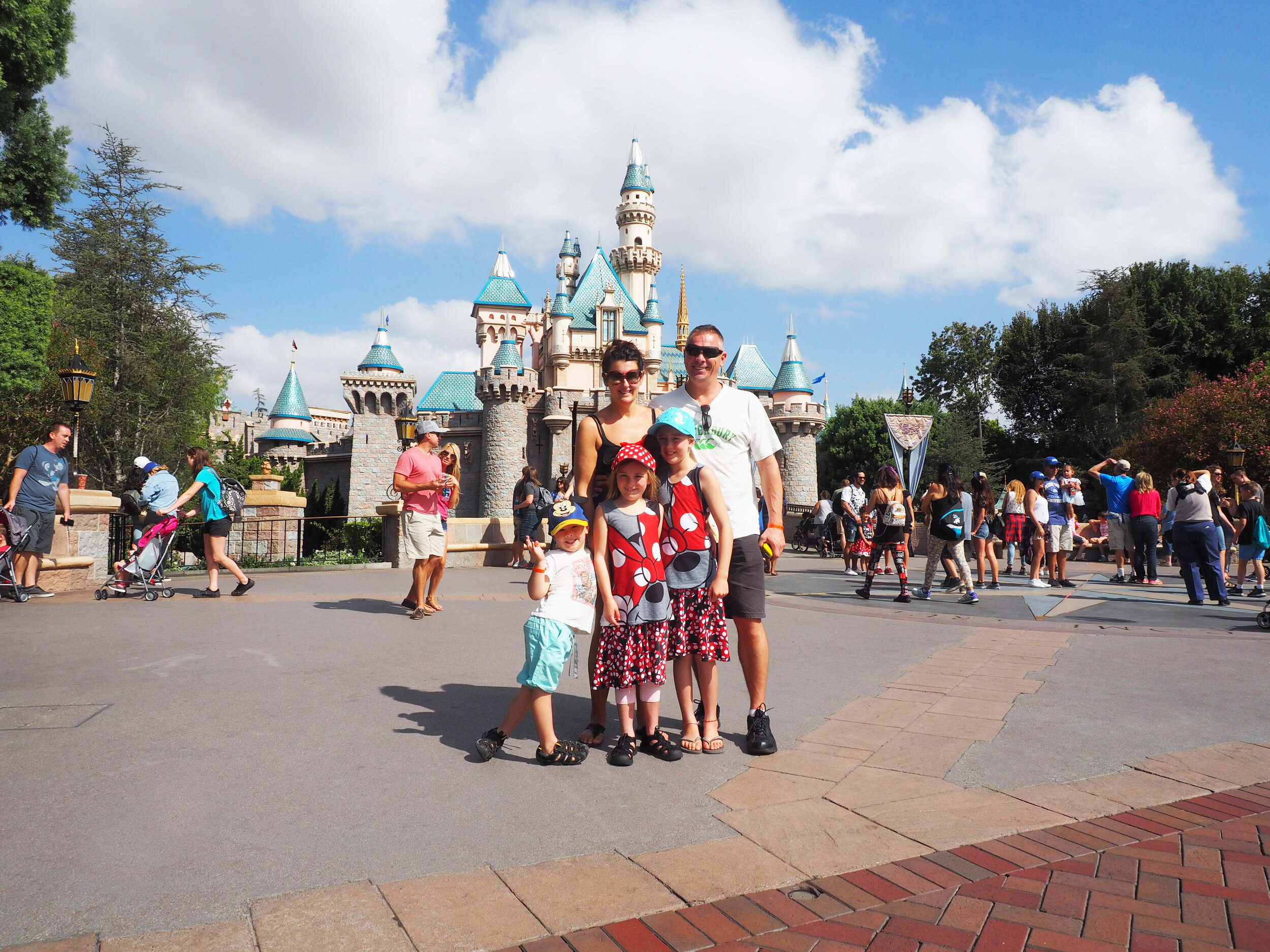
We found the food pretty ho-hum inside the parks, so we packed plenty of snacks and water, and tried to last as long as we could. We picked Disneyland for our first day (not all tickets allow you to go between parks). It’s not a wild exaggeration to say that as soon as you’re inside, the euphoria takes hold. Everywhere you look, there are Disney characters; princesses, villains, heroes – all larger than life, friendlier and just as appealing as newborn pups. Although the temptation is to throw yourself on them, there is a protocol, with the kids quickly forming a line to get a handshake and autograph from each character. When it comes to the rides, some visitors plan their route around their preferences, some meander, and some are guided by the FastPass – a fantastic way to jump the queues. However, this isn’t available on all the attractions, so find out in advance if it works for the activities you want to do.
We largely ambled around picking the rides the kids fancied and didn’t seem to have lines that were too long. Of course, realistically, queueing is unavoidable; a bit like petrol prices, you just have to suck it up, and when the surroundings are so totally awesome, it seems churlish to moan about a queue.
So how did I fare on the ride front? Actually, pretty well. I gritted my teeth and went on the big Pixar Pal-A-Round wheel; with a grin fixed on my face, eyes squeezed shut behind my sunnies, I gripped with white knuckles to the side. I accidentally went on the Radiator Springs Racers ride, which I thought would be a gentle drive through the mountains. It transpired that behind the alpine façade was a well-hidden roller coaster, so I spent the duration screaming, with my head buried in my eight year old’s lap. But I loved all the less hairy options, of which there are plenty. As for the kids, well, they hit everything hard and fast – and with a range of rides that’s beyond comprehension, there’s something to suit every level of tolerance. To be honest, though, the rides are just one small part of the thrill.
Within each park, there are a whole range of experiences and scheduled shows that are put on throughout the course of the day – some are intimate performances, others take place in large amphitheatres. They’re absolutely worth going to; we were wowed by (shudder if you will) the Frozen performance, which in itself it was worth the cost of the pass. Another big whoop for our family were the parades that take place in the late afternoons. As the characters bound past, all twitching tails, shaking feathers and shimmering sequins, you can’t help but marvel at the truly incredible spectacle. Another must-see are the fireworks displays. As each rocket bursts sky high in pyrotechnic glory, it’s proof beyond doubt that here in Disneyland, the magic never ends.

How to do Disney:
check that your travel dates don’t clash with any events being held at the Disneyland parks, or you may have to vacate early.
consider Character Dining at a Disneyland Resort hotel. The characters entertain you while you eat – super-fun for the kids.
booking in advance is essential. ... choose your timing. The heat and American holidays can be intense, though we loved going in October, when the Halloween celebrations proved to be a bonus. Be sure to check out the daily calendar too.
consider the benefits of the Disneyland Resort Hotels: proximity plus an Extra Magic Hour, when the park is closed to everyone else. Do note that not all rides are open during this time, however.
also think about staying in one of the hotels along ‘the strip’, Harbour Boulevard. It’s an easy walk and there are regular buses.
don’t worry too much about security. Bag checks are conducted on entering Downtown Disney. The one incident of unruly behaviour I saw drew three undercover security guards faster than I could say, “Mickey Mouse.”
don’t take your own pram. They can be hired daily.
and don’t judge locals with Disney tattoos. You’ll be seeing a lot of them.

Mr G: capturing and connecting with whakapapa through art
"I respect the portraits that Goldie and Lindauer painted, but what I have that they didn't is direct hononga to the culture, so I feel that puts me in the best possible place to be Māori portrait artist of the future. My plan is to do more portraits of Māori, sourcing materials where they are from, and telling stories of hononga to their whakapapa and homeland."
With his large-scale portraiture work proliferating around the globe, UNO discovers that it’s Graham Hoete’s deep connection to home that gives this artist’s pieces a depth that extends far beyond their physical size.
WORDS JENNY RUDD / PHOTOS QUINN O'CONNELL
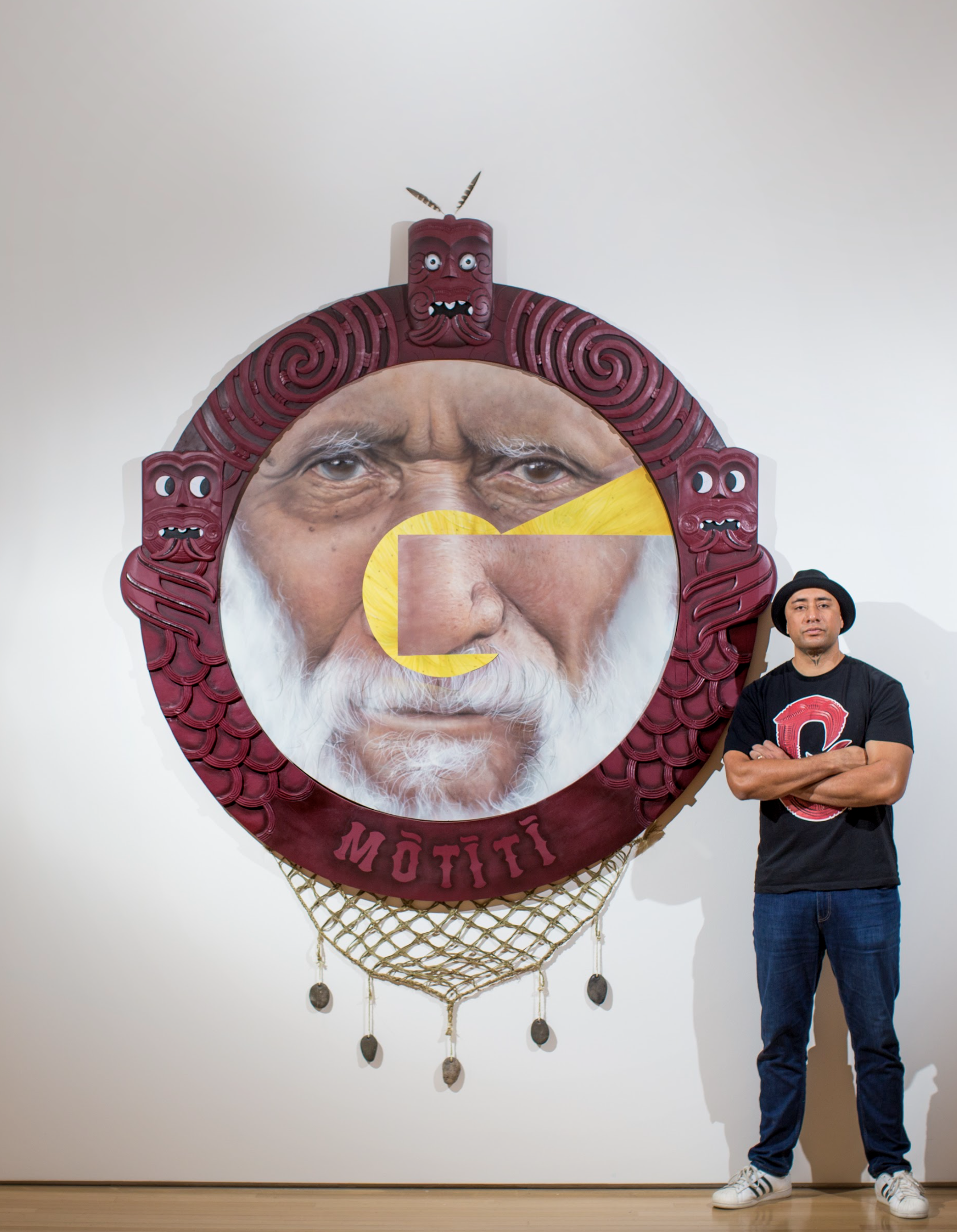
"Let me talk you through this portrait of my dad," says Mr G, showing me a photo on his phone. I'm having dinner with UNO publisher Mat and artist Graham Hoete, “Mr G”, in Izakai at Bayfair in the Mount. There's quite a bit going on around us in the busy restaurant as they serve a five-course degustation but, at our table, all I can hear is Graham's euphonious voice as the future of Māori portraiture explains why hononga [connection] to the art he's creating has become his true north.
Graham is best known for his large-scale spray paint murals. I wonder how far afield his art can be found and discover a video online of him in an All Blacks shirt and a kilt, painting a mural of his ancestor, John Alfred Borrowdale Murray, onto a wall of the oldest building in the village of Moffat, Scotland, where John Alfred was born. "I wanted to pay tribute to my Scottish three-times great-grandfather on behalf of all the Murray whanau in Aotearoa who are descended from him," says Graham. If you keep looking online, you'll find more celebratory photos unveiling Mr G murals across the world, most of which are portraits.
His current artistic focus plays a film in my head, starting with Graham in front of huge crowds – like the one where he unveiled an eight-metre mural of Prince in Minnesota – running backwards to New Zealand, then Bay of Plenty, then finally to the tiny island of Mōtītī where he grew up and, before him, his father. Home.
Graham is putting together pieces for an exhibition called Home to be shown at Tauranga Art Gallery from November 9, 2019. Graham and photographer Quinn O'Connell flew to Mōtītī to take photos that show the importance of his hononga to home.
It's easy to underestimate the everyday things that are so precious to us. Quinn's photo of jars of preserved peaches sitting on a stove resonated with Graham. "To someone else, it's just fruit and glass but, in the context of my life, it's so much more. It's a symbol of home. I felt the deepest of hononga when I saw those peaches. And it won't last forever as, one day, my mum won't be here to make them, and someone else will be in this house, using this stove."
That takes us back to the portrait he's showing me on his phone. "I'm going to talk you through every aspect," he says. "You will see and feel something else when you understand the context."
"Portraiture isn't just about painting a face, it's about representing a person and all they are connected to."
Every element in the multidisciplinary portrait has some kind of hononga to Graham's father. Photorealism, spray-painting, whakairo [wood carving], sculpting, weaving, fabrication; each has its role in connecting Graham's dad to his past, his whakapapa [genealogy], whenua [land], and to the artist, his son.
"Portraiture isn't just about painting a face, it's about representing a person and all they are connected to." And in this, the first in the series, the artist is part of the story; the bloodline is the ultimate connection. The next day we meet in Graham's Papamoa studio, where I can see, touch and feel it all.
Capturing a father’s spirit
Graham's dad grew up on Mōtītī Island. The islanders grew maize and spent time in the ocean. "He's a hardy, gruff, old school kind of guy," says Graham. As the kaumātua at the marae, he introduces himself by saying,
Ka tangi te titi
Ka tangi te manu
Ko te manu ko te karoro
ko te karoro ko kere am e Hoete
"He's saying he's a black-backed seagull. The first time I heard him say these poetic and soulful words, I was blown away. It was true, too, as that's what we would have seen all the time while he was working in the fields or on the beach. And, when I see the birds from Papamoa where I live, I feel hononga to my Dad."
Painting the face
"I chose to spray-paint the face because it represents the hononga to my artistic journey. Using spray-paint to convey this level of detail isn't easy, and I really went steroids on the photorealism. It helped not having the time constraints that I usually have on a mural.
"Photorealism has an amazing ability to engage and attract people. It's universal. They always buzz out saying, 'Oh, it's so real, look at the lines on the face!' It draws everyone in, no matter their background. You then have their attention to look at the context of the image through the visual storytelling around the frame.
"It's not a traditional head-and-shoulders portrait. The face is pushed forward because I wanted to focus on his eyes, the most engaging component of a portrait. He's always had a great weathered, journeyed look which is well-suited to a portrait. I maximised every detail.
The yellow G
"In the centre of the portrait there's a yellow portion. That's a zoomed-in painting of the yellow pōhutukawa flower. These yellow trees were discovered on Mōtītī Island in 1814, and they are the symbol of the islanders who'll be reminded of home every time they see the bright flower. There are only two of the trees left on the island and one of them's outside my dad's house. The G symbol will continue throughout this portrait series."
The frame
The face has a beautiful aesthetic and spray-painting has a modern, edgy, street feel to it. That contemporary discipline has been fused with whakairo, the ancient art of Māori storytelling through wood carving. The frame tells the story of the central portrait. The wood is a blend of kauri and matai, and it's extremely heavy. It took three people to lift it onto the wall at the gallery for the photoshoot. The physical weight and density of the wood gives heft to its role in the portrait – to solidify and make tangible the histories and stories of Graham's father, his tribe, his home.
"I have always wanted to learn how to carve. I used to live with one of my uncles, he was a master carver in the traditional style. Its purpose is to tell each tribe who they are and show their cultural identity visually. The history of a tribe is told through carvings to future generations.
"About a year ago, I started to learn how to carve, and I'm lucky to be learning from one of the best Māori carvers in the world, Todd Couper. He's just a real Jedi when it comes to whakairo. I was walking up Papamoa Hills one day and he was walking down. He called out, ' Hey, Mr G!', and, from then on, we became friends. His work is exquisite. He's an exceptional perfectionist, and shows his work around the world. He lives in Papamoa, so we see each other most days.
The kupenga
Each marae has a theme which connects the local iwi, hapū and whanau to their ancestry and story. In Tamatea ki te Huatahi marae, which is the main marae on Mōtītī Island, the kupenga [fishing net] plays a central role in its interior storytelling. There are carvings on the pillars as you enter the marae and references throughout the buildings. The curved shapes on the bottom left and right of the frame echo the kupenga hanging below the fame.
“I feel very connected to my dad through his sea-venturing stories, especially through my own love of the moana."
"It shows the connection to the moana [sea] and that lifestyle. My mum and a few of my aunties still go diving for kina and pāua. It's not often you see groups of ladies my mum's age going diving! They are legends.
"There's strong hononga with this element of the portrait. The kupenga has been woven by my sister. She went and collected harakeke [flax] from Mōtītī, and the sinker stones are from Tumu Bay on the island too.
"When my dad was young he used to take me out diving. I loved watching him and my uncles spear fish with a Hawaiian sling. They were graceful, like the fish they swam after. As a young guy, I was inspired to watch them. Many people never get to go diving but, to them, it's second nature. Dad and Uncle Patu used to have competitions to see how many fish they could catch, as kids. They'd make their own spear guns out of poles and bits of rubber and spear blue maomao then thread them and trail them around as they fished. I feel very connected to my dad through his sea-venturing stories, especially through my own love of the moana."
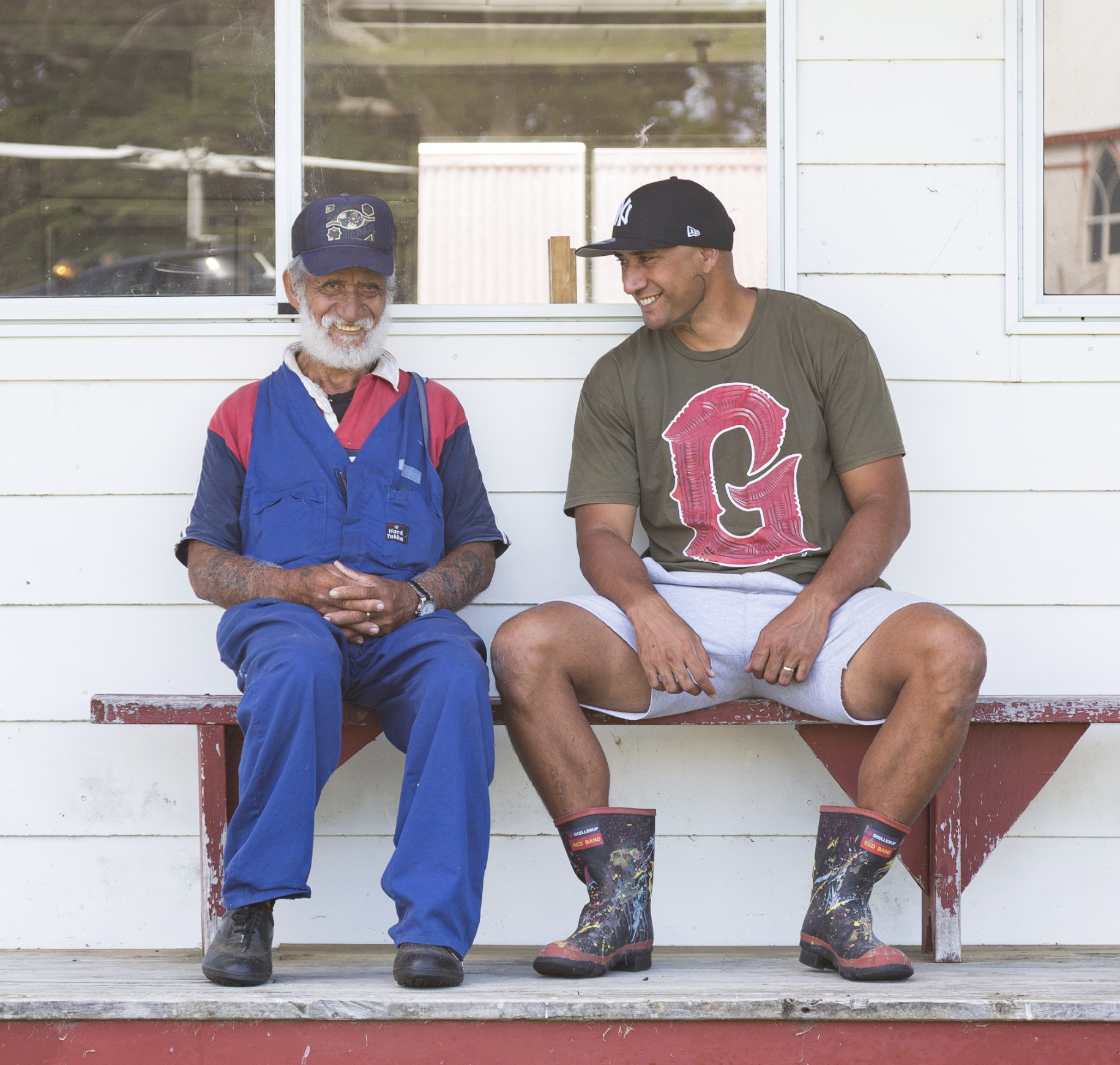
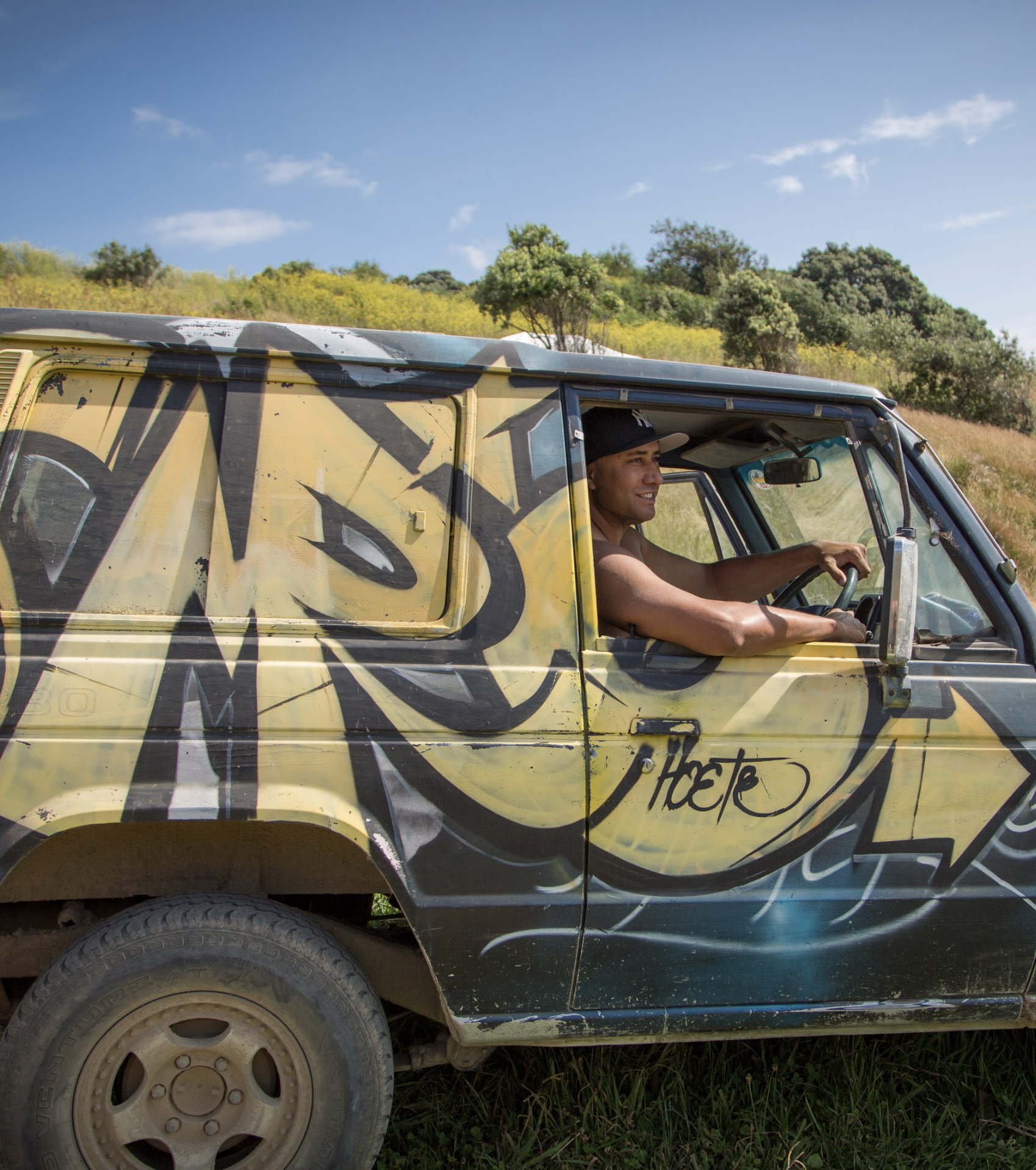
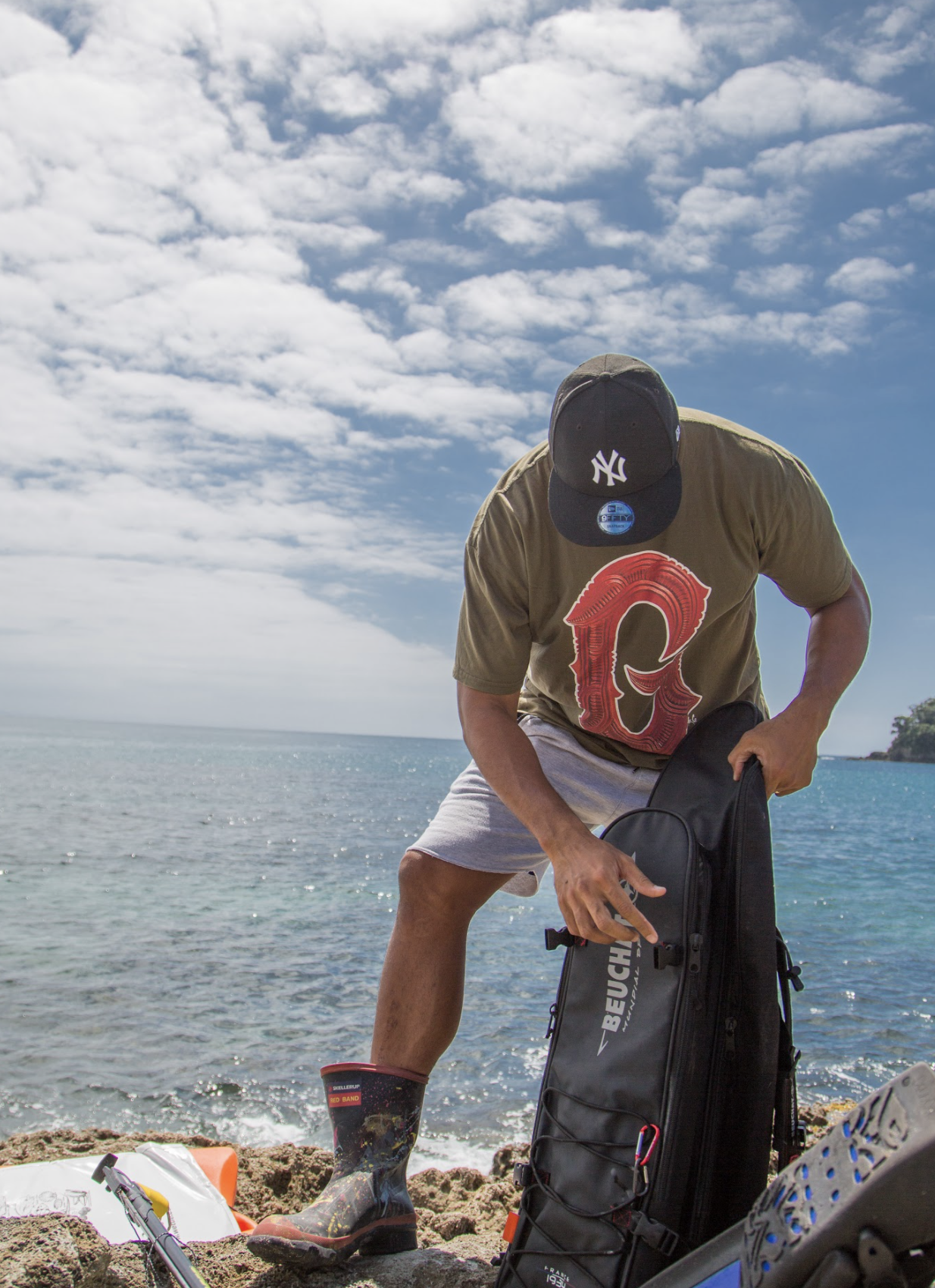
The carved heads
As we move through the portrait, it's clear that the role of the sea is absolutely central to Graham's dad's life as an islander. The two faces on the left and right are based on the amo [posts] outside the marae.
At first glance, the eyes which look inwards at the portrait appear cartoonish. But Graham explains they've been painted to represent maramataka [the lunar cycle], and the waxing and waning crescents of the moon around which island life is based. The phases of the moon affect the tides, when to fish and when to plant crops. The economy and lifestyle of the island is centred around the moon. Mōtītī is so small, but all life upon it is driven by cycles way bigger than any of us.
The double tongues on the faces are common in Māori portraits. And there are various different meanings. Te Kau wae wai runga, Te Kau wae raro refers to the celestial and terrestrial language we use, but it can also refer to how you speak to people inside and outside the marae. Protocol is a big part of Māori culture, especially on the marae ātea [open area in front of the meeting house]. The two tongues can also represent division and deception. You'll often see the double-tongue depiction on maraes on the east coast in the Bay of Plenty, towards Whakatāne."
A closer look reveals many elements of traditional whakairo in the faces with their own inherent meanings. The little notches or taratara ā kae along the tongues represent food
and eating, and the pattern above the mouth is called pākati and is one of the main surface
patterns of whakairo.
"And at the top of the portrait is kōruru, which represents the main ancestor of his marae, Tamatea ki te huatahi. It's the same face that presides over our marae and is the symbol of our tribe and so it's fitting that he does the same job over the portrait of my dad."
The future
Learning about Graham's portrait has opened up discussions about how we relate to each others' cultures and what we can all do to stay respectful. And what's happening to Māori culture in its home, New Zealand, and how we can keep its roots watered and well.
Later this year, Graham and his wife Millie are travelling to Art Basel in Miami – one of the world's biggest and most prestigious exhibitions of modern and contemporary art – to see what place in the world his series of portraits could hold.
Graham believes his portraits are unique and are the future of Māori portraiture. "I respect the portraits that Goldie and Lindauer painted, but what I have that they didn't is direct hononga to the culture, so I feel that puts me in the best possible place to be Māori portrait artist of the future. I have a commision for a lady in Hamilton after she saw my father's [portrait]. My plan is to do more portraits of Māori, sourcing materials where they are from, and telling stories of hononga to their whakapapa and homeland."
When you go to the Home exhibition, you are now able to stand in front of this magnificent portrait and know the connection of this man to the life he has led.
Home Exhibition
Tauranga Art Gallery
9 November 2019 - 9 February 2020
hapū (ha-poo)
sub-tribe, clan a number of whanau (families) make up a hapu, usually from the same ancestor. A group of hapu make up an iwi.
harakeke (ha-ra-kee-kee)
flax
hononga (hoh-nung-uh)
connection
kaumātua (koe-mar-to-ah)
tribal elder
korero (koh-re-roo)
black-backed seagull
koruru (koh-roo-roo)
carved faced on gable at the marae
kupenga (koo-pen-nga)
fishing net
manu (ma-noo)
bird
marae (muh-rye)
meeting house
marae atea (muh-rye ah-tee-uh)
flat piece of land in front of the wharenui
maramataka (mah-ra-ma-ta-ka)
lunar calendar
moana (moh-ah-nah)
sea
takarangi (ta-ka-ran-gee)
the heavenly realm
taonga (tah-ong-ah)
possessions
whakairo (fuh-ky-roh)
Maori carving
whakapapa (fuh-kuh-papa)
genealogy
whanau (fah-noe)
family
wharenui (fa-re-noo-ee)
the main building at the marae
whenua (fen-ooa)
land


The Framer
Looking around, there are stacks of pieces - paintings, prints and photographs, each waiting for the right casing to bind them and make them wall-ready. Danny boasts some of the best machinery in town, including an ancient looking guillotine; apparently it’s one of a kind.

WORDS TALIA WALDEGRAVE PHOTOS TRACIE HEASMAN
Ten years ago, Danny Redwood was admitted to hospital on a Friday afternoon and told “If you are alive on Monday, we’ll start chemo.”
Before that cheery conversation, Danny had been working on his family’s farm, and ignoring the signs that his body was finding the relentless, menial toil, tough. He was neglecting creativity and became very, very sick. “I was working harder, not smarter, and had become increasingly run down for months. When I couldn't lift my arms above my head, I knew something was seriously wrong.
It was his mother Barbara who eventually encouraged him to go to the doctor. Barbara recalls “Looking at Danny next to his brother, his skin looked a ghostly grey. I had to plead with him to see someone.”
Danny says “My blood cells were completely out of whack and although I had been given the all clear for cancer a couple of weeks earlier, in a short space of time. I’d developed the early signs of acute lymphoblastic cancer, an incredibly rare form of leukemia in adults.”
“I needed a bone marrow transplant. Thankfully, my brother James was a perfect match. He is my only blood sibling so the odds of him being a match were pretty slim. In fact, I met someone else in the same boat as me - he had eight siblings - and none were a match.”
“The recovery was brutally intense but as soon as I was strong enough, I picked up a paintbrush. I now know everyone needs to have a creative outlet. It’s so important for our mental health.”
Ten years on, and an herculean recovery later, I meet Danny at work, Artisan Framing and Plaques, in the Chapel Street shopping centre in Tauranga.
"I love being an artist, but it's not always sustainable financially, so I wanted to do something that incorporated what I love to make a living. Being an artist puts me in a great position as a framer."
"I bought this business because it had a great, long-standing reputation. I then moved into this space because I wanted to have room to exhibit work from local artists. We’ve got so many great artists in Tauranga, but we are limited as to where they can showcase that work."
Looking around, there are stacks of pieces - paintings, prints and photographs, each waiting for the right casing to bind them and make them wall-ready. Danny boasts some of the best machinery in town, including an ancient looking guillotine; apparently it’s one of a kind.
Being someone who loves and appreciates art, Danny uses the very best stock, top quality fastenings and mountings for all his frames. “My machinery enables me to provide conservation framing. It’s a very high level of framing, which displays an artist’s work in the best way possible, lasts longer and galleries will far more seriously. It’s also about preserving family memories and making them shine in just the right way.”
It’s clear Danny’s experience has given him a mental calmness and clarity which extends to his work, giving life to the many beautiful prints and paintings he is tasked with preserving.

UNO Drives: the Bentley Bentayga
When Ettore Bugatti described the 1924 Le-Mans-winning Bentley 3-litre as ‘the world's fastest lorry’, he was trying to insult its winning durability. If only he knew what was in store nearly a century later. Driving the Bentayga down to Mount Maunganui from Auckland, there was nothing remotely lorry or truck-like about Bentley's foray into the SUV market.

Shaun Summerfield is a proper boy. He spent 17 years as a journalist, covering world cups and epic motor races across the world for Newshub. After a job of adrenaline-fuelled deadlines, Shaun is now the general manager of marketing and communications at the Giltrap Group. It's a role the suave petrolhead describes as, "Close to perfect: surrounded by some of the best cars on the planet and working for a family-owned company." He brings a brand new Bentley down to The Mount. It was a slower photoshoot than usual: the Bentayga certainly draws a crowd.
WORDS SHAUN SUMMERFIELD PHOTOS GRAEME MURRAY
When Ettore Bugatti described the 1924 Le-Mans-winning Bentley 3-litre as ‘the world's fastest lorry’, he was trying to insult its winning durability. If only he knew what was in store nearly a century later. Driving the Bentayga down to Mount Maunganui from Auckland, there was nothing remotely lorry or truck-like about Bentley's foray into the SUV market. Neither Signore Bugatti nor W.O. Bentley, I suspect, would ever have imagined the ‘Flying B’ adorning a diesel-powered SUV. Still, had they seen the numbers, they would have been impressed. My favourite is 48 – as in the 48-volt electrical system that provides the spark for two of the Bentayga diesel's most impressive features.
The first is ‘triple-charging’. Two mechanical, twin-scroll turbochargers are uniquely boosted by an electrically driven compressor, that third unit banishing turbo lag, meaning 900Nm of torque is delivered from 1000rpm. That means being able to virtually idle up the boat ramp at Sulphur Point, even hauling a Rayglass 2350 out of the water.
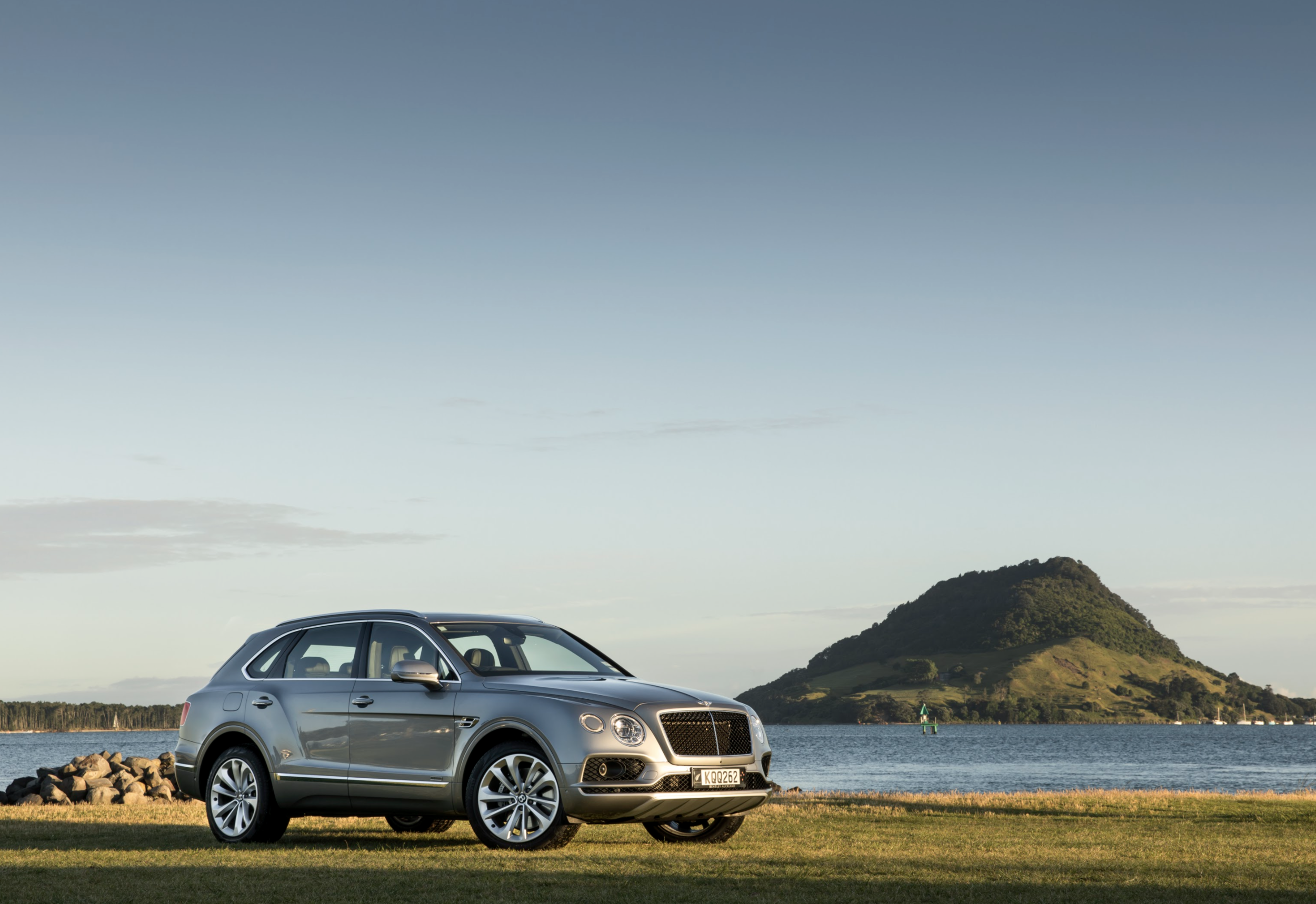
Fastest and most-refined
I never thought I'd be describing a Bentley as a great towing car. But the automotive world is changing fast, and Bentley are changing with it. Despite the sight of the never-seen-before-on-a-Bentley warning sticker on the filler cap, the Bentayga is as Bentley as any other automobile to come out of the Crewe factory.
It's the fastest and most refined diesel ever built, with a top speed of 270 kph. And most ‘Bentleyesque’ of all is the acceleration; despite weighing 2511 kg, the Bentayga dispatches 0 – 100 kph in 4.8 seconds.
That should take care of the diesel-perfumed elephant in the room, except to mention the other obvious upside: economy. This oil-burning Bentayga's official consumption figure is only 8 litres per 100 km.

More than a magic-carpet ride
One of the toughest challenges for this SUV is combining a magic-carpet ride with sporty handling. That's achieved with the second of those impressive Bentayga features – the Bentley Dynamic Ride (BDR) system.
Like the turbocharging, this system benefits from the 48-volt lithium-ion electrics. Even more than the engine boost, BDR is the Bentayga’s key to reproducing progress from the Bentley Continental GT in this SUV. Working together with the adjustable dampener system and air suspension, BDR controls the Bentayga’s roll bars, courtesy of electric motors that each produce 30% more grunt than the diesel engine (yes, really), helping the vehicle defy a few laws of physics and eliminate body roll.
All this technology operates in the background, almost silently, leaving passengers to enjoy the refined opulence that defines the brand. Bentley go to extraordinary lengths for their car interiors. There is simply nothing to fault inside this car. The most perfectly grained walnut comes from the root balls of old trees from California. The result is a wood grain you can’t stop looking at.

Incredible attention to detail
Only bulls from northern Europe are deemed worthy enough to supply the hides – 14 of them – needed to trim the Bentayga's interior, as they haven't been scarred by barbed wire. (It has to be bulls, not cows, so there are no stretch marks.) And the diamond-patterned seats take nearly a week of careful cross-stitching. You park your behind very gently indeed as you get in.
There is plenty of technology at hand, but it’s the trademark organ stops used to control the car's ventilation that sum up the Bentayga’s interior. They operate with a just-so level of resistance; all very old school, yet comfortably at home in Bentley's 'down-with-the-kids' SUV.
Like every Bentley, the Bentayga has a rather magnificent presence. But it's also a bona fide off-roader, and it's more capable than just about any other premium-luxury car. The suspension rises to offer 285 mm of ground clearance, with an official wading depth of 500 mm. Who'll be the first down that boat ramp at Sulphur Point to test it out? That pleasure will be yours, Team UNO.
auckland.bentleymotors.com

Summer in New York
We sent our creative director, Emma, to New York City to see what goes on in summertime in the Big Apple…
We sent our creative director, Emma, to New York City to see what goes on in summertime in the Big Apple…
WORDS + PHOTOS EMMA STADDON
Bon voyage!
Early morning rattle at the door… I’m not ready. “What do you really need anyway?” Jen and Mia run through the essentials: Passport? Yes. Wallet? Yes. A few clothes? Yes. Then IT’S TIME TO go to NEW YORK, BABY! Jen throws in some X-rated travel advice, and we embark on the 2-minute drive to Tauranga airport…
New York greeted me with a balmy heat. I fished out my sunnies and took a moment to acknowledge my new status as a tourist. I threw back a cold drink, then set to pounding the pavement with the rest of them. Here’s my NYC advice, after two weeks exploring one of the world’s greatest cities.
See
The Metropolitan Museum of Art: I came here after being underwhelmed at the clichéd and dull collections of the Museum of Modern Art. I’m so glad I did. Although the work is ancient, the selections are powerful, and perfectly curated, so you get the best from each piece. The Egyptian ruins encased in glass architecture were magical. I recommend ending your tour at The Cantor Roof Garden Bar, where you can sip a cold bevvy and soak up views of the Manhattan skyline. American Museum of Natural History: A place of true wonder and colossal dinosaurs!
Experience
A Yankees game: I’d never been to a baseball game. It was everything I love about cricket on a sunny day: beers, friendly chatter, and a cheer and a clap every now and then when something exciting happens. Sleep No More: I went to this immersive theatre experience based on Shakespeare’s Macbeth on a friend’s insistence. She said it was the best thing she’d ever seen and she’d refund my money if I didn’t enjoy it. Sold! You arrive at McKittrick Hotel to a film-noir setting, put on a white mask and make your way through dark rooms within the hotel, viewing snippets of the story whilst walking through gravel courtyards and dance halls. And you get to peer over actors’ shoulders as the drama unfolds. I didn’t need a refund. Sailing the Hudson: I missed the boat twice on this! Once because of the weather, and once because I’d wandered way off course, exploring on the other side of town. One for next time. The People: They were all sharp-minded, warm and animated. I was able to catch up with UNO favourite, Max Gimblett, for a spiritual chat on all things worth talking about and to preview his latest works: fresh, contemporary and lusty pieces of art that I’d love to own!
Stay
For easy city access, book The Hotel at Times Square: I came here on a train straight from the airport. In fact, I didn’t take a single cab during my whole stay. Just trains and walking. For longer stays, Airbnb it in Brooklyn: Leafy streets with a local neighbourhood vibe. I’m glad I booked the whole two-week stay here: it was so cheap! And I felt like a local, getting to know the café baristas, the family-run bodega, and kids on the corners. There were direct train lines to the city, and it was a chilled reprieve from the busy city hustle.
Eat / drink
Sunday in Brooklyn: The phenomenal hipster brunches were culinary genius. Pizza: It’s everywhere, hot, cheap and delicious. Balthazar: A beautiful, iconic brasserie with crisp, white linen and suave waiters. Surf Bar: An inner-city beach nook; drink margaritas with your toes in the sand! Fette Sau: The best BBQ beef ever (try the vinegar sauce), with sharing plates of meat, beans, slaw and bread, washed down with jugs of boutique beer in a dimly lit, garage-style pub. The Dead Rabbit (in Battery Park): Voted the world’s best bar, this hole-in-the-wall serves beers and plenty of chat with fellow bar propper-uppers – and a Scotch egg, par excellence. The Standard Plaza: It’s the ultimate swanky experience with pop-up garden-style bar, and with changing chefs, très cool. The Butcher’s Daughter: I ordered without seeing the ‘veggie slaughterhouse’ signs and had to return my vegan bacon. Loosie’s Café: espresso-style coffee for that morning fix.
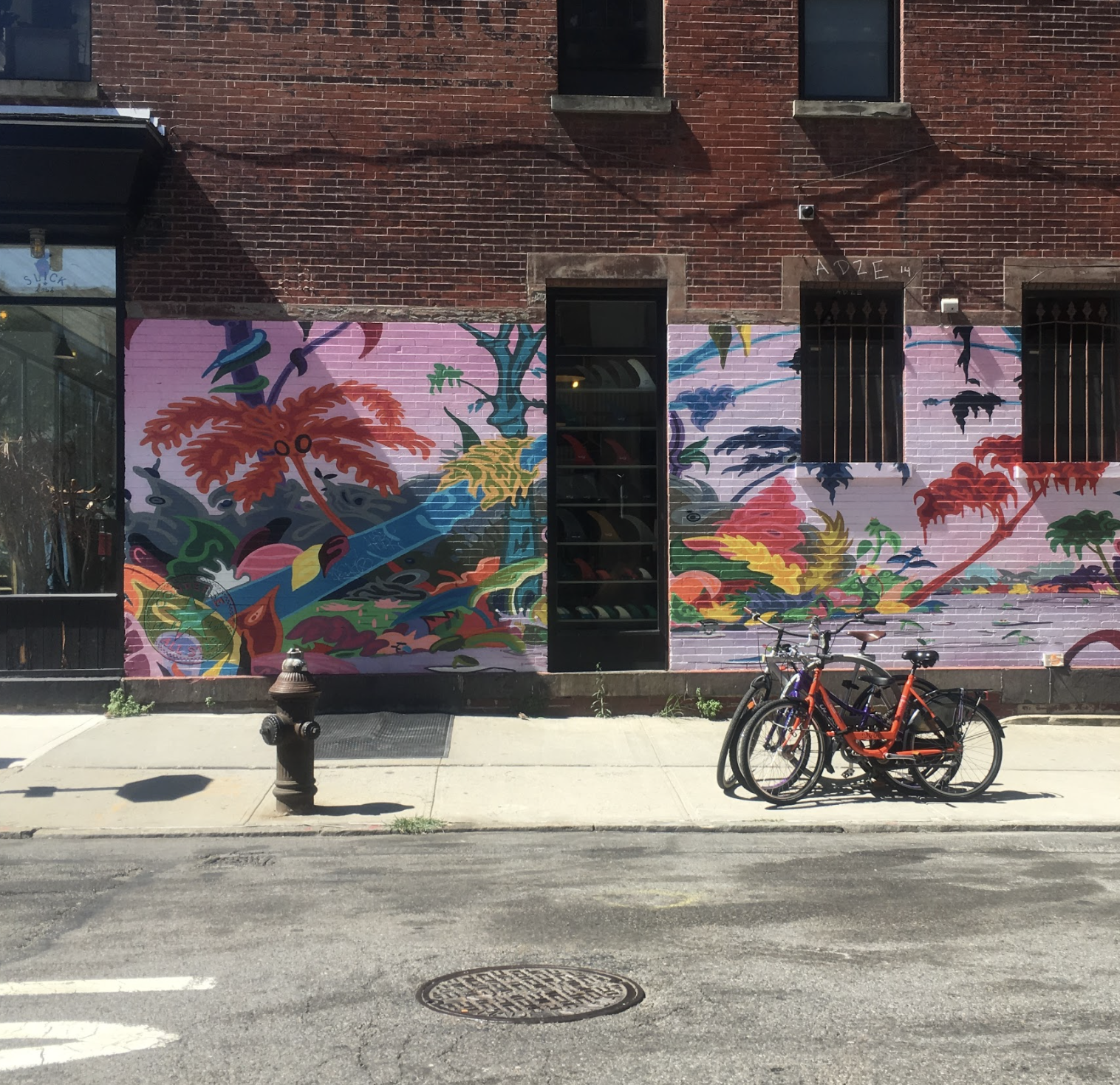
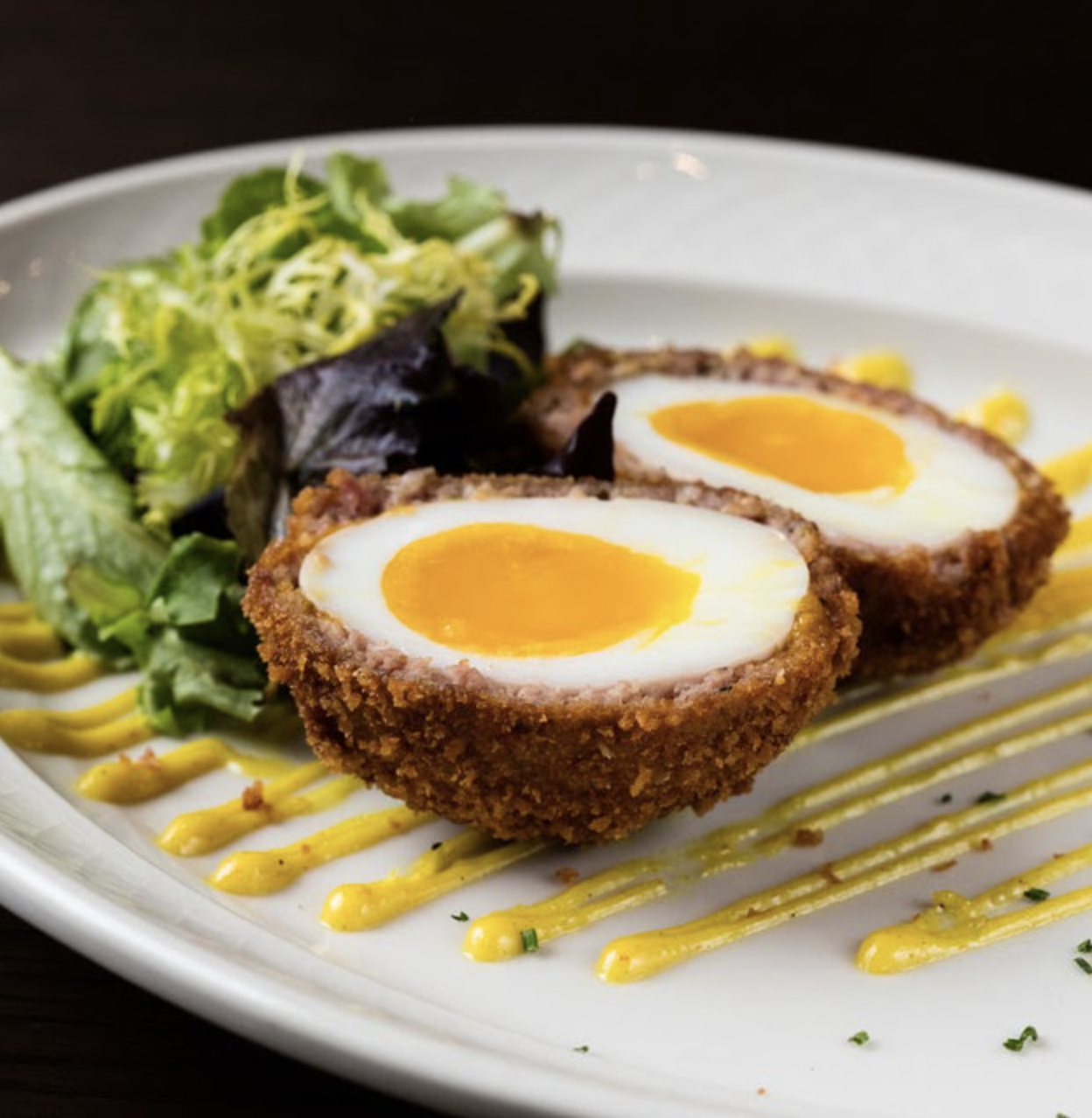
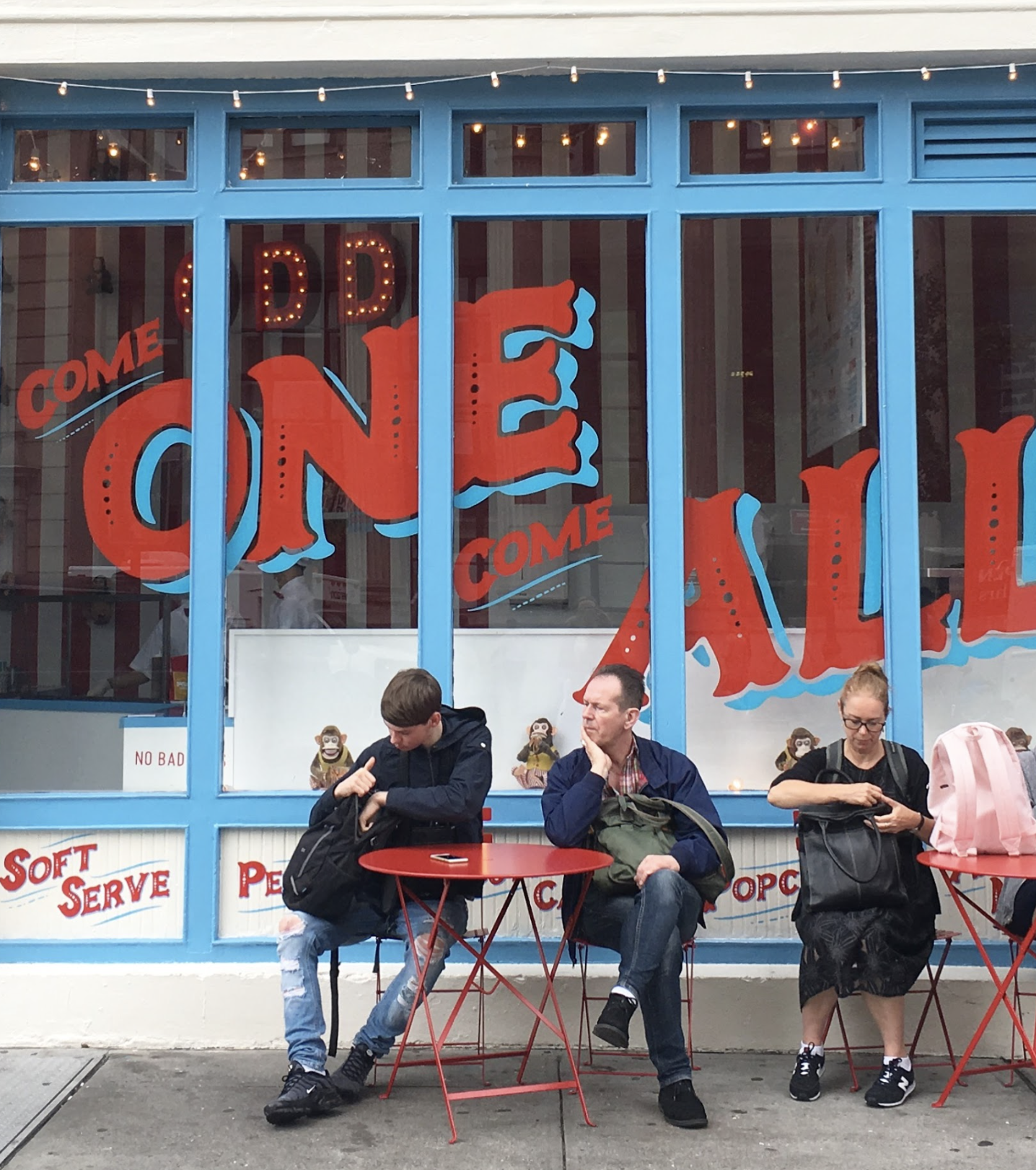
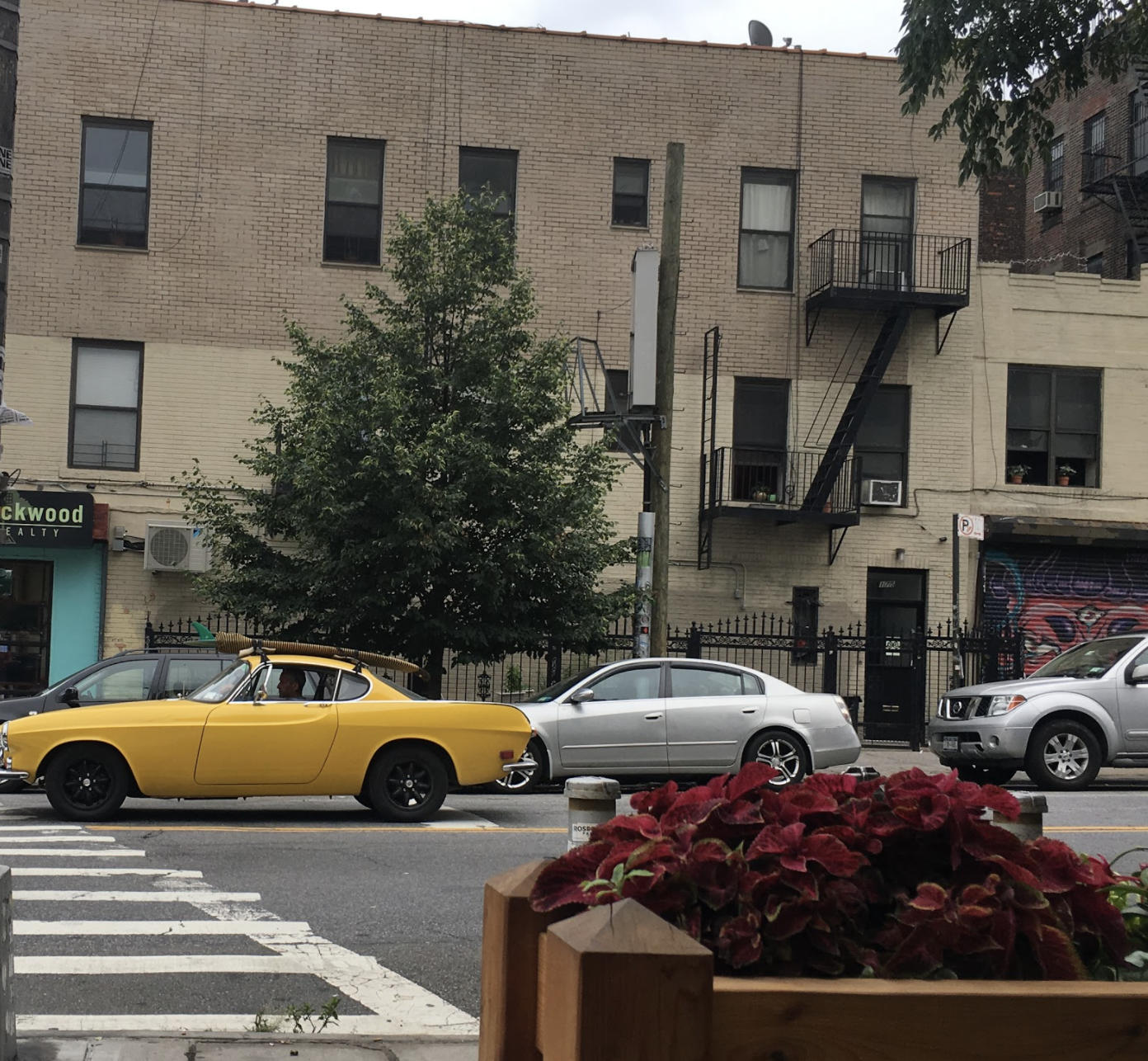
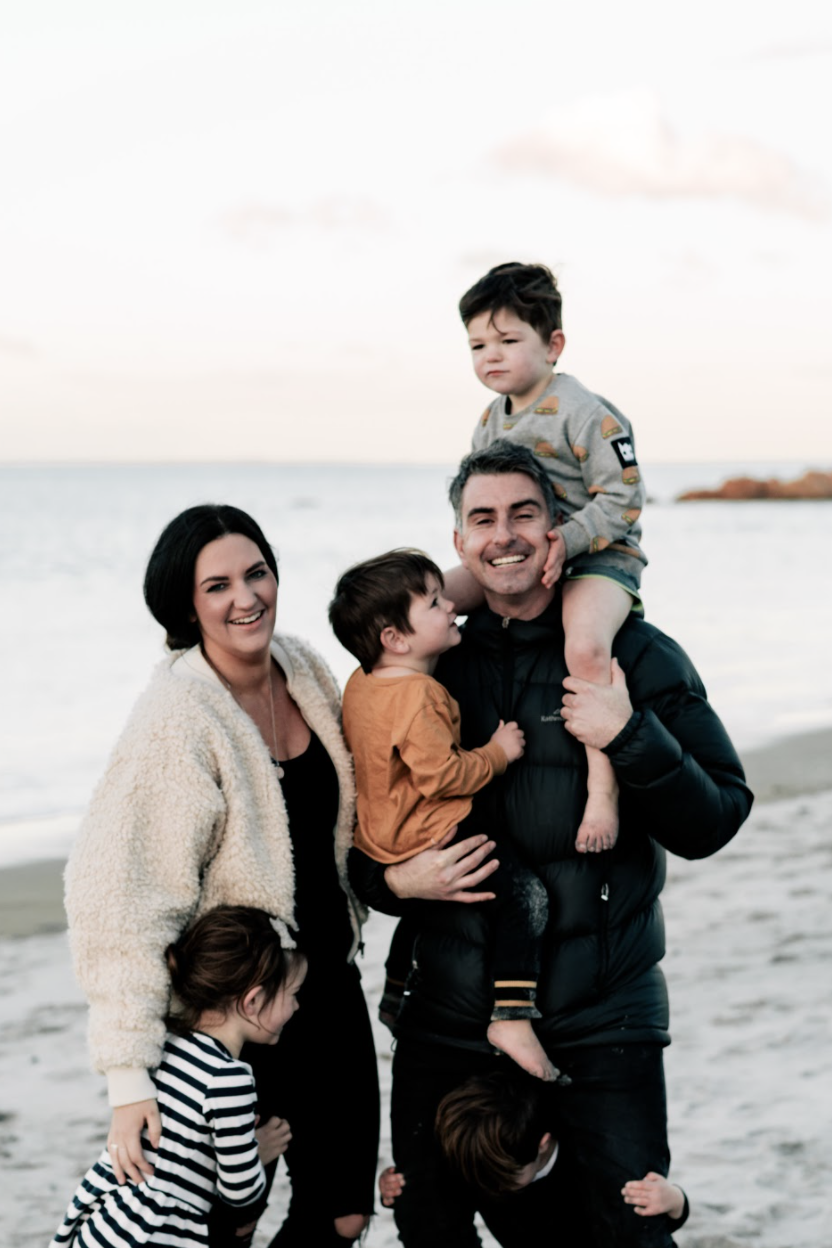
Born ready
Mother, midwife and Instagram influencer Carmen Lett talks to UNO about her new venture, Hatched Online.
Mother, midwife and Instagram influencer Carmen Lett talks to UNO about her new venture, Hatched Online.
WORDS JENNY RUDD / PHOTOS RACHEL DOBBS

When you’re heavily pregnant with your first child, you want: 1) a baby handbook, and 2) to lie on the sofa. Knowing this, Carmen Lett, a midwife and the mother of four young children, has founded Hatched Online antenatal and parenting classes.
“As a midwife on the postnatal ward at Tauranga Hospital, I noticed a lot of parents coming through who didn’t know much about what happened straight after birth. I’d often find myself on the ward showing people how to change nappies or swaddle a baby to help them sleep, or teaching them what a newborn’s feeding pattern might be like or that babies are often wakeful on night two of their life. I realised that lots of these fundamentals weren’t being taught in antenatal classes.”
There’s nothing quite as shocking as realising you’re responsible for another person’s life. You’re sent on your merry way from the hospital with a tiny baby and not so much as a “Do you know what you’re doing with that?”; you’ve probably experienced more stringent checks when taking out a DVD at Blockbuster. After going through the most physically and emotionally intense time many of us will ever experience, you’re promoted with immediate effect to being in sole charge of someone who’s completely helpless, unable to feed themselves and can barely communicate their needs.
“Because first-time mums tend to do lots of research and antenatal classes cover it really well, people were really clued up about the birth process, but there was a real knowledge gap in terms of what to do after you’ve had the baby,” says Carmen. She knew that empowering mums and dads with this information would remove much of the fear.
“I’ve been running Hatched On Location antenatal classes in Tauranga for the past few years, and they’re always full,” says Carmen. “Expectant parents are keen to learn everything they can about birth and the early days of parenting, but there were lots of couples who missed out because their partner worked shifts, they lived rurally, or the pregnant mum was on bedrest.” Once she realised so many people weren’t getting this vital information, she set about launching Hatched Online, with her husband, Aidan, a tech start-up whizz, handily in the mix.
Hatched Online’s antenatal classes – which also include that invaluable postnatal education – are delivered in the form of 13 videos, each about half an hour long. They’re the same as Carmen’s Hatched On Location classes, with a few bonus extras. Whether you snuggle down and watch one every evening, or binge watch the whole lot over a couple of days, once you subscribe, you can view them as often as you like for six months (and given baby brain is a real thing, it’s safe to say most parents-to-be would be happy to take advantage of being able to watch certain modules more than once).
“The friends you make are an important part of antenatal classes, so for my online parents, I’ve set up a Facebook page that everyone gets access to, and I do live Q&A sessions so you can ask as many questions as you like,” says Carmen. “The great things about Facebook is that all those questions and answers stay right there, so you can go back and read them all.
“I often hear that parents feel pressured to do things in a particular way. So it was also important to me to offer information on all the options,” she continues. “For instance, if you want a home birth, or an elective cesarean, I provide all the information, then you can make your choice one way or the other. We focus on healthy babies – without guilt.”
Carmen’s Hatched On Location classes are nearly always full, and not just because she serves snacks and hot drinks, and gives out goodie bags filled with baby products. If you had to pick anyone to teach you about babies, you’d pick her. She’s been a midwife for 10 years (“I’ve known I wanted to be a midwife since I was 15 years old”), and as a mother of four – Rosie (5), twins Asher and Jude (4), and Taj (2) – has some pretty colourful birth stories of her own. “I’ve had a C-section, vaginal births after a C-section, ventouse, epidurals, the lot,” she says.
Carmen also runs popular mummy blog The Lett Tribe, and thousands follow her Instagram account @carmenlett, where she makes it clear she loves her job. “Gimme all the babies!” she says.
FIND more information about Carmen’s Hatched Online and Hatched On Location classes at: HATCHEDANTENATAL.CO.NZ

Trekking across Greenland with Hollie Woodhouse
I was three hours into trekking across the Greenland ice cap, and all I wanted to do was quit. I’d spent the past six months imagining myself as a strong warrior gliding over smooth snow under bright blue, never-ending skies, the sun warming my bronzed face. The reality, however, couldn’t have been further from the truth.
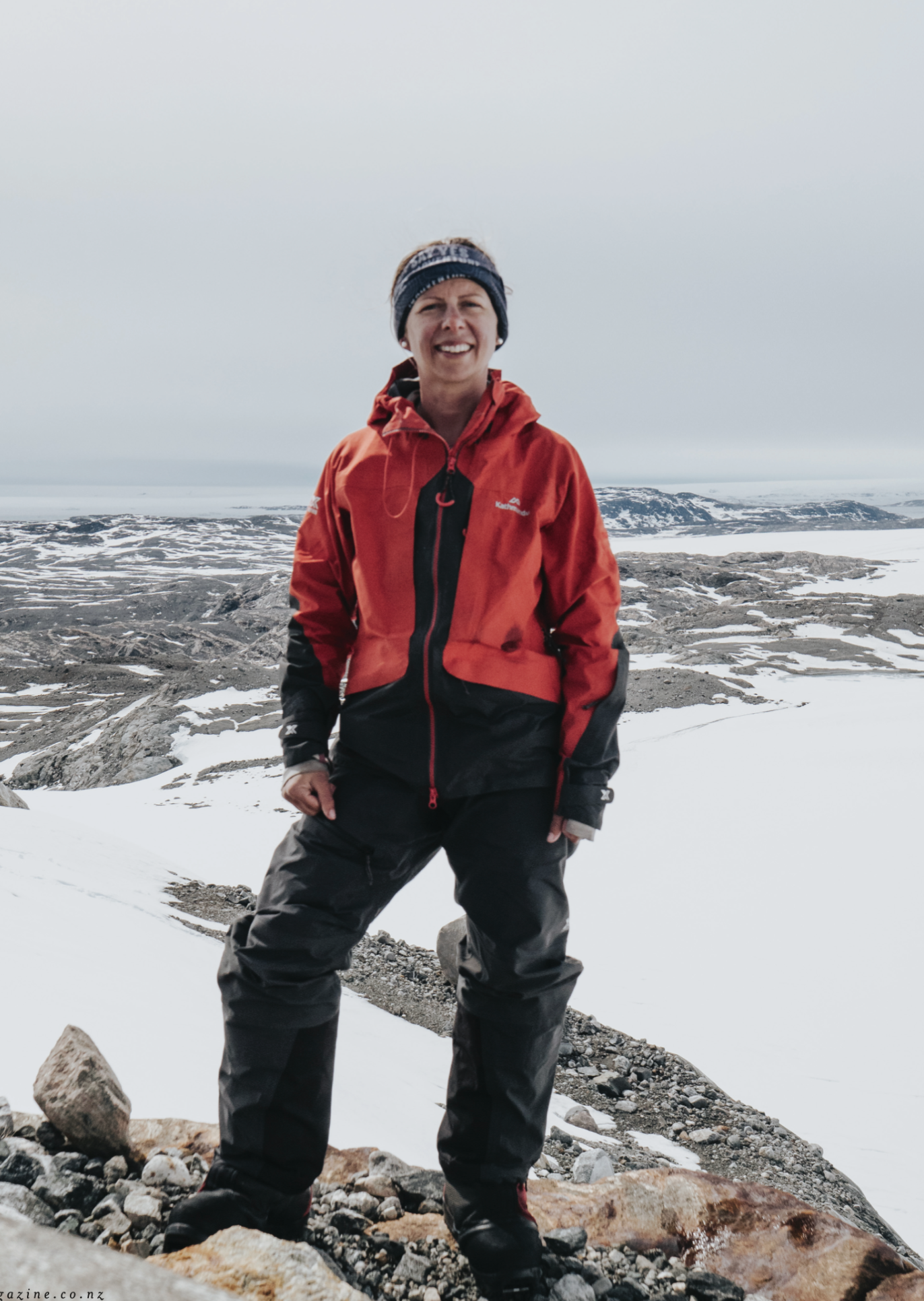
Can you imagine dragging something heavier than you are across a canvas of ice all day, every day for a month? Hollie Woodhouse reckons it’s all about the top two inches.
WORDS JENNY RUDD + HOLLIE WOODHOUSE PHOTOS KEITH PARSONS + BENGT ROTMO
When I first came across Cantabrian Hollie Woodhouse’s magazine Say Yes To Adventure two years ago, I was completely captured by its exciting stories and eye-widening images of people doing things that make you feel like the world is something to climb to the top of so you can truly see how magnificent it is. She published tales of scaling barren mountains in countries I’d never heard of, camping in the ice under the Northern Lights and cycling across continents. At the centre of it all was Hollie herself, a diminutive, blonde handful of sparks. As well as writing about her own adventures, she edited, designed and published the magazine too.
That afternoon, I went for a walk around the Mount and on the spur of the moment, decided to say yes to adventure. I left the track and headed diagonally up, fighting my way through scrabbly scrub and eventually getting stuck. Sweaty and a bit scared, I perched halfway up the slope facing out towards Matakana Island. My only option was to let gravity lead me back to the base track through the dense bush. I arrived home breathless and muddy. ‘Probably won’t mention that to Hollie…’ I thought.
If you ask Hollie about her achievements, she’ll tell you, “I’m not some ultra-athlete, I’m just a girl next door who goes out and gets involved.” But when you consider what she’s done, you realise she’s anything but average. Among other feats, she’s competed in the Coast to Coast, run 250km across the Moroccan desert in the brutal Marathon des Sables, and most recently crossed the 560km Greenland ice cap pulling a sled heavier than she is.
I was expecting her to be a no-nonsense, laser-focused high achiever; instead, when we eventually meet I find a funny, self-deprecating woman with a flair for graphic design. Originally from Ashburton, she’s been spending more time in different parts of the country through being invited to speak at events and share her experiences. Talking to her in Cambridge, I ask what she learned from her Greenland crossing.
“I learned what it feels like to really, really struggle,” she says. “I used to be pretty dismissive of people when they said they couldn’t do something, especially physical things like running 5km or swimming in the ocean, but now I know, because that was me at times in Greenland. I felt like I just couldn’t do it, but our team encouraged me and spurred me on. So I suppose you could say it made me a nicer person!”
I asked Hollie to tell us more about her extraordinary Nordic feat. Here, in her own words, is her story.
I was three hours into trekking across the Greenland ice cap, and all I wanted to do was quit. I’d spent the past six months imagining myself as a strong warrior gliding over smooth snow under bright blue, never-ending skies, the sun warming my bronzed face. The reality, however, couldn’t have been further from the truth.
My 55kg were struggling to pull the 60kg pulk (sled). My skis had a mind of their own, sliding uncontrollably from underneath me, too often seeing me face plant into the icy snow. It’s funny how dreams never quite work out that way we intend, but to hell with happy endings. Ultimately, I was there for the story.
I was part of a six-man team (Antarctic Heritage Trust executive director Nigel Watson, polar guide Bengt Rotmo, and four explorers: New Zealanders me and Brando Yelavich, and Australians Bridget Kruger and Keith Parsons) led by the Antarctic Heritage Trust for its third Inspiring Explorers’ Expedition – a 560km trek across the Greenland ice cap. The trust’s mission is to conserve, share and encourage the spirit of exploration, something they believe is critical in the 21st century. This expedition was to do just that while honouring the remarkable legacy of Fridtjof Nansen, who made the first crossing 130 years earlier.
“I learned what it feels like to really, really struggle.”
Growing up on a sheep and beef farm prepared me for the rough and tumble of the outdoors, but nothing could have prepared me for this adventure. Even though expeditions in freezing climates had never been on my bucket list, however, I knew this was a once-in-a-lifetime opportunity, not to be missed.
Best described as being trapped inside a ping-pong ball, Greenland was far removed from my everyday reality. Life was broken down into the most basics tasks. It would take me 15 minutes every morning to squeeze my feet into my frozen boots while balancing awkwardly in our two-man tent. After boiling water, eating breakfast, then clumsily taking down our tent (a small feat in itself when wearing three layers of oversized mittens) we’d line up ready to tackle the next 20-odd kilometres of the day.
Using the sun and wind to navigate, we’d ski in a line, one behind the other, with a 10-minute break every hour. After anywhere between 10 and 16 hours of skiing, time would be called and the evening routine would commence. Tent up, water boiled, dinner eaten, team meeting, diary entry and finally, sleep. Wake up, repeat. I now understand the meaning of the term ‘Groundhog Day’.
We battled unseasonable wild weather, including two hurricanes. Each time, we dug down our tents to escape the full force of the ferocious winds. Using the excess snow, we built giant walls, their proximity to the tents critical, down to the last centimetre. We hunkered down for up to 30 hours at a time, snow falling like cement around us. These delightful moments were considered ‘rest days’; there’s nothing like the steady drum of 180km/h wind to lull you to sleep.
As the days turned into weeks, my body slowly became accustomed to the new normal. With every step, I managed to grasp the skill of Nordic skiing. Instead of fighting the unnatural movement, I was able to switch to autopilot and would often find myself in a state of flow. It was during these moments that I was reminded why I say “Yes” to the unknown.
“Instead of fighting the unnatural movement, I was able to switch to autopilot and would often find myself in a state of flow.”
We were told the trip would take us anywhere between 22 and 25 days, so we took 27 days worth of food, just in case. Our fuel was high-energy, high-fat foods including nuts, chocolate, chips and lollies – a five-year-old’s dream. On the morning we were due to leave, Bengt was concerned we didn’t have enough to eat. A small detour on our way to the ice cap took us to a tiny supermarket where we bought more food, including three blocks of Norwegian butter. At the time, I questioned if I’d ever be in a situation where I’d voluntarily eat three blocks, but towards the very end of our trip, as I sliced off chunks and ate them straight, I cursed myself for not buying more.

Towards the end of our journey, we were up against it. Storms and sickness had slowed us down considerably, and with five days left and more than 170km still to cover, tensions were high among the team. Would we make it? More importantly, did we want to make it? Frustrations aside, we decided not to call the helicopter, instead opting for human power to get us to the finish – or at least as far as possible.
Pushing on, the final day provided the best conditions of the entire crossing. With our boat having literally sailed, a helicopter was organised to pick us up, regardless of our location. After battling whiteouts, powder up to our knees, relentless winds and temperatures as low as -39.5°C, we could finally smell the salty sea air.
After 22 non-stop hours, I ungracefully pizza-wedged to a stop for the final time. With tears sliding down my sunburnt cheeks, I was overwhelmed with emotion: elation, pride and an immense sense of achievement (and relief in knowing I never had to pull on my boots again!). In a season in which only a handful of teams successfully made it across the ice, I couldn’t have been prouder.
As I peered out the window, safe in the helicopter that was transporting us back to a warm shower and a decent meal, I watched the vast white of the ice cap below. From east to west, 29 days later (five days more than expected), Greenland had brought me many lessons, complete hopelessness, uncontrollable laughter and life-long friendships.
Eight years ago, I made a pact with myself to do one big adventure each year that challenged me, like New Zealand’s Coast to Coast, and ultra-marathons across Morocco’s Sahara Desert and through Peru’s Amazon jungle. While these experiences left me wanting more, Greenland changed me. I came home with a huge appreciation for my life – my boyfriend, my family and friends, my job and just how lucky I am to live in this incredible country.
This adventure taught me the true definition of resilience, and that ultimately, it’s all about the top two inches. I go on adventures to push myself, and to experience moments I never thought possible. Greenland dishedthese up in bucketloads.
In Nansen’s Footsteps, a documentary about this epic expedition, can be viewed at inspiringexplorers.com.
HOLLIEWOODHOUSE.COM


Have family, will travel
Tauranga locals Amy Board and Pat Johnston took a year-long trip around America with their three daughters.
WORDS AND PHOTOS AMY BOARD

Tauranga locals Amy Board and Pat Johnson take their three daughters: Ellie (10), Celia (8) and Molly (4) on a year long trip around America, the country of Pat’s birth.
Travelling around America in a bus has always been a dream for us. I wanted the freedom of long-term travel and the experience of camping alongside other traveling families. My husband Pat was drawn to exploring national parks and teaching the kids wilderness skills, as well as showing them that the country of his birth has so much more to offer than the negative clichés they often heard.
Last year we received an invitation to a family wedding in America. It seemed a pretty big expense for just two weeks. We reasoned that the children were the ideal age for full-time travel and we had a family base (Pat’s parents) in the middle of America to launch from, so we decided this was the ideal time to travel for a year.
We moved out of our home on Oceanbeach Road in The Mount, gave away or sold most of our belongings, and bought five, one-way flights to Los Angeles. Pat's uncle picked us up in his luxurious 33 foot, class-A RV and drove us 2500 km back to Pat’s home town in style, with us thinking “Don’t get used to this, kids!”
Whilst staying with Pat’s parents in Omaha, we quickly found a 1985 converted short bus from a self-proclaimed redneck. He had built it as a 'bug-out bus' for the impending apocalypse and had installed a new Chevy hot rod engine, new tyres and brakes, and a ridiculous powerful sound system: Pat was happy. There was also a flushing toilet, small kitchenette, water tank, and bunkbeds: I was happy. It was nothing like the uncle’s fancy RV monster: the girls were crestfallen. We now had our new, tiny home. We named her Shelby, installed solar panels and hit the road.
Ten years ago, Pat I had witnessed the extraordinary beauty of the Glacier National Park in Montana. That was the kind of wilderness we wanted our girls to experience, so we headed west and have been traveling through the Pacific Northwest for the last three months, camping and exploring the immense wilderness of Oregon and Washington. We always go on hikes when we are staying in national parks and are often surprised at the stamina of the girls. In Crater Lake National Park, little Molly walked 7km with a 350m elevation change and refused to be picked up once. Torrential downpours in the rainforest or recent sightings of bears have yet to stop them from going out into the wild. We have found that the long stretches of time walking out in nature lend themselves to deep discussions and we have been surprised by some of the topics that come up during these walks: Trump versus Hillary, American history, the Civil War and slavery, World War II, and the oil pipeline protests.
To keep up with their schooling, the girls do observational drawings and keep travel journals. Ellie and Celia each have large workbooks that cover all subjects for their year level; proper nouns, long division and so on. But the bigger curriculum they are following at the moment is the one I’m really enjoying helping them with: walking along South Beach in Oregon finding fossils, observing erosion and the weather, identifying animal footprints and semi-precious gemstones, and guessing how fresh bear poo is.
It has been hard adjusting to the small space in the van. Each area has multiple uses; our dinner table converts to our third bed, for example. Something simple like getting your swimming bag out is a three step process with two people in your way. And when it’s pouring with rain, the chaos is intensified. We like to settle at one spot for more than a few days, but we are restricted by our holding tanks. Several times we would have liked to have stayed at certain places longer, but have to go into town to empty our black water and fill up with fresh water, and end up moving onto the next spot. We also have had to change the way we normally hike and camp because of potentially dangerous animals such as bears, cougars and rattlesnakes. We can't let the kids run ahead on hikes like in New Zealand, and have to be very conscious about storing food and cleaning up.
To fund our trip we have been working online or stopping to work when needed. We wanted to keep our route very flexible so if we meet people we want to travel with, we could change direction at a moment’s notice. Some of the best moments on our travels have come about from changing our plans, and making new friends with other traveling families. After surviving a typhoon in the Oregon High Desert, we went with two other families to Summer Lake hot springs. That night the tail end of the typhoon hit hard and all the kids and animals piled into our bus. We lit candles and played the ukulele while very strong winds swept through camp. It's been wonderful to savour what feels like old world moments; cooking on an open fire and eating outside every night, fishing and foraging for wild fruit and berries and reading to the kids by candlelight.
And now we are heading south for winter to stop and work for the holidays; then perhaps onto the East Coast and Canada next year. Ultimately we want to bring Shelby back to New Zealand and continue this adventure.
Amy writes travel letters from the road to her friends and family at her blog

You’ll never want to leave: Clarence Hotel + Bistro
It’s almost worth going to the Clarence Hotel & Bistro simply for the experience of walking up the grand steps that dissect the long, green-fringed veranda. You just know there’s something significant at the top.
WORDS Jenny Rudd PHOTOS JARED DOBBS + TRACIE HEASMAN + QUINN O’CONNELL
It’s almost worth going to the Clarence Hotel & Bistro simply for the experience of walking up the grand steps that dissect the long, green-fringed veranda. You just know there’s something significant at the top.
Clarence’s owners Kim Smythe and Noel Cimadom recall feeling the same a few years ago when standing outside what was once Tauranga’s post office. “The building has been in Kim’s family trust for a long time,” says Noel. “We’d already transformed the beautiful old post office in Cambridge into our first restaurant, Alpino, so it’s become a family joke now we’ve done the same here.”
Walking in, you can turn left for the bistro, an elegant dining room serving European brasserie-style food with a Kiwi slant; head up the stairs to the 10 individually styled hotel rooms; or hang a right to Iki, the bar and eatery that sees a constant flow of people from morning till night. With an art deco nod to the building’s heritage, Iki is an opulent scene filled with hints of gold, pops of neon purple and dark velvet. It’s like stepping into another world; you’ll feel miles away from the city.
The heart of the space is arguably the ancient coffee machine at the end of the bar. She’s a grand old dame, too old to make coffee these days, but nevertheless loved for her stately aesthetic.
“I had the same machine at a café I ran when I lived in Munich,” says Noel. “It was designed in Venice and made in Portugal in the ’70s. When we were looking for pieces for Iki, I went on eBay to find it and discovered there were two in the entire world – one in Las Vegas, and one in Taupo. I drove down to Taupo the next day to pick it up.”
At lunchtime, local suits drop into Iki to enjoy its quick and easy Eurasian street food menu, starring favourite dishes like barbecue pork belly skewers with apple and fennel salad. At about 3pm, the after-work crowd begins to pour in, spilling out onto the deck under the blue sky, green palms and glass roof that keeps the rain out and warmth in, giving you the choice to socialise al fresco year-round.
When the sun’s shining on Friday nights, you’ll find a DJ outside playing smooth beats. And should you end up slightly over-served after an evening at Iki or in the bistro, simply book yourself into one of Clarence’s designer rooms and enjoy eggs and pancakes on the veranda in the morning. You’ll never want to leave.
For the hotel, book online; for the bistro, book online; for Iki, just turn up! Visit: CLARENCETAURANGA.CO.NZ
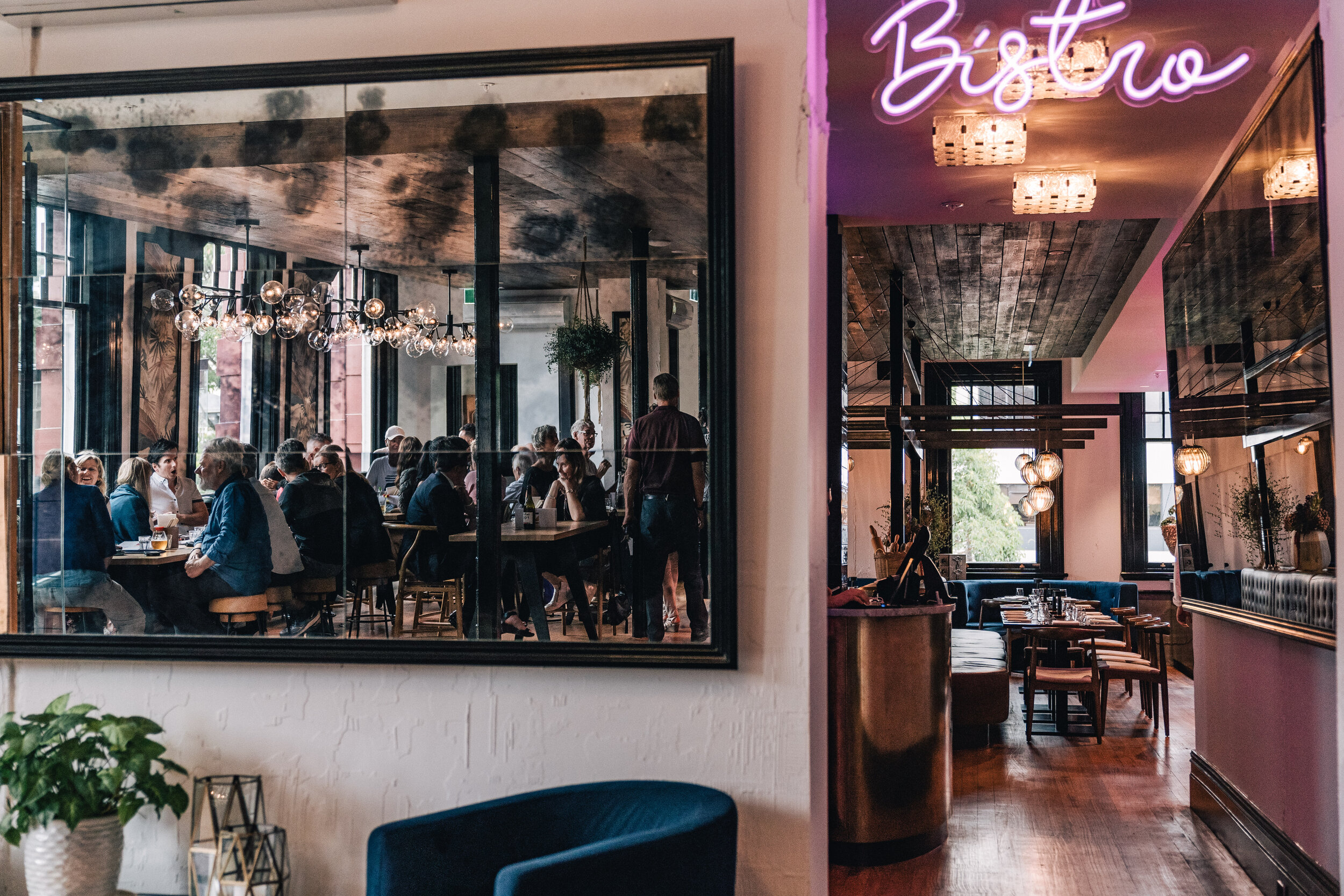
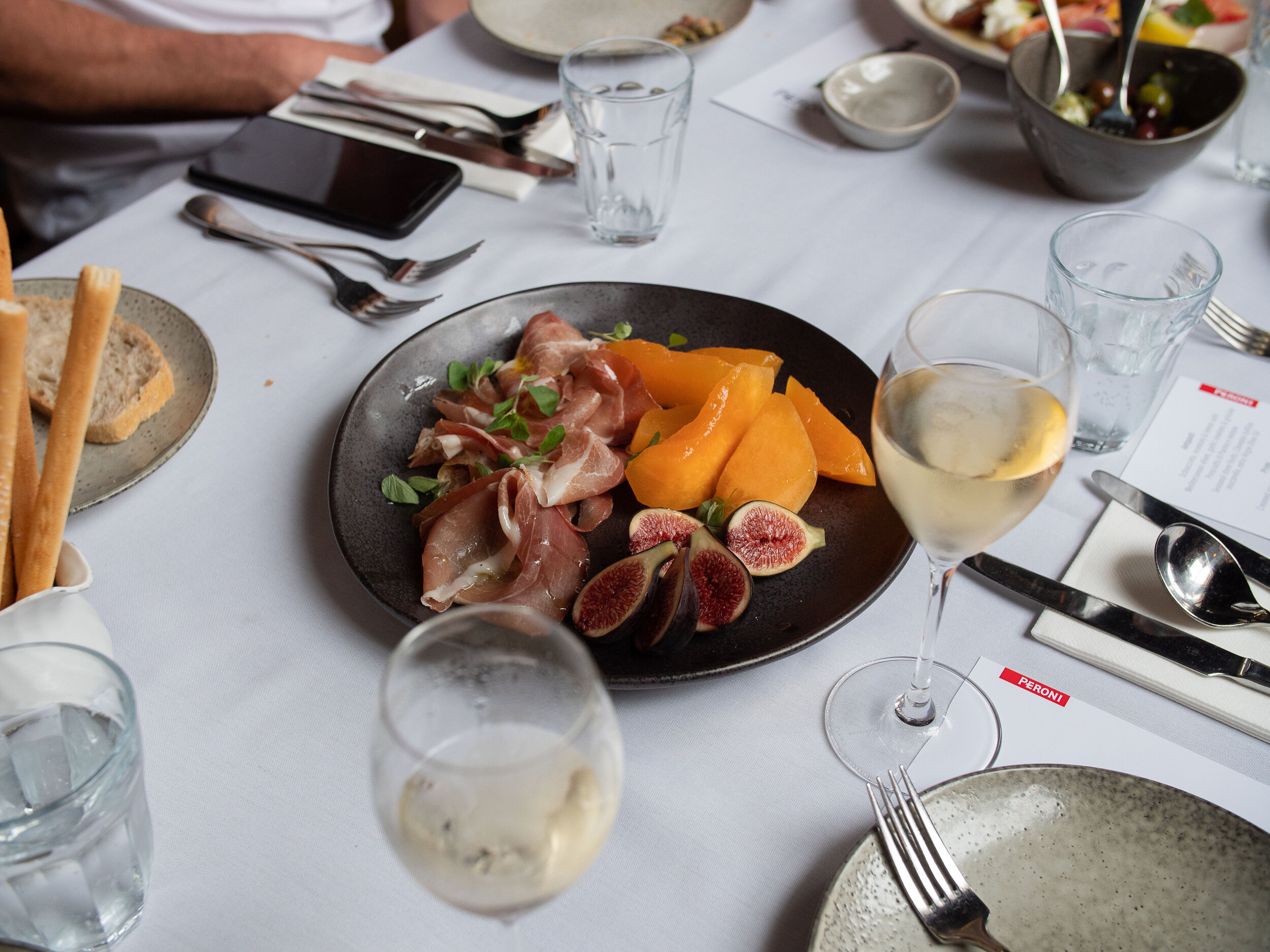
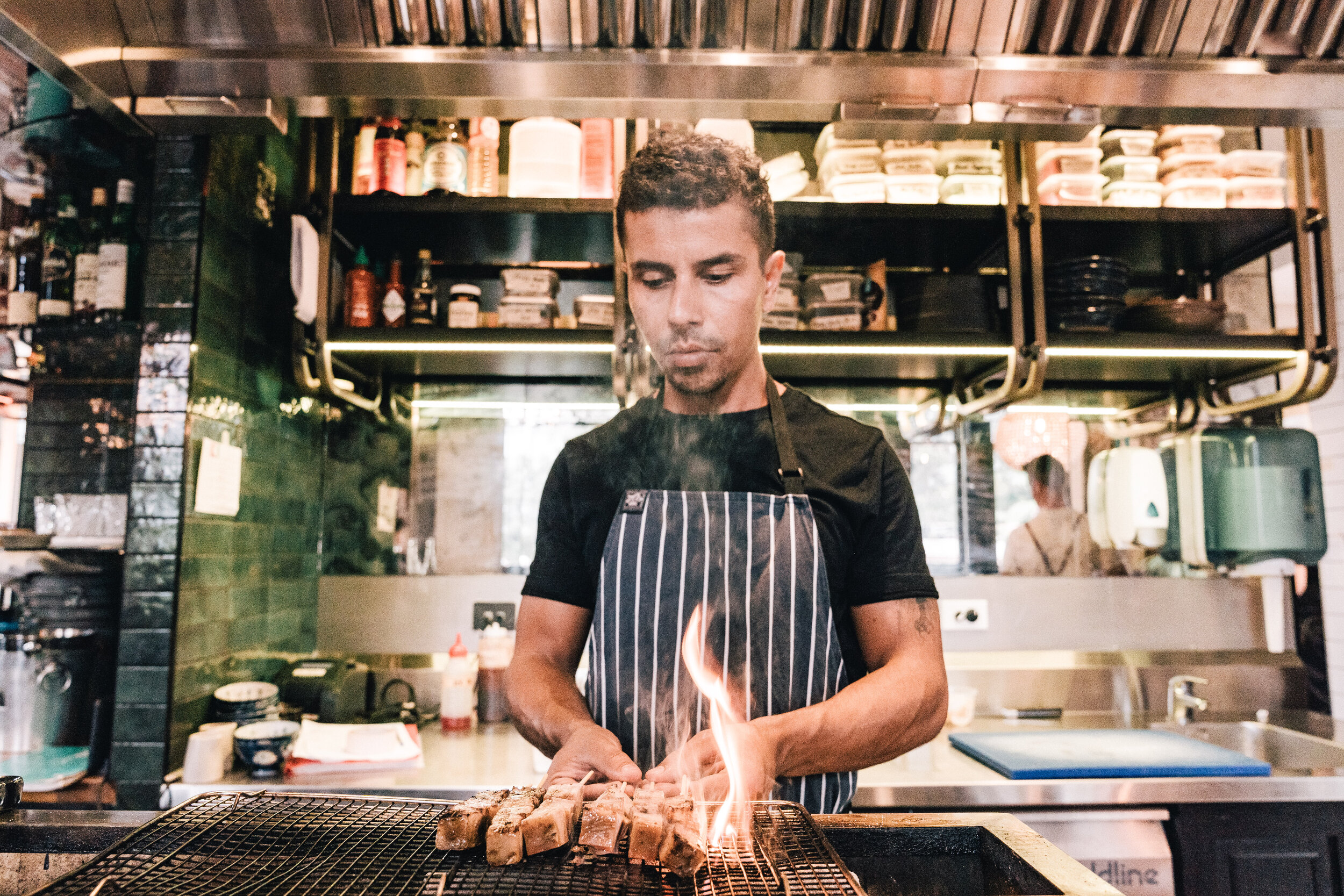
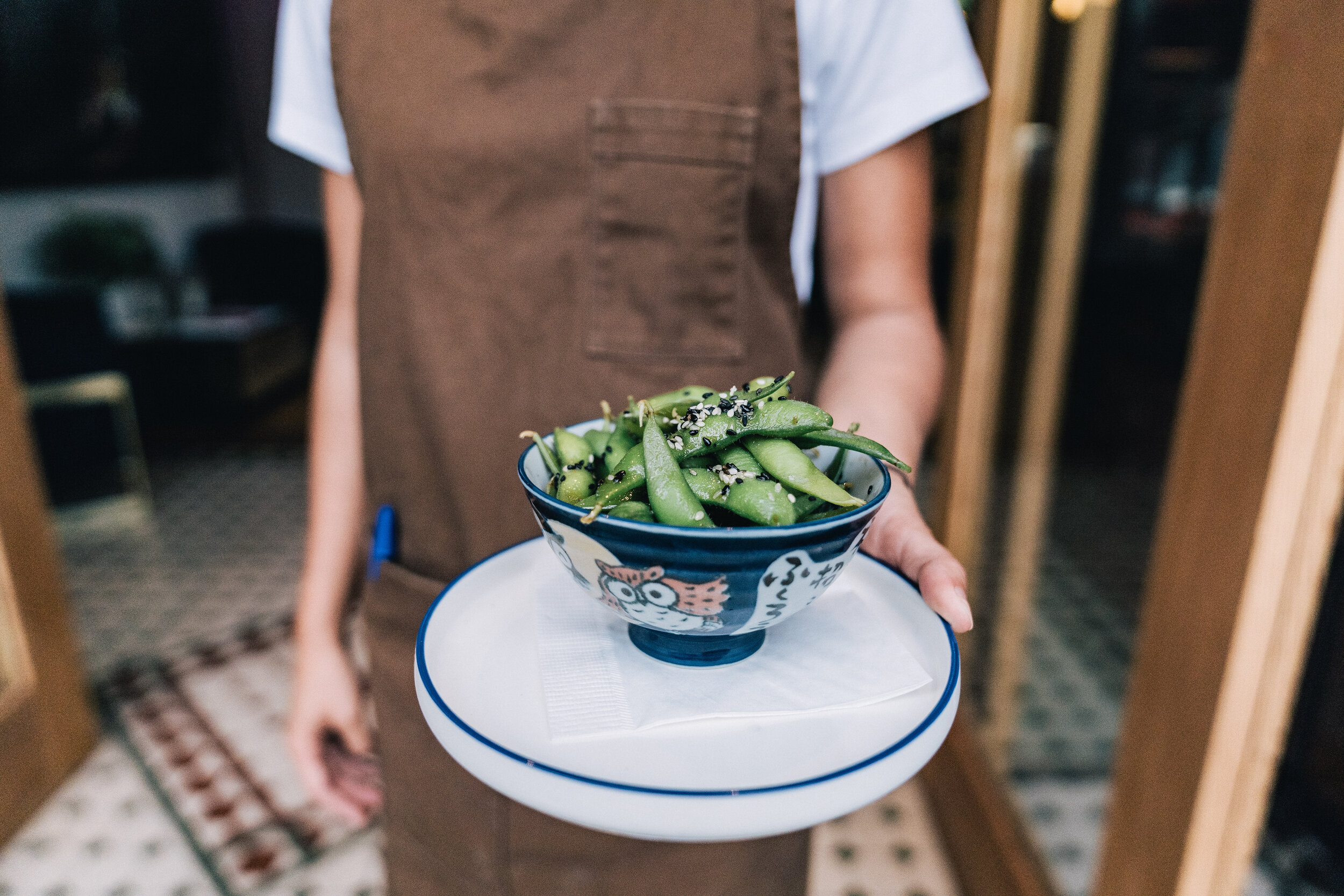
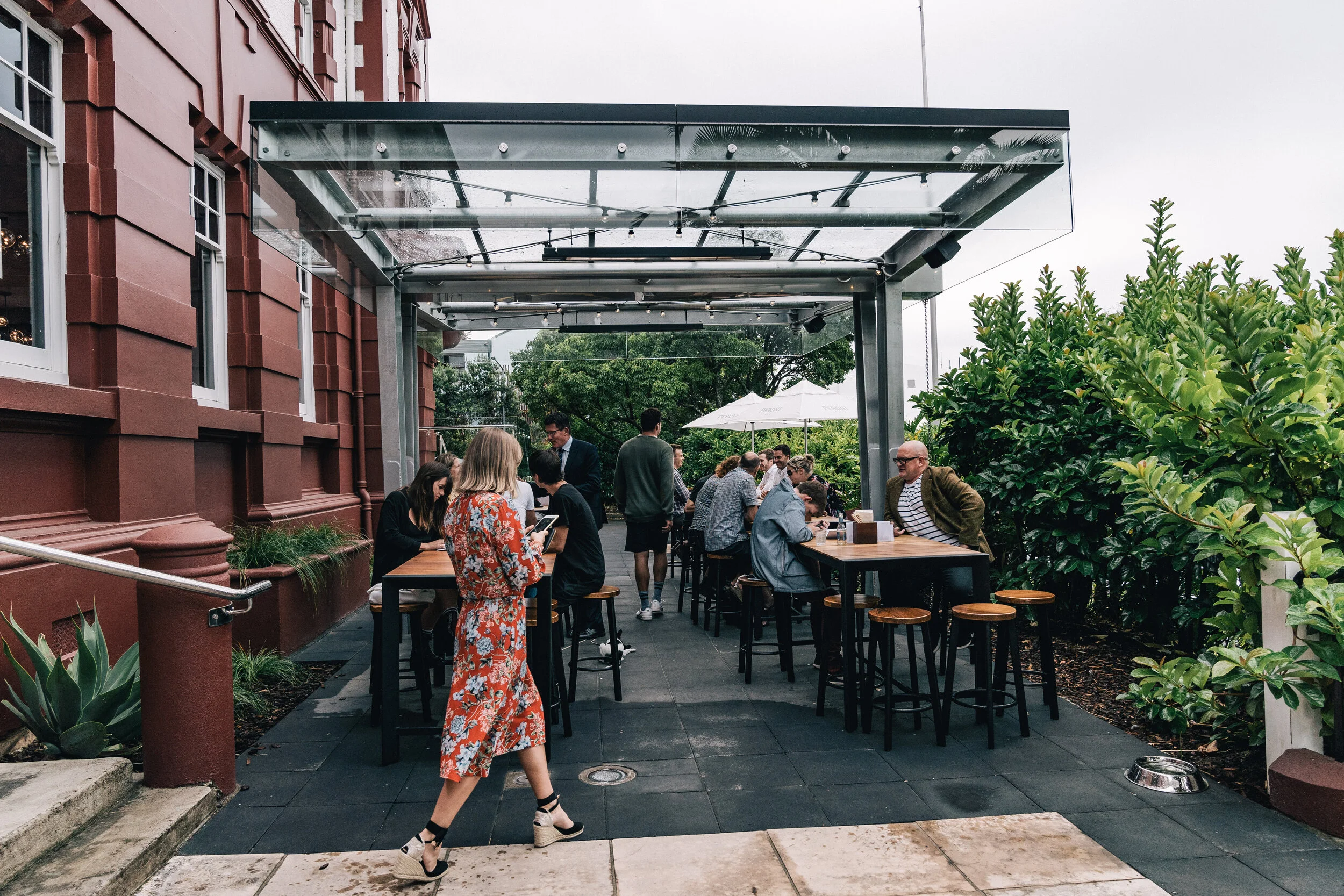
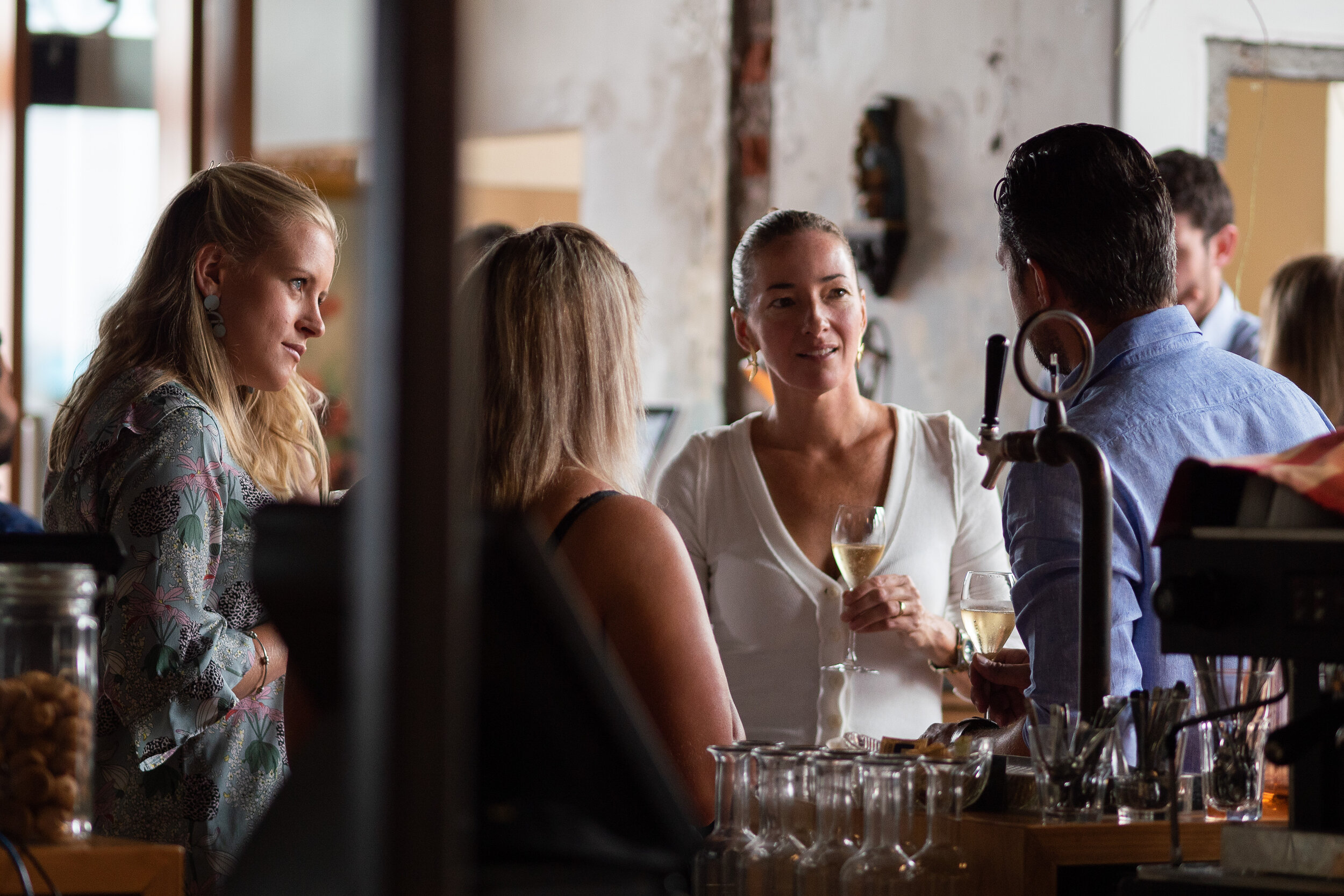

Home is where her heart is
From living at the Mount campground to becoming one of Tauranga’s top businesswomen, Sharon Hall of Bayleys Real Estate talks about her remarkable journey and her passion for the Mount.

From living at the Mount campground to becoming one of Tauranga’s top businesswomen, Sharon Hall of Bayleys Real Estate talks about her remarkable journey and her passion for the Mount.
WORDS DANIEL DUNKLEY / PHOTOS SALINA GALVAN
Sharon Hall lives and breathes Marine Parade. Pick a house and she can tell you about its history. Ask about a business and she knows the owner. Enquire about the landscape and she can give you the details.
“Decades ago when these Norfolk trees were tiny, the headmaster of the local primary school used to tie presents to them at Christmas,” she says, looking across to the Mount’s main beach from her home. “It’s such a special place to be at this time of year – in fact, all year round.”
Sharon calls Marine Parade home, and is also a leading property specialist in the area. Dotted with pristine properties and beach baches, the Mount to Papamoa is her preserve.
Every sun-soaked spot in this picturesque postcode means something to her. With an encyclopedic knowledge of the area, Sharon is a formidable businesswoman. A former nurse, she has invested in property throughout her life, learning from her parents, who scraped together all they had to invest in real estate when she was growing up in Matamata.
“My mother and father started with £10 and a motorbike,” she says. “My parents worked really hard. It was very ballsy of my mother to buy real estate, especially as a woman. Back then, women couldn’t even get a mortgage; the man had to do it. My father was more risk-averse.”
While working long hours as a nurse, Sharon took her mother’s advice and bought a block of four flats in Tauranga. In 1980, she forged a career as a real estate agent before changing direction into other businesses while she had small children. At that point, her life was turned upside down.
In the early 2000s, Sharon lost nearly everything following a divorce. She ended up without a home, living in a horse truck at the Mt Maunganui campground with her two daughters. She had just $40.
“I had nothing. I ended up in the horse truck with the girls, and owed $70,000 to a lawyer,” she says, pointing down the road to the campsite. “We went from living in a beachfront home to living like that. It was actually a relief, because I couldn’t lose anything else.”
Back at square one, times were tough. But the experience gave her empathy and a strong resolve to provide for her children.
“I eventually sold the horse truck and went back into real estate in 2005. I was one of Bayleys’ top agents for five years. And I went on from there.”
Since 2005, Sharon has earned her place at Bayleys and worked her way back to the top, buying an apartment in the Mount, before moving to a basic house on Marine Parade. Now, her traditional white bach is, she says, the perfect spot to watch people having genuine heartfelt fun for absolutely no cost.
After overcoming adversity in her life, Marine Parade will always hold a special significance. She believes it is a privilege to live here. “The Mount is quite spiritual – it’s my tūrangawaewae,” she says. “It’s the ultimate playground. It’s such a fantastic investment. I believe in the product.”
At Bayleys, Sharon has played a huge part in some of the biggest real estate deals in Mt Maunganui. The waterfront has become one of the most sought-after locations in the country,and she has seen it develop and grow in stature.
She says north-facing, beachfront property is one of the Mount’s key attributes, making it increasingly valuable: “It’s paradise,” she says. “It’s a limited product. It’s like the ultimate diamond; there’s no more of this land left.”
While playing a role in Marine Parade’s development, Sharon has also helped to preserve pieces of its past. In 2015, she bought the Mount’s iconic pink bach at the top of Marine Parade, saving it from a fate unknown. The bach was craned over to her section where it still sits today. “I couldn’t have it going anywhere else,” she adds.
After building her life and livelihood in Mt Maunganui, Sharon is excited about the area’s future. As holiday homes give way to residential properties on the beachfront, new restaurants, bars and businesses attract a new generation of visitors.
Yet the Mount’s natural beauty will always remain the main attraction, she says. “It’s synonymous with holidays and having fun. People don’t come here to spend money. They come to enjoy the surroundings. I’m always amazed by how many people pack their bags to come here.”
Marine Parade has played a special role in Sharon’s life so far. After the roller coaster journey to her own slice of paradise, it’s clear she wouldn’t swap the location for anywhere else in the world. “It’s like being on holiday 24/7,” she says. “To me, it’s just heaven on earth.”