
Mover + shaker
You can take the boy out of the Bay of Plenty, but you can’t take the Bay out of the boy. Maria Hoyle talks to the local influencer about going back for his future.
You can take the boy out of the Bay of Plenty, but you can’t take the Bay out of the boy. Maria Hoyle talks to the local influencer about going back for his future.
WORDS Maria Hoyle / PHOTOS Garth Badger

I’ll be honest – I was apprehensive about meeting Jay Reeve. I’d seen the pics, read the bio. Here’s a tall, handsome, motorbike-riding, surfing dude with multiple successful roles – among them DJ, wine brand co-owner and social media influencer. During his time at MTV (they approached him – he’s never had to apply for a job in his life), he jetted around the world meeting the likes of Kanye, Snoop Dogg and Dave Grohl. He has a beautiful wife, adorable twin boys, and a queue of fascinating personalities to interview as co-host of The Rock radio show Rock Drive with Jay & Dunc. His life is fast, busy, glam. And now he has to spend an hour with me.
However, from the moment we sit down at a café near Jay’s new home in Auckland’s Herne Bay, he’s fully engaged, relaxed, self-deprecating, interesting and interested. Perhaps acting is another of his many skills. But it turns out the truth is far simpler – Jay Reeve is a people person.
Don’t get me wrong, he doesn’t disappoint on the rock ’n’ roll quotient, turning up on his Harley, sauntering in and shaking hands with a friend (a fan?) at a nearby table. I’d anticipated the cool – what I hadn’t expected was the warm. He gives me a generous hug, meets my eyes with his velvety green ones (yep, something about Jay brings out the Mills & Boon in me), and for a full 50 minutes, I have his undivided attention. Oh, apart from when another cool-looking guy comes over, launches into some banter, and Jay responds with a jovial, “Mate, I’m in the middle of an interview – I’ll give you a bell”. When his buddy’s gone, Jay explains, “Super-clever guy, rides a Harley as well. He’s the lead singer of Blindspott.” Of course he is. Because that’s the world Jay inhabits.
But… and here’s the big but. It takes only a few minutes of chatting to understand something fundamental about this Bay of Plenty-born 36-year-old. A flash Harley might be what gets him around, but community, family and friendship are what drive him. They shape his past, his present, and will no doubt shape his future. As for people, well – Bay locals, band frontmen, baristas, red-carpet stars, middle-aged journalists… they’re all one and the same to Jay. Apart from Delta Goodrem. We’ll get to her in a minute.
First things first. Jay has a window of time before heading off to a school visit with his five-year-old sons Oscar and Hunter (who are soon to start at the local primary) to talk me through what exactly he, his wife Anna and their boys are doing back in Auckland. In case you’re not familiar with it, the story goes like this.
Jay grew up on a dairy farm in Te Puna, moved to Mount Maunganui at 15, disliked school but nonetheless ended up, at 21, teaching home economics at Tauranga Boys’ College. (Although he appreciated his parents’ hard work, he had no desire to take over the farm.) It was while commentating and competing in the Hyundai Pro Longboard Tour that he was snapped up by MTV. He stayed there for five years as a VJ, doing the aforementioned A-list interviews, then started to ponder a career in radio.
As luck would have it (to be fair, most turning points in Jay’s life might well start with that phrase), MTV made him redundant, so he walked away with a nice juicy payout and able to pursue the radio career he wanted. There followed six years on ZM’s drive show with Paul ‘Flynny’ Flynn, before the popular duo ‘consciously uncoupled’ and Jay snagged a two-year gig at Radio Hauraki.
At that point, in late 2017, the family packed everything up and headed back to the Mount. For good. “The plan was to stay there indefinitely,” says Jay. “I was done with radio. TV not so much; I’ve still got a couple of show concepts bubbling away in my head.”
The lure of the Bay was the slower pace that would enable them to focus on what matters. “We were well set up financially, and I wanted to spend as much time with my boys as I could before they went to school,” says Jay. He also wanted them to experience a taste of the childhood he’d had. On the farm, Jay grew up milking cows, hosing down the yard and doing other chores he “loved”.
“It was the best upbringing,” he says. “We’d put sandwiches in a backpack and walk to the back of our farm about 5km away, and spend the whole day adventuring. Our farm backed onto Whakamarama, and we had friends who lived on the other side of the river, so we’d meet them and jump off the waterfall. We’d go to Maramatanga Park with my dad and play twilight cricket. We’d hang out in the Te Puna clubrooms drinking lemonade and raspberry with a punnet of chips, while the adults told dirty jokes. I loved growing up in Te Puna.”
Jay reckons that even today, life in the Bay is simpler – that people are just that bit more content than their big-city counterparts. So the question remains: what’s he doing back in Auckland?
It came down to “the guarantee of a salary for a set number of years while we’re at the age we’re at. I’ve always looked at it that between 30 and 40 you make the majority of your funds, and then from that point, you can still be at an age to decide what you want to do. You can pivot, start again at 40.”
Jay wanted to maximise that peak earning potential, but if he was going to slam the thing into reverse and head back up to the big smoke, it was going to be on his own terms. He says any Auckland job “needed to tick every single box. I needed the person I worked with
to be someone I got on with, it needed to be the time slot I wanted, it needed to be on a station I liked, and it needed to be on a network I had respect for.”
He found all that at The Rock. Jay says that, ironically, the move ended up being hardest on Auckland-bred Anna. “She really did love the Mount – the pace of life and what it was like to bring up a family there.”
But it’s working out. So far. Anna’s already in her own groove. “She looks after all the social accounts for the businesses, takes care of all my social-influence stuff as I don’t have time, and looks after the boys. She’s ‘life admin’ for the Reeve family. It’s an unrelenting and perhaps under-appreciated job.”
As for Jay, he’s loving The Rock. It’s not just a gig to earn some decent dough – he and Dunc have worked out a format they’re both super excited about. Jay hadn’t worked with him before, so they had a “feeling-out process” – time spent getting to know one another. A bit like Married at First Sight? Jay laughs. “Ha – that’s a good way of putting it, yes.”
As well as music and cheeky banter, the pair wanted to give people something that would challenge their existing views, and to bring on guests – like a controversial recent interviewee who talked about trying the mind-bending drug ayahuasca – who would provide a fresh perspective. Jay, an avid podcast listener, admits he can be close-minded at times, but tries to overcome it. “I’ve started listening to a podcast and I’ve gone, ‘F**k this guy, he doesn’t know what he’s talking about’, then by the end of it I’m, ‘Oh my god, I’ve come right around’. I like that education; we’re trying to do a bit of it. Nowadays we’re so quick to go, ‘I’m team this or team that’. But you can sit in the middle and go, ‘Well, tell me more’.
“I’ve always said I’m the luckiest guy in the world,” says Jay. With his four career boxes ticked off, everything else about their new Auckland life has magically fallen into place too. “We needed to quickly find somewhere to live and we’ve just, through a friend of a friend, signed a year-long lease on a house, so we’ve been able to get the boys into the school we wanted,” says Jay. “My work is very close. I’m surrounded by great friends, including close friends of ours from the Bay just around the corner.”
Although he’s grateful, it’s not the same as life at the Mount. “Where we lived, Gordon Road, we knew everyone, we knew each other’s kids, there was a real sense of community,” he says. I suggest he can recreate that in Auckland, but he laughs ruefully. “It’s too far gone! Everyone’s just busy. That’s the vibe of Auckland.” So the Bay is never far from his thoughts. But he knows that “to do our show and our talent and the investment from the radio station justice, the minimum term [for him in Auckland] would be five years”. It’s not that he’s complaining; Jay isn’t a whinger. It’s just the way it is right now.
One of Jay’s multiple roles is “silent but loud” partner in wine brand Master of Ceremonies, launched in 2016, which he co-owns with Anna and friends Mat Croad and Nick Marshall. (They’ve also teamed up with Hawke’s Bay winemaking supremo Rod McDonald – read more about it in Jay’s column in UNO Issue 43.) Did he know anything about wine before embarking on this venture?
“I was a big drinker!” he laughs. Plus, “I like to keep an eye out for things that are just around the curve. Rosé was a thing that popped up on my radar. My wife has always drunk rosé. I have bikie friends who drink rosé, not beer. Mat’s a wine importer and could see rosé was going up at a rapid rate. We’ve seen that in the past four years; there used to be three or four bottles in the supermarket aisle, now there are about 100. Nick came on as the majority shareholder, CEO and CFO. He pays himself a peppercorn wage to keep the business going; he’s such an asset to the business. It’s the people who make the business what it is. It’s cool to do business with your buddies.”
As well as a rosé, there’s now a Master of Ceremonies Central Otago pinot noir and a pinot gris 2018, plus a limited-edition sparkling rosé that’s a collaboration with fashion label Stolen Girlfriends Club. They have plans to export the coming vintage, “a push into Australia, Singapore, Asia”, and exciting plans for expansion. “Nick’s a very forward thinker,” says Jay. “ We’ve been working on something for the past two or three years; it’s very close to being released. It will be well ahead of the curve.”
Are we talking wine here? “Aah… yes and no.” He grins. “I’d love to tell you more, but…”
Jay has a lot of things on the go, and living life as he does, at full throttle, requires mastering the art of maintenance. How does he keep himself in such good shape? “I fast – it’s a new thing for me,” he says. “I eat between 1pm and 7pm. I also try not to have any sugars or
carbs; it’s predominantly a meat-and-vegetable diet.
“I met a guy called Nigel Beach, who’s an offsider for Wim Hof [the Dutch extreme athlete known as the Iceman, who pioneered the Wim Hof Method] and does this thing called ‘controlled discomfort’, where you have an ice bath. I get up and hop into a cold shower, or into a cold river, or into the sea. It’s amazing. It’s like going ‘control, alt, delete’. Apart from that, I drink far too much, sleep minimal hours and
really burn the candle at both ends and the middle.”
What about his mental health? Jay has talked in the past about how his relentless positivity has seen him accused of being arrogant. How does he cope when people take a shot at him or when he gets flak for something he’s said or written? Does it bother him?
He strains a little, like he really wants it to bother him. “Hmm… ah…” He laughs. “I don’t put that much thought into it!” What no doubt helps is that he’s always willing to listen. “I can say something, but then if someone more informed comes along and says, ‘You’re wrong and these are the reasons why I think you’re wrong’, then I’m 100 percent open to shifting my position – and I do so frequently. If you’re not learning, you’re just not moving.”
I try him on adversity. Any adversity, Jay, even a smidgen? Er, no. “I choose to be positive,” he says. And he’s aware how lucky he is. “There’s no problem I could ever have, ever, that could compare on a global scale with what happens every day to other people all over the world,” he says.
Okay, let’s try this, then. What about being a parent? Now that definitely comes with its curveballs, especially raising boys in this era of #MeToo. How do you teach them to speak their truth and be respectful of women?
“My wife and I talk about this a lot,” says Jay. “People just want to be treated with respect.” He believes we’ve become so fearful of offending people, that we’ve simply ceased to communicate. “Then there’s a systemic breakdown, then there’s alienation, misinformation. People put it in the too-hard basket. Now more than ever, we need to be talking.”
As for respecting women, or indeed any individual, the key is talk. “Don’t assume,” says Jay. “To be in an intimate situation with a person of the other sex or same sex and assuming they want to take it to the same place as you will get you into trouble. So communicate. But for kids to learn things, they have to see it.”
And then we’re back to the Bay. “I don’t want to say Auckland does a bad job of raising kids, but [provincial New Zealand]does it better,” says Jay. “We just got back from Gore and I didn’t see one kid on a phone while I was there. We did a show out of a bar/restaurant and kids were there with two or three generations of their family, talking across the table with everyone, sitting between adults, being part of the situation.”
For someone who’s met his fair share of celebs, Jay’s touchingly appreciative of these ordinary scenarios and of people showing each other good old-fashioned courtesies. So how does that pan out when he’s meeting the big stars – is he able to apply his philosophy of treating everyone decently, or does he get so starstruck that he acts differently?
Jay shakes his head. There was one person who made him a little gaga. “Strangely enough, Delta Goodrem. She was coming down the red carpet and I was like, ‘Oh, it’s Delta – whatever’.” But as she got closer, the ‘Delta effect’ rendered him speechless. “She was ethereal, like she had a halo of light around her. I was just holding out the mic in front of me. I was with my producer at the time, Bronwynn Wilson, who was going, ‘What are you f**king doing? Just talk!’ It was getting awkward, so Delta looked at Bronwynn and said, ‘So are you guys having a good time?’ and Bronwynn went from being like ‘Grrrr’ to ‘Uh… ah…’ – the same thing. After Delta had walked past I said, ‘Oh my god, I don’t know what happened!’ and Bronwynn said, ‘I don’t know what happened either!’”
It’s hard to imagine Jay being lost for words; for him, striking up conversation is the easiest thing in the world. Be it with A-listers or mere mortals, his favourite opener is, “‘So when you’re not doing this, what are you doing?’ And then they can say, ‘I run I with my dog, I like hanging out with my kids’ or whatever.”
What does that look like for Jay – what’s he doing when he’s at his happiest? “Happiness for me…” he pauses. “It almost makes me emotional thinking about it. This summer, we had this big group of us – all my family, my kids, my wife, one of my sisters, my parents, a big bunch of my friends – and we all rarked it up on the beach. The kids were running around, the surf was pumping, it was a beautiful still day. We were watching over each other’s kids, hanging out, having beers. That for me is heaven. Just heaven. I desperately miss it.”
In the background, Auckland attempts to plead its case: the thrum of traffic, a passing truck, coffee machines going full pelt to fuel the got-to-be-somewhere set. Jay is oblivious.
“You know, sometimes it’s nice to know what you want, so you can miss it and try to get back there,” he says. “It’s solidified for us what we want to do, where we want to be, how we want to raise our family, and what we want to be like as people. For the first time in 36 years, I know what I want.”
And, quite honestly, who wouldn’t raise a glass of rosé to that?

I want to Hide
To find Hide, you'll need to shimmy down the alleyway by the Prince Street roundabout on The Mount Mainstreet. It opens out into a courtyard that feels like someone's exceptionally well-appointed backyard.
WORDS JENNY RUDD PHOTOS TRACIE HEASMAN

Hide. What a great name for a boozer. To find Hide, you'll need to shimmy down the alleyway by the Prince Street roundabout on The Mount Mainstreet. It opens out into a courtyard that feels like someone's exceptionally well-appointed backyard. Walled in on every side, a roaring fire is the centrepiece. There are built-in wooden booths for big groups to gather, family barbeque under a lush green living wall, a sunny strip of seating tucked behind the fire (perfect for a hot date), and a cosy nook inside overlooking the courtyard.
This place has been home to many things over the years: Lynx hairdressing salon, an outlet store for Sisters&Co, and two restaurants: Mundo Mexicano and more recently, Mr Miyagi. It is now completely unrecognisable. In a good way.
Owners Matt and Kimberly Hayward are hospo royalty in Tauranga, bringing with them the experience of running Winnies in Queenstown in the early 2000s, and owning Da Bierhaus, which they turned into La Mexica on The Strand in Tauranga. The couple and their two girls, Mila and Liv, are now firmly rooted the other side of the bridge with Hide and Mount Brew Co, which is like the cheeky younger sister to Hide's rough and tumble older brother.
"Kimbers' role is to make sure everyone's well fed. She grew up with foodies and fantastic cooks as her parents owned restaurants. It's my job to make sure everyone has a good time." Nice job descriptions. They do it well, too. The opening night had a feeling of goodwill and excitement that you just can't buy. UNO. HQ is a dangerously short walk to the green oasis. Our team went over on a Sunday afternoon for a pre-deadline, morale boosting break. We chose a couple of cold Moas and some plates to share: standouts were tender lamb ribs with sharp salsa verde. Halloumi fries were perfectly crisp out the outside with a creamy horopito dip. And we shared a flounder with fennel mash which was fresh, lemony, buttery and light. Smooth beats from the deck with resident Sunday afternoon DJ, Sarah Bronte, and we really were transported a long way from the demands of the office.
Matt says, "I want people to treat this like their own backyard. You can invite your mates round, light the fire, eat like you're at a barbeque, listen to music, and have a few beers." Even better, no clearing up, and the service is way better than at my house.

Bakuchiol: the plant-based alternative to retinol is our new skincare hero
Bakuchiol is one of the three hero ingredients used in Arbonne’s new AgeWell range, a vegan skincare collection that embraces a holistic approach to skin ageing. Formulated using a range of dermatologist favourites, the trifecta of ingredients – bakuchiol, vitamin C, and plant stem cell extract – work together to deliver youthful-looking skin.
PHOTOS SUPPLIED

Have you heard of bakuchiol? Pronounced “buh-koo-chee- all”, this plant-based skincare ingredient is a gentler alternative
to retinol that helps target the look of wrinkles and uneven skin tone. Compared to retinol, bakuchiol is better tolerated by skin, is mild enough to be used morning and night, is safe to use with other skincare ingredients and it’s vegan-friendly, too.
Bakuchiol is one of the three hero ingredients used in Arbonne’s new AgeWell range, a vegan skincare collection that embraces a holistic approach to skin ageing. Formulated using a range of dermatologist favourites, the trifecta of ingredients – bakuchiol, vitamin C, and plant stem cell extract – work together to deliver youthful-looking skin.
The second ingredient, vitamin C, supports collagen by providing the skin with moisture, but can’t be used at the same time as traditional retinol. However, vitamin C and bakuchiol are fine to use together, so you can get the benefit of both ingredients at once.
Sustainable plant stem cell extract is the third ingredient taking centre stage in the AgeWell range. Plant stem cell extract helps skin to look more vibrant and improve firmness, and it’s derived from natural origins but uses less water during production than traditional versions. This harmony of ingredients works to target visible signs of ageing without being harsh on skin.
COLLAGEN NURTURING SERUM WITH 2% BAKUCHIOL: Indulge your skin in this super-concentrated formula which helps reduce the look of facial wrinkles, along with stabilised vitamin C to help boost and maintain moisture by supporting collagen.
MOISTURE RESTORING CREAM WITH 0.5% BAKUCHIOL: This versatile moisturiser contains shea butter, avocado oil, coconut oil, and squalene complex to help replenish
the skin’s moisture barrier
and reduce the appearance
of fine lines.
MOISTURE RESTORING CREAM WITH 0.5% BAKUCHIOL: This versatile moisturiser contains shea butter, avocado oil, coconut oil, and squalene complex to help replenish
the skin’s moisture barrier
and reduce the appearance
of fine lines.

Leanne Cashmore takes us inside the Cashmore Clinic
Having your skin looked after at my clinic is no different from going to the hairdresser or having your teeth whitened. My treatments are subtle. They may be indiscernible to anyone else, but you’ll get a huge boost to your confidence.”

“Having your skin looked after at my clinic is no different to going to the hairdresser or having your teeth whitened. My treatments are subtle. They may be indiscernible to anyone else, but you’ll get a huge boost to your confidence.” Leanne Cashmore is pouring tea into fine china cups at her clinic on Muricata Avenue, Mt Maunganui. A beautiful, pale-blue villa from the road, inside it’s a calm oasis.
A registered nurse, Leanne has been working in appearance medicine for 20 years. Seeing that “there was a real need for a boutique, welcoming and luxurious service at the Mount”, she launched the Cashmore Clinic in April this year. It’s a personal, one-on-one service. “Some people want to dash in during their lunch hour, and others like to take things slowly, talk about their treatment, and relax with a herbal tea. It’s very private here, and my clients appreciate that.”
A born-and-bred Mount local, Leanne is part of a talented family whose members work in creative industries. Her husband, Mark, is a pool and landscape designer (check out his design project in UNO’s summer ’17 issue) and her sister Maree Wilkinson is a photographer, while the eldest of her four children, Jordan, captains a superyacht in the Caribbean. Meanwhile, Leanne can be found at her clinic from Monday to Friday and on the occasional Saturday – during daylight hours. “I work around my clients, and prefer natural light as it helps me provide the best treatment,” she says.
The Cashmore Clinic is overseen by a small group of qualified doctors. “I’m very lucky to have worked with some of the top professionals in appearance medicine throughout my career,” says Leanne. “It’s all very friendly and connected.”
The Cashmore Clinic services
Botox For: the face, and to treat excessive underarm sweating. It’s the most popular procedure, as it’s quick, affordable and delivers fantastic results. Fillers For: fine lines, dark circles around the eyes, acne scarring, lip enhancement, reshaping the jawline and chin, and skin hydration (with the V2 machine). Fillers provide a beautiful lift that restores lost volume in the face. Leanne says anyone who tries them becomes an immediate convert. Head online to discover more of Leanne’s treatments.
The good life: trading your urban abode for a lifestyle block
Do you dream of trading your urban home for a lifestyle block in the country with pets, chickens, pigs, a vege garden, fresh air and masses of space? Jeremy Pryor provides a snapshot of what rural life is really like.

WORDS LAURA TUCK PHOTOS BRYDIE THOMPSON
Do you dream of trading your urban home for a lifestyle block in the country with pets, chickens, pigs, a vege garden, fresh air and masses of space? Jeremy Pryor provides a snapshot of what rural life is really like.
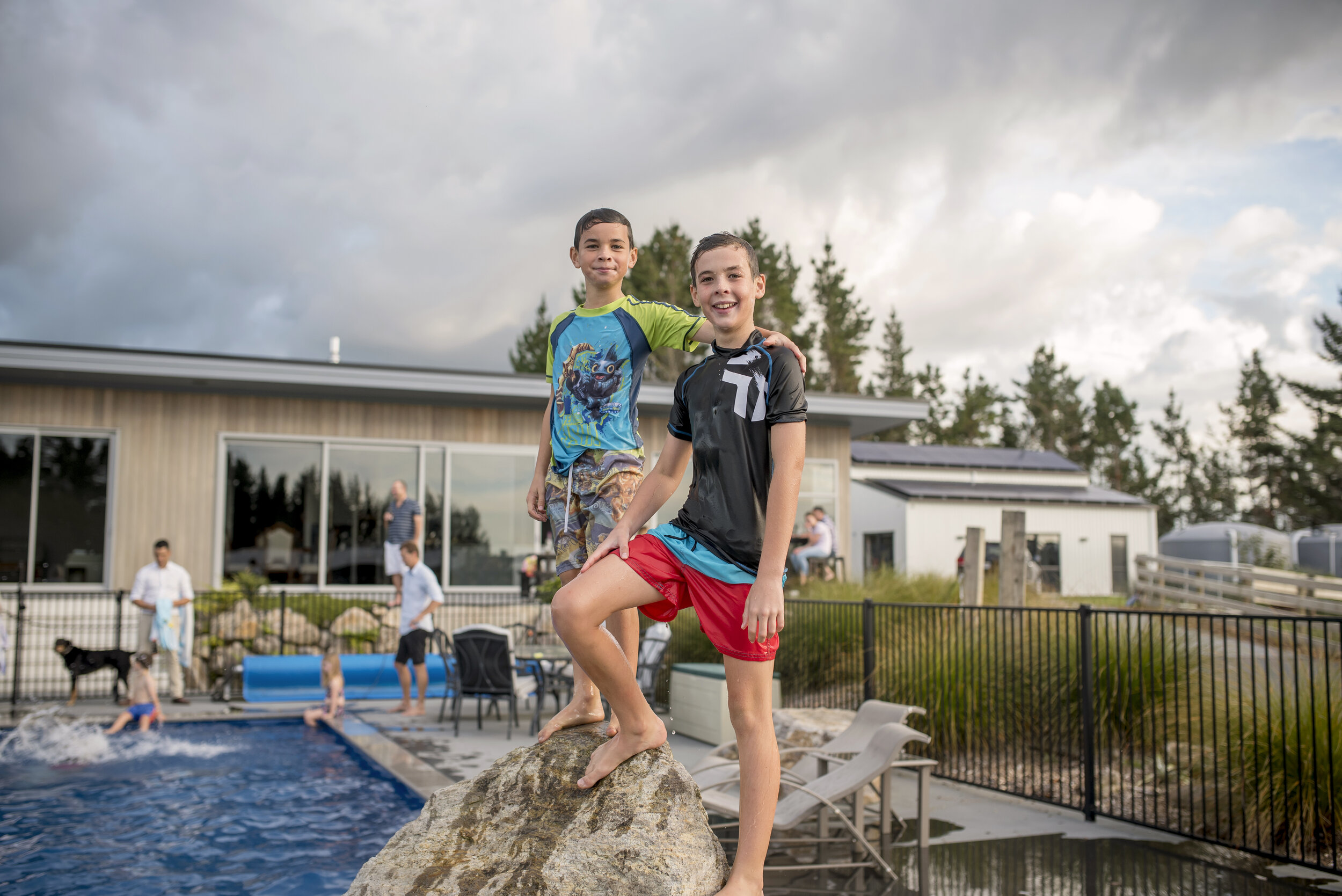
Many of us would happily trade our noisy neighbours for peace, quiet and a supply of free-range eggs and freshly dug spuds. It’s a lifestyle that fits Jeremy Pryor of Bayleys Tauranga down to the ground. Not only does he sell the rural dream, he lives it too.
UNO: What’s rural living really like?
JEREMY: Most of us have experienced rural living to some degree – maybe you grew up on a farm like I did, or perhaps you had a friend with a cricket pitch on their front lawn. Lifestyle blocks are sought after because they allow you to have a taste of the country without all the hard work, like having to get up at 4am to milk cows. You can still maintain a corporate job, send your kids to the best schools and pop into town with ease.
UNO: How would you define the term ‘lifestyle block’?
JEREMY: There’s no black-and-white answer. I sell a lot of 3000m2 sections in residential lifestyle subdivisions, which are essentially nice homes with big lawns, as well as larger lifestyle blocks with enough land for grazing or an orchard.
UNO: What’s the best thing about living semi-rurally?
JEREMY: It’s fantastic being able to entertain without worrying about the neighbours. It’s also ideal for kids – Ash collects the eggs, Finn feeds the pigs and Charli helps me in the garden. They spend hours riding their bikes, playing basketball and in the pool, which is so much better for them than staring at a screen. We use the shed for storage, the camper and the boat. That’s the beauty of a large section, it allows you to be creative. You’ve also got the option for office space, which is great for the wallet and provides peace of mind for people like tradies, who store their tools at home. The other advantage is the potential for capital gain. If you buy an orchard on the edge of the city that then becomes subdividable, the value of the land can increase fivefold.
UNO: Who’s biting the bullet and going rural?
JEREMY: Lifestyle blocks have always been popular with retired farmers, but today we’re also seeing a lot of homesick Kiwis coming back from overseas who are looking to invest in a slice of clean, green New Zealand land. There’s been a surge in buyers who want to have chooks, plant a vege garden and eat organic produce; I call it the ‘Annabel Langbein effect’. We’ve also had an influx of people from other cities, as they’ve realised they can buy a rural property here for about the same price as an average home in Auckland. When people finally make the move, it can be seen as impulsive because it’s such a big change, but it’s usually been a dream for many years.
UNO: How do you blend a job in the city with a rural lifestyle?
JEREMY: Tauranga is the perfect location in which to enjoy the best of both worlds. My daily drive from Pyes Pa to work only takes 12 minutes on the express route, so traffic is never an issue, but with today’s technology, you could easily work remotely and live the dream. We have great restaurants, shops and schools right on our doorstep. The barter system in the rural community is also alive and well – we get our daily pig scraps from Four14 Espresso café, and in return, I give them fresh bacon.
UNO: Where are some of the best hidden spots for rural living?
JEREMY: Pyes Pa is fantastic, and I’m not just saying that because I live there! With the new Lakes subdivision and Tauranga Crossing shopping centre, there’s huge growth across the whole south-east side of town. Further afield, you’ve got Hawke’s Bay and the Coromandel, both of which are beautiful.
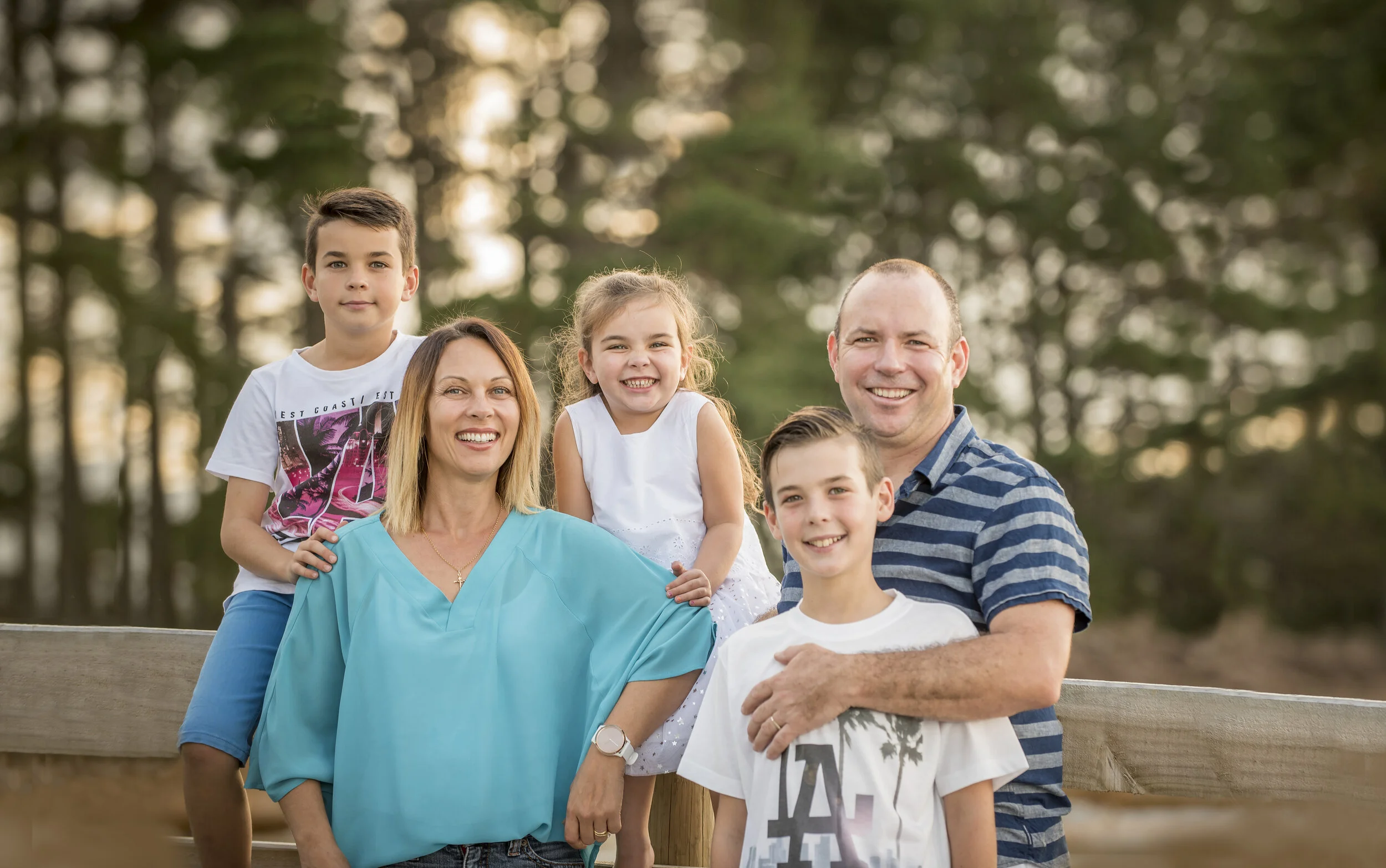
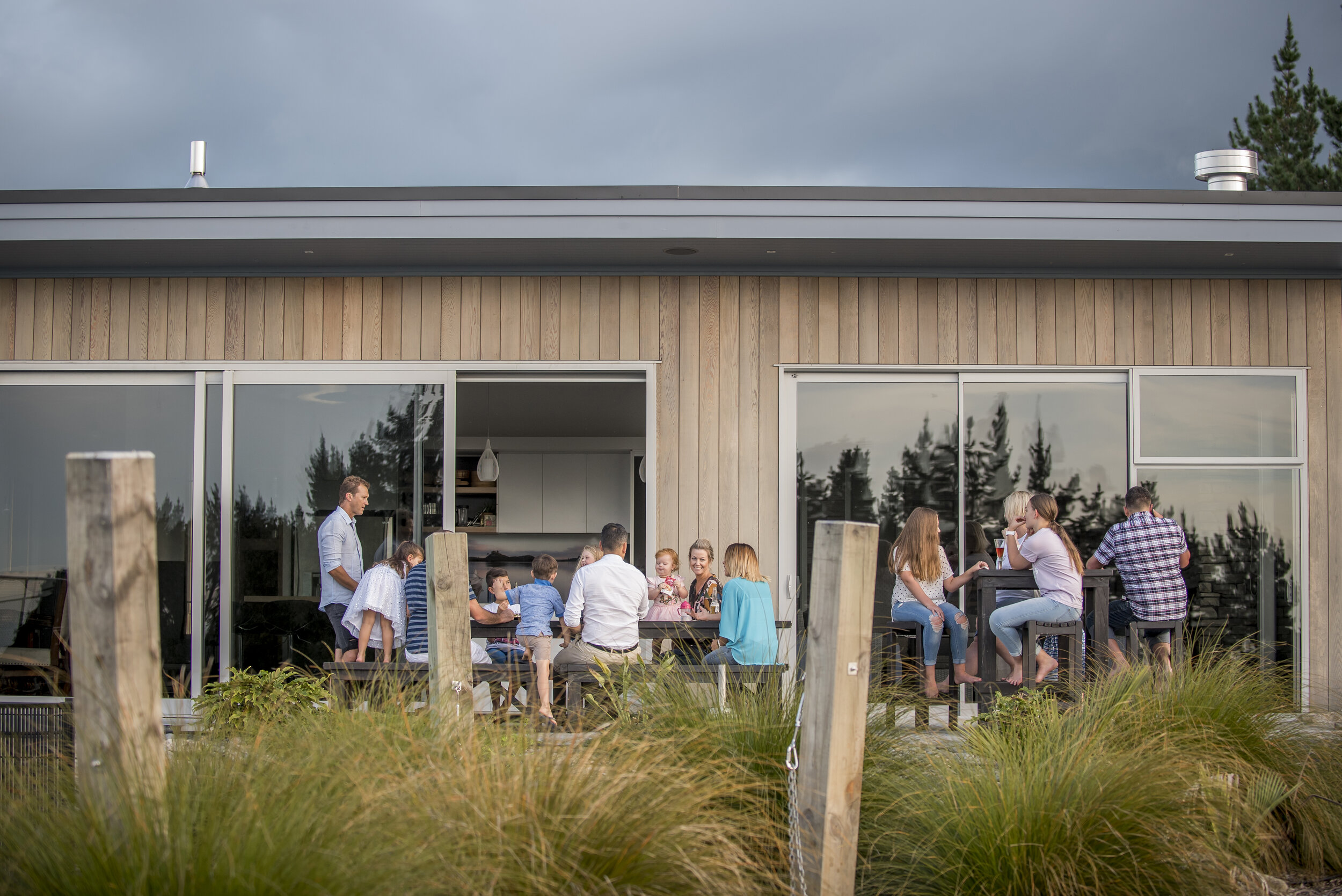
UNO: Your team at Bayleys seems really close – it looks like quite the party with all your families.
JEREMY: Real estate is a 24/7 job, but it’s also highly rewarding. We spend lots of time together, and Craig [Orr], Ike [Unsworth] and I also holiday as a team with our families – it’s the best type of chaos. In summer and winter, when things are a little quieter, I get to enjoy lots of quality time with my wife and kids. We love heading to the bach at Lake Rotoiti and try to get away a couple of times a year.
UNO: Any advice for those considering packing in the city for greener pastures?
JEREMY: It’s about choosing the right type of property for you, so do your research. If you’re after income, there are options with orchards or farms, or for Airbnb; the extra space will ensure your guests aren’t too close to your home, and they’ll pay a premium for a unique setting. But if you simply want more room and don’t mind doing a bit of gardening, the options are endless. Some people outsource maintenance, but I enjoy getting outside and doing the lawns; my ride-on lawnmower has a cupholder, so I can have a cold beer while I work!
The one, the only…
Anyone who’s watched Ben Hurley perform will tell you he’s a bloody funny guy, but he isn’t your typical Kiwi comic.
The Katikati-based comedian makes Friday nights funny nationwide on TV3’s 7 Days, and now he’s set to make us locals laugh as the host of the second-annual Mount Comedy Festival.
WORDS Andy Taylor PHOTOS Brydie Thompson

Anyone who’s watched Ben Hurley perform will tell you he’s a bloody funny guy, but he isn’t your typical Kiwi comic. He didn’t grow up using humour as a defence mechanism like so many others. “I really liked school, actually,” he says.
Has he always wanted to be a stand-up comedian? “At the end of fourth form, the school sent around these forms that we had to fill out to check that we were taking the right subjects the following year, for whatever you wanted to do as a career. I’ve always been somewhat suspicious of authority, and I thought it was ridiculous that they were asking 13- and 14-year-olds what they wanted to do in life, so I put down ‘male model’. Then I crossed that out and put ‘comedian’, because that was the next most ridiculous thing that anyone could do. So ‘technically’, yes, I have always wanted to be a comedian. But I was living in a small-town in Taranaki at the time, so it wasn’t really an option.”
University, however, was, and Wellington beckoned, so off Ben went to study politics at Victoria. “They had an improv comedy club, and I met my best friend Vaughan King, who was an actor and comedian and started doing stand-up – and that kind of motivated me to do my first gig in 2001 at the Wellington Fringe Festival.”
“I thought it was ridiculous that they were asking 13- and 14-year-olds what they wanted to do in life, so I put down ‘male model’. Then I crossed that out and put ‘comedian’.”
So much for the politics degree. “Yeah. It’s just what you do isn’t it, something academic? Stand-up is something you shouldn’t really do straight out of school because you just don’t have the life experience, so politics and international relations it was. Dai Henwood has a degree in eastern religion, Jeremy Corbett has a computing degree and Jon Bridges has a philosophy degree – or something like that. And then there are people like Ewen Gilmour and Mike King who came to comedy out of the workforce. Ewen was the funny guy at the factory and Mike was the funny guy on the ferry, and they just got pushed into it by their mates. So you kind of have these two schools and to be honest I don’t really know if there is a stylistic difference between the two or not, or whether it’s more about influences.”
For young Hurley, the influences were the usual suspects: Billy Connolly, Jerry Seinfeld, Blackadder, Basil Fawlty. Humour was always appreciated in the Hurley household, and his father was a big fan of British comedy – although in those pre-internet days, you tended to like what you were given. “It was not like now, where you have every single comedian who has ever been at your fingertips,” says Ben. “There was a very limited range of stuff that we could see. If you were lucky, maybe the Montreal comedy festival or something like that, and the Kiwi show A Bit After Ten, which had the Corbett brothers on it. I was probably about 14 or 15 and I loved their running gags. They’d say, ‘Shall we do the Floyd gag?’ and then never, ever do the Floyd gag. And they had an open-mic section, where I saw some comedians who are good friends now and that I’ve worked with often. In fact, I still say, ‘Shall we do the Floyd gag?’ to Jeremy. I’m probably the only one who remembers it, though.”
(The early-’90s A Bit After Ten can be found at nzonscreen.com and is definitely worth a watch. In addition to an outrageously young and clean-shaven Jeremy Corbett, it also features the wonderful spectacle of contestants vying for the grand prize of a 14-inch TV.)
After making a name for himself as a comic in New Zealand, Ben started gigging in the UK, and toured extensively in Europe and Asia. The winner of the two biggest comedy awards in New Zealand (the 2004 Oddfellows Billy T Award and the Fred Award in 2008), advocate of cricket as a way to achieve world peace (“No two cricketing nations have ever gone to war with each other – that’s a fact”) and one of the few Kiwis to be invited onto America’s prestigious Comedy Store TV show now calls the Bay of Plenty home, but touring is something he knows an awful lot about. Google his name and it’s clear he spends more time on the road than a Fonterra truckie.
“I was in England for four years, gigging around the country five, six, seven and eight times a week, sometimes doing two shows a night, because the clubs are really full and lively over there, and doing it over and over again is how you learn your craft. I love being on the road – well, not so much now that I have a family, but I can’t imagine going to work at the same place every day. It’s hard to be away, but I guess I’m just hardwired to do it.”
Ben says there are regional differences in what people find funny, though they’re relatively subtle in New Zealand. “There are some places that are a bit more conservative than others, but that’s changing. And it all comes down to it being relatable. I mean, I can’t do a joke about Winston Peters in America or anywhere outside of New Zealand really, but even in New Zealand you have to keep it relatable. When Winston Peters left Tauranga as an MP, I made the joke that this was the first time a 70-year-old man had ever left Tauranga. And although that’s a joke that works really well in the North Island, in the South Island they just don’t know that many old people move to live in Tauranga – in the South Island they have their own version of that, it's called Nelson.
“In America, they don’t get the self-deprecating humour so much – that’s very much a UK thing. American comics are much more defined. It’s much more about the character – you’re the angry guy or the party girl or whatever – whereas in the UK, people just say funny things.”
Although the constant gigging and vibrant comedy circuit scene in the UK was formative for Ben, he was also happy to come home with a new appreciation for Kiwiland. “After being in the UK, I came back to what has proven to be a bit of a renaissance in New Zealand comedy over the past 10 years or so,” he says. “And that largely comes down to the TV networks and the overseas success of people like Flight of the Conchords and Rhys Darby. That woke up the networks to the success of comedy and the need to give it some legs here and air some home-grown stand-up. And out of that we got 7 Days, which has been the most popular and longest-running comedy show in New Zealand history. So people get out now to see stand-up, and that’s great.”
His extensive gigging across the globe must also have honed his skills for dealing with those who get out to see stand-up and feel the need to chip in. “Yeah, I kind of encourage hecklers now, to a certain degree. Well, I encourage interaction at least. On this tour, for the first half of the show I pretty much just chat to the crowd, and try to keep it as fluid and interactive as possible. In New Zealand, the heckling is almost never nasty – its just drunk people wanting to be a part of the show. I’ve done thousands of gigs, and I can count the times that heckling has been genuinely nasty on about three or four fingers. But, then again, if they don’t shut up, I do start feeling bad for everyone else.”
In an industry known for driving ambition and raging egos, Ben has a refreshingly down-to-earth approach and concern for his audience and his community. Last year, in response to what he describes as a sense of helplessness about the state of things in the newly Trumped world, he put together a three-night festival at Auckland’s Classic Comedy & Bar. Called Comedy in Action, it raised money for some great charities while also showcasing some top Kiwi talent.
“It was just a reaction to what I saw as the whole futility of people commenting on injustice on social media,” he says. “Liking a post actually changes nothing, so instead I wanted to do something that would have an actual effect – and make people laugh.”
Now he’s at it again, and is busy organising the second annual Mount Comedy Festival, which he’ll host in January. Ben says this year’s event is going to be even bigger and even better than the last. “Tauranga is New Zealand’s fifth-biggest city and I just thought there was a real need for it. There wasn’t really anything going on comedy-wise in the area; there was the odd thing going on with people coming through to play Baycourt, but no regular event. Last time, we had three nights with basically three shows, but this year we’re expanding things over five days. We’re also going to do some matinee shows with family-friendly comedy.
Ben says the support has been amazing. “I mean, it is the place to be, because everyone loves the Mount, so it's something that people want to be involved in and a lot of people have come on board with, like UNO for example. But it does really seem like this is really a thing that has found it’s time.”
Ben makes it sound like it happened, but with scheduling, promotion and venues, not to mention getting the right mix of performers, producing something on this scale isn’t easy. “I really made it the best I could, and it really is a great line-up,” says Ben. “We’ve got Wilson Dixon [aka Kiwi comedian Jesse Griffin) headlining, who is, um, ‘technically’ from America; we’ve got the great Josh Thomson; Justine Smith, who was on the line-up last year and so loved that we brought her back again; newish comedian Hayley Sproull, who’s a 7 Days regular; Brendhan Lovegrove, who will be hosting a new acts competition, so if any locals want to test the water, this is their chance; and Te Radar, who will do his one man show 'Eating the Dog'. So yeah, something for everyone.”
This well-travelled, internationally known performer is bringing something for everyone to our neck of the woods because it’s now his necks of the woods too. After growing up in Taranaki, and living in Wellington, Auckland and the UK, Ben now calls a little piece of paradise in the Western Bay home – a lifestyle block somewhere between Katikati and Waihi Beach with “some sheep, some chickens, some kiwifruit”. Where does he find time to manage that, with all he has going on? “Fortunately, my wife is the property manager,” he says.
Of all the gin joints in all the towns in the world, why here? “I don’t really know,” says Ben. “I just like it here. It has a real lifestyle thing going on, it’s a great place to bring up kids, it’s beautiful, but it's not a million miles away from everywhere else. I mean, I love Taranaki as well, but unfortunately it’s just a little bit too isolated. So here kinda has it all. The best of both worlds. The best of all worlds.”
Ben’s not a typical comedian, no. But for his originality and the fact that he not only makes us laugh but also makes us think, he’s definitely one of our best. And you know what? He might be onto something about the cricket.
Great hair day
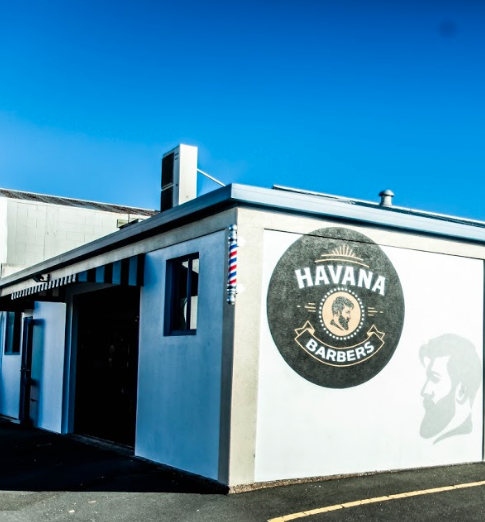
Ruth and her team have refurbished the Hair2Train building on Totara Street and created beautiful salon Ivy, and brother barbershop Havana. The branding is cutting edge and the décor contemporary cool; it’s unlike anything Tauranga has seen before.
WORDS TALIA WALDEGRAVE PHOTOS TRACIE HEASMAN
Tucked into the burgeoning creative hub on Totara St, Talia Waldegrave celebrates with hair salons Ivy and barber shop Havana.
LAUNCH NIGHT
As far as first impressions go, Ivy and Havana have me sold. Brimming with young up-and-comings, local business owners and budding hair professionals, the launch night is a damn fine party. Down to earth glamour is how I'd describe it: smiling, handsome barbers hand out steaming slices of delicious pizza from The Pizza Library next door, and the bar is set up with a tangled web of mint leaves, a mountain of lime wedges, and buckets of ice to make Havana Rum cocktails. Two ultra-glam ladies kick back in barbershop chairs, pizza slice in one hand, champagne flute in the other. This is a family unit, blood relative or not.
THE GURU
On my second encounter with the Ivy Havana crew, I’m early, but am instantly greeted warmly before I've managed to get inside the door. With time to kill, I wait in the communal kitchen at the table where I’d gobbled pizza just a few nights earlier. The kitchen epitomises the Ivy Havana vibe: the fit-out has had someone with a sharp design eye oversee it, and it's fully functional too (the washing machine is tucked neatly away in the corner). Best of all, this space joins Ivy: the ladies' salon, to the Havana: the barber. Staff make themselves a cuppa and chat to clients waiting for a colour to take, or anyone else who happens to be there for a chat.
Each person passing by gives me a nod, a wave or a ‘hi’, and I wonder if they’re trained to smile this way, because it’s incredibly welcoming.
I’m here to meet Ruth, the matriarch of the family. After 45 years as a trainer, she’s a bit of a legend in the industry. “My mother-in-law opened one of the first hair training schools in New Zealand and that’s where I started. From the beginning, I’ve enjoyed watching how life changing it is for young people and I still love every second of it.”
Ruth and her team have recently refurbished the Hair2Train building on Totara Street and created beautiful salon Ivy, and brother barbershop Havana. The branding is cutting edge and the décor contemporary cool; it’s unlike anything Tauranga has seen before.
"We wanted to offer something completely separate from the training school where people could come, sit at the table, read the paper and have a coffee. It’s about offering the whole experience, with service and consistency.”
IVY
Put simply, Ivy is beautiful. She's quintessential salon luxe with gold candles and ornate décor. It's the place to be pampered in all things hair, from cuts and styling to indulgent treatments for luscious locks.

HAVANA
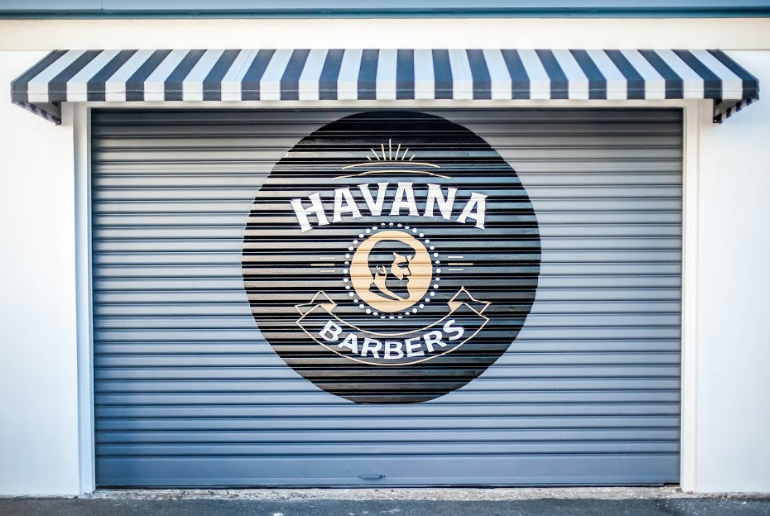
The recent resurgence in the old school barbershop has brought back the traditional cut throat shave, injecting some va va voom into men's grooming and Havana is just that. The décor is all blokey and the corrugated sliding door to the car park is reminiscent of a 1950’s James Dean biker gang.
But what makes this place tick is the people.
“Because we are aligned with the training side of things, our attention to detail is impeccable, we are good at communicating with our clients but most importantly, but what we do best is customer service.”
On my way out, I book an appointment. I can't wait to go back, I already feel part of the gang.

Back to work
UNO’s new columnist might be a comedy big shot, but he’s not immune to that first-week-back-at-work feeling, from which he’s still recovering.

UNO’s new columnist might be a comedy big shot, but he’s not immune to that first-week-back-at-work feeling, from which he’s still recovering.
PHOTOS BRYDIE THOMPSON
No one really clocks on mentally until after Waitangi Day. Sure, your body is at work but your mind is not – it’s still riding those breakers at Papamoa, drinking cocktails for morning tea, or avoiding a flying Virat Kohli six at the Bay Oval. It’s just too bloody hot, and we’re still digesting the 4kg of ham we ate over Christmas.
It’s a wonderful time of year, and it’s also very frustrating. Trying to enlist the services of a tradesperson during January is a fruitless exercise. They know full well that you have money to give them in exchange for their services, but who needs money when you have sunshine and cold beer? They’ll get to you, but not till at least February 7.
The television shows I work on take a break over summer as well. 7 Days does about 40 episodes a year but thankfully is off air during the time when all the news cycle seems to consist of is record temperatures and the odd shark sighting. However, The Project comes back a little earlier – and it was its return that knocked me out of my hammock.
I’ve been contributing to The Project since it started in early 2017. I fill in on the panel sometimes when Jeremy Corbett is away and recently they’ve asked me to do some interviews with some big names in music. It’s not overstating it to say that this is a dream job for me, an ageing Taranaki-bred bogan whose hearing is missing a few frequencies, due to listening to Nirvana and AC/DC at louder than recommended volumes in my mum’s 1989 Ford Laser back in the day.
So far, my interviewees have included Weezer, Queens of the Stone Age, Cat Stevens, Tom Morello of Rage Against The Machine and Corey Taylor of Slipknot, so when my producer emailed to ask if I’d interview my favourite guitarist, Slash, I ignored the fact that it was January 24, well shy of my official Waitangi Day work kick-off, and shook myself awake.
Saul Hudson, aka Slash, the iconic lead guitarist from Guns N’ Roses, all top hat and black curls, was to play two shows in Tauranga and Auckland with his new band Myles Kennedy & the Conspirators and had agreed to his first television interview in five years. With me. I still have no idea why.
So, first day back at work in 2019, and I’m in a lift heading up to the penthouse at Auckland’s Pullman hotel. I was feeling the pressure; idol worship aside, Slash doesn’t really ‘do’ interviews because he’s shy and all anyone asks him about is why Guns N’ Roses broke up, which he’s sick of talking about. His record label told me not to ask him anything about Guns N’ Roses or Axl Rose or Duff the bass player or Steven the drummer or the November Rain video or the ’80s or firearms or flowers of any sort. This directive came by email but was reinforced in person by his very friendly but very large, 7ft-tall head of security just before Slash came into the room. Point taken, giant security man – point taken.
Slash sat down and got out some nicotine gum. I broke the ice talking about smoking, how hard it is to quit and stay quit. He relaxed a bit as we quietly chatted about the different methods of giving up ciggies. It was a bit weird as I’ve never smoked, but I needed a way to start talking without launching into the meat of the interview. I lied, just a little, and I feel medium-bad about this.
The standard time frame for these interviews is 15 minutes, but Slash gave me 20 and I can say he’s as pleasant a man as I’ve met. For someone who’s notoriously suspicious of the media, he was generous and friendly, and I think I even made him laugh a couple of times. We covered his childhood growing up in Los Angeles, his hippy parents, how he lived on the same street as Frank Zappa and Joni Mitchell, his love of reptiles and all the usual rock ’n’ roll stuff about touring and albums and crowds and fans. And guess what? He mentioned Guns N’ Roses, like, four times.
Then he left, and I drove home, adrenaline still coursing through my bogan veins. I felt a mixture of disbelief and relieved exhaustion. The next day was the start of anniversary weekend. Thank god – I needed a few days off.

What’s for dinner
Virtually every Kiwi in the country has heard of My Food Bag and recognises its public face, Nadia Lim. In the past five years, the company has produced 45 million meals; it’s New Zealand’s third-largest food retailer, and has changed the way many of us shop for and prepare our meals.
Virtually every Kiwi in the country has heard of My Food Bag and recognises its public face, Nadia Lim. In the past five years, the company has produced 45 million meals; it’s New Zealand’s third-largest food retailer, and has changed the way many of us shop for and prepare our meals.

WORDS ANDY TAYLOR / PHOTOS GARTH BADGER
My Food Bag’s ‘nude food’ concept has changed the way many of us eat, making healthy, low-salt, preservative-free meals filled with fresh ingredients easy peasy.
What many of us don’t know is that its creator, Cecilia Robinson, had been there, done that. She’s also co-founder of the groundbreaking and successful Au Pair Link, another company that altered the way a traditional service was delivered while changing lives along the way. Having achieved all this in just 10 short years, it’s easy to see why Cecilia has been dubbed ‘New Zealand’s greatest entrepreneur’ by Theresa Gattung, ex Telecom chief executive and frequent flyer on Fortune’s Most Powerful Women in International Business list.
Cecilia’s journey began a long, long way from New Zealand. “Sweden is a nice place to grow up,” she says of her birthplace. “It’s quite different from New Zealand, though, and the winters can be very demoralising. It’s still a very nice place to be, but New Zealand is just such a fantastic place, with beautiful beaches and a safe environment in which to bring up children.”
Which brings us to Papamoa, where Cecilia’s husband James’s parents live. “They fell in love with Papamoa, and we love the beach. And nearby, at Bayfair, is the best Farmers in the country – have you seen their toy department?! [When we visit] we go to the beach and playgrounds, then hit the cafés – it’s really just a magical place.
“Sometimes in life, you just don’t know where the road is going to lead you. Driving down last year to see my parents-in-law, we went through Katikati. It brought back so many memories, as it was where we made one of our first Au Pair Link placements. Ten years later, I’m driving back through with my own family.”
Cecilia’s first forays into the business world began at an early age. “Back in Sweden, my friends and I used to make things like friendship bracelets, then sell them outside the local supermarket, and I went door-to-door for the World Wildlife Fund. But there was never one particular event that started my interest in being an entrepreneur.
“Every week, my father used to say, ‘When I win Lotto, when I win Lotto, when I win Lotto…’ and it used to drive me crazy – it was part of our everyday vocabulary. It made me think that I didn’t want to be at the mercy of winning Lotto to change my life. So that was actually a good driver. Thanks, Dad!”
Once Cecilia had graduated from selling bracelets at the supermarket, it was the world of law rather than business that caught her eye. Her parents were both academics – “I think they have four or five degrees between them,” she says – so higher education was practically a given. But for someone who clearly likes to see things through to the end, the outcome was surprising.
“I studied in Sweden, New Zealand and the United States, but I still don’t have
a degree,” says Cecilia. “James jokes that I’m a law-school dropout in three countries, which is true. But on our first date, we talked about financial freedom and making your own fortune, about business and thinking about things differently.”
James’s name pops up frequently in conversation with Cecilia. They’re not only life partners, but also business partners, and joint CEOs of My Food Bag. While Cecilia has been described as a “serial entrepreneur with sass”, James brings his own skill set to the table, running the marketing, IT and finance teams of both My Food Bag and Au Pair Link. Mixing a personal relationship with business has been the undoing of many couples, but not so the Robinsons, who seem to positively thrive on it.
“Who would you rather be in business with than the person you know the best, and trust and love the most?” says Cecilia. “And when the leadership culture is collaborative like ours, it makes a huge difference to the business. So although we do separate the various parts of the business, we also spend a lot of time providing feedback to each other. We work very collaboratively and respect each other professionally. In fact, I think the collaboration within the My Food Bag team has been one of the key reasons
we’ve been so successful.”
The couple’s first meeting and the intertwined lives that ensued sound like pure serendipity. “I’d been working as an au pair in the United States while I studied, but decided I wanted to work in New Zealand instead, because my brother was working there,” says Cecilia. “He had a dinner party to welcome me to New Zealand – and that’s where I met James, on my first night in the country.” The rest, as they say, is history.
An exciting new chapter in their story began in 2006, with the launch of their first major project together: Au Pair Link. “We were living in a little two-bedroom apartment in Auckland’s CBD, working and studying full-time, but also thinking about how much I’d got out of being an au pair – it had been such an amazing experience,” recalls Cecilia. “I gained so much from it that I thought other people would want to do it too. James was really supportive, so we started a website, and suddenly we were getting phone calls at seven in the morning from all over the country. We thought, ‘Well, there must be something here, because people really need us.’”
There certainly was, and people certainly did. Au Pair Link was New Zealand’s first dedicated au pair agency that made sure au pairs were safe and fully supported by a national network – a far cry from the previous system of classified ads and word of mouth. The company has grown to employ 40 full-time staff and has placed thousands of au pairs throughout Australasia.
“It was very challenging, because we were starting with something that was very much a cottage industry, and we realised that to succeed, we had to take a new approach,” says Cecilia. “Instead of saying an au pair was someone who just appeared in your home to look after your child, we saw them as licensed childcare providers who add to your child’s education. And that was a game-changer. Within five years, we were one of the largest companies of our kind in the world.”
Having revolutionised the au pair scene and reset the horizons of several thousand young Kiwis who suddenly had an international influence in their homes, you’d think that it was time for the credits to roll and the Robinsons and Au Pair Link to settle into a stately rhythm that would see them through the rest of their careers. But no – luckily for New Zealand, Cecilia got bored with pottering around the house.
“We were travelling in Europe and saw a model there similar to what would become My Food Bag,” she says. “I have a husband who loves to eat but not to cook, and it struck me that there would be a lot of people in similar situations. Back in New Zealand, I was on maternity leave from Au Pair Link. I’d done all the ironing and everything I could do around the house, and I got bored really fast, so I said to James that I wanted to explore the possibilities around this new idea. I did all the research, then started on the business plan. And within four hours of finishing it, I was in labour. So I kind of say that My Food Bag and our son, Tom, are twins.”
As if bringing two new creations into the world in one day wasn’t enough, just four weeks later, the Robinsons presented Cecilia’s business plan to Theresa Gattung and the rest of the Au Pair Link board. The response was overwhelmingly positive, with Theresa particularly impressed and keen to get the project moving forward as soon as possible.
“Theresa came up to me straight after I’d presented it and said, ‘This is what I’ve been waiting for – so what’s next?’” says Celcilia. “We had a month-old baby, 1000 au pairs throughout New Zealand and so many existing business obligations to deal with already, but it just seemed so right, so we reached out to Nadia [Lim] and her husband, Carlos [Bagrie]. They came in thinking we were pitching something around Au Pair Link or baby food.
“Nadia and Carlos were on their way to the airport for a three-week trip to Europe and jumped on their flight straight afterwards, so we heard nothing for 24 hours. And then they said they were in! We assembled the team in November and by March [2013] we were in the market. That was a pretty intense summer.”
Understatements occur frequently in conversation with Cecilia. But if she makes it sound easy, it wasn’t. Bringing the My Food Bag vision to life required the team to master a raft of technical challenges and inject the kind of human touch that would get people out of their routines and see them up for some chang e in the kitchen. And, of course, the food had to be fantastic too.
“It’s complicated,” says Cecilia. “There are so many variations involved. But we have a really great team and what people don’t realise is that each recipe gets tested multiple times. It’s an amazing process and our suppliers come in and show us new cuts of meat or new products that we can utilise. We want to be cutting edge but still provide meals people will love and that become new family favourites.”
Like other new business models – think Uber, for example – My Food Bag has been described as ‘disruptive’, but unlike many others, it’s actually profitable. “My Food Bag is incredibly disruptive, because five years in, we were the third-largest food retailer in New Zealand,” says Cecilia. “Actually, that was probably true after two or three years – it happened so fast.
“For us, it’s been incredibly powerful to be part of giving people new options, which is what we did with Au Pair Link: instead of just having someone in your home or on a trip helping with your children, which was the old model, we changed that and added the education factor. So with My Food Bag, it was again taking an old model and making
it brand new, and when people ask how My Food Bag happened so fast and became so successful so quickly, they forget the many years that we spent reaching that point.”
What’s also not immediately apparent about My Food Bag, but becomes clear if you spend any time with Cecilia, is that beyond disruptive technologies, recipe development and delivery schedules, the company is incredibly people-focused. Staff are encouraged to bring their children to work, and virtually scolded for not leaving early if they have to pick them up.
“For us, it’s always been about people and then letting the numbers and business fall out of that,” says Cecilia. “And when I say ‘people’, I mean our team, suppliers and customers – we start with them. Leading in that way has given us great clarity about how we make decisions. We bring our kids into work and make sure people take the time to do what they need to do around their kids, so we’re people first and on the business side second. We’re mums and dads, we’re husbands, we’re wives, and we’re friends before we become business people. And that builds a lot of love and trust both inside and outside the company.”
Perhaps the most remarkable part of all in the Robinsons’ story is that by the time you read this, the couple will have stepped back from the empire they’ve created and handed over the leadership to new CEO, Kevin Bowler. During our interview, Kevin calls Cecilia. She asks UNO to stop recording, then excitedly congratulates him on his new role and invites him to dinner with James, Theresa, Nadia and Carlos, and to a photo shoot to announce the appointment to the press. “We’re a ‘check your suit at the door’ kind of company,” she tells him. “Just wear something relaxed.”
It may surprise some that Cecilia and James are willing to step down from something they’re so passionate about and that’s going so well. “One of the biggest drivers for entrepreneurs is financial freedom,” says Cecilia. “It’s like being in the Olympics. You prepare and train, and then you run the race and win and achieve everything you wanted –
but what then? You keep running?! And that’s what approaching this change was like for us.
“Once the company had reached the point it’s at now, we had financial freedom and did a lot of things that we’d dreamt of, but the key thing we wanted was the freedom of more time. So James and I said that we’d give it 12 months after we partly sold to Waterman Capital [in late 2016], get stability for our team and ensure that we were delivering, and then our time was done.
“Finding the right person to come in has been something we’ve taken very seriously, and we’ll be continuing in governance roles because we have a real passion for our people, our foodies and our products,” continues Cecilia. “But basically, we are retiring. There are people who achieve financial freedom and want to keep working, to keep running, but that’s not us – we want to use that freedom to spend time with our kids.”
Retiring. It’s hard to believe that the energy and dynamism of the half-Swedish family Robinson will fit the retired life, but they have redefined the way we eat, so they may well redefine retirement, too.

Grace Wright: Tauranga artist
We meet Tauranga girl and artist Grace Wright as she prepares for the Auckland Art Fair.
We meet Tauranga girl and artist Grace Wright as she prepares for the Auckland Art Fair.

INTERVIEW CLAUDIA CAMERON / PHOTOS HEATHER LIDDELL / SAMUEL HARTNETT
UNO: How did you start out as an artist?
GRACE: I grew up in Tauranga, so when I finished Elam in 2014 I moved back home for a year to have time to develop the ideas I had generated during my BFA at Elam School of Fine Arts, without financial pressure. During this time I rented a studio space out the back of Zeus Gallery, when they were based on Eleventh Ave. I loved painting there, with the industrial-style spaces, plus having the time to intensively work and establish my practice.
Although I live in Auckland now, I love coming back to see my family and have some down time. Tauranga will always be home.
UNO: What have you been working on lately?
GRACE: Recently I have been working on a series of paintings for the Auckland Art Fair as well as planning for my upcoming show at Parlour Projects in July. My practice is a continually evolving one, so I’m always trying to push myself forward and create something that surprises me.
UNO: Ah, yes, Parlour Projects in the Hawke’s Bay selected you as the recipient of its inaugural artist-in-residency programme. Congratulations!
GRACE: I was so honoured to be selected for this residency and have the support to bring my ambitious 11m x 6m installation concept to life. I had been wondering how our body would feel if we experienced painting more spatially by thinking of the room as a canvas. The body has always informed my work throughout its evolution and in this residency I wanted to recreate the physical sensation of how you feel when you stand beneath something monumental in scale.
UNO: Can you tell us a bit about your process?
GRACE: I see colour as a construction process, so the painting almost builds itself. I never know what the paintings will look like in the end, but I start with one colour or gesture and construct the colours and layers until the final work emerges.
UNO: What inspires you and your work?
GRACE: I’m inspired by an international style of painting that has a real presence with the viewer through scale and the relation to the body. In 2015 I visited Albert Oehlen’s exhibition Home and Garden at the New Museum in New York. It was such a thrill to stand before these huge, three metre square paintings. This feeling of intense physicality is what I’m interested in creating in my own work.
UNO: You’re showing at the Auckland Art Fair as part of the Parlour Projects stand, what can we expect to see from you there?
GRACE: I will be exhibiting a series of new large-scale works measuring 1200 x 1500mm which continue to explore a sense of artificial space and gestural abstraction reminiscent of the body. Recently I’ve been interested in constructing space through subtle illusion and colour combinations so the work will reflect these ideas too.
UNO: You’ll be joined by a number of incredible artists and galleries showing at the AAF this year, what are you looking forward to the most about the event?
GRACE: It’s such a unique experience to see all these galleries in one space, along with work from top galleries in Australia and some further afield. I also love the social aspect of the art fair! It’s a great way to catch up with lots of people in the industry and celebrate all the hard work put in by artists and galleries.
UNO: What are you hoping to achieve from being part of the Art Fair and speaking to an international audience?
GRACE: I’m excited to be exhibiting at the fair and have the support of Parlour Projects. My goal generally is to build up steadily and create work that endures. At the end of the day, art is what makes life worth living, as are the ideas and conversations that surround it.
UNO: What’s it like making art as a full-time job?
GRACE: I love it! I’m pleased with how I’ve set up my week to allow myself the time to paint. I’m definitely a morning person, so my day starts by getting straight into painting. In the afternoons I tend to stretch canvas and gesso, then attend to admin later in the day.
UNO: What skills do you think are useful in your job?
GRACE: I think you need to have a lot of faith in yourself and belief in what you’re doing.
UNO: Can you share a piece of advice for anyone wanting to move into a similar creative space?
GRACE: The best advice I ever received was learning that talent will only get you so far. The way you think determines the rest.
INSTAGRAM: @gracewright08

A methodical mind
Stuart Crosby assumed office as mayor on October 9th 2004 after spending 18 years as an elected council member, becoming the twenty eighth mayor of Tauranga. After serving four terms, he decided not to enter the fray for the fifth. Following 12 years as mayor, and 18 as a Tauranga councillor, Stuart is now a Bay of Plenty Regional Councillor.

WORDS JENNY RUDD PHOTOS LOGAN DAVEY
Stuart Crosby assumed office as mayor on October 9th 2004 after spending 18 years as an elected council member, becoming the twenty eighth mayor of Tauranga. After serving four terms, he decided not to enter the fray for the fifth. Following 12 years as mayor, and 18 as a Tauranga councillor, Stuart is now a Bay of Plenty Regional Councillor.
After chatting to Stuart for an hour or so, drinking tea in Elizabeth Café, I walked away thinking ‘I really like you.’ He was pretty specific and descriptive and gave some padding to the ‘Go back to the beach’ story, but he wasn’t rude or critical. He had a youthful and optimistic view, and a methodical mind. He definitely isn’t the ‘party line’ boy I thought he’d be. More than that, he was a proper human in a role which is largely thankless, doesn’t do much to bond you to your spouse, and occupies your every waking second.
If there’s anyone who needs a finger pointing at them and being given some credit for how bloody brilliant our region is today, it’s Stuart.
What does a mayor do?
First and foremost you are the elected member of the council. Last time we had a new council, I said ‘I am not your boss. You have been independently elected and are accountable and responsible for whatever you say and do.’ I believe we have a responsibility to create an environment where everyone can succeed, by removing barriers to their success.
The mayor’s role is set out in regulations, but it only scratches the surface. There’s another side, which only current or previous mayors would understand. It’s the responsibility of the city or area you represent. And that doesn’t stop, day or night. It’s something you can’t put on a spreadsheet or explain to someone else, because it’s a personal thing. As mayor, you are accountable and responsible for things you actually have nothing to do with. For instance, If someone has a car accident, people will often blame the road, and therefore the council and mayor. The fact they were drunk or stoned or going too fast or had bald tyres doesn’t come into it. You have to understand the situation, and think how best to represent the city, not yourself, in the best light.
The role is as much as you want to make it. I’ve seen mayors in some cities sleepwalk through the job, but the vast majority work their arses off with very little thanks or reward, but they don’t do it for that.
What do you think you brought to the role of mayor?
I have the ability stay calm under pressure, and rely on my knowledge and experience to do and say the right thing. I learned that a key attribute is to listen to people, try to stand in their shoes to really understand their point of view and then relate that view to the issue in question.
I’ve always had the view that you provide for today and plan for tomorrow. I put much time and effort with others in the planning ahead. Lots of politicians I have worked with didn’t have much interest in long term planning, just how daily issues affected their chances of being re-elected. Tauranga’s success is no accident, it is the result of a comprehensive plan which I had a role in developing and executing along with others using the resources we had at the time.
While as a mayor you must lead, you don’t achieve much on your own. You can achieve huge things as a team.
What makes a good councillor?
I’ve always said ‘If you want something said, ask a male, if you want something done, ask a female’. Pretty much to a person, the women on the council are harder working and more focused than men. I think it’s because they communicate better, and are more passionate about the job. Generally speaking, women tend to do things which benefit others, as they are less ego driven.
And they network better too. Because New Zealand is still so small, those connections are really valuable. There are so few gatekeepers; you could have a chat with the prime minister if you really wanted to.
What aspect of the job was most challenging, did you work out how to overcome it?
When people connected to the council were affected by big losses like death, homes and businesses. I didn’t ever overcome getting emotionally involved. But I learned to front the challenge head on, and share the emotional side with those involved.
How did being mayor affect your family?
In hindsight, I too often prioritised my mayoral role above my family, and in particular in how I allocated my time. I believe this is a common issue with politicians, and especially those in roles of leadership. On the positive side there were occasions where my family met extraordinary people, because of my job.
Where are the gaps in Tauranga?
We are still struggling to find work for a professional couple in Tauranga. A recently arrived couple I know are a civil engineer and an accountant. They are finding it hard to get two jobs at the moment. The city will grow into it, though.
This building we are in, on the corner of Elizabeth Street, was a game changer. The next big one will be the new university campus. That will transform the city. The redevelopment is happening. In five to seven years, the CBD will be humming.
It will bring not only the energy and verve of students, but also the academic staff. And they will need different stimuli like museums, art galleries.
And there still isn’t enough to do for those in their twenties. We have to admit that. It will change, though. Where there is a demand, the supply will follow suit. We just need to keep them here in the meantime.
What do you think Tauranga City Council’s greatest achievement has been, over the years?
Our Growth Management Strategy called SmartGrowth. A number of key entities are working together with communities to plan ahead for the whole sub-region, which is a key element to our success. I’m proud to say I’ve been involved since its inception, and remain involved.
And finally, what advice would you give to someone who thinks they’d make a good mayor?
I will always support someone’s desire to stand as a councillor or for the mayoralty; it is a critical part of our democratic process. The problem is that many candidates have no idea about the role and the demands. Fortunately the voting public do have an understanding, and generally get it right at the election as far as the mayoralty is concerned. My advice for any candidate would be to spend time understanding the community you hope to represent, and the mechanics of that local government.
“When I was elected as mayor, the town was being run by a small group of grey-haired businessmen. They pretty much decided on who would, and who wouldn’t be the mayor, and who would be ‘elected’ as councillors. Someone in the group came to me and said ‘Go back to the beach where you belong.’ My first mayoral function was at Tauranga Race Course at a presentation of the Japan New Zealand Cup, where I politely recounted the story to a group which included that gentleman.”
“Luckily the power of those people has diminished, in fact it’s almost non-existant now. The city has outgrown them. There’s a different generation coming through with a different agenda. In their thirties, they have a generosity of spirit. They aren’t motivated to make cash for themselves, but to create things for their generation and those after. And they take ownership. They don’t sit back and say ‘we want this’ to the government and council, they just think about what they can do to make where we live a better place. And they stick their necks out. Most of the time they succeed. To me, that’s very exciting. ”

Throwback: Liam Messam looks back at his 2006 UNO cover
Liam Messam went straight from Rotorua Boys' High School into the New Zealand Sevens Squad and began his full time rugby professional career. He was just 21 years old when he starred on the cover of UNO.

THEN
Liam Messam went straight from Rotorua Boys' High School into the New Zealand Sevens Squad and began his full time rugby professional career. He was just 21 years old when he starred on the cover.
NOW
I must have had a full tub of Dax Wax in my hair. I laugh now when I see the cover, all styled up with the clothes and 'do.
Back then I was totally immersed, committed and focused. It was almost an obsession to be the best player I could be.
The highlight of my career? The friends I've made. Although, winning the Rugby World Cup in 2015 was up there, too! We had such an awesome culture within the team.
In August, I'm off to Toulon in France. The rugby will be fantastic. I've been to Paris and Marseille a couple of times, but this will be a completely different experience.
My two boys, Jai and Bodie, they are learning a few words in French to set them up for a new life in France.
I have such passion and love for the game, I'll keep playing until my body can't take it anymore. As for a career afterwards, I'd like to work in youth leadership, and of course, health and fitness.
House proud: Landmark Homes latest show home brings the wow factor to Omokoroa
Carly Stewart suspects the latest Landmark Homes Bay of Plenty show home in Omokoroa may forever be her favourite. She and her husband, Logan own the franchise and have recently opened their latest creation, which brings a whole lot of wow factor.

Its creators and its visitors are getting a real kick out of this stellar new Omokoroa show home.
WORDS Monique Balvert-O’Connor PHOTOS Amanda Aitken
Carly Stewart suspects the latest Landmark Homes Bay of Plenty show home in Omokoroa may forever be her favourite. She and her husband, Logan, own the franchise and have recently opened their latest creation, which is drawing all kinds of favourable comments.
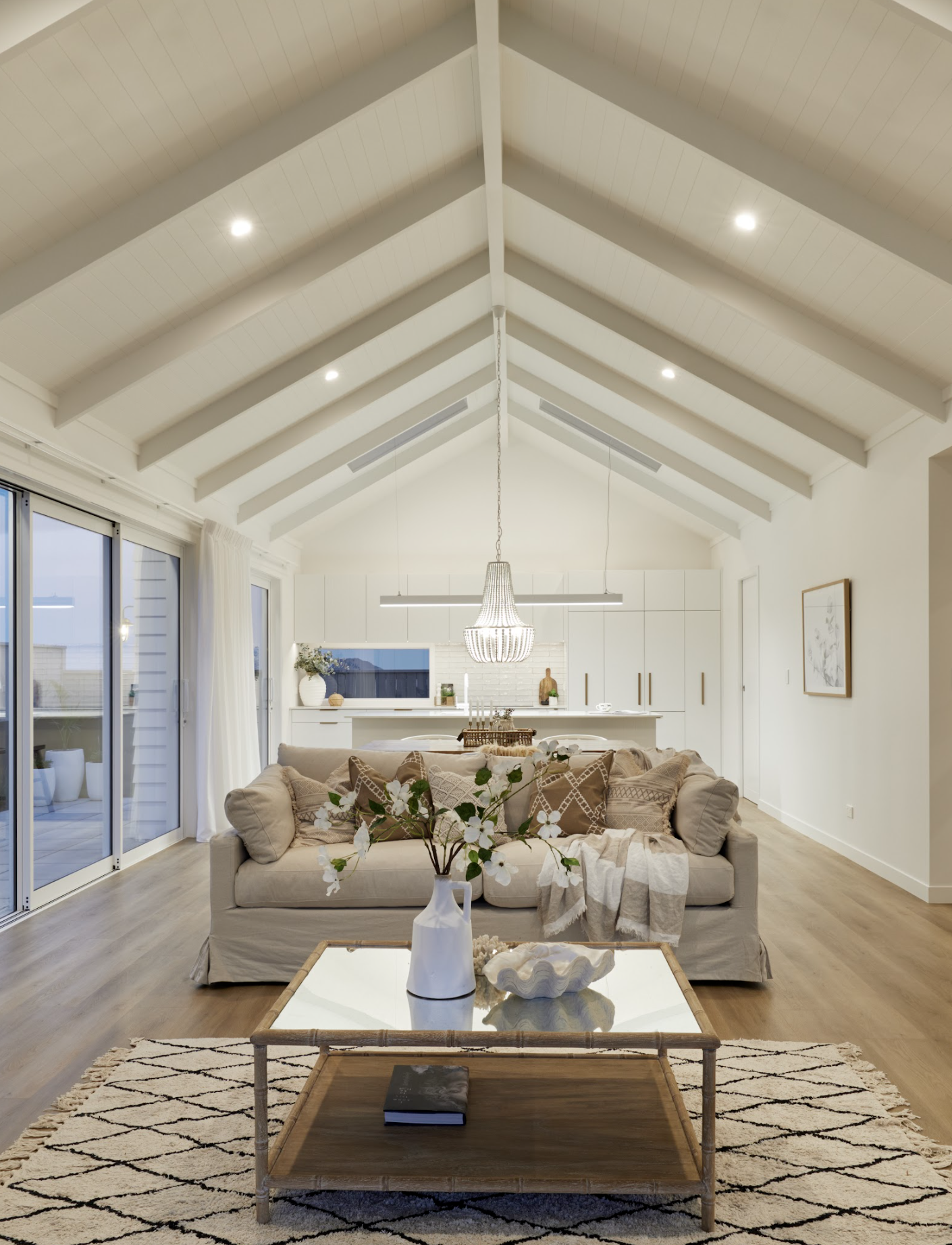
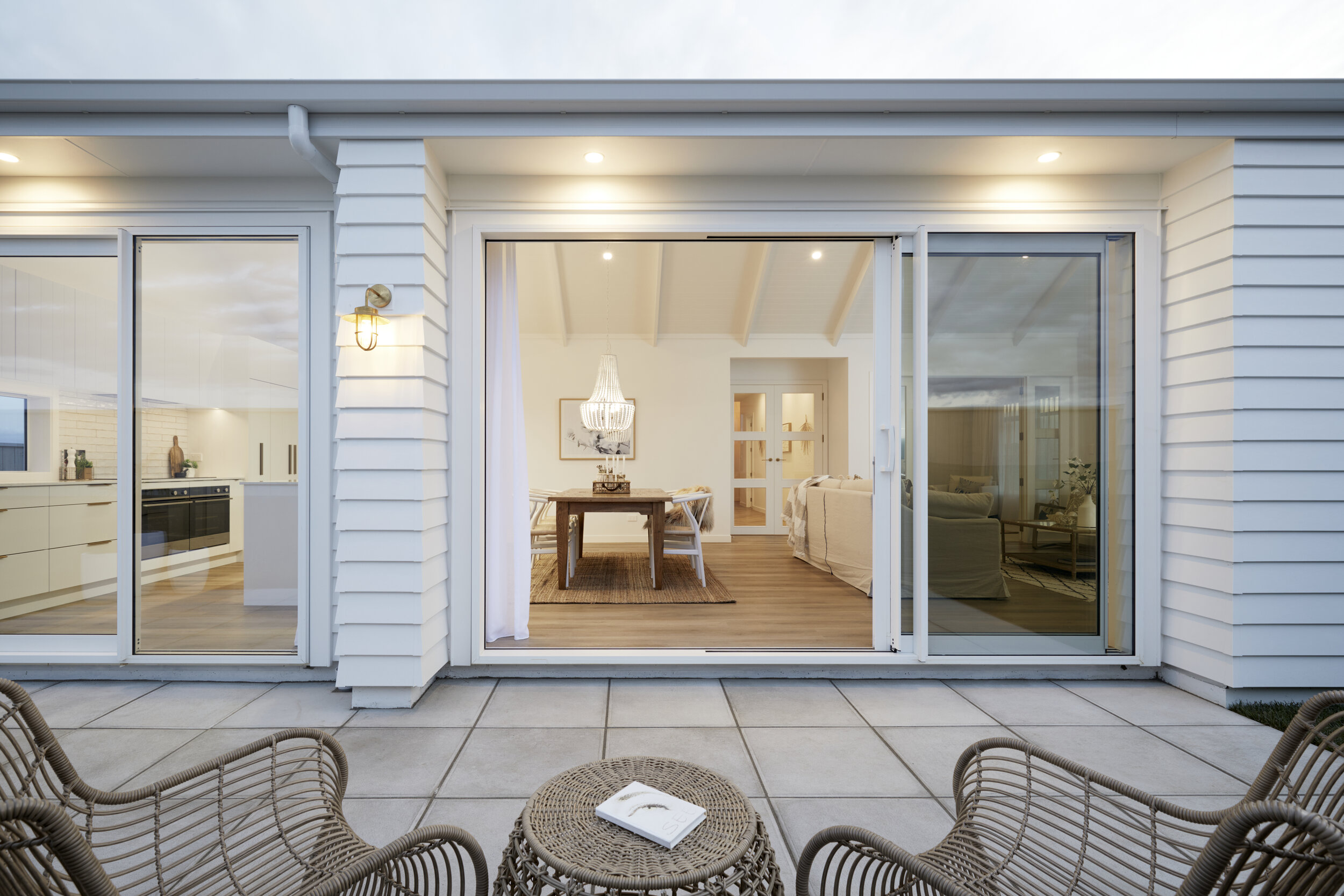
Sitting high with water views, the new 244m2 show home has a suitably coastal aesthetic. It’s a celebration of white well done. “It’s quite a different style to our first one in Edgecumbe Road, Tauranga,” says Carly. “It’s traditional in the sense that it’s a linear weatherboard home, but contemporary due to its fresh Hamptons-with-a-Kiwi-twist look. Think white, white, white, from the roof to the exterior and interior paint colours, to the curtains, to the kitchen…”
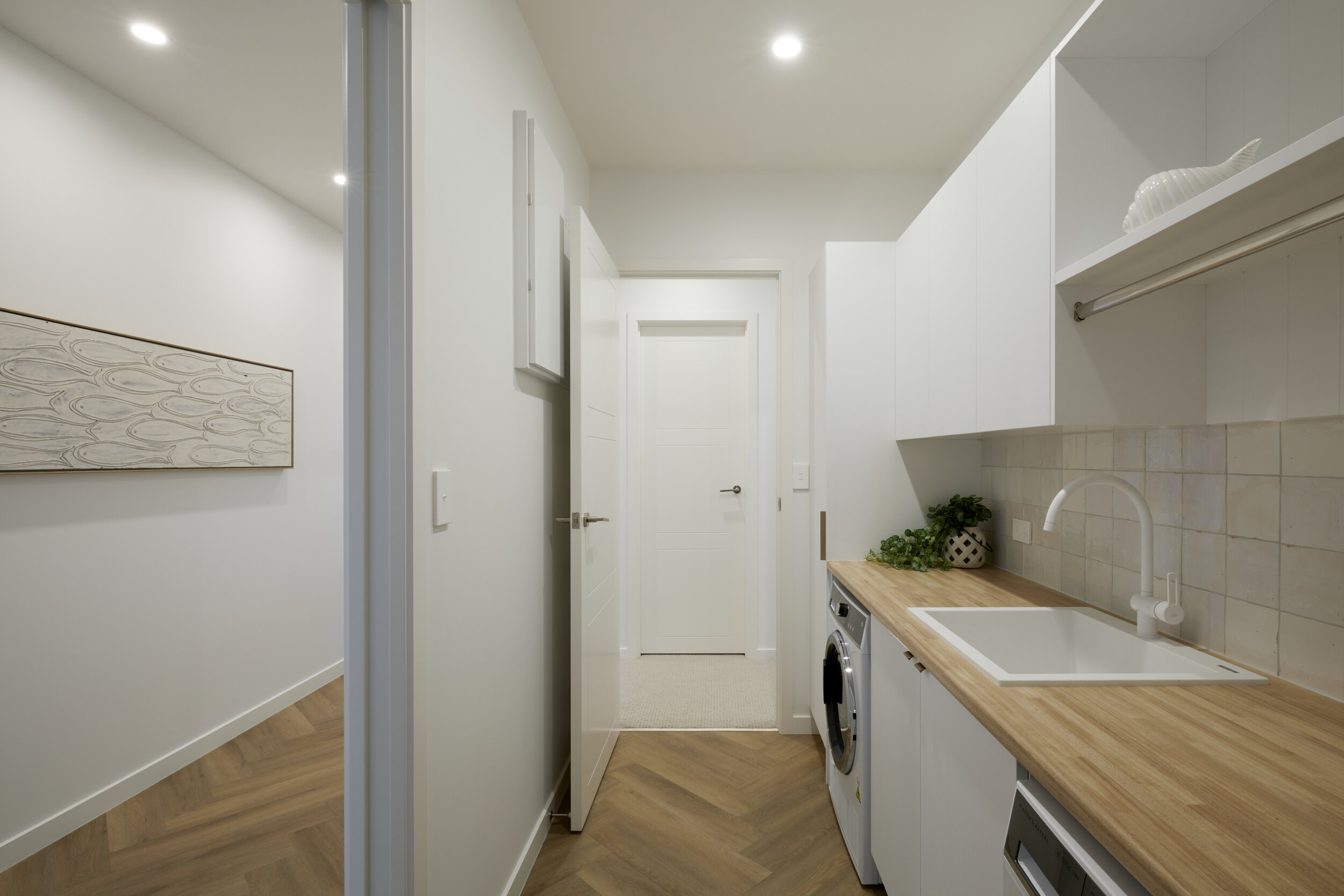
The two-storey house has roadside appeal by the bucketload, tempting you to explore. A long, extra-wide hallway leads from the entryway to the main living area. There’s a true sense of arrival when entering through the French doors into this space complete with a tongue-and-groove cathedral ceiling. With its exposed rafters, this pitched feature continues out to a portico. On offer here is covered seating, Kaimai views, an outdoor oven and a fire (there’s an inside fire too). A snug/media room, two bedrooms, a powder room, a bathroom and the laundry can all be found on this level of the house, with the generous garage a few steps down.
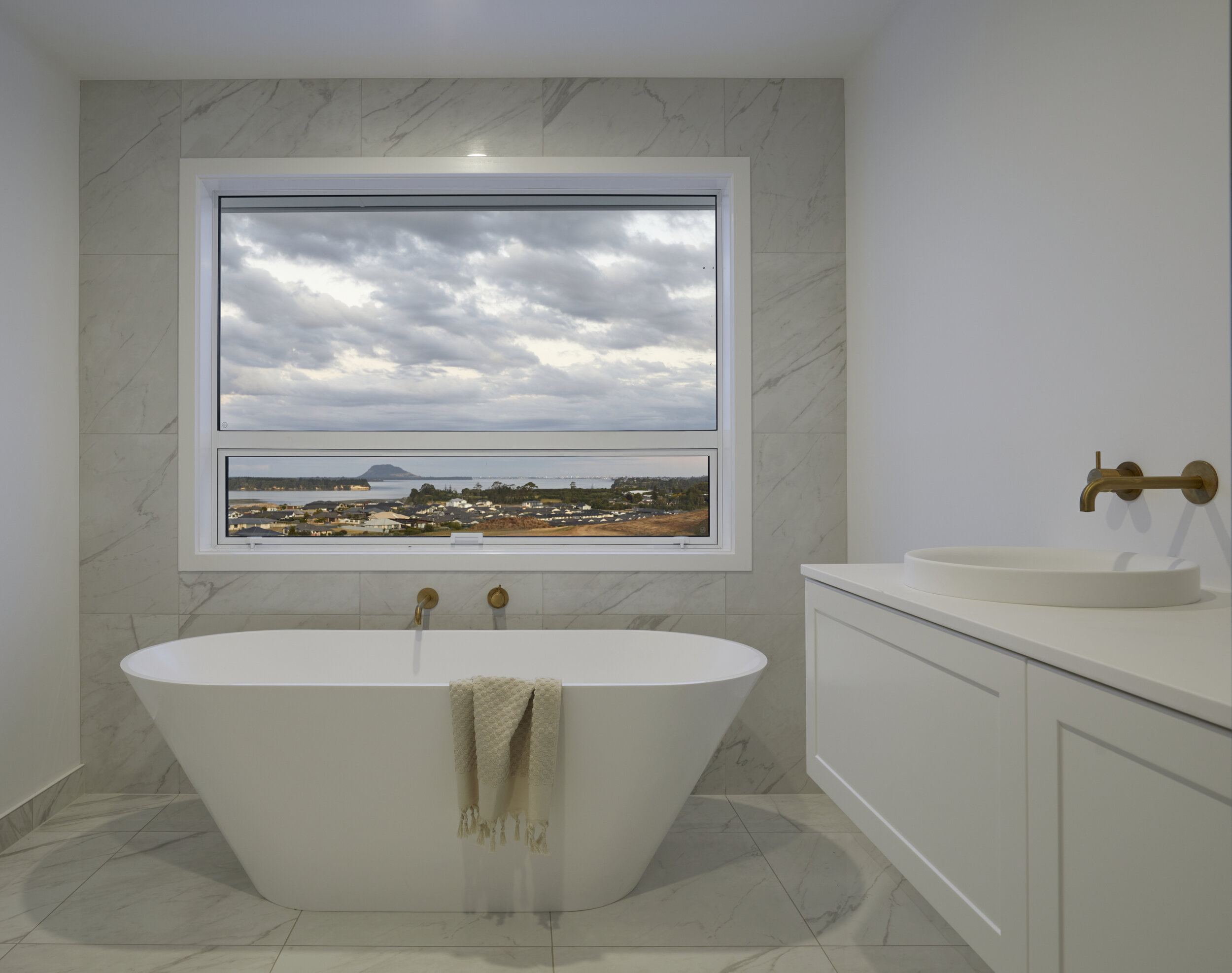
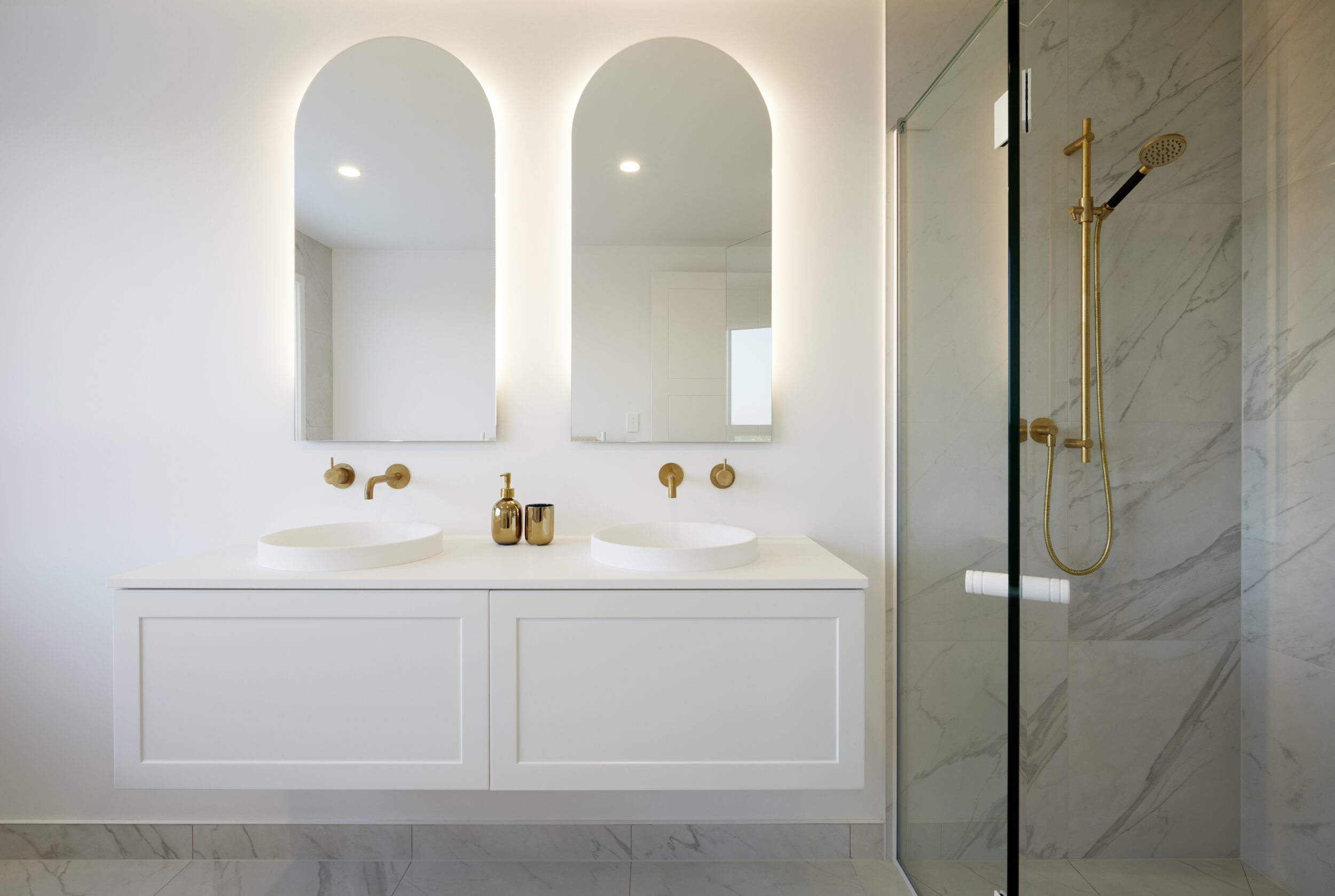
Upstairs is dedicated to the master suite. Carly loves the “pure luxe” ensuite with
its glamorous back-lit mirrors and free-standing bath. For her, dressing houses is a way to express her creative side, and the light fittings used this home are a fine example of her flair. Brass lantern-look exterior lights hint at the nautical, while immediately beyond the front door are rattan-style drop pendant lights hung at staggered heights. A beaded handelier is an eye-catcher in the dining area, and in the powder room and master bedroom suspended lights are examples of the “subtle, special touches” Carly loves to inject.
Also wonderful are the brushed- brass accents throughout, such as the ensuite tapware and handles on the main living area’s double doors.
This house has true multi-generational appeal. There are a number of built-in technological features that ensure it’s future-proofed – and there’s even provision for a lift.
To be wowed by this beautiful show home, call into 2 Goldstone Place, Harbour Ridge, Omokoroa. It’s open Tuesday to Sunday from noon until 4pm, and by appointment.

Top of her game
It was that desire to have a family, and to work in an environment where Mary could succeed whilst raising children, which drew the couple to Cooney Lees Morgan. “I had been working in competition law, doing high court negotiations in Auckland. Matt was working for Mercury Energy in a corporate role. Matt and I are both from Auckland, and it never occurred to me that we’d live anywhere else. But even then, 13 years ago, it felt busy and big. We started to look at places like Nelson, Hawke’s Bay and Tauranga.
WORDS JENNY RUDD PHOTOS TRACIE HEASMAN
A PLAN TO START A FAMILY AND GET TO THE TOP OF HER GAME PROFESSIONALLY SEES MARY HILL BECOME THE NEWEST PARTNER AT TAURANGA LAW FIRM, COONEY LEES MORGAN, SUPPORTED BY HUSBAND MATT AND SONS LUCA AND MITCH.
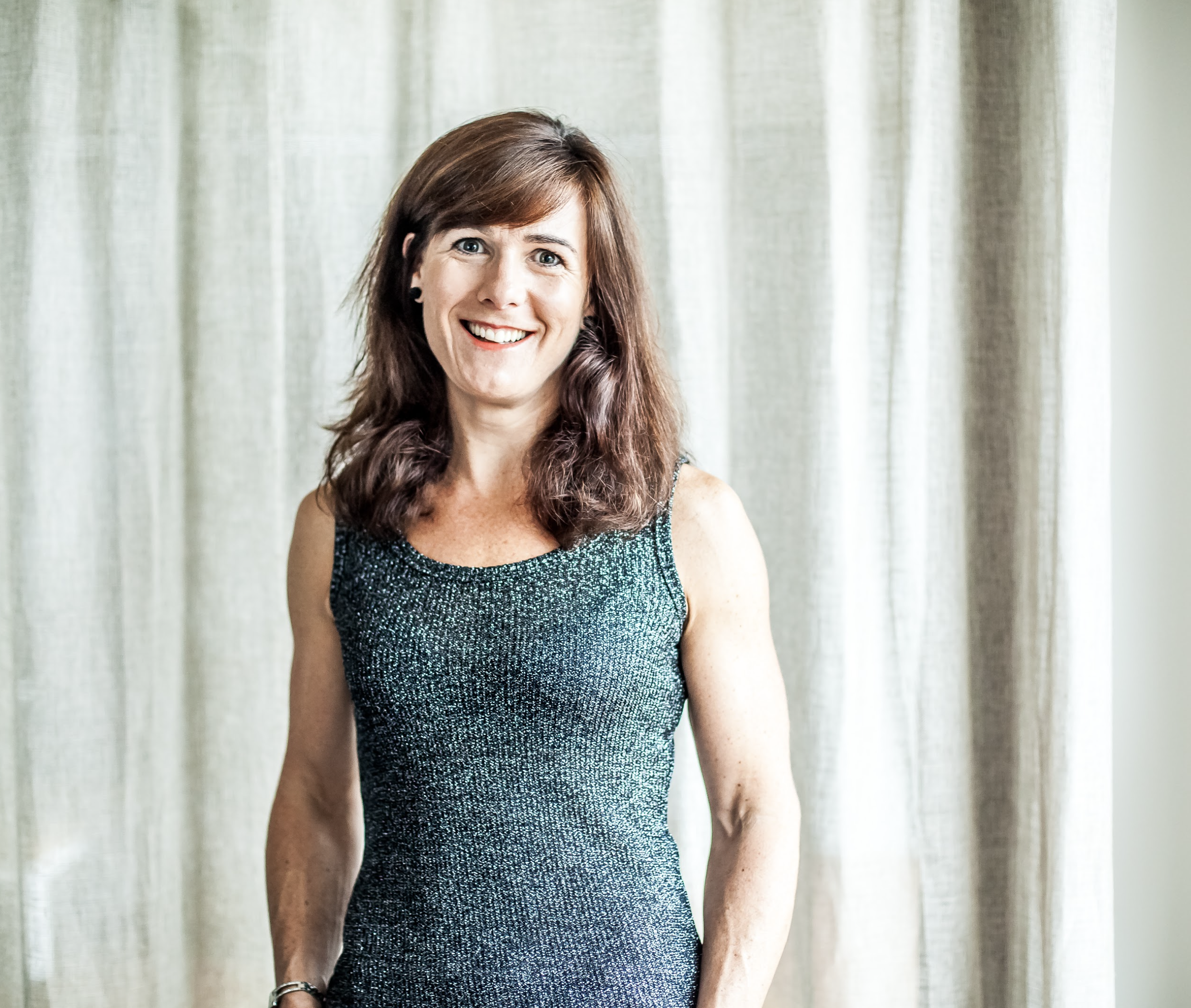
It’s not the first time Mary has been offered the position. Eight years ago, she was taken out for a coffee with then partner, Paul Cooney. “Paul knew that Matt and I had been going through IVF to try and start a family. He was very supportive. That morning, Paul asked me if I’d like to become partner, and I said, ‘I have some news to share with you too!’
“Although I knew Cooney Lees Morgan would have been happy for me to be a partner while I had babies, I felt that it was a special family time. I also knew that if I wanted to make partner in the future, then I would. There were people who told me I was crazy to let the opportunity go, and that it wouldn’t come round again. But my feeling was, if I wanted to make it happen then it would. I felt relaxed about waiting, and had faith in Cooney’s. I had seen that they treat people really well. When it comes to looking after their staff, and in particular mums, they always think long-term. I’m in a good place right now – the kids are happy, the youngest has been at school for a year, we have built a new home. Now feels like the right time to become a partner.”
MAKING THE MOVE
It was that desire to have a family, and to work in an environment where Mary could succeed whilst raising children, which drew the couple to Cooney Lees Morgan. “I had been working in competition law, doing high court negotiations in Auckland. Matt was working for Mercury Energy in a corporate role. Matt and I are both from Auckland, and it never occurred to me that we’d live anywhere else. But even then, 13 years ago, it felt busy and big. We started to look at places like Nelson, Hawke’s Bay and Tauranga.”
A connection to Sally Powdrell, chairperson of partners at the firm, convinced Mary to make the move. “I was offered a role in resource management – quite different from the competition law I’d been practising. But there were three big clinchers for me. One was Sally; she’s just amazing. She’d been made partner in her twenties, and although her children are now young adults, she was able to work part-time while they were teenagers, when she felt they needed her most. The second was that I could see the firm were driven to support community initiatives and play a role in building the community. The third was that they seemed to be a very happy group of lawyers. That’s a good sign when you are looking at committing to a firm! So, Matt and I made the move.”
“We had been living on Franklin Road in Ponsonby. We loved it, apart from at Christmas when we had to buy a load of cheap lights to stop our neighbours being angry with us. Every day another bulb went. By the end of the holiday, we were a pretty sorry sight. We could see people pointing and laughing at our efforts as they walked past!”
NEW GIRL
Mary is a ‘take-the-bull-by-the-horns’ kind of girl, which is lucky. She needed to learn, not only the different ways of doing things at her new firm, but also another area of law. “Paul Cooney had never had a junior before, but he turned out to be a brilliant mentor. He took me to every single meeting and upskilled me. There was all this new information to absorb. About a month into it, there was a hearing, and he chucked me straight into it! But I felt really supported, and so just got stuck in and had a go. It’s the way I approach most things.
“I was getting practical experience too: more so than with a big firm. I enjoyed being a junior to two QCs because I was able to go to the Court of Appeal and watch and learn about that side of things. In Auckland, I hadn’t run my own trials, but now I have four to six hearings a year. There have been two already this year. I had a three-week hearing when Luca, my eldest, was six weeks old. I presented my client’s case for four days, then a member from my team sat through the rest of the hearing. Good communication amongst my team meant we gave our client the best possible service.”
Most of the partners are from Auckland or Wellington. I ask Mary if she misses the big smoke, but she shakes her head. “We love it here, and the kids are thriving. In every way, it’s exceeded our expectations. I wanted to be able to make a life here and still be in litigation. Hearings are ‘full on’, and you need to be on your game to respond to everything that is thrown at you. Otherwise you end up looking like an idiot. In Auckland, there’s no way I could have had a family life with Matt and the children, and prepared properly for hearings. It would have been logistically impossible. Here in the Bay, our hearings are at the Twin Towers in The Mount: really close to my house! I can have a coffee at Slowfish, spend the morning at the hearing, take my client out for lunch, head back in, then go for a run around the Mount afterwards. It is infinitely better than battling through a sticky and swelling city to do the same job.”
PRESENTEEISM
It’s hard to believe the extent to which Mary’s firm make it possible for the parents to work around raising children. Old, established law firms aren’t renowned for making concessions like that, but it’s deep in Cooney’s culture to be supportive of their staff. “When my children were tiny, I was able to work two days a week for a couple of years. That’s virtually unheard of in our industry. I was still running hearings, my RMA practice and negotiating, and Cooney’s were happy to make it work. I shared a nanny with a colleague. If we had to go to a meeting together, which was not unusual, the nanny would look after all the children.”
“Recently I was up in Auckland at a conference with a group of young lawyers. They talked about the prevalence of ‘presenteeism’ at work. It’s the show of being constantly present and available at work, even if there isn’t anything to do. We discussed how damaging that culture is. It doesn’t get the best out of lawyers, so ultimately doesn’t do the best for the clients. It’s such an antiquated way of working, and one that we really don’t support.”
EXPECTATIONS
This culture of open-minded trust has a real effect on the work produced. “We are a pragmatic bunch. We’d much rather pick up the phone and have a quick chat than send out a waffly five-page letter. Because of that, we have built a good reputation both as a legal practice and employer. We have some big clients, like Zespri, Milford Asset Management, and Norske Skog Tasman, who like the way we work and choose us over the big city legal firms from Auckland or Wellington.”
THE JUGGLE
Mary is a bit of a superwoman. I asked her how a normal day looks: it can’t be easy having two small children and being at the top of your game professionally. She is incredibly fit and likes to do sunrise yoga then go for a run. If she has extra work on because of a hearing, it’s all done early in the morning. “Then it means I can do the school run. That’s my time to see how my boys are doing, and chat to the teachers. I usually get to work around 9.30 am, which is also good as I miss the traffic over the bridge. By the time I get home in the early evening to relieve the nanny, I’m done. Evenings are for Netflix!”
Mary’s favourite spots
Dinner: Burger Fuel, then Pilot Bay with Matt and the children
Glass of wine: On my new deck!
Clothes: I always shop at The Mount – Sisters & Co, Wallis, and North Beach
Run: The Rotorua lakes
Downtime: I belong to a cool book club, where we do anything apart from read books. We go for walks, have cooking lessons, and do anything else we can think of!

Jake Millar: life in the fast lane
At 22 years old, Jake Millar from Greymouth in the South Island has interviewed some of the most influential business people on the planet: The CEO of Fonterra, the CEO of Walmart, the CEO of Tesla, founders of billion-dollar startups, and godfather of entrepreneurs everywhere, Sir Richard Branson. He has interviewed around 500 people over the last four years.

At 22 years old, Jake Millar from Greymouth in the South Island has interviewed some of the most influential business people on the planet: The CEO of Fonterra, the CEO of Walmart, the CEO of Tesla, founders of billion-dollar startups, and godfather of entrepreneurs everywhere, Sir Richard Branson. He has interviewed around 500 people over the last four years.
Jake sold his first business, Oompher, to the New Zealand Government at 19 years old. His second start-up, Unfiltered, has just celebrated its second birthday from New York, where Jake's now living as he launches into the States.
Jake has bottled his ability to get people to talk to him and turned it into a business. Unfiltered gives you access to the stories and wisdom of some of the world's most successful businessmen and women. Interviewed by Jake, they share what they've learned, inspiring others to achieve greatness. Each interview is about an hour-long, and is recorded on video. Jake's done around 500 of them, and they are all published on unfiltered.tv.
Before he'd launched Unfiltered with his co-founder, Yuuki Ogino, Jake had secured commercial partnerships with Bayleys, Craigs Investments, Price Waterhouse Coopers.
In July this year, I went to Unfiltered Live, held at Auckland Museum. It was slick. Hundreds of people round the country came to hear Jake and other speakers such as the Prime Minister and Sir Graham Henry.
Dapper, neat, scrupulously organised, bespectacled, and always smiling, there's a touch of the #geekchic about Jake. But his old-school, gentlemanly manners give him an air of panache. Jake wraps up lots of information neatly and tightly in short spaces of time. He has got used to sharing the two-minute version of his story to promote Unfiltered. In an interview with an American TV channel that broadcasts live from the New York Stock Exchange, the presenters start off smiling politely at the rather young, earnest-looking fellow in front of them. But after a few minutes, their practiced, generic welcome is slightly askew, and their jaws hang a little loose.
A LOSS
When Jake was 15 years old, his father, Rod Miller, died in a plane crash over Fox Glacier, along with nine other people. Four of them were Jake's friends. Rod owned a sky-diving business. The crash occurred on the same day as the first earthquake hit Christchurch. John Key travelled across the South Island paying his respects to the victims and visiting affected families.
Afterwards, Jake wrote to the Prime Minister thanking him for coming to the crash site, and asking him for words of advice about his future. John Key responded with a personal and encouraging note, and visited the 15-year-old at his home in Greymouth. It was a bright moment amongst all that horror.
Jake says, " At seven years old, John Key lost his father, yet went on to achieve his dreams. I thought, 'If he can do it, so can I.' And I was inspired by the kindness and humanity he had shown in his leadership of our country at that awful time."
SCHOOL
From a young age, Jake has worked hard. "I set myself the goal of being head boy of Christchurch Boys' High School (CBHS) and head boy of Adams House. The two positions hadn't been held at the same time in 11 years." He achieved both those goals in 2012.
Whilst at school, Jake organised quite the line-up of speakers for assembly at CBHS: Rob Fyfe, then CEO of Air New Zealand, Rhys Darby from Flight of the Conchords, and Bill English, then Minister of Finance. Photos of baby-faced Jake honing his interviewing skills with these national heavyweights are shockingly recent. Rob Fyfe is now one of a few experienced CEOs who sit on the board of Unfiltered. He says "I have known Jake since he was 16, and he is one of the most inspiring young New Zealanders I have met in my business career.”
As he headed towards his final terms, Jake read Richard Branson's autobiography, Losing My Virginity. It ignited in him a passion for business. He could see how fun and exciting it was.
But career advice at school was woefully lacking. "You were asked what you thought you'd like to do, and were handed a few pamphlets. Where was the advice from someone who'd been there and done it? What was the best way to get started in a particular job? Where was the motivation to get out there and achieve great things? There wasn't any."
And so, turning down a $40,000 scholarship to study law at Otago University, Jake left school and founded his first business, Oompher. The product was what he had wanted a year earlier: careers advice – from the top of the pile. He interviewed people leading their industry, and invited them to share their wise words, asking questions like, 'What does it take to succeed in your industry?' The videos of the interview were published online. Within two months of launching, Jake started to negotiate with the Government who wanted to buy it. Six months later, in mid-2015, they did.
30-YEAR PLAN
If this all sounds very neat and well-thought-out, that's because it is. This isn't a series of lucky events. Jake plays the longest of games. He has a 30-year plan. That's pretty hard to fathom in our era of instant gratification. "Sir Michael Hill has a 30-year plan. He refers to it regularly. And he advised me to do the same. You have to think aspirationally to make your plan. I thought about what it is that I wanted from life. Here's my list: family, fun, friends, finances, fortune (good health/luck), influence, and, above all else, total freedom. Whenever I need to make a decision in my life, I look at whether it will bring me closer to those goals. If it doesn't, then I say no."
RAISING CAPITAL
In 2016 he needed to raise $1.2 million to take Unfiltered to the States. "I was confident we'd be able to raise the funds, but I was humbled by the calibre of our investors. Many of them are friends I have made over the years." Some friends! Kevin Roberts, ex-CEO of Saatchi and Saatchi; and Sara Tetro, founder of 62 Models and Talent, are some of the A-list line-up of investors. Having them onboard creates a snowball effect: they bring in friends and contacts who are then willing to be interviewed for Unfiltered.
We meet Jake in between San Francisco and Fiji, and find out how he secures interviews with such big names, and commercial relationships without having launched his business. And what motivated such grit and drive.
Jenny: Happy birthday Unfiltered! Two years old in November. And now you have launched into America. How did it differ to your launch in New Zealand?
Jake: Probably the main thing is the size of the market. In New Zealand we are just four and a half million people. It's quite easy to target who you want and truly reach that market, whereas in America there are 320-odd million people, so it's hard reach them all. In America, we have repositioned our entire business. We have really focused on one very specific market as opposed to focusing on everyone. Also, we've targeted New York, Los Angeles and San Francisco at this stage, not the whole country. We've picked out places where we feel we are going to get the most traction.
Jenny: One of the most incredible things about Oompher and Unfiltered, is your ability to get people to come and talk to you. How have you done that?
Jake: The main word is persistence. We just go, and go, and go, and go. When we reach out to new people to interview, whether it's Sir Richard Branson, or Ashton Kucher, or Sarah Blakely, we just hammer them. I know that sounds aggressive, but you have to be because there are so many journalists and media agencies competing for that attention. Quite often we'll follow someone up 15, 16, 17 times before we get the interview.
Jenny: How do you know when to stop?
Jake: It depends. If I am not getting a reply at all, then I'll probably carry on. If someone's not interested, they'll usually come back straight away and say so. So if they don't send that reply, then you can probably always push harder. A founder of a very successful and well-known company recently came back after four or five emails from us with a one-word response: 'no.' That was it. That's enough for us, we know he's not interested right now. But that doesn't mean I'll give up for the rest of my life.
Jenny: As well as being persistent, you need to be good at reading people, and likable. How did those attributes develop?
Jake: Growing up, I spent a lot of time around adults. My parents never got babysitters or went away on holiday together without my brother and me. We did everything together. So, if there was a dinner party, we would always be there. From about four or five years old. I don't think my parents ever went on holiday together when we were young. We were always together as a family, so I spent lots of time, listening to adults and watching how they react to each other.
Jenny: Oompher and Unfiltered are quite similar businesses. What made you start another so similar to Oompher?
Jake: I really wanted to build a valuable business, and Oompher had taught me lots of important lessons about target markets, product/market position, and how to commercialise a product. I knew I wanted to start another business, and I was tempted to start something completely different, like manufacturing or software. Unfiltered was similar to what I'd been doing, and I knew how hard it was to commercialise media. But I’d done about 30 interviews with people after Oompher – which I was passionate about – so I decided to give it a crack, and Unfiltered was born.
Jenny: Before you launched Unfiltered, you had some big names signed up as customers. How did you know, at 19 years old, how to pitch your idea to them?
Jake: Partly from experience with Oompher. Our business model was to get companies to sponsor the content, with their branding at the back of us as we filmed. A kind of traditional advertising model. Also, I really believed we were solving an important problem and would have an audience of young, aspiring entrepreneurs. I knew that market was really valuable to these companies.
The person who probably helped me the most was my accountant from PwC, Scott McLeaver. We ‘white-boarded’ the whole business, how it could make money, and what commercial partnerships might look like. He gave some great advice. As a teenager owning a new business, it was invaluable to get that kind of support.
Jenny: How do you make the cut to be interviewed on Unfiltered?
Jake: There aren’t really any criteria. We look at who's hot in the media, who our subscribers are pitching to us, saying, 'I want to learn from that person.' And we look at why they might be relevant: maybe they've sold or founded a company, or they are growing fast globally, or expanding internationally.
Equally, it could be someone in whom there's hardly any public interest, but we discover they have an amazing story. Brendan Lindsay from Cambridge would be perfect example. Prior to him selling Sistema Plastics for $660 million, nobody really knew who he was. He'd kept his story very private. He's very humble. We love breaking big stories like Brendan's.
Jenny: You’ve interviewed a number of people from the Bay and Waikato on Unfiltered. Chris Liddell, former CFO at Microsoft and General Motors, is from Matamata. Theresa Gattung, ex-CEO of Telecom, is from Rotorua. John Lord, founder of LivWell (Colorado's biggest, legal cannabis dealer), is from Te Awamutu. And of course, your good friend Nick Mowbray, co-CEO of Zuru Toys, who's from Tokoroa. What do you think it is about those provincial areas that's produced such successful people?
Jake: There are a huge number of really successful New Zealanders globally who are relatively unknown, here. I believe the CEO of Walmart USA, Greg Foran, is from Hamilton too. I think coming from a small town, you are always hustling, trying to get ahead. When you grow up in a big city, everything's there. When you come from a small place, there's always something to reach for. For instance, my journey started in Greymouth on the west coast of the South Island. From there I went to boarding school in Christchurch, then I moved to Auckland, and now New York. It's called step migration. People generally move from a smaller place to somewhere slightly bigger. If you are born in the big city, everything's there. You probably don't know what to aspire to next.
Jenny: You wrote a list of 21 things you'd learned at 21 years old, and said that friendships were one of the most important things in life. But you have also spoken about not seeking out friendships when you were at school. What changed?
Jake: At secondary school I was very goal-driven. That made me different from most of the boys there, and I felt they weren't very tolerant of people who did things differently. I liked playing badminton, wanted to become head boy, and wanted to start a business. But what was expected was to sit around in the common room, talking about rugby and cricket. When you are at school, there isn't really much you can do about that, because you are stuck in that environment.
That was one of the deciding factors in leaving and starting my own business. I knew that if I studied law, I would end up in a law firm answering to a boss I might not like, trying to get further in my career with people I didn't really want to be spending time with. If you have your own business, you get to decide who you spend time with. I was able to start working with people I really liked, and start building the deep and meaningful relationships that were missing at school.
Jenny: Immigration to the Bay of Plenty is strong, and many of our imports are looking to run a national or global business from here. What advice can you give them?
Jake: Utilise technology in every way you can. Today it's possible to run a global business from any small marketplace. You need to attract the right talent, and be prepared to travel. Just remember, everything's possible.
Jenny: And finally, who was the hardest person to track down?
Jake: That would have to be Sir Richard Branson. He's a very difficult person to talk to, because so many people are trying to interview someone like him. When I finally got his email address, I sent him a personal letter, and he agreed to an interview. Even after that it took persistence to make sure it happened. Then, all of sudden, I was waiting in our studio and being told that Sir Richard had just arrived.
To see the rest of Jake's interview, giving his million-dollar advice for starting up a business, and talking about his friendship with ex-Warriors owner, Eric Watson, and his Lifeline fundraising dinner at the Coatesville mansion, watch below:


Drifting through life
Jodie Verhulst is the number one female drift car driver in the country, and watching her drive is phenomenal. Her arms and legs move at highspeed, as if she is performing a type of dance, but her demeanour is cool, calm and collected.

“There’s a lot to think about at such high speed. It’s a guessing game as to where the other car is because you often can’t see anything through plumes of smoke.”
WORDS TALIA WALDEGRAVE / PHOTOS JAHL MARSHALL
Jodie Verhulst is the number one female drift car driver in the country and watching her drive is phenomenal. Her arms and legs move at rapid speed, as if she is performing a type of dance, but her demeanor is cool, calm and collected.
“It’s really just muscle memory and I don’t even know what I’m doing half the time.”
Jodie is one of the nicest people I think I’ve ever met. My editor, introduced us with the words, “Goodness, don’t you two look alike?” Jodie nods, smiling politely, but all I can do is blush. I certainly don’t see a similarity but am humbled in any way to be likened to this beauty.
It is the hottest day of summer and we are at the D1NZ Drifting Championship, at ASB Baypark Arena. It is an assault on the senses. Stifling heat is intensified by the compulsory wearing of closed-toed shoes and the noise is like nothing I’ve ever heard; piercing and shocking, it sends vibrations rattling through my entire body. The smell is an overwhelming combination of petrol, dust and burning rubber. Cars come at me from every direction and it pays to be on high alert. It’s ridiculously exciting.
You'd be forgiven if like me, you were not entirely sure what drifting is. Don't tell any of the lads in my life because along with the photographer from this shoot, they'll either scoff at, or disown me for admitting my ignorance. I had to google drifting and back it up with YouTube to work it out. Drifting is a technique in which a driver deliberately over-steers, losing traction while maintaining control. It’s all about showmanship, angle, speed and line.
I meet with Jodie a few days later and her explanation is far more relatable.
“Drifting is like ballet but with two cars. You mimic the car in front and getting as close as you can without touching. There are two laps, one when you’re the leader, one when you’re the chaser. It’s a different sport to get your ahead around in the beginning, because instead of breaking into the corner, you actually accelerate.”
I’m in awe of this impressive woman who is killing it, in what is seemingly a man’s world.
“Although we live in a time where there’s a balance between the sexes, you definitely feel a bit of pressure being one of the only females.”
“My brother introduced me to cars and my partner Drew introduced me to drifting, and it was all downhill from there.”
“The response this weekend at the Championships has blown me away. I’ve had women coming up to me saying how much they love my driving, even the older ones. I’ll often catch some of the shyer, young girls out of the corner of my eye and I love to be able to give them something real to look up to other than pop stars or film stars. That especially, is a highlight with what I do. Although it’s just a bi-product of my driving, it makes me really happy, it’s really cool.”
Jodie’s partner Drew is the other half of her team and together they live and breathe all things drifting. I comment that she is very brave working so closely with her partner in such an intense environment, many relationships wouldn’t be able to weather it.
“Drew has been an incredible mentor. He’s been one step ahead of me the whole time. I’m very lucky because it doesn’t matter to him that his partner is out there battling and might do better than him. I’d love to go head-to-head with him in a battle, there’d be no holds barred and I think there’d be a lot of damage to the cars!”
This leads me to question the safety in drifting. I found myself on edge of my seat for the duration of each race - it’s hair-raisingly scary.
“We’re increasing speeds and making the cars lighter, so it’s risky, but safety always comes first. We have a cage, harnesses and helmets, so compared to other sports, it’s quite safe.”
“If you’re not getting that feeling of nerves and adrenaline, and if you’re not scaring yourself, then you’re not pushing hard enough. It’s very powerful and you definitely work up a good sweat. I’ll be drenched by the end of today. Getting into the car is like stepping into a sauna.”
Jodie’s sweet nature seems contradictory to someone who would head into battle, deliberately aiming to knock out her opponent. It’s clear that drifting, like all sport, is incredibly competitive.
“It’s a tough sport, and in the last two years, the gap has closed so much between competitive drivers. You have to do something special and really push the boundaries to stand out. I’m competing against people who have been in the sport five or six years longer than me, so I really have to go as hard as I can. It’s about more speed, sharper angles.”
Heightening this adrenalin-fuelled atmosphere are the fans. “The atmosphere at Baypark is insane, particularly as this is our home track. We’ve had people yelling in our ears and getting right in our faces, but that’s all part of the build up and adds to the excitement. When the drivers were introduced last night in the preliminary round and my name was called, I couldn’t believe it. The audience just went nuts. There’s just nothing like that and I’ll never forget it, not for my entire life. I was actually choking up a little bit.”
I mention that a lot of my friends have been talking about her, without knowing about our interview. “There are a lot of closet drifters out there I think!”
Jodie tries to get me into the car so she can give me a ‘hot lap.’ I have absolutely no qualms in telling you all, I firmly declined. Save your tyres, save your petrol and use it far more wisely on someone else. I’ll be sitting firmly on the edge of my seat.
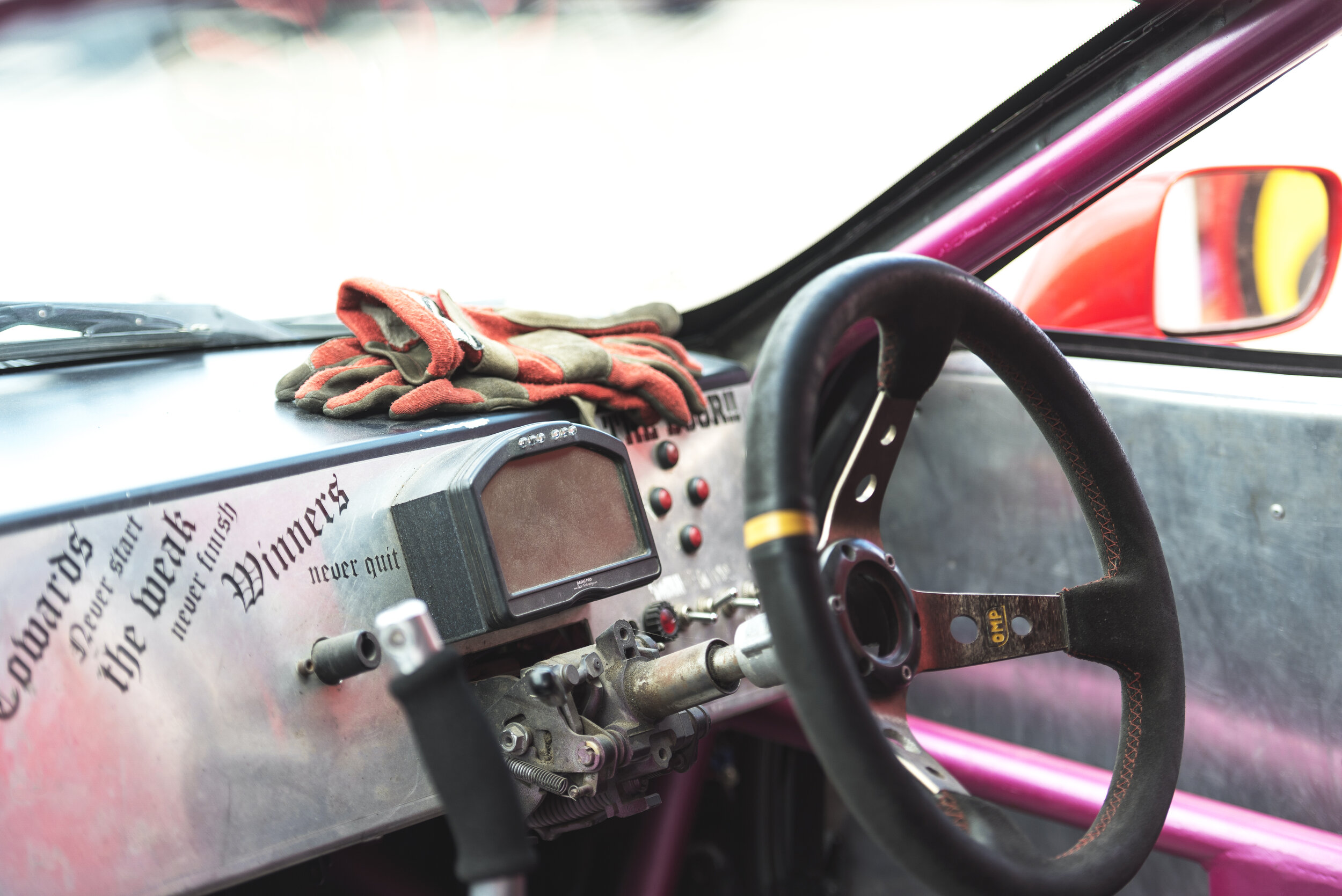
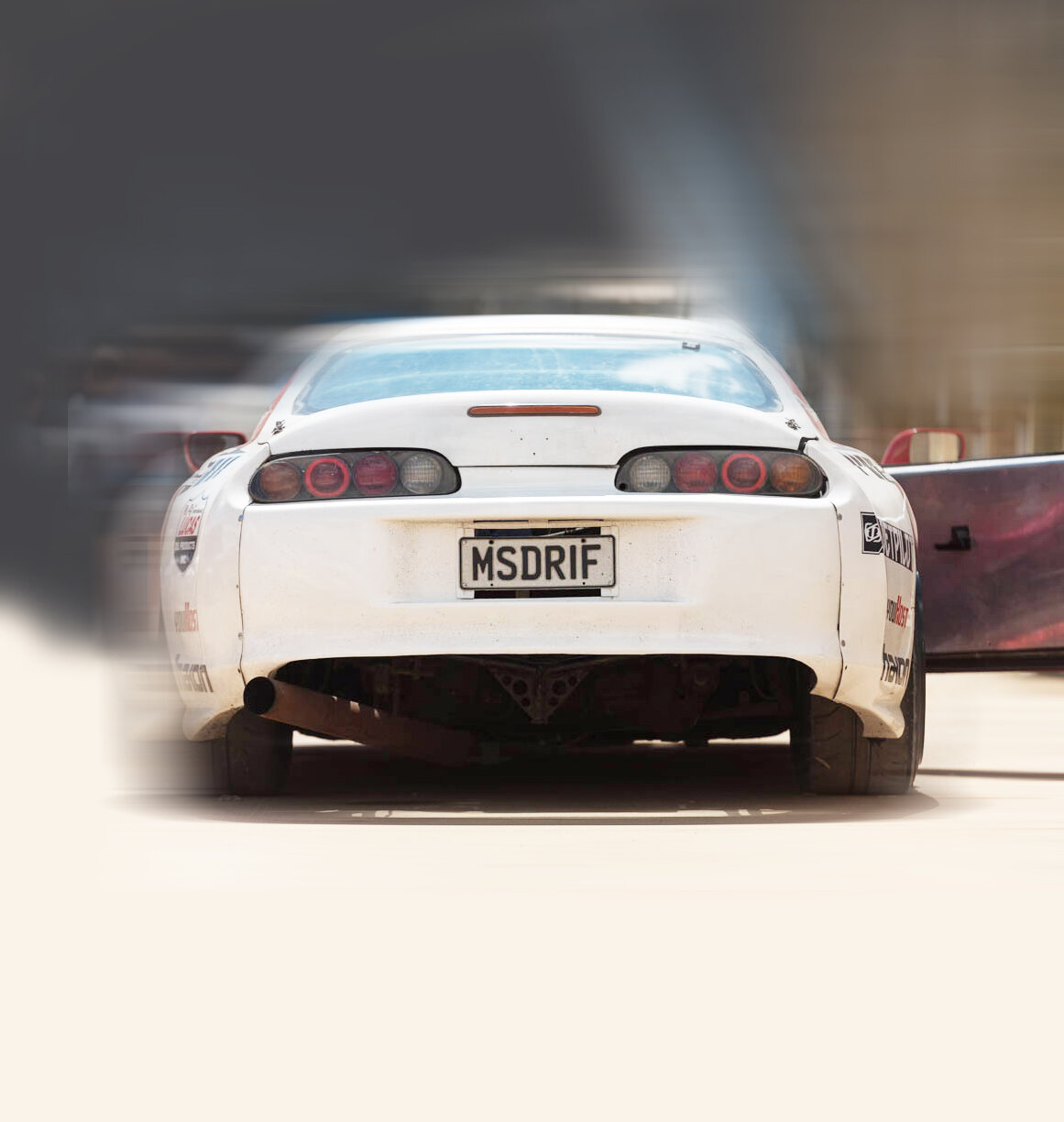

Davinci Clinic: the cooler way to shift stubborn weight
We all have stubborn areas of fat which we just can’t shift, even with regular, intensive exercise and a good diet. While surgical procedures like liposuction and abdominoplasty are popular for removing excess areas of fat and tightening loose skin, they do require a general anaesthetic and significant recovery time.

WORDS Pip Crombie PHOTO Logan Weaver
We all have stubborn areas of fat which we just can’t shift, even with regular, intensive exercise and a good diet.
While surgical procedures like liposuction and abdominoplasty are popular for removing excess areas of fat and tightening loose skin, they do require a general anaesthetic and significant recovery time.
Good news. There are now some non-invasive techniques for helping to get rid of areas of stubborn fat, typically around the waist and tummy, thighs and upper arms and double chin. One of the most popular techniques is CoolSculpting, using a technology called Cryolipolysis®.
Widely acknowledged as being safe and effective, CoolSculpting is the only FDA-cleared procedure to use controlled cooling to safely target and eliminate diet and exercise-resistant fat.
HOW DOES IT WORK?
Fat cells freeze at higher temperatures than the surrounding tissues. CoolSculpting technology safely delivers precise cooling to gently and effectively target the fat cells underneath the skin. The treated fat cells are crystallized (frozen), and then die. Over time, your body naturally processes the fat and eliminates these dead cells, leaving a more sculpted you. As a body-contouring procedure, it offers an effective solution to shifting stubborn bulges, has no down-time, requires no anaesthetic, no needles, is suitable for most people, friendly to your budget and perhaps most enticing of all, is performed with only minimal discomfort.
SAFETY FIRST!
Make sure you go to a specialist nurse who is trained to develop a customised treatment plan for your areas of concern, advise on the suitability of CoolSculpting and work within your budget.
There are lesser versions of the CoolSculpting technology available on the market. If you are investigating options, you will see that only CoolSculpting is permitted to use the term Cryolypolisis®. Be wary of imitations and counterfeits and devices which lack the safety mechanisms of CoolSculpting. The extensive training necessary for CoolSculpting ensures that our nurses are very skilled in recommending which areas will respond to treatment and how many treatments are required. This provides consistency in results and optimal outcomes for you, the patient. Two or more treatments are usually scheduled and results are not immediate, but generally become evident over weeks as the fat cells die and are eliminated. So it’s not immediately obvious that you have had any ‘work done.’ Both men and women are loving the results of CoolSculpting at the Da Vinci Clinic. Take a moment to enquire to find out if it’s the answer you’ve been looking for to combat those unwanted bulges.
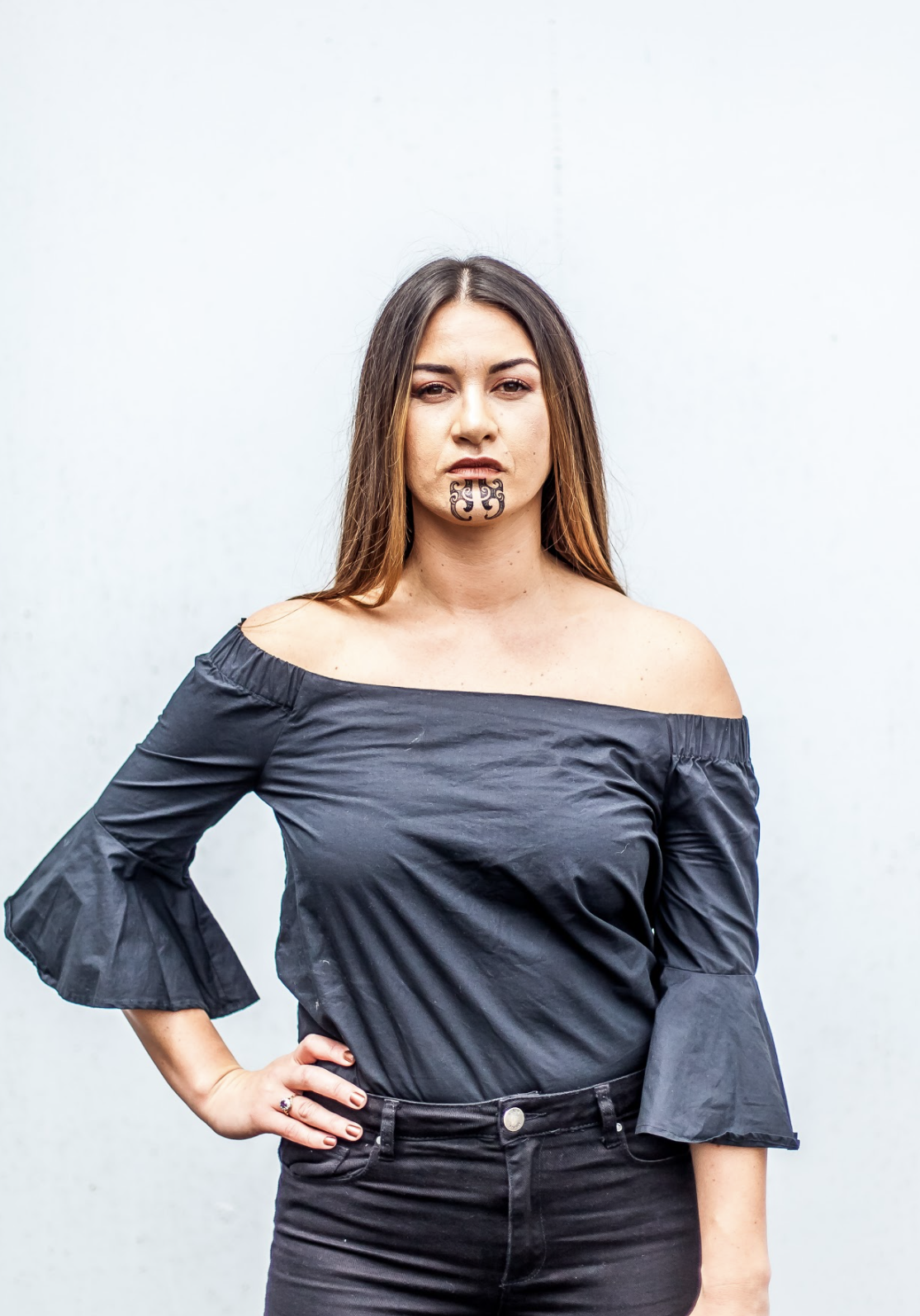
Taaniko: the woman behind the mural
If you’ve driven down Totara Street recently, chances are you’ve seen it. A young Māori woman’s striking features, painted by famous Irish street artist Fin DAC, embellish a 7-metre-high wall in what has become one of The Mount’s most recognisable murals.

WORDS Laura McCleannan PHOTOS Tracie Heasman
If you’ve driven down Totara Street recently, chances are you’ve seen it. A young Māori woman’s striking features, painted by famous Irish street artist Fin DAC, embellish a 7-metre-high wall in what has become one of The Mount’s most recognisable murals. Her hair is wild, her stance strong, and her eyes are a clever reflection of Mauao in the distance (if you look close enough). Her name is Taaniko Nordstrom. She’s the model, artist, and entrepreneur behind Soldiers Rd Portraits – a unique Māori portraiture business that Taaniko runs with her sister-in-law, Vienna, in Cambridge.
“People don’t realise it’s me, until they see me wear the moko,” Taaniko explains during our photoshoot. Seeing the two faces side by side, however, it’s clear Fin is one helluva talented artist. He first flew to New Zealand in 2015, in search of a muse for the Mount Maunganui Street Art Festival. “His usual aesthetic is Asian women,” Taaniko says, “but he wanted to paint someone indigenous. He googled ‘Māori woman portrait’, and my face came up. I said yes straight away because I knew it would be a statement – a Māori woman with a moko in the middle of The Mount? How cool!
“Fin didn’t know anything about the Māori culture, be he wanted to learn. So when he started to paint the mural, I came to Waiata Tautoko, and sang for him. I told him this is how we show support in our culture, and he was blown away. After getting to know me a bit better, Fin felt like my hair needed to be wilder, so he went back and changed it. We really vibed as artists.”
While Fin was painting her, Taaniko was trying to keep up with her own portraiture business, which was exploding in New Zealand as well as internationally. “I’m the typical Kiwi entrepreneur story – I got back from travelling in 2013 and was dirt broke. Mum is an artist so we always had portraits of native American chiefs on the wall. But it wasn’t until I saw the original photos of these chiefs (at the Smithsonian in New York) that I started thinking about photos of Māori leaders. I wanted to bring them to life in some way.
“When I got home I went to the op shop and asked mum to help me whip up some old-school korowai (cloaks), piupiu (skirts) and collars. I got dressed, went into the shed, drew a moko on myself, and took a photo on my iPad. I aged the photo with a filter and chucked it on Facebook. Almost immediately I had people asking where I had the photo taken and how much it cost. I was like, what? People would pay for this?!
“I called Vienna and told her to bring her camera to the Kawhia Kai Festival. She’d never done a portrait before – she’s a landscape photographer. But she loved the idea, so we packed up a big suitcase of props and an old broken gazebo, and set up a stall. It was completely hotchpotch – our backdrop was a duvet cover from the Sallies in Cambridge. We did over 40 portraits that day, and two days later we rocked up at the South Auckland market and did another 50 portraits. The rest is history.”

“We’ve moko’d up kids in a New York subway, a barber shop in Brooklyn, and couples under the Eiffel Tower. We got a lot of attention quite quickly because no one does what we do.”
In true laid-back kiwi style, Taaniko didn’t even organise market stalls – they just turned up and sweet-talked their way in. I suppose tenacity is a given with six older brothers. “My family have always encouraged me to be proud of my culture and to think outside the square. In fact, the name Soldiers Rd was inspired by memories of travelling to The Mount from Cambridge as a child. Whenever we’d pass Soldiers Rd at the bottom of the Kaimais, Mum would ask us what we thought the name meant. I thought it represented someone’s story, or their journey through life. When we first started editing our portraits, all of the eyes looked so defiant. Immediately I thought of Soldiers Rd, and the name stuck.”
From homeless men on the street to the Duchess of Austria on her private yacht, Taaniko’s shot thousands of people, and her work has taken her across the globe. “We ran Soldiers Rd from Papamoa for a year and have a studio in Cambridge, but our whole business packs into two bags, so we’re always travelling. We’ve moko’d up kids in a New York subway, a barber shop in Brooklyn, and couples under the Eiffel Tower. We got a lot of attention quite quickly because no one does what we do – no one had taken moko off kapa haka stages and used it in a completely different space.” So, what’s the Soldiers Rd experience like? “It’s authentic,” Taaniko explains, “but it’s also a modern take, because we shoot all nationalities. Whether you’re brown, white, yellow or green, the first thing we do is whakawhanaungatanga – we talk about where we’re from and establish a relationship. I start styling as soon as people walk in the door. But this connection sets the vibe for the day, and that's the most important part. If I can’t connect with the person and make them feel proud of who they are, their eyes will look dead in the photo. I have half an hour to mould a mind and create a story. The fastest part is taking the photo!” She’s not a trained makeup artist or hairstylist, but Taaniko credits her love of fashion and time as a flight attendant for her beauty and styling skills. “We dress clients, style their hair and use a stencil to do a temporary moko. The stencils have been blessed for the purpose of reuse. All of our props are from op shops or old theatres. I chop them up and use big clips from Bunnings to keep clothing in place.”
Taaniko is proudly contributing to a resurgence of Māori culture in New Zealand. If you haven’t seen her on Totara Street yet, look up next time you drive away from The Mount. “Twenty years ago, it wasn’t possible to have a job that paid me to inspire Māori and non-Māori through Māori culture. I’m so excited to think that my kids will grow up surrounded by Kiwis with a connection to our important culture. Everyone has a legacy and a story, and my favourite thing about Soldiers Rd is that I get to visually capture it for people.”

Something in the water
His face is already pretty much etched into the national psyche, and that easy smile and cool, calm demeanor have become known around the world, but in person, Peter Burling could not be more humble, more unassuming, or any more relaxed.
His face is already pretty much etched into the national psyche, and that easy smile and cool, calm demeanor have become known around the world, but in person, Peter Burling could not be more humble, more unassuming, or any more relaxed.
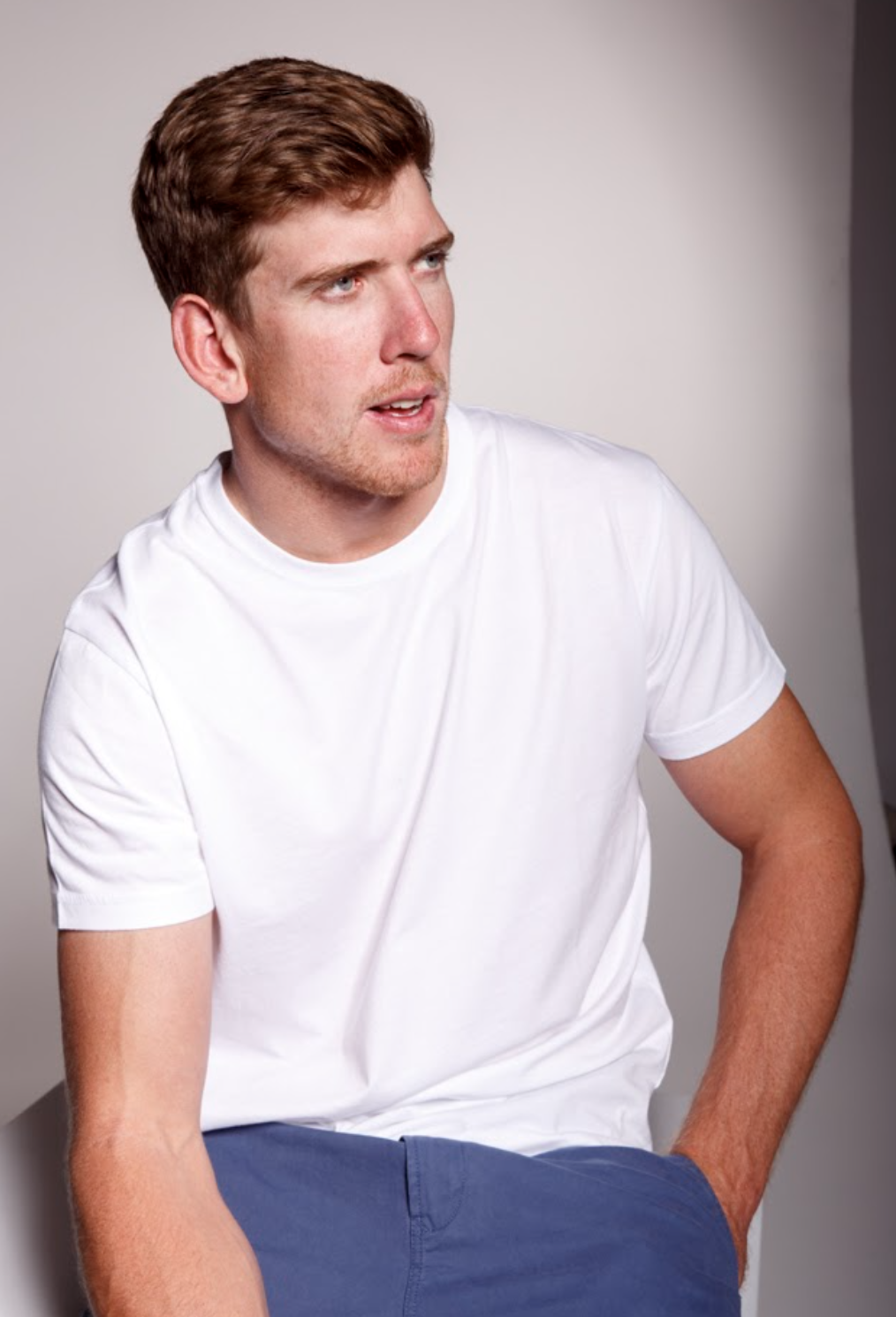
He may be an Olympic gold medal winner with a string of international titles to boot, and of course there is that not insignificant matter of bringing the America’s Cup back to its rightful home here in New Zealand, but in the flesh the man responsible for whipping a multi-million dollar boat through water at speeds approaching 100 km per hour is just a sweet-natured, very casual, amiable twenty-something. He’s arguably the world’s best sailor, but at heart he is still just a boy from the Bay, unfazed and unchanged by fame and more than willing to spend some time in front of the camera and talk to UNO about the journey so far.
It is a journey that began around 20 years ago in the Welcome Bay estuary, where an eight-year-old Burling and his brother first set sail in Jelly Tip, a wooden Optimist-class yacht that had definitely seen better days. “My brother got into it first and I just kinda got dragged along,” Burling says of his earliest foray into sailing, with that trademark understatement. “My Dad had been into sailing and thought it was a good skill to have. And it kind of spiralled from there.”
And when he says spiralled, he means it whirled wildly and unstoppably onto national then international stages: he won his first Optimist nationals at nine years of age, competed in the World Champs in Texas aged 12, and scooped the 2006 420 Class Worlds title in the Canary Islands at the tender age of just 15; a year later he won the Under-18 World Championship, took the 49er World Champs with Blair Tuke in 2013, 2014, 2015 and 2016, and – again with Tuke – took home silver in the 2012 Olympics and gold in the 2016 event. Then came the America’s Cup and the New Zealand Order of Merit for Services to Sailing, but before we go there, lets just back up the bus and get back to Welcome Bay in the early noughties.
“I have a lot of fond memories of that time,” Burling says. “Around here can be a pretty tricky place to sail, but one of the cool things about it is that you can sail in any conditions. In a lot of places you end up sailing in only one type of weather, but here, because you can get out in all kinds, it means you are quite well- rounded as you’ve had to deal with a lot of different things and looked at different ways of wining races - if you want to, you can sail in some pretty big swells at times here! The other cool thing about Tauranga is you have the keel boat club and the dinghies kind of just in one group, with adults and younger ones competing. It’s unique in that there is everything from the Learn to Sail level right on up to the keel boat club, and there’s not many around the country that have that.”
The sailing environment he encountered in Bermuda with the America’s Cup Challenge also had similarities to his early escapades on the sea around Tauranga, with a relatively limited area of open water and changeable conditions; but perhaps the main thing his formative years taught him was adaptability, a decidedly Kiwi trait if ever there was one. “One of the skills I did learn here at a young age was to be able to watch other people do a sport and to learn off them, to notice different things about how they’re sailing and have things set up, and to be able to adapt things really quickly and see whether you are sailing well or not. A large percentage of our sport is how quickly you can get the boat to go, and when people say someone is a natural sailor, they mean that person has an instinctive way of getting a boat to go faster than it should. And that is something learnt from hours of getting things balanced and learning about what is fast and what isn’t.”
And whatever happened to Jelly Tip? “I honestly don’t know,” Burling shrugs. “I’m not even sure if it was even my boat. Jelly Tip was bought for my brother and I ended up with it. . . Who knows where it is now.” Somewhere in Tauranga, someone may just have a piece of sailing history sitting in the backyard.
As Burling’s skills grew and the awards piled up – repeated questions about when the silverware outgrew the mantle piece and where they live now are all answered with a sheepish shrug and deflective smile – he also had to learn how to juggle his competitive life and the more mundane aspects of youth. Like getting an education.
Having attended Tauranga Boys College (at the same time coincidentally as cricketer Kane Williamson), he embarked on a mechanical engineering degree at Auckland University, but half way through, in his words, he decided to “major in sailing” instead. Competing in European sailing at pretty high levels and then coming back to try and focus on exams was probably never going to work, but while he may not have come out with a degree, he is the first to admit that two years of engineering studies eventually paid off on the water.
“At the Olympic level,” he says, “a lot of it is just a seat-of- your-pants kind of thing, because today you have a single platform that you can’t really change or improve.”
This is, after all, essentially a one-design race and everyone uses virtually identical equipment, so – as Burling says – “It’s a question of how you set it up and how well you can sail it!” But in something like the Americas Cup it’s different; the variables are almost infinite and change – literally – by the hour. And in that fast moving, high-tech environment, knowledge is power.
“I’ve always really liked the engineering side of sailing,” he says, “ever since I was a little kid and making things and trying things on the boats. I’ve always been quite pedantic on having a really clean and well-thought- out boat, not having anything on there that doesn’t need to be there, and having it all neat and tidy.”
And he would be the first to admit that this has translated from the waters of Welcome Bay to Bermuda. “I do feel like I had a good understanding of the systems on board and our team had a strength in the link between the sailing team and the designers, so that we knew how hard we could push it,” he says, again with an achingly acute sense of understatement. “At the end of the day, we are the ones who have to decide whether to back off or take the risk and play the game. But that is always something that I really loved, that whole side of it.”
If it sounds like a calculated risk, it is. Burling has described international level competitive sailing as being a massive game of chess, and though he finesses that description a little, it is clear he still sees it that way in his mind. “It’s a little different,” he says, “in that you can slightly change your pieces from time to time. But yeah, the better you are the less mistakes you make. And while you have to have an underlying plan, you also have to wing it sometimes.
And just as on the board, so too on the water, it is often he who dares – wings it but errs on the right side of the parameters – that wins. As we all saw played out on our
TV screens, in this level of competition things can go spectacularly wrong, and when they do, they do so at speed. Who can forget the heart stopping minutes that stretched in to hours when it seemed New Zealand’s America’s Cup challenge had nose-dived figuratively and literally. But pushing things to the limits, and recovering from the results of dancing too close to those limits, is what marks the difference between winning and losing.
“They’re incredibly cool boats that we sailed in Bermuda,” Burling says. “We were really pushing the technology side in regard to what you could and couldn’t do, particularly in regard to the structural side of things, and there are so many decisions to be made in regard to how many risks to take in regard to that structure. On the windy days during the Cup, you were really looking at the loads on everything! And whether it was luck or good management we seemed to have got it pretty right.”
‘We’ is a very common word in the vocabulary of Peter Burling. It is not the royal
‘We’, it’s just ‘we’ as in ‘us’, in lower case, and it is striking how even in his own mind he edits out Peter Burling and defaults to the team persona. Striking, and also remarkably endearing in someone who is clearly such a very competitive person; you don’t take home the huge string of awards Burling has amassed without wanting to win, though he confesses – a little apologetically – that he’s forgotten just how many World Champs or 49ers wins he has: “You’d have to look it up,” he says.
“I’ve always been fairly competitive,” he admits, and that really is an understatement, “but I think we have gone through a period in New Zealand when we had heaps of people who were really competitive and who were pushing each other forward. And that has left us in pretty good stead for what we are doing today.
You learn that you have to keep improving and be your own critic and not really rely on too many people to help you out. We had quite minimal coaching when we were young, so that tends to make you more self reliant, and in this sport that is pretty important.”
Burling had barely been back on dry land – and yes he is aware that a huge chunk of his life is spent on the water – when he entered the international Moth class World
Champs at Lake Garda in Italy, and with almost no prep time he placed a very creditable second. Then it was back to New Zealand to continue touring the Cup, but along the way he announced that he would be joining Team Brunel in the Volvo Ocean Race, a decision that will put him up against his long time sailing partner Blair Tuke, who will be part of a different team in the race. The Volvo, formerly known as the Whitbread Round the World Race, demands a whole new skill set, with the crews being expected to much more than just sailors – medical response, sail making, engine and hydraulics repairs are all par for the course, and some legs of the race can last for up to 20 days. It ain’t for the faint hearted.
But having mastered everything from the one-man Moth class to the finely choreographed racing of the America’s Cup, it seems only fitting that he turns his talents to a new challenge. “Its something I’ve always seen as the other side of our sport,” Burling says, “and it has been a great opportunity to jump in with a team that is going to be on the pace. But we’ll have to wait and see how competitive we are, though it will be really good fun and a great chance to develop some skills. I enjoy change and variation and that is why I like doing other events and finding other ways to improve yourself. Everyday is different.”
In addition to being a remarkable success story, perhaps what we like about Peter
Burling is not just the dedication, the classic Kiwi can-do attitude and the team spirit, but the ability to do it all with a composure that borders on, well, almost disinterest.
The perfect antidote to the white-knuckle rides of the America’s Cup Challenge races were Burling’s pitch perfect performances in the post-race press conferences. He was famously accused of being asleep at the wheel, but his opposition and TV viewers alike soon found that to underestimate Peter Burling was to make a grave mistake. By the final races, more than one commentator was calling Burling’s deadpan delivery on and off the water his secret weapon, a star-turn that both baffled - and incrementally and incredibly infuriated - his opposing skipper.
“Yeah,” he says, slipping into trademark laconic post-race monotone, “it’s always been something that, from a young age, there has been pressure in competing and
I’ve always enjoyed that. I generally bring the best out of myself when I have a bit of pressure on, when you are racing for something rather than just going out for a sail.
But during the Cup, you always look quite relaxed because you know what is going on in the background and you know there are so many bits and pieces in place and obviously you have to perform really well and there is a lot of pressure, but you try to get a nice easy message out and keep everyone nice and relaxed. The main part of my job is to sail the boat fast, and we definitely did a good job of that as a team. We had some pretty tough situations to overcome at times, but we pulled through those pretty well. Having to pull through some bit and pieces – some are public knowledge and some aren’t – pulls you closer together and once we got past that first weekend, when we knew we were in with a chance, I don’t think we were ever going to let it go.”
Bits and pieces. Those would be the near total disaster of a wrecked boat, quite possibly injury or death, and the dashed hopes of a nation who were waiting and watching eagerly at home. But as we know they overcame the bits and pieces – the public and not so public – and took home the sailing world’s greatest trophy.
“The awards are not really why we do it,’ Burling says, “but it is cool to be recognized for what we’ve managed to achieve.” There’s that we again, but then – lo and behold – there is also a brief flash of just Peter Burling. “For me, a lot of it’s about having fun along the way. Win or lose, at the end of it you want to have had fun doing it,” he says.
And behind the cool, calm exterior and the laid back public persona, behind the calculated risk taker and the perennial team player, that is all you probably need to know about Peter Burling. It’s about having fun.

The Captain: the rise of Sarah Goss
The Black Ferns Sevens team has dominated the Women’s Sevens Series, claiming three of the four World Series crowns since its inception in 2012. Cam Neate meets the captain, Sarah Goss, and looks into the background of this world-class athlete.

WORDS AND PHOTOS CAM NEATE
The Black Ferns Sevens team has dominated the Women’s Sevens Series, claiming three of the four World Series crowns since its inception in 2012. Cam Neate meets the captain, Sarah Goss (Sarah Hirini), and looks into the background of this world-class athlete.
Sarah Goss led her team to take silver at the Rio Olympics last year, which also happened to be the sport's debut appearance at a summer Olympics. From the frozen fields of Manawatu to an Olympic grand final on the other side of the world. For the majority of young Kiwi sportspeople, the idea of success is often found at the post-match tuckshop. The victorious mince and cheese pie or perhaps the player-of-the-day Moro bar. In conversation, it seems our cover story subject knew from a young age there was success to be had far beyond the walls of the tuck shop.
Armed with the exciting task of writing this feature on Sarah I found myself tracing my own steps back to the cold winter mornings in Blake Park, Mount Maunganui (the location for our cover shoot), searching for inspiration. Rugby, the great New Zealand sport, is for me rich in nostalgia: Wednesday after-school practices, freezing cold feet on game day, thick jerseys, mouth guards and half-time oranges. The nerves, the burning feeling in your throat as you sprint down the wing and the sweet victory of that very first try. It appears, despite my youthful obsession with the sport, my knowledge of the game, and the status quo of women’s rugby in New Zealand is today, rather lacking. Or was, until I sat down with Sarah.
Growing up in rural Manawatu, Sarah and her two siblings spent any spare time they had outside of school helping mum and dad on the family farm. A modest upbringing according to Sarah and a household that has not seen a lot of change since, with both parents still grinding out the farm work every day. "My parents would be working on the farm from 5am until sometimes 8pm. I remember getting home from school and we’d have to do our chores. We’d bring in the firewood in and cook dinner whilst my parents worked. We’d have dinner, watch the news and go to bed."
It was in the frosty winter fields surrounding their home that Sarah began to dream of her future: an aeroplane pilot, a champion hockey player, Big Macs, hot chips and fizzy. Quite the banquet of ambition, but anything is possible when you are a kid. Once high school rolled around Sarah was off to boarding school, which not only saved her parents an hour daily return trip but it was there at Fielding High where Sarah was able to fully immerse herself in sports.
“It meant I was able to play whatever sport I wanted without my parents having to drive me around everywhere. It was all just there”. Gymnastics and netball transitioned into competitive hockey, and ultimately rugby in her final year at school. At the time, Sarah’s coach had recommended taking up rugby to help improve her fitness for hockey but she soon found the full contact and competitiveness of 15-aside rugby much more stimulating than hockey and as a result, traded her hockey stick for a pair of rugby boots. However, it was not a completely smooth transition into her newfound passion.
“I hid it from my parents for about three months, thinking they were going to tell me off for playing rugby. I felt like back then, there wasn’t much support for women’s rugby despite my family being massive rugby supporters.” But once Sarah decided to tell her parents of her new secret love, they were only disappointed they had missed watching her games and according to Sarah, “they’ve watched me ever since. I remember telling my parents back in seventh form when they asked what I was going to do following year and I remember saying I’m going to become a professional rugby player and back then they kind of laughed, but I am someone who will just go after it and I will do everything I can to prove people wrong. I’m stubborn, and it ended up happening.”
In 2010, the Black Ferns won their fourth consecutive World Cup against England on English soil. The live final on Sky Sports was something Sarah recounts as pivotal to women’s rugby, and it was a key moment that truly sparked the flame for her own competitive campaign. That same year, aged 17, Sarah was selected to represent New Zealand in the New Zealand Maori sevens rugby team, travelling to Italy.
Despite playing at an international level, these were still early days for women’s rugby in New Zealand and players were having to hold down full-time jobs to support their rugby careers. Finally, in 2013 the New Zealand Rugby Union were able to offer full time contracts to the women’s teams, which Sarah simply says was “massive” and a transitional period she is certainly proud to have been through. “It makes you really appreciate what you get now”.
Throughout that period, Sarah studied at Massey University (she has been the recipient of the prestigious Prime Minister's Athlete Scholarship for a number of years), and has worked hard to fit her studies around training. It's clear that Sarah feels that education is the key to a life after rugby.
Sarah would train in a makeshift garage gym with local police officer and fellow teammate, Selica Winiata. The 5:30am training sessions were followed by extramural study and then back to the garage at 6pm once Selica had finished her shift.
Allan Bunting, coach of the Black Ferns Sevens teams says Sarah has an “unbelievable work ethic, a relentless desire to learn, grow and look for every opportunity to better herself.” There was no funding or fancy recreation centres in those earlier years of Sarah’s career, but her concentrated self-motivation and gruelling hours of training would soon begin to pay off.
Goss modestly accepts that leading New Zealand to victory in the World Sevens tournament in 2016, and winning silver in Rio, were particularly proud moments. It is evident however that these awards and accolades are somewhat trivial to her true personal pillars of success; being able to fly her parents to international games, working with local school children and donating sponsored gear to those who need it is. Sarah says "Being successful to me is about knowing I’ve done everything I possibly can to achieve my goals, this hopefully means I’m inspiring others to do the same." Fellow Kiwi Olympian, Rose Keddell from the Black Sticks, acknowledges Goss’s unique journey in women’s rugby, the milestones and the success it has had under the guidance of Goss. “Sarah has been through all the major changes in New Zealand women’s rugby. From gaining contracts and funding, seeing women’s rugby become a professional sport and of course being in the Olympics last year. The sport is in a really good place.”
Compared to Sarah’s fierce and powerful on field performance, there is a very soft and warm side to her demeanour. Sarah’s eyes are teary when she speaks of pride and family, the personal trials and tribulations of a closet rugby player to one who performs now on the world stage. At twenty-four years young, you could say Sarah Goss is killing it, though contentment is not a word used often in her vocabulary. Sarah is conscious about keeping everything her life fresh and exciting and not allowing rugby to be her only passion.
“If there’s something in my mind that I want to do, I have to do it. I was in 6th form and called the local aerodrome and said I wanted to join the flight school. They sent me out a package and all of a sudden I was going up in a two-seater Cessna before school, watching the sunrise around the Manawatu ranges.”
I like to stay busy. If I didn’t have something outside of rugby then I'd feel stale and I would worry about rugby all the time and that's not healthy for anyone. For me, having that rush of being in an aeroplane, it gives you perspective. This is a theme we often return to in conversation. Sarah recounts one time she was up in the air on a practice flight and her door swung wide open. “All I could see was the ground below me. I got such a rush, I wasn’t really scared, it just made me feel alive. It’s important to have these moments, and life outside rugby to give balance. I did 12 hours towards my PPA and then had to stop because rugby took over. Once I get my degree then I will get back into it." Sarah has also nearly completed her bachelor of arts degree, majoring in Maori studies and a minor in sports science. It has taken her about seven years so far, fitting in papers between tours and training, but the end is in site.
“I’m doing a full immersion Maori paper at the moment which I’m finding very difficult because I’m not fluent in Te Reo”, she laughs, “then I only have one other paper to get my degree. My sister was the first person in my family to get a degree and now I can’t wait to get mine.” It all comes back to those words from her rugby coach, Allan Bunting, that Sarah “has a relentless desire to learn, grow and look for every opportunity to get better. She is a natural leader who inspires by her actions and words. She will be successful with whatever she puts her mind to.
And the rest of those childhood ambitions? “Before Rio, I didn’t have hot chips and fizzy for a whole year. The nutritionist was like ‘what are you even doing?’ I didn’t have to give them up totally, but it was my inner competitiveness. I convinced myself that if I gave in, I wouldn’t make the Olympics. The night after winning silver I went straight out for hot chips and fizzy and it was all I ate for a month”.
Photographing and speaking with Sarah on the exact rugby field I once played on was quite surreal. I probably would have thought back then that I would be the one being interviewed as a rugby star, not the dude with the camera around his neck. But there we were. A professional rugby player standing on my old patch of grass looking amazing and strong and elegant and determined. And me, well determined to capture all that.
This was a new adventure for me, not a job or a task or work but more an opportunity and a challenge to do something new. I find people fascinating, it is almost a hobby of mine to hear new stories and gain knowledge from all walks of life. Sarah’s story is intriguing on so many levels and it was humbling to spend the day getting to know her. I am proud of what she has achieved so far in what is only the beginning of her career and in particular her stance on success and the importance of being a positive role model. Perhaps once the battery dies for good on my camera career, I’ll make a late comeback for number 12 in the black jersey. After all, it’s a game of two halves.