

Siblings surfing: Jonas and Elin Tawharu
Jenny Rudd meets two of the world’s top junior surfers, brother and sister, Elin (15) and Jonas (17) Tawharu. They have grown up surfing on their doorstep, here in The Mount.

Jenny Rudd meets two of the world’s top junior surfers, brother and sister, Elin (15) and Jonas (17) Tawharu. They have grown up surfing on their doorstep, here in The Mount.
WORDS JENNY RUDD PHOTOS JEREME AUBERTIN, SALINA GALVAN + CAM NEATE
“Representing New Zealand in any sport gives you the grit and resilience needed to get through difficult times in life.” John Tawharu is the father of Elin and Jonas, two of New Zealand’s brightest surfing stars.
The siblings have just returned from the Azores in Portugal, where they competed in the 2016 VISSLA ISA World Junior Surfing Championship. Elin came 3rd in the U16 girls’ division (the first Kiwi podium finish in nine years), and Jonas was the top Kiwi competitor in the U18 boys’ division. This year was the biggest in the competition’s history, with 370 competitors from five continents, and the first in the era of surfing as an Olympic sport.
We meet Elin and Jonas at the UNO office. In their Mount College uniforms, they look like any other teens, but they are world-class athletes competing at the highest possible level.
IN THE BLOOD
There’s a fair bit of sporty blood flowing through the family; John, a teacher at Omanu Primary School, has represented New Zealand in softball and rugby. Step-mum Jo teaches at Tauranga Intermediate. They both coach the surfing teams at their respective schools. Jo has toured with the New Zealand women’s team as a qualified judge.
“My children have grown up surfing at every opportunity,” says John. “Living by Moa Park in The Mount, they have always been able to skip across the road in their wetsuits. Every weekend for years has been taken up with surfing, either here at home, or out on one of our infamous weekend surf missions. We study the weather reports, checking swell and wind conditions, work out where the best surf will be, and leap into action. It’s such an exciting way to live. Jo makes a stack of homemade pizzas the night before, and we start getting chilly bins, portable chairs, and all our kit out of the basement; everyone’s hunting around for wetsuits, fins, boards and sun-block.”
“Jonas decides exactly what time we need to leave to get the tide at its best, and I always say that Jo is our lucky charm: she almost always calls the surf conditions bang on. The adrenaline’s pumping as we round the last few corners, desperate to get a glimpse of the waves after a few hours on the road. I’ve lost count of the number of times we have zoomed down that hill at Manu Bay, Raglan! I feel very lucky to do these adventures with my partner and children.”
WAVE AFTER WAVE
The ocean has been the backdrop to Elin’s and Jonas’s lives. As toddlers, John would kick a ball into the waves. They would dive in and scoop it up, so the water splashed on their faces, giving them confidence in the water. As small children, John took them out boogie boarding in the rougher white water, to teach them about the power of the ocean. “Ever since she was little, I have always called Elin my Storm Girl. I’d take her out in cyclones, when the white water was smashing around all over the place. She just loved getting rumbled over and over in the waves, and even now she doesn’t ever care about being smashed by huge, dumping waves. That’s her thing – gnarly waves. Jo calls her the Queen of Gnarly.
“As a youngster, Jonas would surf all day with no rest, wearing himself out completely. Then he’d be wrecked for a few days. He’s had to learn to come in and get food and drink every few hours. He has an analytical mind, and has always been particular about his technique, practising over and over again to get it right. Jonas’s love of physics and interest in how things work is ingrained in him; as a nine-year-old, he gave me a lesson on weight transference on his skateboard!“
“The surf season is long and hectic, running from January through to November. And expensive. All us parents worry about how we are going to find the thousands of dollars needed for travel and accommodation as we take our children on the national tour. If they make the national team and go to the World Championships, it’s even more expensive. It always comes together, though. We fundraise hard, doing movie nights, garage sales, and car washing. And the community really gets behind us, which is fantastic. Jo is our master-organiser in the family, making sure everything stays on track. Everything clicks when she’s on board; her brain is amazing.”

ELIN
“Dad used to push me into two-foot, glassy waves on his fat fish board when I was little, and I would try and stand up. It was exhilarating, and I was hooked. Those are my earliest memories of surfing at my local break, Crossroads. Learning to surf at The Mount has given us such a great advantage. There’s so much coastline here, and the curves, peninsulas and islands create lots of different waves. The Mount has produced a lot of good competition surfers, as it’s a beach break, which is changeable. You have to be flexible to adapt. If you always surf a point break or river mouth, you don’t get enough practice with the smaller, slushy waves.
EARLY ADOPTER
I picked up surfing properly when I was nine. I’ve always been competitive by nature, and won my first national competition when I was eleven, in Taranaki. I was given a greenstone surfboard trophy. I don’t think I’ll ever forget that feeling. And being round the professional surfers was the most exciting thing I’d ever experienced: watching them sign autographs, have their photos taken, and engage in awkward chatter with fans (like me!). Just to be near them, I was frothing as a grom. I wanted to dress like them, look like them and, one day, surf like them. Everything changed after that. I set myself the goal of making the New Zealand team before I turned 18, with a vision in my young head of travelling overseas and representing my country.
NATIONAL TEAM
Then, just as I turned 13, I was selected! I wasn’t expecting it at all. What made it doubly exciting was that Jonas made the team too. I think it’s the first time a brother and sister combo have ever been selected together. Can you imagine the excitement in our house? I have been selected to represent my country each year since then, and this year I won the bronze medal in Portugal in the U16 girls’ division. It was beyond my dreams to make it to the final, surfing with the best in the world at Praia do Monte Verde, where a large swell pounded the beach break. Even though the conditions improved throughout the competition, the waves were pretty unruly and hard to read, so I was seriously stoked to get a medal.
FAMILY
I’m so lucky to have four supportive parents. My mum, Anna, and her partner, Paul, are yoga instructors, so have always practised lots of yoga with us. It’s great for keeping your body strong, open and flexible. All those extra things really give you an edge when competing at a high level. And Mum and Paul are always ready with a good massage after we’ve been training hard. So we can dissect our technique, Jo spends hours filming us, and offers fantastic analytical advice. She’s incredibly supportive of women surfers, having been with Surfing New Zealand for so many years.
My dad has always coached our sports teams, like many other supportive parents, and he and Jo drive us for miles looking for swell. He and Jo have given up so much of themselves to help us succeed. My dad’s always out in the surf. In fact, he’s the biggest grom I know. He’ll be out there when it’s absolute crap, just loving it, for hours on end. I’d surf every day of my life if I could. It’s an addiction, a habit your body and mind craves. I love the exhilaration that comes from the challenge of riding waves and speeding along the face. I’d like to have a go at the professional junior circuit in Australia. Finding funding for that is the biggest challenge. And I also have next year’s World Champs on my mind. I want to win it.”
ELIN’S ACHIEVEMENTS
2011 U12 Women’s Champion, Taranaki. 2013 Ranked 3rd nationally (U17 girls).
2013 New Zealand Primary Schools U13 Girl’s Champion.
2014 U16 Women’s Champion, Gisborne. 2014 Vissla ISA World Junior Surfing Championship, Ecuador (U16 girls), 13th place.
2015 Ranked 2nd nationally (U17 girls).
2015 Vissla ISA World Junior Surfing Championship, California (U16 girls), 16th place. Best result for New Zealand team that year.
2015 Ranked 7th nationally (open women’s).
2016 Ranked 2nd nationally (U17 girls).
2016 U16 and U18 Women’s Champion, and placed 3rd in Open Women’s, Dunedin.
2016 Vissla ISA World Junior Surfing Championship, Azores, Portugal (U16 girls, 3rd place. First Kiwi in 9 years to reach podium, best result in New Zealand team that year, helping New Zealand team to finish 10th overall.
2016 New Zealand Secondary Schools U18 Champion, Raglan Academy Competition.
2016 Toi Ohomai Institute of Technology Secondary School Sportswoman of the Year for Bay of Plenty.

JONAS
“Surfing is my passion, and I’m completely committed to it. Elin and I are at Mount College during the week, but all weekend we are on the road or at home, surfing. We have done this for as far back as I can remember.
THE HOME FRONT
Having surfed all over our country, as well as many other places in the world, I’d say New Zealand is as good as it gets. Nowhere else will you score pumping waves with epic landscapes and backdrops like we do here. You can surf a volcanic crater at Muriwai, and see great whites and sea lions in Otago. You seem to feel much more immersed in nature and the ocean. Although there are better and more consistent waves in other countries, it still cranks here when it needs to, especially on the east coast of the North Island. But of anywhere, I have the most fun at home, here in The Mount. Even when it’s two-foot mush. We grew up surfing at our local break – the coolest place with the best locals.
AIM HIGH
This year, I won all three Billabong competitions on the circuit here in New Zealand, which put me at number one in the national rankings for the U17 boys. That helped me get selected for the U18 boys’ team to compete at the Junior World Championships this year in the Azores. Elin and I are pretty competitive with each other, but more than that, we support each other. At the Junior World Championships this year, I watched my sister smash her way into the final and get a bronze medal. I was so stoked for her! Supporting her from the beach, with all our teammates, as she competed with the best in the world was an amazing moment.
BUILDING RELATIONS
The cost of competing is really high. Elin and I recognise just how lucky we are to have two sets of parents who do so much to support our surfing financially. We have some fantastic sponsors too, many of whom have become friends, as we’ve spent so much time together on the circuit. Getting sponsored isn’t just about getting stickers on your board: it’s about working together to make sure both sides benefit. Surf companies do want to support young athletes, but they expect us to use and promote their products in a positive way.
ACADEMIC SUCCESS
I really enjoy school. I think having a strong academic background is important, and have just finished year 13 at Mount College. I studied physics, calculus, biology and sport science, and am considering studying further at University of Otago. My greatest achievement so far was recognition from one of the world’s greatest surfers. Around a thousand surfers, from all round the world, entered the ‘King of the Groms’ video competition last year, each submitting a video showcasing their surfing. Californian, Dane Reynolds, picked my video in the top 30. It has spurred me to work harder on my surfing. Looking to the future, I’d definitely like to craft a career in surfing. I’d like to work with companies in the surf industry, and advertise and market for them. But that’s in the future. Right now, I’m concentrating on getting selected for the 2017 New Zealand team and the pro juniors in Australia next year.
JONAS’S ACHIEVEMENTS
2014 April: Vissla ISA World Junior Surfing Championship, Ecuador (U16 boys), 43rd place.
2014 U16 Boys’ Champion, Gisborne. 2015 Ranked 2nd nationally (U17 boys).
2015 Vissla ISA World Junior Surfing Championship, California (U16 boys), 47th place.
2015 Quiksilver King of the Groms World Top 30 U18 Boys’ finalist.
2015 New Zealand Piha Grom Series, (U17 boys), 3rd.
2016 Ranked 1st nationally (U17 boys). 2016 U20 Boys’ Champion, Hawkes Bay.
2016 Vissla ISA World Junior Surfing Championship, Azores, Portugal (U18 boys) 33rd, top performing New Zealand U18 boy.
2016 Champion Billabong U17 Boys Grom series, at Mount Maunganui, Whangamata and Piha.
2016 U18 Boys, Dunedin, 3rd.

Selfie-made mavens: Tash Meys and Kristina Webb
We caught up with Instagram influencers TASH and KRISTINA in a whirlwind three weeks before they moved to LA.

WORDS Jenny Rudd PHOTOS Supplied + Shawn Rolton
We caught up with Instagram influencers TASH and KRISTINA in a whirlwind three weeks before they moved to LA.
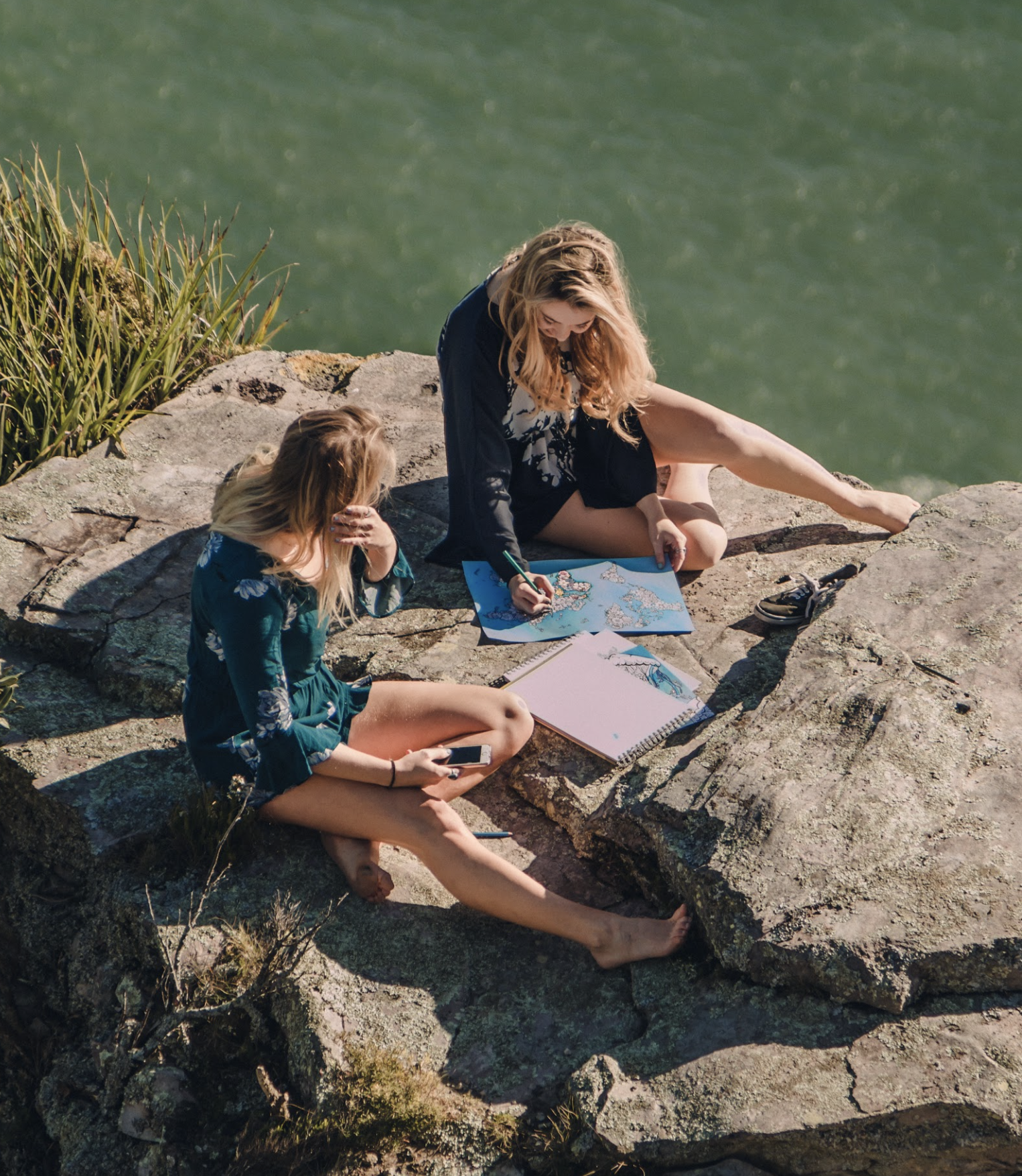
The two girls have just finished collaborating on a project which came about directly from Kristina’s Instagram popularity: Color Me Inspired, a colouring book to bring the world to life: maps made up of flowers, sweet treats and beachy scenes. It is total 14-year-old-girl heaven, and the follow up to the hugely popular Color Me Creative.
By the time this magazine is published, the two girls will have moved from the Bay of Plenty to Santa Monica, California, to keep building their already impressive careers. Tash and Kristina prove what an exciting future our world has, as their Millennial Generation steps into the world of business.
THE CONNECTION
Last year Tash hosted a brunch with Viv Conway (21), another Instagram entrepreneur, who sells sportswear she designs, manufactures and distributes on her own Instagram page, @vividsportswearofficial. They invited some friends, thinking it would be fun to hang out together, have a picnic, and use it as a photoshoot opportunity to get content for Instagram. Tash invited Kristina along; they had been going to Paula Knight’s art classes together since they were young, but this was the first time they’d stepped into friendship. Tash knew that Kristina worked in social media too, as Kristina’s @colour_me_ creative brand was going well in America.
“Kristina told me she’d been commissioned to do a second book, but that she was considering turning it down, because the deadline was so tight. We chatted about ideas for the pages, and really hit it off together. A few days later Kristina offered me a contract to collaborate with her on Colour Me Inspired.”
SHARERS
It’s this easy blurring of lines between work and play, as well as looking for ways to blend their business interests to help each other wherever possible, which characterises the working ethos of the Millennials. They tend to enjoy working on social and environmental projects, and because of that, are less inclined to see personal wealth as a measure of their success. Their Generation X parents were taught to play their business cards close to their chest. Information is power. Always keep a trump card up your sleeve to keep on top of office politics. The hard-nosed, shoulder-padded eighties-boardroom Gordon Gekko world is anathema to the Millennial. They have a different way of looking at the world of paid work. “Collaborate, don’t compete,” says Tash.
WHAT IS A MILLENNIAL?
A generation is a group of around 25 years. We have been naming these groups for a while, but not always with any consistency. They aren’t numbered. They get nicknames. And they are open to interpretation. Here’s UNO.’s take: Baby Boomers: born late 40s to early 60s as a result of post-WWII cuddling. They love shiny stuff, cash and gadgets, and stability at work. Generation X: born mid 60s to mid 70s. A bit disaffected, probably as a result of all the daycare they were thrown into whilst their parents were busy getting divorced. They spent their twenties scoffing drugs and dancing all night. Millennials, also known as Generation Y: born early 80s to early 90s. Tash, Kristina and their mates. The children of the Baby Boomers.
Here’s the best description of that age bracket by Harry Wallop, of The Telegraph: Unlike the generation before them, they are smarter, safer, more mature and want to change the world. Their pin-up is Malala Yousafzai, the Pakistani education campaigner, who survived being shot by the Taliban, and who became the world's youngest ever Nobel Prize recipient. They are the first generation of technology natives. They don’t like being sold to, and they aren’t massive fans of accumulating stuff. They don’t do drugs, they don’t drink, they smash back green smoothies, and only want to do business with ethically minded companies.
“The internet has offered a level playing field for young people wanting to work online. No one asks you how many years of work experience you’ve had or what your grades were like at school. You just start doing it yourself. In fact, it is one of the few careers were being very young is beneficial.”
WHAT IS AN INFLUENCER?
An influencer is generally someone who has over 10,000 Instagram followers. Brands pay them to advertise their products, leveraging off the relationship the influencer has built with their followers. It’s important for brands to choose the influencer carefully. For instance, Kristina might post a pic of her using Faber-Castell Pencils saying ‘I’m totally in love with these new pencils! They are perfect for colouring in details.’
The internet has offered a level playing field for young people wanting to work online. No one asks you how many years of work experience you’ve had or what your grades were like at school. You just start doing it yourself. In fact, it is one of the few careers were being very young is beneficial. The brand would get their product in front of two and a half million people who love colouring in. They know it’s the perfect target market. Think about John Key and his 18,000 people on Instagram. Tash and Kristina could get in front of the equivalent population of nearly the whole North Island just by posting one photo. Wouldn't a politician love that targeted reach?


TASH MEYS @tastefullytash
She posts pictures of impossibly delicious food (all made and styled herself), her art, and all things to do with wellness. She also runs a number of other accounts on behalf of businesses, who have seen hers, and pay her to make the same success of their own.
“Ever since I got my first camera at 11 years old, my friends and I have played ‘photoshoots,’ taking it in turns to be the photographer and model, going on adventures and finding cool locations to shoot. We’d then hugely over-edit them in photoshop and post our work on Bebo. It was a surprise to be asked to do the photos for a fellow student's birthday party but it went well and I did a couple more after that including a twenty-first. I’ve taken photos for a website and recorded a wedding video. Even though it was a bit scary taking on these things at the beginning, I learnt so much from each one and since then have made a point of taking on every opportunity that comes my way.”
DRIVER
Tash is an absolute bundle of energy and drive, her brain zipping off in all directions. She has the ability to create her own opportunities, and the character to be grateful for them. A sharp marketing brain is matched by her creative ability as an artist and photographer. Looking through the global window of Instagram has afforded some huge opportunities, which Tash is grasping with both hands.
“I switched my degree from psychology to consumer food science after getting sick from eating processed foods in my first year, doing some research into nutrition, and becoming fascinated. “Taking photographs of food for my Instagram page has enabled me to exercise my artistic skills; decorating smoothie bowls and creating a food photograph is similar in my eyes to painting a canvas. It's all about the layers, the different textures and the colours. Since I have now built my Instagram to a level of followers where I am considered an influencer in my industry of health and wellness, I can start to branch out and include art, lifestyle and typography. It's interesting how when I left school I decided not to go down the art route, but everything I do seems to come back to it.”
TEACHING OLD DOGS NEW TRICKS
It’s down to Tash's collaborative nature, as well as her ambition and well-placed confidence, that along with one of her clients, whose Instagram page she and Viv Conway run, she organised an Instagram workshop. They invited media agencies to come and learn about Instagram and what it could do for their clients. It was impressive to watch a twenty-two year old hold court with all the creative industry experts, most of whom were about twenty years her senior, explaining how the algorithms in this social media platform work.
In fact when we approached Tash about featuring her, she immediately did some research on us, and asked why we didn’t have an Instagram page, then pitched to us to let her and Viv launch and run it for us. The range of work Tash is being offered is quite astonishing: brands pay to feature their products on @tastefullytash; she has been approached to manage social media for an Australian celebrity; she gets professional photography commissions; she was invited to collaborate on Kristina’s book; and she manages Instagram accounts for several clients in New Zealand, Australia and now America, where she has moved to. Santa Monica is the health and wellness capital of the world. Tash has placed herself right in the centre of it.
As far as Millennials go, Tash Meys leads the field.
Kristina Webb @KRISTINAWEBB
Kristina has been sketching, drawing and painting since her early teens and posting her art online to a huge community of followers: 1.9 million, who clearly adore her. Her art is encouraging of others; there are plenty of positive affirmations dotted about, such as anti-bullying messages. She started on Tumblr, and has moved to Instagram. Kristina has hundreds of fan pages copying her art and reposting originals.
“On my seventeenth birthday, I was in Michigan on a student exchange programme. My host family bought me an iPhone, which I had wanted for so long! Purely to start using Instagram. As I looked around, learning how to use the app, I was surprised to find one of my drawings - the back of a girl holding her ponytail to the side - on an account with a large following. I commented with ‘thank you for posting my drawing.’ The picture was reposted with a credit to me. Within a few days, I had 16,000 followers.”
GROWING POPULARITY
Posting new drawings daily, Kristina’s following swelled. She produced a wide range of art: a series of Starbucks coffee cups, drawn on and decorated with tiny cups, drawn on and decorated with tiny plastic jewels, sketches of celebrities, and she would randomly surprise her fans by doing a portrait of them after they hashtagged #drawmekristina. Celebrities like Tyra Banks, Ed Sheeran and Ariana Grande noticed her art, and commissions started to roll in from big names.
AGENT FOR INFLUENCERS
Kristina’s mum, Janette, knew that Kristina needed an agent. “It was becoming increasingly difficult to know how to negotiate with some of the bigger companies like YouTube and Disney, both of whom had offered Kristina commissions. I was in America with Rochelle, my older daughter, who now manages most of Kristina’s business affairs. We orchestrated a meeting with one of the top agents in the industry, who signed Kristina up on her first interview.”
One of her commissions came from YouTube, who asked her to create a piece of art to recap on the 100 most popular trends of the year. “After watching every single video, I mapped them all out, and finally managed to get about 75 of them into the drawing. YouTube then sent out the artwork as a thank you to everyone who participated.”
Interviewing Kristina in her apartment in the Mount, with her mum making toast in the background, it’s hard to fathom the sheer scale of her success. It seems there are a combination of factors at play: adopting the platform early (four years ago Instagram was in relative infancy); posting daily; responding to her followers in a heartfelt way; and being passionate about adhering to her own creative vision.
The other element is the attainability of Kristina’s success. Her art is very much of a current style. Her fans are able to copy her drawings, and feel they have something to aim for. What sets Kristina apart from the field isn’t anything particularly new - it’s old fashioned practice, determination, and hard work.
PUBLISHED AUTHOR
In 2014 her agent in Los Angeles suggested a book. He had a contact at Harper Collins. Kristina had to produce a 50 page proposal. Janette explains “She went above and beyond, decorating every page of the proposal and giving much more detail than requested. That’s totally indicative of Kristina’s working style and commitment.”
Her first book, Color Me Creative, was a huge hit with tweenies and young teens. The first half is an autobiography (written in the same friendly, personal tone she uses when chatting with her followers on Instagram); the second half is full of creative challenges for her fans to complete inside the book. This was accompanied by a long book tour and the recording of 15 videos in Miami (there are icons in the book to scan with your phone, which unlock short videos of Kristina).
On the book tour, mothers of these young teens thanked her personally for not swearing on her page, or posting photos of herself drinking alcohol. For all her global success, Los Angeles agents, published books, and commissions from the world’s biggest names, all Kristina really wants to do is be left to her own devices with a bundle of coloured pencils, her Bose speaker, some paper and her iPhone.
Getting inspired
Digital content creation. It sounds complicated, but it really means taking pictures of beautiful things, which you make or curate, ready to put on social media channels like Instagram. In the old days, photographers were like demi-gods. Swanning onto shoots, dressed in black polo necks with a team skittering along behind them who responded to demands “I need 12 swans sprayed gold, NOW!” They charged a fortune for their creative genius.
With digital cameras, that’s all changed. If you want to have a go, set up an Instagram account, and start posting pics!
IMPROVE YOUR ART SKILLS WITH PAPAMOA-BASED ARTIST PAULA KNIGHT
"Tash first started coming to me when she was just seven, and Kristina as a young teenager. "They both had a strong desire to listen and learn. To me, they are the best kind of students and I loved showing them how to improve their work. We would go over and add details to portraits and hair, developing shade and colour and finely tuning their abilities until they both developed into confident artists.
“I remember when Kristina was working on a school art project and a trail of purple glitter followed her everywhere. Kristina came and went as she went to the USA, but at one point she was attending both my kids’ and adults’ classes, her desire to learn was so great.”
HAVE A LOOK AT SOME OF THE GREAT LOCAL INSTAGRAM ACCOUNTS, AND START ENGAGING @vividsportswearofficial @mtmaunganui @bayofplentynz @tastefullytash @bop.eats
UNO. INSTAGRAM PAGE Viv and Tash have been running it. Fancy yourself as a photographer? Post pics with #unomagnz and we’ll feature the best! Do the art challenges in Colour Me Creative, and hashtag them #cmcbook and #unomagnz.

Designer family
Thorne Group’s Lisa Thorne discusses the merits of working together as a family, and how they do what they do so well.

Directors Gavin Morrow, Peter Buck and Aaron Thorne.
Having dinner with other couples who also work together, one of the wives told us about an article she’d read detailing the perils of family businesses. It can seem, from the outside, to be a minefield.
WORDS LISA THORNE PHOTOS AMANDA AITKEN / QUINN O’CONNELL
Zak, our quantity surveyor, told me last week that he didn’t ever want to get married based on seeing Pete and I at work! However one of the secrets to making it work, is that we just don’t take our work conversations home. That way, all the fun bits of family life stay intact, as does our marriage.
Our discussions round the dinner table gave me plenty to think about. It made me examine why working together works so well. New Zealanders are particularly fond of working with their families and self-reflection is always a healthy thing, so I have compiled my own thoughts on why it works so well.
Four Reasons Working with My Family Works
1. Our customers get exactly what they want. And more, because every home we design and build carries our family name. That family brand is the best guarantee on the market. We are fastidious about quality. We always encourage people to chat with previous clients, because we know they will recommend us in a heartbeat. We have one project manager and one lead builder working on each home (surprisingly it’s not that common). And we would never compromise on quality to take on more clients.
2. Our family say it like it is! Designing and building someone’s home, the single biggest financial commitment they will ever make, is stressful. Those stresses create niggles and frustrations with each other. Being family, we say things to each other which would, in other working environments, remain unsaid. The air is cleared, and we move forward without resentment. That said, some of our younger team members are learning about some aspects of marriage they’d rather not, hence our quantity surveyor declaring his bachelorhood evermore.
3. I work with the best people. At the end of the week, we get to kick back, drink beer, play darts and re-cap on all the action. There’s plenty of fun to be had amongst the professionalism. In fact, Pete often jokes our atmosphere is more IT start-up than traditional designer/builder company.
4. We trust each other. Everyone in our business is so incredible at what they do, we don’t have any crossovers of roles and just get on with playing to our strengths.
Lisa Thorne, marketing manager.
This is how it works:
Pete is the planning and details man with a background in corporate banking. He’s a total perfectionist. That’s great for our clients, but not so much for me as the creative cog in our wheel. I have lost count of the number of times I have been reprimanded for spelling mistakes or ‘creative’ budget spends.
Aaron and Gavin are the practical ones. In fact I always laugh when people ask if Pete is a builder. Aaron and Gavin wouldn’t let him near a hammer! Gavin wouldn’t admit it but he is a secret geek when it comes to building. He will often be up till midnight studying highly complex plans to ensure everything is millimetre perfect.
And as much as I hate to admit it to him, my brother Aaron is an amazing project manager. We use arguably the best technology in the world. Each of our clients gets their own, secure website detailing their project, Aaron’s regular reports, photos, consents, everything.
Jon is the newest member of our family, as the director of Thorne Group Architecture. We welcomed him officially into the fold a couple of years ago. It made perfect sense to expand our business to Thorne Group: Design and Build Experts. All under one roof we can design your home, or build it, or both. The energy and experience Jon breathes into the architectural arm of our business is, frankly, second to none, and he is equally talented at designing any size of house, large or small.
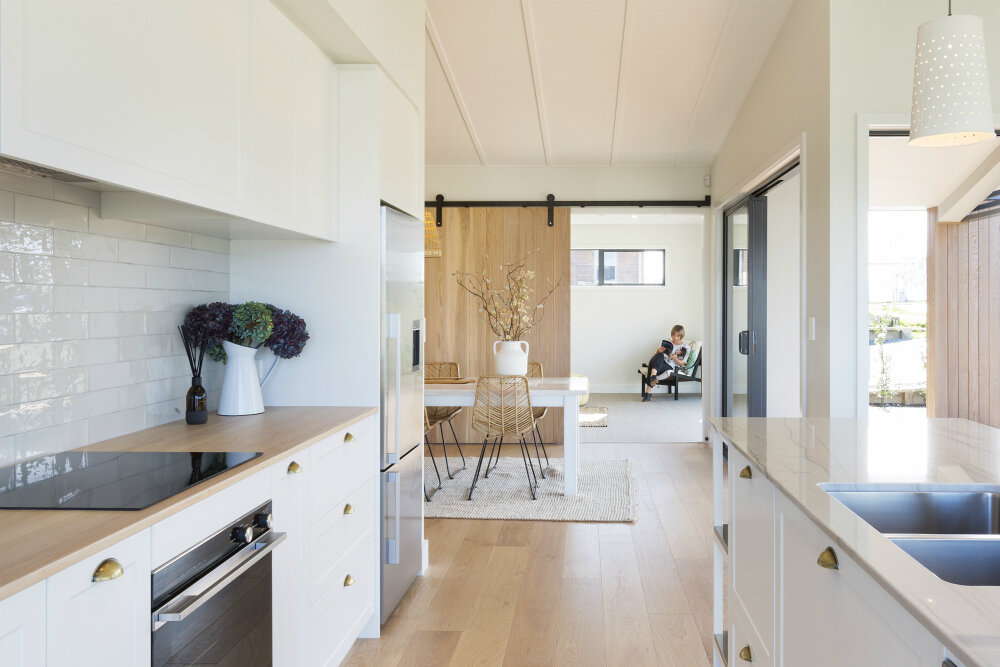
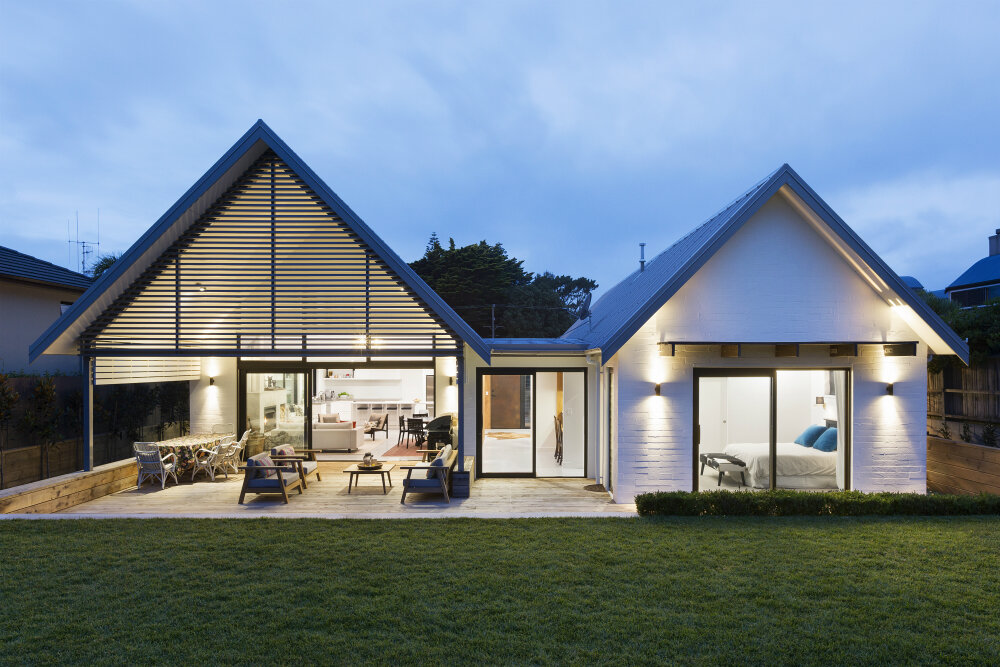
Five design features most likely to add capital value to your home
If there’s one aspect to our job which unites us all at the Thorne Group, it’s our love of design. Jon designs everything from opulent, beachfront mansions to small, smartly thought-out homes. He has learnt a thing or two in his career, and shares a few insights with you here in some of the homes Jon and his team have designed.
1. Covered outdoor area: This isn’t just about providing shade on a summery day. With detailed planning and clever design taking into account privacy, views, prevailing winds and sun angles, a covered outdoor area can be functional even on the coldest winter’s day.
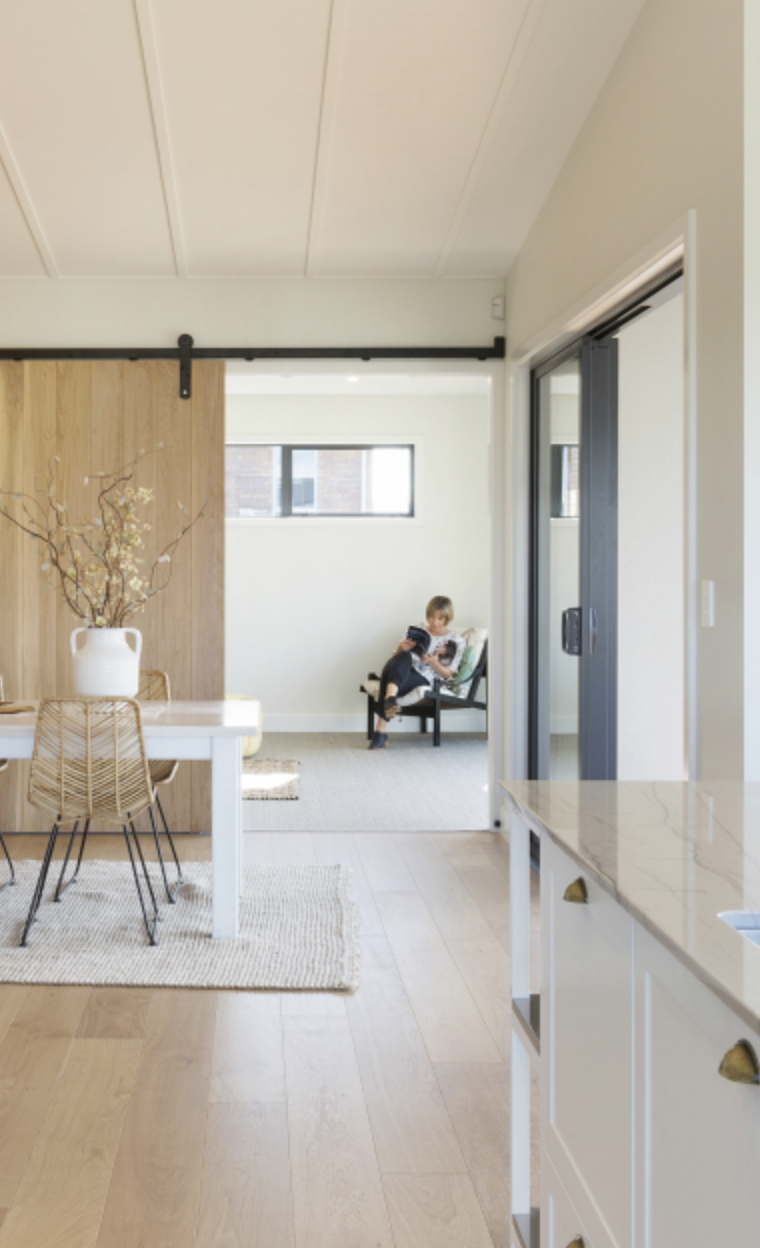
2. Flexible spaces: Lots of people specify ‘open plan’ on their brief, but we find that flexible spaces work better. For example, a large feature door between the kitchen/dining and living areas serves as a removable wall. Slide it closed to separate noisy children while you enjoy a glass of wine with your friends, or open it up to create a sense of space. Your need for space changes as your family develops. Lisa has told me of the dream house she moved into some years ago, which had two large living rooms connected by a corridor. Her then little children clung to her ankles while the second living room gathered dust.
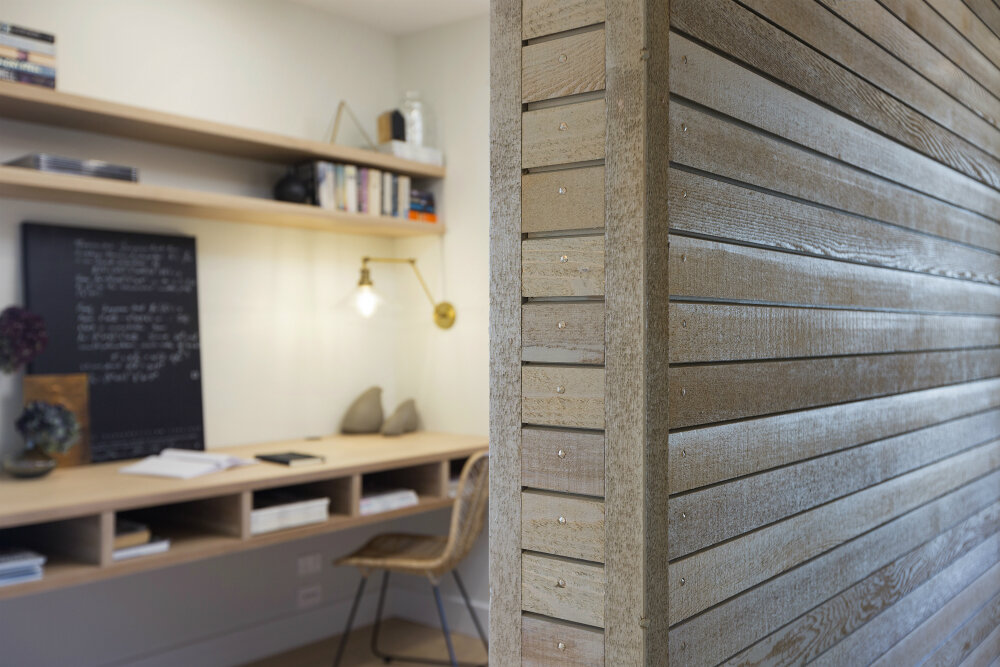
3. Study nook: Another item people often write on the brief is a separate study. We have found study nooks to be a better option; electronic devices are so portable, a separate room isn’t necessary. It’s great to put the children there with homework, keeps you connected to warmth and the action of the house, and best of all, saves on floor area and therefore costs, freeing up budget for other areas.
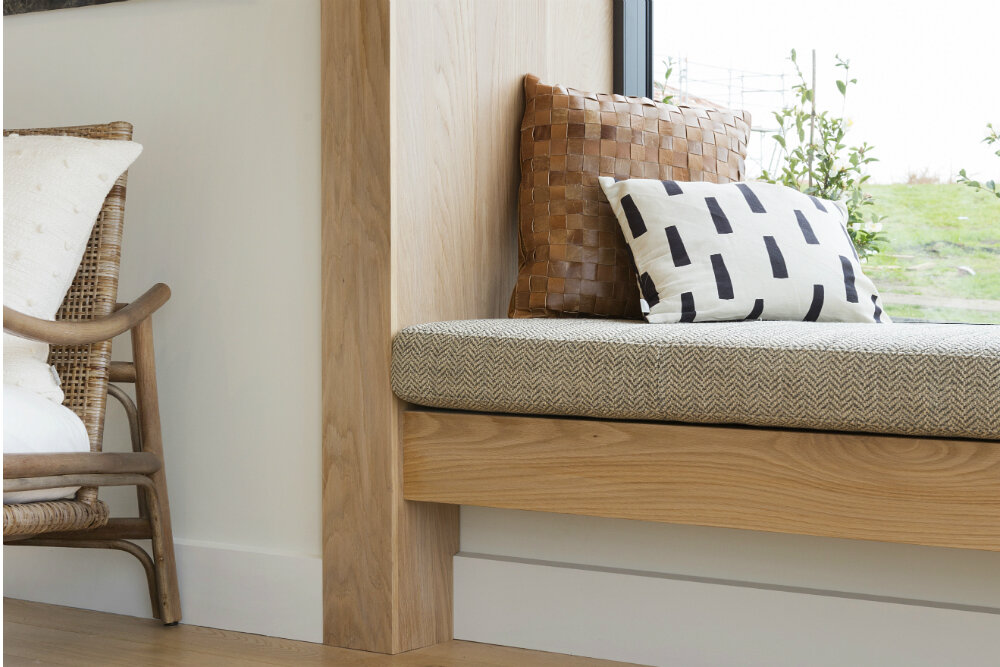
4. Window seat: Placed correctly, a window seat can perform many functions; in this home it is integrated near the kitchen, so that when the living room is closed off, it immediately creates another entertaining zone, for people to sit and chat while your chef creates magic in the kitchen. Floor space does not need to be increased to accommodate the window seat, and you can use it for more storage too.
5. Feature ceilings: Use your ceiling as a canvas to create feeling. The trusses in this photo may may look simple, but as we often say at The Thorne Group, the devil is in the detail. The structure looks incredibly neat, belying the huge amount of engineering, physics and millimetre precise execution behind it. The result is a feeling of extra volume to the room beneath. A perfect example of using a ceiling as a feature.
20 years in the making
The foundations for Thorne Group were laid over 20 years ago by well-known land developer Bob Thorne.
The business was growing in scale by the time daughter Lisa and her husband Pete returned from corporate roles in Sydney and London. Bob’s son Aaron, a project manager, joined forces with Pete and qualified builder, Gavin Morrow and in 2007 officially set up the Thorne Group.
Designing and building small and large homes as well as everything in between, the Thorne Group are now the Bay’s biggest family-owned building and architectural design company

Father + Son: Tim and Finn Rainger
Both freelance writers, father and son team Tim and Finn Rainger talk about their relationship.
Both freelance writers, father and son team Tim and Finn Rainger talk about their relationship.

FINN RAINGER: SON ON FATHER
My Dad, or Munter as I more frequently call him, is far from your average human being. He’s a self-described outsider with an affinity for the strange. Surfing, he reckons, brought purpose into his life as an alienated and vexed youth. The memory of my first proper wave, aged 16, at Taupo Bay with him hooting from the beach, drifts into my consciousness every so often. “No wife, no career, no mortgage – it is not a lifestyle that many live, and thank fuck for that,” he stated during lunch recently. I admire his resolve in pursuing a lifestyle that suits him.
This year I indulged our shared obsession for chasing waves by joining him for the season in Indonesia, where he has spent the last four years away from the New Zealand winter. We have many similarities: a psychotic tendency to twirl strands of our hair when concentrating, and a passion for reading, writing, and taking photos. One of my earliest memories is sitting in the passenger seat of his van in Cornwall, England, probably on the way home from the beach, with Sublime playing loudly and smoke billowing out the window.
Like the surf, Dad can be fickle and stubborn, and hard to contact, but when you do have his attention he usually brings something to the table, whether it’s a plan, story idea, or advice on the age-old question of what is the point? He is adept at putting life into perspective, and it was his advice combined with my Mum’s that convinced me to take a job working as a reporter for the Gisborne Herald in 2015.
His capacity to impart advice and wisdom to people who want to hear it, as well as those who do not, earned him the nickname “The Sheriff” from the Canngu, Bali, locals. He patrols the line-up in the water, always on the lookout for a snake (someone who commits the cardinal sin of paddling inside other surfers and not waiting their turn for a wave), and does not shy from the confrontation that ensues (never violent in my experience).
The nickname is applicable on land, as he has a sharp moral compass that he willingly extends beyond his own periphery. A group of European “hipsters,” as he labelled them, were drinking and listening to dodgy music at around 10pm at our homestay in Canngu and around 10pm at our homestay in Canngu and Dad, wanting to sleep, got out of bed with a grim smile on his face and headed over to sort them out. “This is a homestay. There are plenty of places to party in Canngu without keeping me awake. Live and let live!” They were not happy and got a few digs in, “This is what happens in Canngu now. It’s not the 70s anymore old man.” But he had a point, and they vacated the premises soon after, honking the horns on their scooters as they hooned down the driveway.
All those hours spent battling his two brothers at home, and bullies at Auckland’s Kings College have toughened his edges and he can be an intimidating, yet compelling character. Dad’s a softy at heart though, and has a tender spot for the underdogs of life. A couple of German girls recently told him that if he were to write a story on his life, they would read it. Me too - if I hadn’t heard most of it already.
TIM RAINGER: FATHER ON SON
To commit to print my thoughts and feelings for my son is hard. Relationships are so fluid and print is pretty final. Every word scrutinised for each subtle nuance. Plus I’m sharing a room with him as I write this; we have been for eight weeks. Surfing together every day, eating, drinking, hanging out. There is no luxury of distance. But here we go.
Let’s start with the bigger picture. We are more like an older and a younger brother than most fathers and sons. Most of the time. There are obviously moments when I have to lay down an ultimatum but they’re pretty rare. Ever since he did a milk-puke down a cold Kronenberg I was drinking (without me noticing), and which I subsequently gagged on, I’ve cut him a bit of slack. He’s always been quite determined to do stuff by himself, and certainly never wanted my advice.
When he was about two, his mum was on the phone so he flipped over a bucket, got up on the bench and merrily began chopping potatoes, which apparently was going fine until it wasn’t. By the time I got there to take him to hospital, there was blood sprayed all round the kitchen walls. He’s very close to his mum and his young brother, as well as his step-dad and all their extended family. There is a sixteen-year age gap between him and his little bro, and it’s funny observing how their patterns of behaviour mirror ours. At times he parents him hard, and others they josh around and have lots of fun.
He’s always loved reading and music, and especially loved being read to as a kid. “One more story dad!” was a line I heard a lot. It’s a great pleasure now, sharing books and bands, picking the guts out of movies and so on.
We’ve done a lot of surfing together since the beginning and it’s been a great thing for our relationship. Setting the clock. Getting up in the dark. Trading waves. It’s our mutual happy place. It’s our second season in Indo; this time we’re here for 6 months, and that’s a lot of time living cheek by jowl.
A few people raise their eyebrows when we tell them what we’re up to, like I’m being irresponsible letting my kid quit his job and spend all his savings on a surf trip. My take is: well, he’s qualified, and he works for his own dough, saving for a year to get here. And now he’s really focused on surfing hard, doing yoga, eating well. This is an experience that will shape him physically and mentally in really positive ways, and is one he’ll never forget.
He’s a good kid. I’m proud of him. And I like hanging out with him. Most of the time.

Midwife Anne Sharplin: 2,000 babies and counting
The New Zealand College of Midwives recommends a caseload of about 40 babies per year. Most midwives retire having delivered hundreds of babies. Anne Sharplin has attended the births of more than 2000 babies and is still going. That’s about 50 babies every year of her 35-year career.
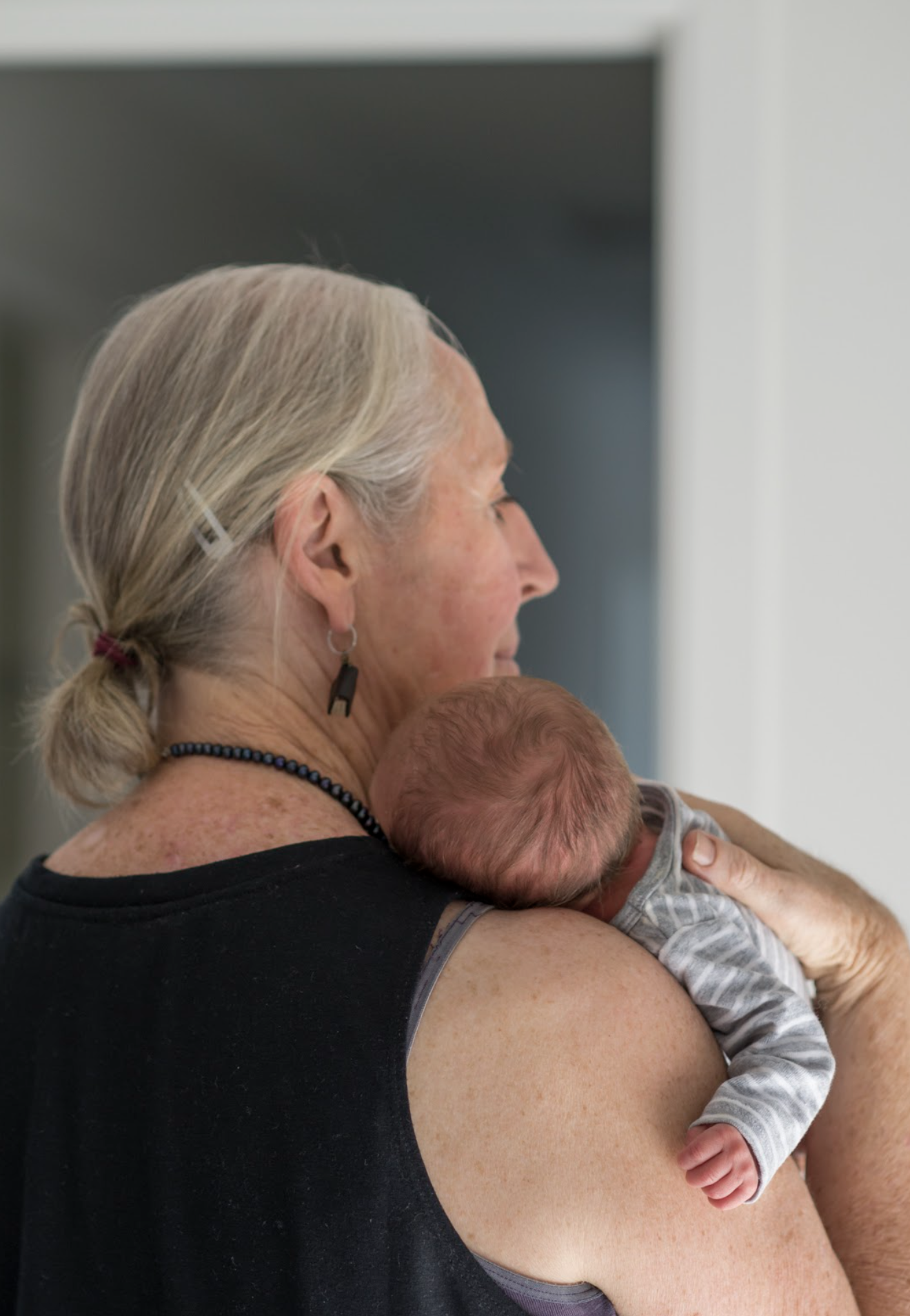
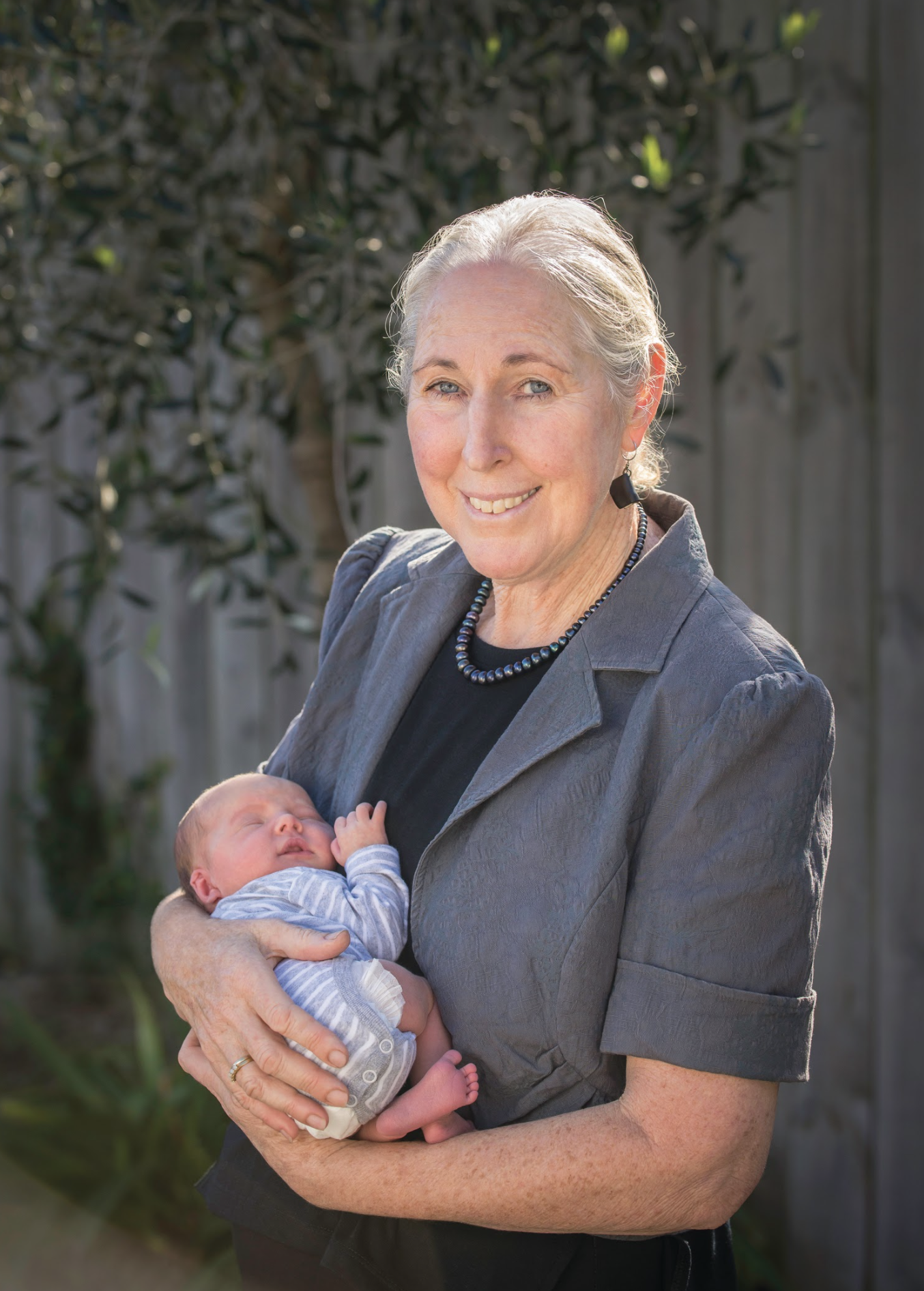

WORDS Jenny Rudd PHOTOS Brydie Thompson
The New Zealand College of Midwives recommends a caseload of about 40 babies per year. Most midwives retire having delivered hundreds of babies. Anne Sharplin has attended the births of more than 2000 babies and is still going. That’s about 50 babies every year of her 35 year career.
Anne has slept knowing a phone call may wake her at any minute and she’ll walk into a highly-charged and unpredictable situation for most nights of her adult life. And has lost up to a whole night of sleep about every five days, depending on when the babies decide to come into the world. Then there are the ante and postnatal visits required for other pregnant mums on Anne’s books, which must be conducted during the day over the rest of the week.
This sounds like a demanding job even with no other commitments, but Anne, incredibly, was a solo mother of two little boys from the get-go. And there weren’t the child-care options in the eighties that we have today. The pressure must have been incredible. But reading her youngest son Adam’s account of his childhood, as well as many of Anne’s birth stories, the same description comes up time and again; of a calm, powerful, kind, and assured woman.
Indeed it has been a battle, during the writing of this article, to keep Anne on the topic of herself. She doesn’t see herself as exceptional, and insists we talk more about midwives and the choices of maternity care at home she believes all women should have. She talks of herself in very humble terms and took some persuading to feature in the magazine.
WHAT DOES A MIDWIFE DO?
Anne’s description of her own job could not be more understated. “You have to be quite present - you need to react to lots of things that are happening at the same time, although it often appears you are doing nothing at all.”
According to the dictionary, a midwife is a person qualified to aid the delivery of babies and look after women before, during and after childbirth.
Anyone who has either had a baby, or seen a baby being born, will realise that this official description lacks the wild and intense emotion which can accompany pregnancy and childbirth.
A midwife assesses and manages risk with the highest possible stakes, on a second-to-second basis, over an undeterminable period of time. The ideal working conditions would be total quiet, to assist the concentration required to manage all the unpredictable goings-on. However it’s more likely to involve bestial screaming, sobbing men, and a lot of strange fluid.
The midwife may be called upon at any time of day, and so must always be prepared. She may be called to work at 2 am in torrential rain, or on Christmas Day in the middle of present opening. No matter - the midwife must drop everything, and go to work.
It makes some other jobs look a little frivolous, doesn’t it?
“Being on-call is a way of living which takes surrender.
You can plan a big family Christmas, only to be called away at 6 am.”
BIRTHING CHOICES
“Midwifery facilitates a process of wellness. That’s what motivated my choice of study. After qualifying in Oldham, Manchester in 1981, I returned home to Auckland and started to attend homebirths with Veronika Muller, Joan Donley, Carolyn Young and others.
“The choices women have now are vastly different to when I starting practising. I had my first son, Joseph, in Auckland in 1983. My midwife was Joan Donley. At the time, a doctor had to be present at all births. There were few midwives and doctors who offered a domiciliary (home) birth service and the pay was poor, and inferior to that of midwives practising in hospital.
“In 1986, I was living in Thames with my son Joseph and his father. Three women from the Bay of Plenty asked me to attend their births as at the time, the only domiciliary (homebirth) midwife had stopped practising because of the low pay and lack of support.
“I came down with my son and stayed at my brother-in-law’s house with my nephews Alex and James, and my niece Annah who is now a midwife herself. Between the three women, they lent me a blue Morris Minor and I took my little boy with me to attend each of their births.
“We moved to Tauranga the following year. It was such a busy time; my sister had died, her children were here and I wanted to be close to them. I was pregnant with Adam, had a toddler, and attended eleven home births that year, right up to being eight months pregnant myself. I was frequently exhausted and we had very little money.”
REFORM
The Nurses’ Amendment Act of 1990, championed and implemented by Helen Clark the then Health Minister, changed everything. Midwives had autonomy, so no longer needed a doctor at the birth. And they were given equality of pay when attending home births. Suddenly it was possible to earn a proper living.
“Being on-call is a way of living which takes surrender. You can plan a big family Christmas, only to be called away at 6 am. My sons made me breakfast in bed one Mother’s Day, which was interrupted by a phone call; I gulped it down, gave them a quick cuddle, threw on some clothes and left. Many have retired by now as it’s demanding to live on-call.”

“I have always cared for six women per month. Care starts early in the pregnancy and continues until six weeks after the baby is born. I have tried to reduce to four women a month, but I often get requests from families for whom I’ve been the midwife for two generations. Because I’ve been around a while, I have attended the births of aunties, cousins, sisters, nieces. However you can’t be present at every single birth; on the days I can’t attend, I rely on my midwifery partner Lyn Allport. We have also had support from many other wonderful midwives.”
Now a grandmother to Shore, Anne enjoys taking him to weekly swimming lessons, and in the future plans to present the vast data she has collected from her 2000 births, along with her observations as part of a university degree. Once completed, this will be an important body of work, full of Anne’s heartfelt intelligence. It’s no wonder the French for midwife, la sage femme, translates as wise woman.
PINARD HORN
“The pinard is an excellent tool; a simple, hollow horn shape which amplifies sound. A type of stethoscope, it’s designed for auscultation: the act of listening to the body’s internal workings - in this case, the baby’s heartbeat inside the mother. Widely used across Europe, it never breaks down, doesn’t need to be plugged in and is totally trustworthy.”
BIRTH STORIES:
Sarah Wilson
When my younger son Henry was born in 1999, Anne held an ice-cream container between my legs while Henry’s father drove us to Tauranga hospital in Anne’s van. My labour lasted just 20 minutes and Henry wasn’t breathing when he was born. I attribute Henry’s life to Anne’s calmness and directing of the wildly frightening proceedings. He was incubated for the first week of his life; we couldn’t touch him, and I had severe blood poisoning. At the time of Henry’s birth we lived near Anne’s home in Simpson Road in Papamoa. Anne’s son Adam and my daughter Billie became great friends during those years.
Rhonda Collins
On Christmas Eve, I was diagnosed with pre-eclampsia and induced in hospital (my date was 31st December). My midwife, Lyn Allport had Christmas Day off, so I called Anne who was my fill-in midwife at 5 am on Christmas Day. Throughout the labour, Anne stayed with me. She was wonderful - so kind and supportive and gracious. At 9.42 pm, my daughter Mackenzie was born with the aid of forceps. Anne and my husband Anthony shared a Christmas dinner kindly provided by the hospital during the day, and drank lots of tea. I caught up with Anne a few weeks later and bought her a beautiful tea cup and saucer to say thank you.
Pauline Scott and daughter Sophie
I met Anne in 1983, before she moved to the Bay of Plenty. In 1990, following a series of health care reforms, New Zealand midwives were recognised as independent practitioners. Anne was at the forefront of this long and challenging battle for midwives’ autonomy. As a childbirth educator, I had a special bond with Anne. This became closer when I discovered I was pregnant at 41 with my third child after an eleven-year gap.
On 25th January 1992, Sophie Ann Joy was born at home. Anne's calming influence was invaluable, especially as Sophie's shoulders got stuck as she was being born, but there was no hint of panic. Anne offered support and encouragement, not telling me what to do, or demanding me to hurry along. Her total calmness and trust in the birth process allowed me do what my body was designed for.
Sophie has been born less than a minute in this picture, and I'm rubbing her back gently to help her take her first breath. Anne's hands are to the left of the photo, in a pose of calmness and reassurance. It is a special moment, surrounded by family and with the person I most trusted in the world: Anne Sharplin, mother, midwife and one marvellous woman.
Danielle Hart-Murray trained to be a midwife with Anne (who also attended two of Danielle’s siblings)
It was Anne who inspired me to become a midwife, and I was lucky enough to complete my final year working alongside her. Anne taught me skills which simply can’t be taught in a classroom. The way she works with women and their whanau is exemplary; no other midwife I have worked with shows the amount of passion and dedication for ensuring the care is truly woman-centred. She goes above and beyond for the women she cares for, but would never say so herself. A role model not just to midwives, but to all women.
On our Facebook Page, we posted a request for photos of Anne’s babies. Some of the hundreds of comments about Anne:
Such a beautiful, humble lady.
Anne you have inspired, cared for, encouraged and supported so many woman with your abundance of skill, knowledge and passion.
A very special lady with a gift.
Her patience and strength is inspiring. She empowers women to do what they are made to do without the fear that is unfortunately part of modern pregnancy and birth.
Anne is amazing, a beautiful, knowledgable and intuitive soul.
Absolute gold, we had just arrived in New Zealand, and she even gave us a lovely queen-sized bed! Love you Anne x
A wonderfully calming, reassuring influence.
We are so lucky to have her! She is the best of the best!!
I love this lady.
Anne always came with a quiet confidence that nothing was too difficult to take on and she proved this time and again with all the adversities that came my way. Dealing with my own health issues as well as my babies’ successful outcomes resonates with my children, who are now choosing her, she is simply the BEST !!!
I met Anne nearly 18 years ago and she came highly recommended by Māori mums because of her respect for Te Ao Māori. We welcomed her into our home and she would go on to help us bring three of our children into this world at home. So when our first moko was announced we knew she would be the one to also help us. We are so grateful for all her care and aroha.
Such a beautiful being.

Chalium Poppy: Mount Maestro
With a Welsh dragon tattooed over his heart, a love of swimming in winter and a husband who works in fashion, the mould was clearly broken when Chalium Poppy was born. Performing since he was four years old and all over the world, he’s arguably one of the most experienced classical musicians in the country.

With a Welsh dragon tattooed over his heart, a love of swimming in winter and a husband who works in fashion, the mould was clearly broken when Chalium Poppy was born. Performing since he was four years old and all over the world, he’s arguably one of the most experienced classical musicians in the country.
WORDS JENNY RUDD PHOTOS SHAWN ROLTON
My voice broke at 12 and I thought my life had ended. I felt like a bad angel about to be cast out of heaven. When the time came for me to be dismissed from the choir, we had a big party. Every boy got one. We called it our puberty party. It was hard saying goodbye to the other boys and I cried for weeks.
My parents put me into a local school but that didn’t last long. I hated it and let everyone know. One week, my mother was called to the school every day. I don’t really want to say what I did but I was very naughty. I was ‘moved’ to another school.
I flourished there. They had a great music program led by talented teachers. They allowed me to play the organ in chapel for services now and then, and help conduct the choir. The chapel became my second home.
INTERNATIONAL STAR
One teacher sent a recording of my singing to a university in Austria. Someone came over to hear me sing live. In a few weeks I received an offer of a full scholarship to study music in Vienna. Although my father loved classical music, my parents absolutely did not support it as a career choice. Knowing they would have forbidden me to go, I ran away from home and have never been back since.
My seven years spent studying at the Academy in Vienna were amazing. I worked with tutors and academics who were leading authorities in their field of music, travelled, studied and performed in Italy, France, Germany and the Czech Republic.
My grandmother had been a contralto soloist of considerable talent, although her piano skills were terrible; a bit music hall-like. It was she who diagnosed my musical abilities and that of my two brothers early on. I had the voice of an angel, she was convinced. My brothers didn’t fare so well. She declared my elder brother tone-deaf and advised him never to sing in public.
At four years old, I auditioned successfully to become a choirboy at Oxford Cathedral, where my family lived in the UK. The training and education of choirboys is an ancient tradition. Our lives are centred around music-making in the context of worshipping God; education, both academic and physical, is really quite secondary to that. Oxford Cathedral is an exceptional place – much of Harry Potter was filmed in its beautiful halls and quads.
All 23 choirboys do absolutely everything together, and we were busy every minute of the day with a continuous round of rehearsals, services and studies. From the beginning, the principles of respect and kindness were instilled in us by the choirmaster. We followed his guidance above all others.
One year, Christopher Hogwood, the great conductor, brought his orchestra The Academy of Ancient Music to record Messiah while we sang. I didn’t appreciate his brilliance and knowledge at the time, I just kept thinking what cavernous nostrils he had.
TEA PARTY
Besides our vocal studies, we were all required to study an instrument. I chose the piano, having taken private lessons since I was five. My father woke me early one Saturday and took me to the cathedral. The organ was undergoing maintenance and repair – they had opened the enormous wind chest up and you could see all the pipes and mechanisms. We sat inside the wind chest having a sandwich and a cup of tea whilst my father explained how it worked. I decided to learn to play the organ too, even though my feet didn’t yet reach the pedals.
After completing my Masters (in Protestant Church Music), I moved to Canada and worked full time as a musician: organist and choirmaster in the cathedral, as well as singer, conductor, teacher, lecturer. I was often asked to conduct Gilbert & Sullivan operas. They thought that being English I was automatically an expert.
Although exciting professionally, this was also a very lonely time. I worked very hard. The life of performer was beginning to lose its lustre and appeal as I got older.
I am a creature of habit. On Sundays, after the morning services at the cathedral, I would walk to my favourite Irish pub for lunch and a pint or two of Guinness, and then return to the cathedral in the afternoon for Evensong. One Sunday, something happened that would change my life dramatically and for the better. I met Michael.
LOVE
There was a young chap sitting at the bar enjoying a drink and chatting casually with the barkeep. He had the most striking red hair and a wonderful smile. I was electrified. I summoned all my courage and asked him to join me for lunch. He was a New Zealander travelling through Canada on his o/e, an avid snowboarder exploring Canada’s world-famous slopes.
I wasn’t sure how he would respond to my chosen career path – being a church music specialist isn’t very glamorous. To my eternal surprise, he asked to come to Evensong in the cathedral that afternoon.
I fell deeply in love with Michael that day. Two weeks later I asked him to marry me. We have just celebrated our seventh wedding anniversary. I couldn’t ask for a better, more loving and supportive partner in life.
As Michael was only in Canada on a holiday visa and I was estranged from my own family, we decided to move to Mount Maunganui. We arrived on the first day of winter 2009. I knew very little about the country.
We watched the sunrise over the water on the day we arrived. Surfers and swimmers were all heading towards the water. I thought to myself – if this is New Zealand on the first official day of winter, what a wonderful place to live!
MUSIC, FAMILY, NEW ZEALAND
Aside from performing and conducting locally, I’ve worked in Auckland, Gisborne, Napier, Whakatane, Kerikeri, Dunedin, Rotorua, Hamilton – all over the place.
In Canada, I performed primarily at a professional level. Here in New Zealand, there simply aren’t the choirs and orchestras to provide much work at that level. My objective is to make music at the very highest level that I can – whether I’m singing Messiah in a barn in Kerikeri or works of Bach in the Auckland Town Hall with the Auckland Philharmonia Orchestra. What’s important for me as a musician is to have the same level of musical integrity no matter what the circumstances.
I’ve been put up in fantastic hotels in Auckland when I perform, or slept quite comfortably on a pull-out couch in someone’s living room. That is what makes the life of a musician in New Zealand different from anywhere else I’ve been.
When I’m not music-making, we usually like to spend our time close to home. We are both home bodies and foodies. Michael is an exceptional cook so we are rarely alone at dinner time. Just over a year ago, we adopted Paddington. He keeps us on our toes. If I have a gap in my schedule, we pack up and take Paddington on an adventure somewhere. Of course we live right at the beach, so I like to get into the water as much as I can – Paddington too.
Chalium is the Musical Director of Scholars Pro Musica, a Tauranga-based chamber choir of exceptional talent.

Peter Williams – King of New Zealand broadcasting
To stay in such a hotly contested industry for four decades, and be held in high regard by peers and the public, Peter Williams has weathered a few storms, stayed flexible, worked hard, and had a good laugh at his own expense from time to time.

To stay in such a hotly contested industry for four decades, and be held in high regard by peers and the public, Peter Williams has weathered a few storms, stayed flexible, worked hard, and had a good laugh at his own expense from time to time.
WORDS JENNY RUDD PHOTOS QUINN O’CONNELL
“You can go on all you like about the journalism aspect of my job, but really it’s about performing.” The twinkly eyed guardian of living rooms over the last forty years is relaxing with Team UNO. over post-golf refreshment at Latitude in The Mount.
The performer in him clearly enjoys the reaction he gets from us as he spills all sorts of industry jokes. His smooth, clever delivery means we are playing catch-up as he moves from insider stories to smartly voiced political views.
BLOOPERS
“You need to learn pretty quickly from your mistakes, which is easy once you’ve been publicly embarrassed. Good interview questions should be short and to the point, with no opportunity for a yes or no answer.
“At a press conference for the Beach Boys in Christchurch in 1977 I broke the initial silence with ‘Do you think one of the reasons for the Beach Boys’ longevity as a group and staying together for so long-when so many other groups of your generation have broken up – is that you were all friends at high school, or because some of you are related, being brothers and a cousin; are those close relationships the major reason you are still playing more than fifteen years after you first started playing together in California all those years ago?’ Even as the words were coming out I wished I would stop. Anyway, Dennis Wilson replied, ‘Yes’.
“Forty years ago superstars such as The Beach Boys, Kenny Rogers and Elton John all held press conferences where non-entertainment journalists, such as myself, were let loose on them. That would never happen now. There was none of the tight control which exists today.”
EXOTIC FOREIGNER
“Halfway through my last year at school in Oamaru, I went to the States as an AFS foreign exchange student in upstate New York. The school had a radio club which had half an hour each week on the local radio station on Saturday mornings. I can’t imagine any of the big commercial stations today allowing a bunch of teenagers to chat away about whatever they want on primetime slots, but they did back then. I was asked to be interviewed on the basis I had a funny accent.
“They said I had a good voice and so invited me to join the radio club. That was my first taste of broadcasting, apart from the kids’ radio quiz competitions in Invercargill I often entered, and sometimes won!”
DUNEDIN RADIO
“On my return to New Zealand from the States, I had a few months to kill before going to university, so I walked into Radio Otago in Dunedin at the age of 18 and asked for a job. I had a half-decent school record, wasn’t bad at English, had sat ATCL speech exams (and failed!) and had some performing skills after being the lead in a few school plays. But I had never been to a tertiary institution, and still haven’t. They took a punt on me as a filing clerk in the copy and advertising department. I was in.
“By today’s standards, Radio Otago was a huge operation. It was called 4XO, and had a signal which barely took it out of Dunedin City. Whole radio networks were virtually unheard of then and network TV was only a couple of years old in 1972. There was a staff of over 30, including six or seven journalists producing news bulletins from 6am until midnight. Nowadays I doubt if there are six radio journalists in the whole of Otago and Southland.
“I liked the concept of telling stories on radio. The journalistic side interested me more than being a music DJ. I thought the career looked rosier, although my mate Brian Kelly did very well on that path.
“Because I had an interest in sport, I was given the opportunity to be a sports reporter. The Sports Editor left and I was given his job at the grand old age of 19 with a staff of just me. I was also the DJ on the midnight-to-dawn shift. What a life for a teenager.”
Any thoughts of a university education disappeared with a full-time job paying $38 a week. The rent on Peter’s flat was $6 a week. Good times.
There were big opportunities in what was then called the New Zealand Broadcasting Corporation (NZBC) and Peter passed the audition to become an announcer. This involved roving round the country at the NZBC’s whim to Masterton, Blenheim, Invercargill and Christchurch for about seven years. Then came the move to TV in 1979.
COMMERCIAL TV
“A background in radio was invaluable for my subsequent life in TV. You can do all the tertiary education courses you like, but there’s nothing like on-the-job, real-life training. That’s why I feel sorry for young people trying to get into the industry today. They spend thousands on tertiary courses of varying quality and aren’t guaranteed a job at the end of it; employers now won’t hire until the course has been completed.
“There’s no way an 18-year-old school leaver could get a job today the way I did – or the way Mike Hosking and Paul Henry did too. There aren’t too many university degrees amongst the old grunts of broadcasting.”
MONEY AND SPORTS
In the early years of Peter’s career, there was quite a bit of money to be made from advertisers by news broadcasters. Newspapers understood how to capitalise on the limited supply of advertising channels available and did well, making good money and financing well-documented jollies for journalists over the years. Television broadcasting didn’t fare so well, possibly not capitalising on the potential of their reach, and being state owned, having different drivers for success. As a result, there have always been big budget constraints in broadcasting.
His sports commentary roles required a great deal of verbal dexterity, as New Zealand TV changed in 1975 from a state-owned broadcasting behemoth to the snippy demands of a commercially driven enterprise.
“In the good old days, there was hardly any advertising at all during sports matches and none at all on Sundays. We could commentate without the worry of any commercial breaks. The duration of half time in rugby matches didn’t matter much at all.
“In the 80s, their duration became very important. We used to have some huge fights with the Rugby Union to try and get them to make half time last five minutes so we could squeeze in a four-minute commercial break. Often, by the time we were back on air, a couple of minutes had already been played with game-changing tries already scored. When we complained, the officials said the players didn’t want to get cold.!
POLITICAL APATHY
Having been exposed to the biggest newsworthy stories of the last half century, Peter has developed an understanding of what the public deems news.
“Above all, it has to be interesting, and it has to be told in an interesting way. Crime has been a staple of news-reporting ever since news-reporting was invented through distributed pamphlets in the 18th century. At times I think there is too much crime-reporting, and there’s definitely a type of crime which is more fascinating than others.
“More interest is shown if the victim is white and middle class: even more so when both the victim and the perpetrator come from the same demographic, and that interest is shown by the vast majority of us who don’t commit that level of crime. For instance, the death of a female jogger in Remuera in January sent a real shiver around the country.
“Yet the biggest scandals in our community, domestic violence and child abuse, are becoming so common that very little of it is reported. It’s almost as if we’re inured or desensitised to it. That is truly sad.
“There is still considerable reporting of political matters; not so much about parliamentary matters, more about the political personalities who are an integral part of TV news.
“It’s become obvious that the community’s political engagement is reducing, almost year on year. Election turnouts illustrate the apathy perfectly, particularly at local government level. It’s actually a sad reflection on us as a nation. I always make the effort to vote, even for the District Health Board. If I don’t vote, then I have no right to complain about politicians’ decisions.

“The reduction in the community’s political engagement has led to a change in the way politics is reported; there’s little reporting and analysis about policy and the actual laws our parliament passes. But there’s plenty of reporting done about the personalities who make those laws, and of the consequences of those policies and laws.
“The most attention-grabbing news is about conflict and argument. Whether it’s war, politics, sport or community issues, the news industry just loves conflict, and the more the better. If it bleeds, it leads.”
SPOTLIGHT
Peter’s broadcasting career is littered with glittery accomplishments: seven times presenter of the Olympic Games and the Winter Olympics in Nagano; six times Commonwealth Games presenter; commentator of all New Zealand’s home international cricket matches in the eighties, including New Zealand’s famous win over the West Indies in 1980 and the nail-biting test win over Pakistan in 1985; newsreader on some of the biggest news stories in New Zealand’s history, including the devastating Pike River disaster in 2010 and the uplifting Rugby World Cup Victory last year. However his upcoming appointment is one he is immeasurably proud of.
“I will be presenting Mastermind, which is back on TV One this year for the first time since 1990.” The show was immensely popular in New Zealand during the 1970s and 1980s but was dropped when TV became a big commercial animal with profit its major motive in the 1990s. High brow quiz shows didn’t meet the philosophy of the time, despite its apparent commercial potential.
“Excitingly, it’s been brought back based on its enduring popularity on the BBC and I’m privileged to get the big job up front. It’ll be broadcast on Sunday nights, starting in May, and we’ll start recording the heats at Easter. I’m really looking forward to it as it’s a considerable departure from my regular job, but still a high-quality show designed to be hugely entertaining and informative at the same time.
“There’s no big cash prize. The series winner gets…the Mastermind Chair! I’m following in the footsteps of one of New Zealand’s greatest broadcasting legends, Peter Sinclair; pretty big boots to fill.” There’s little question he’s up to it.
It is clear, talking to Peter Williams, just how much his vast experience has shaped him. There’s no hiding place in a lifetime in the public eye, and ear; self-critical honesty coupled with a wry humour has served him well. It is equally clear his shrewd eye for spotting what will catch his listeners’ interest has given him an informed and colourful view on the world. Peter is an icon of our country.
“New Zealand were playing South Korea in a Davis Cup tie and I was tasked with interviewing a member of the South Korean media who was covering the tie to find out a little about tennis over there. I went up to the press box, saw a foreign-looking gentleman, and very politely, and very slowly, introduced myself.
‘Hello,…Peter…Williams,…Radio…New…Zealand…Sport….Pleased…to…meet…you.”
The guy smiled and said, in a strong Kiwi accent, ‘Oh hi Peter. I’m Eddie Kwok from the New Zealand Herald’.”
“At the end of a day’s play in a cricket test, we were filling in a few minutes until it was time to go off-air. I was interviewing an Australian batsman called Graeme Wood who, that day, had made a really good test century but had been dismissed just before stumps, playing a pretty bad shot, leaving his team in a very precarious position. So I asked him a deliberately insulting question,
‘Did you feel irresponsible for getting out?’
“He muttered and stumbled his way through an answer to my appalling question and no doubt went away frustrated. Later that night I was having dinner at an up-market Auckland restaurant with a young lady who was not my wife and I was handed a note.
Dear Mr Williams, it read, I hope you are not going to be irresponsible tonight. Signed Graeme Wood.”
Analogue Baby
3ZB Christchurch
One day I hosted the breakfast show on 3ZB while running from Cathedral Square in Christchurch to New Brighton, the route of the annual City-to-Surf run. It was 14km and my show was on from 6 am until 9 am so it was a pretty slow run! I talked along the whole route, between music and news bulletins. That was the day before the actual run, to drum up some publicity. The next day I ran it for real in 75 minutes.
2ZD Masterton Breakfast OB
I was working as an announcer on the local radio station – call sign 2ZD. There was none of this fancy branding like Coast or The Hits or Newstalk in those days. An ice-show called something like Ice Follies toured the country in 1974, stopping in almost every provincial town. No doubt they came to Tauranga too. It was quite a big deal to have a sophisticated ice-show come to town. They put down a rink on the stage of the Regent Theatre in Masterton and performed for a couple of nights.
We broadcast the entire breakfast show from the theatre. It seems extraordinary now but it looks like we took turntables with us to play records from the venue! We interviewed some of the performers and invited members of the public to come down to watch the glamour of recording a real live radio show and to see rehearsals. I note the date was March 6th 1974. That was the day of my 20th birthday. They let us loose on the airwaves young in those days. It was also the day I would have become legally allowed to drink alcohol.
4ZA Invercargill
The group the Hues Corporation was an American soul group from the 1970s. They had huge hits with Rock the Boat and Freedom for the Stallion.
Invercargill was a long way from home to be promoting your hit record.

Teenage Entrepreneurs of Tauranga: an artist, a Youtuber, a knife sharpener, and a photographer
Each of the teenagers featured in this article is self-employed, earns money using their own skills, manages their own income, and in some cases, earn more than many adults.

Each of the teenagers featured in this article is self-employed, earns money using their own skills, manages their own income, and in some cases, earn more than many adults.
WORDS JENNY RUDD PHOTOS QUINN O’CONNELL
If Hope, Jared, Tom and Rose are anything to go by, the future of our country looks as rosy as their youthful cheeks. Gone are the days when teenagers wanted to get qualified and get out, looking to the big smoke and high-flying executive jobs. This new generation of entrepreneurs have clearly learned plenty from their parents, many of whom moved here when their children were young, and helped the Bay of Plenty achieve its current status as the highest-performing area in the Regional Economic Scoreboard.
HOPE MCCONNELL, ARTIST, 19
“My earliest memory is my bedroom in Hamilton; my mum had painted the galaxy all over the walls and ceiling. She used to be a professional artist, and has always encouraged me. I have a very close relationship with my mum.
“Much of my work is painting commissioned portraits. People often buy them as gifts and I get lots of work through my Facebook Page. I am working with watercolours at the moment, but use lots of different mediums to get the look a client wants.”

Most of Hope’s portraits are on A4-sized paper. Her work rate is exemplary. Every time I visited her she had fresh work up in her work space. There is an ordered uniformity to the presentation of her work and her range of skill is incredible, I thought some of the work she showed me belonged to other artists, they were so varied.
“As well as the portraits I have two other ventures on the go; a website which should go live in April – it’s called TwoBrokeDesigners – and will feature young designers on the blog and insights into student-design life. We’ll sell prints and artwork on there by little-known artists and designers.
“The other project is designing a range of t-shirts. My parents have fostered in us a desire to strive for excellence and help others. We have a family rule to set goals to raise money for different charities that we all choose together. The proceeds from the t-shirts will go to young girls trapped in sex slavery.”
At the age of ten, Hope moved to Tauranga with her brother, sister and parents. “I was close to my textiles teacher who encouraged me to enter the Young Designer Awards. I made a rainbow dress and was placed second, so was invited to fly to Christchurch with my mum. We stayed in a hotel together, went on tours and rode trams. It was incredibly glamorous and adventurous for a ten-year-old from the Waikato.”
Hope’s work ethic is enough to make me slightly embarrassed about my own. At 13, she entered a fashion-stylist competition in Girlfriend magazine. “We had to send in a mood board of our fashion ideas as the entry. I was selected as one of four finalists round the country and was given Bayfair vouchers to spend each month and compile different looks. Because I was so young, my mum took me to Bayfair and helped me photograph the looks for the magazine.
“I was selected as the competition winner by Girlfriend readers. It was one of the most exciting achievements in my childhood and the team at Girlfriend were really supportive, offering me opportunities in styling. I wasn’t old enough then to decide on what I wanted to do, but I know now how to forge a creative career for myself, and I’m loving every bit of it.”
facebook.com/HopeMcConnellArtandDesign
JARED SHAW, YOUTUBE BROADCASTER, 17

Jared has two YouTube channels: The Big 10 and The Gamer’s Joint. From his home in Papamoa he shares with his mum and step-father, these two channels have been watched 46 million times. Yes, 46 million. I bet you’ve stopped reading and reached for your phone to check him out.
The Big 10 features list videos, the most popular being ten extremely strange body modifications which has attracted seven million views (only watch that one if you have a fairly solid constitution). His real passion, and the channel he has spent most time developing is The Gamer’s Joint, which is devoted almost entirely to the study of one video game: Kingdom Hearts.
“When I started my channel in 2010, there were a few others around reviewing Kingdom Hearts, but none were particularly big. For the first few years, uploading videos on my channel was just a hobby but by 2014, it really started to kick off and my subscriber base was growing steadily.
The Gamer’s Joint’s popularity is down to two things: consistency (Jared works 10am to 8pm every weekday and uploads two videos per day to The Gamers Joint), and personality.
“There’s lots of planning involved with each video, and I usually do it a day or two in advance: I mix things up with a couple of comedy skits, live streaming, analysis, reviews and revealing hidden info inside the game. I’m known for losing my shit and raging at the game. Each video needs to be planned, researched, the script written and recorded, then edited and uploaded.
“Just before I started to do this full time, I went to a gamer’s convention in Boston where I chatted to different networks and channel owners. It is possible to self-monetise your channel, but there are bigger benefits in signing up with a network; you earn money each time a video is watched, and networks have lots of information and help on how to increase your number of views and can help with copyright issues.
“I already had a contract with TGN before the convention, but they offered me a better deal and I became one of their VIP channels. My income increased immediately and on my return, I decided I wanted to leave school to concentrate solely on my YouTube channels.
“I had to pitch it to my mum – it’s not easy trying to convince your mum that leaving school to play video games professionally is a good idea, but I have my NCLA Level 2 already, so if it didn’t work out, I could still go to university. I think she was surprised when I showed her how much I was earning from YouTube. I treat it as a business – I have an accountant, as I’m paid in US dollars, and I want to make sure all my tax is in order and that I’m saving.”
The success of Jared’s gaming channel has far exceeded any of his peers who also review Kingdom Hearts. He has about 125,000 subscribers, which puts him in the top rankings of gaming channels in New Zealand.
“It’s hard to know what you want to do at our age, we are often asked what we’ll do in the future, but how can you make a decision with no insight? I’m extremely lucky to love my job so much at my age. It doesn’t feel like a job at all, it just feels like fun.”
youtube.com/user/thegamersjoint
TOM HOFFART, KNIFE-SHARPENER AND TOOL REFURBISHER, 13

Learning a trade seems old school in a digital world, and Tom’s trade dates back to, well, about two and a half million years. “I have always loved knives. I got my first when I was three from a family friend. That same friend gave me a machete when I turned nine. Each time I got a knife, I got a box of plasters.”
Tom offers a knife-sharpening service with delivery. “If a client lives close by, I’ll cycle to their house to pick up and deliver their knives or tools. If it’s any further, we arrange a central point in town to meet.”
“I started my business because I’ve always loved making and refurbishing old tools and knives, and I have an excellent workshop at home with equipment I have bought and been kindly given by my uncle in Matamata. He and my grandfather taught me some good knife sharpening skills too.
“At the moment I am reinvesting most of the money back into the business to buy better equipment. My Facebook page and newly purchased cell phone have significantly increased my customer base and workload.
“I keep a ledger to record my income and expenses, and have spoken to the tax office – there are some generous tax brackets for school pupils. I love my work – I have never seen myself working in an office when I’m older.”
“A few months ago I went to buy a knife I’ve had my eye on for a while. My mum said ‘Why do you need another knife? You already have so many.’ I replied, ‘I could ask you the same question about shoes’.”
facebook.com/NeighbourhoodKnifeGuy
ROSE MCMAHON, 15, PHOTOGRAPHER
There is no doubt that Rose’s homeschooling has been a huge contributor to her incredible success as a professional photographer.
“I got into photography about three years ago. A family friend lent me her camera for the winter, while the wedding season was quiet. When the time came to return it, I asked her how much it cost so I could get one myself. $5,000. I thought my world would end. I cried myself to sleep.
“I thought, ‘I’m not having this,’ and looked around online until I found something similar second hand. It was still way out of a 12 year old’s reach, so I rang the seller. He was a professional photographer who’d started at eight years old. He gave me a discount, so I gathered all my Christmas and birthday money, both past and future, and bought it.
“At the beginning, I offered to take photos for free. I did the Zespri Head Office Christmas party, which led to paid work; I have photographed weddings and portraits for people at the party. I have now shot in every major wedding venue in the Bay of Plenty.”
As well as using her own initiative and hard work to learn her craft, including building a website, marketing her work and managing her administration, she has sought out guidance from other well established photographers.
“A couple of years ago, I found it very difficult taking pictures of people as I didn’t have enough confidence telling groups of adults what to do. Maree Wilkinson, one of the Bay’s top wedding photographers, took me with her on photo shoots and showed me how to get over that stumbling block.
“It’s useful being young when running your own business. You have much less fear than adults. I don’t worry so much about things going wrong, I just work out how to fix them myself. And because I’m homeschooled I can spend lots of time practising and improving.
Rose is in hot demand and is well-respected by her peers; our photographer for this shoot, Quinn O’Connell, borrowed one of her lenses and talked shop with her throughout. The girl can certainly hold her own. And she is ambitious.
“The biggest job I’ve had so far is a stills photographer on a movie, recording what’s going on behind the scenes. In fact, I’ve just been approached to do the same job on another movie. I’d like to get into directing movies so it’s been a great opportunity.
“Although there are lots of perks to being a teenager in an adult industry – people are extremely generous-spirited towards me – there are downsides too. I have to pay someone to drive me to my jobs until I’m old enough to legally drive.”