

Theresa Gattung: pioneering change from the top down
A regular fixture on Fortune’s most powerful women in international business lists, Theresa is no stranger to the challenges such females face. Now leading the New Zealand chapter of SheEO, she’s helping a global community make long-overdue change.
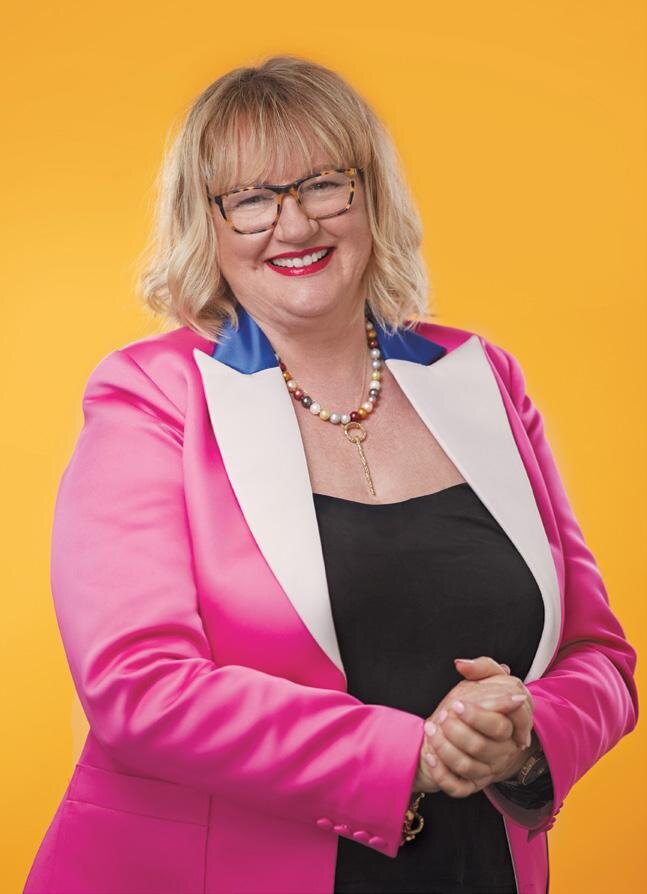
A regular fixture on Fortune’s most powerful women in international business lists, Theresa is no stranger to the challenges such females face. Now leading the New Zealand chapter of SheEO, she’s helping a global community make long-overdue change.
Spend any time looking into the life and times of Theresa Gattung and you’ll realise one thing very quickly: she’s not afraid to pioneer change. Arriving in the public eye at the age of 37, when she became the youngest ever and first female chief executive of Telecom (now Spark), she then went on to co-found My Food Bag, the home-delivered cooking-kit service that revolutionised the way thousands of New Zealanders approach mealtimes. She’s been recognised as one of the country’s leading philanthropists, working with charities such as the SPCA and Tauranga-based Cambodia Charitable Trust, and more recently launched the New Zealand arm of world-first female venture-capital fund SheEO.
Playing her part in an ambitious goal to see 10,000 women-led ventures funded through SheEO worldwide, Theresa’s knee-deep in what may be her most important quest for change yet. To put its significance into context and demonstrate the urgent need for organisations of SheEO’s kind, you need only to consider that worldwide just four percent of all available capital is currently invested in women-led ventures. Having spent decades holding prominent positions in the business world, Theresa’s quick to recognise that even in 2020, the playing field for women in business is still far from even. “You don't really have to walk very long as a woman in business to realise that it's still harder,” she says. “It's not as hard as it was 20 or 30 years ago, but it’s still hard.”
As the daughter of two entrepreneurial British migrants, it’s no surprise that Theresa grew up to be business-savvy, with a bent for challenging the status quo. Leaving behind their native London, her working-class parents, Marion and John, set sail for New Zealand in the 1960s. They were what Theresa affectionately calls, “ten-pound Poms”. “They paid £10, got the passage by ship and had to sign an agreement saying that they’d stay in New Zealand for at least two years,” she says. “And here they are, over 50 years later.”
Moving from their initial base in Wellington to settle in the Bay of Plenty, Marion and John set up a souvenir business in Rotorua. “My parents were entrepreneurs, in a small way,” says Theresa. “My father retired from the paid workforce in his forties after ill-health and had to support himself ever since, with property and other interests. So, yes, I come from a background of small business people.”
Breaking away from their established family tradition of taking the same career path as their parents before them, Theresa believes that her parents’ success in New Zealand is partly due to their adopted Kiwi mentality – simply getting stuck in and being willing to try something new. She also recognises her father’s progressive and supportive approach to parenting as a unique factor in shaping the person she became. “My father had only sisters and then he had four daughters,” she says. “He was always very encouraging of us reaching our full potential, and never had any particular gender stereotypes about what girls could do [or] boys could do, which was pretty unusual [at the time].”
On completing her schooling in Rotorua, Theresa studied a business degree at the University of Waikato, before moving to Wellington to complete a law degree. Even as a young adult, she understood that she would need to play her part in fighting for gender equality in the business world. At the time, there were no women running large companies in New Zealand, so she knew that achieving her dream of running a large company by the age of 40 would not be easy. “I've always understood that there are structural issues that can hold women back in society,” she says.
In the years that followed, Theresa began her corporate career climb through TVNZ, National Mutual, the Bank of New Zealand and telecommunications company Telecom. Originally joining the latter in 1994, she was appointed CEO in 1999. As its first female CEO, she was thrust into the public eye, at times facing challenges that her male counterparts would rarely experience (after being announced as chief executive at a press conference, the first question she was asked was if she intended to have children).
As she says in her memoir, Bird on a Wire, Theresa successfully led the company into an entirely new era of communication. “I joined Telecom in 1994 and I was given a cell phone that was really big; you almost needed a separate briefcase for the size of the cell phones!” she laughs. Two years later, returning from a conference in Europe in 1996, she began to realise just how big the internet was destined to become, and went on to lead Telecom’s transition into the age of IT. “When I was CEO, we bought a couple of large IT companies. We bought Gen-i and we bought Computer Land, and we put it together with Telecom’s IT division and we called it Gen-i. Then over that time, Telecom became the number-one provider of IT services.”
Stepping down from her role at Telecom in 2007, Theresa spent several years pursuing other business and philanthropic ventures, before co-founding My Food Bag in 2012 with Cecilia and James Robinson. “When Cecilia was on maternity [leave] with her son, Tom, she wrote up the business plan for My Food Bag and showed it to me,” she says. “I looked at it and I thought, ‘Yes, this is really gonna work’. I realised that something like that would fill such a need for women of every situation because ‘What are we going to have for dinner tonight?’ usually falls on the woman of the household.”
As chair of My Food Bag and a key investor, Theresa worked with the Robinsons, Nadia Lim and her husband Carlos Bagrie to swiftly get the business off the ground. “In the beginning it was just us and then we started hiring people, and we did have that philosophy that we're going to go for the best,” she says. “We had the best advisors, we got the best people and we always thought that it could be a bigger business. We never saw it just as a small business. We set it up, the systems and everything, to scale fast.”
After huge and rapid success, a majority share of My Food Bag was sold to Waterman Capital, freeing Theresa up to focus on building a name for SheEO in New Zealand. “When I heard [SheEO founder] Vicki Saunders speak a few years ago at a conference in America, she had just launched SheEO in Canada [in 2015] and I thought it was a brilliant idea,” she says. “Her idea was to completely change the paradigm.”
Simple yet hugely effective, SheEO operates on the principal of ‘radical generosity’, a belief that trust, collaboration and a strong female community is key to creating opportunities for more women-led ventures to succeed. Each year, an intake of local investors, called Activators, each contribute $1100 into a central funding pool. These women then work together to choose five women-led ventures to fund through five-year interest-free loans.
“[Vicki] had a couple of cycles [of funding] in Canada and I went up to her and said, ‘This would be fantastic in New Zealand,’” says Theresa. “I organised a conference and brought her down [to New Zealand] and she presented to a room full of 500 women who just loved the idea. We decided to launch in New Zealand, but then we hit a roadblock because in Canada [SheEO] is not a business or a charity. It's not tax-deductible and it doesn't want it to be a charity. We're trying to reframe what business is, and I believe the world will be more effectively changed through business than through charity. So we struggle because the law doesn't really have a category that's in between.”
“You don't really have to walk very long as a woman in business to realise that it's still harder.”
Having ironed out some teething problems and brought Westpac on board as a key supporter, the New Zealand chapter of SheEO has so far raised $700,000, which has been loaned to 10 local ventures over two cycles of funding. Worldwide, SheEO has so far raised more than US$4 million in loans through 4000 Activators, allowing 53 women-led ventures in five countries to gain vital funding. The opportunity to change the face of business seems almost limitless.
When it comes to selecting ventures to invest in, SheEO has unique criteria. They have to be at least 51 percent women-owned, be doing something good for the country, the world or the planet, meet revenue criteria and demonstrate an ability to scale. Among recent local ventures that have received funding from SheEO is Pure Peony Skincare, a Nelson-based business that uses the root of organic peonies to create natural products to soothe skin conditions such as eczema, psoriasis and rosacea.
Although SheEO has game-changing benefits for their selected ventures, the system isn’t all take. Through several nationwide and regional events, SheEO Activators have the opportunity to make invaluable business connections themselves through their involvement in the organisation. Every year, SheEO runs a launch event at which the supported ventures for the year are announced and Activators have the opportunity to gather on a national level. Along with networking opportunities, Activators also have the chance to participate in follow-on funding programmes with the ventures as and when they become available.
“The first benefit you get as an Activator is meeting all the other Activators,” says Theresa. “Vicki comes down from Canada and it’s amazing to spend a day and an evening with that group and to be so inspired. You really make linkages that will benefit your business.”
SheEO is unique in that the required investment is relatively minimal, allowing women of all ages and backgrounds to invest in the fund. Aiming to encourage a more diverse range of women to join as Activators, SheEO gives Activators the opportunity to split the yearly financial commitment across a monthly payment plan. This commitment to accessibility helps to ensure that SheEO not only continues to support women-led ventures, but also creates a chance for women who otherwise may not feel empowered to do so to become involved in investing.
It’s this sort of clever thinking that has contributed to the rapid growth of SheEO locally and internationally. The first ever SheEO Global Summit took place in Canada on March 9 and SheEO Magazine launched in New Zealand with the aim to help to further the SheEO’s reach and inspire Kiwi women.
Seeing SheEO in action, it’s obvious that the world needs more of its kind and Theresa is to be commended for having the foresight to see it could work in the New Zealand market. With a knack for knowing exactly what the world needs when, she says she allows both passion and logic to guide her when it comes to choosing what to take on. “I do what moves me at the heart level and the head level. I think, ‘I could make a difference to this and it would be a good use of my time. It’d have a big enough impact and I’d enjoy doing it.’”
Theresa knows better than anyone that New Zealand is a nation of risk-takers and innovators, but she insists we need to keep pushing for more and looking at how to solve the big issues in our society. When asked about what the world needs most right now, she puts a challenge to her fellow Kiwis. “We just need to keep being more of what we can be, because we can really mean something to the world,” she says. “We show what's possible. We have to make New Zealand the best she can be because we lead the world in many ways. We have to keep doing that, even though we're not perfect. New ways of thinking to deal with problems can flourish here. We have to become even more a part of the solution – that’s the mission of every person living in New Zealand
Theresa recommends: Inspiring reads
The Testaments by Margaret Atwood
A sequel to Atwood’s The Handmaid’s Tale, originally published in 1985 and now a TV series, this 2019 novel is set 15 years after the gripping and gruesome events of the first book. “I find it a complete reminder that [women] have to keep reclaiming our power and asserting our right to have our voices heard,” says Theresa.
Braiding Sweetgrass by Robin Wall Kimmerer
Written by a botanist and professor of biology, Braiding Sweetgrass explores our reciprocal relationship with the earth in connection to the widespread general awakening of ecological consciousness. “It’s a fantastic ode to nature and an inspirational read about the beauty of it,” says Theresa.

Diving into the art of surfing after life-altering illness
Matt Scorringe first set foot on a surfboard at the age of two and has been catching waves since he was five. Now, he’s making waves, after a life-altering health battle gave him the impetus to pursue surfing in a way that’s changing the ambition and success of surfers throughout New Zealand.
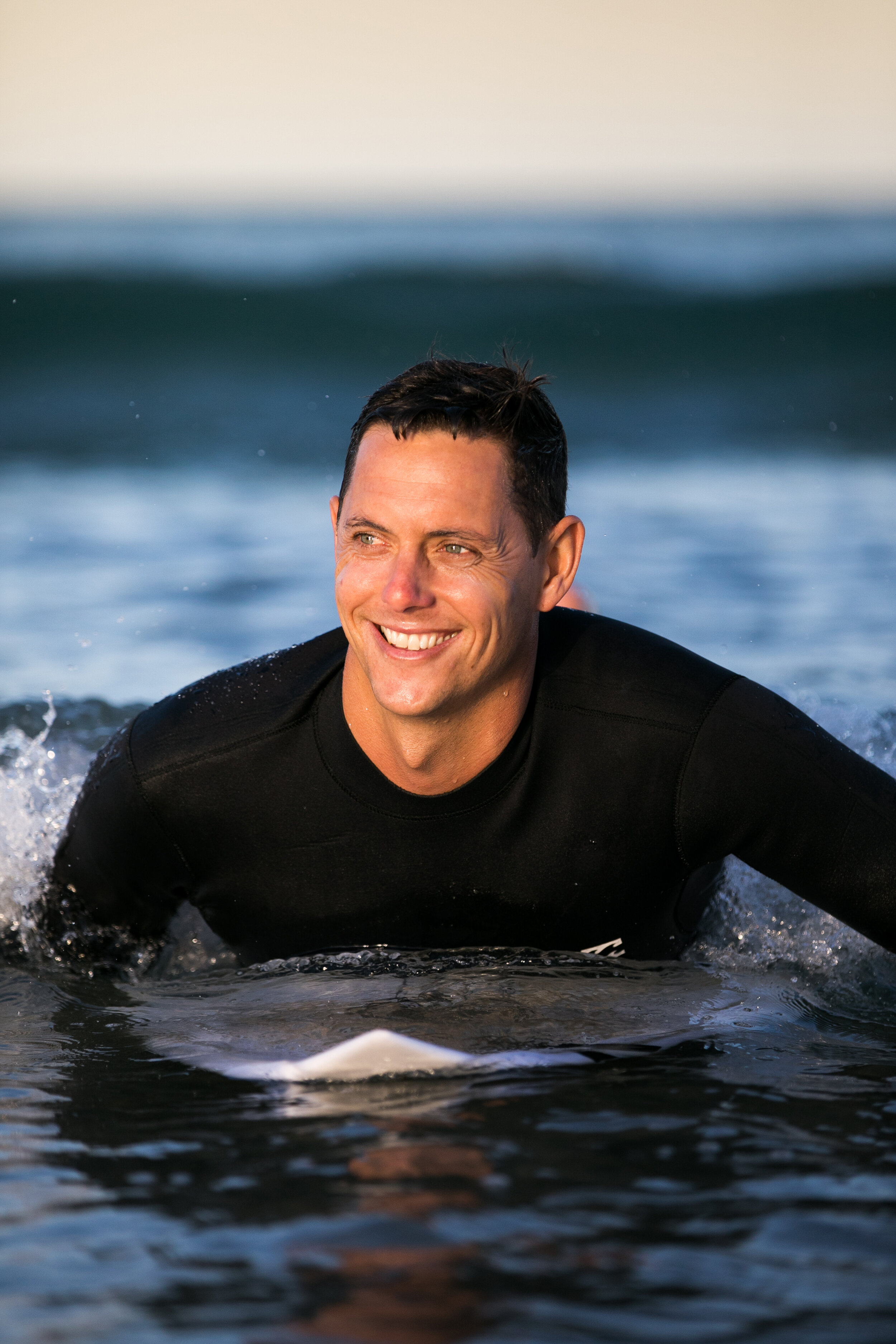
PHOTOS Salina Galvan
Matt Scorringe first set foot on a surfboard at the age of two and has been catching waves since he was five. Now, he’s making waves, after a life-altering health battle gave him the impetus to pursue surfing in a way that’s changing the ambition and success of surfers throughout New Zealand.
Growing up in Whangamata, it was bound to happen. After Matt Scorringe’s parents moved from Hamilton and took over the family bach in what he affectionately calls ‘Whangas’, the beachfront location had an immediate effect.
“I was probably first on a board when I was about two years old,” Matt says. “My brother surfed and growing up where surfing has such a rich history meant we had boards in the garage. I think I was about five when I took a foam board from the garage and first started catching waves. Whenever mum wasn’t looking, I’d be up to my waist in the water.”
Fortunately, Matt’s mother usually was looking, as she could watch the young surfer from her kitchen window to make sure he didn’t drown. And when not up to his waist in water, Matt worked at the family gas station to save money for boards. Kiwi childhoods don’t get much more classic than that, and so it was pretty much inevitable that surfing was going to be in Matt’s future.
“There were these iconic surfers like ‘Taff’ Kenning, Bob Davies, and Pete Mitchell around there,” Matt says, “and, though, at the time they weren’t called pro-surfers, they were real innovators of the sport in New Zealand. Growing up in that environment – a beach town with three surf shops and what seemed like just 500 people, with the culture and the waves – it had a real effect. There was just no other road for me.”
By age 14, that road had taken Matt to Bali where he represented New Zealand at the International Surfing Association World Junior Titles, a feat he repeated until the age of 20 when Billabong came knocking on his door with a sponsorship offer. He moved to Australia at 17 to be closer to the competition circuit and, soon after, teamed up with pro surfer Joshua Kerr, a friendship that would later see the pair travel the world together, living the dream: surfing, and getting paid to do it.
But all that changed in 2009. “I got home from a tour in Hawaii,” recalls Matt, “and eight days later I was having chemotherapy. I thought I’d just been burning the candle at both ends a bit too much, and maybe had a bit of a hangover, but the turning point was when I woke up and my whole body was covered in a rash and I was getting blood noses.” A quick trip to the doctor followed and the assessment was earth-shattering: acute myeloid leukaemia.
“There was really no time to process it or make decisions on it. Fortunately, I responded to treatment, but it took eight months of intense chemo. The initial stage is a bit of a blur to me – it’s one of those parts of your life that you tend to block out a bit. It was a pretty crazy experience and I really had a moment but, once I got to the hospital, that changed. I’ve always been very competitive, so once I was at the hospital, I thought, ‘Well, this is another challenge and I’m going to smash this thing and win it.’ I set a goal of being back and competing in the New Zealand nationals the next year – and, though I still looked like a cancer patient when I got there, it was a stepping stone for my journey back.”
“I’ve always been very competitive, so once I was at the hospital, I thought, ‘Well, this is another challenge and I’m going to smash this thing and win it.”
It was also a turning point. Like many people suddenly faced with their own mortality and months of medical treatment, Matt did a lot of thinking.
“When life comes at you like that, you re-evaluate everything,” he says. “Even though I’d recovered, I thought that my chance to be a surfer was gone and that I’d have to do what everyone else was doing: find work somewhere in the surf industry, move to Auckland, drive the traffic, be a nine-to-fiver. But, a year after my cancer, my partner and I moved to Bali for six months and we decided to try and get some priorities sorted.”
One of those priorities was pursuing his love of surfing in a way that gave back to the sport he loved. His years on the competition circuit had been great and he’d learnt a huge amount about surfing, but he’d also learnt a lot about how many competitors were still not giving it 100%; the accepted mentality was that, to be a good surfer, you just surfed. And things like nutrition, structured coaching and training programmes were for nerds.
“The reason I started the Art of Surfing was that I realised too late that there are so many components to it. Being on tour meant I saw what those top-level surfers were doing, and I got to be in the locker rooms with Kelly Slater and the world champions and see what they were doing, what equipment they were using, and how they were being coached.”
“The big turn-around came after Mick Fanning got injured,” Matt says referring to the champion Australian surfer known as White Lightning. “He was the first surfer to take training and nutrition and all that high-end stuff seriously, as part of his road back. He came back to win the world title. And then the chase was on – it was a whole new world of professionalism, while back here in New Zealand we still thought that, to get better, you just surfed more.”
Embracing a whole new world of professionalism is Matt created Art of Surfing for but, when he initially pitched to the powers that be, the reception was not quite what he expected. Surfing – not just in New Zealand but worldwide – was in transition. The surfing boom was in decline, the global financial crisis was hitting hard and streetwear was taking over from surfwear. So, while the organisation Matt approached liked his idea, they were looking to downsize rather than take on new ventures.
“Looking back now, it was perfect for me, because it made me realise I was going to have to do it all on my own. I’d looked around and there was no one else doing what I wanted to do – and to this day, nearly ten years later, I’m probably still the only one doing what I’m doing.”
Matt – like most surfers of his generation – was self-taught, and he had, in fact, turned down the opportunity to be tutored by ‘the godfather of technical coaching’, Martin Dunn, largely because he felt surfers had to be self-taught, with the raw talent being shaped by some inner Zen. He now sees the error of that and wishes he’d had a mentor and teacher – but, he realised, that if he never had one, he could at least be there for the next generation.
“I came home with all the knowledge I’d picked up and, after recovering, I sincerely wanted to use that to help our surfers do better,” Matt says. “I’d been in competitions where we’d come up just short, and I knew that if we just tweaked what we were doing, Kiwis could be on the next level. I still see a bit of the pushback against coaching but its changed a lot. When I started, there were a lot of people who wanted to come and train, but didn’t want to be seen coming to train! There was this mentality that getting trained in surfing wasn’t cool. People wanted to go out to Papamoa to do it, so they wouldn’t be seen. That’s changed completely now.”
One of the drivers of that change has been the acceptance of surfing as an Olympic sport. “Surfing,” says Matt, “particularly in New Zealand, is still seen differently to other major sports – and the Olympics will change that. It will mean we start to take things seriously and start working towards finding the best path for our athletes at Olympic level. I’ve talked with friends in snowboarding and other sports that have recently been made Olympic sports and they all say it takes time. It’s like the chicken and the egg – you need funding to get results, you need results to get funding – but it’s great to see that we’re off to a really good start with two athletes going to Tokyo.”
Matt’s role in preparing those Olympic contenders has been as head coach of the development pathways programme he helped put together to get our surfers up to Olympic qualifying level, and he’s more than happy with the results. “We’ve now got two athletes qualified for the 2020 Olympics – Billy Simon from Raglan and Ella Williams from Whangamata – who both came through that programme. Now we just need to get some more structures and mechanisms in place to support them and the sport. At that level, you don’t spend a lot of time at home; you’re travelling all the time, so you need coaches, nutritionists and all the support required on different continents. Part of what I’m doing is not just bringing my knowledge but the connections and contacts to make it easier.”
Olympic-level mechanisms have been in place in Australian surfing for some time, only on a much bigger scale. While Matt might be envious of their resources, he’s not sure it’s what we need here in New Zealand. “I think they’re getting silver spoon-fed over there and I don’t think it’s producing the grit and determination that’s needed in the sport. There are competitors from other countries where their families depend on their success and they’ve got all the fight in the world that money can’t buy. Hard work beats talent nine times out of ten, and our biggest issue as Kiwi surfers is that we’re laidback Kiwis! We don’t have the dog-eat-dog mentality we need ... so I want to focus on making a kick-ass programme for our surfers. We are world-renowned for sports and I want to play a part in making surfing one of those sports.”
And as though helping shape a whole new generation of surfers and raising our standouts to a whole new level isn’t enough, Matt is also upping the game for non-professional surfers here in New Zealand, from his base in Mount Maunganui.
“Moving to the Mount was the best decision I ever made,” Matt says, “on all levels. It’s not really known for consistent surf here, but the way it’s become a hotspot and the way surfing and the beach lifestyle has grown is great. The amount of kids coming through at development level is fantastic; we’ve gone from one squad a week to five, and it’s still growing. My business is completely built off word of mouth, and you can see there is now a real hunger for coaching and teaching that is great for the sport long-term.”
A man with so much on his plate can’t be everywhere at once, unfortunately – but, ever the problem solver, Matt has a plan. “I want to go to every region, I want to help every grassroots surfer everywhere. So I’ve really turned my focus to the online side of the Art of Surfing, and people out there want it. I’ve developed a library of online content for people who want to learn how to surf, from beginners through to elite. And we’re going to take this global. We’re known as the go-to in New Zealand and we’re confident people will come along for the ride, but the potential in places like America is really where we could see growth. It’s been a three-year project but, in the last six months, it has really come together.”
With all this going on, does Matt Scorringe still find time outside of coaching, teaching, developing online content, and mentoring Olympic surfers for the thing that got him on this path back in ‘Whangas’?
“Oh yeah, of course,” he says. “Surfing’s the one thing that keeps everything else at bay!”

Homes we love: a look back over 40 issues
Re-visit some of our favourite homes from the last 40 issues of UNO magazine.
Re-visit some of our favourite homes from the last 40 issues of UNO magazine.

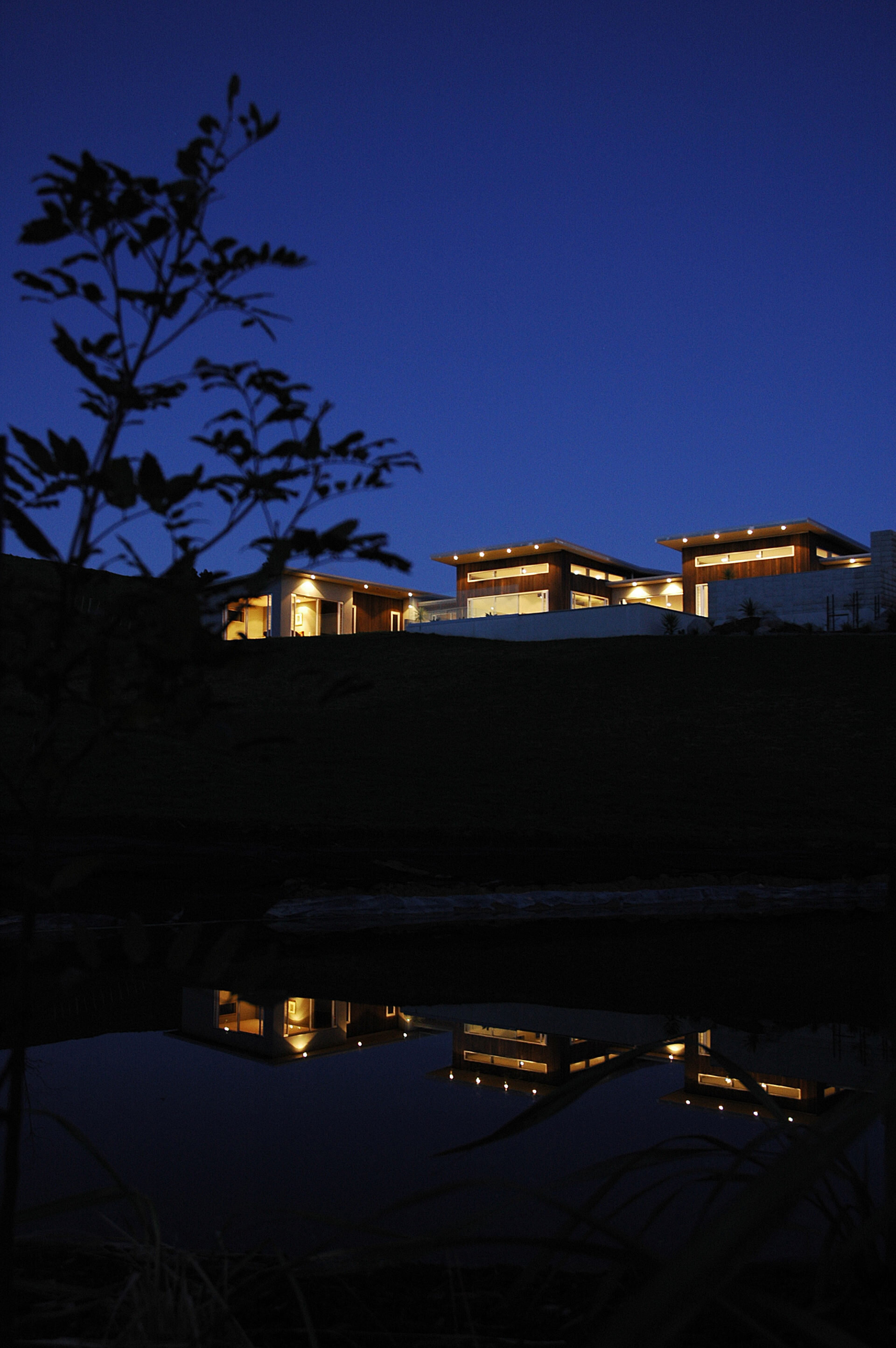
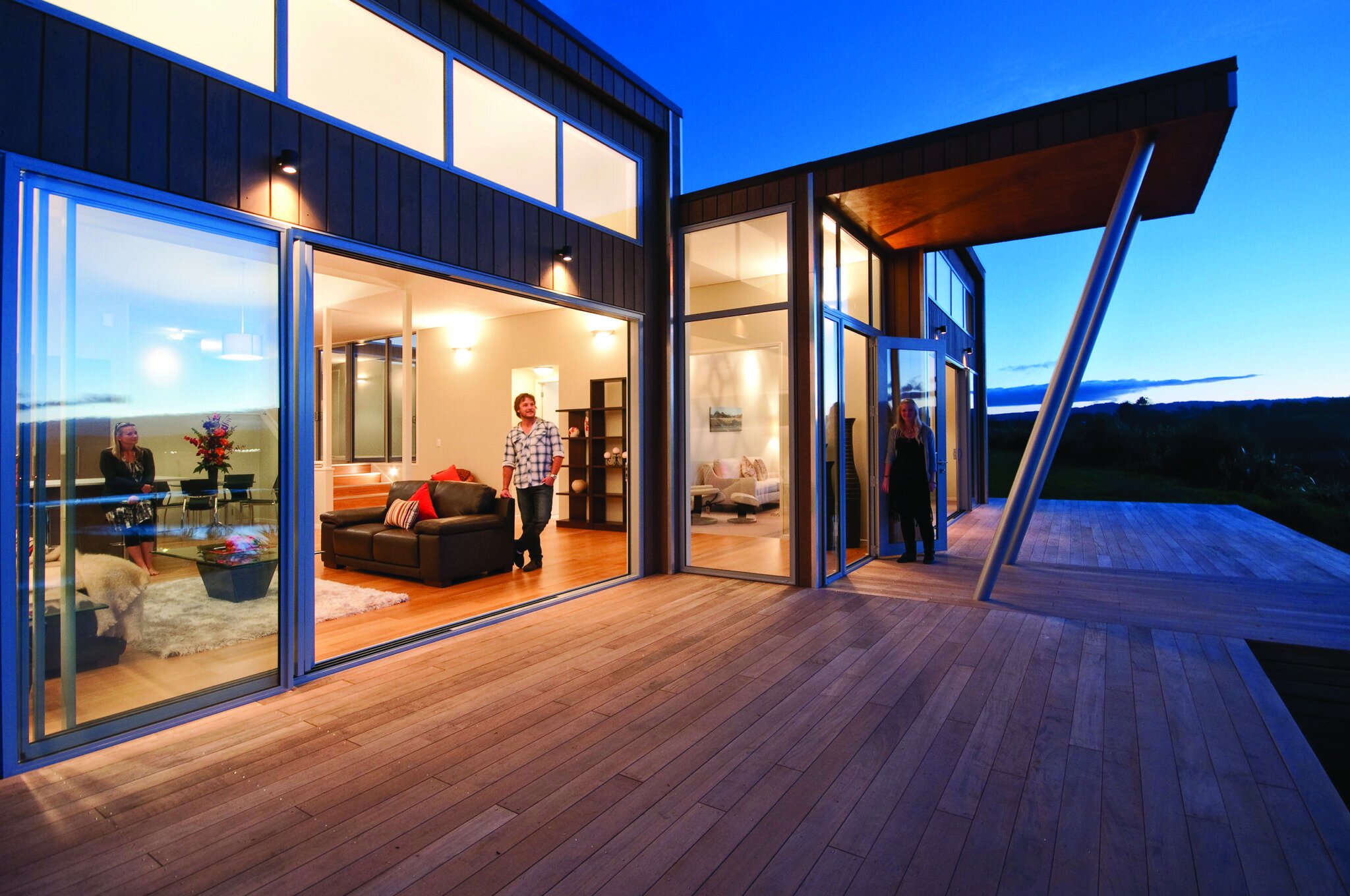
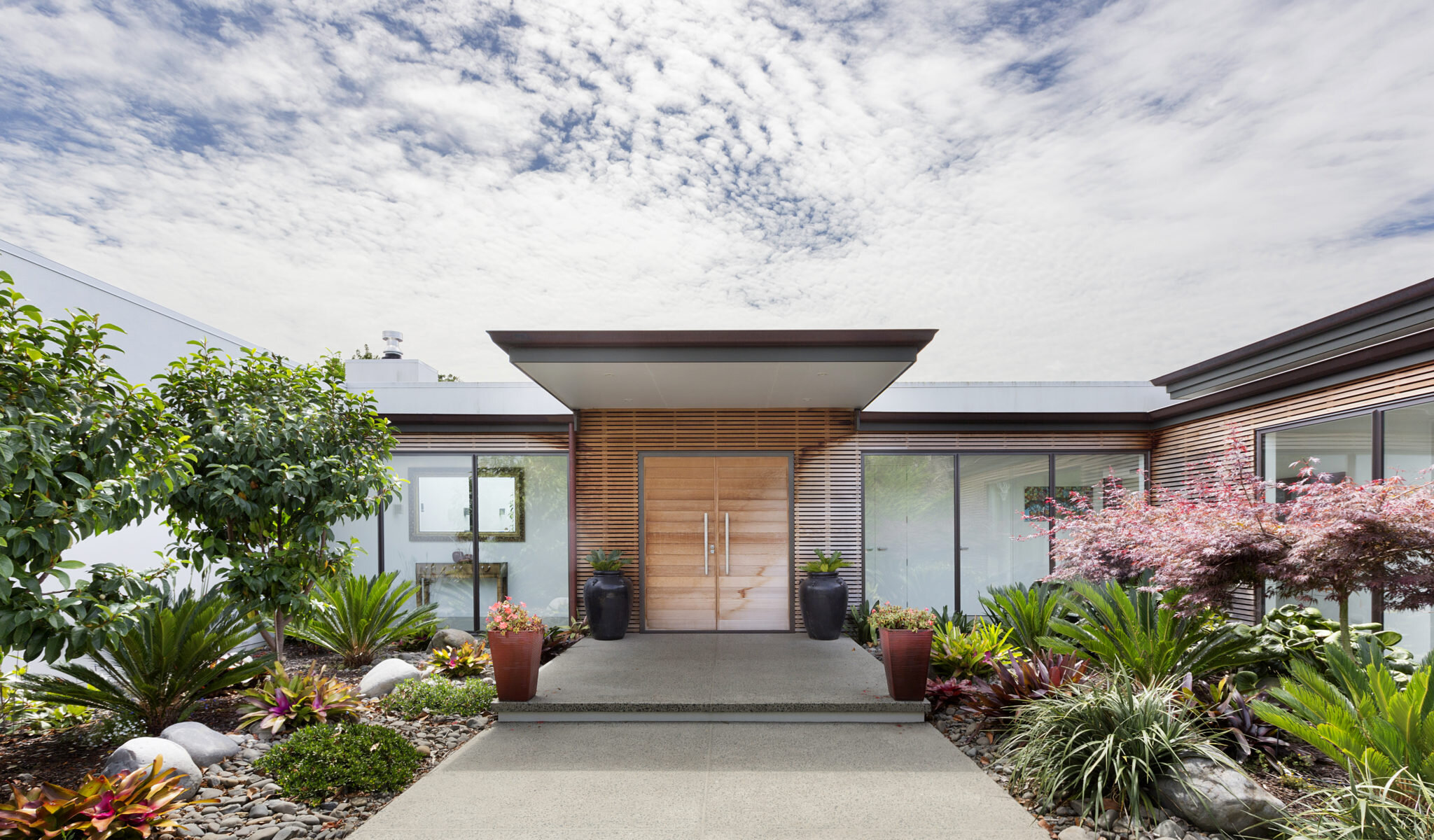
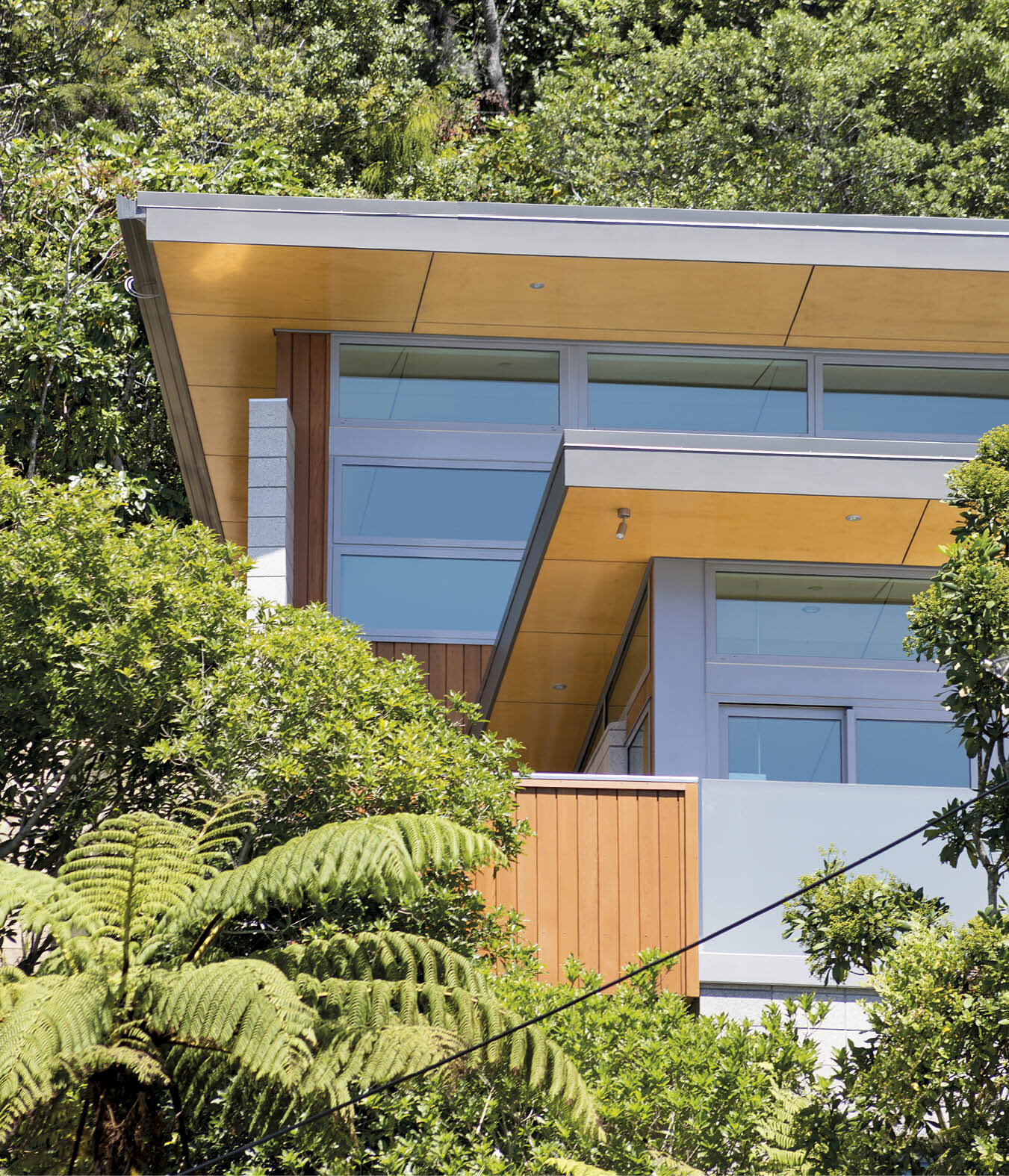
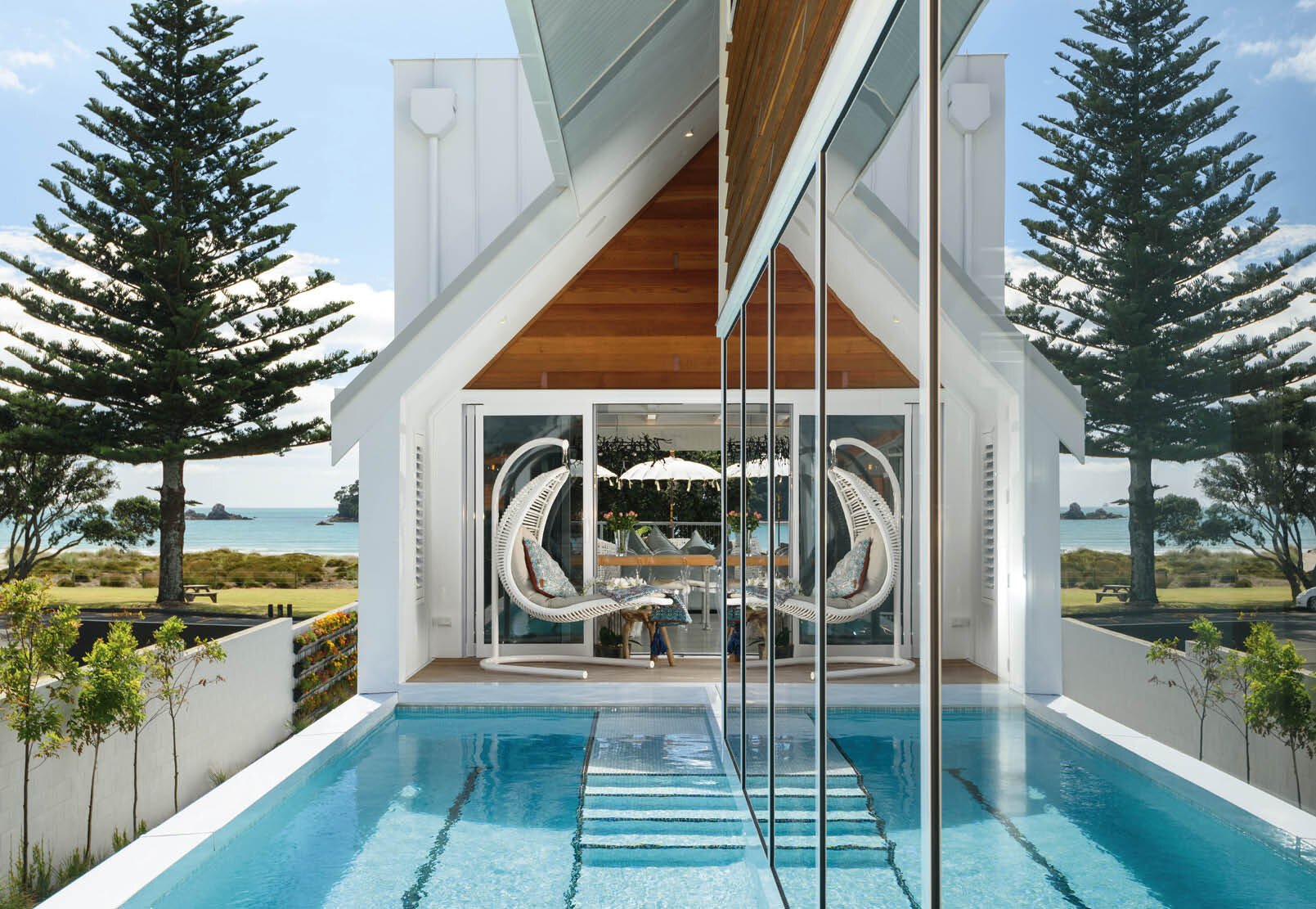
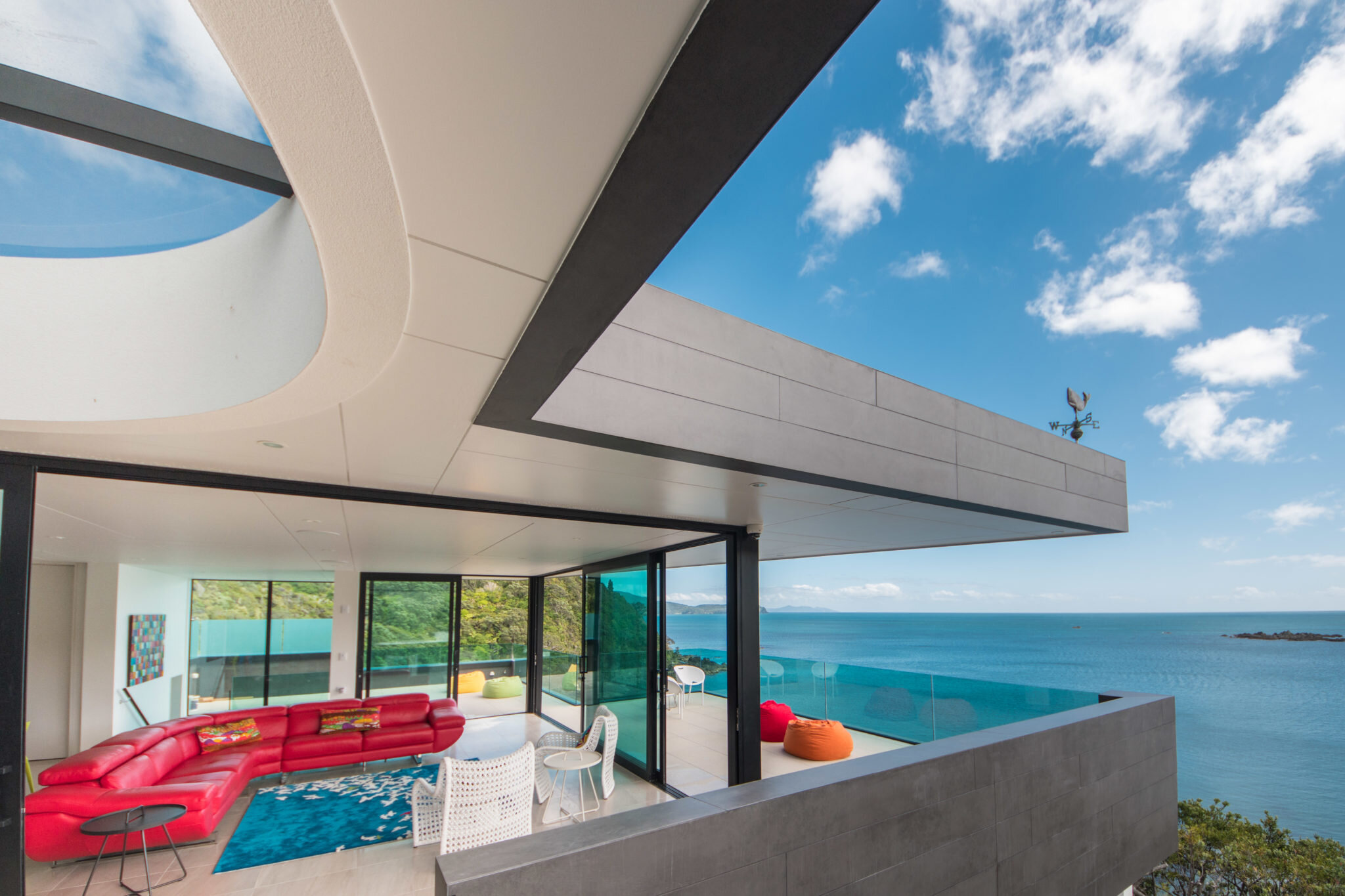
Featured:
Designer: Jorgen Frandsen Location: Otumoetai, Tauranga Issue: 11, summer 2011
The owners needed a home they could work and live in, and one that reflected both the ocean and the industrial nature of the nearby Port of Tauranga.
Designer: Paul Jones Location: Tauriko, Tauranga Issue: 10, spring 2007
The main living areas in this Tauriko home boast a four-metre stud height, expansive polished concrete floors and customised stainless steel fittings.
Designers: Jorgen Frandsen and Nick Chibnall-West Location: The Lakes, Tauranga Issue: 14, spring 2011
Inspiration is taken from the Californian Sea Ranch, and a desire for the dwelling to resemble a series of sheds, with columns like tent poles extending at either end.
Architect: Steven Chambers Location: Tauranga Issue: 28, autumn 2015
This private oasis was conceived as a cluster of differing scaled pods that allow the landscape to ebb and flow around them.
Designer: Ambienti Architects Location: Ōhope Issue: 24, autumn 2014
This bach is nestled into 100-year-old pohutukawas on a hillside, looking out to the ocean at Ōhope. The brief was to recreate the feeling of the old bach which stood in its place: not in design or layout, but in its relationship with setting and the way the family used the home.
Designer: Will Tatton Location: Mt Maunganui Issue: 35, summer 2016
Will Tatton says that his job is a blend of many things: art, psychology and business. “I delve back into dreams and ideas, unpack them, and bring them back to life in a home.”
Designers: Creative Space Architectural Design Location: Coromandel Issue: 32, autumn 2016
Extensive interviewing and planning ensured the owners had a home which will never need to change.
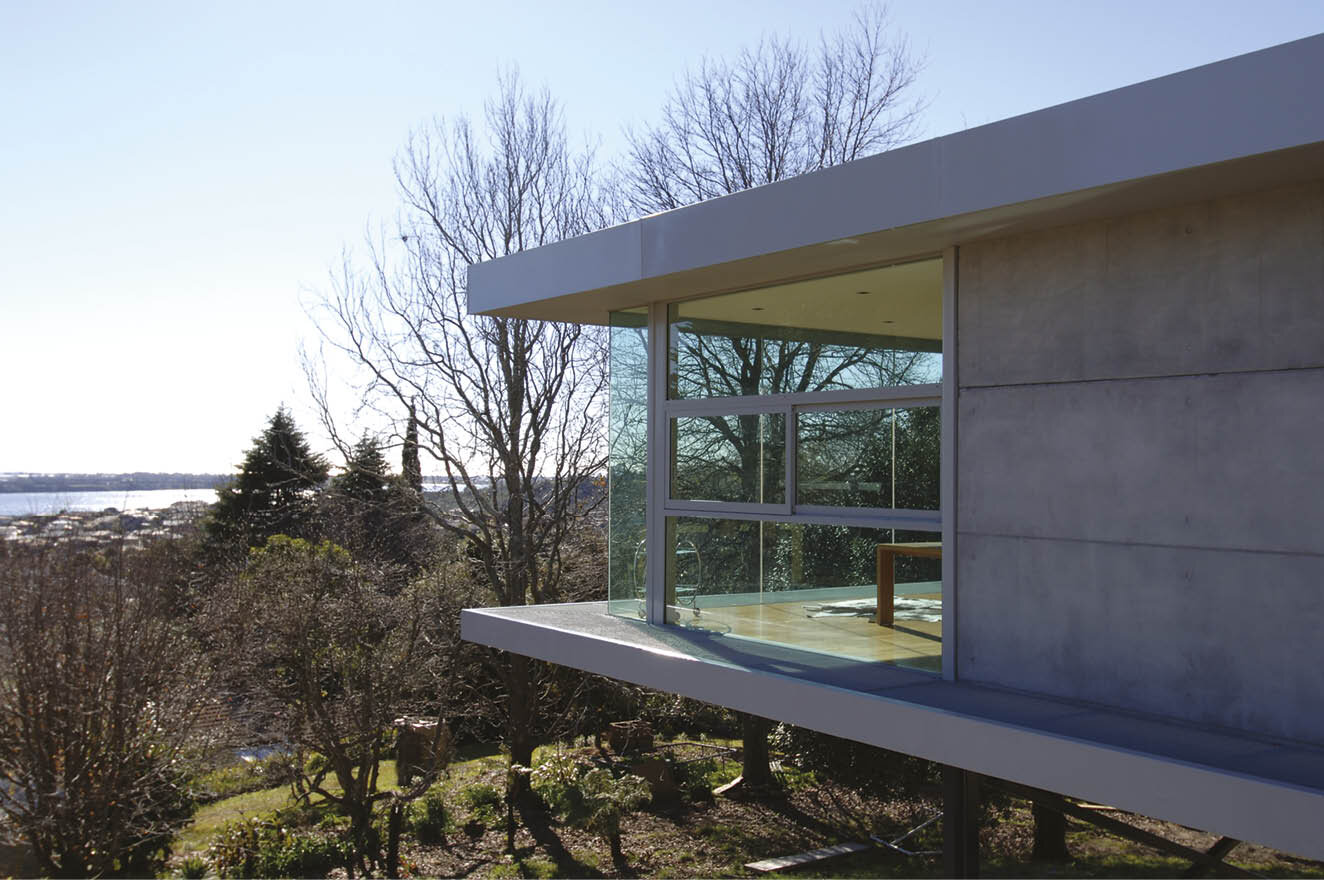
Architect: Steven Chambers Location: Welcome Bay, Tauranga Issue: 6, spring 2006
Perched on a slope in Welcome Bay, this industrial style home rises above the ground and cantilevers out on beams. It looks like it’s floating over the land.

Creating the dream
Good design is a process of elimination. Weigh up the negatives and positives, get the proportions right, and you are well on your way. Where is the best view? Where is there most shelter? Mark Cashmore spends lots of time at the start, looking at every option before designing.
Good design is a process of elimination. Weigh up the negatives and positives, get the proportions right, and you are well on your way. Where is the best view? Where is there most shelter? I spend lots of time at the start, looking at every option before designing.
WORDS MARK CASHMORE / PHOTOS QUINN O’CONNELL
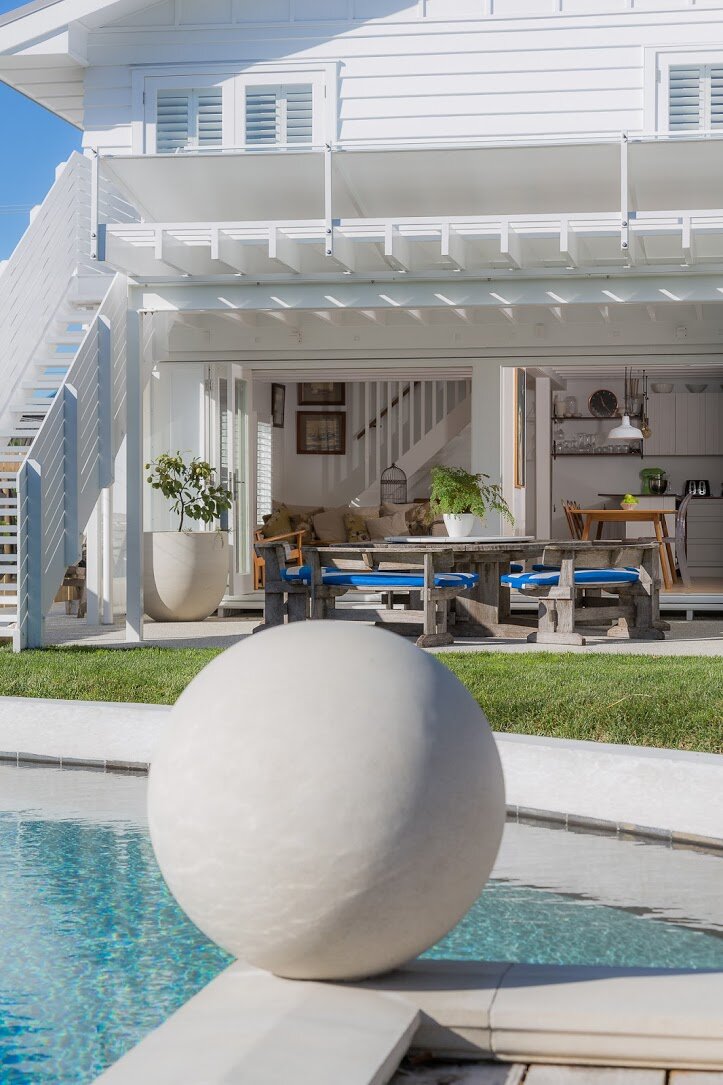
This home in The Mount was a favourite project. I am often asked to design landscapes and swimming pools. But this renovation included altering the interior and the house’s façade. I started the whole landscape concept with a curved line, which ended up as the pool’s edge. The lawn leads to a semi-enclosed pool deck with a spa. It’s rather nice to look back to the house and get away from it all.
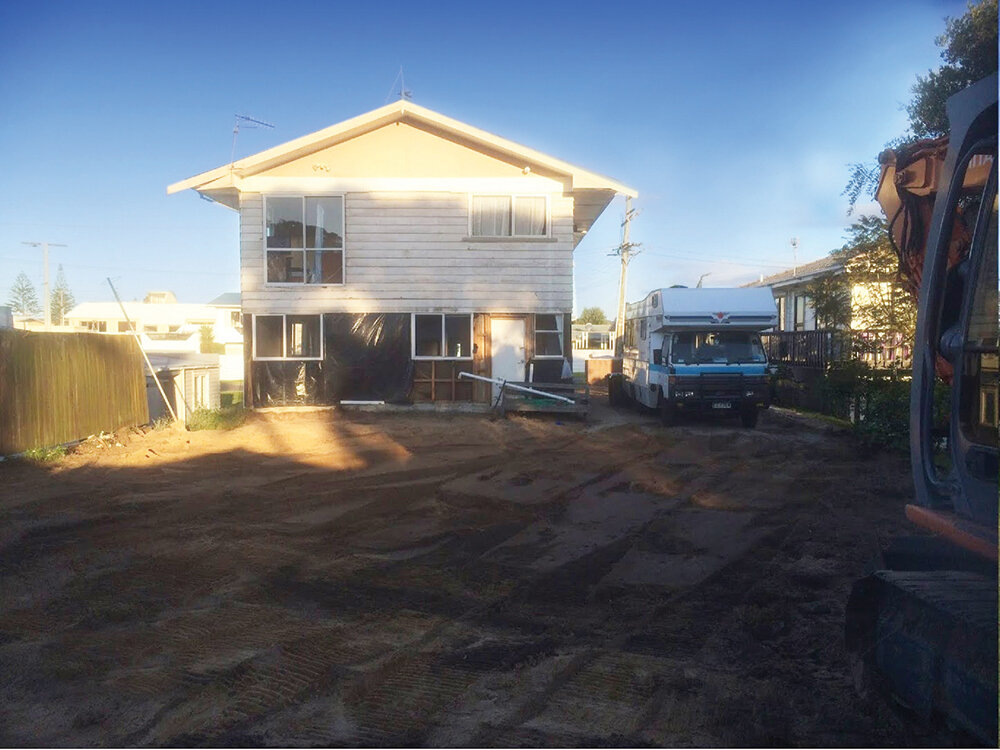
THE START OF THE PROJECT: The house had great bones, and sat really well on the property. It was tucked up close to the road, which left a large plot of enclosed, private, north-facing land here at the back.
CLEARING THE SPACE: Under the brolite exterior were weatherboards in fantastic condition, which was an exciting discovery at the start of the project. They de ned the whole beach theme for the house. The entire façade was removed, and the layout recon gured to maximise the north-facing view of The Mount.
Bedrooms were moved upstairs, and the living area moved downstairs
BEACH HOME: The entertainment area is entirely covered by the deck. A pergola extends further, so you can sit outside all year round. Every element has been designed and constructed as a whole: the deck, pergola, the stairs, balustrades and the sail shade. I use expert carpenters to bring these detailed structures to life. It’s designed so that light is maximised where needed, and shade is created to give pockets of cool relief in the summer. All lighting was installed with dimmers to help create atmosphere.
THE CURVE: The whole design of the outdoor area started with a curved line through the section, which ended up being the edge of the pool, the edge of the lawn, and the bottom of a slope. The line could have developed into a wall, or a path, or something entirely di erent. Everything evolved from that line, keeping balanced proportions for the house and land.
DETAILS, MATERIALS, LIGHT AND SHADOW ADD ATMOSPHERE TO EVERY SPACE.
The step, connecting indoors and outdoors, needs to be just the right level for easy transfer of drinks and dinner. It was constructed to give a beachy, boardwalk feel.
This is the crucial view, from inside the house out through the entertaining space, the lawn and the pool. It’s so often spoiled with a fence. By raising the pool slightly and dropping the lawn, there’s no need for one.
A semi-enclosed space for the outdoor shower, with timber detailing to act as a screen.
Get the look with Mark Cashmore
Swimming Pools + Landscapes + Renovations
POOLS NEED TO BE SAFE. But that doesn’t mean you need a fence around it. I use levels, materials, slopes, drops and geometry to design pools that look like water features, feel like part of your landscape, and are perfectly safe and legal.
ACHIEVE YOUR LOOK BY THINKING DIFFERENTLY. I used white pebbles in white concrete as an exposed aggregate for the entertaining area. It reflected light back up into the details of the white pergola and really added to the beach feel.
EVERY PROPERTY AND EVERY CLIENT IS UNIQUE. I will conceptualize the task and develop original design ideas, no matter what size the project. Sketches and lots of communication are important.
44a Tay Street, Mount Maunganui
T. 021 996 300 SWIMMINGPOOLDESIGN.CO.NZ

Kitchen perfection
Filled with bright light, flowing out to a view of the ocean, this kitchen has been designed with coastal living in mind.

Filled with bright light, flowing out to a view of the ocean, this kitchen has been designed with coastal living in mind. Design details are absolutely everywhere: port holes are set at eye level above the marble splash-back, and the kitchen bench has an intricate, floral, tin façade . The bench itself is topped with cool marble.
But it’s super-functional too. The roller cupboard means everything you use frequently, like toasters and kettles, can be accessed quickly from the bench top.
The pantry has deep, smooth-close drawers and holds more than a tardis! Bottles of wine and pantry staples – everything you need for a minimum of supermarket visits.

Boom town
We talk to Shane McConnell of GJ Gardner Homes, Tauranga, about investing in new builds and how to get involved.
We talk to Shane McConnell of GJ Gardner Homes, Tauranga, about investing in new builds and how to get involved.
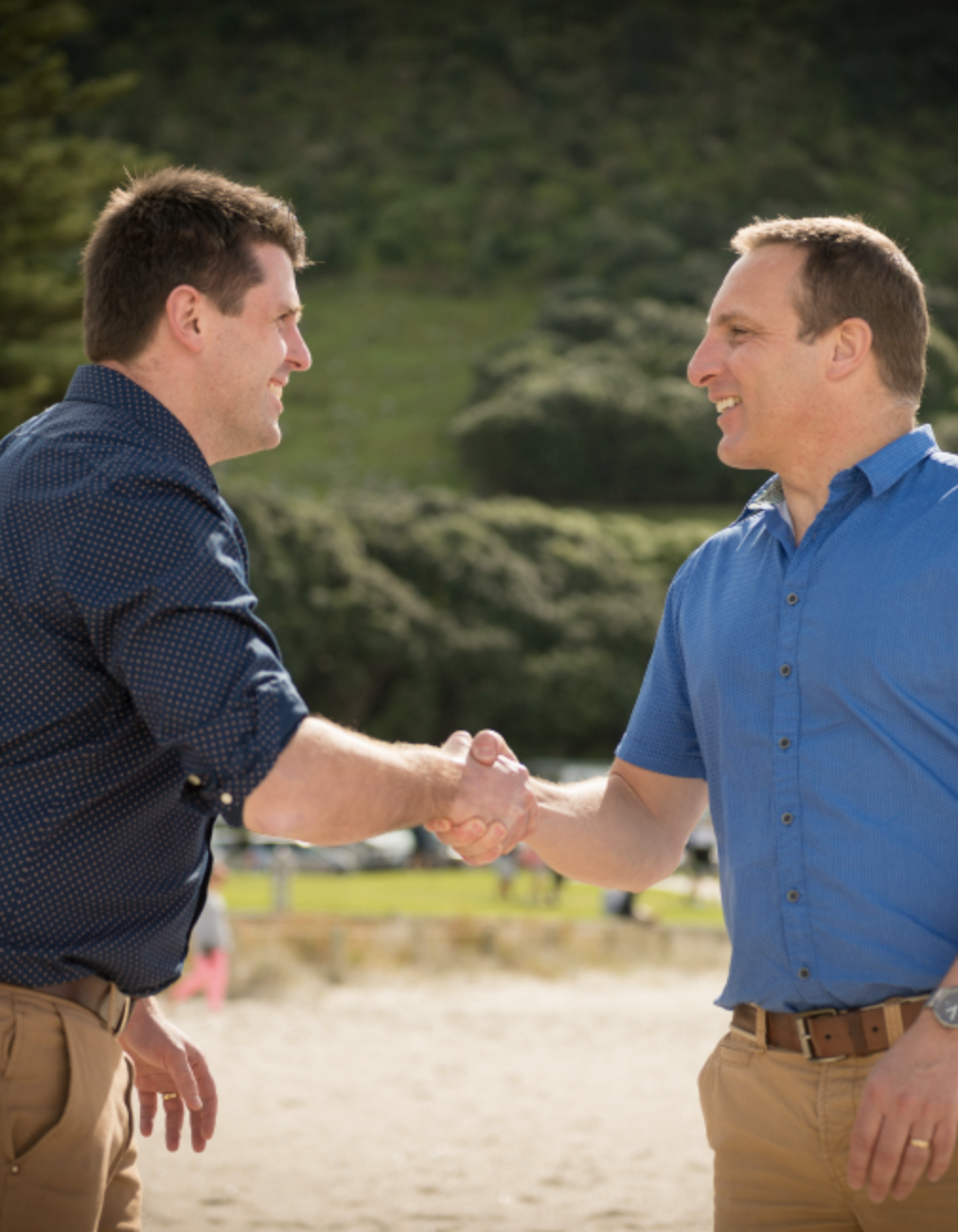
Jono Sharrock from BNZ and Shane McConnell talk about the Tauranga boom.
PHOTOS JAHL MARSHALL
You may be eligible to borrow up to 90% for a new build, but only up to 80% for an existing house that you will live in, or only 60% if you’re an investor. It’s allowing some people to get into the market, where they couldn’t before and it’s helping to address the shortage of homes.
Before starting, we assess the total cost of completing the build, which includes borrowing costs such as any rent you may need to pay during the build. This all gets capitalised in the loan and is paid for as you incur build costs. That’s why it’s really important to work with a reputable building company that understands time frames and costs.
What’s happening in the market?
Q There have been explosions in the housing market before; why’s this one so special?
Many economists agree on factors affecting the current boom. We have strong immigration into New Zealand, creating a shortage of housing. Increasing numbers of Aucklanders are looking for affordable land to buy and Tauranga is seen as a good solution, particularly with its attractive lifestyle. This has exaggerated the shortage of housing in our region. Add to this low interest rates, favourable government lending criteria for new builds and strong growth in property values and you have all the ingredients for the kind of boom we are experiencing now.
Q I have bought a house, will it reduce drastically in value at some stage?
During the last recession some areas, like Bethlehem, actually increased in value during the recession. Others stayed pretty flat, some areas of The Mount dropped, but overall there wasn’t a big dip. Like most investments, the long-term ones tend to be less risky. It’s risky to take on a mortgage you can only service at low lending rates, as interest rates will inevitably rise again. If you are buying houses to sell them quickly, this too is risky as you need to be selling in a rising market. Always factor in tax implications and realise that at some point the market may dip.
Q Surely it’s not sustainable, this kind of growth. When do you think it will stop?
The Ministry of Business, Innovation and Employment recently released a report predicting the continuing rise in construction in the Waikato and Bay of Plenty, peaking in late 2017 then flattening out over the next four years to similar levels to those seen at the start of this year. Remember, things often get shaken up which are well outside the control of our economy and impossible to predict, such as interesting choices for the next American president which could seriously affect the worldwide economy.
Q Are the new rules with lending going to affect me?
If you are buying a home to live in, generally the new rules shouldn’t affect you. The rules favour new builds, and we use Onion Home Loans and Insurance for our clients. They specialise in brokering construction lending to provide competitive funding packages for new builds. Many of our clients have used this service to access competitive lending terms, and have been given the means to own a new home where it has been previously been denied. As a business, we bank with BNZ, so they also offer great construction lending packages to our clients.
Jono Sharrock from BNZ and Shane McConnell talk about the Tauranga boom.
How do I get into the action?
Q Can I buy a section and sell off a plan?
Yes. Before the title is issued, you pay a deposit of up to 10%. Once issued, you’ll need to pay the rest up front. We have clients who buy a GJ house and land package and put it up for sale before it’s out of council, repeating the same process over and over again. Purely anecdotally, I’d say these clients have done very well! They use us from start to finish for the design, full quote, drawings, selections and sale of their package.
Often, the biggest gains are made by actually building. Once the house is under construction, assess whether it is better to sell the house straight away to release cash for other projects, or wait to extract potentially bigger gains. I suggest you get as much advice as you can from as many sources as possible.
Q Where can I buy a section?
We usually have stock available all over Tauranga: people just like you are still finding great opportunities. Go to gjgardner.co.nz and check our ‘Tauranga listings’. They change frequently with new ones being added, so it’s worth checking regularly or give us a call to find out the latest.
Q Do you have to be registered to buy these packages and build on them?
You must be registered as a New Zealand taxpayer with an IRD number. You can use a trust or a company to buy and sell property. Before getting involved, I suggest you talk to your accountant and lawyer about the best set-up for you.
Q Should I just build the house and sell it, or get someone else to do it?
With the new health and safety laws firmly in place, our responsibility continues long after the build ends. It continues for many years to come. As an individual it is very difficult to find the best quality labour, and if there is a problem with the home during the build or in the future after you’ve sold it, you will be treated as the ‘head contractor’ and legally, the buck stops with you. If you build with us, you get the benefit of our hard-earned reputation, and the quality and value of our established trade and supplier network. You also get an industry-leading, independent, Certified Builders, Halo ten-year guarantee. That is a lot of peace of mind.

A design for life - Will Tatton
We look through some of the ICONIC Mount houses designed by architectural designer Will Tatton, starting with his own.

We look through some of the ICONIC Mount houses designed by architectural designer Will Tatton, starting with his own.
INTERVIEW JENNY RUDD PHOTOS JAHL MARSHALL
“The honest simplicity of a modest all-timber house appeals to me as house construction has become more complex and more processed, more artificial, more everything: ensuites, double garages, automated systems. The list and the costs grow and grow. It’s new builds on steroids.
“Looking for a home for my family, I happened across a ubiquitous 1963 L-shaped, Beazley standard-plan house. What makes it feel so solid, enduring and part of the landscape? This family home is 105 m2 with three bedrooms, one toilet, one basin. The single garage is in original 1963 corrugated steel. What an antidote to today’s expectations.”
Slender, wearing a checked shirt, black woolen blazer, wooden-framed glasses and leather brogues, Will rides his bike everywhere. “We have about ten houses under construction at the moment, and I managed to visit five of them on a bike ride the other day.” He reminds me of a gentle, intelligent, preppy professor at Harvard.
Will Tatton is part of the Bay of Plenty fabric. Of our last two of our covers he says: “Peter Williams is my brother-in-law, and Anne Sharplin is a good friend.
“It’s such a relief, after the recession, to move back to working with the end user. We deal with fewer people now, not so many builders and subcontractors. But that actually makes our job more sociable, and a bit like psychology, which I like.
“My job is a pleasant blend of art and business. The people side of things is eternally fascinating to me. As designers, we work out how people’s lives are going to be led, then we design a house around those patterns.”
PITAU RD, THE MOUNT
The owner’s brother cast the concrete kitchen benches.
“We are all different, but we are all common. In reality, we all have different dreams in our heads, and Kiwis generally feel that they can make those dreams come true with our own house design, whether it’s large or small.
“Over the years, I have developed a way of dissecting people’s lives, working out what their dreams are, what they’ve achieved, and what they’ve accumulated in their brains over years of thinking.
“I often ask clients what kind of materials they liked when they were young, like cedar or stone, what games they used to play, where they’ve been, what they’ve seen and what they loved. All these thoughts collect over many years. I delve back into that psychology, into all those dreams and ideas that are stored in there somewhere. Then I unpack them, and bring them back to life.”

Andre Laurent - Total Perfectionist
My career started in the early nineties when, not having any real idea about what to do, I took a job as a chippy on a building site here in Tauranga.
My career started in the early nineties when, not having any real idea about what to do, I took a job as a chippy on a building site here in Tauranga.
WORDS Andre Laurent

It didn’t take long before I noticed there was a real lack of respect for designers and architects; simply, the plans they gave us were often inaccurate or lacked any proper detail and information, leaving us to try and figure things out for ourselves on site.
I knew there had to be a better way and could already see back then the problems this was potentially going to cause. So, while continuing to work full-time as a builder, I completed an architectural design degree and took up contract drafting work at night. My drive throughout was to bridge the gap between the office and the work site.
I quickly established a reputation for supplying highly accurate information and critical details that my friends and colleagues back on the building site fully appreciated. I established Creative Space Architectural Design Ltd in 2003.
PUSHING THE BOUNDARIES OF SIMPLICITY
My focus on design accuracy and highly detailed plans led to exploring the idea of simplicity. I began to wonder how far we can push this perceived boundary into the space of design excellence. And the answer is, quite a lot actually.
I finally had the opportunity to test out my ideas when we sold our first home and bought a beautiful big piece of land sitting at the top of the Wairoa Valley hills. This time, I wanted to design and build a home that would cost the same as an entry-level brick and tile yet have the features and benefits of a high specification, architecturally designed home.
LOOKING AFTER THE BUDGET
One of the great things about reducing the cost of building your home: there’s more budget to spend on everything else. However, the simplicity of the structure is part of its beauty too. The home has a 2.7m stud height, feels spacious and gets as much sunshine or breeze as we want. We have a high-spec kitchen, full gable double-glazed stacking doors along two sides of the ground level, pivot windows in the roof of the top level, a hardwood deck and plenty of budget left over for the spa pool and new furnishings.
Another discovery that came out of this experiment was the development of the previously unused roof cavity into more living and storage space. This further reduced both the construction costs and building footprint, plus the entirety of the roof space is now used, with the low ends of the attic trusses providing storage.
HIGH PERFORMANCE
One of the ways we were able to increase the performance of our home without adding any extra cost, was to use Insulated Concrete Forms (ICF) for the main structure. This, combined with opposing windows and doors, has meant we are comfortable in any weather. The ambient temperature of our home remains around 22 degrees all year around, without any extra heating or cooling systems.
I am constantly comparing the temperature inside and outside. In the middle of winter, it can be an overcast day of 10 degrees and be 26 degrees inside. With no additional heating overnight, by 6am the internal temperature will have dropped to 22 degrees whilst outside it might be just one degree.
The other benefit of using ICF – longevity. Our new home will last several lifetimes. Just as all homes should.
This exercise in simplicity has given my family the most incredibly warm, comfortable, stylish home, at an entry-level budget. I think it’s safe to say that the experiment was a total success.

Alisha Brady: EnableMe
A financial personal trainer at EnableMe, our guest columnist says that when it comes to paying off your mortgage, 10 is the new 30.

A financial personal trainer at EnableMe, our guest columnist says that when it comes to paying off your mortgage, 10 is the new 30.
PHOTO SALINA GALVAN
When you go to a bank to get a mortgage, many people default to the bank’s offer of a 30-year term. It’s in the bank’s interest for you to take your time, as they’ll make more money. But did you know that over 30 years, you’ll pay back almost three times what you borrowed?
EnableMe founder Hannah McQueen was a young accountant when she applied to get her first mortgage 11 years ago. Reluctant to pay three times the amount she wanted to borrow back to the bank, she approached the University of Auckland’s mathematics department. Together they devised a calculus formula to determine how to pay off your mortgage in the fastest time, with the lowest interest cost and the most flexibility. That’s now the basis of EnableMe’s programme, which in the past decade has helped thousands of Kiwis get in control and get ahead.
We work on these ratios: you can pay off your debt in eight years if it’s four times the size of your household income, or in 10-12 years if it’s five times the size. If it’s more like eight times, you’ve probably stretched yourself too far and we’d suggest selling your house.
That’s why we say 10 is the new 30! Most people can achieve more than they realise when they’re armed with an ambitious plan and expert advice, and when they’re accountable to someone other than their spouse.
Kiwis fritter away 15 percent of their income on things that don’t make them any happier or that they don’t notice they’re spending money on. Finding and eliminating the fritter in your spending provides a huge opportunity to make progress. You’d also be surprised at the savings you can make from efficient mortgage set-ups, tax structures and insurances.
We use behavioural science to work out what your spending personality is, then help you incorporate positive behaviours into your life. Most of us are shoppers rather than savers, but having a plan in place that includes things that make you happy and also gives you something to strive for can help you make progress and build wealth, while taking into account your spending habits.
You can go for the traditional approach of printing out your bank statements and working out where all your money has gone, but that only tells you what you’ve done, not what you’re capable of. We’re not in the business of putting people on financial deprivation diets – we want to help them get ahead while enjoying life.
It’s all downhill
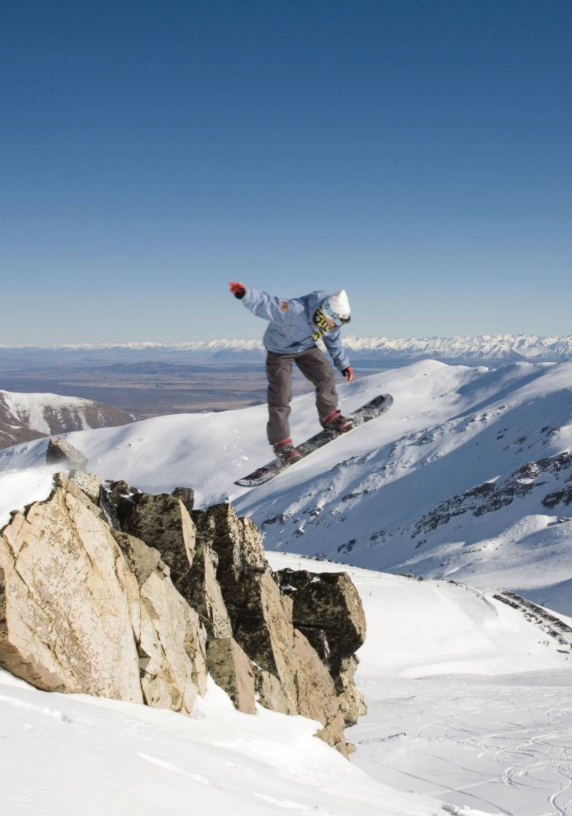
There are more than 25 ski fields in this lovely little country of ours, and whether you’re into gently gliding across groomed pistes or consider yourselves the heli-skiing types, we’re here to help you meet your match.
There are more than 25 ski fields in this lovely little country of ours, and whether you’re into gently gliding across groomed pistes or consider yourselves the heli skiing types, we’re here to help you meet your match.
Best for children

Whakapapa: The rising sun strikes early at New Zealand’s largest ski field on the northern side of Mt Ruapehu, softening the slopes, and snow machines ensure a long season here. Whakapapa has thrills and spills for old hands, while Happy Valley is tailor-made for beginners and has its own ski school. You’ll also find all the sustenance and hot chocolate you need at one of the many cafés; Knoll Ridge is the highest in the country.
Skill level: Learner to experienced.
Location: Three hours from Tauranga.
Open: June to October.
Cost: Adults from $73/day.
What’s cool: Happy Valley’s see-through covered lift tunnels.
Best for powder
TūROA: The top of Tūroa is a serious powder playground – even your boss will understand why you need to take a day off to make the first tracks. On the south-western side of Mt Ruapehu, Tūroa has a totally different feel to Whakapapa, with exposed volcanic terrain, wide trails and huge basins. It boasts the longest vertical drop in New Zealand and has the most extensive terrain parks in the North Island.
Skill level: Learner to experienced.
Location: Just under four hours from Tauranga.
Open: June to September.
Cost: Adults from $73/day.
What’s cool: The High Noon Express chairlift that takes you to 2322ft.

Best for going off-piste
CRAIGIEBURN: A club that attracts hardcore skiers and powderhounds, Craigieburn is located in the Southern Alps. Described as ‘cheap, steep and deep’, you won’t find groomed runs here – it’s just one massive off-piste area. If that doesn’t worry you, you’re probably the perfect fit.
Skill level: Intermediate to advanced.
Location: Just under two hours from Christchurch.
Open: July to August.
Cost: Adults $75/day.
What’s cool: A vertical descent that’s been compared to heliskiing – without the helicopter.
CRAIGIEBURN.CO.NZ
Best for all-day sun
MOUNT DOBSON: Usually crowd-free and with great ski schools, Mt Dobson is high up, so the snow is pretty dry, but you’ll also enjoy some lovely sun warming your back. Situated on the main road between Queenstown and Christchurch, it’s close to accommodation and other activities at nearby Tekapo. The chairlift is the centrepiece of the lift system, and there’s a natural halfpipe underneath.
Skill level: Learner to advanced.
Location: Two-and-a-half hours from Christchurch.
Open: July to August.
Cost: Adults from $84/day.
What’s cool: The epic view of Mount Cook.
Best for experts

CORONET PEAK: Coronet Peak is a world-class ski and snowboard spot, featuring state-of-the-art facilities, 280ha of skiable terrain and breath-taking views. It also has the country’s largest fully automated snow-making system, with 217 snow guns, which combined with Mother Nature results in a long season of consistently good skiing and snowboarding.
Skill level: Learner to experienced.
Location: Twenty minutes from Queenstown.
Open: June to September.
Cost: Adults from $119/day.
What’s cool: Night skiing on Wednesdays, Fridays and Saturdays.
Best all-rounder
CARDRONA: Like the sound of New Zealand’s biggest halfpipe? Beginner and intermediate skiers love this easy-going ski field for its wide open spaces – plus it’s often less crowded than some other local spots. With five eateries on the mountain and some of the driest snow around, this ski field really does offer something for everyone – and the drive home over the Crown Range is spectacular too.
Skill level: Learner to intermediate.
Location: Thirty minutes from Wanaka.
Open: June to October.
Cost: Adults from $65/day.
What’s cool: Stopping for a well-earned Speight’s at the Cardrona Hotel.

Bay business matchmakers
Paul Brljevich and Kevin Kerr of Tauranga-based Tabak Business Sales share the secrets of successful deals.
Paul Brljevich and Kevin Kerr of Tauranga-based Tabak Business Sales share the secrets of successful deals.

WORDS DANIEL DUNKLEY / PHOTOS SALINA GALVAN
Making the decision to sell your own business is never easy. If after years of hard slog, you opted to sell up so you could ride off into the sunset, how exactly would you go about it? Would you phone a few contacts and hope for the best, or take up an offer from the first interested party?
For the owners of Tauranga’s Tabak Business Sales, Paul Brljevich (pictured above left) and Kevin Kerr (above right), finding the right buyer is something of an art form. They could be considered matchmakers who link Bay of Plenty businesses with the most attractive suitors.
Paul and Kevin each have more than a decade’s experience in orchestrating business sales for Tabak, Tauranga’s oldest business brokerage. They say selling can be an emotional decision, but requires sharp analysis, impartiality and fairness. After all, it can be the most important decision of someone’s career.
From their base on Cameron Road, in the heart of Tauranga’s rapidly expanding business district, the duo has earned a reputation for their exceptional valuation skills, forensic-like attention to detail and extensive network of contacts. They cover sales all over the Bay of Plenty and up to the Coromandel, finding buyers for businesses valued at between $200,000 and $10 million. Tabak also has offices in Auckland, Hamilton, Wellington, Christchurch and Queenstown.
Kevin has been a business broker since 2001, when he was enticed into the industry from horticultural management. Paul joined in 2007, after running companies in the leisure, hospitality and property industries, plus a spell in banking. “We’ve lived it,” says Paul. “We’ve run businesses and operated businesses, so we can relate. A person’s business is like their baby; their staff are their family. They want to find a buyer who can make things bigger and better for the future.”
The business of selling a business requires top-notch expertise. Tabak works to achieve the delicate balance of getting the right price for sellers while ensuring a fair outcome for buyers. “If the initial valuation isn’t accurate, the business will remain out there on the market,” says Kevin. “We have to give realistic valuations based on thorough analysis and data. Vendors are on one side and buyers are on the other, and we’re right in the middle brokering a fair outcome.”
How does a sale happen? First, Tabak conducts an interview with the seller. A warts-and-all review follows, which evaluates the positives and negatives of the business. Tabak then taps into its prized global network of 3500 buyers, investors and contacts. This network is so successful that 80 percent of Tabak’s listed businesses are sold before they go to the wider market, allowing sellers to discreetly find the right buyer and avoid disruptive publicity.
“It’s different to selling a home,” says Paul. “You need to know the intricacies; you need to know everything! Buyers don’t purchase because we’re slick. They do it because we’ve done our homework and presented it in the right way.”
The results speak for themselves. On average, Tabak sells businesses in just three to four months, and in the past 10 years, has consistently achieved sale prices within 10 percent of the listing price.
So, what advice would the Bay’s business matchmakers give to potential sellers? “Confidentiality is key,” says Paul. “Have an exit plan when you start a business,” adds Kevin, who also believes advisers
with dedicated resources can make all the difference. “Because we’re smaller, we’re not trying to service a huge number of clients. We have a select number of listings, to make sure we deliver.”
Paul and Kevin clearly get a buzz out of their work. From business owners seeking a change, to 60-somethings cashing out on their lifelong endeavours, each case is different and requires a thoughtful, personalised approach. “We focus on quality, not quantity, and situations in which the whole team can work on a deal – where we all know the business inside out,” says Kevin.
The pair’s drive comes from helping people achieve their long-term goals. Whether it’s buying that dream retirement home, splashing out on a beachside bach, or funding a round-the-world trip, there’s great satisfaction in helping people reap their rewards.
“We recently had a husband-and-wife team who’d been in business together for decades – it was their life,” says Paul. “We were able to get multiple offers for it. The buyers loved it, and the couple were able to go on and enjoy their retirement – it worked for everybody. Outcomes like that are why we love what we do.”

Getting it right
Holland Beckett Law‘s new partner Christie Goodspeed tells why she became a lawyer, and what family means to the firm.
Holland Beckett Law’s new partner Christie Goodspeed tells why she became a lawyer, and what family means to the firm.

WORDS DANIEL DUNKLEY / PHOTOS BRYDIE THOMPSON
Christie Goodspeed opens the door to her Omokoroa home mid-conversation, with a phone pressed to her ear and her seven- and five-year-old daughters in tow, and is immediately joined by a boisterous German schnauzer and a fluffy ragdoll cat. The hectic scene offers a glimpse into the busy life of one of the newest partners at Holland Beckett Law (affectionately known as Hobec), the Bay of Plenty’s biggest law firm.
Christie smiles and takes a breath before sitting down to talk about her role at the firm known for its prowess with commercial clients. She may be leading a full life, but her surroundings hint at the meticulous planning of a top lawyer. Christie organised every detail of her family’s modern home, plotting the house from start to finish and overseeing its development from floorplan to family dwelling. Yet interior design, art and landscaping are only her part-time hobbies – in May, she was made partner at Holland Beckett, and now leads its employment and family law teams.
For Christie, Omokoroa is the perfect place for her family to call home. With idyllic views overlooking the water and a lush tropical garden, their property connects to a scenic walk leading to the children’s school. Her husband Nick, an IT technical consultant, works from home two days a week to help the pair strike the right work-life balance amid the rigours of their professions and parenting.“We’re certainly very lucky,” says Christie. “I come to work happy every day.”
Born in Hamilton, Christie decided she wanted to be a lawyer at the age of 10. She says she was attracted to the profession after watching an episode of TV show LA Law. “I liked the rough and tumble of the court litigation,” she says. “It takes a certain type of person to become a litigator – someone who likes to argue. You’ll have to ask my husband!”
She studied law at university alongside psychology, a decision that has proven useful in her work in the delicate and often emotional field of family law. “With family law and employment, it’s all about personal relationships. My psychology background is helpful, particularly when I’m dealing with separation, division of property and issues involving children.”
Christie’s journey to joining Holland Beckett in 2016 began with jobs at New Zealand firms Tompkins Wake and Buddle Findlay, and advisory firm PwC in Sydney. After becoming parents to Lily (7), Sophie (5) and Callum (3), she and Nick moved back to New Zealand.
Holland Beckett has offices in Tauranga, Rotorua, Whakatane and Opotiki. The full-service firm employs lawyers who specialise in property, estate planning, corporate and financial transactions, environmental and resource management, employment, dispute resolution, health and safety, and family and Māori law matters.
When it comes to employment law, Christie covers all areas. She says she likes to help employers problem-solve and “get it right” with their employees. On the family law side of things, she specialises in complex relationship-property cases, in which assets need to
be divided at the beginning or end of a relationship. In particular, she excels at cases involving companies and trusts. Holland Beckett is able to utilise the skills of a large commercial operation to solve difficult issues. “We help people define how they want to manage their assets going forward, and what they want to keep separate,” says Christie.
Christie’s demanding profession puts her at the centre of the Bay of Plenty’s commercial and family life. She has volunteered for Women’s Refuge and spoken publicly about racial-, gender- and sexual orientation-based discrimination. She says it can be difficult for lawyers to not to bring work problems home. “Our role is inherently being involved in conflict. You have to be able to take a step back and look at these issues with objective eyes, and that makes you a better advocate for your client.”
You might say the Bay of Plenty’s unique beauty and relaxed lifestyle provide the perfect backdrop for a family law firm. Many of Holland Beckett’s lawyers have moved here from Auckland or further afield to enjoy all the area has to offer. “Many of the partners have big-city experience or have come back after living overseas,” says Christie. They’ve chosen to be here because they want to raise their families here, and that’s a great thing. We’re a big firm with a high calibre of clients, but there’s a real sense of collegiality between everyone. The culture of the firm is important to us.”
So what makes Holland Beckett stand out from its rivals? Talking to Christie, it’s clear her employer practices what it preaches when it comes to looking after families. She was offered flexible working hours when she joined, which has allowed her to pursue her career goals without sacrificing her personal life.
She says the firm understands the importance of family. “They were so receptive to that. It certainly hasn’t stood in the way of me becoming a partner, which is fantastic. People have been promoted on parental leave, and that’s just unheard of. We have a really supportive team environment, and we all work well together. We just want to get on with it and get the best outcome for our clients.”
Christie looks outside, turning her attention to the garden. If her pristine property is anything to go by, this lawyer’s clients are in safe hands.

The miracle man
Olly Coffey helps people out of wheelchairs and onto their feet. Daniel Dunkley visited his NeuroPhysics Therapy centre at the Mount to discover how he does it.
WORDS DANIEL DUNKLEY / PHOTOS SALINA GALVAN

Olly Coffey helps people out of wheelchairs and onto their feet. Daniel Dunkley visited his NeuroPhysics Therapy centre at the Mount to discover how he does it.
I’m lying flat on my back with my legs in the air. They’re suspended beneath an exercise bar and suddenly begin to tremble uncontrollably. My muscles twitch independently from the rest of my body, causing an unusual sensation right up to my stomach.
If this sounds out of the ordinary, it’s because it is. I’m at Olly Coffey’s NeuroPhysics therapy practice at the Mount’s SwitchedOn exercise and wellness centre, receiving treatment for a back injury that has been causing me pain for a few months. UNO has sent me here to uncover the secrets of the approach that has revolutionised physical therapy and is changing lives.
There are two NeuroPhysics therapy centres in New Zealand; Olly runs this one, and the other is in Auckland. He’s been practising NeuroPhysics for about four years, having learned his trade from Australian founder Ken Ware. From his base at the Mount, Olly runs eight-week courses comprised of four intensive two-hour sessions in week one, plus ongoing follow-up.
To his patients, Hamilton-born Olly is a miracle worker. From the wheelchair-bound man he helped walk a year after his snowboarding accident, to the tetraplegic who can now stand, to the sports star regaining feeling after a serious accident, they all say the same thing: he produces extraordinary results. Olly, on the other hand, is more modest about his achievements. “I help people make changes themselves,” he says. “I’m a facilitator in that sense, just observing the penny-drop moments.”
NeuroPhysics therapy is a revolutionary form of treatment that puts a holistic spin on standard physical rehab. Rather than homing in on an isolated area of pain or damage, it treats the body as a whole and harnesses the brain’s power to help in the rehabilitation process. It’s less about building strength in the body, and more about building our awareness of how the body works – physical therapy with a hint of mindfulness.
The human brain uses trillions of neural pathways to send messages around the body, but in the event of an injury or medical condition, these pathways can become blocked or damaged. When the brain is used to sending signals along a particular pathway, any disruption affects function and sensation. NeuroPhysics attempts to open up other neural pathways, to find routes past the pain zone or area of damage.
Olly likens neural pathways to a synchronised school of fish. He says that when an injury happens, it’s like “a shark breaking up the school”. The ‘fish’ (messages) have to figure out a new way to continue their journey together.
How does the body find new neural pathways? A key part of the treatment involves making your body tremor; you may have felt a similar feeling while holding a difficult pose during a yoga class, lifting weights or holding a glass of water out in front of you. By performing slow, steady exercises using light weights, the muscles are stimulated and begin to tremor, and NeuroPhysics practitioners believe this is the body’s own calibration system being spurred into action, as it attempts to open up neural pathways around the body.
As well as firing up the body’s internal calibration system, NeuroPhysics aims to increase your awareness of your body. Posture, for example, is important. Hunched shoulders or inward-facing knees are signs that your body is in fight-or-flight mode, and in this stressed state, you’re in no position to heal. Olly wants his patients to enter a ‘growth’ state – the opposite of fight or flight. To achieve this, they’re encouraged to puff out their chest, close their eyes and allow their body to do the work.
“The body has an innate ability to heal itself, but we seldom give it a window of opportunity,” says Olly. “We can think ourselves into a state of anxiety and it holds us in the wrong physical state. You can’t isolate the musculoskeletal system, neural system or cardiovascular system – it’s all part of the bigger picture. The brain is coordinating everything; if your body is an orchestra, then the brain is the conductor.”
Olly says he has made the biggest difference to people who are living with chronic pain, and with life-changing injuries and conditions such as spinal cord damage and Parkinson’s. After my two-hour NeuroPhysics session, my back pain has significantly reduced and I have a sense of focus and clarity that I rarely experience. It is extraordinary – I’ve definitely joined the ranks of those who think so. Read on for stories of three other Kiwis who are benefiting from Olly’s work.
THE MAGIC TOUCH
Tauranga’s Casey Waterhouse suffered a severe motocross injury that left her paralysed from the chest down. She began seeing Olly since last June and says the sessions are like “slowly reawakening the senses”. “I had no feeling when I started with Olly. Now when my body is in tremor, I feel little flickers right down to my hip.” Casey’s making progress she never thought was possible. “Some therapists practically crossed me out; Olly has given me a chance. He calms me down and I’m starting to feel more.”
Another convert is White Sox player Jennifer Feret-Brear. Jennifer suffered an injury to the anterior cruciate ligament in her knee and was anxious to recover in time for August’s Women’s Softball World Championship in Japan. After four sessions with Olly, she was able to return to the game after 18 months out. “I could perform movements I’d been practising for a year but unable to master, and the calm and clarity of thought was even more rewarding,” she says. “For me, it was similar to the feeling you get after yoga, but with far less physical stress and effort.”
Matt Hall broke his neck in a swimming-pool accident last year, leaving him a tetraplegic. After making little progress with a regular physio, he discovered Olly. “It was a change of mentality,” he says. “I moved away from a model with very limited expectations of what
I could do. In three months, I went from not being able to feel my leg to standing on my own. After five months, I was walking on crutches. For me, it’s nothing short of a miracle.” Matt credits Olly’s calm demeanour for his progress. “His personality makes the difference. He’s a remarkable human being and has a real presence.” Matt’s now back working in Singapore, where he’s continuing his recovery. In the past month, he has started to be able to feel the sensations of hot and cold on his hands – something that would have been unthinkable a year ago. He wants to spread the word so NeuroPhysics therapy can help others. “Applying this process over several months can make a colossal difference to your life,” he says. “So many people out there could be recovering like me. It really can help.”
Deep + meaningful
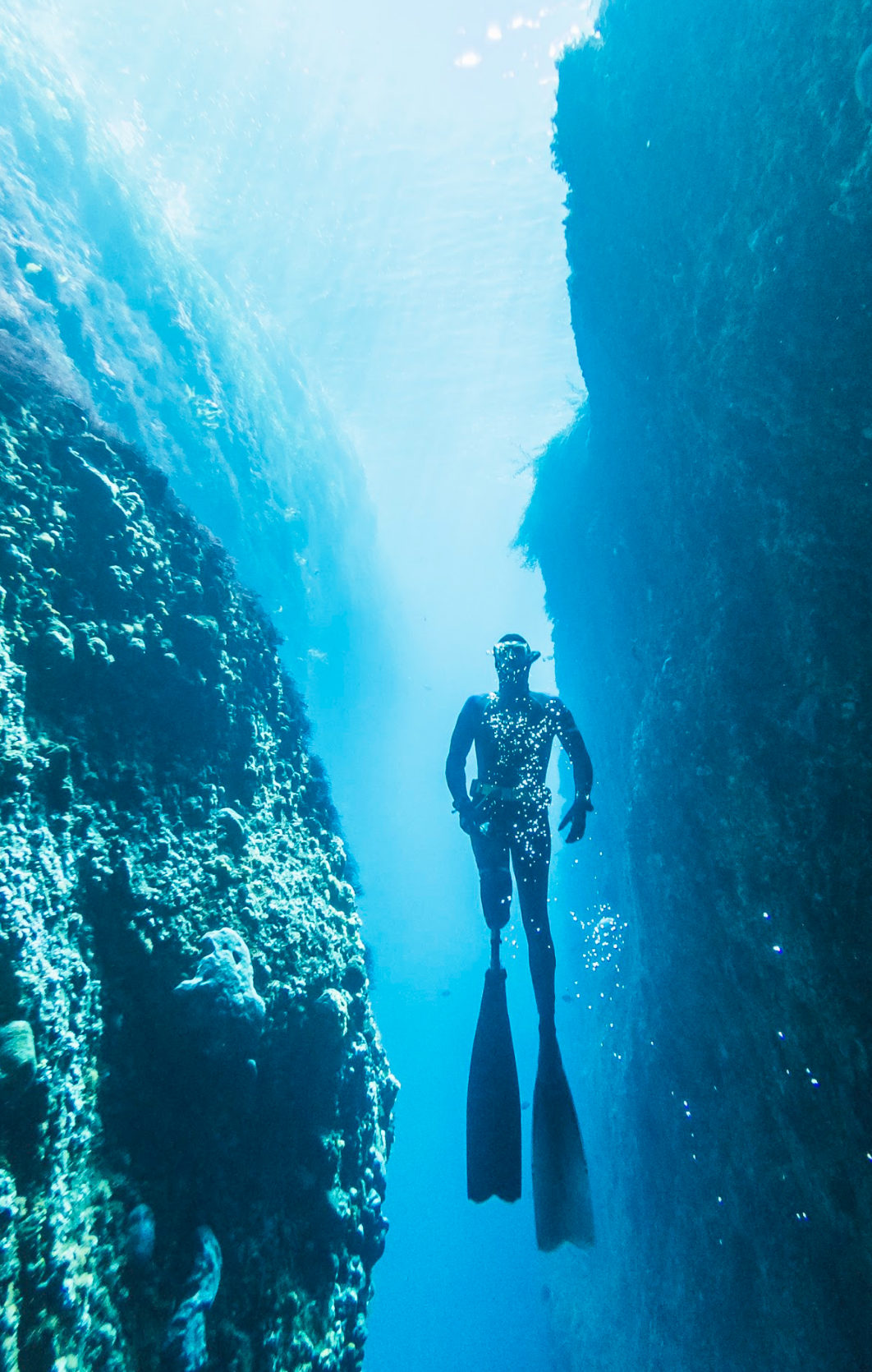
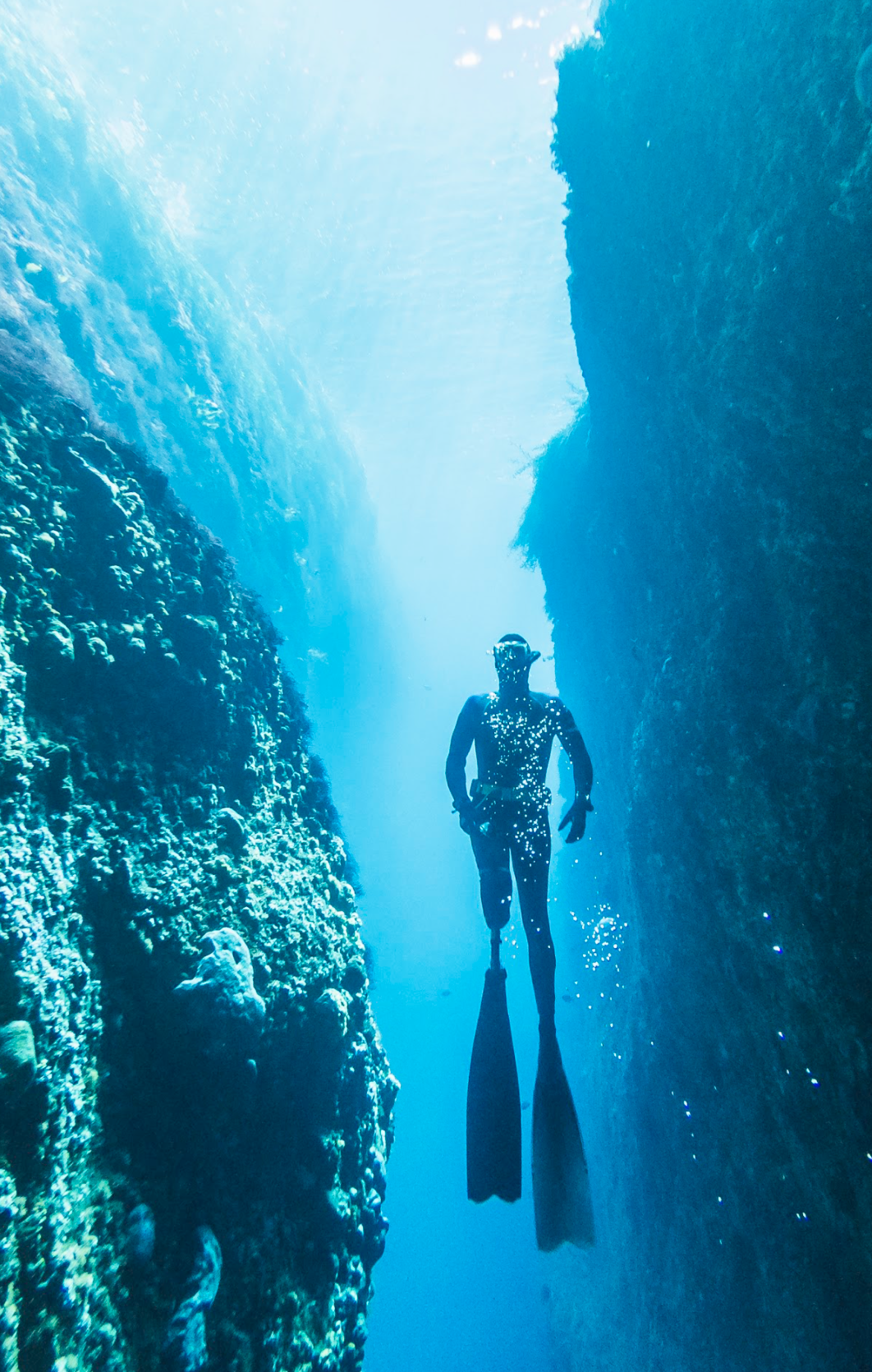
On September 25, 2007, William Pike was caught in a lahar on the slopes of Mt Ruapehu. Less than 15 hours after the eruption, surgeons at Waikato Hospital were forced to amputate his severely damaged right leg below the knee.
WORDS MARY ANNE GILL / PHOTOS SUPPLIED
On September 25, 2007, William Pike was caught in a lahar on the slopes of Mt Ruapehu. Less than 15 hours after the eruption, surgeons at Waikato Hospital were forced to amputate his severely damaged right leg below the knee.
In the years since the accident, 33-year-old William, who lives on Auckland’s
North Shore, has returned several times to the mountain where he nearly lost his life. He’s also tramped, cycled, kayaked, climbed Antarctica’s Mt Scott, established nationwide youth-development programme the William Pike Challenge Award, and become a sought-after inspirational speaker.
But scuba diving, something he’d done extensively before his accident, was what he really craved. “It was the last thing I got back into post-accident, and it took nine years,” he says.
Whenever William tried to dive, the air inside his knee socket would be squeezed by the increasing water pressure, causing discomfort as he went deeper. “I tried lots of different ideas to prevent it, and finally using a silicone liner has worked,” he says.
That success means the former primary school teacher is now considering taking on more aquatic adventures. He recently went freediving at the Poor Knights Islands Marine Reserve off the east coast of Northland, but a much bigger trip – like his recent expedition on the HMNZS Canterbury with the Sir Peter Blake Trust to the Kermadec Islands –beckons.
After the accident, William was transported by ambulance to National Park, where Taupo’s Lion Foundation Rescue Helicopter was waiting to take him to Taumarunui Hospital. There, a team from Waikato Hospital, who’d flown in on the Westpac Waikato Air Ambulance, joined with the local hospital staff to stabilise him in the resuscitation room. Twenty-eight minutes later, he was off to Waikato Hospital, arriving nearly six hours after the eruption. His heart rate was 40 beats per minute, his blood pressure 65/29 and, alarmingly, his body temperature was 25°C, the lowest doctors at the hospital had ever witnessed in a living person.
William credits his fitness for his survival. “I’ve always been lucky that outdoor education, sport and hobbies were instilled in me from a young age, which ensured I was fit.”
Today, that’s not changed – and neither has his positive attitude. For William,
every day’s a good day. “Everyone sees the shiny side of people, but there were times when [losing my leg] was a nightmare,” he says. “Yet I got through the devastation. I was glad to be alive because I knew I shouldn’t have been.”
Setting himself goals while he recovered in hospital helped a lot. “I tested the boundaries,” he says. “The standard ACC leg was not what I wanted. The reality is, the Limb Centre decides what prosthetics you get depending on your [needs]; a Lamborghini is no good for a farm track, for example. To begin with, you get a stock- standard foot without much flex in it.”
Although gagging to return to his active lifestyle, William had to work towards it – and that started with adapting to life as an amputee. To give himself purpose and direction, he returned to the classroom within three months, then in 2009 established the William Pike Challenge Award – a personal-development programme for children in Years 7 to 9.
He doubts his life would have panned out the way it has had it not been for the accident. “I’d probably be teaching in a classroom and impacting on 30 kids a year, and now I’m impacting on 1000 kids or more a year.”
In 2014, William married Rebecca, a fellow school teacher, and the couple now has a daughter named Harriet. “I want to explore with Rebecca, run around with Harriet and take her on adventures, run a business, pay the mortgage,” he says. “We can all be explorers in our own world – whatever we do. If I didn’t have that explorer mindset, I’m not sure the challenge award would be what it is now.”
Happily, there’s no need for William to have any more operations, provided he’s careful, which he is. “During summer, it’s a battle because I always want to be out there doing stuff, but I sweat a lot in the [prosthetic] leg. I have to take it off and dry it, sometimes every 15 minutes, which really slows me down. At the same time, though, it gives me an opportunity to stop and think – a little like hitting the refresh button.”
William doesn’t consider himself disabled. “I’ve just got some challenges that makes things a bit more difficult. But I can do some things other people could never do. There’s always someone worse off than you.”

Master + Commander
On June 14, 2017, she assumed command of HMNZS Te Mana, becoming the first woman in our navy to captain a frigate. Accepting the symbol of command, she uttered the immortal phrase: “I have the ship”.
Lisa Hunn has a lot of achievements to her name. A member of the Royal New Zealand Navy (RNZN), she’s represented New Zealand as an acting captain in 2016 exercises aboard warship USS America and been chair of the RNZN Women’s Steering Group. But all that and a diploma in fine arts pales in comparison to the moment she’s most proud of.
WORDS ANDY TAYLOR / PHOTOS TRACIE HEASMAN
On June 14, 2017, she assumed command of HMNZS Te Mana, becoming the first woman in our navy to captain a frigate. Accepting the symbol of command, she uttered the immortal phrase: “I have the ship”.
The frigate is a battle-ready component of our navy, with all the bits to blow things up. “And the best part is that Te Mana’s symbol of command is quite big,” says Lisa. “Other ships have pounamu and the like, but with the hoe, I get to tell everyone that mine is bigger than theirs!”
This line is typical of Lisa. She has a very, very serious job, with the lives of 180 people directly in her hands, and often the lives of hundreds more indirectly, dependent on her command. And yet she’s retained that classic Kiwi ability to find humour in all areas of life.
This ability to look on the bright side is essential when you’re “driving” (as she puts it) through rough seas and storms in a warship the navy describes as “designed to fight and evade her enemies and take battle damage”. And you think you need light relief after a bad day in the office.
Lisa talked to UNO just a couple of days after being rushed to hospital with acute appendicitis that saw her have emergency surgery. “It wasn’t exactly what I had planned for the week,” she says, dryly.
Lisa’s story starts in Wellington, in what she describes as a yachting kind of family that could often be found out on the water in a variety of small boats. Her parents regularly attended the local yacht club, and while they were there, young Lisa spent her time with the Sea Cadets. For many of us, childhood interests like this are a passing distraction, but it was clearly more formative for her.
“It did have a huge effect,” she says. “I’d always loved being out on the sea, but the cadets showed me that there was more to it than that. It was a real passion, and the
navy offered something that allowed me to combine that love of being out on the ocean with seeing the world. If I was to try a philosophical explanation, I’d say that the navy offers access: access to the world, to challenges and to experiences that not
many other careers can match.”
Commander Hunn’s experiences are a roll call of foreign locations and corridors of power. She entered the navy in 1990 on the ‘general list’ as a midshipman, and did initial officer training, then a Bachelor of Science in geology. A promotion to sub lieutenant and a stint on her first seagoing unit followed, with time on HMNZ ships Endeavour, Wellington, Canterbury and Takapu. She received commendations for excellent service throughout the ’90s, and by October 2002 was a lieutenant commander and had added a New Zealand General Service Medal (Afghanistan) to her decorations for participating in Operation Enduring Freedom in the Gulf of Oman. She represented New Zealand at international AUSCANNZUKUS meetings (it’s pronounced Oz-Can-Zoo-Kiss, since you asked), then became executive officer of HMNZS Te Mana, whose home port is Tauranga. Executive officer is the second in command, and Lisa’s trajectory seemed fairly clear – until she started looking for another challenge.
“I’d always been interested in the arts and it had always been a passion,but the navy kind of got in the way. There came a point where I thought, ‘It’s now or never’, and so I started a Diploma in Fine Arts. It was the biggest challenge I’d ever faced.”
Bigger than navigating a warship through a cyclone? “Well, yes – in many ways it was! It was such a different approach, a different set of parameters, but I really loved it, and when I graduated I thought I could juggle a life of some part-time work for the navy with being a part-time artist of sorts.”
It didn’t quite work out that way. Instead, in 2014, realising the sea was a stronger calling and that she was missing the navy more than she could have imagined, Lisa re-engaged in the navy’s regular force. Once she was back in the thick of it, a few high-ranking land-based appointments presented themselves, but it wasn’t until that moment at Auckland’s Devonport Naval Base, when she said, “I have the ship” and became captain of HMNZS Te Mana, that it suddenly all made sense.
“It wasn’t so much about the command alone,” she says. “It was about knowing I could lead and inspire – that I could help bring up the next generation that would get to see the world. Commanding a ship is a privilege, but helping to shape young people into the future generation that will serve in our navy is an honour.”
The role of our navy is at a crucial turning point, something Lisa is very much aware of. “We have such a strong naval tradition in New Zealand, and such a strong naval reputation, which is respected all around the world. In 2017, the USS Fitzgerald was in a collision and it was to HMNZS Te Kaha that they turned to fill the gap. That’s the level of respect our training and ability has given us. And yet in some ways we’re very inward looking; we’re an island nation, and the sea is in our heritage, yet we don’t look out to those oceans around us.
“But I believe that’s changing now, and there are several initiatives before the government that are about having a new focus on the Antarctic, because that’s going to be such a huge part of us as a county going forward. So many other countries will be looking to have an influence in our part of the world, and we need to have a presence there – it’s our backyard, after all, and not many other interested parties can say that.”
It’s quite nice to know New Zealand will be flying the flag in our backyard more and more in the coming years. And it’s really nice – and very reassuring – to know someone like Lisa will have the ship when we do.


Hot Hawke’s Bay
Heat, wine and art deco parties. Welcome to Hawke's Bay.
WORDS KSENIIA SPODYNEIKO PHOTOS ALEX SPODYNEIKO
Heat, wine and art deco parties. Welcome to Hawke's Bay
WINE AND DINE
World-famous wineries are obviously a big drawcard. You can cycle your way round the wineries (bikeabouttours.co.nz) which could end up being challenging if you over-indulge on the way round! If you're tempted to indulge, the cosy boutique Wineries Ride through. But if tipsy bike balancing is not the way you imagined your perfect vacation, focus on the “three whales” of local vineyards to skim the cream off the best Hawke’s Bay has to offer.
Mission Estate is definitely the first check point for any tourist. The oldest winery in New Zealand is located 20 minutes away from Napier – quite hard not to call on the way to the other sights. Outdoor lunches are adorable here! Pretty much the way you would imagine them to be in the year 1851, when the winery was established. Elegant architecture, muted talks, inspiring views and fantastic food. Leaving this place without giving local cheeses platter a try is a crime. Creamy blue “Kapiti Kikorangi” itself is worth $32, but this price also includes two more sorts and a bunch of fruits, jams and crackers.
The other must-sees are Craggy Range (voted Best New World Winery) and Elephant Hill. Two “sisters” where built by the same architect and share the same standards of producing the best wine ever. Though skipping any of these would be a mistake. Surrounded by the epic mountains Craggy Range celebrates all things French – from cuisine to the architecture and landscapes. Whereas family-owned Elephant Hill belongs to Germans – determined and precise people focused on high technologies and outstanding presentation. Just ask for their iconic Airavata Syrah degustation ($120 per bottle while the degustation is only $5) and be ready to watch the show.
WHAT TO SEE
To feel the vibes of the festive Hawke’s Bay start with exploring its gem – Napier. The best way to discover this city is obviously by vintage car. Because where else if not in the world’s Art Deco capital? Either rent a lovely Hooters’ open top next to the Masonic Hotel or book one of the perfectly polished Art Deco Trust cars around the corner. Tere Morales-Probert from the latest is the guide to die for. 45 minutes in one car with her and you are ready to move here immediately – impossible to resist her jokes, positive attitude and touching love to Napier.
After the tour around the city and aesthetically beautiful lunch at Mission Estate head towards Havelock North – quiet small town right next to the picturesque Te Mata Peak. But no more city life for today! Time for some tough outdoor calories burning. Leave the car by the main entrance – only you, your big water bottle and spectacular surroundings are ahead. The 5 km hiking trail across Te Mata is challenging, but definitely worth the sweat. Just imagine yourself balancing on a narrow path at the very top of the mountain chain – scorched by the sun valleys on both sides, wind in your hair and Giant Redwoods at your feet. Welcome to the Real Middle Earth! The only thing ruining the euphoria of conquering the top is a steady roadway right to the peak. Honestly, how dare all those people distract you from this workout by passing by in their air conditioned 4x4?
But nothing on Earth can ever compare with an adventure of getting to the famous Cape Kidnappers on a 1949 tractor! Sure, you’ve heard the story about the Tahitian boy, kidnapped by local Maori from the Captain Cook’s ship. Yes, that is that place! No one kidnaps people here anymore, on the contrary, they come willingly to see the world’s largest accessible Gannet Colony. There are several ways to get to the beautiful birds, starting from the 9 km walk along the beach – definitely not the most pleasant option! Mind the way back as well. Whereas comfy and fun trip with Gannet Beach Adventures is. Those guys use huge vintage tractors to bring people right to the bottom of Cape Kidnappers. As if the trip on the machines like that wasn’t epic enough itself, tractors are driven into the ocean or up the massive stones to make adrenaline rush through your veins. Guides tell interesting stories about this unique place and make jokes after jokes. Though the one about four million dollars made by one of the guides looked not quite as a joke! And he is divorced by the way. Just saying…
WHERE TO STAY
Hawke’s Bay is all about atmosphere and the Art Deco Masonic Hotel in Napier is 100% the perfect place to dive into it from the very first second. Located in one of the rare buildings not ruined by the 1931 earthquake, this hotel is insane.
Just imagine, they still keep the secret underground bar, operated during the years when alcohol was prohibited! Bar counter, graffiti, chairs – everything is left as if it was abandoned only yesterday. Though, guests are not allowed to come down these days.
Many other things are preserved here right as they were made a century ago: massive staircases, tiny doors (how slim and short people used to be!), old-fashioned chandeliers and mirrors. So you literally live in history.
The most exciting part about this hotel? Not a single room is like another! Makes every of your 46 trips to Hawke’s Bay pretty special, huh? That is exactly how many rooms they have.
Masonic Hotel can easily be called the city’s centre of gravity – no matter if you’re in search for the Six Sisters houses, returning from the jazz concert, or just feel like buying a scoop of real fruit ice cream from the nearest shop – you will always end up nearby the hotel. Isn’t it just convenient?


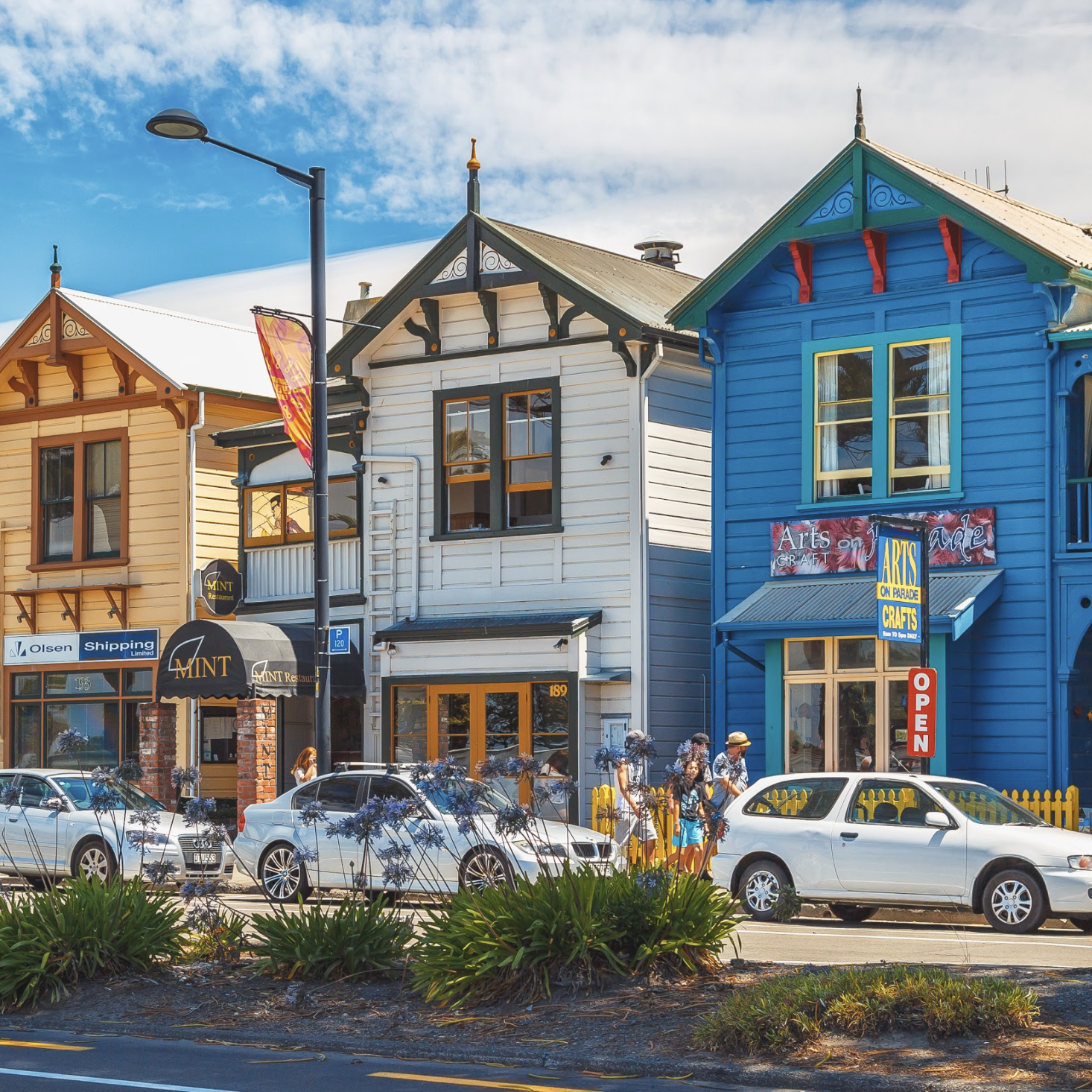

Seaweed + Mānuka
We meet the award-winning business rebuilding the mānuka industry from the ground up, bringing real benefits to the East Cape.
WORDS CHANTELLE LAURENT PHOTOS LOGAN DAVEY / LARISSA DRYSDALE
We meet the award-winning business rebuilding the mānuka industry from the ground up, bringing real benefits to the East Cape.
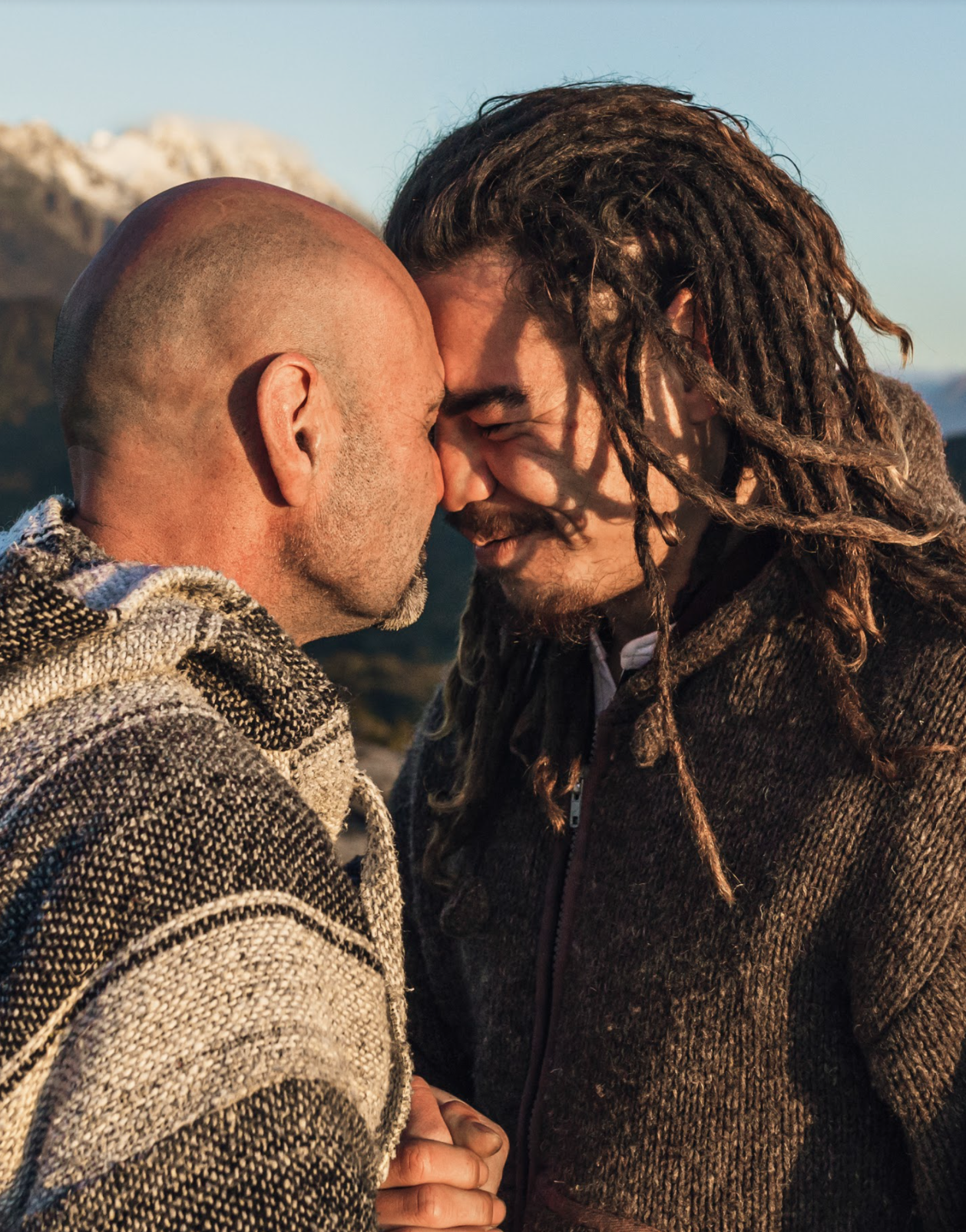
Mānuka honey is a bit of a golden child. Lauded for its antibacterial and antiviral properties, it's a product of bees foraging on the mānuka plant: a flowering, evergreen shrub found growing prolifically across the East Cape. New Zealand Mānuka Group founder, Phil Caskey, kickstarted global demand for mānuka honey when he developed the world's first mānuka honey medical dressing in 2000 (still in use in many hospitals around the world today).
Breaking the cycle
In in 2011, after a break from the industry, a Māori landowner contacted Phil asking for help. Fairness and transparency was needed: landowners growing the plants were suffering. Phil set about establishing agreements between landowners, beekeepers and manufacturers, ensuring an open and fair return for all.
Phil returned fulltime to the industry with his business, the New Zealand Mānuka Group (NZMG). A business rooted in its belief in sustainability of the land as well as its people, the NZMG saw that the mānuka plant had so many other other uses other than just producing honey. They have built, from the ground up, an entire industry around mānuka, creating and returning wealth to local communities, and using the products to bring strength and vitality into our homes, gardens, and families.
What bees do
Bees pollinate the mānuka shrubs over their 20 to 30 year life cycle. During the short flowering season, honey is collected from the hives and processed for our consumption. Once the flowering season is over, the trees are trimmed allowing them to thrive better, and the brush collected is processed into highly potent mānuka oil ßeta triketones (MßTK).
The residual mānuka mulch from this oil processing activity is rich in nutrients and forms a dense fibre which retains an incredible amount of nutrients, making it ideal for gardens. And because it has been steam cooked, it is free from problematic weeds.
Along the coast
Alongside the innovative group's operations with the mānuka plant, they also harvest the abundant, tidal washed seaweed from the pristine waters along the East Cape's fertile coastline. The group is the biggest producer of pharmaceutical grade agar (a jelly-like substance found in seaweed), in the southern hemisphere. In-house scientists have recently identified wide ranging benefits in the green and brown seaweeds also collected by their harvesters. These seaweeds have been found to contain essential amino acids and trace minerals which significantly boost the health of bees as well as pastures, crops and our gardens.
With NZMG building the mānuka industry and other opportunities, Māori landowners and trusts are developing their land on the East Cape into high quality, well-resourced mānuka plantations. Those with already converted land are employing and training local people into wide ranging jobs from plantation workers and production staff, right up to qualified horticulturalists and managers.
The group's full range of products is huge: honey, oils, beauty products, seaweed, garden mulch, fertiliser and so much more: and all from our lush, verdant East Cape.
Going the full circle.
And behind all this product innovation is a commitment to the people of the East Cape and their land. A fair share of the value NZMG creates goes back to the landowners and beekeeping partners, and so to the local community, through job creation, upskilling and redistribution of wealth. Families are able to stay together, on the land of their ancestors, and land is harvested sustainably. Everyone benefits.

A higher plane
Having sound architectural credentials is a given when you've been in business for 21 years. Interviewing the two partners at DCA Architects in Rotorua, my ear is on the hunt for something which sets them apart from their peers.
WORDS JENNY RUDD PHOTOS TRACIE HEASMAN

Having sound architectural credentials is a given when you've been in business for 21 years. Interviewing the two partners at DCA Architects in Rotorua, my ear is on the hunt for something which sets them apart from their peers. Darryl Church, founded the business in his garage in Rotorua after a bit of nagging from his wife 21 years ago. In 2016, Werner Naude, a South African with a German forename, a French surname and a refined brain, joined Darryl as partner. The pair have great professional chemistry. They look at each other and listen carefully when the other speaks. Early in the interview, Darryl said "I have practiced as an architect on my own as well as in a group. And there is no doubt that having more minds on a job means you come up with a better solution for the client. Especially if you've selected those minds carefully from the outset."
And that's what sets DCA apart from their peers. They are expert problem solvers. And that enables them to outperform a brief given to them by a client.
Darryl explains, "We have six core values. These values were crystallised when we thought about the way we work. By analysing our most successful projects, a pattern emerged. We now use those core values to guide our employment choices, the way we work, and also drive success for our clients."
They are: Open ears and open minds. Design is in our DNA. Lifelong learners. Quality relationships. We see things differently. Design for the future.
I ask for some examples of how their core values appear in their work. Werner gestures to the wall behind us which is covered in technically brilliant photography, a visual CV of recent work. There are some immediately recognisable buildings in the Bay: Green Park School in Greerton, new apartments on Pilot Bay, Golden Sands Primary School, the Toi Ohomai Institute in Rotorua. And some beautiful, luminescent cylinders of light in amongst trees. The toilets in the Redwoods, Rotorua. It's not often you are able to comment favourably on public loos. But it's worth drinking plenty of water as you walk through the woods so that you have good reason to check them out.
REDWOODS TOILETS, ROTORUA
Darryl: Our client - Rotorua Lakes Council - was willing to take a design journey with us and rise above the mundane. It would have been far easier to build another concrete block of toilets. But as we went through the process, we realised we would have an even better outcome if we collaborated with an artist. Our client was receptive to the idea. Collaborating with the screen artist, Kereama Taepa, brought a special narrative to the project which captures the spirit of The Redwoods forest with the designs laser cut onto the corten steel cylinders. The toilets are now a contemporary piece of art, sensitive to their environment and the people of Rotorua.
TOI OHOMAI CENTRE OF NURSING, HEALTH AND SCIENCE, ROTORUA
Werner: Part of our brief for this project included a 200 seat, tiered lecture theatre and auditorium. During a full review of their facilities, we saw there were already two theatres like this, and they were underutilised. We knew they were having art exhibitions that year, and fashion shows which would need a catwalk. So, we suggested a flat floor lecture theatre space which had so much more flexibility, and could still be used as a lecture theatre. Similarly, we were briefed to provide six nursing wards for training purposes. Once we started researching, we realised that the health system is moving away from ward setups. We decided to pull back, not wanting to build something which would be outdated soon. We were able to buy back floor area to provide more space for socialising. Other than an old cafeteria, there was nowhere for students to stay on campus and hang out, socialise and study.

Making it home
Corporate sponsorship isn’t just money in exchange for logos. Do you know who supports your children’s hockey club? Of the surf club that keeps us safe in the waves, or the art exhibition you enjoyed with your family?
WORDS ANDY TAYLOR

Corporate sponsorship isn’t just money in exchange for logos. Do you know who supports your children’s hockey club? Of the surf club that keeps us safe in the waves, or the art exhibition you enjoyed with your family?
A recent, search for properties led me down a google rabbit hole, and I ended up on the EVES website looking at the long list of local groups they support. I was a bit taken aback. I suppose we only think a business has sponsored an event if we see their logo. But that's not the case.
Whilst they are excellent at marketing houses, the Realty Group (EVES and Bayleys Real Estate's umbrella company) don't spend much time talking about what they do in our community. I get in contact with Allison Stewart, the group's sponsorship and events manager, who gives me a bit of a history lesson. It becomes clear that investing in where we live is a fundamental to the group.
EVES and Bayleys are two of the most established and trusted names in residential and commercial property. EVES was founded here in the Bay of Plenty in 1968 by Max Eves and Brian Waldegrave. They joined forces in the eighties with Richard Cashmore, the Bayleys founder, and the two businesses started to operate as The Realty Group, whose structure still exists today.
A firm believer in giving back, Richard is the group's current chairman of the board. “Our business was founded on family values, and we are passionate about investing in our region." As good as his word, when he started Bayleys, he went about quietly helping surf clubs, sports teams, schools - just a whole lot of locals - turn great ideas and big dreams into reality. He made sure that it was integral to the DNA of the companies and something that all staff could be a part of. Some aspects of this philanthropy were public – like the highly popular Crippled Children’s Society fundraising dinner the company was involved in for around ten years – but most of it was very low key indeed, with staff from all levels of the companies getting involved in helping out.
The group's investment in our region is best illustrated by Allison. She's fostered great relationships with local community groups. “Our people are passionate about the places they live and work in, and we are really proud of their involvement in community projects, undertaken of their own volition. We want to contribute in a worthwhile way to the communities we operate in.
The help comes in many forms. “We have a pretty skilled group of people here,” Allison says, “with a broad range of contacts. Our business is about problem-solving and we like to use those skills in the community work we do too. It was a great source of pride for us that during the economic downturn, we were still able to fulfill all our commitments to those we had offered to help. We take our commitments seriously because these are our people and our communities.” So seriously in fact that for the last ten years they have made a conscious effort to focus on support for a wider range of groups. “We wanted to spread our efforts,” says Aidan Lett, group marketing manager, “and instead of concentrating on one or two larger groups, get involved with more people at a community level. “There is a genuine love of being able to help out in our two companies,” Allison says, “and we have seen that grow in recent years. It's a Kiwi thing I think, wanting to help out, pitching in and working together.” it’s also a very Kiwi thing that EVES and Bayleys have been pitching in for nearly half a century without making too much noise about it, but then, as CEO Simon Anderson says, "Ultimately our business is all about people. Whether that’s our team, our community or helping people find their dream home. We put people first."

The brave move
Cindy is exactly the kind of import we love! The Californian has come to us via Hawkes Bay, bringing with her an unusual skill. Cindy helps people who, on the outside, looking like they are nailing life, but inside are struggling.

PHOTO TRACIE HEASMAN
Cindy Powers Prosor is exactly the kind of import we love! The Californian has come to us via Hawkes Bay, bringing with her an unusual skill. Cindy helps people who, on the outside, looking like they are nailing life, but inside are struggling.
She brings with her a generosity of spirit. But what really impressed was her analytical mind. She asked questions about our magazine which gave us food for thought, long after she'd left, spurring us on to improve. Cindy is UNO.'s kind of gal!
1) What do you do when you notice that the same types of issues or challenges show up in multiple areas of our life and relationships?
While it can be easy to blame outside circumstances for those challenges, true and lasting happiness and love are inside of you.
When you uncover what I call your blind spots, you have the freedom to create a joyful life no matter what’s going on around you. When you are happy on the inside, you attract and create all those things you desire. It all begins within you.
Opening doors within means to courageously look at your thoughts, fears, beliefs, emotions, old wounds, and stories you tell yourself. These are your “blind spots,” which are difficult to see for yourself because you are so “in” them. These blind spots run your life until you recognize them and change them so you can create something different.
Part of my work with my clients is creating a safe and courageous space so they see different perspectives and possibilities they can’t see for themselves. By doing this inner work, you actually shift the way you see your world. And, once you shift the way you see your world, your world changes.
2) How did you make the transition to the Bay of Plenty from an established life in California in the US? Do you have any tips for people going through their own major life transition?
Life transitions such as a big move, job change, divorce, or death can certainly be chaotic and uncomfortable!
When my husband Larry asked me to move 13 years ago from our beautiful home near Lake Tahoe, California to the isolated east coast outside of Gisborne, New Zealand, I thought, “Sure, let’s go on an adventure.”
I had no idea how painful and difficult this “adventure” would be. I struggled for three years...my heart was ripped apart. I felt alone, lost, and helpless. As you know, Gisborne is isolated and surrounded by beauty and solitude. I had created the “perfect storm” to uncover my blind spots.
Thankfully, I had an amazing coach at the time who walked alongside me. With her support and incredible wisdom, I acquired the tools and information to lovingly be there for myself in all the ways I had wanted others to be there for me.
Together, we gently dismantled my inner world and looked at the core of what was really creating my deep uncertainty, pain and sorrow.
After seeing how my life transformed with that level of support, I became a Professional Co-Active Coach; certified by The Coaches Training Institute in San Rafael, California; and a member of ICF, International Coaching Federation. I’ve extensively studied metaphysics over the last 25 years with teachers around the world.
Now I know that my own happiness and life is a reflection of my work and my most potent credential and this is the transformative work I do with my clients.
3) Have you met any interesting people here?
Yes, I’ve so enjoyed meeting the people here. For example, I had heard about Debbie Karl the week I arrived and immediately booked an acupuncture session with her to get to know her and her work. Since then, we have created and grown a beautiful relationship, supporting each other both professionally and personally. That same week I was introduced to Chantelle Laurent. As with Debbie, our meeting unfolded with ease and we have been supporting each other professionally ever since.
4) How can I find out a bit more about your service?
I invite you to take a free quiz to help you discover your blind spots and start changing the way you see the world at www.CindyPowersProsor.com.