

SUMMER LOVING
This season is awash with inspiration.
This season is awash with inspiration.
WORDS NICKY ADAMS

MAEVARII TEACUP SHIRT, $259, GEORGEEDWARD.CO.NZ
ELEVATE YOUR OFF DUTY
If you’ve been thinking a white skirt could be key to your summer wardrobe, then you could be right. Forget concerns about spills and stains, pick a robust, easily washable fabric and you’ll be fine. For a ‘I’ve just stepped off my private yacht’ vibe, nothing beats head-to-toe light shades, while a coastal colour palette (blues, whites, navy) will tie in nicely to the nautical trend. A Breton stripe is always a key look in summer and can be easily incorporated into day-to-day wear. Another staple would be a trusty summer shirt. There’s always plenty of applause for a simple pale coloured cotton or linen shirt — and a well-cut white shirt is worth a thousand cheap imitations. However, don’t pass over a print, if you feel too much colour or pattern close to your face doesn’t work for you, then unbutton further. As luck would have it, the unbuttoned shirt is actually a micro trend of its own, with either a peep of f lesh, a flash of bra or camisole underneath.
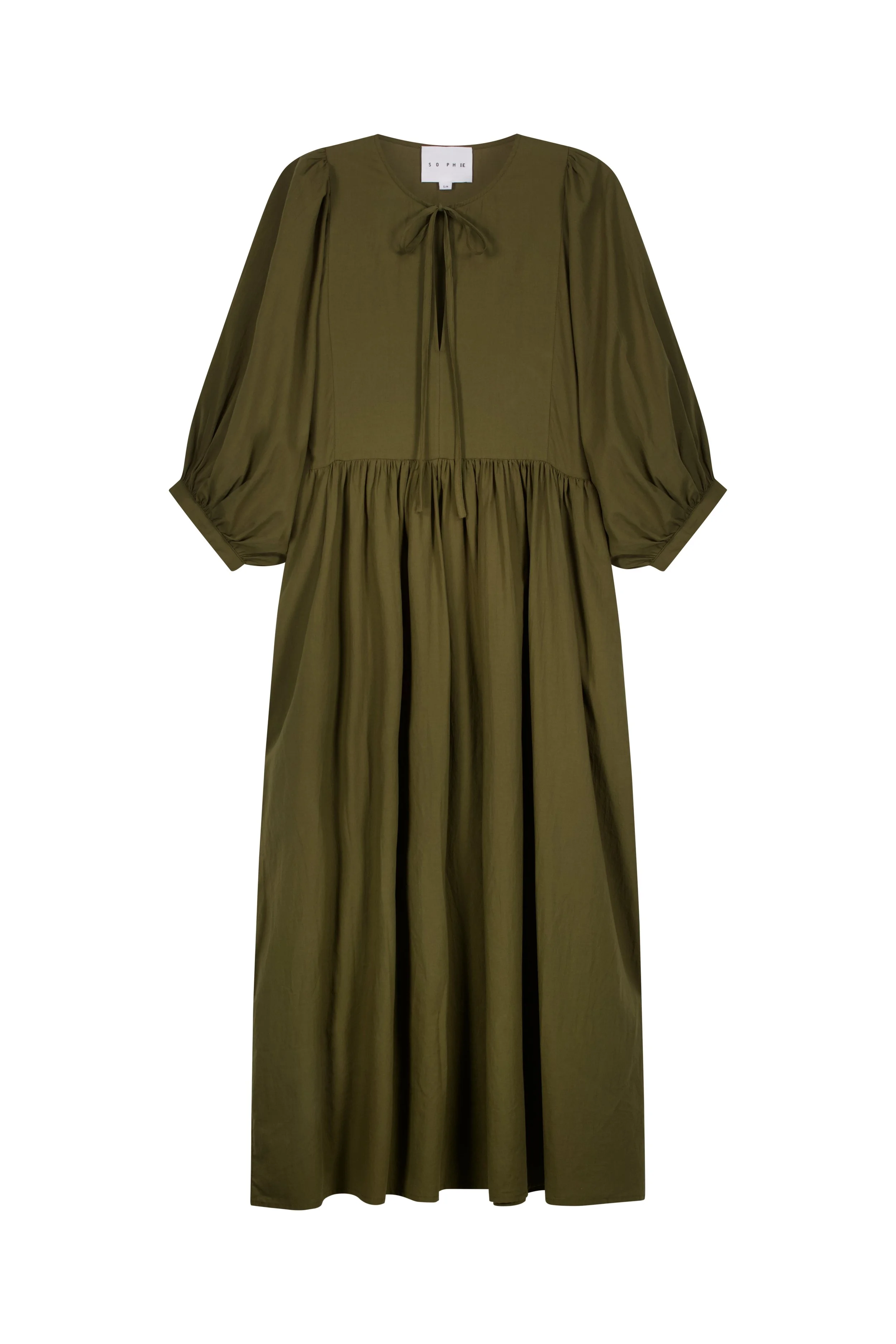
COTTON MIDI DRESS, $268, SOPHIESTORE.CO.NZ
PERSONAL PREFERENCE
Pink has become a mainstay — pick your shade or flit between; with the more modern interpretation of this as a power palette the girly connotation has finally lifted. Summer is definitely the season to rock accessories, and finding a hat that suits you, and your needs is crucial. Handbags are being personalised with everything from silk scarves to charms. Often treated as pieces of wearable art, a statement bag really can reflect the personality of its owner, whether through colour, shape or points of difference such as fringing, studs, buckles, tassels or woven leather.
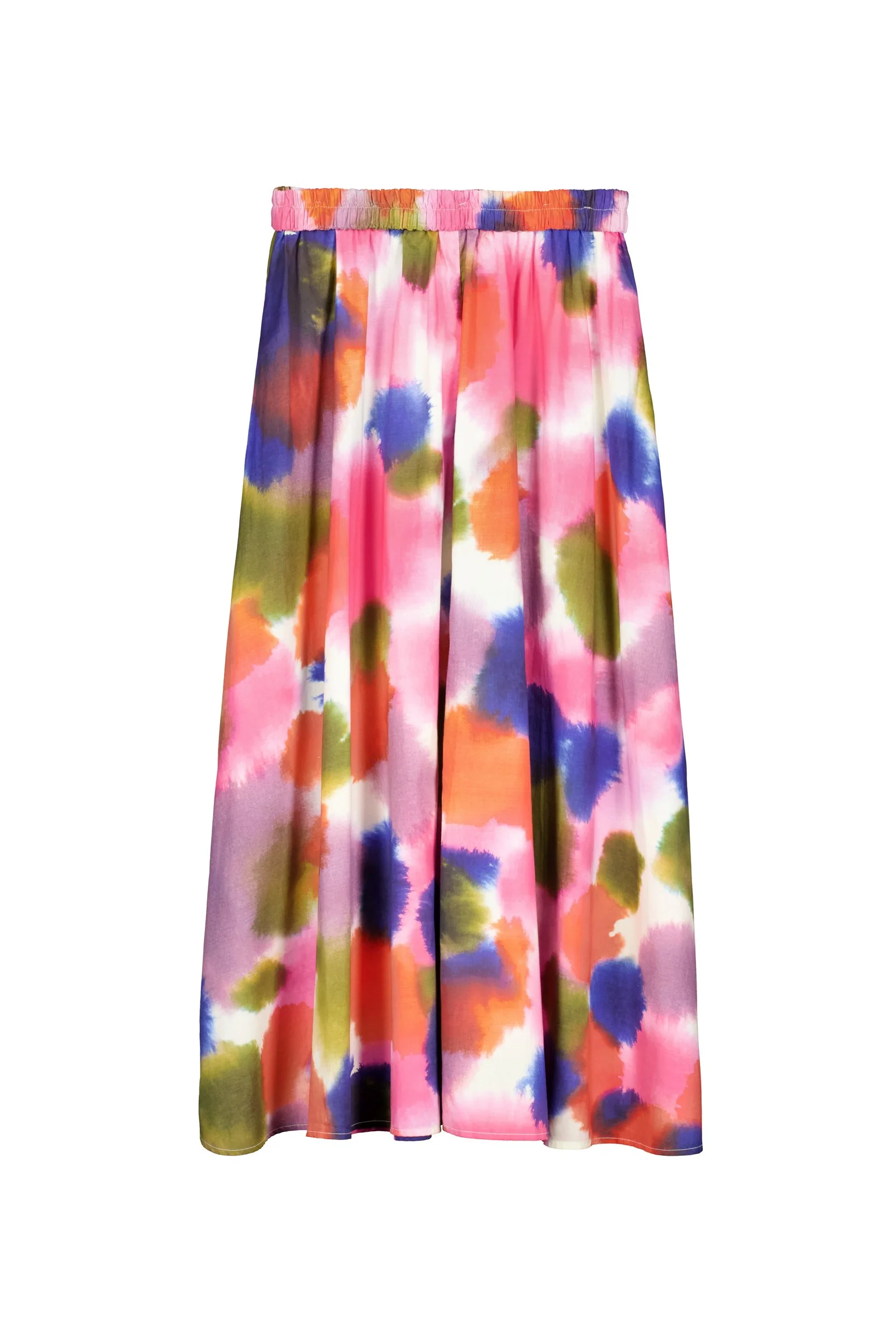
MUSE SKIRT, $309, NZ.KOWTOWCLOTHING.COM
TRENDING NOW
Most wanted this season.

BOYFRIEND SHIRT, $379, BIAS CUT PANTS, $469, SILKLAUNDRY.COM.AU
LOCK IN YOUR LOOK
Breathe a sigh of relief — when it comes to high fashion aficionados have called 2025 ‘a summer without trends’. What this means is, unlike other recent years where everyone has gone crazy for ‘Barbiecore’ (bubblegum pink) or mob wife (bling), there’s no defining trend, and with that, greater fashion flexibility. So, while lots of styles are swirling around, there’s no pressure to buy into a narrowed down specific. Of course there are still predominant looks, one of which would be polka dots, which has come forward as the must-have pattern of the season — big spots, little spots and everything in-between. Translating well to silky fabrics, a polka dot on a slinky slip skirt, paired with a black top and black kitten heels is considered a retro-style classic.
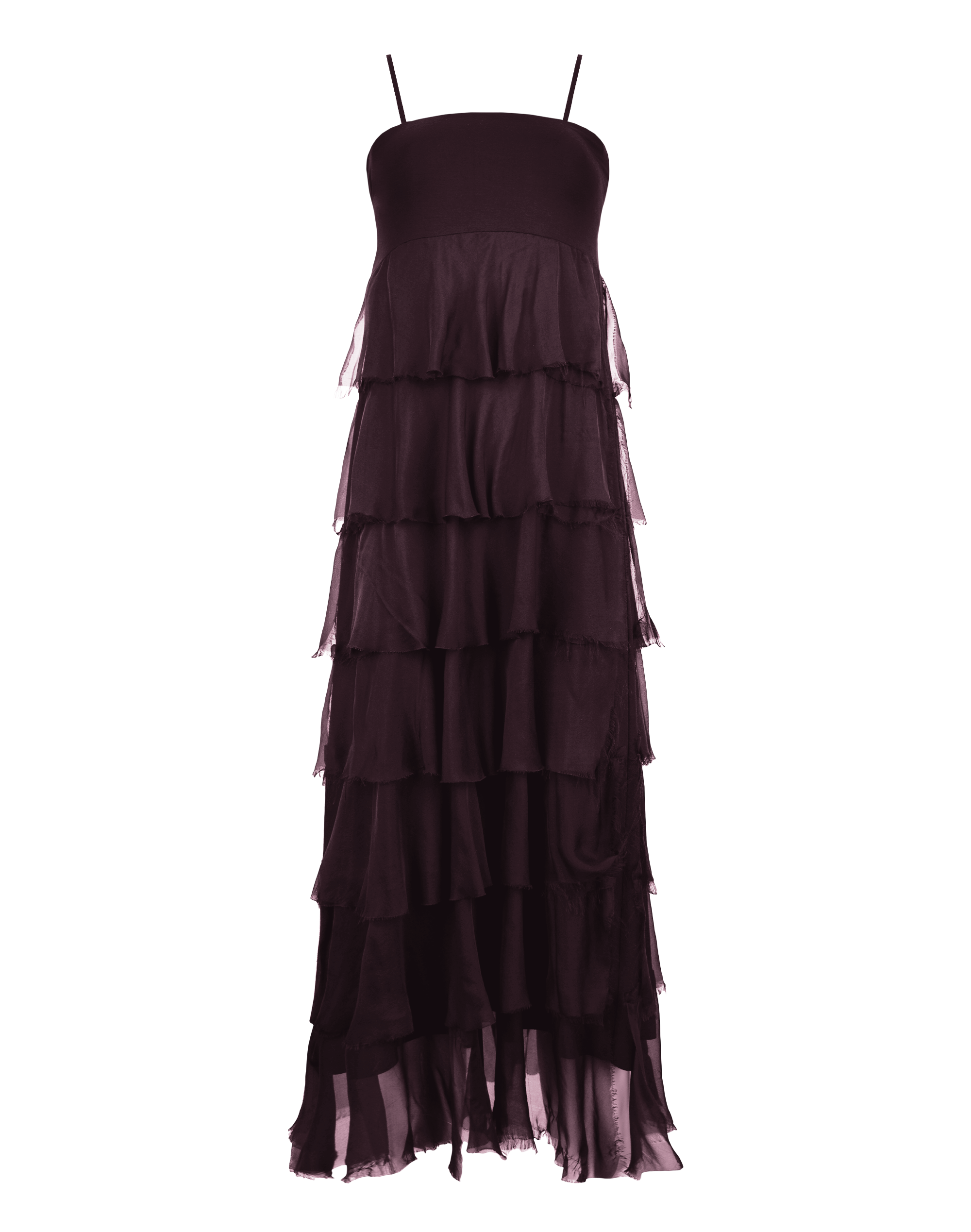
FRILL LAYER DRESS, $269, STORMONLINE.COM
PRETTY BUT PRACTICAL
In a fashion twist, straight from the catwalks to the high street for this season are two pieces that most people would consider basics. None other than the good old tank top, and the no-nonsense (but ultimately elevated) flip flop. The message is loud and clear — it’s quality over bells and whistles. If you prefer a shaped silhouette with definition to the waist, then consider a statement belt. Stealth creeping into the hot looks, belts are only set to get bigger with a revival of the early 2000s’ love of designer brand logo belts. If your budget or conscience won’t stretch to designer, then there’s a great selection of hardware to be found locally. This year you’d need to have been in fashion hinterland — or not laid eyes on a teenager — to notice that ultra-high hemlines are everywhere. So micro they may bring blushes to the cheeks. While this is not a trend that pairs well with varicose veins, a short skirt is certainly not off limits for the more mature. Aesthetically there’s a wonderfully maximalist feel to lots of the looks that we’ll see over summer, like swathes of fabric, reams of tulle, draping, romantic ruffles and blouses with puff shoulders. Bigger feels fun, and that’s what summer is all about.

SMOCKED MINI SKIRT, $229.99, SCOTCH-SODA.CO.NZ
EVENT PLANNING
Match your outfit to your mood board.
Summer is the ultimate event season, from top-tier dress code themes, such as a wedding or the races, to the usual round of barbecues and family gatherings.
Pairing an outfit to an occasion can be tricky and many will be beset with angst, weighing up the desire to break out the finery with the fear of turning up either overdressed or underdressed.
And this isn’t just a female thing. Most women will be familiar with the last minute yell of ‘Am I ok in shorts?’ or ‘Do I need to wear a shirt? What? You really want me to put on a tie?!’
So, how do you gauge your outfit to hit the bullseye? First and foremost, no matter what the occasion, be guided by your own personal style and level of comfort. Secondly, and most importantly, be confident. An outing is an opportunity to have fun with your wardrobe; there’s sure to be something shoved to the back that you’ve been dying to showcase. This is the season to flex your sartorial muscles among friends.
A-LIST EVENT
Obviously if there’s a dress code then you need to adhere to it. A wedding guest will aim to stick to the usual rules; no head-to toe white/cream/champagne shades and keep cut-outs and cleavage spills to a minimum.
A similar train of thought would apply to a hosted event at the races, with rule of thumb dictating a dress or pants worn below the knee in length and a general level of modesty. While there are a few ‘no’s’, there are lots of ‘yes’s’! Tailored dresses, feather trims, pencil skirts, fit-n-flare styles, jumpsuits — the options are endless.
Men can break out the jackets, linen suits; even ties — or alternatively bring style and savvy with a feature shirt. Banish the sneakers and put the best foot forward by trying dress shoes, boat shoes or open weave loafers.
WORK NIGHT OUT
Now this is your chance to shine, but with parameters. Usually in a workplace there is an unspoken sense of house rules when it comes to staff presentation. The end of-year shebang offers a chance to inject more personality into your outfit.
With that said you are still mixing with colleagues, so while it’s great to get creative, it’s recommended to do this with decorum. No one wants to face their boss on Monday morning knowing she saw your side-boob on Friday night. But you can crack out the sparkles, semi-sheers, slinky dresses, the heels. Keep elegant as your keyword and dress up as much as you want. Even if everyone else turns up in jandals, you can set the precedent for next year.
FAMILY GARDEN PARTY
Whether your preference is bohemian, country cottagecore or minimalist, wide leg pants and a flowing top or a maxi dress will be surefire winners. There’s a relaxed nature to a maxi that translates to any occasion — it tends to be the fabric of the dress and accessories that will be an indication of how dressy the finished look will be. If you opt for a satin then the feel will be smarter, a linen, cotton or crepe give off effortless chic. Prints are another guide to your style inspiration — vintage f lorals say nostalgia, delicate blooms tend to be understated, and a polka dot screams right on trend. A hat is a must; for versatility choose a natural weave, a black boater will elevate or lean into boho with a felt fedora style.
FASHION FORWARD
Keep one eye on what’s to come this autumn.

Louis Vuitton
GO WITH THE FLOW
Lingerie looks continue to be strong to the point where I’ve eyed up my silk nightie and wondered if anyone would really know the difference. The slinky satin slips, lace trim and general boudoir feel may feel flimsy, but are easy to layer up for cooler weather.

Burberry
GIDDY UP
Equestrian influences seem to have cantered onto the catwalks. Polished riding boots, jodhpurs, country-chic checks and knitwear will please lovers of the great outdoors.

Chloe

FACE VALUE
The injectables industry is booming, driven by a desire to take control of ageing. But for many, questions still linger. UNO looks into the world of cosmetic injectables, with three renowned BOP experts.
The injectables industry is booming, driven by a desire to take control of ageing. But for many, questions still linger. UNO looks into the world of cosmetic injectables, with three renowned BOP experts.

It wasn’t long ago that cosmetic injectables were whispered about behind closed doors. Today, they’re everywhere, and it’s getting harder to tell if someone is 20 or 65. While the stigma around treatments like Botox and dermal filler is fading, there is still a tonne of confusion and caution about injectables. Does filler really dissolve on its own? And what’s going on with those puffy celebrity cheeks.
To cut through the noise, we spoke with three experts in the Bay of Plenty, including Leanne Cashmore, registered nurse and founder of Cashmore Clinic in Mount Maunganui, Dr Adam Bialostocki, surgeon and founder of Da Vinci Clinic in Tauranga, and Dr AJ Seine, skin specialist at The Skin Centre in Tauranga, to unpack the how, why and what-next of cosmetic injectables.
WHAT ARE INJECTABLES, REALLY?
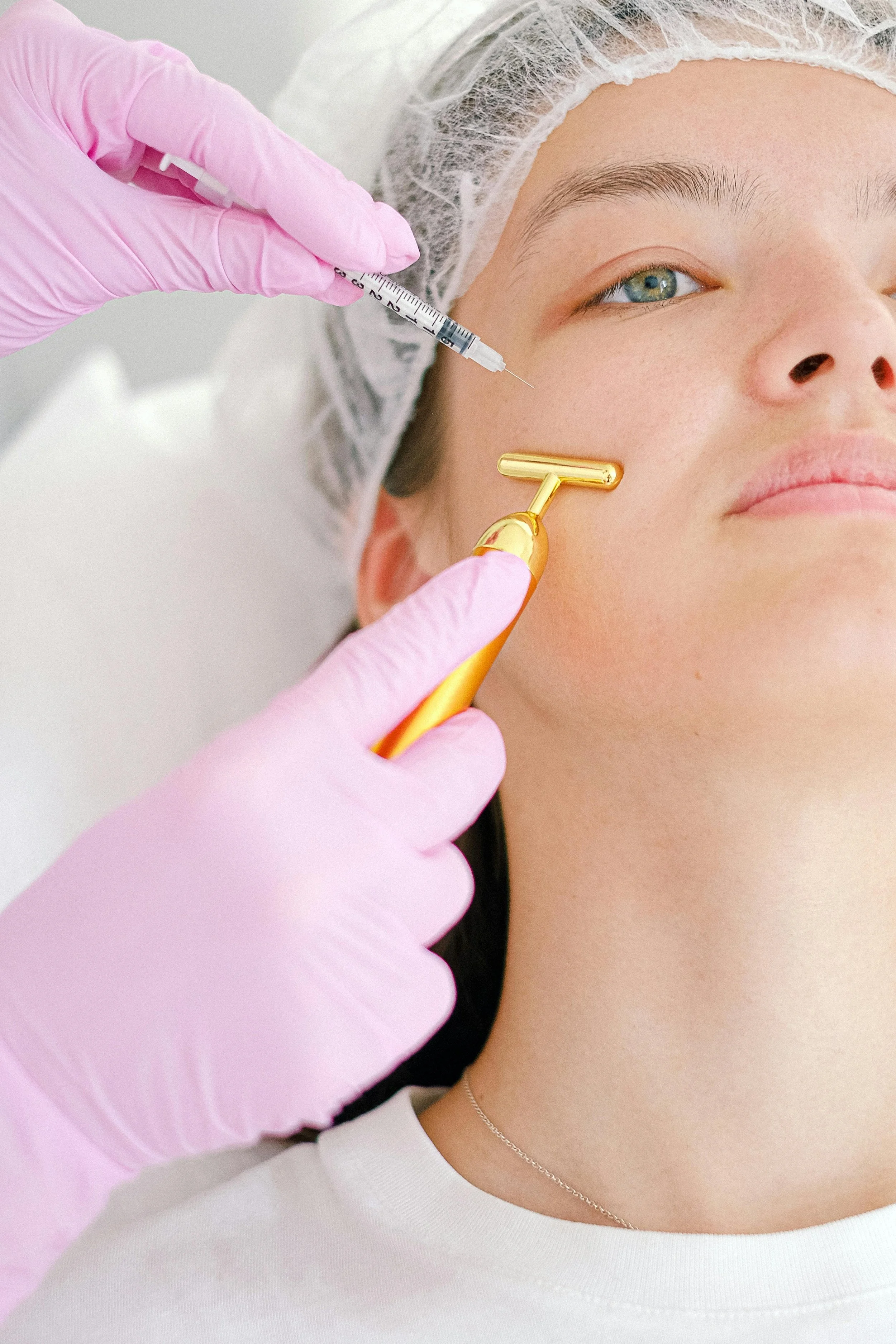
Cosmetic injectables are medical treatments used to smooth wrinkles, restore facial volume and refine features. The two most common are Botox (and other botulinum toxin brands), which temporarily relax muscles, and dermal f illers, typically made from hyaluronic acid, which restore volume and contour. “People come in thinking Botox and filler are the same thing, but they do completely different things,” says Leanne. “Botox relaxes muscles, so it’s great for dynamic lines, but filler is what you need when volume is lost or lines are etched in.”
AJ explains further: “Think frown lines, forehead and crow’s-feet for anti-wrinkle injections. Dermal fillers restore shape or contour using a soft gel that blends with your natural tissue. Bio-stimulators are newer again; they help your own skin make more collagen over time instead of simply filling space.
WHY ARE THEY SO POPULAR? r Leanne has seen demand grow year after year. “Younger clients are now starting early, often in their 20s or 30s,” she says. “Not to change how they look, but to delay ageing before lines really settle in.” This preventative approach, she explains, is part of a broader shift toward subtle, long-term maintenance rather than quick fixes. Adam agrees that smaller, regular treatments often achieve more natural results than infrequent large-volume corrections. “Smaller top-ups, done regularly, tend to look more subtle,” he says. AJ adds that this shift reflects a cultural change: “People now see injectables less as a makeover and more as maintenance. It’s become a bit like dental care for your face, with small, regular touch-ups rather than big overhauls.” BOTOX OR FILLER? According to Leanne, understanding what each product does is key. “If you’re seeing forehead lines or crow’s feet when you move your face, Botox is the fix,” she explains. “If those lines stay even when your face is relaxed, or your cheeks have hollowed out, that’s when we look at fillers.”
WHAT ABOUT RISKS?
Leanne is quick to remind people that injectables are medical procedures, not beauty treatments. “With Botox, the main risks are mild and temporary,” she says. “If it spreads to the wrong muscle, you might have a droopy eyelid or uneven smile, but it wears off.”
Filler, on the other hand, carries more serious, but still uncommon, risks. Adam points to bruising, swelling, asymmetry, and lumps as possible side effects, with infection or vessel occlusion being rare.
“Blindness is exceedingly rare,” he says, “but this is why experience and technique matter.”
AJ agrees: “Most negative stories come from unqualified injectors or unsafe settings. When performed by trained medical professionals using approved products in a proper clinic, the risks are extremely low.”
AVOIDING THE “PILLOW FACE”
We’ve all seen it. It’s that overfilled look that’s become a meme in itself. So how do skilled injectors avoid this?
“Experience,” says Adam. “It’s about placing product in the correct plane, respecting natural facial proportions, and often doing staged treatments instead of all at once.”
Leanne echoes this with a less-is-more philosophy. “We’re not trying to change your face,” she says. “We’re enhancing what’s already there.”
AJ adds that modern approaches are far more refined than they were a decade ago. “Ten years ago, the focus was on filling lines; now it’s about restoring balance and healthy-looking skin. The goal has shifted from changing to refreshing.”
COMBINING TREATMENTS
Today’s best results often come from combining injectables with skin-improving treatments. Leanne integrates other advanced options like skin boosters.
“We use products like Profhilo, Sunekos and Rejuran for skin quality,” she says. “These aren’t for volume, however. They hydrate and improve texture. Think of them like injectable skincare.”
“We use Botox for lines and to reduce downward pull from muscles, and fillers for shape and volume,” says Adam. “Then energy-based devices like Sofwave or Renuvion help with skin tightening.”
HOW LONG DO RESULTS LAST?
Filler longevity depends on the area, product and individual lifestyle. Adam says lips last around six to nine months, nasolabial folds and tear troughs nine to 12 months, and cheeks, jawline and chin 12 to 24 months.
As for Botox, Leanne notes most people need top-ups every three to four months, though frequency can decrease over time with consistent use.
AJ adds: “Anti-wrinkle injections last around three to four months. Fillers last six to 18 months depending on the product and area treated, and bio-stimulators can last longer again, as they help your skin build its own collagen.”
THINKING OF TRYING IT?
If you’re curious about injectables, every expert agrees on one thing. You need to choose your provider carefully.
“These are medical treatments,” says Leanne. “People think it’s like getting your nails done, but it’s not. You need someone who understands facial anatomy, not just someone who’s watched a YouTube video.”
AJ advises checking qualifications: “Look for a medical doctor or registered nurse working under specialist supervision, ideally with postgraduate training in cosmetic medicine or dermatology.”
Experience and personalisation matter most. “Some clinics use a cookie-cutter approach,” says Leanne. “But every face is different. What works for your friend might not work for you.”
Ultimately, Leanne believes injectables should enhance, not transform. “Start slow,” she advises. “You don’t have to do everything at once. And if you̓re not ready for injectables, start with great skincare and microneedling. That alone can make a huge difference.”
AJ agrees that the benefits extend beyond aesthetics. “When people see a version of themselves that looks less tired or tense, they carry that confidence into every interaction. It’s not about vanity; it’s about alignment between how you feel and how you look.”
Whether it’s a subtle refresh or a more sculpted profile you’re after, one rule applies. Go to someone qualified and honest. Because the best injectables are the ones no one can tell you’ve had.
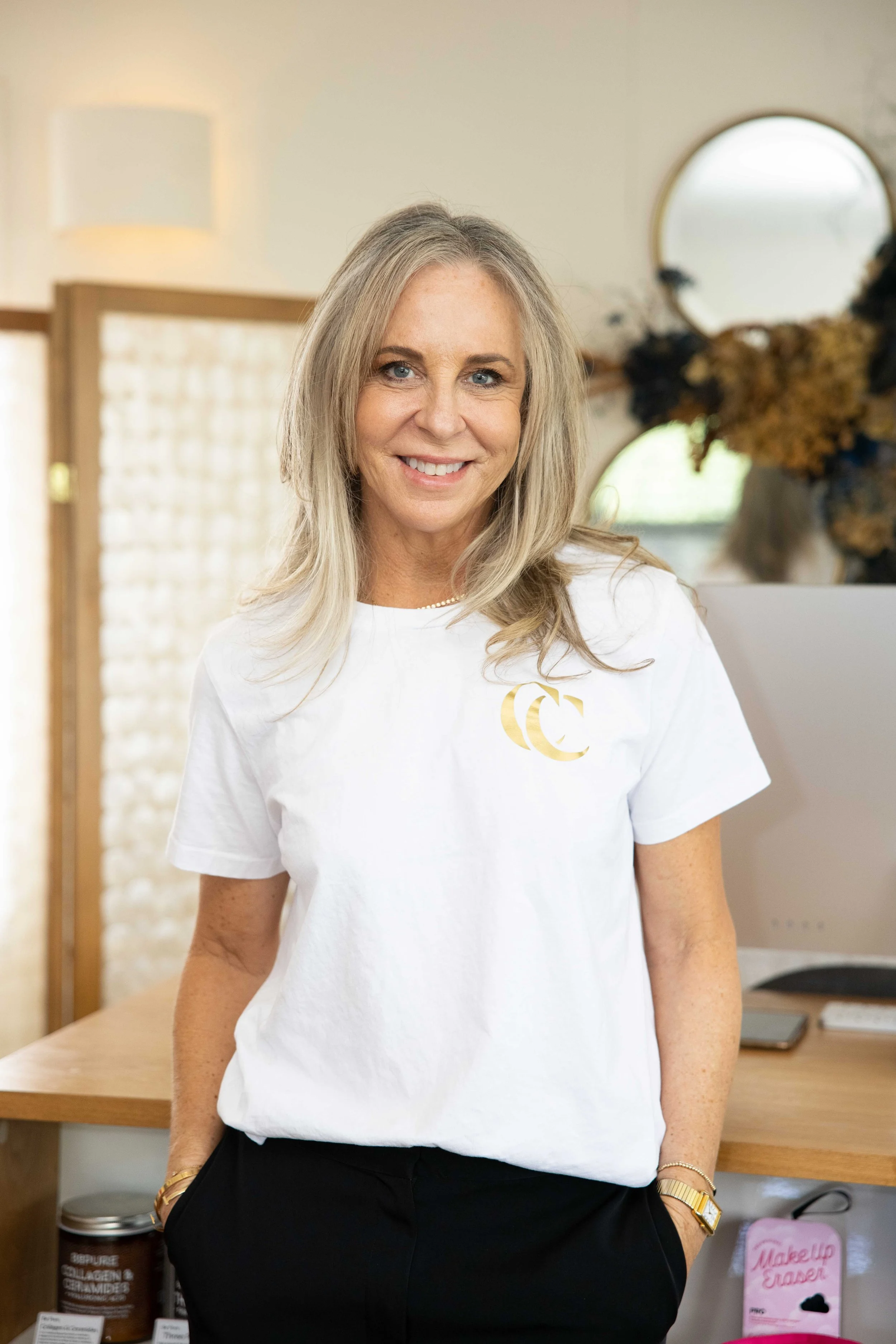
Leanne Cashmore
INJECTABLE SKINCARE
One way of achieving glowing, plump skin is with a new wave of injectables which are blurring the line between cosmetic treatment and skincare. Products like Profhilo, Sunekos and Rejuran feed the skin, rather than fill or freeze it.
“Think of these treatments as high-performance hydrators that work beneath the surface,” says Cashmore Clinic’s Leanne Cashmore. “They’re basically moisturisers you inject that deliver hydration, collagen stimulation and improved texture.”
Profhilo uses pure hyaluronic acid to hydrate and stimulate collagen and elastin, improving skin firmness and elasticity. Sunekos combines hyaluronic acid with amino acids to restore volume and smoothness, targeting dullness and fine lines. Meanwhile, Rejuran, made from polynucleotides derived from salmon DNA, focuses on healing and regeneration, which is particularly effective for improving texture, tone and scarring.
“These treatments are perfect for people who don’t necessarily want fillers but do want their skin to look fresher and healthier,” adds Leanne.
Each treatment works differently, but all hydrate skin, to make it look naturally rejuvenated with no filter required.

AGE AGAINST THE MACHINE
Cashmore Clinic’s Leanne Cashmore reveals why more people are choosing steady, regenerative treatments that age well.
Cashmore Clinic’s Leanne Cashmore reveals why more people are choosing steady, regenerative treatments that age well.
PHOTO SALINA GALVAN
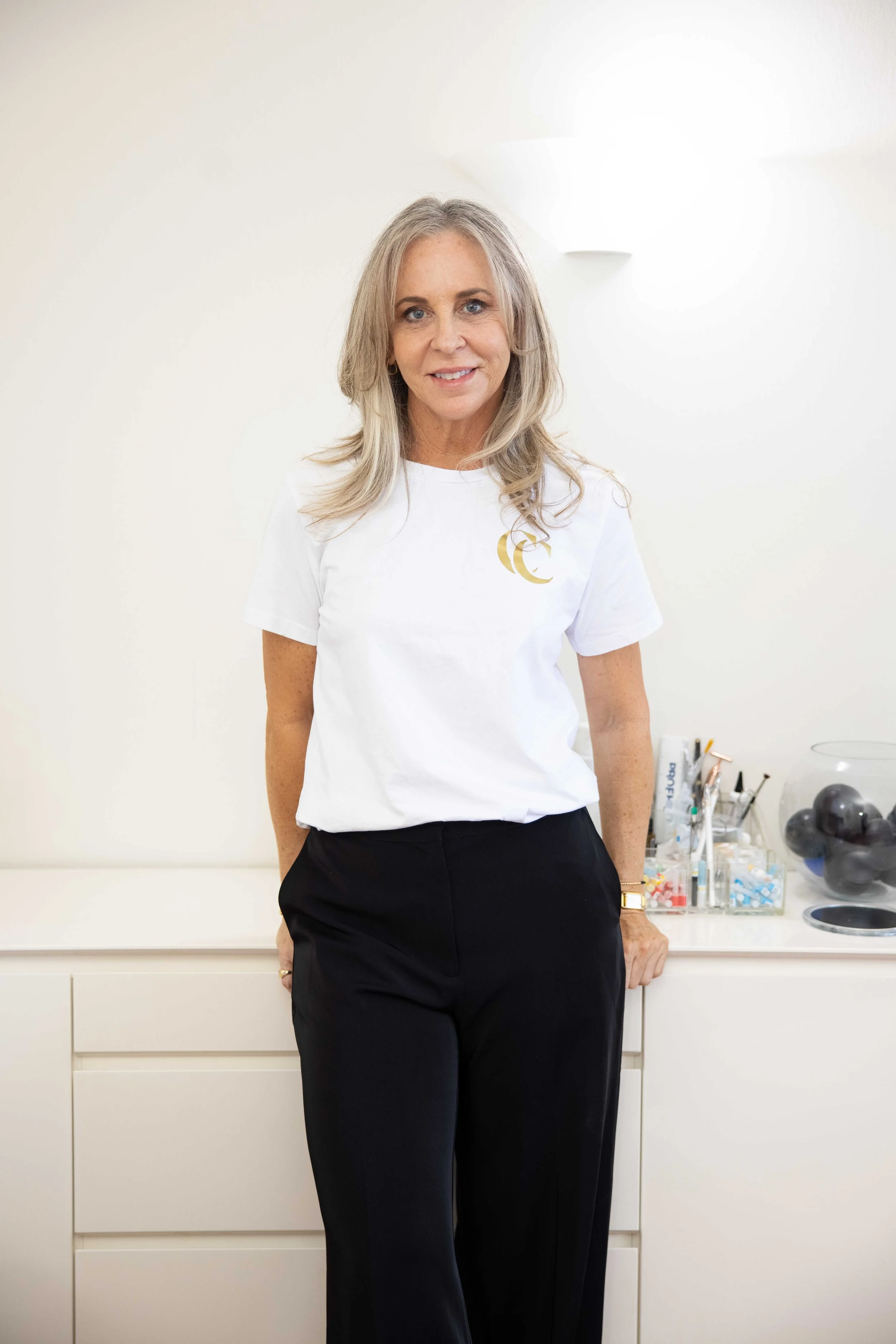
As we wrap up 2025, I’ve been aware of how people’s approach to their skin treatments has changed over the years. More clients want a sensible, long-term approach instead of pinning their hopes on a single quick fix. Injectables are still a key part of treatment plans, but they’re no longer only about softening lines or adding volume.
There’s been a real move toward options that encourage the skin to strengthen itself. Treatments like Rejuran, Profhilo and Sunekos that boost collagen and elastin so the skin gradually feels sturdier and more refreshed. There’s also been growing curiosity around regenerative treatments that work deeper down.
Growth factors, exosome-based therapies and polynucleotides made from salmon DNA all support the way skin cells communicate and heal. When that foundation is functioning well, the improvement of the day-to-day look and feel of the skin naturally follows.
Lately, timing is something clients are paying closer attention to as well. Rather than waiting for lines or texture changes to fully settle, many clients are choosing to build and “bank” collagen earlier. To make that effective, we often map out a mix of treatments, like skin boosters, regenerative injectables, needling, LED, laser and targeted skincare, and pace them in a way that suits how the skin works best.
This change in attitude has shaped how I work, too. Good treatment planning has become just as important as technique in understanding what the skin needs now, what it’s likely to need next, and how each treatment supports the one before it. When the sequence is right, the results stay consistent and look true to the person.
Looking ahead, I think people will keep looking for treatments that feel gentle and sustainable. They want to slow the signs of ageing while keeping their skin healthy and comfortable — fresher, without that “done” look.
If I had to summarise the year, I’d say the most satisfying results came from a balanced plan and a bit of patience. When treatments are chosen carefully and given time to do their job, the change looks natural, but simply better.

STRAND AND DELIVER
Shelley Pullar from Salon G presents the ultimate summer hair survival guide.
Shelley Pullar from Salon G presents the ultimate summer hair survival guide.
PHOTOS KATIE COX + SUPPLIED

Let’s be honest. Summer is glorious, but it’s also a minefield for our hair. Our locks can go from glossy to frizzy faster than you can say “beach day.” Here’s your ultimate guide to surviving the season, from a stylist who’s seen every strand scenario.
FRIZZ HAPPENS
Humidity is just moisture in the air, and your hair loves to interact with it. Because hair is hygroscopic, it absorbs and releases water depending on the environment. At around 40–60 percent humidity, your hair feels flexible and manageable. But once it hits 70 percent or more, expect frizz and shape loss. That’s when sealing in moisture is key. Think anti-humidity serums like Wella’s Ultimate Smooth Oil, which gives 96 hours of frizz control and UV protection, or Sebastian’s Taming Elixir with avocado oil for intense smoothness. Finish your style with Sebastian Reshaper for lasting hold that defies damp air.
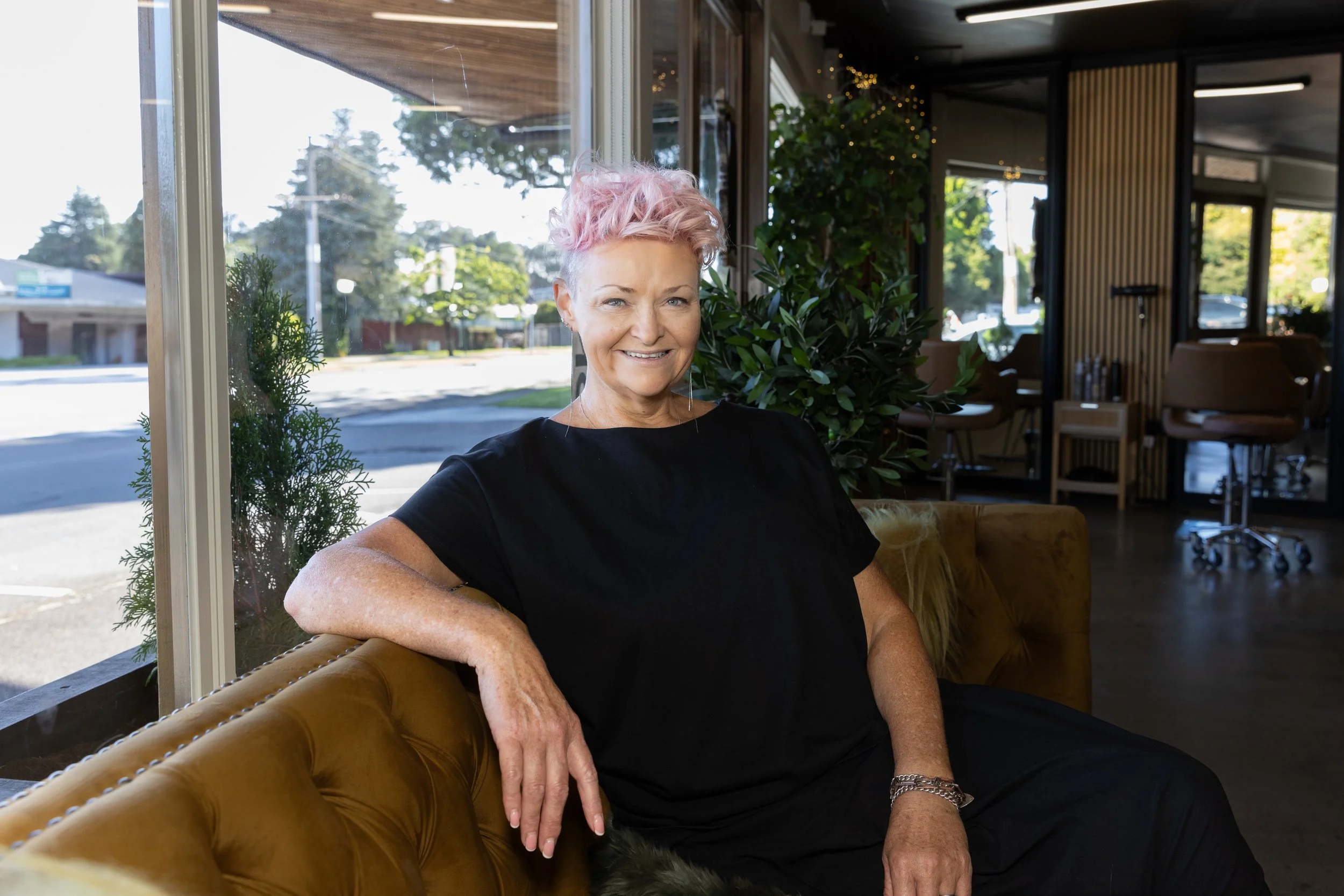
Shelley Pullar
WHEN THE AIR GETS DRY
Low humidity (under 30 percent) is just as challenging. It zaps hydration, leaving hair static and brittle. Bring back the moisture with nourishing masks or oils, and look for humectants like aloe. Curly girls swear by Clever Curl Leave-In Cream paired with Dry Weather Gel to keep curls soft and defined. Salt, sun and style Heading beachside? Prep before you dip. Dampen your hair and add a leave-in conditioner or System Professional Helio Spray, a UV barrier that prevents dehydration and colour fade. After swimming, rinse with fresh water and follow up with a rich mask. Your future self (and your comb) will thank you.
STYLE SMART
Put down the blow-dryer and embrace the effortless vibe. Braids, buns and twists are your best friends. Try the overnight braid trick for beachy waves or “sock curls” for heatless bounce. For extra texture, mist with salt spray and shake out with your fingers. Scalp and colour care Don’t forget your scalp. Sunburns here in the Bay are no joke. Protect with SPF sprays or a hat, and soothe any burn with aloe gel. For blondes, protect tone and shine with System Professional Lux Blonde Biphase and a weekly purple shampoo to keep brassiness at bay.
So, whether you’re beach-bound or battling humidity, remember that summer hair is meant to move and breathe, just like you.

IT’S ALL IN THE GENES
Romy Kerr from Genetic Insight explains how understanding your DNA can protect your health, and your family’s future.
Romy Kerr from Genetic Insight explains how understanding your DNA can protect your health, and your family’s future.
PHOTOS DEBORAH DE GRAAF

It was while watching her mum support a young couple going through the heartbreaking decision to terminate a pregnancy due to a serious congenital abnormality that Romy Kerr decided she too wanted to help people through some of life’s biggest and most distressing challenges. She was studying science at university and, in her words, stumbled into a genetics course by chance and quickly fell in love with it. Even still, she knew she didn’t want to work in a lab all day.
“I enjoyed the people side of genetics,” she says. “I wanted to sit with people who are making some of the hardest choices of their lives. They need love and they need kindness.”
This led her to the field of genetic counselling. It’s a relatively small field in New Zealand, but one that is in high demand overseas. Its impact can be profound for those facing potentially life-changing information.
“Genetic counselling is the process of taking a person through genetic testing for a number of different reasons,” Romy explains. “Genetic counsellors provide information about a genetic condition that might be in their family or help someone understand a new diagnosis. We provide information about their options and how a genetic result might impact them and their family. We also help with decisions around managing health after a diagnosis, or making decisions around having children without passing on a genetic condition.”
Romy says that genetic counsellors are an information source, but are also a source of support because many of the people that she sees are having to make increasingly scary decisions. They may be learning they are at risk of a condition that has no cure, or that their children may be at risk of a severe genetic condition.
“The topics are often quite heavy and emotional, and so we’re unpacking what that means for that person,” she says, noting that its impact can be profound in offering preventive options and emotional support for those facing potentially life-changing information.
For people with a known family condition, like breast cancer, for example, a simple swab test can put their mind at ease.
“If someone has been anxious about cancer their whole lives, they can now do something practical to check their risk and then find out early if they have cancer,” Romy says. “People have had genetic testing, decided to proactively take their ovaries out due to high risk, and have found cancer at that time that they just would never have known about. It saved their lives.”

TURNING LIFE INTO ART
Amid the busy chaos of her Pāpāmoa home, talented mum of three Ashley De Grey is creating wearable art made with DNA.
Amid the busy chaos of her Pāpāmoa home, talented mum of three Ashley De Grey is creating wearable art made with DNA.
WORDS HAYLEY BARNETT / PHOTOS DEBORAH DE GRAAF
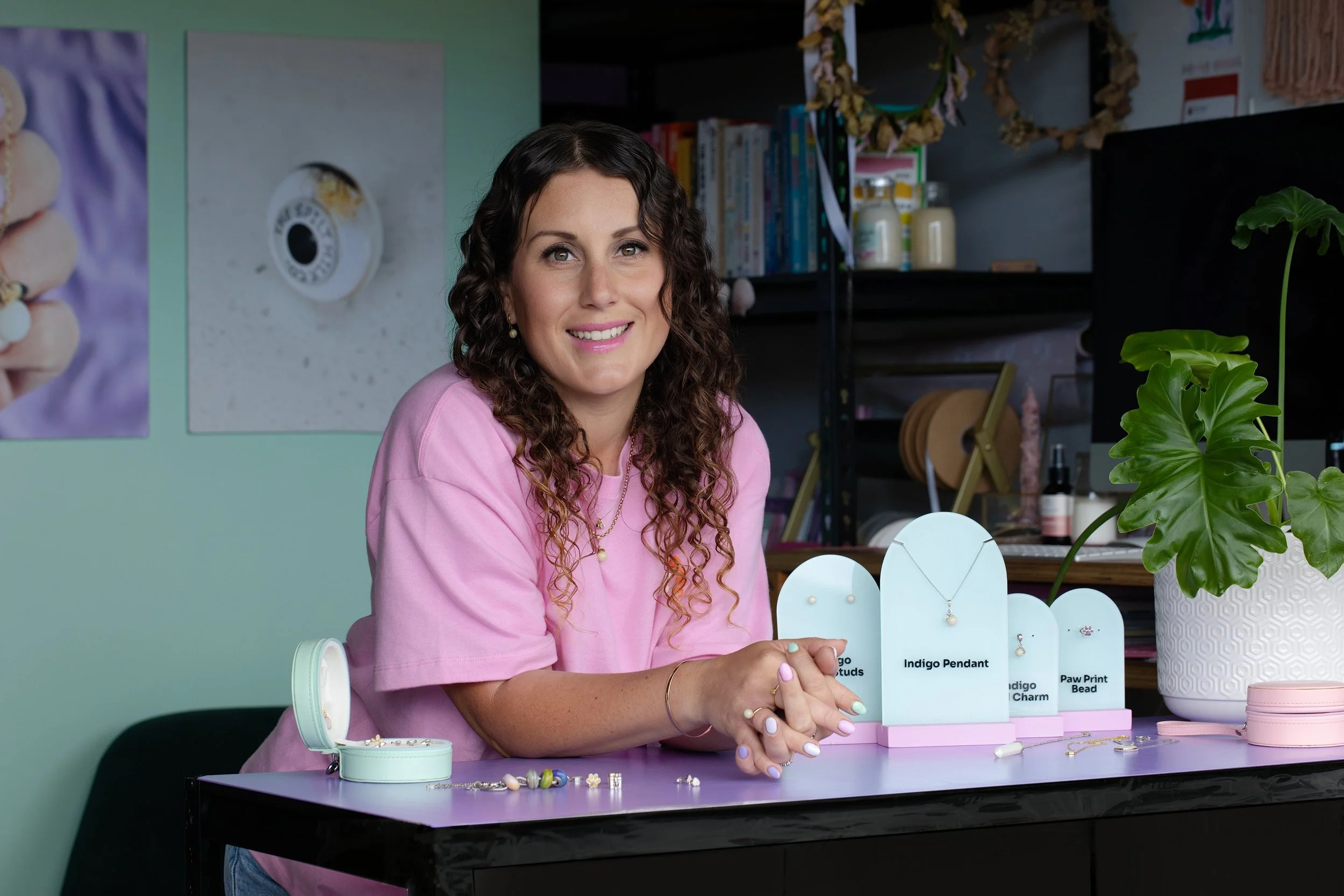
Pāpāmoa local Ashley De Grey is turning everything from breast milk and embryos to ashes and teeth into personal keepsakes and now, her once small home business is being recognised on the international stage. And it’s not nearly as strange as it sounds.
In fact, it’s really rather lovely. Since launching her unique business back in 2018, Ashley has just been awarded the 2025 Memories & Keepsake Product of the Year by the Pet Innovation Awards.
It all began, somewhat unexpectedly, with a spam email. While breastfeeding her daughter one night, Ashley noticed a message about breastmilk jewellery.
“It was an American site but it got me thinking about whether or not there might be a market for it here,” she explains.
It turns out, there was. Coincidentally, Ashley had spent years working in a jewellery store in her hometown of Taranaki and, with a design degree under her belt, she was perfectly placed to start something of her own. Her journey began with just one product.
“I started with beads,” Ashley recalls. “I found a manufacturer to do the welding and taught myself to build a website that was easy to use. I wanted mums to be able to order something quickly and easily, even in the middle of the night while breastfeeding.”
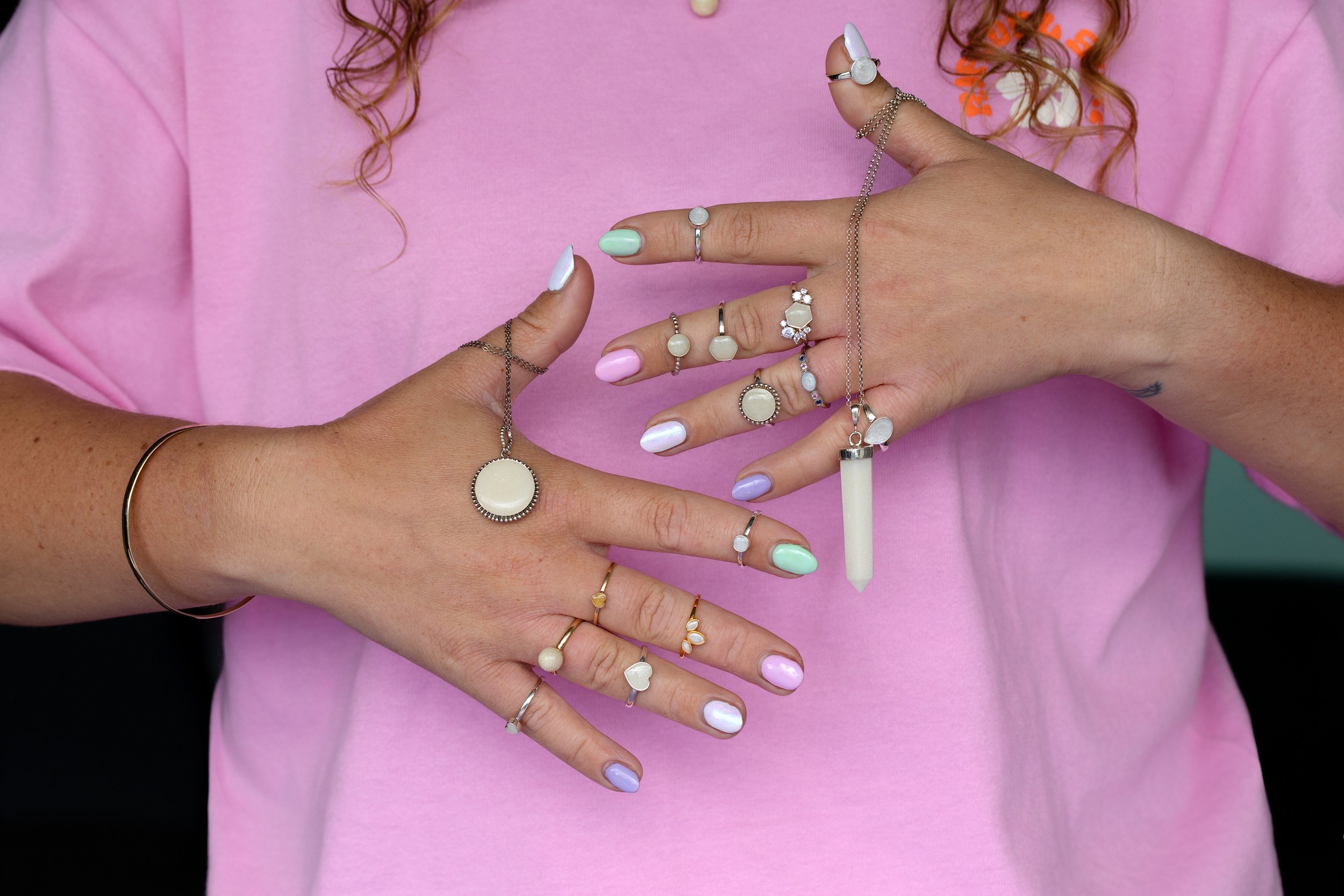
Back then, she would take orders through Instagram, jot them down by hand, print the details and craft each piece herself. Starting with breast milk, she soon realised there was also a deep need to commemorate loved ones who had passed. She began offering jewellery containing ashes, and even dehydrated embryos, for families completing their IVF journeys.
“Many people don’t know what to do with leftover embryos,” Ashley explains. “Some donate them, some destroy them, but others want to keep them close.”
The process involves carefully dehydrating the embryo material from vials of liquid, then embedding it into the jewellery. But embryos are just one of many unusual materials Ashley works with. She’s preserved snow collected from mountaintops, turning it into powder, and has incorporated sand, soil, baby blankets and fabric. One special project involved a grocery list written by a client’s late father.
“We scanned the note and used the letters to spell ‘Dad’ in his handwriting, both in English and Portuguese,” says Ashley. “It meant so much to the family.”
As she branched into pet keepsakes, incorporating fur and ashes, Ashley’s business really took off. “I’ve made jewellery out of baby puppy teeth for the puppy’s godparents before,” laughs Ashley. “People really get creative.”
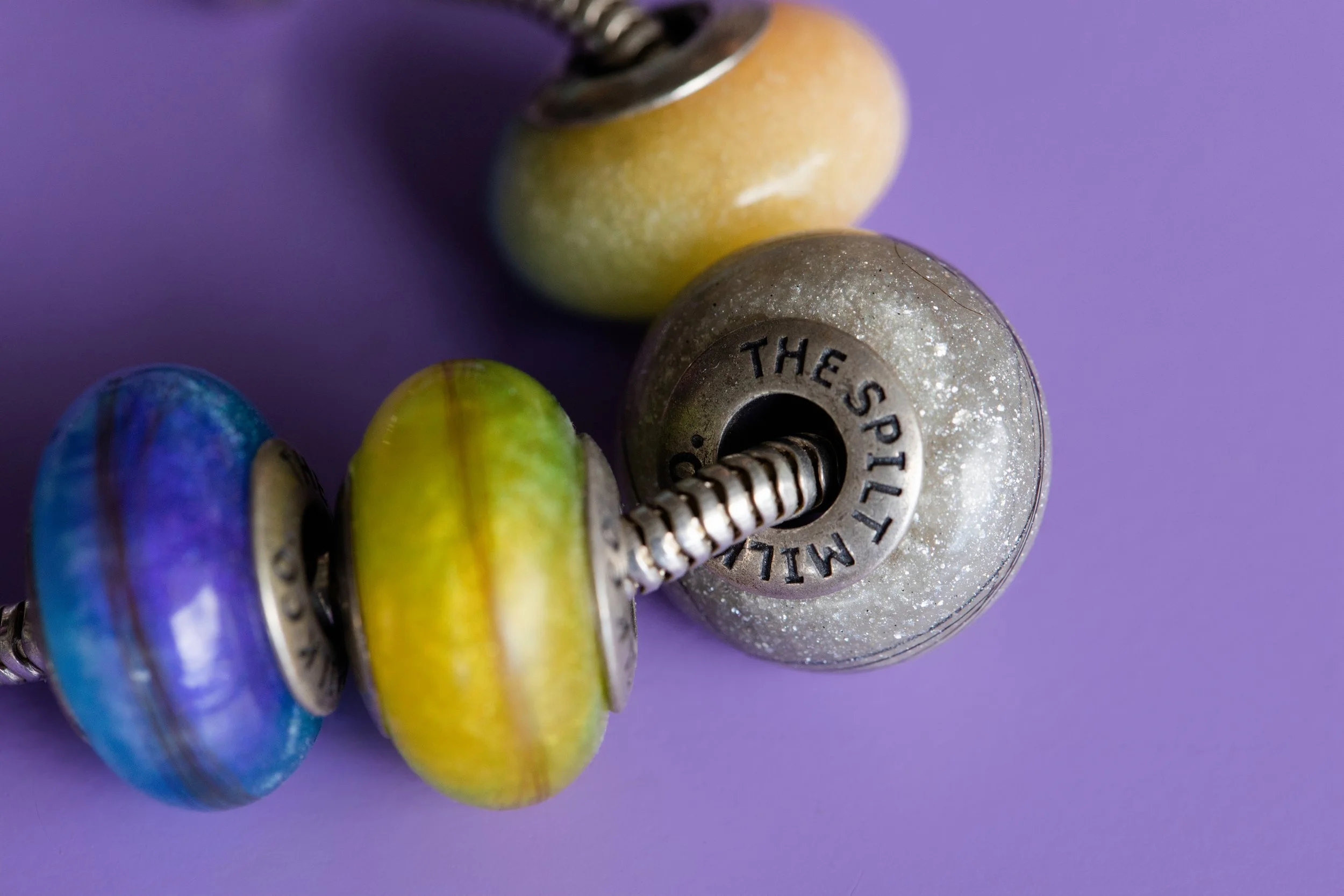
Winning a prestigious award has been both validation and motivation. “It feels amazing to be recognised,” she says. “It shows that what I’m doing matters beyond just my little corner of the world.”
Since starting, Ashley has created over 3000 pieces for more than 2000 clients, each one telling a story of love or loss. Her advice for anyone dreaming of starting their own business is to just begin.
“Even if it’s cringe and even if it’s not perfect, just do one thing a day. Post something, reply to an email, look up a supplier. And if it feels like you’re not getting anywhere, just keep showing up.”
She credits much of her success to knowing her audience. “At one point, I started adding bracelets and necklaces just to have more products, but they didn’t sell, because that’s not what people came to me for. So I pulled it back to what I do best.”
And what she does best is turn emotion into something tangible. Perhaps most inspiring of all, Ashley has shown her daughters what it looks like to build something from scratch and to believe in your vision, even when it feels impossible.
“They know that Mum works hard,” she says. “And they know that whatever they dream up, they can do it too.”

WAKE WITH CLARITY
Bay Eye Care’s Alex Petty reveals life-changing technology that literally transforms how you see the world.
Bay Eye Care’s Alex Petty reveals life-changing technology that literally transforms how you see the world.
PHOTOS GARY MARSHALL AT BLUE CHILLI
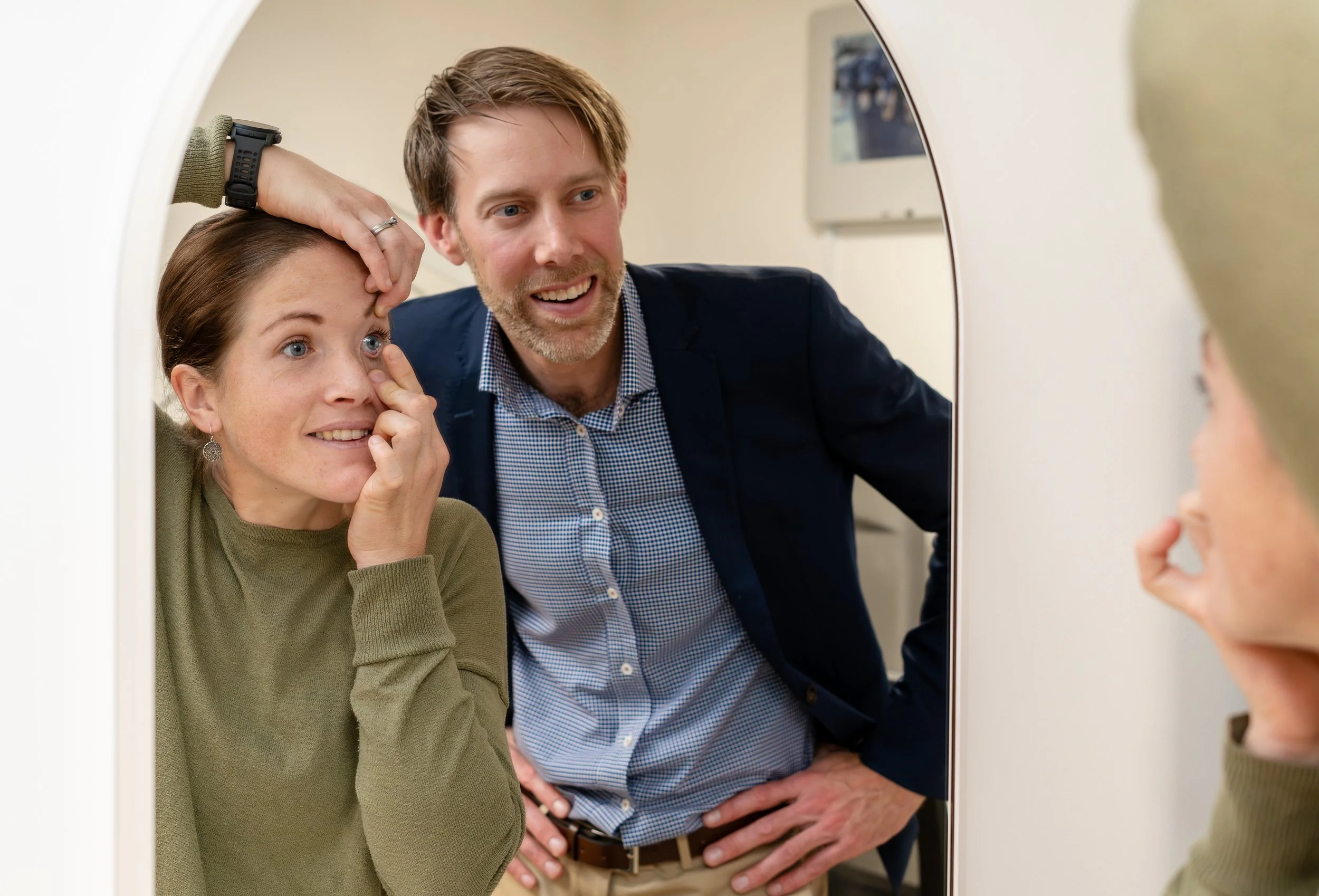
Explaining Ortho-K to patients sounds a bit like something out of a sci-fi movie. You wear a custom lens while you sleep, and by morning your vision is clear. No glasses or contacts during the day, and no surgery needed.
Ortho-K can be a game-changer. Those who have vision problems suddenly have the freedom to swim in the sea, play sports and go to school or work, without worrying about their glasses or contact lenses.
Short for orthokeratology, it involves wearing a specially designed rigid lens overnight. While you sleep, the lens reshapes the front surface of your eye. When you take the lens out in the morning, the temporary reshaping allows you to see clearly all day. For many, that means they can ditch their glasses or contact lenses altogether.
I’ve been fitting these lenses for over 15 years. In fact, as I write this, I am just returning from a weekend conference in Australia lecturing and teaching other optometrists about Ortho-K. These days, I mostly fit these lenses to treat myopia (short-sightedness), but also for long sightedness, astigmatism and even presbyopia, which is that frustrating shift in vision that hits in your 40s or 50s when reading becomes difficult.
Around the world, we’re seeing a sharp increase in short sightedness developing in children. Right now, roughly 30 percent of the global population is myopic, and research suggests that could reach 50 percent by 2050. Much of it comes down to lifestyle, such as increased screen use, more time indoors and not enough exposure to natural light. But over the past decade, Ortho-K has been proven to slow myopia progression in children.
As myopia worsens, the risk of serious eye conditions like retinal detachment, glaucoma and macular degeneration increases significantly. That’s why we now monitor not just prescription, but actual eye growth. Ortho-K can help slow that down, so we’re protecting long-term eye health.
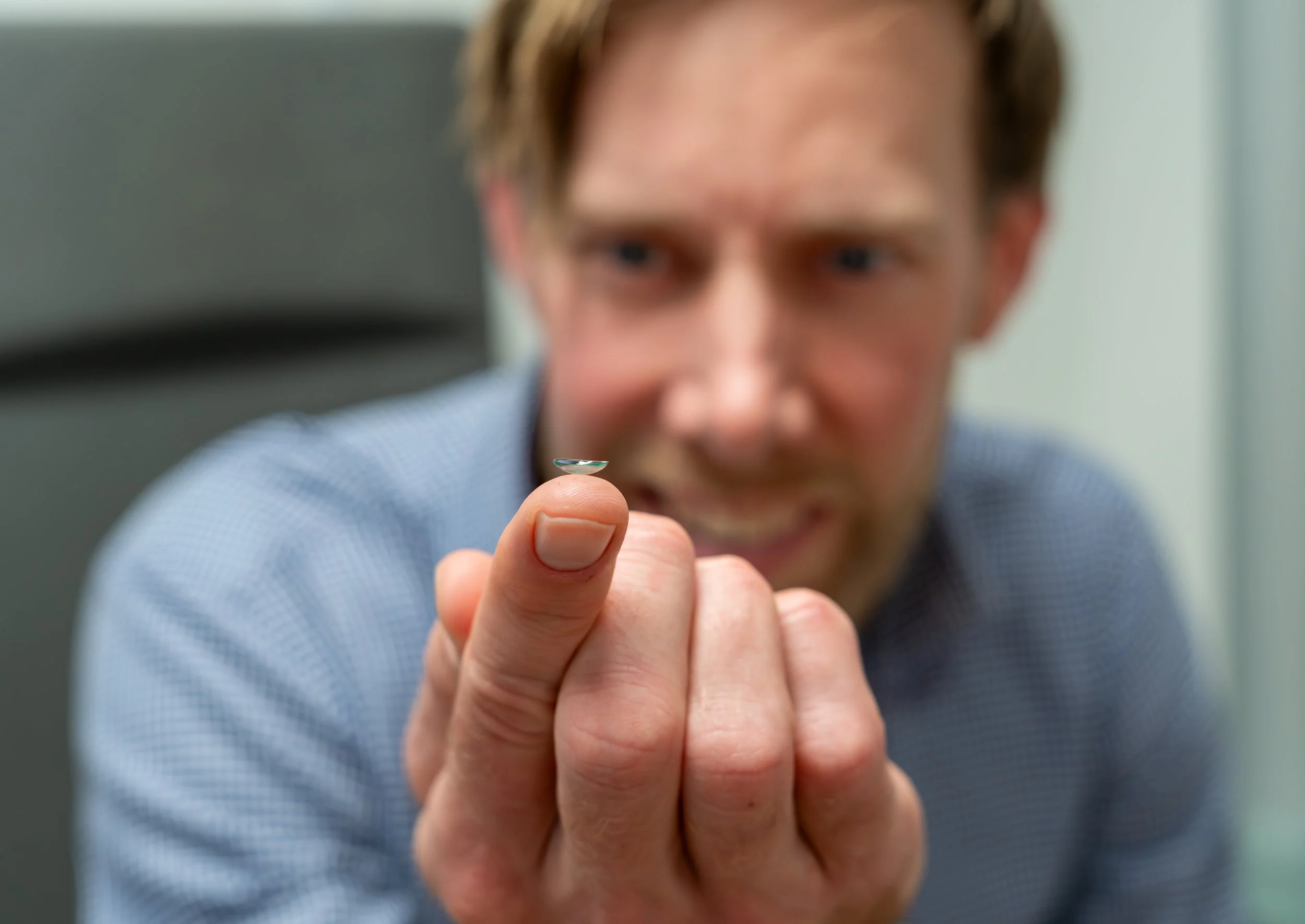
People are often curious about comfort. Since Ortho-K lenses are rigid, there’s an adjustment period, but because they're worn while sleeping, most people get used to them surprisingly quickly. Once it becomes part of your nightly routine, it feels normal. Long-time users often tell me they wouldn’t dream of going back to glasses.
Of course, it’s a commitment. This isn’t a one-time fix. It only works as long as you wear the lenses each night, but that’s also part of its strength. It’s completely reversible and flexible. If your eyes change, we adjust the lenses, which makes it great for growing children or adults who aren't ready to commit to permanent solutions like surgery. All you need to get started is an initial visit to discuss Ortho-K and check your eye health to see if Ortho-K is right for you.
I’ve had patients come in because a friend or co-worker raved about how much Ortho-K changed their life. It spreads by word of mouth, and for good reason. It’s about being able to live your life without constantly thinking about your eyes. For me, I believe that’s a gift worth sharing.

Spring fling
Watch as fashion flourishes this season.
Watch as fashion flourishes this season.
WORDS NICKY ADAMS

CABELLO MIDI DRESS $289, FLOANDFRANKIE.COM
SWEETEN YOUR WARDROBE
Not many people can resist refreshing their wardrobes for spring. This doesn’t have to mean a fashion overhaul; it can be as simple as adding a few basics from a seasonal colour chart. In this case for 2025, you might be looking at welcoming in the warmer weather with some pastels. There’s buttery yellow, which has been dominating not just the catwalks but mood boards everywhere, powder pink, sky blue, seafoam and mint green. Keep your shades clean and clear rather than sickly sweet. Sometimes this can be by picking separates and styling your pastel with a plain white top or bottom; other times it can be by picking a simple style where the colour is the feature rather than an elaborate design.
PASTELS TO PRINTS
Plaid will be the pattern of the moment. Usually associated with cooler months, its throwback 90s feel has been reimagined with elegant results. With versatility being a bonus, used in lighter fabrics to fit with the season, it’s so multi-functional it’s hard to pass over. If office wear is an area you’re looking to jazz up, then pale shades make perfect tailored trans-seasonal pieces. Style wise, watch out for a boxy short jacket or a blazer, either of which can be paired with Bermuda shorts for a super on-trend aesthetic. Add a low kitten heel and ta-da! We can’t really talk about spring without touching on the craze for technical fabrics. Wet weather gear has hit high fashion, with light waterproof jackets appearing as the unlikely hero of the outfit.


1 & 2. H&H ESSENTIAL CARDIGAN $30; BIAS CUT SKIRT $30, THEWAREHOUSE.CO.NZ
3. SAMSUNG GALAXY RING $699, SAMSUNG.COM
4. NEW BALANCE 204L SHOES $220, NEWBALANCE.CO.NZ
5. KAREN WALKER RUNAWAY PARKA $275, WENDYSBOUTIQUE.CO.NZ
6. ISOBEL DRESS $299, RUBYNZ.COM
7. REPETTE JACKET $797, UNITY SHORTS $497, TAYLORBOUTIQUE.CO.NZ
8 & 9. TRIXIE HEEL $349, ELLIE BAG $329, KATHRYNWILSON.COM
Trending now
Most wanted this season.
WORDS NICKY ADAMS

SHOPAFROLIC DRESS $799, WENDYSBOUTIQUE.CO.NZ
SOFT AND STYLISH LOOKS
If you’re not feeling sorbets just yet, then a great follow-on from the burgundy of winter would be an earth tone. Add a lovely warm tan or copper to your outfit – you’ll find this will break down a sombre black monotone or mix up a pure cream aesthetic. Always understated, these tones fit in with the boho vibe and feel authentic and grounded. Lovers of animal print may want to change up the theme and swerve away from the usual suspects. If this is the case, then zebra is the perfect pattern. It feels like the most subtle offering from the animal kingdom, with its ability to be dressed up or down.
MAKE A STATEMENT
‘Simply stylish’ seems to be the direction designers are gravitating towards for spring and summer, with silhouettes that are all about keeping it easy but effective. The elements we have seen for previous seasons, such as cut outs, lace, asymmetrical cuts and puffball skirts are still all very much in play. But for this spring the ‘feature’ is often presented strategically. Frills, ruffles and lace are always welcome wardrobe additions, and if head to toe feels too 18th century, then look at pieces with small insets. A lace collar, or a blouse with trim; something that says timeless as much as trendy. Long, short and everything in-between, the pleat is the style of the season that comes in a variant to flatter everyone. Micro knife, big fat box or even gentle folds, soft drapes and swathes of fabric say spring like nothing else.


1. SOLSTICE EARRINGS $125, LINDIKINGI.COM
2. CAESAR SANDAL $239.90, MERCHANT1948.CO.NZ
3. EVELYN PLEAT SKIRT $699, JULIETTEHOGAN.COM
4. INDI & COLD BEA VEST $215, RUBYROSETEAWAMUTU.NZ
5. SOLSTICE NECKLACE $115, LINDIKINGI.COM
7 . YU MEI ANTONIA BAG $935, YUMEIBRAND.COM
7 & 8. SOLACE SCARF CAMI $149, RELAXED PANTS $209, AJEWORLD.CO.NZ
Material girl
Find your way around the fancy fabrics and texture trends of spring and summer.
WORDS NICKY ADAMS

Smocking
With clothes that are designed for warmer weather inevitably involving less fabric, there is more onus on clever design features, fabric or textures being put to play to make a statement. Nostalgia looms loud and proud in the trends we are seeing so it’s little surprise that traditional trimmings and techniques have been incorporated to bring drama to the daytime. So, what are the wondrous ways that are being repurposed by designers to elevate our spring and summertime essentials?
SMOCKING
A practice that has been around since the 13th century, smocking is a way of adding shape to a full garment, as well as providing elasticity. Essentially an embroidery technique that is used across an area of fabric, the material is gathered (often with thin elastic) and held in place. The effect is textured and appears almost like rouching. Smocked tops are often easy-wear bandeau style, while a smocked dress can be both incredibly comfortable and flattering, depending on where the gathers have been created. If the smocking is all the way from the top to the waist or just below, chances are it will suit most figure types. If it sits on the top across the bust (like a boob tube), there’s a danger the well-endowed could look like a Bavarian barmaid, so be mindful.

BRODERIE ANGLAISE
This is another traditional technique with a vintage/boho vibe which you’ll see used across everything from bikinis to blouses. Bringing with it understated elegance, it feels increasingly sophisticated. Essentially a close worked embroidery used around the edges of intricate cutwork, the look is fine and feminine, with the cutout often inspired by florals, petal shapes, or even circles. A Broderie Anglaise can either be overlaid across another fabric or will feature with the cutout unlined. So, depending on how it’s being used, the final feel can be super demure or rather risqué. A classic fabric, this can be picked and styled to suit any personality.

CROCHET
Most of us will be familiar with this; a process where threads or yarns are crafted to create textiles. It’s one that has been popular over the years, not just across multiple eras, but because it appears in many ways, shapes and forms. Memories of crocheted woollen squares being sewn together to make everything from Aunty Agatha’s blanket to ponchos to teapot covers can detract from the elegant ways it can be utilised to bring us high fashion pieces. It’s possible to crochet a variety of yarn from silk to cotton, and intricate and innovative patterns will ultimately produce the most beautiful and unique designs. Whilst the overarching mood of a crochet piece tends to be beachy and festival, if we look to high-end designers, it’s often used in the most elaborate and sophisticated ways: think Missoni, who has incorporated the crochet-knit style as its signature aesthetic.

To botox or not to botox?
Hayley Bath takes a wrinkle-filled stand against the pressure to freeze by embracing her unapologetic laugh lines.
Hayley Bath takes a wrinkle-filled stand against the pressure to freeze by embracing her unapologetic laugh lines.

If Hamlet were written in 2025 instead of 1599, the iconic line wouldn’t be “To be or not to be?” It’d be “To Botox or not to Botox?”.
Last month, I found myself at an event surrounded by a sea of unwrinkled, unmoving brows. Scanning the room, I realised only myself and one other woman were left in the natural-forehead resistance. Even some of the guys had it. I felt like the last raisin in a bunch of juicy grapes.
Now I’m a fairly expressive person. My forehead alone could star in its own play, and these wrinkles are starting to take center stage. Even in my 30s, I see them while doing my makeup, in videos, and sometimes I catch myself smoothing my forehead mid-mascara, just to sneak a peek at the alternate Botox universe me. She looks oddly surprised.
As a voice and face on radio and in the media, I’ve been offered free injectables. Twice actually. From real, professional places promising no wax-figure vibes. Yet, I haven’t done it. Can’t do it. Every time I think, “Maybe it’s time,” but some inner part of me screams, “Over my wrinkled forehead!” Blame personal hang ups, a weird sense of loyalty to my wrinkles or just stubbornness.
So why haven’t I joined the Botox parade? Especially when many people look great with it.
First, the niggle at the back of my head whispers ‘what about my daughter?’. She’s a quiet observer, learning from my life. I don’t want her to feel like she’s got to change or alter herself, because she’ll already be swimming in a sea of filtered, curated and perfectly polished faces online.
Secondly, people die young. Yikes. Apologies, that got heavy fast. My late-cousin sadly never got to have wrinkles. These lines are proof I’m still here. Laughing and squinting at emails I don’t fully read. Wrinkles are my life’s receipts. I’m trying to see them that way.

And, of course, there’s always a little fear stopping me. What if the results aren’t great? I don’t want to end up looking like you could crack a walnut on my forehead for six months. Or what if I get the dreaded eyebrow droop? And we’ve all met someone who looks like their upper face missed the memo that their lower face is trying to have a conversation. I like having full facial expressions.
To be clear, this isn’t Botox-bashing. Botox can boost self-confidence, make people feel good about their appearance and even be used for relief from migraines. But for me? This might be the hill I grow old, and wrinkly, on.
I haven’t shouted, “This is my wrinkle revolution!” I want to. But what if, in years from now, I wake up feeling worse for wear and the voice whispers, “Just one little jab...?”. Easy to be bold in your 30s, harder later. Do I have the guts to do nothing? I think so. I hope so.
In a perfect world, everyone would stop cosmetic injectables. Then we’d all be back on an even-aging playing field. But what if we revolted? What if laughter lines became badges of honour and we felt the freedom of not giving a toss? What if looking ‘old’ wasn’t something we avoided?
Until then, I’ll keep stretching my forehead in the mirror, wondering what could be, but probably sticking with what is. Because just like Hamlet, the internal conflict is the biggest battle. Having the courage to leave the sword (or in this case, the needle) could mean surviving all five acts with a face that tells the whole story.
There’s also something bad-ass about letting gravity have a go.
Catch Hayley on The Hits 95FM weekdays 9am to 3pm.

The truth about sleep
Why sleep is your body’s superpower and how we’re getting it all wrong.
Why sleep is your body’s superpower and how we’re getting it all wrong.
WORDS HAYLEY BARNETT

When I speak to Dr Patryk Szulakowski he’s recovering from a virus, one of many going around Tauranga Hospital where he works in internal and respiratory medicine.
“If you’d called me yesterday, I’d be coughing through the whole interview,” he laughs.
Despite feeling under the weather, his passion for sleep medicine is crystal clear. Patryk recently opened SleepMedik, a private clinic in Tauranga, after years of watching patients struggle through long public waitlists.
“The system is mostly focused on sleep apnea,” he says. “But thousands suffer from insomnia, parasomnias, circadian rhythm disorders, all sorts of challenges, and they’re not getting help.”
Originally from Poland, Patryk earned his PhD in Chronic Obstructive Pulmonary Disease, but pivoted toward sleep after realising the impact treatment could have.
“When you treat sleep problems, you often see people transform. Their low mood, memory problems, exhaustion all improve. That kind of change is rare in medicine.”

Dr Patryk Szulakowski.
More than snoring
Psychologist Dr Amber McAllister sees the link between sleep and mental health daily in her clinic.
“Sleep issues are a common symptom of stress and mood disorders,” she explains. “And being exhausted makes everything feel harder, which worsens anxiety. It becomes a vicious cycle.”
Mental strain compounds physical tiredness. When that happens we often turn to stress relievers to compensate, like food.
Nutritionist Jess Thorns agrees. “What we eat and when we eat can have a big impact on sleep quality,” she says. “A common pattern I see is people under-eating early in the day, then getting ‘afternoon hanger’ and overeating late. This, especially with low protein intake, can interfere
with both falling asleep and staying asleep.”

Psychologist Dr Amber McAllister.
The myth of the bad sleeper
Many of Amber’s patients come in believing they’re just naturally terrible sleepers, but often, it’s a learned pattern, not a lifelong sentence.
“It’s not a case of being biologically broken,” says Amber. “Chronic poor sleep leads to frustration, and that creates beliefs and behaviours that reinforce the problem. But it’s usually very treatable.”
The first-line treatment, both Patryk and Amber agree, is Cognitive Behavioural Therapy for Insomnia (CBT-I). “CBT-I is one of the most evidence-based interventions we have,” says Patryk. “But most people don’t get access to it. They’re offered medications instead.”
Amber says CBT-I involves more than sleep hygiene tips. “It helps people understand their sleep patterns, track them, challenge their beliefs around sleep and improve routines. It’s not always easy. Sleep can even get worse before it gets better, but it works.”
Sleeping pills aren’t the answer
Patryk is deeply concerned by the long-term use of sleeping pills. In New Zealand, nearly 680,000 sleeping‐pill prescriptions were issued over one financial year, with over 36,000 dispensed in the Bay of Plenty alone.
“They should be short-term, for things like grief or acute stress, but we see people on them for years.”
Amber acknowledges that medication can provide temporary relief. “Sometimes people just need rest. But if you don’t address the root causes, the problem doesn’t go away. It just gets masked.”
Nutritionist Jess adds that certain foods and drinks are often overlooked culprits. “Caffeine, chocolate and alcohol can all interfere with sleep. Even morning coffee can disrupt deep sleep hours later, depending on your sensitivity.”
Screens, teens and sleep disruptors
One of the most common enemies of modern sleep is screens. Blue light from phones, TVs and tablets suppresses melatonin, the hormone that tells your brain it’s time for bed.
“We’re designed to respond to darkness,” says Patryk. “When the sun sets, melatonin rises. Now we’ve flooded our homes with light, especially blue light, and it’s confusing our biology. Many families see this up close with teenagers, who naturally prefer later bedtimes and often want to stay on their phones late into the night. Even with apps and parental controls to limit screen time, it can become a constant struggle against biology and technology combined.”
A consistent bedtime routine is one of the most powerful tools for better sleep. “Going to bed and waking at the same time, even after a bad night, helps regulate your body clock,” says Amber. “Sleeping in or napping throws it off.”
Jess agrees: “Dinner should be balanced with protein and complex carbs to help you feel satisfied and regulate blood sugar through the night. Magnesium-rich foods, like leafy greens or avocado, help relax the body, and teas like chamomile can signal it’s time to wind down.”
What happens while you sleep
Behind closed eyes, your brain and body are busy. During deep sleep, the brain’s glymphatic system leaps into action, clearing away metabolic waste like beta‐amyloid, which is linked to Alzheimer’s risk. REM sleep, by contrast, helps cement memories and regulate emotion through intense neural activity and selective neural pruning. This nightly “brain reboot” underpins everything from mood stability to learning.
“Sleep is when the brain cleans itself,” says Patryk. “It’s like overnight housekeeping.”

Nutritionist Jess Thorns.
Health and hidden risks
Sleep isn’t just about energy levels. It’s basically a pillar of physical health. Chronic sleep deprivation has been linked to obesity, cardiovascular disease, weakened immunity, diabetes and even cancer.
“In the Netherlands, women with breast cancer who worked long-term night shifts can apply for compensation,” Patryk says. “That’s how strong the link is. Disrupted circadian rhythms and melatonin suppression are major risk factors.”
Sleep also plays a powerful role in metabolism, and that’s where nutrition matters again. “Eating sugary or high-carb foods at night is like giving your body a burst of energy at the wrong time,” Jess explains. “It disrupts your ability to wind down.”
Unstable blood sugar can even lead to night waking. “Especially when combined with hormonal fluctuations, like in perimenopause, where you can get stuck in a cycle of poor sleep and next-day cravings.”
And poor sleep impacts food choices, too. “You’re hungrier, less satisfied and more likely to snack,” Jess says. “It also reduces insulin sensitivity, leading to energy crashes and more sugar cravings.”
Gut health also plays a role. Good gut health supports sleep by boosting serotonin and melatonin production, reducing inflammation and keeping the body’s circadian rhythm in balance. “If your gut is out of balance, it can affect your ability to relax and fall asleep,” explains Jess.
How much sleep do we really need?
“There’s no one-size-fits-all number,” says Patryk. “Most adults need seven to nine hours. Teenagers need more. Sleep becomes lighter and more fragmented with age, though the restorative need for sleep remains.”
If you’re consistently waking at 3am, Amber says the cause may be psychological. “Often it starts with stress, but over time, people begin to feel anxious about sleep itself. The bed becomes associated with frustration.”
If sleep is a struggle, Jess’ advice is simple. “Start by stabilising blood sugar. Eat enough protein, especially in the morning. Limit caffeine to before midday, reduce alcohol and include sleep-supporting foods like eggs, leafy greens and kiwi fruit throughout the day. A small protein-carb snack before bed can help, too.”
The bottom line
For a long time, sleep was treated as a passive process. It was less important than diet or exercise. But that’s changing. Experts now agree that sleep is the foundation.
“Good sleep lifts the weight of exhaustion,” says Amber. “When people finally sleep well, everything becomes easier.”
Or, as Patryk puts it: “It’s not wasted time. It’s essential for memory, mood, immunity and even longevity.”
So tonight, dim the lights. Put the phone away. Give your body what it’s really been asking for, which is deep, restorative sleep.

Rewriting the rules
The region’s first ADHD clinic brings together leading minds and lived experience, in a place where families feel seen.
The region’s first ADHD clinic brings together leading minds and lived experience, in a place where families feel seen.
WORDS NICKY ADAMS | PHOTOS JAHL MARSHALL

Dr Sarah Moll and Freddie Bennett
It’s hard to pinpoint the most frustrating aspect of believing you have a neurodiverse child with ADHD or autism. It could be the helplessness you experience as a parent as you try to justify behaviour that to others appears anti-social, or the despair of feeling like a failure as the protector of your young one from their overwhelming emotions. Likely it’s the acute anxiety of knowing that you need help to navigate this.
Bay Paediatrics is a private clinic recently set up by leading specialists in the field of neurodiversity, that has been established here in Tauranga. A multi-disciplinary team of paediatricians, psychologists and behavioural change experts (among them co-founder Dr Sarah Moll, herself a paediatric consultant at Tauranga Hospital) will be working together to provide an all-encompassing, world-class service for ADHD, autism, cognitive and learning challenges, and across the neurodiverse spectrum.
Light, bright and spacious, the practice is welcoming - the waiting room is relaxed and comfortable, and there is a separate play area set up for neuro-sensitive children. Freddie Bennett, co-owner and husband of Sarah, shows me around, explaining the reasons behind the decision to set up the practice.

Dr Sarah Moll.
Working as a developmental paediatrician at Tauranga Hospital, Sarah has always wanted to create the best outcome for families, to give them the treatment and guidance they need. However, she was increasingly wishing more could be done. In addition, as parents, Sarah and Freddie have lived experience of the challenges ADHD can present.
As Freddie explains: “We went through a journey with our children, looking at an ADHD diagnosis. At the same time, I’ve come to recognise my own ADHD. Like many parents I looked down the list of symptoms and thought it started to sound familiar. When ADHD came on my radar all the pieces came together. As parents we know what it’s like to navigate ADHD with your children, to feel overwhelmed, confused, to feel like you’re stuck in this holding pattern, waiting and wondering. And there’s a lot of guilt, because you feel like you’re failing as a parent and you should be doing more, but you don’t know what to do.”
Sarah’s role at the hospital made her more than aware of the challenges parents face while trying to get a diagnosis, and as soon as she actively expressed a desire to do more, Freddie was on board. “We thought, what if we tried to create this centre of excellence. We asked, ‘What would I have needed two years ago when we were going on this diagnosis journey? What would I have needed five years ago when I was struggling with my son’s behaviour and I didn’t know what the hell to do? What if we can create the tools, the support, the diagnosis - everything - so other parents don’t have to go through it?’ With Sarah’s skills and talent, we had the platform to help as many children as possible. Now, with the New Zealand Neurodiversity Centre of Excellence - officially opened by New Zealand Minister for Mental Health, Matt Doocey in August - Bay Paediatrics is going from strength to strength.

Freddie Bennett.
The combination of skillsets of Freddie and Sarah are perfect for a venture such as this. Sarah brings the neurodiversity specialism, while Freddie takes care of business management. As Freddie explains, the beauty of the centre is the idea of it being a one-stop-shop. “We can assess, diagnose and prescribe ADHD medication. But we also thought, ‘For kids with ADHD and autism, let’s give parents some strategies designed for each family that will make a difference at home and school’. ADHD is often not a standalone condition. We have a multi-disciplinary team to provide gold-standard autism assessments, and with cognitive and learning assessments we can also test for and diagnose dyslexia, dyspraxia, dyscalculia and beyond. So, while we areBay Paediatrics, we call this building the New Zealand Neurodiversity Centre of Excellence. This is about giving every neurodiverse family the freedom to thrive.”
There are multiple points of difference offered by Bay Paediatrics, one being that while they are a private practice, they're extending their service to offer help to those that may just need clarification. Freddie confirms: “We will review a substantial amount of information for every family that comes to our door. Our medical team will review, and we will recommend the best next steps and assessment pathway for every family. We offer that service for free. Only if we see enough traits of ADHD do we then go on to offer them an assessment. We'll gather the information, analyse it and recommend a next step which may include ADHD, autism, cognitive and learning assessment or just consultation with our psychologist.

Freddie and Sarah have personally invested heavily into this venture, excited to be instigating what they consider a gamechanger. Sarah’s credentials are enough to get people to take notice of what they're doing. She was recently the only paediatrician in New Zealand to present at the 2025 ADHD World Congress in Prague. With her expertise comes knowledge on the most up-to-date diagnostic tools and resources available. Indeed, they are the only paediatric clinic in New Zealand to develop the unique 'ADHD Illuminate' assessment. This groundbreaking ADHD assessment utilises digital assessment techniques to provide a truly objective and science-backed diagnosis. Freddie says, "This is a gamechanger for families. No more guessing. No more worrying about teachers not picking up the signs of ADHD. This allows us to move faster, look deeper and go further for every child".
Very much the cherry on the cake with it comes to ADHD assessment, this computer-based diagnostic tool is designed to help evaluate ADHD by objectively measuring core ADHD symptoms like inattention, hyperactivity and impulsivity through motion tracking, eye-movements, computer tasks and scientific analysis. It supports a comprehensive diagnosis by helping to more accurately rule in or rule out ADHD, inform treatment decisions and enables the creation of personalised treatment plans.
“Another aspect of the Illuminate ADHD assessment is that you can come in at 9am and by 4pm you’ve got your diagnosis and potentially a prescription. We can give families the three C’s - certainty, clarity and confidence in one day. What we won’t do is tie you into follow-up appointments - there’s no hidden costs.”
Freddie emphasises that the clinic will stop at nothing to give families the support they need. His mission is to establish the Bay of Plenty as the 'Silicon Valley of child neurodiversity' for New Zealand... and eventually the world. He says, "A neurodiversity diagnosis stays with a child for the rest of their life, so nothing is more important than getting it right first time, every time."
Another aspect of the vision for Bay Paediatrics is the commitment to offer families the tools they need to develop confidence in neurodiversity. Freddie is excited about providing help, regardless of whether a parent chooses to come here for an assessment. “We have free resources, and we run the EPIC programme — Extraordinary Parents and Incredible Children. We have free podcasts and workshops; we have free books on our website. We run the EPIC Families events... giving parents the very best guidance. I believe this because as a parent with ADHD who has a child with ADHD, I know what it's like to feel that the world is against me. That's why we're starting what we call the 'neurodiversity revolution'. As a parent, I say revolution happens when a bunch of people turn around and say, ‘We’re not going to be overlooked anymore, we’re not going to be kept quiet and hidden away’.”
The passion from Freddie is palpable, and it’s clear the emotion that drives this clinic is genuine. There’s a deep understanding of what tip-toeing along the path of neurodiversity means for families. As Freddie points out, “Everything we create is for the real world, for real parents who have real struggles. We can give them tools to help them through. Most of all we want to help parents feel seen and understood. We want to be world-class. And we want Bay Paediatrics to lead the charge.”

More than skin deep
Katrina Ross teaches us how to glow inside and out.
Katrina Ross teaches us how to glow inside and out.
WORDS NICKY ADAMS | PHOTOS KATIE COX

Without a doubt, non-invasive skincare treatments are giving surgical cosmetic procedures a gentle nudge to move aside and share the limelight. As owner/operator of About You Medi Spa, Katrina Ross is a certified aesthetician practitioner with 25 years’ experience. Katrina embodies her work — she is glowing, articulate and clearly knows her stuff.
When Kat began her career in beauty therapy she was always focused on results driven, medically based appearance medicine. After finishing her initial training, she worked alongside renowned doctors both in New Zealand and Australia, ultimately opening About You Medi Spa 10 years ago. Here she offers multiple bespoke treatments, all carefully chosen to complement each other; from laser rejuvenation for sunspots and collagen production, to microneedling and make-up artistry.
We quickly move onto discussing the Cavi Lipo cellulite and fat reduction treatment. This technology has been around for 14 years and was designed in America as an alternative to liposuction, without the risk. Non-invasive, targeted fat reduction for stubborn areas of fat such as abdomen, flanks, thighs, arms can even help define the profile on the double chin. I wonder how it ranks against other types of treatment addressing the same issues. “It’s by far a safer alternative, I believe, to the other forms of body contouring and fat reduction on the market. It’s the most noninvasive, is FDA approved and has shown its effectiveness and results over time.”
Measurable loss is judged by statistics taken at the start and finish of a series of treatments. I’m curious how long the process usually takes. Katrina tells me: “I can normally see skin tightening and how responsive the skin is in the first couple of treatments. Usually around four to six you see measurable weight loss. I say an average of eight treatments is needed for the best shot.” I ask if every time she will see a discernable result, the reply is emphatic. “Yes, that’s why I’m in business!”

Katrina reiterates the value of this treatment combined with self-care and a healthy, active lifestyle. “It’s a very complimentary treatment for people who are motivated to improve themselves, and for those with stubborn areas that they just couldn’t move along with exercise alone.” And is it permanent? “Once the fat cells are reduced, they don’t come back in that area.”
This may sound like the holy grail of fat combat, but Kat emphasises it’s not a quick fix. While aesthetics is a crowded market, Katrina is not jostling for a space. She has invested in the very best equipment, is constantly training, has experience, skill and above all works on a one to one. Her clients are in safe hands; she knows it, and most importantly, they know it.

Changing the glow game
If your skin has lost its spark, Cashmore Clinic’s Leanne Cashmore has the solution.
If your skin has lost its spark, Cashmore Clinic’s Leanne Cashmore has the solution.

In clinic, I often see clients trying to decide between resurfacing or rejuvenation, as though one must come at the expense of the other. But skin changes in tone, texture, firmness and clarity, so why treat it with a one-note solution?
Ultra Veloce, our latest treatment and a new favourite among clients, brings together two of the most advanced technologies in aesthetics, and, as a skin nerd, I’m genuinely excited by what this combination can do.
The first step uses broadband light from the Super Veloce 4800, which is a new arrival to New Zealand and, in my view, a quiet revolution in skin therapy. Think of it as a reset button that targets redness, pigmentation, rosacea, broken capillaries and even hormonal acne. And unlike older IPL machines, it’s surprisingly comfortable.


Then comes the LaseMD UltraTM, a non-ablative fractional laser that works deeper in the dermis to stimulate collagen and elastin. This isn’t just about smoothing fine lines or softening scars (although it does that brilliantly). It’s about activating the skin’s own repair mechanisms. One client called it “a wake-up call for my face,” and I loved that.
What makes this combination truly special is that the results are both immediate and progressive. You’ll see a glow within days, yes, but over the weeks, as new collagen forms and old pigmentation fades, the transformation continues. Skin becomes more resistant to future damage.
And it’s not limited to just the face. We’ve used Ultra Veloce to treat sun-damaged chests, ageing hands and scarring on the arms and legs. It’s for anyone wanting to feel confident in their skin, not just in makeup or good lighting.
Ultimately, every skin journey is personal. But if you’ve been looking for something that meets your skin where it’s at, this may be exactly what you need.

Clear vision
Optometrist Alex Petty opens our eyes to smarter eye care, new tech and lifelong sight.
Optometrist Alex Petty opens our eyes to smarter eye care, new tech and lifelong sight.
PHOTOS KATIE COX

Alex Petty.
When it comes to eye health, most of us don’t give our eyes a second thought until something feels off. Blurry mornings, tired evenings or a mysterious twitch that won’t quit usually puts our eye health on the radar.
Now Alex Petty, director of Bay Eye Care in Tauranga and UNO’s newest expert voice on all things vision, is here to shift your perspective, both literally and figuratively.
Originally from Auckland, Alex returned to New Zealand in 2016, after years working in Australia. The pull was a love for the Bay lifestyle and the chance to fill a crucial gap in specialist eye care. Nine months later, Bay Eye Care opened its doors. Today, it’s a nationally recognised clinic with a reputation that stretches across the ditch.
“What sets us apart is that we don’t sell glasses,” Alex explains. “We focus 100 percent on clinical care.” That means no upselling and no retail pressure, just expert advice grounded in what’s best for your eyes. It’s an approach that’s earned the clinic a growing fanbase of families who’ve stayed with Alex for years.

The Bay Eye Care team from left: Grace Elliot-Brown and optometrists Aidan Quinlan and Alex Petty.
And it’s not just about what he does, it’s how he does it. Alex’s philosophy combines personal connection with cutting-edge innovation. “No two people, and no two sets of eyes, are the same,” he says. “Understanding someone’s story helps us offer truly tailored care.”
That blend of empathy and expertise has turned Bay Eye Care into a go-to destination for advanced treatments. We’re talking Ortho-K (overnight lenses that reshape your cornea while you sleep), custom lenses for keratoconus, high-tech solutions for dry eye and the clinic's latest investment, LipiFlow, which treats dry eye at its root by unblocking the oil glands in your eyelids.
They're also ahead of the curve with genetic testing for glaucoma, using a simple cheek swab to assess your risk and personalise your treatment plan. It's science, but with a heart.
Still, for Alex, the real reward lies in the long-term relationships. “I’ve watched kids grow up in my clinic, coming in shy at age eight, then at sixteen they’re tall, confident and talking about their future. That connection is what it’s all about.”
In 2020, when Alex faced a sudden cancer diagnosis, he was forced to step away from the clinic for three months.
While away, he was overwhelmed by the messages of support. “People wrote to say I’d changed their life or helped their child see again. I never expected that. It reminded me why we do what we do.”
Now, he’s bringing that same passion to the pages of UNO, kicking off a four-part series to bust myths, share insights and answer the most common questions about eye health.

First on his list? Contact lens hygiene. Alex warns that wearing lenses longer than prescribed or sleeping in them is a major no-no. “Even if you’ve never had a problem, all it takes is one bad bug, to risk a potentially blinding infection. You only get one set of eyes!” Alex warns. He’s also ready to set the record straight on reading glasses. “They don’t make your eyes worse. That’s a myth,” he laughs. “As we age, our eye structures naturally change, causing vision issues. Putting off help just leads to more strain and frustration. The good news is that there are amazing solutions, from high-tech contact lenses to surgery.”
Alex's new column will cut through the jargon, offer practical advice and answer the questions many of us didn’t even know we had. Keep an eye out for it in the next issue.

Level up
TheLab Athletic Club, a HYROX-accredited facility, is elevating fitness right here in Tauranga.
TheLab Athletic Club, a HYROX-accredited facility, is elevating fitness right here in Tauranga.
PHOTOS ALAN GIBSON

Chas Clark.
When pro athlete Chas Clark decided to open a fitness centre, he knew it had to be something special. Something different.
TheLab Athletic Club is the fulfilment of that vision. In the heart of Tauranga, it’s a new kind of fitness and wellness facility that puts as much emphasis on training and recovery as it does on its community.
“At our facility, we aim to transform the training experience with an inspiring space designed to elevate your fitness journey," explains Chas. "Our progressive approach not only challenges but nurtures, creating an environment where you're encouraged to not only discover but to surpass your potential in all areas of health and wellness." The gym offers group classes, personal training, Vo2 max testing, hyperbaric chambers, saunas, physio and a café (Solara) onsite.

The premium facility offers purpose-driven, science-backed functional fitness classes that supports individuals in everyday activities through to triathlons, running, cycling, functional fitness and hybrid racing events. It’s also the leading HYROX-accredited facility in the Bay, with multiple coaches and members representing New Zealand in the breakthrough sport at the recent World Championships in Chicago back in June this year.
But, he says, it’s seeing the potential in each individual, as well as connection, that's at the heart of the experience.
“Community to me means eliminating the barriers that we set ourselves, or those that are placed upon us," says Chas. "Connecting through learned experiences, with a passion to embrace growth in ourselves and others, is vital."
With 660m2 of space, multiple class offerings and the popular café, Solara, offering sensational coffee, nutritious smoothies, bowls and other rotating selections, the facility has become a hub of wellness and social connection.

“It’s a nice space to do a workout and get a really good coffee or a protein shake, afterwards,” he smiles.
Having only opened their doors eight months ago, Chas says he’s stoked with the community response, seeing plenty of new faces coming in the doors each week from near and far, and with the warmer months approaching, it’s only going to keep growing.
“Coming into summer, we’re seeing a lot more buzz around for sure. With the longer, warmer days we always see an increase within the fitness space, with participation and people actively seeking events to train for and attend. Our Sunday Service session has been a hit, especially for those seeking to know more in the HYROX space."
It may sound a lot, but the team has worked hard to ensure TheLab is as welcoming to beginners and competitive athletes. “We have tried and tested for years to ensure a well-balanced programme that gets the most out of you as an individual, in terms of feeling strong, confident, fit and just being an absolute weapon when you need to be.”

HYROX hits the Bay
HYROX is the new fitness trend taking the world by storm. But what is it and why has it become so popular, so fast? UNO investigates.
HYROX is the new fitness trend taking the world by storm. But what is it and why has it become so popular, so fast? UNO investigates.
PHOTO ALAN GIBSON

By now, you’ve probably heard of HYROX, the hot new fitness craze that’s taken over the fitness world, and most likely your social feeds, at a cracking pace. But what is it? And why are so many people getting into it?
“HYROX is a new fitness race, I guess you’d call it,” Francis Bondad, the gym affiliation manager for HYROX New Zealand, explains. “The format is standardised globally, so each race is consistent worldwide. That allows athletes to compare their times and ranking across global events.”
This, we suspect, is one of the keys to its lightning-quick success. With its ease of accessibility and competitive slant that can be as casual or hardcore as you like, it tickles that part of the brain that other fitness disciplines can’t. In some ways, it’s similar to the far more serene sport of golf in that most participants’ biggest rival will be their last high score.
HYROX started in Germany only eight short years ago. Like all sports, there are various categories to compete in, but the format is the same for each: run 1km to a functional workout station, complete the task, then repeat the process another seven times. Each workout station is different and could include things like burpee board jumps, sandbag lunges or kettlebells.
It’s simple enough not to be intimidating to newbies wanting to have a crack, but formidable enough to challenge even elite athletes.
“That’s the reason it stands out,” Francis smiles. “Anyone can compete. There’s that inclusivity where athletes of all levels can compete at their own pace, at their own race. If you’re a first timer who wants to give HYROX a go, you can do it. The second time, you might want to beat your time. Seasoned or elite athletes can compete in the global rankings.”
“The easiest way to explain HYROX is if CrossFit and triathlon had a baby,” Chas Clark grins.
Chas is a pro athlete who has competed in 10 HYROX events around the globe and represented Aotearoa at the World Championships in June. He’s also behind TheLab Athletic Club, a hybrid training facility in Tauranga that offers dedicated HYROX classes for those keen to get involved.
“It’s a phenomenon,” he enthuses. “It’s just so accessible, and they’ve really built a culture around it. Anyone can do the race; you don’t need a million things in terms of equipment, and you don’t have to do any sort of crazy diet to perform. You can just go and have fun.”
Another unique thing about HYROX is that its events are held indoors. Chas makes these sound more like a party than a serious and strenuous athletic event, with DJs and live music and a boisterous crowd spectating in the stands.
“It’s kind of like a rave. There are smoke machines, loud music and everyone’s come to watch. In Sydney, for example, 21,000 people are competing, and 30,000 people are inside the stadium watching and cheering,” he laughs.
“It’s absolutely wild. The vibe is amazing,” Francis adds. “Once you’ve done one, you’re pretty much hooked because it’s fun.”
He has simple advice for anyone who may want to give it a go. “Start running,” he says. “It’s 50 percent of HYROX with the eight 1km runs. Get used to jogging first, then progress to running. But if you don’t have that level of fitness, then you can reach out to our HYROX-affiliated gyms. All the coaches are HYROX certified and can help you build your fitness and then on to your first race.”
For Chas, the fact that it gives you a goal to aim for, the big race days, gives it the edge over other fitness regimes or just hitting the gym.
“It’s an accessible fitness race for everyone, from the everyday person to the elite,” he says. “There’s something to work towards with a start, a finish and an end goal. If you want to train and achieve a goal within yourself, you can. But there’s also the opportunity to take it more seriously and really chase that elite level and treat it like an actual sport. It’s really accommodating to both professional athletes and everyday fitness.”
“But the most important thing is that those who are interested just get out there and give it a go,” says Chas. “The sense of accomplishment you feel when you finish an event is worth it for that alone.”

A decade of dapper
Bond & Co celebrates a decade downtown, and the timeless art of tailoring.
Bond & Co celebrates a decade downtown, and the timeless art of tailoring.
WORDS Nicky Adams | PHOTOS Jahl Marshall

Jason Dovey is marking 10 years under the Bond & Co brand with a stylish new store refit. Of course there will be other celebrations rolled out, but the milestone of achieving a decade in the business of bespoke menswear and tailoring is one which he doesn’t take lightly.
Starting in the trade as a teenager in 1987, Jason has been in Devonport Road since 1992. In 2015 he opened his own store, specialising not only in bespoke tailoring, but also made-to-measure and carefully-curated off-the-rack pieces. After 10 years, he would probably consider that he has risen to the challenge he undertook when he made the decision to bring an upmarket menswear store to downtown Tauranga. Walking into the recently completed refitted store, the brighter, lighter feel is immediately apparent. Ushering in a new era, the interior has a sleek, modern finish, while still retaining the personalised feel for which Jason and his longstanding trusted team of wife Michelle, Chris, Marie and Jack, are known. Head towards the changing rooms at the back, and customers can sink into a leather armchair next to a fireplace while they consider their options.

It’s an exciting time to be in men’s apparel, where beautifully cut and styled menswear is increasingly celebrated as more than equal in impact to women’s fashion. With this recognition comes a greater ability to bring pieces to the market that Jason understands his clients appreciate.
“Since Covid our local suppliers have introduced international brands to their businesses as a way of going forward, so we’ve been able to source exciting, quality menswear pieces that are totally unique,” says Jason.

He brings out a selection of stunning shirts; one from R2 Amsterdam, another from Guide London who specialise in a sophisticated range of coordinated shirts, blazers and pants. A Fish Named Fred is a label that excels at patterns, reflecting the demand for pieces that are individual as well as stylish. The last one he shows me is a classic shirt from Florentino, an Italian brand; beautifully cut and detailed, crafted from high-quality fabric, which epitomises sophistication.
When showcasing his latest collection, it’s clear that for Jason his customer base is always front and centre in his consideration. He agrees: “We’re relationship based; it’s the personal touch that we want to deliver. We’re not a shopping cart business; we want face to face communication with customers in store.”

This also plays into another key aspect of the business. “The most important part is the fit of the clothes,” he adds. “People get put off when they pull something off a rack and it doesn’t look good. But our expertise is helping find the pieces that will work, and making sure every well-dressed man looks good.”

The connection with customers and the community is pivotal. Jason reflects on the fact that one aspect of the industry that keeps him invested (for which he is incredibly grateful) is the loyalty and support of his customers, both longstanding ones (some of which have been shopping with him for 30 years), and new. As we discuss the value of supporting local business, Jason laughs. He mentions that James Ashcroft, the internationally acclaimed movie director (who coincidentally was a recent UNO cover star) had come to him for tailoring prior to moving to New York to shoot his film with Robert De Niro. He then popped back in for more pieces on a whistlestop trip home. “Funny to think he’s shopped here for clothes to wear in New York,” he says.

I ask whether the past 10 years has seen a change in customer shopping habits. “Yes, absolutely. Men are undoubtedly more adventurous in what they will wear and what they’ll be styled in.” It’s refreshing to see more men embracing what a well-cut suit can do for not just their wardrobe, but also their confidence. The beauty of menswear is that pieces tend to be style, rather than trend driven, and the changes that happen are subtle and slow. I wonder if there’s anything currently influencing new looks. Jason points out that trousers have reverted to a classic straight leg rather than skinny, lapels have started to get fractionally wider, but quite exciting he says, is the slow evolution of the double-breasted jacket. “We haven’t seen it for about 30 years, and there’s been a few attempts to revive it. But this time I think it’s going to stick.”

With event and wedding season just beginning in earnest, Jason and the team are already seeing a buzz around tailoring, with some customers often finding either celebrity driven pieces or outfits on Instagram that have caught their eye. With events forming an important part of the business, Bond & Co know how to transform someone’s inspiration into reality, starting with that perfectly-cut suit. There are other ways to bring to life a look though, as Jason says: “It’s all in the detail. Pocket squares, buttons, collar stitching, neck trims – these are the things that are impactful.” And finally colour; even through the cooler months there’s a demand for lighter toned jackets. And for a final take away, “New Zealand has changed,” reflects Jason. “Don’t be afraid to express yourself.”

Ahead of the curve
Salon G’s Shelley Pullar brings a fresh perspective this spring, with soft layers, natural texture and colour that enhances every angle.
Salon G’s Shelley Pullar brings a fresh perspective this spring, with soft layers, natural texture and colour that enhances every angle.
PHOTOS Deborah De Graaf | MAKE-UP ARTIST Sophie Garth | SUNGLASSES Secret Optics | STYLIST Robyne Dowdall

Spring 2025 is here, and this season is all about the cut. Bold pixie cuts, cowgirl layers and even bobs are getting a makeover with curved edges and feathered insides that feel fresh and not too fussy.
The best part is that haircuts are finally working with your natural texture, not against it. It’s all about enhancing what you already have and tailoring it to your face shape. Here at Salon G, we’ve been focusing on helping clients understand how their face shape plays into not just their cut, but their colour too. Think of it like contouring, where bright pieces (like baby lights around the hairline) highlight and add width, while deeper tones (like a soft root smudge or mid-lights near the cheekbones) create depth and really make your features pop.

Colour-wise, we’re steering away from bold, chunky blocks. Instead, we’re loving softer, more lived-in colour, with panelled ribbons, blurred roots and those sun-kissed, low-maintenance tones. Warm shades are big right now: think cherry cola, spiced ginger, rich caramels, espresso browns, and our forever-fave, teddy bear blonde.

Thinking of brightening things up for summer? Book a blow dry and mention this article to get a free Tailored Pre-Spring Hair Treatment, courtesy of Wella at Salon G. You’ll leave feeling totally refreshed and ready for the season.

The long game
Women and girls rugby in the Bay of Plenty is growing fast, but behind the progress are real challenges, and a community working hard to bridge the gaps.
Women and girls rugby in the Bay of Plenty is growing fast, but behind the progress are real challenges, and a community working hard to bridge the gaps. Karen Clarkson talks with powerhouse referee and women’s rugby advocate Tiana Ngawati-Anderson, uncovering the grassroots movement reigniting the spirit of the women’s game.
words KAREN CLARKSON photos GRAEME MURRAY hair + makeup NATALIE DAWSON

In rugby-mad Aotearoa, the Bay of Plenty is often seen as a quiet achiever. It’s a region steeped in generations of club tradition, burgeoning talent and the unmistakable buzz of communities gathering on the sidelines every weekend. But behind the booming registrations in women and girls’ rugby lies a story of fractured pathways, trailblazer community leaders, and a collective call to return to the grassroots.
At first glance, the numbers are promising. Women and girls rugby participation has grown steadily, with club-level growth for teenage girls at 39 percent and a 13 percent increase among 5-12-year-olds playing tackle. But the surface tells only part of the story. Dig deeper and the challenges quickly emerge: drop-off rates at age 14, disconnection between the secondary school and club rugby systems, and the gap between community and professional rugby widening by the season.
“Some of the most powerful change is happening at the grassroots level,” says Tiana Ngawati-Anderson, former Black Ferns Sevens player and international 22 | unomagazine.co.nz “But when I didn’t make the Auckland under-17 netball team, I thought: right, I’m going to play rugby.” Raised by a touch rugby-loving whānau, Tiana (Ngāti Hine, Ngāti Porou and Ngāti Whakaue) had known the oval ball her whole life, but like many young girls, netball seemed the obvious choice. “The moment I stepped onto the rugby field, it just clicked.”
That instinctive switch lit a fire that’s fuelled more than two decades at the heart of New Zealand women’s rugby. From captaining teams and representing her country, to coaching secondary schools and mentoring young referees, Tiana now has a hand in shaping the future of the game she loves.
And she’s not doing it alone. She points to local female rugby legends like Renee Wickliffe and Portia Woodman-Wickliffe, who started a girls’ team at Arataki Rugby Club when no competition existed for their age group.
“So they played the boys, and won. Now they’ve got two girls’ teams and even fundraised to travel to Christchurch for a national girls' festival. That’s what leadership looks like.”
Another changemaker is Victoria Grant, former Hurricanes Poua head coach. “She found out only two Tauranga teams went to a Waikato tournament, so she created her own under-11s competition at Rotoiti, and nine teams turned up,” says Tiana. “They’re creating opportunities so their daughters can come through with real game experience, not just talent.”
Reconnecting the pathway
Back in 2018, Tiana moved to the Bay of Plenty with her husband, who joined the Black Ferns Sevens as a strength and conditioning coach. She was close to retirement, juggling training and parenting their daughter, when a gym conversation changed her direction. “Someone asked me if I would consider being a referee and I said ‘hell no’. But it planted a seed.”
By 2019, she had made the New Zealand referees squad and officiated her first Sevens nationals in Tauranga. Since then, she’s gone on to referee the Farah Palmer Cup final, be nominated for Referee of the Year, and become the second woman ever to officiate a men’s NPC match. At the same time, she was also stepping into leadership, taking on the role of general manager for high performance at Bay of Plenty Rugby Union. There, she saw firsthand how disconnected the women's pathway had become from the community.
“The academy (Athlete Development Programme), had been established to guide amateur players into a professional environment and we were trying to build depth in the Volcanix team, but we realised we had to go back to where it all starts, which is the clubs.” She leaned on her own experience coming through a strong development system in Auckland. “The truth is, “I remember thinking, we’ve got to go back to boosting and investing in community rugby. We want more girls playing rugby and staying in the game.”

The cup that counts
While teaching at Te Whare Kura o Mauao, she took the reins of the school’s rugby programme and pushed her team to compete in the open grade. “In our first year, we made the final. The girls didn’t realise how good they were. But eligibility rules blocked us from going to Nationals. So I turned to coaching the Western Bay U18 girls. That year, we won the Youth Development Cup.” That cup, she says, is the only talent identification tournament for girls’ rugby in the region. “You see the talent on the fields every weekend, you know, that one, and that one… they’re Black Ferns in the making. But then what? There’s no New Zealand U18 or U20 women’s team. The pathway just stops.” BOPRU’s newly launched U16 and U18 girls’ league, beginning this season, is a direct response to that gap. It offers girls their first true 15s competition, which is crucial for developing real game experience before reaching rep level.
Playing for the mana of the jersey
Tiana credits much of her success to early mentors like Anna Richards and Hannah Porter, who shaped the game with vision and heart. Now, alongside people like Brendon McKeown (community rugby manager), Ryan Setefano (women and girls pathway manager), and Jess Walrond (women and girls participation manager), she’s part of a movement to restore pride and purpose to the club jersey.
“Back in the day,” she reflects, “all you wanted was to wear the Bay of Plenty jersey. That was it. The battles between Eastern, Western and Central Bay – that can be our Super Rugby.”
Brendon and the BOPRU team have continued her work since she stepped back to focus on refereeing and coaching. Together, they’ve launched a five-year strategy, a new province-wide competition, and created dedicated roles to drive participation and retention.
“There’s a vision and commitment at union level to create a sustainable framework to increase participation and keep girls playing through safe, supportive transitions,” says Brendon. “We want girls to thrive through every stage of rugby. Because they need to love the game, to stay in the game. From rippa rugby to secondary schools, into club rugby and beyond. To feel that same pride of pulling on their club jersey, knowing they’re part of something bigger.”
And that honour runs deep. “I referee down in Te Paroa, Whakatāne, and that’s where I enjoy the game most,” says Tiana. “Because of the people. That’s where rugby lives. It’s not about deals or contracts or being one of the few percent that make it to the black jersey. It’s about whakapapa.”

Beyond performance Tiana sees both sides of the game – elite and grassroots – but she’s clear-eyed about where the energy needs to return. “Rugby’s in trouble right now. Too much emphasis is on Super Rugby. The potential is massive in this region – there’s so much raw talent here – but we need to come back to the hāpori (community) because that’s where the passion is.”
Her dream? A purpose-built high-performance centre for women in the Bay of Plenty. “That would be the ultimate. A home for women’s rugby. Somewhere the girls and women can thrive, not just on the field, but as leaders and changemakers, as wāhine.”
She’s also watching the future unfold close to home. “My eldest is nine now and starting to play rugby,” she says, her voice softening. “And I’m hopeful she’ll be part of a generation of women players who are thriving at every stage of their rugby journey.”
What’s emerging in the Bay of Plenty is more than a rugby revival. It’s a movement led by wāhine toa, parents, coaches, and club legends, with the support of a rugby union who now have a clear strategy to shape pathways for the next generation of female rugby players. These people believe that rugby is still, at its heart, a game of belonging. A game that teaches values, builds character and connects generations. And if these community leaders have anything to say about it, the girls coming through today won’t just play rugby, they’ll inherit the full weight and honour of what it means to represent.

Dentistry with depth
Blending decades of international expertise with a warm, family-focused approach, DentalPlus is redefining modern dental care in Tauranga.
Blending decades of international expertise with a warm, family-focused approach, DentalPlus is redefining modern dental care in Tauranga.
photo SANDRI BLOM

When Dr Dalton and Candice Booyse arrived in Tauranga two years ago, they didn’t just bring their twin boys and a love for the ocean, they brought decades of experience, a few cherished heirlooms, and a vision for family-focused dental care.
Eleven months ago, the Booyses took over DentalPlus, a well-established practice that's been serving the Tauranga community for over 17 years.
“We were looking for a place that reminded us of home, somewhere the boys could be outdoors, where there’s space to fish, surf, and just enjoy life,” says Dalton, a seasoned dentist with over two decades of international experience.
Originally from Durban, Dalton previously worked in the UK before returning to South Africa, and finally, making the leap to New Zealand. DentalPlus is now home to a tight-knit team of 13, including three experienced dentists and two hygienists. Among them is the clinic’s previous owner, Chris, a familiar face in the community. He has remained onboard and still works at the practice.
“Having that continuity has been really helpful,” says Candice. Though she doesn’t practice dentistry, Candice plays a key role in the business operations, customer care, and keeping the family-run essence alive.
“It’s important that our patients feel like part of the family,” she says. That warmth extends to the waiting room, where a vintage dental cabinet once owned by Dalton’s father – also a respected dentist – now sits proudly.
“It’s a real talking point,” laughs Candice. “We shipped it all the way from South Africa. It’s full of little drawers and tools from a different era, and people love seeing it.”
The clinic offers a full suite of services, from routine check-ups and hygienist care to cosmetic procedures, orthodontics, advanced implant work, Invisalign and full dental rehabilitation. The clinic also offers sedation for nervous patients. While Chris is a Platinum Invisalign member, his other colleagues also bring a unique level of expertise. Dr Nicola Wood has special interests in minimally invasive dentistry, and cosmetic and functional dentistry, including dental implants. “We all cover a wide range of treatments and can bounce ideas off one another. It’s a great team dynamic,” Dalton says.
Technology is also a focus. DentalPlus is embracing the digital shift with 3D scanners, CBCT imaging, and AI integrated tools. “It’s about giving people the best care with the most up-to-date methods,” says Dalton. “But it’s still the relationships we build that matter most.”
And those relationships often start young. With a focus on family care, the team encourages regular hygienist visits to set a strong foundation for long-term health. “It’s amazing the difference early care can make,” Dalton adds.
While the Booyses may have started out thousands of kilometres away, their roots are now firmly planted in the Bay. Having taken over a practice already built on heritage, heart, and high standards, it can only get better from here.