

A VISION OF ZEN
Purchased online from England by a couple heading home to the Bay after 26 years abroad, a bush-clad Ōmokoroa site became a home shaped by close collaboration, thoughtful design and a shared vision.
Purchased online from England by a couple heading home to the Bay after 26 years abroad, a bush-clad Ōmokoroa site became a home shaped by close collaboration, thoughtful design and a shared vision. WORDS PIP CROMBIE | PHOTOS AMANDA AITKEN
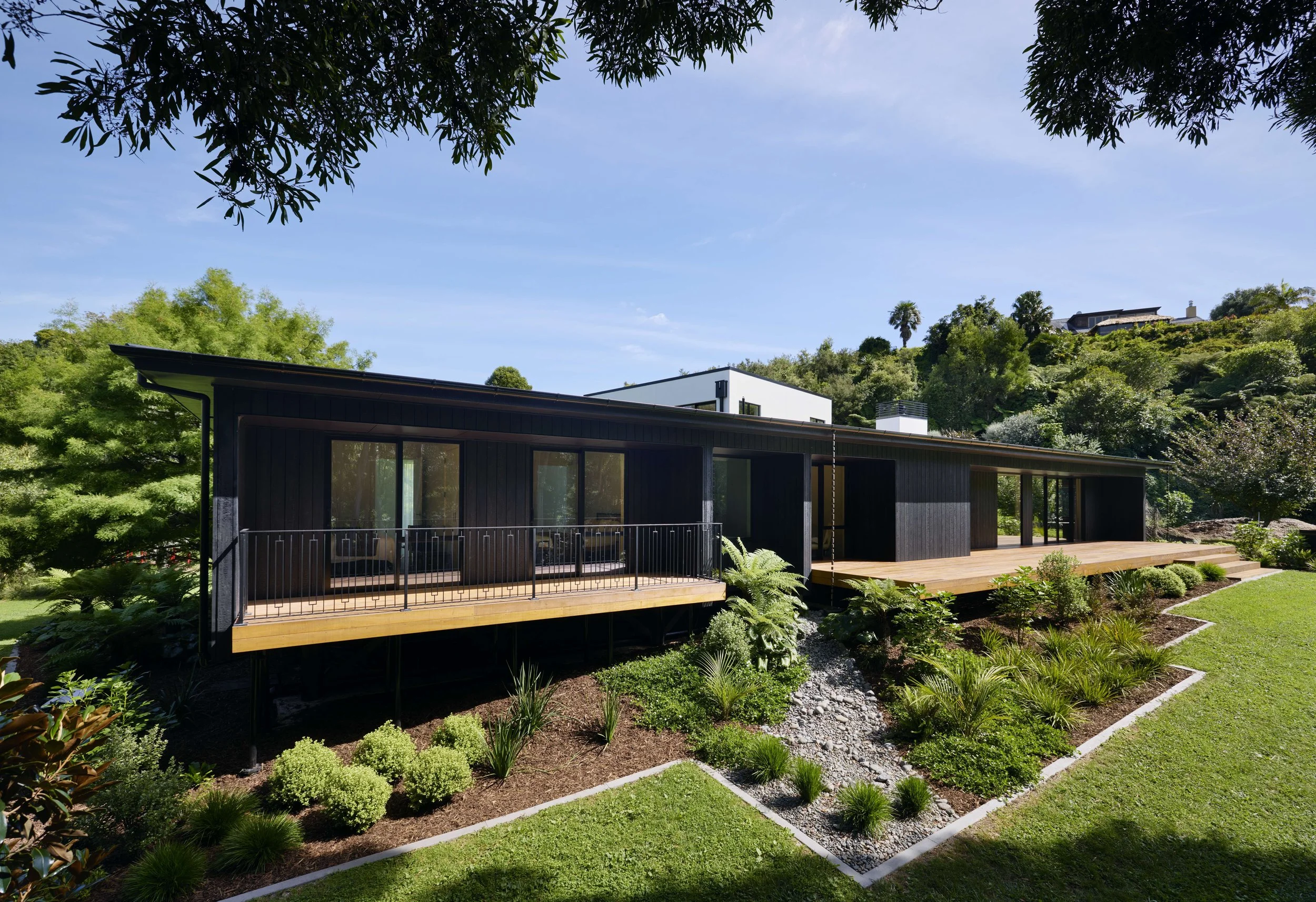
Buying property sight unseen is something we are familiar with in the Bay of Plenty, usually by international buyers who have access to extensive real-estate-supplied images and information. But for a New Zealand couple returning home after 26 years in England, the almost one-hectare Ōmokoroa section they discovered online had few details to recommend it. There was no exact address, limited imagery and little context. Yet something about the site appealed.
Tracey and John’s return to New Zealand was nudged along by Brexit and COVID. The couple both work from home for large pharmaceutical companies, so the move was about transferring home locations and a desire to spend more time with family. The 2020 lockdown prevented an in-person search, so John’s parents visited the site on their behalf, walking the land, carrying out the due diligence and sending through images. On the strength of this, the couple secured the property from abroad. Working remotely from England, Tracey and John began collaborating with Hannah Armstrong-Gardner of Studio H on the design of their new home. With Hannah and her husband Chris, who would later build the house through their company Gardo Group, living just 500 metres up the road, the project naturally became a close collaboration between the four. Through a series of video calls, the design gradually took shape, evolving into a fully documented consent set before the couple had even returned to New Zealand.
It wasn’t until 2022 that Tracey, John and their woolly-coated black pooch Nonu set foot on the site of their new home. The property is gently nestled at the bottom of a winding drive below an urban development, bordered by trees that ensure privacy from the nearby Ōmokoroa coastal cycleway, and has a small stream meandering through the boundary.
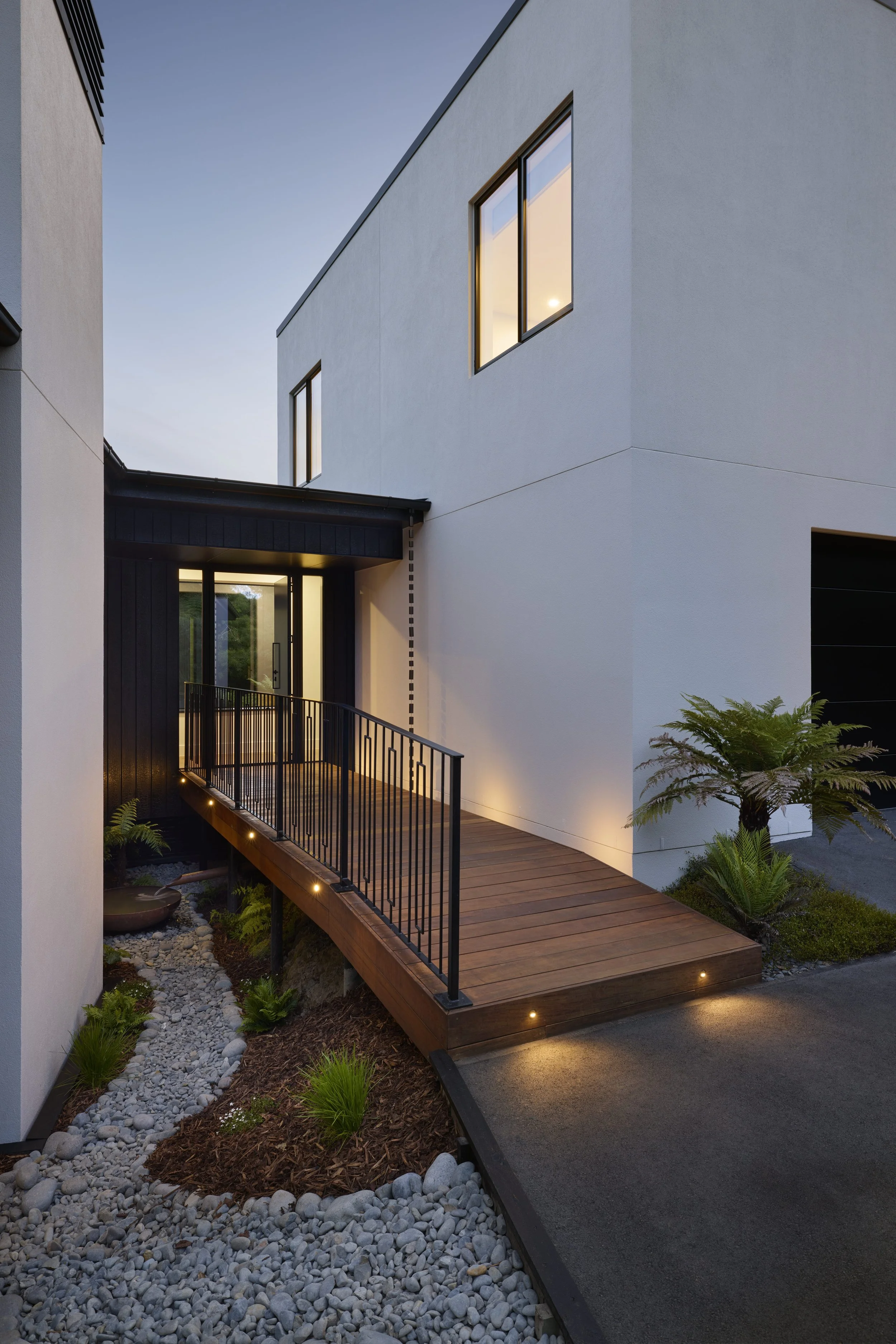
Fast forward to 2026 and the approach down that driveway halts me as I descend. The first impression is of a chic bush retreat. From above, the home is two distinct wings — one black, one white — juxtaposed against the lush clearing the dwelling sits within, surrounded by artfully curated native planting. There is a subtle Japanese influence to the design, and as I draw up to the front entrance, a long hardwood decked walkway draws me to the front door, bordered by its custom balustrade repeating a subtle architectural detail that appears throughout the home, protecting full-height openings on the upper level while reinforcing the project’s restrained material palette. To the left is the long, black Shou Sugi Ban charred timber clad wing, housing guest bedrooms, bathroom, office, kitchen and living, to the right is the white rendered plaster two-storey volume featuring two master bedrooms, large ensuite and dressing room, garage, storage and laundry space. Subtle circular water features set on river stone paths, suspended Japanese rain chains and a small red bridge spanning the stream and glimpsed through the feature window in the entrance, all set the scene for the interiors where tone and texture of materials come together in a magnificent blend of warmth, light and high-end luxury.
The 331m2 home was designed by Hannah ArmstrongGardner, of Studio H, a Tauranga-based design-led practice known for creating homes of quiet distinction. Hannah works closely with her clients from inception to completion, advising them early on that getting to know them well is a key part of her design process. “Where do you put your shoes and your bikes when you come home? What’s ‘your side’ of the basin? My design process is human-centric, not ‘Hannah-centric’," she explains.
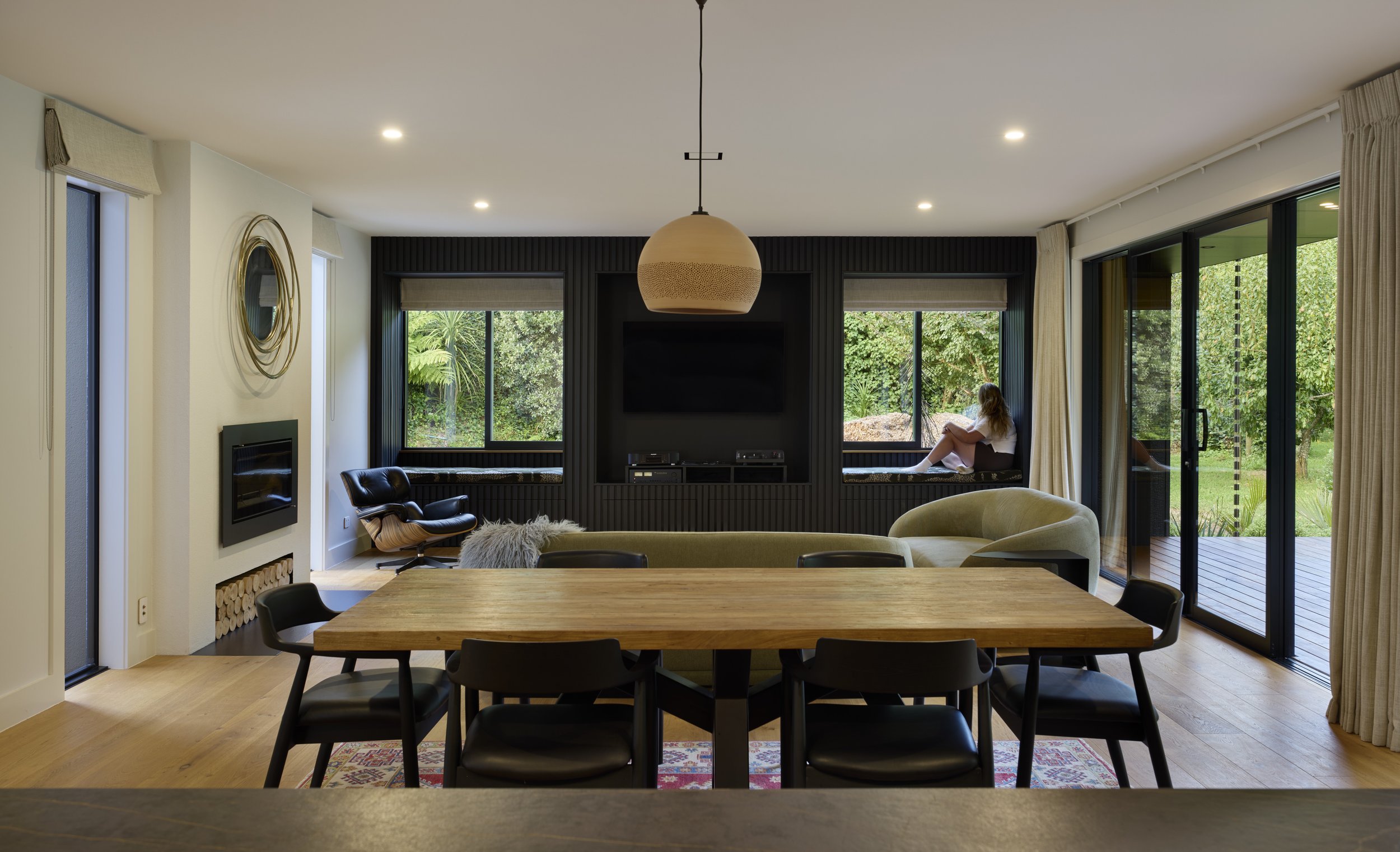
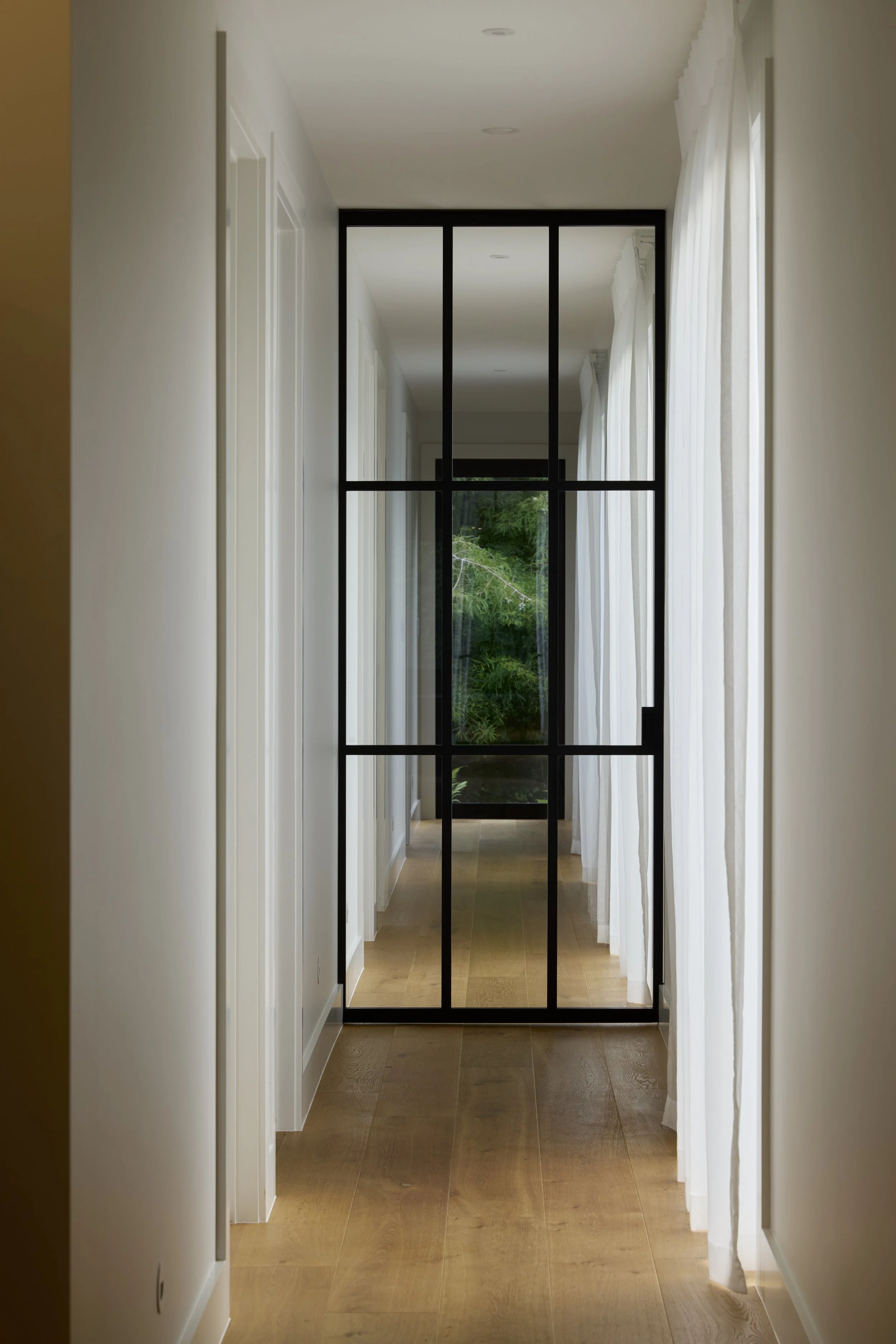
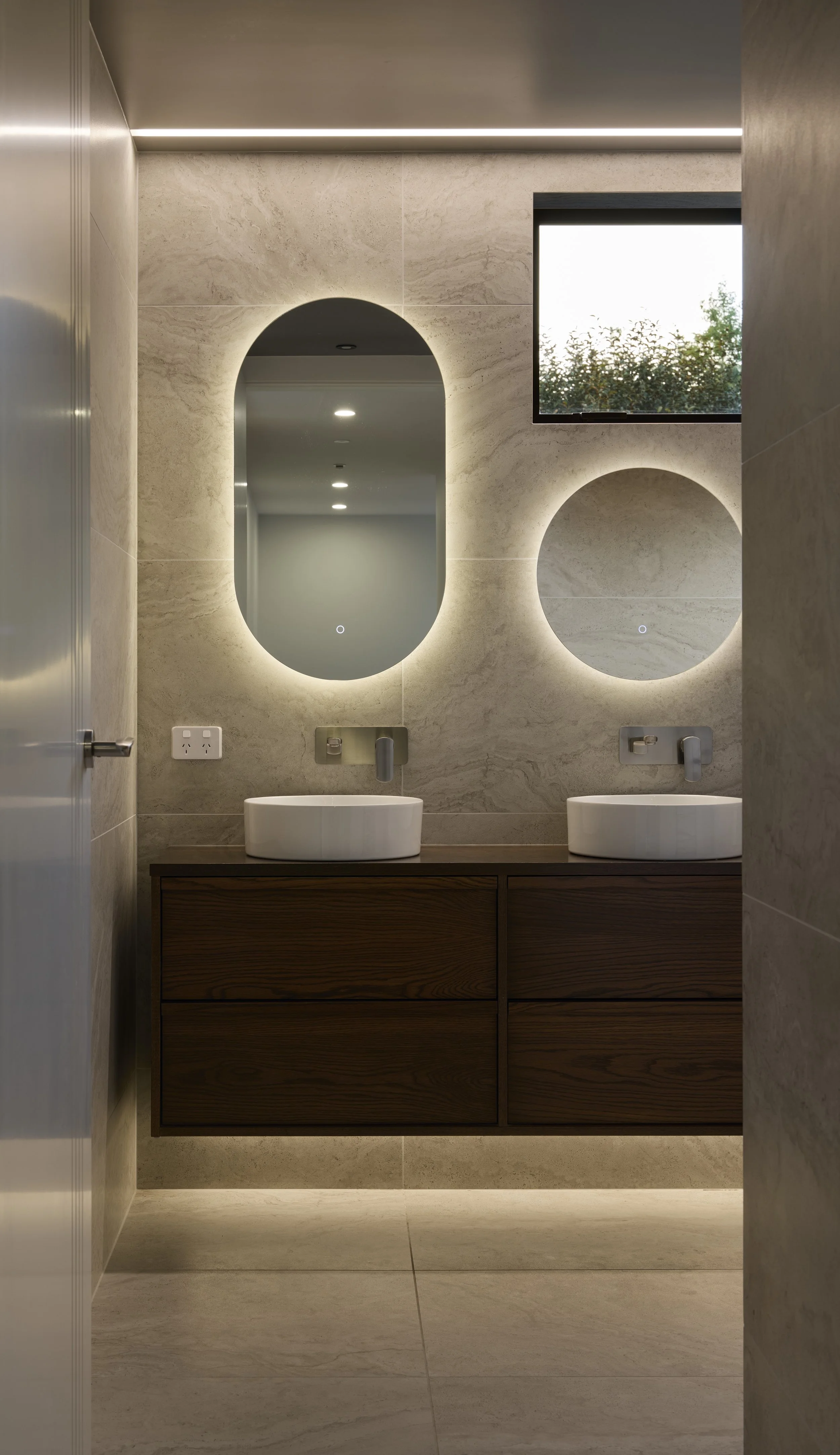
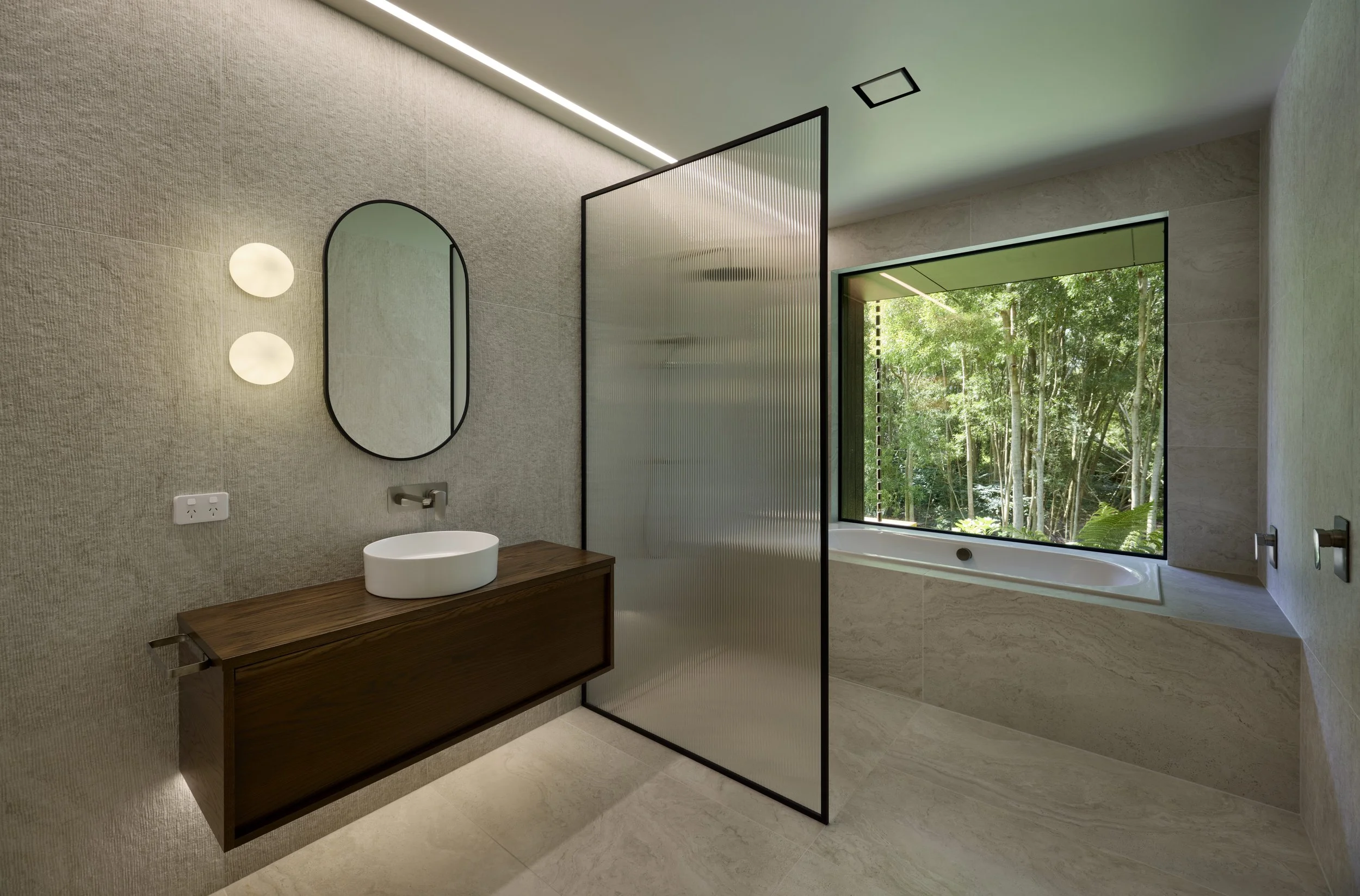
Tracey and John arrived with a clear priority: warmth and comfort. Memories of cold New Zealand houses from earlier years abroad meant the thermal performance of their new home was paramount. Instead, the couple and their designer carefully considered the site’s microclimate, including existing tree cover and the natural topography of the driveway ridge. The main living wing therefore faces east, allowing soft morning light to enter the space while avoiding excessive summer heat. To maintain consistent indoor comfort, a hydronic underfloor heating and cooling system runs beneath the home’s light oak flooring, creating an even ambient temperature year-round. The timber floors extend throughout the house, softening the floor-to-ceiling tiling used within the bathrooms and reinforcing the calm material palette. Overhead, 2.7-metre ceilings allow light to move easily through the spaces while housing discreet mechanical systems.
Sustainability was also a key consideration. The property operates with a significant degree of independence through rainwater harvesting, solar generation and efficient systems, while the materials used throughout the home were selected with attention to origin.
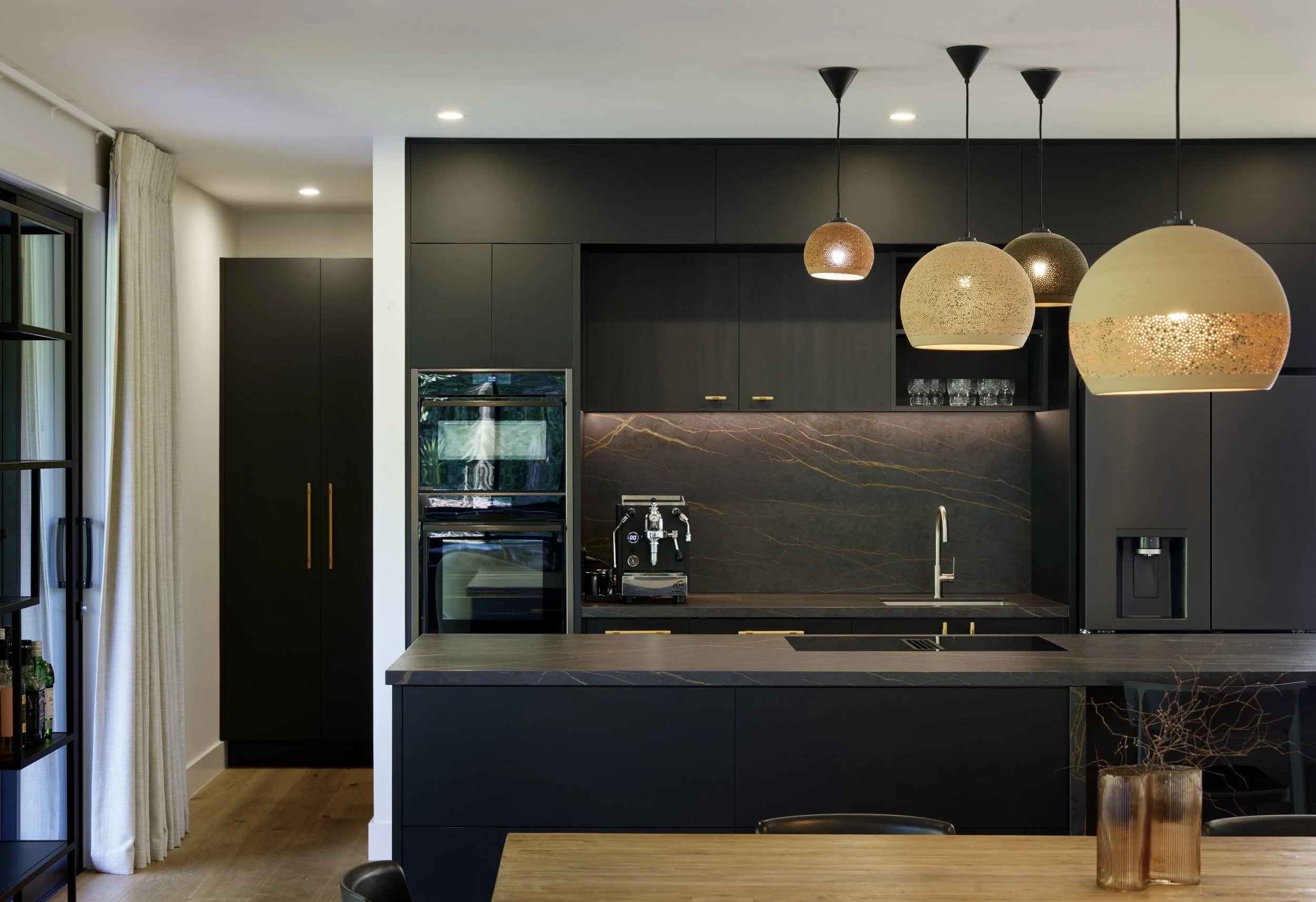
The kitchen is dark and seamless, softened by wooden handles in keeping with the subtle Japanese aesthetic, the intentional use of empty space, calming, natural colours and product. With this in mind, the deliberate selection of the Dekton Laurent benchtop - an earthy chocolate shot through with streaks of natural golden hue - bring the whole space, including the offset scullery, together.
From the time the build was completed in March 2024, it has felt like a forever home for Tracey and John - peaceful, sleek, soft and something of a sanctuary. A retreat indeed. STUDIOHDESIGN.CO.NZ

Good as gold
Quality workmanship meets impeccable design for these
Registered Master Builders House of the Year Bay of Plenty
and Central Plateau Award winners
Quality workmanship meets impeccable design for these
Registered Master Builders House of the Year Bay of Plenty
and Central Plateau Award winners.

Beachfront bliss
A stunning renovation has transformed this cute bach into a cosy oceanfront haven.
Built by Reside Construction, this beachfront family bach not only won the overall Supreme Renovation Award, but also the Builders Academy Renovation Award $1-$2 million Category, and Gold. With breathtaking views of Waihi Beach, this impeccable build has been renovated to last.
The original dwelling has undergone complete modernisation, with the addition of a pool, and low-maintenance materials designed to withstand coastal conditions.

The addition of robust aluminium cladding and roofing ensures longevity and the Flashclad Dualboard Vertical Cladding System is a nod to the building’s original board and batten exterior. The addition of spacious decks and louvre roofs were added to allow year-round entertaining.
Revamped spaces include a master suite on the oceanfront elevation, with its own lounge, opening up to the stunning views by an over-wall sliding door, to share as an additional space enjoyed as part of the bedroom.

In additional living spaces, the kitchen/diner and another bedroom flow seamlessly along the oceanfront. And the bunkroom and bathroom off the pool area is the perfect escape for the younger generations.
This is a compact and easy-living bach that has cleverly incorporated everything needed for multiple holidaying families, including many modern home comforts – central heating and air conditioning and a Smart home security system which can be monitored remotely.

Reside Construction also won the Builders Own Home Category and Gold for another entry. Both properties have been selected for the Top 100 House of the Year 2024 National Awards.


Mount marvel
This Valley Road residence not only fits seamlessly into the landscape, but elevates the standard for modern living.
What once stood as a 110m2 relic from the 1950s has now been reborn as
a contemporary marvel on Valley Road. This Gold Award winner not only meets the client’s dream of an open, sun-soaked haven but also stands as a testament to innovative design, overcoming challenges, and the collaborative effort between the clients and the architectural team.

The homeowners actively engaged in the design process, immersing themselves in the old property’s daily rhythms, optimising the new house’s positioning relative to the sun’s movement.
The challenge of building on the sand dunes meant there was a large hump in the site and means the house follows this contour, creating a unique layering that integrates with the land. From the garage up to the living area and down to the pool, each level is meticulously planned.

The commitment to eco-friendly practices extended to the demolition of the 1950s home, with an effort to recycle materials. Reclaimed Sanselmo Clay bricks were chosen for their energy efficiency, sound insulation and organic composition that emits no VOCs. These bricks also facilitate moisture escape, promoting a healthier indoor environment.
The electrical selections reflect a modern approach to energy efficiency, with LED strip lighting triggered by sensors, a zone-controlled heat pump, and infrared heaters in the outdoors. Outdoor lighting is designed for efficiency, triggered by photocells to minimise unnecessary energy consumption. The result is an eco-friendly, functional modern paradise.

landmarkhomes.co.nz

Black beauty
The proof is in the pudding for this functional and spacious Ōpōtiki home. PHOTOS Michael White
Diane and Tony’s stunning home in Ōpōtiki, built by Landmark Homes Eastern Bay of Plenty and Rotorua, boasts incredible craftsmanship, breathtaking views, and personal touches, like cathedral-style windows and a bold red front door.

As the only House of the Year awardee in 2024 for the Eastern Bay of Plenty, Landmark Homes EBOP and Rotorua couldn’t wait to get started on this spacious home which overlooks the rolling hills and the water beyond.

Their clients, Diane and Tony, say their favourite spot is the kitchen. With cathedral-style windows, a high gabled ceiling, and wide opening sliders leading out to the large, covered deck. “It’s a beautiful space,” she says. “I love how functional it is, and the views are breathtaking.” A standout feature is the letterbox window, offering a picture-perfect view and serving as a unique splashback.

Diane and Tony are thrilled with their new home, describing it as everything they dreamed of and more. They’ve created a functional space that they love, and their satisfaction speaks volumes about the quality and craftsmanship of the home. The Regional Gold award was the cherry on top, a wonderful recognition of all the hard work and dedication that went into their home.

landmarkhomes.co.nz

Contemporary charm
This modern bach not only embraces its beachside surrounds, it’s designed to seamlessly blend with the beautiful vista.
This modern bach not only embraces its beachside surrounds,
it’s designed to seamlessly blend with the beautiful vista.
words Monique Balvert-O’Connor
photos Untitled Studio + Salina Galvan

Mel Riley and his company DC Build may not have had a BOP arm for long, but they certainly secured a fabulous project to sink their teeth into.
Described as a sleek, modern ode to the joy of New Zealand beach life, DC Build and JMAC Architecture completed this contemporary build for Tauranga clients over summer, replacing a much-loved, somewhat dilapidated Pukehina bach.
DC Build’s Mel Riley says working with JMAC director and architectural designer Jason Macdonald and other professionals on the project was a great way to end the 2023 working year. It was an assignment that perfectly suited the “design meets craftsmanship” focus of the company he co-owns with his brother Justin. The beautifully designed home offered opportunities aplenty to showcase his team’s capabilities on the craftsmanship front.
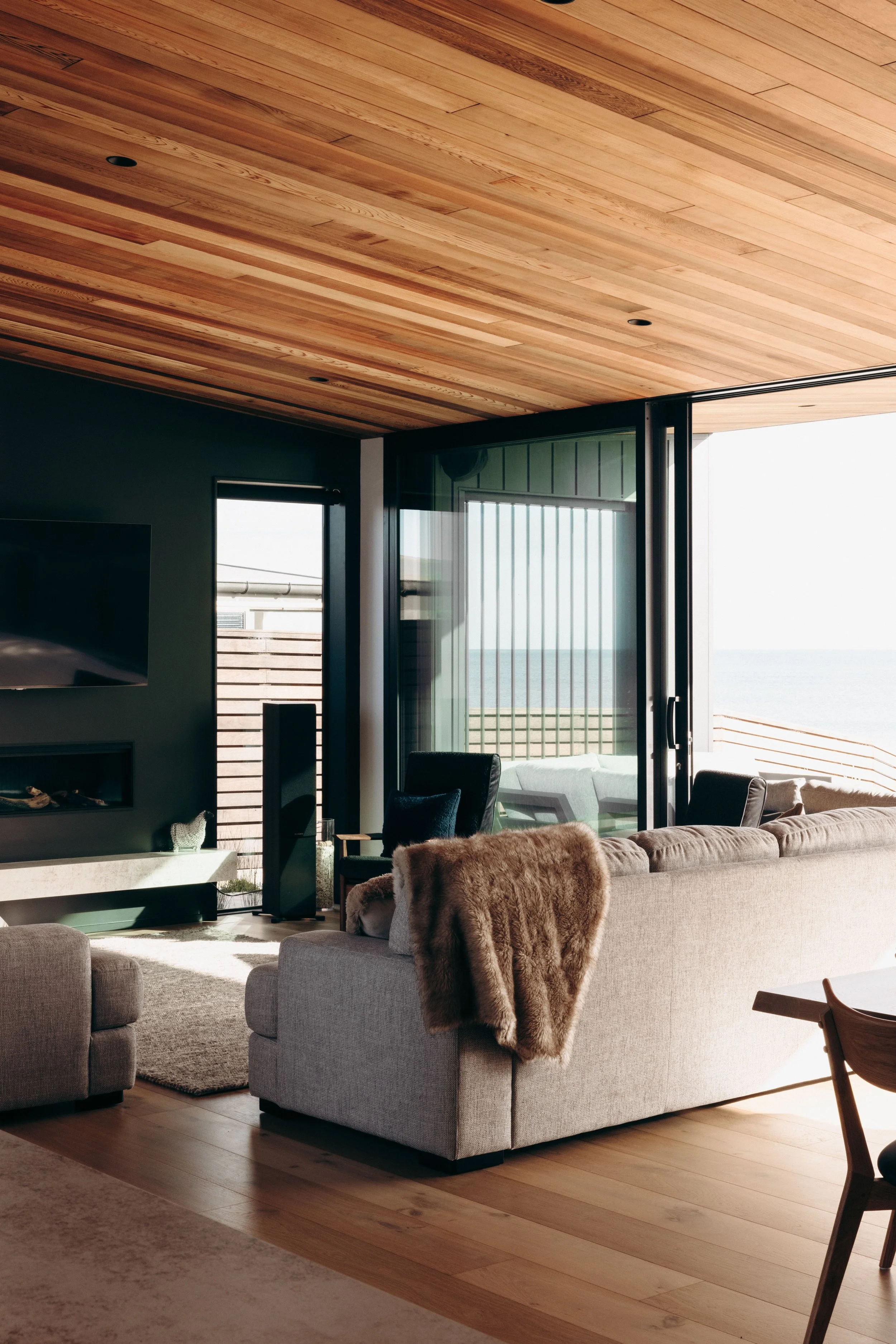
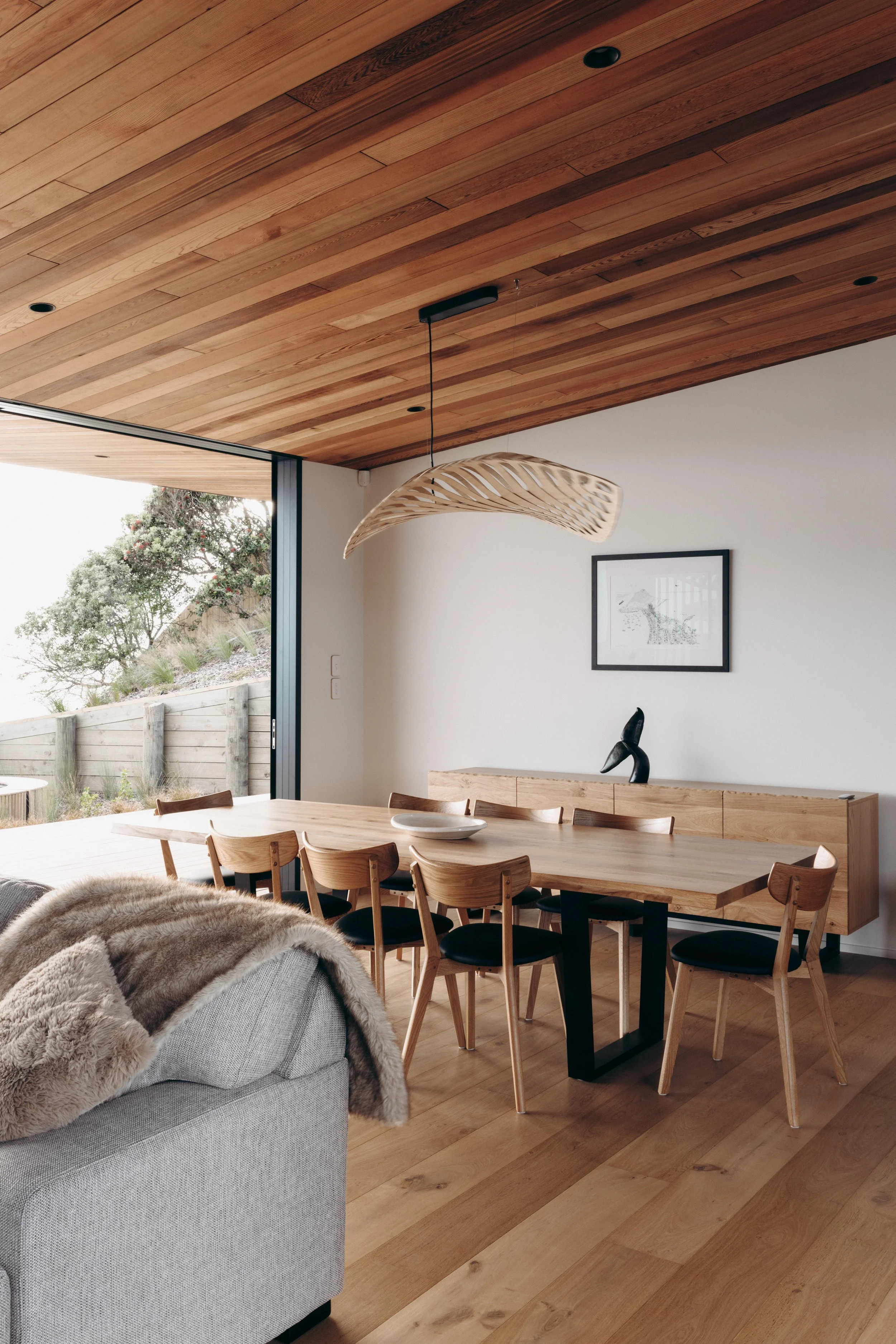
“One of the things we love the most in a building job is beautiful details,” says Mel, adding that the home’s sarked cedar ceilings are a fine example of this, and enabled the DC Build team to put their craftsmanship to work.

The house sits on a generously sized rectangular site that stretches towards the beach. While it appears to hug the sand dunes, it does sit back significantly enough to allow protection from coastal erosion. In line with resource consent (the house must be removable), it has been built on timber piles, which required some significant design and engineering given the need to bore down three to four metres into soft sand without any collapsing.
It’s a beach house that can also boast estuary views. Hence, the pleasing floorplan incorporates two individual living areas maximising views of both bodies of water. Full-height, floor-to-ceiling windows in key areas ensure the vista can be fully embraced.
“Because of the high windows in the living area and master bedroom, the cedar ceilings continue seamlessly from the indoors to the outdoors where there are covered decks facing the ocean,” Mel explains.
Given the panoramic views, bringing the beauty of the outdoors in was always a design intention at this home. The deck’s roofline assists in doing so – it tilts up to bring in more of the views.
Mel appreciates it’s a home that has absolutely nailed the perfect combination of contemporary charm with the everlasting splendour of beachfront tranquillity.
He feels a natural leaning towards such aesthetically pleasing architectural builds. Shortly after becoming a qualified builder, he pursued a two-year national diploma in Architechtural Technology.
“I understand design,” says Mel. “A builder who can speak the architect's language is a valuable thing. Designers work with a builder who understands architectural plans beyond just following them, so any potential problems can be stopped before they arise. It makes it easier to achieve the high standard.”
JMAC’s Jason knows well the advantage of having a sympathetic builder on his projects, one who is a key player in seamlessly bringing his architectural visions to life.

The two say this beachfront build has been a great project to be involved in from start to finish. "The client on this project was really easy to work with, which made the process that much easier and enjoyable," says Mel. The process involved the happy homeowners recently hosting dinner for Mel and Jason’s teams and other consultants involved in the project. Those consultants included Yellowfox interiors and 689 lighting design. Mel says the professionals involved in the build worked together as one team from the get-go. Collaboratively, he says, this was one of those projects that really came together beautifully.
Mel seconds Jason’s thoughts: “To end up making friendships out of what we do is probably the biggest reward. I think that’s a true testament to the success of a build.”
As for the project’s early days, Mel was offered the opportunity to sit around the table with the architectural team and homeowners to discuss the job’s pricing process. This gave DC Build the opportunity to showcase its comprehensive and transparent pricing plan, which includes reports presented at various stages of projects. Those early three-way conversations were invaluable, Mel says, as they also included discussion around product such as the cladding. The clients opted for aluminium Nu Wall cladding (DC Build had worked with this pre-finished product numerous times). Its anti-rust qualities were deemed especially advantageous given the Pukehina home’s coastal location. The home is set to retain its good looks and turn heads for many a year.
Mel says all up, the Pukehina project fulfilled his company’s aim to craft homes that not only bring an architectural vision to the real world, but also make the owner, the architect/architectural designer and the team proud to be part of it.

DC and the BOP
All it took was a few wonderful beach holidays to get Mel Riley thinking seriously about extending his building business to include the BOP.
“We loved the area, loved the vibe, and I managed to secure a section in Pāpāmoa that would become home base.”
Mel and his brother Justin founded DC Build back in 2014. Up until Mel’s BOP epiphany about five years ago, the brothers’ business concentrated solely on residential builds in Auckland. These days the business has a team of six (made up of qualified builders and apprentices at various stages) in the Western Bay of Plenty, and 12 in Auckland. Mel heads the BOP team, ably assisted by Will Salwey as site foreman, while Justin’s at the helm in Auckland, where his team includes long-standing staff member James Poore as project manager.
It’s five years since Mel and family made the move. His first build in the Bay was of personal significance – the construction of a home for himself and family on that Pāpāmoa site. With that out of the way, it was time to focus on the business of building primarily high-end, architecturally designed homes – either new builds or renovations in the Bay of Plenty. Mel's son, Jay, recently started an apprecticeship within the business.
Working life in Auckland is busy for DC Build. “We have established our name there,” Mel says. “Now it’s time to build on what we’ve already achieved over the last few years in the Bay of Plenty. We have capacity and we’re keen and committed to staying in this region.”
It has been an eventful few months for the DC Build team. The Pukehina project was finished in December and since then, Mel has been busy pricing another coastal build and overseeing the company’s rebranding. Up until recently, DC Build was DC Builders.
“We’re armed with a fresh rebrand as of this year,” Mel enthuses. He’s proud of that brand, which he summarises as bringing architectural visions into the real world through creative knowledge meeting technical skill.
“The best projects are the ones that everyone is proud of.”