

Smooth ride
Smooth ride
Fancy a road trip? Douglas and Heather Stewart took in the South Island’s stunning autumn foliage in their brand-new EV.
Fancy a road trip? Douglas and Heather Stewart took in the South Island’s stunning autumn foliage in their brand-new EV.
Words Jo Ferris / Photos Jahl Marshall

Douglas and Heather Stewart’s transition from their petrol Toyota RAV to a Lexus EV might have begun knowing Lexus is the luxury brand within Toyota’s stable. Their decision to buy a Lexus, however, involved learning about EVs – then driving one around the South Island soon after.
After 45 years overseas, the couple came home for their final retirement phase. Settling in Katikati in March 2019, and aware of the move towards clean cars, Heather says they “wanted to do their bit”. She was quite happy, however, that Douglas did the research.
While the technology, terminology, and types of low-emission vehicles can be confusing, Douglas learned quickly. Having looked at hybrids, it was full EV or nothing. Then it simply boiled down to brand.
Looking across the board, nothing else but Lexus stood out. It wasn’t until a Tauranga dealership opened in June 2021 that the Stewarts took the next step.
”We saw the first demo in November, went for a test drive, and ordered one straightaway.”
Although an “EV virgin”, Douglas was smitten. The Lexus doesn’t top the price range, but the UX300e Limited SUV still had all the bells and whistles. It was the capacity, comfort, and safety the Stewarts really liked.
So much so that, within weeks of getting their car in March, they were off to explore the South Island’s autumnal glory. Comfortable with the car’s mileage capacity, Douglas planned their trip around charging stations – an aspect he cannot stress enough. That even includes booking accommodation that offers charging.

New Zealand’s growing range of charging stations made the trip easy. It was a major journey – some 4300 kms; leaving Katitkati for a night at their favourite Creel Lodge in Turangi, then to Wellington and the ferry. In three weeks, the Stewarts travelled from Picton to Te Anau, Wanaka and Geraldine; up to Hanmer Springs, Murchison, Nelson; back to Picton and the ferry for a final night at Turangi.
A huge effort by anyone’s standards – let alone in an EV, bought just weeks prior. The only hiccup occurred on the way to Murchison. With no charging facilities in Hanmer, the plan was to top up in Murchison to make Nelson. Douglas hadn’t allowed for rain, wipers, and lights – and the subsequent power reduction. AA membership is handy at times.
As to cost, Douglas estimates the journey was under a third of his petrol car. Charging at home is also minimal compared with the alternative petrol outlay. Otherwise, it’s a trip to a rapid charger nearby, when out shopping. While his Lexus battery is guaranteed for eight years, Douglas believes ongoing research will reduce degradation, lighten their weight, and improve disposal.
EVs may still be cost-prohibitive to many right now, but Douglas believes they are the future, and he cannot praise Lexus Tauranga enough.
“Would I buy an EV again? Most certainly,” he says. “Would it be a Lexus? Absolutely. And would I buy in Tauranga? No doubt about it.”

Good to know
Douglas says the Lexus UX300e Limited SUV has a number of features that made their road trip a (mostly) smooth success.
360km (approx), 300km (average) capacity
7.5s acceleration (0-100km/hr)
Road stability and road handling
Weight distribution of battery pack and sectional componentry
360-degree camera in the console
Cruise control
Triple-brake configuration
Pre-collision system with visual and audio alerts
Brake assist system with automatic application in an emergency

Douglas’ top tips
Top up to 80 percent. The final 20 percent takes longer to charge than the 80 percent.
A full three-point plug charge takes 16 to 18 hours. Rapid is about one hour and 10 minutes.
Join ChargeNet for access to more than 250 fast-charge stations in New Zealand.
PlugShare app maps all free-to-use stations around the country.
Join AA.

Selling trust
Selling trust
Owen Cooney Consultancy brings a change of mindset to traditional investment strategies.
Owen Cooney Consultancy brings a change of mindset to traditional investment strategies.
Words Nicky Adams / Photos Jahl Marshall

Before making any investment decision, Owen Cooney uses what he calls the “mum test”. “I ask myself if this is something I would want my mother involved in – if the answer is no, then I walk away.”
A partner at Tauranga-based law firm Cooney Lees Morgan (CLM) since the 1980s, Owen was founding partner of the firm’s hugely successful property development division. Owen was responsible for putting together groups to acquire premium property assets. Not only did he enjoy this, but he saw the benefits that could be gained. As his appetite increased, Owen’s career saw a shift in direction, and after retiring as a partner from CLM in 2020, he decided to continue with what had developed into a passion project.
Establishing Owen Cooney Consultancy at the end of 2021 seemed like the next natural step in a journey that had really started as far back as 2008 when, together with his mother and brother Pete (managing director of Classic Group), the family had been keen to purchase an investment property. “When we started looking around, we couldn’t see anything that we considered premium in that $2-3 million range. That led us to the conclusion that looking in the $10 million-plus range took us out of the ruck and above a lot of the private buyers. There was less competition, and at that price we found a different level of building.”
When it came to starting up the consultancy, Owen already had an established client base, most of whom would have known or dealt with him over his many years at Cooney Lees Morgan. It also provided a seamless opportunity to continue working alongside his family, with OC Consultancy operating in conjunction with Classic Collectives Ltd (a joint venture company). However, part of the business model for OCC is the idea of bringing investment opportunities to a bracket who hitherto may not have looked to large commercial investment as a viable option. Those with less financial resources to invest quite feasibly might not have considered this type of opportunity would be open to them.
“Traditionally, young Kiwis wanting to build a bit of wealth for themselves have bought a rental property. In the early 2000s there was a real boom in the concept of residential property investments – that’s been the formula for generations of Kiwis. But now it’s not quite the same – residential property has increased by 40 percent in the past 18 months, raising the deposit has become too hard for a lot of people, and the government has taken off the tax deductibility. Plus, there’s the complexity now of the tenancy laws. So, owning a private rental property is less attractive and quite hard for a lot of people.”
Commercial investment, on the other hand, requires something of a mindset change, as does the concept of pooling resources. “You’re playing as a team rather than individually. It’s risk free from the point of view that in the structures we set up you’re not exposed to risk personally. The only risk you have is losing the money you put in, which is a risk any investment has. You put your money in, you get a yield straight away – a monthly return on your money. Being involved in a larger team we can access better properties with better tenants that are going to pay the bills.”
The skill of OCC is sourcing premium properties that will bring passive investment. “Developments are too risky; we don’t bring those to these clients. Under the banner of commercial, industrial properties are considered the darling of the market. Supermarkets are a great investment. We’ve got an open mind as long as it ticks the box of long-term security of the rent.” For their part, investors need to consider this a long-term prospect, of a five-year time horizon. After this there is a strategic review (although an exit strategy can be triggered before five years).

With the benefit and comparative ease when put against a residential investment, the appeal for not just the seasoned investor, but also the younger market looking for a way onto the wealth ladder is multi-faceted. Spearheading this aspect alongside Owen is business development manager Melanie. Having worked with Owen since last year, she is excited not just about the prospects for younger clients, but also about Owen’s personal mentoring skills. “Owen would never say this about himself, but he’s awesome at helping others do better, educate and grow. There’s a better future when you’re in the game with Owen.”
As for the bottom line, Owen states: “In terms of the amount invested by individuals, of the existing investor groups we have, it varies from $250,000 to $1.5 million. As for the question of how you qualify, for now we’re working on the basis that we’re a boutique business with many of our investors being old clients of mine. What we’re selling is trust. If someone trusts us and they want to be a part of this, we’re happy to talk to them.”
Email info@occ.nz and reference: UNO

A Winter kitchen
A Winter kitchen. In contrast to the less-is-more theory, Isis Winter believes sometimes more is just more.
In contrast to the less-is-more theory, Isis Winter believes sometimes more is just more.
Words Jo Ferris / Photos supplied
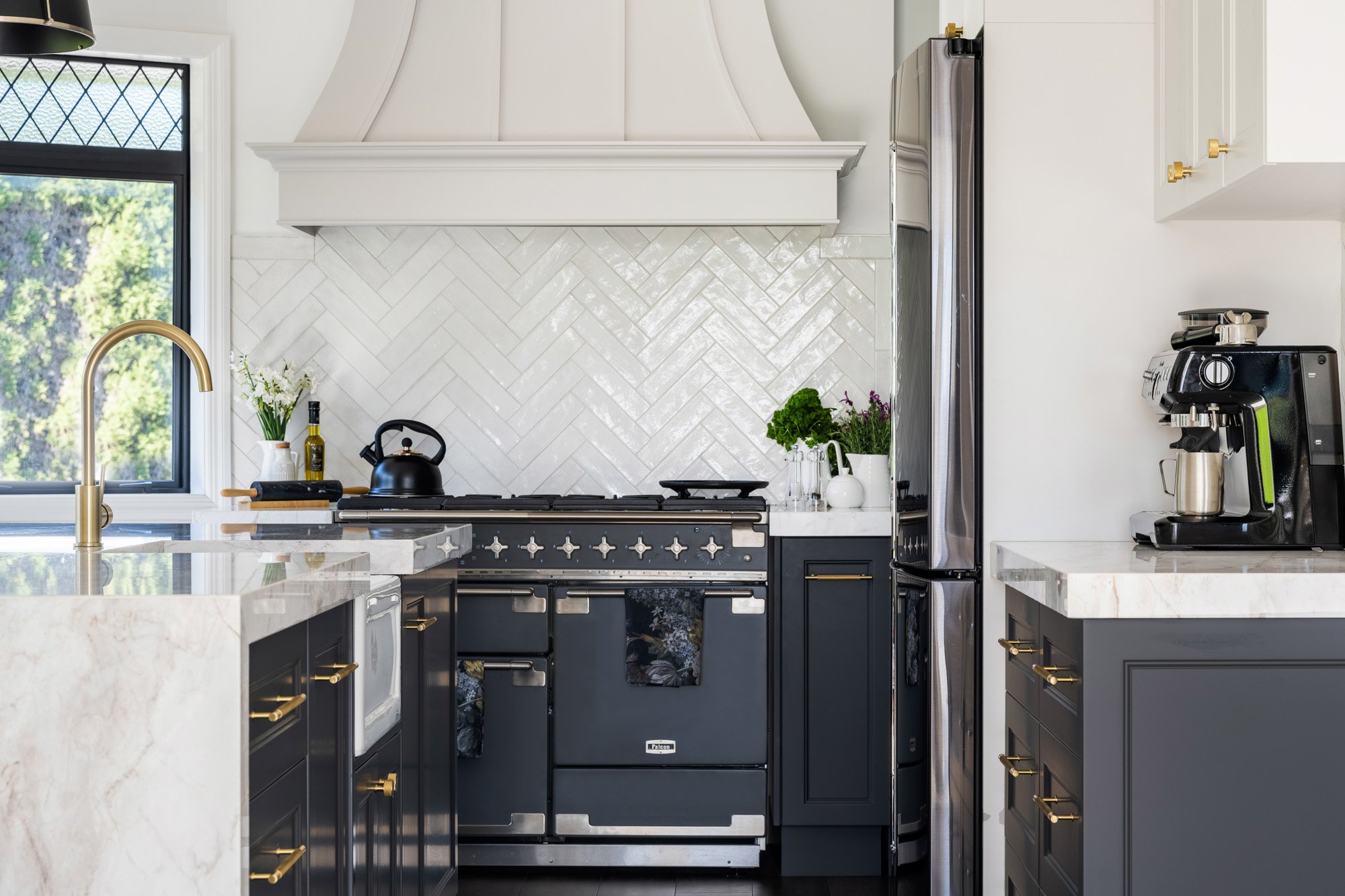
Isis and Cam both have a passion for homes – either selling them as Cam does, or renovating them, which is Isis’ specialty.
Having renovated around 20 houses, she loves working within the confines of existing architectural style. Built in 1999, their current home is nearing the completion of a full refurbishment. Most recently, the all-important kitchen.
“This home lends itself to ‘contemporary traditional’ which, although it sounds like an oxymoron, actually works really well. Something old, something new, with a healthy dose of luxury for good measure.”
And this kitchen has oodles of that. Dark cabinetry, heavy-duty marble and splashes of brass.
Looking to international trends to design something not often seen locally, the Winters are self-confessed Pinterest addicts and agree these types of platforms open up a world of ideas that can guide a direction with more confidence.
Whakatane-based Beaver Kitchens were totally on board in what became an all-encompassing team effort. Interestingly, it started where Cam and Isis wanted to finish – marble benchtops throughout the kitchen into the scullery, requiring two separate insets for butler’s sinks.

“It was a risky call to design and order pre-cut marble from overseas before doing anything else. Especially given that all other choices were made in context of a small sample piece of what would eventually become the star of the show: an island measuring 2700x1700mm, encased in 60mm marble with a stunning waterfall end.”
With the old kitchen stripped out, only minor changes were required to the structural layout.
“The kitchen is very much its own space, with wrap-around windows providing views across the grounds. A natural open connection exists with the dining space, through to the family room and formal lounge.”
A matching bar unit is that link – an extension into the dining area that houses the compulsory drinks’ fridge and cabinet, where normal glass doors give way to brass netting.
Brass is a statement feature and the perfect complement to the kitchen cabinetry’s smoky darkness. The colour is two-tone; Slate on lower units and soft grey Lana above – finished with brass drawer pulls, knobs, tapware from ABI interiors and pendants from Hinkley’s Clarke collection, sourced through Vogue Lighting.
While eyes draw initially to the striking combination of light marble and dark cabinetry, the cook station is hard to ignore.
A dual-fuel Falcon range was a clear choice. However, there was slight concern as to how country or modern this key component should be. In search for balance, the Winters’ decision was made when a preferred model became available in almost the identical colour of cabinetry. Lucky! The Elise is no longer produced.

The bespoke rangehood was all Beaver’s Michelle McAnulty – creating this unique and one-off piece – and another reason why the Winters cannot praise Beaver’s entire team enough for their endless patience and passion.
Dark, engineered oak flooring, while not part of the kitchen per se, is an essential element. This entails 190mm planks within the kitchen, and a stunning herringbone pattern using 610mm pieces throughout the dining, lounge and entrance - all framed and connected by brass inlays. Each space offers tones to the next – clear connections with the flooring and brass, but also subtle nods – such as the herringbone tiled splashbacks and herringbone flooring elsewhere.
A work of art. Finished on time, on budget. Preferring edgy design, while paying respect to timeless style, Isis says their kitchen was inspired by this notion. She also admits both she and Cam are the complete opposite of minimalists.
Which is why their story ends where it began:
“60mm marble benchtops, two-tone cabinetry, brass-knurled handles, a bespoke timeless rangehood? Sometimes more is - just more.”

Secret garden
Pulling from Hawke’s Bay’s Black Barn, Glenorchy’s Blanket Bay, and Huka Lodge in Taupō; Te Māra commands equal status as one of Bay of Plenty’s finest country homes
Pulling from Hawke’s Bay’s Black Barn, Glenorchy’s Blanket Bay, and Huka Lodge in Taupō; Te Māra commands equal status as one of Bay of Plenty’s finest country homes.
Words Jo Ferris / Photos supplied

From its secluded plateau in Whakamārama hills, the timeless design and nuance of this property applauds the collaborative approach of architectural and interior designers. But it’s mostly down to the lady of the house, whose vision entailed matching her dream home with a garden that would eventually embrace it.
Bare land five years ago, the home now melts into a garden, blending symmetry and corridors to frame the outstanding coastal views, an orchard and home for chickens, as well as a poolside haven and meandering pockets where potager gardens and herbs interweave seasons, colour, and inspiration.
Two te māra, Yoshino cherry trees, grace the entrance and give the property its name. That it took just five years to cultivate the depth and scale of this garden heaps further praise on the owners. Both the garden and home look and feel like they have been entrenched in seclusion far longer. Which was the plan from the outset, of course.
For the home, the brief was small but detailed – emphasis on “home”. Its intimate embrace graces every corner. It is somehow familiar, yet utterly unique. The tone and texture rest on the seemingly complicated, yet incredibly simple way each element fits like Lego. In fact, the owner utilised her son’s Lego bricks to construct her vision.
Architectural designer John Little was delighted by this novel approach.
“I style my designs on the enduring principles of good scale and proportions – and simple form.”

Based on that, and nodding to good New Zealand vernacular, the result is a three-bedroom ranch-style dwelling with verandah corners and garden pathway to the separate garage and studio accommodation. This intimate unit also bears Te Māra’s name in booking circles, and is deservedly ranked with A-reserve popularity. Black dominates the exterior board and batten and corrugated roofing to show how a simple building form and modest materials can successfully execute unpretentious expense.
Built by Mark Leppard with refined detail, the home’s north orientation follows the sun. Colonial timber joinery matches the underlying approach of a simple country cottage. In truth, there’s nothing simple in the way every detail is meticulously crafted. The house simply belies its age, thanks to its timeless affinity and connection with the scenery and outdoor flow.
The family relationship focuses on a farmhouse kitchen that celebrates infinite craftsmanship and French influences. High studs throughout enhance space. Dining and fireside gathering all revolves around togetherness and that familiar sense of home – one that invites entertaining for large occasions. As living slips into the cosier intimacy of the library snug, this home embodies its appreciation for privacy, while remaining connected and true.

Interior designer Terry Walsh says what separates this home is its use of materials.
“The painted timber joinery visually illustrates what an investment into signature elements can achieve. Other materials have been kept honest with their simplicity. The client and I always knew what we aspired to. It’s a no fuss look, while capturing a luxurious feel, combined with ‘less-than-perfect’ aspects.”
Wire-brushed herringbone flooring runs the length of the passage and living areas to instil that initial sense of age. European tiling in bathrooms and laundry feature patterned styling that also flatters the appeal of legacy, while heritage hardware throughout accentuates the significance of detail.
Beamed ceilings and battened walls unite the symmetry, while various angles and stud heights accentuate each room’s mood. But the gabled height of the lounge, with its concrete fireplace and antler chandelier, draws immediate attention.
Bespoke finish is epitomised by the owners’ ability to source individual pieces – for the home itself and personal collectables gathered over the years. Built-in units have no place in the likes of the bathrooms or laundry. Stand-alone pieces instil the intrigue of antique heritage with the knowledge that nothing else exists in the delivery of these rooms.
It was important to set the foundation for the furnishings that were to come. Whether it’s the flooring from Auckland’s Artedomus, delicious hues of Porter’s Paints personalising each room, or the final dressings with lighting, drapes and imported antique items from Auckland’s Vitrine store; the extent of detail and placement of beloved items honour every layer of design expertise.

In his first visit, Cam Winter from Oliver Road Luxury Real Estate says Te Māra is one of the finest country homes in the Bay of Plenty.
“This truly world-class, seemingly-effortless execution of magazine-worthy interior and timeless architectural design is a pleasure within which to spend a single moment, let alone a lifetime. It’s also available for inspection by qualified buyers and those interested should visit our website for more information. “
Being the change
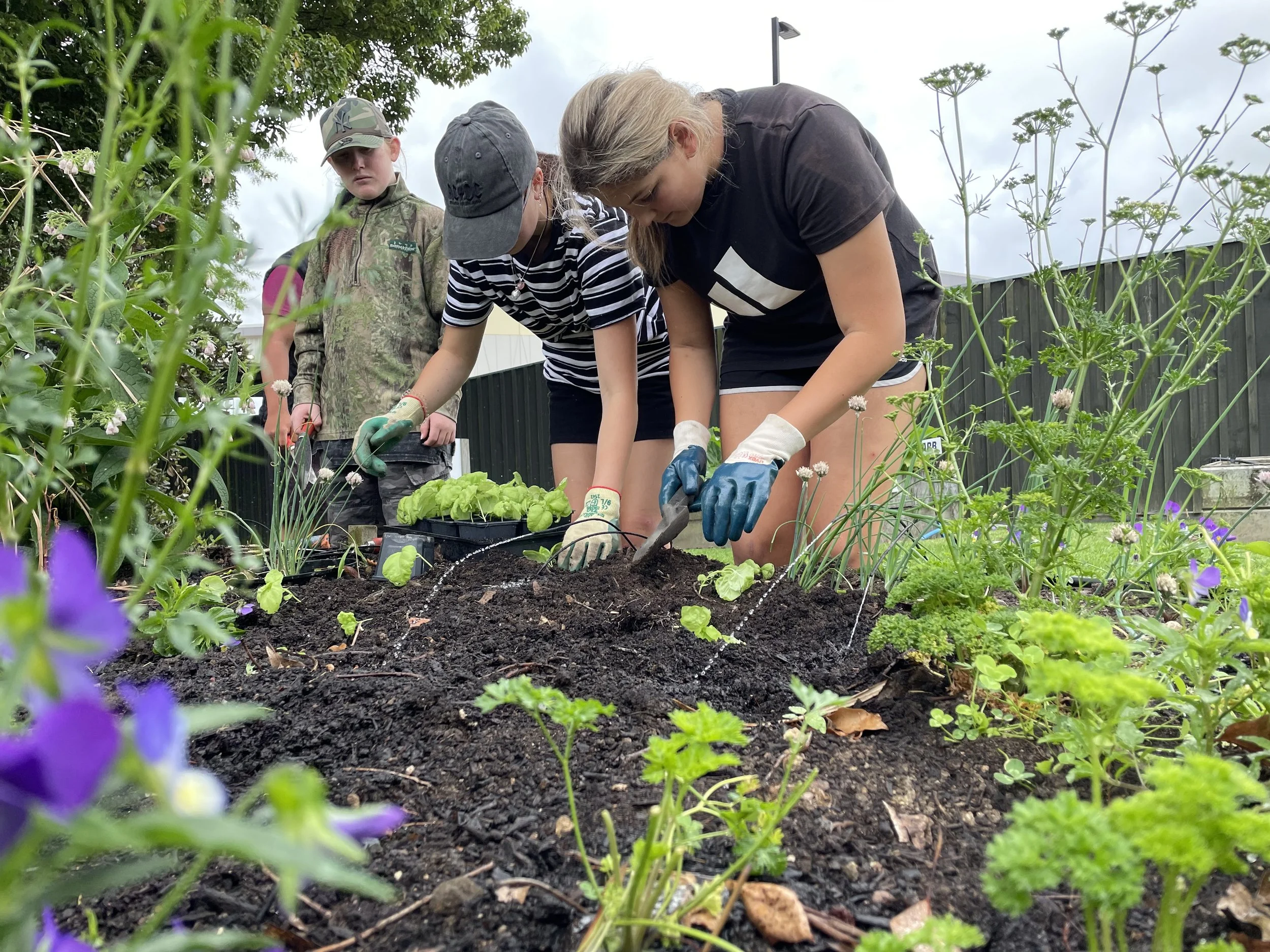
The Graeme Dingle Foundation improves the lives of our youth by not only equipping them with skills to build bright futures, but opening their eyes to the exciting possibilities around them.
The Graeme Dingle Foundation improves the lives of our youth by not only equipping them with skills to build bright futures, but opening their eyes to the exciting possibilities around them. And it’s not just the children who are benefiting from the foundation’s programmes.

Accomplished adventurer, mountaineer, author, artist, filmmaker and philanthropist Sir Graeme Dingle knows how to squeeze the very most out of what life has to offer – and he sees it as his calling to equip New Zealand’s youth with the same limitless sense of possibility. More than 25 years ago, he pledged to improve our country’s concerning youth statistics, and so the Graeme Dingle Foundation was born. The vision is to positively impact the lives of our tamariki, and make Aotearoa the best place in the world
for children to flourish.
Today, Graeme and partner Lady Dingle, Jo-anne Wilkinson, are proud to see the foundation’s programmes reach 28,000 school-aged rangatahi across the country. The programme seeks to improve self-esteem, educate about positive choices and values for health and happiness, offer practical life skills and impart a sense of adventure. The ultimate goal is a positive attitude, useful skills and real future possibilities.
The couple are adventurers in the truest sense. Graeme has ascended the world’s most challenging mountains, sometimes with climbing buddy, the late Sir Edmund Hillary, and Jo-anne’s epic Arctic and Antarctic traverses and mountaineering achievements also attest to the couple’s grit and determination to succeed. It’s the same drive and courage that underpins the foundation’s objectives to make a real difference in the lives of our youth so they too can thrive and surmount any challenges life throws at them.
But creating an aspiring generation requires inspiring role models and this is where the foundation’s mentor program plays a crucial and highly-rewarding part in its success. Lynette and Dave Gillies of Z Energy have mentored five students between them. They were involved with the Graeme Dingle Foundation through Z Energy’s ‘Good in the Hood’ initiative, when the foundation’s Western Bay of Plenty manager Dan Allen-Gordon approached them about mentoring. Although experienced in business coaching and management, mentoring rangatahi was totally new to them. However, not only was the mentor training day extremely helpful in preparing them, they also found the foundation always available for support if needed.
So what does the role of mentor actually involve? The expectation is to meet up once every fortnight but to have contact once a week, with fun group activities for all the students and their mentors arranged periodically throughout the year. “The idea is to find things to do together that create space to talk,” says Dave. And although the experiences they have shared with their mentees is impressive – surfing, mountain biking, mud runs, baking and cooking at their home as well as work experience and community events within Z – Dave insists the most important thing is to simply lend an ear to the young people under their mentorship. “It’s important to listen to both what they say and what they don’t say” says Dave. Lynette agrees, “Listening skills are the biggest thing you need. Often you don’t need to talk, just to listen.”
Both Dave and Lynette speak enthusiastically about what they’ve gained from mentoring. “The opportunity to learn about yourself is huge,” says Dave. Lynette says young people have shown
her a different view of the world. “It really opened my eyes and reinforced that we must listen to young people more. They have so much to offer.”

What advice would they give to people considering mentoring? “Just do it!” says Dave. “An hour a week is not a big commitment to make a huge difference. When you see where these students end up after their mentoring period, it’s awesome.” Lynette says mentoring has improved her own personal growth, too. “You give, but you get so much back. The feeling you get when you see them go from where they were, to blossoming young adults, is just amazing.”
When Helen Fraser, the owner of Mount Maunganui store Bettie Monroe, heard about mentoring at the Dingle Foundation, she knew it was the right option for her. She wanted to volunteer in the community and had always loved being around children and teenagers. “Being a teenager is difficult,” says Helen. “The chance to help, to give opportunities and be a positive role model and inspire young people is amazing, I love it.”
Helen says the mentor matching process is a bit like speed dating – a really fun way for both students and mentors to work out who they connect with. Helen’s mentorship activities arranged by the foundation, included skydiving, paddle boarding, inspirational talks and once, an evening walk round the Mount with a DOC ranger where they witnessed the penguins returning. “There were a lot of opportunities for us both to experience new things and learn together.” Helen also enjoyed one-on-one time on days out, shopping trips and meeting for hot chocolates. A big part of mentoring is also goal setting,” says Helen. “Each student has a book and we set goals then revisit and evaluate them. They also learn lots of life skills like CV writing and interview practice.”
Helen enjoyed mentoring so much, she has gone on to do it twice more. Seeing students grow and being beside them as they overcome challenges and accomplish their goals is just amazing. And it isn’t difficult, it’s just about being a friend, a listening ear and a sounding board – and loving life and being up for a challenge!” Paris, who was the first young person Helen mentored, went on to be a mentor herself – testament to the positive impact mentoring, and the Project K (a 14-month program for year 10 students that incorporates a wilderness adventure and community challenge) had on her life.
Dan Allen-Gordon says, “Our mentors come from all walks of life, but the thing they have in common is
passion to make a real difference in the challenging world our rangatahi face. Every one of us that overcame major obstacles as a young person has had a significant adult help us succeed. It is the greatest gift we can give to care and not judge.”
The Graeme Dingle Foundation Western Bay of Plenty reaches over 3,700 tamariki and rangatahi each week with their proven programmes, building resilience and well-being in young people. From Kiwi Can, a values and life skills primary school programme to whole school peer-mentoring and ready for work programmes such as Stars, Career Navigator and Project K. The programmes cater to young people aged 5 to 18, helping the participants to thrive and understand what they have inside is greater than any obstacle they may face. A key part of some of these programmes is mentoring, and for both the students and mentors this represents an extremely rewarding, and life-changing experience.

Home truths
Jason Bywater-Lutman and Thomas Refoy-Butler from Mackenzie Elvin Law explain the legal considerations around home renos.
Jason Bywater-Lutman and Thomas Refoy-Butler from Mackenzie Elvin Law
explain the legal considerations around home renos.
Interview Nicky Adams Photos supplied


Q: I’m thinking about renovations to my property. What are the risk areas I should be aware of?
Renovating your home can be both exciting and terrifying. What you don’t need is the added stress of legalities when things go wrong. Read on to find out about new home building laws and how to navigate and prevent problems with future renos.
JASON: Construction can be seen as scary, but there are lots of standard form contracts available, including a basic construction contract released by NZ Standards. The first step is to talk to your builder, get the plans and a quote, then come and see a solicitor to talk through the contract.
THOMAS: It doesn’t have to be a substantial engagement; we can just highlight some of the risk areas, which will give you peace of mind.
JASON: Standard contracts published by the government are designed to make sure the builder gets paid regularly. You need to be conscious that the builder is entitled to get paid regardless of how bad the job.
THOMAS: The onus has shifted on to the homeowner to articulate the grounds on which they’re not prepared to pay for work they’re not happy with. If that’s not communicated in the right way, the payment plan is deemed valid and enforceable as a debt due.
JASON: If a problem arises with the build, then a ‘handshake deal’ that it will be fixed doesn’t cut it under the construction contracts act. When you haven’t got it in writing, in accordance with the act, then you’re not able to withhold payment. And if you’re spending more than $30,000 on renovations, the contract is required to be in writing, so you should be getting that before paying any money over.
THOMAS: At the conceptual phase, when you’re looking at plans and engaging with a designer, talk to your builder about your wish list – if you can find a circle pairing between designer and builder, that’s key. When they can work harmoniously, the job runs in a far more streamlined, cost-effective manner.
JASON: Focus on quality communication – if changes crop up, the best thing for a builder is to have the conversation with the client and reduce it to writing so it’s understood that there’s a variation from the fixed price contract. It’s important to communicate effectively. The builder should confirm in writing to the client, and record site meetings. Keep a record so there is a nice contemporaneous note of the meeting to provide to the client. Ninety percent of legal problems are caused by poor communication. If people know what to expect, they’re going to be happy to pay.
THOMAS: Considerations for a renovation are understanding the difference between a labour-only contract and a fixed-price contract, as well as what a prime cost sum is – and a provisional cost sum. Remember that price variations may arise. Also clarify who has responsibility for insuring the work? There is an obligation on the homeowner for renovations under $100,000 to have a contract works insurance policy (your house and contents insurance won’t cover this). When over $100,000 it’s generally the responsibility of the builder.
JASON: The builder does want to do a good job. It’s about the client having reasonable expectations and the builder communicating clearly with clients so they understand what they’re getting into.

Lasting legacies
Kiri Randall from Legacy Funerals explains the importance of giving back.
Kiri Randall from Legacy Funerals explains the importance of giving back.
Photos Salina Galvan

Kiri Randall from Legacy Funerals
Gifting back profits to the community is by no means a new concept, but it’s not a common one in today’s business world. Which is surprising considering how much a business gets back if they choose to go down this road. For us, it’s built into the way we run.
Legacy Funerals here in Tauranga and its sister funeral home in Cambridge are both owned by Legacy Trust, and as far as I’m aware, the only funeral homes in the country to operate as not-for-profit businesses. This means it isn’t owned by any individual or private organisation.
The charitable trust was established in 2007 after the founder, former funeral director Greg Brownless, travelled to Thailand to assist with the repatriation of the deceased lost during the Boxing Day tsunami in 2006. Greg owned a funeral business in Tauranga, Greg Brownless Funeral Homes, but after that life-changing experience, he returned and set up Legacy Trust, vowing to make a difference in his own small part of the world.
So how does Tauranga’s local community benefit? Families who choose Legacy Funerals to farewell a loved one pay a normal fee and, after our usual operating costs are taken care of, the profits are returned to the local community. The Trust has gifted over $3.6 million since its inception directly back to local Tauranga-based charities, secondary schools and clubs. Not only do our families appreciate that in choosing Legacy’s service, their actions make a real and tangible difference to our local community, but our staff really value being part of a socially minded business too. Day to day we provide a caring and compassionate service to our families and it’s nice knowing that this extends far beyond our funeral homes through gifting our profits.
People can apply directly to the Trust for funding and our directors and trustees meet every month where we review applications from schools, community groups and charitable organisations and allocate our profits accordingly. We do also have some organisations that we regularly donate to. Waipuna Hospice is one local organisation that we are a principal supporter of. Close to $300,000 has been donated to assist the Hospice, helping to provide specialist palliative care for patients living with a life-limiting illness.
Greg’s Thailand experience completely changed the way the business worked and is therefore changing lives. In turn, this way of working gives us a greater sense of purpose in our everyday working lives. Every business should consider finding a way to give back.

Food for thought
Local food charity Kura Kai is bringing whānau and the wider community together.
Local food charity Kura Kai is bringing whānau and the wider community together.
words Nicky Adams / photos Salina Galvan + align creative

Marie, Makaia and Anna cook up a recipe for teen success.
Makaia Carr seems to be someone who sees an opportunity, an opening, or a need and gets in there and plugs that gap. A successful early social media influencer, in May 2020 she saw the opportunity to use her platform to make a difference. Now, together with Marie Paterson, Anna Watkins and a team of volunteers, she uses her position in the online space to spearhead social change in the form of charitable trust Kura Kai.
The charity is making such a big impact in the Bay that it caught the attention of Farmer Autovillage. The car dealership, based in Mount Maunganui, recently celebrated 30 years in business, and to thank the community for its support in achieving this milestone, chose a number of local charities to invest in, one of which is Kura Kai. Farmer Autovillage generously donated a long-lease Nissan Qashqai, which allows staff to stay mobile and connected. As managing director Mike Farmer says, “Kura Kai is an organisation that has all the values that we support, that works within our community as well as the wider community, so is very valid and worthwhile getting behind.”

Kura Kai is a volunteer-driven service designed to support whānau across New Zealand. Funds are raised to donate chest freezers to high schools, which are then filled with food that can be accessed by the students. With social needs putting added pressure on our youth, Kura Kai sees this as a multifaceted way to help our teenagers. Makaia herself is passionate about keeping our kids in school. “My drive has always been helping rangatahi and getting in at that age of teenagers and high schools. Purely because I left high school early. I was a teenage mum and I understand the struggle to get through education.” This backdrop drew Makaia into a space of promoting female self-belief and empowerment. As her public profile grew as an influencer, along with her thousands of followers came an increased desire to find ways in which her influencing could be used for greater good. “I was asking myself how we could all be better using our platforms – something that came with age and self-assessment.”
It was the first lockdown of March 2020 that bought things into focus. “People were losing jobs, whānau were struggling – students were being sent home from school to look after kids, leaving school to get jobs to support their whānau – all that stuff was really coming to the forefront. I was open to looking at ways I could use my social media to help.” At this stage Makaia and her family were living in Auckland when Gemma, a follower from Tauranga, messaged asking if Makaia could put a shout out to her followers for meal contributions to the compassion freezer at Otumoetai Primary School. This Makaia did, and within a week 80 meals had arrived.
The more Makaia found out about the system, the more she liked what she heard. “I loved how it was really grassroots, that it was direct with kai going straight to the whānau. I think there’s such a beauty in that way to help. Especially in a Maori whānau, where showing up with kai is such a beautiful way to show love and manaakitanga.” She looked for a way that she could develop her support into a more cohesive concept. Via her social media she was able to, not only raise awareness, but also fundraise. Buying more freezers for more schools was a start point, followed by accruing volunteers to cook and coordinators to organise. Quickly the dots were joined, and Kura Kai was born. Makaia and her family moved to Pāpāmoa, and the Bay became the heart of the national charity.
Then Makaia’s personal life nose-dived. Her marriage fell apart, and she was floored. During this time what she found was that all she wanted to do was cook, cook and cook some more, so it made sense to reach out and find a team who could take over the other operational aspects of the charity. In June 2021, Marie Paterson joined initially as admin/fundraising manager, then general manager. “I’ve worked with volunteers for over 20 years, and I love this sort of mahi.” With fresh eyes Marie could see the vast opportunities that could grow from the amazing seed Makaia had planted. “I wanted to focus on making Kura Kai more sustainable, relying less on volunteers.” With Anna then joining as brand manager, the focus is now the future. Marie and Makaia identified it was important for the charity to become more student led. The pilot programme being rolled out sees the students cook to provide the meals for the charity.

The beauty of this concept is that the rangatahi themselves become empowered by being a part of it. As Makaia says, “one of the messages we want to push to our rangatahi who are teenagers
is that they can contribute to society and do something positive, looking out for whānau or neighbours. It’s a resource they can pull from.” Marie’s focus has been how to make Kura Kai more sustainable by relying less on the volunteers, and importantly, Marie says “youth help youth”.
Of course, there is still a drive for additional help to meet the need. Along with more volunteer coordinators, the next step is to encourage businesses to engage in ‘corporate cook ups.’
The ultimate goal is to fund a commercial kitchen, which would allow groups to come in and create, but importantly volunteers could cook and distribute to the areas where the communities themselves are unable to afford to fill the freezers. Now, with the help of the new team and Farmer Autovillage, increased brand awareness will hopefully bring volunteers flooding to the table.

A class of its own
The luxury and lifestyle experts bridging the gap on the coast. Oliver Road Estate Agents is adding to its already impressive repertoire.
The luxury and lifestyle experts bridging the gap on the coast
Words Monique Balvert-O’Connor / photos supplied

Oliver Road Estate Agents is adding to its already impressive repertoire.
The luxury and lifestyle specialist company has launched a re-fresh, adding a “coastal” focus to its town and country offerings.
The company has proven itself to be hugely successful in the absolute upper end of the Tauranga market. Now there are plans to “fill the gap for a specialist luxury approach” over the bridge. The highly impressive number 98 Muricata Avenue, for example, is on its books.
Oliver Road is headed by two passionate professionals – Cameron Winter and Jason Eves – who say their company is poised to deliver results to Mt Maunganui clients and curate experiences for buyers that transcends what the market is used to.
“We work with a limited number of clients and their unique properties to ensure we are able to consistently deliver a world-class service which includes valuation, discovery, finishing, furnishing, marketing, negotiation, and a wrap-around settlement concierge service,” Cam says.
In addition, marketing includes architect, builder and interior designer recognition. “Impressive creativity, high value, and talented effort have gone into the homes we market and this deserves acknowledgement.”
Accolades, and client testimonials, whole-heartedly endorse this three-year-old company’s approach. The company were awarded Best Luxury Real Estate Agency in New Zealand last year at the Asia Pacific Property Awards, and also nabbed Best Real Estate Agent in New Zealand, going on to win Best Real Estate Agent in Asia-Pacific. But it didn’t stop there. They also beat out the competition in Best Real Estate Agency Marketing New Zealand and scored runner up in Best Real Estate Agency Single Office.
To top it all off, RateMyAgent and Google both gave the company a 5.0 star rating.
As Jason says, doing things well is the only way to do things.

Muricata magic
More than a home, this retreat represents the spell-binding epitome of innovative design, craftsmanship and pure allure.
The departing residents of 98 Muricata Ave tell their house it’s been a privilege knowing it. Leaving isn’t easy, but this couple say they have “more chapters in life to ride”.
This address, which they’ve called home since August 2019, is like a tranquil retreat right in the middle of the hurly burly of Mount Maunganui. “It’s been an absolute privilege living there and, in keeping with that privilege, we have kept it absolutely immaculate,” they say.
While originally built for a celebrity chef, those now selling have been its first residents.
They are joined by many when it comes to singing its praises.
The home’s builders, JC Builders, describe it as “a work of art”.
Its architectural designer, Jason McDonald of JMAC, says it presents a marriage of “meticulous innovative design, masterful craftsmanship, and an absolute refusal to compromise on quality”.
And the interior design team from Gezellig Interiors speak of its bespoke features. Think imported Turkish wall tiles, aged brass fittings, porcelain benches, and hand-blown glass light fittings.
Beyond the alluring, sophisticated exterior of modern cedar and dark accents, cleverly contrasting natural mediums enhance the home's warm and light aesthetic. As do walls of both polished concrete and cedar feature, and oak cabinetry and custom-made organic fixtures.
All social spaces, including, as one would expect, an incredible cooking zone, are situated on the ground floor, and movement is open and flows from street entry out to a large protected outdoor room at the rear of the property. A natural, light-infused stairwell, with open tread stairs, leads to the upper level’s retreat-like sleep spaces.
While the home is only one accessway from the beach, there’s water closer at hand, courtesy of a swimming pool.
You name it, this property has it.

All seasons’ sanctuary
This country estate masterfully combines nature and nurture – from the spectacular views through to its timber and glass pods, to the bountiful orchard and garden, it encompasses a sanctum of serenity.
Board and batten Lawson Cypress embraces this Mana Ridge beauty of a home, contributing significantly to its country estate ambience.
Architectural designer Adam Taylor says its architecture delivers an approachable rustic feel that is at the same time modern. Its makeup is a celebration of timber, an infusion of natural light, and a neutral palette. Its current owners (the house is listed with Oliver Road Estate Agents) say these things in combination equal “peaceful sanctuary”.
The home comprises three pods. One is dedicated to garaging with a guest suite above, another houses the main living area with its high-pitched and barn-like aesthetic, and the remaining is a bedroom zone. A glass-walled linkway, connecting the latter two, offers spectacular views (it’s easy to get distracted by the city’s night lights when journeying between pods).
Sited up high, this 1.4 hectare property - which includes an orchard and potager vege gardens - also enjoys expansive green views, and Mauao in the distance.
The house opens up on all sides, with the walkways and courtyards between the pods creating pockets of intimacy. There’s a place outdoors for every time of the day and every season.
Adam tells how, in a nod to its rural neighbourhood, the design references a cluster of farm buildings joined together to make one whole. (There’s always the opportunity to add a further pod.)
Three years ago, homeowners and Adam were joined on this house project by an impressive team of creatives - namely Jacqui Mitchell of Twill Interiors, Michelle McDonnell of Michelle McDonnell Landscape Design, and the Lighthouse Group building team. The result is a stunner that oozes country and contemporary charm combined.
23 Te Auhi Way, Mana Ridge

Reap the rewards
Thinking of purchasing an investment property? Let Joanna Martinez-Hart from EVES guide you through the ins and outs of becoming a landlord.
Thinking of purchasing an investment property? Let Joanna Martinez-Hart from EVES guide you through the ins and outs of becoming a landlord.
interview Monique Balvert-O’Connor / photos Salina Galvan + supplied

Joanna Martinez-Hart is a stress remover and a matchmaker.
As EVES Realty BOP rental property management expert and group manager, she and her team provide peace of mind for landlords, helping them navigate the various aspects of rental ownership. Finding
a suitable tenant match is merely the starting point.
The value of tapping into the services of a rental management team has long been realised, but recent challenges – such as new compliance laws, Covid lockdowns, and huge numbers attempting to find rental accommodation – have made engaging a property manager more appealing than ever.
In addition, certain aspects of society have changed over the decades with people appearing busier with work and family commitments. Employing the services of a property manager to look after rental assets frees up time and gives owners the peace of mind to carry on concentrating with everything else happening in their lives.
Ready to help are Joanna and her large team, who cover the BOP and Waikato regions. Her team members have collated a wealth of experience and knowledge with EVES over the years. They’re loyal to EVES (a company which has been in business for more than 50 years) – which offers great consistency for the landlords and for the tenants whom they work with.
The EVES Property Management team are totally up to speed regarding new compliance requirements, such as the new insurance and tenancy laws, healthy home requirements, and regulations and guidelines for landlords that came into effect earlier this year (some staff members are even landlords themselves). And that’s part of the beauty of using a rental property manager, Joanna says. Having a property manager on board helps landlords pass the sleep test.
“Essentially, we remove any possible stress. We provide peace of mind and help navigate the rental journey,” she says.
All this is of key importance as investing in the rental market remains a preferred investment opportunity for many Kiwis. With a property manager on board, landlords can relax knowing they’ve committed to a solid, well-managed investment that need cause them little, or no, concern.
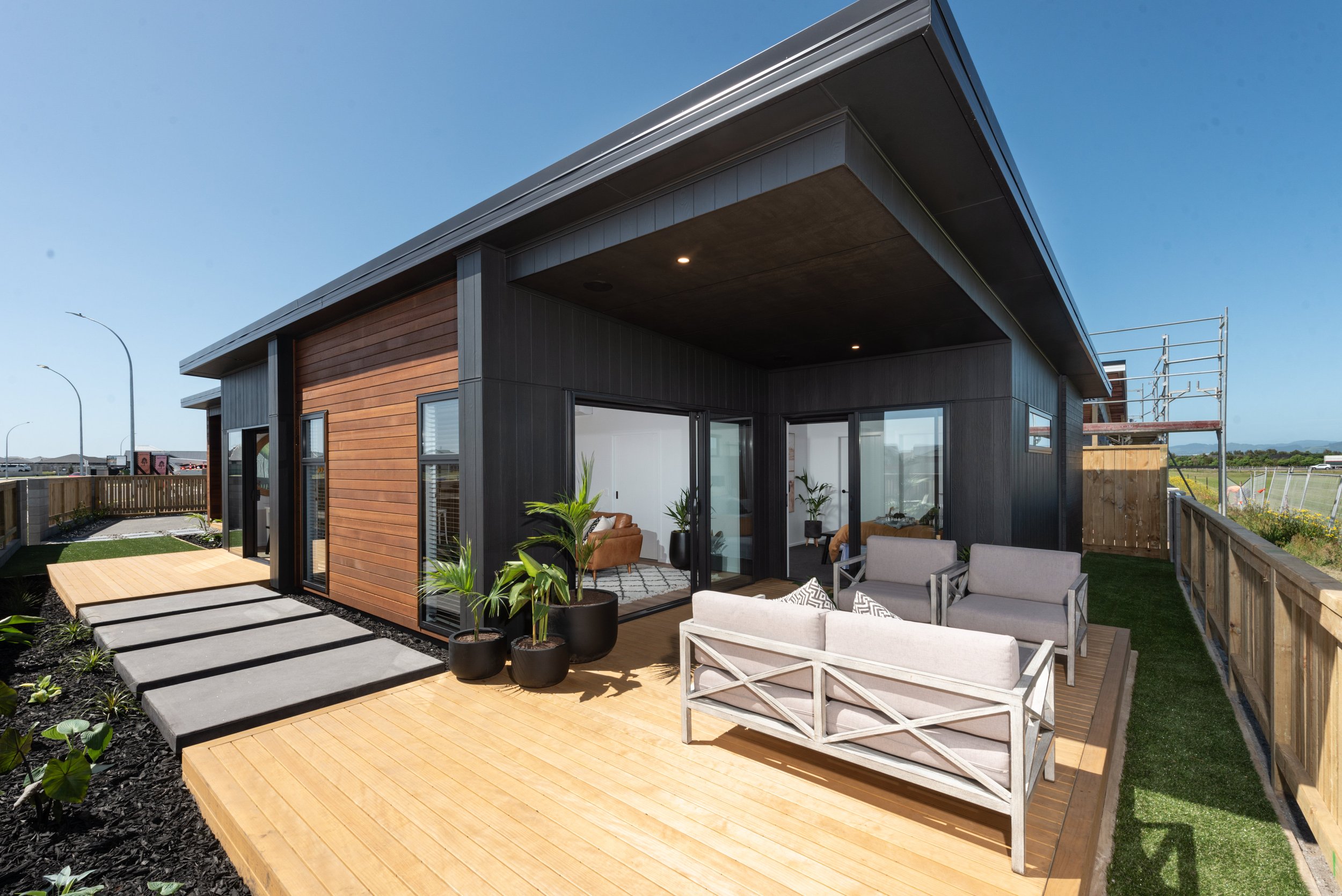
Owning a quality rental property, like this one from Barrett Homes, can be a secure financial investment.
The positives of investing in the rental market
Owning a rental property continues to be a financially secure investment, Joanna says, with property owners enjoying a good return on their money in terms of rent and capital gains at present (certainly more than they would achieve if their money were in the bank).
Rental property owners enjoy the opportunity this form of investment offers in terms of providing a passive income, and there’s flexibility around choosing the right time to sell.
“Having a rental also provides the option of having a property to move into, if required. It could be that the property is bought as a rental, but the owners later opt to make it home. If owners transfer away for work reasons it can be a good idea to rent their property out, achieve capital gain, and have a home to come back to if that’s how things unfold,” Joanna says.

Hiring a management team for your rental means you don’t have to do the dirty work.
What does a property management team do?
So many things!
“To start with we secure tenants. To do that, we market the property, conduct the viewings and vetting, deal with contracts, initial inspections and hand-overs and liaise with applicants. We make sure the property is presented in the best way and strive to find the best tenant for the property.”
It doesn’t stop there, Joanna adds. There is much to do throughout the tenancy, such as maintenance checks, regular inspections, monitoring of rental payments and liaison with the owners. If there are any payment issues then these too are dealt with by the property management team.
The team also deals with clients giving notice and then the cycle begins again.
On a more advisory level, a property manager can also advise where market rents are at. Keeping up with current market rents (and with maintenance) helps property owners maximise the return on their investment.
Landlords also need not fear they’ve failed to tick all the latest boxes regarding legal requirements
– a property manager will ensure they’re up to speed and there’s nothing to be concerned about.
While it’s not common, things can get complicated and go wrong on the tenancy front. If there’s a need to involve the Tenancy Tribunal this too is an area the EVES Property Management team has experience in. They can remove the “daunting” from the equation.
“Once people use our services, they generally come back to us. They see employing an EVES rental property manager as a good investment. There are no hidden costs, and they can claim tax on our fees,” Joanna shares.

Why now is a good time to employ a property manager Tenancy laws are complex and have undergone change in recent times.
An example is the Residential Tenancies Amendment Act, that largely came into effect in February. Joanna and her team help navigate this. Amendments to the act should not have a negative impact on landlords as long as excellent tenant vetting has been carried out throughout the application process, Joanna assures.
Many layers of compliance have recently been introduced to ensure tenants live in healthy homes.
This shouldn’t put people off being landlords as essentially it is about being prepared to be a good citizen providing warm, dry and safe living conditions, Joanna believes. Landlords can leave this concern to her team as they employ experts to access whether rented properties adhere to the healthy homes legislation. This is a law and a non-negotiable and Joanna and team won’t work with landlords who are not prepared to comply. Most properties do comply with some of the stipulated five standards, she says, and it’s just a matter of working with the property managers to get the property fully compliant.
Managing compliance in general is something landlords can leave to a property manager. The EVES team includes compliance specialists and has access to professional tenancy consultants to ensure landlords are compliant.
Resources, tools, and robust systems required to find good tenants are all part of the EVES team’s arsenal. Tenant selection has become increasingly time consuming because of incredibly high demand. The EVES team deals with the numerous applicants – outsourcing background checks in the process. For a standard three-bedroom home, it’s not unusual to get at least 50 applicants per property these days.
Amendments to The Privacy Act 2020 are coming into effect. This act governs how agencies collect, store, use, disclose, and give access to personal information. The Privacy Office has launched a new compliance monitoring programme to ensure all landlords, managers and property managers comply, which is something a self-managing landlord may not be aware of. A property manager will ensure landlords are not leaving themselves at risk.
And then there is Covid. Throughout the Covid lockdowns, the EVES property management team worked very closely with tenants and landlords to assist tenants in the difficult times and to mitigate loss for the landlords.
Joanna’s FAQ
What happens if a tenancy turns bad? Good tenant selection at the outset is imperative. Ninety percent of landlords and tenants are great. However, when things do go wrong, there are processes to follow in the Tenancy Act, which can be daunting to a landlord, but EVES has the resources to manage this.
As a side note: there is a perception that the law is more in favour of the tenant, but the reality is, the law is there to protect tenants from unfair and unreasonable landlords.
What happens if the tenant doesn’t pay rent? We have good systems and processes in place to mitigate rent arrears. Our property managers are very experienced in dealing with this if need be.
How long will it take to rent the property? There’s nothing to be concerned about on this front as demand is high in this current rental market and Bay of Plenty is a desirable place to live.
What about methamphetamine use and contamination? We tell all owners they should ensure they have comprehensive insurance cover for all aspects of owning a rental – and should take special note of the meth component of their insurance policy. We talk them through the insurance needs.
Should we be concerned about compliance costs and costs in general? Most of the cost is one-off to make rentals healthy home compliant, and then there’s ongoing maintenance. Owners who keep up with maintenance get a better return, so it’s important to expect to spend some money on the upkeep of the property.
Are new regulations putting people off buying rentals? No. Most new landlords coming to the rental market know of, and expect to meet, the current regulations.
Where does the return on investment (ROI) on a rental property sit in the Bay of Plenty? Indicative rental yields for a three-bedroom house (as of June this year) in selected areas with high rental activity are for example: Greerton 4.1 percent; Bethlehem 3.7; Mt Maunganui 3.6; Pyes Pa 4.2; and TePuke 4.3.
NB: A rental yield is determined by the annual rental income divided by the property price.
How can I allay any fears around renting out a property? Give me a call and let our EVES Property Management team assist, so you can sit back and reap the rewards of a sound investment minus any major concerns.

Laying down roots
Big on recognising talent, KPMG’s Tauranga office shows off its dynamic team, working culture and new services.
Big on recognising talent, KPMG’s Tauranga office shows off its dynamic team,
working culture and new services.
words Monique Balvert-O’Connor / photos Erin Cave

KPMG Tauranga is building on its already impressive reputation and skills base.
The firm, which is focused on fueling prosperity for its clients and communities, has expanded its Tauranga offering. Services that used to be the realm of large businesses and big cities have arrived here and Tauranga (and Waikato) businesses and organisations are benefitting, thanks to a progressive outlook and a powerhouse of KPMG people.
Services around strategic advisory, deal advisory and taxation have been expanded/enriched in Tauranga. KPMG realised it was time to “put its boots on the ground in Tauranga” and make these services more accessible to Bay of Plenty and Waikato clientele. They have the perfect people on board to do just that.
UNO spoke to KPMG Tauranga partner Tracy Preston-Lett and directors Cushla Parish and Natalie Berkett, associate-director Charmian Mead, and senior manager Michelle Sinclair about the new services they (and their teams) offer, the energy and smarts they bring, and about the many reasons they applaud the KPMG working culture.

Tracy Preston-Lett feels “incredibly lucky” to be trusted with clients’ dreams.
Tracy Preston-Lett feels “incredibly lucky” to be trusted with clients’ dreams, and relishes having a shared-responsibility to help her colleagues be their absolute best.
“I believe in our people and our clients and if there’s any small thing I can do that energises them – be that sharing some words of wisdom, some connection or technical or practical insight, or just being someone to brainstorm with – then I’m up for it.”
As a partner of this Big 4 global accounting firm, Tracy’s come a long way since those leaving-school days when she lacked any real career drive. KPMG creates the same opportunity Tracy embarked on, thanks to its policy of recruiting school leavers – enabling them to learn and earn without necessarily having to leave home.
Tracy worked and studied and earned her degree and promotions while getting valuable experience from a young age.
She’s proud of what she’s achieved within this firm that collaborates nationally, and connects internationally, for the benefit of its clients and advancement of its people. There’s a great diversity of skills and backgrounds to tap into.
She doesn’t have to look far to encounter an impressive skills base – within her office are staff who thrive on using their specialist skills to help businesses find their feet and create long term success. It’s thanks to some of these superstars that the KPMG Tauranga team has been able to up its offerings of late.

Cushla Parish joined KPMG in the consulting division, but 12 months ago, a strategic move was made to create a dedicated audit technology risk team, which she now heads. It’s a national specialist team which Cushla runs from Tauranga.
KPMG Audit Technology Risk director Cushla Parish is one of those who is driving impressive change and is a role model for KPMG’s support for remote working. She joined KPMG in the consulting division, but 12 months ago, a strategic move was made to create a dedicated audit technology risk team, which she now heads. It’s a national specialist team which Cushla runs from Tauranga.
Essentially her team assesses clients’ IT-related controls predominantly focused on access, change management, programme development, automated business process controls and operational controls… all to ensure appropriate measures are in place to mitigate risk.
“The work we do is predominantly to support the audit division across lots of industries. We go into companies, big and small, and look at their internal controls to mitigate any risk around their IT systems and to ensure the integrity and reliability of their systems,” Cushla says.
Another focus area is the provision of governance risk and compliance services, which Cushla delivers through her involvement with the national internal audit consulting team.
Cushla brings to KPMG experience in predominantly the agriculture, manufacturing and local government environments. She has worked in the United Kingdom, Europe and Australia within various industries’ audit teams. Her first job was with another Big 4 firm also within the audit arena and she came to KPMG with previous director experience.
She is a Certified Information Systems Auditor (a globally recognised qualification) and a SAP expert – a highly ranked financial application favoured by big businesses with complex concerns. She left university armed with a Bachelor of Management Studies (honours) degree majoring in information systems and marketing.
KPMG is big on recognising talent and offering leadership opportunities. Cushla is a participant on KPMG’s Leading the Firm programme, that provides additional coaching and opportunities to excel for those identified as having leadership potential.

Natalie Berkett speaks of the growth she’s seen in the KPMG Tauranga tax team numbers over recent years, and an “exciting” focus on building up a Small to Medium Enterprise (SME) tax specialty.
KPMG Tax Division director Natalie Berkett, meanwhile, was nominated by KPMG to attend a full-year New Zealand Leadership course involving self-discovery as well as analysis of issues of national and international significance.
This director thrives on learning opportunities – she has both a Bachelor of Laws and a Bachelor of Commerce. She accepted a graduate position with KPMG back in 2006 and has never moved elsewhere! In those early days she enjoyed a three-month secondment to KPMG’s Beijing department and four months off to travel (her job was held).
Natalie speaks of the growth she’s seen in the KPMG Tauranga tax team numbers over recent years, and an “exciting” focus on building up a Small to Medium Enterprise (SME) tax specialty.
“There are a lot of privately-owned businesses in the Bay of Plenty and a lot of the work our team does is focused on issues quite specific to SMEs like land transactions or expanding offshore.
“What I am leading nationally, is a focus on growing and fostering our SME clients faced with complex tax issues. This involves identifying opportunities where we can assist from a tax perspective and providing a team of tax specialists that understand SME issues.”
It’s exciting, she says, that KPMG is consolidating the expertise that we already have into a more coordinated and focused service offering.
Natalie, who has an interest in the export sector in particular, sits on the Export New Zealand BOP executive committee (she’s just stepped down as Chair). She offers her expertise to this group of exporters and service providers who meet to discuss issues facing their sector and the BOP specifically.
“I enjoy this as I get to hear first-hand the issues businesses are facing and it builds up my commercial understanding, which, of course, benefits clients,” she says.

Charmian Mead’s switch from the Wellington to Tauranga office in July this year meant strategic advisory became more available to businesses and organisations.
Charmian Mead also boasts impressive qualifications, with a Bachelor of Science degree, a Bachelor of Laws, and a Master of Bioethics and Health Law.
Her switch from the Wellington to Tauranga office in July this year meant strategic advisory became more available to businesses and organisations using KPMG services.
Charmian joined the KPMG Tauranga team as Private Enterprise Advisory Team associate director. She not only heads the firm’s strategy advisory services in Tauranga, she is part of a national private enterprise advisory team. Her working day involves helping create or design strategies aimed at enabling businesses and organisations to achieve success, whether that be domestically or on the global stage.
“Our team works with a wide range of clients who, fundamentally, we help grow. We help them achieve high performance and growth through a range of advisory services, such as strategy development and implementation, business and operating model design, market insights and validation, and export planning and activation, to name a few.”
Charmian, who initially worked as an intellectual property lawyer, was keen to get involved in broader aspects of business. She recognised that working for a Big 4 would offer the platform and portfolio from which to reach into organisations she wished to work with and this led her to KPMG – initially in Wellington.
“I like to work with ambitious community and organisational leaders, entrepreneurs, innovators and visionaries. These are the people I think are out there who drive meaningful impact for communities and the New Zealand economy,” says this woman who is big on social justice.
“I know it sounds cheesy, but I just like helping people and love seeing them create impact. I see my job as
the opportunity to really amplify that impact through working with others. On my own, I can come up with ideas, but if I work with 10 peoples’ ideas that’s much more exciting!”
Charmian’s arrival in Tauranga also heralded the launch of the KPMG Business School in the region. She is a key member of a team that delivered this initiative in Wellington, and is now making the opportunity available to BOP and Waikato business and community leaders.
“This school was created because we saw there were a lot of business and organisation leaders who lacked strategic capability. We designed a workshop to help with this and give them tools and a framework to take back to their workplace. Business and organisational leaders, who have been identified as having potential, are invited to attend these interactive learning workshops to understand how they can strategically achieve their ambitions.”
Charmian put her hand up to come to Tauranga as she could identify “huge potential” within the region. She sees how business “complexities and challenges” faced by business owners have grown as the city has grown and applauds KPMG for being in step with that.
She’s enjoying becoming part of the community and the region’s business ecosystem. “It is also exciting to be part of an organisation where everyone is super smart. Anytime a client needs help with something, I know I can find someone within KPMG who can assist.”
Nationally, KPMG has about 1,300 staff, including about 90 partners. And then there are the international offices. Charmian believes KPMG’s international status carries great benefit to clients.
“A big thing that attracts clients – from start ups to big global brands, is we can partner with them throughout their entire business journey as we have depth of expertise, scale and a global footprint.”

Michelle Sinclair brings with her, experience as a business owner in the start up and growth phase.
Also relatively new to KPMG is Michelle Sinclair, a Private Enterprise Team senior manager. Before this she worked elsewhere as a senior tax manager, and before that she and her husband spent 18 years working on their own IT-focused business start-ups – she using her strong accounting background. Through that business experience she identified an interest in tax law. Michelle has also been a lecturer at a tertiary level.
When KPMG Tauranga made the decision to build up its business advisory team, Michelle came on board. “I love tax law and love supporting SMEs. I draw on my own valuable experience as a business owner to work alongside other entrepreneurs navigating the business lifecycle, from start up to exit.”
She’s also particularly passionate about women in business.
“I was the Chief Financial Officer of emerging businesses experiencing rapid growth in a fast-moving industry, a wife, I had children and miscarriages, I moved countries without a support network… Women in business have numerous demands on their time and have to juggle a multitude of things, all while driving business performance.”
Michelle appreciates how KPMG acknowledges she is an avid learner and hence she has Friday’s off for study.
Her initial tertiary qualification was a Bachelor of Management Studies majoring in accounting and finance. Years later she tackled a Master of Taxation Studies, passing with first class honours. She is currently pursuing a law degree – learning about general law provides an underlying layer of knowledge that she can apply to her tax law specialty, all to the benefit of her KPMG clients.
Beyond that? “A PhD in tax law could be a big, hairy audacious goal,” she laughs.
Some more of the good
Work flexibility
KPMG is big on enabling staff to work in a way that suits their circumstances. Staff work from home, can work with ease remotely across the country or any office or location, and can take career breaks to chase sporting or travel dreams, knowing their jobs are being held open for them. They can also work part-time knowing this won’t jeopardise their career pathways.
“We have people come and work in our office from other locations, which supports our community and business ecosystem here in the Bay,” Tracy tells.
“We’ve had team members working remotely from Wanaka enjoying that lifestyle while simultaneously keeping their careers on track within the Big 4. We’ve had employees, employed by the Australian firm, working in Tauranga.”
Helping the younger generation
KPMG recruits five students from local schools in the Tauranga office every year. Summer internships and a graduate intake are also on offer.
Community Spirit
KPMG staff are involved in community projects such as buying Christmas presents for everyone at one of Tauranga’s low decile schools and have recently started a workplace giving programme with Acorn Foundation.
It’s but one of many great things fuelled from KPMG’s Tauranga impressive engine room.

Denise Arnold: Changemaker
In a world where so much is wrong, BOP legend Denise Arnold makes the right kind of difference – bringing purpose and hope to the abandoned generations of Cambodia.
In a world where so much is wrong, BOP legend Denise Arnold makes the right kind of difference – bringing purpose and hope to the abandoned generations of Cambodia.
words nicky adams / photos graeme murray + stacey simpkin
styling lisa shea / hair + makeup desiree osterman

It is relatively rare to meet someone who channels their energies into the greater good rather than individual gain. Even rarer when they seem oblivious to the fact that this trait is in part what makes them exceptional. Denise Arnold, although I’m confident she’ll absolutely hate it being said, is just such a person. In 2007, she founded the Tauranga-based Cambodia Charitable Trust, which, through developing quality education, provides free education to vulnerable Cambodian children (predominantly female). The aim is ultimately to give the children of Cambodia the tools to forge a future for themselves. A future which, otherwise, they would not have even the remotest chance of accessing.
A finalist for this year’s Women Of Influence award, Denise is calm and low key, and what strikes me most as she makes me a cup of tea and we chat about cats, children and COVID, is that while so much of her time must be channeled into the charity, there is a real sense of balance about her. She has a marvellous selection of teas in her tea drawer and has recently rehomed a cat from an aged client at her law firm. Straight away it’s clear she has impeccable taste (the love of tea gave that away) and the kindest of hearts.
A lawyer by profession, in 2006 Denise was busy with two teenage girls and her position as a partner at Tauranga law firm Lyon O’Neale Arnold, when she was galvanised into action by two consecutive events. Her elder daughter Emily had just returned from a school trip to Bangkok, a trip that had heightened every maternal sense of safety and ‘what if’. At the time, Denise was working as a volunteer for ECPAT – End Child Prostitution Pornography And Trafficking (now Child Alert). But with her own daughter away, Denise could not shake the knowledge circling in her head of the literally millions of women and girls who go missing. Around this time, she was triggered by another incident. “I read in the New Zealand Herald about children in Cambodia being rented out of a brothel on a weekly basis – that is no less horrific than on an hourly basis – but for some reason it just hit me to the core. When I read about this I thought emphatically no, no, no, that is not happening on my watch.”
She was told by a friend that a man called Steve Chitty (who became an initial trustee of CCT) was talking about taking businesspeople to Cambodia to introduce honest trade. Steve and Denise spent a year independently researching and learning, during which time Denise became more and more interested in the development aspect. At the end of 2007, the duo headed over to Cambodia. Steve focused on Phnom Penh, and Denise spent about three weeks travelling around rural areas. “That was my way of trying to find out how I was going to bring about long-term change. It’s easy to do good, but it’s harder to do no harm; that’s a really strong principle for me. While we can achieve a goal, we need to be cognitive in our path and the impact that might have.”
Returning from the trip Denise was clear that she wanted to implement change systematically. She identified education as the key, thus the manifesto was set for the establishment of the Cambodian Charitable Trust. The team is made up of key volunteers and educators, as well as Patron Theresa Gattung and Ambassadors Nadia Lim and (former New Zealand prime minister / UN Administrator) Helen Clark. Since 2008 the team in Cambodia has been led by “the truly wonderful, gifted, well respected” country manager Soeun Ouch. Over 14 operational years the organisation may have grown, but the guiding principles remain clear – every person is a volunteer, thus 100 percent of money raised goes exactly where it is intended. Surprisingly, this is actually quite unusual.

Today, the Trust supports 209 schools and tens of thousands of needy children.
Denise doesn’t blather on about how wonderful it feels to make a difference, or the warm fuzzies she gets from providing aid. She is at once compassionate and pragmatic as she talks about the gentle Cambodian culture, and how it is one that welcomes her input. “The people want you to know them – they don’t just want money; they want you to appreciate who they are and the challenges they face.” There was, she says, a learning curve she underwent getting to grips with operating within a totally different economic paradigm, for example quickly realising that instead of handing out pre-made school uniforms, by providing sewing machines and guidance a group of villagers could sew them themselves. The concept of providing the tools, rather than just a pre-packaged solution is an ethos she is passionate about.
When there are so many countries in need, why Cambodia? Simple, says Denise – “I really felt like I was in the right place.” It is perhaps too easy to forget that Cambodia is a country decimated by a brutal 30-year civil war that took place in very recent history. A war which, under the Khmer Rouge regime (1975-9) and Pol Pot, destroyed lives, culture, politicians, leaders, educators, mothers and fathers. An entire generation was wiped out, and another brought up in camps barely surviving starvation and physical abuse. This is a country that was expected to re-learn everything, but in the ultimate of cruel ironies, there was barely anyone left to teach. “The rich history has been dominated by recent history. We’re aware that through Pol Pot a whole generation was lost but also lost were the parenting skills – that will take another generation to correct. Today’s adults were abandoned. There’s a gap that will “take another generation to get right.”
I wonder if, as a conservative society, there is a reluctance to deal with a woman in a position of authority. “Not at all – as a Westerner people turn to you… and I feel we’re sending a strong message to women in Cambodia when our van pulls up and out pile a group of rather rumpled, tired women. They are watching this and thinking, ‘Here are unaccompanied decision makers.’” A turning point for Denise was “the realisation that we had the ability to influence schools far wider than you ever expected. If you retain an open approach to knowledge and expertise and resourcing, then you’re lily jumping. That drove us to think about working into clusters of schools to expand further.” Which all comes back to the concept of teaching someone to fish, rather than giving them a meal.
Still, it must be hard not to be overwhelmed. Denise agrees, but says she took heart when her mother-in-law quoted Eleanor Roosevelt to her: “’It’s better to light a candle than curse the darkness.’ I felt a huge sense of relief that I didn’t need to solve it all, I just needed to do something… My role is to keep my eye on the horizon and keep everyone moving forwards towards a better outcome.” Sometimes, though, such
focus is nigh on impossible. Denise recalls, “We had a baby starving and it really derailed me. I had to try and figure out how to save it. In the end the baby died. I wondered what I could have done differently. My husband said, ‘You’re helping thousands.’ And I said, there’s
no point helping thousands if you lose the value of one. I’ve really struggled with that.”
What drives her, I wonder. “Fundamentally every child deserves to have a childhood and go to school and play, and be happy. They also have a right to the opportunity for a decent life and a good future and education is the key to that I believe.”
The success of the Trust cannot be underestimated. She talks not just of the work of the team but also of the incredible educators – many Tauranga locals – who have generously lent their expertise. Nevertheless, for Denise the years have been filled with constant learning, striving to deliver her best.
As part of her journey, she completed a Masters, and contemplated a PHD.
The pressure must be immense, yet I don’t get the sense that Denise sees the difference between how most of us try to make a difference (I struggle to organise a cake bake) and the incredible work that she is doing. What really strikes me is how she seems to be hands-on in every aspect, from fundraising to liaising with ministries. Her bandwidth seems to be so wide I am frankly floored with admiration. To achieve all she does Denise says she breaks it down into sizeable chunks.
“I will never reach everywhere I want to reach. I’m a one-horse race. I need to focus on what I can do and not be overwhelmed by what I can’t achieve. I can’t afford the mission to drift and dilute us to the point we can’t survive.”
The mission, however, has inevitably been affected by COVID. “The issue last year for Cambodia with COVID wasn’t illness, it was the complete breakdown of the economic system. The families had no work, no income, no food. The contrast between them and us is always grounded in the degree of poverty – we have poverty in New Zealand, but this is poverty with no support network.” Just prior to COVID hitting, she explains that Helen Clark was due to spend four days with them in Cambodia. “I admire her vision and capacity for understanding development issues hugely. I really wanted her to give us an overarching strategic review about where we were going, how we were managing, what our focus could be. Because we do span right from the top, working with the Cambodian Ministry of Education, down to sponsorship and getting children to school – and pretty much everything inbetween. We support schools and teacher training colleges, and the sponsorship of individuals. I was really welcoming Helen’s overview.”
Unfortunately, that trip was cancelled, and instead Denise has found herself dealing with a very different landscape. “Last year it was about the economic impact and verging on starvation. This year the Cambodians have Delta Virus in communities so it’s about economic loss, also the management of the virus in a very poor country with an underprepared health system.” Denise explains how maintaining the educational program requires working with the Ministry to develop strategies for the basics of distance learning, both for the students and the teachers who are training. However, “At the other extreme we
have a humanitarian crisis – no rice, no ability to have medical care… but we can’t let go of the systemic development of education in Cambodia. You also need to make sure the people survive.” So, whereas usually the Trust supports 23 schools and 10,500 children, this has increased to include an additional
186 schools. They have also handed out 1,806 50kg bags of rice.

Denise sees education as key to effecting meaningful change in Cambodia, and Ambassador Nadia Lim is also onboard for the cause.
Peppered through our conversation are loving references to Denise’s husband Doug, their children, grandchildren, her sisters, and nephews. It’s no surprise to find that Denise hasn’t fallen far from her genetic tree – her dad, Brian, is a retired teacher and mum, Fiona, a retired nurse. Both are involved in CCT, combining their skills to set up a system for health screening and training Cambodian nurses to conduct eye tests. Don’t ask me how she keeps all her balls in the air, but it’s apparent her close family help with the juggle. She muses that she sometimes wonders if her daughters Emily and Tegan have missed out in any way by the time she has spent focusing on the Trust – but then she laughs as she points out that as teenagers, they were probably just hugely relieved she had a focus that kept her off their backs.
Clearly her family are immensely proud of her, and they share her philanthropic spirit. Daughter Emily is currently setting up an online business, the Giftery, five percent of the profits from which will go towards the concept of building residential facilities on the school grounds – a vital move to protect the most vulnerable. In this family of overachievers, Denise’s sister Janine is the founder of Bestow Beauty, well-known in New Zealand for its holistic products which promote beauty from within (although its collagen powder also helps with those pesky wrinkles on the outside). Janine and Denise’s other sister Robyn are firm supporters of the Trust, both sponsoring children and through the Bestow Sisterhood program. The Bestow Generositea are beautiful teas, the profits from which are donated to the Trust. This tea and Nadia Lim’s cookbooks will be just some of the products available from the Giftery – raising the funds is, after all, the vital foundation on which the charity is built.
It’s exciting to find out not just how Denise has grown, developed, but how she has rolled with the punches and adapted the Charity to unexpected challenges. Denise is very appreciative of the amazing team – Theresa Gattung, ‘a dear friend and stalwart’, and Nadia Lim, who has been unreserved in her support. It’s little surprise that Denise is a finalist for this year’s Women Of Influence awards. It is an honour for which she is obviously very grateful, but in typical fashion sees it as a reflection of the incredible broader team in both New Zealand and Cambodia. Nevertheless, credit where it is due, Denise is more than just the glue holding all these fantastic people together, she is the tireless champion of the cause: the instigator, the cheerleader, and most importantly the voice that sets the tone, both internally and externally. She has
a very human approach to such a multifaceted task.
If she feels daunted by the fact that this is not a position she can just walk away from, she doesn’t show it. Denise doesn’t miss a beat when she tells me, “I see this as my life’s work and feel really lucky that I have found my calling. Other people spend a lifetime trying to figure out what theirs is.” And this is just one
of many, many reasons that whether she walks away with a trophy or not, she is absolutely a woman of honour.
Finding freedom

Having spent five years locked in a basement as a teen, Dr Angela Loucks Alexander now uses her experience to break others free from the metaphorical prisons of their mind.
WORDS Dr Angela Loucks Alexander
PHOTOS Karlie Morrow
Thirteen steps and a click. These were the sounds I listened for because it meant my dad was coming down the stairs and unlocking the basement door with my next meal. Always the same. Two peanut butter sandwiches for lunch. Two American processed cheese sandwiches for dinner, always left wordlessly on the chair outside my room. I wasn’t talked to or touched or told I was loved from the ages of 13 to 17. This was the number of years I was locked in that basement.
There was no running water downstairs, so buckets were my bath and my toilet. I went to school to keep up appearances, to show that things were fine, because my dad and stepmother were primary school teachers. I was too frightened and humiliated to tell anyone how I lived and I thought it was reasonable because I believed them when they told me they were doing it for my own good – to help me focus.
They had pressured me to tell my mother that I wanted nothing to do with her. She thought I was living a life of privilege. She wrote me letters that I never saw. My dad and stepmother didn't want me, but they didn't want my mother to have me either.
During long periods in the basement, like the three months of summer or Christmas break, it was so lonely. I used to stare at the ceiling, picking out images from the wood in the beams overhead. There was no sound, no sunshine, only nothing.
My stepmother believed children like me should be seen and not heard. They said I wasn't intelligent enough to go to university.
Luckily for me, a group of brave girls and strong women in my high school realised something wasn't quite right, and they found a way of reaching down and pulling me up out of my basement prison.
My life transitioned from darkness to sunshine in the blink of an eye.
My foster mum restored the faith I had lost in myself by saying, “You are so good!” hundreds of times per day. I'd do the smallest thing, such as closing the door softly, and she would notice it. “Look at what you just did,” she’d say. “You just closed that so nicely. You are
so good. How lucky am I to have you?”
In the six months I lived with her, she reconnected me with my mum, who showered me with all the love she had held in, through all those years without me.
Today, I’m a doctor of audiology and I’m telling this story because I know what it's like to be set aside. To be dismissed. To be imprisoned. But I also know how it feels to be set free.
School wasn't easy for me, but learning brought me joy. When I was in graduate school, I needed to record lectures and re-listen to them about three times to understand and remember what I learned.
And then, one day in April 2004, my life snapped into focus when Jack Katz, PhD, gave a lecture at the University of Kansas on Auditory Processing Disorder (APD). There was this unmistakable feeling that I was learning about something I had always known. It felt like I was falling in love. I knew, on that day, that this was the work I would do for the rest of my life and the wonderful Dr Katz became my mentor.
What is APD?
Auditory processing is how the brain translates what the ears hear. When there is an error in this process it is called an Auditory Processing Disorder. So, APD is a hearing disorder with less to do with the ears and more to do with the brain.
Six in 100 people likely live with the disorder, but the rates are even higher
in the most marginalised and vulnerable people. For example, research from the University of Auckland suggests that 35 percent of Pacific Island children may have this disorder partially due to the high prevalence of middle ear problems in early childhood. If a child learns language through fluid in the ears, the brain gets a distorted version of speech sounds.
APD often occurs alongside dyslexia, autism, AD/HD, brain injury, and emerging research suggests high rates in the prison population.
If you have travelled to another country where people speak a different language, you know how this feels. You’re aware they are speaking, but you can’t process what they are saying. It's exhausting, frustrating and isolating. Now, imagine feeling like that in your own language.
When you struggle to hear and understand, you struggle to feel heard and understood.
Awareness
The first step is awareness. Ask someone to say these two sounds – ‘b-eh’ and ‘d-eh’ – out loud. Are you aware that they just said something? If you aren't, you might have hearing loss. We overcome issues of awareness with devices like hearing aids or cochlear implants.
Discrimination
The next step is called “discrimination”. You might be aware that they said something, but can you tell that b-eh and d-eh are different sounds. They are similar, but they are not the same.
Identification
After that is “identification”. Let’s say you can hear the difference between two sounds, but can you identify that b-eh is B and d-eh is D.
Comprehension
We need all these steps to get to the final level, our goal, which is called “comprehension” or understanding what someone has said.
While each person with APD may struggle with a different auditory skill along this continuum, some struggle even at the discrimination level – hearing the difference between sounds.
Because discrimination is such a low-level skill, it can look like an issue of awareness and many people get diagnosed with hearing loss. As a result, adults with APD will often think they need hearing aids and go to an audiologist for a hearing test.
A standard hearing test where you hear a beep and you push a button, or you raise
your hand, is a test of awareness. This tells us nothing about auditory processing, which is far more complex.

Jackie’s test results before doing the 12-week course delivered by Dr Alexander, designed to help people with APD.
Jackie’s story
My client, Jackie, thought she had hearing loss, but her hearing tests were normal. Audiologists said that she was fine, but this didn't match her experience. During my career, I’ve learned to make the conscious decision to believe every client who tells me they're struggling.
Jackie had complaints that were consistent with APD. She constantly asked people to repeat themselves. She would struggle to hear in background noise and she'd always mishear lyrics. And she had to use subtitles in order to understand the plot in movies.
She said her ears didn't work right even as a child, but her parents said she needed to pay more attention. When she got things wrong, her family called her dumb, and then, in school, she struggled to learn to read and spell.
We assessed Jackie’s auditory processing abilities by using a battery of tests that measure different auditory skills. Here were Jackie's intial and retest APD test results:
Green is good. Red means a score worse than 99.9% of the population her age.
Jackie has a lot of red. She has an auditory processing disorder, but it's a hopeful diagnosis because we can do something about it. We can introduce auditory training.
It's like circuit training for the ears. We increase whatever auditory skills are lacking to see improvement in potential and wellbeing.
One of the exercises is called Words in Noise Training. When you hear a word, you repeat it back immediately. As the exercise progresses, so does the level of background noise.
Jackie had auditory training sessions once a week for 12 weeks and then we retested her. I couldn't believe the transformed woman in front of me. She was comfortable and confident. She told me this work had changed her relationship with her dad. He said he'd been hard on her because people had been hard on him.
It’s difficult to be a parent or a teacher of a child with APD because “not listening” is such a trigger for most adults. How often have you heard someone complain that a child is a “selective listener”? Or a husband who has “domestic deafness?” All dad jokes aside, what if that person has this neurological condition and needs treatment?
Looking back
Remember how I said I had to record all my lectures? After a year of sitting next to Dr Katz as he provided auditory training, I arrived at a lecture without my recording device. I panicked and thought the next three hours would be a waste of time. But, at the end of the class, I realised my notes were coherent and I had remembered what the professor had said. And for the first time, I didn't feel tired from listening.
I had not realised how much my own life had been affected by APD until it was resolved. And I'm not alone. A majority of the people most affected by APD don't even know it exists. And most professionals who know it exists don't realise it can be treated beyond devices. But I'm working to change that. I'm teaching courses with the Auditory Processing Institute to train and empower audiologists and speech-language pathologists to identify and treat this difficulty.
Early intervention
We have test materials that can assess auditory skills from three and a half years of age.
Right now, there is a new protocol called the Frequency Following Response that tests processing using brain waves in response to sound. It has the potential to identify children at risk of language and reading problems at birth.
Early intervention is crucial in child development. The first three months are the most important and the first three years are the next most important. As I’m a mother now, I want my kid to have the best life as soon as possible.
People with hearing loss can also have auditory processing difficulties. They can fix their awareness issue with great hearing aids, but that doesn't automatically get them to comprehension. They can also benefit from auditory training.
We must understand that the ear is the hardware and the brain is the software. We need both to work well to have a great user experience.
There are lots of treatment types available: in-person, online, even apps. What works for some, doesn’t necessarily work for others. And, unfortunately, some approaches aren’t backed by good science.

When we went to print, Angela’s TEDxTauranga talk had over 107k views on Youtube, just days after being posted. To enjoy the powerful talk and read the incredibly emotional comments search ‘Escaping the Hidden Prison of Auditory Processing Disorder’ on YouTube and TEDxTauranga.com.
Dreams for the future
Remember Jackie? Her treatment matched the problems she had which is why her results were so life changing.
In the future, I have a dream that we could do this for more people by using machine learning to plan treatment.
My hope is that people will notice the impact auditory processing has on their lives and be empowered to seek help to improve it.
While it may take a bit of courage and persistence, I'll tell you right now, to come out of this metaphorical basement, to end the solitary confinement, it's well worth it for a life in the sun.
And you should do it because you are SO good.
Reel Ambition
The unstoppable Bryce Dinneen from Wish4Fish proves there are no limits to sharing his adventurous dreams.
The unstoppable Bryce Dinneen from Wish4Fish proves there are no limits to sharing his adventurous dreams.

WORDS Sue Hoffart
PHOTOS Graeme Murray + Logan Davey + Supplied
Four percent. According to specialists, that’s the level of voluntary movement Bryce Dinneen has retained since his mobility was snatched by a single dumb, drunken dive into Wellington Harbour.
He jokes that, statistically speaking, he now has to work 25 times harder than other people just to keep up.
In fact, the Pyes Pa resident has been outrunning the able-bodied for years, with his clear-headed vision, outstanding fundraising feats and extraordinary drive to share the joy of a salt water adventure.
Bryce formed a trust and launched the Wish4Fish charity a decade ago, to smash down the barriers that prevent some people from boating and fishing on the ocean. Under his watch, the trust has spent almost $90,000 taking more than 350 people onto the water regardless of their physical or mental disabilities, illness or financial needs.
But he’s always had bigger fish to fry.
Hiring less-than-ideal vessels to take groups of two or three people at a time only proved to him that demand greatly exceeded capacity. So Bryce has driven an additional fundraising campaign that has raised $2.4 million. This venture, dubbed Project Noah, funded the design and construction of a remarkable custom-made boat that has opened seagoing doors for even more people who would otherwise be confined to land. First launched from Tauranga Bridge Marina recently, the world-first 18m vessel caters for 1000 people a year.
Last year, he was named volunteer of the year in the TECT Trust community awards for being “a shining example to us all to never give up, and to strive to make the world a better place.”
And he has pulled all this off with 96 percent less mobility than most of the rest of us; a shoulder shrug on the left side, some movement in his right shoulder and bicep. It’s enough to manipulate the phone he keeps in his lap and operate his motorised wheelchair, not enough to scratch his nose. His ever-whirring brain works overtime, though, alongside an uncanny ability to articulate and quietly inspire.
It’s been a team effort, of course. Bryce is adamant credit be given to all the family, friends, trustees, management team and generous business people, strangers, tradespeople and major funders who continue to work alongside him. However, there is no doubt whose audacious dream they’re following.
“Fishing’s part of it,” the charity founder says, explaining his determination to build a large, stable catamaran fitted with everything from hospital beds and a ceiling hoist to an accessible bathroom, shower, elevator and modified fishing rods. “But sometimes it’s not about the fish. It’s about the camaraderie, the highs and lows, losing a fish then trying again, channelling that frustration in the right way. It’s about getting out on the water, wind in the hair, sun on the face. It’s about normality.
“If you have an illness or a disability or a hardship, if your life’s frazzled, you can spend a day on the water and I guarantee you’ll come back with some kind of clarity.”
He describes seeing people with serious diagnoses – schizophrenia, bipolar, cancer, tetraplegic – leave their worries on land when they embark on a Wish4fish voyage. Accompanying caregivers, often overextended family members, are similarly uplifted. Some passengers have never been on a boat, others are keen fishers who imagined they would never venture on one again.
Bryce feared he was in the latter camp for much of his 11-month stay at Burwood Spinal Unit, following his life-altering accident.
He tosses out more numbers from those difficult days in the Christchurch hospital. Like 8kg. That’s the weight that was initially attached to his head back in 2007, when he spent 23.5 hours a day in head traction to stabilise the fractures that had caused paralysis from the neck down.
He was at a stag party in Wellington when it happened, an outgoing, carefree business student dressed in a suit and tie. Bryce and a dozen friends started the day with a champagne breakfast – “too much champagne, not enough breakfast” – and decided to leap into the harbour to sober up but he misjudged the depth of the water.
His neck was broken and his spinal cord so badly squashed, doctors likened it to the damage caused by an elephant standing on a tomato.
Until then, he was a fishing-mad 29-year-old cheerfully on the verge of a new career. Having abandoned a building apprenticeship, he spent 10 years immersed in the “bright lights and late nights” of the hospitality industry before launching into an Otago University finance degree at age 28. He’s always been entrepreneurial and still can’t drive past a kid selling something on the roadside without making a purchase, even if he has to toss the bagged fruit or homemade lemonade away. In his teens, the former Tauranga Boys’ College prefect was a top cricketer who hoped to play for New Zealand. He also chaired the school’s charity committee, gathering skills he never imagined using from a wheelchair.
Suddenly, he faced the prospect of never walking, never feeding himself.
“Mum and Dad brought me up the right way, to open the door for a lady, to pull the chair out for her, to give someone else that seat on the bus. I want to kick a soccer or rugby ball around with my two nephews. Those options aren’t available any more.
“Now, I need someone to turn the light switch on in the morning and to turn it off again at night and everything in between.”
He describes one grim day of hopelessness in the early months and recalls how horribly upset this attitude made his parents and sister.
“I made a promise to myself. No more tears. Whatever happens moving forward, I’ll try and make the most out of it.
“Mum and Dad are really good people. They worked hard, they provided for me but they also taught me you have to work a little if you want to get a little.”
So he focussed on what he wanted, rather than what he couldn’t do. Like getting back on a boat and fishing again. Or using his voice to advocate for others, especially those with disabilities.
It was the photos stuck to the ceiling above his hospital bed that inspired him; images of happy times in the company of good people and plenty of fish.
“I was like, ‘how am I going to do this again’,” Bryce remembers of his determination to return to the sport he has loved since dangling a line off a wharf at age four. “Speaking with people on the spinal unit, fellow patients, I’d ask ‘would you like to go fishing’. I used to hear ‘never’ a lot. And ‘can’t’. When you’re someone with a disability you hear ‘never’ and ‘can’t’.
“Those words are still there in my vocab, they just get flipped around. If you say negative, I say challenge. You can change so many things.
“There’s stuff I have to manage that I wouldn’t wish on my worst enemy, but I’m grateful. I just appreciate everything, waking up every morning. Every minute is just gold for me now. Me getting up in the morning, that’s gold. And if it’s not, well, sometimes you need a day in bed.”
He was still undergoing rehabilitation, living at home in Tauranga with his parents, when he established Wish4Fish. A local accountant and a lawyer helped establish the trust that would govern the charity, serving as unpaid trustees. Initially, they needed to raise money and profile amidst a sea of 27,000 other registered charitable New Zealand trusts, churning out funding applications and talking to people in the community. The team has expanded since then – Wish4Fish has a general manager – but Bryce has lost count of the number of fundraising sausage sizzles, dinners and corporate events he has personally attended. Or the talks given to service groups and interested companies.

Bryce fundraised $2.4m over 10 years to build FV Wish4Fish.
From the outset, it proved difficult to find a suitable, wheelchair-friendly boat for the charity trips. Charter boat skippers were nervous of tackling the necessary logistics and most vessels proved unsafe, too unstable, with difficult access and problematic layouts. Often, Bryce would test potential vessels himself to see what possible issues that others might face on board. He even submitted to the indignity of being hoisted out of his chair and lifted over the side of a boat when his wheelchair would not fit.
“First, you’ve got to get onto the boat from the dock and you don’t want to be faced with stairs to access the bathroom. Then you have someone in a wheelchair, on a moving platform. Having a high level spinal cord injury, I can’t regulate my body temperature and you’re dealing with sea conditions and weather that can change at any time. If people are strapped into a chair and they go overboard, they’re going straight to the bottom so everyone wears an auto-inflating life jacket. There are a whole lot of health and safety issues.”
Boat owners tried to help. One commercial skipper offered to widen the back of his boat and built a ramp to get Bryce on board. Monohull boats were deemed too unsteady. Most were too small to take more than two or three high-needs people with their caregivers. A boat owned by a double-amputee in Coromandel proved better than most but every vessel required compromise.
“The only solution was to build a boat,” he says, comparing his ‘build it and they will come’ philosophy to Noah and his ark.
As the catamaran nears completion, he and the Project Noah team are focussed on the next stage. That means creating a sustainable non-profit organisation that can fund ongoing operational costs – paying a skipper, maintaining the boat, taking passengers at no charge - by hiring the boat to corporate, community and educational entities.
Support continues to come from multiple quarters, like the occupational therapists working at local medical equipment firm Cubro. Or the companies that have seized on the cause and run their own fundraising events. Currently, he is in discussion with staff from Waikato University’s marine studies department, to find ways to work together.
He credits UNO magazine with significantly raising the charity’s profile when it published his story back in 2016. That led to an offer of help from a reader with project management and feasibility study skills, which in turn set Wish4Fish on the path to winning a game-changing $1.5m New Zealand Lottery grant.
In 2016, television personality Matt Watson showcased the charity and its founder on screen. When Tauranga retiree Ray Lowe saw the show, he stepped forward to design a fishing rod that allows Bryce to cast and wind in a fish independently, courtesy of electric reels and technological wizardry operated from an iPad in his lap. The inventive stainless steel specialist has gone on to build and donate more of these fishing rods to others and to help with other public accessibility projects.
Bryce credits his friend with driving the Wish4Fish boat project forward, too.
“Ray’s a special kind of guy. He’s a lot more determined than me, with a 24-carat heart of gold. One day, he said ‘Bryce, if you want to build a boat let’s go draw it, map it out. So we went on an asphalt area and just mapped it out with chalk. Then we came back and measured it out. It was me and a guy and some chalk in a carpark.
“He was the one who said we need to make the wheelchair or disability king or queen on that boat, make sure all the sharp edges are smooth. Add extra beds for the support people who stay overnight. It needs to be truly accessible to all.”
Bryce pauses and smiles, staring into the distance.
“Imagine if the family of someone with terminal cancer has the ability to go out to Mayor Island on that boat and see the sunrise at Southeast Bay before their life gets really tricky.”
Once the catamaran is in the water, he plans to step back from the “boat of joy” project that has consumed much of his energy in the last decade. It’s not his boat, he insists. It belongs to New Zealand.
After the launch, he will spend more time with his beloved family in Christchurch, seek employment, fish, watch some cricket and relish seeing friends without tapping them on the shoulder to buy tickets to a fundraising event. That said, he can’t help imagining the changes he might be able to make for disabled people who have to negotiate airline travel.
In the meantime, there is more grassroots work to do for the man who conjured a multi-million dollar dream then made it come true. Tomorrow, he has people to meet and sizzling sausages to sell at a corporate fishing competition.

People are everything to Mackenzie Elvin Law
As a company that believes in being accessible to its clientele and grounded in its approach to law, Mackenzie Elvin Law has carved out a niche that certainly sets itself apart.

WORDS NICKY ADAMS PHOTOS WAYNE TAIT + SUPPLIED
As a company that believes in being accessible to its clientele and grounded in its approach to law, Mackenzie Elvin Law has carved out a niche that certainly sets itself apart.
Founded in the early 1980s by Fiona Mackenzie, husband Graeme Elvin, and good friend and long- term business partner Marcus Wilkins, from the outset all three valued long-term relationships, recognising the value of interconnectedness with their clients. They didn’t believe in the model of just selling legal services for a fee. Despite exceptional reputations in their field – or perhaps because of them – the solid three chose to remain tight-knit.
However, the last few years have seen a need to grow to meet demand, and as a result the business has expanded from the original three partners to seven, and a team of 30-plus staff. Nevertheless, the same core values that the firm was based on have remained at the heart. Chatting with two of the partners, Rebecca Savage and Tom Elvin, what becomes very clear is that from their perspective the growth of the firm has been strategic, rather than simply reactionary.
What is also obvious is the wonderful synergy between the colleagues; Rebecca is empathetic and quick to connect with, and is exceptionally smart (she boasts a Masters of Law from the University of Cambridge), experienced and a wonderful communicator. Tom is someone you innately want to helm your ship: Simultaneously focussed and sharp, but still humorous and invested. Both agree that the common thread running through all the partners are the key qualities of competency, capability and cultural fit. Maturing over the last five years or so into a more diverse entity, expansion started with the addition of Tom Elvin.
Having worked in Auckland since he graduated, Tom brought experience in commercial property and construction law in both a corporate environment as well as with a small boutique specialist. Tom could see that within Mackenzie Elvin was “the opportunity and timing to grow and transition from a tightly-held business into a more complex organization which could serve the growing city and beyond.” Being intentional about the company’s transformation has been driven by the pillars; Fiona, Graeme and Marcus, and it has meant a specific controlled and intentional growth. For Rebecca, a chance meeting with Tom in 2018 led to another with Fiona, and straightaway Rebecca knew that she had met her perfect match, even though it meant a change in the scope of law she was practising. “Fiona and I just clicked really well and had such a strong connection.” For Tom this proves the firm’s founding values were continuing on, through the new generation; “Rebecca has admirable attributes, style and competency, and knew that she could have a meaningful and fulfilling career with us.” Clearly the move from litigation to family law is serendipitious for Rebecca; as she reflects on how she loves bringing her compassion and ability to listen to every case.
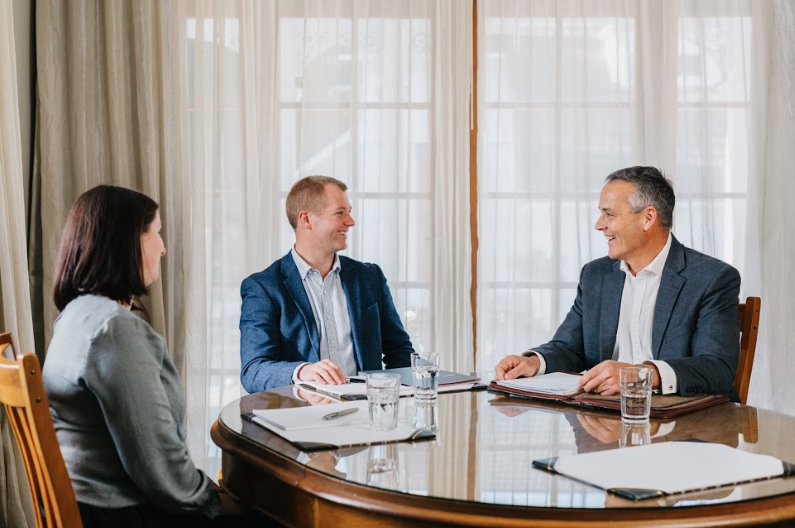
Thomas Refoy-Butler, a good friend of Tom’s, had – unbeknown to him – been earmarked as the perfect fit for the company. With a high level of experience in civil litigation, a practice area the firm was keen to move into, Tom started the “slow burn” of luring him to Tauranga and into the fold. Sure enough, he moved from Auckland and the already established relationship allows for a dynamic that, says Tom, is “like adopted siblings – you can disagree in a meaningful and effective way and get the best outcome.” Rebecca agrees. “Not only are his legal skills amazing, but there’s a whole pile of personal attributes that give you a lot of confidence.”
Jason Bywater-Lutman is the latest addition to the team of partners, and similarly was identified as someone with unquestionable business acumen. What sets him apart is not just his level of competency and effectiveness in his field of commercial property, but, as Tom notes, the fact that “he holds himself with a very high level of decorum and respect; he fits what we stand for and what we are building.” With the change of pace in what started out as a family firm, now comes a much more intentional commitment to maintaining the original ethos. By treating staff well, the company has employees that have been with them for over 30 years. Community ventures have always been strongly supported, spearheaded by Fiona, Graeme and Marcus. Indeed, Fiona and Marcus partnered with the University of Waikato Tauranga Campus to put on the Justice Susan Glazebrook talk, which was both an investment in the University and a way of facilitating discussion about wider legal issues. Community-vested projects are massive for them, as Tom points out: “Working here means that you’re part of the community that you’re living in. If you need to do that in work time, we make space for it.”
Ultimately, the culture and the professional fit are important because they allow Mackenzie Elvin Law to achieve its central purpose – which is the service it provides. How the company sets itself apart remains the same as ever: Accessibility. Tom is clear: “We make sure that every new client is seen first by one of our decision makers; a partner. We want to understand exactly what you are going through, and how we can help.”
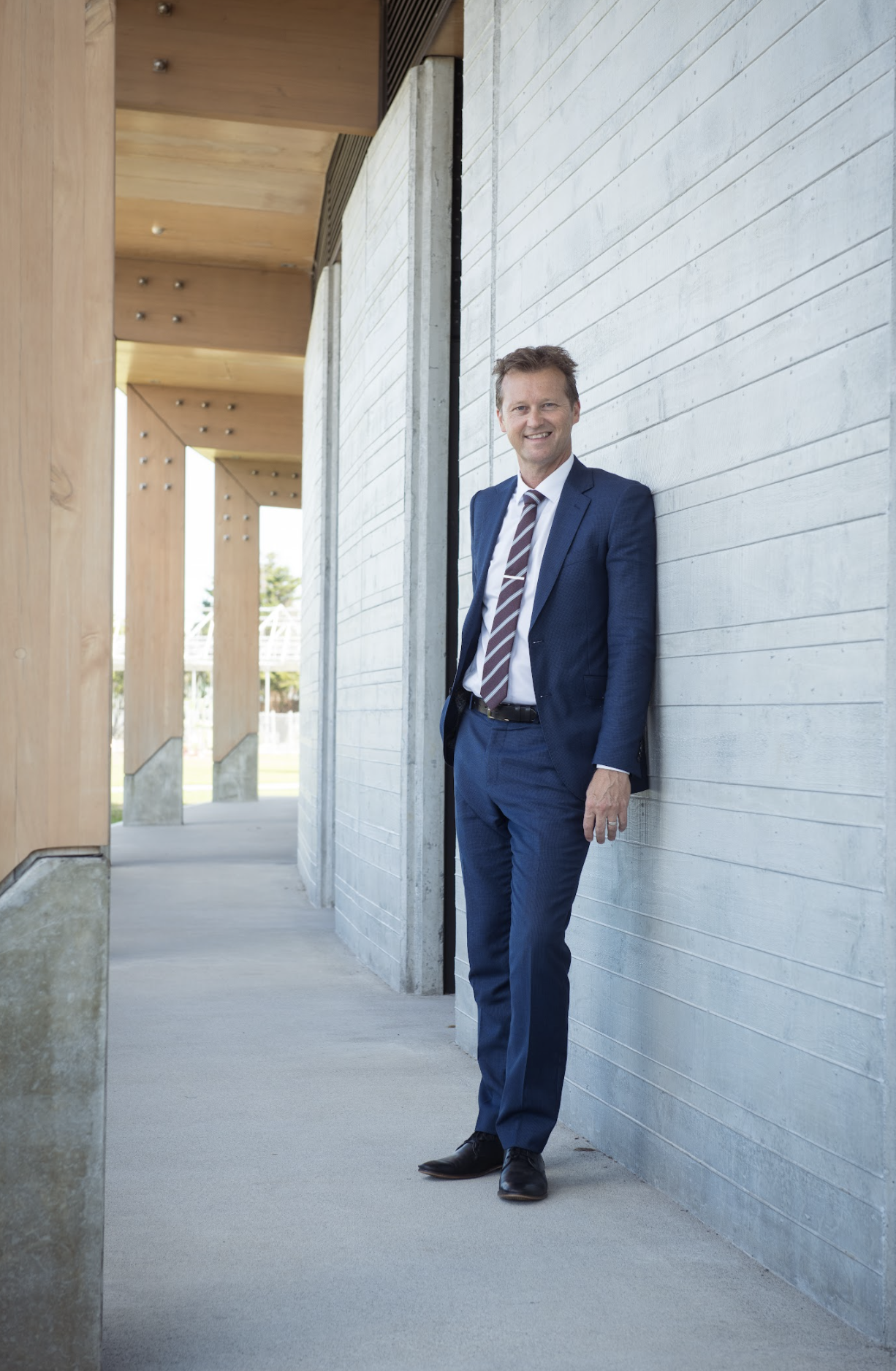
Columnist Craig Orr reaches new heights with the Mt Everest Challenge
Our Bayleys columnist is hitting new heights at work and play, and has ideas for how you can too.

Our Bayleys columnist is hitting new heights at work and play, and has ideas for how you can too.
Well, I did it! I officially conquered the More FM Mt Everest Challenge, and I’m stoked to be able to say that I raised more than $1000 for St John. Climbing the Mount 38 times in 50 days was so tough that I gave myself two weeks off walking up any kind of hill afterwards.
We’re so lucky to have Mauao Mt Maunganui to exercise on. I love the way it sits proudly at the end of the peninsula and has such an amazing presence to it. My seven-year-old daughter was one of my best supporters. She has a real competitive streak and would join me walking up the Mount a couple of times each week, often picking a fellow climber halfway up and trying to beat them to the summit. I made it my mission to beat my best time of 13 minutes from the base to the top. I ended up 11 seconds off it! But I definitely felt my fitness improve.
I recruited some of my colleagues to join me for the odd climb and managed to get a few other mates up off the couch. Overall, it was super fun and a fulfilling experience – particularly the mental challenge and camaraderie. I’d highly recommend anyone considering tackling it next year to go for it.
Speaking of the couch, my wife Natasha and I have recently finished some exciting home renovations at our place at the Mount. We’ve just had a pool dropped in, and added a cabana and done up the deck. It completely opens up our property and stretches out to our neighbour’s. We feel really lucky to be part of such a cool neighbourhood.
Tash and I lived here before we had our daughters, and we’ve always loved it. Investing in our first house in Bethlehem was a big step. It was a big home with plenty of space inside, but two years ago we found a 1960s-style home at the Mount and couldn’t resist getting back to beach life.
Our kids don’t seem to mind having less space – they’re happy being by the beach, the mountain and their friends. It’s super convenient and offers a really relaxed lifestyle. I’ve enjoyed getting involved in my daughters’ school, establishing local friendships, giving back and feeling like we’re part of the community.
At Bayleys, I’ve just had the biggest month ever. I’m 10 years into marketing properties for sale and I couldn’t imagine doing anything else. I’m a bit of a late bloomer in terms of my career trajectory, as I didn’t know what I wanted to do until I was about 35. Real estate was always of interest, but it wasn’t until I took the leap that I realised how much of a passion it was. I just love helping make people’s dreams become reality.
We’ve been in a really buoyant market recently, but it feels like it’s beginning to cool slightly. With a short supply of options for potential vendors to purchase and a tight market, replacing housing stock can be challenging. That’s why winter’s the perfect time for people considering selling to take that step, because there’s less competition.
I’ve been sharing some videos about open homes and the market on my Instagram page, so have a look for the inside scoop. I do free market appraisals, so if you’re curious as to what your place is worth, give me a shout and I’ll be happy to help.

All roads lead to real estate: the diverse pasts of local Bayleys salespeople
What does it take to make it in real estate? For these professionals, innate skill, learned experience, special gifts, and backgrounds that are anything but ordinary all have something to do with it.
WORDS MONIQUE BALVERT-O’CONNOR
What does it take to make it in real estate? For these professionals, innate skill, learned experience, special gifts, and backgrounds that are anything but ordinary all have something to do with it.
Carmen Dickison

Tauranga Bayleys salesperson Carmen Dickison is a brave woman with a gold medal to prove it. Not only is she a recipient of the New Zealand Police Gold Merit Award for Bravery, she was also the first female police officer to formally achieve a bravery award. According to the citation, constable Dickison had only been in the police for six months, when, “without regard for her own safety, she apprehended an armed violent offender who was terrorising a family in their own home.” Carmen’s gold was later joined by a medal for services to the police, in recognition of time spent doing a sterling job as a police presenter on the TV show Crimewatch.
Now based in Tauranga, Carmen spent her 16 years in the police force in Wellington, also working in Youth Aid and as a detective. “Youth Aid was most rewarding,” she says. “I felt like I made a difference and helped turn lives around, whether it was helping youth find a passion or linking them with mentors.” While doing all that, Carmen was also studying part-time, gaining a marketing and communications qualification that she later used in her roles as marketing manager for an art gallery and then an architecture firm – eventually leading to her current position as a residential salesperson at Bayley’s Tauranga.
Michael Parker

Hamilton Fresh out of law school, Michael Parker headed not to chambers or a courtroom, but to the ski fields. “When I graduated, I decided to follow my absolute passion of ski instructing full-time,” he says. It was a job he’d worked at part-time during his university holidays, including on North American slopes during New Zealand summers. Michael started his full-time career at Tūroa in 1996, working as a race coach and general ski instructor, then moving up the ranks to become fully certified under the New Zealand ski instructor system. Further progression led him to ski school management positions in New Zealand and the US. He spent 16 consecutive southern and northern hemisphere winters in the job before deciding it was time to enjoy a summer and stay put in one country. “It was a fantastic industry to be in and I met some interesting people,” he says. Those people included Tom Cruise, Mel Gibson, Oprah Winfrey, Jerry Seinfeld and Dick Marriott of the prestigious hotel chain, no less. “It’s a part of my life I’ll never regret –I even met my wife through skiing,” says Michael, who made the move to real estate after returning to Hamilton to give his dad “a hand” in the property development industry for more than 10 years.
Aaron Paterson

Hamilton Teaching and rugby paid Aaron Paterson’s bills before he joined the Bayleys team. After spending a gap year working at a private boys’ school in London, he decided to return to the school armed with a teacher’s qualification. And he did, six years later – qualified as a geography and physical education teacher with two years experience under his belt. During Aaron’s second stint abroad, he met his wife Shani Paterson in Spain – a long way from her Dunedin hometown – and had his time as a teacher interrupted by two years spent living in Japan and playing rugby for the Hokkaido Barbarians. Ultimately, he and Shani growing family was a catalyst for their subsequent move to the Waikato, where Aaron initially returned to work at Cambridge High School. Then, in 2005, a friend encouraged him to become part of the Bayleys family – and he’s never looked back. Today, rugby remains part of Aaron’s life. He referees for his local senior premier competition; does TV match official work for the NPC, Super Rugby and international test matches; and thanks to his children, coaches junior rugby too. “I’m passionate about giving back to the game that’s given me so much,” he says.
Angela Finnigan

Hamilton Before she worked for Bayleys in Hamilton, Angela Finnigan was a high-level equestrian, a role that saw her eventing at England’s famous Badminton, as well as identifying local equine talent and accompanying the promising horses to their new homes in the US, UK, Italy, Ireland and even Tahiti. Although, she says, “That part wasn’t as glamorous as it sounds. I’d be with the horses in cargo planes. On one trip, for example, I was on the same cargo flight as 40 horses. I sat on the floor amongst the hay. It was pretty rough!” In the ’80s, Angela lived in England, where she produced young horses for sale as eventers. She also owned the equine stunner Face the Music, which Mark Todd rode to success at the Burghley Horse Trials in the ’90s. When Angela returned home to New Zealand, it was to Cambridge, where she continued producing young horses, ready for export. Today, her home base is surrounded by racetracks, but her equestrian days are over. “I’m a bit of an all or nothing person, and these days my all is real estate,” she says.
Rachelle Jackson

Hamilton An invitation to Rachelle Jackson’s for a meal is a covetable prospect. She is from a large “food-focused” family and has been a foodie for as long as she can remember. Rachelle headed straight into the food scene as a school leaver. Armed with a polytechnic qualification, she then spent nine years as a chef in top restaurants in Auckland and Hamilton (a “pretty magical” time as she recalls it) before fulfilling a long-time ambition to open her own café. Circa Espresso was the name of the Hamilton eatery she established at the tender age of 26 and owned for nearly four years, until deciding the hours weren’t compatible with having babies. (It’s now named Scotts Epicurean.) “I had a huge passion for cheffing and culinary culture, and I still have – you don’t get rid of that,” she says. “It’s now a hobby and part of my creative side. Being a foodie is neat – everyone loves you!” The bookshelves in Rachelle’s Hamilton home are laden with cookbooks. She makes everything she can from scratch, is a fan of Italian food and has been dipping into Asian cuisine of late. Oh, and her hero is Al Brown.
Stephen O’Byrne

Hamilton When you ask Stephen O’Byrne about his past working life, you’d better make yourself comfortable. This Raglan- dwelling Irishman has many a yarn to share, starting with his 15 years as an underwater cameraman in the dive industry. One day, he’d be photographing the sardine run in South Africa, the next, it’d be World War II wrecks in Papua New Guinea, or great whites feeding, coral spawning or turtles mating. The assignments were many and wonderfully diverse, and that’s how he found New Zealand – he was sent here to get footage of the Poor Knights Islands. Stephen’s underwater escapades have also included being a freediving instructor; the chatterbox can hold his own breath for eight minutes. On terra firma, he worked in the merchant banking industry and serious fraud office in London. He established a sports sales business in the UK and worked in e-learning and web management for leading agencies in the Netherlands. His partner in life and work at Bayleys, residential and lifestyle salesperson Michelle, also has an interesting backdrop to her property career that helps set her apart from the pack. While living in London, the Kiwi worked with the Royal Parks police’s mounted department, and was on horseback duty during the Changing of the Guard.
Matt Clutterbuck

Tauranga From shearing gangs in Northland and his time spent as a rural banking manager to a salmon farm in the Atlantic Ocean, Matt Clutterbuck has tackled an interesting job or two. And that’s not to mention the prestigious sporting accolades he scored along the way. These days, lifestyle and country sales manager Matt lives in Mt Maunganui, but he was raised on a sheep and beef farm in Northland, where work as a shearer served him well during his school and university holidays. He graduated with a Bachelor of Commerce from the University of Otago, but before earning that degree, he acquired a diploma, and between the two had a great gap year in his early twenties, during which he travelled to Ireland, where he played rugby and worked on a salmon farm. Matt has played NPC rugby in Northland and ITM Cup rugby for both his home province and the Bay of Plenty, and another sporting highlight was playing for the All Black Sevens side in 2014. But his prowess extends beyond rugby – he’s also a world-champion waka ama (outrigger canoe) paddler, with gold and bronze medals to prove it.
Anthony Merrington

Cambridge If Cambridge-based Anthony Merrington suggests joining him in taking out the boat, you’ll be in safe hands. You may not be in for a tame time, though – this sailor has competed at Whitbread and America’s Cup level. At one stage, he had the Olympics in his sights. Anthony, who grew up on Sydney’s northern beaches, has been sailing since he was seven and started competing with his older brother about a year later. Fast-forward a decade or so and he went on to spend 15 years racing yachts around the globe as a professional sailor. He competed in the Ocean Race (formerly the Whitbread Round the World Race) three times – in 2001-2002 with a Swedish team, in 2005-2006 on an American boat, and in 2008-2009 with an Irish team. More action came courtesy of the 2007 America’s Cup campaign in Valencia, where he was part of the Swedish team that made it to the semi-finals. He also fronted up for almost every major international offshore yacht race up until 2009, when he ended his sailing career. Living landlocked in Cambridge is no problem for this Bayleys star. For the past 15 years, he’s competed on the water with teams out of Sydney. He’s tackled five Sydney to Hobart yacht races, winning four times.

Olympic and Commonwealth Games heptathlete Sarah Cowley Ross carves out a new career
To reach the standard required to represent your country as an Olympic and Commonwealth Games athlete is extraordinary. To reach that standard across multiple disciplines is, in my view, verging on superhuman.
WORDS Nicky Adams PHOTOS Graeme Murray + Supplied
The Olympic and Commonwealth Games heptathlete’s journey to redefine herself is about leaning hard into her core values and carving out a career where sport still takes the centre stage.
To reach the standard required to represent your country as an Olympic and Commonwealth Games athlete is extraordinary. To reach that standard across multiple disciplines is, in my view, verging on superhuman. To be so talented, disciplined and dedicated, and still be a well-balanced, grounded and thoroughly lovely person – surely that’s impossible? Apparently not.
Aotearoa heptathlete Sarah Cowley Ross is all of the above and more. If you’re a little hazy as to what a heptathlon actually involves, to clarify, it’s a combination of track and field events that requires both speed and power. Over a period of two days, athletes compete in a total of seven events: A 200m and 800m run, the 100m hurdles, and the high jump, long jump, shot put and javelin. Heptathletes are given points for their best performance in each, then ranked according to the highest overall score.
Sarah competed in the heptathlon event at the London 2012 Olympics, where she placed 26th out of 38, having previously placed 10th out of 12 at the 2006 Commonwealth Games in Melbourne. At the 2014 Commonwealth Games in Glasgow, she narrowed it down to the high jump, placing ninth out of 24. Although these are the events that have garnered her the most attention, they’re only the pinnacle of myriad incredible achievements during the course of her career.
I’d presumed the world-class athlete would be a certain type of person, perhaps buzzing with pent-up energy. In fact, I found her to be warm, relaxed and only identifiable as an athlete by her long, lithe legs and an aura of fitness I sometimes fantasise about possessing myself. So deceptive is her demeanour, it’s hard to imagine her out on the field, mentally slaying her opponents one by one.
With a smile, Sarah tells me, “A lot of times people have said, ‘You’re too nice to win – you’ve got to be more mongrel.’ But I can turn it on and off when I need to. I’m very competitive. I always want to win, but that’s changed in the sense that I’m quite comfortable with who I am, so I don’t need to win Pictionary every time! I’ve also changed in that now I want to win for the collective – for communities.”
Sarah was born and raised in Rotorua; her mother Robyn Cowley is New Zealand European and her father Jerry Cowley moved to New Zealand from Samoa when he was seven. Sport was always an integral part of family life; Jerry (who sadly passed away when Sarah was 19) represented New Zealand in basketball, and her brothers Garrick and Richard are also blessed with more than their fair share of sporting prowess. Sarah says that when they were children, there was an expectation that they incorporate sport into their daily life, but not at the expense of other things.
“Looking back, we were allowed to be kids, and play was a big part of our lives. I was just fortunate that I had brothers who were better than me physically and who unconsciously pushed me. I was just always trying to keep up. Later, they’d join in my training sessions. My brothers are two of my closest friends, and when I reflect on my journey, it’s been a family one.”
By the time Sarah reached intermediate, she was keen to shine at netball. In fact, it was her love of netball that initially sparked her passion for sport. “I really wanted to be a Silver Fern – Bernice Mene was a hero to me. Half Samoan, she played netball and did athletics at a young age, and that was it – I wanted to be her. When I was 12, I went on my first representative trip to Dunedin and sat next to her on the plane, which was amazing. Then she came and watched us compete; she’d been in the same competition when she was young. Seeing your heroes is powerful – and Sandra Edge and Chantal Brunner are others I really looked to as well.”
At high school, it was clear that rather than just excellent, Sarah was gifted. She began representing New Zealand at 16, and life became very busy with events and the overseas travel that came with it. That’s not to say her studies took a back seat, though. “I was never not expected to go to university,” says Sarah. “Sport is a vehicle. I got awarded the Prime Minister’s Scholarship, which funded two degrees, and I would’ve preferred to have been training. But I know the value of education, so I got a Bachelor of Health Sciences so I can work as a physiotherapist, and I’ve also got a BA in Communications.”
It’s hard not to be blown away by the sheer commitment that would have been involved in juggling study and part-time work with training and competing as a heptathlete, which is essentially a case of taking the top level of each code and multiplying the expectation by seven. The sheer physicality involved is mind-blowing, and alongside this the mental capacity required to keep up the momentum not just for a short burst, but for 48 hours. Adding into the mix the recovery time for each event and the fact that different sports are known to “peak” at different ages, how is it possible to excel?! I feel exhausted even contemplating it.
“It would’ve been a lot easier to pick one sport,” admits Sarah. “When I was eight, I watched the 1992 Olympics and I knew that’s what I wanted to do. My greatest potential in athletics was heptathlon as I was a natural jumper. I was resistant for a long time because I knew it would be hard and I’m not naturally a thrower, but in 2005 I roomed with a heptathlete and realised it was what I was most suited to. Five months later, I made the Commonwealth Games.”
Throughout this time, neither Sarah’s dedication nor her family’s support wavered, something that brought both amazing highs and undeniable lows. “Everything was focussed on the performance,” she says. “My friends were buying houses and I had a dollar in my bank account because I’d spent it all on supplements and massages. There were times when I was like, ‘I’m 28 and I haven’t done what I want in athletics yet, I’m single – what am I going to do with my life?’ You finish in your 30s with a lot of great skills but very little job experience.”
Still, Sarah says her ultimate high was when she qualified for the Olympics in Götzis, Austria. “I knew I was in good shape, but a really significant moment was in the high jump when I jumped 191; at the time my best had been 184. I was really free. For a long time, I’d put a handbrake on my life, and for the five years previous I hadn’t improved in the way I wanted to. For a long time, something had been holding me back. A year before, I probably wanted to quit, but I managed to turn it around, and in that high jump I finally unleashed what I was physically capable of. It was one of the purest moments of my life.”
The decision to step away from the world of international athletics in 2014 was similarly momentous, but at the same time natural. There was no big blow-out, no horrendous injury – the timing just seemed right. “I felt done,” says Sarah. “I was 30 and it seemed like a good time to retire. I got married the next year and in 2015 we had our first child, Max.” He was followed by daughter Poppy two years later. Nevertheless, going from training for five hours a day to a desk job was a huge shift, which Sarah says she struggled with.
“For so long in my life, I knew what I was aiming for, so to then have a blank canvas was hard. Immediately after retirement, I worked in marketing for one of my sponsors, Asics, and I loved the job, but I wasn’t expressing my physical gifts through a sport I love with people I love around me. And not being outside was a massive thing too.” Part of Sarah’s journey became identifying a new set of goals to satisfy her competitive nature. The excitement of becoming a mother was also part of the process, and the physical changes of pregnancy meant another mental shift. “It was a transition out of elite sport and out of a body I was used to being in, so I didn’t recognise myself,” says Sarah. “In some ways, it was a release for me to eat anything because I’d been on a performance diet.”
Fuelling her body differently was freeing, “but liberation created a disconnect about who I was and who I was becoming. I had no control – well, I had control over the chip packet! – but not over what was happening to my body.” Throughout this challenging period, Sarah was supported by her husband Angus Ross, a former Olympic sportsman who competed in bobsleigh events. Now a sports scientist, Angus was the perfect person to guide her on what she needed to do to stay well and nurture herself.
For the past few years, Sarah has been on a journey to redefine who she is. Her days are very different and elements of her psyche have undoubtedly changed, but acknowledging her core values has been central to her next chapter. “Self- acceptance became a really big part of who I wanted to be,” she says. “I ‘do’ athletics, but it’s not who I am. There’s a lot more to me than I realised, and sport is a mechanism for living my values, which are legacy, and love and courage.”
These days, Sarah says, her life is like a heptathlon. She’s equally passionate about all her projects, including Olympics- related governance positions, work as a marriage celebrant and as a columnist for online forum LockerRoom (at newsroom. co.nz), for which she exclusively covers women, advocating for them in sport. “I’m really grateful to shine a light on people and provide a platform for these stories to be heard,” Sarah says. As she well knows, it’s vital that young athletes coming through the ranks can find someone to identify with. “I know the power of seeing women in sport.” Sarah also acts as an Olympic ambassador in schools. Through talking about her own journey, she brings the Olympics to life for our youth and encourages kids to be active.
An exciting upcoming role is covering the Tokyo 2021 Olympic Games for TVNZ. Sarah’s thrilled to be a part of this; she’d watch the Olympics regardless, but in this capacity she gets to communicate what’s going on to our whole country. Plus, she says, she’s constantly looking for ways to stretch herself, and the buzz of live TV is similar to the rush of competing.
Despite moving out of the international arena, Sarah certainly hasn’t left sport, and still trains for and competes in triple jump events. “In 2017, I needed something to train for,” she says. “I always really wanted to do the triple jump, and I was highest ranked in Aotearoa. After I had Poppy, I thought I’d try it again, so last year I did and came second at the Nationals. This year, I had a back injury and got third.”
I marvel that she can switch back to the training and diet regime required. “It’s amazing that I still have that,” she concedes. “I can still turn it on. Saying no to things I know won’t help me is empowering.” That’s just another reason why Olympian Sarah Cowley Ross is a cut above the rest.
You can follow Sarah’s behind the scenes journey covering the Olympics on Instagram: @SARAHCOWLEYROSS

Tokyo 2020 TVNZ Presenter
“For the Tokyo 2020 Olympics, I’m excited to be presenting alongside Toni Street and Scotty Stevenson on TVNZ. We’ll bring all the top sporting moments to you every hour, as they happen. All the Kiwi news and more will be beamed straight back into our homes in Aotearoa. I’ll be cheering on my friends like Emma Twiggs in the sngle skulls. and all my sisters in the Black Ferms sevens team. And, of course, I can’t wait to see how the athletics events unfold.”
Governance roles
“A significant part of my work right now is as a board member of the New Zealand Olympic Committee and as chair of the NZOC Athletes’ Commission. The advocacy work in this role has created meaningful change for Team Aotearoa and the wider sports high-performance system. I enable athletes’ voices to come through the commission and into the boardroom. Athletes are very goal-oriented people, and want to see action come out of mahi. It’s vital they see their opinions being voiced.”



The Olympians of UNO: a look back at the stories from some of our local sporting heroes
We take a look back at some of our local sporting heroes that have graced UNO, and are currently involved in the Tokyo 2020 Olympic Games.
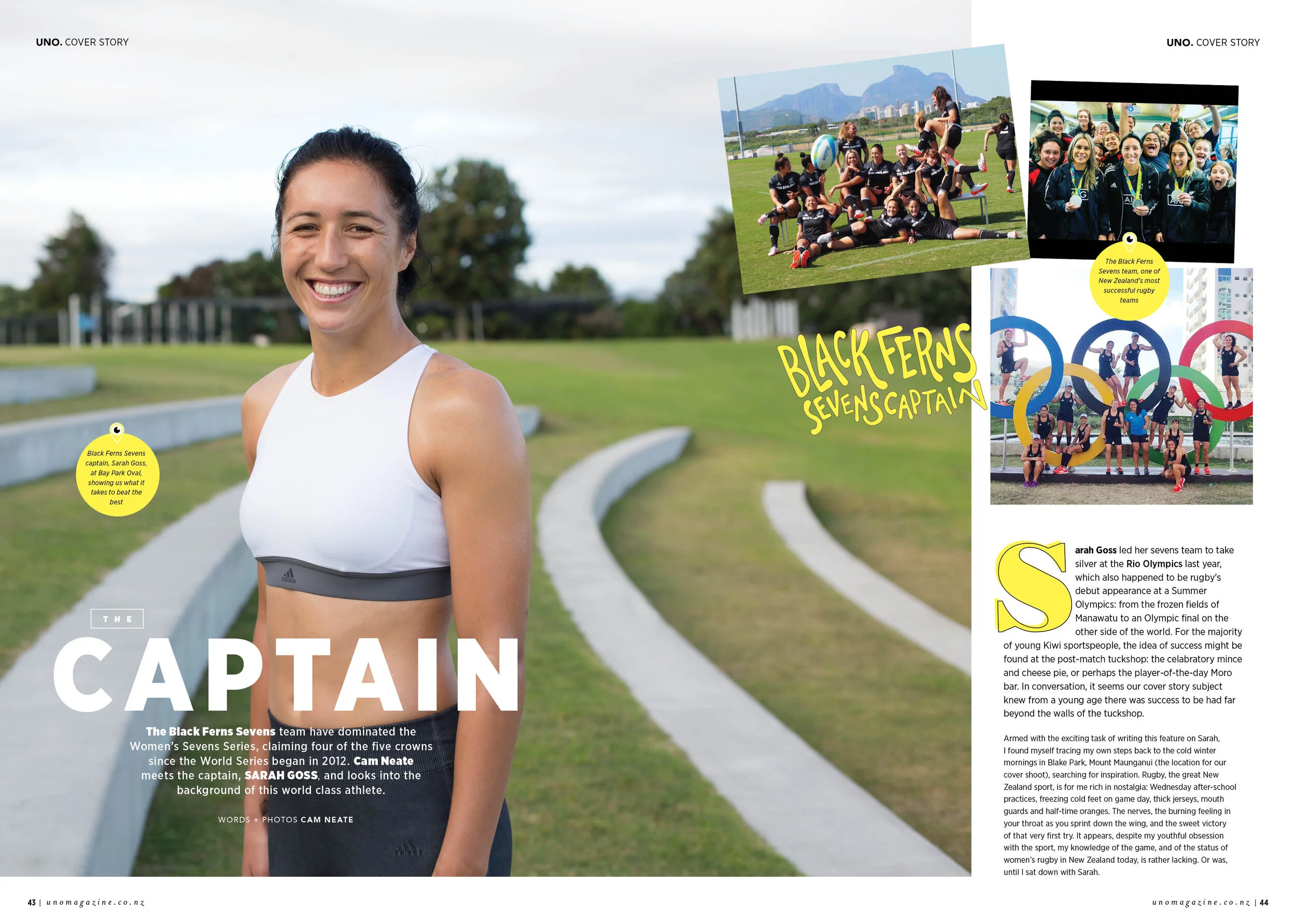
Sarah Hirini (neé Goss)
Sarah Hirini (Goss) carried the flag for New Zealand in the Tokyo 2020 Olympics opening ceremony and is playing in our women’s sevens rugby team but back in 2017 she was on the cover of UNO Magazine.
“It meant I was able to play whatever sport I wanted without my parents having to drive me around everywhere. It was all just there”. Gymnastics and netball transitioned into competitive hockey, and ultimately rugby in her final year at school. At the time, Sarah’s coach had recommended taking up rugby to help improve her fitness for hockey but she soon found the full contact and competitiveness of 15-aside rugby much more stimulating than hockey and as a result, traded her hockey stick for a pair of rugby boots. However, it was not a completely smooth transition into her newfound passion.
“I hid it from my parents for about three months, thinking they were going to tell me off for playing rugby. I felt like back then, there wasn’t much support for women’s rugby despite my family being massive rugby supporters.” But once Sarah decided to tell her parents of her new secret love, they were only disappointed they had missed watching her games and according to Sarah, “they’ve watched me ever since. I remember telling my parents back in the seventh form when they asked what I was going to do the following year and I remember saying I’m going to become a professional rugby player and back then they kind of laughed, but I am someone who will just go after it and I will do everything I can to prove people wrong. I’m stubborn, and it ended up happening.”

Read the full story on Sarah’s rise within rugby.
Peter Burling
Peter Burling has reached incredible heights since his cover story in UNO in spring 2017 and is currently sailing in Tokyo.
“At the Olympic level,” he says, “a lot of it is just a seat-of-your-pants kind of thing, because today you have a single platform that you can’t really change or improve.”
This is, after all, essentially a one-design race and everyone uses virtually identical equipment, so – as Burling says – “It’s a question of how you set it up and how well you can sail it!” But in something like the America’s Cup it’s different; the variables are almost infinite and change – literally – by the hour. And in that fast moving, high-tech environment, knowledge is power.
“I’ve always really liked the engineering side of sailing,” he says, “ever since I was a little kid and making things and trying things on the boats. I’ve always been quite pedantic on having a really clean and well-thought- out boat, not having anything on there that doesn’t need to be there, and having it all neat and tidy.”
Matt Scorringe
The New Zealand Olympic surfing team’s head coach graced the cover of UNO back in summer 2020.
One of the drivers of that change has been the acceptance of surfing as an Olympic sport. “Surfing,” says Matt, “particularly in New Zealand, is still seen differently to other major sports – and the Olympics will change that. It will mean we start to take things seriously and start working towards finding the best path for our athletes at Olympic level. I’ve talked with friends in snowboarding and other sports that have recently been made Olympic sports and they all say it takes time. It’s like the chicken and the egg – you need funding to get results, you need results to get funding – but it’s great to see that we’re off to a really good start with two athletes going to Tokyo.”
Matt’s role in preparing those Olympic contenders has been as head coach of the development pathways programme he helped put together to get our surfers up to Olympic qualifying level, and he’s more than happy with the results. “We’ve now got two athletes qualified for the 2020 Olympics – Billy Simon from Raglan and Ella Williams from Whangamata – who both came through that programme. Now we just need to get some more structures and mechanisms in place to support them and the sport. At that level, you don’t spend a lot of time at home; you’re travelling all the time, so you need coaches, nutritionists and all the support required on different continents. Part of what I’m doing is not just bringing my knowledge but the connections and contacts to make it easier.”

Sarah Cowley Ross
Our most recent cover star, Olympic and Commonwealth Games heptathlete Sarah Cowley Ross is currently a huge presence in media coverage of the Games.
Sarah says her ultimate high was when she qualified for the Olympics in Götzis, Austria. “I knew I was in good shape, but a really significant moment was in the high jump when I jumped 191; at the time my best had been 184. I was really free. For a long time, I’d put a handbrake on my life, and for the five years previous I hadn’t improved in the way I wanted to.
A year before, I probably wanted to quit, but I managed to turn it around, and in that high jump I finally unleashed what I was physically capable of. It was one of the purest moments of my life.”


Entrepreneur and disability advocate Charmeyne Te-Nana Williams
Entrepreneur and disability advocate Charmeyne employs over 200 people to support people with disabilities, like her husband, Peter who suffered a brain injury in a boxing match. What Ever It Takes is a fitting name for her business, and the way Charmeyne approaches life.

Entrepreneur and disability advocate Charmeyne employs over 200 people to support people with disabilities, like her husband, Peter who suffered a brain injury in a boxing match. Whatever It Takes is a fitting name for her business, and the way Charmeyne approaches life. She lives between Mt Maunganui and Auckland.
PHOTOS Garth Badger WORDS Jenny Rudd
At a recent event for our speaker series, This Is How I Did It, Charmeyne told us the incredible story of how her husband Peter Williams’ brain injury and resulting tetraplegia has shaped her life.
Charmeyne and Peter had baby twin girls, who'd just arrived home from a 5-month hospital stay after their premature birth. And four weeks earlier, the couple had buried their son who passed away after being born at 26 weeks. Charmeyne was at home with their daughters in Auckland, on maternity leave for a job she loved at New Zealand Trade and Enterprise in the Māori enterprise team. Peter was down in Timaru at a boxing match, on his path to his plan to qualify for the Olympics. He'd previously won the world title for waka ama (canoe racing) in Tahiti. He was strong, athletic, and world class at the disciplines he put his mind to. He called Charmeyne and announced "I won, so I'm now the New Zealand Super Heavyweight Champion. I just need to go and do a drug test, then I'll call you back."
But he didn't call back. One of his teammates did. Charmeyne said it wasn't what he said that was worrying, it was what he couldn't say. He could barely get the words out. Peter had suffered a traumatic brain injury which left him a tetraplegic.
Her story was so inspiring, we knew we couldn’t leave it in the room.
I remember the day Peter went down to Timaru like it was yesterday. It was labour weekend in 2002. That morning, we'd talked about what we had dreamt the night before. We often did that. He said "I dreamt that my spirit had left my body and it was flying across Samoa.”
After I'd spoken to Peter when he won, I remember being so excited. I thought he hadn't rung back because he was out celebrating. Then his teammate called me and said "You need to get down here." At that point I had no idea what that meant. I didn’t know what I was walking into.
I’ve been so lucky and blessed, because my family has been amazing. My sister was staying with us at the time and she looked after our babies. I jumped on a plane and went down to Timaru.
Since that day, my life has really been in stages. Stage one was going down to Timaru.
STAGE ONE
The Rude Awakening
Some of the questions that came to mind at this time were: What the hell is a traumatic brain injury? I had no idea. I had never worried about Peter because he was so strong.
What the hell is this health system? I had no idea what I was walking into. I went into the hospital, he was in ICU and I just didn’t know what to expect. We weren’t allowed to stay there, so that was really daunting for me.
If it wasn’t enough that we were trying to deal with what was going on with Peter, it was all over the news. My brother rang me up and said, “Have you seen the newspaper?” On a front page was an article that said Peter was actually a Black Power member and had sustained his brain injury through an initiation. So he’s trying to fight for his life and here’s this article on the front page. Where did that even come from?
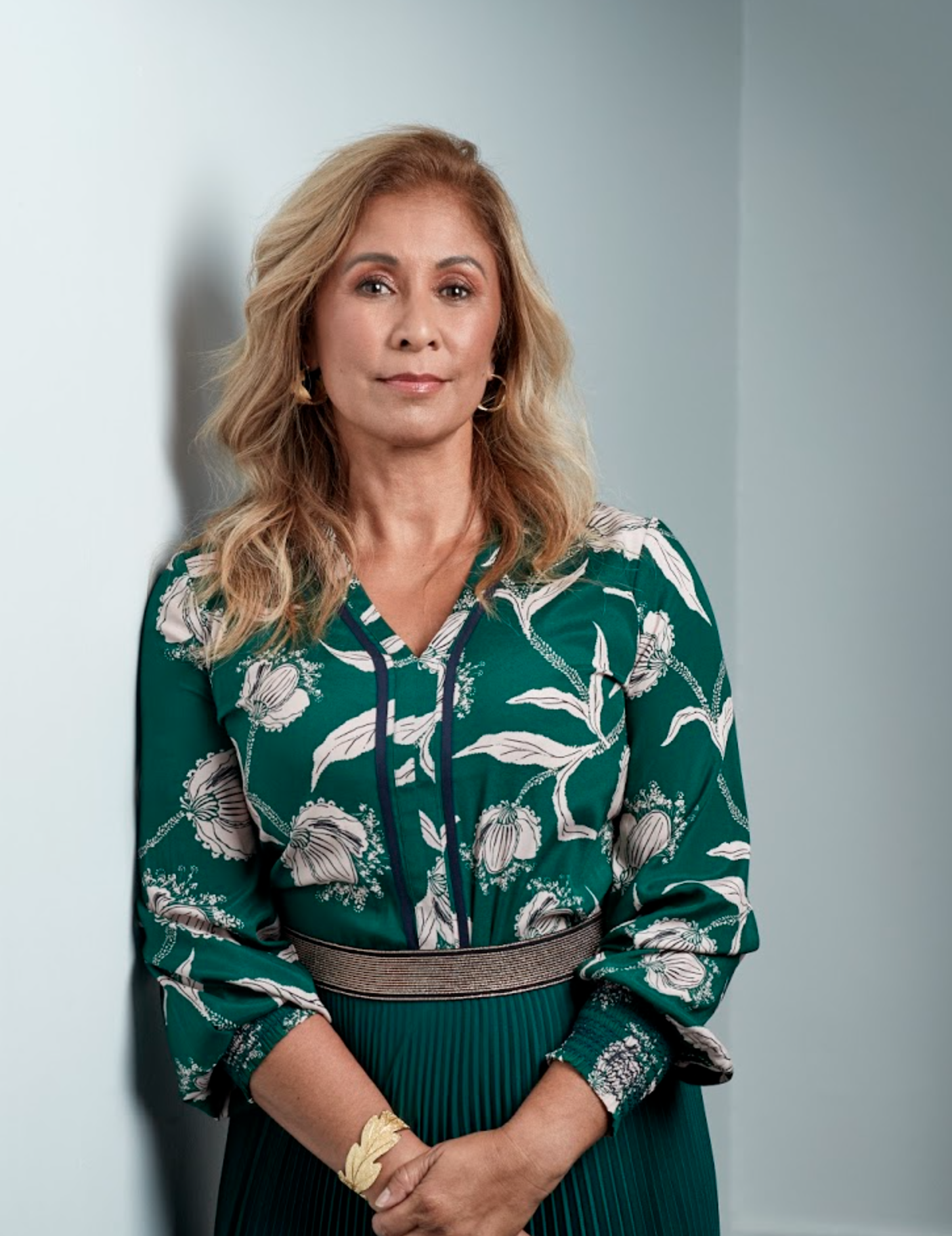
I rang a friend of mine whose husband was an All Black who’d had some bad publicity, and he put me onto his lawyer who represented us for nothing. We went to court to get them to retract what they'd printed.
By this time, I had to send my girls off, at eight months old, to live with their grandparents in Wellington so that I could work out how to help Peter. Thank god for my whānau, because if it wasn’t for them, I’d never have been able to get through these early stages.
STAGE TWO
The BS
I thought the system would focus on what's best for Peter, me and our whānau. But it didn't feel like that at all. You'd think you’d go from stage to stage – from hospital, to rehab, to home but, actually, it's not that way. Every time I went to another stage of what I thought was our recovery, it was just the same shit on a different day. All I knew was that I loved this man and wanted to keep my family together – that was my priority.
It wasn't just the medical system either, it was our society. Arriving in Auckland, a friend asked me if I was going to stay with Peter as a partner. I was shocked. They asked if I really knew what I was getting myself in for.
We left Timaru after a month and moved into ICU in Auckland for a month, then Peter moved to a rehab facility in West Auckland just before Christmas 2002. I thought that was going to be awesome, but it was really bad. The staff weren’t used to family members sticking around, but I was there every day. I became known as ‘the bitch’ – true story. In my mind I couldn’t understand why, because I was just trying to figure out how I could make sure that Peter was well looked after. What I started to realise was that everyone was doing what they thought was best, as opposed to what was best for me and my family.
Trying to find financial support to keep my family going was really difficult. When my maternity leave was over and I had to go back to work, I thought I’d go to Work & Income to get help with child support but was told I wasn't eligible because I was earning too much. I’m on $50k and I’ve got an adult who has a serious disability and two children. How is that a high income?
Then I was offered redundancy, which I took, because it meant I could go on benefit. I fought with my pride. I had never been on a benefit. But I knew that if I didn't, it was really going to affect my family's well being and my ability to care for them. I was exhausted and I needed to, so I did. And rather than pay me the extra $100 a week on top of my wages I could have been earning, they paid me about $70,000 a year to be on benefit and to support my kids. That seemed dumb!
You expect and trust that the experts are giving you the right advice, but I learned that that’s not the case. I found out some time later that Peter had been eligible for child support the whole time. We had to go to court to recoup it. What a waste of time and money for everyone involved.
STAGE THREE
Kete of knowledge
Finally, the penny dropped. When you’re in a rehab facility, you have a multidisciplinary team. You go to these whānau meetings and sometimes you might be the only member of the whānau with 12 clinicians around the table, who are all telling you what you should do. I was in one of these meetings and everyone was talking about how aggressive I was. I could feel myself shrinking into a corner in the chair, just fading away. My cousin was sitting next to me and she said, “You know, what some people would describe as aggressive, others would describe as proactive”. That was a turning point for me. I thought, that's right. I’m being proactive. I’m not being aggressive, I’m just fighting for what I know is right.
From then on, I started to listen, observe and figure out the things that Peter would respond well to in terms of his rehab. I thought about how I could take all these little bits of advice and information and fill up my kete of knowledge to move forward for Peter.
As well as learning from the model he was under, I looked around the world for different care models that fit what I believed he needed.
My aunty, who’s Māori and a social worker, said, “Have a look at this and tell me what you think.” It was a Māori model of care called Te Aho Takitoru which had been developed by her team as a social work kaupapa. What really jumped out to me was that the mana of the person being cared for was at the core. Reading it solidified in my mind what I have been trying to do since Peter's accident - I was fighting for the mana of this man. I just wanted him to be recognised as the man of the family, as a dad and as a partner. That’s all I was asking – nothing more and nothing less.
STAGE FOUR
Home is where the heart is
I thought going home was going to be easy – but it wasn’t. Having been in hospital and rehab for nearly three years, we’d applied to ACC to fund the modifications we needed for Peter to live at home. It was just before Christmas and I got a reply from ACC saying they’d declined our application. The application had taken forever, and they'd said no. I felt it was because they were solely looking at the injury and how to manage that injury. It was being done adequately, they felt, in the rehab centre. I could see though that there was so much more to the picture surrounding Peter's injury. What about his well-being, his wairua (spirit) and the mental health of my family as a result of the care decisions?
When ACC turned down our application, I thought if I don’t do something now, my family is just not going to survive this.
My brother-in-law worked for 60 Minutes and asked if they could do a story on us. I had turned down offers like this in the past, but I was desperate. So I said ok on the condition that Peter's integrity was maintained, and that the focus should be on getting Peter home.
At one stage during the research, I could see there was some focus on the fictitious Black Power connection. So I went marching up to the Black Power pad in Mt Wellington, knocked on the door and asked their leader to speak on 60 Minutes and set the record straight that Peter was not connected to them.
In the end, the show only talked about ACC for about a minute and how our application had been declined. It took three years for them to decline it, and honestly about two days to approve it.
Finally, we were going home. I got so excited. But we then headed into a new world. The world of agencies. In 18 months, we had around a hundred people come through my house. My girls were verbally abused, and Peter was physically and sexually abused. We went through another grueling court process to bring the sexual abuser to justice, but she got off on a technicality. That whole process was so traumatising for me. It was like I was the criminal. This woman wasn’t held accountable in any way, shape or form, and neither was the agency. That was it. No more. I had to take all my learnings and bring them together to provide a new model.
We weren't the only family going through this either. I knew there were others looking for the same as us, so I put together a business proposal to set up a programme bringing together everything I learnt from Te Aho Takitoru, my research and experience in hospital, at the rehab facility, and the agencies.
Ten years after Peter's accident, I set up What Ever It Takes, a home-based rehabilitation service.
STAGE FIVE
Doing Whatever It Takes
Our vision for our company was to set the standard internationally for how we care for families, regardless of their situation.
The biggest difference between a mainstream clinical approach and the Māori model we use, is we take into consideration all aspects of what’s going on in the whānau’s lives. A mainstream model looks at what's best for that injury in isolation. But that’s not reality for our families. We don't focus just on physical things like the brain or the spine. This person lives at home with a whole family, so we consider that whole picture. What help do they need to access their entitlements? What is the best wrap-around care that this particular family needs? How does the family operate? What are their dynamics? What are their values? What do they need to support them to live how they want to live?
We work mainly with Māori and Pacific Island whānau. They’re already compromised and they’re further compromised with this disability. I’m a supporter of whānau looking after whānau. I think if you want your whānau member to look after you, then let them look after you. There have been lots of debates about whether whānau members take advantage of the situation, but that’s really not my experience.
Our business model has allowed us to really flourish through the lockdown periods. We’re essential services, but we have a single team for each whānau we look after, so during lockdown we went right back to our aspirational goals and how we were going to do that within the confines of our four walls.
Each time my company gets audited, we receive continuous improvement on continuous improvement. That’s not just great, that’s exceptional in our sector. My goal is to create pathways for the future. I want us to be able to really pave the way for other organisations to come in and support families.
STAGE SIX
A deep breath
When my girls were at intermediate school, I realised that I had become so absorbed with what was going on for Peter that I was being counterproductive. That's when I started to think about my happiness. All they’d known their whole life was this environment of conflict where I'd been fighting for Peter. It was incredibly hard, but I moved out. It was the right thing for Peter to be able to work with his team from then on, and for our girls, and me.
My journey continues. It's been 18 years and time moves on. My father and my grandmother have passed away. My twins are leaving school.
I never thought that I’d meet somebody or fall in love, but I have. I’ve had feelings of guilt, but Peter and I were only young when this happened; he was 27. I’ve always committed to being married to Peter. But I got to a point where I thought, I don’t want to die wondering if there could have been more.
When we first met, Rob said to me, “I need to tell you something, I’m having a baby,” and I went, “Oh well, I’m married. I’ll have your baby if you have my husband.” And he goes, “Sweet.” So that’s been the basis of our family. We have five kids now with our big, beautiful, blended whānau. We have all this extended whānau on Rob’s side, and we have Peter and our extended whānau on my side, including Peter’s two sons Puna ma Faleasi and Siagogo.
It's unconventional, but it works because we make it work. I feel that’s probably my biggest learning: you just have to make things work.
No reira ngā mihi nui, ki a koutou. Mo te whakarongo mai ki ahau. Thank you for listening to me. Go home and tell the people that you love how much you love them. I’ve learnt how to care for my family and it's the pathway that I intend to to follow forever more.
What Ever It Takes

There's such determination in the name of Charmeyne Te Nana-Williams's business. And love, when you consider who the beneficiaries are of this determination. What Ever It Takes employs over 200 people across the North Island to deliver a programme of home-based care for people with severe and complex disabilities. What makes it different is the whanāu-centred approach. The family is involved in all aspects of the care, because Whatever It Takes looks at the needs of the whole family, rather than keeping the spotlight on just the injury.
This programme has been developed by Charmeyne and her team to give control, mana and quality of life to those suffering from and affected by major brain traumas and other life-changing disabilities. Their struggle to be allowed to take Peter home to care for him showed Charmeyne that there was a need for a different model of care.