

Members only
The Tauranga Club may be one of the Bay’s oldest institutions, but it’s got a refreshingly modern outlook. Join UNO as we’re invited inside the famous private members club.
The Tauranga Club may be one of the Bay’s oldest institutions, but it’s got a refreshingly modern outlook. Join UNO as we’re invited inside the famous private members club.
WORDS Karl Puschmann | PHOTOS Bryony Alexander

Intrigue and mystique swirl around private member’s clubs. It seems everybody has a different, although no less fanciful, idea of what might be going on behind their closed-to-the-general-public doors.
Some might picture wood-panelled cigar dens where men in suits gather to wheel and deal over whiskey. Others believe them to be the clubrooms of the rich and famous thanks to decades of being the backdrop for celebrity interviews and late-night paparazzi shots snapped outside their doors. The more imaginative conjure up wild scenes of secret handshakes, hooded cloaks and arcane rituals acted out to the menace of foreboding orchestral music.
In fact, there are only two things that people tend to agree on when it comes to private member’s clubs; 1) they’re fancy and 2) they’d love to go themselves.
And so it was for this writer when an invitation was extended to snoop around the prestigious Tauranga Club. It wasn’t worded so colloquially, but that’s what I took from the invite, which I hurriedly accepted.
Disappointingly, I was not given a secret password or for that matter a burgundy velvet cloak. Instead, only simple directions to the Devonport Towers in the heart of Tauranga’s CBD, and the instruction that I’d be buzzed up to the fifth floor.

On this particular Thursday, the Club is a hive of activity. Not of members, conversing in the lounge, enjoying a drink at the bar, reading in the nook, engaging in private discussion in one of the soundproofed meeting rooms or enjoying a meal while luxuriating in the wide-open panoramic views of the sparkling harbour that takes in Welcome Bay right round to the Mount. That will all come.
Instead, builders and craftspeople diligently add the finishing touches to the modern, stylish remodel that saw the Club close its doors for the better part of two years. At the time of UNO’s visit, the grand re-opening is just over a week away.
“Everything’s coming together,” smiles new executive chef, Ian Harrison, who local foodies will instantly recognise as the award-winning chef behind the delectable Sugo Restaurant. As opening day creeps closer, Ian’s busy finalising the fine details on the new menu he’s created for the club − which, in a first, also now includes breakfast.
Right now, however, there’s one critical component on his mind.
“The cocktails I haven’t got to yet,” he smiles. “It’s crucial.”
He describes the new menu as, “unique, but not trying to be clever,” which translated from chef-speak means diners will be presented with a modern, seasonal menu with classic dishes made with as many locally-sourced products as possible.

“With this view, I’ve tried to keep as much seafood on there as possible,” he says, gesturing at the majestic harbour. “It’s not a seafood restaurant, but there’s seafood and Kiwi classics on the menu. The food that everyone wants to eat,” he says, before adding, “but with a high spin on them.”
That phrase also works as a handy summation of The Tauranga Club itself; a Kiwi classic with a high spin on it. As Phil Green says when he greets me at the new brass-plated doors, “The Tauranga Club is 130 years and some months old.”
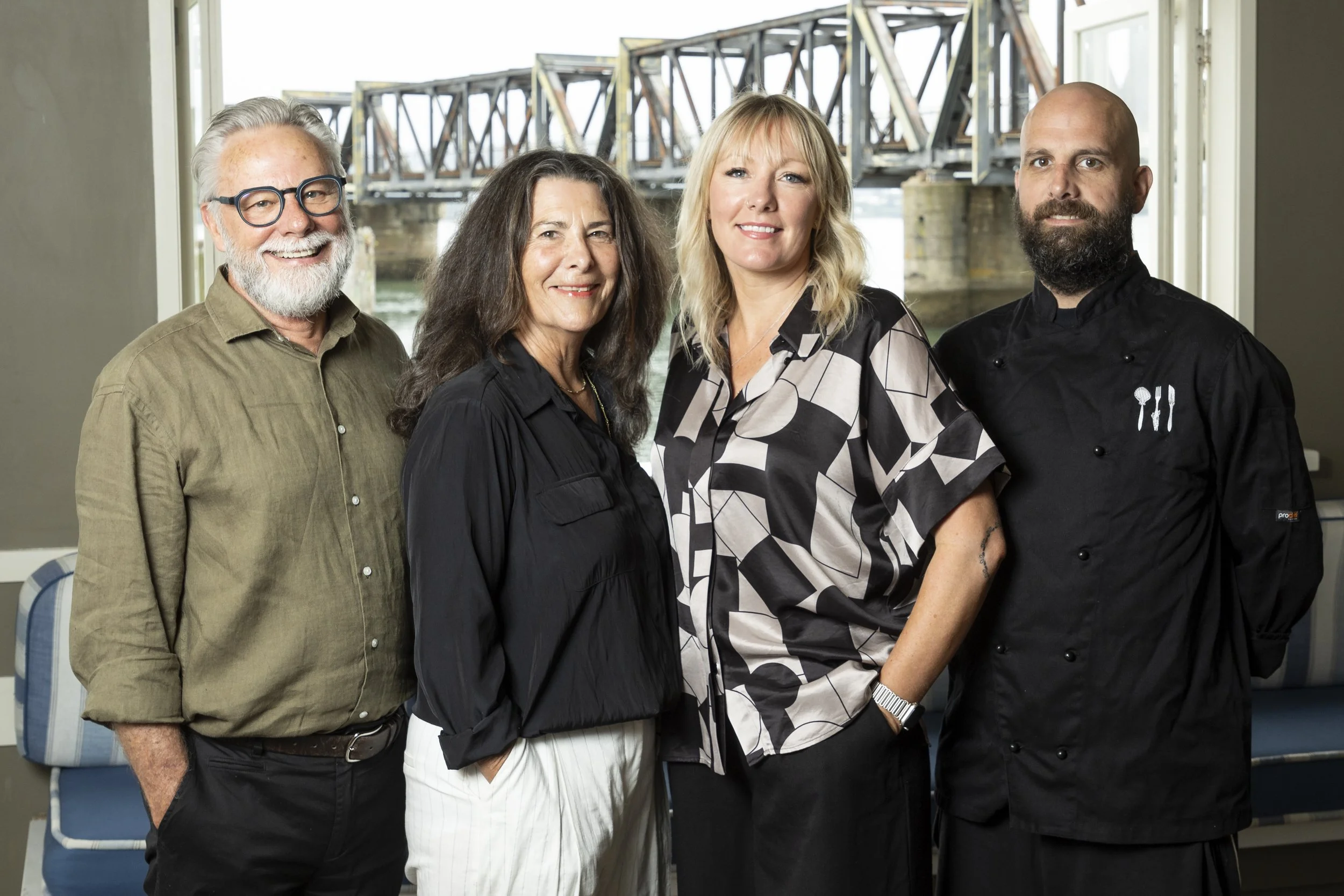
Phil is the Club’s vice president and the architect behind the ambitious renovation, which was born out of less-than-ideal circumstances. Last
year’s horrifically rainy summer saw water seeping into the building.
“That whole summer it just didn't stop raining,” Club president Tracey Gudsell explains. “It was basically raining through the ceiling, which led to black mould getting into the building. We just had issue after issue after issue.”
They immediately closed down for the safety of staff and members. But rather than be disheartened by the closure and the year of remedial work the building needed, Tracey and Phil instead saw the silver lining of that wet rain cloud.
“It was our opportunity to come back refreshed whilst we were closed sorting those issues,” Tracey says, with Phil adding, “It gave us a chance to reset.”

Their plan was to modernise the Club, not just for 2024 but beyond. This meant a complete reimagining and revamp of the space. Walls were knocked down, rooms added, new furnishings bought in, artwork hung, and splashes of colour tastefully added, new carpets, ceilings, lighting – the list goes on. All in aid of creating an inviting and welcoming space for people to enjoy and want to spend time in. “A modern sanctuary,” as Tracey calls it.
The main area is now a versatile space that can be easily divided to create different-sized spaces, meaning the Club can accommodate conferences, seminars or meetings while still accommodating diners and the recreational needs of its members. But it can also be opened right up to allow for bigger functions like weddings, anniversaries or even, in one instance, a 21st.
“We also have a dance floor we can put down,” Phil grins.
As well as modernising, a big focus of the redesign was to highlight and reinforce the social aspect of belonging to a club. They wanted a place where people could feel comfortable whether working, entertaining or mingling.
“Members get to know members, and you can walk up and say ‘Hello,’ and it’s not weird,” Tracey says. “I don't find it easy to go out on my own, but at the Club I do. I come here and there’s old friendly faces or someone that I can walk up to and say ‘Hi,’ and feel comfortable because I’m in a club environment where you’re all part of that community. You can be as visible or as private as you like.”
Fittingly, The Tauranga Club was started over drinks, most likely a few whiskeys, by a chap named Lieutenant Colonel Roberts. His first name is unknown but the club he masterminded on the night of March 31, 1894, is incredibly well known.
“There was a meeting in the back bar of the Star Hotel, where he decided to get a group of people together, basically a gentleman's club,” longtime member and unofficial Club historian Jock McIntyre says.
“It grew to around 100 members relatively quickly, but it wasn't until about 1912-1914, that a guy named Sharp came on board. He had a couple of shillings in his pocket and bought this piece of land and donated it to the Club.”
He laughs softly and says, “It was a fairly decent thing to do.”

With Sharp’s involvement and a new location, the Club began attracting the professionals that he interacted with every day as a founder of the well-known law firm Sharp Tudhope.
“There were lawyers, accountants, doctors and so on,” Jock says. “Sharp got all the professional people of Tauranga together and got this thing going properly.”
The times may have changed but The Tauranga Club is still the place for like-minded professionals to gather, even 130 years on. Interestingly, it was never officially labelled a “gentleman’s club”, even if that was its original intention, and today Tracey and Phil estimate the gender balance to be evenly split. The member base includes the expected movers and shakers of Tauranga but also young professionals looking for
a place to work, network and relax, right through to older members who have been with the Club for decades.
The pair are rightfully enthused about The Tauranga Club and as they talk I begin to greatly appreciate its appeal. It’s an office away from the office, a place to take potential clients you want to impress and somewhere to make invaluable contacts. But it’s also a place to chill out and not talk shop. Somewhere to meet people for a sophisticated drink or take a special someone for a romantic harbour-lit meal.It really can be whatever you need or want it to be.

“We’ve always maintained we’re the best-kept secret in Tauranga,” Tracey smiles. “We’ve got views no one else does. We have the ambience and the personal service,” Tracey says, her passion obvious. “For members, it’s their space, their lounge, their dining room. A lot of members see it as an extension of their home. You can bring your family and your friends here and it feels quite different to turning up at a restaurant. There’s a real personal touch here. We get to know the members and what they like, and we cater for that.”
Of course, you do have to be a member − or with a member − to enjoy it,
although Phil does point out honourary memberships for one-off visits, like hotel guests enjoying breakfast or people attending an event are allowed.
This leads directly to the big question I’ve been saving up; how exactly does one become a member of one of Tauranga’s oldest and most prestigious institutions?
“That’s a secret,” Phil jokes, before spilling the beans. “No, there’s not
a secret handshake or anything like that. You apply to be a member, that's no problem at all, two committee members review that, and then you’re nominated in. If you’re not known to us, we’ll meet, have a coffee and then nominate you. It's a reasonably easy process.”
With the renovation nearing completion, they’re excited for members to once again enjoy full use of their club. Whether that’s business, pleasure or a bit of both − The Tauranga Club has the versatility to accommodate. It truly is a sanctuary.
“It’s somewhere different, and with a bit of a wow factor,” Phil smiles.
Sitting here, enjoying the comfort, ambience and, of course, those priceless views, it’s impossible to disagree with him.

Plenty under twenty
Craving a night out without breaking the bank? Here’s part one
of Stacey Jones’ guide to the Bay’s tastiest budget bites.
Craving a night out without breaking the bank? Here’s part one
of Stacey Jones’ guide to the Bay’s tastiest budget bites.
WORDS Stacey Jones

Miss Gee's
In the midst of a cost-of-living crisis, the thrill of finding a cheap meal for under $20 has never been greater. While supermarket prices soar – $6 for a cucumber, $20 for a block of cheese (the world has clearly gone bananas), this only heightens the joy of discovering a tasty ‘cheap eat’.
Restaurants are able to buy in bulk, support local producers, and, best of all, save you the hassle of washing up.
I took to the local Facebook notice boards for our locals’ top spots and
was met with hundreds of suggestions. Clearly, we’re all feeling the pinch and on the hunt for the same thing… So this month, we are diving into the best budget-friendly meals available in the Bay of Plenty for under $20.
Let’s kick things off with a standout deal at Astrolab on Tuesdays. For just $12, you can enjoy a delicious burger paired with a beer or a soft drink. Yes, you read that right – $12! The burger is well-seasoned, the salad is fresh, and it’s a steal. Just remember, the more beers you drink, the less sweet the deal becomes. Arrive early to secure a spot, as it gets busy. For more burger deals, check out Palace on Mondays for $10 cheeseburgers, or Central Coast Takeaway with their burger, fries, and soda combo for $17. They have a small amount of seating too so you can eat in or take out.

Miss Gee's
Next up, Hello Bahn Mi offers Vietnamese yumminess for $14.50. Choose from tofu, pork, or chicken, or indulge in their other favourites like pho and summer rolls. For Thai cuisine, Leks Go Thai in Pāpāmoa serves mains under $20, perfect for sharing. This leaves some change for a bottle of wine! Meanwhile, Hawker House in the Mount offers Asian-inspired dishes for just $15 from Monday to Friday, 12-3pm. The beef rendang roti is top of my list.

Bobby's
Crossing the bridge to Matua, Café Istanbul tempts with Turkish flavours. A chicken or lamb iskender is just $17, offering a fresh, healthy meal. Over at Café Istanbul in the Mount, similar dishes, as well as a not very Turkish lasagna, are priced right at $20 and under. LoLo’s offers a Turkish wrap that's more stuffed than the Harbour Bridge at rush hour for $14, making it a true budget buster.
No article on Kiwi budget meals would be complete without mentioning fish and chips. Although prices have risen with the cost of fish, it remains a worthwhile option. Bobby’s in Greerton and Tauranga CBD serves a piece of fish for $6. Just watch out for the seagulls! Bay Fish Packers also promise value, along with Matua Fish and Chips.
For a budget-friendly lunch, head to Miss Gee’s Bar & Eatery with their $15 menu featuring ramen, burgers, hawker rolls, and a green curry salad. Or visit The Barrel Room from 12-4pm for a $15 lunch with salads, burgers, bowls, and pizzas. Speaking of pizza, Basilico got a lot of local votes. The margarita squeaks in at $19.90 and is generously sized – perfect for sharing if you’re not feeling too greedy. For even tighter budgets, Pizza Library offers $10, 10-inch pizzas every Monday.
Next month, we’ll explore Japanese, fried chicken, sandwiches, Indian, and dumplings. In the meantime, visit these budget-friendly spots, support local businesses, and savour every bite.

Bird’s-eye view
Julian Godfery’s unique interpretation of the world is captured in his intricate artworks.
Julian Godfery’s unique interpretation of the world is captured in his intricate artworks.

Artist Julian Godfery happily admits his biggest source of artistic inspiration is his mum.
He has been making art since he was five years old and actually inspired her to begin painting again 20 years after she graduated from art school. His mum is well-known artist Jane Galloway, whose work can be found on greeting cards, paintings and prints in galleries around New Zealand. Her full-time artistic career began 25 years ago after she was inspired by art Julian made for a kindergarten fundraiser. Now their work is displayed together in the same Waikato galleries.
Here, UNO talks to Julian about his passion for art.

UNO: What drew you to your particular style of art?
I like doing detailed drawings in pen and ink. I have been inspired by watching mum do realistic watercolours, which she used to paint on paper stretched over the dining table. She would cover the work with blankets and a plastic sheet whenever we wanted to have a meal. I got to see what she was making up close. I always carry a sketchbook and pens with me when I go to my day base at Enrich Plus in Hamilton.
What’s it like to grow up in an artistic household?
From when I first started school, my parents always worked on a daily diary with me and I got to illustrate the stories of what happened each day. I was obsessed with the Home Alone movie series for a long time, so a lot of my drawings were about designing traps to catch the robbers. I still have most of the diaries 30 years later.
Who or what are your greatest inspirations?
My mum did a series of paintings called “There Is No Planet B”, which showed New Zealand birds flying over motorways and cities. They inspired me to do drawings of towns and birds too. I have done a lot of owl paintings and some of chickens because I like drawing the feathers. My mum’s favourite is called “Midnight Morepork”.

What has been your favourite piece to make and why?
Because I love owls I think “Night Owls” is one I still really like. Also, over the Christmas holiday, I spent weeks drawing a big piece on watercolour paper. It was called “Invisible Magic” and was what you can see in water when you use a microscope. Mum is always getting me to look for new subjects for drawings on my tablet. I entered it in the IHC Art Awards a few years ago and it won the People’s Choice Award. Then I sold it at the auction, which was really exciting.
How long have you been living in the Waikato and what do you love about it?
I lived in Raglan until I was 21. Mum’s house is next to the estuary and harbour so I get to see herons, tui, spoonbills and fantails flying very close by all the time. I moved into supported living in Hamilton but I still come home regularly and I always bring my sketchbook to show mum what I’m working on (and to watch the All Blacks games).
What are your future plans in terms of your art?
I would like to have another exhibition at my Mum’s gallery in Raglan. It’s called Artists at Work and sometimes I go there to draw while she works
in the gallery. At Labour Weekend in October I always take part in the Raglan Arts Weekend where I show my latest drawings. We used to have an open studio at home and heaps of people would come to look at our work but now we can have it at the gallery. I look forward to it every year because I get to talk to people about my art. I’m working on a playlist of music for the weekend but mum says she wants to ok it first.
Where can we find your artwork?
Come and visit me over the Raglan Arts Weekend to see my latest
artworks at the Artists at Work Gallery. My work can also be seen in The Little Gallery, Tairua and Whangamata; Soul Gallery, Hamilton; Heritage Gallery, Cambridge; Artists at Work Studio and Gallery, Raglan.
Raglan Arts Weekend is a self-guided tour of artists’ studios being held from October 26-28, 10am to 5pm daily.
Find prints of Julian’s work at palmprints.co.nz

Pure and simple
Sometimes a wine can taste great in the moment, with a stunning setting and cool tunes playing. But what happens when you strip all that back? UNO wine columnist
Jess Easton finds out.
Sometimes a wine can taste great in the moment, with a stunning setting and cool tunes playing. But what happens when you strip all that back? UNO wine columnist
Jess Easton finds out.
PHOTO Jamie Troughton/
Dscribe Media

It’s the ultimate test of a wine maker’s prowess – to see if your best vintage still sings while being sipped from a coffee mug, sitting on the floor.
Thanks to Matt Connell’s easy-going Otago charm and remarkable ability to produce wines that transcend the vessels they’re served in, he passed that particular test with flying colours.
That day remains one of my most memorable wine tastings, short on ceremony but long on delight. Matt’s distributor, Provenance NZ’s Rachel Baillie, called me one Tuesday afternoon to say they were in town, had a spare half an hour, and could they drop in?
The only problem was that I was in the middle of moving; in fact, the last boxes were lined up outside the door.
Did I mention it was also my birthday? There was a lot going on. I was possibly in trackies and in the middle of a final deep clean.
Rachel and Matt breezed in, we scrambled some coffee mugs from a box, raised a toast to spontaneity and then I truly celebrated my birthday in style.
Matt’s Rendition Pinot Noir is a hand-crafted, site-specific, boutique wine at its finest. He’s cleverly brought the fruit forward and then hidden it behind a silky subtle structure. It is incredibly well balanced, whether sipped from finest crystal or cheap porcelain.

And his Chardonnay is Chablis-style, crisp and interesting. He showcases the very soul of Central Otago, built on quartz reefs, gold nuggets, crisp winters and balmy summers.
Matt and his wife Beth have been involved in the wine industry for nearly a quarter of a century, combining hospitality experience, horticulture management and a passion for viticulture.
Each vintage they produce is unique – a tribute to the site it’s harvested from. On Matt’s most recent visit to Tauranga, we swapped moving house-vibes for a late-afternoon salt-infused beach, and he introduced us to his Area 45 Dry Muscat.
It’s a rare variety and needs to be treated carefully, so the heavy floral bouquets and whiff of lollies don’t overwhelm – instead, Matt’s trademark structure and dry finish takes you by delightful surprise.
Nothing is more surprising, mind you, than sampling something truly delicious in unexpected circumstances. I can definitely recommend it.
Jess Easton is a director and owner of Kitchen Takeover and St Amand, complementing her career as a Tauranga-based lawyer.

Savour the Bay
The BOP’s Plates of Plenty Challenge saw chefs from all over the region competing for the best dish. Here, some of the competitors – including the winners – share their divine recipes.
The BOP’s Plates of Plenty Challenge saw chefs from all over the region competing for the best dish. Here, some of the competitors – including the winners – share their divine recipes. Enjoy!

Cadera’s Blue Cheese Jalapeño Poppers
Mount Eliza Blue Cheese Popper in a Mount Brewing Co. High Line Hazy Pale Ale batter with Nana Dunn + Co curried onion chutney.
Makes 25 pieces
INGREDIENTS
Whole marinated jalapenos – we use La Morena
350g cream cheese
150g Mount Eliza Blue Monkey cheese
1 can Mount Brewing Co.
Hazy Pale Ale beer
1½ cups self-raising flour
Nana Dunn + Co’s Curried Onion Chutney to serve
METHOD
Slice the jalapenos lengthways making sure not to cut the whole way through. Remove all the seeds.
Combine cream cheese and blue cheese.
Using a piping bag, fill the poppers with the cheese mixture being careful not to overfill
- about three-quarters full.Mix beer and flour until smooth in texture.
Dip the stuffed jalapeno into the batter to fully coat it and transfer straight into the deep fryer or oil at ideally 180°C.
Cook until golden brown.
Serve with the curried onion chutney.

Pearl Kitchen’s Pie & Beer
Smoked fish pie with blue cheese potato, curried onion chutney and smoked fish gravy, served with a beer.
Makes 10-12 pies.
INGREDIENTS
Blue cheese sauce
25g butter
1 tbsp plain flour
150ml milk
50g Mount Eliza Blue Monkey cheese, chopped or crumbled
Fish pie mix
1 onion, finely chopped
2 celery stalks, finely diced
1 carrot, chopped/diced small
250ml cream
1 tsp Dijon mustard
100ml of Mount Brewing Co. low carb ale
Olive oil for frying
1 small handful of flat-leafed parsley, finely chopped
500g-650g smoked kahawai, cut into biggish chunks
Pastry + egg wash
750g frozen puff pastry
2 egg yolks
15ml milk
Charred pearl onions
100g pickling onions
50ml sherry vinegar
METHOD
Blue cheese sauce
Melt the butter in a pan over a medium heat, then stir in the flour and let cook for 1 min or so. Gradually pour in the milk, stirring constantly, until the sauce is smooth and all the milk has been added.
Bring the mixture to a simmer and stir in the cheese. Cook until the cheese has melted, and the sauce has thickened slightly, then season to taste.
Fish pie mix
In a pan, fry the onion, carrot and celery for about 5 minutes in the olive oil then add the ale, cream and bring to a boil. Add the spinach leaves and Dijon and stir to wilt.
Add your chunks of smoked kahawai to the mix at the end as it's already been smoked.
Pastry + egg wash
Cut your puff pastry into small circles or desired shape. Brush egg wash onto the bottom and add your fish pie mixture into the centre of the pastry leaving enough room at the sides so you can add another layer of pastry on top and can seal the sides. I used a fork on the edges to make sure the pastry was pushed down and sealed properly.
Before baking, egg wash the top of the pastry. Bake at 175°C for 15 minutes.
Charred pearl onions
Boil onions with skin on in vegetable stock or water until onions become soft.
Let them cool down completely and cut them in half.
Get a smoking-hot pan with a little olive oil and place the onions cut side down for about 30 seconds. The onion should start to char and go black — this is when you can add the sherry vinegar to deglaze the pan and the onions will soak up all that flavour.
When the onions have cooled down, you can take out the middle heart of the onion (we will use this in the chutney) and start to take out the onions’ petals. They should be charred on the outside.

The Trading Post’s Agnolotti del Plin
A handmade pasta in a typical Piemontese shape, filled with Mount Eliza Blue Monkey cheese in a Noble & Sunday Earl Grey-infused butter sauce with Mama Kali's Farm microgreens.
Serves 5
INGREDIENTS
Pasta
350g flour
150g semolina
200g eggs
100g egg yolk
8g cocoa powder
Filling
300g Mount Eliza
Blue Monkey cheese
150g cream
1 egg white
Pinch of salt
Sauce
50g butter
Pinch of Noble & Sunday
Earl Grey tea
Fresh Mama Kali’s Farm microgreens
METHOD
Pasta
In a bowl or on the table, place the dry ingredients, then in the centre place the eggs and yolk and knead to a smooth dough texture. Set aside in the fridge for 1 hour.
Filling
Blitz in a food processor the cheese and cream quickly then add egg white until smooth and thin but not whipped. Place in a piping bag and refrigerate until use.
Pasta continued
With the help of a pasta machine or rolling pin, laminate the pasta dough close to 1mm thickness and cut in long strips.
Then pipe a small amount of filling along the longer side on the pasta strip (you want the filling to be one finger apart from one another).
Proceed to fold the pasta over itself and pinch the pasta with your index and thumb between the filling – squeezing a touch towards the centre of the filling.
With the use of a zig-zag cutter, cut between the pinched pasta and the “plin” will look like little lollies. Cook the pasta in salted boiling water for about 3 minutes.
Remove and toss in a pan with butter and a pinch of Earl Grey to emulsify the sauce.
Add cooking water a little bit at a time and continue tossing to avoid the pasta getting stuck to the pan. This also gives a velvety look to the sauce.
Plate and garnish with microgreens and add grated cheese as per your liking.

But First Dessert’s Biscoff Cheesecake
If you haven't tried Biscoff yet – this is your sign to run to your nearest supermarket, grab some Biscoff and whip up this delicious cheesecake.
Serves 8
INGREDIENTS
Base
240g Biscoff biscuits
80g butter
Cheesecake
450g cream cheese
200g Biscoff spread
250g cream
Topping
200g white chocolate
50g Biscoff spread
100g cream
METHOD
Line a 20cm x 20cm cake tin (or individual cake rings like we use) with baking paper.
Crush 240g Biscoff biscuits in a bowl, pour melted butter in and mix together well.
Press into the bottom of the cake tin, place in the freezer to set and begin to prepare the cheesecake mix.
Add cream cheese, cream, and Biscoff spread into a bowl. Whisk until nice and thick. Spoon this on top of the biscuit base and use a spatula/spoon to make sure it's nice and smooth for the ganache topping.
Pop the cheesecake into the fridge for at least 3 hours to set before adding the ganache topping.
Put the white chocolate and Biscoff in a bowl and set aside. Heat cream in a pot, stirring frequently to ensure it doesn't burn. Pour the hot cream over the chocolate and Biscoff. Whisk until nice and smooth. Gently spread the ganache over the cheesecake.
If you have any remaining cream or crushed biscuits, whip the cream and pipe swirls on top of the cheesecake (if you have piping bags/nozzles) or sprinkle over the crushed biscuits.
Pop the cheesecake into the fridge for at least another hour or two before slicing.

Surf’s up!
One of Tauranga Museum’s first exhibitions will celebrate the region’s pivotal role in Aotearoa’s surfing culture.
One of Tauranga Museum’s first exhibitions will celebrate the region’s pivotal role in Aotearoa’s surfing culture.
words Karl Puschmann
boards Dusty Waddell Collection

Mount Maunganui is world-famous in New Zealand for its rolling surf and golden sands. Each summer people flock to the beaches to hang ten or catch rays. But, outside the surfing community, not a lot of folks know about the region’s rich history and contribution to Aotearoa’s surfing culture.
That’s all about to change. The Tauranga Museum team is hard at work putting together one of the first exhibitions to go on display when the long-awaited new museum opens its doors in 2028.
“The exhibition on surf and beach culture will be one of our earlier exhibitions on display when we open,” museum curator Fiona Kean enthuses.
It will certainly be hard to miss. Following the museum’s acquisition of local surfing icon Dusty Waddell’s legendary surfboard collection, the museum is already preparing 120 surfboards for display. These all hold national significance and physically chart the evolution of surfing in New Zealand.
“There’s shortboards and longboards, and in addition to those there’s boogie boards, belly boards, skim boards… there's probably another 50 of those,” Kean says. “We’ve even got 40 skateboards. We've had to create a special space at our storage facility for it all.”

Through the various shapes and sizes of the surfboards, you’ll see trends come and go as you progress through the years. It will also highlight beach culture with displays of fabulous local swimwear, wetsuits and ephemera like surf posters. We have an amazing hollow board that is over four metres long. It was made at the Mount in 1952 by Ron White and Jock Carson using the famous Tom Blake design. Kean is also in discussions with a local shaper who makes surfboards from – of all things – wool.
“It’s an exciting idea because most surfers are really interested in their environment and in cleaning up and preserving the water they swim in,” Kean says. “Surfboards in the past have been made of foam and more toxic materials, so innovations like that look at how surfing can be more environmentally friendly.”
While we all recognise the region for its good surfing, its epic contributions to the sport aren’t as well known. Surfing and surfboard manufacturing in Tauranga goes all the way back to the early 20th century. Through her research, Kean discovered there were, in fact, two surfboard makers here in the 1930s making, selling and hiring their boards out to summer beachgoers in that era.

Once established here, surfing never left. In the 1940s and ‘50s more shapers arrived and the era of plywood boards began.
“Plywood is an important story for Tauranga,” Kean says. “That takes you down a whole other rabbit warren of the people making hollow surfboards out of plywood. And then you have the leap into foam-core or surfboards made with foam blanks. You've got probably one of the biggest names in surfboard making, a man called Bob Davies, who comes to Tauranga and sets up a factory here, and at the same time another local guy, Ted Davidson, owns a sports shop on Cameron Road and he starts making surfboards out of that shop.
From there, it’s honestly like a wave of shapers and makers around the country flowing in and out of each other’s lives and businesses and the Mount and Tauranga were an important part of that scene.”

It’s fascinating to hear her talk about how huge Tauranga’s impact on New Zealand surfing actually was. It will be even more fascinating to see it. Surfboards are big items, especially the older longboards, which on average stand at a towering 12 feet tall. The scale of the exhibition is going to be awesome.
Kean is excited about the project and can’t wait to share everything being discovered about Tauranga’s rich surfing history when the museum opens.
“We want people to have a greater understanding of surf and beach culture and its significance to where they live. We’re a really important piece of that overall surf culture puzzle. For example, the first surfing nationals were held at Mount Maunganui in 1963,” she says. “The museum hopes to give people a sense of belonging to this place. I’d love for locals to feel pride in our role in the surf industry and to come away with a sense of enjoyment. It will be a fun exhibition but one that does have moments for reflection and moments where you’ll feel challenged.”
For those who simply can’t wait until 2028 to see what’s barreling down the pipeline, Kean reveals how you can get a sneak peek at the surfboards and, essentially, the Bay’s surfing history on Tauranga Museum’s website.
Kean says the exhibition will appeal to non-surfers just as much as those who like to hit the waves, as the experience the museum team is curating showcases not just surfing but wider beach culture.
With a few more years of prep work, research and collaboration with the community before it opens, Kean has a very simple objective for the exhibition in mind.
“We want it to blow people away,” she laughs.

Gin-gin!
Hayley Barnett toasts to a deliciously novel local experience.
Hayley Barnett toasts to a deliciously novel local experience.
photos Erin Cave

Who doesn’t enjoy a good gin? Floral, spicy, citrusy, nutty, sweet – there’s one to suit everyone these days, but making your own brings the appreciation to a whole new level.
Matahui Distillery in Aongatete offers gin lovers the experience of creating and bottling their own unique gin – from choosing your own botanicals, through to naming and labelling your creation. Before heading there to experience it for myself, I’d imagined making gin would be a time-consuming process and I’d have absolutely no idea what I was doing when it came to choosing which flavours go with what. I can barely cook. It turns out you can’t really go wrong. Not at Matahui anyway.
Gin enthusiast Shelley Broadbent leads our group of intrigued soon-to-be-mixologists and first educates us on the complexities – and simplicities – of the making process. Each station is set up with beakers and various measuring apparatuses, reminiscent of high school science class, only a lot more fun. Though the teenage trauma still lingers for me, Shelley assures us it’s a straightforward process – and it is.

Taste-testing the botanicals.
Pick your botanicals, mix your alcohol and water, then add everything to your distiller. You do get some guidance, of course. When it comes to choosing botanicals, it’s important to know that juniper berries usually make up around 80 percent of a gin profile, although these days it’s common for gin to include less juniper, to make way for other fanciful flavours. Then it’s wise to use coriander seeds, orris root and angelica root to get a well-rounded flavour profile. Some distillers use crushed and roasted coriander seeds, but we’re using them whole. After that, it’s a free-for-all to do as you please. Citrus is highly recommended but not essential. We play it safe and go for fresh lime peel. Next, we add bold, daring horopito, macadamia and liquorice, feeling as though we’re living on the edge.
During the distillation process, we walk around placing our fingers under other distillers (invited of course), to taste and see if we can recognise where the flavours come in. It’s fascinating to see how each taste combines with the others before it.

Angela takes us on a tour through the gardens.
One of the best things about Matahui is that they grow their own herbs, fruit and vegetables, offering up the very real experience of farm to plate. While our gin is distilling, we take a walk around the garden as Angela Howard, co-owner with husband Paul Horak, gives us a rundown on various flavours and where they come from.
Back in the lab, Shelley gets us started on the bottling process. Although she doesn’t own the place, it’s her we have to thank for our foray into gin distilling. She’s the one who twisted Angela and Paul’s arms to set up the distillery. Angela made a hobby out of turning alcohol into liqueur and Paul enjoyed experimenting with home distilling. They often talked about growing their own botanicals and turning their hobbies into a commercial business, but it took Shelley’s infectious positivity and persuasion to convince them to turn their dreams into reality.

Paul, Angela and Shelley.
A year ago, they invested in a state-of-the-art still to help them produce the highest-quality gin possible, and came up with their own brand, Adventurers Gin. Today, all three welcome groups onto their farm to try their hand at distilling and sample the various liquors on offer. Sharing their passion with locals and visitors is a dream come true for the trio, but they say they’ve only just started their adventure.

Beyond the waves
He’s signed to pop star Benee’s record label and counts Elton John as a fan. Now Raglan musician Muroki has released his third EP, the emotion-filled Timezones, and made a major move.
He’s signed to pop star Benee’s record label and counts Elton John as a fan. Now Raglan musician Muroki has released his third EP, the emotion-filled Timezones, and made a major move.
words Karl Puschmann

UNO’s first question to Muroki leaves him stumped. He scratches his dreadlocked hair, which is pulled back behind his studio-grade headphones, and says, “Um…”.
Thinking for a moment, the singer-songwriter sensation from Raglan eventually says, “Good question,” then looks around his room and wonders aloud, “What am I doing here?”
He’s stayed up late for our interview – it’s approaching midnight when he Zooms in. Just nine days ago, he flew out of Auckland, where he’d been living, to set up shop in Berlin.
“I didn’t really have a huge plan. I just kind of came over here,” he says in answer to the question of what he’s doing in Germany. “I wanted to switch it up, in life and with music, and expand my horizons. I was getting over what I was doing in Auckland. I enjoyed my time there but felt I needed to move on and do something else for a bit.” Then he grins and says, “I’ve never lived in another country before, so I’m just giving it a go.”
He’s certainly jumped right into the deep end. He has few contacts in the city and doesn’t speak the langauge. Aside from his German partner, the person he’s spoken to the most so far is an old Turkish fellow who lives in the same building.
“This old dude’s always outside,” he says. “He doesn't speak very good German and doesn't speak a word of English. I don't think he knows that I don’t speak German! We have these weird interactions every single morning. It's pretty funny.”
By chance, we’ve caught Muroki on the cusp of beginning a new life chapter, one in which the future is uncertain. “I’ve been battling with it a little bit,” he admits. “It’s kind of weird not knowing exactly what’s happening next. It’s a strange period. I think it’s really good, but sometimes you’re like, ‘Is this the right decision?’” He pauses for a second, then says, “I think it is.”
The move has been on Muroki’s mind for a while, with his plane tickets purchased nine months ago. The shift also helps decode and add extra depth to Timezones, his newest EP that has just been released and is the reason for our chat.
The seven-track EP pushes him into deeper emotional territory than previously and expands his genre-hopping sound while losing none of its characteristic smooth flavour, synth-funk grooves and feel-good vibes. Fans of his platinum-selling single, Wavy, will find a lot to love here.
Timezones’ seven songs were recorded quickly, with Muroki writing, recording and laying down the tracks in a blisteringly fast 11 days. “It happened swiftly,” he says. “I’m really happy with how it all came out, and in the process of making it, I learned a lot in terms of how I want to go about creating things in the future.”
He says the sudden success of his 2020 debut, Dawn, led to feeling intense pressure while creating his 2022 follow-up, Heading East. He burdened himself with expectations and on reflection says he didn’t particularly enjoy the process. The fast turnaround of Timezones was a successful attempt to rediscover the joy.
“I didn’t let it consume me,” he says. “I’m really happy with how the third one’s come out.”
He’s described the EP as “an emotional awakening”. This, it turns out, was another benefit of working quickly. He didn’t have time to second-guess or edit himself.
“I tapped deeper, man,” he says. “I was trying to be more authentic with how I was feeling and the experiences I was having. It came out by not overthinking. I didn't go into the record thinking, ‘I’m going to open up.” I just let it happen and let it all come out naturally.”
Muroki may be new to Berlin, but the similarities with his hometown of Raglan are already apparent. Size discrepancies aside, it’s the city’s huge support for the arts and music scenes that reminds him of home.
“I love Raglan. It’s cool, man. There’s a nice sense of community – everybody knows everybody and everybody's supportive of each other. Everyone was really supportive of what I was doing from a pretty young age. It’s got an artsy scene there. Some good stuff comes out of it. But it’s the sense of community that makes it. A lot of people there support and come to the shows.
“When I started out, everyone would come down to the gig,” he continues. “I’d have a sold-out gig and I hadn't even released a single yet! There’s a confidence boost.”
Then he smiles and says, “I don’t think I’d be where I am without the people from Raglan.”
Muoki’s new EP Timezones is out now.

Blonde ambition
This cool, charming, casual-but-classy diner in the Mount offers an all-American experience that fits right in.
This cool, charming, casual-but-classy diner in the Mount offers an all-American experience that fits right in.
words Hayley Barnett

They were always going to do it again, one way or another.
Palace Tavern’s sister eatery, Blondie, has opened its doors on Maunganui Road – a 1950s-style diner offering a daytime menu that doesn’t include your average eggs benny.
“We don’t really like cafés,” admits co-owner Brad Dellar. “We like to create something unique and different, but also know we need to stay in our lane.”
Their “lane” is traditional all-American fare – hot dogs, chicken waffles, reuben sandwiches, cherry pie – similar to their southern American-style eatery and bar around the corner at Palace Tavern.
“We’ve stuck to our usual style, which is risky because it’s the Mount,” says Brad. “It’s where fit people hang out. With Palace, we didn’t know if it would work. We didn’t think it was vegan enough for them. But I think people get sick of that sh*t because, well, meat’s great.”
Brad and his business partner, Sam King, had been scoping out a joint for a new bar when the former Gusto Café owner offered up the perfect location.
They had just five weeks to fit the place out. Impressively, they did most of the work themselves, calling in a couple of friends to help out with some of the more challenging tasks.
“We’ve fit out all our own restaurants and cafés, since the beginning,” says Brad. “Everything from custom tables, tiling and painting, to kitchen fit outs.”
Though they had the vision and the practical skills to pull it off, they still needed a name.
“Blondie just had a good ring to it,” says Brad.
The walls are adorned with famous blondes, including the likes of Debbie Harry, Twiggy, Marilyn Monroe and Kate Moss. The mostly black and white photos work perfectly with the diner scene.
While it might seem ambitious to open in the Mount’s most quiet months of the year, Brad’s confident the locals will be on board.
“It’s that inside kind of soul food,” he says. “It’s what you want to eat when you’re nestling in for the winter. We’ll touch wood, but so far, so good.”
Blondie Diner
200 Maunganui Road, Mount Maunganui

Off the beaten path
In the back blocks of Hawke’s Bay, surrounded by native plants and sculptures, Tony Prichard of de la terre is turning winemaking into an art form.
In the back blocks of Hawke’s Bay, surrounded by native plants and sculptures, Tony Prichard of de la terre is turning winemaking into an art form.
words Jess Easton | photos Jamie Troughton/Dscribe Media

Tony nurtures every part of the winemaking process with passion and patience, infusing each vintage that de la terre produces with a unique story.
You won't find Tony Prichard's wines on a supermarket shelf. You won't find his wines before judging panels either, hunting medals or looking for accolades.
Some of his wines, you won't even find on the list at his cellar door at de la terre, the Hawke's Bay winery he runs with wife Kaye and self-appointed winery dog and welcoming committee Gracie.
What you will find, however, when you finally track down one of his wines, is utter deliciousness.
With nearly 40 years in the winemaking business, including stints at Montana and Church Road, he's so adept and confident in crafting intricate and mouth-watering flavours out of grapes that he's more than happy to let his wines do the talking.
And talk they do. His Viognier will verbalise, the Aneis with enunciate and he’ll get his Chardonnays whispering in tongues of flint and zest. Tony’s Tannat, meanwhile, will sit you down by the fireplace, all gravel and gravitas, and patiently explain why there's more than one great red varietal grown in New Zealand.
It's almost like Tony decided a long time ago that making mediocre Merlots and perfumed Pinot Gris, like so many of his contemporaries, just wasn't that much of a challenge and he was going to test his mettle on exotic wines outside the box. Even more mainstream wines – like his mind-blowing EVB Chardonnay – are so finely crafted and deliberate that they couldn't possibly be confused for anything else but a de la terre.

Sampling the hand-labelled, hand-numbered wines at the cellar door.
Passionate and humble, a patient and engaged teacher, Tony likes to challenge established norms and turn popular opinion on its head. While others chase sales or even perfection, he's after emotion. He encourages each vintage he makes to tell a story about the soil it grew in, the sun that warmed it and the hands that formed it. And each vintage he strives for refinement at every stage of the winemaking process.
This is winemaking as an art form. Hand-picked and handmade, Tony and Kaye even hand-label and number every bottle that comes out of their winery. “It shows that someone cares,” he explains.
Elsewhere on the premises, Kaye has turned her long food technology background into a thriving café. She laments, with a laugh, that Tony’s other passion – bending and welding steel into wild and spectacular sculptures of swooping eagles and giant dragonflies – is turning the place into a theme park.
If the theme is interestingly delicious, however – it seems like the couple have got it nailed.
Jess Easton is a Tauranga-based lawyer and director and owner of St Amand events venue and Kitchen Takeover.

Taste of tradition
One word sums up this Tauranga restaurant: Classic. A classic setting, classic cuisine, and classic vibes make it a local favourite for a reason.
One word sums up this Tauranga restaurant: Classic. A classic setting, classic cuisine, and classic vibes make it a local favourite for a reason.
words Hayley Barnett

Mention Harbourside to a Bay local and you’ll hear nothing but good things. As the pinnacle of traditional fine dining here, it offers everything you need from a waterfront eatery – stunning views, great food, friendly service, and a refined yet unpretentious vibe.
Having bought the restaurant back in 2011, husband and wife team Peter and Anita Ward know how lucky they are to own such a perfect spot on the Tauranga Harbour. There’s nothing else quite like it.
Peter had been managing Harbourside for four years when they jumped at the offer to purchase the restaurant. In that time he’d learned exactly what their clientele expected, mainly because they’d tell him.
“Consistency is key,” says Peter. “Even now, if you take something off the menu we’re nearly run out of town.”
The menu is full of classic dishes with a blend of Kiwiana and South Pacific tastes, as well as time-honoured European fare. Only slight variations are made during the change of menu each season.
“Many people here have traditional values and tastes and they simply want consistent quality,” explains Peter. “We provide that quality and consistency without throwing anything out there that’s too left field. It’s important to meet your market.”
Known for its simple fish and chips, these days other favourites consist of agresto crusted lamb backstrap and the popular Harbourside Seafood Chowder. This isn’t the place to come for an experimental, risky food adventure. Here you know what you’re getting every time.
It's all in the family for Harbourside, with Peter, Anita, Nicole and Cameron running the show.
And most of the staff stay consistent too. These days, it’s a family affair with Peter and Anita’s son, Cameron, running the kitchen as head chef, Cameron’s wife, Nicole, as maître d', and their son, 18-year-old Taylor, running the bar. Mixing family and business aligns with their ethos of providing a warm, welcoming atmosphere, where they treat their guests like family. It’s a formula that works and owner Peter isn’t about to do anything silly like change it.
“For us when we first arrived in Tauranga, Harbourside became our staple,” says Peter. “We’d get a table outside, order a wine and fish and chips. It was our favourite spot to be.”
That’s exactly what they want to continue offering to diners: a perfect experience in a tranquil setting, where you’re comfortable enough to order the fish and chips.

Year-round faves
Taupō local Vanya Insull, aka VJ Cooks, shows busy families how easy it is to throw together classic Kiwi recipes that taste as good as they look.
Taupō local Vanya Insull, aka VJ Cooks, shows busy families how easy it is
to throw together classic Kiwi recipes that taste as good as they look.

Sticky pineapple chicken bowls
These bowls are so fresh and delicious. The combination of the sticky chicken and rice with avocado, radish, and edamame beans is a family favourite.
Ready in 30 minutes | Serves 4
Ingredients
1 tsp sesame oil
600g boneless chicken thighs, diced
400g can pineapple pieces
3 tbsp low-salt soy sauce
2 tbsp sweet chilli sauce
1 tbsp cornflour
1 tsp crushed garlic
1 tsp crushed ginger
To serve
2 cups cooked rice
1 cup edamame beans, cooked
2 radishes, finely sliced
flesh of 1 avocado, sliced
1 spring onion, finely sliced
1 tsp sesame seeds
METHOD
Heat the sesame oil in a non-stick frying pan. Add the chicken and cook, stirring, for 5 minutes.
Drain the can of pineapple pieces, reserving the juice.
Add 1 cup of pineapple pieces to the frying pan with the chicken and cook for 3 minutes, until the pineapple starts to brown.
To make the sauce, measure 100ml of the reserved pineapple juice into a bowl or jug. Whisk in the soy sauce, sweet chilli sauce, cornflour, garlic and ginger.
Make a gap in the centre of the frying pan, add the sauce and cook, stirring, until the sauce thickens up and the chicken is cooked through.
To serve, divide the cooked rice between 4 serving bowls, then top with the sticky chicken and pineapple. Add some edamame beans and some sliced radish, avocado and spring onion to each bowl and sprinkle with sesame seeds.
Tips and tricks
Diced pork would also be amazing in this dish.
I like to give the leftover pineapple pieces to my kids as a snack or save them to use on a pizza.

Seed and nut bars
If you’ve ever eaten a sesame snap, you’ll have an idea of how these bars taste. Chewy and crunchy with a subtle honey flavour, they’re a great alternative to muesli bars in school lunchboxes.
Ready in 20 minutes + setting time Makes 16 pieces
Ingredients
½ cup sunflower seeds
¼ cup pumpkin seeds
¼ cup sesame seeds
1 cup desiccated coconut
½ cup rice bubbles
½ cup coarsely chopped roasted cashews
½ cup coarsely chopped roasted almonds
100g butter
⅔ cup brown sugar
¼ cup honey
METHOD
Line a 27 x 17cm slice tin with baking paper.
Place the sunflower, pumpkin and sesame seeds in a dry frying pan over a gentle heat and toast for 5 minutes, stirring constantly to ensure they don’t burn.
Transfer to a large mixing bowl and add the coconut, rice bubbles, cashews, and almonds. Set aside.
Place the butter, sugar and honey in a small pot on a low heat, until melted and bubbling. Continue to bubble for a further 2–3 minutes, stirring constantly.
Pour over the dry ingredients and quickly mix to combine.
Transfer to the prepared tin and spread out to the edges, pressing down firmly with the back of a spoon.
Chill until set, then cut into 16 bars. Store in an airtight container in the pantry.

Meatball subs
The beauty of these subs is that you can either make them from scratch with the meatball recipe below or, if you’re short on time, you can use pre-made meatballs from the supermarket.
Ready in 30 minutes | Serves 4
Ingredients
500g lean beef mince
¼ cup breadcrumbs
1 small onion, grated
1 egg
2 tbsp barbecue sauce
1 tbsp Worcestershire sauce
1 tsp dried mixed herbs
1 tsp garlic powder
½ tsp salt
1 tsp oil, for frying
325g tomato pasta sauce
To serve
4 long rolls
1 cup grated cheese
fresh Italian parsley, chopped
METHOD
Preheat the oven to 200°C fan grill. Line a baking tray with baking paper.
To make the meatballs, place the mince in a large bowl with the breadcrumbs, onion, egg, barbecue sauce, Worcestershire sauce, herbs, garlic powder, and salt.
Mix together with your hands or a wooden spoon.
Shape into 12 large meatballs or 16 smaller meatballs.
Heat the oil in a large frying pan and fry the meatballs until nicely browned and cooked through.
Add the pasta sauce and cook, stirring, for a few minutes, until heated through.
Cut the rolls in half and place them on the prepared tray. Divide the meatballs and sauce between the rolls.
Scatter with the cheese, then place under the grill for 10 minutes until
the cheese is golden and bubbling.
Scatter with parsley and serve immediately.
Tips and tricks
You can eat these as they are or add your favourite toppings, such as sour cream, mayonnaise, barbecue sauce, or fresh salad ingredients.

Chocolate whip cheesecake cups with berries
These deconstructed cheesecake cups have it all − a crumbly cookie base,
a creamy chocolate cheesecake centre, and a tart berry sauce. They can be prepared the day before and topped with fresh berries just before serving.
Ready in 30 minutes + chilling time Serves 4-6
Ingredients
150g plain biscuits
80g butter, melted
2 cups frozen mixed berries
2 tbsp caster sugar
100g milk chocolate
225g cream cheese, softened
½ cup icing sugar
1 cup cream
sliced fresh strawberries, to serve
METHOD
To make the cookie crumbs, place the biscuits in a food processor and blitz to a fine crumb. Add the butter and blitz again until combined.
To make the berry coulis, combine the berries and sugar in a pot and simmer over
a gentle heat until the berries have broken down. Mash any large berries if need be.
Set aside to cool, then chill until needed.
To make the chocolate whip, break the chocolate into a microwave-proof bowl and microwave in bursts until melted. Allow to cool slightly.
Place the cream cheese and icing sugar in the bowl of a stand mixer and whisk until smooth. With the mixer still running, slowly pour in half the cream. Once combined,
add the remainder of the cream and continue to whip until soft peaks form.
Remove the bowl from the mixer. Gently pour in the cooled melted chocolate, carefully folding it through to create chocolate swirls. Do not combine completely.
To assemble, divide half the cookie crumbs between 4-6 glass tumblers. Add half the chocolate whip and then half the berry coulis. Repeat with the remaining cookie crumbs, chocolate whip and berry coulis.
Chill for at least 4 hours or overnight, before serving topped with the strawberries.
Tips and tricks
You can use super wine biscuits or arrowroot biscuits in this recipe.

Images and recipes from Summer Favourites by Vanya Insull, photography by Melanie Jenkins (Flash Studios), published by Allen & Unwin, RRP $39.99.

A perfect fit
Owner of an iconic Tauranga store, Wendy Simister of Wendys Boutique, celebrates 40 years in fashion.
Owner of an iconic Tauranga store, Wendy Simister of Wendys Boutique, celebrates 40 years in fashion.
words Nicky Adams | photos Jahl Marshall

Preconceptions are tricky to shake, so when meeting Wendy Simister, with her beaming smile and gentle manner, it’s hard to believe that she’s a businesswoman celebrating 40 years of running her own fashion store, Wendys Boutique. If proof was needed that it’s possible to possess business acumen and the kindest of natures, look no further than Wendy.
The second of four daughters, at just 18 years old Wendy began working in Maison Monique, a local premium ladies' store. With a core value of hard work drilled into her by her parents, it wasn’t long before Wendy thought about owning her own premises. Although young, she had been taught, “With drive and determination you can do anything.” By 21, Wendy had opened her own fashion boutique. With 17-year-old sister Sandy by her side, the doors were opened to the same premises on Eleventh Avenue that Wendys Boutique still operates from today. “We laughed our way through the day, but I remember wondering if we would actually sell anything,” Wendy recalls.
Forty years ago, this area was considered the outskirts of town: “It was all I could afford, but I always thought if people wanted to come shopping they would travel. It was about the experience.” Wendy was clear on her direction and had always appreciated beautifully made clothes; “I wanted things that were different, but that aligned with what I liked as well,” she explains. Trawling Auckland for stock, paid for upfront and brought back in the boot of her car, she says, “I tried to get things that weren’t readily available in Tauranga.”
From the get-go Wendy had her finger on the pulse, even down to having the foresight it took to build up a database from the very start. “I used to handwrite newsletters to my customers – you just didn’t have the technology. I’ve always tried to personalise everything. Of course, fashion and the business side of things are very important, but above all it’s the people – the customers, the staff, the ones you surround yourself with. Because they’re your network of support and there’s always a seesaw where you need help, or you give help.
Wendy’s strengths undoubtedly lie in inspiring loyalty and continuity in her team. When sister Sandy left to travel 12 years after the launch of the business, her other sister Sally came to work in the back office, and stayed as a sounding board, buying buddy, and PA until her passing last year. Wendy remembers the time her now adult children (Matt and Hannah) were young, being busy business ones. “We very quickly grew to quite a big team. At one point it was all-consuming. There were a couple of times I was asked to franchise but I couldn’t see how I could do that. The biggest component is the people factor, and you can’t just duplicate that.”
Wendy’s strong bond extends to suppliers and designers; among too many to mention, Loobie’s Story and Trelise Cooper are labels with whom Wendy shares a long history, that has crossed into friendship with owners/designers Laurinda and Trelise. Wendy is emphatic: “Both have just done so much for New Zealand fashion.” Laurinda, she says, has amazing vision when she creates her collections, and Trelise “is so incredibly creative, I hold her in such high regard.” Loyalty and support characterise these relationships – “it’s very much a two-way business with suppliers – and a mutual respect for what the other is trying to achieve. When suppliers went online they were effectively in competition, but you could either take it the wrong way or see it as the way of the future.”

With the advent of the internet came the explosion of online shopping and access to global fashion. Wendy is quick to identify changemakers and will adopt new strategies at lightning speed. Always trying to be ahead of the curve has been a deliberate methodology. I wonder if she’s a risk-taker, which she ponders
for a moment – “Probably, but not too intensely. At the end of each season, I evaluate everything. I take notice of others, but I always want to do something original. I’m already thinking about what hasn’t been done before – which sounds crazy now with the internet. I’m forever grateful I knew instinctively that setting up the online store was the right thing to do. And I’m not scared of change.”
One aspect of Wendy's longevity has been accommodating her loyal clientele and their trend-led needs, while simultaneously embracing a new demographic. Her solution was to open Tilda on Mount Main Street in 2015. I wonder why she didn’t just trade on her already successful name and open a second Wendys, but she says, “I thought that it was a good opportunity to bring in new brands and a younger feel.”
I wonder if she would consider whether she has made many mistakes over
the years. “I’ve made so many! But experience is knowledge. You don’t
learn if you don’t make mistakes. Things might not go as well as you’d hoped, and you must always be prepared for a rainy day. But the great thing about fashion
is that you get the chance to start again each season.” While Wendy may give the impression of having sailed along, buoyed by her naturally sunny personality, it’s clear that her keen mind and intelligence, along with a never-ending thirst for knowledge, have been trusty tools in her toolbox. Far from jaded, she seems as passionate as she would have been 40 years ago, with her joy for the industry as undimmed as her smile. As she says with total conviction: “I love people and I love fashion.”

Peak performance
A 12-year-old from Tauranga is scaling new heights on the big screen, starring in local dramedy The Mountain.
A 12-year-old from Tauranga is scaling new heights on the big screen,
starring in local dramedy The Mountain.
interview Hayley Barnett

Playing the role of Bronco in the new Kiwi film The Mountain, 12-year-old Terence Daniel (Ngāti Kahungunu, Raukawa ki Wharepūhunga, Kuki Airani – Aitutaki) never imagined he’d end up on the big screen. But he’s fully embracing his newfound talent.
The Tauranga local and pupil at Te Pūwhāriki-Maungatapu School is hoping this will be his stepping stone to swapping the school stage for the bright lights of Hollywood. The Mountain is Kiwi actress Rachel House’s directorial debut. Released in March 2024, the film is a heartfelt dramedy about three children on a mission to find healing under the watchful eye of Taranaki Maunga, and discover friendship in the spirit of adventure. Here UNO asks Terence a few questions about his foray into film.
UNO: How did you get into acting?
Terence: This is my first acting role! My nan found it on Facebook and she told my mum. My mum asked me, and I said, ‘Sure, I’ll give it a go!’ After my first audition, I got a call back from Rachel (House) who rang me on Zoom and told me I’d got the part. I was stunned. It didn’t really sink in until I saw my mum was really happy. Then I ran to tell my neighbours and my nan. My nan was proud as. I had always thought I wanted to play rugby or be a mechanic, but now I think I could actually do acting as a job.
UNO: What was it like to act in such a large production?
Terence: It was so much different to what I thought it would be like. I do Kapa Haka as part of Te Pūwhariki but that’s in front of a live audience. This had heaps more people. We had a great crew helping us, including the awesome Carrie Green, our acting coach. They all really supported us kids.
UNO: What was the highlight?
Terence: Being a part of the whole crew and production. That, and getting to be up on the maunga and waking up to the incredible view.
UNO: What do you love about acting?
Terence: It’s really easy, but also really hard at the same time. Performing on camera
is heaps different to Kapa Haka, but I’m used to acting on stage so that definitely helped.
UNO: What and/or who inspires you?
Terence: Our Māori chiefs and our ancestors really inspire me. We have so many amazing stories and I love hearing them.
UNO: What is your favourite movie and why?
Terence: This movie. And why? Because I’m in it!
The Mountain, rated PG, was released in cinemas nationwide on March 28.

Art of change
Tauranga Art Gallery’s planned renovation has begun; in the meantime, opportunities for art continue throughout the local community.
Tauranga Art Gallery’s planned renovation has begun; in the meantime, opportunities for art continue throughout the local community.
words Monique Balvert-O’Connor

Although the iconic Tauranga Art Gallery has temporarily shut its doors, there’s more than a silver lining to the closure. What will follow is pure gold, explains excited gallery director Sonya Korohina.
The gallery’s main building is closed for renovations, reopening next summer as a more inclusive and connected facility. Gallery visitors can expect some “wonderful” new inclusions, such as a creativity centre for all ages, a gallery space especially for tamariki, a dedicated retail space for destination shoppers featuring a high proportion of works by Tauranga Moana artists and designers; and a café offering a curated food experience by day, plus a bookable hospitality space by night. Adding immediate wow will be a grand new entrance allowing a “lovely interplay” with Masonic Park, and a view into the gallery.
The gallery’s closure coincides with work beginning on the redevelopment of Masonic Park. The art gallery’s entrance will relocate from Wharf Street to the opposite side of the building, to be part of the new Te Manawataki o Te Papa vibrant community space. The art gallery will open up into this new cultural precinct, kept company by the likes of Baycourt and the new museum and library. The licensed café will be to the side of the gallery entrance.
“The café will enhance the gallery as a social space, offering people a place to gather before or after their gallery experience. A great espresso is a good way to attract new visitors – ones who have been at the café and then decide to venture beyond into the exhibitions,” Sonya explains.
The gallery’s revamp will involve working within the building’s footprint, except for extending to the parameters of the gallery’s land to accommodate the new entrance. Internal spaces will essentially remain the same, except for the relocation of the foyer, and a reimagining of space in the children’s area. The creativity centre will move to what’s currently the entrance/foyer on Wharf Street, and above (in what’s now a super-high ceiling void) will be a children’s gallery.
“We have to always be looking to the future and creating a world that the next generation can live in and be uplifted by,” Sonya says. The gallery project will fit the bill.
Art opportunities continue during the main building’s closure. Check out the TAG POP UP Gallery and learning space on Devonport Road, opposite the library. POP UP Exhibitions include Tauranga Moana Waterscapes: 1800s – Present and Wunderboxes (involving a map and a quest to find captivating, interactive art installations hidden throughout central Tauranga Moana).

History in the making
After a couple of false starts, Tauranga is finally getting its very own museum in 2028. But what will it show and why do we need one
After a couple of false starts, Tauranga is finally getting its very own museum in 2028. But what will it show and why do we need one?
words Karl Puschmann
photos Katie Cox + supplied

The grand opening of the new Tauranga Museum may still be four years away but director Greg McManus’ excitement has already well and truly arrived.
When UNO calls for a chat to catch up on how the project’s going he’s bubbling with enthusiasm and bursting with ideas for how he sees the museum benefitting and adding value to the community.
His energy towards the long-delayed project is infectious and leaves you wishing it was opening as soon as possible.
But alas, the museum doors won’t open until 2028. With construction on its prime inner-city site having recently started, it proves the adage ‘good things come to those who wait’. Greg is a 30 year veteran of museums around New Zealand, including stints as Director at Rotorua Museum and most recently as CEO of Waitangi Treaty Grounds where he oversaw the development of two new museums, and feels strongly about the importance of museums to communities
“I believe every community needs a museum,” he says. “Museums house our collective memory, they store and interpret the history of an area, not just for visitors from out of town or overseas, but also for ourselves. We need museums to help us better understand the stories of the place we live in, and also the stories of others who share the place with us. Museums encourage an understanding of diversity and the interwoven relationships we have as people living together in the same place and they play a huge role in inspiring children and young people to have an interest in art, culture, science and natural history.”

The future Tauranga Civic Whare, Exhibition Gallery and Museum.
Strengthening the connection between people and place is one of Greg’s big passions and is high on the priority list for the museum.
He says that people get a greater understanding and sense of belonging from knowing the history of where they live. Tauranga and its surrounding region is full of unique stories and significant sites that deserve our attention.
“When people drive down Cameron Road, they drive past the Gate Pā battle site,” he cites as an example.
“I suspect a lot of people don't know or don’t give it a second thought, but that battle was a really important event in the history of Aotearoa New Zealand, not just Tauranga. There are sites like that all through the region.”
He’s also keen to showcase the many innovations that have occurred here, including the first-ever hot water cylinder to be run off public electricity invented right here in Tauranga in 1915 by Lloyd Mandeno and in the museum’s collection.
In total the museum collection houses more than 33,000 objects in total, with most having never been seen publicly because, until now, there’s been nowhere to display them.
“Obviously, we're not going to have 33,000 objects on display in the museum,” he clarifies with a laugh. “But the permanent exhibitions will be rich with objects from our collection and other collections around the country. It will be a real weaving together of stories, objects and images into a broad, rich experience. Because that’s what museums are: places that tell stories.”
Along with the main, permanent exhibitions, there will also be two large galleries for temporary exhibitions. This, Greg says, will open up Tauranga to world-class exhibitions that we’d usually need to travel to places like Auckland or Wellington to see. He talks about partnering with other museums to bring exhibitions from overseas but also about leading the charge and bringing international exhibitions exclusively to Tauranga. This would enrich our cultural exposure and also encourage people from other parts of New Zealand to visit the region.
“There's a huge circuit of exhibitions travelling around the world all the time,” he says excitedly. “We'll be able to tap into that and bring exhibitions to Tauranga. People love coming to the Bay of Plenty year-round and if we have fantastic exhibitions it will encourage them to stay longer and contribute more to the local economy.”
But all that is secondary to his first objective of telling Tauranga’s stories and encouraging locals to feel a connection with their shared history. He wants residents to have free entry to the core museum experience and, to encourage engagement and a sense of ownership, is starting a Friends of the Museum programme. The idea is to keep people informed about what’s happening as well as provide exciting opportunities and benefits to members.
“It really will make people feel a part of the museum as we build it and make that connection so much stronger,” he smiles.
And that’s what the new Tauranga Museum is going to be all about. Greg says he wants people to come to their museum and see themselves reflected in the stories it tells and perhaps learn a little more about the place they call home and the people they share it with. It's all about providing the opportunity for gaining an understanding of the richness of living in a place.”
He pauses for a second and then laughs and says, “Tauranga’s not just about going to the mall or going to the beach. There's a lot more to it than that and our museum will reflect that!”

Making a splash
A popular craft brewery and eatery has just expanded into Ōmokoroa. Karl Puschmann checks it out.
A popular craft brewery and eatery has just expanded
into Ōmokoroa. Karl Puschmann checks it out.
Photos Jahl Marshall

There’s a new bar and eatery that’s been making quite a splash in the seaside village and holiday hotspot of Ōmokoroa. It may have only opened its doors in December but local craft beer enthusiasts and dumpling connoisseurs have been quick to jump into The Rising Tide.
It’s fair to say its reputation preceded it. Ōmokoroa’s Rising Tide is the first expansion for the incredibly popular Mount Maunganui institution of the same name that’s been brewing and serving award-winning craft beers since 2016.

But it’s not just the flavourful and distinctive range of its beer brand Mount Brewing Co., the juicy burgers or famous dumplings, the sun-drenched deck that overlooks the Soper Reserve or the relaxed and welcoming atmosphere that’s made it a favourite in the Bay.
Rather, it’s the combination of all of those things along with a much more intangible quality; character. This is especially important to craft beer bars because craft beer lives or dies on its character. That's its whole thing.
“It's been a lot of time planning it all out. We wanted to replicate the Mount and have the same atmosphere,” Ellie Kirk, the general manager of both branches of the Rising Tide, tells me.

We’re sitting out on the bar’s spacious deck in Ōmokoroa, enjoying a couple of their signature Golden Hour hazy’s in the warmth of the midday sun.
“You can sit more than 150 people here, easy,” she smiles, looking around at the breezy space, before detailing plans for a large, fixed, all-weather marquee that will offer shelter from the elements and allow the Rising Tide’s popular live music programme to kick off in this new location.
“We wanted to duplicate what we have at the Mount and bring it to Ōmokoroa because it works so well there,” she says. “There's nothing like this around here.”
Getting here has paradoxically been an extremely long journey and also something of a rush. The idea for a new Rising Tide began formulating around three or four years ago, with Pāpāmoa being the chosen location. But then Covid struck, slamming the brakes on those plans. A couple of years later, when the worst of it was over, the Pāpāmoa site that’d been earmarked was no longer available. Undeterred, scouting for a new location began.
“It was so funny. Last May the owners just turned around to me one day and said, ‘Hey, we’re going to open up in Ōmokoroa. I was like, ‘What? This year?’” Ellie laughs, thinking back. “I said, ‘Okay, let’s go for it’.”

She came out to see the new location for the first time, a mere seven months before the planned opening.
“It was so different to how it is now,” she says. “I couldn't envision it. In my head, I was like, This isn't The Rising Tide’.”
The fixtures were all wrong, there was no room for a brewery (something that’d been part of their Pāpāmoa plans) and the vibe just wasn’t there. But the biggest offence was a giant, floor-to-ceiling mirror right behind the bar. Ellie says, that was the first thing that had to go.
“We wanted the same wall as the Mount. Visually, the taps are a big thing, because we are a craft beer bar,” she says. “It’s huge.”
Once the Rising Tide’s signature white tiles and the long row of beer taps went in, Ellie says the bar began to feel more like home. There are a whopping 30 taps to select from, including taps for Mount Brewing Co.’s special, limited-edition beers and ciders.
“Every limited release we’ll have here. I told them, ‘Don’t leave Ōmokoroa out!’,” she laughs. “Rising Tide in the Mount gets allocated three kegs and we get one keg. So once it’s gone, it's gone. We’re actually tapping on two new beers today.”

Great beer? Check. Cool vibe? Check. But there’s one other thing Rising Tide is known for, its food. Particularly the dumplings from their in-house kitchen, Johney’s Dumpling House. You can go ahead and put a big ol’ check next to that as well.
“There’s a lot of foodie people here,” Ellie says. “The quality of food, the service standards, the presentation are all exactly the same. That's a big thing for us here.”
Then she smiles and says something that will come as a huge relief during the current cost of living crises.
“And the deals are the same! We have the cheap beer, burger and fries deal on a Wednesday, you can come and get dumplings really cheap with a beer every Thursday.”

It’s been a lot of work, and a long time coming, but all the things people love about the original Rising Tide have successfully washed up in Ōmokoroa.
We’ve been sitting out enjoying the deck for about an hour while people have trickled in, eager to take advantage of the hot sun and a cool lunchtime meal and drink deal, and I can’t help but feel tempted to get another pint myself.

Small steps, big impact
Katikati local and waste-free warrior Kate Meads shares some simple food waste tips to help us all be more sustainable.
Katikati local and waste-free warrior
Kate Meads shares some simple
food waste tips to help us all be
more sustainable

Put simply, food waste is a problem for the environment, but by thinking about some simple changes to how you buy food, store it and then consume it is an easy climate action we can all take.
Better food storage reduces waste. There are lots of ways we can store our food better and make it last longer. Most of our fresh vegetables like carrots, lettuce and celery will store for a long time in the fridge if they are put in airtight containers. When it comes to things like lettuce leaves, storing them in the bag they come in is the worst way to store them. Take them out of the bag and put them in an airtight container with a paper towel under them - doing this will make them last three times longer. With veggies like broccoli being the flower of a plant, they are best stored like a bunch of flowers - in a glass jar with water in the fridge.
Using a meal kit delivery service helps Kiwis reduce food waste. Planning what you are going to cook during the week is a really effective way to waste less food. Using a meal kit delivery service can be really beneficial to people who are short on time, not great at planning meals, or who just generally find they waste a lot of food. The idea of having exactly what you need to cook arrive at your doorstep once a week is really helpful. Meal kits are perfectly pre-portioned and the planning is completely removed for you. You can also pause at any time if you are going on holiday, or you can order bigger potions if you are entertaining.
First in, first out. A lot of people who waste food do so because they lose track of what should be eaten first. My best tip for this begins when you bring home your groceries or receive your meal kit for the week. Start by moving all of the older products in your fridge, pantry and freezer to the front, and place new products to the back. Label things “eat me first” if it has an approaching expiry date, incorporate it into your meal planning, and eat what you have!
Consider food packaging. Being mindful of packaging waste is all part of the journey too. This is where I see brands needing to lead the way in providing packaging that is minimalistic or easily recyclable. Make sure your tins are kerbside recyclable, and wash soft plastics out and drop them off at your local soft plastic collection point.
When it comes to your recycling, make sure it is clean and dry. One thing to make sure of when you have packaging that you want to recycle is that it must be clean. All containers such as plastic, glass, tin, and aluminum need to be well rinsed. Cardboard and paper need to be clean and not food-contaminated before being put into the recycling bin. Importantly, soft plastics also need to be clean and dry before you drop them to the drop off points.
Reducing our food waste doesn’t need to be complicated – small changes at home can make a big difference to our impact on the planet.

The world is your oyster
Stacey Jones savours the local kaimoana with a side of social enterprise.
Stacey Jones savours the local kaimoana
with a side of social enterprise.

Kaimoana is the jewel in the crown of the Bay of Plenty’s food story. A delicious bounty that supported Iwi for centuries, as they gathered kai in the plentiful harbours of Tauranga, Ōhiwa and Makatu over the summer months, preserving for the winter months ahead.
But kaimoana has become a scarce commodity, a result of relentless overfishing. It’s perplexing – our region boasts one of New Zealand’s most extensive coastlines, yet obtaining fresh, local kaimoana is akin to locating a pearl in a sea of oysters.

So you can’t imagine how big my smile was when I heard the oyster farm in Ōhiwa, newly named Tio Ōhiwa (“tio” means oyster), had been purchased by a collective of Māori tono (bid) for shares in the oyster farms’ development, with an aim to regenerate the oysters in the harbour, along with scallops, mussels, and pipis. Not only that, they’re also planning to offer a culinary tourism experience through a social enterprise, providing work opportunities to rangatahi (young people) who may find the school system challenging, but have potential.
The masterminds behind the project are directors Wini and Simon Geddes, quintessential Kiwis known for their no-nonsense approach to getting sh*t done. In my initial meeting with Wini, I quickly grasped the essence of her character. When I asked about her role, she replied, “I mainly clean the toilets” – which, while true to an extent, belies her role as director of Tio Ōhiwa.
Initially, their plan was to focus on training rangatahi to deliver a qualification in aquaculture, and then move onto the tourism experience at a later stage.
However, they swiftly realised the tourism opportunity could not wait. As Wini aptly puts it, “The tourism part of the project was a five-year plan, but we seem to have done it in five weeks.”

The newly reopened farm, established in 1968, offers daily tours, fittingly named the “Shuck ’n’ Cruise”. These tours include the chance to wade out to the oyster crates, shuck oysters, ride a boat into the harbour to see the farms firsthand, and savour the delectable kai offered at the onsite takeaway shop. Plans to create a new waterfront restaurant are in the making, with pontoons and a helipad, plus a boardwalk to Tauwhare Pāpa. They will also be offering year-round production so you’ll never have to go a day without oysters and champagne.
Remarkably, theirs could very well be New Zealand’s busiest seafood takeaway, dishing out 2000+ oysters a day during the peak season. This is just the beginning of their ambitious plans, with the owners aiming to reach a staggering five million oysters in annual production.
So this summer, take a trip to Tio Ōhiwa to experience their plentiful kaimoana. Book a Shuck ‘n’ Cruise, bring your friends, and go the extra mile to help this place become a must-visit tourism destination. After all, it’s not every day you get to experience fresh kaimoana right from the source, created by the most get-sh*t-done Kiwis I’ve ever had the pleasure to meet. They are truly making the world our rangatahis’ oyster, while putting the “plenty” back in the Bay’s seafood story. Ka pai!

Fancy footwork
Marlborough’s magnificent whites have so much more to offer than perfumed savs, as UNO wine columnist Jess Easton discovers.
Marlborough’s magnificent whites have so much more to offer than perfumed savs, as UNO wine columnist Jess Easton discovers.
Photos Jamie Troughton/Dscribe Media

There are many ways to become a master winemaker and while Richelle Tyney may have taken a slightly unorthodox route, the result is still going to end up the same.
The Nelson-raised, Blenheim-based wahine – who has strong Bay of Plenty whakapapa (Ngāti Maniapoto/Ngāti Porou) – manages the winemaking programme at Greywacke, working alongside enigmatic founder Kevin Judd.
That’s the same Kevin Judd who helped put Cloudy Bay, Marlborough and New Zealand on the world wine map, forever changing the perception of 'new world' wines and Sauvignon Blanc as a variety.
He started his own label Greywacke in 2009, named for the relatively bland bedrock that underpins most of Aotearoa, and started producing vintages that are anything but bland.
Before joining Greywacke in 2021, meanwhile, Richelle had spent the best part of a decade working with the likes of Mahi’s Brian Bicknell and Spy Valley’s Paul Bourgeois.
Before that, however, she’d studied exercise science in Christchurch, played representative touch rugby and been a handy basketballer. Two uncles – Jamie Joseph and Terry Mitchell – were All Blacks and she knew far more about sport than wine, apart from that it came in at least three different colours and was good fun at parties.
Her OE changed all that. Landing a nannying job in Switzerland, she was introduced to fine wine by the family she was working for and a lightbulb went off in her head. Before she knew it, she was back home, enrolled in winemaking at Lincoln University.
A very similar lightbulb went off in my head the first time I tried a Greywacke Riesling, building up to Kitchen Takeover’s Ki Tua event earlier this year.

Smooth and delicious, with layers of honeysuckle, citrus peel and juicy
stone-fruit flavours, subtly emerging and swirling rather than bursting and punching. And, wait a minute – it’s from Marlborough? A region that is known for being Sauvignon Blanc centric with not much else.
A morning tasting with Richelle dispelled that misconception forever, as she unleashed the full spectrum of Greywacke’s white wine wizardry. Riesling, Pinot Gris, a startlingly good Chardonnay and a Wild Sauvignon that was wildly interesting and jaw-droppingly tasty.
Greywacke is all about hand-picking and hand-crafting. And the thing I love about Richelle is how she’s completely unfazed at working with an industry legend; her own confidence and sense of self are only going to grow the depth and quality of Greywacke’s offerings.
“Kevin’s both highly creative and very detailed at the same time – which is what makes him so talented – and there's a mutual respect where questions are asked and decisions are made,” she explains. “It’s rewarding to work with an industry icon and know that my input is genuinely contributing to the wine style."
And maybe there’s something in her sporty background that helps too; a sure-footedness when the pressure comes on and the weather throws curve balls.
“I love it at harvest, with all the problem-solving and thinking on your feet. That’s the beauty of it – no year is ever going to be the same. I wouldn’t recommend it but I love it.”
Jess Easton is a director and owner of Kitchen Takeover, complementing her career as a Tauranga-based lawyer.