
The good life: trading your urban abode for a lifestyle block
Do you dream of trading your urban home for a lifestyle block in the country with pets, chickens, pigs, a vege garden, fresh air and masses of space? Jeremy Pryor provides a snapshot of what rural life is really like.

WORDS LAURA TUCK PHOTOS BRYDIE THOMPSON
Do you dream of trading your urban home for a lifestyle block in the country with pets, chickens, pigs, a vege garden, fresh air and masses of space? Jeremy Pryor provides a snapshot of what rural life is really like.
Many of us would happily trade our noisy neighbours for peace, quiet and a supply of free-range eggs and freshly dug spuds. It’s a lifestyle that fits Jeremy Pryor of Bayleys Tauranga down to the ground. Not only does he sell the rural dream, he lives it too.
UNO: What’s rural living really like?
JEREMY: Most of us have experienced rural living to some degree – maybe you grew up on a farm like I did, or perhaps you had a friend with a cricket pitch on their front lawn. Lifestyle blocks are sought after because they allow you to have a taste of the country without all the hard work, like having to get up at 4am to milk cows. You can still maintain a corporate job, send your kids to the best schools and pop into town with ease.
UNO: How would you define the term ‘lifestyle block’?
JEREMY: There’s no black-and-white answer. I sell a lot of 3000m2 sections in residential lifestyle subdivisions, which are essentially nice homes with big lawns, as well as larger lifestyle blocks with enough land for grazing or an orchard.
UNO: What’s the best thing about living semi-rurally?
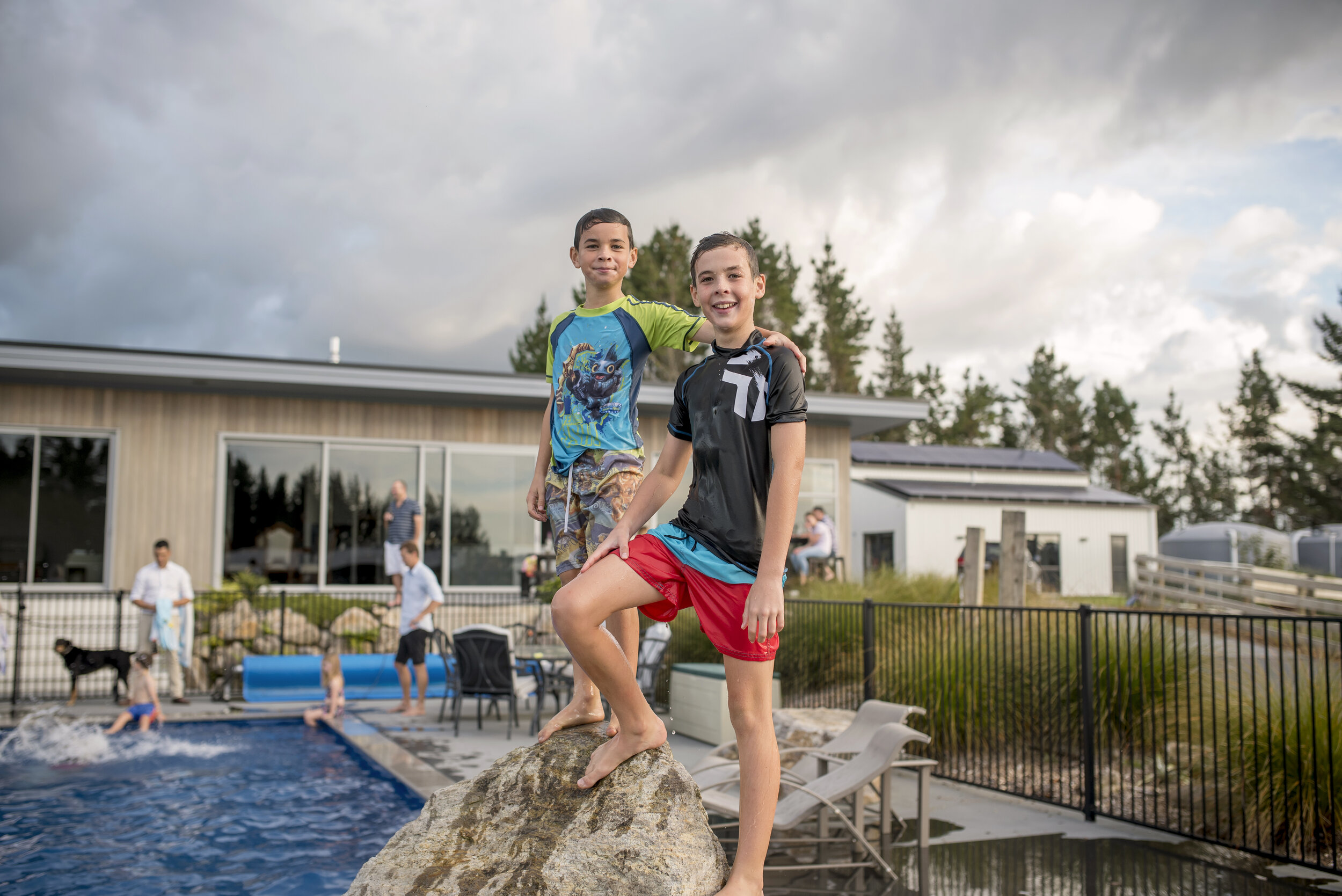
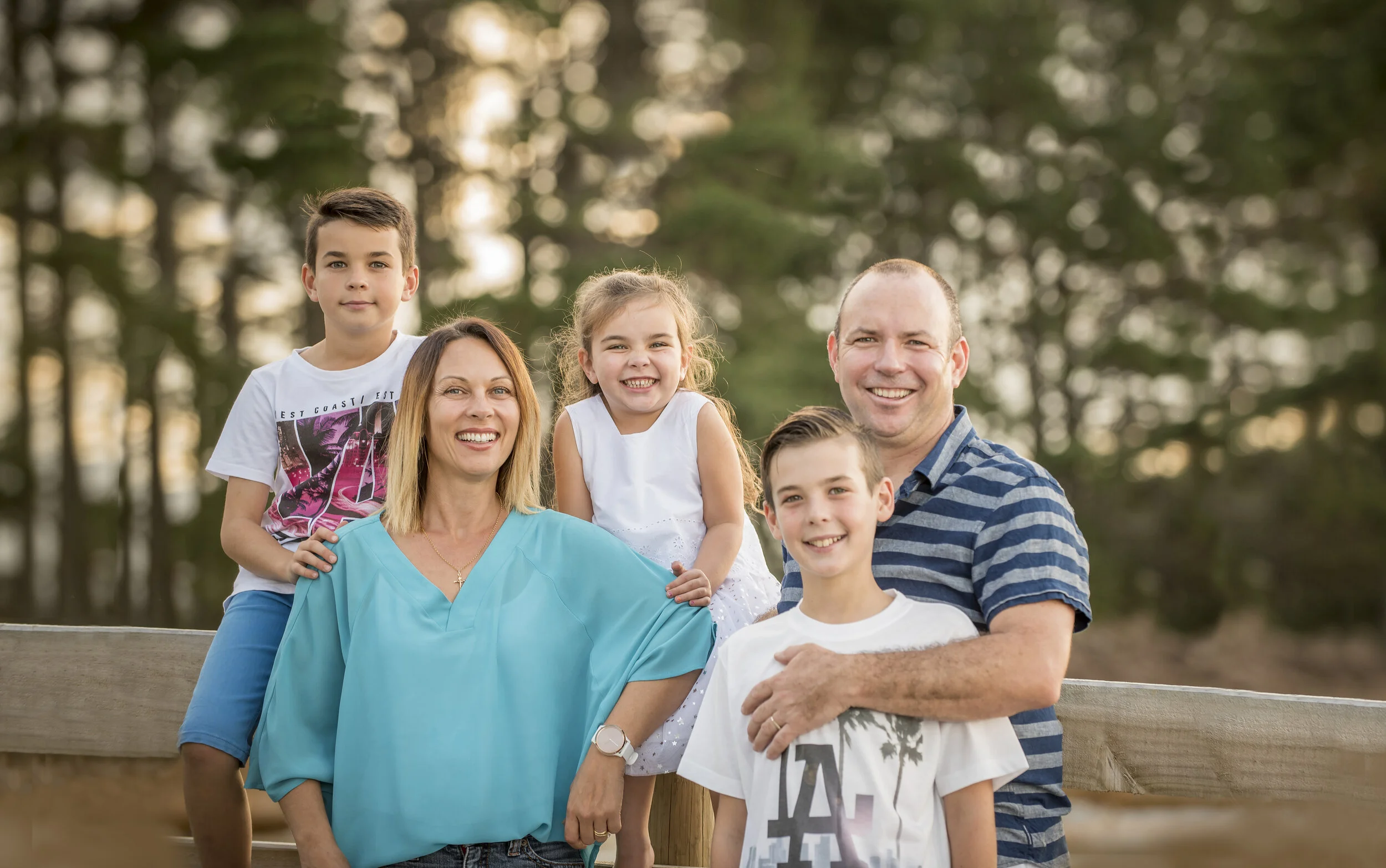
JEREMY: It’s fantastic being able to entertain without worrying about the neighbours. It’s also ideal for kids – Ash collects the eggs, Finn feeds the pigs and Charli helps me in the garden. They spend hours riding their bikes, playing basketball and in the pool, which is so much better for them than staring at a screen. We use the shed for storage, the camper and the boat. That’s the beauty of a large section, it allows you to be creative. You’ve also got the option for office space, which is great for the wallet and provides peace of mind for people like tradies, who store their tools at home. The other advantage is the potential for capital gain. If you buy an orchard on the edge of the city that then becomes subdividable, the value of the land can increase fivefold.
UNO: Who’s biting the bullet and going rural?
JEREMY: Lifestyle blocks have always been popular with retired farmers, but today we’re also seeing a lot of homesick Kiwis coming back from overseas who are looking to invest in a slice of clean, green New Zealand land. There’s been a surge in buyers who want to have chooks, plant a vege garden and eat organic produce; I call it the ‘Annabel Langbein effect’. We’ve also had an influx of people from other cities, as they’ve realised they can buy a rural property here for about the same price as an average home in Auckland. When people finally make the move, it can be seen as impulsive because it’s such a big change, but it’s usually been a dream for many years.
UNO: How do you blend a job in the city with a rural lifestyle?
JEREMY: Tauranga is the perfect location in which to enjoy the best of both worlds. My daily drive from Pyes Pa to work only takes 12 minutes on the express route, so traffic is never an issue, but with today’s technology, you could easily work remotely and live the dream. We have great restaurants, shops and schools right on our doorstep. The barter system in the rural community is also alive and well – we get our daily pig scraps from Four14 Espresso café, and in return, I give them fresh bacon.
UNO: Where are some of the best hidden spots for rural living?
JEREMY: Pyes Pa is fantastic, and I’m not just saying that because I live there! With the new Lakes subdivision and Tauranga Crossing shopping centre, there’s huge growth across the whole south-east side of town. Further afield, you’ve got Hawke’s Bay and the Coromandel, both of which are beautiful.
UNO: Your team at Bayleys seems really close – it looks like quite the party with all your families.
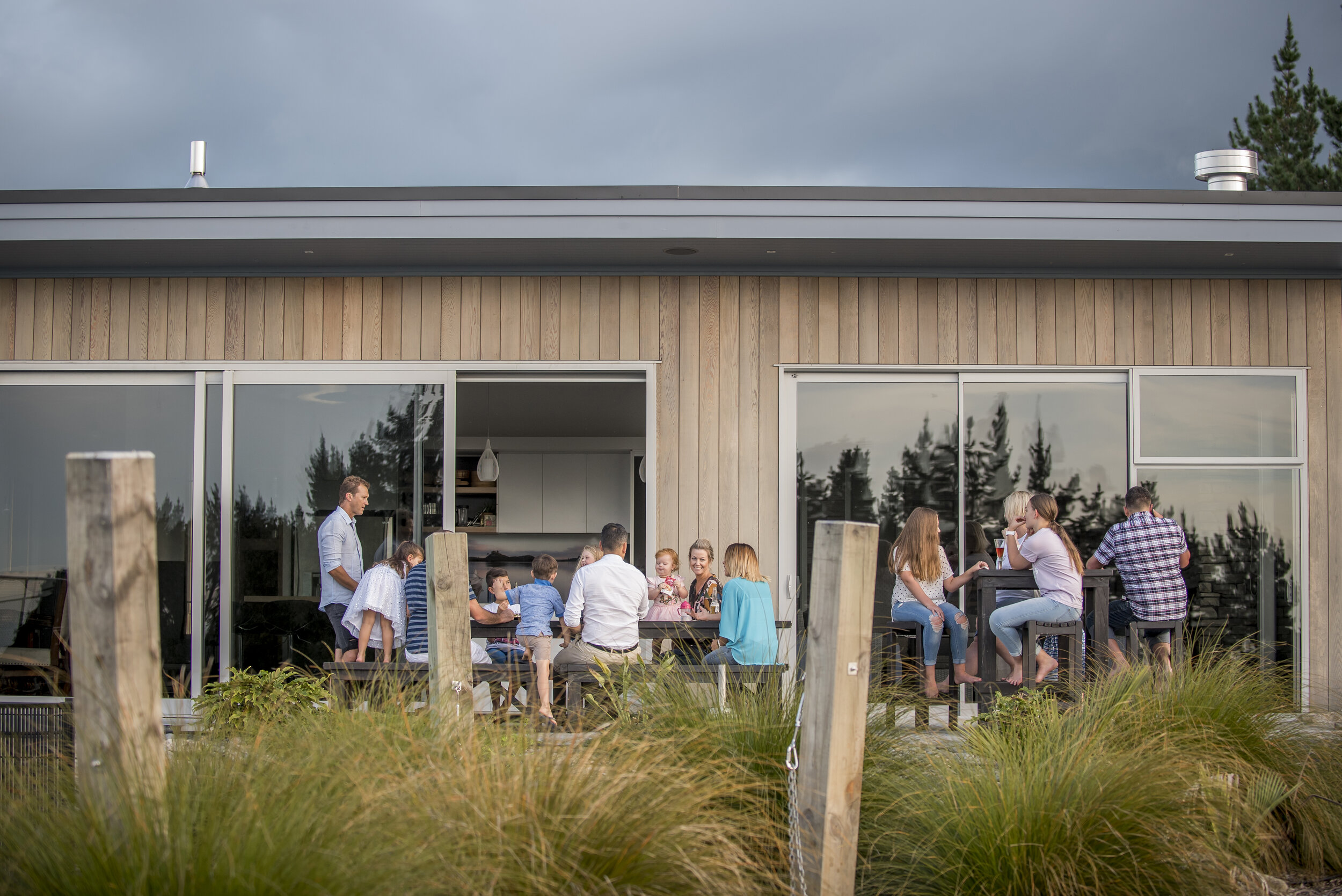
JEREMY: Real estate is a 24/7 job, but it’s also highly rewarding. We spend lots of time together, and Craig [Orr], Ike [Unsworth] and I also holiday as a team with our families – it’s the best type of chaos. In summer and winter, when things are a little quieter, I get to enjoy lots of quality time with my wife and kids. We love heading to the bach at Lake Rotoiti and try to get away a couple of times a year.
UNO: Any advice for those considering packing in the city for greener pastures?
JEREMY: It’s about choosing the right type of property for you, so do your research. If you’re after income, there are options with orchards or farms, or for Airbnb; the extra space will ensure your guests aren’t too close to your home, and they’ll pay a premium for a unique setting. But if you simply want more room and don’t mind doing a bit of gardening, the options are endless. Some people outsource maintenance, but I enjoy getting outside and doing the lawns; my ride-on lawnmower has a cupholder, so I can have a cold beer while I work!
House proud: Landmark Homes latest show home brings the wow factor to Omokoroa
Carly Stewart suspects the latest Landmark Homes Bay of Plenty show home in Omokoroa may forever be her favourite. She and her husband, Logan own the franchise and have recently opened their latest creation, which brings a whole lot of wow factor.

Its creators and its visitors are getting a real kick out of this stellar new Omokoroa show home.
WORDS Monique Balvert-O’Connor PHOTOS Amanda Aitken
Carly Stewart suspects the latest Landmark Homes Bay of Plenty show home in Omokoroa may forever be her favourite. She and her husband, Logan, own the franchise and have recently opened their latest creation, which is drawing all kinds of favourable comments.
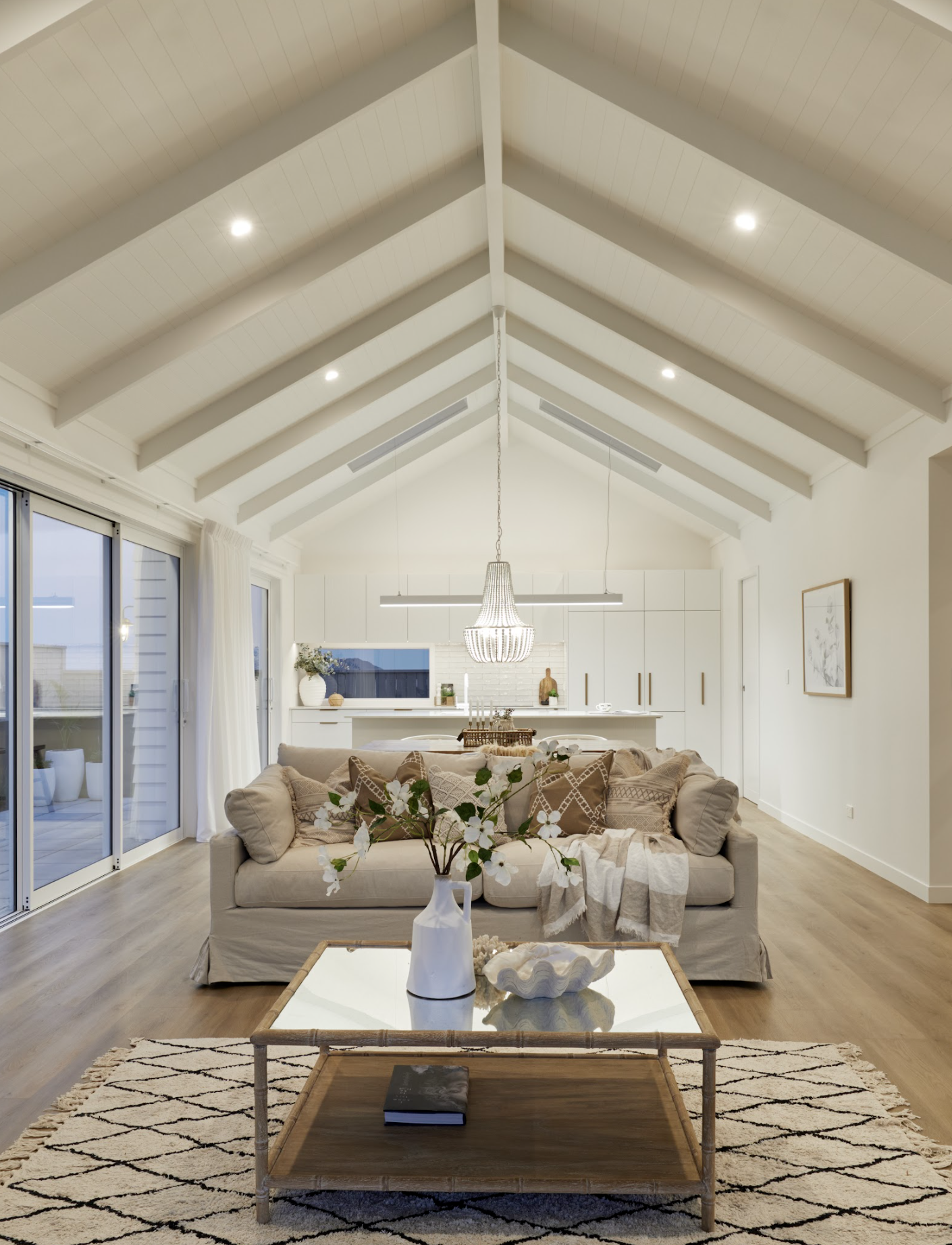
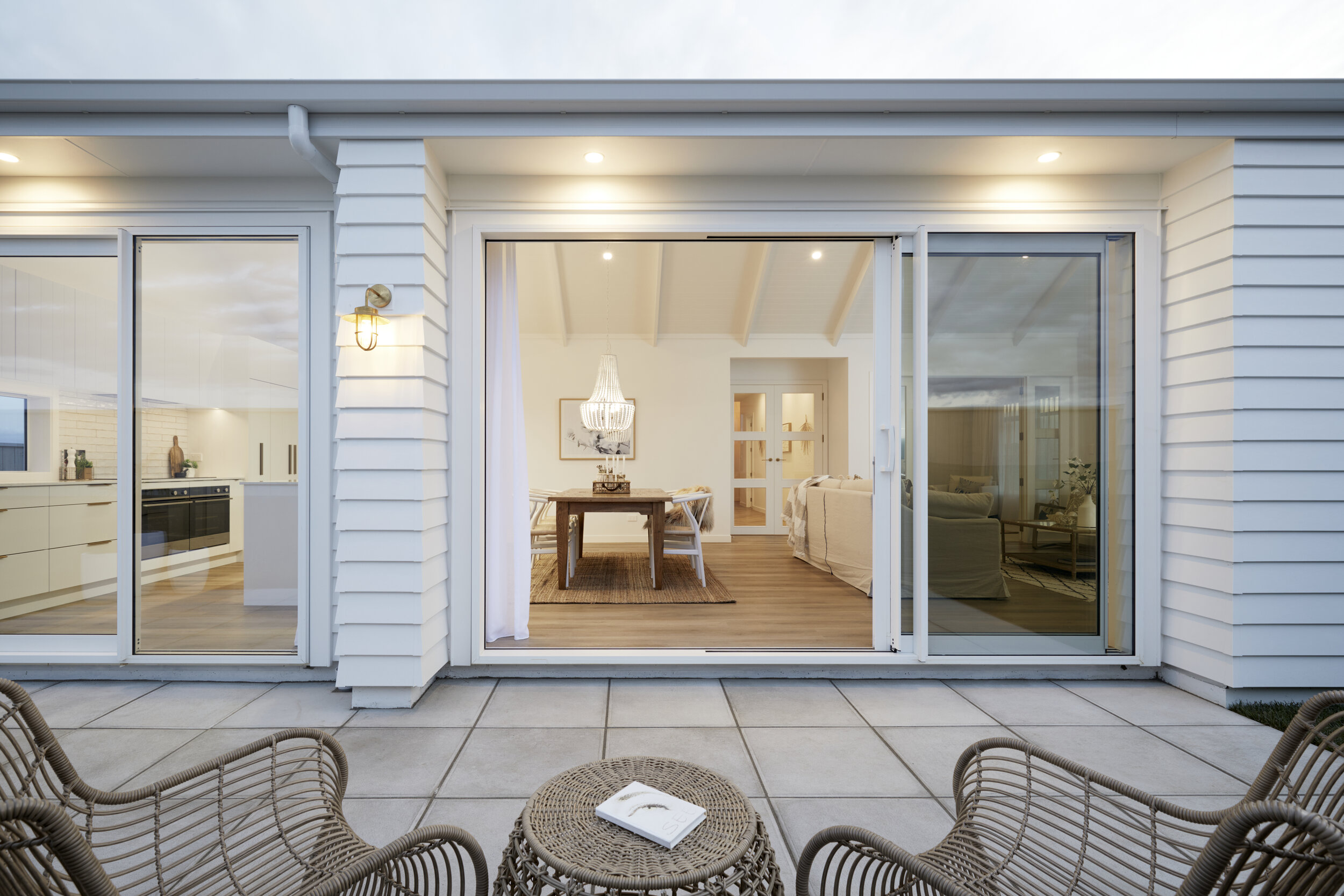
Sitting high with water views, the new 244m2 show home has a suitably coastal aesthetic. It’s a celebration of white well done. “It’s quite a different style to our first one in Edgecumbe Road, Tauranga,” says Carly. “It’s traditional in the sense that it’s a linear weatherboard home, but contemporary due to its fresh Hamptons-with-a-Kiwi-twist look. Think white, white, white, from the roof to the exterior and interior paint colours, to the curtains, to the kitchen…”
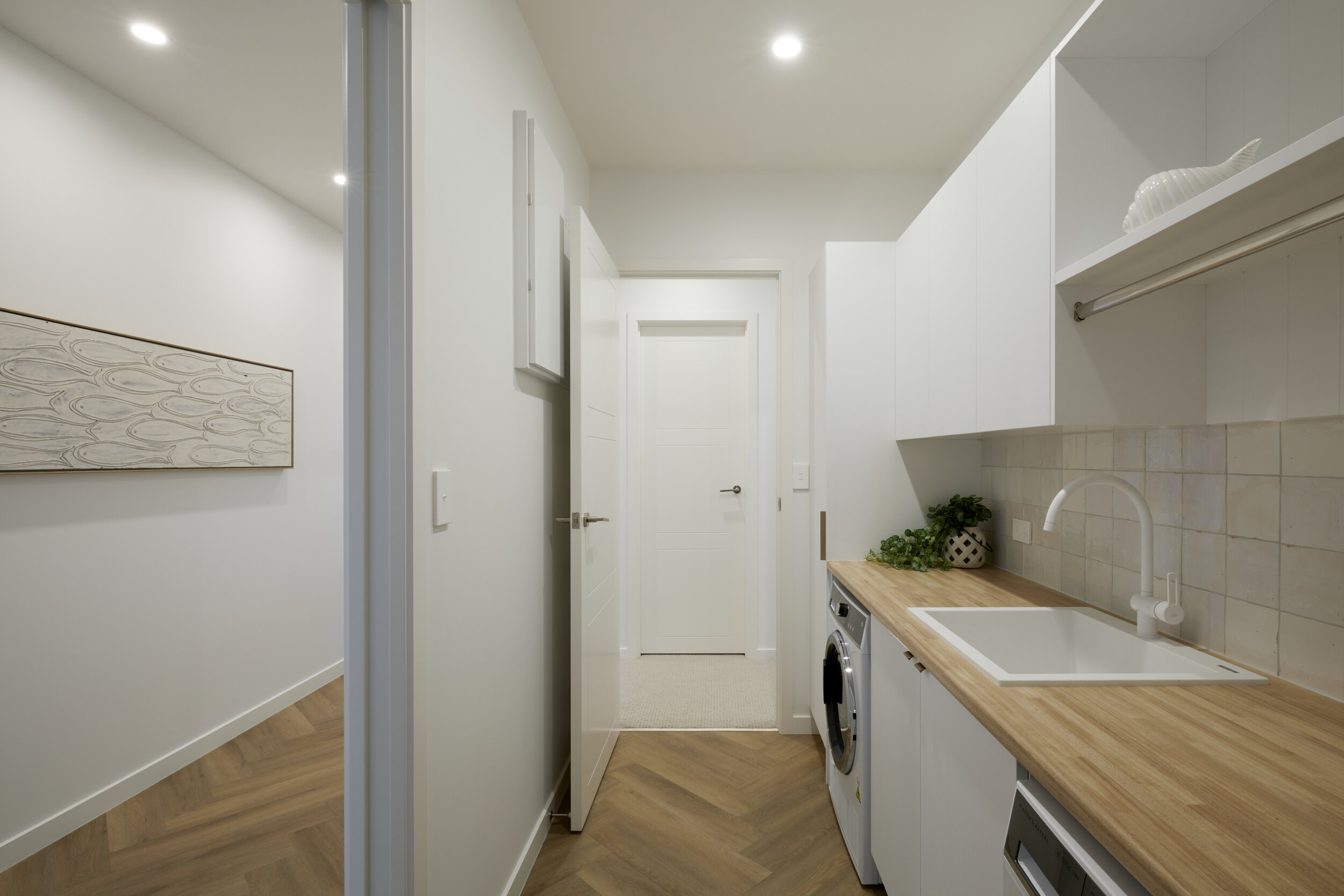
The two-storey house has roadside appeal by the bucketload, tempting you to explore. A long, extra-wide hallway leads from the entryway to the main living area. There’s a true sense of arrival when entering through the French doors into this space complete with a tongue-and-groove cathedral ceiling. With its exposed rafters, this pitched feature continues out to a portico. On offer here is covered seating, Kaimai views, an outdoor oven and a fire (there’s an inside fire too). A snug/media room, two bedrooms, a powder room, a bathroom and the laundry can all be found on this level of the house, with the generous garage a few steps down.
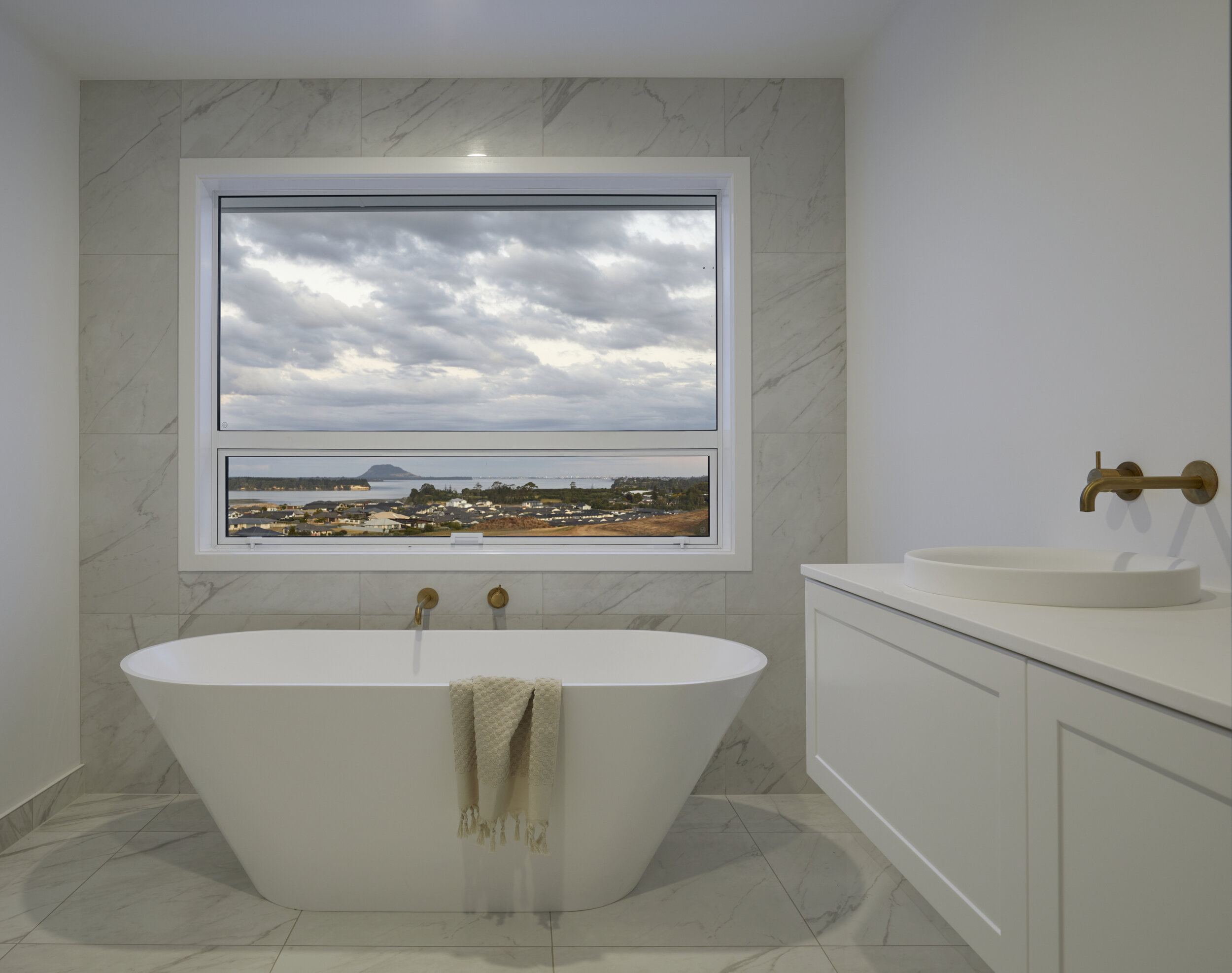
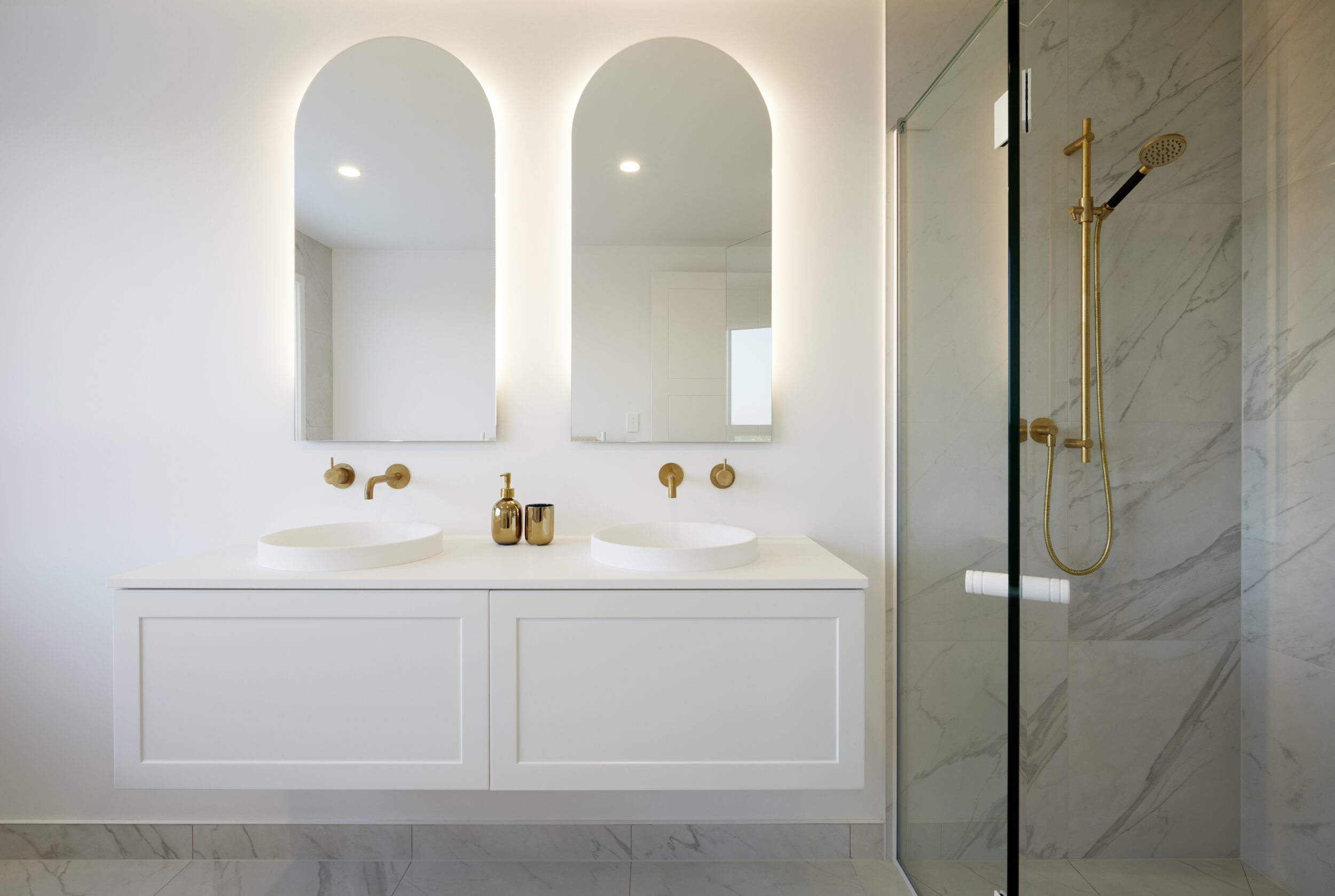
Upstairs is dedicated to the master suite. Carly loves the “pure luxe” ensuite with
its glamorous back-lit mirrors and free-standing bath. For her, dressing houses is a way to express her creative side, and the light fittings used this home are a fine example of her flair. Brass lantern-look exterior lights hint at the nautical, while immediately beyond the front door are rattan-style drop pendant lights hung at staggered heights. A beaded handelier is an eye-catcher in the dining area, and in the powder room and master bedroom suspended lights are examples of the “subtle, special touches” Carly loves to inject.
Also wonderful are the brushed- brass accents throughout, such as the ensuite tapware and handles on the main living area’s double doors.
This house has true multi-generational appeal. There are a number of built-in technological features that ensure it’s future-proofed – and there’s even provision for a lift.
To be wowed by this beautiful show home, call into 2 Goldstone Place, Harbour Ridge, Omokoroa. It’s open Tuesday to Sunday from noon until 4pm, and by appointment.
Designer family
Thorne Group’s Lisa Thorne discusses the merits of working together as a family, and how they do what they do so well.

Directors Gavin Morrow, Peter Buck and Aaron Thorne.
Having dinner with other couples who also work together, one of the wives told us about an article she’d read detailing the perils of family businesses. It can seem, from the outside, to be a minefield.
WORDS LISA THORNE PHOTOS AMANDA AITKEN / QUINN O’CONNELL
Zak, our quantity surveyor, told me last week that he didn’t ever want to get married based on seeing Pete and I at work! However one of the secrets to making it work, is that we just don’t take our work conversations home. That way, all the fun bits of family life stay intact, as does our marriage.
Our discussions round the dinner table gave me plenty to think about. It made me examine why working together works so well. New Zealanders are particularly fond of working with their families and self-reflection is always a healthy thing, so I have compiled my own thoughts on why it works so well.
Four Reasons Working with My Family Works
1. Our customers get exactly what they want. And more, because every home we design and build carries our family name. That family brand is the best guarantee on the market. We are fastidious about quality. We always encourage people to chat with previous clients, because we know they will recommend us in a heartbeat. We have one project manager and one lead builder working on each home (surprisingly it’s not that common). And we would never compromise on quality to take on more clients.
2. Our family say it like it is! Designing and building someone’s home, the single biggest financial commitment they will ever make, is stressful. Those stresses create niggles and frustrations with each other. Being family, we say things to each other which would, in other working environments, remain unsaid. The air is cleared, and we move forward without resentment. That said, some of our younger team members are learning about some aspects of marriage they’d rather not, hence our quantity surveyor declaring his bachelorhood evermore.
3. I work with the best people. At the end of the week, we get to kick back, drink beer, play darts and re-cap on all the action. There’s plenty of fun to be had amongst the professionalism. In fact, Pete often jokes our atmosphere is more IT start-up than traditional designer/builder company.
4. We trust each other. Everyone in our business is so incredible at what they do, we don’t have any crossovers of roles and just get on with playing to our strengths.
Lisa Thorne, marketing manager.
This is how it works:
Pete is the planning and details man with a background in corporate banking. He’s a total perfectionist. That’s great for our clients, but not so much for me as the creative cog in our wheel. I have lost count of the number of times I have been reprimanded for spelling mistakes or ‘creative’ budget spends.
Aaron and Gavin are the practical ones. In fact I always laugh when people ask if Pete is a builder. Aaron and Gavin wouldn’t let him near a hammer! Gavin wouldn’t admit it but he is a secret geek when it comes to building. He will often be up till midnight studying highly complex plans to ensure everything is millimetre perfect.
And as much as I hate to admit it to him, my brother Aaron is an amazing project manager. We use arguably the best technology in the world. Each of our clients gets their own, secure website detailing their project, Aaron’s regular reports, photos, consents, everything.
Jon is the newest member of our family, as the director of Thorne Group Architecture. We welcomed him officially into the fold a couple of years ago. It made perfect sense to expand our business to Thorne Group: Design and Build Experts. All under one roof we can design your home, or build it, or both. The energy and experience Jon breathes into the architectural arm of our business is, frankly, second to none, and he is equally talented at designing any size of house, large or small.
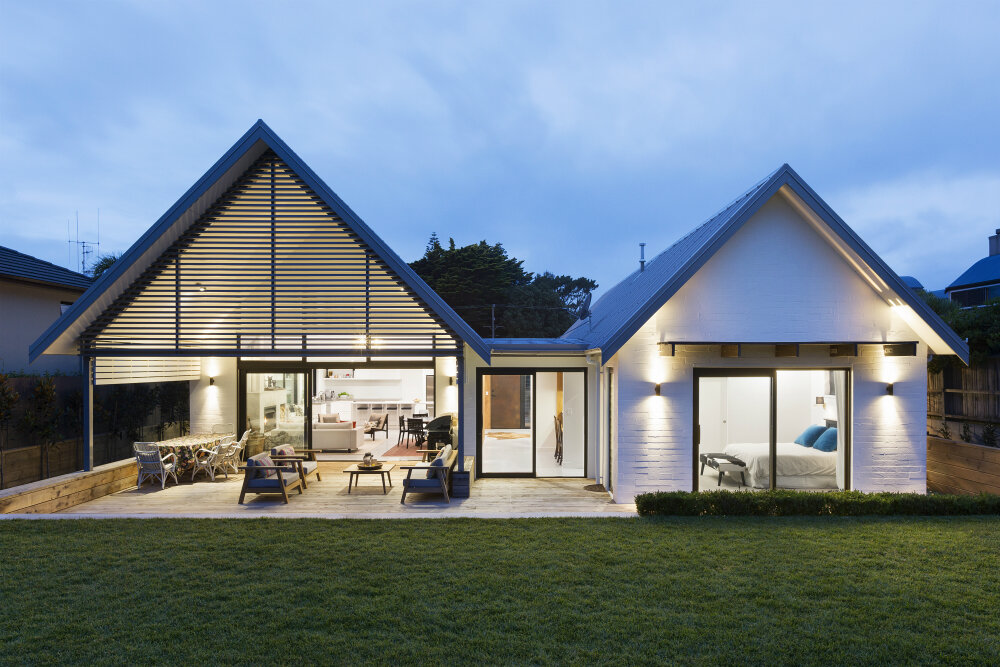
Five design features most likely to add capital value to your home
If there’s one aspect to our job which unites us all at the Thorne Group, it’s our love of design. Jon designs everything from opulent, beachfront mansions to small, smartly thought-out homes. He has learnt a thing or two in his career, and shares a few insights with you here in some of the homes Jon and his team have designed.
1. Covered outdoor area: This isn’t just about providing shade on a summery day. With detailed planning and clever design taking into account privacy, views, prevailing winds and sun angles, a covered outdoor area can be functional even on the coldest winter’s day.
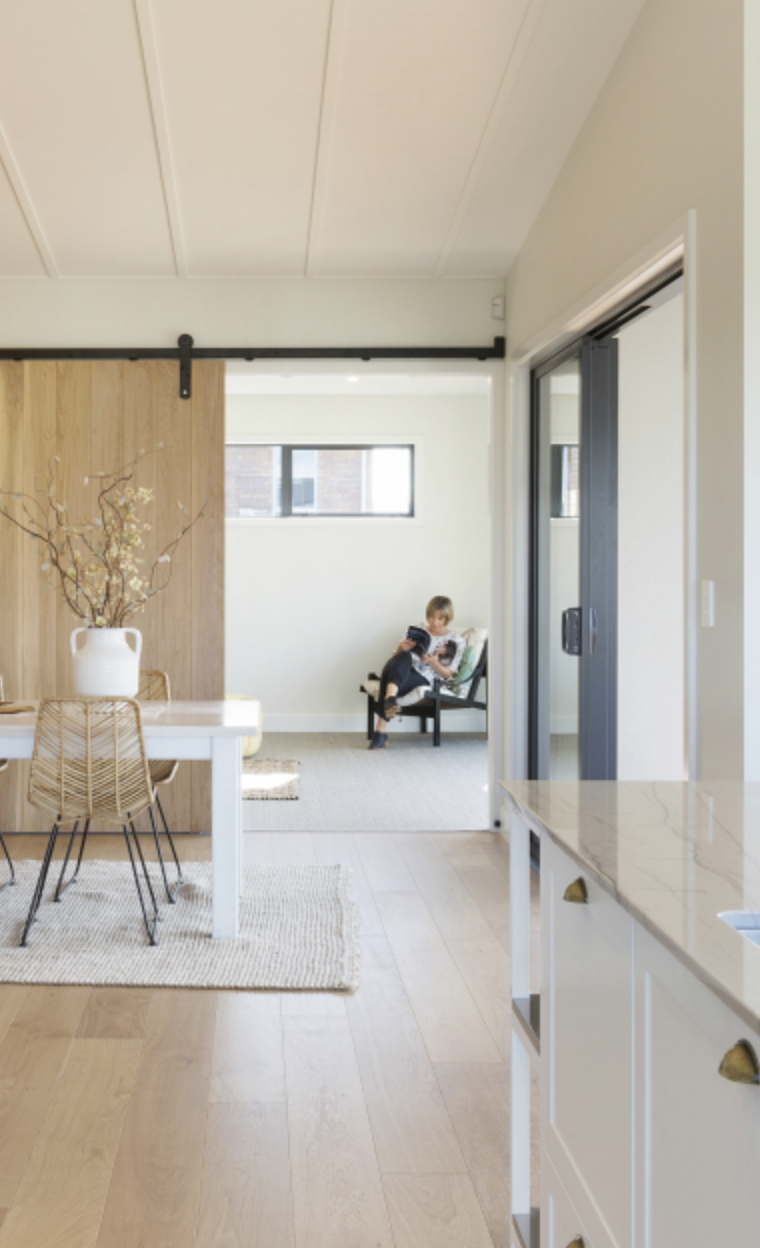
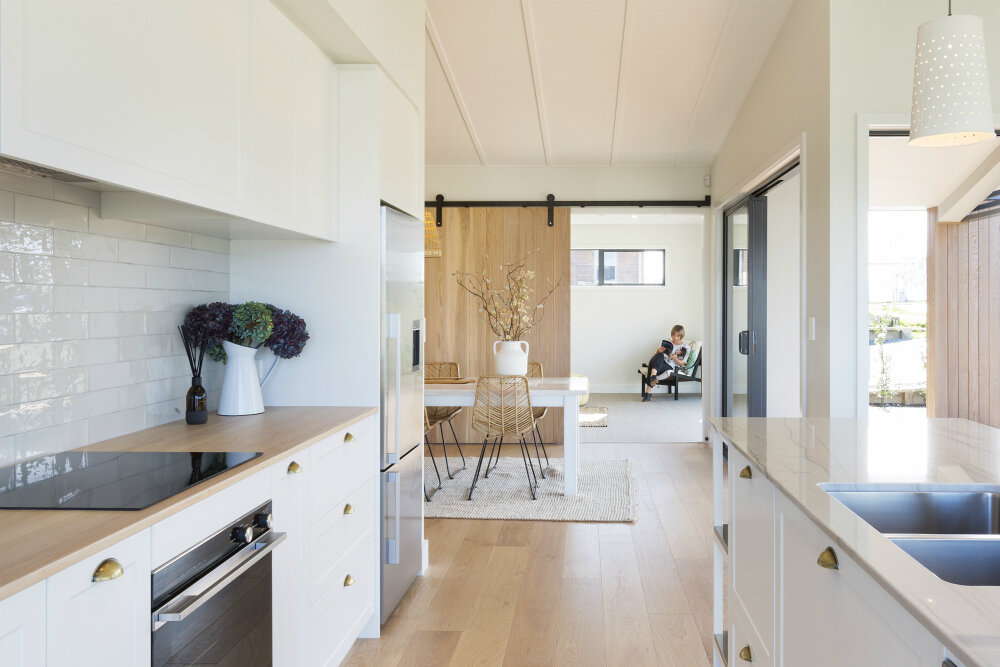
2. Flexible spaces: Lots of people specify ‘open plan’ on their brief, but we find that flexible spaces work better. For example, a large feature door between the kitchen/dining and living areas serves as a removable wall. Slide it closed to separate noisy children while you enjoy a glass of wine with your friends, or open it up to create a sense of space. Your need for space changes as your family develops. Lisa has told me of the dream house she moved into some years ago, which had two large living rooms connected by a corridor. Her then little children clung to her ankles while the second living room gathered dust.
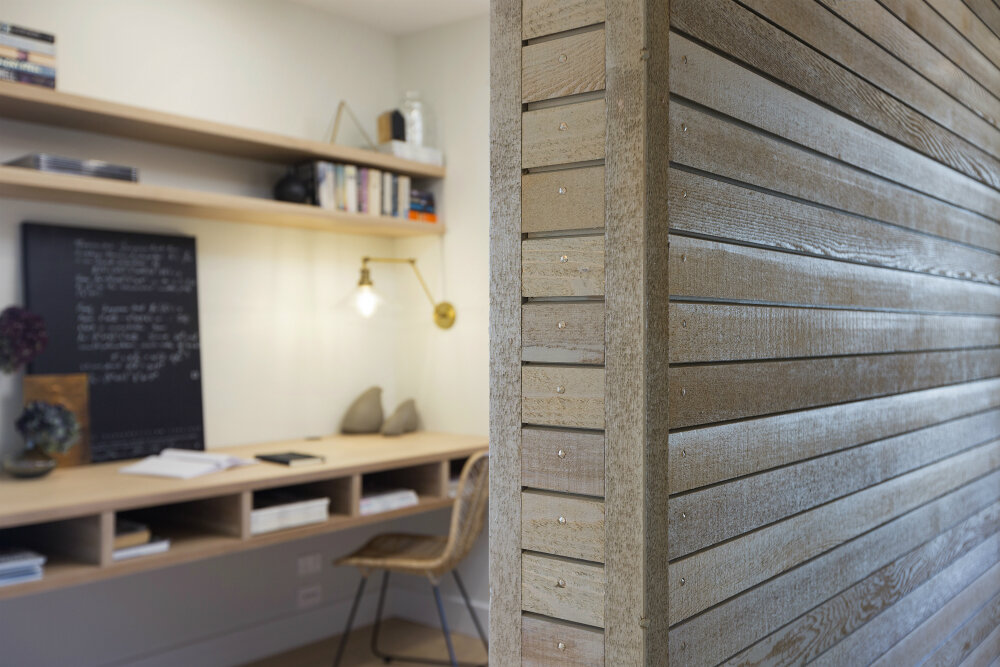
3. Study nook: Another item people often write on the brief is a separate study. We have found study nooks to be a better option; electronic devices are so portable, a separate room isn’t necessary. It’s great to put the children there with homework, keeps you connected to warmth and the action of the house, and best of all, saves on floor area and therefore costs, freeing up budget for other areas.
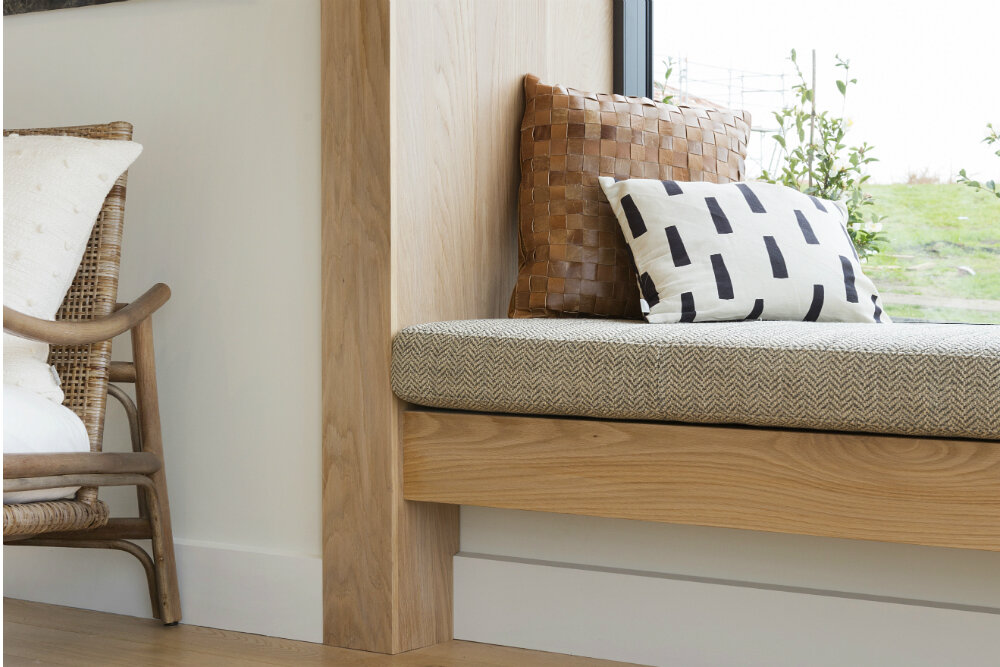
4. Window seat: Placed correctly, a window seat can perform many functions; in this home it is integrated near the kitchen, so that when the living room is closed off, it immediately creates another entertaining zone, for people to sit and chat while your chef creates magic in the kitchen. Floor space does not need to be increased to accommodate the window seat, and you can use it for more storage too.
5. Feature ceilings: Use your ceiling as a canvas to create feeling. The trusses in this photo may may look simple, but as we often say at The Thorne Group, the devil is in the detail. The structure looks incredibly neat, belying the huge amount of engineering, physics and millimetre precise execution behind it. The result is a feeling of extra volume to the room beneath. A perfect example of using a ceiling as a feature.
20 years in the making
The foundations for Thorne Group were laid over 20 years ago by well-known land developer Bob Thorne.
The business was growing in scale by the time daughter Lisa and her husband Pete returned from corporate roles in Sydney and London. Bob’s son Aaron, a project manager, joined forces with Pete and qualified builder, Gavin Morrow and in 2007 officially set up the Thorne Group.
Designing and building small and large homes as well as everything in between, the Thorne Group are now the Bay’s biggest family-owned building and architectural design company