

The little store making a big difference
Katoa is a place where local youth can learn career skills to help them thrive.
Katoa is a place where local youth can learn career skills to help them thrive.
Words Catherine Sylvester
Photos Jahl Marshall

Stepping through the doors of Katoa in beautiful Mount Maunganui, you’re met with all the hallmarks of a humming café. Happy chat and laughter bubble up from the young staff behind the counter, where a delicious array of smoothies are on offer.
Look a little closer, and you’ll soon discover Katoa is a smoothie bar with a twist – and a greater purpose. Opened last November by The Get Group, it exists to provide a space in which young people are trained with the skills needed to work in customer service, and to also house the Group’s not-for-profit Little Heroes Project.
The Get Group was launched in 2015 by friends Angela Spice-Ridley and Noeline (Noels) Cook, who met while working in adult education. The organisation seeks to provide training in basic career skills to those for whom school is not a natural or easy fit.
“We started by going into schools to run workshops,” explains Angela. “Practical things like barista skills, horticulture, food safety, customer service and interview techniques.”
The pair’s experience working in adult education meant they were able to identify certain gaps that young people were encountering. They realised that filling those gaps would be their mission.
“Noels and I have a passion for young people and love their energy. They have so much to offer,” says Angela, smiling. “We hear a lot that young people don’t know how to work, but have they been taught to? We felt they were getting a bit of a raw deal and wanted to change that.”

The Get Group employs young people to work in all areas of the business. They teach workshops, run school holiday programmes, operate the Katoa Food Truck, and work in the café. They’re also encouraged to give back to the community and are given time off yearly to do so.
It was through one of these altruistic initiatives that the Little Heroes Project came to be. Encouraged to find ways that were meaningful to them and would benefit others, one young wahine chose to help teen mothers by creating and gifting care packages. From the beauty of those small beginnings, something even bigger was born.
A call to the community for donations for these packages resulted in an overwhelming response. The collection and distribution of goods on a larger scale was enough to warrant the Project registering as a charitable trust that now supports individuals and organisations throughout Aotearoa.
Angela explains the Katoa store allows The Get Group to train and employ young people, and to raise funds for the Little Heroes Project.
“We partner with young entrepreneurs across New Zealand, providing them with a space to showcase and sell their creations,” says Angela. “We also have a range of Katoa merchandise and upcycled clothing for sale, which profit the Little Heroes Project.”
Jorgia Neill first encountered The Get Group when she took their Gateway course while still in high school.
“We were learning interview skills, and afterwards Noels invited me to do some work experience with them,” the 21-year-old says. “I was able to try a bit of everything to see what I would enjoy the most and where I would thrive.”

Fast-forward four years, and Jorgia now manages the head office in Palmerston North.
“It was a shock to be asked to join as I didn’t have much confidence in my abilities,” she explains. “This has built my confidence and helped me grow. It’s also helped me to know my worth in the workforce.”
Noels is keen to point out the beautifully collaborative effort that has gone into ensuring Katoa thrives.
“The biggest thing Angela and I do for each other is to be calm when the other is freaking out,” she says, laughing. “I don’t think I would have survived without her. This venture wouldn’t have got to where it is without it involving the two of us.”
Both women’s husbands are fully committed to the vision, contributing their building and business skills to projects.
Noels sums it all up with a smile: “When all is said and done, it is our incredible team of young people that makes it worth getting up every day and keeping it all going.”
katoa.org.nz

Thriving together
Tauranga Business Chamber’s chief executive Matt Cowley says owners of local businesses big and small benefit from support, collaboration and networking opportunities.
Tauranga Business Chamber’s chief executive Matt Cowley says owners of local businesses big and small benefit from support, collaboration and networking opportunities.

Leading an organisation can be a lonely position. It’s easy to feel the weight of the entire business on your shoulders as you carry ultimate responsibility for the finances, marketing, human resources, administration and operations.
It can be a massive relief to meet people in similar roles; to share problems and help each other discover new solutions.
Our lives feel like they’re only getting busier, so it can be challenging to find time to connect with other business owners and leaders. However, times are extra tough for businesses right now – and that connection has never been more vital.
I encourage you, if you’re feeling the strain, to prioritise connection.
Tauranga Business Chamber connects with hundreds of business leaders across all industry sectors on any given month. As the region’s business hub and champion, it’s a great place to start.
We hold several events a month, covering a range of networking opportunities and leadership conversations with industry and political decision-makers. We also provide targeted forums like our Business Women’s Network and LINKT – Young People in Business.
We also help keep you up to date with the latest trends, legislation changes, and new business support offerings, as well as what’s happening across the Western Bay business community.
An incredibly effective way to build rapport with people quickly is by offering help without strings attached, sharing experiences, and welcoming them into your network.
You can do this by meeting like-minded people at our events, or by sharing your expertise through our trusted communication channels.
We have recently made membership more affordable and accessible to business owners and leaders, allowing you to choose the level you want to engage with us. Our entry-level membership is less than $270 per year and comes with a host of benefits – perfect for small and new businesses.
As a larger business, membership showcases your corporate citizenship and helps the next generation of businesses. You’re also supporting the Chamber to be a strong, independent voice of business as we advocate for better outcomes for local businesses.
It’s time to come together, support one another, and ensure the Western Bay’s dynamic business ecosystem continues to thrive through the economic turbulence heading our way.

Through the lens of giving
Colour, candour and compassion are three hallmarks of the stunning images featured in Acorn Foundation’s recent 20th birthday commemorative photographic exhibition, presented in partnership with UNO.
Colour, candour and compassion are three hallmarks of the stunning images featured in Acorn Foundation’s recent 20th birthday commemorative photographic exhibition, presented in partnership with UNO Magazine
Photos Alan Gibson
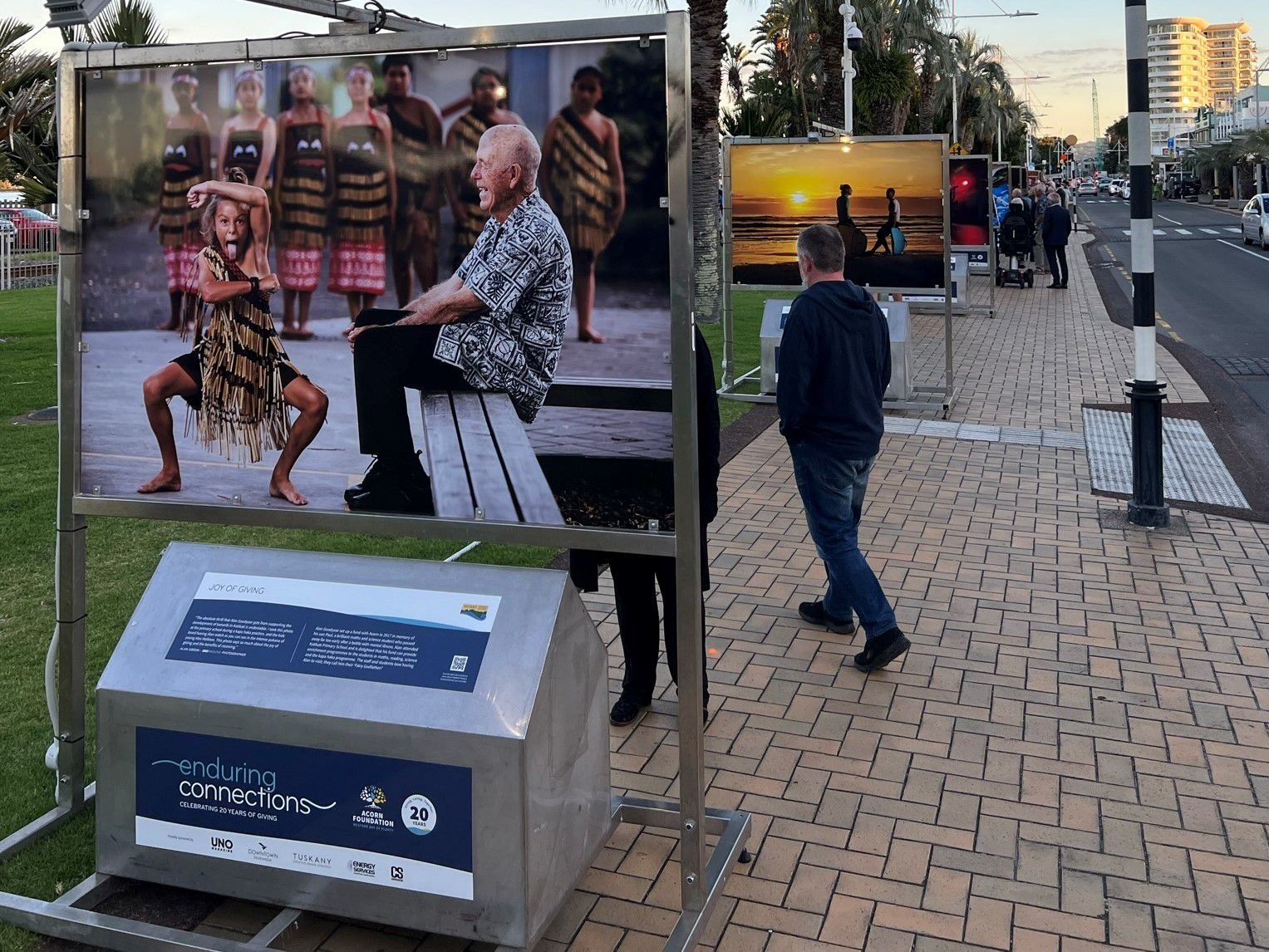
Shifting the focus to those deserving of support has always been at the forefront of Acorn Foundation’s mahi. Their recent 20th birthday celebration was true to form, showcasing the extraordinary generosity of Acorn’s donors and the lasting impact of their gifts on the local community. In partnership with UNO and our award-winning photographer, Alan Gibson, a stunning photographic exhibition was unveiled in the heart of Tauranga on April 4.
The exhibition, Enduring Connections, featured 18 of the more than 290 charitable groups in the Western Bay of Plenty who have received funding from Acorn. Spanning organisations focussed on the arts, environment, youth, food insecurity, homelessness, health, diversity and more, these images acknowledge in a visually impactful way the enduring difference Acorn donors seek to make, and the enduring support Acorn is then able to extend to the region.
The Acorn Foundation was established back in 2003 by their inaugural chair, Bill Holland, with the support of a group of committed trustees. Acorn is now one of 17 community foundations in New Zealand that use a smarter giving model that involves pooling and collectively investing donors’ funds. The capital in the fund remains intact, while a portion of the income is distributed annually to the local community. Using this method means that Acorn’s donors can support causes close to their hearts, forever.
The Edna Brown Fund was Acorn’s first donation. Upon Edna’s death in 2001, she left $67,000 for the benefit of the community. When Acorn was founded two years later, her trustees thought that the foundation would be the perfect place for Edna’s gift. After 20 years, Acorn has given away more than $89,000 from Edna’s fund to support local charitable organisations. Her fund value is now $91,000, and is a perfect example of the community foundation model. The Acorn team know that Edna would be absolutely thrilled.
In 2023, over 430 donor funds – and more than 600 donors overall – support the community in all sorts of ways. Thanks to these generous donors, Acorn has now reached $60 million in funds under management that are invested with Craigs Investment Partners. More than $13 million overall has been distributed to nearly 300 worthy causes in the Western Bay of Plenty and other areas important to Acorn’s donors.
The Acorn team has a tremendous belief in the power of community foundations and the enduring difference that Acorn can make in this region. Understanding that overseas community foundations are over 100 years old, they know that Acorn’s story is just beginning.
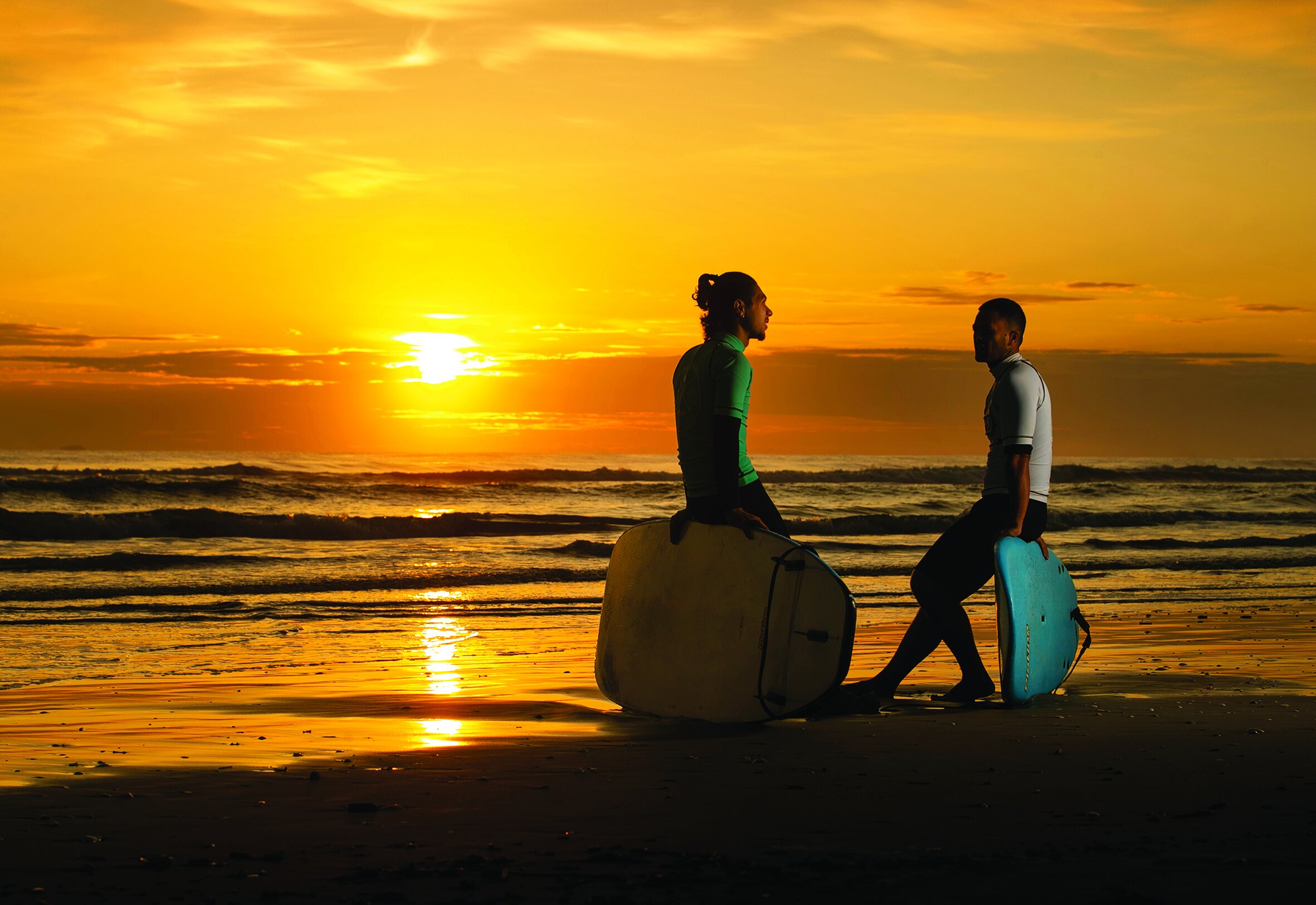
SURFING UP SUCCESS
“The new day dawning is really a metaphor for the work done by the amazing crew at Live for More. It’s a new beginning, or a fresh start from their troubled pasts, through the surf therapy programmes they run. I think that this image captures the ray of hope that their work brings to so many, one wave at a time.”
~ ALAN GIBSON - PHOTOGRAPHER
Live for More empowers vulnerable young men who are caught up in lifestyles that include alcohol, drugs and crime to find freedom from their troubled pasts and be inspired to live positive and fulfilling lives. Acorn Foundation funding supports Live for More to provide counselling and mentoring for these rangatahi, giving them a renewed understanding of their identity, purpose and potential.
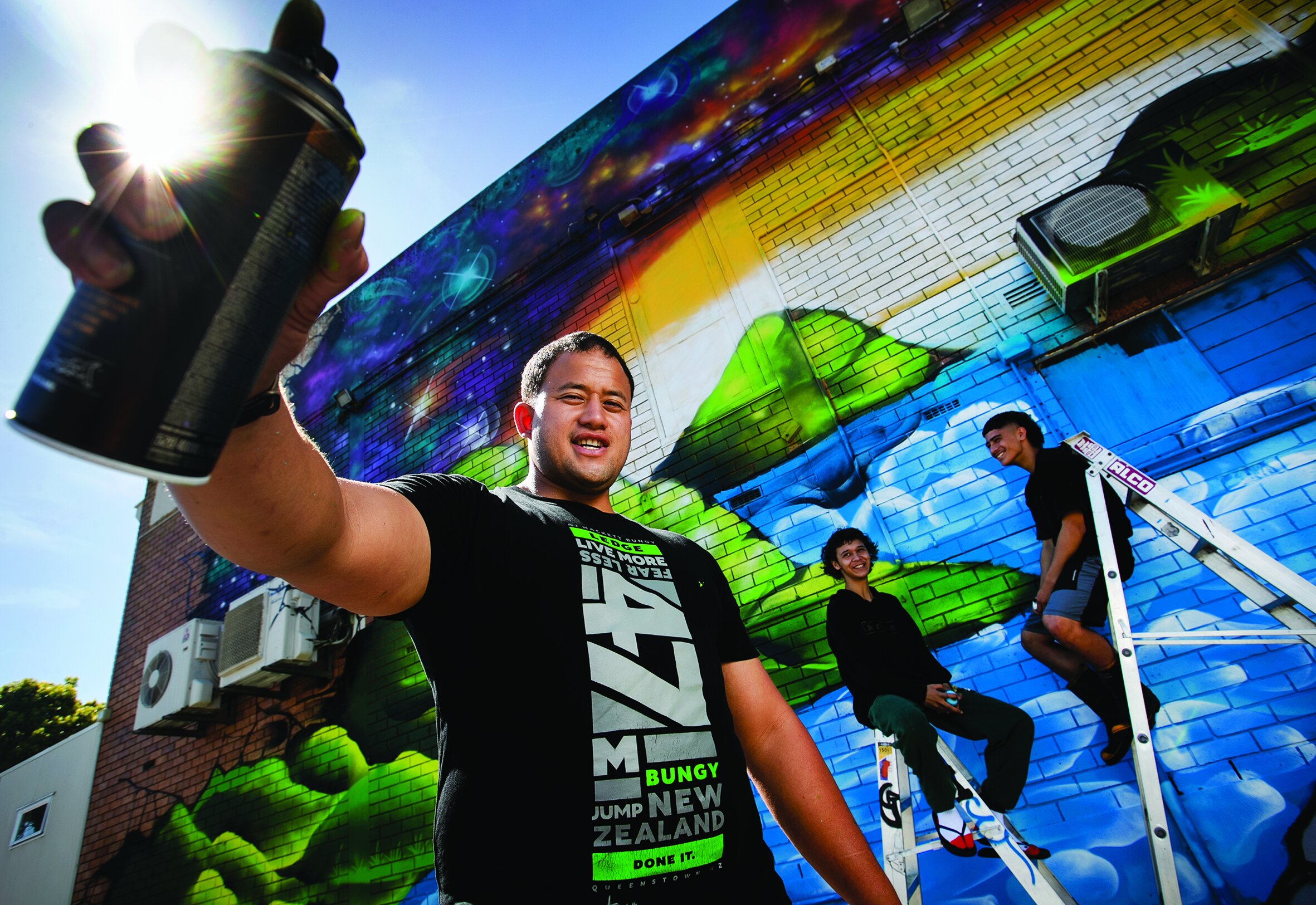
COLOUR ME HAPPY
“Tasked with creating a mural covering the drab wall of a Te Puke commercial building, artist Kalib Wallace was struggling with both deadlines and bad weather. Luckily, rangatahi from Ngā Kākano Foundation were there to help him create something beautiful while learning invaluable skills from an accomplished artist.” ~ ALAN GIBSON - PHOTOGRAPHER
Ngā Kākano Foundation provides a wide range of free and accessible health and social services to families living in Te Puke. Acorn has a strong focus on youth development through field of interest funds, which supported young people to create this colourful mural as a creative outlet.

STREAMS OF CHANGE
“When a photographer asks you to stand in the middle of a fast-flowing stream, some people might think twice. Karen Smillie jumped - or, rather, fell! - straight in, keen to promote the work Project Parore do to protect the water quality in Bay of Plenty catchment. Fellow passionate environmentalist Ben Haarmann joined her on the bank.” ~ ALAN GIBSON - PHOTOGRAPHER
Project Parore focuses on improved freshwater quality through restored native habitats. Volunteers work with local landowners to practice ecological restoration for improved soil health, stream health and biodiversity in the waterways that feed into Northern Tauranga Harbour.

HISTORY COMES ALIVE
“Hidden away among the majestic trees that are its namesake, The Elms | Te Papa has been a place for locals to gather and learn for generations. Through the lens, I can see paintings, photographs, and beautifully crafted objects. The smell of ancient woods used to make them combine with the sights to transport visitors back in time.”
~ ALAN GIBSON - PHOTOGRAPHER
The Elms | Te Papa Tauranga is a very important heritage and educational site as a place of early contact between Māori and Pākehā. Acorn’s unrestricted fund has provided support for expenses, and in addition, Trustees have set up a Community Group Fund with Acorn to ensure that this site remains open for future generations.

EMBRACING COMMUNITY SPIRIT
“The Holi Festival has its roots in Hindu traditions and is an opportunity for the local Indian community to bring a sense of fun and the colours of their culture to Tauranga. I wanted to capture the emotions expressed as people unleash their inner child, tossing coloured powder that all bear different meanings.” ~ ALAN GIBSON - PHOTOGRAPHER
Acorn’s VitalSigns® research highlights the importance of residents feeling a sense of belonging and engagement in their town and of migrants feeling welcomed by locals. This desire to enhance community connectedness is why Acorn is a joint funder of the Tauranga Western Bay Community Event Fund.
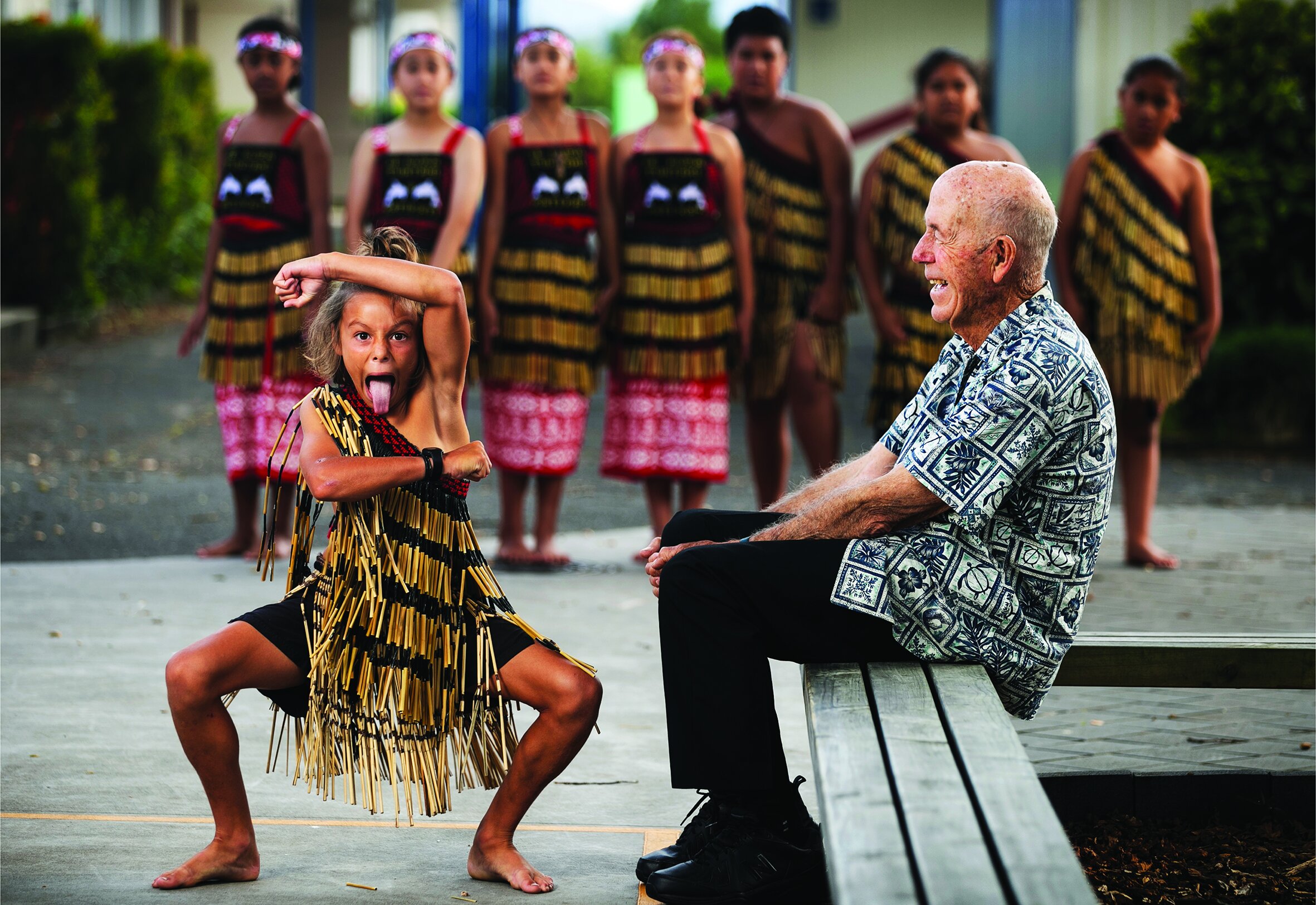
JOY OF GIVING
“The absolute thrill that Alan Goodyear gets from supporting the development of tamariki in Katikati is undeniable. At the primary school during a kapa haka practice, the kids loved having Alan watch, as you can see in the intense pukana of young Alex Hollows.” ~ ALAN GIBSON - PHOTOGRAPHER
Alan Goodyear set up a fund with Acorn in 2017 in memory of his son Paul, a brilliant maths and science student who passed away far too early after a battle with mental illness. Alan attended Katikati Primary School and is delighted that his fund can provide enrichment programmes to the students in maths, reading, science and kapa haka.

MUSIC FOR THE SOUL
“Standing in the darkened theatre as the chords of Pachelbel’s Canon ring out through the smoky haze has to be one of the most beautiful moments in this project. The three members of the Opus Orchestra made their way through an extra-long version of the musical masterpiece while I crafted my image. It was a stunning experience!” - ALAN GIBSON - PHOTOGRAPHER
Opus Orchestra was founded in 1991 to positively impact the cultural life in the BOP/Waikato regions. The orchestra provides performance opportunities for professional musicians with local audiences. The trustees of Opus Orchestra recently opened a Community Group Fund with the Acorn Foundation to help fund the Opus Pathways programme to support the development of musicians at all stages of their careers.

ENGAGING AT SPEED
“Youth Encounter Ministries Trust uses the love of action to engage young people at their Paengaroa property. The thrill of riding dirt bikes through the mud together is as important as the camaraderie and mentorship the team provide for our youth who feel lost.” ~ ALAN GIBSON - PHOTOGRAPHER
Youth Encounter Ministries Trust unleashes potential in young people by encouraging a sense of belonging and belief in their value, giving them hope they can become who they are meant to be. Acorn funding supports operational expenses for youth development interventions that empower vulnerable young people “to live a life wide open”.
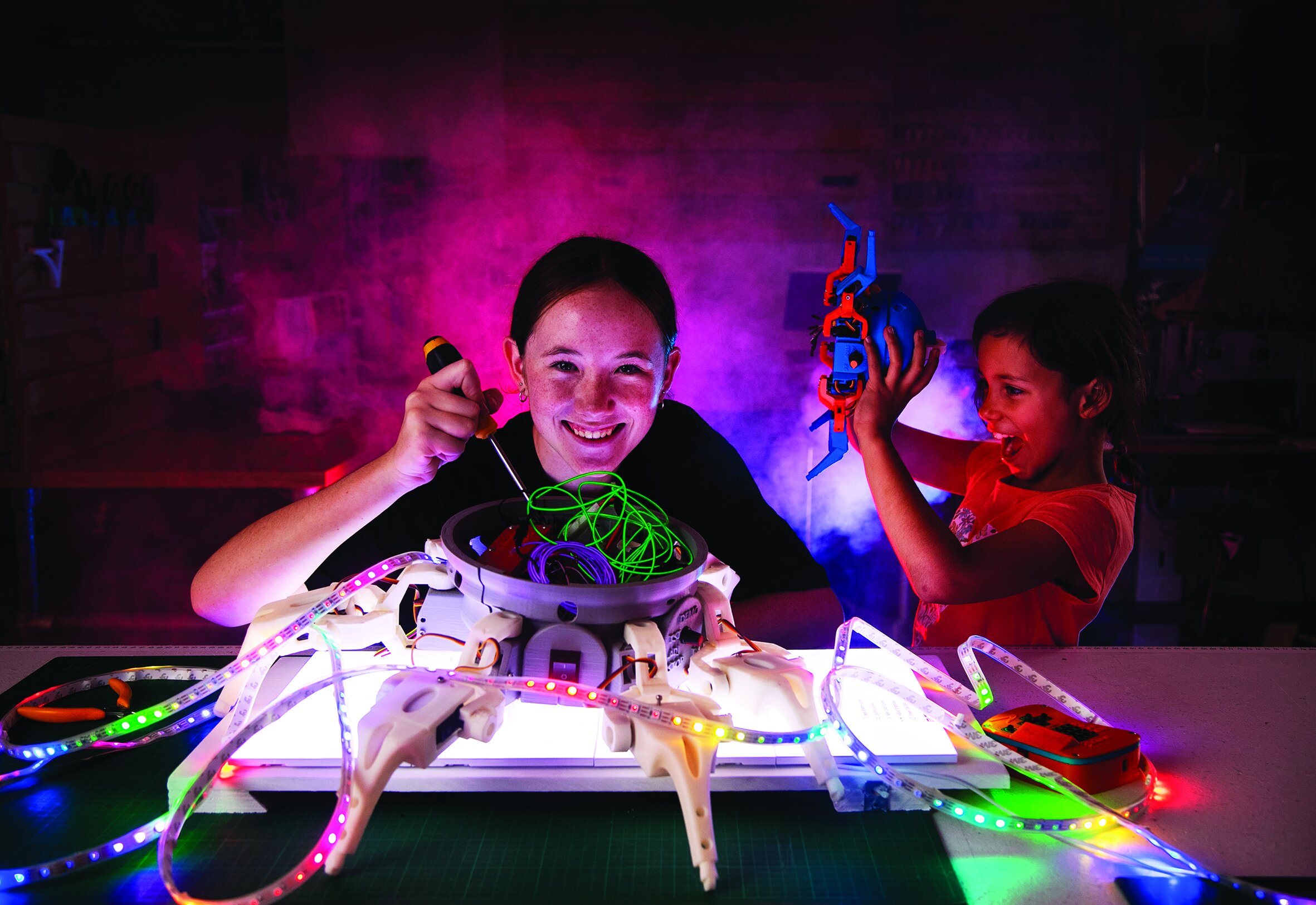
IMAGINATION AT PLAY
“People say you should never work with children or animals. However, I had so much fun capturing this image of enthusiastic participants at STEM Wana Trust, which is found at Basestation on Durham Street. These budding scientists, technologists, engineers and mathematicians are learning that the world is there for the making.” ~ ALAN GIBSON - PHOTOGRAPHER
Many Acorn donors like to support organisations which promote learning opportunities for children from all backgrounds. STEM Wana Trust’s mission is to engage and inspire a new generation in Science, Technology, Engineering and Mathematics (STEM) activities and opportunities.

BIRD’S EYE VIEW
“The guardians of our beaches do the most extraordinary work, so I wanted to capture this image using drone technology to achieve a perspective most people don’t get to see. While standing on the beach, I took this photo of the Waihi Beach lifeguard crew going through a practice rescue beyond the breakers so that they are ready to help when it matters most.”
~ ALAN GIBSON - PHOTOGRAPHER
The volunteers at Waihi Beach Lifeguard Services patrol the 10km long peninsula and provide search and rescue services around the 75km coastline. Acorn is proud to support this important mahi, as well as Mount Maunganui Lifeguard Service, Omanu Beach Surf Life Saving
Club, Papamoa Surf Life Saving Club, and Pukehina Surf Rescue.

RESCUING THE VULNERABLE
“The love and dedication of the team at the ARRC Wildlife Trust was immediately evident to me in the way they handled the morepork chick we photographed. A pair of steady but delicate hands cradled the tiny bird while vet Liza Schneider checked it over and gave the volunteers a glowing report of the bird’s improvement.” ~ ALAN GIBSON - PHOTOGRAPHER
The team at Animal Rescue & Rehabilitation Centre (ARRC) Trust are passionate about caring for wildlife which has been injured or orphaned in the Bay of Plenty. ARRC has a Community Group Fund with Acorn and also receives tagged funding each year from the J Abbot Fund.

KO TĀKU TOI TĀKU OHOOHO! MY ORIGIN IS MY AWAKENING!
“Art was all around us at Te Tuhi Mareikura’s hub in Mount Maunganui. Paintings and drawings hung on the walls, while around the table, discussions were underway about the carving of a taiaha. It is a place where young people can let the art get under their skin, and their creativity knows no bounds.” ~ ALAN GIBSON - PHOTOGRAPHER
Te Tuhi Mareikura Charitable Trust (TMT) is passionately dedicated to the vision of building a strong Māori collective identity for those from the Tauranga Moana region through an expression of Māori culture and arts. Acorn is a new funder supporting their youth programme, Toi Ohooho.

PROTECTING OUR FOREST
“The beautiful North Island brown kiwi calls Ōtanewainuku Forest home. Ross Edwards checked one of the many pest traps in the forest and had caught a ferret. Ross, and dozens of other volunteers like him, happily give up their time to check and bait traps, clear tracks and generally cherish our environment. I see an immense pride and passion in Ross’s face for the work they do for our beloved kiwi and the native forest.” ~ ALAN GIBSON - PHOTOGRAPHER
Volunteers at Ōtanewainuku Kiwi Trust work with DOC to protect kiwi, kōkako, and the conservation of the forest through pest control, kiwi and kōkako translocation, kiwi chick rearing, education and fundraising. The trust has established a Community Group Fund with Acorn and also receives tagged funding from the J Abbot and M&L Bellerby funds.

BOXING UP COMPASSION
“Tauranga Community Foodbank warehouse manager and buyer, Jordy Gastmeier, is pictured among the jungle of boxes and supplies which illustrate the level of need in our community. Signs like ‘Strictly for clients living in cars’ say it all. With this photo, I wanted to capture the enormity of their vital work.”
~ ALAN GIBSON - PHOTOGRAPHER
Demand is so high that, in the last year, Tauranga Community Foodbank gave out 6,900 food parcels, helping over 18,500 people. In 2022, Acorn support from trusts, corporates, and their unrestricted fund contributed to food distributed by the Foodbank which was used to prepare nearly 200,000 meals.

COLOURS OF THE RAINBOW
“Here I strove to capture the pride and aspirations of the Gender Dynamix team in their villa at Historic Village. The staff have created a space here where people can be at peace and free from judgement. The wall is covered in pieces of art that clients have created to reveal their stories, feelings and hopes.” ~ ALAN GIBSON - PHOTOGRAPHER
As a long-time local donation manager for The Tindall Foundation, Acorn funds local organisations on their behalf that promote an inclusive, diverse and welcoming community. Gender Dynamix works to meet the mental health needs of the BOP's transgender and non-binary community.

HEALING WATERS
“Roger Clark is well aware that sailing has long been seen as a rich man’s sport, but he is determined to change that impression. Showing kids who’ve never sailed before the pleasure of spending time on the water has become a mission.” ~ ALAN GIBSON - PHOTOGRAPHER
Thanks to the Sail for Life Community Group Fund set up at Acorn, the BOP Sailing Academy Trust has been able to share the love of sailing with locals, irrespective of means or ability. Sailing is a demanding sport that brings out fantastic qualities in young people, such as tenacity, self-reliance and discipline. The challenge and sense of achievement on offer are so empowering.

CARE AND COMPASSION
“To sit with Brian and Shirley and hear the stories about the help they have received at home from staff at Waipuna Hospice was uplifting. This is a happy image; perhaps it will help dispel some of the sad connotations people associate with the term ‘hospice’.” ~ ALAN GIBSON - PHOTOGRAPHER
The work of Waipuna Hospice is celebrated by Acorn’s donors, as it is their most-named charity in wills. Waipuna receives more than $115,000 from Acorn each year, coming from 11 estates and living givers. In the future, dozens of Acorn funds will provide hundreds of thousands of dollars each year to provide care both for patients and families.

IMPROVING A HOME
“Mike has a plastic container in the corner of his home that holds three months’ worth of water from a leak in his roof. It’s a big container. Mike was delighted to have the friendly team from Sustainability Options arrive at this Bethlehem home to discuss plans to fix leaks and install insulation. Although the house is small, the improvements that the organisation is going to make will transform it into a true home for a deserving gentleman.” ~ ALAN GIBSON - PHOTOGRAPHER
Sustainability Options is a social business which provides free home assessments to ensure that local families are living in safe, warm and dry
homes. The Acorn Foundation provides funding that assists Sustainability Options to perform home repairs, provide heaters, blankets and curtains, and improve healthy housing literacy across the Bay of Plenty.
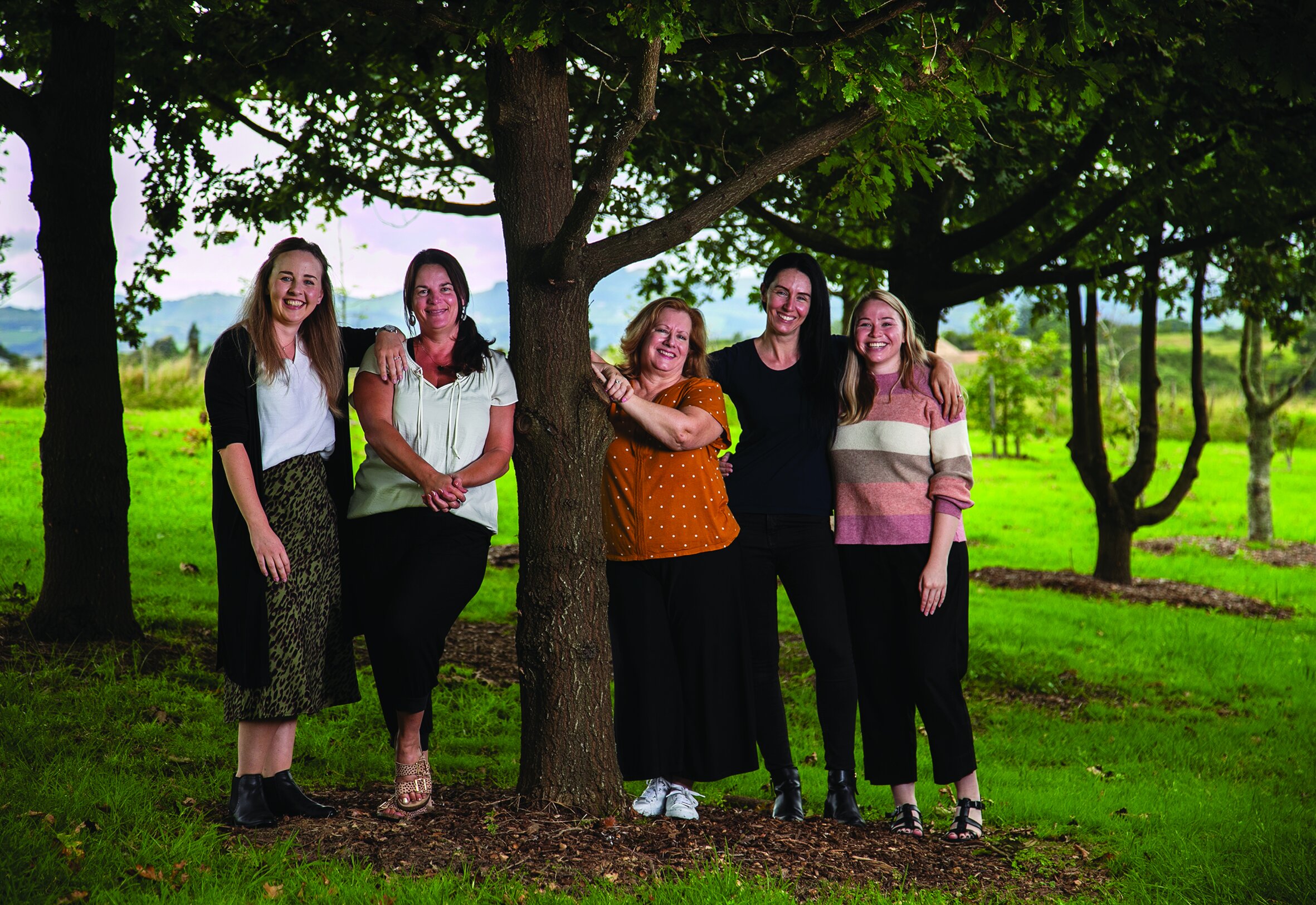
A PLACE TO REMEMBER
Acorn’s staff is small but mighty. Here, five of our seven team members are pictured at the Acorn Foundation Oak Grove in Cambridge Park, where trees are planted in memory of Acorn donors who have passed away. We are so lucky that the foundation has always been supported by fantastic volunteers. Nine Trustees provide governance and oversight and sit on one of the four foundation committees: Distributions; Investment Advisory; Scholarship; and Audit, Risk and Policies. Additional community members help make distribution decisions and review scholarship applications, while investment professionals share their expertise to oversee the work done by our long-time fund manager, Craigs Investment Partners.

Meet the photographer ALAN GIBSON
Alan’s love of photography came from his father who shocked his own father when he announced he was going to be a photographer instead of running the family farm. Eventually, with a young family in tow, he did return to the farm and continued to document the unique culture that surrounds us in this country. “He taught me to see the beauty in the backlit dust cloud kicked up by a mob of sheep being mustered or the stunning contrast of muted light coming through a woolshed door.” Alan worked as a photojournalist for The New Zealand Herald for over 20 years, as well as for agencies in the UK, servicing all the big papers of Fleet Street. He now uses those story-telling skills for a wide range of commercial clients.

Funding from the Acorn Foundation simply wouldn’t exist without the generosity of our supporters. Each of the deceased donors in this collage had their own hopes and desires for the region, with some naming specific charities and others selecting a field of interest for their Acorn fund. Another group of donors entrust their annual distributions to the dedicated volunteers on the Acorn Distributions Committee who evaluate applications for the unrestricted funds. Support for the community is not just for the wealthy; most Acorn donors are very modest people who are passionate about this region. However, our supporters all share the same desire to give back to this community and a strong belief in the long-term power of Acorn’s smarter giving model.

Tech testing corner
Karl Puschmann tries out the latest and greatest gadgets.
Karl Puschmann tries out the latest
and greatest gadgets.

PSVR 2
As the name suggests, this is PlayStation’s second go at VR, and it's vastly improved. While the design looks similar, it's been totally redesigned. I found the new headset lighter, more comfortable to wear and easier to take on and off. The screens inside are also dramatically better which, when combined with the sheer grunt of the PS5, make for a smoother and more enjoyable experience.
The PSVR 2 is cutting-edge tech and does come with a cutting-edge price, costing more than the required PS5 console itself. It’s certainly not going to be an impulse buy.
But no other gaming experiences come anywhere close to offering the undeniable thrills, realism and sense of complete immersion offered by virtual reality, and the PSVR 2 is one of the easiest user-friendly and powerful ways of joining the VR gaming revolution.
RRP$999.

Samsung Galaxy S23 Ultra
The new flagship phone from Samsung has constantly impressed. It's said the best camera is the one you have with you, and if you have the S23 Ultra, you’ll have the best phone camera currently available with you at all times. Its elegant design features an ultra-wide, two telephoto lenses and a 200-megapixel main camera.
We also liked the customisable always-on display and the stylus tucked away for note-taking or doodling on its absolutely gorgeous screen.
The phone’s also incredibly fast and responsive and easily handled everything I’ve thrown at it. Battery life was also impressive getting me through the day.
Everything about the S23 Ultra feels premium and it certainly earns its Ultra branding.
RRP$2299.

Microsoft Surface 5 Laptop
Windows laptops aren’t renowned for their good looks. With its Surface range, Microsoft has sought to change that reputation by showing what Windows-powered computers and devices can look like. Their new Surface 5 is an exceptionally good-looking laptop. For the past month, UNO’s been testing the flagship 16-inch model. The 14-inch comes in a range of stylish colours, but our review unit was a stealthy black augmented with a mirrored Windows logo on the front. Very classy. Thanks to Windows Hello, its Face ID feature, whenever you open the laptop up it’s ready to go. It sounds trivial but is one of my favourite features. The laptop’s vivid and bright screen also doubles as a touch screen, which sounds gimmicky, but was increasingly useful to quickly close a window or sign documents. Battery life’s also very good. Using it as my daily work computer I could get through a full eight hours without plugging in. The only real struggle I encountered was with more demanding gaming. But for casual or productivity users the Surface Laptop 5 is a solid, stylish choice. It’s quiet, houses one of the nicest keyboards going and has been a joy to use.
Starting from $2449 for the 15 inch.

Moochies Connect Smartwatch 4G
No one wants to be a helicopter parent but the cold hard facts are that the world is a more dangerous place than it was in the good old days when we grew up. The Moochies Connect Smartwatch is designed so kids can play and explore their world with freedom but you can still keep tabs on where they are at all times. If the worst does happen, like falling off their bike and needing your help, there's an SOS button they can press. The monthly plans come with 1GB of data and unlimited call minutes so they can call you directly from the watch if they need to. It's water resistant and tough enough to stand even the most rigorous play sessions making their watch one thing you won't need to worry about.
RRP$189.99, monthly plans from $15.95 a month.

eufy RoboVac 35C
Having two kids and a fluffy kitten running around the house meant vacuuming was a daily chore. No longer. Unlike more expensive models, the 35C can’t map your house or do anything fancier than schedule a daily start time. Instead, it randomly bumps its way around the house sucking up everything in his path. I was initially sceptical of how good a job this cost-effective model would do. But it’s been revolutionary. I’m overjoyed to report I haven’t used my handheld vacuum cleaner in weeks.
RRP$399.

Ōura Smart Ring
If you're wanting to get in on the health tracking benefits of smartwatches but already have a snazzy traditional watch you don't want to part with then this nifty device could be just the ticket. The Ōura Smart Ring provides all the same health data and habit analysis that a smartwatch would, all shrunk down into a discrete and stylish ring. This Finnish company says for health tracking your pulse is actually stronger on your finger than your wrist making their data as accurate as possible. With sleep tracker, body temp gauge, readiness scores, movement, steps and heart rate tracking, amongst many others, this little ring does it all.
RRP$499.

Norton AntiTrack
They may not be glamorous, but online privacy and data protection are important. Norton’s new AntiTrack subscription allows you to simply go back to not thinking about these things. It blocks all online trackers, personal data collectors and fingerprinting spyware from gathering any personal info as you surf the web.

From the heart
With “giving” as their ethos, these three organisations bring joy to everyone they work with, from customers to colleagues.
With “giving” as their ethos, these three organisations bring joy
to everyone they work with, from customers to colleagues.
Words Karl Puschmann

We all know the old saying that it’s better to give than receive. But it’s not just a theory, it’s actually been scientifically proven. Giving activates the pleasure part of your brain and releases chemicals that make you feel better. It’s also been proven that being given something makes a person more likely to become a giver themselves. It’s a powerful circle of good vibes.
It’s also an idea these three local companies have taken to heart. They were all started – and operate – with that idea front and centre. Whether that’s by inspiring you to gift a future memory, donate to charity, directly support a community, or even just treat yourself to something nice, they all make a difference in people’s lives through the philosophy of giving.

Life-changing chocolate
Glenn Yeatman is the managing director of Solomon’s Gold, a local chocolate brand that supports a whole community.
As far as helping others go, eating chocolate has to be one of the easiest – and most delicious – ways of doing so. But that’s what choosing a block of Solomon’s Gold over other chocolate does.
Since 2006 the local chocolatiers have had a factory in Honiara, the capital of the Solomon Islands. Today, they support over 60 cacao bean growers and their families.
“We do have a presence there. We've been there a long time,” Glenn Yeatman says. “We don't just put the factory at the wharf, load the cacao and ship it out. We get involved with the people in the plantations, we’ve built roads, heaps of stuff.”
Their focus on community is a point of pride for the artisan chocolate makers and makes a real difference in the quality of their bars, which they make with only organic ingredients.
“We could actually take you to the Solomon Islands and show you where the bean was grown,” he says. “That’s the difference between us and others. We know what the trees look like, we know the topography, everything. And that's the difference. It's not just a commodity, it's a story.”
This, he says, allows them to know the exact origin of their beans which allows them to get specific types from specific areas for their various types. As well as bean quality, Glenn says there’s also another upside.
“If you know what the origin has been, you know that you've treated the people well, and paid a good price.”

Giving memories
James Fitzgerald is one of the founders of Chuffed, a business that allows people to gift experiences.
James Fitzgerald describes the founding of Chuffed as “an act of desperation” born out of the COVID-19 lockdowns.
“When you have your back against the wall, you think differently to how you normally would when you're sitting in a comfortable, ‘everything's cruising along nicely’ position,” he says. “It seemed like a good idea, so we gave it a crack to see if it worked.”
The idea was great. Chuffed allows people to gift experiences rather than material objects. The company caters for personal occasions like birthdays, Christmas and weddings as well as businesses wanting to gift their staff or clients something more meaningful than the standard bottle of wine.
“Handing something over and receiving a box is actually a really important part of gift-giving as part of the showing of love or appreciation. The handing over is the gift-giving moment. There's so much value tied up,” he explains. “We have created physical gifts. People receive a box, open it up and it reveals that they've been given an experience. We tried to stick with what traditionally is the awesome thing about giving gifts, but make it so the gift is actually a real-life experience.”

Receivers have a range of experience options to choose from. Everything from adventurous escapes, relaxing getaways, thrill-seeking activities or wining and dining. Each package offers over 80 local experiences to select from.
This is a big part of Chuffed that James is, well, chuffed about. Connecting their local partners with people they otherwise may not have reached.
“A lot of them are small family businesses. What we've been able to do through gift giving, is connect people that might have otherwise received a bread board or a bottle of champagne with the small Kiwi businesses around the country,” he explains. “Suddenly, these small family businesses and in Raglan, Tauranga, Taupō or wherever have Aucklanders turning up on the doors to do their experience. Chuffed’s had a real meaningful effect on their businesses and their families.”
“We get a real thrill when the invoices come in from the partners and the whole cycle of the gift has happened,” he smiles.
It sounds like Chuffed may be the only company out there that actually enjoys paying out money.
“Yeah,” he laughs. “It is a good feeling because you know it’s been working. It’s great!”

Paying it forward
Rohan McClosky is a founder of GoGenerosity, a service that helps people help businesses help the less fortunate.
The concept of “pay it forward” took off in the year 2000 with the release of Helen Hunt’s box-office smash romantic drama of the same name. The idea is that instead of returning a favour, you do something nice first: Ergo, paying it forward.
This is also the basic concept behind GoGenerosity. It allows people to “pay forward” a small amount on top of their bill. This then pays for the business to do good in its community. Everything from supplying meals right through to haircuts and charity donations. It’s an easy way for people to make a difference and support both their favourite businesses and those less fortunate than themselves.
During the Level 3 lockdown, Rohan’s restaurants were struggling and he saw that his community here in Tauranga was as well. He wanted to do something.
“I partnered with my customers to initiate a pay-it-forward model, which meant that they simply made a donation and we guaranteed that we turned 100 percent of that donation into food from our local restaurants,” he explains. “Then we partnered with a charity who would come and collect the food and feed people in the community who were in need.”
His customers loved the idea and he saw there was an opportunity to expand from his own restaurants and into the wider business community.

"Kiwis are a generous bunch of people and I think GoGenerosity has proven that's true."
“It was such a great way in terms of the consumer, having the transparency of where their money was going. It was a really big, important thing for us that the money was going into the business, and
the business was then creating its product from that money. It wasn't being sent off somewhere where we didn't know what the outcome was.”
This is the biggest point of difference for GoGenerosity. Just this year they’ve already raised over $250,000 and positively impacted the lives of over 25,000 here in the Bay. And with over 65 businesses on board, everything from cafés, restaurants to utilities and petrol stations, it’s easy to pay it forward whenever you see the little green GG sticker.
“Kiwis are a generous bunch of people and I think GoGenerosity has proven that's true,” he smiles. “People want to be involved, especially when they can see where their impacts are being had.”

One smile at a time
Providing necessary dental care to remote and underserved communities is what drives these seagoing volunteers.
Providing necessary dental care to remote and underserved communities is what drives these seagoing volunteers.
Words Catherine Sylvester

The year 2020 was meant to be the year for YWAM Ships Aotearoa (YSA). Having been gifted a container ship in 2019 by Stoney Creek Shipping, the local team had spent the previous months fitting it out with everything needed to take dental and basic health care across the Pacific Ocean to the peoples of the Solomon Islands. Then March 2020 came along, and we know how this story plays out.
But the spirit of determination runs deep within the greater YWAM organisation. Founded 63 years ago in the US, with the goal of equipping young people to volunteer worldwide, Youth With a Mission (pronounced why-wham) has had a base in Tauranga since 2005. Medical “Mercy Ships” were introduced internationally in the late 1970s to enable healthcare to be sent to some of the harder-to-reach nations of the world.
Tauranga-based managing director of YSA Marty Emmett was determined not to let the pandemic entirely derail the work his team had already planned. “The gift of lockdown was that it gave us time to reanalyse who we are and what our purpose is,” he explains. “It started this amazing journey of looking at how we could still utilise this ship and its facilities if we weren’t able to travel internationally.”
The decision was made at the beginning of 2021 to take the container that housed the dental clinic off the ship, and reach into the Bay of Plenty, offering free work for the most serious of oral health cases in the community.
Retired local dentist Sue Cole came on board to lead the team. “What drives me is seeing transformations in people – physical and emotional,” Sue says. “We offer a hand up, rather than a handout.”
Within the first 18 months of operating the Trinity Koha Dental Clinic, Sue and the volunteer dentists cared for 1,900 patients, and performed over $1 million worth of free dental services.

Equally important as the practical services offeredis the holistic care for clients. Marty explains that for many of those attending clinics, a history of dental trauma is carried with them. A dedicated “Call and Care” team ensures time is spent connecting with clients over the phone, discussing concerns and assuaging fears. “Sometimes, to get a patient to the stage of getting into the chair, the team will spend literally hours speaking with them on the phone first,” Sue says. “On the day, a group of our people will lovingly walk them in, supporting them every step of the way.”
The level of need within New Zealand surprised Marty, much of it surpassing what he has since seen in subsequent outreaches to isolated islands in the Pacific. “Within three days of starting a clinic here, we had hundreds of people on a waiting list,” he says. “Once we became aware of the scale of need, we knew we had to continue this work.”
"What drives me is seeing transformations in people – physical and emotional.
We offer a hand up, rather than a handout."
Sue Cole
July 2022 saw the ship finally able to travel internationally, with four months spent stationed in Fiji. There, hundreds of locals received free health screenings and dental treatment. Marty tells the story of one woman with high blood pressure who was advised to change her diet, get some exercise and to cut back on a few indulgences. Two weeks later she returned, requesting her blood pressure be retested as she had implemented these changes. Incredibly, it had gone from dangerously high to normal.
Partnering with local agencies if of great importance to YSA. “The key for us is to facilitate training and empower local workers – not just come in and do the services,” explains Marty. “Our main focus is around monitoring health and diet – small things that make a big difference.” The whakatoukī that best sums up their approach is “Nā tō rourou, nā taku rourou ka ora ai te iwi – With your food basket and my food basket, together the people will flourish and thrive.”

Everyone involved with YSA is a volunteer. The greater operational costs are covered by financial assistance from companies such as Trinity Lands, Bay Trust, TECT, Good Neighbour and Bid Foods, while private sponsorship is employed by individuals for their personal living costs. For Sue, Marty and team, it is more than worth it.
Sue recalls one of many cases that make what they do so worthwhile. “Recently a young woman was frustrated she couldn’t find a job, despite being skilled. She was missing her front tooth and lacked confidence from that,” she explains. “Our dentists restored the tooth, and the woman was over the moon. The shame she’d felt had gone.”
Moving forward, Marty says that by operating more dental clinics in the Bay, the Waikato, and in the Pacific, they want to eradicate high dental needs in these areas and help as many people as they can. “We’re not afraid to dream big!”

Pause, Breathe, Smile
This groundbreaking programme is making a real difference to our children’s emotional wellbeing, both in school and at home.
This groundbreaking programme is making a real difference to our children’s emotional wellbeing, both in school and at home.
Words Catherine Sylvester
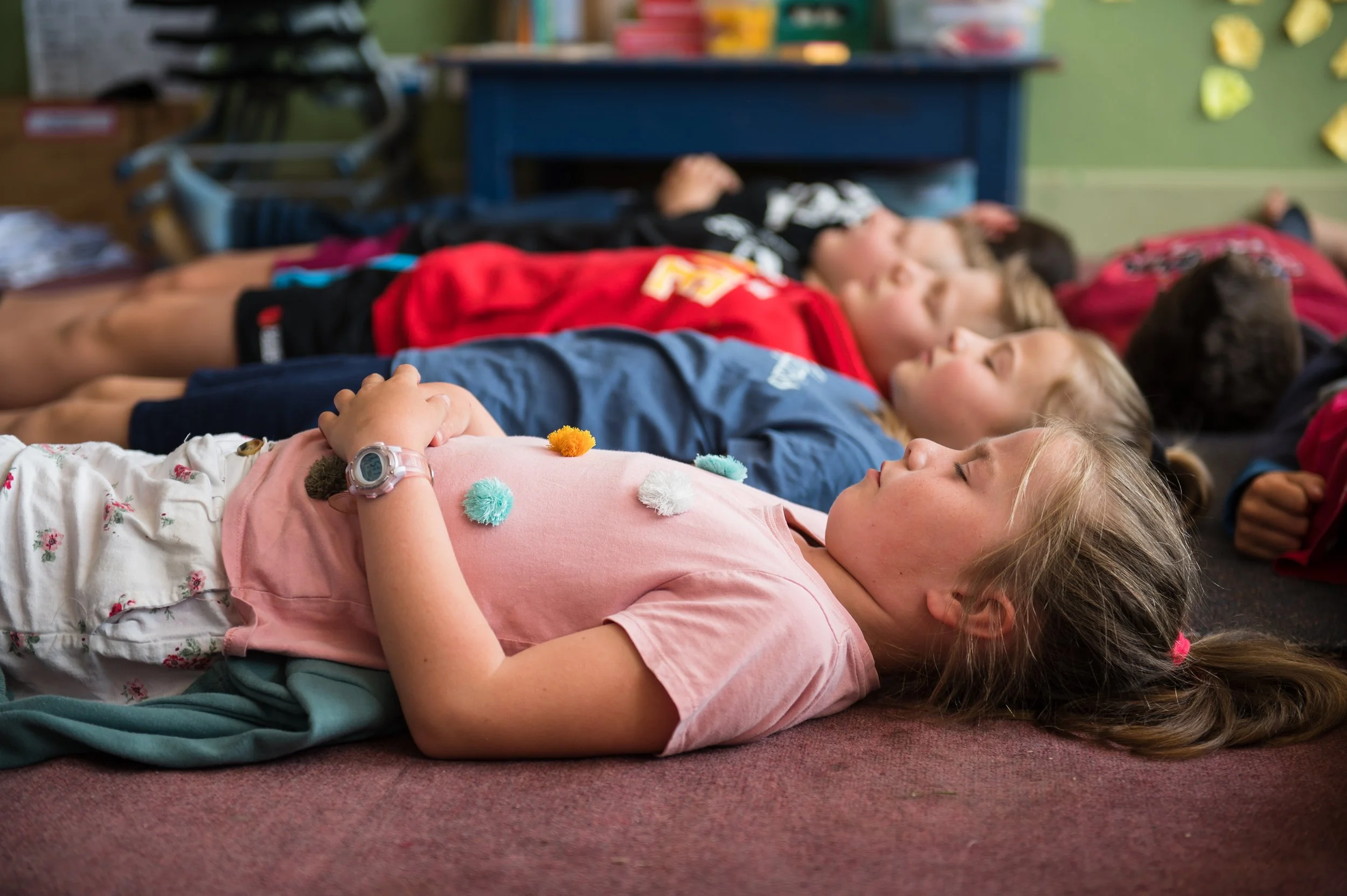
It goes without saying that life can be both challenging and stretching at the best of times. Throw into the mix a global pandemic, its repercussions, and the odd cyclone, and nerves can get more than a little frayed. As adults, many of us have needed to dig deep and prioritise mental health over the past few years, drawing on all the tools at our disposal. Our tamariki (children) have also had to weather these proverbial – and at times, literal – storms right alongside us. Factor in the unique aspects of growing up in this digital age that seems so different to many of our childhoods, and the potential for anxious thoughts and behavioural concerns increases. Now, thanks to charity Pause, Breathe, Smile (PBS) children don’t have to navigate these feelings alone.
Launched in its current form in 2017 by Grant and Natasha Rix with support from the Mental Health Foundation, PBS brings mindfulness-based wellbeing programmes into schools, to support, nurture and empower children to live their best lives.

By engaging and equipping teachers with the ability to share a series of eight lessons incorporating skills such as mindful breathing, mindful movements and kindness practices with their classes, the programme aims to give tamariki the tools they can use to feel good and function well the majority of the time.

“Feeling good is about emotional wellbeing, or an ability to manage emotion,” explains Grant. “Functioning well is speaking to psychological wellbeing. Integrating certain positive attributes, and how children can relate to others, while having control over their own emotions is super important.” Grant acknowledges that to feel this way all the time is unrealistic, but wholeheartedly believes “it’s possible to live in a way where we experience positive mental health most of the time.”
The charity is seeing results that reinforce this vision. Darren Scott, deputy principal, and Year 5 whānau leader, Yvette Brown, from Tahatai Coast School, Pāpāmoa have noticed marked improvements since the programme’s implementation in 2021.
“Children are coming back from playtime more ‘present’,” Yvette says. “They’ve learned that it’s normal to have worries, but now they know how
to identify their concerns and have strategies they can use to deal with them.”
It’s not just within the classroom environment that positive results are being seen. “We’ve received a lot of feedback that what the children are learning in school is being brought into the home,” explains Darren. “These are skills for life!”
Pause, Breathe, Smile has now reached over 100,000 tamariki in 323 schools, thanks to funding from Southern Cross, who partnered with the charity in 2020. A survey undertaken by more than a thousand teachers enrolled in the programme produced many encouraging results. Positive classroom behaviour had increased while a decline in negative behaviour was observed. Twelve months on from the introduction of PBS, general student wellbeing was up 16.6%, and the number of students flourishing increased by 8.1%. In general, greater perseverance, less anxiety, and less worries were reported.

“For me, the research and evaluation has been hugely important,” says Grant. “I only want to be doing something that works and achieves the benefits we’re after.”
With PBS now being fully funded, expansion is on the cards. “Follow-up lessons for schools, and unique ways of working with new entrants are on the wish list,” Grant excitedly explains. “An app is also in the works.”
Committed to positively impacting tamariki across New Zealand, PBS has piloted a programme within full immersion kura (schools), with all resources available in te reo Māori. “We’ve worked with Māori teachers in these schools and had a Māori educator facilitating so that we can be certain that the work we’re doing is properly contextualised with a Te Ao Māori worldview,” Grant says. “It’s an ongoing process, but we’re at a place now where we’re able to train kaiako (teachers).”
Backed by solid funding, extensive research and enthusiastic educators,
the future is looking bright for PBS and the children it reaches. Take it from someone already positively impacted by the initiative, Tahatai Coast pupil, Poppy (8): “I feel way calmer, and it’s really good to just be able to slow down my thoughts and think about things for a while now.”

In season
Ginny Clark from Decor Gardenworld shows us how to grow our own groceries.
Ginny Clark from Decor Gardenworld shows us how to grow our own groceries.

With the price of fresh produce increasing daily and shortages at the supermarkets, there has never been a better time to start growing your own groceries. Whether you have a large property or small rental, you can plan, plant and successfully harvest your own homegrown fruit and vegetables year round.
The first thing to consider is what you like to eat. We all have our favourites. Here in the Bay we are blessed with great growing conditions. Citrus trees like lemons, limes, mandarins and oranges are a must, and if you plan well, you can be picking some form of citrus at all times of the year. Other favourites are feijoas. These are a hardy fruit and can act as both a fruit producer and a handy shelter hedge or pot plant.
Use your existing fencelines to espalier fruit along them. That way you don't need to look at an ugly fence. If you don't have much room for your fruit, do not despair. A lot of varieties are grafted onto semi-dwarf or dwarf rootstocks, resulting in a tree that is much reduced in size. Pruning your fruit trees from a young age is a must. Many are also happy in pots or containers, which will also restrict the size of the plant.
While most of us love the idea of growing fruit, remember we can't do this without bees, insects and birds. So make sure you plant bee-attracting and companion plants like lavender and rosemary close by. Pears and plums will sometimes need to be planted with a second tree of a different variety, which acts as the pollinator.
Consider harvest times, too. There is no point growing a plum that ripens in January if you know you always go away that month. And remember to always choose quality and tried-and-true varieties.

TIPS FOR GROWING YOUR OWN ORCHARD
Buy only quality plants.
Give them a good start with part sunlight, part shelter, and plant with planting mix and a base dressing such as Ican Slow Food.
Plant at least two fruit trees of the same type to help cross-pollination.
Mulch and feed with compost, blood and bone and fruit food.
Water regularly and thin excess fruit out through the growing season.
Protect the crop from birds.
Prune correctly from day one.
Check out our website for expert advice and videos on pruning or come to our pruning session on July 24 at Decor Gardenworld.
Buy only quality plants.
Give them a good start with part sunlight, part shelter, and plant with planting mix and a base dressing such as Ican Slow Food.
Plant at least two fruit trees of the same type to help cross-pollination.
Mulch and feed with compost, blood and bone and fruit food.
Water regularly and thin excess fruit out through the growing season.
Protect the crop from birds.
Prune correctly from day one. Check out our website or expert advice and videos on pruning or come to our pruning session on July 24 at Decor Gardenworld.
Decor Gardenworld in Bethlehem has been providing BOP gardeners with top-quality fruiting, flowering and fabulous plants for over 55 years. It is family owned and operated and is committed to providing friendly service and advice.

Vet’s roll!
Animal expert and vet David McDonnell at Tauranga Vets offers advice on the purr-fect way to prepare for your vet visit.
Animal expert and vet David McDonnell at Tauranga Vets offers advice on the purr-fect way to prepare for your vet visit.

With people’s busy schedules, getting the most out of your visit to the vet can help save you time, energy – and stress! To streamline the consultation and ensure you leave with the best advice and recommendations, it’s important to communicate well.
Veterinarians genuinely want their clients to get value from their visits, and help solve any animal issues or
pet problems in the most timely and affordable way possible. With that goal in mind, here are some things
you can do to get the most out of your vet consultation.
First on the list is making an appointment. Many clinics offer online bookings, which are a great way to efficiently find a time that fits your schedule. When booking, it’s important to thoughtfully answer questions around any concerns you may have about your pet. This helps the software prioritise your pet’s care needs and give the vet clinic staff the right information about what you’re coming in for. However, if it’s an urgent case or you’re worried, call the clinic – receptionists and vet nurses can often triage the situation over the phone, and again, the more specific you can be with symptoms or the issue at hand, the better they’ll be able to assist you.
When it’s time for your visit, it’s super helpful to come prepared. Bring your pet’s record book and a list of questions or concerns. If your pet is particularly anxious, it can be beneficial to make a time prior to the appointment to come in and pick up some medication that can help lessen their stress.
To ensure your pet’s wellbeing and safety, make sure dogs are brought in on a leash, and cats are secure in a cage. Look for Cat Friendly Accredited clinics – at Tauranga Vets, we ensure that waiting and consult areas are separate for cats and dogs, and stagger their appointment times to keep our feline and canine companions apart.
Consider bringing in pictures or videos of your pet’s concerning behaviour or symptoms. A picture paints a thousand words, and this tool can be very helpful for diagnosing issues. If possible, have a list of dates, times, changes to food, environment, or home dynamics. Animals can often be affected by the nuances of life, and a good history of the situation is important.
Once in the rooms, your pet will take its cues from you. If you’re calm, it will help them to remain so. At Tauranga Vets, our consulting rooms have feline pheromone diffusers which are used to calm cats, and we’re trained in specific ways to handle them so as to minimise any stress they may feel. But as their owner, your calm demeanour can go a long way toward helping your pet to stay calm as well.
At the end of the consultation, your vet should clearly explain the next steps. More tests may be required, or a treatment plan be written up. If you need more clarification or you have questions, don’t be shy – just ask.
If you have concerns regarding payment, discuss these with the vet nurse, as many clinics now offer different payment options, such as Afterpay.
Your vet should communicate well with you, too. And if you’re both committed to clear, calm, respectful communication with your pet’s health at the centre of the conversation, you’ll have a much smoother and more efficient visit – and less stress all around.

Growing your future
When it comes to securing your financial future, growth assets and collaboration go hand in hand.
When it comes to securing your financial future, growth assets and collaboration go hand in hand.
Words Owen Cooney / Photos Jahl Marshall

In times of uncertainty and fear, it’s hard to know where your money should go. All this talk about inflation can be confusing but by taking a step back, and looking at the bigger picture, you can get a better understanding of where your money is best kept in hard times.
In times of rising inflation, commercial investment can be a wise move. Even when the yield on a commercial property remains the same, your dollar is still worth a dollar. The bank’s dollar, on the other hand, is worth less and less with inflation.
Growth assets, such as commercial investment, will protect the spending power of your dollar. Long leases hold through to the next cycle, and so being exposed to growth assets is a game you need to be playing if you hope to grow your wealth long term.
However, with all of today’s challenges, it becomes hard to even create a wealth plan and build a future in the first place. That’s where a collaborative approach can work. Joining a private collective means you join a group of like-minded individuals who jointly purchase, then lease, the building in question.
There are many advantages to owning a share of a building using this model, compared to owning the building outright.
Firstly, the collective admin team does the legwork in that they find high-quality properties worth investing in. Secondly, they ensure the numbers stack up and the right contractual arrangements are in place to generate a profit from the get-go. And, thirdly, they organise reliable tenants and take care of all bank financing, lease arrangements and financial reporting.
If you're keen to connect with our network of investors and potentially join a collective when the right opportunity arises, head over to the Classic Collectives website and schedule your own 15-minute discovery call. There are no obligations to join our syndicates; we’re simply here to answer your questions.
Being able to ask honest questions and get straight answers is perhaps the best investment of all. It only costs your time.

Canine couture
These high-quality pet accessories help our furry friends leave lighter pawprints on the planet.
These high-quality pet accessories help our furry
friends leave lighter pawprints on the planet.
Words Catherine Sylvester | Photos Salina Galvan

In this day of greater awareness around climate change and the flow-on effect our purchasing habits have on the environment, more people are turning to brands that not only stand the test of time but create the least negative impact in these areas. Until recently, local pet owners had very few options when it came to seeking accessories with these factors in mind for their beloved four-legged friends. This all changed at the start of last year when Scott and Nicole Brown brought their quality pet accessory business, Paw & Partners with them when they moved from Tāmaki Makaurau to Tauranga.
Birthed out of Nicole’s veterinary practice in Milford in 2015, the business stocks a wide range of high-end products catering to the needs of customer’s canine and feline family members.
Leashes and collars from the German company Hunter were the first pieces Scott imported for their collection. He explains, “The leashes and collars are handmade in Germany.”

These proved so popular that the couple found pet-lovers were travelling from all over Auckland to their North Shore practice, due to word-of-mouth. The Browns knew they were on to a winner. Their desire to ensure they could further provide for their customers’ needs saw them expand the range to include food bowls, beds, harnesses, and educational toys.
“Dogs can often get lonely and bored if left by themselves at home,” Scott says. “That’s usually when they’ll get themselves into mischief – digging up lawns, chewing.” He explains that the interactive dog toys are helpful in keeping them occupied and focused, as getting to the elusive treat stashed inside is a real challenge.
“It stimulates their brains,” he continues. “The dog must figure out how to get the goodies out using only their paws and mouth. They can’t just shake or chew the toy to get to what they want.”
Scott’s passion for his business is evident. He travels to Europe to hunt down the best quality pet supply products he can find. Meeting the manufacturers face-to-face or attending international expos is of utmost importance. “It’s the only way to guarantee we’re getting the best quality that can be found,” he says.
One product he’s particularly fallen in love with is beds. “Some people like buying beautiful watches or shoes,” Scott smiles. “I like buying and supplying beautiful dog beds.” Scott explains that the fabric quality
is similar to that which can be found on regular furniture, and all the covers are machine-washable, which is very handy for those puppies who can’t yet make it through the night dry!

Bay of Plenty French Bulldog breeder Nik Fasching (Mount Frenchie Club) swears by Paw & Partners products. “The average dog will live for around 14 years, so it makes sense to invest wisely,” Nik explains. “I used to go through so many cheap beds – the dogs would chew them, or they’d fall apart in the wash. These ones last. They’re so good and they make beautiful gifts.”
Nik steers customers towards these high-quality products. “The cheap stuff just ends up in landfill so quickly. Economically, these are a sound choice.”
Another recent addition is the harness, and Paw & Partners stock these in a range of sizes for both cats and dogs. “We’re using the Danish company Dog Copenhagen for the canine ones,” says Scott. “They make some of the best harnesses in the world – it’s all the company does.” One model is fitted with a D-ring on the chest, which Scott explains is particularly good to retrain the dog who pulls at the leash when out walking. “Many dog trainers recommend this harness,” he continues. “We’ve had lots of feedback that this is the best thing customers have purchased.”
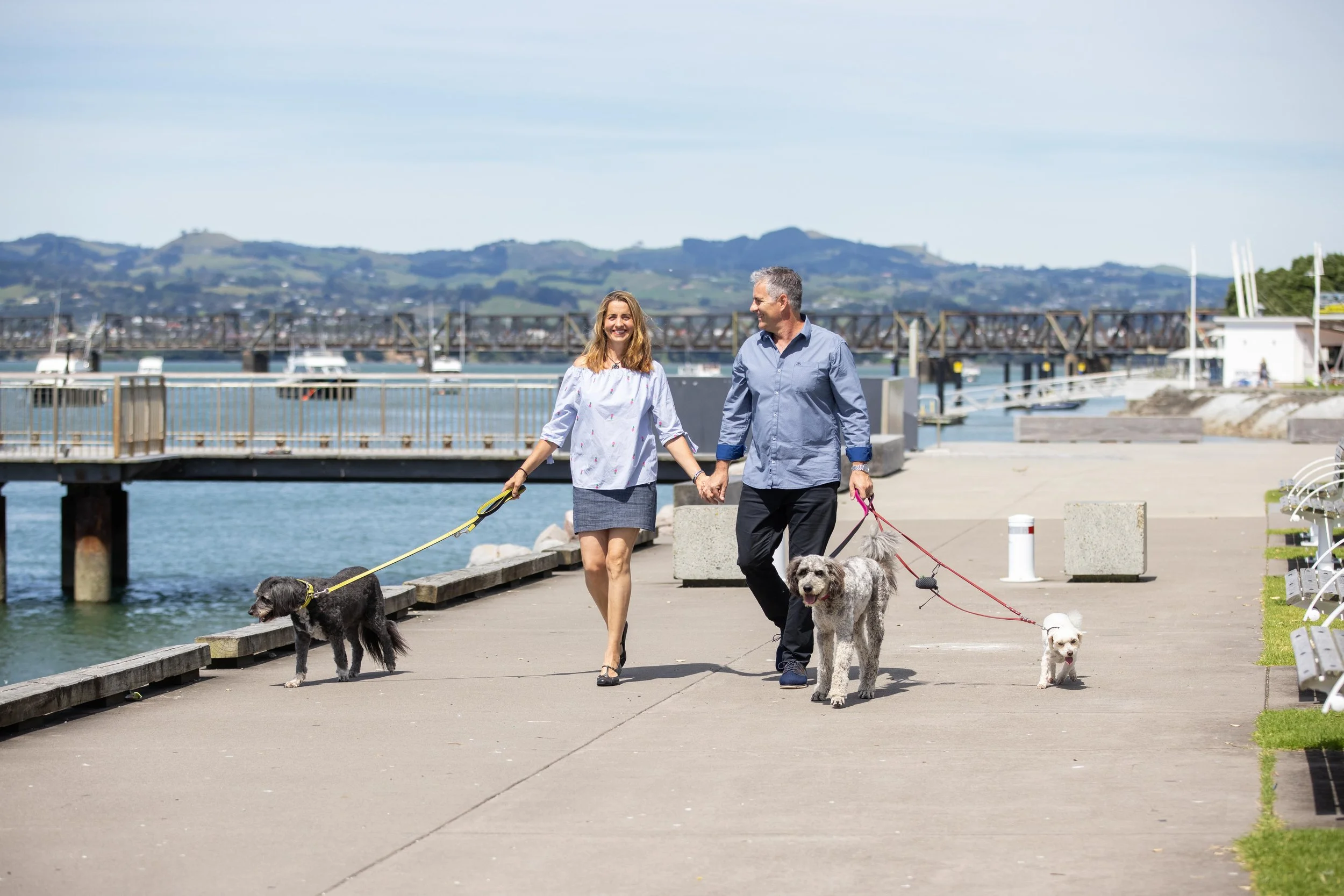
With a retail store situated in Tauranga city centre, and an online store for those living a little further afield, Paw & Partners has made investing wisely into your pets easy. What started out as the notion of “we can do better for our customers” when it came to pet accessories, has turned into a reality for this couple. A reality that all pet owners – and their pets – can now benefit from.

Level up your property game
Residential landlords have it tougher than ever right now and while new policy may have pulled the plug on decent returns and capital gains, things are certainly looking up for property investment of a different kind.
Residential landlords have it tougher than ever right now and while new policy may have pulled the plug on decent returns and capital gains, things are certainly looking up for property investment of a different kind.
Words Owen Cooney | Photo Jahl Marshall

Buying a residential rental property has been the "go-to" investment for ordinary Kiwis for decades. Many of us have used the equity in our family home to leverage into a residential property portfolio and build our wealth over time. But today, skyrocketing house prices mean the days of buying a good quality rental for $400,000 are a long-forgotten dream.
Interest on loans is no longer tax deductible, and the healthy homes requirements mean landlords must pay (sometimes hefty sums) to upgrade the heating, insulation, ventilation and so on. Interest rates are rising and banks are not as forthcoming with mortgage approvals as they once were.
What most Kiwis don’t realise is that, with the right tactic, commercial property can be a more affordable alternative with even better returns on your investment. High-rise buildings, shopping malls, health hubs, childcare centres and commercial offices all may seem out of reach to the suburban home investor, but the good news is you do not have to be a multi-millionaire to own them.
Classic Collectives Limited establishes private collectives of individuals who are willing to collaborate to become joint owners of premium commercial and/or industrial property. From supermarkets in Pōkeno to community shopping centres in North Canterbury, they identify high-quality buildings and bring the right mix of investors together to purchase and lease them.
Some of these investors are retirees or nearing the end of their working careers – but there’s a rise in people in their 30s and 40s who see the opportunity to establish a sound investment that will not only provide income, but also have growth potential.
By collaborating with other like-minded individuals, it’s entirely possible to own a share of a substantial commercial building. The benefits of the collectives include receiving a positive yield from the get-go, and having independent professional management so there is no day-to-day workload or responsibilities involved.
So instead of driving past your rental property and noticing the grass is overgrown, you can level up your investment portfolio by just investing smarter and take pride in knowing you own a significant multi-million
dollar asset – however many stories high it might be!
invest@classiccollectives.co.nz

The main event
Beacall Hospitality is so much more than a hospitality recruiting company – their goal is to make your event simply magical, says director Michael Beacall.
Beacall Hospitality is so much more than a hospitality recruiting company – their goal is to make your event simply magical, says director Michael Beacall.
Words Catherine Sylvester | Photos Salina Galvan + supplied

As a young lad growing up on the Wirral, looking out across the murky waters to Liverpool, Michael Beacall spent his free time helping out in the pub his parents operated. A natural entrepreneur, Michael would collect the glasses patrons were finished with, and relieve them of their small change for his troubles.
“If you know what an English pub is like, you’ll know I made quite a tidy little profit for myself,” chuckles Michael, recalling his early business acumen.
Michael fondly recalls his early days in the bar. It was there that his love for the hospitality industry was born, with the local pub being a central factor in his community’s comings and goings.
“The classic British pub is so different to anything else,” Michael explains. “Everyone knows everyone. It’s like one big family. You’d have felt safe leaving your kids with the folks there. At that young age, it was a lot of fun being around everyone.”
It was these important threads of relationship, hospitality, and business that Michael packed for his journey when he made the decision at 18 to stretch his wings and emigrate to Aotearoa.
Feeling the need for a fresh start after a self-described lacklustre performance from his first official business – a hospitality recruitment agency – the beautiful shores and climate of Tauranga Moana seemed the ideal tonic. Having his childhood best mate already living here was the icing on the cake.
Throughout his first years calling the Bay home, Michael undertook the type of employment he knew best – bar work and security. It was during this time that he formed many of the relationships that supported and encouraged him when the time came to resurrect his former business concept.
“I decided to give the recruitment agency another go. I could see a real gap here to service the smaller corporate events, as well as bars and restaurants,” Michael explains. “At that time there weren’t any agencies catering specifically to the hospitality sector. I found my niche and went for it.”
Spurred on by the encouragement of festival promoter Glen Meikle, whom Michael had once worked for, he launched Beacall Hospitality with himself as the sole employee in 2018. The company experienced exponential growth in the first five months. So much so, that he knew he would need help to continue the smooth operation of the business.
“My first employee was a woman I’d worked previously with at a local bar,” Michael remembers. “Nynie Harvey became my 2IC. She basically took over the responsibilities of event hire and staff management, payroll, uniforms, contracts – she became the backbone of the operation.”

A no-holds-barred approach to generating work for his company, rather than waiting for it to come to him, is one of Michael’s greatest assets. With him securing contracts and contacts, and Nynie keeping the day-to-day office running, the business went from strength to strength. Within months the books were full of labourers, wait and bar staff ready to work. Kayla Hayes came on board to relieve the pressure of Nynie in December 2018 and is still there today.
Business was booming. Everything was going so beautifully that Michael, along with a new business partner, Pierre Te Wheoro, was able to expand by launching Platinum Security Solutions, to cater specifically to the bars and nightclubs around town.
And then, 2020 rolled around and everything came to a shuddering standstill.
The entire hospitality sector was hit hard by lockdowns, and Beacall Hospitality was no exception. Not being one to rest on his laurels, it was during this time of enforced hiatus that the inklings of a more comprehensive business model began to brew.
“I started to think about what it’d be like to offer clients a one-stop shop,” says Michael. “To be able to offer catering, tables and chairs, wait and bar staff – the works!”
Knowing no other company was currently providing this service, Michael used the enforced time at home to work on a plan to make his concept a reality. Once the country crept its way out of lockdown and people began to cautiously plan small events again, Michael was ready to go.
However, the expansion was not without its challenges.
“Being in Red in the Traffic Light System was almost harder than being in complete lockdown,” Michael explains. “People were scared to spend money and concerned about things changing unexpectedly. If they did book something, there was no guarantee that one link in the chain wouldn’t catch COVID-19 and have to pull out.”
This happened more than once but Michael and his team rose to the occasion. When a wedding that had been scheduled at a café in Waihi suddenly had to move venues with only 24 hours’ notice, Beacall Hospitality stepped in to save the day.
“We got a 3pm call the day before the wedding. The chef who’d been hired to cater it had caught COVID-19 and the couple needed to not only find new catering, but move venues,” says Michael. “By 10am the following morning, we had our gear and caterers there setting up. Everything ran smoothly from then.”

In order to keep the company’s doors open and staff employed during this time of financial uncertainty, Michael offered services to clients at cost, and personally covered wages – a decision he doesn’t regret, but one that will take some time to recover from.
“Doing this meant that not only my company could survive, but other businesses could too,” explains Michael. “Moving into Orange level was good as contracts picked up then. Going to Green was great as it just got busier.”
After the COVID-19 lockdowns, another friend, Renee McVarnock, joined the company to fill the role left when Nynie moved on to work in a different industry. “Both these women have made a huge difference to the success of the business,” Michael says.
When hit by these challenges, it’s the love for his family that keeps Michael going. “I do what I do so I can give them the life they want,” he says.
In the midst of colourful traffic light levels, Beacall Hospitality expanded operations into Matamata. They’ve since travelled as far afield as Hastings, Taupō, Napier, Rotorua, with Tāmaki Makaurau
– Auckland to be added next month.
As life settles back into some semblance of normal, Michael is able to breathe a bit more freely. Recently he attended his first ever music festival purely as a punter. “Friday Jams was the first concert I’ve been to where I wasn’t working,” he recalls. “And it was amazing!”

His publican parents have travelled out to visit him and are understandably impressed with what he’s achieved. “My folks have been out here twice and they love it,” Michael says. “They’re definitely proud of their boy.”
While Michael’s blood still runs extra red for his beloved Liverpool Football Club and he has not yet traded it all in for a black jersey, home is definitely New Zealand for the foreseeable future.
“Things are great. I play soccer with the Pāpāmoa Football Club, have time with my family, and enjoy my work,” smiles Michael. “I’m definitely living the dream.”

Work, store, play
Meeting the high demand from commercial tenants and investors in Tauranga, the developers of a new venture in Mount Maunganui expect strong response, equal to that of its sister complex, now underway at Pāpāmoa.
Meeting the high demand from commercial tenants and investors in Tauranga, the developers of a new venture in Mount Maunganui expect strong response, equal to that of its sister complex, now underway at Pāpāmoa.
Words Jo Ferris

The Hatch – The Mount embodies the concept of work, store and play – a slight variation on Tauranga’s wider approach to work, live and play. These units aren’t designed as live-in premises. However, their innovative concept embraces a workplace where people will enjoy the comforts of home in a vibrant village community.
Earmarked for a prominent location in MacDonald Street, The Hatch offers 38 units, from 60sqm to 106sqm. Most units will include two car parks and additional parking will be available to lease.
Sitting near a major flyover and arterial link at the junction between Hewletts and Maunganui roads, this is minutes from the airport, sporting venues, shopping centres in downtown Mount and Bayfair, and harbour bridge access to Tauranga and port. Surrounded by a myriad of recreational, educational and business amenities, The Hatch offers beneficial advantages for tenants as their businesses feed off one another and the surrounding precinct.

Like its Pāpāmoa sibling, the sympathetic design creates a mini community within an aesthetically pleasing complex. Matt Allen from Cube Architecture designed a complex in four blocks, with a large open car park at the rear. There will be two main carriages – both flanked by units along the boundary on each side – and both entries off MacDonald Street. These will be linked by a lane leading to the office-styled units at the rear. Retail units running along the street front will present a boutique showcase for the complex. Their vehicle access will be behind each unit, off the lane.
Enhancing this aesthetic approach, large roller doors will create a wide-open perspective for the eclectic appeal of the units facing the main carriageways. Office units will enjoy a calmer outlook to the lane.
Buoyed by the success of Pāpāmoa’s Hatch, Colliers Tauranga managing director, Simon Clark is excited to repeat the confidence shown in this type of development. Pāpāmoa is all but sold and interest in this development was sparked early on as a result.
“The Mount is extremely desirable. Vacancies are at record lows and tenants/owner-occupiers are starved of opportunities in this tightly held industrial precinct.”

Simon says The Hatch’s innovative design fuses commercial and light industrial in hybrid workspaces, making it perfect for forward-thinking businesses. The thought behind this kind of development combines adaptability with accessibility. Sophistication meets industrial aesthetics. And, while the emphasis is on a vibrant and eclectic work environment, The Hatch’s mantra highlights its other purpose for storage.
“Whether you’re setting up a new venture, looking for more versatile premises or simply need somewhere to store your toys, The Hatch – The Mount offers a unique solution at a competitive price point.”
Marketed exclusively by Simon and fellow Colliers broker Rob Schoeser, prices start at $754,000 plus GST (if any), with construction estimated to start mid-2023.
colliers.co.nz

Paws for thought
With four thriving clinics in the Bay (and a fifth opening soon), the professionals at Tauranga Veterinary Services treat all four-legged friends with compassion and care.
With four thriving clinics in the Bay (and a fifth opening soon), the professionals at Tauranga Veterinary Services treat all four-legged friends with compassion and care.
Words Catherine Sylvester | Photos Salina Galvan

Listening to David McDonnell describe retired farmers bringing their trusty work dogs into clinic for their final goodbyes, you get the sense that it’s more than just “business as usual” for this veterinarian. As managing director and owner of Tauranga Veterinary Services, David cares deeply for not only the animals
that pass through the doors of his five clinics, but also the people accompanying them.
A sincere desire to provide animals and their owners with excellent care, delivered by a veterinary team who are empathetic, knowledgeable, and professional is what led David and his wife Michelle to purchase the business in 2010. Launching with the three already established clinics – in Tauranga, Katikati and Te Puna – the McDonnells expanded in 2015 by opening a clinic in Pāpāmoa. Next February will see the doors open to their fifth clinic, situated in Mount Maunganui.
“The beauty is that we’re a large organisation with a range of veterinarians who have a variety of specialty interests,” David explains. “We know clients are busy, so having locations throughout the Bay ensures no one has to travel too far for their animals to be seen.”

David McDonnell
The team understands the importance of providing timely and accurate diagnosis to those they care for, as well as manageable and detailed treatment plans. Each clinic is therefore equipped to undertake ancillary tests, such as ultrasounds, x-rays, digital imaging, and in-house laboratory tests. Always looking for new ways to provide excellent service, the team has recently been able to offer a new and significant treatment to their feline friends.
“The radioactive iodine treatment for geriatric cats suffering hyperthyroidism and tumours is a game-changer,” David says. “We’re excited to be able to provide this, as it was previously only available in Auckland.”
Although companion animals constitute a large part of their clientele, the practices also cater to lifestyle animals such as alpacas, horses and goats, as well as commercial livestock. David’s even been called upon to treat a wallaby or two!
As a privately family-owned business, David and the team are invested in the community and sponsor schools, community groups and individuals in various undertakings. Supporting events like the annual Mud Dog Run and offering free dental checks and nail clippings at Pāpāmoa’s Dinner in the Domain over summer enables them to connect with local pets and their people.
For David, one of the best parts of the job is journeying throughout life’s stages with families and their four-legged loved ones. “Seeing them come in for the first time with their new addition, helping them learn to discipline them, administering vaccinations, and seeing them through to old age – it’s very special,” he explains.
Committed to offering the best care available, Tauranga Veterinary Services voluntarily undertake the Best Practice Accreditation auditing process. Being awarded this, however, is only one side of the equation. David says, “The other side is the attitude and effort, caring and empathy we offer daily.”
A philosophy that will no doubt mean the world to those whose furry friends are their world.

Blossoming with care
A newly opened childcare centre in the Mount holds true to its philosophy of creating authentic, inspiring early childhood experiences.
A newly opened childcare centre in the Mount
holds true to its philosophy of creating authentic, inspiring early childhood experiences.
Words Catherine Sylvester
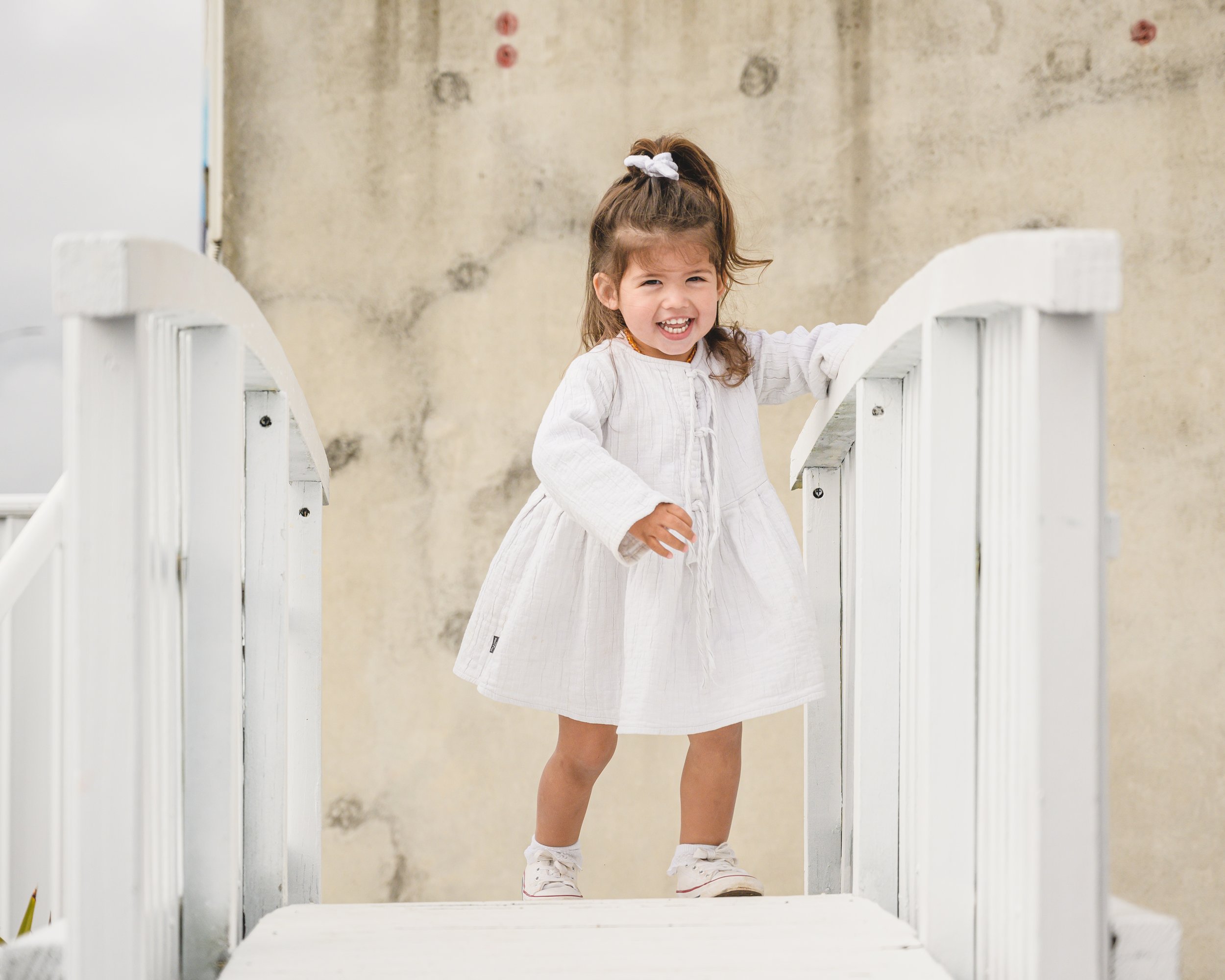
Alisha Merriman had a clear vision of exactly what gap she wanted to fill when creating an early childhood education centre. She knew, not only because of her many years as a teacher in this sector, but also firsthand, as a mother of two young children. What she envisioned was a unique learning environment for children and their whānau, where they could thrive, grow and learn.
Bloesem (“Blossom”) – a nod to Alisha’s Dutch heritage – is precisely what the centre believes its tāmariki will do. Backed by research highlighting the importance of environment being pivotal to learning, the centre has a calming feel to it. Walls are painted in neutral colours, with spaces left uncluttered. “Aesthically pleasing environments enhance the children’s learning journey,” Alisha explains.
By creating physical spaces that are enriching for children to learn and grow in, Alisha and her team share their passion for creating inspiring new experiences daily. The team carefully create a teaching plan together, incorporating invitations to play based on suggestions from the children. Their aim is to instil a love of learning in their community.

With the first Bloesem opening in Te Puke in April 2019, the team have taken the time to firmly establish their vision and strong relationships with the children, whānau and staff. A high priority for Alisha is that they stay true to the “why” of Bloesem, and that means ensuring the right team of people working together to uphold the vision, philosophy and consistency of the centre. “Keeping it authentic is so important,” says Alisha.
“At Bloesem, children and whānau are part of a nurturing, caring, joyful, tranquil environment.”
The Te Puke centre has thrived, despite the unexpected arrival of a global pandemic less than a year after opening. So when a spacious site opened up in Alisha’s own neighbourhood, the Mount, she knew it was the perfect time to expand the vision and provide another community with the inspiring Bloesem way of early childhood learning.
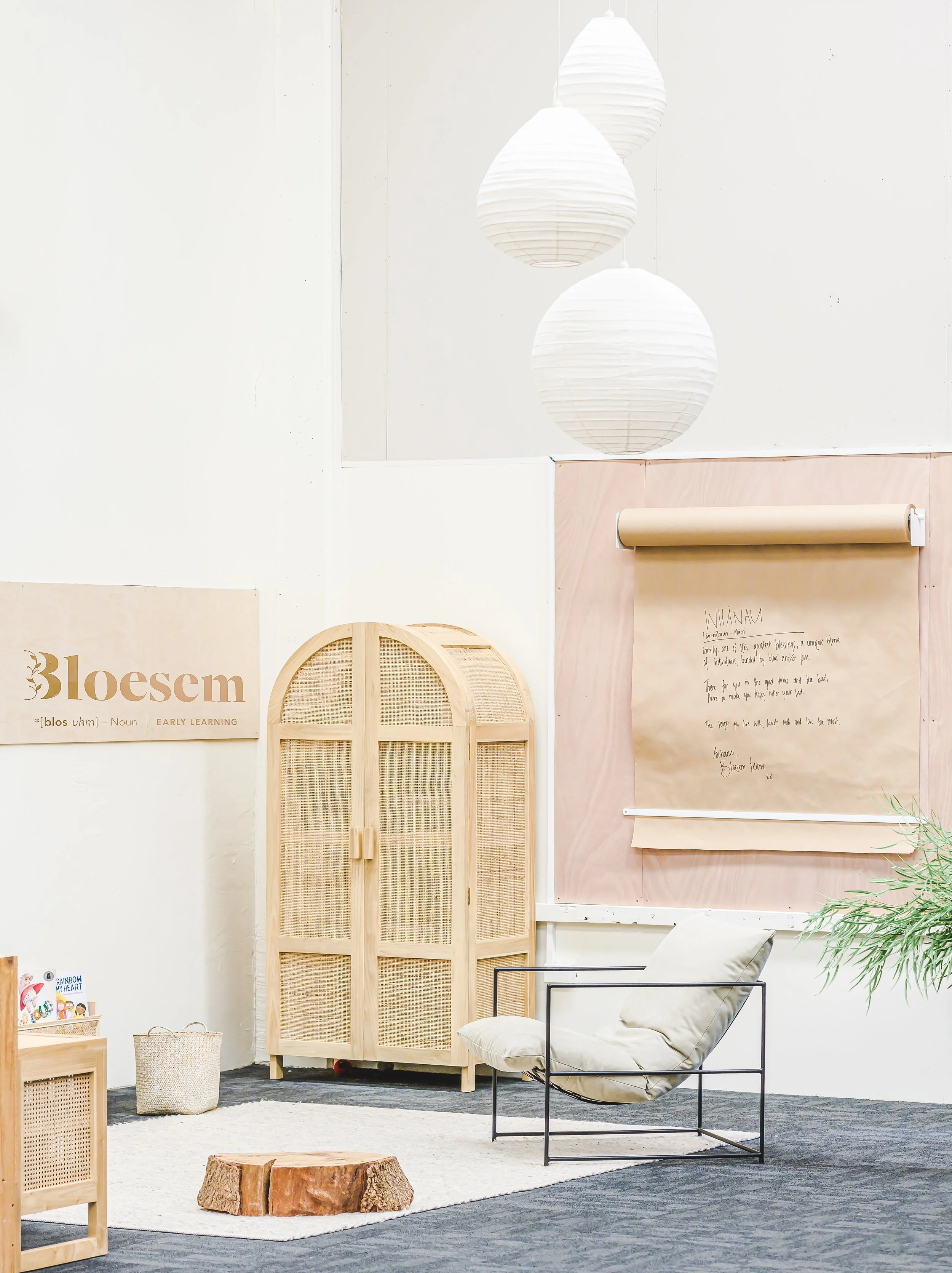
Opened in August, Bloesem Mount Maunganui also carries the vision statement: “Value and honour whanaungatanga, taiao, rangatiratanga which reflects the good of reciprocal relationships, for the good of the environment and for the good of growing self-confidence.”
With a strong philosophy and a growing need for more quality early childhood education centres, Bloesem is sure of its identity and what it offers the communities it is part of.

A will to give
A will to give
The Acorn Foundation hands over millions every year to deserving community projects. But, what sets them apart from many other charities, is that they’ve succeeded in creating an innovative way to ensure their precious donors’ money is a gift that keeps on giving.
The Acorn Foundation hands over millions every year to deserving community projects. But, what sets them apart from many other charities, is that they’ve succeeded in creating an innovative way to ensure their precious donors’ money is a gift that keeps on giving.
Words Nicky Adams / Photos supplied

Established 19 years ago, the Acorn Foundation may have started as a seed of an idea, but fast forward to now, and it’s grown into a whopping, solid oak. As with anything, it’s important to be innovative to succeed, and whilst Acorn is often known as the charity that many people donate to via their will, corporate giving is a vital part of the donation system. It is through this avenue that Farmer Autovillage, to celebrate its 30th anniversary, has chosen to support the Acorn Foundation. The Farmer Autovillage programme is a scholarship aimed at helping school leavers put funds towards tertiary education to be run at Mount Maunganui, Papamoa and Te Puke colleges, and implemented for the first time this year.
As a community organisation, Acorn Foundation is based upon the concept of place-based giving. CEO Lori Luke explains: “The way Acorn is different is the whole idea of the perpetuity model – our capital is invested – Craigs is our partner, and what we distribute is a percentage of the returns. That makes us different from a standard charity that’s raising money on an annual basis. The perpetuity model is a powerful one.” Essentially this is a way of donating to your community via a charity that invests the funds on your behalf. The dividends are then passed on to the charities of your choice, meaning that it’s not just donors that have grown over the years, but also the funds – unbelievably, there is currently almost $60 million under management.
Lori Luke continues: “We’ve grown really rapidly. Historically, we were always known as the organisation that gifts in a will – that’s still our primary business – but there’s a lot more living giving now, and all sorts of other ways to do it, such as small groups and corporate giving, which is how Farmer Autovillage came to us.”
While primarily centred on Western Bay of Plenty, Acorn does help donors nationally. Indeed, as well as other scholarships and awards, it distributes the prestigious Jann Medlicott prize for fiction. However, it’s the local stories that resonate the most, such as that of The Eva Trowbridge Scholarship, says Lori. “Eva left money locally to support adult learners – that’s been going for 15 years – Eva was a cleaner at the hospital and saved her coins and those coins have helped 15 women finish school. The one thing that a lot of people think is that you must be very wealthy to give back to a community. To be honest most of our donors are very humble people who just want to make a difference.”

With Acorn, everyone chooses what they want to support – some will leave their money unrestricted, but about 60 % of the money is tagged which means either specific charities or a field of interest like animals or the environment can be supported. “We have an anonymous donor who donates swimming lessons because he lost a child at age four to a drowning accident, so he now pays for two or three entire schools to get swimming lessons.” Another inspirational donation comes via a gift from the Roy and Mary McGowan estate, which has enabled the launch of a Vital Signs Youth Report. “They didn’t have children of their own but had a huge interest in the wellbeing of young people. We have a big initiative in the youth space at the moment. That will be a strong focus – the idea of helping young people in this region to live lives that they value and smoothing the path to adulthood.”
However, Lori points out that over the last six or seven years, the focus has moved to living giving, so that donors can give money while they’re alive “that way they can see where it’s going and who its helping – and they get a tax credit!” With 99% of the money remaining within the charity, the amount of work from volunteers and the team is incredible. Lori is herself from a business background, and grateful for the opportunity to be a part of it all. “I’m at a point in my life where giving something back is tremendously personally beneficial so it’s a fantastic job. All of us involved are very privileged because we really feel like we can make a difference. Over the years heaps of community people have put their hands up to help Acorn succeed.”
And succeed it certainly has – with Acorn seeing some important milestones over the last couple of years – it has given to more than 200 causes, passed the $50million mark in funds under management, this year distributed $2million for the first time, and given $10million in total over the life of the foundation. That’s one mighty Acorn all right.

Selling trust
Selling trust
Owen Cooney Consultancy brings a change of mindset to traditional investment strategies.
Owen Cooney Consultancy brings a change of mindset to traditional investment strategies.
Words Nicky Adams / Photos Jahl Marshall

Before making any investment decision, Owen Cooney uses what he calls the “mum test”. “I ask myself if this is something I would want my mother involved in – if the answer is no, then I walk away.”
A partner at Tauranga-based law firm Cooney Lees Morgan (CLM) since the 1980s, Owen was founding partner of the firm’s hugely successful property development division. Owen was responsible for putting together groups to acquire premium property assets. Not only did he enjoy this, but he saw the benefits that could be gained. As his appetite increased, Owen’s career saw a shift in direction, and after retiring as a partner from CLM in 2020, he decided to continue with what had developed into a passion project.
Establishing Owen Cooney Consultancy at the end of 2021 seemed like the next natural step in a journey that had really started as far back as 2008 when, together with his mother and brother Pete (managing director of Classic Group), the family had been keen to purchase an investment property. “When we started looking around, we couldn’t see anything that we considered premium in that $2-3 million range. That led us to the conclusion that looking in the $10 million-plus range took us out of the ruck and above a lot of the private buyers. There was less competition, and at that price we found a different level of building.”
When it came to starting up the consultancy, Owen already had an established client base, most of whom would have known or dealt with him over his many years at Cooney Lees Morgan. It also provided a seamless opportunity to continue working alongside his family, with OC Consultancy operating in conjunction with Classic Collectives Ltd (a joint venture company). However, part of the business model for OCC is the idea of bringing investment opportunities to a bracket who hitherto may not have looked to large commercial investment as a viable option. Those with less financial resources to invest quite feasibly might not have considered this type of opportunity would be open to them.
“Traditionally, young Kiwis wanting to build a bit of wealth for themselves have bought a rental property. In the early 2000s there was a real boom in the concept of residential property investments – that’s been the formula for generations of Kiwis. But now it’s not quite the same – residential property has increased by 40 percent in the past 18 months, raising the deposit has become too hard for a lot of people, and the government has taken off the tax deductibility. Plus, there’s the complexity now of the tenancy laws. So, owning a private rental property is less attractive and quite hard for a lot of people.”
Commercial investment, on the other hand, requires something of a mindset change, as does the concept of pooling resources. “You’re playing as a team rather than individually. It’s risk free from the point of view that in the structures we set up you’re not exposed to risk personally. The only risk you have is losing the money you put in, which is a risk any investment has. You put your money in, you get a yield straight away – a monthly return on your money. Being involved in a larger team we can access better properties with better tenants that are going to pay the bills.”
The skill of OCC is sourcing premium properties that will bring passive investment. “Developments are too risky; we don’t bring those to these clients. Under the banner of commercial, industrial properties are considered the darling of the market. Supermarkets are a great investment. We’ve got an open mind as long as it ticks the box of long-term security of the rent.” For their part, investors need to consider this a long-term prospect, of a five-year time horizon. After this there is a strategic review (although an exit strategy can be triggered before five years).

With the benefit and comparative ease when put against a residential investment, the appeal for not just the seasoned investor, but also the younger market looking for a way onto the wealth ladder is multi-faceted. Spearheading this aspect alongside Owen is business development manager Melanie. Having worked with Owen since last year, she is excited not just about the prospects for younger clients, but also about Owen’s personal mentoring skills. “Owen would never say this about himself, but he’s awesome at helping others do better, educate and grow. There’s a better future when you’re in the game with Owen.”
As for the bottom line, Owen states: “In terms of the amount invested by individuals, of the existing investor groups we have, it varies from $250,000 to $1.5 million. As for the question of how you qualify, for now we’re working on the basis that we’re a boutique business with many of our investors being old clients of mine. What we’re selling is trust. If someone trusts us and they want to be a part of this, we’re happy to talk to them.”
Email info@occ.nz and reference: UNO
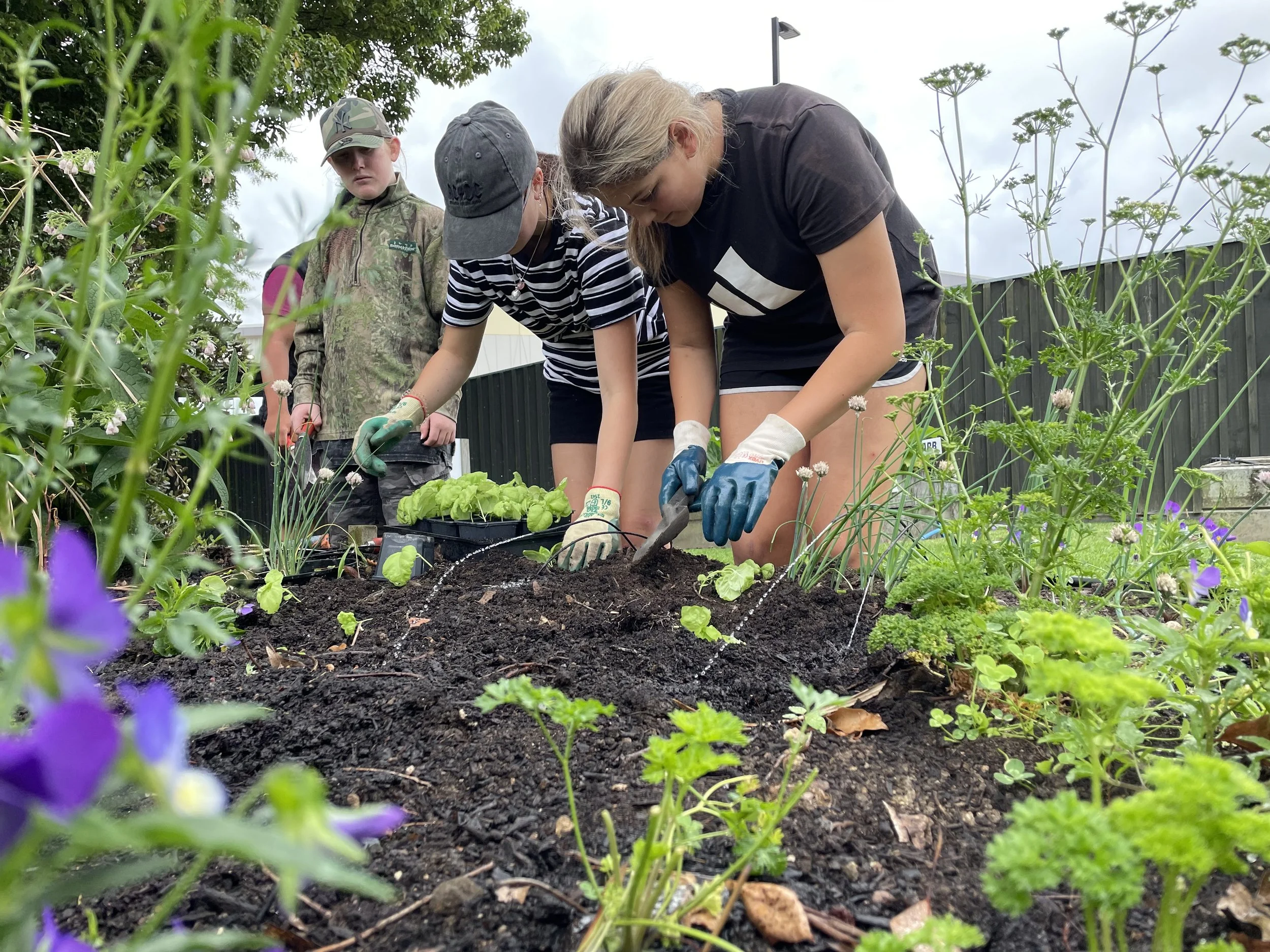
Being the change
The Graeme Dingle Foundation improves the lives of our youth by not only equipping them with skills to build bright futures, but opening their eyes to the exciting possibilities around them.
The Graeme Dingle Foundation improves the lives of our youth by not only equipping them with skills to build bright futures, but opening their eyes to the exciting possibilities around them. And it’s not just the children who are benefiting from the foundation’s programmes.

Accomplished adventurer, mountaineer, author, artist, filmmaker and philanthropist Sir Graeme Dingle knows how to squeeze the very most out of what life has to offer – and he sees it as his calling to equip New Zealand’s youth with the same limitless sense of possibility. More than 25 years ago, he pledged to improve our country’s concerning youth statistics, and so the Graeme Dingle Foundation was born. The vision is to positively impact the lives of our tamariki, and make Aotearoa the best place in the world
for children to flourish.
Today, Graeme and partner Lady Dingle, Jo-anne Wilkinson, are proud to see the foundation’s programmes reach 28,000 school-aged rangatahi across the country. The programme seeks to improve self-esteem, educate about positive choices and values for health and happiness, offer practical life skills and impart a sense of adventure. The ultimate goal is a positive attitude, useful skills and real future possibilities.
The couple are adventurers in the truest sense. Graeme has ascended the world’s most challenging mountains, sometimes with climbing buddy, the late Sir Edmund Hillary, and Jo-anne’s epic Arctic and Antarctic traverses and mountaineering achievements also attest to the couple’s grit and determination to succeed. It’s the same drive and courage that underpins the foundation’s objectives to make a real difference in the lives of our youth so they too can thrive and surmount any challenges life throws at them.
But creating an aspiring generation requires inspiring role models and this is where the foundation’s mentor program plays a crucial and highly-rewarding part in its success. Lynette and Dave Gillies of Z Energy have mentored five students between them. They were involved with the Graeme Dingle Foundation through Z Energy’s ‘Good in the Hood’ initiative, when the foundation’s Western Bay of Plenty manager Dan Allen-Gordon approached them about mentoring. Although experienced in business coaching and management, mentoring rangatahi was totally new to them. However, not only was the mentor training day extremely helpful in preparing them, they also found the foundation always available for support if needed.
So what does the role of mentor actually involve? The expectation is to meet up once every fortnight but to have contact once a week, with fun group activities for all the students and their mentors arranged periodically throughout the year. “The idea is to find things to do together that create space to talk,” says Dave. And although the experiences they have shared with their mentees is impressive – surfing, mountain biking, mud runs, baking and cooking at their home as well as work experience and community events within Z – Dave insists the most important thing is to simply lend an ear to the young people under their mentorship. “It’s important to listen to both what they say and what they don’t say” says Dave. Lynette agrees, “Listening skills are the biggest thing you need. Often you don’t need to talk, just to listen.”
Both Dave and Lynette speak enthusiastically about what they’ve gained from mentoring. “The opportunity to learn about yourself is huge,” says Dave. Lynette says young people have shown
her a different view of the world. “It really opened my eyes and reinforced that we must listen to young people more. They have so much to offer.”

What advice would they give to people considering mentoring? “Just do it!” says Dave. “An hour a week is not a big commitment to make a huge difference. When you see where these students end up after their mentoring period, it’s awesome.” Lynette says mentoring has improved her own personal growth, too. “You give, but you get so much back. The feeling you get when you see them go from where they were, to blossoming young adults, is just amazing.”
When Helen Fraser, the owner of Mount Maunganui store Bettie Monroe, heard about mentoring at the Dingle Foundation, she knew it was the right option for her. She wanted to volunteer in the community and had always loved being around children and teenagers. “Being a teenager is difficult,” says Helen. “The chance to help, to give opportunities and be a positive role model and inspire young people is amazing, I love it.”
Helen says the mentor matching process is a bit like speed dating – a really fun way for both students and mentors to work out who they connect with. Helen’s mentorship activities arranged by the foundation, included skydiving, paddle boarding, inspirational talks and once, an evening walk round the Mount with a DOC ranger where they witnessed the penguins returning. “There were a lot of opportunities for us both to experience new things and learn together.” Helen also enjoyed one-on-one time on days out, shopping trips and meeting for hot chocolates. A big part of mentoring is also goal setting,” says Helen. “Each student has a book and we set goals then revisit and evaluate them. They also learn lots of life skills like CV writing and interview practice.”
Helen enjoyed mentoring so much, she has gone on to do it twice more. Seeing students grow and being beside them as they overcome challenges and accomplish their goals is just amazing. And it isn’t difficult, it’s just about being a friend, a listening ear and a sounding board – and loving life and being up for a challenge!” Paris, who was the first young person Helen mentored, went on to be a mentor herself – testament to the positive impact mentoring, and the Project K (a 14-month program for year 10 students that incorporates a wilderness adventure and community challenge) had on her life.
Dan Allen-Gordon says, “Our mentors come from all walks of life, but the thing they have in common is
passion to make a real difference in the challenging world our rangatahi face. Every one of us that overcame major obstacles as a young person has had a significant adult help us succeed. It is the greatest gift we can give to care and not judge.”
The Graeme Dingle Foundation Western Bay of Plenty reaches over 3,700 tamariki and rangatahi each week with their proven programmes, building resilience and well-being in young people. From Kiwi Can, a values and life skills primary school programme to whole school peer-mentoring and ready for work programmes such as Stars, Career Navigator and Project K. The programmes cater to young people aged 5 to 18, helping the participants to thrive and understand what they have inside is greater than any obstacle they may face. A key part of some of these programmes is mentoring, and for both the students and mentors this represents an extremely rewarding, and life-changing experience.