

FINDING YOUR FEET
Fontein Coaching’s Cass Fontein offers tools to support you to stay grounded, manage overwhelm and focus on what’s within your control.
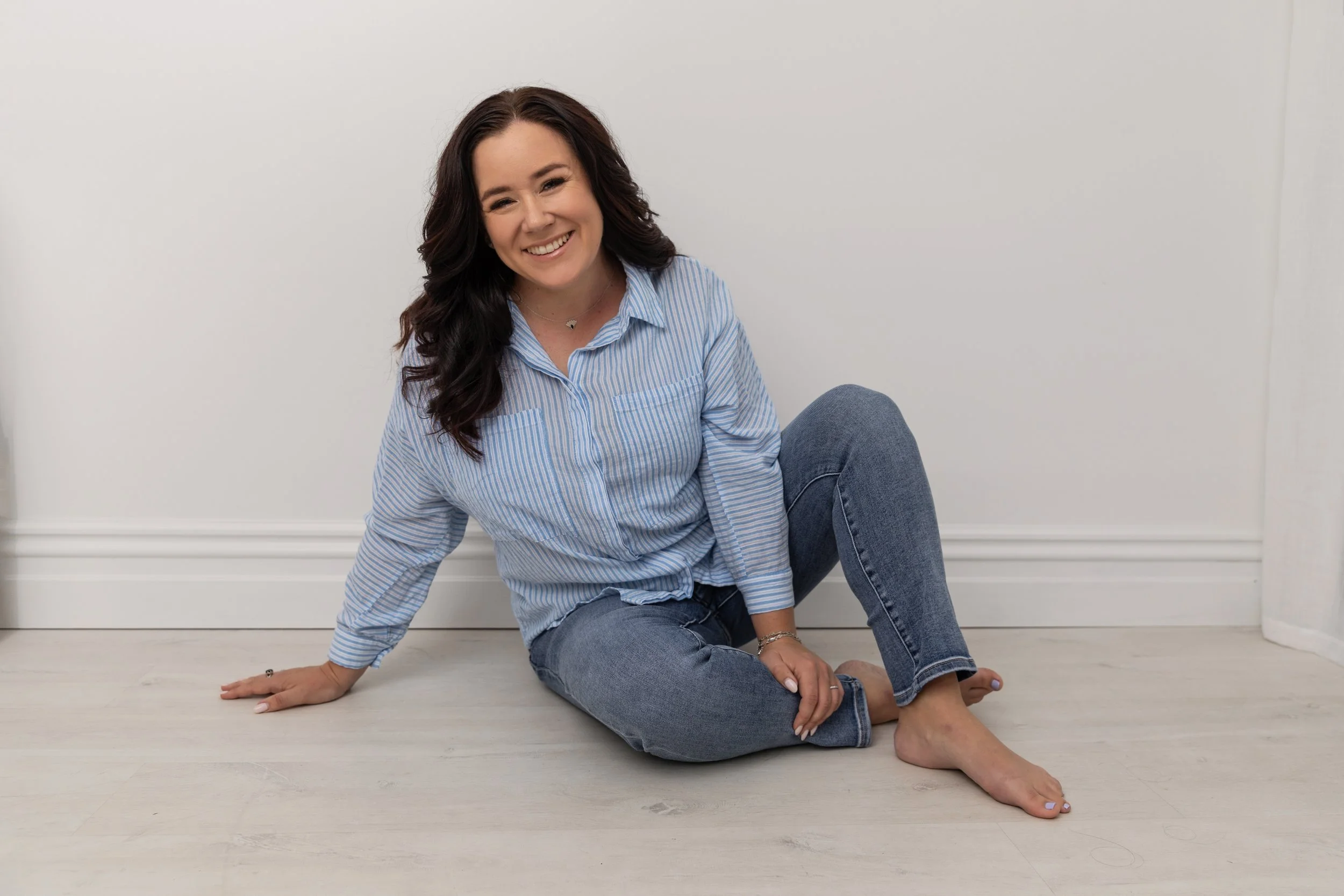
Fontein Coaching’s Cass Fontein offers tools to support you to stay grounded, manage overwhelm and focus on what’s within your control. PHOTO CASEY VAN LIEFDE
You know those days when your brain has 47 tabs open? You’re replying to an email while thinking about the conversation you need to have later. Your phone pings. You remember something you forgot yesterday. Someone’s waiting for an answer. You’re worrying about something that’s happening next week. Suddenly, even the smallest decision feels much harder than it should.
Welcome to overwhelm.
Spring has a way of bringing energy back into our lives. The days get longer, our calendars fill up, projects gain momentum and before we know it, life feels very full again.
When that happens, our instinct is often to try to get everything under control. The problem is that a lot of what occupies our minds was never within our control in the first place.
We worry about what someone thinks of us, replay conversations that are already over, and take on responsibility for other people’s emotions. We spend energy solving problems that haven’t actually happened yet. Meanwhile, the things we can influence get lost amongst the noise.
When everything starts feeling like too much, I like to bring it back to one question: what’s actually within my control right now? Sometimes, the answer is surprisingly small.
I can put my phone down, send the email I’ve been avoiding, or say no. I can ask for help, or I can simply decide that a problem doesn’t need to be solved today. These things won’t magically remove everything happening around us, but they remind us that we still have agency.
It’s a picture I come back to again and again, with clients and in my own life. There are two circles. Inside the first is everything you can control, like your actions, your boundaries, where you place your attention, how you speak to yourself and what you choose to do next. Outside sits everything else, like other people’s opinions and reactions, the past, unexpected changes and the outcomes we wish we could guarantee.
When overwhelm creeps in, notice which circle is getting most of your energy, then come back to the present. Feel your feet on the floor. Take a slow breath. Notice what you can see and hear. Give your mind something that’s happening now to think about, rather than another scenario that may or may not happen later. Then choose one thing.
Being grounded doesn’t mean becoming someone who’s permanently calm or unaffected by life. We’re human. We get stressed. We overthink. We have days when everything feels like a lot. Being grounded is knowing how to find your way back when it does – back to what you can influence.
The next time your brain has 47 tabs open, you don’t need to close them all. Just find the one that’s actually yours, and start there. FONTEINCOACHING.CO.NZ

ART OF RETREAT
Along with the cold, winter can bring loneliness, low motivation and social withdrawal. Cass Hogan of Fontein Coaching offers advice on how to support yourself through it.
Along with the cold, winter can bring loneliness, low motivation and social withdrawal. Cass Hogan of Fontein Coaching offers advice on how to support yourself through it.
PHOTO CASEY VAN LIEFDE

There’s a particular feeling that settles in around now. The mornings are darker, the harbour is grey, the calendar is suddenly less crowded, and something in us pulls inward. We sleep a little later. We say no to things we'd usually say yes to. The text we meant to send sits idle for three days.
If that’s where you find yourself this winter, I want to start by saying it’s not a failure. The natural world slows down in winter for a reason, and we’re part of the natural world. The pull toward quiet is real, and it can be a beautiful thing if we move with it intentionally, rather than letting it carry us somewhere we didn't choose to go.
In my coaching practice, I see this distinction every winter. There’s intentional retreat, which might mean slower mornings, deeper conversations and early nights. Then there’s unintentional withdrawal, like motivation that disappears, relief sought through cancelled plans, a slow drift away from the people and practices that keep us well. The first restores us; the second costs us. The tricky part is that they can look identical from the outside, and even from the inside for a while.
The question I find most useful during the cooler months is a gentle one: Am I choosing this or am I hiding in it? If the honest answer is the latter, you don’t need a five-step plan or a burst of new-year energy, you need anchors that look like small, consistent points of contact that keep you from drifting.
Here are three I come back to again and again with my clients.
Light, every day. Even 10 minutes of natural light in the morning can help your sleep, your mood and your sense of being awake to your own life. Coffee on the deck counts. A walk to the letterbox counts.
One real conversation a week. Not a “We should catch up” text – an actual coffee, an actual phone call, an actual “How are you, really?”. Connection isn’t a luxury we earn when we feel better; it’s often what helps us feel better.
One small thing that's just yours. A book, a class, a Sunday ritual, a project underway. Winter has a way of shrinking our worlds down to work and obligation. A small claim on your own joy is an act of self-respect. Winter will do what winter does. The grey will come and go, but you get to decide whether this is a season you move through asleep, or one you move through with your eyes open, with purpose.
That’s the difference, and it’s a difference worth choosing.