
DRY SPELL
Bay Eye Care’s Alex Petty on why dry eye is becoming the new norm and how to combat it.
Bay Eye Care’s Alex Petty on why dry eye is becoming the new norm and how to combat it.
PHOTO KATIE COX
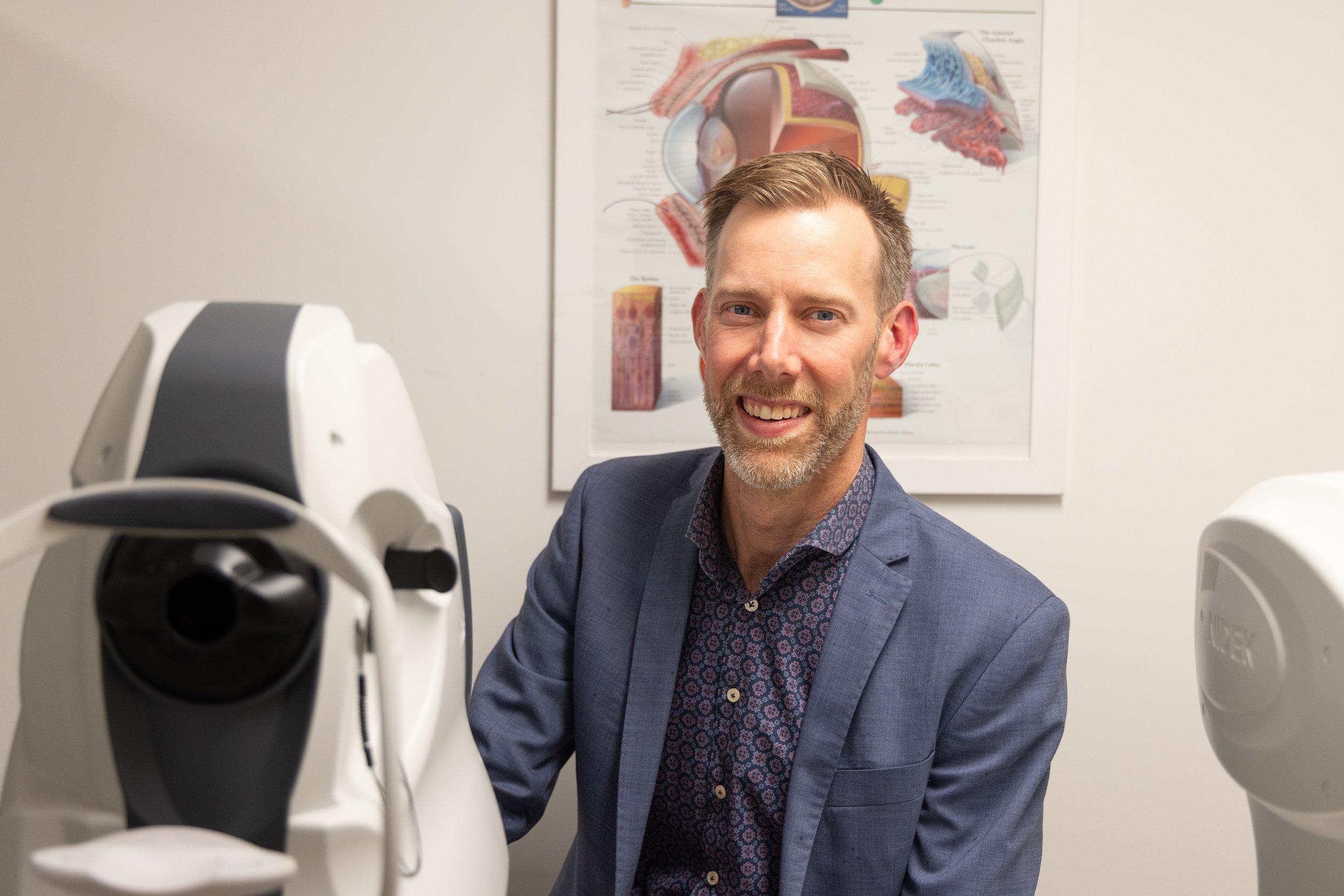
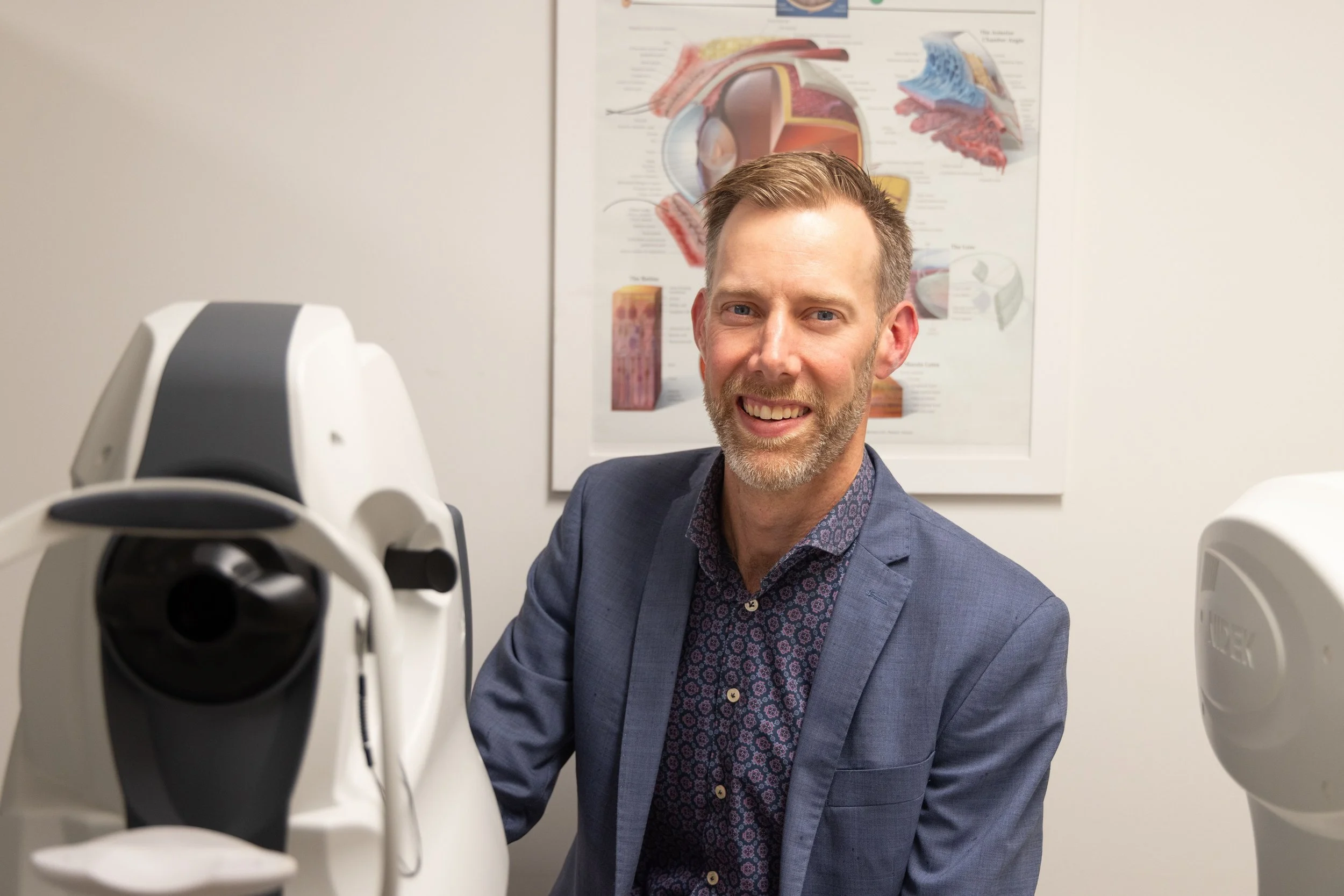
If your eyes feel gritty, irritated or tired by the middle of the afternoon, you’re not alone. One of the most common issues we see in clinic nowadays is dry eye disease, which affects everyone from all walks of life and all ages. What was once a problem of the older population has got a new group of co-conspirators in recent times: our screens, our indoor environments, and, for many women, a change in life chapters.
However, most people don’t know that dry eyes aren’t as simple as not producing enough tears. And, surprisingly, for around 80 percent of people who have this problem, the cause has nothing to do with watery tears. At the edge of your eyelid there is a series of little glands called meibomian glands that secrete healthy oil, similar in consistency and appearance to olive oil, to prevent the tears from evaporating away too quickly.
But modern lifestyles are working against them. When we’re looking at screens, our normal blink rate can drop to as little as one tenth. That means less natural pressure on the glands, poorer oil flow and more rapid tear evaporation. It’s the perfect recipe for stinging, redness, blurry vision and that persistent “sand in the eye” sensation. Hormonal shifts, certain medications, air-conditioning, make-up use and even conditions like rosacea can all further inflame or block these glands.
Left unmanaged, the condition can progress. Using only lubricating drops often provides short-term relief but doesn’t address the root cause. In the last few years, with the help of advanced imaging, we’re seeing more patients whose glands have become permanently atrophied simply from years of untreated dysfunction.
That’s why early care matters. In our clinic, treatment often focuses on restoring natural gland function. In 2017, we pioneered the use of Intense Pulsed Light (IPL) for dry eye, a therapy which helps calm inflammation and abnormal blood vessels around the lids. More recently, we are the first Tauranga clinic to offer Lipiflow; a gentle thermal in-clinic procedure, that melts and clears thickened oils to 'reset' the glands. The best chance of long-term improvement for many people is to combine the two. Alongside this, recommendations include environmental tactics, targeted eye drops, lid hygiene and omega-3 supplements.
If you’re noticing dryness, irritation or fluctuating vision, a comprehensive assessment can identify the exact cause, and prevent years of discomfort.
Dry eye might be common, but living with it shouldn’t be.
WAKE WITH CLARITY
Bay Eye Care’s Alex Petty reveals life-changing technology that literally transforms how you see the world.
Bay Eye Care’s Alex Petty reveals life-changing technology that literally transforms how you see the world.
PHOTOS GARY MARSHALL AT BLUE CHILLI
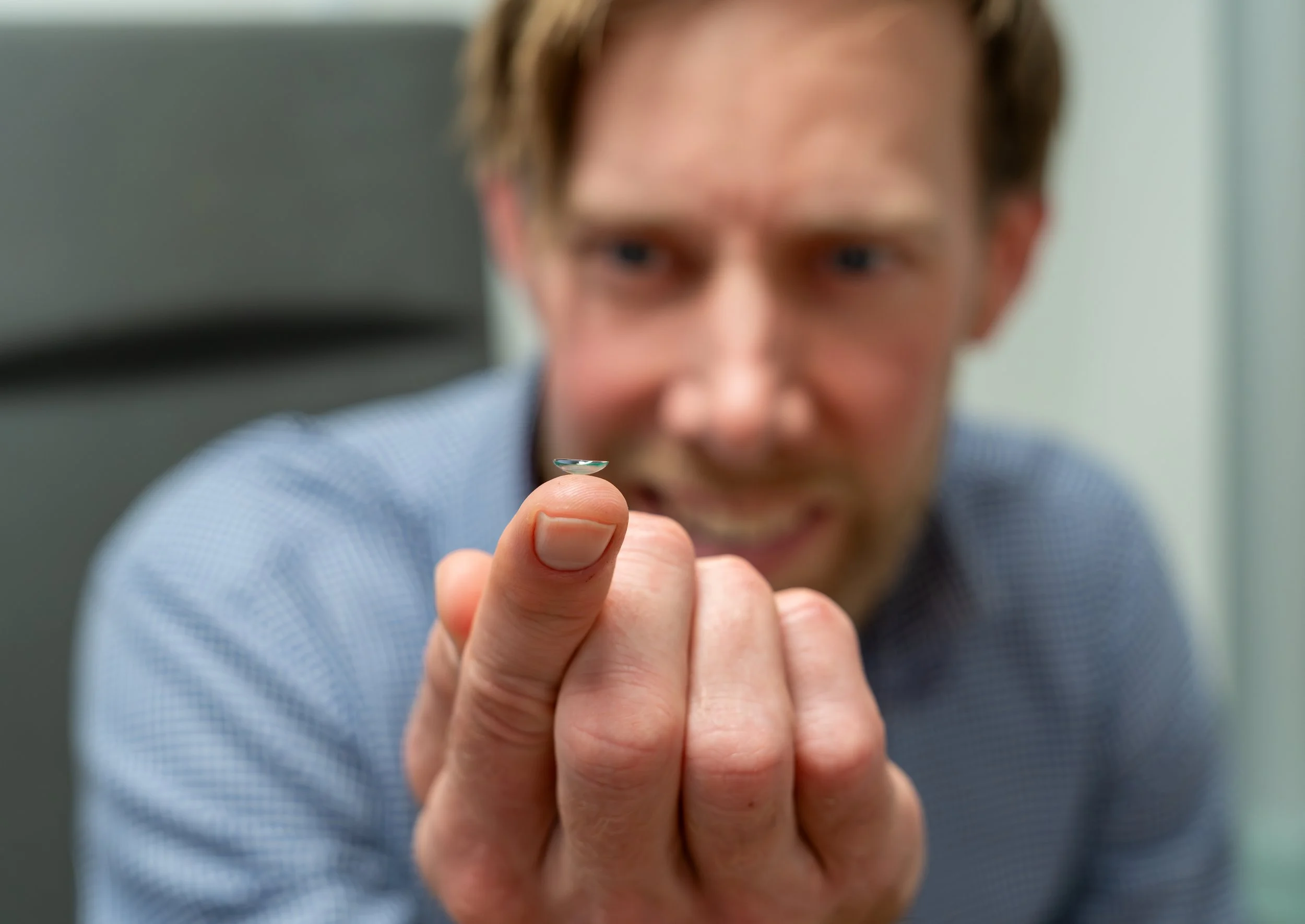
Explaining Ortho-K to patients sounds a bit like something out of a sci-fi movie. You wear a custom lens while you sleep, and by morning your vision is clear. No glasses or contacts during the day, and no surgery needed.
Ortho-K can be a game-changer. Those who have vision problems suddenly have the freedom to swim in the sea, play sports and go to school or work, without worrying about their glasses or contact lenses.
Short for orthokeratology, it involves wearing a specially designed rigid lens overnight. While you sleep, the lens reshapes the front surface of your eye. When you take the lens out in the morning, the temporary reshaping allows you to see clearly all day. For many, that means they can ditch their glasses or contact lenses altogether.
I’ve been fitting these lenses for over 15 years. In fact, as I write this, I am just returning from a weekend conference in Australia lecturing and teaching other optometrists about Ortho-K. These days, I mostly fit these lenses to treat myopia (short-sightedness), but also for long sightedness, astigmatism and even presbyopia, which is that frustrating shift in vision that hits in your 40s or 50s when reading becomes difficult.
Around the world, we’re seeing a sharp increase in short sightedness developing in children. Right now, roughly 30 percent of the global population is myopic, and research suggests that could reach 50 percent by 2050. Much of it comes down to lifestyle, such as increased screen use, more time indoors and not enough exposure to natural light. But over the past decade, Ortho-K has been proven to slow myopia progression in children.
As myopia worsens, the risk of serious eye conditions like retinal detachment, glaucoma and macular degeneration increases significantly. That’s why we now monitor not just prescription, but actual eye growth. Ortho-K can help slow that down, so we’re protecting long-term eye health.
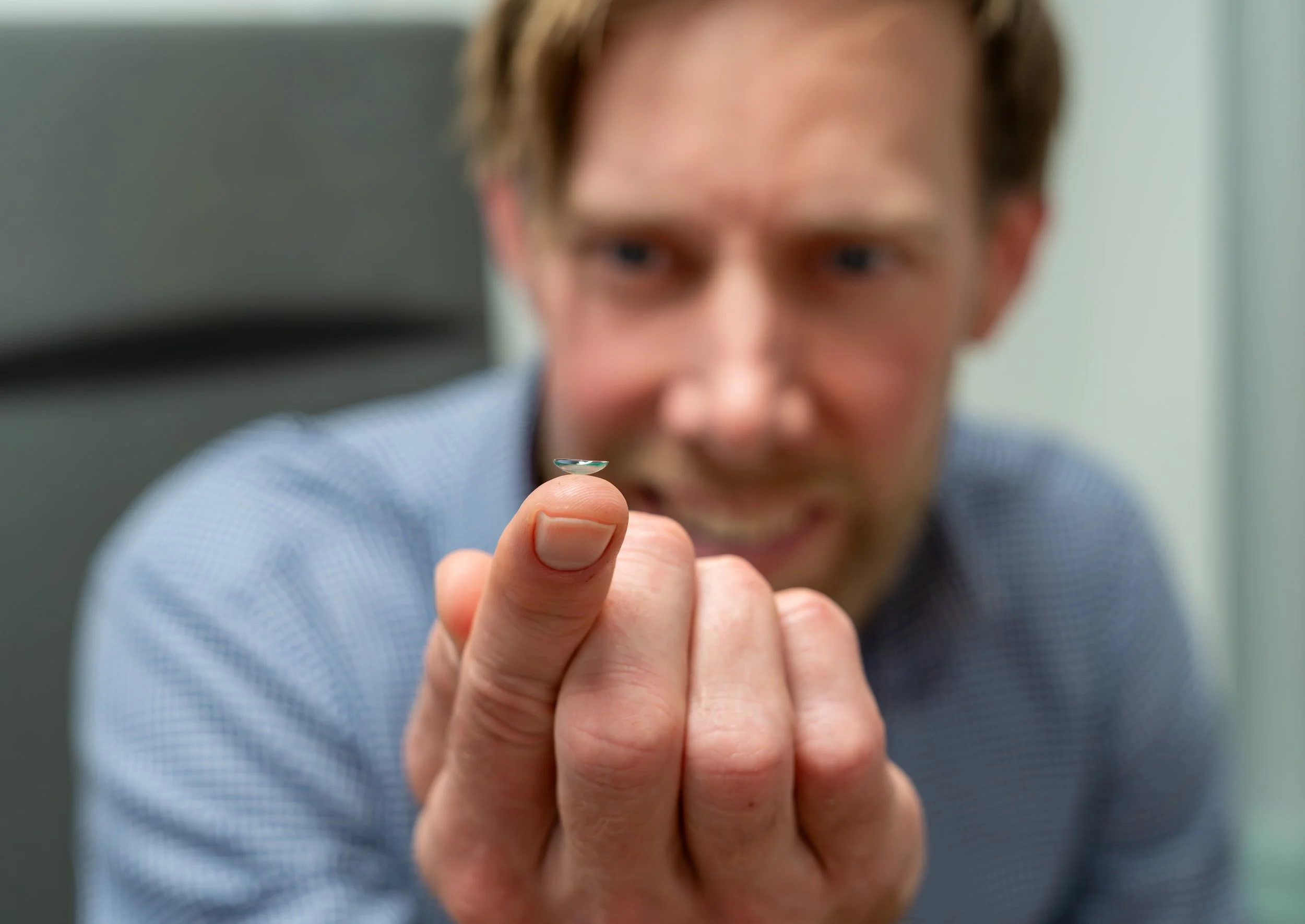
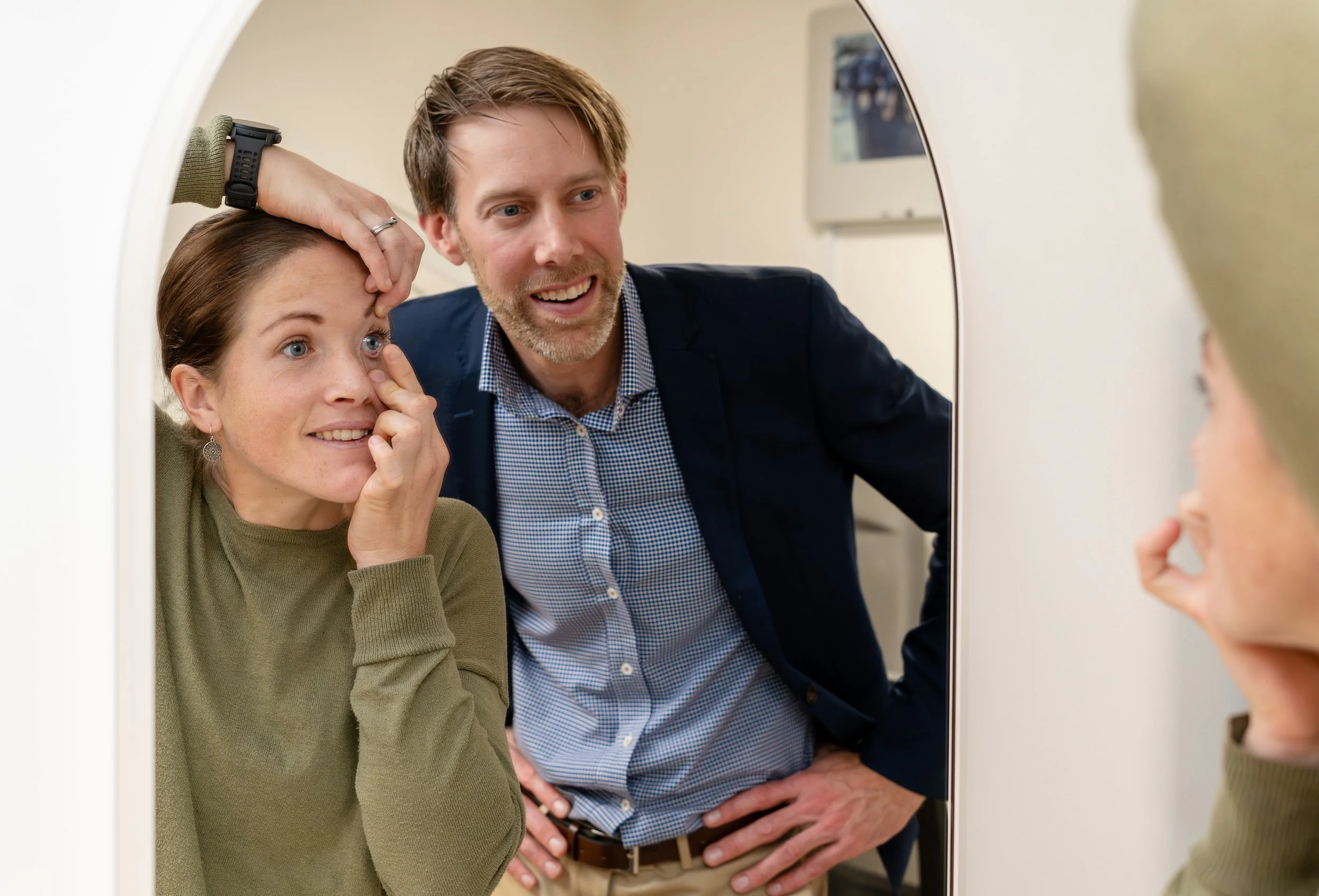
People are often curious about comfort. Since Ortho-K lenses are rigid, there’s an adjustment period, but because they're worn while sleeping, most people get used to them surprisingly quickly. Once it becomes part of your nightly routine, it feels normal. Long-time users often tell me they wouldn’t dream of going back to glasses.
Of course, it’s a commitment. This isn’t a one-time fix. It only works as long as you wear the lenses each night, but that’s also part of its strength. It’s completely reversible and flexible. If your eyes change, we adjust the lenses, which makes it great for growing children or adults who aren't ready to commit to permanent solutions like surgery. All you need to get started is an initial visit to discuss Ortho-K and check your eye health to see if Ortho-K is right for you.
I’ve had patients come in because a friend or co-worker raved about how much Ortho-K changed their life. It spreads by word of mouth, and for good reason. It’s about being able to live your life without constantly thinking about your eyes. For me, I believe that’s a gift worth sharing.

Clear vision
Optometrist Alex Petty opens our eyes to smarter eye care, new tech and lifelong sight.
Optometrist Alex Petty opens our eyes to smarter eye care, new tech and lifelong sight.
PHOTOS KATIE COX

Alex Petty.
When it comes to eye health, most of us don’t give our eyes a second thought until something feels off. Blurry mornings, tired evenings or a mysterious twitch that won’t quit usually puts our eye health on the radar.
Now Alex Petty, director of Bay Eye Care in Tauranga and UNO’s newest expert voice on all things vision, is here to shift your perspective, both literally and figuratively.
Originally from Auckland, Alex returned to New Zealand in 2016, after years working in Australia. The pull was a love for the Bay lifestyle and the chance to fill a crucial gap in specialist eye care. Nine months later, Bay Eye Care opened its doors. Today, it’s a nationally recognised clinic with a reputation that stretches across the ditch.
“What sets us apart is that we don’t sell glasses,” Alex explains. “We focus 100 percent on clinical care.” That means no upselling and no retail pressure, just expert advice grounded in what’s best for your eyes. It’s an approach that’s earned the clinic a growing fanbase of families who’ve stayed with Alex for years.

The Bay Eye Care team from left: Grace Elliot-Brown and optometrists Aidan Quinlan and Alex Petty.
And it’s not just about what he does, it’s how he does it. Alex’s philosophy combines personal connection with cutting-edge innovation. “No two people, and no two sets of eyes, are the same,” he says. “Understanding someone’s story helps us offer truly tailored care.”
That blend of empathy and expertise has turned Bay Eye Care into a go-to destination for advanced treatments. We’re talking Ortho-K (overnight lenses that reshape your cornea while you sleep), custom lenses for keratoconus, high-tech solutions for dry eye and the clinic's latest investment, LipiFlow, which treats dry eye at its root by unblocking the oil glands in your eyelids.
They're also ahead of the curve with genetic testing for glaucoma, using a simple cheek swab to assess your risk and personalise your treatment plan. It's science, but with a heart.
Still, for Alex, the real reward lies in the long-term relationships. “I’ve watched kids grow up in my clinic, coming in shy at age eight, then at sixteen they’re tall, confident and talking about their future. That connection is what it’s all about.”
In 2020, when Alex faced a sudden cancer diagnosis, he was forced to step away from the clinic for three months.
While away, he was overwhelmed by the messages of support. “People wrote to say I’d changed their life or helped their child see again. I never expected that. It reminded me why we do what we do.”
Now, he’s bringing that same passion to the pages of UNO, kicking off a four-part series to bust myths, share insights and answer the most common questions about eye health.

First on his list? Contact lens hygiene. Alex warns that wearing lenses longer than prescribed or sleeping in them is a major no-no. “Even if you’ve never had a problem, all it takes is one bad bug, to risk a potentially blinding infection. You only get one set of eyes!” Alex warns. He’s also ready to set the record straight on reading glasses. “They don’t make your eyes worse. That’s a myth,” he laughs. “As we age, our eye structures naturally change, causing vision issues. Putting off help just leads to more strain and frustration. The good news is that there are amazing solutions, from high-tech contact lenses to surgery.”
Alex's new column will cut through the jargon, offer practical advice and answer the questions many of us didn’t even know we had. Keep an eye out for it in the next issue.