
RACE TO THE TOP
How a Mount Maunganui coach built an unlikely speed-climbing programme that’s producing world champions.
WORDS JO-MARIE BAKER / PHOTOS KATIE COX + JAN VIRT
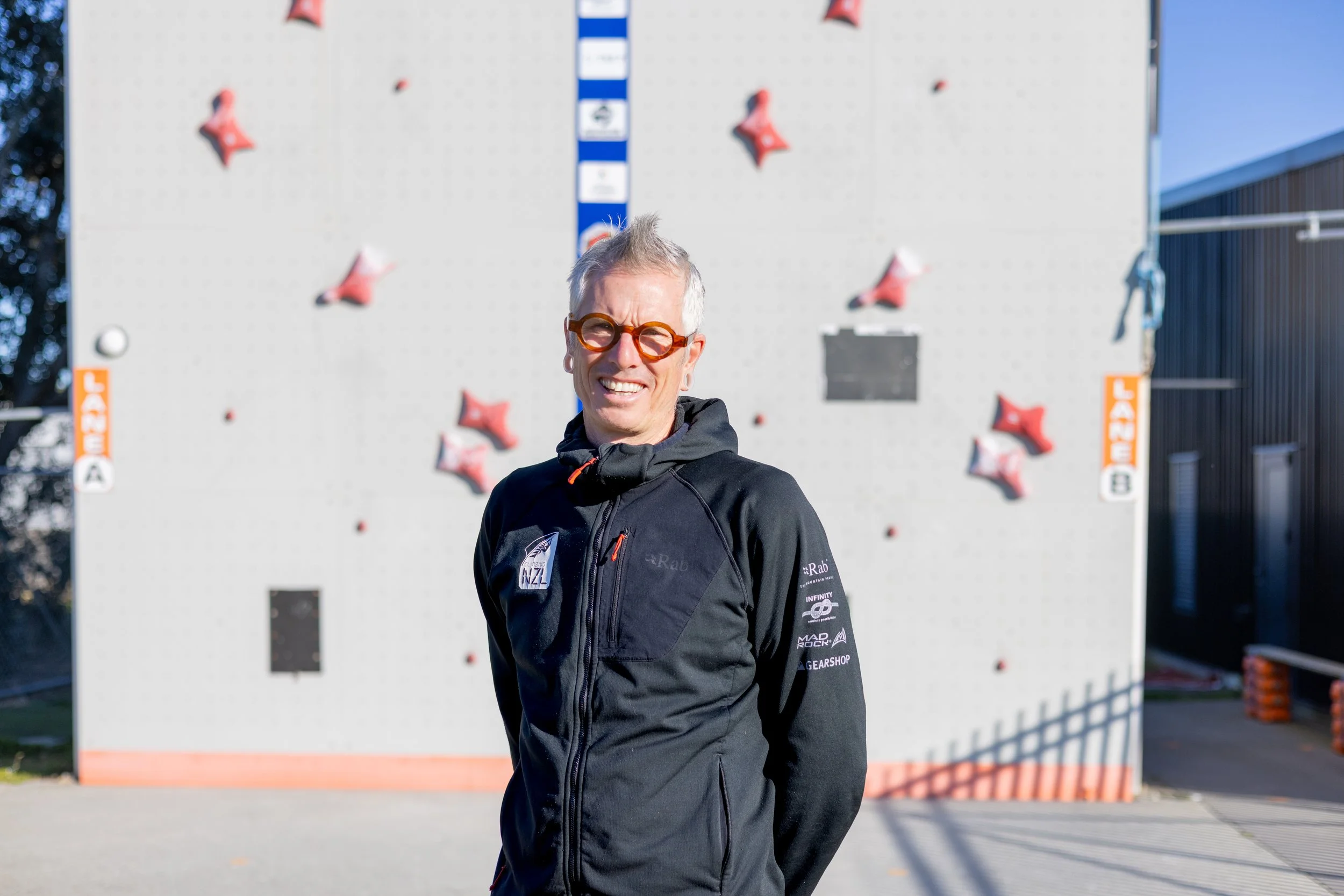
At 12 years old, Mila Piatek could barely reach the starting hold. The former gymnast stretched as high as she could, her fingertips straining for the grip that marked the beginning of the Olympic speed climbing route. She was so small it took more than a month just to master the first move. There were no shortcuts. She climbed, she fell, and she climbed again.
Three years later, teenage Mila raced 15m up a wall in 7.77 seconds to stand on top of the podium at the World Climbing Youth Championship in Italy, becoming an Under-17 world champion and Oceania record holder.
Her journey to become the world’s best is remarkable in its own right, but perhaps the more extraordinary story is how Mount Maunganui has built the speed- climbing programme that made it possible.
Rob Moore saw potential in Mila long before any medals arrived. The vastly experienced coach looks for athletes with either strength or elasticity (what he calls “power and pop”) that can translate into explosive speed on the wall.
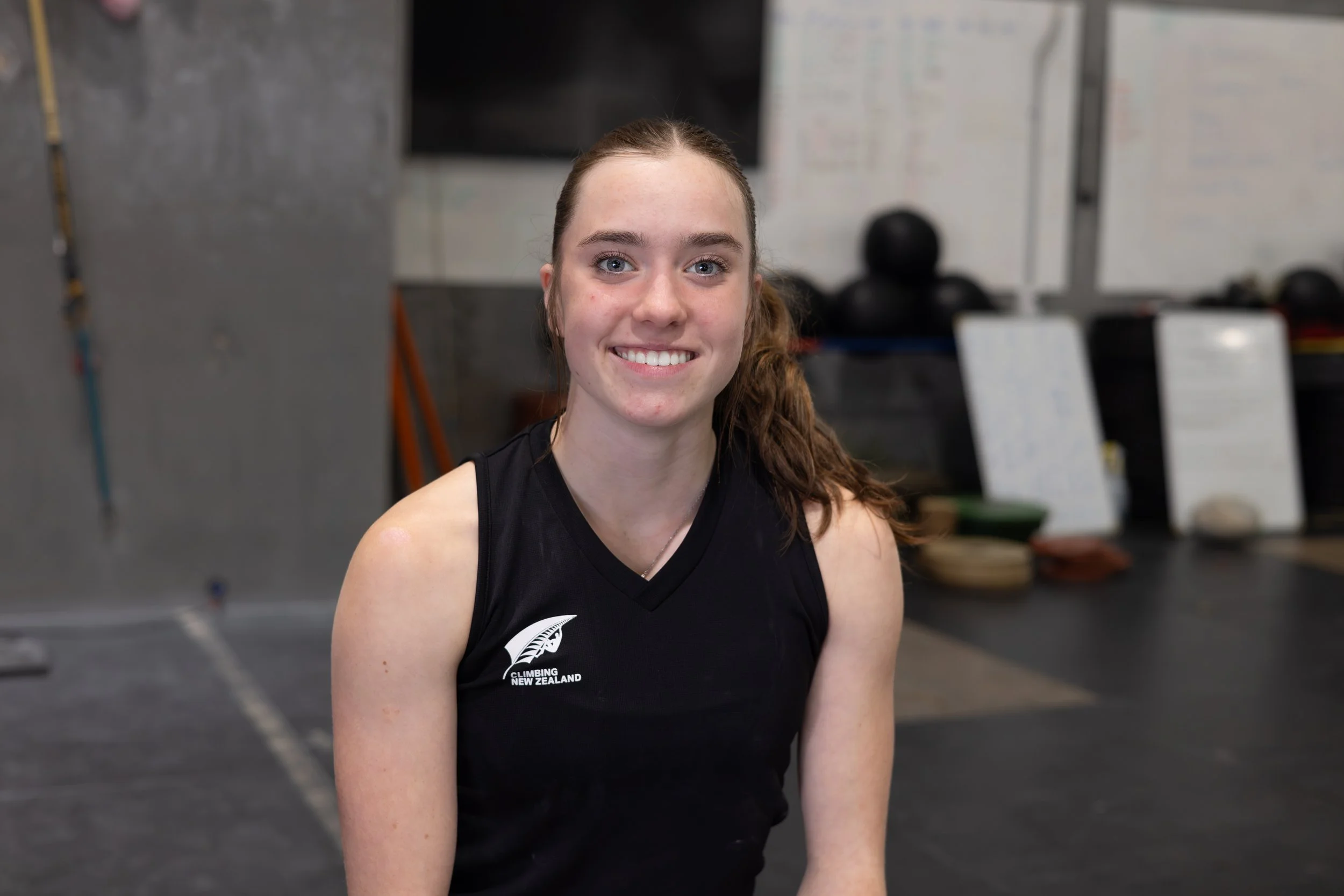
“One of the things that was really obvious about Mila right from the start is she had an incredible amount of pop. She bounces between the holds like Tigger.”
Rob’s competitive streak runs deep. He has competed internationally in speed skating, climbing and mountain biking, and his fascination with chasing records can be traced all the way back to his childhood.
“Every Christmas holiday, the first thing Dad and I would do was find the biggest hill nearby and find out what the record was to get to the top. Then we’d spend our entire holiday training to break that record.”
The instinct to find a benchmark, then figure out how to beat it would eventually underpin an audacious experiment here in the Bay. Could New Zealand produce speed climbers capable of taking on the world?
Rob’s ambitions stretched well beyond winning at home.
“You can achieve success within the New Zealand climbing community, and some people think it’s okay to stop there, but to me, that was never enough. Why don’t we strive further and try to be the best in the world?”
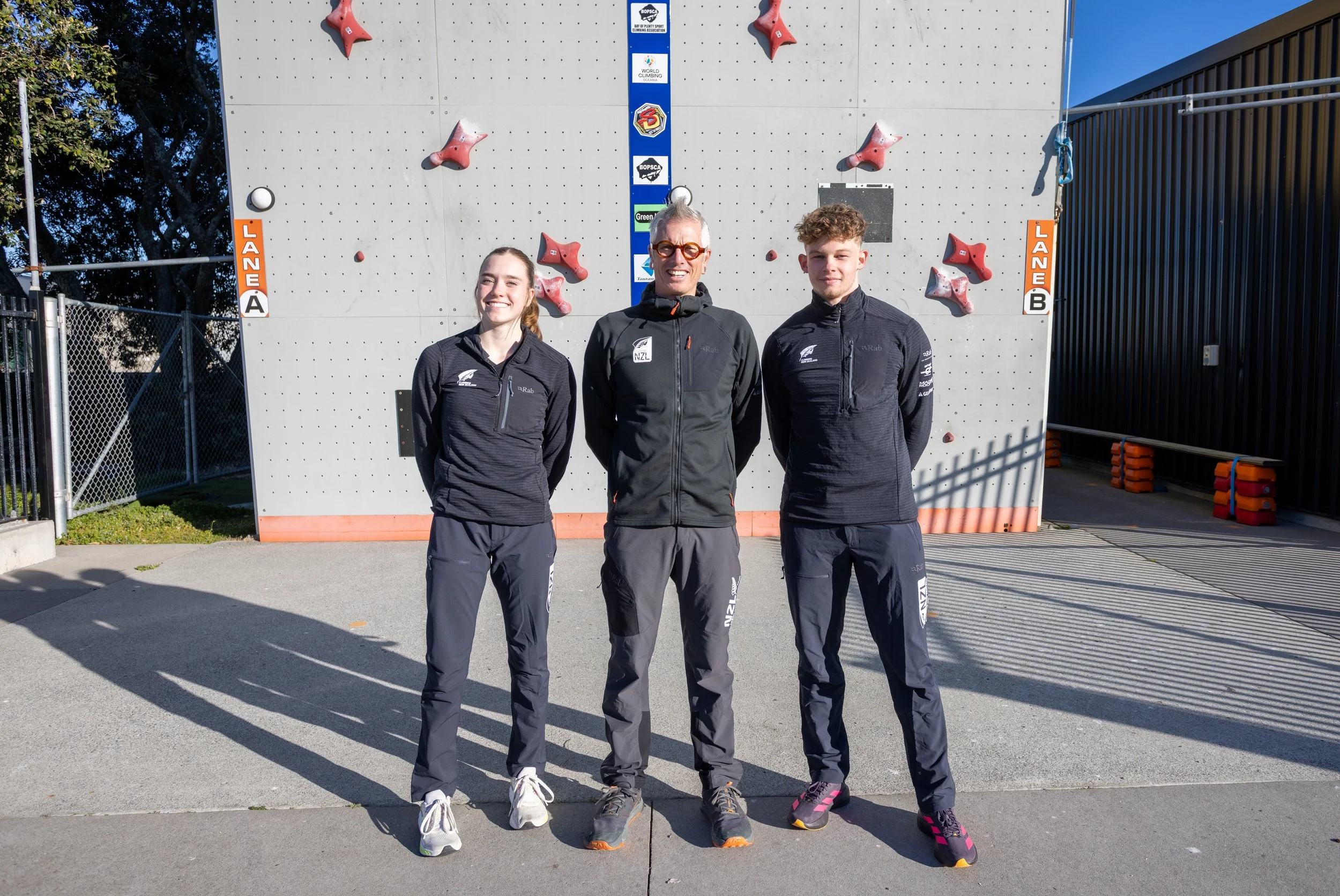
Rob opened Mount Maunganui’s Rocktopia climbing gym in 1999 and has coached the New Zealand climbing team since 2001. His focus on the competitive side of the sport sharpened after he began coaching a tenacious Sarah Tetzlaff towards the 2018 Youth Olympics in Buenos Aires. But there was one glaring problem – New Zealand didn’t have the right facilities. Training for the speed discipline meant travelling as far as New Caledonia.
Rob decided to fix that. Through the Bay of Plenty Sport Climbing Association (BOPSCA), funding and local support were secured, and in 2019, New Zealand’s only Olympic-sized speed wall opened at Blake Park – an exact replica of the standardised route used in competitions around the world.
In 2022, Rob launched a dedicated, high performance speed-climbing programme from scratch and made a controversial call: athletes who joined would have to specialise exclusively in speed, giving up the traditional Boulder and Lead disciplines.
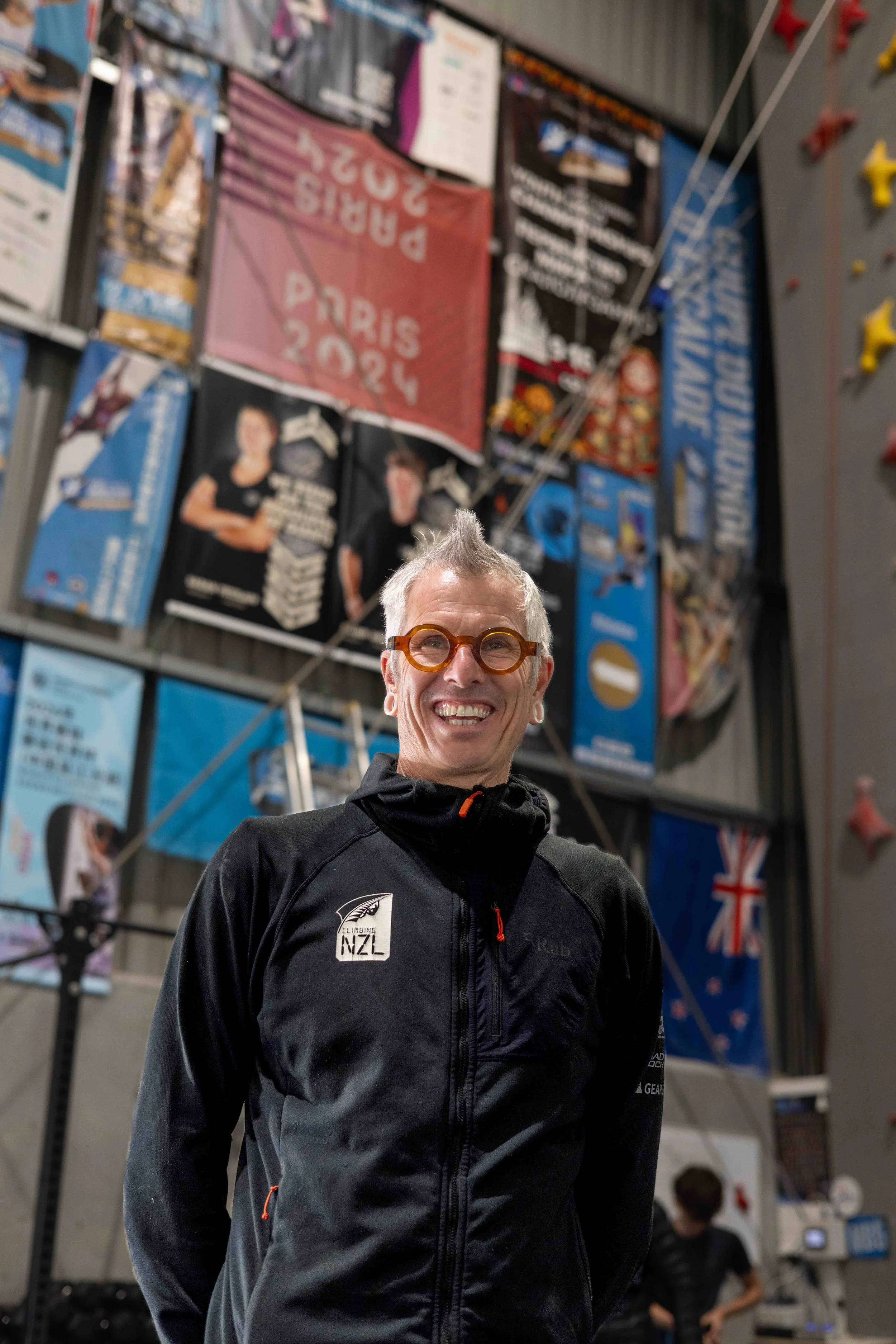
Six signed up. Among them was Tauranga teenager Julian David, who would later go on to win a Youth World Championship and compete alongside Sarah at the 2024 Paris Olympics.
“This shouldn’t have worked at all, when you look at it from the outside,” says Julian. “Not knowing how it was going to go was crazy, to be honest, but Rob’s drive, determination and passion for climbing is incredible.”
Julian’s journey began as a student at Tauranga Intermediate School. He loved climbing trees, and when he inevitably fell out of one, a teacher offered some practical advice: “We’ve got a climbing wall in the gym. Go climb that instead.”
He did. Aged 12 and with no formal training, Julian entered the AIMS Games and came third. The result caught Rob’s eye.
Once he joined the speed programme, Julian’s rise was rapid. He secured New Zealand’s first Youth World Championship title in 2023 and the Paris Olympics suddenly became a realistic goal for the French-born athlete. A year later, aged 19, he finished eighth in Paris with a personal best of 5.20 seconds.
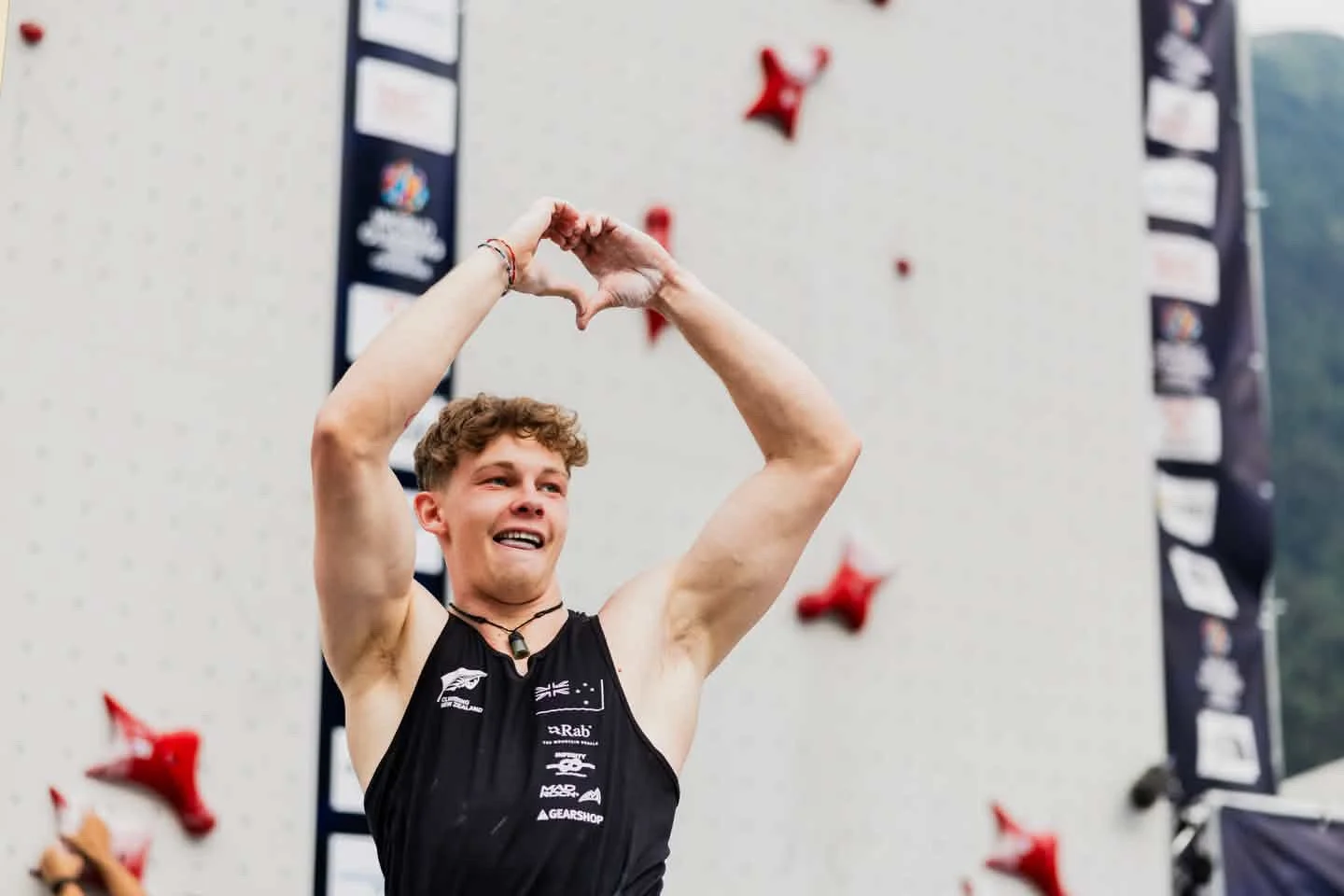
“I was like everyone’s younger brother in the Olympic village. I love sport, so walking past world champions and people I watched on TV growing up was just surreal.”
Coming home proved harder. After years of setting personal bests almost every time he competed, Julian spent much of 2025 struggling to improve and grappling with the post-Olympic blues. He worked closely with High Performance Sport New Zealand and psychologists to strengthen his mental game and return to form.
At this level, progress is measured in tiny increments. “0.1 of a second for me now would be a huge personal best,” says Julian. “That would mean making finals consistently and being up there with the best in the world.”
Getting his mindset right is just as important as the physical preparation. “The margin of error when you’re racing up a 15m wall in five seconds becomes smaller and smaller the faster you go. Not making mistakes is super crucial, but really easy to do. Mindset is a huge part of it.”
For Julian, that means using familiar rituals, routines, music and visualisation techniques to shut down any nerves and let instinct take over.
“The ideal mental state is when you don’t remember what happens or what’s going on. It’s too fast to comprehend anyway. It should just happen. But getting into that state is what’s difficult.”
In July, after more than 12 months fighting his way back to form, Julian finally broke the five-second barrier, clocking 4.99 seconds at a World Cup event in Chamonix, France – achieving his biggest goal for 2026.
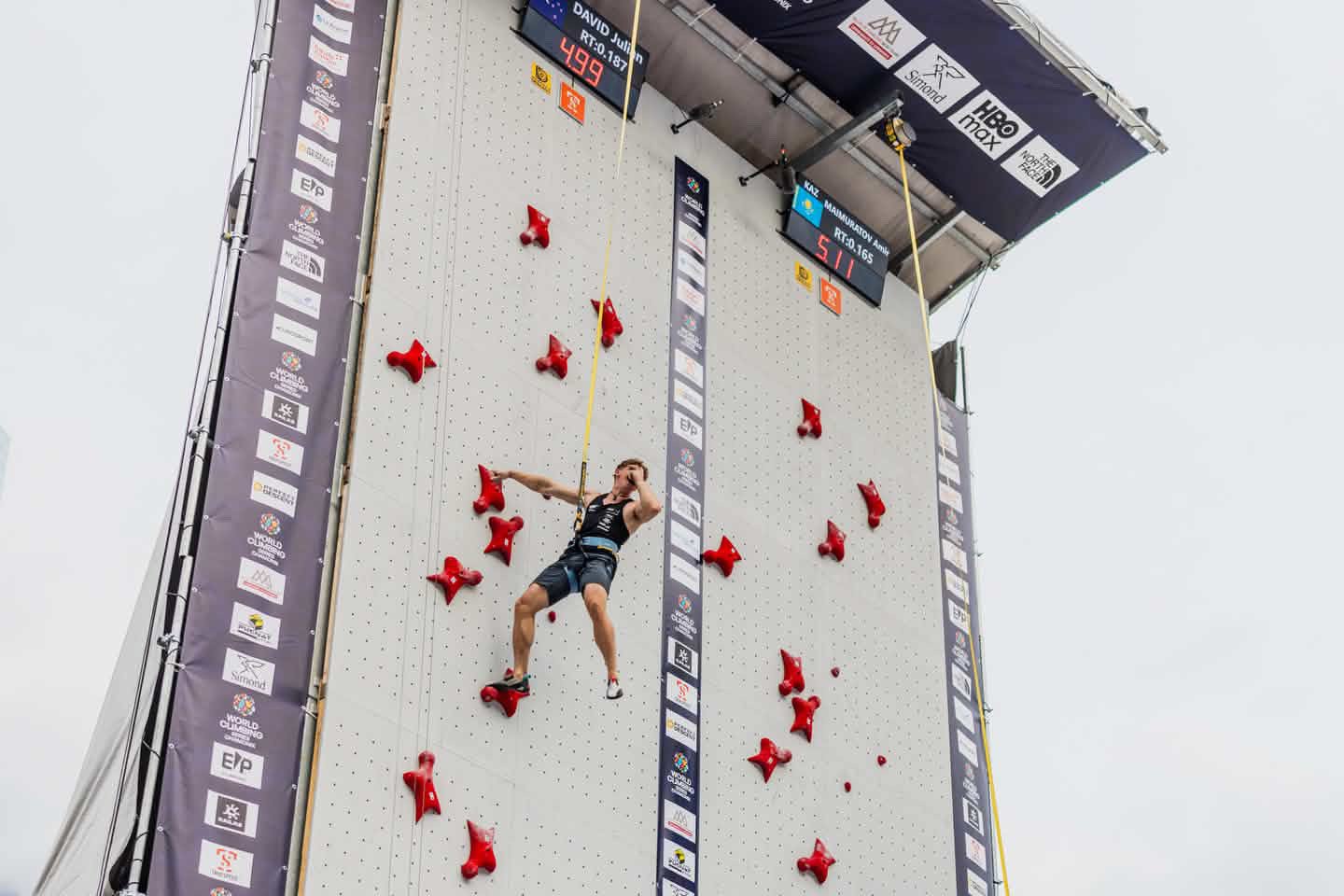
Days later, he was in Arco, Italy, watching his 15 year-old teammate, Mila, race for the same world title he’d won three years earlier. The parallels were uncanny. Neither had been expected to win; both found themselves up against world-record holders whose mistakes in the final knockout rounds unexpectedly opened the door.
“It was déjà vu,” says Julian. “I had never understood what it was like for my coach until that moment, and I’ve never been that amped to watch anyone climb in my life as I was to watch her.”
Mila’s campaign in Arco almost unravelled before it began. She slipped during her first of just two qualifying runs, leaving one final chance to make the knockout rounds.
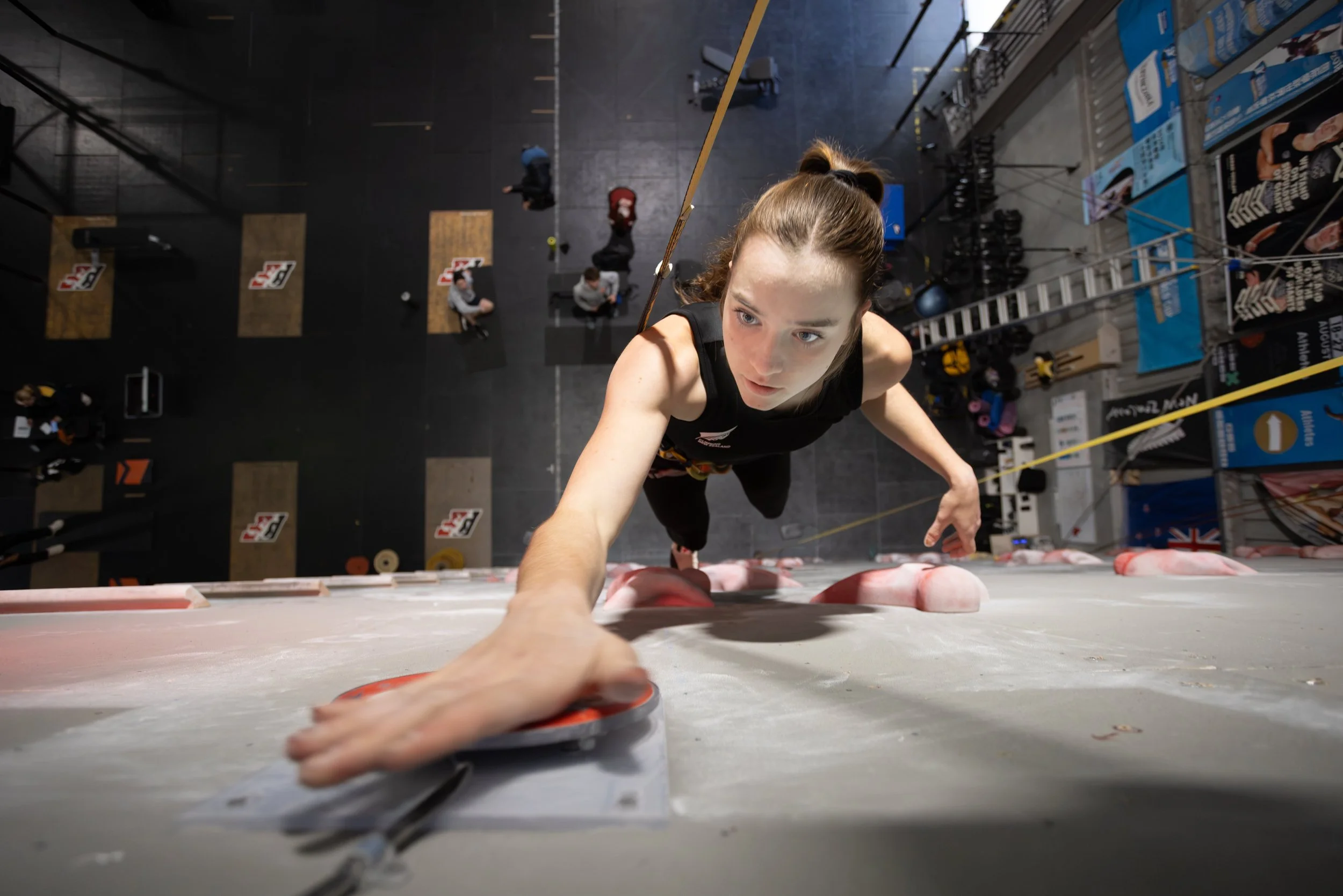
“I was a little bit shook,” she recalls, “but Rob came behind the wall and told me to reset. He reminded me, ‘You’re at Worlds. This is your opportunity to let it happen and show what you’re capable of.’”
Rob took the pressure off, reminding Mila it was only her second international competition and helping to put the mistake behind her. After a couple of practice starts on the warm-up wall, she was calm and ready to go again.
Mila safely qualified for finals and, from there, simply kept advancing. Each knockout race ended the same way: she hit the stop pad and looked for one thing – the green timer signalling she was through. In the quarterfinals she clocked 7.70 seconds – a personal best and new Oceania record.
“I was bawling my eyes out between every single run just from joy,” she says. “I’ve never cried out of happiness before. I was just over the moon.”
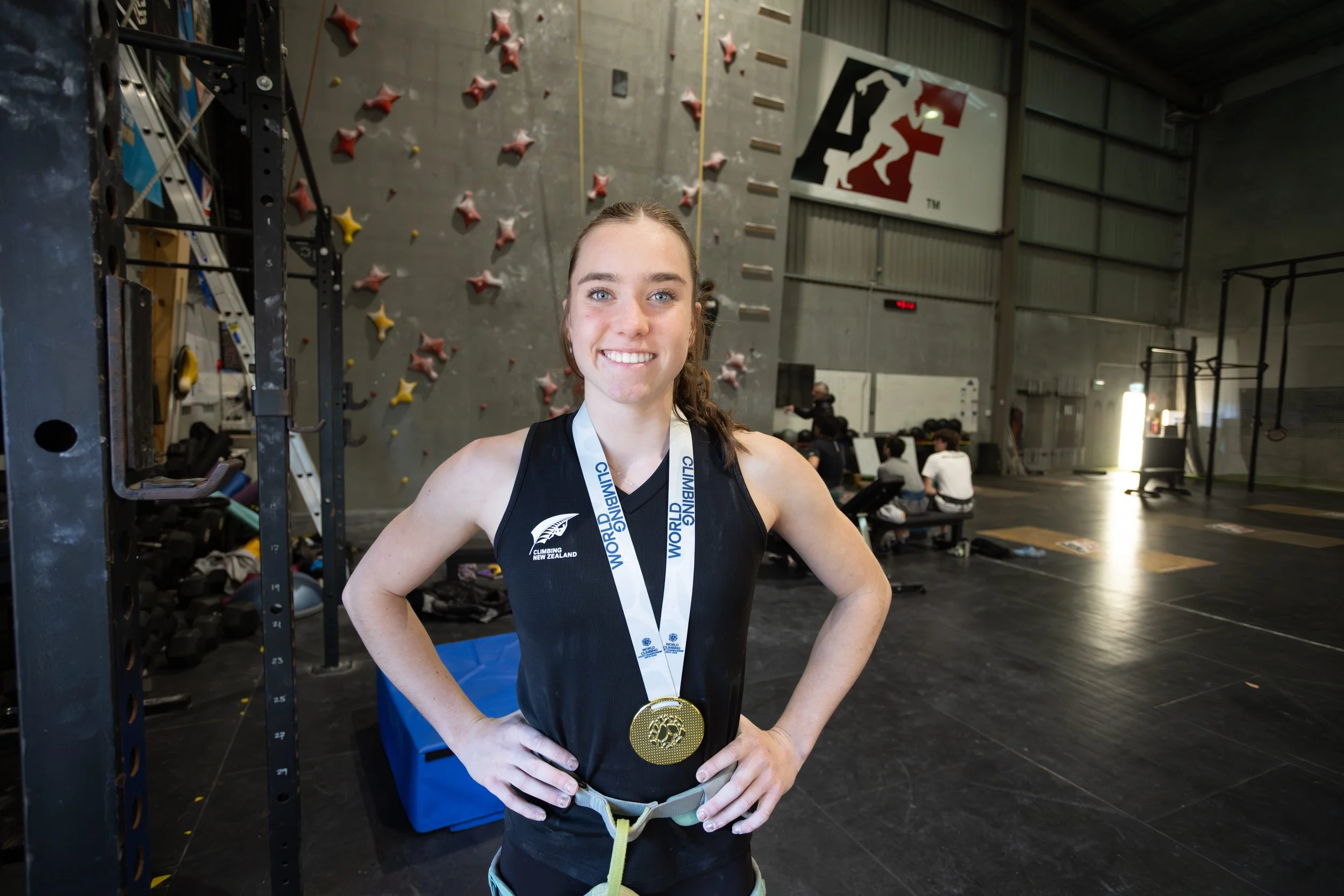
The celebrations with her coach, family and teammates that followed her gold medal victory were overwhelmingly emotional. The young girl who had once spent six weeks trying to master the first move was now a world champion.
“I credit so much of my win to Rob,” she says. “If he wasn’t there, I don’t actually think it could have happened. Rob was incredible.”
Back home in Mount Maunganui, life has quickly returned to normal. Teachers have been lining up to see the gold medal, while her friends welcomed her home with a surprise party. She’s back at her part-time job at Rocktopia and has settled into her usual training regime.
Fortunately, training with Rob is never monotonous.
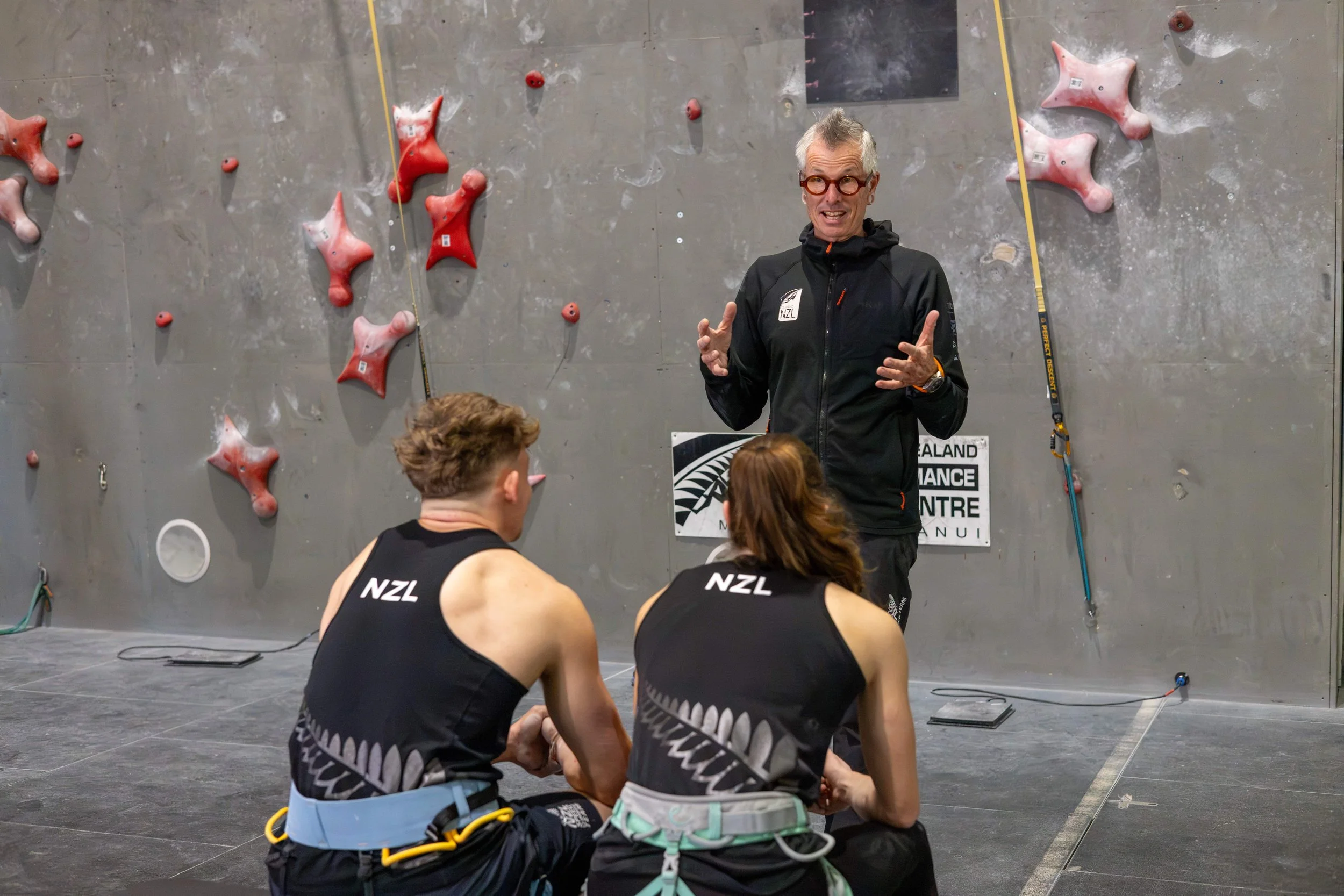
“Rob has so much energy and passion for the sport that it rubs off on you. He has a way of bringing the best vibes to every training session.”
Mila has already set her sight on new goals. Next year, she becomes eligible for the Open World Cup circuit, before the Oceania qualifying event for the LA Olympics takes place at Blake Park on October 23 and 24, 2027.
Only one women’s Olympic spot is available, setting up a tantalising contest between Mila and Paris Olympian Sarah Tetzlaff – her long-time mentor, role model and one of her earliest speed climbing coaches. Rob believes that rivalry could lift the entire programme.
“If they can both embrace it and both be pushing each other, then it’s only going to be good for our sport. We should be able to get everybody to lift together.”
Whatever happens, the groundwork for a successful future has already been laid. Rob acknowledges today’s youngsters are progressing faster because they’re benefitting from everything he has learned while coaching his original six athletes.
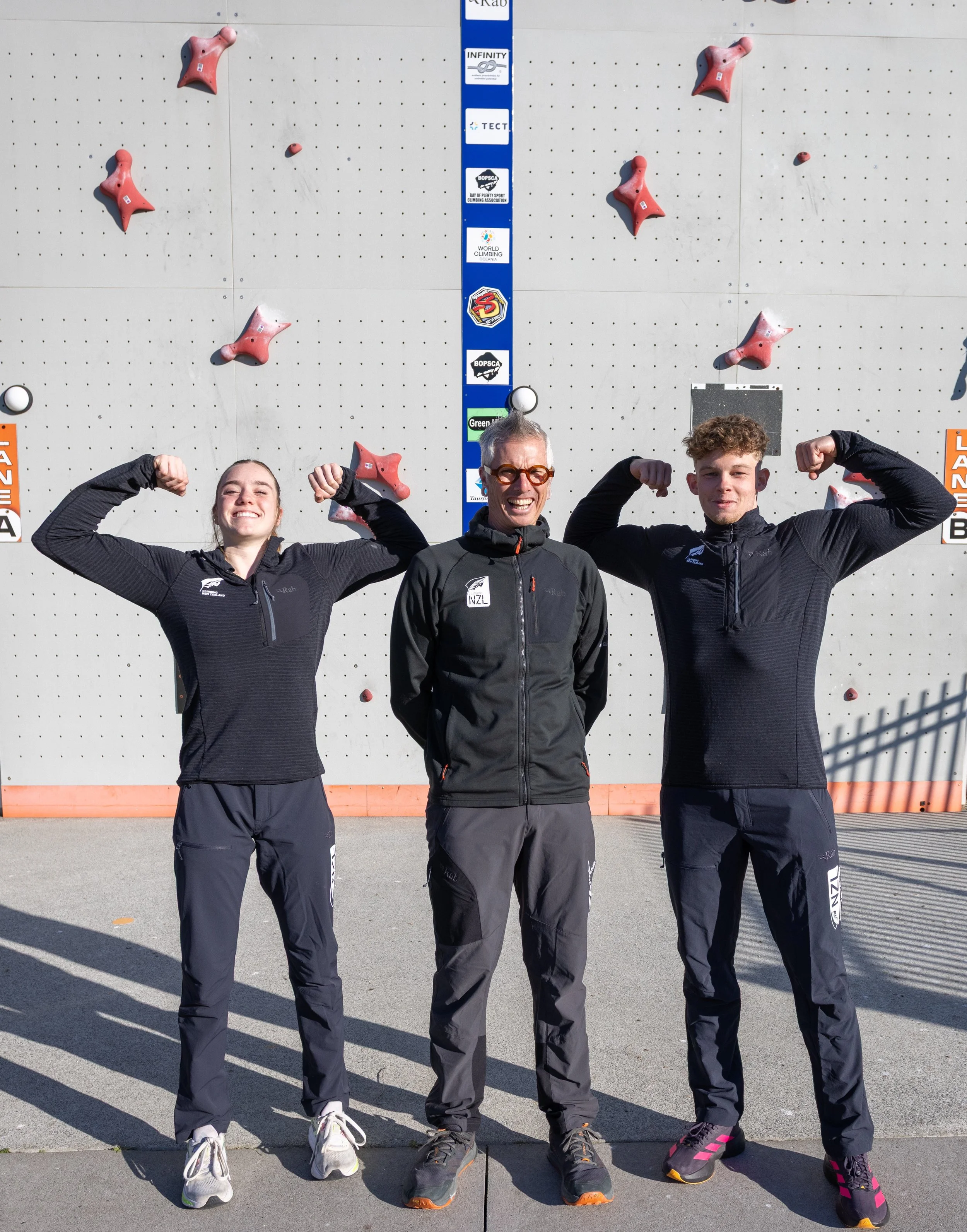
Now aged 21, Julian’s happy the next generation has experienced speed climbers to look up to and train alongside.
“But it goes both ways. I love training with those kids.
They’re so psyched on speed climbing and bring the vibes. They help me as much as I help them.”
Come October 2027, the Bay of Plenty will have the chance to watch them all chase their Olympic dreams on home soil.