

Bay of style: Local fashion, flair and creativity
The Bay has been a mecca for successful fashion designers for decades, and now the new Tauranga Museum is planning to showcase its creative history in a collection that’s dressed to impress.
The Bay has been a mecca for successful fashion designers for decades, and now the new Tauranga Museum is planning to showcase its creative history in a collection that’s dressed to impress.
words DEBBIE GRIFFITHS

From homemade psychedelic ’60s frocks to prototype shoes to swimwear that made waves worldwide – the Bay is home to innovative fashion that will be celebrated in Tauranga Museum when it opens in 2028.
“Our fashion collection will show the talent and stretch people’s ideas of what Tauranga is,” says curator Fiona Kean. “Our fashion industry doesn’t get as much focus as it should.”
In fact, there are a number of New Zealand brands – both past and present – that many don’t realise are local. Expozay burst onto the scene in the 1970s, within a decade becoming the first Kiwi swimwear label in the North American market.
“We have the largest Expozay collection in New Zealand that starts from the beginning with hand airbrushed bikinis through to pieces from the early ’90s. Then we leap forward to emroce, which is also groundbreaking and global.”

Expozay swimsuit, photographed by Karen Ishiguro, nzfashionmuseum.org.nz
Pāpāmoa-based emroce, by designer Emma La Rocca, is the only zero-waste swimwear brand in the world. “Her desire is to see the way clothing is manufactured change to be more sustainable,“ says Fiona. “She uses fabric made from recycled fishing nets and cuts it in a way that means there’s no waste. She also makes inclusive gender-neutral swimwear.”
There’s also a nod to Staxs that had 21 stores around the country, boutique shoe designer Chaos & Harmony, surf labels – like RPM and Lower – Nyne, Repertoire and Greerton-based Beverley Productions that’s been creating knitwear since 1962.

“We’ve got over 5000 textile related objects in the museum collection and a lot have been handmade by local women who have the skills and passion to look great, and make their own clothes,” says Fiona.
Among them, former Ōtūmoetai Intermediate home science teacher Ruth Espin who donated seven pieces before she passed away in 2019.
“Each dress represents a pivotal moment in her life; the one she wore when she got engaged, her wedding dress and the outfit she was wearing when she took her baby home from hospital.”
Some of the outfits were purchased at Hartley’s on The Strand. Those who grew up in Tauranga will have fond memories of their Lamson Cash Carrier System before the store closed in 1987.
“Nostalgia will be an important part of the museum experience and reminding people that they’re part of something bigger,” says Fiona. “There’s so much to share, we’ll be swapping out items regularly so it will be constantly changing. We’re very excited to showcase our fashion success stories.”

Spirit of Mexico
Hayley Barnett discovers authentic Mexican cuisine and innovative cocktails in the heart of Mount Maunganui.
Hayley Barnett discovers authentic Mexican cuisine and innovative cocktails in the heart of Mount Maunganui.
photos CHRISTIAN LONGHI

From left: Isaac Partida, Claudia De La Torre and Marco Rodocanachi.
Kiwis are beginning to understand tequila is not just a shot,” Marco Rodocanachi says, delivering another amazingly delicious tequila-based cocktail to UNO's table.
The mixologist and co-owner of the newly-opened Agave at Mount Maunganui’s Cruise Deck is explaining the welcomed shift in perception for the spirit that has largely been known as a party drink and making an incredibly convincing case for a reassessment.
“A lot of people don’t know this, but tequila is probably the healthiest thing you can drink,” he adds, with casual conviction and air quotes around the word “healthy”. “It's not got many calories, it releases serotonin in your brain so it makes you happy, and in terms of alcoholic drinks, there's not really anything better – so long as you’re choosing a quality tequila.”

Marco opened Agave with fellow co-owners and chefs Isaac Partida and Claudia De La Torre last December. He met the couple when they were working together at the foodie favourite Clarence Bistro in Tauranga. They all came to New Zealand six years ago – Marco from Italy and Isaac and Claudia from Mexico – and bonded over their shared passion for Mexican cuisine and drinks.
The trio’s initial idea was a speakeasy. The location was perfect, hidden in the corner of the Cruise Deck. But the large glass bifold doors created an open environment that was somewhat incongruous with the dark and moody vibes of a speakeasy.
The cuisine was always going to be authentic Mexican, and with Marco’s love of tequila, it just made sense to focus on an all-Mexican offering. Isaac and Claudia both grew up cooking with their families. Isaac travelled around Mexico and worked for renowned international chefs, gaining amazing gastronomic experiences along the way.
“There aren’t a lot of restaurants here in New Zealand serving real Mexican fare that isn’t Tex-Mex, so it’s hard to understand what Kiwis will like,” says Claudia. “Mexico is a big place. In the north, it’s more meat and barbeque, and they use wheat instead of corn tortillas. Sometimes people have only tried food from certain parts so it doesn’t seem authentic to them. We’ve had to work out what people like and what they don’t.”

At the moment the menu includes handmade tostadas, veggies with white mole, duck enchilada, and a cacao tart to die for.
“I always said I’d never be a baker of sweet food, but now it’s my favourite thing to make,” Claudia smiles. Isaac and Claudia have kept the flavours as authentic as possible.
“Now that we have more time and are more adapted to the place, we are starting to have regular customers, so can start to play more with the menu and introduce new flavours,” Isaac says, citing the rich, complex flavours of Oaxaca and the slightly sweet seasonings of Chiapas and some new additions they are planning for the menu.
“But slowly,” smiles Marco, suggesting they won’t be alienating those with less than adventurous Kiwi tastebuds. “Very slowly!”

From Paris to paradise
From French bistros to New York dreams, globe-trotting chef Paul Patterson has found his anchor at Ōhiwa Harbour's Fisherman’s Wharf.
From French bistros to New York dreams, globe-trotting chef Paul Patterson has found his anchor at Ōhiwa Harbour's Fisherman’s Wharf.
words SUE HOFFART
photos CLAIRE HOUSE PHOTOGRAPHY

Fijian-Kiwi chef Paul Patterson admits it was fun rather than food that lured him into commercial kitchens. The Ōhope restaurateur was 15 when he began washing dishes in a city pizzeria, relishing the vibrant social scene and comparative maturity of his female workmates. But everything shifted on the night a short-staffed chef called him to the stove.
“I was chucked in the deep end and I loved it,” he says. “By the time I was 16, I was half-running the pizza joint.”
So began a culinary career that has taken him to Paris, New York and to the Waiheke Island bowling club. He has flown to Glastonbury music festival to cook for celebrities and once scooped an award at the barbeque world championships in the American city of Memphis.
There have been a few additional stops along the way, too. Like starting a horticulture degree and completing an auto engineering diploma, with stints as a drainlayer, a security guard and photographer for a music industry magazine. Not to mention appearances on reality television show The Bachelorette. “But I always end up back in the kitchen.”
Now, at 40, he is settling into small-town life while casting for kingfish out the window of the Fisherman’s Wharf restaurant he has purchased on the edge of Ōhiwa Harbour. It was an act of charity that introduced him to the coastal community three years ago.
Paul had agreed to donate a personal chef experience for an animal welfare fundraising event, held at the Ōhope Beach Golf Links clubhouse each year. On that first visit, he was gobsmacked by the stunning beach backed by rolling hills and an especially relaxing rural ambiance.

During a subsequent stay, for the same event, he discovered a wharfside eatery with a bank of wooden windows that overlook darting stingrays, sailboats and a waterway stocked with fresh oysters.
Paul claims he pestered the previous owner into selling. Last year, he and partner Sarah Day moved their toddler son Hendrix to Ōhope to immerse themselves in a different kind of life.
“It’s a really beautiful place and this region is amazing, with the water and the bush. I can watch people floundering out the front here and 40 minutes’ drive from work, I can shoot a deer. A 40 minute boat ride and I can catch a marlin.
“I have customers with a gin distillery and there’s an island across the harbour with an avocado orchard on it. You can’t really beat it.”

Paul admits he was vastly less enthusiastic about the New Zealand lifestyle when Covid forced him to leave his central Parisian apartment and fly home in March 2020. He had been living on the banks of the Seine river, working as a restaurant consultant responsible for opening more than a dozen eateries in Paris and beyond.
In fact, he was weeks from launching an eatery in New York’s Lower Manhattan when the global pandemic scuppered not only the restaurant but his own plan to live part of the year on that side of the Atlantic Ocean.
Suddenly, Paris became eerily empty and Paul’s Fijian-born mother and Kiwi dad begged him to return to Auckland. He found himself marooned, unable to return to the bright lights of his former life and unsure how to move forward in his homeland.
It was, he says, a tough pill to swallow. So he dug drains to fund a new restaurant business in Parnell. When that didn’t work out, he moved to Waiheke Island to run the kitchen inside the island’s sole bowling club.
During his tenure, membership swelled from 300 to 900 members. His brief and unlikely screen career was sparked by an unsolicited casting call for The Bachelorette. He said no. However, he warmed to the idea after a few too many glasses of Bourbon with friends.
“And, actually, it was great. It was definitely a fun experience. You learn a lot about yourself. You’re stuck in a house with no phones, no music, no TV, so you have a lot of time to be in your own head. It was therapy.”
As always, he returned to his chef whites. “Yes, I love the food, the creativity, the thrill of getting a menu perfect but it’s more than that. For me, the kitchen is a place of crazy ups and downs, with a lot of emotions and a lot of pressure. You’re forever chasing something, trying to fix something, get better service, a better dining experience, better leadership of your staff. It’s addictive.”
On April 5, Paul will host a ‘Scales and Ales’ beer and seafood event for the Flavours of Plenty Festival. His ‘Cray Tales and Cocktails’ evening is scheduled for the following Saturday.

It’s all Goode in the hood
Auckland’s popular gastropub Goode Brothers has left the nest to land in Bethlehem. UNO pops in to see what makes it so special.
Auckland’s popular gastropub Goode Brothers has left the nest to land in Bethlehem. UNO pops in to see what makes it so special.

Goode Brothers has always been about family. It’s right there in the name. Across its four locations in Auckland, the popular gastropub has been a place where you can be equally comfortable having a meal with your loved ones or a night out with your family or friends.
This is why UNO was excited to hear that Goode Brothers had not only welcomed a new addition to their family but that it had also left the Auckland nest.
“We’re super excited to be part of the Bethlehem community,” Jamie Freeman, Goode Brothers’ head of operations enthuses from the freshly opened venue. “We believe Goode Brothers “There’s space for everyone here,” Jamie smiles.

The spot, which was once just a glint in the eye of Goode Brothers’ expansion plans, certainly makes a lasting impression. So much so that it’s already proving itself a welcome addition to the local community’s dining scene.
“It’s really great here,” Jamie continues. “The location is prime, right in the hub of Bethlehem, and this area has so much potential. We believe it aligns perfectly with what we do.”
It’s a busy Saturday afternoon and the buzz is palpable. The bar staff are working the impressive selection of tap beers, which offers both premium and craft, and the sizzle from the open has the potential to become a local favourite, and we're already seeing how the community vibe is shaping up.”
Situated on a prime corner spot in Bethlehem Town Centre, Goode Brothers is hard to miss and ready to welcome you in with open arms. Once inside, it’s spacious and inviting. Like its Auckland siblings, the space has been carefully designed into subtle sections that allow for versatility. You can make yourself at home hosting a family celebration in one of the large booths, enjoy a meal out at one of the stylish dining tables (that along with traditional condiments also comes complete with a pot of fresh basil) or just pop in for a casual drink and a catch-up at one of the high-top areas.
“There’s space for everyone here,” Jamie smiles. The spot, which was once just a glint in the eye of Goode Brothers’ expansion plans, certainly makes a lasting impression. So much so that it’s already proving itself a welcome addition to the local community’s dining scene.

“It’s really great here,” Jamie continues. “The location is prime, right in the hub of Bethlehem, and this area has so much potential. We believe it aligns perfectly with what we do.”
It’s a busy Saturday afternoon and the buzz is palpable. The bar staff are working the impressive selection of tap beers, which offers both premium and craft, and the sizzle from the open kitchen is sending out incredibly enticing aromas along with the fresh, Kiwi-Italian-inspired favourites that make up the menu.
Along with traditional favourites like pizzas, pasta, fish n’ chips and burgers, all freshly prepared from quality ingredients, Jamie is particularly proud of the fun elements that are woven into the dining experience.
“Our food is ideal for those seeking a casually elevated dining experience,” he says, citing their hero dishes like the Pork and Wagyu Brisket Meatballs. This showstopping dish offers a touch of drama by being lit with flames as it’s served. Another dish we’re dying to try is the Spaghetti Cacio e Pepe, which is also served flaming, only not from a plate. Instead, it is served at your table from an absolute behemoth of a parmesan wheel.
But it’s not all about the theatrics. Goode Brothers prides itself on its fresh, handmade pasta.
“Everything here is handmade from scratch,” Jamie says. “We have a pasta machine on-site.”
You can even have a go at it yourself by attending one of their famous pasta-making classes. These are held in a private room with the adult classes offering a fun evening out, and you get to leave with your own little bundle of freshly made pasta, while the school holiday kids’ classes teach them how to make their own pizzas.
“It’s something different. You can come down with your partner, have a glass of wine or prosecco and enjoy that,” Jamie says. “I think people are looking for experiences as well as good food. We want our customers to have fun with food. It’s about fresh, modern, and exciting dining, yet still grounded in the Kiwi classics.”
The jewel in the crown of the new gastropub has to be its large outdoor area. Equipped with a playground to keep the kids busy, the large deck offers plenty of seating, perfect for sunny afternoons and evenings.
And on big sporting occasions there’s plenty of screens inside and out for catching the big game. The secret ingredient in the sauce is this flexibility. Goode Brothers want to bring people together, whether that’s an intimate couple on date night, family celebrating a milestone, mates popping in for an after work drink or a group of friends on a night out, they’ll all find a home at Goode Brothers.
“We’re trying to offer something for everyone here,” Jamie smiles. “It’s all about creating that sense of togetherness.”

A lasting legacy: 20 YEARS OF UNO
Two decades strong, UNO has been the Bay’s voice, shining a light on the best of the region’s creatives, business minds, leaders, philanthropists and influencers. Now, after 20 years, it’s time for UNO to celebrate its own influence.
Two decades strong, UNO has been the Bay's voice, shining a light on the best of the region’s creatives, business minds, leaders, philanthropists and influencers. Now, after 20 years, it’s time for UNO to celebrate its own influence. Hayley Barnett sits down with the publication’s owners and two previous publishers to discuss how the magazine came to be, and where it’s headed.
photo ALAN GIBSON

The UNO team from left: Nicky Adams, Michele Griffin, Rebecca Meyer, Hayley Barnett and Stephanie Taylor.
As the media landscape continues to transform both here in Aotearoa and around the world, celebrating 20 years as a regional print publication seems almost unbelievable.
Looking back on two decades of storytelling, art and community, for the team at UNO, with all their years of experience in magazines, newspapers and radio, it’s obvious why this unique publication has gone the distance. Having always focused on positive stories of inspirational locals, there has been and always will be a need for connection.
Part of its success is testament to founder Andy Martin’s vision. Casting his mind back 20 years ago, Andy recalls jumping in head first.
“To be honest, I had no idea what I was doing,” he laughs.
“I was winging it from the get-go.”
More a risk-taking entrepreneur than media mogul, Andy had spent much of his career in sales and marketing, in industries from farming to oil. It was when he started up a business in building project management that he delved into media, launching a magazine called The Homepage.
“I always liked Urbis, a consumer homes magazine, and wanted to do something big scale like that, which drew me to the idea of starting a quality regional magazine,” explains Andy. “I probably wouldn’t have done it unless my father had retired at that stage.”
Charles Martin was a sports broadcaster, and wrote for publications like The Listener, as well as scripts for Close to Home, a TV series in the ’70s and ’80s.
“Dad became the editor and I did the sales, and we cobbled it together from there,” says Andy.
The main idea, he adds, was to celebrate the local people in the region.
“Dad’s big thing was all about not being topical,” he says. “The beauty of it was that you could still pick one up years later and it’s still relevant. That was quite important.”
When Charles sadly passed away 10 years ago, Andy felt his own passion for publishing fading with him. That, he said, and he’d “gone too big too soon”. Around that time he’d started printing a Waikato version and opened an office in Wellington, with the intention to publish a magazine for the city.
“Wellington wasn’t a good move,” he admits. The project collapsed shortly after it started and Andy decided to sell the entire brand instead.
From there, Jenny Rudd and Mat Tomlinson picked up UNO and, in Andy’s words, gave it a good “shake up”.
“It needed some new energy and that’s exactly what Jenny had – good energy.”
Over the next six years, UNO transformed in style and tone, taking on more of a business bent, something Jenny was passionate about.
“We attracted some amazing talent to join us, and added two more titles to our fold,” tells Jenny. “It was a magical six years!”
When the current publishers, Michele Griffin and Rebecca Meyer, came on the scene, they brought with them over 35 years of media sales experience, having been at the Bay of Plenty Times (now under the NZME umbrella) for much of their working lives. For Michele, it was her first job out of high school.
The pair had watched UNO evolve over the years and had a vision to bring it back similar to its original format, with more story telling, while continuing to shine a light on the incredible breadth of creative talent the region has to offer.
For Michele and Rebecca, it was an obvious fit.
“We saw UNO as this sophisticated, beautiful brand,” explains Rebecca. “We always admired it, and because we had clients at NZME who respected the magazine, we had an understanding of how the community viewed it.”
Neither see print disappearing any time soon, and Andy agrees. “People spend so much time on their phones these days,” he says. “To sit down and pick up a hard copy is a luxury. There will definitely always be a place for it.”
When asked about where they see UNO headed in the future, there’s no talk of moving fully online or cutting back on print quality.
“We’re lucky this region is growing,” says Michele. “One piece of advice that has always stuck with me was, ‘Stick to your knitting’. Don’t try to reinvent the wheel. We’re always listening to what the market wants, evolving where it matters – like maintaining a strong online and social media presence – but at our core, the magazine remains the heart of what we do.”
Adds Rebecca: “Ultimately, people will read it if it looks good and delivers quality content that is relevant to them.
Get that right, and everything else will follow.”

Cool, crisp & crafted
These fun festive cocktails are sure to impress guests this holiday season. Refreshing, delicious and light, they’ll be on rotation all summer long.
These fun festive cocktails are sure to impress guests this holiday season. Refreshing, delicious and light, they’ll be on rotation all summer long.
cocktails KIRKY DONNELLY | photos ILK PHOTOGRAPHY

Dark coconut mojito
Dark coconut mojito
Enjoy this crisp cocktail on a hot summer’s afternoon.
MAKES 2 cocktails
INGREDIENTS
2 tbsp simple syrup
10+ fresh mint leaves (plus extra for garnish)
3-4 tbsp freshly squeezed lime juice
5 cucumber slices
60ml Millenhall Rum
120ml coconut water
Soda water, to top
Garnishes
Fresh mint leaves
Lime wedges
Cucumber ribbons (use a vegetable peeler)
METHOD
Juice the lime, then cut the remaining lime halves into wedges. Set aside half for garnish and half for mixing.
Slice 5 cucumber rounds, and use a vegetable peeler to create thin ribbons of cucumber for garnish.
In a cocktail shaker, combine the simple syrup, fresh mint leaves, cucumber rounds, lime juice, and lime wedges. Gently muddle together to release the flavours.
Add ice to the shaker, then pour in the rum and coconut water. Secure the lid and shake well.
In two tall glasses, add ice, mint leaves, and the leftover lime wedges.
Use the cucumber ribbons to circle around the inside of each glass.
Strain the cocktail mixture into the prepared glasses, stirring gently to combine. Top off with soda water for a refreshing fizz.

Berry gin spritz
Berry gin spritz
This delightful berry-infused cocktail suits festive occasions,
but is also great year round.
MAKES 2 cocktails
INGREDIENTS
30ml simple syrup
10-12 fresh or frozen raspberries
1 tbsp freshly squeezed lime juice
60ml Armada Premium Pink Gin
Tonic water, to top
Garnish
Fresh raspberries
Lime slices
METHOD
In a cocktail shaker, combine the simple syrup, raspberries, and lime juice. Muddle together to release the raspberry flavours.
Add the pink gin to the shaker, then fill with ice. Shake well.
If the mixture is too thick, remove the lid of the shaker and use a strainer to pour the cocktail into the glasses.
Create a beautiful gradient by pouring the mixture into two chilled glass flutes before adding the ice. Once the ice is in place, top with your choice of tonic water for a refreshing finish.
Garnish with fresh raspberries and a slice of lime.

Vanilla pear gin fizz
Liquid dessert, yes please! For a good-looking tipple, this sweet fizz
is super easy to put together.
MAKES 2 cocktails
INGREDIENTS
For the fresh pear juice
1 cup finely chopped ripe pear
⅔ cup cold water
1 tbsp fresh thyme leaves
2 tbsp lemon juice
Seeds from 2 vanilla pods
For the cocktail
120ml fresh pear juice
60ml Armada Premium Dry Gin
30ml simple syrup
Prosecco, to top
Garnish
Fresh pear slices
Thyme sprigs
Leftover vanilla pods
METHOD
In a blender, combine the chopped pear, cold water, thyme leaves, lemon juice, and vanilla seeds. Blend until smooth.
Strain the pear purée through a fine mesh strainer to extract the juice. Chill the juice in the refrigerator until ready to use.
In a cocktail shaker, combine the chilled pear juice, simple syrup, and gin. Fill with ice and shake well.
In two glasses, add ice, a slice of pear, thyme sprigs, and your leftover vanilla pods for garnish. Divide the mixture evenly between the glasses and top off with Prosecco.

Sparkling cranberry Christmas
Cheers to Santa’s favourite festive drink.
MAKES 2 baubles
INGREDIENTS
1 cup cranberry juice
60ml Armada Premium Vodka
1 tbsp fresh lime juice
Prosecco, to top
Garnishes
2 sprigs fresh rosemary
Frozen cranberries
METHOD
In a carafe filled with ice, combine the cranberry juice, vodka, and lime juice. Stir gently to mix the ingredients.
Using a funnel, pour the mixture into your Christmas baubles, filling them about three-quarters full, depending on the size.
In two glasses, add ice, a handful of frozen cranberries, and a sprig of rosemary for garnish.
When you’re ready to enjoy, pour the contents of the baubles into the prepared glasses and top with Prosecco for a festive fizz.
Follow @kirkymareedonnelly for more impressive cocktail recipes and inspiration.

For whom the bell trolls
Tauranga’s surprising past and present connections to the ever-popular Troll Doll.
Tauranga’s surprising past and present connections to the ever-popular Troll Doll.
words KARL PUSCHMANN | photos ALAN GIBSON

Damian Sutton.
Once upon a time, Tauranga was filled with Trolls. Hundreds of thousands of them, in all shapes and sizes, with their outrageously coloured, spikey hair and perpetually cheerful grin. Trolls were everywhere. And then one day, they were not.
This is not a child’s fairytale. This is a cold hard fact. Because despite more than 50 years of sustained popularity, not a lot of people know that Troll Dolls used to be manufactured here in the Bay.
“The New Zealand connection started down at Sulphur Point with the company K. Pasgaard Limited,” says Damian Sutton, Katikati local and one of Aotearoa’s biggest collectors of New Zealand manufactured Trolls. “Kristian Pasgaard, his wife and two children immigrated to New Zealand with their two sons in 1959. In 1960 they got the license from Trolls creator Thomas Dam in Denmark.”
The company was one of only four Troll Doll factories in the world. There was Dam’s original factory in Denmark, one each in America and the UK, and the factory in Tauranga. As well as fulfilling children’s Troll needs here, the company also sent them abroad. Sutton reckons around 80 per cent went to Australia, and there are news reports of shipments weighing two tonnes being shipped as far as Africa.
The ’60s and ’70s were a boom time for the company. But in the ’80s interest in the Trolls began to wane and the local factory pivoted their focus to things like tennis balls and sporting equipment and ending the Bay’s 30-year association with the beloved Trolls.
Sutton says that amongst collectors, the Tauranga-made Trolls are prized.
“There’s a whole lot of different things that New Zealand did that the other three factories didn’t,” he explains. “Due to vinyl shortages, we couldn’t always make the ‘normal’ ones, so that’s how the weird and wonderful colours came about. They made them in four colours. We’re the only factory in the world that did that. Also, because of our sheep’s wool we have these gingery colours that the rest of the factories around the world didn’t make.”

Another interesting tidbit is that we also didn’t discriminate. Both the male and the female Troll Dolls manufactured here used the exact same mould. The only way to tell them apart was due to the Troll’s clothing.
“We’re the only one in the world that has done that,” Damian says, explaining that the female moulds used elsewhere had more “feminine ears”.
These weren’t our only innovations. We also created strange and unusual Trolls, which were produced in limited runs and only made here. Things like Yeti Trolls (available in four different colours), Cow, Elephant and Giraffe Trolls and even Trolls that doubled as piggy banks. These have all become hot collector items.
To illustrate, he holds up a Cow Troll from his personal collection of around 1500 Trolls and says, “There’s about 10 different New Zealand cows. One of these is now $2,000 a pop.”
He puts it down, carefully, and continues. “The locally made Yeti Trolls are worth between $200-$600 depending on colour and condition. And if you ever find a little blue three-inch Troll, they’re worth $1400.”

These Trolls are so desirable because the factory didn’t make them all year round. Production was seasonal and mostly focused on the lead-up to Christmas.
“The New Zealand Troll has now become the most rare in the world,” Damian says. “Sadly there is not a full set in New Zealand.”
This is something that he wants to fix.
“My mission,” he states with purpose, “is to bring the New Zealand trolls home. To have a full set of New Zealand trolls so that we can see what we had in New Zealand. These are our native trolls! And people can’t see them.”
It’s an admirable pursuit and one that’s seen him connect with Trolls fans and collectors around the globe as he hunts to reunite our long-lost Trolls. His story starts aged eight, when his aunt brought him his first Troll at a craft market in Pokono.
“I still have that one,” he smiles. “Family just continued to buy them for me. They’d arrive for Christmas or birthdays. Now I’m probably one of the biggest collectors in New Zealand. But it’s only in the last few years that I found out about the Tauranga factory.”

Despite the Troll’s massive popularity, he says that Aotearoa’s collecting community is relatively small. It mainly centres around the Facebook group, Troll Collectors New Zealand, a welcoming community of fellow Trolls lovers where people come together to share stories, and photos and buy and sell Trolls. As well as being an admin of that group he also puts on the Te Puke Toy Fair with a fellow collector twice a year.
These days, it’s the thrill of the hunt and his mission to reunite the local Trolls that keeps him interested in collecting. But what was it that first attracted him to the Trolls? These little Scandinavian creatures that are often lovingly referred to as “ugly-cute”?
“It was the smiley face and the hair for me,” he says, thinking back. “And the constant happiness of the Troll. That’s what really drew me.”

Gold standard
Singer-songwriter Ayla Gold recently broke into the Bay’s indie music scene with her first EP Nuance. Her vintage rock style has been influenced by an eclectic mix of artists over the years. Here, she tells UNO about her artistic process and where she sees Tauranga’s music scene headed in the future.
Singer-songwriter Ayla Gold recently broke into the Bay’s indie music scene with her first EP Nuance. Her vintage rock style has been influenced by an eclectic mix of artists over the years. Here, she tells UNO about her artistic process and where she sees Tauranga’s music scene headed in the future.

Twenty-five-year-old acoustic engineer Ayla Gold was raised listening to everything from Hayley Westenra to Evermore. Kiwi music was always being played on Dad’s stereo or on the family car’s CD player – tapes in her pre-school years. And it’s still Kiwi artists who are her biggest inspiration.
UNO: How did you get into music?
Ayla: I started piano and guitar lessons in primary school and loved to sing along to anything that was playing, and still do. You will often catch
me singing along or harmonising to whatever’s playing in the supermarket. The teachers I had right through school played a huge part in encouraging me to get up and sing on stage. The support from my high school music teacher, Matt Bodman at Ōtūmoetai College, was huge. He would get me involved with school assembly performances, songwriting competitions, Smoke-free Rockquest, and just playing and writing well in general. We’re still in contact today and he’s always quick to give great feedback on my releases.
How would you describe your music?
My vocals are always quite strong as I feel it’s the way I can truly express myself. I believe that what you listen to is what your own music becomes, so I would say my music is indie singer/songwriter, if I were to put it in a box. Hamish Berkers from Mish Studio based in Kirikiriroa is always enthusiastic when we are in the studio recording, as is my video director and producer Finn Lloyd (Mount Maunganui). Both of these lads are legends in their fields and push me to make my music and visuals the best it can be while keeping all my own flair.

What and who inspires you musically?
I love artists who aren’t afraid to be themselves and be genuine and vulnerable in their lyrics. This inspires me to write the way that I do. In terms of sound, I mostly listen to alternate/indie rock and more solo artists than bands. I love lots of washy guitar and drums and finger-picking style electric. I feel most inspired when my emotions or environments feel intense, good or bad. I’m definitely someone who can see through the pain in things and enjoy the creativity of art that flows when things are tough for someone, or how the skill of the artist can portray this. In terms of specific artists, this is always changing as I’m always discovering new music. I’m also someone who loves to be outside – open spaces help me to develop the ideas that come to mind.
In the last few years, my biggest influences have been Molly Payton, Julia Jacklyn, The Beths, Angie McMahon and Sam Fender. Again, these artists are not afraid to put their lyrics and sound into a raw form that transports you straight into their shoes, or you find their lyrics apply to some struggle of your own. A common theme in music I like is the greater hope that an artist can talk about, or almost talk you through, a form of empathising and knowing that there is light at the end of the tunnel. They show you’re not the only one who has gone through whatever it is you are experiencing.
What instruments do you play and do you write your own lyrics?
I play rhythm electric and acoustic guitar as well as piano. I write all my own lyrics. All through school I wasn’t much of a reader so I found it hard to write songs. It wasn’t until late high school that my writing started and during my engineering degree, I got right into reading which took my writing to a whole new level. My notes app on my phone is often growing with lyrics or lines that pop into my head in everyday situations. I’ve actually found catching the bus is a great place to write for me.

How do you find the Bay music scene? How do you see it developing in the coming years?
The scene here is growing and there are a few people that have really invested in their music. The Jam Factory in the historic village and Palace Tavern at the Mount have been great to help support this. I would love to see more small-scale gig venues similar to what you find on Karangahape Road in Auckland, as it would really help to support up-and-coming artists and just bring more of a scene here. We need more of a culture that people can hook into, knowing there is always something on a particular night. I think Tauranga schools have a great arts scene, as well as churches, which are often the catalyst for producing great musicians.
What are your plans for the future?
I want to release more regularly and do a tour of New Zealand at some stage. I’ve had a job in acoustic engineering for three months now with Marshall Day Acoustics. Many of us are musicians, which encourages me to keep at my music and be inspired and supported. I love playing and recording with friends, and I’m excited to meet more people through my music, to see where it takes me. All the creative outlets involved have a chance to develop their skills through me bringing my projects to them and vice versa.
Easy does it
Donna Hay shares her simple shortcuts for super easy summer entertaining.
Donna Hay shares her simple shortcuts for super easy summer entertaining.
recipes + styling DONNA HAY | photos CON POULOS

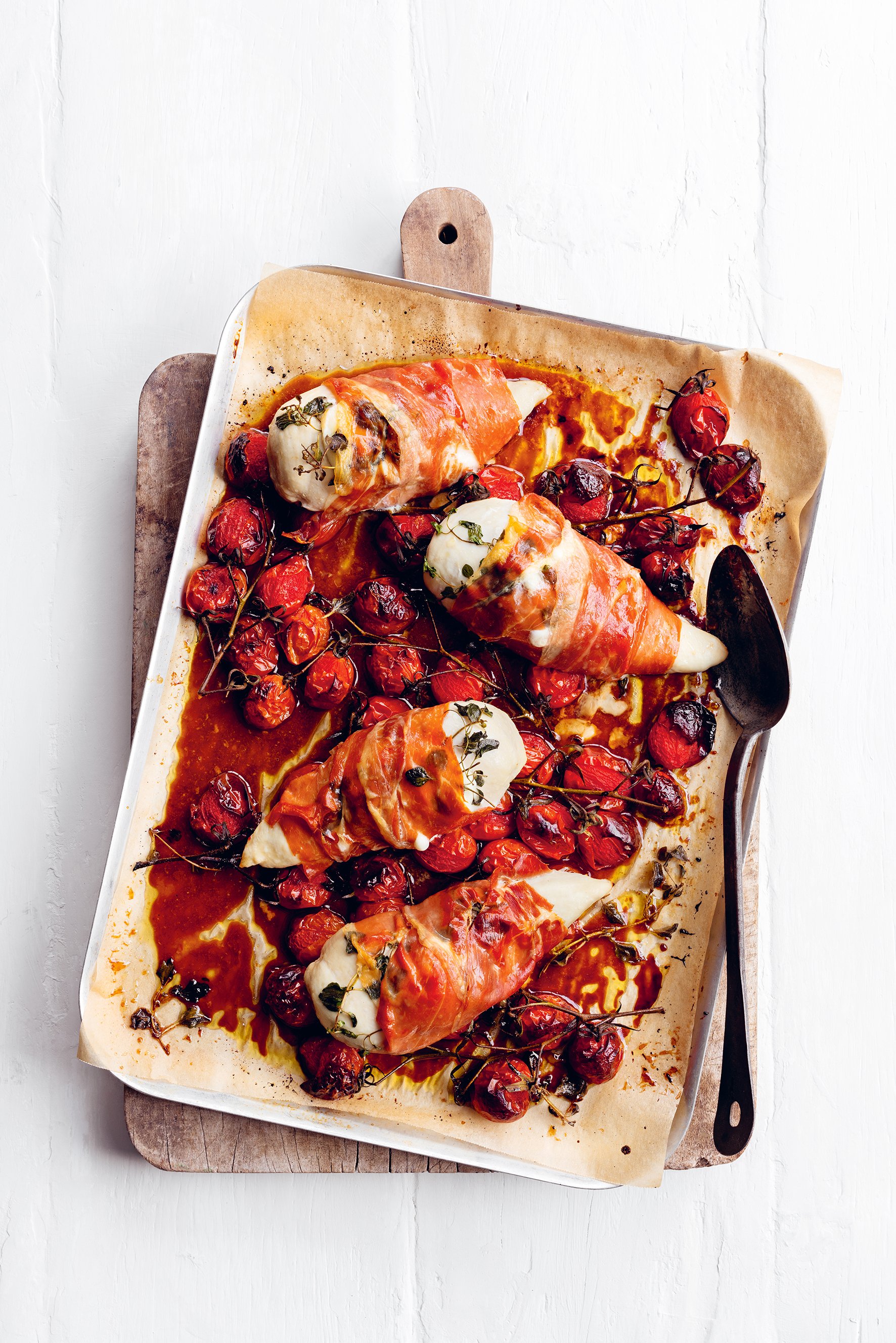
Balsamic tomato chicken parma
Level up the flavour on your chicken parma by baking it with layers of parmesan, creamy mozzarella, oregano and crispy prosciutto. The roast tomatoes and balsamic sauce make the perfect finish.
SERVES 4
INGREDIENTS
¼ cup balsamic vinegar
1 tbsp extra virgin olive oil, plus extra for drizzling
1 tbsp firmly packed brown sugar
sea salt and cracked black pepper
600g cherry tomatoes
4 x 180g chicken breast fillets, trimmed
¾ cup finely grated parmesan
2 x 125g fresh mozzarella, well drained and sliced into 8 pieces
4 oregano sprigs
8 slices prosciutto
METHOD
Preheat oven to 200°C (400°F). Combine the balsamic vinegar, oil, sugar, salt and pepper.
Place the tomatoes on a baking tray lined with non-stick baking paper and pour over the balsamic mixture. Bake for 15 minutes.
Place the chicken on a board and sprinkle with parmesan and pepper. Top each with 2 slices of the mozzarella and a sprig of oregano.
Place 2 slices of prosciutto on top of each, folding them underneath the chicken to enclose.
Place the chicken on top of the tomatoes and drizzle with oil.
Cook for 12–15 minutes or until the chicken is golden and cooked through.
Cook’s note: I’ve used cherry tomatoes on the vine here – however you can use any cherry tomatoes you like. Roma tomatoes cut into quarters also work well. The key is to buy whatever tomato is ripe and sweet.
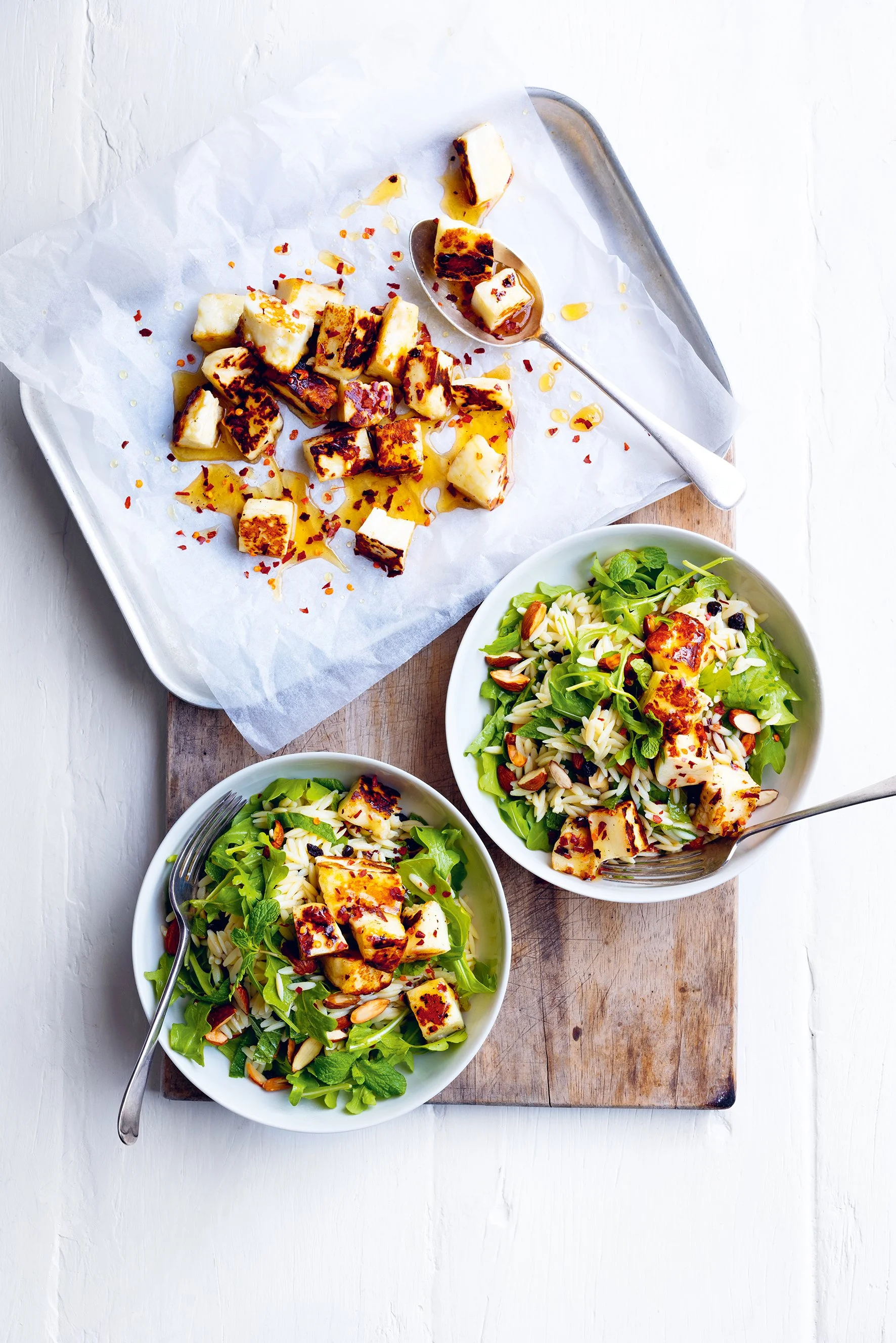
Risoni and chilli-honey haloumi salad
Every spoonful of this salad is deliciously good. Tender risoni, peppery rocket, sweet pops from currants and toasty almonds… just top with molten chilli-honey haloumi and it’s simply perfect!
SERVES 4
INGREDIENTS
350g dried risoni
⅓ cup lemon juice
2 tbsp extra virgin olive oil
1 tsp dijon mustard
sea salt and cracked black pepper
100g rocket (arugula) leaves
1 cup mint leaves, torn
½ cup toasted almonds, chopped
½ cup currants
Chilli-honey haloumi
1 tbsp extra virgin olive oil
440g haloumi, cut into chunks
⅓ cup honey
1 tsp dried chilli flakes
METHOD
Cook the risoni in a large saucepan of salted boiling water for 8 minutes or until al dente.
Drain the risoni and refresh under cold water. Set aside.
To make the chilli-honey haloumi, heat a large non-stick frying pan over medium– high heat. Add the oil and haloumi and cook for 3 minutes or until golden. Remove from the heat.
Add the honey and chilli and stir to combine. Set aside. Combine the lemon juice, oil, mustard, salt and pepper.
Place the risoni in a serving bowl. Add the rocket, mint, almond, currants and lemon mixture and toss to combine.
Top with the chilli-honey haloumi and serve.
Cook’s note: The chilli-honey haloumi is best served warm. If you want to get ahead, prepare the salad components and refrigerate. Then, cook the haloumi just before serving for maximum deliciousness!

Lemon, raspberry and almond ricotta cake
If I had to pick the cake I love to snack on the most, it would have to be this one. It’s my current cake crush – the softness of the ricotta, the crunch of the almonds, the spiky hit of tangy raspberry… seriously, so good!
SERVES 10-12
INGREDIENTS
125g unsalted butter, softened
1 cup caster (superfine) sugar
2 tbsp finely grated lemon rind
1 tsp vanilla extract 4 large eggs, separated
2 cups almond meal (ground almonds)
1 cup fresh ricotta
125g raspberries
½ cup flaked almonds
thick or double (thick) cream (optional), to serve
METHOD
Preheat oven to 160°C (325°F). Line a 20cm (8 in) round cake tin with non-stick baking paper.
Place the butter and ⅔ cup (150g/ 5½ oz) of the sugar in the bowl of an electric mixer and beat for 4 minutes or until light and creamy. Add the lemon rind and vanilla and beat until combined. Add the egg yolks, one at a time, beating well between each addition.
Fold through the almond meal and ricotta. In a clean bowl of an electric mixer, whisk the egg whites until soft peaks form. Add the remaining sugar and whisk until stiff peaks form.
Fold a spoonful of whipped egg white into the almond mixture, then gently fold in the remaining egg white until combined.
Spoon the mixture into the prepared tin and sprinkle with raspberries and almonds.
Bake for 1 hour or until firm and golden around the edges but with a slight jiggle in the middle. Allow the cake to cool completely in the tin.
To serve, place on a cake stand or serving plate. Serve with cream, if desired.
Cook’s note: Don’t be scared by the uncooked appearance of the centre of this cake when it’s just out of the oven. As the cake cools, it will set to the most deliciously moist texture.

Snacking brownie
When you’re craving just a little warm gooey, chocolatey sweet treat, my mini brownie fits the bill exactly. This perfectly molten choc delight is the ideal size for sharing (or not… no judgement!)
SERVES 1-4
INGREDIENTS
½ cup plain (all-purpose) flour
2 tbsp cocoa powder
⅔ cup firmly packed brown sugar
60g unsalted butter, melted
½ teaspoon vanilla extract
1 egg
50g dark (70 percent cocoa) chocolate chunks
vanilla bean ice-cream, to serve
METHOD
Preheat oven to 160°C (325°F). Line a 12cm (4¾ in) ovenproof skillet or frying pan with non-stick baking paper.
Combine the flour, cocoa, sugar, butter, vanilla and egg in a bowl. Add the chocolate chunks and stir to combine.
Spoon the mixture into the prepared pan.
Bake for 20–25 minutes or until the brownie is set.
Allow the brownie to cool in the pan for 2 minutes. Serve warm with ice-cream or leave to cool completely before serving.
Cook’s note: You can also bake this brownie in a 1-cup (250ml) capacity ramekin or pie tin.

Extracted from Too Easy by Donna Hay. Photography by Con Poulos. RRP$49.99.
Published by HarperCollins.

The garage master
Ollie Powrie has long hair and long limbs and occasionally rides a long board. For a long time, he’s also been making wine in his garage, writes UNO wine columnist Jess Easton, and they’re so good you’ll find yourself, well, longing for them.
Ollie Powrie has long hair and long limbs and occasionally rides a long board. For a long time, he’s also been making wine in his garage, writes UNO wine columnist Jess Easton, and they’re so good you’ll find yourself, well, longing for them.
photos Richard Brimer

Ollie Powrie’s party trick is that he makes wine in his garage. His passion, business venture and long-term lifestyle choice, meanwhile, is that he makes really, really good wine in his garage.
There’s a romantic adventurer in Ollie’s viticultural stylings. Together with wife Rebecca, and plenty of help from his two daughters, Ollie has been making wine in his garage since handpicking an abandoned row of Chardonnay more than 20 years ago.
That was a hobby for two decades, while studying viticulture and winemaking in Hawke's Bay, then eventually becoming chief viticulturist for Villa Maria Estate. It morphed into a business when Ollie and his family set up Chateau Garage in 2020, then a full-time gig when he left Villa Maria two years later.
He and his family spent seven months in Italy soon after, exploring a number of intriguing varieties and honing his craft even further, and those Old World experiences have added depth and character to the wines he conjures out of the back-blocks of Hawke’s Bay and Gisborne.
Barrels of Chardonnay, Cabernet Sauvignon, Rosé and Syrah fill his old brick garage, resplendent with turrets, in Napier, where sampling delicious vintages becomes so much more personal and intimate. Fittingly though, for a free-spirited surfer brave enough to make great wine in his garage, Ollie is also open-minded about exploring varietals.
He’s the reason I'm now a complete Albariño convert; appropriately enough, Ollie was our first anointed ’Saint’ at Saint Wine Bar in Tauranga, where he showcased his latest venture, Albariño Brothers, a collaboration with fellow industry gurus Shaye Bird and Ant Saunders.
If you haven’t tried Albariño, you’re in for a treat. Exceptionally food-friendly, this understated Spanish/Portuguese white wine is like Kiwi summer in a glass. With all the brightness, light, zest and freshness of your favourite Chardonnay, it also has enough stone-fruit characteristics to appeal to Sav-drinkers, without throwing the whole floral fruit bowl at you.
Just like Albariño, you may be tempted to underestimate Ollie. Serious wine people could dismiss the whole garage-winemaker concept as a novelty ploy. Fair enough, until you learn he spent much of his Villa Maria career alongside Sir George Fistonich, the closest thing to Kiwi winemaking royalty that we have. It was Sir George, in fact, who first planted Albariño vines in the Hawke’s Bay.
And you’ll only underestimate Ollie until you try his wine. If making wine in his garage is a neat party trick, it’s one you’ll want to see repeated, again and again.
Jess Easton is a director and owner of Kitchen Takeover and Saint Wine Bar, complementing her career as a Tauranga-based lawyer.

Between the lines
Dive into UNO’s top picks for great holiday reading.
Dive into UNO’s top picks for great holiday reading.

Beating Burnout
By Mike McKinney, Exisle Publishing
Clinical psychologist Mike McKinney takes an informed look at the features of burnout, why and how burnout happens, and the signs it might be about to strike. This insightful, practical book is filled with suggestions for positive changes that can be sustained, and offers ways to help you consider a wider (and possibly new) purpose in life, underpinned by ways to enhance resilience.

Charlie and the Christmas Factory
Inspired by Roald Dahl, Penguin
A magical and hilarious Christmas collection of stories from 13 bestselling storytellers inspired by the great Roald Dahl’s incredible characters. Why is Matilda worried about being on the naughty list? What happens when years after the creation of his original marvellous medicine George’s granddaughter Gigi decides to make her own potion? And how does Charlie plan to celebrate Christmas at the chocolate factory? Perfect for Christmas Eve or a fun, nostalgic Christmas present.

Eden Undone
By Abbott Kahler, HarperCollins
This true story of murder is a stranger-than-fiction account of the search for utopia in the Galápagos set against the backdrop of the Great Depression and the march to World War II. With a mystery as alluring and curious as the Galápagos itself, this novel explores the universal and timeless desire to seek utopia – and lays bare the human fallibility that, inevitably, renders such a quest doomed. Part narrative non-fiction, part Agatha Christie murder mystery, Eden Undone will grip you from start to finish.

Unreel
By Diana Wichtel, Penguin
New Zealand writer and reviewer Diana Wichtel shares her hilarious and profound memoir about growing up watching the Golden Age of television. In the 1960s, her family fell apart and they left Canada for Aotearoa, minus a father. Here, she witnessed the rise of television again, this time on the other side of the world. Twenty years later she began working for NZ Listener magazine, where she became a renowned television critic. Her story uncovers family secrets and a search for her father, all lived alongside the magic of television.

Lisa Carrington Chases A Champion
By Dame Lisa Carrington, illustrated by Scott Pearson, Huia Publishers
Eight-year-old Lisa is determined to take part in a big surf competition coming up, but she’s nervous. With encouragement from her coach, family and top paddler Māia, she trains hard. But disaster strikes when her canoe capsizes, shaking her confidence. Lisa goes to the river to compose herself and, with the help of her family and dog Colin, she draws on her strength to prepare for the race.

Saintly passion
The divine inspiration of UNO columnist Jess Easton, Saint Wine Bar pairs an impressive wine selection with delicious share plates for a match made in heaven.
The divine inspiration of UNO columnist Jess Easton, Saint Wine Bar pairs an impressive wine selection with delicious share plates for a match made in heaven.
words HAYLEY BARNETT | photos ILK PHOTOGRAPHY

As we step into the moody, candlelit lounge, a warm fireplace crackling, it’s clear something special is going on here at Saint Wine Bar. And when we meet sommelier Charles, who smiles and immediately fills our glasses with some Vilaura Bdb Methode Traditionelle, we can see we’re in safe hands. It’s even emblazoned across the back of the staff uniform: ‘In Charles We Trust’.
Owner Jess Easton, known to UNO readers as our wine columnist, has fulfilled a lifelong dream with Saint, located along The Strand in Tauranga. By lifelong she means it. Jess became a wine aficionado at a very young age. “My dad used to let me try his wine as a kid,” she admits. “We had one of those wine cellars where you’d lift up the door and walk down these dark stairs. One of my first memories of wine is a Penfolds Grange.”
When she was old enough, she would hire a bus every birthday and take her friends out to the wineries surrounding Melbourne, her home town. “But I still didn’t fully appreciate it until I was in my thirties,” she adds. “I’m right now staring at 200 bottles sitting in my house. It’s got out of hand.”

These days, Jess moonlights as a lawyer and somehow manages to run Kitchen Takeover − the Bay’s popular pop-up foodie experience − at the same time. She says she’s very lucky to have met Charles Leong, and chef Dan Lockhart, who together have become the glue that holds every piece of Saint together.
“I wanted to create an entire engaging experience and Charles just nails that,” says Jess. “When we met I could tell he understood what I wanted to achieve in that space. It was the same with Dan.”

What she’s created with Charles and Dan is a bar that specialises in fine wines from around New Zealand and offers tantalising share plates to match.
“I travel to Napier and Gisborne a lot for work and often go out for a glass of wine. There are these little bars where you can have a good wine without feeling like you need to order a three-course meal. That’s where the idea came from. I just wanted to make wine accessible.”
After we learn about a few new wine varietals from Charles, and overdo it on the share plates, we come to the conclusion that a wine bar is exactly what Tauranga needs. With dishes like saku tuna, blue swimmer crab crisps, pulled beef croquettes and rib eye steak, you can make a night of it, but as diners come and go, we realise this is a place that has somehow pulled off the casual dining/bar experience in an elegant setting. Here at Saint, you can make it whatever you want.
As the space is also an event venue, Jess encourages diners to check their socials to find out which days they are open to the public.
“Now it’s just about getting people into the habit of checking our pages. So far it’s working. People are loving it!”

Plenty to devour
The Bay is finally being recognised as a foodie destination for the discerning diner. Stacey Jones discovers how we got here by talking to the best in Tauranga's hospitality industry, and lists six of the most respected eateries in the region.
The Bay is finally being recognised as a foodie destination for the discerning diner. Stacey Jones discovers how we got here by talking to the best in Tauranga's hospitality industry, and lists six of the most respected eateries in the region.

Solera steak.
“I drive to Auckland for a nice meal.”
That was one of the first comments I heard when I arrived in the Bay of Plenty 15 years ago. Back then, finding a great restaurant here was like searching for a white truffle in a field of mushrooms.
Fast forward to 2024, and the Bay of Plenty has blossomed into a vibrant culinary destination. Cuisine Magazine’s Good Food Awards recognised 12 local eateries this year, with two receiving coveted hats. Further proof is the Flavours of Plenty food festival, which won double honours at last year’s New Zealand Event Awards for its collaborative approach and unique food experiences.
From Whakatāne to Waihi Beach, Te Moananui-a-Toi has transformed into a coastline brimming with gastronomic gems in the most unexpected places. Take Cigol, for example – a Korean fusion spot with unforgettable flavours on a backstreet in Whakatāne. Or discover the culinary genius of Israeli cuisine at Malka, hidden away in the Historic Village in Tauranga.
So, what has changed? Over the past 15 years, the population has swelled by a third, further fueled by the great COVID exodus. This wave brought people from all over the globe in search of the metropolitan dining experiences they were accustomed to in the 'big smoke', in turn leading to a surge of new restaurant experiences.
The heroes in this story are the fearless restaurateurs who’ve poured their hearts and souls into redefining the Bay’s dining scene. Noel Cimadom of the Clarence Group, winner of this year’s Outstanding Achievement Award at the Bay of Plenty Hospitality Awards, notes, “We have experienced a great shift in the Bay in the last six years. This shift has seen operators take bold steps away from the usual fare of burgers and fish 'n' chips to offer innovative and exciting dining experiences.”
Alongside traditional restaurants, a vibrant pop-up culture has emerged. Spots like Mexa, Amador, Rika Rika, Kitchen Takeover, and Rose’s Dining Table have added flair to Tauranga's food scene. Private chefs like Madeleine Hughes, trained at Le Cordon Bleu and experienced on superyachts, offer in-home dining experiences, bringing even more sophistication to local tables.
Yet, it’s not all smooth sailing. Nick Potts of Solera, one of the region’s most innovative restaurants, acknowledges the challenges. “The last 18 months have been really tough, and while some restaurants serving lower-quality food at the same price or more are busy, we have struggled,” he says. Noel Cimadom believes the future lies with the diners: “The more people start going out and supporting our local venues, the better the quality and consistency we will achieve.”

Burrata at Alpino.
ALPINO
Alpino, founded by Italian-born restaurateur Noel Cimadom and his wife Kim, offers authentic Italian soul food reminiscent of a warm embrace from Nonna. Their goal was to recreate the simple Italian cuisine with great local products they missed from Europe, and this authenticity shines through in every plate. Noel explains, “Alpino is all about the people, the vibe, the sun, and a good plate of pasta.“ Head chef Scott Rowan brings experience from Melbourne’s Italian restaurants, focusing on simple dishes that highlight the best locally sourced ingredients without unnecessary embellishments. Noel explains, “Scott has a real talent to pull back recipes to only leave on the plate what is really needed. No fancy stuff, garnish, or flowers. Just a slug of the best olive oil giving rise to a menu that is humble, fresh, and seasonal.“
Insider foodie tip: Book ahead as it’s always rammed and ask for a table outside to enjoy the afternoon sun while sipping prosecco.

Picnicka.
PICNICKA
Picnicka, is a bar and grill concept that embodies the essence of a New York steakhouse, offering a menu centred around local produce and seasonal inspirations. The fit out is arguably the Bay’s most glamourous, offering a big-city vibe within Tauranga’s CBD. Executive chef Ryan Allen crafts dishes that highlight the flavours imparted by wood-fire cooking, with most items either grilled over charcoal or served raw to retain the integrity of the food. “The menu is designed for sharing, encouraging a communal dining experience reminiscent of a family gathering,” explains owner Noel Cimadon (can you spot the pattern?). Signature dishes include fish with tamarind, chilli, cucumber, and coriander, and barbecued chicken with lime, guindillas, and yoghurt.
Insider foodie tip: On a budget? Try the $29 worker’s lunch, a two-course steal available Monday-Friday.

Potato Terrine at Solera.
SOLERA
Established nearly four years ago, Solera offers a unique dining experience inspired by open-fire cooking, delivered by head chef David Bryson. Owner Nick Potts explains, “Coming from Melbourne to the Mount four years ago, my wife and I felt the area was missing a restaurant offering world-class food in a relaxed, casual setting.“ He adds, “The open fireplace, focusing on hearth-style cooking, is the main driving force behind what we do. But we are also keeping in touch with what is happening around the globe and playing around with new flavour combinations.“ The menu is complemented by an outstanding wine list curated by Nick himself, celebrating Aotearoa’s wine makers, many available by the glass so you can meander through.
Insider foodie tip: Book a spot at the bar to watch the chefs in action; it won't disappoint.

Clarence Bistro.
CLARENCE BISTRO
Clarence is a testament to tenacity and perseverance. Situated in the heart of Tauranga, this stunning heritage building – originally an old post office – has undergone numerous foodie transformations over the past seven years and now appears to have found its stride. Clarence’s latest iteration offers an approachable menu that includes shared plates, pizzas, and handmade pasta, all paired with exceptional wines and hospitality. Executive chef Ryan Allen, with experience in Dubai and Auckland, draws inspiration from the Mediterranean, crafting dishes influenced by the cuisines of Portugal, Spain, France, Italy, and the Middle East. Signature offerings include cauliflower with ajo blanco and brown butter vinaigrette, raw beef with capsicum, freekeh, and almonds, and cappelletti pasta with leek, macadamia, and pecorino. Arguably the most beautiful restaurant in the Bay, both inside and out, Clarence features a delightful summer terrace perfect for soaking up the sunshine.
Insider foodie tip: Opt for “Our Choice”, a more casual approach to a tasting menu offering. excellent value at just $85pp.

Poco tapas.
POCO TAPAS & WINE
Considering Rotorua is New Zealand’s second-largest tourism destination, restaurants that rise above the ordinary are hard to find. However, Poco Tapas & Wine breaks the mould, offering an intimate, seasonal experience that stands out from the crowd. Drawing inspiration from Spain’s tapas culture – where “poco“ means “a little“ – chef/owner Jeff Slessor opened Poco in February 2023. With over 30 years global culinary experience, Jeff aimed to create a venue that he and his partner and fellow owner, Catherine Rose, would enjoy themselves. Jeff describes the cuisine as “simple, fresh, and unfussy with big flavours.“ The menu is crafted for sharing and evolves with the seasons, featuring contemporary tapas and larger plates made from quality, locally sourced ingredients. Guests are encouraged to embrace communal dining, sampling a variety of dishes alongside a curated selection of wines, New Zealand craft beers, and signature cocktails.
Insider foodie tip: If you’re hungry, opt for the four-course chef’s menu for $75 – it’s an absolute steal and full of the best bits.

Fife Lane.
FIFE LANE
Fife Lane is dedicated to providing the ultimate steak experience and boy does it deliver. Proudly featured in the World’s 101 Best Steak Restaurants, it ranks 69th globally, making it the only New Zealand restaurant on the list and placing The Bay on the international dining map. Owner Kat Dippie explains, “The menu showcases a blend of locally sourced ingredients, premium meats, and fresh seafood, combined with flavours and techniques inspired by Mediterranean, Asian, and classic European culinary traditions.“ Robbie Webber designs the menus alongside head chef Dylan Burrows, focusing on seasonal produce and delivering simple yet balanced flavours. After five years of playing an A-game with steak, they have recently introduced a Butcher Book, a curated collection of the finest cuts from the Asia-Pacific region, available in limited quantities. “Once it’s gone, it’s gone,“ explains Kat, turning every dining experience into a unique adventure.
Insider foodie tip: Indulge in the Coconut Chilli Margarita, arguably the best cocktail in the Bay.

All the world’s a stage
The couple behind Summer Shakespeare promises an accessible take on the great bard’s famous play Romeo and Juliet.
The couple behind Summer Shakespeare promises an accessible
take on the great bard’s famous play Romeo and Juliet.
words KARL PUSCHMANN
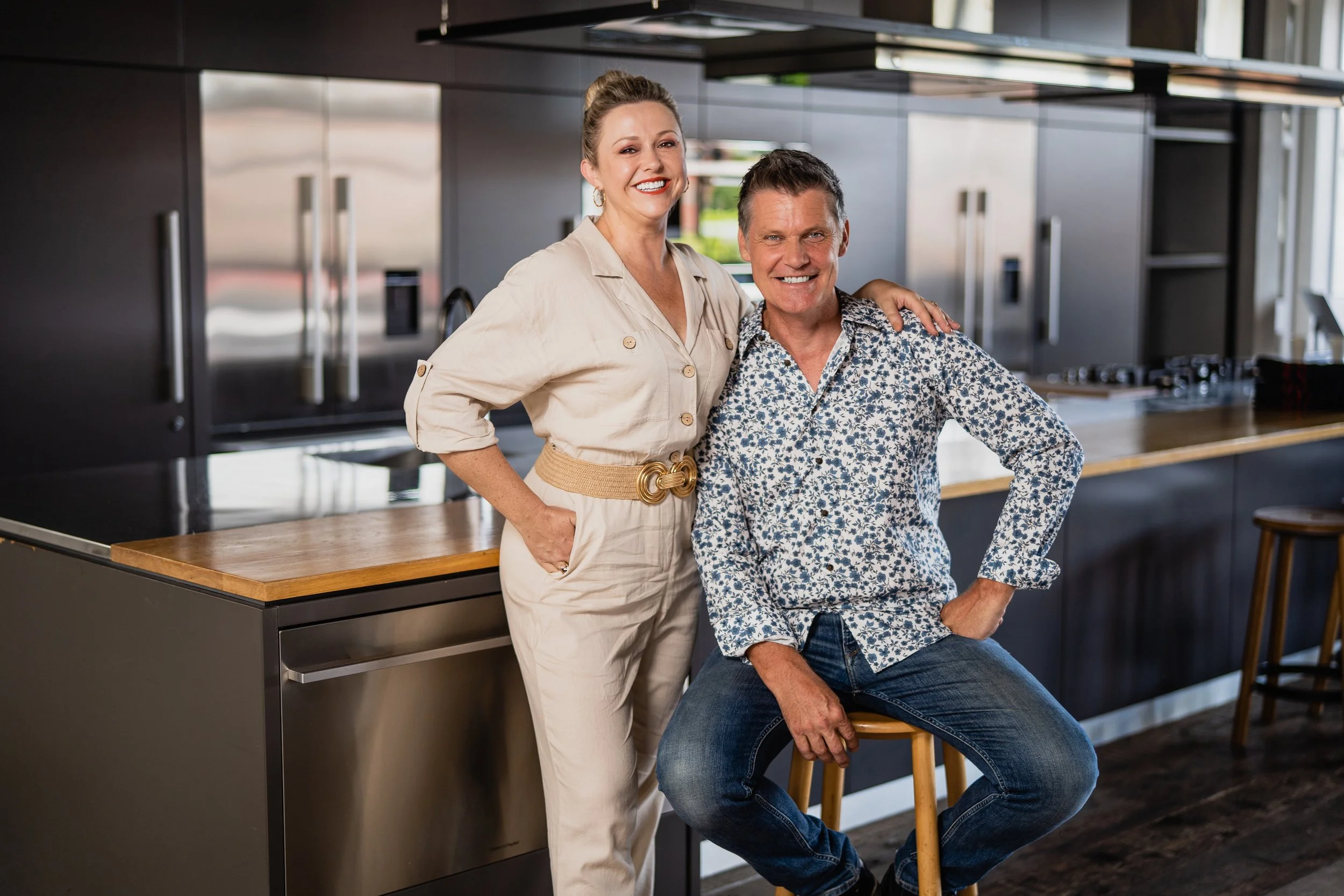
Vikki and Pascal.
There’s a surprising fact about William Shakespeare’s plays that not everybody knows.
“Shakespeare's full of really bawdy jokes,” Pascal Tibbits grins, before
wife Vikki Gorton-Tibbits adds, “It’s quite hilarious. There’s a lot of comedy interjected with the seriousness of it all. Romeo and Juliet isn’t just a tragic love story.”
The couple is behind Tauranga’s increasingly popular annual Summer Shakespeare production, which this year is putting on his most famous play, Romeo and Juliet. Pascal, who is the creative director, says that making the works of the great bard user-friendly for modern audiences is one of their primary goals.
“It’s about the theatre, community, and accessibility for everyone to come and have a good time,” Pascal says. “We make sure our actors are telling a story that anyone can watch and understand. All the themes that were relevant in Shakespeare’s day are relevant now. This is the magic of Shakespeare.”
Vikki, who is the producer, nods and says “You don’t have to be a Shakespeare buff to go to one of these shows.”
Romeo and Juliet is the seventh play that the Summer Shakespeare Tauranga Trust has put on, and sees them transport the great tragedy from the Elizabethan era into the roaring 1930s. Running from February 6 to the 16th at the Te Puna Quarry Park, the beautiful purpose-built amphitheatre is set amongst a stunning natural backdrop.
Food is another passion of the pair, who together won the reality TV cooking show My Kitchen Rules in 2023. Fittingly, they’ve put together a flavourful menu of locally sourced and produced food, wine and beer, including crowd-favourite Pork Belly Bao buns and spiced beef focaccia.
“Our vision is to create an experience where people can enjoy themselves and feel welcomed, without breaking the bank,“ says Pascal. “Tickets are reasonable, the food and wine are priced fairly. We don’t believe in taking advantage of a captive audience. It’s about making the event accessible and enjoyable for everyone.”
Of course, you’re also free to bring your picnic basket. The main thing for the pair is that people enjoy themselves.

Rolling with it
The first woman to represent Aotearoa on the international skateboarding scene is throwing her support behind a skateboard collection that will be part of the permanent exhibition at Tauranga Museum opening in 2028.
The first woman to represent Aotearoa on the international skateboarding scene is throwing her support behind a skateboard collection that will be part of the permanent exhibition at Tauranga Museum opening in 2028.
words DEBBIE GRIFFITHS | photos CRAIG BROWN

Georgina Matthews started skateboarding around her home in Ōtūmoetai at the age of 13. A year later, she won a national competition and then placed second at an international in Melbourne where she caught the attention of sponsors.
“I was skateboarding and travelling the world from when I was 16 until my 20s,” she says. “I got to skate against the world’s best like Elissa Steamer and I met Tony Hawk a few times. In 2006, I was ranked ninth in the world. They were fun times.”
Skateboarding fits hand in hand with the Bay’s surf culture. In fact, it was the acquisition of an iconic collection of classic Kiwi surfboards and memorabilia from Tauranga businessman Dusty Waddell, along with around 40 of his vintage skateboards, that enabled museum curator Fiona Kean to create the exhibit.
“The Waddell collection came with a skateboard made by ‘Cahoot’ which was a Mount Maunganui brand made in the 1970s. They pioneered the use of urethane wheels,” she says. “In researching the skateboard collection and also with the opening of the Destination Skatepark, one of the things that struck me is that there’s a story to tell here in Tauranga. Georgina fits so beautifully into that. She reached the top level and she grew up right here in the Bay.”
“Tauranga’s skateparks are amazing,” says Georgina, reminiscing about cheese grater ramps, splinters and rails so hot they burned. “We’ve come a long way from the old skatepark at 17th Avenue by Historic Village. It’s 100 percent easier for kids to get into. I love seeing them at parks that have entry level ramps and easy progressions.”
It’s the next generation of skateboarders who were targeted in a recent competition to ‘design a deck’. Out of more than 260 entries, Georgina picked two winners – aged 9 and 13 – who had their images put onto boards.
“The first design reminded me of how important cultural representation was for me on a global stage. My iwi is Ngāpuhi and I’m very proud to be from New Zealand. When I was competing, sometimes I’d wear a Māori band or a Tino t-shirt. I felt that this design was a beautiful reflection of our country and culture, and I loved the composition of the Tino Rangatiratanga flag, koru, and ferns contrasting. I could picture this being a cool board for a kiwi athlete in the Olympics someday. It’s what I would choose.”
Georgina loved the vibrant colours, fun characters and creative use of the whole board of the second winning design.
“I imagine that would be a really popular pick in skate stores,” she says. “We hope we’ve inspired the kids in some way – to try skateboarding or maybe graphic design,” says Fiona. “You never know what’s going to spark someone’s future passion. Museums are here to enrich our communities and to make people feel that they belong and are part of something bigger. A sense of collective place.”
“I’m very honoured and grateful to be involved in Tauranga Museum and that kids will be able to see more than what’s on YouTube,” says Georgina. “They’ll have an understanding of the history and the evolution of the sport.”
Fiona has been working with the museum collection for nearly 20 years and remains passionate and excited by it.
“We’ve got a history of Tauranga to tell from the 1400s to beyond today. Our plan is that we’re not picking a point in the past and saying ‘we’re doing up to here’; we’re creating contemporary stories so we can show local innovators, diversity and fresh stories and events.”
“It starts with talking with the community and our conversation about the new museum has been a long one,” Fiona continues. “It’s not a one-way conversation. There have been consultations and discussions over the last thirty years but over time you can see the trends coming through and the objects that support the stories we’re being told. Sometimes it’s just magic, like getting the opportunity to purchase the Waddell collection of surfboards and that it came with the wonderful bonus of the skateboards which will now allow us to tell that story as well.”
Today, 37-year-old Georgina still gets on her board and is looking forward to skating and sunbathing through the summer.
“For me skateboarding is amazing for mental health,” she says. “You’re your own boss, you don’t have to skateboard at a certain time or in a certain place. It’s an indescribably beautiful feeling of freedom. I still love it like I did when I was 13. I’ll be skating until I can’t.”

Something to talk about
At Sala Art Gallery, the art is an invitation to conversation and connection.
At Sala Art Gallery, the art is an invitation to conversation and connection.
words KARL PUSCHMANN
photos JAHL MARSHALL

The thinking behind Tauranga’s newest art gallery can be described as gently radical. There are no price tags or pretension on exhibits at Sala Gallery. Instead, it takes a more holistic approach where the art on display can be considered an invitation to deep thought, reflection and, most importantly, genuine connection.
“I put the gallery together as an excuse to have conversations with people,” Nigel Banks says. “Rather than a focus on showing art or a focus on selling pictures, the focus of the gallery is about having conversations with visitors about the origins of meaning in their lives. The primary purpose of the pictures is as props to support those conversations.”
Nigel is both Sala’s founder and the artist behind its inaugural exhibition We Are The Earth. This series of works meditates on the journey of life and explores larger themes of sense and self. Nigel sees the work as a conduit to conversation, either with oneself or with the artist himself, as he is often to be found nearby.
“It’s been a lifelong obsession, thinking about issues of meaning and where meaning comes from,” Nigel says. “When you touch into those moments, it’s something that feels really worthwhile. Much more so than just the standard social exchange.”
The vibe inside Sala is peaceful and meditative, which is appropriate as it’s nestled beside the popular Thai Touch massage therapy studio in Tauranga’s CBD, which Nigel opened with his wife Orasa in 2023. In fact, there’s an internal entrance to the gallery straight from Thai Touch which allows those holistic vibes, and visitors to the gallery, to flow in. It’s a welcoming space and one that takes off any pressure or intimidation that people can sometimes feel about entering a gallery.
That’s one of the most important aspects of value that I see in the philosophy that’s driving this,” Nigel explains. “Instead of going into a gallery and feeling an obligation to look into the pictures and figure out what they’re about, in this case the whole conversation is about meaning, and the pictures are there to support that conversation. You’re not looking for the meaning in the picture, the pictures are there to support the conversation about the meaning. It takes the pressure off.”

This core belief shapes every aspect of Nigel’s work and Sala, right down to the gallery’s carefully selected name.
“It’s a Thai word, chosen because it’s soft, because it’s short, it’s got a slight repetition in it, but also that it means ‘outdoor meeting room’. A sala in Thai is like a pavilion or a little shrine or temple in somebody’s garden. People go to a sala, they meet in the sala, and they'll have conversations that are important to them. This is creating a space that is dedicated to that same sort of purpose.”
While Sala only recently opened its doors, the idea for a gallery of this nature has been percolating in Nigel’s mind for 20 years, after a “transformative” experience at an exhibition by the prominent New Zealand artist Melvin ‘Pat’ Day in Wellington.
“I was totally entranced by his artworks, just amazing stuff. I spent two hours there, intimately and repeatedly engaging with every piece. It was like a mental vacuum cleaner, a little bit like meditation. Extraneous thoughts were washed away from me. When you’ve got art, you’ve got an obvious thing to focus on. By the time you’ve done that for a couple of hours you are left in this blissful state of being totally at peace and at one with the pictures. I was interested in whether this might happen for other people.”
It was his piece ‘Billboard’ that inspired him to make this longheld dream an “audacious” reality. Fittingly, ‘Billboard’ is Sala’s centerpiece. It abstractly depicts the journey of life, the search for meaning and what you leave behind. While working on it he vowed that when finished he’d have a place to hang it. Over the 18 months it took to create ‘Billboard’, he worked on having Sala ready to open.
“When I put this up it felt like a monumental shift inside me,” he says. “It’s like a perfect life opened out in front of me because I get to have these conversations on a semi-professional basis. Having conversations with people about the stuff that is actually really important to everybody, but most of the time we don't talk about, is a really amazing thing to me. Just casually with people who have stopped by, I’ve had amazing conversations about people’s lives and it’s just really, really neat.”
Then the artist smiles and says, “In Sala’s case I’m thinking beyond anybody’s requirement. I don’t think anybody needs this. But I’m hoping that some people will really enjoy it.”
Art for our sakes
UNO catches up with Deborah McCormick, the newly appointed chair of Tauranga’s Public Art Panel, to find out how our city is about to change for the better.
UNO catches up with Deborah McCormick, the newly appointed chair of Tauranga’s Public Art Panel, to find out how our city is about to change for the better.
WORDS Karl Puschmann

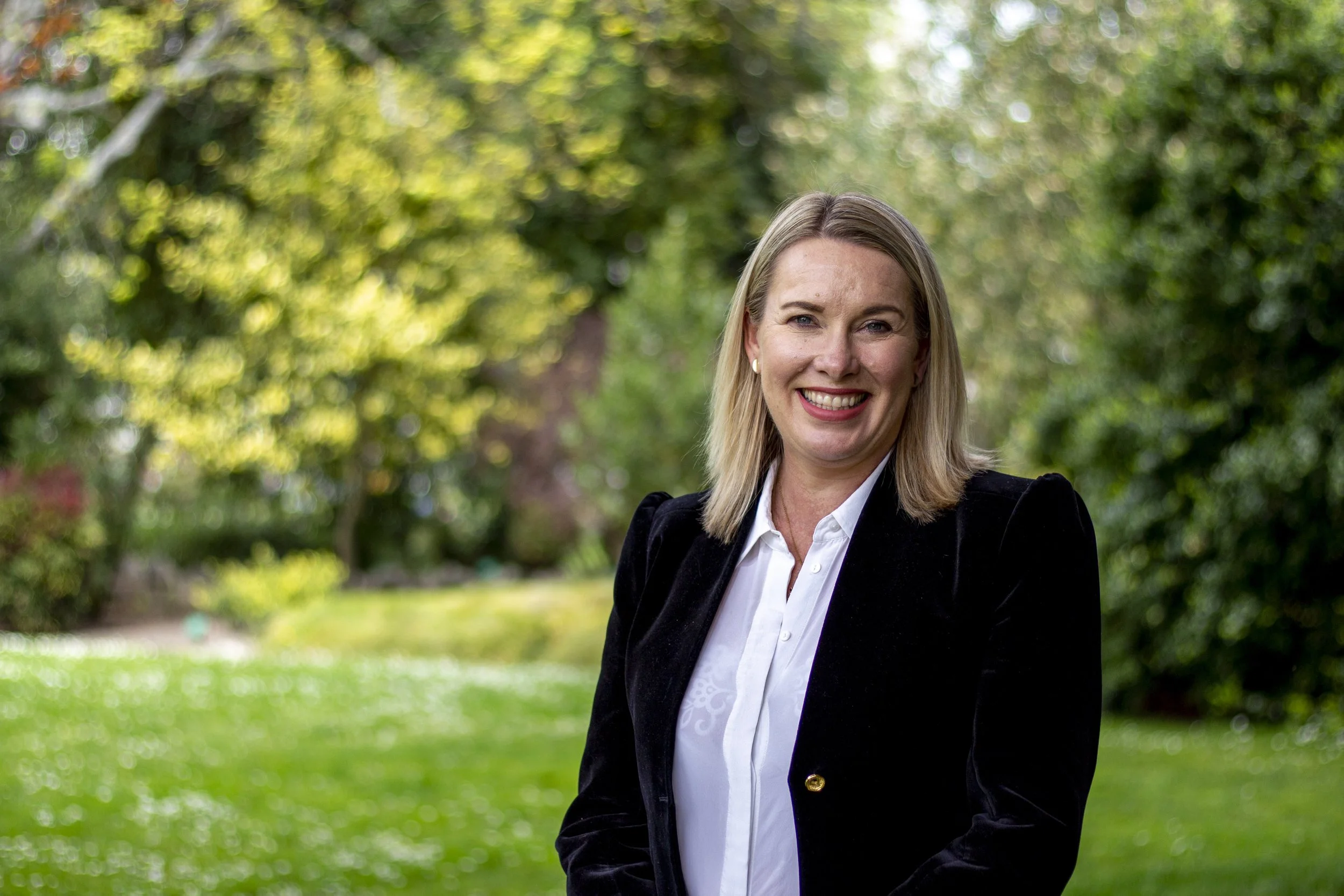
Deborah McCormick.
When you look at Tauranga you see the sparkling glint of the Pacific Ocean, the potential of a city centre revitalising itself, and the excitement afforded by our great outdoors that offers ample activities of escape and recreation to indulge in.
When UNO asks Deborah McCormick what she sees, her answer is simple: “A blank canvas”.
As the recently appointed chair of Tauranga City Council’s new Public Art Panel, hers is an invigorating view. After all, a blank canvas offers only possibility and promise.
So what are we talking about when we say public art? Deborah says the council has developed a “sophisticated” framework that expertly defines
the parameters but, after some light prodding, gives her own explanation.

Fanfare by Neil Dawson.
“My definition is that it’s art in a public space developed with a community. It’s often sculpture or installations, it can be mural or performance,” she explains, noting that public art comes in two flavours, permanent and temporary. Even though the medium and duration can be vastly different, there is a shared commonality.
“All public art comes with a different idea and all start with an artist responding to a site, responding to a brief, and responding to the current issues of the time,” she says. “That’s the exciting part of it.”
Deborah’s worked in the public art space a long time, 25 years by her reckoning. In 1998, aged 23, she co-founded Scape Public Art in Ōtautahi Christchurch after finishing art school. In that time Scape has commissioned over 250 temporary public artworks and 15 permanent artworks, indelibly enhancing the Garden City.

Te Aika by Rachael Rakena and Simon Kaan.
“I want to bring that experience to this role,” she says of her new position as chair. “I want to learn about the local connections and stories and show how a shared vision can be produced when a group of civic people come together with artists to take art out to the public realm.”
These qualities are what the newly appointed panel of six will be looking
for during their three-year tenure as they start envisioning how best to
fill our shared blank canvas.
“It’s one of the first – if not the first – opportunity where a city in New Zealand is wholeheartedly placing art and public art at the centre of a lot of very important civic projects,” Deborah enthuses. “This idea of ‘a per cent for art’ model is brilliant in terms of bringing sustainable funding. It’s a model that’s been implemented to great success overseas, most notably in Australia and in America.”
Two years ago the council realised they needed to rethink how public art was working – or rather not working – in Tauranga. The solution was the Public Art Framework, which includes a ‘Per Cent for Art’ funding model. As the name suggests, this model allocates one per cent of the budget for any above-ground council-led capital project, to a dedicated public art fund. The independent Public Art Panel provides advice to Council on which projects should receive funding. The Council is staging the implementation, starting at 0.25 percent this financial year, and growing to one percent over the next four years.
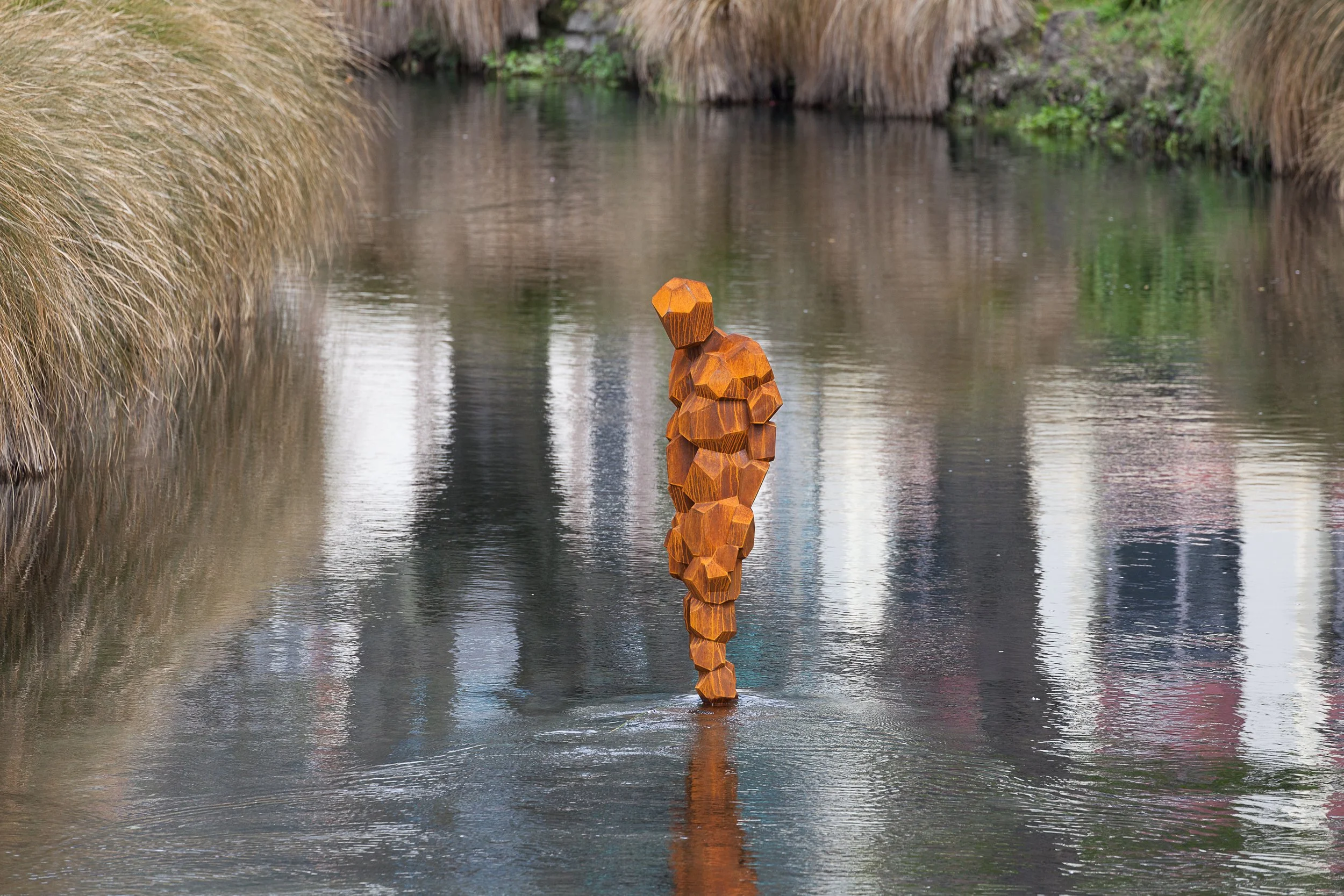
Stay by Antony Gormley.
“This sits alongside council and development regulations and creates
a whole industry for the arts that sustains itself with jobs, fabricators, consultants and design experts,” Deborah explains. “There’s a wonderful opportunity to build all of that alongside this ‘Per Cent for Art’ model and for Tauranga to become a hub for public art and creativity.”
“People come to cities to see things. That’s why public art is so important.
If we want to build cities that are livable and that people want to explore, spend time and linger in then we need to get that human connection back and provide really exciting public space,” she continues. “With good architecture, good landscape design and public art as the jewel in the crown, Tauranga will become a place that people will want to visit as a destination and come back to. Public art needs to be a layer we build the aspirations and plans of the city upon. Part of my role will be to understand how the public art vision of the group aligns with where the city is going.”
It’s hard not to get caught up in her enthusiasm. It’s fair to call her a passionate evangelist. But that’s exactly the qualities you want in someone who is going to play a key part in steering the look, feel and vibe of our city moving forward.
“There are many purposes to public art, including well-being and connection,” she says. “Public art brings people together. It stimulates learning and thought and connects people to art concepts. It’s about creativity and creates opportunities to push boundaries and challenge perceptions.”
Since being appointed a month back the panel has already met and begun work. While it’s too early for Deborah to share any details or timeframes, she’s itching to get works underway.
Watch this space.
Deborah is joined on the panel by Darcell Apelu, Shea O’Neill, Kereama Taepa, Alice Tyler and Arohanoa Mathews, who represents Te Rangapū Mana Whenua o Tauranga Moana.

Ōmokoroa’s taste of Italy
Marko Velickovic transforms fresh local ingredients into authentic Italian dishes at the beachside ‘trattoria’ Alma.
Marko Velickovic transforms fresh local ingredients into authentic Italian dishes at the beachside ‘trattoria’ Alma.
WORDS Hayley Barnett

Marko Velickovic comes from a long line of chefs. His family’s restaurant in Serbia has been in business for more than 50 years. And after spending 10 years cutting his teeth at some of Europe’s best Michelin star restaurants, it comes as no surprise that he only accepts the absolute best ingredients for his own eatery here in the Bay.
Ōmokoroa’s Alma offers an Italian-inspired menu specialising in hand-stretched Roman-style pizza and homemade fresh pasta using local ingredients, as well as premium imported products from Italy.
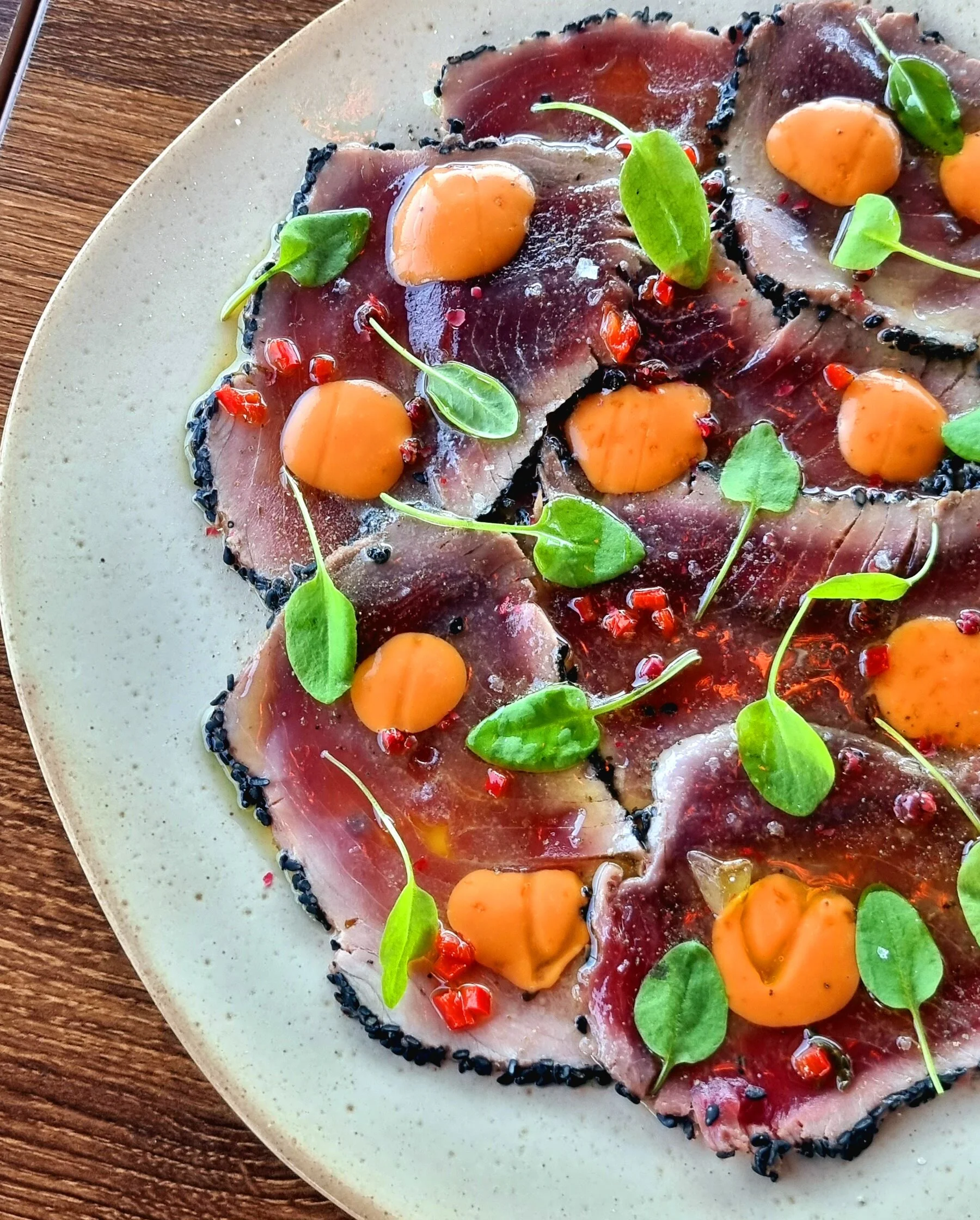
The Serbian with a passion for Italian cuisine made the move to the Bay from Croatia six years ago. “It’s a funny story actually,” Marko smiles. “A friend called me from New Zealand and said, ‘you need to move here. No one knows how to cook!”
On arrival, he was snapped up by Alpino in the Mount and stayed as head chef for two and half years. But he yearned for more life outside the kitchen. "I quit and set out to buy a boat. Then another friend called and said, ‘I’ve found this place that’s perfect for you.’” Back then, the Ōmokoroa site was in dire need of a revamp but, being right on the water, Marko recognised its potential. Together with his business partner, Ewelina Large, they dove straight in.
Suddenly his dream of a work/life balance went up in smoke and he found himself working seven days a week and throwing all his money into the set up. “I’m not sure why I thought that was better than spending my days on a boat,” he jokes. However the worst was yet to come. On opening day the country went into its first Covid lockdown. “It was terrible. But we worked hard on the place during lockdown and then the day we opened again was the day of the tsunami warning.”

Despite the cruel setbacks, Alma eventually opened its doors, drawing attention from Cuisine, who listed them in the Good Food Guide and awarded them the title of Favourite Destination. The restaurant has since won a Judges’ Choice Award in the 2023 Plates of Plenty for its Fagottini con fungi e tartufo. Today Alma is widely known to be one of the best Italian eateries in the region. All Marko’s hard work is paying off. “Foodies recognise the difference when you go the extra mile,” he says.
Heading into summer, Alma is definitely a destination spot to put on the foodie wish-list.
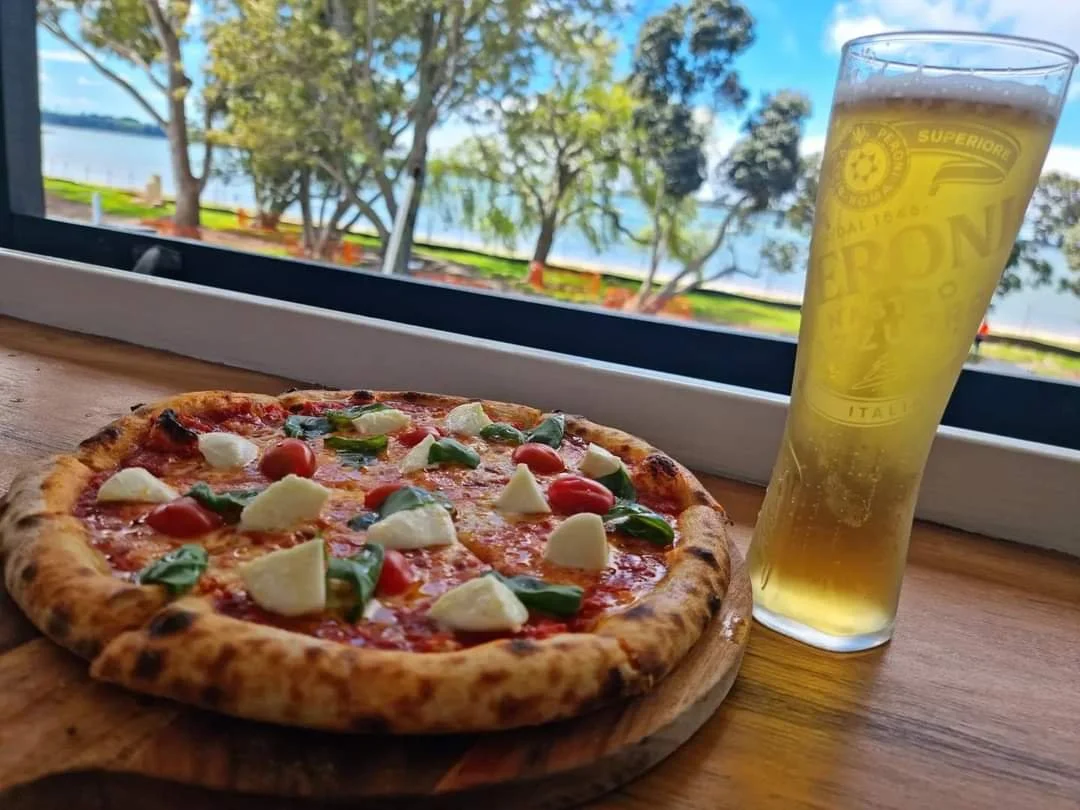

Windows to history
The CBD is getting a much-needed glow up, courtesy of acclaimed artist Sara Hughes, the council and over 250 local children.
The CBD is getting a much-needed glow up, courtesy of acclaimed artist Sara Hughes, the council and over 250 local children.
WORDS Karl Puschmann | PHOTOS Katie Cox

Anyone who’s ever watched a home renovation show knows that a well-chosen artwork hung on an otherwise plain wall will elevate an entire room. Extrapolate that arty truth to encompass the drab vacant storefronts in Tauranga’s city centre and you start to see the genius of the new public art initiative, Reimagine Tauranga.
Envisioned by renowned artist Sara Hughes and created in partnership with the Tauranga City Council, the exhibition has taken over the windows of eight prominent shops in the CBD. These otherwise standard storefronts, transformed by creativity, imagination and generous dollops of Sara’s unique style of vivid colours and embrace of bold patterns, tell the story of Tauranga’s rich history.

“That’s a really important aspect of this project,” Sara says. “I’m fascinated with the history of a place, so I really wanted to bring that in.”
Banish any thoughts of dusty old black and white history lessons. Hughes also reimagined how to bring the past into the present while keeping true to her acclaimed style and the project’s vision of light, colour and creativity. With assistance from Tauranga Museum’s curator Fiona Kean, Sara worked her way through the Tauranga Museum collection, a vast archive of treasured items from our collective past that includes everything from beach balls to surfboards to newspapers.
“It’s a way to celebrate some of the lesser-known objects, but things that particularly relate to the important beach culture of Tauranga,” Sara explains. “Things like beach balls and parasols or a particular swimming tog pattern. It’s to celebrate and draw attention to these special things that are held within the Tauranga Museum collection.”

The idea was to use the patterns and colours of these everyday objects as inspiration. They may be of historical value and from a museum’s curated collection but these artworks encourage you to look at common items in a new way, to find the artistic hidden in things people don’t usually look at twice, to reimagine the every day. Like, for example, the window given over to celebrating the patterns on beach parasols.
Sara also reimagined what this project could be on a fundamental level. She didn’t want it to be all about her, and her take on Tauranga’s history. Instead, she wanted to bring in the community, particularly children, and have them contribute in a tangible and very real way.
After viewing the museum collection with Fiona and selecting the items she then ran a series of art workshops at Tauranga Art Gallery and ran classes in different schools all over Tauranga. Around 250 children of different ages, schools and backgrounds all took part and now find themselves contributors to a major public art project.

“They’ve all come together through art, which was also an important part of this for me. Reimagine Tauranga is less about me – it’s not so much my artworks in the eight windows – instead the children created either the objects or the imagery that will be in the windows,” she explains. “I am running it, and the concept of this project is mine, but it’s not my artwork as such.”
She sees herself more as the curator and exhibitor. In fact, when UNO calls she was getting ready to spend a week in the different window locations, installing, hanging and displaying the eight works. All of which will have a plaque detailing the inspiring piece or item and its historic relevance to the city.
A neat twist is that the art will look different depending on when you see it, with Sara calling on famed lighting designer Richard Bracebridge to illuminate the different works.
“The night aspect of it is very important,” she says. “Because light has such a strong effect in how a city centre looks when it’s lit at nighttime.”
There is one question that’s been niggling; how on earth did they persuade eight shops to give up their window space for an entire year? The short answer is, they didn’t.
“They’re being put into shop fronts that are currently for lease,” she explains. “It’s been great to have the support of the shop owners who believe it’s a good idea to have public art and artworks created by children in the city centre.”
She’s excited about the public finally seeing the project she’s worked on for the past few years. It’s been a massive undertaking, but one that more than lives up to its ambitious title.
“Hopefully it will be something people will be excited to come and see,” Sara says. “I want people to be really intrigued and curious.”
Then she smiles and says, “I think they'll come away feeling joy and excitement, and that will really positively impact their day or evening.”

Still evolving
Judy Bailey reflects on purposeful ageing, what brings her joy, and her feelings of imposter syndrome ahead of her Tauranga literary festival debut.
Judy Bailey reflects on purposeful ageing, what brings her joy, and her feelings of imposter syndrome ahead of her Tauranga literary festival debut.
WORDS Monique Balvert-Connor

A serendipitous call from Harper Collins publishers sparked a new chapter in Judy Bailey’s illustrious career.
New Zealand’s beloved former broadcaster, once affectionately dubbed “Mother of the Nation”, has penned a book that’s now whizzing off bookshop shelves.
This exciting opportunity came after Judy had been contemplating the ageing journey and its challenges. “When the chance to write about it arose, I embraced it wholeheartedly – just as I’ve approached life’s adventures throughout my years.” Her book, Evolving, is set to be a focal point at Tauranga’s literary festival, Escape, where Judy will be speaking later this month. Between engagements, she might even squeeze in a visit with her former TV news anchor colleague, Richard Long, now based in Tauranga.
As for the title, Judy laughingly confesses she “stole” it when tennis great Serena Williams served it up in a quote. “People were constantly asking her how retirement was. She said, ‘I am not retired; I am evolving.’ That’s how I feel about it.”
Retirement is such a hideous word. Look in the dictionary. It means things like ‘to go to bed’. “Evolving is what we are doing – from one stage to another – and that can be equally rewarding and fulfilling, as we still have a contribution to make,” says Judy, who will turn 72 the day she presents at Escape’s morning tea event on October 18.
In a sense, the book has enabled her to champion the cause of the elderly, whom she feels often get “a really bad rap”. “Older people are sometimes dismissed; considered past their use-by date. They shouldn’t be lumped into a universal aged category. The over-60s age group is enormously diverse, and this age group has an enormous amount to offer still. Many remain vibrant and intelligent, contributing members of society with a lot to offer. We need to think proactively about our ageing and not just let it happen to us. It’s not all downhill to the zimmer frame.”
Judy says writing Evolving has been an exploration of her journey and a discovery of how she can live her best life after 65. There’s much that many people will relate to, with learnings aplenty. Personal experiences and science are melded with the subjects tackled including taking care of your body and mind, navigating health scares, dealing with dementia, grieving loved ones, Botox, organising finances, wills, power of attorney, end-of-life care and enjoying the finer things.
Readers are enjoying simple messages and a few surprises in this ‘dip in, dip out’ book, she says. “There are things we instinctively know to do to take care of ourselves – common sense things involving sleep, fresh air and good diet. But there are some helpful tricks along the way. For example, foregoing the sunnies on the morning walk so we can get some UV rays on our eyes. Things like the importance of going to bed and getting up at the same time, even on weekends, to maintain our circadian rhythm. “What I have discovered along the way, really, is the people who should be reading this book are those in their 40s and 50s, as what you are doing then has a huge bearing on how you age.”
One ‘big, big thing’ of concern is alcohol consumption in New Zealand and the fact that it’s increasing among the older population. Many drink as a stress release, but alcohol actually increases stress and is really bad for the heart and brain, Judy informs. Far from sanctimonious, Judy says she’s the first person to enjoy a glass of something. While she keeps herself fit and healthy and eats reasonable food, she does have “a big hankering” for blue cheese and chocolate. Life’s too short to not enjoy those things, she smiles.
In writing Evolving, Judy has referenced Harvard University longitudinal studies and spoken to geriatricians and gerontologists and other academics. It’s reassuring, she says, that they are saying similar things, so the research is robust. She’s heartened by the fact there’s “amazing” research being conducted in New Zealand around ageing and that we have a professor of ageing.
Judy’s own evolving continues to involve some paid work. Since reading her final TV news bulletin in 2005 she’s enjoyed other broadcasting stints, some promotional work and she continues to write about inspirational women and travel. She loves Africa, “with a passion.” Botswana (the Okavango Delta) is one of her favourite places. Paris and Italy also get a mention. A wonderful amount of time is also spent with family – she and her husband Chris have three children and eight grandchildren who all live near their Auckland home. Judy and Chris also
enjoy being at their Flaxmill Bay property.
Anywhere with a good book is also a very happy place, Judy says, citing Where the Crawdads Sing, Lessons in Chemistry, and The Axeman’s Carnival as much-enjoyed reads. Escape will be Judy’s first time presenting at a literary festival. With that comes a massive sense of impostor syndrome, she confesses. She’s not sure she’s sufficiently “literary”. Neither, she says, is she totally comfortable with being called Mother of the Nation. “So many other people would wear that title so
much better than me. I’ve been called it for decades and always feel embarrassed by it.” As for Judy’s own longitudinal, constantly evolving journey, she says she hopes to have “a couple of decades of useful life” left in her.
Judy’s visit to Escape has been sponsored by Craigs Investment Partners.