
Jay Reeve talks to Ben Harper
“Everytime I’m here I’m thinking, ‘I just need to send for all my sh*t and stay right here.”

A long-time Ben Harper listener, our columnist Jay Reeve (along with his radio co-host Duncan Heyde) relives his youth and talks to his teen idol during the musician’s recent New Zealand tour that included a gig at the Mount.
I’m a Ben Harper fan – have been since his first album, Welcome to the Cruel World. In my early teens, I used to recreate his cover art in the misguided hope it’d impress the masses of girls enamoured by this guitar-playing, bohemian, skateboarding world traveller.
In 1994, Welcome to the Cruel World struck a chord with me, and Ben still has that swagger he rolled with back then – although he’s arguably better looking – and still has the effect on the fairer sex; the 17-year-old girls I was trying to impress back in the day were reliving their own dreams during his recent appearances in Aotearoa. His male fans were too, causing a veritable babysitter shortage on the night of his Mount gig.
The crowd was older, but music drops a veil over your tired adult eyes and transports you to wherever you first heard it or it affected you. I love that, I love the way Ben’s music transcends age and I love seeing people enjoying themselves. The one thing I don’t love, though, is ‘Steal My Kisses’. I understand it’s one of Ben’s most commercially successful singles, peaking in the top 20 on the Billboard charts on its release in early 2000. It garnered him more fans and the record label wanted more, so the division was set: you were a ‘Steal my Kisses’ kind of Ben Harper fan or not.
I’m not. To me, unlike his gig-closing tune ‘Glory & Consequence’, it’s not a great song and not one worthy of rolling out 20 years later. But the crowds of predominantly 40-something women at his recent show – those ’90s teens – loved it.
While he was in New Zealand, my The Rock radio show co-host Duncan Heyde and I had a chat to the man himself about what he loves...

Duncan: Welcome mate!
Ben: Well-equipped with a cheering section and everything. How’s it going, Jay and Duncan?
Jay: Oh good, mate. Kia ora, kia ora, kia ora and welcome back to our fine shores – we’re looking forward to having you. So, your biggest musical inspiration came around the age of nine… We heard a cheeky rumour you played your first gig at 12?
B: Well, you wouldn’t call it much of a gig when you’re just hammering out some chords. At 12 I was actually on the drums, because I started on the drums.
D: Isn’t there a funny story about one of your first open mic nights that you got paid for? At a church?
B: The first gig I ever got paid for was in the church basement, and at the end of the night the guy who ran it handed me $50 in the parking lot. I said, “What’s this?” and he said it was for the door. And you know churches have those fancy doors on them with stained glass and stuff, so I said, “No, no, no you can’t sell the door to pay me, that’s crazy! Go find it, go get it back.” And he said, “No, no, no, that’s the money from people who walk through the door”!
D: And you’re like, “Oh wow, I can get paid for doing something I love!”
J: You’ve had 28 years of commercial success and worked with so many different musicians – who’s still on the hit list for you of musicians you’d love to work with?
B: Alicia Keys.
D: Oh, that’d be good!
B: Yeah man.
D: Isn’t it just as simple these days as sliding into their DMs, sending them an Instagram message like, “Righto mate, I’ve got a couple of months spare coming up, let’s do this”?
B: You’d think so, right?! I stopped drinking, though. If I was still drinking I’d probably have the nerve to do that.
D: She’s hardly going to say no to you, though? That’s a fun message for her to read in her inbox, isn’t it?
B: But what if she did?!
J: You hold a special place in a lot of New Zealanders’ hearts and I can only assume that New Zealand holds a fairly special place in yours. When was the last time pre this tour that you set down in Aotearoa?
B: It’s been about four since we’ve been here, and as far as I’m concerned that’s four years too long. Every time I’m here I’m thinking, ‘I just need to send for all my sh*t and stay right here’. It’s on me, man, it’s on me everywhere – my back, my arms, my entire upper torso is here.
D: You’ve actually spent quite a bit of time here. We heard you owned a house here, we heard [musician] Jack Johnson owned a house here, we knew that [musician] Serj Tankian owned a house here... And weirdly, as Kiwis, we kind of just let celebrities do their thing when they’re in New Zealand, but we also like to think that you all go round to each other’s holiday houses for barbecues and play tunes together.
J: And go surfing!

D: Has that ever happened?
B: Oh yeah, that happens plenty with Jack and I. Jack and I are always getting together and looking for reasons to record together. In fact, we’re talking about doing a duet record.
D: That’d be sick!
J: I know that you’ve made your political ambitions heard and that you’re thinking about throwing your name in the hat for the United States of America presidency. I heard that you’re running on surfboards and steel guitars for everybody and then putting a [skate] bowl in at the White House. How’s that progressing? Would Jack be a running mate of yours?
B: Yeah, Jack or [retired professional skateboarder] Tony Hawk, I suppose!
J: You’ve got a couple of days spare while you’re here. It’s a very tight tour schedule, but you’ve got a little bit of a gap in the middle between your gigs in Queenstown and Auckland. Have you got any plans to check out some waves or skate parks while you’re here? What do you do in your downtime in New Zealand?
B: Yeah, skate parks. That’s it – concrete, finding as much concrete as possible. When I get off the phone with you, there’s a local coffee shop here in New Plymouth that supposedly has a bowl in the coffee shop, so that’s getting hit up right now.

Katchafire: burning hotter than ever
If you like reggae then you’ll love Katchafire, if you weren’t sure if you like reggae, you’ll still love Katchafire.
WORDS Nicky Adams PHOTOS Joel McDowell

If you like reggae then you’ll love Katchafire, if you weren’t sure if you like reggae, you’ll still love Katchafire. These guys are the musical Moro bar, the experience is universally uplifting and leaves you feeling better than you thought you could feel. With their chilled-out vibes and harmonies that ease the soul, one minute you can feel so relaxed that you can’t even form the word stress, the next an upbeat tempo will hit, and you just want to dance till you drop. And when you look around you know that it’s not just you, but the world is dancing with you.
Katchafire has been around for over 20 years and is one of New Zealand’s hardest working and most well-known reggae bands, with a cool factor that spans audiences and age groups. A multi-award winning, platinum record-selling formation, they have made it big internationally, rubbing shoulders and performing with musical icons, yet when I sat down to speak to founding member Jordan Bell, there wasn’t a bit of trumpet blowing or whiff of name dropping. Reggae is a musical genre that has exploded worldwide, and Katchafire has been at the center of the big bang. Each strain is taking on its own identity and these guys are 100% South Pacific roots reggae. Their unique formula blends different instruments and sounds until classical reggae morphs into mixed genre music that can be considered ‘an artform’, and amid it all the positive vibes just keep on coming.

Brothers in arms
The band is made up of founding brothers Jordan and Logan, plus ‘lifers’ Tere Ngarua, brother-in-law Leon Davey and Roy Kaiki. Jordan explained that at the end of last year they finished off their latest single, Circle Back. “Definitely a love song, it’s about circling back on anything you love – it was a real summer banger.” The timing of its release was perfect “It came out just before the summer tours so it was great to get it out there live; the support for it has been amazing, as we speak it’s on a million streams and climbing.” Circle Back was worked on during lockdown, it’s a silver lining to a period where, in normal circumstances, the band would have been touring overseas. The other upside of lockdown was the extra time at home. The importance and influence of family is at the core of this band, and pulses through the lyrics of their tunes, from the purity of Addicted to the adoration of family and Aotearoa in Fyah in the Trenches. It’s easy to see how these tunes have been written on the road, when home has felt far away.
Katchafire creates what Jordan calls “good message music. It’s about stripping back, about not worrying – about family and having a bit of consciousness.” You can’t help but wonder about the dynamic of such a tight-knit group, but Jordan laughingly verifies that harmony on the tour bus is kept by rules and a fining system. The bond is clearly strong, and creatively the energy flows. Songwriting is helped by their synergy - they’re even on the same page with musical influences, “between us we listen to everything from Tupac to Lenny Kravitz to anything in between; R&B, Metallica, it’s all on the same playlist.”
From league to the bright lights
Jordan and Logan didn’t start life as muso’s – in fact up until teenage years life was all about Rugby League. Even when music came into their lives, it wasn’t an immediate switch. As pre-teens he and Logan stumbled across a stash of their dads prized musical instruments hidden in his closet. Their father, a talented musician, had hung up his guitar, and embraced a life filled with church and family. He encouraged the boys to start with the basics, and a passion ensued. Around 1997/9 when the boys were in their late teens a choice had to be made – Rugby was subbed out and they ran with music. In what Jordan considers a defining moment for their future, their father, Grenville, rented a loft in central Hamilton where the boys could jam to all hours with friends. They began to score gigs and before long they were playing from Raglan to South Auckland. Initially a cover band, from the outset their love was of old school Reggae - in fact Bob Marley is still to this day one of Jordan’s key musical influences (Katchafire is derived from a Marley song). Growing up, Jordan says, reggae was “a forbidden genre – linked with dope smoking, it was a different religion from what we were doing. But at the same time, it was all around us.”

After winning a competition run by NZ record label Dawn Raid the group had the confidence to write their own songs. Hits Giddy Up and Bounce were the result, and led in 2003 to the release of Revival, the first of (to date) five albums. Transitioning to original music was nerve wracking, but the audience loved it, and the fan base followed them and grew. The success of the band has spread well beyond New Zealand, with the band garnering a huge international following – playing Glastonbury in the UK was “next level”. Of course, home is home, and the One Love festival here in the Bay is one of the favourites “it allows us to catch up with the reggae community and see how well the tree has flourished and grown. Not just here but through the Pacific. It’s good to get together and see how strong the support is and how the next generation has come through, for the musicians and audience.”
Overseas success has not blunted Katchafire’s love for this home audience: “New Zealand has a diverse palette when it comes to music, so we get a mixing of styles... it’s really interesting and works really well. It rings in our music, which as Pacific Reggae has more harmonies and messaging.” Talent, positivity, uplifting music and cool beats – this is why muso’s of all ages go mad for Katchafire.

The Inaugural Bluff Oyster Bash at Clarence Hotel
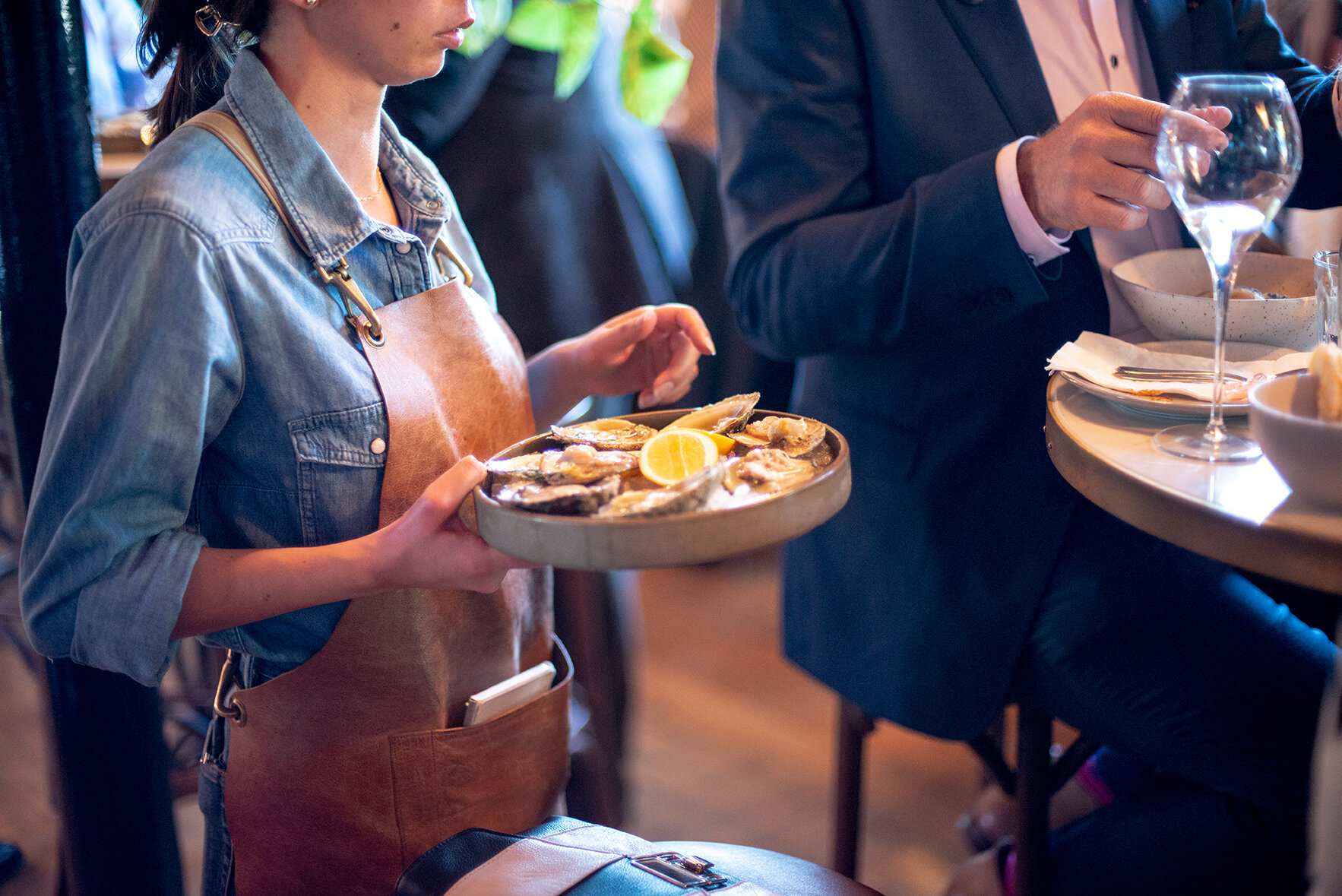
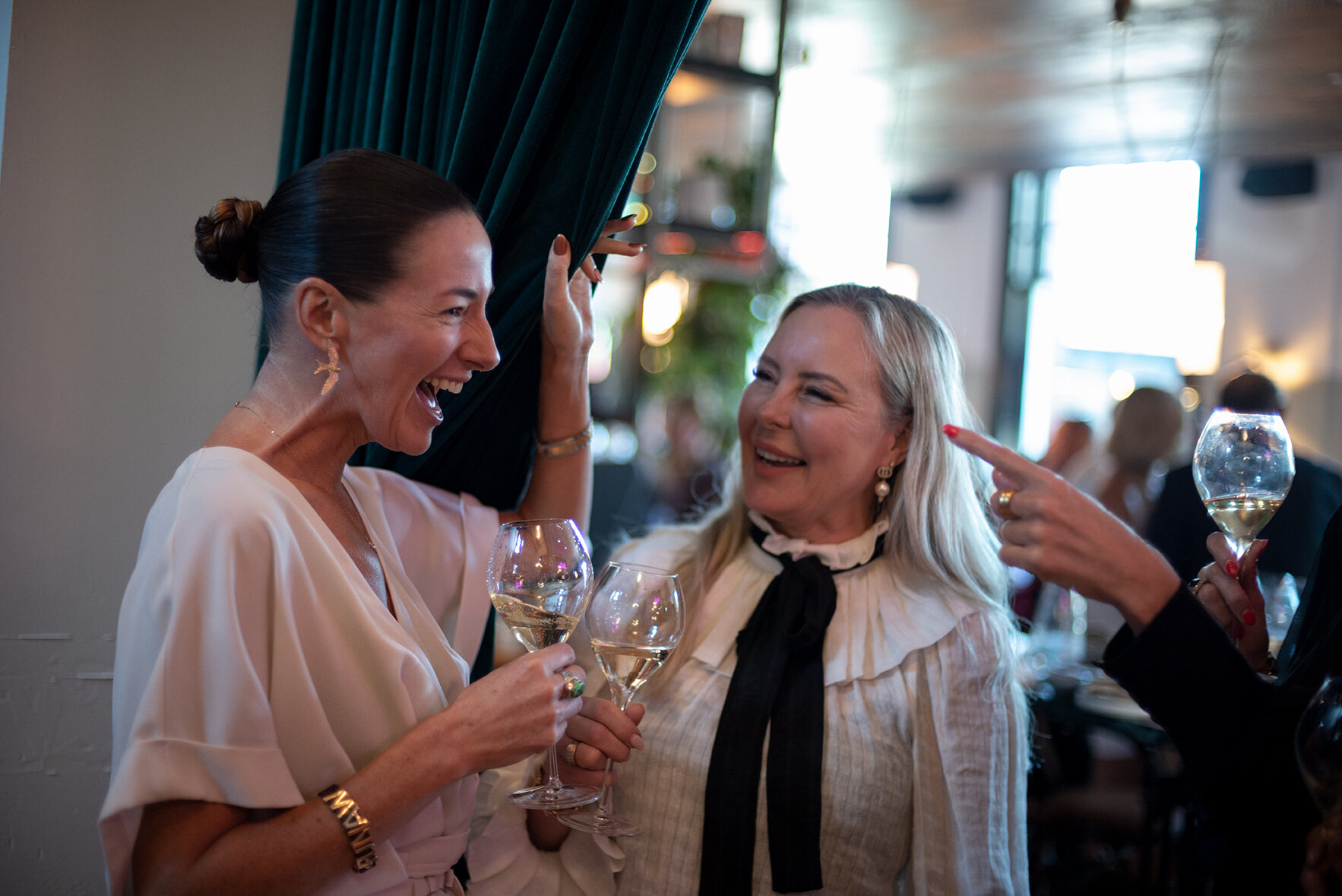
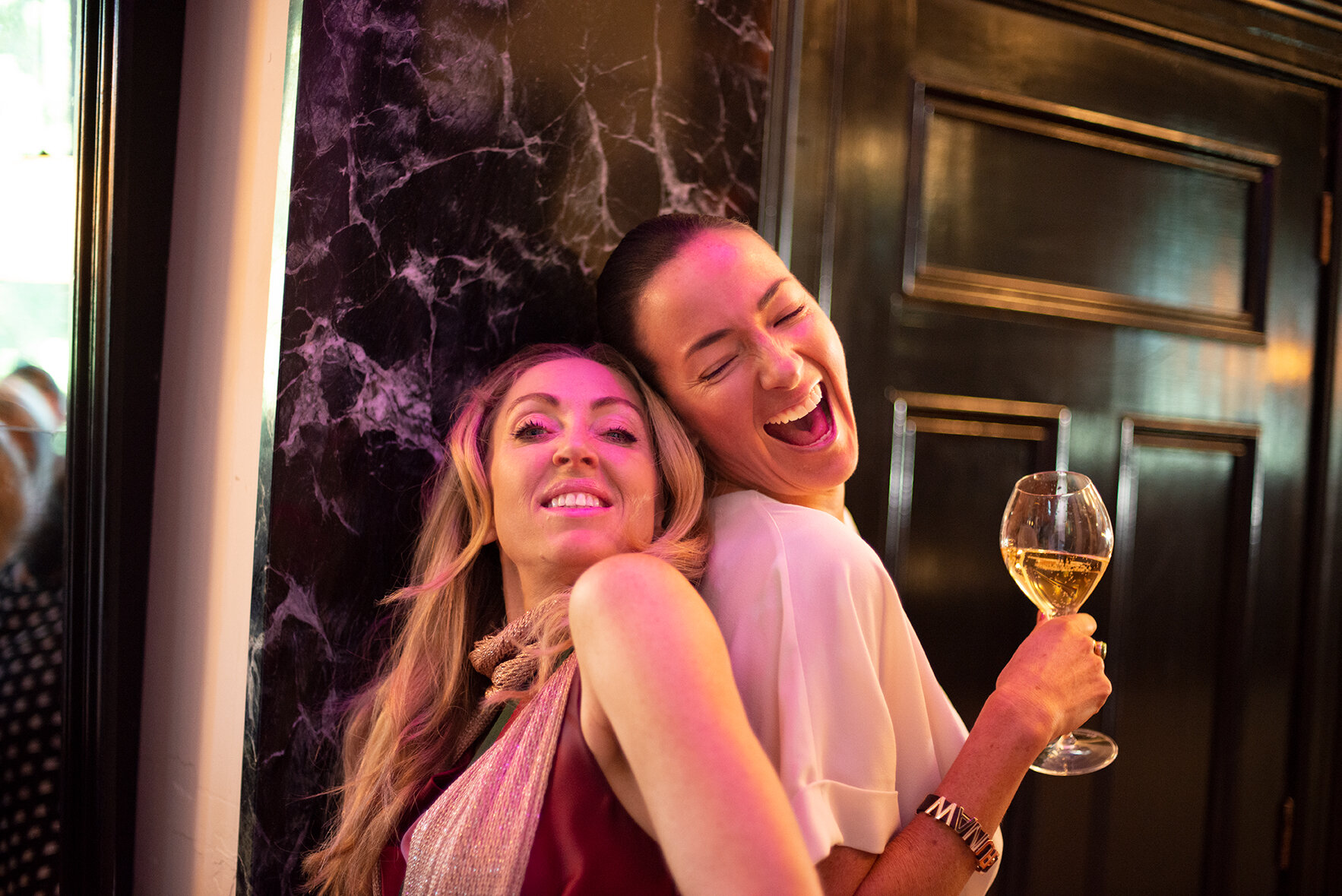
An absolute must-do event to get in your calendars for next year; the Bluff Oyster Bash was a roaring success filled with fun and glamour, and all the freshly-shucked oysters you could eat!

What: Bluff Oyster Bash
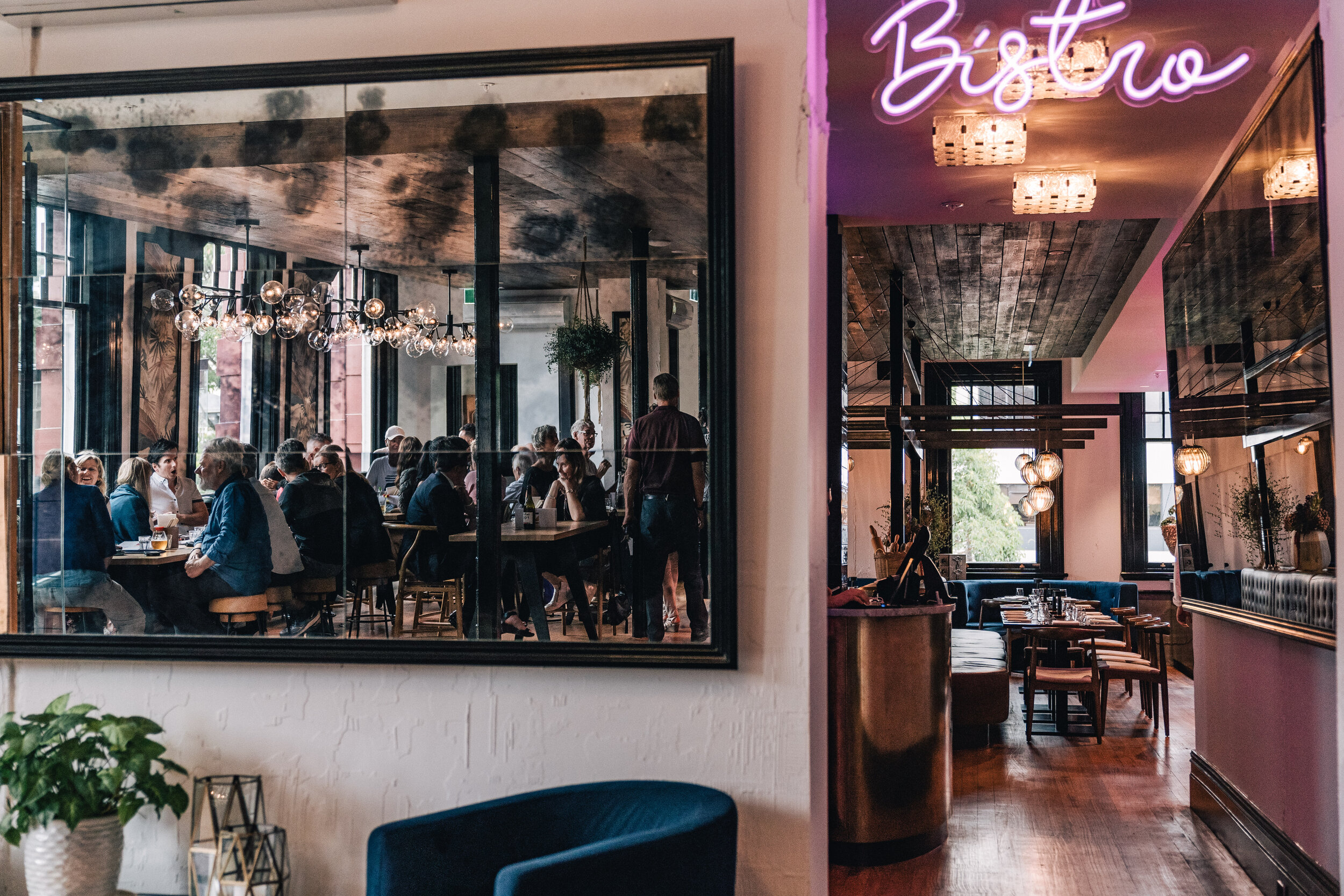
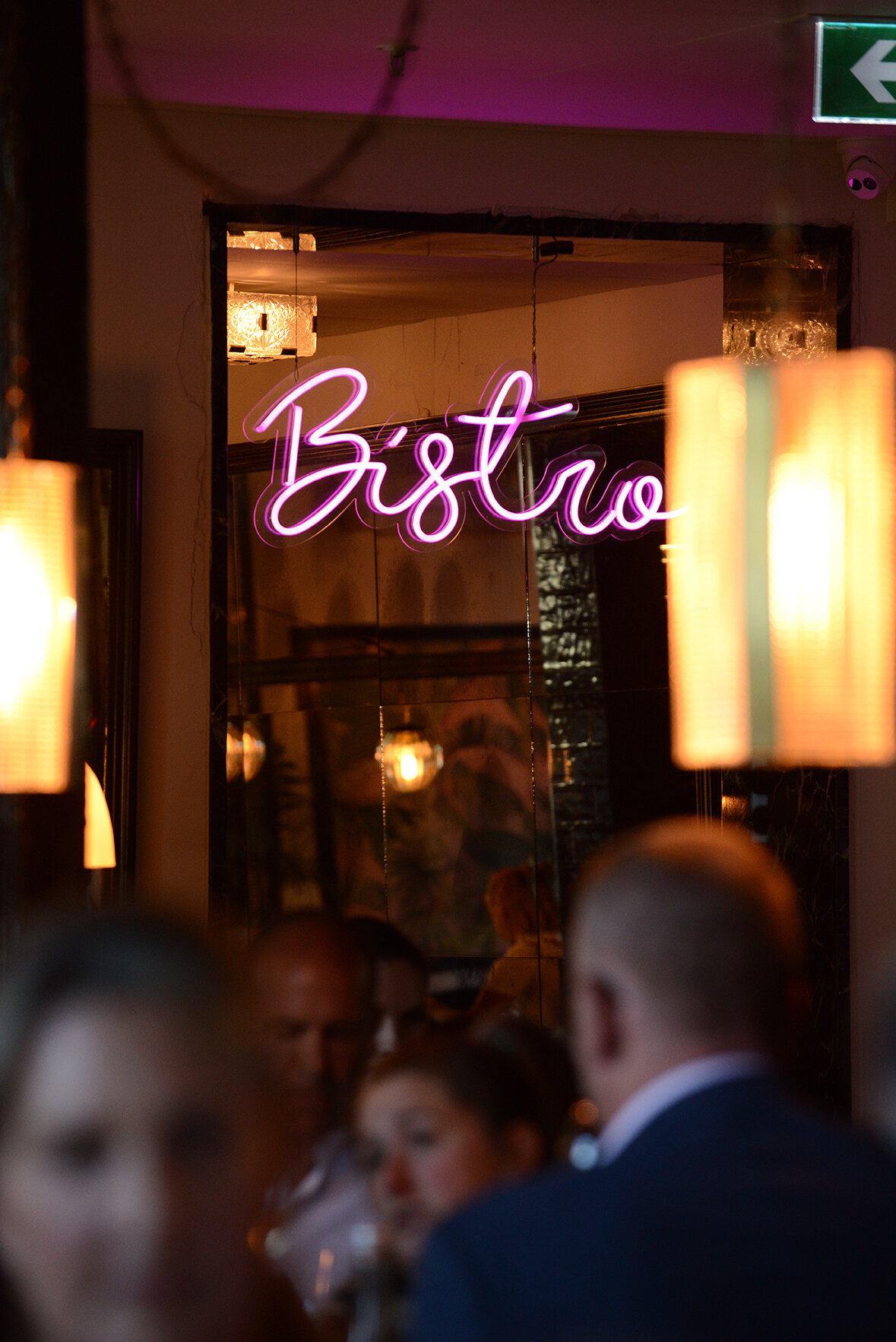
Where: Clarence Bistro, Tauranga
PHOTOS Pablo Creative
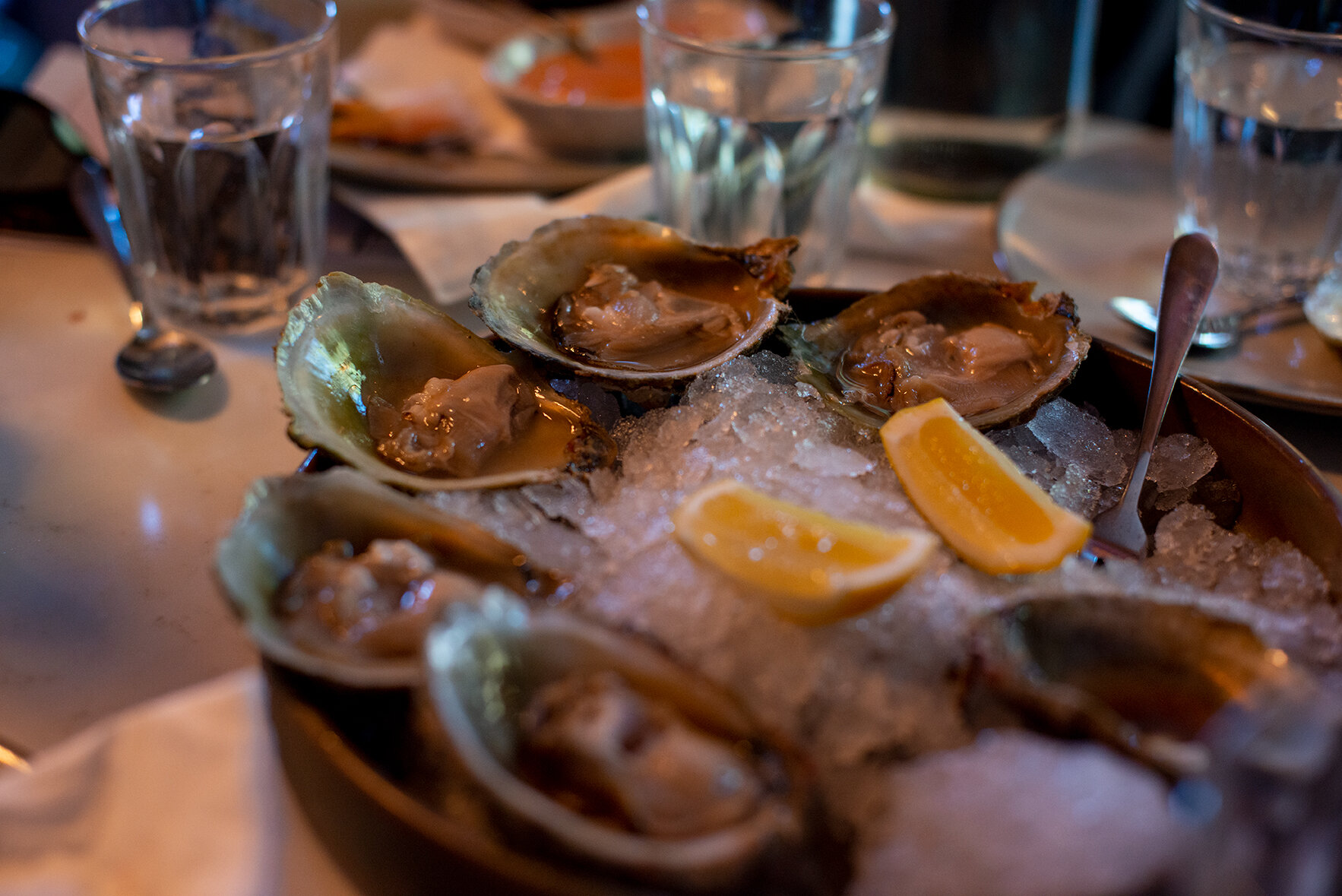
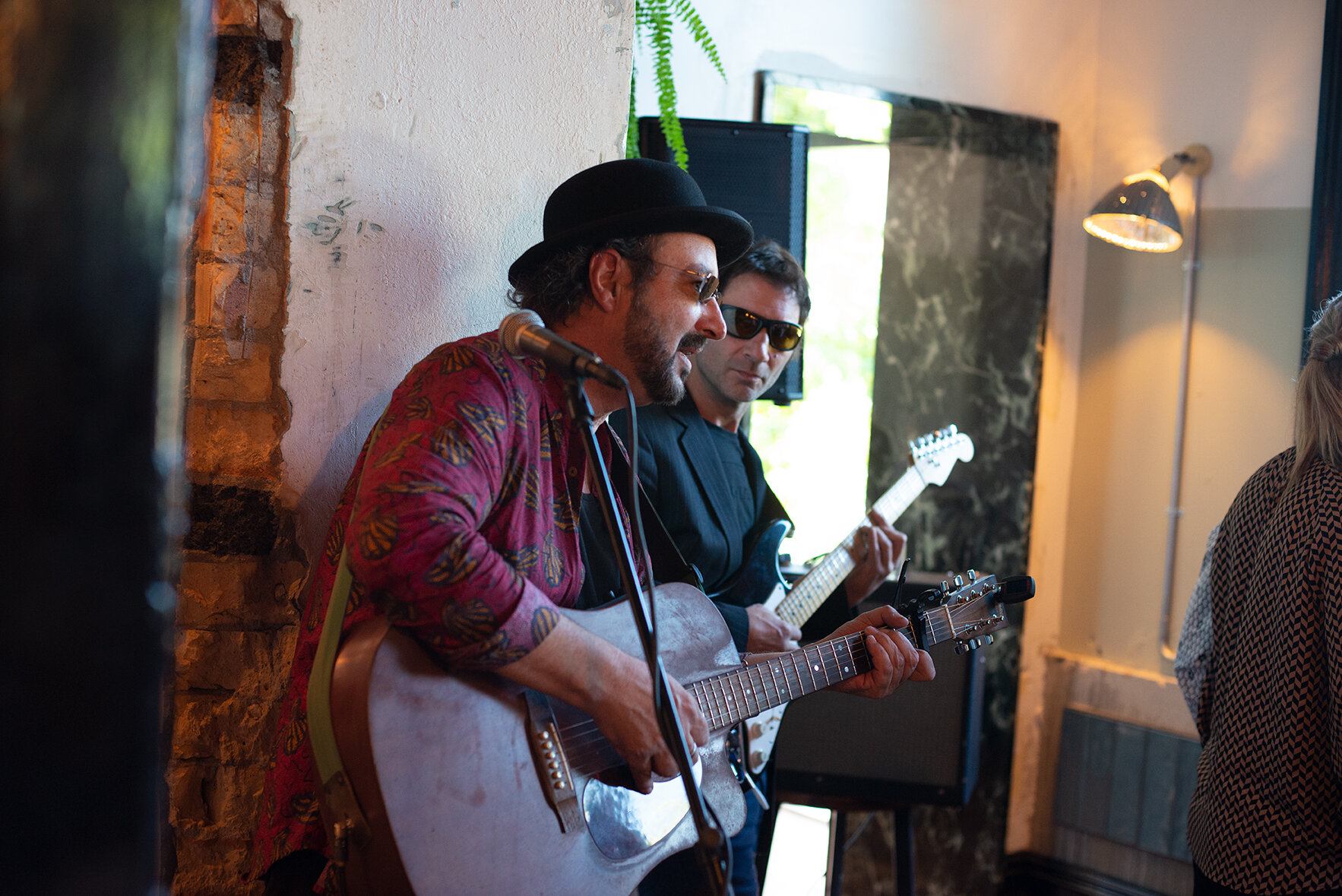
At this inaugural event, guests enjoyed free flow live shucked Bluff Oysters and a selection of seafood finger food along with champagne and entertainment throughout the night. UNO Publisher Mat Tomlinson attended; calling the event an absolute must-do next year.
“It ran through the afternoon well into the evening; everyone was dressed up and there was a real sense of fun and glamour - there must have been over 100 dozen oysters the team were shucking like maniacs, it was amazing!”

Award-winning Israel Randell talks art, new challenges and the bigger picture
“If people ask me [to explain my work], I want to have a conversation. That’s really all art is, a conversation. Sometimes it’s real honest, like, ‘What the hell is that?’ or ‘Why do I hate this work so much?’” That’s the kind of things that artwork brings.”

Through multi-media, moving image and sound, award-winning Tauranga artist Israel Randell articulates the spiritual and unseen. Now, in her new role as curator at Whakatāne Museum & Arts, she wants to help amplify the voices of local talent.
WORDS Maria Hoyle PHOTOS Quinn O’Connell
The question ‘what is art?’ is a tricky one to answer. One person’s masterpiece may be another’s monstrosity, making it hard to reach a consensus. Yet for multi-disciplinary artist Israel Randell, it’s not complicated at all. Art, she says, is a conversation, and as a newly appointed exhibitions curator at Whakatāne Museum & Arts, it’s one she is very much looking forward to having with the local community.
Originally from Hamilton (Tainui, Ngāti Kahungunu) and of Cook Islands descent, the mum-of-one has her work cut out for her when she arrives at her post (the week after talking to UNO). She and the team will be busy preparing for the February exhibition of the winners of the Molly Morpeth Canaday Award: Painting & Drawing, presented by Arts Whakatāne and held at Te Kōputu a te Whanga a Toi – Whakatāne Library & Exhibition Centre. Although that will be Israel’s immediate focus, she talks excitedly about the bigger picture.
“I’m really interested in being embedded in the community, getting to know the artists, and finding out how I can help them to realise their ambitions and be that person who bridges the community and the gallery,” says the Toi Ohomai Bachelor of Creative Industries graduate. “I’m also excited to be learning from my colleagues. Going into any new role, it’s good to be listening.”
Listening will be crucial for her dialogue with local artists too. Some may not see the gallery space as relevant to them – for example, those who may be more focused on selling their work, or those from other disciplines such as dance, theatre or acting.
Is it fair to say that galleries are often seen as no-go zones for certain sections of the community? “Yes,” she says decisively. “A gallery space is definitely always viewed as a white space by people outside looking in.”
So breaking down the boundaries between practices is one way not only to showcase a wider variety of work, but also to change the perception of what and who a gallery is for, of reaching those who aren’t, for whatever reason, engaging with it. “It’s constructive to help different types of creatives,” says Israel. “I think it does start with having a structure that caters to every kind of practice, not just the 2D practice or sculptural practice.”
Israel’s no stranger to having a dialogue across disciplines and amplifying the voices of indigenous artists. She arrives in her new role fresh from a Mana Moana research residency with arts agency Circuit, where she looked at the experimental practices of Māori and Pasifika visual artists, writers, choreographers and musicians to produce a collection of interviews and online content.
Israel’s own work experiments with moving image, multi-media and sound – quite a departure from the large-scale paintings she did as an art student in Auckland. “I took a break, moved to Tauranga and started off again at Toi Ohomai. But I didn’t want my work to be flat on the wall anymore – I wanted to occupy the space between the walls. I wanted to paint with light in space, so I was looking for materials that would let me do that. Lots of painters say all painting is about light and dark. I was interested in using light in a sculptural way to activate space.”
She originally considered working in neon, but it was costly. A classmate suggested wire would be cheaper, so she sourced some on Trade Me and started experimenting with it in the school studio.
Playing with wire and light sounds like a lot of fun, but it was no walk in the park. Israel’s daughter Lola, now two and a half, was just eight months old when Israel started the course. “I was still breastfeeding so I was worried. But I needed something else, a direction or passion, that was separate from my identity as a mother. I needed that for my own mental health and that in turn made me a better mother.”
It also, she believes, made her a better artist. “You go in there with no bullshit, no excuses – you get things done. You don’t have time to fluff around, then go home and work till 2am, because at home it’s all about your child. So I was way more focused. I think that drive elevated my art practice to something it maybe couldn’t have been when I was a single person.”
“I didn’t want my work to be flat on the wall anymore – I wanted to occupy the space between the walls.”
That ‘elevated something’ is a compelling body of work that speaks clearly to ‘maatauranga’ – what she describes as “the whole way of being Māori, the many layers that there are.
“I look a lot to cosmological narratives to explore things that aren’t material,” she says. “I’m interested in actualising the intangible. It’s hard… I don’t know if I’m successful half the time. This year’s body of work has focused on water and the elemental phases it goes through, and the spiritual things they hold for Māori and Pasifika people. I’m interested in exploring things that I can’t see that have been told by generations of elders, and trying to connect with it and make sense of it in my own way.”

Israel might not know if she’s successful half the time, but her work certainly impressed the judges of the 2020 Miles Art Award, presented In March by the Tauranga Art Gallery Toi Tauranga. To her surprise, she landed the Supreme Award for Wahi Ngaro, a compelling installation in which triangles of electroluminescent wire reference whakapapa and an in-between space with infinite potential. It’s a beautiful piece, one you can appreciate without knowing what it represents. Does it bother her when she’s asked to explain her work?
“If people do ask me, I want to have a conversation,” she says. “That’s really all art is, a conversation. The artwork is there to trigger that. Sometimes it’s real honest conversations, like, ‘What the hell is that?’ or ‘Why do I hate this work so much?’” That’s the kind of things that artwork brings.”
And then sometimes the work exists, well, just because. “Sometimes we totally make it because we want to make it. It’s important to let people know that and uncomplicate the way we speak.”

Featured in UNO Issue #51 - subscribe to get yours


The hotspot eatery stoking the embers for local foodies
The opening of Fife Lane is the realization of a nine-year dream for Ryan and Kat Dippie, who along with their passionate team, transformed the space on Mt Maunganui’s Central Parade into an industrial-chic restaurant.

An experience like no other on Central Parade in the Mount.
WORDS KATE UNDERWOOD / PHOTO KENRICK RHYS
The opening of Fife Lane is the realisation of a nine-year dream for Ryan and Kat Dippie, who along with their passionate team, transformed the space on Mt Maunganui’s Central Parade into an industrial-chic restaurant. The hotspot eatery is impressing locals and visitors with everything from Gisborne wagyu scotch with blue cheese butter to Coromandel mussels with saffron cream and plenty of vibrant Central Otago pinot noir.
As avid diners themselves, Ryan and Kat felt there was a significant gap in the area. “If you didn’t want to go over the bridge or right down to the Mount, where could you go?” Kat says. Drawing inspiration from New Zealand restaurant stalwarts like Jervois Steak House and Botswana Butchery, Kat says they wanted to create a quality dining experience that complemented other offerings already in the Bay.
Having spent the last nine years as owners of Rain Bar in Papamoa, Ryan and Kat utilised the expertise and collective knowledge of their dream hospitality team to create Fife Lane. Kitchen manager Robbie Webber, frontof-house Keri Harman and bar manager Scott Hinton were all sent on a two-year research stint in Melbourne, to hone their skills and bring back a wealth of fresh inspiration.
The result is an extensive menu specifically designed to provide food that feels both accessible and remarkable. Opt for the Hawke’s Bay lamb shoulder with minted pea puree which is served with crumbed sweet breads, or – from the steak selection – the under-rated French bavette cut. Smaller plates include tender calamari with miso mayo, and a pork belly with cauliflower purée and feijoa chutney. Among the sides, paprika buttered corn cobs and golden beer-battered onion rings are lining up to be favourites, and, from the sharing section the eye fillet beef Wellington and the seafood paella would be fabulous for a crowd.
Taking inspiration from butchers of the past, a custom-built glass meat locker sits at the heart of the space. This fine looking chill room houses an array of aged meat cuts – from West Coast savannah Angus sirloin to a Wakanui Angus rump. And if you order from the cabinet, you also have the luxury of selecting your own steak knife, presented at the table in a bespoke wooden box.
Wine is Ryan’s thing, and he’s dedicated an entire room to housing their diverse range. With barman Scott, they’ve handselected every bottle, including several vintages from across New Zealand and a sprinkling of international varietals. They have wine glass styles fit for every drop, whether it’s a bright Chablis, a German riesling from Kat’s sommelier friend, a pinot blanc blend from Mt Rosa, or Mumm by the glass.
The extensive cocktail menu – which includes a few interesting twists on classics – and the considered whiskey list are served from an immaculate white-tiled bar, which is an elegant contrast to the dining room’s bold black palette and natural wooden elements. The oversized tables were custom-built to allow enough space to comfortably accommodate mains with plenty of room for sides.
Ryan and Kat’s concept for the sophisticated fit-out came to fruition with the help of designer Stacey Smith of Twentyfivebees. Together, they created spaces suitable for intimate dining, families and larger groups. Ryan’s brother Owen Dippie installed his signature tiki artwork which leads to the charming rear dining room where Owen’s wife, Erin, has lined the wall with striking images of whole fish and scotch fillet steaks.
Alongside kitchen manager Robbie’s 30 years of experience, chef Dan Lockhart helped curate the menu, utilising a rare Spanish Mibrasa oven that takes centre stage in the kitchen. The closed barbecue design uses embers (instead of flame) to add a distinctive hint of charcoal to dry-aged scotch and charred asparagus. There’s also a smokey apple pie for dessert and, if that’s a little heavy, a theatrical mocha-gato dessert cocktail could be for you.
While steak is an obvious focus at Fife Lane, it’s far more than a steak restaurant; with options for the meat or seafood-averse such as gnocchi with Kaimai mushroom, broccoli, garlic butter and Parmesan. Ryan is a charismatic host who’ll happily tell you his favourites on the menu and steer you towards the chef’s specialities. But, back to that steak knife box – being offered a choice of blades to slice the tenderest of cuts is an experience which just doesn’t happen often enough in life.


Two mates with a masterplan for the Mount’s booming music scene
Day and night, there’s always something on the go at multi-functional Mt Maunganui venue Totara St.

Day and night, there’s always something on the go at multi-functional Mt Maunganui venue Totara St.
As Tauranga and the Mount’s population skyrockets, the music and arts scene is growing along with it. The attraction of the city to touring bands isn’t just about the size of the audience, though – it’s also about the fantastic venues at which they can play. The Mount’s Totara St events centre is such a place. By day, it’s a music school, but at night, it morphs into a rock ’n’ roll superstar.
Totara St co-directors Ross Shilling and Jay Munro met almost 10 years ago through a mutual friend. Both share a passion for the music industry – Ross has been in bands, owned venues and worked for years as a sound technician, while Jay had been involved in the promotional aspect of the industry in his hometown of Whangamata, where he juggled making surfboards with promoting bands and acts on the side. Together, they set out to create a venue that incorporated multiple facets of the business and, says Ross: “The masterplan was what we’ve ended up with.”
Realising their vision was no mean feat. According to Ross, “We looked at this place and it seemed almost set up, so we decided to jump in boots and all, and build a venue.”
Patience and elbow grease brought the project to life. The final push was opening for the 2012 Tauranga Jazz Festival, which had booked Totara St to host a poetry reading. Jay says it was “a bit like being on The Block TV show, with things really running down to the wire.”
In retrospect, they’re surprised that the organisers put such faith and support in them, but they proved worthy of the show of confidence, as all was up and running in the nick of time. Except, that is, for the missing toilet doors; Ross and Jay say it was open-plan or nothing for that event!
Walking through Totara St today, it’s plain to see why it’s gone on to become so successful. The music school side of the business is front of house, and the layout perfectly suits its purpose – from the comfy, retro-feel lounge to the rainbow-bright classrooms. A staff of around 13 contract tutors offer lessons on most instruments, and pupils love that they have the opportunity at the end of every term to perform as a band on a professional stage.
The events side of the venue is another thing altogether. Access is through a side entrance that leads into a sleek space with pared-back décor, a mezzanine floor complete with bar, and a huge stage fitted with sound equipment that’d blow the boots off even the most experienced roadie. Considerable investment has been made into this equipment – the set-up boasts a Martin Audio sound system, built-in acoustic panels and a lighting rig that ensure a first-class experience for audiences and bands. Without the hassle or expense of having to haul in their own gear, the process is greatly simplified for performers, adding to Totara St’s appeal.
Totara St has earned its stripes, and today the line-ups here are a heady mix of local and international players. From British acts such as musician Midge Ure and ska band Bad Manners, to Kiwi names such as The Black Seeds, White Chapel Jak and LAB, the list goes on. Ross and Jay have been savvy enough to realise that variety pays dividends, so they offer a variety of genres – entertainment for all sorts of age groups and musical tastes.
Despite their success, the pair aren’t the type to rest on their laurels. They’re currently developing the catering side of the business, the Chur!Coal barbecue and eatery, which allows Totara St to tantilise the tastebuds of 20 to 400 people for parties and all manner of corporate events, from functions to team-building sessions.
Totara St is one well-run business, and one that has a huge appreciation for the community it operates in. Its ability to shapeshift to be as appealing to Millennials as it is to Baby Boomers and band members is amazing – and that’s rock ’n’ roll baby.
A dash of the special sauce.
British-born chef Ian Harrison is in his happy place at Tauranga’s newest Italian eatery.

New restaurant Sugo serves Italian food at its finest – fancy-ish but wholly fuss-free.
When Ian Harrison says Tauranga’s new eatery, Sugo, is his happy place, it’s a comment to savour. He’s opened 19 restaurants and hotels on behalf of others, five of them in two years as an executive chef, and cooked his way around the world for 20-plus years working with chefs of high repute and at Michelin-starred restaurants. Until recently, his dream was to own an intimate fine-dining restaurant, but now he’s toned it down a tad – and he couldn’t be happier. He suspects New Zealand has rubbed off on him.
British-born Ian is chef and co-owner of Sugo, which became a tasty addition to Tauranga’s eating scene in early November. “It’s contemporary, seasonal, fresh and a nod to Italy, but it’s also no fuss,” he says. “I now know I’ll never open that fine-dining restaurant I used to dream about. I just want good, fresh food in a relaxed setting. I think I’ve become a Kiwi!”
Ian came to New Zealand for eight months, 10 years ago. He fell in love with the country – and one of its inhabitants, whom he’s since wed. Five years were spent in Auckland then it was on to the Bay of Plenty, where he was executive chef at Alpino and Clarence. At Alpino, he sharpened his skills in Italian cuisine; at Clarence he fine-tuned his European-Kiwi tools. “Those combined, brought me to Sugo,” he says.
On Wharf Street, Sugo is hard to miss. The facade of the Italian-inspired eatery is green, white lights and planters hang overhead, and red umbrellas shelter tables topped with terracotta plant pots. There’s an abundance of décor wow indoors, where a variety of seating options cater for 60 to 70. Alfresco dining numbers (when the Wharf Street upgrade is completed) will sit at 50.
Sugo’s tagline is “Italian inspired” and Ian believes anyone who’s been to Italy will taste the connection. Ian, who preserves and ferments as well as cooks, enthuses over seasonal and fresh food, and says pasta and antipasti are stars, as are unsung heroes in the meat world. ‘Sugo’ means ‘sauce’ and there’ll be plenty of that – he’s a dab hand at making them and they’re a key element in Italian cooking.
Instead of fussing excessively over presentation and the addition of numerous ingredients, Ian says he’d rather spend time finding suppliers (he has about 19) who offer top-notch products. “I want to source the best ingredients I can find, do as little as possible to them, then deliver so the products can sing. He doesn’t see the need for too many ingredients per dish, either, nor an extensive menu.
Ian and business partners Josh Fitzgerald and Warren and Megan Lippi-Smith have ensured Sugo dining is also relatively affordable – most mains are $30 and nothing’s over $35. A lunch menu will be added in February, perfect for those working in the CBD. Oh, and free of charge are dog biscuits made on-site for visiting pooches.
“I’m cooking good food, enjoying myself and making my mum and dad proud,” says Ian. “This place reminds me why I got into doing what I do.”

Where to spend the last of the warmer weather
After enduring a year of uncertainty in 2020, the summer has been sweet and internationally envied here in our Aotearoa bubble. But with the sun setting earlier and earlier at the day’s end, it’s time to take advantage of the lingering warmer days by exploring everything that our backyard has to offer.
After enduring a year of uncertainty in 2020, the summer has been sweet and internationally envied here in our Aotearoa bubble. But with the sun setting earlier and earlier at the day’s end, it’s time to take advantage of the lingering warmer days by exploring everything that our backyard has to offer.
After enduring a year of uncertainty in 2020, the summer has been sweet and internationally envied here in our Aotearoa bubble. But with the sun setting earlier and earlier at the day’s end, it’s time to take advantage of the lingering warmer days by exploring everything that our backyard has to offer.
From the East Coast to the West, there is something for everyone. While we still have the glorious sunshine, pack your bags and take off with your family, friends and lovers for one last summer adventure!
Even if you’ve used up all of your annual leave, the pandemic has altered our ability to work from anywhere – even holiday. No longer confined to five days a week in an office and desperate for a change of scenery from Working From Home (WFH), Booking.com has predicted that we’ll see a significant rise in the “workcation”. Nearly a third (32%) of travellers have already considered booking somewhere to stay in order to work from a different destination. Now that there are zero excuses to not book that last minute holiday, you can dial in to your next Zoom meeting from the beach!
For inspiration on where to enjoy the last of the summer sun, and to find award-winning properties to stay at on your trips, read on. Each of the following properties received a Booking.com Traveller Review Award in 2021, meaning they’ve been globally recognised for making travel experiences more memorable for all. With the frequent unforeseen changes in our ability to travel, Booking.com offers flexibility and a range of convenient cancellation options when you book, so you can still make plans and feel confident you won’t lose out if last-minute changes come up.
Located on the rugged West Coast of the North Island, New Plymouth offers stunning 360-degree views of the Tasman. The ocean surrounding Mount Taranaki makes this place a party for the eyes, so make sure you’ve packed your camera.
If you’re keen on hitting the surf, dabbling in a wide choice of scenic walks, or if you’re there for the great selection of food and drinks, New Plymouth is a great place to explore.
Surf or swim the world-renowned Fitzroy beach and catch the sunset across the beautiful west coast. Stroll the unmissable Coastal Walkway, stretching the entire length of the city, or go for a feast at the ‘Social Kitchen’ in Powderham Street.
WHERE TO STAY
After a day’s exploring, head along the coast to the beachside town of Oakura where the charming Ahu Ahu Beach Villas await. Set on a vast hill top with incredible oceanside views, the villas offer the perfect spot to enjoy an evening BBQ and grab a bottle of wine, as the sun sets on the stunning West coast skyline.
These unique villas are oozing with charm and character making for an extra special end to a fantastic summer.
Hahei is a must-do on the summer itinerary. This iconic beach town in the Coromandel is home to glorious white sand beaches and clear blue waters. Encompassed by grand Pohutukawa trees, Hahei beach is a fantastic place for families to relax and play.
The town’s charming streets, attractive climate, and relaxing vibes make for an ideal vacation spot. Spend your last days of summer taking the famous walk to Cathedral Cove, eating and afternoon drinking at the residential food trucks at Hahei campground and spending endless hours at the beach with nowhere to be but there.
WHERE TO STAY
Located on the Hahei beachfront, Hahei Holiday Resort offers self-contained accommodation with cooking amenities and great ocean views. As the beach and shops are all a leisurely stroll away, these holiday homes are the ideal situation for a traditional Kiwi summer holiday.
With a variety of room sizes and accommodation types on offer, the resort has something suitable to any group and budget. Take your family or friends for a relaxing stay and watch your worries melt away.
An easy hour and a half drive north of Auckland, you’ll gladly find yourself in magical Mangawhai. Head away with your favourite company and choose from a plethora of activities from the active to the relaxation.
Walk the Mangawhai cliff for alluring views and go surfing at one of the local surf beaches such as Te Arai or Forestry. Head across the estuary for a spot of dune-boarding – or simply stay put landside and enjoy ocean views the magnificent dunes present.
WHERE TO STAY
Enjoy the perfect summer stay at the Tui & Nikau Cabins. This modern but homely accommodation offers beautiful garden views and is pleasantly secluded to let you truly escape the day to day. Relax in this naturally lit abode after a day of exploring the local area. Have a glass, toast some marshmallows and enjoy this escape.
On the southern end of 90 Mile Beach discover the untouched West coast town of Ahipara. Watch horses run wild on the beach, catch a wave at Shipwreck Bay, rent out off-roading quad bikes or check out the famous local Fish n Chip shop for a sunset dinner. If it’s high action or relaxation you’re after, Ahipara will tick all the boxes for you. Make the most of the summery weather, pack the car and head up to the serene landscape of Ahipara to satisfy those holiday cravings.
WHERE TO STAY
Come take a big breath of fresh air at the Endless Summer Lodge in Ahipara for a pleasant weekend away. This lodge offers idyllic beachfront accommodation in a historic 1870s villa. Guests can relax in the hammocks, or enjoy a walk along 90 Mile Beach. At the end of your day, come back for a lush, wood-fired pizza in the traditional oven, built on the beautiful back deck. Book yourself a weekend of simple pleasures and enjoy everything that the Endless Summer Lodge provides
Known as the gateway to the Bay of Islands, Paihia is sure to stun with its good looks. Pop on the ferry to Russell for the day, or you can head five minutes over to Waitangi and delve into our country’s rich history, or simply take a leisurely stroll through the Paihia township. A small place with big character and endless surrounding places to visit will make for an exciting and scenic trip away. Paihia’s romantic landscapes will have you falling in love with New Zealand all over again.
WHERE TO STAY
Enjoy the warm earthy tones at the attractive ‘Cliff Edge by the Sea’ property. Set on a peaceful hilltop with grand bay views, this expansive holiday home offers free Wi-Fi and breakfast. An easy two-minute walk from the beach, this property is sure to impress every guest. Come and explore the Bay of Islands for the day and cosy up with a nice cuppa (or vino) for a relaxing evening back at Cliff Edge by the Sea.

Better together
It's unusually cold at the Rising Tide today. Probably because most of one wall and part of the roof is missing. But it’s for a good cause. They’re making room for beer. Better beer.
WORDS TALIA WALDEGRAVE PHOTOS TRACIE HEASMAN

It's unusually cold at the Rising Tide today. Probably because most of one wall and part of the roof is missing. But it’s for a good cause. They’re making room for beer. Better beer.
I'm here to meet a bunch of brewers and brewers are busy people, but luckily, some of them are free to speak to me.
I wrote about the launch of Rising Tide in the spring issue in 2016. The bar is adjacent to (and owned by) Mount Brew Co on Newton Street in The Mount. I’m back so soon because exciting things are happening. Recently, the glorious outdoor decking was extended. This prime spot is always heaving with Friday post-work revellers and keen Sunday sessioners, not to mention the throngs of beer enthusiasts every other day of the week. The new deck didn't need justification, but there's a really good one. Glenn and Virginia Meikle of Mount Brew Co are now sharing their digs with Funk Estate; a brewery started by three guys, Dylan Shearer, Jordan Evison and Shigeo Takagi (Shiggy).
THE STORY
While studying in Wellington, Dylan, Jordan and Shiggy formed a bond over beer. They started brewing at home and before long had their very own brewing company. They’ve been brewing in Auckland since 2015 and now they’re headed our way.
At my bar leaner today are Rising Tide owners Glenn and Virginia, along with two thirds of Funk Estate, Dylan and Jordan.
I try to understand why two competitors are joining forces to brew their beers under one roof.
G: Craft brewing isn’t a competition. We are in it for the greater good. It’s about making better beer.
Locally born and bred, Jordan has long-running connections with Glenn and his family.
G: Jordan and I were catching up over a cold beer. I was moaning about our out-of-date equipment.
J: I was moaning about our premises in Auckland. We were looking for a new place to brew.
Mount Brewing Co. had the perfect venue in a killer spot, and Funk Estate had the best 'stainless' (brewery lingo for equipment), including a canning machine. Competition or not, it was a no brainer. Cans of beer are big. Their popularity is growing over glass bottles. Don't be surprised if you see some pretty inventive labels cropping up in the next year from these two breweries.
J: I suggested we move production down here and co-share the space at Mount Brew Co and its pub, The Rising Tide.
Funk Estate began in beer Mecca, Wellington in 2012. Shiggy worked at underground icon Hashigo Zake. Jordan and Dylan drank there and beer bromance ensued.
Funk Estate have been given a moniker by their fans, the ‘rebels of the craft beer industry.’
D. Haha I’m not sure about that, but it’s flattering! Basically, we make beer we like to drink. Primarily hop-forward beers. Our personal favs are our sour beers like Jungle Boogie Blood Orange Sour.
For Jordan, the move to the Bay is a bit of a homecoming. For Shiggy and Dylan, it’s a chance to settle down somewhere new and, surprise surprise, they’re already falling for the lifestyle.
D. Walking into an already established bar and outlet is beneficial and it’s what we've always wanted. Being able to slot right into this set-up is fantastic.”
Last year I asked what Mount Brewing C. had planned for the future. Glenn was hoping for one more kettle. Now has a whole new brewery. I mention this to him and he smiles, shaking his head in disbelief. For him, it’s all about the beer and constantly striving to make it better.
G. You can’t beat fresh beer and the biggest problem with flagons is that it loses its freshness quickly. These guys have brought down state of the art canning equipment so now we can produce stubbies and cans with a much longer shelf life. We are making better beer than ever.
In time for summer, that sunny deck just got even better, with an outdoor bar offering ten additional taps to the existing 29 inside.
I broach the subject of a special release beer mash-up between the two labels. Dylan is quick to reply - I'm 100% sure it'll happen one day.

Cult cinema club
For many, winter is a time to hunker down, but those dark evenings are a great opportunity to get out and fill your brain with a bit of culture
WORDS TALIA WALDEGRAVE PHOTOS SALINA GALVAN
For many, winter is a time to hunker down, but those dark evenings are a great opportunity to get out and fill your brain with a bit of culture.

Each time I visit the Historic Village, exciting things are happening, and in this chapter on Tauranga’s sweet slice of history, I explore the evening offerings available over the cooler months.
The Village Cinema plays host to Tauranga’s newest club for film buffs: Cult Cinema, run by event organisers Kimberley Cleland and Melanie Mills. The girls met while working on ‘Night Owl Cinema’ - the New Zealand interpretation of the All American Drive Thru.
MM. “Most of our events slow down after summer, so we wanted to offer an alternative over autumn and winter. That’s where the idea for Cult came from.”
KC. “Once we had a project, we needed a venue. Mel asked if I’d seen the cinema in the Historic Village and it was so coincidental, because I’d actually just held an event there.”
The first time I saw the Village Cinema, I was told it was destined for greatness, but I wasn’t so sure. Pre-refurbishment, the interior was all shades purple and looking a little worse for wear. On my recent return, I was blown away. The Art Deco makeover has injected it with life and I felt I’d stepped into the glamorously attractive bygone era of the 1920's.
MM. “I happened to be working on a different project, when I spotted the cinema. I’d literally walked past a million times and never noticed it! It was completely under utilised.”
For Cult Cinema, the girls have created a complete cinematic experience, including an outdoor area to enjoy drinks and movie snacks before each showing.
KC. "It was a deliberate choice to provide people with an alfresco dining experience. During the day, you hardly notice the trees, but at night they light up, and the cobbled streets have you feeling as if you're in a little European alleyway.”
MM. "We've got a heater and a little restaurant bar, that was actually handmade for us by our coffee supplier and we often invites a food trucks to come along. We serve as much locally as we can - you can have a hot chocolate and a cookie, or wrap your mittened fingers around a lovely glass of beer, wine or cider."
MM. “We both come from hospitality backgrounds and just love having that interaction with our guests from behind the bar.”
As for the films, it’s all about the classics.
MM. “The reaction we get is the best part. It evokes so many emotions from people and it’s lovely to see them come back and say how wonderful it was.”
KC. “When we played Easy Rider, my father in law told me how revolutionary that movie was for his time. He was so excited about seeing it and that kind of input is always encouraging.”
ALSO ON…
The Detour Theatre is a one-stop shop for all things theatrical. From drama classes to performing, or simply getting involved behind the scenes, it’s a place where the magic happens.
If you find the family suffering from cabin fever and need to escape the four walls of home, a walk through the gardens and surrounding bush, a pit stop at the café, get involved in an art class or a shop for gifts and souvenirs – there’s plenty to do. Check out the Historic Village website for all the need to know.
For long time locals, the Historic Village spurs certain nostalgia, one that some are scared they’ve lost, but it is absolutely worth rediscovering what goes on there today.

To a year well done
Happy first birthday, Eagle Ridge! We talk to owners Nigel and Deb, and manager, Briana, about their first year up in the Ohauiti Hills.
INTERVIEW JENNY RUDD

Happy first birthday, Eagle Ridge! We talk to owners Nigel and Deb, and manager, Briana, about their first year up in the Ohauiti Hills
UNO: So, what's been the highlight?
B: Well I don't know about Nigel and Deb, but mine was undoubtedly getting married. Apart from the fact it was the most special of days, personally, it has been so helpful in my job, as I now know exactly what it's like for our brides and grooms. It gives them real confidence to know I've walked that path.
D: Seeing Briana get married was an absolute highlight for us too. She works incredibly hard, and is a perfectionist with everyone else's weddings, so we knew hers would go off without a hitch.
UNO: That view! It must be hard getting everyone to turn away and walk inside.
N: It's pretty mesmerising, isn't it? Actually, you can see when a helicopter takes off from Tauranga Airport to bring people here, and follow them all the way here.
B: As Nigel's a pilot, he always encourages the helicopters to come in very close, which can be a bit scary!
N: We had a great wedding recently where the groom arrived in a helicopter in great drama. The guests had been picked up in a bus from Wharf St 'mystery bus tour' style. They had no idea where they were going. They stood here and watched the helicopter come from afar, and the groom got out to James Bond music from the band. It was all very glamorous, then we could hear the sound of an ice cream van get closer and closer, and the bride arrived in a Mr Whippy van! Everyone ate ice cream while the bride and groom exchanged their vows.
UNO: Do you ever find anything odd in the lodge after you've had guests stay?
N: Only every week! Actually, I very nearly found something very interesting at one wedding over the autumn; all the guests were up at the function centre, and I was pottering about in the kitchen here in the lodge. There were two guests who hadn't quite made it up to join the rest of the party. He was playing the piano and his friend was singing beautifully next to him. Clearly the emotion of the music got the better of them, because as I walked past the downstairs guest bedroom, I saw they were just about to make use of the beautifully made up bed in there. I gave them a quick jolly up and told them to hoof off and join the others. Deb had just spent the morning making up that bed. I wasn't in any hurry to find clean sheets and remake it!
UNO: Sounds like you get some pretty lively parties up here.
B: We have a full range, to be honest. We've had some seriously wild weddings, giggly and boozy, with the entire party having flown straight in from overseas having never seen the venue. I have a great job - all my customers are people having the time of their lives! It probably doesn't help when Nigel gets behind the bar. We've had to throw him out as he's such a generous host, he keeps refilling glasses quicker than people can drink them.
UNO: We like the beautiful picture in your advert is this issue, what was that event?
D: That was such a special evening, and very popular too. Trelise Cooper came down to support a fundraiser for Homes of Hope (see the pics in Spotted on page 20). As soon as she arrived with her team and saw our beautiful lodge, even though they'd booked a hotel in town she asked if they could stay the night. We were already pretty full, but how can you say no to such a lovely lady who's here to support such a great cause?
N: At the end of the evening, the whole team collapsed, exhausted after their efforts. They were starving and it was pretty late so we ordered pizza. The delivery boy wouldn't come up to us, so I sped down the hill and delivered the pizzas myself to these lovely ladies. They thought it was hilarious.
UNO: It's like a whole world of excitement going on up here, in the hills.
B: It is! It's such a magical place to come to work to every day. There's so much going on here all the time, you'd never guess from the driveway in sleepy Ohauiti. This morning we are preparing lunch for Jaguar. They bring guests up who get to drive their sleek, powerful new cars round all the windy roads up here, have a delicious lunch, then drive back home. Then this afternoon, I'll be making sure our grounds look perfect as we are producing 360⁰ videos for our website. It's impossible to get that wondrous, ever-changing view into one image!

The Incubator
“In 2013, a few of us artists wanted studios, get out of our homes, and be in a space with other artists, and possibly exhibit our work. There was nowhere really in Tauranga for artists and musicians to be together.”

WORDS TALIA WALDEGRAVE PHOTOS TRACIE HEASMAN
After writing about The Men’s Shed in the summer UNO, I convinced my editor to let me go back to The Historic Village, as there’s just so much going on. Last time I came, my interest was piqued by the big red barn of The Incubator.
Simone Anderson gives me a guided tour and explains the role of The Incubator in Tauranga.
“In 2013, a few of us artists wanted studios, get out of our homes, and be in a space with other artists, and possibly exhibit our work. There was nowhere really in Tauranga for artists and musicians to be together.
“We found this brilliant space at The Historic Village, and started looking around at filling the gaps culturally by offering adult art classes, putting on exhibitions and events.
When The Incubator opened in 2013, Simone and the team decided to have an exhibition. “We wanted it to be amazing, and for everyone to feel part of it, even if we thought we might not sell anything! The audience became the art too. We called it The Midnight Circus, and everyone came in costume. We had trapezists, fire eaters, all sorts! We wanted people to really feel enriched by it, that what we had done was worthwhile.”
“The speed with which The Incubator has grown has been completely unforeseen. The growth has been reactionary to the hunger. There was no common denominator for art in our city, just lots of fracture. The Incubator is a platform where that creativity can take place.
“We run lots of projects, supported by a collective made up of our resident artists, and a wider group of creative people who support our philosophy who volunteer a wide range of skills; graphic designers, writers, craftspeople, and theyall collaborate on our projects.”
A Grim Tale
To explain the kinds of projects they undertake, Simone hands me a copy of A Grim Tale. This beautiful book was a collaboration with The Women’s Refuge, putting together survivors of physical abuse, writers and artists. Putting such beauty behind such a taboo subject is such an innovative way to tell a story and just highlights how creatively The Incubator team likes to think.
Other collaborations around the city have The Incubator stamped all over them and one in particular is the colourful pianos we featured in the Peter Williams issue last year. “We were asked to paint one piano, we said we’d do three and we ended up doing eleven.”
A new exhibition space has just gone in and as Simone explains, it’s for emerging artists looking to showcase their work. “It is incredibly difficult to get your work into a gallery, so we wanted to provide something that catered for that.”
Behind the exhibition space are the studios of the resident artists. Wandering between them is like being in an underground cave and each one is completely unique; paintbrushes, tools and inspirational musings are crammed in like organised clutter.
The Artery
Simone leads me into the Artery, the recently acquired building next door that they use for art classes.
“When the government axed night classes in schools, people no longer had anywhere to go. We saw a huge gap to fill that creative space. These are bite sized, achievable classes, often run by our resident artists and the connect people in a social way as well as a creative way. It takes them out of isolation. Most people walk away with connections, having made new friends.”
The classes range from one day to six weeks, and cover printing, painting, ceramics and more. Classes are always changing and information is kept up to date on The Incubator website.
Time to Visit
“The Village comes alive every second Sunday and we wheel out our stage and local musicians perform. It astounds me that aside from the bar and pub scene, there’s nowhere for musicians to meet, so this is another way for us to provide that opportunity.”
Once again I walk away feeling inspired and it’s wonderful to see this space that Simone’s team have created for artists to collaborate.
“It’s not just about the Incubator as a place, it’s what we want to achieve. We want everybody to up the value of arts within the community. Art is not about retail or income, it’s about a way of life.”

Truckin’ good eats
Got the drive to enjoy some delicious food truck flavours? Check out our convoy of options.
Got the drive to enjoy some delicious food-truck flavours? Check out our convoy of options.
Best cheap & cheerful
Kenny Johns Foodtruck
Our pick: Pork sliders
After selling his waterfront café Deckchair, local chef Ken Greenhill found a 1969 fire truck on Trade Me, lovingly restored it and turned it into a food truck from which he now serves fresh, affordable cuisine and award-winning Hawthorne coffee in Tauranga and at the Mount. He also caters for festivals, corporate functions, weddings and other private events – all with his own special brand of charisma and soul.
On the menu: Innovative street food – ribs, wraps, tacos, poke bowls, gourmet burgers and sliders, pies, fries and more from around $4–15.
Best Japanese
Ichiban
Our pick: Donburi
Head to 2 Newton Street, Mt Maunganui and you’ll find Ichiban purveying street food with a Japanese twist. Owner/chef Karen Onishi is a food engineer by trade and passionate about great food. Ichiban arose from her love of tasty and authentic Japanese street food, and she brings to her customers the best of Japanese home cooking, using family recipes, authentic flavours and the freshest ingredients to deliver the best food experience from a cool vintage caravan.
On the menu: Poke bowls, donburi, sides and drinks.
Best kaimoana

OY Premium Oysters
Our pick: Fresh oysters
Brigitte and Lew Davies have taken their decades of combined experience in the fishing and seafood industry and turned it into a business that’s really going places – usually to the Mount, Papamoa, Matua or beside the Wairoa River, depending on the day. They absolutely love meeting fellow oyster-lovers and introducing newbies to the oyster world.
On the menu: Oysters fresh off the ice – on their own, with lemon, with balsamic vinegar, with cheese… From time to time, they introduce rare and seasonal specialties as well, such as whitebait fritters and king prawns.

Best superfood
Soul Boul
Our pick: Smoothie bowls
Soul Boul co-founders Alexandra Bell and Stacey Horton have been friends since university, bonding over being active, healthy, happy humans with a shared love of good food and coffee. With backgrounds in hospitality, after graduating, they decided to open New Zealand’s first smoothie bowl food truck together. Firm believers that we are what we eat, they’ve been serving nutritious, organic and yummy wholefoods every summer for four years now and have just landed their very first permanent spot at 58 Ashley Place, Papamoa.
On the menu: Plant-based smoothie bowls and organic coffee.
Best sushi
Sushi Pandas
Our pick: Cali rolls
Sushi chef Fernando Pinilla just wants to make people happy – and if you’ve ever visited her at her cart, Sushi Panda, you’ll know she’s quite the entertainer! A sushi chef for 18 years and originally from Chile, she arrived in Aotearoa 10 years ago. Today, her three-year-old food truck is well-loved in Tauranga, at the Mount and in Rotorua; catch her at 13 Bain Street, Mt Maunganui, the main Mount Beach, the Bay’s biggest summer festivals and our local markets too.
On the menu: Chilean fusion sushi.
Best Kiwi classics
The Wave
Our pick: Real fruit ice cream
Situated on Marine Parade in front of Leisure Island, The Wave and its owner-operators Elliot and Grace Sims provide the popular treats Kiwis can’t get enough of. Serving food that makes people smile in the most beautiful location, they’ve created a friendly and welcoming family environment that also celebrates great music and good manners. Elliot’s even been known to give away ice-creams to well-behaved children!
On the menu: Real fruit and Tip Top scoop ice-cream, Longest Drink in Town milkshakes, Vogel’s toasties, fresh fruit smoothies, juices and locally roasted Little Drum coffee.

Go to town
It’s not all ancient history at Tauranga’s Historic Village. In fact, there’s a world of contemporary pleasures to get amongst.

It’s not all ancient history at Tauranga’s Historic Village. In fact, there’s a world of contemporary pleasures to get amongst.
WORDS Kate Underwood PHOTOS Salina Galvan
At the foot of 17th Avenue West is a village where makers, bakers, creatives and community organisations come together to offer a unique heritage destination amid original and replica early-Tauranga buildings. The grounds are open seven days a week and entry is free, so gather the crew for a nostalgic excursion to explore and meet the locals. Here are a few you could encounter…
The Whipped Baker
Fuel a wander of the old-timey streets at The Whipped Baker, where you’ll be greeted with a feast for the eyes as well as your stomach, with an array of treats including generous cream donuts, steak and cheese pies, raw salads and ‘freaking good’ shakes. Initially a humble bakery stall founded by Fran and Aaron Cooper at the Tauranga Farmers’ Market in 2006, by 2016 The Whipped Baker had a permanent corner site in the heart of the Historic Village, complete with plenty of local Little Drum coffee to perk up visitors and neighbours. They also have a catering service that offers antipasto platters and birthday cakes for all your party needs.
THEWHIPPEDBAKER
White Silk Bridal Couture
At White Silk Bridal Couture, you’ll find a timeless collection of elegant silk and lace-laden wedding gowns. Each piece is hand-crafted here by lead designer Nicky Hayward, who prides herself on creating a seamless and enjoyable experience for all her brides. Everything is made to measure and of the highest quality befitting of such a significant day. Whether you’re a bride or not, it’s worth popping into this whimsical sanctuary to lust over the Swarovski jewels.
WHITESILKBRIDAL.COM
Imprint Gallery
Imprint Gallery celebrates original, diverse and affordable prints from local and national artists. Co-owner Jackie Knotts is a printmaker who specialises in linocut relief printing, while painter Stella Clark has her studio base at the gallery and works with fine-art prints called giclée created on high-quality cotton rag paper. Both are deeply passionate about the intricate nature of printmaking and love chatting to visitors about the techniques involved.
IMPRINTGALLERY.ART
The Makers
If you’ve enjoyed Tauranga’s Oktoberfest, Gincredible or Night Owl Cinema, you have The Makers to thank. Amy Kemeys and Becks Clarke are the dynamic and resourceful duo behind the multi-faceted project and event company, based at the Historic Village. With 25 years of experience, they believe in the power of gathering together and can turn any idea into an engaging occasion, whether a private theatre screening, a corporate party or a boutique culinary celebration.
WEARETHEMAKERS.CO.NZ
Leadlight Expressions
Lynn and Steve Sinclair are the masterminds at Leadlight Expressions, purveyors of beautiful fused leadlight and stained-glass creations. Part of the village since 2003, they design, manufacture and repair everything leadlight, from commissions for private homes to restorations for churches, including Tauranga’s Holy Trinity. No design is repeated, the couple working with each of their clients to transform simple sketches into stained or textured-glass form. As well as selling made-to-order jewellery and more, they host monthly workshops at which you can craft an exquisite piece of your own.
LEADLIGHTEXPRESS.CO.NZ
HISTORICVILLAGE.CO.NZ
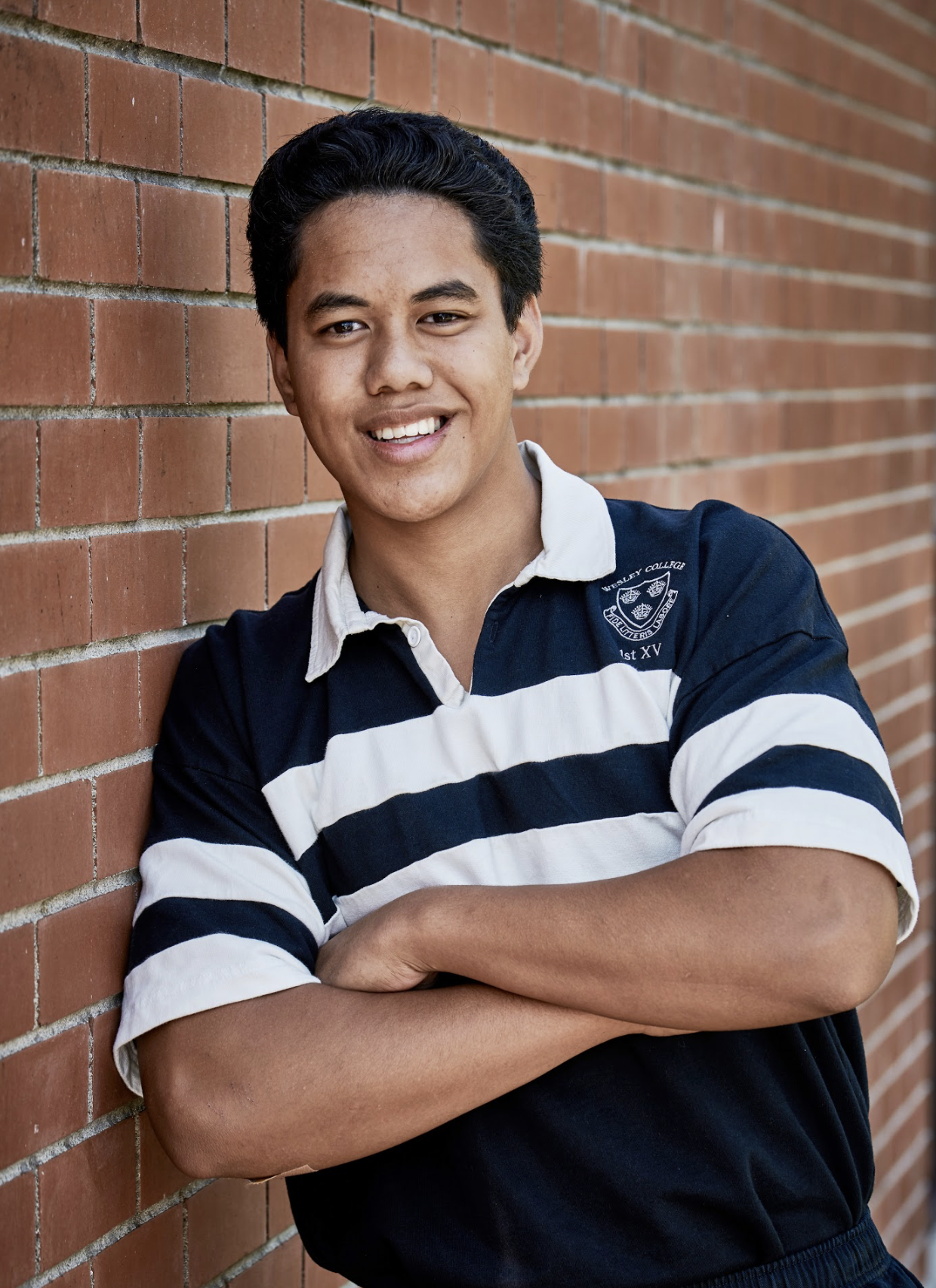
Tauranga’s Dominic Tupou makes his on-screen debut as a young Jonah Lomu
At a family reunion, Dominic Tupou sat down with Jonah Lomu’s mum Hepi and found out just how much he and his distant relation were alike. “I did some character study with his mum and family,” Dominic says. “I learnt a lot about Jonah. In Tongan we call it fie tangata lahi. It means ‘wanna be old’. Because Jonah was surrounded by older cousins and uncles, he wanted to be like them. That was just like me.”

WORDS Casey Vassallo PHOTOS supplied
At a family reunion, Dominic Tupou sat down with Jonah Lomu’s mum Hepi and found out just how much he and his distant relation were alike. “I did some character study with his mum and family,” Dominic says. “I learnt a lot about Jonah. In Tongan we call it fie tangata lahi. It means ‘wanna be old’. Because Jonah was surrounded by older cousins and uncles, he wanted to be like them. As soon as I told my family that that was just like me.”
It was December 2018 that the now 16-year-old headed to Auckland to audition for the role of young Jonah Lomu for a television mini series. “I didn’t think I did too well. We did the scene where I was crying after I got a hiding from my dad,” he says. “I thought I over acted.”
But he nailed it and began filming mid-March in Otara, Auckland. So committed to the role, he even had his newly fitted braces removed to film after finding out he’d got the part.
Dominic says he got a lot out of working with Director Danny Mulheron and the on-set Tongan adviser Nua Finau. “I learnt that acting on stage and acting on camera are two completely different things,” he says. “Acting on stage is more dramatized. You have to make everything big: sing louder, act bigger, all your emotions have to be over-exaggerated.”
“On camera, they’re right there, so you can’t act as much,” Dominic says. “I found it a challenge, especially because all my online stuff is still really exaggerated so everyone understands the character I’m playing.”
In early January 2018, Dominic started posting videos inspired by real-life experiences on Instagram (@holyboy.domtupou). “I started making little skits, funny videos, because I was watching @samoansefaa – he’s a big online creator in the Pacific community,” he says. “I think my first big, big one was How To Be Sexy.”
Today, he’s racked up over 76,000 followers. His following suddenly grew when American-born Polynesian singer Dinah Jane joined one of Dominic’s live streams. His reaction to the former member of the girl-group, Fifth Harmony was funny enough for her to post it to her 3.9 million followers.
“There was a phase where Mum and the rest of my family were like, ‘nah, that’s a waste of time,’” he admits of his insta-fame. “But now they’re all supportive because they’ve seen how much of an influence I am to the younger kids; a lot of them really look up to me.”
And it’s true. Dominic is often asked to visit several schools and chat about everything from role models to identity. He’s also been an MC, on panel discussions, a dance tutor and guest performer at a list of events around the region.
Born in Auckland, Dominic moved to Tauranga when he was and is now in grade 11 at Tauranga Boys’ College. He’s part-Tongan, part-Cook Islander, part-New Zealand Māori and lives with his number one supporter, mum Malia Soifua Tupou Pearson, along with his stepdad and four younger siblings, Marcus (13), Sammie (10) and twins Malia and Evelingi (11).
Dominic won his first talent quest in year three covering One Voice by Billy Gilman, and proceeded to take it out in years five and six. “I’ve been singing ever since I was in kindie,” he says. “I’ve always been interested in the arts. From singing and winning the contest, I started taking piano lessons, learning the ukulele, and then I moved onto musical theatre.”
First off, he landed a lead role in the Selwyn Ridge Primary production of Made in New Zealand in 2014 at age 10. Dominic played Professor Ludwig Von Drake (the German duck) from Mickey Mouse and sung The Spectrum Song. “It was a fun character to play. Ever since primary school, I've been the class clown,” Dominic says.
Then it was on to bigger things, playing Aladdin in 2015 and by Lord Farquaad in Shrek in 2017, both for the Tauranga Musical Theatre. “It was a step up from just your normal school play,” Dominic says. “With proper costumes, makeup and lighting.”
Red carpets aren’t the long-term dream for Dominic. Instead, he looks to what Samoan filmmakers and siblings Stallone and Dinah Vaiaoga-loasa are doing in the industry behind Take Home Pay, Three Wise Cousins and Hibiscus & Ruthless. “Watching and listening to them has inspired me to be where they are,” says Dominic. “Making movies, telling our people’s story through the screen and being able to share it with everyone.”
Dominic is currently in the midst of more auditions, with another role inevitably around the corner. “If that doesn't go to plan, I’ll study psychology and become a detective,” says Domimic. “I like the idea of being in the police force without a uniform.”

Know the craft
The Barrel Room is a knowledge hub of craft beer, fine wine and spirits matched with fantastic food.
WORDS MONIQUE BALVERT-O’CONNOR / PHOTOS KENRICK RHYS

Locals and holidaymakers looking for a notable dining experience need go no further than Tauranga’s The Barrel Room.
Home to craft beer, whisky, fine wine, tasty food and live music, The Barrel Room on Tauranga’s Wharf Street has been wowing people since it opened its doors two years ago. Driven by a passion for finely crafted things, owners Carolyn and Stewart Gebbie came to Tauranga to offer the city something new.
The locals are immensely grateful and appreciate that Carolyn and Stewart have excellent drink, food, service and atmosphere on tap. For this couple, the business is a marriage made in heaven. Carolyn loves wine, while Stewart loves beer – and he certainly knows about it; he co-owns Wellington craft brewery Te Aro Brewing Co, and loves how The Barrel Room is a celebration of great beer.
The selection is great, with 16 independent taps, which means the Gebbies can serve what they believe are New Zealand’s best beers. They have four taps dedicated to local brewers, and use the Untappd app to let customers know which beers and ciders they have on tap at any time. It’s little wonder The Barrel Room is a hit among lovers of craft beer.
The same high level of attention is given to wine. Carolyn explains the Coravin Wine System is in use at The Barrel Room. This allows wine to be poured by the glass without the rest of the bottle spoiling. This wine preservation system is like a favourite appliance, she says.
“We currently offer 63 wines by the glass and more by the bottle. We regularly make changes to our list to provide interest and the opportunity to try new wines,” Carolyn proudly explains.
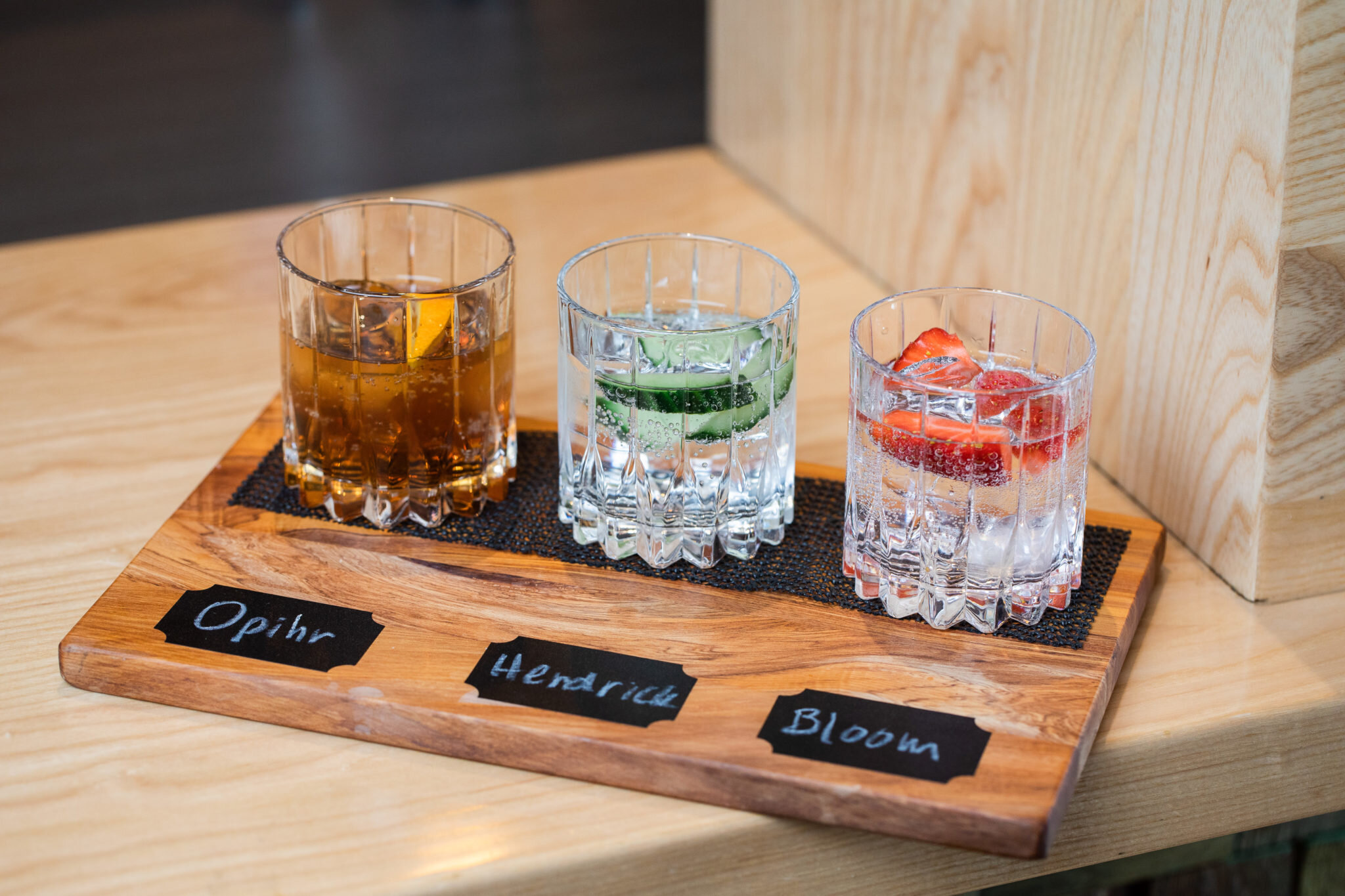
Unsure which wine, beer, whisky or gin (served in crystal, no less) to sample? The Barrel Room provides the perfect solution with its ‘tasting flights’.
“It’s a great discovery experience. For example, the wine tasting flight menu offers a responsible three half-pours. Come in, bring your friends, and ask for a tasting flight,” Carolyn says. Advice will be on-hand, she adds, without the need to listen to a winemaker talk for an hour!
The tasting flights – for wine, beer, or spirits – are proving an excellent idea for work functions (think Christmas), stag dos, hens’ nights, and just fun gatherings in general.
The Barrel Room is open until late, so it’s a great place to head to after late-night entertainment in town. Or come to The Barrel Room for entertainment – there’s live music on Saturdays and sometimes Fridays too.
Stewart and Carolyn say their aim is to do food and drinks well and to pair them well. The food options include: tacos, beef and blue burgers; Thai beef salad; various pizzas (with handmade bases); steak, fish and chips, and lighter offerings like calamari, and build-your-own platters.
“As requested by our regulars, we have introduced a dessert menu,” Carolyn says, adding that matcha panna cotta with yuzu and rosemary crumble is among the favourites.
The menu isn’t complete without excellent service and a great environment, Carolyn and Stewart say. All staff are trained to ensure the service they offer is first-rate. As for offering an atmospheric venue, The Barrel Room’s eye-catching décor includes barrels on the back wall, and the front of the bar features a patchwork of wine barrel staves – a feature created by Stewart.
It’s a cosy and inviting environment in winter, while, in summer, if the sun’s out, then The Barrel Room has a courtyard for drinks in the sunshine. In fact, that was a great attractor when the Gebbies were deciding where to set up their venture. Just perfect, they decided, and thousands agree.
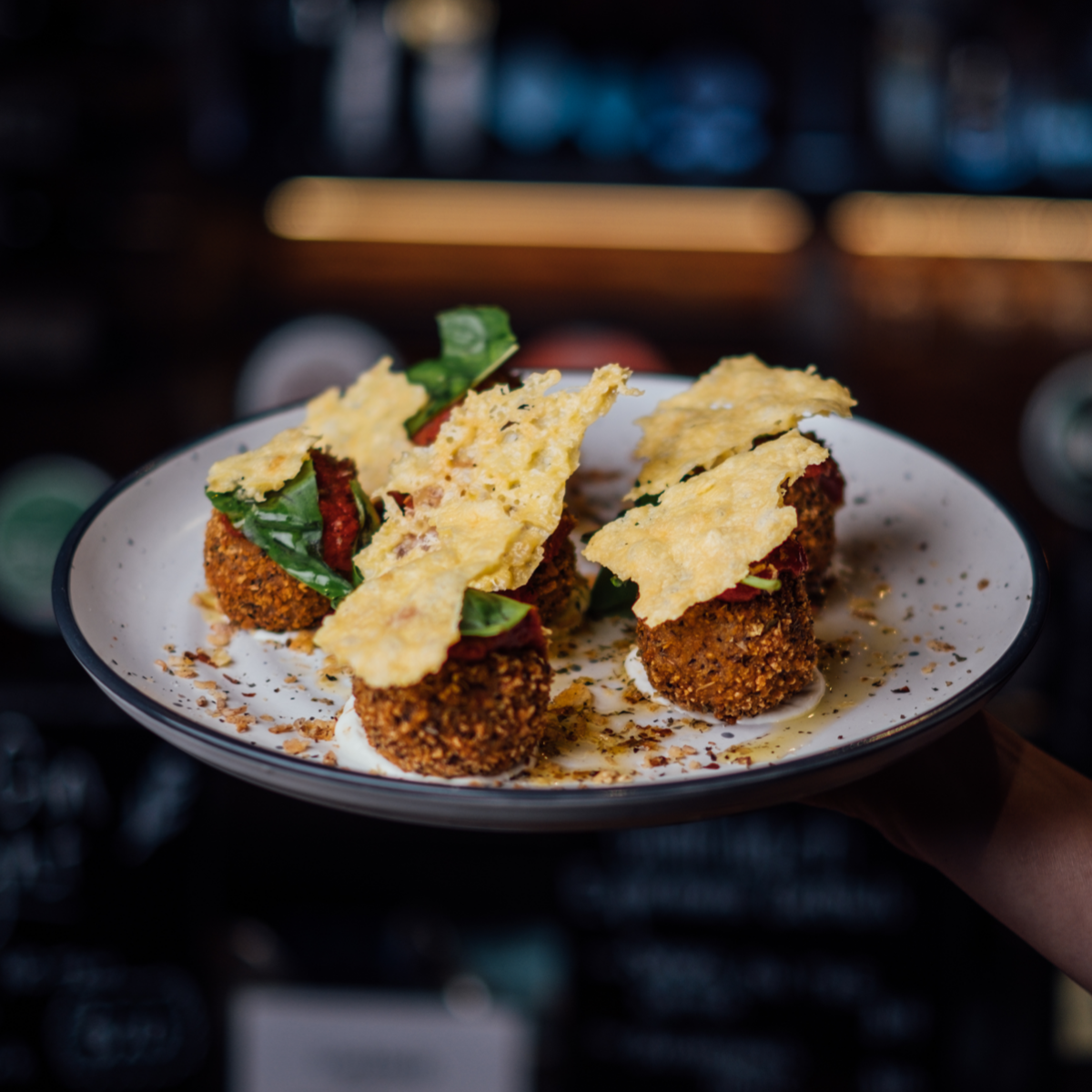

The Global Kitchen recipe: Roasted lamb rump with pea purée
Global Kitchen cookbook includes favourites from the restaurants’ head chefs hailing from Brazil, India and New Zealand, creatively merging South Pacific, Asian, South American and European cuisine.
London restaurateur Lloyd Rooney and Kiwi partner Mike Fraser are known for producing innovative seasonal menus and have earned a reputation locally and on the international culinary stage. Global Kitchen cookbook includes favourites from the restaurants’ head chefs hailing from Brazil, India and New Zealand, creatively merging South Pacific, Asian, South American and European cuisine.
PHOTO GRANT ROONEY

Lamb
6 x 200g lamb rump (cap on)
50ml canola oil
800g baby potatoes
2 Tbsp dukkah
Salt and pepper to taste
Pea puree
500g frozen peas
200g butter
Salad
200g frozen peas
2 long red chillies
1 small red onion
1 bunch of mint
1 bunch of parsley
50g feta cheese
100ml The Quay vinaigrette
Preheat an oven to 200°C. Rub lamb with salt, pepper and canola oil. Heat oil in heavy-based fry-pan over medium heat. Place lamb fat-side down and keep moving and pressing frequently for about 10-12 minutes. Once the fat is fully rendered, transfer rumps to an ovenproof dish to roast for 8-10 minutes. Remove from heat and rest for 10 minutes. Bring a pot of salted water to the boil, add the peas and boil for 3 minutes. Strain peas and combine with butter in a mixer. Blend until smooth and season well. Finely chop salad ingredients and toss in vinaigrette.
SERVES 4
For more recipes like this, check out Global Kitchen by Lindy Davis.

Mr G: capturing and connecting with whakapapa through art
"I respect the portraits that Goldie and Lindauer painted, but what I have that they didn't is direct hononga to the culture, so I feel that puts me in the best possible place to be Māori portrait artist of the future. My plan is to do more portraits of Māori, sourcing materials where they are from, and telling stories of hononga to their whakapapa and homeland."
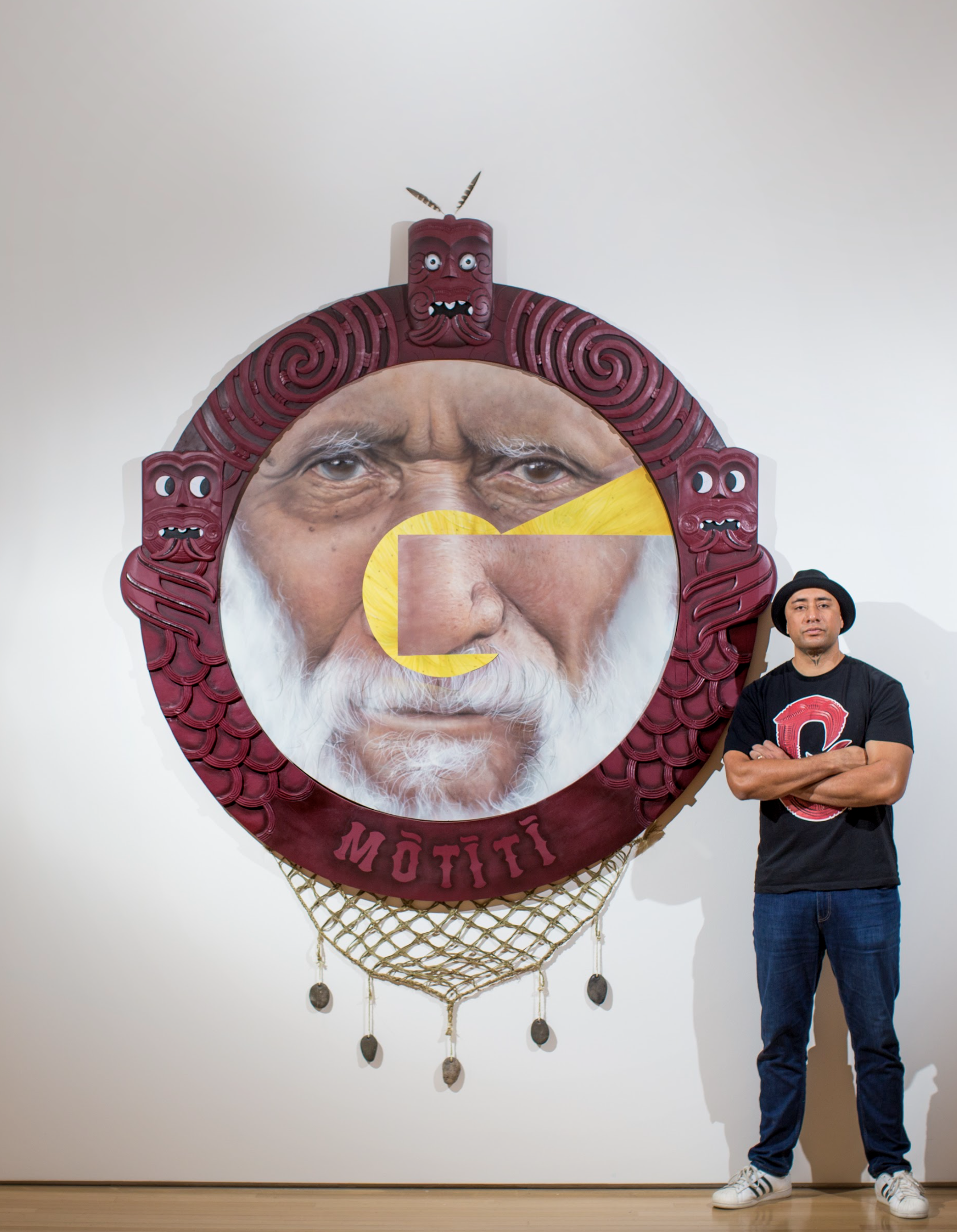
With his large-scale portraiture work proliferating around the globe, UNO discovers that it’s Graham Hoete’s deep connection to home that gives this artist’s pieces a depth that extends far beyond their physical size.
WORDS JENNY RUDD / PHOTOS QUINN O'CONNELL
"Let me talk you through this portrait of my dad," says Mr G, showing me a photo on his phone. I'm having dinner with UNO publisher Mat and artist Graham Hoete, “Mr G”, in Izakai at Bayfair in the Mount. There's quite a bit going on around us in the busy restaurant as they serve a five-course degustation but, at our table, all I can hear is Graham's euphonious voice as the future of Māori portraiture explains why hononga [connection] to the art he's creating has become his true north.
Graham is best known for his large-scale spray paint murals. I wonder how far afield his art can be found and discover a video online of him in an All Blacks shirt and a kilt, painting a mural of his ancestor, John Alfred Borrowdale Murray, onto a wall of the oldest building in the village of Moffat, Scotland, where John Alfred was born. "I wanted to pay tribute to my Scottish three-times great-grandfather on behalf of all the Murray whanau in Aotearoa who are descended from him," says Graham. If you keep looking online, you'll find more celebratory photos unveiling Mr G murals across the world, most of which are portraits.
His current artistic focus plays a film in my head, starting with Graham in front of huge crowds – like the one where he unveiled an eight-metre mural of Prince in Minnesota – running backwards to New Zealand, then Bay of Plenty, then finally to the tiny island of Mōtītī where he grew up and, before him, his father. Home.
Graham is putting together pieces for an exhibition called Home to be shown at Tauranga Art Gallery from November 9, 2019. Graham and photographer Quinn O'Connell flew to Mōtītī to take photos that show the importance of his hononga to home.
It's easy to underestimate the everyday things that are so precious to us. Quinn's photo of jars of preserved peaches sitting on a stove resonated with Graham. "To someone else, it's just fruit and glass but, in the context of my life, it's so much more. It's a symbol of home. I felt the deepest of hononga when I saw those peaches. And it won't last forever as, one day, my mum won't be here to make them, and someone else will be in this house, using this stove."
That takes us back to the portrait he's showing me on his phone. "I'm going to talk you through every aspect," he says. "You will see and feel something else when you understand the context."
"Portraiture isn't just about painting a face, it's about representing a person and all they are connected to."
Every element in the multidisciplinary portrait has some kind of hononga to Graham's father. Photorealism, spray-painting, whakairo [wood carving], sculpting, weaving, fabrication; each has its role in connecting Graham's dad to his past, his whakapapa [genealogy], whenua [land], and to the artist, his son.
"Portraiture isn't just about painting a face, it's about representing a person and all they are connected to." And in this, the first in the series, the artist is part of the story; the bloodline is the ultimate connection. The next day we meet in Graham's Papamoa studio, where I can see, touch and feel it all.
Capturing a father’s spirit
Graham's dad grew up on Mōtītī Island. The islanders grew maize and spent time in the ocean. "He's a hardy, gruff, old school kind of guy," says Graham. As the kaumātua at the marae, he introduces himself by saying,
Ka tangi te titi
Ka tangi te manu
Ko te manu ko te karoro
ko te karoro ko kere am e Hoete
"He's saying he's a black-backed seagull. The first time I heard him say these poetic and soulful words, I was blown away. It was true, too, as that's what we would have seen all the time while he was working in the fields or on the beach. And, when I see the birds from Papamoa where I live, I feel hononga to my Dad."
Painting the face
"I chose to spray-paint the face because it represents the hononga to my artistic journey. Using spray-paint to convey this level of detail isn't easy, and I really went steroids on the photorealism. It helped not having the time constraints that I usually have on a mural.
"Photorealism has an amazing ability to engage and attract people. It's universal. They always buzz out saying, 'Oh, it's so real, look at the lines on the face!' It draws everyone in, no matter their background. You then have their attention to look at the context of the image through the visual storytelling around the frame.
"It's not a traditional head-and-shoulders portrait. The face is pushed forward because I wanted to focus on his eyes, the most engaging component of a portrait. He's always had a great weathered, journeyed look which is well-suited to a portrait. I maximised every detail.
The yellow G
"In the centre of the portrait there's a yellow portion. That's a zoomed-in painting of the yellow pōhutukawa flower. These yellow trees were discovered on Mōtītī Island in 1814, and they are the symbol of the islanders who'll be reminded of home every time they see the bright flower. There are only two of the trees left on the island and one of them's outside my dad's house. The G symbol will continue throughout this portrait series."
The frame
The face has a beautiful aesthetic and spray-painting has a modern, edgy, street feel to it. That contemporary discipline has been fused with whakairo, the ancient art of Māori storytelling through wood carving. The frame tells the story of the central portrait. The wood is a blend of kauri and matai, and it's extremely heavy. It took three people to lift it onto the wall at the gallery for the photoshoot. The physical weight and density of the wood gives heft to its role in the portrait – to solidify and make tangible the histories and stories of Graham's father, his tribe, his home.
"I have always wanted to learn how to carve. I used to live with one of my uncles, he was a master carver in the traditional style. Its purpose is to tell each tribe who they are and show their cultural identity visually. The history of a tribe is told through carvings to future generations.
"About a year ago, I started to learn how to carve, and I'm lucky to be learning from one of the best Māori carvers in the world, Todd Couper. He's just a real Jedi when it comes to whakairo. I was walking up Papamoa Hills one day and he was walking down. He called out, ' Hey, Mr G!', and, from then on, we became friends. His work is exquisite. He's an exceptional perfectionist, and shows his work around the world. He lives in Papamoa, so we see each other most days.
The kupenga
Each marae has a theme which connects the local iwi, hapū and whanau to their ancestry and story. In Tamatea ki te Huatahi marae, which is the main marae on Mōtītī Island, the kupenga [fishing net] plays a central role in its interior storytelling. There are carvings on the pillars as you enter the marae and references throughout the buildings. The curved shapes on the bottom left and right of the frame echo the kupenga hanging below the fame.
“I feel very connected to my dad through his sea-venturing stories, especially through my own love of the moana."
"It shows the connection to the moana [sea] and that lifestyle. My mum and a few of my aunties still go diving for kina and pāua. It's not often you see groups of ladies my mum's age going diving! They are legends.
"There's strong hononga with this element of the portrait. The kupenga has been woven by my sister. She went and collected harakeke [flax] from Mōtītī, and the sinker stones are from Tumu Bay on the island too.
"When my dad was young he used to take me out diving. I loved watching him and my uncles spear fish with a Hawaiian sling. They were graceful, like the fish they swam after. As a young guy, I was inspired to watch them. Many people never get to go diving but, to them, it's second nature. Dad and Uncle Patu used to have competitions to see how many fish they could catch, as kids. They'd make their own spear guns out of poles and bits of rubber and spear blue maomao then thread them and trail them around as they fished. I feel very connected to my dad through his sea-venturing stories, especially through my own love of the moana."
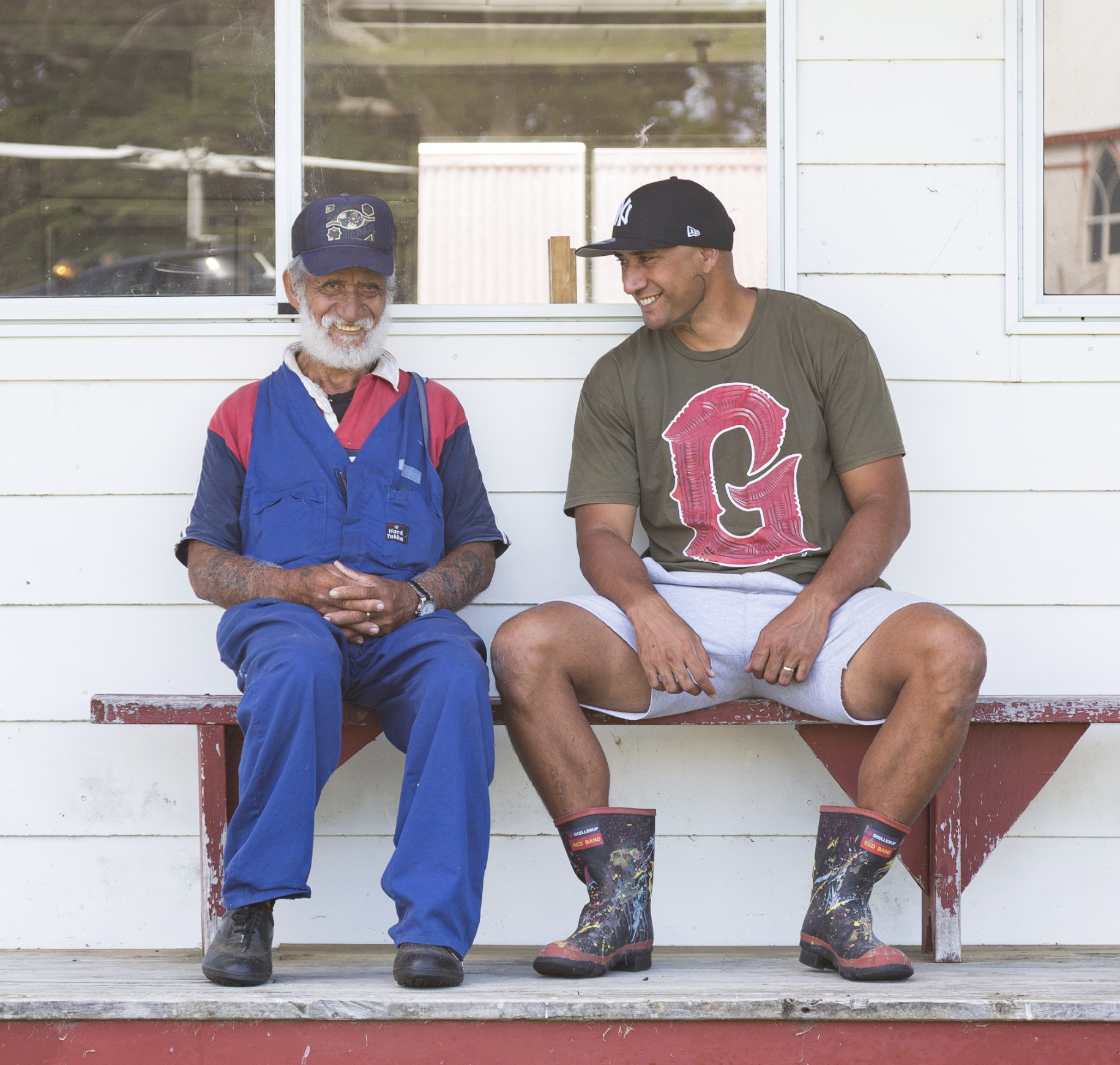

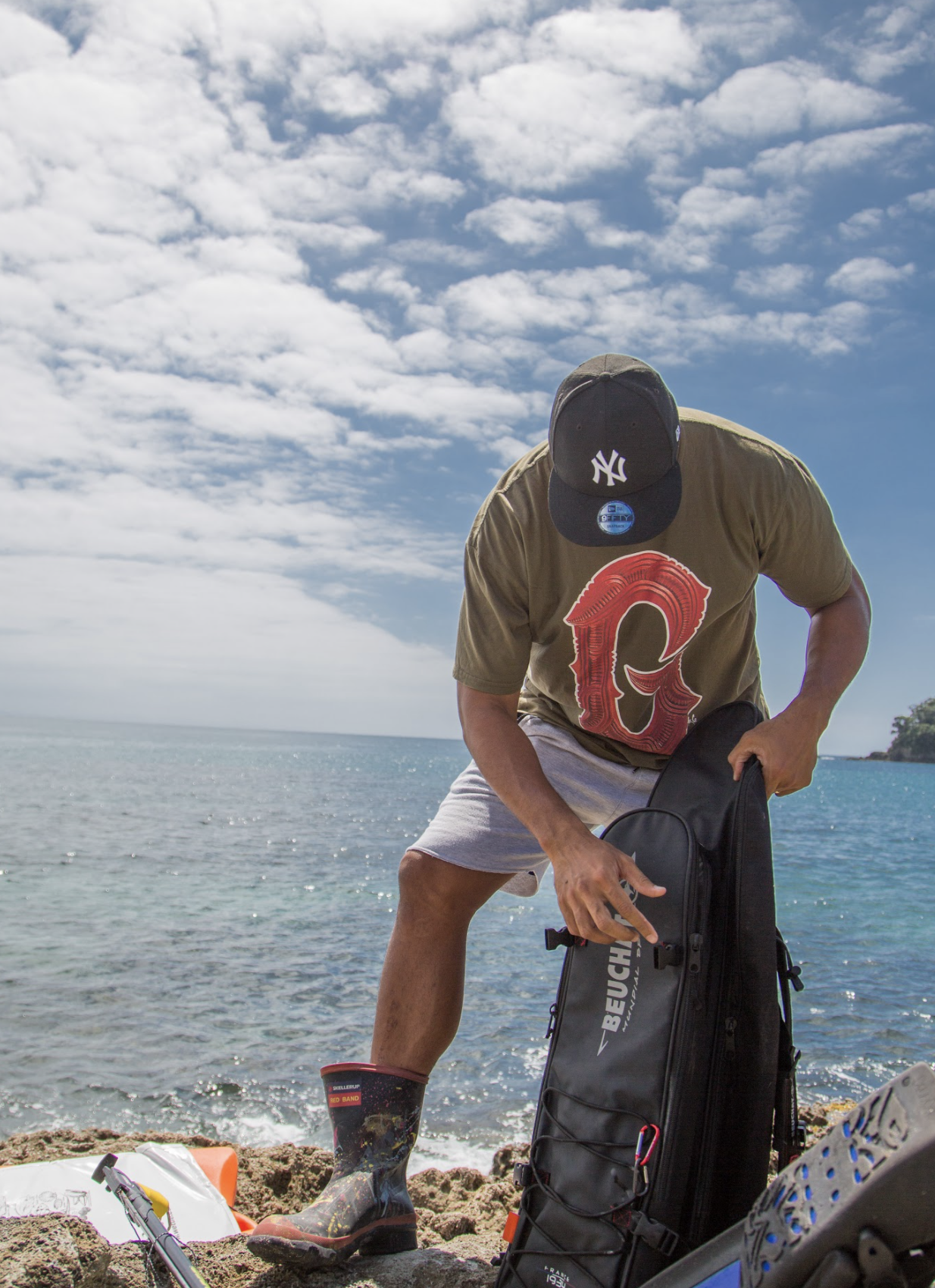
The carved heads
As we move through the portrait, it's clear that the role of the sea is absolutely central to Graham's dad's life as an islander. The two faces on the left and right are based on the amo [posts] outside the marae.
At first glance, the eyes which look inwards at the portrait appear cartoonish. But Graham explains they've been painted to represent maramataka [the lunar cycle], and the waxing and waning crescents of the moon around which island life is based. The phases of the moon affect the tides, when to fish and when to plant crops. The economy and lifestyle of the island is centred around the moon. Mōtītī is so small, but all life upon it is driven by cycles way bigger than any of us.
The double tongues on the faces are common in Māori portraits. And there are various different meanings. Te Kau wae wai runga, Te Kau wae raro refers to the celestial and terrestrial language we use, but it can also refer to how you speak to people inside and outside the marae. Protocol is a big part of Māori culture, especially on the marae ātea [open area in front of the meeting house]. The two tongues can also represent division and deception. You'll often see the double-tongue depiction on maraes on the east coast in the Bay of Plenty, towards Whakatāne."
A closer look reveals many elements of traditional whakairo in the faces with their own inherent meanings. The little notches or taratara ā kae along the tongues represent food
and eating, and the pattern above the mouth is called pākati and is one of the main surface
patterns of whakairo.
"And at the top of the portrait is kōruru, which represents the main ancestor of his marae, Tamatea ki te huatahi. It's the same face that presides over our marae and is the symbol of our tribe and so it's fitting that he does the same job over the portrait of my dad."
The future
Learning about Graham's portrait has opened up discussions about how we relate to each others' cultures and what we can all do to stay respectful. And what's happening to Māori culture in its home, New Zealand, and how we can keep its roots watered and well.
Later this year, Graham and his wife Millie are travelling to Art Basel in Miami – one of the world's biggest and most prestigious exhibitions of modern and contemporary art – to see what place in the world his series of portraits could hold.
Graham believes his portraits are unique and are the future of Māori portraiture. "I respect the portraits that Goldie and Lindauer painted, but what I have that they didn't is direct hononga to the culture, so I feel that puts me in the best possible place to be Māori portrait artist of the future. I have a commision for a lady in Hamilton after she saw my father's [portrait]. My plan is to do more portraits of Māori, sourcing materials where they are from, and telling stories of hononga to their whakapapa and homeland."
When you go to the Home exhibition, you are now able to stand in front of this magnificent portrait and know the connection of this man to the life he has led.
Home Exhibition
Tauranga Art Gallery
9 November 2019 - 9 February 2020
hapū (ha-poo)
sub-tribe, clan a number of whanau (families) make up a hapu, usually from the same ancestor. A group of hapu make up an iwi.
harakeke (ha-ra-kee-kee)
flax
hononga (hoh-nung-uh)
connection
kaumātua (koe-mar-to-ah)
tribal elder
korero (koh-re-roo)
black-backed seagull
koruru (koh-roo-roo)
carved faced on gable at the marae
kupenga (koo-pen-nga)
fishing net
manu (ma-noo)
bird
marae (muh-rye)
meeting house
marae atea (muh-rye ah-tee-uh)
flat piece of land in front of the wharenui
maramataka (mah-ra-ma-ta-ka)
lunar calendar
moana (moh-ah-nah)
sea
takarangi (ta-ka-ran-gee)
the heavenly realm
taonga (tah-ong-ah)
possessions
whakairo (fuh-ky-roh)
Maori carving
whakapapa (fuh-kuh-papa)
genealogy
whanau (fah-noe)
family
wharenui (fa-re-noo-ee)
the main building at the marae
whenua (fen-ooa)
land




The Framer
Looking around, there are stacks of pieces - paintings, prints and photographs, each waiting for the right casing to bind them and make them wall-ready. Danny boasts some of the best machinery in town, including an ancient looking guillotine; apparently it’s one of a kind.

WORDS TALIA WALDEGRAVE PHOTOS TRACIE HEASMAN
Ten years ago, Danny Redwood was admitted to hospital on a Friday afternoon and told “If you are alive on Monday, we’ll start chemo.”
Before that cheery conversation, Danny had been working on his family’s farm, and ignoring the signs that his body was finding the relentless, menial toil, tough. He was neglecting creativity and became very, very sick. “I was working harder, not smarter, and had become increasingly run down for months. When I couldn't lift my arms above my head, I knew something was seriously wrong.
It was his mother Barbara who eventually encouraged him to go to the doctor. Barbara recalls “Looking at Danny next to his brother, his skin looked a ghostly grey. I had to plead with him to see someone.”
Danny says “My blood cells were completely out of whack and although I had been given the all clear for cancer a couple of weeks earlier, in a short space of time. I’d developed the early signs of acute lymphoblastic cancer, an incredibly rare form of leukemia in adults.”
“I needed a bone marrow transplant. Thankfully, my brother James was a perfect match. He is my only blood sibling so the odds of him being a match were pretty slim. In fact, I met someone else in the same boat as me - he had eight siblings - and none were a match.”
“The recovery was brutally intense but as soon as I was strong enough, I picked up a paintbrush. I now know everyone needs to have a creative outlet. It’s so important for our mental health.”
Ten years on, and an herculean recovery later, I meet Danny at work, Artisan Framing and Plaques, in the Chapel Street shopping centre in Tauranga.
"I love being an artist, but it's not always sustainable financially, so I wanted to do something that incorporated what I love to make a living. Being an artist puts me in a great position as a framer."
"I bought this business because it had a great, long-standing reputation. I then moved into this space because I wanted to have room to exhibit work from local artists. We’ve got so many great artists in Tauranga, but we are limited as to where they can showcase that work."
Looking around, there are stacks of pieces - paintings, prints and photographs, each waiting for the right casing to bind them and make them wall-ready. Danny boasts some of the best machinery in town, including an ancient looking guillotine; apparently it’s one of a kind.
Being someone who loves and appreciates art, Danny uses the very best stock, top quality fastenings and mountings for all his frames. “My machinery enables me to provide conservation framing. It’s a very high level of framing, which displays an artist’s work in the best way possible, lasts longer and galleries will far more seriously. It’s also about preserving family memories and making them shine in just the right way.”
It’s clear Danny’s experience has given him a mental calmness and clarity which extends to his work, giving life to the many beautiful prints and paintings he is tasked with preserving.

You’ll never want to leave: Clarence Hotel + Bistro
It’s almost worth going to the Clarence Hotel & Bistro simply for the experience of walking up the grand steps that dissect the long, green-fringed veranda. You just know there’s something significant at the top.
WORDS Jenny Rudd PHOTOS JARED DOBBS + TRACIE HEASMAN + QUINN O’CONNELL
It’s almost worth going to the Clarence Hotel & Bistro simply for the experience of walking up the grand steps that dissect the long, green-fringed veranda. You just know there’s something significant at the top.
Clarence’s owners Kim Smythe and Noel Cimadom recall feeling the same a few years ago when standing outside what was once Tauranga’s post office. “The building has been in Kim’s family trust for a long time,” says Noel. “We’d already transformed the beautiful old post office in Cambridge into our first restaurant, Alpino, so it’s become a family joke now we’ve done the same here.”
Walking in, you can turn left for the bistro, an elegant dining room serving European brasserie-style food with a Kiwi slant; head up the stairs to the 10 individually styled hotel rooms; or hang a right to Iki, the bar and eatery that sees a constant flow of people from morning till night. With an art deco nod to the building’s heritage, Iki is an opulent scene filled with hints of gold, pops of neon purple and dark velvet. It’s like stepping into another world; you’ll feel miles away from the city.
The heart of the space is arguably the ancient coffee machine at the end of the bar. She’s a grand old dame, too old to make coffee these days, but nevertheless loved for her stately aesthetic.
“I had the same machine at a café I ran when I lived in Munich,” says Noel. “It was designed in Venice and made in Portugal in the ’70s. When we were looking for pieces for Iki, I went on eBay to find it and discovered there were two in the entire world – one in Las Vegas, and one in Taupo. I drove down to Taupo the next day to pick it up.”
At lunchtime, local suits drop into Iki to enjoy its quick and easy Eurasian street food menu, starring favourite dishes like barbecue pork belly skewers with apple and fennel salad. At about 3pm, the after-work crowd begins to pour in, spilling out onto the deck under the blue sky, green palms and glass roof that keeps the rain out and warmth in, giving you the choice to socialise al fresco year-round.
When the sun’s shining on Friday nights, you’ll find a DJ outside playing smooth beats. And should you end up slightly over-served after an evening at Iki or in the bistro, simply book yourself into one of Clarence’s designer rooms and enjoy eggs and pancakes on the veranda in the morning. You’ll never want to leave.
For the hotel, book online; for the bistro, book online; for Iki, just turn up! Visit: CLARENCETAURANGA.CO.NZ