

After Dark
Creative BOP’s urban festival is bringing light to dark times.
Creative BOP’s urban festival is bringing light to dark times.
Words Luke Schroder - images supplied

It’s easy to walk around Tauranga’s city streets without paying any close attention to the big blank walls of surrounding buildings. Concrete slabs and featureless facades line the streets, designed to be forgettable, non-intrusive enclosures for the businesses contained behind them. But for some clever minds these walls represent a far more exciting opportunity. These walls will soon become canvases for creativity as artists light up public spaces with an eclectic mix of colourful shapes, short films, abstract imagery, and innovative lighting technologies that will show the city in a new light.
This exciting initiative is being brought to Tauranga by Creative Bay of Plenty, with funding support from Creative New Zealand. Trustpower has come on board as the major corporate sponsor, alongside partners Downtown Tauranga, Tauranga City Council, Priority One, Veros, Te Tuhi Mareikura Trust and Toi Ohomai.
After Dark Urban Light Festival is an all-new art experience that will see a range of artworks transform Tauranga’s CBD into a gleaming playground full of exciting, illuminated installations. For 10 days in May a selection of luminous artworks will form a unique art trail across the central city through a mixture of video projection, freestanding sculptures, glowing alleyways, short films, and creative uses of vacant spaces. The festival is designed to be a self-guided journey spread across multiple sites within Tauranga’s CBD that encourages people to walk around the city discovering the various installations and the magic within.
It may not seem like a logical time to be running a new festival given the recent wave of event cancellations, postponements, and ongoing uncertainty, however with some clever thinking and careful planning After Dark is designed to be able to proceed regardless of traffic light settings or gathering restrictions. Because the festival isn’t fixed to a particular day, time, or single location, all those attending can be spread out from each other and stay socially distant whilst still enjoying all the festival has to offer.

“We’ve intentionally designed a covid-friendly format that allows people to participate from a distance and at their own leisure”, says Project Manager Luke Schroder. “People can view any artwork at any time on any evening during the 10 days of the festival and still have the same great experience.”
After Dark will be an opportunity for families, friends, and individuals of all ages to share in an exciting and fresh artistic experience described as a ‘tapestry of illuminated creativity’. After Dark explores themes of connectedness in our society, specifically connections to people, culture, and nature. These connections make up the themed ‘threads’ of After Dark and serve as inspiration for new works created for the festival.
Emily Woolerton is one local artist creating a new artwork specifically for After Dark. As the creative mind behind Mount Maunganui design studio ‘Calico’ and clothing label ‘The Know’, Emily is no stranger to creating fun designs and out-of-the-box visual ideas. For the launch of her first clothing line, Emily used video projection to transform Papamoa photography studio Suburbia into an exciting visual feast of giant slurping noodles, animated playing cards, floor-to-ceiling curtains made of poetry, and a brand-new fashion collection on display.
“Normal moments became jarring by placing them in the centre of attention. Someone eating noodles is an average, everyday occurrence – until that person is five metres wide and you can see every detail. It became an immersive experience, where people were both transfixed and horrified by the ordinary.”
With a mind for design and an eye for detail, Emily is looking forward to creating a new piece to be exhibited at After Dark later this year. Her artwork titled ‘Critical’ is a creative look at our need for human connection and examines how we are wired to thrive through relationships with one another instead of getting lost in our own insular worlds.
Emily is excited to see creativity fostered in the Bay of Plenty through projects such as After Dark and is looking forward to seeing the vibrancy it will bring to the city. “One of the beautiful things about art is how it brings people together, and it’s really exciting to see events like this build the culture and atmosphere in Tauranga.”
After Dark Urban Light Festival runs from Friday May 13 to Sunday May 22, 2022 in Tauranga CBD and is a free-entry event suitable for all ages.

Creative character: writer and poet Stuart Greenhill and the Fenton Arts Collective
Writer and poet Stuart Greenhill of the Fenton Arts Collective in Stratford talks to UNO.

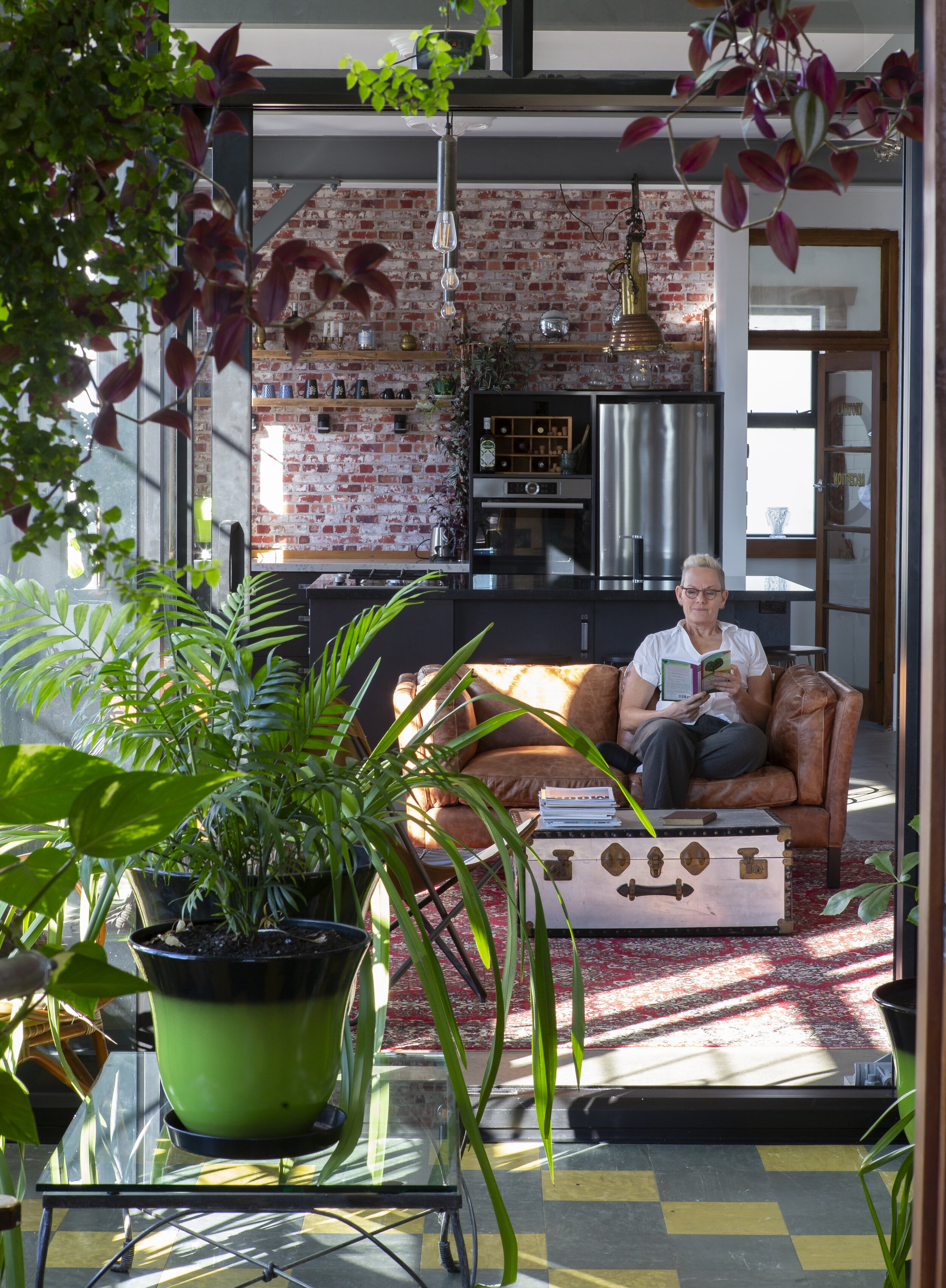

PHOTOS Andy Jackson and Jane Dove Juneau
UNO: What a beautiful building you are housed in. How did you find it and what was the journey to restoration?
Stuart Greenhill: My partner Jo Stallard was looking for a heritage building to save. In 2016, she offered a ridiculously low amount for the Egmont Chambers building in Stratford, which was earthquake-rated 17%. It was accepted. The building was not listed on Stratford’s District Plan, so no funding was available. Other than that, it was a fantastic journey. We had enough experience from previous projects to ensure the outcome was what we wanted. The renovation won an Architecture Award in 2019 for Renovations and Additions. The building fascinates people, and many come just to see it.
What is the Fenton Arts Collective?
It is a collective of our passions and interests: Art, history, gin and espresso. We are 310 metres up a mountain, so our aspirations are just as high for each of them. The Collective offers people something unique, something intimate, something historical and modern; it offers a genuine experience.
Your partner Jo Stallard is the curator and artist-in-residence. What is Jo's artistic background, and what does she paint?
Jo comes from an art history background and is a portrait artist. She works in the traditional painting technique of “grisaille” or “dead painting” to traverse the landscapes of the human face and body. Looking, seeing and perceiving are the semantics of what a face has to give, share or provoke, and those are the landscapes she loves. So people come to the Collective, grab a coffee or gin from downstairs, and visit Jo’s working studio upstairs -- and maybe even chat about a commission.
Refreshment plays a strong role in your building; we hear gin and espresso coffee flow freely! Tell us more.
To survive in the provinces, businesses require diversity. Coffee, retail, and an art gallery were great, but we needed something more. Making gin is like writing. Botanicals are characters; each brings a different personality, so it was simply a matter of creating fantastic stories. People hear those when they book a gin tasting with me. Our espresso bar uses Proof & Stock coffee, made by our daughter, Adrianna, and offers high-quality healthy options including gluten-free and keto. And Tauranga celebrity Chef Ken Greenhill creates a monthly five-course degustation for us. They are so popular we have a waiting list.
What's your connection to Tauranga?
My brother’s been here since 1997, and Jo and I set up Deckchair on Marine Parade with him in 2007. We sold in 2010, travelled for a bit, and were approached in 2013 to establish Quantum Vis Eatery on Cameron Road. We still have a connection to the Bay, having formed many friendships over those years, and are thrilled that our gin is now carried by Mount Wine Barrel, Maunganui Rd and Fife Lane Restaurant.
And on top of all that, you're a published author! What have you written?
Dante Fog was published by Austin Macauley Publishers in London last year. It is autobiographical fiction (yes, that is a genre). The mother in the novel tells her son, “There are no better observers of life than artists.” I totally agree. Artistic license takes life and makes it art. That’s why I write poetry and prose and make gin and Jo paints. There is a beautiful complexity in discovering and understanding the layers in the mirror looking back at us. Our art attempts to express it so does the character Dante Fog.
What does the future hold for the Fenton Arts Collective?
There’s pressure to grow, but the distillery will remain boutique and so will the Arts Collective. Our gallery is booked for 2021, I am contracted to Austin Macauley Publishers for my next book, and Jo has two exhibitions this year. The future will be busy.

Award-winning Israel Randell talks art, new challenges and the bigger picture
“If people ask me [to explain my work], I want to have a conversation. That’s really all art is, a conversation. Sometimes it’s real honest, like, ‘What the hell is that?’ or ‘Why do I hate this work so much?’” That’s the kind of things that artwork brings.”

Through multi-media, moving image and sound, award-winning Tauranga artist Israel Randell articulates the spiritual and unseen. Now, in her new role as curator at Whakatāne Museum & Arts, she wants to help amplify the voices of local talent.
WORDS Maria Hoyle PHOTOS Quinn O’Connell
The question ‘what is art?’ is a tricky one to answer. One person’s masterpiece may be another’s monstrosity, making it hard to reach a consensus. Yet for multi-disciplinary artist Israel Randell, it’s not complicated at all. Art, she says, is a conversation, and as a newly appointed exhibitions curator at Whakatāne Museum & Arts, it’s one she is very much looking forward to having with the local community.
Originally from Hamilton (Tainui, Ngāti Kahungunu) and of Cook Islands descent, the mum-of-one has her work cut out for her when she arrives at her post (the week after talking to UNO). She and the team will be busy preparing for the February exhibition of the winners of the Molly Morpeth Canaday Award: Painting & Drawing, presented by Arts Whakatāne and held at Te Kōputu a te Whanga a Toi – Whakatāne Library & Exhibition Centre. Although that will be Israel’s immediate focus, she talks excitedly about the bigger picture.
“I’m really interested in being embedded in the community, getting to know the artists, and finding out how I can help them to realise their ambitions and be that person who bridges the community and the gallery,” says the Toi Ohomai Bachelor of Creative Industries graduate. “I’m also excited to be learning from my colleagues. Going into any new role, it’s good to be listening.”
Listening will be crucial for her dialogue with local artists too. Some may not see the gallery space as relevant to them – for example, those who may be more focused on selling their work, or those from other disciplines such as dance, theatre or acting.
Is it fair to say that galleries are often seen as no-go zones for certain sections of the community? “Yes,” she says decisively. “A gallery space is definitely always viewed as a white space by people outside looking in.”
So breaking down the boundaries between practices is one way not only to showcase a wider variety of work, but also to change the perception of what and who a gallery is for, of reaching those who aren’t, for whatever reason, engaging with it. “It’s constructive to help different types of creatives,” says Israel. “I think it does start with having a structure that caters to every kind of practice, not just the 2D practice or sculptural practice.”
Israel’s no stranger to having a dialogue across disciplines and amplifying the voices of indigenous artists. She arrives in her new role fresh from a Mana Moana research residency with arts agency Circuit, where she looked at the experimental practices of Māori and Pasifika visual artists, writers, choreographers and musicians to produce a collection of interviews and online content.
Israel’s own work experiments with moving image, multi-media and sound – quite a departure from the large-scale paintings she did as an art student in Auckland. “I took a break, moved to Tauranga and started off again at Toi Ohomai. But I didn’t want my work to be flat on the wall anymore – I wanted to occupy the space between the walls. I wanted to paint with light in space, so I was looking for materials that would let me do that. Lots of painters say all painting is about light and dark. I was interested in using light in a sculptural way to activate space.”
She originally considered working in neon, but it was costly. A classmate suggested wire would be cheaper, so she sourced some on Trade Me and started experimenting with it in the school studio.
Playing with wire and light sounds like a lot of fun, but it was no walk in the park. Israel’s daughter Lola, now two and a half, was just eight months old when Israel started the course. “I was still breastfeeding so I was worried. But I needed something else, a direction or passion, that was separate from my identity as a mother. I needed that for my own mental health and that in turn made me a better mother.”
It also, she believes, made her a better artist. “You go in there with no bullshit, no excuses – you get things done. You don’t have time to fluff around, then go home and work till 2am, because at home it’s all about your child. So I was way more focused. I think that drive elevated my art practice to something it maybe couldn’t have been when I was a single person.”
“I didn’t want my work to be flat on the wall anymore – I wanted to occupy the space between the walls.”
That ‘elevated something’ is a compelling body of work that speaks clearly to ‘maatauranga’ – what she describes as “the whole way of being Māori, the many layers that there are.
“I look a lot to cosmological narratives to explore things that aren’t material,” she says. “I’m interested in actualising the intangible. It’s hard… I don’t know if I’m successful half the time. This year’s body of work has focused on water and the elemental phases it goes through, and the spiritual things they hold for Māori and Pasifika people. I’m interested in exploring things that I can’t see that have been told by generations of elders, and trying to connect with it and make sense of it in my own way.”
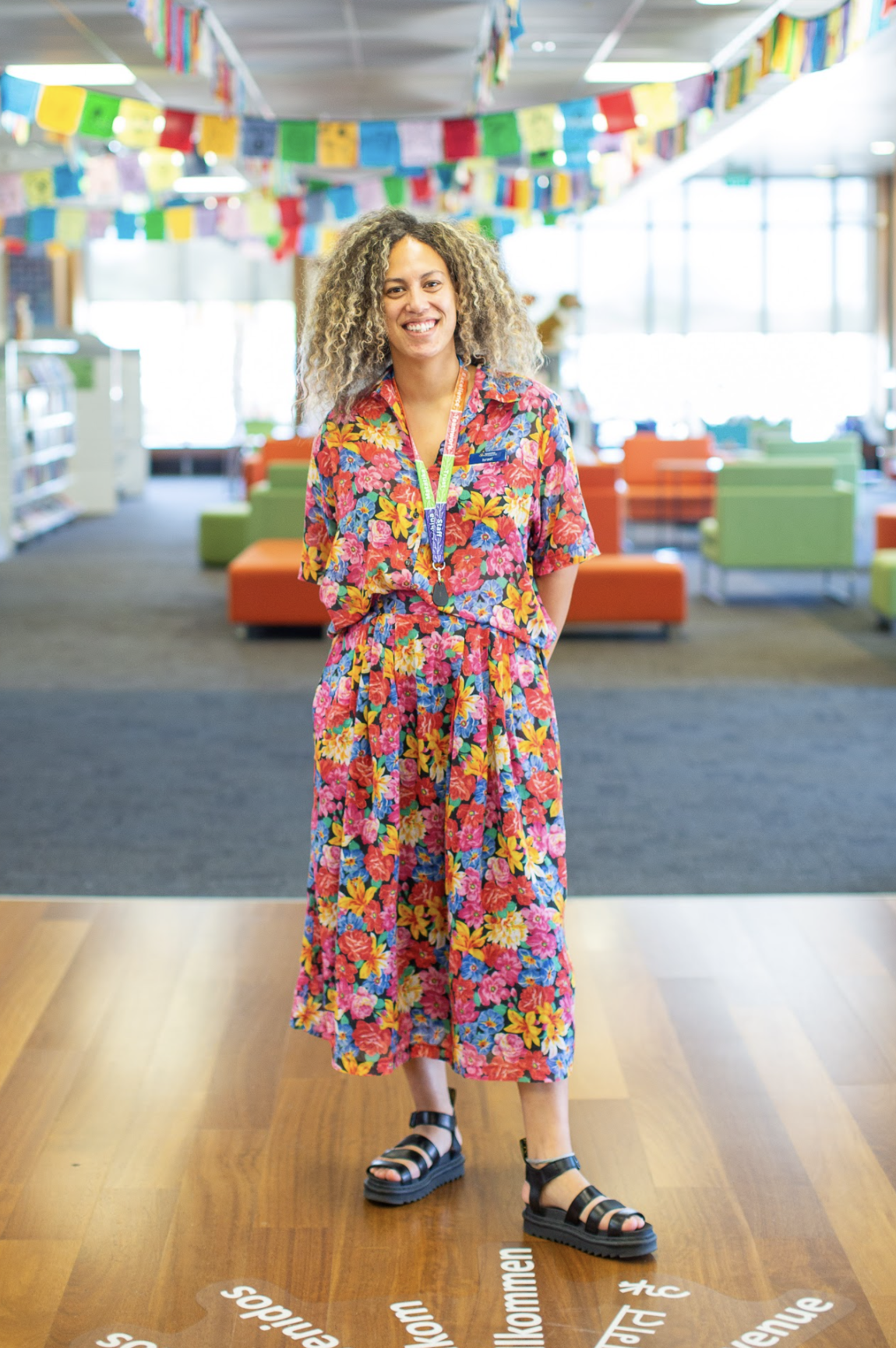
Israel might not know if she’s successful half the time, but her work certainly impressed the judges of the 2020 Miles Art Award, presented In March by the Tauranga Art Gallery Toi Tauranga. To her surprise, she landed the Supreme Award for Wahi Ngaro, a compelling installation in which triangles of electroluminescent wire reference whakapapa and an in-between space with infinite potential. It’s a beautiful piece, one you can appreciate without knowing what it represents. Does it bother her when she’s asked to explain her work?
“If people do ask me, I want to have a conversation,” she says. “That’s really all art is, a conversation. The artwork is there to trigger that. Sometimes it’s real honest conversations, like, ‘What the hell is that?’ or ‘Why do I hate this work so much?’” That’s the kind of things that artwork brings.”
And then sometimes the work exists, well, just because. “Sometimes we totally make it because we want to make it. It’s important to let people know that and uncomplicate the way we speak.”

Featured in UNO Issue #51 - subscribe to get yours


