
GLOBAL AMBITION
It’s not the size of the city you’re based in, but what you do with the potential in it. So say these innovative local thinkers, who are showing the world just how far their revolutionary tech can take things.
It’s not the size of the city you’re based in, but what you do with the potential in it. So say these innovative local thinkers, who are showing the world just how far their revolutionary tech can take things. WORDS KARL PUSCHMANN
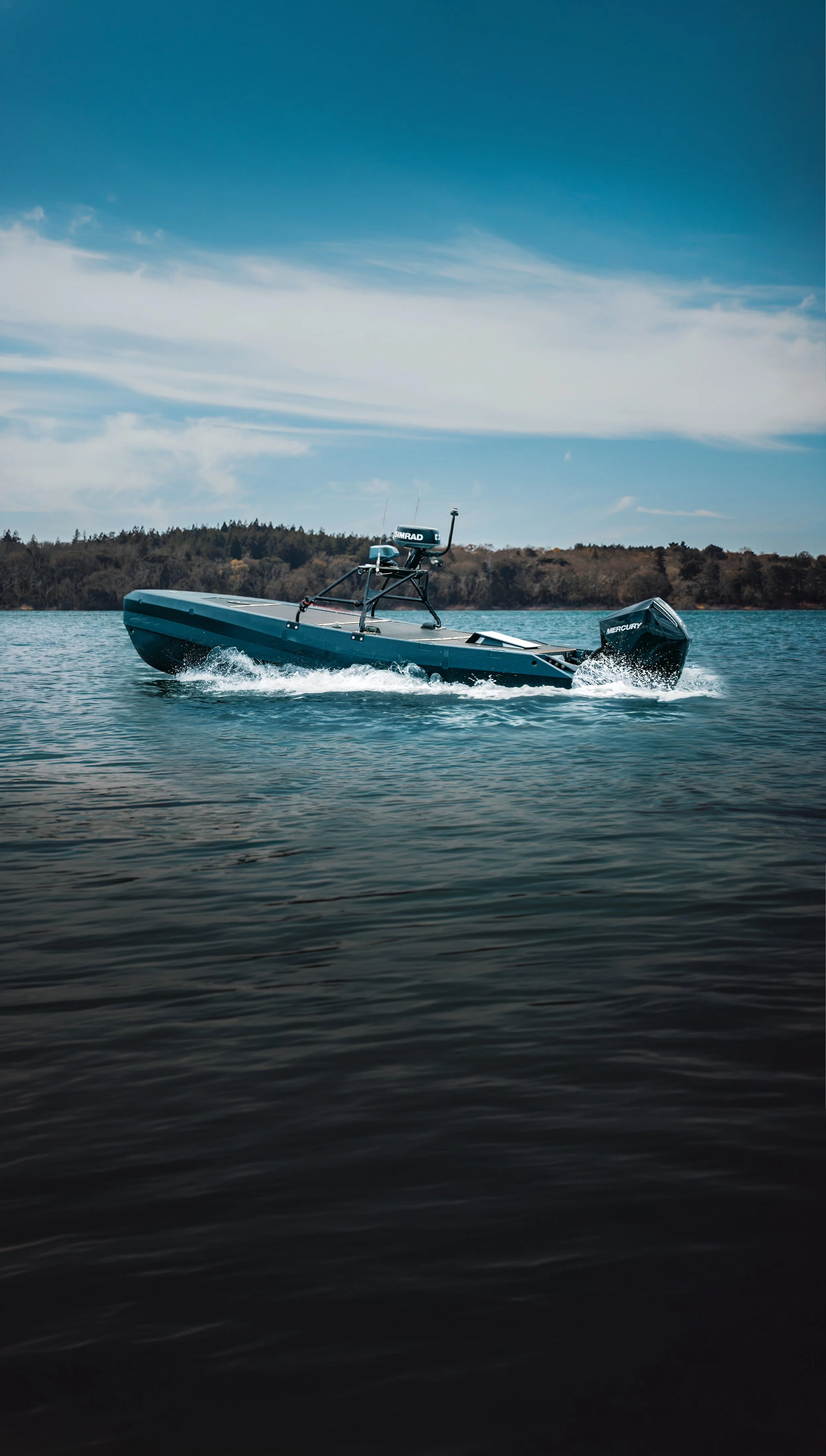
SYOS’ unmanned sea vehicle, the SM300, out on patrol.
Here in the Bay, we’re well known for our relaxed lifestyle, golden sand and lush nature. Few people realise we’re also on the bleeding edge of tech, with two Bay-based companies leading the field in robotics and autonomous technology. On the following pages, we go inside the businesses turning big ideas into world-changing innovations.
MASTER OF THEIR DOMAINS
What started as a simple idea has seen SYOS Aerospace conquering land, air and sea.
Right now, somewhere in the world, a helicopter buzzes overhead without a pilot, a boat skims across the water without a crew, an unmanned cargo transporter crashes through the bush and an autonomous submersible glides silently beneath the ocean’s surface.
They’re all part of the rapidly expanding world of uncrewed technology, and a company at the forefront of it is based right here.
Mount Maunganui’s SYOS Aerospace began just five years ago in 2021, after co-founder Sam Vye saw a need for a machine that could bridge the gap between traditional helicopters and electric drones. “Electric drones just didn’t have the payload or the endurance,” he explains, “and manned helicopters were expensive or potentially dangerous in some tasks and environments.”
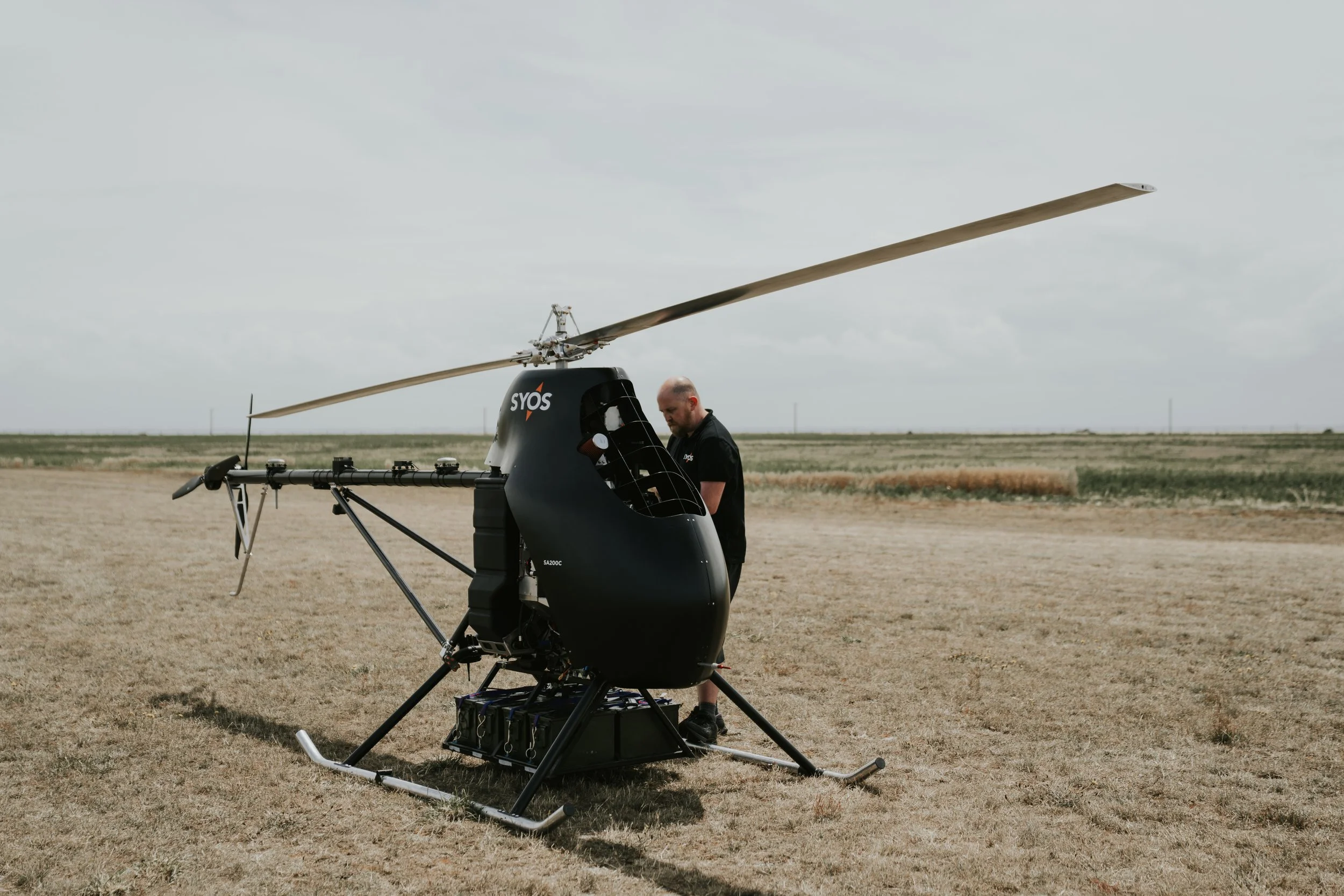
It all started with SYOS’ uncrewed autonomous helicopter, the SA200.
His idea was to create an unmanned helicopter powered by petrol, capable of applications including forestry, agriculture, cargo logistics, surveying, and search and rescue. Sam knew it needed to match what a manned chopper could do and be simple to keep powered. He also knew realising his idea was not going to be easy.
“Uncrewed helicopters are one of the bloody most complex, difficult vehicles to do,” he laughs. “They’re big things – flying bricks, if you like, with lots of vibration.”
Now that rechargeable batteries are capable of long distances, as evidenced by all the EVs on the road, you may think power wouldn’t be a problem, but batteries weren’t going to cut it. Firstly, recharging would ground the helicopter for hours, and secondly, batteries still can’t match the energy density needed to keep a helicopter lifting 200kg in the air for hours. Rather than trying to reinvent another wheel, they went with a proven solution.
“It runs on fuel that you can get from the BP fuel station,” explains Sam, allowing it to carry more and stay in the air longer than electric drones and be easily refuelled on site.
With their first helicopter, the SA200, in the air, Sam began to see the huge potential and opportunities in what they’d created. “We started realising that the skills we’d put together, the autonomy and the software capability, could be applied to other domains across land and sea.
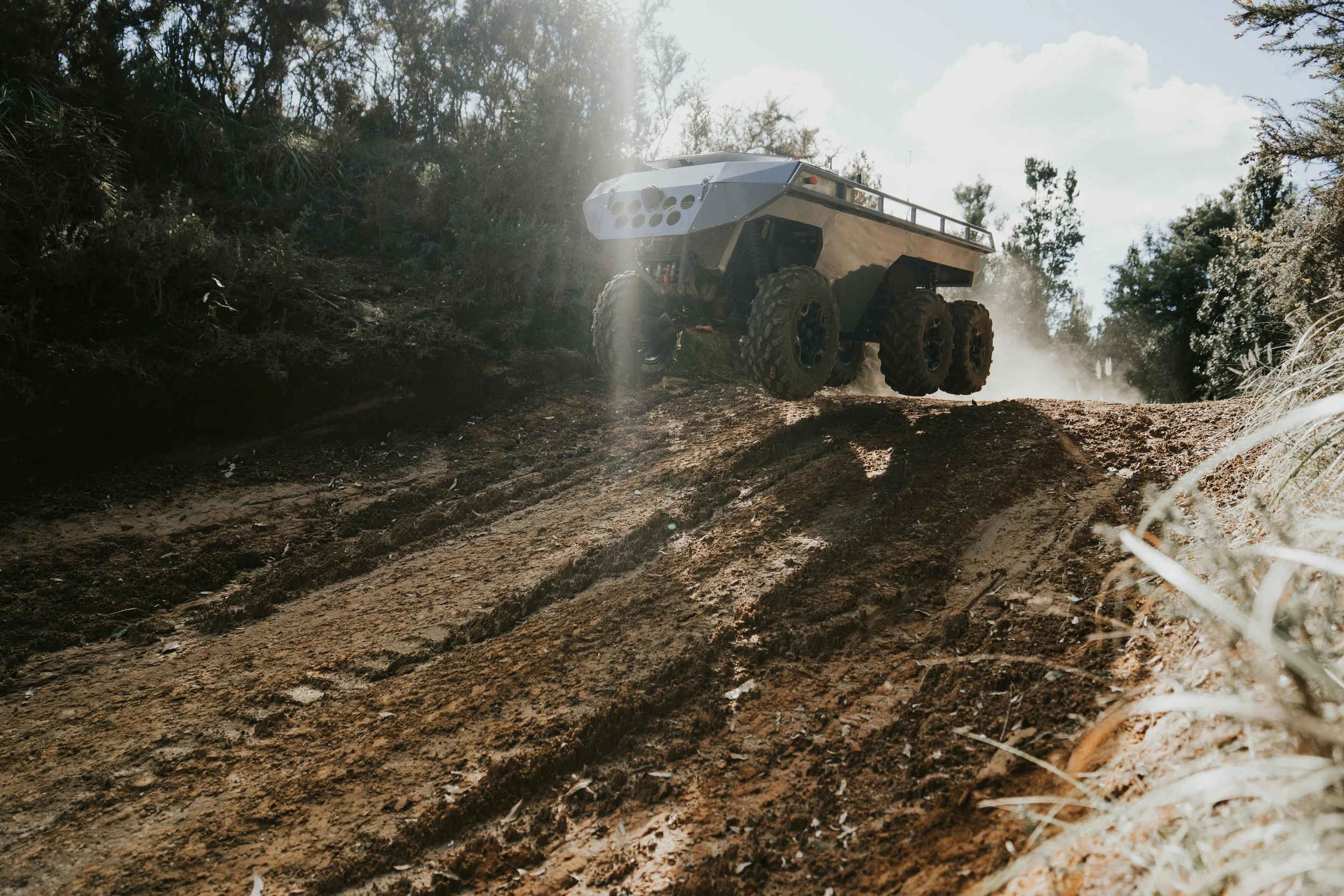
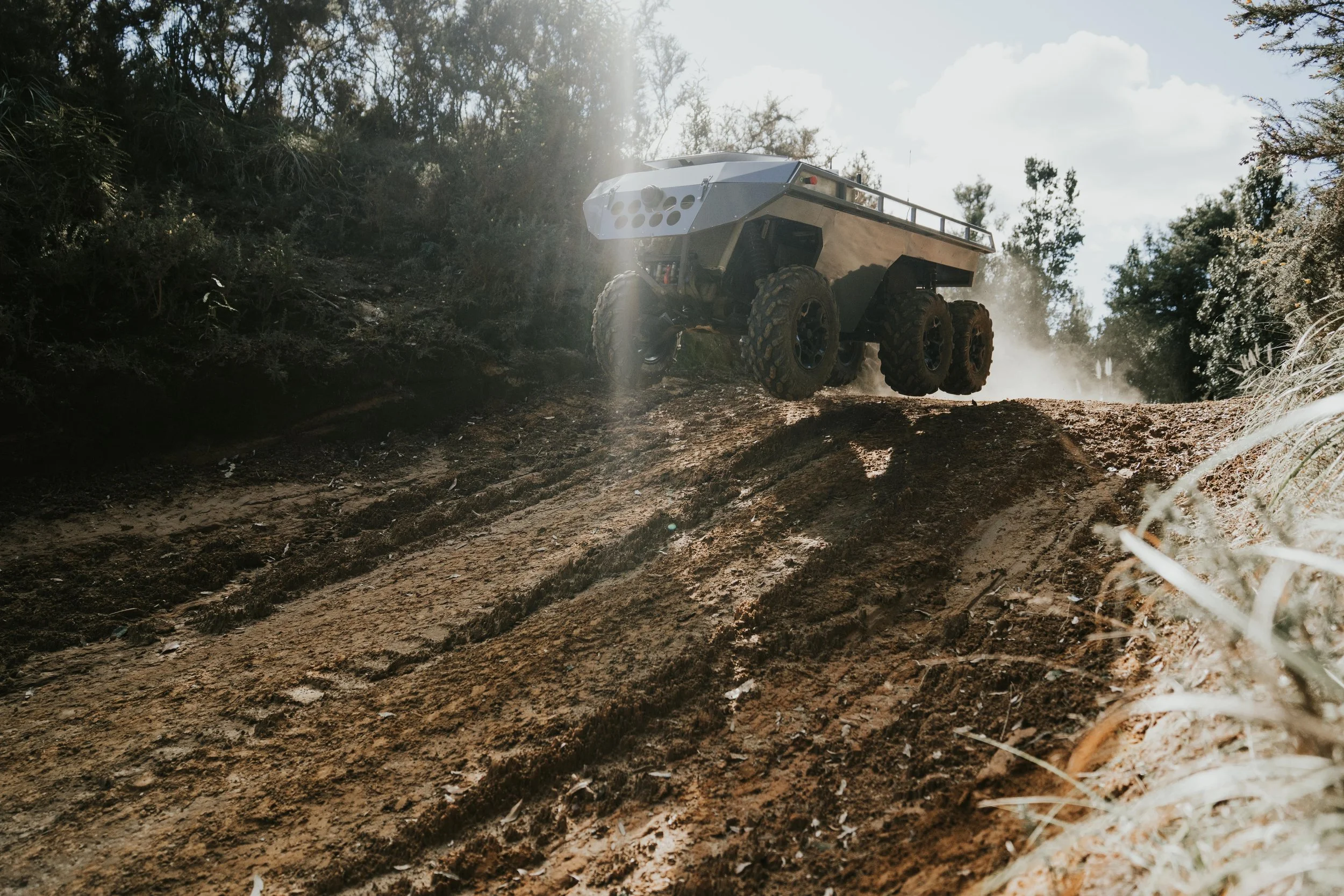
The robust SG400, a 6×6-wheel drive unmanned vehicle capable of operating in rugged terrain.
“We really targeted the three Ds: dull, dirty or dangerous,” he says. “Our first real venture was uncrewed boats, or uncrewed surface vessels, and we’re also now in the subsurface domain, with the acquisition of local company Bay Dynamics.”
The growth has been rapid, but Sam says they’re not going anywhere. A significant part of SYOS’ development and manufacturing operation remains here in the Bay, and the company now employs around 100 people and is actively recruiting for more. They’ve also opened a production facility in the UK, and Sam says he expects their global workforce to approach 200. “We’re proud of the fact that we’ve grown the business organically.”
This remarkable growth has been driven by a willingness to move quickly. Rather than spending years developing the perfect machine, SYOS instead creates a minimum viable product, then improves it through what they call spiral development.
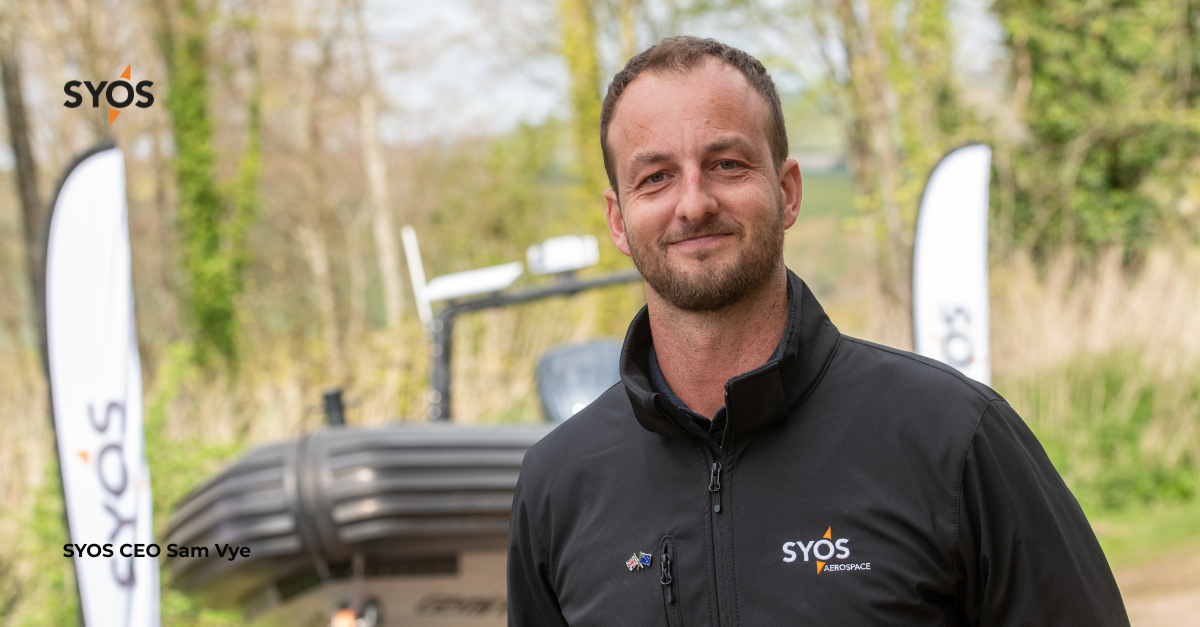
SYOS CEO Sam Vye.
“We’ve got a very, very good reputation with our customers for developing faster than anyone else can develop,” says Sam. “If new systems are needed, we don’t need years to develop it. We can do it in weeks or months, and then do the upgrades within days or even hours based on end-user feedback.”
For all its international ambitions, the Mount remains an important part of SYOS’ future. Sam says the region has a real advantage when it comes to attracting specialist talent from around Aotearoa and overseas, particularly because of the lifestyle on offer. He believes there’s a great opportunity to turn the Bay of Plenty into the next Silicon Valley.
“If we can grow the Bay of Plenty to be a tech hub, that would be incredible,” he enthuses. “We’ve got all the things in place to be able to do it, but having support from the government to drive the expansion of a tech hub would really springboard it.”
No matter what happens, SYOS is here to stay. Sam says he has no desire to “sell out” to a massive corporation like Boeing or Airbus. “We really want to recognise our New Zealand roots and utilise New Zealand as an amazing base. I’d love us to be the next Rocket Lab. In a nutshell, we’re here to play long term and be a global player.”
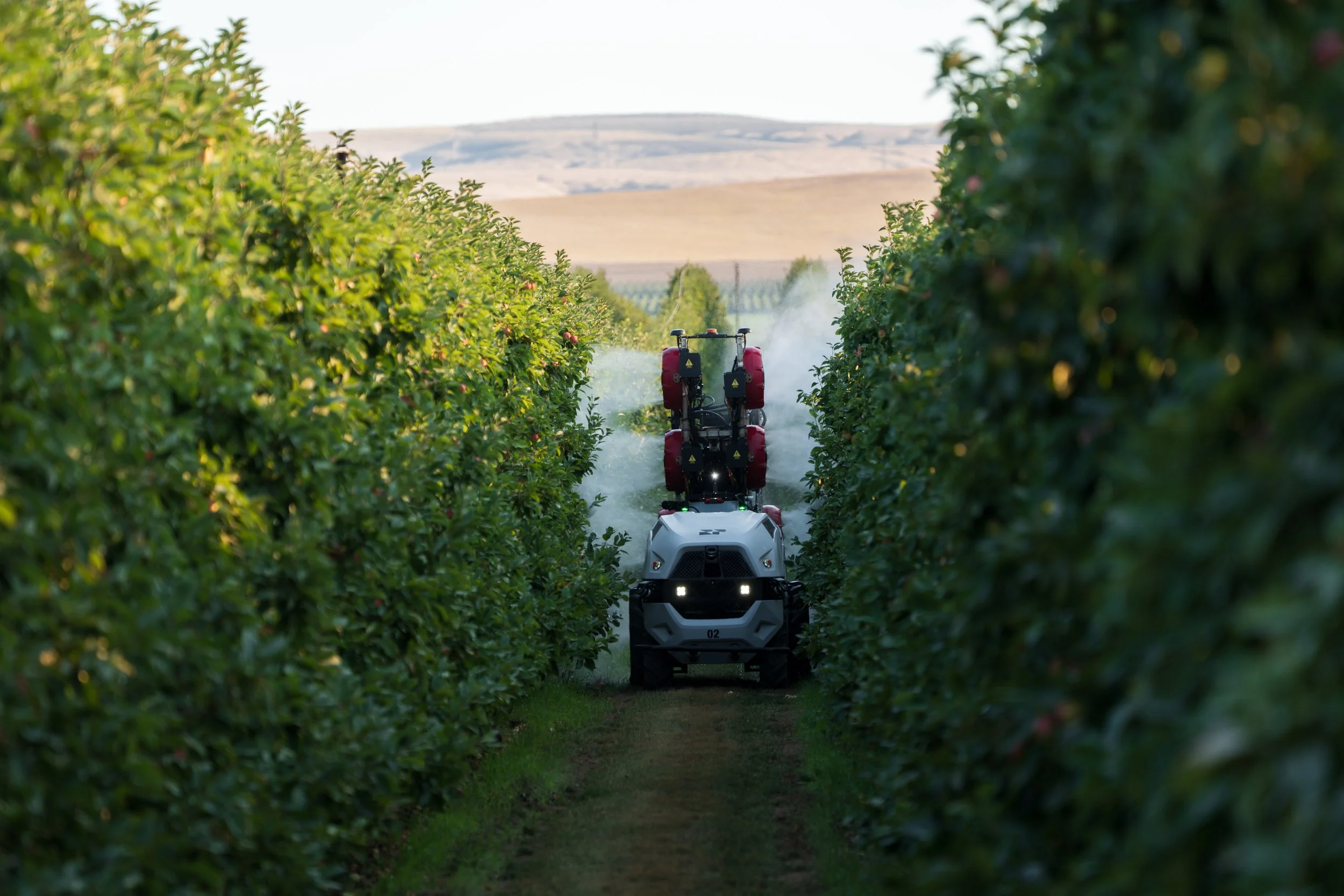
Robotics Plus is revolutionising farm work around the world with its autonomous vehicle, Prospr.
FARMHANDS OF THE FUTURE
Robotics Plus transformed the way food is grown and went global, without leaving the Bay behind.
Even in the age of dancing robots and self-driving cars, the idea of robots working the land and tending crops on farms sounds like something straight out of a sci-fi film. Still, in vineyards in Marlborough and Blenheim, on apple orchards in Washington and on hazelnut farms in Oregon, autonomous vehicle Prospr is out in the fields, working these high-value crops.
Prospr is the future of farming that Steve Saunders envisioned over a decade ago. He grew up around agriculture and spent more than 30 years building horticultural businesses in the Bay of Plenty. It had given him a front-row view to the pressures facing growers. Labour shortages, productivity and sustainability were increasingly difficult challenges. He believed the rapidly advancing technolgy sector would hold the solution.
Around 2014, he teamed up with robotics expert Dr Alistair Scarfe, and Robotics Plus was born.
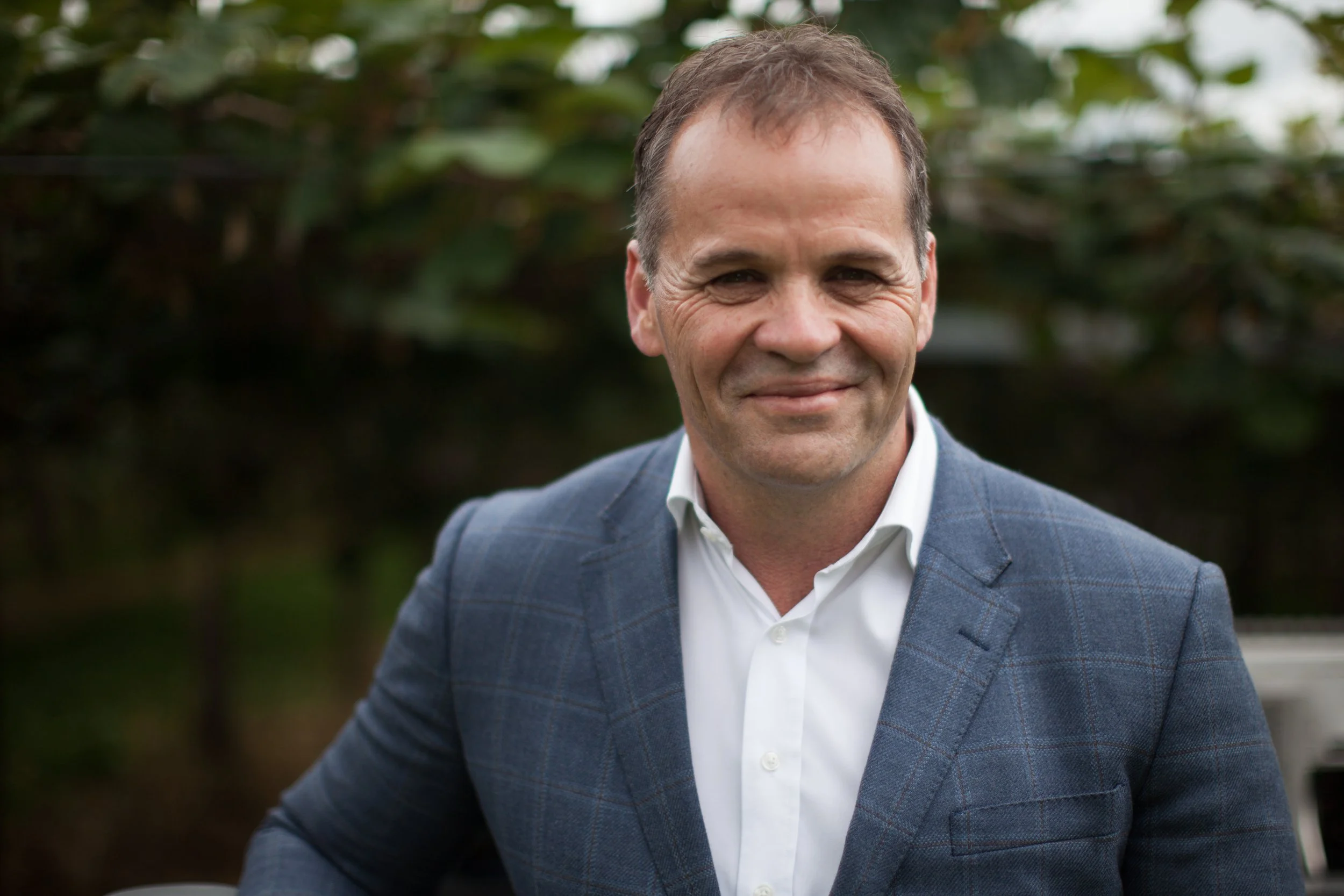
Yamaha Agriculture’s senior vice president of business development and strategy, Steve Saunders.
“We began working on automation ideas,” says Steve. “The vision was to develop practical robotic and automation technologies to help growers address those interconnected challenges.”
One of the company’s defining innovations was Prospr, an autonomous vehicle created to carry out essential orchard and vineyard tasks. “It’s designed to improve productivity, precision, safety and sustainability while helping growers make better use of increasingly scarce labour,” explains Steve. “Prospr is a hybrid technology that significantly reduces fuel costs and carbon footprint.”
It launched with autonomous spraying capabilities, and earlier this year added an attachment for autonomous weed control.
After developing a strategic partnership with the global powerhouse Yamaha Motor in around 2017, thanks to their shared vision that robotics, automation and intelligent data would play a central role in the future of specialty agriculture, Robotics Plus was acquired by them last year to form the foundation of their new global agriculture business, Yamaha Agriculture. Steve stayed on as the new company’s senior vice president of business development and strategy.
“By combining our agile, on-the-ground understanding of agricultural realities with Yamaha’s expertise and global reach, we can accelerate the delivery of autonomous solutions to growers worldwide,” he says, adding that when it comes to technology, Yamaha Agriculture has a grower-first philosophy. “Rather than replacing growers’ expertise, we’re developing autonomous systems that complement it. We’re integrating robotics, software and data- driven insights into connected platforms that become smarter over time.”
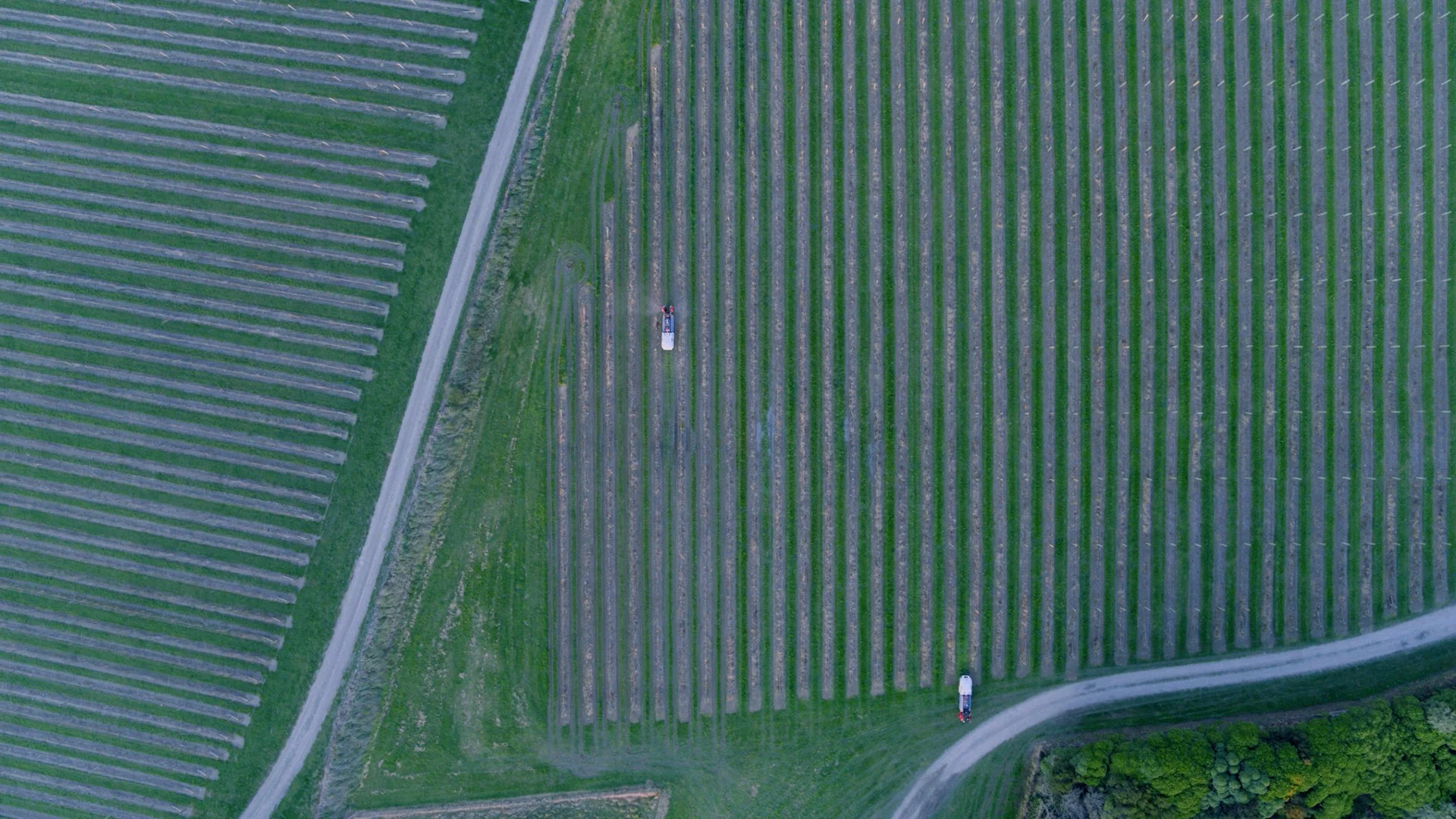
The goal of all this is to help orchard, vineyard and agriculture businesses worldwide become more productive, sustainable and resilient.
It’s impressive stuff. Steve says this international ambition was there from the start. “We believed from day one that Robotics Plus would be a global company. We knew that solving large, scalable agricultural problems would require a global focus.”
Even as Prospr rolls out around the world, its roots remain here in the Bay, something Steve is fiercely proud of. “Our Tauranga team has spent more than a decade proving that globally significant agricultural technology can be conceived, developed, manufactured and commercialised from New Zealand.”
For their field, the location boasts a couple of huge practical advantages. Orchards and vineyards are on the team’s doorstep, meaning they’re able to test their technology in real agricultural conditions. The region also has strong relationships with local suppliers, growers and research institutions.
Seeing how intricately tied Robotics Plus was to the Bay of Plenty, Yamaha Agriculture decided to move in themselves. They opened a purpose-built facility in Tauriko last year for the engineering, design, manufacture and development of their autonomous technologies, including Prospr.
The other advantage is that when competing internationally for specialist talent in robotics, software, engineering and automation, Robotics Plus can make a compelling argument. “We can offer people meaningful work, a collaborative culture and the opportunity to live in an outstanding region,” says Steve. “The Bay of Plenty offers a rare combination of sector knowledge, practical access to growers, strong local relationships and an exceptional lifestyle.”
He says Prospr proves that world-class technology doesn’t have to come out of a traditional technology hub. By drawing on close connections with local industries and the communities that support them, ambitious companies can build world-class technology, and serve customers in markets around the world. It can even see a worldwide giant come to you.