

HOLE NEW WORLD
Pip Crombie discovers a unique golfing destination with a dash of culture on the side.
Pip Crombie discovers a unique golfing destination with a dash of culture on the side.

Bà Nà Hills Golf Club’s signature par 3, 16th hole.
St Andrews may be the centuries-old home of modern golf, but the game – protocols intact – has not only survived, but thrived globally, becoming a powerful drawcard for international travellers. Serious golfers and social hackers alike find an exquisite anticipation in packing clubs into a bag sturdy enough for the cargo hold, plotting which courses to conquer and how best to enjoy après-golf. A half day on the greens, balanced with time spent exploring local culture and cuisine makes for the perfect mix – even when non-golfers are along for the ride.
You might be surprised by which countries deliver exceptional golf experiences. Having played in several overseas locations, a standout for me is the Central Coast region of Vietnam.
The major hub of Da Nang is an easy gateway (with Air New Zealand codesharing with Singapore Airlines), and offers access to more than a dozen courses. Expect diverse terrain, from mountain-top championship layouts to links-style seaside experiences, with scenic backdrops featuring lush vegetation and striking elevation changes, or dramatic ocean views and coastal winds.
Fair warning: it can all be wonderfully distracting – and a convenient excuse for the state of your game. Although some courses are attached to larger resorts, basing yourself in Da Nang or the historic town of Hoi An offers a more authentic Vietnamese experience. Most courses are within about an hour’s drive and feature excellent warm-up areas, well-stocked pro shops, quality amenities and solid dining options.
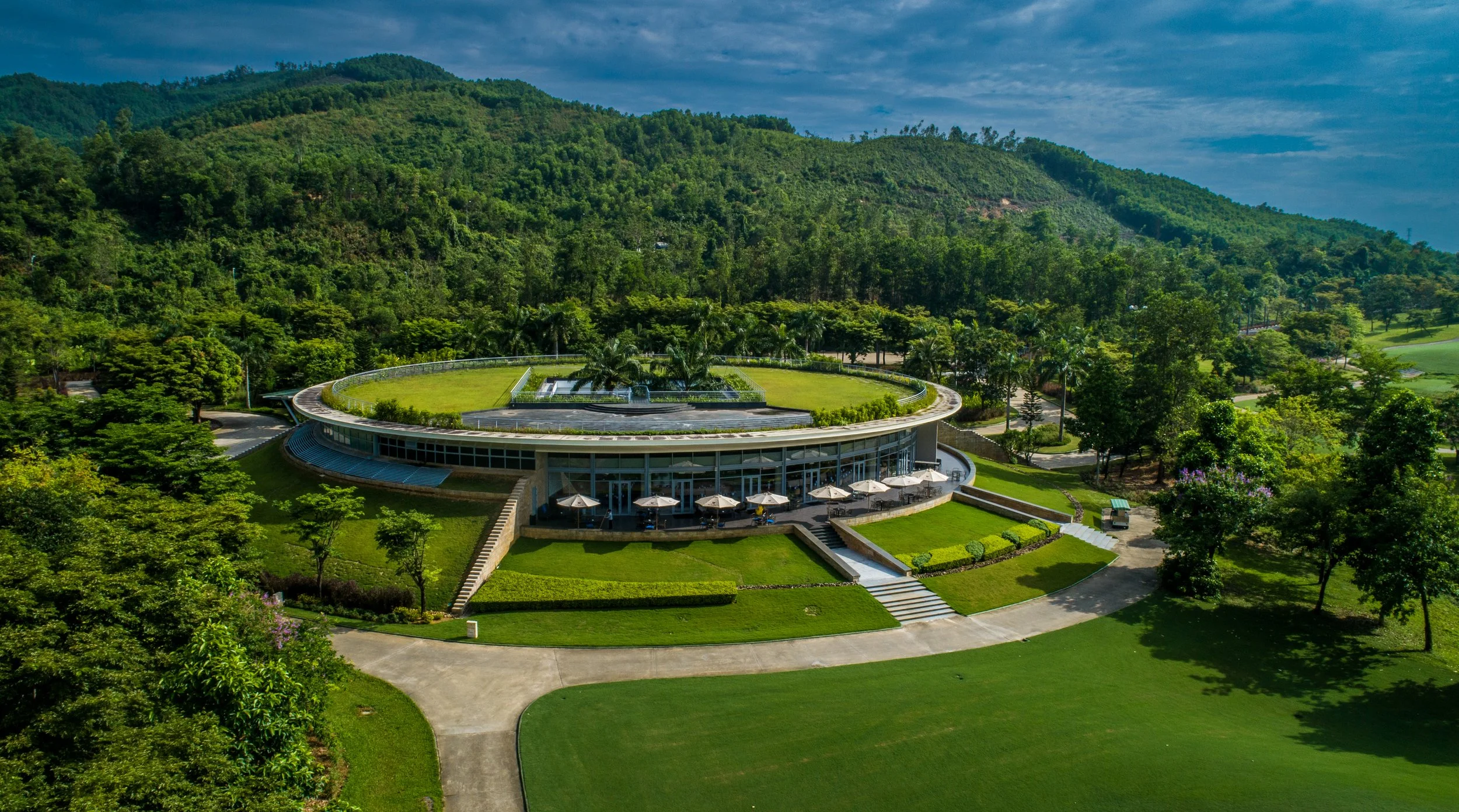
In Bà Nà Hills’ circular clubhouse restaurant, excellent local and international cuisine is served with panoramic views of the course.
Fairways and greens are immaculately maintained, with well-spaced tee times and good on-course facilities.
If time allows, aim for a varied line-up of courses. For me, two rise to the top. The mountain championship layout at Bà Nà Hills Golf Club sits at the foothills of the famed Bà Nà Hills, just 25 minutes from the city. Set among some of the region’s most impressive ranges, this lush, green course was designed by Luke Donald and feels distinctly Vietnam.
If you’re tempted to squeeze in two rounds in a day, a state- of-the-art floodlighting system illuminates all 18 holes after dark.
My second pick is Hoiana Shores Golf Club, a traditional links course by Robert Trent Jones Jr, who’s known for integrating layouts seamlessly into natural landscapes. Here, you’ll contend with firm, sandy turf on a scenic coastal routing, seasonal (but warm) winds, and classic links bunkering – a mix of wasteland and pot bunkers that demand strategy as much as skill.
Closer to Da Nang, our group also enjoyed the Legend Danang Golf Resort (formerly BRG Danang Golf Club), a 36-hole complex featuring two distinct championship courses. The links-style layout by Greg Norman delivers sweeping coastal views, while the parkland course by Jack Nicklaus offers wide fairways, river vistas and strategic bunkering. Golfers of all levels can take on these courses, choosing tees that suit their game and appetite for challenge.
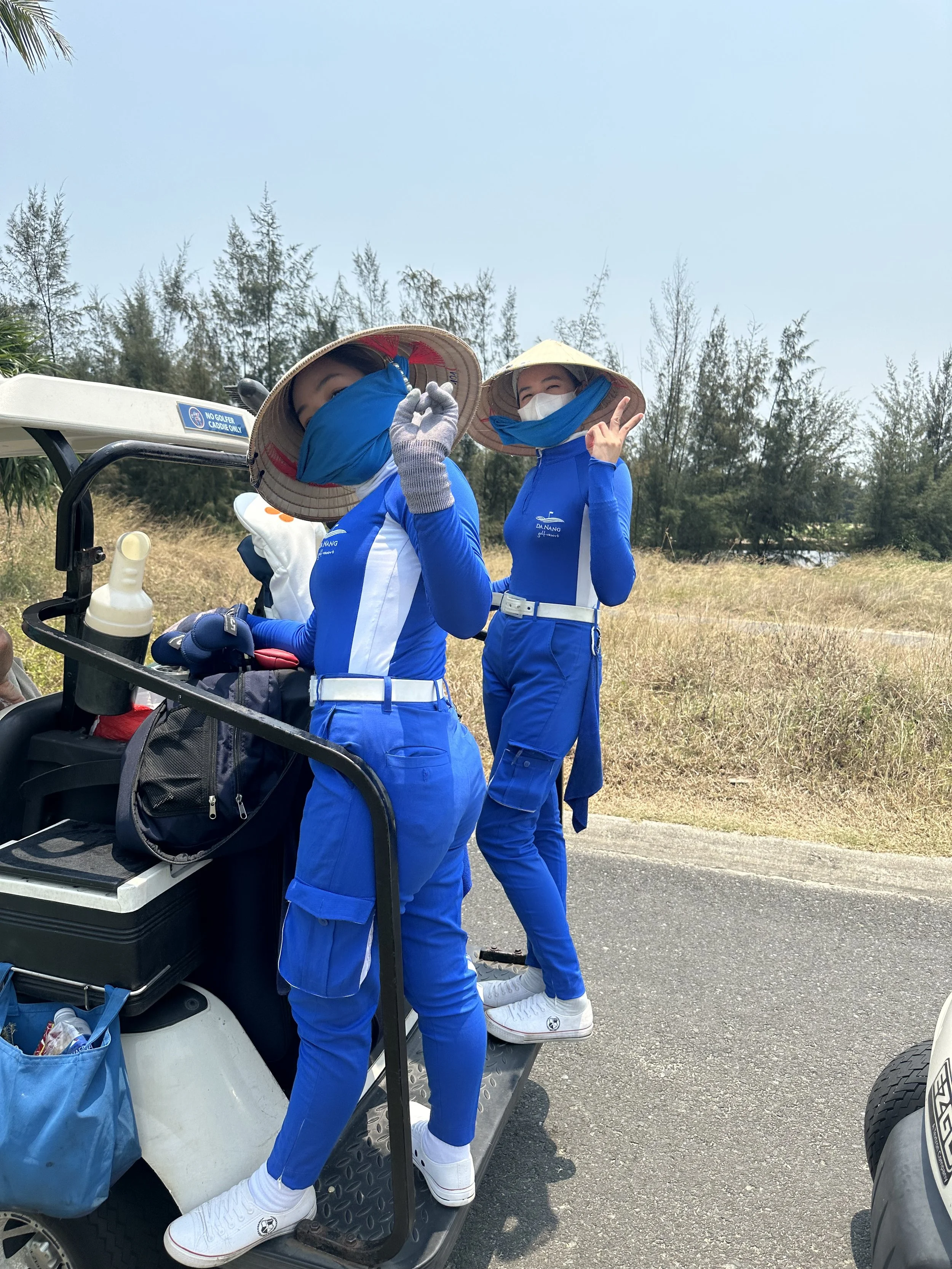
At the Legend Danang Golf Resort, the caddies are clad in sporty blue.
Caddies are compulsory in Vietnam, with one assigned per player. Typically local Vietnamese women, they perch on the back of the golf buggy as you move between shots. Most are highly intuitive, quickly assessing your ability and reading greens with impressive accuracy – the rest, of course, is up to you. Expect to pay around NZ$40 per round, although a good day on the course may loosen the purse strings.
Golf in Vietnam isn’t exactly cheap. As part of a casino complex, Hoiana Shores sits at the top end of Central Coast pricing, at around NZ$500 per round. However, accommodation, dining, shopping and transport are all relatively affordable, which helps to balance your overall spend. If you’re flying domestically, local airlines will often carry a second (golf) bag free of charge. What’s not to love? Time to swing into action.
Best time to go: March–April (warm but not overly hot or wet). August can be extremely hot, while October November often brings heavy rain and flooding.
How to book: Booking direct via golf club websites is possible, although you may be asked to provide copies of credit cards and passports. Language barriers can occasionally complicate things, but many clubs communicate via WhatsApp. Golf booking agents can simplify the process by arranging tee times and transport, though they often quote in US dollars, take a margin on exchange rates and require upfront payment. Always check cancellation policies carefully.
Where to stay: Da Nang offers a wide range of accommodation, from beachside resorts to quaint, authentic boutique hotels.
Other tips: Bring US dollars for tipping, use a Wise card or similar for payments, and download Bing, widely used in Asia for ride-hailing services.