

FINDING THE LIGHT
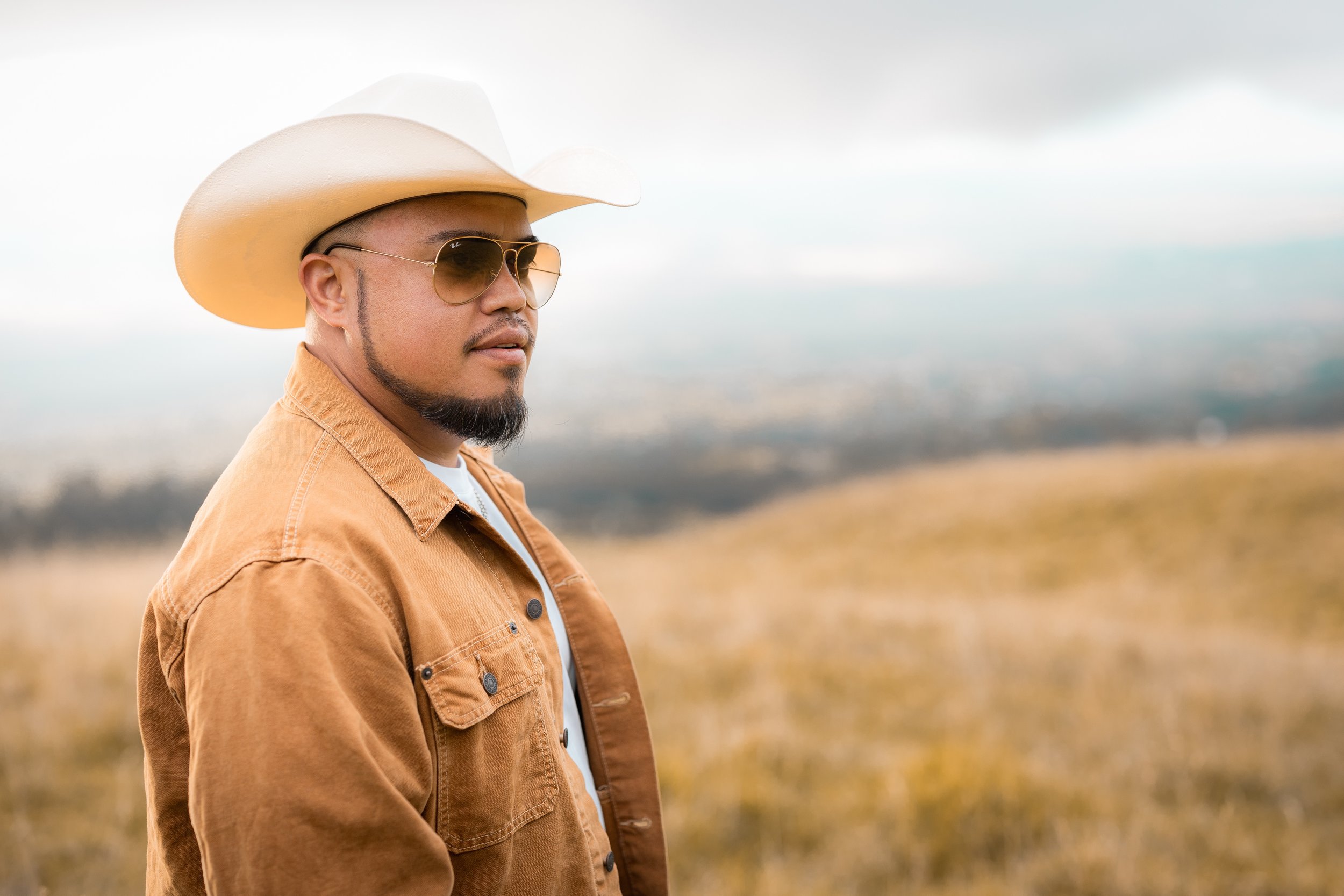
Hawaiian singer Maoli is all about the positive vibes. Ahead of performing in summer’s Kingston Calling festival, he tells UNO how good tunes might just save your life.
Hawaiian singer Maoli is all about the positive vibes. Ahead of performing in summer’s Kingston Calling festival, he tells UNO how good tunes might just save your life.
WORDS KARL PUSCHMANN

Sitting on the deck at his home in Hawaii, chart-topping singer Maoli is relaxed, chatty and excited to be returning to Aotearoa in a few months.
“It’s one of the greatest places in the world to perform,” he says. “I love the people. I feel that aloha spirit that we share. We share similar values and understanding about life. We mesh really well. I’m treated like family when I’m there.”
Then he laughs and says, “And you guys’ love for reggae music is pretty up there.”
He’s not wrong – and nowhere will that love be more evident than at Kingston Calling, the new, two-day music festival being held at Mount Maunganui’s Bay Oval in February. Maoli’s headlining the first night.
Maoli’s music is an unlikely blend of reggae and country. It’s a genre mash-up that sounds like it shouldn’t work, but clicks effortlessly when you hear him play. The unique combination has struck a chord around the globe, but is one he’s quick not to take credit for, explaining it’s been in Hawaii for generations.
“It’s nothing new here. This style and mixture describes the place that I come from in Maui. It’s very authentic.”
He explains it was born out of “backyard jams”, where local musicians would gather to play hits they’d heard on the radio. Inevitably, they’d put their own spin on them and because many people’s grandparents were big country fans, including his own, that naturally seeped in as well.
“I really can’t take credit for it, because it’s been done a long time before me,” he says. “It’s cool that it’s starting to grow. If more of us do this, I think it can become a genre.”
Aside from the ear-catching originality, there’s a real warmth and positivity in Maoli’s music. It may sound breezy, but it’s something he works hard to achieve.
“The world has enough negative stuff going on – we need more positivity, we need more love,” he says. “That’s what I really try to bring in the music.”
Life, he says, gave him this outlook and state of mind, but it wasn’t easy to achieve. “We all go through adversity and obstacles, but I always try to lean towards the positive and bring it into the music. I don’t want anger or fear or all that in the music, but I like to use that energy. I’ll use the emotion and turn it into something positive.”
Then he sighs and says, “I’ve been through so much in my life that I don’t want to share those negative emotions. I don’t wish anyone to experience the stuff I’ve been through. Instead, I want to grab those experiences and tribulations, turn them into something positive and send that out to the world.”
It’s an admirable outlook. Taking negative experiences and channelling the positive out of them is a genuinely hard thing to do. “It can be,” he agrees. “I really had to train myself to do it.”
Having gone through dark times and come out the other side, his advice for anyone struggling is to take things one day at a time. “Understand that this too shall pass,” he says. “There are mountains and valleys, and we have to go through them, but just know that if you let it pass you will find that hilltop sooner or later. You just have to keep going.”
He knows for a fact that the messages in his music are actively helping people. “Many, many, many people have come up to me saying it’s saved their life,” he smiles. “I’ve had people say they were on the brink of ending their lives, and they heard my song come on and something about it just changed their mind.”
Maoli has lost loved ones, been through break-ups and divorce, and turned all of those experiences into positive songs. “It lets people know they’re not alone,” he says.
He says it’s still hard to believe that his music could be powerful enough to change, or even save, someone’s life.
“It’s a great feeling, but it’s a lot of responsibility. It’s a lot of energy to take in. I have to sit down sometimes and be like, ‘Wow. I can’t believe I changed that person’s life’. But it helps me too. These are stories that I’ve written about myself, and when someone comes to me and says that it touched them because they know what that experience feels like, it makes me feel like I’m human and that there’s other people out there who share the same emotions that I have.”
Then he smiles warmly and says, “It lets me know I’m not alone.”
After everything Maoli’s experienced personally and processed through his songs while his career has skyrocketed, for him, music carries a lot of meaning. “Music to me is a sense of healing, love and unity,” he says. “One of my greatest joys is watching music bring so many people together where they lose themselves in the moment and forget about all their worries.”
He could be describing Kingston Calling when he says, “You can have thousands of people from different walks of life coming together and singing the songs. It’s one of the most powerful things I’ve ever seen that music can do. That’s what music means to me. It’s a place where we can bring people together, instead of dividing.”
MIGHTY FINE LINE-UP
A look at the performers coming to Kingston Calling. For two days in February, the Mount will sway to the grooves of Aotearoa’s best loved reggae-roots acts, along with some international favourites. With 14 acts on the cards, it promises to be a joyous celebration of live music.
Maoli headlines Friday with his unique reggae-country blend, supported by local powerhouse R&B star Stan Walker and pioneering rap group Arrested Development, whose hits Tennessee, People Everyday and Mr Wendal defined the sound of summer in the early ’90s. They’re joined by American reggae outfit SOJA and Aotearoa’s reggae legends Katchafire, with Hori Shaw and A.R.T rounding off the first day’s line-up.
Headlining Saturday is SIX60, who return to the Mount to lead what will no doubt be the weekend’s biggest singalongs. They’re joined by the wandering eyes of Fat Freddy’s Drop, whose genre-defying blend of reggae, dub, soul and electronica never fails to deliver.
Bringing the more traditional Pacific flavour to day two of the festival is R&B and soul princess Aaradhna, along with Hawaiian reggae group Rebel Souljahz, covers supergroup Marley NZ All Stars, Te Wehi and Myshaan.

Reggae, revolution and red red wine
Karl Puschmann catches up with Ali Campbell, the legendary UB40 frontman, to talk band beginnings, protest and politics, their big hits, and why he can’t wait to bring the band’s reggae vibes back to the Bay.
Karl Puschmann catches up with Ali Campbell, the legendary UB40 frontman, to talk band beginnings, protest and politics, their big hits, and why he can’t wait to bring the band’s reggae vibes back to the Bay.

Ali Campbell is bleary-eyed but upbeat when UNO calls. It’s 8am in the UK, and the UB40 frontman only got home from a European festival tour yesterday.
“It’s all a bit mad here,” he jokes, before settling in for a breezy and candid chat about UB40, the influential reggae band he co-founded in 1978 and led to global success before inner band turbulence saw them splitting into two groups.
But before getting into the past, we need to talk about his future return to Aotearoa to headline music festival Kingston Calling this Waitangi Weekend. The brand new reggae tour, with seven stops across the North Island, also features Katchafire, The Black Seeds and Corrella.
“I’m very, very happy to be coming back. It’s one of my favourite places,” he enthuses. “I’ve got a lot of friends there, a lot of Māori friends, so we always have a great time. It's a beautiful country.”
Then he pauses and says, “There are some weird things happening politically that I'm not too sure of. I've heard about the new Prime Minister... I've got to look at all that.”
You may think it’s unusual that a British music icon would know about or even be interested in our politics, but Ali has a long history with our country. He lived here for months when he was a judge on reality show New Zealand’s Got Talent back in 2012, his current tour manager is Māori and he’s even taken the time to read something that a lot of us haven’t; the Treaty of Waitangi.
“I lived in the middle of Auckland in the Viaduct. I know my way around,” he laughs. “And, of course, we've travelled extensively around both the North and the South Islands.”
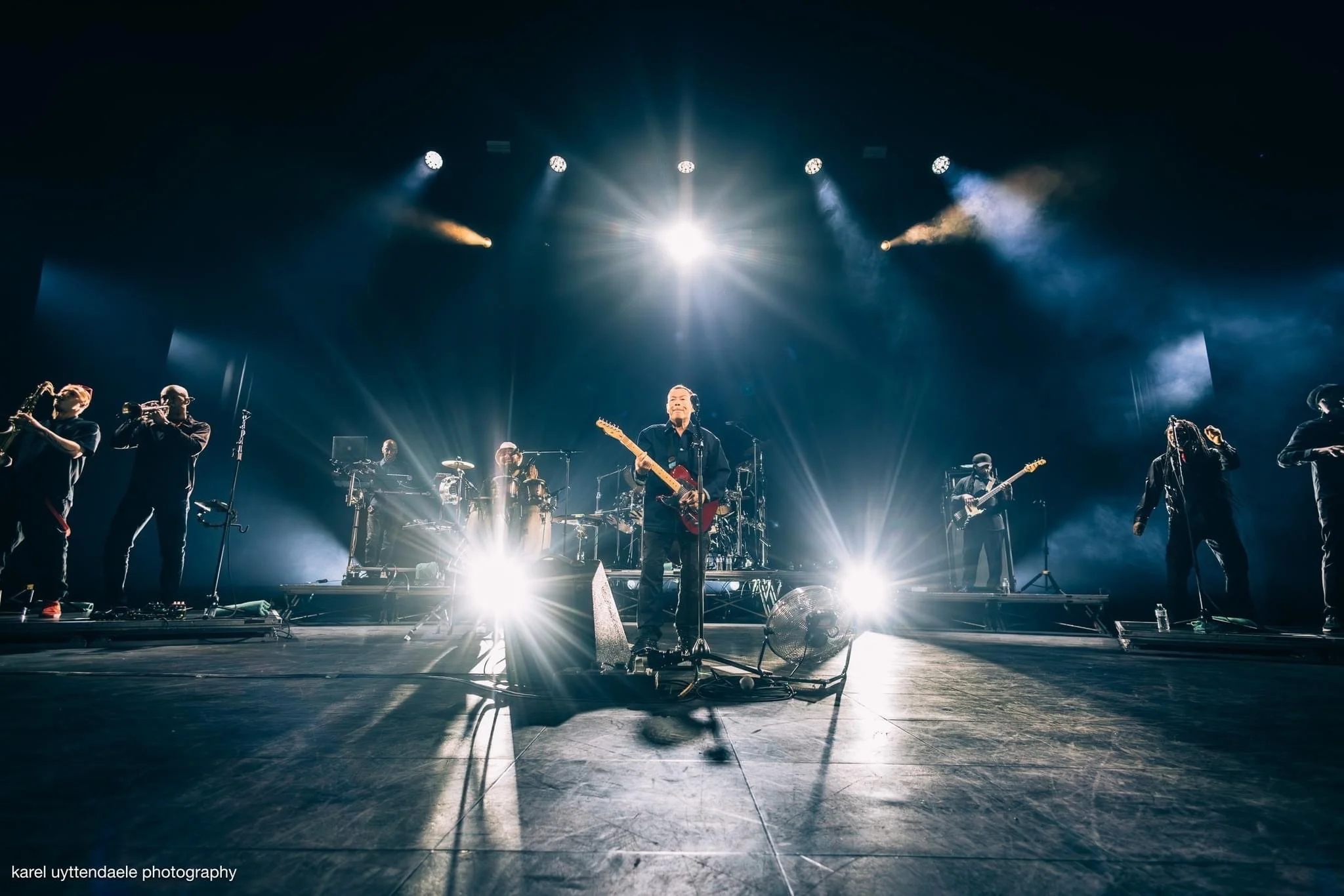
Aotearoa’s always had a huge love for UB40. This stretches right back to the band’s cracking debut single, the politically charged deep reggae groove of Food For Thought, which topped our charts in 1980, to give the band their first-ever Number One hit. But when I ask why he thinks the band has resonated with us Kiwis so much, he’s modest, saying, “It’s not UB40 that people love. It's the music. People love reggae music.”
“Reggae is unifying, and it's still cool today,” he continues. “That's the important thing. It's still cool. People like us because we're an accessible reggae band.”
Ali grew up in South Birmingham, “on the wrong side of the tracks,” as he says, surrounded by the colourful sounds of the Caribbean and Asian cultures that were his neighbours. Unlike most of England at that time, it was a true multicultural environment, and one that impacted his world view.
“I was very lucky. I had Jamaican, Indian, West Indian and Arabic friends. I grew up amongst this melting pot. I loved it. It gave me a broad outlook on life. I wasn't prejudiced against anybody. Just fascists, I didn't like them. I’d go to a lot of anti-fascist demos and all that stuff. But we'd do it all together.”
Then grinning he adds, “And generally, the police were our enemies. Everybody else was friends.”
Aged 15 he went and saw Bob Marley and the Wailers in concert. It would be a transformative experience.
“It was like seeing the Messiah. I was totally blown away,” he says, a note of awe still resonating in his voice. “The year before that, I'd seen the Jackson 5. And that also blew me away because I was a mad Jackson 5 fan as well. Those two years basically showed my musical future to me. It was life-changing.”
After the show, he decided to form a band. But his plan had two big problems.
“We didn't know how to play. And we didn't have any instruments, so we... acquired our instruments, let's say,” he laughs. “We were on the dole, so we couldn't go and buy them. We had to acquire them.”

With instruments “acquired”, all they had to do next was learn how to play them. To do this, they continually played the 12” version of Gregory Isaacs reggae hit, ‘Mr Know It All’, which features a dub breakdown in the middle, deconstructing each part and slowly working it out by playing along. Eventually, they got to the point where the record stopped and they could continue jamming.
“And that's how we learned to play. Six months later, we'd written our first album, which went on to sell eight million copies. It was ridiculous,” he grins.
That album was Signing Off, a groundbreaking and politically charged album of deep groove reggae whose music and message still resonate today.
“We followed Bob Marley's lead and other reggae artists like Lee Perry, who were political. We felt obliged if we got a platform to write something relevant. And we continue to do so.”
As an example, he cites ‘Burden of Shame’, which, when he sings it live now, has the lyrics “A baby in Gaza dies,” instead of “A boy in Soweto dies”.
“Depressingly, the songs are still as relevant as they were when we wrote them,” he sighs. “I've learned that you don't change anything by singing about it. It's as simple as that. All we're doing is voicing an opinion. It doesn't change anything. Things might have got worse even.”
As well as their political material, UB40 also explored the smoother, pop-leaning side of reggae, with their hugely popular Labour of Love albums, which saw them performing covers of the songs that had influenced them, like ‘Red Red Wine’, ‘The Way You Do the Things You Do’ and ‘Here I Am (Come and Take Me)’.
“We kept getting asked about why we played reggae, so we decided to do those albums,” he says, laughing that they’d been strongly advised against recording a covers album. Labour of Love would top global charts, including here, and go on to sell over 21 million copies.
“They’re the songs we used to hear on jukeboxes in cafés where we used to hang out as kids, playing pinball and running errands for prostitutes. We grew up listening to those songs. We loved them, and we knew that anybody else who got to hear them would love them as well. And we were right.”
After 24 years together, tensions within the band led to a split in 2008, with Ali moving on to front his own group, UB40 featuring Ali Campbell, while the remaining members continued under the original name.
“When I left it was sad, but I couldn't carry on with them. They wouldn't let me promote my second solo album, which was called Running Free, ironically enough,” he says. “All I wanted was a month off to promote it, and they were steadfastly telling me I couldn't do it, so I walked. It’s all very silly and a very petty argument. But I was quite happy to leave and I've had a great time since. I've got my new band, who are all seasoned reggae players, and I love them. That's who I'm bringing to New Zealand. I think they’re the best band around.”
Which makes them a fitting choice to headline Kingston Calling, especially as it’s the first-ever concert to be played at The Bay Oval, in the heart of Mount Maunganui.
“I'm a little bit nervous,” Ali admits when asked how it feels to be christening this new venue. “But it's fun being the first to do anything really.”
I confess to taking a sneak peek at some of his recent setlists, which gets a chuckle when I say he’s bringing some absolute bangers that will keep all fans of UB40’s multifaceted career extremely satisfied.
“It's more or less a Greatest Hits set,” he smiles. “We're not self-indulgent. We know what the people want to hear, so that's what we do.”
Purchase tickets to Kingston Calling at
A new rhythm
After calling the Waikato home all his life, Katchafire frontman Logan Bell recently moved to the Bay.

It was just two short years ago that Logan Bell, the Katchafire frontman, and his family made the move from the Waikato to Tauranga’s Welcome Bay. For his wife, who grew up in the Bay, it was a return to her roots, but for Logan it was a completely new experience. While he’d toured the world many times over with the band, the Waikato was the only place he’d ever called home.
“This is the first time I've moved away,” he admits. “We love it here. It's really awesome for our family. I love my house. I'm a total homebody. I don't go anywhere else”.
Then he laughs and says, “I’m nearly a real local now, bro. I almost don't need Google Maps to get around now.”
Already, he says, the relaxed lifestyle, beachtown vibes and the musical community here in the Bay has begun to influence his music.
“Your environment and your vibe always has a lot to do with what's coming out creatively. This morning I was in the studio with Tiki Taane. The other week, me, Laughton Kora, Fran Kora and Joel from LAB got together and had a bit of a jam. It's just a nice community here and a nice vibe for me.”
Over their almost 30-year-long career, Katachfire has become one of Aotearoa’s most beloved reggae bands, first coming to national attention with their 2003 debut album Revival, before building an international audience through hits like ‘Frisk Me Down’, ‘Giddy Up’ and ‘Get Away’ and going on to tour with legendary reggae acts like The Wailers, Shaggy, Lauryn Hill, and, of course, UB40 who they’re sharing the stage with at Kingston Calling.
“We’re blessed to get the call up,” he smiles. “UB40 has always been a huge inspiration of ours, we kind of modeled our career off them. We’ve followed their example and their path in a lot of ways.”
While music styles come in and out of fashion, reggae’s popularity has never waned, especially here in Aotearoa. This, Logan says, is because
reggae is the “people’s music”.
“It touches on matters of truth. And a lot of it's to do with the underdog truth, the sufferer's truth. We, as a nation, are born of that. We can identify with these stories, and we have our own to tell as well. That's why I think it's so easy for us to feel connected to reggae and feel a part of the music and the messages.”