
GOOD IN THE HOOD
Today’s Neighbourhood Support modernises the old model to help our increasingly disconnected communities keep an eye out for each other.
Today’s Neighbourhood Support modernises the old model to help our increasingly disconnected communities keep an eye out for each other.
WORDS HAYLEY BARNETT | PHOTOS ALAN GIBSON
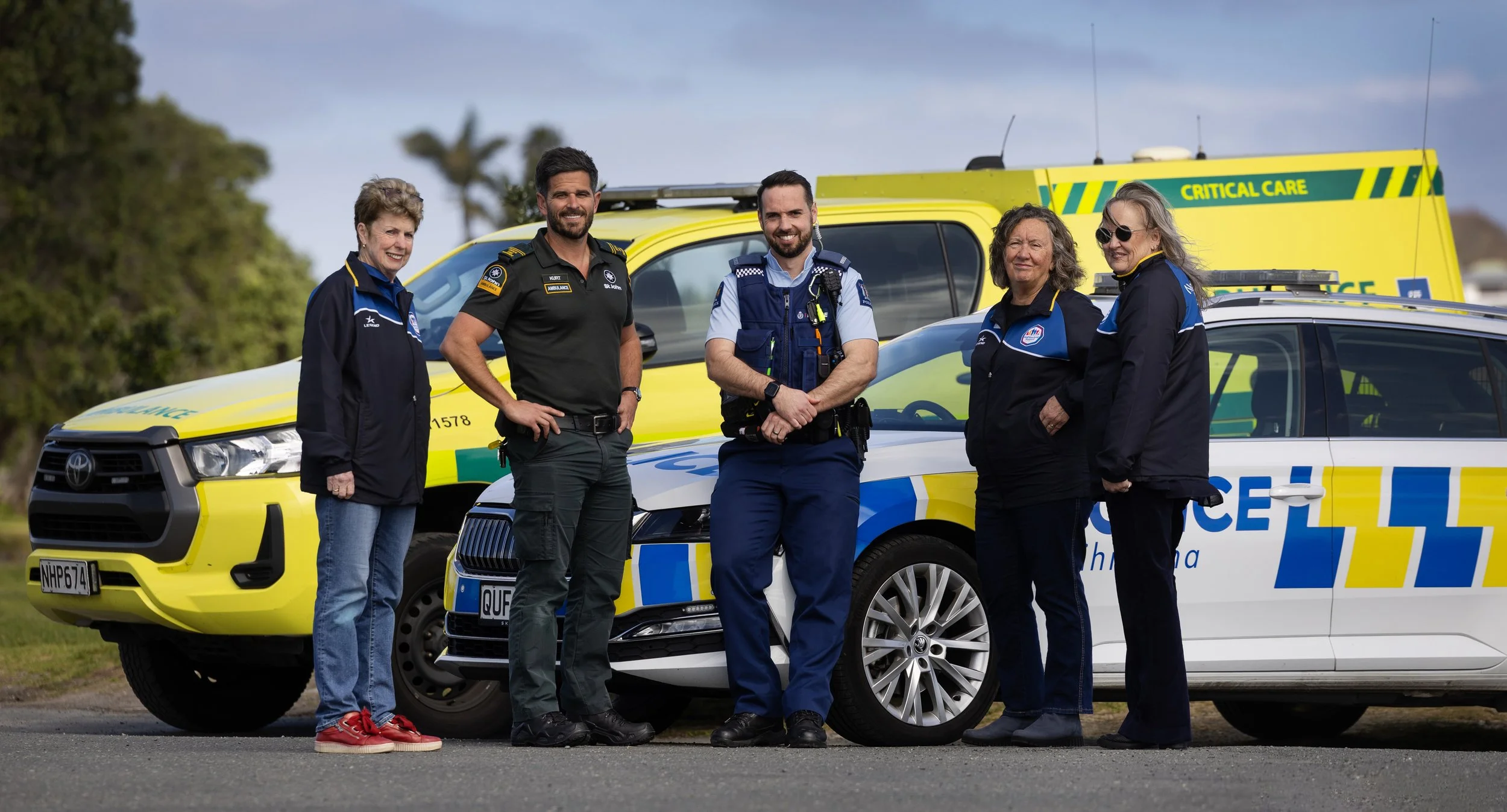
FROM LEFT: WBOP board chair Kathy Webb, Hato Hone St John critical care paramedic Kurt Golding, community constable Chris Connolly, WBOP board member Bev Tagg and Neighbourhood Support Tauranga manager Marea Goodwin-McKay.
The sound of a driveway full of people who’ve lived two doors apart for years and are meeting properly for the first time is a sound Kathy Webb knows well.
“These intro meetings are often very loud,” she says. “People meeting for the first time make a lot of noise, but it’s happy noise – finding out about one another, who’s in the family, are they working, kids… just generally getting to know the neighbours.”
As chair of Neighbourhood Support Western Bay of Plenty, Kathy has stood on enough driveways to know what that noise means. It means a street that used to be a row of strangers behind fences is starting to become something else.
“Most people assume Neighbourhood Support is mostly about crime prevention,” she says, “but we’ve moved away from the old Neighbourhood Watch days to more of a support and enabling role. It’s a much broader and preventative take on things that upset the regular rhythm of life.”
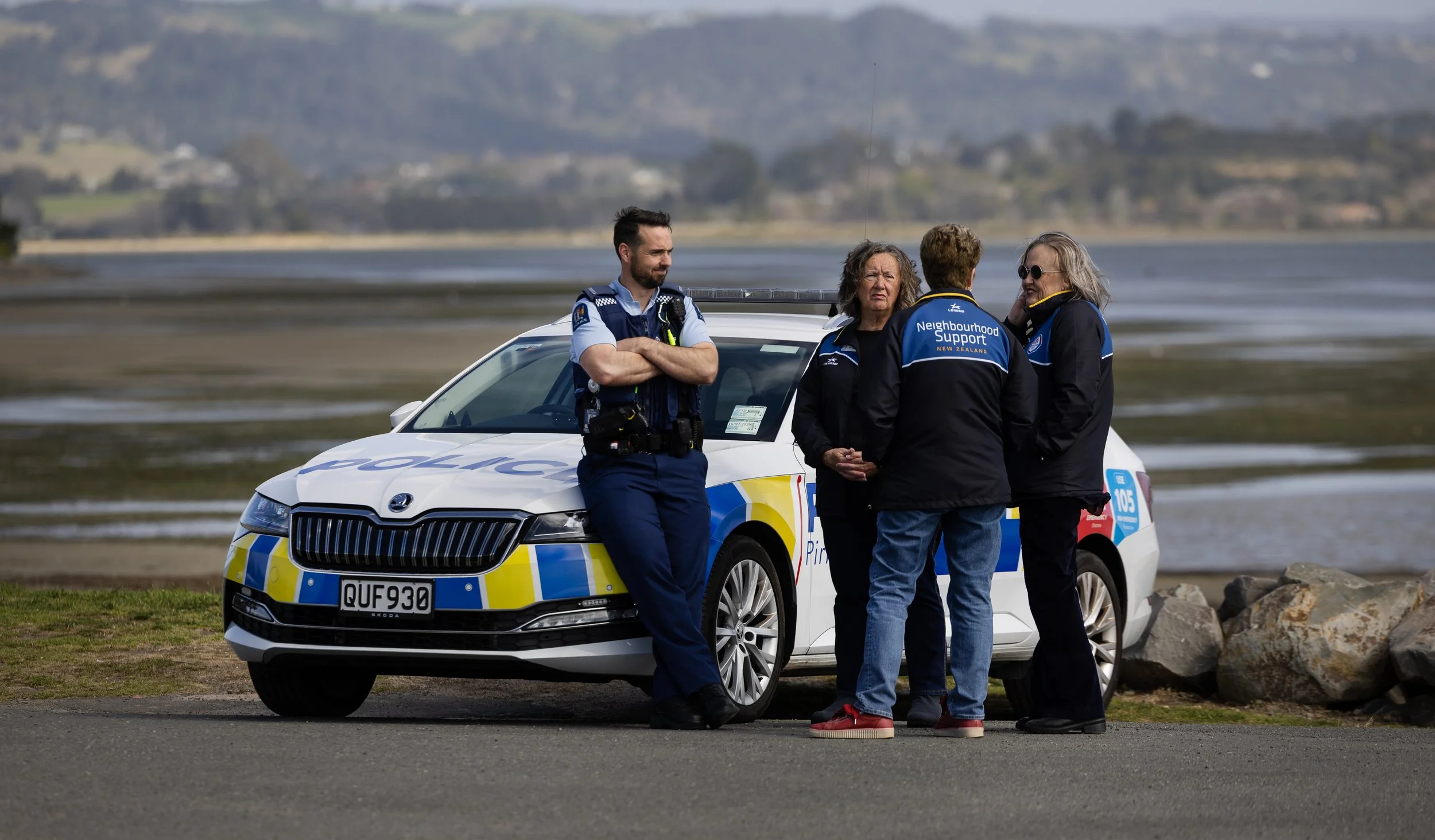
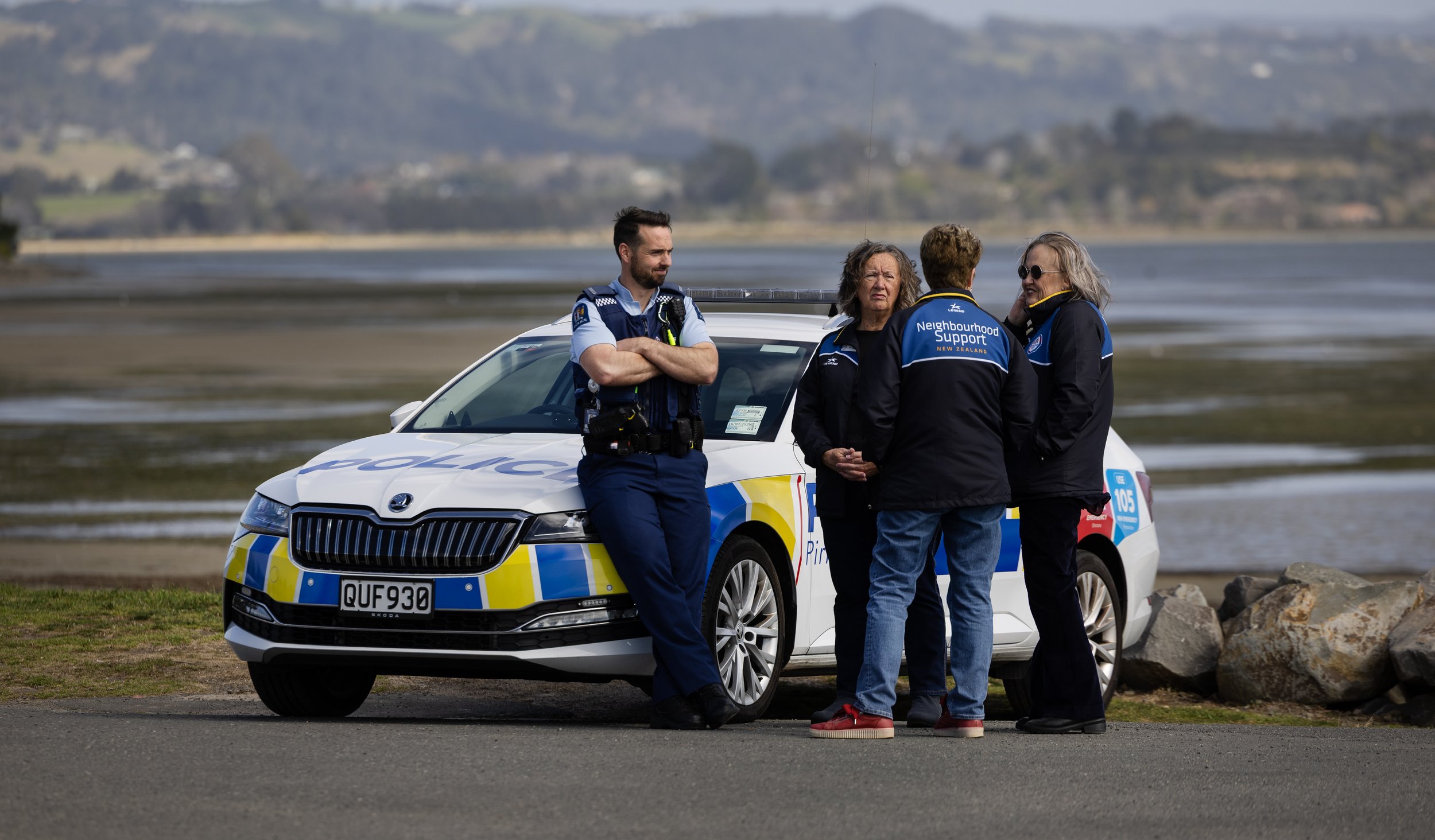
The local community constable and Fire and Emergency New Zealand often turn up alongside her at street meetings, which is how the model works.
“Although our key partnerships are with Police and FENZ, we like to work in the wider space of community safety,” Kathy explains. She’ll often invite Arron King, who works in community readiness and recovery for FENZ locally, to those gatherings. “He has a fancy title and job description, but he’s also a real bloke and a volunteer fireman in Pāpāmoa, and extremely knowledgeable about fire danger in the home and everywhere.”
Hato Hone St John are regulars too, running short 3 Steps for Life sessions in different suburbs. It’s an hour of teaching people to dial 111, do CPR and find the nearest defibrillator.
But all that’s by the by. The big question here is why did we stop knowing our neighbours in the first place? Kathy puts a lot of it down to time. “To survive, everyone needs to work, so Mum and Dad are juggling all the responsibilities, like work hours, school hours, sport and often ageing parents as well. There just isn’t enough time in the calendar.”
We also have a population that moves house on average every five-and-a-half years, chasing a job, a school zone or family. The long, slow process of getting to know a street barely gets started before the moving van turns up again.
Kathy sees loneliness creeping in, though she’s careful not to blame any one thing for it. Retirement villages, she points out, are both a symptom and a partial fix. They’re good for company, but they strip out the everyday variety of a normal street. It’s not just the big, one-off events that rebuild connection, she says. It’s the little things, like a wave in the driveway and someone who’ll take the bins out when you’re away.
This is the model behind Neighbourhood Support. If one person on a street is willing to put up their hand, the organisation helps them find a place to meet, puts an invitation together, does the mail drop and brings along whoever’s relevant, such as the community constable, a councillor or someone from Age Concern. Out of that first loud, happy meeting comes something practical to pursue, like bringing to the neighbourhood’s attention who’s vulnerable and might need checking on, who’s got a spare set of house keys, who has a trailer worth borrowing. Many groups end up swapping numbers and creating a WhatsApp group, so the connection outlasts the meeting.
“We often underestimate our influence,” says Kathy. “A smile and simply being present may seem insignificant in the moment, but for someone facing isolation or hardship, those small acts can provide hope and a sense of belonging that lasts for years.”
Her advice for anyone who doesn’t know their neighbours well is to “just take every opportunity to smile and say hi in the street. If a new neighbour moves in, pop over and introduce yourself. Offer help, especially when they need it.” There’s no committee or working bee required to start.
Multiply that across every street in Tauranga, and Kathy reckons the difference would be fewer disputes, better-supported elderly and disabled residents, and streets where, if something goes wrong, the first response comes from someone who already knows your name. And maybe still has your trailer. WBOPNS.ORG.NZ