
TRUE TO YOU
Early detection of bowel cancer is a passion project for Dr Clive Price.
Early detection of bowel cancer is a passion project for Dr Clive Price.
WORDS NICKY ADAMS | PHOTOS SALINA GALVAN
Whereas even mentioning bodily functions would have made my grandparents blush, today’s society is far more open and at ease with discussing matters of a personal nature. Which is why, along with general chatter about coffee prices or office politics, talk of the vagaries of bowel movements wouldn’t be unheard of among many friend groups. Rather than just casual chit-chat, these conversations are usually rooted in cause; we are undoubtedly far more aware of our personal well-being (find me someone who hasn’t upped their protein intake), and way more proactive when it comes to safeguarding our health (collagen smoothie anyone?). Despite all these attempts at better diet, fitness and education, the thought of cancer still lurks in the back of many minds.
When Dr Clive Price, a GP at the Pāpāmoa Tara Road Medical Centre, relocated from the UK to New Zealand, he was surprised to find that the age to qualify for the New Zealand government early detection programme is significantly higher here than both the UK and Australia, despite him being under 40, and self-testing annually with a FIT (Faecal Immunochemical Test), along with his dermatologist wife. The lack of privately purchased tests available shocked him.

“I’ve been a doctor for 12 years, a GP for the last eight years. Part of my training was in a hospice, and one of the things I noticed was the number of young people coming in with cancer. In a six-month placement, we had five or six under 40s come in for the last days of their life, and about three of those were bowel cancer.”
“It led me to think we’re doing things the wrong way round; we’re spending billions on treating things too late. That got my interest in proactive healthcare and screening.”
With the New Zealand public system favouring the 58-74 age bracket, Clive believes, “There’s a huge proportion of the population who could do with being screened, but it’s not available. Most medical guidelines recommend screening from the age of 45 or younger, if you’ve got risk factors”. With the screening age set at 58 in New Zealand, that’s 13 years where earlier detection could potentially make a meaningful difference.”
Seeing a huge gap in the market, Clive felt he needed to introduce this test privately in New Zealand. His research showed there are bowel cancer tests available here in pharmacies (FOB tests), but they use unreliable, outdated technology.
“They work by detecting microscopic bits of hemoglobin in poo, but they cannot distinguish between human hemoglobin and animal, so basically anyone who eats meat tests positive - a huge number of false positives, so they are really inaccurate.”
Conversely, a FIT does distinguish between animal and human hemoglobin. It’s designed to look for tiny traces of blood in your faeces that are too small to see with the naked eye, and which could be a sign of cancer. Made for ease of use, according to Clive; “They also use a much better analysing method, so rather than doing three separate samples, you need only one little poke (in the faeces). It can also distinguish where the blood is coming from, so the number of false positives is much less, and the sensitivity is much better. The studies I’ve looked at suggest that FIT testing, depending on the threshold, picks up to about 90 percent of tumours.”
In a health system that is not currently geared -or resourced - for the concerns of under 50s, GPs will struggle to offer testing to ‘the low risk but not no risk’. The population that would find the FIT test particularly helpful includes two groups: symptomatic patients,
whom a GP would be keen to rule out from bowel cancer, and asymptomatic individuals, whom a GP might want to screen proactively. While candidates would need to be over 18, growing evidence suggests that many people over the age of 45 would benefit from bowel cancer screening. In those with risk factors, or in certain ethnic groups such as Māori, emerging data indicates screening may need to begin earlier, potentially from around 35.
The decision to create the company TrueScreen was one that Clive and his business partner Richard Porter, both took extremely seriously. Richard was attracted to the venture for not only its core value, but also the “fundamental ease and accessibility” it offers to consumers.
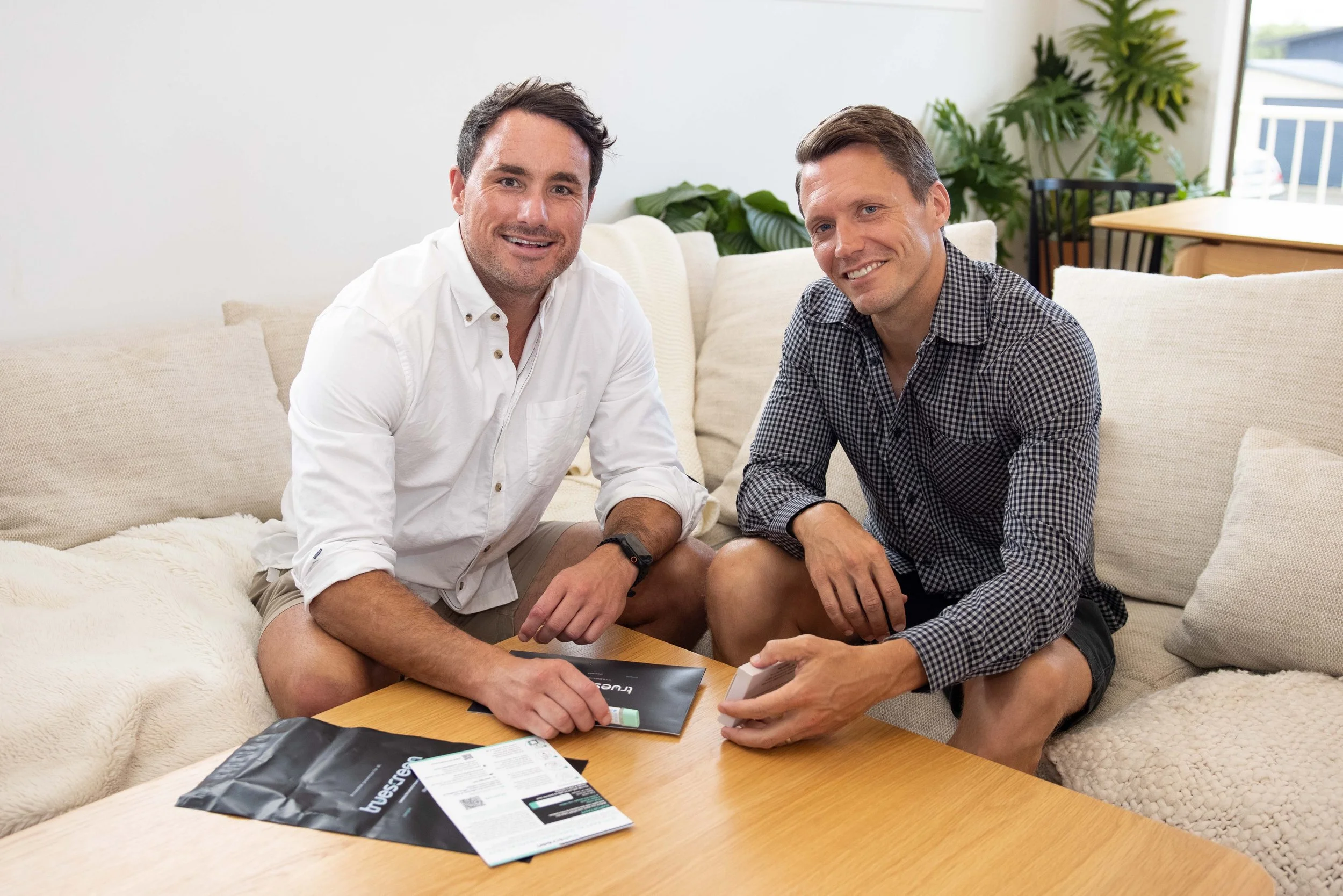
As a doctor, Clive reiterates, “I’m duty bound ethically, morally and professionally to make sure this is an evidence-based test - it’s safe and the gold standard.”
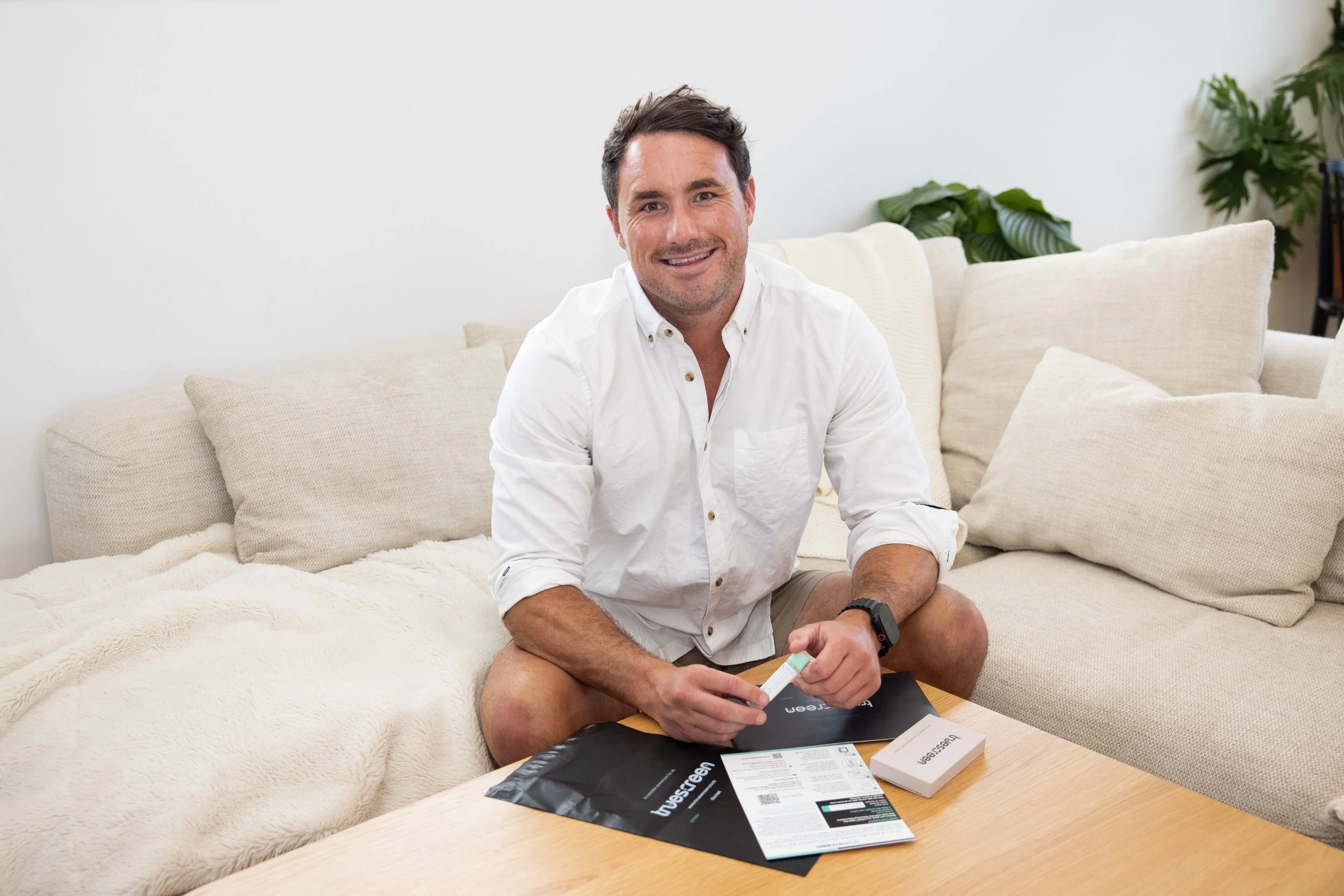
Working in partnership with New Zealand’s biggest laboratory (which also runs the government screening) means absolute reliability, accuracy and professionalism. As for the process, it couldn’t be simpler. Once the test has been ordered, it’s sent to the customer, who will then take their own sample. A return mailer is provided and keeps it safe, before being returned to the lab within a 14-day window. The results are confidentially accessed by Clive, who reviews them and then contacts the person being screened.
Clear evidence shows that bowel cancer is “the fastest growing cancer for under 50’s - it’s disproportionately shooting up”. However, Clive points out, “if bowel cancer is detected early, it is highly treatable and often curable.”
The idea of getting on board with a privately funded, annual screening programme is not one that will be unfamiliar to Kiwis; Mole Map, for example, is rolled out on this premise. And when it comes to something that could be life or death, wiggling a stick in a poo sample, in the comfort of your own home, feels like an incredibly low-level commitment. I, for one, will be signing up.
Truescreen FIT Tests are now available via the website.