
BUILDING FREEDOM
UNO’s new columnist, Mount financial adviser Adam Stewart, shares his grounded, practical approach to investing, retirement and financial freedom.
UNO’s new columnist, Mount financial adviser Adam Stewart, shares his grounded, practical approach to investing, retirement and financial freedom.
PHOTOS DEBORAH DE GRAAF
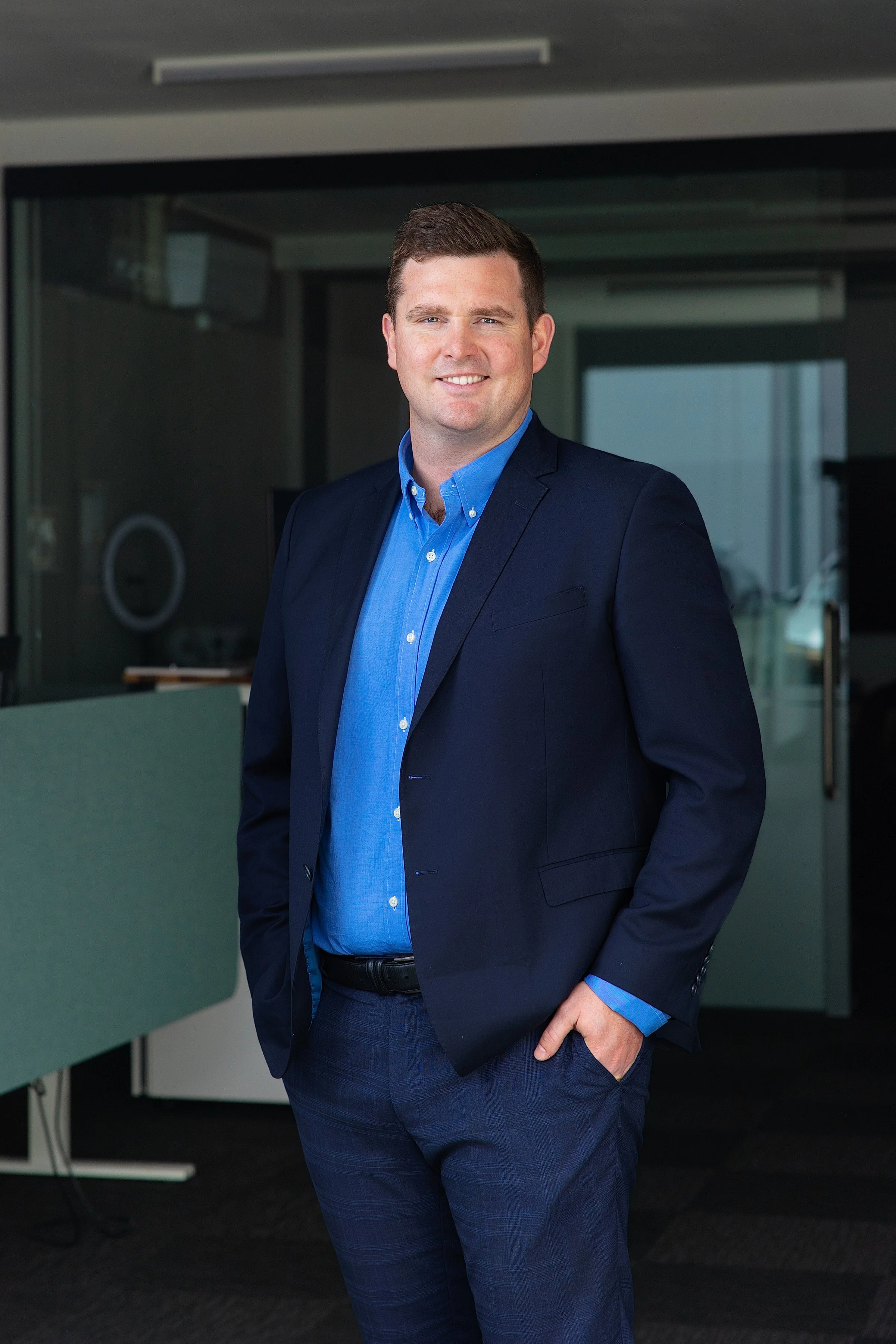
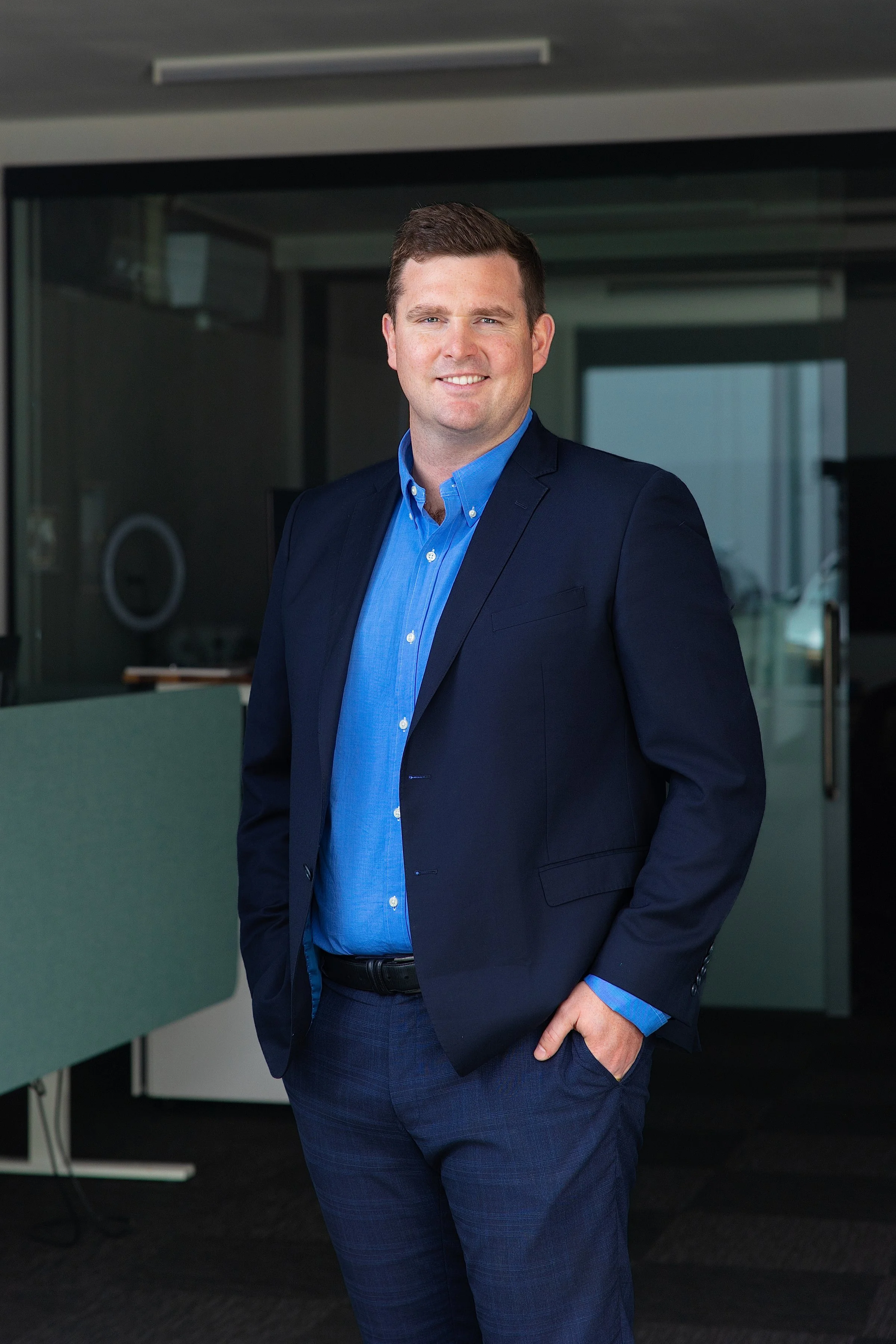
At 32, Compound Wealth founder Adam Stewart has already spent more than a decade immersed in the world of investing, KiwiSaver and financial planning. But despite managing more than $170 million in funds under advice and working with clients across New Zealand, his approach to wealth remains surprisingly grounded.
Raised on a dairy farm in Ashburton, Adam says growing up in a hardworking farming family shaped much of how he thinks about money and long-term security. “There’s no such thing as days off on a farm,” he says. “The cows still need milking on Christmas Day.”
His parents’ work ethic left a lasting impression. So too did the realities of farm ownership, with debt, weather dependence and the relentless pressure that can come with running a business tied so closely to the land.
“I saw a lot of toil from my parents,” he says. “I think that got me thinking about how I could do things in a smarter way.”
That curiosity eventually led him to study finance and commercial law at Victoria University in Wellington, where he landed a part-time role at a financial planning firm while still in his teens. It was there, while working on matters related to the relatively new KiwiSaver, that something clicked. “I got really passionate about KiwiSaver because I understood the power of compound interest.”
Like many people who eventually end up in finance, Adam says he was also drawn to the idea of independence. Reading Rich Dad, Poor Dad at a young age sparked an interest in financial freedom and business ownership, concepts that would later become central to both his career and personal philosophy.
After university, Adam worked for a government-appointed default KiwiSaver provider, eventually moving into a role in which he travelled the country advising financial advisers on investment products and KiwiSaver strategies. The experience exposed him to a huge range of financial businesses – the good, the bad and everything in between.
But it was conversations outside the office that inspired him to launch Compound Wealth. “I’d be at the rugby club or out socially and people would ask me what KiwiSaver fund they should be in,” he says. “I just assumed most people knew what they were doing financially, but they didn’t.”
What shocked him most was not a lack of intelligence, but a lack of guidance. “I was meeting CEOs, lawyers, accountants and people with two or three hundred thousand dollars sitting in the wrong fund.”
At just 24, Adam started Compound Wealth with the simple goal of helping ordinary New Zealanders make better long-term financial decisions. Initially, much of that work centred around KiwiSaver and moving clients into funds that better matched their goals and risk tolerance. Over time, however, the business evolved into retirement planning, investment strategy and helping clients create lives that feel financially secure.
Today, Adam’s typical client is approaching retirement or already retired, often with more than $1 million in investments, property or KiwiSaver assets. “A lot of people have worked extremely hard for decades, but they don’t actually know how to spend their money confidently,” he says.
It is a surprisingly common problem. Adam says many retirees remain overly conservative with their investments, worried they’ll run out of money. Others hold onto wealth purely out of fear.
“Too many people think they need to die with exactly the right amount left over,” he says. “But often they could afford to enjoy life a lot more.”
Instead of simply focusing on investment returns, Adam says much of his work now revolves around helping clients align their money with the lives they actually want to live. That might mean helping someone structure their finances so they can travel more in their 60s and 70s, give money to their children earlier, or feel comfortable spending what they’ve spent decades building.
“If you want to take the family to Fiji and pay for everyone because you can afford to do it, great,” he says. “If you want to help your kids get ahead while you’re still around to see the benefit of it, great.”
Adam’s philosophy around investing itself is notably measured. Rather than chasing hot stock tips or market timing, he advocates for low-cost diversified investing and long-term thinking.
“We’re not trying to pick the needle in the haystack,” he says. “We own the haystack.”
It’s advice he applies to his own life. Adam started Compound Wealth in his mid-20s, while living rent-free back in Ashburton and playing Heartland rugby. The early years were difficult. He admits earning trust as a young adviser came with “a lot of hard knocks”.
“People would think, ‘Who’s this 24-year-old advising me on my finances?’” he laughs.
Still, he kept showing up. Over time, the business grew steadily, helped in part by the digital shift brought on by COVID-19, which accelerated online financial advice across New Zealand.
Now based in Mount Maunganui with his wife and young family, Adam has built both the lifestyle and the business he once imagined for himself. He sponsors local rugby and tennis clubs, and works from a modern Mount office. He says maintaining balance remains important.
“I don’t want to build some huge corporate monster. I enjoy my lifestyle. I try to live the way I teach my clients to live.”
That may be the core philosophy underpinning both Adam Stewart and Compound Wealth. Financial planning is not really about money at all.
“Financial freedom,” he says, “is having the ability to do what you want, when you want, with the people you care about.” COMPOUNDWEALTH.CO.NZ

Consistent returns through uncertain times
In an era of economic volatility and market uncertainty, investment opportunities that provide consistent returns can be hard to come by.
SPONSORED

In an era of economic volatility and market uncertainty, investment opportunities that provide consistent returns can be hard to come by. Local company First Mortgage Trust (FMT) shares strategies that have managed to achieve this for more than 27 years.
With their conservative investment strategy and stringent lending requirements, FMT has not only weathered the storms but has also managed to consecutively increase its investment return rate over the past five quarters and is anticipating further increases.
“In our 27 years no FMT investor has ever lost a cent of capital, even during the GFC and, more recently, the Covid-19 pandemic,” says CEO Paul Bendall.
This accomplishment is a testament to FMT’s disciplined approach, their risk management strategy, the expertise of their team, their local property market knowledge and their commitment to the preservation of investor capital.
“We know these are uncertain times and people are cautious, especially when it comes to investing and deciding what to do with their nest egg and savings,” says Paul. “Living costs and inflation are high and this can be hard for savers. We understand this and that’s why we are pleased to have been able to deliver increased investment returns for the last five quarters, and because of our consistent investment returns and the peace of mind we provide we’ve seen many of our investors invest more with us and recommend us to their friends and family.”
How FMT works
Investors invest in either the First Mortgage Trust Group Investment
Fund or the First Mortgage PIE Trust, then FMT lends the money out to Kiwis seeking property finance. FMT differs from some other investments as both funds are trusts. The trust structure means each fund is supervised by an independent supervisor. The supervisor plays an integral role in the governance of FMT and they have oversight of lending decisions.
“This gives our investors confidence that their money is being managed
well,“ says Paul. “The money our clients invest with us helps New Zealanders achieve their property related goals. It builds homes, businesses and it helps shape communities. In return we are able to provide a stable return to our investors to help them achieve their investment goals.”
Increased investment return rate
FMT has showcased its expertise in wealth protection and generation by progressively increasing its investment return rate. Their March 2023 quarterly rate was a pre-tax return rate of 6.61 percent (annualised), which was well received by investors.
Past performance is not a reliable indicator of future performance.
First Mortgage Managers Limited, the manager of the First Mortgage Trust Group Investment Fund and the First Mortgage PIE Trust, is licensed under the Financial Markets Conduct Act 2013 as a manager of registered schemes and is not a registered bank under the Banking (Prudential Supervision) Act 1989. Professional investment advice should be taken before making an investment.
Product Disclosure Statements are available at fmt.co.nz

The big squeeze
Are rising interest rates and low capitalisation rates making you nervous? Owen Cooney from OC Consulting advises investors on how to withstand “yield squeeze”.
Are rising interest rates and low capitalisation rates making you nervous?
Owen Cooney from OC Consulting advises investors on how to withstand “yield squeeze”.
Photo Jahl Marshall

Commercial property has been a passion of mine for decades, but the economic environment we are all accustomed to operating in is changing.
For as long as I can remember, there has been a differential between the interest rate paid on mortgage debt and the yield (or capitalisation rate) received from a property. However, with interest rates now rising, the cost of debt will soon be similar to, if not greater, than the capitalisation rates a commercial property can reasonably generate.
In recent years it has been common to use debt to increase yield to an investor because that debt was so cheap. But thanks to inflationary pressures and rising interest rates, investor yields are being squeezed – and will continue to be squeezed until the market adjusts.
These comments are, of course, a generalisation. There are always markets where some purchasers will happily accept a very low capitalisation rate for a particular property. It’s also worth pointing out that investors who don’t need to take on debt to purchase a commercial property will not feel that same squeeze!
But the investor collectives we help set up at OC Consultancy Ltd do use non-recourse debt and will continue to do so. Instead of leveraging a property at 45 percent to 50 percent of LVR, we now intend to leverage at around 30 percent to ensure the smoothest path forward as New Zealand’s Reserve Bank battles to bring inflation back under control.
In our post-pandemic climate, there’s no escaping yield squeeze for the foreseeable future. But our message to investors is this – yields are only one factor that should be considered when making an investment decision.
You may be familiar with the advice of Warren Buffett regarding investment as a long-term game. Buffett famously said, “If you aren’t willing to own a stock for 10 years, don’t even think about owning it for 10 minutes.” Unfortunately, in our recent bull market, this message has been forgotten by many.
In the commercial property context, our focus is on securing long-term leases with good quality tenants and covenants. This, coupled with robust rent review mechanisms, is the best way to protect your investment from the effects of inflation and yield squeeze.
To be a successful property investor, you must look beyond what’s happening right now and see what is most likely to occur in the future.
We are confident that good commercial property will stand the test of time and be resilient. Just like any other investment, you must be prepared to weather the ups and downs of each economic cycle and keep your eyes firmly on the horizon of what’s to come.
The right building, with the right tenant and the right lease arrangements in place, will always be profitable in the long run.

Helping kiwis supercharge their wealth
Ask Kristen Lunman when you should start investing, and she’ll tell you, today. Thanks to Hatch, the digital investing platform she co-founded, the world’s share markets are now more accessible to Kiwis than ever.
Ask Kristen Lunman when you should start investing, and she’ll tell you, today. Thanks to Hatch, the digital investing platform she co-founded, the world’s share markets are now more accessible to Kiwis than ever.

What does wealth mean to Kiwis? Lunman says that for her customers, it means having a full life that balances travel, work, family, friends, and health. Lunman saw limited options for ambitious Kiwis to grow their wealth and, as a woman balancing career, children and life, she felt the pain. It motivated her to start Hatch, which delivers a straightforward way for people like her to get their money working as hard as they do to earn it in the first place.
“We launched Hatch on a mission to help Kiwis supercharge their wealth and build good money habits,” says Lunman. “Term deposits and savings are no longer attractive options to grow wealth thanks to low interest rates and inflation.” With Hatch, Kiwis can now own shares in over 3500 US-listed companies and funds on the intuitive and straightforward platform.
“Property’s great, but you need a large amount of capital to get involved, and then you’re locked in. Building a business is another way to grow wealth but making a success of it is hard work and high risk, and again, once you’re in, you’re in.”
Owning shares in world-class companies and funds has always been an opportunity reserved for the financial elite, something that never sat right with Lunman. She saw a way to offer a fresh new approach to self-directed investing that’s designed for newbies to experts.
“We’ve built a simple, straightforward experience to help you take control, wherever you’re at. With Hatch, it’s not hard to back the pioneers that are shaping our future and benefiting from their success. From Netflix to Zoom, Tesla and Vanguard, when you approach investing like you’re backing a business or industry, it breaks down the mental barriers to getting started.”
It takes about three minutes to open a Hatch account. After transferring money into your account, the next morning, you’re ready to buy shares in companies and funds in the world’s largest and most liquid share market. It’s that simple.
“We want people to be shareholders in businesses because it’s a tried and tested way to meet financial goals over the long term. We’re not about trading stocks on a whim and trying to predict fluctuations in the markets. We want to help Kiwis build sustainable wealth over time, through great financial habits.”
For Lunman, the best investors are mindful investors. This means considering why you’re investing in the first place. This level of self-awareness helps you stay calm and make smarter choices. “Being mindful means you don’t panic when your shares fall in value. There are always going to be ups and downs in share prices, but over time, the highs in the markets should outweigh the lows.”
As part of Kiwi Group Holdings alongside Kiwibank and Kiwi Wealth, Hatch has grown and benefited from the backing and wisdom of one of New Zealand’s most trusted financial names whilst staying completely autonomous. And the Kiwi family has benefitted from a fresh, innovative new brand. Win-win.
Buying a slice of a company or a pioneering industry like fake meat or cannabis and watching it grow and shape our future is exciting. Shareholders in the likes of Apple, Tesla, Beyond Meat and clean energy companies are looking ahead and hoping to benefit from megatrends that are changing the way we live. Why not join 65,000 other Kiwis and to do the same?