
INTO UNCHARTED WATERS
While making Aotearoa’s coastline and seabeds safer for all, Discovery Marine has also taken a novel and highly commendable approach to encouraging young people into the industry. Company CEO Declan Stubbing explains all to UNO.
While making Aotearoa’s coastline and seabeds safer for all, Discovery Marine has also taken a novel and highly commendable approach to encouraging young people into the industry. Company CEO Declan Stubbing explains all to UNO.
PHOTOS KATIE COX + SUPPLIED
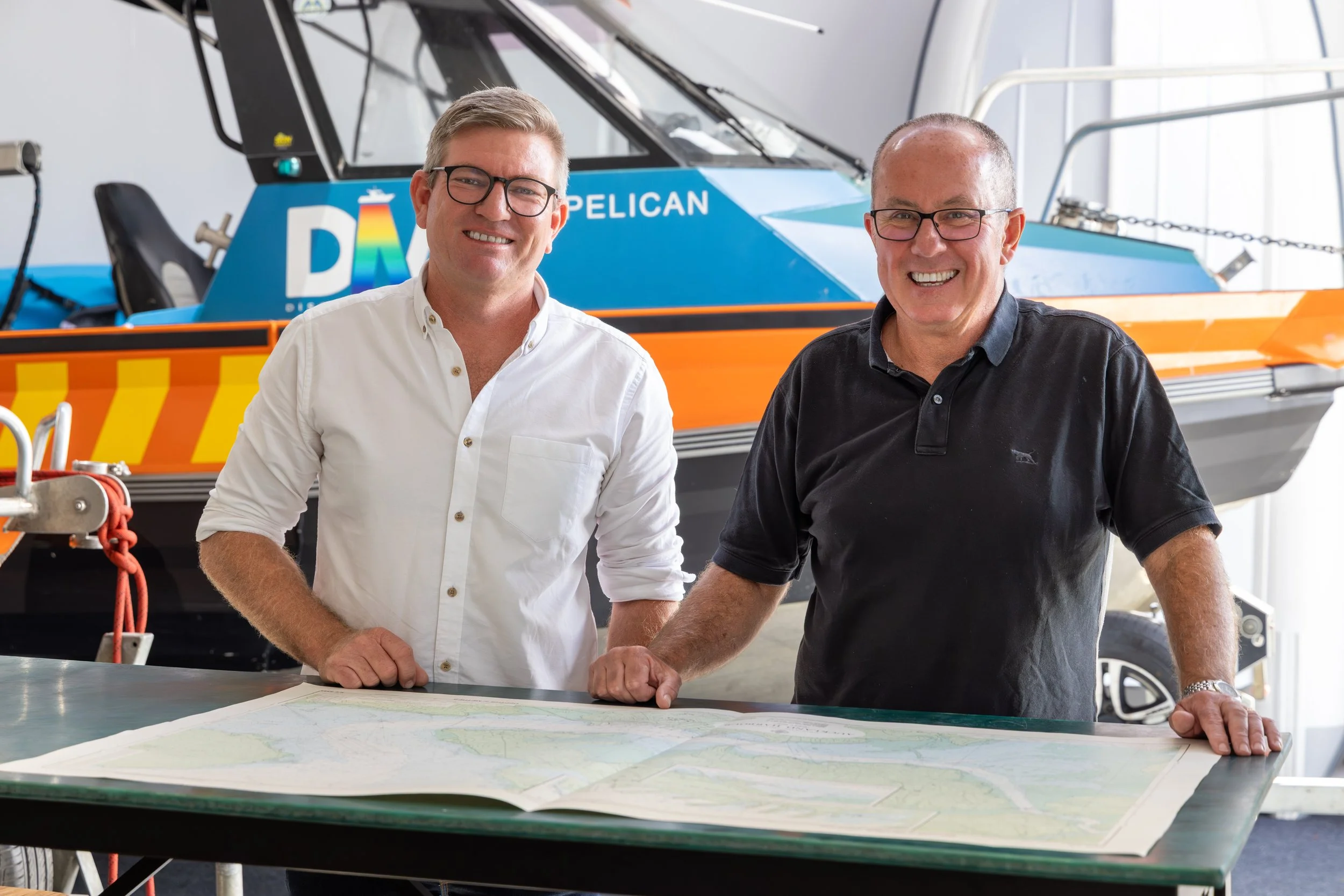
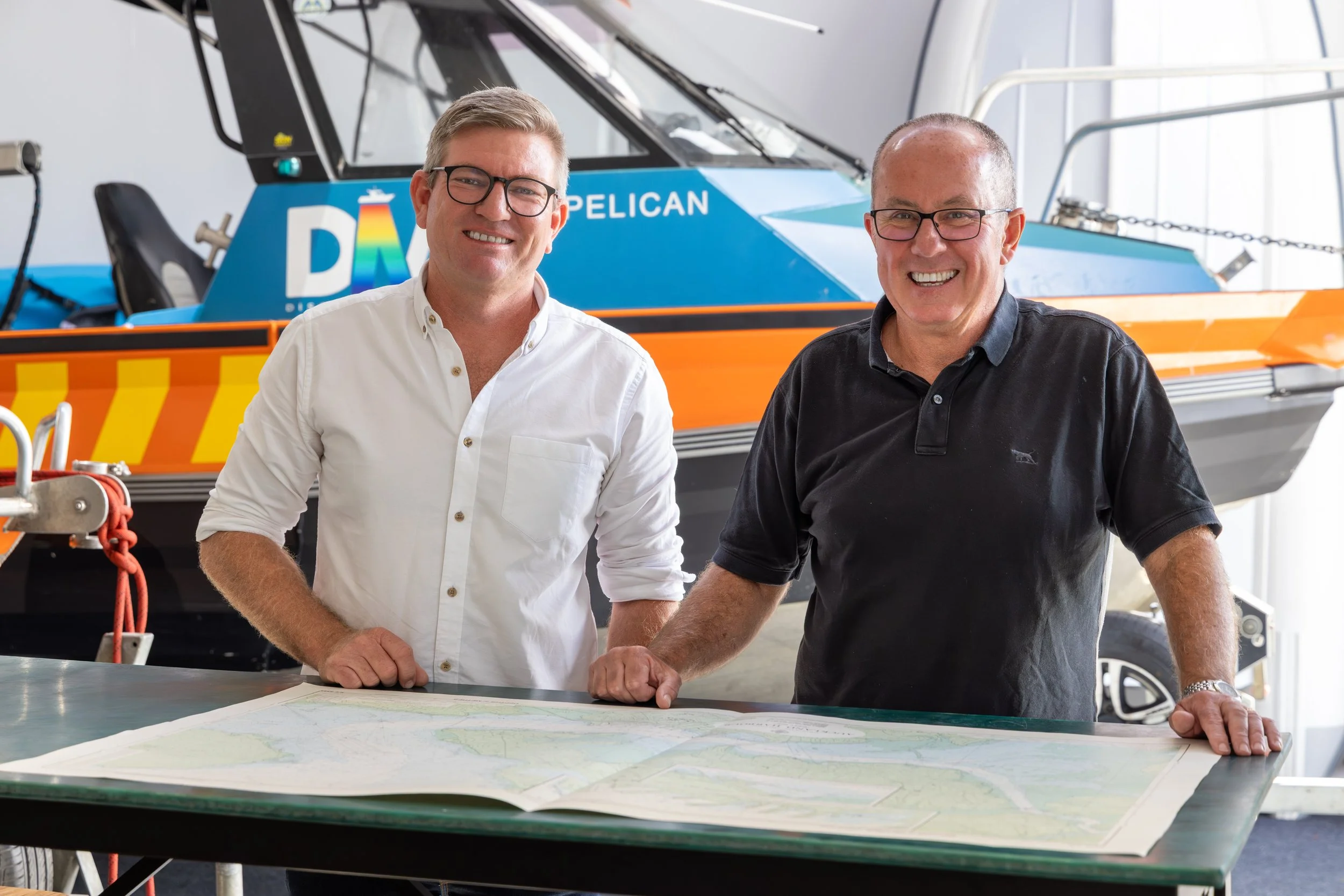
CEO Declan Stubbing and CCO Kevin Smith.
It’s hard to believe, but as a species, we’ve mapped the surfaces of the moon and Mars in higher resolution than much of our own seafloor. It’s estimated that around 75 percent of the world’s seabed remains a mystery.
But that is changing. Discovery Marine (DML), a company based in Mount Maunganui, is charting and surveying the seabed not just in Aotearoa, but also in Australia and the Pacific, in great detail, using high-definition 3D technology.
“There are a few uncharted areas remaining on the New Zealand coastline,” Declan Subbing says. “The Wairarapa coast is one area that is largely unsurveyed, and we currently have a team down in Moeraki, near Otago mapping an uncharted area.”
Declan is the CEO of DML, whose core business is hydrographic surveying and mapping the seafloor. To perform this technical and demanding work, their boats are equipped with state-of-the-art sonar systems that produce 3D data. This data accurately paints a picture of the seafloor, right down to the pebble.
“It essentially visualises the whole seabed,” Declan explains. “We’re able to make sure we’ve got every rock, every pebble, positioned and that everything is mapped accurately.”
This is important information for a range of industries. Part of their work is updating the nautical charts for the New Zealand Hydrographic Authority at Land Information New Zealand. These charts are relied upon by various seafaring businesses. There are some areas that were surveyed over 50 years ago using equipment that Declan describes as “similar to a fish finder”.
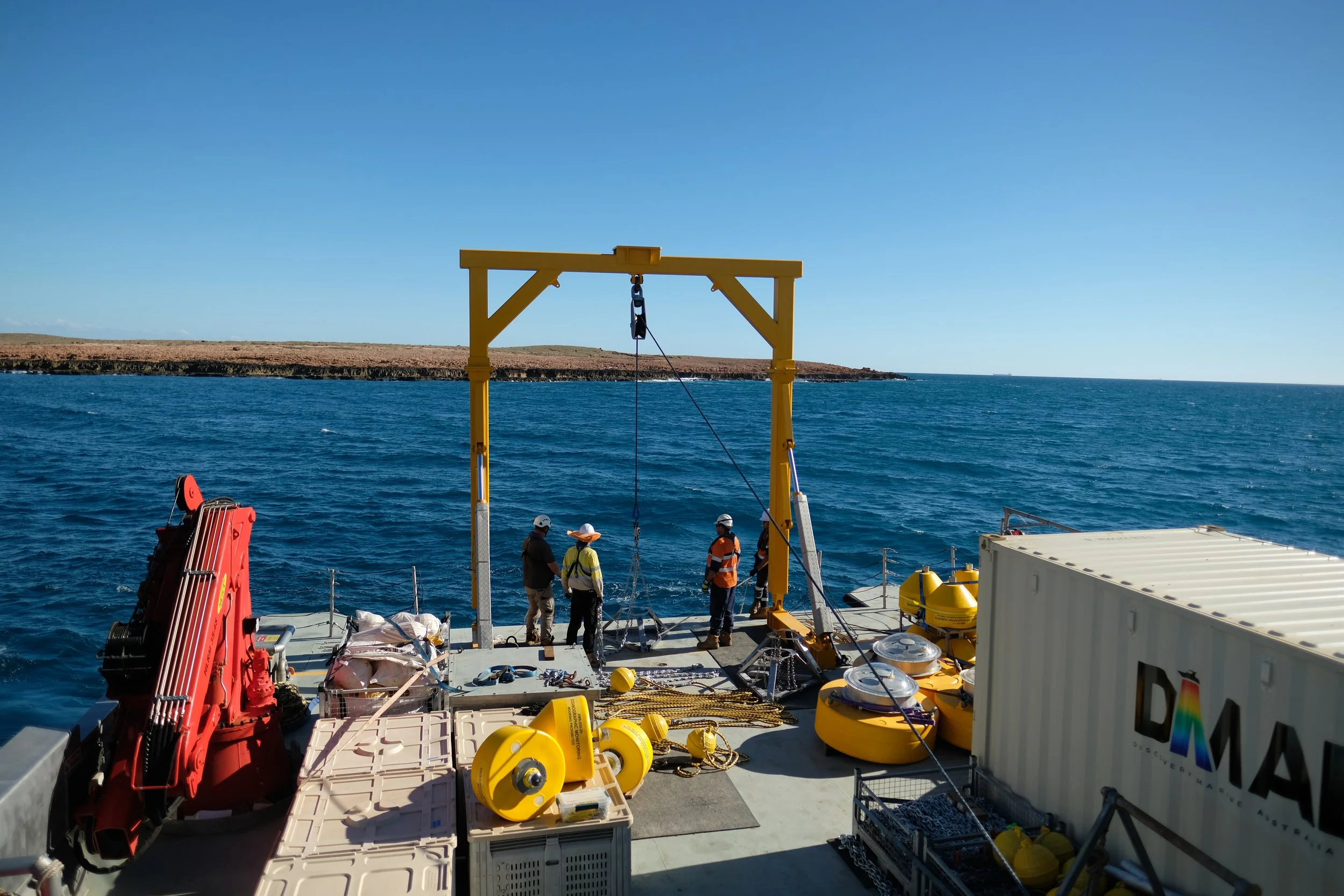
The team deploying hydrographic equipment in Western Australia.
“We’re tasked with surveying the high-risk areas where there's a lot of shipping traffic, using our modern 3D multi-beam echo sounders to update those charts,” Declan says. “There are changes to the coastline and rocks or other hazards that might have been missed. That does happen occasionally around New Zealand’s coastline.”
DML is also busy in and around our ports, monitoring the impact of dredging, tracking sandwaves which migrate up and down the harbour, and providing data that ensures critical clearance levels for the massive container ships that visit are maintained.
DML's work gives the ports more confidence on where and when it’s safe to navigate ships.
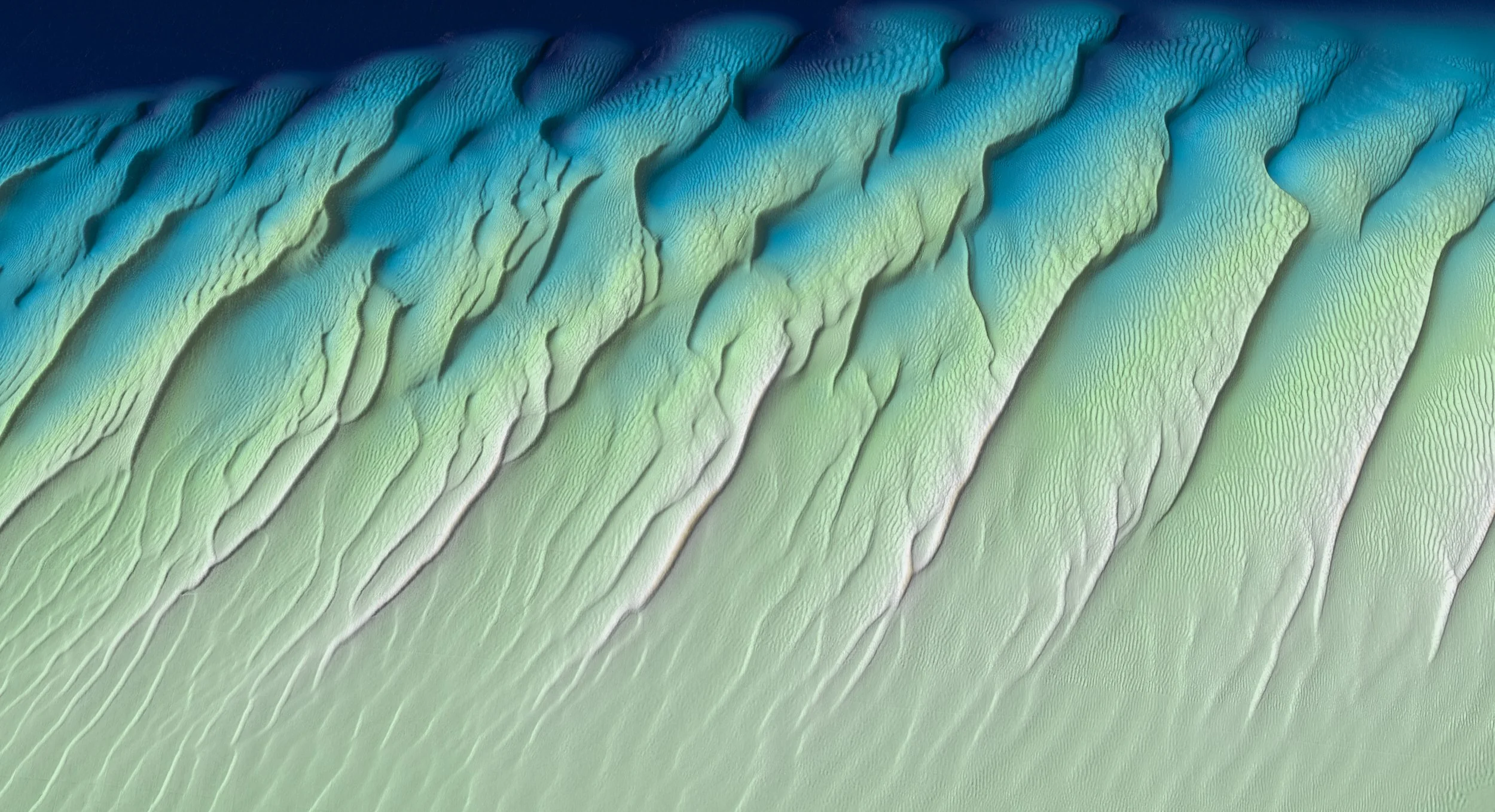
Sand waves mapped using 3D technology.
“We survey the harbour seabed in 3D, which gets turned into navigation products for pilots,” he adds.
Declan studied hydrography, the name given to the science of underwater surveying at University of Otago.
Shortly before graduating, Greg Cox, the founder of DML, got in touch with the School of Surveying to see if anyone there was interested in a job in hydrography. Declan was keen and became the company’s very first employee. The team now comprises 16.
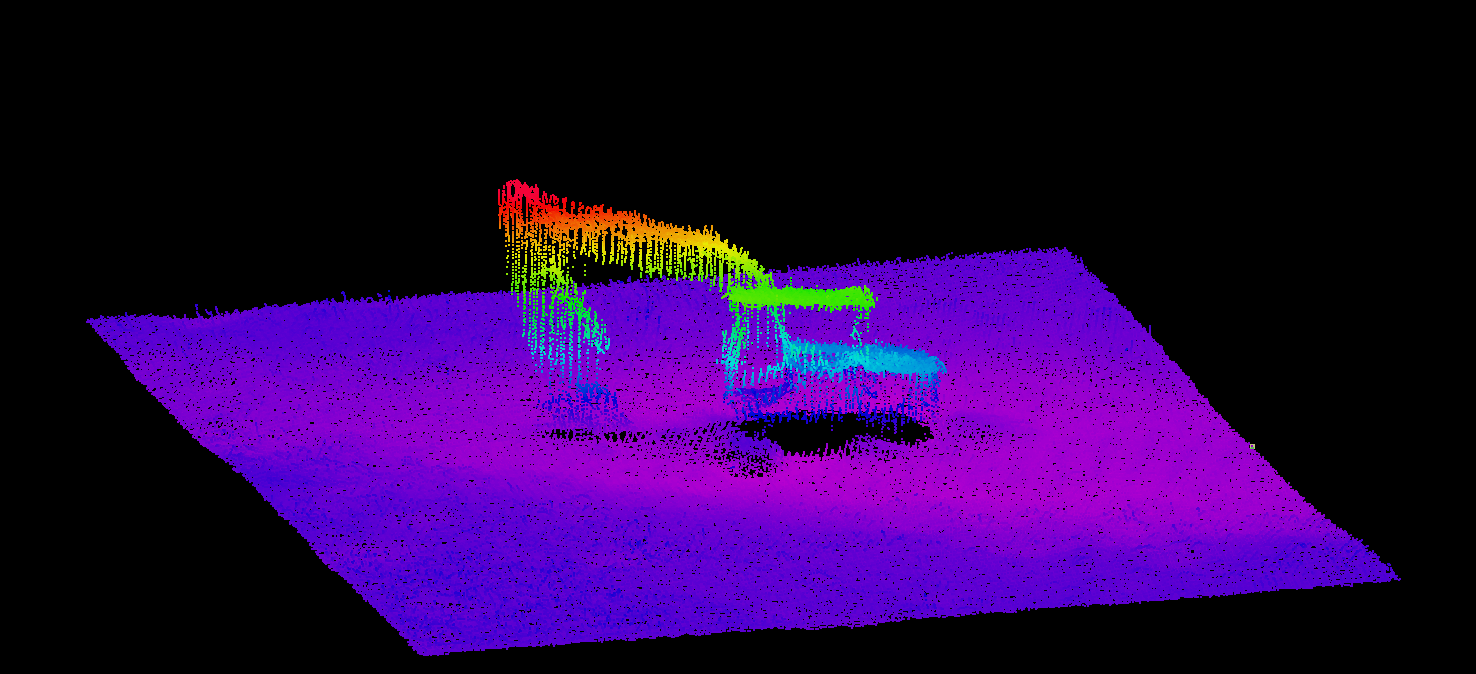
Excavator lost at sea mapped using 3D technology.
DML faces a number of challenges when recruiting, because of the specialist skills required and graduates being lured overseas. Declan says they identified this as a “risk to the business growing” five years ago. To tackle the problem, they came up with an innovative solution.
“We thought ‘How are we going to be able to encourage people into hydrography?’” He says. “That’s how we came up with the concept of offering a scholarship at the School of Surveying at Otago University.”
With many of their current staff having attended the university, it was a solution that held great appeal.
“We’ve got a really strong connection there,” Declan smiles. “I really like the idea of being able to give back to the institution that gave me a lot.”
Their scholarship covers full course fees for a final year surveying student who is undertaking research connected to hydrography. It also offers them support with their research, an internship at DML, exposure to the industry and opportunities to attend conferences with the DML team. A true kick start into the industry.
Their commitment doesn’t stop there. Employees at DML are encouraged to continue developing and gain certification within the industry.
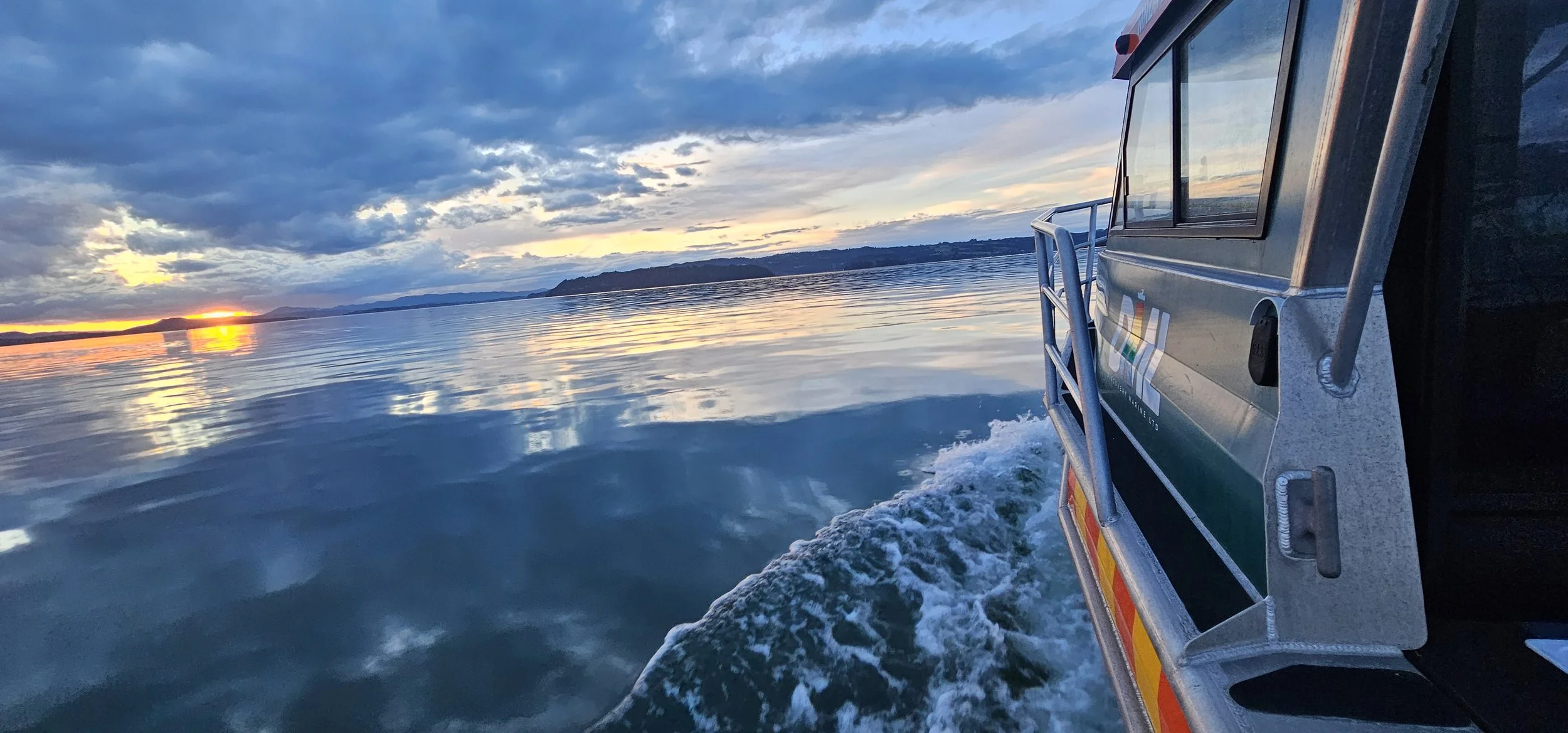
Early morning hydrographic survey operations.
“We really push the certification angle within our business. We like the idea that you’re always working towards something. It keeps people motivated and it’s great when someone’s awarded a new certification. It’s a real reason to celebrate because it's a recognition of the hard work they’ve put in.”
Just across the ditch, demand for certified hydrographic surveyors is exploding with the Government committing to a 10-year programme of nautical charting work, to which DML was appointed to a panel of suppliers.
He says it’s “enormously satisfying” work, and would encourage people to consider it as a career. “You see where your effort has gone. At the end of the day, you know you’ve contributed to improving coastal navigation and making our coastal communities safer.”
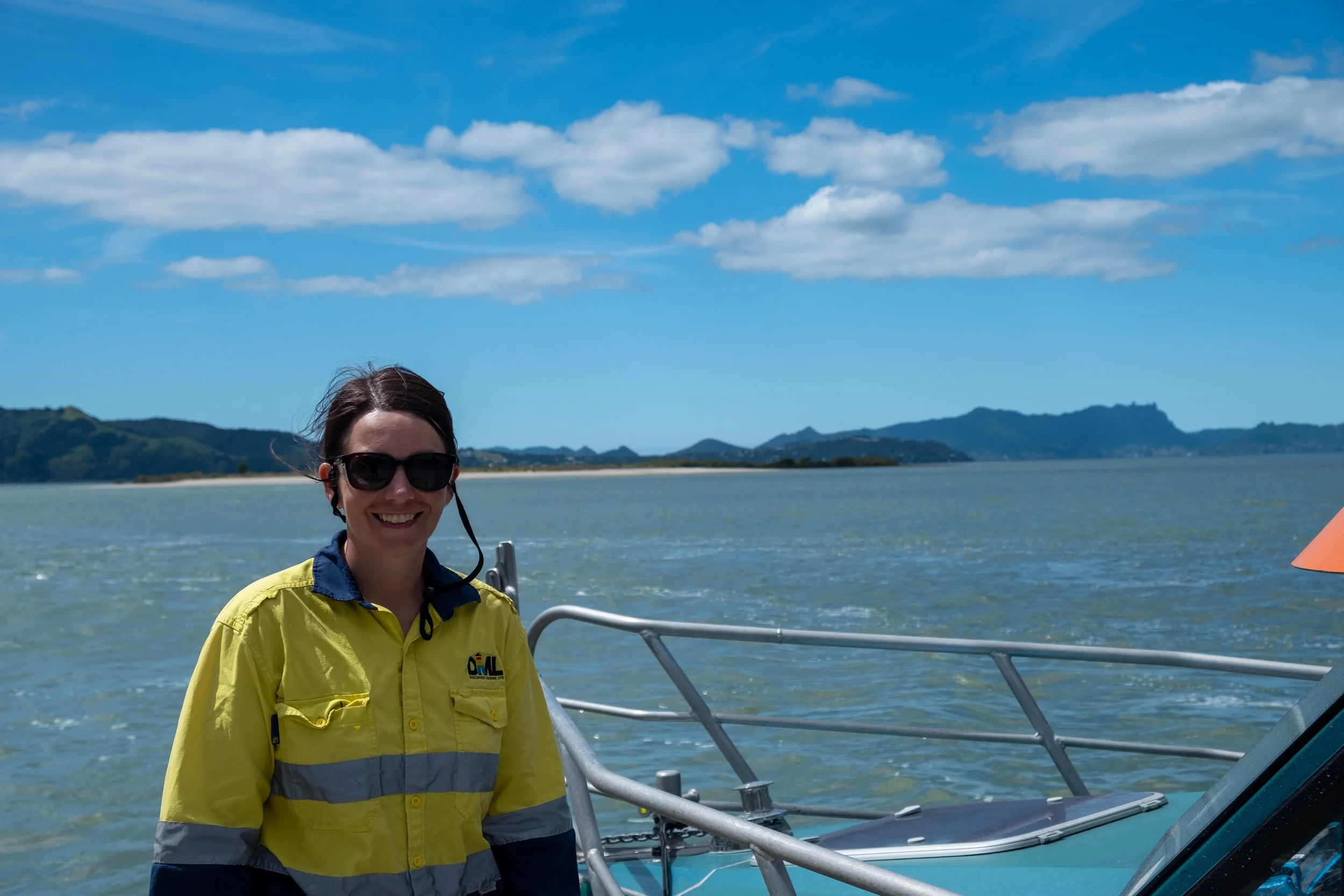
Hydrographic surveying is Kate’s ticket to the world
SEA OF POSSIBILITIES
Kate Downes, senior hydrographic surveyor at DML, swaps land for ocean depths and discovers a world of adventure.
With her interest in maths and geography, Kate Downes had been drawn to surveying as a career. But when she learned about hydrographic surveying, her plans quickly changed.
“I went along to an open day at Otago University, where they talked about surveying and explained it. I was like, ‘Yep, this is definitely what I want to do’. Then they talked about hydrographic surveying specifically, which hadn’t been well-advertised, and my ears pricked up. It sounded exciting. My family had a boat, so I was familiar with the water. It was right up my alley.”
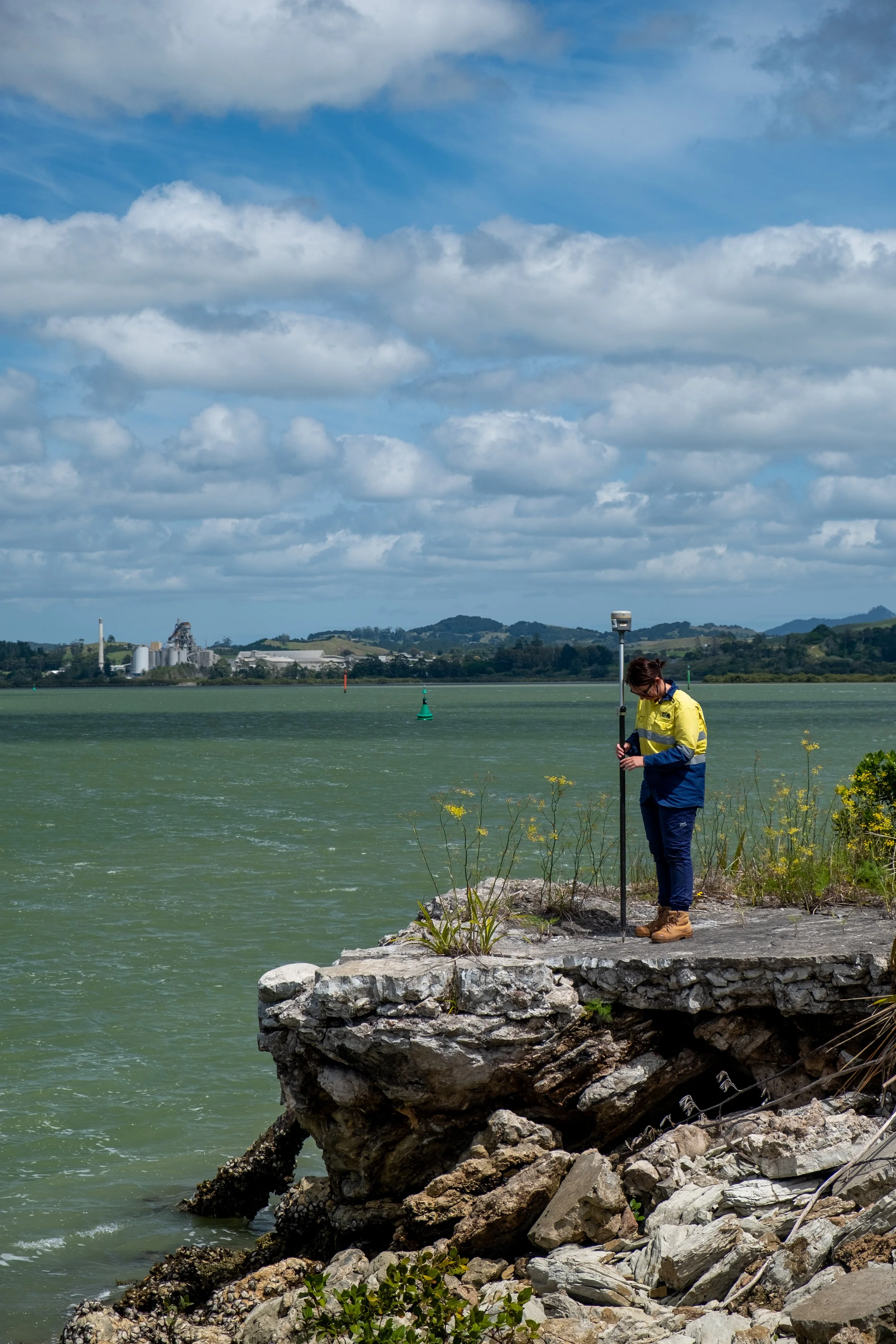
Realising hydrographic surveying could be a ticket to see the world, Kate dived in. Upon graduating, she moved to Perth to work for one of the biggest survey companies in the world. During her five-year stint, she learned as much as she could from those she worked with and “doubled down on travelling”. She’d be rostered offshore for six weeks at a time, and then have six weeks off to do whatever she wanted. Which was seeing the world.
Eventually, she decided she wanted to come back home and be closer to family.
Since joining DML, she has excelled and is one of only six women across Australasia to earn the highest level of certification in hydrography. Now, as a senior member of the DML team, she leads their major nautical charting projects for the New Zealand and Australian Governments.
“It’s always been about seeing new places. That’s one of the draw cards,” she smiles. “We’re in remote places, seeing cool things. We see whales offshore all the time. Stuff like that I’m really interested in.”
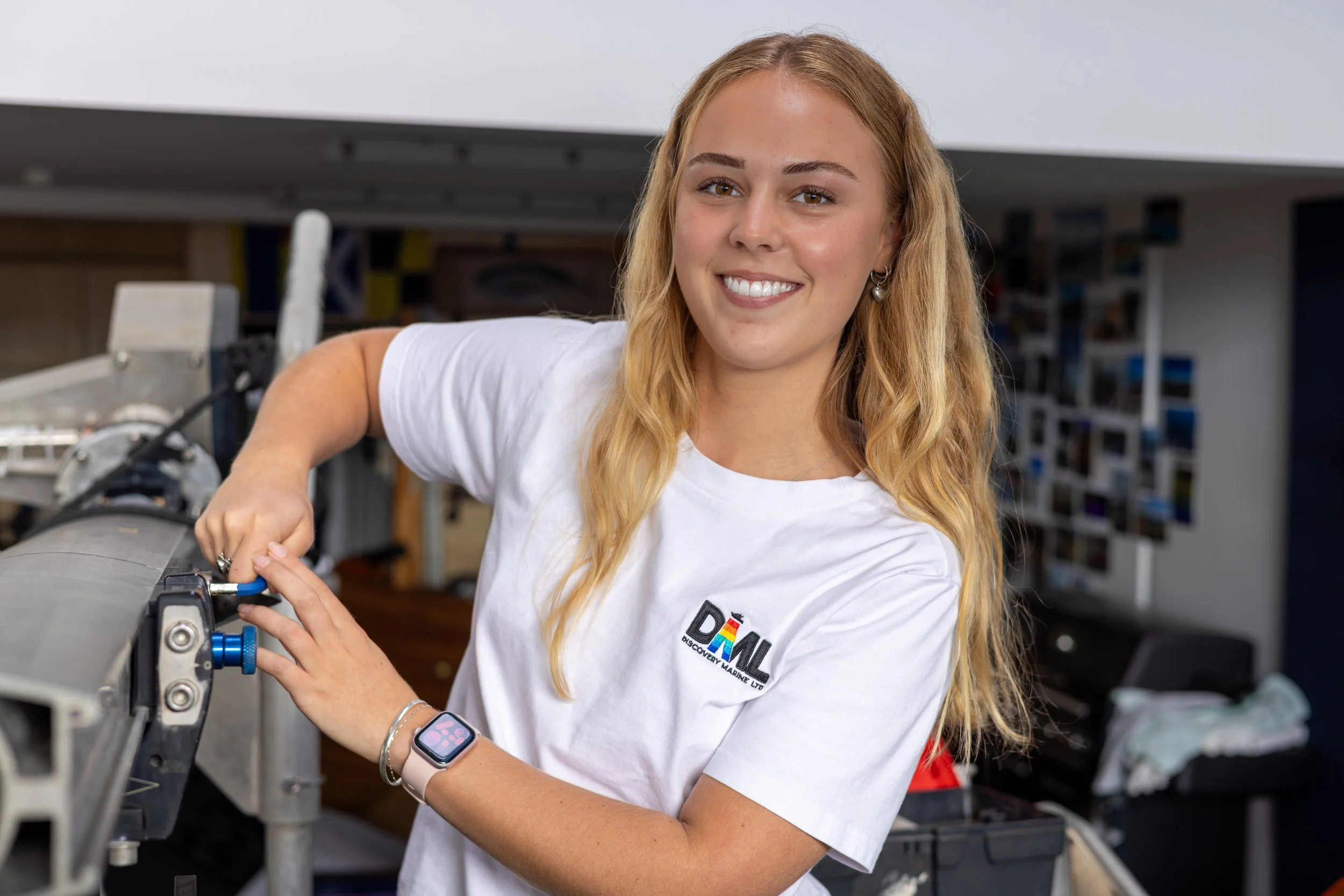
Georgia is chasing her dreams without compromising her lifestyle.
MAKING WAVES
Charting hidden coastlines, Georgia Pendred, graduate hydrographic surveyor at DML, discovers adventure and a strong sense of purpose.
It’s a rare day off the boat for Georgia Pendred when UNO calls.
“At the moment, I’m in Dunedin, Moeraki specifically, for a big three-month-ish, maybe longer job we're doing,” she says. “We towed one of our biggest boats down from the Mount, and each day we head out and do our survey.”
It’s not a bad way to spend a summer’s day. Even today, the weather is “a bit stinky”, meaning the team is staying on land. The team rotates out every two weeks, so she’ll be on the water for another week before returning to the office for two weeks, creating the perfect field to office balance.
“Travelling is a big perk, and it’s really fun,” she enthuses. “You get to see some cool locations and remote spots that not many other people would see. Parts of the Moeraki coastline, for example, hasn't been charted before.”
A Tauranga native, Georgia grew up around the water. Her family had a little boat, and they’d go out to Matakana Island for a BBQ or go biscuiting on the lakes. Even still, she didn’t realise her career would see her oceanbound. Instead, her focus was on land.
“I wanted to do environmental management. I love the sustainability side of things and protecting our earth. That's what led me to a Bachelor of Surveying at Otago University,” she explains. “Hydrographic surveying popped up as a paper that you could take as an elective. The lecturer, Emily Tidey, an industry role model, was so passionate about it and really sold it to me. I realised it was still the environment and still looking after our planet. Only on water, not land.”
She took the paper and “fell in love” with the subject. After that, she focused all her energy on hydrographic surveying.
She says it’s an ideal career for people who love the outdoors, because “you’re doing fieldwork all the time.” It would also suit people who enjoy problem-solving, as things pop up every day that need troubleshooting.
As for surveying being a math-heavy career? Georgia is happy to bust that myth.
“I suck at math,” she laughs. “I dropped out in year 11. I love literacy, history, classics and all that stuff. When deciding to do surveying, I knew math was going to be a challenge.”
She says that while the degree does get math-heavy, if you’re determined, you can get through it.
“I put my mind to it, and put my head down. I asked a lot of questions, and because we’re a tight-knit group at the School of Surveying, I had a lot of support from my lecturers and classmates. If you’re motivated, definitely give it a go,” she says. “Don’t be afraid of surveying or scared off because everyone says that it’s math-heavy.
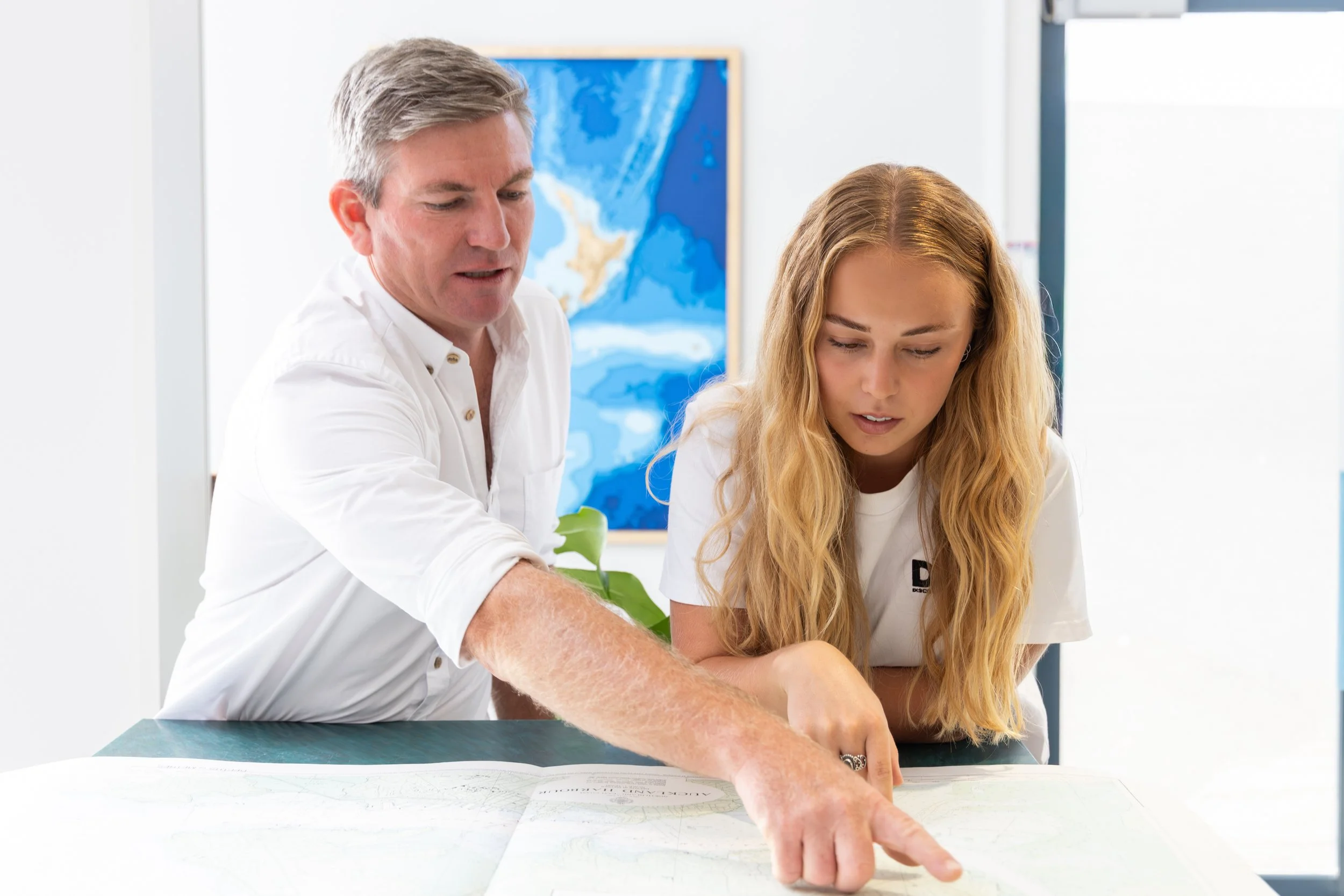
I managed to get through it, and actually came out the other end with the math papers being my highest subjects!”
While at university, Georgia was awarded the DML scholarship for her final year where she completed an Honors research project. This enabled her to gain insight into the industry and complete an internship before accepting a graduate role at DML.
She’s already taking advantage of the opportunities to progress towards certification. “I’m starting to chip away at that,” she says.
Talking with her, it’s clear how passionate she is about her work, and the impact it has on the environment. She’d love to see more women taking it up.
“There aren’t many women in surveying in general, and then it gets even more niche when you go into hydro,” she says. “But it’s definitely changing, and DML is representing that really well. It's really cool to know we’re part of a new generation that's changing things. I'd like to keep that going. DMLSURVEYS.CO.NZ