
BUILDING THE WAY
As more women step into trades and leadership roles, Aotearoa’s construction industry is changing – one workplace, apprentice and advocate at a time.
As more women step into trades and leadership roles, Aotearoa’s construction industry is changing – one workplace, apprentice and advocate at a time.
WORDS NICKY ADAMS PHOTOS ALAN GIBSON + SUPPLIED
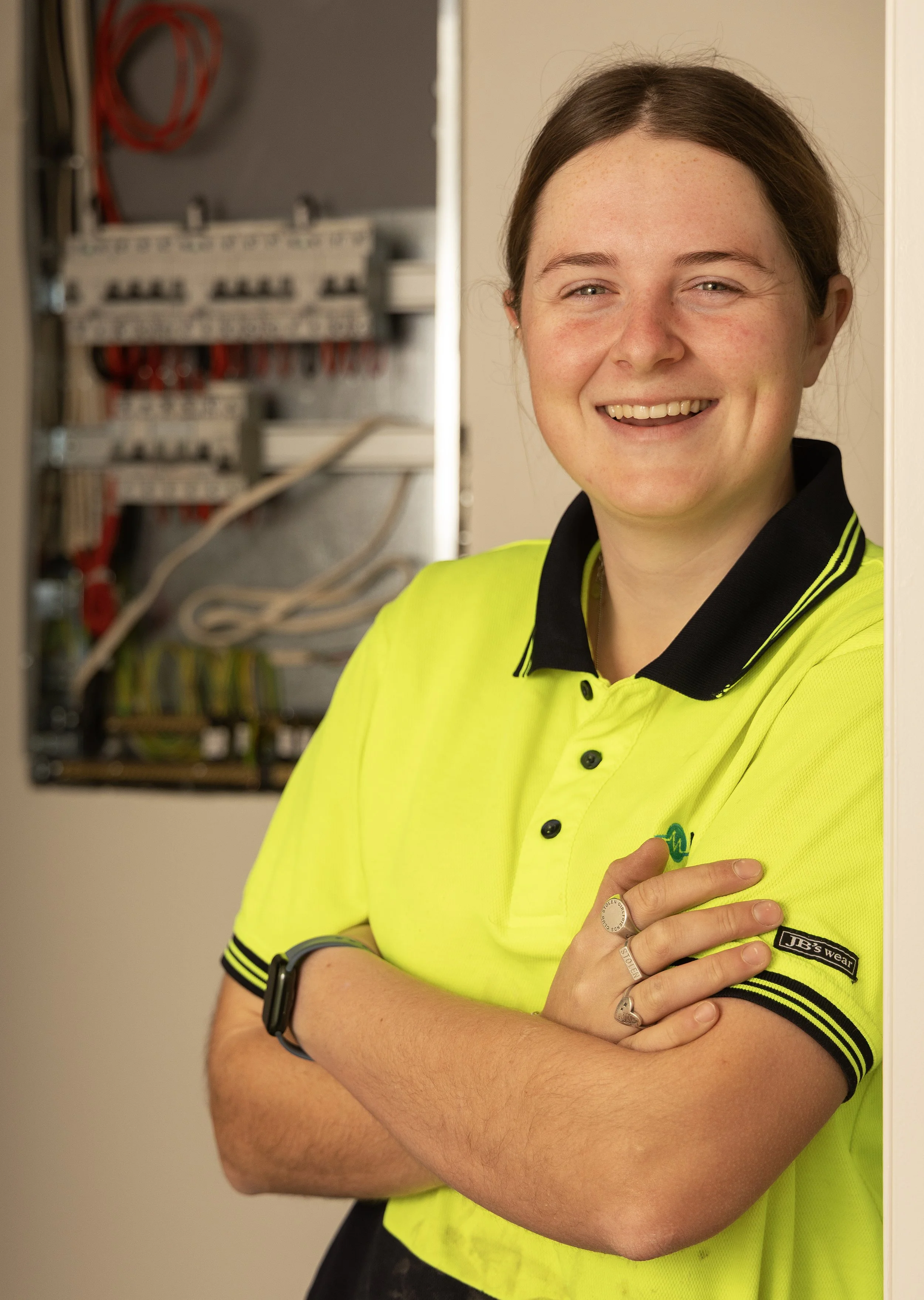
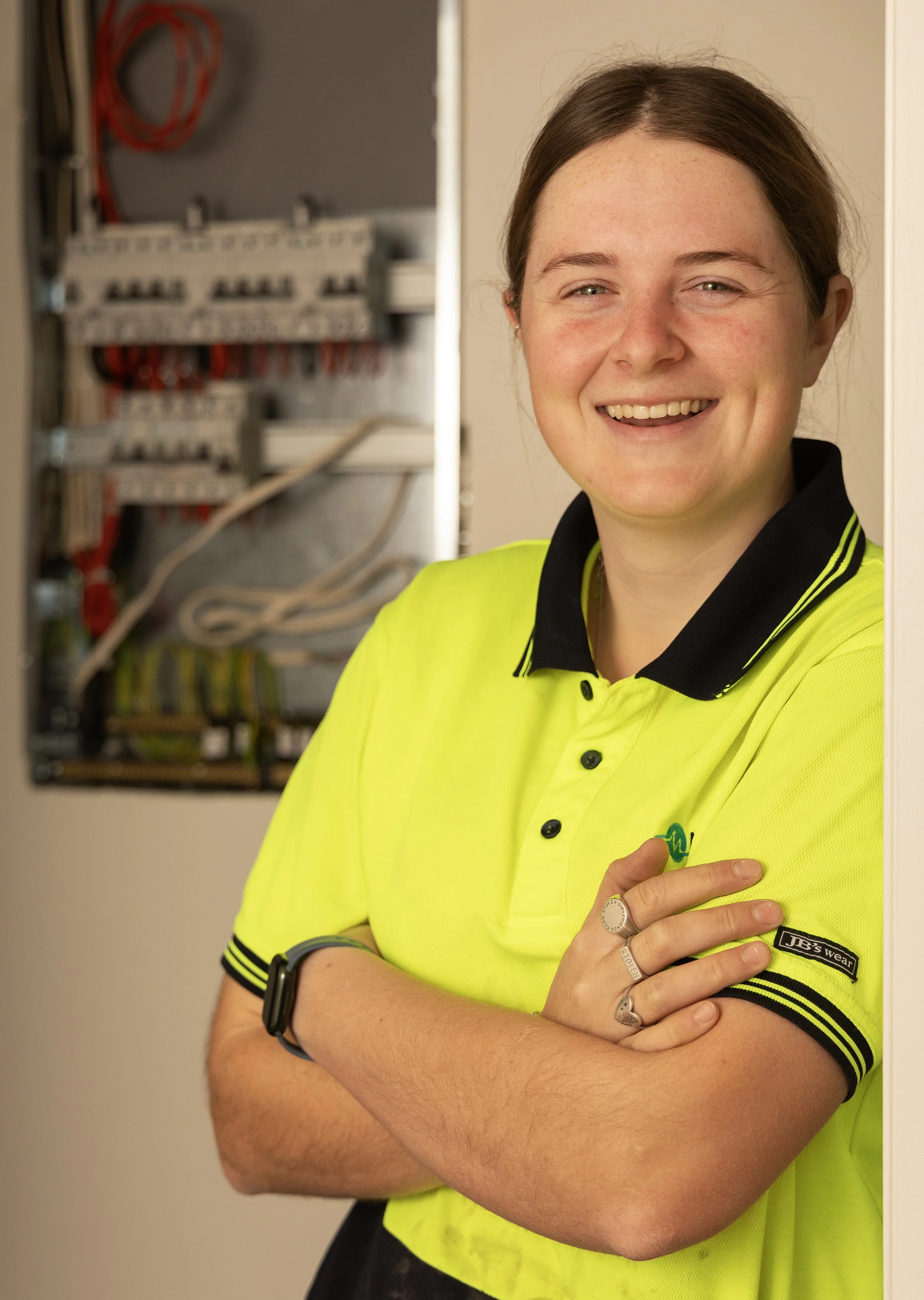
Paige Gregory.
I opened my front door to welcome the sparkie from MacMurdo Electrical and was surprised to see a female apprentice. ‘Serendipitous,’ I thought, given I was about to write a feature about the changing face of construction and other trades, not only in traditional office roles, but also on the ground.
Construction is one of New Zealand’s biggest industries and largely male dominated, with women making up an approximate – and measly – 16 percent of the workforce. Hence, it was something of a look-twice moment to find this technician on my doorstep. I took the opportunity to find out a little more about how and why 22-year-old Paige Gregory had chosen to become an electrician. She explained that as someone who hadn’t loved school, she saw a job within the trades as an attractive option.
“I wasn’t at all interested in university,” she says. “I didn’t want to do any more academic work, and the idea of doing a job that was a little more physical was really appealing. I didn’t want to sit behind a desk all day.”
It was also a career that, although active, involves mental stimulation, and it has prospects. Long-term, there are great opportunities both here and overseas.
I was curious as to whether her career choice had been supported by her parents. “Definitely – I’ve grown up with electricians as family friends, and my mum and dad just wanted me to have a job I’d enjoy.”
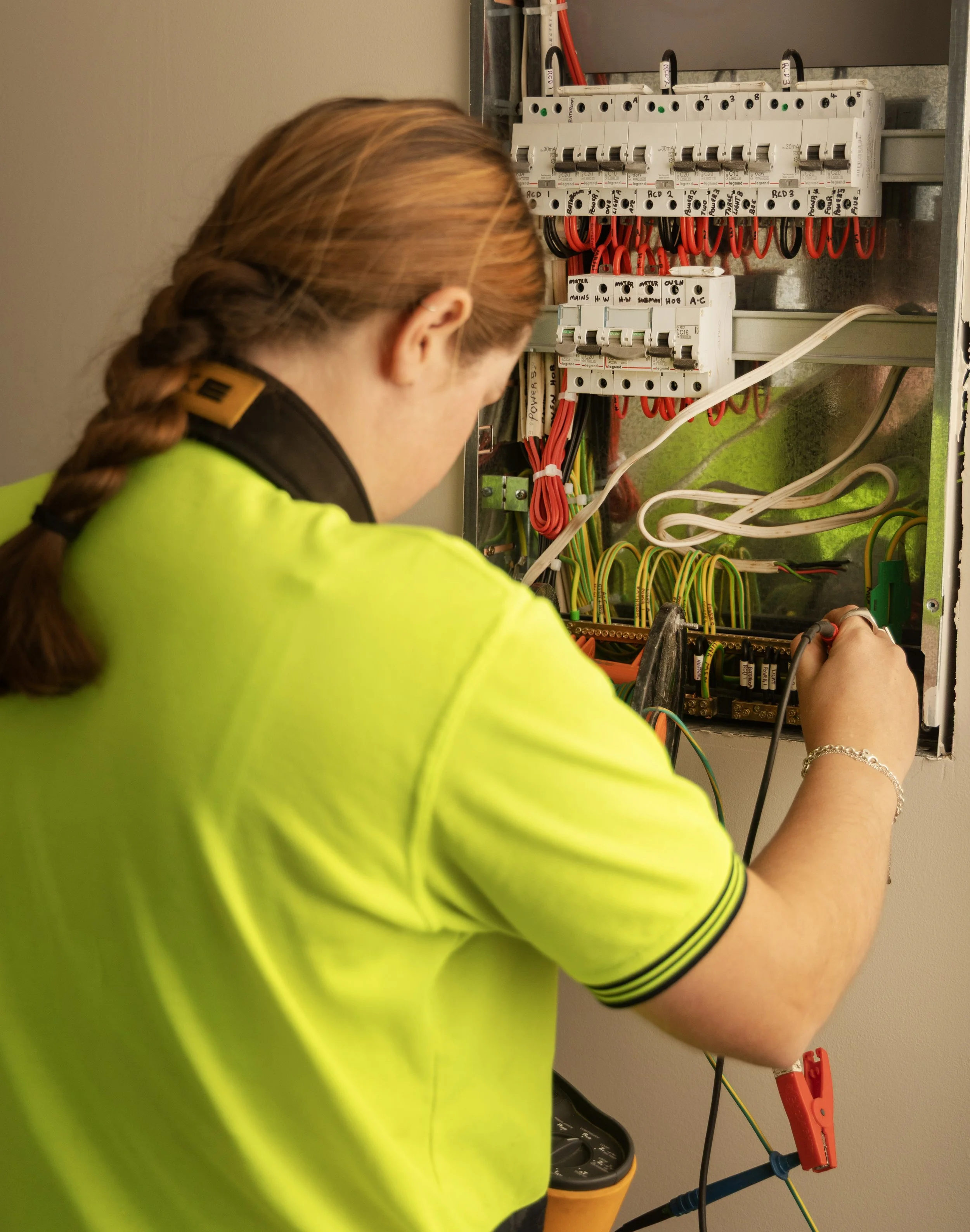
Of course, the burning question for me was how she found often being – I presumed – the only woman on a job site. Paige explains that she just jumped straight in as she meant to go on.
“At first I got a bit of stick, but I dished it back, and after that, the guys realised I was okay.”
When asked whether any tasks are more challenging for her, she ponders for a minute. “When stuff gets a bit more physical, I don’t have the brute strength, but I don’t feel judged. If something’s heavy, the boys will just make sure that I’m supported.”
From a workplace point of view, Paige says she feels she was set up to flourish. Initially, she gained work experience at a different electrical company, who encouraged her to do the pre-trade course at Toi Ohomai Institute of Technology. This, it transpired, was an excellent idea. Once she’d finished, she went on to try for an apprenticeship. “It definitely helped give me the head start over other people,” she says.
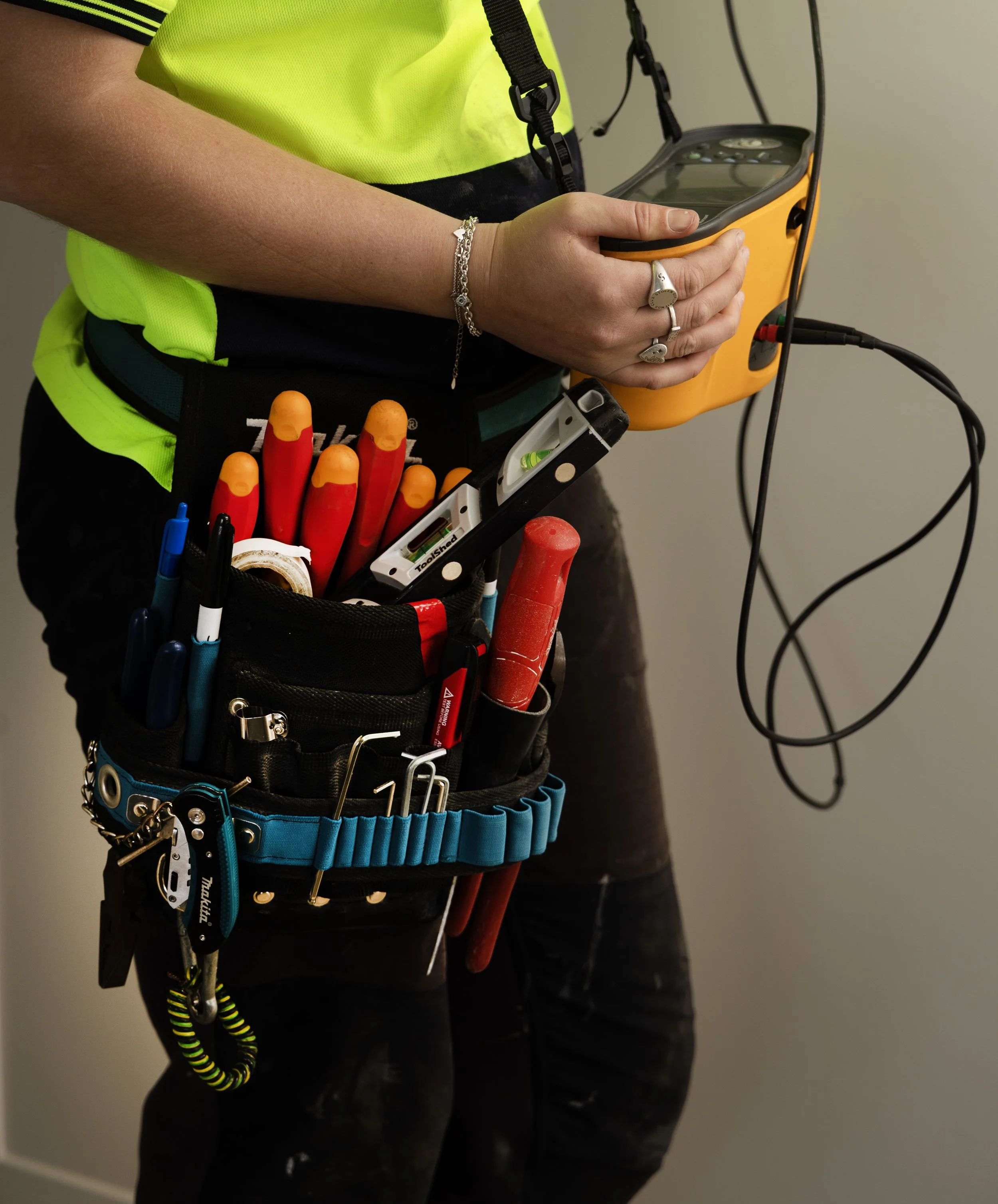
Paige’s course had “heaps of girls on it”. As for whether she’d recommend other women to take the same path, she’s very encouraging. “There’s definitely not as much sexism in the trades these days, so I’d say if it’s something you’re worried about, don’t be.”
Although Paige’s experience once she started working seems to have been overwhelmingly positive, I can’t help but wonder if it was more difficult for her to get her foot in the door in the first place. How hard, I ask, was it to get a job?
“A family friend mentioned that Craig [MacMurdo, owner/operator of MacMurdo Electrical] was looking for an apprentice, and I knew he already had a female on the team, so felt confident applying. In the interview, he told me that he found the women electricians he’d come across took a lot of pride in their work and would try to do everything as best that they could – and they were usually tidier!”
Switching it up, I thought it would be interesting to speak to Craig. His support for women in this line of work is resounding. “As well as Paige, I employ another female apprentice, and I’ve found that both of them have a great eye for detail, and in my experience they get on with the off-job training bookwork easier than the blokes!”
I wondered if he felt there could be difficult or unexpected situations that could arise with a more diverse workforce. “Electrical work is a trade that isn’t a male domain – the jobs we do can be done by either sex. Health and safety [requirements] now mean that we’re really mindful in the workplace. These days, for the heavy-lifting jobs, there are tools and machinery – you don’t need to be a macho man to do this stuff. I’ve found that women are a good fit for most trades – and they’re very good at them.”
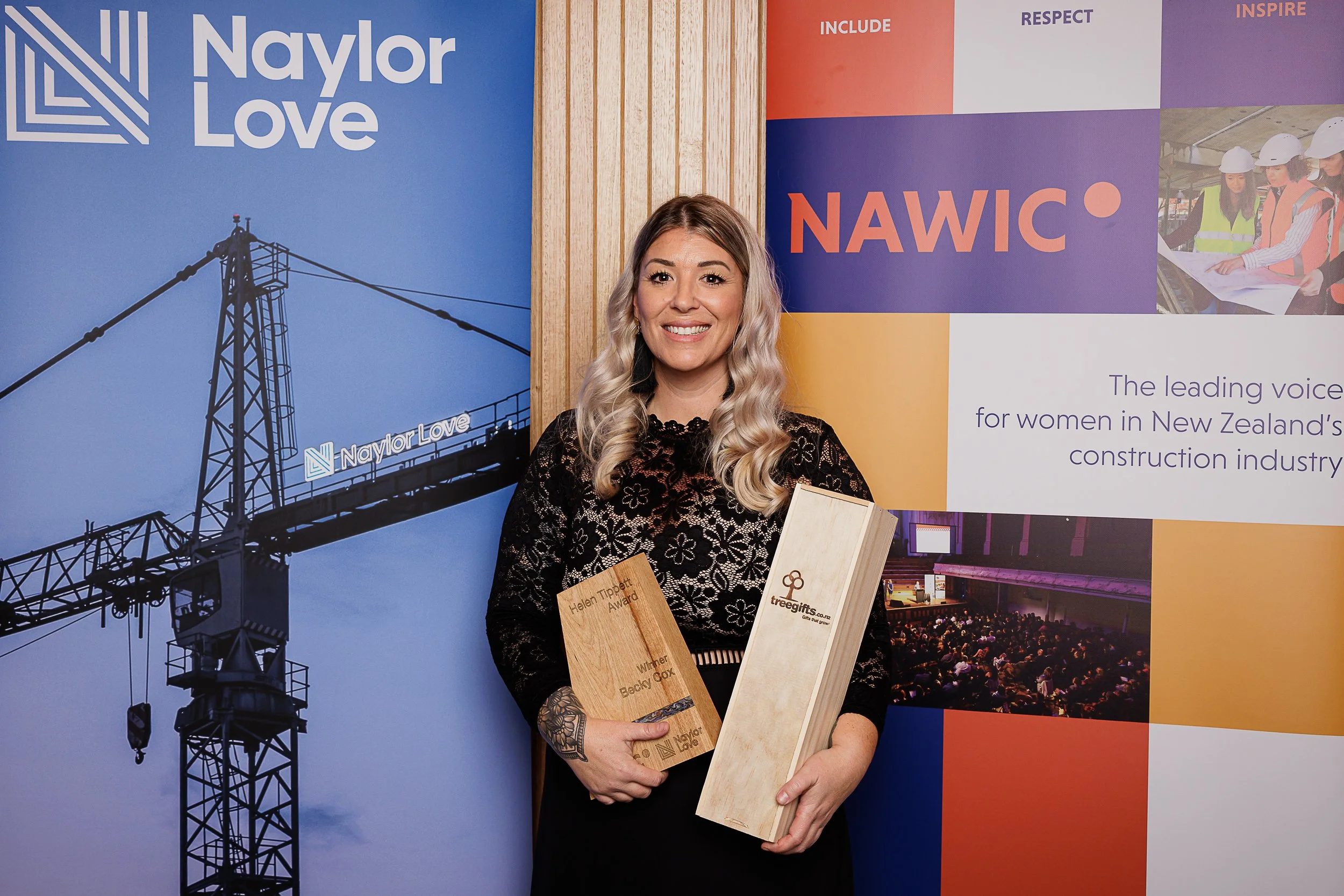
2026 National Association of Women In Construction award winner, Becky Cox.
With a view to looking at the role of women in all aspects of the business, I met with Becky Cox. She’s the national Health and Safety, Quality and Environment manager in Fulton Hogan’s Civils business. Becky also champions women through the National Association of Women In Construction (NAWIC), a nationwide network supporting women across the industry.
Her road to Fulton Hogan was via the somewhat draconian shipping/maritime industry. It gave her an exceptionally good grounding for construction, which, even more than a decade ago, felt comparatively progressive.
“I didn’t target construction as an industry to come into,” she says. “I actually jumped around a bit when I was younger... but a common theme was that I was always managing people and problems.”
In 2014, Becky moved to a fairly entry level position at Fulton Hogan, a company she’d gravitated towards not specifically because of the industry but because of the values behind the business “and the people who interviewed me. I could just feel that real connection to those values... Something I really believe is that great people build great organisations, and that’s the key to it.”
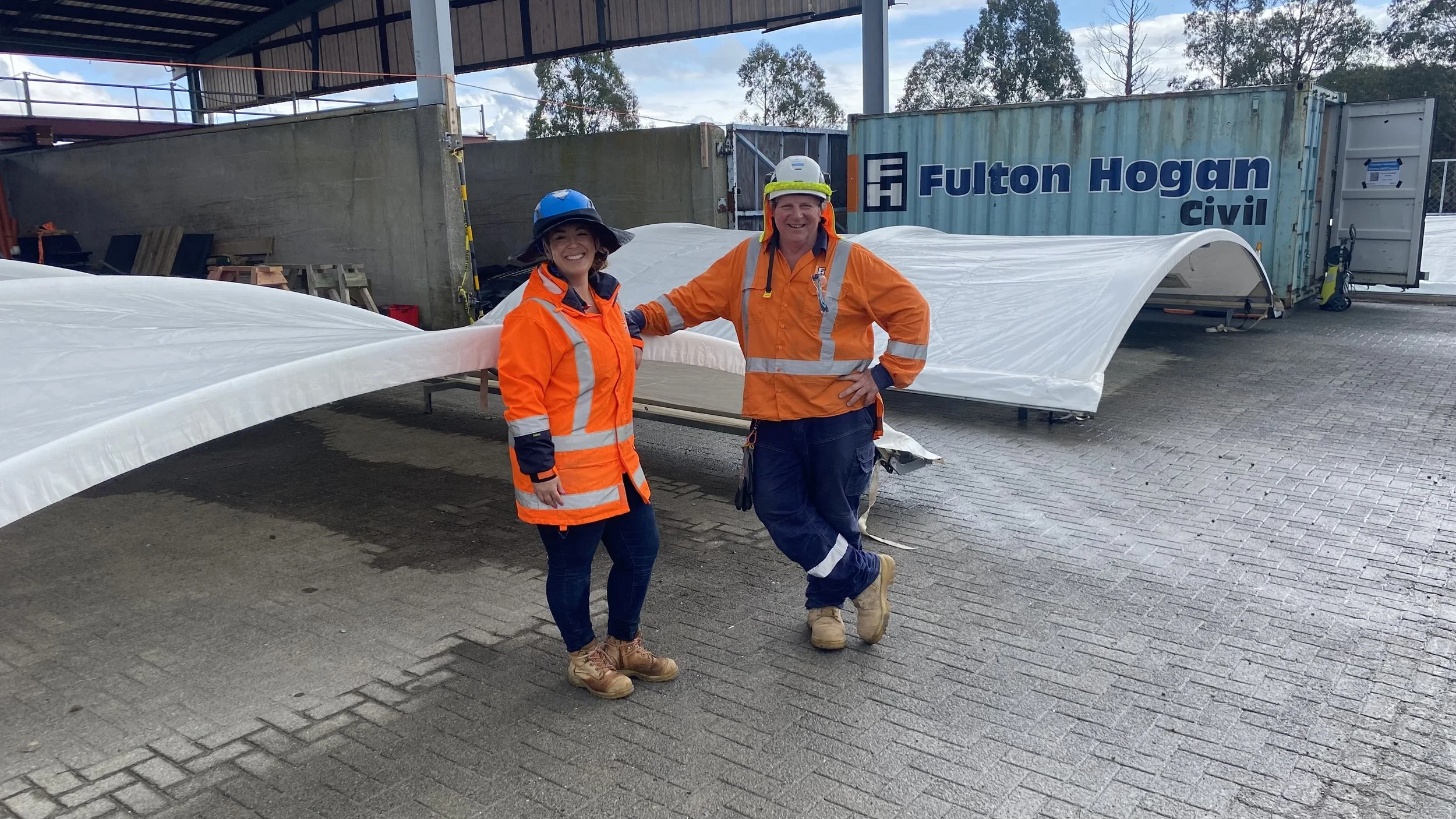
Carpenter John Wolk puts Becky to work.
Becky was never deterred by the predominantly male to female ratio. “I really enjoy working with men. I like the dynamic – I think there’s a good balance between what women and men bring to the workplace.”
Did she feel as if it was more of a challenge rising through the ranks of a male-dominated industry? “I think the opportunity’s always there and it’s about how hungry you are for it. It’s also about finding people who can champion you, and I’ve been very lucky and had some amazing mentors, both male and female.”
“Construction,” she continues, “is an industry where things aren’t going to just land in your lap, but there’s no lack of people who want to support you.”
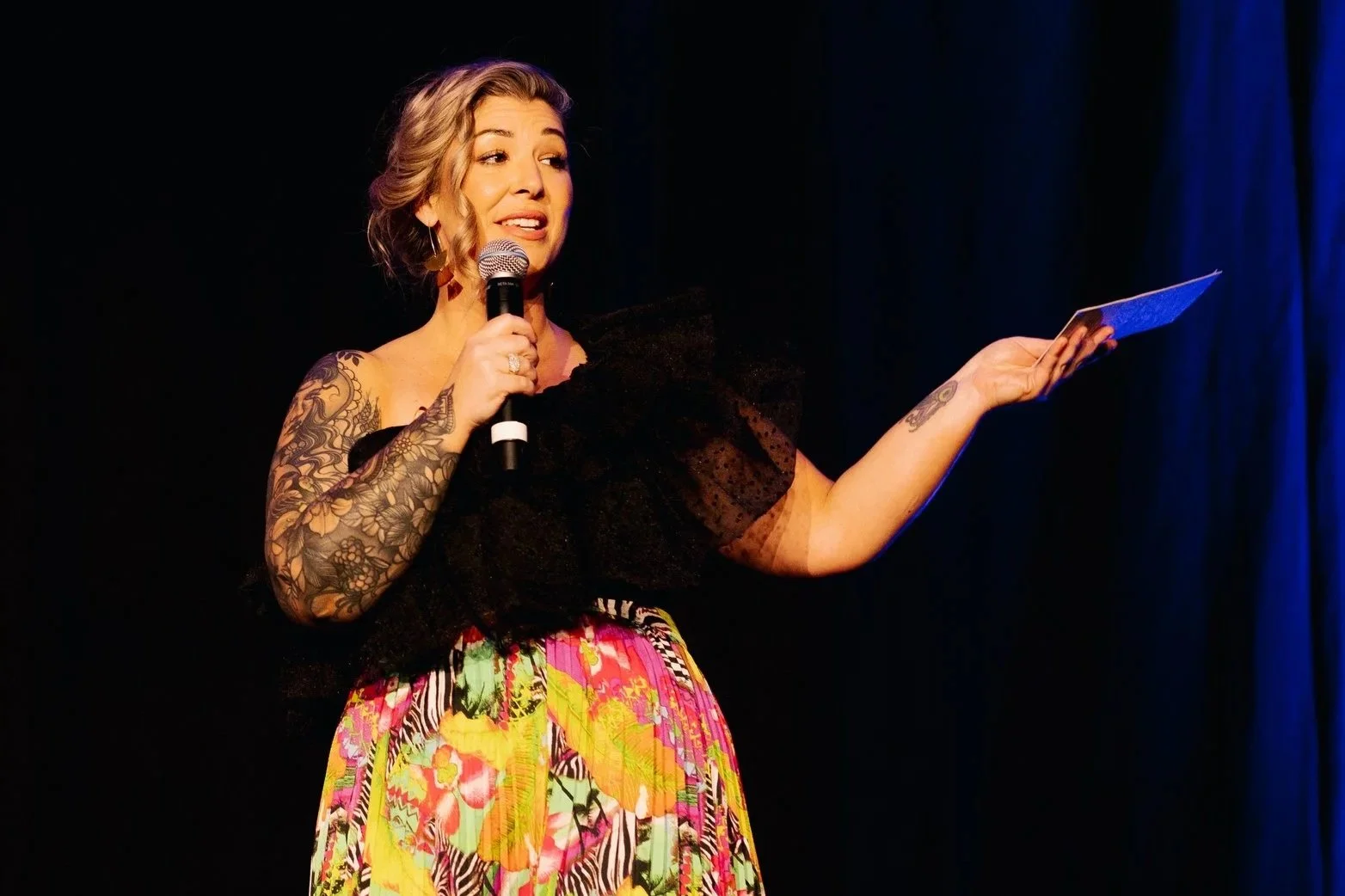
Becky as MC at the 2023 NAWIC Awards.
In her role at NAWIC, Becky’s one of these people. In 2022, she won the Helen Tippet Award, a ‘Changemaker’ award for promoting the participation and progression of women in construction. Modestly, she says she found it confronting, but admits it was the result of “years and years of consistent shaping opportunities for women”. She created cadetships to bring young women into the business and focused on pastoral care.
What Becky was set on was “creating environments where young women could succeed”. Sometimes that meant addressing simple oversights – such as work sites without a women’s toilet – that could leave women disadvantaged.
She also noticed that although women were well represented in office roles, they were largely absent from operational, trade and leadership positions. “In fact, I was the only female in the senior leadership team, so that’s where I thought, ‘We’re missing a trick’. When you’re not tapping into 50 percent of the population, then innovation, diversity of thought, difference of opinion and experiences are all being missed.”
Becky felt the industry needed more ‘softness’. “A lot of women come into construction and feel like they need to harden up and be one of the boys... Coming into construction, I realised that just bringing authenticity into my decision-making and conversations opens doors for other people to be that way as well.”
That shift in culture benefits everyone. Becky noticed that men on site could also feel pressure to put on a mask of bravado. “Life can be tough, and I noticed that having softness in their workplace kind of gives them permission to be a bit more open.”
Flexibility, too, can help retain highly skilled women who might otherwise struggle to make the job work around their other responsibilities.
At the end of 2024, Becky joined the Board of NAWIC. Having celebrated its 30-year anniversary, it’s looking ahead to the next 30 years. “It’s a very different industry to what I remember 12 years ago,” says Becky. “I’ve seen a huge shift, as well as an increase in women and women in leadership roles.”
Although change may be more visible in larger companies, Becky believes the industry is evolving. Women are still in the minority, but the culture is shifting and opportunities are opening up. The message is clear. If construction and other trades are where you want to be, go for it.