

CHASING THE LIGHT
For Tauranga artist Tracy Stamatakos, the Bay of Plenty is a constant source of inspiration. Her photography transforms local land and seascapes into atmospheric works that invite viewers to pause and look again.
For Tauranga artist Tracy Stamatakos, the Bay of Plenty is a constant source of inspiration. Her photography transforms local land and seascapes into atmospheric works that invite viewers to pause and look again.
PHOTOS DEBORAH DE GRAAF
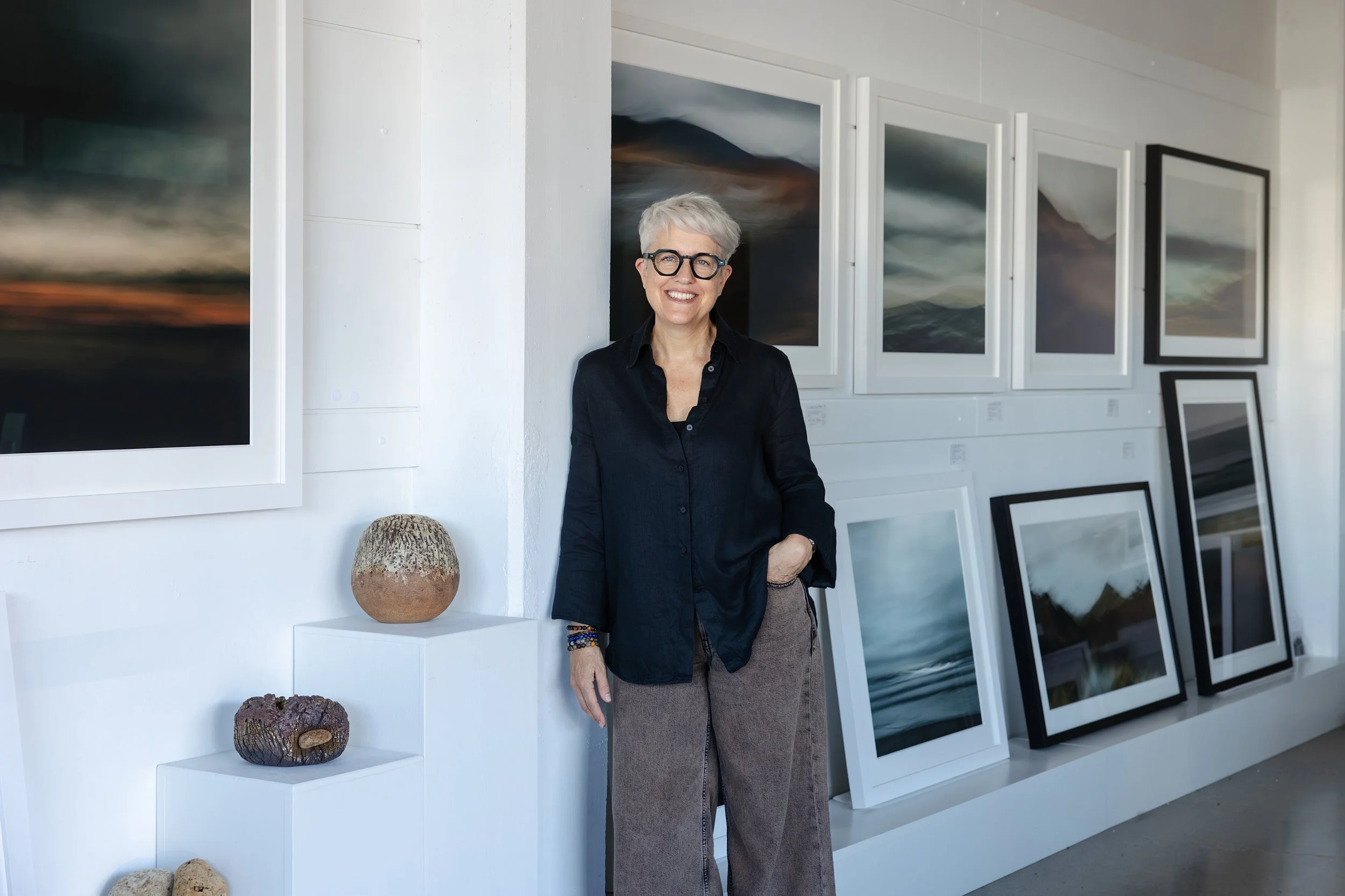
UNO: For people who might be seeing your work for the first time, how do you describe what you do?
Tracy: Sometimes there’s confusion at first glance. What is it – a drawing or a painting? It’s photography, but not in the literal sense. I use single-capture long-exposure techniques to record light, colour and shape, moving the camera while the shutter is open to achieve the desired result. I also create new lines and shapes by recording the movement of objects or specular highlights. I believe art can act as a transfer of energy from the unseen into the physical world. My images are imprinted with my energy, the energy of movement and the grounded energy of a place. My hope is that the viewer feels this too. You talk about “painting with light”.
What does that actually look like when you're out shooting?
I’m sure it looks really odd! Sometimes it’s fluid movements, other times it’s following shapes. It feels meditative to photograph this way. I love remote locations where I can be fully present and recharge at the same time. In contrast, trains can be fun to shoot from – scenes approaching and disappearing just as fast. I can spend six to eight hours in an outside carriage, and love the challenge of having to react quickly with no way to refine the scene. The funniest response I’ve had was on the Northern Explorer. A woman who had watched me for hours finally said to her husband, “I don’t know what she’s doing, but her photos aren’t going to be sharp.” I just smiled.
What is it about the Bay of Plenty that inspires you?
There’s beauty everywhere, but I tend to find it between the sun and the rain, where the pressure builds and the light breaks through. We’re blessed to have the ocean, rivers, hills and mountains on our doorstep, changing minute by minute. It’s a spectacular show.
Do you tend to head out with a clear idea of the image you want, or is it more about responding to the moment?
“Responding to the moment” is a perfect description. Most of the time, I leave it up to the universe to present me with options. Sometimes there are certain images that make my heart race, or I can see the opportunity to develop an idea. In that case, I’ll make a clear plan to capture a series. That might include returning to a certain location, choosing another one with more potential, planning to shoot at the optimum time of day, or waiting for the weather gods to sprinkle some magic. I’ve learnt that booking 10 days in the South Island in the middle of winter doesn’t guarantee moody weather. Full sun is not my friend, but I’ve accepted the challenge on many occasions. I guess that’s how you move forward.
You've been working in photography for decades now. What’s changed the most in how you see things?
This industry is all I’ve ever known. My first job was with Bob Tulloch at No 1 The Strand in the early ’90s. I hadn’t set out to be a wedding photographer. I fell into that quite by accident, but quickly realised it’s some of the best training you could ever have. Twenty years of constant pivoting, catching curveballs, working under time restraints, learning to breathe under extreme pressure… but somewhere in all the madness, you create magic and you keep going. Photography was a love, and then it became a job. It’s also highly technical, with lots of components to control and briefs to stick to, especially commercially, so it began to feel clinical and suffocating. I found the love again by shooting for myself, by throwing out all those rules in 2006 and creating emotionally charged imagery, which is dark, moody, soft and serene. With age, I think you become more aware of self. There’s also an element of knowing we’re all on borrowed time – although I’m putting it out there that I’ve only reached the halfway mark and am keen for another 50 years. You start wearing your heart on your sleeve and caring less about what other people think, not worrying so much about mistakes because you understand that’s how growth happens. Making art connections outside the photographic industry was also key for me. Being able to bounce ideas around with people working in different mediums was refreshing.
What’s it like being based in Tauranga and running your own gallery space?
I took over the 9th Ave space 11 years ago, when my business switched to focusing on commercial work. The signage on the window has always read “studio + gallery”, but it’s only been in the past 18 months that the gallery has had regular hours. I have to thank my talented ceramic artist friend Lynn Ross for backing me and sharing the gallery hours to make this possible. We’ve always had an appreciation for each other’s work and visitors enjoy the way it intersects. It’s delighted us recently to have people waiting for the doors to open. That sure makes up for the quiet days, but that’s the nature of retail.
When someone stands in front of one of your pieces, what do you hope they feel?
A moment of pause, and space for their own memories and interpretations to surface. It’s also a direct transfer of energy. For example, I have one image that has been purchased four times as a remembrance piece, and it was photographed in that spirit. That makes me smile, to know my visual communication is working. I think it’s very important to connect emotionally with a piece for longevity. Will it still mean something to me when my surroundings change? Art can create future memories too. An image you live with becomes a backdrop to everyday life.

SHADOW PLAY
Model, actress, content creator and talented make-up artist Alyshia Jones-Mathie weaves magic on faces, telling vivid stories you won’t forget anytime soon.
Model, actress, content creator and talented make-up artist Alyshia Jones-Mathie weaves magic on faces, telling vivid stories you won’t forget anytime soon.
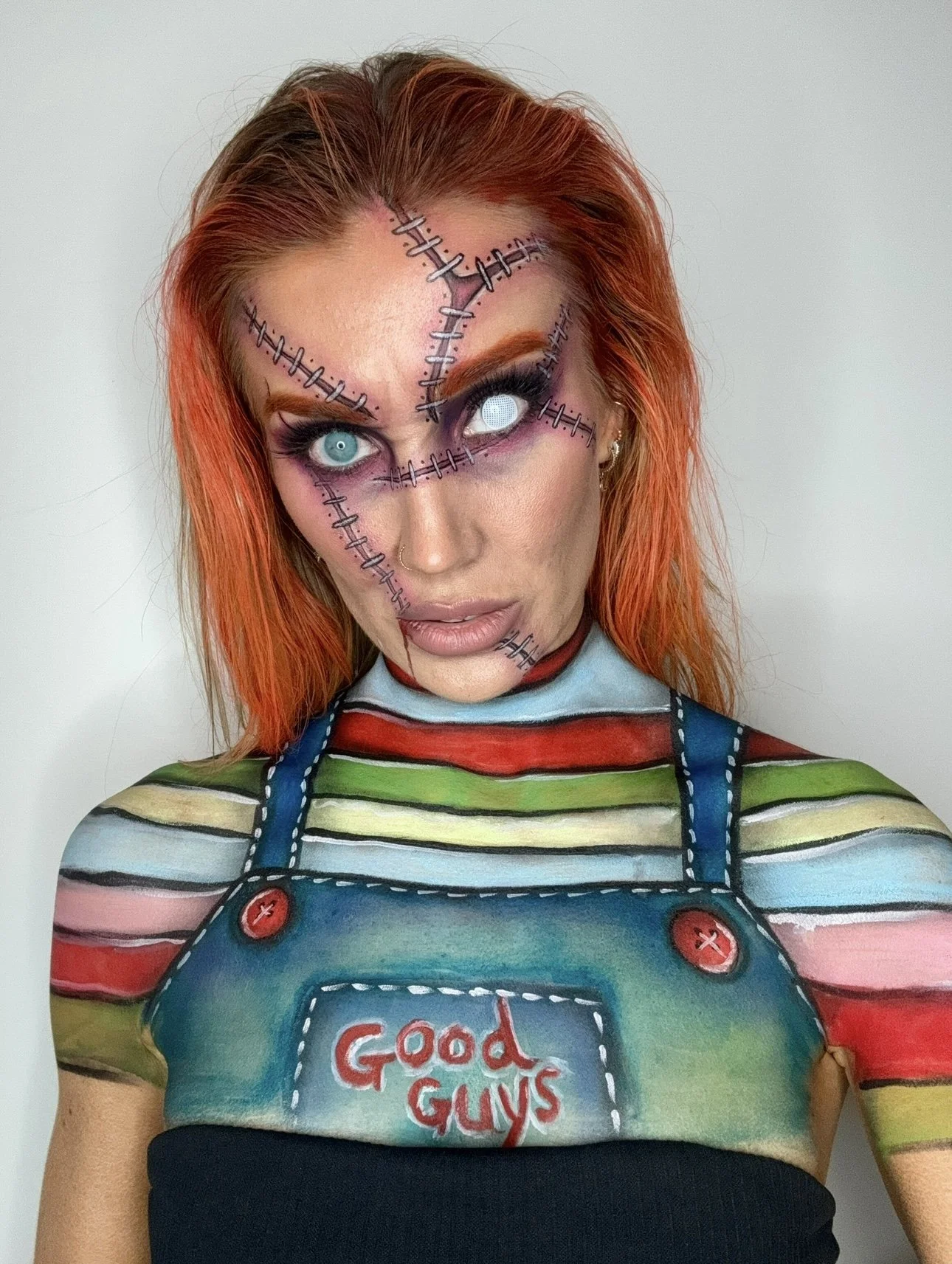
With a love for the surreal and all things spooky, Bay of Plenty-based artist Alyshia Jones-Mathie transforms her face into jaw dropping characters using make up, SFX and her wild imagination.
Since childhood Alyshia has always been drawn to visual storytelling, especially through horror-inspired looks. Now her detailed transformations are capturing global attention online. Whether she’s recreating a cult movie villain or crafting something entirely from her imagination, Alyshia’s art is creative and spine tingling, which is just the way she likes it.
UNO: Your Halloween looks are incredibly imaginative and detailed. What draws you to this form of art?
Alyshia: I’ve loved drawing, dressing up and going out for Halloween since I was a kid. Horror movies were a big thing in our family. Weʼre all movie buffs! Those memories really stuck with me. I think that’s what first drew me to SFX and Halloween make-up. I also noticed that kind of content gets a lot of engagement online, especially because not many artists are doing it in New Zealand. I’ve always paid attention to detail in everything I do, and that definitely shows in my work.
Where do you find inspiration for your more surreal or gruesome creations?
Most of my ideas come straight from my imagination. I like my work to be original. Sometimes I’ll be inspired by horror movies, Disney characters or other artists, especially if there’s a trending look. People also love it when I do recognisable characters. I’ve done Ghost Face, Chucky, Elsa, Harley Quinn, Beetlejuice, Terminator, Billy the Puppet and The Joker. It’s fun putting my own spin on them.
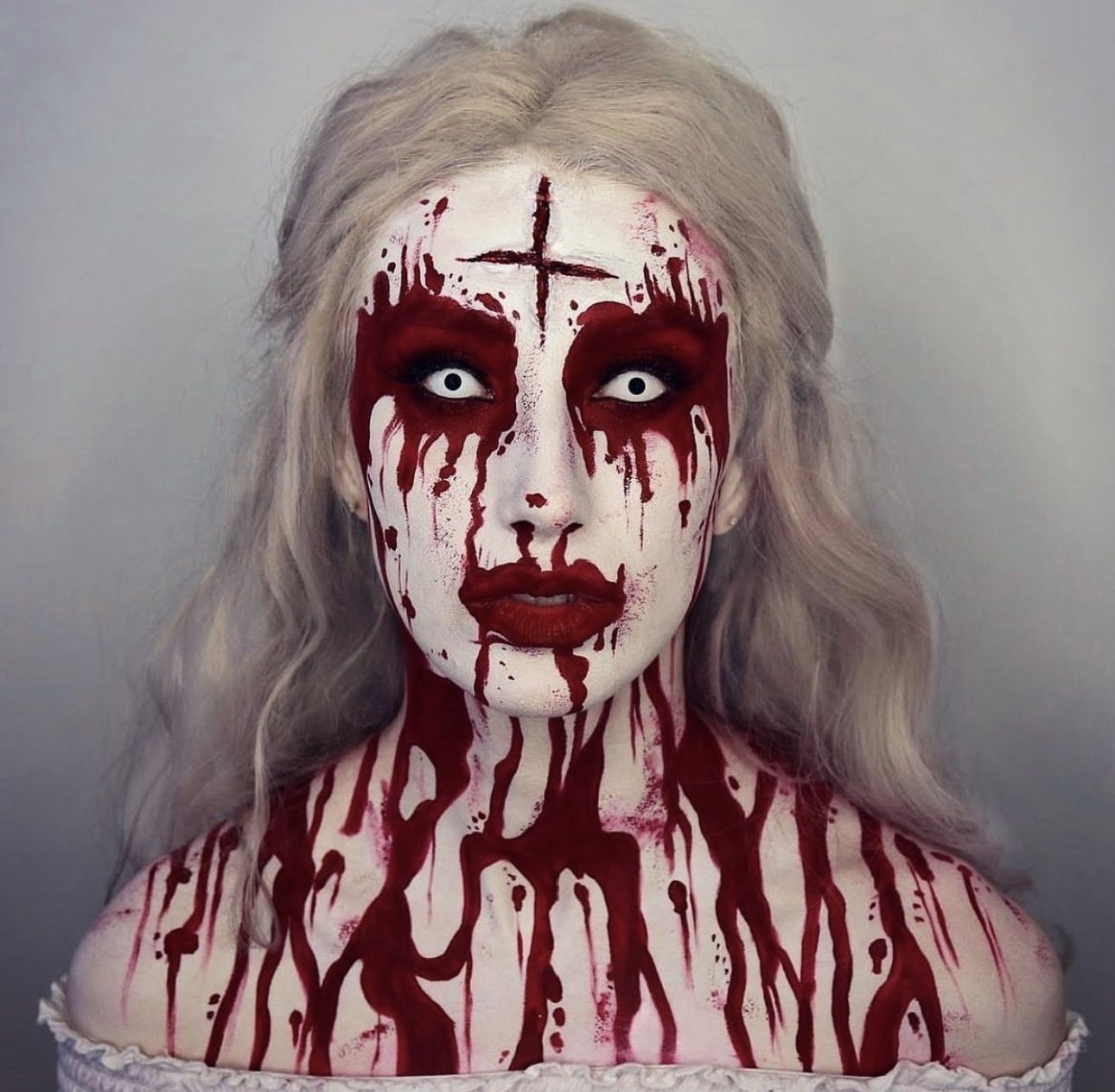
How do you plan a look before starting?
My face is my canvas, and I love how I can become the character. Sometimes I’ll plan by looking up certain features or styles, or I ask my audience what they want to see. But often I just dive in and let creativity take over. I like to challenge myself and see what I can come up with in the moment.
How would you define your art, and how has it evolved?
I’d say my art is eye-catching, edgy and emotional. I want people to feel something, whether it’s fear or excitement, even surprise. If your art can move someone, you’re doing something right. Over time my looks have definitely become more refined, but I also enjoy doing simpler tutorials now that others can try for themselves.
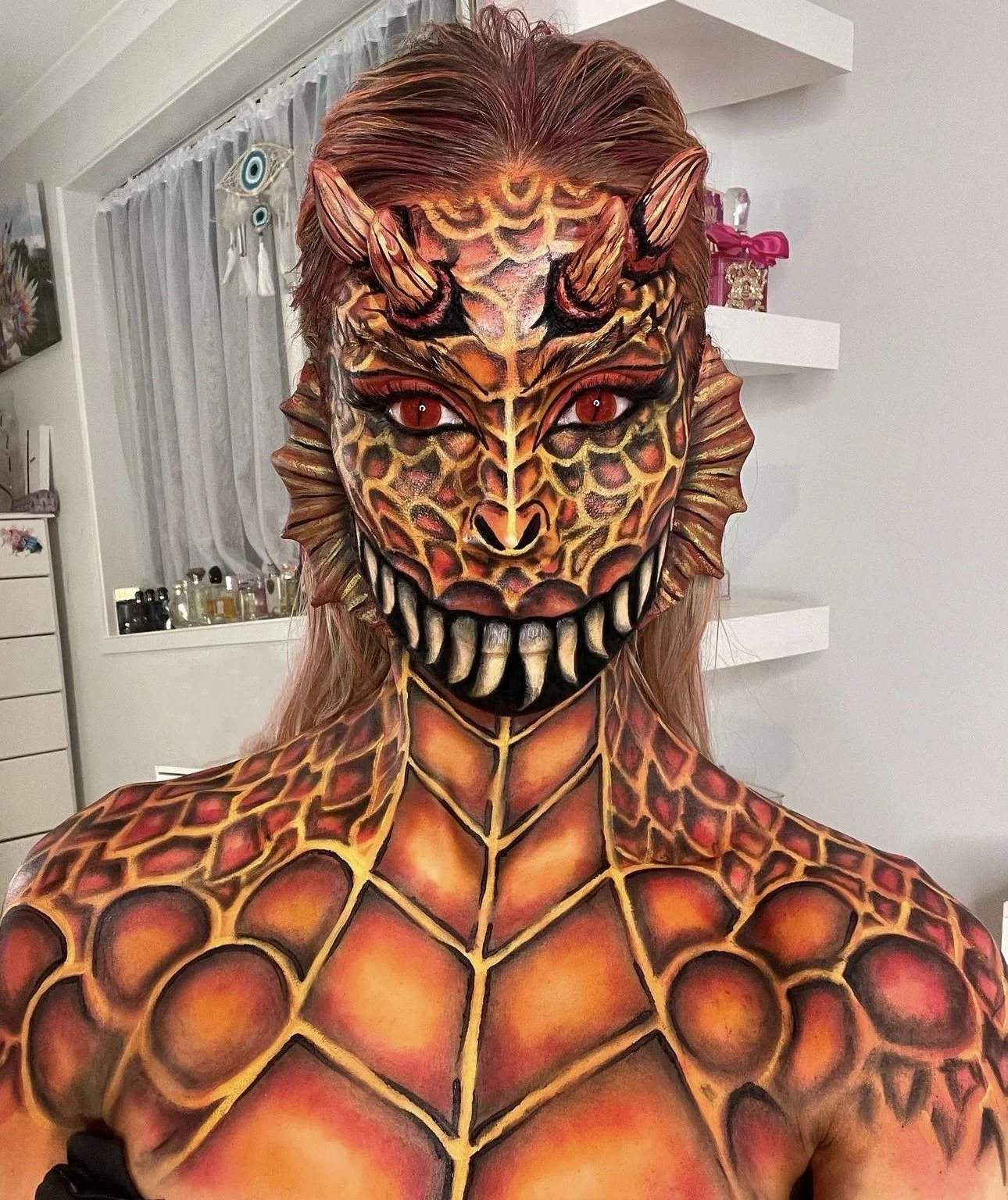
Do you see your make-up work as performance art, visual storytelling or something else?
It’s definitely both. Getting into character helps me bring the look to life and gives me so much confidence. Some of the looks have a story behind them, some are more emotional or dramatic, and others are just fun and entertaining. I hope people feel inspired to try things themselves and see that they can create anything with a bit of imagination.
What role does experimentation play in your process?
A huge one. I’m very visual and instinctual. I just know what might work, and that comes from years of practice. I used to watch tons of SFX tutorials and learned how to use things like liquid latex, prosthetics and scar wax. I often change things as I go: colours, patterns, placement. It’s all about trusting the process.
Has social media changed how or why you create?
Definitely. Sharing my work online has helped me grow, not just as an artist but as a person. It’s pushed me to create with purpose and to see how far I can take this. My audience motivates me as they’re my biggest supporters. I wouldn’t be where I am without them. Approved insurance repairer Loan vehicles State-of-the-art repair technology Accurate colour reproduction Art is still something I do for myself, but now it also feels like I’m creating to inspire and uplift others.
Do you explore other forms of art beyond make-up?
Yes! I used to paint, draw, make clay figures, scrapbooks, even homemade magazines. I still dabble in those sometimes. But make-up is where I feel most free. It combines so many things I love, like costuming, editing, character acting, storytelling. There’s a whole world behind every look.
How long have you lived in the Bay of Plenty, and what do you love about it?
I’ve been here for 20 years. We started in Auckland, then moved to Waihi Beach, Athenree and now Ōmokoroa. I love the nature, the beaches, the walks and the laid-back, community feel. Plus, lots of our family and friends are still here, which makes it extra special. Mount Maunganui is my happy place.

Making waves
Meet the boat builder turned artist who crafts sculptures so fluid and luminous, they feel alive.
Meet the boat builder turned artist who crafts sculptures so fluid and luminous, they feel alive.
photos OLIVIA RENOUF + BEN YOUNG

For an artist without formal glasswork training, Ben Young has mastered the medium like few others.
Raised by the sea in Waihi Beach, he developed a fascination with the ocean’s ever-changing nature – something that now defines his work.
The former boat builder’s hands-on craftsmanship and innovative layering techniques turn rigid glass into fluid, almost living forms that capture water’s movement and depth. His work balances precision and artistry, playing with light, waves and reflections – while incorporating concrete and metal to add texture and dimension.
Here, he shares the journey from experimenting with glass to shaping it into something truly breathtaking.

How did you become an artist?
I grew up in Waihi Beach in the Bay of Plenty, surrounded by the ocean, which has been a huge influence on me from a young age. Before becoming a full-time artist, I spent 10 years training and working as a boat builder, playing with glass on the side. That hands-on experience with materials, problem-solving and craftsmanship naturally carried over into my artwork. I’ve always loved making things and sometimes I feel like I should be labelled a maker as opposed to an artist – I love being able to see the craft in something. I never had formal training in glass art. I’m completely self-taught.
How did your work evolve into glass sculpture?
It happened quite organically. My journey into this medium started when I was young and travelling through Europe with my family. My dad saw an amazing laminated glass window display in Greece. That artist was actually the first one to make a glass wave. When I was old enough to play with glass, I began making them, too, trying to create the perfect wave. I started experimenting and developing my own techniques, which eventually evolved into the work I create today. When I first started working with glass, I was drawn to how I could use layers to create depth, much like the ocean itself. Over time, I refined my techniques, combining glass with concrete and metal to bring in that contrast between fluidity and solidity.
My work has always been about trying to capture the essence of water – its movement, depth and vastness – through a material that is typically rigid and structured.
Who and/or what influences and inspires your work?
The ocean and nature is my biggest influence – it always has been. I’ve spent my life in and around the water, surfing, boating and just being immersed in that environment. There’s something about the way water moves, the way it interacts with light, and the way it can feel both calming and powerful at the same time. That duality really inspires me. I also draw inspiration from landscapes, architecture, and even simple, everyday moments where light and form interact in interesting ways. I think my connection to the ocean is why I’m so drawn to working with glass – it allows me to recreate that sense of depth and movement in a tangible form.

What do you hope to achieve with your work?
I want my work to evoke emotion and connection. When people look at my sculptures, I want them to feel something, whether it’s a sense of nostalgia, calm, curiosity or even a deep appreciation for the natural world. My goal is to create pieces that make people pause, reflect and maybe even see the ocean or landscapes in a different way.
How has technology helped/changed your style of work?
I still do a lot of my work by hand, but technology has definitely played a role in refining my process. I use digital tools to sketch and plan my pieces before I start physically working on them. This allows me to visualise depth, perspective, and how the layers will interact before I commit to cutting and assembling the glass. While I embrace technology for the planning stages, I always return to the hands-on process – it’s the physical making that really brings the pieces to life.
What do you love about the Bay?
I’ve been in the Bay of Plenty for most of my life apart from a stint in NSW, Australia. I’ve been lucky enough to do a lot of travel and the feeling I always get when I return to the Bay is that it’s home. I love how central we are to everything, nothing feels too far to get to. We have the ocean, the forest, bush walks, lakes, mountains – the best of it all really close by. It all feeds into my creativity. There’s something special about being so close to the water every day; it’s a way of life for me, and a bonus when there is surf.