

TRAINING DAYS
Columnist Amanda Jeffs suggests we try giving the AI employee many of us have hired a decent job description.
Columnist Amanda Jeffs suggests we try giving the AI employee many of us have hired a decent job description.
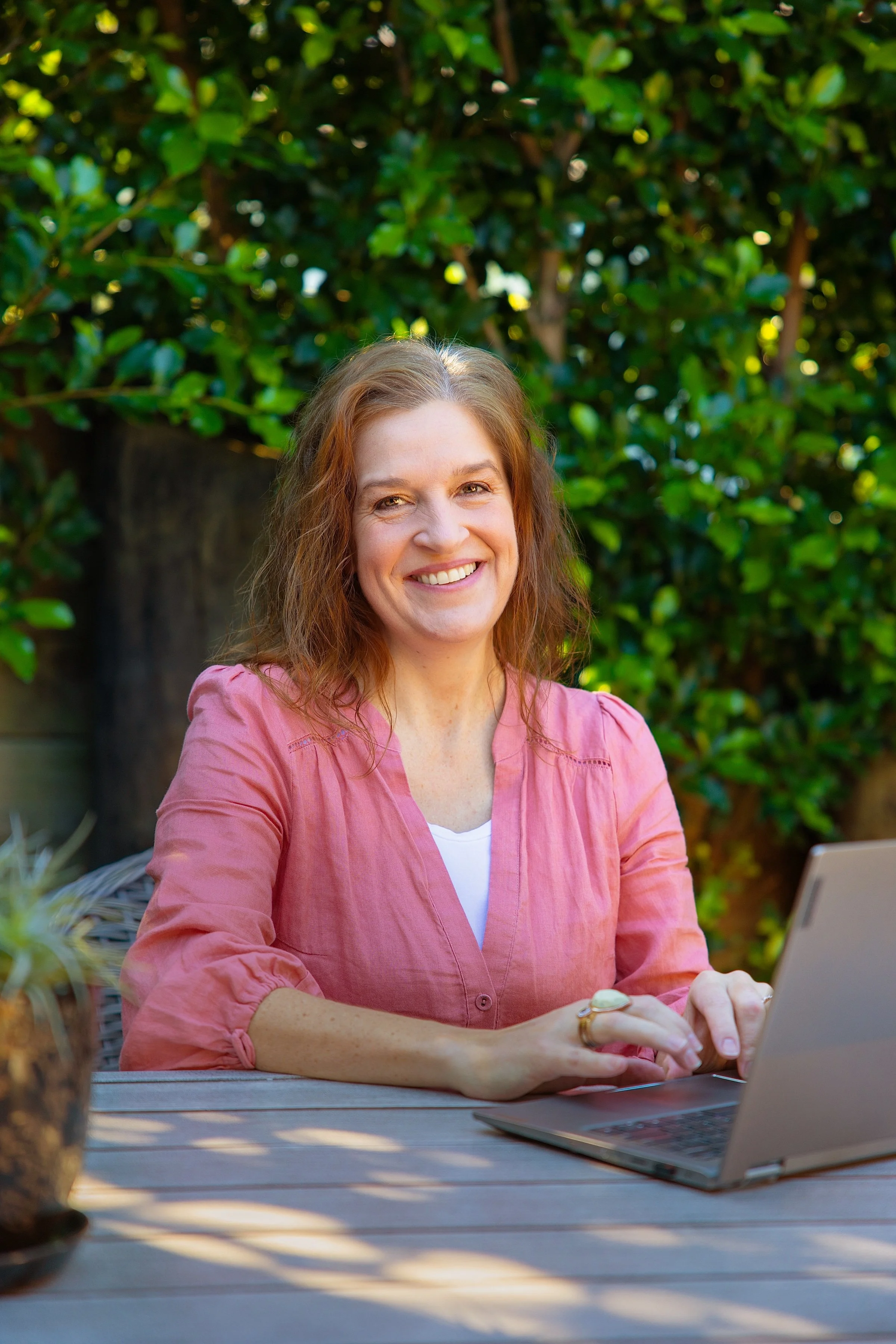
PHOTO DEBORAH DE GRAAF
Imagine a consultant in the Mount. Let’s call her Kelly. She’s good at her job, and about six months ago, she signed up for one of the big AI tools, the way you’d sign up for a gym in January. She uses it every day now, but admits she’s not sure it’s changed her work life much. Its writing is generic, and fixing it takes as long as it would have to start from scratch.
The thing is, she hasn’t been let down by AI. She’s hired a new employee and never onboarded them. There’s no manual, no brief, no clear sense of the job.
I hear a version of this constantly. Clients ask me how AI can help them, and I ask what they do every day. Half the time, they can’t break it down. There aren’t any workflows or units of work, there isn’t a business plan or goals. You can’t train a new hire with zero structure.
That’s where I start with a lot of founders, before we add AI. I call it a leadership and clarity problem. You wouldn’t sit a new intern (let’s call her Chloe) at an empty desk, tell her to go for it and walk away. Chloe would just sit there, useless through no fault of her own. That’s most people’s experience of AI.
Here at home, more than eight in 10 businesses already use AI. Barely one in 10 has a written policy for it, and nearly one in five is using it without anybody in charge. That gap has nothing to do with budget or which tool they’ve picked. It comes down to whether anyone has bothered to explain, clearly, what they actually want.
You can’t manage what you can’t describe. If your business plan lives entirely in your head, good luck training Chloe or anyone else to do the job well.
Success also means drawing a line around what AI shouldn’t touch. In my own business, I have three simple categories: things I keep to myself, things I do alongside AI, and things I hand over completely. For example, AI will never send an email without me checking it first. Rules like that belong in an actual written policy.
Last year, New Zealand released Responsible AI Guidance alongside its national AI strategy, and the reassuring thing is that a workable policy can be one page, not a legal document. Used well, I think it’s the biggest advantage a business can have right now, but you have to learn how to do it properly first – then you’ll understand what the fuss is about.
Back at the café, Kelly doesn’t need a better tool. She needs to sit Chloe down, tell her what her job actually is, and see what happens next.
Amanda Jeffs is the founder of SHE IS AI, a platform that helps women lead the conversation on AI. Her human- readiness arm, SHE IS SOL, launches on October 1.

BETTER TOGETHER
As AI is adopted worldwide, UNO’s new columnist Amanda Jeffs wants women to be leading the conversation.
As AI is adopted worldwide, UNO’s new columnist Amanda Jeffs wants women to be leading the conversation.
PHOTO DEBORAH DE GRAAF

These days, when the words “artificial intelligence” pop up, they often come with a sense of panic. We’re constantly hearing warnings about jobs disappearing and workplaces changing faster than anyone can keep up with, but according to She Is AI founder Amanda Jeffs, that fear misses the bigger picture.
Amanda believes the future won’t belong to robots taking human jobs, but to people who learn how to use AI well.
“People think AI is coming for all of our jobs, but what we’re actually seeing is a change in the workforce. Businesses still need people. AI's not a replacement for humanity.”
It’s a conversation she’s particularly passionate about having with women, many of whom report feeling intimidated by the speed at which AI has entered our lives.
Amanda’s background covers communications, marketing, digital strategy and tech, through roles in government, startups, agencies and consulting in New Zealand, Asia and the UK.
Rather than seeing herself as purely “tech”, she describes her role as translating between people and technology.
“I understand how computers think, but I also understand people and psychology,” she says. “I’ve naturally always sat somewhere in the middle.”
Her mix of skills became unexpectedly useful in 2022, when AI tools suddenly exploded into the mainstream. At the time, Amanda was on maternity leave with her daughter after losing her job in a company restructure. While navigating newborn life on very little sleep, she started diving headfirst into AI. What stood out to her in those early days was the number of women trying to figure it out on their own.
“There were all these women learning AI in isolation,” she says. “They were saying, ‘This is huge, but where are my people?’”
Eventually, she came up with She Is AI, which first launched as a digital magazine that showcased women working in the AI space, before growing into a global education and consulting platform operating across more than 28 countries.
Today, the organisation runs workshops, training programmes and events focused on helping women and businesses adopt AI in practical ways.
Amanda says the more we can rethink AI as a support tool that can remove repetitive admin, the more we can free people up to focus on bigger-picture thinking.
At the moment, though, she believes many workplaces are getting AI wrong, by either resisting it completely or trying to replace people without understanding its limitations.
“We’re in this weird stage where companies think AI can run everything on its own, but it’s not there yet,” she says. “In the future, we’ll see businesses realise they still need those people and hire them back.”
As AI adoption grows, Amanda hopes fear will gradually become curiosity. “We’ve been through huge technology shifts before. This is just the next one.”
Amanda’s joining UNO as a new columnist, to share practical insights into AI, the future of work and how you can use emerging technology in ways that feel useful rather than overwhelming.
Watch this space!